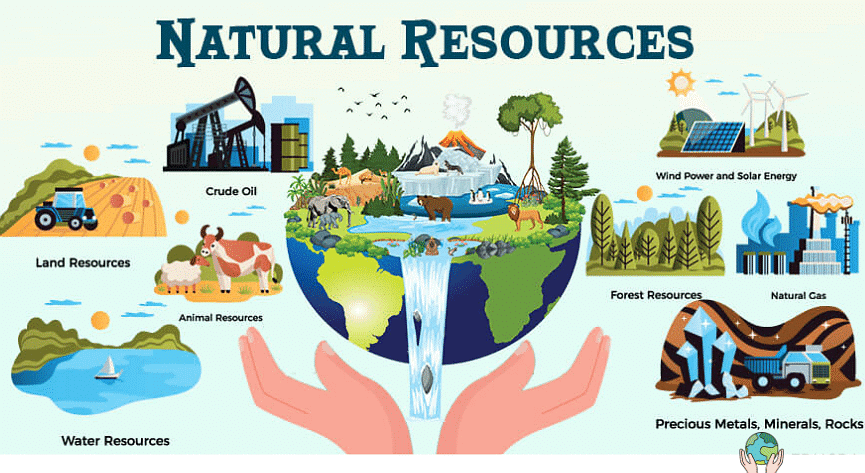
Q1. Resources that we find in nature and are used without much modification are called ___________ (a) Human Resource (b) Natural Resource (c) Renewable Resource (d) Human Made Resource
Ans: (b) Natural Resource Natural resources are those that we find in nature and can be used without much modification, such as air, water, minerals, and forests.
Q2. How are natural resources primarily categorized? (a) By color (b) By use and renewability (c) By size (d) By location
Ans: (c) By use and renewability Natural resources are grouped based on how humans use them and whether they can be replenished. They are divided by use into those essential for life (like air and water), materials (like wood and marble), and energy (like coal and sunlight). They are also classified by renewability: renewable resources (like solar energy) can replenish naturally, while non-renewable ones (like coal) cannot be replaced quickly.
Q3. Which of the following is an example of a renewable resource? (a) Coal (b) Petroleum (c) Solar energy (d) Natural gas
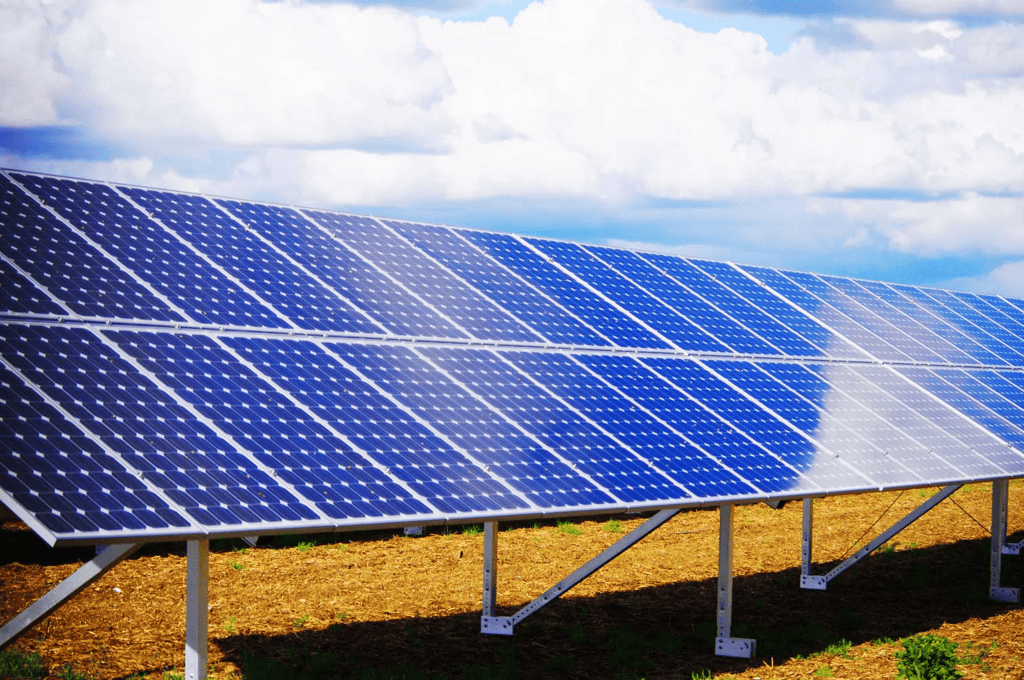
Ans: (c) Solar energy Solar energy is an example of a renewable resource because it is continuously replenished by the sun and will not be depleted with use.
Q4. What factor can change substances into resources? (a) Air (b) Time and technology (c) Water (d) Soil
Ans: (b) Time and technology Time and technology are factors that can change substances into resources. Over time, advancements in technology can make previously unusable substances valuable resources.
Q5. What is the main focus of sustainable development? (a) Exploiting resources for short-term gain (b) Using resources carelessly (c) Balancing present needs with future conservation (d) Wasting resources
Ans: (c) Balancing present needs with future conservation The main focus of sustainable development is to balance present human needs with the conservation of resources for future generations, ensuring that resources are used responsibly and not depleted.
Q6. Which of the following is a non-renewable resource? (a) Solar energy (b) Timber (c) Coal (d) Wind
Ans: (c) Coal Non-renewable resources are those that exist in limited amounts and take millions of years to form, so they cannot be replenished quickly. Coal is a non-renewable resource used for energy, as its formation takes a very long time, and once used, it is gone.
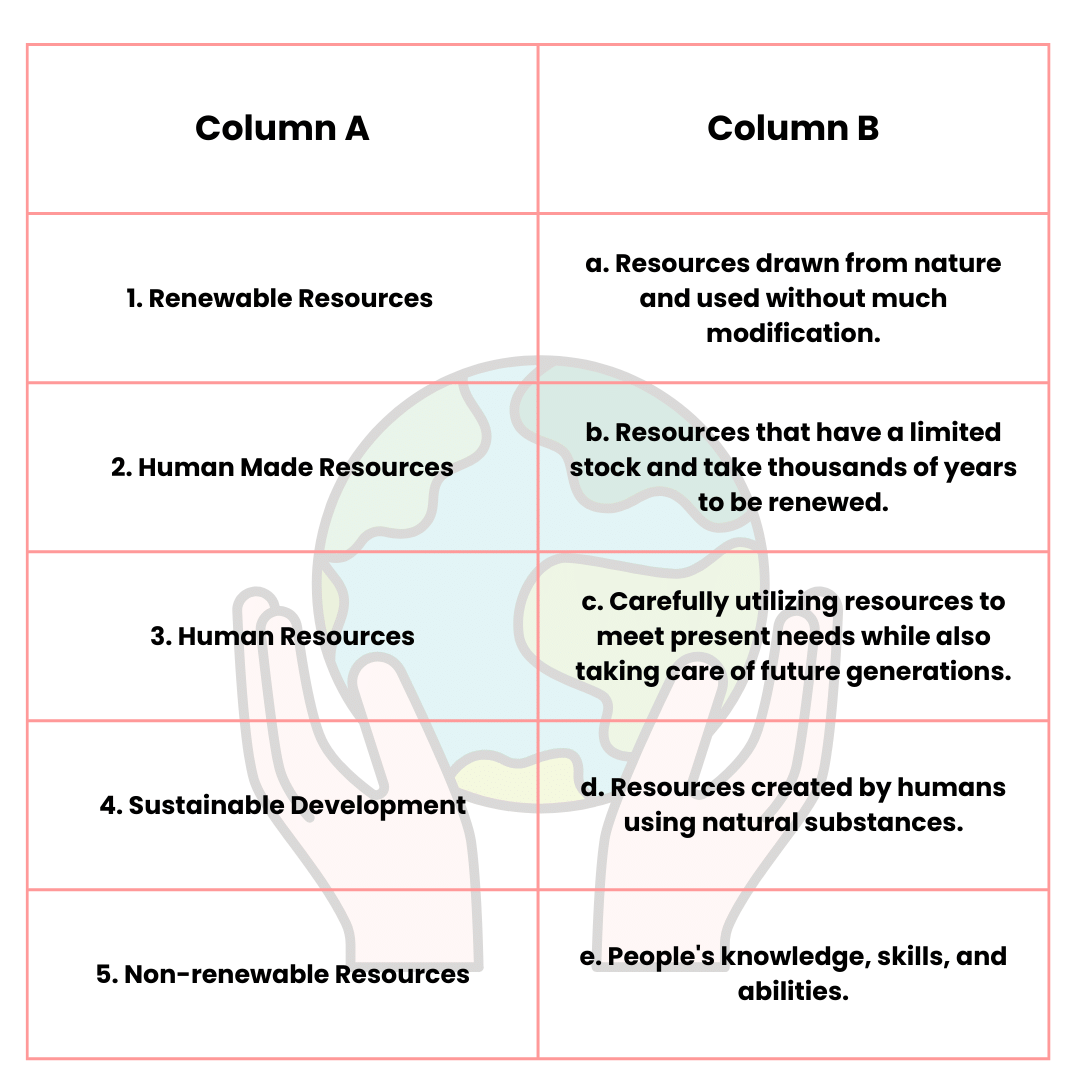
Match the Following
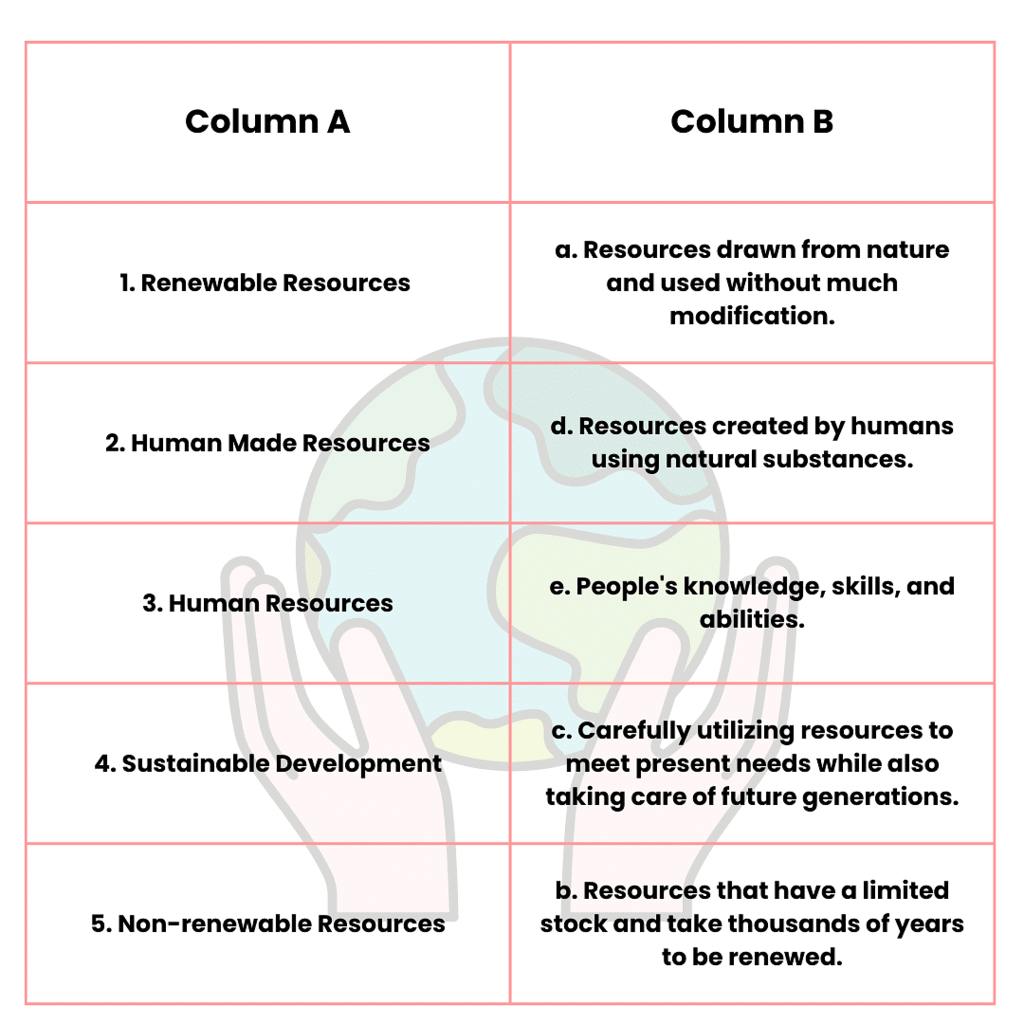
Ans:
True or False
Q1. Natural resources include only those substances that have economic value. Ans: False
Natural resources include substances found in nature, whether or not they have economic value. For example, air and water are natural resources that are essential for life but may not have direct economic value.
Q2. Renewable resources can never be depleted or exhausted. Ans: False
While renewable resources can be replenished over time, they can still be depleted or exhausted if used unsustainably. For example, forests can be depleted if trees are cut down faster than they can regrow.
Q3. Overexploitation of renewable resources can disrupt nature’s restoration and regeneration cycles. Ans: True
Renewable resources, like water and forests, can naturally replenish through nature’s cycles of restoration (healing) and regeneration (creating new life). However, if we use them faster than they can recover—like over-pumping groundwater or cutting trees without replanting—these cycles get disturbed. This can lead to shortages, such as when groundwater levels drop too low for use, harming both people and the environment.
Q4. Resource conservation involves using resources carelessly without thinking about the future. Ans: False
Resource conservation involves using resources carefully and responsibly, considering the needs of both the present and future generations. It aims to avoid wasteful consumption and ensure the long-term sustainability of resources.
Q5. Sustainable development aims to balance the use of resources for current needs and conserve them for the future. Ans: True
Sustainable development seeks to meet the needs of the present without compromising the ability of future generations to meet their own needs. It involves balancing economic, social, and environmental factors to ensure that resources are used efficiently and equitably.
Fill in the Blanks
Q1. All ___________ have some utility and value. Ans: All resources have some utility and value.
Q2. _______ is an example of a resource essential for life. Ans: Water is an example of a resource essential for life.
Q3. Human beings use ________ and _________ to develop resources. Ans: Human beings use technology and knowledge to develop resources.
Q4. _________ is an example of a renewable resource that can be depleted if overused. Ans: Forest is an example of a renewable resource that can be depleted if overused.
Q5. _______or _______makes an object or substance a resource. Ans: Utility or value makes an object or substance a resource.
Q6. _____________ is an example of a non-renewable resource used for energy Ans: Petroleum is an example of a non-renewable resource used for energy
Very Short Question Answers
Q1. What are non-renewable resources? Ans: Non-renewable resources are those which have a limited stock.
Q2. What do you mean by stock of resource? Ans: Stock of resource is the amount of resources available for use.
Q3. How are natural resources classified by their use? Ans: Natural resources are classified by their use into those essential for life (e.g., air, water), for materials (e.g., wood, marble), and for energy (e.g., coal, solar energy).
Q4. Why must renewable resources be used sustainably? Ans: Renewable resources must be used sustainably to allow nature’s restoration and regeneration cycles to replenish them, preventing depletion.
Q5. How does the uneven distribution of natural resources affect human life? Ans: Uneven distribution shapes settlements, trade, and conflicts, as people settle near resources for jobs, trade them, or compete for control.
Q6. What is resource conservation? Ans: Using resources carefully and giving them time to get renewed is called resource conservation.
Q7. Name some natural resources. Ans: The air we breathe, the water in our rivers and lakes, the soils, minerals are all natural resources.
Q8. What is sustainable development? Ans: Balancing the need to use resources and also conserve them for the future is called sustainable development.
Q9. What is the natural resource curse? Ans: The natural resource curse is when regions rich in natural resources experience slower economic growth due to poor management or over-reliance on resources.
Q10. What is utility? Ans: If a substance can be used in any way, it is said to have a utility.
Q11. What makes a substance a resource? Ans: Utility or usability is what makes an object or substance a resource.
Q12. What are renewable resources? Ans: Renewable resources are those which get renewed or replenished quickly.
Q13. What is Vrikshayurveda, and how does it promote sustainable resource use? Ans: Vrikshayurveda is an ancient Indian science of plant care that promotes sustainable agriculture through practices like crop rotation, natural pest control, and soil management.
Q14. What is technology? Ans: Technology is the application of latest knowledge and skill in doing or making things.
Q15. What are natural resources? Ans: Resources that are drawn from nature and used without much modification are called natural resources.