Q1. Why do we use averages? Are there any limitations to their use? Illustrate with your own example related to development.
Ans: Averages are commonly used for making comparisons between different groups or classes. However, they have some limitations:
- Averages only reflect the mean value, which can obscure significant disparities.
- For example, consider two countries, A and B, each with four citizens:
In Country A: Two citizens are illiterate or have only primary education. The other two hold doctorates or postgraduate degrees.
In Country B: All citizens have graduate-level education. Despite both countries having the same average education level, there are stark differences:
Country A has a wide range of educational attainment. Country B shows less disparity among its citizens. Thus, while averages are useful for comparison, they do not reveal the full picture of inequality within a population.
Q2. List a few examples of environmental degradation that you may have observed around you.
Ans: Examples of Environmental Degradation:
- Groundwater depletion: In India, many areas are facing serious threats from overuse of groundwater. Approximately 300 districts have seen water levels drop by over 4 metres in the past 20 years.
- Water scarcity: If current usage continues, it is predicted that in 25 years, 60% of the country will be overusing groundwater.
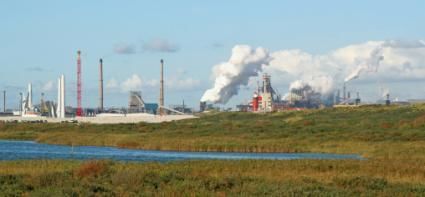
- Pollution: Urban and industrial pollution is exceeding the Earth’s capacity to absorb it, affecting air and water quality globally.
- Resource overexploitation: The excessive extraction of minerals, such as crude oil, impacts not only local environments but also has global repercussions.
These examples illustrate that environmental degradation is a global issue, not confined to specific regions.
Q3. Differentiate between renewable and non-renewable energy resources. Find out the present resources of energy in India.
Ans: Renewable energy resources are those that are naturally replenished and can be used repeatedly. Examples include:
- Solar energy
- Wind energy
- Groundwater
In contrast, non-renewable energy resources are finite and will eventually be depleted. Examples include:
- Crude oil
- Coal
In India, current energy resources include:
- Crude oil
- Coal
- Thermal power plants
These resources are projected to last for approximately 43 years. It is essential to explore alternative energy sources that are environmentally friendly.
Q3. (a) What does Human Development Index (HDI) indicate? (b) By whom HDI is prepared?
Ans: (a) Human Development Index (HDI) is a measure that rates countries on a scale from 0 to 1. A score of 0 represents the lowest level of human development, while a score of 1 indicates the highest. Key points about HDI include:
- It assesses relative human development rather than absolute levels.
- HDI focuses on three main goals: longevity, knowledge, and standard of living, which is reflected in real per capita income.
(b) The United Nations Development Programme (UNDP) has been responsible for preparing the HDI since 1990.
Q4. “Money cannot buy all the goods and services that one needs to live well.” Explain.
Ans: Money cannot buy everything needed for a good life. Here are some key points:
- A decent income may still require government support for basic needs like education and healthcare.
- Money cannot purchase respect, peace of mind, or freedom, which are essential for a fulfilling life.
- It does not guarantee a clean environment or access to safe medicines.
- Many important aspects of life, such as friendships and community support, cannot be measured in monetary terms.
- Collective efforts often provide essential services more effectively than individual wealth.
In summary, while money is important, it is not the sole factor in achieving a good quality of life.
Q5. Mention any three characteristics of Development.
Ans: Three characteristics of Development are:
- The desire to improve one’s current situation drives development. This involves considering ways to enhance our present conditions.
- Development goals can vary significantly among individuals. For example, your sister’s career aspirations may differ from yours.
- Different development goals can sometimes conflict. For instance, while a dam may benefit industrialists, it could hinder the development goals of villagers displaced by its construction.
Q6. Explain the two basic tools used to compare an underdeveloped country with a developed country?
Ans: The two basic tools used to compare an underdeveloped country with a developed country are:
- Per Capita Income: This measures the average income per person in a country. In 2012, countries with a per capita income of USD 12,616 or more were classified as developed, while those earning USD 1,035 or less were considered underdeveloped. The World Bank uses this tool for country comparisons.
- Human Development Index (HDI): This index ranks countries based on factors such as life expectancy, literacy rates, and overall health. Countries with high life expectancy and literacy are deemed developed, while those with lower rates are classified as underdeveloped. The United Nations employs this tool for comparisons.
Q7. How does the National Development of a country depend on the availability of public facilities?
Ans: National development relies heavily on the availability of public facilities. These facilities help to create equality within the economy, particularly for those who cannot access services from the private sector. Key aspects include:
- The government often collaborates with private firms to provide essential services like health care and education at reduced rates or for free.
- In India, the Public Distribution System ensures that food grains and other necessities reach people living below the poverty line.
- Health care services, including free immunisation and subsidised hospitalisation, are available to support the development of weaker sections of society.
Overall, the provision of these facilities is crucial for fostering a more equitable and developed nation.
Q8. “The Earth has enough for everyone’s needs but not for everyone’s greed.” Explain the need for sustainable development in the context of the above statement.
Ans: The statement, “The Earth has enough for everyone’s needs but not for everyone’s greed,” highlights the issue of overusing natural resources in the name of development. Sustainable development aims to address this by ensuring that:
- Development occurs without harming the environment.
- The needs of the current generation are met.
- Natural resources are conserved for future generations.
By adopting sustainable practices, we can ensure a balance between growth and environmental health.