Key Points of the Story
- Prince Siddhartha Gautama’s early life in northern India involved being protected from the pain of the world. He married but eventually realised the suffering that existed around him.
- A turning point occurred when Siddhartha Gautama saw different types of human suffering, prompting him to search for enlightenment.
- He spent seven years wandering before achieving enlightenment under the Bodhi Tree, where he pledged to remain until he found it.
- Siddhartha Gautama transformed into the Buddha, the Awakened One, and chose to share his wisdom with others.
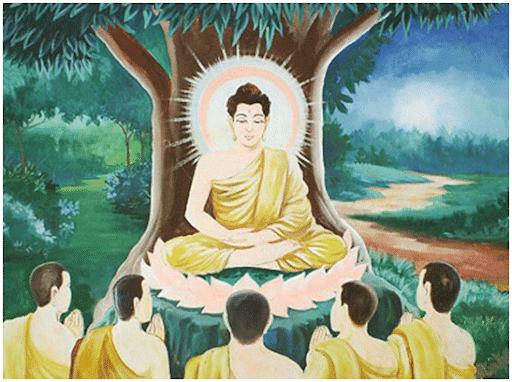
- His first sermon took place in the city of Benares, which has been preserved and highlights one deep kind of suffering.
- The tale of Kisa Gotami illustrates her quest for a remedy for her deceased child and the significant lesson she learns from the Buddha.
Detailed Summary
Gautama Buddha is thought to have lived from around 563 B.C. to 483 B.C. He was originally a prince named Siddhartha Gautama in northern India. At the age of twelve, he began his education in Hindu sacred texts. After four years, he returned home, married a princess, and experienced a life of luxury for ten years. However, at about twenty-five, his life changed dramatically. One day, while hunting, he saw the harsh realities of life for the first time. He encountered a sick man, an elderly person, a funeral procession, and a monk begging for alms. These scenes deeply affected him, prompting him to seek enlightenment regarding the suffering he had seen. Thus began his quest for understanding. This led him on a journey for seven years, seeking the truth until he sat beneath a peepal tree, vowing not to rise until he reached enlightenment. After meditating for seven days, he achieved enlightenment, henceforth naming the tree the Bodhi Tree, which represents wisdom. From then on, he began teaching and sharing his insights, earning the title of Buddha, meaning the Awakened or Enlightened One. His first sermon took place in the sacred city of Benares, along the River Ganges. This sermon, which has been preserved, reflects his deep wisdom regarding a specific type of suffering, showcasing his understanding of human existence and the path to freedom from suffering.
A poignant story in this chapter involves Kisa Gotami, a mother who was overwhelmed with grief after losing her only son. In her despair, she sought help from her neighbours, carrying her deceased child from house to house in search of medicine. The people remarked, ‘She has lost her senses. The boy is dead.’ During her quest, Kisa Gotami encountered a man who directed her to the Buddha, known for his wisdom and healing powers. She pleaded with the Buddha to save her son, and he assigned her a task. The Buddha asked for a handful of mustard seeds, but they had to come from a household that had never experienced the sorrow of losing a loved one. Filled with hope, Kisa Gotami went from house to house asking for the mustard seeds. However, she soon discovered that every family had faced the pain of loss.
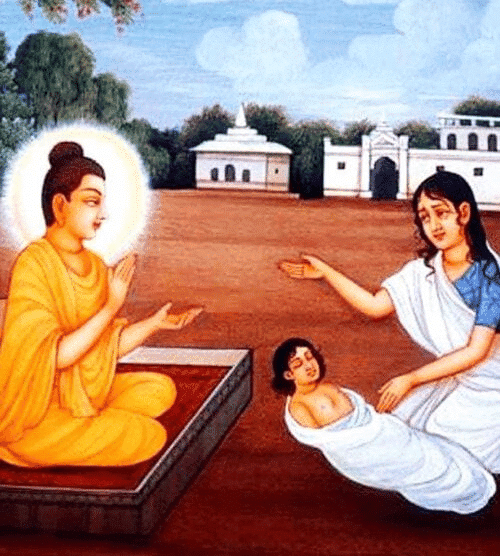
This realization brought her to a universal truth about mortality and the inevitability of death. As she sat by the roadside, reflecting on the fleeting nature of life and her own selfish grief, Kisa Gotami underwent a significant transformation. She came to understand that death is a common experience for all beings and that true liberation comes from letting go of selfish desires and attachments. The Buddha’s teachings delve into the nature of life and death, highlighting the temporary and painful aspects of human existence. He points out the futility of excessive grieving and the importance of accepting life’s impermanence. True liberation is achieved by releasing selfish desires and attachments. In summary, this chapter explores the core teachings of the Buddha, focusing on the universal truths of suffering, impermanence, and the path to liberation. Through the experiences of Gautama Buddha and Kisa Gotami, readers are invited to contemplate the essence of existence and the profound wisdom that can lead to inner peace and enlightenment.
Try yourself:
What task did the Buddha give to Kisa Gotami in exchange for saving her son?
- A.Bring him a handful of mustard seeds from a household untouched by loss.
- B.Meditate for 24 hours straight without moving.
- C.Donate all her possessions to the poor.
- D.Recite a sacred mantra for seven days and nights.
View Solution
Theme/ MessageThemes:
- The universality of suffering and the impermanence of life.
- The importance of letting go of selfishness and embracing selflessness.
- The inevitability of death and the transience of human existence.
Message:
- Through Kisa Gotami’s story, the narrative stresses the need to accept the natural cycle of life and death.
- The Buddha’s teachings highlight the futility of excessive grief and the route to inner peace through detachment from worldly sorrows.
- The central message emphasises the importance of overcoming selfish desires and acknowledging the universal truth of impermanence.
Difficult Words
- Enlightenment: A state of high spiritual knowledge or awakening.
- Sorrows: Feelings of deep distress caused by loss, disappointment, or other misfortunes.
- Bodhi Tree: Tree of Wisdom under which Siddhartha Gautama attained enlightenment.
- Pitied: Felt sorrow or sympathy for someone’s suffering.
- Desolation: A state of complete emptiness or destruction.
- Immortality: The state of living forever; eternal life.
- Mortals: Human beings subject to death; earthly inhabitants.
- Lamentation: The passionate expression of grief or sorrow; weeping.
- Composed: Having one’s feelings and expressions under control; calm and self-possessed.
- Transience: The state of lasting only for a short time; impermanence.