Key Points of the Story
- Bholi, whose real name is Sulekha, was the fourth daughter of Numberdar Ramlal. Due to a childhood injury, she was considered a simpleton, and her name “Bholi” means “simpleton.”
- She faced difficulties from smallpox, which left her disfigured and caused speech problems.
- Her father Ramlal decided to send her to school after the Tehsildar advised him to set an example for the villagers by educating his daughters, despite objections from the family.
- At first, Bholi was scared about going to school, but she found comfort and support from her teacher, which helped her conquer her fears and stammering.
- Years later, her father brought a marriage proposal from a wealthy man, but Bholi turned it down, showing her new confidence and sense of self-worth.
- The story ends with Bholi’s determination to become a teacher and help her family.
Detailed Summary
Ramlal had seven children: three sons and four daughters. All his children were healthy, but his youngest daughter, Sulekha, was different. At birth, she was very fair and pretty. However, when she was ten months old, she fell from her cot and injured her brain. At two years old, she had smallpox, leaving her face with deep black pock-marks. She could not speak until she was five, and when she finally did, she stammered. Because of this, everyone called her Bholi, meaning simpleton. She was seen as foolish even by her family, who did not care for her. Ramlal’s eldest daughter, Radha, was already married, and the second daughter, Mangla, had her marriage arranged. Ramlal was only worried about Bholi.
A primary school for girls opened in the village, and the Tehsildar Sahib came to inaugurate it. He told Ramlal, “As a revenue official, you represent the government in the village, so you must set a good example. You should send your daughters to school.” Both Ramlal and his wife were against girls’ education, but Ramlal felt he could not disagree with the Tehsildar. His wife suggested, “Send Bholi to school. With her looks and lack of understanding, there is little chance of her getting married. Let the teachers handle her.”
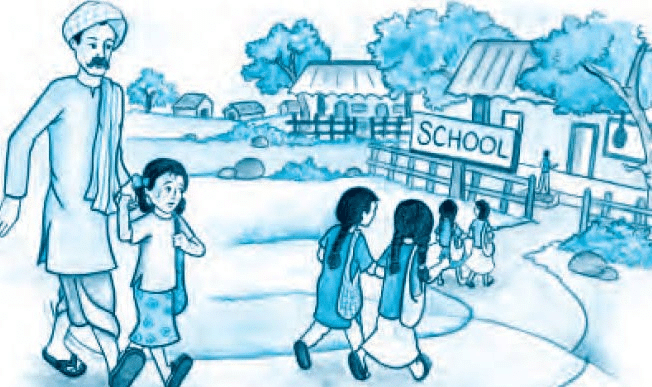
The next day, Ramlal asked Bholi to join him for school. She was very scared and refused to go. Ramlal asked his wife to give Bholi decent clothes. Although she had never had new clothes, that day she received a clean dress. She was bathed, and oil was applied to her dry hair. Only then did she start to think that perhaps she was going to a place better than home.
At the school, Bholi saw many girls her age in the classrooms. The headmistress asked her to sit in a corner of one classroom. The teacher was very kind and asked Bholi her name, but Bholi could not say it fully and began to cry. When school finished, the teacher invited her to come back the next day, and Bholi nodded. As she got to know the teacher, her fears began to fade, and soon she was speaking without stammering.
Bholi was seven when Mangla got married. She had passed several classes, although the exact number is unclear. Her father received a marriage proposal for her from Bishamber, a wealthy grocer from a nearby village. He limped and was around fifty years old, with children from a previous marriage. Ramlal accepted the proposal and asked Bishamber to come with a bar (wedding procession).
Bishamber arrived with great show for the wedding, and everyone was joyful with friends and relatives present. However, when Bishamber was about to place the garland around Bholi’s neck, a woman pulled back her veil. When Bishamber saw Bholi’s face covered in pock-marks, he refused to marry her. After much persuasion, he agreed to marry her only if Ramlal paid him five thousand rupees. Ramlal handed over the money, and Bishamber felt triumphant. Just as he was about to place the garland on Bholi, she knocked it away, declaring that she would not marry such a greedy and cowardly man. The wedding procession left without a bride, leaving Ramlal filled with grief and shame.

Bholi comforted her father, saying that she would care for them in their old age and would become a teacher at the same school where she had received her education.
Try yourself:
What was the reason behind Bholi’s disfigurement and speech issues?
- A.Falling down from a cot
- B.Smallpox
- C.Childhood injury
- D.Lack of proper education
View Solution
Theme/MessageTheme:
- Empowerment through Education: The transformative power of education in shaping one’s identity and confidence.
- Self-Acceptance: Overcoming societal labels and embracing one’s true self despite external judgments.
- Standing Against Oppression: Resisting oppressive norms and asserting individual agency.
Message:
- Education as Liberation: Education can break the chains of ignorance and empower individuals to defy societal expectations.
- Courage in Adversity: The story highlights the importance of courage in facing challenges and standing up for one’s beliefs.
- Self-Worth and Dignity: Bholi’s refusal to compromise her self-worth emphasizes the significance of dignity and self-respect.
Difficult Words
- Simpleton: A person lacking common sense or wit.
- Disfigured: Altered in shape or appearance, especially in a negative way.
- Stammered: To speak with involuntary pauses or repetitions.
- Contempt: The feeling that a person or a thing is beneath consideration, worthless, or deserving scorn.
- Izzat: Honor or respect.
- Limp: To walk with difficulty, typically due to a damaged or stiff leg or foot.
- Triumphant: Having achieved a great victory or success.
- Contemptible: Deserving scorn or disdain; worthy of disrespect.
- Confused: Unable to think clearly; bewildered.
- Adversity: Difficulties or misfortune.
- Resist: To withstand the action or effect of something.
- Empowerment: The process of becoming stronger and more confident, especially in controlling one’s life and claiming one’s rights.
- Agency: The capacity of individuals to act independently and make their own free choices.
- Self-Respect: Pride and confidence in oneself; a feeling that one is behaving with honor and dignity.
- Transformation: A marked change in form, nature, or appearance.