Need to Count (Stone Age)
Purposes: Food, animals, trade, rituals, calendars.
No number names/symbols → Used one-to-one mapping with:
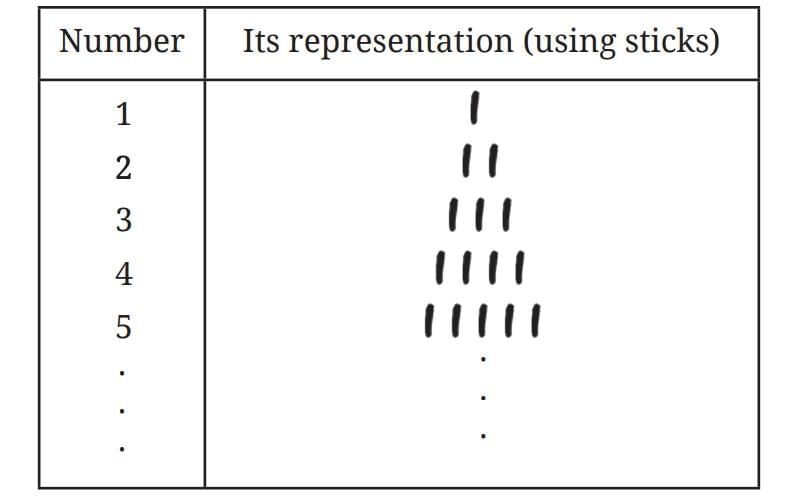 Sticks/Pebbles/Seeds (Method 1)
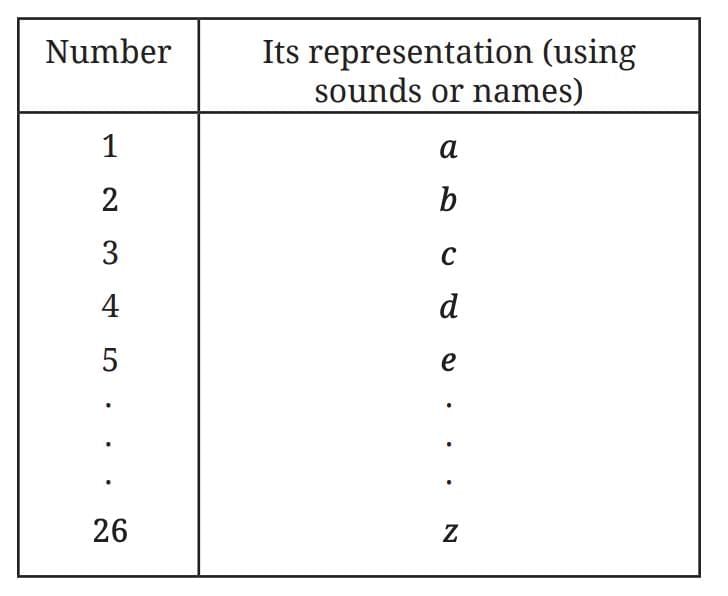 Sounds/Names (Method 2) → Limited by available sounds/letters.
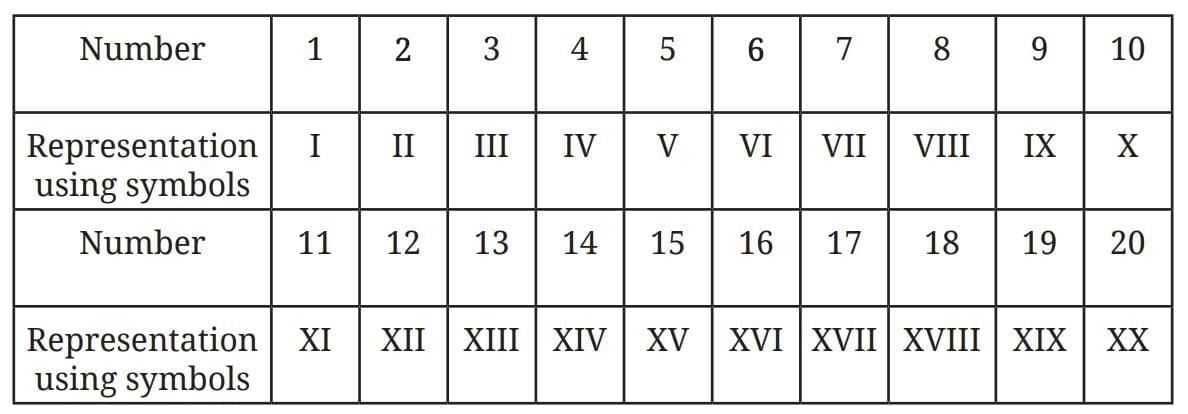 Written symbols (Method 3) → e.g., Roman numerals.
Key Concepts
- One-to-One Mapping: Each object ↔ one counting unit.
- Numerals = Written symbols in a number system.
- Landmark Numbers: Special values to build other numbers (e.g., 1, 5, 10…).
Early Number Systems
(A)Tally Marks
- Simple notches/lines.
- Ishango Bone (20k–35k yrs old) – possibly calendar.
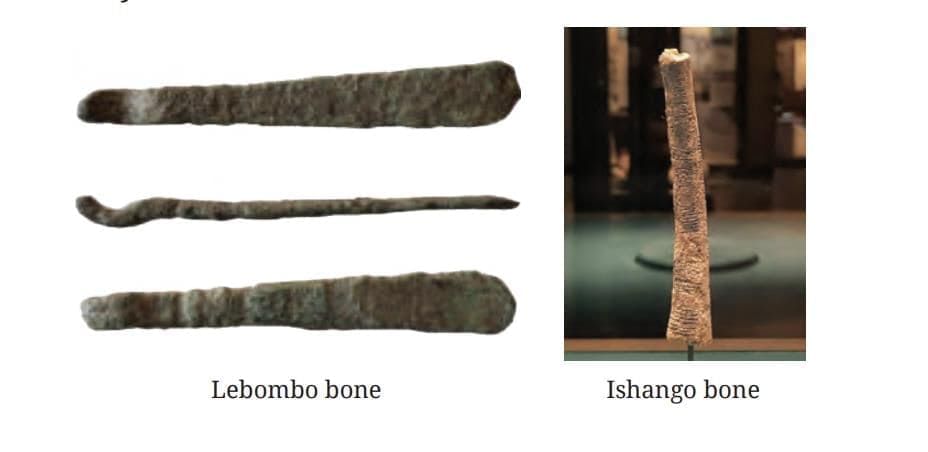 Lebombo Bone (44k yrs old) – lunar calendar.
(B) Counting in Groups
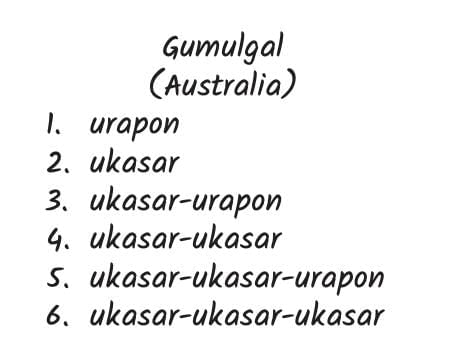 Gumulgal (Australia): Count in 2’s → Numbers = combinations of 2’s & 1’s.
- Also used by Bakairi (S. America) & Bushmen (S. Africa).
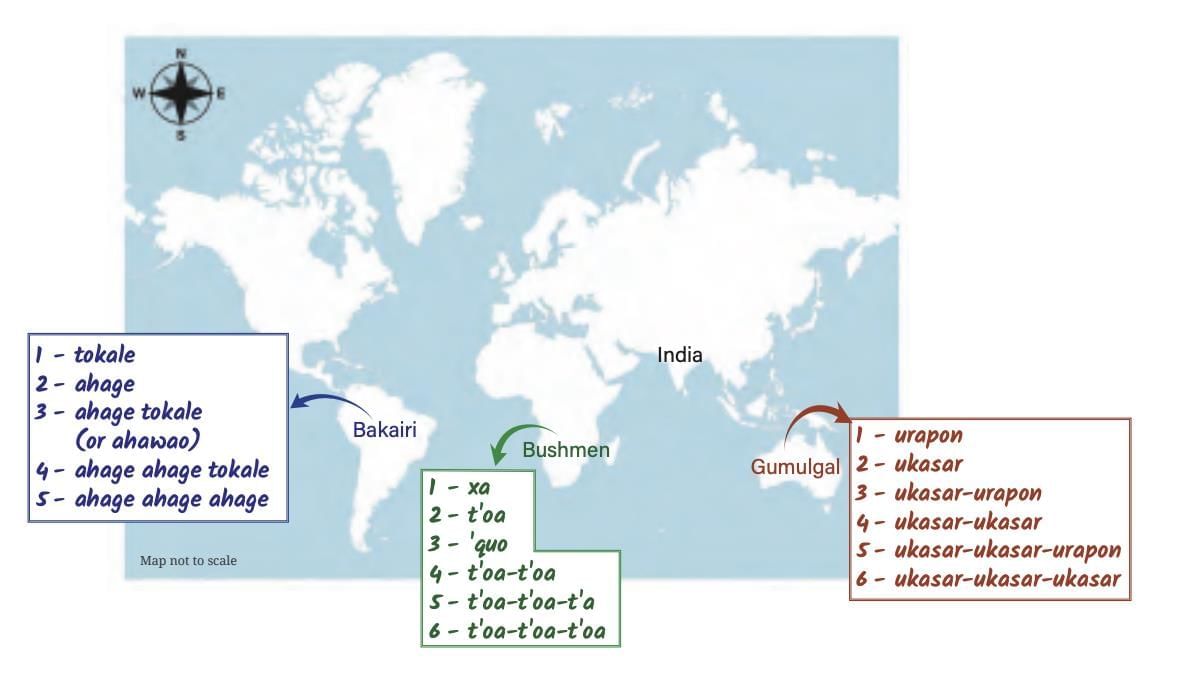 Common groups in history: 2, 5, 10, 20.
(C) Roman Numerals
- Symbols:
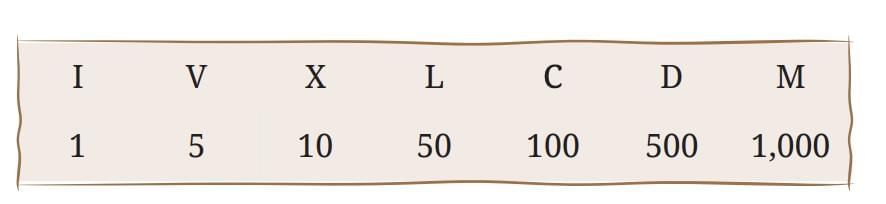
- Rules:
- If a smaller numeral is placed before a larger one, subtract it.
Example: IV = 5 − 1 = 4. - If a smaller numeral is placed after a larger one, add it.
Example: VI = 5 + 1 = 6.
- If a smaller numeral is placed before a larger one, subtract it.
- Advantage: Shorter than tally marks.
- Limitations:
- No zero.
- Difficult for large numbers.
- Cannot perform complex arithmetic easily.
Idea of Base-n
 Base-n system: Landmark numbers = powers of n
Example: Base-5 → 1, 5, 25, 125…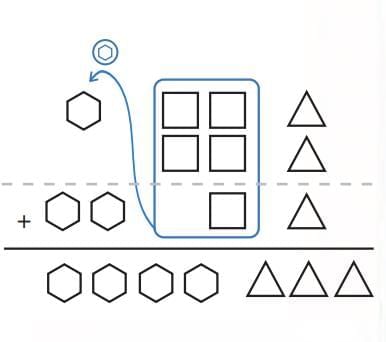 Advantages: Consistent grouping, easier addition & multiplication.
Egyptian System
 Base-10, symbols for 1, 10, 100, 1000, 10,000…
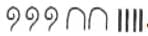 Build numbers by repeating symbols. For example 324 which equals 100 + 100 + 100 + 10 + 10 + 4 is written as
- Limit: Needs infinite symbols for very large numbers.
Abacus
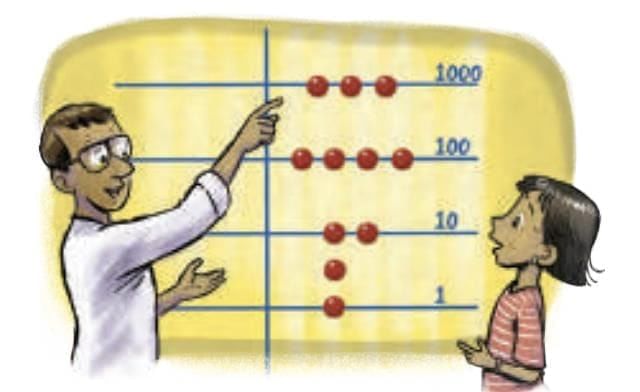 Decimal-based calculating tool.
- Each line = power of 10.
- Counters above line = value of 5× that landmark.
Mesopotamian System
- Location: Ancient civilisation in present-day Iraq and nearby regions.
- Time Period: Around 4000 years ago.
- Base: Base-60 (sexagesimal system).
- Symbols:
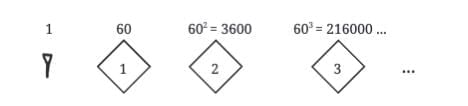
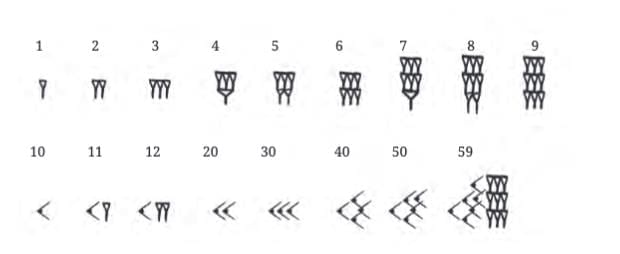 Two main wedge-shaped symbols (cuneiform writing) for numbers.
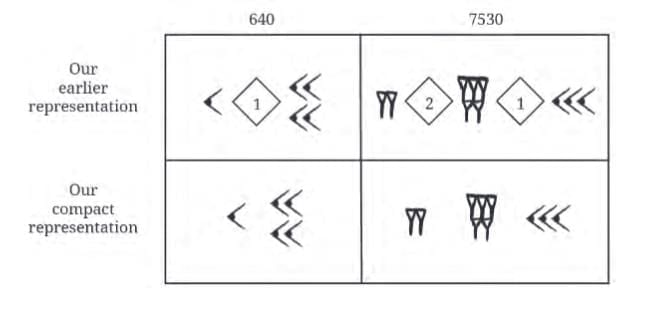 Numbers formed by repeating and combining these symbols.
- Special Use:
- Still used today in measuring time (60 seconds in a minute, 60 minutes in an hour) and angles (360° circle).
Mayan Number System Basics
- Base: Modified base-20.
- 1st place: 1’s (units)
- 2nd place: 20’s
- 3rd place: 360’s (not 400, due to calendar reasons)
- 4th place: 7200’s, etc.
- Symbols:
- Dot (•) = 1
- Bar (—) = 5
- Shell = 0 (placeholder)
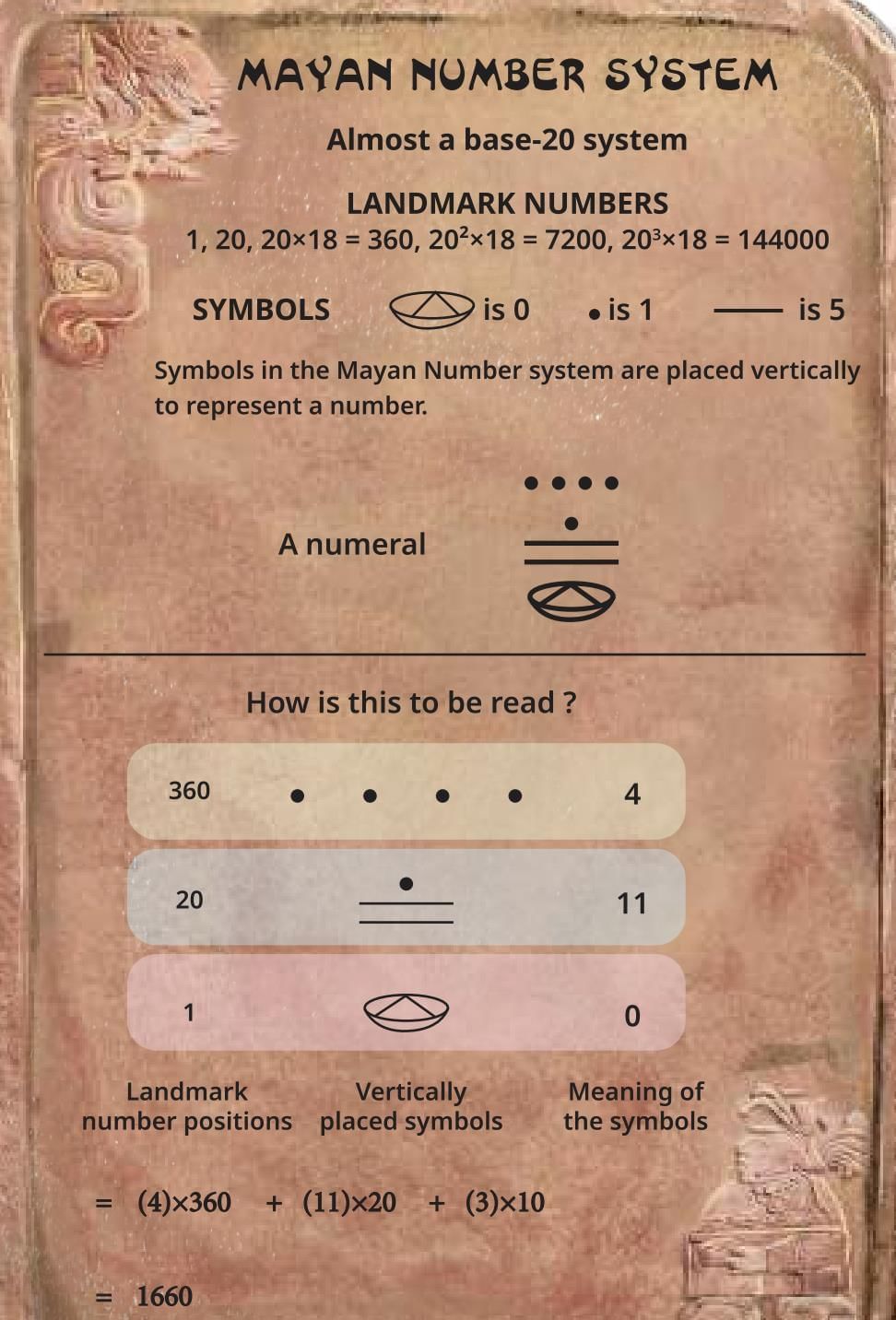 Numbers are written vertically, lowest value at bottom.
Chinese Rod Numeral System – Key Points1. Purpose
Two systems existed:
- Written system – for recording quantities.
- Rod numeral system – for performing calculations efficiently.
2. Rod Numerals
- Base: Decimal (base-10), like our modern system.
- Digits 1–9: Represented using vertical or horizontal rods (small sticks or lines).
- Place value:
- Vertical rods → used for units and hundreds places.
- Horizontal rods → used for tens and thousands places.
(This alternation prevented confusion between adjacent digits.)
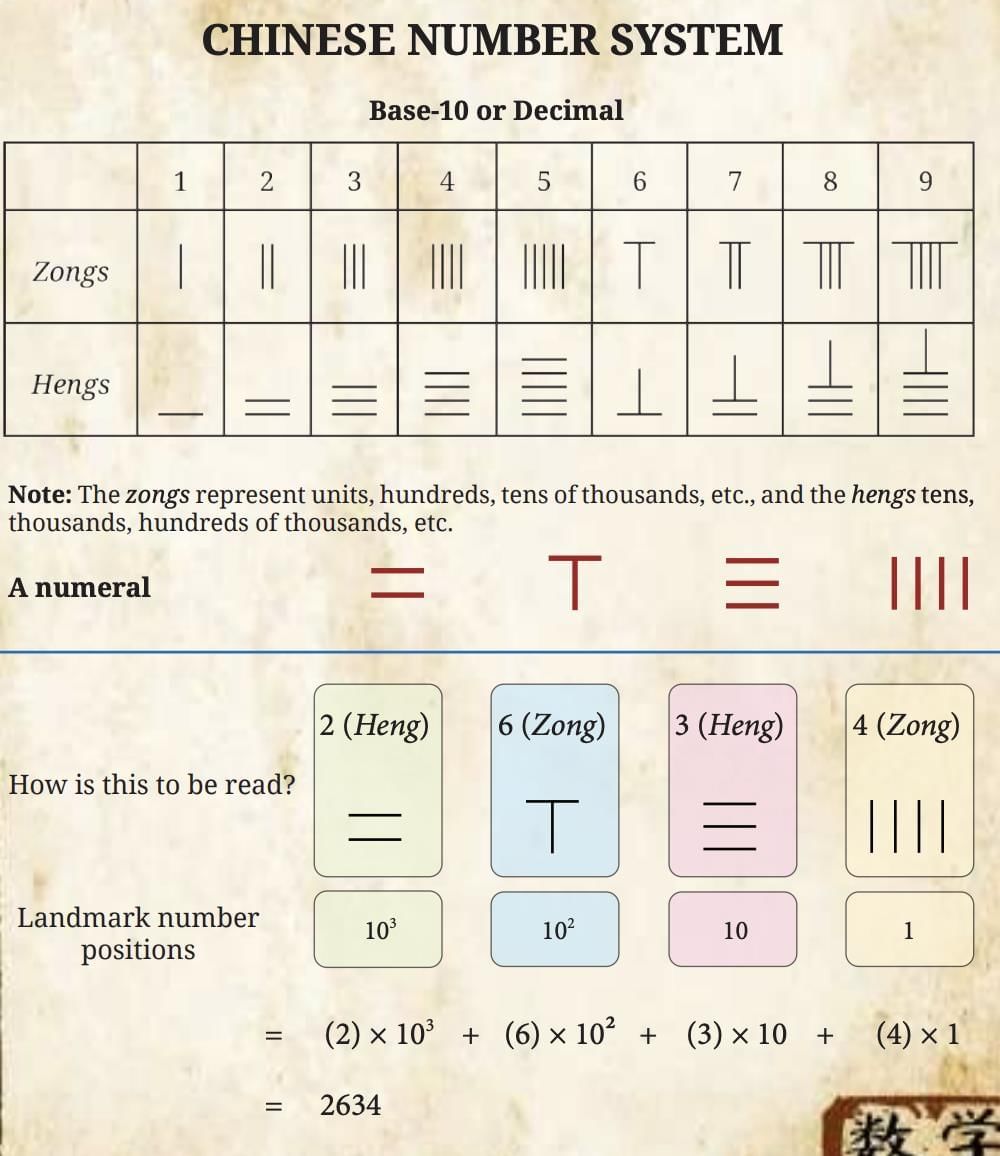
3. Zero Representation
- Like the Mesopotamians: used a blank space to indicate an empty place value.
- Advantage: Due to uniform rod sizes, the blank space was easier to identify.
- Note: If they had an actual symbol for zero, it would have been a fully developed place value system like the Hindu–Arabic numerals.
Spread of Hindu–Arabic Numerals
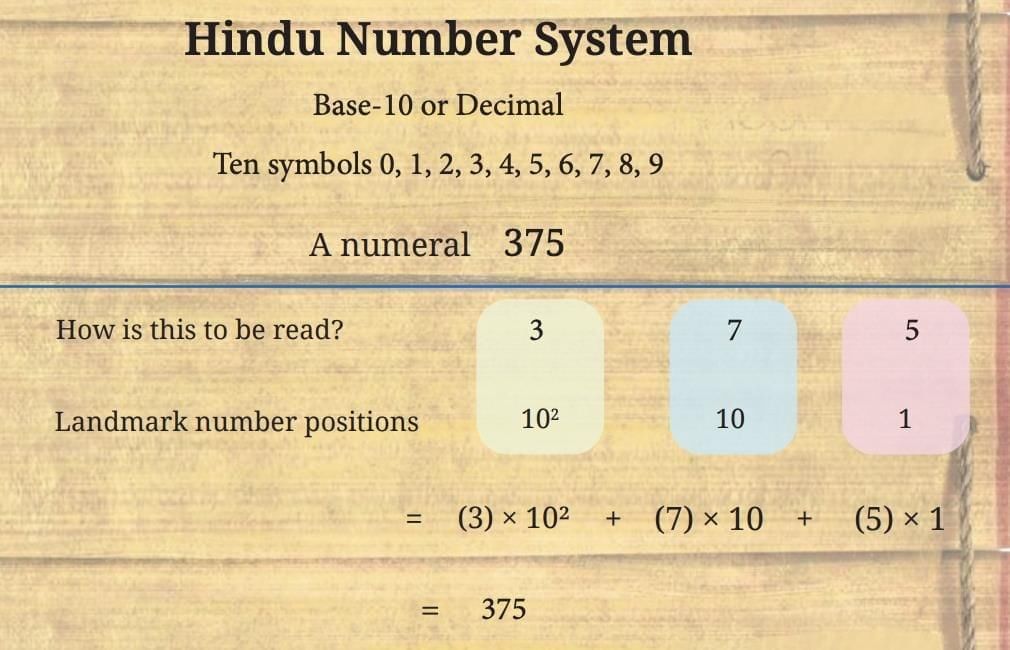
- Base: Base-10 (decimal system).
- Digits: 0, 1, 2, 3, 4, 5, 6, 7, 8, 9.
- Place Value System: Value of a digit depends on its position.
Example: In 375,
3 → Hundreds place = 3 × 100 = 300
7 → Tens place = 7 × 10 = 70
5 → Ones place = 5 × 1 = 5 - Use of Zero: A major contribution by Indian mathematicians (Aryabhata, Brahmagupta).
- Spread: Carried to Europe by Arab traders → became the Hindu–Arabic numerals we use today.
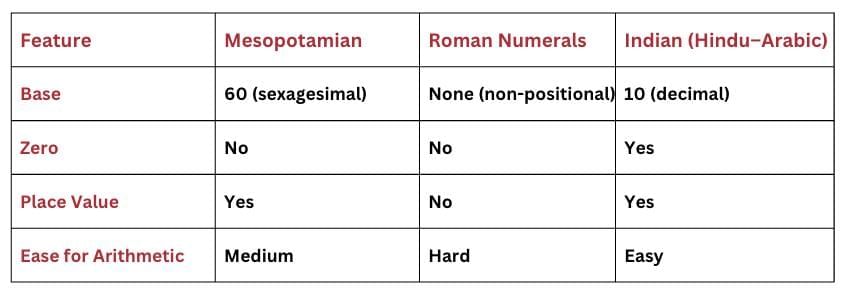
Comparing Systems