Introduction
Ravi and Reena are buying ice creams at an ice cream parlour. What do they have to give in return to the ice cream vendor?
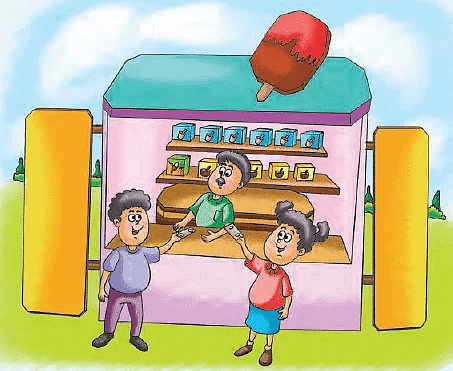
The answer is money!
- Money is used to buy things at a shop, online or in the market.
- In India, money or currency is in the form of rupees and paise.
- We use the symbol ‘₹‘ for rupee or rupees and ‘p’ for paisa or paise.
What Does Money Look Like?
- Money can look different in many ways! In India, we have shiny coins and colourful notes.
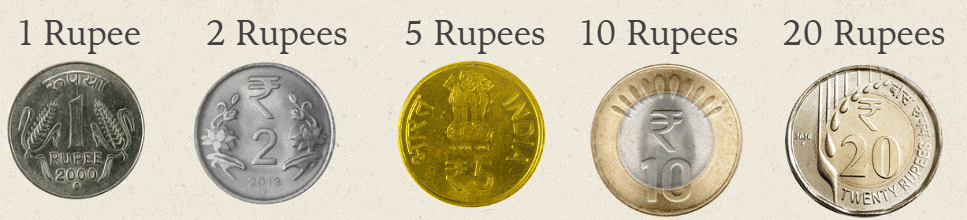
- Coins can be small and round, like the ₹1 or ₹2 coin.
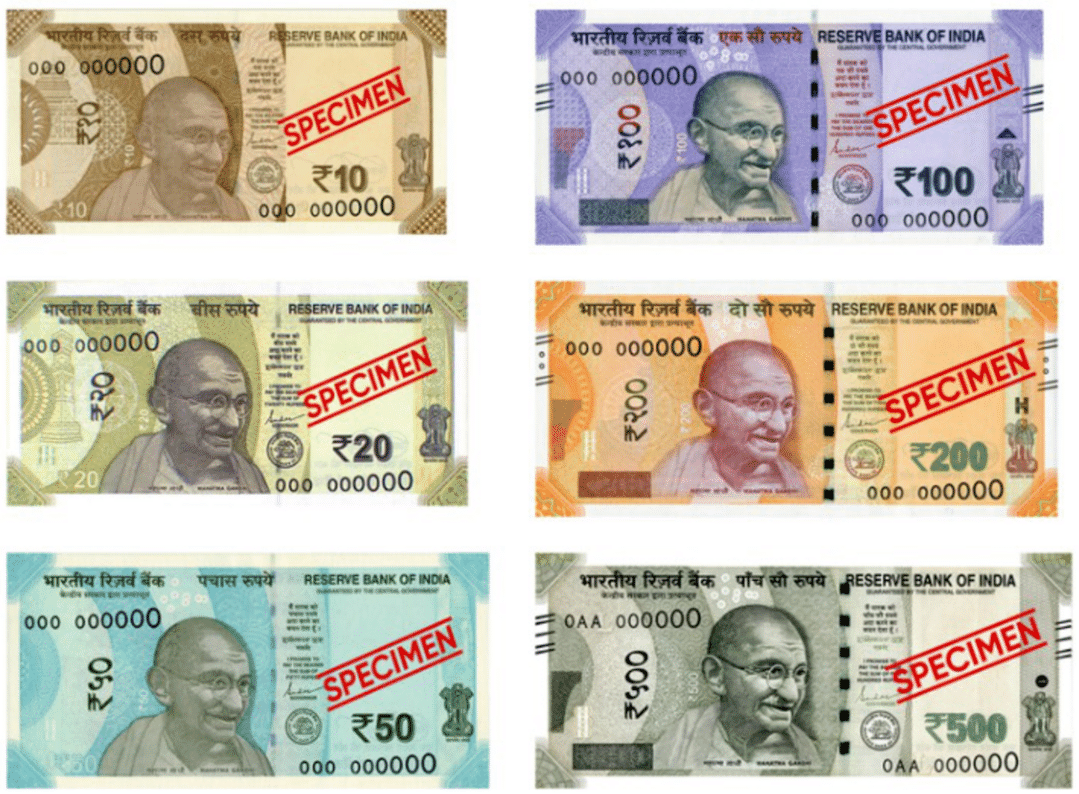
- Notes, like ₹10, ₹50, or ₹100, are made of paper and have bright colours, pictures of famous people, and designs of animals or places.
- Isn’t it fun to see how each coin and note is special?

Coins
- Coins are small, shiny, and made of metal.
- They come in different sizes and shapes, like round ₹1 and ₹2 coins or even a ₹5 coin.
- Each coin has a number on it to tell us its value, like “1” for ₹1 or “10” for ₹10.
- Coins are fun to collect because some have pictures of famous people, animals, or special events.
- They’re also easy to carry in your pocket!
Notes
- Notes are colourful pieces of paper that show different amounts of money.
- They come in many sizes, like ₹10, ₹20, ₹50, and even ₹2000!
- Each note has a special design with pictures of famous people, buildings, and nature.
- You can also find big numbers on them to tell you their value.
- Unlike coins, notes are light and easy to fold, so you can keep them in your wallet or bag.
Let Us Count Money
- Counting money is like solving a fun puzzle!
- First, look at the coins and notes you have.
- Add up the values of each one.
- For example, if you have a ₹10 note and a ₹5 coin, you have ₹15 in total.
- Counting money helps you know how much you can spend or save.
- It’s an exciting way to learn math and feel like a grown-up!
Going to the Bookstore
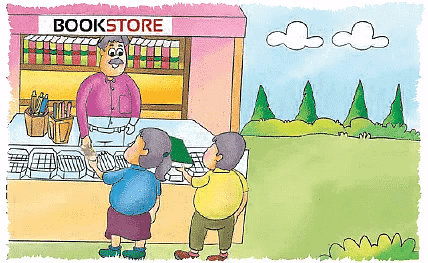
Neerav and Nisha went to a shop to buy a book. It cost ₹ 30. They did not have an exact ₹ 30 to pay. They paid a ₹ 50 note to the shopkeeper. The shopkeeper returned ₹ 20 in the form of coins and notes of smaller values (denomination) as ₹ 10 + ₹ 5 + ₹ 5.
EduRev Tip: Notes and coins of higher denominations can be exchanged for smaller denominations.
Money Stories in Real-Life Situations
Example 1: Somya bought a pizza for ₹ 70. She also bought popcorn for ₹ 25. How much did she pay for both? Somya paid ₹ 95 for both items.
Ans:
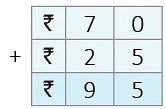
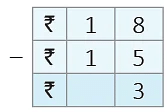
Example 2: A chocolate costs ₹ 18 but I have only ₹ 15. How much more money do I need to buy the chocolate? I need ₹ 3 more to buy the chocolate.
Ans:
Activity
Learning Objective: Understanding and practising handling notes and coins up to rupees 20 in daily life
Preparation:
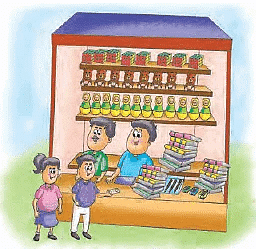
- The teacher arranges play money and some wrappers of chocolates, wafers, empty pencil boxes, etc. (The teacher can ask the students to bring real small eatable packets.)
- The teacher prepares price tags for items with the
- Sets up real shopping scenarios with the help of volunteer students.
Working:
- Divide the students into groups of four.
- Give play money to all groups. Display items with their price tags.
- Let one group enact as sellers and other group as buyers.
- Pose a situation like- I want to buy a pencil box which costs say, ₹ 19.
- Check how do they do simple addition and subtraction of money by using different combinations of coins and notes (up to rupees 20 only).
- Repeat the activity with other groups and have fun.