This short and lively poem, written by Edna St. Vincent Millay, expresses a deep love for travel and adventure through the speaker’s fascination with trains.
The speaker imagines the sounds and sights of trains passing by, even when they are far away, and feels a strong urge to hop on any train, no matter its destination.
The poem captures the excitement of exploring new places and the joy of making friends, while highlighting the speaker’s restless spirit and longing for new experiences.
Explanation of the Poem Stanza 1
The railroad track is miles away, And the day is loud with voices speaking, Yet there isn’t a train goes by all day But I hear its whistle shrieking.
Explanation:
In this stanza, the speaker describes how the railway tracks are far from where they are, and the day is noisy with people talking. Despite the distance and the absence of trains passing nearby, the speaker imagines hearing the loud, piercing whistle of a train every time one goes by. The word “shrieking” makes the whistle sound sharp and exciting, showing how the speaker’s mind is always on trains. This reflects their strong fascination with travel, as the idea of a train’s journey captures their attention even in a busy, noisy day, pulling them away from the chatter around them.
Stanza 2
All night there isn’t a train goes by, Though the night is still for sleep and dreaming, But I see its cinders red on the sky, And hear its engine steaming.
Explanation:
Here, the speaker talks about the quiet night, a time meant for sleeping and dreaming. Even though no trains pass close by, the speaker imagines seeing the train’s red cinders—glowing sparks from the engine—lighting up the night sky and hearing the sound of the engine puffing steam. This vivid picture shows how the speaker’s imagination keeps the train alive in their mind, even in the calm and silent night. The cinders and steaming engine add a sense of movement and energy, revealing the speaker’s excitement about trains and the adventures they represent, keeping them awake with thoughts of travel.
Stanza 3
My heart is warm with the friends I make, And better friends I’ll not be knowing; Yet there isn’t a train I wouldn’t take, No matter where it’s going.
Explanation:
In the final stanza, the speaker shares their love for the friends they’ve made, describing their heart as “warm” with affection and saying they couldn’t find better friends. However, despite this happiness, the speaker admits they would jump on any train, no matter where it’s headed. This shows a powerful pull toward travel and exploration that is stronger than their ties to friends. The phrase “no matter where it’s going” highlights the speaker’s adventurous spirit, ready to embrace the unknown just for the thrill of the journey. It balances the comfort of friendship with the irresistible call of new experiences.
Moral of the Poem
The poem teaches us that a love for adventure and exploration can live alongside strong connections with friends.
It encourages us to embrace curiosity and be open to new experiences, even if it means leaving the familiar behind.
The speaker’s excitement for travel shows that following your passions can lead to a fuller, more exciting life.
Difficult Words
Here are the meanings of some difficult words from the poem, explained simply:
Railroad: A track made of steel rails for trains to travel on.
Shrieking: Making a loud, high-pitched sound, like a sharp whistle.
Cinders: Small pieces of burnt coal or wood, like glowing sparks from a train’s engine.
Steaming: Giving off steam, like the puffing sound from a train’s engine.
Warm: Full of love or affection, like feeling happy and close to friends.
This exciting story, written by Ruskin Bond, follows Suraj, a young boy who loves adventure and is fascinated by trains.
Set in a jungle near a railway tunnel, the story describes Suraj’s visit to watch a steam train burst out of the tunnel and his unexpected meeting with Sunder Singh, the watchman who looks after the tunnel.
Together, they share a thrilling moment when they face a leopard in the tunnel, forming a special friendship.
The story is full of vivid descriptions of the jungle and the train, capturing the thrill of exploration and bravery.
Explanation of the Story
Suraj’s Fascination with the Jungle Train
The story begins on a hot noon in a jungle where a railway track cuts through towering evergreen trees. Suraj, a young boy, waits near a tunnel, eager to watch the midday steam train burst out. He isn’t catching a train; he simply loves the sight of it, finding it magical. He has cycled from town, hidden his bike in a nearby village, and walked over a hill to reach the tunnel’s exit.
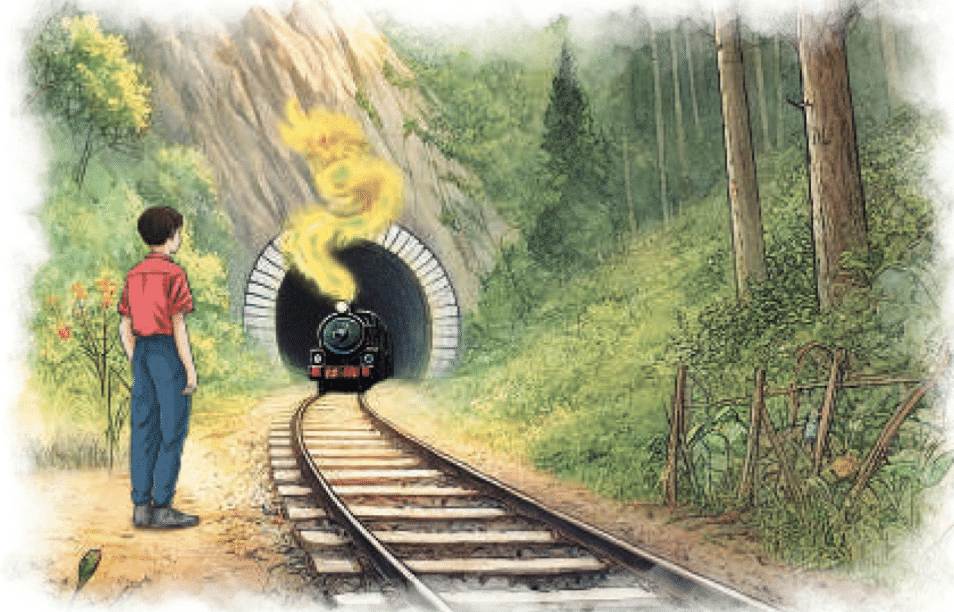
As he waits, he hears the distant whistle and rumble. The train bursts out like a green, black, and gold dragon, spitting sparks and roaring past, stirring the jungle into motion. After the train passes, Suraj, curious, decides to walk through the tunnel. Inside, it’s damp, smoky, and dark, with a bat and a lizard startling him. Emerging into sunlight on the other side, he notices a flash of orange and gold on the hillside—a swishing tail disappearing among the trees.
Meeting Sunder Singh, the Watchman
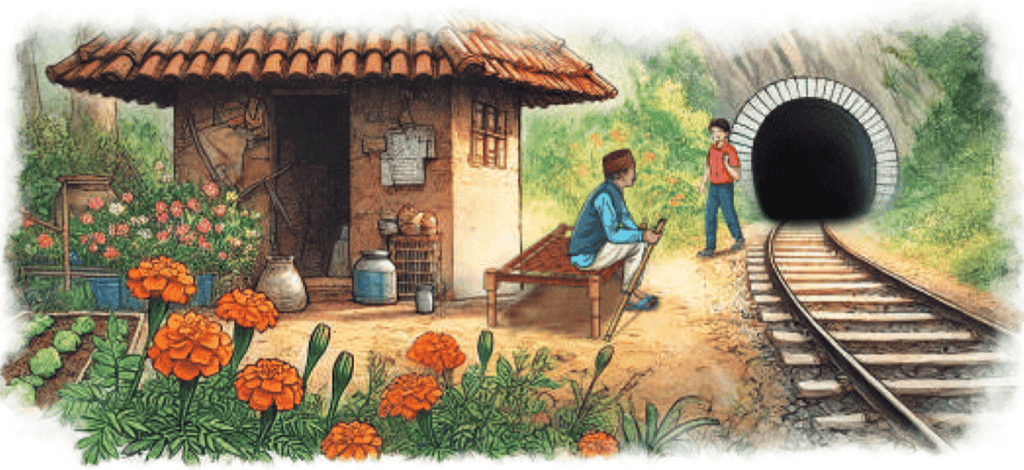
Nearby, Suraj finds a small hut belonging to Sunder Singh, the tunnel’s watchman. His job is to inspect the tunnel and signal trains if anything is wrong—using a red flag by day or an oil lamp at night. Sunder Singh welcomes Suraj warmly, joking that the tunnel is “his,” though officially it belongs to the government.
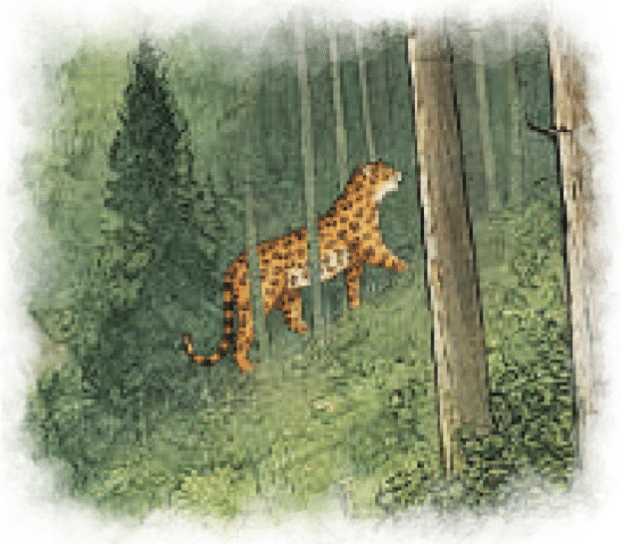
As they chat, Suraj mentions the flash he saw, and Sunder Singh explains it was “his” leopard—a familiar visitor to the area, harmless unless provoked. He also tells Suraj about the night train at 9 p.m., inviting him to return and promising to escort him home safely. Suraj leaves, planning to get his parents’ permission.
The Night Adventure
The next evening, Suraj returns. As the jungle cools and darkens, they enjoy tea, surrounded by the sounds of birds and forest creatures. When darkness falls, Sunder Singh checks the tunnel with his oil lamp while Suraj waits.
Suddenly, they hear a sawing sound from the tunnel. Realising the leopard is inside and could be hit by the oncoming train, Sunder Singh decides to scare it away. Taking an axe for safety and reassuring Suraj, they both enter the tunnel. Their shouts and lamp startle the leopard, which flees into the jungle. After ensuring the tracks are clear, they step aside just in time as the night train roars through, leaving the jungle still and silent once again.
Suraj’s Farewell to the Jungle
A week later, Suraj rides the same night train with his father, who is heading to Delhi on business. As the train crosses bridges and villages, Suraj recognises the tunnel. Peering out into the darkness, he spots a familiar glow—the oil lamp of Sunder Singh, standing watch. As the train speeds through and the jungle fades behind, Suraj thinks fondly of the lonely watchman who lights up the darkness for both trains and leopards.
Moral of the Story
The story teaches us that courage and curiosity can lead to exciting adventures and unexpected friendships.
Suraj’s bravery in exploring the tunnel and facing the leopard with Sunder Singh shows that stepping out of your comfort zone can bring rewarding experiences.
It also highlights the importance of kindness and trust, as seen in the bond between Suraj and Sunder Singh, who work together to protect the leopard.
Difficult Words
Here are the meanings of some difficult words from the story, explained simply:
Shimmered: Shined with a soft, wavy light.
Embankment: A wall of stones or earth to support a railway.
Cutting: A narrow path dug through a hill for a railway.
Scrub-covered: Covered with short trees and bushes.
Serpents: Snakes, used here to describe the railway tracks.
Snorting: Making a loud sound through the nose, like the train’s engine.
Puffing: Blowing out air or steam in short bursts.
Instinctively: Doing something without thinking, like a reflex.
Flinch: To pull back quickly from something surprising or scary.
Plume: A long, thin cloud, like smoke trailing behind.
Shisham: A type of tree found in northern India.
Contemplation: Deep thinking or daydreaming.
Reassure: To make someone feel calm or safe.
Scuttled: Ran quickly with small steps.
Dazzled: Blinded or amazed by bright light.
Swishing: Moving with a soft, sweeping sound, like a tail.
Obstacles: Things that block or get in the way.
Porcupine: A small animal with sharp spines on its back.
Range: An area or region, like where the leopard roams.
Yawned: Opened the mouth wide, usually when tired.
Swooped: Moved down quickly through the air, like birds flying.
Scent: A pleasant smell, like of flowers.
Tailorbird: A small bird known for sewing leaves to make a nest.
Twilight: The soft light just after sunset or before sunrise.
Quaint: Unusual or old-fashioned in a charming way.
Nightjar: A bird active at night with a short beak.
Flexing: Bending or stretching, like limbs moving.
Trimming: Adjusting, like fixing the wick of a lamp.
Padded: Soft, quiet steps, like an animal’s footsteps.
Rustle: A soft sound, like leaves moving.
Sawing: A back-and-forth sound, like cutting wood.
Lithe: Slim and graceful in movement.
Sinewy: Lean and strong, with visible muscles.
Snarling: Growling with teeth shown, like an angry animal.
Twitching: Making small, sudden movements.
Defying: Challenging or standing up against something.
Tremor: A slight shaking or vibration.
Scribbling: Writing quickly or messily.
Fringe: The edge or border, like the jungle’s boundary.
Flickering: Shining with an unsteady, wavering light.
This story follows Shaana, a young girl from Rameswaram island, who travels across India with her parents.
Through postcards written to her friends, she shares her experiences of visiting different places, exploring diverse landscapes, and learning about India’s rich geography and culture.
The story highlights the beauty and variety of India’s regions.
ExplanationShaana’s travel adventure takes her across various parts of India, each with its unique geography, weather, and wildlife. Her journey reflects her curiosity, playful spirit, and growing confidence.
Kashmir (North) – Glaciers and SnowballsIn her 30 April postcard, Shaana writes from Thajiwas Glacier in Kashmir, high up in the north. She describes the white and blue glaciers and how they all had to wear four layers of clothes because of the freezing cold. Her parents enjoy throwing snowballs at each other and love the place. However, they notice that there was more snow the previous year, hinting at possible climate changes. Shaana likes the snow but feels so cold that her hands shake from not wearing gloves. She ends her note by sending love to her PT teacher and Library Ma’am.
Thajiwas Glacier
Himachal Pradesh – Mountains and Playful ImaginationOn 10 May, Shaana reaches Himachal Pradesh. She enjoys the peaceful mountains and is woken up each morning by the chirping of colourful birds. At night, she hears growling sounds and imagines they are bears, but her mother says it’s just her father snoring. She even jokes about wanting to hug a bear, showing her playful imagination and adventurous spirit.
Arunachal Pradesh – Forests and Red PandasIn her 17 May postcard, Shaana travels all the way east to Arunachal Pradesh, which she learns is far from Himachal Pradesh. The journey includes two trains and a long drive through a dense forest, where they reach a treehouse. The forest is so thick that Shaana warns that if you blink or stop to tie your shoelace, you could get lost. She declares Arunachal her favourite stop so far and hopes to see red pandas, reflecting her growing love for nature and wildlife.
Red Pandas
Sundarbans, West Bengal – Mangroves and Crocodiles
By 24 May, Shaana reaches the Sundarbans in West Bengal, a wetland area where mangrove trees grow in seawater. She is surprised to learn this and feels amazed. During a boat ride, she spots crocodiles and a lonely snake, which makes her both nervous and excited. Her mother expresses sadness about how much the area floods now, gently introducing the topic of climate change.
Sundarbans
Gujarat – Deserts and Surprise Test
In her 30 May postcard, Shaana shares that they’ve crossed the entire country from east to west, reaching Gujarat. She finds the desert hot, dry, and sandy, calling it a beach without the sea. Although she dislikes the heat, she loves the colourful clothes worn by people in the region. Her mother surprises her with a holiday test, and Shaana proudly says she scored 88%, showing she’s still learning even while travelling.
Narmada River – Rafting and Water Thrills
On 7 June, Shaana writes about travelling to the Narmada River in central India, after leaving the desert. She tries rafting, which she finds wild and fast, unlike the calm image she had of rivers. She ends up soaked, while her father is so scared he swears never to go rafting again. Shaana, on the other hand, loves the water and wants to do it again.
Goa – Plateaus, Beaches, and Tunnels
Shaana writes from Goa on 12 June, describing the beautiful plateaus, hills, and beaches. She travels by train through many tunnels, something she used to fear but now enjoys. She says she would love to go on a plateau tour with her friends in the future, showing how her confidence has grown.
Chennai and Puducherry – Surfing and Family Fun
In her 17 June postcard, Shaana returns to Tamil Nadu, visiting Chennai and then Puducherry. She learns to surf and only falls twice, proudly saying she’s good at it now. Her parents play in the water like children, and she jokes about having to control them. She also observes that the waves and water here are different from those on her island.
Olaikaadu Beach – Floating and Pebble Treasures
On 24 June, before heading home, Shaana’s family stops at Olaikaadu beach. She wants to learn diving, but there aren’t any suits in her size, so she spends the day floating and watching fish while her parents dive. She also collects pretty pebbles, which she plans to gift her classmates.
Back Home in Rameswaram – Reflections and Farewell
In her final letter dated 25 June, Shaana writes to her parents, amazed that they travelled across the entire country. She fondly remembers the forests, glaciers, deserts, wetlands, rivers, plateaus, and beaches, as well as the different languages and people they encountered. She expresses a desire to travel again and take her friends along next time.
Conclusion: A Journey Through India’s DiversityShaana’s adventure captures the geographical and cultural richness of India—from the snowy glaciers of the north to the sandy deserts of the west, the thick forests of the east to the beaches of the south. Through her postcards, she shares her joy, imagination, fears, and growing confidence. Her journey is both an exploration of nature and a discovery of herself, showing that travel is not just about visiting places—but about seeing the world with curiosity and wonder.
Moral of the Story
The story teaches us to appreciate the beauty and diversity of our country.
It encourages curiosity and openness to new experiences, as Shaana learns about different landscapes, animals, and environmental changes.
It also shows the importance of sharing experiences with others, fostering a sense of connection and understanding.
Difficult Words
Glacier: A large mass of ice that moves slowly over land.
Chirping: Short, sharp sounds made by birds.
Snoring: Loud breathing noises made while sleeping.
Treehouse: A small house built in a tree.
Wetlands: Areas of land covered with water, like marshes or swamps.
Mangroves: Trees that grow in salty coastal waters.
Plateaus: Flat, elevated areas of land.
Rafting: Traveling on a river using a small inflatable boat.
This gentle and imaginative poem, written by Rabindranath Tagore, captures the simple joy of a child floating paper boats down a stream.
The child writes their name and village on the boats, hoping someone far away will find them.
The poem blends the child’s playful actions with dreams of connection, using nature and imagination to create a peaceful and hopeful mood.
It reflects the innocence and curiosity of childhood.
Explanation of the PoemStanza 1
Day by day I float my paper boats one by one down the running stream.
Explanation:
The poem begins with the child describing how they carefully send their paper boats down a flowing stream, one at a time, every day. This simple, repetitive act shows the child’s love for this joyful routine, which brings them excitement and peace. The phrase “day by day” emphasises that this is a special part of their daily life, like a cherished ritual. The “running stream” is lively and moving, symbolising a pathway that carries the child’s boats—and their hopes—toward unknown destinations, sparking their sense of adventure and wonder.
Stanza 2
In big black letters I write my name on them and the name of the village where I live. I hope that someone in some strange land will find them and know who I am.
Explanation:
Here, the child explains that they write their name and the name of their village in bold, big black letters on each boat. This act is like sending a message in a bottle, hoping a stranger in a faraway “strange land” will discover the boat and learn about them. The big black letters show the child’s eagerness to be noticed and remembered, making the boats personal and meaningful. This stanza reveals the child’s curiosity about the world and their longing to connect with others, even those they’ve never met, through their small creations.
Stanza 3
I load my little boats with shiuli flower from our garden, and hope that these blooms of the dawn will be carried safely to land in the night.
Explanation:
In this stanza, the child shares that they fill their paper boats with shiuli flowers from their garden, hoping these delicate flowers, which bloom at dawn, will reach another land by night. The shiuli flowers, small and fragrant, symbolise beauty, purity, and the freshness of a new day. By placing them in the boats, the child adds a precious gift to their message, trusting the stream to carry them gently. This act shows the child’s care and optimism, as they imagine their flowers travelling through the day to bring joy to someone far away, connecting their world to another.
Stanza 4
I launch my paper boats and look up into the sky and see the little clouds setting the white bulging sails. I know not what playmate of mine in the sky sends them down the air to race with my boats!
Explanation:
As the child sets the boats afloat, they look up and see small clouds in the sky that look like they have “white bulging sails,” resembling boats racing through the air. The child imagines these clouds as playful friends sent by an unseen “playmate” in the sky, joining in a fun race with their paper boats. This vivid imagination turns a simple activity into a magical game, linking the child’s boats with the natural world. The clouds, fluffy and swift, add a joyful and dreamy element, making the child feel like they’re part of a bigger, playful adventure with nature.
Stanza 5
When night comes I bury my face in my arms and dream that my paper boats float on and on under the midnight stars. The fairies of sleep are sailing in them, and the lading is their baskets full of dreams.
Explanation:
When night falls, the child rests, burying their face in their arms, and dreams of their paper boats continuing to float under the twinkling midnight stars. In their dream, “fairies of sleep” sail in the boats, carrying baskets filled with dreams. This magical image blends the child’s real boats with a fantasy world, where their creations travel through a starry night. The gentle fairies and baskets of dreams create a peaceful, hopeful mood, suggesting that the child’s hopes and imagination keep moving forward, spreading wonder even in their sleep. This stanza ends the poem with a calm, dreamy vision of endless possibilities.
Moral of the Poem
The poem teaches us that even small actions, like floating paper boats, can carry big dreams and hopes.
It shows how a child’s imagination can connect them to the world, inspiring us to stay curious and find joy in simple things.
The poem encourages us to dream freely and believe that our small efforts can reach far and touch others.
Difficult Words
Here are the meanings of some difficult words from the poem, explained simply:
Float: To drift or move gently on the water’s surface.
Stream: A small, flowing body of water, like a tiny river.
Shiuli: Small, white, sweet-smelling flowers that bloom in the early morning.
Blooms: Flowers, especially when they are open and pretty.
Dawn: The time in the early morning when the sun begins to rise.
Launch: To send something, like a boat, into motion or start its journey.
Bulging: Swelling or puffing out, like sails filled with wind.
Playmate: A friend who plays games or has fun with you.
Bury: To hide or cover, like resting your face in your arms.
Fairies: Tiny, magical beings from stories, often kind and gentle.
Lading: The load or items carried, like the fairies’ baskets of dreams.
This funny and exciting story, written by Anita Rau Badami, is told by Anita, a 14-year-old girl, about her younger brother Anand, who loves inventing things.
Anand thinks he’s a scientist and creates gadgets that often cause trouble.
The story describes two of his inventions—a burglar alarm that soaks their father and a time machine that might have worked during a real burglary.
The tale is full of humour and shows Anand’s creative spirit, even if his inventions don’t always go as planned.
Explanation of the Story
The Burglar Alarm Disaster
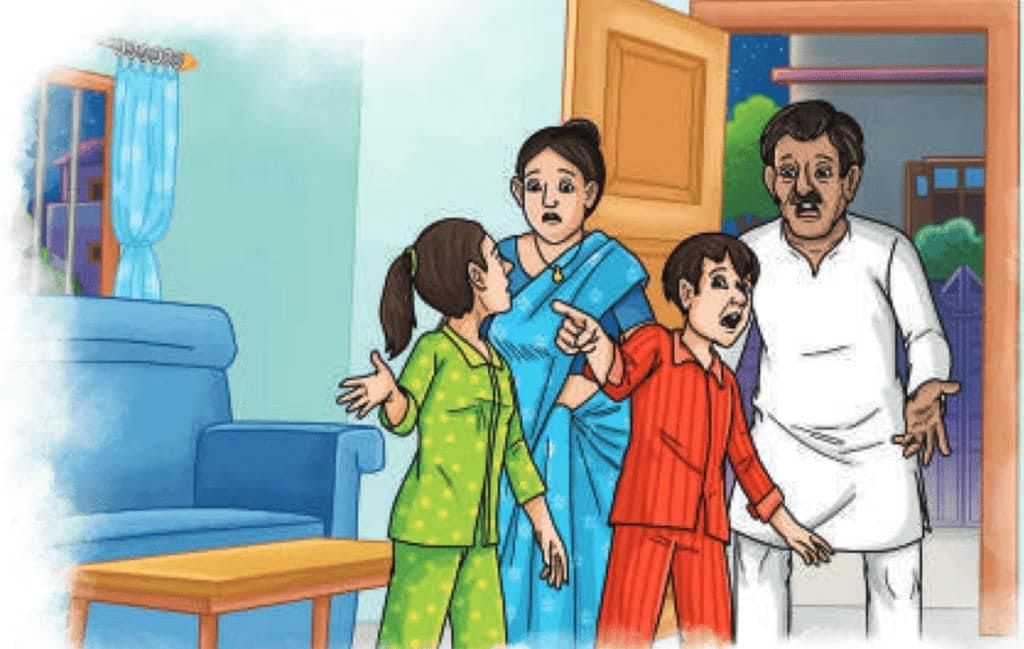
The story begins with Anita’s father returning home, only to get drenched by a falling water bag rigged to a “burglar alarm.” Furious and soaked, he demands to know who is behind the mess. Anita and her younger brother Anand exchange glances — Anand, the self-proclaimed inventor, is the one responsible. Their mother guesses right away that Anand is behind it.
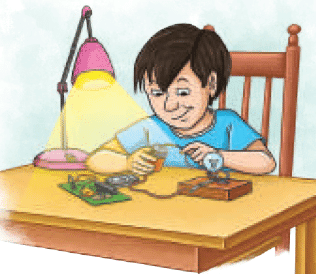
Anita, 14, narrates how her 13-year-old brother is always tinkering with electrical gadgets and dreaming up wild inventions that rarely work as expected. After a wave of thefts in their neighbourhood, Anand decided to invent a burglar alarm that would activate when someone gently opened the door, releasing a water bag and ringing a bell.
Unfortunately, the alarm couldn’t distinguish between a thief and a family member. So, when Papa returned and opened the door softly, he triggered the device and got soaked. Anita had warned Anand not to involve her if anything went wrong — and wisely kept her distance when Papa got angry. After the mishap, Anand didn’t invent anything for about a week.
The Time Machine Experiment
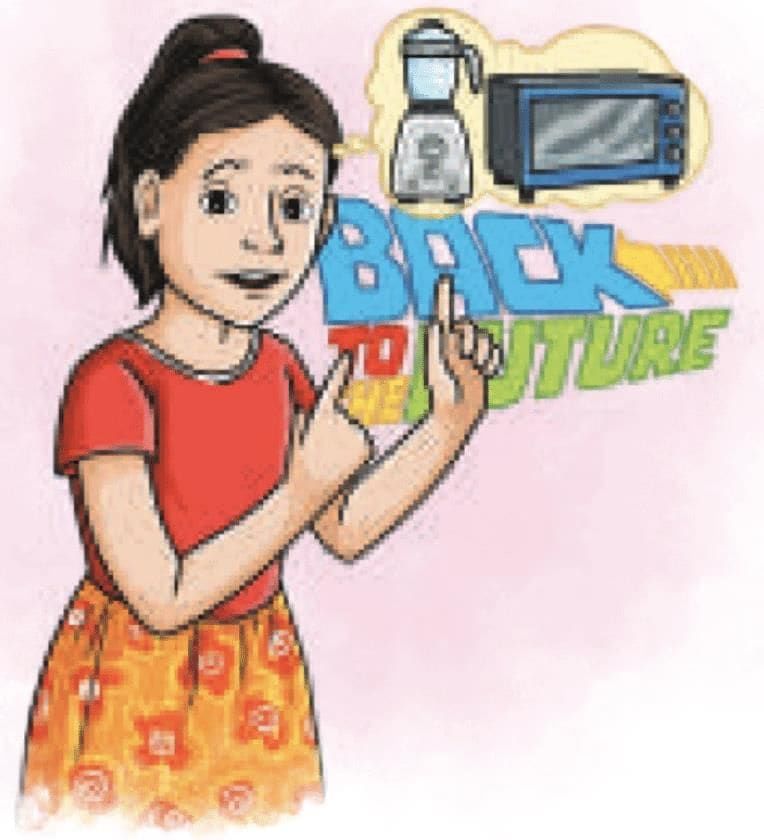
Anand’s curiosity sparked again after watching the movie Back to the Future, which featured a time-traveling machine. He became obsessed with the idea of building one himself. Papa, worried about the chaos from Anand’s last invention, locked up his toolbox, while Ma kept a close eye on household appliances to stop Anand from taking parts.
Despite this, Anand transformed his room into a buzzing lab filled with wires, switches, springs, and bulbs. After two weeks of noisy and secretive work, Anand announced that his time machine was complete. Papa firmly refused to test it, but Ma softened and persuaded him to at least take a look.
Soon after, Ma and Papa had to attend a wedding in Kharagpur and reluctantly agreed to leave Anand and Anita home alone for one night. They made Anand promise not to touch the time machine in their absence — a promise he made half-heartedly.
The Intruder and the Strange Disappearance
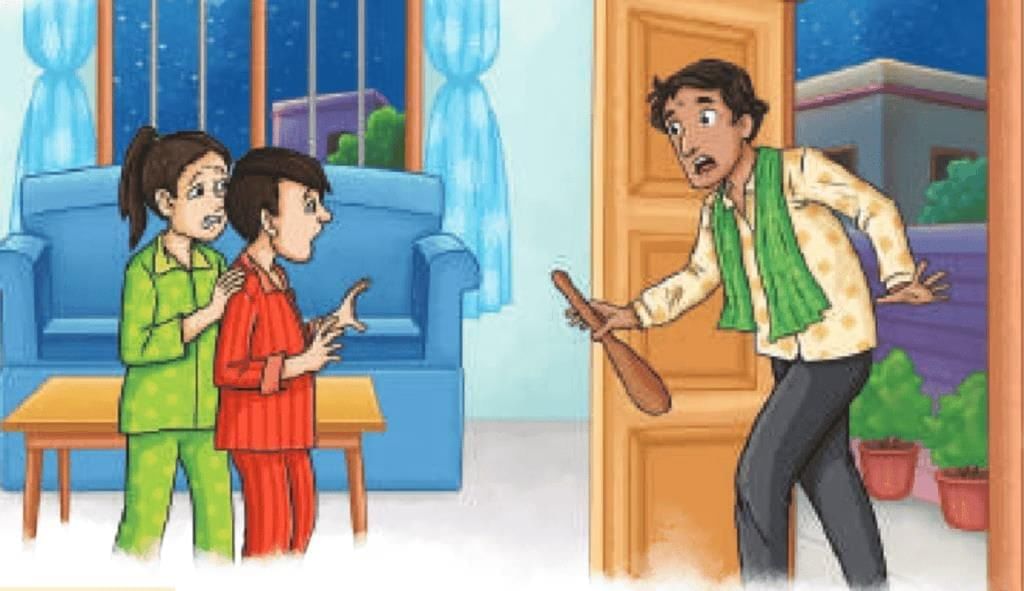
That night, while Anita was reading late into the night, she heard strange scratching and clicking sounds at the front door. Alarmed, she woke Anand. Moments later, the door burst open, and they saw Boppa — a rough-looking man who had recently started sweeping the neighbourhood. He threatened them with a stick and demanded to know where their father’s room was.
Thinking quickly, Anand lied and pointed Boppa to his own room — the one with the time machine — buying them time. Soon after, strange and eerie sounds like crashes, thumps, and a humming noise came from that room.
Panicked, Anand and Anita shouted for help. Neighbours, including Mrs. and Mr. Sharma and Dr. Mohan, came rushing in and freed the children. They entered Anand’s room to find the time machine still humming — but Boppa had vanished. Only his green scarf lay near the machine. Despite a thorough search, Boppa was nowhere to be found. The adults believed he had run away unnoticed, but Anand insisted the time machine had transported him through time.
A New Beginning
Boppa was never seen again, and his mysterious disappearance remained unsolved. Papa dismantled the time machine, saying it was unsafe — though perhaps a tiny part of him wondered if it had actually worked.
Anand, however, was thrilled. Convinced he was a genius, he immediately launched into a new project: inventing a telephone to contact aliens. Anita, amused and exasperated, continued to watch and narrate the adventures of her wildly imaginative brother.
Moral of the Story
The story teaches us that creativity and imagination are important, even if things don’t always work out as planned.
Anand’s inventions caused trouble, but his quick thinking helped during a dangerous moment.
It shows that trying new ideas is valuable, and mistakes can lead to unexpected solutions.
Difficult Words
Here are the meanings of some difficult words from the story, explained simply:
Racket: A loud and annoying noise.
Sopping: Completely wet, like being soaked with water.
Scowling: Looking angry or upset with a frown.
Rigged up: Put together quickly or temporarily.
Tinkering: Playing or experimenting with tools or gadgets.
Dynamos: Machines that make electricity.
Hoo-ha: A big fuss or commotion.
Blueprint: A detailed plan or drawing for a project.
Clanging: A loud, ringing sound, like metal hitting metal.
Stealthily: Moving quietly or secretly to avoid being noticed.
Sceptical: Doubting or not believing something easily.
Frantic: Hurried and disorganized, often in a panic.
Crestfallen: Looking sad or disappointed.
Offended: Feeling upset or hurt by something said or done.
Groggily: Acting sleepy or confused, like just waking up.
Ruffianly: Looking rough or like a troublemaker.
Brandishing: Waving something, like a stick, in a threatening way.
Cudgel: A short, thick stick used as a weapon.
Muffled: A sound that’s quiet or not clear, like it’s covered.
Eerie: Strange and a bit scary.
Clattering: Loud, repeated noises, like things banging together.
Unison: Doing something together at the same time.
Hastily: Doing something quickly, often without care.
Peering: Looking closely or carefully.
Indulgently: Acting kindly or fondly, often with a smile.
Intruders: People who enter a place without permission.
This humorous play, written by G.C. Thornley, tells the story of Mary Shaw, a young girl who wants to talk to guests visiting her home.
Her mother, Mrs. Shaw, teaches her how to be polite and say kind things to make the guests feel welcome.
However, when the guests arrive, Mary makes funny mistakes by saying the wrong things, upsetting them.
The play shows the importance of speaking carefully and kindly to others.
Explanation of the Story
Scene I: Preparing for the Guests
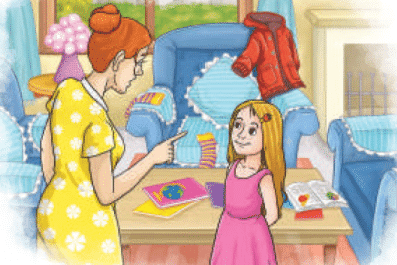
The story begins with Mrs. Shaw preparing the house for two guests, Mrs. Harding and Mrs. Lee. She asks her daughter, Mary, to put away a coat to keep the room tidy, as she wants to make a good impression. Mary complains that her mother always tells her to clean up and insists she’s not a child. Mrs. Shaw explains that Mrs. Harding is the wife of a wealthy man who recently moved to Lanfield, and Mrs. Lee is his sister, staying with them. Mary is curious about the visit and asks what they’ll talk about. Mrs. Shaw says it will be about various things and that Mary will need to visit people and talk politely in the future.
Mary boasts that she can talk well and wants to stay and speak with the guests. Mrs. Shaw is hesitant, worried that Mary might say the wrong things and ruin her chance to become friends with Mrs. Harding. Mary insists she knows how to be polite, saying phrases like “Good afternoon” and “How are you?” Mrs. Shaw agrees to let her stay but gives her advice: be kind, say things that make people happy, laugh to keep the mood light, and start conversations if everyone is quiet. She also tells Mary to ask guests to stay longer when they want to leave, like saying, “Must you go? Can’t you stay?” Mary promises to follow these rules, changes into a clean dress, and feels confident she can handle the visit.
Scene II: The Visit Goes Wrong
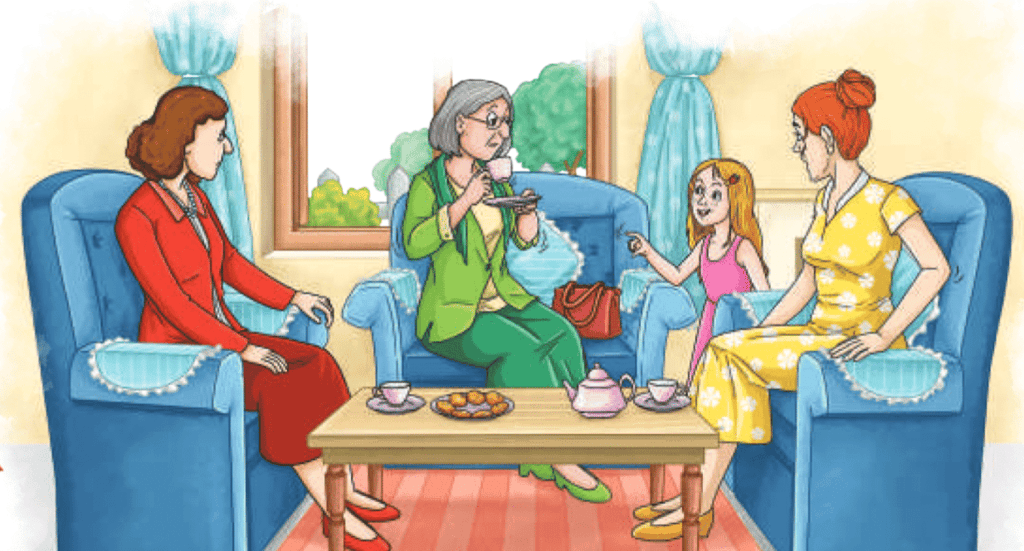
Mrs. Harding and Mrs. Lee arrive at Mrs. Shaw’s house. Mrs. Shaw welcomes them politely and is happy they like the new town, Lanfield. When the room becomes quiet, she looks at her daughter Mary to speak kindly as she was told earlier.
But Mary immediately makes a mistake. She compliments Mrs. Harding for having “beautiful children,” but Mrs. Harding replies that she has no children. Mary keeps insisting she saw a boy and a girl, which makes Mrs. Harding unhappy and everyone uncomfortable.
To change the topic, Mrs. Shaw talks about Mr. Best, a man who lives nearby. Mary jokes about him traveling to London every day, calling it a boring life. She also says that he only reads newspapers and makes a rude comment about bankers. Mrs. Lee then says that her brother is also a banker and does the same. Mary feels embarrassed and says sorry.
Mrs. Shaw brings up Mrs. Best to lighten the mood, but Mary laughs at her clothes—a blue dress with a red coat. Mrs. Harding then says she also wears the same clothes, which makes things awkward again.
Mary tries to keep talking but keeps saying the wrong things. She speaks badly about Mrs. Cotter for staying in bed and calling the doctor often. But then Mrs. Harding says she stays in bed in the morning, and Mrs. Lee says she goes to the doctor regularly. Mary quietly says sorry again.
Then, when Mrs. Shaw mentions her good friend Mrs. Grantley, Mary calls her “too talkative” and says such women aren’t interesting. Mrs. Lee calmly replies that her mother is very talkative. Mary is embarrassed once again.
Next, Mary sees a dirty dog outside and complains about it loudly. Mrs. Harding looks out and says that the dog, Towzer, belongs to her. Mary blushes and apologizes.
Still looking out, Mary sees Mr. Pomeroy riding a horse and makes fun of him for riding and practising shooting every day. But Mrs. Lee says her brother does the same and even moved to Lanfield for those activities.
Finally, Mrs. Harding says they must leave. Mrs. Shaw, trying to be polite, asks them to stay longer. But Mary forgets everything her mother taught her and says the wrong thing: “Oh, must you stay? Can’t you go?”
The visit ends in an uncomfortable silence, and Mary’s attempt to be helpful turns into a series of embarrassing moments for everyone.
Moral of the Story
The play teaches us that we should think before we speak and choose words that are kind and respectful.
Mary’s mistakes show that being polite and careful in conversations helps make others feel welcome and avoids hurting their feelings.
It reminds us to listen to good advice and practice speaking thoughtfully.
Difficult Words
Here are the meanings of some difficult words from the story, explained simply:
Hilariously: In a very funny way.
Blunders: Careless mistakes that cause problems.
Embarrasses: Makes someone feel uncomfortable or shy.
Wealthy: Having a lot of money or riches.
Polite: Showing kindness and respect to others.
Compliments: Kind words said to praise someone.
Awkward: Uncomfortable or embarrassing.
Mocking: Making fun of someone in a mean way.
Apologises: Says sorry for doing something wrong.
Disapprovingly: Showing that you don’t like or agree with something.
This poem, written by Natalie Joan, is a light-hearted and funny story about a strange man who does odd things.
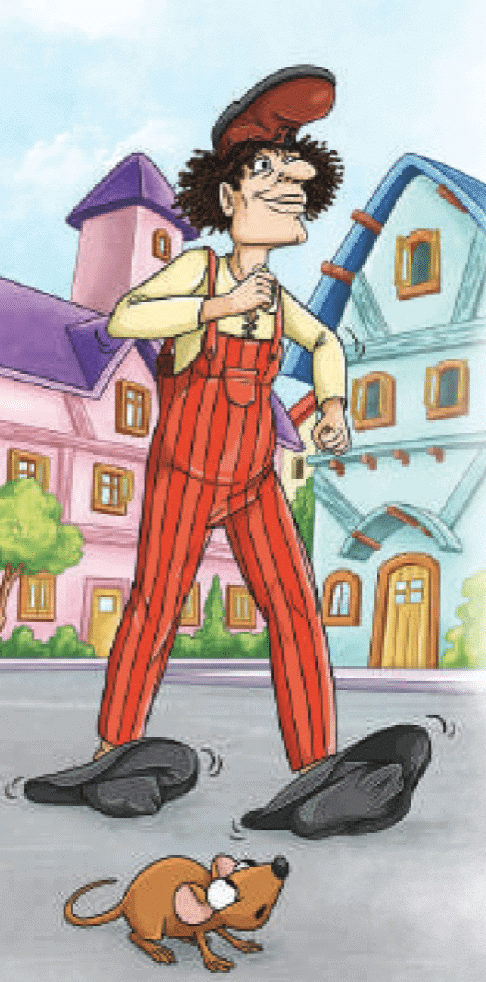
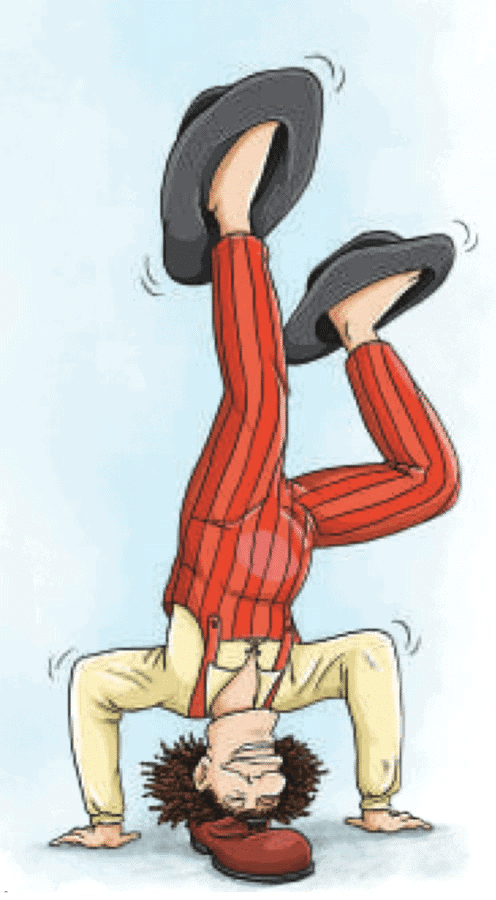
The poet meets a man who wears a shoe on his head and hats on his feet, offers a bun as a rose, and hops home on his head.
The poem uses silly actions and playful words to make readers smile and enjoy the fun of imagination.
ExplanationStanza 1
One day a funny kind of man Came walking down this street He wore a shoe upon his head And hats upon his feet.
Explanation:
The poem begins with the poet talking about a “funny kind of man” walking down the street in a strange way. He looks very odd and funny because he wears a shoe on his head instead of a hat, and hats on his feet instead of shoes. This mix-up in how he dresses catches the reader’s eye and makes the poem feel playful and silly. The man’s strange style shows that he doesn’t follow the usual rules and likes to be different. This makes him interesting and funny from the very beginning.
Stanza 2
He raised the shoe and smiled at me, His manners were polite; But never had I seen before Such a funny sounding sight.
Explanation:
In this part, the funny man sees the poet and politely lifts the shoe on his head like he’s tipping a hat, and smiles at her. His polite behavior is different from how strange he looks, which makes it even more funny. The poet is surprised by how odd this is and calls it a “funny sounding sight.” This means it feels so strange that it’s like she can almost hear how unusual it is. The poet’s reaction shows she is amazed to see something so different from normal.
Stanza 3
He said, “Allow me to present Your Highness with a rose. ”And taking out a currant bun He held it to my nose
Explanation: The funny man talks politely and calls the poet “Your Highness,” a special title used for kings and queens. This makes his way of speaking playful and silly. He says he wants to give her a rose, which is a kind gift. But instead of a flower, he takes out a currant bun—a small sweet bread with dried fruits—and holds it near her nose like a flower to smell. This surprise is funny because a bun is food, not a nice-smelling gift. It shows the man’s funny and playful nature and how he likes to surprise people.
Stanza 4
I staggered back against the wall And then I answered, “Well! I never saw a rose with such A funny looking smell.”
Explanation:
Surprised by what the man did, the poet almost falls back against the wall. She answers in a smart way, saying she has never seen a “rose” that has such a “funny looking smell.” By calling the bun a rose, she is joining in the man’s joke and shows she is having fun. The words “funny looking smell” mix seeing and smelling in a playful way because smells are something we feel, not see. This shows the fun and happy moment between the poet and the man, where they both enjoy being silly.
Stanza 5
He then began to sing a song, And sat down on the ground; You never heard in all your life Such a funny feeling sound.
Explanation:
The funny man keeps acting strange by sitting on the ground and singing a song. The poet says the song has a “funny feeling sound,” meaning it sounds unusual and makes you feel amused. The song probably has a strange tune or words that match the man’s playful personality. Sitting on the ground while singing shows he doesn’t care about rules and likes to do things his own way, unlike most people who would stand while singing. This part of the poem makes the mood more fun and invites us to laugh at the man’s happy and silly actions.
Stanza 6
“My friend, why do you wear two hats Upon your feet?” I said. He turned the other way about, And hopped home on his head.
Explanation: Curious about his strange look, the poet asks the man why he wears “two hats on your feet.” She asks kindly because she wants to understand his odd choice. Instead of answering, the man turns around and hops home on his head, which is even sillier. This is funny because he doesn’t answer the question and does something very strange—hopping on his head is not something people can really do. The poem ends with this funny picture, making us smile at the man’s playful and free-spirited way of being.
Moral of the Poem
The poem teaches us that it’s okay to be different and have fun in our own way.
The funny man’s silly actions show that imagination and playfulness can bring joy to others.
It reminds us to enjoy life’s light moments and not take everything too seriously.
Difficult Words
Here are the meanings of some difficult words from the poem, explained simply:
Manners: Polite behaviour or way of acting.
Polite: Showing respect and kindness to others.
Present: To give something to someone formally.
Highness: A title used to address someone important, like a king or queen.
Currant: A small, dried fruit used in baking.
Bun: A small, round bread, sometimes with fruits inside.
This story, written by Hugh Lofting, is a funny and heartwarming tale about John Dolittle, a doctor who learns to talk to animals.
At first, he treats people, but a parrot named Polynesia and a man who sells cat food convince him to become an animal doctor.
By learning animal languages, Dolittle helps animals like horses, cows, and even mice, making him famous among creatures worldwide.
The story shows the importance of understanding and caring for animals.
Explanation of the Story
A New Idea
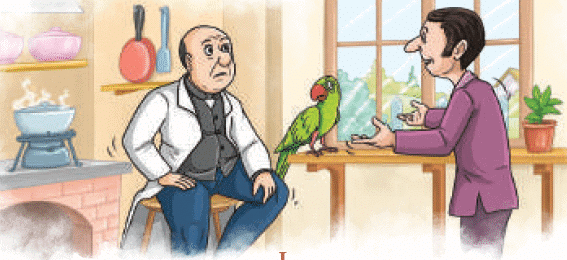
The story begins with Doctor Dolittle in his kitchen, talking to the Cat’s-food-Man, who has a stomach ache. The man suggests that Dolittle should stop being a people’s doctor and become an animal doctor instead, praising Dolittle’s deep knowledge about animals. Polynesia, a parrot, overhears the conversation and agrees. She encourages Dolittle to focus on treating animals, who would appreciate him more.
Learning to Speak Animal Languages
Polynesia reveals a big secret — animals can talk in their own languages. She shows Dolittle the difference between human and bird speech, exciting him with the idea that he could learn it too. That rainy afternoon, Polynesia begins teaching Dolittle the basics of bird language. Later, when Jip the dog enters, Polynesia explains how animals also communicate through their ears, tails, feet, and noses. With practice and Polynesia’s help, Dolittle learns to understand and speak to animals fluently, inspiring him to officially become an animal doctor.
Success as an Animal Doctor
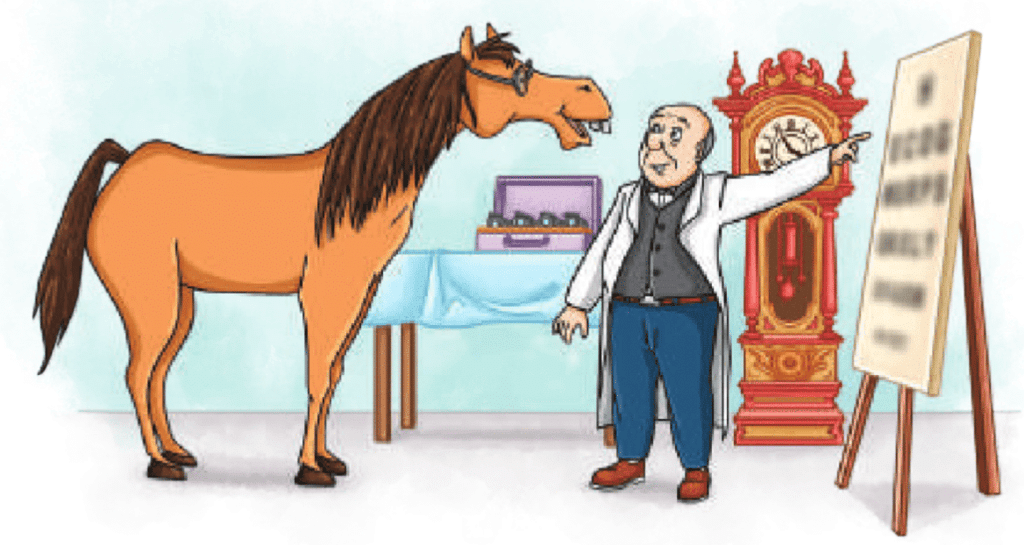
News spreads that Dolittle can talk to animals. People start bringing him sick pets, and farmers bring their cows and sheep. One day, a plough horse visits, complaining that the local vet cannot understand him. Dolittle listens carefully and learns that the horse is going blind in one eye and needs glasses, not medicine. Dolittle promises to help, and soon the horse receives green spectacles and can work comfortably again.
A World Full of Happy Animals
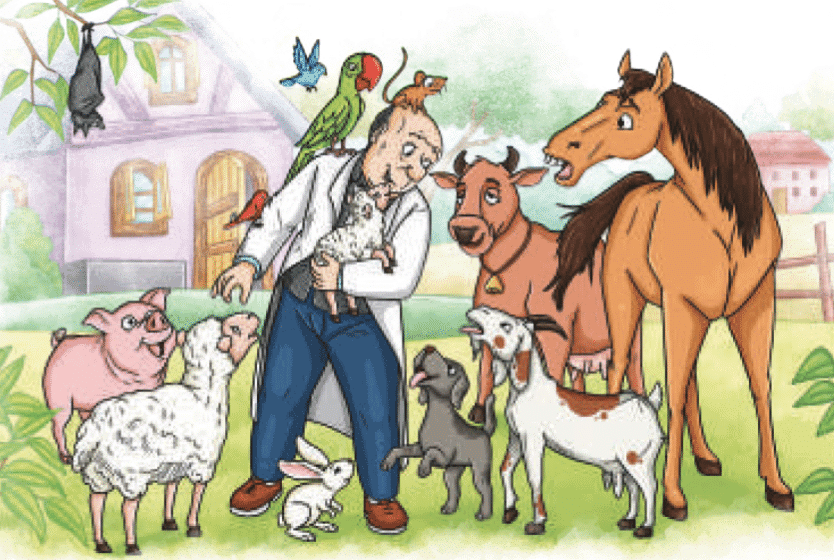
As Dolittle’s reputation grows, more animals — from mice and badgers to bats — come to see him, filling his garden. To manage the crowd, Dolittle builds special labelled doors and tunnels for different animals. Birds spread the news across countries, and in a few years, Doctor Dolittle became famous among animals worldwide. He is content, living a life where he truly understands and helps his animal friends.
Moral of the Story
The story teaches us to listen to others and be open to new ideas, even if they seem unusual at first.
Dolittle’s willingness to learn from Polynesia shows that understanding and respecting animals can make a big difference.
It also reminds us that kindness and care for all creatures, big or small, can lead to happiness and success.
Difficult Words
Here are the meanings of some difficult words from the story, explained simply:
Veterinarians (Vets): Doctors who treat animals.
Scholar: A person who is good at reading and learning.
Twitching: Making small, quick movements, like shaking a nose or ear.
Spectacles: Glasses worn to help see better.
Ploughing: Using a tool to turn soil in fields for farming.
Diagnose: To find out what is wrong with someone or something.
Cure: To make someone healthy again after being sick.
Crowded: Full of many people or animals in one place.
This essay, written by Helen Keller, a well-known author who could not see or hear, shares what she would do if she could see for just three days.
She describes how she enjoys the world by touching things and imagines the beauty she could experience with sight.
Helen plans each day carefully, focusing on people, nature, history, and daily life.
The essay encourages us to value our senses and enjoy the world around us.
Explanation of the Story
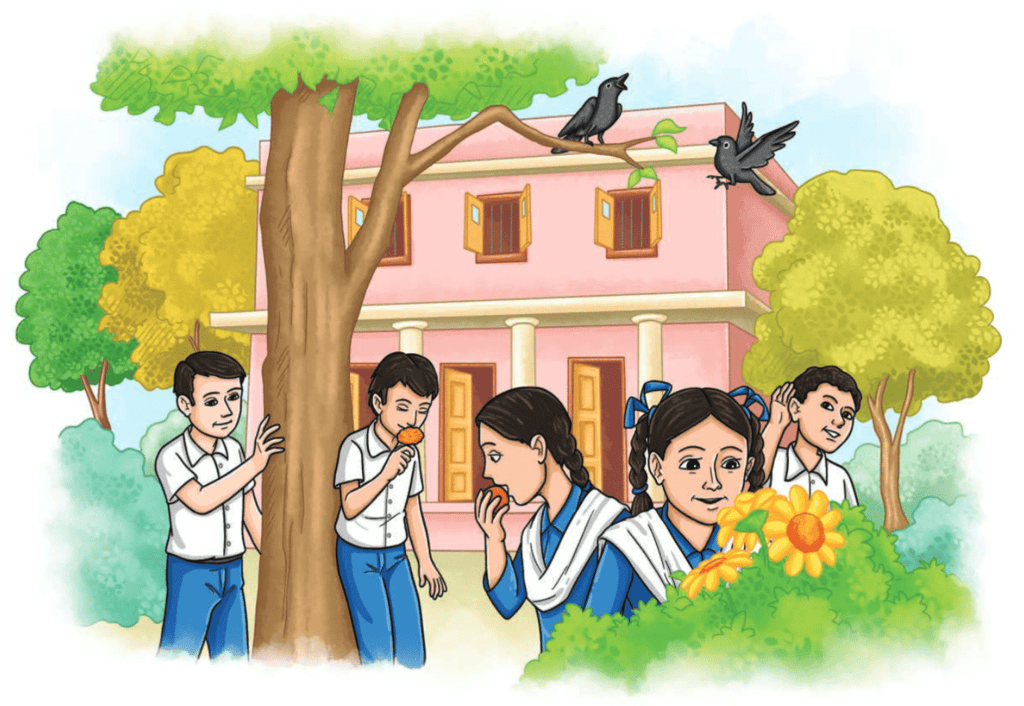
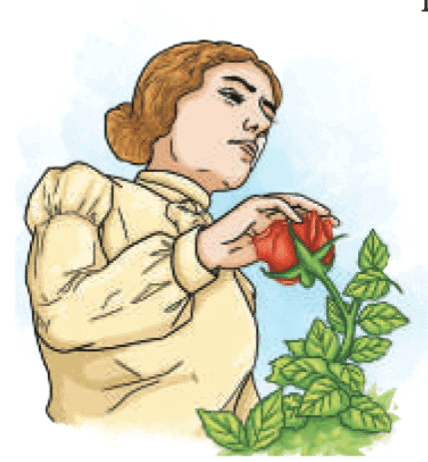
The essay starts with Helen Keller explaining how she finds joy in touching things, even though she is blind. She feels the shape of a leaf, the smooth bark of a tree, or the rough surface of a pine. In spring, she touches tree branches to find buds, which show nature waking up after winter. Sometimes, she feels a bird shaking with song on a branch, which makes her happy. However, she wishes she could see these things, as sight would show her even more beauty. She imagines having three days of sight and divides them into three parts.
Day 1
On the first day, Helen wants to see the people who have made her life special with their kindness and friendship. Since she cannot see, she knows her friends by touching their faces, feeling if they are happy or sad. She wishes to look into their eyes to understand their true feelings, calling eyes the “window of the soul.” This day is about spending time with loved ones and appreciating their importance in her life.
Day 2
On the second day, Helen would wake up early to watch the sunrise, when night turns into day with beautiful light. She wants to see the sun brighten the earth. She plans to visit museums to learn about the world’s past and present. In museums, she would see models of old animals like dinosaurs and learn about how people have grown smarter over time. This day is about enjoying nature’s beauty and understanding the history of life.
Day 3
On the third day, Helen would go to a busy city to watch people living their daily lives. Standing at a street corner, she would look at their faces to see if they were smiling, serious, or sad. She feels happy seeing smiles, proud of people working hard, and kind toward those who are struggling. This day is about understanding the lives of ordinary people and feeling connected to them.
At the end of the three days, Helen knew she would become blind again. She understands that three days are not enough to see everything she wants. She tells people who can see to use their eyes as if they might lose their sight tomorrow. She also suggests listening to music, touching things, smelling flowers, and tasting food as if those senses could be gone. Helen believes that using all senses fully helps us find happiness in life, but she thinks sight is the most wonderful sense.
Moral of the Story
The story teaches us to appreciate our senses and use them to enjoy the world around us.
Helen Keller demonstrates that even tiny things, like a leaf or a smile, can be very special.
By reflecting on what life would be like without a sense, she helps us understand the value of what we have.
The story encourages us to show kindness to those who cannot see or hear.
It inspires us to live each day with a sense of wonder and gratitude.
Difficult Words
Here are the meanings of some words from the essay, explained simply:
Symmetry: The even shape of something, like a leaf, that looks the same on both sides.
Quiver: A small, fast shake, like a bird moving while singing.
Longing: A strong wish for something.
Companionship: The feeling of being close to friends or family.
Behold: To look at something with amazement.
Panorama: A wide, beautiful view, like a sunrise.
Glimpse: A quick look at something.
Pageant: A big display, like a museum show.
Condensed: Made short, like a quick summary of history.
Carcasses: The bones or remains of dead animals.
Mastodons: Big, furry animals like elephants that lived long ago.
Stature: The size or height of a person or thing.
Haunts: Places where people often go, like a shop or workplace.
Merely: Only or just.
Strains: Tunes or music, like songs from a band.
Tactile: Related to touching things.
Morsel: A tiny piece of food.
Facets: Different parts of something, like the joys of life.
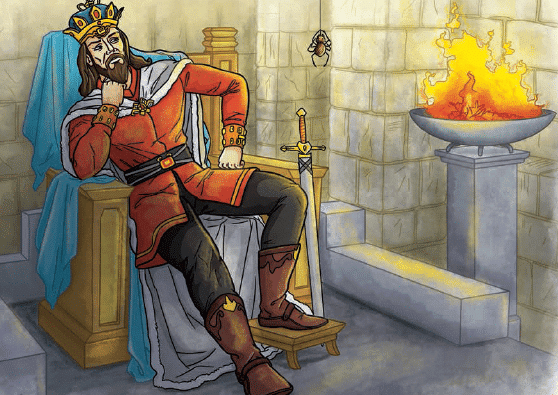
The poem, written by Eliza Cook, is a narrative poem that tells the inspiring story of King Bruce of Scotland.
The king is feeling sad and defeated after failing multiple times to achieve an important goal for his people.
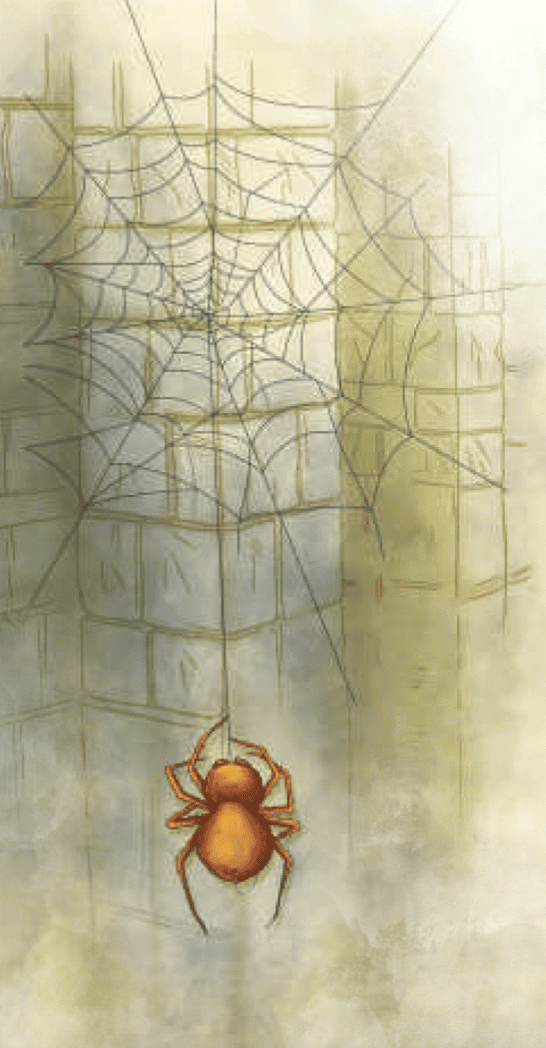
While sitting alone, he watches a spider repeatedly attempt to climb to its web, falling each time but never giving up.
The spider’s persistence motivates King Bruce to try again, leading to his eventual success.
The poem delivers a powerful message about perseverance and resilience, encouraging readers to keep trying despite setbacks.
Explanation Stanza 1
King Bruce of Scotland flung himself down In a lonely mood to think; ‘Tis true he was monarch, and wore a crown, But his heart was beginning to sink.
Explanation: King Bruce of Scotland is feeling lonely and sad. He throws himself down, lost in his thoughts. Even though he is a king with a crown and great power, he feels upset inside. This stanza sets the scene, showing that even a strong ruler can feel weak when facing problems. The poet uses simple words to describe the king’s sadness, helping readers understand his troubled feelings.
Let’s Revise: How does the poet help us understand King Bruce’s mood? View Answer
Stanza 2
For he had been trying to do a great deed, To make his people glad; He had tried and tried, but couldn’t succeed And so he became quite sad.
Explanation: The king’s sadness comes from his repeated failures to do something important that would make his people happy. He has tried many times, but each attempt has failed. This makes him very unhappy, and he feels his efforts are useless. The stanza shows the king’s good intentions and the heavy responsibility he feels as a leader, making his struggle relatable to anyone who has faced challenges.
Let’s Revise: What was the reason behind King Bruce’s repeated attempts? View Answer
Stanza 3
He flung himself down in low despair, As grieved as man could be; And after a while he pondered there, “I’ll give it all up,” said he.
Explanation: Feeling hopeless, King Bruce lies down, filled with deep sorrow, as sad as anyone could be. After thinking for a while, he decides to give up completely, saying, “I’ll give it all up.” This moment shows the king at his lowest point, ready to abandon his dreams. The poet builds suspense by emphasising his despair, preparing readers for a change in the story.
Let’s Revise: Why did King Bruce decide to give up? View Answer
Stanza 4
Now just at that moment a spider dropped, With its silken, filmy clue; And the King, in the midst of his thinking, stopped To see what the spider would do. ‘Twas a long way up to the ceiling dome, And it hung by a rope so fine; That how it would get to its cobweb home, King Bruce could not divine.
Explanation: While King Bruce is lost in thought, a spider suddenly drops down on a thin, silky thread. The king stops thinking about his problems and watches the spider with curiosity. The spider’s web is high up near the ceiling, and the thread looks very fragile. King Bruce wonders how such a small creature will reach its home. This stanza introduces the spider, shifting the focus from the king’s sadness to the spider’s effort, setting up the lesson to come.
Let’s Revise: Why does King Bruce find the spider’s climb so fascinating? View Answer
Stanza 5
It soon began to cling and crawl Straight up with strong endeavour; But down it came with a slippery sprawl, As near to the ground as ever. Up, up it ran, not a second to stay, To utter the least complaint; Till it fell still lower, and there it lay, A little dizzy and faint.
Explanation: The spider starts climbing the thread, holding on tightly and moving upward with great effort. However, it slips and falls back to the ground, almost to where it started. Without stopping to rest or complain, the spider tries again right away but falls again, feeling dizzy and weak. This stanza shows the spider’s determination and its first failures, which are similar to the king’s own struggles. The poet’s clear description makes the spider’s effort exciting to read about.
Let’s Revise: How is the spider’s struggle similar to King Bruce’s situation? View Answer
Stanza 6
Its head grew steady – again it went, And travelled a half-yard higher; ‘Twas a delicate thread it had to tread, And a road where its feet would tire. Again it fell and swung below, But again it quickly mounted; Till up and down, now fast, now slow, Nine brave attempts were counted.
Explanation: After resting, the spider’s head clears, and it climbs again, reaching a bit higher—about half a yard more than before. The thread is very thin, and the climb is tiring for the spider’s small feet. Despite making progress, it falls again and swings below the thread. The spider keeps trying, going up and down, sometimes quickly and sometimes slowly. The poet counts nine brave tries, each ending in a fall. This stanza builds tension, showing the spider’s hard work and the king’s growing interest.
Let’s Revise: How does the spider’s repeated effort affect the mood of the poem? View Answer
Stanza 7
“Sure,” cried the King, “that foolish thing Will strive no more to climb; When it toils so hard to reach and cling, And tumbles every time.”
Explanation: King Bruce, watching the spider’s repeated failures, speaks out loud. He thinks the spider is foolish and will stop trying because it works so hard, but falls every time. This stanza shows the king’s doubt, which mirrors his own feelings of hopelessness about his failed attempts. The poet uses the king’s words to create drama, making readers wonder if the spider will give up or keep going.
Let’s Revise: Why does the poet have the king call the spider “foolish”? View Answer
Stanza 8
But up the insect went once more, Ah me! ’tis an anxious minute; He’s only a foot from his cobweb door, Oh say, will he lose or win it? Steadily, steadily, inch by inch, Higher and higher he got; And a bold little run at the very last pinch Put him into his native cot.
Explanation: Despite the king’s doubts, the spider tries again, and the poet describes the moment as tense, saying, “Ah me! ’tis an anxious minute.” The spider is now just a foot away from its web, its “cobweb door.” Moving slowly and steadily, inch by inch, it climbs higher. With a final, brave effort, it reaches its web. This stanza is the high point of the spider’s journey, showing its success through hard work. The poet’s words like “steadily” and “inch by inch” highlight the spider’s careful progress.
Let’s Revise: What effect does the spider’s “bold little run” have on the king and the story? View Answer
Stanza 9
“Bravo, bravo!” the King cried out, “All honour to those who try; The spider up there, defied despair; He conquered, and why shouldn’t I?”
Explanation: King Bruce is thrilled by the spider’s success and shouts, “Bravo, bravo!” He praises the spider for its courage, saying it “defied despair” by not giving up despite many falls. Inspired, he realises that if a tiny spider can succeed, he too can try again. This stanza is a turning point for the king, as the spider’s example gives him new hope and determination to continue his efforts.
Let’s Revise: Why does the king say, “He conquered, and why shouldn’t I?” View Answer
Stanza 10
And Bruce of Scotland braced his mind, And gossips tell the tale, That he tried once more as he tried before, And that time did not fail.
Explanation: Motivated by the spider, King Bruce makes up his mind to try again. The poet notes that people later tell the story that he made one more attempt and succeeded this time. This final stanza ends the poem on a hopeful note, showing that the king’s hard work, inspired by the spider, leads to success. It reinforces the poem’s message that trying again can bring victory.
Let’s Revise: What does the phrase “And that time did not fail” imply about King Bruce’s final attempt? View Answer
Moral of the Poem
The poem teaches us that we should never give up, even if we fail many times.
The spider’s hard work and determination show that success comes from keeping on trying.
King Bruce’s story shows that failures are like steps that lead to success if we stay strong and believe in ourselves.
The poem encourages us to find inspiration in small things, like a spider, to achieve our goals.
Difficult Words
Here are the meanings of some words from the poem, explained simply:
Flung: Threw or dropped himself down quickly.
Monarch: A king or queen who rules a country.
Deed: An important action or task.
Despair: A feeling of sadness and hopelessness.
Grieved: Felt very sad or upset.
Pondered: Thought deeply about something.
Filmy: Very thin and light, like a spider’s thread.











 View Answer