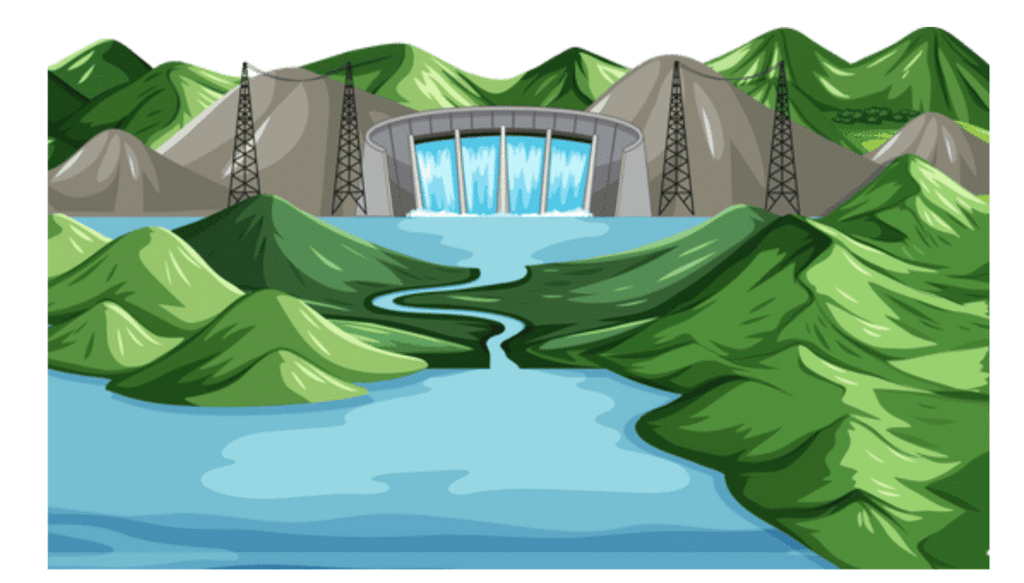
IntroductionIn this chapter, Nihal and his classmates are excited about their upcoming school trip to the Bhakra Nangal Dam, where they will learn how falling water is used to generate electricity at the hydroelectric power house. During the trip, they will also enjoy a scenic 13-kilometer train ride along the Sutlej river and through the Shivalik hills. Before the trip, their teacher assigns them a task to prepare a presentation on the uses of electricity. The students explore electricity’s applications in various settings—home, school, neighborhood, and city—and learn that electricity is generated from different sources, including wind, solar power, and falling water. They also realize that while electricity is essential in daily life, it must be handled carefully to avoid dangers. The chapter introduces the concept of portable sources of electricity, like batteries used in devices such as torchlights, wall clocks, and remotes.
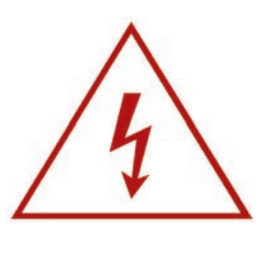
Caution — The warning signs on electric poles and appliances remind us that electricity can be dangerous if not handled carefully. Never conduct experiments with the power supply at home or school. Even electricity from portable generators can pose a risk. For safe experimentation, use only batteries or cells, like those found in torchlights, wall clocks, radios, or remotes.
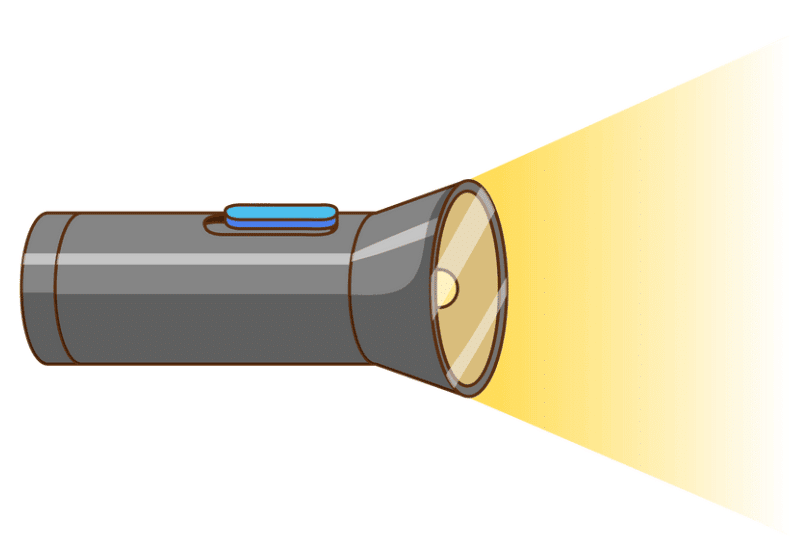
A Torchlight
What is a Torchlight?
A torchlight (also called a torch or flashlight) is a portable device that produces light, commonly used to see in the dark.
Components of a Torchlight:
Lamp: The part that produces light when the torch is turned on.
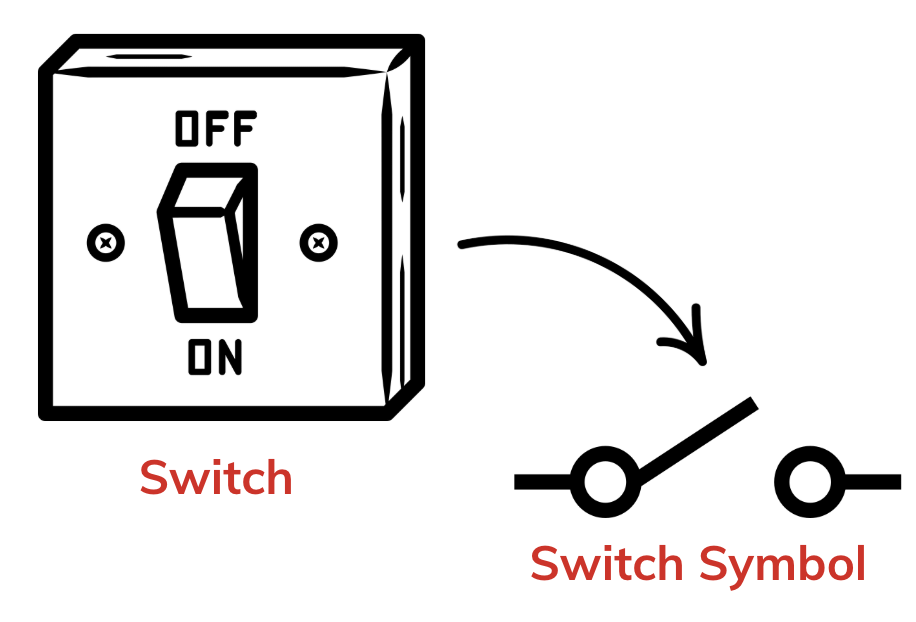
Switch: A control that turns the lamp “on” or “off”. Sliding the switch to one position makes the lamp glow, and sliding it back turns it off.
Electric Cells: Inside the torch, there are usually two or more electric cells that provide the energy to make the lamp glow.
How It Works
When the switch is in the “on” position, it connects the cells to the lamp, allowing electricity to flow and make the lamp glow. In the “off” position, the connection is broken, and the lamp stays off.
A Simple Electrical Circuit
What is an Electrical Circuit?
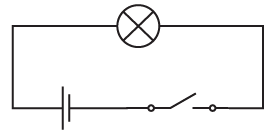
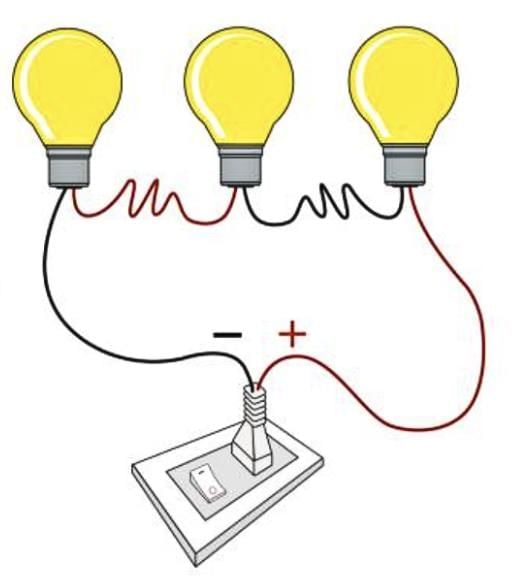
An electrical circuit is a complete path that allows electric current to flow from a power source (like a cell) through a device (like a lamp) and back, making the device work.
1. Electric Cell
An electric cell is a small, portable source of electrical energy, like those used in torchlights, clocks, or remotes.
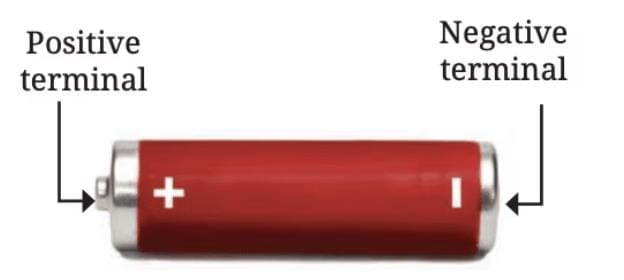
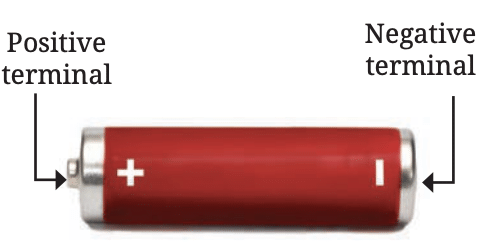
1. Terminals: Every cell has two terminals:
Positive Terminal (+): Marked with a “+” sign, usually a metal cap.
Negative Terminal (-): Marked with a “-” sign, usually a flat metal disc.
2. Function: The cell provides the energy needed to make devices work by allowing current to flow from the positive to the negative terminal.
2. Battery
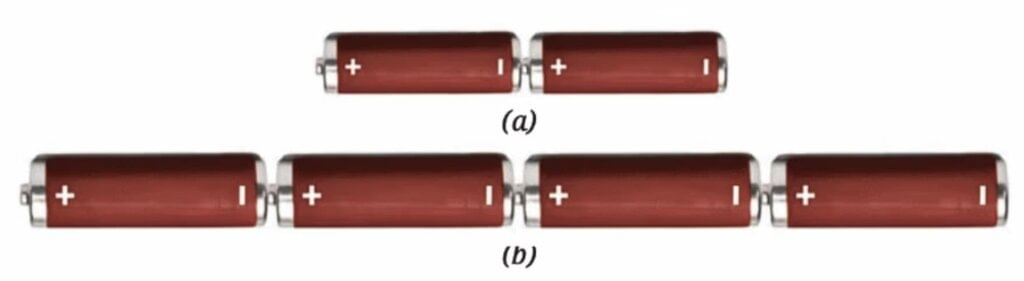
A battery is a combination of two or more electric cells connected together to provide more energy or last longer.
Connection: In a battery, the positive terminal of one cell is connected to the negative terminal of the next cell, forming a chain. This forms battery. Battery made up of (a) two cells (b) four cells
Example: In a torch, two cells are placed so the positive terminal of one touches the negative terminal of the other, making the lamp glow when connected properly.
Fascinating Fact
The term “battery” is often used for a single cell, like the one in a mobile phone, even though it’s technically one cell.
Electric Lamp
1. Incandescent Lamp:
Structure: An incandescent lamp has a glass bulb with a thin wire called a filament inside, supported by two thicker wires.
Terminals: The filament connects to two terminals—one at the metal case of the lamp’s base and one at the metal tip in the center.
How It Works: When electric current flows through the filament, it gets hot and glows, producing light.
Usage: Found in older torchlights, these lamps glow regardless of which terminal connects to the cell’s positive or negative terminal.
Fascinating Fact
If the filament breaks, the lamp “fuses,” stopping the current flow and preventing the lamp from glowing.
2. LED Lamp
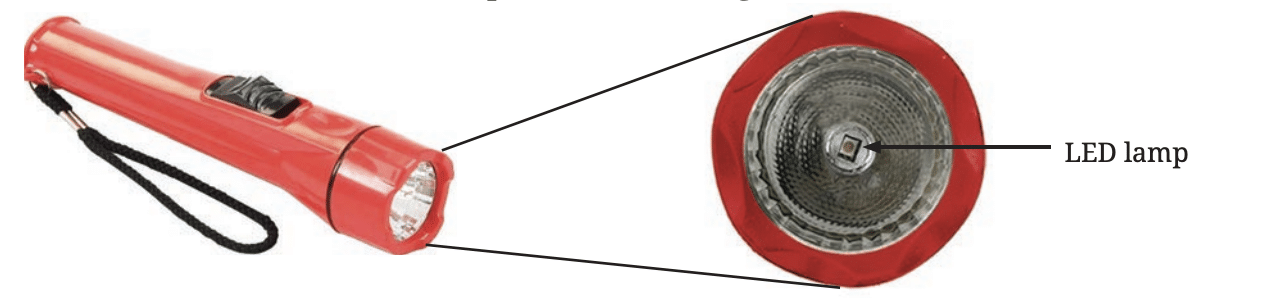
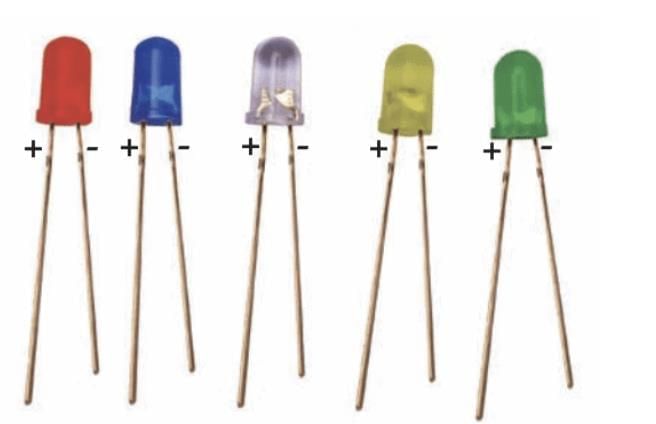
Structure: A Light Emitting Diode (LED) lamp has no filament. It has two wires—one longer (positive terminal) and one shorter (negative terminal).An LED lamp for torch
How It Works: LEDs glow only when connected correctly, with the positive terminal (longer wire) to the battery’s positive terminal and the negative terminal (shorter wire) to the negative terminal. Current flows in one direction only.LEDs of different colours
Usage: Many modern torchlights use LEDs because they are efficient and long-lasting.
Making an Electric Lamp Glow Using an Electric Cell or Battery:
To make an electric lamp glow, we can use a simple circuit with an electric cell (or battery), an incandescent lamp, a cell holder, and some electric wires. Here’s how it works:
Electric Cell: This provides the electrical energy required to make the lamp glow. The energy comes from the chemical reaction inside the cell.
Incandescent Lamp: The lamp is a device that uses electricity to produce light. It has a filament that glows when electricity passes through it.
Cell Holder: A holder is used to securely place the electric cell in the circuit. It ensures the proper connection of the battery’s terminals to the wires.
Electric Wires: Wires are used to connect the components in the circuit. The wires allow the flow of electric current from the cell to the lamp.
How the Circuit Works:
Connection: The two terminals of the electric cell are connected to the lamp through the electric wires.
Current Flow: When the circuit is complete, the electric current flows from the negative terminal of the cell, through the wires, and into the lamp. This causes the filament inside the lamp to heat up and produce light.
Prediction of Lamp Glow: Depending on how the circuit is set up, the lamp may or may not glow. If the circuit is properly connected (with all components in place), the lamp will glow. Otherwise, it will not light up.
Electrical Circuit
A circuit is a closed loop that allows current to flow from the positive terminal of a cell, through a device (like a lamp), and back to the negative terminal.
Current Flow: Electric current is considered to flow from the positive to the negative terminal of the cell.
Incandescent Lamp: Glows when the circuit is complete, regardless of terminal connections.
LED: Glows only when terminals are correctly aligned with the battery’s terminals.
Electric Switch
A switch is a device that controls the flow of current by completing (closing) or breaking (opening) a circuit.
How It Works:
1. ON Position: The switch closes the circuit, allowing current to flow, making the lamp glow.
2. OFF Position: The switch opens the circuit, stopping the current, so the lamp doesn’t glow.
Placement: A switch can be placed anywhere in the circuit and still control the current flow.
Example: In a torch, sliding the switch to “on” completes the circuit, and sliding it to “off” breaks it.
Real-Life Switches: Home switches for lights work similarly but are designed differently for safety and convenience.
Circuit Diagrams
What is a Circuit Diagram?
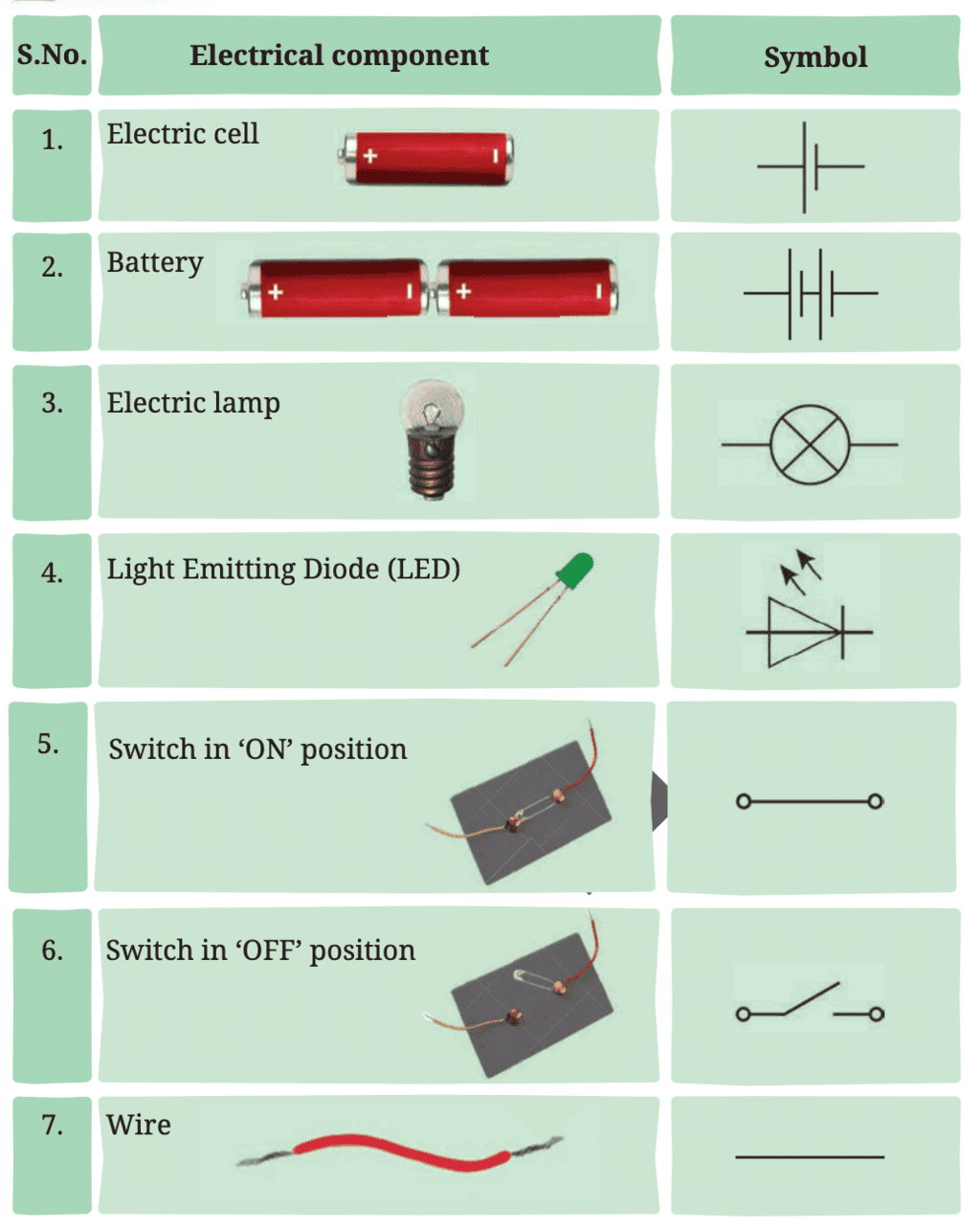
A circuit diagram is a drawing that uses standard symbols to represent the components of an electrical circuit, making it easy to understand how the circuit is built.
Symbols for Components:
Electrical components and their symbols
Purpose Circuit diagrams simplify complex circuits, making them easier to draw and understand.
Dive Deeper – Standardization
International organizations like the International Electrotechnical Commission (IEC), American National Standards Institute (ANSI), and the Institute of Electrical and Electronics Engineers (IEEE) create standard symbols used worldwide, ensuring everyone understands the same diagrams.
Electrical Conductors and Insulators
Materials are classified based on whether they allow electric current to flow through them.
Conductors
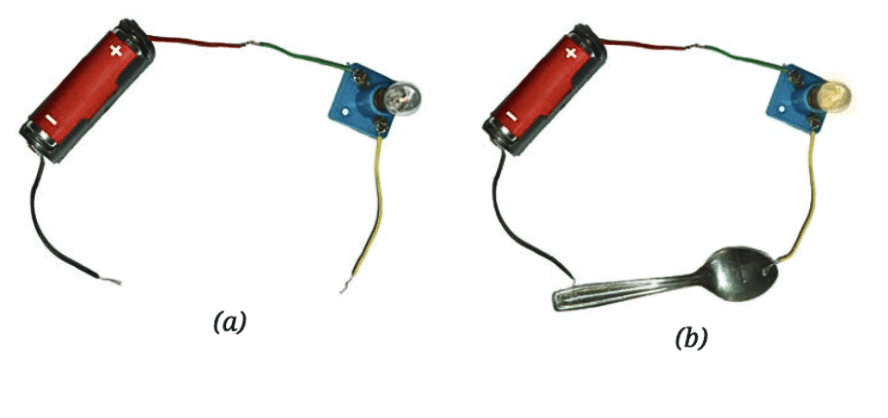
Materials that allow electric current to flow easily are called conductors or good conductors of electricity.
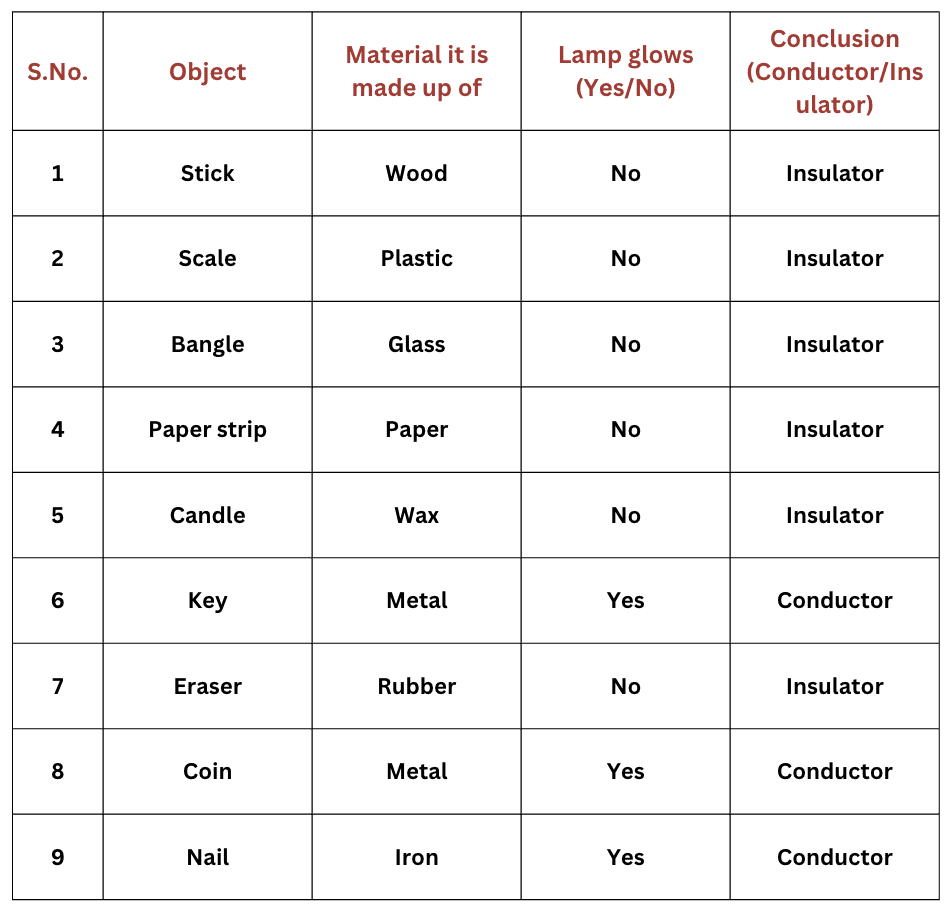
Examples: Metals like copper, silver, gold, aluminum, and objects like keys, coins, and sewing needles.
Use in Circuits: Conductors, especially copper, are used for wires because they allow current to flow efficiently.
Dive Deeper – Best Conductors:
Silver, copper, and gold are the best conductors, but copper is used most often due to its lower cost and availability.
Insulators
Materials that do not allow electric current to flow are called insulators or poor conductors of electricity.
Examples: Plastic, rubber, glass, wood, cork, paper, wax, ceramics, and objects like plastic scales, erasers, and candles.
Use in Circuits: Insulators are used to cover wires, make plug tops, and switches to prevent electric shocks and ensure safety.
(a) Conduction tester (b) Using the conduction tester for testing a materialHere are the results of testing materials for electrical conductivity:
Importance of Both:
Conductors: Used in wires, switches, plugs, and sockets to carry current.
Insulators: Protect users from electric shocks by covering conductive parts.
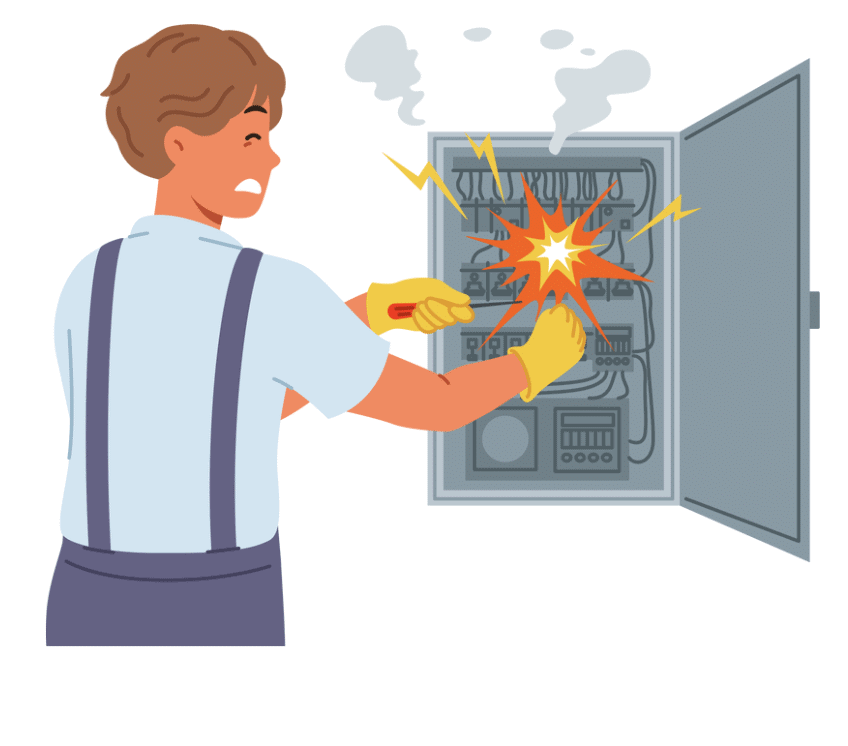
Caution: The human body is a conductor, so electric current passing through it can cause severe injury or death. Never touch switches or plugs with wet hands, use devices in wet areas, or handle damaged electrical equipment.
Dive Deeper – Types of Electricity:
Direct Current (DC): Produced by batteries, used in small devices like torchlights and phones.
Alternating Current (AC): Supplied from power plants to wall sockets, used for larger appliances.
Points to Remember
An electric cell provides portable electrical energy and has a positive terminal (metal cap, +) and a negative terminal (metal disc, -).
A battery is formed by connecting two or more cells, with the positive terminal of one cell touching the negative terminal of the next, to supply more energy or last longer.
The term “battery” is sometimes used for a single cell, like in mobile phones.
An incandescent lamp has a filament that glows when heated by current, connected to two terminals (metal case and tip), and glows regardless of terminal connections.
A “fused” incandescent lamp doesn’t glow because its filament is broken, stopping current flow.
An LED has no filament, only glows when its positive terminal (longer wire) connects to the battery’s positive terminal and negative terminal (shorter wire) to the negative terminal, as current flows in one direction.
A switch completes (ON) or breaks (OFF) a circuit, controlling current flow, and can be placed anywhere in the circuit.
An electrical circuit is a closed path for current, flowing from the positive to the negative terminal of a cell, making devices like lamps glow.
Circuit diagrams use standard symbols (e.g., long/short lines for cell terminals, triangle for LED) set by organizations like IEC, ANSI, and IEEE, making circuits easy to understand globally.
Conductors (e.g., copper, silver) allow current to flow and are used for wires, while insulators (e.g., plastic, rubber) block current and are used for safety coverings.
Copper is widely used for wires due to its good conductivity, lower cost, and abundant supply compared to silver or gold.
The human body conducts electricity, so handling electrical devices unsafely (e.g., with wet hands) can cause injury or death.
Battery-powered devices use Direct Current (DC), while wall sockets supply Alternating Current (AC) for larger appliances.
Difficult Words and Their Meanings
Electricity: A form of energy that powers devices, like lights or fans, by flowing through wires or circuits.
Circuit: A complete path that allows electric current to flow from a power source (like a cell) through a device and back.
Electric Cell: A small, portable device that produces electrical energy, with positive and negative terminals, used in torchlights or remotes.
Battery: Two or more electric cells connected together to provide more energy or last longer.
Terminal: The ends of a cell or device (positive or negative) where current enters or leaves.
Incandescent Lamp: A light bulb with a filament that glows when heated by electric current, used in older torchlights.
Filament: A thin wire inside an incandescent lamp that glows to produce light when current passes through it.
LED (Light Emitting Diode): A modern lamp that glows when current flows in one direction, with no filament, used in many torchlights.
Switch: A device that controls current by opening (stopping) or closing (allowing) a circuit.
Conductor: A material, like metal, that allows electric current to flow easily, used for wires.
Insulator: A material, like plastic or rubber, that blocks electric current, used to cover wires for safety.
Circuit Diagram: A drawing using standard symbols to show how electrical components are connected in a circuit.
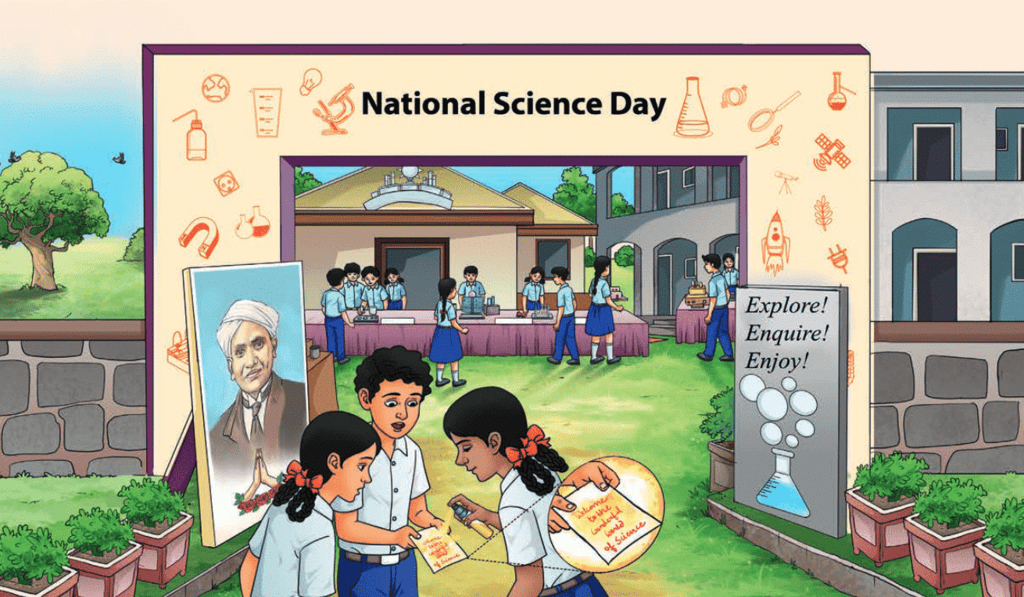
On 28 February, the school celebrated National Science Day with a science fair. At the entrance, Ashwin and Keerthi were given plain white sheets of paper. They were puzzled—why a blank sheet?
Soon, a volunteer sprayed a liquid on their sheets, and like magic, the words “Welcome to the Wonderful World of Science” appeared! This amazing trick made them very curious.
At the Colourful World of Substances stall, they saw many experiments where mixing things changed their colour. Excited to learn more, they decided to explore the science behind it.
Let’s join them on this fun journey!
Nature – Our Science Laboratory
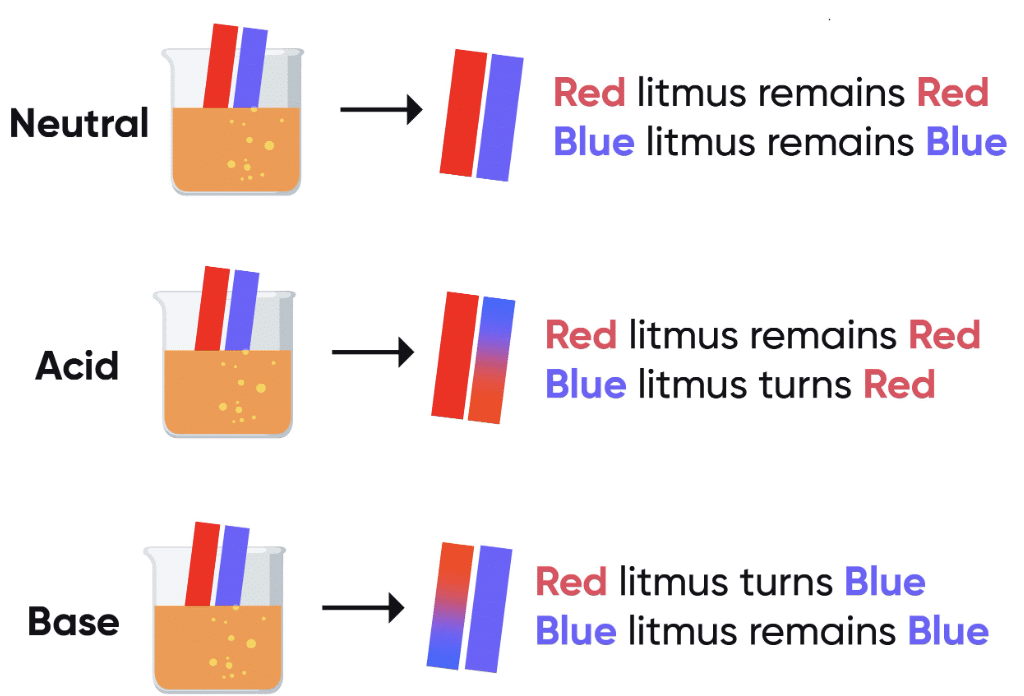
We can determine if a substance is acidic, basic, or neutral by using special tools called indicators, which change color or smell when mixed with different substances.
1. Litmus as an Indicator
What is Litmus? Litmus is a natural material obtained from lichens, which are organisms formed by a fungus and an alga living together, often found on rocks and trees in rainy, clean areas.
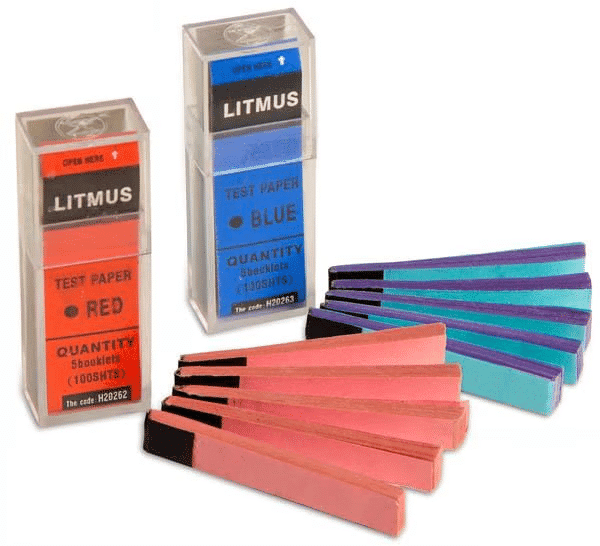
Forms of Litmus: It is available as blue and red litmus paper strips, used to test substances.
How Litmus Works:
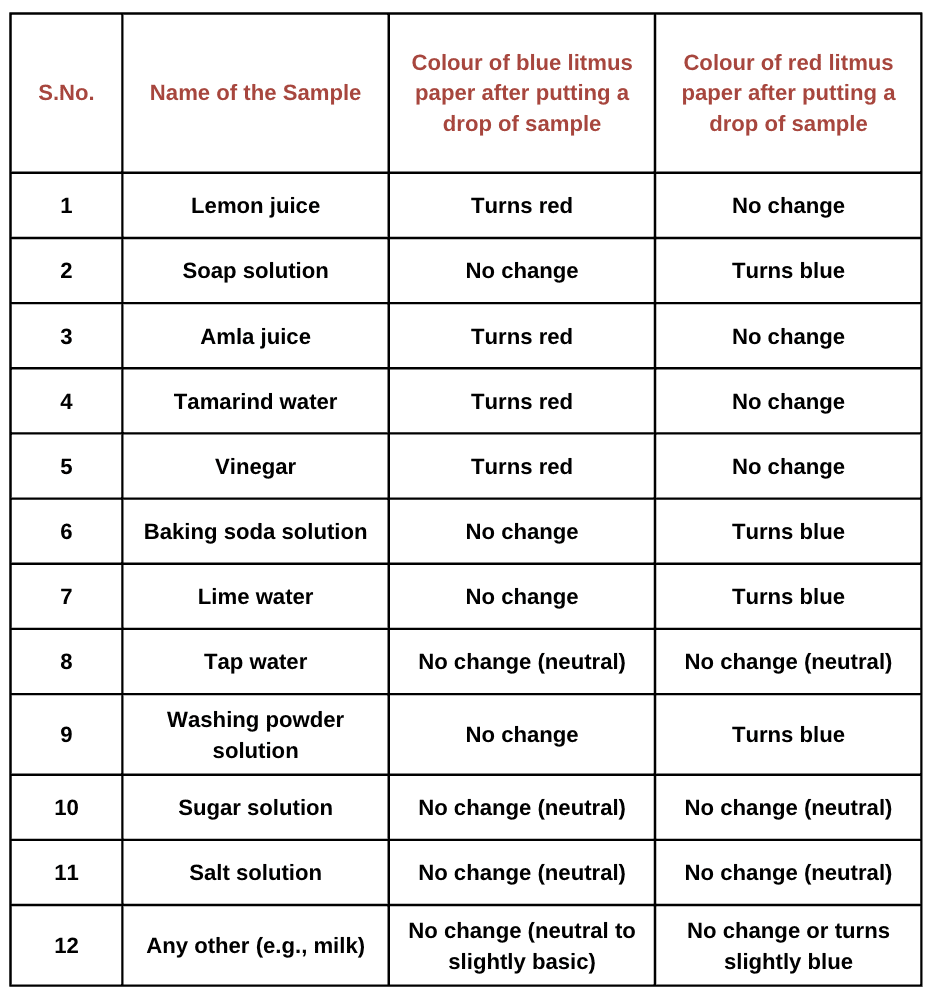
If a substance turns blue litmus paper red, it is acidic.
If a substance turns red litmus paper blue, it is basic.
If there’s no color change in either litmus paper, the substance is neutral.
Here are the test results showing the nature of samples using blue and red litmus papers.
Try yourself:
What does blue litmus paper turning red indicate?
A.The substance is acidic.
B.The substance is basic.
C.The substance is neutral.
D.The substance is colorful.
View Solution
Properties of Acids and Bases
Acids:
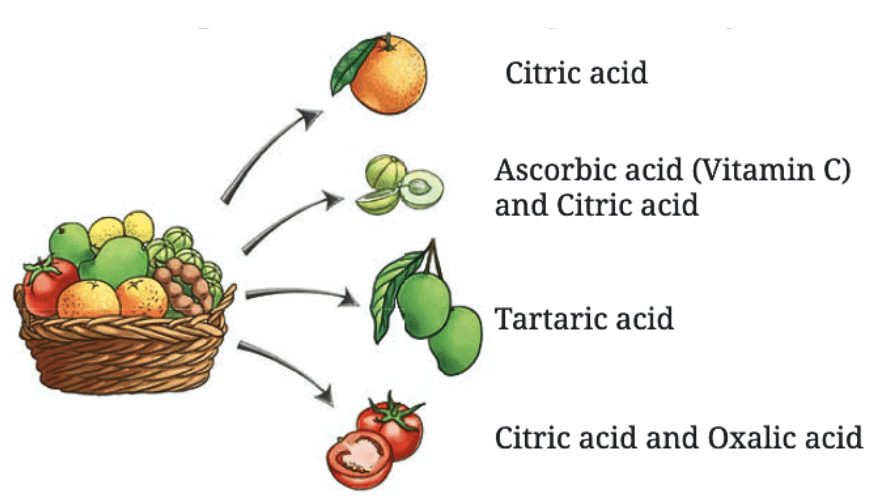
Taste sour, like lemon juice, tamarind, or vinegar.
Contain specific acids, e.g., citric acid in lemon, lactic acid in curd, tartaric acid in tamarind, acetic acid in vinegar.
Turn blue litmus red and red rose extract red.
Bases:
Feel slippery or soapy when rubbed, like baking soda solution or soap.
Often taste bitter, but not all bitter things are bases (e.g., bitter gourd is not basic).
Turn red litmus blue, red rose extract green, and turmeric paper red.
Neutral Substances:
Do not have a strong taste or slippery feel.
Do not change the color of indicators like litmus, red rose extract, or turmeric.
2. Red Rose as an Indicator
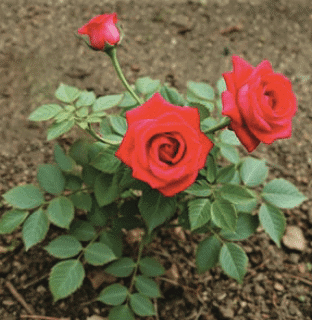
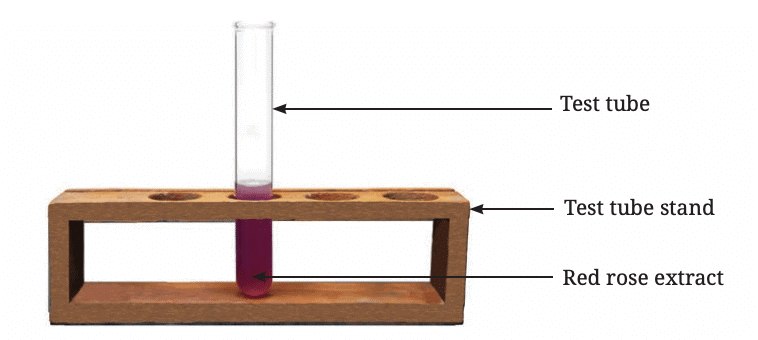
Preparation of Red Rose Extract Red rose extract is prepared by collecting fresh rose petals and washing them properly. The petals are then crushed and soaked in hot water. After some time, the mixture is filtered to get a red-colored liquid known as red rose extract.
How It Works:
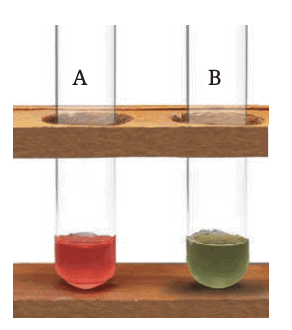
In acidic substances, the extract changes to a shade of red.
In basic substances, it changes to a shade of green.The changes in colour of the red rose extract on adding lemon juice (A) and soap solution (B)
In neutral substances, the extract’s color remains unchanged.
Red rose extract is an acid-base indicator because it shows different colors for acidic and basic substances, similar to litmus.
Some examples:
Lemon juice (acidic) turns the extract red.
Soap solution (basic) turns it green.
Neutral substances like sugar solution don’t affect the color.
Try yourself:
What color does red rose extract turn in basic substances?
A.Red
B.Green
C.Yellow
D.Blue
View Solution
3. Turmeric as an Indicator
Preparation
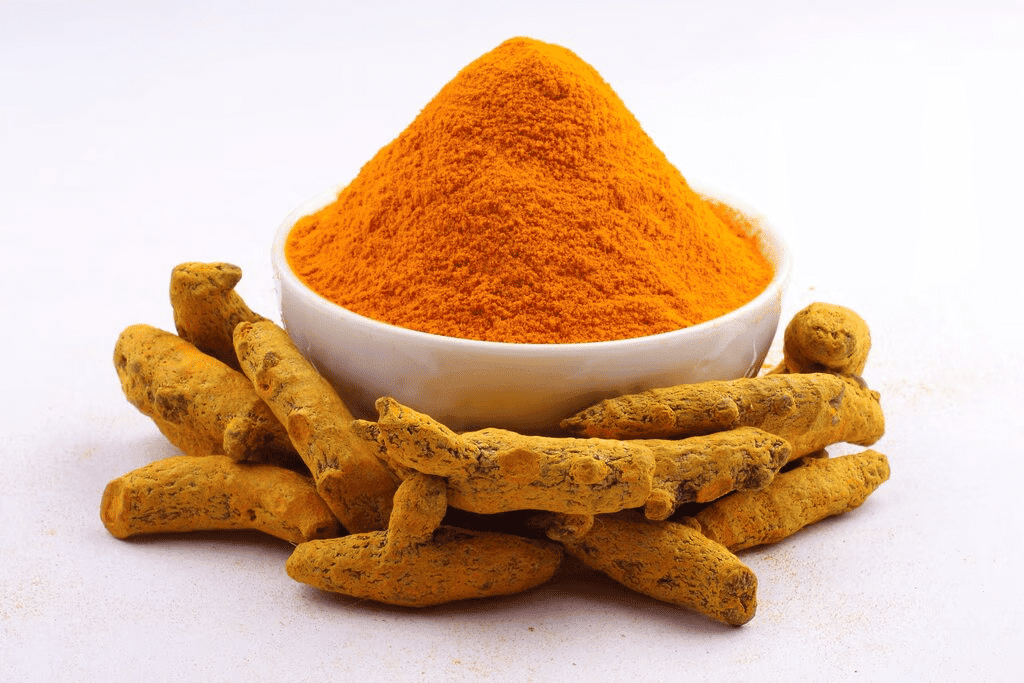
Turmeric powder is mixed with water to make a paste, spread on filter paper, and dried to create yellow turmeric paper strips.
How It Works:
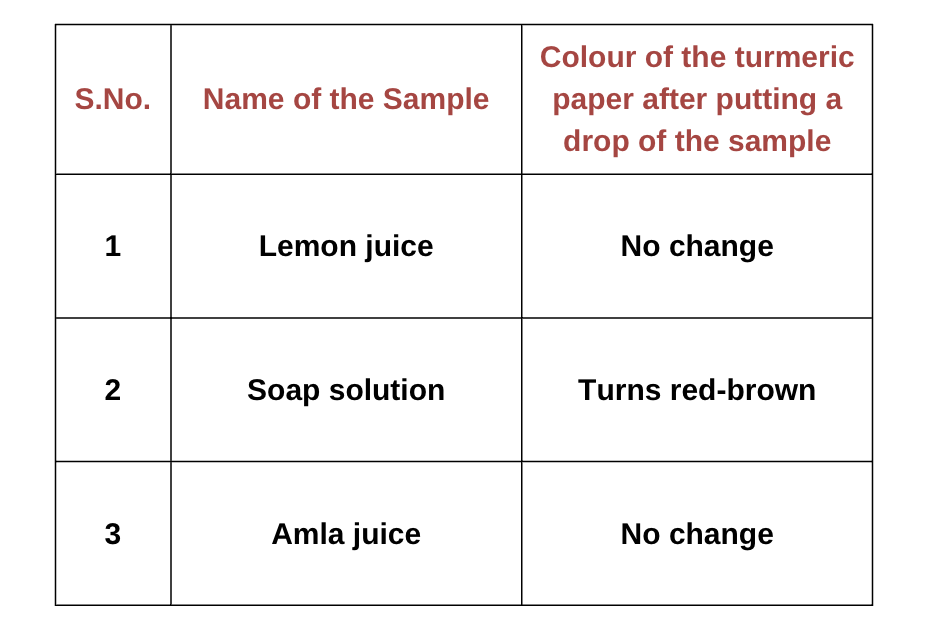
Basic substances turn turmeric paper red.
Acidic and neutral substances do not change the yellow color of turmeric paper.
A turmeric stain on a shirt changes color when soap (basic) is applied, showing its indicator property.
Turmeric paper can only identify basic substances, not distinguish between acidic and neutral ones.
Here are the test results showing the nature of samples using turmeric paper:
Fascinating Facts: Why is Turmeric Called the ‘Golden’ Spice?
Turmeric, also known as Haldi, is a bright yellow spice that belongs to the ginger family. Grown widely in India and other countries, it’s a common ingredient in everyday cooking. But turmeric is much more than just a flavouring agent!
In the Ayurvedic system of medicine, turmeric is believed to offer several health benefits. That’s why it plays a key role in many traditional home remedies. Its rich golden color and healing properties have earned it the name ‘Golden Spice’.
Researchers today are also studying turmeric for its potential benefits beyond taste and color—making this age-old spice even more special!
4. Olfactory Indicators
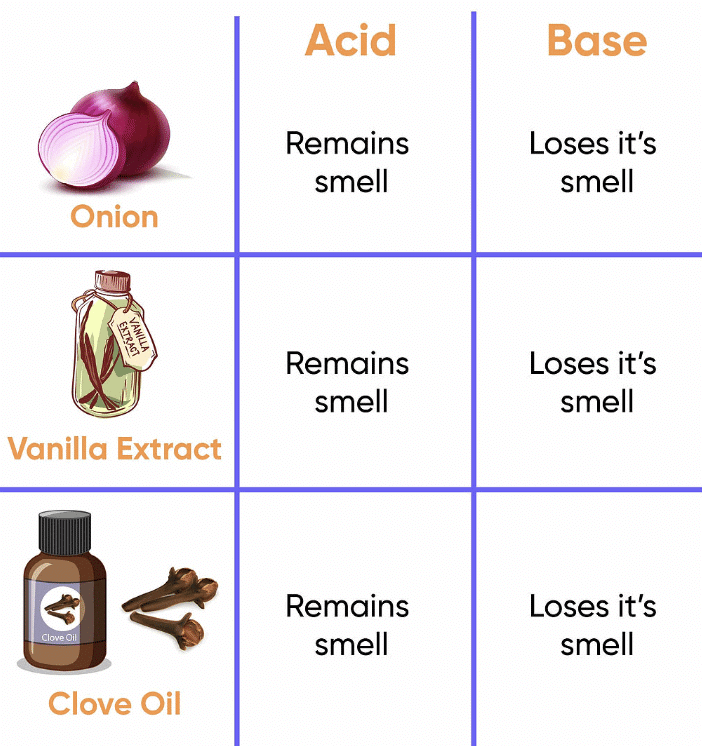
Olfactory indicators are special substances whose smell changes when they come in contact with acidic or basic substances.
For example, a cloth soaked in onion juice loses its smell when mixed with tamarind water (which is acidic) or baking soda solution (which is basic).
These indicators are useful because they help us identify whether a substance is acidic or basic just by observing changes in smell.
5. Other Natural Indicators
Substances like beetroot, purple cabbage, red hibiscus (gudhal), and Indian blackberry (jamun) can also act as acid-base indicators, changing colors in acidic or basic solutions.
Did You Know ?
Hydrangea plants in the Himalayas or North-eastern states produce blue flowers in acidic soil and pink or red flowers in basic soil, showing how soil nature affects plants.
Know a Scientist: Acharya Prafulla Chandra Ray
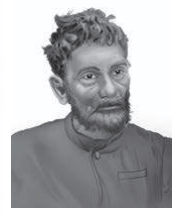
Acharya Prafulla Chandra Ray is known as the Father of Modern Indian Chemistry. He earned his chemistry doctorate in the UK and later returned to India. In 1901, he started India’s first pharmaceutical company.
He wrote about the history of Indian science to show the world the achievements of ancient Indian scientists. A true reformer, he also supported teaching in the mother tongue to make education easier and more meaningful.
Let’s Revise
Q: How does turmeric act as a natural indicator? View Answer
Q: What are olfactory indicators and how do they work? View Answer
What Happens When Acidic Substances Mix with Basic Substances?
1. Neutralization Process
When an acid (e.g., lemon juice) is mixed with a base (e.g., lime water) in the right amount, they react to form a solution that is neither acidic nor basic.
This reaction is called neutralization.
Neutralization shows how acids and bases balance each other, creating a neutral substance that doesn’t affect indicators.
This process is key to understanding how substances interact chemically.
Activity
Let’s see how acids and bases react using litmus solution:
First, add lemon juice (which is acidic) to a blue litmus solution. It turns red, showing the presence of an acid.
Now, slowly add lime water (a base) to the same solution. As more base is added, the red color starts changing back to blue, showing the solution is becoming neutral or basic.
This happens because the base cancels the effect of the acid, resulting in a neutral solution.
2. Products of Neutralization
The reaction produces salt, water, and releases heat.
Acid + Base → Salt + Water + Heat.
Neutralization in Daily Life
Situation 1: Ant Bite
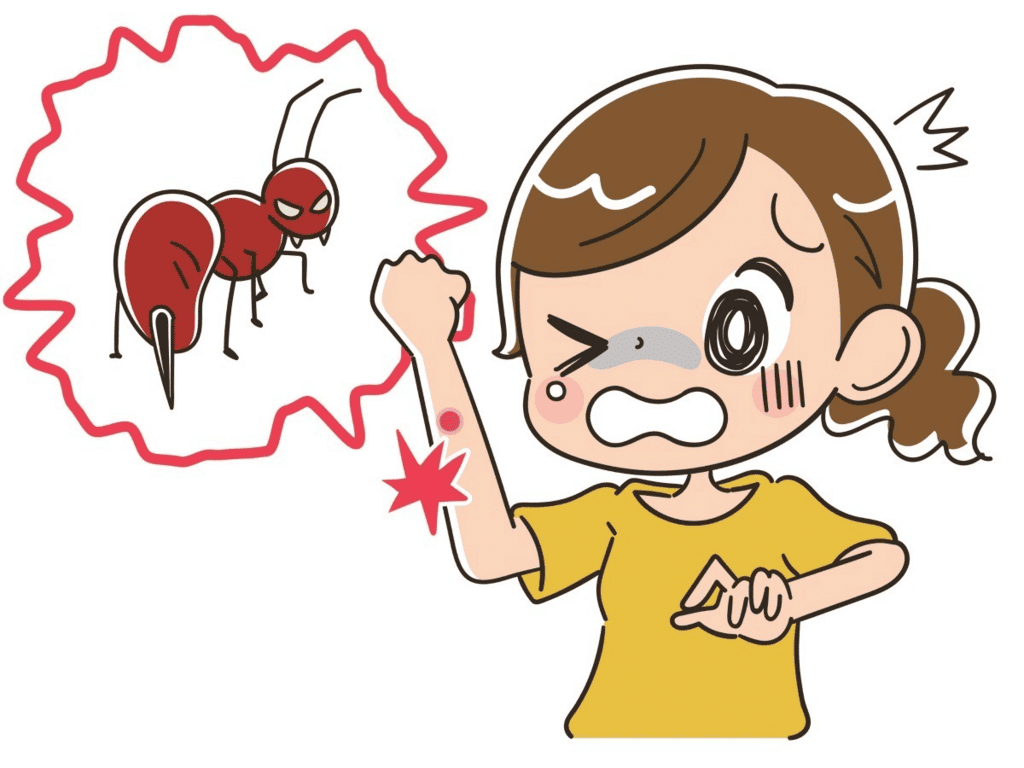
When a red ant bites, it injects formic acid into the skin, causing redness and a stinging pain.
Applying moist baking soda, which is a base, neutralizes the formic acid, relieving the pain and reducing swelling.
Different regions may use other basic remedies, like lime water, for ant bites.
Situation 2: Soil Treatment
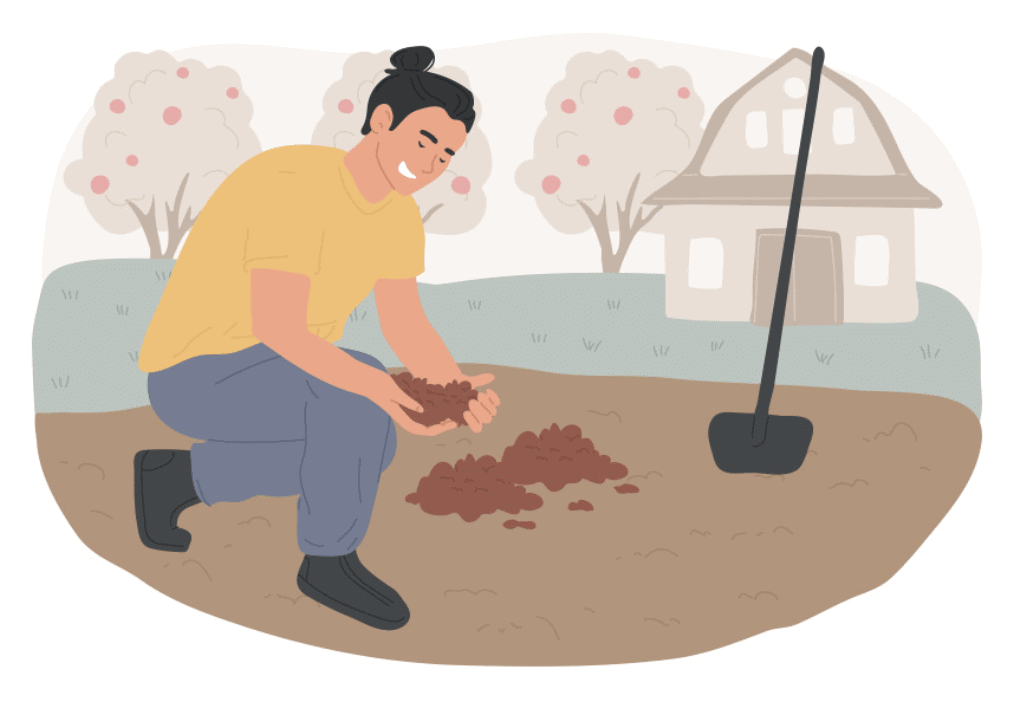
Farmers may notice poor plant growth if the soil becomes too acidic due to excessive use of chemical fertilizers.
Adding lime (a base, like calcium oxide) neutralizes the acidic soil, making it suitable for plant growth.
If the soil is too basic, organic matter like manure or composted leaves is added, which releases acids to neutralize the basic soil.
Neutral soil may still need nutrients if plants are unhealthy, showing that soil health involves more than just acidity or basicity.
Situation 3: Factory Waste
Acidic waste from factories can pollute lakes, harming fish and other aquatic life.
Before releasing waste into lakes, basic substances are added to neutralize the acidity, making the water safe for fish.
Q: What is a neutralization reaction and what are its products? View Answer
Q: How does baking soda help relieve pain from an ant bite? View Answer
Points to Remember
Substances are grouped into acidic, basic, or neutral based on how they interact with indicators.
Litmus, from lichens, comes as blue and red paper: acids turn blue litmus red, bases turn red litmus blue, and neutral substances cause no change.
Red rose extract, made from crushed petals, turns red in acidic solutions and green in basic solutions, acting as an acid-base indicator.
Turmeric paper, prepared from turmeric paste, turns red in basic solutions but remains yellow in acidic or neutral solutions, making it useful only for detecting bases.
Olfactory indicators, like onion-soaked cloth, change smell when mixed with acidic or basic substances, helping identify their nature.
Other natural indicators, such as beetroot, purple cabbage, red hibiscus, and Indian blackberry, also show color changes in acidic or basic solutions.
Acids taste sour (e.g., lemon juice contains citric acid, vinegar contains acetic acid) and turn blue litmus red.
Bases feel slippery, often taste bitter, and turn red litmus blue, red rose extract green, and turmeric paper red.
Neutral substances, like tap water or sugar solution, don’t change the color or smell of indicators.
Neutralization is the reaction between an acid and a base, forming salt, water, and releasing heat, resulting in a neutral solution.
Neutralization is used in daily life to:
Relieve ant bites by applying baking soda to neutralize formic acid.
Treat acidic soil with lime or basic soil with organic matter to help plants grow.
Neutralize acidic factory waste to protect aquatic life in lakes.
Hydrangea flowers change color based on soil: blue in acidic soil, pink or red in basic soil, showing nature’s use of acid-base properties.
Creative uses, like writing messages with basic solutions on turmeric paper, show how indicators can be applied in art or communication.
Difficult Words and Their Meanings
Acidic: A substance that tastes sour, turns blue litmus paper red, and red rose extract red, like lemon juice or vinegar.
Basic: A substance that feels slippery, turns red litmus paper blue, red rose extract green, and turmeric paper red, like soap or baking soda.
Neutral: A substance that doesn’t affect indicators’ color or smell and is neither acidic nor basic, like sugar solution or tap water.
Indicator: A tool that changes color or smell to show if a substance is acidic, basic, or neutral, such as litmus, red rose extract, or turmeric.
Litmus: A natural substance from lichens, used as blue or red paper strips to test if a substance is acidic (turns blue litmus red) or basic (turns red litmus blue).
Lichens: Organisms made of a fungus and an alga living together, found on rocks and trees, used to make litmus.
Neutralization: A chemical reaction where an acid and base mix to form salt, water, and heat, creating a neutral solution.
Olfactory: Related to the sense of smell, used for indicators like onion that change odor in acidic or basic substances.
Extract: A liquid obtained by crushing and soaking a substance (like red rose petals) in water and filtering it, used as an indicator.
Formic Acid: An acidic substance injected by ants during a bite, causing pain and redness, which can be neutralized by a base like baking soda.
Science is everywhere—from tiny cells inside a leaf to the movement of the sun and stars. You might test materials at home or learn how water flows underground. Each chapter will bring new adventures that challenge your thinking, expand your knowledge, and help you become a little explorer making your own discoveries.
Before starting, take a moment to notice something special—the page numbers follow the playful flight of a butterfly and a soaring paper plane! Just like a butterfly flutters freely and a paper plane flies high, learning takes flight when guided by curiosity.
Did you know that simple things like paper planes inspired real scientific studies of flight? From early inventors watching bird wings to modern engineers designing aircraft, flying began with simple observations and experiments.
Let’s explore! As you turn each page, let your imagination soar—explore new ideas, discover wonders, and reach for the skies!
Science is an Adventure
Exploring the World: Science helps us understand both small and big things. For example, we can study tiny cells inside a leaf or the way the sun and stars move in the sky.
Asking Questions: Science starts with curiosity. When you wonder “why” or “how” something happens, you’re thinking like a scientist.
Doing Experiments: Experiments let you see how things work. For example, testing materials at home can teach you about their properties.
Learning Takes Flight: The textbook compares learning to a butterfly fluttering or a paper plane flying. Just like a paper plane inspired scientists to study flight (like how bird wings led to airplanes), your curiosity can lead to new discoveries.
Imagination is Key: As you read this book, let your imagination soar. Each page is a chance to explore new ideas and find wonders in the world.
Exploring Science Beyond Facts
To answer these, it’s important to step beyond the classroom and experience the world through activities and experiments. These hands-on experiences help build a deeper understanding of our environment and our place on Earth.
Science is not just about discovery; it’s also about responsibility. As young explorers, you will see how human activities affect the natural world and our society. You will learn how science can help solve environmental challenges and contribute to a sustainable future.
Try yourself:
What does science help us understand?
A.Only scientific theories
B.Only small things
C.Only big things
D.Small and big things
View SolutionScience as a Way of Thinking
Science is a process—a way of thinking that encourages curiosity, asks questions, and stays open to the unknown. Exploration is not just about discovering new facts or learning about nature.
In Grade 7, the focus will be on asking deeper questions like:
How do things work?
Why do events happen the way they do?
What can we learn from patterns in nature?
Step Outside the Book
To understand science, you need to explore the world. Doing experiments and observing nature helps you learn better than just reading.
A Never-Ending Journey
Science is always growing. Every discovery leads to new questions, making it an ongoing adventure.
Responsibility to Nature
Science shows how human actions affect the environment. For example, pollution can harm nature, but science can help us find ways to protect the planet and make it more sustainable (better for the future).
Connecting with Society
What we do affects the world, and science helps us understand our role in keeping nature and society balanced.
Let’s Revise : Why is it important to “step outside the book” when learning science? View Answer
Exploring Substances
We often interact with various materials in our daily lives—fruits, clothes, spices, utensils—without stopping to think why they behave the way they do. Science encourages us to observe, question, and understand these common occurrences by studying the properties of materials. Let’s look at a couple of everyday examples and the science behind them:
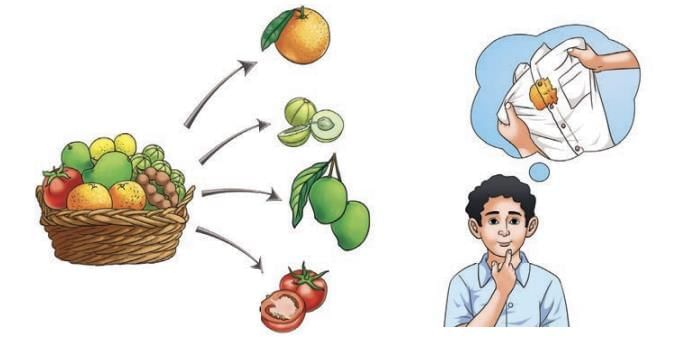
Why are some fruits sour?
What happens when we wash a haldi (turmeric) stain from our uniform?
These simple questions are not just curiosities—they are gateways into deeper scientific ideas. By investigating the familiar, we begin to understand important concepts in chemistry and develop a scientific way of thinking.
Exploring Properties of Materials
After studying basic properties of everyday materials, the book moves on to experiments with electric batteries, wires, and lamps.
Objective: To discover what kinds of materials allow current to pass and make a lamp glow.
This exploration helps us to:
Classify materials based on their properties (like conductivity).
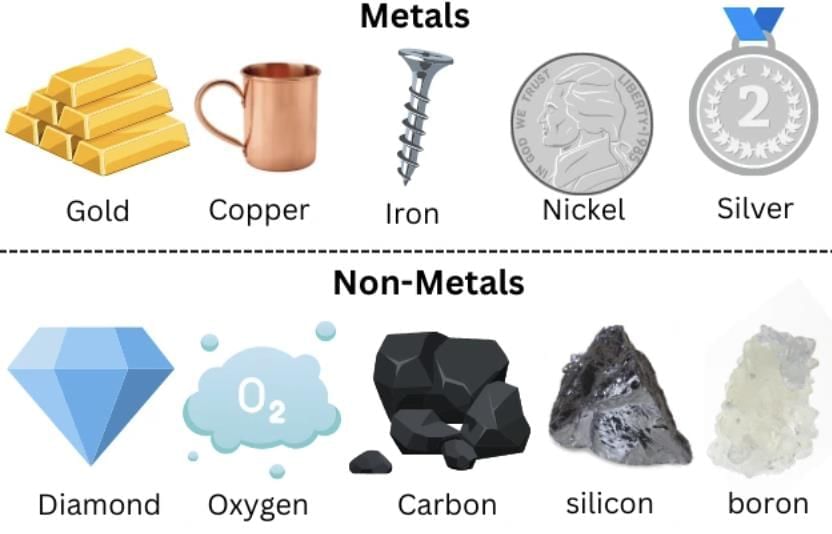
Enter the study of metals and non-metals.
We also observe that devices like torch batteries eventually stop working.
This leads to the study of changes in materials.
What are Changes?: The world is always changing. Some changes we can see, like ice melting, and some we can’t, like water moving underground.
These changes differ in nature:
Some are physical (like melting ice)
Some are chemical (like ripening of fruits or battery discharge)
Some happen quickly (melting), others are slow (weathering of rocks)
Some changes are reversible (e.g., melting ice).
Others are irreversible (e.g., cooking food or a used battery
Let’s Revise
Q: What is the importance of studying the conductivity of materials? View Answer
Q: Why are some changes in materials considered irreversible? View Answer
Understanding Changes and the Role of Heat
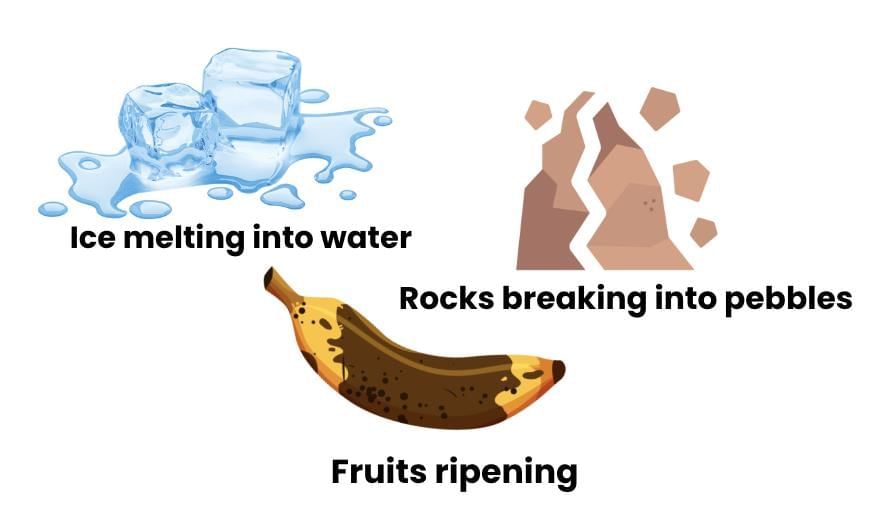
1. We observe many changes around us in daily life, such as:
Ice melting into water
Fruits ripening
Rocks breaking into pebbles
2. Role of Heat in Causing Changes
Heat often causes or speeds up changes in materials.
Examples:
Ice cube melting on a warm day
Massive glaciers slowly melting over years
These examples show how heat affects the state and structure of materials.
3. Introduction to Heat Transfer
To understand how these changes occur, we explore the concept of heat transfer:
Heat always flows from a hotter object to a colder one
This flow of heat leads to changes in temperature and state of substances
4. Heat and the Water Cycle
The Water Cycle is a perfect example of how heat drives natural processes:
Evaporation: Heat from the Sun causes water in oceans, lakes, and rivers to evaporate
Condensation: Water vapor cools in the atmosphere and forms clouds
Precipitation: Water falls as rain
Infiltration: Rainwater seeps into the ground and continues the cycle
Let’s Revise : How does heat play a role in the water cycle? View Answer
Changes in Living Things
Not all changes are in materials—our bodies also undergo changes, especially during middle-school years (puberty).
1. Life Processes: Staying Alive
Living things carry out certain vital activities called life processes, which help them survive. In animals (including humans)
Eating (nutrition)
Breathing (respiration)
Blood circulation
Growth and reproduction
2. Plants Also Undergo Life Processes
Life processes are not limited to animals:
Plants also need food to grow (they make their own through photosynthesis).
They undergo respiration, though differently from animals.
They also grow, reproduce, and respond to changes in their surroundings.
4. The Bigger Picture
Over millions of years, life on Earth has evolved into complex, interdependent systems.
These systems are balanced, ensuring survival for a wide variety of organisms.
Understanding life processes helps us: 1. Know how our bodies work 2. Stay healthy and aware of changes 3. Appreciate how all living things—plants, animals, and humans—are connected through nature’s systems
Let’s Revise: What are life processes, and why are they important for living things? View Answer
Measuring Time
What is Time?
Time helps us organize our day, like knowing when to go to school or sleep.
How We Measure Time:
Today, we use clocks and watches to tell time.
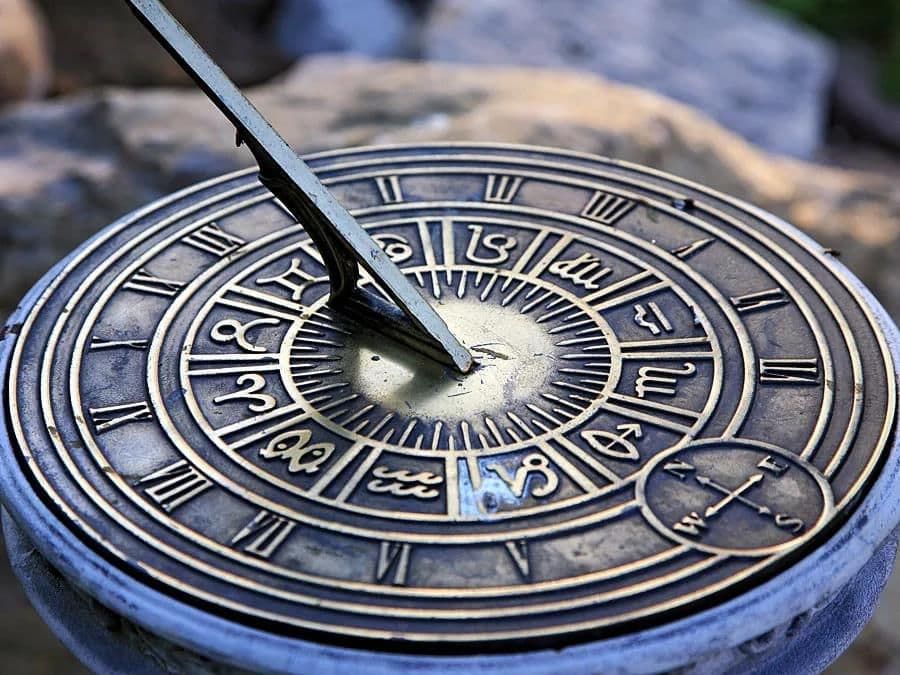
Long ago, people used the sun’s shadows to measure time.
For example, they looked at how shadows moved as the sun changed position in the sky.
Time in Daily Life
Time affects when we wake up, eat, or sleep, and it’s connected to nature, like day and night.
Why It Matters?
Understanding time helps us plan our lives and learn how nature works, like how day and night happen.
Light and Shadows
Importance of Light:
Light helps us see the world around us.
We use light to do things like read at night or play with shadows (like making shadow puppets).
Shadows in Nature:
Shadows happen when something blocks light.
The Earth and Moon can cast shadows, causing eclipses (when the sun or moon is blocked).
Examples:
Long ago, people used shadows to tell time by watching how they moved.
Today, we use light in many ways, like in bulbs or lasers.
Try yourself:
What does science encourage us to do with common occurrences?
A.Avoid and dismiss
B.Observe and question
C.Ignore and forget
D.Accept and memorize
View Solution
Earth’s Movements
How the Earth Moves?
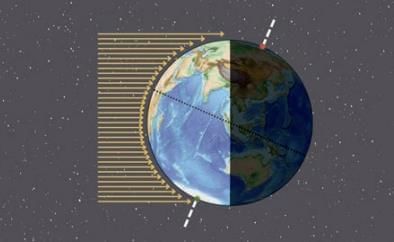
Rotation: The Earth spins on its axis (an imaginary line through its center) once every 24 hours, causing day and night.
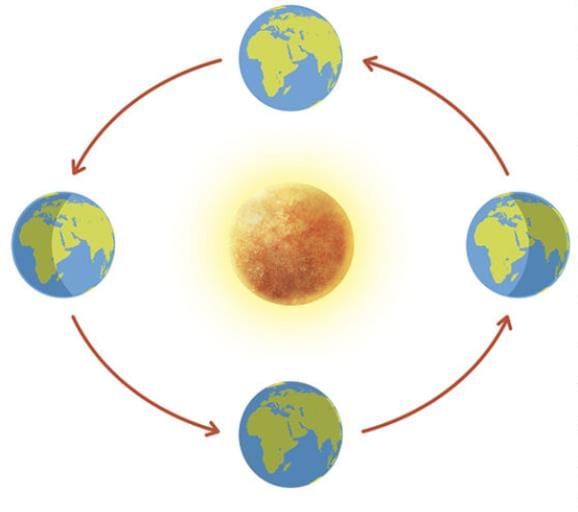
Revolution: The Earth moves around the Sun once every year, causing seasons.
Moon’s Movement
The Moon goes around the Earth, which affects things like tides and how we see the Moon’s phases.
Effects on Life:
Day and night happen because the Earth rotates, giving us time to work and rest.
Seasons (like summer or winter) happen because of the Earth’s revolution around the Sun.
Eclipses happen when the Earth or Moon blocks sunlight, creating shadows in space.
Let’s Revise: How do Earth’s movements affect our daily life? View Answer
Points to Remember
Science is an adventure where you ask questions, do experiments, and explore the world.
Science is a process of thinking, observing patterns, and being curious about how things work.
All sciences (physics, chemistry, biology, earth sciences) are connected, and ideas from one help us understand others.
Materials have different properties, like conducting electricity, and we group them as metals or non-metals.
Changes can be reversible (like ice melting) or irreversible (like a fruit ripening).
Heat causes or speeds up changes, like melting ice or evaporating water in the water cycle.
Living things (humans, animals, plants) go through changes and need processes like eating and breathing to survive.
Time is measured with clocks today, but long ago, people used shadows from the sun.
Light helps us see and understand the universe, and shadows cause eclipses.
The Earth’s rotation causes day and night, its revolution causes seasons, and the Moon’s movement affects tides and eclipses.
Difficult Words and Their Meanings
Curiosity: Wanting to know or learn more about something, like wondering why the sky is blue.
Properties: The qualities of something, like whether it’s hard, soft, or conducts electricity.
Classifying: Sorting things into groups based on what they’re like, such as grouping materials as metals or non-metals.
Reversible: A change that can go back to its original form, like water freezing into ice and melting back into water.
Irreversible: A change that cannot go back, like a fruit becoming ripe.
Evaporates: When a liquid, like water, turns into a gas and rises into the air, like water disappearing from a puddle.
Nutrients: Things in food that help living things grow and stay healthy, like vitamins or proteins.
Eclipses: When one object in space blocks light from another, like the Moon blocking the Sun during a solar eclipse.
Rotation: When something spins around a center point, like the Earth spinning to cause day and night.
Revolution: When something moves in a circle around another object, like the Earth moving around the Sun.
Sustainable: Doing things in a way that keeps the environment healthy for the future, like using less plastic.

 Battery made up of (a) two cells (b) four cells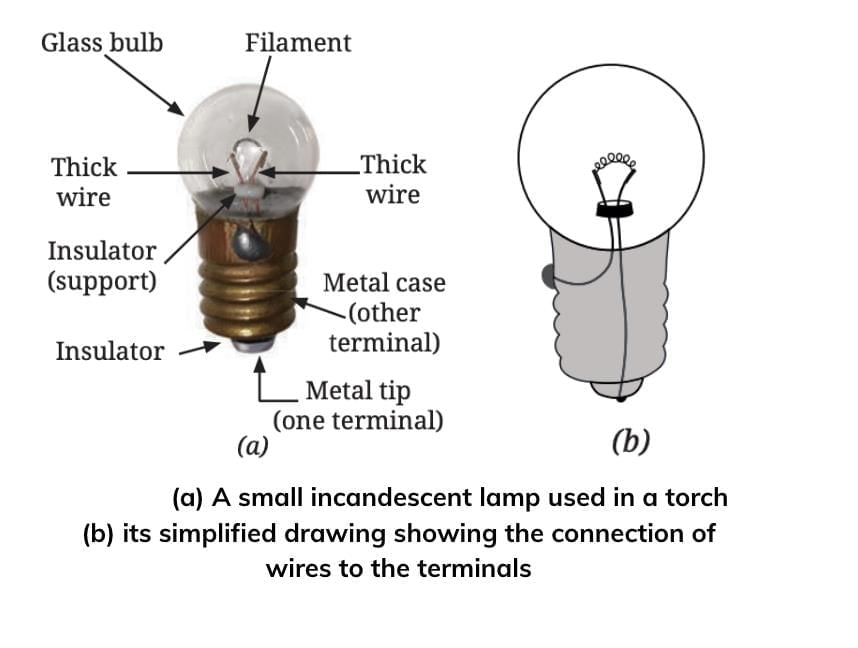
 An LED lamp for torch
 LEDs of different colours
 Electric Cell: This provides the electrical energy required to make the lamp glow. The energy comes from the chemical reaction inside the cell.
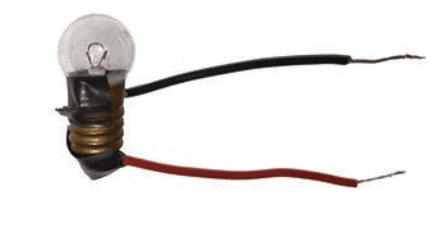 Incandescent Lamp: The lamp is a device that uses electricity to produce light. It has a filament that glows when electricity passes through it.
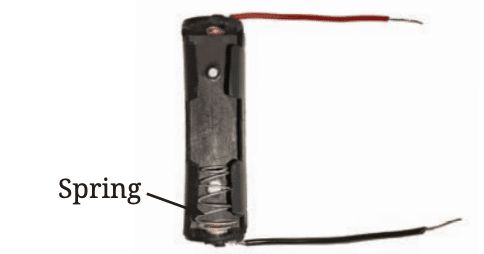 Cell Holder: A holder is used to securely place the electric cell in the circuit. It ensures the proper connection of the battery’s terminals to the wires.
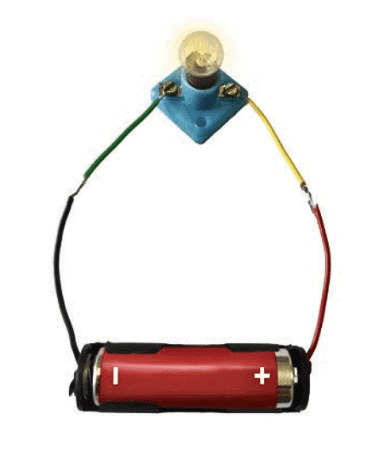 Prediction of Lamp Glow: Depending on how the circuit is set up, the lamp may or may not glow. If the circuit is properly connected (with all components in place), the lamp will glow. Otherwise, it will not light up.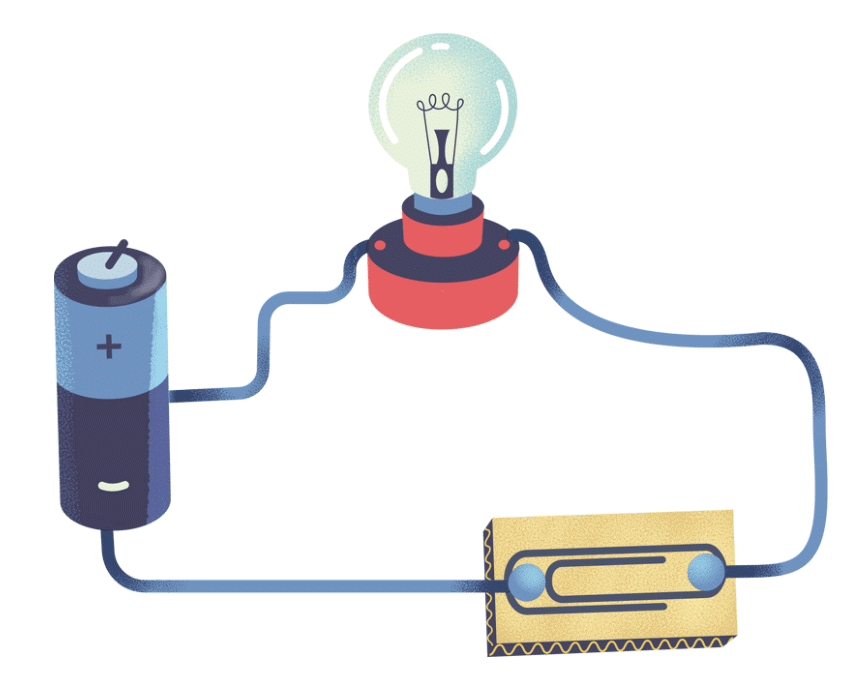


 The changes in colour of the red rose extract on adding lemon juice (A) and soap solution (B)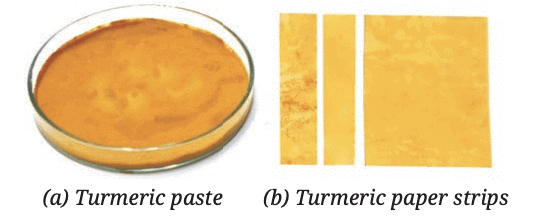

 View Answer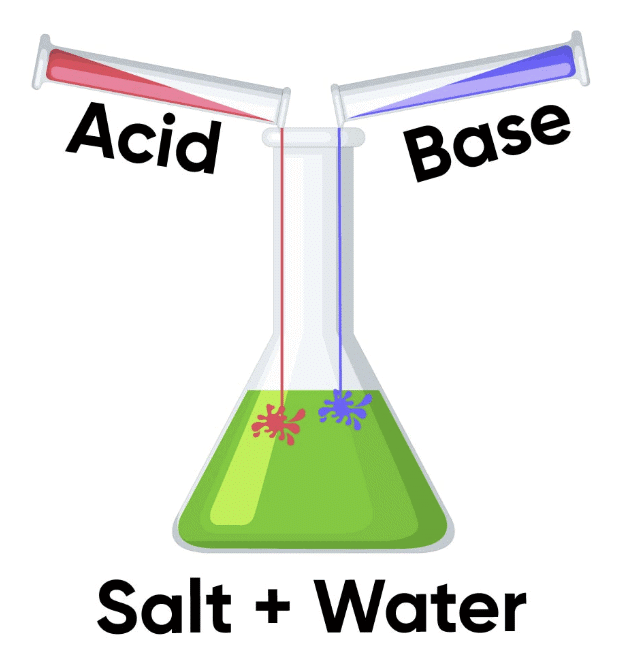

 Objective: To discover what kinds of materials allow current to pass and make a lamp glow.
 Enter the study of metals and non-metals.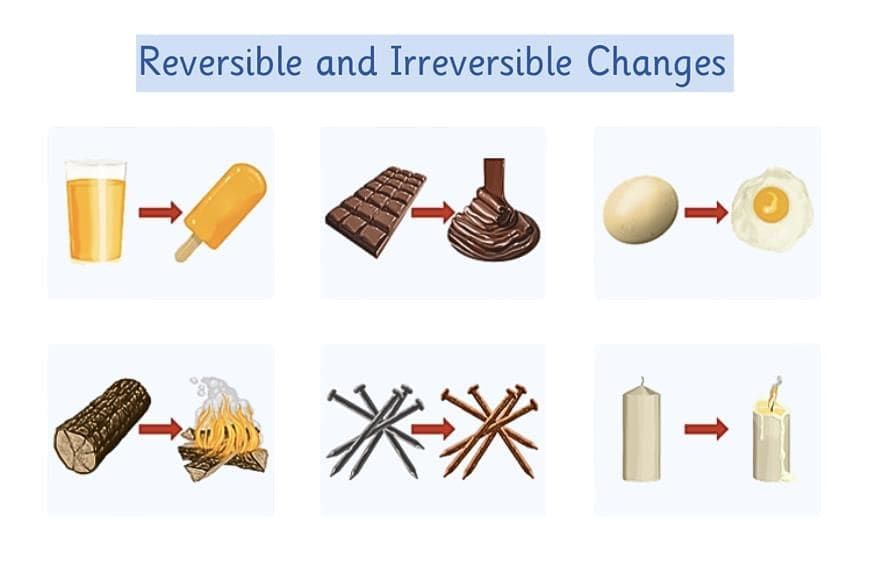
 Rocks breaking into pebbles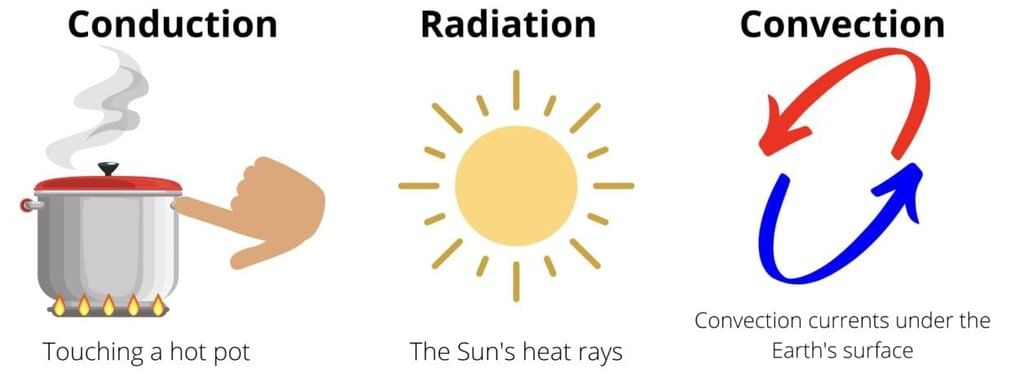
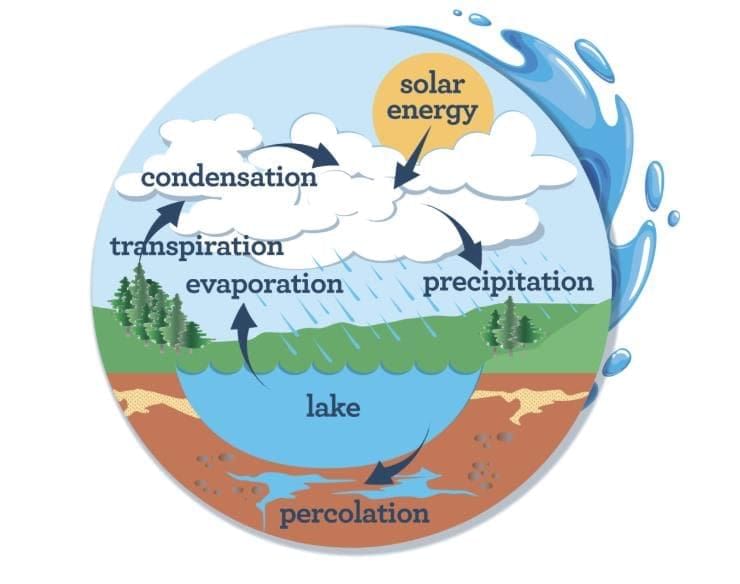 Infiltration: Rainwater seeps into the ground and continues the cycle
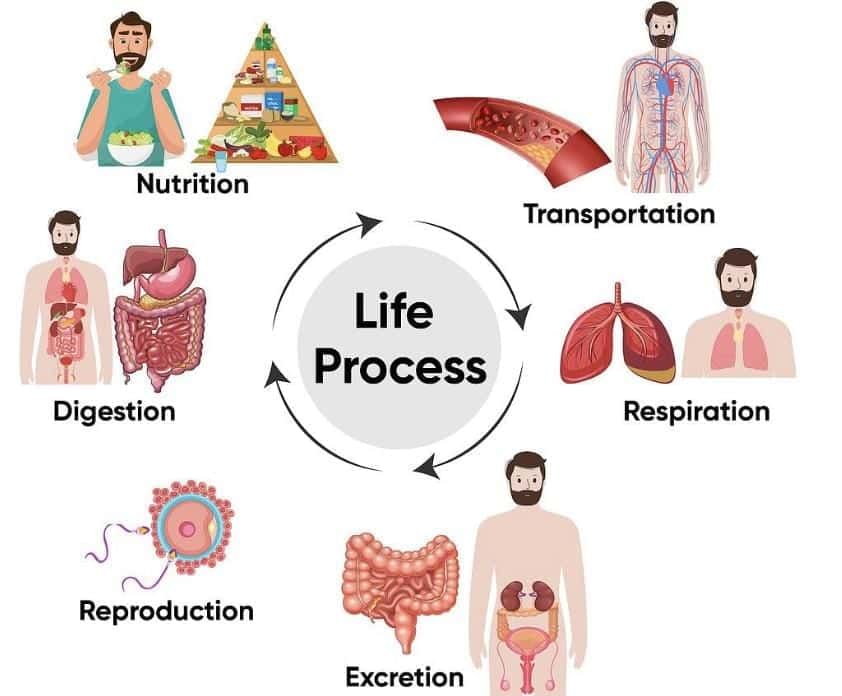 Growth and reproduction
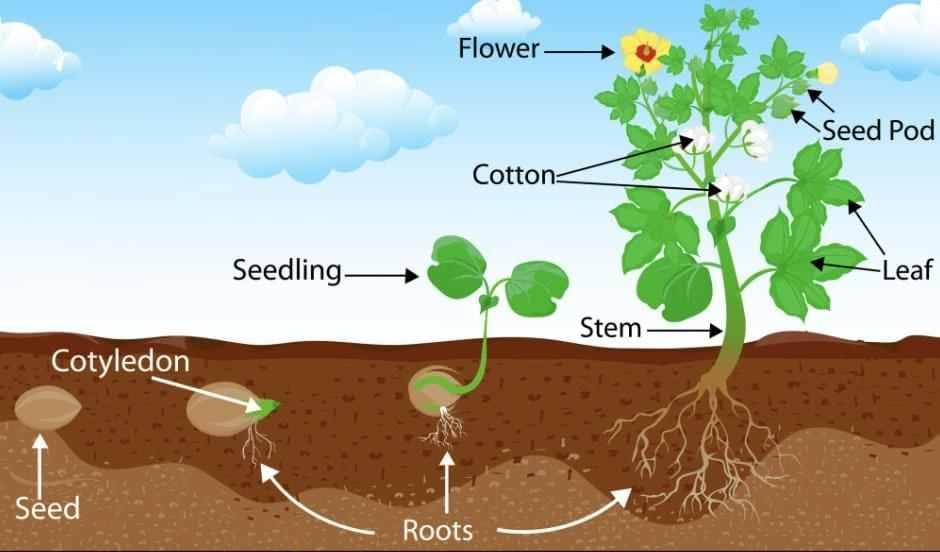 They also grow, reproduce, and respond to changes in their surroundings.