16. Active–Passive Voice – Detailed Notes

Voice

Voice is that form of the transitive verb that shows whether the subject of the sentence is the doer of the action or has the action done to it.
For example: ‘Mohan played football.’
This sentence is said to be in the active voice. Here, Mohan is the subject and he is the doer of the action, i.e. ‘played football’. The action of the subject is transferred to the object ‘football because Mohan has done something to the ‘football’.
The passive voice of this sentence is:
Football was played by Mohan.

Here, the subject is ‘football’, which was ‘object’ in the active sentence. So here something is done to the subject ‘football’, i.e. it suffers the action done by something or someone.

Rules for Changing Voice

  • In passive voice, the object of the active sentence becomes the subject, with the preposition  “by”  added before the doer.
  • The main verb of the active sentence is changed to its  past participle  form in passive voice.
  • An appropriate form of the verb  “to be”  (am, is, are, was, were, being, been) is placed before the main verb, depending on the tense of the sentence.
  • The auxiliary verb is modified according to the number and person of the new subject.

Changes in Pronouns

Active Voice (Subjective case)

Passive Voice (Objective case) I

→ by me We

 → by us You

→ by you He

→ by him She

→ by her It

→ by it They

→ by them

Change in Tenses from Active Voice to Passive Voice

Tense/Aspect

Active voice

Passive VoiceSimple Present He kills a snake. A snake is killed by him. Simple Past  He killed a snake. A snake was killed by him Simple Future She will write a letter. A letter will be written by her. Present Progressive She is singing a song. A song is being sung by her. Past Progressive She was singing a song. A song was being sung by her. Present Perfect They have watered the plants. The plants have been watered by them. Past Perfect We had helped him.He had been helped by us. Future Perfect I will have beaten him. He will have been beaten by me.

Change of Voice in the Simple Present

Active voice

Passive voice 1. He reads a novel. A novel is read by him. 2. He does not obey his teachers. His teachers do not obey him.  3. Why do you waste time? Why is time wasted by you? 4. Who teaches you Physics? By whom are you taught Physics?  5. Which book do you read these days? Which book have you read these days?

Past Simple Tense

Active voice

Passive voice 1. He did not help me. I was not helped by him.2. I told her a story. A story was told to her by me.  3. What did she buy? What was bought by her?  4. Whom did you meet? Who was met by you? 5. Did you read this novel? Was this novel read by you?

Simple Future

Active voice 

Passive voice  1. I shall help him. He will be helped by me. 2. Will you sell this house? Will this house be sold by you? 3. Who will pay the bill? By whom will the bill be paid? 4. You will not disturb me. I shall not be disturbed by you. 5. When will you visit us? When shall we be visited by you?

Present Progressive

Active voice

Passive voice 1. She is waiting for us. We are being waited by her. 2. Is he doing his work? Is his work being done by him? 3. Who is knocking at the door? By whom is the door being knocked at? 4. Are the children flying kites? Are the kites being flown by the children? 5. Why is he not watering the plants? Why are plants not being watered by him?

Past Progressive

Active voice

 Passive voice 1. He was writing a letter. A letter was being written by him. 2. What was she doing? What was being done by her? 3. I was not doing my work. My work was not being done by me.  4. Wasn’t she singing a song? Wasn’t a song being sung by her? 5. Were the children playing hockey? Was hockey being played by the children?

Present Perfect Tense

Active voice

Passive voice 1. Has he done his work?  Has his work been done by him? 2. She has read this book. This book has been read by her. 3. Who has stolen my watch? By whom has my watch been stolen? 4. Have you not solved this sum? Has this sum not been solved by you?  5. He has not helped me. I have not been helped by him.

Past Perfect Tense

Active voice

Passive voice 1. She had already cooked the food. The food had already been cooked by him  2. Had he not read this letter? Had this letter not been read by him? 3. Whose team had won the match? By whose team had the match been won? 4. Hadn’t he done his homework? Hadn’t his homework been done by him? 5. She had received the parcel. The parcel had been received by her.

Future Perfect Tense

Active voice

Passive voice 1. He will have received the letter before you reach there. The letter will have been received by him before you reach there. 2. She will not have washed the clothes   by this time. The clothes will not have been washed by her by this time. 3. Will the gardener have watered   plants before 5 p.m.? Will the plants have been watered by the gardener before 5 p.m.? 4. The peon will have locked the gate by 10 p.m.  The main gate will have been locked by the main peon by 10 p.m.

Imperative Sentence

Imperative sentences express command/order, request, suggestion, etc. While changing imperative sentences into the passive voice, we use verbs like advise, request, order, etc.

Active voice

Passive voice 1. Please post this letter. You are requested to post this letter.  2. Shut the door. You are ordered to shut the door. 3. Work hard. You are advised to work hard. 4. Light the lamp Let the lamp be lighted. 5. Never give up hope. Let hope never be given up. 6. Never tell a lie. Let a lie never be told.
 or
 A lie should never be told.

Interrogative Sentences

Active voice

Passive voice 1. Do you love him? Is he loved by you? 2. Did he break window? Was the window broken by him? 3. Have you taught the boy? Has the boy been taught by you? 4. What do you want? What is wanted by you? 5. Why did she beat the servant? Why was the servant beaten by her? 6. When did you write the letter? When was the letter written by you? 7. Where will you spend your holidays? Where will your holidays be spent by   you? 8. How will you cross the river? How will the river be crossed by you? 9. Have you helped him? Has he been helped by you? 10. Will you teach me? Will I be taught by you?

Modal Auxiliaries

The form of the passive sentences will be: modal + be + past participle:

Active voice

Passive voice 1. You can do this work. This work can be done by you. 2. He may help you. You may be helped by him. 3. She might win the match. The match might be won by her. 4. Could you lend me fifty rupees? Could fifty rupees be lent to me by you? 5. He should respect his elders. His elders should be respected by him.

Prepositional Verbs

Active voice

Passive voice 1. She objected to my proposal. My proposal was objected to by her. 2. Has he given up smoking? Has smoking been given up by him? 3. The’children laughed at the beggar. The beggar was laughed at by the   children. 4. She accused him of theft. He was accused of theft by her. 5. We acceded to his request. His request was acceded to by us.

Quasi – Passive

 Active voice

 Passive voice 1. This mango tastes sweet. This mango is sweet when tasted. 2. The shop is building. The shop is being built. 3. The rose smells sweet. The rose is sweet when smelt. 4. Your shirt needs washing. Your shirt needs to be washed. 5. This medicine tastes bitter. This medicine is bitter when tasted.

Miscellaneous Examples

Active voice

Passive voice 1. Grass grows over the fields. The fields are overgrown with grass.  2. Someone has stolen my pen. My pen has been stolen. 3. People say that he is a rich man. It is said that he is a rich man. 4. It is time to ring the bell. It is time for the bell to be rung. 5. Your behaviour surprises me. I am surprised at your behaviour. 6. I know him. He is known to me. 7. Music interests me. I am interested in music. 8. This bottle contains milk. Milk is contained in this bottle. 9. Twelve months make a year. A year is made of twelve months. 10. One must do one’s duty. Duty must be done.

Active and Passive Voice Examples with Answers

Change the following sentences into Passive Voice.

(i) He has missed the train.
Answer: The train has been missed by him.

(ii) Do they speak French?
Answer: Is French spoken by them?

(iii) Was he reading a book?
Answer: Was a book being read by him?

(iv) Compose this letter.
Answer: Let this letter be composed.

(v) Where did you buy this pen from?
Answer: From where was this pen bought by you?

(vi) Who wrote this speech?
Answer: By whom was this speech written?

(vii) One should respect one’s elders.
Answer: Elders should be respected.

(viii) I did not praise anybody.
Answer: Nobody was praised by me.

(ix) He hurt his leg in an accident.
Answer: His leg was hurt in an accident.

(x) Someone was knocking at the door.
Answer: The door was being knocked by someone.
15. Factual Passage – 10

Read the passage given below and answer the questions which follow
1. Based on a novel by Jay Parini, The Last Station deals with the somewhat unedifying last months of the 82-year-old Leo Tolstoy (Christopher Plummer) that concluded with his public death at the remote southern Russia railway station of Astapovo in 1910, the end of the line and the last station of the cross. During this time his wife Sofya (Helen Mirren) battles for his soul and the copyright of his valuable works with the writer’s manipulative disciple Vladimir Chertkov (Paul Giamatti), who regards himself as the guardian of the great man’s reputation and wants the money from War and Peace to be used to advance the cause of universal love and passive resistance. Their battles are observed and recorded by Tolstoy’s new secretary, Valentin Bulgakov, played by James McAvoy with the same amiable diffidence he brought to the role of Idi Amin’s confidant in The Last King of Scotland.
2. The events were documented in copious diaries kept by the participants and by newsreel cameramen from all over the world, and the film is well acted, handsomely designed and bizarrely comic in a manner more Chekhovian than Tolstoyan. The opening titles tell us that Tolstoy was the world’s most famous novelist and widely regarded as a living saint, and it is just as well to be reminded, because he comes over as a rather ludicrous Lear-like fool: pompous, ill-tempered, insensitive, constantly talking of love but rarely practicing it.
On the basis of your reading of the above excerpt, choose the correct option to answer the following questions
Q1: James McAvoy, in The Last Station plays the role of
(a)
 Tolstoy’s Disciple
(b) Idi Amin’s Disciple
(c) Tolstoy’ New Secretary
(d) Idi Amin’s Confidant
Ans: (c)


Q2: What does the movie ‘The last Station’ focus on?
(a)
 Childhood of Leo Tolstoy
(b) Last months of Tolstoy’s life
(c) Tolstoy’s marriage to Sofya
(d) School life of Tolstoy
Ans: (b)


Q3: What was the bone of contention between Sofya and Vladimir?
(a) 
Fight for Tolstoy’s money
(b) Fight for Tolstoy’s mansion
(c) Fight for Sofya’s money
(d) Copyright of Tolstoy’s works
Ans: (d)


Q4: The last Station is based on the novel by
(a) 
Helen Mirren
(b) Jay Parini
(c) Leo Tolstoy
(d) Sofya Tolstoy
Ans: (b)


Q5: Which character does Christopher Plummer play in the movie?
(a)
 James McAvoy
(b) Valentin Bulgakov
(c) Leo Tolstoy
(d) Vladimir Chertkov
Ans: (c)

15. Factual Passage – 9

On the basis of your reading of the passage and other visual inputs, choose the correct option to answer the questions which follow:
Status of domesticated elephants
Records indicate that the management of domesticated elephants in Nepal has a long history and is said to have begun in 1903. At one time there were 31 elephant camps throughout the lowlands of Nepal. The capture and training of wild animals was a common practice in the past. A total of 17 domesticated elephants were released into the wild in 1914 and 10 wild elephants were captured for domestication during 1954-1970.
Although the reason for releasing elephants into the wild is not mentioned in reports, it can be assumed that those elephants were released because of the difficulty of finding them work and because of their old age.
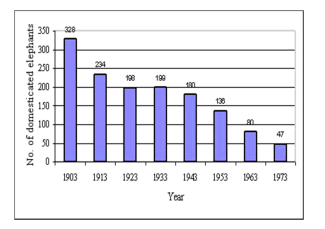
Table 1. Elephant populations at ten year intervals between 1903 and 1973
Years 1903 1913 1923 1933 1943 1953 1963 1973
No. of elephants 328 234 198 199 180 136 80 47
Fig. 1. Declining trend of domesticated elephant populations at ten-year intervals between 1903 and 1973

Q1: What peculiar thing was observed in the year 1933?
(a) 
A slight increase in the number of domesticated Elephants.
(b) It stays the same as the decade 1923.
(c) No change.
(d) A slight decrease in the number of domesticated Elephants.
Ans: (a)


Q2: On analyzing elephant population data, their population has found to be_
(a)
 remained the same
(b) increased over the years
(c) decreased over the years
(d) increased in year 1943
Ans: (c)


Q3: What were the reasons for releasing the elephants into the wild?
(a) 
Old age and shortage of work
(b) Shortage of work and government orders
(c) Old age and government orders
(d) Government orders and shortage of space
Ans: (a)


Q4: The data presented in the passage has been compiled with the help of ____.
(a)
 Hearsay
(b) Official Records
(c) Passage does not specify
(d) People’s opinion
Ans: (b)


Q5: Where were most of the elephant camps located?
(a)
 Lowlands of Assam
(b) Terai region of Gorakhpur
(c) The Himalayas
(d) Lowlands of Nepal
Ans: (d)

15. Factual Passage – 8

Read the passage given below and answer the questions which follow
1. The man with the white face entered the carriage at Rugby. He moved slowly in spite of the urgency of his porter, and even while he was still on the platform I noted how ill he seemed. He dropped into the corner over against me with a sigh, made an incomplete attempt to arrange his travelling shawl, and became motionless, with his eyes staring vacantly. Presently he was moved by a sense of my observation, looked up at me, and put out a spiritless hand for his newspaper. Then he glanced again in my direction. I feigned to read. I feared I had unwittingly embarrassed him, and in a moment I was surprised to find him speaking.
2. “I beg your pardon?” said I. “That book,” he repeated, pointing a lean finger, “is about dreams.” “Obviously,” I answered, for it was Fortnum Roscoe’s Dream States, and the title was on the cover. He hung silent for a space as if he sought words.
“Yes,” he said at last, “but they tell you nothing.”
I did not catch his meaning for a second. 
“They don’t know,” he added. I looked a little more attentively at his face.
“There are dreams,” he said, “and dreams.”
That sort of proposition I never dispute.
“I suppose–” he hesitated. “Do you ever dream? I mean vividly.”
“I dream very little,” I answered. “I doubt if I have three vivid dreams in a year.”?
“Ah!” he said, and seemed for a moment to collect his thoughts.
“Your dreams don’t mix with your memories?” he asked abruptly.
“You don’t find yourself in doubt; did this happen or did it not?”
“Hardly ever. Except just for a momentary hesitation now and then. I suppose few people do.”
“Does he say–?” He indicated the book.
“Says it happens at times and gives the usual explanation about intensity of impression and the like to account for its not happening as a rule.
I suppose you know something of these  theories–“
“Very little–except that they are wrong.”
3. His emaciated hand played with the strap of the window for a time. I prepared to resume reading, and that seemed to precipitate his next remark. He leant forward almost as though he would touch me.
“Isn’t there something called consecutive dreaming–that goes on night after night?”
“I believe there is. There are cases given in most books on mental trouble.”
“Mental trouble! Yes. I daresay there are. It’s the right place for them.
But what I mean–” He looked at his bony knuckles. “Is that sort of thing always dreaming? Is it dreaming?
Or is it something else? Mightn’t it be something else?”
4. I should have snubbed his persistent conversation but for the drawn anxiety of his face. I remember now the look of his faded eyes and the lids red stained–perhaps you know that look.
“I’m not just arguing about a matter of opinion,” he said.
“The thing’s killing me.”
“Dreams?”
“If you call them dreams. Night after night. Vivid!—so vivid . . . this–” (he indicated the landscape that went streaming by the window) “seems unreal in comparison! I can scarcely remember who I am, what business I am on . . . .”He paused. “Even now–“
“The dream is always the same–do you mean?” I asked.
“It’s over.”
“You mean?”
“I died.”
“Died?”
5. “Smashed and killed, and now, so much of me as that dream was, is dead. Dead forever. I dreamt I was another man, you know, living in a different part of the world and in a different time.
I dreamt that night after night. Night after night I woke into that other life. Fresh scenes and fresh happenings–until I came upon the last–“
“When you died?”
“When I died.”
“And since then–“
“No,” he said. “Thank God! That was the end of the dream.. . “
6. It was clear I was in for this dream. And after all, I had an hour before me, the light was fading fast, and Fortnum Roscoe has a dreary way with him. “Living in a different time,” I said: “do you mean in some different age?”
“Yes.” 
“Past?”
“No, to come–to come.”
“The year three thousand, for example?”
“I don’t know what year it was. I did when I was asleep, when
I was dreaming, that is, but not now–not now that I am awake.
There’s a lot of things I have forgotten since I woke out of these dreams, though I knew them at the time when I was–I suppose it was dreaming. They called the year differently from our way of calling the year . . . What did they call it?” He put his hand to his forehead. “No,” said he, “I forget.”
He sat smiling weakly. For a moment I feared he did not mean to tell me his dream. As a rule I hate people who tell their dreams, but this struck me differently. I proffered assistance even.
“It began–” I suggested.
7. “It was vivid from the first. I seemed to wake up in it suddenly. And it’s curious that in these dreams I am speaking of I never remembered this life I am living now. It seemed as if the dream life was enough while it lasted. Perhaps–But I will tell you how I find myself when I do my best to recall it all. I don’t remember anything clearly until I found myself sitting in a sort of loggia looking out over the sea. I had been dozing, and suddenly I woke up–fresh and vivid–not a bit dreamlike–because the girl had stopped fanning me.”
On the basis of your reading of the above excerpt, choose the correct option to answer the following questions:
Q1. “I feigned to read” implies
(a) 
I continued to read.
(b) I pretended to read.
(c) I ignored reading.
(d) I feared reading.
Ans: (b)


Q2. Choose the synonym of thin (para 3)
(a)
 resume
(b) knuckles
(c) precipitate
(d) emaciated
Ans: (d)


Q3. What was the name of the book which the narrator was reading?
(a)
 Fortnum Roscoe’s Dream States
(b) State of the Dream
(c) Dream States
(d) Dreams of the States
Ans: (c)


Q4. Choose the antonym of dull (para 7)
(a)
 assistance
(b) vivid
(c) loggia
(d) Proffered
Ans: (b)


Q5. Why couldn’t the narrator snub the man’s conversation?
(a)
 The man with the white face looked anxious.
(b) The book which he was reading was lost.
(c) The narrator liked listening to conversations.
(d) The man begged him to listen.
Ans: (a)


Q6. ‘Proffered’ means
(a) 
hold out or put forward
(b) to obtain something
(c) to project something
(d) to establish the validity
Ans: (a)


Q7. The word which is a synonym of ‘boring’ in para 6 is ________
(a)
 fading
(b) weakly
(c) dreary
(d) fast
Ans: (c)


Q8. The man in his dream lived in the _______
(a) 
Jacobean era
(b)  Future
(c) Past
(d) Present Age
Ans: (b)


Q9. Choose the right answer which explains the underlined phrase: He hung silent for a space as if he sought words.
(a) 
he was left hanging because of his indecisiveness
(b)  he was indecisive
(c) he stayed silent for sometime as if he searched for words.
(d) he was at a loss of words.
Ans: (c)


Q10. How did the man with the white face behave as he entered the carriage?
(a) 
Scared
(b)  showed no enthusiasm
(c) Excited and nervous
(d) Excited and enthusiastic
Ans: (b)


Q11. What was the man’s opinion about the theory of dreams given in the narrator’s book?
(a) 
He felt that the book was confusing
(b) He felt that it was all correct
(c) He felt that the book explained nothing.
(d) He felt the book painted a wrong picture.
Ans: (c)


Q12. What is NOT the reason for narrator being interested in listening to the man’s description of his last dream?
(a)
 The narrator had still an hour’s journey left.
(b) It was getting dark
(c) The man’s dream was about an alien.
(d) His book was getting boring.
Ans: (c)


Q13. What did the man NOT say about the last dream which he had?
(a)
 His last dream was very clear
(b) It was a dream which wasn’t clear
(c) He would wake up in these dreams suddenly.
(d) He was sitting in the loggia
Ans: (b)


Q14. Choose the correct option: Which of the following is NOT true for the Man with the white face?
(a) 
He moved around slowly
(b) He didn’t want to talk about his dream.
(c) He looked sickly
(d) He didn’t believe in theories of Fortnum Roscoe’s Dream States
Ans: (b)


Q15. I dream very little, I answered. “I doubt if I have three vivid dreams in a year. This line highlights that the narrator did not –
(a) 
Good sleep pattern.
(b) like talking to the man with the white face
(c) Give much importance to the science behind dreams.
(d) Have normal dreams
Ans: (c)

15. Factual Passage – 7

Read the passage given below and answer the questions which follow-
Philosophy of Education is a label applied to the study of the purpose, process, nature, and ideals of education. It can be considered a branch of both philosophy and education. Education can be defined as the teaching and learning of specific skills, and the imparting of knowledge, judgment, and wisdom, and is something broader than the societal institution of education we often speak of.
1. Many educationalists consider it a weak and woolly field, too far removed from the practical applications of the real world to be useful. But philosophers dating back to Plato and the Ancient Greeks have given the area much thought and emphasis, and there is little doubt that their work has helped shape the practice of education over the millennia.
2. Plato is the earliest important educational thinker, and education is an essential element in “The Republic” (his most important work on philosophy and political theory, written around 360 B.C.). In it, he advocates some rather extreme methods: removing children from their mothers’ care and raising them as wards of the state, and differentiating children suitable to the various castes, the highest receiving the most education, so that they could act as guardians of the city and care for the less able. He believed that education should be holistic, including facts, skills, physical discipline, music, and art. Plato believed that talent and intelligence are not distributed genetically and thus is be found in children born to all classes, although his proposed system of selective public education for an educated minority of the population does not really follow a democratic model.
3. Aristotle considered human nature, habit, and reason to be equally important forces to be cultivated in education, the ultimate aim of which should be to produce good and virtuous citizens. He proposed that teachers lead their students systematically, and that repetition be used as a key tool to develop good habits, unlike Socrates’ emphasis on questioning his listeners to bring out their own ideas. He emphasized the balancing of the theoretical and practical aspects of subjects taught, among which he explicitly mentions reading, writing, mathematics, music, physical education, literature, history, and a wide range of sciences, as well as play, which he also considered important.
4. During the Medieval period, the idea of Perennialism was first formulated by St. Thomas Aquinas in his work “De Magistro”. Perennialism holds that one should teach those things deemed to be of everlasting importance to all people everywhere, namely principles and reasoning, not just facts (which are apt to change over time), and that one should teach first about people, not machines or techniques. It was originally religious in nature, and it was only much later that a theory of secular perennialism developed.
5. During the Renaissance, the French skeptic Michel de Montaigne (1533 – 1592) was one of the first to critically look at education. Unusually for his time, Montaigne was willing to question the conventional wisdom of the period, calling into question the whole edifice of the educational system, and the implicit assumption that university-educated philosophers were necessarily wiser than uneducated farmworkers, for example.
Based on your reading of the above excerpt, choose the correct option to answer the following questions:

Q1: What do you understand by the term ‘Perennialism’, in the context of the given comprehension passage?
(a)
 It refers to something which is abstract and theoretical
(b) It refers to something which no longer exists
(c) It refers to something which is of ceaseless importance
(d) It refers to something which is quite unnecessary
Ans: (c)


Q2: Major difference between the approaches of Socrates and Aristotle was-
(a)
 Aristotle emphasized on the importance of paying attention to human nature; Socrates emphasized upon rationality
(b) Aristotle believed in virtuous citizens; Socrates believed in implausible thinkers
(c) Aristotle felt the need for interminable learning; Socrates felt that students need to be perpetually challenged
(d) Aristotle felt the need for rote-learning; Socrates emphasized on dialogic learning
Ans: (c)


Q3: ‘Pragmatic’ is similar in meaning to- (para 2)
(a)
 Millenia
(b) Practical
(c) Useful
(d) Ancient
Ans: (b)


Q4: Find the antonym of ‘Consternation’. (para 6)
(a)
 Renaissance
(b) Skeptic
(c) Conventional
(d) Assumption
Ans: (d)


Q5: The first person to have an analytical approach to education was-
(a) 
Michel de Montaigne
(b) Aristotle
(c) Thomas Aquinas
(d) Socrates
Ans: (a)


Q6: Educationists consider philosophy a ‘weak and woolly’ field as-
(a) 
Its theoretical concepts are uncomplicated
(b) It is not rational or pragmatic
(c) It is irrelevant for education
(d) Its not evolving with time
Ans: (b)


Q7: Were Plato’s beliefs about education democratic?
(a) 
He believed that only the rich have the right to acquire education
(b) He believed that all pupils are not talented
(c) He believed in democracy but his practices didn’t suggest the same
(d) He believed that only a select few are meant to attend schools
Ans: (c)


Q8: Why did Aquinas propose a model of education which did not lay much emphasis on facts?
(a) 
Facts change with the changing times
(b) Facts at times are irrelevant
(c) Facts do not lead to holistic education
(d) Facts are frozen in time
Ans: (a)

15. Factual Passage – 6

Read the following passage and answer the questions that follow.

1. “Music expresses that which cannot be put into words and that which cannot remain silent,” said the French poet Victor Hugo. Early on Saturday morning, 20 participants of the Times Passion: Sufi Poetry and Music Appreciation Trail embarked on a journey into this ineffable nature of Sufi music through the streets of the capital.

2. The weekend passion trail started with a heritage walk at the Bada Batashewala Mahal and then moved on to the chilla of Hazrat Nizamuddin Auliya, where the iconic saint is said to have lived for around 65 years. The walk was filled with facts on the historical significance of these places.

3. Serendipitously, the day, January 30, was also the final day of celebrations of the 712th urs of Hazrat Nizamuddin Auliya. On the occasion, the trail participants visited the Nizamuddin Auliya dargah, where they offered a chadar, participated in the prayers of the Fadia ceremony, and listened to qawwali renditions.

4. The trail was led by Dhruv Sangari, a well–known Sufi singer who began training in classical music at the age of seven. Having developed an interest in Sufism, he also trained under the late Ustad Nusrat Fateh Ali Khan Saheb and has been performing professionally since 2001 with his troupe Rooh.

5. The heritage walk was followed by a session on Sufi poetry and music, where Sangari introduced the participants to the message of peace and love that Sufism delivers. Sufism is a mystical dimension that focuses on the purification of oneself. This aspect is felt strongly in Sufi music too… The famous Persian poet and Sufi master, Jalal ad-Din Muhammad Rumi, once said, “I want to sing like the birds sing, not worrying about who hears or what they think.”

6. Sangari’s session also featured revelatory anecdotes from the lives of Sufi saints like Baba Bulleshah, and their links to the origin of popular Sufi poetry. “This was my first heritage walk and Sufi trail in Delhi and I was completely hooked. Dhruv made all the difference,” said Renuka Mahajan, a participant.

7. The passion trail culminated with a musical rendition by Sangari and his troupe where they performed popular Sufi songs like ‘Chhap Tilak Sab Chheen’ and ‘Dama Dam Mast Kalandar’.

8. “I was moved to witness in the eyes of the participants the joy of having felt something profound,” said the trail architect himself.

Attempt the following questions on the basis of the passage you have read:
(a) At Nizamuddin Auliya’s dargah, the trail participants offered ___________.
(i) flowers
(ii) clothes
(iii) chaddar
(iv) eatables

Correct Option is (iii) chaddar

(b) The person who spoke on the Sufism and the message of peace and love at the meet is _________.
(i) Dhruv Sangari
(ii) Ustad Nusrat Fateh Ali Khan
(iii) Renuka Mahajan
(iv) Rumi

Correct Option is (i) Dhruv Sangari

(c) Ustad Nusrat Fateh Ali Khan trained Sangari. (True/False)

True

(d) Victor Hugo was an American poet. (True/False)

False

(e) Dhruv Sangari began training in classical music at the age of ten. (True/False)

False

(f) The heritage walk was followed by a session on sufi music and poetry. (True/False)

True

(g) Find the word from the passage which means the same as “making people aware of something”. (para 6)

revelatory

(h) Find the word from the passage which means the same as “too great to be expressed in words”. (para 1)

ineffable

15. Factual Passage – 5

Read the passage given below and answer the questions that follow-
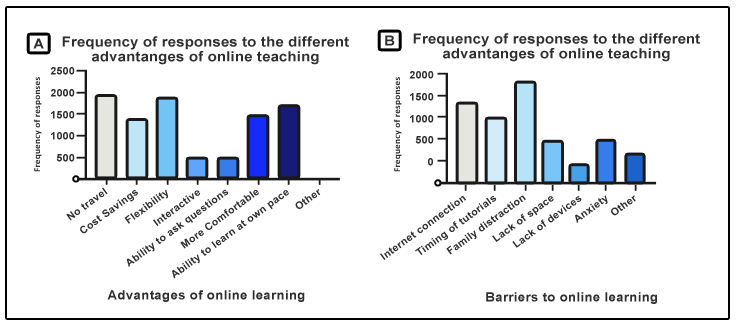
The rapid transition to online learning, as a consequence of COVID-19, has highlighted the risks of student disengagement, and the subsequent impact on lower student achievement across multiple courses.
1. The recent pandemic has changed how millions around the globe are educated. New solutions and innovations in the education system are the need of the hour. Looking at the new digital split, the approach may increase the equality gaps. More than 500 million students across the globe had to pause their on-going studies at various levels. These changes have and will create a degree of inconvenience, but at the same time would promote innovations and future transformations within the education system.
2. The ‘pile-on effect’ of the coronavirus is that, during the global COVID-19 pandemic, interruptions to education can have long term implications — especially for the most vulnerable. There is a real risk of regression for children whose basic, foundational learning (reading, math, languages, etc.) was not strong to begin with. And millions of children who have already been deprived of their right to education, particularly girls, are being more exposed to health and well-being risks (both psychosocial and physical) during COVID-19-
3. Girls: Young and adolescent girls are twice as likely to be out of school in crisis situations and face greater barriers to education and vulnerabilities such as domestic/gender-based violence when not in school.
4. Refugees, displaced and migrant children: These populations often fall between the cracks as national policies might not necessarily include these vulnerable groups and they must be included and catered for in any global responses to this crisis if this has not already occurred.
5. Children and youth with disabilities: Along with other marginalized populations, including children from minority groups, are neglected in the best of times and have lower educational outcomes than their peers.
6. Young people affected by trauma or mental health issues: Schools and learning centers are places for communities to address health related issues, including mental health and psychosocial support (MHPSS), which the most vulnerable students rely on for their wellbeing and development in order to learn.
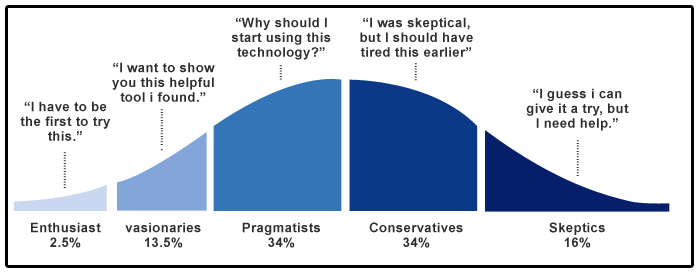
The graphic above, made by the consulting firm CB&A, shows how the adaption curve typically impacts in the online learning method users.
Based on your reading of the above excerpt, choose the correct option to answer the following questions:
Q1: The ‘Pile-on effect’ has effected the following the most-
(a) Children, especially girlswrong
(b) Children with lower academic scores
(c) Children with disabilities
(d) Children with weak basic foundations
Ans: (d)


Q2: The new digital split will-
(a) Decrease innovations
(b) Dampen spirits
(c) Diminish equal opportunities
(d) Divulge inconvenience
Ans: (c)


Q3: Which of the underlined words in the sentence can be replaced by ‘disengagement’ to bring out its usage as applied in the text above-
(a) His air of detachment lost him many friends.
(b) He was startled and gave a discordant shriek.
(c) He stopped and gazed off at the distant hills.
(d) He mumbled in delirium all night.
Ans: (a)


Q4: With the recent shift to online education, the world saw-
(a) A decreasing trend in school drop outs
(b) Decreased investments in education sector
(c) Decreased challenges in innovations
(d) A decreasing trend in student accomplishments
Ans: (d)


Q5: According to the adaption curve, people fastest to adjust were the-

(a) Visionaries & Enthusiasts
(b) Visionaries & Conservatives
(c) Pragmatics & Enthusiasts
(d) Pragmatics & Conservatives
Ans: (a)


Q6: ‘Pragmatists’ refers to-
(a) Someone who pleases everyone
(b) Someone who is irrational
(c) Someone who acts sensibly
(d) Someone who is very idealistic
Ans: (c)


Q7: Which of the following is a synonym of ‘aggravation’- (para 2)
(a) Innovation
(b) Pandemic
(c) Achievement
(d) Inconvenience
Ans: (d)

15. Factual Passage – 4

Read the following passage carefully:

1. By generating a means of employment for people with excellent artistic abilities and incredible imagination, the animation industry is growing into a multi-crore industry with vast career prospects. The animation is the linking and the manipulation of still images to create an illusion of motion. Images, graphics, text, and audio are brought together to create a live moving picture on the screen. Thus the animator, who is an expert in animation art, gives life to a character using a blend of imagination and technology.

2. Aspirant animators must have a passion and a flair for drawing and creative imagination. In addition, they must also possess an advanced level of technological understanding. An animator must have good communication skills because the field requires him to meet and interact with a large number of people.

3. In the present scenario, animation has a plethora of opportunities in areas like films, cartoons, advertisements, television, and product designing. The animation industry can be broadly classified into categories like 3D and 2D animation, gaming, multimedia, web designing, and visual effects.

4. In India, the animation industry is growing immensely thus making the country a destination for the outsourcing of animation work. The reasons for this mainly are skilled workers and low cost of production besides the rise of the gaming industry. Apart from this, the Indian audience is showing keen interest in animated movies and commercials which has led several production houses to produce a greater number of animated movies.

5. Being aware of the increasing popularity of the animation industry, educational institutions across the country are beginning to include animation courses in their programme. A number of animation institutes have also come up in India which will help students both in grooming their creative skills as well as in their placements.

6. The magical world of animation is thus becoming one of the fastest and most lucrative industries in India. Despite a humble start in the year 1974 with the educational animation film ‘Ek Anek Aur Ekta’, the animation industry in India is a well-established career option today.

15. Factual Passage – 3

Read the passage given below and answer the following questions

Mr. Rajeev Sharma must realise that the PM was talking to the whole of India and not just the thinkers. In a speech that lasted about an hour, he touched upon subjects that he felt the people of India would like to listen to and probably act on his exhortations. On this he scored one hundred percent.

Sharma tore into the Indian psyche of being soft on male children as compared to female children. I am sure this will touch a chord in every set of parents and hopefully they will advise their male offspring to behave responsibly. All the other issues he touched upon would also directly affect the masses and the PM wanted positive action from his countrymen.

On internal security, defence and space, what could the people of India contribute if the PM had mentioned his plans? There is not much the Indian people can contribute directly in space and defence sectors. However, on internal security, he did indirectly touch upon it by exhorting all sections of society to shun all forms of violence, including communal. A lot of internal security issues would get sorted out if the communities live in peace and harmony among themselves. On defence and space, the PM would definitely talk to the people involved in those activities, which he has done admirably so far. Also, there is no merit in outlining your strategies in critical sectors such as defence.

Q1: According to the author who was the PM of India addressing?
(a) The whole of India including the masses.
(b) The thinkers of India.
(c) The parents of India.
(d) The space scientists.
Ans: (a)
Sol: The PM of India was addressing the whole of India including the masses

Q2: When the PM was referring to ‘the Indian psyche of being soft’, what was he referring to?
(a) Investments in the defence sector.
(b) Investments in the space sector.
(c) Issues of security.
(d) Indian parents being soft on male children as compared to female children.
Ans: 
(d)
Sol: The PM was referring to the bias towards male offspring rather than female offspring

Q3: What did the PM want the parents to do?
(a) To produce more female children.
(b) To advise their male children to behave responsibly.
(c) To produce more male children.
(d) To produce male and female children equally.
Ans:
 (b)
Sol: The PM wanted the parents not to be soft on male children and to motivate their male children to behave more responsibly

Q4: What was the length of the speech delivered by the PM?
(a) About 45 minutes.
(b) About 15 minutes.
(c) About 60 minutes.
(d) About 30 minutes.
Ans:
 (c)
Sol: The speech lasted about an hour, which is 60 minutes

Q5: The PM felt that the Indian masses could not contribute directly in which areas?
(a) Shun all forms of violence.
(b) Positive action from countrymen.
(c) Parents advising their male children to behave responsibly.
(d) In the defence and space sectors.
Ans:
 (d)
Sol: The PM felt that the masses would not be able to contribute directly to defence and space sectors

Q6: The writer felt that, ‘On this he scored one hundred percent.’ What was the writer referring to?
(a) On the PM being able to speak upon subjects that the people of India would like to listen to.
(b) On the PM’s ability to talk to thinkers.
(c) On the PM’s ability to talk to security experts.
(d) On the PM’s ability to talk to defence experts.
Ans: 
(a)
Sol: The writer felt that the PM was able to speak on subjects that the masses of India would like to listen to

Q7: What was one of the PM’s solutions to solve internal security issues?
(a) Outlining strategies in space sectors.
(b) Outlining strategies in defence sectors.
(c) The communities living in peace and harmony among themselves.
(d) Parents not being soft on male children.
Ans:
 (c)
Sol: The PM felt that if the communities lived in peace and harmony amongst themselves the internal security issues would get sorted out

Q8: What was another of the PM’s solutions to solve internal security issues?
(a) Motivating the thinkers.
(b) Exhorting all sections of society to shun all forms of violence, including communal.
(c) Being hard on male children.
(d) Being hard on female children.
Ans: 
(b)
Sol: The PM wanted all sections of society to shun all forms of violence, including communal violence

Q9: The writer feels that the PM has talked to certain sections wherever necessary. Which sections is the writer referring to?
(a) Internal security.
(b) Masses.
(c) Parents.
(d) The defence and space sectors.
Ans:
 (d)
Sol: The writer feels that the PM would definitely talk to the people involved in the defence and space sectors, which the writer feels the PM has done admirably

Q10: Who felt ‘there is no merit in outlining your strategies in critical sectors such as defence’?
(a) Mr Rajeev Sharma.
(b) The PM.
(c) The writer.
(d) The people of India.
Ans:
 (c)
Sol: The writer felt that there was no merit in the PM outlining strategies in critical sectors such as defence to the general public

15. Factual Passage – How to answer a Factual Passage

Introduction 

A factual passage typically presents a series of facts, data, or information on a specific subject. The aim is to check the reader’s understanding and ability to extract and interpret key details.

Key Steps to Answering a Factual Passage

Read the Passage Carefully:

  • First Reading: Read the passage quickly to get a general understanding.
  • Second Reading: Read again slowly and underline key points, such as important dates, names, places, and definitions.
  • Highlight Key Information: Focus on facts like figures, comparisons, and logical connections.

Understand the Question:

Identify Question Type – Determine whether the question is asking for:

  • Specific Information (dates, names, events)
  • Inferences (meaning implied by the author)
  • Explanations (why something happened, how it works)
  • Summarization (briefly stating main ideas)

Focus on Key Words: Look for keywords or phrases in the question that directly relate to the passage content.

Answering the Question:

  • Be Precise and Concise: Provide a direct response based on the passage. Avoid adding unnecessary information.
  • Use Information from the Passage: Extract the information directly from the passage or paraphrase it.
  • Quote or Paraphrase Accurately: If the question asks for a specific detail, quote it accurately. If it asks for a general explanation, paraphrase the relevant part.
  • Avoid Personal Opinion: Factual passages require answers based solely on the information given. Do not include opinions unless asked.

Types of Questions and How to Answer:

1. Who / What / Where Questions

Tip: Directly pick the person, place, or thing mentioned in the passage.

  • Question: “Who discovered gravity?”
    Answer: “Gravity was discovered by Sir Isaac Newton.”
  • Question: “What is the capital of France?”
    Answer: “The capital of France is Paris.”
  • Question: “Where is the Great Barrier Reef located?”
    Answer: “The Great Barrier Reef is located off the coast of Queensland, Australia.”

2. When / Why Questions

Tip: Look for dates, reasons, or causes mentioned in the passage.

  • Question: “When did World War II end?”
    Answer: “World War II ended in 1945.”
  • Question: “Why do birds migrate?”
    Answer: “Birds migrate to find food and favorable breeding conditions.”
  • Question: “When was the first computer invented?”
    Answer: “The first computer was invented in the 1940s.”

3. How Questions

Tip: Explain the process or steps clearly.

  • Question: “How does the water cycle work?”
    Answer: “The water cycle works through evaporation, condensation, and precipitation.”
  • Question: “How is electricity generated in a hydroelectric power plant?”
    Answer: “Electricity is generated by using the flow of water to turn turbines, which then produce electrical energy.”
  • Question: “How do vaccines protect the body?”
    Answer: “Vaccines protect the body by stimulating the immune system to produce antibodies against a disease.”

4. True / False or Correct the Statement

Tip: Compare the statement with facts and correct any mistakes.

  • Question: “The Eiffel Tower is in London.”
    Answer: “False. The Eiffel Tower is in Paris, France.”
  • Question: “Water boils at 90°C.”
    Answer: “False. Water boils at 100°C at sea level.”
  • Question: “Sharks are mammals.”
    Answer: “False. Sharks are fish, not mammals.”

Organize Your Answer:

  • Structure: Follow the structure of the question. If the question asks for multiple points, list them clearly.
  • Keep it Short and to the Point: Avoid unnecessary elaboration. Provide enough information to answer the question completely.

Check Your Answer:

  • After answering, recheck the passage and your answer.
  • Make sure your response is directly supported by the passage.
  • Ensure proper grammar, spelling, and punctuation.

Examples of Passage-Based Questions

1. Identify-Type Questions

Tip: Pick the fact or detail directly from the passage.

  • Passage: “The Taj Mahal was built by Emperor Shah Jahan in memory of his wife Mumtaz Mahal.”
    Question: “Who built the Taj Mahal?”
    Answer: “The Taj Mahal was built by Emperor Shah Jahan.”
  • Passage: “Mount Everest is the highest mountain in the world, standing at 8,848 meters.”
    Question: “What is the height of Mount Everest?”
    Answer: “Mount Everest stands at 8,848 meters.”
  • Passage: “The Amazon rainforest is home to millions of species of plants and animals.”
    Question: “Where can millions of species of plants and animals be found?”
    Answer: “Millions of species of plants and animals can be found in the Amazon rainforest.”

2. Explanation-Based Questions

Tip: Describe the process, reason, or cause in your own words.

  • Passage: “The heart pumps blood throughout the body, supplying oxygen and nutrients to all organs.”
    Question: “Explain the function of the heart.”
    Answer: “The heart functions by pumping blood throughout the body, providing oxygen and nutrients to organs.”
  • Passage: “Rain is formed when water vapor in the air condenses into droplets and falls to the ground.”
    Question: “Explain how rain is formed.”
    Answer: “Rain is formed when water vapor in the air condenses into droplets, which then fall to the ground.”
  • Passage: “Recycling helps reduce waste and conserves natural resources.”
    Question: “Why is recycling important?”
    Answer: “Recycling is important because it reduces waste and helps conserve natural resources.”

3. True/False or Correct-the-Statement Questions

Tip: Check the passage carefully and verify the statement.

  • Passage: “Venus is the second planet from the Sun and has a very thick atmosphere.”
    Question: “Venus is the third planet from the Sun.”
    Answer: “False. Venus is the second planet from the Sun.”
  • Passage: “Sharks are cold-blooded animals that live in water.”
    Question: “Sharks are warm-blooded animals.”
    Answer: “False. Sharks are cold-blooded animals.”

Conclusion

Answering a factual passage requires:

  • Close reading and understanding of the passage.
  • Extraction of specific information and interpretation.
  • Clear and concise responses based on facts from the text.

By following these steps, you can effectively answer factual passage questions.