02. People as Resource – HOTS Question answer – 1

Q1: What part does health play in the individual’s working life?
Ans: Health plays a crucial role in an individual’s working life because:

  • An unhealthy person struggles to work efficiently.
  • A healthy body supports a productive mind.
  • Healthy individuals can work harder and achieve better results, leading to higher earnings and improved quality of life.


Q2: What are the various activities undertaken in the Primary sector, Secondary sector and Tertiary sector?
Ans: Primary Sector Activities:

  • Agriculture
  • Forestry
  • Animal husbandry
  • Fishing
  • Poultry farming
  • Mining

Secondary Sector Activities:

  • Manufacturing
  • Construction

Tertiary Sector Activities:

  • Trade
  • Transport
  • Communication
  • Banking
  • Education
  • Health
  • Tourism
  • Services
  • Insurance


Q3: How will you explain the term unemployment?
Ans: Unemployment occurs when individuals who are willing to work at current wages cannot find jobs. Key points include:

  • Willingness to work: Individuals must be actively seeking employment.
  • Current wages: The jobs must offer wages that the individuals find acceptable.
  • Job availability: There must be a lack of jobs in the market for these individuals.

Unemployment can lead to significant social and economic issues, such as:

  • Increased reliance on the working population.
  • Decline in overall quality of life.
  • Wastage of potential economic resources.


Q4: How does Population become human capital?
Ans: Population becomes human capital through targeted investment in key areas:

  • Education: Enhances knowledge and skills.
  • Training: Improves specific job-related abilities.
  • Medical care: Ensures a healthier workforce.

These investments lead to:

  • Higher productivity and efficiency.
  • Increased incomes for individuals.
  • Overall economic growth for society.

Thus, a well-invested population transforms into a valuable asset for the economy.


Q5: What does ‘People as a Resource’ mean?
Ans: ‘People as a Resource’ refers to a country’s workforce, highlighting their productive skills and abilities.

  • This perspective views the population as a valuable asset contributing to the Gross National Product.
  • It emphasises the potential of a large population, often seen negatively due to challenges like food and education.
  • When the workforce is educated and healthy, it enhances the country’s productive power, similar to physical capital.
  • Investment in human capital through education and healthcare yields returns, such as higher incomes.
  • Examples like India’s Green Revolution show how knowledge can boost productivity.

Overall, viewing people as a resource underscores their role as a crucial part of economic growth.


Q6: What is ‘human capital formation’?
Ans: Human capital formation refers to the process of enhancing the existing human resources through education, training, and healthcare. This development leads to:

  • Increased productivity of individuals.
  • Higher income levels due to improved skills.
  • A healthier population contributing to economic growth.

By investing in human capital, a country can significantly boost its overall productivity and economic strength.


Q7: How can investment be made in human capital?
Ans: Investment in human capital can be made through various means, which yield significant returns similar to investments in physical capital. Key methods include:

  • Education: Providing access to quality education enhances skills and knowledge.
  • Training: Offering vocational training improves job readiness and productivity.
  • Healthcare: Investing in health ensures a healthier workforce, leading to higher productivity.

These investments lead to:

  • Higher incomes due to increased productivity.
  • A more skilled workforce that can adapt to modern technologies.
  • Broader societal benefits, as educated and healthy individuals contribute positively to their communities.


Q8: How is human capital superior to other resources?
Ans: Human Capital is superior to other resources such as land and physical capital for several reasons:

  • Utilisation: Human resources can effectively utilise land and capital, whereas land and capital cannot function independently.
  • Investment Returns: Investing in human capital through education and training leads to higher productivity and incomes.
  • Health Benefits: Healthier individuals contribute more effectively to the economy.
  • Broader Impact: The benefits of a well-educated and healthy population extend beyond those directly receiving education and healthcare.


Q9: How can a large population of India be turned as an asset rather than a liability?
Ans: A large population can be transformed into a productive asset through strategic investment in human capital. This can be achieved by:

  • Investing in education and health for everyone.
  • Training industrial and agricultural workers to use modern technology.
  • Conducting valuable scientific research.

By enhancing the skills and well-being of the population, India can leverage its large workforce for economic growth.


Q10: What kind of investment can be made on a child?
Ans: Investment in a child’s future can be made through:

  • Education: Providing quality education helps children develop skills and knowledge, leading to better job opportunities.
  • Health: Ensuring good health through proper nutrition and medical care enhances a child’s ability to learn and grow.

These investments yield significant returns, including:

  • Higher earnings in adulthood.
  • Greater contributions to society.

Parents who value education often invest more in their children’s learning and health, creating a positive cycle of growth and opportunity.


Q11: How a vicious cycle is created by illiterate parents for their children?
Ans: A vicious cycle can develop when illiterate or disadvantaged parents, who lack education and hygiene, inadvertently keep their children in a similar state of disadvantage. This cycle can manifest in several ways:

  • Parents may not prioritise their children’s education.
  • They may lack awareness of proper healthcare and nutrition.
  • Children may grow up without the skills needed for better job opportunities.
  • This perpetuates a cycle of poverty and illiteracy across generations.


Q12: Why educated parents invest heavily on the education of their children?
Ans: Educated parents tend to invest significantly in their children’s education for several reasons:

  • They understand the importance of education from their own experiences.
  • They recognise the benefits of proper nutrition and good hygiene.
  • They are more likely to prioritise their children’s educational and health needs.

This creates a virtuous cycle, where better education leads to improved opportunities for their children.


Q13: How have countries like Japan become rich and developed?
Ans: Countries like Japan have become rich and developed through strategic investments in their people.

  • They prioritised education and health, ensuring a skilled and healthy workforce.
  • Efficient use of resources such as land and capital has been essential.
  • Technological advancements have been developed by these educated individuals, driving further growth.

This combination of factors has led to sustainable economic development.


Q14: Classify various activities on the basis of its economic benefit?
Ans: Various activities can be classified into three main sectors based on their economic benefits:

  • Primary Sector: This includes activities such as agriculture, forestry, animal husbandry, fishing, poultry farming, and mining.
  • Secondary Sector: This sector is focused on manufacturing and industrial activities.
  • Tertiary Sector: This encompasses services such as trade, transport, communication, banking, education, health, tourism, and insurance.

These sectors contribute to the production of goods and services, which in turn adds value to the national income. Economic activities are further divided into:

  • Market Activities: These involve remuneration for work performed, such as the production of goods and services.
  • Non-Market Activities: These include production for self-consumption, like household chores or personal projects.


Q15: What are Primary Activities?
Ans: Primary activities encompass various essential sectors that contribute to the economy. These include:

  • Agriculture
  • Forestry
  • Animal husbandry
  • Fishing
  • Poultry farming
  • Mining
  • Quarrying

These activities form the foundation of economic production and resource management.


Q16: Which activities are included in Secondary sector?
Ans: Manufacturing is a key activity in the secondary sector, which includes:

  • Small-scale industries
  • Large-scale industries
  • Production of goods from raw materials

These activities are essential for transforming resources into finished products.


Q17: What are Tertiary Activities?
Ans: Tertiary activities encompass a range of services that support the economy. These include:

  • Trade
  • Transport
  • Communication
  • Banking
  • Education
  • Health
  • Tourism
  • Insurance
  • Various other services

These activities contribute to the production of goods and services, ultimately adding value to the national income.


Q18: What are economic activities?
Ans: Economic activities refer to actions that lead to the production of goods and services. These activities are crucial as they:

  • Add value to the national income.
  • Are classified into three main sectors:
    • Primary sector: Includes agriculture, forestry, fishing, and mining.
    • Tertiary sector: Comprises services like trade, transport, and education.
    • Secondary sector: Involves manufacturing and construction.
  • Market activities: Involve payment for services or goods, such as jobs in government or private sectors.
  • Non-market activities: Include production for personal use, like home gardening.
  • Are divided into two categories:


Q19: What are Market Activities?
Ans: Market activities refer to economic activities that involve payment or profit. These activities can be summarised as follows:

  • They include the production of goods and services.
  • They encompass services provided by the government.
  • Market activities require remuneration for those who perform them.

In contrast, non-market activities focus on production for self-consumption. 

Q20: What are Non-Market Activities?
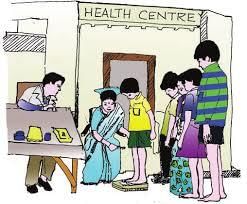
Ans: Non-Market Activitiesrefer to the production that is intended for self-consumption. These activities include: 

  • Consumption and processing of primary products.
  • Production of fixed assets for personal use.

These activities are typically not exchanged in the market and do not generate income. 


Q21: How is division of labours made between men and women in the family?
Ans: 
 In India, the division of labour between men and women in families is often traditional:

  • Women typically handle domestic chores.
  • Men usually work outside the home to earn money.

For example: 

  • Women manage tasks like cooking, cleaning, and caring for children.
  • Men engage in activities such as farming or working in various jobs.

This division is influenced by historical and cultural factors, leading to a situation where women’s contributions are often unpaid and not recognised in national income statistics. 


Q22: Is women’s work an economic activity?
Ans: 
No, women are generally not paid for their services within the family. The household work they perform is not recognised in the National Income.

  • Women earn income when they participate in the labour market.
  • Their earnings, like those of men, depend on education and skills.
  • Many women have limited education and skills, leading to lower pay compared to men.
  • Women often work in sectors with low job security and insufficient legal protections.
  • Employment in these sectors typically offers irregular and low income.
  • Basic facilities such as maternity leave and childcare are often lacking.


Q23: What are the major determinants of earnings?
Ans: 
 Education and skill are the primary factors influencing an individual’s earnings in the job market.

  • Education enhances the ability to seize economic opportunities.
  • Higher levels of education often lead to better job prospects and salaries.
  • Skills acquired through training are crucial for securing well-paying jobs.
  • Women, in particular, face challenges due to lower education and skill levels, resulting in lower wages compared to men.


Q24: What are unorganised sectors?
Ans: 
Unorganised sectors refer to parts of the economy where employment is often unstable and poorly paid. Key characteristics include:

  • Irregular income: Workers typically earn low and inconsistent wages.
  • Lack of basic facilities: There are no provisions for maternity leave, childcare, or other social security benefits.
  • Vulnerability: Workers may face job insecurity and limited rights.


Q25: What kinds of jobs, attract women in organised sector?
Ans: 
Among the organised sector, the following jobs are particularly appealing to women:

  • Teaching: This profession offers a stable environment and flexible hours.
  • Medicine: Careers in healthcare, such as doctors and nurses, are highly respected and rewarding.
  • Administrative roles: Positions that require organisational skills and management.
  • Scientific and technological jobs: These roles are increasingly attracting women with the necessary qualifications.


Q26: In which other sectors have women with high education and skill entered?
Ans: 
Some women have entered various sectors, including:

  • Administrative services
  • Scientific roles requiring high levels of competence
  • Technological jobs that demand advanced skills

These fields benefit from the educationand skills that these women possess. 


Q27: On what factors the quality of population depends?
Ans: 
The quality of a population is influenced by several key factors:

  • The literacy rate of the population.
  • The overall health of individuals, often measured by life expectancy.
  • The level of skill formation among the people.

These elements collectively contribute to the population’s potential and the country’s growth. 


Q28: How can population be a liability and how can it be made an asset?
Ans: 
Population can be a liability or an asset depending on its characteristics.

  • An illiterate and unhealthy population is a liability for the economy.
  • A literate and healthy population serves as an asset.

Investing in education and healthcare transforms the population into a productive resource, enhancing overall economic growth. 


Q29: How does education play as an important input for human capital formation?
Ans: 
Education is a vital factor in forming human capital because it:

  • Provides new aspirations and opportunities.
  • Opens new horizons for personal and professional growth.
  • Instills important values that shape character.
  • Yields benefits in later years, such as better jobs and higher salaries.

Overall, education enhances both individual and societal development. 


Q30: What are the benefits of vocational education at school level?
Ans: 
Vocational education at the school level offers several benefits:

  • Equips students with practical skills for specific careers.
  • Enhances employability by providing job-ready training.
  • Encourages students to explore various career paths.
  • Promotes a better understanding of the workplace environment.


Q31: Has the literacy rates of population increased since 1951?
Ans: 
The literacy rates in India have seen a remarkable increase over the years:

  • In 1951, the literacy rate was just 18%.
  • By 2010-11, this rate had risen to 74%.
  • As of 2018, the literacy rate reached 85%.

This growth highlights the progress made in education and access to learning opportunities. 


Q32: Why literacy rate is high among the males of India?
Ans: 
In India, the high literacy rate among males can be attributed to several factors:

  • India’s patriarchal society often prioritises male education over female education.
  • Social norms and stigma frequently restrict women’s access to education, as they are expected to focus on domestic responsibilities.

Investment in education has historically favoured boys, leading to a significant gap in literacy rates between genders.


Q33: What do you know about ‘Sarva Siksha Abhiyan’?
Ans: 
Sarva Siksha Abhiyan is a major initiative aimed at ensuring that all children aged 6 to 14 years receive elementary education by 2010.

  • It is a time-bound programme launched by the Central Government.
  • The initiative works in collaboration with State governments, local authorities, and communities.
  • It focuses on achieving universal access to elementary education.
  • Additional measures include bridge courses and back-to-school camps to boost enrolment.
  • The mid-day meal scheme has been introduced to improve attendance and nutrition.


Q34: What is the aim of Sarva Shiksha Abhiyan?
Ans: 
The Sarva Shiksha Abhiyan is a crucial initiative aimed at providing elementary education to all children aged 6 to 14 years. Its key features include:

  • Partnership between the central government, states, local governments, and communities.
  • A time-bound effort to achieve the universalisation of elementary education.
  • Implementation of bridge courses and back-to-school camps to boost enrolment.
  • Introduction of the mid-day meal scheme to improve attendance and nutrition.

This initiative is designed to ensure that every child has access to quality education, thereby enhancing the overall literacy rate in the country. 


Q35: Why was mid-day meal scheme launched by the government in the schools?
Ans: 
The Mid-day Meal Scheme was launched to:

  • Encourage attendance in schools.
  • Improve the retention of children in education.
  • Enhance the nutritional status of students.

These efforts aim to support children’s overall development and promote their right to education. 


Q36: What is the strategy of eleventh plan for education and literacy?
Ans: 
The strategy of the eleventh plan for education and literacy includes:

  • Increasing access to education for all.
  • Improving the quality of education.
  • Adopting state-specific curriculum modifications.
  • Promoting vocationalisation of education.
  • Enhancing the use of information technology in education.
  • Focusing on distance education and the convergence of various educational institutions.


Q37: What is the result of this eleventh plan?
Ans: 
Over the past 60 years, there has been a notable increase in the number of universities and institutions of higher learning. Key points include:

  • The number of colleges rose from 750 in 1950 to 41,435 in 2016.
  • University numbers grew from 30 to 753 in the same period.
  • Student enrolment increased significantly, reflecting the growing demand for higher education.

This expansion aims to equip more students with essential knowledge and skills for their future careers. 


Q38: What is the benefit of good health?
Ans: 
 Good health is essential for individuals as it enables them to:

  • Realise their potential and capabilities.
  • Effectively combat illness.
  • Contribute positively to their organisation.

In contrast, poor health can make a person a liability, impacting both their personal well-being and the overall productivity of their workplace.


​​​Q39: What is the national policy of India for health?
Ans: Our national policy focuses on enhancing healthcare access, family welfare, and nutrition services, particularly for the underprivileged. Key aspects include:

  • Improving accessibility to healthcare services.
  • Prioritising family welfare and nutrition.
  • Building a robust health infrastructure over the past five decades.
  • Developing skilled manpower in both public and private sectors.

As a result of these efforts, life expectancy has risen to over 67.2 years as of 2021, with significant improvements in health indicators: 

  • Infant mortality rate decreased from 147 in 1951 to 28 in 2020.
  • Crude birth rates dropped to 20.0 in 2020.
  • Death rates fell to 6 in 2020.

These advancements reflect the country’s commitment to improving the overall health and well-being of its population. 


Q40: What is the status of ‘unemployment’?
Ans: 
Unemployment occurs when individuals who are willing to work at prevailing wages cannot find jobs.

  • It reflects a lack of available employment opportunities.
  • Unemployment can lead to economic strain and social issues.
  • People who are unemployed may struggle to support their families.
  • It is often seen as a sign of a struggling economy.


Q41: What kind of unemployments exists in rural and urban areas?
Ans: 
In rural areas, there are two main types of unemployment:

  • Seasonal unemployment: This occurs when individuals cannot find work during certain months of the year, particularly in agriculture. For example, farmers may have busy periods for sowing and harvesting, but face unemployment during off-seasons.
  • Disguised unemployment: This happens when more people are employed than necessary. For instance, a family may have eight members working on a farm that only requires five. The extra three do not contribute significantly to productivity.

In urban areas, the primary issue is: 

  • Educated unemployment: Many young people with degrees struggle to find jobs. This includes graduates and post-graduates who are unable to secure employment in their fields.


Q42: When does seasonal unemployment take place?
Ans: 
 Seasonal unemployment occurs when individuals are unable to find work during specific months of the year. This situation primarily affects those in the agricultural sector, where:

  • Work is dependent on seasonal cycles such as sowing and harvesting.
  • Certain months offer limited job opportunities, leading to periods of unemployment.

For example, farmers may have plenty of work during harvest time but struggle to find jobs in the off-season. 


Q43: What happens in disguised unemployment?
Ans: 
In the case of disguised unemployment, individuals seem to be employed but their work is not essential. For example:

  • A job may require the efforts of five people, but eight people are engaged.
  • The extra three individuals do not contribute significantly to productivity.
  • If these three were removed, the overall output would remain the same.

This situation often occurs in agriculture, especially among family members working together. 


Q44: Who are educated unemployed?
Ans: 
Educated unemployed refers to individuals, particularly youth, who possess educational qualifications such as matriculation, graduation, or post-graduation but struggle to find suitable employment. This phenomenon is prevalent in both rural and urban areas, with the following key points highlighting the issue:

  • Many graduates and post-graduates are unable to secure jobs, leading to a rise in educated unemployment.
  • This situation results in a waste of valuable human resources, as capable individuals cannot contribute to the economy.
  • There is a growing sense of hopelessness among the youth, affecting their mental well-being and financial stability.
  • Unemployment can lead to increased economic strain, as the unemployed rely on the working population.

In urban areas, the mismatch between educational qualifications and available jobs is particularly pronounced.


Q45: What is the result of unemployment in a country?
Ans:  
Unemployment results in significant issues for a country, including:

  • Wastage of manpower: Valuable human resources are not utilised effectively.
  • Economic burden: Unemployed individuals become a liability, increasing the financial strain on the working population.
  • Decline in quality of life: Families may struggle to meet basic needs, leading to health issues and reduced educational opportunities.
  • Social despair: A sense of hopelessness can develop among the youth, impacting their mental well-being.

Overall, unemployment hinders economic growth and indicates a struggling economy. 


Q46: How unemployment has detrimental impact on the overall growth of an economy?
Ans: 
Unemployment has a negative effect on economic growth for several reasons:

  • Indicator of Depression: A rise in unemployment often signals a struggling economy.
  • Resource Waste: Unemployed individuals represent a lost opportunity for productive work.
  • Economic Liability: When people cannot contribute economically, they become a burden on resources.
  • Social Impact: Unemployment can lead to decreased quality of life, health issues, and increased dependency on the working population.
  • Education Mismatch: Many educated individuals struggle to find suitable jobs, leading to a paradox of both surplus and shortage in the job market.

Overall, unemployment not only hampers economic progress but also creates social challenges that can affect future generations. 


Q47: Surplus labour in agriculture has moved to which jobs in secondary and tertiary sector?
Ans: 
 Surplus labour from agriculture has shifted to:

  • Secondary sector: Small-scale manufacturing, which employs a significant number of workers.
  • Tertiary sector: Emerging services such as biotechnology and information technology.


Q48: Which capital would you consider the best-land, labours, physical capital or human capital?
Ans: 
Human Capital is the most valuable form of capital because it underpins the effectiveness of other resources.

  • Human capital refers to the skills, knowledge, and health of individuals.
  • Investment in human capitalthrough education and training leads to:
    • Higher productivity.
    • Increased incomes.
    • Better health outcomes.
  • Unlike land or physical capital, human capital can:
    • Utilise resources effectively.
    • Adapt to new technologies.
  • A well-educated and healthy population benefits society as a whole, not just individuals.


Q49: What do you understand by ‘people as resource’?
Ans: 
People as resource refers to viewing a country’s workforce in terms of their productive skills and abilities. This perspective highlights the potential of the population to contribute to the economy. Key points include:

  • The population should be seen as an asset, not a liability.
  • Individuals must actively contribute to the economy.
  • People provide valuable skills and abilities, transforming them into a resource.

Thus, ‘people as resource’ essentially means human resource. 


Q50: How is human resource different from other resources like land and physical capital?
Ans: 
Human resource differs from other resources like land and physical capital in several ways:

  • Flexibility: Unlike land and physical resources, which are fixed, human resources can be developed through education and health.
  • Impact: Human resources can transform and enhance the value of other resources, while land and capital cannot influence human resources.
  • Utilisation: Human resources are essential for effectively using land and capital, which remain inactive without human intervention.


Q51: What is the role of education in human capital formation?
Ans: 
Education plays a crucial role in forming human capital in several ways:

  • Investment in education enhances the skills and knowledge of individuals, contributing to human capital.
  • More educated or better-trained individuals tend to have higher productivity, leading to increased earnings.
  • Investing in education and health can yield significant returns in the future.


Q52: What is the role of health in human capital formation?
Ans: 
Health plays a crucial role in the formation of human capital, which benefits both individuals and the economy. Key points include:

  • Economic Growth: A developed health sector contributes positively to the economy.
  • Increased Productivity: Healthier individuals are able to work more, leading to higher production and earnings.
  • Health is Wealth: Good health enhances a person’s capacity to work, making them more productive and financially successful.


Q53: Is it true that educated parents invest more heavily on their children’s education and why?
Ans: 
Educated parents tend to invest more in their children’s education for several reasons:

  • They understand the importance of education for both themselves and their children.
  • They are aware of the need for proper nutrition and hygiene.
  • They actively support their children’s educational and health needs.

This creates a virtuous cyclewhere education leads to better opportunities and outcomes for future generations. 

​​​
Q54: How did countries like Japan become rich?
Ans: Countries like Japan have become rich through several key strategies:

  • Investment in people: They prioritised education and health, ensuring a skilled and healthy workforce.
  • Efficient resource use: The population effectively utilised available resources, such as land and capital.
  • Technological advancement: Innovations developed by the workforce contributed significantly to economic growth.


Q55: What is the role of health in the working life of an individual?
Ans: 
The role of health in an individual’s working life is significant:

  • Health enables a person to realise their potential and effectively combat illnesses.
  • An unhealthy individual can become a liability for both their organisation and country.
  • Good health is essential for achieving personal well-being.
01. The Story of Palampur – HOTS Question answer

Higher Order Thinking Skills (HOTS) Questions
Q1: Why do modern farming methods require more capital?
Ans: 

  • In modem fanning inputs like chemical fertilisers, pesticides, HYV seeds are required. Farmers need more cash to obtain these things.
  • HYV seeds need plenty of water to produce best results. So, farmers have to arrange for irrigation of their plants which again need more capital.
  • Since modern farming is machine oriented, so farmers need to spend heavy cash on the purchase of machinery like tractors, threshers, etc.
  • Labour is also required in modem farming which again need money.


Q2: How are the farmers in Palampur able to grow more crops from the same land?
Ans:

  • The farmers in Palampur practise multiple cropping. They grow atleast two main crops, many are growing potato as the third crop.
  • The main reason why farmers are able to grow three different crops in a year in Palampur is due to the well-developed system of irrigation.
  • Farmers in the village also use modern farming methods for higher yields which are possible only from a combination of HYV seeds, irrigation, chemical fertilisers, pesticides, etc.Some of the farmers have bought farm machinery like tractors and threshers, which made ploughing and harvesting faster. They have been rewarded with high yields of wheat and other food grains.


Q3: What is the basic constraint in raising farm production? What is the way to overcome this problem?
Ans:
 Land is the basic constraint in raising farm production. We must know that land area under cultivation is practically fixed. Since 1960, there has been no expansion in land area under cultivation. By then, some of the wastelands in the village had been converted to cultivable land. There exists no further scope to increase farm production by bringing new land under cultivation.
The only way to overcome this problem is to produce more crops from the same amount of land. Multiple farming and use of modern farming methods for higher yield can be helpful in this regard.

Q4: The Green Revolution has adversely affected the environment. Do you agree? Give your opinion.
Ans:

  • Although the Green Revolution proved very beneficial for the farmers and the country’s economy, there were also some issues with this period that affected our environment. The use of chemical fertilisers and synthetic herbicides and pesticides dramatically influenced the environment by increasing pollution and soil erosion.
  • The new materials added to the soil and plants polluted the soil and water system around the fields.
  • Continuous use of groundwater for tubewell irrigation has reduced the water table below the ground. This has created water crisis everywhere.
  • The pollution of the soil resulted in the loss of soil fertility.
  • The environment was also adversely affected by the Green Revolution due to the consumption of more energy. Environmental resources like soil fertility and groundwater are built up over many years. Once destroyed, it is very difficult to restore them. So, we must take care of the environment to ensure better future.


Q5: How did the Green Revolution in the late 1960s help the Indian farmers?
Ans:

  • The Green Revolution in the late 1960s proved to be a boon for the Indian farmers. It introduced them to cultivation of wheat and rice using high yielding varieties (HYVs) of seeds.
  • Till the mid 1960s, the seeds used in cultivation were traditional ones with relatively low yields. With the introduction of the Green Revolution, HYV seeds began to be used which promised to produce much greater amounts of grain on a single plant.
  • The same piece of land would now produce for greater quantities of food grains than was possible earlier. HYV seeds, however, needed plenty of water and also chemical fertilisers and pesticides to produce best results. Farmers used this method and were rewarded with high yields of wheat.
  • Some farmers were also encouraged to buy farm machinery like tractors and threshers, which made ploughing and harvesting faster.
  • There was a large increase in the production of wheat. Farmers now had greater amounts of surplus wheat to sell in the markets. This strengthened their financial position.


Q6: What is land? Mention some of the ways to sustain it.
Ans: 
Land is a natural resource. It is most important factor of production. It is required for growing crops, buildings, factories and infrastructure. Land being a natural resource, it is necessary to be very careful in its use. Once destroyed it is very difficult to restore it. Below are given some methods to sustain land:

  • We should make minimum use of chemical fertilisers and pesticides. Use of bio compost should be encouraged.
  • Multiple cropping or growing more than one crop on a piece of land during the year should be practised. It is the most common way of increasing production on a given piece of land.
  • Modern farming methods should be used but in a judicious manner, in order to make land sustainable.
  • Afforestation should be encouraged as it reduces the chances of soil erosion. At the same time, the practice of community agriculture system will also be helpful to a great extent.

Value-based Questions (VBQs)
Q7: What is the importance of growing more than one crop on a piece of land?Or

Mention three advantages of multiple cropping.
Ans:

  • Multiple cropping means growing more than one crop on a piece of land during the year. It is the most common way of increasing production on a given piece of land. Its advantages are given below:
  • This technique makes effective use of inputs such as soil, water, fertilisers, etc. Thus, output per unit area increases with manifold returns to the farmers.
  • Multiple cropping can be done in annual food crops, fodders, vegetables, fruit plants and perennial crops.
  • With multiple cropping the risk of total loss from drought, pests and diseases is reduced.


Q8: What do you mean by modern farming? Mention some of its features.
Ans: 
Modern farming means traditional farming with the facilities of modern agricultural equipments and technology. It is a way to increase production. Some of the features of this type of farming are:

  • By using modern farming methods farmers are able to increase the yields of primary crops such as rice and wheat. As a result, the price of food has declined. The rate of increase in crop yields generally keeps pace with population growth, and the number of people who consistently go hungry is slightly reduced.
  • This boost in food production has been mainly due to scientific advances and new technologies, including the development of new crop varieties, the use of pesticides and fertilisers, and the construction of large irrigation systems.
  • It has helped in increasing the fertility of the soil. Now seeds are sown according to the fertility of the soil so that maximum yields may be procured.

04 . Food Security in India – Short and Long Question answer

Q1: What are the dimensions of food security?
Ans:
Food security has following dimensions:

  • Availability of food: It means food production within the country, food imports and the previous years stock stored in government granaries.
  • Accessibility: It means food is within reach of every person.
  • Affordability: It implies that an individual has enough money to buy sufficient, safe and nutritious food to meet one’s dietary needs.


Q2: How is food security affected during a calamity?
Ans:

  • During a natural calamity like earthquake, drought, flood, etc. there is widespread failure of crops causing famine.
  • Decrease in total production of food grains creates a shortage of food in the affected areas.
  • Due to shortage of food, the prices go up. At the high prices, some people cannot afford to buy food. If such calamity happens in a widespread area or is stretched over a longer time, it may cause a situation of starvation.


Q3: ‘Even Today, there are several places in different parts of the country which are still food in-secure”. Support the statement.
Ans:
Although the Bengal famine has never been repeated in the history of India, it is disturbing to note that even today, there are places in different parts of the country which are still food insecure:

  • Kalahandi and Kashipur in Odisha where famine like conditions have been existing for many years and where some starvation deaths have also been reported.
  • Starvation deaths are also reported in Baran district of Rajasthan, Palamau district of Jharkhand and many other remote areas during the recent years. Food security is therefore needed in a country to ensure food to all at all times.


Q4: Who are food insecure? Describe in brief.
Ans:

  • A large section of people suffer from food and nutrition insecurity in India. However, the worst affected groups are landless people with little or no land to depend upon, traditional artisans, providers of traditional services, petty self-employed workers and beggars.
  • In the urban areas, those engaged in casual labour market and seasonal activities are more prone to food insecurity.
  • The SCs, STs and some sections of the OBCs who have either poor land base or very low land productivity are prone to food insecurity.
  • The people affected by natural disasters, who have to migrate to other areas in search of work, are also among the most food insecure people.
  • A large proportion of pregnant and nursing mothers and children under the age of 5 years constitute an important segment of the food insecure population


Q5: What is Antyodaya Anna Yojana? Mention its role in ensuring food security in the country.
Ans:

The Antyodaya Anna Yojana is an important poverty alleviation programme started by the central government in December 2000. This scheme plays an important role in ensuring food security in the country:

  • Under this scheme one crore of the poorest among the BPL families covered, under the targeted public distribution system were identified.
  • Twenty five kgs of food grains were made available to each eligible family at a highly subsidized rate of ₹ 2 per kg for wheat and ₹3 per kg for rice. This quantity has been enhanced from 25 kgs to 35 kgs with effect from April 2002.
  • The scheme has been further expanded twice by additional 50 lakh BPL families in June 2003 and in August 2004. With this increase, 2 crore families have been covered under the AAY.


Q6: What is the Sampuma Grameen Rozgar Yojana?
Ans:

  • The Sampuma Grameen Rozgar Yojana is a scheme launched by the Government of India to attain the objective of providing gainful employment for the rural poor.
  • This scheme was launched on 25 September 2001 by merging the provisions of Employment Assurance Scheme and Jawahar Gram Samridhi Yojana.
  • The programme is self-targeting in nature and aims to provide employment and food to people in rural areas who live below the poverty line. This scheme greatly contributes to food security by increasing the income of the poor.


Q7: Why is buffer stock created by the government?
Ans:

  • The main objective of the buffer stock is to distribute the food grains in the deficit areas and among the poor strata of society at a price lower than the market price.
  • Buffer stock also helps resolved the problem of shortage of food during adverse weather conditions or during the periods of calamity.
  • Buffer stock also saves farmers from ups and downs of the market. Under this, farmers are paid a pre-announced price for their crops. This price is declared by the government before the sowing season to provide incentives to the farmers.


Q8: What is rationing? When was it introduced in India? Why?
Ans:

  • The term rationing is often used for controlled distribution of scarce goods and resources by the government. It restricts how much people are allowed to buy or consume a particular resource for the specified duration.
  • The introduction of rationing in India dates back to the 1940s against the backdrop of the Bengal famine. The rationing system was revived in the wake of an acute food shortage during the 1960s, prior to the Green Revolution.

In the wake of the high incidence of poverty levels, as reported by the NSSO in the mid-1970s, three important food intervention programmes were introduced:

  • Public Distribution System (PDS) for food grains which was in existence earlier but strengthened thereafter.
  • Integrated Child Development Services (ICDS) was introduced in 1975 on an experimental basis.
  • Food-For-Work (FFW) was introduced in 1977-78. Over the years, several new programmes have been launched and some have been restructured with the growing experience of administering the programmes.

Q9: Why has the public distribution system been criticised? Give reasons.
Ans:

The public distribution system was started by the government for the distribution of food among the poorer sections of society through fair price shops. This was done to ensure food security in the country. But in the recent years, the PDS has stopped functioning well. There are several factors that have led to its decline.

  • PDS dealers are indulged in malpractices like diverting the grains to open market to get better margin, selling poor quality grains at ration shops, irregular opening of the shops, etc.
  • Earlier every family, poor and non-poor had a ration card with a fixed quota of items such as rice, wheat, sugar, etc. These were sold at the same low price to every family.
  • The three types of cards and the range of prices that are seen today did not exist. A large number of families could buy food grains from the rations shops subject to a fixed quota. These included low income families whose incomes were marginally higher than the below poverty line families.
  • Now, with TPDS of three different prices, any family above the poverty line get very little discount at the ration shop.
  • The price for APL family is almost as high as open market price. So, there is little incentive for them to buy these items from the ration shop.

03 . Poverty as a Challenge – Short and Long Question answer

Q1: Describe the various dimensions of poverty.
Ans: Poverty is a significant challenge faced by independent India, manifesting in various dimensions:

  • Hunger and lack of shelter are primary indicators of poverty.
  • Many parents cannot send their children to school due to financial constraints.
  • Illness often goes untreated because of the inability to afford medical care.
  • Access to clean water and sanitation facilities is severely limited.
  • Many individuals lack stable employment that provides a decent living wage.
  • Poverty fosters a sense of helplessness, leading to mistreatment in various settings, including workplaces and public spaces.

Mahatma Gandhi believed that true independence for India would only be achieved when the poorest citizens are free from suffering.

Q2: ‘Poverty is a curse upon humanity’. Support the statement.
Ans:

  • Poverty is a curse upon humanity. It fills people with a sense of helplessness and hopelessness. The victims of poverty face social exclusion. They are excluded from enjoying social equality of better-off people in better surroundings.
  • These people fail to get health care, safe drinking water, proper education and respect. They do not lead a life of dignity. Rather, they are ill-treated at almost every place.
  • Those living in abject poverty face greater risks at the time of natural disasters like earthquakes, floods, etc. Their safety is ignored in these circumstances.
  • Children of poverty-ridden families are not sent to school. These children are forced to earn money by working at dhabas, or at construction sites or at houses of well-off people.

Obviously, nobody would like to live in poverty. It is a curse of which its victims should be brought out without delay.

Q3: Give a detailed description of all the poverty alleviations programmes.
Ans: 

Removal of poverty has been a key goal of India’s development strategy. The government’s current approach focuses on two main areas:

  • Promotion of economic growth
  • Targeted anti-poverty programmes

Promotion of economic growth: Since the 1980s, India has experienced rapid economic growth, with the growth rate increasing from about 3.5% annually in the 1970s to around 6% in the 1980s and 1990s. This growth has significantly contributed to reducing poverty levels. Targeted anti-poverty programmes: The government has implemented various schemes aimed at alleviating poverty, including:

  • Mahatma Gandhi National Rural Employment Guarantee Act (MGNREGA) (2005): Provides 100 days of wage employment to every rural household, ensuring livelihood security.
  • Prime Minister Rozgar Yojana (PMRY) (1993): Aims to create self-employment opportunities for educated unemployed youth in rural areas and small towns.
  • Rural Employment Generation Programme (REGP) (1995): Focuses on creating self-employment opportunities in rural areas and small towns.
  • Swarnajayanti Gram Swarozgar Yojana (SGSY) (1999): Helps poor families rise above the poverty line by organising them into self-help groups, supported by bank credit and government subsidies.
  • Pradhan Mantri Gramodaya Rozgar Yojana (PMGY) (2000): Provides additional central assistance to states for basic services like health, education, and rural infrastructure.

Despite these efforts, the effectiveness of these programmes has been mixed. Key challenges include:

  • Inadequate implementation and targeting of schemes.
  • Overlapping of various schemes, leading to inefficiencies.
  • Benefits not reaching the most deserving individuals.

As a result, recent efforts have focused on improving the monitoring of poverty alleviation programmes. While poverty has declined, significant disparities remain between rural and urban areas, and among different states. In conclusion, addressing poverty in India requires a multifaceted approach, combining economic growth with targeted interventions to ensure that the benefits reach those who need them most.


Q4: Describe how economic growth and poverty reduction are interlinked.
Ans:

  • Over a period of thirty years lasting up to the early eighties, there were little per capita income growth and not much reduction in poverty.
  • Since the eighties, India’s economic growth has been one of the fastest in the world. The growth rate jumped from the average of about 3.5 per cent a year in the 1970s to about 6 per cent during the 1980s and 1990s. The higher growth rates have helped significantly in the reduction of poverty.
  • Economic growth widens opportunities and provides the resources needed to invest in human development. This also encourages people to send their children, including the girl child, to schools in hope of getting better economic returns from investing in education.


Q5: How did the following states succeed in reducing poverty—Kerala, Punjab and Haryana, West Bengal and Andhra Pradesh and Tamil Nadu?
Ans: 
There has been a significant decline in poverty in the states of Kerala, Punjab, Haryana, West Bengal, Andhra Pradesh, and Tamil Nadu due to various strategies:

  • Kerala has prioritised human resource development, focusing on education and health.
  • Punjab and Haryana have achieved success through high agricultural growth rates, boosting rural incomes.
  • West Bengal implemented effective land reform measures, which have contributed to poverty reduction.
  • In Andhra Pradesh and Tamil Nadu, the public distribution of food grains has played a crucial role in improving food security and reducing poverty.


Q6: “The results of the poverty alleviation programmes have been mixed”. Support the statement with three valid reasons.
Ans: 
The results of poverty alleviation programmes have been mixed for several reasons:

  • Lack of proper implementation: Many programmes suffer from inadequate execution and poor targeting, which limits their effectiveness.
  • Overlapping schemes: There is significant duplication among various initiatives, leading to confusion and inefficiency.
  • Insufficient reach: Despite good intentions, the benefits often do not reach the deserving poor, necessitating improved monitoring and evaluation of these programmes.


Q7: Mention any six issues related to poverty.
Ans: 
Here are six issues related to poverty:

  • Landlessness: Many individuals lack ownership of land, which limits their ability to generate income.
  • Unemployment: A high rate of joblessness contributes to financial instability for families.
  • Size of families: Larger families often struggle to provide basic needs, leading to increased poverty.
  • Illiteracy: Lack of education restricts opportunities for better employment and economic advancement.
  • Poor health/malnutrition: Health issues and inadequate nutrition can prevent individuals from working and earning a living.
  • Child labour: Many children are forced to work instead of attending school, perpetuating the cycle of poverty.


Q8: Make an analysis of poverty through the concept of social exclusion.
Ans:

  • Social exclusion is a concept-adopted to analyses poverty in a broader sense. According to this concept, poverty must be seen in terms of the poor having live only in a poor surrounding with other poor people. These people are excluded from enjoying social equality of better-off people in better surroundings.
  • Social exclusion can be both a cause as well as a consequence of poverty. Broadly, it is a process through which individuals or groups are excluded from facilities, benefits and opportunities that better-off people avail.
  • We can mention here the caste system which has been in existence in India since time immemorial. In this system people belonging to certain castes are excluded from equal opportunities. Thus, social exclusion can cause more damage than having a very low income.


Q9: How was the British colonial administration responsible for the widespread poverty in India?
Ans: The British colonial administration significantly contributed to widespread poverty in India through several key factors:

  • Low Economic Development: The colonial policies severely harmed traditional handicrafts and stunted the growth of industries like textiles. This low growth persisted until the 1980s, leading to fewer job opportunities.
  • Population Growth: The rapidly increasing population exacerbated poverty. Failed population control measures perpetuated the cycle of poverty, making it difficult for economic growth to keep pace.
  • Income Inequality: There are significant income disparities in India, largely due to the unequal distribution of land and resources. Land reforms aimed at redistributing assets have often been poorly implemented, failing to benefit the rural poor.
  • Socio-Cultural Factors: Many Indians, including the impoverished, spend substantial amounts on religious ceremonies and social obligations, diverting funds from essential needs.
  • Indebtedness: Small farmers often lack savings and borrow money for agricultural inputs. When unable to repay, they fall deeper into poverty, creating a vicious cycle of debt.

Overall, these factors illustrate how the British colonial administration’s policies and practices laid the groundwork for enduring poverty in India.


Q10: Why do social scientists look at poverty through a variety of indicators?
Ans: 
Social scientists examine poverty through various indicators to gain a comprehensive understanding of its impact. Traditionally, the focus was on income and consumption levels. However, contemporary analyses include a broader range of social indicators:

  • Illiteracy levels
  • Lack of general resistance due to malnutrition
  • Lack of access to healthcare
  • Lack of job opportunities
  • Lack of access to safe drinking water
  • Poor sanitation

This multifaceted approach acknowledges that poverty is not solely an economic issue but also involves social exclusion and vulnerability. Social exclusion refers to the isolation of the poor from better-off communities, limiting their access to opportunities and resources. Vulnerability highlights the increased risk certain groups face in becoming or remaining poor, such as those from disadvantaged castes or individuals with disabilities. By considering these diverse factors, social scientists can better understand the complexities of poverty and develop more effective strategies for alleviation.

02 . People as Resource – Short and Long Question answer

Q1. How did countries like Japan become rich/developed?

Ans: Countries like Japan have become developed despite lacking natural resources. They achieve this by: Importing necessary natural resources.

  • Investing heavily in education and health for their population.
  • Utilising land and capital efficiently.
  • Leveraging technology and skills developed by their people.

This focus on human resources has created a cycle of growth, where educated and healthy individuals contribute to the economy, leading to further advancements.

Q2. How can the large population of India be turned into a productive asset?

Ans: India’s large population can be transformed into a productive asset through strategic investments in human capital. Here are key approaches:

  • Education: Investing in education improves the quality of the workforce, leading to higher productivity.
  • Health Care: Ensuring access to health services enhances the overall well-being of the population, which in turn boosts productivity.
  • Training: Providing training for industrial and agricultural workers in modern technologies and scientific methods can significantly increase efficiency.
  • Long-term Benefits: Investment in education and health yields high returns, contributing to economic growth.

By viewing the population as a human resource, we can harness its potential to drive economic development. A healthier and more educated workforce not only benefits individuals but also enhances societal progress.

Q3. Why do educated parents invest more heavily on their children’s education?

Ans: Educated parents tend to invest more in their children’s education due to several key factors:

  • They understand the importance of education from their own experiences.
  • They prioritise nutrition and hygiene, ensuring their children are healthy.
  • They actively support their children’s educational and health needs.
  • This creates a virtuous cycle where better education leads to improved opportunities.
  • In contrast, disadvantaged parents may perpetuate a cycle of limited education and poor health for their children.

Investing in education and health can yield significant returns, including:

  • Higher future earnings for the child.
  • Greater contributions to society.

Overall, a well-educated and healthy population is a valuable asset, enhancing both individual and societal growth.

Q4. What are the main objectives of Sarva Siksha Abhiyan?

Ans: Sarva Siksha Abhiyan is a significant initiative by the central government aimed at achieving universal elementary education. Its main objectives include:

  • Providing elementary education to all children aged six to fourteen by 2010.
  • Increasing enrollment through back-to-school camps.
  • Encouraging attendance and retention of children while improving their nutritional status.

This initiative involves collaboration between the central government, state governments, local authorities, and communities to ensure that every child receives quality education.

Q5. ‘Statistically, the unemployment rate is low in India.’ Explain.

Ans: In India, the unemployment rate appears low statistically, but this figure can be misleading due to several factors:

  • A significant number of individuals with low income and productivity are counted as employed.
  • Many people seem to work year-round, yet their income and potential are inadequate.
  • Some individuals are engaged in work that feels forced, leading them to seek better opportunities.
  • Due to financial constraints, poor people often take any available job, regardless of its earning potential.
  • These jobs typically keep them at a bare subsistence level.

In rural areas, there are two main types of unemployment:

  • Seasonal unemployment: This occurs when agricultural workers cannot find jobs during certain months of the year.
  • Disguised unemployment: Individuals may appear employed but are not contributing effectively to productivity.

In urban areas, the situation is different:

  • Educated unemployment is prevalent, with many graduates struggling to find suitable jobs.

Overall, while the statistics suggest low unemployment, the reality reflects a complex situation where many are engaged in inadequate or unproductive work.

Q6. How does investment in human resource give higher return in future?

Ans: Investment in human capital through education, training, and medical care yields returns similar to investments in physical capital. The benefits include:

  • Higher incomes: More educated and better-trained individuals tend to earn more due to increased productivity.
  • Healthier workforce: Healthier individuals are also more productive, contributing to higher overall income levels.
  • Societal benefits: The advantages of a more educated and healthier population extend beyond those directly receiving education or healthcare, benefiting society as a whole.

Countries like Japan have demonstrated that significant investment in human resources can lead to economic prosperity, even without natural resources.

Furthermore, investing in human capital creates a virtuous cycle:

  • Educated parents are more likely to invest in their children’s education and health.
  • This leads to higher future earnings and greater societal contributions from the next generation.

In contrast, a lack of investment can create a vicious cycle, where disadvantaged parents may struggle to provide education and healthcare for their children.

Overall, human capital is crucial as it enhances the productive capacity of a nation, similar to physical capital formation.

Q7. Why will a firm not like to employ a worker with ill-health? How does it affect the working environment?

Ans: Health is a crucial factor that influences an individual’s productivity. When a person’s health is good, it enhances their ability to work effectively. Conversely, if a worker suffers from ill health, they may become a liability for both their family and society. Therefore, firms typically prefer not to hire employees with health issues. The implications of employing such workers include:

  • Reduced Productivity: Ill health can lead to lower output, as affected workers struggle to perform their tasks efficiently.
  • Increased Absenteeism: Unhealthy employees are more likely to take sick leave, disrupting workflow and team dynamics.
  • Financial Loss: Hiring individuals who cannot contribute effectively can result in significant losses for the organisation.
  • Impact on Morale: The presence of unhealthy workers may negatively affect the overall working environment, leading to decreased morale among healthy employees.

In summary, a worker’s health is vital for maximising their potential and contributing positively to the organisation. Healthy employees not only perform better but also foster a more productive and harmonious workplace.

Q8. ‘The employment structure is characterised by self-employment in the primary sector.’ Explain.

Ans: The primary sector refers to agriculture, where families often work together, even if not everyone is necessary. This leads to hidden unemployment in the sector. However, the family shares the produce, which helps alleviate the difficulties of unemployment in rural areas. Despite this, it does not eliminate poverty, prompting many families to migrate to cities in search of better job opportunities.

  • In the primary sector, families contribute collectively to farming.
  • This can result in disguised unemployment, where more people work than needed.
  • Shared produce helps reduce the impact of unemployment.
  • However, it does not significantly reduce poverty.
  • Consequently, surplus labour often moves to urban areas for jobs.

Q9. How have the various activities been classified into sectors? Give one example from each sector.

Ans: The various activities are classified into three main sectors:

  • Primary Sector: This includes activities related to agricultureforestry, animal husbandry, fishing, poultry farming, mining, and quarrying. Example: Farming.
  • Secondary Sector: This sector focuses on manufacturing and processing of goods. Example: Factory production.
  • Tertiary Sector: This encompasses services such as trade, transport, communication, banking, education, health, tourism, and insurance. Example: A teacher providing education.

These activities contribute to the production of goods and services, adding value to the national income. Economic activities are divided into:

  • Market Activities: These involve remuneration for work performed, such as producing goods or providing services.
  • Non-Market Activities: These include production for self-consumption, such as growing food for personal use.

Q10. Define the term unemployment. What are the major types of unemployment prevailing in India?

Ans: Unemployment refers to a situation where individuals who are willing to work at prevailing wages cannot find jobs.

In India, there are four major types of unemployment:

  • Seasonal unemployment: This occurs when people cannot find work during certain months of the year, particularly in agriculture. For example, there are busy seasons for sowing and harvesting, but other months may offer little work.
  • Disguised unemployment: This type is seen when individuals appear to be employed but their contribution to productivity is minimal. For instance, if a family farm requires five workers but has eight, the extra three are considered disguised unemployed as their removal does not affect productivity.
  • Educated unemployment: This is prevalent in urban areas, where many graduates and post-graduates struggle to find suitable jobs despite their qualifications. A study indicates that unemployment rates are rising faster among educated individuals compared to those with lower qualifications.
  • Structural unemployment: This occurs when there is a mismatch between the skills of the workforce and the needs of the job market, leading to job vacancies in some sectors while others experience high unemployment.

Overall, unemployment not only affects individuals but also has broader implications for the economy, leading to wasted resources and increased social issues.

Q11. Enlist the factors on which the quality of population depends. Also highlight the role of education in enhancing the quality of population.

Ans: The quality of a population depends on several key factors:

  • Literacy rate
  • Health of individuals, often measured by life expectancy
  • Skill formation among the population

Education plays a crucial role in improving the quality of the population. It contributes to:

  • Human capital formation, which is essential for individual growth
  • Enabling individuals to reach their full potential and secure better jobs
  • Increasing productivity and income levels

Education helps individuals take advantage of economic opportunities. It is a major factor in determining earnings, as seen in:

  • Women with low education and skills often earn less than men
  • Women with higher education and skills can earn equally to men

Therefore, it is vital to provide quality education to children. This investment in human resources through education and healthcare yields significant returns in the future, similar to investments in land and capital.

Educated parents are more likely to invest in their children’s education and health, creating a positive cycle of growth and opportunity. Conversely, disadvantaged parents may perpetuate a cycle of poverty, limiting their children’s potential.

In summary, a well-educated and healthy population is a valuable asset for any country, contributing to economic growth and societal well-being.

Q12. Mention some of the factors responsible for seasonal unemployment.

Ans: Seasonal unemployment primarily affects rural areas, particularly those reliant on agriculture. The key factors contributing to this issue include:

  • Poverty: Many rural areas experience extreme poverty, limiting farmers’ ability to engage in multiple cropping, which could provide year-round employment.
  • Lack of small-scale industries: The absence of these industries in rural regions restricts job opportunities for those who are unemployed during the off-season.
  • Limited commercial agriculture: The practice of commercial agriculture is not widespread in India. Expanding this sector could significantly reduce seasonal unemployment.

During certain months, agricultural work such as sowing, harvesting, and weeding is abundant, while other months offer little to no work. This fluctuation leads to seasonal unemployment for those dependent on agriculture.

Q13. What is Mid-day Meal scheme? What was the purpose behind launching this scheme?

Ans: The Mid-day Meal scheme is a school meal programme initiated by the Government of India in 1995. It provides free lunches on working days to children in:

  • Primary and upper primary classes
  • Government schools
  • Government-aided schools
  • Local body schools
  • Madarsas

The main objectives of the scheme are:

  • To encourage attendance and retention of children in schools
  • To improve the nutritional status of school-age children across the country

This initiative aims to increase enrolment in elementary education and contribute to a more literate population in India.

Q14. Give the initiatives taken by the Government to improve elementary education in India.

Ans: The Government of India has implemented several initiatives to enhance elementary education and increase literacy rates. Key measures include:

  • Sarva Siksha Abhiyan: Aimed at providing elementary education to all children aged 6 to 14 years. This initiative is a collaborative effort involving the central government, state governments, local authorities, and communities.
  • Bridge courses and back-to-school camps: These programmes are designed to boost enrolment in elementary education.
  • Mid-day Meal Scheme: This initiative encourages school attendance and retention by improving children’s nutritional status.

These policies collectively contribute to increasing the literate population in India.

Q15. Describe how the nature of unemployment differs in rural and urban areas.

Ans: The nature of unemployment varies significantly between rural and urban areas due to several factors:

Rural Areas:

  • Seasonal Unemployment: This occurs when agricultural workers cannot find jobs during certain months of the year. For example, there are busy seasons for sowing and harvesting, but other months may offer little work.
  • Disguised Unemployment: In this case, people seem to be employed but are not fully utilised. For instance, a family may have eight members working on a farm that only needs five. The extra three do not contribute significantly to productivity.

Urban Areas:

  • Educated Unemployment: Many young people with degrees (matriculation, graduation, and post-graduation) struggle to find jobs. This issue is particularly pronounced among graduates in fields like biotechnology and information technology.
  • Technical Unemployment: Even those with technical qualifications often cannot find suitable employment, leading to frustration and a sense of hopelessness.

Overall, while rural areas face challenges related to seasonal and disguised unemployment, urban areas grapple with the issue of educated unemployment, highlighting the diverse nature of unemployment across different regions.

Q16. Mention some harmful effects of unemployment.

Ans: Unemployment is a significant issue with various harmful effects:

  • Wastage of resources: Unemployment leads to a loss of valuable manpower, turning potential assets into liabilities for the economy.
  • Hopelessness: Many young people feel despair due to financial struggles, which affects their families and communities.
  • Economic burden: The unemployed rely heavily on the working population, increasing economic strain.
  • Decline in quality of life: Families living at a subsistence level often experience deteriorating health and reduced school attendance.
  • Indicator of economic health: Rising unemployment rates signal a struggling economy and indicate wasted resources that could be productively employed.

In India, while the official unemployment rate appears low, many individuals work in low-paying jobs that do not utilise their skills effectively. This paradox results in:

  • A mismatch between the qualifications of graduates and available job opportunities.
  • Disguised unemployment, where individuals seem employed but do not contribute significantly to productivity.

Overall, unemployment has detrimental effects on both individuals and society, hindering economic growth and development.

Q17. ‘Illiterate and unhealthy population are a liability for the economy.’ Justify the statement with suitable examples.

Ans: Illiterate and unhealthy populations pose a significant liability for a country’s economy due to several factors:

  • Inefficient use of resources: An illiterate and unhealthy workforce struggles to utilise land and capital effectively, hindering economic growth.
  • Low income: Individuals lacking education and health often earn minimal wages, making it difficult for them to secure employment.
  • Dependence on others: Such individuals often rely on others for support, limiting their contributions to society.
  • Cycle of disadvantage: Uneducated parents may neglect hygiene and education for their children, perpetuating a cycle of poverty and illiteracy.
  • Low productivity: An uneducated and unhealthy population contributes to a nation’s economic decline, becoming a burden rather than an asset.
  • Need for investment: To transform this population into a productive resource, there must be significant investment in human capital through education and healthcare.

In summary, an illiterate and unhealthy population not only limits individual potential but also adversely affects overall economic growth, making it crucial to invest in education and health to foster a more productive society.

Q18. Describe unfavourable effects of population growth in a country like India. [Old NCERT]

Ans: India’s large population presents both opportunities and challenges. While it can be transformed into a productive asset through investment in human capital such as education and healthcare, there are several unfavourable effects of rapid population growth:

  • Economic Liability: In a developing country like India, a significant portion of the population can become a liability, hindering economic progress.
  • Unemployment: A fast-growing population leads to more individuals entering the labour market than available jobs, resulting in high unemployment rates.
  • Reduced Capital Availability: A larger population decreases the per capita capital, which can lower productivity and lead to diminishing returns.
  • Food Scarcity: Unchecked population growth can create food shortages, leading to undernourishment and reliance on food imports, which negatively impacts the economy.
  • Illiteracy and Poverty: High population growth contributes to cycles of illiteracy and poverty, as uneducated parents often pass on these disadvantages to their children.

Q19. How can we tackle the problem of unemployment? Give some suggestions.

Ans: Unemployment is a significant issue that requires careful consideration. Here are some suggestions to address this problem:

  • Population control: The rapidly increasing population must be managed, as job opportunities have not kept pace with this growth.
  • Industrialisation: Transitioning from an agricultural to an industrial economy can help alleviate unemployment, given India’s abundant raw materials.
  • Diversification: Reducing reliance on agriculture by promoting cottage and small-scale industries in rural areas can create jobs and reduce urban migration.
  • Vocational education: Encouraging vocational and skill-based education across the country can significantly reduce unemployment.
  • Entrepreneurship: Supporting educated youth in starting their own businesses can generate jobs for others, a focus of the current government.

1. The Story of Palampur – Short and Long Question answer

Q1: Which is the main production activity in the village? Mention one important change in way farming is practised? What is its side effect?
Ans: Farmingis the primary production activity in the village. Key points include:

  • Approximately 75% of the population relies on farming for their livelihood.
  • Recent changes in farming practices have enabled farmers to produce more crops on the same land.
  • This increase in production is significant due to the fixed and limited nature of land.

However, these advancements have led to:

  • Increased pressure on land and natural resources.
  • Concerns about sustainability and environmental impact.


Q2:Describe the major economic activities of the rural people.
Ans: Farmingis the primary economic activity for rural people. Key activities include:

  • Farming – The main source of livelihood.
  • Dairy – Many families engage in dairy farming.
  • Small manufacturing – Local production of goods.
  • Transport – Providing transport services.
  • Shop-keeping – Running small shops.

Additionally, many farm labourers work on larger farms for wages.


Q3: What factors have led to the reduction of water level in Palampur? :
Ans: The reduction of water levels in Palampur can be attributed to several key factors:

  • The introduction of electricity transformed irrigation methods. Farmers began using electric tubewells, which allowed for the irrigation of larger areas.
  • This shift led to a significant increase in the area under irrigation, which negatively impacted the water table.
  • With the onset of the Green Revolution in the late 1960s, farmers adopted High-Yielding Variety (HYV) seeds that required more water, further contributing to the decline in water levels.


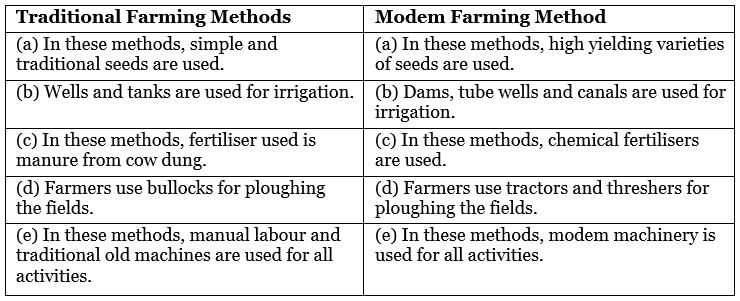
Q4: How was farming done till the mid-1960s?
Ans: Till the mid-1960s, farming relied on traditional methods. Key features included:

  • Seeds: Farmers used traditional seeds that yielded less.
  • Irrigation: These seeds required less water.
  • Fertilisers: Natural manure, such as cow-dung, was commonly used.
  • Accessibility: Farmers had easy access to these resources, eliminating the need for purchases.


Q5: What are the items that come under physical capital?
Ans: Physical capital is essential for the production of goods and services. It includes:

  • Tools, machines, and buildings: These range from simple items like a farmer’s plough to advanced machines such as generators and computers. They are used over many years and are known as fixed capital.
  • Raw materials and cash: Production requires various raw materials, like yarn for weavers and clay for potters. Additionally, some cash is needed to make payments and purchase necessary items, referred to as working capital.


Q6: Farmers of which states were the first to try out the modern farming method in India? How did they do it?
Ans: Farmers of Punjab, Haryana, and Western Uttar Pradeshwere the first to adopt modern farming methods in India. They implemented several key practices:

  • Established tubewells for efficient irrigation.
  • Utilised high-yielding variety (HYV) seeds, along with chemical fertilisers and pesticides.
  • Invested in farm machinery such as tractors and threshers to speed up ploughing and harvesting.

These advancements led to significantly higher yields of wheat, transforming agricultural productivity in these regions.


Q7: “Transport is a fast developing sector in Palampur”. Support the statement.
Ans: Transport in Palampur is rapidly evolving, with various vehicles connecting the village to Raiganj. 
Key points include:

  • Types of vehicles: The roads are busy with rickshaws, tongas, jeeps, tractors, trucks, and traditional bullock carts.
  • Transport services: These vehicles are used to transport both people and goods, providing essential services.
  • Growth in numbers: The number of individuals involved in transport has significantly increased over recent years.


Q8: Why is it always the medium and large farmers who supply wheat and other farm products to the markets?
Ans: Small farmers often have limited surplus wheat because:

  • Their overall production is small.
  • A significant portion is reserved for family needs.

In contrast, medium and large farmers typically have:

  • A sufficient surplus of wheat.
  • They keep some for their own consumption and sell the rest at the market.

This allows them to earn money for other necessities.

Q9: What do the large farmers do with their earnings?
Ans:

  • Large farmers have enough surplus farm products which they sell at the market and earn good money. They use this money for lending to small farmers, who are in need of loan.
  • They also sometimes use the savings to arrange for the working capital for farming in the next season. They can increase the number of tractors which would increase their fixed capital.
  • Some of these farmers might also use the savings to buy cattle, trucks, or to set up shops. These constitute the capital for non-farm activities.


Q10: Mention two characteristics of traditional method of farming. How are the HYV seeds different from the traditional ones?
Ans: Two characteristics of traditional farming methods:

  • Farmers use cow-dung and other natural manures as fertilisers, which are easily accessible and do not require purchase.
  • Traditional seeds require less irrigation, so farmers do not need to invest in tubewells.

Differences between HYV seeds and traditional seeds:

  • HYV seeds produce significantly higher yields, allowing the same land to generate much more food compared to traditional seeds.


Q11: Give a brief assessment of the shopkeepers of Palampur.
Ans:

  • The shopkeepers of Palampur buy various goods from wholesale markets in the cities and sell them in the village.
  • There are several small general stores in the village selling a wide range of items like rice, wheat, sugar, tea, oil, biscuit, soap, toothpaste, etc.
  • A few of the families whose houses are close to the bus stand have used a part of the space to open small shops. They sell eatables.


Q12: Explain the term physical capital. Mention its different types with examples.
Ans: A variety of inputs are required at every stage during production. This is called physical capital.
Physical capital is of two types:

  • Fixed capital: It is relatively durable and can be used repeatedly in he production of goods, for example, machinery, tools, building, etc.
  • Working capital: Raw material and money in hand are called working capital. Unlike machinery and tools, these are used up in production. For example, the yarn used by the weaver and the clay used by the potter.

Q13: How do farmers of Palampur practise multiple cropping?
Ans:

  • All land is cultivated in Palampur. No land is left idle. During the rainy season farmers grow jowar and bajra. These plants are used as cattle feed.
  • It is followed by cultivation of potato between October and December. In winter season, fields are sown with wheat.
  • A part of land/area is also devoted to sugar cane which is harvested once every year.


Q14: What are the merits and demerits of HYV seeds?
Ans:

  • Merits:
    • HYV seeds allow farmers to produce significantly more grain from each plant.
    • The same land can yield much larger quantities of food grains than before.
    • These seeds have greatly improved the economic condition of farmers.
  • Demerits:
    • HYV seeds require a lot of water and chemical fertilisers.
    • Excessive use of chemical fertilisers can harm soil fertility.
    • Over-reliance on groundwater for irrigation has led to a drop in the water table.


Q15: How is land distributed between the farmers of Palampur?
Ans: The distribution of cultivated land in Palampur is notably unequal. Key points include:

  • Approximately one-third of the 450 families in Palampur are landless, amounting to about 150 families, primarily dalits, who have no land for farming.
  • Among the families that do own land, 240 families cultivate small plots of less than 2 hectares. These small plots often do not generate enough income for the families.
  • In contrast, 60 families are classified as medium or large farmers, cultivating more than 2 hectares each. Some of these large farmers have land exceeding 10 hectares.
  • This pattern of land distribution is reflective of a broader trend in India, where about 80% of farmers are small, cultivating only 36% of the total cultivated area. Conversely, 20% of large farmers manage to cultivate 64% of the land.

This illustrates a significant inequality in land distribution both in Palampur and across India.


Q16: What problems do farm labourers face in terms of employment?
Ans: Farm labourers often face numerous challenges regarding their employment:

  • Farm labourers come either from landless families or families cultivating small plots of land. They work on the fields of large farmers for livelihood. They do not have a right over the crops grown on the land.
  • Farm labourers usually work on daily wages which are lower than the minimum wages fixed by the government. There is heavy competition for work among them, so they agree to work for lower wages.
  • There is also a wide variation in the duration of employment. A farm labourer might be employed on a daily basis or one particular farm activity like harvesting, or for the whole year.
  • Large farmers are now increasingly using various farm machinery on their land. This has adversely affected the job opportunities of the farm labourers.


Q17: Describe what various types of crops are grown in Palampur.
Ans: In Palampur, all available land is actively cultivated, with no idle fields. The main types of crops grown include:

  • Jowar and Bajra during the rainy season, primarily used as cattle feed.
  • Potato is cultivated between October and December.
  • Wheat is sown in the winter season.
  • A portion of land is also dedicated to Sugarcane, harvested annually.

The farmers in Palampur benefit from a well-developed irrigation system, allowing them to grow multiple crops each year.


Q18: Give a brief description of the non-farm production activities in Palampur.
Ans: 
Non-farm production activities in Palampur include various activities that supplement the primary agricultural work. 
Here are some key activities:

  • Dairy: Many families engage in dairy farming. They feed their buffalos with grass and crops like jowar and bajra, which are grown during the rainy season. The milk produced is sold in nearby villages, particularly Raiganj.
  • Manufacturing: Small-scale manufacturing is common, often conducted at home or in fields using simple methods. Family members typically provide the necessary labour.
  • Trade: Local shopkeepers buy goods from wholesale markets in cities and sell them in the villages, contributing to the local economy.
  • Transport: The transport sector is rapidly growing, with individuals providing services to ferry people and goods. They earn money for their services, enhancing connectivity in the region.
  • Education: A computer training centre offers employment opportunities for young men and women who have completed diplomas in computer applications, helping to improve their skills and job prospects.


Q19: How are farm labourers different from farmers?
Ans: Farm labourers differ from farmers in several key ways:

  • Background: Farm labourers typically come from landless families or those with small plots of land. Unlike farmers, they do not own the crops grown on the land.
  • Payment: They receive wages for their work, which can vary significantly based on region, crop type, and specific farm tasks. Sometimes, they also receive meals as part of their compensation.
  • Employment Trends: The number of farmers has decreased, while the number of farm labourers has increased, indicating challenges in Indian agriculture.
  • Position: Farmers generally hold a better position than labourers because they own land, giving them more control over their livelihoods.
  • Earnings: Farmers have the potential to earn more due to their ownership of land and the ability to cultivate it. In contrast, farm labourers often face exploitation and are not paid fairly for their work.


Q20: Explain the distribution of land among the farmers in Palampur.
Ans:

  • Yes, the distribution of cultivated land is highly unequal in Palampur. About one-third of the 450 families are landless there. These 150 families are mostly dalits who have no land for cultivation.
  • Of the remaining families who own land, 240 families cultivate small plots of land less than 2 hectares in size. Cultivation of such plots does’t bring adequate income to the farmer family. On the other hand, 60 medium and large farmers cultivate more than 2 hectares of land. A few of the large farmers have land extending over 10 hectares or more. This shows that medium and large farmers have more land though their number is very small.
  • A similar situation can be found in India also. About 80% farmers are small who cultivate only 36% of the cultivated areas whereas 20% of the large farmers cultivate 64% of the cultivated area. This shows that there is inequality in the distribution of cultivated area in village Palampur as well as in India.


Q21: How do chemical fertilisers adversely affect the soul, groundwater, lakes and rivers? What were the effects of use of chemical fertilisers in the state of Punjab?
Ans:

  • Chemical fertilisers provide minerals which dissolve in water and are immediately available to plants. But these may not be retained in the soil for long. They may escape from the soil and pollute groundwater, rivers and lakes.
  • Chemical fertilisers can also kill bacteria and other micro-organisms in the soil. This means some time after the use, the soil will be less fertile than ever before.
  • The consumption of chemical fertilisers in Punjab is highest in the country. The continuous use of chemical fertilisers has led to degradation of soil health.
  • In order to maintain the same production level, the farmers in Punjab use more and more chemical fertilisers and other inputs. This has not only lowered the quality of the crops but also the quality of the soil.
  • Using more and more chemical fertilisers and other inputs means cost of cultivation is very high which is difficult for the small farmers to carry on.


Q22: Describe how Palampur is a well-developed village.
Ans:

  • Palampur is a well-developed village, where farming is the main activity but several other activities such as small scale manufacturing, dairy, transport, etc—are also carried out on a limited scale.
  • The village is well-connected with neighbouring villages and towns. Raiganj, a big village, is very close to Palampur. An all-weather road connects the village to Raiganj and further on to the nearest small town of Shahpur. Many kinds of transport are available on this road.
  • Palampur has about 450 families. So upper caste families own the majority of land in the village.
  • Their houses are made of brick with cement plastering.
  • Most of the houses in the village have electric connections. Electricity powers all the tubewells in the fields and is used in various types of small business.
  • Palampur has two primary health centre run by the government and one private dispensary where the sick are treated. Thus, Palampur has fairly well-developed system of roads, transport, electricity, irrigation, schools and health centre.


Q23: What are the factors of production? Describe them in brief.
Ans:

The aim of production is to produce the goods and services that we want. There are four requirements for production of goods and services:
(i) Land: No production activity can take place without land. It is the basic requirement. Other natural resources such as water, forests, minerals are also equally important.
(ii) Labour: Labour means people who will do the work. Some production activities require highly educated workers to perform the necessary tasks. Other activities require workers who can do manual work. Each worker is providing the labour necessary for production.
(iii) Physical Capital: Physical capital means the variety of inputs required at every stage during production. Tools, machines, buildings can be used in production over many years and are called fixed capital. Raw material and money in hand are called working capital. Unlike tools, machines and buildings, these are used up in production.
(iv) Human Capital: It is the fourth but the most important requirement for production of goods and services. We need knowledge and enterprise to be able to put together land, labour and physical capital and produce an output either to use ourselves or to sell in the market.

Q24: State any five reasons as to why farm labourers are considered poor.
Ans:

  • Both Dala and Ramkali are poor farm labourers who work on daily wages in Palampur. This means they must regularly look for work. Although the minimum wages for a farm labourer set by the government is 115 (April, 2011) per day, Dala and Ramkali get only 80. Also there is heavy competition for work among the farm labourers in Palampur, So they agree to work for lower wages.
  • Dala and Ramkali are under the burden of past debt which force them to work for lower wages.They also have to look after a large family, which is a measure cause of their poverty.
  • Mostly people migrate to big cities like Delhi, Punjab, Haryana, etc., in search of employment or better job opportunities. People also migrate for higher education. The migrants from Gosaipur and
  • Majauli who went to cities will probably find work as casual labourers, industrial workers, rickshaw pullers or headload workers.

4. Food Security in India – Previous year question

Short Answer Type Questions

Q1. Why do we need food security?  [2025]
Ans: Food security is needed because:

  • The poorest section of society might be food insecure most of the time.
  • People above the poverty line might also face food insecurity during national disasters or calamities like earthquakes, droughts, floods, tsunamis, etc.
  • There can also be widespread crop failures, causing famine and other crises.

Q2. Describe the role of FCI.  [2025]
Ans: The role of the Food Corporation of India is as follows:

  • The FCI was set up in 1965 to maintain the price stability of food grains. The food it procures is priced at the government-fixed Procurement Price or Minimum Support Price.
  • It distributes food grains at subsidized prices to ration card holders through government-regulated ration shops, known as Fair Price Shops. These prices, called issue prices, are also set by the government.

Q3. Why do we need self-sufficiency in food grains?  [2024]
Ans: There is a need for self-sufficiency in food grains due to the following reasons:

  • To feed a rising population.
  • To control food grain prices.
  • To reduce dependence on food grain imports.
  • To be resilient against natural disasters like droughts, floods, and cyclones.

Q4. What are the essentials of a food security system?  [2023]
Ans: The essentials of a food security system are as follows:

  • Increasing domestic production to meet growing demand.
  • Ensuring food is available in adequate quantity.
  • Meeting the nutritional requirements of the population.
  • Making food available at reasonable prices.
  • Maintaining a buffer stock of food.

Q5. What do you mean by food security?  [2023]
Ans: Food security means the availability, accessibility, and affordability of food for all citizens at all times. Poor households are more vulnerable to food insecurity during production or distribution disruptions. The government maintains food security through agencies such as the Public Distribution System (PDS) and monitors situations to protect food security.

Q6. What is the importance of rationing?  [2022]
Ans: The importance of rationing is as follows:

  • Rationing reduces wastage and maximizes resource utilization. It was introduced in India after the Bengal famine in the 1940s.
  • The system was revived in the 1960s due to acute food shortages. Rationing helps address crises during emergencies or natural calamities.

Q7. What are the major objectives of the Academy of Development Science in Maharashtra?
Or
Write a short note on ADS Grain Banks.  [2022]
Ans: ADS has created a network of NGOs for establishing grain banks in different regions. ADS organizes training and capacity-building programs on food security for NGOs. Grain Banks are now developing in parts of Maharashtra, and the ADS Grain Bank program has been recognized as a successful and innovative food security initiative.

Q8. What are the three dimensions of food security?  [2021]
Ans: The three dimensions of food security are:

  • Availability of food: Includes food produced within the country, food imports, and stocks stored by the government.
  • Affordability of food: Refers to an individual’s ability to buy sufficient, safe, and nutritious food to meet dietary needs.
  • Accessibility of food: Means food is within reach of every person.

Q9. What were the effects of the Famine of Bengal in 1943?  [2020]
Ans: The 1943 Bengal Famine was a devastating famine that killed three million people in Bengal. Families were forced to leave their villages. Agricultural laborers, fishermen, transport workers, and other casual laborers were most affected due to the soaring rice prices.

Q10. Explain any two important food interventions introduced after the NSSO report.  [2020]
Ans: The two important food intervention programs introduced after the NSSO report are:

  • Public Distribution System (PDS) for food grains, which was strengthened to ensure food security.
  • Integrated Child Development Services (ICDS), was introduced in 1975 as an experimental initiative.

Q11. How does PDS ensure food security in India? Explain.  [2019]
Ans: The Public Distribution System (PDS) distributes food grains to poorer sections through ration shops. These shops, known as Fair Price Shops, stock food grains, sugar, and kerosene for cooking, sold at subsidized rates. Any family with a ration card can buy limited quantities of these items at low prices, helping the urban poor access affordable food.

Q12. What is the Public Distribution System? What are the objectives of PDS?  [2018]
Ans: The Public Distribution System (PDS) involves the Food Corporation of India (FCI) procuring food at set prices and distributing it to poorer sections via ration shops at subsidized prices.
The objectives of PDS are:

  • To provide essential goods at subsidized prices.
  • To control the prices of essential commodities.

Q13. What do you know about Poverty Alleviation Programmes? [2018]
Ans: Over the years, several Poverty Alleviation Programmes (PAPs) have been launched, especially in rural areas, and many have a food component. While some programs like PDS and mid-day meals focus exclusively on food security, others enhance food security indirectly. Employment programs also contribute by increasing income among the poor.

Q14. What do you mean by hunger? What are the different dimensions of hunger? [2017]
Ans: Hunger is an aspect of food insecurity, which not only reflects poverty but also perpetuates it. Eliminating hunger is essential for achieving food security. The two dimensions of hunger are:

  • Chronic hunger: Diets are persistently inadequate in quantity or quality.
  • Seasonal hunger: Related to cycles of food growing and harvesting.

Q15. What are the consequences of excessive reserves of food grains in India?  [2017]
Ans: The consequences of excessive reserves of food grains in India are:

  • Wastage and deterioration in grain quality.
  • High costs of carrying surplus reserves.
  • Reduction in food grains available for consumers in the market.

Long Answer Type Questions

Q1. “India is aiming at Self-sufficiency in Foodgrains since Independence.” Elaborate.  [2025]
Ans: After Independence, India implemented various measures to achieve self-sufficiency in food grains. A new agricultural strategy, including the ‘Green Revolution,’ was introduced, leading to increased production of key crops like wheat and rice.

  • The highest growth rates in food grain production were seen in Uttar Pradesh and Madhya Pradesh, which produced 44.01 and 30.21 million tonnes respectively in 2015-16. The total food grain production in 2015-16 reached 252.22 million tonnes.
  • In wheat production, Uttar Pradesh and Madhya Pradesh achieved significant outputs of 26.87 and 17.69 million tonnes, respectively. West Bengal and Uttar Pradesh showed strong rice production levels, with 15.75 and 12.51 million tonnes, respectively, in 2015-16.

India has achieved self-sufficiency in food grains over the past 30 years due to the diversity of crops cultivated across the country. Even in adverse weather conditions, the availability of food grains at the national level has been secured through a well-designed food security system managed by the government.

Q2. Discuss the role of the Indian government in food security.  [2023]
Ans: The role of the Indian government in food security includes several key responsibilities and initiatives:

  • The Government of India assigned the responsibility of procuring and stocking food grains to the Food Corporation of India (FCI) and the distribution of these grains to the Public Distribution System (PDS).
  • The government commits to setting a minimum support price (MSP) for wheat and paddy, ensuring farmers receive a fair price. Any surplus stocks are used to maintain buffer stocks and distribution through the PDS. When necessary, the government imports food grains to meet the PDS commitments.
  • The FCI procures food grains from farmers at MSP, providing price stability and encouraging agricultural production.
  • To support farmers, the government provides subsidies on essential agricultural inputs such as fertilizers, power, and water.
  • Additionally, the government introduced the minimum assured price scheme for food grains, with MSPs announced before each crop season. These prices take into account factors like production costs, inter-crop price parity, and market rates to protect farmers’ incomes.

3. Poverty as a Challenge – Previous year question

Short Answer Type Questions

Q.1. State two consequences of poverty.    [2025]

Ans: Two consequences of poverty are:

  • The growth of slums increases as more people migrate to cities in search of work.
  • There is a high level of indebtedness, as individuals often borrow money to meet basic needs.

Q.2. When is a person considered poor?    [2024]

Ans: A person is considered poor when their income or consumption falls below a specific minimum level needed to meet basic needs. This threshold varies based on:

  • Location: Different countries set their own poverty lines according to local conditions.
  • Time: The minimum requirements can change over time.
  • Basic Needs: Essentials like food, clothing, and shelter are considered.


Q.3. Which social groups are vulnerable to poverty?    [2023]

Ans: In India, certain social groups are particularly vulnerable to poverty. These include:

  • Scheduled Tribes (STs)
  • Scheduled Castes (SCs)

Among economic groups, the most at risk are:

  • Casual labour households in urban areas
  • Households dependent on agricultural labour in rural areas

Q.4. What led to a substantial decline in poverty in China?    [2022]

Ans: The substantial decline in poverty in China has been due to

  • Rapid economic growth 
  • Massive investment in human resource development.

Q.5. Explain any three social indicators through which poverty is looked upon.    [2021]

Ans: Poverty is assessed through various social indicators, including:

  1. Illiteracy level: Many individuals are poor because they lack education, and their poverty often prevents them from accessing learning opportunities.
  2. Access to healthcare: People living in poverty frequently cannot afford medical treatment, leading to worsening health conditions.
  3. Job opportunities: A lack of stable employment means many cannot earn a decent income, perpetuating their poverty.

Long Answer Type Questions

Q.1. Mention any four causes of poverty in India.    [2025]​
OR

Discuss the major reasons for poverty in India.    [2023]

Ans: There are a number of causes responsible for the widespread poverty in India. Some of them are:
(a) Low level of economic development under British rule in India.
(b) The decline of the Indian handicrafts industry, which led to unemployment, poverty and misery which were responsible for the low rate of income growth.
(c) Social factors like the caste system, religious faiths and beliefs also kept a certain section of people in society in poverty.
(d) The high growth rate of the population led to a very low per capita income in the country.
(e) Huge income inequalities due to unequal distribution of land and other resources.


Q.2.  What are the main features of the National Rural Employment Guarantee Act, 2005?    [2023]

Ans: The main features of the National Rural Employment Guarantee Act 2005 are:
• The Act assures 100 days of employment every year to every rural household.
 One-third of the jobs are reserved for women.
• It also aimed at sustainable development to address the cause of drought, deforestation and soil erosion.
• The share of SCs, STs and women are 23 %, 17% and 53% respectively.
• Under this, the average wage has increased from Rs 65 in 2006-07 to Rs 132 in 2013-14.
• The scheme provided employment to 220 crores person-days of employment to 4.78 crore households.
• In March 2018, the wage rate for unskilled manual workers has been revised again statewide.
• The range of wage rates for different states and union territories lies in between Rs 281 per day (for the workers in Haryana) to Rs 168 per day (for the workers in Bihar and Jharkhand).

Q.3. Describe how the poverty line is estimated in India.    [2022]

Ans:

1. The poverty line in India is estimated periodically, usually every five years, by conducting sample surveys.

2. These surveys are carried out by the National Sample Survey Organisation (NSSO).

3. The accepted average calorie requirement for determining the poverty line is 2,400 calories per person per day in rural areas and 2,100 calories per person per day in urban areas.

4. In the year 2011-12, the poverty line for a person was fixed at Rs 816 per month for rural areas and Rs 1,000 for urban areas.

5. International organizations like the World Bank use a uniform standard for the poverty line for making comparisons between developing countries, i.e., minimum availability of the equivalent of $1.90 per person per day.

Q.4. Give an account of the inter-state disparities in poverty in India.   [2021]

Ans: Below is the account of inter-state disparities in poverty in India.

  • Low Poverty Ratio: In 20 states and union territories, the poverty ratio is below the national average.
  • Notable Reductions: States like KeralaAndhra PradeshTamil NaduGujarat, and West Bengal have seen a marked decline in poverty levels.
  • States with Minimal Poverty: PunjabHaryanaGoaHimachal Pradesh, and Jammu and Kashmir have very low percentages of their populations living below the poverty line.

This disparity highlights the varying effectiveness of state policies and economic conditions in addressing poverty.

Q.5. “There is a strong link between economic growth and poverty reduction.” Explain.   [2020]

Ans: The following points explain the strong link between economic growth and poverty reduction:

  • From the early 1950s to the early 1980s, there was minimal growth in per capita income and little reduction in poverty. Official estimates showed that around 45% of the population lived in poverty during this period.
  • Since the 1980s, India has experienced one of the fastest economic growth rates globally, increasing from an average of about 3.5% per year in the 1970s to approximately 6% during the 1980s and 1990s. This growth has significantly contributed to reducing poverty.
  • Economic growth creates more opportunities and provides the necessary resources for investing in human development.
  • Increased economic resources encourage families to invest in education, including for the girl child, aiming for better economic returns.
  • However, the poorest may struggle to benefit directly from the opportunities created by economic growth.

2. People as Resource – Previous year question

Short Answer Type Questions

Q.1. Explain the employment scenario in the three sectors of economic activities. [2025]
Ans: The employment scenario in the three sectors is as mentioned below:
(i) Agriculture sector:
(a) It is the most labour absorbing sector of the economy.
(b) In recent years, there has been a decline in the dependence of the population on agriculture partly because of disguised employment.
(c) Some of the surplus-labour in agriculture has moved to either the secondary or the tertiary sector.
(ii)Secondary sector: In its small scale manufacturing is the most labour absorbing.
(iii) Tertiary sector: In this sector, various new services are appearing like biotechnology information technology etc.

Q.2. “Unemployment leads to low income and low savings and hence low demand and low production. This is the identification of a depressed economy.” Support the statement with three arguments.  [2024]
Ans:
 Unemployment has negative effects on the economic development of a country in the following ways:
(a) It is a wastage of manpower resource. It increases the economic overload and the number of dependent on population.
(b) The quality of life of an individual as well as the society is adversely affected. There is a feeling of hopelessness among the youth.
(c) The time period lost in unemployment is an irrecoverable loss. It is the loss of a productive period and the loss can not be compensated.
Thus, the increase in unemployment is an indicator of a depressed economy.

Q.3. What is meant by seasonal unemployment?  [2023]
Ans: It is a situation when people are not able to find jobs during the particular months of a year especially in agriculture.

Q.4. How are the children of educated parents are different from those of uneducated ones?  [2022]
Ans:


Q.5. What is the infant mortality rate?  [2021]
Ans:
The infant mortality rate (IMR) refers to the number of deaths of infants per thousand live births before completing one year.

Long Answer Type Questions

Q.1. Describe the different types of unemployment found in India. [2025]
Ans: The different types of unemployment found in India are:
(a) Disguised unemployment: This is the phenomenon where too many workers are working in a specific job. It happens in small agricultural farms where the whole family is working on the same farm but so many workers are not required to cultivate the farm efficiently.
(b) Seasonal unemployment: It occurs when workers can find work in a specific season. For example, agricultural workers may find work only during busy agricultural seasons when sowing, harvesting, weeding and threshing are done.
(c) Educated unemployment: This type of unemployment is common in urban areas. There is unemployment among educated and technically skilled workers because they are not able to find jobs for themselves.

Q.2. Why will a firm not like to employ a worker with ill-health? How does it affect the working environment? [2023]
Ans: A firm will not like to employ an ill-healthy worker because:
(a) An unhealthy worker would not be able to contribute to the overall productivity of an organisation.
(b) An unhealthy worker is a liability rather than an asset to an organisation.
(c) An unhealthy worker cannot contribute to the growth of the organisation.
(d) An unhealthy worker does not work regularly and remains on leaves due to sickness.
(e) It creates a gloomy atmosphere in the surroundings.

1. The Story of Palampur – Previous year question

Short Answer Type Question

Q.1. Name any one activity in Palampur which is associated with the tertiary sector.  [2025]
Ans. Transport

Q.2. When is the Kharif crop season? [2024]
Ans. Kharif cropping season is from July to October during the south-west monsoon.


Q.3. What can be done to increase the non-farm activities in the Indian Villages? [2023]  
Ans. The things which can be done to increase the non-farm activities in the Indian villages are:
(a) Banks should provide loans at low-interest rates so that the poor villagers can start some small-scale businesses and can earn their livelihood.
(b) The government should initiate effective employment generating schemes like small-scale industries, computer training centers, vocational courses etc.
(c) The government should provide training to the villagers in different skills.


Long Answer Type Question

Q.1. What is the aim of production? State any four requirements for production.  [2025]
Ans. The aim of production is to generate income for those people who are involved in the production of goods and services.
The four requirements for production are:
(a) Land: It is a passive factor of production. It requires human effort to make it a productive resource. No activity can take place in the absence of land and it is the basis of all human activities.
(b) Labor: The second requirement is labor, i.e., people who do the work. Some activities require educated and skilled labor to perform the necessary tasks and others require workers who can do the manual work.
(c) Physical capital: The third requirement is physical capital. There are a variety of inputs like machines, tools, raw materials and money required at every stage of production. It includes fixed capital and working capital.
(d) Human capital: It is the knowledge and enterprise to be able to put together land, labor and physical capital to produce an output either to use for themselves or to sell in the market.

Q.2. Distinguish between traditional farming methods and modern farming methods. [2023]
Ans.


Q.3. Name any four non-farm production activities practised in Palampur. Give brief descriptions of any three.  

Or

Mention any four non-farm production activities of village Palampur. Which activity do you feel most useful for the villagers? Give any two reasons.  [2022]
Ans. The non-farm activities practiced in Palampur are:
(a) Daily farming: People in Palampur rear buffaloes. They feed them on different types of grass, jowar and bajra. Milk is sold in nearby villages. Some people also set up collection and chilling centers from where milk is transported to nearby cities and towns.
(b) Small-scale manufacturing: This involves simple production methods and is done on small scale. These are carried out at home with family members as laborers. The laborers are rarely hired for these activities.
(c) Shopkeeping: Shopkeepers in Palampur buy goods from wholesale markets in the cities and sell them in the village. Small stores sell a wide range of products like rice, wheat, sugar, oil and some clothes. Some people who have shops near the bus stop use them to sell eatables.
(d) Transport: There are different means of transport in Palampur like rickshaws, tongas, trucks, jeeps and tractors. These means of transport are used to transport goods and people from village to cities and the people get paid for this.
(e) Self-employed: Some people have open computer training centers, stitching centers etc. to obtain more profit and to train more people for better opportunities in life.
I think computer education is most useful for the villagers because:
(i) It generates employment for the people being educated.
(ii) It employs skilled persons in the village to teach so that they would not go to other cities and towns in search of employment opportunities.