4. Food Security in India – Glossary and important

Glossary and Important Information

1.   Food Security : Food security at the individual, house hold, regional, national and global level exists when all people, at all times, have physical and economic access to sufficient safe and nutritious foods.  It implies availability, accessibility and affordability of food to all people at all times.

2.   Famine : It is characterised by wide spread death due to starvation and epidemics caused by forced use of contaminated water or decaying food and loss of body resistance due to weakening from starvation.

3.   Malnutrition : It is the state of not having enough food or not getting nutritious food.

4.   Buffer stock : It is the stock of food-grains namely rice and wheat procured by the government through FCI.

5.   Food corporation of India : It was set up under the Food Corporation Act 1964. As the country’s nodal organisation for implementing the national food policy. It provides food grains at reasonable prices, maintain buffer stock and intervenes in the market for price stabilization of agricultural goods.

6.   Minimum Support Price : The FCI purchases food grains from the farmers in states where there is surplus production. The farmers are paid a pre announced price for their crops. It is fixed to protect the small farmers.

7.   Issue Price : It is price lower than the market price at which the government distributes food grains among the poorer strata of society.

8.   Bengal Famine : It was the most divesting famine that occurred in India in 1943. Killing 30 Lakh people in the province of Bengal.

9.   Public Distribution System (PDS) : It implies distribution of food among the poorer section of the society by the government through government regulated shops.

10.  Fair Price Shops : These are the outlets from where poor people can produce food items at subsidized prices.

11.  Subsidy : It is a payments that a government makes to a producer to supplement the market price of a commodity. It can keep consumer prices low while maintain a higher income for producer.

12.  Rationing : It is a term given to government controlled distribution of resources and scarce goods or services. It restricts how much people are allowed to buy at a particular time with in a particular period.

3. Poverty as a Challenge – Glossary and important

Glossary 

  • Poverty: It is a state in which people do not have sufficient income to fulfil the basic necessities of life like food, clothing and shelter.
  • Absolute Poverty: It refers to the total number of people living below the poverty line.
  • Relative poverty: It refers to the poverty of people in relation to other people, regions or nations.
  • Poverty line: It is the level of income that divides the population as poor and non-poor. It is drawn on the basis of minimum consumption expenditure.
  • International poverty line: It is defined by the world bank as an income of less than $ 1 per day.
  • Social exclusion: It is the state of living in very poor condition and excluded from facilities, benefits and opportunities that others enjoy.
  • Vulnerability: It describes the level of poverty when people have a greater probability of being adversely affected than other people of the time of natural disasters.
  • Economic growth: It is the term that defines an increase in the real output of a country.
  • Mass poverty: It is a situation in which a large section of people in the economy is deprived of basic necessities.
  • Challenge: Something that needs great mental or physical effort in order to be done successfully and therefore tests a persons’ ability.
  • Human poverty: A situation in which people have food, clothing and shelter but don’t have proper education, self-confidence, gender equality and dignity. 
  • Poverty alleviation: Removal of poverty.
  • Anti-Poverty Measures: The current anti-poverty strategy of the government is based on two planks-promotion of economic growth and targeted anti-poverty programmes.

Important Information

  • Poverty is a major challenge faced by independent India. It has many dimensions, normally, this is measured through the concept of ‘Poverty line’.
  • A common method used to measure poverty is based on income or consumption levels. A person is considered poor if his or her income or consumption level falls below a given ‘minimum level’ necessary to fulfil basic needs.
  • What is necessary to satisfy basic needs is different at different times and in different countries. Therefore, the poverty line may vary with time and place.
  • While determining the poverty line in India, a minimum level of food requirement, clothing, footwear, fuel and light, educational and medical requirement, etc; are determined for subsistence.
  • These physical quantities are multiplied by their prices in rupees. The present formula for food requirements while estimating the poverty line is based on the desired calorie requirement.
  • The calorie needs vary depending on age, sex and type of work that a person does. The accepted average calorie requirement in India is 2400 calories per person per day in rural areas and 2100 calories per person per day in urban areas.
  • For the age 2011-12, the poverty line for a person was fixed at Rs. 816 per month for the rural areas and Rs. 1000 for the urban areas.
  • In the year 2011-12, a family of five members living in rural areas and earning less than about? 4,080 per month will be below the poverty line. A similar family in urban areas would need a minimum of Rs. 5,000 per month to meet their basic requirements.
  • The poverty line is estimated periodically by conducting sample surveys which are carried out by the National Sample Survey Organisation (NSSO).
  • There is a substantial decline in poverty ratios in India between 1993-94 and 2004-05 but the number of poor remained at about 407 million which further declined to 269 million in 2011-12.
  • The social groups which are most vulnerable to poverty are scheduled caste and scheduled tribe households. Among the economic groups, the rural agricultural labour households and the urban casual labour households are the most vulnerable groups. In poor families, women, elderly people and female infants are considered the poorest of the poor.
  • The proportion of poor people is not the same in every state of India. Bihar and Odisha continue to be the two poorest states with poverty ratios of 33.7 and 37.6 per cent respectively.
  • In states like Kerala, Jammu and Kashmir, Andhra Pradesh, Tamil Nadu, Gujarat and West Bengal there has been a significant decline in poverty. States like Punjab and Haryana have also succeeded in reducing poverty to a great extent.
  • There has also been a substantial reduction in global poverty. But it is marked with great regional differences. Poverty declined substantially in China and Southeast Asian countries but in countries of South Asia i.e. India, Pakistan, Sri Lanka, Nepal, Bangladesh and Bhutan, the decline has not been rapid.
  • In Sub-Saharan Africa, poverty rose from 51 per cent in 1981 to 47 per cent in 2008. In Latin America, the ratio of poverty remained the same.
  • The causes of widespread poverty in India are—the low level of economic development under the British colonial administration, high growth rate of population, huge income inequalities and socio­cultural and economic factors.
  • Removal of poverty has been one of the major objectives of the Indian developmental strategy. The government is focusing on the promotion of economic growth. It has also started many anti-poverty schemes/programmes.
  • There are many schemes that are formulated to affect poverty directly or indirectly. Some of them are – Mahatma Gandhi National Rural Employment Guarantee Act, (MGNREGA), Prime Minister Rozgar Yojana (PMRY), Rural Employment Generation Programme (REGP), Swarnajayaanti Gram Swarozgar Yojana (SGSY), Pradhanmantri Gramodaya Yojana (PMGY), and Antyodaya Anna Yojana (AAY).
  • Poverty has certainly declined in India. But poverty reduction is still India’s most compelling challenge. Poverty reduction is expected to make better progress in the next ten to fifteen years.
  • Even though we will be able to provide the minimum necessary in terms of income to all people by the end of the next decade, but the target will move on for many of the bigger challenges that still remain. For example, providing health care, education and job security for all and achieving gender equality and dignity for the poor. These are some of the is

2. People as Resource – Glossary and important

  • Resources: Any material which can be transformed in a way that it becomes more valuable and useful is known as Resources.
  • Natural Resources: A natural resource is anything in, on, or above the earth that people use to meet their needs.
  • Human Resources: By the term human resources we mean the size of the population of a country along with its efficiency, educational qualities, productivity, organisational abilities and farsightedness.
  • Skilled workers: A skilled worker is one who has proper training and education to work in a particular field.
  • Economic activities: All these activities that give income to the people are called Economic activities.
  • Primary Activities:  These include those occupations which are closely related to man’s natural environment. Example: Agriculture, hunting etc.

Try yourself:

What are natural resources?

  • A.Resources that are transformed to become more valuable and useful.
  • B.Resources found on or above the earth’s surface that are used by people to meet their needs.
  • C.Resources that are related to human population and their abilities.
  • D.Resources that require proper training and education to work in a particular field.

View Solution

  • Secondary Activities: The occupations which produce finished goods by using the products of primary activities as raw material.
  • Tertiary activity: It consists of all service occupations.
  • Disguised unemployment: It is a situation in which more people are engaged in activity than required.
  • Seasonal unemployment: It is a type of unemployment under which people are employed during some parts of the year and remain without work during the rest of the year owing to the seasonal nature of work.
  • Literate:  According to the census of 2001, a person aged 7 years and above can read and write with understanding in any language.
  • Investment: The existing stock of physical capital assets such as machinery, building, plant and equipment.
  • Productivity: The output of goods and services compared to the inputs used. It is the measure of the efficiency of factors of productions.

1. The Story of Palampur – Glossary and important

Glossary and Important Points

  • Land: It is a factor of production that is used for cultivation or construction.
  • Labour: Labour is another important factor in production. It means human exertion.
  • Capital: It is wealth other than land which is used for the production of wealth.
  • Production Process: Organizing and utilizing the factors of production for the production of goods and services is known as the production process.
  • Production: Production is the creation of value in a commodity.
    Example: manufacturing of a car from steel.
  • Working Capital: These include the factors of production which are used in production. Raw materials and money in hand are called working capitals.
  • Fixed Capital: Tools, machines, buildings can be used in production over many years. These factors of production are called fixed capital.
  • Factors of Production: The essential elements which cooperate with one another in the process of production.

Try yourself:

What is land in the context of production?

  • A.Human exertion
  • B.Wealth other than land
  • C.Factors used in production over many years
  • D.Factor used for cultivation or construction

View Solution

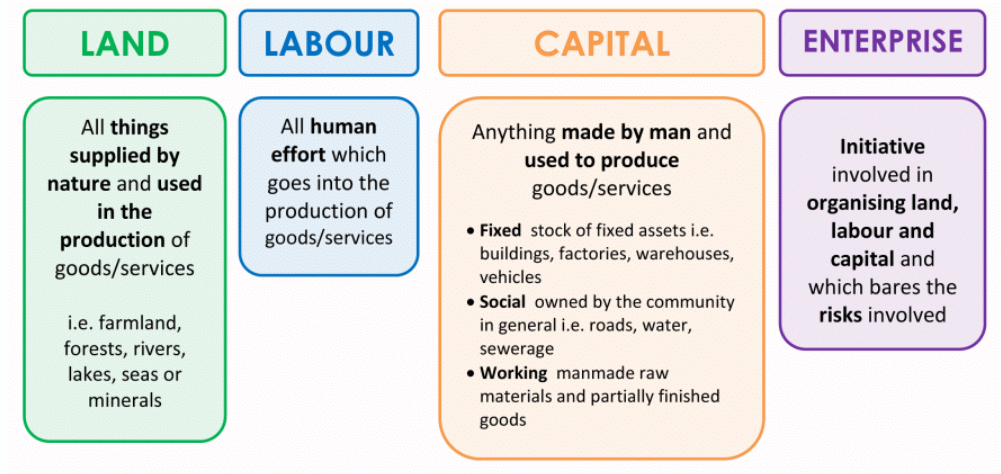
  • Following are the major factors of productions:
    (i) Land    
    (ii) Labor  
    (iii) Capital      
    (iv) Enterprise
  • Human Capital: It is the most important factor of production which put together with land labour and physical capital and produces an output either to use for self-consumption or to sell in a market.
  • Multiple Cropping: To grow more than one crop on a piece of land during the year is known as multiple cropping.
  • Yield: It is measured as a crop produced on a given piece of land during a single season.
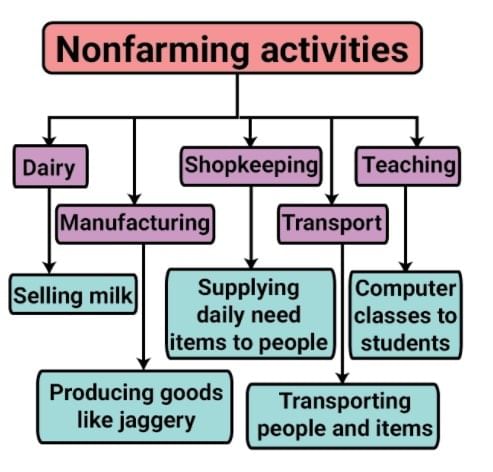
  • Non-Farm Activity: It refers to the activities in a village other than farming. This includes activities like manufacturing, transportation, shop-keeping, etc.
  • Green Revolution: The large increase in agriculture production after 1976 due to the adoption of the new Agricultural strategy which implied a simultaneous use of better and modern agriculture inputs.

4. Food Security in India – Very Short Questions answer

Q1: What is food security?
Ans: 
Food security means availability, accessibility, and affordability of food to all people at all times.

Q2: Name any two factors on which food security depends.
Ans: 
The proper functioning of the Public Distribution System or PDS, and Government vigilance and action at times when this security is threatened.

Q3: What is essential to improve access to food?
Ans:
 Removal of poverty is essential to improve access to food.

Q4: What is famine?
Ans: 
A famine is characterized by widespread deaths due to starvation and epidemics caused by forced use of contaminated water or decaying food and loss of body resistance due to weakening from starvation.

Q5: Which was the most devastating famine in India?
Ans:
 The famine of Bengal was the most devastating one. It occurred in 1943 and killed thirty lakh people in the province of Bengal.

Q6: Who were affected the most by the Bengal famine?
Ans: 
The agricultural laborers, fishermen, transport workers, and other casual laborers were the worst affected.

Q7: What was the main cause of large-scale death in the Bengal famine?
Ans:
 The price of rice in Bengal increased dramatically. This was the main cause of large-scale death.

Q8: Why is food security needed in a country?
Ans:
 Food security is needed in a country to ensure food at all times so that starvation deaths do not take place.

Q9: Name two places in Odisha where starvation deaths have been reported.
Ans:
 Kalahandi and Kashipur.

Q10: Name the regions of India where the food insecure people are disproportionately large.
Ans: 
Economically backward states with a high incidence of poverty, tribal and remote areas, regions more prone to natural disasters.

Q11: Hunger has two dimensions. Name them.
Ans:
 Chronic hunger and seasonal hunger.

Q12: What is the cause of chronic hunger?
Ans: 
Chronic hunger is caused due to persistently inadequate diets in terms of quantity and/or quality.

Q13: Who suffers from chronic hunger? Why?
Ans: 
Poor people suffer from chronic hunger because of their very low income and inability to buy food even for survival.

Q14: What is seasonal hunger related to?
Ans: 
Seasonal hunger is related to cycles of food growing and harvesting.

Q15: Why is seasonal hunger prevalent in rural areas?
Ans:
 Seasonal hunger is prevalent in rural areas because of the seasonal nature of agricultural activities.

Q16: Who are the worst affected by seasonal hunger in urban areas?
Ans: 
In urban areas, casual laborers are the worst affected by seasonal hunger.

Q17: Mention one positive impact of the Green Revolution.
Ans: 
Since the advent of the Green Revolution in the early 1970s, the country has avoided famine even during adverse weather conditions.

Q18: What is buffer stock?
Ans: 
Buffer stock is the stock of food grains, namely wheat and rice, procured by the government through Food Corporation of India (FCI).

Q19: What is the Public Distribution System?
Ans: 
The food procured by the FCI is distributed through government-regulated ration shops among the poorer section of society. This is called the public distribution system or PDS.

Q20: Name the three kinds of ration cards.
Ans:
 Antyodaya cards for the poorest of the poor, BPL cards for those below the poverty line, and APL cards for all others.

Q21: How do employment programs contribute to food security?
Ans:
 Employment programs greatly contribute to food security by increasing the income of the poor.

Q22: Name any two programs initiated by the government which have a food component.
Ans: 
Mid-day Meal in schools, Food-For-Work program.

Q23: What is the National Food Security Act, 2013?
Ans: 
This Act provides for food and nutritional security at affordable prices and enables people to live a life with dignity. Under this Act, 75% of the rural population and 50% of the urban population have been categorized as eligible households for food security.

Q24: Mention the names of any two cooperative societies working in different parts of India.
Ans:
 Mother Dairy – Delhi, AMUL – Gujarat.

Q25: What is the Green Revolution?
Ans: 
The Green Revolution implies a large increase in agricultural production due to the use of HYV (High-Yielding Variety) seeds and other inputs like fertilizers, pesticides, irrigation, etc.

3. Poverty as a Challenge – Very Short Questions answer

Q1: What is poverty?
Ans: 
Poverty is a situation in which people are unable to get the minimum basic requirement of life, i.e., food, clothing, and shelter for their sustenance.

Q2: What is the poverty line?
Ans: 
The estimated minimum level of income needed to secure the necessities of life is called the poverty line.

Q3: Why does the poverty line vary with time and place?
Ans:
 It is because what is necessary to satisfy basic needs is different at different times and in different countries.

Q4: What is the accepted average calorie requirement in India?
Ans:
 The accepted average calorie requirement in India is 2400 calories per person per day in rural areas and 2100 calories per person per day in urban areas.

Q5: Why is the calorie requirement higher in rural areas than urban areas?
Ans:
 People in rural areas do more physical work. Therefore, their calorie requirement is considered to be higher than in urban areas.

Q6: What was the poverty line fixed for a person for the year 2011-12?
Ans: 
For the year 2011-12, the poverty line for a person was fixed at ₹816 per month for rural areas and ₹1000 for urban areas.

Q7: How is the poverty line estimated periodically?
Ans: 
The poverty line is estimated periodically by conducting sample surveys.

Q8: Which organization conducts sample surveys for estimating the poverty line?
Ans: 
National Sample Survey Organization (NSSO).

Q9: What uniform standard does the World Bank use for the poverty line?
Ans: 
The World Bank uses a minimum availability of the equivalent of $1 per person per day.

Q10: Name two social groups most vulnerable to poverty.
Ans:
 Scheduled Castes and Scheduled Tribes.

Q11: Name the social and economic groups that experienced a decline in poverty in the 1990s.
Ans: 
Scheduled castes, rural agricultural laborers, and urban casual labor households.

Q12: Which two states continue to be the poorest states in India?
Ans:
 Bihar and Odisha.

Q13: Name any two states that have seen a significant decline in poverty.
Ans:
 Kerala and Jammu and Kashmir.

Q14: What caused a substantial decline in poverty in China and Southeast Asian countries?
Ans: 
Rapid economic growth and massive investments in human resource development.

Q15: What does the International Poverty Line mean?
Ans: 
The International Poverty Line means a population living below $1 a day.

Q16: What does the Millennium Development Goals of the United Nations call for?
Ans: 
It calls for reducing the proportion of people living on less than $1 a day to half the 1990 level by 2015.

Q17: Mention one historical reason for poverty in India.
Ans:
 The low level of economic development under British colonial administration.

Q18: What is the reason behind the huge income inequalities in our country?
Ans:
 Unequal distribution of land and other resources.

Q19: What are the two planks of the current anti-poverty strategy of the government?
Ans:
 Promotion of economic growth and targeted anti-poverty programs.

Q20: How does the below-expectation growth in the agriculture sector aggravate the issue of poverty?
Ans:
 This has a direct bearing on poverty as a large number of poor people live in villages and are dependent on agriculture.

Q21: When was the Prime Minister Rozgar Yojana (PMRY) launched?
Ans: 
This scheme was launched in 1993.

Q22: What is the aim of Prime Minister Rozgar Yojana?
Ans:
 Its aim is to create self-employment opportunities for educated unemployed youth in rural areas and small towns.

Q23: What is the aim of the Pradhan Mantri Gramodaya Yojana (PMGY)?
Ans:
 Its aim is to give additional central assistance to states for basic services such as primary health, primary education, rural shelter, rural drinking water, and rural electrification.

Q24: Why is proper monitoring of all poverty alleviation programs necessary?
Ans:
 It is because the benefits of these schemes do not fully reach the deserving poor.

Q25: Mention some bigger challenges that are coming in the way of poverty alleviation.
Ans:
 A big section of society has failed to get healthcare, education, and jobs. The tasks of achieving gender equality and dignity for the poor still remain unfulfilled.

2. People as Resource – Very Short Questions answer

Q1: When does population become human capital?
Ans: 
Population becomes human capital when there is investment made in the form of education, training, and medical care.

Q2: What is human capital?
Ans:
 The skills, knowledge, and experience possessed by an individual or population improve the quality of the individual or the population and thus turn them into a great asset. This is known as human capital.

Q3: What is called human capital formation?
Ans: 
When the existing human resource is further developed by becoming more educated and healthy, we call it human capital formation. It adds to the productive power of the country.

Q4: What does society gain through more educated and healthier people?
Ans: 
The advantages of a more educated or healthier population spread to those who themselves were not directly educated or given health care.

Q5: How is human capital superior to other resources like land and physical capital?
Ans:
 Human resource can make use of land and capital. Land and capital cannot become useful on their own.

Q6: What enhanced the total productivity of Sakai?
Ans:
 Several years of education added to the quality of labor. This enhanced his total productivity.

Q7: Mention the various activities undertaken in the primary sector?
Ans:
 Activities such as agriculture, forestry, animal husbandry, fishing, poultry farming, mining, and quarrying are undertaken in the primary sector.

Q8: What are economic activities also called?
Ans: 
Economic activities are also called market activities.

Q9: Mention one difference between market activities and non-market activities.
Ans: 
Market activities involve remuneration to anyone who performs, i.e., activity performed for pay or profit. Non-market activities are the production for self-consumption.

Q10: What do you mean by ‘division of labor between men and women in the family’?
Ans:
 Women generally look after domestic chores and men work in the fields. In this way, the work of a family is divided between men and women, which is called division of labor.

Q11: How are illiterate and unhealthy populations viewed in a nation’s economy?
Ans: 
Illiterate and unhealthy populations are viewed as a liability in a nation’s economy.

Q12: What are the two factors the quality of population depends upon?
Ans:
 The two factors upon which the quality of the population depends are literacy rate, health of a person indicated by life expectancy, and skill formation acquired by the people of the country.

Q13: What does education contribute towards the growth of society?
Ans:
 Education enhances national income and cultural richness. It also increases the efficiency of governance.

Q14: What is the goal behind the development of vocational streams?
Ans:
 Vocational streams have been developed to equip a large number of high school students with occupations related to knowledge and skills.

Q15: What is Sarva Siksha Abhiyan?
Ans: 
Sarva Siksha Abhiyan is a significant step towards providing elementary education to all children in the age group of six to fourteen years by 2010.

Q16: What is the aim of the mid-day meal scheme?
Ans: 
The aim of the mid-day meal scheme is to encourage attendance and retention of children and improve their nutritional status.

Q17: What do you mean by Infant Mortality Rate?
Ans: 
Infant Mortality Rate is the death of a child under one year of age.

Q18: What was the expenditure percentage of GDP in 1951-52 on education?
Ans: 
The expenditure percentage of GDP in 1951-52 on education was 0.64%.

Q19: What is seasonal unemployment?
Ans:
 Seasonal unemployment happens when people are not able to find jobs during some months of the year. People dependent upon agriculture usually face such kind of problem.

Q20: What is the literacy rate of India as per the Census of 2011?
Ans: 
As per the Census of 2011, the literacy rate of India is 74%.

Q21: What is vocational education?
Ans: 
Vocational education refers to as career education or technical education. This type of education prepares people to work in a trade, in a craft, as a technician, etc.

Q22: What is the indicator of good quality of life?
Ans: 
An increase in longevity of life is an indicator of good quality of life marked by self-confidence.

Q23: What is disguised unemployment?
Ans:
 In disguised unemployment, people appear to be employed. This usually happens among family members engaged in agricultural activity. The work requires the service of five people but engages eight people. Three people are extra who can be called disguisedly unemployed.

Q24: What is meant by educated unemployment?
Ans:
 Educated unemployment usually occurs in cities where there are educated or technically qualified people but no job opportunities available to them.

Q25: In the primary sector, which is the most labor-absorbing sector?
Ans: 
Agriculture is the most labor-absorbing sector in the primary sector.

1. The Story of Palampur – Very Short Questions answer

Q1: Which is the most important economic activity of the people of rural India?
Ans:
 Farming or agriculture is the most important economic activity of the people of rural India.

Q2: Name two economic activities other than farming.
Ans: 
Manufacturing and Dairy.

Q3: What are different types of production activities carried out in villages in India?
Ans:
 In villages across India, farming is the main production activity. The other production activities, referred to as non-farm activities include small manufacturing, transport, shop-keeping, etc.

Q4: What is the aim of production?
Ans:
 The aim of production is to produce the goods and services that we want.

Q5: There are four requirements for production of goods and services. Name them.
Ans:
 Land, Labour, Physical capital, Human capital.

Q6: What is meant by physical capital?
Ans: 
A variety of inputs are required at every stage during production. This is called physical capital.

Q7: What do you mean by fixed capital?
Ans: 
Capital goods, such as machinery and tools that are relatively durable and can be used repeatedly in the production of goods, are called fixed capital.

Q8: What do you mean by working capital?
Ans:
 Raw materials and money in hand are called working capital. Unlike machinery and tools, these are used up in production.

Q9: What are factors of production?
Ans:
 Every production is organized by combining land, labour, physical capital, and human capital, which are called factors of production.

Q10: What is the standard unit for measuring the area of land?
Ans: 
The standard unit for measuring the area of land is hectare.

Q11: What is called human capital?
Ans: 
The skills, knowledge, and experience possessed by an individual or population are called human capital. These are viewed in terms of their value or cost to an organization or country.

Q12: What is the main production activity in Palampur?
Ans:
 Farming is the main production activity in Palampur.

Q13: What is the most important factor of production? Why?
Ans: 
The most important factor of production is human capital which puts together land, labour, and physical capital and produces an output for various purposes.

Q14: What is meant by yield?
Ans: 
Crop produced on a given piece of land during a single season is called yield.

Q15: Give one difference between traditional seeds and HYV seeds.
Ans: 
Traditional seeds need less irrigation while HYV seeds need plenty of water.

Q16: When did the Green Revolution take place in India?
Ans:
 The Green Revolution took place in India in the late 1960s.

Q17: What does HYV stand for?
Ans:
 HYV stands for High Yielding Variety.

Q18: Farmers of which states were the first to try out the modern farming method in India?
Ans:
 Farmers of Punjab, Haryana, and Western Uttar Pradesh were the first to try out the modern farming method in India.

Q19: How are farmers different from farm labourers?
Ans: 
Unlike farmers, farm labourers do not have a right over the crops grown on the land. They are paid wages by the farmers.

Q20: Which is the most abundant factor of production?
Ans:
 Labour is the most abundant factor of production.

Q21: Both land and capital are scarce. But there is a basic difference between the two factors of production. What is it?
Ans: 
Land is a natural resource whereas capital is man-made. It is possible to increase capital, whereas land is fixed.

Q22: It is important that we take good care of land. Why?
Ans: 
Land is a fixed natural resource. So, it is important that we take good care of it.

Q23: What is the minimum wage set up by the government for agricultural labourers?
Ans:
 It is ₹ 115 (April 2011).

Q24: Which factors have enabled the farmers in Palampur to grow three different crops in a year?
Ans:
 The spread of electricity has enabled the farmers in Palampur to grow three different crops in a year.

Q25: What is the working capital required by the farmer using modern farming methods?
Ans: 
HYV seeds, chemical fertilisers, pesticides, electricity, irrigation, etc.

4. Food Security in India – Extra Question and answer- 2

57) Who are the most affected food insecure people in India?

Answer:Worst affected people in rural areas are:
(i) Landless people with little or no land to depend on.
(ii) The traditional artisans.
(iii) Providers of traditional services like Pandits performing religious ceremonies.
(iv) Petty, self-employed workers.
(v) Poor and the destitute including beggars.
Worst affected people in urban areas are:
(i) Those families are food insecure whose working members are generally employed in ill-paid occupations.
(ii) Casual labour in the market.
(iii) These workers are mostly engaged in seasonal activities and are paid very low wages that just ensure their bare survival. 

58) How are food insecure people disproportionately large in some regions of the country?

Answer:(i) There are some states which are economically backward states with high incidence of poverty.
(ii) These are the tribal and remote areas, and regions more prone to natural disasters, etc. (iii) In fact, the states of UP, Bihar, Jharkhand, Odisha, West Bengal, Chhattisgarh, parts of Madhya Pradesh and Maharashtra account for the largest number of food insecure people in the country. 

59) Cite evidences which explain that India is self-sufficient in food grain production.

Answer:India has become self-sufficient in food grain production during the last thirty years. (i) This is because of a variety of crops grown all over the country.
(ii) The availability of food grains even in adverse weather conditions or otherwise, has further been ensured with a carefully designed food security system by the government. (iii) This system has two components:
(a) Buffer stocks and
(b) Public distribution system. 

60) Why is the Public Distribution System criticised?

Answer: The PDS has been criticised because:
(i) Instances of hunger are prevalent despite overflowing granaries.
(ii) The FCI god owns are overflowing with grains where some are rotting away and some are eaten by rats.
(iii) Shopkeepers of fair price shops are black marketing the goods in the retail market, though they are not allowed to do so. 

61) What does Antyodaya Anna Yojana mean?

Answer: (i) The AAY was launched in December 2000.
(ii) Under this scheme, one crore of the poorest among the BPL (Below Poverty Line) families covered under the targeted PDS system were identified.
(iii) Twenty-five kilograms of food grains were made available to each eligible family at a highly subsidised rate. 

62) How do PDS dealers resort to malpractices?

Answer: (i) The PDS dealers are diverting the grains to the open market to get better margins.
(ii) They are selling poor quality grains at ration shops.
(iii) Opening the shops irregularly, which is inconvenient for the poor. It is common to find that ration shops regularly have unsold stocks of poor quality grains left. 

63) How does a calamity affect food security?

Answer:(i) Food security is severely affected by a calamity.
(ii) Due to a natural calamity like drought, flood, earthquake, total production of food grain decreases.
(iii) Due to shortage of food, the prices increase, making the things more expensive for the people. If it gets prolonged, it could lead to even starvation and starvation deaths also. 

64)   How is food security ensured in a country?

Answer: Food security is ensured in a country only if:
(i) Enough food is available for all the persons.
(ii) All persons have the capacity to buy food of acceptable quality.
(iii) There is no barrier on the access of food. 

65)   In which regions of India, starvation deaths are reported?

Answer:(i) It is disturbing to note that even today, there are places like Kalahandi and Kashipur in Orissa where famine-like conditions have been existing for many years and where some starvation deaths have also been reported.
(ii) Starvation deaths are also reported in Baran district of Rajasthan, Palamau district of Jharkhand and many other remote areas during the recent years.
(iii) Therefore, food security is needed in a country to ensure food at all times. 

66) What does ‘Seasonal Hunger’ mean?

Answer:  (i) Seasonal hunger is related to cycles of food growing and harvesting.
(ii) This is prevalent in rural areas because of the seasonal nature of agricultural activities and in urban areas because of the casual labour. e.g., there is less work for casual construction labour during the rainy season.
(iii) This type of hunger exists when a person is unable to get work for the entire year. 

67) Why is the buffer stock created by the government?

Answer:  (i) This is done to distribute food grains in the deficit areas and among the poorer strata of society at a price lower than the market price, also known as issue price. (ii) This also helps resolve the problem of shortage of food during adverse weather conditions or during the periods of calamity. 

68) What are the three important Food Intervention Programmes?

Answer:  (i) Public Distribution System (PDS) gives provision of food grains for the poor at subsidised cost. It was existing earlier also but strengthened thereafter.
(ii) Integrated Child Development Science (ICDS). It was introduced in 1975 on an experimental basis.
(iii) Food For Work (FFW) was introduced in 1977-78. Over the years, several new programmes have been launched and some have been restructured with the growing experience of administering of the programme. 

69) Why were the FCI granaries overflowing with food grains and how was the situation controlled?

Answer:(i) In July 2002, the stock of wheat and rice with FCI was 63 million tones which was much more than the minimum buffer norms of 24.3 million tonnes.
(ii) The stock eased after 2002-03 due to relief operations undertaken by the government as the year was declared as draught year due to failure of monsoon.
(iii) The decline in stocks continued in subsequent years. However, these remained consistently higher than the buffer norms. The situation improved with the distribution of food grains under different schemes launched by the government. 

70) What buffer norms are to be followed by the government?  

Answer:  (i) There is a general consensus that high level of buffer stocks of food grains is very undesirable and can be wasteful.
(ii) The storage of massive food stocks has been responsible for high carrying cost, in addition to wastage and deterioration in grain quality.
(iii) Freezing of Minimum Support Price (MSP) for a few years should be considered seriously. The rising MSP has raised the maintenance cost of procuring food grains by the government. 

71) How does social inability to buy food also play a role in food insecurity?

Answer: (i) The SCs, STs and some sections of the OBCs who have low land productivity are prone to food insecurity.
(ii) The people who are affected by natural disasters and have to migrate to other areas in search of work are also amongst the most food insecure people.
(iii) Malnutrition among women can even put the unborn baby at the risk of malnutrition. (iv) A large proportion of pregnant and nursing mothers, and children under the age of 5 years are also among the food insecure population.

72) What is ‘hunger’? Differentiate between Chronic and Seasonal hunger.

Answer: Hunger is another aspect of food insecurity. Hunger is not just an expression of poverty, it brings about poverty. Its a situation when you feel hungry but are unable or cannot afford food. Difference between Chronic and Seasonal hunger:
(i) Chronic hunger
(a)It is a consequence of diets persistently inadequate in terms of quantity and/or quality.
(b) Poor people suffer from chronic hunger because of their very low incomes and inability to buy food even for survival.
(ii) Seasonal hunger 
(a) It is related to the cycles of food growing and harvesting.
(b) This is prevalent in the rural areas because of the seasonal nature of agricultural activities.
(c) In urban areas, casual labour is unable to get work for the entire year which makes him hungry. 

73) How did India aim at self-sufficiency in food grains after independence?

Answer: (i) After independence, the Indian policy makers adopted all measures to achieve self- sufficiency.
(ii) India has adopted a new strategy in agriculture called the ‘Green Revolution’, which is introduced in the production of rice and wheat.
(iii) Indira Gandhi, the then Prime Minister of India officially recorded the success of the Green Revolution by releasing a special stamp entitled ‘Wheat Revolution’.
(iv) The success of wheat was later replicated in rice.
(v) The highest rate of growth was achieved in Punjab and Haryana where food grains production jumped to an all-time high.
(vi) Tamil Nadu and Andhra Pradesh on the other hand, recorded significant increase in rice yield. 

74) What is ‘buffer stock’? Why was it created by the government?

Answer:Buffer stock is the stock of food grains, namely wheat and rice procured by the government through Food Corporation of India (FCI).
(i) The FCI purchases wheat and rice from the farmers in states where there is surplus production.
(ii) The farmers are paid a pre-announced price for their crops. This price is called Minimum Support Price (MSP).
(iii) The MSP is declared by the government every year, before the sowing season to provide incentives to the farmers for raising the production of these crops.
(iv) The purchased food grains are stored in granaries by the government.
(v) This is done to distribute food grains in the deficit areas and among the poorer strata of society, at a price lower than the market price also known as Issue Price.
(vi) This also helps resolve the problem of shortage of food during adverse weather conditions or during the periods of calamity. 

75) What is the Public Distribution System?

Answer:(i) When the food procured by the FCI is distributed through government regulated ration shops among the poor sections of the society, it is called the Public Distribution System (PDS).
(ii) Ration shops are now present in most localities, villages, towns and cities.
(iii) Ration shops are also known as ‘Fair Price Shops’, which keep stock of food grains, sugar, kerosene oil for cooking.
(iv) Items such as these are sold to people at a price lower than the market price.
(v) Any family with a ration card can buy a stipulated amount of these items every month from a nearby ration shop, depending on the number of family members.

76)   What is the ‘rationing system’?

Answer:(i) It was introduced in India in the 1940s after the Bengal Famine.
(ii) The rationing system was revived in the 1960s due to food shortage in India.
(iii) Due to high incidence of poverty in the mid-1970s reported by NSSO, three food intervention programmes were introduced:
(a) Public Distribution System (PDS) for food grains; already existed but strengthened later on.
(b) Integrated Child Development Services (ICDS) introduced in 1975 on an experimental basis.
(c) Food For Work (FFW) Programme launched in 2004 in 150 most backward districts of the country to intensify the generation of supplementary wage employment. 

77) What is the current status of the Public Distribution System?

Answer:PDS is the most important step taken by the government of India towards ensuring food security.
(i) In the beginning, the PDS system was universal with no discrimination between the poor and the rich.
(ii) Over the years, the policy related to PDS has been revised to make it more efficient and targeted.
(iii) In 1992, Revamped Public Distribution System (RPDS) was introduced to provide the benefits of PDS in remote and backward areas.
(iv) From June 1997, Targeted Public Distribution System (TPDS) was introduced to target the ‘poor in all areas’. It was for the first time that a differential price policy was adopted for the poor and non-poor.
(v) In 2000, two special schemes were launched:
(a) Antyodaya Anna Yojana (AAY)
(b) Annapurna Scheme with special target  groups of ‘poorest of the poor’ and ‘indigent senior citizens’, respectively. 

78) What are some of the important features of the PDS?

Answer: (i) It is the most effective government policy in stabilising prices and making food available to consumers at affordable prices.
(ii) It helps in averting widespread hunger and famine by supplying food from surplus regions of the country to the deficit areas.
(iii) The prices have been under revision in favour of poor households in general.
(iv) Minimum Support Price announcement has increased the food production and provided income security to farmers. 

79) What is the role of ‘Cooperatives’ in food security? Or Write a note on the role of cooperatives in providing food and retained items.

Answer:  (i) The Cooperative societies set up shops to sell low priced goods to poor people.
(ii) In Delhi, ‘Mother-Dairy’ is making efforts to sell milk, milk products and vegetables at controlled rates.
(iii) Amul is another cooperative in milk and milk products in Gujarat. It has brought about the ‘White Revolution’ in the country.
(iv) In Maharashtra, Academy of Development Science (ADS) has a network of NGOs for setting up grain banks in different regions. They organize training and capacity building programmes on food security for NGOs. Grain banks are now slowly taking shape in different parts of Maharashtra.
(v) There are many more cooperatives running in different parts of the country, ensuring food security for different sections of the society. 

80) Who are food insecure in India? What is their social composition? How are they scattered over in the country?    

Answer:(i) Although a large section of people suffer from food and nutrition insecurity. In India, the worst affected groups are landless people with little or no land to depend upon, traditional services petty self employed workers and destitutes including beggars. In the urban areas, the food insecure families are those whose working members are generally employed in ill paid occupations and casual labour market. Rickshaw – puller. (ii) The Social composition along with the inability to buy food also plays a role in food insecurity. The SCs , STs and some sections of the OBCs, who have either poor land base or very low land productivity are prone to food insecurity. The people affected by natural disasters who have to migrate to other areas in search of work, are also among the most food insecure people. A large proportion of pregnant and nursing mothers and children’s under the age of 5 years constitute an important segment of the food insecure population. (iii) The food insecure people are disproportionately scattered our large areas regions in the country. 

81) What rights provide food security?

Answer:  (i) Availability of food
(ii) Accessibility of food
(iii) Affordability of food. 

82) How can you help poor people in providing food security?  

Answer: (i) By providing standard level of nutrition
(ii) By aiming to raise awareness about self-sufficiency in food grains
(iii) By opening consumer cooperative stores. 

83) The accessibility of food means (a) food production within the country (b) an individual has enough money to buy food (c) food is within the reach of every person (d) none of these

Answer:  C 

84) Chronic hunger is (a) an expression of poverty (b) a consequence of diets persistently inadequate in terms of quantity and/or quality (c) related to the cycles of food growing (d) when a person is unable to get work for the entire year

Answer: 

85) The highest food grain growth was achieved in the states of (a) UP and Madhya Pradesh (b) Andhra Pradesh and Karnataka (c) Bihar and Tamil Nadu (d) Punjab and Haryana

Answer: 

86) When was the Integrated Child Development Services introduced on an experimental basis? (a) 1975 (b) 1981 (c) 1973 (d) 1980

Answer: 

87) Revamped Public Distribution System (RPDS) aimed to provide the benefits of PDS to (a) cities (b) self-help groups (c) cooperative societies (d) remote and backward areas          

Answer: 

4. Food Security in India – Extra Question and answer- 1

Q1. What does ‘Food Security’ mean?

Food security means availability, accessibility and affordability of food to all people at all times. 

Q2. On what factors does food security depend?

Food security depends on the Public Distribution System (PDS) and government vigilance and action at times when this security is threatened.

Q3. Explain the three dimensions of food security.

 Availability of Food means food production within the country

Accessibility means food within reach of every person

Affordability is that an individual has enough money to buy sufficient safe food 

Q4. How is food security ensured in a country?

Food security is ensured in a country only if enough food is available for all persons, all persons have the capacity to buy food of acceptable quality and there is no barrier to access to food. 

Q5. What kind of people faces food insecurity?

The poorest section of the society might be food insecure most of the times while persons above the poverty line might also be food insecure when the country faces a national disaster/calamity like drought, flood, tsunami, widespread failure of crops causing famine, etc. 

Q6. How is food security affected during a calamity?

  • Due to a natural calamity, the total production of food grains decreases.
  • It creates a shortage of food in the affected area.
  • Due to a shortage of food, the prices go up.
  • At higher prices, some people cannot afford to buy food.
  • If such a calamity occurs in a widespread area, it may cause a situation of starvation. 
  • A massive situation of starvation might turn into a famine.

Q7. How does the situation of starvation arise?

If any calamity happens in a very widespread area or is stretched over a large time period, it may cause a situation of starvation. A massive starvation might take the form of famine.

Q8. How do famines lead to widespread deaths?  

A famine is characterised by widespread deaths due to starvation and epidemics caused by forced use of contaminated water or decaying food and loss of body resistance due to weakening from starvation. 

Q9. Which was the most devastating famine to have occurred in India?

The most devastating famine that had occurred in India was the famine of Bengal in 1943. This famine killed thirty lakh people in the province of Bengal. 

Q10. In which areas of India even today famine has caused starvation deaths?

Even today there are places like Kalahandi district and Kashipur tehsil in Raigarh district of Odisha where Some starvation deaths have been reported due to famine like conditions. Starvation deaths are also reported in Baran district of Rajasthan and Palamao district of Jharkhand. 

Q11. What kind of people in rural areas is food insecure?

The worst affected groups are landless people with little or no land to depend upon, traditional artisans, providers of traditional services, petty self employed workers and destitutes including beggars.

Q12. What type of people in urban areas is food insecure?

In the urban areas, the food insecure families are those whose working members are generally employed in ill-paid occupations and the casual labour markets. These workers are largely engaged in seasonal activities and are paid very low wages that just ensure basic survival. 

Q13. Which other parts of society are prone to food insecurity?

The SCs, STs and some sections of OBCs who have either poor land base or very low land productivity are prone to food insecurity. 

Q14. How people affected by natural disasters are food insecure?

The people affected by natural disasters, who have to migrate to other areas in search of work, are also among the most food insecure people, since they are not settled in their life. 

Q15. Is it true that a high incidence of malnutrition prevails among women?

This is a matter of serious concern as it is true. It puts even the unborn baby at risk of malnutrition. A large proportion of pregnant and nursing mothers and children under the age of 5 years constitute an important segment of food insecure population.

Q16. In which regions are food insecure people disproportionately large in our country?

The food insecure people are disproportionately large in some regions of the country, such as economically backward states with a high incidence of poverty, tribal and remote areas, regions more prone to natural disasters, etc. 

Q17. Which states of India account for the largest number of food insecure people?

The states of Uttar Pradesh, Bihar, Jharkhand, Odisha, West Bengal, Chhattisgarh, parts of Madhya Pradesh and Maharashtra account for the largest number of food insecure people in the country. 

Q18. Does hunger cause food insecurity?

Hunger is another aspect indicating food insecurity, arising from poverty. 

Q19. How does ‘chronic hunger’ occur?

Chronic hunger is a consequence of having persistently inadequate diet in terms of quantity and quality. Poor people suffer from chronic hunger because of very low income and, in turn, inability to buy food even for survival. 

Q20. What do you understand by ‘seasonal hunger’?

Seasonal hunger is related to cycles of food production. This happens in rural areas because of the seasonal nature of agricultural activities and in urban areas because of the casual labourers who get less work during rainy season. 

Q21. What policies were adopted by Indian government to remove food insecurity?

After Independence, Indian policy makers adopted all measures to achieve self sufficiency in food grains, for that a new strategy of ‘Green Revolution’ was introduced to increase production of wheat and rice in our country. 

Q22. How was the success of ‘Green Revolution’ felicitated by Indira Gandhi?

Indira Gandhi, the then Prime Minister, officially recorded the impressive strides of the Green Revolution in agriculture by releasing a special stamp entitled ‘Wheat Revolution’ in July 1968. 

Q23. Which states achieved the highest rate of growth in food grain production during Green Revolution?

Punjab and Haryana achieved the highest rate of growth in the production of wheat. 

Q24. Which states continued to lag behind in food production despite Green Revolution?

Maharashtra, Madhya Pradesh, Bihar, Odisha and the northeastern states lagged behind in food production, despite Green Revolution. 

Q25. How did India become self sufficient?

India has become self sufficient in food grains during the last thirty years because of a variety of crops grown all over the country. 

Q26. What is buffer stock?

Buffer stock is the stock of food grains, namely wheat and rice procured by the government through Food Corporation of India (FCI). 

Q27. What is the Minimum Support Price?

The FCI purchases wheat and rice from the farmers in states where there is surplus production. The farmers are paid a pre-announced price for their crops. This price is called Minimum Support Price. 

Q28. How does FCI purchase grains from the farmers?

The Minimum Support Price (MSP) is declared by the government every year before the sowing season to provide incentives to the farmers for raising the production of these crops. The purchased food grains are stored in granaries. 

Q29. Why is buffer stock created by the government?

Buffer stock is created to distribute food grains in the deficit areas and among the poorer strata of society at a price lower than the market price also known as issue price. It also helps resolve the problem of shortage of food during adverse weather conditions or during the periods of calamity.

Q30. What is Public Distribution System?

The food procured by the FCI is distributed through government regulated ration shops among the poorer section of the society. This is called the public distribution system (PDS). 

Q31. What are Fair Price Shops?

Ration Shops, also known as Fair Price Shops, keep stocks of food grains, sugar, kerosene oil, etc. These items are sold to people at a price lower than the market price.

Q32. Which families can buy from these Ration Shops?

Any family which is below the poverty line gets a ration card. A ration card can buy them a stipulated amount of certain essential commodities like food grains or kerosene, every month from a nearby ration shop.

Q33. When was rationing system introduced in India?

The rationing system introduced in India in 1940s after the disastrous Bengal famine occurred.

Q34. When was rationing system revived after Bengal famine?

The rationing system was revived in the wake of an acute food shortage during the 1960s prior to the Green Revolution. 

Q35. Which important food intervention programmes were introduced by Indian government after NSSO report?

  • Public Distribution System – for food grains. 
  • Integrated Child Development Service – in 1975 on experimental basis. 
  • Food for Work-Introduced in 1977-78. 

Q36. How do PAPs enhance food security?

Poverty Alleviation Programmes such as PDS, mid-day meals, etc. are exclusively food security programmes. Most of these PAPs are meant for rural areas and enhance food security.

Q37. What do you know about National Food for Work Programme?

This programme was launched on November 14, 2004 in 150 most backward districts of the country with the objective of intensifying the generation of supplementary wage employment. 

Q38. What is RPDS?

Over the years, the policy related to PDS has been revised to make it more efficient and targeted. In 1992 Revamped Public Distribution System was introduced in 1,700 blocks in the country. The target was to provide the benefits of PDS to remote and backward areas

Q39. What is TPDS?

From June 1997, in a renewed attempt. Targeted Public Distribution System (TPDS) was introduced to adopt the principle of targeting the ‘poor in all areas’. It was for the first time that a differential price policy was adopted for poor and non-poor.

Q40. Which two schemes were linked with the PDS system by the government?

In 2000, two special schemes were launched – Antyodaya Anna Yojana (AAY) and the Annapurna Scheme with special target groups of ‘poorest of the poor’ and ‘Senior Citizens’, respectively. 

Q41. What are the benefits of PDS?

The PDS has proved to be the most effective instrument of government policy over the years in stabilising prices and making food available to the poor at affordable prices. 

Q42. How has Minimum Support Prices supported the farmers?

The minimum support prices and procurement has contributed to an increase in food grain production and provided income security to farmers in certain regions.

Q43. Why has PDS been facing severe criticism?

Instances of hunger are prevalent despite overflowing granaries. FCI god owns are overflowing with grains, with some rotting away and some being eaten by rats.

Q44. What is a ‘Subsidy’?

‘Subsidy’ is a payment that a government makes to a producer to supplement the market price of a commodity. Subsidies can keep consumer prices low while maintaining a higher income for domestic producers. 

Q45. Why is a high level of buffer stock undesirable?

There is a general consensus that high level of buffer stocks of food grains is very undesirable and can be wasteful. The storage of massive food stocks has been responsible for high carrying cost, in addition to wastage and deterioration in grain quality. 

Q46. What is the impact of intensive utilisation of water in the cultivation of rice on the environment?

The intensive utilisation of water in the cultivation of rice has also led to environmental degradation and fall in the water level, threatening the sustainability of the agricultural development in the states of Punjab and Haryana. 

Q47. What kind of malpractices are there among PDS dealers?

PDS dealers are sometimes found resorting to malpractices like diverting the grains to open market to get better margins, selling poor quality grains at ration shops, irregular opening of the shops, etc.

Q48. What is the role of cooperatives in food security?

The cooperatives are also playing an important role in food security in India especially in southern and western parts of the country. The cooperative societies set up shops to sell low priced goods to poor families. 

Q49. Give some important cooperatives running successfully.

  • In Delhi, Mother Dairy is making efforts in providing milk and vegetables to the consumers at controlled rates decided by the government of Delhi. 
  • Amul is a successful cooperative in milk and milk products from Gujarat. 

Q50. Why do we need ‘food security’?

Food security is needed because:

  • The poorest section of the society might be food insecure most of the times.
  • People above the poverty line might also be food insecure when the country faces a national disaster or calamity like an earthquake, drought, flood, tsunami, etc.
  • There can also be a widespread failure of crops causing famines, etc.