(a) education (b) training (c) medical care (d) All the above
Q5. Which of these is not a market activity? (a) Teacher in a school (b) Mother cooking at home (c) Farmer selling crops (d) Doctor in hospital
Assertion-Reason Type Questions
Q1. Assertion (A): Sakal was able to get a job in a private firm. Reason (R): He received vocational training and higher education.
(a) Both A and R are true, and R is the correct explanation of A (b) Both A and R are true, but R is not the correct explanation of A (c) A is true, R is false (d) A is false, R is true
Q2. Assertion (A): Investment in health does not impact productivity. Reason (R): A sick worker cannot perform efficiently at work.
(a) Both A and R are true, and R is the correct explanation of A (b) Both A and R are true, but R is not the correct explanation of A (c) A is true, R is false (d) A is false, R is true
Q3.Assertion (A): Education plays no role in economic development. Reason (R): Literacy rate is a measure of population quality.
(a) Both A and R are true, and R is the correct explanation of A (b) Both A and R are true, but R is not the correct explanation of A (c) A is true, R is false (d) A is false, R is true
Q4.Assertion (A): Disguised unemployment means more people are working than needed. Reason (R): Removal of some workers does not affect total output.
(a) Both A and R are true, and R is the correct explanation of A (b) Both A and R are true, but R is not the correct explanation of A (c) A is true, R is false (d) A is false, R is true
Q5.Assertion (A): Women are mostly found in low-paid work. Reason (R): Most women have low education and skills due to historical and cultural factors.
(a) Both A and R are true, and R is the correct explanation of A (b) Both A and R are true, but R is not the correct explanation of A (c) A is true, R is false (d) A is false, R is true
Very Short Answer Questions
Q1. Why is investment in education considered productive?
Q2. What is meant by the quality of the population?
Q3. What is the infant mortality rate?
Q4. Name two sectors other than agriculture that can absorb surplus labour.
Q5. When does population become human capital?
Imagine & Write
Imagine this: You are the Prime Minister of India. You want to create more jobs and improve the skills of the youth.
Q. Write 5 points of your plan for improving human capital in India.
Q1: How many people in India live below the poverty line? (a) 30 crores (b) 26 crores (c) 28 crores (d) 24 crores
Q2:Poverty line in rural areas is (As per 1999 – 2000 prices) (a) Rs 328 (b) Rs. 370 (c) Rs 454 (d) Rs. 460
Q3:In which state have the land reform measures helped to reduce poverty? (a) Tamil Nadu (b) Punjab (c) West Bengal (d) Kerala
Q4:Which of the following is responsible for high poverty rates? (a) Huge income inequalities (b) Unequal distribution of land (c) Lack of effective implementation of land reforms (d) All the above
Q5:Poverty ratio in India as compared to Pakistan is (a) same (b) half (c) two times (d) two and a half times
Q6:Which state has the largest percentage of poors in India? (a) Bihar (b) Orissa (c) Kerala (d) Punjab
Q7:Who do not come under the category of urban poor? (a) The casual workers (b) The unemployed (c) The shopkeepe (d) Rickshawpullers
Q8:Which one of the social groups is vulnerable to poverty? (a) Scheduled caste (b) Urban casual labour (c) Rural agricultural households (d) All the above
Q9: The calorie requirement is higher in the rural areas because: (a) they do not enjoy as much as people in the urban areas. (b) food items are expensive. (c) they are engaged in mental work. (d) people are engaged in physical labour.
Q10: Which one from the following states is above the national average of poverty ratio? (a) West Bengal (b) Tamil Nadu (c) Andhra Pradesh (d) Karnataka
Very Short Answer Questions
Q1: When is a person considered poor?
Q2: Poverty which was officially non-existent earlier has resurfaced in which country?
Q3: Give one factor responsible for reduction of poverty in West Bengal.
Q4: Mention any one historical reason for poverty in India.
Q5: What is India’s most compelling challenge?
Q6: Which two states of India continue to be the poorest?
Q7: What are the factors of human poverty?
Q8; What are the factors responsible for the reduction of poverty in Andhra Pradesh and Tamil Nadu?
Q9: How does a country measure its poverty?
Q10: Which states of India have seen a significant decline in poverty?
Q11: State the two consequences of poverty.
Q12: What are the factors responsible for the reduction of poverty in Punjab and Haryana?
Q13: How is regular growth of population a major cause of poverty?
Q14: Why is the calorie requirement higher in rural areas than in urban areas?
Q15: Who advocated that India would be truly independent only when the poorest of its people become free of human suffering?
You can access the solutions to this worksheet here.
In our daily life, we see poverty all around us. They could be landless labourers in villages, people living in overcrowded jhuggis in cities, daily wage workers or child workers in dhabas.
To study this problem, NITI Aayog uses something called the Multidimensional Poverty Index, which looks at poverty in many ways — not just money, but also education, health, and living conditions. According to this index, poverty in India has reduced over time:
In 2005–06, about 55% of people were poor.
In 2015–16, it came down to 25%.
In 2019–21, it further dropped to 15%.
Experts believe that soon, poverty in India will come down to single digits (less than 10%).
What is Poverty?
Poverty involves hunger and the lack of shelter. It is a situation where parents cannot send their children to school or where sick individuals cannot afford medical care.
Poverty also signifies the absence of clean water and sanitation facilities and a lack of regular employment at a decent minimum level. Those who are poor often face mistreatment in various places, including farms, factories, government offices, hospitals, and railway stations.
Two Typical Cases of Poverty
Urban Case
Ram Saran, aged 33, works as a daily-wage labourer at a wheat flour mill near Ranchi, Jharkhand.
He earns about ₹3,500 per month, but only when work is available.
His income is not enough to support his family of six – his wife and four children aged between 12 years and 6 months.
He also sends money to his elderly parents living in a village near Ramgarh. His father is landless, and his brother in Hazaribagh also relies on him.
The family lives in a tiny, one-room rented house on the outskirts of the city, made of bricks and clay tiles.
Story of Ram Saran
His wife, Santa Devi, works as a part-time maid and earns about ₹1,500.
They manage only two meals a day—mostly dal and rice, which is not enough for all members.
Their elder son works in a tea shop, earning an additional ₹700.
The 10-year-old daughter attends school and looks after her younger siblings.
Each family member has only two sets of old clothes. New clothes are bought only when the old ones are completely worn out.
Shoes are a luxury they can rarely afford.
The youngest child enjoys the mid-day meal(dal-rice) provided at school.
Rural Case
Lakha Singh lives in a small village near Meerut in Uttar Pradesh.
His family does not own land and works as labourers for big farmers.
Their work is irregular, and income is uncertain. Sometimes they earn ₹200 for a full day’s work, but often they are paid in kind with wheat, dal, or vegetables.
The family of six struggles to get even two proper meals a day.
They live in a kuchha hut on the outskirts of the village.
The women of the family spend their day cutting fodder and collecting firewood from the fields.
Lakha’s father had tuberculosis and died two years ago because he couldn’t get treatment.
His mother now has the same illness and is getting weaker.
Although there is a primary school in the village, Lakha never went to school, but he is happy that his children do.
The family gets new clothes only once in a few years.
Even basic things like soap and oil are a luxury for them.
These two examples show that poverty has many sides. It is not just about having no money. Poverty means:
being hungry and not having a proper place to live,
parents not being able to give healthy food to their children three times a day,
sick people not getting medical help because they can’t afford it,
not having clean drinking water or proper toilets,
not having a regular job that pays enough for basic needs,
living with a feeling of helplessness, where poor people are often treated badly in places like farms, factories, government offices, hospitals, and railway stations.
Clearly, no one would want to live in such conditions.
One of the biggest problems for independent India has been to help millions of people come out of extreme poverty. Mahatma Gandhi said that India would only be truly free when even the poorest people are free from suffering.
Poverty as seen by social scientists
Poverty is not just about having less money, so social scientists use many different ways to understand it. They usually look at income and how much people are able to spend. But nowadays, other factors are also considered to find out if someone is poor.
For example, the National Multidimensional Poverty Index checks poverty using three main things:
Health – like nutrition, deaths of children and mothers.
Education – like how many years a person has gone to school and if children attend school regularly.
Living conditions – like whether the family has clean cooking fuel, toilets, clean drinking water, proper houses, electricity, useful items, and a bank account.
Factors like being left out of society (social exclusion) and facing risks or hardships (vulnerability) are also considered to understand poverty better.
Analysis of Poverty
Social Exclusion
Poverty is not just about having less money, but also about living in poor surroundings with other poor people.
Poor people are often excluded from enjoying the benefits and equal treatment that richer people get.
This exclusion is called social exclusion.
Social exclusion can cause poverty or be a result of poverty.
It means some people or groups are kept away from facilities, benefits, and opportunities that others enjoy.
A common example is the caste system in India, where people from certain castes don’t get equal chances.
Social exclusion can sometimes cause more harm than just having a low income.
Try yourself:
What is one major aspect of poverty according to the text?
A.Lack of clean water
B.Access to luxury goods
C.High income
D.Abundant job opportunities
View Solution
Vulnerability
Vulnerability to poverty means the higher chance that some people or groups might become or stay poor.
Examples include people from backward castes, widows, or those who are physically disabled.
It depends on what options people have—like their assets, education, health, and job opportunities.
Vulnerable groups face more risks during natural disasters like earthquakes or tsunamis.
It also depends on how well they can cope with these risks socially and economically.
In short, vulnerable people are more likely to suffer worse effects than others when problems like floods, job losses, or disasters occur.
Poverty Line
The poverty line is a way to decide who is poor and who is not.
It is usually based on a person’s income or spending on basic needs like food and clothes.
If someone earns or spends less than a certain amount, they are considered poor.
The amount needed for basic needs is not the same in all countries or at all times.
So, each country sets its own poverty line based on its level of development and social standards.
For example, in the USA, not having a car might be seen as being poor, but in India, having a car is still a luxury.
In India, the poverty line was earlier decided by calculating the minimum needs like food, clothing, electricity, education, and medical care.
The cost of these items was calculated using their prices in rupees.
The poverty line was also linked to the calorie needs of people based on their age, gender, and work.
On average, a person in rural areas needed 2400 calories per day, and in urban areas, 2100 calories per day.
Rural people need more calories because they usually do more physical work.
The money needed to buy enough food to meet these calorie needs was used to set the poverty line.
This amount is updated regularly as prices of items go up.
Now, the Government of India also uses something called the Multidimensional Poverty Index.
This index uses 12 indicators like health, education, and living standards to measure poverty in a more complete way.
It helps to understand poverty beyond just income or spending.
Poverty Estimates
Using the method explained earlier, experts calculate the number and percentage of poor people in India. This is called the Head Count Ratio (HCR).
In the 1990s, the percentage of poor people (based on how much they spent) came down from 45% to 37%, but the total number of poor people stayed around 40 crore.
Between 2000 and 2011, both the percentage and number of poor people started going down.
From 2015 to 2021, the percentage of people who were poor in many ways (called multidimensional poor) dropped from 25% to 15%.
According to official records, about 13.5 crore people came out of multidimensional poverty during this time.
Also, the reduction in poverty was faster in villages (rural areas) compared to cities (urban areas).Estimates of Poverty in India 1993 – 2019
Poverty Index: A Progress Review 2023, NITI Aayog, Government of India.
Try yourself:
What is the commonly used method to measure poverty?
A.Income and spending levels
B.Education and healthcare access
C.Social exclusion and vulnerability
D.Minimum level of living requirements
View Solution
Inter-State Disparities
Poverty is not the same across all states in India; some states have more poor people than others.
Since the 1970s, poverty has reduced in many states, but the progress is not equal everywhere.
States like Karnataka, Tamil Nadu, Delhi, Punjab, Himachal Pradesh, Andhra Pradesh, Haryana, and Maharashtra had less than 10% of their population living in poverty in 2019–21.
States such as Bihar, Uttar Pradesh, Madhya Pradesh, and Rajasthan have also shown great improvement in reducing poverty.
Different states have used different ways to fight poverty based on their needs.
Kerala has focused on developing human resources like education and health.
West Bengal has used land reforms to reduce poverty.
In Andhra Pradesh and Tamil Nadu, the government has improved the supply of food grains to the poor through the public distribution system.
Vulnerable Groups
The number of people living below the poverty line varies across different social and economic groups in India. The most affected groups are those from the Scheduled Caste and Scheduled Tribe households.
In terms of economic status, the groups most at risk are rural agricultural labour households and urban casual labour households.
While the overall average of people below the poverty line in India is 22%, 43 out of 100 individuals from Scheduled Tribes struggle to meet their basic needs. Additionally, around 34% of casual labourers in rural areas and 29% of those from Scheduled Castes are also poor.
The severe challenges faced by landless casual wage labour households from socially disadvantaged groups, such as Scheduled Castes or Scheduled Tribes, illustrate the gravity of the issue. Recent studies indicate that, apart from Scheduled Tribe households, all other groups—Scheduled Castes, rural agricultural labourers, and urban casual labour households—have experienced a decline in poverty since the 1990s.
Women, the elderly, and female infants often lack equal access to resources within their families. Although all family members in poor households face hardship, some experience greater suffering. As a result, women, children (especially girls), and the elderly are among the most impoverished.
Try yourself:Which social group in India is most vulnerable to poverty?
A.Scheduled caste households
B.Urban casual labor households
C.Scheduled tribe households
D.Both Scheduled caste and Scheduled tribe households
View Solution
Global Poverty Scenario
Is India the only country with poor people?
No, India is not the only country that has poor people. Many other countries also face poverty. To compare poverty between countries, international organisations like the World Bank use a common standard called the poverty line. They consider a person extremely poor if they live on less than $2.15 a day.
You might wonder why the dollar ($) is used instead of the rupee. That’s because every country has its own currency. So, to compare poverty across the world in the same way, international groups use the US dollar as a common measuring unit.
Although poverty has reduced around the world, different regions show different results:
In China and Southeast Asia, poverty dropped a lot because of fast economic growth and large investments in education, health, and skills. In fact, in China, the number of poor people became just 0.1% in 2020.
In South Asia (which includes countries like India, Pakistan, Sri Lanka, Nepal, Bangladesh, Bhutan, Afghanistan, and Maldives), the percentage of poor people went down from 13% in 2017 to 11% in 2021. Also, the number of poor people came down from 233 million in 2017 to 207 million in 2021.
In Sub-Saharan Africa, poverty also declined slightly — from 36.6% in 2017 to 35% in 2019.
However, in Latin America and the Caribbean, poverty actually increased slightly, from 4.4% in 2017 to 4.6% in 2021.
In some former socialist countries like Russia, poverty has also come back. It was 0% earlier, but 3% of people were poor again by the year 2000.
Try yourself:
Which states in India have a poverty ratio higher than the national average?
A.Kerala and Maharashtra
B.Orissa and Bihar
C.Punjab and Haryana
D.Andhra Pradesh and Tamil Nadu
View Solution
Poverty and Sustainable Development Goals
The United Nations (UN) has set new Sustainable Development Goals (SDGs) to end all types of poverty by the year 2030.
These goals are a shared plan to bring peace and prosperity to people and protect the planet—both now and in the future.
There are 17 goals in total that focus on improving life for everyone.
To achieve these goals, both rich (developed) and poor (developing) countries need to act quickly and work together.
Rich countries should help poorer countries by supporting them in ending poverty, improving health and education, reducing inequality, fighting climate change, and promoting sustainable development.
Causes of Poverty
One major reason for poverty in India is its slow economic growth during British rule.
The British destroyed local industries like handicrafts and textiles, which led to fewer job opportunities.
Even after independence, the economy grew slowly until the 1980s, resulting in low incomes and limited jobs.
The population kept growing, which made the situation worse.
The Green Revolution helped create some jobs in agriculture, but only in a few regions.
Industries created some employment, but not enough for everyone.
Many people moved to cities in search of work but could only find low-paying jobs like rickshaw pullers, vendors, construction workers, or domestic helpers.
With small and unstable incomes, they couldn’t afford proper homes and started living in slums.
Poverty, which was once mainly in rural areas, also became a problem in cities.
There is also a big gap between the rich and poor due to unequal distribution of land and resources.
Though the government made land reform policies, most states did not implement them properly.
If these policies had been applied well, they could have helped many poor rural families.
Social and cultural pressures also lead to poverty. Even poor people spend a lot on weddings, festivals, and religious events, which reduces their savings.
Small farmers need to buy seeds, fertilizers, and pesticides but have no money, so they take loans at high interest rates.
When they can’t repay the loans, they fall into debt, which makes their poverty worse.
So, debt and poverty are connected—each one causes the other.
Try yourself:Which of the following is NOT a cause of poverty?
A. British Rule
B. Rural Economy
C.Heavy Pressure of Population
D.Religious Factors
View Solution
Anti Poverty Measures
Main Goal: One of India’s main development goals has been to reduce poverty.
Government Strategy: The current anti-poverty plan has two main parts (i) Encouraging economic growth (ii) Running specific programmes for the poor
Early Situation (1950s to early 1980s): – India’s per capita income grew very slowly. – Poverty levels stayed high, around 45%, with little improvement.
Change Since 1980s: – Economic growth increased. – Growth rate went from 3.5% in the 1970s to 6% in the 1980s and 1990s. – From 2000 to 2020, India saw even faster economic progress. – This growth has helped reduce poverty a lot.
Link Between Growth and Poverty: – Economic growth gives more jobs and income opportunities. – It also gives the government more money to spend on health and education. – Families are now more likely to send children to school, including girls, hoping for better income in the future.
Limitations: – Poor people may not always benefit from economic growth. – Growth in the agriculture sector is still very slow. – Since many poor people live in villages and depend on farming, this affects them directly.
Need for Special Programmes: – Along with growth, we also need targeted programmes to fight poverty directly. – Many such government schemes exist, some of which are very important and have made a difference.
Mahatma Gandhi National Rural Employment Guarantee Act (MGNREGA), 2005
This scheme was started to give 100 days of paid work each year to every rural household. Its goal is to provide jobs and income in villages, especially during tough times like droughts, deforestation, or soil erosion. One-third of the jobs are reserved for women. The wage rate is regularly updated for unskilled workers.
Pradhan Mantri Poshan Shakti Abhiyan (PM POSHAN)
This is an important programme by the Government of India with two main goals:
To give children nutritious food (with enough calories and protein).
To increase school enrolment and stop children from dropping out of school.
It is for students of Classes I to VIII in government and government-aided schools, and special training centres under the Right to Education Act. The scheme is run with the help of local governments and community groups. It helps poor children attend school more regularly and focus better on studies.
Pradhan Mantri Surakshit Matritva Abhiyan (PMSMA)
Launched in 2016, this scheme aims to reduce the death of mothers and babies by providing free health check-ups and medical care to pregnant women across the country. Services are provided on the 9th of every month. Private doctors are also encouraged to help by volunteering in government hospitals. The scheme ensures safe pregnancies and proper treatment during the pregnancy period.
Pradhan Mantri Ujjwala Yojana (PMUY)
Started in 2016, this scheme helps rural women by giving them clean cooking gas (LPG) instead of using wood, coal, or cow dung. It is for poor families (BPL, SC, ST, forest dwellers, etc.). The LPG connection is given in the name of the woman in the family. The first refill and stove are provided for free.
This scheme helps:
Reduce air pollution and health problems like breathing issues and weak eyesight.
Protect the environment by reducing the cutting of trees.
Save time and effort in collecting firewood.
Encourage women to take part in work and social activities.
Try yourself:
What is one of the challenges in the implementation of poverty alleviation programs?
A.Lack of proper monitoring and targeting
B.Wide disparities in poverty between rural and urban areas
C.Increasing stress on universal free elementary education
D.Eradication of poverty as a moving target
View Solution
The Challenges Ahead
Poverty in India has reduced, but it still remains a major challenge.
There are large differences in poverty levels between rural and urban areas, and also among different states.
Some social and economic groups are more affected by poverty than others.
Reducing poverty further will depend on faster economic growth, better education for all, slower population growth, and empowerment of women and weaker sections.
Measuring poverty only by income shows a limited view and focuses only on survival, not on living well.
Experts suggest we should also think about human poverty, which includes education, health care, shelter, job safety, confidence, and freedom from discrimination.
Child labour and caste or gender bias are still issues in some places.
As countries grow, the idea of what poverty means also changes.
The chapter explained different ways to measure poverty.
The National Multidimensional Poverty Index by NITI Aayog shows that fewer people in India are poor in multiple ways now.
This improvement may be because of various government efforts in recent years.
In our daily life, we see poverty all around us. They could be landless labourers in villages, people living in overcrowded jhuggis in cities, daily wage workers or child workers in dhabas.
To study this problem, NITI Aayog uses something called the Multidimensional Poverty Index, which looks at poverty in many ways — not just money, but also education, health, and living conditions. According to this index, poverty in India has reduced over time:
In 2005–06, about 55% of people were poor.
In 2015–16, it came down to 25%.
In 2019–21, it further dropped to 15%.
Experts believe that soon, poverty in India will come down to single digits (less than 10%).
What is Poverty?
Poverty involves hunger and the lack of shelter. It is a situation where parents cannot send their children to school or where sick individuals cannot afford medical care.
Poverty also signifies the absence of clean water and sanitation facilities and a lack of regular employment at a decent minimum level. Those who are poor often face mistreatment in various places, including farms, factories, government offices, hospitals, and railway stations.
Two Typical Cases of Poverty
Urban Case
Ram Saran, aged 33, works as a daily-wage labourer at a wheat flour mill near Ranchi, Jharkhand.
He earns about ₹3,500 per month, but only when work is available.
His income is not enough to support his family of six – his wife and four children aged between 12 years and 6 months.
He also sends money to his elderly parents living in a village near Ramgarh. His father is landless, and his brother in Hazaribagh also relies on him.
The family lives in a tiny, one-room rented house on the outskirts of the city, made of bricks and clay tiles.
Story of Ram Saran
His wife, Santa Devi, works as a part-time maid and earns about ₹1,500.
They manage only two meals a day—mostly dal and rice, which is not enough for all members.
Their elder son works in a tea shop, earning an additional ₹700.
The 10-year-old daughter attends school and looks after her younger siblings.
Each family member has only two sets of old clothes. New clothes are bought only when the old ones are completely worn out.
Shoes are a luxury they can rarely afford.
The youngest child enjoys the mid-day meal(dal-rice) provided at school.
Rural Case
Lakha Singh lives in a small village near Meerut in Uttar Pradesh.
His family does not own land and works as labourers for big farmers.
Their work is irregular, and income is uncertain. Sometimes they earn ₹200 for a full day’s work, but often they are paid in kind with wheat, dal, or vegetables.
The family of six struggles to get even two proper meals a day.
They live in a kuchha hut on the outskirts of the village.
The women of the family spend their day cutting fodder and collecting firewood from the fields.
Lakha’s father had tuberculosis and died two years ago because he couldn’t get treatment.
His mother now has the same illness and is getting weaker.
Although there is a primary school in the village, Lakha never went to school, but he is happy that his children do.
The family gets new clothes only once in a few years.
Even basic things like soap and oil are a luxury for them.
These two examples show that poverty has many sides. It is not just about having no money. Poverty means:
being hungry and not having a proper place to live,
parents not being able to give healthy food to their children three times a day,
sick people not getting medical help because they can’t afford it,
not having clean drinking water or proper toilets,
not having a regular job that pays enough for basic needs,
living with a feeling of helplessness, where poor people are often treated badly in places like farms, factories, government offices, hospitals, and railway stations.
Clearly, no one would want to live in such conditions.
One of the biggest problems for independent India has been to help millions of people come out of extreme poverty. Mahatma Gandhi said that India would only be truly free when even the poorest people are free from suffering.
Poverty as seen by social scientists
Poverty is not just about having less money, so social scientists use many different ways to understand it. They usually look at income and how much people are able to spend. But nowadays, other factors are also considered to find out if someone is poor.
For example, the National Multidimensional Poverty Index checks poverty using three main things:
Health – like nutrition, deaths of children and mothers.
Education – like how many years a person has gone to school and if children attend school regularly.
Living conditions – like whether the family has clean cooking fuel, toilets, clean drinking water, proper houses, electricity, useful items, and a bank account.
Factors like being left out of society (social exclusion) and facing risks or hardships (vulnerability) are also considered to understand poverty better.
Analysis of Poverty
Social Exclusion
Poverty is not just about having less money, but also about living in poor surroundings with other poor people.
Poor people are often excluded from enjoying the benefits and equal treatment that richer people get.
This exclusion is called social exclusion.
Social exclusion can cause poverty or be a result of poverty.
It means some people or groups are kept away from facilities, benefits, and opportunities that others enjoy.
A common example is the caste system in India, where people from certain castes don’t get equal chances.
Social exclusion can sometimes cause more harm than just having a low income.
Try yourself:
What is one major aspect of poverty according to the text?
A.Lack of clean water
B.Access to luxury goods
C.High income
D.Abundant job opportunities
View Solution
Vulnerability
Vulnerability to poverty means the higher chance that some people or groups might become or stay poor.
Examples include people from backward castes, widows, or those who are physically disabled.
It depends on what options people have—like their assets, education, health, and job opportunities.
Vulnerable groups face more risks during natural disasters like earthquakes or tsunamis.
It also depends on how well they can cope with these risks socially and economically.
In short, vulnerable people are more likely to suffer worse effects than others when problems like floods, job losses, or disasters occur.
Poverty Line
The poverty line is a way to decide who is poor and who is not.
It is usually based on a person’s income or spending on basic needs like food and clothes.
If someone earns or spends less than a certain amount, they are considered poor.
The amount needed for basic needs is not the same in all countries or at all times.
So, each country sets its own poverty line based on its level of development and social standards.
For example, in the USA, not having a car might be seen as being poor, but in India, having a car is still a luxury.
In India, the poverty line was earlier decided by calculating the minimum needs like food, clothing, electricity, education, and medical care.
The cost of these items was calculated using their prices in rupees.
The poverty line was also linked to the calorie needs of people based on their age, gender, and work.
On average, a person in rural areas needed 2400 calories per day, and in urban areas, 2100 calories per day.
Rural people need more calories because they usually do more physical work.
The money needed to buy enough food to meet these calorie needs was used to set the poverty line.
This amount is updated regularly as prices of items go up.
Now, the Government of India also uses something called the Multidimensional Poverty Index.
This index uses 12 indicators like health, education, and living standards to measure poverty in a more complete way.
It helps to understand poverty beyond just income or spending.
Poverty Estimates
Using the method explained earlier, experts calculate the number and percentage of poor people in India. This is called the Head Count Ratio (HCR).
In the 1990s, the percentage of poor people (based on how much they spent) came down from 45% to 37%, but the total number of poor people stayed around 40 crore.
Between 2000 and 2011, both the percentage and number of poor people started going down.
From 2015 to 2021, the percentage of people who were poor in many ways (called multidimensional poor) dropped from 25% to 15%.
According to official records, about 13.5 crore people came out of multidimensional poverty during this time.
Also, the reduction in poverty was faster in villages (rural areas) compared to cities (urban areas).Estimates of Poverty in India 1993 – 2019
Poverty Index: A Progress Review 2023, NITI Aayog, Government of India.
Try yourself:
What is the commonly used method to measure poverty?
A.Income and spending levels
B.Education and healthcare access
C.Social exclusion and vulnerability
D.Minimum level of living requirements
View Solution
Inter-State Disparities
Poverty is not the same across all states in India; some states have more poor people than others.
Since the 1970s, poverty has reduced in many states, but the progress is not equal everywhere.
States like Karnataka, Tamil Nadu, Delhi, Punjab, Himachal Pradesh, Andhra Pradesh, Haryana, and Maharashtra had less than 10% of their population living in poverty in 2019–21.
States such as Bihar, Uttar Pradesh, Madhya Pradesh, and Rajasthan have also shown great improvement in reducing poverty.
Different states have used different ways to fight poverty based on their needs.
Kerala has focused on developing human resources like education and health.
West Bengal has used land reforms to reduce poverty.
In Andhra Pradesh and Tamil Nadu, the government has improved the supply of food grains to the poor through the public distribution system.
Vulnerable Groups
The number of people living below the poverty line varies across different social and economic groups in India. The most affected groups are those from the Scheduled Caste and Scheduled Tribe households.
In terms of economic status, the groups most at risk are rural agricultural labour households and urban casual labour households.
While the overall average of people below the poverty line in India is 22%, 43 out of 100 individuals from Scheduled Tribes struggle to meet their basic needs. Additionally, around 34% of casual labourers in rural areas and 29% of those from Scheduled Castes are also poor.
The severe challenges faced by landless casual wage labour households from socially disadvantaged groups, such as Scheduled Castes or Scheduled Tribes, illustrate the gravity of the issue. Recent studies indicate that, apart from Scheduled Tribe households, all other groups—Scheduled Castes, rural agricultural labourers, and urban casual labour households—have experienced a decline in poverty since the 1990s.
Women, the elderly, and female infants often lack equal access to resources within their families. Although all family members in poor households face hardship, some experience greater suffering. As a result, women, children (especially girls), and the elderly are among the most impoverished.
Try yourself:Which social group in India is most vulnerable to poverty?
A.Scheduled caste households
B.Urban casual labor households
C.Scheduled tribe households
D.Both Scheduled caste and Scheduled tribe households
View Solution
Global Poverty Scenario
Is India the only country with poor people?
No, India is not the only country that has poor people. Many other countries also face poverty. To compare poverty between countries, international organisations like the World Bank use a common standard called the poverty line. They consider a person extremely poor if they live on less than $2.15 a day.
You might wonder why the dollar ($) is used instead of the rupee. That’s because every country has its own currency. So, to compare poverty across the world in the same way, international groups use the US dollar as a common measuring unit.
Although poverty has reduced around the world, different regions show different results:
In China and Southeast Asia, poverty dropped a lot because of fast economic growth and large investments in education, health, and skills. In fact, in China, the number of poor people became just 0.1% in 2020.
In South Asia (which includes countries like India, Pakistan, Sri Lanka, Nepal, Bangladesh, Bhutan, Afghanistan, and Maldives), the percentage of poor people went down from 13% in 2017 to 11% in 2021. Also, the number of poor people came down from 233 million in 2017 to 207 million in 2021.
In Sub-Saharan Africa, poverty also declined slightly — from 36.6% in 2017 to 35% in 2019.
However, in Latin America and the Caribbean, poverty actually increased slightly, from 4.4% in 2017 to 4.6% in 2021.
In some former socialist countries like Russia, poverty has also come back. It was 0% earlier, but 3% of people were poor again by the year 2000.
Try yourself:
Which states in India have a poverty ratio higher than the national average?
A.Kerala and Maharashtra
B.Orissa and Bihar
C.Punjab and Haryana
D.Andhra Pradesh and Tamil Nadu
View Solution
Poverty and Sustainable Development Goals
The United Nations (UN) has set new Sustainable Development Goals (SDGs) to end all types of poverty by the year 2030.
These goals are a shared plan to bring peace and prosperity to people and protect the planet—both now and in the future.
There are 17 goals in total that focus on improving life for everyone.
To achieve these goals, both rich (developed) and poor (developing) countries need to act quickly and work together.
Rich countries should help poorer countries by supporting them in ending poverty, improving health and education, reducing inequality, fighting climate change, and promoting sustainable development.
Causes of Poverty
One major reason for poverty in India is its slow economic growth during British rule.
The British destroyed local industries like handicrafts and textiles, which led to fewer job opportunities.
Even after independence, the economy grew slowly until the 1980s, resulting in low incomes and limited jobs.
The population kept growing, which made the situation worse.
The Green Revolution helped create some jobs in agriculture, but only in a few regions.
Industries created some employment, but not enough for everyone.
Many people moved to cities in search of work but could only find low-paying jobs like rickshaw pullers, vendors, construction workers, or domestic helpers.
With small and unstable incomes, they couldn’t afford proper homes and started living in slums.
Poverty, which was once mainly in rural areas, also became a problem in cities.
There is also a big gap between the rich and poor due to unequal distribution of land and resources.
Though the government made land reform policies, most states did not implement them properly.
If these policies had been applied well, they could have helped many poor rural families.
Social and cultural pressures also lead to poverty. Even poor people spend a lot on weddings, festivals, and religious events, which reduces their savings.
Small farmers need to buy seeds, fertilizers, and pesticides but have no money, so they take loans at high interest rates.
When they can’t repay the loans, they fall into debt, which makes their poverty worse.
So, debt and poverty are connected—each one causes the other.
Try yourself:Which of the following is NOT a cause of poverty?
A. British Rule
B. Rural Economy
C.Heavy Pressure of Population
D.Religious Factors
View Solution
Anti Poverty Measures
Main Goal: One of India’s main development goals has been to reduce poverty.
Government Strategy: The current anti-poverty plan has two main parts (i) Encouraging economic growth (ii) Running specific programmes for the poor
Early Situation (1950s to early 1980s): – India’s per capita income grew very slowly. – Poverty levels stayed high, around 45%, with little improvement.
Change Since 1980s: – Economic growth increased. – Growth rate went from 3.5% in the 1970s to 6% in the 1980s and 1990s. – From 2000 to 2020, India saw even faster economic progress. – This growth has helped reduce poverty a lot.
Link Between Growth and Poverty: – Economic growth gives more jobs and income opportunities. – It also gives the government more money to spend on health and education. – Families are now more likely to send children to school, including girls, hoping for better income in the future.
Limitations: – Poor people may not always benefit from economic growth. – Growth in the agriculture sector is still very slow. – Since many poor people live in villages and depend on farming, this affects them directly.
Need for Special Programmes: – Along with growth, we also need targeted programmes to fight poverty directly. – Many such government schemes exist, some of which are very important and have made a difference.
Mahatma Gandhi National Rural Employment Guarantee Act (MGNREGA), 2005
This scheme was started to give 100 days of paid work each year to every rural household. Its goal is to provide jobs and income in villages, especially during tough times like droughts, deforestation, or soil erosion. One-third of the jobs are reserved for women. The wage rate is regularly updated for unskilled workers.
Pradhan Mantri Poshan Shakti Abhiyan (PM POSHAN)
This is an important programme by the Government of India with two main goals:
To give children nutritious food (with enough calories and protein).
To increase school enrolment and stop children from dropping out of school.
It is for students of Classes I to VIII in government and government-aided schools, and special training centres under the Right to Education Act. The scheme is run with the help of local governments and community groups. It helps poor children attend school more regularly and focus better on studies.
Pradhan Mantri Surakshit Matritva Abhiyan (PMSMA)
Launched in 2016, this scheme aims to reduce the death of mothers and babies by providing free health check-ups and medical care to pregnant women across the country. Services are provided on the 9th of every month. Private doctors are also encouraged to help by volunteering in government hospitals. The scheme ensures safe pregnancies and proper treatment during the pregnancy period.
Pradhan Mantri Ujjwala Yojana (PMUY)
Started in 2016, this scheme helps rural women by giving them clean cooking gas (LPG) instead of using wood, coal, or cow dung. It is for poor families (BPL, SC, ST, forest dwellers, etc.). The LPG connection is given in the name of the woman in the family. The first refill and stove are provided for free.
This scheme helps:
Reduce air pollution and health problems like breathing issues and weak eyesight.
Protect the environment by reducing the cutting of trees.
Save time and effort in collecting firewood.
Encourage women to take part in work and social activities.
Try yourself:
What is one of the challenges in the implementation of poverty alleviation programs?
A.Lack of proper monitoring and targeting
B.Wide disparities in poverty between rural and urban areas
C.Increasing stress on universal free elementary education
D.Eradication of poverty as a moving target
View Solution
The Challenges Ahead
Poverty in India has reduced, but it still remains a major challenge.
There are large differences in poverty levels between rural and urban areas, and also among different states.
Some social and economic groups are more affected by poverty than others.
Reducing poverty further will depend on faster economic growth, better education for all, slower population growth, and empowerment of women and weaker sections.
Measuring poverty only by income shows a limited view and focuses only on survival, not on living well.
Experts suggest we should also think about human poverty, which includes education, health care, shelter, job safety, confidence, and freedom from discrimination.
Child labour and caste or gender bias are still issues in some places.
As countries grow, the idea of what poverty means also changes.
The chapter explained different ways to measure poverty.
The National Multidimensional Poverty Index by NITI Aayog shows that fewer people in India are poor in multiple ways now.
This improvement may be because of various government efforts in recent years.
This chapter explains how population can be an asset (something valuable) rather than a burden for a country.
When people get education, training, and medical care, they become human capital — a useful resource for the economy.
Human capital means the skills, knowledge, and abilities that people use to work and earn a living.
It is created by investing in education, healthcare, and skill development.
Just like machines and buildings (called physical capital), investing in people also brings benefits.
Skilled and healthy people can work more efficiently and produce more.
These working people help increase the country’s income, known as the Gross National Product (GNP).
So, population is not just about how many people need food and jobs, but also about how many can contribute to development.
When we spend on education, healthcare, and training: a) People get better jobs b) They earn higher incomes c) They become more productive
Investing in People Means Investing in Progress
Educated and healthy people also help others in society by sharing their knowledge and contributing to progress. So, not only individuals but the whole society benefits.
Land and machines cannot work on their own. But people (human capital) can use land and machines to produce goods and services. This makes human capital more important than land or tools.
For many years, India’s large population was seen as a problem. Now we understand that it can be a strength if: – People are educated and healthy – Workers are trained to use modern methods – Scientific research is promoted
A population becomes a productive asset when we invest in human capital.
Examples: The Green Revolution in India demonstrated how scientific knowledge and training can improve agricultural productivity.
The IT Revolution showcased the role of educated youth in placing India on the global map as a hub for software and technology services.
Case Studies: Sakal and Vilas
Sakal’s Story
Sakal and Vilas were two friends who lived in a village called Semapur.
Sakal was 12 years old. His mother, Sheela, took care of household work, and his father, Buta Chaudhary, worked in the fields.
Sakal helped his mother at home and also took care of his younger siblings, Jeetu and Seetu.
His uncle, Shyam, had passed Class 10 but was unemployed.
Sakal’s parents wanted him to get a good education, so they made sure he joined the village school.
He studied well and passed his higher secondary (Class 12) exams.
His father encouraged him to study further and took a loan so Sakal could learn computers through a vocational course.
Sakal was a bright and hardworking student. He completed the course with great enthusiasm.
Soon, he got a job in a private company. There, he designed a special kind of software that helped the company increase its sales.
His boss appreciated his work and gave him a promotion.
Stories of Vilas and Sakal
Vilas’s Story
Vilas was 11 years old and lived in the same village as Sakal.
His father, Mahesh, was a fisherman but died when Vilas was just 2 years old.
His mother, Geeta, sold fish to earn money. She used to buy fish from a landowner’s pond and sell it in the market.
She earned only around ₹150 a day.
Vilas had arthritis, a joint disease, but his mother couldn’t afford treatment.
He never went to school and had no interest in studies.
Vilas helped his mother with housework and looked after his younger brother, Mohan.
Later, his mother also became ill and couldn’t take care of the family.
Since there was no one to help them, Vilas had to start selling fish like his mother.
He earned only a small amount of money and continued living a hard life.
What Do We Learn from Sakal and Vilas’s Stories?
Sakal went to school, got good health care, and was healthy. He didn’t need to visit the doctor often.
Vilas, on the other hand, was sick with arthritis and couldn’t afford to see a doctor. He never went to school.
Sakal studied computer programming and got a job in a private company. Vilas continued doing what his mother did—selling fish and earning very little money.
Because Sakal got an education, he became skilled. This increased his productivity (how much useful work he could do), which helped in the growth of the economy.
Higher productivity means people can earn better salaries or income.
Vilas did not get any education or health care, so he stayed unskilled and poor, earning the same low income as his mother.
Why Are Education and Health Important?
When we invest in people by giving them education and medical care, they become more skilled and healthy.
This helps them earn more money in the future and contribute better to society—just like how investing in land or machines brings returns.
Even a child, if given proper education and healthcare, can grow up to earn more and help society.
Educated parents understand the value of education and health. They make sure their children go to school, eat nutritious food and stay clean and healthy.
This creates a positive cycle—one generation helps the next do better.
In a virtuous cycle, educated and healthy parents raise educated and healthy children. In a vicious cycle, uneducated and poor parents are unable to support their children well, who also remain uneducated and unhealthy.
Example: Japan
Japan became rich and developed not because it had natural resources, but because it invested in its people—especially in education and health.
The educated and skilled people of Japan used other resources, like land and capital, very efficiently.
This smart use of people and technology made Japan a rich and developed country, even though it had to import natural resources.
Try yourself:
How does human capital formation contribute to economic growth?
A.By increasing the productivity of workers
B.By reducing the population size
C.By promoting technological advancements
D.By encouraging foreign investment
View Solution
Economic Activities by Men and Women
Just like Sakal and Vilas, people around us do different kinds of work. Vilas sold fish, while Sakal worked in an office. All types of work can be divided into three main sectors:
1. Primary Sector
This includes work like farming, fishing, forestry, mining, poultry, and animal rearing.
These jobs use natural resources directly.
2. Secondary Sector
This includes manufacturing and factory work.
Raw materials are changed into finished goods here.
3. Tertiary Sector
This includes services like transport, trade, banking, education, health, tourism, communication, insurance, etc.
These activities help produce goods and services and add to the country’s national income.
What Are Economic Activities?
Economic activities are those that produce goods or services and add value to the economy.
They are of two types:
a. Market Activities: Work done for money or profit. Example: Government jobs, business, or private firm jobs. b. Non-Market Activities: Work done for self-use or without payment. Example: A farmer growing food just for family use or building your own house.
Try yourself:
What activities are included in the tertiary sector?
A.Agriculture and forestry
B.Manufacturing and mining
C.Trade and transport
D.Fishing and poultry farming
View Solution
Work Done by Men and Women
In most families, there is a division of work between men and women: a) Women, like Sakal’s mother, Sheela, usually take care of the house — cooking, cleaning, looking after children, etc. b) Men, like Sakal’s father Buta, work outside, earn money, and support the family.
The work women do at home is important, but unpaid. That’s why it is not counted in the country’s income.
When Are Women Paid?
Women get paid when they work outside, like Vilas’s mother, Geeta, who sold fish.
Their income, like men’s, depends on their education and skills.
Education and Income
People who are educated and skilled get better jobs and higher pay.
Most women in India have less education and fewer skills, so: – They get less pay than men. – They work in places with no job security. – They have no maternity leave, no childcare, and no social security.
But when women are well-educated and skilled, they: – Get jobs with equal pay as men. – Work in good sectors like teaching, medicine, and sometimes in government and scientific jobs.
Primary Sector (Activities that involve the use of natural resources):
Farming (shown by the tractor working in the field at the top)
Secondary Sector (Activities that involve manufacturing or processing):
Industrial work or factory production (shown in the middle part with factories and chimneys)
Tertiary Sector (Activities that provide services):
Transport and trade (shown by the cargo ship, airplane, and port at the bottom)
Quality of Population
The quality of a country’s population depends on Literacy Rate, Life Expectancy, Health Status, and Skill Formation. A high-quality population is considered an asset. A literate, skilled, and healthy population contributes positively to society and the economy.
Try yourself:
What is one reason why women’s domestic work is not recognized in the National Income?
A.Women do not contribute significantly to the economy.
B.Domestic work is not considered a valuable economic activity.
C.Women prefer to work in unpaid domestic roles.
D.The government does not have the necessary data to calculate women’s contributions.
View Solution
Education
Education enhances national income, cultural richness, and governance efficiency.
Efforts include universal access, retention, and quality in elementary education, with special emphasis on girls.
Establishment of pace-setting schools like Navodaya Vidyalaya in each district.
Development of vocational streams for high school students.
Budgetary Allocations and Expenditure
Plan outlay on education increased from Rs 151 crore in the first plan to Rs 99,300 crore in 2020–21.
Expenditure on education as a percentage of GDP rose from 0.64% in 1951–52 to 3.1% in 2019–20 (B.E.).
However, there is a decline to 2.8% in 2020–21 (B.E.), as per the Budget Documents of Union State Governments and the Reserve Bank of India.Trends in Literacy Rates In Post – Independent India
Literacy Rates and Disparities
Over the years, literacy rates have shown a commendable upward trend, reaching 85% in 2018.
Literacy is acknowledged not just as a fundamental right but also as a prerequisite for citizens to effectively fulfil their duties and enjoy their rights.
However, gender and regional disparities persist, with males exhibiting a 16.1% higher literacy rate than females.
Urban areas also show a 14.2% advantage over rural areas, emphasizing the need for targeted interventions to bridge these gaps.
Challenges in Primary Education
While the expansion of the primary school system to over 7.78 lakh in 2019–20 reflects a positive stride, concerns arise over the dilution of educational quality and high dropout rates.
The implementation of initiatives like Sarva Siksha Abhiyan, with elements such as bridge courses, back-to-school camps, and the mid-day meal scheme, aims to counter these challenges, striving for universal elementary education.
Higher Education Scenario
In the realm of higher education, the Gross Enrolment Ratio (GER) for the age group of 18 to 23 years reached 27% in 2019–20, aligning broadly with the world average.
The strategic focus revolves around increasing access, ensuring quality, modifying curricula to suit state-specific needs, encouraging vocationalization, and embracing information technology.
Noteworthy is the emphasis on distance education and the convergence of various education formats, encompassing formal, non-formal, distance, and IT education institutions.
Health
In the pursuit of profit maximization, firms place a significant emphasis on workforce efficiency.
The selection of employees with optimal health is crucial for ensuring productivity and achieving organizational goals.
The premise is that individuals in good health are better positioned to contribute effectively to the overall growth and success of the organization.
Significance of Health
Good health enables individuals to realize their potential and effectively contribute to organizational growth.
Healthy individuals can maximize their output, positively impacting overall organizational performance.Children standing in queue for health check-up
Health Infrastructure in India
National Policy Focus: The national policy emphasizes improving healthcare access and services, focusing on the underprivileged.
Infrastructure Development: Over the last five decades, India has built extensive health infrastructure in the government and private sectors. Manpower development spans primary, secondary, and tertiary sectors.
Health Progress Indicators
Life Expectancy: Increased life expectancy to over 67.2 years in 2021.
Infant Mortality Rate (IMR): IMR reduced from 147 in 1951 to 28 in 2020.
Crude Birth Rates: Dropped to 20.0 (2018).
Death Rates: Reduced to 6 (2020).
Healthcare Disparities and Infrastructure Gaps
Despite progress, healthcare disparities persist in various regions of India. Many areas lack even basic healthcare facilities.
The availability of medical and dental colleges is unevenly distributed, with only 542 medical colleges and 313 dental colleges nationwide.
States such as Andhra Pradesh, Karnataka, Maharashtra, and Tamil Nadu host a concentration of medical colleges, revealing regional imbalances in healthcare infrastructure.
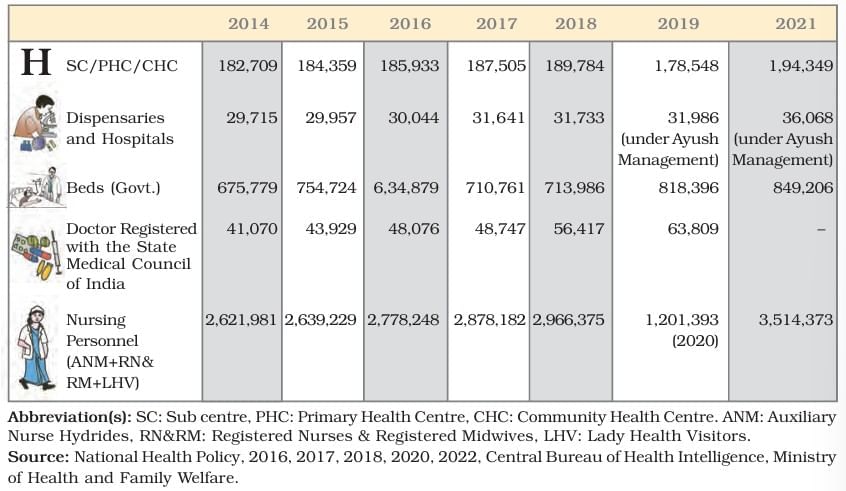
Health infratructure over the years
Try yourself:
Why do firms place emphasis on selecting employees with optimal health?
A.To maximize profit
B.To improve healthcare access
C.To reduce healthcare disparities
D.To increase life expectancy
View Solution
Unemployment
Unemployment is characterized by the inability of willing individuals to secure jobs at prevailing wages. It is crucial to differentiate between those not seeking employment and those facing challenges in finding suitable opportunities. In India, both rural and city areas face unemployment, but the reasons differ.
Impact of Unemployment
Wastage of Manpower Resource: Converts potential assets into liabilities for the economy. Creates a feeling of hopelessness and despair among the youth.
Economic Overload: Increases dependence on the working population. Adversely affects the quality of life for individuals and society.
Social Consequences: Decline in health status, withdrawal from the school system, and general despair.
Indicator of a Depressed Economy: An increase in unemployment signals economic challenges.
Types of Unemployment
Seasonal Unemployment: In rural areas, seasonal unemployment is prevalent, particularly among those dependent on agriculture. Certain months witness reduced agricultural activities, leading to temporary job scarcity for these individuals.
Disguised Unemployment: Disguised unemployment, common in family-based agricultural settings, gives the appearance of employment. However, surplus workers engage in activities that do not significantly contribute to productivity, highlighting the inefficiencies in resource utilization.
Educated Unemployment (Urban): Urban areas witness a paradoxical situation where educated individuals, even with matriculation, graduation, or post-graduate degrees, struggle to find suitable employment. This creates a coexistence of surplus manpower in certain categories and a shortage in others.
Try yourself:What type of unemployment is prevalent in rural areas?
A.Seasonal Unemployment
B.Disguised Unemployment
C.Both Seasonal and Disguised Unemployment
D.None of the above
View Solution
Statistical Perspective
While official statistics may indicate low unemployment rates, many individuals with low income and productivity are considered employed.
Forced work for subsistence rather than by choice is prevalent, contributing to the statistical landscape.
Disguised Unemployment in Agriculture
The agriculture sector in India experiences disguised unemployment, with self-employment characterized by surplus labour.
Despite shared work and produce among family members, surplus labour eventually migrates from villages in search of alternative job opportunities.
Sectoral Employment Trends
Agriculture: Most labor-absorbing; recent decline due to migration to secondary and tertiary sectors.
Secondary Sector: Small-scale manufacturing as labor-absorbing.
Tertiary Sector: Growth in new services like biotechnology and IT.
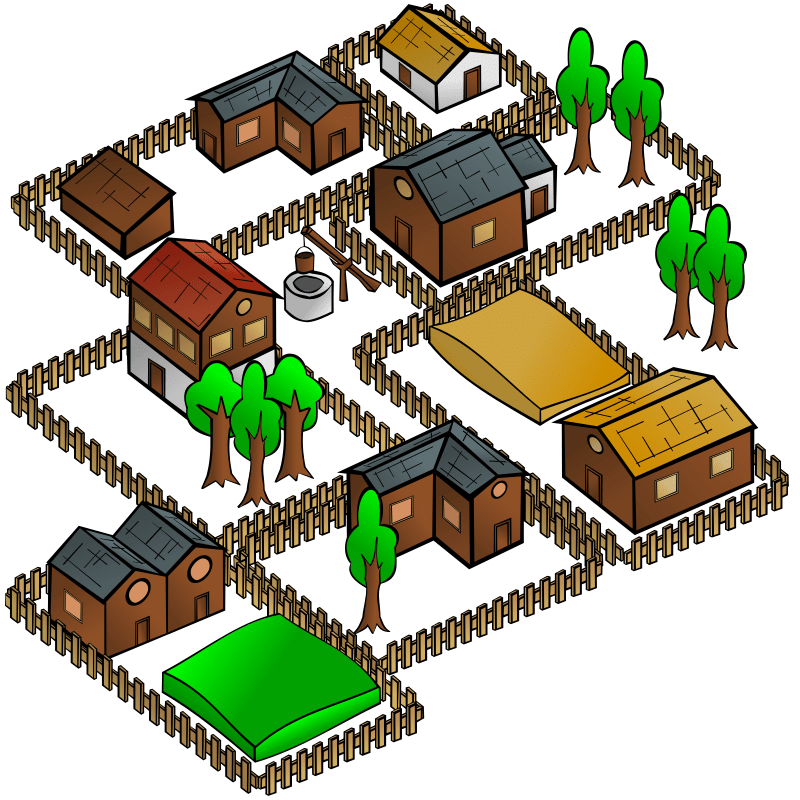
Story of a Village
Self-Sufficient Village: Families produced food, made clothes, and taught children independently. Education & Innovation: One family sent their son to agriculture college. The son became an agro-engineer, designed an improved plough, increasing wheat yield. New job of agro-engineer was created.
Economic Growth: Family sold surplus wheat in a neighboring village, earned profit. Success inspired other families to seek better futures for their children.
Establishment of School: Families requested the panchayat to open a school. A teacher was recruited; all village children began attending school.
Creation of Tailoring Job: A daughter trained in tailoring, started stitching clothes for villagers. New job of tailor was created, saving farmers’ time and increasing farm yield.
Village Prosperity: Farmers sold surplus produce in village markets. Village, initially with no job opportunities, now had multiple jobs (teacher, tailor, agro-engineer). The rise in human capital led to diverse and modern economic activities.
In conclusion, the chapter “People as a Resource” demonstrates that education and health are crucial in transforming a population into an asset. By investing in human capital, a nation can ensure sustainable development, improve living standards, and reduce poverty and unemployment. The focus should not only be on increasing the number of people employed, but also on improving the quality of employment and the quality of the population.
Key Terms
Human Capital: A measure of the economic value of an employee’s skill set. This concept emphasizes that not all labor is equal and that the quality of employees can be improved by investing in them.
Vocational Training: Education or training that prepares individuals for specific crafts, trades, or careers at various levels from a trade, a craft, technician, or a professional position in engineering, accountancy, nursing, medicine, architecture, pharmacy, law etc.
Green Revolution: Refers to a series of research, development, and technology transfer initiatives, occurring between the 1940s and the late 1960s, that increased agriculture production worldwide, particularly in the developing world.
IT Revolution: Refers to the rapid advancements and widespread adoption of information technology that began in the late 20th century and continues to affect the global economy, communication, and efficiency.
Market Activities: Economic activities that involve transactions of goods and services for money, contributing directly to the economy.
Non-Market Activities: Economic activities that do not involve monetary transactions but satisfy personal and family needs, such as subsistence farming or household work.
Disguised Unemployment: Occurs when more people are engaged in a job than are actually needed to perform the job; these extra people do not increase productivity.
Educated Unemployment: A situation where individuals with academic and training qualifications cannot find employment at an appropriate level or wage.
Virtuous and Vicious Cycles: In economics, a virtuous cycle has favorable results while a vicious cycle has detrimental effects. For instance, investment in education can lead to higher incomes, which can lead to more investments in education (virtuous cycle), whereas lack of education can lead to low income and thus less investment in education (vicious cycle).
Gross Enrollment Ratio (GER): The number of students enrolled in a given level of education, regardless of age, expressed as a percentage of the official school-age population corresponding to the same level of education.
Navodaya Vidyalaya: A system of central schools for talented students predominantly from rural India. They are run by Navodaya Vidyalaya Samiti, New Delhi, an autonomous organization under the Department of School Education and Literacy, Ministry of Education (MoE), Government of India.
Sarva Siksha Abhiyan (SSA): A government of India program aimed at the universalization of elementary education in a time-bound manner, as mandated by the 86th amendment to the Constitution of India making free and compulsory education to children aged 6–14 a fundamental right.
Mid-Day Meal Scheme: A school meal program in India designed to improve the nutritional status of school-age children nationwide.
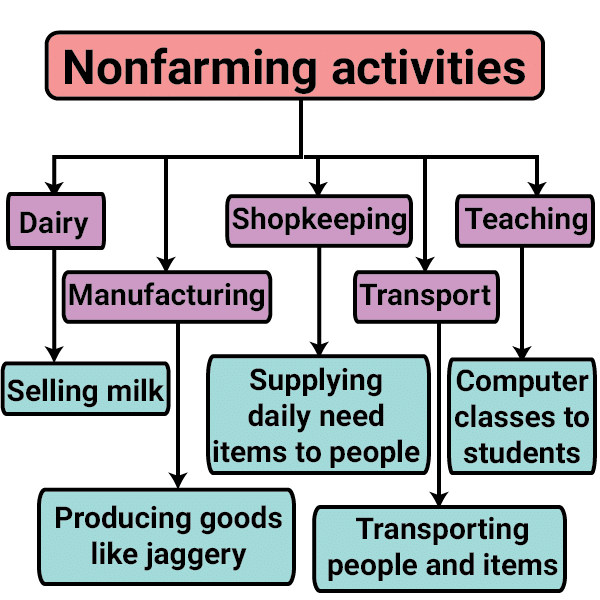
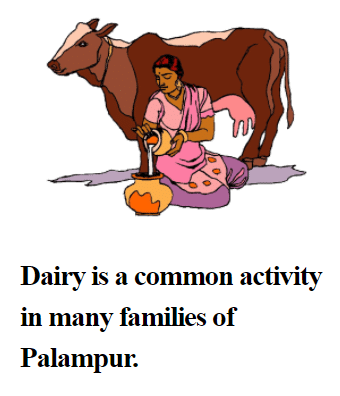
Farming is the main source of income in Palampur. Other activities include small-scale manufacturing, dairy transportation, and so on.
Various resources are combined in these production activities to create the desired goods and services.
Palampur is well connected to nearby villages and towns. An all-weather road connects the village to Raiganj and, further on, to the nearest small town.
This road is lined with various modes of transportation, including bullock carts, tongas, bogeys, motorcycles, jeeps, tractors, and trucks.
Palampur is home to approximately 450 families from various castes. The majority of the land is owned by 80 upper-caste families.
Their houses are quite large, built of brick and plastered with cement.
The SCs (Dalits) makeup one-third of the population and live in a small section of the village in much smaller houses made of mud and straw.
The majority of the houses are wired for electricity.
All of the tube wells in the fields are powered by electricity. Electricity is also used in many small businesses.
There are two primary schools and one high school in Palampur. There is one government-run primary health care centre and one private dispensary.
Try yourself:How many families live in the village of Palampur?
A.150
B.250
C.350
D.450
View Solution
Organization of Production
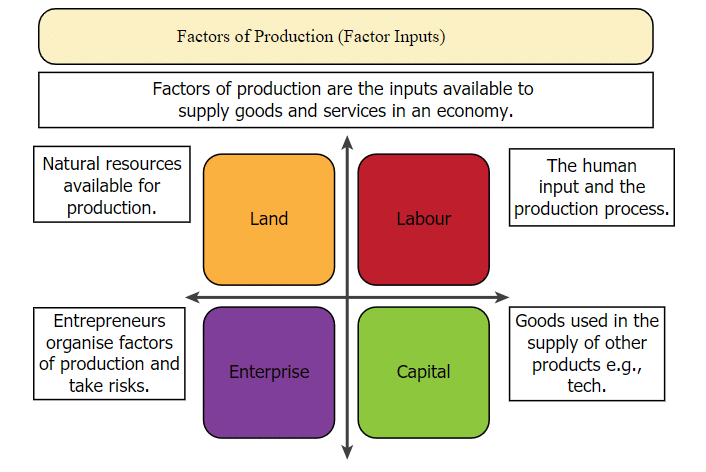
Production of any type of goods or services necessitated the services of four production factors, which aid in the overall production organization.
The first requirement is land, as well as other natural resources like water, forests, and minerals.
The second requirement is labour. Some production activities necessitate highly educated workers, while others necessitate manual labourers.
The third requirement is physical capital, which refers to the variety of inputs needed at each stage of production. Fixed capital refers to tools, machines, and buildings that can be used in production for many years. Working capital refers to raw materials and cash on hand that are consumed during production.
There is also the fourth requirement. To be able to combine land, labour, and physical capital and produce an output, knowledge and enterprise are required. These days, this is referred to as human capital. Every production is organized by combining factors of production such as land, labour, physical capital, and human capital.
Try yourself:Working capital stands for :
A.Tools, machines and buildings
B.Raw materials and money in hand
C.Total share capital
D.Fixed deposits in financial institutions
View Solution
Farming in Palampur
1. Land is Fixed
Farming is the primary source of income in Palampur.
Farming provides a living for 75 percent of the working population.
There has been no increase in the amount of land under cultivation in Palampur since 1960. Some of the village’s wastelands had been converted to cultivable land by that time.
There is no more opportunity to increase farm production by cultivating new land.
2. Is there a way one can grow more from the same land?
In Palampur, all land is farmed. There is no idle land.
People grow jawar and bajra during the rainy (Kharif) season for cattle feed. Potatoes are grown from October to December.
Wheat is sown during the winter (or Rabi) season. A portion of the land is also dedicated to sugarcane, which is harvested once a year.
3. Will the land be sustained?
Land is a vital natural resource that requires careful usage.
Modern farming methods have overused natural resources.
The Green Revolution has led to loss of soil fertility due to increased chemical fertilizer use.
Continuous use of groundwater for irrigation has depleted the water table.
Environmental resources like soil fertility and groundwater take years to develop and are hard to restore once destroyed.
Chemical fertilizers provide minerals that are readily available to plants but can leach from the soil and pollute water sources.
These fertilizers can kill beneficial soil microorganisms, reducing soil fertility over time.
Punjab has the highest chemical fertilizer consumption in India, leading to soil health degradation.
Punjab farmers must use more fertilizers and other inputs to maintain production, increasing cultivation costs.
4. How is land distributed between the farmers of Palampur?
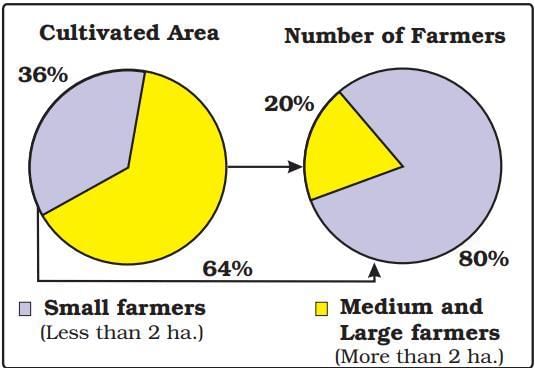
Not everyone involved in agriculture has enough land to cultivate. In Palampur, approximately one-third of the 450 families are landless, i.e. 150 families, the majority of whom are Dalits, lack cultivable land.
240 of the remaining land-owning families cultivate small plots of land less than 2 hectares in size.
Land Distribution between Farmers of Palampur
There are 60 families of medium and large farmers in Palampur who cultivate more than 2 hectares of land. A few of the large farmers own 10 hectares or more of land.
5. Who will Provide the Labour?
Farming requires a great deal of effort. Small farmers cultivate their own fields with their families. As a result, they provide the labour required for farming. Farm labourers are hired by medium and large farmers to work in their fields.
Farm labourers are either from landless families or from families who cultivate small plots of land. Farm labourers, unlike farmers, have no ownership of the crops grown on the land. Instead, they are paid by the farmer for whose benefit they work. Wages can be paid in cash or in crop form. Labourers are sometimes provided with meals as well.
Wages vary greatly from region to region, crop to crop, and farm activity to farm activity (such as sowing and harvesting). There is also a wide variation in the duration of employment; a farm labourer may be employed on a daily basis, for one specific farm activity such as harvesting, or for the entire year.
6. The Capital needed in Farming
To obtain capital, the majority of small farmers must borrow money. They borrow from large farmers, village moneylenders, or traders who supply various agricultural inputs.
The interest rate on such loans is extremely high. They are put in a difficult situation in order to repay the loan.
In contrast to small farmers, medium and large farmers have their own farming savings. As a result, they are able to arrange or the capital required.
Small farmers have a small surplus because their total production is small, and a significant portion of this is kept for their own family needs. As a result, wheat is supplied to the market by medium and large farmers.
Large and medium-sized farmers sell excess farm products. A portion of the earnings is saved and kept for the purpose of purchasing capital for the following season. As a result, they are able to arrange for farm capital from their own savings. Some farmers may also use their savings to purchase cattle, trucks, or to open new businesses.
7. Sale of Surplus Farm Products
Farmers produce wheat using the three factors of production.
After harvest, farmers keep part of the wheat for family consumption and sell the surplus.
Small farmers have little surplus due to smaller production and higher family needs.
Medium and large farmers are the primary suppliers of wheat to the market.
Traders buy wheat from farmers and sell it to shopkeepers in towns and cities.
Large farmers like Tejpal Singh sell substantial surplus wheat and earn significant income.
Tejpal Singh uses his earnings for:
Savings in a bank account
Lending to other farmers in need
Working capital for the next farming season
Buying additional farming equipment, such as another tractor
Other medium and large farmers similarly save part of their earnings for future capital needs.
Savings may be used to buy cattle, trucks, or set up non-farm businesses.
These activities contribute to the capital for non-farm activities.
9. Sustainable use of Land
Because land is a natural resource, it must be used with caution. Modern farming methods have depleted the earth’s resources.
Because of the increased use of chemical fertilizers, the Green Revolution is associated with a loss of soil fertility.
The continuous use of groundwater for tube well irrigation has resulted in a decrease in the water level beneath the ground.
Environmental resources, such as soil fertility and groundwater, are built up over time. It is extremely difficult to restore them once they have been destroyed.
10. How does Electricity help the Farmers in Palampur?
The main impact of the spread of electricity in Palampur was the transformation of the irrigation system.
Electricity helped farmers in transitioning from traditional Persian wheels to electricity-powered tube wells.
The irrigation capacity of electricity-powered tube wells far exceeds that of Persian wheels.
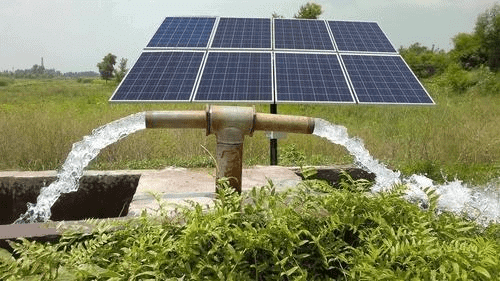
Solar Tube Wells
The spread of electrical wires literally shifted the entire society from darkness to light. It altered all social and economic norms. It’s like entering a different world.
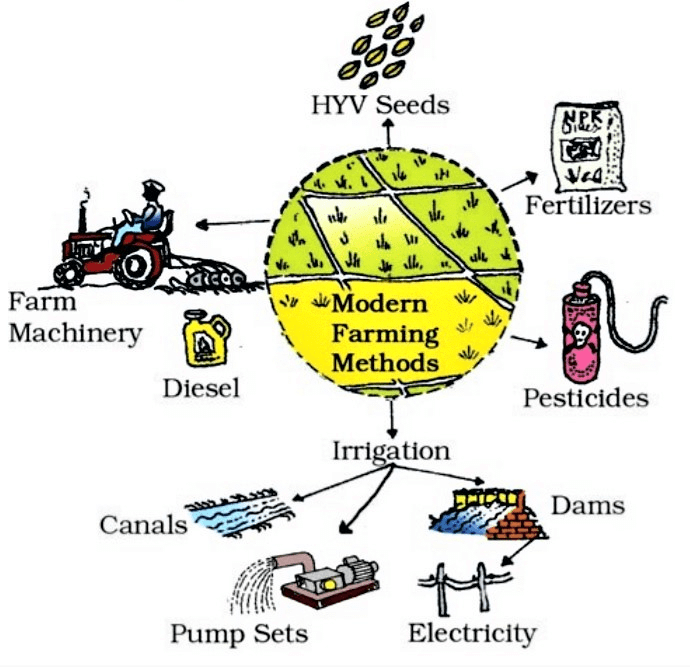
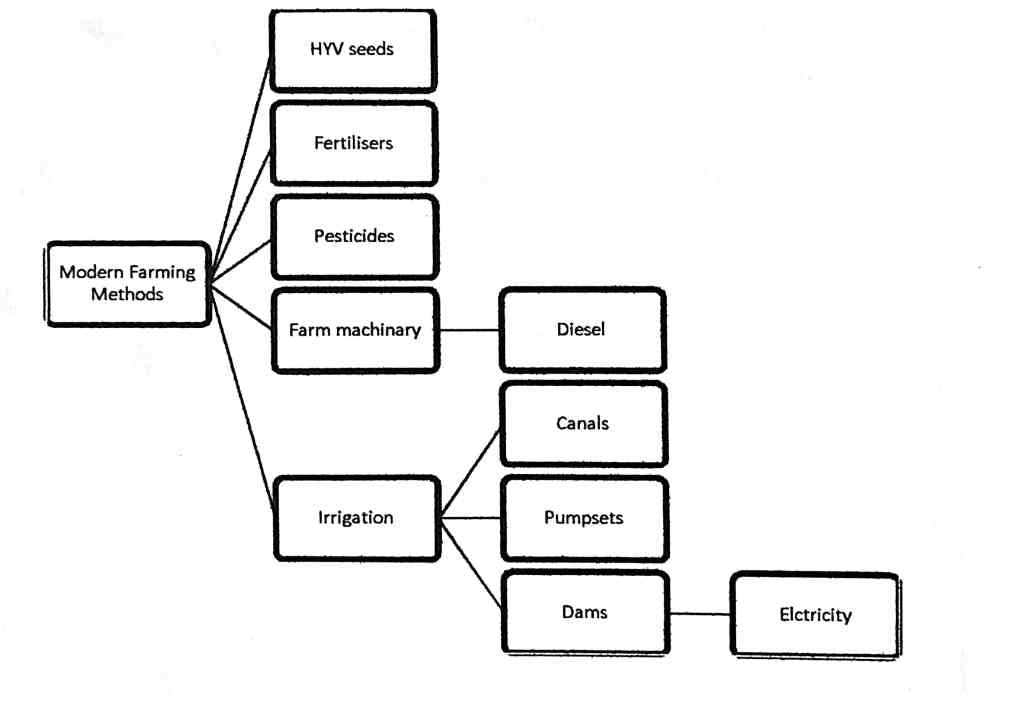
Modern Farming Methods
The main reasons why farmers are able to grow three different crops in a year are: (i) As a result of the coming of electricity in the Palampur village, people have greatly improved the system of irrigation. They can now irrigate more lands quite effectively. (ii) Tube wells were first installed by the government but soon people were able to set up their own tube wells. (iii) By multiple cropping more than one crop is grown on a piece of land during the same year. All farmers in Palampur grow at least two main crops; many are growing potato as the third crop. (iv) The other way is to use modern farming methods for higher yield. Higher yields are possible from a combination of HYV seeds, irrigation, chemical fertilizers, pesticides etc.
Green Revolution
The large increase in crop yields, leading to record food production, began in our country in 1960 and marked a turning point in Indian agriculture, leading to our country’s green revolution.
The Green Revolution refers to the significant increase in the production of food grain crops, particularly wheat, in our country over the last 30 years. This is due to a sort of agricultural revolution in India, which has resulted in massive food grain production.
The revolution is called because it has led to unmatched greenery of crops everywhere. The period 1960 to 1980 is also called the ‘golden era’ for the record food grain production.
It is because of the green revolution that our country has become self-sufficient in food production and even buffer stocks of food grains have been created for use in times of natural calamities like drought and floods.
Try yourself:The Green Revolution introduced the farmers to
A.cultivation of wheat and rice
B.cultivation of green vegetables
C.cultivation of sugar cane
D.cultivation of forests
View Solution
Non-Farming Activities in Palampur
Dairy
Dairy is a common activity in many families of Palampur. People feed their buffalos on various kinds of grass and the jawar and bajra that grow during the Kharif season.
The milk is sold in Raiganj, the nearby large village. Two traders from Shahpur town have set up collection cum chilling centres at Raiganj from where the milk is transported to faraway towns and cities.
An Example of Small Scale Manufacturing in Palampur
Less than fifty people are engaged in manufacturing in Palampur, unlike the manufacturing that takes place in the big factories in the towns and cities.
Manufacturing in Palampur involves very simple production methods and is done on a small scale. It is carried out mostly at home or in the fields with the help of family labour.
The Shopkeepers of Palampur
People involved in the trade (exchange of goods) are not many in Palampur. the traders of Palampur are shopkeepers who buy various goods from wholesale markets in the cities and sell them in the village.
There are a few small general stores in the village selling a wide range of items like rice, wheat, sugar, tea, oil, biscuits, soap, toothpaste, batteries, candies, notebooks, pen, pencil, and even some cloth.
Transport: A Fast Developing Sector
There are a variety of vehicles on the road connecting Palampur and Raiganj, including rickshawalas, tanga walas, jeep, tractor, truck drivers, and people driving the traditional bullock cart and bogey.
They transport people and goods from one location to another for a fee.
Watch the video below for detailed explanation:
Difficult Words
All-weather road: A road constructed in a manner that ensures it is usable all year round, regardless of weather conditions.
Dalits: Members of the lowest social group in the Hindu caste system; traditionally regarded as untouchables or outcastes.
Physical capital: Assets used in the production of goods and services, which in this context include tools, machines, and buildings.
Human capital: The skills, knowledge, and experience possessed by an individual or population, viewed in terms of their value or cost to an organization or country.
Fixed capital: Long-term assets used over time in the production process, such as machinery and buildings.
Working capital: Short-term assets used in day-to-day operations, including raw materials and cash on hand.
Kharif season: The cropping season in India during the southwest monsoon, typically from June to October, when crops like jawar (sorghum) and bajra (pearl millet) are grown.
Rabi season: The cropping season in India that begins after the monsoon and continues during the cooler months, usually from October/November to March/April, when crops like wheat are sown.
Green Revolution: A large increase in crop production in developing countries achieved by the use of fertilizers, pesticides, and high-yield crop varieties starting in the 1960s.
HYV seeds: High-yielding variety seeds that are engineered to produce more than traditional seeds when given sufficient irrigation, pesticides, and fertilizers.
Tube well: A deep well that is made by driving a tube into the earth to a stratum that bears water, equipped with a pump to draw water, commonly powered by electricity in modern farming.
Sustainable use of land: Agricultural practices that attempt to ensure the viability of the land to continue to yield crops and livestock into the future, without irreversible damage to soil fertility and overall environment.
Solar tube wells: Tube wells that operate on solar power instead of traditional electricity or diesel, reflecting a move towards more sustainable and environmentally friendly farming practices.
Persian wheel: An irrigation device used to lift water, traditionally powered by animals or humans, now largely replaced by electric-powered pumps.
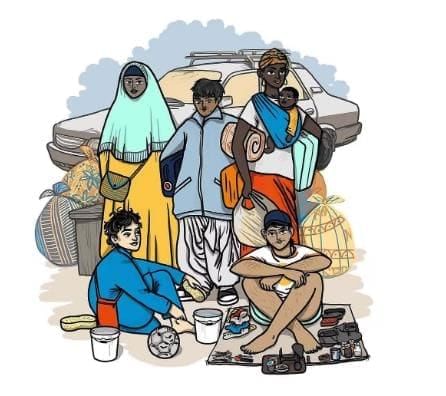

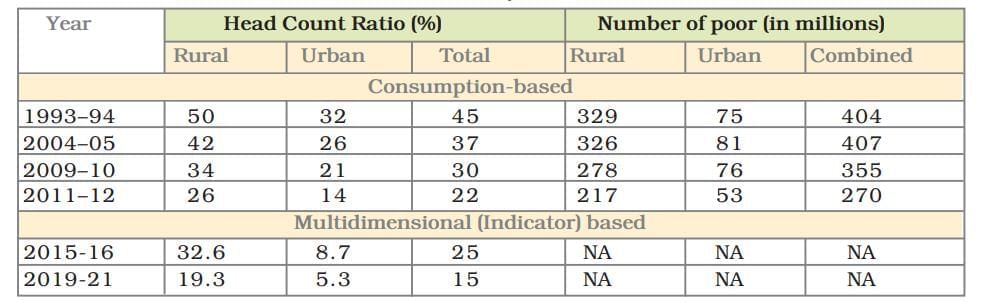 Estimates of Poverty in India 1993 – 2019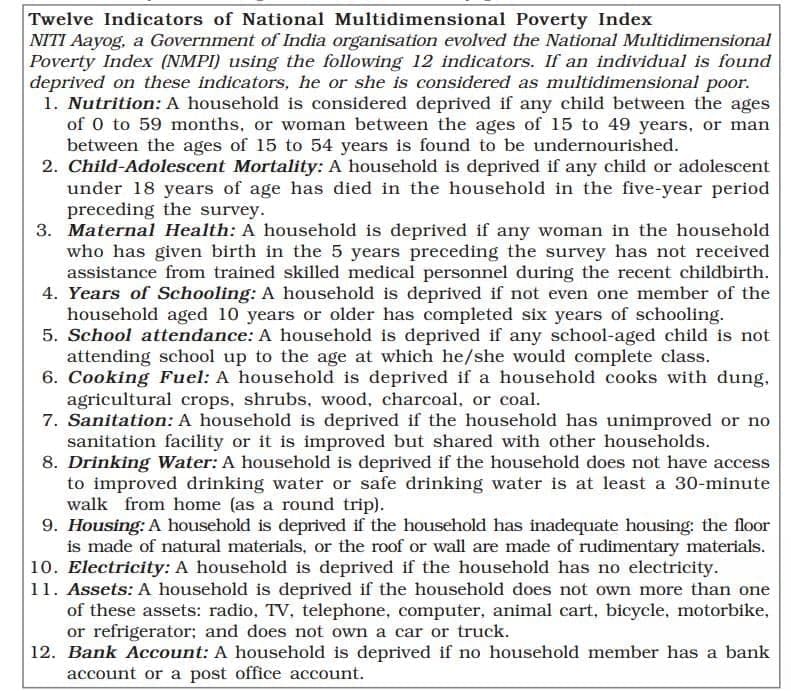

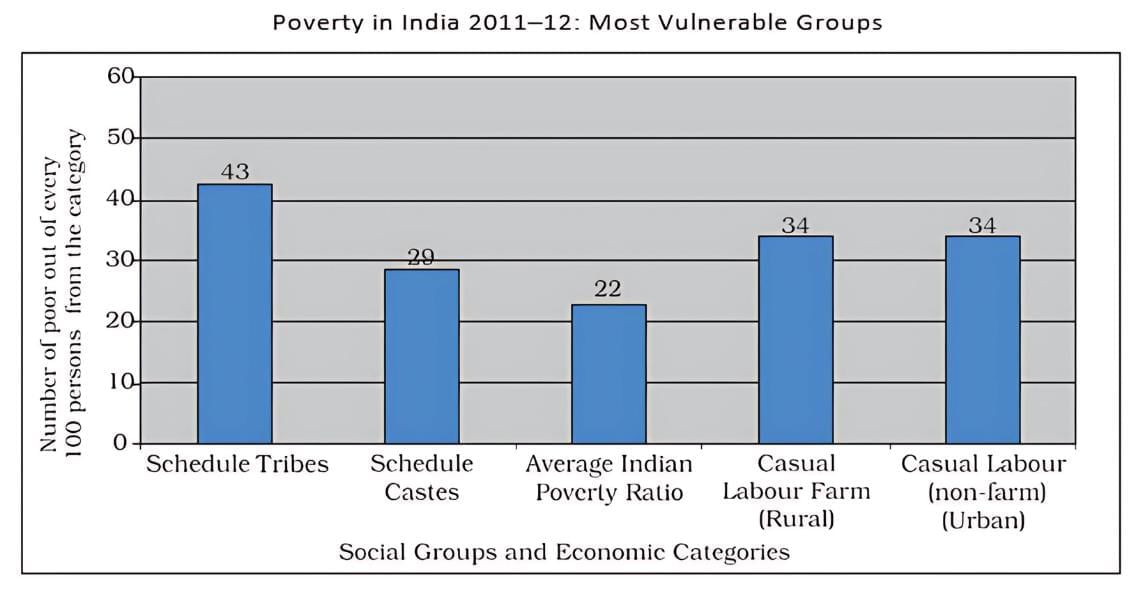
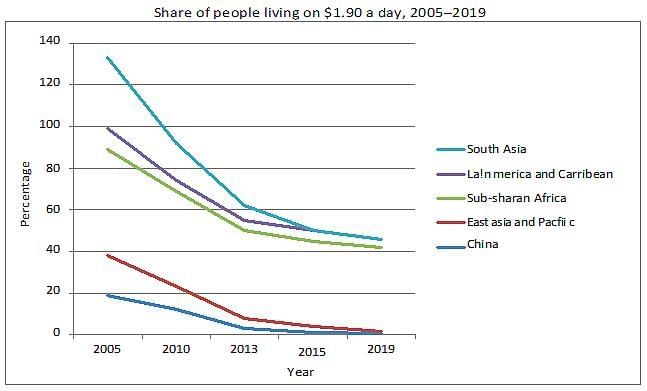
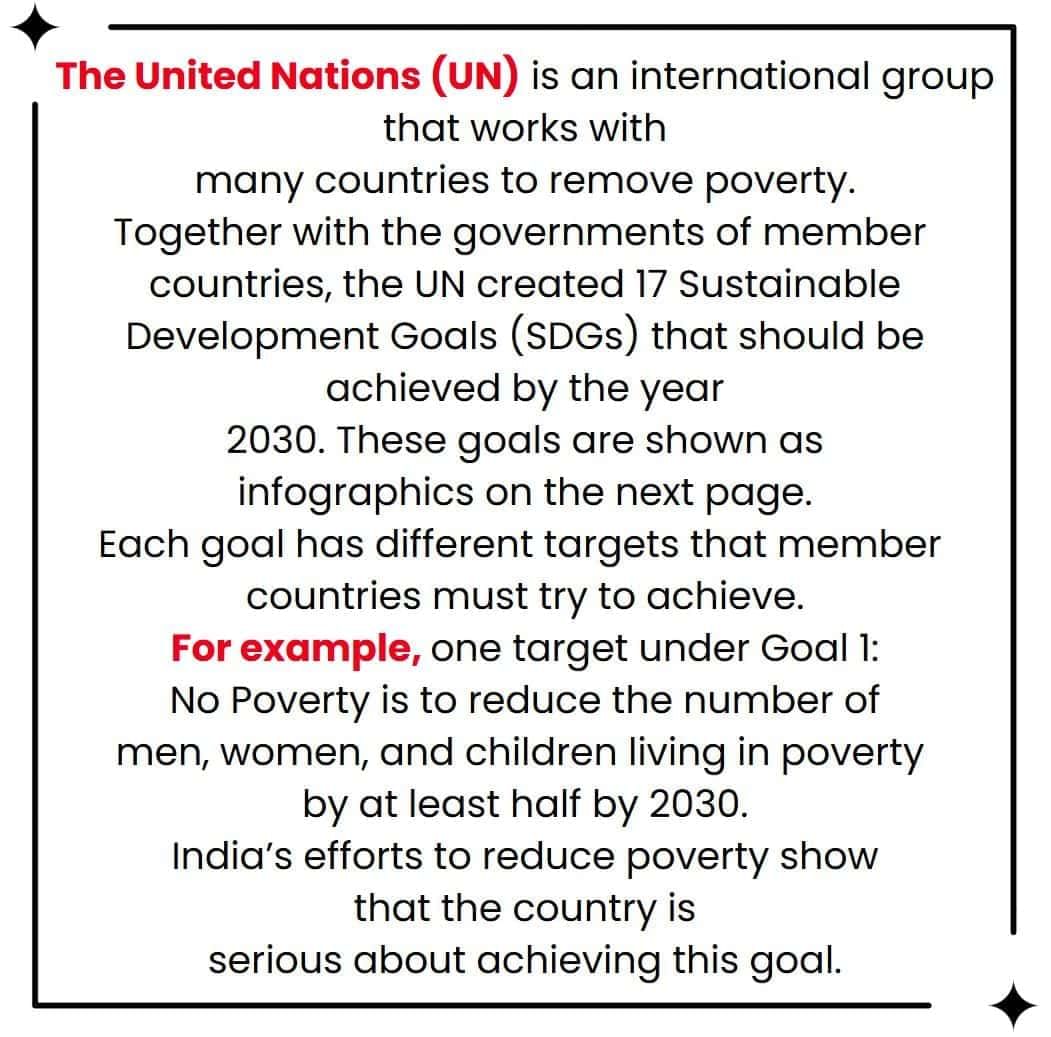

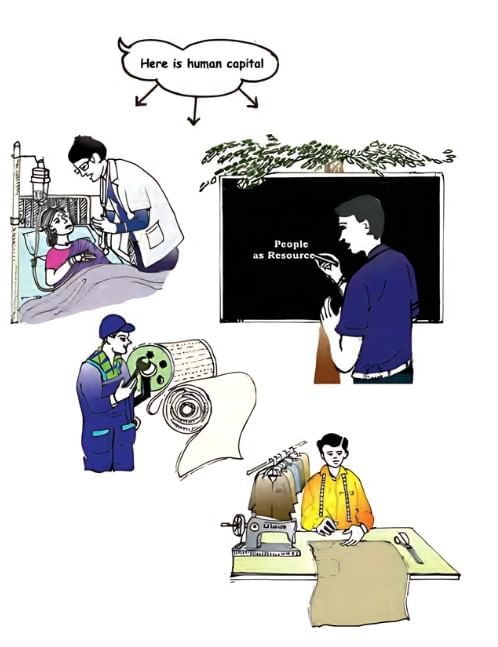
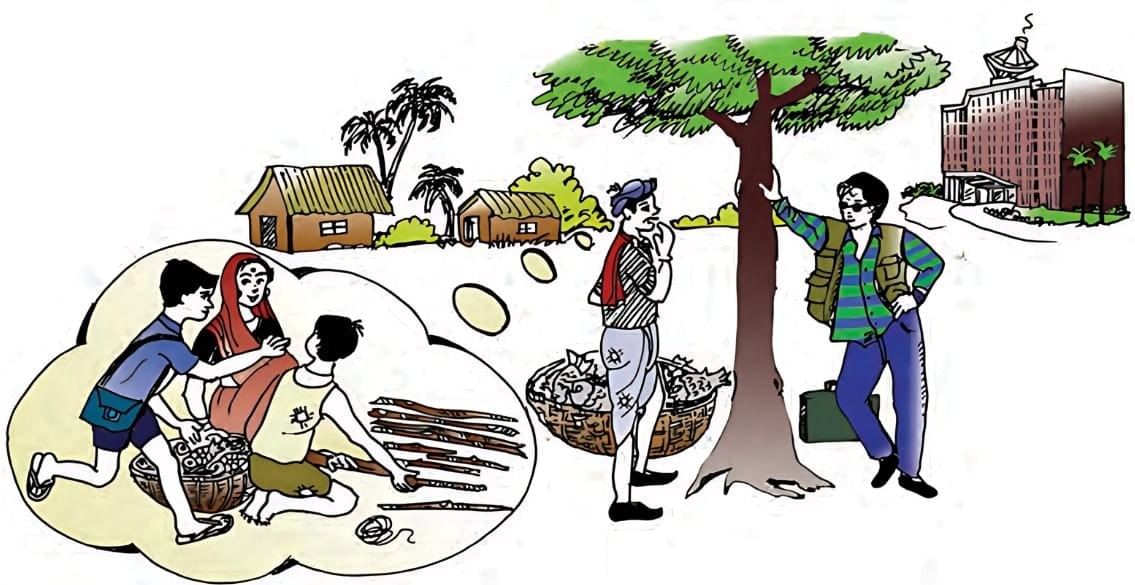
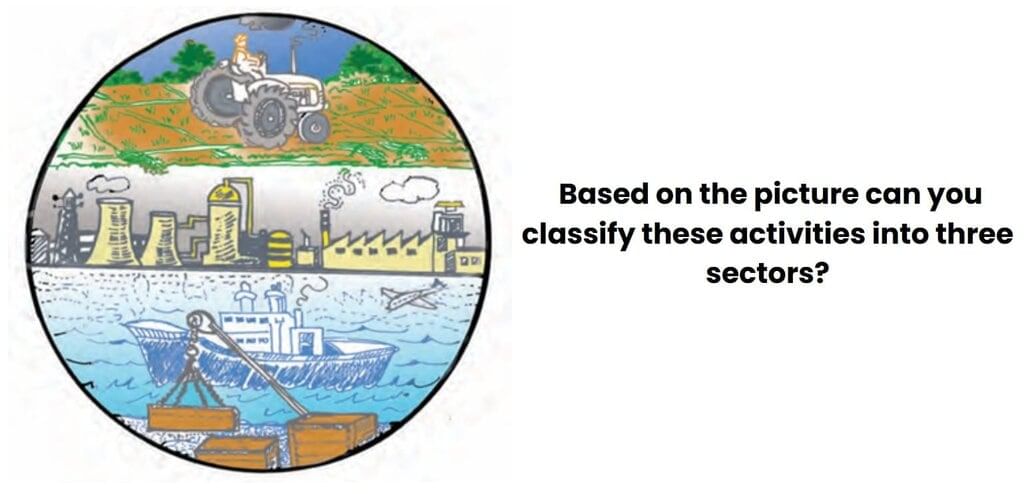
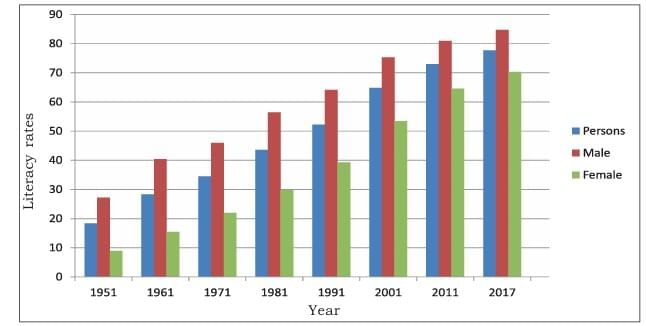 Trends in Literacy Rates In Post – Independent India
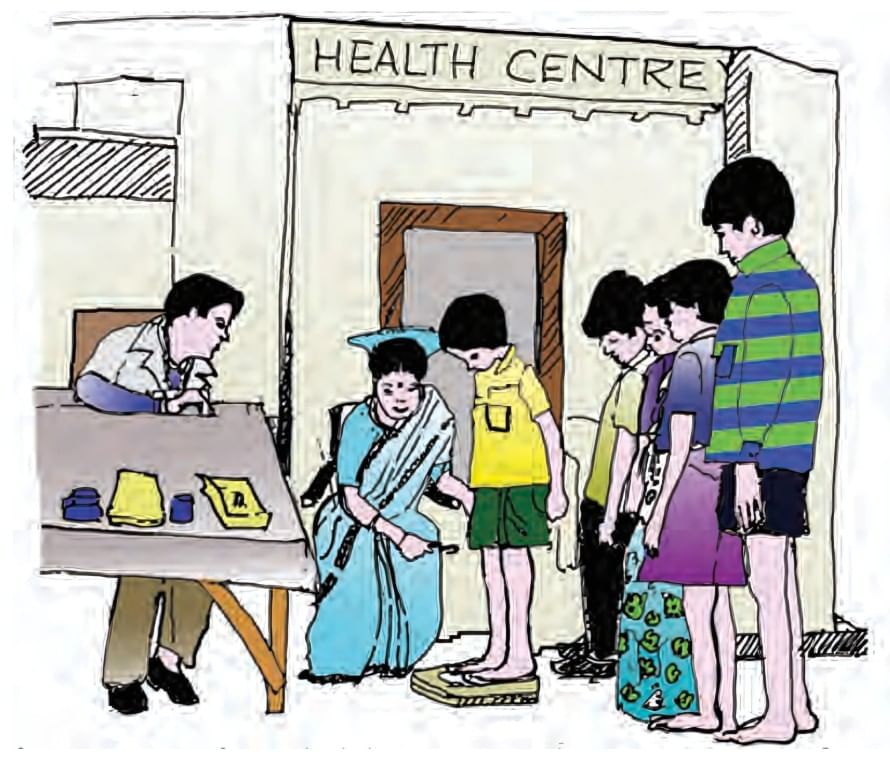 Children standing in queue for health check-up