9. View and Review – Chapter Notes

Introduction

Theatre View

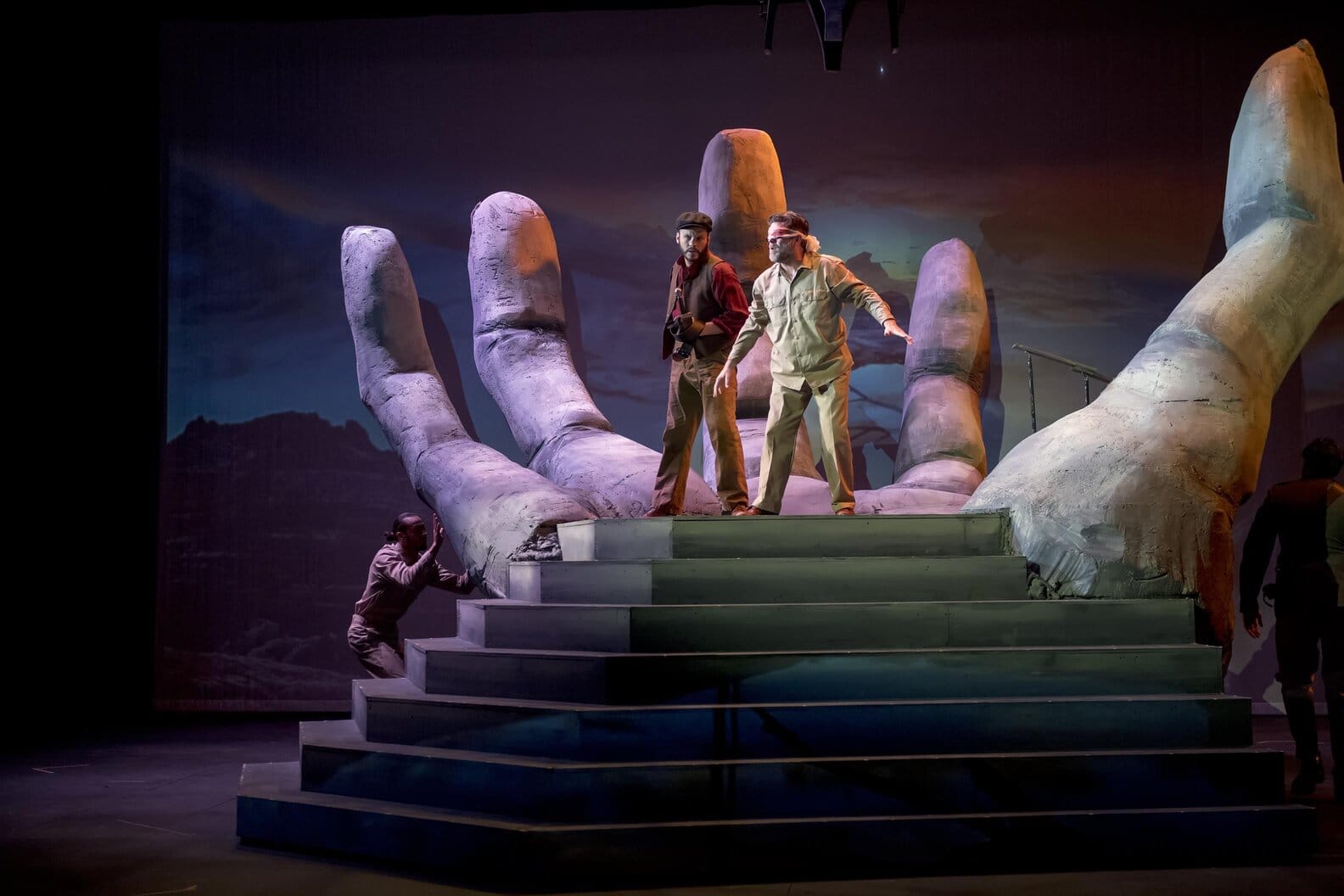
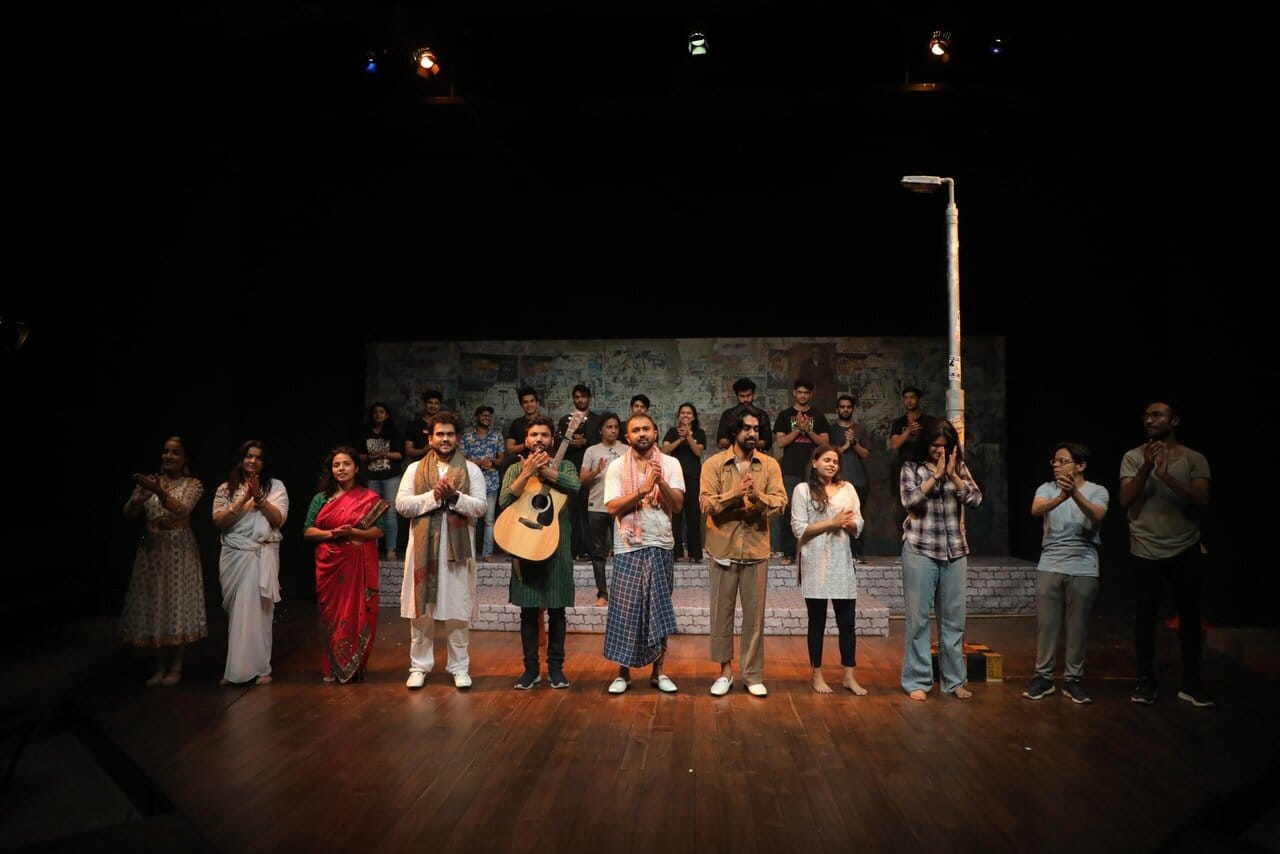
As young theatre artists, whether you like writing scripts, designing costumes, or acting, watching plays and live performances is very important. By observing others perform, you can learn a lot about how to make your own plays better. This chapter explains why watching different kinds of performances helps you understand technical aspects like props, make-up, and music, as well as learn about culturestraditions, and historical heroes. It also introduces you to some exciting folk theatre traditions from different parts of India that you can watch when they happen in your town.

Importance of Watching Plays

  • Watching plays and live performances helps you learn new things, no matter what part of theatre you like, such as script writingcostume designing, or acting.
  • You can learn how others plan their technical aspects, like set propsmake-upcostumesmusic, and acting.
  • Performances teach you about different culturestraditions, and historical heroes.
  • By watching others, you can improve your own planning and performing skills for your plays.

Try yourself:

What can you learn by watching plays?

  • A.Mathematical formulas
  • B.Sports techniques
  • C.New cooking recipes
  • D.Different cultures

View SolutionFolk Theatre Traditions Across IndiaEast India
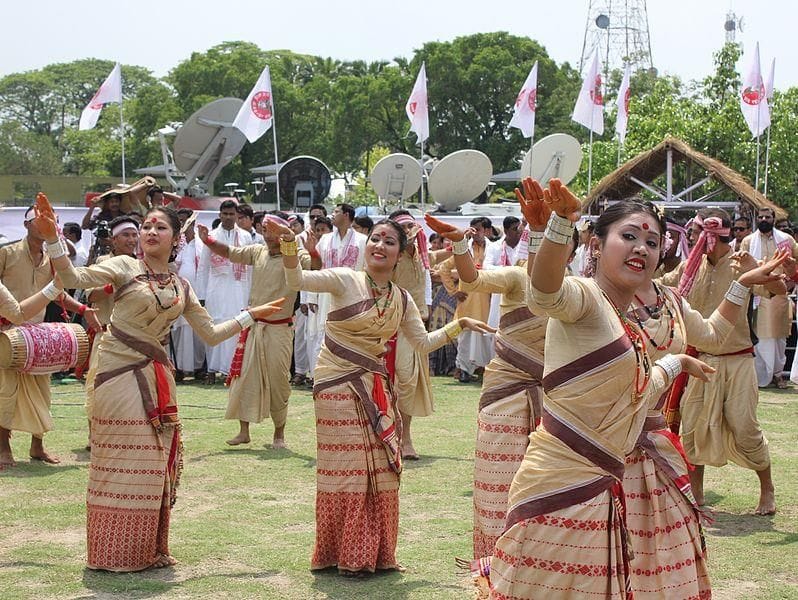
  • Jatra (West Bengal, Odisha, Assam): A traveling theatre with exciting stories and live music.
  • Ankia Naat (Assam): Short devotional plays with dance and music.
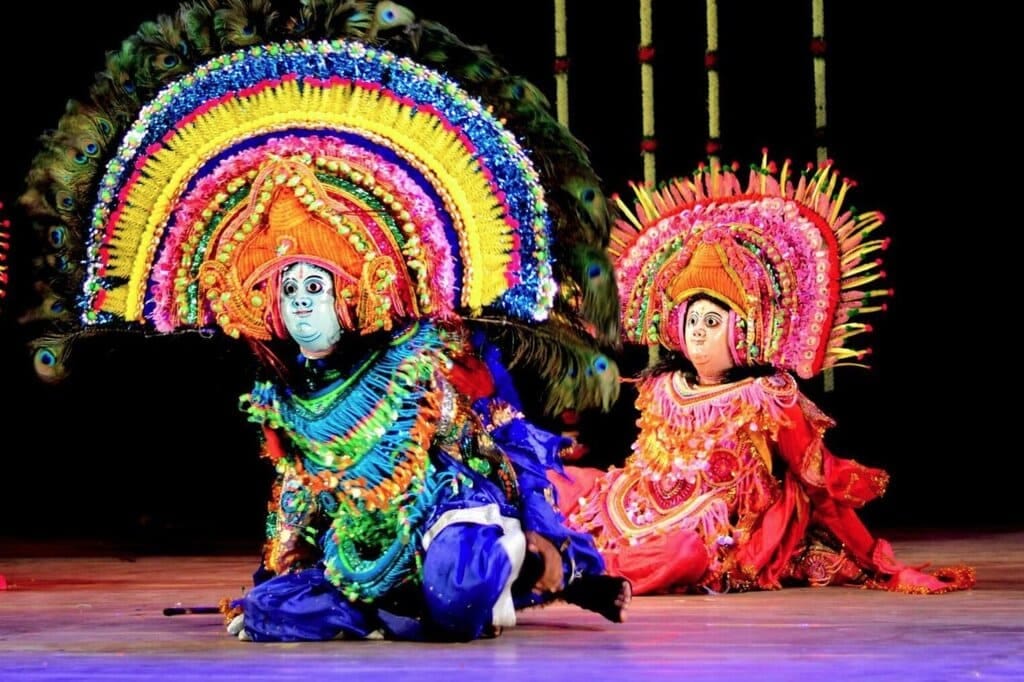
  • Chhau (Odisha, Jharkhand, West Bengal): A semi-classical performance with martial arts and storytelling.

Central India
  • Nacha (Chhattisgarh): Focuses on dance and funny stories.
  • Maach (Madhya Pradesh): Musical theatre performed during festivals, with historical and religious themes.
North India

  • Nautanki (Uttar Pradesh): A mix of storytelling, music, and dance, performed on temporary stages.
  • Swang (Haryana, Western Uttar Pradesh): Uses mimicry, dialogue, humor, and singing in performances.
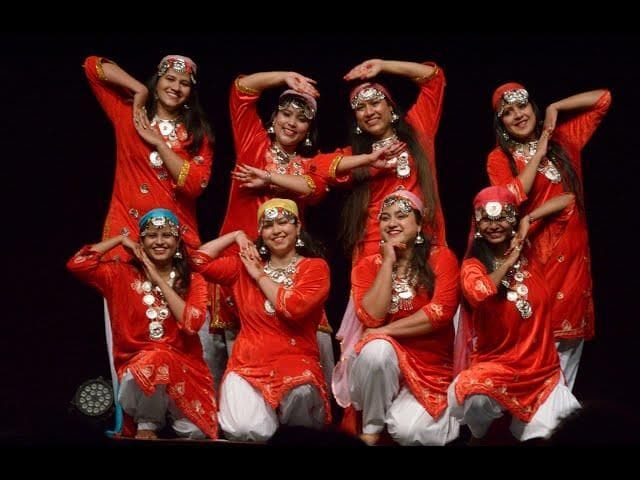
  • Bhand Pather (Kashmir): Plays by the Bhand community, using dance, drama, and mime.

West India

  • Bhavai (Gujarat): Dramatic shows in open-air spaces that show social issues.
  • Tamasha (Maharashtra): Combines singing, dancing, and humor, known for Lavani dance.
  • Garba Theatre (Gujarat): Dance-based performances during Navratri, sometimes with dramatized stories.

South India
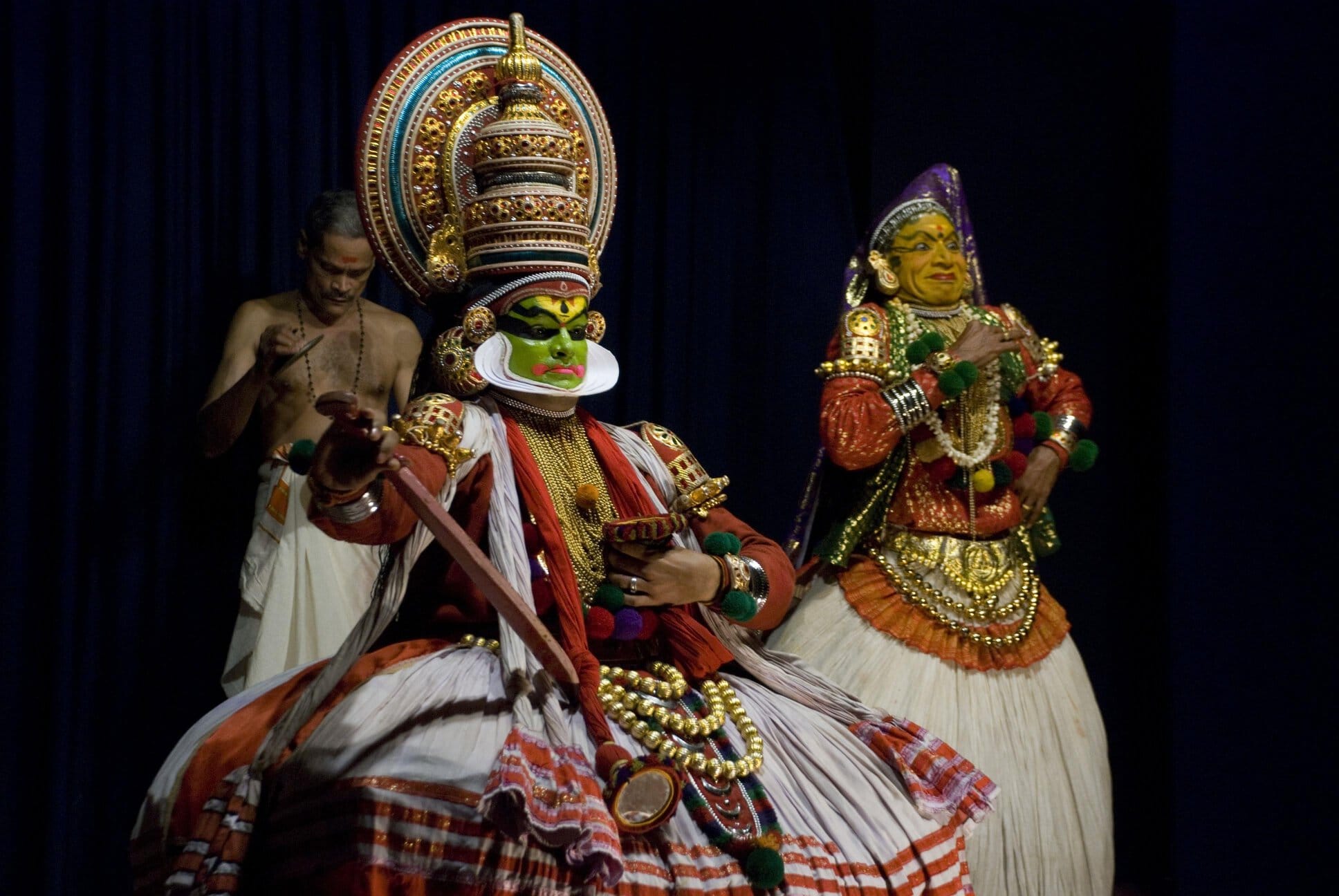
  • Yakshagana (Karnataka): A mix of classical music, dialogue, and dance, based on epic stories.
  • Therukoothu (Tamil Nadu): Street plays that use storytelling and dance.
  • Koodiyattam (Kerala): An ancient Sanskrit theatre form performed in temples with stylized acting.

ConclusionWatching plays is a great way for theatre artists to learn and grow. By observing different performances, you can improve your skills in script writingacting, and technical aspects like props and costumes. You also get to explore India’s rich folk theatre traditions, like Jatra, Yakshagana, and Nautanki, which teach you about different cultures and stories. This chapter encourages you to watch these performances whenever they happen in your town to make your own plays more exciting and meaningful.
8. Time, Team, Technique – Chapter Notes

Introduction

Performing a play for a big audience is exciting but needs good planning. In this chapter, we learn how to put together everything we’ve learned so far to create a successful performance. From choosing a story to practicing and setting up the stage, every step is important. We also learn from a story about a class that forgot to plan for backstage work and needed help to make their play a success. This chapter teaches us how to work as a team, manage time, and use the right techniques to make our play fun and memorable for everyone.

Step 1: Storyboard and ScriptChoose one story to enact at the end of the year.

  • The story should:
    • Be interesting for everyone in class.
    • Be short and simple (5–8 minutes).
    • Use props and costumes that are easy to handle.
    • Include creative elements like a song or a dance.

Tip: Involve all students—some can act, some can handle story, props, or backstage work.

Example Story: The Jungle Adventure

  • Students of Class 5B decided to perform a play with talking trees, dancing monkeys, and a detective squirrel.
  • Everyone wanted to act, but they forgot about backstage work like lights, music, props, and costumes.
  • Class 5A helped by managing backstage tasks—pulling curtains, playing jungle sounds, fixing costumes.
  • The show was a big success, and the backstage team received loud applause.

Lesson: A play shines only because of the team behind the curtain.

Try yourself:

What should the story for the play be like?

  • A.Long and complex
  • B.Interesting and simple
  • C.Without any props
  • D.Only for a few students

View SolutionStep 2: Planning

  • List all tasks needed to present a play.
  • Divide responsibilities among classmates according to the amount of work.
  • If many props are required, more members are needed in the props team.
  • If make-up is simple, only one or two students may help.

Tasks for the Play

  • Story and script: Writing the story and the lines for the play.
  • Stage set: Setting up the background and scenery for the play.
  • Props: Creating or finding objects used in the play.
  • Make-up: Helping actors look like their characters.
  • Costume: Preparing clothes for the characters.
  • Music and sound effects: Adding music or sounds to make the play exciting.
  • Acting and dance: Performing the roles and any dances in the play.

Step 3: Timeline

  • Plan timelines carefully to avoid problems.
  • If the show date is too close:
    • No time for rehearsals.
    • No time for costumes and props.
    • Actors may forget lines.
  • If the show date is too far:
    • Team may lose interest.
    • Too many rehearsals may become boring.
    • Other events may disturb preparation.

Best plan: Have the show 15–20 days after starting preparation.

Step 4: RehearsalsRehearsals take the most time and need the most hard work from the team.

  • Follow these steps in order:
    • Script reading: The whole team reads the script together, taking turns to read lines, repeating it many times.
    • Casting: Deciding who will play each character.
    • Scene blocking: Planning where actors stand and move in each scene.
    • Practice with dialogue and movement: Rehearse each scene with lines and movements.
    • Full play run-through: Practice the entire play from start to finish.

Tip: Make a separate timeline for these rehearsal steps to finish on time.

Try yourself:

What is Step 4 in the process?

  • A.Rehearsals
  • B.Recording
  • C.Planning
  • D.Feedback

View SolutionThe Tech Team

  • The tech team includes people working on set props, costume, make-up, music, and other backstage tasks.
  • While actors rehearse, the tech team works on their tasks at the same time.

Set Props

  • Make props using cardboard or borrow items.
  • Use object improvisation skills from Grades 3 and 4 to turn simple objects into props.

Costume

  • Plan costumes using available resources, like making a crown from cardboard.
  • Avoid buying or renting costumes; borrow or make them instead.

Music

  • Use skills from the last two years to create sound effects or sing songs for the play.

Step 5: Get-set-SHOW!

  • It’s normal to feel nervous as the show day gets closer, even for professional actors.
  • Nervousness can help actors perform better.
  • Work hard, know your lines and movements well to feel confident.

Note: Additional tips for beating nervousness and staying confident were not provided in the document due to truncation.

Tips to Beat Nervousness

  • Rehearsals: Practise again and again. Do a final run like the actual show.
  • Use the Arts: Music, dance, theatre, and drawing help reduce stress and refresh the mind.
  • Team Connection: Sit together, breathe deeply, and stay calm as a group. Recite a prayer for teamwork.

Prayer from the UpanishadsOm Saha Naavavatu | Saha Nau Bhunaktu | Saha Veeryam Karavavahai | Tejasvi Naavadhitamastu Maa Vidvishavahai | Om Shantih Shantih Shantih ||
Meaning:

  • Together may we progress.
  • Together may we enjoy.
  • Together may we perform with energy.
  • May our work lead to knowledge and not create hostility.
  • Peace, Peace, Peace.

Try yourself:

What is one way to overcome nervousness?

  • A.Leave the room
  • B.Stay quiet
  • C.Take deep breaths
  • D.Ignore your feelings

View Solution​​​

Things to Avoid Before a ShowTo make your play awesome, avoid mistakes that can mess things up:

  • Skipping Rehearsals: Missing practice means you might forget lines, move awkwardly, or miss cues, making the show look messy.
  • Last-Minute Changes: Changing the script, characters, or scenes right before the show can confuse everyone, like adding a new scene or switching roles at the last second.
  • Forgetting Backstage Jobs: Not planning props, costumes, music, or lights can ruin the play. In The Jungle Adventure, the actors forgot these jobs, like jungle sounds or a monkey’s tail, and almost failed without help.
  • Bad Timing: Planning the show too soon leaves no time for practice or props, causing stress. Planning too far away makes you lose excitement or get busy with other things, like a friend’s trip or a school event.
  • Letting Nerves Win: Being too nervous can make you freeze or forget lines. Practice calming tricks to stay focused.
  • Not Talking as a Team: If you don’t check in with each other, actors and crew might not match up, like missing a sound cue because no one talked about it.

ConclusionPutting on a play is a big job that needs careful planning, teamwork, and the right techniques. This chapter teaches us how to choose a fun and simple story, divide tasks like props, costumes, and music, and plan a timeline to stay on track. The story of The Jungle Adventure shows us that backstage work is just as important as acting. By rehearsing well and working together, we can create a show that the audience loves. Even if we feel nervous, hard work and preparation will make our performance shine and be a fun experience for everyone.

Important Vocabulary

  • Storyboard: A picture plan, like a comic, showing a play’s scenes, characters, and actions.
  • Script: The written words and actions for a play.
  • Teamwork: Working together, on stage or backstage, to make a play great.
  • Timeline: A schedule for planning jobs like writing or practicing for a play.
  • Rehearsals: Practice time to learn lines, moves, and scenes for a play.
  • Technical Team: People who handle props, costumes, make-up, music, and sounds backstage.
  • Scene Blocking: Planning where actors stand or move in a scene to make it lively.
  • Object Improvisation: Using everyday things, like a box, to act as props, like a treasure chest.
  • Dress Rehearsal: A full practice with costumes, props, and music before the show.
  • Stage Cues: Signals, like lights or sounds, that tell actors and crew what to do next.

7. Stitch it for a Story – Chapter Notes

Introduction.                                                   Stitching is not just about sewing clothes; it’s also a fun way to connect ideas to create a story! Just like a needle joins pieces of fabric with thread, we can join different situations to make a complete story. In this chapter, we learn how to connect scenes, like those from a vegetable market, an office, or a home, to tell a story that makes sense. By adding small details, we can make the story flow smoothly, like sewing pieces together. This process is called creating a storyboard, which is used by professionals and filmmakers to plan their stories.

What is Stitching?

Stitching

  • Stitching means joining or attaching things, especially fabric, using loops or turns of thread.
  • It can be done by hand or with a machine.
  • It is used for sewing, mending, or decorating.
  • In stories, stitching is like connecting different situations to make a complete story.

Connecting Situations to Make a Story

  • Just like a tailor joins pieces of cloth, we can connect different situations to create a story.
  • For example, scenes from a vegetable market, an office, and a home can be connected to tell a story.
  • These situations cannot just be placed one after another, they need a connecting point to bring unity.

Creative Stitching

  • Sometimes situations that look unconnected can be joined with imagination.
  • By changing the order of situations and adding connecting ideas, a meaningful story is created.
  • Example story:
    • Raju was getting ready for school and eating breakfast.
    • He remembered he needed four vegetables for a project.
    • He rushed to the market but found only two vegetables.
    • His mother helped by ordering the missing vegetables online.
    • The vegetables arrived on time at school, and Raju completed the project successfully.

Embroidery Storyboard

Flower Embroidery

  • Think of each flower on a cloth as a separate situation.
  • The thread that connects flowers is like the connection between different situations in a story.
  • This is called a storyboard, where each event flows into the next.
  • Extra details are often added to maintain the flow of the story.
  • Storyboards are widely used by artists and filmmakers to plan stories and visuals.

ConclusionStitching a story is a creative way to bring different situations together, just like sewing pieces of cloth. By connecting scenes like a vegetable markethome, or school, we can create a story that makes sense and keeps the audience interested. Using a storyboard, we add small details to make the story flow smoothly, like thread in embroidery. This chapter shows us how to use our imagination to join situations and create exciting stories that feel complete and fun to share.

6. Create a Scene – Chapter Notes

Introduction.                                                       Picture yourself on stage, transforming a simple space into a lively market or a magical forest with just a few props and your acting skills! In this chapter, with the help of Vidushaka, a humorous character from Indian theatre, you’ll create your own play by building exciting scenes. Learn how to act, use props cleverly, and set the stage with details about where, when, and who is in your story to make your audience smile and cheer!

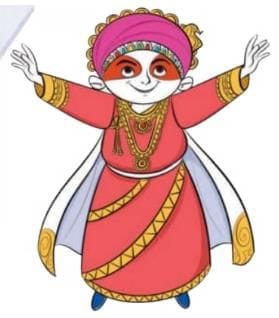
Vidushaka: Your Theatre Guide​​​​​​​​​​​

Vidushaka is a humorous character from traditional Indian Sanskrit theatre, known for adding fun and playful antics to scenes. In this chapter, Vidushaka guides you with ideas and support, helping you understand theatre concepts as you create and perform your play, making the process lively and enjoyable for you and your friends.

Try yourself:

What role does Vidushaka play in theatre?

  • A.A serious character
  • B.A villain
  • C.A humorous character
  • D.A director

View SolutionWhat is a Scene?A Play Scene

A scene is a part of a play that moves the story forward, set in a specific place and time, and includes interesting or dramatic events. It answers three key questions for the audience ensuring the story is clear and engaging:

  • where is the scene happening
  • when is it taking place
  • who are the characters involved

Skills You’ve LearnedFrom Grades 3 and 4, you’ve learned essential theatre skills, including role play, building conversations, visualizing scenes with proper entry and exit, adding props and actors, and following basic stage do’s and don’ts. These skills provide the foundation for creating scenes independently in this chapter, allowing you to craft a complete play with confidence.

Stage Etiquette

Stage etiquette includes rules to make performances enjoyable for actors and the audience:

  • Do: Speak clearly and loudly so everyone, even in the back row, can hear your lines. Stay in character during your entire time on stage, including entry and exit, to keep the story believable. Respect Nope fellow actors by waiting for your turn to speak and positioning yourself carefully to avoid blocking others.
  • Don’t: Turn your back to the audience (tilt slightly sideways if needed to face other actors). Talk backstage, as it distracts performers and the audience. Block other actors or allow someone to block your view of the audience, ensuring everyone remains visible.

Tip: Practice speaking loudly and staying in character to bring your role to life.

Establishing a SceneTo create a clear scene, you must show the audience where, when, and who is involved:

  • Where (Place): Use props and set design to show the location, like chairs වchairs and a table for a house or papers and a laptop for an office. Costumes, such as formal attire for an office or casual clothes for a park, also help convey the setting. If props are limited, actors’ behavior, like digging for a garden or bustling for a market, can depict the place vividly.
  • When (Time): Show the time through actions (e.g., yawning for morning), lighting (e.g., dim lights for night), or dialogue (e.g., mentioning “evening stars”) to set the scene’s timing.
  • Who (Characters): Define characters through their actions, costumes, and dialogue, revealing their personalities, emotions, or roles, such as a cheerful shopkeeper or a curious explorer, to make them relatable.

Tip: Use a simple prop, like a school bag as a market sack, to clearly show the scene’s setting.

Try yourself:

What is important to create a clear scene?

  • A.Showing only the place
  • B.Showing the audience who is involved
  • C.Showing only the time
  • D.Showing the audience what happened

View SolutionObject ImprovisationObject improvisation involves using everyday items creatively to represent different objects in a scene. For example, a school bag can become a vegetable sack in a market scene, or pencils can mimic beans or lady’s fingers in a garden setting, encouraging creativity when specific props are unavailable.

ConclusionThis chapter empowers you to create a play by crafting scenes that bring stories to life with clear settings, timing, and characters. With Vidushaka’s playful guidance, you’ll use stage etiquette, props, costumes, and improvisation to perform a memorable show, learning teamwork and creativity. Take the stage and let your imagination shine!

Important Vocabulary

  • Scene: A part of a play that advances the story, set in a specific place and time with engaging events.
  • Vidushaka: A humorous character from Indian Sanskrit theatre who adds fun and antics to scenes.
  • Stage Etiquette: Behavioral rules for actors to ensure a professional and pleasant performance.
  • Object Improvisation: Using everyday items creatively to represent objects in a scene.
  • Place: The location of a scene, shown through props, sets, costumes, or actors’ behavior.
  • When: The time setting of a scene, indicated by actions, lighting, or dialogue.
  • Characters: The people in a scene, defined by their actions, costumes, and dialogue.

5. Spreading the Message – Chapter Notes

Introduction

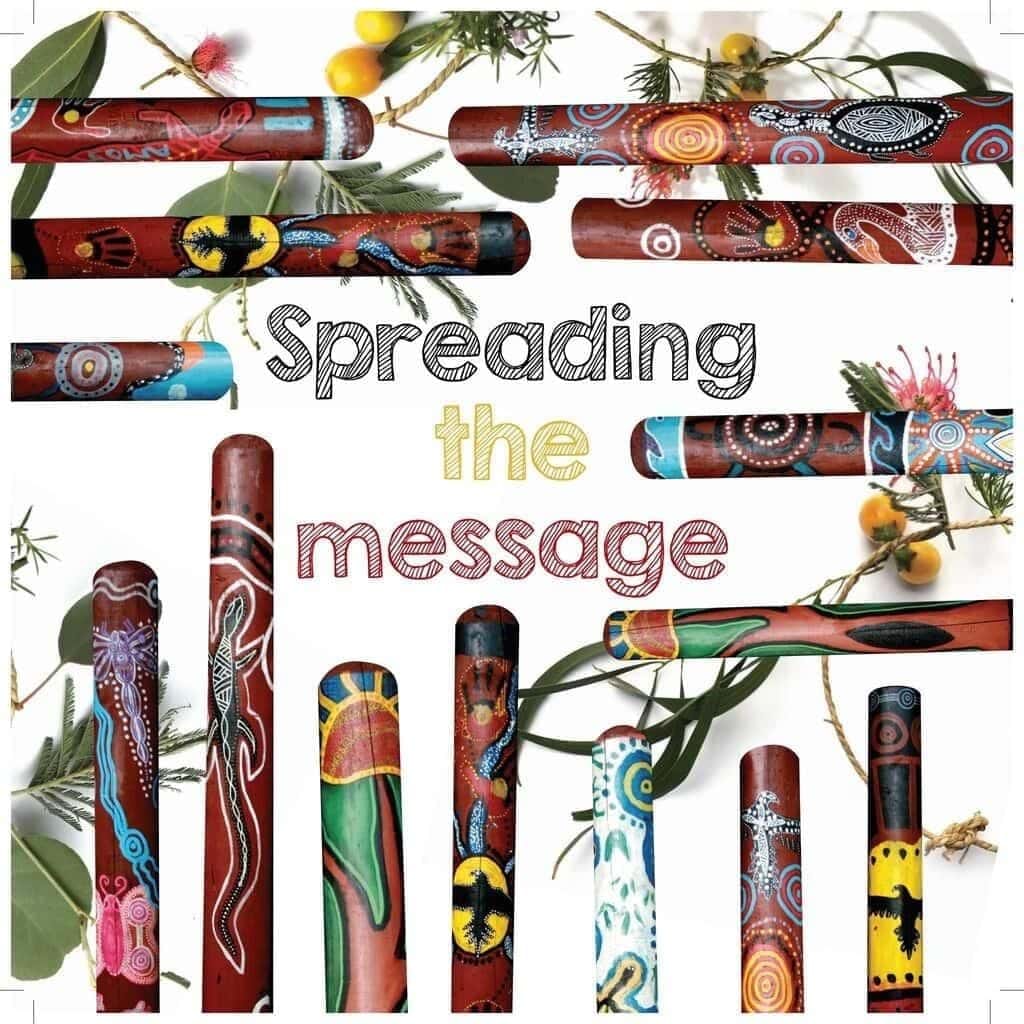
Imagine making a poster so eye-catching that everyone stops to read it, whether it’s for a school event, a cleanliness drive, or a fun family party! In this chapter, we’ll learn how to design posters and invitation cards that grab attention and share important messages. Using cool design tricks like emphasis and order of importance, you’ll create artwork that not only looks awesome but also inspires others to act, like keeping the classroom tidy or staying safe on the road!

Purpose of Posters
Posters are powerful tools to inform, invite, or raise awareness for events like school functions, family celebrations (e.g., birthdays, weddings), or causes like road safety, personal hygiene, cleanliness, or good habits. They blend eye-catching visuals with clear, concise words to quickly communicate messages and positively influence people’s thoughts or actions, making them memorable and effective.

Try yourself:

What is one purpose of posters?

  • A.To play music
  • B.To take photos
  • C.To inform or raise awareness
  • D.To serve food

View SolutionBasics of Poster DesignEffective posters use a combination of images and text to capture attention and deliver a clear message. Key elements include striking visuals (like a bold picture), concise text (like a short slogan), and a well-organized layout that highlights the main idea, ensuring it’s easy to understand and sticks in the viewer’s mind.

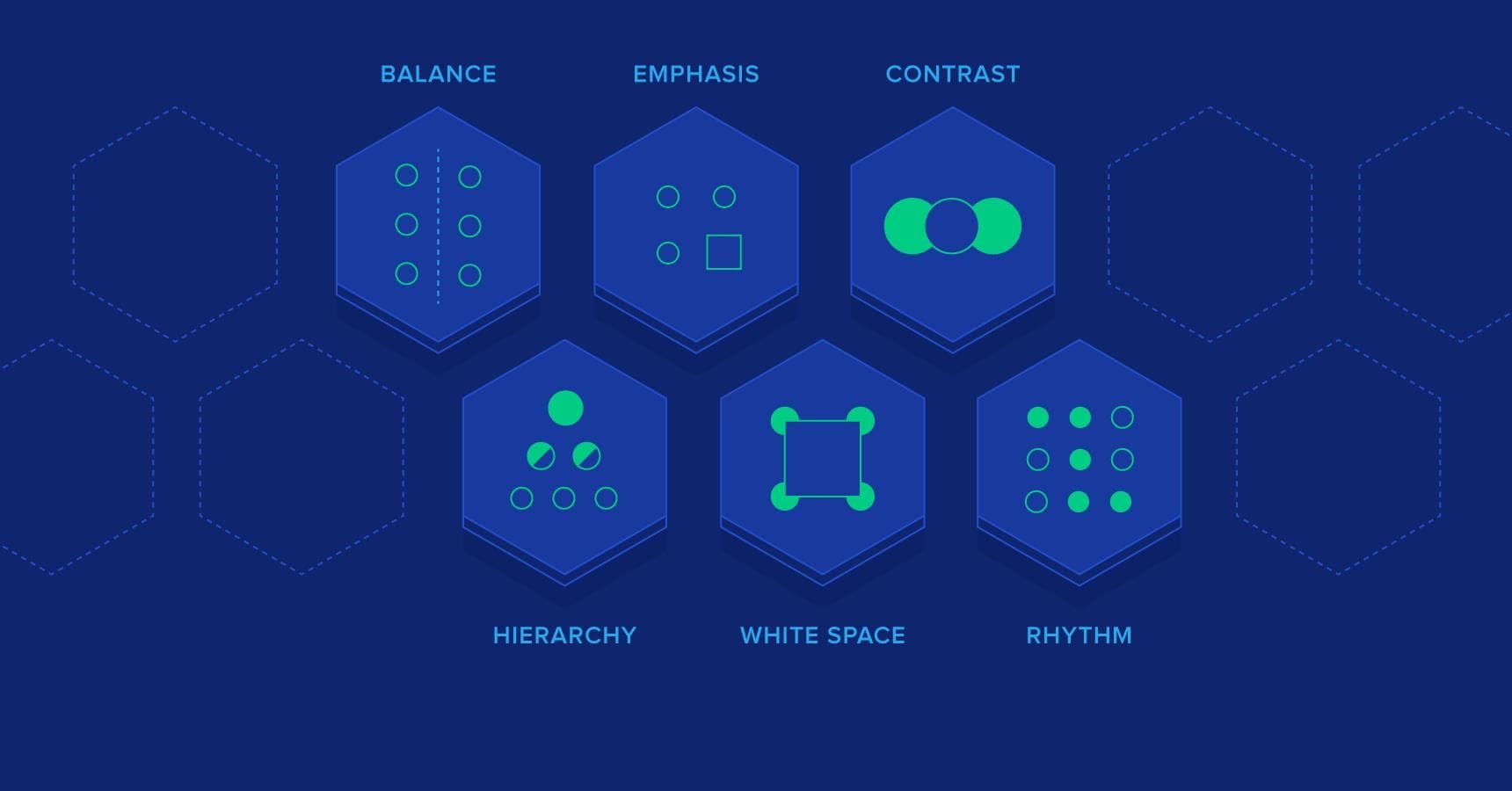
Design Principle: EmphasisEmphasis is a design principle that draws the viewer’s focus to the most important part of the poster, such as the event name or a key image. This is achieved through larger sizes, bright or contrasting colors, or techniques like bolding, underlining, or highlighting text or visuals, ensuring the main message stands out clearly.

Tip: Use a bright color or large size for the main message to catch eyes first.

Design Principle: Order of Importance

The order of importance, organizes poster elements by priority to guide the viewer’s eyes in a planned sequence. For example, in a missing pet poster, the pet’s photo and the word “missing” are largest to grab attention first, while contact details are smaller but still essential, creating a clear flow of information.

​​​​Tip: Place the most important element at the top or center to guide attention.

Try yourself:

What should be the largest element on a missing pet poster?

  • A.Location details
  • B.Contact details
  • C.Pet’s photo
  • D.Description of the pet

View SolutionCreating Effective Posters

To create a strong poster, plan a layout to position text and images, ensuring the most important element is emphasized. Use a clear, concise message with correct grammar and spelling, and incorporate a border or guidelines for neatness. Vibrant colors, detailed visuals, and a balanced layout enhance the poster’s visual appeal and impact.

Applying Design Principles Beyond Posters

Design principles like emphasis and hierarchy are used in advertisements, invitation cards, and newspapers, where headlines are large and bold for priority, and less critical details are smaller. These principles ensure clarity and impact in various forms of visual communication, from magazine ads to event flyers.Conclusion

This chapter shows how to spread messages through vibrant posters and invitation cards, using design principles like emphasis and hierarchy. By thoughtfully arranging visuals, text, and layouts, we can create artwork that informs, inspires, and connects with others, whether for school events, safety reminders, or joyful celebrations!

Important Vocabulary

  • Poster: A visual tool using images and text to inform, invite, or raise awareness.
  • Emphasis: A design principle that highlights one part of a poster to focus attention.
  • Order of Importance (Hierarchy): Organizing elements from most to least important to guide the viewer’s eyes.
  • Layout: The arrangement of text and images in a poster or card to communicate effectively.
  • Invitation Card: A designed card to invite people to events like weddings or birthdays.
  • Foreground: The closest part of a picture, with bold details.
  • Middle Ground: The area behind the main subject, adding depth.
  • Background: The farthest part of a picture, with lighter colors and fewer details.

4. Imaginary Beings – Chapter Notes

Introduction.                                                        What if you could create a creature that’s part lion, part lotus, and part human, living in a world of your own imagination? In this chapter, we’ll unleash our creativity to invent amazing imaginary beings, like the Navagunjara with its nine animal parts! Get ready to mix and match features from people, animals, plants, and objects, and build a fantastic world for your creation to shine, complete with its own stories and shadows!

Power of imagination

Power of ImaginationOur imagination allows us to dream up things that don’t exist, like aeroplanes inspired by birds’ flight, scuba gear mimicking fish swimming, or weaving machines modeled after spiders’ webs. In art, this power lets us combine parts of different beings to create unique creatures, turning our wildest ideas into vibrant drawings and stories that spark wonder.

Navagunjara: A Mythical Being

Try yourself:

What does our imagination help us to create?

  • A.Real objects
  • B.Dreams and stories
  • C.Factual reports
  • D.Technical designs

View SolutionNavagunjara: A Mythical Being
In Indian art, the Navagunjara is a fascinating mythical creature with parts from nine animals, including a rooster’s crown, a peacock’s neck, a bull’s hump, a tiger’s leg, and a snake’s tail. It stands on three legs, with a human hand holding a lotus flower, symbolizing harmony and creativity. This creature, rooted in Indian mythology, inspires artists to weave stories filled with deep symbolic meanings, often representing unity and diversity.

Tip: Study Navagunjara’s parts to spark ideas for your own mythical creature.

Creating Imaginary Beings

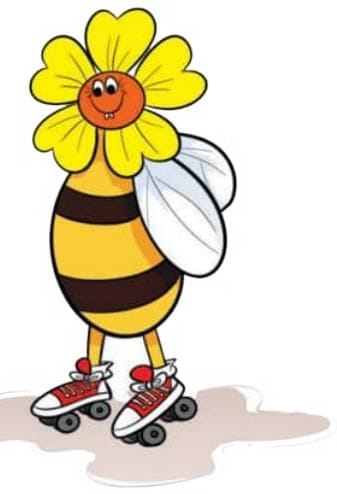
You can create your own ideal being by combining the best qualities of a person (like kindness), an animal (like a lion’s strength), a plant (like a lotus’s beauty), or an object (like a kite’s freedom). For example, you might design a creature with a human head, a Honeybee wearing Skates, and roots for feet, then add colorful clothes, sparkling ornaments, or quirky accessories like a starry crown to make it truly unique.

Building a World for Your Being

World of ImaginationEvery imaginary being needs a unique world to thrive, with geographical features like glowing rivers, floating islands, or crystal trees, and tools or spaces tailored to its needs, like a nest for flying or a burrow for resting. Consider its favorite food (maybe star-shaped fruits?), how it moves (slithering or hopping?), where it sleeps (in a cloud or underground?), or what shadows it casts to bring its habitat to life with vivid details.

Try yourself:

What is the main focus of the text?

  • A.Learning about nature
  • B.Understanding oneself
  • C.Creating a new world
  • D.Exploring technology

View SolutionStorytelling Through ArtImaginary beings are at the heart of stories that reveal their mysteries and symbolic meanings, often teaching lessons about courage, unity, or creativity. By creating and sharing stories about your creature—its adventures, personality, or role in its world—you can make your artwork more meaningful. For example, your creature might protect its magical forest or dance under a rainbow sky, inspiring others with its tale.

Tip: Write a short name for your being that reflects its special qualities.

ConclusionThis chapter shows how our imagination can craft extraordinary beings and worlds, inspired by mythical creatures like Navagunjara. By blending parts of animals, plants, humans, and objects, and designing unique habitats, we can tell captivating stories through art. Let your creativity run wild and bring your imaginary beings to life with colors, details, and stories that shine!

Important Vocabulary

  • Imagination: The ability to visualize and create things that don’t exist.
  • Navagunjara: A mythical creature in Indian art with parts of nine animals, like a rooster’s crown and a snake’s tail.
  • Mythical Being: An imaginary creature made by combining features of different beings.
  • Habitat: The environment or world where a creature lives, with features like rivers or trees.
  • Symbolism: Using objects or beings to represent deeper meanings in stories or art.

3. Picturing Stories – Chapter Notes

Introduction

Have you ever noticed how everyone around you has a special way of moving, talking, or smiling? From the way your friend laughs to the way a vegetable vendor waves, every person tells a story without words! In this chapter, we’ll dive into the magic of shadows, emojis, and storyboards to capture these stories. Get ready to observe people, create shadow creatures, and draw emotions to bring everyday moments to life through your art!

Observing People and Their StoriesEvery person has a unique style of walking, talking, laughing, and expressing emotions. These differences, like their gestures, facial expressions, or even their shadows, tell stories about who they are and how they feel.

Try yourself:

What do people’s unique styles tell us?

  • A.Their feelings and stories
  • B.Their favorite colors
  • C.Their age
  • D.Their hobbies

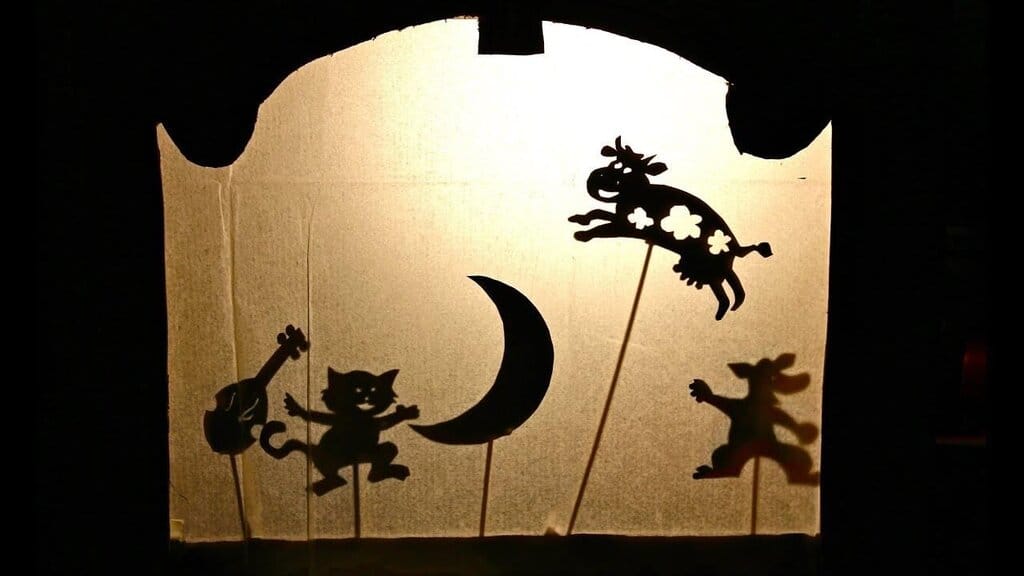
View SolutionShadows and Their MagicShadows are created when light is blocked by an object or person, forming a dark shape on a surface behind. Shadows can look different from the object or person casting them, depending on the light’s angle or position, like sunlight during the day or a streetlight at night.

Tip: Watch how shadows change shape under different lights to inspire your drawings.

Shadow PuppetryShadow PuppetryShadow puppetry is an ancient art form practiced in states like Andhra Pradesh, Telangana, Odisha, Tamil Nadu, Kerala, Karnataka, and Maharashtra. Traditionally, puppets are made of leather, but modern ones use other materials. Light passes through these puppets, casting colorful shadows that move and tell stories.

Emoticons and Emojis

Imotions with Emojis

Emoticons are simple pictures made with punctuation symbols, like 🙂 for a smile or 🙁 for a sad face, showing emotions quickly. Emojis are more detailed versions used in online communication, capturing specific expressions or actions.

Try yourself:

What are small images used in text messages called?

  • A.Stickers
  • B.Emojis
  • C.Memes
  • D.GIFs

View SolutionStoryboardsA storyboard is like a comic, used to plan scenes for plays, animations, advertisements, or movies. It shows a sequence of moments, focusing on a person’s activities, body postures, facial expressions, and emotions, with each scene divided into foreground, middle ground, and background to add depth.

Tip: Plan your storyboard with a quick sketch to organize scenes clearly.

Expressing Emotions in Art

Art can capture emotions through facial expressions and body postures. For example, a slouched posture might show sadness, while a raised arm could show excitement. Daily activities, like waking up for school or playing with friends, bring out different emotions that can be shown in your artwork.

ConclusionThis chapter teaches us how to tell stories through art by observing people’s unique styles and emotions. Shadows, emojis, and storyboards help us capture the beauty of everyday moments. By paying attention to gestures, expressions, and the world around us, we can create artwork that brings stories to life!

Try yourself:

What is the main purpose of a conclusion?

  • A.To summarize key points
  • B.To ask questions
  • C.To introduce new ideas
  • D.To provide examples

View SolutionImportant Vocabulary

  • Shadows: Dark shapes formed when light is blocked by an object or person.
  • Shadow Puppetry: An ancient art where puppets cast colorful shadows to tell stories.
  • Emoticons: Simple pictures made with punctuation to show emotions, like 🙂 or 🙁
  • Emojis: Detailed icons used online to express specific emotions or actions.
  • Storyboard: A sequence of drawings, like a comic, to plan scenes for stories or performances.
  • Foreground: The closest part of a picture, with bold details.
  • Middle Ground: The area behind the main subject, adding depth.
  • Background: The farthest part of a picture, with lighter colors and fewer details.

2. Peeping Out of the Window – Chapter Notes

IntroductionHave you ever watched raindrops sliding down your window? It’s like nature is painting its own picture! When it’s too rainy to go outside and draw, there’s still so much beauty to see — from tiny butterflies hiding under leaves to plants that climb and creep in the rain. In this chapter, we’ll discover how rain brings nature to life, and how small plants like climbers and creepers can teach us big things about growing strong and adding color to the world!

Rain brings freshness

Rain Brings FreshnessRain washes the earth, making everything look fresh and clean. It brings life to plants, helping them grow and thrive, just like a big drink of water for nature.

Tip: Watch raindrops on leaves to see how they refresh plants for your drawings.

Try yourself:

What does rain do for plants?

  • A.Colors them blue
  • B.Helps them grow
  • C.Makes them dirty
  • D.Dries them out

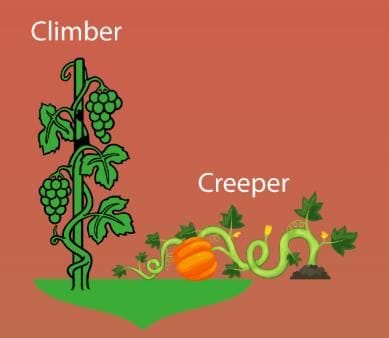
View SolutionClimbers and Creepers: Lessons of Growth and SupportClimbers and creepers are unique plants with thin, flexible stems that twist, curve, and spiral as they grow. They inspire artists to create beautiful designs in sculptures, paintings, textiles, and architecture. These plants teach us valuable life lessons:Climbers & Creepers

  • Gentleness: Climbers are soft and flexible, bending with the rain but never breaking, showing us how to adapt to challenges.
  • Resilience: Even though they’re fragile and start in dark soil underground, they push through obstacles to grow tall and strong.
  • Trust: They rely on nearby plants, trees, or poles for support, teaching us it’s okay to ask for help and trust others.
  • Beauty and Nourishment: Climbers give us flowers, fruits, and vegetables, adding beauty and life to indoor and outdoor spaces.

Artistic Inspiration

MehndiClimbers and creepers inspire art forms like mehndi, where henna paste creates intricate designs on hands and feet. When mehndi dries, it forms a low relief, where the design feels slightly raised compared to the skin, similar to techniques used in sculptures and carvings.

Tip: Start with basic loops for mehndi designs to mimic creepers’ patterns.

Color MagicColors are the heart of art, and the color wheel is a tool to understand them. Primary colors (red, blue, yellow) are the building blocks that can’t be made by mixing other colors. Mixing two primary colors creates secondary colors (orange, green, purple). Colors also carry feelings:

  • Warm colors (red, yellow, orange) feel sunny and cozy, like a warm summer day.
  • Cool colors (blue, green, purple) feel calm and soothing, like a cool evening breeze.

Tip: Mix two primary colors to discover new shades for your artwork.

Try yourself:

What are the primary colors?

  • A.Pink, Brown, Cyan
  • B.Black, White, Gray
  • C.Green, Orange, Purple
  • D.Red, Blue, Yellow

View SolutionComposing a SceneWhen artists create a picture, they organize space into three parts:

  • Foreground: The closest part, with bright colors and clear details to grab attention.
  • Middle ground: The area behind the main subject, adding depth with some details.
  • Background: The farthest part, with lighter colors and fewer details to complete the scene.

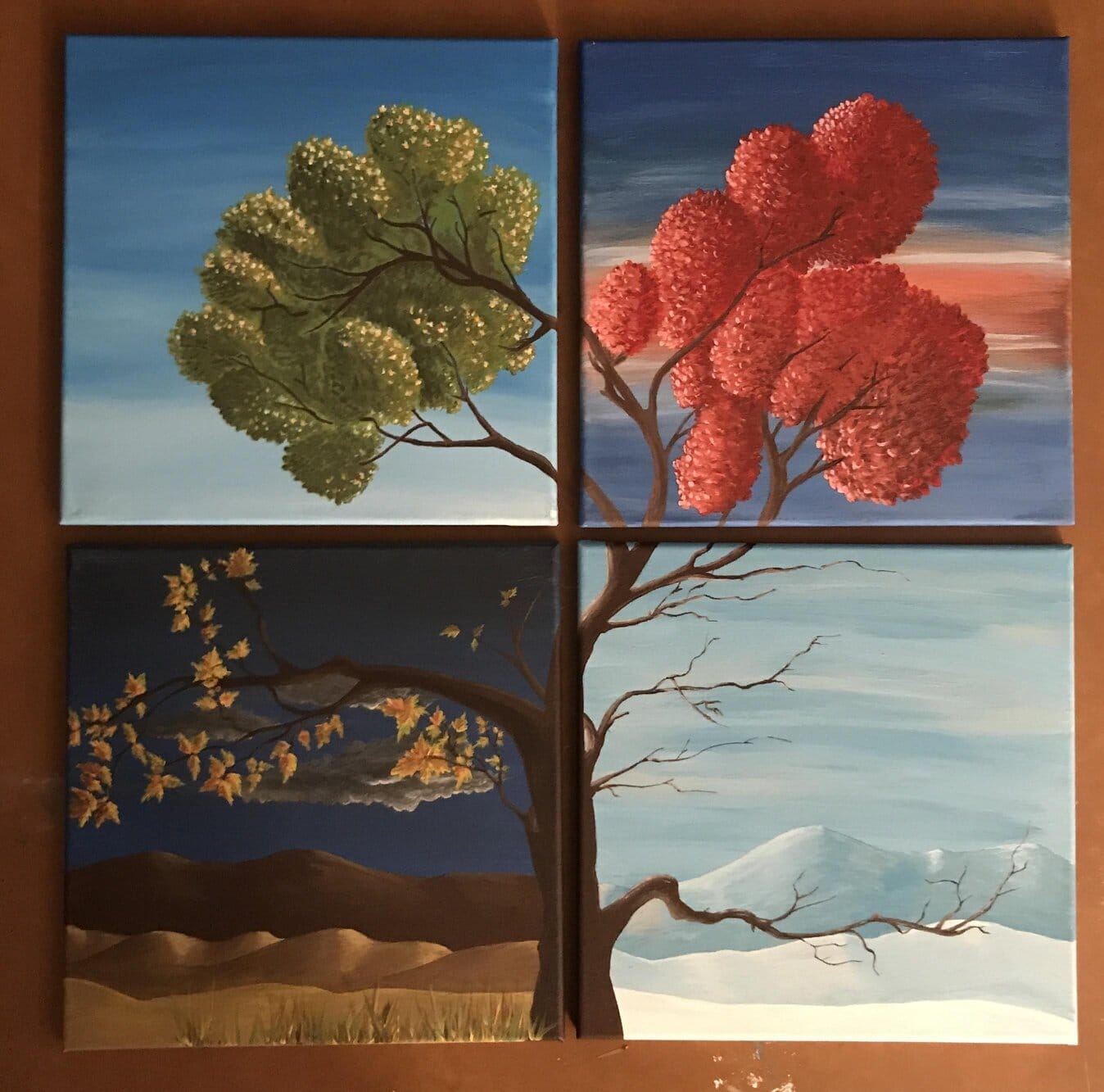
Colors of Time and SeasonsColors Reflects Time & SeasonColors can show the time of day or season. Bright reds and yellows might paint a sunny summer morning, while soft blues and purples hint at a chilly winter evening. Shadows also help show time—longer in the morning or evening, shorter at noon—adding clues to your artwork.

Tip: Use long shadows for morning or evening scenes to show time.

ConclusionThis chapter reveals how nature’s climbers, creepers, and rain teach us to be gentle, resilient, and trusting. Like these plants, we can grow through challenges, seek support, and add beauty to our world. Using tools like the color wheel and concepts like foreground and background, we can create art that captures the wonder of life!

Important Vocabulary

  • Climbers and Creepers: Plants with thin, flexible stems that grow by twisting and climbing with support.
  • Low Relief: A technique where designs are slightly raised, like in mehndi or sculptures.
  • Primary Colors: Red, blue, and yellow—colors that can’t be made by mixing others.
  • Secondary Colors: Orange, green, purple—made by mixing two primary colors.
  • Warm Colors: Red, yellow, orange—colors that feel cozy and sunny.
  • Cool Colors: Blue, green, purple—colors that feel calm and refreshing.
  • Foreground: The closest part of a picture, with bold details.
  • Middle Ground: The area behind the main subject, adding depth.
  • Background: The farthest part of a picture, with light colors and fewer details.

1. Objects on the Move – Chapter Notes

Introduction.                                                          Have you ever seen a giant wheel spinning at a fair? It’s so much fun to ride! Wheels are super important because they help things move easily. People made the first wheel to shape clay pots. Later, they used wheels on carts and chariots to carry people and things. Today, wheels are everywhere – on bikes, cars, and even toys! Let’s learn about them. 

The Wheel and Its Importance

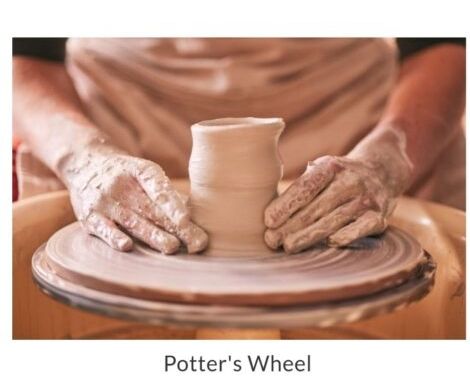
The wheel is one of the greatest inventions ever! It was first made over 5,000 years ago as a potter’s wheel to create clay pots. Later, people put wheels on carts and chariots to move people and goods from one place to another. Wheels make life easier because they help things roll smoothly instead of dragging them. Imagine trying to move heavy things without wheels—it would be so hard!

Where Do We See Wheels?

Wheels are all around us! Here are some places and objects where we find them:

  • Bicycles and scooters
  • Cars, buses, and trucks
  • Trains and metro rails
  • Toy cars and skateboards
  • Wheelchairs and strollers
  • Roller skates and luggage bags

Think about it: Can you imagine a world without wheels? It would be tough to travel or carry things!

Try yourself:

What was the first use of the wheel?

  • A.For toys
  • B.For carts
  • C.For clay pots
  • D.For bicycles

View SolutionExploring the World of Transport

Transport is all about moving people and things from one place to another. Vehicles with wheels, like cars and bikes, help us travel faster and easier. Now let’s understand the different types of vehicles:

Types of Vehicles

Vehicles come in many types, and they all use wheels to move. Here’s a table that shows different kinds of vehicles and what they’re used for:VehicleUseBicycleFor one or two people to ride short distancesCarFor small families to travel comfortablyBusFor many people to travel togetherTruckFor carrying heavy goodsTrainFor long-distance travel and carrying lots of people or goodsConclusion

Wheels and vehicles make our lives so much easier and fun! From bicycles to trains, they help us move around and carry things. Through this chapter, you’ve learned how important wheels are and how to create cool artworks inspired by vehicles. Keep observing the world around you, and let your imagination run wild with new vehicle designs!