Ans: Consumers have Right to seek redressal against ; unfair trade practices and exploitation. If damage is done to the consumer, he or she has the right to get compensation depending on the degree of damage. One should go to the District forum if the claim of compensation amount is below 20 lakh with in thirty days of the dissatisfying event. One should go to the State i Commission if the compensation claim is between 20 lakh to one crore and to the National Commission if the claim is for more than one crore. For example, Ravi had bought a SUV, from a car dealer with 1 year warranty. While driving it he found that it had no feature of SUV and its feature are all that of ordinary car. He filed a case in a district level consumer court in New Delhi as the car dealer agency did not respond to his repeated appeal for compensation and the claim amount was less than 20 lakh. The court verified his document. The court gave verdict i in his favour and awarded full compensation to him and framed charges against the car company for selling false j product.
Q3: Highlight any three rights of consumers. [Al 2019]
Right to be informed: Consumers have the right to be informed about the particulars of goods and services they purchase. This includes information about the quality, quantity, price, ingredients, and any potential risks associated with the product. If the product proves to be defective or does not meet the advertised specifications, consumers can complain and seek compensation or replacement.
Right to choose: Consumers have the right to choose a product or service according to their needs and preferences. They should not be coerced or forced into purchasing something they do not want. For example, if a gas supply dealer insists on selling a stove along with a new connection, the consumer can legally appeal against this practice.
Right to seek redressal: Consumers have the right to seek redressal against unfair trade practices and exploitation. If a consumer suffers any damage or loss due to such practices, they have the right to seek compensation based on the degree of damage. Consumer courts or forums have been established to provide redressal to aggrieved consumers. These quasi-judicial bodies hear and resolve consumer complaints.
Previous Year Questions 2018
Q4: How can consumer awareness be spread among consumers to avoid exploitation in the market place ? Explain any three ways. [CBSE 2018]
Ans:(i) The government can spread awareness through posters about the legal process which people can use. (ii) The government can spread awareness through advertisement on television channels. (iii) Consumers must be told to complain and ask for compensation or replacement if the product is found to be defective in any manner. (iv) They must know about their rights i.e., Right to choose, Right to information, Right to seek redressal etc. They must exercise their right without any fear. If necessary the consumers must appeal in the consumer court for redressal of their grievances.
Q5: Create an advertisement for an online Consumer Awareness campaign to help consumers know their rights and save themselves from exploitation. [CBSE Sample Paper 2018]
Ans: An advertisement for an online Consumer Awareness campaign to help consumers know their rights and save themselves from exploitation is given below :
Get additional INR 200 off today with EDUREV200 coupon.
Previous Year Questions 2017
Q6:Give an example of violation of consumer’s right to choose. [AI 2017]
Ans: Any consumer who buys goods or receives a service has the right to choose whether to buy the goods or the service. As an example, sometimes cooking gas supply dealers insist that you have to buy the stove from them when you take a new connection. Here one’s right to choose another stove from another shop is being violated.
Q7:How is the maximum retail price printed on packets beneficial for you? [AI 2017]
Ans: Suppose I want to buy toothpaste and selects a particular brand but the shop owner says that he will sell the toothpaste only if I buy a toothbrush also; such proposal violates my right to choose. This is because if I do not need a toothbrush I am forced to buy it because I need toothpaste.
Q9:If you want to extract information about the functions of any government department, which right would you exercise? [Delhi 2017]
Ans: Consumers have the right to seek redressal against unfair trade practices and exploitation. If any damage is done to a consumer, she has the right to get compensation. Example: Mahesh had sent a money order to his village for his daughter’s marriage. The money did not reach his daughter at the time when she needed it nor did it reach months later. So, Mahesh filed a case in the district level consumer court and utilized the right to seek redressal.
Also watch: Audio Notes: Consumer Rights
Previous Year Questions 2016
Q11:If any damage is done to a consumer by a trader, under which consumer right one can move to consumer court to get compensation? [Al 2016]
Q12:Suppose you have to buy a packed bottle for drinking water in your journey. Which logo will you like to see to be sure about its quality? [Delhi 2016]
Q13:If you are not interested to buy a brush with toothpaste but the shopkeeper denied to sell toothpaste only. In this case which consumer right is being violated by the seller? [Foreign 2016]
Ans: COPRA stands for Consumer Protection Act. It came into effect in the year 1986.
Q18: If you are not interested to buy a brush with toothpaste but shopkeeper denied to sell toothpaste only. In this case which consumer right is being violated by the seller ? [CBSE 2016]
Ans: Rules and regulations are required in the market place due to the following reasons: (i) The consumers are exploited by the shopkeepers and traders in different ways such as less weight or measurement, more price, adulterated and defective goods. (ii) In case of a complaint, the shopkeeper or trader tries to avoid any responsibility and shifts all responsibility onto the buyer. (iii) Big companies (MNCs) with huge wealth manipulate the market in their favour. (iv) At times false information is passed on through the media, and other sources to attract consumers. For example, a company for years sold powder milk for babies all over the world as the most scientific product claiming this to be better than mother’s milk. It took years of struggle before the company was forced to accept that it had been making false claims. (v) A long battle was fought with the cigarette manufacturers to accept that their product (cigarette smoking) could cause cancer.
Q21: What type of duties should a consumer keep in mind under consumer awareness? Explain. [2016]
Ans: Rules and regulations are required in the market place due to the following reasons: (i) The consumers are exploited by the shopkeepers and traders in different ways such as less weight or measurement, more price, adulterated and defective goods. (ii) In case of a complaint, the shopkeeper or trader tries to avoid any responsibility and shifts all responsibility onto the buyer. (iii) Big companies (MNCs) with huge wealth manipulate the market in their favour. (iv) At times false information is passed on through the media, and other sources to attract consumers. For example, a company for years sold powder milk for babies all over the world as the most scientific product claiming this to be better than mother’s milk. It took years of struggle before the company was forced to accept that it had been making false claims. (v) A long battle was fought with the cigarette manufacturers to accept that their product (cigarette smoking) could cause cancer.
Q25: Explain with an example the impact of the Right to Information (R.T.I.). [2015]
In October 2005, the Government of India enacted the Right to Information Act (R.T.I.), which grants citizens access to information regarding the functioning of various government departments.
With the R.T.I., affected citizens can monitor the progress of government schemes and policies.
The R.T.I. creates pressure on government officials to deliver results within a specific timeframe.
It has helped in curbing corruption.
The R.T.I. can also expose flaws in the selection process for government jobs.
Also watch: Audio Notes: Consumer Rights
Previous Year Questions 2014
Q26: Explain with an example how one can exercise the “Right to Choose.” [2014]
Ans: The consumer has the right to choose, which ensures satisfactory quality, service, and fair pricing. Here is an example:
Any consumer, regardless of age, gender, or the nature of service, has the right to choose whether to continue receiving a service.
For instance, if a shop owner insists that you can only buy toothpaste if you also purchase a toothbrush, and you are not interested in buying the brush, your right to choose is denied. Similarly, gas supply dealers may force you to buy a stove from them when you apply for a new connection, leaving you with no choice.
In such cases, consumers can seek recourse through the Consumer Court under the Consumer Protection Act (COPRA) passed in 1986.
Ans: Liberalisation in the 1990s removed many restrictions on foreign trade and foreign investment, allowing imports/exports to flow more freely and enabling foreign companies to set up factories and offices in India. This increased foreign investment and trade, brought MNCs into India, raised competition and helped integrate Indian production and markets with the world — thereby promoting globalisation.
Q2: Two statements are given below. Read both the statements carefully and choose the correct option: (1 Mark) Statement I: Rapid improvement in technology has been one major factor to stimulate the globalisation process. Statement II: This has made much faster delivery of goods across long distances possible at lower costs. (a) Both statements I and II are correct and statement II is the correct explanation of statement I. (b) Both statements I and II are correct, but statement II is not the correct explanation of statement I. (c) Statement I is correct, but statement II is incorrect. (d) Statement I is incorrect, but statement II is correct.
Ans: (a) Both statements I and II are correct and statement II is the correct explanation of statement I.
Both statements are correct, and statement II correctly explains statement I — rapid improvements in technology, especially in transportation, have enabled faster and cheaper delivery of goods across long distances, which has stimulated the process of globalisation.
Q3: Two statements are given below. Read both the statements carefully and choose the correct option: (1 Mark) Statement I: Information and communication technology stimulate the process of globalisation. Statement II: It is used to contact each other, receive information instantly and communicate with remote areas. (a) Both statements I and II are correct and statement II is the correct explanation of statement I. (b) Both statements I and II are correct, but statement II is not the correct explanation of statement I. (c) Statement I is correct, but statement II is incorrect. (d) Statement I is incorrect, but statement II is correct.
Ans: (a) Both statements I and II are correct and statement II is the correct explanation of statement I.
Both statements are correct, and statement II correctly explains statement I — information and communication technology (like telecommunication, computers, and the Internet) enables instant contact and information exchange worldwide, which helps in spreading globalisation.
Q4: “Globalisation is the process of rapid integration and interconnection between countries.” Explain the statement with examples. (2 Marks)
Ans: Globalisation means growing interconnection and integration among countries through trade, investment, and information exchange.
Goods and services produced in one country are now sold in many others, linking national economies.
For example, Indian garments are exported to the USA, and foreign companies like Ford Motors and Coca-Cola operate in India, showing how production and markets are connected across the world.
Thus, globalisation has created a world where countries are economically and technologically interdependent.
Q5: Choose the correct option to fill in the blank: The process of removing barriers on foreign trade and investment by the government is known as ____________ (1 Mark) (a) Import Tax, (b) Export Tax, (c) Liberalisation, (d) Industrialisation.
Liberalisation refers to the process of removing or reducing government-imposed restrictions or barriers on foreign trade and investment, allowing goods and services to move more freely between countries.
Q6: What changes did the Government of India make in its economic policies in the beginning of 1991? Explain. (2 Marks)
Ans: In 1991, the Government of India introduced major economic reforms by removing barriers on foreign trade and foreign investment. This meant that goods could be imported and exported more freely, and foreign companies were allowed to set up factories and offices in India. These policy changes — known as liberalisation — aimed to make Indian producers more competitive globally and improve efficiency and quality through increased competition.
Q7: Explain any two benefits of globalisation. (2 Marks)
Increased Choice for Consumers: Globalisation has brought many foreign goods and brands into Indian markets, giving consumers a wider range of products with better quality at competitive prices.
Growth of Investment and Employment: Many multinational companies (MNCs) have invested in India, creating new industries and job opportunities, especially in sectors like IT, automobiles, and services.
Q8: The growth of digital technology has greatly influenced globalization. Which of the following is its main benefit? (1 Mark) (a) Increased Communication Cost, (b) Limited Access to Information, (c) Enhanced Connectivity, (d) Slower Transaction Speed.
Digital technology — including the Internet, mobile phones, and computers — has greatly enhanced global connectivity, allowing instant communication, faster exchange of information, and smoother coordination of production and trade across countries, thus boosting globalisation.
Q9: How did the trade policy implemented in 1991 stimulate the globalization in India? Explain with example. (3 Marks)
Ans: The trade policy of 1991 stimulated globalisation in India by introducing liberalisation — removing barriers on foreign trade and foreign investment.
Removal of Trade Barriers: The government reduced import taxes and allowed easier export and import of goods. This encouraged competition and integration with the world market.
Attracting Foreign Investment: Foreign companies were allowed to set up factories and offices in India, leading to an increase in foreign investment and technology inflow.
Example: Companies like Ford Motors and Cargill Foods invested in India — Ford set up a large automobile plant near Chennai, while Cargill took over Parakh Foods — showing how foreign investment linked Indian production with global markets.
Thus, the 1991 trade reforms made India an active participant in the global economy.
Q10: Two Statements are given below. Read both the statements and choose the correct option: (1 Mark) Statement I: In recent times technology in the areas of computer and internet has been changing rapidly. Statement II: Internet allows us to send instant electronic mail (e-mail) and talk (voice-mail) across the world at negligible costs. (a) Only I is false but II is true. (b) Only I is true but II is false. (c) Both I and II are true but II is not the correct explanation of I. (d) Both I and II are true and II is the correct explanation of I.
Ans: (d) Both I and II are true and II is the correct explanation of I.
Both statements are correct — technology in computers and the Internet has advanced rapidly, and this has enabled instant, low-cost global communication through e-mail and voice-mail, which explains how such technological progress supports globalisation.
Q11: Explain the contribution of foreign trade as an important factor of globalization. (2 Marks)
Ans:Foreign trade plays a key role in promoting globalisation by connecting markets across countries.
It allows producers to sell their goods not only in their own country but also in markets abroad, expanding business opportunities.
It provides consumers with a wider variety of goods from different countries at competitive prices.
For example, the entry of Chinese toys into Indian markets gave buyers more choices at lower prices, showing how foreign trade integrates markets and promotes globalisation.
Q12: Read the following statements for stimulating the process of globalization and choose the correct options: (1 Mark) I. Government reduces trade barriers. II. Government reduces competition among producers. III. Government reduces import and export taxes. IV. Government removes restrictions on foreign investment. (a) Only I, II, and III are correct. (b) Only II, III, and IV are correct. (c) Only I, III, and IV are correct. (d) Only I, II, and IV are correct.
Globalisation is stimulated when the government reduces trade barriers, lowers import and export taxes, and removes restrictions on foreign investment — all of which encourage freer flow of goods, services, and capital. Reducing competition among producers, however, goes against globalisation.
Q13: How did information and communication technology promote the process of globalization? Explain. (2 Marks)
Ans:Information and Communication Technology (ICT) has promoted globalisation by making communication and information exchange instant, efficient, and low-cost.
Instant Communication: Telecommunication, computers, and the Internet allow companies to coordinate production and services across countries in real time.
Example: A magazine designed in Delhi can be sent instantly to London for printing, or customer care services can be handled from India — showing how ICT connects businesses globally and supports globalisation.
Previous Year Questions 2024
Q1: Examine the transformations observed in India’s trade since 1991. (CBSE 2024)
Ans: Indian markets have been transformed since 1991 in the following ways:
Wider choice: Consumers now enjoy a greater variety of goods and services.
Access to global brands: The latest models of digital cameras, mobile phones, and televisions from leading manufacturers are readily available. For example, new automobile models are frequently seen on Indian roads.
Explosion of brands: There is a significant increase in brands across various products, including shirts, televisions, and processed fruit juices.
Global trade: Producers from any country can sell their products globally, linking markets through trade. Examples include online shopping platforms like Amazon and Flipkart.
Liberalisation: Enterprises now have the freedom to choose what goods to import or export, with the government imposing far fewer restrictions than before.
Q2: Examine the factors that have enabled globalization in India. (CBSE 2024)
Ans: The factors that have enabled globalisation in India include:
Information Technology (IT): IT has significantly boosted service production.
Technological Improvements: Over the past 50 years, advancements in technology, such as the use of containers for transportation, have reduced costs and increased market reach.
Transportation Advances: Rapid improvements in transportation have made long-distance shipping cheaper and faster.
Government Policies: The Indian government has removed previous trade barriers, facilitating easier import and export of goods and services.
Previous Year Questions 2023
Q3: Which one of the following is a major benefit to an MNC when it works on joint production with a local company? (2023) (a) MNC shares its latest technology with the local company. (b) MNC decides all parameters and prices of the product. (c) MNC shares its institutional policy with local company. (d) MNC built good and familial relations with the local company
Ans: (a) When a multinational corporation (MNC) works on joint production with a local company, a major benefit is that the MNC shares its latest technology with the local company. This helps improve the local company’s production processes and quality, making it more competitive. Therefore, option (a) is the correct answer, while the other options do not highlight the key advantage of technology transfer.
Q4:Explain any five steps taken by the developing countries to attract Foreign investment. (2023)
The government has established Special Economic Zones (SEZs) that provide excellent facilities such as electricity, water, and transport.
Companies operating in SEZs benefit from tax exemptions for the first five years.
Labour laws have been made more flexible, allowing companies to hire workers without long-term job security during busy periods.
Various legal concessions are offered to encourage foreign companies to invest.
Efforts are made to improve infrastructure and services to create a more attractive investment environment.
Q5: Why did the Indian government liberalize trade regulations in 1991? (CBSE 2023) (a) Government wanted foreign exchange equivalent to Indian Currency. (b) Government wanted maintain good relations with Western Countries. (c) Government wanted Indian producers to compete in the World Market. (d) Government wanted to provide socio-economic justice to all.
The Indian government liberalized trade regulations in 1991 to help Indian producers compete in the global market. By reducing restrictions on imports and exports, it aimed to enhance the efficiency and competitiveness of Indian industries, enabling them to thrive in international trade. Therefore, option (c) is the correct answer, while the other options do not directly address the main goal of liberalization.
Q6: How is information technology connected with globalization? (CBSE 2023)
Ans:Information technology has significantly accelerated the process of globalisation. It has transformed how people interact and communicate worldwide. Key points include:
People can connect instantly with anyone, anywhere in the world.
Most transactions, except for the physical movement of goods, can be conducted online.
Without information technology, globalisation would have progressed much more slowly.
Communication of essential information would have taken longer, delaying integration among countries.
Q7:‘Liberalization of foreign trade involves policy framework at National and International level’. Explain the statement. (2023)
Ans: Liberalisation of foreign trade refers to the removal of government restrictions on trade. This process involves a policy framework at both national and international levels. Key points include:
Policy Changes in India: In 1991, India made significant policy changes to enhance competition among domestic producers, aiming to improve quality.
Removal of Barriers: Restrictions on foreign trade and investment were largely lifted, supported by influential international organisations.
Ease of Trade: This liberalisation allowed for easier import and export of goods, enabling foreign companies to establish factories and offices in India.
Reduced Restrictions: The government now imposes fewer restrictions compared to the past, indicating a more liberal trade environment.
Q8:Explain the rapid transformation in the communication sector in modern times. (2023)
Ans: In recent times, technology in the telecommunications, computer, and internet fields has been changing rapidly. Telecommunication facilities such as telegraph, telephone (including mobile phones), etc., are used to contact one another around the world, access information instantly, and communicate from remote areas. Information and communication technology has played a major role in spreading out the production of services across countries. For example, a news magazine published for London readers can be designed and printed in Delhi, with the text of the magazine sent through the internet to the Delhi office.
Get additional INR 200 off today with EDUREV200 coupon.
Previous Year Questions 2022
Q9:Examine the steps taken by the Central and State governments to attract foreign companies to invest in India. (Term-II, 2021-22)
Ans: The Central and State governments have taken several measures to attract foreign companies to invest in India. Some of these steps include:
Simplification of rules and regulations: The government has simplified the procedures and regulations related to foreign direct investment (FDI) in order to create a more business-friendly environment. This includes streamlining the approval process and reducing bureaucratic red tape.
Incentives and benefits: The government offers various incentives and benefits to foreign companies, such as tax exemptions, subsidies, and financial assistance. These incentives are aimed at attracting investment and promoting economic growth.
Infrastructure development: The government has focused on developing world-class infrastructure, including transportation, communication, and industrial facilities. This infrastructure development provides a conducive environment for foreign companies to set up their operations.
Skill development and training: The government has prioritized skill development and training programs to enhance the employability of the workforce. This ensures that foreign companies have access to a skilled and qualified pool of talent.
Sector-specific policies: The government has formulated sector-specific policies to attract foreign investment in key industries such as manufacturing, services, and technology. These policies provide clarity and guidance to foreign companies interested in investing in these sectors.
Overall, the Central and State governments have been proactive in creating a favorable investment climate to attract foreign companies to invest in India.
Q10: “Technology is the vital force in the modern form of globalisation”. Explain the statement with suitable examples. (Term-II,2021-22)
Ans: Globalisation and technology are closely linked. The movement of people, goods, and ideas is accelerated by advancements in transport and communication. In turn, technological development benefits from the diversity of ideas and the larger scale that globalisation provides. Key points about the role of technology in globalisation include:
Revolutionised economy: Technology has transformed the global economy and is now a critical competitive strategy.
New markets: Globalisation has opened up new markets, while information technologies support these emerging opportunities.
Overcoming barriers: Technology helps address major challenges in globalisation, such as trade barriers, ethical standards, transportation costs, and delays in information exchange.
Collaboration: It enables software experts to collaborate over networks with companies worldwide.
Transport advancements: Improvements in transportation technology allow for faster and cheaper delivery of goods over long distances.
For example, the use of containers has significantly reduced port handling costs and increased the speed of exports. Additionally, the falling costs of air transport have enabled greater volumes of goods to be shipped by airlines.
Q11: “Globalisation is the process of rapid integration between countries”. Examine the statements. (Term-ll, 2021-22 C)
Ans: Globalisation refers to the integration of a country’s economy with those of other nations, allowing for the free flow of trade, capital, and movement of people across borders. Historically, foreign trade has been a key channel connecting countries. This integration occurs when goods from one country are traded in another, thereby linking their markets.
Key points include:
Trade routes, established in ancient times, connected regions like Asia to the rest of the world.
These routes facilitated not just the movement of goods, but also the exchange of ideas and cultures.
Trading companies, such as the East India Company, were drawn to regions like India due to trading interests.
Consumers benefit from a wider variety of goods, leading to more choices.
As trade opens up, the prices of similar goods in different markets tend to equalise. Producers in different countries compete with each other, regardless of the distance between them. Thus, foreign trade leads to:
Market integration across countries.
Increased competition among producers.
A greater selection of goods for consumers.
In summary, foreign trade plays a crucial role in connecting and integrating markets globally.
Q12: Examine the debate that took place in the World Trade Organisation for the developing countries. (Term-11,2021-22)
Ans: The impact of globalisation has varied significantly across different groups. Here are some key points:
Beneficiaries: Wealthy consumers and skilled producers have gained from globalisation, enjoying greater choice, improved quality, and lower prices.
Challenges for Small Producers: Many small producers and workers have faced difficulties due to increased competition.
Job Security: Globalisation has led to less job security for workers, as employers prefer flexible hiring practices.
Resource Exploitation: Developed countries often source cheap materials from underdeveloped nations, then sell expensive finished goods back to them.
MNC Investments: Multinational corporations (MNCs) have invested heavily in India, particularly in sectors like electronics and services, creating new jobs.
In summary, while globalisation has created opportunities for some, it has also resulted in significant challenges for others, highlighting the uneven nature of its impact.
Previous Year Questions 2020
Q14: Choose the correct statement about factors regarding globalisation in India: (I) Improvement in transportation technology. (II) Liberalisation of foreign trade and foreign investment. (III) Favourable rules of WTO towards India in comparison to developed countries. Choose the correct options from the codes given below: (2020) (a) I and II only (b) I and III only (c) II and III only (d) III only
Ans: (a) The correct answer is (a) I and II only. Factors contributing to globalization in India include improvements in transportation technology, which make it easier to move goods, and the liberalization of foreign trade and investment, which allows more foreign businesses to operate in India. However, the rules of the WTO do not necessarily favor India over developed countries, so option III is not correct.
Q15: Read the sources given below and answer the questions that follow: (2020) Source A : Production across countries Until the middle of the twentieth century, production was largely organised within countries. What crossed the boundaries of these countries were raw material, food stuff and finished products. Colonies such as India exported raw materials and food stuff and imported finished goods. Trade was the main channel connecting distant countries. This was before large companies called multinational corporations (MNCs) emerged on the scene. Source B : Foreign trade and integration of markets Foreign trade creates an opportunity for the producers to reach beyond the domestic markets, i.e., markets of their own countries. Producers can sell their produce not only in markets located within the country but can also compete in markets located in other countries of the world. Similarly, for the buyers, import of goods produced in another country is one way of expanding the choice of goods beyond what is domestically produced. Source C : Impact of globalisation in India Globalisation and greater competition among producers – both local and foreign producers – has been of advantage to consumers, particularly the well-off sections in the urban areas. There is greater choice before these consumers v/ho now enjoy improved quality and lower prices for several products. As a result, these people today, enjoy much higher standards of living than v/as possible earlier. Source A : Production across countries (i) How are MNCs a major force in connecting the countries of the world? Source B : Foreign trade and integration of markets (ii) How does foreign trade become a main channel in connecting countries? Source C : Impact of globalisation in India (iii) How is globalisation beneficial for consumers?
Ans: (i) Countries like India exports raw material, food stuff and finished products through multinational companies to the other countries. Hence, MNCs a major force in connecting the countries of the world. (ii) Foreign trade creates an opportunity for the producers to reach beyond the domestic markets, i.e., foreign countries. (iii) For consumers there is a greater choice than before who enjoy improved quality and lower priced for several product
Also read: Mind Map: Globalisation & the Indian Economy
Previous Year Questions 2019
Q16: State any one example of ‘Trade Barrier’. (AI 2019)
Ans: Globalisation refers to the increasing interaction between people and companies worldwide, driven by advancements in transportation and communication technology. To ensure that globalisation is fair, it is essential to focus on the following factors:
Proper implementation of labour laws to protect workers’ rights.
Support for small businesses to help them compete against larger corporations.
Application of trade barriers when necessary to protect emerging sectors.
Collaboration with other countries to challenge the dominance of developed nations and negotiate fair rules with the WTO.
Q18: Analyse the impact of globalisation on Multi-national Corporations (MNCs) in India. (AI 2019)
Ans: Technology has significantly stimulated the globalisation process through various advancements:
Transport technology: Improvements have enabled faster and cheaper delivery of goods over long distances.
Containerisation: Goods are transported in containers, reducing port handling costs and speeding up exports.
Air transport: The cost of air freight has decreased, allowing for larger volumes of goods to be transported quickly.
Information and communication technology: Innovations in this area, such as the Internet and mobile communication, facilitate instant contact and transactions.
Previous Year Questions 2018
Q20: How have our markets been transformed in recent years? Explain with examples. Or What changes have taken place in the markets during the last twenty years or so? (CBSE 2018)
Ans: Foreign trade integrates the markets in different countries:
Opportunities for Producers: Producers can expand their reach beyond domestic markets.
Global Sales: They can sell products not only in their own country but also in various international markets.
Competition: Producers face competition from other countries, enhancing their efficiency.
Consumer Choice: Buyers gain access to a wider variety of goods from around the world, allowing them to choose according to their needs.
Increased Collaboration: Producers from different countries may form joint ventures, such as AIG’s partnership in India’s insurance sector.
Market Integration: Producers in different countries compete closely, even if separated by vast distances.
Thus, foreign trade effectively connects and integrates markets across nations.
Q22: The impact of globalisation has not been uniform.” Discuss with the help of examples. Or Discuss the impact of globalisation on India. (CBSE 2018)
Ans: (a)Positive impact: (i) It has resulted in more choices for consumers to get various products of better quality and at lower prices. (ii) It has improved the standard of living. (iii) With the investments by the MNCs new jobs have been created in the developing countries. (iv) New technology has been introduced. (v) Large companies have become multi-national companies such as Infosys. (b) Negative impact: (i) Creation of special economic zones has disrupted the lives of the people who have been displaced. (ii) Flexibility in labour laws has worsened the condition of workers who may be appointed temporarily. (iii) Small producers are unable to compete with MNCs. Thus, several units have been shut down rendering many workers jobless.
Ans: Multinational companies (MNCs) often establish their offices and factories in regions where they can access resources at lower costs. This strategy helps them to:
Acquire land, labour, and raw materials at cheaper rates.
Enhance their competitiveness in the global market.
Increase their profitability by minimising production costs.
Q24: Differentiate between investment and foreign investment. (AI 2016)
Ans: Investment by any person or entity is the money spent for buying building, land or other assets with a motive to earn a profit in future by selling it or in any other fashion. Foreign investment is any investment made by a foreign business entity such as a MNC, or an individual or a foreign government in India for buying assets with the motive to earn a profit from it.
Q25: Due to which reason the latest models of different items are available within our reach? (Foreign 2016)
Ans:Globalisation has made the latest models of various items easily accessible to consumers. Key reasons include:
Improved technology: Advances in technology allow for quicker production and distribution.
Liberalisation: Relaxation of trade restrictions has increased the variety of products available.
Global markets: Consumers can now access goods from around the world.
As a result, we now enjoy a wider selection of products than ever before.
Q26: Barriers on foreign trade and investment were removed to a large extent in India since 1991.” Justify the statement. (CBSE 2016) Or Why had the Indian government put barriers to foreign trade and foreign investments after independence? (CBSE 2016)
Ans: (A) (i) The government had put restrictions on the import of goods to protect domestic producers from foreign competition. (ii) The government allowed imports of only essential items such as machinery, fertilisers and petroleum. These restrictions helped to attain technological capability within the country. (B) (i) Starting around 1991, the government wished to remove the barriers because India had attained technological capability. (ii) The government decided that the time had come for Indian producers to compete with producers around the globe. (iii) It felt that competition would improve the performance of producers within the country. (iv) There would be an unrestricted exchange of capital, technology and experience between India and other countries of the world.
Q27: “Information and communication technology has played a major role in spreading out production of services across countries.” Justify the statement with examples. (CBSE 2016)
Ans: (i)Telecommunication facilities – telegraph, mobile phones, fax – are used to contact one another around the world and to communicate from remote areas. (ii) This has been facilitated by satellite communication devices. (iii) Computers have now entered almost every field of activity. (iv) Internet allows us to send instant electronic mail (e-mail) and talk (voice mail) across the world at negligible costs. (v) IT has played a major role in spreading out the production of services across countries. For example, for a magazine published for London readers different work is done as follows: (a) Designing in Delhi. (b) Orders how to design from London. (c) Designing done on the computer. (d) After printing sent to London by air. (e) Payment through e-banking.
Previous Year Questions 2015
Q28: How are MNCs controlling and spreading their productions across the world? Explain. (CBSE 2015)
Ans:(i) MNCs set up production jointly with local companies. (ii) MNCs buy up local companies to expand production. (iii) MNCs in developed countries place orders for production with small producers of developing countries for various products such as garments, footwear etc. The MNCs sell these products under their brand name. MNCs determine price, quality, delivery and other conditions for these producers.
Q29: Explain the role of technology in stimulating globalisation process. (CBSE 2015)
Ans: Multinational Corporations (MNCs)control production in several ways:
Factory Location: They establish factories near markets to access skilled and unskilled labour at lower costs, along with other necessary resources.
Local Partnerships: MNCs collaborate with local companies to enhance production capabilities.
Acquisition: They often buy local firms, allowing them to expand and modernise production using advanced technology and capital.
Outsourcing: Large MNCs place orders with small producers, selling these products under their own brand names globally.
Previous Year Questions 2012
Q32: How are MNCs spreading their production across countries? Explain with an example. Multinational Corporations (MNCs) are spreading their production in different ways. Some of them are: (CBSE 2012)
Ans: Multinational Corporations (MNCs) are expanding their production across countries in several ways:
By buying local companies and, then expanding production. For example, Cargill Foods, a very large American MNC, purchased small Indian company, Parakh foods. Cargill Foods is, now, the largest producer of edible oil in India with a capacity making 5 million pouches daily.
By placing orders for production with small producers. Garments, footwears, sports items are examples where production is carried out by small producers for large MNCs around the world.
By producing jointly with some of the local companies. It benefits the local company in two ways.
A MNC can provide money for additional investments.
A MNC can bring latest technology for production.
For example, Ford Motors set up a large plant near Chennai, in collaboration with Mahindra and Mahindra, a major Indian manufacturer of jeeps and trucks.
Q1: Why does it become difficult for farmers in rural areas to take loans from government banks? Read the following reasons and choose the most appropriate option: (1 Mark ) (CBSE 2025) I. Lack of collateral II. Complicated procedure III. Higher cost of borrowing IV. Lack of awareness Options: (a) Only I, II and III are correct. (b) Only II, III and IV are correct. (c) Only I, II and IV are correct. (d) Only I, III and IV are correct.
Ans: (c)Farmers in rural areas often face difficulty taking loans from banks due to lack of collateral, complicated procedures, and lack of awareness. The higher cost of borrowing is associated with informal lenders, not government banks.
Q2: Which of the following groups in urban India depend on informal sources to meet their credit needs? (1 Mark ) (CBSE 2025) (a) Poor households (b) Households with few assets (c) Both poor households and households with few assets (d) Both well-off households and households with few assets
In urban areas, 54% of loans taken by poor households come from informal sources, while households with few assets also depend largely on them due to lack of collateral and access to formal banks.
Q3: Read the given source and answer the questions that follow : Loans From Cooperatives Besides banks, the other major source of cheap credit in rural areas are the cooperative societies (or cooperatives). Members of a cooperative pool their resources for cooperation in certain areas. There are several types of cooperatives possible such as farmers cooperatives, weavers cooperatives, industrial workers cooperatives, etc. Krishak Cooperative functions in a village not very far away from Sonpur. It has 2300 farmers as members. It accepts deposits from its members. With these deposits as collateral, the Cooperative has obtained a large loan from the bank. These funds are used to provide loans to members. Once these loans are repaid, another round of lending can take place. Krishak Cooperative provides loans for the purchase of agricultural implements, loans for cultivation and agricultural trade, fishery loans, loans for construction of houses and for a variety of other expenses. (4 Marks ) (CBSE 2025)
(a) Cooperative societies come under which source of credit? (1 Mark)
Ans: Cooperative societies provide loans to members at low interest rates for purposes like cultivation, purchase of implements, trade, fisheries, and housing. This reduces dependence on moneylenders, ensures timely and affordable credit, and helps farmers increase their income through better production and investment opportunities.
Q4: Arrange the following sources of credit in the most to least order to meet the credit requirement of rural households in India and choose the correct option: (1 Mark) I. Government, II. Cooperative Banks and Societies, III. Moneylenders, IV. Relatives and friends. (a) III, II, I, IV, (b) III, II, IV, I, (c) I, III, II, IV, (d) I, III, IV, II.
Moneylenders provide the largest share of credit after commercial banks in rural areas, followed by cooperative banks and societies, then relatives and friends, while the government provides the least direct credit.
Q5: Read the given source and answer the questions that follow: (4 Marks)
Arun’s Story Arun supervises the work of one farm labourer. Arun has seven acres of land. He is one of the few persons in Sonpur to receive bank loan for cultivation. The interest rate on the loan is 8.5 per cent per annum, and can be repaid anytime in the next three years. Arun plans to repay the loan after harvest by selling a part of the crop. He then intends to store the rest of the potatoes in a cold storage and apply for a fresh loan from the bank against the cold storage receipt. The bank offers this facility to farmers who have taken crop loan from them.
Arun’s Story case-based questions: (i) Under which source does Arun’s loan come? (1 Mark)
The interest rate is low, reducing his cost of borrowing.
It allows him to repay after harvest and even use his produce stored in cold storage as collateral for a fresh loan, helping him increase his income and investment capacity.
Q6: “Reserve Bank of India plays a crucial role in regulating the Indian banks.” Justify the statement. (3 Marks)
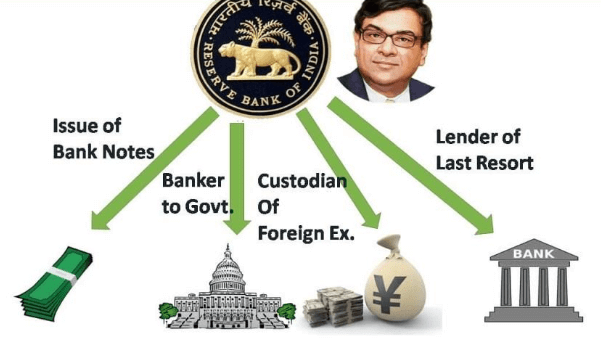
Ans:Reserve Bank of India plays a crucial role in regulating the Indian banks:
Supervises functioning of banks: The RBI monitors all formal sources of credit and ensures that banks follow proper rules and guidelines.
Maintains cash balance: It ensures that banks keep a minimum cash reserve out of the deposits they receive.
Checks fair lending: The RBI ensures that banks give loans not only to profit-making businesses but also to small cultivators, small borrowers, and small-scale industries.
Collects information: Banks are required to submit reports to the RBI on how much they lend, to whom, and at what interest rate.
This supervision helps in maintaining stability, fairness, and trust in the banking system.
Q7: Explain any three functions of money as a medium of exchange. (3 Marks)
Facilitates exchange of goods and services: Money acts as an intermediate in the exchange process, making it easy to buy and sell goods or services without the need for barter.
Eliminates double coincidence of wants: In a barter system, both parties must want what the other offers. Money removes this problem, as it can be exchanged for any commodity or service.
Widely accepted means of payment: Money, authorised by the government (like the rupee in India), is legally accepted for all transactions, ensuring smooth trade and settlement.
Q8: Examine the importance of bank deposits. (3 Marks)
Safe place to keep money: Depositing money in banks keeps people’s savings safe from theft or loss.
Earns interest: Banks pay interest on deposits, allowing people to earn an income on their savings.
Provides liquidity and convenience: People can withdraw money whenever needed, as deposits can be used for payments through cheques or digital transactions.
Thus, bank deposits help people manage their money securely while contributing to the flow of funds in the economy.
Q9: Read the following sources of loan carefully and choose the correct option related to formal sources of credit: (1 Mark) (i) Commercial Bank, (ii) Landlords, (iii) Government, (iv) Money Lender. (a) (i) and (iii) are correct. (b) (ii) and (iv) are correct. (c) (i) and (ii) are correct. (d) (ii) and (iii) are correct.
Formal sources of credit include commercial banks and the government, as they are regulated by the Reserve Bank of India and follow legal procedures and fair lending practices.
Q10: Imagine you are a part of a ‘Self Help Group’ (SHG). Explain the working system of the Self Help Group (SHG) to the new member. (5 Marks)
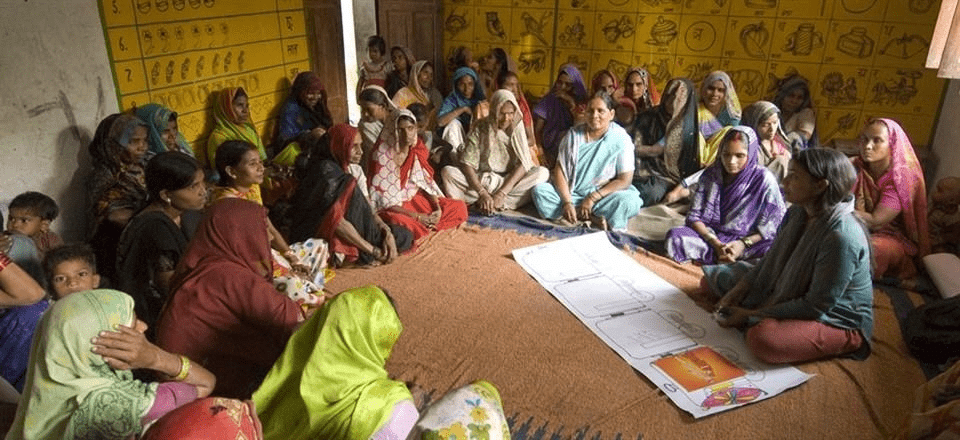
Formation and Members: A typical SHG consists of 15–20 members, usually from the same neighbourhood, often women, who come together to save regularly.
Regular Savings: Each member contributes a small amount (Rs 25–Rs 100 or more) every month. These savings are pooled to create a common fund for the group.
Internal Lending: Members can take small loans from this fund to meet their needs. The group charges low interest compared to moneylenders.
Bank Linkage: After saving regularly for one or two years, the SHG becomes eligible to take a bank loan. The loan is sanctioned in the name of the group, not individuals.
Decision-Making and Repayment: The group collectively decides the purpose, amount, and interest rate for loans. Members ensure timely repayment, and any default is followed up by the group.
Empowerment and Social Role: SHGs help members become financially self-reliant and provide a platform to discuss and act on social issues like health, nutrition, and domestic violence.
Thus, SHGs promote savings, provide affordable credit, and empower rural women socially and economically.
Q11: Imagine that you are the Village Development Officer of a village. Explain the usefulness of formal sources of credit for the farmers. (5 Marks)
Ans:Usefulness of Formal Sources of Credit for Farmers:
Low Rate of Interest: Formal sources such as banks and cooperatives provide loans at reasonable and fixed interest rates, reducing the burden of repayment for farmers compared to moneylenders.
Fair and Regulated System: These institutions are supervised by the Reserve Bank of India (RBI), ensuring that lending practices are fair, transparent, and free from exploitation.
Availability of Different Types of Loans: Farmers can take loans for cultivation, purchase of agricultural tools, irrigation, livestock, or housing, which helps in improving productivity and income.
Encourages Economic Growth: By providing cheap and timely credit, formal sources help farmers invest more in modern farming methods, leading to higher production and income.
Reduces Dependence on Informal Lenders: Access to formal credit reduces farmers’ reliance on moneylenders who charge very high interest rates and often trap them in debt.
Hence, formal sources of credit are essential for ensuring fair, affordable, and productive borrowing, leading to overall rural and agricultural development.
Q12: Analyse the role of credit in rural economy. (5 Marks)
Supports Agricultural Activities: Credit helps farmers meet expenses for seeds, fertilisers, irrigation, pesticides, and equipment during cultivation when they have no income until harvest.
Encourages Production and Development: By providing funds at the right time, credit enables farmers to expand production, improve techniques, and increase productivity, contributing to rural growth.
Promotes Self-Employment: Small farmers, artisans, and rural workers use credit to start small businesses or self-employment activities, helping them earn a steady livelihood.
Improves Living Standards: Affordable and timely credit allows rural families to meet social and emergency needs like education, health, and housing without falling into debt traps.
Reduces Dependence on Moneylenders: Access to formal and cooperative credit protects poor farmers from high-interest informal loans and exploitation, leading to greater economic stability in villages.
Thus, credit plays a vital role in the growth, self-reliance, and development of the rural economy.
Q13: Analyse the differences between formal and informal sectors of credit. (5 Marks)
Ans: Differences between Formal and Informal Sectors of Credit:
Conclusion: Formal credit is cheaper, safer, and promotes development, while informal credit often increases debt burden and inequality in rural and urban areas.
Q14: Analyse the role of banks in the economy of the country. (5 Marks)
Mobilisation of Savings: Banks encourage people to deposit their savings by offering a safe place and paying interest. These savings become a major source of funds in the economy.
Providing Loans and Credit: Banks use a major portion of deposits to give loans to individuals and businesses for productive activities such as farming, trade, industry, and services.
Acting as Financial Intermediaries: Banks mediate between depositors and borrowers — taking money from those with surplus funds and lending it to those who need funds, thus maintaining the flow of money in the economy.
Facilitating Payments and Settlements: Through cheques, demand deposits, ATM cards, and digital transactions, banks make payments easy, safe, and efficient without the use of cash.
Promoting Economic Development: By ensuring cheap and timely credit, banks help in expanding production, generating employment, and improving living standards, contributing to overall national development.
Thus, banks play a vital role in maintaining financial stability and promoting growth and development in the country’s economy.
Q15: Analyse the role of Self Help Groups in the development of rural areas in India. (5 Marks)
Ans:Role of Self Help Groups (SHGs) in the Development of Rural Areas in India:
Provides Access to Credit: SHGs enable poor people, especially women, to get small loans at reasonable interest rates without collateral, helping them meet daily needs and start income-generating activities.
Promotes Savings Habit: Members save regularly and pool their money, which builds a habit of financial discipline and collective responsibility in rural communities.
Encourages Self-Employment: Loans from SHGs are used for small businesses, agriculture, livestock, handicrafts, or trade, promoting self-employment and reducing dependence on moneylenders.
Empowers Women: Most SHG members are women. By managing finances and participating in decision-making, they become financially and socially empowered.
Strengthens Community Development: Regular meetings help members discuss and act on social issues like health, education, nutrition, and domestic violence, contributing to overall rural development.
Thus, SHGs play a crucial role in reducing poverty, empowering women, and promoting sustainable rural growth in India.
Q16: Shyamal is a small farmer. Shyamal has got his ‘Kisan Card’ made. He needs a loan to grow new crops. Which of the following means will be easy and beneficial for this? (1 Mark) (a) Cooperative Bank, (b) Agricultural Traders, (c) Relatives, (d) Friends.
Cooperative banks provide cheap and easy credit to farmers with simple procedures and low interest rates. This makes them the most beneficial and reliable option for small farmers like Shyamal.
Q17: The problem of ‘Double Coincidence of Wants’ can be solved by which of the following? (1 Mark) (a) By increasing the circulation of currency, (b) By expanding the scope of markets, (c) By creating awareness amongst people, (d) By registering the buyer and seller.
Money acts as a medium of exchange and removes the need for double coincidence of wants that existed in the barter system. The wider use and circulation of money make transactions simple and convenient.
Q18: Distinguish between formal and informal sources of credit in India with example. (3 Marks)
Ans:Distinction between Formal and Informal Sources of Credit: Example: A bank loan is a formal source of credit, whereas borrowing from a moneylender is an informal source.
Q19: Why are formal sources more beneficial than informal sources of credit in India? Explain by giving any three arguments. (3 Marks)
Ans: Formal sources are more beneficial than informal sources of credit because:
Low Rate of Interest: Formal sources such as banks and cooperatives charge reasonable and fixed interest rates, reducing the burden on borrowers.
Regulated and Fair System: They are supervised by the Reserve Bank of India (RBI), ensuring fair lending practices and protection against exploitation.
Encourages Development: Cheap and timely loans from formal sources help people invest in farming, small industries, and trade, leading to higher income and economic growth.
Q20: Explain the role of credit in the economic development of the country with example. (3 Marks)
Ans: Role of Credit in the Economic Development of the Country:
Promotes Production and Investment: Credit provides funds to farmers, traders, and entrepreneurs to start or expand productive activities, increasing overall output and income.
Generates Employment: When people use credit to set up small businesses or industries, it creates job opportunities and improves living standards.
Encourages Self-Reliance: Availability of affordable and timely credit helps individuals and small producers become financially independent and contribute to national growth.
Example: Salim, the shoe manufacturer, used credit to complete production on time and earn profit — showing how credit can play a positive role in development.
Q21: Rama is a farmer. She needs a loan for agriculture work. Which of the following sources of loan will be beneficial for Rama? Choose the most appropriate option: (1 Mark) I. Bank, II. Agricultural Trader, III. Self-Help Group, IV. Government. (a) Only I, III, and IV are correct. (b) Only I, II, and III are correct. (c) Only II, III, and IV are correct. (d) Only I, II, and IV are correct.
Banks, Self-Help Groups, and the Government provide formal and low-interest loans that are fair and beneficial for farmers like Rama. Agricultural traders, on the other hand, often charge high interest rates and impose unfavourable terms, making them less beneficial.
Q22: Two statements are given below. They are Assertion (A) and Reason (R). (1 Mark) Assertion (A): Rupees is accepted as medium of exchange in India. Reason (R): The World Bank legalises the use of rupee as a medium of payment in India. (a) Both (A) and (R) are correct and (R) is the correct explanation of (A). (b) Both (A) and (R) are correct, but (R) is not the correct explanation of (A). (c) (A) is correct, but (R) is incorrect. (d) (A) is incorrect, but (R) is correct.
Rupee is accepted as a medium of exchange in India because it is authorised by the Government of India and issued by the Reserve Bank of India, not by the World Bank.
Previous Year Questions 2024
Q1: Read the image of the cheque. Identify the cheque number from the given options: (1 Mark ) (CBSE 2024) (a) 362255 (b) 110002078 (c) 000313 (d) 16137926023
Ans: (a) The cheque number is a unique identifier for a specific cheque, typically found at the top right corner of the cheque. In the given options, the correct cheque number is (a) 362255, as it matches the format and position usually found on a cheque. The other options either have too many digits or do not fit the typical cheque numbering format.
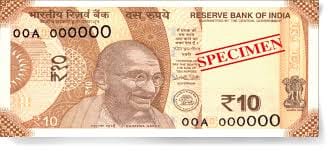
Q2: Which one of the following banks in India controls the issuance of currency and regulates the credit system in the country? (1 Mark ) (CBSE 2024) (a) Punjab National Bank (b) Indian Bank (c) Reserve Bank of India (d) State Bank of India
Ans: (c) The Reserve Bank of India (RBI) is the central bank of India, responsible for issuing currency and regulating the country’s credit system. It manages monetary policy and ensures financial stability, making option (c) the correct answer. The other banks listed are commercial banks that operate under the regulations set by the RBI.
Q3: Explain the role of `Self Help Groups’ in the rural society. (3 Marks ) (CBSE 2024)
Ans: The role of self help groups in a rural society/ economyis as follows: (1) They organise rural poor, in particular women, into small Self Help Groups to pool their savings. (2) Self-help groups provide a platform for the rural poor to interchange thoughts, ideas and opinions about various domestic and regional issues. (3) It inculcates the habit of saving and investing. (4) It also becomes a medium to borrow cheap loans easily from local banks. Loan is sanctioned in the name of the group and is meant to create self-employment opportunities for the members. (5) It develops the power of decision-making and develops political and social opinion among the members.
Q4: Why do lenders often require collateral before lending loan? Choose the most suitable option from the following. (1 Mark ) (CBSE 2024) (a) To lower interest rates for borrowers. (b) To establish personal relations. (c) To increase their profit margins. (d) To mitigate the risk of loan default.
Ans: (d) To mitigate the risk of loan default. Lenders require collateral before lending a loan to ensure that if the borrower fails to repay the loan (defaults), the lender can recover the loan amount by selling the collateral. This reduces the financial risk for the lender, as collateral provides security for the loan.
Q5: Look at the given picture carefully and infer the income of the bank. (1 Mark ) (CBSE 2024)
Choose the correct option from the following. (a) The difference between the amount deposited and borrowed by the bank to Reserve Bank of India. (b) The difference of amount of interest between what is charged from borrowers and what is paid to depositors. (c) The difference of interest rate between what is charged from borrowers and what is charged from depositor. (d) The difference between the amount deposited by the depositor and borrowed by the borrower. Note: The following question is for Visually Impaired Candidates only in lieu of Q. No. 20. Which one of the following supervise the functioning of formal sources of loan in India? (a) Reserve Bank of India (b) State Bank of India (c) National Development Council (d) National Finance Commission
Ans: (b) The difference of amount of interest between what is charged from borrowers and what is paid to depositors. For visually impaired Students only (a) Reserve Bank of India
Q6: How is credit essential for economic activities? Explain with examples. (3 Marks ) (CBSE 2024)
Ans: Credit is essential for economic activities because it provides the necessary financial resources for individuals, businesses, and governments to invest, grow, and expand. Here’s how credit plays a key role:
Boosting Business Investments: Businesses often need credit to invest in machinery, technology, or expansion. For example, a company might take a loan to buy new equipment or expand its operations. This helps the business grow, increase production, and create more jobs, which boosts the economy.
Supporting Consumption: Consumers rely on credit to make purchases that they might not be able to afford immediately, such as buying a house, car, or even paying for education. For instance, a person may use a home loan (mortgage) to buy a house, which contributes to the housing market and the overall economy.
Encouraging Innovation: Entrepreneurs use credit to fund new projects or startups. For example, someone may take a loan to launch a tech startup, creating new products or services that could lead to job creation and new markets.
Enabling Government Spending: Governments often use credit (through bonds and loans) to fund large infrastructure projects like building roads, schools, and hospitals. These projects not only improve public welfare but also stimulate economic activity and create jobs.
Facilitating International Trade: Credit is essential for international trade. Businesses use credit (such as trade credit or letters of credit) to import and export goods. This allows companies to expand their markets and engage in cross-border business, boosting global economic activity.
In summary, credit provides the financial means for individuals, businesses, and governments to invest, spend, and grow, all of which are crucial for a thriving economy.
Get additional INR 200 off today with EDUREV200 coupon.
Previous Year Questions 2023
Q7: Explain the role of banks with regard to money which they accept from the public.(3 Marks) (2023)
Ans: The Reserve Bank of India has many important roles that affect the common public:
RBI monitors the balance kept by the bank for day to day transactions.
RBI monitors the banking activity, particularly the loan-giving activity of the banks. It ensures that the banks give loans to the priority sector like agriculture and not just to profit-making sectors.
The RBI undertakes the responsibility of controlling credit created by the commercial banks. RBI uses quantitative and qualitative techniques to control and regulate the credit flow. This includes interest rates and the percentage of loans to a sector.
The RBI gives guidelines to the bank about setting up the terms of credit that the bank may decide upon for the borrowers.
Q9: “Cheap and affordable credit is crucial for the country’s development’.” Justify the statement. (5 Marks) (CBSE 2023)
Ans: Cheap and affordable credit is crucial for a country’s development due to the following factors:
Increased lending leads to higher incomes, encouraging people to invest in agriculture, business, and small-scale industries.
Cheap credit leaves more income with borrowers for reinvestment, accelerating economic activity.
Affordable credit allows weaker sections of society to access formal lending, reducing exploitation by informal moneylenders.
It helps break the cycle of debt and promotes sustainable economic activity, enabling borrowers to invest in better technology and become more competitive.
Q10: Justify the role of ‘Self Help Groups’ in the rural economy. (5 Marks) (CBSE 2023)
Ans: (i) SHGs have emerged as building blocks of the rural poor as it is the group as a whole which is responsible of the repayment of the loan. In case of non-repayment, it is taken up in a serious manner by the group members. (ii) The SHGs are organisations of the rural poor people especially women. They provide small loans on reasonable rates. (iii) The members of SHGs pool their savings and take loans at nominal rates of interests. (iv) This creates self employment opportunities for the members particularly rural poor women. (v) The SHGs help poor borrov/ers to overcome the problem of lack of collateral.
Previous Year Questions 2022
Q11: Why are transactions made in money? Explain. (Term-II,2021-22 C)
Ans: A person holding money can easily exchange it for any commodity or service that he or she might want. Thus, everyone prefers to receive payments in money and then exchange the money for things that they want.
Q12: How does a bank work as a key component of the financial system? Explain. (Term-II, 2021-22)
Ans: Banks mediate between those v/ho have surplus funds (the depositors) and those who are in need of these funds (the borrowers). People need small amount of money for their day-to-day needs and deposit the surplus amount in the bank. Bank accepts the deposit and also pay an amount of interest on the deposits. In this way people’s money is safe and earns an amount as an interest. Bank use the major portion of the deposits to meet the loan requirements of the people.
Q13: Analyse the situation in which credit pushes the borrower into a situation from which recovery is painful. (Term-II, 2021-22)
Ans: Bank usually refered as a formal source of credit and in some situations the borrower would not able to repay loan. This pushes them in the situation of dept trap. Example:
(i) In case of rural areas if crop fails due to natural factors it will be difficult for the farmers to pay loan.
(ii) In case of failure of a business. It will be difficult for the businessman to repay the credit.
(iii) In case of informal sector, rate of interest is very high. If due to crop failure previous loan is not repaid interest rate further mounts.
(iv) In case of high risk activities failure without some support can push borrower in painful situation.
(v) In many cases people has to sell their land and fixed assets to repay loan.
Q14: Explain with an example the role of credit for development. (Term-ll, 2021-22)
Ans: ‘Credit’ refers to an agreement in which the lender supplies the borrowers with money, goods or services in return for the promise of future payment. Credit plays vital role for development in different ways as: (i) Credit helps people from all walks of life in setting up their business, increase their income and support their families. (ii) To some people loan helps a lot in constructing their houses and get relief from monthly rent, to others it helps a lot in raising their standards of living. (iii) Example of Salim: The credit helps him and he is able to meet the ongoing expenses of production, complete production on time and thereby increase his earning. 38. Banks play an important role in the economic development of the country. (i) Capital formation : Banks offer very attractive schemes to attract the people to save their money with them and organised money market. (ii) They mobilize the small savings of the people through their branches and make it available for productive purposes. (iii) Credit creation leads to increased production, employment and caused faster economic development. (iv) The banks help in the development of different type of industries by extending loans to concern persons. (v) It ensures full utilisation of resources.
Q15: Read the following source and answer the questions that follow: (Term-II,2021-22) A House Loan Megha has taken a loan of Rs. 5 lakhs from the bank to purchase a house. The annual interest rate on the loan is 12 per cent and the loan is to be repaid in 10 years in monthly installments. Megha had to submit to the bank, documents showing her employment records and salary before the bank agreed to give her the loan. The bank retained as collateral the papers of the new house, which will be returned to Megha only when she repays the entire loan with interest.
(i) From which source of credit Megha has taken loan?
Ans: Terms of credit given in the source are Document required – Salary slip and employment record. Interest rate – 2% per annum Mode of repayment – Monthly instalment Collateral – New house papers
Q16: Dhananjay is a government employee and belongs to a rich household, whereas Raju is a construction worker and comes from a poor rural household. Both are in need and wish to take a loan. Create a list of argument explaining who between the two would successfully be able to arrange money from a formal source. Why? (Term-II,2021-22 C, 2016)
Ans: Dhananjay will be able to get a loan from a formal source. Arguments:
Banks are not present everywhere in rural India. Even when they are present, getting a loan from a bank is much more difficult than taking a loan from informal sources.
Bank loans require proper documents and collateral. Absence of collateral is one of the major reasons which prevent the poor from getting bank loans.
Informal lenders such as moneylenders, on the other hand, know the borrowers personally and hence, are often willing to give a loan without collateral.
Also read: NCERT Solutions: Money & Credit
Previous Year Questions 2021
Q17: The exchange of goods with a commodity is known as: (2021 C) (a) Double coincidence of wants (b) Local trade (c) Domestic trade (d) Foreign trade
The exchange of goods with a commodity is known as “double coincidence of wants.” This term means that for a trade to happen, each party must want what the other has to offer at the same time. Therefore, option (a) is the correct answer, as it specifically describes this type of barter system. The other options refer to different types of trade but do not capture this specific concept.
Q18: Which of the following authorities of India issues currency notes on behalf of the Central Government? (2021 C) (a) The State Bank of India (b) The Reserve Bank of India (c) The Allahabad Bank (d) The Punjab National Bank
Ans: (b) The Reserve Bank of India (RBI) is the authority responsible for issuing currency notes on behalf of the Central Government. It manages the country’s monetary policy and ensures the supply of currency in the economy. Therefore, option (b) is the correct answer, while the other banks listed are commercial banks that do not have this authority.
Q19: “The use of money spans a very large part of our everyday life”. Support the statement. (2021 C)
Ans: In everyday lives, we use money to fulfill our requirement in different ways: (i) To buy goods and services like in market, money can be used to buy clothes, vegetables etc. (ii) To deposit in banks so that money can be saved and used for future use. For example : If a labourer deposits his monthly salary in his bank account, then, he can use it in installments during the entire month. (iii) As a store value. For instance, we cannot store perishable goods like milk, grain etc. to exchange; but v/e can keep money for future use.
Previous Year Questions 2020
Q20: How do demand deposits have the essential features of money? Explain. (2020)
Ans: Demand deposits are considered as money because:
The facility of cheques against demand deposits makes it possible to directly settle payments without the use of cash. Since demand deposits are accepted widely as a means of payment, along with currency, they constitute money in the modern economy.
Banks accept the deposits and also pay an interest rate on the deposits.
In this way, people’s money is safe with the banks and it earns an interest.
Q21: Read the information given below and select the correct option. (2020 C) Rohan has taken a loan of Rs.5 lakhs from the bank to purchase a house on 12% rate of interest. He has to submit papers of new house and salary record to the bank. What is this process called as? (a) Interest Rate (b) Collateral (c) Principal Amount (d) Installments
Ans: (b) The process described is called “collateral,” which refers to the assets (like the house Rohan is purchasing) that a borrower offers to the bank as security for a loan. If Rohan fails to repay the loan, the bank can take possession of the collateral. Therefore, option (b) is the correct answer, while the other options refer to different aspects of loans and interest.
Q22: Krishna is working in a neighbouring field with very less wages. Expenses on sudden illnesses or functions in the family are also met through loans. The landowner charges an interest rate of 5 per cent per month. At present she owes the landowner Rs. 5,000. Analyse the credit arrangements given above. (CBSE 2020)
Ans: Credit arrangement-informal sources of credit / No intervention of government in controlling the credit activities carried out by informal sources.
Q23: Why do lenders ask for collateral while lending? Explain.(CBSE 2020)
Ans: The Reserve Bank of India (RBI) supervises the functioning of formal sources of loans in the following ways:
It monitors the balance kept by banks for day-to-day transactions.
It checks that the banks give loans not just to profit-making businesses and traders but also to small borrowers.
Periodically, banks have to give details about lenders, borrowers, and interest rates to RBI. It is necessary for securing public welfare. It avoids the banks to run the business with a profit motive only. It also keeps a check on the interest rate of credit facilities provided by banks. RBI makes sure that the loans from the banks are affordable and cheap.
Q25: “Bank plays an important role in the economic development of the country”. Support the statement with an example. (2020)
Ans: Banks play an important role in the economic development of the country. (i) Capital formation : Banks offer very attractive schemes to attract the people to save their money with them and organised money market. (ii) They mobilize the small savings of the people through their branches and make it available for productive purposes. (iii) Credit creation leads to increased production, employment and caused faster economic development. (iv) The banks help in the development of different type of industries by extending loans to concern persons. (v) It ensures full utilisation of resources.
Q26: “Credit sometimes pushes the borrower into a situation from which recovery is very painful”. Support the statement with examples. (2020)
Ans: (i) In rural areas, the main demand for credit is for crop production. Crop production involves considerable costs on seeds, fertilisers, pesticides, water, electricity, repair of equipment, etc. (ii) There is a minimum stretch of three to four months between the time when the farmers buy these inputs and when they sell the crop. (iii) Farmers usually take crop loans at the beginning of the season and repay the loan after harvest. (iv) Repayment of the loan is crucially dependent on the income from farming. (v) Example of credit which is painful for a borrower: A farmer picks up the loan from a money lender to meet the expenses of cultivation. But unfortunately crops hit by the pests and fails. So, he is unable to repay the loan and ; debt grows larger with interest. Next year, he picks up a fresh loan and is able to have a normal crop that year. But earnings are not enough to pay the earlier loan. He can repay the loan, only after selling a part of the land. So we can say that “Credit sometimes pushes the borrower into a situation from which recovery is very painful”.
Q27: Self-Help Groups are the building blocks of organisation of the rural poor. Suggest any three ways to make them popular for social issues. (2020 C)
Ans: Demand deposits are considered as money, because they can be withdrawn when required and the money withdrawn can be used for making payments. So, they are also considered as money in the modern economy.
Q29: How is ‘double coincidence of wants’ not appreciable in the contemporary scenario? (CBSE 2019)
Ans: For double coincidence of wants to work out, an individual must require what the other person is willing to give away and vice-versa. If this situation is not reached exchange of goods does not happen. This problem is eliminated by the use of money.
Q30: Why is money called a medium of exchange? (AI2019) OR How does money act as medium of exchange? (2015)
Ans: The informal sector consists of money lenders, traders, employers, friends, relatives, merchants, and landlords. There is no organization that supervises the credit activities of lenders in the informal sector.
The informal lenders usually charge a very high rate of interest. A higher cost of borrowing is often detrimental to the borrower. It usually results in a debt trap for the borrower. The borrower is seldom able to escape the never-ending cycle of loan repayment.
Most loans from informal lenders carry a very high-interest rate and have other stringent conditions. They do little to increase the income of the borrowers.
It has been observed that the loan recovery mechanics in the informal sector are particularly harsh in cases of loan repayment default. There have been cases of selling of properties at throwaway prices and total loss of belongings and even suicides.
Q32: Explain the three important terms of credit. (CBSE 2019)
Interest Rate: It is the interest that the borrower pays to the bank. An interest component is added to the principal that the borrower pays to the bank as loan payment in installments.
Collateral: An asset which is owned by the borrower and is used as a guarantee to a lender until the loan is repaid is called collateral. Land, house, vehicle, livestock, deposits with banks, insurance policy, gold, etc., are examples of assets that can be kept as collateral. If the borrower fails to repay the loan, the lender reserves the right to sell the collateral to obtain payment.
Documentation: The transaction between the lender and the borrower is put on record by documenting it. It includes the rate of interest, tenure, collateral, and mode of repayment. The terms of credit vary from one loan agreement to another and also on the nature of the lender and the borrower.
Q33: Describe the vital and positive role of credit with examples. (2019, Delhi 2016)
Ans: ‘Credit’ refers to an agreement in which the lender supplies the borrower with money to buy, goods or services in return for the promise of future payment. Credit plays a vital and positive role a s : (i) Credit helps people from all walks of life in setting up their busiess, increases their income and support their families. (ii) To some people loan helps in constructing their houses and get relief from monthly rent. (iii) To other it helps in raising their living standards, (iv) Example :Sheela has joined a job. She has taken a loan to buy a scooty that she can attend office conveniently and build a career. Without the loan she would have to travel in bus which takes more time. Thus she would not be able to attend evening classes.
Q34: Describe the importance of formal sources of credit in economic development. (Delhi 2019)
Ans: The formal source of credit comprises of banks and cooperative societies. The Reserve Bank of India supervises the functioning of formal sources of loans. The importance of formal sources of credit in economic development are:
Even though collateral and paperwork are needed to secure a loan from banks, the interest rates here are lesser than informal sources.
The formal sources of credit are part of the greater national economy. Hence even small borrowers should try to avail this facility and not go for informal sources of borrowing.
The role of formal sources of credit has been very great, particularly for financing large developmental projects and various business projects in the private sector and the public sector.
Q35: Give one example each of modern currency and older currency. (CBSE 2019)
Ans: Examples of modern currency are paper bills/notes, coins, credit cards etc., whereas examples of older currency are coins made of precious metals like gold or silver, terracotta coins, etc.
Q36: Examine any three situations in which credit helps in the development of agriculturists. (CBSE 2019)
Ans: Credit helps in the development of agriculturists: (1) The credit helps him to meet the ongoing expenses of production. (2) It helps in purchasing raw material and equipment. (3) It helps in irrigation.
Q37: Examine any three situations in which credit pushes the borrower into a debt-trap. (CBSE 2019)
Ans: Credit leads borrowers into debt traps in these situations: (1) Loans from informal sector could lead to debt trap. (2) Lack of planning results in debt. (3) Difficulty in repaying loans due to certain circumstances.
Q38: Why do banks and cooperative societies need to lend more? Explain. (CBSE 2019)
Ans: Banks and cooperatives should increase their lending in rural areas because: (1) India largely depends on agriculture for export revenues. Farmers and agricultural workers in rural areas deserve special attention as they lack capital and resources to invest in their work. (2) Most of the people in rural areas are illiterate and informal money lenders exploit and cheat them for their benefit. People need a reliable source for credit. (3) Most loans from informal lenders carry a very high interest rate and do little to increase the income of the borrowers. (4) Banks and co-operative societies provide loans to the rural households at cheap rates and are backed by the government, which helps them boost their income. Incentives are also given to farmers for quick repayment. (5) Most of the people in urban areas depend upon the rural people for their food and raw material requirements. For better production and to boost their income sources, easy credit is required.
Previous Year Questions 2018
Q39: Give any two examples of informal sector of credit. (2018)
Banks provide loans for various economic activities to people or organizations.
Banks keep only a small proportion of the deposits with them as cash, to meet daily payment demands. The deposits are used to meet the loan requirements of the people.
Banks intermediates between those who have surplus funds and those who are in need of these funds. Banks offer less interest on deposits than what they charge on loans.
Q41: “Banks are an efficient medium of exchange.” Support the statement with arguments. (Delhi 2017)
People deposit their money with banks by opening a bank account. Banks keep the money safe and provide interest on the deposited amount.
The deposited money can be withdrawn from banks as and when required on demand.
Banks also facilitate easy transfer of money through cheques, demand drafts, and internet banking from one account to another in the same or any other bank.
Banks keep only 15% of their total cash deposits to meet the everyday withdrawal demands of their customers. The major portion of the remaining deposits is used to give loans to people at a specific rate of interest. Thus, we see that money is very efficiently exchanged between various people.
Q42: Illustrate with examples the role of ‘loan’ in ‘business’.(Foreign 2017)
Ans: Loan or credit plays a crucial role in business. By sanctioning loans to developing industries and trade, banks provide them with the necessary aid for functioning, developing, and expanding business. This leads to an increase in production, profits, and employment. For this reason, it is important that the formal sector gives out more loans so that borrowers are not duped by money lenders and can ultimately contribute to national development.
Q43: Review any three merits and any two demerits of ‘Formal sector of credit’ in India. (Foreign 2017)
Ans: Money is beneficial in transactions because it eliminates the inconvenience of the double coincidence of wants. In a barter system, individuals would have to find someone who has what they want and is willing to accept what they have to offer in exchange. This can be inefficient and time-consuming. However, with the introduction of money, people can simply exchange their goods or services for money and then use that money to purchase whatever they desire from anyone willing to accept it. Money provides a common medium of exchange that simplifies and accelerates transactions.
Q45: Explain the inherent problem of the ‘barter system’. (CBSE 2017, 15)
Ans: The inherent problem of the barter system is that it is not necessary that when one person is willing to exchange his/her goods, the person he/she wants to exchange with is also willing to do the same.
Q46: Why is it necessary that banks and cooperatives increase their lending in rural areas? Explain. (CBSE 2017)
Ans: Banks and cooperatives should increase their lending in rural areas because: (1) India largely depends on agriculture for export revenues. Farmers and agricultural workers in rural areas deserve special attention as they lack capital and resources to invest in their work. (2) Most of the people in rural areas are illiterate and informal money lenders exploit and cheat them for their benefit. People need a reliable source for credit. (3) Most loans from informal lenders carry a very high interest rate and do little to increase the income of the borrowers. (4) Banks and co-operative societies provide loans to the rural households at cheap rates and are backed by the government, which helps them boost their income. Incentives are also given to farmers for quick repayment. (5) Most of the people in urban areas depend upon the rural people for their food and raw material requirements. For better production and to boost their income sources, easy credit is required
Previous Year Questions 2016
Q47: Why one cannot refuse a payment made in rupees in India? (2016)
Ans: One cannot refuse a payment made in rupees in India because the Indian rupee is the authorized and accepted medium of exchange in the country. The Government of India has established the Indian rupee as the official currency, and it is legally recognized as a valid form of payment. Therefore, individuals and businesses are required to accept payments made in rupees, and refusal to do so would be in violation of the accepted legal tender.
Q48: How does money eliminate the need for double coincidence? (2016)
Ans: Money eliminates the need for double coincidence by providing a crucial intermediate step in transactions. In a barter system, individuals would have to find someone who not only wants what they have to offer but also has what they desire in return. This double coincidence can be challenging to achieve. However, with the introduction of money, individuals can simply sell their goods or services for money and then use that money to purchase any other desired commodity available in the market. Money acts as a universally accepted medium of exchange, allowing individuals to acquire what they need without the requirement of a direct match between their wants and the wants of others.
Q49: How do the deposits with banks become their source of income? (CBSE 2016)
Ans: When we deposit our money in the bank we get an interest on it. However the bank uses that money to give loan to people. The bank charges an interest on its loan at a higher rate than what is paid to the depositors. Thus, the banks earn money from the deposits.
Ans: The expansion of formal sources of credit in rural India is crucial because it ensures that the rural poor have access to credit at reasonable interest rates. This helps them meet their financial needs without falling into the trap of high-interest informal loans. Additionally, formal sources of credit provide better regulation and supervision, ensuring fair lending practices.
Q52: Why is the supervision of the functioning of formal sources of loans necessary? (2016)
Ans: The supervision of formal sources of loans is necessary to ensure that these institutions provide loans not only to the rich but also to the poor. It helps in preventing exploitation and ensures that the banks follow the proper procedures and regulations set by the Reserve Bank of India (RBI).
Ans: Farmers require credit to finance their agricultural activities. This credit is used to purchase agricultural inputs such as seeds, fertilizers, pesticides, and machinery. It helps farmers to manage their expenses and invest in their farming operations for better productivity.
Q54: How can money be used to easily exchange it for goods or services? Give examples to explain. (Delhi 2016)
Ans: Money acts as a medium of exchange itself for goods and services. A person holding money can easily exchange it for any commodity or service that he or she might want. Everyone prefers to receive payments in money and exchange the money for things they want. For example, a shoemaker wants to sell shoes in the market and buy wheat. The shoemaker will first exchange shoes for money and then exchange the money for wheat. If the shoemaker had to directly exchange shoes for wheat without the use of money, he would have to look for a wheat-growing farmer who not only wants to sell wheat but also wants to buy the shoe in exchange. Both the parties have to agree to sell and buy each other’s commodities. This process is very difficult, time-consuming, and unhealthy.
Q55: How is money transferred from one bank account to another bank account? Explain with an example. (Foreign 2016)
Ans: If a person has to make a payment to his or her friend and writes a cheque for a specific amount, this means that the person instructs his bank to pay this amount to his friend. His friend takes this cheque and deposits it in his account in the bank. This said amount is transferred from one bank account to another bank account.
Q56: Mention three points of difference between formal sector and informal sector loans. (2016)
These are mainly created by the poor, often females of rural areas, for their own benefits.
In this, all members deposit their monthly savings to the leader.
This creates self-employment for the members.
If any member needs money for domestic work such as renovation of a house, buying fertilizers, or agricultural equipment, he/she can borrow it from the group.
Members can get timely loans at reasonable interest and without any collateral and documentation. It operates on mutual trust.
Q58: Poor households still depend on informal sources of credit”. Support the statement with examples. (2016)
Banks are not present everywhere in rural India, whereas informal sources are easily available everywhere.
Getting a loan from a bank is difficult for poor people than taking a loan from informal resources because bank loans require proper documents and collateral.
Moneylenders provide loans to poor people without any collateral.
Formal sources provide loans only for productive purposes, whereas informal sources provide credit for productive and non-productive purposes.
Other informal sources of credit are friends and relatives, or traders and landlords, who know the borrowers personally and therefore do not demand collateral.
Q59: “The credit activities of the informal sector should be discouraged.” Support the statement with arguments. (CBSE 2016)
Ans: Formal sector loans can be made beneficial for poor farmers and workers through the following measures:
Creating awareness: Educating farmers and workers about the availability and benefits of formal sector loans can encourage them to utilize these resources.
Simplifying the loan process: Streamlining loan application procedures and reducing paperwork can make it easier for farmers and workers to access formal sector loans.
Expanding banking services: Opening more branches of nationalized banks and cooperatives in rural areas can increase the accessibility of formal sector loans to farmers and workers.
Increasing loan facilities: Banks and cooperatives should increase the availability of loans to cater to the demand of poor farmers and workers.
Reducing interest rates: Lowering the interest rates for formal sector loans can make them more affordable for poor farmers and workers, reducing their financial burden.
Q62: Dhananjay is a Government employee and belongs to a rich household whereas Raju is a construction worker and comes from a poor rural household. Both are in need and wish to take loans. Create a list of arguments explaining who between the two will successfully be able to reach money from a formal source. Why? (CBSE 2016)
Ans: Out of the two, Dhananjay is more likely to lend money from formal sources. (1) Dhananjay is more educated and rich and hence, he can understand the nuances of credit. (2) He must have the required documentation. (3) He must have assets to be submitted as the collateral. (4) Raju is a poor construction worker. He is not educated enough. (5) He might not have the required documentation. (6) He might not have the required asset to be used as a collateral.
Q1: ‘X’ lives in a town. He cultivates flowers along with animal husbandry. The work of ‘X’ will fall under which sector of the economy? (1 Mark) (a) Primary (b) Secondary (c) Tertiary (d) Quaternary
Flower cultivation and animal husbandry use natural resources (land, biological processes) and produce natural goods (flowers, milk), so they belong to the primary (agriculture and related) sector.
Q2: The work of which of the following comes in the secondary sector of the economy? (1 Mark) (a) Bee-keeper (b) Moneylender (c) Basket weaver (d) Fisherman
Public sector: Owned and run by the government. The government provides big services that are needed by everyone and may be too expensive for private companies to do cheaply. Example: Railways or the Post Office.
Private sector: Owned by private people or companies. They run businesses to earn profit by selling goods and services. Example: TISCO or Reliance.
Main difference (one line): Public sector is owned and managed by the government to serve people, while private sector is owned by individuals/companies to make profit.
Q4: Rakhi has done an economic survey of her area. The survey has revealed that people earn their livelihood by doing different jobs. The table prepared by Rakhi is given below. Study the table carefully and answer the Question that follows: (1 Mark)
How many people are working in the organised sector? (a) 380 (b) 140 (c) 320 (d) 210
Organised sector includes regular, registered places of work (e.g., schools, big factories, hospitals). So add teachers (10) + factory workers (140) + hospital employees (60) = 210.
Q5: Rakhi has done an economic survey of her area. The survey has revealed that people earn their livelihood by doing different jobs. The table prepared by Rakhi is given below. Study the table carefully and answer the Q that follows:
How many people are working in the unorganised sector? (1 Mark) (a) 380 (b) 210 (c) 320 (d) 140
Q6: The total value of all final goods and services produced within a country in a particular year is called ______. (1 Mark) (a) Per Capita Income (b) Per Capita Production (c) Gross National Income (d)Gross Domestic Product
GDP is defined as the value of all final goods and services produced within a country during a particular year, as explained in the chapter.
Q7: Identify the sector based on the following characteristics and choose the correct option: (1 Mark) (i) The objective of this sector is to earn profit. (ii) This sector is owned by a person or company. (iii) Tata Iron and Steel is an example of this sector. (a) Cooperative Sector (b) Unorganised Sector (c) Public Sector (d) Private Sector
The private sector is owned by individuals or companies and aims to earn profit; TISCO (Tata Iron and Steel) is given in the chapter as an example of a private firm.
Q8: Identify the odd one out: (1 Mark) (a) Hindustan Computers Limited (b) Bharti Airtel Limited (c) Hindustan Unilever Limited (d) Bharat Heavy Electricals Limited
The odd one out is the public sector enterprise—BHEL—while the other three are privately owned companies. The classification here is based on ownership (public vs private) as explained in the chapter.
Q9: Find the odd one out: (1 Mark) (a) Hindustan Computers Limited (b) Hindustan Unilever (c) Bharti Airtel Limited (d) Indian Postal Service
Indian Postal Service is a public (government) service, while the others are private companies. The classification is by ownership (public vs private) as explained in the chapter.
Q10: Choose the correct option to fill the blank: (1 Mark)
(a) Nature of social activities (b) Nature of political activities (c) Nature of production activities (d) Nature of government activities
The primary, secondary, and tertiary sectors are classified based on the nature of production activities — whether goods are produced using natural resources, manufactured, or provided as services.
Q11: Explain the difference between organised and unorganised sector of the economy with examples. (3 Marks)
In 1977–78, the primary sector (mainly agriculture) was the largest contributor to India’s GDP.
Over the years, the secondary sector (industries) and especially the tertiary sector (services) have grown rapidly.
By 2017–18, the tertiary sector became the largest producing sector, replacing the primary sector.
Services like transport, banking, communication, education, and IT have expanded fast.
Conclusion: The share of the primary sector in GDP has fallen, while the tertiary sector has shown the highest growth, becoming the main contributor to India’s economic production.
Q16: Suppose you are the Sarpanch of your village. What suggestions will you give for creating additional employment in the village, so that the problem of unemployment of the residents of rural areas can be reduced? (5 Marks)
As a Sarpanch, I would suggest the following steps to create more employmentin the village:
Improve Irrigation Facilities:
Construct wells, canals, or tanks to provide water for farming.
This will allow farmers to grow more than one crop in a year and create extra work.
Promote Small-Scale Industries:
Set up dal mills, food processing units, or cold storages for crops like pulses, potatoes, and onions.
This will provide jobs to youth and reduce dependence on farming alone.
Encourage Rural Services:
Develop transport, repair shops, tailoring, and local trade.
It will give employment in the tertiary sector within the village.
Provide Cheap Credit:
Help farmers get easy loans from banks or cooperatives to buy seeds, tools, and pumpsets.
This will improve productivity and income.
Implement Government Schemes:
Effectively use the MGNREGA 2005 (Right to Work) scheme to give 100 days of guaranteed employment.
Take up works like road building, water harvesting, and land improvement.
Conclusion: By improving irrigation, promoting industries, services, and government employment schemes, the village can reduce unemployment and improve the standard of living of its people.
Q17: Read the given source and answer the questions that follow: (4 Marks) Organised Sector: Kanta works in the organised sector. Organised sector covers those enterprises or places of work where the terms of employment are regular and therefore, people have assured work. They are registered by the government and have to follow its rules and regulations which are given in various laws such as the Factories Act, Minimum Wages Act, Payment of Gratuity Act, Shops and Establishments Act, etc. It is called Organised Sector because it has some formal processes and procedures. Some of these people may not be employed by anyone but may work on their own, but they too have to register themselves with the government and follow the rules and regulations. (i) Mention any one feature of the working conditions of the organised sector. (1 Mark) (ii) Explain any one benefit provided by the employers to the organised sector employees. (1 Mark) (iii) Why is it necessary for all self-employed people to register with the government? (2 Marks)
One feature of the organised sector is that the terms of employment are regular, and workers have assured and secure jobs.
(ii) Benefit Provided:
Workers in the organised sector get benefits like paid leave, provident fund, medical facilities, and pensions after retirement.
(ii) Need for Registration of Self-Employed:
It is necessary for self-employed people to register with the government because it ensures that they follow rules and regulations such as payment of minimum wages and safety laws. Registration also helps the government to monitor working conditions and provide legal protection, ensuring fairness and security for workers.
Q18: Analyse the significance of the Primary Sector in the Indian economy. (3 Marks)
The primary sector includes agriculture, fishing, forestry, dairy, and mining — activities that use natural resources directly.
It is the base of all other sectors, as raw materials for industries (like cotton for textiles, sugarcane for sugar) come from it.
The primary sector also provides employment to more than half of India’s workers, especially in rural areas.
It plays a vital role in ensuring food security and supports industries and services linked to farming and trade.
Conclusion: The primary sector is the foundation of India’s economy, as it provides raw materials, jobs, and livelihood to a large part of the population.
Q19: Examine the factors driving the growth of the Tertiary Sector in India. (3 Marks)
Workers in the organised sector have regular and secure jobs because their employment is governed by government laws such as the Factories Act and Minimum Wages Act.
They receive fixed salaries, paid leave, overtime payment, and medical benefits.
The employer cannot remove them without proper notice or reason, which ensures job security.
They are also entitled to provident fund, gratuity, and pension after retirement.
Conclusion: Hence, organised sector workers in India enjoy security and stability in employment, unlike those in the unorganised sector who face low pay and job uncertainty.
Q22: Study the given flowchart and answer the questions that follows: (5 Marks) Explain the steel manufacturing process on the basis of the above flowchart.
The given flowchart explains the process of steel manufacturing in a step-by-step manner:
Transport of Raw Material to Plant:
Raw materials such as iron ore, coal, and limestone are transported to the steel plant. These are the main inputs for steel production.
Blast Furnace – Melting:
The raw materials are melted in a blast furnace at a very high temperature.
This process helps in separating impurities and produces a basic form of iron known as pig iron.
Pig Iron Production:
The molten metal obtained from the blast furnace is pig iron, which is an intermediate product.
Pig iron still contains impurities and is not strong enough for use.
Steel Making:
Pig iron is further purified and refined in steel-making furnaces.
Carbon and other elements are added or removed to obtain different grades of steel with desired properties.
Shaping Metal:
Finally, the molten steel is cooled and shaped into sheets, rods, bars, or other forms for industrial use.
Conclusion: The steel manufacturing process involves conversion of raw materials into finished steel through stages of melting, purification, and shaping — making it a key activity of the secondary (industrial) sector.
Q23: How are final goods and services calculated? Explain through one example. (3 Marks)
The value of final goods and services produced in each sector during a year is used to calculate total production.
Only final goods are counted because their value already includes the cost of intermediate goods used in making them.
Counting both would mean double counting.
Example: A farmer sells wheat to a flour mill for ₹20 per kg. The mill makes flour and sells it to a biscuit company for ₹25 per kg. The biscuit company makes biscuits and sells them to consumers for ₹80. Here, only the final good (biscuits) worth ₹80 is counted in GDP because it already includes the value of wheat and flour.
Conclusion: Hence, GDP includes only the value of final goods and services to avoid counting the same product multiple times.
Previous Year Questions 2024
Q1: Examine the role of Public sector in the development of the country. (CBSE 2024)
Ans: The public sector plays a vital role in the country’s economy by fulfilling various functions: (1) Developing and investing in infrastructure, such as ports, roads, bridges, and telecommunications, is one of the public sector’s primary responsibilities. The foundation of the economy is this infrastructure, which makes communication, trade, and commerce possible. (2) The provision of fundamental social services including housing, healthcare, and education falls under the responsibility of the public sector. (3) The public sector’s establishment and enforcement of laws governing economic activity is another essential function. This entails keeping an eye on business activities, guaranteeing consumer safety, and preserving the sustainability of the environment.
Previous Year Questions 2023
Q2: Which one of the following pair is correctly matched? (2023) (a) Primary Sector – Fisherman (b) Secondary Sector – Priest (c) Tertiary Sector – Basket Weaver (d) Quarternary Sector – Gardener
The primary sector involves activities that extract or harvest natural resources, such as agriculture and fishing. Fishermen are part of this sector because they catch fish directly from water bodies. Therefore, option (a) is the correct match. The other pairs do not align with their respective sectors.
Q3: Which one of the following pairs is correctly matched? (CBSE 2023) (a) Primary Sector – Flower Cultivator (b) Secondary Sector – Milk Vendor (c) Tertiary Sector – Fisherman (d) Manufacturing Sector – Gardener
Ans: (a) The primary sector includes activities that involve the extraction and cultivation of natural resources, such as farming and flower cultivation. A flower cultivator fits into this category because they grow flowers directly from the soil. Therefore, option (a) is the correct match, while the other pairs do not accurately represent their respective sectors.
Q4: Kanta works in an office. She gets her salary regularly at the end of every month. In addition to the salary, she also gets other benefits laid down by the government. In which of the following sector Kanta is working? (2023) (a) Organised Sector (b) Unorganised Sector (c) Primary Sector (d) Quarternary Sector
Ans: (a) Kanta works in the organized sector because she receives a regular salary and additional benefits provided by the government, such as health insurance or retirement plans. The organized sector consists of jobs with formal contracts and worker protections. Therefore, option (a) is the correct answer.
Q5: Which of the following organisation is providing data regarding employment in India? (2023) (a) National Statistical Office (b) Niti Aayog (c) National Informatics Centre (d) Public Service Commission
Ans: (a) The National Statistical Office (NSO) is responsible for collecting and providing data about various aspects of the economy, including employment in India. It conducts surveys and research to help understand employment trends and statistics. Therefore, option (a) is the correct answer.
Q6: Which one of the following sectors contribute highest in the GDP of India? (CBSE 2023) (a) Primary (b) Secondary (c) Tertiary (d) Quaternary
Ans: (c) The tertiary sector contributes the highest to India’s Gross Domestic Product (GDP). This sector includes services such as retail, healthcare, education, and information technology, which have grown significantly and now represent a large part of the economy. Therefore, option (c) is the correct answer.
Q7: Compare the employment conditions prevailing in the organised and unorganised sector. (2023)
Ans: Employment conditions under : (a) Organised sector (i) Rules and regulations (labour laws) as proposed by the government are followed. (ii) Formal processes and procedures are followed. (iii) Security of employment to workers, who are employed for full time is ensured. (iv) Working hours fixed, overtime is paid for extra hours of work. (v) Workers get benefits like provident fund, gratuity, medical benefits, paid leave, etc.
(b) Unorganised sector (i) Outside the control of the government laws. (ii) Small and scattered units. (iii) Rules and regulations are not followed (iv) Low-paid and irregular jobs (v) High degree of insecurity. (vi) No provision for overtime, paid leave, holidays, etc.
Q8: Explain how Tertiary Sector’ is different from other sectors. (2023)
Ans: Tertiary sector is different from other sectors because: (i) The activities of the tertiary sector help in the development of secondary and primary sectors. (ii) Tertiary sector activities do not produce goods by themselves, but they support or aid the process of production in other sectors. (iii) To help in the trade or production, credit would be required, hence the need to borrow from banks would arise, and communication through phones or letters are also a necessity to complete the processes involved in production and trade. (iv) After production, the need to store the produce in go downs or cold storage facilities will also arise.
Q9: Why is ‘Tertiary Sector ’ becoming important in India? Explain. (CBSE 2023)
Ans: Tertiary sector is becoming important in India because: (1) Several services such as hospitals, educational institutions, post and telegraph services, police stations, courts, village administrative offices, municipal corporations, defence, transport, banks, insurance companies, etc., are required with the world globalising and advancing. This imparts significance to the sector. (2) The development of agriculture and industry leads to the development of services. Greater the development, greater the progress of this sector. (3) Over the past decade, new services based on information and communication technology have become important and essential.
Q10: Why is there a need to protect workers in the Unorganised Sector? Explain. (CBSE 2023)
Ans: There is a need to protect workers in the Unorganised sector because: (1) Jobs in this sector are low-paid and not regular. There is no fixed provision of medical leaves, overtime, paid holidays etc. (2) Employment is not secure. People can be asked to leave anytime without any notice. (3) There is immense competition in the unorganised sector despite the low growth it offers
Get additional INR 200 off today with EDUREV200 coupon.
Previous Year Questions 2022
Q11: Activities that help in the development of Primary and Secondary sectors come under which one of the following sectors? (Term-1,2021-22) (a) Primary (b) Secondary (c) Tertiary (d) Quaternary
Ans: (c) Tertiary sector generates services rather than goods. They promote primary and secondary sectors by providing expertise, finance, transportation, advertisement, etc.
Q12: At the initial stages of development, which one of the following sectors was the most important of economic activity? (Term-1,2021-22) (a) Primary (b) Secondary (c) Tertiary (d) Quaternary
Ans: (a) It has been noted from the history of many newly developed countries that at initial stages of development, primary sector was the most important sector of economic activity.
Q13: Activities in which natural products are changed into other forms come under which one of the following sectors? (Term-1,2021-22) (a) Primary (b) Secondary (c) Tertiary (d) Quaternary
Ans: (b) Manufacturing industries are secondary activities. They change natural products into other forms.
Q14: The products received by exploiting natural resources come under which one of the following sectors? (Term-1,2021-22) (a) Quaternary (b) Tertiary (c) Secondary (d) Primary
Ans: (d) Products obtained by exploiting natural resources, such as agriculture, fishing, and mining, fall under the primary sector. This sector involves activities that directly use natural resources to produce goods. Therefore, option (d) is the correct answer.
Q15: Read the source given below and attempt any 5 questions. (Term-1,2021-22) Take the case of Laxmi with her two-hectare plot of unirrigated land. The government can spend some money or banks can provide a loan, to construct a well for her family to irrigate the land. Laxmi will then be able to irrigate her land and take a second crop, wheat, during the rabi season. Let us suppose that one hectare of wheat can provide employment to two people for 50 days (including sowing, watering, fertiliser application and harvesting). So two more members of the family can be employed in her own field. Now suppose a new dam is constructed and canals are dug to irrigate many such farms. This could lead to a lot of employment generation within the agriculture sector itself reducing the problem of underemployment.
(i) Which one of the following economic sectors is Laxmi related to? (a) Primary (b) Secondary (c) Tertiary (d) Quaternary
Ans: (b) More people are engaged in agriculture than needed. It is underemployment.
(iv) How does construction of dams and canals create employment in large numbers in rural areas? (a) Large number of engineers are needed (b) Large number of technicians are also required (c) Adjustment of large number of unskilled labourers (d) Executives and administrators can easily be adjusted
Ans: (c) The construction of dams and canals requires a lot of unskilled laborers to help with physical tasks like digging, transporting materials, and building structures. This creates employment opportunities for many people in rural areas who may not have other job options, making option (c) the correct answer.
(v) Which one of the following is the main result of increasing irrigation facilities in the field of agriculture? (a) Increase in production (b) Increase in productivity (c) Change in cropping pattern (d) Promote high yielding of crops
Ans: (a) Mining is classified under the primary sector because it involves extracting natural resources directly from the earth. The primary sector includes activities that utilize natural resources, such as agriculture, fishing, and mining. Therefore, option (a) is the correct answer, while the other options belong to the secondary and tertiary sectors.
Q17: How do the workers of the organized sector receive the benefits of employment security? Explain with examples. (2021C) OR Why do people prefer to work in an organized sector? Explain. (2015)
Ans: People enjoy working in the organised sector as there is a proper and systematic way to get the work done from the employees. Benefits of organised sector: (i) People enjoy security of employment. (ii) Work for fixed hours. (iii) If they work more, they get overtime allowances. (iv) They have registered by the government and have to follow its rules and regulations which are given in various laws such as Factories Act, Shop Act etc. Examples are Reliance Industries Limited, Tata Motors etc.
Also read: Long Answer Questions: Sectors of the Indian Economy
Previous Year Questions 2020
Q18: “Tertiary sector activities help in the development of the primary and secondary sectors”. Evaluate the statement. (CBSE 2020)
Ans: Transport, storage, communication, banking and trade are some examples of tertiary sector. Since, these activities generate services rather than goods, they promote primary and secondary sector by: (i) Providing expertise and finance (ii) They are helpful for advertisement and marketing. (iii) Provide transportation and communication facilities.
Q19: “Primary sector was the most important sector of economic activity at initial stages of development.” Evaluate the statement. (2020)
Ans: Primary sector was the important sector of economic activity at the initial stages of development. (i) It is concerned with the extraction of raw materials i.e., mining, fishing, farming, etc. (ii) It gives employment to the large population. (iii) It enables the workers to leave the agricultural sector and move to other secondary and tertiary sectors.
Q20:Suggest any three measures through which underemployment in the agriculture sector can be minimized. (2020)
Ans: Underemployment is a situation where there is under-utilisation of labour, either they are not in job where they can use their skill or they do not get full time job. these methods may help to solve the problem of underemployment (i) One or two members of farmers family can work in the farms of big landlord and earn wages. (ii) More irrigated facilities can be provided to grow two or three crops in a year. (iii) By opening processing units of agriculture production, more employment opportunities can be created.
Q21: Why is the ‘tertiary sector’ becoming important in India? Explain any three reasons. (2020, Delhi 2019)
Ans: Tertiary sector in India has been growing rapidly for a number of reasons. In the year 2013-14, the tertiary sector has emerged as the largest sector in India replacing the primary sector. The reason for the growth of the tertiary sector are as follows – (a) Basic services such as hospitals, educational institutions, post and telegraph services, police stations, courts, village administrative offices, municipal corporations, defence, transport, banks, insurance companies, requires a large number of people to be engaged in these tertiary sector activities. “ (b) The growth of agriculture and industry leads to the development of services such as transport, trade and storage. The demand for these services increases when the primary and secondary sectors are well developed. (c) As the income rise certain sections of people start demanding many more services like eating out, tourism, shopping, private hospitals, private schools, professional training etc. We can see these changes in the big cities.
Q22: “All the services of the “service sector” are not growing equally well.” Evaluate the statement. (2020)
Ans: (i) Service sector in India employs many different kinds of people. At one end there are a limited number of services that employ highly skilled and educated workers, such as managers, lawyers, accountants, etc. (ii) At the other end, there are a very large number of workers engaged in services, such as small shopkeepers, repair persons, transport persons. These people barely manage to earn a living and yet perform these services. (iii) There is no alternative opportunity for them. Only a part of this sector is growing in importance.
Q23:Suggest any three ways to save workers of unorganized sector from exploitation. (2020)
Ans: Workers can be saved from unorganised sector possible in the following way: (i) Social security to workers. (ii) Support from Labour Ministry (iii) Provide support for the conversion of unorganised sector to organised sector.
Q24: In the question given below, there are two statements marked as Assertion(A) and Reason (R). Read the statements and choose the correct option: (2020) Assertion (A): The Government of India buys wheat and rice from farmers at fair price. Reason (R): Public sector contributes to the economic development. (a) Both A and R are true and R is the correct explanation of A. (b) Both A and R are true, but R is not the correct explanation of A. (c) A is true, but R is false. (d) A is false, but R is true.
Ans: (b) The Assertion (A) is true because the Government of India does buy wheat and rice from farmers at a fair price to ensure food security. The Reason (R) is also true as the public sector plays a significant role in economic development by providing services and stability. However, the reason does not explain why the government buys wheat and rice; they are related but not directly connected. Therefore, option (b) is the correct answer.
Q25: How is Public sector different from Private sector? (2020)
Ans: Reforms to improve public sector: (i) More investment by Government at grass root level. (ii) More banks and cooperatives. (iii) Infrastructural development at grass root level. (iv) Health and education profits at grass root level.
Ans: GDP in India is calculated by adding the total value of the final goods and services produced by all three sectors. Only final goods and services are counted to get the final value.
Previous Year Questions 2019
Q28: Distinguish between ‘primary’ and ‘secondary’ sectors. (Delhi 2019)
Ans: When the economic activity depends mainly on exploitation of natural resource, then that activity comes under the primary sector. Agriculture and its related activities are the primary sectors of the economy, so farming is an example of primary sector activity. While the activities in which natural products are changed into other forms comes under secondary sector.
Q29:Highlight any five features of ‘Public Sector.’ (Al 2019)
Ans: The features of the public sector can be enumerated as follows: (i) Some projects need spending of large sums of money, which is beyond the capacity of the private sector. Collecting money from thousands of people who use these facilities is not easy. This is seen in various public conveniences. (ii) In certain cases of national security such as the defense forces, only the public sector can be trusted. Large scale operations of governing the banks and management of money circulation can only be done by the public sector. (iii) Even if they do provide these things the private sector is more likely to charge a high rate for their use. Examples are construction of roads, bridges, railways, harbors, metro rail, providing irrigation through dams etc. (iv) Only the governments can undertake such heavy spending and ensure that these facilities are available for everyone. There are some activities, which the government has to support. (v) In some cases, the government subsidizes the goods that are meant for the poor. This includes cooking gas, fertilisers, irrigation, electricity in rural sector support purchase price of farm produce, primary education and medical care etc.
Q30:Explain why the service sector is gaining more importance in the global economy. (2019,2017)
Ans: Tertiary sector in India has been growing rapidly for a number of reasons: (i) In a developing country, the government has to take the responsibility for the provision of basic services for example, hospitals, educational institutions, post and telegraph services, police stations, courts, village administrative offices, municipal corporations, defence, transport, banks, insurance companies, etc. (ii) The development of agriculture and industry leads to the development of services, such as trade, transport, storage, etc. Greater the development of the primary and secondary sectors, more would be the demand for such services. (iii) As income levels rise, certain sections of people start demanding many more services, such as eating out, tourism, shopping, private hospitals; private schools, professional at training, etc. This change was quite sharp in cities, especially in big cities. (iv) Over the past decade or so, certain new services, such as those based on information and communication technology have become important and essential. (v) Government policy of privatisation has also led to growth of this sector. (vi) A large number of workers are engaged in services, such as small shopkeepers, repair persons, transport persons, etc. (vii) However, the entire sector has not grown. Large numbers of people engaged as construction workers, maids, peons, small shopkeepers, etc. do not find any change in their life.
Q31:How does the public sector contribute to the economic development of a nation? Explain. (2019,2014)
Ans: (d) (i) The Tertiary Sector (or Service Sector) includes professions that provide services rather than goods. This sector supports the primary and secondary sectors by offering services like education, healthcare, banking, transportation, and communication. (ii) A teacher provides an educational service, which is part of the tertiary sector. The other options belong to the Primary Sector: (a) Fisherman: Engaged in fishing, which is part of the primary sector as it involves direct extraction of natural resources. (b) Farmer: Involved in agriculture, which is also part of the primary sector. (c) Woodcutter: Involved in forestry, another primary sector activity that involves resource extraction. Therefore, the correct answer is (d) Teacher.
Q33: There are two statements marked as Assertion (A) and Reason (R). Mark your answer as per the codes provided below: (a) Both (A) and (R) are true and (R) is the correct explanation of (A). (b) Both (A) and (R) are true but (R) is not the correct explanation of (A). (c) (A) is correct but (R) is wrong. (d) (A) is wrong but (R) is correct. Assertion (A): Not every good or service that is produced and sold needs to be counted to know the total production in each sector. Reason (R):The valueoffinalgoodsalready includes the value of all the intermediate goods. (CBSE 2019)
Ans: (a) Assertion (A): Not every good or service that is produced and sold needs to be counted to know the total production in each sector. This statement is true because, in calculating the total production, only the value of final goods is counted to avoid double-counting. Reason (R): The value of final goods already includes the value of all the intermediate goods. This statement is also true. When calculating GDP, the value of intermediate goods (which are used to produce final goods) is not counted separately, as it is already included in the price of the final product. Since (R) provides the correct explanation of (A), the correct answer is (a) Both (A) and (R) are true and (R) is the correct explanation of (A).
Q34: How can more employment be generated in the agriculture sector? Explain any three methods. (CBSE 2019, 15)
Ans: More employment can be generated in the agriculture sector alone in the following ways: (1) Increase in irrigation facilities: Without irrigation, only a single crop can be grown in most agricultural fields, which means less working opportunities, but if irrigation is provided, two or three crops can be grown on the same field. So, more people will be employed. (2) Provide basic facilities: Government should provide basic infrastructure in agriculture related facilities such as transportation (building of roads), irrigation, banking to ease the work of farmers. Subsidies can be provided. Dams and storages can be built. (3) Provide them easy loan: If people are provided easy bank loans, then they could start small businesses, which will make them self-dependent.
Q35: Workers are exploited in the unorganised sector.” Give reasons to support this statement. (CBSE 2019)
Ans: Employment conditions in the unorganised sector: (1) There are rules and regulations but these are not followed. (2) Jobs are low paid and not secured. (3) No provisions for over time, holidays, sick leaves etc. (4) People can be asked to leave without any reason. (5) They are largely outside the control of government.
Ans: Tertiary sector is the sector which provides services, such as banking, selling, transportation, etc. These services actually help in proper functioning of the primary and secondary sectors.
Q38: Mention any one feature of the organised sector. (2017)
Ans: Underemployment refers to the condition in which people in the labor force are employed at less than full-time or regular jobs, or at jobs inadequate with respect to their training or economic needs.
Q40: What historical changes have been brought about in the primary economy? (2017)
Ans: The primary economy has undergone significant historical changes over the years. Some of these changes include:
New technologies have brought big changes to how things are done in farming, mining, and fishing. Machines and modern tools make these jobs faster and better.
In farming, the Green Revolution changed everything. New types of crops, better ways to water them, and using chemicals like fertilizers and pesticides meant way more food could be grown. Farming isn’t just about the same old crops anymore. New kinds of plants are being grown in different places, and things like growing flowers or fancy fruits (like horticulture and floriculture) are becoming more popular. This helps get even more food and money.
Nowadays, there’s a lot of talk about taking care of the environment. So, in the primary sector, people are thinking more about how to do things in a way that doesn’t hurt the Earth. This means saving natural resources, keeping different plants and animals safe, and using methods that don’t hurt the environment.
All these changes over time have made the primary sector better at what it does. It’s more productive, cares more about the environment, and can adapt to new problems and needs.
Q41: How are the three sectors of the economy different from each other? Explain. (2017)
Ans: The three sectors of the economy, namely the primary, secondary, and tertiary sectors, are distinct from each other based on the nature of their activities. Here’s an explanation of their differences:
The primary sector deals with getting natural resources from the environment and using them. It includes stuff like farming, cutting down trees, mining, fishing, and taking care of animals.
The secondary sector is all about turning those raw materials from the primary sector into finished products. This includes making things like cars, buildings, and electricity.
The tertiary sector is focused on giving services instead of making stuff. So, things like transportation, banking, healthcare, and tourism fall under this sector.
Each sector depends on the others to work. The primary sector gives raw materials, the secondary sector makes them into stuff we use, and the tertiary sector helps both of them by providing services. Together, they help a country’s economy grow and develop.
Q42:Compare the employment conditions of workers in the organised and unorganised sectors. (2017,2016)
Ans: Disguised unemployment refers to a situation where labor that is employed in a job is not actually utilized for the production of goods and services.
Q46: State the meaning of under-employment. (2016)
Ans: Underemployment happens when workers are working at less than their capabilities. The underemployment of workers is not reflected in official unemployment statistics because of the way they are compiled.
Q47: In which sector is Seasonal and Disguised Unemployment most prevalent in India? (2016)
Ans: The government can spend money on the development of infrastructure projects, such as construction of roads, canals, etc. The government can provide easy credit to people and encourage entrepreneurship.
Q50: Mention any one factor responsible for the growth of the service sector in the Indian economy. (2016)
Ans: As income levels rose, a certain section of the population started demanding many services like eating out, tourism, private hospitals, etc. The rise of information and communication technology can be largely attributed to improvement in telecommunication and power sectors.
Q51: Which sector has gained prominence over the last thirty years? (2016)
Ans: To reduce unemployment, the following measures can be taken:
Planned development by accelerating industrialization and stimulating demand for goods and services.
Creation of more employment opportunities in rural areas by processing farm produce, promoting cooperative farming, and developing allied activities and cottage industries.
Planning projects to eliminate seasonal unemployment and providing micro-finance and community self-help in both rural and urban areas.
Demonstrating and promoting adaptive technology through educational programs to encourage entrepreneurial spirit.
Launching self-employment schemes in services or small manufacturing, connected to core activities in rural/urban areas, to enable unemployed youth to start their own business or small-scale firms.
Previous Year Questions 2014
Q55: Why is agriculture the most labour-absorbing sector in India? How does disguised unemployment make it worse? Explain with an example. (CBSE 2014)
Ans: (1) Agriculture is the most labour absorbing sector because there are not many jobs created in the tertiary and the secondary sector. (2) Farming does not require a lot of initial investment or very hard training. (3) Families are involved in agriculture and hence, it becomes an inherited skill. (4) Agricultural products have huge demand in the market and can be sold without any processing. (5) Disguised unemployment which involves employment of more than the required people in a job reduces the productivity of the people and their effort gets divided without earning much.
Q56: How does the public sector contribute to the economic development of a nation? Explain. (CBSE 2014)
Ans: The public sector contributes to the economic development of a nation in the following ways: (1) The public sector promotes rapid economic development through the construction of infrastructure. (2) It creates employment opportunities. (3) It helps to generate revenue to support the holistic development of all classes and castes. (4) It encourages the development of small, medium and cottage industries, which provide opportunities for the vulnerable groups. (5) It ensures easy availability of goods at moderate rates.
Ans: (b) India Among the given countries, India has the highest Human Development Index (HDI) rank — 130, which means it performs better in terms of income, life expectancy, and education compared to Myanmar, Nepal, and Pakistan.
Q2:Which one of the following countries has the lowest rank in ‘Human Development Index’? (1 Mark) (a) Pakistan (b) India (c) Nepal (d) Myanmar
Ans: (d) Pakistan Among the given countries, Pakistan has the lowest Human Development Index (HDI) rank — 150, which indicates a lower level of development compared to India, Myanmar, and Nepal.
Q3: Read the table given below carefully and answer the question that follow :
Which one of the following countries has high per capita income, life expectancy at birth, and high rank in Human Development Index? (1 Mark)
Ans: (a) A Country A has the highest per capita income (US $12,578), highest life expectancy (76.4 years), and the best HDI rank (73) among the given countries. Therefore, it ranks highest in terms of overall human development.
Q4: Read the table given below carefully and answer the question that follow :
The World Bank’s development report is prepared on the basis of which of the following: (1 Mark) (a) Per Capita Income (b) Per Capita Production (c) Gross National Income (d) Gross Domestic Production
Ans: (a) Per Capita Income The World Bank classifies countries in its World Development Report on the basis of their Per Capita Income — that is, the average income of people in a country, calculated by dividing the total national income by the total population.
Q5: By which organization is the Human Development Report published? (1 Mark) (a) World Trade Organisation (b) Amnesty International (c) United Nations Development Programme (d) World Health Organisation
Ans: (C) United Nations Development Programme The Human Development Report (HDR) is published every year by the United Nations Development Programme (UNDP) to compare countries based on health, education, and income levels.
Q6:Data related to an imaginary country is given below. Study these data and answer the question that follows :
The attendance percentage of this country of the age group of 14 and 15 years is __________ (1 Mark) (a) 90 percent (b) 80 percent (c) 70 percent (d) 60 percent
Q7: Choose the correct option to fill in the blank: (1 mark) The total value of all final goods and services produced within a country in a particular year is called (a) Per Capita Income (b) Per Capita Production (c) Gross National Income (d) Gross Domestic Production
Ans: (D) Gross Domestic Production The total value of all final goods and services produced within a country during a year is known as its Gross Domestic Product (GDP) or Gross Domestic Production.
Q8:Read the following developmental goals and choose the correct option of goals related to a student studying in university: (i) Good opportunities for research. (ii) Opportunities to pursue higher education abroad. (iii) Opportunities for independence. (iv) Opportunities for good employment. (1 Mark) (a) Only (i), (ii) and (iii) are correct. (b) Only (ii), (iii) and (iv) are correct. (c) Only (i), (ii) and (iv) are correct. (d) Only (i), (iii) and (iv) are correct.
Ans: (c) Only (i), (ii), and (iv) are correct. A student studying in a university would aim for good research opportunities, higher education abroad, and good employment prospects after studies. While independence is important, it is not a direct developmental goal related to university education.
Q9:Explain the role of public facilities for quality of life. (2 Marks)
Public facilities like schools, hospitals, water supply, sanitation, and transport are essential for improving people’s quality of life.
These services cannot be provided individually; they are best supplied collectively by the government so that everyone, especially the poor, can access them and live a healthy, secure, and dignified life.
Q10:Define ‘Gross Domestic Product’ and explain its importance. (3 Marks)
Ans:Gross Domestic Product (GDP) is the total value of all final goods and services produced within a country during a particular year. It reflects the overall economic output of the nation.Importance:
GDP shows the economic growth and performance of a country.
It helps in comparing the development levels of different countries or states.
A rising GDP indicates more production, income, and employment, contributing to better living standards.
Q11:How is income an important factor in assessing the development of a country? Mention the classification done by the World Bank. (5 Marks)
Income is an important factor because it shows people’s ability to buy goods and services that improve their standard of living. A higher income usually means better access to education, healthcare, housing, and other basic needs.
To compare countries, the average income or per capita income is used, which is calculated by dividing the total income of the country by its total population. It helps to understand how much, on average, a person earns in a year.
The World Bank uses per capita income as the main basis for classifying countries in its World Development Report.
As per the 2023 report, countries with per capita income of US $63,400 or above are classified as high-income (rich) countries, while those with about US $2,400 or less are low-income countries.
India falls in the category of lower-middle-income countries, with a per capita income of about US $10,030 per annum.
Q12:How has the overuse of underground water created a serious crisis in many parts of India? Explain with examples in the context of sustainable development. (5 Marks)
Overuse of underground water has led to a serious crisis in many parts of India because water is being extracted faster than it is replenished by rainfall.
According to reports, about 300 districts have seen a decline in water levels of over 4 metres in the past 20 years, showing that groundwater reserves are shrinking rapidly.
This problem is most severe in agriculturally prosperous regions like Punjab and Western Uttar Pradesh, where farmers depend heavily on tube wells for irrigation.
If this pattern continues, nearly 60% of the country will face groundwater overuse in the next 25 years, leading to water scarcity, crop failure, and livelihood loss.
Such overuse violates the principle of sustainable development, as it meets present needs by exhausting resources meant for future generations.
Q13: Analyse the social and economic goals of development. (5 Marks)
Social goals of development focus on improving the quality of life and ensuring equality and dignity for all. People seek freedom, security, respect, and equal treatment in society. For example, women desire equal opportunities and freedom as men, and communities want freedom from social discrimination.
These goals also include access to education, healthcare, and a clean environment, which are essential for a decent standard of living.
Economic goals of development relate to increasing income, employment, and production. People want regular work, better wages, and fair prices for their goods and services.
While income helps fulfil basic needs, non-material aspects like respect and equality are equally important for true development.
Hence, development combines both economic growth and social well-being, ensuring that progress benefits everyone in society.
Q14: Why is the question of sustainability of development becoming challenging in the present times? Analyse the appropriate reasons. (5 Marks)
The question of sustainability is becoming challenging because resources are being overused to meet the needs of a growing population and rising consumption.
Renewable resources like groundwater are being exploited faster than they can be replenished. For example, many districts in India have reported a sharp fall in water levels due to overuse.
Non-renewable resources like crude oil are limited and may last only a few decades if extraction continues at the present rate, creating future scarcity.
Industrialisation and urbanisation have increased pollution, deforestation, and environmental degradation, affecting the balance of nature.
As the Earth’s resources are finite, unsustainable development threatens the needs of future generations, making it one of the biggest challenges of the present times.
Q15: How can development for one be destructive for another? Explain. (5 Marks)
Development can have different effects on different groups of people because their needs and goals are not the same. What benefits one group may harm another.
For example, a girl may want equal freedom and opportunities as her brother and expect him to share household work, but he may not agree. Her idea of development conflicts with his.
Similarly, industrialists may want large dams to generate more electricity for industries, but these projects can submerge the land of tribal people, forcing them to leave their homes and lose their livelihood.
In such cases, the same development activity that provides economic growth or facilities for some can cause displacement and suffering for others.
Thus, what is considered development for one person or group can be destructive for another, depending on their life situation and interests.
Q16:How is income an important factor in assessing the development of a country ? Mention the classification done by the World Bank. (5 Marks)
Income is an important factor because it helps to assess how much people can buy and use goods and services needed for a better standard of living. A higher income usually means better access to education, healthcare, housing, and other facilities.
To compare countries, we use per capita income, which is calculated by dividing the total income of the country by its total population. It shows what an average person earns in a year.
The World Bank uses per capita income as the main criterion to classify countries in the World Development Report.
According to the 2023 report, countries with per capita income of US $63,400 or above are called high-income (rich) countries, and those with about US $2,400 or less are low-income countries.
India is classified as a lower-middle-income country with a per capita income of about US $10,030 per annum.
Q17:“The consequences of environmental degradation do not respect national and state boundaries.” Examine the statement in the context of sustainability of development. (5 Marks)
The statement means that environmental damage in one region affects people everywhere, crossing national and state boundaries. Problems like air pollution, climate change, and global warming spread beyond the area where they originate.
For example, industrial pollution or deforestation in one country can change rainfall patterns or increase temperature in other countries as well.
Such degradation makes it difficult to maintain sustainable development, which aims to meet present needs without harming future generations.
Since natural resources like air, water, and forests are shared globally, their overuse or pollution by one region affects all others.
Therefore, sustainability has become a global challenge, and all countries must cooperate to protect the environment and ensure balanced, long-term development.
Q18: “The goals of development may also be contradictory.” Examine the statement through examples. (5 Marks)
Significance: Average income (per capita income) helps compare countries’ development levels. It shows how much, on average, people earn and helps classify nations as rich or poor (as done by the World Bank).
Limitations:
It hides inequalities — for example, two countries may have the same average income, but in one, income is evenly distributed, while in another, only a few are rich.
It ignores other factors like health, education, and equality that are equally important for development.
It does not reflect quality of life, as higher income alone doesn’t ensure well-being.
Conclusion: Average income is useful but an incomplete measure of development; other social indicators must also be considered.
Q20: Which organisation publishes the Human Development Report and what criteria does it use to compare countries? Examine. (5 Marks)
Ans: The Human Development Report (HDR) is published by the United Nations Development Programme (UNDP).
UNDP uses the Human Development Index (HDI) to compare countries. The HDI is based on three key criteria:
Health – Measured by Life Expectancy at Birth, which indicates the average expected length of life of people in a country.
Education – Measured by indicators such as the Mean Years of Schooling of people aged 25 and above and Expected Years of Schooling for children of school-going age.
Income – Measured by Gross National Income (GNI) per capita (in PPP dollars), which shows the average income of citizens adjusted for price differences across countries.
UNDP combines these indicators to rank countries on a scale of human development — higher HDI values indicate better health, education, and income levels.
Thus, unlike the World Bank, which classifies countries solely on the basis of per capita income, UNDP’s approach is broader and more comprehensive, as it considers people’s well-being, health, and education along with income.
Previous Year Questions 2024
Q1: Study the table given ahead carefully and answer the question that follows. (CBSE 2024) (1 Mark) Which of the following country has high Human Development Index Rank in the world? (a) Country ‘A’ (b) Country ‘C’ (c) Country ‘D’ (d) Country ‘E’
A country with a lower numerical HDI rank (e.g., 1, 2, 3, etc.) is considered to have a higher position in global HDI rankings. The explanation states that Country ‘C’ has an HDI rank of 148, which does not make it “highly ranked.” Instead, it implies lower human development compared to countries with higher numerical ranks. Thus, the answer provided is inconsistent with the logic of the HDI ranking system.
Q2: Which one of the following definitions is most suitable for the ‘Literacy Rate’? (CBSE 2024) (1 Mark) (a) The literate population at the global level (b) The proportion of literate population in the seven years and above (c) The total number of children attending school in a region (d) The average number of schools in a region
Ans: (b) The literacy rate refers to the proportion of people aged seven years and above who can read and write in a population. Option (b) is the correct answer because it describes literacy in terms of people’s ability to read and write above a certain age.
Q3: Which of the following is a key indicator used to measure a country’s development? (CBSE 2024) (1 Mark) (a) Primary Production (b) Secondary Production (c) Gross Domestic Product (d) Net Domestic Product
Ans: (c) Gross Domestic Product (GDP) is a key indicator used to measure a country’s development. It represents the total value of goods and services produced within a country in a specific time period, showing how economically strong or weak the country is. This makes option (c) the correct answer.
Q4: How does the United Nations Development Program’s (UNDP’s) developmental criterion differ from the World Bank? Explain. (CBSE 2024) (2 Marks)
Ans: The World Bank measures development primarily through income. In contrast, the UNDP evaluates development using a broader set of criteria, which includes:
Improvement in health of the population
Higher educational attainment
Increased per capita income
This approach highlights the importance of overall well-being, rather than focusing solely on financial metrics.
Previous Year Questions 2023
Q5: Assume there are four families in a locality. If the monthly income of each family is ₹10,000, ₹ 20,000, ₹ 30,000 and ₹ 40000 then what is the average income of the locality. Choose the correct option from the following. (2023) (1 Mark) (a) ₹ 25,000 (b) ₹ 30,000 (c) ₹ 20,000 (d) ₹10,000
Ans: (a) To find the average income, you add the incomes of all the families and divide by the number of families. Here, the total income is ₹10,000 + ₹20,000 + ₹30,000 + ₹40,000 = ₹1,00,000, and there are 4 families. So, the average income is ₹1,00,000 ÷ 4 = ₹25,000, making option (a) the correct answer.
Q6: “Different persons can have different developmental goals.” (CBSE 2023) (2 Marks) OR How do different people have different developmental goals? Explain with examples. (CBSE 2019, 14) (2 Marks)
Ans: People have different developmental goals because they come from different backgrounds. For example, a developmental goal for a farmer might be better irrigation facilities, while for an unemployed youth it may mean employment opportunities.
Q7: Which of the following countries has the highest ‘Life Expectancy’ at the birth’? (2023) (1 Mark) (a) Nepal (b) Bangladesh (c) India (d) Pakistan
Ans: (b) Life expectancy at birth refers to the average number of years a newborn is expected to live. Among the listed countries, Bangladesh has the highest life expectancy due to improvements in healthcare and living conditions, making option (b) the correct answer.
Q8: Which of the following countries has a better rank it the Human Development Index? (2023) (1 Mark) (a) Afghanistan (b) Myanmar (c) India (d) Nepal
Ans: (c) The Human Development Index (HDI) measures a country’s overall achievement in health, education, and income. India has a better HDI rank compared to Afghanistan, Myanmar, and Nepal due to its larger economy, better educational facilities, and healthcare improvements, making option (c) the correct answer.
Q9: Read the following data and answer the question that follow:
How much is the Net Absence Ratio of Haryana ? Choose the appropriate option from the following: (CBSE 2023) (1 Mark) (a) 39 (b) 27 (c) 38 (d) 18
Ans: (a) The Net Attendance Ratio tells us the percentage of children attending school. To find the Net Absence Ratio, subtract the Net Attendance Ratio from 100. For Haryana, the Net Attendance Ratio is 61, so the Net Absence Ratio is 100 – 61 = 39. Therefore, option (a) is the correct answer.
Q10: Read the following statements about Human Development and choose the correct option: (I) It is the composite Index prepared by United Nations Development Programme (UNDP). (II) Parameters to measure it are Longevity, Literacy and Per Capita Income. (III) Countries are ranked according to Developed and Low Developing countries. (IV) World Bank also prepares report of Human Development on the basis of Quality of Life. (CBSE 2023) (1 Mark) (a) I and II (b) II and III (c) I and III (d) II and IV
Ans: (a) Human Development is measured by a composite index created by the United Nations Development Programme (UNDP) using parameters like longevity, literacy, and per capita income, which are correctly stated in statements I and II. Statement III is not entirely accurate as the rankings are not just divided into “Developed” and “Low Developing” countries. Therefore, option (a) is the correct answer.
Q11: The question of sustainability of development raises many fundamentally new issues about the nature and process of development’. Explain it with examples. (CBSE 2023) (3 Marks)
Ans: The question of sustainability of development raises many fundamentally new issues about the nature and process of development. For example:
Sustainable development has continued to evolve as the true agenda of protecting the world’s resources while its true agenda is to control the world’s resources.
Environmentally sustainable economic growth refers to economic development that meets the needs of all without leaving future generations with fewer natural resources than those we enjoy today.
The essence of this form of development is a stable relationship between human activities and the natural world, which does not diminish the prospects for future generations to enjoy a quality of life at least as good as our own.
Example: Crude oil that we extract from the earth is a non-renewable resource. Still, its explorations are being done non-judiciously.
Q12: Which one of the following is a developmental goal of the factory workers? (CBSE 2023) (1 Mark) (a) Better wages (b) Better technology (c) More hours of work (d) More labour work
Ans: (a) For factory workers, a primary developmental goal is better wages, as it directly improves their standard of living and provides economic security. Higher wages allow them to meet their needs and improve their quality of life. The other options, such as more hours of work or more labor work, do not necessarily align with workers’ goals for development, as these may lead to greater physical strain without necessarily improving their financial or living conditions. Better technology might be beneficial but is more relevant to productivity rather than directly addressing workers’ personal developmental goals. Therefore, the correct answer is (a) Better wages.
Get additional INR 200 off today with EDUREV200 coupon.
Previous Year Questions 2022
Q13: Suppose there are four families in your locality, the average per capita income of whom is 10,000. If the income of three families is 6,000; 8,000 and 14,000 respectively, what would be the income of the fourth family? (2022) (a) 5,000 (b) 10,000 (c) 12,000 (d) 15,000
Ans: Development means continuous progress or i increase in real per-capita income. In other words, there is i improvement in economic welfare of the people and their standard of living. The four characteristics of development are: (i) Developmental goals are different for different people. (ii) What may be development for one may not be development for the other. (iii) For development people look at a mix of goals. (iv) Different persons could have different as well as conflicting notions of country’s development.
Q15: In what respect is the criterion used by the UNDP different from that of the World Bank? What are the limitations of the criterion used by the World Bank? (2021)
Ans: The World Bank uses per capita income to measure the development. But it does not give the clear picture about the condition of the people in the country. That is why UNDP has adopted Human Development index. The Human Development Index (HDI) is based on: (i) Per capita income: When the total national income of the country is divided by its population, we get the per capita income. (ii) Life expectancy: It measures the average age of a person in a country. It helps us to know the health facilities of the country. (iii) Literacy rate: Education is also one of the most important criteria for the development of a country. (iv) Gross enrollment ratio: It measures the education gained at three levels—at the primary, secondary and higher education level.
Q16: Suppose there are four families in your locality, the average per capita income of whom is 10,000. If the income of three families is 6,000, 8,000 and 14,000 respectively, what would be the income of the fourth family? (a) 5,000 (b) 10,000 (c) 12,000 (d) 15,000 (CBSE Term-1 2021)
Ans: (c) Given: The average per capita income of the four families is 10,000. The incomes of three families are 6,000, 8,000, and 14,000. To find the income of the fourth family, we can set up the equation as follows: Total income of all four families = Average income × Number of families = 10,000×4=40,000 Sum of incomes of the first three families = 6,000 + 8,000 + 14,000 = 28,000 Income of the fourth family = Total income – Sum of incomes of the first three families =40,000 − 28,000 = 12,000 Therefore, the income of the fourth family is (c) 12,000.
Q17: There are two statements marked as Assertion (A) and Reason (R). Mark your answer as per the codes provided below: (a) Both (A) and (R) are true and (R) is the correct explanation of (A). (b) Both (A) and (R) are true but (R) is not the correct explanation of (A). (c) (A) is correct but (R) is wrong. (d) (A) is wrong but (R) is correct. Assertion (A) : Kerala has low Infant Mortality Rate. Reason (R) : Kerala has adequate provision of basic health and education facilities. (CBSE Term-1 2021)
Ans: (a) Assertion (A): Kerala has a low Infant Mortality Rate. This statement is true. Kerala consistently reports one of the lowest infant mortality rates in India. Reason (R): Kerala has adequate provision of basic health and education facilities. This statement is also true. Kerala’s low infant mortality rate is largely due to its robust healthcare infrastructure, high literacy rate, and strong emphasis on maternal and child health services. Since the adequate provision of health and education facilities directly contributes to the low infant mortality rate in Kerala, (R) is the correct explanation of (A). Thus, the correct answer is (a) Both (A) and (R) are true and (R) is the correct explanation of (A).
Also read: Short Answer Questions: Development
Previous Year Questions 2020
Q18: Choose the incorrect option from column A and column B. (2020)
Ans: Development refers to ongoing progress or an increase in real per-capita income. It signifies an improvement in the economic welfare of individuals and their overall standard of living.
The four key characteristics of development are:
Different goals: Developmental goals vary among individuals.
Subjective nature: What constitutes development for one person may not be the same for another.
Mix of goals: People often consider a combination of objectives when thinking about development.
Conflicting notions: Individuals may have different and even conflicting ideas about what national development should entail.
Q20: “Different people have different goals of development”. Explain the statement. (2020)
Ans: Different people have different development goals: (i) People have different developmental goals because people come from different background. (ii) Different people have different dreams and aspirations. (iii) People set their goals according to the changing circumstances and the prevailing situation (iv)People may change the goal with the change in situation which could be contradictory to previous goal (v)For example: A person willing to do higher education will change his goal go for employment because weak economic situation of the family.
Q21: Define the term per capita income. (CBSE 2020)
Ans: Per capita income measures the average income earned per person in a given area in a specified year. It is calculated by dividing the area’s total income by its total population.
Ans: In comparison to Kerala, Bihar has the highest infant mortality rate.
Q24: “Suppose the average income of a country is not being increased over time but the records of the National Income show a rise”. What does this situation signify? (2020)
When the average income of a country remains unchanged over time, yet the National Income records show an increase, it indicates a situation of unequal income distribution.
This means that while the total income of the country may be rising, it is not benefiting everyone equally.
A small number of individuals may be accumulating wealth, while the majority see little to no improvement in their income.
This disparity can lead to social and economic issues within the country.
Q25: Fill in the blank: Human Development Index (HDI) level in India can be improved through _____. (2020)
Ans: The issue of sustainability is important for development because of the passage of time the generation changes and with this change society wants more and more benefits from the resources which are present in our nature. Because of the increasing needs ol people of our society, things are decaying day by day, an excessive use is making things worse. If the speed of using resources remains the same then the available resources will be exhausted soon and our coming generation will stay deprived of all kind of needs. The issue of sustainability is important for development because of the following reasons: (a) The growth and development should be done by keeping in mind future usage. (b) If resources are not sustained, then our natural resources will stagnate after some time and no upcoming generation will be able to take advantage of these natural resources.
Q28: “Sustainability of development is a crucial aspect in present times”. Support the statement with examples. (2020)
Ans: It is felt that the economic growth and industrialisation have led to reckless exploitation of natural resources. Sustainability promotes a rational use of natural resources. (i) Currently, reckless exploitation of non-renewable natural resources is going on. Since the stock of natural resources like oil and minerals is limited, development should not take place at the cost of these scare natural resources as they are not renewable in the near future. (ii) Ground water is an example of renewable resource. But if we use more than what is replenished by nature, then we would be overusing this resource. (iii) Once the non-renewable resources would be exhausted, we would not be able to use them in future. So, using the resources judiciously will help in maintaining the sustainability of development of our ecosystem. (iv) Economic development is a continuous process. Resources are to be used in such a way that they are not exploited. At the same time, development should not harm the environment.
Q29: Suggest any one way to create employment in semi-rural areas. (CBSE 2020)
Ans: Public facilities are the base for any development in a country. Three ways to improve public facilities in India are: (1) Accessible and affordable education must be ensured to all the children of the country, irrespective of their caste, class or gender. More government and public schools should be opened, tuition fee should be reduced and education must be made free up to elementary level. (2) Public Distribution system should be reformed to include people from the remotest of areas. Corruption in the distribution system should be checked and the food grains provided should be rigorously monitored for quality. (3) Health facilities should be made free to children below 10 years of age and senior citizens, disadvantaged classes etc.
Previous Year Questions 2019
Q31:What may be a goal of landless rural laborers regarding their income? (Delhi 2019)
Ans: Consequences of environment degradation do not respect national or state boundaries. This issue is no longer a regional or national issue. Our future is linked together. Sustainability of development Is essential for all the mankind, and it is our common responsibility to save the environment. These days, it is a matter of discussion among different countries of world. Global warming, acid rain etc. are not bound to a country and cannot be controlled by one nation. It is a global matter for thinking and finding the solutions
Q35: What may be one of the developmental goals of a girl who belongs to a rich urban family? (CBSE 2019, 14, 11)
Ans: The ideal developmental goals of a girl who belongs to a rich urban family may be getting the same freedom as her brother to pursue higher studies and earn accolades and wealth.
Q36: Mention the formula to calculate the BMI (Body Mass Index). (CBSE 2019)
Ans: Average income is considered an important criterion for development because it represents the total income of a country divided by the total population. If the average income is adequate to meet the basic requirements and provide other facilities, then the country is considered developed.
Q38: Why does Kerala have a low infant mortality rate? (2017)
Ans: Average income refers to the total income of a nation (GDP) divided by its population, also known as per capita income. It is an essential measure for classifying countries as developed, underdeveloped, or developing. Importance of average income:
Average income helps in understanding the economic well-being of a nation and its citizens. It assists in identifying disparities between countries and assessing their overall development.
Limitations of average income as a measure of development:
Inflation bias: An increase in per capita income can be misleading if it is due to rising prices rather than an actual increase in physical output.
Income distribution: Despite rising national income, if the distribution is unequal, it may lead to the rich getting richer and the poor getting poorer.
Exclusion of non-marketed goods: Average income fails to consider non-market activities that contribute to human happiness and quality of life.
Labor displacement: Technological advancements that lead to labor displacement and adversely affect the poor may still result in increased average income.
Population growth: If the rate of population growth exceeds the rate of national income growth, per capita availability of goods and services may decrease, affecting economic welfare.
Non-monetary contributions: Some commodities, like salt or needle, may have a higher contribution to economic welfare than their monetary value included in national income calculations.
Q42: What is the main criterion used by the World Bank in classifying different countries? Describe its limitations. (2017)
Ans: The World Bank primarily uses per capita income as the criterion for classifying different countries. Limitations of using per capita income for classification:
Narrow focus: Per capita income only considers the economic aspect of life and disregards social factors such as education, health, and life expectancy.
Inequality: It hides disparities within countries, as a small population in wealthy Middle Eastern countries may skew the per capita income, while a significant population remains poor.
Rich-poor division: Countries are divided into rich, and poor based on per capita income, oversimplifying the complex reality of development.
Lack of holistic assessment: The World Bank’s classification focuses solely on income, overlooking other crucial aspects of development.
Arbitrary thresholds: The classification uses specific income thresholds, such as $49,300 per annum for rich countries and $2,500 or less for low-income or poor countries, which may not capture the full range of economic and social conditions.
Q43: How is it that the average person in Punjab has more income than the average person in Kerala but it lags behind in many other crucial areas? Explain. (2017)
Ans: The average person in Punjab may have a higher income compared to the average person in Kerala, but this does not necessarily imply a higher level of development in other crucial areas. There are several reasons for this discrepancy. Firstly, income alone is not a comprehensive measure of development. Kerala has made significant progress in areas such as education and healthcare, which contribute to overall development. The state has a higher literacy rate and better access to healthcare facilities compared to Punjab. Secondly, Kerala has implemented effective social welfare programs and initiatives that prioritize human development. For example, the state has invested in quality education and healthcare, leading to better outcomes in terms of literacy, life expectancy, and overall well-being. Lastly, Punjab may face challenges in terms of inadequate investments in social sectors and a lack of emphasis on human development. While income may be higher, the overall quality of life and access to essential services may be lower in Punjab compared to Kerala. Therefore, it is important to consider multiple indicators of development, including education, healthcare, and overall well-being, rather than focusing solely on income, to assess the true level of development in a region.
Previous Year Questions 2016
Q44: ‘For development, people look at a mix of goals”. Support the statement with three suitable example. (2016)
Ans: The three components of the Human Development Index are:
It includes the level of development of a country.
It indicates how far a country has traveled and how far it has yet to travel to achieve high ranks in matters such as the per capita income of the people.
It includes important welfare elements such as life expectancy, literacy, educational level of people, and health status.
Q47: Which three efforts should be made by any country to improve its HDI? (2016)
Ans: Sustainable development means development should take place without damaging the environment, and development in the present should not compromise with the needs of future generations. The issue of sustainability is important and desirable for development because:
Economic development is a continuous process. Hence resources should not be exploited. At the same time, development should not harm the environment.
It is desirable because everyone would certainly like the present level of development to go further or at least be maintained for future generations.
Q49: What is national development? What aspects are covered under national development? (2016)
Ans: National development refers to a nation’s ability to improve the standard of living and well-being of its population. Aspects covered under national development include:
Economic awareness: Increasing the economic knowledge and awareness of the population.
Agricultural outputs: Enhancing agricultural production and productivity.
Poverty eradication: Focusing on strategies and policies to alleviate poverty within the nation.
Rural development: Ensuring the development and progress of rural areas.
Urban growth management: Addressing the challenges associated with urbanization and managing the growth of urban areas.
Gender parity: Striving for gender equality and equal opportunities for all genders in society.
Conflict resolution: Promoting peaceful discussions and negotiations to resolve conflicts within the nation.
Q50: Explain the importance of sustainable development by giving the example of groundwater. (CBSE 2016)
Ans: Groundwater is an important natural resource that exemplifies the importance of sustainable development. Here’s how:
Groundwater is a renewable resource that plays a crucial role in meeting the water needs of various sectors, including agriculture, industry, and domestic use. However, excessive extraction and overuse of groundwater can lead to its depletion and long-term negative consequences.
Sustainable development emphasizes the responsible and judicious use of resources, including groundwater. By adopting sustainable practices, such as efficient irrigation techniques, rainwater harvesting, and recharging groundwater sources, we can ensure the long-term availability of groundwater.
For example, in areas where groundwater is the primary source of irrigation for agriculture, sustainable practices like drip irrigation and precision farming can help reduce water wastage and improve water-use efficiency. This ensures that the available groundwater resources are used optimally without depleting them.
Furthermore, sustainable development promotes the protection of groundwater quality. Unregulated disposal of industrial waste, improper sanitation systems, and excessive use of chemical fertilizers and pesticides can contaminate groundwater, making it unfit for human consumption and harming ecosystems. Sustainable development focuses on implementing proper waste management systems, promoting organic farming practices, and protecting water sources from pollution, thus safeguarding the quality of groundwater.
By prioritizing sustainable development practices, we can ensure the sustainable use and management of groundwater resources, meeting the present needs without compromising the ability of future generations to meet their own needs.
Also read: Short Answer Questions: Development
Previous Year Questions 2015
Q51: What is the development goal of rural people of India as per your viewpoint? (CBSE 2015)
Ans: Sustainable development is the only way in which without sacrificing the quality of the environment for future generations, the present generations can continue to develop. Sustainable Development is significant because: (1) It encourages the growth that minimises environmental issues. (2) It is the only way to address the concerns of the future generation along with accommodating the needs of the current generation. (3) It demands that resource reserves, including exhaustible natural and environmental resources, be maintained. This keeps the atmosphere healthy for the current generation. For example, recent studies suggest that because of overuse, groundwater in India is exhausted. This might severely affect the future generations heavily to the point of threatening their survival.
Previous Year Questions 2012
Q53: “The future generation may not have sufficient resources as compared to the present generation.” Explain the statement by giving suitable examples. (CBSE 2012)
Ans: The future generation may not have sufficient resources as compared to the present generation. This can be asserted in the following ways: (1) Resources like groundwater are getting overused everyday. They might get exhausted very soon. (2) Even renewable resources like hydropower may get exhausted. (3) Newer resources keep on adding to the line but they all have limited life due to the overuse.
Q1. What are the various ways by which people may be exploited in the market?
Ans. People may be exploited in the market through several unfair practices. These include:
Selling defective goods: For example, a consumer might purchase a product that does not work as advertised or breaks down soon after purchase.
Adulteration: Sellers might mix inferior substances with products like food items, reducing their quality and posing health risks.
Overcharging: Some sellers may charge more than the maximum retail price (MRP) or add hidden charges.
Misleading advertisements: Advertisements might provide false or exaggerated claims about a product’s benefits, leading consumers to make uninformed decisions.
Weight manipulation: Shopkeepers may use faulty weighing scales to give less quantity than what the consumer pays for.
Q2. Think of one example from your experience where you thought that there was some ‘cheating’ in the market. Discuss in the classroom.
Ans. Once, I bought a packaged juice that was advertised as “100% pure” on the front label. However, when I read the fine print on the back, I found it contained only 30% real juice and the rest was water, sugar, and preservatives. This felt like cheating because the prominent advertisement was misleading and did not reflect the true nature of the product. Discussing such examples in the classroom can help raise awareness and encourage critical evaluation of marketing claims.
Q3. What do you think should be the role of government to protect consumers?
Ans. The government should play a proactive role in protecting consumers through the following measures:
Regulation and Monitoring: Implement and enforce stringent regulations to ensure product quality and safety.
Consumer Education: Run awareness campaigns to educate consumers about their rights and how to make informed choices.
Redressal Mechanisms: Establish accessible and efficient consumer redressal forums where consumers can lodge complaints and seek justice.
Standardization: Ensure that products adhere to standards set by certification bodies like ISI, Agmark, and Hallmark.
Penalties for Violations: Impose heavy penalties on businesses that engage in unfair trade practices to deter such behavior.
Regular Inspections: Conduct regular inspections of businesses to ensure compliance with laws and regulations.
Page – 78
Q1. What could have been the steps taken by consumer groups?
Ans. Consumer groups could:
Educate consumers about their rights.
Provide legal support to those filing complaints.
Lobby for stronger consumer protection laws.
Monitor and report market violations.
Represent consumers in disputes.
Collaborate with government agencies for better enforcement.
Q2. There may be rules and regulations but they are often not followed. Why? Discuss.
Ans. Rules are often not followed due to:
Lack of awareness among consumers and businesses.
Weak enforcement by regulatory bodies.
Corruption within regulatory agencies.
Judicial delays deterring consumers from seeking redressal.
Economic pressures on small businesses to cut costs.
Consumer apathy and fear of retaliation.
Complexity of regulations making compliance difficult.
Page – 79
Q1. For the following products/services discuss what safety rules should be observed by the producer?
(a) LPG cylinder Ans.
Ensure cylinders meet safety standards.
Regularly inspect for leaks and damage.
Provide clear usage instructions and emergency procedures.
(b) Cinema theatre Ans.
Ensure proper fire safety measures and exits.
Maintain structural safety of the building.
Regularly check and service electrical systems.
(c) Circus Ans.
Ensure animal safety and humane treatment.
Regularly inspect equipment for performers.
Maintain audience safety barriers and exits.
(d) Medicines Ans.
Follow stringent manufacturing and storage standards.
Clearly label expiration dates and usage instructions.
Conduct thorough testing and quality checks.
(e) Edible oil Ans.
Ensure purity and absence of harmful additives.
Clearly label manufacturing and expiration dates.
Maintain hygienic production and packaging facilities.
(f) Marriage pandal Ans.
Ensure structural safety and stability.
Provide proper electrical installations.
Implement fire safety measures and exits.
(g) A high-rise building Ans.
Follow building codes and structural safety standards.
Install and maintain fire safety systems.
Regularly inspect elevators and other mechanical systems.
Q2. Find out any case of accident or negligence from people around you, where you think that the responsibility lay with the producer. Discuss
Ans. In a recent incident, a neighbor’s washing machine caused a fire due to a manufacturing defect. The machine’s motor overheated, igniting the surrounding plastic. The manufacturer had not issued a recall or warning despite knowing about the defect. This negligence led to significant damage to the neighbor’s property. The responsibility clearly lay with the producer for not addressing the defect and failing to inform consumers about the potential hazard.
Page – 81
Q1. When we buy commodities we find that the price charged is sometimes higher or lower than the Maximum Retail Price (MRP) printed on the pack. Discuss the possible reasons. Should consumer groups do something about this?
Ans. The price charged may vary due to reasons like local taxes, transportation costs, or sellers trying to make extra profit. Sometimes, sellers offer discounts to attract customers, leading to prices lower than the MRP. Consumer groups should ensure prices do not exceed MRP by raising awareness and reporting violations to authorities to protect consumer rights.
Q2. Pick up a few packaged goods that you want to buy and examine the information given. In what ways are they useful? Is there some information that you think should be given on those packaged goods but is not? Discuss.
Ans. Information like manufacturing and expiry dates, ingredients, nutritional facts, and instructions for use are useful for making informed choices and ensuring safety. However, additional information like potential allergens, environmental impact, and clear origin of ingredients could enhance transparency and consumer trust.
Q3. People make complaints about the lack of civic amenities such as bad roads or poor water and health facilities but no one listens. Now the RTI Act gives you the power to question. Do you agree? Discuss.
Ans. Yes, the RTI (Right to Information) Act empowers citizens to request information from public authorities, making the government accountable. It allows people to demand details about the status of civic amenities, expenditure, and responsible officials. This transparency can drive improvements in public services when used effectively by informed citizens.
Page – 82
The following are some of the catchy advertisements of products that we purchase from the market. Which of the following offers would really benefit consumers? Discuss.
Ans.
15 gm more in every 500 gm pack:
Benefit: Consumers get additional product for the same price, effectively reducing the per unit cost. This is a straightforward benefit with no strings attached.
Subscribe for a newspaper with a gift at the end of a year:
Benefit: If the consumer regularly buys the newspaper, the subscription can offer cost savings and the added gift is a bonus.
Scratch and win gifts worth Rs 10 lakhs:
Benefit: This is more of a gamble. While it can be exciting, the actual benefit depends on the odds of winning, which are usually very low. This might not provide real value to most consumers.
A milk chocolate inside a 500 gram glucose box:
Benefit: This offer is beneficial if the consumer uses both products. However, it could be seen as an unnecessary addition if the consumer is not interested in the chocolate.
Win a gold coin inside a pack:
Benefit: Similar to the scratch and win offer, the odds of actually winning the gold coin are typically very low. This is more of a marketing gimmick and may not provide real benefit to most consumers.
Buy shoes worth Rs 2000 and get one pair of shoes worth Rs 500 free:
Benefit: This is a clear and immediate benefit. If the consumer needs or wants two pairs of shoes, this offer provides additional value without any gamble involved.
Conclusion: The offers that provide immediate and guaranteed benefits, like “15 gm more in every 500 gm pack” and “Buy shoes worth Rs 2000 and get one pair of shoes worth Rs 500 free,” are more likely to be genuinely beneficial for consumers. Other offers, such as those involving winning prizes, are less reliable and typically benefit the marketers more than the consumers.
Page – 84
Q1: Arrange the following in the correct order. Ans. The correct order of events is:
(g) She purchases a wall clock from a retail outlet.
(c) She realises that the dealer has given her defective material.
(e) She goes and complains to the dealer and the Branch office, to no effect.
(b) She engages a professional person.
(a) Arita files a case in the District Consumer Disputes Redressal Commission.
(d) She starts attending the commission proceedings.
(f) She is asked to produce the bill and warranty before the commission.
(h) Within a few months, the dealer was ordered by the commission to replace her old wall clock with a brand new one at no extra cost.
Page – 87
Q1. Why are rules and regulations required in the marketplace? Illustrate with a few examples. Ans. Rules and regulations are required in the marketplace to protect consumers. Sellers often abdicate responsibility for a low-quality product, cheat in weighing out goods, add extra charges over the retail price, and sell adulterated or defective goods. Hence, rules and regulations are needed to protect the scattered buyers from powerful and fewer producers who monopolize markets. For example, a grocery shop owner might sell expired products, and then blame the customer for not checking the date of expiry before buying the items.
Q2. What factors gave birth to the consumer movement in India? Trace its evolution. Ans. There are many factors that led to the consumer movement in India. • It began as a ‘social force’ with the need to protect and promote consumer interests against unfair and unethical trade practices. • Extreme food shortages, hoarding, black marketing and adulteration of food led to the consumer movement becoming an organised arena in the 1960s. • Till the 1970s, consumer organisations were mostly busy writing articles and holding exhibitions. • More recently there has been an upsurge in the number of consumer groups who have shown concern towards ration shop malpractices and overcrowding of public transport vehicles. • In 1986, the Indian government enacted the Consumer Protection Act, also known as COIPRA. This was a major step in the consumer movement in India.
Q3. Explain the need for consumer consciousness by giving two examples. Ans. Consumer Consciousness is being aware of your right as a consumer while buying any goods or services. Example: • It is common to see consumers bargaining with sellers for additional discounts below the MRP. • Because of conscious consumers, most of the sweet shops do not include the weight of the container when they weigh sweets.
Q4. Mention a few factors which cause exploitation of consumers. Ans. Exploitation of consumers is caused by a variety of factors. Producers are always looking for easy ways to increase profits. Adulterated or low-quality goods have less production costs, and if the consumer is unaware or illiterate, it is easy to cheat him/her. Also, shopkeepers brush off their responsibility by claiming that the manufacturer is to blame. Consumers feel helpless in this situation.
Exploitation of Consumer
Often, when the consumers are known not to check the retail price of a commodity on its packing, sellers add extra charges to the same. In places where there is no awareness of consumer rights and the COPRA, consumer exploitation is rampant.
Q5. What is the rationale behind the enactment of Consumer Protection Act 1986? Ans. The rationale behind the enactment of Consumer Protection Act of 1986 is to protect the consumer against unethical and unfair trade practices.
Consumer Protection
Also, it recognizes the consumer’s right to be informed, right to choose, right to seek redressal and right to represent himself/herself in Consumer Disputes Redressal Commission.
Q6. Describe some of your duties as consumers if you visit a shopping complex in your locality. Ans. Some of my duties as a consumer if I visit a shopping complex include checking expiry date of the products I wish to purchase, paying only the maximum retail price printed on the goods, preventing shopkeepers from duping me with defective products, and registering a complaint with a consumer forum or court in case a seller refuses to take responsibility for an adulterated or flawed product.
Q7. Suppose you buy a bottle of honey and a biscuit packet. Which logo or mark you will have to look for and why? Ans. While buying a bottle of honey or a biscuit packet, the logo or mark one will have to look for is ISI or Agmark. These are logos certifying the quality of goods in the market. Only those producers are allowed to use these marks who follow certain quality standards set by the organisations issuing these certifications. Thus, if a bottle of honey or a biscuit packet has one of these logos on it, then it implies that the product is of good quality.
Q8. What legal measures were taken by the government to empower the consumers in India? Ans. Legal measures taken by the government to empower consumers in India are plenty. First and foremost being the COPRA in 1986. Then, in October 2005, the Right to Information Act was passed, ensuring citizens all information about the functioning of government departments.
Rights of Consumer as per COPRA in 1986
Also, under COPRA, a consumer can appeal in state and national courts, even if his case has been dismissed at the district level. Thus, consumers even have the right to represent themselves in Consumer Disputes Redressal Commission now.
Q9. Mention some of the rights of consumers and write a few sentences on each. Ans. Some of the rights of consumers include the right to be informed, the right to choose, the right to seek redressal and the right to representation in Consumer Disputes Redressal Commissions . Under the RTI Act of 2005, consumers can now even get information regarding the working of government departments.
Consumer Rights
The right to choose allows a consumer to choose if he wishes to continue or discontinue the use of a service he purchased. The right to seek redressal permits a consumer to complain against unfair trade practices and exploitation.
Q10. By what means can the consumers express their solidarity? Ans. Consumers can express their solidarity by forming consumer groups that write articles or hold exhibitions against traders’ exploitation. These groups guide individuals on how to approach a Consumer Disputes Redressal Commission , and they even fight cases for consumers. Such groups receive financial aid from the government to create public awareness. Participation of one and all will further strengthen consumer solidarity.
Q11. Critically examine the progress of consumer movement in India. Ans. The consumer movement in India has evolved vastly since it began. There has been a significant change in consumer awareness in the country. Till the enactment of COPRA in 1986, the consumer movement did not bear much force, but ever since its inception, the movement has been empowered substantially. The setting up of Consumer Disputes Redressal Commission and consumer groups has been a progressive move. However, in contemporary India, the consumer redressal process is quite complicated, expensive and time-consuming. Filing cases, attending court proceedings, hiring lawyers, and other procedures make it cumbersome. In India, there are over 700 consumer groups of which, unfortunately, only about 20-25 are well-organised and functioning smoothly.
Q1: Complete the following statement to show how the production process in the garment industry is spread across countries: The brand tag says ‘Made in Thailand’ but they are not Thai products. We dissect the manufacturing process and look for the best solution at each step. We are doing it globally. In making garments, the company may, for example, get cotton fibre from Korea, ……..
Ans: The tag says ‘Made in Thailand,’ but the products are made from parts and services sourced worldwide. For example, cotton might come from Korea, dyeing from India, design from Italy, sewing from Bangladesh, and final assembly in Thailand. This global approach helps the company save costs and use the best skills from each country, creating high-quality, affordable garments by combining different inputs from around the world. dability.Cotton fiber
Page – 59
Q1: Would you say Ford Motors is a MNC? Why? Ans: Yes, Ford Motors is a multinational corporation (MNC) because it operates in 26 countries worldwide, including India. It engages in significant international trade and investment, indicating its multinational presence.
Q2: What is foreign investment? How much did Ford Motors invest in India? Ans: Foreign investment refers to investments made by companies or individuals from one country in businesses or assets located in another country. Ford Motors invested Rs. 1700 crore in India to establish a large production plant near Chennai in collaboration with Mahindra and Mahindra.
Q3: By setting up their production plants in India, MNCs such as Ford Motors tap the advantage not only of the large markets that countries such as India provide, but also the lower costs of production. Explain the statement. Ans: Setting up production plants in countries like India allows MNCs to access large domestic markets with growing consumer demand. Moreover, these countries often offer lower production costs due to factors such as lower labor costs, favorable government policies, and availability of raw materials. This combination of market access and cost advantages helps MNCs like Ford Motors enhance their global competitiveness and profitability.
Q4: Why do you think the company wants to develop India as a base for manufacturing car components for its global operations? Discuss the following factors: (a) cost of labour and other resources in India (b) the presence of several local manufacturers who supply auto parts to Ford Motors (c) closeness to a large number of buyers in India and China Ans:(a) India offers relatively lower labor costs compared to developed countries, which reduces overall production costs for Ford Motors. (b) India has a well-established network of suppliers for auto parts, ensuring a stable and efficient supply chain for Ford Motors’ manufacturing operations. (c) Establishing manufacturing in India allows Ford Motors to be closer to two of the world’s largest automotive markets, facilitating faster delivery and response times to market demands.
Q5: In what ways will the production of cars by Ford Motors in India lead to interlinking of production? Ans: The production of cars by Ford Motors in India will lead to interlinking of production by creating demand for local suppliers to provide various components and materials, integrating with Ford Motors’ global supply chain, and fostering technology transfer and knowledge exchange between its global operations and Indian facilities.
Q6: In what ways is an MNC different from other companies? Ans: A multinational corporation (MNC) operates in multiple countries and manages production or service facilities outside its home country. It engages in significant international trade, investment, and has a global presence compared to domestic companies that operate within a single country or region.
Q7: Nearly all major multinationals are American, Japanese or European, such as Nike, Coca-Cola, Pepsi, Honda, Nokia. Can you guess why? Ans: Big companies from the United States, Japan, and Europe have an advantage because they have a long history of being large and globally ambitious. They also have access to advanced technology, strong research capabilities, skilled workers, supportive government policies, and established international networks that help them expand and operate around the world. Multinational Company
Page – 61
Q1: What was the main channel connecting countries in the past? How is it different now? Ans: In the past, the main channel connecting countries for trade was primarily through maritime routes and overland trade routes such as the Silk Road. These routes facilitated the exchange of goods and ideas between different civilizations.
Today, the main channels connecting countries include not only maritime and overland routes but also air transport, digital communication networks, and sophisticated logistics systems. Globalization and advancements in technology have significantly increased the speed, volume, and complexity of international trade and communication compared to historical methods.
Q2: Distinguish between foreign trade and foreign investment. Ans:
Foreign trade refers to the exchange of goods and services across international borders. It involves importing and exporting products between countries to meet consumer demands or access resources not locally available.
Foreign investment involves investments made by individuals, businesses, or governments from one country into assets or businesses located in another country. This can include investments in physical assets (like factories or real estate), financial assets (like stocks or bonds), or the establishment of new businesses or subsidiaries abroad.
Q3: In recent years China has been importing steel from India. Explain how the import of steel by China will affect: (a) steel companies in China. (b) steel companies in India. (c) industries buying steel for production of other industrial goods in China.
Ans:(a) Steel companies in China may face reduced domestic demand or competition from cheaper imports, potentially leading to lower prices and profit margins. They may need to adjust their production levels or focus on higher value-added products to remain competitive.
(b)Steel companies in India will benefit from increased export opportunities, leading to higher production levels and potentially better economies of scale. This could improve profitability and investment in modernizing production facilities.
(c) Industries in China that buy steel for producing other industrial goods may benefit from lower input costs if imported steel from India is cheaper or of better quality. This can enhance their competitiveness in both domestic and international markets.
Q4: How will the import of steel from India into the Chinese markets lead to integration of markets for steel in the two countries? Explain. Ans: The import of steel from India into China will lead to integration of steel markets in both countries in several ways:
It will create a direct link between Indian steel producers and Chinese consumers, fostering ongoing trade relationships and market interactions.
Indian steel exporters will need to meet Chinese quality standards and market demands, leading to mutual adaptation and cooperation between industries in both countries.
This integration can lead to price harmonization and information exchange between steel markets in India and China, enhancing market efficiency and transparency.
Over time, it may encourage joint ventures, partnerships, or even investments by Indian companies in China’s steel sector, further solidifying the interdependence of the two markets.SteelPage – 62
Q1: What is the role of MNCs in the globalization process? Ans: Multinational corporations (MNCs) play a significant role in globalization by:
Facilitating the movement of goods, services, technology, and capital across borders.
Creating employment opportunities and transferring skills and knowledge to local economies.
Introducing advanced technologies and management practices that enhance productivity.
Connecting markets globally, thereby increasing trade and economic interdependence among countries.
Q2: What are the various ways in which countries can be linked? Ans: Countries can be linked through various means including:
Trade linkages: Exchanging goods and services through imports and exports.
Financial linkages: Investments, loans, and financial flows between countries.
Technological linkages: Sharing and adopting technologies, research, and development.
Cultural linkages: Exchanging cultural practices, values, and ideas.
Political linkages: Diplomatic relations, treaties, and international organizations.
Q3: Choose the correct option. Globalization, by connecting countries, shall result in (a) lesser competition among producers. (b) greater competition among producers. (c) no change in competition among producers. Ans: (b) greater competition among producers.
Globalization connects countries and markets, leading to increased competition among producers as they face competition not only from domestic firms but also from international ones.
Page – 64
Q1: What do you understand by liberalisation of foreign trade? Ans: Liberalization of foreign trade means reducing or eliminating barriers like tariffs and quotas to promote free exchange of goods and services between countries, aiming to boost economic growth and efficiency.
Q2: Tax on imports is one type of trade barrier. The government could also place a limit on the number of goods that can be imported. This is known as quotas. Can you explain, using the example of Chinese toys, how quotas can be used as trade barriers? Do you think this should be used? Discuss. Ans: Quotas restrict the quantity of imported goods, like Chinese toys, into a country. They protect domestic industries but can raise prices for consumers and reduce choice. Their use depends on balancing domestic industry protection with consumer interests and international relations.
Page – 66
Q1: Fill in the blanks. WTO was started at the initiative of developed countries. The aim of the WTO is to facilitate international trade and resolve trade disputes. WTO establishes rules regarding trade tariffs, quotas, and trade-related policies for all countries, and sees that member countries follow these rules and engage in fair trade practices. In practice, trade between countries is not always fair due to varying levels of protectionism and subsidies. Developing countries like India have been pressured to liberalize their economies, whereas developed countries, in many cases, have continued to provide protection to their producers.
Q2: What do you think can be done so that trade between countries is more fair? Ans: To make trade fairer between countries, we should work on reducing trade barriers like tariffs and quotas that put some countries at a disadvantage. Also, having clear and enforceable rules through international agreements, like those from the WTO, can help promote fair competition and prevent unfair trade practices.
Q3: In the above example, we saw that the US government gives massive sums of money to farmers for production. At times, governments also give support to promote production of certain types of goods, such as those which are environmentally friendly. Discuss whether these are fair or not. Ans: Government subsidies can disrupt international trade by giving local producers an unfair edge over foreign competitors, often leading to dumping of cheap, subsidized goods in global markets, which hurts producers in other countries. While this is generally seen as unfair, subsidies that support environmentally friendly production can be justified, as they help address global goals like sustainability and climate protection. Finding the right balance between these factors is key to ensuring fairness in international trade. US Government
Page – 67
Q1: How has competition benefited people in India? Ans: Competition has helped people in India by boosting innovation, improving product quality, and lowering prices. It has increased consumer choices, leading to better goods and services. Competition also pushes businesses to be more efficient, which can result in higher wages and better working conditions for workers.
Q2: Should more Indian companies emerge as MNCs? How would it benefit the people in the country? Ans: Yes, more Indian companies becoming MNCs can benefit the country in several ways. It can lead to increased employment opportunities, technology transfer, and skill development. MNCs can also contribute to the economy through foreign exchange earnings and infrastructure development. Moreover, Indian MNCs can enhance the country’s global influence and competitiveness.
Q3: Why do governments try to attract more foreign investment? Ans: Governments try to attract foreign investment to boost economic growth, create jobs, and improve infrastructure. Foreign investment brings in money, technology, and management skills that can help local industries grow and become more productive. It also strengthens trade relations with other countries and increases foreign exchange reserves.
Q4: In Chapter 1, we saw what may be development for one may be destructive for others. The setting of SEZs has been opposed by some people in India. Find out who are these people and why are they opposing it. Ans: Opposition to Special Economic Zones (SEZs) in India often comes from local communities, environmental activists, and farmers. They are concerned about land acquisition, displacement, environmental damage, and loss of farmland. Critics argue that SEZs focus on industrial and commercial interests over social and environmental needs, leading to inequalities and negative effects on marginalized groups.
Page – 68
Q1: What are the ways in which Ravi’s small production unit was affected by rising competition? Ans: Ravi’s unit faced lower sales and profits due to cheaper imports, forcing him to improve quality and efficiency to stay competitive.
Q2: Should producers such as Ravi stop production because their cost of production is higher compared to producers in other countries? What do you think? Ans: No, Ravi should focus on improving efficiency and quality to compete effectively rather than stopping production.
Q3: Recent studies point out that small producers in India need three things to compete better in the market: (a) better roads, power, water, raw materials, marketing and information network (b) improvements and modernisation of technology (c) timely availability of credit at reasonable interest rates.
Ans:
(a) Can you explain how these three things would help Indian producers? Ans: These improvements would lower costs, enhance quality, and expand market reach for Indian producers, making them more competitive.
(b) Do you think MNCs will be interested in investing in these? Why? Ans: Yes, MNCs may invest in these areas to reduce costs, improve efficiencies, and access skilled labor, aligning with their expansion strategies in emerging markets like India.
(c) Do you think the government has a role in making these facilities available? Why? Ans: Yes, the government’s role is crucial in providing infrastructure, technology support, and affordable credit to create a conducive business environment and attract investments.
(d) Can you think of any other step that the government could take? Discuss. Ans: The government could focus on skills development, promote research and development, simplify regulations, and reduce bureaucratic hurdles to further support small producers and enhance their competitiveness.
Page – 70
Q1: In what ways has competition affected workers, Indian exporters, and foreign MNCs in the garment industry?
Ans: Workers face job insecurity and wage pressure. Indian exporters must meet higher standards at lower costs. Foreign MNCs streamline operations for profitability.
Q2: What can be done so that workers get a fair share of globalization’s benefits?
Ans:
Government: Enforce labor laws, ensure fair wages, and safe conditions.
Employers: Pay fair wages, improve working conditions, and provide training.
MNCs: Uphold ethical labor practices, offer career growth opportunities.
Workers: Join unions, seek skill development, advocate for rights.
Q3: One of the present debates in India is whether companies should have flexible policies for employment. Based on what you have read in the chapter, summarise the point of view of the employers and workers.
Ans: Employers view flexibility as enhancing productivity and adaptability. Workers fear job insecurity and prefer stable employment with benefits.
Page – 72
Q1: What do you understand by globalisation? Explain in your own words. Ans: Globalisation is the process where economies, cultures, societies, and communication become more connected and integrated worldwide. It involves the flow of goods, services, ideas, information, and people across borders, making national boundaries less important in how the world functions.
Globalisation is like when your favorite food or music from another part of the world becomes popular in your own country. It’s when people, ideas, products, and information from one place easily travel and connect with people in other places around the world.
Imagine you have a smartphone. The parts for it may come from different countries, it might be designed in one country, and then you can use apps from all over the world. That’s globalization in action.
Q2: What were the reasons for putting barriers to foreign trade and foreign investment by the Indian government? Why did it wish to remove these barriers? Ans:
(A) Foreign Trade
The government had put restrictions on the import of goods to protect domestic producers from foreign competition.
The government allowed imports of only essential items such as machinery, fertilisers and petroleum. These restrictions helped to attain technological capability within the country.
(B) Foreign Investment
Starting around 1991, the government wished to remove the barriers because India had attained technological capability.
The government decided that the time had come for Indian producers to compete with producers around the globe.
It felt that competition would improve the performance of producers within the country.
There would be an unrestricted exchange of capital, technology and experience between India and other countries of the world.
Q3: How would flexibility in labour laws help companies? Ans:
Instead of hiring workers on a regular basis, companies can hire workers, ‘flexibly’ for short periods during the period of intense work.
This will reduce the cost of labour.
The company can negotiate wages and terminate workers depending on market conditions.
Q4: What are the various ways in which MNCs set up, or control, production in other countries? Ans: The factories or production units of Multinational Companies are set up mainly close to the markets where they can get the desired skilled or unskilled labour at low cost along with other factors of production. After the company has been set up, they set production units in the following ways: Form a company jointly with some local companies of the existing country. • Buy the local companies and then expand its production with the help of modern technology. • The order is placed by them for small producers to sell these products under their own brand name to the customers worldwide.
Q5: Why do developed countries want developing countries to liberalise their trade and investment? What do you think should the developing countries demand in return? Ans: (a) The developed countries want developing countries to liberalise their trade and investment so that they may sell their products in those countries to earn profit. Generally, developed countries produce goods/products at a very low cost and sell at a very higher price. (b)
The developed countries are biased against the developing countries. They have been following wrong practices as is the case in the agriculture sector in the USA.
In view of the above facts, the developing countries should demand fair trade practices to be followed by the developed countries.
They should stop giving subsidies to their agricultural sector.
Trade barriers put unfairly should be removed.
Only then there would be a free and fair trade in the world and the interest of the developing countries would be protected.
Q6: “The impact of globalisation has not been uniform.” Explain this statement.
Ans:
(a) Positive impact:
It has resulted in more choice for the consumers to get various products of better quality and at lower prices.
It has improved the standard of living.
With the investments by the MNCs new jobs have been created in the developing countries.
New technology has been introduced.
Large companies have become multi-national companies such as Infosys.
(b) Negative impact:
The creation of special economic zones has disrupted the lives of the people who have been displaced.
Flexibility in labour laws has worsened the condition of workers who may be appointed on a temporary basis.
Small producers are unable to compete with MNCs. Thus, several units have been shut down rendering many workers jobless.
Q7: How has the liberalisation of trade and investment policies helped the globalisation process?
Ans:
Goods can now be imported and exported easily.
Companies can set up factories and offices in other countries. For example, Ford Motors, a U.S. company set up a plant in India in 1995 in Chennai.
Activities of many MNCs have increased foreign investment and foreign trade which has led to greater integration of production and markets across countries or globalisation process.
Thus, more and more countries are coming closer contacts and liberalisation of trade and investment policies have helped in the globalisation process.
Q8: How does foreign trade lead to the integration of markets across countries? Explain with an example other than those given here. Ans:
It creates an opportunity for producers to reach beyond the domestic market, i.e., markets of their own countries.
Producers can sell their products in the markets of their own country as well as in other countries of all over the world.
The buyers too have a choice between the goods produced in different parts of the world. It enables the consumer to buy according to his requirement.
The competition among the producers brings them closer to each other.
Producers in two countries closely compete against each other even though they are separated by thousands of miles.
Q9: Globalisation will continue in the future. Can you imagine what the world would be like twenty years from now? Give reasons for your answer.
Ans: After twenty years, the world would undergo a positive change and enhanced human resource efficiency which will possess the following features- healthy competition, improved production efficiency, increased volume of output, income and employment better living standards, greater availability of information and modern technology. The reasons for this view include:
With the development of human resources as well as technological advancements, the small producers will be in a better position to compete with the foreign competition.
Growing entrepreneurship worldwide, especially in developing countries, acts as an incentive for producers to collaborate and take advantage of global networks.
Growing domestic market means higher demand for domestic goods as well as imports.
Q10: Supposing you find two people arguing: One is saying globalisation has hurt our country’s development. The other is telling, globalisation is helping India develop. How would you respond to these organisations?
Ans: Following are the benefits of globalisation in India:
• There is an increase in the volume of trade in goods and services. • It has led to the rise of a quality product. • There is an inflow of private foreign capital and export orientation of the economy. • There is an increase in the volume of output, income and employment.
Though there are also some negative impacts of globalisation. They are as follows: • It might not help in achieving sustainable growth. • It might not lead to a lessening of income inequalities among various countries. • It might lead to aggravation of income inequalities within countries.
Q11: Fill in the blanks. Indian buyers have a greater choice of goods than they did two decades back. This is closely associated with the process of ______________. Markets in India are selling goods produced in many other countries. This means there is increasing ______________ with other countries. Moreover, the rising number of brands that we see in the markets might be produced by MNCs in India. MNCs are investing in India because _____________. While consumers have more choices in the market, the effect of rising _______________ and ______________has meant greater ________________among the producers. Ans: Indian buyers have a greater choice of goods than they did two decades back. This is closely associated with the process of globalisation. Markets in India are selling goods produced in many other countries. This means there is increasing trade with other countries. Moreover, the rising number of brands that we see in the markets might be produced by MNCs in India. MNCs are investing in India because of cheaper production costs. While consumers have more choices in the market, the effect of rising demand andpurchasing power has meant greater competition among the producers.
Q12: Match the following.
Ans:
Page – 73 Q13: Choose the most appropriate option. (i) The past two decades of globalisation has seen rapid movements in (a) goods, services and people between countries. (b) goods, services and investments between countries. (c) goods, investments and people between countries. Ans: (i) (b)
In the past two decades, globalization has led to increased movement of goods, services, and investments across countries. This has expanded international trade, enhanced access to various services, and allowed for greater foreign investment, driving economic growth and global interconnectedness.
(ii) The most common route for investments by MNCs in countries around the world is to (a) set up new factories. (b) buy existing local companies. (c) form partnerships with local companies. Ans: (ii) (b)
The most common route for investments by multinational corporations (MNCs) is to buy existing local companies. This approach allows MNCs to quickly gain access to established markets, resources, and local expertise.
(iii) Globalisation has led to improvement in living conditions (a) of all the people (b) of people in the developed countries (c) of workers in the developing countries (d) none of the above Ans: (iii) (d)
While globalisation has improved living standards in some developed countries through increased access to goods and economic growth, its effects in developing countries are more complex. Some individuals benefit from new opportunities, while others face job insecurity and inequality. The uneven distribution of globalization’s benefits means that its impact on living conditions is not uniformly positive for all groups or regions.
Q1: How does the use of money make it easier to exchange things? Ans: The use of money makes exchanging goods and services much easier by acting as a universally accepted medium of exchange. Here are the key benefits:
Eliminates Barter Issues: Unlike barter systems, where goods are exchanged directly, money allows transactions without needing a direct match of wants.
Simplifies Transactions: People can buy what they need without searching for someone who wants what they have to offer.
Facilitates Pricing: Money provides a clear way to set prices, making it easier to value goods and services.
Improves Accounting: It simplifies record-keeping in economic transactions.
Q2: Can you think of some examples of goods/services being exchanged or wages being paid through barter? Ans:In a barter system, goods and services are exchanged directly without using money. Here are some examples:
A farmer might exchange a portion of their crops for a craftsman’s tools.
A carpenter could build furniture in return for a baker’s bread.
Wages can also be paid in barter; for instance, a painter may receive food from a restaurant owner in exchange for painting the owner’s house.
Page – 42
Q1. M. Salim wants to withdraw Rs 20,000 in cash for making payments. How would he write a cheque to withdraw money? Ans: M. Salim would write a cheque addressed to himself or “Bearer” for Rs 20,000. The cheque would specify the amount to be withdrawn and would need to be signed by Salim. Upon presenting this cheque at his bank, Salim would receive Rs 20,000 in cash.
Q2. Tick the correct answer. After the transaction between Salim and Prem,
(i) Salim’s balance in his bank account increases, and Prem’s balance increases.
(ii) Salim’s balance in his bank account decreases and Prem’s balance increases.
(iii) Salim’s balance in his bank account increases and Prem’s balance decreases. Ans. (ii) is correct.
When Salim writes a cheque to Prem, Salim’s bank account balance decreases by the amount of the cheque (Rs 20,000 in this case). Simultaneously, Prem’s balance increases by the same amount once he deposits the cheque into his own bank account. This is a basic principle of double-entry accounting where one account decreases (Salim’s) and another increases (Prem’s) by the same amount for the transaction to be balanced.
Q3. Why are demand deposits considered as money? Ans:Demand deposits are considered as money for several reasons:
They are funds held in bank accounts that can be accessed on demand.
Depositors can withdraw these funds using cheques, debit cards, or electronic transfers.
Demand deposits are highly liquid, meaning they can be quickly converted into cash.
They are widely accepted as a medium of exchange, similar to cash.
Due to these characteristics, they are included in broader definitions of the money supply.
Thus, demand deposits play a crucial role in the monetary system.
Page – 44
Q1. Fill the following table:
Ans:
Q2. Supposing Salim continues to get orders from traders. What would be his position after 6 years? Ans: If Salim continues to receive orders from traders and manages his finances wisely, his business position after six years could be quite strong. Key factors include:
Consistent orders: Regular demand can lead to growth.
Expansion: He may be able to broaden his operations and product range.
Market presence: A strong reputation can enhance his competitiveness.
Risk management: Success depends on effectively handling challenges like market fluctuations and loan repayments.
Overall, prudent management and sustained orders can significantly improve Salim’s business prospects.
Q3. What are the reasons that make Swapna’s situation so risky? Discuss factors – pesticides; role of moneylenders; climate. Ans: Swapna’s situation is highly risky due to several factors:
Pesticides: Relying on pesticides carries risks such as their effectiveness, environmental harm, and high costs. If pesticides fail, it can result in crop failures, affecting her income and loan repayment ability.
Role of Moneylenders: Borrowing from moneylenders often means facing high interest rates and strict repayment terms. This adds financial stress, especially if her crop yields are low due to external factors like climate.
Climate: Variability in climate can severely impact agricultural results. Unfavourable weather, such as droughts or floods, can lead to crop failures, directly affecting Swapna’s income and her capacity to repay loans.
Page – 45
Q1: Why do lenders ask for collateral while lending? Ans: Lenders ask for collateral to secure their loans against the risk of borrowers defaulting. This practice helps to:
Reduce the lender’s risk.
Allow lenders to offer loans at lower interest rates compared to unsecured loans.
Provide a form of guarantee that the lender can recover funds if the borrower fails to repay.
Common examples of collateral include property, vehicles, and bank deposits.
Q2: Given that a large number of people in our country are poor, does it in any way affect their capacity to borrow? Ans:Yes, a large number of poor people in the country can greatly affect their ability to borrow. Here are some key points:
Poverty often leads to limited access to formal financial institutions.
Many poor individuals lack a credit history, making it hard to qualify for loans.
They may not have sufficient collateral to secure loans from traditional lenders.
This situation forces them to rely on informal sources of credit, which usually have higher interest rates and less favourable terms.
Overall, these factors create significant barriers for poor individuals seeking to borrow money.
Q3: Fill in the blanks choosing the correct option from the brackets:
While taking a loan, borrowers look for easy terms of credit. This means __________ (low/high) interest rate, ______________(easy/ tough) conditions for repayment, ___________(less/more) collateral and documentation requirements.
Ans. “While taking a loan, borrowers look for easy terms of credit. This means (low) interest rate, (easy) conditions for repayment, (less) collateral and documentation requirements.”
Page – 50
Q1. What are the differences between formal and informal sources of credit? Ans. Formal sources of credit, such as banks and cooperatives, are regulated by the Reserve Bank of India (RBI). They offer:
Lower interest rates
Loans to various sectors
Strict requirements for documentation
In contrast, informal sources, like moneylenders and friends, operate without regulation. They tend to:
Charge higher interest rates
Have fewer requirements
Be more accessible, but costly for borrowers
Q2. Why should credit at reasonable rates be available for all? Ans. Credit at reasonable rates enables people to borrow affordably for essential needs like farming, business, and personal expenses. This accessibility supports economic growth by enabling investments that can enhance income. Conversely, high-interest rates from informal lenders can lead to:
Excessive debt
Reduced income
Financial difficulties
Therefore, making credit available at reasonable rates is crucial for the development of individuals and the economy.
Q3. Should there be a supervisor, such as the Reserve Bank of India, that looks into the loan activities of informal lenders? Why would its task be quite difficult? Ans. Yes, a supervisor like the Reserve Bank of India (RBI) should oversee informal lenders to prevent exploitation through high interest rates and unfair practices.
However, this task is challenging due to several factors:
Informal lenders vary widely in their practices and also operate in many areas, making monitoring difficult.
Informal lenders lack regulation as they’re not bound by strict rules.
Monitoring requires significant effort and resources.
Imposing regulations may face pushback from lenders.
Q4. Why do you think that the share of formal sector credit is higher for the richer households compared to the poorer households? Ans.Richer households have greater access to formal sector credit for several reasons:
They can provide collateral, which reduces the lender’s risk.
They are viewed as lower risk by banks, making them more likely to receive loans.
They have a better understanding of banking procedures, allowing them to navigate the loan process more effectively.
In contrast, poorer households often face:
They can’t provide collateral creating higher barriers to accessing formal credit.
They might not understand bank proceedings for formal credit.
Therefore they rely on expensive informal loans due to lack of collateral and understanding.
This disparity highlights the need for improved access to formal credit for poorer households.
Page – 52
Q1: In situations with high risks, credit might create further problems for the borrower. Explain. Ans: In high-risk situations, taking on credit can lead to serious problems for borrowers. This is often referred to as a debt trap. Here’s how it works:
When a borrower takes out a loan, they must pay back the principal amount plus an interest rate.
If the borrower fails to repay, they risk losing their collateral, which is an asset pledged as security for the loan.
In high-risk scenarios, adverse conditions can worsen the borrower’s situation, leading to greater losses than if they had not taken the loan.
Ultimately, the burden of debt can push borrowers into a cycle of financial distress.
Q2: How does money solve the problem of double coincidence of wants? Explain with an example of your own. Ans:
Money solves the problem of double coincidence of wants by acting as a medium of exchange. Double Coincidence
Double coincidence of wants implies a situation where two parties agree to sell and buy each other’s commodities., i.e., what one party desires to sell is exactly what the other party wishes to buy.
Money does away with this tedious and complex situation by acting as a medium of exchange that can be used for one and all commodities. Example: If an ice-cream vendor wants a bicycle, but the bicycle manufacturer wants clothes, and not ice-creams, then the vendor can use the money to obtain a bicycle.
He does need to adhere to the bicycle man’s needs because money acts as the common medium of exchange. Similarly, the bicycle manufacturer can then use the money to buy clothes.
Q3: How do banks mediate between those who have surplus money and those who need money? Ans:A bank plays a crucial role in connecting those with surplus money to those in need of funds. Here’s how:
Banks allow individuals to open accounts for deposits and withdrawals.
They keep only about 15% of cash reserves to meet daily withdrawal demands.
Depositors earn interest on their surplus funds, encouraging them to invest.
Banks use the majority of deposits to provide loans to borrowers.
The difference between the interest charged on loans and the interest paid on deposits is the bank’s main source of income.
Q4: Look at a 10 rupee note. What is written on top? Can you explain this statement? Ans:
A ten rupee note features “Reserve Bank of India” at the top, along with the statement “guaranteed by the central government.”
It is a promissory note and can only be issued by the Reserve Bank of India which supervises all money-related functions in the formal sector, in India.
The statement on the ten rupee bank note relates to this idea that the RBI is the central organ in the working of money-related activities.
Q5: Why do we need to expand formal sources of credit in India? Ans: Expanding formal sources of credit in India is essential for several reasons:
It reduces reliance on informal sources that often charge high interest rates.
The Reserve Bank of India oversees formal lending, ensuring better regulation.
Informal loans can lead to a debt trap due to exorbitant interest rates.
Currently, formal credit meets only about half of the rural population’s needs.
Increasing formal lending, especially in rural areas, can enhance overall economic development.
By expanding formal credit, we can help more people access loans at reasonable rates, promoting financial stability and growth.
Q6: What is the basic idea behind the SHGs for the poor? Explain in your own words. Ans: The basic idea behind Self Help Groups (SHGs) is to provide financial resources to the poor by organising them, particularly women, into small groups.
Self Help GroupThere are some main objectives of SHGs, which are as following:
Organise the rural poor, especially women, into small groups.
Collect savings from members.
Provide loans without the need for collateral and offer timely loans for various needs.
Charge reasonable interest rates with easy repayment terms.
Serve as a platform to discuss social issues like education, health, and domestic violence.
Q7: What are the reasons why the banks might not be willing to lend to certain borrowers? Ans: The Banks might not be willing to lend certain borrowers due to the following reasons:
Banks require proper and legal documents and collateral as security against loans.
The borrowers who have not repaid previous loans, the banks might not be willing to lend them further.
For those entrepreneurs, who are going to invest in a business with high risks, the banks might not be willing to lend money.
One of the main objectives of a bank is to earn more profits after meeting a number of expenses.
For this purpose, it has to adopt a judicious loan and investment policies that ensure fair and stable return on the funds.
Page – 53
Q8: In what ways does the Reserve Bank of India supervise the functioning of banks? Why is this necessary? Ans: The Reserve Bank of India supervises the functions of banks in various ways:
RBI Functioning
RBI holds part of the cash reserve of commercial banks.
RBI mainly ensures that the banks maintain a minimum cash balance out of the deposits they receive.
The commercial banks have to submit information to RBI on how much they are lending, to whom, and at what interest rate, etc.
RBI observes that the Banks are not only providing loans to profitable businesses but also to traders and small cultivators, small-scale industries, small borrowers, etc.
Q9: Analyse the role of credit for development. Ans:
Credit plays a crucial role in a country’s development. By sanctioning loans to developing industries and trade, banks provide them with the necessary aid for improvement.
This leads to increased production, employment, and profits. However, caution must be exercised in the case of high risks so that losses do not occur.
This advantage of loans also needs to be manipulated and kept under an administrative hold because loans from the informal sector include high interest rates that may be more harmful than good.
For this reason, it is important that the formal sector gives out more loans so that borrowers are not duped by moneylenders, and can ultimately contribute to national development.
Q10: Manav needs a loan to set up a small business. On what basis will Manav decide whether to borrow from the bank or the moneylender? Discuss. Ans: Manav will decide whether to borrow from the bank or the moneylender based on several key factors:
Interest Rate: He will consider which option offers a more suitable rate.
Collateral: Availability of collateral required by the bank is crucial.
Documentation: The amount of paperwork needed by the bank can influence his choice.
Repayment Terms: The mode and ease of repayment are significant factors.
Ultimately, these factors will help Manav choose the most beneficial option for his business needs.
Q11: In India, about 80 percent of farmers are small farmers, who need credit for cultivation. (a) Why might banks be unwilling to lend to small farmers? (b) What are the other sources from which the small farmers can borrow? (c) Explain with an example how the terms of credit can be unfavorable for the small farmer. (d) Suggest some ways by which small farmers can get cheap credit. Ans:(a) Banks often hesitate to lend to small farmers due to the following reasons:
They require proper documentation and collateral as security for loans.
But there is the situation where small farmers frequently lack the necessary documents and assets to secure loans.
Many small farmers struggle to repay loans on time, especially after crop failures.
(b) Apart from banks, the small farmers can borrow from local money lenders, agricultural traders, big landlords, cooperatives, SHGs, etc.
(c) For example, Gopal, a small farmer, borrowed money from a local moneylender at a high interest rate of 3% to cultivate rice. Unfortunately, a drought caused his crops to fail, forcing him to sell part of his land to repay the loan. This illustrates how unfavourable terms can severely impact small farmers.
(d) The small farmers can get cheap credit from different sources like Banks, Agricultural Cooperatives, and SHGs.
Q12: Fill in the blanks (i) Majority of the credit needs of the __________households are met from informal sources. (ii) __________costs of borrowing increase the debt-burden. (iii) __________issues currency notes on behalf of the Central Government.
(iv) Banks charge a higher interest rate on loans than what they offer on __________. (v) __________is an asset that the borrower owns and uses as a guarantee until the loan is repaid to the lender. Ans: (i) Majority of the credit needs of the poor households are met from informal sources. (ii)Highcosts of borrowing increase the debt-burden. (iii)Reserve Bank of Indiaissues currency notes on behalf of the Central Government. (iv) Banks charge a higher interest rate on loans than what they offer ondeposits. (v)Collateralis an asset that the borrower owns and uses as a guarantee until the loan is repaid to the lender.
Q13: Choose the most appropriate answer. (i) In a SHG, most of the decisions regarding savings and loan activities are taken by: (a) Bank (b) Members (c) Non-government organisation Ans: (i) (b)
In a Self-Help Group (SHG), most decisions about savings and loans are made by the members of the group. They collectively manage the group’s finances and decide on savings, loans, and other activities.
(ii) Formal sources of credit do not include (a) Banks (b) Cooperatives (c) Employers Ans (ii): (c)
Formal sources of credit typically include banks and cooperatives, while employers are not considered a formal source of credit.
Q1. What does the history of developed countries indicate about the shifts that have taken place between sectors? Ans. The history of developed countries shows that economies typically shift from the primary sector (agriculture) to the secondary sector (manufacturing) and eventually to the tertiary sector (services). Initially, agriculture dominates, then as farming efficiency improves, workers move to industry, and later, as income rises, the service sector becomes the largest in both production and employment.
Q2. Correct and arrange the important aspects for calculating GDP from this Jumble. To count goods and services we add the numbers that are produced. We count all those that were produced in the last five years. Since we shouldn’t leave out anything we add up all these goods and services. Ans.
To calculate GDP, we count only the final goods and services produced within a country in a given year.
We do not add intermediate goods to avoid double counting.
We don’t simply count the quantity of items produced (like the number of cars or computers). Instead, we use the monetary value of these goods and services.
Q3. Discuss with your teacher how you could calculate the total value of a good or service by using the method of value added at each stage. Ans. To calculate the total value of a good or service using the value-added method, you add up the value added at each step of production:
Identify Steps: Break down the production into stages (like raw materials, processing, final product).
Find Value Added: Subtract the cost of inputs from the value of output at each stage.
Add Up Values: Sum the values added at all stages to get the total value of the final product.
For example, if wheat is made into flour and then into bread, add the value added by the miller and the baker to get the total value of the bread.
Page 27
Q1. Complete the table using the data given in Graphs 2 and 3 and answer the question that follows. Ignore if data are not available for some years.
What are the changes that you observe in the primary sector over a span of forty years?
Ans.
The share of the primary sector in GDP has gone down from 40% in 1973-74 to 10-15% in 2013-14. At the same time, the share of the primary sector in employment has gone down from 71% to 44%. This is because the share of secondary and tertiary sectors has gone up.
Q2. Choose the correct answer: Underemployment occurs when people (i) do not want to work (ii) are working in a lazy manner (iii) are working less than what they are capable of doing (iv) are not paid for their work Ans. (iii) are working less than what they are capable of doing
Underemployment occurs when people are employed in jobs that do not fully utilize their skills, education, or capacity, resulting in them working less than what they are capable of doing.
Q3. Compare and contrast the changes in India with the pattern that was observed for developed countries. What kind of changes between sectors were desired but did not happen in India? Ans.
Economic transitions in developed countries moved from primary (agriculture) to secondary (manufacturing) and eventually to tertiary (services) sectors.
In India, while the tertiary sector has grown in GDP contribution, employment has not shifted similarly.
A large part of the workforce remains in the primary sector, mainly agriculture, which produces much less GDP.
The expected shift towards more jobs in the secondary and tertiary sectors hasn’t happened.
This has resulted in widespread underemployment, where people work in agriculture but not to their full potential.
This situation highlights the need for more job opportunities in other sectors.
Q4. Why should we be worried about underemployment? Ans.
Underemployment means that many people, especially in agriculture, are working less than their potential.
This hidden or disguised unemployment indicates that more people are involved in farming than necessary.
Even if some people leave for other work, the agricultural production would not decrease.
The problem is that despite growth in the secondary and tertiary sectors, they have not created enough jobs.
This lack of job creation leaves a large number of people stuck in low-income and low-productivity jobs.
This situation hampers economic growth and keeps many families’ incomes low.
It is crucial to create better employment opportunities outside agriculture.
Page 29
Q1. Why do you think MGNREGA 2005 is referred to as ‘ Right to work’ ? Ans.MGNREGA 2005 is called the ‘Right to Work’ because it guarantees 100 days of employment per year to adults in rural areas who want to work. If the government fails to provide this work, it must pay unemployment allowances, ensuring that people have a legal right to work and financial support if jobs are not available.
Q2. Imagine that you are the village head. In that capacity suggest some activities that you think should be taken up under this Act that would also increase the income of people? Discuss. Ans. As the village head, I suggest activities under MGNREGA 2005 that boost agriculture and income:
Water Conservation: Build ponds, canals, and check dams to improve irrigation.
Land Development: Leveling and soil conservation to make more land farmable.
Roads: Improve rural roads for better access to markets.
Afforestation: Plant fruit trees to provide extra income.
Livestock Shelters: Build shelters and fish ponds to support animal husbandry and fishing.
Q3. How would income and employment increase if farmers were provided with irrigation and marketing facilities? Ans. Providing irrigation and marketing facilities boosts income and employment by:
Increasing Crop Yields: Reliable water sources lead to higher production.
Expanding Crop Variety: Farmers can grow diverse crops, improving profits.
Reducing Crop Failures: Consistent irrigation decreases the risk of poor harvests.
Improving Market Access: Better facilities reduce costs and spoilage, leading to higher earnings.
Creating Jobs: Building and managing these facilities generates employment opportunities.
Q4. In what ways can employment be increased in urban areas? Ans. Employment in urban areas can be increased through:
Promoting Service Industries: Expanding sectors like hospitality, healthcare, and IT creates jobs.
Supporting Small and Medium Enterprises (SMEs): Encouraging local businesses and startups fosters job creation.
Investing in Infrastructure Projects: Developing transport, utilities, and public facilities generates employment.
Boosting Retail and Tourism: Enhancing shopping districts and tourist attractions increases demand for services.
Providing Training and Education: Skill development programs align workers with industry needs.
Page 31
Q1. Look at the following examples. Which of these are unorganised sector activities? (i) A teacher taking classes in a school (ii) A headload worker carrying a bag of cement on his back in a market (iii) A farmer irrigating her field (iv) A doctor in a hospital treating a patient (v) A daily wage labourer working under a contractor (vi) A factory worker going to work in a big factory (vii) A handloom weaver working in her house
Ans. (i), (iii), (v) and (vii) are examples of activities in the unorganised sector.
Q2. Talk to someone who has a regular job in the organised sector and another who works in the unorganised sector. Compare and contrast their working conditions in all aspects. Ans.
Organised Sector:
Job Security: Generally secure with formal contracts.
Wages: Regular, fixed payments.
Benefits: Includes health insurance, retirement plans, and paid leave.
Working Hours: Regulated with set hours.
Work Environment: Safe and regulated.
Legal Protections: Strong labor laws and grievance mechanisms.
Unorganised Sector:
Job Security: Often insecure with temporary work.
Wages: Irregular and sometimes daily.
Benefits: Typically no benefits.
Working Hours: Unpredictable and often long.
Work Environment: Less regulated and possibly unsafe.
Legal Protections: Limited legal protections.
Q3. How would you distinguish between organised and unorganised sectors? Explain in your own words Ans.
The organised sector includes businesses with formal structures and clear regulations. Workers in this sector typically receive benefits such as health insurance and retirement plans. They have written contracts and receive regular wages, and the sector follows labor laws.
The unorganised sector consists of informal businesses where there are no formal contracts. Workers lack job security and often have unstable wages. They do not receive benefits, and examples include small shops, casual laborers, and freelancers.
Q4. The table below shows the estimated number of workers in India in the organised and unorganised sectors. Read the table carefully. Fill in the missing data and answer the questions that follow.
(a) What is the percentage of people in the unorganised sector in agriculture? (b) Do you agree that agriculture is an unorganised sector activity? Why? (c) If we look at the country as a whole, we find that ———% of the workers in India are in the unorganised sector. Organised sector employment is available to only about ———% of the workers in India. Ans.
(a) The percentage of people in the unorganised sector is 82.74%. (b) Yes, agriculture is largely an unorganised sector activity because:
No Formal Contracts or job security for workers.
Irregular Income due to seasonal and crop-dependent earnings.
No Fixed Hours; work depends on crop needs.
Lack of Benefits like health insurance or pensions.
Low Regulation with minimal labor law enforcement.
(c) If we look at the country as a whole, we find that 82.74% of the workers in India are in the unorganised sector. Organised sector employment is available to only about 17.26% of the workers in India.
Page 35
Q1. Fill in the blanks using the correct option given in the bracket (a) Employment in the service sector _________ increased to the same extent as production. (has / has not) (b) Workers in the _________ sector do not produce goods. (tertiary / agricultural) (c) Most of the workers in the _________ sector enjoy job security. (organised / unorganised) (d) A _________ proportion of labourers in India are working in the unorganised sector. (large / small) (e) Cotton is a _________ product and cloth is a _________ product. (natural / manufactured) (f) The activities in primary, secondary and tertiary sectors are _________. (independent / interdependent) Ans: (a) Employment in the service sector has not increased to the same extent as production (b) Workers in the tertiary sector do not produce goods. (c) Most of the workers in the organized sector enjoy job security. (d) A largeproportion of labourers in India are working in the unorganized sector. (e) Cotton is a naturalproduct and cloth is a manufactured product. (f) The activities in primary, secondary, and tertiary sectors are interdependent.
Q2. Choose the most appropriate answer. (a) The sectors are classified into public and private sector on the basis of (i) employment conditions. (ii) the nature of economic activity. (iii) ownership of enterprises. (iv) number of workers employed in the enterprise. Ans: (iii) ownership of enterprises
The primary distinction between the public and private sectors lies in the ownership of the enterprises. Public sector enterprises are owned and operated by the government, while private sector enterprises are owned and operated by private individuals or organizations.
(b) Production of a commodity, mostly through the natural process, is an activity in ______________ sector. (i) primary (ii) secondary (iii) tertiary (iv) information technology Ans: (i) primary
The primary sector involves the production of commodities mostly through natural processes, such as agriculture, mining, and fishing.
(c) GDP is the total value of _____________ produced during a particular year. (i) all goods and services (ii) all final goods and services (iii) all intermediate goods and services (iv) all intermediate and final goods and services Ans: (ii) all final goods and services
GDP (Gross Domestic Product) measures the total value of all final goods and services produced within a country during a particular year. It excludes intermediate goods to avoid double counting.
(d) In terms of GDP the share of tertiary sector in 2013-14 is _________ per cent. (i) 20 to 30 (ii) 30 to 40 (iii) 50 to 60 (iv) 60 to 70
Ans: (iii) 50 to 60
Q3. Match the following
Ans:
Q4. Find the odd one out and say why. (i) Tourist guide, dhobi, tailor, potter (ii) Teacher, doctor, vegetable vendor, lawyer (iii) Postman, cobbler, soldier, police constable (iv) MTNL, Indian Railways, Air India, Jet Airways, All India Radio Ans: (i)Tourist Guide He is appointed by the government, while dhobi, tailor and potter belong to the private sector. (ii)Vegetable Vendor He is the only person who works in the primary sector, while others work in the tertiary sector. (iii)Cobbler The rest are workers in the public sector or organised sector, while his profession is part of the private sector. (iv)Jet Airways It is a private enterprise, while the rest are government undertakings, owned by the Government of India.
Q5. A research scholar looked at the working people in the city of Surat and found the following.
Complete the table. What is the percentage of workers in the unorganised sector in this city? Ans:
The percentage of workers in the unorganised sector in this city is 70% (50+20).
Q6. Do you think the classification of economic activities into primary, secondary, and tertiary is useful? Explain how. Ans:
Yes, the classification of economic activities into primary, secondary and tertiary is useful on account of the information it provides on how and where the people of a country are employed.
Also, this helps in evaluating as to which sector of economic activity contributes more or less to the country’s GDP and per capita income.
Classification of Economic Sectors
It is necessary to classify economic activities into these three basic sectors for smooth economic administration and development.
Q7. For each of the sectors that we came across in this chapter, why should one focus on employment and GDP? Could there be other issues which should be examined? Discuss. Ans:
Employment and GDP are two of the most important factors in the development of a country.
They help in determining two important things—per capita income and productivity.
Hence, in each of the three sectors, employment rate and status, as well as its contribution to the GDP, help us understand how that particular sector is functioning and what needs to be done to initiate further growth in it.
Other issues that should be examined: literacy rates, poverty and nutrition as well as basic health care facilities.
Q8. Make a long list of all kinds of work that you find adults around you doing for a living. In what way can you classify them? Explain your choice. Ans: We have classified them according to the nature of the activity and according to their sector. This is a useful process as it is an easier way to layout the information.
Q9. How is the tertiary sector different from other sectors? Illustrate with a few examples. Ans:
The tertiary sector is different from the other sectors because it does not manufacture or produce anything.
For this reason, it is also known as the service sector.
It aids the primary and secondary sectors in development.
The tertiary sector involves services like transport, storage of goods, communications, banking and administrative work.
Q10. What do you understand by disguised unemployment? Explain with an example each from the urban and rural areas. Ans:
Disguised unemployment is a form of underemployment where one has a job, but the work they are doing is less than their potential.
It is not apparent as compared to someone without a job who is clearly unemployed.
In rural areas, this can be seen in the farming community where all members of a family might be working on a farm even though so many hands are not required.
They do so because of lack of another job. In urban areas, disguised unemployment can be seen in the service sector where painters, plumbers, repairpersons and those doing odd jobs have work, but they may not find daily or regular employment.
Q11. Distinguish between open unemployment and disguised unemployment. Ans:
Open unemployment is when a person has no job in hand and does not earn anything at all.
On the other hand, disguised unemployment is mostly found in the unorganised sector where either work is not consistently available or too many people are employed for some work that does not require so many hands.
Q12. “Tertiary sector is not playing any significant role in the development of Indian economy.” Do you agree? Give reasons in support of your answer. Ans: No, this statement is not true. Over the past four decades (1970-2010), the tertiary sector has become the largest producer. This growth in the service sector is due to several factors:
Demand for essential services like healthcare, education, security, and finance.
Emergence of new services like IT.
Growth of primary and secondary sectors.
Increased demand for services driven by rising per capita income.
The GDP share of the tertiary sector has grown from around 40% in 1973-74 to more than 50% in 2013-14.
Q13. Service sector in India employs two different kinds of people. Who are these? Ans: (i)Highlight skilled and educated people: service sector in India employs them in multinational companies, public sector and several private enterprises. They are an asset as they add up high income in the National Income of the country.
(ii)Low skilled and less educated people: They are also employed in the service sector, but most of them are uneducated and work in unorganised sectors. They are employed as painters, plumbers, repairpersons, etc.
Q14 Workers are exploited in the unorganised sector. Do you agree with this view? Give reasons in support of your answer. Ans:
Workers are exploited in the unorganised sector. I agree with this view. The unorganised sector does not offer any job security and are outside the control of the government.
Unorganised Sector
Neither does it allow for scope of trade or workers’ unions. Workers can be easily exploited in this scenario.
The workers have no job security and no medical benefits. They do not get extra pay for overtime.
Q15. How are the activities in the economy classified on the basis of employment conditions? Ans: They are mainly classified in two types: (i) Organised Sector
The enterprises or place of work where the terms of employment are regular and therefore, people have job security.
They have to follow its rules and regulations which are given in various laws such as the Factories Act, Minimum Wages Act, Payment of Gratuity Act, shops and establishments Act, etc.
They work only fixed number of hours. Workers enjoy benefits like paid leave, Provident fund and medical benefits.
(ii) Unorganised Sector
The enterprises or place of work are not registered by the government and does not follow any rules or regulations.
There are no terms of employment.
Workers do not enjoy security of employment.
Workers do not enjoy any benefits.
Q16. Compare the employment conditions prevailing in the organised and unorganised sectors. Ans:
The employment conditions prevailing in the organised and unorganised sectors are vastly different.
The organised sector has companies registered with the government and hence, it offers job security, paid holidays, pensions, health and other benefits, fixed working hours and extra pay for overtime work.
On the other hand, the unorganised sector is a host of opposites.
There is no job security, no paid holidays or pensions on retirement, no benefits of provident fund or health insurance, unfixed working hours and no guarantee of safe work environment.
Q17 Explain the objective of implementing the MG NREGA 2005. Ans: The objective of implementing the MG NREGA 2005 are:
To increase the income and employment of people.
Every state/region can develop tourism, regional craft, IT, etc. for additional employment.
The central government made a law implementing the right to work in 200 districts.
MGNREGA aims to provide employment of 100 days. If it fails to do so, it will give unemployment allowances to the people.
Q18. Using examples from your area compare and contrast the activities and functions of private and public sectors. Ans:
Q19. Discuss and fill the following table giving one example each from your area.
Ans:
Q20. Give a few examples of public sector activities and explain why the government has taken them up. Ans:
AIIMS: To provide quality health services at a reasonable rate was the main purpose of the government to start this, besides medical education. Railways: only the government can invest a large sum of money on a public project with long gestation period. And also to ensure and provide transportation at cheap rates. Electronic Power Generation by NTPC: The government has taken this up to provide electricity at a reasonable rate to consumers.
Q21. Explain how public sector contributes to the economic development of a nation. Ans:
The public sector plays a vital role in contributing to the Human Development Index via its functioning in health and education services.
Also, by buying food grains at a “fair price” from farmers, providing electricity, water, postal services at low rates, the government ensures that the people have a good living.
It utilises taxes and grants to pay for the same.
Thus, it plays a vital role in adding to the economic development of a nation, based on its human development situation.
Q22. The workers in the unorganised sector need protection on the following issues: wages, safety and health. Explain with examples. Ans: The workers in the unorganised sector need protection on the following issues: wages, safety, and health.
Wages: Wages and working hours are not uniform. For example, in the construction sector, labourers are employed on a daily basis. There is a need for proper implementation of a minimum wages act set up by the government to protect such workers from economic exploitation.
Safety: The workers’ safety is secondary to the company’s profits. For instance, miners working in private mining companies suffer grievous injuries (and many a time, even die) due to inadequate safety gear and norms. Governments of most nations have now laid down strict rules for private enterprises to ensure workers’ safety but they are not followed by the unorganised sector.
Health: Most companies in the unorganised sector do not provide health insurance to their employees. Some of these might be involved in dangerous production processes that may harm a worker’s health in the long term. For example, there is no sick leave for labourers working on daily wages.
Q23. A study in Ahmedabad found that out of 15,00,000 workers in the city, 11,00,000 worked in the unorganised sector. The total income of the city in this year (1997-1998) was ₹60,000 million. Out of this ₹32,000 million was generated in the organised sector. Present this data as a table. What kind of ways should be thought of for generating more employment in the city? Ans:
It is clear that while a larger portion of workers is working in the unorganized sector, the per capita earning of those in the organized sector is more.
The government should encourage entrepreneurs in the unorganized sector to change them into the organized sector.
Moreover, the government should introduce some incentives so that more industries could be opened up in the organized sector.
Q24. The following table gives the GDP in Rupees (Crores) by the three sectors:
(i) Calculate the share of the three sectors in GDP for 2000 and 2013. (ii) Show the data as a bar diagram similar to Graph 2 in the chapter. (iii) What conclusions can we draw from the bar graph? Ans:
(iii) The conclusion can be drawn from the bar graph that the share of the tertiary sector to GDP has increased by 10 percent while that of the primary sector is almost halved and the secondary sector has grown by 2 percent in the last 13 years.
Q1: Why do different persons have different notions of development? Which of the following explanations is more important and why?
(a) Because people are different. (b) Because life situations of persons are different.
Ans: (b) Because life situations of persons are different.
People have different notions of development primarily because their life situations, needs, and priorities differ. For instance, a person in a rural area might prioritize access to clean water and electricity, while someone in an urban area might focus on better healthcare and educational opportunities. Thus, life situations play a crucial role in shaping what individuals consider important for their development.
Q2: Do the following two statements mean the same? Justify your answer.
(a) People have different developmental goals.
(b) People have conflicting developmental goals.
Ans: No, they do not mean the same.
(a) People have different developmental goals – This means that individuals or groups aim for various outcomes based on their unique needs and desires.
(b) People have conflicting developmental goals – This implies that the goals of different individuals or groups are not only different but also incompatible or opposing, leading to potential conflicts or trade-offs.
For example, a farmer might want to use a river for irrigation to increase crop yield, while an environmentalist might want to preserve the river’s natural state to protect wildlife.
Q3: Give some examples where factors other than income are important aspects of our lives.
Ans: Examples include:
Health: Access to quality healthcare is crucial for a good quality of life, irrespective of income.
Education: Educational opportunities enhance personal and professional growth and are vital for long-term development.
Environmental Quality: Clean air, water, and a healthy environment are essential for well-being.
Social Security: Safety and security from crime and violence are fundamental for a peaceful life.
Equality: Gender equality and social justice ensure that all individuals have fair opportunities.
Q4: Explain some of the important ideas of the above section in your own words.
Ans:
The World Bank classifies countries based on per capita income, but this measure has limitations.
It does not account for income inequality, non-monetary aspects of well-being like health and education.
It overlooks environmental sustainability and differences in cost of living.
It also ignores crucial social factors such as access to basic services.
Hence, while per capita income provides some insight into economic development, a comprehensive assessment must also consider these other important dimensions.
Page – 9
Q1: Give three examples where an average is used for comparing situations.
Ans:
Average Temperature: Comparing the average temperatures of two cities to understand climate differences.
Average Marks: Comparing the average marks of students in different schools to assess academic performance.
Average Income: Comparing the average income of different countries to evaluate economic well-being.
Q2: Why do you think average income is an important criterion for development? Explain.
Ans: Average income is an important criterion for development because it gives a general idea of the economic standard of living in a country. It helps in understanding the overall wealth of the population, enabling comparisons between different countries or regions. However, it should be considered along with other factors like income distribution, access to basic services, and quality of life for a comprehensive assessment of development.
Q3: Besides size of per capita income, what other property of income is important in comparing two or more societies?
Ans: Income distribution is an important property to consider. It highlights how evenly or unevenly income is distributed across the population, indicating levels of inequality. A high average income with significant inequality may mean that a large portion of the population is still poor despite the overall wealth.
Q4: Suppose records show that the average income in a country has been increasing over a period of time. From this, can we conclude that all sections of the economy have become better? Illustrate your answer with an example.
Ans: No, we cannot conclude that all sections of the economy have become better. For example, if the average income increases due to a rise in the incomes of the wealthiest individuals, while the incomes of the poorer sections remain stagnant or even decrease, then the economic improvement is not uniformly distributed. This could lead to greater income inequality and social disparity.
Q5: From the text, find out the per capita income level of about 10-15 low-income countries as per World Development Reports.
Ans: The text does not provide specific per capita income levels for low-income countries. However, according to recent World Development Reports, low-income countries typically have a per capita income of $1,085 or less (as of the most recent classification by the World Bank).
Q6: Write a paragraph on your notion of what should India do, or achieve, to become a developed country.
Ans: For India to become a developed country, it needs to focus on growth that benefits everyone and is good for the environment. This means improving education and healthcare so people are healthy and skilled. Building better roads, electricity, and internet access will help the economy grow. Reducing poverty and income inequality with targeted social programs is also important. Promoting green practices, boosting technology, and ensuring good governance are key steps. By working on these areas, India can achieve long-term success and fair growth for all.
Page – 12
Q1: Look at data in Tables 1.3 and 1.4. Is Haryana ahead of Kerala in literacy rate etc., as it is in terms of per capita income?
Ans: No, Haryana is not ahead of Kerala in terms of literacy rate and other human development indicators despite having a higher per capita income. Kerala has a higher literacy rate, better healthcare, and overall higher human development indices compared to Haryana.
Q2: Think of other examples where collective provision of goods and services is cheaper than individual provision.
Ans:
Public Transportation: Collective provision of buses and trains is cheaper and more efficient than each individual using a personal vehicle.
Public Libraries: Collective provision of libraries allows multiple individuals to access a wide range of books without each person needing to purchase them individually.
Public Healthcare: A publicly funded healthcare system can provide widespread medical services more efficiently and at a lower cost per person than individual healthcare expenditures.
Q3: Does availability of good health and educational facilities depend only on amount of money spent by the government on these facilities? What other factors could be relevant?
Ans: No, the availability of good health and educational facilities does not depend solely on the amount of money spent by the government. Other factors include:
Efficient Use of Resources: Proper management and use of funds.
Quality Governance: Transparent and accountable governance to ensure proper resource use.
Infrastructure Development: Adequate hospitals, schools, roads, and utilities.
Skilled Workforce: Trained and motivated healthcare professionals and educators.
Community Participation: Local communities involved in planning and monitoring services.
Policy Implementation: Effective policies and regulations for fair access and high standards.
Q4: In a study, it was found that in Tamil Nadu, 90 per cent of the people living in rural areas used a ration shop, whereas in West Bengal only 35 per cent of rural people did so. Where would people be better off and why?
Ans: People in Tamil Nadu would likely be better off because the higher usage of ration shops indicates better access to essential goods at subsidized rates. This suggests an effective public distribution system (PDS) which can reduce food insecurity, ensure nutritional needs are met, and provide a safety net for the poor. The widespread usage also implies that the system is more reliable and accessible in Tamil Nadu compared to West Bengal.
Page – 16 Q1: Development of a country can generally be determined by: (a) It’s per capita income (b) Its average literacy level (c) Health status of its people (d) All the above Ans: (d) All of the above
The country’s development depends on the following factors
In general, a country’s growth is decided by its per capita income, its average level of literacy as well as the health status of the people in the nation.
A country’s growth is a general concept that improves people’s per capita income and living standards. It also lowers the poverty, the rate of crimes as well as the illiteracy of individuals.
Development not just depends on the economic factors of a country but is also dependent on resources that are available for the people of a country to use.
Two aspects of development are Economic growth or increase in people’s income. Social progress includes literacy, health and the provision of public services.
Q2: Which of the following neighbouring countries has better performance in terms of human development than India? (a) Bangladesh (b) Sri Lanka (c) Nepal (d) Pakistan Ans: (b) Sri Lanka
TheHDI of Sri Lanka is 73 which is much higher than Bangladesh, Nepal and Pakistan which have 129, 143 & 161 respectively.
Q3: Assume there are four families in a country. The average per capita income of these families is Rs 5000. If the income of three families is Rs 4000, Rs 7000 and Rs 3000 respectively, what is the income of the fourth family? (a) Rs 7500 (b) Rs 3000 (c) Rs 2000 (d) Rs 6000 Ans: (d)
To find the income of the fourth family:
Total income of three known families: Rs 14000 (Rs 4000 + Rs 7000 + Rs 3000)
Average per capita income for all four families: Rs 5000
Total income of all four families: Rs 20000 (Rs 5000 * 4)
Income of the fourth family = Total income of all four families – Total income of three known families = Rs 20000 – Rs 14000 = Rs 6000
Therefore, the income of the fourth family is Rs 6000.
Q4: What is the main criterion used by the World Bank in classifying different countries? What are the limitations of this criterion, if any? Ans: Countries are classified by per capita income, which is the average income. The World Bank uses this in its World Development Reports. Low-income countries have a per capita income of US$ 1035 or less, while rich countries have a per capita income of US$ 12616 or mor Limitations 1. Per capita income is useful for comparison but it doesn’t show the distribution of income. 2. It also ignores other factors such as infant mortality rate, literacy level, healthcare, etc. 3. Per capita income does not give the true picture as there is a huge population which does not earn at all like children and the senior citizens but they are also included while calculating per capita income. National income rises but its distribution make the rich richer and the poor poorer.
Q5: In what respects is the criterion used by the UNDP for measuring development different from the one used by the World Bank? Ans: World bank only uses per capita income for measuring development while UNDP uses many other factors like infant mortality, healthcare facility education level which help in improving the quality of life and helps in making the citizens more productive. As per HDI- 2021-22, India’s rank is 132. On the other hand, the World Bank uses per capita income as the only criterion for measuring development and classifying the countries as rich and poor. Per capita income is useful for comparison, it does not tell us how income is distributed.
Q6: Why do we use averages? Are there any limitations to their use? Illustrate with your own examples related to development. Ans: We use averages because different countries have different populations, so calculating the average helps in getting an estimated answer which can be used to compare different things at different levels. There are limitations to calculating averages because this does not give any information about the distribution of resources between people. Example: If we calculate the per capita income of two countries A and B with 5 people each, the salary of five people in country A is Rs.23,000, Rs.22,000, Rs.23,500, Rs.28,000 and Rs.25,000 and the income of people living in country B are Rs.1,50,000, Rs. 22,000, Rs.50,000, Rs.4000, Rs.2500. The average income of country A will be Rs.24,300, and that of country B will be Rs.45,700. This proves that the average of country B is higher than that of country A, and yet there is a disparity in the income distribution of country B and the income is evenly distributed in country A.
Q7: Kerala, with a lower per capita income, has a better human development ranking than Punjab. Hence, per capita income is not a useful criterion at all and should not be used to compare states. Do you agree? Discuss. Ans: Yes, per capita income is not a useful criterion and should not be used to compare states for the reasons mentioned below: (a) The literacy rate, infant mortality rate, healthcare facilities, etc. are better in Kerala in comparison to Haryana. (b) The per capita income is only calculated by calculating the average income of the people of the state, irrespective of any other factor. (c) The better Human Development Index of Kerala is due to adequate basic health and educational facilities. More average income doesn’t mean all people have access to basic facilities. There can be a huge disparity in the distribution of income because of which Punjab has a lower ranking in Human Development.
Q8: Find out the present sources of energy that are used by the people in India. What could be the other possibilities fifty years from now? Ans: The present sources of energy that are used by the people of India are electricity, coal, crude oil, cow dung and solar energy. At present, consumption of energy in India is too high in comparison to its production and reserves. India’s known reserves of oil are expected to last about 30-40 years only. So, therefore, other possibilities fifty years from now could include ethanol, bio-diesel, nuclear energy and better utilisation of wind energy, solar energy, geothermal energy, hydrogen energy, tidal energy, wave energy, hydroelectric energy and biomass energy especially with the imminent danger of oil resources running out.
Q9: Why is the issue of sustainability important for development? Ans: Without sacrificing the quality of the environment for future generations, sustainable development can be described as an approach to the economic development of a nation. The Sustainable Development Goals are
To encourage the kind of growth that minimizes environmental issues.
Without sacrificing the quality of the atmosphere for future generations, to address the needs of the current generation.
For growth, the problem of sustainability is relevant because It demands that resource reserves, including exhaustible natural and environmental resources, be maintained. Recent studies suggest that because of overuse, groundwater in India is exhausted. Its groundwater supplies are overused by 1/3 of the population.
Q10: “The Earth has enough resources to meet the needs of all but not enough to satisfy the greed of even one person”. How is this statement relevant to the discussion of development? Discuss. Ans: This statement is relevant to the discussion of development as both resources and development go hand in hand. For the sustainability of development, the maintenance of resources is very crucial. Needs can be fulfilled whereas greed can never be satisfied because greed increases with every want to be fulfilled. As the statement claims, the Earth has enough resources- renewable as well as non-renewable to satisfy everyone’s needs; however, these need to be used with a view to keep the environment protected so that a balance of production and use is maintained and shortages are avoided.
Q11: List a few examples of environmental degradation that you may have observed around you. Ans: Few examples of environmental degradation:
Deforestation
Soil erosion
Falling levels of groundwater
Depletion of the ozone layer and combustion from automobiles causing extreme air pollution
Water Pollution
Q12: For each of the items given in Table 1.6, find out which country is at the top and which is at the bottom.
Ans:
Gross National Income (GNI) per capita: Sri Lanka (top), Pakistan (bottom)
Life Expectancy at birth: Sri Lanka (top), India (bottom)
Mean Years of Schooling: Sri Lanka (top), Pakistan (bottom)
HDI Rank in the world: Sri Lanka (top), Pakistan (bottom)
Q13: The following table shows the proportion of adults (aged 15-49 years) whose BMI is below normal (BMI <18.5 kg/m2 ) in India. It is based on a survey of various states for the year 2019-21. Look at the table and answer the following questions.
(i) Compare the nutritional level of people in Kerala and Madhya Pradesh.
Ans: The nutritional level of people in Kerala is higher than that of people in Madhya Pradesh. The proportion of undernourished individuals (both males and females) is lower in Kerala compared to Madhya Pradesh, indicating better overall nutrition in Kerala.
(ii) Can you guess why around one-fifth of people in the country are undernourished even though it is argued that there is enough food in the country? Describe in your own words.
Ans: Despite having enough food in the country, around one-fifth of the population is undernourished due to several reasons:
Poverty: A significant number of people are too poor to afford nutritious food.
Ineffective Public Distribution System (PDS): In many states, the PDS does not function properly, preventing poor people from accessing food items at cheaper rates.
Lack of Education and Health Facilities: Many parts of the country lack proper educational and health facilities, keeping people backward and poor. Consequently, they are unable to secure nutritious food.




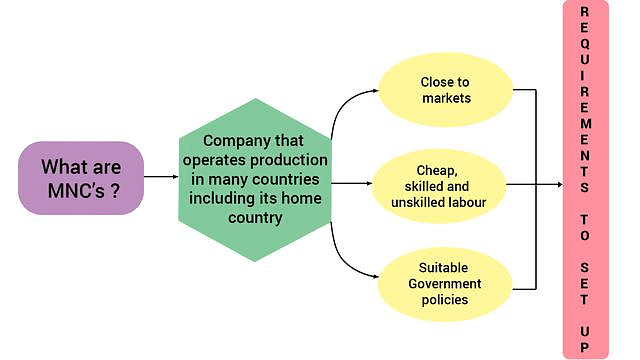
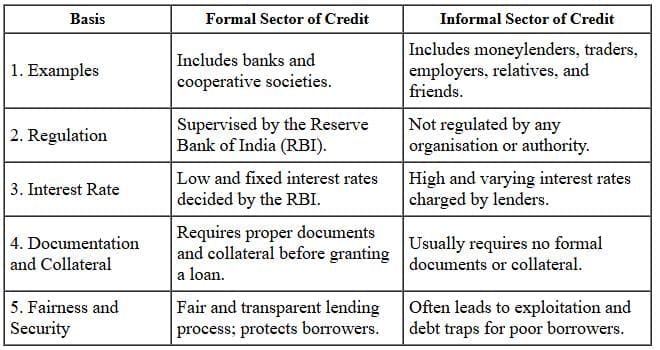 Conclusion: Formal credit is cheaper, safer, and promotes development, while informal credit often increases debt burden and inequality in rural and urban areas.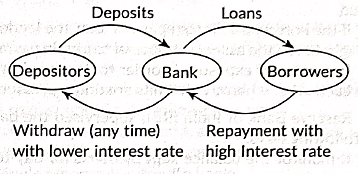
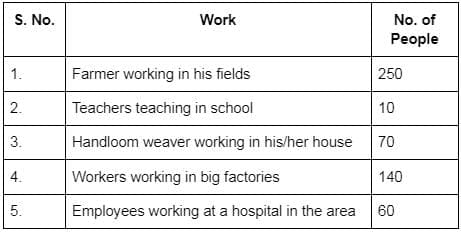
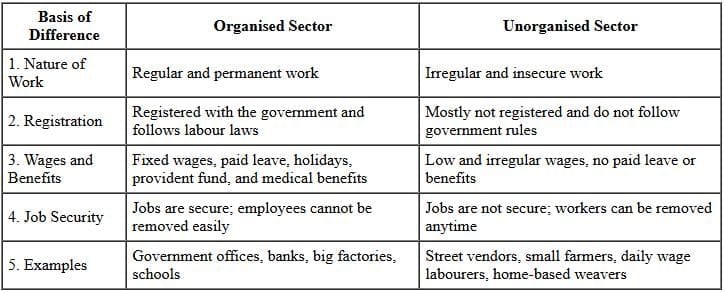
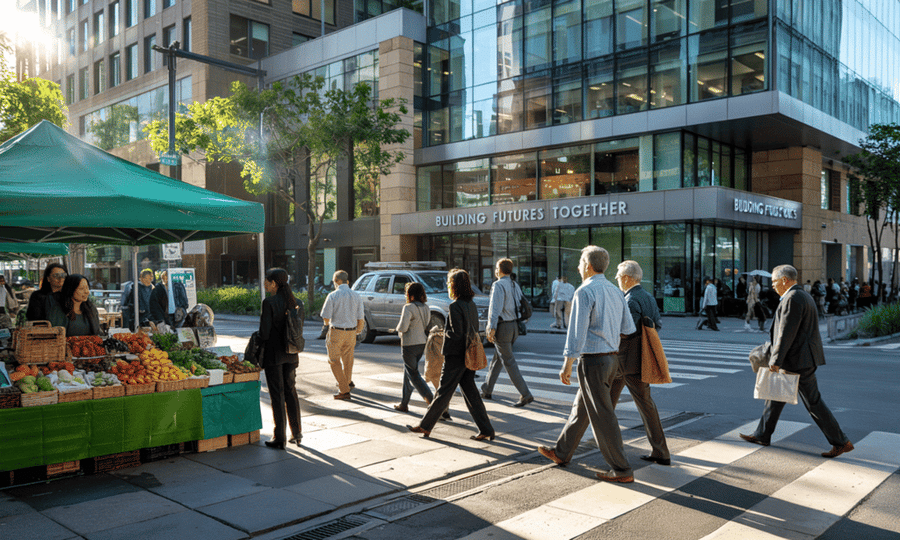
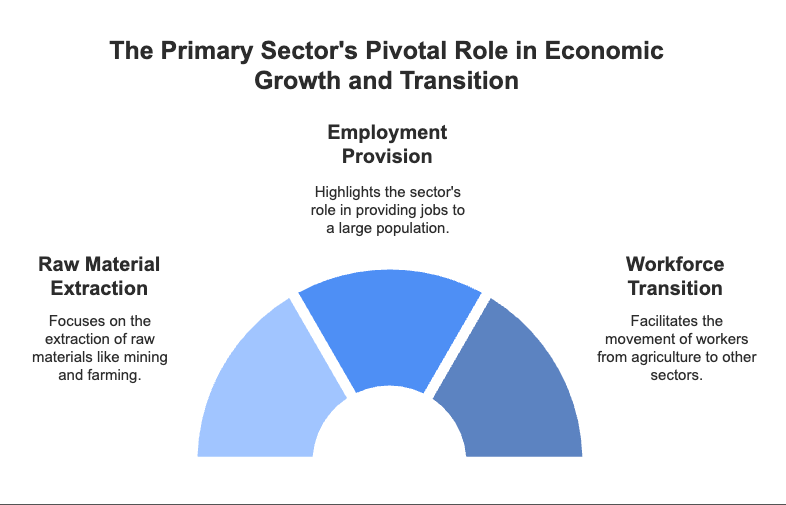
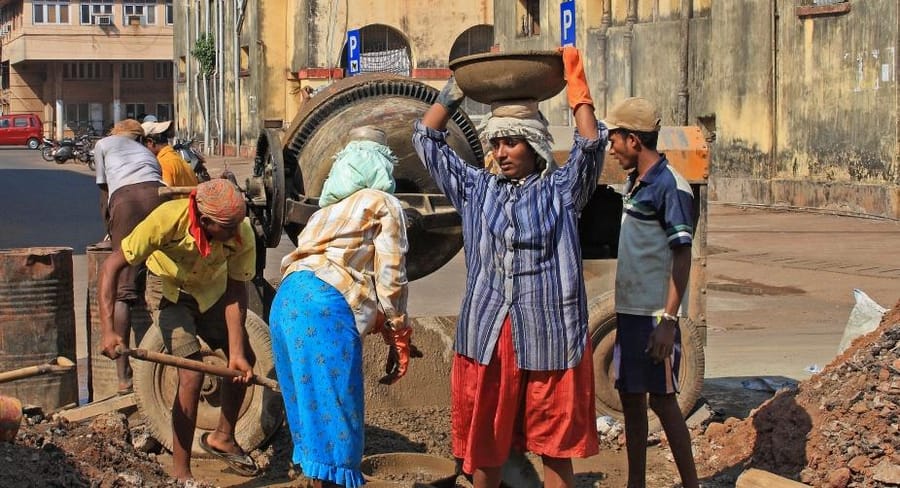
 Q56: How does the public sector contribute to the economic development of a nation? Explain. (CBSE 2014)
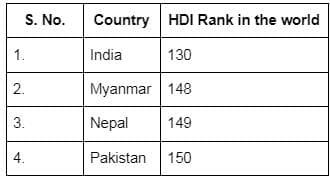 (a) Pakistan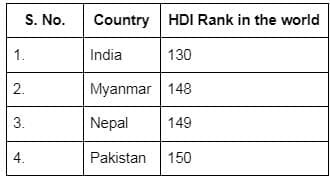
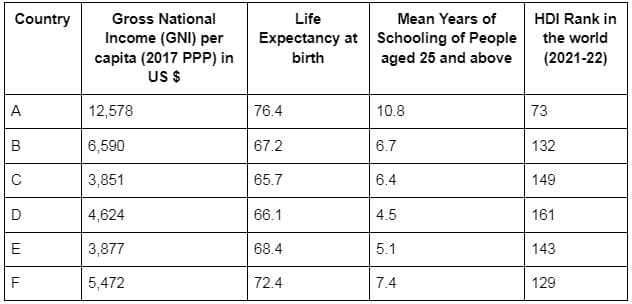
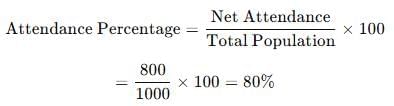
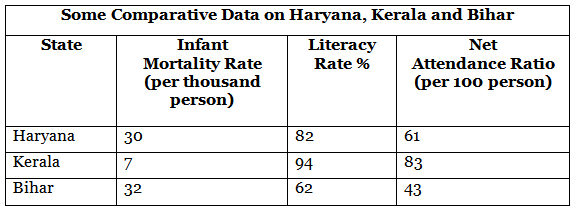
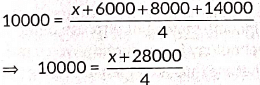
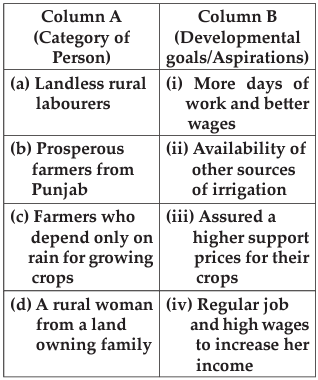
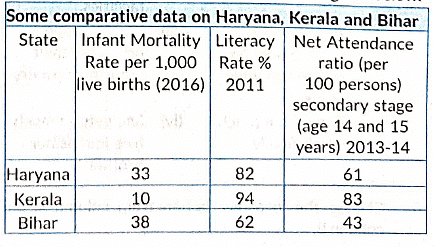
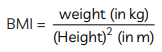





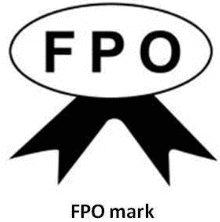
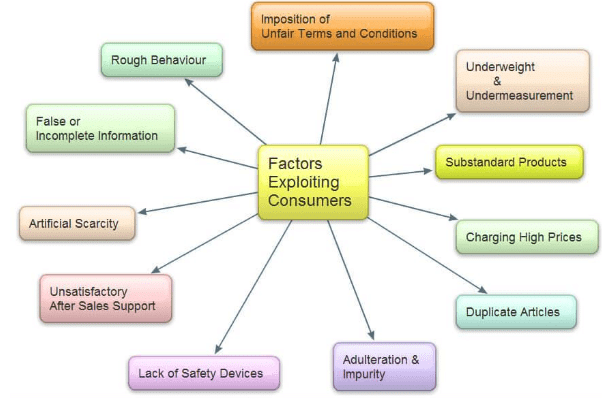
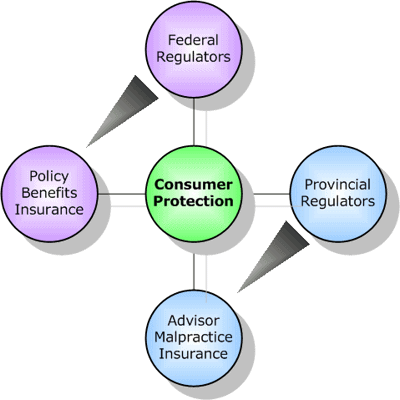
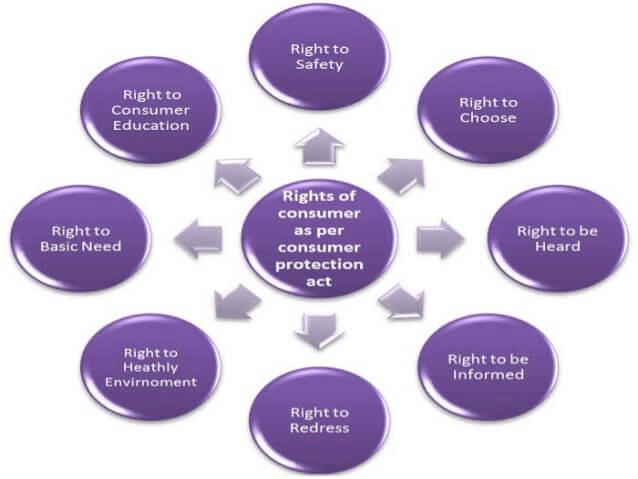
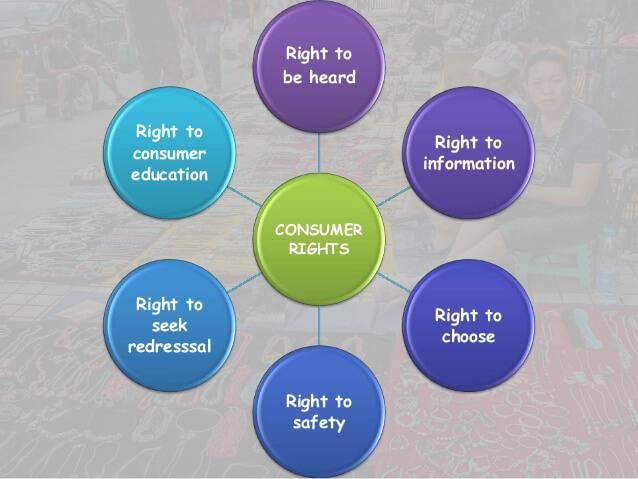
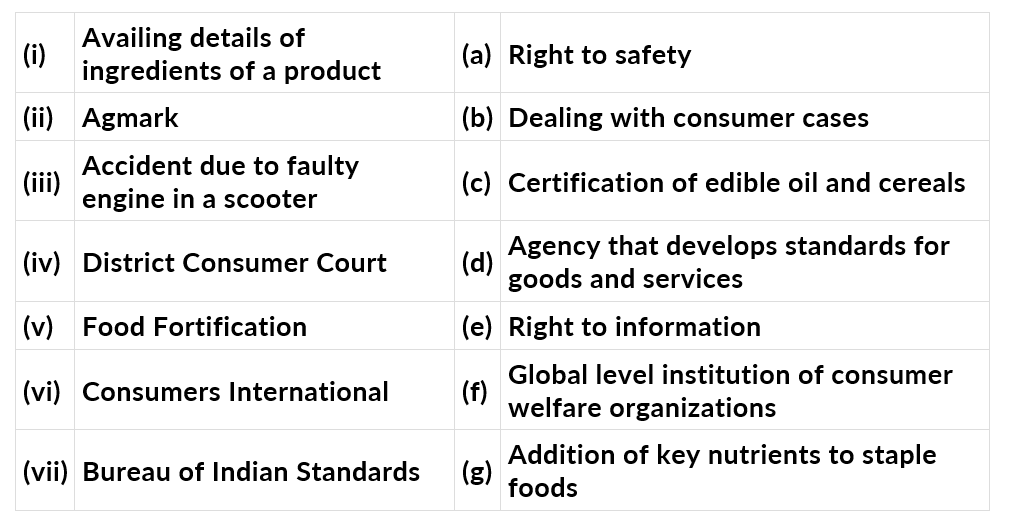
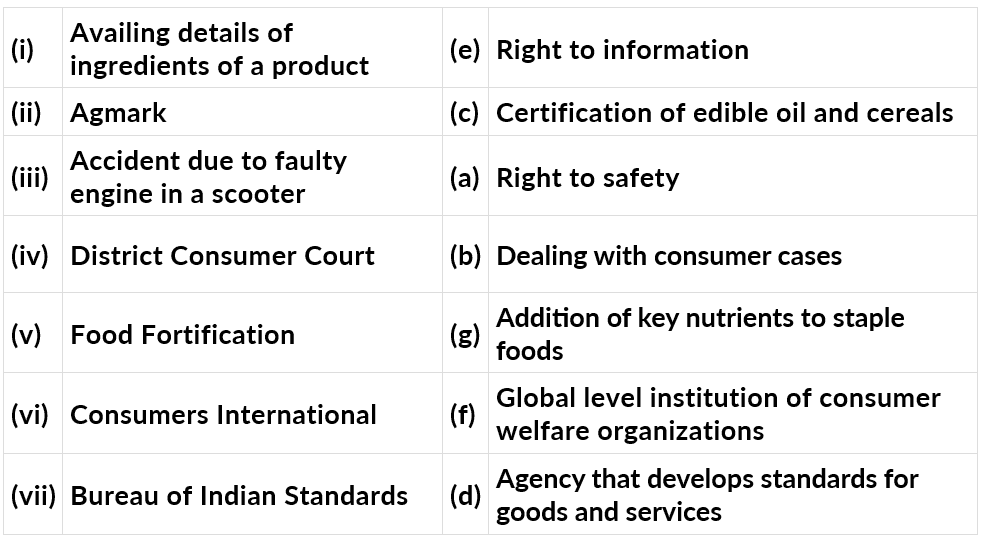
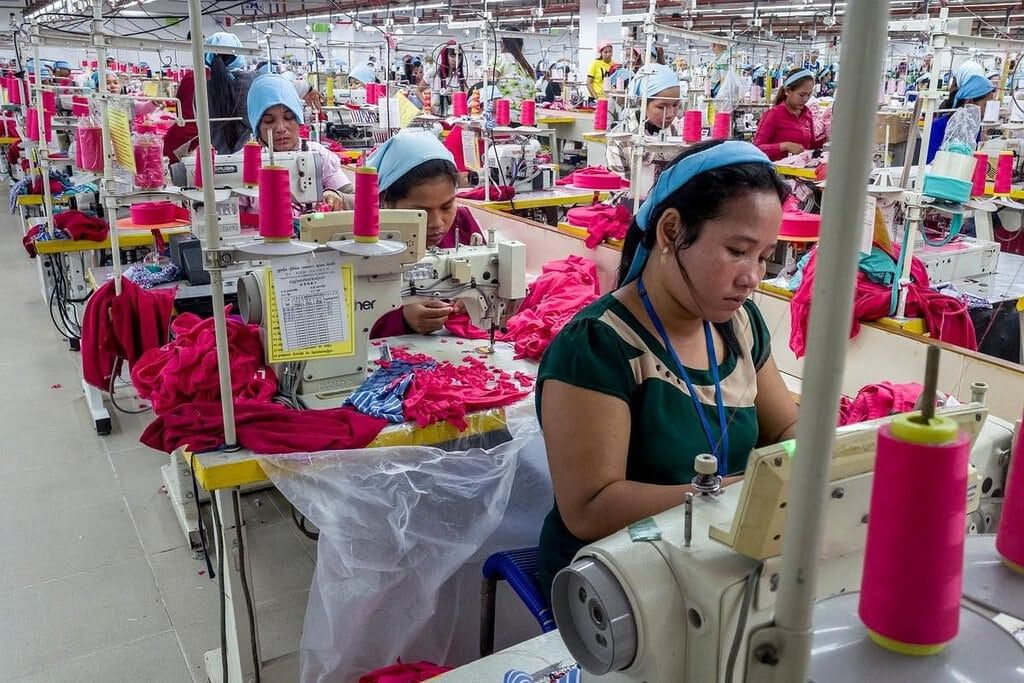

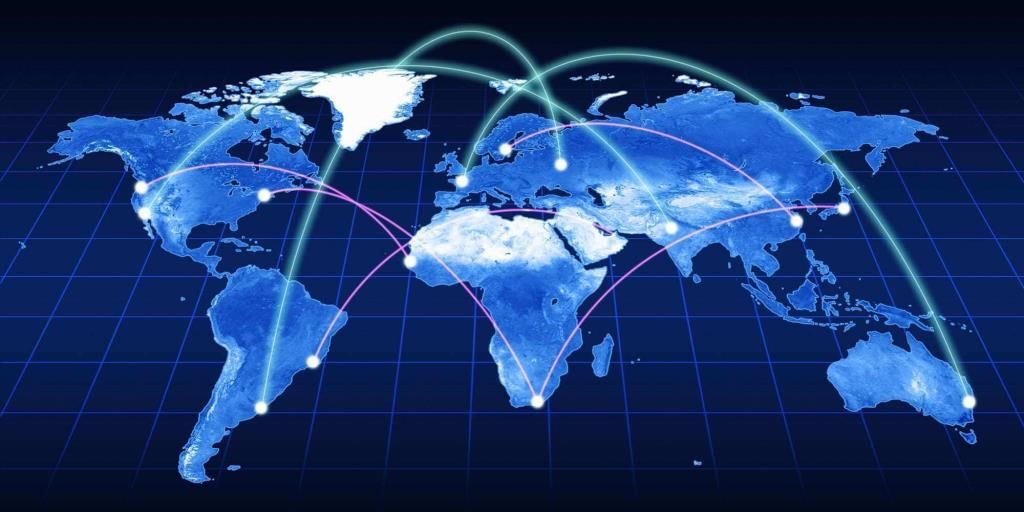
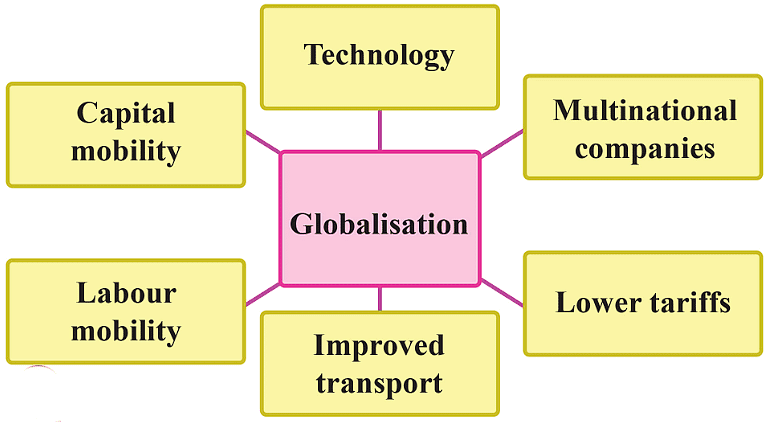
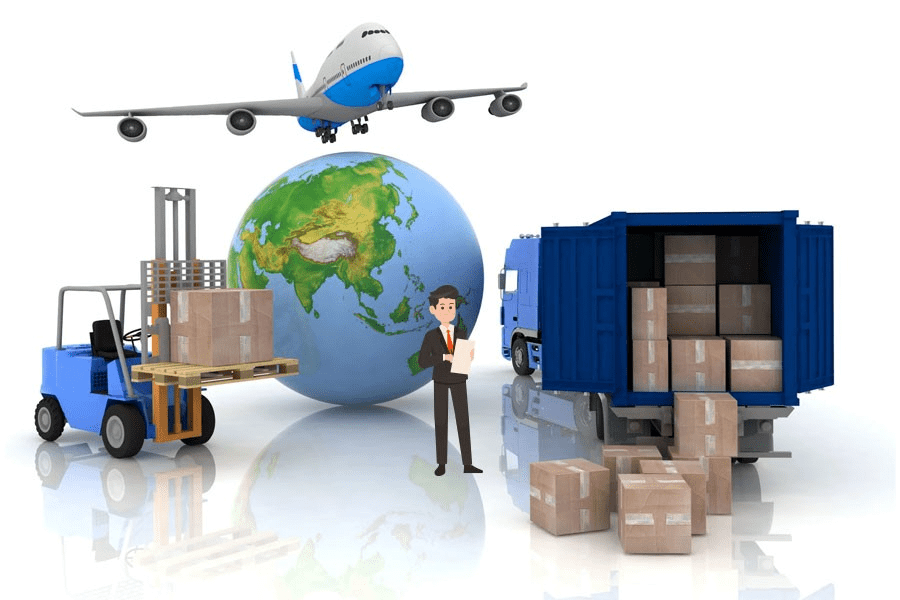
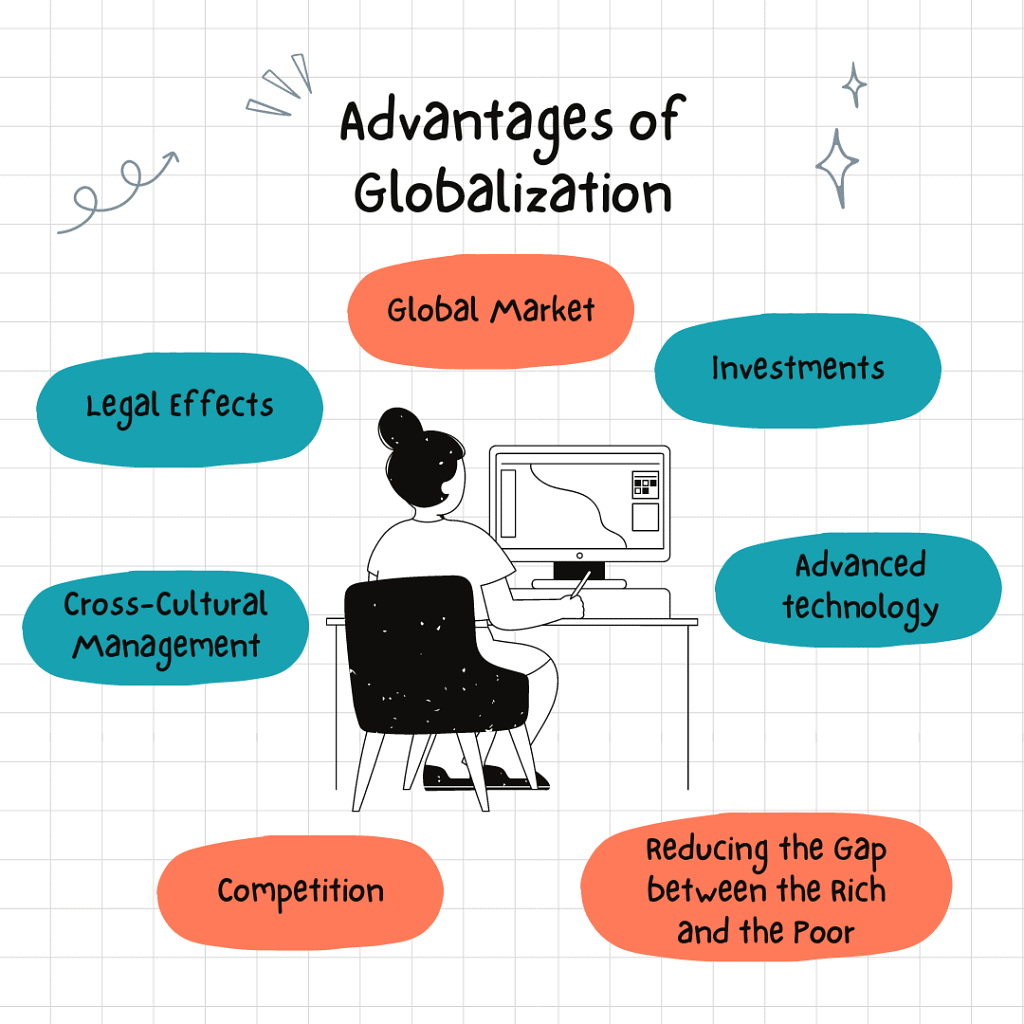
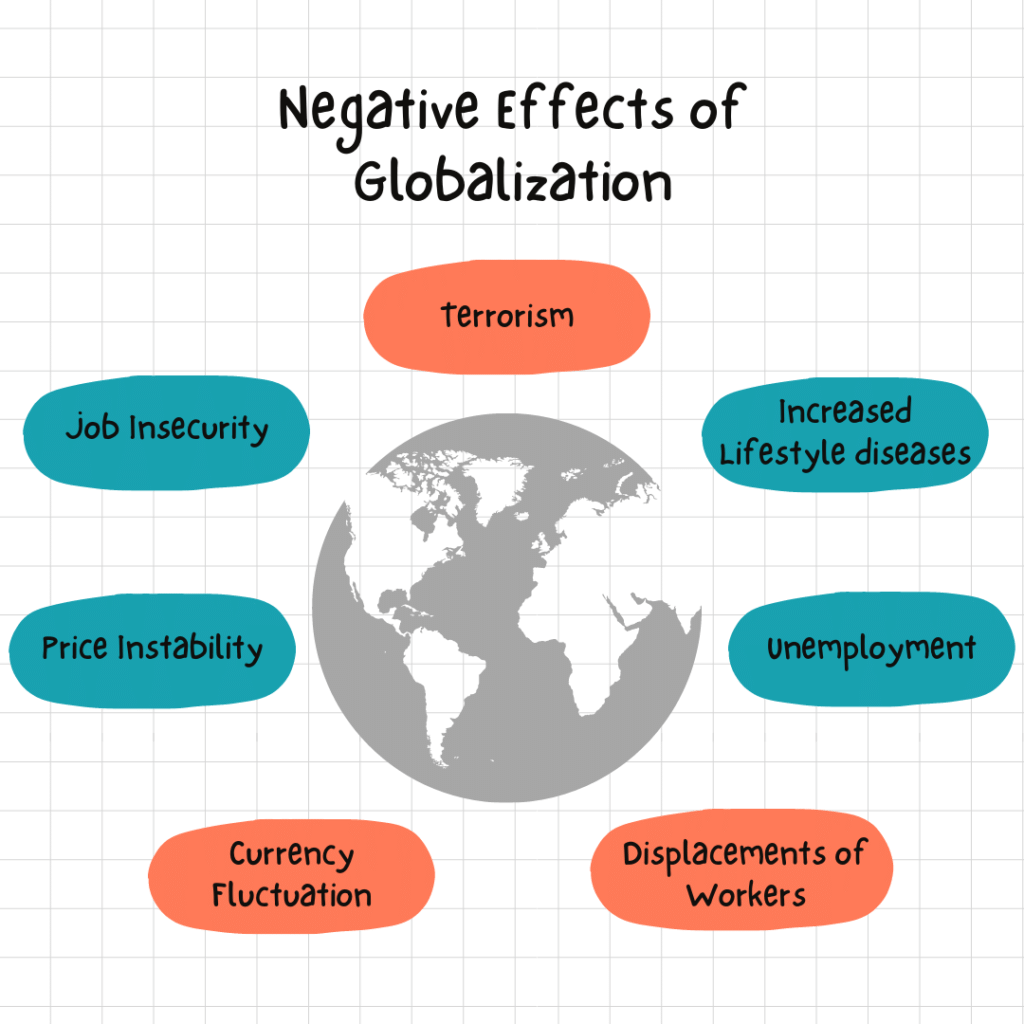
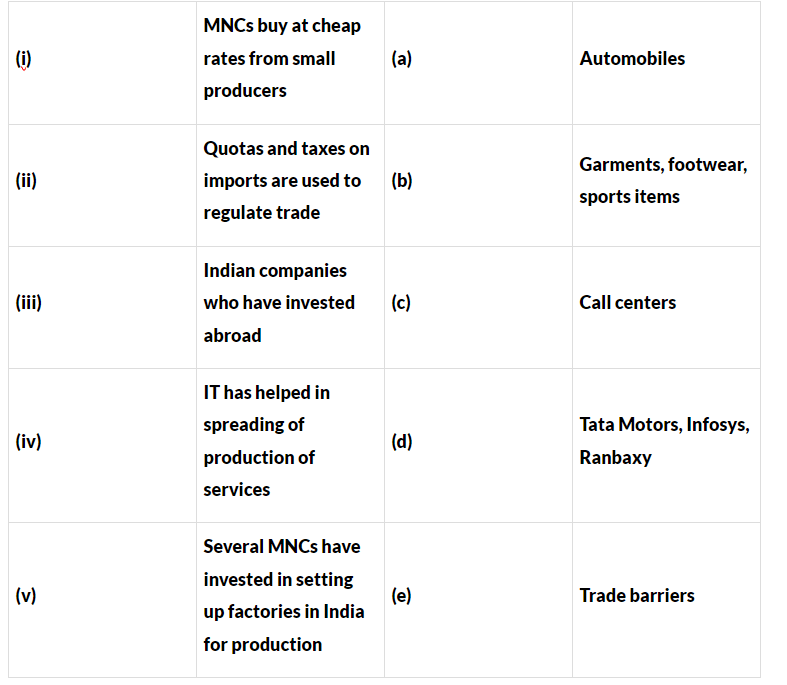
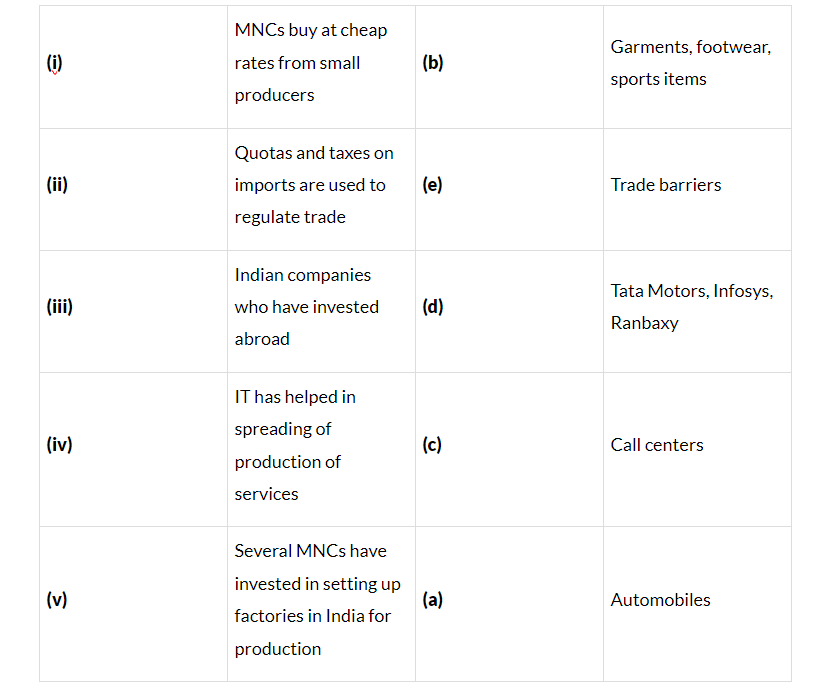
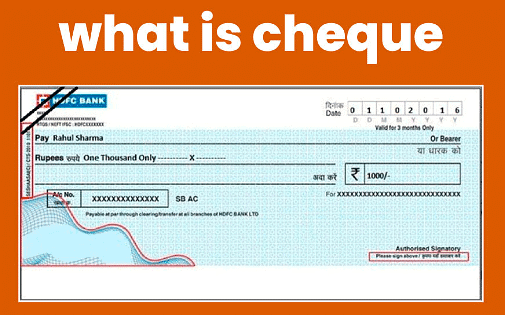
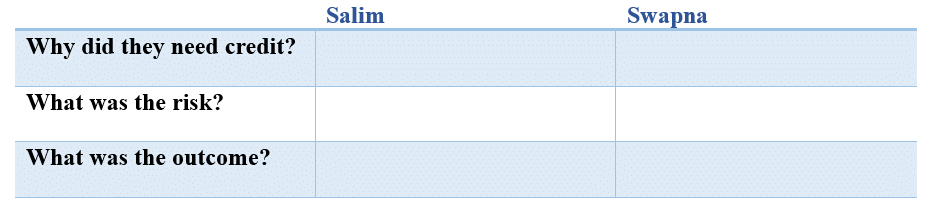
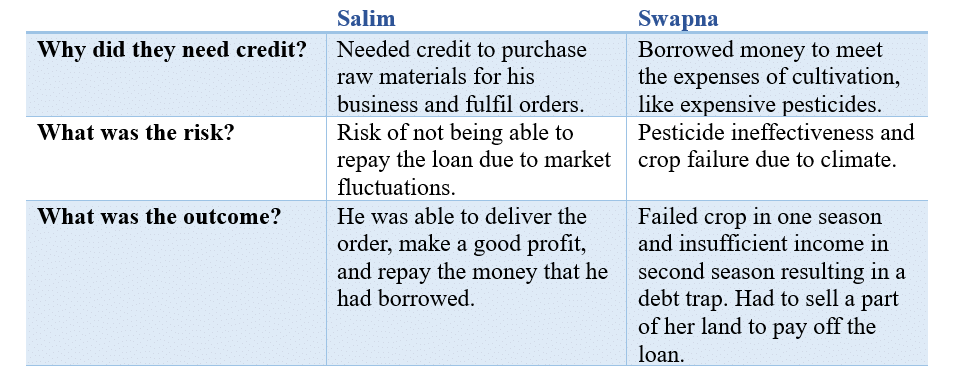
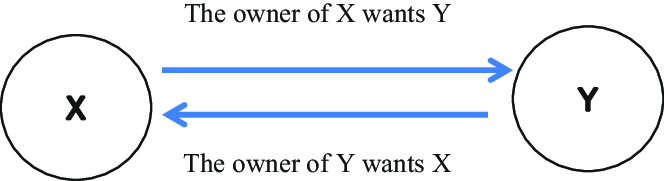 Double Coincidence