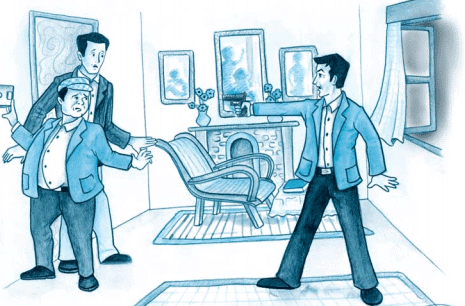
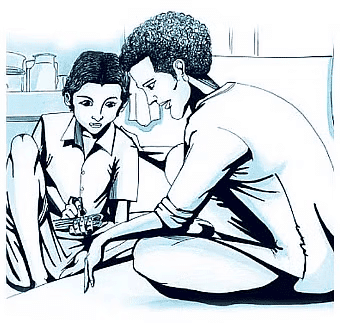
Q1: Today reading books is on the decline because of the prevalence of electronic media. Contrarily, earth is saved by a ‘Book’ in the chapter “The Book That Saved the Earth”. Elaborate. (Answer in 40-50 words) (3 Marks)
Ans: In “The Book That Saved the Earth,” a nursery rhyme book, Mother Goose, saves Earth when Martians misinterpret its rhymes as threats, prompting their retreat. This highlights books’ enduring power to influence, contrasting with the decline in reading due to electronic media’s dominance.
Q2: In what ways does Think-Tank misinterpret innocent nursery rhymes as threats to the Martians? (Answer in 100-120 words) (6 Marks)
Ans: Think-Tank misinterprets nursery rhymes in Mother Goose as threats due to his arrogance and lack of cultural understanding. He perceives “Humpty Dumpty” as a plan to destroy Mars’ moons, interpreting the egg’s fall as a strategic attack. “Hey Diddle Diddle” is seen as Earthlings’ advanced space travel and biological warfare, with the cow jumping over the moon and the dish running away. His literal interpretation of these playful rhymes, coupled with his paranoia, leads him to believe Earth poses a significant threat, prompting a hasty retreat. This highlights his flawed reasoning and the dangers of misinterpreting unfamiliar cultural artifacts without context.
Q3: The play, ‘The Book That Saved the Earth’, uses humour and misunderstandings between the Martians and Earthlings to explore the themes of perception and cultural differences. Comment. (Answer in 40-50 words) (3 Marks)
Ans: The play uses humor through Think-Tank’s absurd misinterpretations of nursery rhymes, like “Humpty Dumpty” as a Martian threat, to highlight cultural differences. These misunderstandings reveal how differing perceptions can lead to conflict, emphasizing the need for understanding to avoid misjudgments and maintain peace.
Q4: Half-baked knowledge is always dangerous. Rubbing to conclusions without going deep into the details of things always leads to uninvited chaos and disasters. Explain the above-mentioned statements in the light of Think-Tank’s interpretation of the rhymes in the book Mother Goose. (Answer in 100-120 words) (6 Marks)
Ans: Think-Tank’s half-baked knowledge leads to chaos as he misinterprets Mother Goose nursery rhymes without understanding their context. He sees “Humpty Dumpty” as a plot to destroy Martian moons and “Hey Diddle Diddle” as evidence of Earth’s advanced technology and biological warfare. His rushed conclusions, driven by arrogance and lack of thorough analysis, cause him to perceive Earth as a threat, prompting a panicked retreat. This demonstrates how superficial understanding can lead to disastrous decisions. The play highlights the danger of jumping to conclusions without delving into details, as Think-Tank’s misinterpretations nearly escalate an imagined conflict, underscoring the need for informed judgment.
Q5: ‘The Book That Saved the Earth’ communicates the idea that misinterpretation of cultural disparities among different groups can lead to misunderstandings and disputes. From the play, discuss methods to prevent such confusion and conflicts, ensuring the preservation of peace and harmony. (Answer in 100-120 words) (6 Marks)
Ans: To prevent misunderstandings like those in the play, open communication and cultural education are essential. Think-Tank’s misinterpretation of Mother Goose rhymes could have been avoided through dialogue with Earthlings to understand their culture. Encouraging curiosity, as Noodle subtly does, promotes informed perspectives. Researching unfamiliar artifacts, like the book, before acting ensures accurate interpretations. Promoting humility over arrogance, unlike Think-Tank’s approach, fosters respect for differences. Establishing peaceful exchanges, such as cultural studies or interstellar communication, can bridge gaps. By prioritizing understanding and collaboration, groups can avoid conflicts arising from misperceptions, ensuring harmony, as the play’s resolution—Earth’s salvation—implies through the Martians’ retreat.
Q6: “Think-Tank excelled in misinterpreting and mispresenting things. Do you agree? Justify giving appropriate reasons.” (Answer in 40-50 words) (3 Marks)
Ans: Yes, Think-Tank excels in misinterpreting and mispresenting things. His arrogant misreading of Mother Goose rhymes, like “Humpty Dumpty” as a Martian threat and “Hey Diddle Diddle” as advanced warfare, showcases his tendency to distort innocent texts, leading to a panicked retreat and flawed decisions.
Q7: Read the following extract from the chapter and answer the questions that follow:
“THINK-TANK: (after a huge gulp) It’s a television screen! They’re watching us! This book is a coded manual of Earth’s most secret weapon, television! Oop! Run for your lives! Invasion! Invasion!”
i. Why does Think-Tank believe the book is a coded manual of a secret weapon? (a) He sees actual images of Earthlings in the book. (b) He misinterprets the nursery rhymes as military plans. (c) He recognizes the book as a Martian artifact. (d) He believes the book controls Earth’s technology.
Ans: (b) He misinterprets the nursery rhymes as military plans. The extract shows Think-Tank’s panicked reaction to Mother Goose, mistaking its rhymes for a “coded manual” of a weapon. His earlier misinterpretations of rhymes like “Humpty Dumpty” as threats lead him to view the book as a dangerous strategic document, as detailed in the chapter.
ii. What does Think-Tank’s reaction reveal about his character?
Ans: Think-Tank’s reaction reveals his arrogance and paranoia. His quick assumption that a nursery rhyme book is a secret weapon shows his tendency to jump to conclusions without evidence, highlighting his incompetence and fear-driven leadership.
iii. How does this misunderstanding contribute to the story’s outcome?
Ans: Think-Tank’s misunderstanding of the book as a weapon causes him to order a retreat, believing Earth is too dangerous. This saves Earth from invasion, as the Martians flee, illustrating how misinterpretation can unexpectedly lead to peace.
Previous Year Questions 2020
Q1: Compare and contrast the characters of Great and Mighty Think-Tank and Noodle. (Answer the following question in 100-120 words) (CBSE 2020)
Ans: Think-Tank likes to be called ‘Great and the Mighty’. He orders and commands his apprentices arrogantly. He is the ruler of Mars, but has no intelligence of any kind. He thinks that the books found on Earth are ‘sandwiches’. He is wrong about everything. He demands that the crew obey him. He likes to present others’ ideas as his own. He is a coward who simply boasts about his power. Noodle, his apprentice, on the other hand is very clever and wise. He corrects the mistakes of his ruler, ‘Think-Tank’ very gently, without the latter even noticing it. He never takes credit for his ideas and offers them to the ruler very wisely. Though the most intelligent of all, he never blows his own trumpet and follows his ruler like an obedient subordinate.
Previous Year Questions 2019
Q1: What difficulty do the crew of the space probe face on the Earth? (Delhi 2019)
Ans: The crew of the space probe landed in a public library and faced the difficulty of not understanding what books were. They were unfamiliar with books and thought the library to be some kind of storage barn.
Q2: What is Think-Tank proud of? How do you know? (AI 2019)
Ans: Think-Tank is proud of his handsome Martian race. This is evident from his narcissistic behavior, self-praise, and boastful habits. He mocks the Earthlings and calls Earth an “insignificant place” and a “primitive ball of mud.”
Previous Year Questions 2017
Q3: Little knowledge may lead to a disaster. Describe it with reference to the lesson, ‘The Book that Saved the Earth’. (Delhi 2017 C)
Ans: In the story, ‘The Book that Saved the Earth,’ the Martians’ limited and false knowledge about Earth and Earthlings led to confusion and disaster. Think-Tank, with his little knowledge, jumped to conclusions about books, mistaking them for sandwiches and communication devices. This misunderstanding caused fear and misinterpretation of nursery rhymes, ultimately leading to the Martians’ decision to abort the mission and evacuate Mars.
Previous Year Questions 2016
Q4: It is morally incorrect to invade another country/planet for one’s own benefit. The Martians did not understand the value of peaceful coexistence. How did the book of Nursery rhymes save the earth from the Martian invasion? (Al 2016)
Ans: The book of nursery rhymes, ‘Mother Goose,’ saved the Earth from the Martian invasion by creating fear and misunderstanding among the Martians. They misinterpreted the nursery rhymes as records of interplanetary attacks on Mars and became terrified of the humans. This led them to abort the mission and call their troops back, thus preventing the invasion.
Q5: What does Noodle tell Think-Tank about the books? (Delhi 2016)
Ans: Noodle tells Think-Tank that Earthlings do not eat books but use them as a device for communication. He also mentions that humans open books and watch them.
Previous Year Questions 2015
Q6: What does Think-Tank infer on listening to the nursery rhyme, ‘Hey, diddle, diddle……’? (Al 2015)
Ans: On listening to the nursery rhyme ‘Hey, diddle, diddle’, Think-Tank infers that Earthlings have reached a high level of civilization. He believes that humans have taught their pets musical culture and space techniques, and even their dogs have a sense of humor. Think-Tank thinks that the humans are planning to launch an interplanetary attack of millions of cows.
Q7: The play, ‘The Book that Saved the Earth’ conveys the message that misunderstanding of cultural differences between various races can cause confusion and conflict. Based on your reading of the play, write how such confusion and conflicts can be checked so that peace and harmony are maintained. (Foreign 2015)
Ans: The play emphasizes the importance of healthy cross-cultural communication to prevent confusion and conflict arising from misunderstanding cultural differences. It is necessary to learn each other’s language, religion, traditions, and behavior to establish effective cultural communication. This will help reduce tension and promote peace and harmony among different races and communities.
Previous Year Questions 2014
Q8: How did the book change Think-Tank’s opinion about the Earthlings? (Al 2014)
Ans: The book, ‘Mother Goose,’ changed Think-Tank’s opinion about Earthlings. As the ignorant Martians read the nursery rhymes, they misinterpreted their meaning and felt that humans were mightier than what they had thought them to be. This terrified Think-Tank, as he believed the humans were after his life, leading him to abort the mission of invading Earth.
Q1: “In time you will be more learned than anyone else in the village. Then no one will ever be able to laugh at you.” What effect did her teacher’s words have on Bholi? Elaborate. (Answer in 40-50 words) (3 Marks)
Ans: Her teacher’s kind and encouraging words filled Bholi with new hope and confidence. For the first time, she felt valued and believed she could overcome her fear and stammering. The teacher’s affection and assurance inspired her to learn, giving her a sense of self-worth and a desire to improve herself.
Q2: Discuss how Bholi evolves through the story. What are the qualities that contribute to her transformation from a timid girl to a confident young woman? (Answer in 100-120 words) (6 Marks)
Ans: Bholi evolves from a neglected, fearful, and stammering girl into a confident and self-respecting young woman. At first, she is ridiculed for her looks and speech, making her timid and withdrawn. Her transformation begins when her kind teacher treats her with love and patience, encouraging her to speak and learn. Education becomes the key to her empowerment, giving her confidence, courage, and dignity. By the end of the story, Bholi stands up against a greedy bridegroom, rejecting the unfair marriage proposal. Her self-respect, courage, and sense of right and wrong show her remarkable growth. She chooses independence and service over compromise, proving that education and encouragement can transform even the most neglected child.
Q3: Bholi’s heart was brimming with “fresh optimism and a renewed existence.” What significance does the expression “a new hope and a new life” hold for Bholi? (Answer in 40-50 words) (3 Marks)
Ans: The expression “a new hope and a new life” signifies Bholi’s awakening to self-worth and confidence after meeting her compassionate teacher. For the first time, she feels loved, encouraged, and hopeful about her future. Education opens a new path for her, replacing fear and humiliation with dignity and courage.
Q4: Bholi is sent to school for an uncommon reason, leading to a distinctive twist in her story. Elucidate. (Answer in 40-50 words) (3 Marks)
Ans: Bholi was sent to school not for learning, but because her parents considered her unattractive and thought no one would marry her. Ironically, this decision became the turning point in her life. Education empowered her, transforming the timid, neglected girl into a confident, self-respecting young woman.
Q5: Why was Bholi frightened to go to school? (Answer in 40-50 words) (3 Marks)
Ans: Bholi was frightened to go to school because she had never been treated kindly before and didn’t know what a school was like. She thought her father might sell her, just as he had sold their cow, Lakshmi. Fearful and unsure, she cried and resisted going with him.
Q6: Was it easy for Bholi to refuse to marry Bishamber? What gave her the confidence to do so? (Answer in 40-50 words) (3 Marks)
Ans: It was not easy for Bholi to refuse the marriage, but her education and her teacher’s encouragement had given her courage and self-respect. She realized her own worth and refused to marry the greedy Bishamber, choosing dignity and independence over societal pressure and humiliation.
Q7: Imagine you are Bholi and write a diary entry, explaining how you dare to take such a bold step of refusing to marry Bishamber. (Answer in 100-120 words) (6 Marks)
Dear Diary, Today was the most important day of my life. I stood up for myself for the first time. When Bishamber demanded dowry after seeing my face, I felt deeply insulted. All my fears disappeared, and I realized I could not spend my life with such a greedy man. My teacher’s words echoed in my mind — to be brave, to value myself, and to never let anyone make me feel inferior. I refused the marriage, even though everyone was shocked. I know people will talk, but I feel free and proud. I have chosen respect over disgrace. From now on, I will live with confidence and dignity.
— Bholi
Q8: It is truly said that a good teacher is the light that helps one cross even the darkest of paths through honing their inherent qualities which enable them to shine bright and strong in life. In what ways does Sulekha’s teacher epitomize this saying? How did she become the pillar of support and strength for Sulekha? (Answer in 100-120 words) (6 Marks)
Ans: Bholi’s teacher truly embodies the saying that a good teacher is a guiding light. She treated Bholi with love, patience, and respect when no one else did. Instead of mocking her stammer or appearance, she encouraged her to speak, learn, and believe in herself. Her gentle words and faith in Bholi’s potential replaced fear with confidence and self-esteem. Through education and emotional support, the teacher awakened Bholi’s courage and self-respect. Years later, this guidance gave Bholi the strength to reject a greedy bridegroom and stand up for her dignity. The teacher not only educated her but also shaped her into a confident, independent young woman — truly a pillar of light in Bholi’s dark life.
Q9: Read the following extract from the chapter and answer the questions that follow: “The teacher had all along been sitting at the back, watching the drama. She was happy to see the confidence and courage of her pupil. ‘Yes, Bholi, you have done well,’ she said to herself.”
i. What “drama” is the teacher referring to in the extract? (a) Bholi’s academic performance in school. (b) Bholi’s refusal to marry Bishamber. (c) Bholi’s argument with her family. (d) Bholi’s participation in a school play.
Ans: The teacher was happy because Bholi, once a timid and fearful girl, had found the courage to stand up for her dignity. Her refusal to marry the greedy Bishamber showed that she had truly absorbed her teacher’s lessons of self-respect and confidence.
iii. What does this extract reveal about the teacher’s role in Bholi’s life?
Ans: The extract reveals that the teacher played a transformative role in Bholi’s life. She was not only her educator but also her guide and moral support. By nurturing Bholi’s confidence and faith in herself, the teacher became the inspiration behind Bholi’s courage and independent identity.
Previous Year Questions 2024
Q1: Imagine that Bholi write a diary entry, exploring the themes of ‘Girl Child’ and ‘Impact of Education’, in the context of her own experiences. Write this diary entry, as Bholi. (2024)
Ans: 12 March 20XX, Wednesday 3 p.m. Dear Diary, Today, I am feeling utmost proud of myself for rejecting the marriage with the old man. From the moment I was born, I was ridiculed by my family members and friends because of my pock – marked face. People used to call me Bholi because they considered me a simpleton whom nobody would marry. My teacher showed me a world where my stammering and pockmarked face didn’t matter because of her kind words and patience. Where others saw limitations, she saw potential in me. I’ve discovered my voice in education. I defied injustice today by declining to wed a man who treated me like a commodity. My education has given me the confidence to dream bigger and to challenge social norms. Bholi
Previous Year Questions 2023
Q2: Bholi was believed to be a dumb cow’. What turned her into a fearless, bold and confident girl? (2023)
Ans: Bholi was turned into a fearless, bold, and confident girl by her teacher who encouraged, inspired, and showed her love and affection. Education played a crucial role in transforming Bholi’s life and giving her the courage to stand against the oppressive and greedy Bishamber Nath. Through education, Bholi gained the confidence to refuse his marriage proposal based on dowry demands. She decided to become economically independent by becoming a teacher and taking care of her aged parents.
Q3: Education is considered the most important tool for empowering women in society. It plays an important role in social and cultural development.’ Prove the above statement in the light of the story ‘Bholi’. (2023)
Ans: In the story ‘Bholi’, education is portrayed as a powerful tool for empowering women in society. Bholi, who was initially considered a neglected and dumb child, had her life transformed through education. Her teacher played a significant role in encouraging and inspiring her, which led to an increase in her confidence and self-esteem. With education, Bholi was able to stand up against societal norms and refuse a marriage proposal based on dowry demands. She chose to become economically independent and pursue a career as a teacher. This demonstrates how education can empower women by providing them with the knowledge, skills, and confidence to challenge oppressive norms and make independent choices.
Q4: Education is always a great asset in the life of a woman. How did Bholi, an educated girl, face the challenge posed by Bishamber’s greed? (Answer the following questions in 100-120 words) (CBSE 2023)
Ans: It is true that education is always a great asset in the life of a woman. Bholi was an educated girl and this helped her swim through the challenge by her fiance Bishamber Nath. He was a wealthy landlord who had Grown-up I wonder if she is fierce or caring. parents agreed to marry her to him only because they thought Bholi could never get married due to her appearance and dull mind. On the day of wedding, Bishamber asked a huge amount of dowry from Bholi’s father as a compensation for marrying their pock – marked face daughter. Bholi instantly rejected marrying Bishamber, knowing his greed. She decided not marry ever and serve her village by teaching the children. All of this was possible due to Bholi’s education, which made her aware of her rights and made her independent enough to make her own life’s decision.
Previous Year Questions 2021
Q5: Imagine you are Bholi and you have been invited to give a speech on the importance of girl education. Write the speech on ‘Girl Education and Empowerment’. (Term II, 2021-22)
Ans: As Bholi, I would deliver the following speech on ‘Girl Education and Empowerment’: Respected teachers, staff, and fellow students, I stand before you today to shed light on the importance of girl education and empowerment. In our society, girls often face numerous challenges and barriers when it comes to education. They are often considered secondary to boys, and their potential is overlooked. However, I strongly believe that girl education is not just a necessity but a powerful tool for empowerment. Education is the key that unlocks countless opportunities and opens doors to a brighter future. When girls are educated, they become aware of their rights, their abilities, and their worth. Education gives them the knowledge and skills to navigate the world with confidence and resilience. It enables them to break free from traditional gender roles and challenge societal norms. By educating girls, we are investing in the development of our society as a whole. Educated girls grow up to become empowered women who contribute to the progress and prosperity of their communities. They become leaders, innovators, and agents of change. They have the power to shatter glass ceilings and inspire future generations. Education not only equips girls with academic knowledge but also nurtures their critical thinking, problem-solving, and decision-making abilities. It empowers them to make informed choices, advocate for their rights, and stand up against injustice. Education provides them with the tools to break free from the cycle of poverty, discrimination, and inequality. We must recognize that every girl deserves access to quality education. It is our collective responsibility to ensure that no girl is left behind simply because of her gender. We need to create an inclusive and supportive environment that encourages girls to pursue their dreams and aspirations. This includes providing safe and conducive learning spaces, addressing social and cultural barriers, and promoting equal opportunities for all. In conclusion, girl education is not just about acquiring knowledge but about empowering girls to realize their full potential. It is about creating a society where every girl can thrive, lead, and contribute meaningfully. Let us join hands, break down barriers, and champion the cause of girl education and empowerment. Together, we can build a future where every girl can dream, learn, and rise to greatness. Thank you.
Previous Year Questions 2020
Q6: What does the phrase “a new hope and a new life” mean to Bholi? (2020 C)
Ans: The phrase “a new hope and a new life” means that Bholi’s heart was filled with optimism and excitement. She saw education as an opportunity to change her life and have a fresh start. It symbolized a chance for her to be equal with others and overcome the challenges she faced due to her physical appearance and speech difficulties.
Ans: Bholi did not marry Bishamber because he demanded a dowry of five thousand rupees after seeing the pockmarks on her face. Bholi’s father pleaded with Bishamber to reconsider, but he remained adamant. Bholi, realizing that Bishamber was a mean and greedy man, threw away the garland and refused to marry him.
Ans: Bholi disliked Bishamber because he was a mean, greedy, and cowardly man. He demanded a dowry of five thousand rupees after seeing Bholi’s pockmarks, showing his materialistic and shallow nature. Bholi saw through his true character and refused to marry him.
Q9: How did education change Bholi’s personality? (Answer the following questions in 100-120 word) (CBSE 2020)
Ans: Education brought a remarkable and positive transformation in Bholi’s personality. Initially struggling with a stammer when she started school, she found support and encouragement from her teacher, who instilled confidence in her and taught her to read, write, and speak effectively. This newfound self-assurance enabled Bholi to stand up for herself and her father. On her wedding day, she boldly refused to marry the greedy groom and insisted her father reclaim his money. Without the opportunity to attend school, Bholi might have remained a timid, shy girl burdened by her stammer throughout her life.
Previous Year Questions 2019
Q10: Why did Bholi’s parents accept Bishamber’s marriage proposal? (2019 C)
Ans: Bholi’s parents accepted Bishamber’s marriage proposal because he was a rich man from another village who did not know about Bholi’s physical flaws. Additionally, he did not demand a dowry, which was a relief for her parents as they were worried about finding a suitable husband for Bholi. They saw this as an opportunity to secure Bholi’s future and agreed to the proposal.
Q11: How did Bholi react when Bishamber demanded five thousand rupees? (2019 C)
Ans: When Bishamber demanded a dowry of five thousand rupees after seeing Bholi’s pockmarks, Bholi’s father pleaded with him not to cancel the marriage. However, Bholi, realizing that Bishamber was a mean and greedy man, threw away the garland into the fire and refused to marry him. She stood up for herself and refused to be treated as a commodity.
Q12: Bholi is a child different from others. This difference makes her an object of neglect and laughter. Elaborate. (Delhi 2019)
Ans: Bholi, originally named Sulekha, was considered different from other children due to her physical and speech impairments. When she was just ten months old, she fell on her head, resulting in damage to a part of her brain. At the age of two, she contracted smallpox, which left deep black pockmarks on her entire body, except for her eyes. Additionally, Bholi’s speech was not clear, and she stammered when she spoke. This made her a target of mockery and laughter by other children, further isolating her. Due to her differences, Bholi was neglected and treated indifferently, even by her own family. She remained a quiet and introverted child, choosing not to speak much to avoid being ridiculed. However, when she started going to school, her life began to change. Her teacher provided her with the necessary encouragement, inspiration, and love, which boosted her confidence and transformed her into a smart, fearless, and confident girl. Bholi’s teacher played a crucial role in changing the course of her life, showing that with the right support and education, children who are considered different can overcome neglect and laughter and become empowered individuals.
Previous Year Questions 2017
Q13: Education is always a great asset in the life of a woman. How did Bholi, an educated girl, face the challenge posed by Bishamber’s greed? (Delhi 2017)
Ans: Education played a crucial role in empowering Bholi to face the challenge posed by Bishamber’s greed. Being educated, Bholi developed self-confidence, self-respect, and the ability to stand up for herself. When Bishamber demanded a dowry of five thousand rupees after seeing Bholi’s pockmarks, her father pleaded with him to reconsider. However, Bholi, realizing that Bishamber was a mean and greedy man, threw away the garland and refused to marry him. She refused to be treated as a commodity and stood up against the unjust demand for dowry. Bholi’s education gave her the courage to defy societal expectations and prioritize her self-worth. She understood that her value as a person went beyond her physical appearance and that she deserved respect and dignity. By refusing to marry Bishamber, Bholi demonstrated her strength and independence, showing that education had equipped her to face challenges head-on.
Q14: School education turned Bholi from a dumb cow into a bold girl. How did she save her father from a huge expense and become his support in his old age? (Al 2017)
Ans: School education played a transformative role in Bholi’s life, turning her from a “dumb cow” into a bold and confident girl. This transformation empowered her to save her father from a huge expense and become his support in his old age. When Bishamber demanded a dowry of five thousand rupees to marry Bholi, her father, Ramlal, pleaded with him not to cancel the marriage. However, Bholi, realizing that Bishamber was a mean and greedy man, threw away the garland and refused to marry him. She took a stand against the dowry system and the mistreatment of women. By refusing to marry Bishamber, Bholi saved her father from the financial burden of paying a hefty dowry. Instead, she decided to become a teacher and support her parents in their old age. Her education gave her the skills and confidence to pursue a career and become economically independent. Bholi’s transformation from a neglected and underestimated girl to a bold and responsible woman showcases the power of education in changing lives and breaking societal barriers. Her story serves as an inspiration for all girls who face adversity, showing them that education can be their greatest asset and a path to empowerment.
Q15: The teacher plays an important role in changing the course of a person’s life, especially that of a young woman. What role did Bholi’s teacher play in bringing about a change in her life? (Foreign 2017)
Ans: Bholi’s teacher treated her with love and compassion, and encouraged her to read and study. She inspired Bholi to become a teacher herself. Education helped Bholi gain her self-confidence. She became aware of self-respect and bravely enough, refused to marry the aged, mean, greedy and cowardly Bishamber Nath.
Previous Year Questions 2016
Q16: What made Bholi aware of her rights and how did she use them? (Delhi 2016)
Ans: Bholi became aware of her rights through education. Education gave her self-confidence and taught her about self-respect. She realized that she had the right to live a dignified life and make her own choices. Bholi used her rights by refusing to marry a greedy and contemptible man and by standing up against the practice of dowry. She also decided to take care of her parents in their old age, showing her sense of responsibility and love for her family.
Q17: What turned Bholi into a fearless, bold, and confident girl? (Foreign 2016)
Ans: Bholi’s transformation into a fearless, bold, and confident girl was brought about by her teacher’s encouragement, inspiration, and love. The teacher believed in Bholi’s potential and motivated her to overcome her fears and insecurities. The teacher’s words of encouragement, “Put the fear out of your heart and you will be able to speak like anyone else,” helped Bholi gain confidence in herself. With the teacher’s support, Bholi started studying more and emerged as a bold girl who was no longer intimidated by others. She learned to face the world bravely and assert her rights.
Ans: Sulekha was nicknamed Bholi because she couldn’t speak until she was five years old, and when she finally learned to speak, she stammered. The other children often made fun of her and mimicked her, which led to the nickname “Bholi,” meaning a simpleton or a person who is slow-witted.
Previous Year Questions 2015
Q19: For what unusual reasons was Bholi sent to school? (Delhi 2015)
Ans: Bholi was sent to school for unusual reasons. The Tehsildar had advised Bholi’s father, Ramlal, to send his daughters to school. The main reason was that Bholi had little chance of getting married due to her physical appearance and speech difficulties. Sending her to school was seen as a way to improve her prospects and give her a chance at a better future.
Q20: Why did Bishamber’s marriage with Bholi not take place? (Delhi 2015)
Ans: Bishamber’s marriage with Bholi did not take place because he demanded a dowry of five thousand rupees after seeing Bholi’s pockmarks. Bholi’s father pleaded with him, even putting his turban at Bishamber’s feet, but Bishamber remained indifferent. Bholi, realizing that he was a mean, greedy, and cowardly man, threw away the garland and refused to marry him.
Q21: What filled Bholi, a dumb cow, with a new hope? (CBSE 2015)
Ans: Bholi was filled with a new hope when she heard her teacher’s soft and soothing voice. No one had ever spoken to her so kindly and encouragingly. Her teacher gave her a book to read and promised to give her more books that would help her learn new things. This filled Bholi with optimism and a renewed interest in education.
Q22: What did Sulekha later on come to be known as? (Delhi 2015)
Ans: Sulekha later came to be known as Bholi. This nickname was given to her because she couldn’t speak until she was five years old, and when she finally learned to speak, she stammered. The other children often made fun of her and mimicked her, which led to the nickname “Bholi,” meaning a simpleton or a person who is slow-witted.
Q23: How did the social attitude towards Bholi make her an introvert? What should be done to help such children face the world bravely? (Delhi 2015)
Ans: The social attitude towards Bholi, considering her a “dumb cow,” made her feel inferior and lacked self-confidence. Bholi was constantly ridiculed and laughed at by others, which made her withdraw into herself and become introverted. She feared speaking up because of her stammering and the fear of being ridiculed further. To help such children face the world bravely, it is essential to change the social attitude towards them. They should be treated with love, care, and respect, just like any other child. Encouragement, support, and understanding from teachers, parents, and society can make a significant difference in their lives. Creating a safe and inclusive environment where they feel accepted and valued will help them build confidence and overcome their insecurities. Providing opportunities for their talents to shine and recognizing their achievements will boost their self-esteem. Additionally, counseling and therapy can also be beneficial in helping them overcome their fears and develop the necessary skills to face the world bravely.
Previous Year Questions 2014
Q24: Give examples from the text to show that Bholi was a neglected child? (Delhi 2014)
Ans: In the text, there are several examples that show Bholi was a neglected child. Her parents did not make new clothes for her and she always wore hand-me-downs from her elder sisters. She was unbathed and her hair was unwashed. Bholi’s parents were willing to marry her off to an old, lame widower because of her physical appearance and speech difficulties. These instances indicate that Bholi did not receive the same care and attention as her siblings.
Q25: How did the teacher build up Bholi’s confidence on her first day at school? (Al 2014)
Ans: On Bholi’s first day at school, the teacher asked her to say her name. However, Bholi’s stammering made it difficult for her to speak clearly. After the class, the teacher called Bholi to herself and lovingly made her say her full name. The teacher praised Bholi for her efforts, patted her affectionately, and told her to put fear out of her heart, assuring her that she would be able to speak like anyone else. This built up Bholi’s confidence and encouraged her to overcome her speech difficulties.
Q26: What can you contribute to change the social attitudes illustrated in the story of ‘Bholi’? (Foreign 2014)
Ans: To change the social attitudes illustrated in the story of ‘Bholi’, one can contribute in several ways. Firstly, raising awareness about the social evils and discriminatory practices depicted in the story is crucial. This can be done through various means such as discussions, debates, and campaigns that highlight the importance of equal rights and opportunities for all individuals, regardless of their gender or physical appearance. Education plays a vital role in changing social attitudes, so promoting and advocating for equal access to education for girls and women is essential. This can involve supporting initiatives that provide scholarships or financial assistance to girls who face barriers to education. Additionally, promoting gender equality and challenging traditional gender roles can help in changing social attitudes. Encouraging girls and women to pursue their dreams and aspirations, regardless of societal expectations, can contribute to breaking gender stereotypes. Lastly, fostering a culture of respect, empathy, and inclusivity within families, communities, and institutions is crucial. By treating individuals with dignity and valuing their contributions, we can create an environment where everyone feels empowered and respected, regardless of their background or physical appearance.
Ans: In the beginning of the story, Matilda Loisel is a pretty but discontented woman who constantly dreams of luxury and wealth. She feels unhappy with her modest life and is obsessed with material possessions, beauty, and social status. Her vanity leads her to borrow a diamond necklace to appear rich at a grand party. However, after losing it, her life changes drastically. To repay the debt for the replacement necklace, she works hard for ten long years, doing all the household chores and living in poverty. This struggle transforms her into a strong, hardworking, and humble woman who learns the value of honesty and contentment. Her pride and vanity give way to endurance and maturity.
Q2: How did Mr. & Mrs. Loisel replace the lost necklace? What kind of life did the Loisels lead thereafter? (Answer in 100-120 words) (6 Marks)
Ans: When Mme Loisel realised that she had lost Mme Forestier’s diamond necklace, she and her husband searched everywhere but failed to find it. Finally, M. Loisel decided that they must replace it. They visited several jewellers and found a necklace that looked exactly like the lost one, priced at thirty-six thousand francs. M. Loisel used eighteen thousand francs inherited from his father and borrowed the remaining amount on heavy interest from moneylenders. To repay the debt, they dismissed their maid, shifted to a small attic, and lived a life of poverty and hard labour. Mme Loisel did all the household work herself, while her husband worked extra hours. For ten years, they lived a life of hardship and struggle to repay the debt.
Q3: Were the sacrifices made by the Loisels in vain? Justify your answer with reference to the text. (Answer in 100-120 words) (6 Marks)
Ans: Yes, the sacrifices made by the Loisels were in vain. They spent ten long years in extreme poverty and hard labour to repay the huge debt incurred in replacing the lost necklace. Mme Loisel worked tirelessly, doing all household chores, while M. Loisel took up extra jobs at night to earn money. Their youth and happiness were lost in the struggle. In the end, when Mme Loisel met Mme Forestier after ten years, she discovered that the original necklace was a fake and worth only about five hundred francs. All their suffering and sacrifice had been for nothing. Their misfortune was the result of Matilda’s vanity and her failure to be honest when the necklace was lost.
Q4: Why does Mme Loisel hastily depart from the ball when her husband places a modest wrap on her shoulders? (Answer in 40-50 words) (3 Marks)
Ans: Mme Loisel hastily departs from the ball because she feels embarrassed when her husband places a modest wrap on her shoulders. Surrounded by elegantly dressed women in rich furs, she fears being ridiculed for her simple appearance. Her vanity and pride make her flee quickly to avoid humiliation.
Q5: Refusing to accept our circumstances can result in an unhappy life. Discuss in brief with reference to the story ‘The Necklace’. (Answer in 40-50 words) (3 Marks)
Ans: Mme Loisel’s refusal to accept her modest circumstances made her deeply unhappy. She constantly longed for luxury and wealth, ignoring the simple joys of her life. Her discontent led to the loss of the necklace and ten years of misery. The story teaches that contentment brings true happiness, not material wealth.
Q6: Explain why Matilda’s husband was so excited at having received an invitation? (Answer in 40-50 words) (3 Marks)
Ans: Matilda’s husband was excited because the invitation to the Minister’s party was a rare honour for a clerk like him. He thought it would make his wife happy, as it offered her a chance to attend an elite gathering and enjoy a special evening beyond their simple lifestyle.
Q7: How did M. Loisel manage to buy a new necklace? (Answer in 40-50 words) (3 Marks)
Ans: M. Loisel managed to buy a new necklace by using the eighteen thousand francs his father had left him and borrowing the remaining amount on heavy interest from moneylenders. He made ruinous promises and raised the entire thirty-six thousand francs needed to purchase the replacement necklace for Mme Forestier.
Q8: Considering ‘The Necklace’ as a tale of dissatisfaction and excessive materialism, analyse Matilda’s primary flaw. (Answer in 40-50 words) (3 Marks)
Ans: Matilda’s primary flaw is her excessive pride and materialism. She is dissatisfied with her simple life and constantly dreams of luxury, wealth, and admiration. Her vanity leads her to borrow a necklace to appear rich, and this desire for social status ultimately brings her years of misery and hardship.
Q9: Why is Matilda unhappy with her life? (Answer in 40-50 words) (3 Marks)
Ans: Matilda is unhappy with her life because she feels she was born for luxury and elegance but is married to a modest clerk. She constantly envies the wealthy, resents her simple home and possessions, and believes she deserves a glamorous lifestyle, which makes her discontented and miserable.
Q10: Read the given extract and answer the questions that follow: “He was silent, stupefied, in dismay, at the sight of his wife weeping. He stammered, ‘What is the matter? What is the matter?’ By a violent effort, she had controlled her vexation and responded in a calm voice, wiping her moist cheeks, ‘Nothing. Only I have no dress and consequently I cannot go to this affair. Give your card to some colleague whose wife is better fitted out than I.’ He was grieved, but answered, ‘Let us see, Matilda. How much would a suitable costume cost, something that would serve for other occasions, something very simple?’ She reflected for some seconds thinking of a sum that she could ask for without bringing with it an immediate refusal and a frightened exclamation from the economical clerk.” (The Necklace)
I. What can we infer about Matilda’s emotions and financial situation based on her husband’s reaction and her response to not having a dress for the affair? (2 Marks)
Ans: Matilda feels embarrassed and miserable because she cannot afford a suitable dress to attend the party. Her husband’s concern and helplessness reveal their modest financial condition. The couple’s limited means contrast sharply with Matilda’s desire for luxury, causing her frustration and disappointment.
II. Which of the following is NOT a reason for Matilda’s distress in the extract? (1 Mark) (a) She has no suitable dress for the affair. (b) She is upset about her husband’s reaction. (c) She is worried about the cost of a suitable costume. (d) The card did not bear her name.
Ans: The term ‘economical clerk’ implies that her husband was a low-paid government employee who managed expenses carefully and could not afford extravagance.
Previous Year Questions 2023
Q1: Those who are satisfied with what they have are happy in life. Those who aspire more than what they can afford ruin their life. Matilda was one such person. If she were content with her life she would have led a happy life. Elaborate on the basis of the chapter ‘The Necklace.’ (CBSE 2023)
Ans: Matilda Loisel is a gorgeous but unhappy young woman who longs to join the wealthy upper class to which she believes her beauty entitles her. Matilda is dissatisfied and ungrateful despite her husband’s selfless efforts to please her and make her happy. When Matilda and her husband receive a party invitation from the minister of education, Matilda finally gets the chance to live her aspirations. In order to look her best for the party, Matilda borrows a diamond necklace from her friend Jeanne Forestier. At the ball, Matilda is a huge hit, but tragedy befalls when she misplaces the necklace. In order to pay for a replacement that ultimately turns out to be a fake, Matilda is obliged to work for ten years. As Matilda struggles with poverty, her beauty begins to fade. Matilda only understands the true worth of contentment at that point and the risk of her constant desire of materialistic things and social status. Thus, if Matilda would have remained content in her own possessions, she would not have to bear such a loss and the subsequent miseries.
Q2: Mme Loisel’s disposition invites her doom. Elucidate with reference to the text. (2023)
Ans: Mme. Loisel always craved for a life of riches, exquisite food, sparkling jewellery, etc. However, she did not have such a life, and it upset her. She envied her childhood friend, Mme. Forestier, because the latter had everything that Matilda desired. She borrowed a necklace from her childhood friend to go to a ball, enjoyed being the center of attention at the ball, but somehow lost the necklace in the end. Mme. Loisel and her husband then had to cut down all their expenses, move to an attic and do menial jobs to pay the loan they took to replace the lost necklace. After ten years of struggle, they were able to pay the debt, but it had aged Mme. Loisel a lot. In the end she was even sadder and more bitter than before. Hence, we can easily conclude that her disposition invites her doom.
Q3: Contentment in one’s life is very important to lead a peaceful life. We should be happy with what we have and should not crave for what we don’t have. Matilda suffered in life because she was not content in her life. Her desires led to her disaster. What do you learn from her mistake in life? (2023)
Ans: Life is a great mystery. For every individual, this mystery of life comes wrapped in a unique package. For some, it is all riches, comfort, name and fame. For some, it is nothing but sheer hunger, poverty, anguish and an everyday quest for bare survival. One, however, must learn to live within one’s means and be content with what one has. Contentment in one’s life is very important to lead a happy and peaceful life. In the light of the story ‘The Necklace’, we find that Matilda suffered a lot in her life as she was not content in her life. She is of a humble background but dreams of riches and comforts. She is proud of her beauty and wants to be admired. She lost the necklace worn at the ball that was borrowed from her old friend. She had to buy a new one exactly the same, for that she and her husband had to take a loan. Then it took the Loisels a decade to pay back the money they borrowed to buy the necklace. In this way, their life changed. Now Matilda was no longer pretty and beautiful. Her hollow desires led to her disaster.
Previous Year Questions 2021
Q4: Matilda realized that one little act of negligence can lead to total ruin. What do you learn from this and how would you move on in life? (Term II, 2021-22)
Ans: Matilda’s story teaches us the importance of being responsible and careful in our actions. One small mistake or act of negligence can have significant consequences and lead to ruin. It is essential to pay attention to detail and take responsibility for our actions. To move on in life, we must learn from our mistakes and take steps to prevent similar situations from happening again. We should prioritize honesty, humility, and contentment over material possessions and social status. It is crucial to appreciate and be grateful for what we have rather than constantly longing for what we do not possess.
Q5: As a reader, do you sympathize with Matilda? Give reasons from the text to support your answer. (Term II, 2021-22)
Ans: As a reader, I do sympathize with Matilda to some extent. She was born into a modest family and had aspirations for a more luxurious and comfortable life. She believed that she deserved a life filled with riches and was unhappy with her current circumstances. However, Matilda’s actions and choices also contributed to her own downfall. She borrowed a valuable necklace from her friend and lost it, but instead of confessing the truth, she replaced it with a new one and plunged herself and her husband into debt. Her vanity and desire for social status blinded her to the consequences of her actions. While I understand Matilda’s longing for a better life, I also believe that she should have been more responsible and honest. Sympathy can be extended to her for her initial dissatisfaction and longing, but her subsequent actions make it difficult to fully sympathize with her.
Q6: How did the necklace change the life of Loisel? (Term II, 2021-22)
Ans: The necklace changed the life of Loisel by plunging him and his wife into debt and poverty. They had to borrow a large sum of money to replace the lost necklace, and it took them ten years of hard work to pay off the debt.
Previous Year Questions 2020
Q7: Mme Forestier proved to be a true friend of the Loisels. Elaborate. (2020)
Ans: Mrs. Loisel was quite a beautiful young lady. She always felt that she was born for a family of luxuries than a family of clerks. She was highly ambitious. One day, when her husband shows her the invitation card to the official party, she started thinking about herself as how she can present herself to be the prettiest and most attractive at the party. She was adamant about having some jewels to adorn herself for the ball. Her poor husband was helpless. However, an idea struck him and he suggested her that she could borrow jewels from her rich friend Madam Forestier. Mme Forestier proved to be a true friend of the Loisels by helping her in this hour of need. She easily agreed and placed her jewellery box before Mrs. Loisel to make her choice. She chose a superb diamond necklace, and Mme Forestier happily gave the necklace to her. On the day of the ball, Mrs. Loisel was a great success. She looked the prettiest of all, elegant, gracious, smiling, and full of joy. Everybody noticed her, asked her name, and wanted to be presented. She danced with enthusiasm intoxicated with pleasure, thinking of nothing but all this pleasure. All this was only because of Mme Forestier, who lent her necklace without any hesitation.
Q8: What changes occurred in Matilda’s lifestyle after she had lost the necklace? (2020 C)
Ans: Matilda’s desire to be equally elegant led them to borrow a necklace from their friend. But the loss of the necklace and their inability to inform Mme. Forestier about the incident made them try to replace the lost necklace as much as they could. For that, they required a lot of money, even beyond what their modest living could afford. So, her husband not only gave up his whole life’s savings but also borrowed a huge amount of money. With that, they were able to afford to replace the lost necklace, but it also affected their livelihood. They had to change the way they live, letting go of their maid and living in a rented room in an attic. Matilda also had to learn the odious work of a kitchen, washing the dishes, linen, clothes, etc. She did all the household work like a common woman. She even haggled with the shopkeepers for any chance of saving some money. Completely changing her lifestyle, she learned the hard way, the way of the world. She was unable to take care of herself like she did before, no time for any fancy parties or even meeting with friends. Such was her deplorable condition that when she encountered Mme. Forestier on the road, the other woman was unable to recognize her. While her friend was still young, pretty, and still attractive, Matilda had grown old, haggard, with badly dressed hair, skirts awry, and red hands from all the hard work.
Q9: Why was Matilda unhappy in her early married life? (Answer the following questions in 40-50 words) (CBSE 2020)
Ans: Matilda was unhappy in her early married life because she married a poor clerk and lived in poverty. She longed for a luxurious lifestyle with elegant dinners, beautiful clothes, and precious jewels. She compared herself to others while feeling bound in her shabby surroundings. This made her feel dissatisfied with her life.
Ans: Mme. Loisel was always unhappy because she believed that she deserved a life of luxury and wealth. She was dissatisfied with her modest life and constantly longed for material possessions and social status that she did not have.
Previous Year Questions 2018
Q11: Why did Matilda (Mme. Loisel) leave the ball in a hurry? What does it show about her character? (2018)
Ans: Matilda (Mme. Loisel) left the ball in a hurry because she was embarrassed by her shabby wrap, which did not match her elegant ball gown. This shows that Matilda was deeply concerned about her appearance and cared about what others thought of her.
Previous Year Questions 2017
Q12: Why was Matilda always unhappy after her marriage? (Delhi 2017)
Ans: Matilda was always unhappy after her marriage because she believed that she deserved a life of luxury and wealth. She was dissatisfied with her modest life and constantly longed for material possessions and social status that she did not have.
Q13: How did M. Loisel try to make his wife happy? (AI 2017)
Ans: M. Loisel tried to make his wife happy by offering to give her four hundred francs to buy a suitable gown for the ball. He had saved up this money to buy a gun for himself, but he selflessly decided to use it to fulfill his wife’s desires.
Q14: What was Mme. Loisel shocked to know at the end of the story? (Foreign 2017)
Ans: Mme. Loisel was shocked to know at the end of the story that the necklace she and her husband had replaced with an expensive one, for which they had borrowed a significant amount of money and took ten years to pay off the debt, was actually a cheap imitation necklace.
Q15: How did Loisel and Matilda arrange the money to buy the necklace? (Delhi 2017 C)
Ans: Loisel and Matilda arranged the money to buy the necklace by using Loisel’s inheritance of eighteen thousand francs and borrowing the rest of the money, which amounted to eighteen thousand francs, at a high rate of interest.
Previous Year Questions 2016
Q16: Read the extract given below and answer the questions that follow: “I returned another to you exactly like it. And it has taken us ten years to pay for it. You can understand that it was not easy for us who have nothing.” (Foreign 2016) (a) Who is T? (b) Why did it take them ten years to pay for ‘it’? (c) Write the antonym of ‘nothing’.
Ans: (a) T refers to Matilda Loisel. (b) It took them ten years to pay for ‘it’ because they had to borrow a significant amount of money to replace the lost necklace, and it took them a long time to repay the debt. (c) Everything.
Q17: Why did Matilda not want to see her rich friends? (Delhi 2016)
Ans: Matilda did not want to see her rich friends because their wealth and luxurious lifestyle made her feel inferior and unhappy. She was envious of their social status and material possessions, which she did not have.
Q18: Why was Mme. Loisel always unhappy? (AI 2016)
Ans: Mme. Loisel was always unhappy because she believed that she deserved a life of luxury and wealth. She was dissatisfied with her modest life and constantly longed for material possessions and social status that she did not have.
Previous Year Questions 2015
Q19: Do you think M. Loisel had an enjoyable evening at the ball? Give reasons for your answer. (Delhi 2015)
Ans: No, M. Loisel did not have an enjoyable evening at the ball. He was bored and half-asleep in one of the little salons since midnight, while his wife was enjoying herself. He did not have the same enthusiasm and desire for a lavish lifestyle as his wife.
Q20: How did the Loisels react when they realized that the necklace had been lost? (Delhi 2015)
Ans: The Loisels reacted with shock and disbelief when they realized that the necklace had been lost. They searched everywhere but could not find it. They were dismayed, disappointed, and bewildered by the unfortunate turn of events.
Q21: What was the cause of Matilda’s ruin? (Delhi 2015)
Ans: The cause of Matilda’s ruin was her desire for a life of luxury and her obsession with material possessions. When she lost the borrowed necklace, instead of confessing the truth to her friend, she replaced it with an expensive one. This led to a huge debt that took ten years of hard work to pay off, plunging her and her husband into poverty.
Q22: Why was Matilda in a hurry to go to her house after the ball? (AI 2015)
Ans: Matilda was in a hurry to go to her house after the ball because she was embarrassed by her shabby wrap, which did not match her elegant ball gown. She did not want anyone to notice her poor appearance and judged her based on it.
Ans: Matilda was always unhappy because she believed that she deserved a life of luxury and wealth. She was dissatisfied with her modest life and constantly longed for material possessions and social status that she did not have.
Q24: How did the Loisels replace the necklace? (Foreign 2015)
Ans: The Loisels replaced the necklace by borrowing a significant amount of money and purchasing a new necklace that was identical to the lost one. They worked hard for ten years to pay off the debt incurred by the purchase of the new necklace.
Q25: The day of the ball approached and Mme. Loisel seemed sad, disturbed, anxious. Nevertheless, her dress was nearly ready. (Delhi 2015) (a) Why was Mme. Loisel sad and disturbed? (b) Why did she get a dress ready? (c) What is a ball?
Ans:(a) Mme. Loisel was sad and disturbed because she did not possess any suitable jewelry to match her dress or the occasion of the ball. (b) She got a dress ready because she and her husband were invited to a ball organized by M. Loisel’s boss, the Minister of Education. (c) A ball is a formal social gathering where people come together to dance and socialize.
Previous Year Questions 2014
Q26: Why did Matilda change her lifestyle after the ball? (Delhi 2014)
Ans: Matilda changed her lifestyle after the ball because she and her husband had to borrow a significant amount of money to replace the lost necklace. This debt forced them into poverty, and they had to work hard for ten years to pay it off. They had to give up their previous comfortable lifestyle and live a life of struggle and hardship.
Q27: Why was Matilda sad after the ball? (AI 2014)
Ans: Matilda was sad after the ball because she had lost the borrowed necklace. She was devastated by the loss of such a precious and expensive piece of jewelry. She knew that replacing it would be a significant financial burden for her and her husband.
Q28: How had Mme. Loisel’s sacrifice all been in vain? (Foreign 2014)
Ans: Mme. Loisel’s sacrifice had all been in vain because the necklace she and her husband had replaced with an expensive one turned out to be a cheap imitation. They had spent years working hard and paying off the debt incurred by the purchase of the new necklace, only to realize that their sacrifice was for naught.
Q29: ‘The Necklace’ reveals that vanity is an evil. It may bring joy for a short period, but ultimately it leads to ruin. If you were placed in a situation similar to that of Matilda, what would you have done? Write your views. (Delhi 2014)
Ans: If I were placed in a situation similar to that of Matilda, where I had lost a borrowed necklace of great value, I would have immediately confessed the truth to my friend and taken responsibility for my actions. Honesty is the best policy, and it is important to acknowledge and rectify our mistakes. By confessing the truth, I would have shown integrity and a willingness to make amends. This would have prevented the need to replace the lost necklace with an expensive one, saving myself and my husband from the burden of debt. Furthermore, I would learn from this experience and prioritize honesty, responsibility, and contentment in my life. I would understand the dangers of vanity and the pursuit of material possessions, focusing instead on building meaningful relationships and finding happiness within myself.
Q1: Trace the transformation of Richard Ebright from a young man with potential to a respected and accomplished scientist. (Answer in 100-120 words) (6 Marks)
Ans: Richard Ebright’s transformation from a curious child to an accomplished scientist began with his deep interest in collecting butterflies. His mother encouraged his curiosity by providing books, tools, and constant motivation. The book The Travels of Monarch X proved a turning point, leading him to scientific research on monarch butterflies. After losing at a science fair, he learned that real science involved experiments, not just displays. Determined, he conducted a series of investigations—discovering an unknown insect hormone, studying the gold spots on monarch pupae, and later formulating a new theory on how cells read DNA. His curiosity, determination, and will to excel for the right reasons made him a respected scientist.
Q2: What was the role of Ebright’s mother in his life? (Answer in 100-120 words) (6 Marks)
Ans: Ebright’s mother played a crucial role in shaping his scientific mind and overall personality. After his father’s death, she became his constant companion and guide. She encouraged his curiosity, bought him books, microscopes, telescopes, and other scientific tools, and took him on trips to broaden his learning. It was she who gave him The Travels of Monarch X, the book that opened the world of science to him. She also ensured he stayed busy learning new things and provided continuous moral and emotional support. Her encouragement, guidance, and belief in his abilities helped Ebright develop a disciplined mind and a lifelong passion for scientific exploration.
Q3: What book opened the world of science to the eager Richard Ebright? Why and where did Ebright send the tagged butterflies? (Answer in 100-120 words) (6 Marks)
Ans: The book that opened the world of science to Richard Ebright was The Travels of Monarch X. His mother bought it for him when he had already collected all twenty-five species of butterflies found around his hometown. The book described how monarch butterflies migrate to Central America and invited readers to help study their migration by tagging them for research by Dr. Frederick A. Urquhart of the University of Toronto, Canada. Ebright eagerly joined the project, tagging the wings of monarch butterflies and releasing them. The people who found these tagged butterflies were asked to send the tags to Dr. Urquhart, helping scientists study the migration patterns of monarch butterflies.
Q4: Books play a significant role in shaping the personality of a person. In what way did a book cause a significant shift in Richard Ebright’s life? (Answer in 40-50 words) (3 Marks)
Ans: The book The Travels of Monarch X brought a turning point in Richard Ebright’s life. It introduced him to the scientific study of butterfly migration and inspired him to take part in Dr. Urquhart’s research. This experience awakened his scientific curiosity and marked the beginning of his journey as a scientist.
Q5: Ebright’s journey of becoming a leading scientist conveys a strong message to us. His inquisitiveness and competency drove him to become a great scientist. In what manner does Richard Ebright’s perseverance, dedication, and inquisitiveness inspire you to pursue your dreams? (Answer in 100-120 words) (6 Marks)
Ans: Richard Ebright’s life inspires me to stay curious, dedicated, and hardworking in whatever I do. His determination to learn from failure, as seen when he lost at the science fair, teaches that setbacks are opportunities to grow. His curiosity led him to ask questions and search for answers through experiments, showing the importance of deep thinking and exploration. Ebright’s success was not based on luck but on continuous effort, discipline, and a desire to do his best for the right reasons. His story motivates me to follow my interests with passion, never give up despite difficulties, and believe that sincere effort and curiosity can turn potential into achievement.
Q6: Read the following extract from the chapter and answer the questions that follow: “His mother encouraged his interest in learning. She took him on trips, bought him telescopes, microscopes, cameras, mounting materials, and other equipment and helped him in many other ways.”
(i) How did Ebright’s mother encourage his interest in learning? (a) By teaching him at school. (b) By providing scientific equipment and trips. (c) By restricting his hobbies to focus on studies. (d) By conducting experiments with him.
Ans: B) By providing scientific equipment and trips. Ebright’s mother encouraged his curiosity by taking him on trips and buying him tools like telescopes and microscopes to explore science practically.
(ii) What impact did his mother’s encouragement have on Ebright’s life?
Ans: Her encouragement nurtured Ebright’s curiosity and love for learning. It helped him develop a scientific temperament and inspired him to pursue experiments that later led to his success as a scientist.
(iii) What does this extract reveal about the role of parental support in a child’s development?
Ans: The extract shows that parental support plays a vital role in shaping a child’s interests and talents. With love, guidance, and opportunities, parents can inspire children to explore their potential and achieve excellence.
Previous Year Questions 2024
Q1: How can one say that Ebright’s curiousity/ inquisitiveness drove him to become a scientist? (CBSE 2024)
Ans: Ebright’s curiosity is evident in his early pursuits like collecting butterflies and rocks. He engaged in scientific studies, conducted experiments, and sought answers to complex questions. This drive led him to discover unknown insect hormones and develop a theory on cell life. His insatiable curiosity fueled his journey to becoming a scientist.
Previous Year Questions 2023
Q2: How did Ebright’s mother help him to become a scientist? (2023)
Ans: Ebright’s mother provided invaluable support and encouragement on his journey to becoming a scientist. She bought him scientific equipment, took him on trips, and engaged him in various learning activities. Her continuous support and belief in his abilities helped shape his passion for science and contributed significantly to his success.
Q3: Why did Richard Ebright raise a flock of butterflies? (2023)
Ans: Richard Ebright raised a flock of butterflies to study their migratory habits. He was inspired by the book “The Travels of Monarch X,” which invited readers to participate in butterfly tagging research. Raising a flock of butterflies allowed him to track their migration patterns and gather valuable data for his scientific studies.
Q4: What opinion did Mr. Weiherer, Ebright’s Social Science teacher have about him? (Answer the following questions in 40-50 words) (CBSE 2023)
Ans: Mr. Weiherer was of a great opinion about Ebright. According to him, Ebright was competitive in a true sense as he didn’t want to just win the competition for the sake of winning it but he wanted to prove his experiments truly and contribute to the field of science.
Previous Year Questions 2021
Q5: ’A parent should try to be a companion to a child.’ Explain with reference to Richard’s mother. (The Making of a Scientist) (Term II, 2021-22)
Ans: Richard’s mother played an important role in his journey to becoming a scientist. She not only encouraged him but also became his companion in his scientific pursuits. She bought him scientific equipment, took him on trips, and engaged him in various learning activities. Her support and companionship allowed Richard to explore the world of science and learn valuable lessons.
Q6: What are the essential qualities for becoming a scientist, according to Ebright’s teacher? (The Making of a Scientist) (Term II, 2021-22)
Ans: According to Ebright’s teacher, Mr. Richard A. Weiherer, the essential qualities for becoming a scientist are having a first-rate mind, curiosity, and the will to win for the right reasons. A good scientist should be driven by a genuine desire to do the best job possible, rather than simply winning for the sake of winning.
Q7: What role did Ebright’s mother play in his success? (The Making of a Scientist) (Term II, 2021-22)
Ans: Ebright’s mother played a significant role in his success as a scientist. She provided constant encouragement and support, bought him scientific equipment and books, took him on educational trips, and engaged him in various learning activities. Her involvement and belief in her son’s potential helped shape his passion for science and contributed to his achievements.
Q8: Ebright could not win a prize in the Science Fair in class VII. What lesson did he learn? (2021 C)
Ans: When Richard Ebright could not win a prize in the Science Fair in class VII, he learned that simply creating a neat display is not enough to win such competitions. He realized that the winners had conducted real experiments, which taught him the importance of conducting substantial research and experiments in the field of science.
Previous Year Questions 2020
Q9: Why did Ebright lose interest in tagging butterflies? (2020)
Ans: Ebright lost interest in tagging butterflies when he realized that there was no feedback from the tagged butterflies. He had tagged many butterflies and released them to study their migratory habits, but only two of them returned, and they had traveled a relatively short distance of seventy-five miles. The lack of substantial data and feedback discouraged him, leading to a loss of interest in the activity.
Q10: How did Richard Ebright’s mother help him? (2020)
Ans: Richard Ebright’s mother provided him with valuable support and assistance in his scientific pursuits. She bought him scientific equipment, such as telescopes, microscopes, and cameras, which allowed him to explore and observe the world around him. She also took him on educational trips and engaged him in various learning activities. Her involvement and encouragement helped Richard in his learning and development as a scientist.
Q11: What lessons did Ebright learn when he entered the County Science Fair in the seventh grade? (2020)
Ans: When Richard Ebright entered the County Science Fair in the seventh grade, he learned the importance of conducting real experiments rather than simply creating neat displays. He displayed slides of frog tissue under a microscope, but he did not win. This experience taught him that winning in a science fair requires conducting substantial experiments and not just presenting attractive displays.
Previous Year Questions 2019
Q12: How did Ebright use determination and perseverance to achieve his aim of becoming a scientist? (AI 2019)
Ans: Richard Ebright used determination and perseverance throughout his life to achieve his aim of becoming a scientist. As a young boy, he participated in the County Science Fair and although he did not win an award, he was determined to try again the next year. In high school, he continued to do scientific experiments to prove various theories revolving around butterflies. His curiosity, determination, and perseverance eventually led him to make notable scientific discoveries, such as identifying the chemical structure of an unknown insect hormone and his theory on the life of cells. Despite facing challenges and setbacks, Ebright never gave up and continued to pursue his passion for science.
Q13: “Richard Ebright had all the ingredients required for the making of a scientist.” Elaborate. (2019 C)
Ans: To become a scientist, one needs to have certain qualities such as a keen eye, good thinking skills, and a strong work ethic. Richard Ebright possessed all these qualities and more, making him a perfect fit for the role of a scientist. From a young age, Ebright displayed sharpness of mind and curiosity. He began working and conducting scientific experiments from an early age, even collecting and studying various species of butterflies. Despite losing in the Science Fair, he learned the importance of real experiments that produce results and continued to pursue his scientific interests. In high school, Ebright made a significant discovery that led to a new theory on the life of cells, highlighting the importance of DNA as the blueprint of all life. This discovery propelled him to become a renowned scientist worldwide. Overall, Richard Ebright possessed the essential ingredients for the making of a scientist, including scientific curiosity, hard work, and a sharp intellect.
Q14: Which book did Ebright’s mother get for him? How did it change his life? (Answer the following questions in 40-50 words) (CBSE 2019)
Ans: Ebright’s mother got him a children’s book titled ‘Travels of Monarch X’. It introduced him to the migration of monarch butterflies to Central America and invited him to participate in butterfly tagging research. This book opened the world of science to the young and enthusiastic butterfly collector
Previous Year Questions 2017
Q15: How did Richard Ebright’s mother help him? (Delhi 2017)
Ans: Richard Ebright’s mother played a crucial role in supporting and nurturing his scientific interests. She bought him scientific equipment, took him on trips, and engaged him in various learning activities. Her constant encouragement and involvement helped Richard in his scientific journey and contributed to his success.
Q16: Which book did Ebright’s mother get for him? How did it change his life? (AI2017)
Ans: Ebright’s mother got him the book “The Travels of Monarch X”. This book opened the world of science for Richard. It invited readers to participate in butterfly tagging research conducted by Dr. Frederick A. Urquhart. After reading the book, Richard became interested in tracking the migration of monarch butterflies. This interest sparked his passion for research and led to many other projects and experiments in the field of science.
Q17: What lesson did Ebright learn when in the seventh grade he entered a County Science Fair? (Foreign 2017)
Ans: When Richard Ebright entered the County Science Fair in the seventh grade, he learned that simply creating a neat display is not enough to win such a competition. He displayed slides of frog tissue under a microscope but did not win. He realized that the winners had conducted real experiments, which gave him a glimpse of what real science entails.
Q18: According to Mr. Weiherer, what makes Richard Ebright a winner? (Delhi Com. 2017)
Ans: According to Mr. Weiherer, Richard Ebright is a winner because of his curiosity, hard work, and the extra effort he puts into his scientific pursuits. He is extremely competitive but does not seek to win for the sake of winning. Instead, he strives to do the best job he can and is driven by a genuine passion for scientific exploration.
Previous Year Questions 2016
Q19: What lesson did Ebright learn when he could not win a prize at the science fair? (Foreign 2016)
Ans: When Richard Ebright could not win a prize at the science fair, he learned that creating a neat display is not sufficient to win such competitions. He realized that the winners had conducted real experiments, which taught him the importance of conducting substantial research and experiments in the field of science.
Q20: Hobbies play a very important role in one’s life. Elaborate on this with reference to ‘The Making of a Scientist’. (Answer the following questions in 40-50 words) (CBSE 2016)
Ans: Hobbies play a crucial role in life. In “The Making of a Scientist,” Richard Ebright’s childhood hobby of collecting butterflies sparked his interest in science. This passion led him to study the cells of Monarch butterflies, ultimately shaping him into a renowned scientist.
Previous Year Questions 2015
Q21: How did Ebright’s mother help him in becoming a scientist? (Foreign 2015)
Ans: Ebright’s mother played a vital role in his journey to becoming a scientist. She provided constant support and encouragement, bought him scientific equipment and books, took him on educational trips, and engaged him in various learning activities. Her involvement and belief in his abilities helped fuel his passion for science and contributed significantly to his development as a scientist.
Previous Year Questions 2014
Q22: How did Richard’s mother help him to become a scientist? (Delhi 2014)
Ans: Richard’s mother played a crucial role in his path to becoming a scientist. She supported and encouraged him by buying him scientific equipment, taking him on trips, and providing various learning opportunities. Her unwavering support and active involvement in his scientific pursuits helped nurture his curiosity and passion for science.
Q23: What were the factors that contributed to making Ebright a scientist? (Foreign 2014)
Ans: Several factors contributed to Richard Ebright becoming a scientist. His mother’s support and encouragement, the book “The Travels of Monarch X” that sparked his interest in butterfly migration, and his own curiosity and hard work were all significant factors in shaping his scientific journey.
Q1: Discuss the character development of Griffin, as he grapples with the repercussions of his actions and attempts to navigate a world where his once extraordinary abilities have become a burden. (Answer in 40-50 words) (3 Marks)
Ans: Griffin, a brilliant but lawless scientist, misuses his discovery of invisibility for selfish ends. His arrogance and disregard for morality lead him into isolation and crime. What once seemed a triumph of science becomes his curse, as invisibility turns him into a desperate, hunted fugitive, burdened by his own wrongdoing.
Q2: ‘Brilliant scientist though he was, Griffin was rather a lawless person.’ Elaborate. (Answer in 100-120 words) (6 Marks) OR Evaluate Griffin’s character as a brilliant scientist and a lawless person. (Answer in 100-120 words) (6 Marks) OR Griffin was a lawless person even though he was a brilliant scientist. Discuss. (Answer in 100-120 words) (6 Marks) OR Discuss Griffin as a brilliant scientist who degenerates into a lawless and homeless wanderer. (Answer in 100-120 words) (6 Marks)
Ans: Griffin was indeed a brilliant scientist who discovered how to make the human body invisible by swallowing rare drugs. However, despite his scientific genius, he was a completely lawless and selfish man. When his landlord tried to evict him, Griffin set fire to the house in revenge and fled without remorse. He stole clothes, food, and money to survive, attacked innocent people, and even robbed a shopkeeper. His misuse of science for personal gain and his disregard for others turned him into a criminal and a fugitive. Thus, Griffin’s intelligence, untempered by morality, led to his downfall — transforming a gifted scientist into a lawless, homeless wanderer.
Q3: Mrs. Hall’s suspicion of Griffin for the theft grew stronger, and she confronted him. Describe Griffin’s reaction. (Answer in 40-50 words) (3 Marks)
Ans: When Mrs. Hall confronted Griffin about the theft and strange happenings in her inn, he became furious. Losing his temper, he shouted that she didn’t understand who or what he was. To prove his point, he removed his bandages, whiskers, spectacles, and nose, revealing himself as a headless man.
Previous Year Questions 2024
Q1: A character arc is the transformation or development of a character throughout a story and refers to the changes a character undergoes as a result of his/her expectations, challenges and interaction with other characters. In light of the above statement, trace the character arc of Griffin in ‘Footprints Without Feet’. (CBSE 2024)
Ans: In “Footprints Without Feet,” Griffin’s character arc follows from one of scientific curiosity to moral decline. Initially, Griffin is presented as an intelligent but reckless scientist motivated by his desire to discover the possibility of invisibility. His transformation starts when he learns the secret ingredient for invisibility. He breaks away from moral boundaries and societal norms as he turns invisible. This is made clear when he sets fire to the house of his landlord in order to take revenge on him and runs away.
Moreover, Griffin robs a store to survive in the cold weather and becomes invisible again. This is an example of him not following the law. His actions are motivated by a lack of respect for other people. He responds angrily and adamantly when Mrs. Hall confronts him.
Griffin’s identity serves to highlight the negative effects of unethical behavior and the impact of unchecked ambition.
Previous Year Questions 2023
Q2:Read the following extract and answer the questions that follow: (2023) His landlord disliked him and tried to eject him. In revenge, Griffin aet fire to the house. To get away without being seen he had to remove his clothes. Thus it was that he became a homeless wanderer, without clothes, without money and quite invisible – until he happened to step in some mud, and left footprints as he walked!
(i) Graffin’s landlord tried to eject him because. (a) he was a lawless person. (b) he had set his house on fire. (c) he didn’t like him (d) he was a drug addict.
Ans: invisible Griffin removed his clothes to become invisible and evade detection after setting fire to the house.
(iii) Select the option that correctly captures the application of the word ’fire’ as used in this extract. (a) Griffin said that he would fire the manager. (b) The soldiers opened fire at the enemy (c) His remarks provoked heavy fire from the political opponents (d) The Amar Palace was completely destroyed by the fire.
Ans: (d) The word “fire” in this context refers to setting something ablaze, as Griffin did to the house.
(iv)Griffin’s presence was felt when (a) he jumped into the water with a splash (b) he wore clothes (c) he left muddy footprints. (d) he stepped in mud.
Ans: (c) Griffin’s invisibility was compromised when he stepped in mud, leaving visible footprints.
(v)Which of the following is not true with reference to the given extract? (a) Griffin had become penniless (b) Griffin promised to behave himself (c) Griffin revealed himself by his muddy footprints (d) No one could see Griffin when he took off his clothes.
Ans: (b) There is no mention of Griffin promising to behave himself; instead, he committed more misdeeds after becoming invisible.
Q3: Read the extract given below and answer the questions given below: (CBSE 2023) Mrs. Hall almost fell down the stairs in hysterics. She was convinced that the room was haunted by spirits and that the stranger had somehow caused then to enter into her furniture. (A) Mrs. Hall tripped because ______ . (a) the floor was oily. (b) she was standing on a chair. (c) she was in a state of panic. (d) the door was slammed.
Ans: the furniture Mrs. Hall believed that the spirits had taken control of the furniture in the room, causing it to move mysteriously.
(D) According to the extract, the feeling of Mrs. Hall can be best described as: (1) stunned (2) happy (3) awestruck (4) nervous (5) outraged (6) agitated Select the correct option: (a) (2) and (4) (b) (3) and (6) (c) (5) and (6) (d) (1) and (6)
Ans: Griffin’s arrival at the inn was met with curiosity, especially from the landlord’s wife. A stranger’s presence is always an unusual event and Mrs. Hall was all the more eager to be friendly with their new guest.
Ans: The footprints were of a scientist named Griffin who became invisible after swallowing certain rare drugs, and was first noticed by the two boys as Griffin happened to step in some mud, and left footprints on the staircase of a house where they could just see his footprints and started following it. They followed it until the footprints became fainter and could not be seen.
Q7:Read the extract given below and answer the questions/complete the statements that follow by choosing the most appropriate options from the given ones: (Term I, 2021-22) Without making any noise and with a poker grasped firmly in his hand, the clergyman flung open the door. “Surrender!” Then to his amazement he realized that the room appeared to be empty. He and his wife looked under the desk, and behind the curtains and even up the chimney. There wasn’t a sign of anybody. Yet the desk had been opened and the housekeeping money was missing. “Extraordinary affair!” the clergyman kept saying for the rest of the day.
(I)The clergyman felt amazed: (a) that there was no one visible in the room. (b) when he saw his wife peeping under the desk. (c) the arrangement of furniture had been disturbed. (d) there was nobody even behind the curtains.
Ans: (d) The clergyman was amazed because, despite searching thoroughly, he found no one in the room, including behind the curtains, even though the money was missing.
(II)The clergyman was moving: (i) stealthily (ii) quickly (iii) boldly Choose the correct option. (a) (i) is right and (ii) is wrong. (b) (ii) is right and (iii) is wrong. (c) (iii) is right and (i) is wrong. (d) (i) is right and (iii) is wrong
Ans: (a) The clergyman was moving stealthily, as he was attempting to catch the intruder quietly, without alerting them.
(III) Study the following statements: (i) The clergyman and his wife were thorough in their search. (ii) The thief had failed to take anything. Choose the correct option. (a) (i) is the assertion and (ii) is the response. (b) (ii) is the assertion and (i) is the response. (c) (i) is true and (ii) is false. (d) (i) is false and (ii) is true
Ans: (c) Statement (i) is true because the clergyman and his wife checked various places in the room, while statement (ii) is false, as the thief had taken the housekeeping money.
(IV)What is an ‘extraordinary affair? (a) Something very brilliant (b) Something very special (c) Something unusual (d) Something very careful
Ans: (d) The clergyman was surprised, as the money was missing without any visible person in the room, making the incident baffling.
Q8: Griffin became a homeless wanderer because he: (a)was an eccentric scientist (b)was very greedy (c) had to go without clothes (d) had set fire to his landlord’s house (CBSE Term-1 2021)
Ans: (d) Griffin became a wanderer after setting fire to his landlord’s house, which forced him to flee and live without shelter.
Previous Year Questions 2020
Q9: A brilliant scientist though he was, Griffin misused his scientific discovery. Illustrate this point by giving any two examples from the story. (100-150 words) (2020)
Ans: Two examples of Griffin misusing his scientific discovery in the story are as follows:
Griffin set fire to his landlord’s house and fled. This act showcased his disregard for the law and his abuse of his newfound power of invisibility. He used his ability to commit a crime without being seen, revealing his unethical nature.
He also stole food and clothes from a London store without paying for them. The next day, when the store opened, he escaped by removing his clothes and becoming invisible again. This instance demonstrated his willingness to exploit his invisibility for personal gain, disregarding the consequences of his actions.
Overall, these examples highlight Griffin’s misuse of his scientific discovery and his lack of moral conscience.
Previous Year Questions 2019
Q10: How did Griffin find himself invisible but naked in the chill January air for the second time? (Answer the following questions in 40-50 words) (CBSE 2019)
Ans: Griffin found himself invisible but naked in the chill January air for the second time when he had to escape from the London store. Griffin was sleeping when the store officials arrived. In order to avoid getting caught by them, he escaped by becoming invisible by removing all his clothes.
Q1: Horace ends up in prison only to regret that a man should not trust anyone blindly without finding out the truth. Do you think his own foolishness was responsible for his arrest? Give a reasoned answer. (Answer in 100-120 words) (6 Marks)
Ans: Yes, Horace Danby’s own foolishness was mainly responsible for his arrest. Though he was a careful and experienced thief who planned every detail of his robberies, he failed to verify the identity of the young lady he met at Shotover Grange. He blindly believed her story that she was the owner’s wife and agreed to open the safe for her. In his eagerness to please her, he removed his gloves, leaving his fingerprints all over the room. Later, when the real mistress denied his story, no one believed him. His overconfidence, lack of caution, and blind trust in a stranger led to his downfall and imprisonment. Thus, Horace was a victim of his own foolishness.
Q2: How did the lady in red manage to outsmart and outmaneuver the other thief, Horace Danby, by robbing the safe without leaving a single fingerprint? (Answer in 100-120 words)
Ans: The lady in red outsmarted Horace Danby with her cleverness, confidence, and quick thinking. When she caught him opening the safe, she pretended to be the owner of the house and spoke calmly, making Horace believe her story. She used her charm and intelligence to gain his trust, pretending that she had forgotten the combination and needed the jewels for a party. Horace, eager to please her, opened the safe for her and even removed his gloves while helping her. The lady, however, never touched the safe or anything else, leaving no fingerprints behind. In the end, she took the jewels and vanished, leaving Horace to be arrested for the crime.
Q3: What plan did Horace Danby make to rob the house at Shotover Grange? (Answer in 100-120 words) (6 Marks)
Ans: Horace Danby planned the robbery at Shotover Grange very carefully. For two weeks, he studied the house, observing its rooms, electric wiring, garden, and paths. He knew that the family was in London and that only two servants stayed behind, who usually went to the movies on certain afternoons. He decided to carry out the robbery on one such afternoon. Horace had also noted that the key to the kitchen door was kept on a hook outside, which would make entry easy. He planned to break open the safe hidden behind a poor painting in the drawing room and steal jewels worth fifteen thousand pounds. His plan was perfect—until the clever lady in red appeared and deceived him.
Q4: The unexpected encounter with the voice in the doorway affects Horace’s burglary attempt. Elaborate. (Answer in 40-50 words) (3 Marks)
Ans: The unexpected encounter with the woman’s voice completely ruined Horace’s burglary attempt. The lady, pretending to be the owner, cleverly engaged him in conversation and gained his trust. She made him open the safe for her and took away the jewels, leaving Horace helpless and later caught by the police.
Q5: Explain why and how Horace Danby was mistakenly accused and caught for a theft he did not commit in the story ‘A Question of Trust’. (Answer in about 40-50 words) (3 marks)
Ans: Horace Danby was mistakenly accused because the lady in red, who was actually another thief, tricked him into opening the safe for her. Believing she was the owner, he removed his gloves and left his fingerprints on the safe. Later, when the real mistress denied his story, Horace was arrested for the robbery.
Previous Year Questions 2024
Q1: Horace Danby is a thief who was cheated by another thief. Justify (CBSE 2024)
Ans: Horace Danby planned to rob a house but was deceived by a young lady inside. She claimed that the safe held her jewels and tricked him into opening it. Danby believed she was another thief, which led him to trust her. Ultimately, he was caught by the police, realising too late that he had been fooled by someone pretending to be the owner’s wife.
Q2: Horace Danby was a typical thief. Describe how he planned his work. (CBSE 2024)
Ans: Horace was a meticulous plannner. He had been studying the house at Shotover Grange for two weeks. He had studied the plan of the house, the electric wiring system, the paths and the garden. He had seen the housekeeper hang the keys of the kitchen door on a hook outside. When the family left for London and the two servants were off to the movies, he found the perfect time for the theft.
Q3: How did the lady in red manage to outsmart and out maneuver the other thief, Horace Danby, by robbing the safe without leaving a single fingerprint? (CBSE 2024)
Ans: The lady in red was also a thief like Horace Danby. But it was the lady in the red dress who outmanoeuvred and outwitted Horace. No doubt, Horace did his job quite professionally. He worked hard to find out the necessary details about the location of the house and the position of the key and the safe. But, Horace proved to be a novice in judging the young lady. The young lady acted with so much confidence and in such a convincing manner that she could easily pass off as the lady of the house. Horace Danby became a mere puppet who danced to the tune of the lady. When caught red-handed, he pleaded her to let him go. The young lady exploited his confusion and fear of going to prison fully. She made Horace open the safe. The unsuspecting Horace was made to believe that he was working for the lady of the house. So he opened the safe without putting on his gloves. He gave the jewels to the lady leaving his fingerprints on the safe. So he was found out and arrested. Naturally, the young lady in red proved far smarter.
Previous Year Questions 2023
Q4: What does the phrase ‘honour among thieves’ mean? Why does Horace get angry at this phrase? (2023)
Ans: The phrase ‘honour among thieves’ means that thieves would never cheat each other in their deeds. Horace gets angry at this phrase because he got cheated by another thief while he was in the midst of his planned robbery. He mistook the lady thief as the madam of the house and opened the safe for her so that she could have those jewels. Later when he was arrested, he found out that he was cheated.
Previous Year Questions 2022
Q5: ‘Honour among thieves’ is considered a popular code. Examine A Question of Trust as a story woven around this code. (2022-23)
Ans: ‘Honour among thieves’ is a popular code among thieves to protect themselves from each other. Thieves follow his code and they are not supposed to cheat each other and double cross against themselves. According to this, the thieves help each other. In the story, ‘The Question of Trust’, the main protagonist is very careful regarding his theft conducted once a year. But the lady in red, who is thief herself, does not follow the code and breads the code of honour that exists between them. Horace mistake the lady thief as the owner of the house and opened the safe for her so that she could have those jewels. This resulted its him going to the prison for the first time. Horace felt betrayed and his trust broken.
Previous Year Questions 2019
Q6: How did Horace Danby feel sure of his success in that year’s robbery? (2019 C)
Ans: Horace Danby was sure of his success in that year’s robbery because he had gained enough information about the house he had planned to rob. He had been studying the house at Shotover Grange, looking at its rooms, its electric wiring, its paths, and its gardens. He even knew about the schedules of the people in the house, which made it easy for him to successfully rob the place.
Q7: How can you say that Horace Danby was good and respectable but not completely honest? (Delhi 2019)
Ans: Horace Danby was good and respectable but not completely honest because he was not a typical thief. He was fond of books, and to fulfill his desire to have books, he used to steal once every year. He never stole more than his needs. However, no matter how trivial the crime is, it remains a crime. Therefore, he could not be called completely honest.
Q8: What was Horace Danby suffering from? How did it affect him? (Al 2019)
Ans: Horace Danby was suffering from hay fever. Horace Danby’s ailment made him sneeze relentlessly anytime he was in the presence of flowers or the smell of flowers entered his nostrils. It was because of his sneezing that he caught the attention of the gorgeous lady, who asked him to break the safe for her, and eventually got him arrested.
Previous Year Questions 2018
Q9: What was Horace Danby’s hobby? How did he manage to fulfill it? (2018)
Ans: Horace Danby’s hobby was collecting rare and expensive books. In order to fulfill his hobby, Horace would rob a safe every year. He would plan carefully just what to do, stole enough to last a year, and secretly purchased the rare, expensive books from an agent.
Previous Year Questions 2014
Q10: Why was Horace Danby sure that his robbery at Shotover Grange would be successful? (Answer the following questions in 40-50 words) (CBSE 2014)
Ans: Horace studied the house, its rooms, gardens, electric wires, and all the other details about it quite carefully before the robbery. So, he was sure about the success of his robbery, as he had laid out a perfect plan according to his knowledge.
Previous Year Questions 2013
Q11: How did the flowers hinder Horace’s work? (Answer the following questions in 40-50 words) (CBSE 2013)
Ans: Horace suffered from an allergy known as hay fever. This condition caused him to sneeze uncontrollably when exposed to pollen or dust. The flowers in the room made his nose tickle, distracting him and hindering his ability to focus on his work.
Q12: Who did Horace Danby see in the kitchen? How did they greet each other? What tactic did Horace apply there? (Answer the following questions in 40-50 words) (CBSE 2013)
Ans: In the kitchen, Horace Danby encountered a small dog named Sherry. He greeted her warmly by name, which helped to keep her calm. Horace applied tact by being friendly, knowing it would prevent the dog from barking and alerting anyone.
Previous Year Questions 2011
Q13: What was the passion of Horace Danby, and how did he satisfy it? (Answer the following questions in 40-50 words) (CBSE 2011)
Ans:Horace Danby had a deep passion for rare and expensive books. To fulfil this desire, he committed a robbery each year. He carefully planned these heists, using the stolen money to secretly purchase the books he cherished through an agent.
Ans: Ausable cleverly got rid of Max by using his presence of mind. He invented a story about a balcony outside his window. When there was a knock at the door, Ausable said it was the police. Terrified, Max tried to escape through the “balcony” and fell to his death, as no balcony actually existed.
Q2: Read the following extract and answer the questions: “It’s not my balcony,” Ausable said with extreme irritation. “It belongs to the next apartment.” He glanced explanatorily at Fowler. “You see,” he said, “this room used to be part of a large unit, and the next room – through that door there – used to be the living room. It had the balcony, which extends under my window now. You can get onto it from the empty room two doors down – and somebody did, last month. The management promised to block it off. But they haven’t.”
(i) What was the management supposed to do regarding the balcony? (1 Mark)
Ans: The management was supposed to block off the balcony that extended under Ausable’s window.
(ii) Which of the following was the reason that irritated Ausable about the balcony? (1 Mark) (a) its size and layout (b) its location relative to his apartment (c) its accessibility from the neighbouring unit (d) its maintenance by the apartment management
Ans: (C) its accessibility from the neighbouring unit
(iii) How does Ausable’s detailed explanation of the balcony’s history and current accessibility contribute to the atmosphere of suspense or tension in the story? Answer in about 40 words. (2 Marks)
Ans: Ausable’s detailed explanation makes the existence of the balcony seem completely believable. It convinces both Fowler and Max that someone could enter through it, adding realism and heightening suspense, especially when Max later tries to escape through the “balcony.”
(iv) Fill in the blank with the correct word from the brackets. The reference to ‘last month’ and ‘now’ adds to a sense of______________ (reconciliation/mystery). (1 Mark)
Ans: Ausable fabricated a clever story about a balcony that supposedly extended under his window. He said it belonged to the next apartment and could be reached from an empty room two doors down. He added that someone had entered through it last month, making the story believable and fooling Max completely.
Q4: Fowler’s disappointment arose when he laid eyes on Ausable. Rationalise the statement. (Answer in 40-50 words) (3 Marks)
Ans: Fowler was disappointed on seeing Ausable because he expected a secret agent to be mysterious and adventurous, like those in stories and movies. Instead, Ausable was a fat, ordinary man with an American accent, living in a dull, small room—far from the thrilling spy image Fowler had imagined.
Q5: What story did Ausable cook up regarding the arrival of the police? How did it affect Max? (Answer in about 40-50 words) (3 Marks)
Ans: Ausable invented a story that he had called the police to protect the important report he was expecting. When there was a knock at the door, Max believed it to be the police. Terrified of being caught, he tried to escape through the “balcony” and fell to his death, as no balcony existed.
Q6: Examine the witty strategy used by Ausable in emerging as a super spy. (Answer in about 40-50 words) (3 marks)
Ans: Ausable used his wit and presence of mind to turn a dangerous situation into victory. He calmly fabricated the stories of a balcony and police arrival, making Max panic. Without any weapon or fight, he outsmarted Max using only intelligence, proving himself a true and clever spy.
Get additional INR 200 off today with EDUREV200 coupon.
Previous Year Questions 2024
Q1: One should never judge a book by its cover. Explain with reference to Ausable and how he outwits Max with his presence of mind. (CBSE 2024) OR Despite his unusual appearance, Ausable’s presence of mind helped him get rid of Max. Comment with reference to the story ‘The Midnight Visitor’.
Ans: In “The Midnight Visitor,” Ausable demonstrates the saying “One should never judge a book by its cover.” Despite appearing fat and unassuming, Ausable’s quick thinking and clever deception outwit the cunning Max. By creating an illusion of a balcony and arranging a fake police visit, Ausable shows his true intellect, proving that appearances can be deceiving.
Q2: Who was Henry? What role did he play in Ausable’s plan? (CBSE 2024)
Ans: Henry was a server at the French hotel where Ausable had a room. He played a vital part in helping Ausable’s plan as it was Henry’s knock at the door which frightened Max as he mistook it to be a policeman at the door. This confusion forced Max to jump from the window assuming it to be a deck and hence helping Ausable’s plan to get relief from Max.
Also read: Very Short Questions: The Midnight Visitor
Max was a secret agent and an enemy of Ausable. He was slim and slightly shorter than average. He looked cunning and had a face that resembled a fox. The only thing threatening about him was his gun.
Ans:Ausable was different from other secret agents because he lived in a small room in the musty corridor of a gloomy French hotel which was on the sixth and top floor. There was nothing thrilling or adventurous about it. On the top of that, he was extremely fat. Though he had been living in Paris for more than twenty years. He spoke French and German only passably with an American accent.
Q6: Ausable moved to an armchair and sat down heavily. “I’m going to raise the devil with the management this time, and you can bet on it,” he said grimly. “This is the second time in a month that somebody has got into my room through that nuisance of a balcony!” (2020)
(a) Who is Ausable? (i) A secret agent (ii) A tourist in a hotel (iii) A reporter (iv) A businessman
Ans: (i) Ausable is described as a secret agent dealing with espionage and danger.
(b) Why was Ausable angry with the management? (i) His room was unsafe. (ii) The food was not good. (iii) The balcony was a nuisance. (iv) The armchair was not soft.
Ans: trick Ausable uses the story of the balcony to deceive his visitor, Max.
Q7: Max bit his lip nervously. The knocking was repeated. “What will you do now, Max?” Ausable asked. “If I do not answer the door, they will enter anyway. The door is unlocked. And they will not hesitate to shoot.” (2020)
(a) Who is Max? (i) a spy (ii) a tourist (iii) a businessman (iv) a waiter
(b) Max became nervous because: (i) he got scared of Ausable. (ii) he thought the police had come. (iii) the door was unlocked. (iv) Ausable did not get up to open the door.
Ans: nervously “Nervously” is the antonym of “confidently.”
Q8: Ausable was, for one thing, fat. Very fat. And then there was his accent. Though he spoke French and German passably, he had never altogether lost the American accent he had brought to Paris from Boston twenty years ago. “You are disappointed,” Ausable said wheezily over his shoulder. (2020)
(a) Who is ‘you’ here? (i) Fowler (ii) Ausable (iii) Waiter (iv) Max
Ans: American Despite his fluency, Ausable retained his American accent.
Q9: Max bit his lip nervously. The knocking was repeated. “What will you do now, Max?” Ausable asked. “If I do not answer the door, they will enter anyway. The door is unlocked. And they will not hesitate to shoot.” Max’s face was black with anger as he backed swiftly towards the window. (2020 C)
(a) Who was knocking at the door? (i) A waiter (ii) A policeman (iii) A friend (iv) A guest
Q1: Read the following extract and answer the questions: “Later, he patted me on the head and said never mind, he’d teach me to cook. He also taught me to write my name and said he would soon teach me to write whole sentences and to add numbers. I was grateful. I knew that once I could write like an educated man there would be no limit to what I could achieve. It was quite pleasant working for Anil. I made the tea in the morning and then would take my time buying the day’s supplies, usually making a profit of about a rupee a day. I think he knew I made a little money this way but he did not seem to mind.”
(i) What does the following line tell us about the character of Anil? “I think he knew I made a little money this way but he did not seem to mind.” (1 Mark)
Ans: Anil’s character is portrayed as kind and empathetic. By not confronting Hari Singh about the small profit he makes while buying supplies, Anil demonstrates a forgiving and lenient attitude. This suggests he values Hari’s presence and potential for growth over petty financial discrepancies, reflecting his trust in Hari and his desire to foster a positive relationship rather than enforce strict accountability.
(ii) Which of the following best describes the realization Hari Singh had while working for Anil? (1 Mark) (a) that he would become a rich person one day (b) that Anil was a very intelligent master but a miser (c) that he would be able to accomplish a lot if he gets educated (d) that Anil made a lot of money from his job
Ans: (C) that he would be able to accomplish a lot if he gets educated Hari Singh’s realization, as stated in the extract, is that learning to “write like an educated man” would open limitless opportunities for him. This reflects his newfound appreciation for education, inspired by Anil’s teachings.
(iii) What did Anil promise to teach Hari Singh, and how did Hari Singh feel about the opportunity to learn? Answer in about 40 words. (2 Marks)
Ans: Anil promised to teach Hari Singh to cook, write whole sentences, and add numbers. Hari Singh felt grateful and optimistic, believing that education would enable him to achieve limitless possibilities, transforming his life beyond thievery.
(iv) Fill in the blank with the correct word from the brackets. The narrator earned extra money by making a/an _____________ (profit/investment) of about a rupee a day. (1 Mark)
Ans: Anil’s acceptance and forgiveness of Hari Singh showcase his empathy and generosity. Despite knowing Hari’s deceitful nature, Anil trusts him with responsibilities and teaches him valuable skills. When Hari steals money and returns, Anil silently accepts him back without confrontation, suggesting he understands Hari’s internal struggle. By promising regular payment, Anil encourages Hari’s reformation, reflecting his belief in second chances. This generosity fosters Hari’s moral awakening, as Anil’s kindness makes Hari value trust over theft. Anil’s empathetic approach, overlooking Hari’s flaws to nurture his potential, transforms Hari, highlighting Anil’s character as a compassionate mentor who prioritizes human growth over punishment.
Q3: How and when did Hari Singh meet Anil? Why did Hari Singh lie that he knew how to cook? (Answer in 100-120 words) (6 Marks)
Ans: Hari Singh met Anil at a wrestling match, where Anil’s kind and simple demeanor attracted Hari, who saw him as an easy target for theft. Hari approached Anil, offering his services, and Anil, needing help, took him in. Hari lied about knowing how to cook to secure the job, as he was a thief seeking opportunities to exploit Anil’s trust. His deception was driven by his opportunistic nature, aiming to gain access to Anil’s home for potential theft. However, Anil’s kindness and trust later influence Hari, leading to his moral transformation, highlighting the contrast between Hari’s initial deceit and Anil’s genuine generosity.
Q4: How did Anil bring about a change in Hari Singh? (Answer in 100-120 words)
Ans: Anil transformed Hari Singh through his trust, kindness, and mentorship. By teaching Hari to cook, write, and add numbers, Anil offered him a path to self-improvement. Despite Hari’s theft, Anil’s silent forgiveness and decision to pay him regularly showed unwavering belief in Hari’s potential. This empathy stirred Hari’s conscience, making him feel guilt and value Anil’s trust over the stolen money. Anil’s non-confrontational approach and generosity awakened Hari’s sense of morality, leading him to return the money and choose an honest life. Anil’s nurturing environment contrasted with Hari’s past, inspiring him to aspire for education and a better future.
Q5: Hari’s character evolves from being deceitful and opportunistic to remorseful and seeking redemption. Describe how his decision to return the money signifies a moral awakening in him and a newfound appreciation for Anil’s kindness and mentorship. (Answer in 100-120 words) (6 Marks)
Ans: Hari Singh’s decision to return the stolen money marks a moral awakening, as he prioritizes Anil’s trust over personal gain. Initially deceitful, Hari steals Anil’s money but hesitates, realizing that losing Anil’s mentorship would cost him the chance to learn and reform. His remorse reflects his appreciation for Anil’s kindness, which contrasts with his past experiences. By returning the money, Hari rejects his thieving ways, valuing the opportunity for education and a better life that Anil offers. This act signifies his redemption, as he chooses integrity over dishonesty, inspired by Anil’s unwavering trust and nurturing guidance.
Q6: How do Anil’s initial reaction to Hari Singh’s cooking and his subsequent actions reflect Anil’s evolving relationship with Hari Singh? (Answer in 40-50 words) (3 Marks)
Ans: Anil’s initial kind reaction to Hari’s poor cooking, offering to teach him, shows his patience. His subsequent actions—teaching literacy and ignoring Hari’s small profits—reflect a growing trust and mentorship, fostering Hari’s transformation through empathy and support.
Q7: Why did Hari Singh choose to go back to Anil in the end? (Answer in 100-120 words) (6 Marks)
Ans: Hari Singh chose to return to Anil because Anil’s trust and kindness awakened his conscience, making him value their relationship over the stolen money. Anil’s mentorship, offering education and a chance for a better life, gave Hari hope for reform. Fleeing would mean losing the opportunity to learn and gain Anil’s respect. The guilt of betraying Anil, who never confronted Hari’s deceit, stirred remorse, prompting him to return the money and stay. Anil’s non-judgmental nature and belief in Hari’s potential inspired him to choose honesty, marking a shift from his thieving past to a desire for a meaningful future.
Q8: How was Hari Singh’s ‘appealing smile’ at the end different from similar smiles of his on earlier occasions? (Answer in about 40-50 words) (3 Marks)
Ans: Hari Singh’s final ‘appealing smile’ reflects genuine gratitude and sincerity, unlike his earlier manipulative smiles used to deceive Anil. It signifies his moral transformation, as he now values Anil’s trust and mentorship, marking a shift from deceit to honesty.
Q9: What makes Hari Singh describe Anil as the most trusting person he had ever met? (Answer in about 40-50 words) (3 Marks)
Ans: Hari describes Anil as the most trusting person because Anil overlooks his deceit, like the small profits from shopping, and continues to teach and trust him. Even after Hari’s theft, Anil’s silent forgiveness reinforces his unwavering belief in Hari’s potential.
Q10: What led the narrator to believe that ‘friends were more trouble than help’? (Answer in about 40-50 words) (3 Marks)
Ans: Hari Singh believed ‘friends were more trouble than help’ because his past experiences with friends likely involved betrayal or complications, reinforcing his solitary, thieving lifestyle. Anil’s trust and kindness contrast this, showing Hari the value of genuine relationships, prompting his change.
Q11: Read the following extract and answer the questions: There was a fifty rupee note between his fingers. My heart sank. I thought I had been discovered. “I made some money yesterday,” he explained. “Now you’ll be paid regularly.” My spirits rose. But when 1 took the note, I saw it was still wet from the night’s rain. Today we’ll start writing sentences,” he said. He knew. But neither his lips nor his eyes showed anything.
(i) In the context of the given extract: What was the feeling UNLIKELY to have been on seeing ‘a fifty rupee note between his fingers’? (1 Mark) (a) joyous (b) sad (c) unhappy (d) worried
Ans: (B) sad The extract likely refers to the moment Hari Singh steals Anil’s money. Seeing a fifty-rupee note would evoke feelings like excitement or anxiety, not sadness. Sadness is unlikely, as Hari’s intent was theft, driven by opportunism, not sorrow.
(ii) How does the prospect of being paid regularly affect the narrator’s motivation and hope for the future? (Answer in about 40 words) (2 marks)
Ans: The prospect of regular payment boosts Hari Singh’s motivation and hope, offering stability and a legitimate income. It reinforces his trust in Anil’s kindness, inspiring him to pursue education and a better future, moving away from thievery.
(iii) Fill in the blank with the correct word from the bracket: The person spoken about did not let the narrator realise that his act of stealing was caught. It reflects the ___________ (nobility / dishonesty) of his character. (1 Mark)
Ans: It reflects the nobility of his character. Anil’s decision not to confront Hari about the theft reflects his noble character, as he prioritizes Hari’s reformation over punishment. This act of silent forgiveness showcases Anil’s empathy and desire to guide Hari toward honesty.
(iv) Compare the meanings of the expressions: “My heart sank”, and “My spirits rose”. (1 mark)
Ans: “My heart sank” indicates feelings of disappointment or guilt, while “My spirits rose” suggests joy or optimism. In the context of Hari’s theft and return, “my heart sank” likely describes his guilt when contemplating betraying Anil, while “my spirits rose” could reflect his relief or hope upon returning and being accepted.
Q12: According to a popular quote – ‘Kindness is stronger than iron bars’. Anil did not hand the thief over to the police. In what way did Anil’s act of wisdom and forgiveness transform Hari Singh? (Answer in about 40-50 words) (3 marks)
Ans: Anil’s kindness and forgiveness, by not reporting Hari’s theft, stirred Hari’s conscience, leading to his moral transformation. This act made Hari value Anil’s trust, prompting him to return the money and choose honesty, aspiring for a better life through education.
Previous Year Questions 2024
Q1: Read the given extracts and answer the questions: I went back to the bazaar and sat down in the shelter of the clock tower. The clock showed midnight. I felt for the notes. They were damp from the rain. Anil’s Money. In the morning he would probably have given me two or three rupees to go to the cinema, but now I had it all. I couldn’t cook his meals, run to the bazaar, or learn to write whole sentences any more. I had forgotten about them in the excitement of the theft. Whole sentences, I knew, could one day bring me more than a few hundred rupees. It was a simple matter to steal- and sometimes just as simple to be caught. (CBSE 2024)
(i) Which of the following is NOT a reason why Hari Singh thinks he would not be able to write whole sentences ? (a) Anil would not be there to teach him. (b) He had robbed Anil and left. (c) He would not go back to Anil to learn. (d) He had no money to take admission in school.
Ans: (d) He had no money to take admission in school.
(ii) Why is it fair to say that Hari Singh’s tone, when he says “I couldn’t cook his meals, run to the bazaar or learn to write whole sentences any more,” is filled with remorse and regret? Answer in about 40 words.
Ans: Hari realizes that the theft that he has done has led to severe loss in his routine. He feels that the gain is insignificant in comparison to the loss that the has suffered and so, he is regretful.
(ii) What do you infer about Hari Singh from this statement? “Whole sentences, I knew, could one day bring me more than a few hundred rupees.”
Ans: Hari Singh realizes that getting education will enable him to earn more money and he finds the petty thefts that he does to be insignificant. He is ambitious and wants to earn his money the right may.
(iv) State True or False with reference to the given extract. The reason Hari Singh was filled with a feeling of guilt was because Anil trusted him.
Q2: Hari Singh says – “He knew it but neither his lips nor his eyes showed anything.” Anil successfully addressed the situation by not addressing it at all. Elaborate based on your reading of The Thief’s Story. (CBSE 2024)
Ans: When Anil handed the wet currency to Hari Singh, it showed that he was aware that Hari had attempted theft. Anil chose not to confront Hari and he said a lot without speaking a single word. By doing this Anil showed trust in Hari and this made Hari responsible. Hari felt the need to prove his worthiness to such a trusting man. Hari did not want to leave Anil because Anil’s company promised a better future in terms of gaining education and a friend. Anil also believed that there could be the possibility that Hari Singh would change his mood and passion.
Q3: Imagine that Hari Singh from ‘The Thief’s Story’ by Ruskin Bond, writes a diary entry, exploring the theme of human values and relations that are essential in life and can transform a person in the context of his own experience. Write this diary entry as Hari Singh. (CBSE 2024)
Ans: Dear Diary, Today has been a day of reckoning for me. I’ve always lived by taking what I needed, often without considering the consequences. But today, I faced a dilemma that made me question everything. Anil, the man I tried to steal from, showed me kindness and trust instead of anger or betrayal. His simple gestures of teaching me to cook and write left a deep impact on me. I realized that human values like trust, kindness, and forgiveness are not weaknesses, but strengths that can transform a person. Anil’s faith in me, despite my deceit, made me reflect on my own actions and the emptiness of my previous life. I returned the money I stole, not out of fear, but out of a newfound respect. Today taught me that relationships built on honesty and mutual respect are the true wealth in life. I want to learn from Anil, to become a better person, and perhaps, to find redemption. Yours sincerely, Hari Singh
Get additional INR 200 off today with EDUREV200 coupon.
Previous Year Questions 2023
Q4: What was the thief’s reaction when he took Anil’s money? (CBSE 2023)
Ans: As the thief got the money he quickly crawled out of the room. When he was on the road, he began to run. He had the notes at his waist, held them by the string of his pyjamas. Later on he slowed down to walk and counted the notes. He thought that with those 600 rupees he could lead a luxurious life like an oil-rich Arab at least for a week.
Q5: Why did the thief smile without any effect towards the end of the story? (CBSE 2023)
Ans: The thief smiled at Anil towards the end of the story in his most appealing way. But unlike as on previous occasions, this smile was natural and from the innermost comer of his heart. Being spontaneous, the smile was “without any effect”.
Q6: What does he say about the different reactions of people when they are robbed? (CBSE 2023)
Ans: In his short career as a thief, he has studied reactions of so many people when they are robbed off their belongings. He has Observed that the greedy people showed fear; the rich showed anger and the poor people showed acceptance.
Q7: How did Hari Singh justify to himself his stealing Anil’s money? (CBSE 2023)
Ans: Hari Singh justified stealing from Anil by saying that if he did not steal, Anil would waste the money on his friends. Moreover, Hari believed that since Anil had not been paying him any salary, it was another reason for him to rob Anil.
Q8: Trust and compassion can reform a person. Justify this statement in the light of the lesson ‘The Thief’s Story’. (CBSE 2023)
Ans: Trust and compassion can indeed reform a person, as demonstrated in the story ‘The Thief’s Story’. Anil, the young man who hired Hari Singh as a domestic help, was the epitome of generosity and trust. He gave Hari Singh a key to his room, allowing him the freedom to come and go as he pleased. One day, Hari Singh stole six-hundred rupees while Anil was sleeping and went to the railway station to catch a train and escape after the robbery. However, his conscience pricked him for robbing a man like Anil, who had trusted him and always treated him with kindness. He realized that Anil would be saddened not by the loss of money, but by the loss of trust and faith he had in Hari Singh. Hari did not want to lose the chance of getting an education and leading a respectable life, so he made the decision to return. In this way, the trust, love, and compassion shown by Anil ultimately reformed a thief.
Q9: Why does Anil not hand over Hari Singh to the police? (CBSE 2023)
Ans: Anil didn’t hand over Hari to the police because if Anil had done it, Hari would have never reformed. He would have gone back to his old ways of cheating and stealing from people, which Anil didn’t want. Thus, by doing so, he gave Hari another chance to reform.
Previous Year Questions 2022
Q10: Fiction writers prefer creating grey characters rather than black and white. Analyse this in detail, with reference to both the characters of The Thief’s Story. (2022-23)
Ans: Both the characters in ‘The Thief’s Story’ are neither completely black or white. They have their own qualities out of which some need improvement. We may consider both the personas as grey. The narrator of the story was a thief of 15 years. He had worked for different employees. He used to change his place after cheating his owner. Now he made Anil, who was an easy going person and writer by profession, his friend. He keeps faith in Hari Singh giving him shelter in his own house, although he does not have any clear information about him. On the other hand, Hari Singh was artful and smart for his age. He didn’t have shame in lying and stealing. One day he stole Anil’s money and went out of the room but came back. His conscience stopped him from doing so. Even he made no effort to confess that he had given in to the temptation of stealing the notes. His heart had been changed due to love, affection and faith Anil had shown. In this way, we may conclude that grey characters are unpredictable and present a moral challenge to the readers.
Also read: Worksheet: The Thief’s Story
Previous Year Questions 2021
Q11: After cooking a bad meal and told to go away, Hari stayed on as he : (a) needed a job. (b) needed shelter. (c) wanted to steal something. (d) found Anil to be very simple. (Term I, 2021-22)
Ans: Anil employed Hari Singh on the condition that if he could cook, he would be fed and given a place to stay. However, Hari Singh failed in his job by not only lying about his ability to cook but also by stealing money from Anil.
Q13: It was quite pleasant working for Anil as: (a) he was quite rich (b) he never complained (c) he was a very simple person (d) he could be easily fooled (CBSE Term-1 2021)
Ans: Hari Singh is a thief who would do anything to ensure his survival. He lied about his name and his abilities to Anil in order to have a place to stay and earn money. At the same time, he is also a human being, as shown by his decision to return the stolen money. His reluctance to betray Anil demonstrates his human side perfectly.
Q15: Why does Anil not hand Hari Singh over to the police? (2020)
Ans: Anil does not hand Hari Singh over to the police because he sees a change in him. He realizes that Hari has realized his mistake and wants to mend his ways, as evidenced by his decision to put the stolen money back. Anil has a humble nature and wants to give Hari a chance. Therefore, he forgives him for stealing and decides to encourage the spirit of goodness in him.
Q16: In which queer way did Anil make a living? (2020)
Ans: Anil made a living in a peculiar way. He would borrow money one week and lend it the next. He would worry about his next paycheck, but as soon as it arrived, he would spend it all. He also wrote for magazines, which was another unconventional way of making money to support his lifestyle.
Q17: What made Hari Singh come back to Anil? (Answer the following questions in 40-50 words) (CBSE 2020)
Ans: Hari Singh returned to Anil because he realised that he had robbed the most trustworthy person that he had ever met. Anil’s kindness, love, and help that he provided him made him repent of his mistake and brought him back to him.
Previous Year Questions 2018
Q18: In which queer way did Anil make a living? (The Thief’s Story) (CBSE 2018)
Ans: Anil made money in fits and starts. He would borrow one week, lend the next. He would worry about his next paycheck, but spend it all as soon as it arrived. It seemed like a peculiar way of making a living.
Test: The Thief’s Story
Previous Year Questions 2016
Q19: Did Hari like working for Anil? Give reasons in support of your answer. (Answer the following questions in 40-50 words) (CBSE 2016)
Ans: Yes, Hari Singh liked working for Anil as he did not have to do a lot of work. He used to make tea in the morning and go out to the local market to buy the daily essentials. In the process of buying daily essentials, Hari would also steal about a rupee for himself.
Q1: Analyze how Herriot uses Tricki and Mrs. Pumphrey’s relationship to comment on societal attitudes towards pets and the responsibilities associated with their care. (Answer in 40-50 words) (3 Marks)
Ans: Herriot uses Tricki and Mrs. Pumphrey’s relationship to highlight how excessive pampering and overfeeding pets reflect misguided affection. Mrs. Pumphrey treats Tricki like a child, ignoring his real needs. Through this, Herriot comments that true care means discipline and understanding, not indulgence or emotional overdependence on pets.
Q2: Read the following extract and answer the questions: “Tricki was tottering along in his little tweed coat… He struggled on, drooping in his harness. I thought it wouldn’t be long before I heard from Mrs. Pumphrey. The expected call came within a few days. Mrs. Pumphrey was distraught. Tricki would eat nothing. Refused even his favourite dishes, and besides, he had bouts of vomiting. He spent all his time lying on a rug, panting. Didn’t want to go for walks, didn’t want to do anything. I had made my plans in advance. The only way was to get Tricki out of the house for a period. I suggested that he be hospitalized for about a fortnight to be kept under observation. The poor lady almost swooned. She was sure he would pine and die if he did not see her every day. But I took a firm line. Tricki was very ill and this was the only way to save him.”
(i) Why had the author made his plans in advance? (1 Mark) (a) Mrs. Pumphrey was worried that Tricki would pine and die without her. (b) The author was aware of the severity of Tricki’s medical condition. (c) The author knew about Mrs. Pumphrey’s financial condition. (d) The author had planned his own vacation.
Ans: (b) The author was aware of the severity of Tricki’s medical condition.
Herriot knew Tricki was seriously ill due to overfeeding and lack of exercise, so he had already decided that hospitalisation was necessary.
(ii) The author firmly proposed the need to remove Tricki from the house for a specified period. Elaborate the reason for doing so in about 40 words. (2 Marks)
Ans: Herriot wanted to remove Tricki from his pampered environment where Mrs. Pumphrey’s overindulgence made him worse. At the surgery, he could control Tricki’s diet, monitor his health, and help him recover through rest, exercise, and proper care without interference.
(iii) Fill in the blank with the correct word from the brackets. (1 Mark) The word ‘swooned’ in the following sentence: “The poor lady almost swooned.” indicates almost __________ (tripped/fainted).
Ans: It shows that Mrs. Pumphrey was emotionally overattached and highly anxious about Tricki’s well-being. She panicked easily, revealing her excessive affection and inability to handle separation from her pet.
Q3: Lunch transformed into a significant ceremonial event for Mr. Herriot and his associates. Do you agree? Explain with reference to ‘A Triumph of Surgery’. (3 Marks)
Ans: Yes, lunch became a significant ceremonial event for Mr. Herriot and his associates. Mrs. Pumphrey, believing it would strengthen Tricki, sent eggs, wine, and brandy to the surgery. Herriot and his partners enjoyed these luxuries, turning their meals into grand occasions, while Tricki continued to recover happily without any medicines.
Q4: Why did Mrs. Pumphrey think the dog’s recovery is ‘a triumph of surgery’? (Answer in about 40-50 words) (3 Marks)
Ans: Mrs. Pumphrey believed Tricki’s recovery was “a triumph of surgery” because she thought Mr. Herriot had performed some special medical treatment or operation to cure him. In reality, Tricki’s recovery resulted from a simple diet, exercise, and freedom from pampering — not from any surgical procedure.
Q5: In the story, ‘A Triumph of Surgery’, a wealthy woman’s nonsensical behaviour is depicted. Do you think such individuals are merely displaying foolishness or could their actions potentially inflict harm upon others? Support your answer from the text. (Answer in about 100-120 words) (6 marks)
Ans: Mrs. Pumphrey’s behaviour in A Triumph of Surgery goes beyond mere foolishness — it is harmful. Out of excessive affection, she overfed and pampered Tricki, giving him rich food, cream cakes, and chocolates. Believing he was weak, she ignored the vet’s advice and continued indulging him, which made him seriously ill. Her actions show how blind love and lack of understanding can cause real suffering to those we care for. Herriot’s intervention and strict diet finally saved Tricki’s life. Through Mrs. Pumphrey’s example, Herriot highlights that irresponsible affection, even if well-intentioned, can harm others. True care requires discipline, not indulgence or emotional dependency.
Q6: “The only way was to get Tricky out of the house for a period.” Evaluate why James Herriot had planned this in advance and how he executed this plan at the surgery. (Answer in about 40-50 words) (3 marks)
Ans: James Herriot planned to take Tricki away because he knew Mrs. Pumphrey’s overindulgence was the root cause of his illness. At the surgery, he gave Tricki no food for two days, only water, and allowed him to play freely with other dogs. Gradually, Tricki regained strength and health naturally.
Previous Year Questions 2024
Q1: Read the extract given below and answer the questions that follow: (CBSE 2024)
The expected cell came within a few days. Mrs. Pumphrey was distraught. Tricki would eat nothing. He refused even his favorite dishes, and besides, he had bouts of vomiting. He spent all of his time lying on a rug panting. He didn’t want to go for walks, didn’t want to do anything. I had made my plans in advance. The only way was to get Tricki out of the house for a period. I suggested he be hospitalized for about a fortnight to be kept under observation.
(A) Which of the following is not a reason why Mr. Herriot thinks Tricki needs to be taken out of the house for a period? (a) He wanted to keep Tricki away from Mrs. Pumphrey. (b) He wanted to keep Tricki under observation. (c) He wanted to experiment on Tricki. (d) He wanted to improve Tricki’s health.
Ans: (c) He wanted to do an experiment on Tricki Mr. Herriot’s primary reasons for taking Tricki out were to observe him and improve his health, not to conduct an experiment on him.
(B) What was the main reason for Mrs. Pumphrey to be distraught? Answer in about 40 words.
Ans: Mrs. Pumphrey was distraught because her dog, Tricki, was very ill. He refused to eat, even his favourite foods, and experienced vomiting. Tricki spent his time lying on the rug, panting, and showed no interest in walks or play, causing Mrs. Pumphrey great worry.
(C) State True or False: When Mr. Herriot says, “I had made my plans in advance,” he actually means he had already seen this trauma coming for Tricki.
Ans: True Mr. Herriot anticipated Tricki’s health issues due to overindulgence by Mrs. Pumphrey and had prepared a plan for Tricki’s recovery.
(D) Which of the following best describes Mrs. Pumphrey? (a) unkind and inconsiderate (b) impractical but compassionate (c) anxious and ambitious (d) fearful but confident
Ans: (b) impractical but compassionate Mrs. Pumphrey is compassionate towards Tricki, but her impractical approach to caring for him, such as overfeeding, led to his health issues.
Q2: What does Mr. Herriot mean by “happy period” for himself and his partners? Explain. (CBSE 2024)
Ans: The happy period was the time when the surgery was flooded with delicacies sent by Mrs Pumphrey. She sent in a lot of items like eggs, wine and brandy for Tricki. However, the doctor did not feed the entire stuff to Tricki. Instead, the entire surgery had lavish feasts and enjoyed.
Q3: “We are often over-indulgent towards people we care about.” Explain with reference to the context of the story “A Triumph of Surgery”. (CBSE 2024)
Ans: In the story we see the mistress Mrs. Pumphrey shows a lot of affection towards her pet. Her excessive pampering leads to an overweight and lethargic Tricki. This shows how our affection can cloud our rationality and lead to our own destruction. One has to balance love and wisdom to ensure a healthy pet.
Get additional INR 200 off today with EDUREV200 coupon.
Previous Year Questions 2023
Q4:Why was Mr. Herriot shocked at Tricki’s appearance? (2023)
Ans: Mr. Herriot was shocked at Tricki’s appearance because the dog had become overweight. Mr. Herriot compared the dog to a bloated sausage with a leg at each corner. The dog’s eyes were bloodshot and rheumy, stared straight ahead and his tongue lolled from his jaws. It made Mr. Herriot worried about the Tricki.
Ans: Mrs. Pumphrey was a young, rich, and well-to-do lady. She pampered her pet dog, Tricki. She used to spend on the well-being and maintenance of her pet. Once she overfed her dog by giving him malt, cod-liver oil, fruits and vegetables, and what not. That dog also loved to eat sweets, ice-creams, and chocolates. So, she couldn’t be strict and deny him the sweet treats. She gave into Tricki’s greedy demands. She was worried when her dog became listless. She could not live without him.
Q6: What was Mr. Herriot’s strict advice? Did Mrs. Pumphrey agree to his advice? (Answer the following questions in 40-50 words) (CBSE 2023)
Ans: Mr. Herriot’s strict advice to Mrs. Pumphrey was to restrain from giving her pet dog Tricki, unnecessary rich diet that would cause him serious illness and to give him plenty of exercises. No, Mrs. Pumphrey did not agree to his advice as she continued spoiling her dog’s health by giving him rich food things like malt, cod liver, cupcakes, etc. and no exercise.
Previous Year Questions 2022
Q7: Dr. Herriot knew his patients as well as their owners really well. Discuss. (2022-23)
Ans: James Herriot treats Tricki just like an overweight dog should be treated. He cuts down his food intake and keeps him under strict observation for the initial days at the hospital. He gradually increases Tricki’s food and denies him the additional treats sent by Mrs. Pumphrey for him. Mr. Herriot sets Tricki free to run and play with the other dogs in the hospital for physical exercise to improve his health. This proves that Dr. Herriot knew his patient as well as their owners really well.
Also read: Practice Questions: A Triumph of Surgery
Previous Year Questions 2021
Q8: Mrs Pumphrey as a pet owner was: (Term I, 2021-22) (i) indulgent. (ii) carefree. (iii) rich. (iv) foolish. Choose the correct option: (a) (i) and (ii) (b) (ii) and (iii) (c) (ii) and (iv) (d) (i) and (iv)
Ans: (d) Mrs. Pumphrey, as a pet owner, was indulgent and foolish. She overly pampered her pet Tricki by giving him excessive food and treats, which led to his health problems. Her indulgence and lack of understanding of proper pet care demonstrate a certain foolishness in her approach to handling Tricki’s well-being. So, the correct option is (d) (i) and (iv).
Q9:Why does Mrs. Pumphrey not deserve to keep a pet? (2021)
Ans: Mrs. Pumphrey is a good woman who overindulged her pet, Tricki. Because of her inability to control herself from feeding Tricki, the dog only got fatter. This makes him lose his appetite and thus, prone to diseases.
Q10: What does the exclamation, “This is a triumph of surgery!”, by Mrs. Pumphrey, mean? (a) The surgery was successful. (b) The mistress could take back her pet. (c) The doctor was a great veterinarian. (d) The planned venture was fruitful. (Term I, 2021-22)
Ans: Tricki was Mrs. Pumphrey’s pet dog. She loved him and pampered him a lot. But Tricki was a greedy dog who wanted to eat anything and everything which was served to him. He had never refused to eat food and used to have meals at any hour of the day or night. He had become sick because of his habits.
Q12: Why was it important for Mrs. Pumphrey to be a little cruel in order to be kind towards Tricki? (2020-21)
Ans: Tricki was a greedy dog. He could never refuse to eat whatever and whenever it was given him. He also hated exercise and these traits led him to serious health conditions. Mrs Pumphrey had to be cruel and deny Tricki his food and force him to move in order to save his life. That is the reason why Mrs Pumphrey needed to be cruel to Tricki for Tricki’s sake.
Q13: Why is Mrs. Pumphrey responsible for Tricki’s condition? (Answer the following questions in 40-50 words) (CBSE 2023)
Ans: Mrs. Pumphrey was overly-concerned for her pet Tricki. She spoilt him with lots of ‘rich food’, which wasn’t appropriate for him. She fulfilled all unnecessary demands as well. Even after being warned many times, she didn’t cut down on Tricki’s food and didn’t make him do any physical exercise
Previous Year Questions 2019
Q14: WasTrickisufferingfromanyailment inreality? If not, then what made him inactive and lethargic?(Answer the following questions in 40-50 words) (CBSE 2023)
Ans: No, Tricki wasn’t suffering from any ailment in reality. His greed for food and his owner’s overindulgence made him fat and lazy. Mrs. Pumphrey overfed him and spoiled his health to the extent that he had to undergo treatment at Dr. Herriot’s hospital.
Also read: Practice Questions: A Triumph of Surgery
Previous Year Questions 2015
Q15: What made James Herriot expect a call from Mrs. Pumphrey? (Answer the following questions in 40-50 words) (CBSE 2023)
Ans: When Dr. James Herriot saw an extremely fat Tricki with Mrs. Pumphrey, he was sure that Tricki’s overeating and lack of physical exercise would lead to his bad health. Hence, he expected a call from Mrs. Pumphrey.
Q 1. Why was the twentieth century called the ‘Era of the Book’? Ans: The twentieth century was often called the Era of the Book. In those days, there were books about everything, from ant eaters to Zulus. Books taught people how to, and when to, and where to, and why to. They illustrated, educated, punctuated, and even decorated.
Q 2. Who tried to invade the earth in the twenty-first century? Ans: The Martians tried to invade the earth in the twenty-first century.
Page No: 65 Q 1. What guesses are made by Think-Tank about the books found on earth? Ans: Think-Tank makes guesses about the books found on earth was that they are sandwiches meant for communication later he says that they are for eye communication.
Think about It – Page No: 74
Q 1. Noodle avoids offending Think − Tank but at the same time he corrects his mistakes. How does he mange to do that? Ans: Noodle avoided offending Think-Tank, but at the same time he corrected his mistakes. Whenever he had to say something contrary to what Think-Tank said, he would present his thoughts by referring to them as being of no particular importance. In this way he would correct Think-Tank’s errors without making him feel that he was being corrected.
Q 2. If you were in Noodle’s place, how would you handle Think-Tank’s mistakes? Ans: If I were in Noodle’s place, I would have handled Think-Tank’s mistakes the same way as Noodle does.
Q 3. Do you think books are being replaced by the electronic media? Can we do away with books altogether? Ans: No, Books aren’t being completely replaced by electronic media, as both have unique advantages. While e-media offers convenience, books provide focus, emotional connection, and reliable knowledge preservation. Both can coexist to meet different needs.
Q 4. Why are books referred to as a man’s best companion? Which is your favourite book and why? Write a paragraph about that book. Ans: Books are known to be as man’s best companion. Humans can make mental and friendly relations with them. They can use them for knowledge as well as time pass purposes. Choose your favorite book and write one para about that.