08. Bholi- Textbooks Solutions

Read and Find Out – Page No. 47

Q1: Why is Bholi’s father worried about her?
Ans: Bholi was unlike other children. She didn’t have good looks or much intelligence. Bholi’s father was concerned about finding a suitable husband for her.

Q2: For what unusual reasons is Bholi sent to school?
Ans: The Tehsildar had instructed Bholi’s father, Ramlal, to send his daughters to school to set a good example. Ramlal’s wife was worried that sending their daughters to school might affect their chances of getting married. However, she agreed to send Bholi to school, thinking that with her lack of beauty and intelligence, Bholi’s chances of marriage were already less. As a result, Bholi was sent to school.

Read and Find Out – Page No. 48 

Q1: Does Bholi enjoy her first day at school?
 Ans: 
Yes, Bholi enjoyed her first day at school. At first, she was scared, but she was happy to see so many girls her own age there. She hoped one of them might become her friend. The pictures on the classroom wall also caught her attention and made her feel excited.

Q2: Does she find her teacher different from the people at home?
 Ans: 
Yes, Bholi found her teacher to be very different from the people at home. At home, no one ever spoke to her kindly, but her teacher talked to her gently and soothingly. At home, she was often ridiculed for stammering, but her teacher encouraged her to speak confidently instead of mocking her. This kindness deeply touched Bholi’s heart.

Read and Find Out – Page No. 51

Q1: Why do Bholi’s parents accept Bishamber’s marriage proposal?
Ans: Bholi’s parents agreed to Bishamber’s marriage proposal because they feared that Bholi might never receive another proposal and could remain unmarried for the rest of her life. Bishamber was a prosperous grocer and hadn’t demanded any dowry, which made the proposal even more appealing to them.

Q2: Why does the marriage not take place?
Ans: When Bishamber noticed the pock-marks on Bholi’s face, he demanded five thousand rupees from Ramlal as dowry. Due to the demand for dowry, Bholi refused to marry him.

Think about It – Page No. 55

Q1: Bholi had many apprehensions about going to school. What made her feel that she was going to a better place than her home?
Ans: Bholi had many apprehensions about going to school. She remembered how their old cow, Lakshmi, had been turned out of the house and sold. When she got a clean dress, bathed and oil was rubbed into her dry hair, only then she felt that she was going to a better place than her home.

Q2: How did Bholi’s teacher play an important role in changing the course of her life?
Ans: Bholi’s teacher played an important role in changing the course of her life. She was polite and friendly which touched her heart. She encouraged her every time and was affectionate towards her and said Bholi to put her fears of not being able to speak aside. The teacher transformed her into a confident person who could read, write, and speak clearly.

Q3: Why did Bholi at first agree to an unequal match? Why did she later reject the marriage? What does this tell us about her?
Ans: Bholi at first agreed to an unequal match because she was lucky to get a well-to-do bridegroom who owned a big shop, had a house of his own, and had several thousand in the bank. Moreover, he was not asking for any dowry. Bholi also heard her mother saying that he did not know about her pock-marks and her lack of sense. If the proposal was not accepted she might remain unmarried all her life. She later rejected the marriage because the bridegroom demanded five thousand rupees as dowry. On seeing the father pleading and humiliated she decided not to marry him.

Q4: Bholi’s real name is Sulekha. We are told this right at the beginning. But only in the last but one paragraph of the story is Bholi called Sulekha again. Why do you think she is called Sulekha at that point in the story?
Ans: The word Bholi means a simpleton. Throughout the story, she had been a simpleton hardly expressing her opinion. The word Sulekha means a person with a beautiful sense of letters. In this story, this word has a larger meaning of being a literate intelligent, and mature individual. After her education Bholi has changed to Sulekha and her assertion during the marriage is her announcement to the world that she is no more a Bholi but a Sulekha.
07. The Necklace- Textbooks Solutions

Page No: 39

Read and Find Out

Q.1. What kind of a person is Mme Loisel − why is she always unhappy?
Ans. 
Mme Loisel was a young and pretty woman who led a simple yet unhappy life. She came from a poor family but always dreamt of riches and luxuries of life. She was always unhappy as she knew her dreams could never be fulfilled. She was aware that her meagre resources weren’t enough to satisfy her expensive desires and all this made her unhappy and angry on her condition.

Q.2. What kind of a person is her husband?
Ans. Matilda’s husband Monsieur Loisel was an ordinary and simple-hearted young man. He was a small clerk in the office of the Board of Education, but he was contented with his job. With great excitement, he brought a dinner invitation of a grand party for his wife and despite their financial struggles he gave Matilda four hundred francs to buy a beautiful dress for the event. However poor he might be, he was a caring husband and a devoted partner who valued his wife’s happiness.

Page No: 41

Read and Find Out

Q.1. What fresh problem now disturbs Mme Loisel?
Ans. After buying a pretty dress, Mme Loisel was bothered by yet another problem. She had no jewel to adorn herself with. She said she would have a poverty-stricken look. Her husband suggested that she should wear some natural flowers. However, she refused and said that there was nothing more humiliating than to have a shabby air in the midst of rich women.

Q.2. How is the problem solved?
Ans. Mme Loisel’s husband, Monsieur Loisel initially suggested her to wear some natural flowers as jewellery, but she refused the idea. Then, he advised her to request and borrow some jewels from her rich friend, Mme Forestier. Matilda uttered a cry of joy as she liked this wonderful idea. The next day she took herself to her friend’s house and picked a superb necklace of diamonds that matched with her beautiful attire. Hence, her husband’s timely suggestion solved her problem.

Page No: 42

Read and Find Out

Q.1. What do M. and Mme Loisel do next?
Ans. 
When M. and Mme Loisel realized that the necklace was missing, they tried finding out where she could have lost it. They concluded that it could have been dropped in the cab. They did not know its number. Therefore, Loisel went over the track where they had walked. When he found nothing, he went to the police and to the cab offices. He even put an advertisement in the newspapers, offering a reward. He then asked Matilda to write a letter to Mme Forestier, explaining that she had broken the clasp of the necklace and would get it repaired. This gave them time to find the necklace. However, they eventually decided to replace the necklace with a new one.

Q.2. How do they replace the necklace?
Ans. 
After all their efforts went in vain, M. and Mme Loisel decided to buy a fresh new identical necklace to replace the lost necklace. M. Loisel possessed eighteen thousand francs of his inheritance and borrowed the rest of the money from usurers and the whole race of lenders by making ruinous promises. When they borrowed enough money, the couple went to the merchant and bought a new necklace for thirty-six thousand francs and returned it to the rightful owner, Mme Forestier.

Page no: 46

Think about it

Q.1. The course of the Loisels’ life changed due to the necklace. Comment.
Ans. 
The course of the Loisel’s life changed due to the necklace. After replacing the lost necklace with a new one, they had to replay all the money that they had borrowed to buy the new necklace. They sent away the maid and changed their lodgings. They rented some rooms in an attic. Matilda learned the odious work of a kitchen. She washed the dishes, soiled linen, their clothes and dishcloths. She took down the refuse to the street each morning and brought up the water, stopping at each landing to catch her breath. She went to the grocer’s, the butcher’s, and the fruiter’s, with her basket on her arm, shopping, haggling to save her money. Loisel worked in the evenings, putting the books of some merchants in order. At night, he did copying at five sous a page. This lasted for ten years, and at the end of the said period, they were able to repay their lenders.

Q.2. What was the cause of Matilda’s ruin? How could she have avoided it?
Ans.
 Matilda’s materialistic aspirations and dissatisfaction was the ultimate cause of her ruin. She was always unhappy about her financial status and wished to be born in the midst of riches and luxuries of life. She could have easily avoided her ruin by accepting her current situation and being content with her simple life with her loving husband.

Q.3. What would have happened to Matilda if she had confessed to her friend that she had lost her necklace?
Ans. If Matilda would have confessed to her friend that she had lost her necklace, she might have been in lesser trouble than what she faced after having replaced the necklace. Her friend would definitely have been angry with her. Most probably, she would have asked Matilda to replace it. She would have given her the details from where she had bought the necklace and how much it had cost her. Matilda would thus have known that the jewels in the necklace were not real diamonds. It would have cost her a far lesser amount to replace it. Matilda would thus have saved herself and her husband all the trouble they went through.

Q.4. If you were caught in a situation like this, how would you have dealt with it?
Ans.
 If I had been caught in a similar situation, I would have tried my best not to become a victim of greed and unrealistic aspirations. Had I lost a friend’s necklace, I would have revealed the truth about the loss and be ready to face the consequences. I would have maintained honesty to come out of the problem and that would have definitely paved a way out for me.

Talk about it

Q.1. The characters in this story speak in English. Do you think this is their language? What clues are there in the story about the language its characters must be speaking in?
Ans. 
Although the characters in the story speak in English, it was probably not their language. Guy De Maupassant, the writer wrote the story in French and it was later translated into English. There are ample pointers in the text that indicate the French origin of the characters such as:

  • Salutations used before the surnames of characters such as “Monsieur” and “Mme” .
  • References to currency, including “Franc” and “Sou”.
  • Locations mentioned, like “Palais Royal” and “Champs Élysées”.

Q.2. Honesty is the best policy.
Ans. 
Honesty is indeed the best policy. We all know that hypocrisy and pride seem very rewarding and attractive initially. But, a person who follows the path of falsehood is likely to lead a life of misery, suffering and utter gloom. On the contrary, an honest person might face difficulties in life at the beginning but it ultimately gives him/her all the happiness that he/she rightfully deserves. Therefore, honesty is the ultimate choice to lead a life of contentment, harmony and eternal happiness.

Q.3. We should be content with what life gives us.
Ans.
 Yes, we should be at peace and contented with what life gives us. Every person in this world is born in different conditions and his/her entire life package is a great mystery. Some people are born with all riches, luxury, name and fame. On the other hand, there are some who are born in suffering and crushing poverty which makes it difficult for them to survive. Hence, there is a famous adage which says, “Cut your coat according to your cloth”. This means that one must learn to live within one’s capacity and be content with what one has. A person can try to improve his/her financial position through honest means and eventually can be happy with how he/she manages his/her life peacefully.

06. The Making of a Scientist- Textbooks Solutions

Page No: 32

Read and Find Out

Q1. How did a book become a turning point in Richard Ebright’s life?

Ans: Richard Ebright had a keen interest in collecting butterflies. By second grade, he had gathered all twenty-five species in his hometown. However, a pivotal moment occurred when his mother gifted him a children’s book titled ‘The Travels of Monarch X’.

This book detailed the journey of monarch butterflies to Central America, igniting Richard’s curiosity about science. Key points include:

  • Inspiration from the book encouraged him to explore butterfly migration.
  • This newfound passion led to various projects on monarch butterflies.
  • His early interest evolved, ultimately making him a renowned scientist.

Thus, the book was instrumental in shaping Richard Ebright’s future.

Q2. How did his mother help him?

Ans: Richard’s mother was a constant source of support for his curiosity and passion for learning. She encouraged his interests in several ways:

  • She took him on trips to explore new ideas.
  • She bought him scientific tools such as telescopes, microscopes, and cameras.
  • She organised new activities for him during his free time.

Her support was crucial for his development. A significant moment was when she gave him the book ‘The Travels of Monarch X’, which inspired him to pursue a career in science.

Page No: 34

Read and Find Out

Q1. What lesson does Ebright learn when he does not win anything at a science fair?

Ans: Ebright entered a science fair with slides of frog tissues viewed under a microscope but did not win a prize. This experience taught him that:

  • To succeed in competitions, he needed to conduct real experiments.
  • Simply presenting a neat display was not enough.

As a result, he started working on various projects and engaged in actual experimentation.

Q2. What experiments and projects does he then undertake?

Ans: Ebright worked on numerous projects and experiments throughout his early scientific career:

  • In eighth grade, he investigated a viral disease that kills nearly all monarch caterpillars every few years, suspecting a beetle as the culprit.
  • For the following year’s science fair, he conducted tests on viceroy butterflies to show their mimicry of monarch butterflies.
  • He also examined bright spots on the monarch pupa, where he discovered an insect hormone.
  • This research led him to develop a new theory about how cells function and interpret their DNA.

Q3. What are the qualities that go into the making of a scientist? 

Ans: According to the author, three important qualities make a scientist:

  • Sharp mind
  • Curiosity
  • Drive to excel for the right reasons

Richard Ebright exemplified these qualities:

  • He was a bright student.
  • A champion debater and public speaker.
  • A skilled canoeist and avid outdoorsman.
  • A talented photographer, particularly of nature and scientific subjects.

His competitive spirit and curious nature equipped him to become a successful scientist, ultimately leading to his theory on the life of cells.

Page No: 38

Think about It

Q1. How can one become a scientist, an economist, a historian…? Does it simply involve reading many books on the subject? Does it involve observing, thinking and doing experiments?

Ans: Reading books is just one aspect of learning; it serves as a way to gather information. However, how you process this information is crucial to your understanding.

  • Curiosity: A strong desire to learn and discover is essential to excel in any field.
  • Observation: Being observant helps you connect your findings with real-world experiences.
  • Experiments: Conducting experiments is vital to test your ideas against various variables in practical situations.
  • Hard Work: Dedication and effort in your area of interest are key to becoming proficient.

Q2. You must have read about cells and DNA in your science books. Discuss Richard Ebright’s work in the light of what you have studied. If you get an opportunity to work like Richard Ebright on projects and experiments, which field would you like to work on and why? 

Ans: Richard Ebright’s work is closely linked to Biology. His research has illuminated the structure of cells, enhancing our understanding of how organisms function and grow. This knowledge has been crucial for scientists in:

  • Understanding how disease-causing organisms invade and proliferate within our bodies.
  • Developing strategies to combat various diseases.
  • Utilising DNA fingerprinting to help law enforcement identify suspects.

Additionally, Monarch butterflies serve as a remarkable example of migration, travelling thousands of miles from North America to the Amazon rainforest. Their navigation abilities inspire the potential development of robust navigation systems in the future.

05. Footprints without Feet- Textbooks Solutions

Read and Find Out (Page 26)Q1: How did the invisible man first become visible?

Ans: The invisible man, Griffin first became visible when he stepped in some mud and his footprints were all over the steps of a house in the middle of London. His footprints were noticed by two boys who followed, fascinated, until the muddy impressions became fainter and fainter and at last disappeared altogether. He escaped easily enough from the boys who followed his footprints in London. As it was mid-winter, he slipped into a big London store to keep himself warm and slept there while picking up a pair of shoes, an overcoat and a wide-brimmed hat from the store. When he wore the clothes, it made him visible to the shop assistants when the shop opened in the morning. Thereafter, he had to shed all his clothes to escape from them and became invisible again.


Q2: Why was he wandering the streets?

Ans: Griffin was a lawless person. His landlord disliked him and tried to get rid of him. In revenge, he set fire to the house. He had to remove his clothes to get away without being seen. This was why he had become a homeless wanderer—without clothes and money.

Read and Find Out (Page 28)Q1: Why does Mrs Hall find the scientist eccentric?

Ans: The arrival of a stranger at an inn in winter was in itself a strange occurrence. In addition, the stranger had an uncommon appearance. In spite of Mrs Hall’s attempts to be friendly, he would respond in a cold manner. He told her that he had no desire to talk and that all he wanted was solitude. He did not wish to be disturbed in his work. For all these reasons she regarded him as an eccentric scientist.

Q2: What curious episode occurs in the study?

Ans: A clergyman and his wife were awakened by noises in the study very early in the morning. Creeping downstairs, they heard the chink of money being taken from the clergyman’s desk. He and his wife looked under the desk and behind the curtains, and even up the chimney. There wasn’t a sign of anybody. Yet the desk had been opened and the housekeeping money was missing.

Q3: What other extraordinary things happen at the inn?
Ans: 
At the inn, Mrs Hall and her husband went into the scientist’s room on finding its door open. However, he was not seen in the room, but Mrs Hall heard a sniff and the hat on the bedpost leapt up and dashed into her face. Then the bedroom chair sprang into the air and pushed them both out of the room. This made Mrs Hall think that her furniture was haunted.

Think about it (Page 31)

Q1: “Griffin was rather a lawless person.” Comment.

Ans: It is rightly said that Griffin was a lawless person. He was not a law-abiding citizen. A person who follows the law and order of the country can not think of damaging other’s property. But Griffin set fire to the house and became a homeless wanderer. He also robbed a shopkeeper of all the money he could find. He stole the housekeeping money from the clergyman’s desk. Griffin also attacked Mrs. Hall when she entered his room. All these activities and instances prove that he was really a lawless person.

Q2: How would you assess Griffin as a scientist?

Ans: After repeated experiments, Griffin had discovered how to make the human body transparent. This was a big achievement. However, he misused his discovery for personal gains and for hurting others. Thus, though he can be termed as a brilliant scientist, he was not a noble one.

Talk about it

Q1: Would you like to become invisible? What advantages and disadvantages do you foresee, if you did?

Ans: Yes, it would be an exciting idea for most people to become invisible. Just like there are two facets of every coin, invisibility can also have certain advantages and disadvantages. A prime advantage of becoming invisible for military personnel could help them in maintaining law and order in the society by tracking illegal crimes caused by anti-social elements without their knowledge and put an end to the nuisance created by terrorists or criminals. On a lighter note, for a child being invisible is an open license to play pranks on his friends without getting caught. On the other hand, a disadvantage of invisibility would mean isolation and having no friends and family to share joys and sorrows with. A person is likely to become like the eccentric scientist, Griffin, as mentioned in this story.

Q2: Are there forces around us that are invisible, for example, magnetism? Are there aspects of matter that are ‘invisible’ or not visible to the naked eye? What would the world be like if you could see such forces or such aspects of matter?

Ans: Yes, electrostatic and magnetic forces are good examples of invisible forces. The atoms and molecules in a particular matter are so tiny that they cannot be seen with the naked eye. Similarly, sound and heat energy are transparent and cannot be seen. Although it is quite an exciting idea to see invisible things, their visibility could create a lot of issues too. For instance, if we are able to view the magnetic force, it might cause a lot of irritation to our senses.

Q3: What makes glass or water transparent (what is the scientific explanation for this)? Do you think it would be scientifically possible for a man to become invisible, or transparent? (Keep in mind that writers of science fiction have often turned out to be prophetic in their imagination!)

Ans: The fact that light can pass through glass or water makes them transparent. When light falls on an object, the reflected light from that object makes it visible to us. If some device can be made which can prevent the reflection of light from the human body then the human body can be made invisible.

04. A Question of Trust- Textbooks Solutions

Page No. 20
Read and Find Out

Q1: What does Horace Danby like to collect?

Ans: Horace Danby liked to collect rare and expensive books.


Q2: Why does he steal every year?

Ans: Horace would rob a safe once a year to afford the rare and costly books he loved to collect. Every year, he carefully planned his actions, stole just enough money to last him for a year, and quietly purchased the books he adored through an agent.

Page No. 22

Read and Find Out

Q1: Who is speaking to Horace Danby?

Ans: A lady standing in the doorway spoke to Horace Danby. She was young, attractive, and dressed in a red outfit. She walked over to the fireplace and adjusted the ornaments placed there. She mentioned that she had arrived just in time, or else Horace would have stolen all the jewels from the safe. She then asked him to open the safe for her, promising not to report him to the police if he complied. It became clear that she was merely pretending to be a member of the family living at Shotover Grange.


Q2: Who is the real culprit in the story?

Ans: The true culprit in the story was the young woman who posed as a family member living at Shotover Grange. She deceived Horace Danby, making him believe her and persuading him to open the safe for her. In exchange, she promised not to report him to the police. Afterward, she took all the jewels from the safe and disappeared.

Page No. 25

Think about It

Q1: Did you begin to suspect, before the end of the story, that the lady was not the person Horace Danby took her to be? If so, at what point did you realize this, and how?

Ans: Yes, we began to suspect before the story ended that the lady was the real culprit who tricked Horace Danby. It was odd how calm she remained when she saw Horace trying to break into the safe. If she had truly been a family member of Shotover Grange, she would have likely raised an alarm immediately. Instead, she calmly approached Horace and asked him to take out all the jewels, promising not to call the police and letting him go free. This behavior seemed suspicious, and it was highly unlikely that she was a family member who had forgotten the combination to the safe. It became clear that she was just using Horace to open the safe for her. Long before the story ended, it was evident that she was the actual culprit, not who she pretended to be.


Q2: What are the subtle ways in which the lady manages to deceive Horace Danby into thinking she is the lady of the house? Why doesn’t Horace suspect that something is wrong?

Ans: The young woman’s confident walk, the way she touched up her make-up, her familiarity with the dog Sherry and the easy way in which she picked a cigarette from the right place are some of the subtle ways in which she managed to deceive Horace Danby to believe that she was the lady of the house. Horace was frightened and could not think properly. As a result, he didn’t suspect that she was trying to trick him into breaking open the safe for her.


Q3: “Horace Danby was good and respectable − but not completely honest”. Why do you think this description is apt for Horace? Why can’t he be categorized as a typical thief?

Ans: “Horace Danby was good and respectable − but not completely honest”. This description is apt for Horace. He was about fifty years old. He robbed only from rich people, and his purpose was to buy rare and expensive books with the money. He stole only once a year. The intention of buying books was good. However, the fact that he stole to achieve this end showed that he was not completely honest. He cannot be categorized as a typical thief because he did not steal to eat or drink. He had a house. He made locks, had two people to help him, and was successful in his business. He only stole enough money to buy the books. For a couple of days, he even kept his promise to the lady he met at Shotover Grange by not stealing or planning any robbery.


Q4: Horace Danby was a meticulous planner but still he faltered. Where did he go wrong and why?

Ans: Horace Danby failed to carry out his robbery successfully, even though he knew a lot about Shotover Grange, including the layout of the house, where the valuable items were, the electric wiring, and the garden. However, he didn’t know much about the people who lived there. Although he was smart enough to know the dog’s real name, he didn’t gather enough information about the residents. When the young lady caught him while he was trying to open the safe, he got very scared and didn’t realize that she was tricking him. When she promised to let him go without calling the police, Horace became careless. He opened the safe without wearing gloves, leaving his fingerprints everywhere, which led to his downfall.

Talk about It

Q1: Do you think Horace Danby was unfairly punished, or that he deserved what he got?

Ans: He deserved what he got. A crime is a crime, whether committed once or a hundred times. Regardless of his intentions, breaking the law has consequences, and Horace Danby was rightfully punished for his actions.


Q2: Do intentions justify actions? Would you, like Horace Danby, do something wrong if you thought your ends justified the means? Do you think that there are situations in which it is excusable to act less than honestly?

Ans: The saying “The end does not justify the means” holds true in most situations. No one should harm or deceive others for personal gain, no matter how noble their intentions may seem. However, the world does not always operate on strict idealism. There are countless instances of people resorting to dishonest means for quick success. While such actions might sometimes be understandable, they should never be justified or encouraged. Instead, they must be condemned and dealt with strictly.

03. The Midnight Visitor- Textbooks Solutions

Page No: 14

Read and Find Out

Q1: How is Ausable different from other secret agents?

Ans: Ausable was different from other secret agents in more ways than one. He had a small room in the musty corridor of a gloomy French hotel. It was on the sixth and top floor and it was scarcely the setting for a romantic adventure. He was extremely fat. Inspite of living in Paris for over twenty years, he spoke French and German only passably and had an American accent. Instead of getting messages slipped into his hands by dark-eyed beauties, he got only a telephone call making an appointment. In these ways, he was different from the conventional notion of a spy.

Q2: Who is Fowler and what is his first authentic thrill of the day?
Ans: Fowler was a young and romantic writer who had come to meet Ausable. His first exciting moment of the day occurred when he entered Ausable’s room and found a stranger pointing a small automatic pistol at both, him and Ausable.

Page No: 15

Read and Find Out

Q1: How has Max got in?

Ans: Max had got into the room with a passkey or a master key.

Q2: How does Ausable say he got in?
Ans: Ausable said that he thought Max had got into the room through the balcony. He said that it was the second time in a month that somebody had got into his room this way.

Page No: 18

Think about It

Q1: “Ausable did not fit any description of a secret agent Fowler hand ever read.” What do secret agents in books and films look like, in your opinion? Discuss in groups or in class some stories or movies featuring spies, detectives and secret agents, and compare their appearance with that of Ausable in this story. (You may mention characters from fiction in languages other than English. In English fiction you may have come across Sherlock Holmes, Hercule Poirot, or Miss Marple. Have you watched any movies featuring James Bond?)
Ans: In fiction, secret agents are often portrayed as perfect gentlemen—tall, dark, and handsome, with impressive speaking abilities and a deep, attractive voice. These spies typically have well-built physiques and are often accompanied by beautiful women. Some are depicted smoking a pipe, like Sherlock Holmes, or a cigar, and performing daring stunts, similar to those seen in James Bond movies. These films often feature the use of high-tech gadgets that assist in capturing criminals and battling villains. However, there are exceptions to this typical portrayal of detectives or spies. A notable example is Feluda, a detective character created by the renowned Bengali filmmaker Satyajit Ray. Feluda was a tall, charming, and athletic agent with remarkable analytical skills, keen observation abilities, and an eagle-eyed view.

Q2: How does Ausable manage to make Max believe that there is a balcony attached to his room? Look back at his detailed description of it. What makes it a convincing story?
Ans: While speaking with Fowler, Ausable cleverly crafted a detailed story about his room being part of a larger apartment with a connecting living room that had a balcony. He mentioned that someone had previously broken into his office through that balcony, making the story seem more believable. Ausable’s quick thinking and calm demeanor in a tense situation made the story convincing enough for Max to believe it without question.

Q3: Looking back at the story, when do you think Ausable thought up his plan for getting rid of Max? Do you think he had worked out his plan in detail right from the beginning? Or did he make up a plan taking advantage of events as they happened?
Ans:
No, I don’t believe that Ausable had pre-planned how to get rid of Max. Instead, he stayed calm and cleverly adapted to the situation as it unfolded. He quickly invented the story about a balcony outside the room to make Max believe it existed. When there was a knock at the door, Ausable claimed he had called the police to ensure everything was secure. This caused Max to panic and become fearful. In his desperation, without verifying the situation, Max hastily jumped out of the window.

Talk about It

Q1. In this story, Ausable shows great ‘presence of mind’ or the ability to think quickly and act calmly and wisely, in a situation of danger and surprise. Give examples from your own experience, or narrate a story, which shows someone’s presence of mind.
Answer-
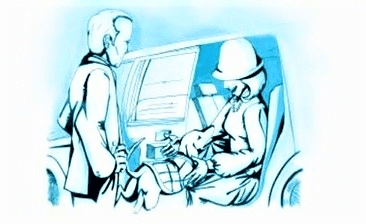
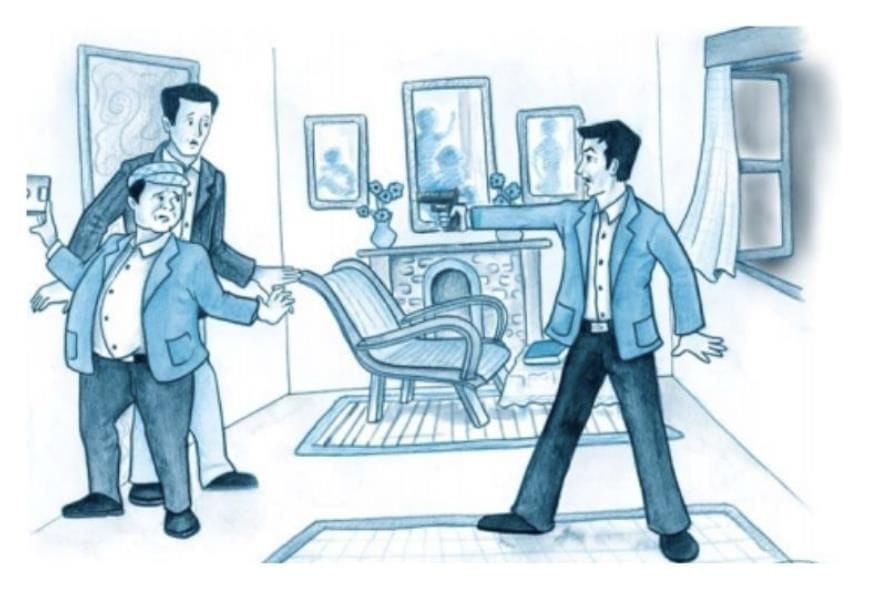
This story is in a reference to the play ‘If I were you’. Gurrad was captured by a criminal and the criminal pointed a gun towards him but he treated the criminal as a guest and trapped him in his confidence. He achieved the criminal to run away as police are behind him. He told the criminal to run through the exit door, which was actually a cupboard door. The criminal exited through the door and was caught in the cupboard.

02. The Thief’s Story- Textbooks Solutions

Read and Find Out (Page 8)

Q1: Who does ‘I’ refer to in this story?
Ans: In the story, ‘I’ refers to the narrator of the story Hari Singh, who was a fifteen-year-old thief.

Q2: What is he “a fairly successful hand” at?
Ans: He is “a fairly successful hand” at stealing and robbing people. This means he is an experienced thief who is quick and skillful in his work, managing to rob without getting caught.

Q3: What does he get from Anil in return for his work?
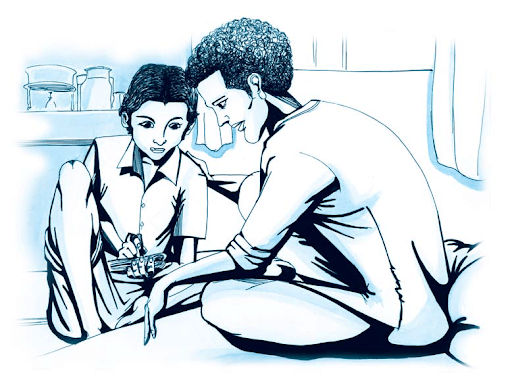
Ans: When Hari asked Anil if he could work for him, Anil said that he could not pay him. Finally, the agreement was that if he would cook, then Anil would feed him. However, Anil soon found out that he did not know how to cook. Therefore, he taught him how to cook and later, how to write his name. He promised he would teach him how to write whole sentences and how to add numbers. Apart from this, when Hari went out to buy the day’s supplies, he would make a profit of a rupee a day.

Read and Find Out (Page 10)

Q1. How does the thief think Anil will react to the theft?
Ans: The thief thought that on discovering the theft, Anil’s face would show a touch of sadness. The sadness would not be for the loss of money, but for the loss of trust.

Q2. What does he say about the different reactions of people when they are robbed?
Ans: During his brief time as a thief, Hari learned how different people reacted when they were robbed. He noticed that a greedy person would be afraid, a rich person would get angry, and a poor person would accept it calmly.

Q3. Does Anil realize that he has been robbed?
Ans: Yes, Anil realized that Hari had robbed him. He likely figured it out from the wet money, which got damp in the rain the night before. However, Anil didn’t say anything about it and instead gave Hari a fifty-rupee note, promising to pay him regularly.

Think about It (Page 13)

Q1. What are Hari Singh’s reactions to the prospect of receiving an education? Do they change over time? (Hint: compare, for example, the thought: “I knew that once I could write like an educated man there would be no limit to what I could achieve” with these later thoughts: ‘Whole sentences, I knew, cloud one day bring me more than a few hundred rupees. It was a simple matter to steal − and sometimes just as simple to be caught. But to be a really big man, a clever and respected man, was something else.”) What makes him return to Anil?

Ans: Hari was thankful to Anil for teaching him how to write his name and was eager to learn how to write full sentences. He realized that becoming educated would improve his skills and help him gain respect and a better status in life. However, after stealing money and leaving Anil’s house, Hari understood that education would bring him more satisfaction than stealing, and he worried about getting caught. He imagined the respect, reputation, and opportunities he could have if he became educated. Feeling guilty for betraying a kind man who had given him food and shelter, Hari’s desire for education drove him to return to Anil’s house.

Q2. Why does not Anil hand the thief over to the police? Do you think most people would have done so? In what ways is Anil different from such employers?

Ans: Unlike others, Anil didn’t call the police or accuse Hari of theft, even though he knew about it from the wet money. He didn’t punish Hari or even bring up the incident. Instead, he was glad that Hari had recognized his mistake and understood the value of education. 

In today’s world, finding someone like Anil is rare. Most people wouldn’t have reacted as he did. Anil was patient and caring, genuinely wanting Hari to become educated and live a respectful life. Anil stood out from other employers because of his understanding and compassionate nature. When Hari returned with the stolen money, it gave Anil hope that Hari wanted to change his ways and grow into a noble, educated person.

Talk about It

Q1. Do you think people like Anil and Hari Singh are found only in fiction, or are there such people in real life?
Ans: In reality, people like Anil and Hari Singh are rare and mostly found in fiction. However, there are exceptions when we might encounter someone like Anil. From the story, we see that Anil is kind-hearted and genuinely concerned about Hari’s education and future. When Hari stole Anil’s money, his conscience made him rethink his actions, leading him to realize the importance of education for his future. Because of this, characters like Anil and Hari are rare in today’s world, making them feel almost like fictional creations.

Q2. Do you think it is a significant detail in the story that Anil is a struggling writer? Does this explain his behaviour in any way?
Ans: Yes, it’s clear from the story that Anil was a struggling writer. He led a simple life with an irregular income, spending money only when he could afford it. Anil made money occasionally—sometimes borrowing one week and lending the next. He often worried about when his next cheque would come, but once it arrived, he would celebrate with friends. Hari noticed that Anil couldn’t pay him a salary because he didn’t have a steady income. Despite earning little, Anil never mistreated Hari and was always kind and considerate towards him.

Q3. Have you met anyone like Hari Singh? Can you think and imagine the circumstances that can turn a fifteen-year-old boy into a thief?

Ans: No, I haven’t met anyone like Hari Singh but such kind of people do exist in the world. Many a time, a fifteen-year-old boy may be forced under unavoidable circumstances to become a robber. Most people commit a crime to feed themselves or their families, or sometimes to satisfy their urge or addiction, to maintain health or to fulfil their demands to lead a luxurious life and so on and so forth.

Q4. Where is the story set? (You can get clues from the names of the persons and places mentioned in it.) Which language or languages are spoken in these places? Do you think the characters in the story spoke to each other in English?

Ans: The story is set near Lucknow somewhere in Uttar Pradesh. We understand this from the story when a railway station for Express train to Lucknow is mentioned. The presence of sweet shops, mandis and bazaars also indicate it to be a small and decent town. We can assume that the characters in the story were not speaking to each other in English but probably in the Hindi language.

01. A Triumph of Surgery- Textbooks Solutions

Read and Find Out – Page 1

Q1: Why is Mrs Pumphrey worried about Tricki?
Ans: Mrs. Pumphrey was very concerned and unhappy about Tricki’s health because he wasn’t eating. He wouldn’t eat his favorite foods and kept vomiting. He spent all his time lying on a rug, breathing heavily, and wasn’t interested in going for his usual walks either.


Q2: What does she do to help him? Is she wise in this?
Ans: Initially, Mrs Pumphrey thought that Tricki had become listless, as he seemed to have no energy. She assumed that he must be suffering from malnutrition, so she started giving him some little extras between meals to build him up, some malt and cod-liver oil and a bowl of Horlicks at night to make him sleep. She would also indulge him in cream cakes and chocolates unnecessarily and did not give him enough exercise. With all this pampering and indulgence, Tricki became hugely fat, like a bloated sausage with a leg at each corner. It was absolutely not a wise decision on the part of his mistress to overfeed him. Hence, her actions were not wise, as they worsened his condition. Eventually, she seeks help from Dr. Herriot.

Q3: Who does ‘I’ refer to in this story?
Ans: In this story, ‘I’ refers to the veterinary surgeon, Mr Herriot.

Read and Find Out – Page 3

Q1: Is the narrator as rich as Tricki’s mistress?
Ans: 
There are some instances in the story that suggest Dr Herriot was not as rich as Tricki’s mistress, Mrs Pumphrey. This is evident from the fact that the narrator could not provide a luxurious life such as a cosy bed stuffed with favourite cushions, toys and rubber rings along with bowls for different meals of the day, rather he made up a bed for Tricki in a warm loose box next to the one where the other dogs slept. The doctor also could not afford an entire staff of maids and caretakers just like Mrs Pumphrey to take care of the sole well-being and maintenance of her pet, Tricki.

Q2: How does he treat the dog?
Ans: 
Dr. Herriot didn’t spoil Tricki with unnecessary treats. Instead, he treated him like an overweight and lazy dog who needed more exercise and a controlled diet. He reduced Tricki’s food intake and kept a close watch on him for the first few days. Over time, he gradually increased Tricki’s food with a balanced dietwhich allowed him to engage in physical activities to boost his health. Slowly, Tricki’s health began to improve, and he didn’t need any medicine to recover from his illness.

Q3: Why is he tempted to keep Tricki on as a permanent guest?
Ans: Mrs Pumphrey started to bring round fresh eggs, two dozen at a time, to build up Tricki’s strength. Later even bottles of wine and brandy began to arrive. The narrator, along with his partners, enjoyed having two eggs each for breakfast, wine and brandy that was meant for Tricki. They were days of deep content, starting well with the extra egg in the morning, improved and sustained by the midday wine and finishing luxuriously around the fire with the brandy. It was indeed a strong temptation for Herriot to keep Tricki on as a permanent guest to enjoy the luxurious inflow of all these food items.

Q4: Why does Mrs Pumphrey think the dog’s recovery is “A Triumph of Surgery”?
Ans: Mrs. Pumphrey believed Tricki was seriously ill when she consulted Dr. Herriot, but within two weeks, her pet had fully recovered. She was thrilled to see that he had transformed into a fit and strong dog. When Dr. Herriot returned Tricki to her, the dog made a huge leap and landed in her lap. His recovery without any medicine was remarkable, and Mrs. Pumphrey, grateful and happy, called it “a triumph of surgery” to show her appreciation to the doctor.

Think About it – Page 6

Q1: What kind of a person do you think the narrator, a veterinary surgeon, is? Would you say he is tactful as well as full of common sense?
Ans: The narrator, Dr. Herriot, is a wise and tactful person. He skillfully diagnoses Tricki’s condition, recognizing that it was caused by overfeeding rather than illness. Instead of opting for surgery, he adjusts Tricki’s diet and encourages exercise, leading to a full recovery within two weeks. Dr. Herriot’s tact is evident in how he convinces Mrs. Pumphrey to hospitalize Tricki, while his common sense ensures he treats the dog effectively. Though tempted by the luxurious food sent by Mrs. Pumphrey, he chooses to return Tricki, demonstrating his professionalism and ethical approach.

Q2: Do you think Tricki was happy to go home? What do you think will happen now?
Ans: Tricki was happy to go back home as he really loved his mistress and the comfort of his lavish life. He didn’t have any friends at home like in the hospital, but he seemed equally excited at the sight of Mrs Pumphrey. I think that Mrs Pumphrey will now be careful about Tricki’s diet and health. She may also give him exercise daily as prescribed by the vet earlier.

Q3: Do you think this is a real-life episode or mere fiction? Or is it a mixture of both?
Ans: ​The story seems to be a blend of fiction and a real-life incident. It is quite natural for rich people to overfeed their pets due to love and affection, just like Mrs Pumphrey did. We have observed how due to her pampering, the dog was overeating and became lazy and bulky. Similarly, it isn’t unusual for rich people who try to provide a luxurious life for their pets and indulge them often. However, it might be unlikely for a veterinary doctor like Dr Herriot who went out of his way and lied about surgery to the owner in order to save her pet from unnecessary indulgences.

Talk About it – Page 7

Q1: This episode describes the silly behavior of a rich woman who is foolishly indulgent, perhaps because she is lonely. Do you think such people are merely silly, or can their actions cause harm to others?

Ans: Mrs. Pumphrey’s misguided actions of overfeeding Tricki had a negative impact on her pet’s health. She made Tricki eat too much and gave him fatty foods, thinking it was an expression of love and care. This led to his condition worsening, making him so lazy and overweight that he couldn’t even go for short walks. Wealthy people like Mrs. Pumphrey often spoil their pets with excessive food, believing it will improve their health, but this can actually have harmful effects.

Q2: Do you think there are also parents like Mrs. Pumphrey?

Ans: Yes, some parents, like Mrs. Pumphrey, spoil their children by over-indulging and pampering them. They may overfeed their children or pets, even though they know the negative effects of overeating on their health. It is important for parents like Mrs. Pumphrey to monitor and maintain a healthy lifestyle for their family members and pets to avoid such issues.

Q3: What would you have done if you were:
(i) a member of the staff in Mrs Pumphrey’s household,
(ii) a neighbour? 
What would your life have been like, in general?
Ans:

(i) If I were a member of the staff in Mrs. Pumphrey’s household, I would have followed the vet’s advice, ensuring Tricki received the proper diet and regular exercise to maintain his health. I would not have blindly followed Mrs. Pumphrey’s indulgent habits, such as sending unnecessary luxuries to the hospital. My life would have been busy, balancing household duties while taking care of Tricki’s needs.

(ii) If I were Mrs. Pumphrey’s neighbor, I would have advised her to keep Tricki on a strict, healthy diet and engage him in physical activities like playing or walking. If his health worsened, I would have encouraged her to consult a vet and strictly follow the advice. I would have offered support and kindness, especially when Tricki needed hospitalization. Living next to Mrs. Pumphrey would have been filled with surprises, as she was generous and loving, often sharing gifts and treats.

Q4: What would you have done if you were in the narrator’s place?
Ans: If I were in the narrator’s place, I would have treated Tricki in a similar fashion with love and compassion. I would have been vigilant and caring, just like Mr James Herriot was towards Tricki. However, I would have been a little strict while advising Mrs Pumphrey to put Tricki on a balanced diet knowing her love for her dear pet. Besides, I would have also not consumed Tricki’s share of eggs, wine and brandy sent by Mrs Pumphrey and resisted my temptation to keep Tricki as my permanent guest in my hospital.