Have you ever looked up at the sky? The sky looks different at different times of the day — in the morning, afternoon, and night. The colour of the sky changes throughout the day. The Sun’s colour also seems to change during the day. The Moon looks different too — its size and shape change over time. Birds, animals, trees, and people all do different activities at different times of the day.
Let’s explore more about how the sky changes and how living things behave during the day and night!Pictures of the Sky
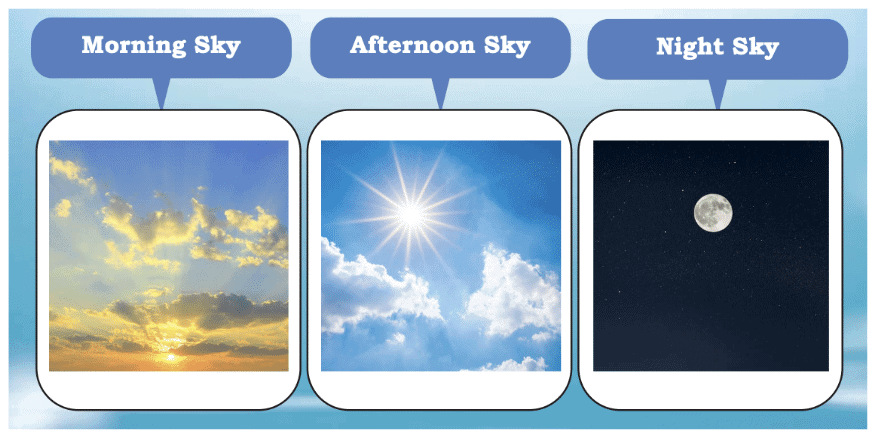
The sky changes appearance throughout the day:
In the morning, it is orange and bright.
In the afternoon, it is blue and clear.
At night, it is dark with twinkling stars.
The Sun also changes colour:
It appears reddish in the morning and evening.
It looks bright yellow at noon.
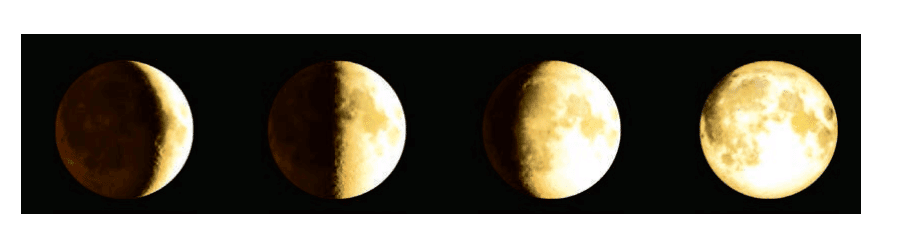
The shape of the Moon varies:
On some nights, it appears as a complete circle, known as Poornima or the full Moon.
On other nights, it looks like the letter ‘C’, and on some occasions, it is not visible at all, called Amavasya or the new Moon.
Sky during sunrise and sunset:
Sunrise: The sky turns orange and pink, birds chirp, animals wake up, and people start their day.
Sunset: The sky becomes red or purple, birds return to their nests, animals rest, and people relax at home.
Try yourself:
What color is the sky in the morning?
A.Orange
B.Blue
C.Red
D.Purple
View SolutionThe Shadows
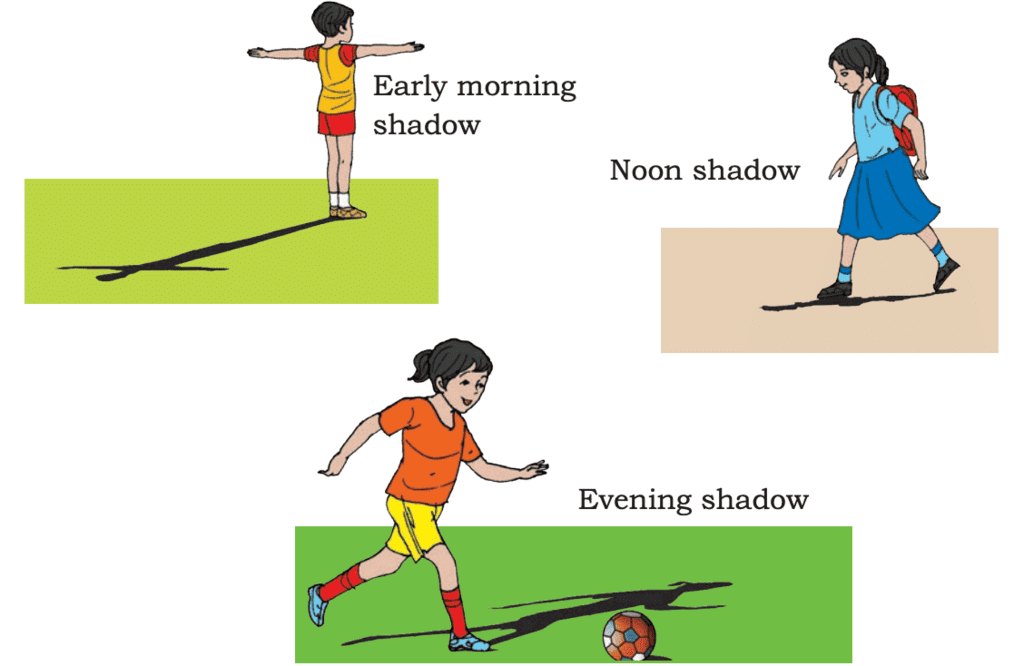
Shadows are dark shapes formed when an object blocks light. This section explains how shadows change throughout the day because of the Sun’s movement:
Morning: Shadows are long and extend towards the west.
Noon: Shadows are short as the Sun is directly overhead.
Evening: Shadows become long again but now point towards the east.
In the pictures above, the shadows are different at various times of the day. In the morning, the shadows are long, they are short at noon, and they become long again in the evening. However, the evening shadows appear in the opposite direction of the morning shadows.
Creating Shadows
We can make shadows by blocking light with an object.
Let’s perform an activity:
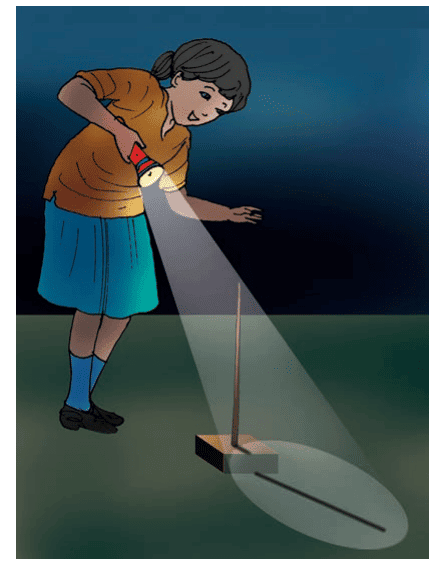
To explore shadows, take a torch and a stick.
In a dark room, shine the torch on the stick and watch the shadow it makes.
If the stick is moved closer to the light, the shadow becomes larger.
If the stick is moved farther from the light, the shadow becomes smaller.
When the direction of the light changes, the shadow also moves or changes direction.
This is why shadows look different in the morning and evening because the Sun’s position changes in the sky.
Movement of the Sun and Shadows
The Sun looks like it moves from the East in the morning to directly overhead at noon.
After noon, it slowly moves towards the West in the afternoon.
Because the Sun moves, the direction of shadows also changes during the day.
Did you know?
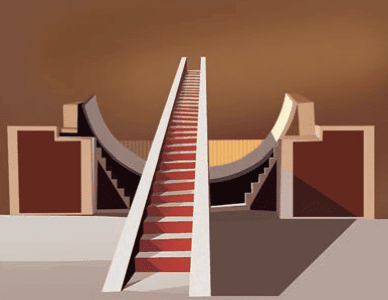
We can tell the time by looking at shadows. Ancient people noticed this and created a device called a sundial to tell time.
Raja Jai Singh of Jaipur built Jantar Mantar in Jaipur, Ujjain, Delhi, Varanasi, and Mathura. It has a sundial called Samrat Yantra, which can tell time accurately based on the shadow.
Play with Shadows
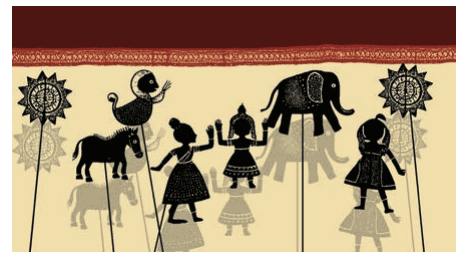
It is fun to make different shapes with shadows. Try it with your friends!
Shadow puppetry has been practiced in India for a long time.Night Sky
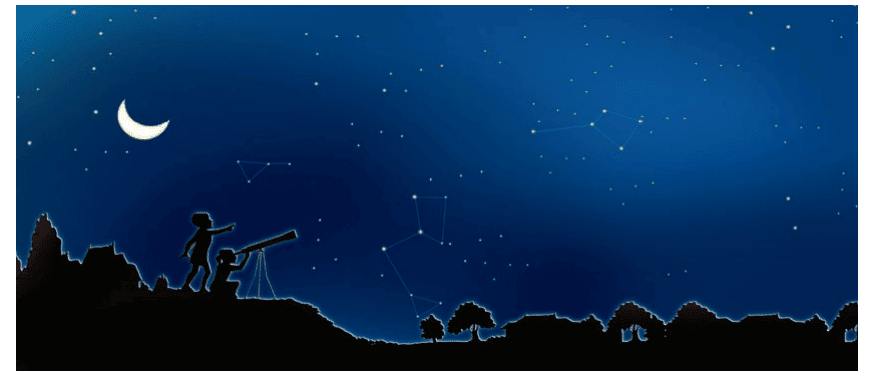
After the Sun sets, the sky fills with thousands of twinkling stars. Stars often form patterns called constellations. You can try drawing a pattern you see in the night sky.
The Moon and Its Changing Shapes
The Moon looks like the biggest object in the night sky. Its shape changes on different nights:
Sometimes it is a full circle — called Poornima or full Moon.
Sometimes it looks like the letter ‘C’.
Sometimes it appears cut in half.
On some nights, the Moon is not visible at all — this is called Amavasya or new Moon.
Ancient people used the shapes of the Moon to track days and create calendars. Many festivals are based on the Moon:
Diwali: Celebrated on the New Moon (no Moon).
Rakshabandhan, Guru Poornima, Buddha Poornima: Celebrated on the Full Moon.
Eid: Eid is celebrated on the first night after the New Moon when the Moon becomes visible.
Other festivals like Chhath Puja and Karva Chauth are also connected to the Moon.
Try yourself:
What happens to shadows at noon?
A.Shadows are short.
B.Shadows are long.
C.Shadows disappear.
D.Shadows point east.
View SolutionIndia’s Chandrayaan Mission
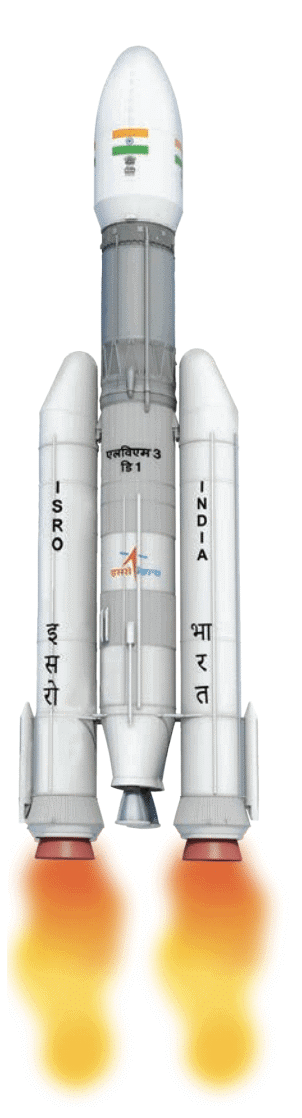
India’s Chandrayaan mission focuses on exploring the Moon. On 23 August 2023, the Vikram Lander successfully touched down on the Moon and gathered data about its surface. This marked a significant achievement for India, and students might have learned about it in their Grade 3 textbooks.Points to Remember
The Moon’s shape varies nightly, transitioning from Full Moon to New Moon, which is useful for calendars and festivals.
Festivals like Diwali, Eid, and Rakshabandhan are linked to the Moon’s visibility. Diwali is celebrated when there is no Moon, while Eid occurs on the first night the Moon is seen after a New Moon.
India’s Vikram Lander landed on the Moon in 2023 to examine its surface.
Studying the sky helps us understand nature and track time.
Difficult Words
Celestial transitions
Sunrise: When the Sun comes up in the morning.
Sunset: When the Sun goes down in the evening.
Shadow: A dark shape created when something blocks light.
Sundial: A tool that tells time by using shadows.
Saptarshi: A famous group of stars in Indian astronomy, known as the Seven Sages.
Poornima: The night when the Moon is completely full.
Amavasya: The night when the Moon cannot be seen.
Chandrayaan: India’s mission to explore the Moon. On 23 August 2023, India’s Vikram Lander successfully landed on the Moon and gathered data about the Moon’s surface.
Vikram Lander: The part of Chandrayaan that touched down on the Moon.
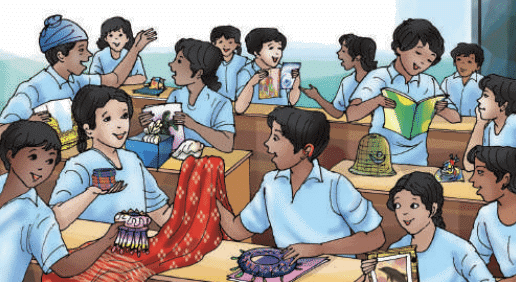
The classroom was full of joy and chatter as the children shared stories about their holidays. Their desks had colourful pictures and things from the places they had visited.
The teacher asked everyone to talk about their trips:
Chandni talked about visiting a beach in Odisha.
Ritika shared her experience of the desert in Rajasthan.
Gurpreet told stories about his trip to Amritsar, Punjab, where his grandparents live.
Nayan read from his diary about his visit to the beautiful mountains of Sikkim.
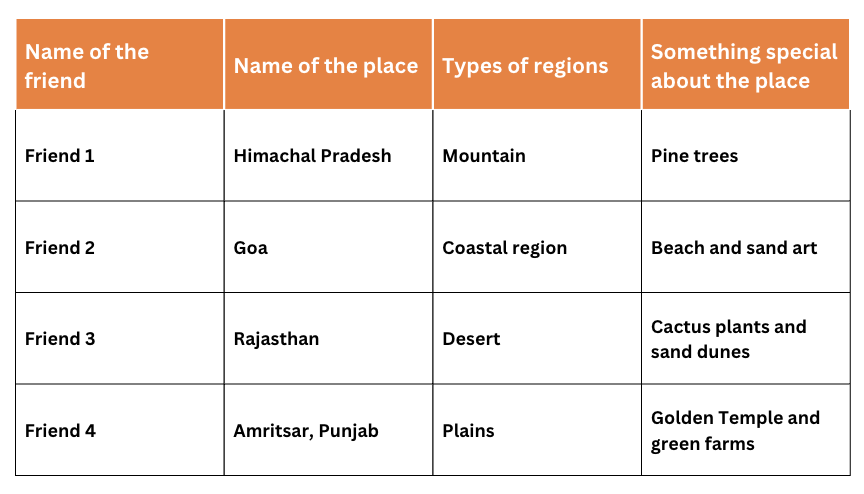
The children were tasked with writing down the names of the places they had visited and something unique about each. They were also encouraged to ask two or three friends about their travels and make the table.
Try this out with your friends!
Students who spent the holiday at home were invited to join the conversation. They were asked to share their experiences of nearby places, including local culture, food, and activities.In the Land of Agriculture, with Gurpreet
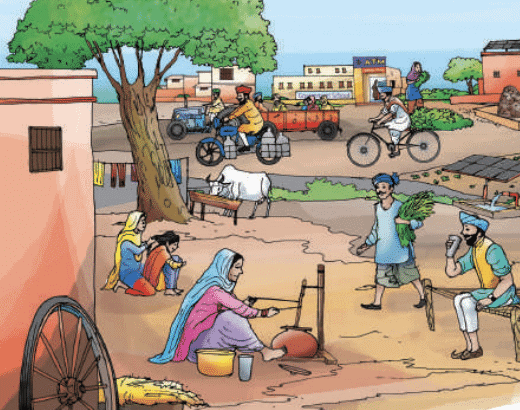
Gurpreet visited Amritsar, a flat area in Punjab where the soil is rich and fertile, making it ideal for farming. Many locals are involved in agriculture. Gurpreet mentioned that his grandmother greeted him warmly.
Gurpreet observed:
Big green fields all around — the land is flat and very good for farming.
Rich soil helps in growing many crops like wheat, maize, and mustard.
Farmers were working in the fields. Some were sowing seeds, while others were watering crops.
What Do People Eat There?
Gurpreet told his friends about his favourite meal:
Makki di roti – a flatbread made with corn flour
Sarson da saag – a dish made with mustard leaves
A big glass of lassi – a cool and sweet drink made from curd
He said, “Jee aayan nu puttar!” — this means Welcome, my dear child! That’s how his grandmother greeted him with love.
A Special Place – The Golden Temple
Gurpreet also visited the Golden Temple, also called Sri Harmandir Sahib.
It is covered with gold and has a beautiful water tank (sarovar) around it.
There is a langar – a free kitchen where food is cooked and served to everyone.
Many people volunteer to help — they cook, serve, and even wash the plates together.
The langar at the Golden Temple is one of the biggest in the world
In the Land of Endless Sand, with Ritika
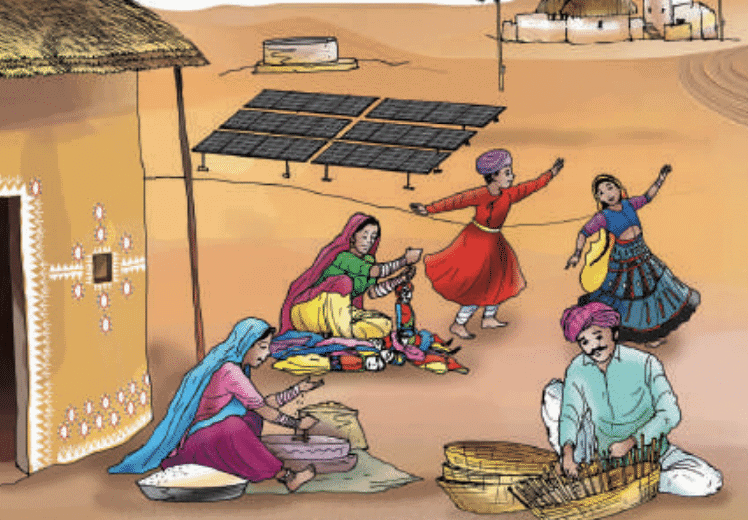
Ritika visited the desert in Rajasthan, a dry area with very little rainfall.What is a Desert?
A desert is a very dry place where very little rain falls.
Only a few plants grow here because there is not much water.
Plants in the Desert
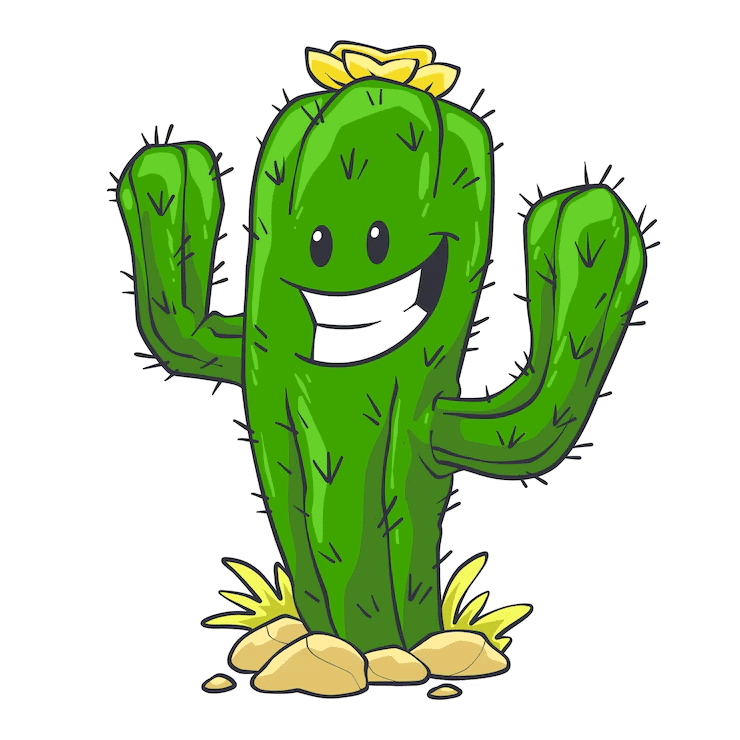
Some special plants like cactus, khejri, and babool can survive in deserts.
Cactus stores water in its stem to survive long dry periods.
These plants look different from the ones you see in your area because they don’t need much water.
Animals in the Desert
Animals like camels, lizards, wild cats, pythons, and eagles live in deserts.
The camel is called the “ship of the desert” because it carries people and goods across the sand.
People and Culture
Ritika showed colourful bangles and a bandhini dupatta she brought from Rajasthan.
Women wear these with ghaghras when dancing.
Men wear colourful turbans and play traditional instruments like khartal and sarangi.
Houses and Water
Desert houses are made from mud and have thatched roofs.
Many houses are made of mud and have tankas (water tanks) to store water for dry days.
Food of the Desert
Popular foods include dal-bati-churma and ker sangri.
Famous Desert Fort
The Jaisalmer Fort is a famous desert fort made of golden sandstone.
It has tall, thick walls and is still lived in today.
It was featured in the movie “Sonar Kella” by Satyajit Ray.
On the Seashore, with Chandni
Chandni visited Puri, a seaside city in Odisha famous for its sandy beaches and the renowned Shree Jagannath Temple. She returned with seashells and shared her findings:
Activities of People
Fishermen go out to sea in boats to catch fish.
Artists make beautiful sand art on the beaches.
People collect sea shells along the shore.
Visitors enjoy boat rides and watch sea creatures like turtles.
People watch traditional Odissi dance performances.
Trees and Plants
Coastal areas have trees like coconut palms that grow near the sea.
These trees are different from those in deserts and plains because they need salty air and sandy soil.
Fun Beach Activities
Collecting shells
Making sand art
Swimming or playing by the shore
Boat rides and watching sea animals
Clothing in Coastal Regions
People wear light and comfortable clothes suited for warm weather.
Women may wear sarees like the Sambalpuri saree, famous in Odisha.
Famous Places
Shree Jagannath Temple is a beautiful temple in Puri with huge gates and carvings.
The city is famous for Rath Yatra, a colourful festival where people pull huge chariots of deities — Jagannath, Subhadra, and Balabhadra.
Living with Challenges
People in coastal areas face many challenges. Strong winds and cyclones frequently strike the coastal regions of Odisha, negatively impacting the lives of people, animals, and trees. Research on cyclones helps find ways to protect lives and resources. Recently, the Government of Odisha has received national and international recognition for successfully safeguarding people during cyclones through early warnings, advanced preparations, and effective management.
Did You Know?
Effects of Cyclones: Cyclones can damage homes, crops, and roads, and can harm both people and animals.
Preparation: Communities can construct sturdier homes, store food and water, and heed government warnings to ensure safety.
In the Mountains, with Nayan
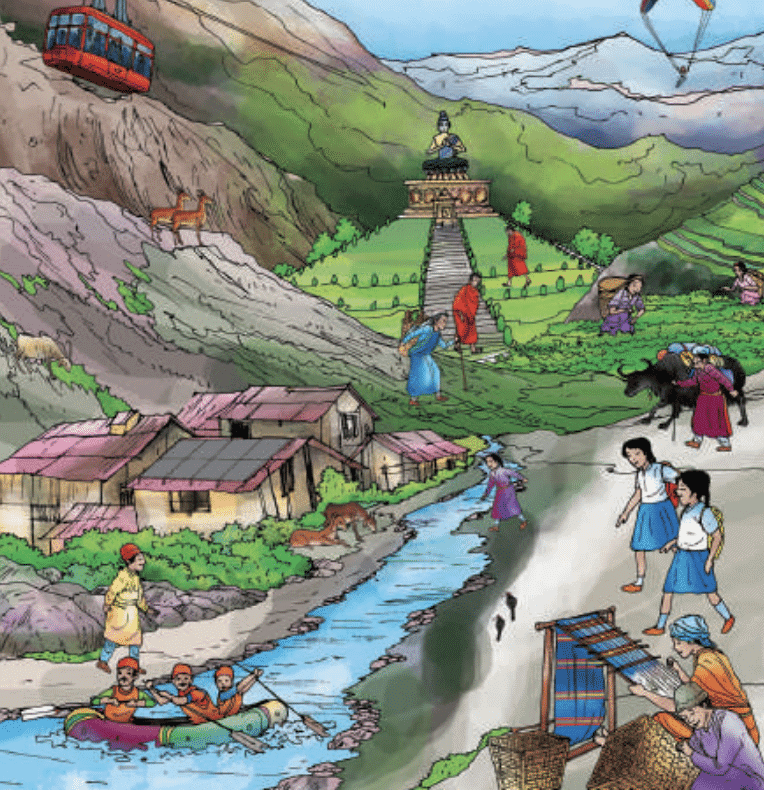
Nayan visited Sikkim, located in the Himalayan mountains, where many peaks are covered in snow. He stayed in Gangtok, where the locals were friendly and kind. He wrote in his diary about his trip:
What Are Mountains?
Mountains are high and rocky landforms that rise above the land.
They are usually cold and often covered with snow in places like the Himalayas.
Mountains have steep slopes and are surrounded by valleys.Narayan’s Diary Entry
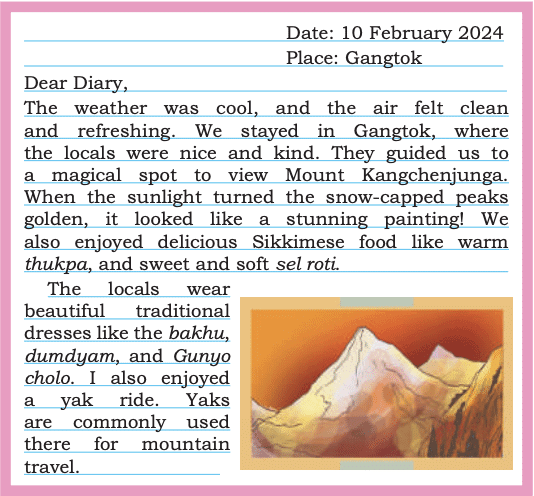
Nayan’s Visit to Sikkim
Sikkim is a state in the Himalayan mountains with beautiful plants and animals.
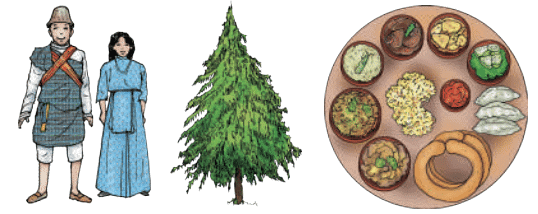
Trees like oak, pine, walnut, and chestnut grow well here because they can survive the cold weather.
The area is famous for its rich culture, colourful clothes, and lively festivals like Loosong and Namsoong.
Animals in the Mountains
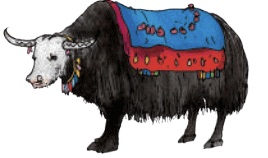
Animals like the yak live in cold mountain areas.
Yaks have thick fur that keeps them warm in the cold climate.
Clothing and Lifestyle
People in the mountains wear warm clothes like the bakhu, a traditional dress that protects them from the cold.
This is different from the clothes people wear in warmer places.
Living in the Mountains – Houses and Safety
Traditional houses in Sikkim are made of wood because it is easy to find and helps keep the house warm in cold weather.
The roofs are slanting so that rain and snow can slide off easily, preventing water from collecting on the roof.
Landslides happen often in the mountains during the rainy season because heavy rain makes the soil loose.
Steep slopes cause the soil and rocks to slide down, which can be dangerous.
To keep people safe during landslides, communities:
Build strong walls to hold the soil.
Avoid building houses in risky areas.
Use early warning systems to alert people.
Help people move to safer places if needed.
When natural disasters happen, communities help by:
Providing food, clothes, and shelter.
Rebuilding houses and roads.
Supporting each other with kindness and sharing.
Did You Know?
Loosong and Namsoong festival marks the Sikkimese New Year, celebrated with dances, games, and local food. It is an occasion to celebrate the hard work of the farmers. People enjoy the festival with various local dishes, traditional games, and a mask dance called chaam.
Difficult Words
Fertile: Land that is suitable for growing crops.
Langar: A free community kitchen in a Gurudwara that provides meals to everyone. The langar at the Golden Temple is one of the largest community services in the world, where volunteers cook, serve, and clean up.
Sarovar: A holy water tank around a Gurudwara, important for spiritual cleansing and meditation.
Cyclone: A powerful storm with strong winds and heavy rain that can greatly affect people, animals, and trees in coastal areas.
Bandhini: A vibrant fabric featuring tie-dye designs.
Ghaghra: A long skirt worn by women in Rajasthan.
Tanka: A water storage tank used in homes in desert regions.
Shankh: A conch shell used during prayers.
Landslide: The movement of soil and rocks down a slope.
Thukpa: A hot noodle soup from Sikkim, usually enjoyed in cold weather.
We learnt in Grade 3 that the things around us are made from different materials. But have you ever wondered how these things are made?
Let’s find out with Pihu how paper is made.
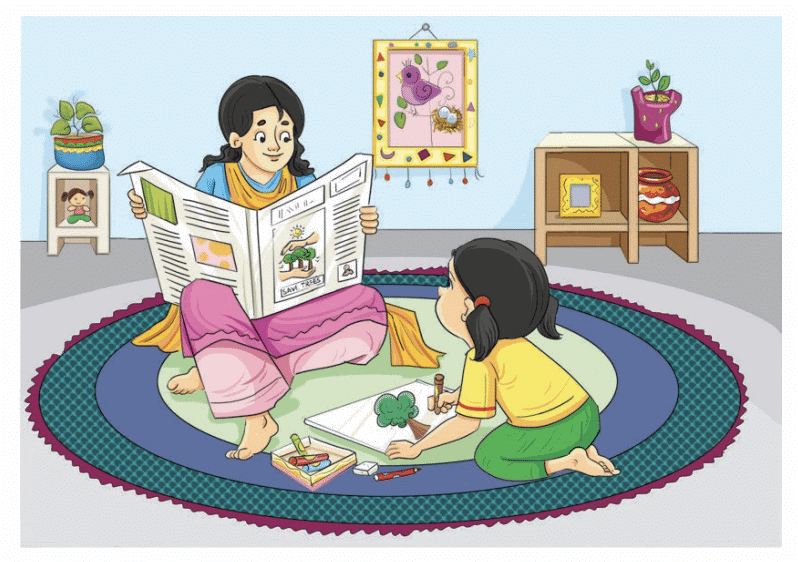
One Sunday, Pihu was happily painting in her drawing book. Her mother was reading the newspaper. When Pihu looked up, she saw a picture of trees on the front page of the newspaper. She became curious and started thinking about how paper is made from trees.Making Recycled Paper
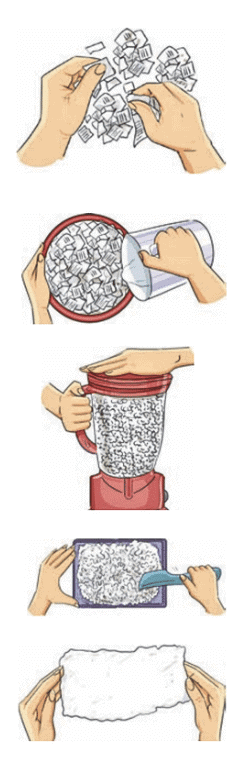
Paper is made from materials like wood pulp, but we can also create it from old paper to save trees. Pihu learned to make recycled paper through these simple steps:
Tear old newspapers into small pieces and soak them in water with fenugreek seeds overnight. The seeds help bind the paper.
Mash the soaked paper and seeds into a wet mixture using a grinder or your hands.
Spread the mixture on a flat surface and roll it into thin sheets.
Leave the rolled sheets of paper to dry. Your recycled paper is ready!
The paper we see in books looks different from recycled paper as it is made from wood pulp. Making paper requires many trees, water, and energy, so we should use it carefully.
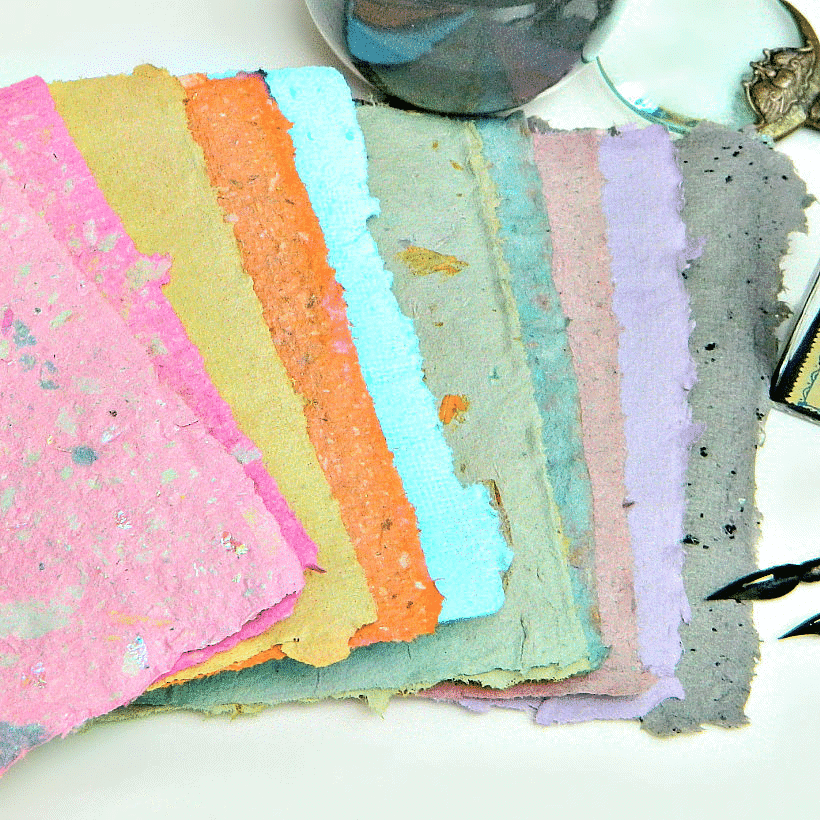
You can make recycled paper colourful by using natural ingredients from plants, such as leaves, roots, or flowers. Thus, the produced natural dyes are safe to use.
Cut recycled paper into equal pieces.
Use natural ingredients like turmeric, spinach, beetroot, or henna to colour the paper.
For instance, turmeric gives a dull yellow colour.
Observe and note the colour and brightness (dull or bright) of each piece.
Natural dyes are made from different parts of a plant, including the leaf, flower, root, seed, stem, etc.
Try yourself:
What can be used to color recycled paper?
A.Metal powders
B.Chemical paints
C.Plastic dyes
D.Natural ingredients
View SolutionA Special Gift
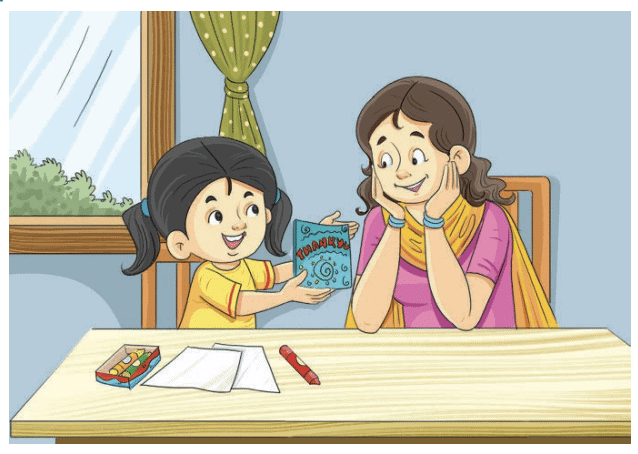
Pihu created a lovely greeting card from recycled paper and gave it to her mother, who really appreciated it.
These creations are special because you make them and help to reuse and repurpose materials.
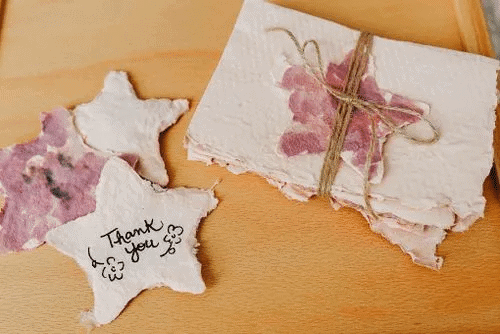
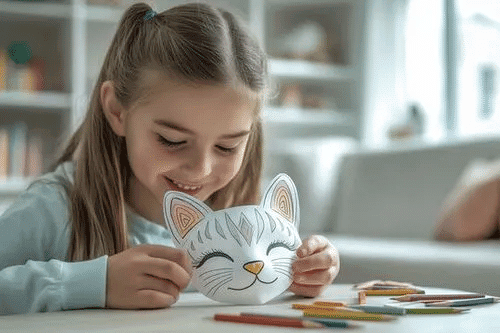
Activity 3- Let’s Explore! Make a card or mask using recycled paper.
Q: Make a greeting card, a paper mask, or any item using recycled paper. Ans: Students, please try this question on your own. Suggestion:
Use the recycled paper you made to create something fun, like a greeting card or a paper mask.
For a greeting card: Fold the paper, draw a nice picture, and write a message. You can colour it with natural dyes.
For a paper mask: Cut the paper into a mask shape, add designs, and make holes for eyes. Tie a string to wear it.
Be creative and decorate your item with natural colours or patterns!
Did You Know?
The paper used in books is made from wood pulp.
For this, many trees are cut down.
Making paper also uses a lot of water and energy.
Be Responsible
Use paper wisely and only when needed.
Reusing and recycling paper helps save trees and protect the environment.
Did You Know?
In olden times, people did not use paper like we do today. They wrote on cloth, leaves, and wooden boards. In India, people used special palm leaves called talapatra for writing. Today, we can use eco-friendly materials like banana fibre to make paper. These materials help save trees and keep the environment safe.
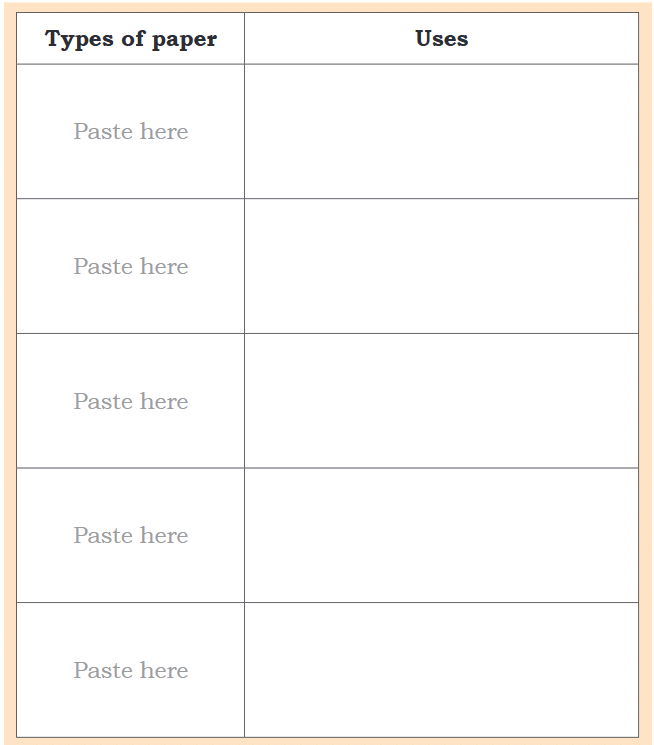
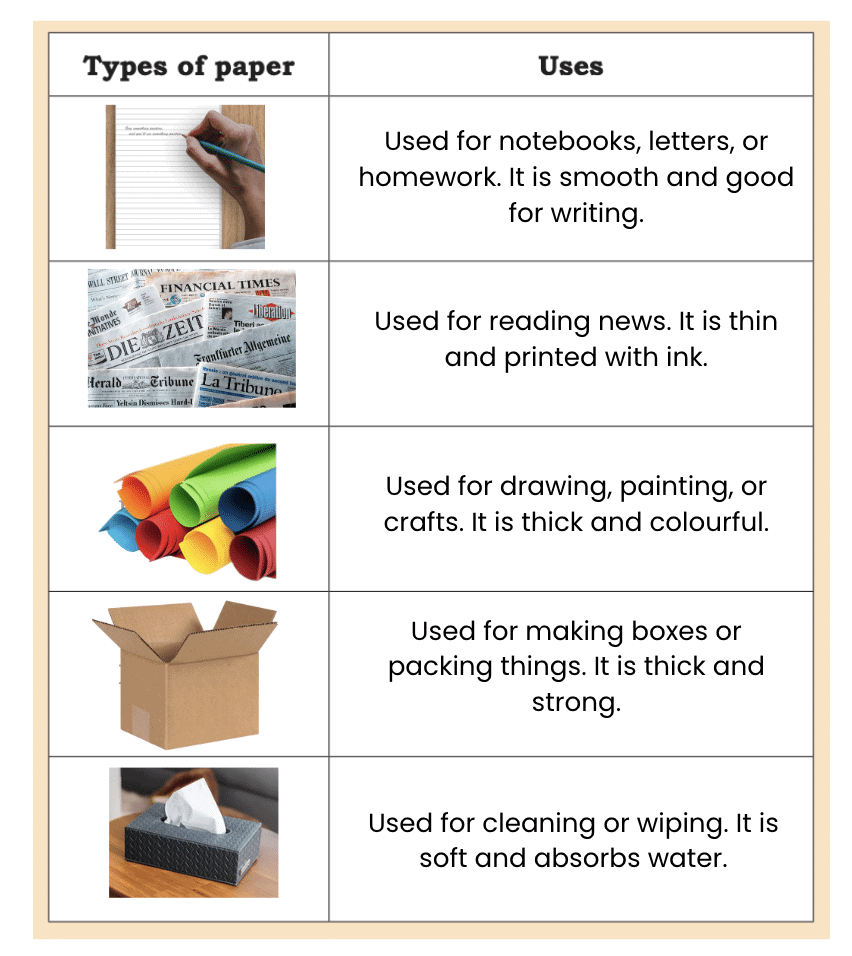
Activity 4- Types of Paper and Uses Observe different types of paper like writing paper, newspaper, art paper, cardboard, and tissue paper. Paste small pieces of these papers and write their uses.
Ans: Students, please try this question on your own. Suggestion: Collect small pieces of different papers. Paste them in your notebook and write their uses. We use different kinds of paper for various purposes. For instance:
Did You Know?
The Braille system helps people who can’t see to read and write. It uses small raised bumps on paper that can be felt with the fingers. These bumps stand for letters, numbers, and punctuation marks, allowing visually impaired people to read and write on their own.
Making Responsible Choice
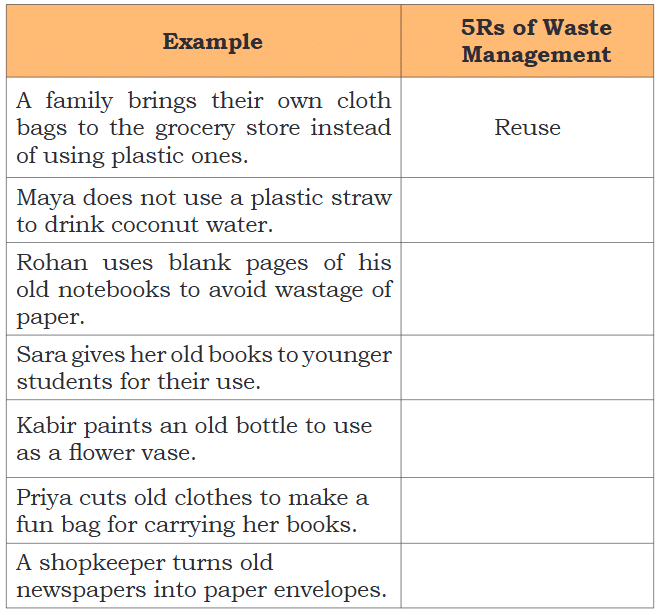
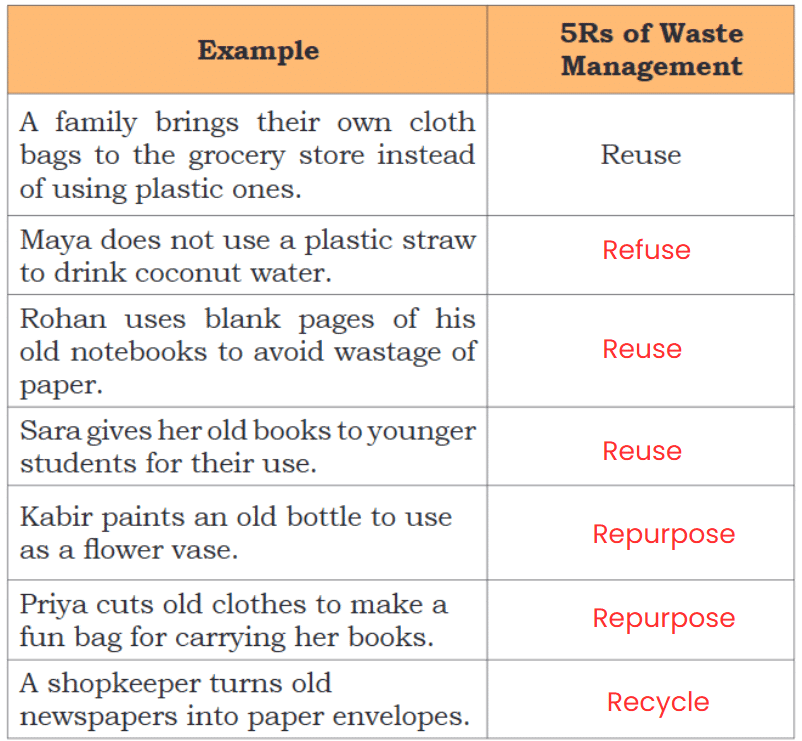
In our daily lives, we can adopt a 5-step plan to minimise waste, known as the 5Rs of waste management:
Refuse: Decline items that create waste, such as single-use paper cups.
Reduce: Use paper wisely, like writing on both sides of a sheet.
Reuse: Use items multiple times, like reusing a gift bag.
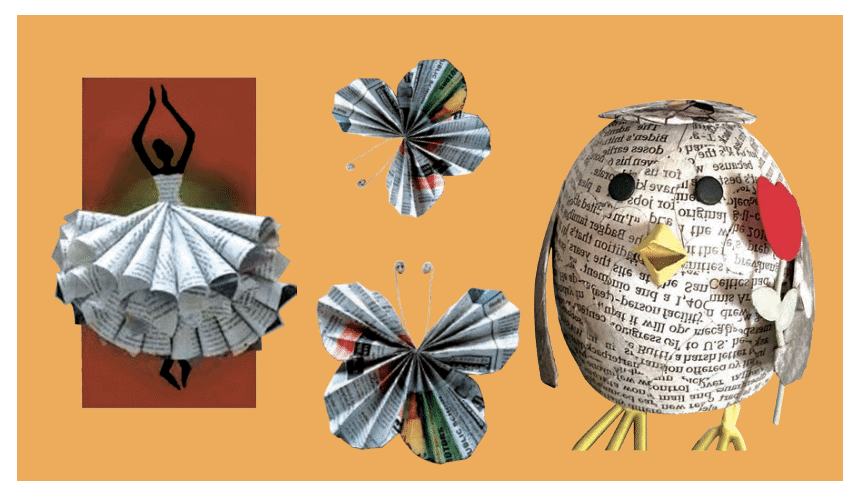
Repurpose: Find new uses for old paper, like making toys or decorations from newspapers.
Recycle: Transform old paper into new paper, such as making recycled paper.
Activity 5: Let’s Learn About the 5 R’s in Our Daily LifeQ: Discuss the following situations with your classmates and write which of the 5Rs (Refuse, Reduce, Reuse, Repurpose, Recycle) each belongs to:
Ans:
Let’s Have Fun with Paper!
We can make many fun and useful things using old paper. Here are some cool ideas to create toys and decorations with used newspapers.
Let’s get creative and give old paper a new life!
Try yourself:
What did Pihu create for her mother?
A.A greeting card
B.A paper mask
C.A decoration
D.A toy
View SolutionDifficult Words
Recycle: To change old items, like paper, into new products.
Pulp: A soft, wet blend created from crushed paper or wood.
Fenugreek: A type of seed that acts as a binding agent in making recycled paper.
Natural dyes: Colours made from plants, such as turmeric or spinach, which are safe to use.
Braille: A system of raised dots on paper that allows visually impaired people to read.
Talapatra: Palm leaves that were historically used for writing.
Repurpose: To find a new use for something old, like making toys from newspapers.
Environment: The surroundings we live in, including trees, water, and air. Using eco-friendly materials like banana fibre for paper helps save trees and protect our environment.
Refuse: Saying ‘no’ to items that create waste, such as single-use paper cups.
Reduce: Using items wisely to lessen the waste we produce, like writing on both sides of paper.
Reuse: Using an item multiple times before throwing it away, such as reusing a gift bag for another occasion.
Repurpose: Finding new and creative ways to use items, like making toys or decorations from old newspapers.
Recycle: A process that transforms items into new products, such as turning old newspapers into handmade paper.
In this unit, students will learn about many things around them — how different things work and how they are made.
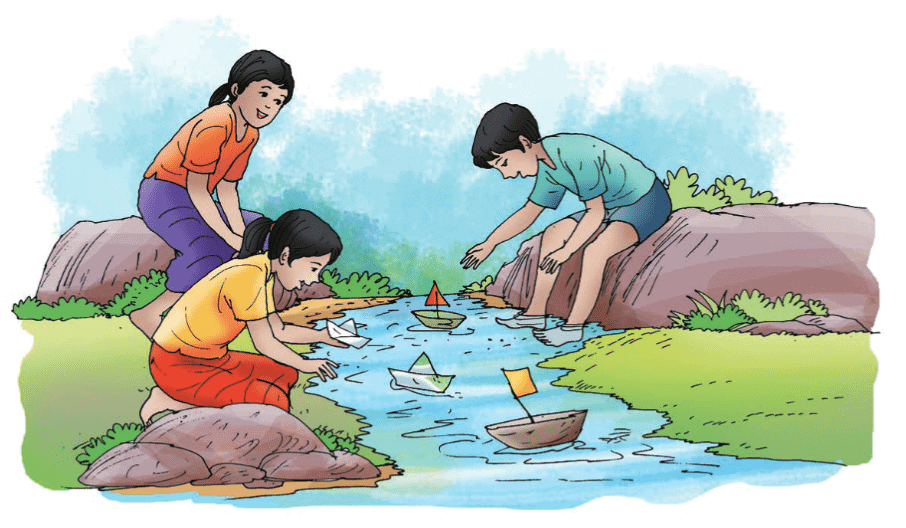
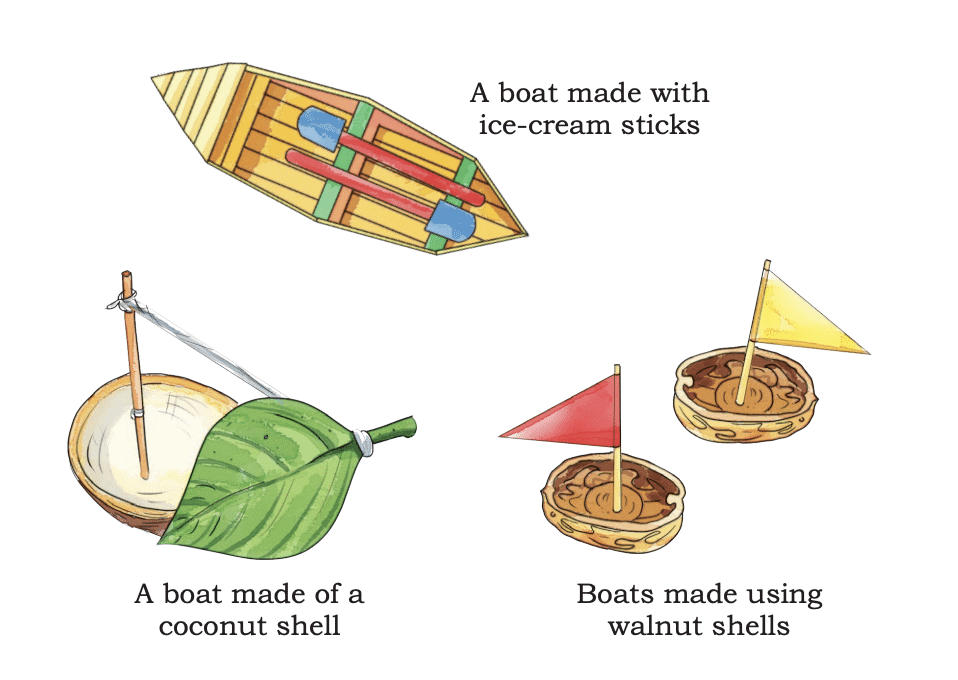
Students will play and explore with simple toys like spinners and paper boats.
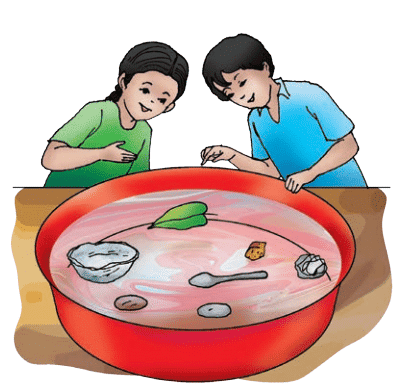
They will try different things with these toys to see how they work. They will also test which things sink or float by putting them in water.
They will learn to make handmade paper and also how machines make paper in big factories. They will discover how paper can be colored too.
This unit also teaches students about caring for the environment by using the 5Rs of waste management: Refuse, Reduce, Reuse, Repurpose, and Recycle.
By trying both old and new ways of making paper, students will understand and appreciate the things we use every day and how they connect to nature.
Introduction
We use many things every day like pencils, bags, coins, and toys. Have you ever thought about why they move or do certain things? Meera and Dhruv are two kids who want to know how spinning coins and paper boats float.
Let’s learn about things that spin and why some things float on water while others sink.Spinning Objects
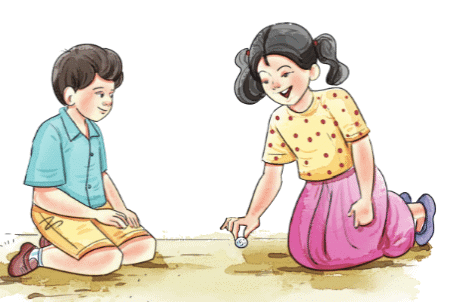
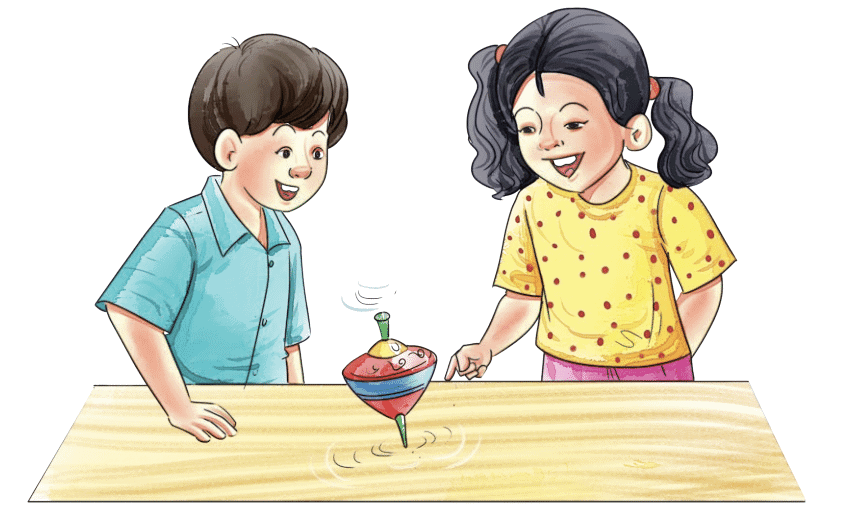
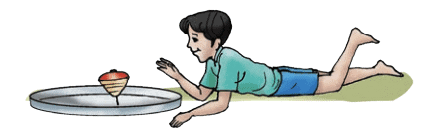
Spinning means something turning in circles, like a coin or a top. Meera and Dhruv noticed how different objects spin and what helps them spin effectively.
Some objects, like coins and bangles, spin well, while others, like erasers, do not spin properly.
When a coin spins, it gradually slows down, shakes, and stops because it loses balance.
Did You Know?
Spinning tops have been used in India for thousands of years, originally made of clay. Lattu is a popular Indian top, commonly crafted from wood.
A square spinner appears circular when it spins quickly because the edges blur.
What happens to the colours on the spinner when it is painted with different colours and then spun?
Other spinning items include ceiling fans and potter’s wheels.
Try yourself:
What do Meera and Dhruv observe about spinning objects?
A.Some spin well while others do not.
B.All objects spin perfectly.
C.Only coins can spin.
D.Spinning is only for toys.
View Solution
Did You Know?
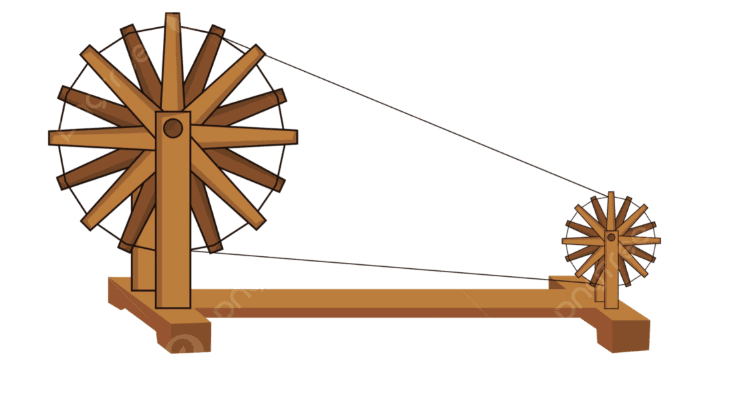
A charkha (spinning wheel) twists cotton fibre into thread. It has a large wheel that spins when turned by hand. Mahatma Gandhi used the charkha to make handmade clothes.
Floating and Sinking
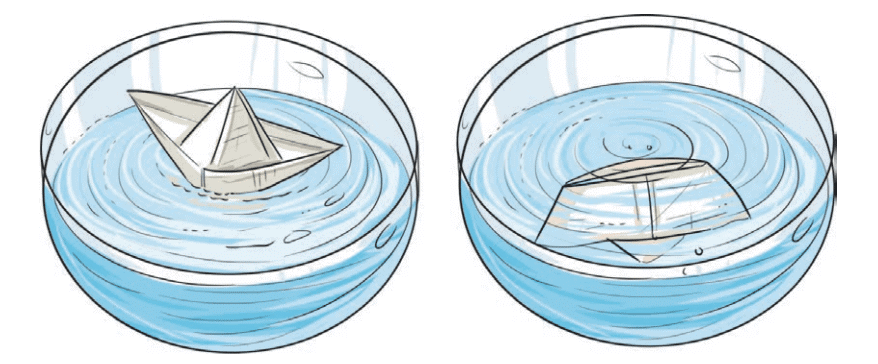
Floating is when something stays on the water’s surface, while sinking means it goes below the surface. Meera and Dhruv played with paper boats and saw that some floated well, while others turned over.
They created paper boats and placed them in the water puddle formed by the rain. While playing, they noticed that some paper boats floated properly, while others turned over.
Try it yourself: Make a paper boat at home. Float it in a bowl of water.
Does it float or flip?
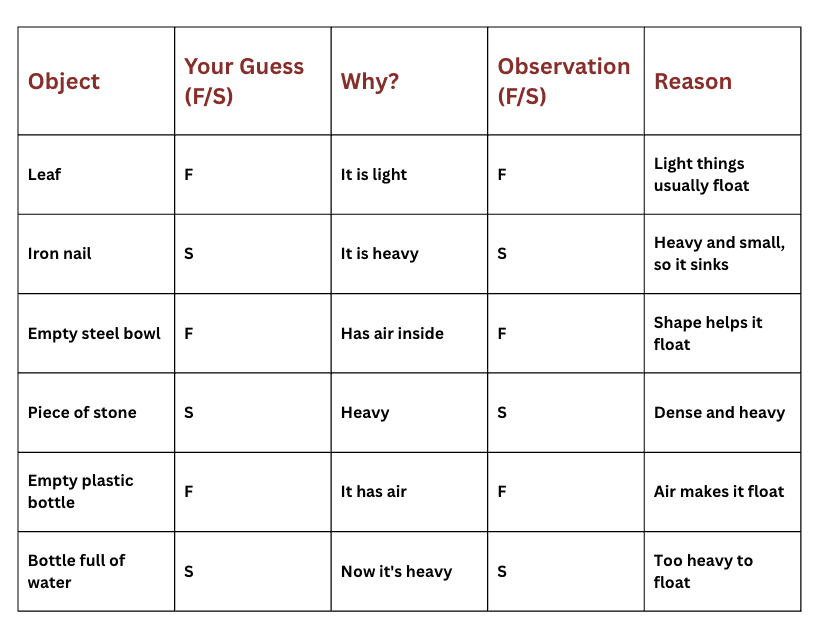
The ability to float or sink is not only based on weight; other factors are also important.
Not every light object floats, and not all heavy objects sink. For instance, a heavy empty bowl can float as it holds air.
The shape of an object influences whether it floats or sinks.
Let’s Test What Floats and What Sinks
From this activity, it can be observed that some heavy objects like iron nails sink, while lighter ones like leaves float.Do All Heavy Things Sink?
We cannot decide if something will float or sink just by checking if it is heavy or light. Other things like its shape and what it is made of also matter.
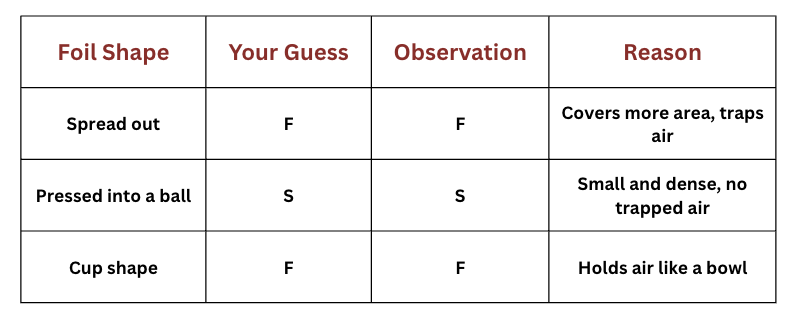
Let’s Test with Aluminium Foil
Aluminium foil spread out or shaped like a cup can float because it holds air.
However, when the aluminium foil is tightly pressed into a ball, it will sink as it is denser and holds less air.
Try yourself:What happens to a coin when it spins?A.It speeds up indefinitely.B.It gradually slows down and stops.C.It stays in one place.D.It floats on water.View SolutionBalance of Boat!
Boats float better when they are balanced and robust. A well-designed boat remains upright and does not tip over.
Consider how you could make something that floats sink and something that sinks float.
Examples of objects:
Things that float: thermocol, cork, leaf, wax, ice-cube, pumpkin, lemon.
Things that sink: marble, coin, spoon, candle, potato, tomato.
Try this activity with your friends and compare your boats. Use different materials to make the boats and explore through experiments.
Some boats may be strong and not break easily, while others may break quickly. Some may fall over easily, while others stay balanced. Think about ways to make your boat better.
Difficult Words
Spinner: A tool designed to investigate spinning movements, like a top or various handmade spinners.
Balance: When an object remains steady and does not fall over.
Charkha: A wheel for turning cotton into thread, famously used by Mahatma Gandhi for making traditional clothing.
Lattu: An ancient Indian spinning top crafted from wood or clay, used for thousands of years in India.
Float: To remain on the surface of water.
Sink: To descend below the surface of water.
Dense: Something that is closely packed and heavy for its size.
All of us feel happy at different times and for different reasons. We feel happy when we:
Eat our favourite food made from grains, pulses, and vegetables.
Play games with our friends.
Spend time with family.
Celebrate festivals and special moments.
Being happy is an important part of being healthy. This unit helps us understand how food, exercise, rest, and safety work together to keep us happy and healthy.Journey of the Grains
Have you ever wondered how food like rice or wheat reaches your plate?
The journey of a grain from the farm to our plate is long and full of effort.
Many people and natural elements work together to make this possible.
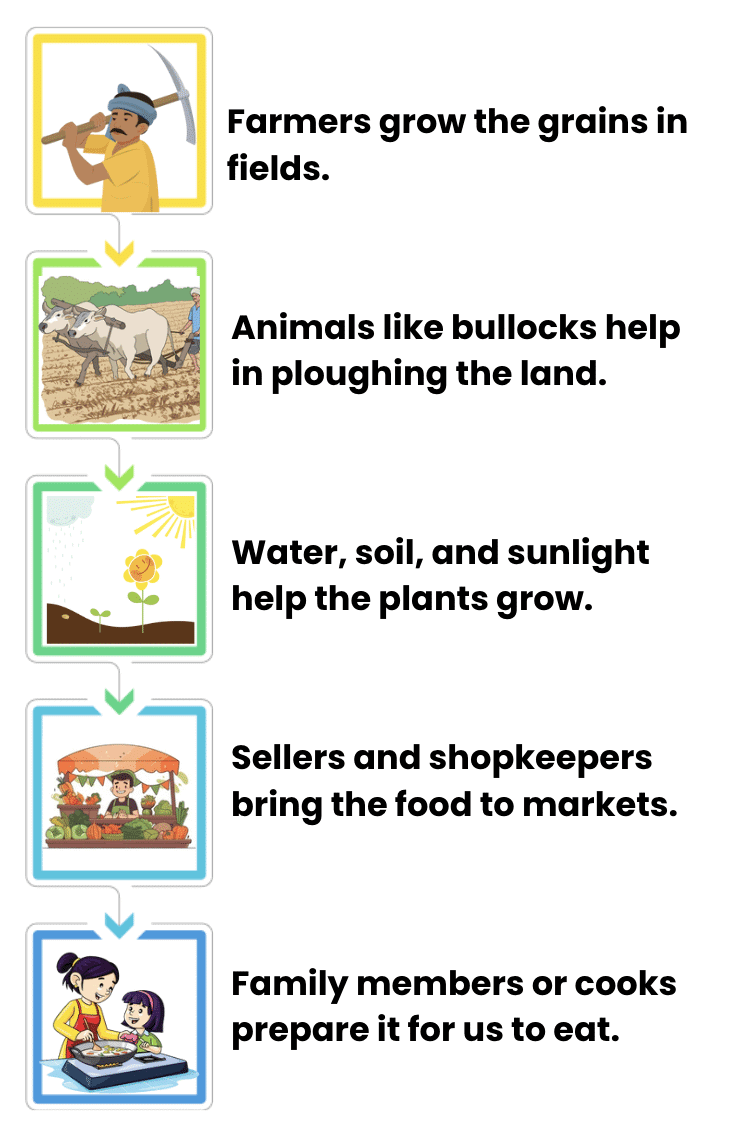
The efforts of people (farmers, sellers, etc.) and animals make this journey possible for us.
Water, soil, and sunlight also play an important role in this process.
Shopkeepers sell the grains, and family members cook them.
Did you know? In India, we celebrate different cultural practices and festivals to show gratitude to ‘Mother Nature’ for the food we eat. These include Makar Sankranti, Akshay Tritiya, Raja Utsav, Onam, Lohri, and other festivals.
Mindful Eating
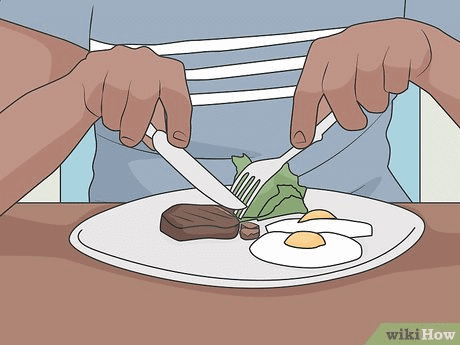
Mindful eating means paying full attention to what we eat and how we eat it.
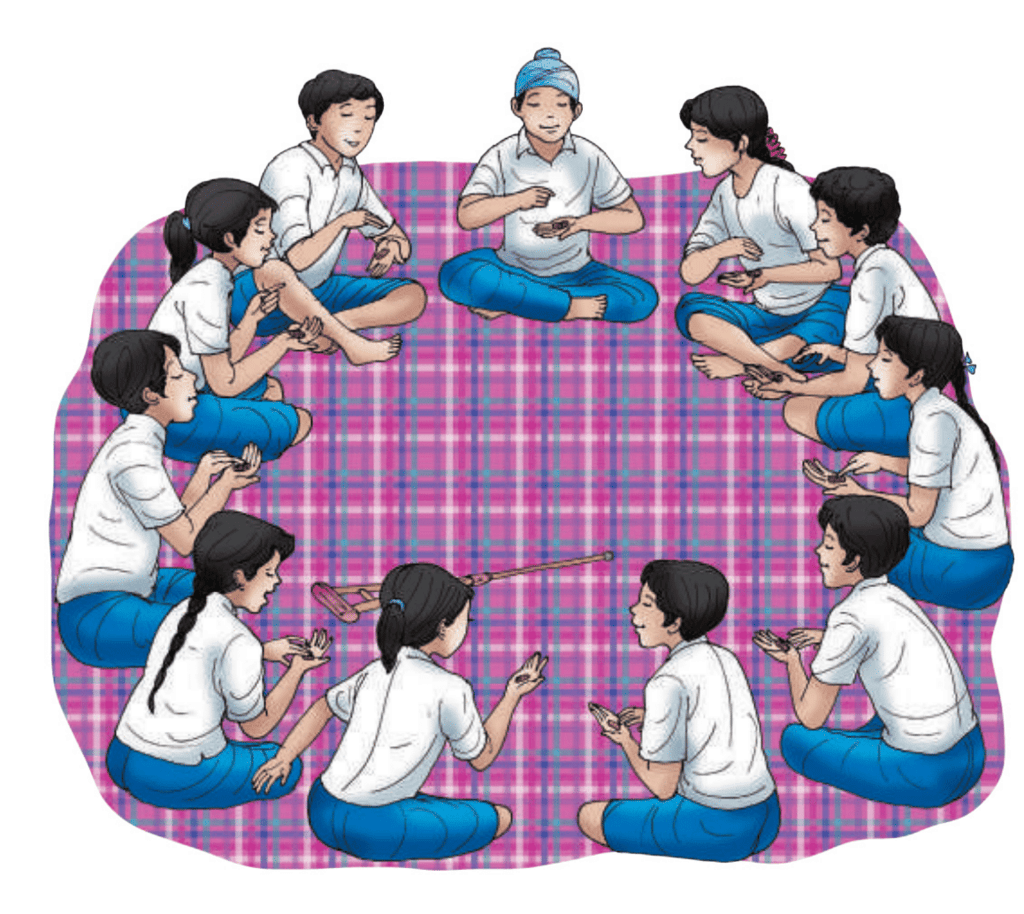
One day, the teacher asked the students to sit in a circle and close their eyes. She placed one peanut in each child’s hand. The students followed these steps carefully:
Slowly put the peanut in the mouth.
Use the tongue to feel its surface.
Gently chew it with the teeth.
Use the tongue, nose, and other senses to feel the taste.
Notice the texture (how the food feels) before swallowing.
What Happens in Our Mouth While Eating?
The tongue helps in feeling the food’s texture and moving it around in the mouth.
The teeth break the food into smaller pieces by chewing.
Inside the mouth, food gets soft and mixed with saliva, making it easier to swallow.
Importance of Mindful Eating
It helps us enjoy our food more.
We make healthier choices when we eat slowly.
It teaches us to be thankful for every bite.
Next time you eat, try to chew slowly, enjoy the flavour, and be grateful for your food.Valuing Food
Every grain is important because many people and animals work hard to provide food for us.
Wasting food disrespects their efforts.
When we waste food, we fail to respect the hard efforts of everyone who helped bring food to our plate.
When we remember all the contributors with love and gratitude, we feel the importance of each grain, and we enjoy the taste.
For a week, keep a record of what you eat for breakfast, lunch, and dinner and if You finish your food or not.
Enjoy Sports
Along with good food, it is important to exercise regularly to maintain our health.
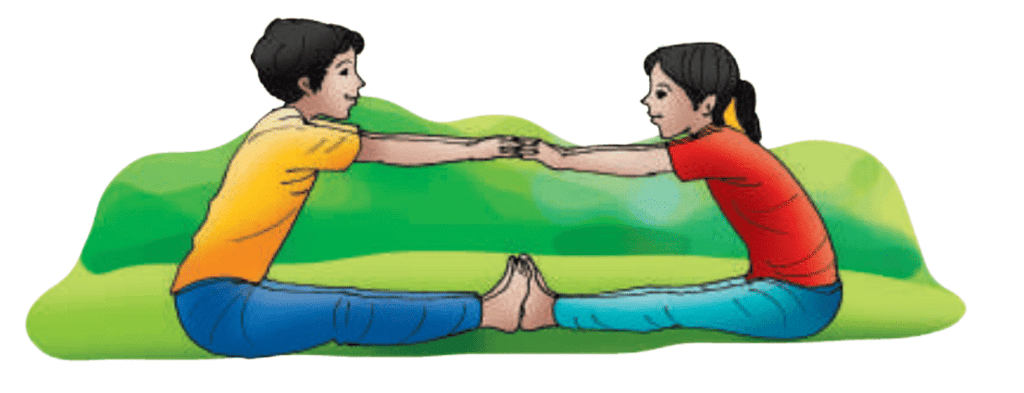
Engaging in regular physical activities, such as: Playing in open fields with friends, Running, Jumping, Cycling, Skipping is essential to keep us strong and energetic.
Other physical activities like yoga help improve our posture and keep us happy and active.
The textbook ‘Khel Yoga’, which focuses on ‘Physical Education’ and Well-being, offers many fun exercises and games.
Sleep Well too!
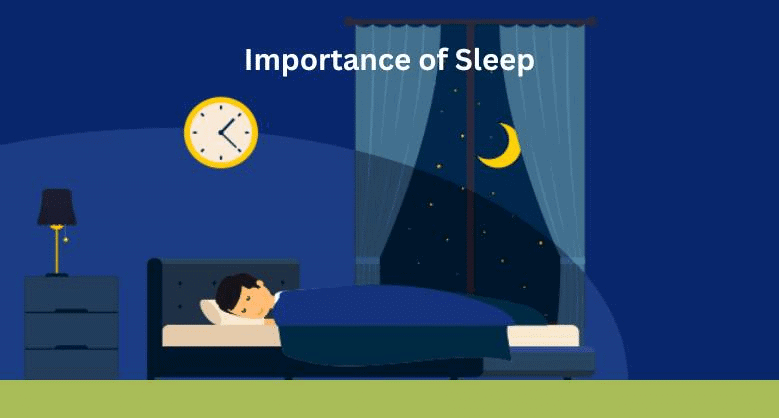
Sleep is essential for staying fresh and full of energy.
Our body needs enough sleep each day.
Good sleep removes tiredness and helps us feel refreshed.
Lack of sleep makes it hard to concentrate on work or play.Getting enough sleep is as important as eating well and exercising.Feeling Safe
Feeling safe contributes to happiness and health.
A safe touch feels like a comforting hug from a family member.
An unsafe touch can make you feel uneasy or scared.
This can happen from anyone, whether familiar or a stranger.
If you feel unsafe, it’s important to say “No” and tell a trusted adult.
Speaking up is okay, and you shouldn’t feel guilty about it.
Difficult Words
Grains: Small seeds such as rice and wheat that are used as food.
Fertile: Soil that is excellent for growing plants.
Mindful Eating: Eating slowly and being aware of what we eat and how we feel while eating. This helps us enjoy our food more, make healthier choices, and appreciate what we have.
Texture: The way food feels in the mouth, like whether it is smooth or crunchy.
Precious: Something very valuable, like each grain of food.
Safe Touch: A touch, such as a hug, that feels good and comfortable.
Unsafe Touch: A touch that feels scary, uncomfortable, or wrong. If you ever feel unsafe, speak up! It’s alright to say ‘No’ and tell a trusted adult, like your teacher or parents.
Trusted Adult: Someone like a parent or teacher you can talk to when you feel unsafe.
In this unit, we will learn how to stay healthy and happy by eating the right food, exercising, and getting enough rest.
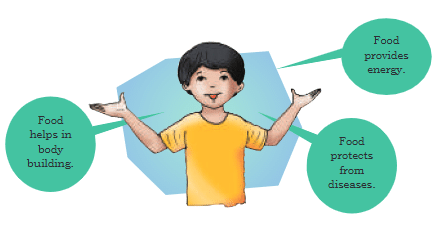
We will explore the different types of food that help our bodies grow, give us energy, and protect us from diseases.
We will also learn about the six important tastes called Shad Rasa, like sweet, sour, salty, and others.
Healthy Eating
This unit will teach us about balanced food, the need to drink clean water, and the importance of eating mindfully. We will understand how exercise keeps us fit, and why rest is important for our health.
We will also learn to appreciate all the hard work of people, animals, and nature that helps grow food and crops. It’s important to care for every grain and never waste food.
Finally, the unit will give examples of fun exercises and games for keeping our bodies healthy. We will also see how different communities take care of their crops and respect all the hard work that goes into producing food.
Introduction: Food for Health
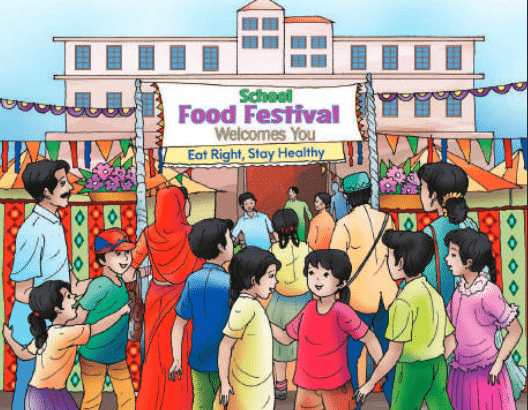
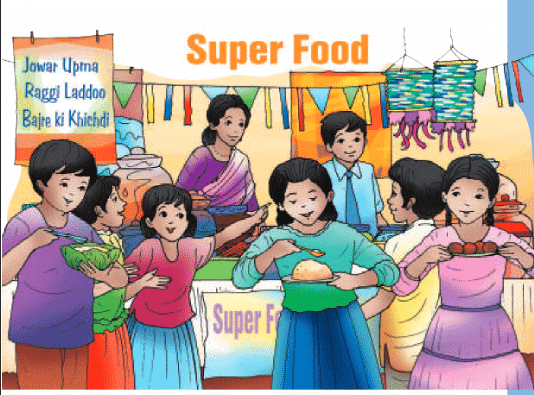
The day of the food festival has finally arrived! Students and their parents have brought a wide variety of food items to share.
Food Festival
The stalls were filled with fresh fruits, vegetables, and tasty treats like dhokla, litti-chowkha, dal-baati-churma, and bajre-ki-khichdi.
There were also dishes like chhena-poda, kadhi-pakoda, ker-sangri, siddu, and roasted corn.
You could also enjoy spicy chutney, hot dosa, crispy vada, jowar upma, ragi laddu, and many other yummy foods!
The children were excited to taste everything and visited the stalls one by one.
Mystery Masala
At the food festival, students taste Ugadi Pachadi at the “Mystery Masala” stall. This dish is a traditional food from Andhra Pradesh, Karnataka, and Telangana, made with six distinct taste elements:
Mystery Masala
Sweet (jaggery)
Sour (tamarind)
Salty (salt)
Pungent (green chilli)
Bitter (neem)
Astringent (raw mango)
Combining these flavours creates a unique and enjoyable dish. According to Ayurveda, eating a balanced diet that includes shad rasa is beneficial for health.
Did you know? The six tastes—sweet, sour, salty, pungent, bitter, and astringent—are called ‘shad rasa’ in Ayurveda. Ayurveda suggests that eating balanced food with all six tastes is good for your health.
Try yourself:
What are the six distinct taste elements in Ugadi Pachadi?
A.Sweet, sour, salty, pungent, bitter, astringent
B.Spicy, sweet, sour, salty, bland, rich
C.Sweet, sour, spicy, bitter, tangy, bland
D.Salty, sweet, sour, tangy, spicy, astringent
View Solution
A Stall of ‘Super Food’
Surbhi and her friends visited a stall that offered millet foods.
Millet Foods
When Surbhi looked at the menu, she remembered that her grandmother used to eat jowar and bajra roti in winters, and jau roti in summers.
Millets are healthy and full of nutrients.
The children were happy to order jowar upma and enjoy eating millet-based foods.
How Does Food Help Us?
Children were attracted towards a banner which said—“Colours on Plate, Wellness in Life”.
Why do we need different kinds of food?
Our bodies need a variety of foods to stay healthy, energetic, and strong.
Food is needed for the balanced growth of our body.
Since no single food has all the nutrients our bodies need, it is important to eat a variety of foods.
Food Groups
Our body requires different types of food to maintain health:
Energy-giving foods: Rice, wheat, potatoes, bananas, millets, butter, and oil provide the energy we need for daily activities.Energy Giving Food
Body-building foods: Pulses, beans, milk, eggs, chicken, and nuts support growth and strengthen our muscles.Body Building Food
Protective foods: Fruits and vegetables such as carrots, spinach, oranges, and amla shield us from illnesses. It’s not enough to eat just one food group; we need all three for a healthy body.Protective Food
Try yourself:
What do body-building foods help support?
A.Energy production
B.Growth and muscle strength
C.Illness protection
D.Weight loss
View Solution
Say ‘No’ to Junk Food
Junk foods such as chips, soft drinks, burgers, and packaged foods are high in oil, salt, and sugar. Regularly eating these is not healthy.
Junk Food
Examples of junk food include:
Soft drinks
Chips
Bread pakoda
Burgers
Pizza
Over-processed, packaged food
Fresh home-cooked food is healthier than packaged options as it has more nutrients.
A Balanced Food Plate
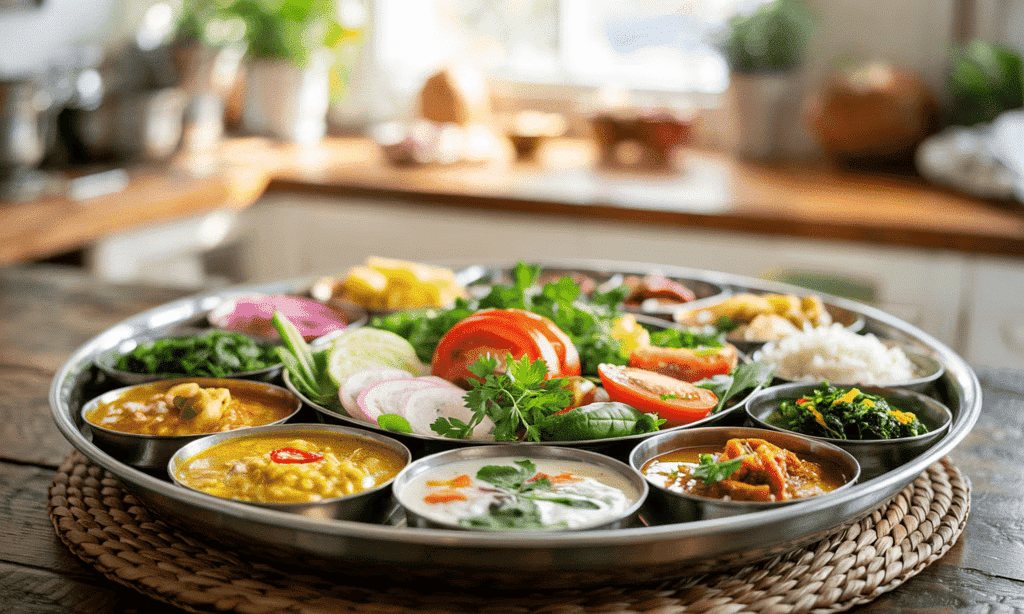
A balanced plate includes the right amounts from all food groups:
Balanced Food Plate
Lots of protective foods (fruits and vegetables)
Some body-building foods (pulses, milk)
A little energy-giving foods (rice, oil)
Eating a variety of foods is key for balanced growth.
This helps us stay healthy, active, and happy.
Water for Health
Water is an essential part of our diet.
It aids in digestion and keeps our skin and body healthy.
Water helps in removing waste from our body through urine, sweat, and faeces.
Eating fruits like watermelon and cucumber can help maintain hydration.
Drinking sufficient water should be a key part of our healthy habits.
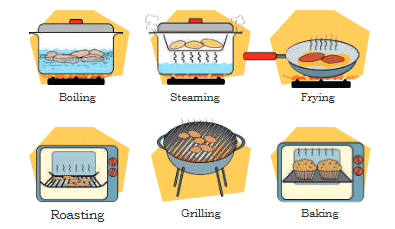
Different Methods of Cooking
Surbhi and her friends had a great time tasting various food items at the food festival.
Different Methods of Cooking
They were curious about how these delicious dishes were made.
There are certain food items that can be enjoyed without the need for cooking.
Examples of these include fruit chaat, which is a mixture of various fruits, often seasoned with spices and herbs.
Another example is vegetable salads, made from fresh vegetables, which can be served with dressings or dips.
These types of foods are not only easy to prepare but also healthy options for quick meals or snacks.
They provide a refreshing and nutritious choice, especially during hot weather or when you want something light.
Did you know? A chef is a professional cook who is skilled in all parts of food preparation. The word ‘Chef’ in French means the head or director of the kitchen.
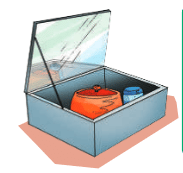
Did you know? We can cook food in a solar cooker using sunlight instead of fire from a gas stove or electricity. It doesn’t pollute the environment because it doesn’t produce any smoke or ash.
Solar Cooker
Difficult Words
Nutrients: Important parts of food that give us energy and help our bodies grow and stay healthy.
Millets: Small grains like jowar, bajra, and jau that are full of nutrients and very good for health.
Ayurveda: An old Indian health system that helps people stay healthy with special diets, herbs, and breathing exercises.
Shad Rasa: In Ayurveda, there are six tastes called ‘Shad Rasa’—sweet, sour, salty, pungent, bitter, and astringent. These tastes are important for a balanced diet.
Pungent: A sharp or spicy taste, like green chilli.
Astringent: A dry or tangy taste, like raw mango.
Balanced Plate: A plate with the right amount of food from all three food groups: protective foods, body-building foods, and energy-providing foods.
Hydrated: When your body has enough water to stay healthy.
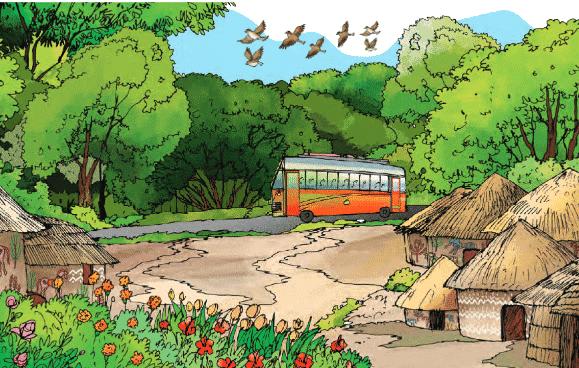
This chapter takes us on an exciting journey with Reena and Amit to their village near a forest during the harvest festival.
It’s a special day because their village is becoming a solar-powered village!
As they experience the festival, the children learn about the importance of nature and how people live closely with it.
A Journey Through a Forest
Reena and Amit were excited about their family trip.
They were going to their village near a forest during the harvest festival.
It was a special day because their village was becoming fully solar-powered.
Reena and Amit were excited to see the village lit up for the celebrations.
Try yourself:What special event is happening in Reena and Amit’s village?
A.Solar power installation
B.Forest cleanup
C.Festival of Colours
D.Family reunion
View SolutionWelcome to the Village!
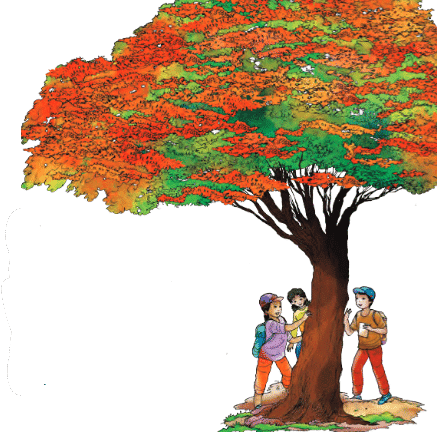
As Reena and Amit entered the village, they saw Palash trees with bright orange-red flowers.
Reena asked about the flowers.
Their father explained that these are Palash trees. They are called the ‘flame of the forest’ because the flowers make the whole forest look reddish-orange.
Amit noticed that the houses in the village looked very different from the houses in the city.
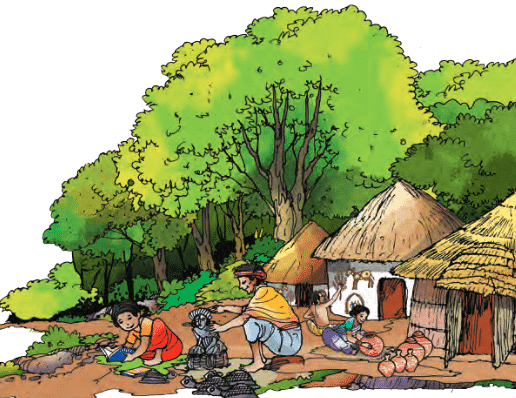
Mother explained that the houses are made with clay, hay, cow dung, and other natural materials.
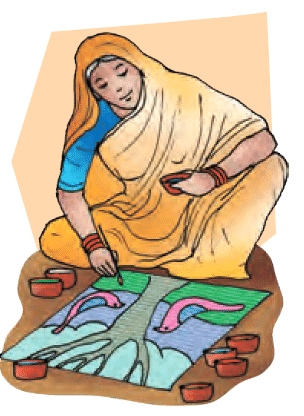
The wall decorations were painted by grandmother using a dye made from rice flour and water.
Did you know? Gond art is a type of painting done on walls using natural colors. Artists create pictures of nature, like trees, animals, birds, and people.
Farming Tools and Storing Grains
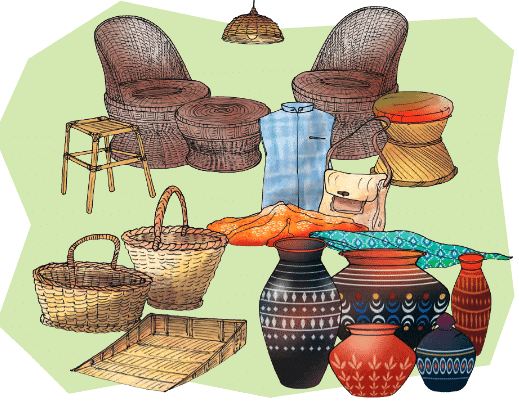
In the house, earthen pots and bamboo baskets were used to store grains.
The earthen pots were lined with neem leaves to keep the grains fresh.
The bamboo baskets were coated with cow dung on the outside to protect the grains from insects and pests.
Did you know? The Jenu Kurubas are a tribe from Karnataka. Their name comes from the word ‘Jenu,’ which means honey. When they collect honey from beehives, they sing songs to apologize to the bees. This shows how much they respect nature.
Mosquito Repellent and First-Aid
Grandfather took out a mixture made with neem oil and explained that rubbing it on the hands and feet would keep mosquitoes away.
Reena asked if it was a first-aid box. She also prepared a first-aid box at home, keeping medicines and mosquito repellent from the market.
Sparkling Light, Happy Life
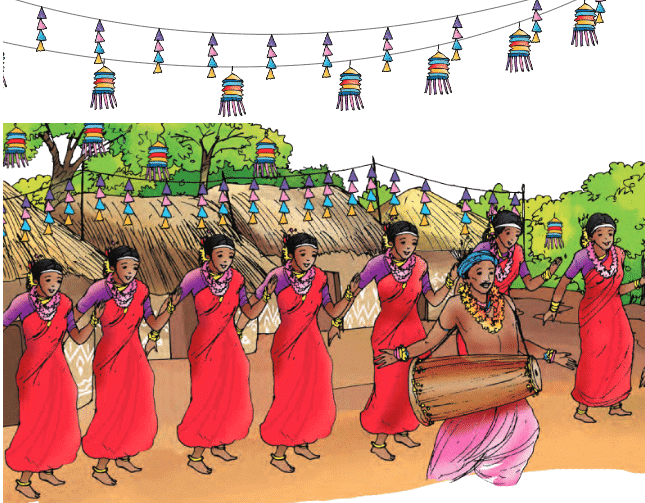
In the evening, the entire village was illuminated with colourful lights.
The village was beautifully decorated for a celebration.
Everyone gathered in a field, dressed in traditional clothes and jewels.
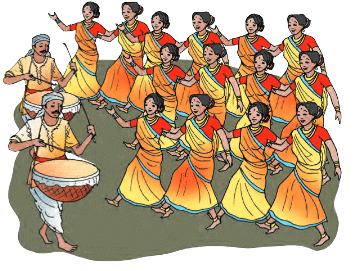
They offered prayers to God and nature, while the sounds of the dhol and nagada filled the air.
Amit and Reena joined the festivities and enjoyed the traditional dance.
On this day, the village was also set to become completely solar-powered.
The community honours nature through festivals like Vat Purnima (worshipping banyan trees) and sacred groves, which are protected areas for worship and celebration.
Did you know? Sacred Groves are small areas of forest, protected by local communities. The trees and wildlife there are preserved. These spaces are important for the community to gather, worship, and celebrate the beauty of nature.
How to Care for Plants and Animals:
Reduce paper waste to protect trees.
Say no to plastic to keep the environment clean.
Spread awareness about saving plants and animals.
Difficult Words
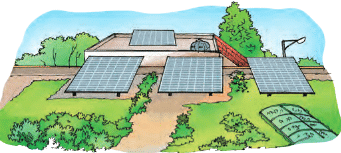
Solar Power: Electricity made from sunlight to power things like fans and lights.
Palash: A tree with bright orange-red flowers. When it blooms, the forest looks like it’s on fire, so it’s called the ‘flame of the forest’.
Clay: A type of soft soil used to make pots and buildings.
Dye: A colour made from flowers, leaves, and coloured stones, used for painting.
Earthen Pots: Pots made from clay used to store food or grains.
Neem: A tree with leaves that keep insects away.
Sacred Groves: Small forests that local people protect. These areas are important for worship and celebration of nature.
Traditional: Things that are done in the same way for a long time, like certain dances or clothing.
Nature is home to many different plants, animals, birds, and insects, and each one is important in making the world work.
In this unit, students will observe and learn about these plants and animals to understand how they all depend on each other.
We will also learn to appreciate the environment and realize that the world is like one big family, following the idea of ‘Vasudhaiva Kutumbakam’ (the world is one family).
Life Around Us
We will explore:
How different plants and animals live and help each other.
The importance of tribal art and medicinal plants in different cultures.
Through fun activities, festivals, and games, students will discover how to protect nature and learn to live in a way that helps keep the earth safe and healthy.Introduction: Nature Trail
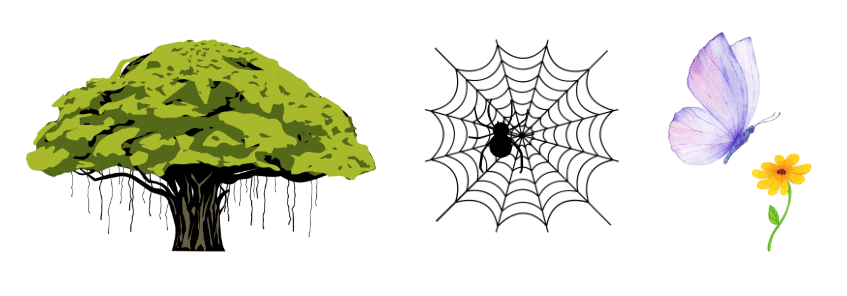
Have you ever seen a banyan tree with its roots hanging down and touching the ground?
Or a colorful bird diving into the water?
What about a spider weaving its web?
Have you watched butterflies flying around a flower?
Nature is full of amazing plants, animals, and insects. Let’s go on an exciting journey with our guide Abha Didi to explore them all!
Try yourself:
What is the main idea of the unit ‘Life Around Us’?
A.Understanding how plants and animals depend on each other
B.Studying the history of tribal art
C.Exploring the solar system
D.Learning about different countries and cultures
View SolutionThe Adventure Begins
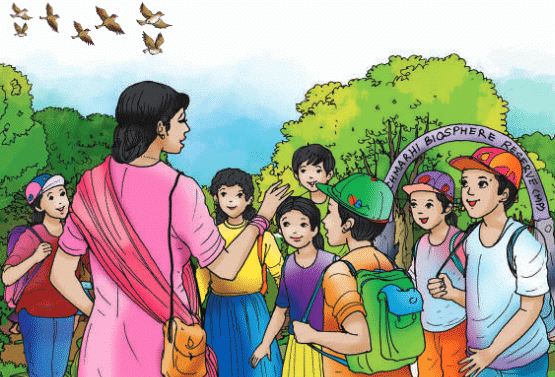
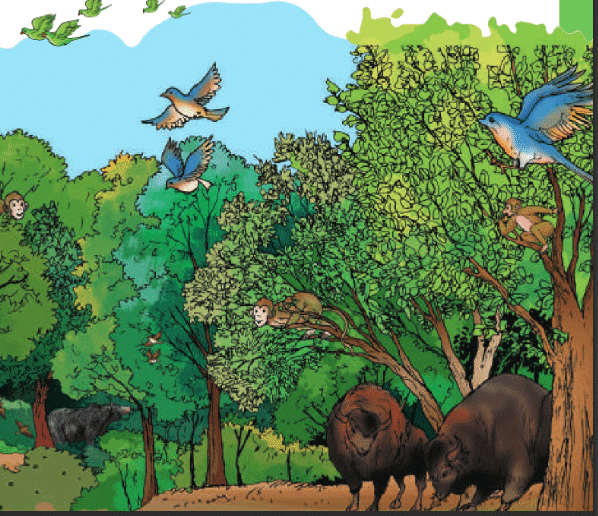
Students and their teacher are preparing for an exciting nature trail in Pachmarhi, Madhya Pradesh.
As they reach the entrance of the forest, they are filled with excitement at the sight of tall trees and the sound of birds chirping.
Abha welcomed the group to Pachmarhi and introduced herself as a nature scientist who studies plants and animals.
The teacher explained that Abha would be guiding them on their exploration of the forest.
The students asked Abha if they would see monkeys, deer, snakes, eagles, and tigers during their journey.
Abha replied that they would have to find out and reminded everyone that they must be careful not to harm the plants and animals in the forest.
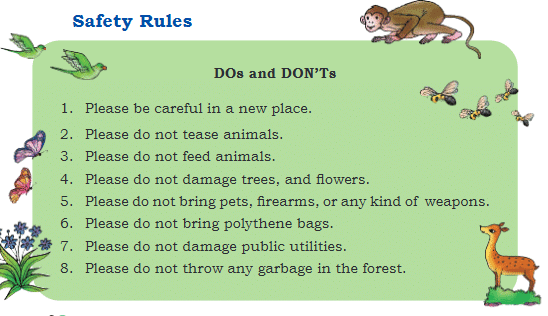
Safety Rules
Abha emphasizes crucial safety guidelines for visiting the forest to ensure the protection of plants, animals, and the environment.
Safety Rules
These rules are essential as they protect animals, plants, and the forest, allowing everyone to enjoy nature safely.
DOs:
Be careful in a new place.
Follow the rules and keep the forest clean.
DON’Ts:
Don’t tease or feed animals.
Don’t damage trees, flowers, or public utilities.
Don’t bring pets, weapons, or polythene bags.
Don’t throw garbage in the forest.
Exploring the Forest
After learning the rules, The students hopped onto the jeeps and entered the forest, where they saw a variety ofplants and animals.
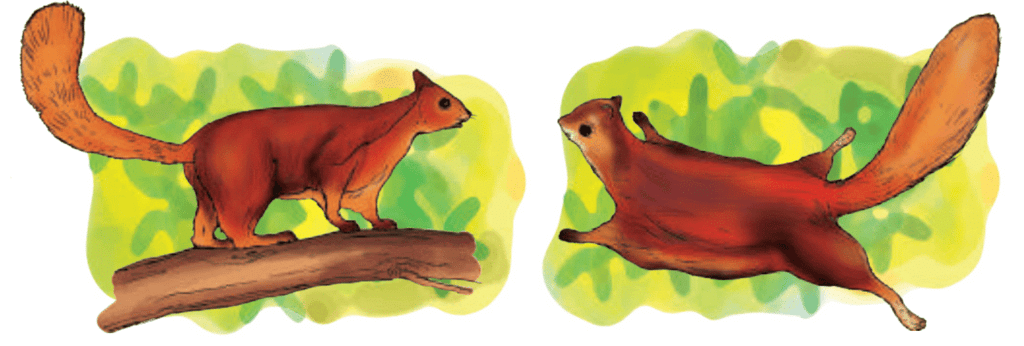
They spotted the Indian Giant Squirrel, a large, red-colored squirrel found in Pachmarhi and other places.Indian Giant Squirrel
Did you know?
The Spectacled Monkey is the state animal of Tripura. Its distinctive white patches around its eyes make it look like it’s wearing spectacles.Spectacled Monkey
Next Stop: The Pond
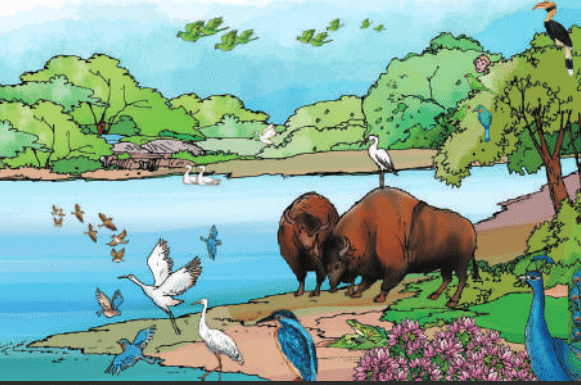
The jeeps stopped near a pond where students were excited to see more animals.
The students saw gaur (a type of wild cow).
Gaur look like buffaloes but are stronger with shorter horns.
Arya wondered which animals might come to drink water at the pond.
She noticed footprints in the mud and asked which animal left them.
Sarthak guessed it might be a deer, tiger, or even a rabbit.
He saw a rabbit munching on grass nearby.
Gaur
Try yourself:
What is the state animal of Tripura?
A.Indian Giant Squirrel
B.Spectacled Monkey
C.Gaur
D.Hornbill
View Solution
Learning About Birds
Sarthak asked about a bird sitting on a nearby tree.
Abha explained that the bird was a hornbill, known for its headgear growing out of its forehead like a horn.
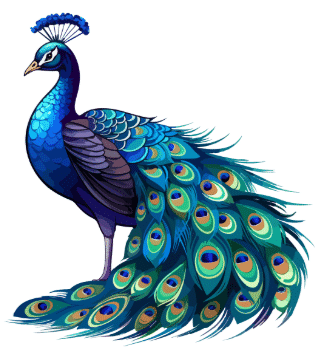
Abha also shared that: Some birds, like the peacock, are colorful, while others, like owls, have sharp eyesight to see at night.
Peacock
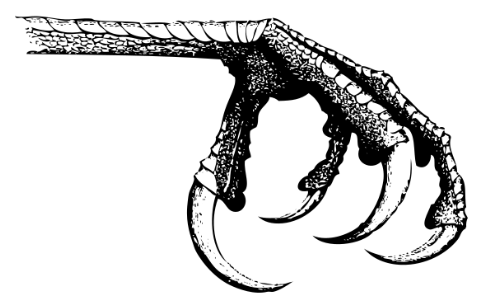
Birds have beaks and claws to help them eat and do other tasks.
By observing a bird’s beak and claws, one can guess its eating habits.
For example: Eagles have sharp, curved beaks and claws to catch prey. Sunbirds have long beaks to drink nectar from flowers.
Claws
Water Animals and Their Special Features
Animals that live in water have special features to help them survive:
Fish have fins to swim.
Gharials (a type of crocodile) have long, narrow snouts to catch fish.
Turtles have strong shells to stay safe and webbed feet to swim.
Frogs can live both on land and in water.
Tiny Animals
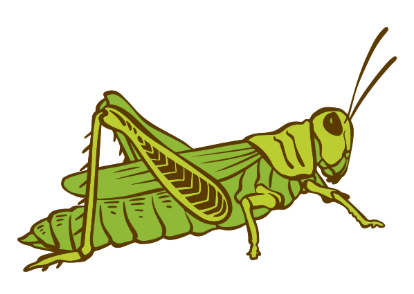
A grasshopper suddenly hopped out from the grass, and everyone was amazed.
Grasshopper
Arya explained that the grasshopper is an insect with three pairs of legs, antennae to sense its surroundings, and sometimes two pairs of wings, like flies and grasshoppers.
Abha added that many insects can be found in the forest, such as ants, beetles, bees, flies, praying mantises, and butterflies.
The forest has a great variety of animals, each with unique features.
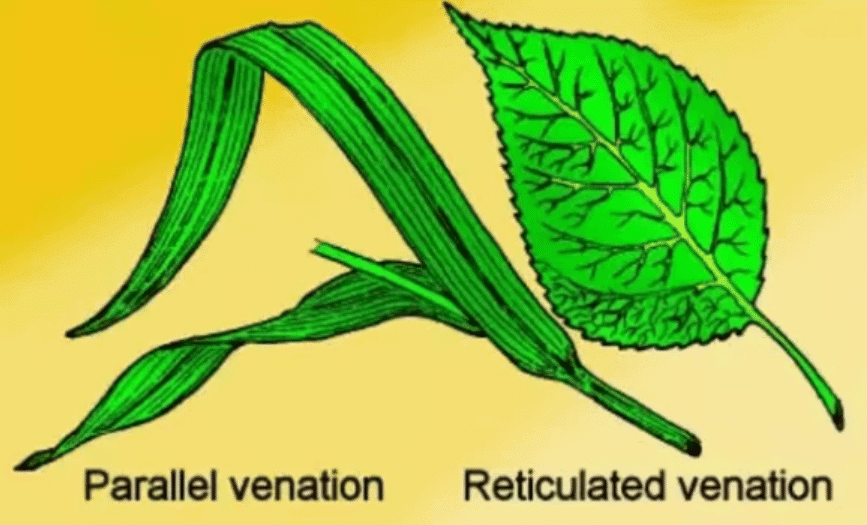
Different Types of Veins in Leaves
Leaves not only have different colors, textures, and shapes, but also different lines called veins. There are two types of vein arrangements in leaves:
Veins in Leaves
Parallel Veins: The veins run parallel to each other.
Reticulate Veins: The veins form a network or branching pattern.
Difficult Words
Nature: The world around us, including plants, animals, and everything in the environment.
Trail: A path or journey through a forest or natural area.
Scientist: A person who studies and learns about things like plants or animals.
Chirping: The high-pitched sounds that birds make.
Harm: To hurt or damage something, like plants or animals.
Amenities: Things like benches and signs that are provided for people to use in public places.
Footprints: Marks left by an animal’s feet on the ground.
Beak: The hard, pointed part of a bird’s mouth used for feeding.
Claws: The sharp, curved nails on a bird’s or animal’s feet.
Antennae: The long, thin parts on an insect’s head that it uses to sense things.
Texture: How something feels, like smooth or rough.
Interdependence: When living things, like plants and animals, depend on each other for survival in nature.
In this chapter, we will learn about the different places and services in our neighbourhood that help us every day.
We will follow a girl named Navya and her grandfather as they walk around and discover things like communication, transportation, hospitals, banks, and how to read directions.
These things are very important because they make our life easier and help people stay connected.
On Our Way Back Home
The school bell rang, marking the end of classes. The students were excited about the books they saw in the library. School buses and e-rickshaws were waiting outside the school. Navya saw her grandfather at the school gate and ran to him.
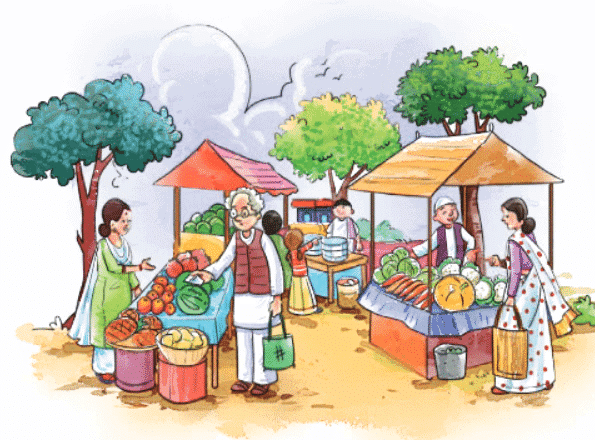
She suggested, “Let’s take the market route today!”
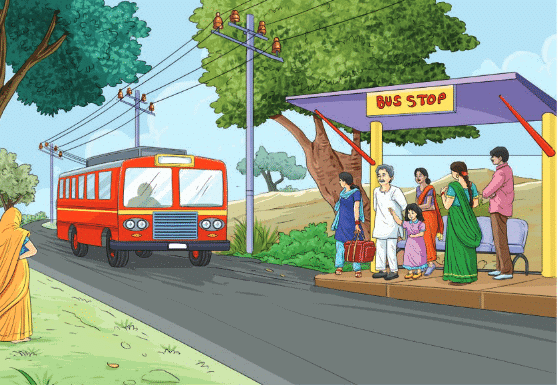
They walked to the bus stop, where people were already waiting.
A bus arrived, and everyone boarded one by one.
Navya found a seat by the window and watched the people outside.
Postbox and Letters
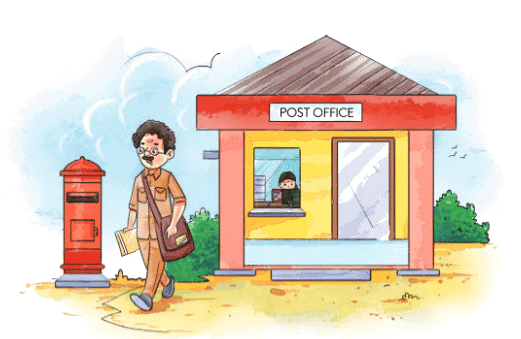
As the bus passed a red postbox, Navya pointed it out and asked her grandfather about it.
Dada ji explained how people used to write letters and drop them in the postbox.
The postman would take the letters to the post office, where they would be sorted and sent to their destination.
In the past, it could take weeks to get a reply, unlike today with mobile phones and emails, which make communication faster.
Navya was surprised and thought weeks was a long time!
Dada ji said, “Even though communication is quicker now, sometimes he misses the joy of writing and receiving letters.”
Do You Know?
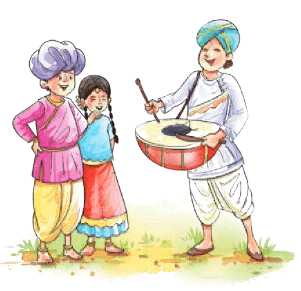
Long ago, people communicated using drumbeats and carvings on rocks.
Later, they started sending letters with the help of messengers and pigeons.
With time, new inventions like the telephone, radio, and television made communication easier.
The postal service was also created to send letters, parcels, and important documents.
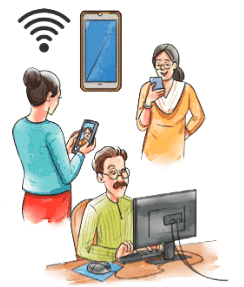
Today, we use mobile phones and the internet to connect with anyone, anywhere, instantly!
Metro Trains and Flyovers
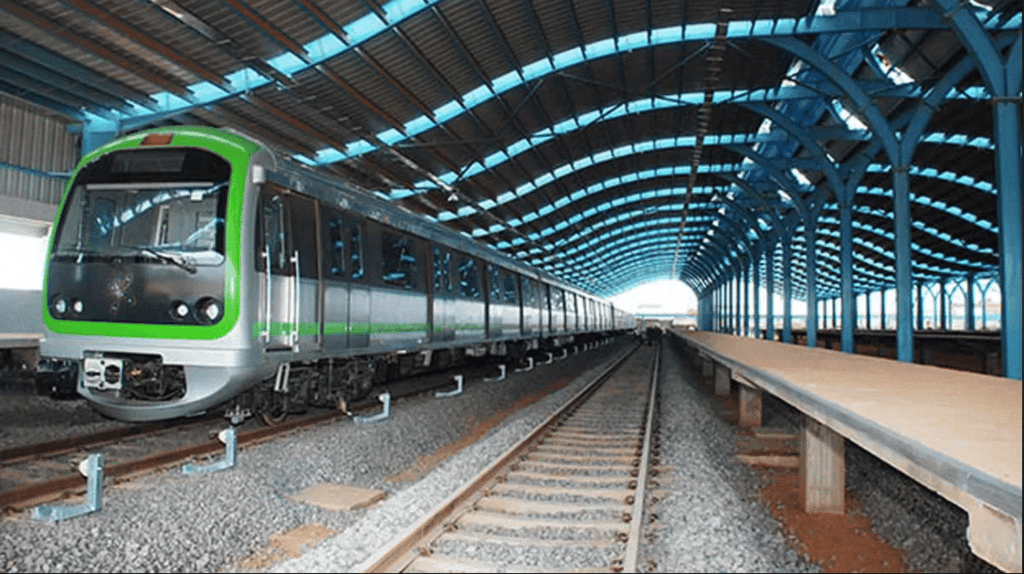
As the bus turned, Navya noticed a metro train passing by.
Dada ji explained that metro trains travel very fast and that flyovers help vehicles move above the busy roads and save time.
Dada ji shared that these modern developments, like metros and flyovers, make life easier.
However, animals, birds, and trees have disappeared because of these changes.
Navya wondered if it was possible to have development and still protect the environment.
Dada ji replied, “Yes, we can create a balance by planting trees to keep our environment safe.” Metro Train
Importance of the Hospital
As they neared a hospital, Navya noticed a banner that said, “Eye Check-up Camp.”
Navya asked why so many people were visiting the hospital.
Dada ji explained that people come to the hospital when they are unwell. He shared how he took Navya’s grandmother there for an eye operation a few years ago, which helped her see better.
The hospital is an important part of the community and offers services like the eye check-up camp to help people.
Try yourself:
What did Dada ji say about the metro trains?
A.They run on a different schedule.
B.They are always crowded.
C.They travel very fast.
D.They are only for tourists.
View SolutionSavings for the Future
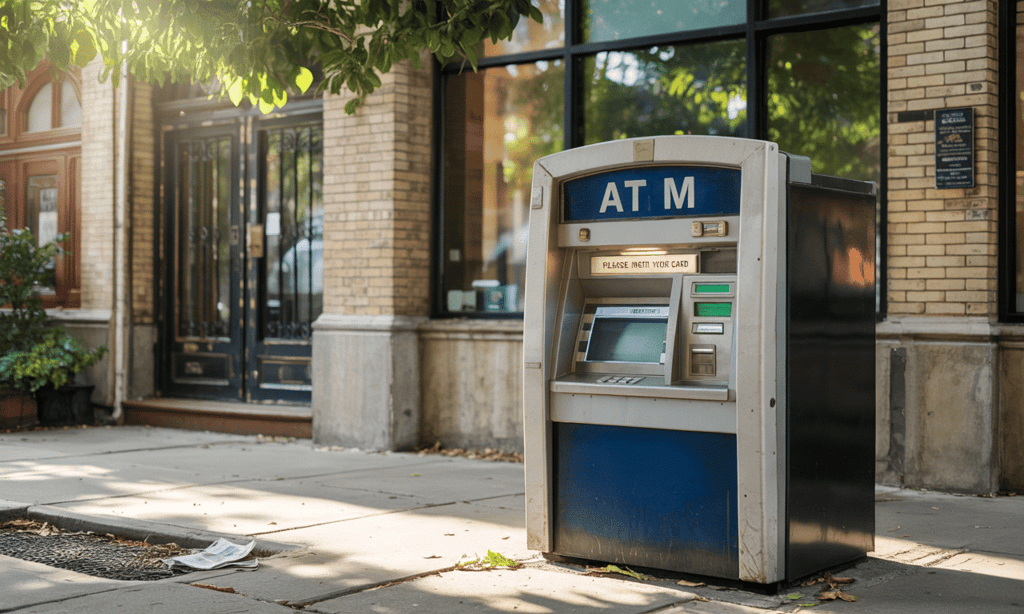
Navya and Dada ji get off the bus near their home and walk past a bank with an ATM (Automated Teller Machine). Navya asks Dada ji what the ATM is for.
Dada ji explains that an ATM is a machine that allows people to withdraw money anytime they need it.
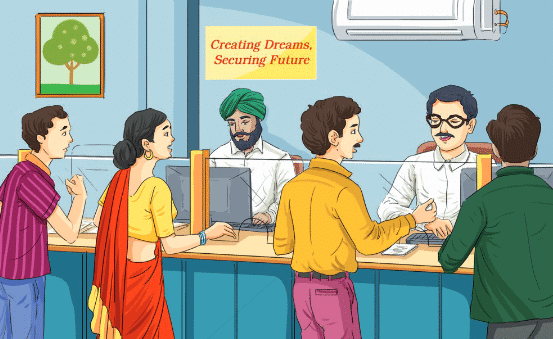
Dada ji explains that banks are safe places to keep money and save for future needs.
Dada ji remembers when he was young, there were no ATMs.
People had to wait in long queues at the bank.
In the past, people used money orders sent through the post office to send money to others.
Navya remembers how her uncle sent money to her mother using a mobile phone for Raksha Bandhan gifts, showing how technology has improved.
Dada ji agrees that technology has made it much faster and easier to send money today.
This shows the big difference between the old ways and new ways of sending money.
Looking Around the Neighbourhood
As soon as Navya reached home, she ran to her brother to share her experiences.
Public places provide important services related to health, safety, cleanliness, and the environment, such as hospitals, banks, post offices, police stations, public libraries, and bus stations.
Navya grabbed a pencil and paper and sat down to draw her neighborhood.
Drawing the Neighbourhood
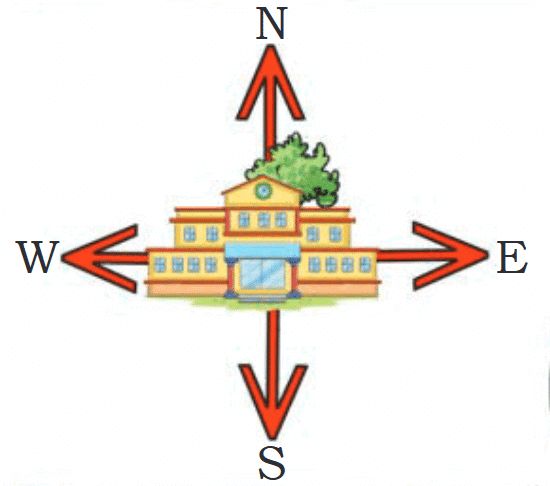
Navya got a pencil and paper to draw her neighbourhood. She used the rising sun to find the east direction.
The places towards the east appeared on the right side of the paper.
The places towards the north were shown at the top of the paper.
The places in the south were placed at the bottom.
The places in the west were on the left side of the paper.
Directions on a Map
On a map, the directions are shown as follows:
North is shown at the top.
South is at the bottom.
East is on the right.
West is on the left.
Difficult Words
Neighbourhood: The area around your home with places like shops and schools.
Postbox: A box where you put letters to send them.
Communication: The act of sharing information by talking or writing.
Flyover: A bridge that lets cars go over busy roads.
ATM: A machine that gives you cash from your bank.
Money Transfer: Sending money to someone, often through the post office.
Landmark: A place or object that helps you find your way.
In this unit, we will learn how people in a community live and work together.
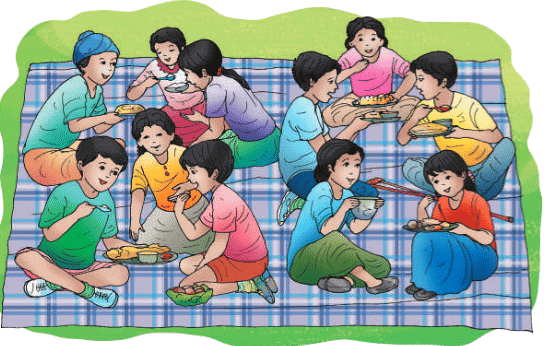
Eating Together as Community
We all help each other and share things like schools, hospitals, markets, and banks.
We will understand how people do different jobs to make the community a better place.
The chapter also teaches us how transport helps people and goods move from one place to another, and how communication helps us stay in touch.
We will also learn to find places using landmarks and maps.
Introduction: Living Together
In this chapter, we will learn how people in a community live together, share resources, and help each other. Let’s explore how we all contribute to making our communities a better place to live!
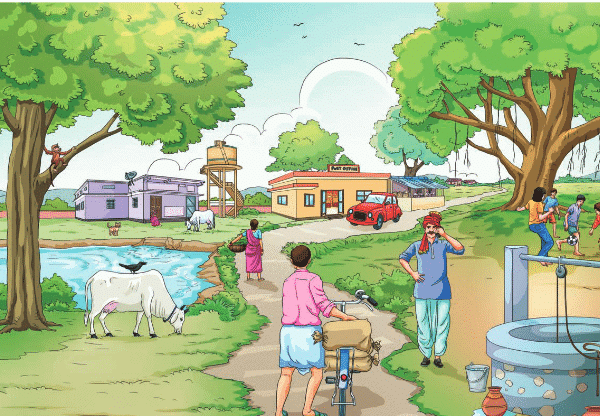
Chandan’s VillageA Tour Around My Village
Chandan lives in a beautiful village. Let’s take a tour around the important places in his village.
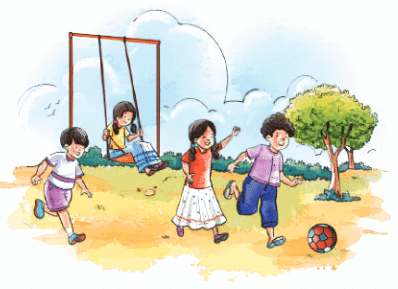
There is a playground near his house.
Chandan plays kabaddi there with his friends.
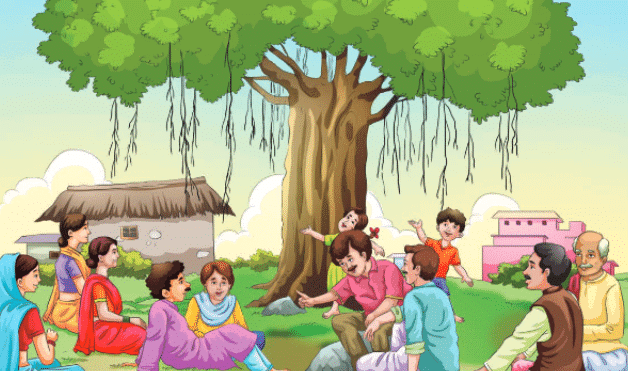
A banyan tree nearby is where elders sit and talk.
People and places are important part of the community.
Important Places in the Village
Every village has special places that help people live better. Here are some of them:
Playground – A fun place for games and play.
Shops – Sell useful things like food and clothes.
Roads – Connect different parts of the village.
Health Centre – Where doctors treat sick people.
Police Station – Keeps everyone safe.
School – A place to learn and grow.
Market – A place where people buy and sell things.
Public Places
Why Are Public Places Important?
Public places like parks, schools, and hospitals are important because they are used for many different activities.
People visit these places to play, relax, study, get help, and meet others.
Sometimes, people work together to clean and decorate these places for festivals or special events.
These shared activities help us become friends and make happy memories together.
Try yourself:Which of the following places in the village is where people buy and sell things?
A.Playground
B.Market
C.Health Centre
D.Police Station
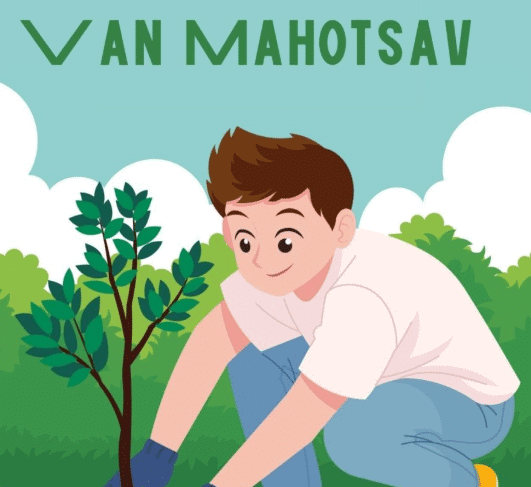
View SolutionVan Mahotsav: A Festival for Planting Trees
Van Mahotsav was about to begin, and everyone was getting ready for the celebration. Chandan and his school friends were very excited to take part.
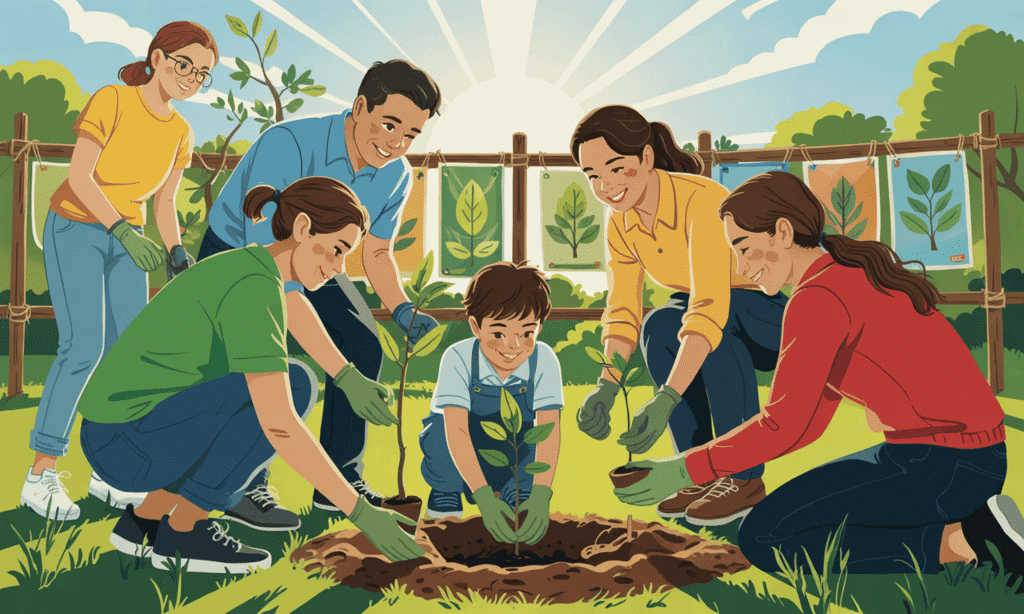
Planting Saplings
John said they would clean the park near their school and plant trees around it.
Mallika said her grandmother and her friends walk in the park every morning. Cleaning and planting trees would give them fresh air and a nicer place to walk.
Chandan suggested inviting their family members too, to join the celebration.
This event highlights the importance of community efforts in creating a cleaner, greener environment and promoting the benefits of nature.
What is Van Mahotsav and why it is important?
Van Mahotsav is also called the Tree Planting Festival.
It is celebrated every year in India from 1st July to 7th July.
People plant trees to protect the environment and make the earth greener and cleaner.
It usually takes place during the rainy season, when plants grow well.
Planting trees together brings people closer and helps the environment.
What Can We Do to celebrate Van Mahotsav?
Clean parks and gardens in our area.
Plant trees and take care of them.
Invite friends and family to join in planting.
Help make the earth a better place to live.
Helping Hands in the Community
Everyone in the village wanted to make Van Mahotsav special. Children, parents, and villagers came together to help. They gathered under the big banyan tree near the playground to make a plan.
Celebrating Van Mahotsav
What Did the Community Members Do?
Sheela said the park needs repairs before the celebration.
Sameer offered tofix the benches using wood and nails from his home.
Babita said she would repair the street light near the park.
Noor planned to bring saplings from her plant nursery to plant around the park.
How Everyone Helped Together
Parents and children worked as a team.
Everyone took responsibility to make the park clean and ready.
The whole community came forward to contribute in their own way.
Why Is Community Work Important?
It helps keep shared places like parks clean, safe, and beautiful.
When everyone works together, the job gets done quickly and happily.
Community efforts bring people closer and make festivals more joyful.
Celebrating Van Mahotsav
The children gathered in the park with their families to celebrate Van Mahotsav. Everyone was excited and ready to help.
Try yourself:
What is Van Mahotsav celebrated for?
A.Cleaning parks
B.Planting trees
C.Teaching children
D.Selling food
View Solution
What Activities Were Done?
Mallika made announcements using a microphone.
People were divided into groups for: Cleaning the park Planting saplings Watering plants Cooking food
Everyone worked together and helped each other.
What Was the Result?
The park looked clean and beautiful.
New saplings were planted.
The paths were neat, and walls were painted.
It was a joyful celebration of teamwork and nature.
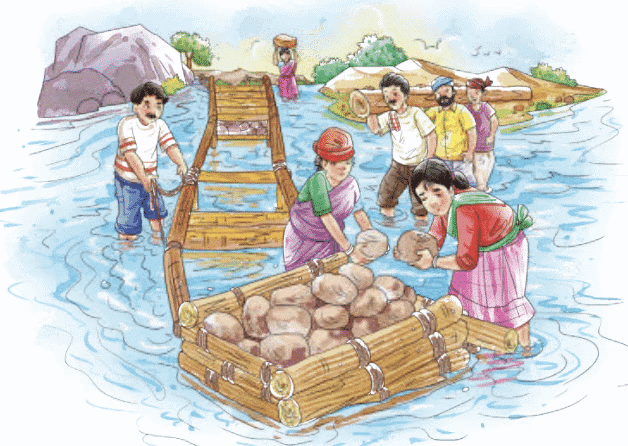
Community Bridge Across a River
In Kanker, Chhattisgarh, the Chinar river overflows during the rainy season.
This made it hard for people to go to schools, hospitals, or move goods.
In 2024, the whole village worked together and built a bridge in just two days.
They used bamboo, stones, and other local materials.
Now, villagers and students can easily cross the river.
What Do We Learn from These Stories?
Working together can solve big problems.
When everyone helps as a team, amazing things can happen.
Just like in a village, our school and neighbourhood also need teamwork.
Do You Know?
Ants and bees also live in communities. Each ant or bee has a special job like:
Collecting food
Caring for babies
Protecting the home
Like them, people in a community also do different jobs to help each other.
Sharing a Meal
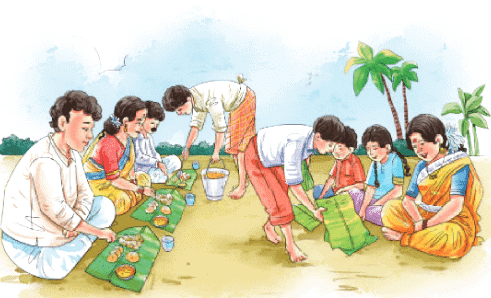
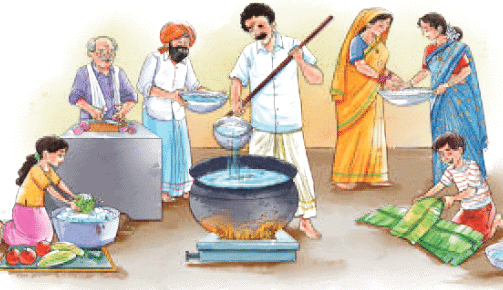
After planting trees, Chandan and his friends ran to where the food was being cooked. It was time to enjoy a community meal to celebrate everyone’s hard work during Van Mahotsav.
Meal Preparation
How the Meal Was Prepared
Vegetables and cereals were brought by people from the village.
The meal was prepared together by the community.
It was a special feast to thank everyone for their efforts.
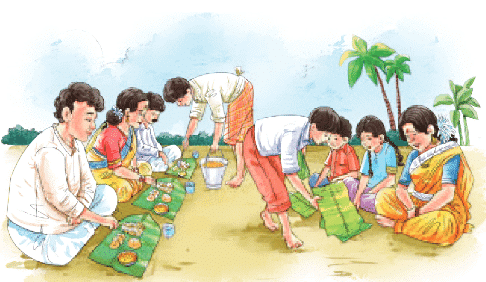
What Happened During the Meal?
Everyone sat together and ate happily.
Children gave out banana leaves to eat on.
Volunteers served the food to everyone.
People laughed, joked, and enjoyed the delicious meal.
After eating, the banana leaves were thrown into a pit.
Do You Know?
Banana leaves buried in a pit turn into manure, which improves soil quality.
This is a good way to keep the environment clean and green.
Sharing a Meal
What Did Everyone Feel?
Everyone was tired but happy.
They were proud that they worked together to make the park beautiful.
The children decided to take care of the park regularly.
Other Community Celebrations in India
Uruka(Assam):
Celebrated on 14th January, the first day of Magh Bihu.
People build a hut called Bhela Ghar with bamboo and hay.
They cook, eat, and dance together.
Khetala System (Sikkim):
During harvest time, people help each other in the fields.
Those who are experts in farming are called Khetala.
It builds a strong bond in the community.
What did we learn from the chapter?
Teamwork is important: When everyone works together, big tasks like cleaning a park or planting trees become easier and more fun.
Community spirit: By helping each other, we make our community a stronger and happier place to live.
Celebrating together: Festivals like Van Mahotsav and sharing meals bring people together and create wonderful memories.
Caring for the environment: Planting trees, cleaning parks, and using things like banana leaves in an eco-friendly way helps make the earth greener and healthier.
Helping each other: Whether it’s repairing something in the park or helping during harvest time, working as a team makes life better for everyone.
This chapter teaches us the value of working together and helping one another to create a better and more connected community.
Difficult Words and Their Meanings
Community: A group of people who live near each other and help each other.
Playground: A place where children play games.
Banyan Tree: A big tree with many branches and roots.
Shopkeeper: A person who sells things in a shop.
Health Center: A place where doctors help sick people.
Van Mahotsav: A festival in India where people plant trees to protect the environment.
Saplings: Young trees that are still growing.
Mason: A worker who builds with bricks and stones.
Trowel: A small tool used to spread cement.
Manure: Natural material that helps plants grow.
Harvest: Gathering ripe crops from the fields.
Bhela Ghar: A small hut made from bamboo and hay in Assam, built during the Magh Bihu festival.
 To explore shadows, take a torch and a stick.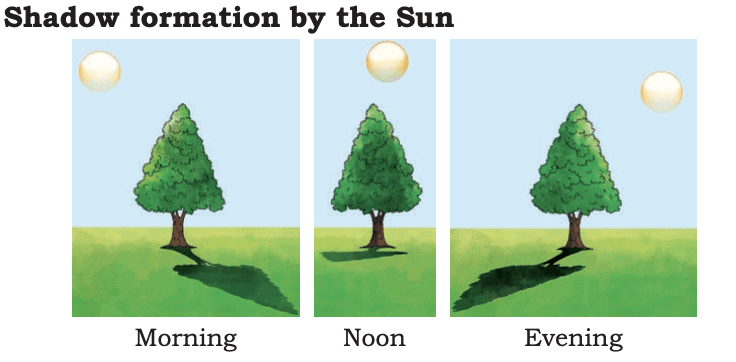

 On some nights, the Moon is not visible at all — this is called Amavasya or new Moon.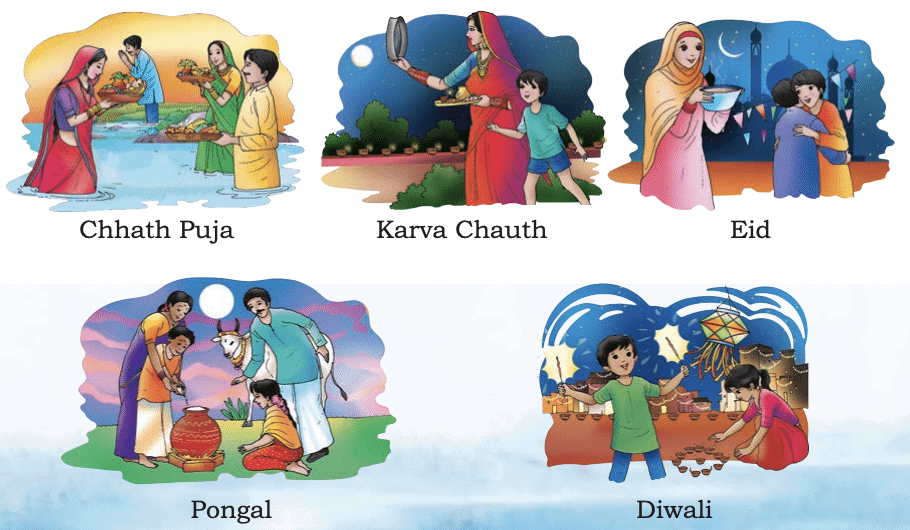

 Cactus stores water in its stem to survive long dry periods.
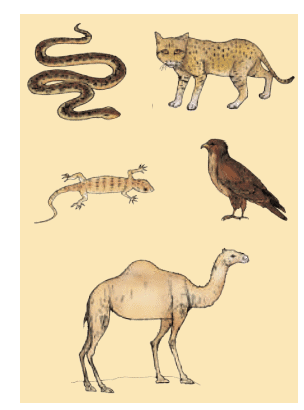 Animals like camels, lizards, wild cats, pythons, and eagles live in deserts.
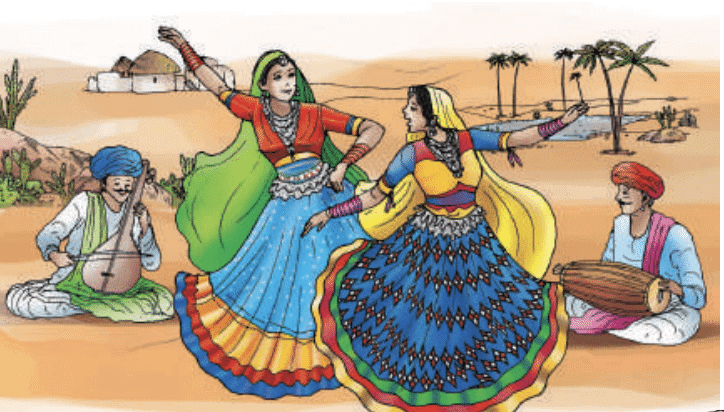 Women wear these with ghaghras when dancing.
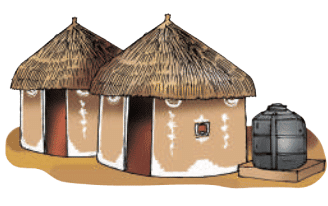 Many houses are made of mud and have tankas (water tanks) to store water for dry days.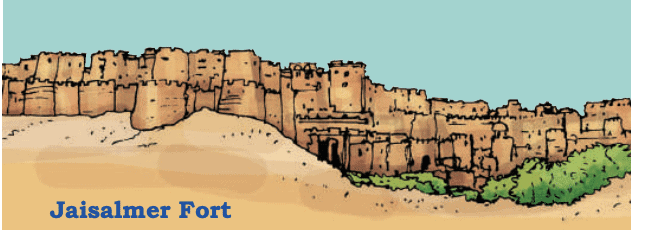
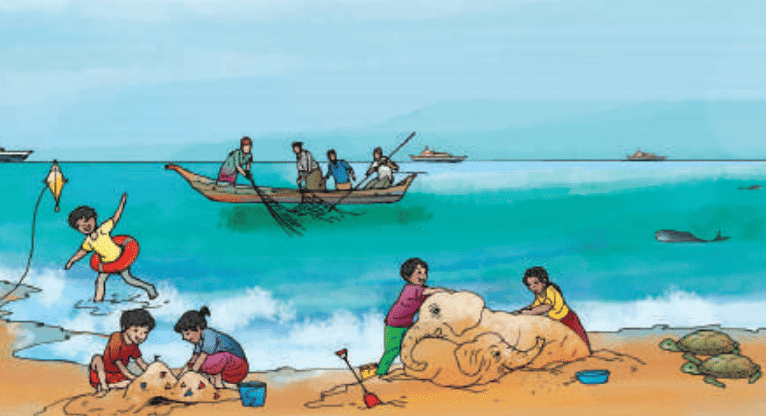
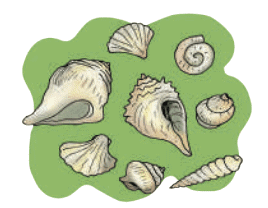 Collecting shells
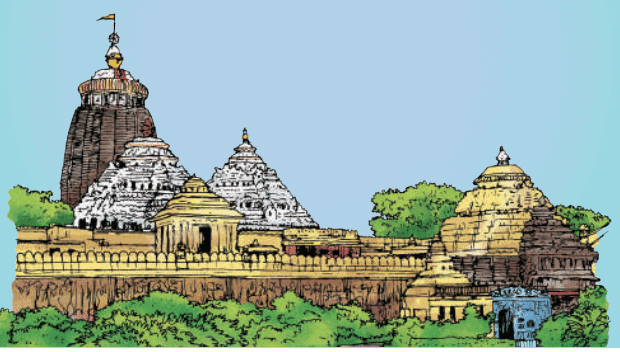 Shree Jagannath Temple is a beautiful temple in Puri with huge gates and carvings.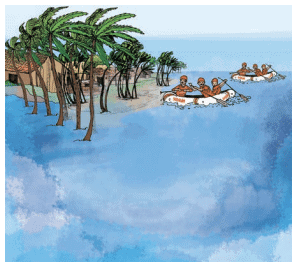
 Mountains have steep slopes and are surrounded by valleys.Narayan’s Diary Entry
  The area is famous for its rich culture, colourful clothes, and lively festivals like Loosong and Namsoong.
 Animals like the yak live in cold mountain areas.
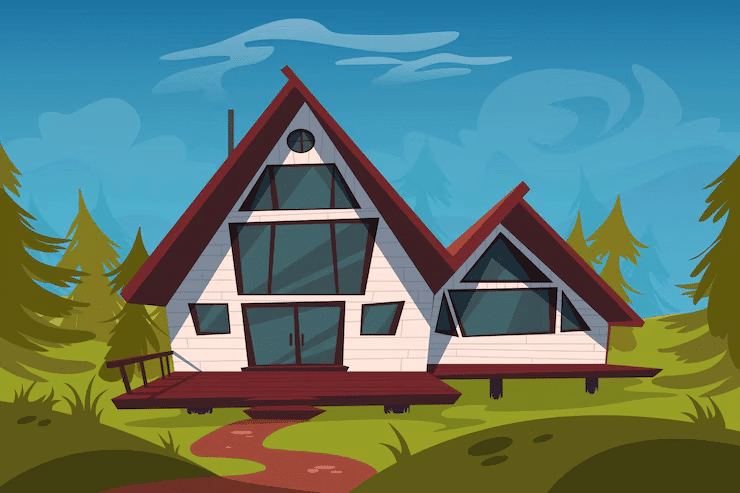 The roofs are slanting so that rain and snow can slide off easily, preventing water from collecting on the roof.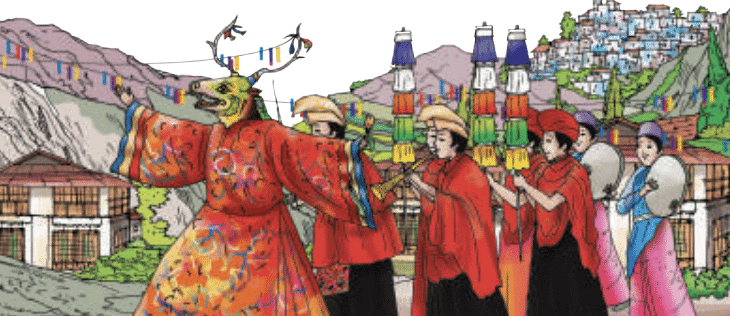
 Celebrate festivals and special moments.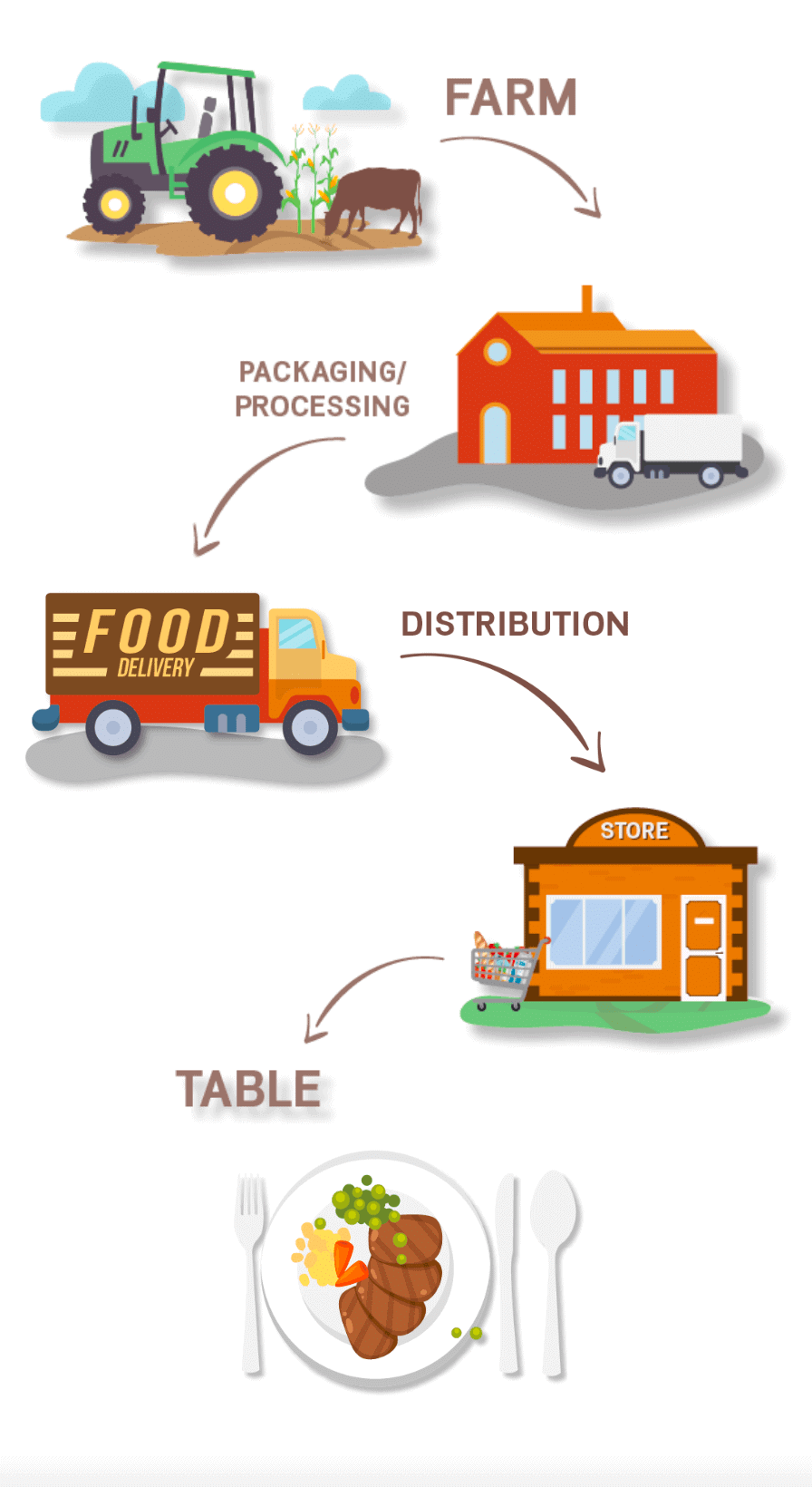
 Inside the mouth, food gets soft and mixed with saliva, making it easier to swallow.
 It teaches us to be thankful for every bite.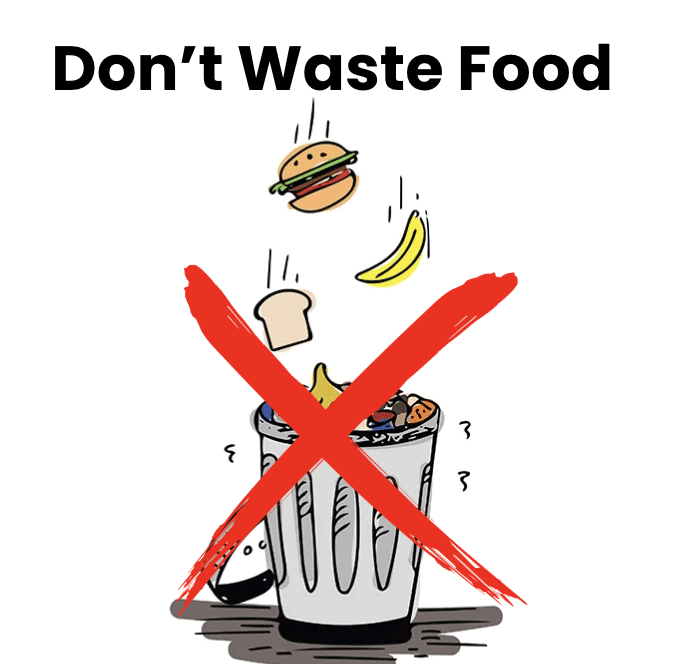
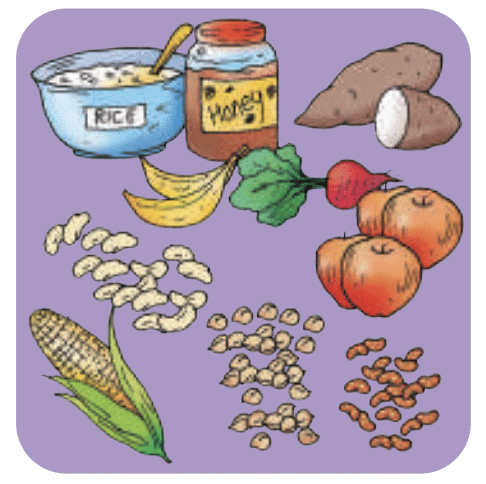 Energy Giving Food
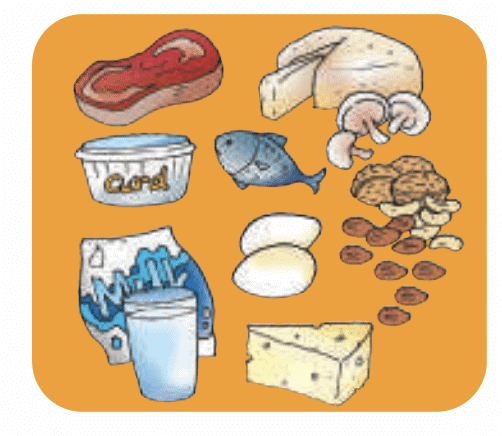 Body Building Food
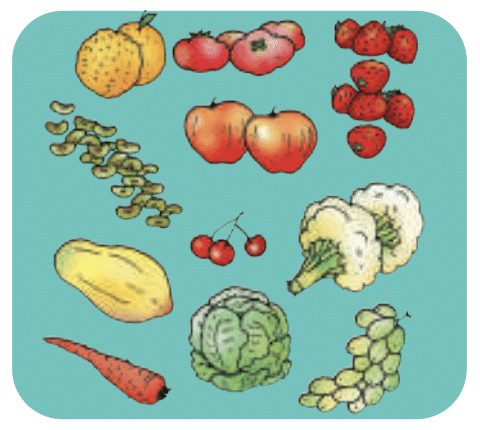 Protective Food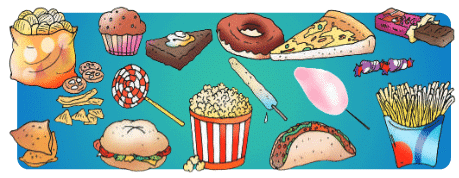
 Indian Giant Squirrel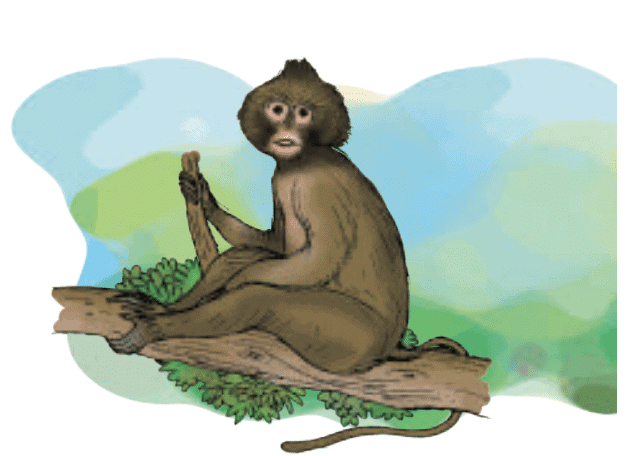
 Metro Train