10.Our Sky- Textbook Solutions

Page No. 152

Draw

Q: Draw a picture of the sky as it appears in the morning, afternoon and at night, in the spaces given below.
Ans: Suggestion: 

  • Morning Sky: Draw a sky with a light orange or pink color. Show the Sun rising in the east with some clouds. You can add birds flying.
  • Afternoon Sky: Draw a bright blue sky with a few white clouds. The Sun is high up in the sky.
  • Night Sky: Draw a dark sky with many twinkling stars and a bright Moon. You can show different shapes of the Moon, like a crescent or full Moon.

Page No. 153

Write

Q: Write down what you observe in the sky during the morning, afternoon, and at night, in the table given below. A few boxes are filled for you. You may expand your table by adding new points.

  • Share your observations with your classmates and compare them. 
  • Have you observed any change in the activities, and the behaviour of animals and plants at different times of a day? Discuss these changes with your friends and make a list.

Ans: 
Note: You can add more points like “morning dew on grass” for morning or “planets visible” for night.

Page No. 154

Discuss

Have you observed the changes during sunrise and sunset?
When the Sun rises:

Q1: How does the sky look?
Ans: 
The sky looks orange or pink. It is bright near the horizon where the Sun rises.

Q2: What do the birds and animals do?
Ans: 
Birds start chirping and flying. Animals like cows and dogs wake up and move around.

Q3: What changes do we find at home?
Ans: 
People wake up, open windows, and start their day. The house feels fresh and cool.

When the Sun sets:

Q1: How does the sky look?
Ans: 
The sky turns orange, red, or purple. It gets darker as the Sun goes down.

Q2: What do the birds and animals do?
Ans: 
Birds return to their nests. Animals like cows go back to their sheds. Nocturnal animals like owls come out.

Q3: What changes do we find at home?
Ans: 
People light lamps or turn on lights. Windows are closed, and everyone gets ready for dinner or sleep.

Page No. 156

Find out

Let us try something interesting.
1. Take a torch and a stick. Close the doors and windows to make the room dark. 
2. Hold the stick in one place and turn on the torch. Shine the torchlight on the stick. 
3. Observe the changes in the shadow of the stick, in the following situations: 
(a) Move the stick back and forth. 
(b) Change the direction of the torch. 

Ans: Observations from the Experiment:
(a) Move the stick back and forth: When the stick is moved closer to the torch, the shadow becomes bigger. When the stick is moved farther, the shadow becomes smaller.
(b) Change the direction of the torch: When the torch is moved to the left, the shadow moves to the right. When the torch is moved to the right, the shadow moves to the left.

Think and answer the following questions. 

  • If we change the distance of the source of light from the stick (an object), how will the shadow change? 
  • If we change the direction of the torch (source of light), how will the shadow change?

If the object is close to the source of light, the shadow is bigger. If the direction of the source of light changes, the direction of the shadow also changes. We observe that shadows in the morning and evening form in different directions. Why does this happen?
Answers to Questions:

  • If the torch is closer to the stick, the shadow gets bigger. If the torch is farther away, the shadow gets smaller.
  • The shadow moves in the opposite direction of the torch. For example, if the torch moves left, the shadow moves right.

In the morning, the Sun is in the east, so shadows point west. In the evening, the Sun is in the west, so shadows point east. This happens because the Sun’s position changes in the sky.

Page No. 157

Draw

Draw the position of the Sun and corresponding shadows in the images given below.
Ans:  Suggestion: 

  • Morning: Draw the Sun low in the east (left side of the picture). Draw a long shadow of a tree or person pointing west (right side).
  • Noon: Draw the Sun high up in the sky (center of the picture). Draw a short shadow directly below the tree or person.
  • Evening: Draw the Sun low in the west (right side of the picture). Draw a long shadow of a tree or person pointing east (left side).

Page No. 159

After sunset, the sky dazzles with thousands of twinkling stars. We observe various patterns of stars in the night sky. Draw any pattern you have observed, in the box below:

Share the drawing with your friends and discuss the common patterns of stars.
Ans:
 Suggestion: 

  • Draw a simple star pattern, like a group of 5-7 stars forming a shape (e.g., a triangle, a line, or a cluster). For example, you can draw the shape of the “Saptarshi” (seven stars that look like a spoon).
  • Discussion: Talk with friends about the shapes you see in the sky. Some may see a spoon, a kite, or a group of stars that look like an animal. Share if the patterns look the same or different on different nights.

Page No. 160

Draw

Observe the Moon in the sky and draw the shapes of the Moon you have observed on different nights.

Ans: 

  • New Moon – The Moon is not visible; it looks completely dark.
  • Waxing Crescent – A thin, curved shape like the letter ‘C’ appears on the right side.
  • First Quarter – A half-moon shape with the right half lit, like a semicircle.
  • Waxing Gibbous – More than half of the Moon is lit, but not a full circle yet.
  • Full Moon – A complete circle shining brightly in the sky.
  • Waning Gibbous – Still mostly round, but now the left side is shrinking.
  • Last Quarter – A half-moon shape with the left half lit, like a semicircle.
  • Waning Crescent – A thin, curved shape like a backward ‘C’ appears on the left side

Discuss

Discuss with your friends:

  • Is there a pattern to the way the shape of the Moon changes?
  • Are there days when the Moon is not visible in the sky?

Ans:

  • Yes, the Moon’s shape changes in a pattern every month. It starts as a thin crescent, grows to a half Moon, then a full Moon, and shrinks back to a crescent. This happens over about 28 days.
  • Yes, on the night of Amavasya (new Moon), the Moon is not visible because it is too close to the Sun in the sky.

Page No. 162 – 163

Write

Q: Do you celebrate any festivals in your family or community related to the Sun or the Moon? What do you call them in your language?
Ans: 
Yes, we celebrate festivals related to the Moon. For example:

  • Diwali: Celebrated on Amavasya (no Moon). In Hindi, it’s called “Deepavali.”
  • Raksha Bandhan: Celebrated on the full Moon. In Hindi, it’s called “Rakhi.”
  • Eid: Celebrated when the crescent Moon is seen. In Urdu, it’s called “Eid-ul-Fitr.”
  • Pongal: A festival related to the Sun, celebrated in Tamil as “Pongal.”

You can add festivals from your own community, like “Chhath Puja” (Sun worship) or “Karva Chauth” (Moon-related).

Let us reflect

Q1: Give two differences between: 
(a) Day and night 
Ans: 

  • Day has sunlight, and the sky is bright. Night is dark with stars and the Moon.
  • During the day, we work and play. At night, we sleep.

(b) Sky in the morning and in the evening 
Ans:

  • In the morning, the sky is orange or pink, and the Sun rises in the east. In the evening, the sky is red or purple, and the Sun sets in the west.
  • Morning shadows are long and point west. Evening shadows are long and point east.

(c) Our activities during the day and at night 
Ans:

  • During the day, we go to school and play outside. At night, we eat dinner and sleep.
  • In the day, we use sunlight. At night, we use lamps or lights.

(d) Activities of animals during the day and at night.
Ans:

  • During the day, birds fly and sing. At night, birds rest in nests.
  • Day animals like cows are active in the day. Night animals like owls are active at night.

Q2: Enquire about something
A teacher said that the Sun appears to move from East to West during the day. Meera is curious about this statement and has some questions for her teacher. List at least two questions that she can ask.
Ans:

  • Why does the Sun look like it moves from east to west?
  • Does the Sun really move, or is it the Earth moving?

Q3: Figure it out
Suppose you stand at the same spot during the morning and the afternoon. In the morning, your shadow points in one direction, while in the afternoon it points in another. Why? Would the length of your shadow be the same at both times?
Ans: 

  • Why does the shadow point in different directions? In the morning, the Sun is in the east, so your shadow points west. In the afternoon, the Sun is in the west, so your shadow points east. This happens because the Sun’s position in the sky changes.
  • Would the length of your shadow be the same at both times? No, the shadow’s length is not the same. In the morning, the shadow is longer because the Sun is low in the sky. In the afternoon, the shadow is shorter if the Sun is higher, but it gets longer again as the Sun goes lower.

Q4: Get creative with words:
(a) Write your own poem inspired by the beauty of the sky. 
(b) Complete the riddle below and answer it:
Only one colour, but not one size
Appears with light, looks very nice
What is it?

Ans: (a) Poem:The sky is blue, so wide and high,
With fluffy clouds that float and fly.
At night, the stars twinkle so bright,
The Moon gives soft and gentle light.
(b) Riddle:
Completed Riddle:Only one colour, but not one size,
Appears with light, looks very nice,
It follows you when the Sun is bright,
Gone in the dark, it hides at night.
What is it?
Ans: A shadow.
09.Different Lands, Different Lives- Textbook Solutions

Page No. 131

Activity 1

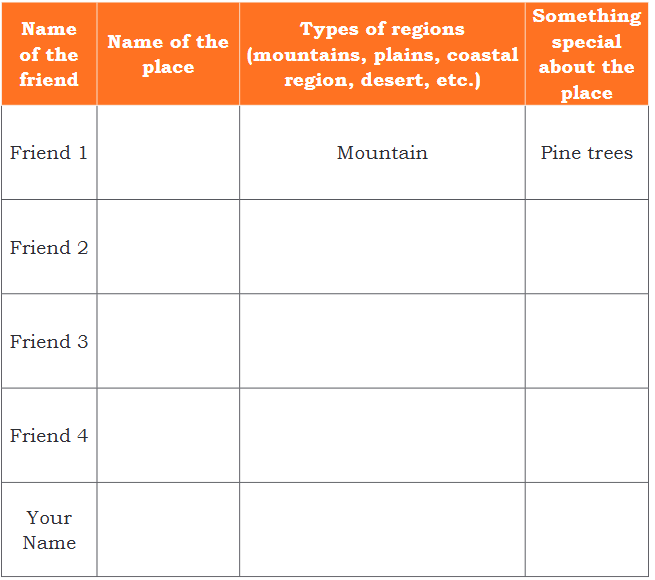
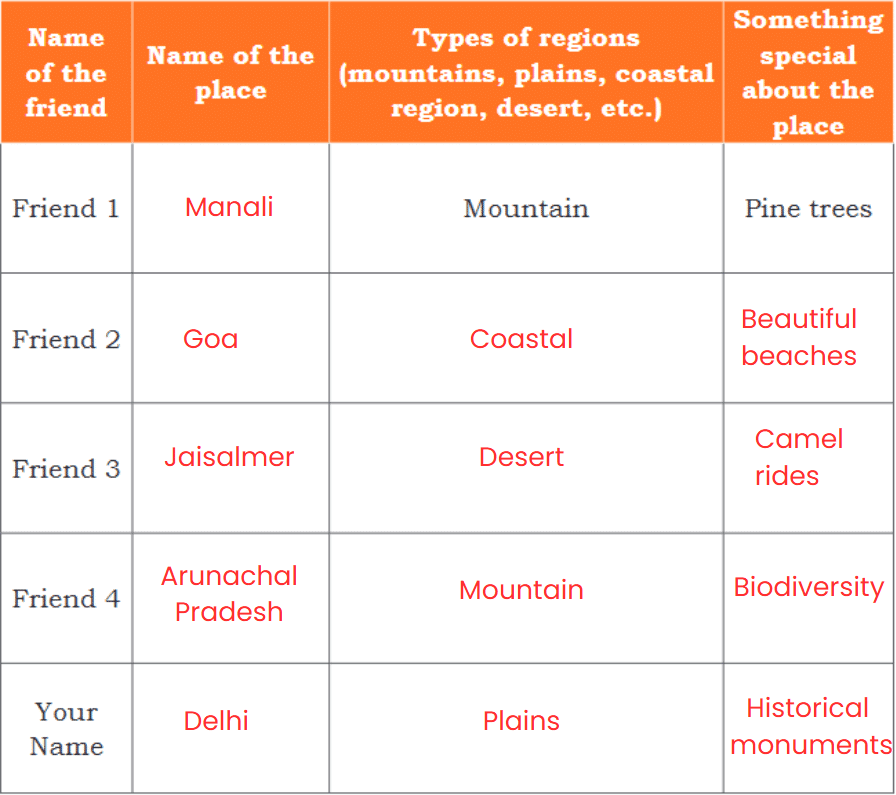
Q: You might have visited some places during your vacation. Write the name of the places and something special about them. Ask two or three of your friends about the places they had visited, and fill the table given below. 

  • Which type of place do you find interesting? 
  • What similarities and differences do you find in the place you visited, and those visited by your friends?

Ans: 

  • I find coastal places interesting because I love playing on the beach and collecting seashells.
  • Similarities and differences:
    Similarities: 
    All places have unique food and fun activities. For example, Manali has thukpa, and Goa has fish curry.Differences: The weather is cold in mountains like Manali but hot in deserts like Jaisalmer. Coastal areas have beaches, while plains have fields.

Page No. 132

Write
Look at the picture above and write your observations: 
Q1: What kind of land do you see in the picture? 

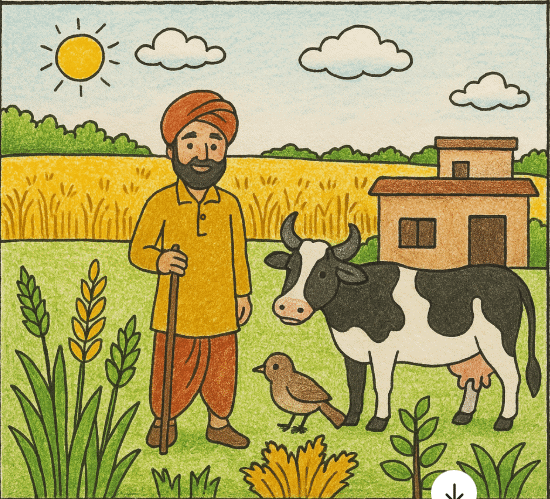
Ans: Land type: Rural or semi-urban setting with open spaces, dirt roads, trees, and simple structures.

Q2: List the activities that people are engaged in. 
Ans: Activities:

  • One women making pony tail of a girl.
  • One Women is churning ( Traditional method of making butter).
  • One man sitting on charpai or khat or manji ( traditional woven bed ) and drinking from glass probably lassi.
  • Cow is eating chara ( grass).
  • A man is bringing bundle of green fodder.
  • One man is riding bicycle.
  • One milkman is passing by riding on his bike , carrying three buckets of milk.
  • One man is passing by riding tractor and carrying many people in trolley of tractor.
  • One man is compling and carrying green fodder.

Q3: Which animals do you see in the picture? 
Ans: Cow

4. Do you notice anything unique about the clothing of the people?
Ans: Traditional attire, including sarees, salwar kameez, lungis, and turbans, reflecting cultural significance.

Page No. 133

Write

Q1: What is the most popular food in your region? Can you list the main ingredients used in its preparation?
Name of the food item: ____________________________________________
Ingredients: ___________________________________________________________
Ans:

Name of the food item: Sarson ka Sang, Makki di Roti  with ghee along with big glass of lassi.
Ingredients:

  • Makki di Roti made from : Corn flour  
  • Sarson ka Sang made from : Mustard leaves
  • Ghee and Lassi : Both are Milk products

You can write about a dish popular in your area, like idli, dosa, or biryani, and list its ingredients.

Page No. 134 – 135

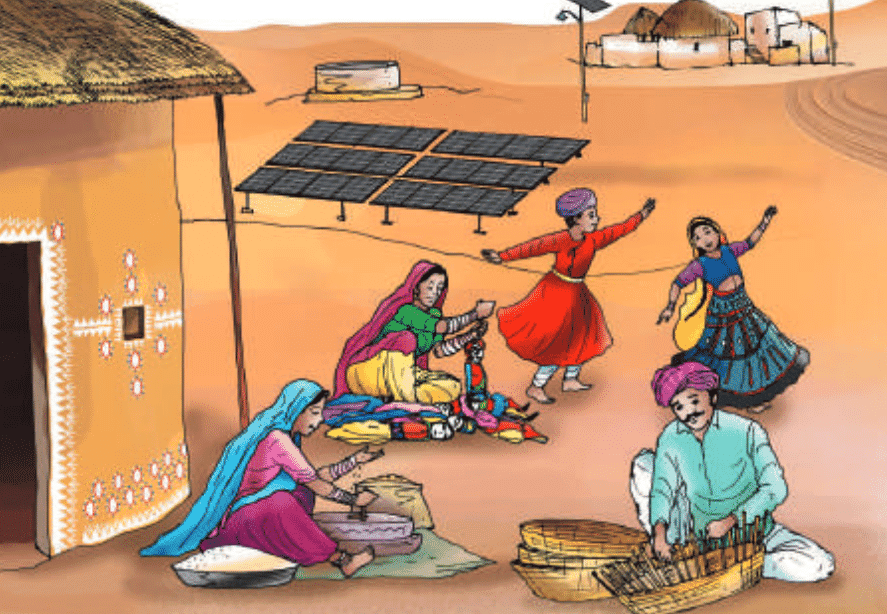
In the Land of Endless Sand, with Ritika
Look at the following picture and write your observations.

Ans: 

  • One women is grinding grains into flour with chakki.
  • A man and  a woman are dancing.
  • One woman is making puppets.
  • One man is making  baskets.
  • Solar Panels are being installed.
  • The land is completely covered by sand.

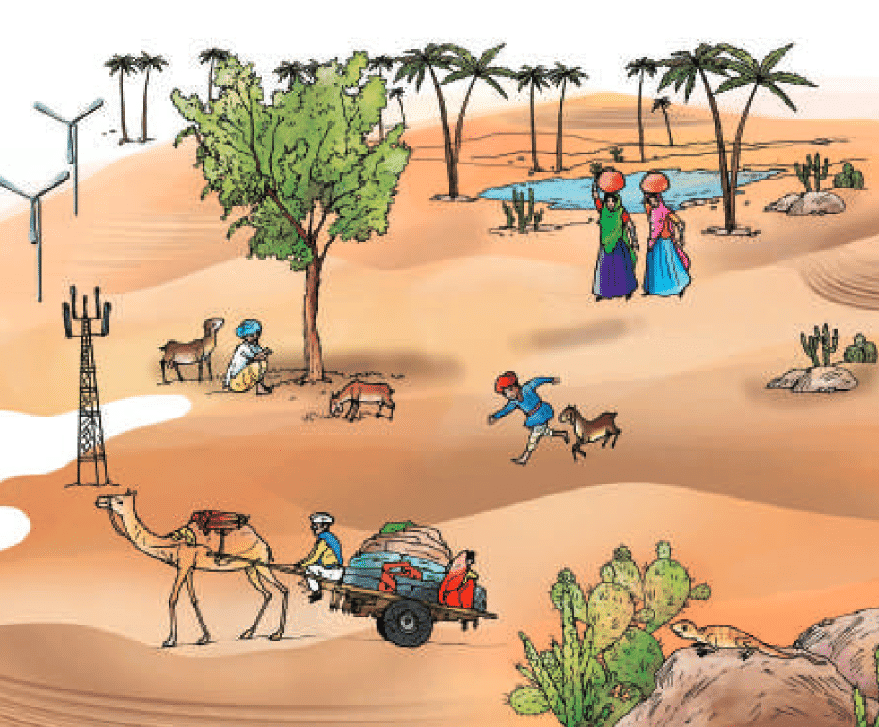
Q1: What kind of land do you see? 

Ans: The picture shows a desert. Deserts are places with lots of sand and very little water. You can see sandy ground everywhere, which is typical of deserts.

Q2: What types of plants do you see in the picture? How are they different from the plants you see in your locality? 
Ans: In the picture, there are cacti (spiky plants) and palm trees. These plants are special because they can survive in very dry places where there isn’t much water.
In your area, you might see green grass, big trees, and flowers that need lots of water to grow. Desert plants are different because they don’t need as much water and can live in hot, dry places.

Q3: Is there something unique about the way people in this village are dressed? 
Ans: Yes, the people in the picture are wearing long clothes and head coverings. This helps protect them from the hot sun and blowing sand. Their clothes are colourful, which is nice to look at and might be part of their culture.

Q4: How do you think people travel in deserts? 
Ans: People in the desert use camels to travel. Camels are like big animals that can carry things and walk for a long time without needing much water. They are perfect for travelling in the desert.
Sometimes, people also use trucks or other vehicles, but camels are still very important because they can go where vehicles can’t.

Q5: What do you like the most in the picture?
Ans: I like how the people are working together and doing fun activities like two women carrying and balancing pots filled with water on there head and a child playing with a goat.

Page No. 137

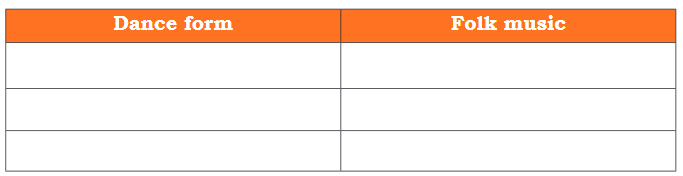
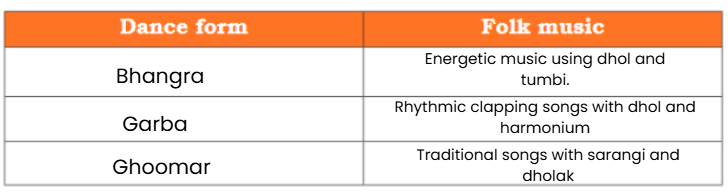
Find out

Q: Ask your family members about the folk songs and dances from your region, and note them down in the table below.

Ans:

Ask your family about dances and songs from your area, like Lavani (Maharashtra) or Bihu (Assam), and fill the table.

Page No. 138

Discuss

Q: Why do you think water is scarce in the desert?
Ans: 
Water is scarce in the desert because it gets very little rainfall. The hot sun makes water dry up quickly, and there are no big rivers or lakes. People store water in tankas (water tanks) to use it carefully.

Page No. 139

On the Seashore, with Chandni 
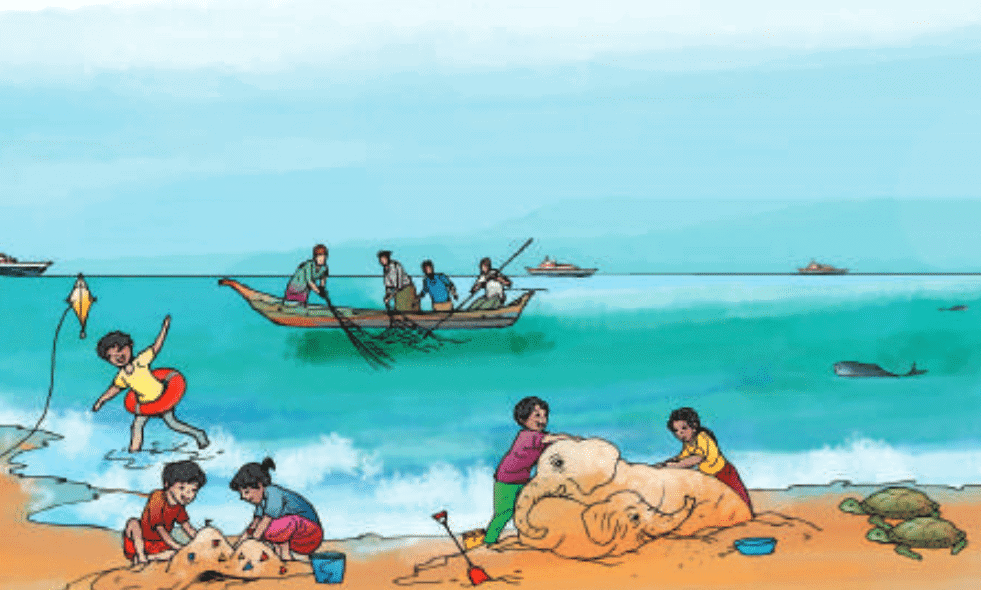
Look at the picture given below and write your observations.

Q1: List the different kinds of activities that the people are doing. 
Ans: The people in the picture are doing many fun things at the beach:

  • One child is flying a colorful kite near the shore with a life-tube on his waist.
  • Two groups in a pair of two are making sandcastles using buckets and shovels.
  • A group of people in a boat is fishing in the sea.
  • Two turtles are moving on sand near the shore.
  • Three boats are saiing far away.
  • One whale is there in the sea.

Q2: What kinds of trees are found near the sea, and how are they different from those in the deserts and plains? 
Ans: Near the sea, you often see palm trees. These trees are tall with big leaves and can grow right along the shore.
Palm trees are different from desert plants like cacti because:

  • Cacti are small and spiky, while palm trees are tall and have big leaves.
  • Palm trees need more water than cacti but can still survive near the sea where there’s plenty of moisture.

In plains, you might see other types of trees like mango or banyan trees, which are bigger and have lots of branches. Palm trees are special because they can handle salty air near the ocean.

Q3: List the fun activities you would like to do on a beach. 
Ans: If I were at the beach, I would love to do these fun activities:

  • Swimming : Playing in the cool water and splashing around.
  • Building sandcastles : Making towers and forts out of sand.
  • Flying kites : Watching my kite soar high in the sky.
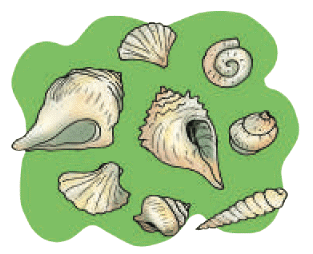
  • Collecting seashells : Finding pretty shells along the shore.
  • Playing with friends : Having picnics and games on the sand.
  • Watching boats : Seeing fishing boats come in with their catch.

Q4: What is special about the dresses people wear in the coastal regions?
Ans: People in coastal regions often wear clothes that are lightweight and comfortable because it’s usually very hot near the sea.
They might wear:

  • Shorts and t-shirts: To stay cool in the heat.
  • Swimwear: Like swimsuits or shorts for swimming.
  • Hats and sunglasses: To protect themselves from the sun.

The clothes are usually bright and colorful, matching the beautiful blue of the sea and sky.

Page No. 141

Activity 2

Let us Create 
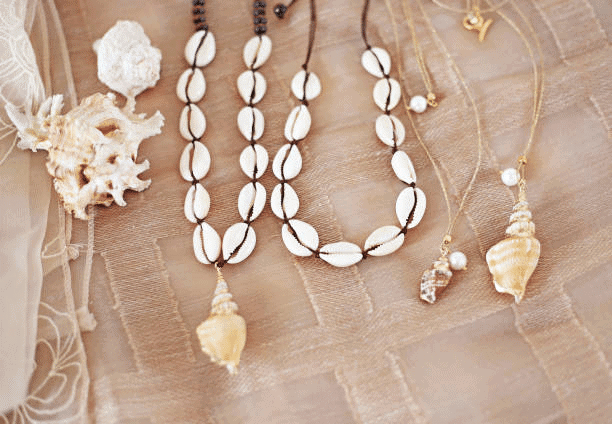
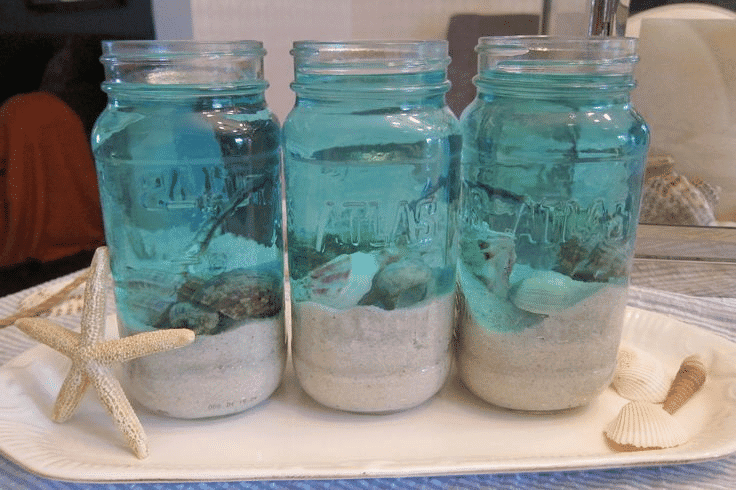
Use one coastal item to create a fun decor object like a photo frame, a necklace, a painted pebble, a mini basket or a sand art jar. Add your own creative twist and display your work in the class! You can use any other locally available materials to create the decor items.
Ans: 
You can make a fun decor item using a coastal item. For example:

  • Seashell Necklace: Collect small seashells from the beach. Make a hole in each shell and string them together with a thread. Add beads for extra colour.
  • Sand Art Jar: Take a small glass jar. Fill it with layers of coloured sand from the beach. Seal the jar and decorate it with a ribbon.

Use materials like shells, pebbles, or sand, and show your creation in class!

Page No. 142

Discuss

Q1: Write your observations on how the life around a coastal region differs from the life in a desert.
Ans:
 Coastal vs. Desert Life:

  • Coastal Regions: People fish, make sand art, and eat seafood like fish curry. The weather is humid, and there are coconut trees.
  • Deserts: People farm less, eat foods like dal-bati, and travel by camels. The weather is dry, and there are cactus plants.

Q2: Why is it important to keep our beaches clean?
Ans:
 Keeping beaches clean helps sea animals like turtles and dolphins stay safe. It also makes the beach beautiful for everyone to enjoy.

Activity 3

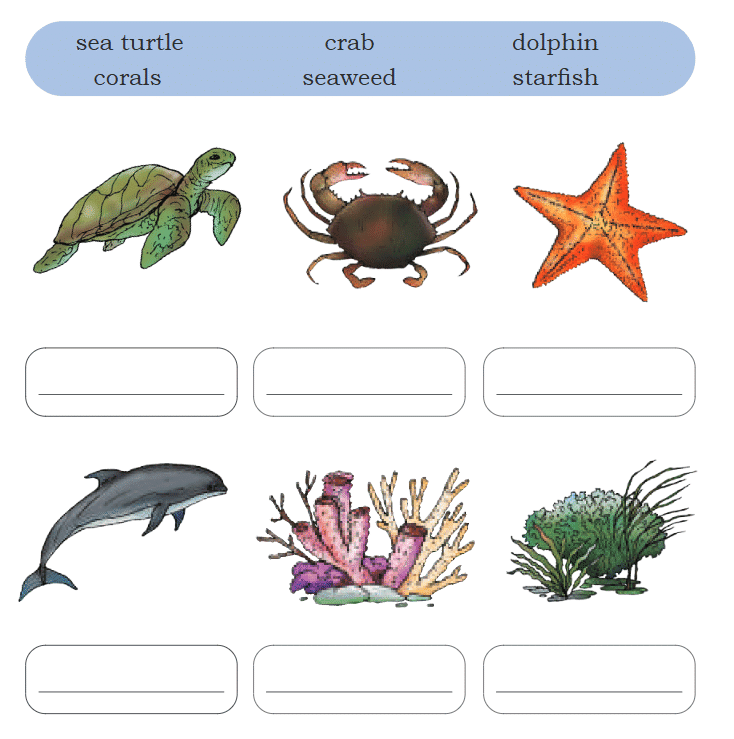
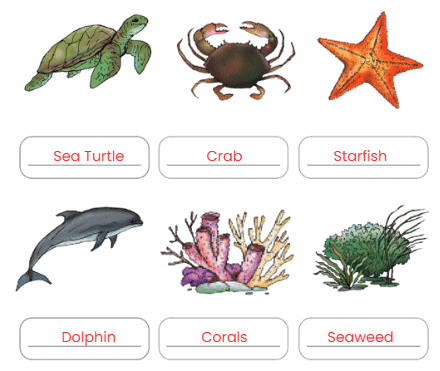
Can you identify these creatures? 

Ans:

Page No. 143

Discuss

Q1: What are the adverse effects of a cyclone? 
Ans: 
Cyclones bring strong winds and heavy rain, which can damage houses, trees, and crops. They can also harm animals and make it hard for people to get food or travel.

Q2. How can communities be better prepared for such situations?
Ans: 
Communities can:

  • Listen to weather warnings and move to safe places.
  • Store food, water, and medicines before a cyclone.
  • Build strong houses that can stand against strong winds.
  • Help each other by sharing resources after a cyclone.

Page No. 145

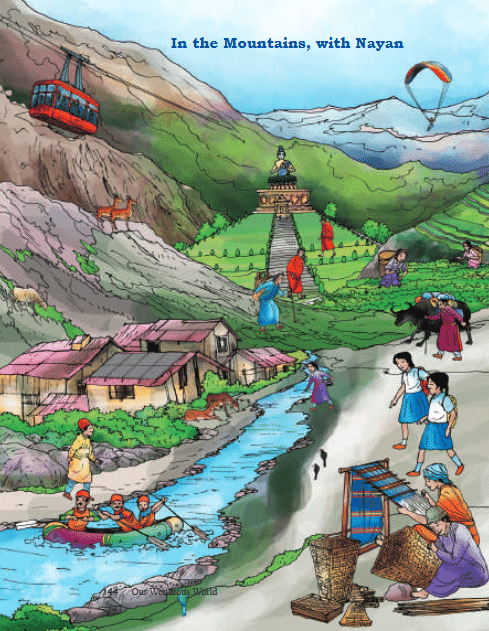
Look at the picture above and write your observations. 

Q1: What type of animals do you see in the picture? 
Ans: 
The picture shows animals like yaks, goats, and birds.

Q2: How are the dresses worn by people living in the mountains different from those worn in your region? 
Ans: 
People in mountains wear thick clothes like bakhu or jackets to stay warm, unlike the light clothes (like t-shirts) worn in my region.

Q3: Describe the trees found in the mountains.
Ans: 
Mountain trees like pine and oak are tall with needle-like or broad leaves. They can grow in cold weather.

Page No. 147

Discuss

Q1: How does the cold climate in mountain regions affect the way people live and dress? 
Ans: People in mountains live in wooden houses to stay warm. They wear thick clothes like jackets and shawls to protect from cold.

Q2: What traditional clothes are worn in your region? How do they match with the local climate? 
Ans: In my region, people wear cotton sarees or kurta-pajama. These are light and cool for the hot climate.

Q3: Why do you think certain trees, like pine and oak, grow better in the mountains? 
Ans: Pine and oak trees grow better in mountains because they can survive cold weather and rocky soil.

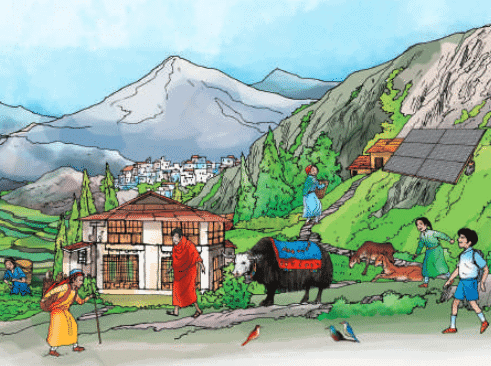
Q4: How do animals like yak survive in the cold climate of Sikkim?
Ans: Yaks have thick fur to keep warm. They eat grass and can walk on steep slopes, making them perfect for mountains.

Page No. 148

Discuss

Q1: Why do you think traditional houses in Sikkim are built with wood and have slanting roofs? 
Ans: Houses in Sikkim are made of wood because it’s strong and keeps the house warm. Slanting roofs let snow and rain slide off easily.

Q2: Does your house have any feature that is similar to the houses in the mountains? 
Ans: My house has a sloped roof to let rainwater flow away, like mountain houses.

Q3: Why are landslides common in mountains during the rainy season? 
Ans: Landslides happen in the rainy season because heavy rain makes the soil loose on steep slopes, causing rocks and mud to slide.

Q4: What do you think can be done to keep people safe during the landslides? 
Ans: To stay safe, people can:

  • Build houses away from steep slopes.
  • Plant trees to hold the soil.
  • Listen to warnings and move to safe places.

Q5: What can communities do to help people who lose their homes or get affected by natural disasters?
Ans: Communities can:

  • Give food, clothes, and blankets to affected people.
  • Help rebuild homes.
  • Work together to clean up after a landslide.

Page No. 149

Life in my Landform 
Draw the landform around you in the space given below. Name the area, the type of landform, some interesting features of the people, their professions, food, houses, plants and animals.

Ans: 

  • Area: Punjab
  • Type of Landform: Plains
  • Interesting Features:
    • People: Friendly and hardworking.
    • Professions: Many are farmers or shopkeepers.
    • Food: Makki di roti, sarson da saag, and lassi.
    • Houses: Made of bricks with flat roofs.
    • Plants: Wheat, rice, and sugarcane.
    • Animals: Cows, buffaloes, and sparrows.

Write about your area and draw what you see around you!

Page No. 150 – 151

Let us reflect

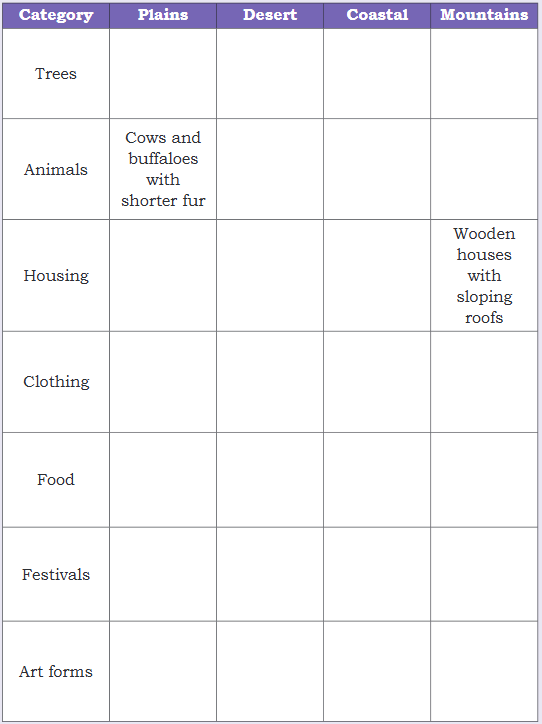
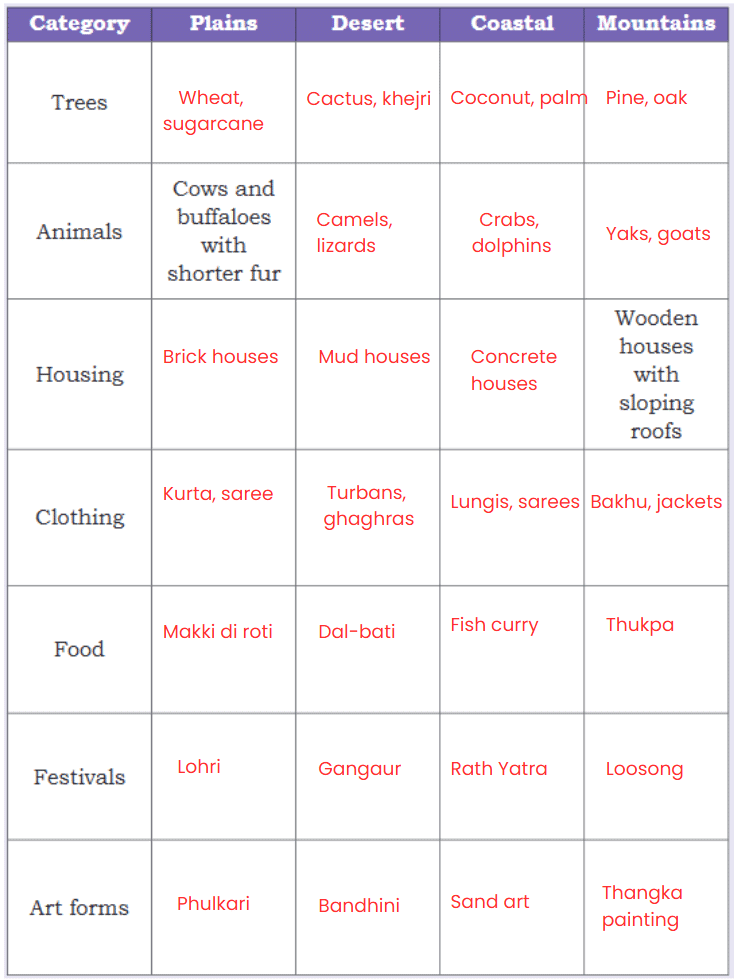
Q1: Compare life in the mountains and plains by capturing the differences in trees, animals, houses, clothes, food, festivals, and art forms.

Ans:


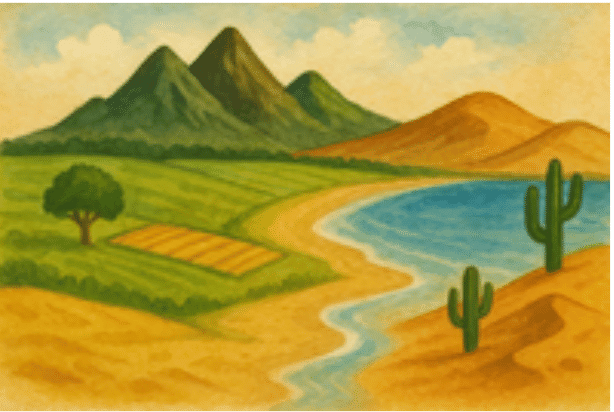
Q2: Design and draw a landform by combining your favourite features from mountains, plains, coasts, and deserts.

(a) What made you choose different features for your landform?
(b) How does each feature benefit people, animals, or plants?
(c) What difficulties might people face living in your landform?
Ans:  

Designed Landform: A landform with mountains, a beach, fields, and a small desert.

(a) Why I chose these features:

  • Mountains: They are beautiful and have cool weather.
  • Beach: I love playing in the sand and swimming.
  • Fields: They provide food like wheat and rice.
  • Desert: Camels and cacti make it unique.

(b) Benefits of each feature:

  • Mountains: Provide clean air and water for people and animals.
  • Beach: Fish and shells help people earn money.
  • Fields: Grow crops to feed people.
  • Desert: Cacti store water for animals and plants.

(c) Difficulties:

  • Mountains may have landslides.
  • Beaches can face cyclones.
  • Fields need a lot of water.
  • Deserts have very little water.

Draw your landform with these features and explain it in class!

08.How Things are Made- Textbook Solutions

Page No. 119

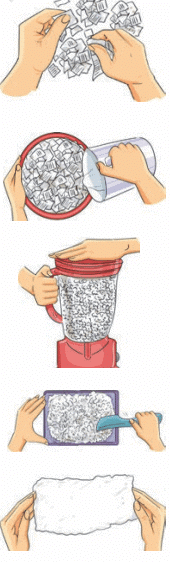
Activity 1

 Make Recycled Paper
1. Collect materials: Old newspapers, some fenugreek seeds (methi) and water. 
2. Prepare the paper pulp: Tear the newspapers into small pieces and soak them in water. Put a small quantity of fenugreek seeds in the water and leave it overnight. The fenugreek seeds are used as a binding material. 
3. Using a grinder, blend or mash the soaked paper and fenugreek seeds, to create a wet mixture. Soaked paper can also be mashed using hands or any other available tool. 
4. Roll out: Spread the paste on a flat base and roll it out into thin sheets. 
5. Leave the rolled sheets of paper to dry. Your recycled paper is ready!

Page No. 120

Activity 2

Q: Colour and design the paper you have made.
Natural Colour Experiment 
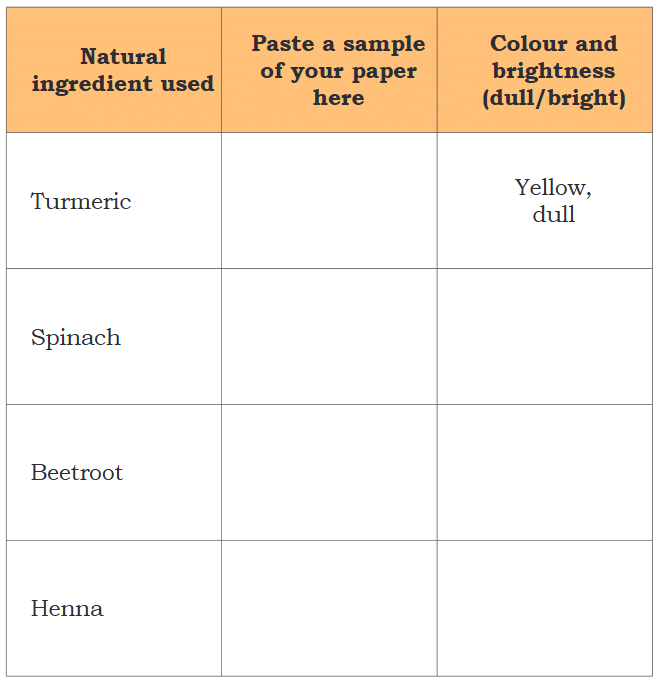
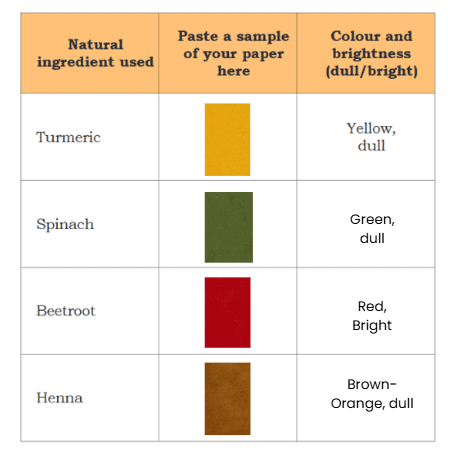
Cut the recycled paper into pieces of same size. Colour them using natural ingredients mentioned in the table below. You can use any other natural ingredients as well. Make sure that the quantity of ingredients used is the same for colouring each piece of paper. Write down your observations in the table below.
Ans:
Suggestion: Colour and design: Take the recycled paper you made. Use natural colours like turmeric, spinach, beetroot, or henna to paint or decorate it. You can draw patterns or designs to make it look beautiful.
Natural Colour Experiment:

  • Cut the recycled paper into equal-sized pieces.
  • Use the same amount of each natural ingredient to colour each piece.
  • Observe the colour and brightness (dull or bright) and fill the table below:

Note: The answers for spinach, beetroot, and henna are based on common results. You should observe and write their actual findings.

Page No. 121

Activity 3

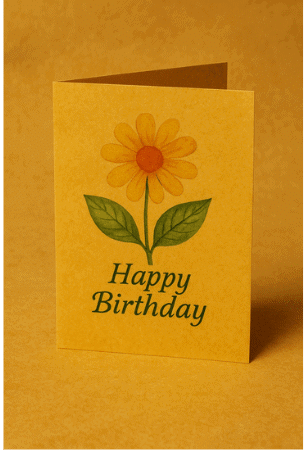
Q: Make a greeting card, a paper mask, or any item using recycled paper.
Ans: 
Students, please try this question on your own.
Suggestion:

  • Use the recycled paper you made to create something fun, like a greeting card or a paper mask.
  • For a greeting card: Fold the paper, draw a nice picture, and write a message. You can colour it with natural dyes.
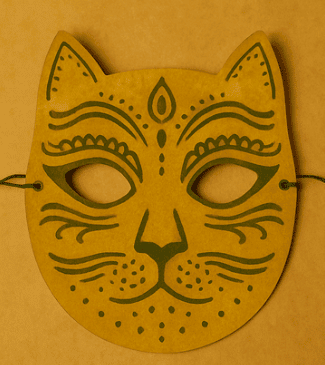
  • For a paper mask: Cut the paper into a mask shape, add designs, and make holes for eyes. Tie a string to wear it.
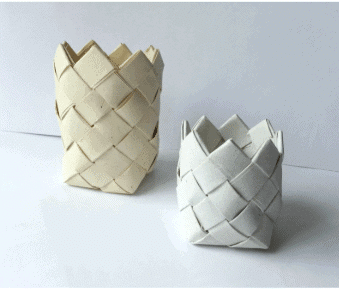
  • Be creative and decorate your item with natural colours or patterns! For Eg: Paper Baskets 

Page No. 122

Discuss

Q1: Do you think that we waste paper?
Ans: 
Yes, we sometimes waste paper. For example, we might throw away paper after using only one side or use too many tissues when one is enough.

Q2: How to reduce paper wastage?
Ans: 
We can:

  • Use both sides of a paper for writing or drawing.
  • Recycle old newspapers to make new paper.
  • Use cloth napkins instead of tissue paper.
  • Share books or notebooks with others instead of buying new ones.

Page No. 123

Activity 4

Different Types of Paper and Their Uses
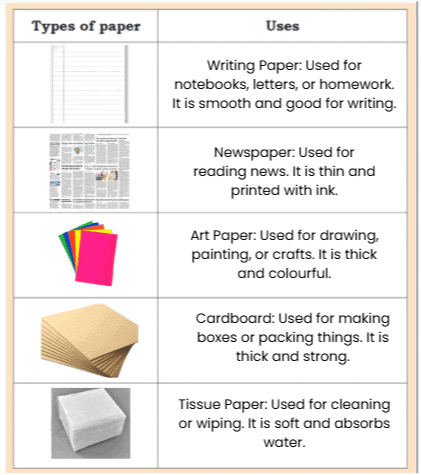
Observe different types of paper like writing paper, newspaper, art paper, cardboard, and tissue paper. Paste small pieces of these papers and write their uses.

Ans: 

Page No. 125

Activity 5

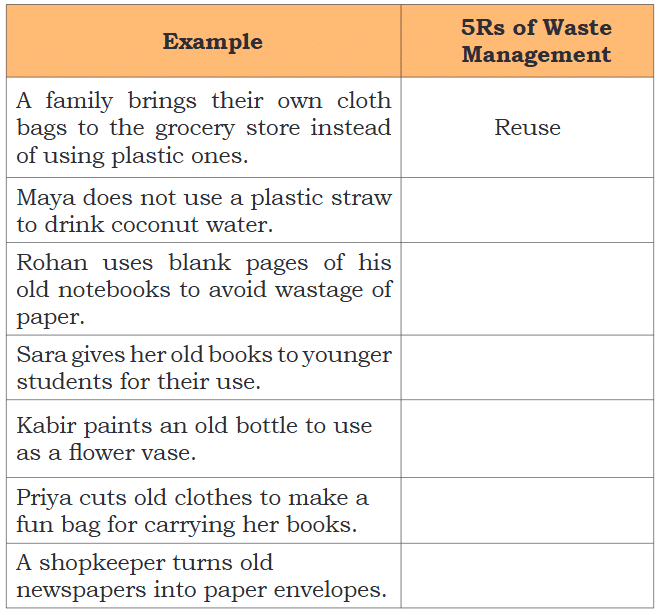
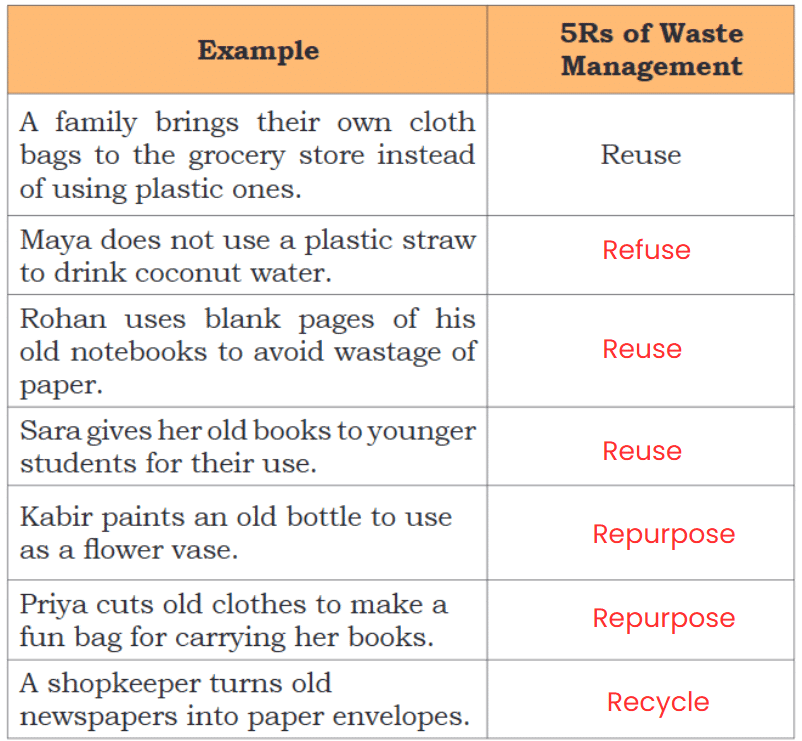
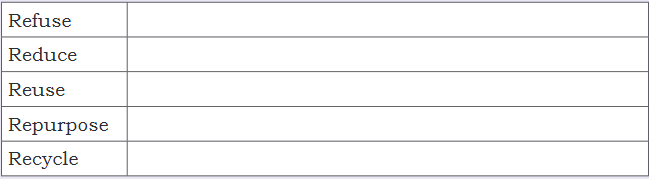
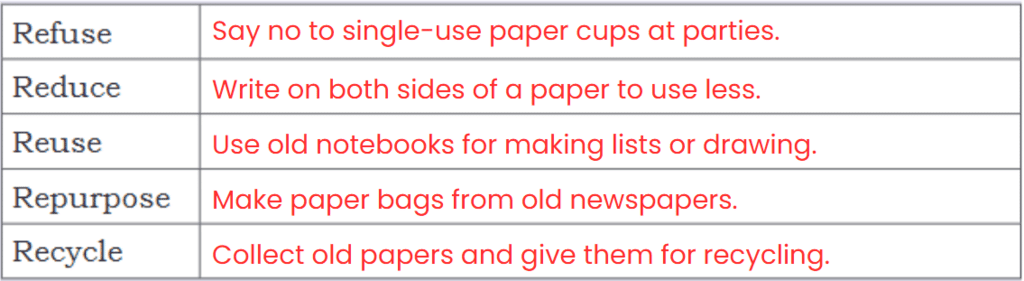
Q: Discuss the following situations with your classmates and write which of the 5Rs (Refuse, Reduce, Reuse, Repurpose, Recycle) each belongs to:

Ans:
Page No. 127

Let us reflect

Q1: What are some objects that you can make using paper pulp? Ask your teachers and elders for more ideas.
Ans: Objects you can make using paper pulp:

  • Greeting cards
  • Paper masks
  • Decorative bowls
  • Bookmarks
  • Small toys or figures
  • Paper Baskets

Note: Ask your teacher or parents for more ideas, like making photo frames or paper beads!

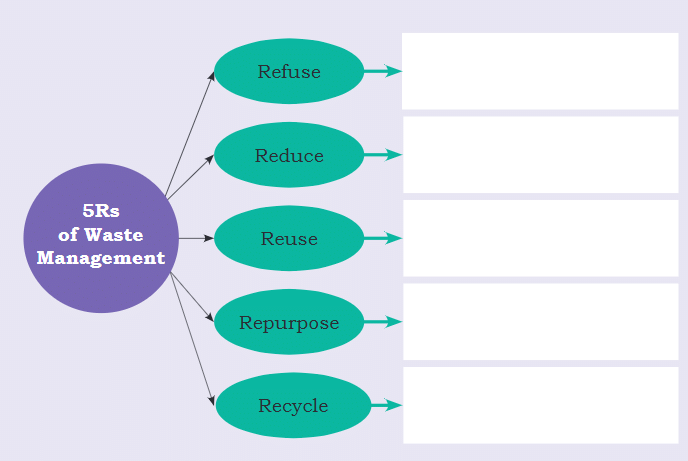
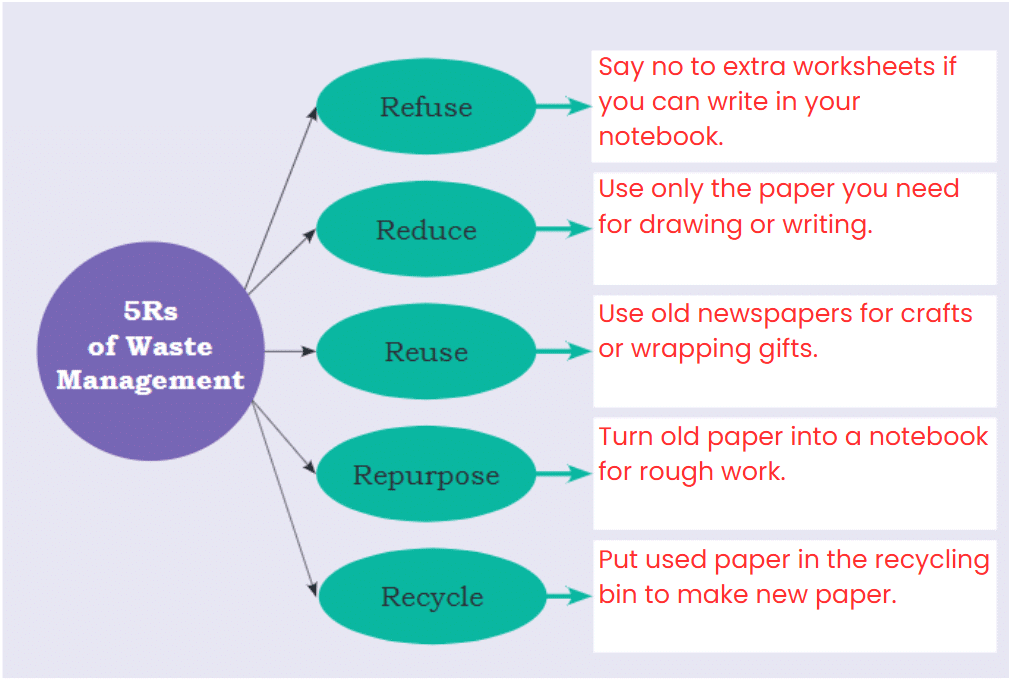
Q2: Write down one step you can take for each of the 5Rs in the boxes given below.
Ans:


Q3: Discuss the changes you can bring in your daily life by using 5Rs rule to avoid wastage of paper. Complete the table with your ideas for creating these changes.
Ans:

07.How Things Work- Textbook Solutions

Page No. 105

Activity 1

Q1: Do you think all objects can spin? Make a list of a few objects that can spin. 
Ans: 
Not all objects can spin. Some objects spin well, but others don’t. Here are a few objects that can spin:

  • Top
  • Coin
  • Bangle
  • Wheel
  • Fan
  • Ball

Q2: Collect the objects mentioned in the table given below. Spin and observe them. Then, complete the table.
Ans:

Page No. 106 – 107

Activity 2

Q: Collect things, such as pieces of cardboard, toothpicks, an empty tube of a ballpoint pen, and other small objects. Make the following spinners. Spin them and record your observations.
Ans:

Page No. 108

Discuss

Q1: Which of the spinners did not spin properly? Discuss the possible reasons.
Ans: 
The spinner with the toothpick away from the centre did not spin properly. It wobbled and fell because it was not balanced. Spinners need the toothpick in the centre to spin well.

Q2: Have you noticed the position of the hole in the first two spinners? Did this difference in the position of the hole make a difference in the spinning of these spinners?
Ans: 
Yes, the position of the hole matters. The spinner with the hole in the centre spun well because it was balanced. The spinner with the hole away from the centre wobbled and didn’t spin properly because it was not balanced.

Page No. 110

Activity 3

Q: Collect objects, such as a leaf, an iron nail, an empty bowl (katori), a plastic bottle with a lid, pieces of stone, aluminium foil and other things of your choice. Fill a bucket with water. Before dropping the things listed in the table, guess whether things will float or sink. You may try other things too. Then, observe what happens when it is actually dropped in water. You can write ‘F’ for objects that float and ‘S’ for objects that sink.

From this activity, it can be observed that some heavy objects like iron nails sink, while lighter ones like leaves, float.
Ans: 

Page No. 111

Discuss

Q: Did all the light objects float and all the heavy objects sink? Name the heavy objects that floated and lighter objects that sank.
Ans:
 Not all light objects float, and not all heavy objects sink. For example:

  • Heavy objects that floated: Empty steel bowl (it traps air).
  • Lighter objects that sank: Iron nail (it is dense).

Page No. 112

Activity 4

Q: Let us find out whether shape plays a role in floating and sinking.

Ans: 

Page No. 113

Q1: Let us create some boats: 

  • Collect some paper, cardboard boxes, ice-cream sticks, clay, adhesive tape, etc. 
  • Create groups of three to four students.
  • Think of how you can make a boat using some of the materials that you have. 
  • Draw a picture. 
  • Prepare a boat. Try to ensure that your boat is different from boats made by other groups.
  • Organise an exhibition of boats in the class. 

Following are some different types of boats which can be made.
Ans: Try to build your boat all by yourself with your group. Use your own ideas, hands, and teamwork to make it special. If something is too tricky, you can ask an elder to guide you—but try doing most of it on your own! Are you ready to become boat builders? Let’s start creating and make our boats float!

Q2: Compare your boat with others’ boats.
Ans:

Page No. 114 – 115

Q1: Enquire about something
When Ravi spins a spinner, he notices that it slows down and eventually stops. He is curious about this and asks his teacher some questions. List at least two questions that he could ask.

Ans: Ravi could ask:

  • Why does the spinner slow down and stop?
  • How can I make the spinner spin for a longer time?

Q2: Figure it out 
(a) The following figure is bending towards the side ‘A’. What should be done to balance it?

(b) How would you make a floating object sink and a sinking object float?
Ans: (a) To balance the figure bending towards side ‘A’, add some weight to the opposite side or remove weight from side ‘A’. This will make both sides equal and keep it upright.
(b) To make a floating object sink: Add weight or change its shape to trap less air (like pressing aluminium foil into a ball).
To make a sinking object float: Make it lighter or change its shape to trap air (like shaping foil into a cup).

Q3: Do an activity
Classify the objects below based on whether they float or sink in water.

Ans:  Things that floatThings that sinkThermocolMarbleCorkCoinLeafEraserIce-cubeSpoonPumpkinPotatoLemon (in salt water)Lemon (in tap water)Tomato (in salt water)Tomato (in tap water)Wax
Candle

06.Happy and Healthy Living- Textbook Solutions

Page No. 85

Activity 1

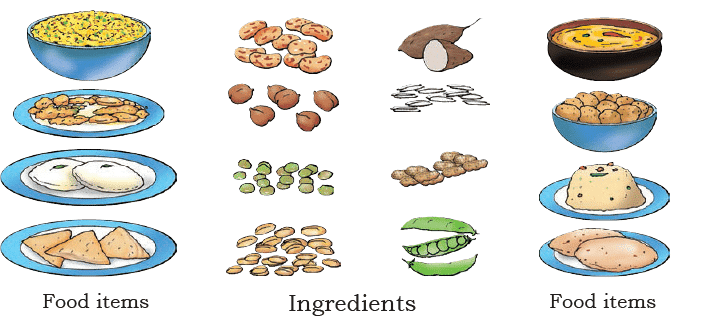
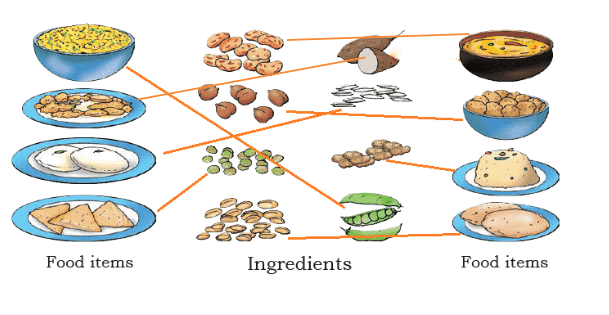
Q: Connect the food items shown below with the ingredients used to make them.
Ans:

Page No. 88Activity 2

Q: Observe the pictures and answer the following questions. 
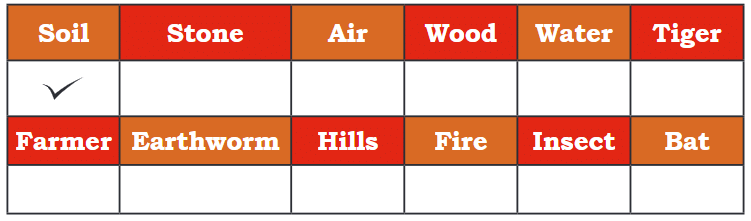
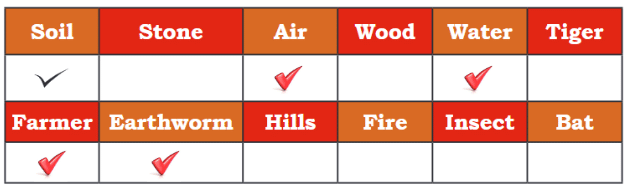
1. Put a tick (✔) on the elements that assist a grain in its journey.
Ans:

Write

Q 1: What is the role of farmers in this process?
Ans: 
Farmers plant seeds, water the crops, and take care of plants. They harvest the grains and send them to shops so we can buy food.

Q2: List out the missing elements in the table above. 
Ans: Missing elements that help a grain’s journey in the table above are:

  • Sunlight
  • Cattle
  • Shopkeeper
  • Cook

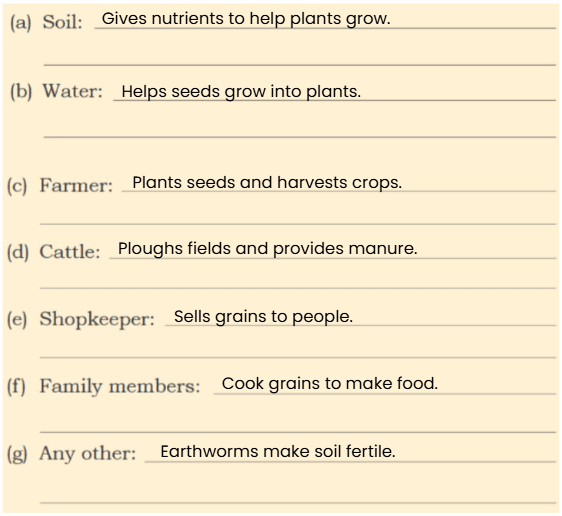
From the time a seed is sown, to the point when food reaches our plate, it is a remarkable journey. Can you list the roles of the different elements involved in this journey?

Roles of different elements in the grain’s journey:

Page No. 89

Activity 3

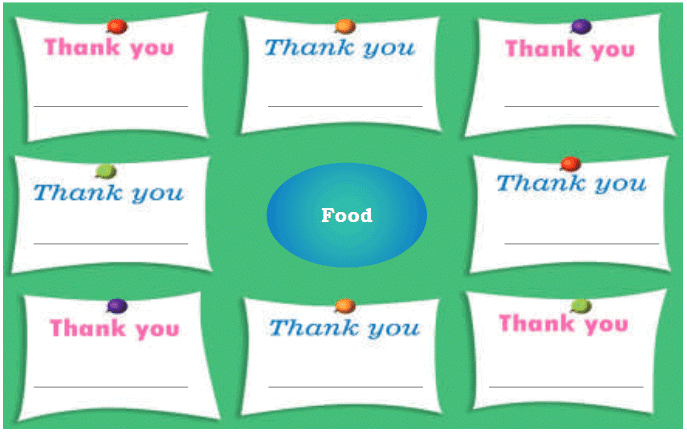
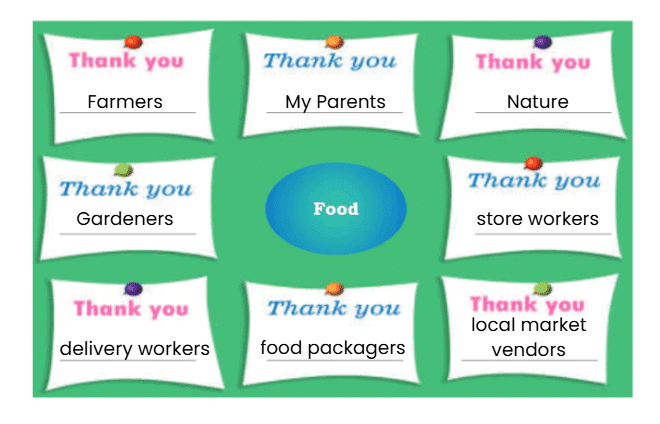
Q: Whom would you like to thank for the food you eat? Please write your answers in the following space.
Ans:

Page No. 92

Discuss

 Q1: What role does your tongue play in this process?
Ans: 
My tongue helps taste the food. It feels if the food is sweet, sour, or salty and helps me enjoy the flavor.

Q2: What do your teeth do to the food?
Ans: 
My teeth chew the food and break it into smaller pieces. This makes it easier to swallow and digest.

Q3: What happens to the food inside your mouth during this process?
Ans:
 Inside my mouth, the food is chewed by teeth and mixed with saliva. The tongue tastes it, and then the food is ready to be swallowed.

Page No. 93

Activity 4

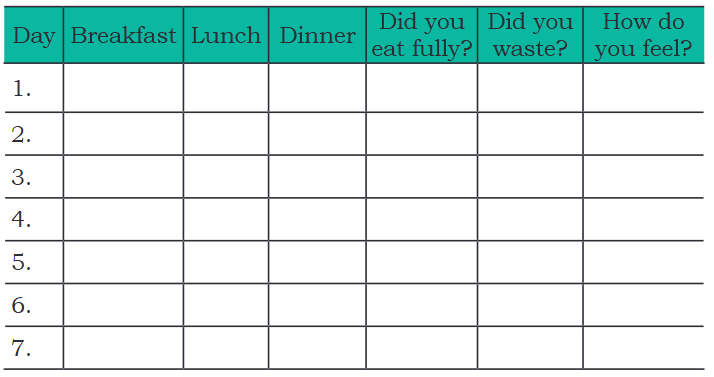
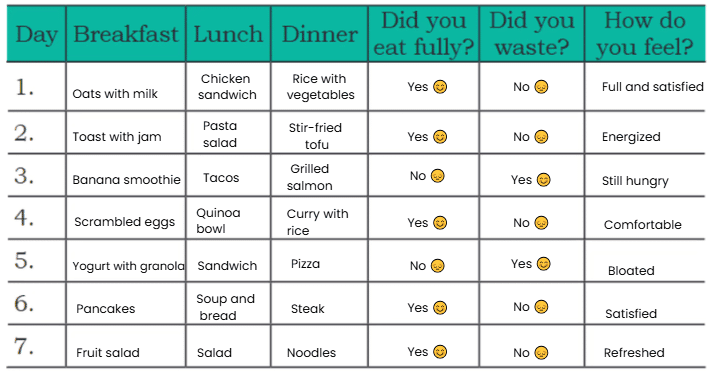
Q: For a week, keep a record of the food you eat for breakfast, lunch and dinner. 
After every meal, make an entry in the following table. If you ate everything, write ‘Yes’ and add a happy smiley. If you left some food, write ‘No’ and add a sad face .

Ans:

Write

What will you do—

Q1: If someone offers you food more than you need?
Ans: If someone offers me more food than I need, I will politely say, “Thank you, but this is enough for me.” I will take only what I can eat to avoid wasting food.

Q2: If you do not like a food item on your plate?
Ans: If I don’t like a food item, I will try to eat a little bit because it’s healthy. If I really can’t eat it, I will save it for later or share it with someone who likes it.

Page No. 94

Write

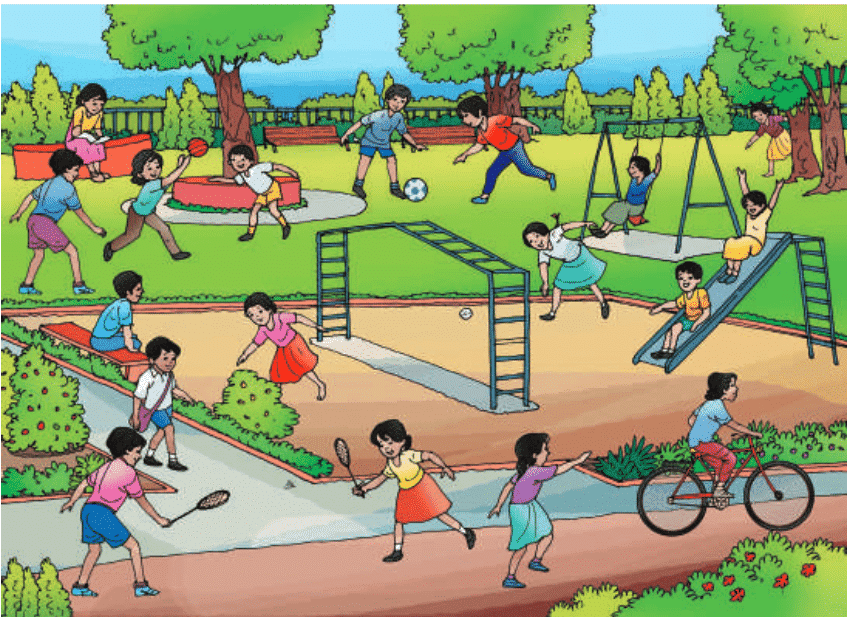
Q: Enjoy Sports
Look at the picture below.

Identify the activities people are engaged in.
Ans: In the picture, people are enjoying different sports and activities. Here are the activities they are engaged in:

  • Two children are playing badminton.
  • One child is riding a bicycle.
  • Two children are playing football.
  • Two children are playing with a ball while one child is cheering.
  • One child is on swing.
  • Two children are sliding on a slide.
  • One girl is reading book.
  • One boy is sitting on the bench and looking at the other children.

This shows that everyone is enjoying playing outdoors and staying active!

Page No. 95

Discuss

Q1: Which physical activities do you do in your daily life?
Ans: 
I do these physical activities daily:

  • Playing football
  • Running in the park
  • Doing yoga
  • Skipping rope

Q2: How do you feel on a day when you play a lot?
Ans: 
When I play a lot, I feel happy, energetic, and strong. Sometimes I feel tired but in a good way.

Find out

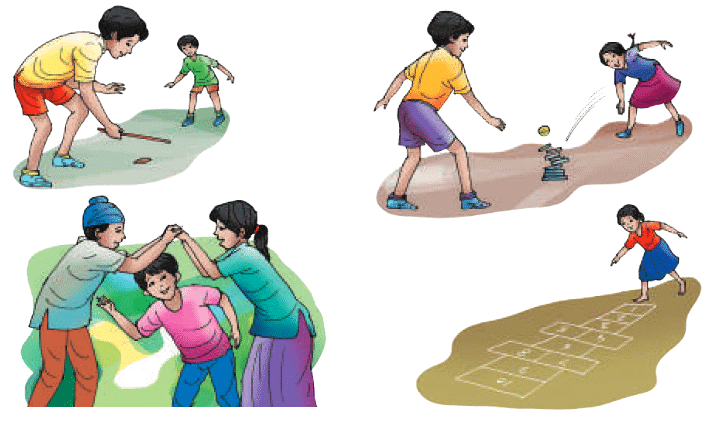
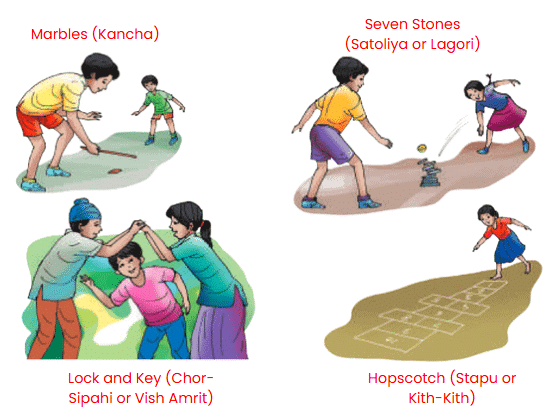
Q: Can you name the games depicted in the pictures below?
Ans: 

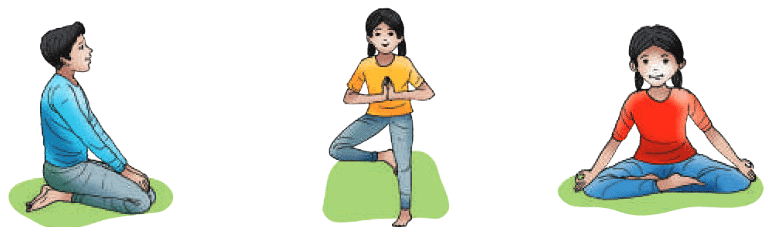
Activity 5

Q: With your teacher’s guidance, practice the easy yoga poses given below for a week, and record your observations. 

Ans: After practicing yoga for a week, I feel more relaxed and my body is more flexible. I also feel calmer, can focus better in class, and have more energy throughout the day.

Page No. 97

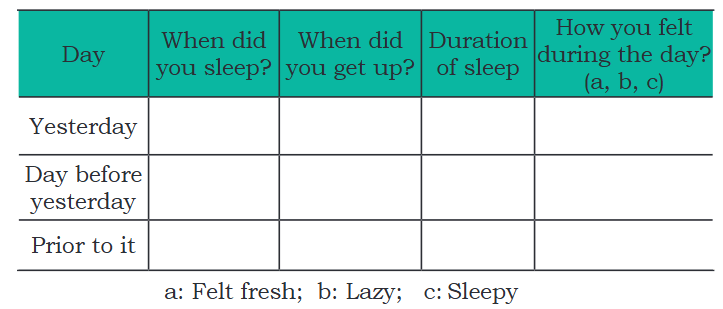
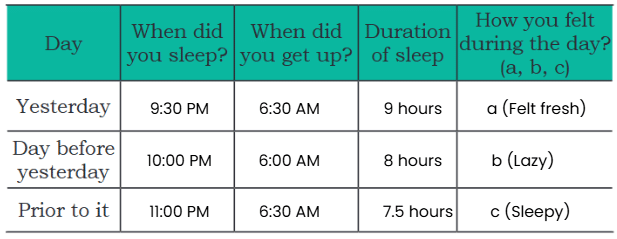
Activity 6

Fill the table given below.
Ans: 

Discuss

Q1: Why do you think our body needs rest?
Ans: 
Our body needs rest to feel fresh and strong. Rest helps us recover from tiredness and keeps us ready for work or play.

Q2: Do you think it is important to rest after a busy day of exercise and play? Why?
Ans: 
Yes, rest is important after exercise and play. It helps my body relax, feel less tired, and get energy for the next day.

Page No. 98

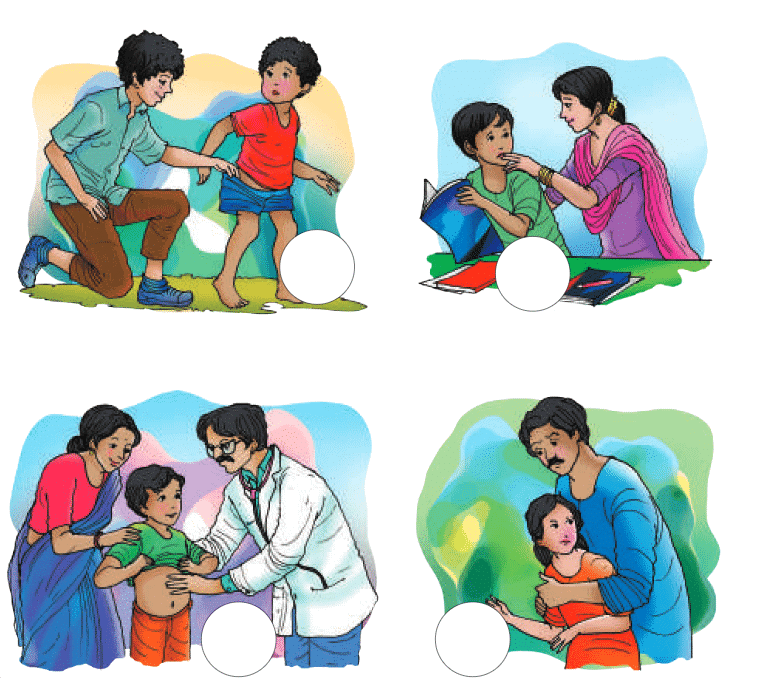
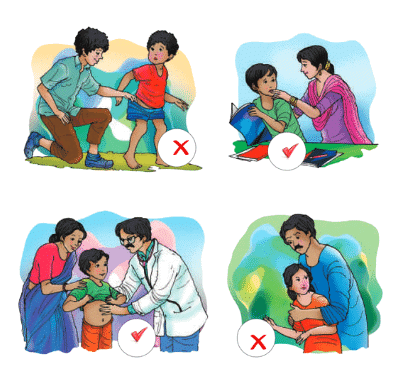
Activity 7

Q: Look at the pictures of different situations given below. Put a tick (✓) for the situation where the child would feel comfortable and put a cross (✘) for the situation where the child would feel uncomfortable.
Ans: 

Page No. 99

Write

Q1: What would you do if someone’s touch made you feel uncomfortable? 
Ans: 
If someone’s touch makes me uncomfortable, I will say “No” and move away. I will tell a trusted adult, like my parents or teacher, about it.

Q2: If you face an unsafe situation, who would you tell? 
Ans: If I face an unsafe situation, I will tell:

  • My parents
  • My teacher

Q3: List two situations where you would firmly say ‘No’.
Ans: I would firmly say “No” in these situations:

  • If a stranger asks me to go with them.
  • If someone tries to touch me in a way that feels wrong.

Page No. 100 – 101

Let us reflect

Q1: If the following are missing, what would happen to a food grain?
Elements

Soil _______________________________________________
Water _______________________________________________
Sunlight _______________________________________________
Animals
Cattle _______________________________________________
Earthworm _______________________________________________
People
Farmer _______________________________________________
Shopkeeper _______________________________________________
Cook _______________________________________________
Ans: 
Elements
Soil: Grains won’t grow without nutrients from soil.
Water: Seeds won’t sprout without water.
Sunlight: Plants won’t grow strong without sunlight.
Animals
Cattle: Fields won’t be ploughed, and no manure for soil.
Earthworm: Soil won’t be fertile without earthworms.
People
Farmer: No one to plant or harvest grains.
Shopkeeper: Grains won’t reach shops for us to buy.
Cook: Grains won’t be cooked into food.

Q2: Design your own favourite plate of balanced diet with the food items you like. (Remember we should not waste food.)

Ans: 

 
Q3: Which activities did you enjoy during your ‘mindful eating’?
Ans:
 I enjoyed these activities during mindful eating:

  • Feeling the food with my tongue.
  • Tasting the flavor slowly.
  • Chewing the food gently.

Q4: How can you keep your body strong? Write down the names of the exercises and games you would practice.
Exercises: ____________________________________________________________
Games: ____________________________________________________________
Ans: 
To keep my body strong, I will do:
Exercises: Yoga, Push-ups, Stretching
Games: Football, Kho-kho, Badminton

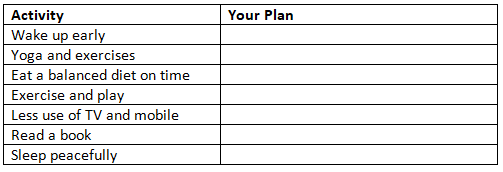
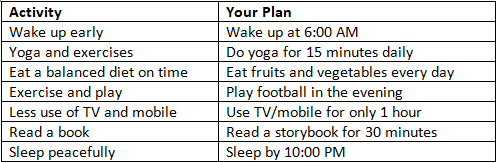
Q5: Which habits would you practice daily? Indicate your plans.
Ans:

05.Food for Health- Textbook Solutions

Page No. 73

Think and Write

Q: If you had to organise a food festival in your school, which dishes would you like to include? Make a list.

Ans: If I had to organise a food festival in my school, I would include these dishes:

  1. Idli and Sambhar
  2. Aloo Paratha with Curd
  3. Vegetable Pulao
  4. Chole-Bhature
  5. Fruit Salad
  6. Halwa
  7. Dhokla
  8. Lemon Rice
  9. Poha
  10. Roti with Paneer Sabzi

These dishes are tasty, healthy, and come from different parts of India!

Page No. 74

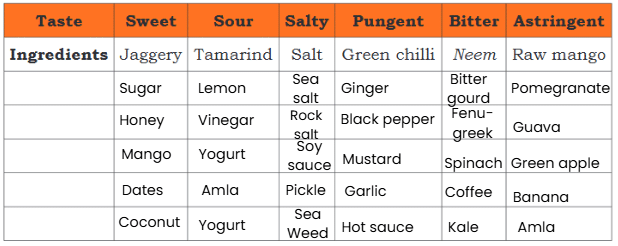
Write

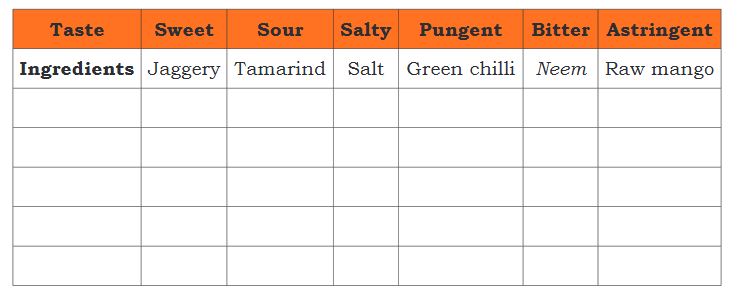
Q: Can you think of at least five ingredients or food items that match each of the tastes listed below? Write them down in the spaces provided.
Ans: 

Discuss

Q: Discuss in small groups and identify the food items having at least three different tastes.
Ans: 
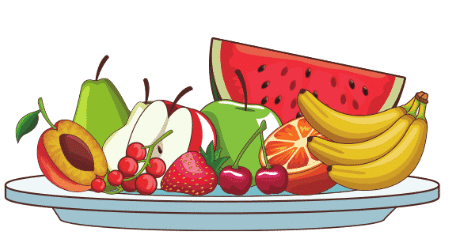
Here are some food items that have at least three different tastes:

1. Fruit Salad

  • Tastes: Sweet, Sour, and Astringent
  • For example, fruits like apples (sweet), oranges (sour), and pomegranate (astringent) can make a fruit salad with different tastes.

Fruit Salad

2. Chutney

  • Tastes: Sweet, Sour, and Spicy
  • Chutney made with tamarind (sour), jaggery (sweet), and green chilies (spicy) has all these tastes.

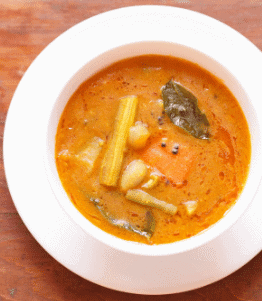
3. Sambhar

  • Tastes: Salty, Spicy, and Sour
  • Sambhar has a salty taste from salt, spicy taste from spices like chilli, and sour taste from tamarind.

Sambhar

Page No. 75

Find out

Q: Find out more about a millet-based food prepared at your home.
Ans:
 Millet-based food is very healthy and full of nutrients. At my home, we prepare Jowar Roti using jowar flour (sorghum). It is soft and tasty. We eat it with vegetables or dal. It gives energy, helps in digestion, and is good for health.

Discuss

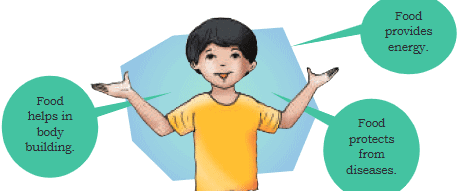
Q: Why do we need to eat different kinds of food items?
Ans:
 We need to eat different kinds of food because each food gives us different nutrients. Some give us energy, some help us grow, and some keep us healthy. No single food can give everything our body needs, so we must eat a variety of foods every day.

Page No. 77

Discuss

Q: What happens if we eat food from a single group of foods every day?
Ans:
 If we eat food from only one group, we may miss out on essential nutrients needed for our body to stay healthy. It is important to eat a variety of foods.

Page No. 78

Write

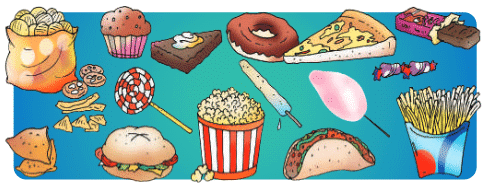
Q1: Can you name a few more junk food items?
Ans:
 Some more junk food items are:

  • French fries
  • Candies
  • Ice cream
  • Instant noodles

Junk Food

Q2: Why do you think we should avoid eating junk food?
Ans:
 We should avoid junk food because it has too much oil, sugar, or salt. Eating it often can make us unhealthy, cause stomach problems, or make us gain weight. Healthy home-cooked food is better for our body.

Q3: List the junk food items that you will avoid.
Ans: 
I will avoid these junk food items:

  • Chips
  • Soft drinks
  • Burgers
  • Pizza

Page No. 79

Activity 1

Make a Food Diary 
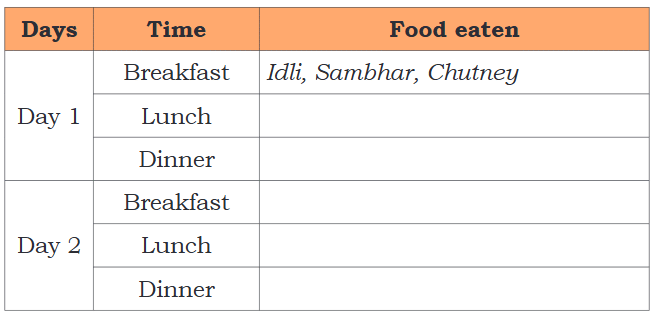
1. Create a food diary of your daily routine for a week. Write down what you eat in a day for breakfast, lunch and dinner. An example is given. Expand the table for a week. 
2. Encircle or Tick (✔) the food items that are healthy and put an ‘X’ mark for items which are not healthy. 
3. Identify the food groups missing in your daily routine. Discuss with your parents how these items can be included in the daily routine.

Ans:

Food Diary – My Weekly Meal Record

DaysTimeFood EatenDay 1Breakfast✔ Idli, Sambhar, Chutney
Lunch✔ Roti, Dal, Sabzi
Dinner✔ Rice, Curd, VegetablesDay 2Breakfast✔ Poha and Milk
Lunch✔ Roti, Paneer, Salad
Dinner✔ Khichdi and CurdDay 3Breakfast❌ Maggi Noodles
Lunch✔ Rice, Dal, Bhindi
Dinner✔ Roti, Egg CurryDay 4Breakfast✔ Dalia with Fruits
Lunch✔ Paratha with Curd and Salad
Dinner✔ Vegetable PulaoDay 5Breakfast✔ Upma and Banana
Lunch✔ Roti, Rajma, Sabzi
Dinner✔ Rice, Dal, Mixed VegetablesDay 6Breakfast✔ Aloo Paratha and Curd
Lunch✔ Rice, Chole, Salad
Dinner❌ Pizza Slice and Cold DrinkDay 7Breakfast✔ Boiled Eggs and Toast
Lunch✔ Veg Biryani with Raita
Dinner✔ Dosa with Sambhar

After checking my food diary, I found that fruits and green leafy vegetables were missing on some days. I talked to my parents and we decided to include a fruit in breakfast every day and add salad or spinach to lunch or dinner. This will help make my meals more balanced and healthy.

Page No. 80Find out

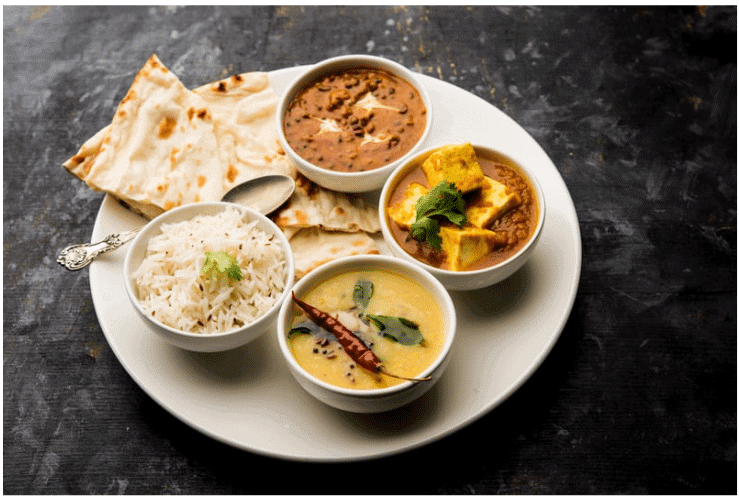
Q: Find out a ‘food thali’ from your region, and list its food items.
Ans: 
I live in North India, and a typical North Indian Thali includes:
North Indian Thali

  1. Roti or Paratha
  2. Rice
  3. Dal (like Dal Makhani)
  4. Sabzi (Paneer or Aloo)
  5. Curd or Raita
  6. Salad
  7. Pickle
  8. Gulab Jamun or Halwa

It is a tasty and balanced meal with all the important food groups.

Also, Here’s a list of food thalis from different regions of India along with their common food items,

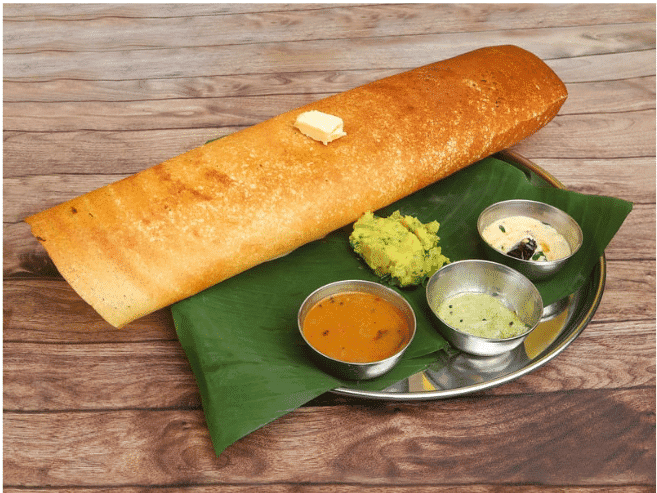
1. South Indian Thali

  • Rice
  • Sambar
  • Rasam
  • Idli or Dosa
  • Coconut Chutney
  • Vegetable curry
  • Curd
  • Papad
  • Payasam (sweet)

Dosa Sambar

2. West Indian Thali (Gujarat)

  • Roti (called Rotli)
  • Dal
  • Rice
  • Vegetable Sabzi
  • Kadhi (curd-based curry)
  • Pickle
  • Papad
  • Dhokla or Thepla
  • Sweet (like Mohanthal)

3. East Indian Thali (West Bengal)

  • Rice
  • Dal (lentils)
  • Aloo Bhaja (fried potato)
  • Fish curry
  • Mixed vegetables
  • Chutney
  • Rasgulla or Sandesh (sweet)

Page No. 81

Write

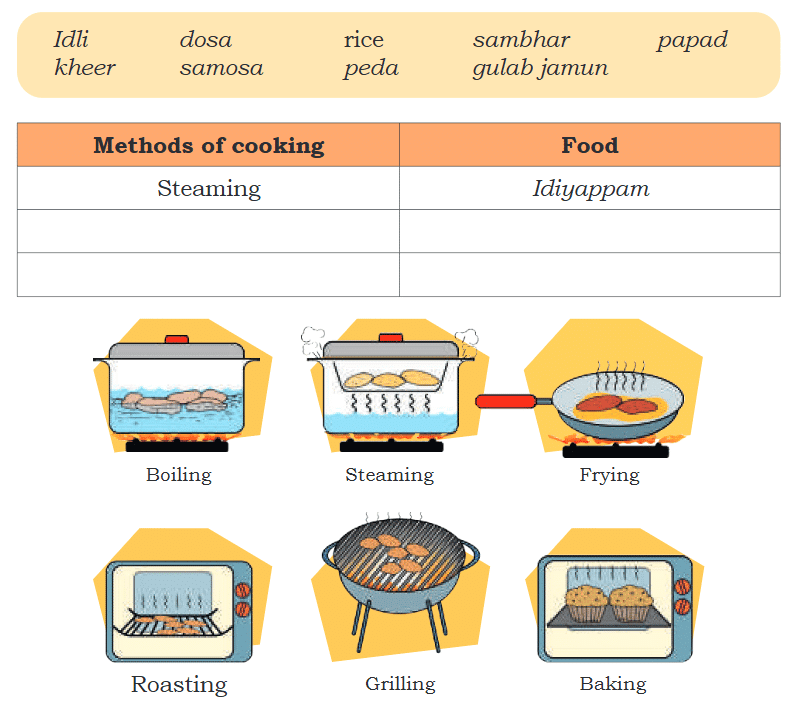
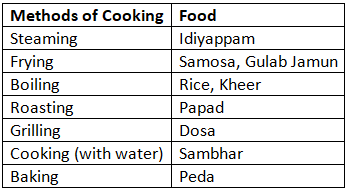
Q: Identify different methods used to cook the food items given in the list below. One example is given for you. You can take help from your family members and add more items to the list.
Ans: 
Page No. 82Discuss

Q 1: Do you help in cooking at home?
Ans: 
Yes, I help in cooking at home. I help my parents by washing vegetables, mixing ingredients, or setting the table.

Q2: Do you think all family members should know how to cook? Why?
Ans:
 Yes, all family members should know how to cook. Cooking helps us eat healthy food, saves time, and makes us independent. It’s also fun to cook together!

Page No. 83 – 84Let us reflect

Q1: Hands-on activity—food collage 
Materials: Old magazines, newspapers, scissors, glue, and a blank sheet of paper. 
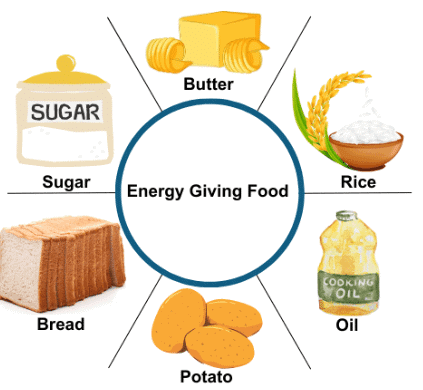
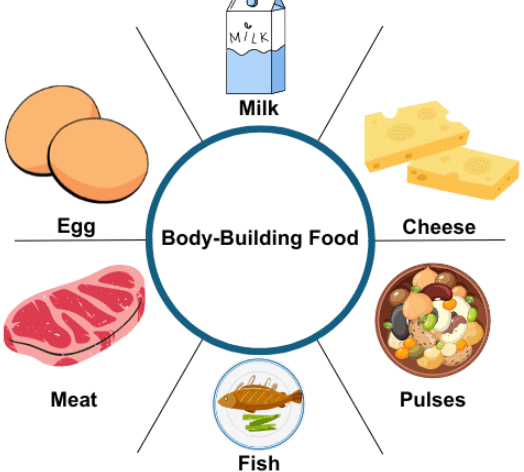
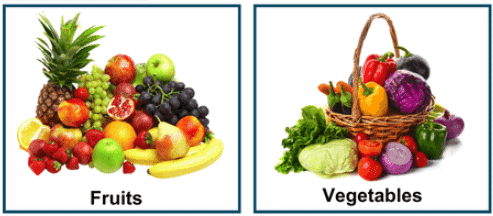
Cut out pictures of food items and create a collage with three sections: energy-giving foods, body-building foods, and protective foods.

Ans: Here is a food collage with three sections:

  • Energy-giving foods (like rice, bread, and oil)
  • Body-building foods (like milk, eggs, and pulses)
  • Protective foods (like fruits and vegetables)
    Protective Foods
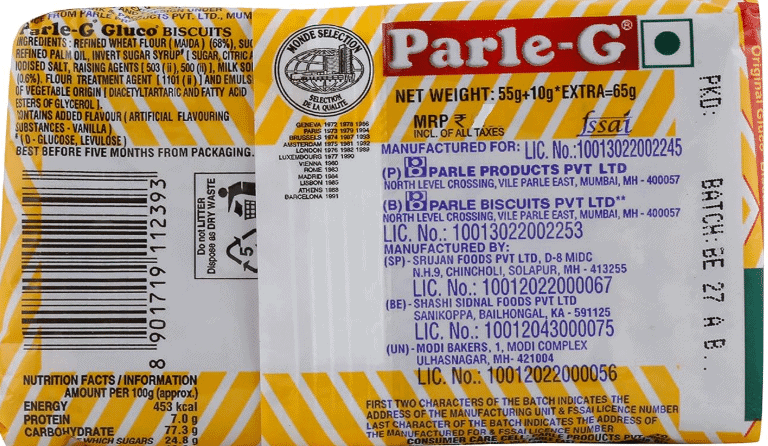
Q2: Check the label 
(a) At home, pick up any one packaged food item from your kitchen. Check the label and note down the expiry date, and also two main ingredients. 

Ans: I picked up a packet of biscuits from the kitchen.

  • Expiry Date: 15 October 2025
  • Two Main Ingredients: Refined Wheat flour (Maida) and Sugar

(b) Why is it important to check labels before buying or eating packaged food items?
Ans: Checking labels is important because it tells us the expiry date, so we don’t eat spoiled food. It also shows the ingredients, so we can avoid unhealthy things like too much sugar or salt.

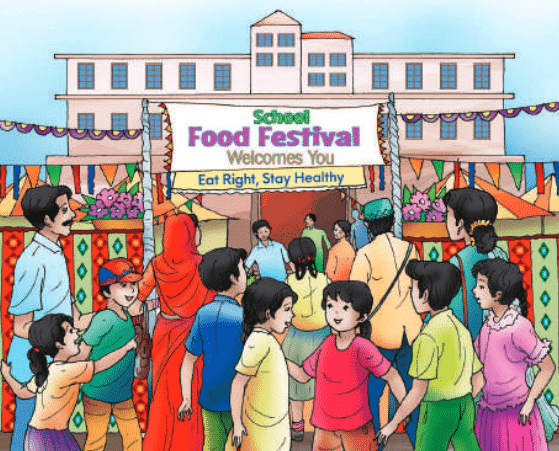
Q3: Organise a food festival 
Students may bring home-made food and organise a food festival at school. Parents may be encouraged to participate in the food festival.
Ans: 
We organised a food festival at our school. All students brought home-made food like idli, poha, paratha, halwa, and fruits. We decorated our stalls and shared food with our friends. Many parents also joined and brought traditional dishes. It was fun to taste different foods and learn about healthy eating.
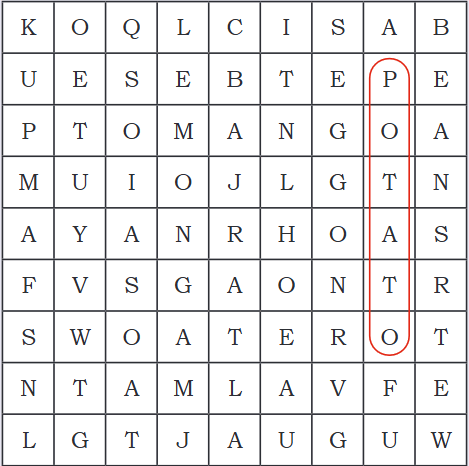
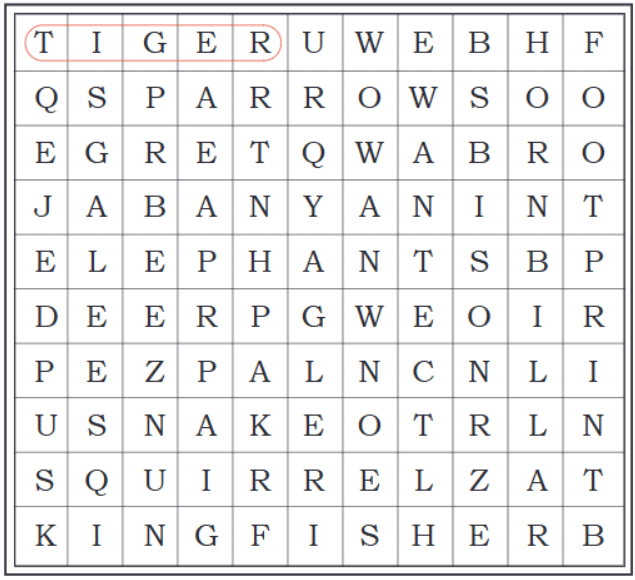
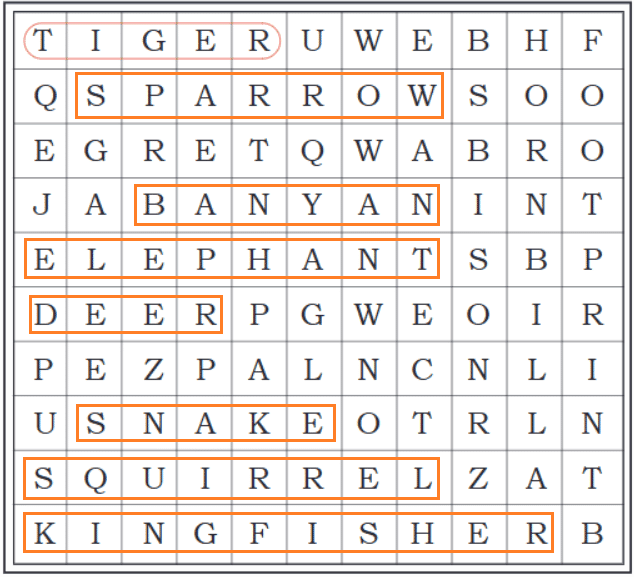
Q4: Find and circle
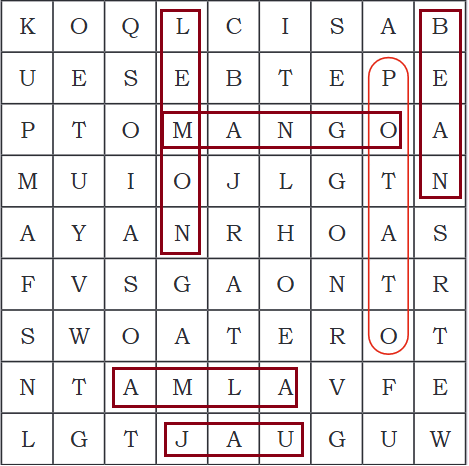
Circle the words related to food in the grid below. One example is given below.

Ans:

04.Growing up with Nature- Textbook Solutions

Page No. 58

Activity 1

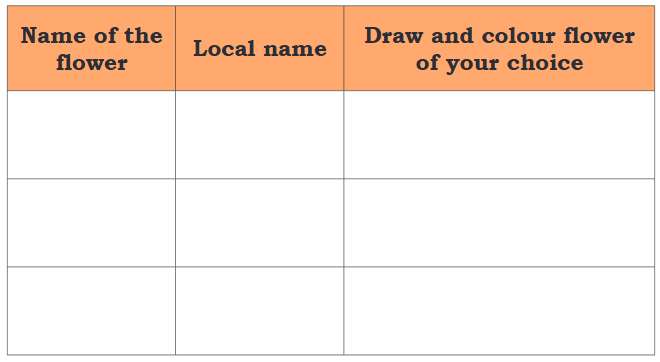
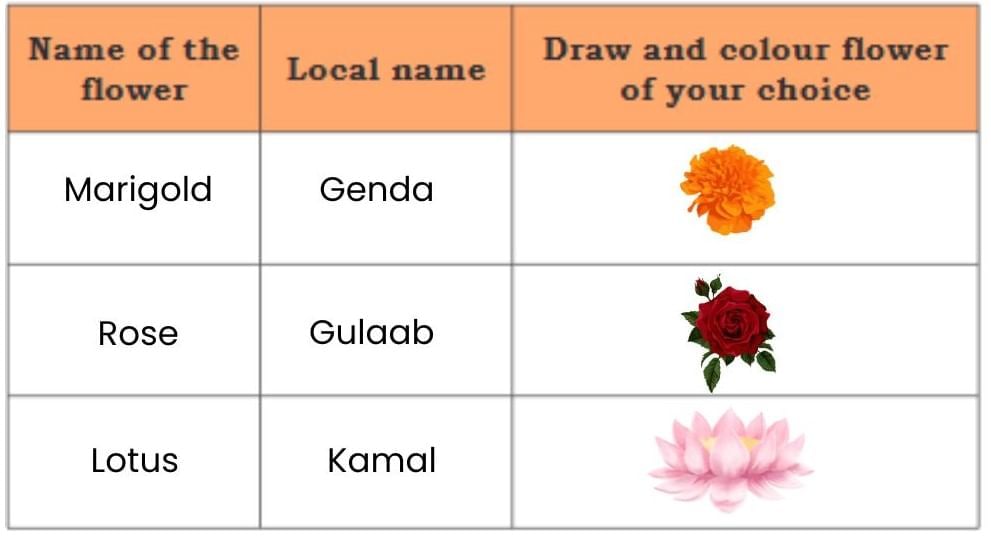
Q: Write names of five colourful flowers in your area.
Ans: You can try to find the names of five colourful flowers that grow in your area by looking around your garden, park, or neighborhood. You may also ask your parents, grandparents, or teachers to help you. Here is the table for your reference.

Page No. 60

Activity 2

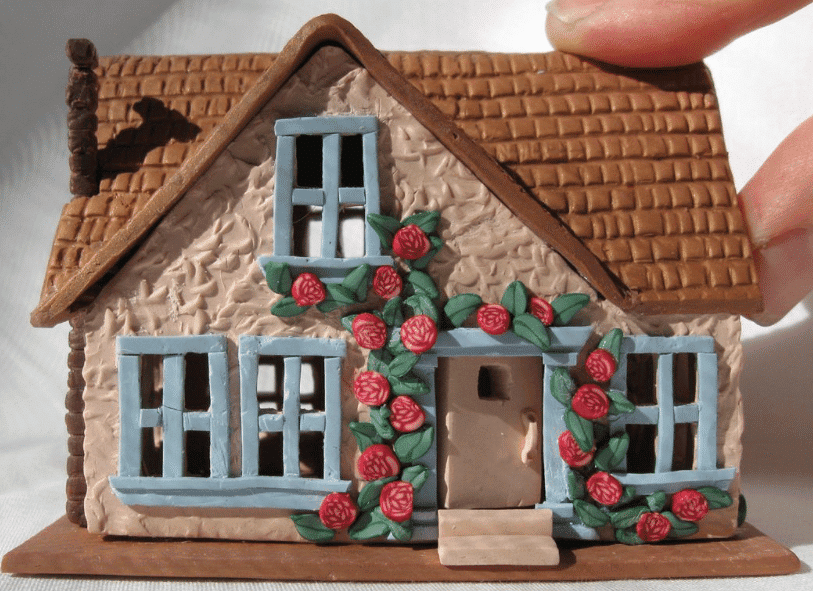
Q: Make the model of a house using materials from nature such as clay, wooden sticks, hay, grass, leaves, etc. Decorate it with an art form of your choice. 
Ans: Here is the model of a house made using Clay.
Clay House

Activity 3

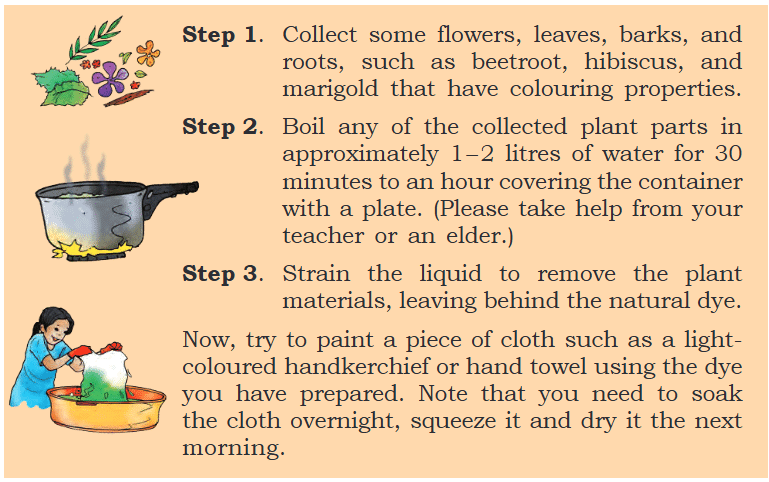
Q: Let us prepare a natural dye.
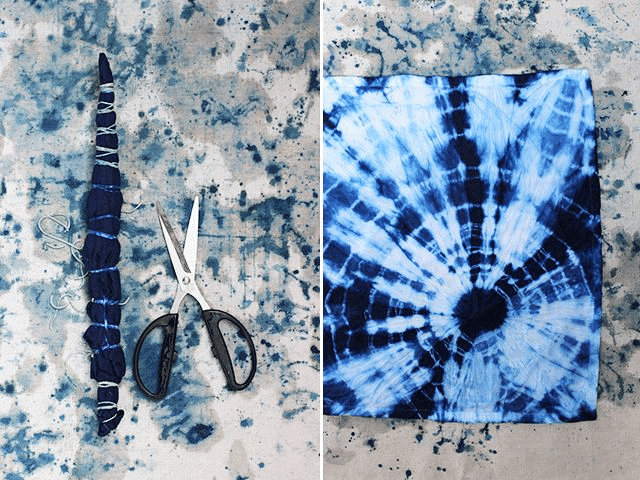
Ans: Students are encouraged to try it on their own, with the guidance of elders. Below is an image of a piece of cloth decorated using dye.

Cloth decorated using dye

Page No. 62

Activity 4

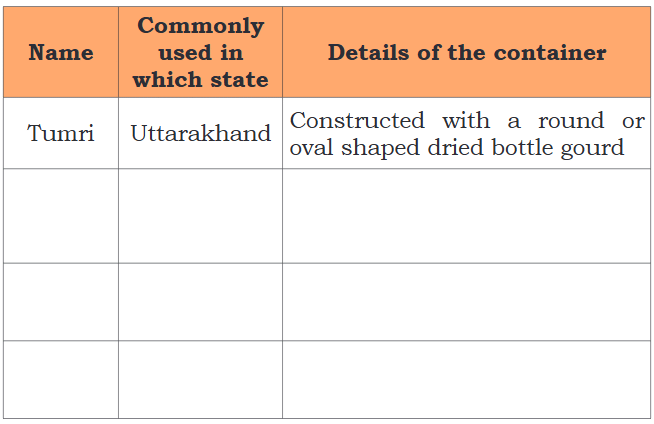
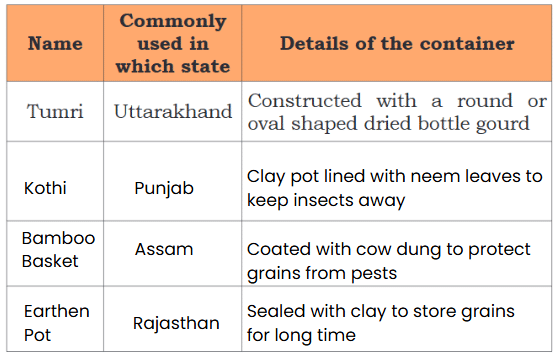
Q: Find out some traditional ways of preserving grains and vegetables at your place, and fill the following table.
Ans:

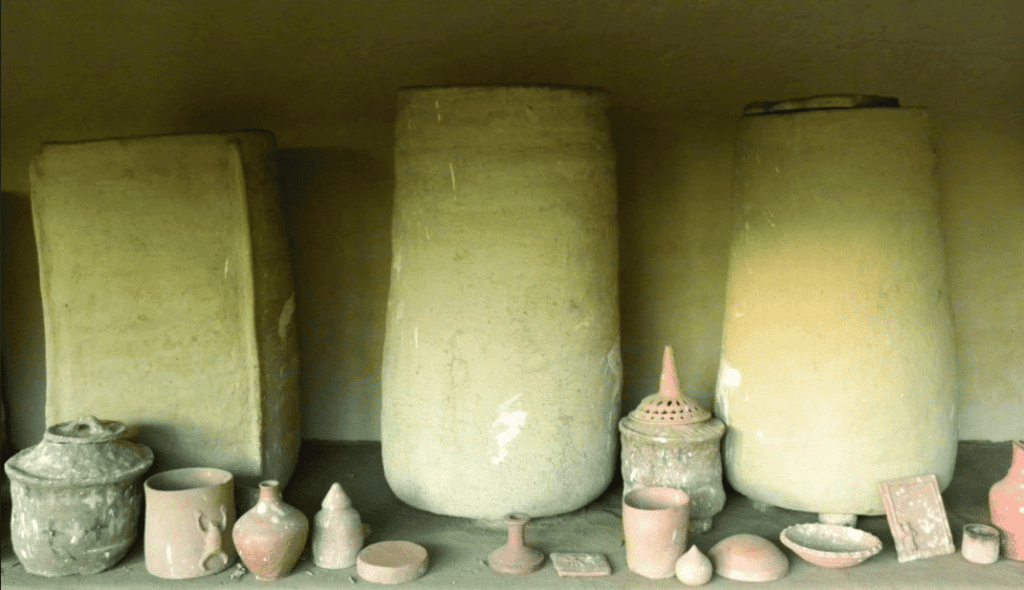
Kothi for preserving grains

Page No. 63

Activity 5

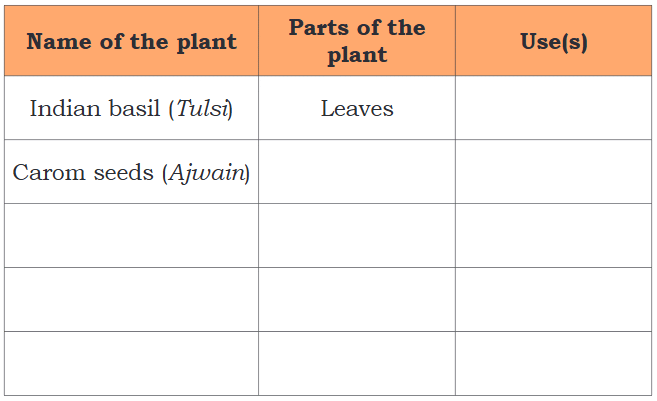
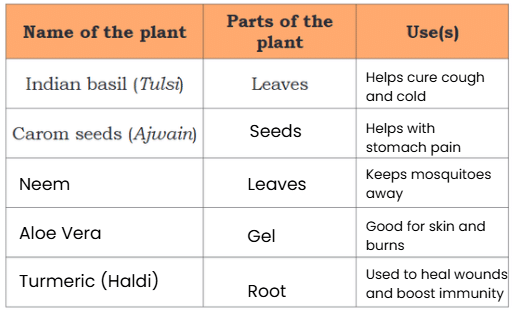
Q: Discuss with the elders in your family and write the name of the plant, its parts, and its uses, in the table given below.
Ans:

Discuss

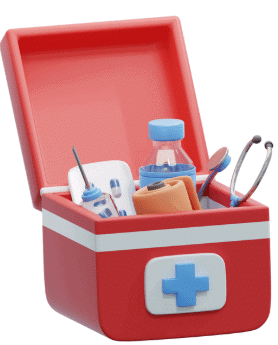
Q1: What things should be kept in a first-aid box?
Ans: A first-aid box should have the following items:

  • Band-aids
  • Antiseptic cream
  • Gauze
  • Scissors
  • Medical tape
  • Disinfectant
  • Bandages
  • Antibiotic ointment

First aid box

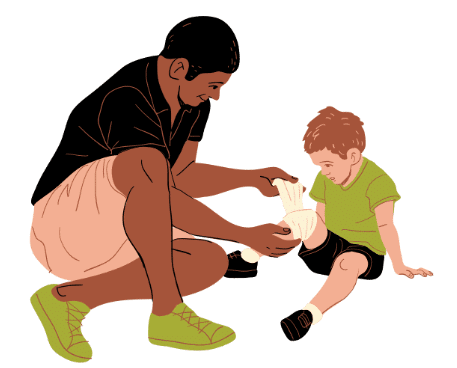
Q2: Why do you think providing first-aid is important if someone gets injured?
Ans:
 Providing first-aid is important because it helps in reducing pain, preventing further harm, and providing immediate care until medical professionals can attend to the injury.

Providing First Aid

Page No. 65

Activity 6

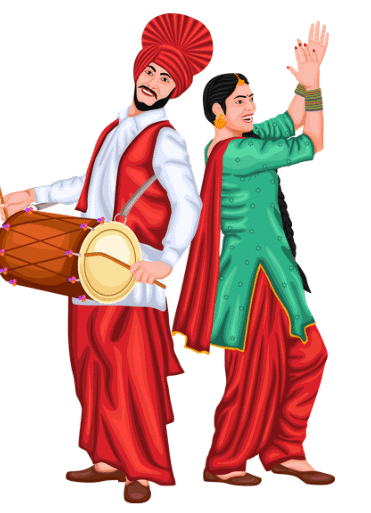
Q: Find out the traditional dances and songs of your region. Perform a traditional dance with the help of your classmates and teachers for the Annual Day of your school.
Ans:
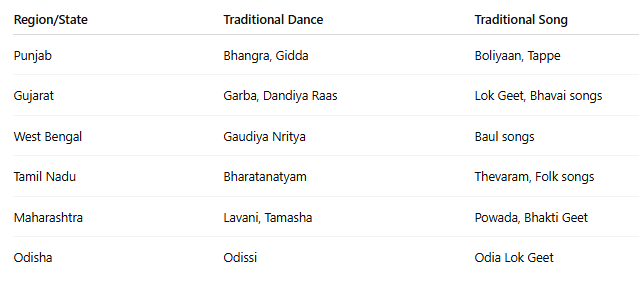
 Here’s a simple table showing traditional dances and songs from 6 regions of India, 

Bhangra DanceDiscuss

Q: Imagine if there is no light in your area for two days. What changes will you see in your life?
Ans:
 If there is no light for two days:

  • We cannot study or read at night.
  • It will be hard to cook or move around safely.
  • We might use candles or torches, but they are not as bright.
  • Daily work, like using fans or charging phones, will stop.

Page No. 66

Activity 7

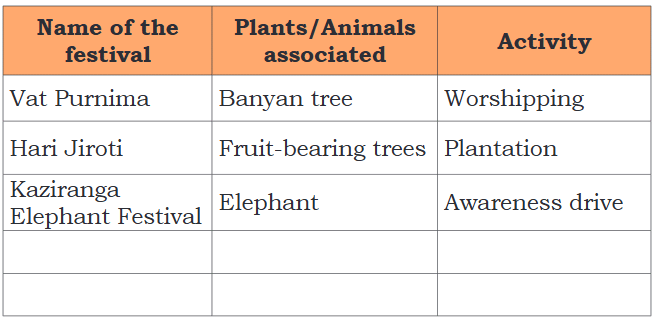
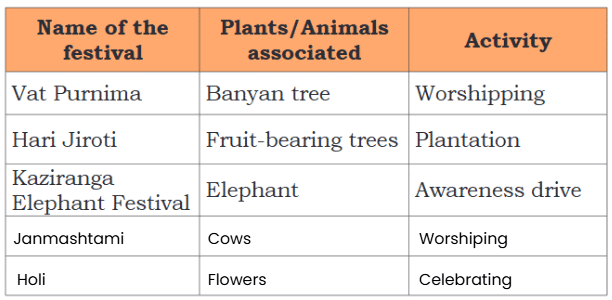
Q: Talk to your elders and find out the rituals in connection to animals and plants which are celebrated in your locality. A few examples are given below.

Ans: 

Page No. 67 – 68

Let us reflect

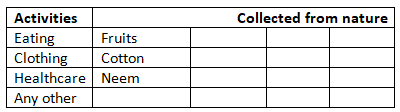
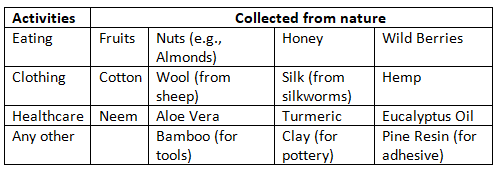
Q1: What are the things that we use from nature in our daily life?
Ans: 

Q2: What challenges arise when we overuse natural resources?
For example, if we overuse wood from nature, our forests deplete. 
Water: __________________________________________________ 
Soil: _________________________________________________ 
Sea products: ___________________________________________ 
Any other: ______________________________________________
Ans: 
Water: If we overuse water, rivers and wells dry up, and we face water shortages.
Soil: Overusing soil makes it less fertile, so crops don’t grow well.
Sea Products: Overfishing reduces fish in the sea, affecting food supply.
Any Other: Overusing coal or oil causes pollution and energy shortages.

Q3: How can we protect the natural environment around us?

Ans: 


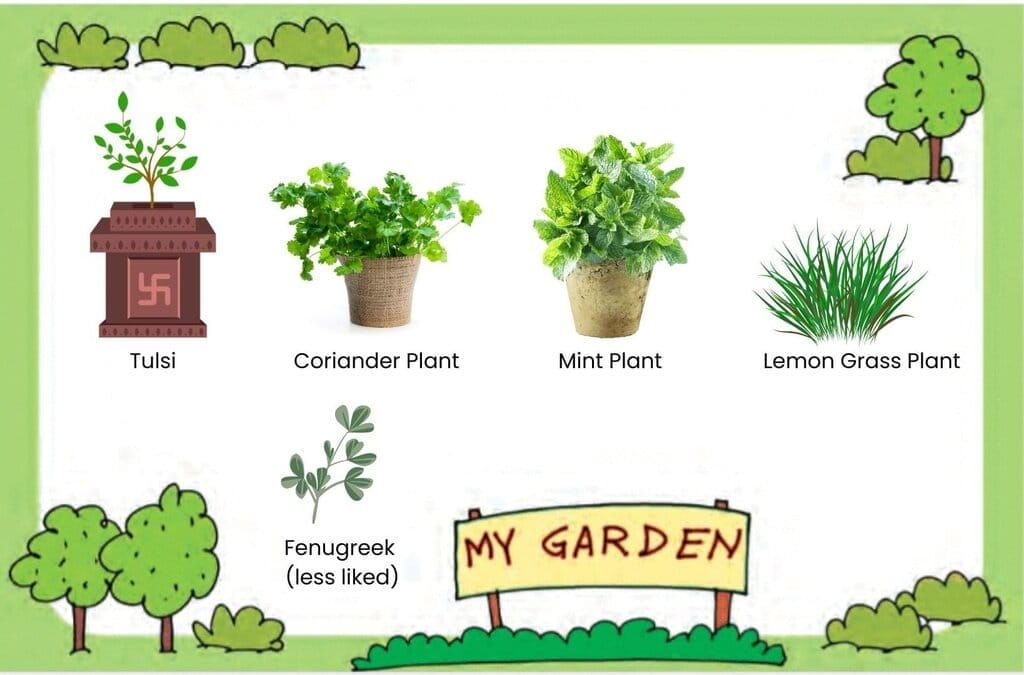
Q4: Design your herbal garden 
Here is a space for your herbal garden. Draw pictures of your favorite herbs in different parts of the garden and write down their names. Are there some herbs that you like less? Draw them too!

Ans: I have drawn my herbal garden with my favorite herbs like Tulsi, Mint, Coriander, and Lemongrass. I wrote their names near each plant in the garden.
I also drew Fenugreek (Methi), which I like less because it tastes a little bitter.

03.Nature Trail- Textbook Solutions

Page No. 37

Write

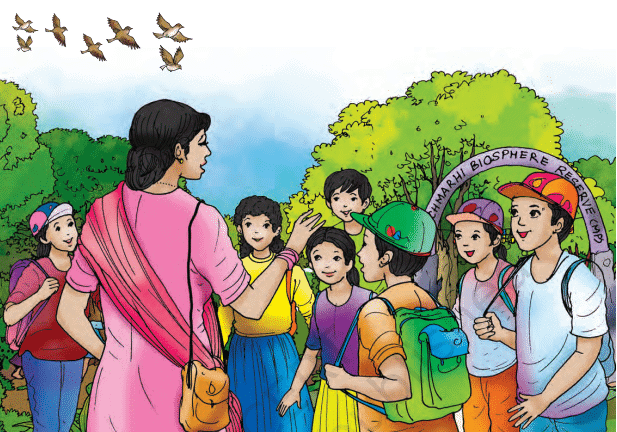
Q1: Can you think of rules that should be followed while you are in a zoo or a forest?
For example,
(a) We should not feed birds.
(b) ___________________________
(c) ___________________________
(d) ___________________________
Now, look at the safety rules given below and match them with your list. Have you missed out any of the rules given?

Safety RulesDOs and DON’Ts
1. Please be careful in a new place.
2. Please do not tease animals.
3. Please do not feed animals.
4. Please do not damage trees, and flowers.
5. Please do not bring pets, firearms, or any kind of weapons.
6. Please do not bring polythene bags.
7. Please do not damage public utilities.
8. Please do not throw any garbage in the forest.

Ans: Here are some rules to follow in a zoo or forest:
(a) We should not feed birds.
(b) We should not tease animals.
(c) We should not throw garbage.
(d) We should not damage plants or trees.
These rules match the safety rules given on the page, like not feeding animals, not damaging trees, and not throwing garbage.Discuss

Q: Why are these rules important to follow?
Ans: 
These rules help keep the forest clean and safe for animals, plants, and people.Page No. 39Activity 1

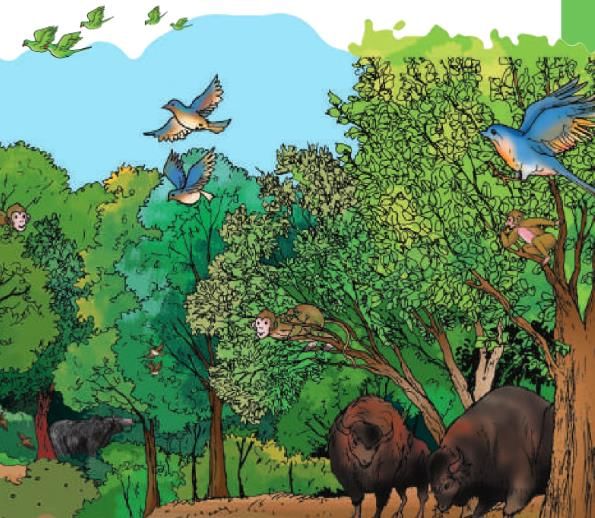
Animals in the Forest
Q: Look closely at the picture and identify the animals. You may take help from your teacher.

Divide them into two categories:
Animals on land
Birds in the sky
Ans:

Animals on land: 

  • Bear
  • Monkeys
  • Bisons

Birds in the sky: 

  • Parrots
  • Blue Jay Birds

Page No. 40Write

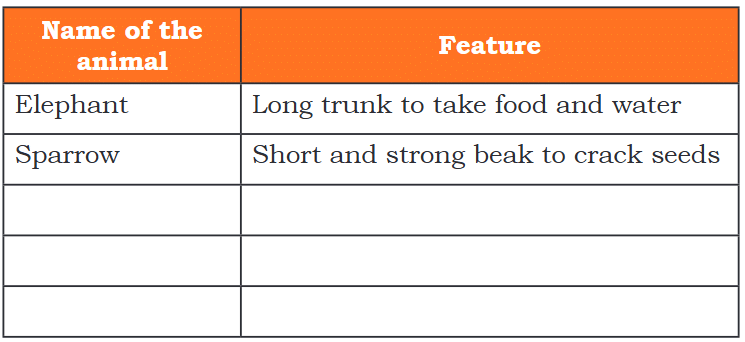
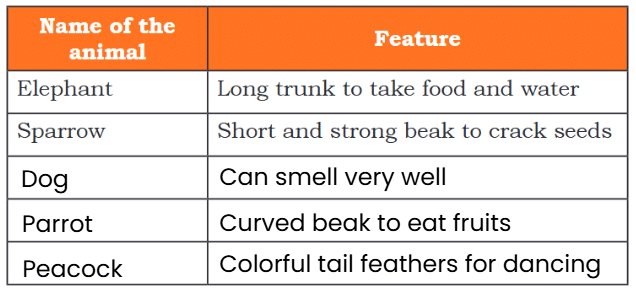
Q: Name some animals including the birds that you have seen. Write any one feature of each of them.
Ans:
Write

Q: Compare the features of the Indian Giant Squirrel with the squirrels you see in your area.
Ans:
 The Indian Giant Squirrel is bigger and has red color. The local squirrel is smaller and usually grey or brown.Page No. 43

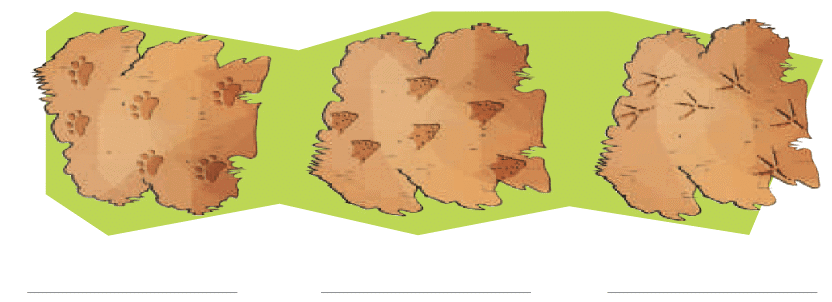
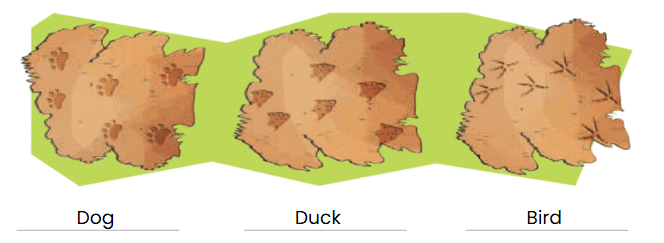
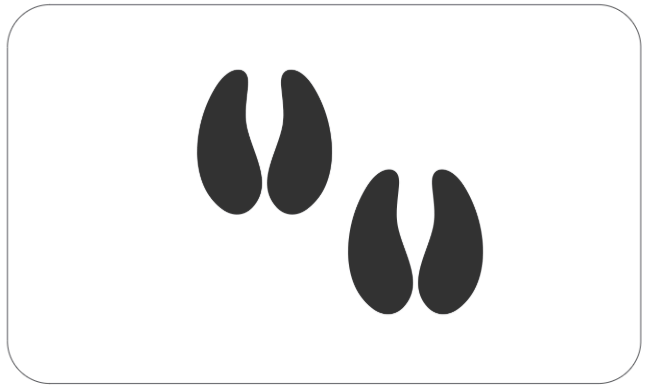
Q1: Look at the footprints and guess the name of the animals that you think must have come to the pond to drink water.
Ans:


Q2: Observe and draw the footprint of any animal.
Ans:
 Here are the foot prints of Horse:
Page No. 44Write

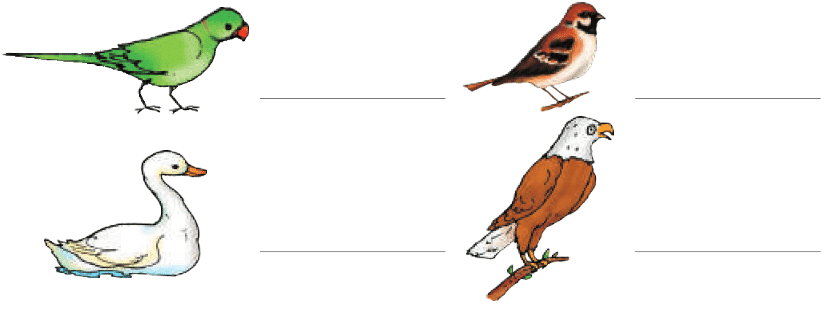
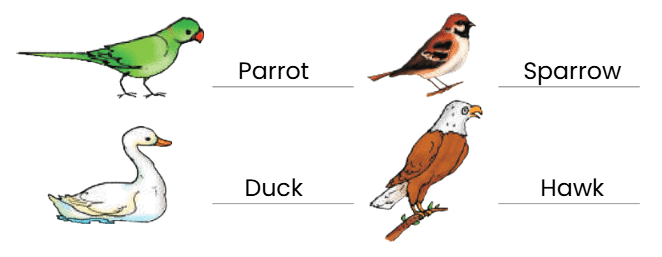
Q: Name the birds shown below.
Ans:

Page No. 45Activity 3

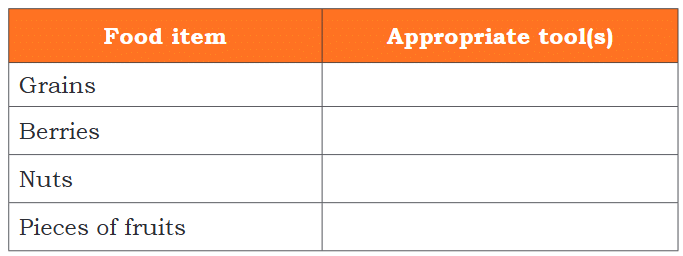
Q: Take different food items like grains, berries, fruits, nuts, etc., in a plate. Try to pick these food items using a spoon, a toothpick or a pair of sticks. Fill the table below with appropriate tool(s) for picking each of these food items.
Ans:
Page No. 47Activity 4
Q1: Bird Diary
(a) Go near a tree. 
(b) Close your eyes and listen to the sounds of different birds. 
(c) Now open your eyes and focus on one bird at a time. 
(d) Observe how it moves, what it eats, and where it sits. 
(e) Write your observations in a Bird Diary! 
For each bird, note the following:

Ans:

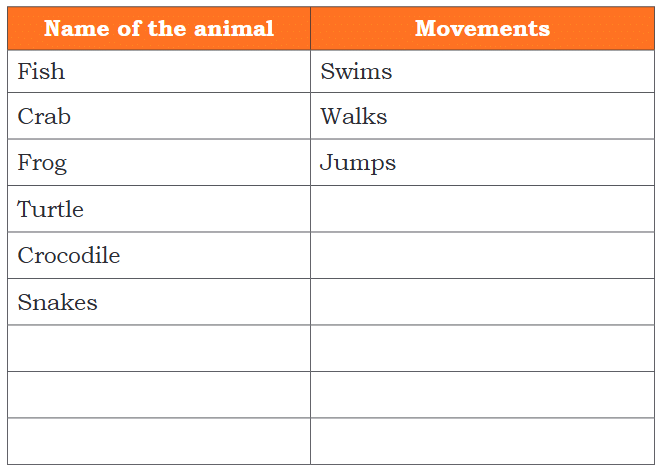
Q2: List the animals which live in and around water bodies. Fill in the table given below.
Ans:
Page No. 49Write

Q: What are the insects that you find at your home and in your surroundings?
Ans:
 Some insects I find at home and in my surroundings are:

  • Ants
  • Butterflies
  • Bees
  • Cockroaches
  • Mosquitoes

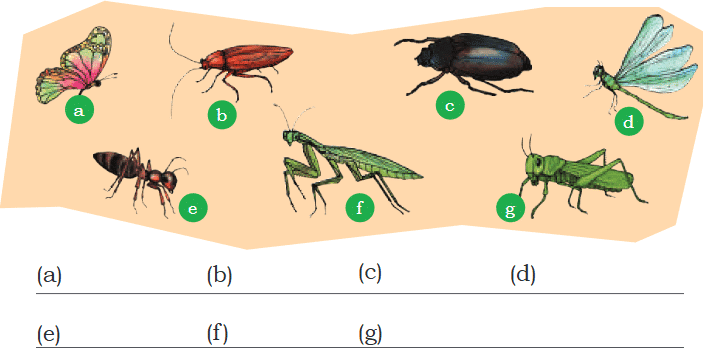
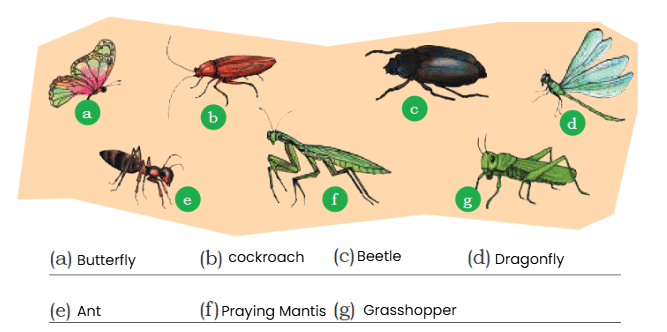
Q2: Name the insects shown below.
Ans:
Page No. 50Activity 5

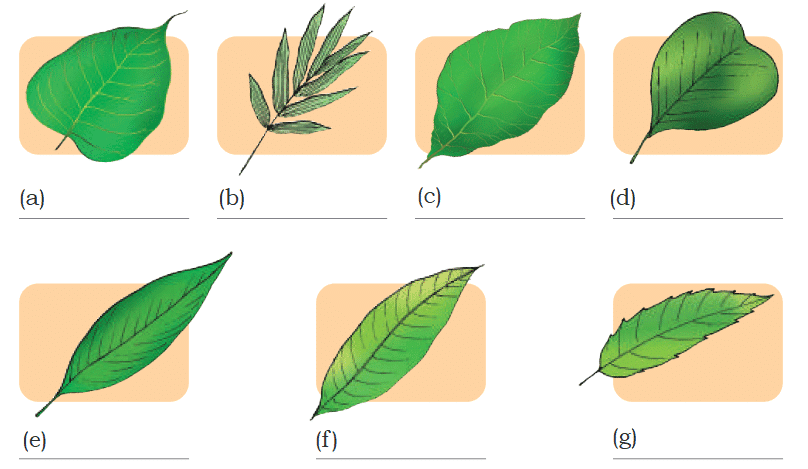
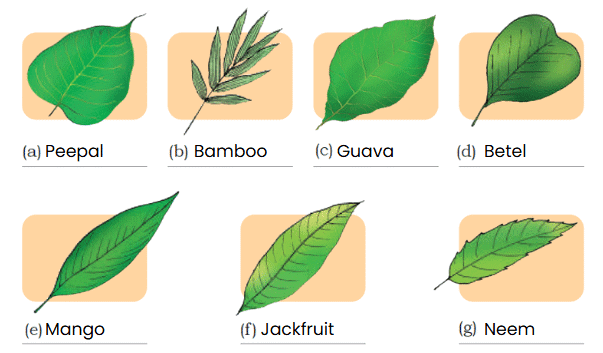
Q 1: During the visit to the nature trail, students collected leaves from different plants. Help them identify the plants based on the pictures of the leaves given below.

Ans: 


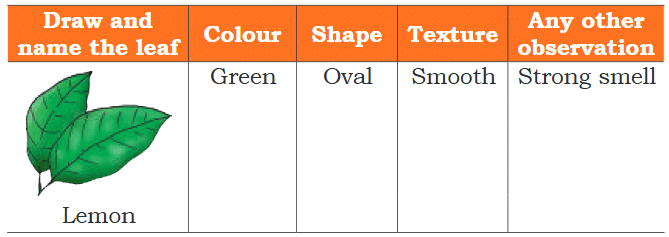
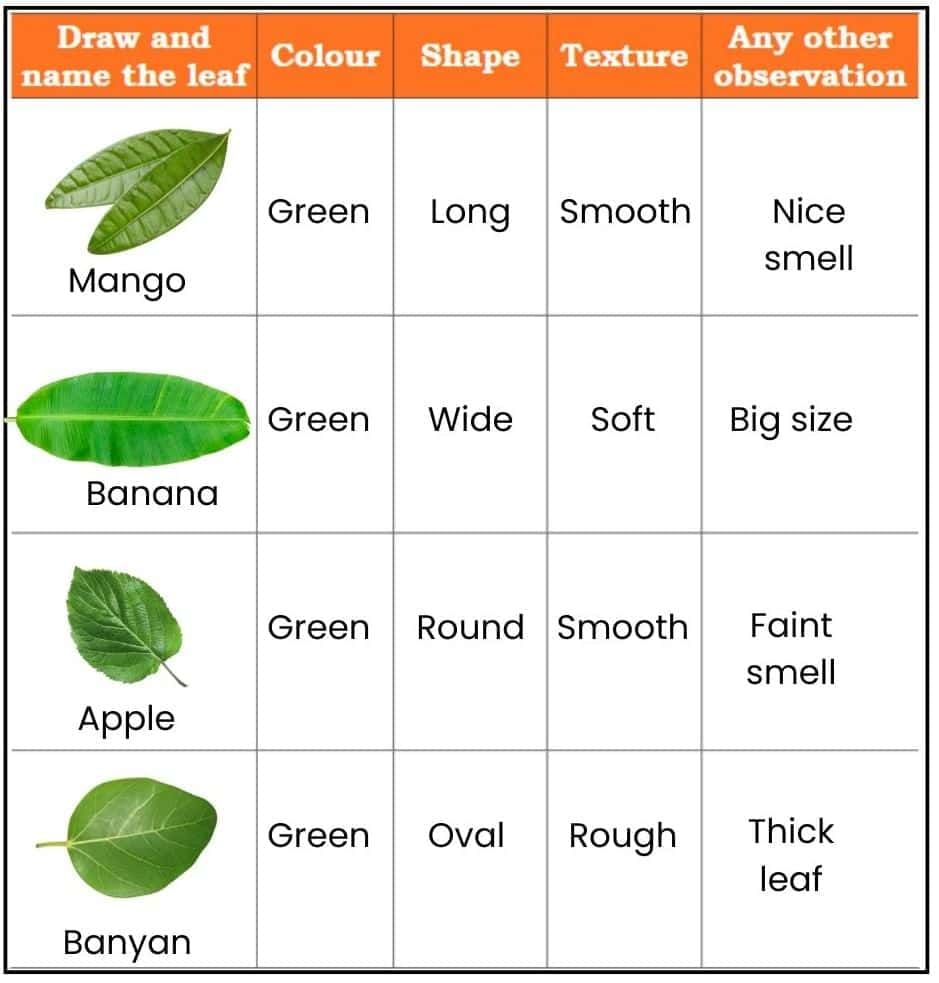
Q2: Observe the leaves of different plants in your neighbourhood and fill the table.

Ans: 

Page No. 52

Activity 6

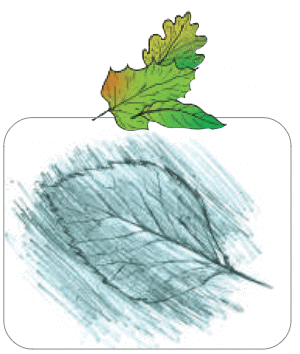
Q: Leaf Autograph
Place a leaf on a notebook with the rough, vein-side facing up. Cover it with a plain sheet of paper. Rub a crayon over the paper, and watch the leaf’s shape appear like magic! Try this with different leaves and see how each one has its own unique pattern. Name the plant or tree to which the leaf belongs.
Ans: The leaf in the picture might be from an oak tree or a maple tree. To be sure, you can look at the shape, edges, and lines on the leaf. You can also check a book or ask an elder to help you find the right tree name.

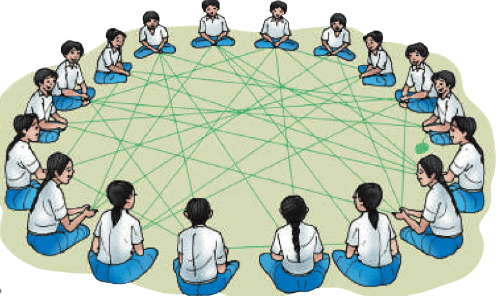
Q: Let us Play the Game ‘Web of Life’ 
Have you ever wondered how all living beings are connected? Let us find out by playing a game! You just have to imagine you are a part of nature—maybe a tree, a bird, or even the Sun. 

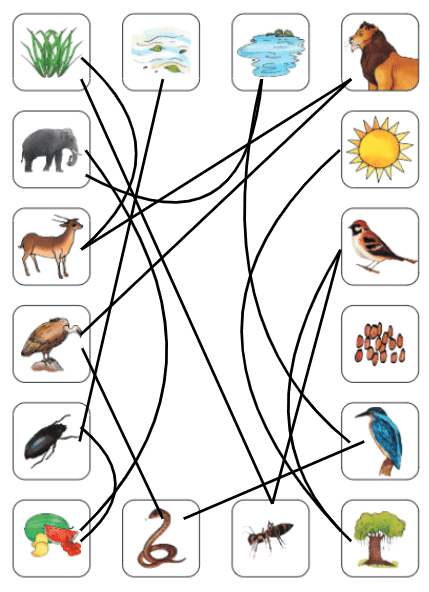
Ans: 
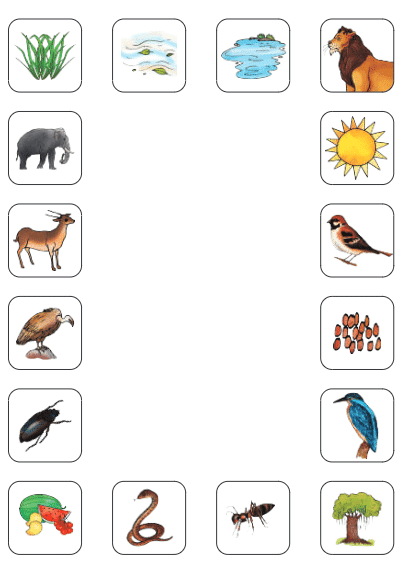
Web of Life Connections with Lines
Here’s how to draw the lines between the items in the image

  • Sun → Tree
  • Tree → Bird (sparrow-like bird)
  • Bird (sparrow-like bird) → Insect (ant)
  • Insect (ant) → Plant (grass)
  • Plant (grass) → Deer
  • Deer → Lion
  • Lion → Vulture (bird with long beak)
  • Vulture → Snake
  • Snake → Kingfisher (blue bird)
  • Kingfisher (blue bird) → Pond (water with lily pads)
  • Pond (water with lily pads) → Elephant
  • Elephant → Fruits (watermelon and berries)
  • Fruits (watermelon and berries) → Beetle (black insect)
  • Beetle (black insect) → Stream (flowing water)

Page No. 55-56

Let us reflect

Q1: Which animal would you love to be? What special abilities would it give you?
Ans:
 I would like to be a bird. I could fly in the sky.

Q2: How do you think different plants and animals are dependent on each other?
Ans:
 Plants give food and shelter to animals. Animals help in pollination and seed spreading.

Q3: What is the role of a nature scientist?
Ans: 
A nature scientist studies plants and animals and teaches us how to protect them.

Q4: Solve the puzzle.
Find the treasures of the forest.

Ans: 

Q5: Take on the challenge 
Plan a nature walk with your family or friends in a nearby park. To prepare yourself as a guide, identify few plants and animals, and study their features and interesting facts which you can explain during the walk.
Ans: 

Nature Walk Plan for Class 4

Objective: To explore a nearby park, learn about plants and animals, and share interesting facts with your family or friends.

Preparation:

  1. Choose a Park: Pick a nearby park with trees, plants, and animals.
  2. Identify Plants:
    • Trees: Look for trees like Banyan, Mango, or Peepal.
    • Shrubs: Find smaller plants like hibiscus or jasmine.
    • Flowers: Spot colorful flowers like marigolds.
  3. Identify Animals:
  4. Birds: Look for sparrows, pigeons, or peacocks.
  5. Insects: Watch for butterflies, bees, or ants.

Interesting Facts:

  • Banyan Tree: Has roots that grow from its branches.
  • Peepal Tree: Considered sacred and is called the “tree of life.”
  • Mango Tree: Known as the “King of Fruits.”
  • Peacock: India’s national bird with beautiful feathers.
  • Sparrow: A common bird that helps control insects.

What to Bring:

  • Comfortable shoes, a notebook, a camera, water, and snacks.

During the Walk:

  • Guide the group: Share facts about the plants and animals.
  • Ask Questions: “What animals live in these trees?” or “What do butterflies do?”

After the Walk:

  • Talk about what everyone learned and how to protect nature.

Enjoy your nature walk while learning and having fun!

Q6: Do an activity 
Role-play: Create a scene of a forest in your classroom where students can perform roles of plants and animals, and of visitors. While enacting the play, focus on our role to protect animals and plants.
Ans: 
In this fun role-play activity, we will create a scene of a forest right in your classroom! Some students will pretend to be trees and plants, others will act as animals, and some will play the role of visitors (people). The goal of this role-play is to understand how important it is to protect trees, animals, and nature. Let’s get started!

Materials Needed:

  • Chairs or desks to make the trees or rocks.
  • Green paper or cloth to represent plants.
  • Animal face masks or simple props (optional).
  • Cards or signs for visitors (humans).

Roles:

  1. Plants (Trees and Flowers): Some students will act like plants, standing or sitting still. They can make rustling sounds like leaves blowing in the wind.
  2. Animals: Some students will pretend to be animals, like elephants, monkeys, birds, etc. They can move around and make animal sounds.
  3. Visitors (Humans): Some students will pretend to be visitors (people) who come to the forest to explore. They should interact with the plants and animals but learn to protect them.

How to Set Up the Scene:

  1. Create the Forest: Arrange desks or chairs around the classroom to look like a forest. Some desks will be trees (plants), and some students will act as animals in different parts of the forest.
  2. Role-play Script: Each role can have a line to say. Here are a few examples:
    • Tree (Plant): “I help clean the air and give animals a home. Please don’t hurt me. I need your protection to stay strong.”
    • Elephant (Animal): “I need the trees to live in the forest. If the trees are cut down, where will I live?”
    • Visitor (Human): “I didn’t know the forest was so important. I will help protect it and not harm the animals or plants.”
    • Teacher/Facilitator: Remind the students to protect nature during the play.

Role-play Steps:

  1. Start the Play: The visitors (humans) enter the forest excitedly and start looking at the trees and animals.
  2. Problem Happens: Some visitors might pretend to cut down trees or disturb the animals. This creates a problem in the forest.
  3. Solution: The trees and animals speak up and tell the visitors how important it is to protect the forest. The visitors realize that they should care for the forest and promise to protect it.

Learning Outcome:

  • Through this role-play, you will learn how important it is to take care of plants and animals.
  • You will understand that everything in the forest is connected, and we all need to protect nature for it to stay healthy and happy.

By the end of the activity, you will know how to protect the environment and help others do the same!

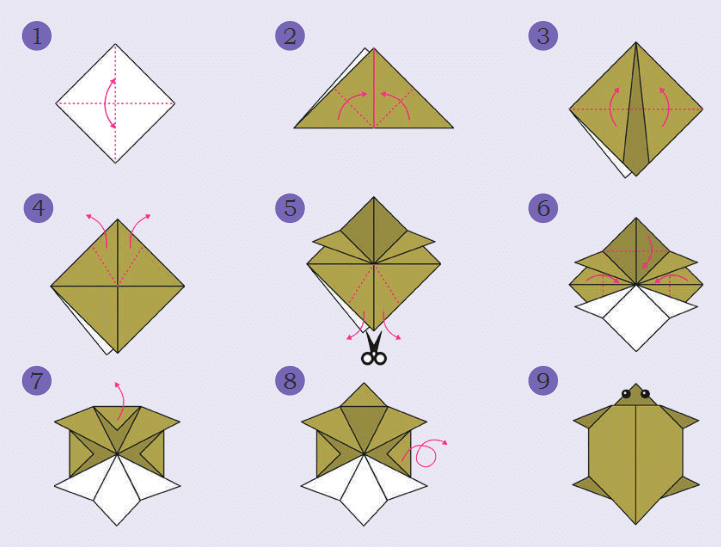
Q7: Let us make a paper turtle! Try using an old newspaper or used paper.
Ans: Now it’s your turn! Try making a cute paper turtle using old newspaper or used paper. Have fun folding and decorating it your way!

Q8: Find out 
Write the name of your state animal, bird, and plant.
Ans: 
Here are 5 Indian states along with their respective animal, bird, and plant:

  1. Madhya Pradesh
    • Animal: Barasingha (Swamp Deer)
    • Bird: Indian Roller
    • Plant: Banyan Tree
  2. Karnataka
    • Animal: Indian Elephant
    • Bird: Indian Peafowl (Peacock)
    • Plant: Sandalwood Tree
  3. West Bengal
    • Animal: Royal Bengal Tiger
    • Bird: White-throated Kingfisher
    • Plant: Mango Tree
  4. Rajasthan
    • Animal: Camel
    • Bird: Great Indian Bustard
    • Plant: Khejri Tree
  5. Tamil Nadu
    • Animal: Nilgiri Tahr
    • Bird: Grey Hornbill
    • Plant: Gloriosa Lily

02.Exploring Our Neighbourhood- Textbook Solutions

Page No. 18

Activity 1

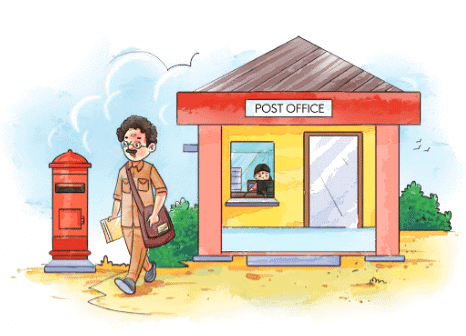
Q1: Write a letter to a friend and post it.
Ans:
Dear [Friend’s Name],
I hope you are doing well! I wanted to tell you about something fun I did last weekend. I went to the park with my family and we played games, had ice cream, and enjoyed the sunny weather. It was so much fun!
I also wanted to ask if you would like to come over to my house next Saturday. We can play and have a lot of fun together. Let me know if you can come.Take care, and I hope to hear from you soon.
Your friend,
[Your Name]

Once you write the letter, put it in an envelope. Don’t forget to write your friend’s address on the envelope and post it in a red postbox.
How to do it: Use paper, a pen, and an envelope to write your letter. Ask your parents or teacher to help you find a postbox nearby.

Q2: Teacher can take students on a field trip to a post office to explore various activities that take place there.
Ans:
 The teacher can take us on a fun trip to the post office. There, we will learn how letters and parcels are sent and received. We will see where the letters are dropped in the postbox and how they are sorted by the workers. We can also learn about other services like money orders and buying stamps. It will be an exciting trip where we can ask questions and learn how important the post office is for sending messages to our friends and family.

Page No. 19

Write

Q1: Have you or your family members ever sent, or received a letter or a parcel?
Ans:
 Yes, my family and I have sent and received letters and parcels. We have sent Rakhi on Raksha Bandhan, and I have received parcels from relatives. The post office is where people send and receive letters and parcels.

Q2: How does the post office help people stay connected with each other?
Ans: 
The post office helps by sending letters, parcels, and important documents to people. It ensures that messages can reach others even if they live far away.

Page No. 20

Activity 2

Interview with Elders
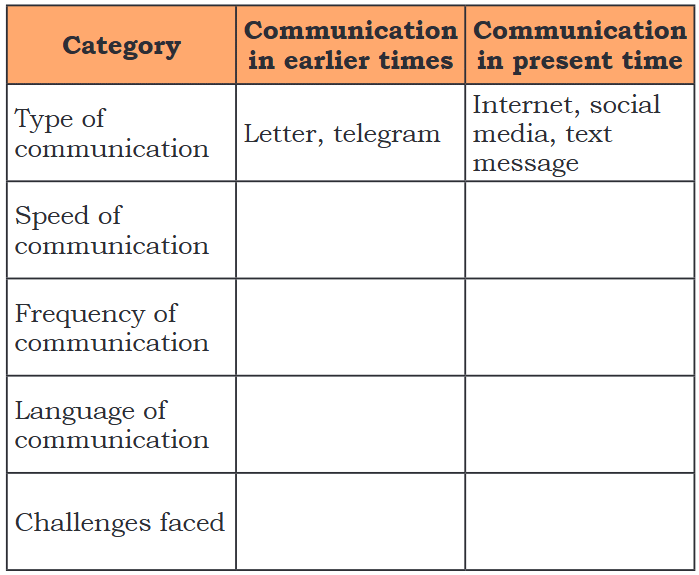
Discuss with the elders in your neighbourhood and find out how they communicated with each other when they were of your age. Compare their answers to how you and your friends communicate today; and fill in the table below:
Ans:
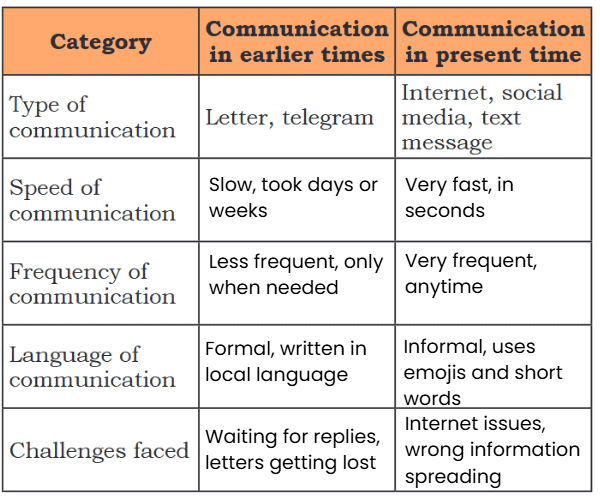
When I discussed with the elders in my neighborhood, they shared that when they were my age, communication was very different from today. They primarily communicated through letters and face-to-face conversations. They used the telephone, but it was landline-based, and there were no mobile phones or social media. Letters were a common way of sending messages, especially to distant relatives.

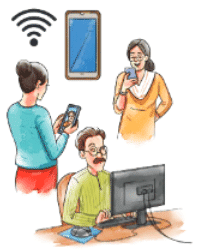
Today, my friends and I communicate using mobile phones, instant messaging apps, and social media platforms. We send text messages, make video calls, and share photos instantly. Communication is much faster and more accessible now compared to the past.
Here’s a comparison:

Page No. 21

Discuss

Q1: Letters took a long time to reach other persons. How do you think it affected communication between people in the past?
Ans: 
In the past, communication was slow because letters took a long time to travel. It made it difficult for people to get quick answers or updates.

Q2: How is it different from the way people communicate now?
Ans: 
Now, people communicate instantly using mobile phones, the internet, and social media. It is much faster to send messages and stay in touch.
Q3: Today quick messages make sharing the news easier, but sometimes wrong information spreads very quickly too. How can we ensure the news we share is true?
Ans: 
To make sure the news we share is true, we should verify it from reliable sources before passing it along. It’s important to check the facts.

Page No. 22

Write

Q1: Which mode of transportation do you use the most?
Ans: 
The mode of transportation I use the most is a bus. It is convenient and affordable.

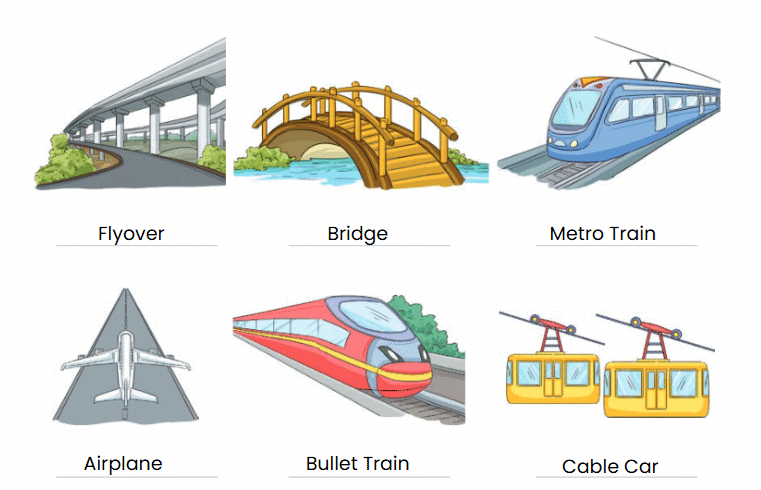
Q2: Can you identify the structures in the pictures, and explain how they have made travel faster and connectivity better?

Ans:

  • Flyover: The flyover helps cars and buses travel above the roads and intersections. This saves time by avoiding traffic and helps people reach their destinations faster.
  • Bridge: A bridge allows vehicles and people to cross over rivers or other obstacles. It makes traveling easier and faster by providing a safe way to cross places where there are no roads.
  • Metro Train: A metro train runs on tracks in cities and moves quickly between stations. It helps many people travel faster in busy cities, reducing traffic on the streets.
  • Airplane: An airplane flies in the sky and helps people travel long distances quickly. It makes travel much faster compared to traveling by road or train.
  • Bullet Train: The bullet train travels very fast on dedicated tracks. It helps people travel long distances quickly, especially between cities, making travel time shorter.
  • Cable Car: A cable car is a small vehicle that moves along a wire. It is used in places like mountains to carry people up and down, and it helps reduce the time it takes to climb steep areas.

Page No. 23

Find Out

Q: How did your parents and grandparents go to school or other places, when they were of your age? Is it different from how you travel today? Note it down below.
Ans:

  • I travel by school bus or e-rickshaw, which is fast and safe. 
  • My parents used bicycles or walked to school, which took more time. 
  • My grandparents walked or used bullock carts, which were slow and tiring. 

Today’s travel is much faster and easier!

Write

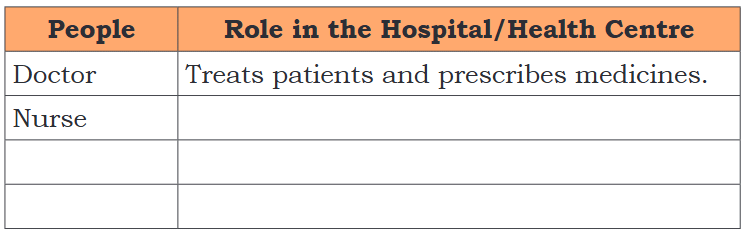
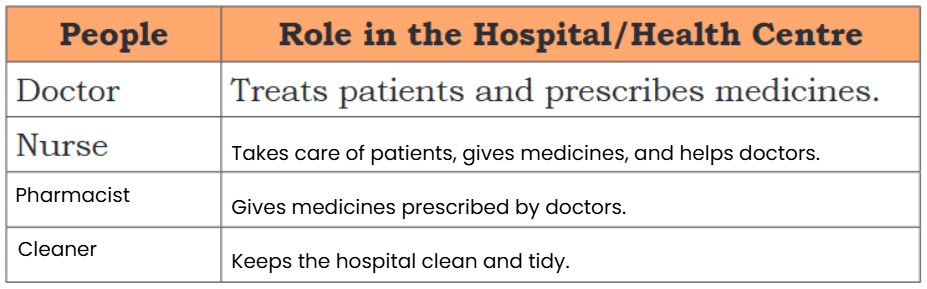
Q: List the people who work at a hospital or a health centre; and write down their role in the following table.
Ans: 

Page No. 25

Discuss

Q: If you had to send money to someone, which method would you choose—using a phone, Money Order, or some other mode? Why?
Ans:
 I would choose to send money using a phone because it’s fast, easy, and safe. You can send money in seconds using apps, and you don’t need to visit a post office like with a Money Order.

Write

Q1: If you get pocket money, do you save it? If yes, where do you put your savings?
Ans: 
Yes, I save my pocket money in a piggy bank at home. It keeps my money safe for things I want to buy later.

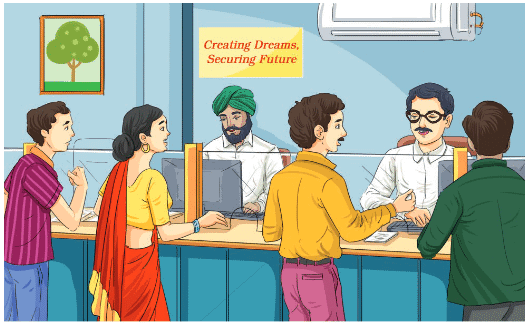
Scene of a BankQ2: Why do you think it is important to save money?
Ans:
 Saving money is important because it helps us buy things we need in the future, like books or toys. It also helps during emergencies, like if we need to visit a doctor.

Q3: What are some things you could do to save more money?
Ans: 
To save more money, I can:

  • Spend less on snacks or toys.
  • Put some pocket money in my piggy bank every week.
  • Avoid buying things I don’t need.

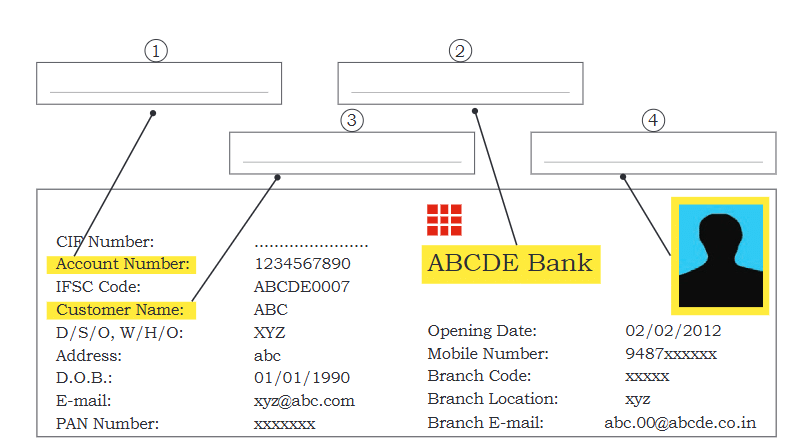
Q4: Request one of your family members to show you their bank passbook. Note the important elements given on the first page of the passbook.
Ans: The important elements on the first page of the bank passbook are:

  1. Account Number: This is the number for the customer’s bank account.
  2. Name of the Bank: The name of the bank where the account is held.
  3. Customer Name: This is the name of the person who owns the bank account.
  4. Photo of the Person: A photo of the account holder, used for identity verification.

Some other elements include:

  1. D.O.B. (Date of Birth): This is the customer’s birth date.
  2. Address: The customer’s home address.
  3. Mobile Number: The customer’s phone number linked to the bank account.
  4. PAN Number: This is a unique number that helps in income tax-related work.
  5. CIF Number: This is a unique number that identifies the customer in the bank’s system.
  6. IFSC Code: This code helps in transferring money between banks.

These details are important because they help the bank know who owns the account and ensure that money transactions are done safely.

Page No. 26

Activity 3

Q1: Visit a bank in your locality or find out from your elders about how it works. After that, answer the following questions:
(a) Other than saving money, what else do people use banks for?
(b) What is an ATM and how does it help people?

ATM
Ans: (a) People use banks to:

  • Take loans for buying a house or car.
  • Pay bills.
  • Send money to others.
  • Keep valuable things safe in lockers.

(b) An ATM is a machine that lets people take out money, check their balance, or deposit money anytime. It helps because you don’t need to visit the bank or wait in a queue.

Q2: Take an Indian currency note. Look at it closely and answer the following questions:
(a) What is the value of the note?
(b) How many languages do you see on the note?
(c) What pictures or symbols are there on the note?

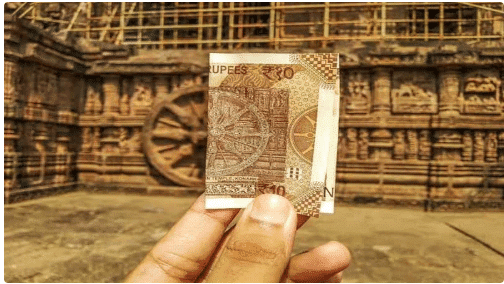
Sun Temple on 10 Rupee NoteAns: (a) The value could be ₹10, ₹20, ₹50, ₹100, ₹200, or ₹500 (depending on the note you have).
(b) There are 15 languages on an Indian currency note, including Hindi, English, and 13 other Indian languages.
(c) The note has:

  • A picture of Mahatma Gandhi.
  • The value of the note in numbers and words.
  • The Reserve Bank of India logo.
  • A special picture, like the Sun Temple, Konark on 10₹ note and Stone Chariot of Hampi, Karnataka on 50₹ note are there. 

Page No. 28 – 29

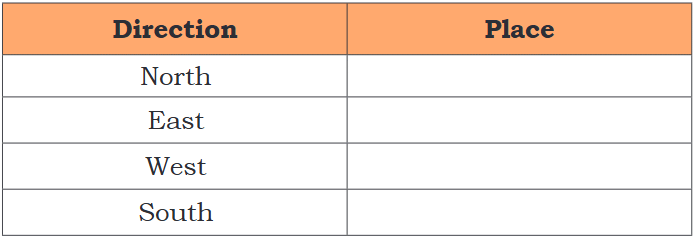
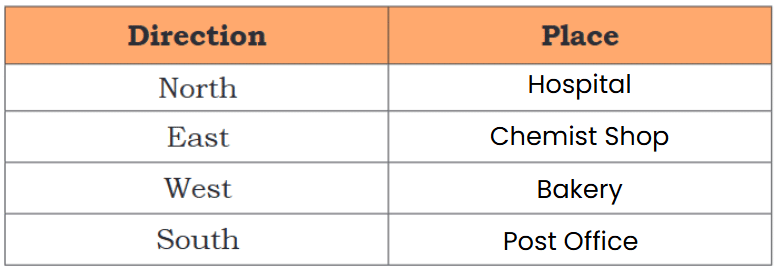
Q1: Look at the picture above, and write down the places located in the North, East, West, and South of Navya’s home.
Ans:

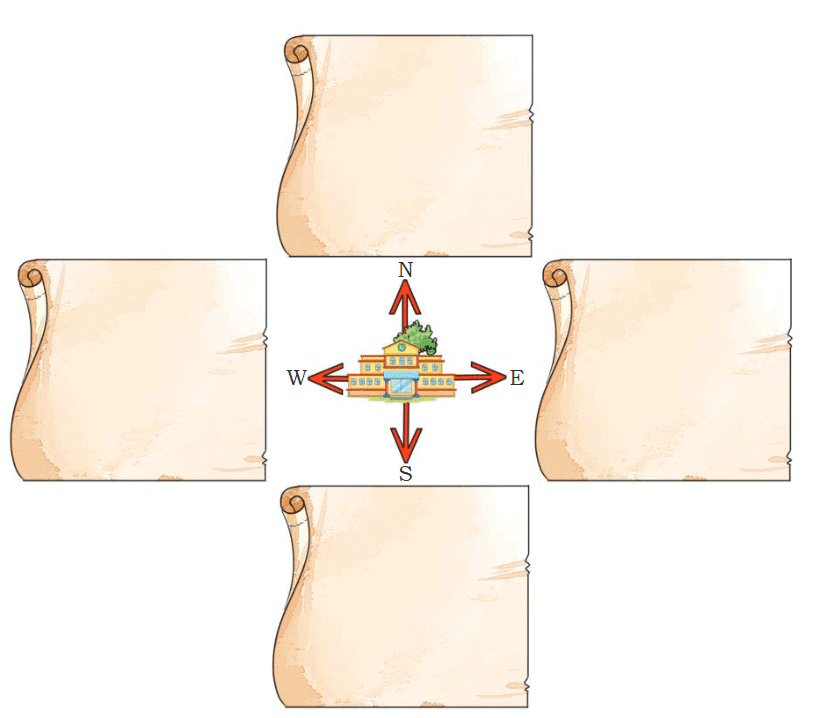
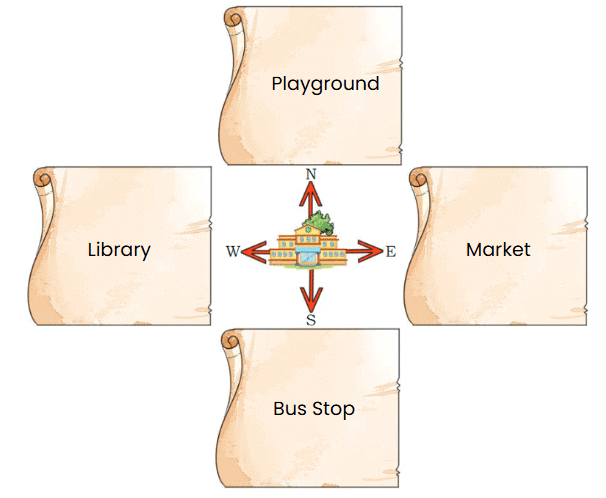
Q2: Look at the picture on the next page, and imagine your school at the centre. Name the buildings or areas near your school and write the direction they are situated in the given spaces.

Ans: 
(This depends on your school, but here’s an example.) Near my school, the playground is north, the market is east, the bus stop is west, and the library is south.

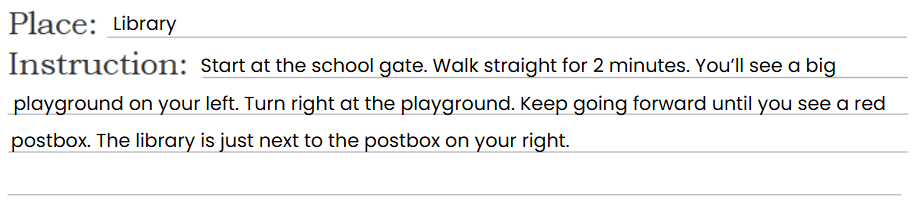
Q3: Imagine you are giving directions to a friend to visit your favourite place near your school. How would you explain it using directions (left, right, forward, backward, etc.) and landmarks?
Ans:
Page No. 30Activity 4

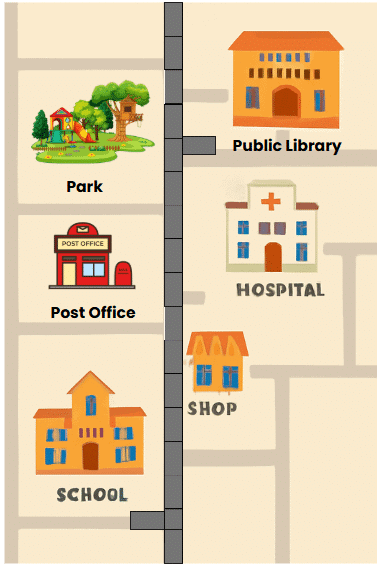
Q: Draw a map showing the route from your school to the public library or any such place near your school. Identify landmarks like parks, shops, hospitals, bus stops, etc. on the map.
Ans: 
Here is a sample map showing the route from my school to the public library. Have mentioned landmarks like park, a shop, a hospital, post office, etc. on the map.

Suggestion for better Map: Draw a simple map on paper. Start with your school in the center. Draw a path to the library. Add landmarks like:

  • A bus stop near the school.
  • A park on the way.
  • A shop next to the library.
  • Use arrows to show directions (north, south, east, west).

How to do it: Use a pencil, ruler, and colors. Label the landmarks clearly. Ask your teacher or parents about the real places near your school to make the map accurate.

Page No 31 – 32

Let us reflect

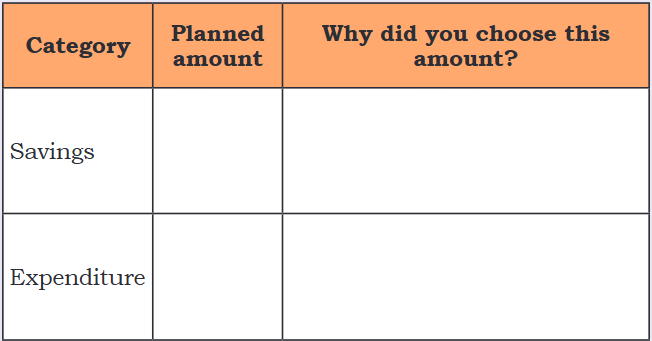
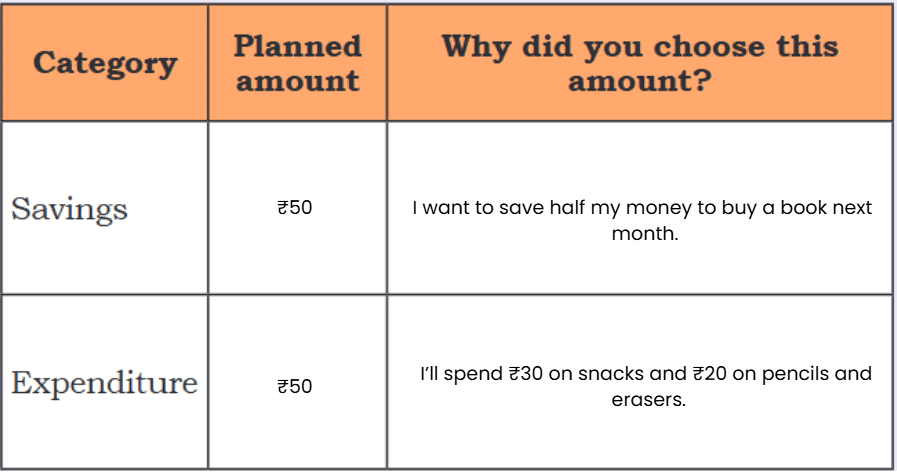
Q1: Imagine you have ₹100 to utilise in a month. Your task is to plan how to spend and save wisely. Think about your expenses for stationery, snacks, toys, etc. Decide how much you will save in your piggy bank and how much you will use for your expenses. After making this plan, think about how saving money could help you in the future.
Use the table below to create your budget:
Ans:

Saving ₹50 helps me buy something big later, like a book. Spending ₹30 on snacks and ₹20 on stationery is enough for my needs this month.

Q2: Imagine that your group is in charge of making your neighbourhood better. Discuss what new services or facilities you would add or improve. Present how these changes would help everyone in the community.
Ans: 
My group would add a new park with swings and trees. It would help because:

  • Kids can play safely.
  • Families can relax and meet others.
  • Trees will keep the air clean.

Q3: As a class, take help of the elders around you to list people in your neighbourhood who helped the community during COVID-19. These could include doctors, nurses, garbage collectors, shopkeepers, teachers, and others. Discuss how they made the community safer and why it is important to thank them.
Ans: 
During COVID-19, people who helped were:

  • Doctors and Nurses: Treated sick people in hospitals.
  • Garbage Collectors: Kept the area clean to stop germs.
  • Shopkeepers: Sold food and essentials.
  • Teachers: Taught online so we could keep learning.
  • They made the community safer by working hard even when it was risky. We should thank them because they helped us stay healthy and happy.

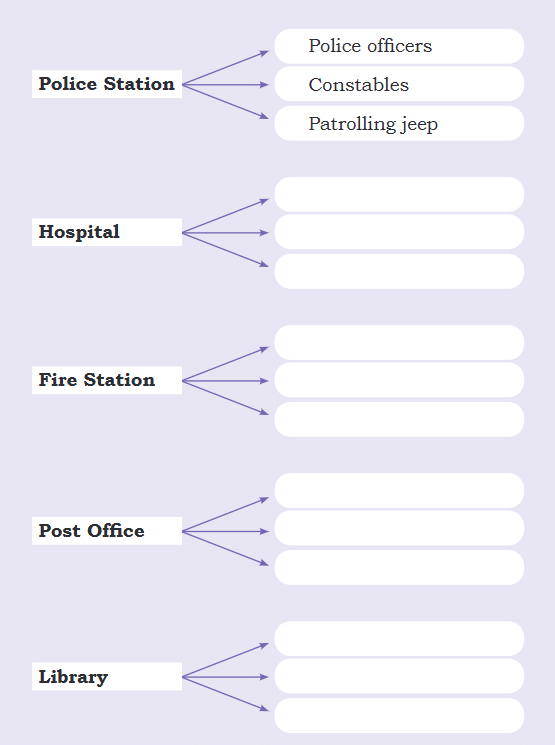
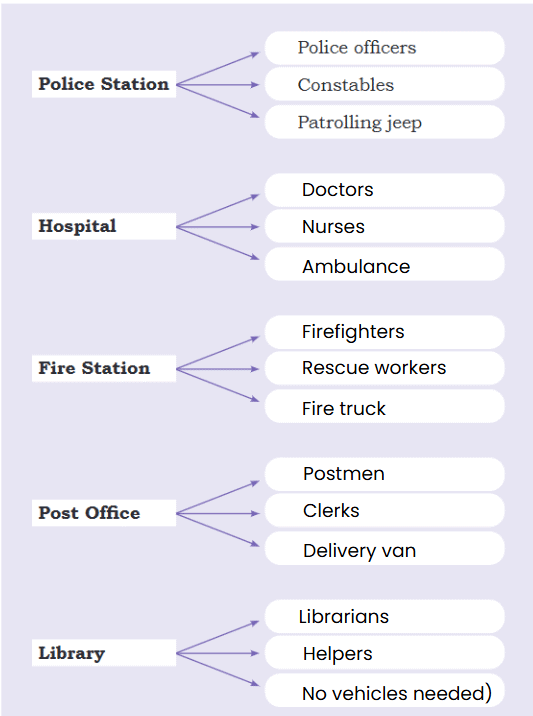
Q4: Can you list out the people involved and vehicles used in each of these services in the boxes given below?
Ans:

01.Living Together -Textbook solutions

Textbook solutions

WritePage No. 4
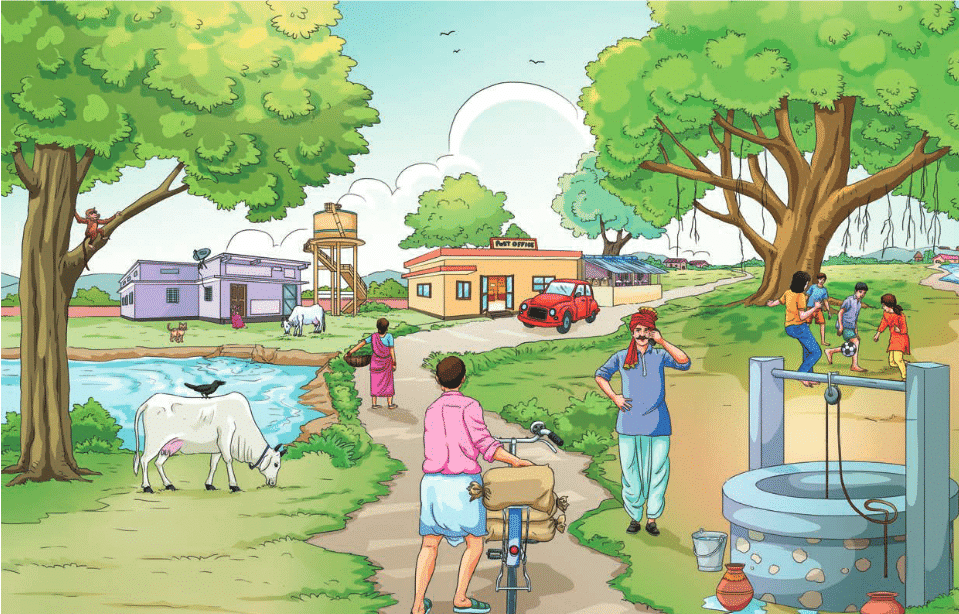
Q: Look at the picture of Chandan’s village. What do you see in the picture? Describe below.
Ans: In the picture of Chandan’s village, we can see a peaceful village with many things happening:

  • Path: There is a path in the village, and a person in a pink shirt is carrying grains on a bicycle.
  • Houses: There are colorful houses in the village, including a yellow one with a red roof and a purple one. A red car is parked near the yellow house.
  • Water Well: There is a water well where a person in blue is standing, and a bucket filled with water is placed near the person.
  • Children Playing: A group of children is playing football near a large tree on the right. They look happy and are having fun together.
  • Trees and Animals: The village has many big green trees with hanging vines, and there are animals like a cow eating grass near the pond. Birds are also flying in the sky.

Overall, the picture shows a calm village where people work, play, and live happily with nature.

Activity 1 Q: Explore your locality; observe the people and places around you. Write your observations about how the people and places you see are connected to each other in the table given below.
Ans: 

DiscussPage No. 5Q1: Why do you think it is important to have places like parks, schools, hospitals, and bus stops in your locality?
Ans: These places are very important for our community:

  • Parks give us a place to play and relax, helping us stay healthy. 
  • Schools teach us new things and help us grow. 
  • Hospitals take care of us when we are sick. 
  • Bus stops help us travel easily to places like work, markets, and other areas.

Bus Stop

Q2: How would life be different if one or more of these places in your locality did not exist?
Ans: Without these places, life would be challenging:

  • Without parks, people wouldn’t have places to relax or play, which could affect their health.
  • Without schools, children wouldn’t be able to learn, which would limit their future chances.
  • Without hospitals, it would be hard to get medical help when sick or hurt.
  • Without bus stops, it would be difficult to travel, making it harder for people to connect with others and do work.

Q3: What can you do to keep these places clean and safe?
Ans: To keep these places clean and safe, we can:

  • Join cleanliness drives to help pick up trash.
  • Report any damage or broken things to the right people.
  • Plant trees and take care of the plants in parks.
  • Follow rules like not littering or damaging things.
  • Teach others how important it is to keep public spaces clean.

Cleanliness Drive

Activity 2Page No. 6
Q: Let us create a colourful poster to help Chandan and his friends invite people from their neighbourhood to participate in the Van Mahotsav.
Ans: 
Here is one Sample Poster: 

Activity 3
Page No. 7Q1: Identify the people who help in maintaining your locality. What are their occupations?
Ans: People who help maintain the locality include:

  • Sweepers: Clean streets and public areas.
  • Gardeners: Maintain parks and green spaces.
  • Electricians: Repair streetlights and electrical systems.
  • Masons: Fix structures like walls and benches.
  • Police Officers: Ensure safety and security.
  • Teachers: Educate and organize community activities.
  • Volunteers: Participate in community drives like tree planting.

Q2: Look at the table below. List different kinds of work required for developing and maintaining the park. Also, mention the material, tools, and skills required. An example is given here.
Ans: 

Q3: Find out from your family members or neighbours about their work. What questions would you ask them?
Here are some examples:
(a) What do you like the most about your work?
(b) What types of tools or things do you use?
(c) What challenges do you face?
Ans:
 More Questions to ask:
(d) How does your work help the community?
(e) What skills are important for your job?

Discuss(Page 10)Q1: It is important for communities to come together in times of need. What do you think about this statement?
Ans: 
This statement is true. When communities work together during problems, like floods or broken roads, they can solve them faster. For example, in Kanker, Chhattisgarh, people built a bridge together to cross a flooded river. This shows how working as a team helps everyone stay safe and get to places easily.
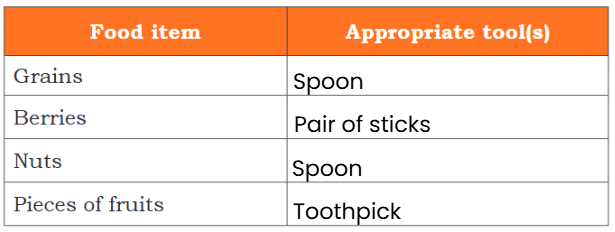
Help During FloodQ2: Do people in your locality come together and support each other? Can you remember one such occasion?
Ans:
 Yes, people in my neighborhood help each other. For example, during a recent flood, our neighbors set up a camp to collect food and clothes. They also helped clean the homes that were affected. This teamwork made our community stronger and gave quick help to those who needed it.

Write
Page No.11Q: Think about your family or community. How do you work together to help each other while preparing for a festival or any other occasion?
Ans:
 In my community, during festivals like Diwali, we work together by:

  • Sharing tasks like cleaning homes, putting up lights, and making sweets.
  • Sharing things like cooking ingredients or decoration materials.
  • Organizing fun events, like cultural programs or meals for everyone.
  • Helping older people or those in need by giving them food or support.

This teamwork makes the festival more joyful and brings us closer together.Discuss

Page No. 13Q1: What are some of the ways by which we can take care of nature and our neighbourhood? List a few.
Ans: Lists are:

  • Plant trees and take care of green areas.
  • Reduce waste by recycling and composting.
  • Keep public places clean by not throwing trash.
  • Save water and electricity in community areas.
  • Join cleanliness and tree-planting events.

Q2: How does helping others and working together make our community better?
Ans: Helping others and working together:

  • Builds trust and makes the community stronger.
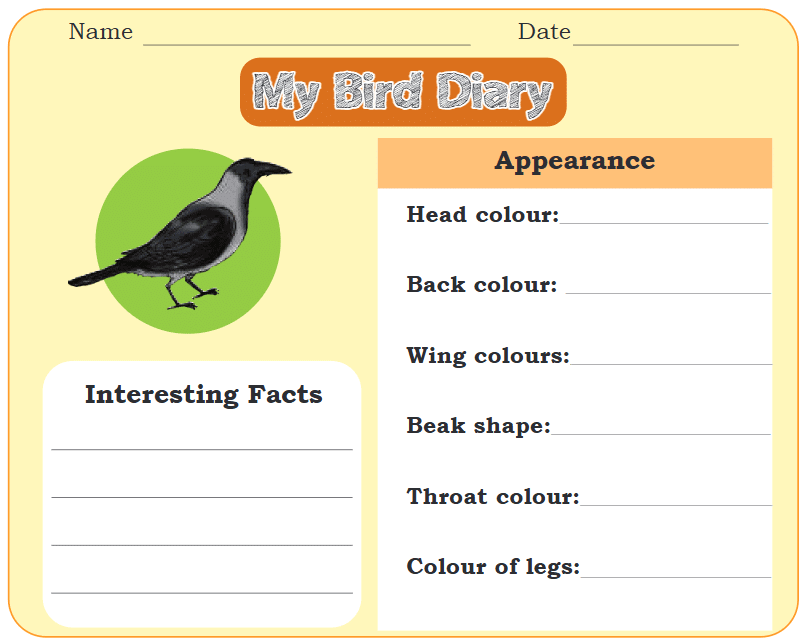
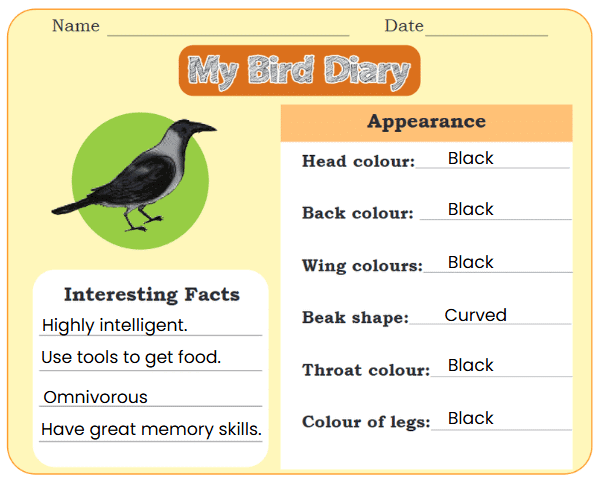
  • Helps solve problems quickly, like fixing public places or helping during emergencies.
  • Makes the environment cleaner, safer, and nicer.
  • Encourages everyone to care for shared spaces.
  • Creates a feeling of belonging and respect for each other.

Let us reflect(Page 13 – 16)Our School, Our Team!
Q1: Write the different role people play in your school teachers, students, caretakers, bus drivers, etc.
(a) Why is it important for everyone to work as a team in a school?
(b) What is your role as a member of your school community?
Ans:
(a) Teamwork in school is important because it helps everything run smoothly, creates a friendly environment, and makes learning better. Teachers, students, and staff all have different jobs, and when they work together, they make the school a safe, clean, and good place for everyone to learn.
(b) 
As a student, my role is to:

  • Study hard and take part in class activities.
  • Help keep the school clean by not throwing trash.
  • Show respect to teachers, staff, and classmates.
  • Join school events and activities, like cleanliness drives or cultural programs.

Q2: Form small groups of 4–5 students. Choose one fun activity to perform from the list below:
(a) Tree plantation
(b) Cleanliness drive
(c) Making artefacts with materials from nature (something useful like a leaf-plate or a decorative item like a garland).
After the activity, fill out this table:

Ans:

Q3: Match the riddles with their solutions hidden in the pictures.
Ans:
Choose a public place of your interest, and create a similar riddle about it for your friends to solve.
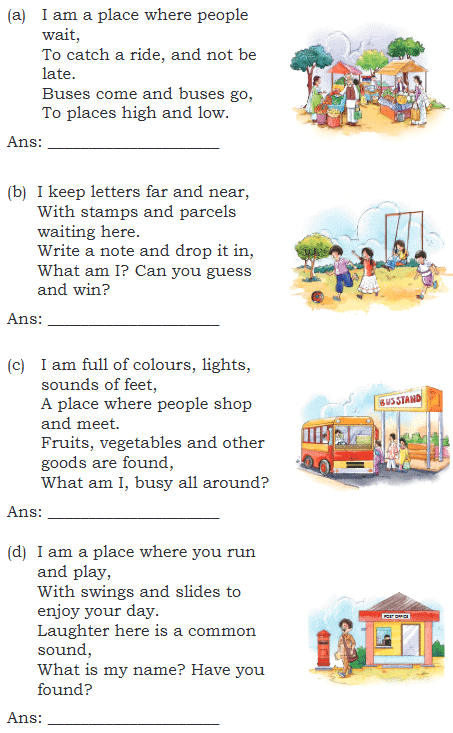
Ans: Riddle: I am a place with books galore,
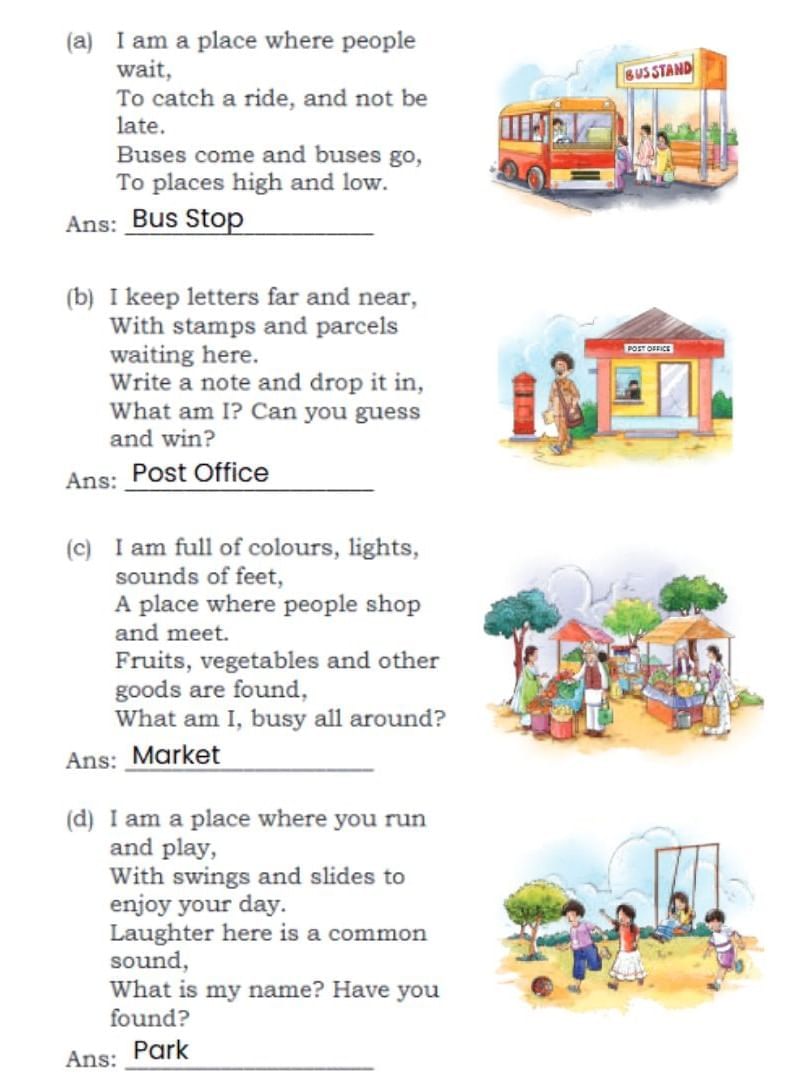
Where knowledge grows and minds explore.
Quietly read or borrow a few,
What am I? Can you name me too?
Ans: Library

Q4: Create three groups in the class. Each group would think about a situation in their locality that needs to be improved. Identify activities that can make a difference to the situation. This could be related to cleaning, helping others, organising an event, etc. Complete the table below.

After completing the table, discuss and answer the following questions:
(a) Do you think working together can make your activities more useful? Give reasons.
(b) How will your involvement in these activities help the community?
Ans: 
(a) Yes, working together makes activities more helpful because:

  • It brings together different skills and ideas to find better solutions.
  • Tasks get done faster when everyone helps.
  • It helps people work as a team and makes the community stronger.
  • The more people involved, the bigger the impact and the more people know about it.

(b) My involvement will:

  • Make public places cleaner and safer.
  • Help build stronger friendships among people in the community.
  • Encourage others to join in helping the community.
  • Solve local problems and make life better for everyone.

Q5: Ask your family about any one special skill or craft (for example – basket making, wall painting, pottery) that is famous in your region.
Ans: In my area, pottery is a well-known craft. My family told me that skilled potters use clay to make beautiful pots, vases, and decorations. They use a special wheel, clay, and water, and shape the clay with their hands. This craft is important to our culture and is sold at local markets, helping people earn money and keeping the tradition alive.
Pottery Making