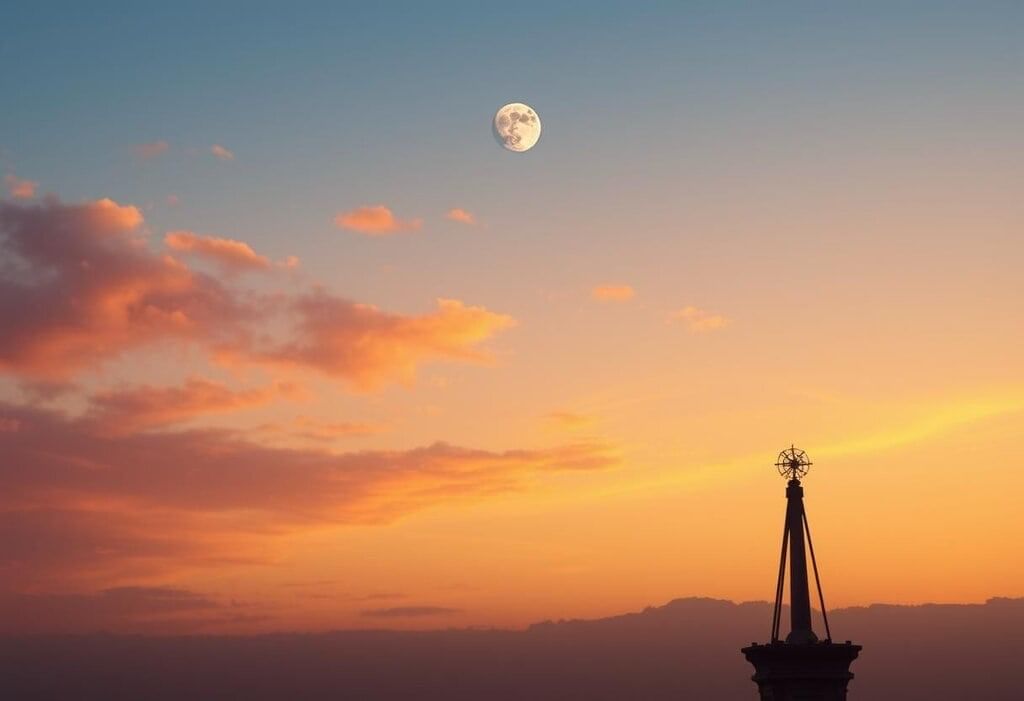
Q1:What color does the sky appear in the morning? (a) Blue (b) Orange and bright (c) Red (d) Dark
Ans: (b) Orange and bright
Q2:What is the full Moon called in the chapter? (a) Amavasya (b) Poornima (c) Saptarshi (d) Chandrayaan
Ans: (b) Poornima
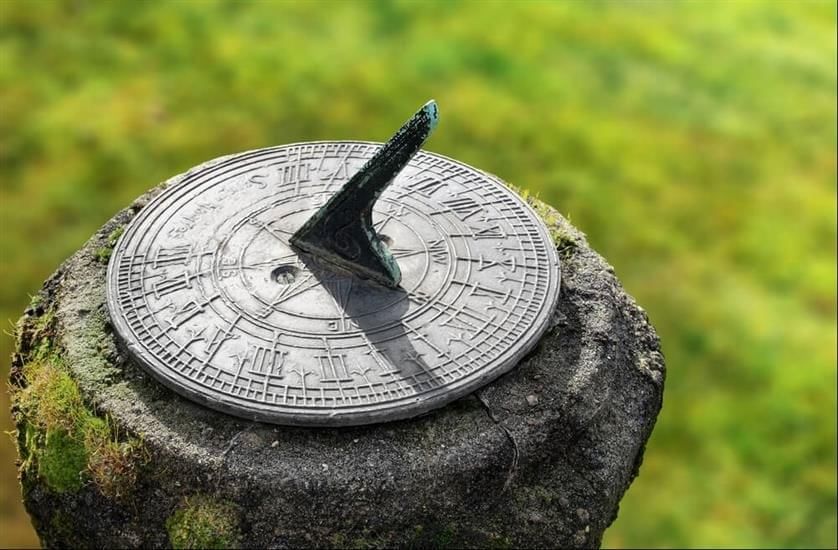
Q3:What device did ancient people use to tell time based on shadows? (a) Clock (b) Sundial (c) Telescope (d) Calendar
Ans: (b) Sundial
Q4:When is Diwali celebrated? (a) On the Full Moon (b) On the New Moon (c) When the Moon is a crescent (d) On the first night of the Moon
Ans: (b) On the New Moon
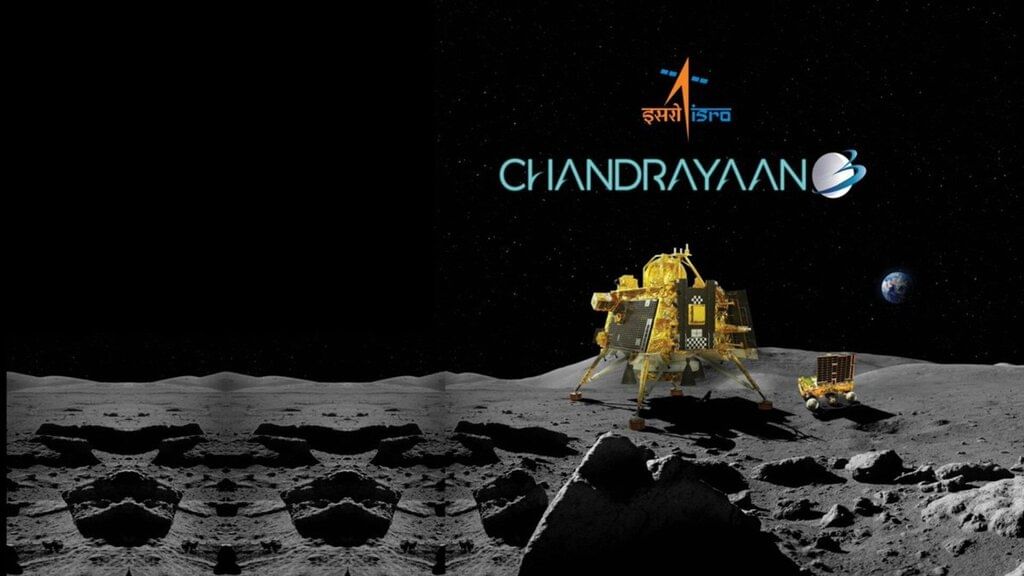
Q5:What did India’s Chandrayaan mission aim to explore? (a) Mars (b) The Sun (c) The Moon (d) Venus
Ans: (c) The Moon
Fill in the Blanks
Q1:The Sun appears to move from ________ to ________ during the day. Ans: East, West
Q2:The ________ is the night when the Moon is completely full. Ans: Poornima
Q3:The ________ is the night when the Moon cannot be seen. Ans: Amavasya
Q4:The ________ Lander of India’s Chandrayaan mission successfully landed on the Moon in 2023. Ans: Vikram
Q5:The Saptarshi is a group of ________ in Indian astronomy. Ans: Stars
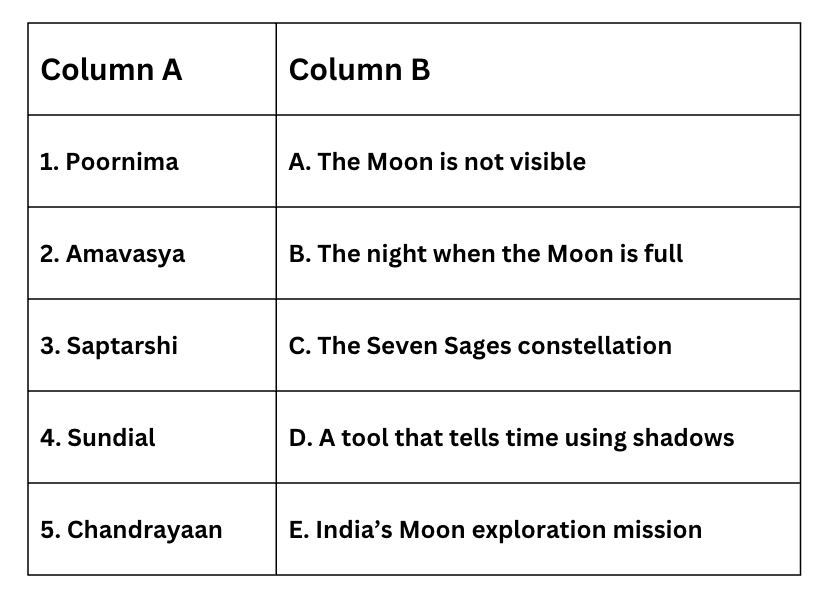
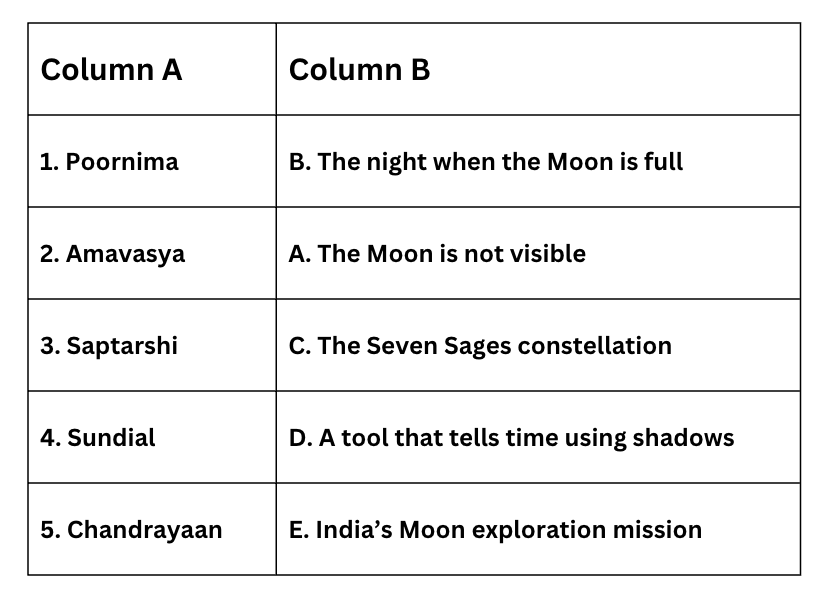
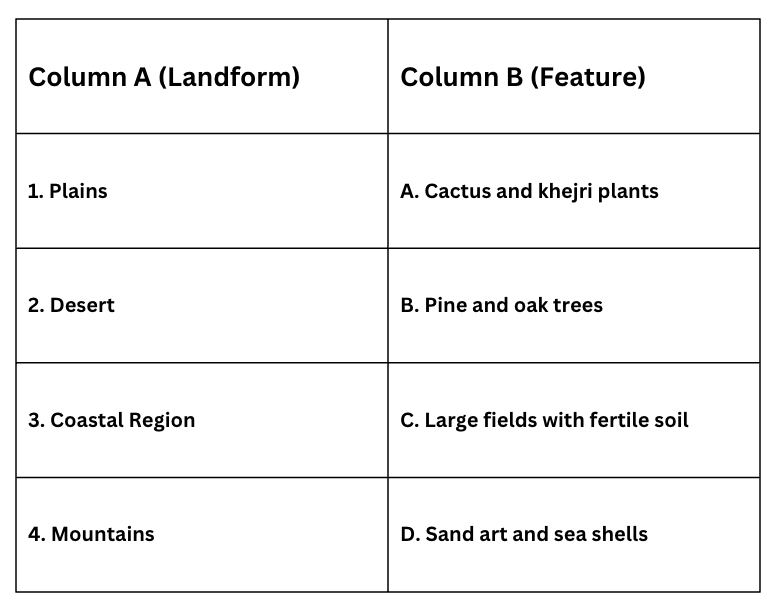
Match the Following
Ans:
Short Question Answers
Q1:What happens to the sky’s color as the day progresses? Ans: In the morning, the sky is orange and bright. In the afternoon, it is blue and clear. At night, it turns dark with twinkling stars.
Q2:What is the significance of the Full Moon (Poornima) and the New Moon (Amavasya)? Ans: The Full Moon, or Poornima, is when the Moon appears as a complete circle. The New Moon, or Amavasya, is when the Moon is not visible at all.
Q3:How did ancient people use shadows to tell time? Ans: Ancient people used a device called a sundial, which used the shadow cast by the Sun to tell time accurately.
Q4:What is the significance of the Chandrayaan mission? Ans: Chandrayaan is India’s mission to explore the Moon. In 2023, the Vikram Lander successfully landed on the Moon and gathered important data about its surface.
Q5:How does studying the sky help us understand nature? Ans: Studying the sky helps us track time, understand natural cycles, and observe celestial events like the movement of the Sun, Moon, and stars.
Vocabulary Activity – “Guess the Word”
Q1:The night when the Moon is completely full. Ans: Poornima
Q2:A tool used to tell time based on shadows. Ans: Sundial
Q3:A group of stars known as the Seven Sages in Indian astronomy. Ans: Saptarshi
Q4:The Moon is not visible during this phase. Ans: Amavasya
Q5: India’s mission to explore the Moon. Ans: Chandrayaan
Q1: What is the main characteristic of the land in Amritsar? (a) It is very dry (b) It is mountainous (c) It is flat and fertile, ideal for farming (d) It has sandy beaches Ans: (c) It is flat and fertile, ideal for farming
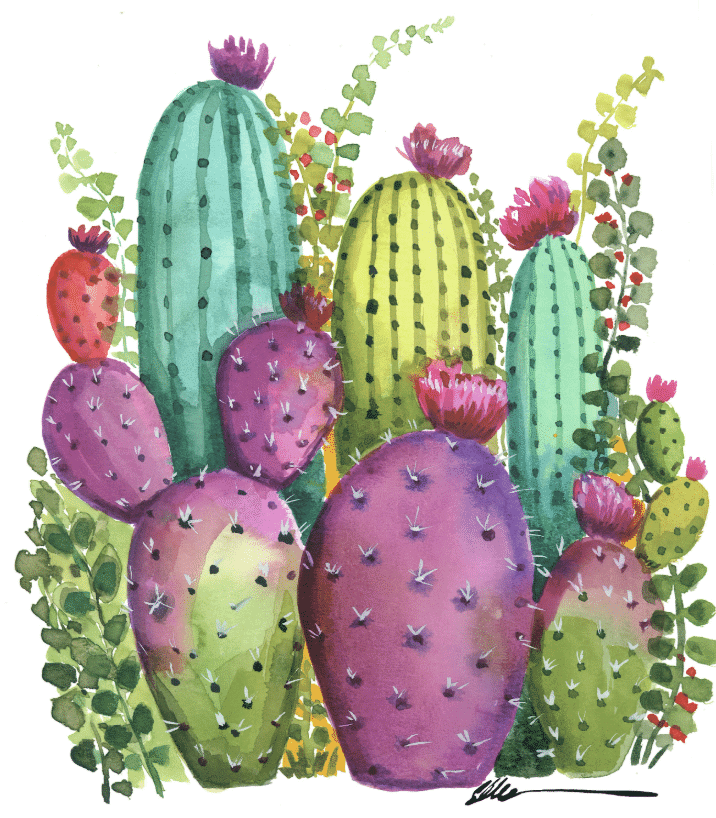
Q2: Which plant is commonly found in the desert of Rajasthan? (a) Pine (b) Cactus (c) Oak (d) Apple Ans: (b) Cactus
Q3:What is the traditional food of Sikkim? (a) Dal-bati-churma (b) Pakhala (c) Thukpa (d) Makki di roti Ans: (c) Thukpa
Q4:Which of the following is used for transporting goods in the mountains of Sikkim? (a) Horses (b) Yaks (c) Camels (d) Elephants Ans: (b) Yaks
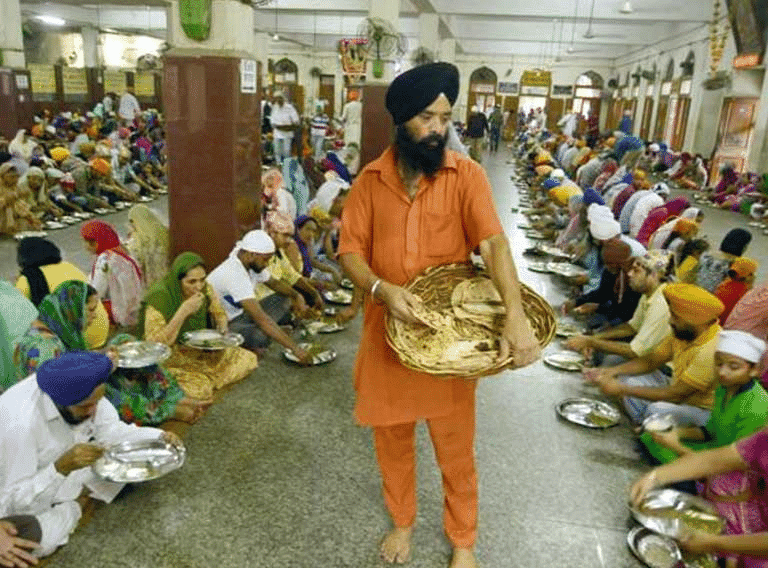
Q5: What is a ‘langar’ in Amritsar? (a) A type of dish (b) A Community kitchen service (c) A traditional dance (d) A religious symbol Ans: (b) A Community kitchen service
Fill in the Blanks
Q1:________ is a popular food item made from corn flour and enjoyed in Amritsar. Ans: Makki di roti
Q2: ________ is a traditional skirt worn by women in Rajasthan. Ans: Ghaghra
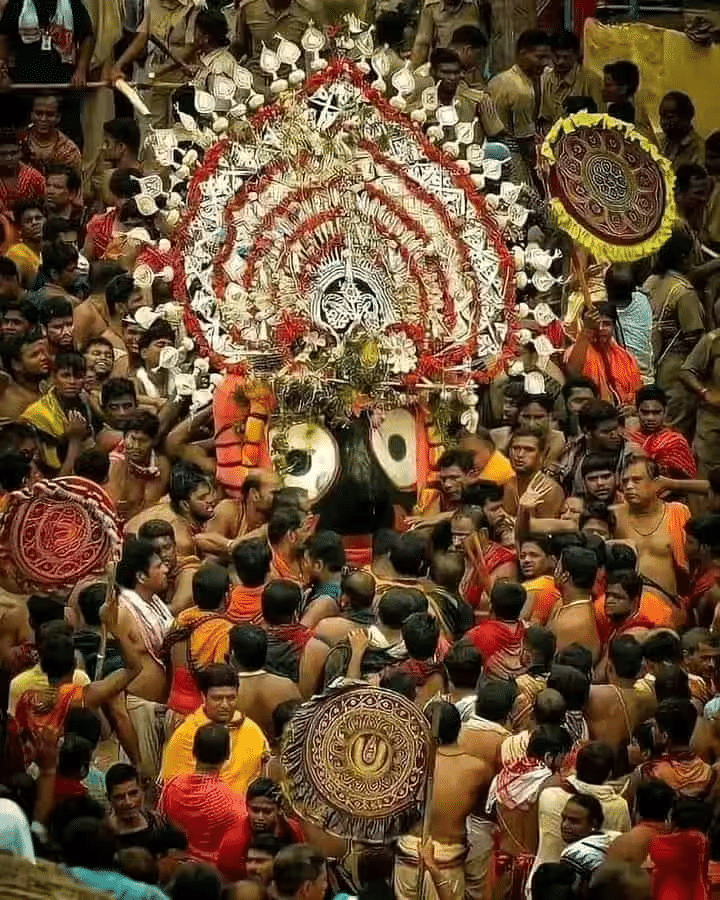
Q3:The ________ festival in Odisha involves pulling chariots with statues of deities. Ans: Rath Yatra
Q4:The ________ is a conch shell used during prayers in Odisha. Ans: Shankh
Q5:In Sikkim, the ________ festival marks the Sikkimese New Year. Ans: Loosong
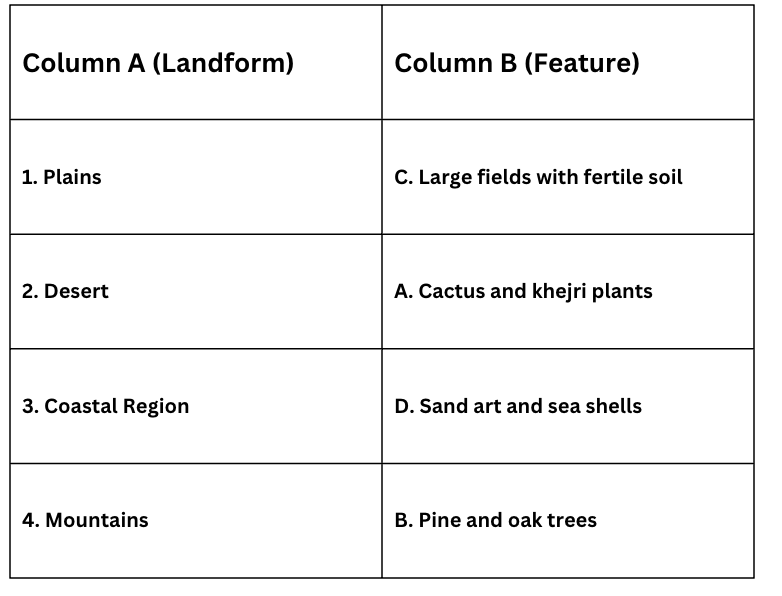
Match the Following
Ans:
Short Question Answers
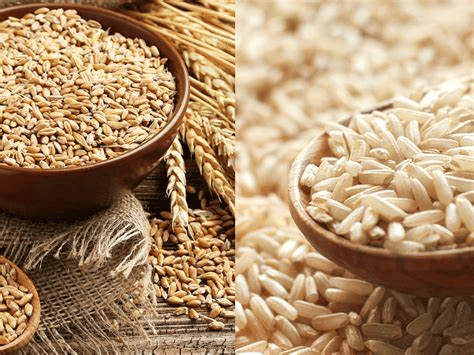
Q1:What are the main crops grown in Amritsar? Ans: The main crops grown in Amritsar include wheat and rice. The fertile plains of Punjab make it ideal for agriculture.
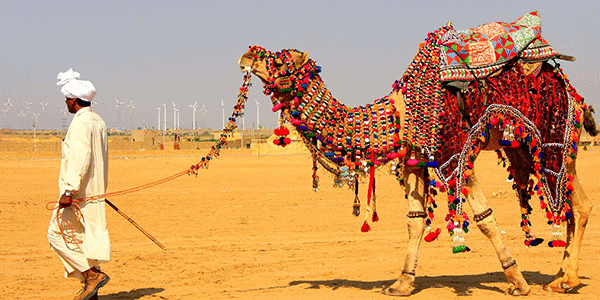
Q2:What is the significance of camels in Rajasthan? Ans: Camels are known as the “ship of the desert” in Rajasthan. They help people travel across the vast sandy areas of the desert.
Q3:What is the importance of the Rath Yatra festival in Odisha? Ans: Rath Yatra is a grand festival in Odisha where people pull chariots carrying the statues of deities. It is celebrated with great enthusiasm and is an important religious and cultural event.
Q4:What is a unique feature of the houses in Sikkim? Ans: The houses in Sikkim are built with sloping roofs, which help snow slide off easily, and they are made from wood to keep the interior warm in the cold climate.
Q5: How do people in Amritsar show gratitude for food? Ans: In Amritsar, people show gratitude for food by participating in the langar at the Golden Temple, where free meals are served to everyone, regardless of background or religion.
Vocabulary Activity – “Guess the Word”
Q1:A large, flat area ideal for farming, found in Amritsar. Ans: Plains
Q2:A large community kitchen service in the Golden Temple. Ans: Langar
Q3:A type of animal commonly used for travel in the desert. Ans: Camel
Q4:A religious festival in Odisha where people pull chariots with deities. Ans: Rath Yatra
Q5:A conch shell used during prayers in temples and homes. Ans: Shankh
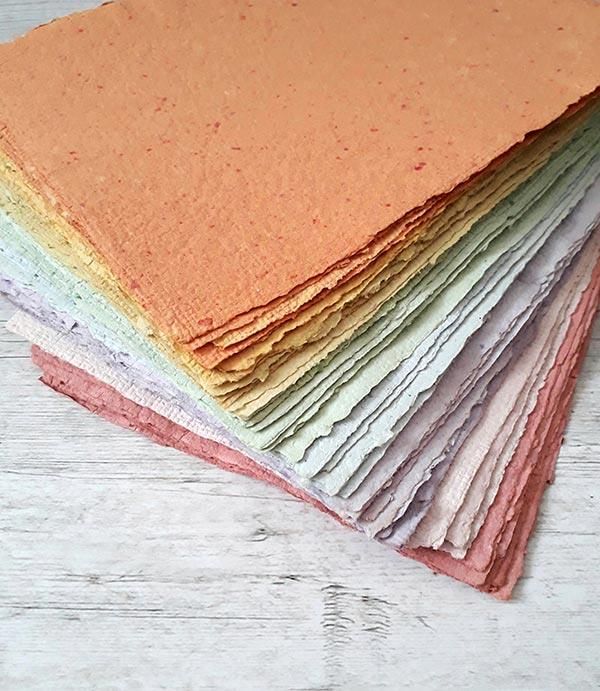
Q1: What is the primary material used to make recycled paper? (a) Wood pulp (b) Old newspapers (c) Plastic (d) Cloth Ans: (b) Old newspapers
Q2: Which of these ingredients can be used to color recycled paper naturally? (a) Turmeric (b) Artificial dyes (c) Paint (d) Ink Ans: (a) Turmeric
Q3: What is the Braille system used for? (a) To help visually impaired people read and write (b) To make paper (c) To teach children about colours (d) To decorate paper Ans: (a) To help visually impaired people read and write
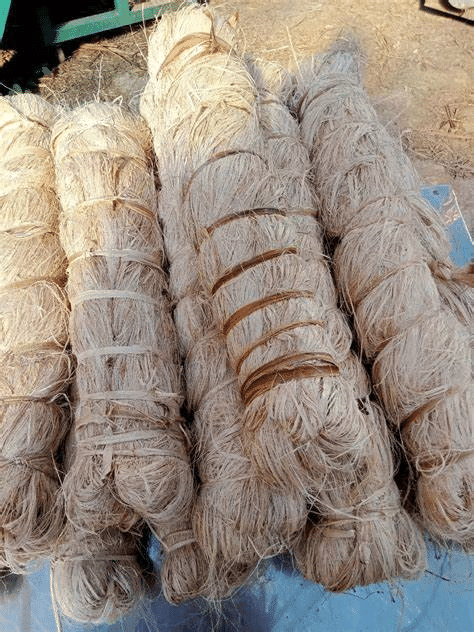
Q4:What is an example of an eco-friendly material used to make paper? (a) Banana fiber (b) Plastic (c) Cotton (d) Leather Ans: (a) Banana fiber
Q5: What is the purpose of fenugreek seeds in making recycled paper? (a) To add color (b) To bind the paper (c) To soften the paper (d) To make the paper waterproof Ans: (b) To bind the paper
Fill in the Blanks
Q1:Recycled paper is made from old ________. Ans: newspapers
Q2:The process of turning old materials into new products is called ________. Ans: Recycling
Q3: ________ is a system of raised dots on paper that allows visually impaired people to read. Ans: Braille
Q4: ________ are eco-friendly materials that can be used to make paper, helping to save trees. Ans: Banana fiber
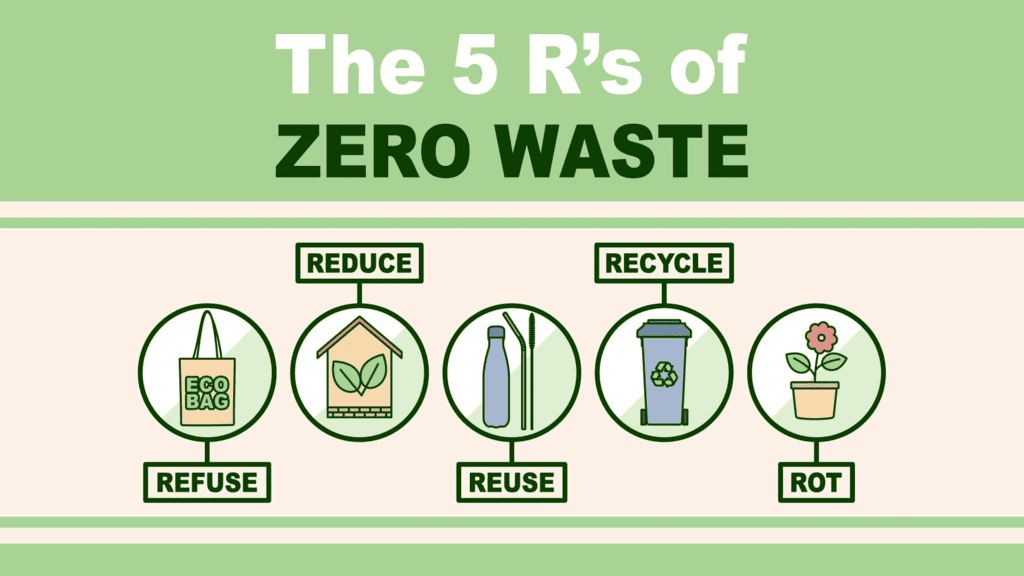
Q5:The 5Rs of waste management are: Refuse, Reduce, ________, Repurpose, and Recycle. Ans: Reuse
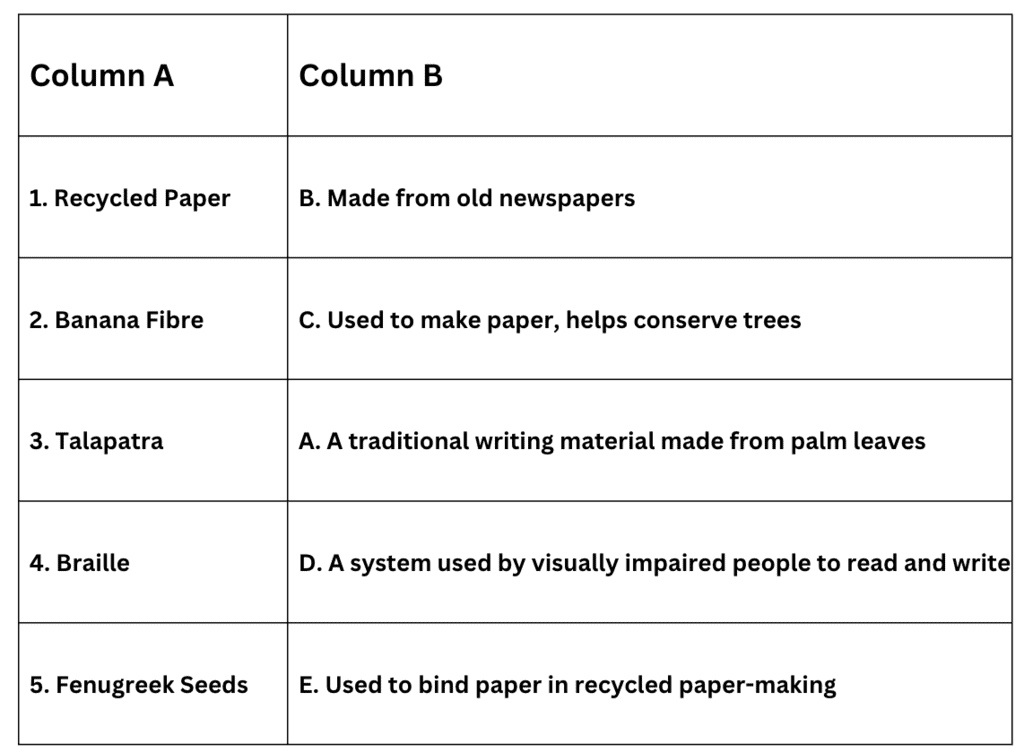
Match the Following
Ans:
Explanation:
1. Recycled Paper → B. Made from old newspapers
Recycled paper is made by using old newspapers again. It helps reduce waste and saves trees.
2. Banana Fibre → C. Used to make paper, helps conserve trees
Banana fibre comes from the banana plant and is used to make paper without cutting trees.
3. Talapatra → A. A traditional writing material made from palm leaves
‘Talapatra’ are palm leaves that were used for writing in olden times.
4. Braille → D. A system used by visually impaired people to read and write
Braille is a special way of reading and writing using raised dots for people who cannot see.
5. Fenugreek Seeds → E. Used to bind paper in recycled paper-making
Fenugreek seeds help stick the paper pulp together when making recycled paper.
Short Question Answers
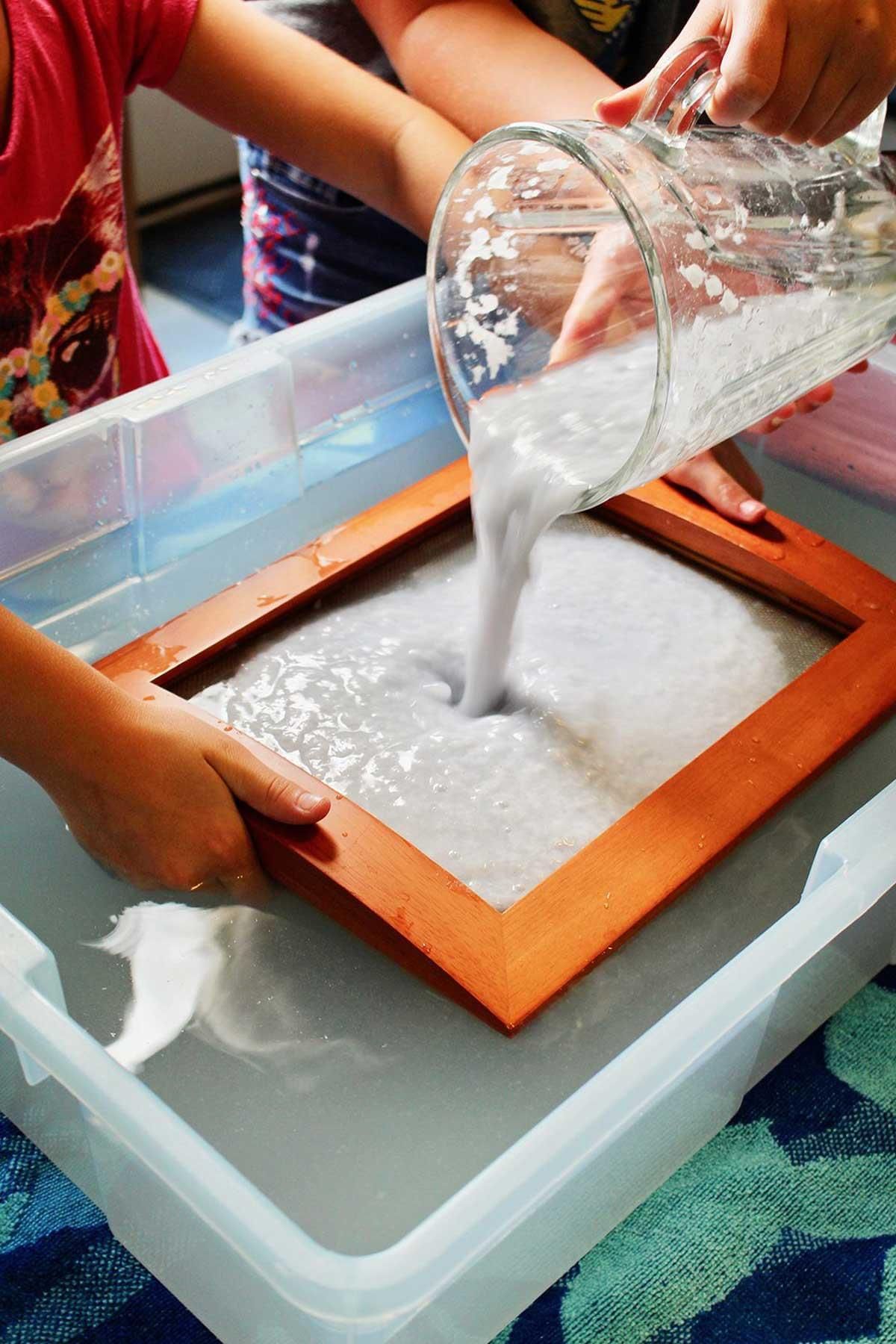
Q1:How do you make recycled paper? Ans: To make recycled paper, tear old newspapers into small pieces, soak them in water with fenugreek seeds overnight, mash the mixture, spread it on a flat surface, and let it dry. The paper is ready for use!
Q2:Why is it important to use eco-friendly materials like banana fiber for making paper? Ans: Using environment-friendly materials like banana fiber helps conserve trees, which are essential for the environment, and prevents deforestation.
Q3:What does the 5Rs of waste management stand for? Ans: The 5Rs stand for Refuse, Reduce, Reuse, Repurpose, and Recycle. These steps help minimize waste and conserve resources.
Q4:How can we make a greeting card using recycled paper? Ans: To make a greeting card, cut recycled paper into a card shape, color it using natural dyes, and decorate it with creative designs or drawings.
Q5:How does the Braille system help visually impaired people? Ans: The Braille system uses raised dots on paper that can be felt with the fingers, allowing visually impaired people to read and write independently.
Vocabulary Activity – “Guess the Word”
Q1:The process of turning old paper into new paper. Ans: Recycling
Q2:A system of raised dots used by visually impaired people to read and write. Ans: Braille
Q3:A type of seed used as binding material. Ans: Fenugreek
Q4:A natural material used to make paper and other products, such as banana fiber. Ans: Environment – friendly materials
Q5:A material used historically in India for writing, made from palm leaves. Ans: Talapatra
Q1: What happens when a coin spins? (a) It continues spinning forever (b) It slows down, shakes, and stops because it loses balance (c) It spins faster (d) It stays upright without slowing down Ans: (b) It slows down, shakes, and stops because it loses balance
Q2: What makes a square spinner appear circular when spun quickly? (a) The edges blur (b) It becomes larger (c) The center becomes transparent (d) It loses color Ans: (a) The edges blur
Q3: What is the primary factor that influences whether an object floats or sinks? (a) Only the weight of the object (b) The color of the object (c) The shape of the object (d) The temperature of the water Ans: (c) The shape of the object
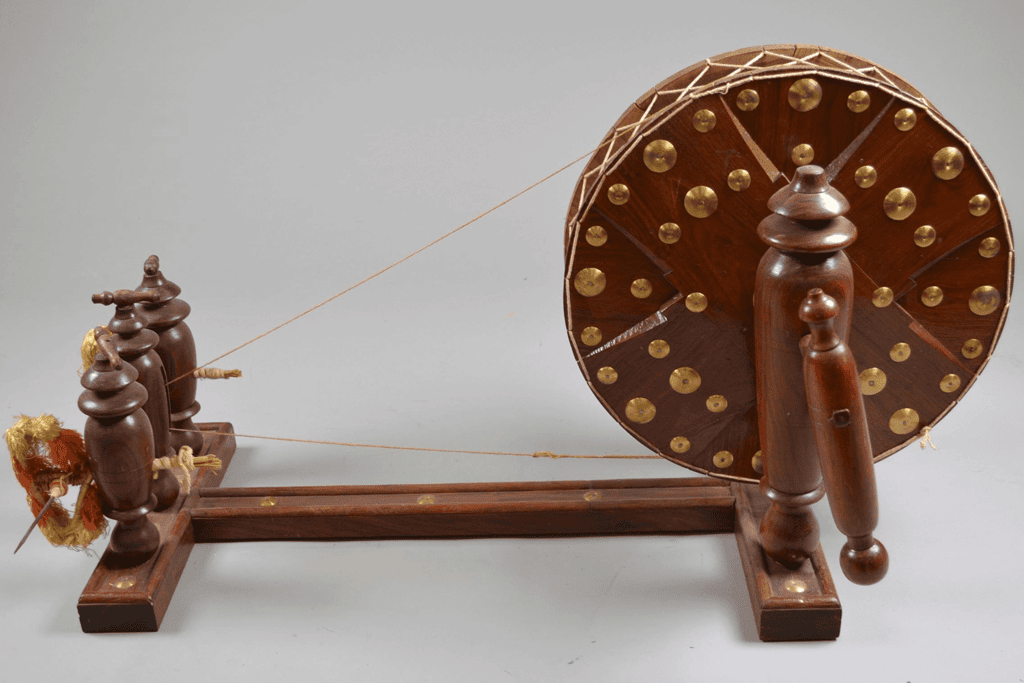
Q4:What is a charkha used for? (a) To twist cotton into thread (b) To create paper boats (c) To spin wool into thread (d) To make toys Ans: (a) To twist cotton into thread
Q5:What is one of the factors that helps objects float? (a) Shape (b) Color (c) Texture (d) Density Ans: (a) Shape
Fill in the Blanks
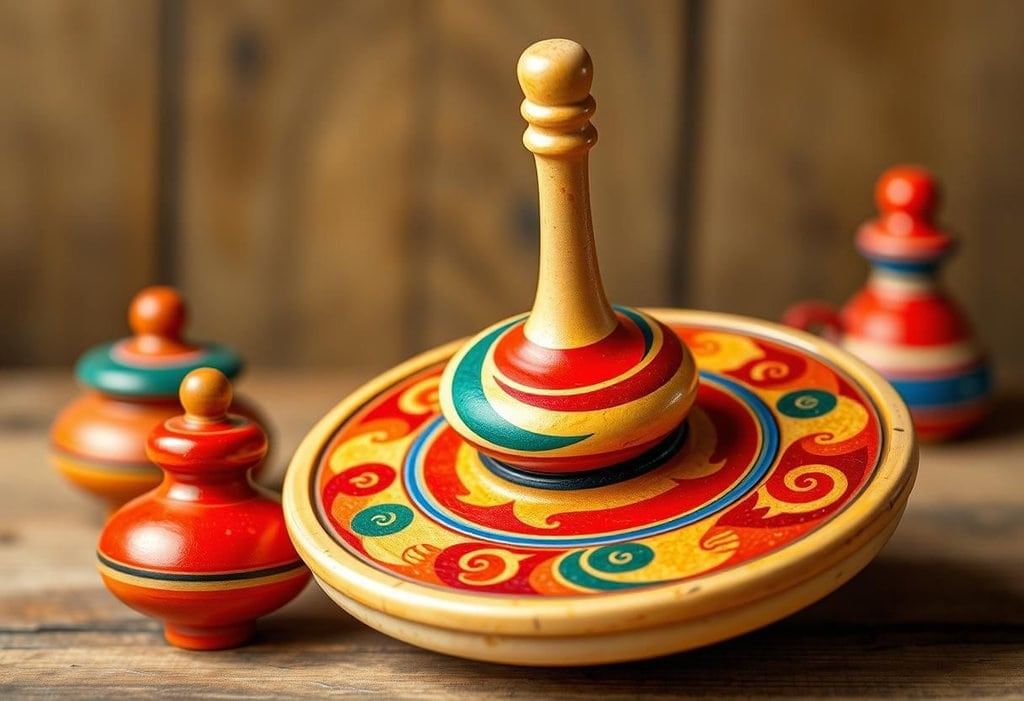
Q1:A ________ is a tool designed to investigate spinning movements, like a top or various handmade spinners. Ans: Spinner
Q2: A ________ is an ancient Indian spinning top crafted from wood or clay. Ans: Lattu
Q3:________ is a traditional wheel for turning cotton into thread, famously used by Mahatma Gandhi. Ans: Charkha
Q4:The ability of an object to remain on the surface of water is called ________. Ans: Float
Q5:Objects that are ________ are tightly packed and heavy for their size. Ans: Dense
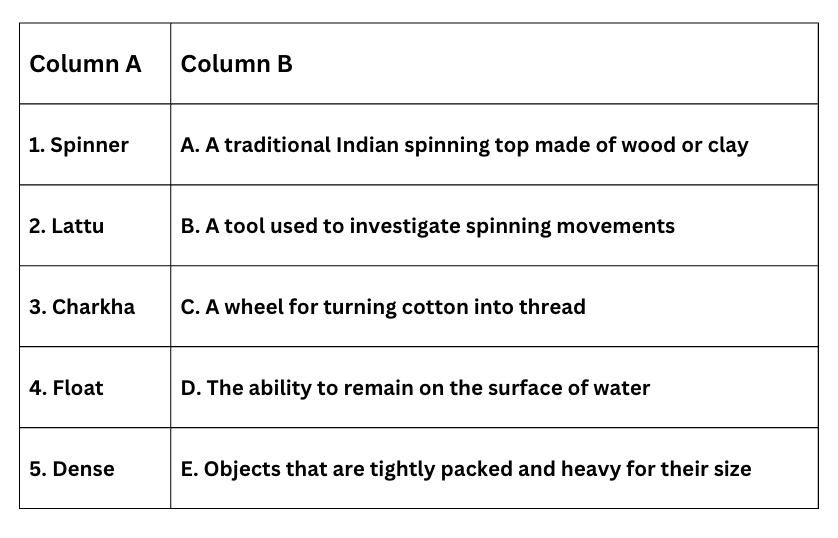
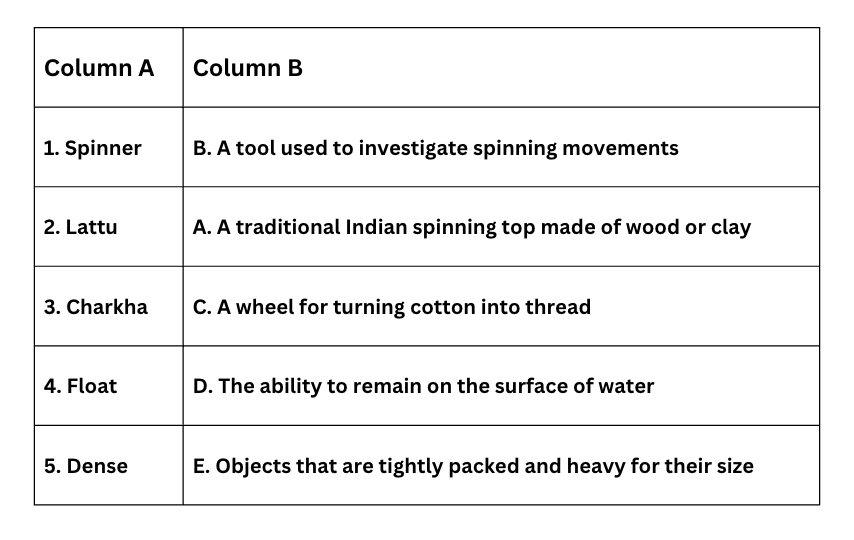
Match the Following
Ans:
Short Question Answers
Q1: What happens when a coin spins? Ans: When a coin spins, it gradually slows down, shakes, and stops because it loses balance.
Q2:Why does a square spinner appear circular when spun quickly? Ans: A square spinner appears circular when spun quickly because the edges blur, making it look like a circle.
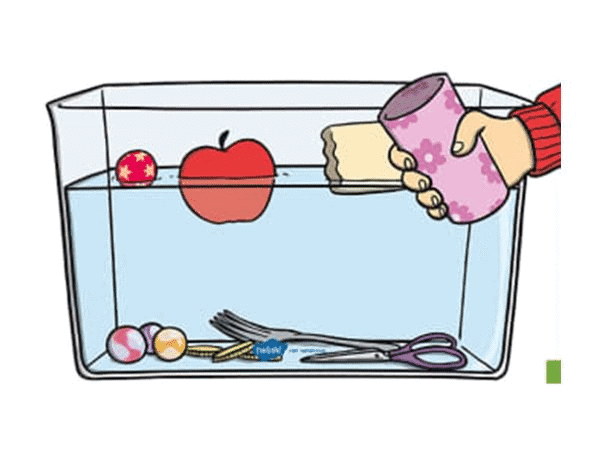
Q3: What determines whether an object floats or sinks? Ans: The shape of an object influences whether it floats or sinks. A well-designed shape that holds air helps an object float.
Q4:How does the charkha work and what is its importance? Ans: A charkha (spinning wheel) is used to twist cotton fibre into thread. It has a large wheel that spins when turned by hand. Mahatma Gandhi used the charkha to make handmade clothes.
Q5: What are some examples of objects that float and sink? Ans: Examples of objects that float include thermocol, cork, and pumpkin. Examples of objects that sink include marble, coin, and iron nail.
Vocabulary Activity – “Guess the Word”
Q1:A sharp or spicy taste, like that of green chilli. Ans: Pungent
Q2:The way food feels in the mouth, like whether it is smooth or crunchy. Ans: Texture
Q3:The act of something remaining on the surface of water. Ans: Float
Q4:A heavy object tightly packed for its size. Ans: Dense
Q5:A traditional Indian spinning top made from wood or clay. Ans: Lattu
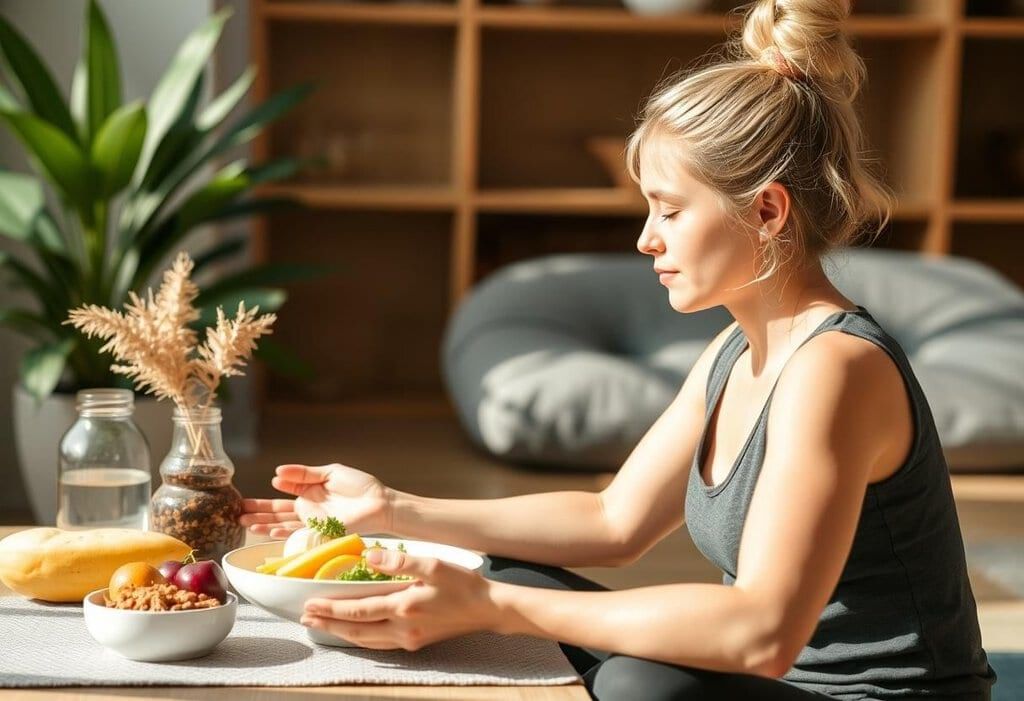
Q1: What is the main purpose of mindful eating? (a) To eat quickly (b) To be aware of what we eat and how we feel while eating (c) To eat without thinking (d) To eat more food than needed Ans: (b) To be aware of what we eat and how we feel while eating
Q2: Which of the following activities helps to improve posture? (a) Cycling (b) Skipping (c) Yoga (d) Running Ans: (c) Yoga
Q3: What does “Mindful Nourishment” focus on? (a) Eating fast (b) Eating in front of a screen (c) Eating slowly and concentrating on each bite (d) Eating without tasting Ans: (c) Eating slowly and concentrating on each bite
Q4: What is the role of food in our health? (a) Only for filling our stomach (b) To provide energy, help growth, and protect from illnesses (c) Only for tasting (d) To make us sleepy Ans: (b) To provide energy, help growth, and protect from illnesses
Q5: What does a “safe touch” feel like? (a) A hug from a family member (b) A handshake from a stranger (c) A tickle from a friend (d) None of these Ans: (a) A hug from a family member
Fill in the Blanks
Q1: ________ is the practice of eating slowly and being aware of what we eat and how we feel while eating. Ans: Mindful Eating
Q2:Eating a variety of foods, such as rice, wheat, and vegetables, helps us stay ________ and strong. Ans: healthy
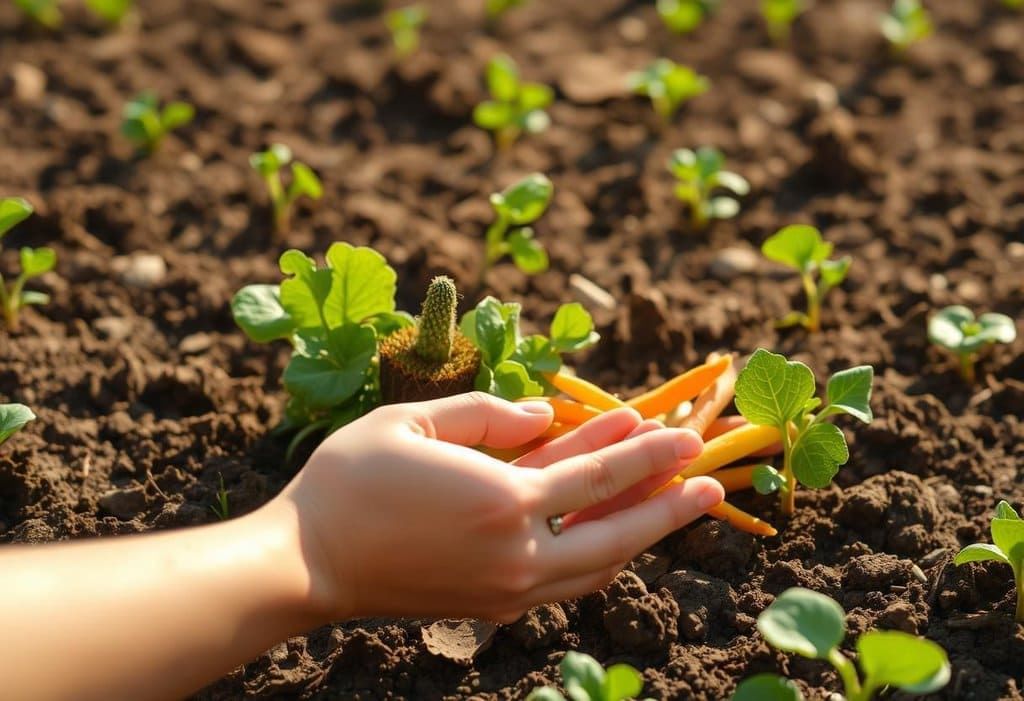
Q3: ________ is a type of soil that is excellent for growing plants. Ans: Fertile
Q4: A ________ is a comforting touch that makes us feel safe, like a hug from a family member. Ans: Safe Touch
Q5: When we waste food, we fail to respect the_______ efforts of everyone who helped bring food to our plate. Ans: hard
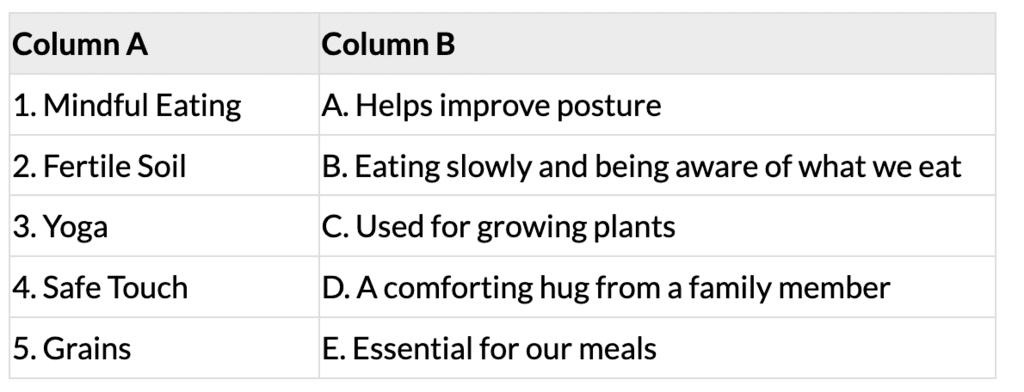
Match the Following
Ans:
1 – B
2 – C
3 – A
4 – D
5 – E
Short Question Answers
Q1: What is the importance of mindful eating? Ans: Mindful eating is important because it helps us be aware of what we are eating, how it tastes, and how it makes us feel, allowing us to enjoy our food more and make healthier choices.
Q2: What should we do to maintain our health along with eating good food? Ans: Along with eating good food, we should also exercise regularly by engaging in physical activities like running, skipping, playing, and yoga to keep our bodies strong and energetic.
Q3:How does wasting food affect our respect for nature and others? Ans: Wasting food disrespects the hard work of farmers, sellers, and other contributors who bring food to our plate. By respecting food, we show gratitude for their efforts and avoid unnecessary waste.
Q4:How can we track our food consumption for a week? Ans: We can track our food consumption by noting what we eat for breakfast, lunch, and dinner. If we finish everything, we write ‘Yes’ with a happy smiley, and if we leave some food, we write ‘No’ with a sad face.
Q5:What are the benefits of good sleep? Ans: Good sleep is essential for feeling refreshed and full of energy. It helps our bodies recover, improves concentration, and contributes to our overall well-being.
Vocabulary Activity – “Guess the Word”
Q1:The way food feels in the mouth, such as whether it is smooth or crunchy. Ans: Texture
Q2:Something very valuable, like each grain of food. Ans: Precious
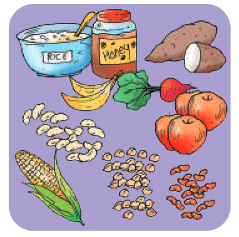
Q3:A type of food, such as rice or wheat, that gives energy. Ans: Grains
Q4:A touch, such as a hug, that makes you feel good and comfortable. Ans: Safe Touch
Q5:A practice of eating slowly and appreciating what we eat. Ans: Mindful Eating
Q1: What is the traditional food made at the ‘Mystery Masala’ stall? (a) Dhokla (b) Ugadi Pachadi (c) Chhena Poda (d) Dal Baati Churma Ans: (b) Ugadi Pachadi
Ugadi Pachadi is a traditional food made from six tastes: sweet, sour, salty, pungent, bitter, and astringent. It was served at the ‘Mystery Masala’ stall.
Q2: Which food group is essential for providing energy for daily activities? (a) Protective foods (b) Body-building foods (c) Energy-giving foods (d) Junk food Ans: (c) Energy-giving foods
Energy-giving foods like rice, potatoes, and bananas give us the energy we need to do everything we do every day, like running, playing, or even thinking. Without these foods, we would feel very tired and not have the strength to do anything.
Energy Giving Food
Q3: What is a characteristic of junk food? (a) It is high in nutrients (b) It is rich in vitamins (c) It is high in oil, salt, and sugar (d) It is a good source of proteins Ans: (c) It is high in oil, salt, and sugar
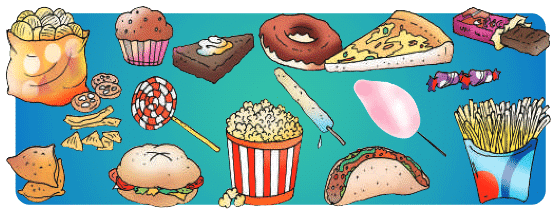
Junk food like chips, pizza, and burgers is full of oil, salt, and sugar. While it may taste yummy, it is not good for our body if we eat it too often. Eating too much junk food can make us feel sick or cause health problems.
Junk Food
Q4: What is the purpose of water in our body? (a) It helps in digestion and hydration (b) It increases body temperature (c) It adds flavor to food (d) It makes the food tastier Ans: (a) It helps in digestion and hydration
Water is super important for our body! It helps us digest food and keeps us hydrated. It also helps remove waste from our body and keeps our skin healthy. Drinking water is one of the best ways to stay strong and feel good.
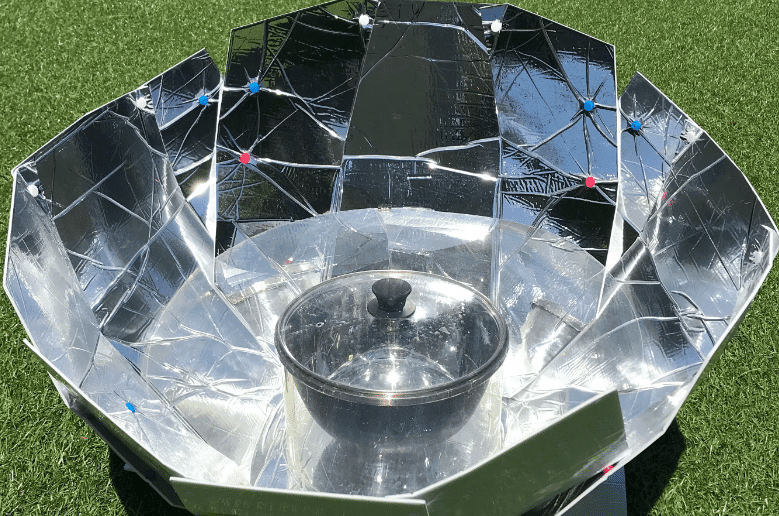
Q5: Which method of cooking uses sunlight instead of fire? (a) Solar cooking (b) Steaming (c) Frying (d) Grilling Ans: (a) Solar cooking
Solar cooking is a way to cook food using the heat from the sun, instead of using fire or gas. It’s a very cool and safe way to cook, especially on sunny days. It’s also good for the environment because we don’t need to use any fuel.
Solar Cooking
Fill in the Blanks
Q1:The six tastes in Ayurveda are called ________. Ans: Shad Rasa
In Ayurveda, there are six different tastes called Shad Rasa. These include sweet, sour, salty, bitter, pungent, and astringent. Each taste helps our body in different ways, like making us feel happy, healthy, and balanced.
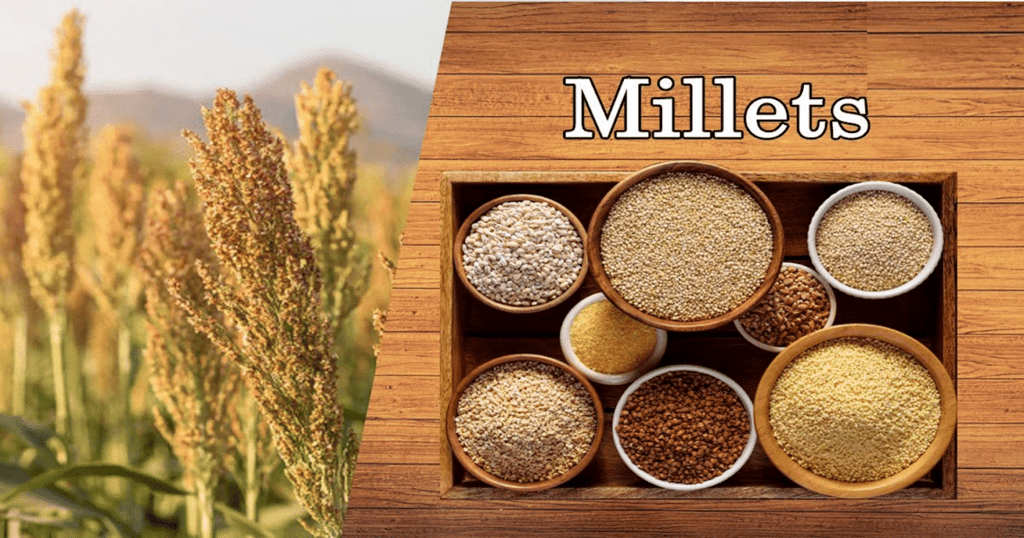
Q2: ________ are small grains that are packed with nutrients and are good for health. Ans: Millets
Millets are small grains, like jowar and bajra, that are very healthy. They are full of vitamins, fiber, and minerals that help our body stay strong and energetic.
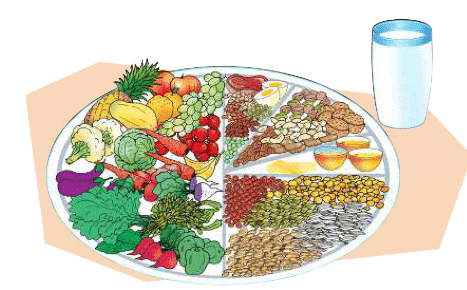
Q3: A ________ plate includes the right amount of food from all three food groups: protective, body-building, and energy-giving foods. Ans: Balanced
A balanced plate is one where we eat the right amounts of different foods—lots of fruits and vegetables (protective foods), some milk and eggs (body-building foods), and a little rice or bread (energy-giving foods). This helps us stay healthy and strong.
Balanced Meal
Q4:________ foods, like fruits and vegetables, help protect us from illnesses. Ans: Protective
Protective foods, such as fruits and vegetables, help our body fight off sickness. They are full of vitamins and minerals that keep us healthy and strong.
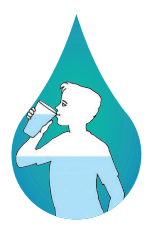
Q5: We need to drink enough ________ to stay hydrated and healthy. Ans: Water
Drinking water is very important! It keeps us hydrated, helps our body digest food, and keeps our skin healthy. Drinking enough water every day helps us feel good and stay healthy.
True or False
Q1: A balanced food plate includes mostly energy-providing foods and no protective foods. Ans: False
A balanced food plate includes protective foods (fruits and vegetables) the most, followed by body-building foods and some energy-providing foods. This balance helps keep us healthy.
Q2: Solar cooking uses sunlight to cook food instead of fire. Ans: True
Solar cooking uses the heat from the sun to cook food, making it an environmentally friendly method that does not require fire or electricity.
Q3: Food that is home-cooked and fresh is better than processed or packaged junk food. Ans: True
Fresh home-cooked food is healthier as it contains fewer harmful ingredients like excessive salt, sugar, and unhealthy fats found in processed or packaged junk food.
Q4: Eating water-rich fruits like watermelon helps in maintaining water balance in the body. Ans: True
Water-rich fruits like watermelon and cucumber help keep the body hydrated, which is essential for good health.
Drinking Water
Q5: Food does not help us grow, stay strong, and protect us from diseases. Ans: False
Different types of food, such as energy-providing foods, body-building foods, and protective foods, help our bodies grow, stay strong, and fight against diseases.
Short Question Answers
Q1:What is the “Mystery Masala” dish made from? Ans: The “Mystery Masala” dish is made with six distinct tastes: sweet (jaggery), sour (tamarind), salty (salt), pungent (green chilli), bitter (neem), and astringent (raw mango).
Q2:Why are millets considered a good food choice? Ans: Millets are rich in nutrients and provide various health benefits. They are packed with essential vitamins and minerals that are important for a healthy body.
Millets
Q3:What is the significance of drinking water for our health? Ans: Drinking enough water helps in digestion, keeps the skin healthy, and aids in removing waste from the body through urine, sweat, and faeces.
Q4:What is the role of a balanced food plate? Ans: A balanced food plate ensures that we get the right amount of food from all three food groups: protective foods (fruits and vegetables), body-building foods (pulses, milk), and energy-giving foods (rice, oil), which helps us stay healthy and active.
Q5:What are some healthy, no-cook food options mentioned in the chapter? Ans: Some healthy no-cook food options include fruit chaat (a mixture of various fruits seasoned with spices) and vegetable salads made from fresh vegetables.
Vocabulary Activity – “Guess the Word”
Q1: A substance found in food that provides energy and supports body growth. Ans: Nutrients
Q2:A sharp or spicy taste, like that of green chilli. Ans: Pungent
Q3:A type of grain that is rich in nutrients, such as jowar, bajra, and jau. Ans: Millets
Q4:The six tastes in Ayurveda: sweet, sour, salty, pungent, bitter, and ________. Ans: Astringent
Q5: A method of cooking food using sunlight, without using fire or electricity. Ans: Solar Cooking
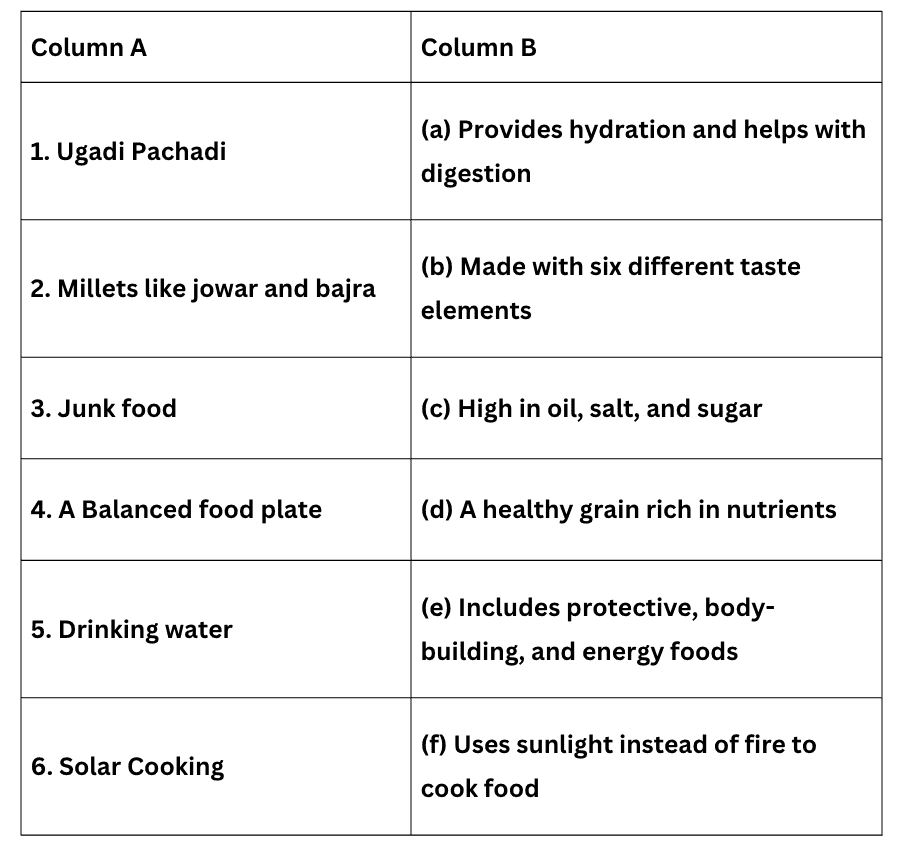
Match the Following
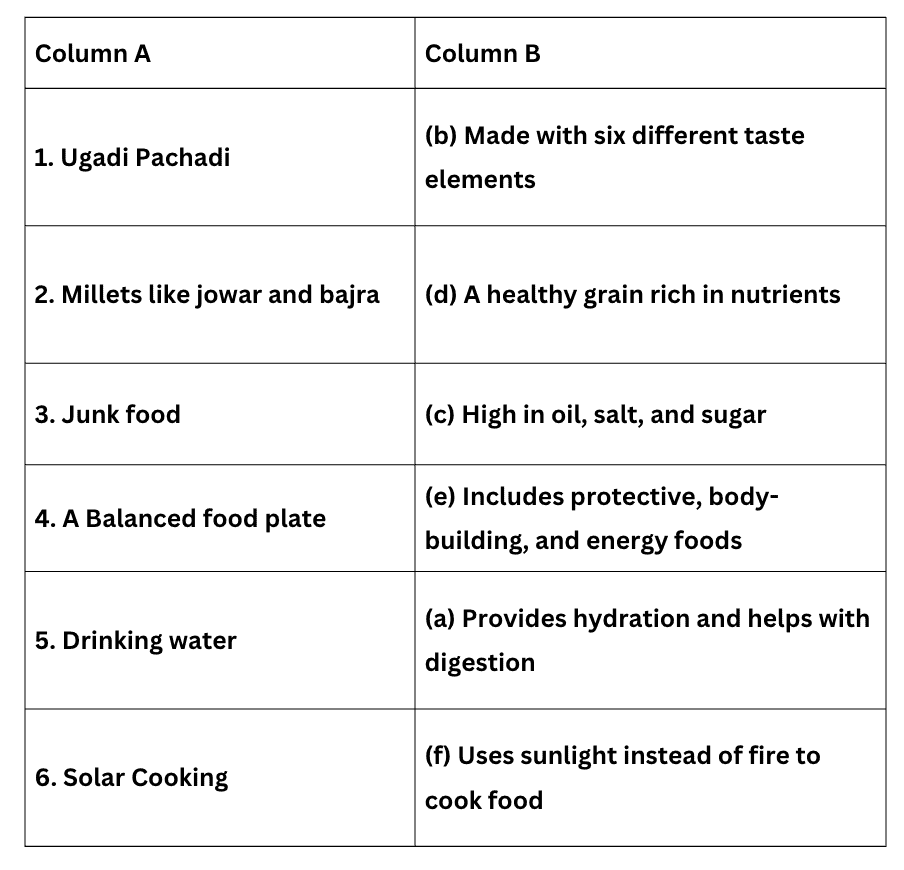
Answer Key:
Explanation
1. Ugadi Pachadi (b) Made with six different taste elements Ugadi Pachadi is made with six tastes: sweet, sour, salty, pungent, bitter, and astringent. These tastes represent different life experiences and make the dish unique.
2. Millets like jowar and bajra (d) A healthy grain rich in nutrients Millets, like jowar and bajra, are small, nutrient-rich grains that provide essential vitamins, minerals, and fiber, making them a healthy food option.
3. Junk food (c) High in oil, salt, and sugar Junk food contains unhealthy amounts of oil, salt, and sugar, which can lead to health problems like obesity and heart disease if eaten too much.
4. A Balanced food plate (e) Includes protective, body-building, and energy foods A balanced plate includes a mix of foods: protective (fruits and vegetables), body-building (milk and eggs), and energy-giving (rice and potatoes) foods, helping us stay healthy.
5. Drinking water (a) Provides hydration and helps with digestion Water keeps us hydrated, aids digestion, and helps remove waste from the body, making it essential for good health.
6. Solar Cooking (f) Uses sunlight instead of fire to cook food Solar cooking uses sunlight to cook food, making it an eco-friendly and energy-efficient way to prepare meals without using fire or gas.
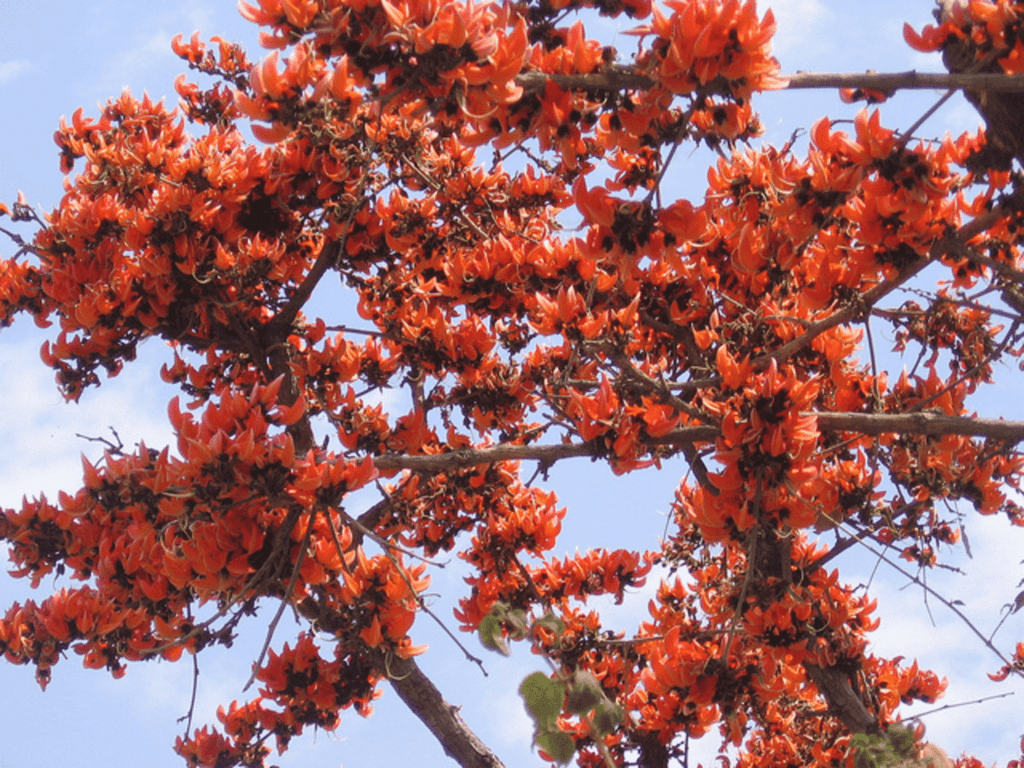
Q1: What is the significance of the Palash tree in the story? (a) It produces honey (b) It has bright orange-red flowers that make the forest appear reddish-orange (c) It is used to make traditional clothing (d) It is the tallest tree in the forest Ans: (b) It has bright orange-red flowers that make the forest appear reddish-orange
The Palash tree is known for its bright orange-red flowers. When the flowers bloom, they make the entire forest look reddish-orange, giving it the nickname “flame of the forest.”
Palash Tree
Q2: What natural material is used to build homes in the village? (a) Concrete (b) Wood (c) Clay, hay, and cow dung (d) Glass Ans: (c) Clay, hay, and cow dung
The homes in the village are built using natural materials like clay, hay, and cow dung, which are eco-friendly and help keep the homes cool and sustainable.
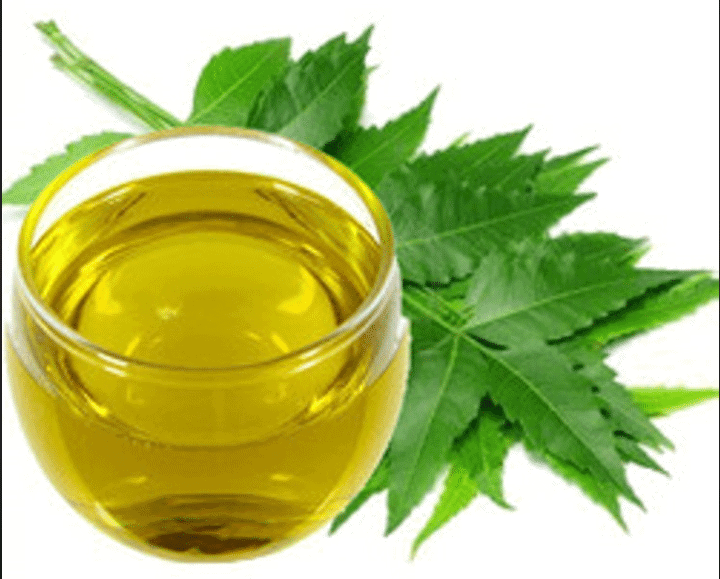
Q3: What is the purpose of using neem oil in the village? (a) To clean the house (b) To keep mosquitoes away (c) To make the food tastier (d) To paint the walls Ans: (b) To keep mosquitoes away
Neem oil is used as a natural remedy in the village to keep mosquitoes away by rubbing it on the skin, providing protection against mosquito bites.
Neem Oil
Q4: What is the name of the tribe that collects honey in Karnataka? (a) Jenu Kurubas (b) Gond (c) Santals (d) Bhils Ans: (a) Jenu Kurubas
The Jenu Kurubas is a tribe from Karnataka. Their name comes from the word “Jenu,” which means honey. They are known for collecting honey from beehives in a traditional and respectful manner.
Jenu Kurubas
Q5: What is the significance of Sacred Groves in the village? (a) They are used for farming (b) They are areas for worship and preserving wildlife (c) They are used for storing water (d) They are areas where animals live freely Ans: (b) They are areas for worship and preserving wildlife
Sacred Groves are protected areas of forest that are maintained for worship and the preservation of wildlife. These groves play an important role in protecting nature and maintaining biodiversity.
Fill in the Blanks
Q1. The Palash tree is also called the ________ of the forest because of its vibrant flowers. Ans: flame
The Palash tree is called the “flame of the forest” because its orange-red flowers look like flames.
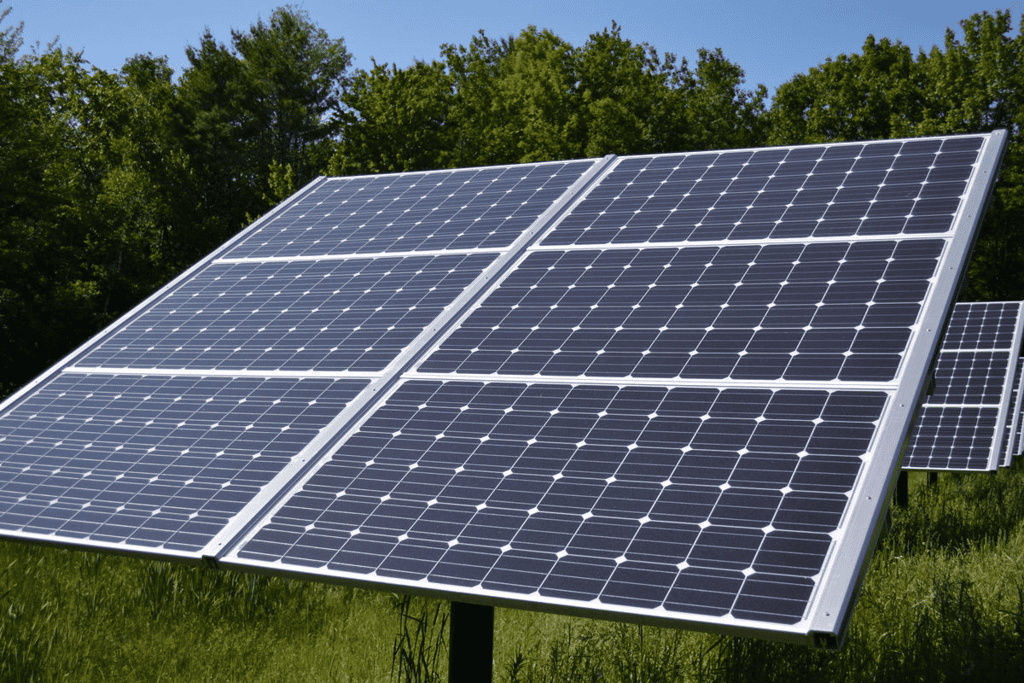
Q2. The village was going to be fully powered by ________ for the celebrations. Ans: solar power
The village was going to be fully solar-powered, meaning the entire village would use solar energy for lighting during the festival.
Solar Panel
Q3. The villagers use ________ to store grains and keep them safe from pests. Ans: bamboo baskets
Bamboo baskets are used to store grains and are coated with cow dung to keep pests away.
Q4. Reena and Amit’s grandmother uses ________ to paint on the cloth. Ans: natural extracts
The grandmother uses natural extracts from flowers, leaves, and powdered colored stones to make paint.
Q5. The ________ is a mixture made with neem oil to protect against mosquitoes. Ans: repellent
Neem oil is used to make a mosquito repellent to keep mosquitoes away when rubbed on the skin.
True or False
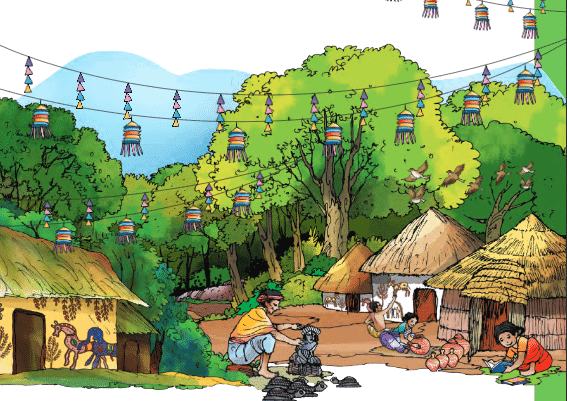
Q1. The village was decorated with plastic and artificial materials for the festival. Ans: False
The village was decorated with natural materials like clay, hay, and cow dung.
Decorated Village
Q2. Bamboo baskets in the village are used to store grains and are coated with cow dung to keep insects away. Ans: True
Bamboo baskets are used to store grains, and they are coated with cow dung to protect them from insects.
Q3. The Jenu Kurubas tribe uses modern equipment to collect honey. Ans: False
The Jenu Kurubas tribe collects honey using traditional methods, respecting nature.
Q4. The village’s solar power initiative helps reduce the use of fossil fuels and makes the village more sustainable. Ans: True
The village’s solar power initiative is a sustainable way to provide energy, reducing the reliance on fossil fuels and promoting eco-friendly practices.
Q5. Sacred Groves are areas where plants and wildlife are protected, but they are not used for worship. Answer: False
Sacred Groves are protected areas where people worship and preserve wildlife, showing respect for nature.
Short Question Answers
Q1:What is Gond art and how does it connect with nature? Ans: Gond art is a type of painting done on walls using natural colors. The paintings often depict nature, including trees, animals, birds, and people, highlighting the connection between art and nature.
Gond Art
Q2: What makes the houses in the village environmentally friendly? Ans: The houses in the village are built using natural materials like clay, hay, and cow dung, which help keep the homes cool and are eco-friendly.
Q3:How do the villagers use neem oil in daily life? Ans: The villagers use neem oil to keep mosquitoes away by rubbing it on their hands and feet, helping to avoid insect bites.
Q4:How do the Jenu Kurubas tribe show respect for nature while collecting honey? Ans: The Jenu Kurubas tribe sings songs to apologize to the bees while collecting honey, showing their respect for nature and the bees.
Q5:What is the importance of Sacred Groves in the village? Ans: Sacred Groves are small forest areas protected by the community. They serve as places for worship, celebrations, and preserving trees and wildlife, helping maintain the balance of nature.
Vocabulary Activity – “Guess the Word”
Q1: A type of energy generated from sunlight, used to power items like fans and light bulbs. Ans: Solar Power
Q2:A tree whose flowers make the forest appear reddish-orange. Ans: Palash
Q3: A natural material used for building homes in the village. Ans: Clay
Q4:The small forest areas protected by the community for worship and wildlife preservation. Ans: Sacred Groves
Q5:A tree whose leaves are used to repel insects. Ans: Neem
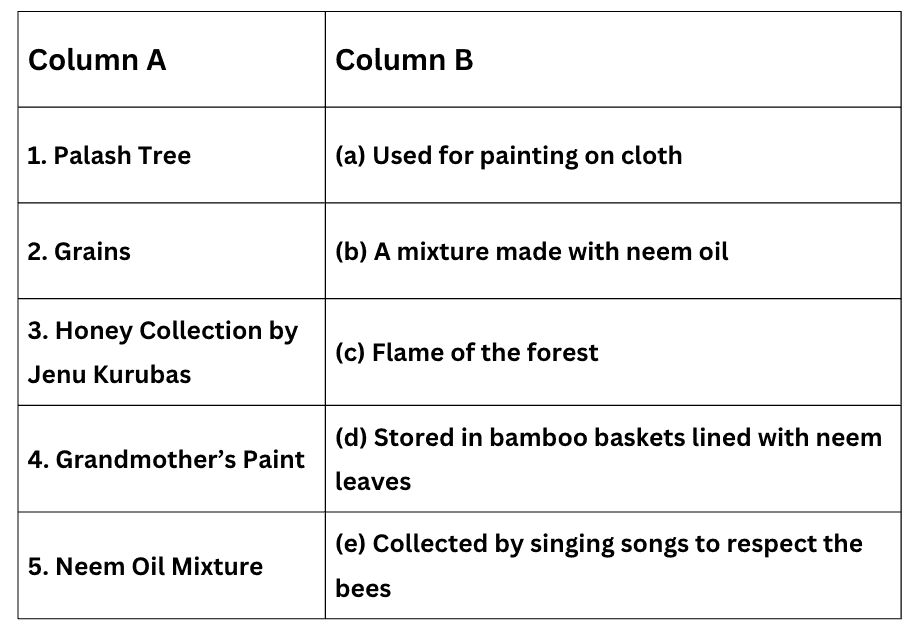
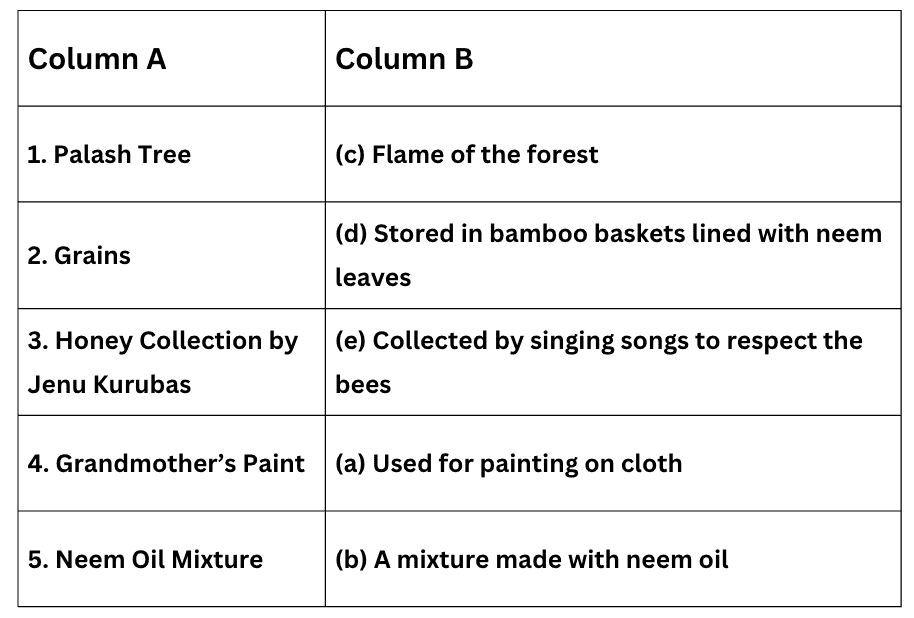
Match the Following
Ans:
Explanation:
The Palash tree is called the “flame of the forest” due to its vibrant flowers.
Grains are stored in bamboo baskets lined with neem leaves to keep pests away.
The Jenu Kurubas collect honey by singing songs to respect the bees.
Grandmother’s paint is made with natural extracts for painting on cloth.
The neem oil mixture is used as a mosquito repellent.
Q1: Who guides the students during their nature walk in Pachmarhi? (a) The teacher (b) Abha, a nature scientist (c) Sarthak (d) Arya Ans: (b) Abha, a nature scientist
Abha Didi, a nature scientist who studies plants and animals, guides the students in exploring the forest.
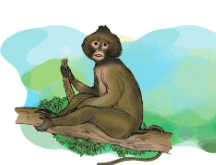
Q2: What is the name of the state animal of Tripura? (a) Spectacled Monkey (b) Indian Giant Squirrel (c) Gharial (d) Sunbird Ans: (a) Spectacled Monkey
The Spectacled Monkey is the state animal of Tripura. It is named for the white patches around its eyes, which look like spectacles.
Spectacled Monkey
Q3: What helps frogs live both on land and in water? (a) Webbed feet (b) Sharp claws (c) Strong shells (d) Long tails Answer: (a) Webbed feet
Frogs have webbed feet, which help them swim easily in water.
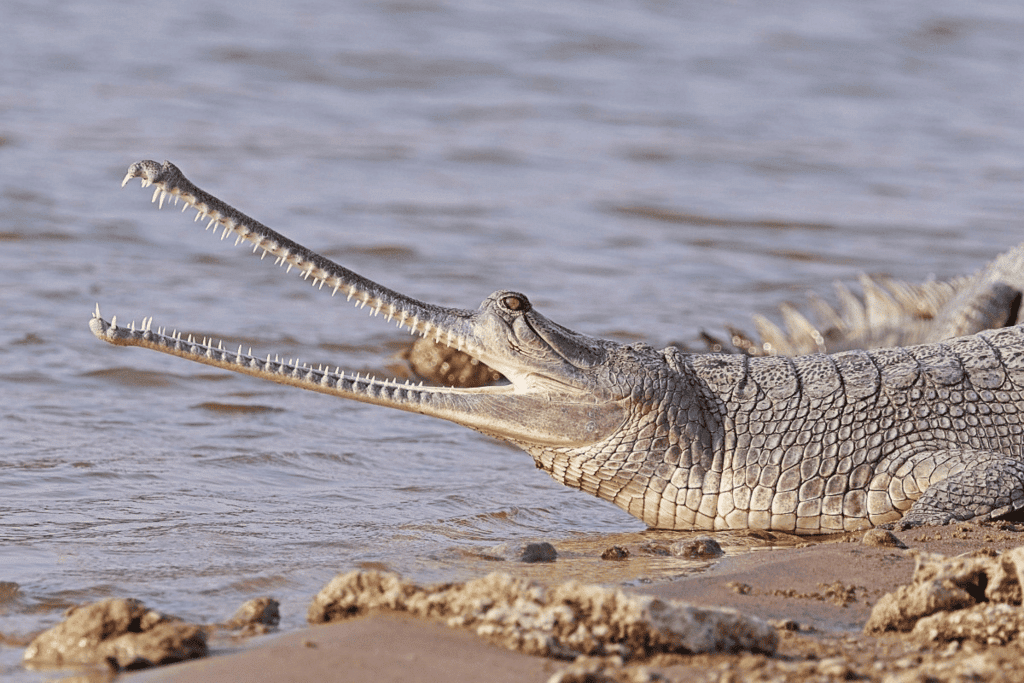
Q4: What feature helps the gharial catch fish? (a) A long, narrow, and pointed snout (b) Webbed feet (c) Strong claws (d) A smooth shell Ans: (a) A long, narrow, and pointed snout
The Gharial has a long, narrow snout that helps it catch fish in the water.
Gharial
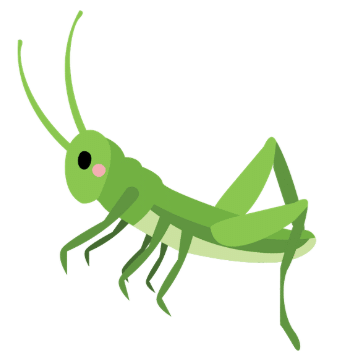
Q5: Which of the following insects has antennae to sense its surroundings? (a) Butterfly (b) Grasshopper (c) Spider (d) Beetle Ans: (a) Grasshopper
Grasshoppers have antennae that help them sense their surroundings.
Fill in the Blanks
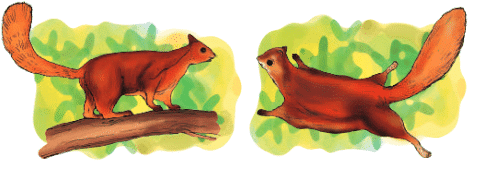
Q1: The ________ has a large, red-coloured body and is found in Pachmarhi. Ans: Indian Giant Squirrel
The Indian Giant Squirrel is a big, red-coloured squirrel found in Pachmarhi.
Giant Squirrel
Q2. A ________ has a headgear growing out of its forehead, making it look like it is wearing a horn. Ans: Hornbill
The Hornbill has a headgear, which makes it look like it’s wearing a horn.
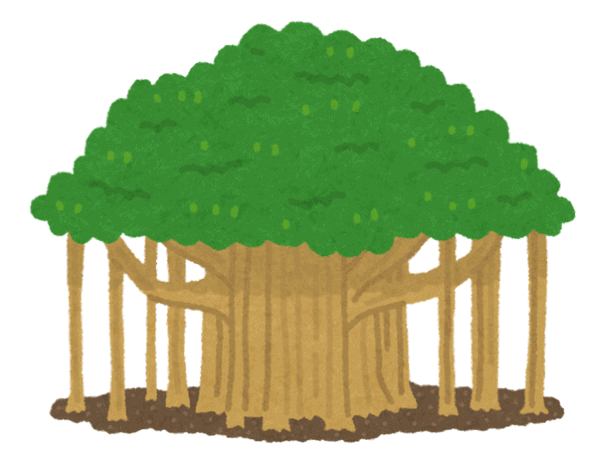
Q3. The ________ is a tree with hanging roots that touch the ground. Ans: Banyan
The Banyan Tree has hanging roots that reach the ground.
Q4. The ________ has three pairs of legs and one pair of antennae. Ans: Insect
Insects, like grasshoppers, have three pairs of legs and antennae.
Grasshopper
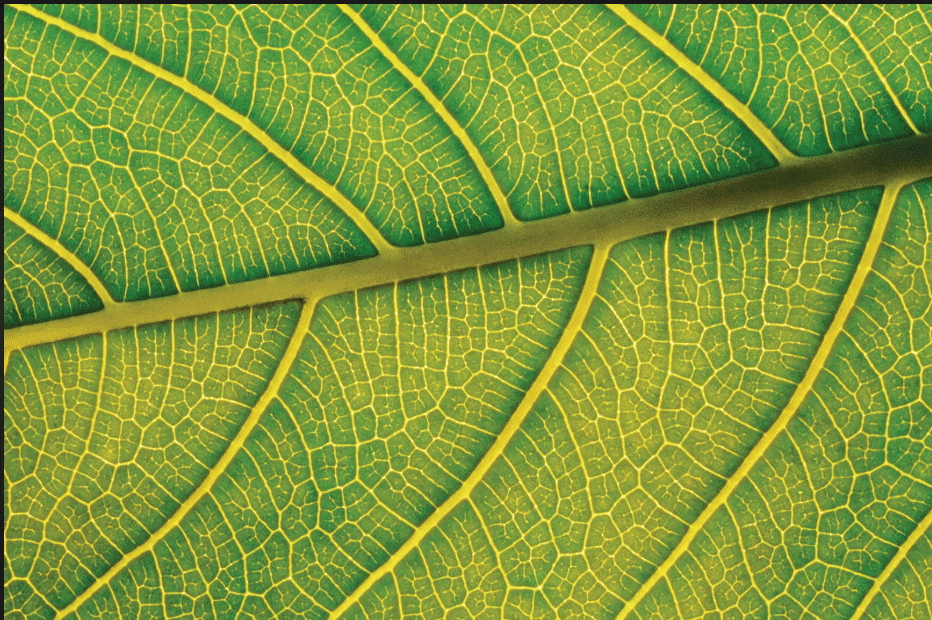
Q5. ________ are the lines on a leaf that help in carrying water and nutrients. Ans: Veins
Veins are the lines on leaves that transport water and nutrients.
Veins of Leaf
True or False
Q1. Insects, like grasshoppers, have two pairs of wings. Ans: True
Grasshoppers and many other insects have two pairs of wings that help them fly.
Q2. All animals in the forest live in harmony and do not depend on each other. Ans: False
In nature, animals and plants depend on each other for food, shelter, and survival. This is called the interdependence in nature.
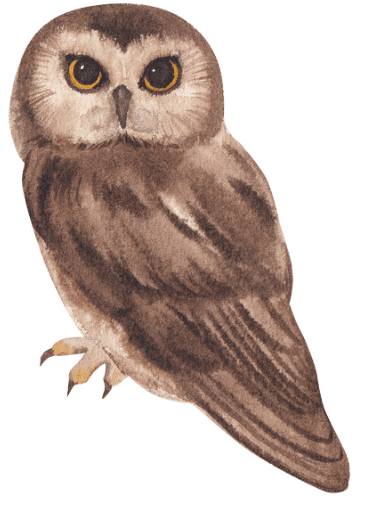
Q3. Birds like owls have sharp eyesight to help them see in the dark. Ans: True
Owls have excellent night vision, which helps them hunt for food in the dark.
Owl
Q4. A Hornbill’s beak helps it drink nectar from flowers. Ans: False
The Hornbill uses its long beak to eat fruits and small animals, not to drink nectar.
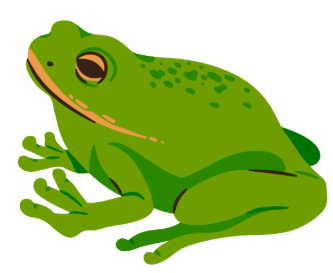
Q5. Frogs can live only in water and cannot survive on land. Ans: False
Frogs can live both in water and on land, making them amphibians.
Frog
Short Question Answers
Q1: What are some of the safety rules to follow while visiting the forest? Ans: Some safety rules include not teasing animals, not feeding animals, not damaging trees and flowers, not bringing pets or weapons, and not throwing garbage in the forest.
Q2:What did the students observe about the birds during the nature walk? Ans: The students observed various birds, such as the hornbill, and learned that birds have different types of beaks and claws, which help them in eating and other activities.
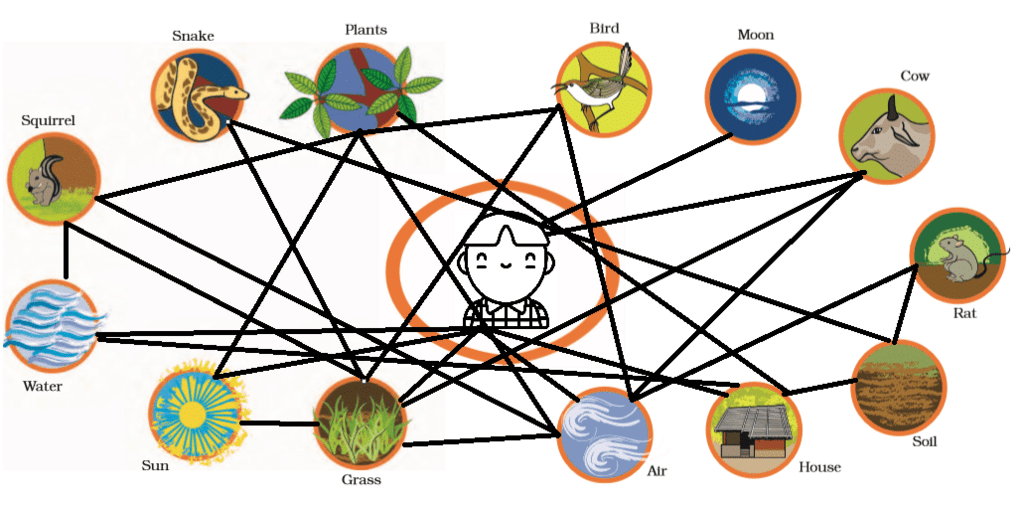
Q3:What is the purpose of the ‘Web of Life’ game? Ans: The game demonstrates how different elements of nature, like plants, animals, and natural resources, are interconnected and depend on each other for survival.
Web of Life
Q4:How do fish, gharials, and turtles adapt to their environments? Ans: Fish have fins for swimming, gharials have long snouts for catching fish, and turtles have strong shells to protect themselves and webbed feet to swim easily.
Q5:How does the ‘Leaf Autograph’ activity help students? Ans: The ‘Leaf Autograph’ activity helps students observe and understand the variety of plants in their environment, as well as the specific features like color, shape, and texture.
Vocabulary Activity – “Guess the Word”
Q1:A person who studies plants and animals. Ans: Scientist
Q2:The short, high sounds made by birds. Ans: Chirping
Q3:The sharp, curved nails on a bird’s or animal’s feet. Ans: Claws
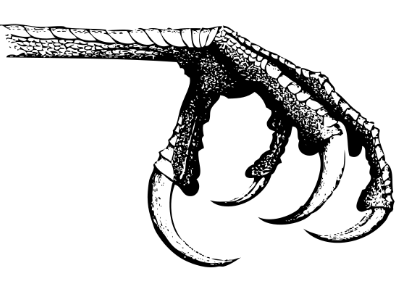
Claws of Bird
Q4:The hard, pointed structure of a bird’s mouth used for feeding. Ans: Beak
Q5:The marks left by an animal’s feet on the ground. Ans: Footprints
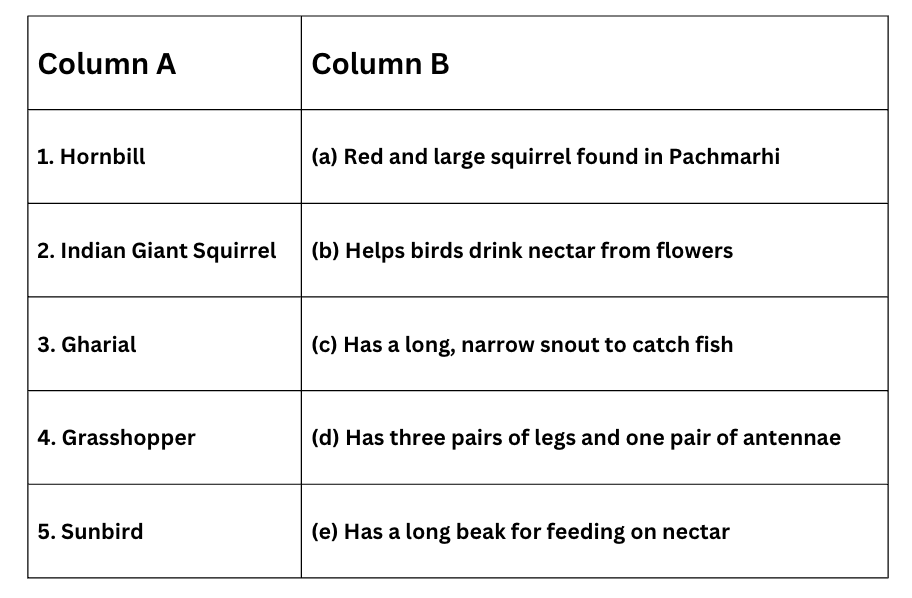
Match the Following
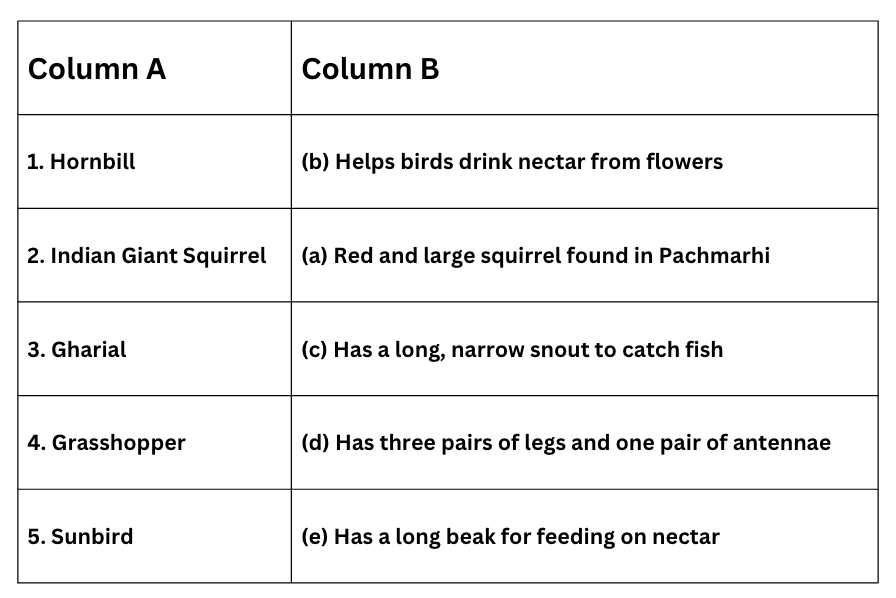
Answer: 1 – (b) Helps birds drink nectar from flowers 2 – (a) Red and large squirrel found in Pachmarhi 3 – (c) Has a long, narrow snout to catch fish 4 – (d) Has three pairs of legs and one pair of antennae 5 – (e) Has a long beak for feeding on nectar
Explanation:
Hornbill: Known for its long beak that helps it feed on nectar.
Indian Giant Squirrel: A large red squirrel found in Pachmarhi.
Gharial: A crocodile with a long, narrow snout used to catch fish.
Grasshopper: An insect with three pairs of legs and antennae.
Sunbird: A bird with a long beak to drink nectar from flowers.
Q1: What did Navya suggest to her grandfather while walking back home? (a) Take the short route (b) Take the market route (c) Go to the library (d) Take the school route Ans: (b) Take the market route
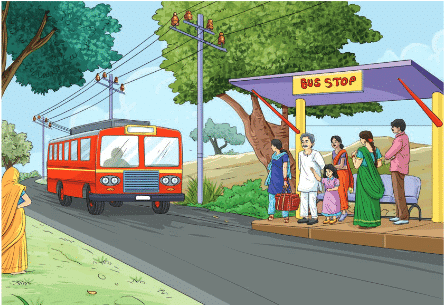
Navya wanted to take the market route with her grandfather on their way back home.
Bus Stop
Q2: What did Navya notice while traveling by bus? (a) A red postbox (b) A grocery shop (c) A restaurant (d) A hospital Ans: (a) A red postbox
While traveling by bus, Navya saw a red postbox and pointed it out to her grandfather.
Q3: How did people communicate in the past before mobile phones? (a) By telegram (b) By using phones (c) By writing letters (d) By social media Ans: (c) By writing letters
Before mobile phones, people used to communicate by writing letters.
Writing Letters
Q4: What did Dada ji miss about the past? (a) Writing and receiving letters (b) Watching television (c) Using mobile phones (d) Traveling by train Ans: (a) Writing and receiving letters
Dada ji missed the joy of writing and receiving handwritten letters.
Q5: What is a “Flyover” used for? (a) To make a road wider (b) To help vehicles travel above busy roads (c) To allow people to walk (d) To build homes Ans: (b) To help vehicles travel above busy roads
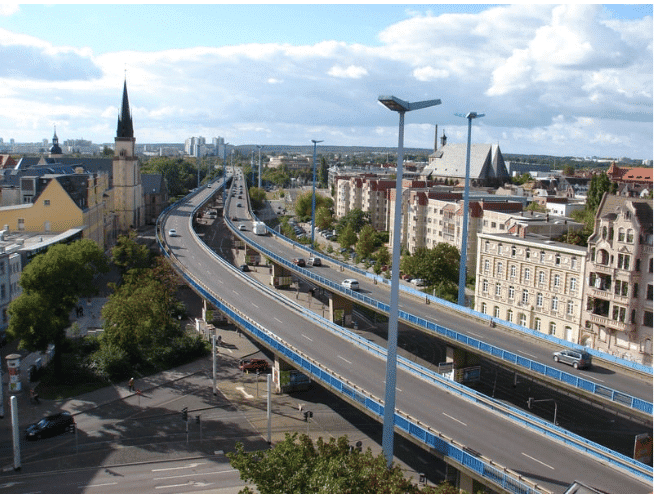
A flyover helps vehicles move above busy roads and crossings, saving time.
Flyovers
Fill in the Blanks
Q1:An ________ is a machine that allows people to withdraw money from their bank account at any time. Ans: ATM
An ATM (Automated Teller Machine) is a machine where you can withdraw money from your bank account without having to go inside the bank. It works 24/7, so you can use it anytime.
ATM
Q2:A ________ is a box where people drop letters to send them to different places. Ans: postbox
A postbox is a special box where people place their letters to be sent to different locations. The postman picks up these letters and takes them to the post office for delivery.
Q3:Flyovers help vehicles go over ________ areas to save time. Ans: busy
Flyovers are bridges that allow vehicles to move above busy roads or crowded areas, helping save time and reduce traffic. They are especially useful in cities with heavy traffic.
Q4: ________ is a service that allows you to send money through the post office. Ans: Money transfer
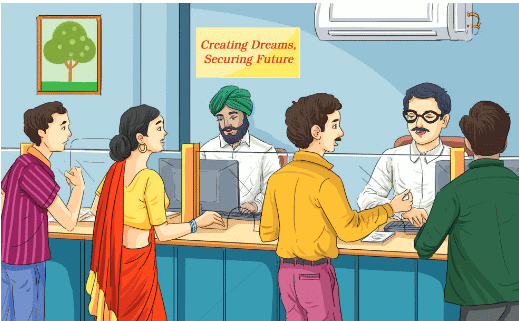
Money transfer is a service provided by the post office that allows people to send money to someone in another place. It’s like sending money through a safe system.
Bank
Q5: Navya used the rising ________ to figure out the directions for her neighborhood drawing. Ans: sun
Navya used the rising sun to find East in her drawing, which helped her understand the directions for creating her neighborhood map. The sun rises in the East and sets in the West.
True or False
Q1. The metro trains are slower than regular trains. Answer: False
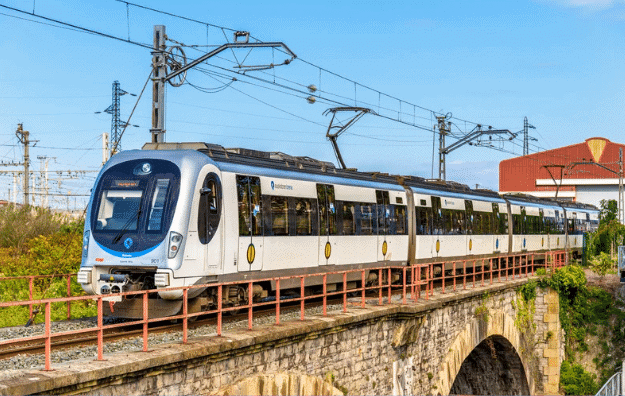
Metro trains travel very fast, making them an efficient mode of transportation in cities.
Metro
Q2. People in the past communicated using mobile phones. Answer: False
In the past, people communicated by writing letters, not mobile phones.
Q3. Dada ji and Navya used a money order to send money online. Answer: False
In the past, people used money orders to send money, not online transfers.
Q4. A hospital is a place where people go for medical treatment. Answer: True
A hospital is where people go when they are unwell to get help from doctors.
Q.5 The ATM helps people deposit money into their bank accounts. Answer: False
An ATM is used to withdraw money from bank accounts, not for depositing money.
Short Question Answers
Q1: Why were many people going to the hospital near the bus stop? Ans: Many people were going to the hospital for the Eye Check-up Camp, where they could get their eyes checked and treated for any eye problems.
Hospital
Q2:How does Dada ji explain the use of flyovers? Ans: Dada ji explains that flyovers are elevated roads that help vehicles go over busy areas, saving time and reducing traffic.
Q3:What is an ATM and why is it important? Ans: An ATM is a machine that allows people to withdraw money from their bank account at any time, making banking more convenient and faster.
Q4:What did Navya learn about communication methods from Dada ji? Ans: Navya learned that communication methods have evolved over time. In the past, people used letters, and now mobile phones and the internet allow instant communication.
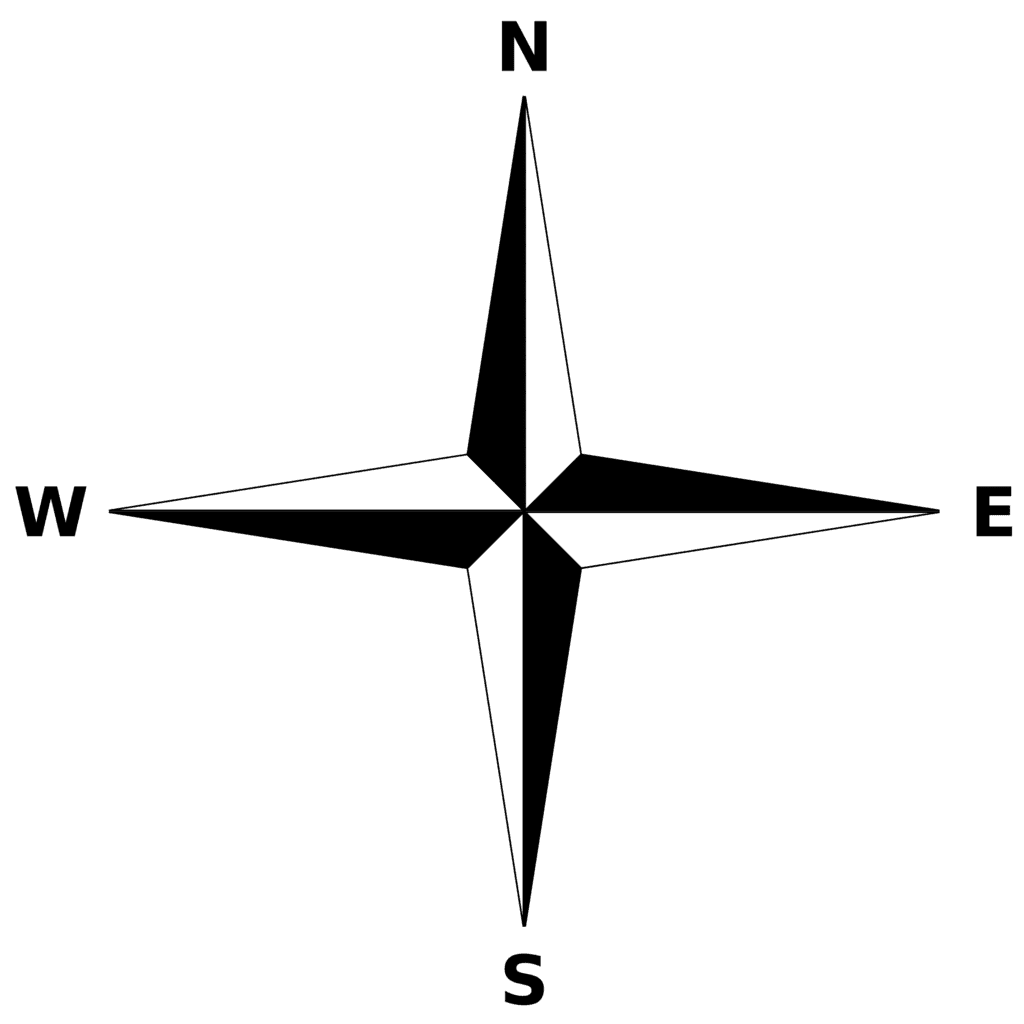
Q5:What did Navya observe about the neighborhood around her home? Ans: Navya observed and drew a map of her neighborhood, identifying directions like north, south, east, and west based on the position of the sun.
Four Directions
Vocabulary Activity – “Guess the Word”
Q1: A machine that allows you to withdraw money from your bank account at any time. Ans: ATM
Q2: A place where you drop letters to send them to different places. Ans: Postbox
Q3: An elevated road or bridge that helps vehicles move over busy areas. Ans: Flyover
Q4: A service that allows you to send money through the post office. Ans: Money Transfer
Q5: The act of sharing information with others, such as talking or writing. Ans: Communication
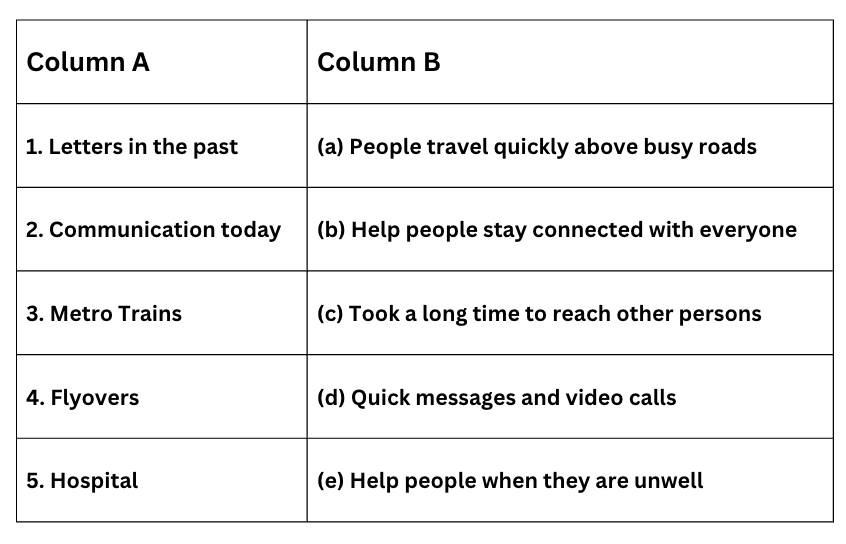
Match the Following
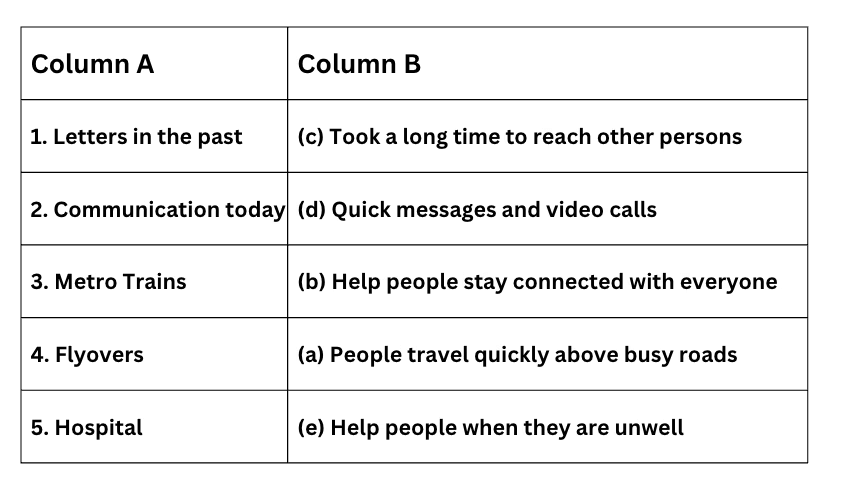
Ans:
Letters in the past – (c) Took a long time to reach other persons Explanation: In the past, letters used to take a long time to reach the recipient, making communication slower.
Communication today – (d) Quick messages and video calls Explanation: Today, with technology, we can send quick messages and make video calls, making communication faster and easier.
Metro Trains – (b) Help people stay connected with everyone Explanation: Metro trains are a fast mode of transport that helps connect people and places quickly, reducing travel time.
Flyovers – (a) People travel quickly above busy roads Explanation: Flyovers are high roads that allow vehicles to move above traffic, saving time for travelers.
Hospital – (e) Help people when they are unwell Explanation: Hospitals are places where people go for treatment when they are unwell, and they provide medical care.
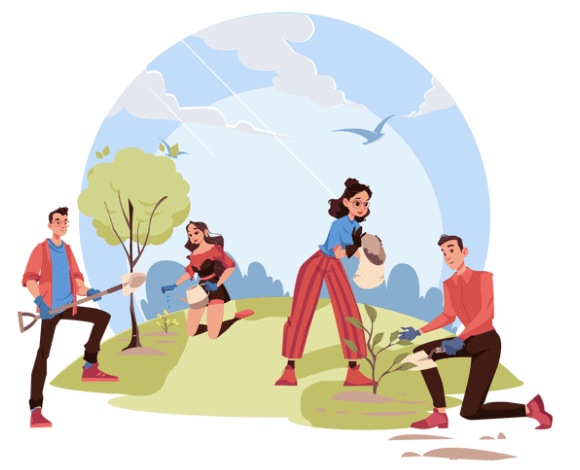
Q1: What is the main purpose of Van Mahotsav? (a) To celebrate the rainy season (b) To organize a feast (c) To plant trees and protect the environment (d) To build bridges Ans: (c) To plant trees and protect the environment
Van Mahotsav is celebrated for planting trees to protect the environment and make the Earth greener.
Community Planting Trees
Q2: What did Chandan and his friends do for the park during Van Mahotsav? (a) Played games (b) Cooked food (c) Cleaned the park and planted trees (d) Built houses
Ans: (b) Cleaned the park and planted trees
Chandan and his friends worked together to clean the park and plant trees during Van Mahotsav.
Q3: Which tree is mentioned in Chandan’s village that is used for gathering by the elders? (a) Banyan Tree (b) Mango Tree (c) Peepal Tree (d) Neem Tree
Answer: (a) Banyan Tree
The banyan tree in Chandan’s village is used by the elders to gather and talk.
Banyan Tree
Q4: What does the health centre provide in the locality? (a) Treatment for illness (b) Food (c) Games (d) Transportation
Ans: (a) Treatment for illness
The health centre is a place where people can get treatment when they are sick.
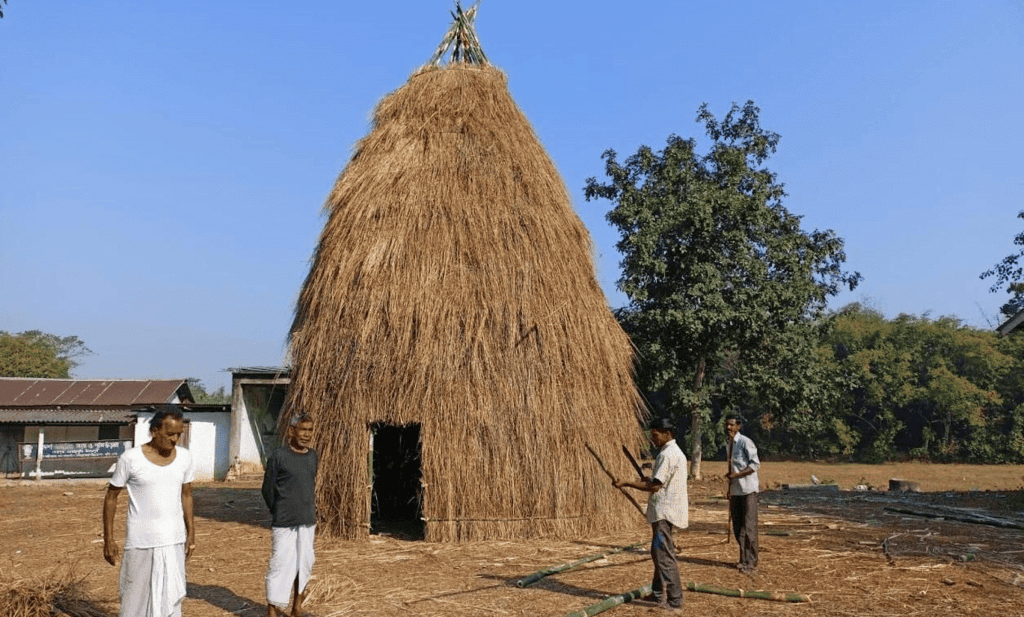
Q5: What is a Bhela Ghar? (a) A type of tree (b) A festival celebrated in Assam (c) A traditional hut made of bamboo and hay (d) A community gathering place Ans: (c) A traditional hut made of bamboo and hay
A Bhela Ghar is a traditional hut made from bamboo and hay. It is built during the Magh Bihu festival in Assam, which is a time of joy and togetherness.
Bhla Ghar
Fill in the Blanks
Word Box: park, manure, saplings, banyan, mason
Q1: During Van Mahotsav, people work together to plant ________ in the park. Ans: saplings
During Van Mahotsav, people plant saplings, which are young trees, in the park to help make the environment greener and protect nature.
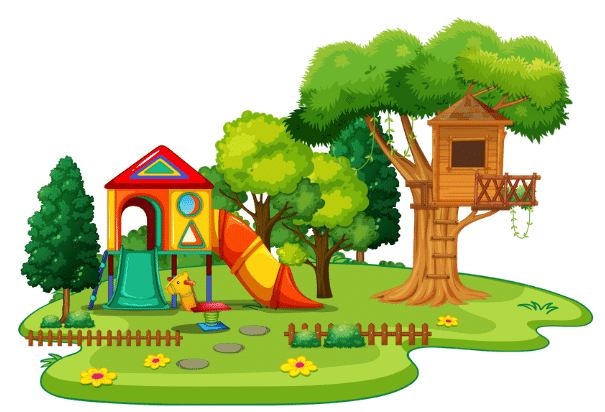
Q2: A ________ is a place where children play various games. Ans: park
A park is a special area where children can play outdoor games like cricket, football, and other fun activities.
Park
Q3: The ________ tree is a large and impressive tree known for its extensive branches and roots. Ans: banyan
The banyan tree is known for its large size, extensive branches, and roots that spread out. It is an important tree where people in the village gather under its shade.
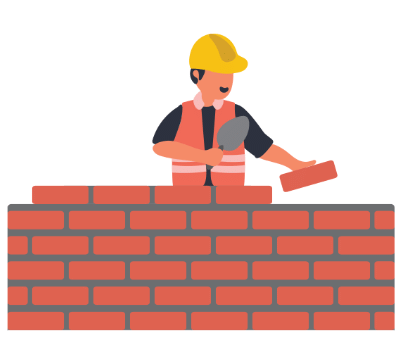
Q4:________ is a skilled worker who repairs or constructs walls using materials like bricks and stones. Ans: Mason
A mason is a skilled worker who uses bricks, stones, or other materials to build or repair walls, houses, or other structures.
Q5: When leaves decompose in the soil, they turn into ________, which helps improve soil quality. Ans: manure
When leaves decompose and break down in the soil, they turn into manure, which is a natural fertilizer that helps improve the soil and makes it better for growing plants.
True or False
Q1. Van Mahotsav is celebrated to make the Earth greener.
Ans: True
Van Mahotsav is celebrated to plant trees and help make the environment greener.
Q2. Chandan and his friends planted trees in the playground for Van Mahotsav. Ans: False
Chandan and his friends planted trees in the park, not the playground.
Q3. The banyan tree is used for sitting and talking by the elders. Ans: True
The banyan tree is where the elders gather in Chandan’s village to talk.
Q4. The health centre provides food to the people in the locality. Ans: False
The health centre provides treatment when people are sick, not food.
Health Centre
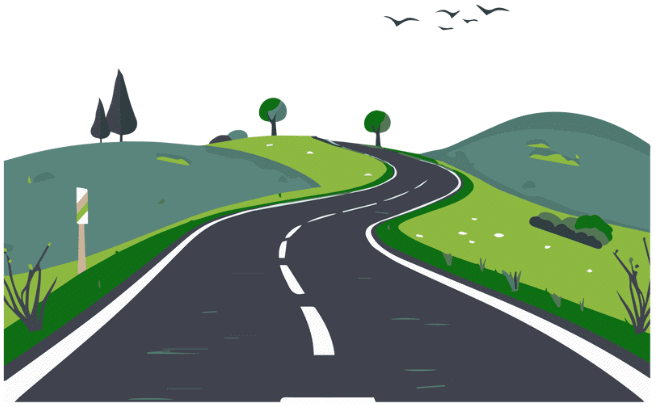
Q5. Roads help in connecting different areas and making transportation easier. Ans: True
Roads help people and goods move from one place to another.
Short Question Answers
Q1: What is the importance of public places in a community? Ans: Public places are important because they are used for different activities such as playing, relaxing, and meeting others. They help people bond and create memories together.
Q2: What did Mallika suggest during Van Mahotsav? Ans: Mallika suggested cleaning the park near their school and planting trees to make the air cleaner and the park more enjoyable for everyone.
Q3: How did the villagers help repair the park? Ans: The villagers helped by repairing benches, fixing streetlights, and planting saplings around the park. Everyone contributed in some way to make the park beautiful.
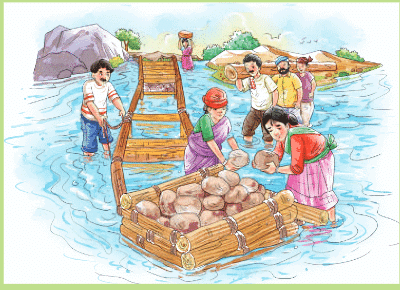
Q4: How did the community work together to build the bridge in Kanker? Ans: The community members came together and built a strong bridge using bamboo, stones, and other materials in just two days to help people cross the river easily during the rainy season.
Community building bridge
Q5: What did the community do after planting the trees during Van Mahotsav? Ans: After planting the trees, the community shared a big meal together, sitting on banana leaves, enjoying food, and talking. They also buried the used leaves to make manure for the soil.
Vocabulary Activity – “Guess the Word”
Q1: A skilled worker who builds walls using stones or bricks. Ans: Mason
MasonQ2: A tool used by masons to spread cement or mortar. Ans: Trowel
Q3: The process of gathering ripe crops from fields. Ans: Harvest
Q4: A tree festival celebrated in India to raise awareness about the importance of trees. Ans: Van Mahotsav
Q5: The type of material that is used to fertilize the soil and improve plant growth. Ans: Manure
Manure
Match the Following
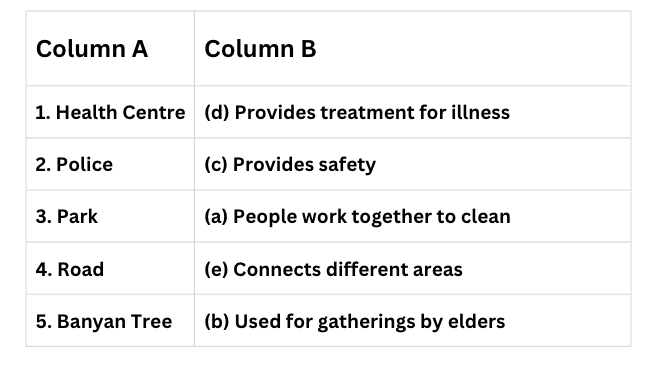
Ans:
Health Centre – (d) Provides treatment for illness The health centre is a place where people go to get medical help when they are sick.
Police – (c) Provides safety The police are there to keep everyone safe and protect people from harm.
Park – (a) People work together to clean The park is a place where people, especially during Van Mahotsav, come together to clean, plant trees, and make it more beautiful.
Road – (e) Connects different areas Roads help people move from one area to another. They connect different places to make travel easier.
Road
5. Banyan Tree – (b) Used for gatherings by elders The banyan tree is a special place in the village where the elders gather to talk and spend time with each other.