Have you ever wondered what your friends like the most? Maybe it’s a favorite game, a favorite color, or even a favorite school subject!
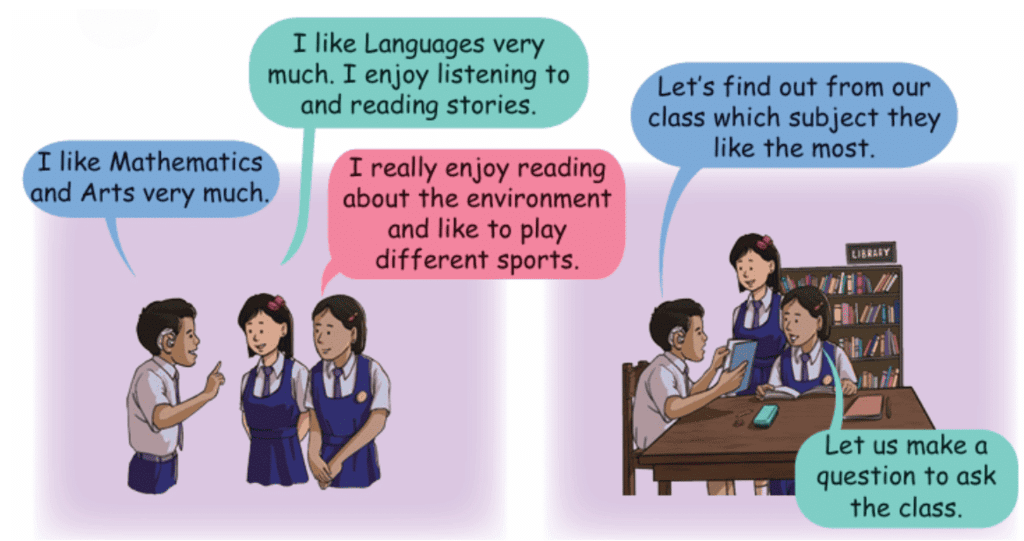
Just like Rohan and Anjali in our chapter wanted to find out which subject their classmates liked best, we often want to gather information to understand things better.
This process of gathering, organizing, and understanding information is called Data Handling. It’s like being a detective, collecting clues (data) and putting them together to solve a puzzle or answer a question.
In this chapter, we will explore how to ask the right questions, collect answers, arrange them neatly, and even draw pictures to show what we’ve found. Get ready to become a data expert!
Collecting Data: Asking the Right Questions
Before we can handle data, we first need to collect it! Collecting data means gathering information to answer a specific question.
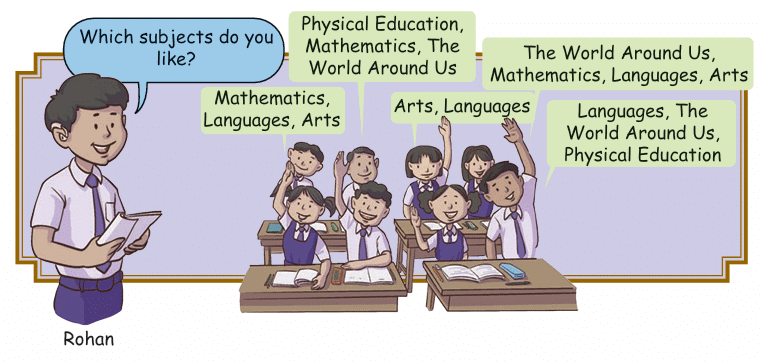
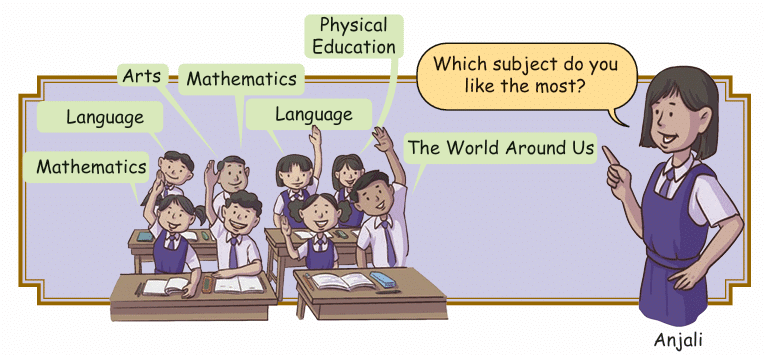
Look at the questions asked by Rohan and Anjali and tell which question is appropriate?
Question asked by Rohan
Question asked by Anjali
Anjali’s question is better for finding the single most liked subject.
Asking the right question helps us collect the exact information we need. Once the question is decided, we can ask our friends or classmates and record their answers, just like Rohan and Anjali did.
Organizing Data: Making Sense of the Information
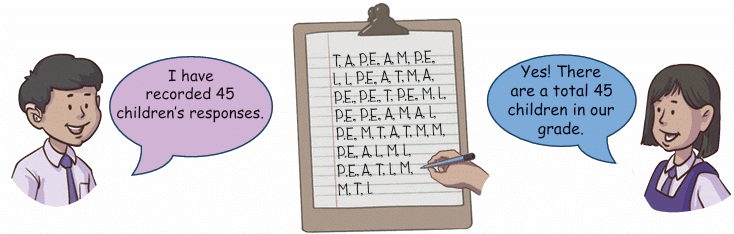
Once Rohan and Anjali collected all the answers (data) about favorite subjects, they had a long list: T, A, P.E., A, M, P.E., L, L, P.E., A, T, M, A, P.E., P.E., T, P.E., M, L, P.E., P.E., A, M, A, L, P.E., M, T, A, T, M, M, P.E., A, L, M, L, P.E., A, T, L, M, M, T, L.
Phew! That looks messy and hard to understand, right? M for Mathematics, L for Languages, T for The World Around Us, A for Arts and P.E. for Physical Education.
Looking at that long list, it’s difficult to quickly tell which subject is the most popular. This is where organizing data comes in handy.
A simple and clear way to organize this kind of information is by using a table.
We can create a table with two columns: one for the ‘Subjects’ and one for the ‘Number of Children’ who chose that subject as their favorite. Then, we go through the messy list and count how many times each subject appears.
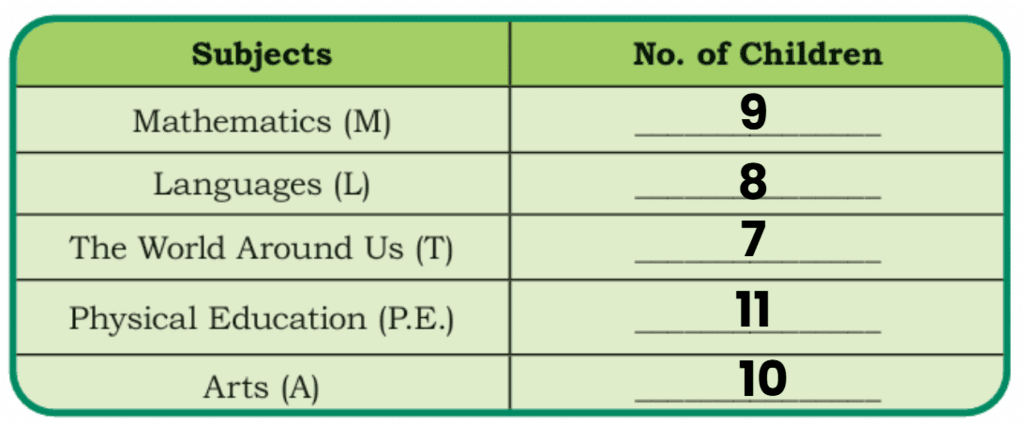
Let’s count them:
Mathematics (M): 9
Languages (L): 8
The World Around Us (T): 7
Physical Education (P.E.): 11
Arts (A): 10
Now, we can put this information neatly into a table:
See? This table makes it much easier to see the results!
We can immediately tell that Physical Education (P.E.) is the most liked subject (11 children) and The World Around Us (T) is the least liked (7 children).
Organizing data in tables helps us understand the information quickly and easily.
Try yourself:
What is the process of gathering and organizing information called?
A.Data Reporting
B.Data Analyzing
C.Data Collecting
D.Data Handling
View Solution
Representing Data: Drawing Pictures of Information
Tables are great for organizing data, but sometimes pictures can make the information even clearer and more fun to look at! One way to represent data visually is using a Pictograph.
A pictograph uses symbols or pictures to show the data. Below are the examples.
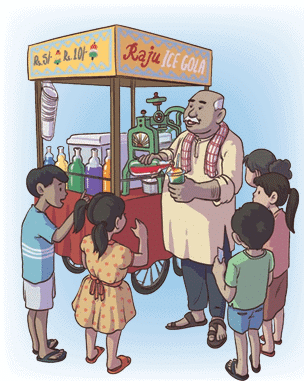
Colourful Golas
During school lunch break children rush to eat gola of their favourite colour.
Rohan and Anjali record the golas eaten by different children.
They want to eat the one that is most eaten by others.
They both start recording the golas eaten by the children.
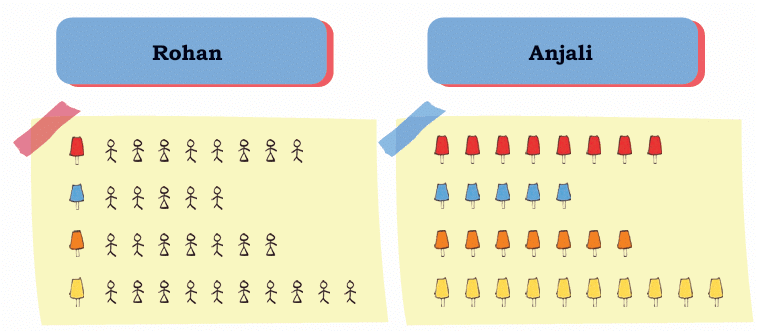
How did they count?
Rohan uses stick marks (like this: |||| ) for counting.
Anjali draws a picture of each gola to show the number.
This is called collecting and showing data. It helps us understand what others like the most.
So, it becomes easy for Rohan and Anjali that what colour gola they should eat as by making pictograph or using Stick marks ( Tally Chart), it is clear which is most eaten and least eaten gola.
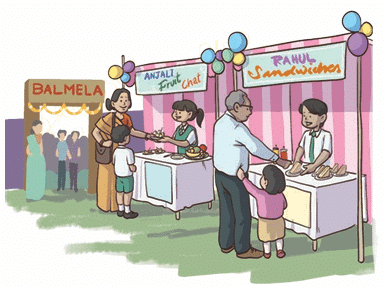
Bal Mela
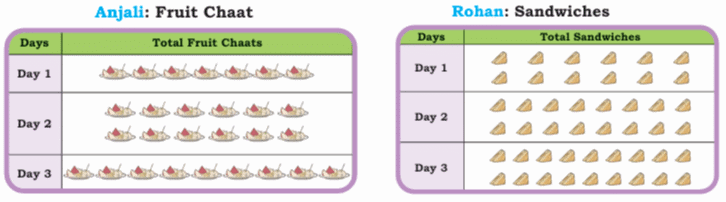
Look at the example from the Bal Mela where Anjali and Rohan tracked the sales of Fruit Chaats and Sandwiches over three days.
In this pictograph, each picture of a fruit chaat represents one fruit chaat sold, and each picture of a sandwich represents one sandwich sold.
Sometimes, a single picture in a pictograph might represent more than one item (like 1 picture = 10 items), so it’s important to check the key if one is provided.
Pictographs make it easy to compare amounts visually. You can quickly see on which day the most sandwiches were sold (Day 3) or how many fruit chaats were sold on Day 2.
Pictograph
A pictograph is a way to show data using pictures or symbols instead of numbers. Each picture stands for a certain amount, making it easy to understand information quickly!How Does a Pictograph Work?
Each picture represents a number.
More pictures mean a bigger quantity.
A key tells us what each picture stands for.
Example:
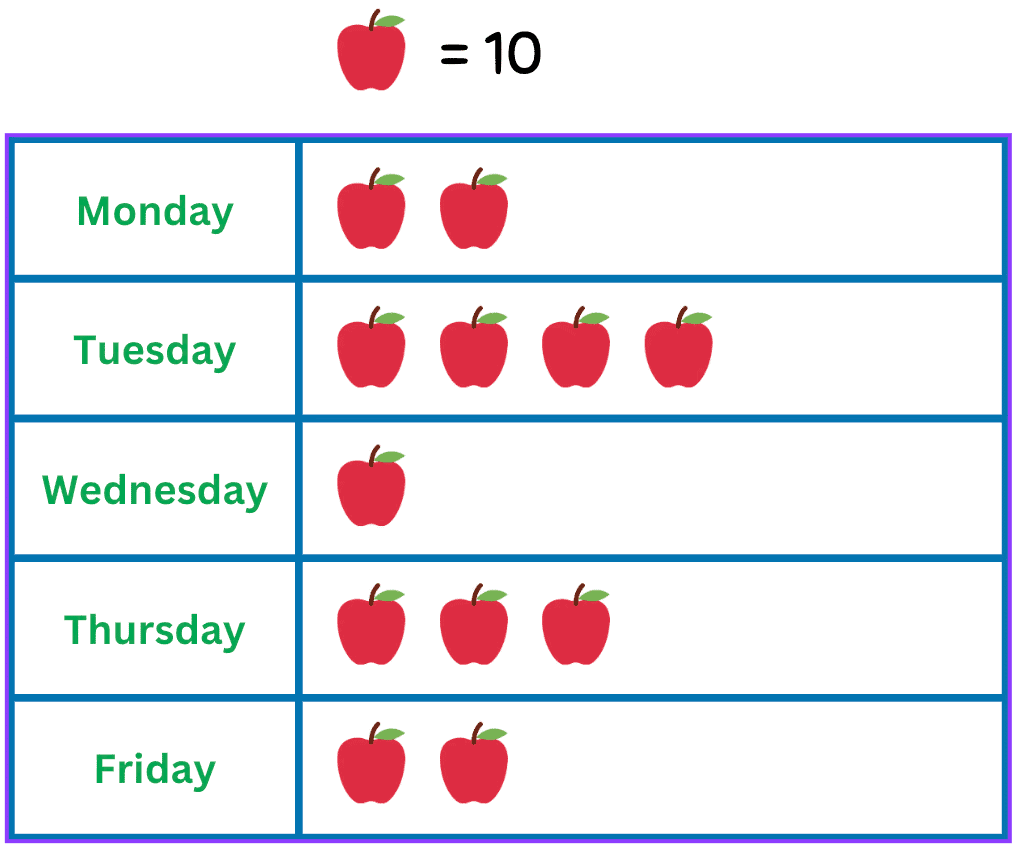
This pictograph shows the number of apples collected from Monday to Friday. Each apple represents 10 apples.How many apples are collected on Thursday? (a) 10 (b) 20 (c) 30 (d) 40 Answer: The answer is option (c) that is 30 apples. 3 × 10 = 30 apples
Tally Marks
Another simple way to keep track while counting, especially with larger numbers, is using Tally Marks.
Although not explicitly shown in detail in this chapter’s examples, tally marks are often used when first collecting data.
You make a small vertical line (|) for each item counted. When you get to the fifth item, you draw a diagonal line across the first four (||||).
This makes groups of 5, which are easy to count quickly later.
Bar Graphs
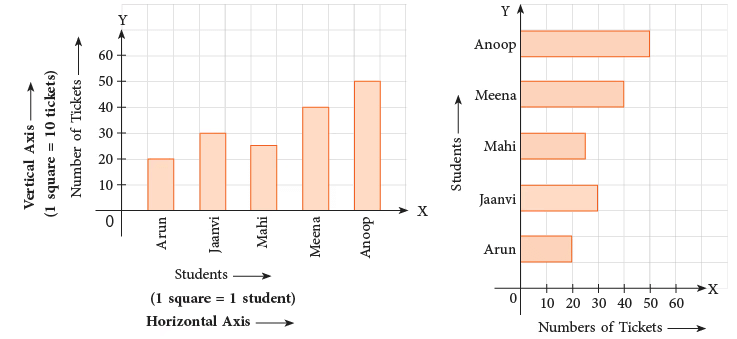
Pictographs require a lot of skill in drawing clear pictures. Also, representing large numbers by pictographs becomes difficult. So, easier methods of presenting data pictorically have been devised. One such method is drawing a Bar Graph. A bar graph can be represented in two ways shown below. Tickets sold for a play by 5 students
From the above graphs, we see that,
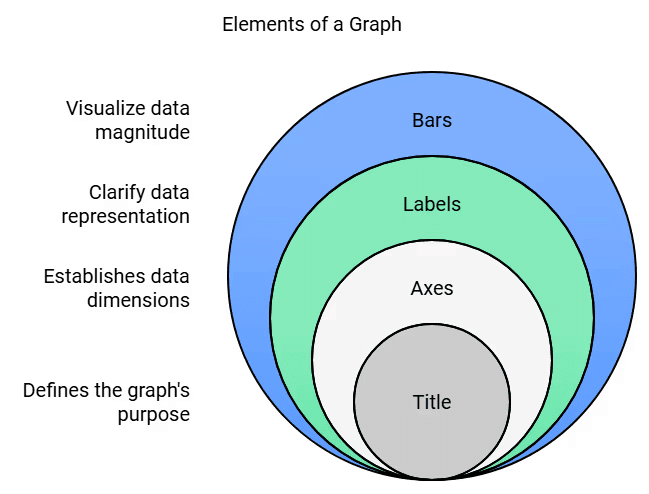
Information is represented along the two axes, horizontal and vertical.
Each axis must have labels to explain as to what information is being represented.
Bars are drawn to represent the desired number.
Every graph must have a title.
In the first bar graph, the names of the students are given along the horizontal line.
The vertical line is a number line showing the number of tickets.
In the second bar graph, these two lines are interchanged.
The names of the students are given along the vertical line and the number of tickets along the horizontal line.
The length of each segment on the number line, the width of the bars and the space between the bars are fully your choice. You may choose these such that they may fit the space you have.
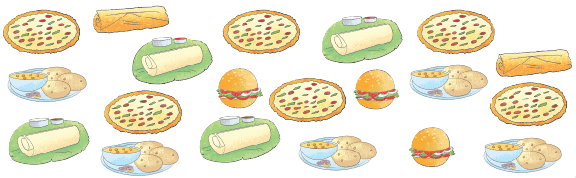
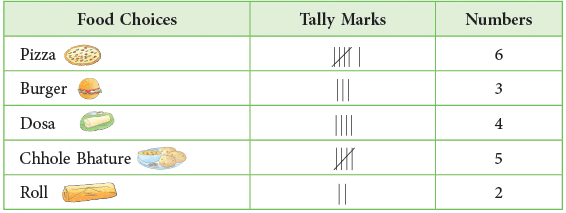
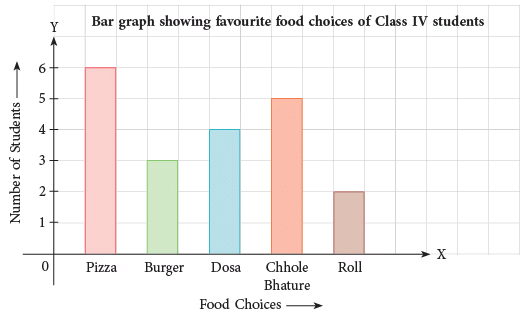
Example 1: Make a tally chart to show favourite food choices of students of Class IV. Then, draw a bar graph to show this.
Sol:As is clear from the above bar graph, the names of food choices are along the horizontal axis and the number of students along the vertical axis. The width of the bars and the distance between them should be kept the same.
Try yourself:
What does each picture in a pictograph usually represent?
A.A time period
B.A single item
C.A certain amount
D.A category
View Solution
Interpreting/Reading Bar Graph
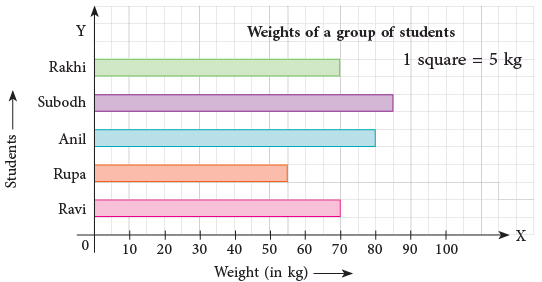
Bar graphs help you to find out detailed information about a given data. Here, you will learn how to read a bar graph. Look at the following example.
Example 2: A group of students measured and recorded their weights and drew a bar graph on the data collected. Use the bar graph given above to answer the following. (a) Who is the heaviest of all? What is the maximum weight? (b) Who has the lowest weight in the group? What is the lowest weight? (c) Did any of the students have the same weight? Who were they and how much did they weigh? (d) What is represented by each square on the horizontal line?
(a) Subodh; 85 kg (b) Rupa; 55 kg (c) Yes; Rakhi and Ravi; 70 kg (d) 5 kg
Conclusion
Interpreting data is like reading the story that the numbers and pictures tell us. It helps us find answers and make conclusions based on the information we gathered.
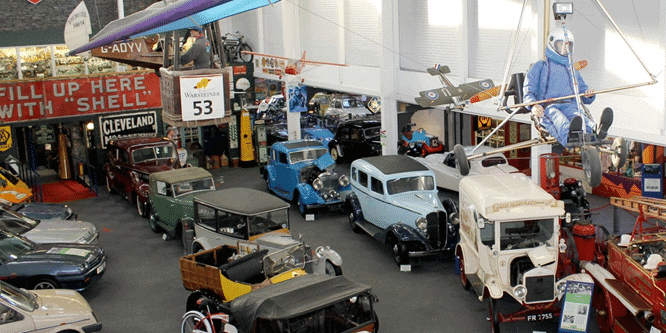
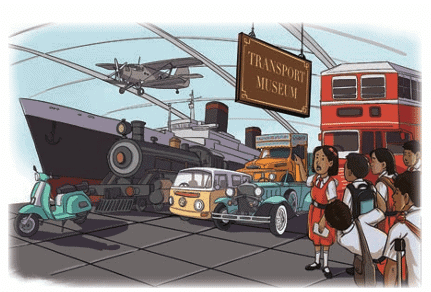
Welcome, explorers! Get ready for an exciting journey into the world of numbers as we visit the amazing Transport Museum.
Just like the museum is filled with fascinating vehicles, this chapter is packed with interesting ways to understand multiplication and division. Let’s start our adventure!
Mystery Matrix
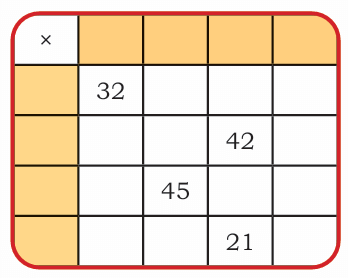
Imagine you’re a detective, and you’ve found a secret grid – a Mystery Matrix!
Your mission, should you choose to accept it, is to fill in the missing numbers.
In the first one, we need to fill the yellow boxes with single-digit numbers (these are our multiplicands and multipliers).
When we multiply the number at the start of a row by the number at the top of a column, we get the product in the white box where they meet.
Some products are already given to help us!
We see numbers like 32, 42, 45, and 21 in the white boxes. We need to figure out the single-digit numbers in the yellow row and column that multiply to give these products.
For example, to get 42, we could use 6 and 7 (6 × 7 = 42). To get 21, we could use 3 and 7 (3 × 7 = 21).
By looking at the relationships, we can deduce the numbers. If the row with 21 has a 3, and the column has a 7, does that work for 42 in the same column?
Yes, if the row for 42 has a 6 (6 x 7 = 42).
Keep going like this to solve the puzzle!
So the top row is: 8, 6, 3
The left column is: 4, 7, 9, 7
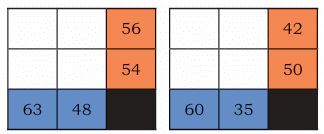
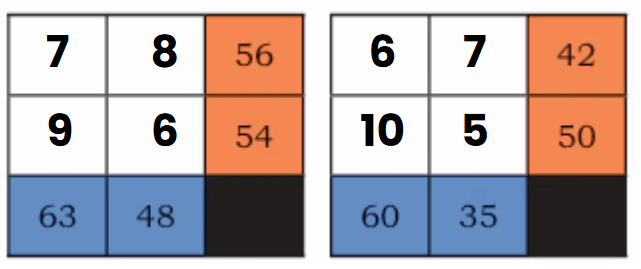
The second type of matrix gives us the products of entire rows (in orange boxes) and columns (in blue boxes). We need to fill in the grid so that the numbers in each row multiply to the orange number, and the numbers in each column multiply to the blue number. It’s like a multiplication sudoku!
Here is the answer given below:
Times-10
Multiplying by 10 is like having a magic wand! It makes numbers bigger in a very predictable way.
When we multiply a number by 10, we are essentially creating groups of ten.
2 × 10: This means 2 groups of 10. That’s 10 + 10 = 20. We can say it’s 2 Tens, which equals 20.
5 × 10: This means 5 groups of 10. That’s 10 + 10 + 10 + 10 + 10 = 50. We can say it’s 5 Tens, which equals 50.
8 × 10: This means 8 groups of 10. That’s 8 Tens, which equals 80.
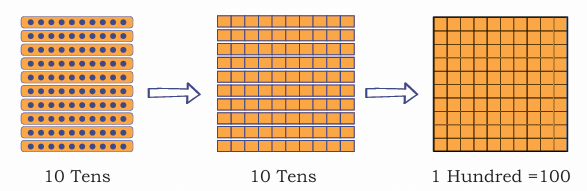
What happens when we multiply 10 by 10?
That’s 10 groups of 10, which makes 10 Tens.
Constructing Tables
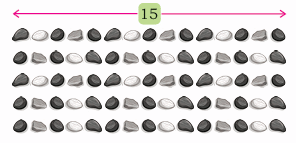
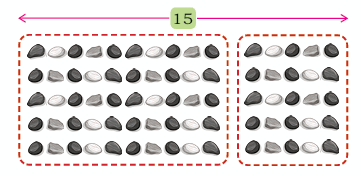
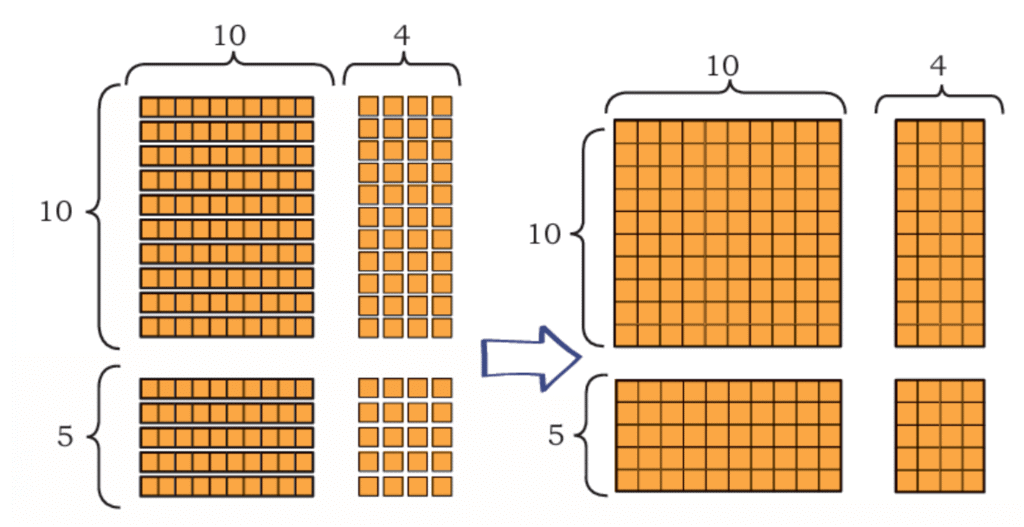
Remember playing with pebbles? They can help us understand multiplication tables too! Below given image shows an arrangement of pebbles, 5 rows with 15 pebbles in each row.
How many pebbles are there in total? We need to find 5 × 15.
Split the 15 pebbles in each row into a group of 10 and a group of 5.
So, 5 × 15 becomes (5 × 10) + (5 × 5).
5 × 10 = 50
5 × 5 = 25
Total = 50 + 25 = 75 pebbles!
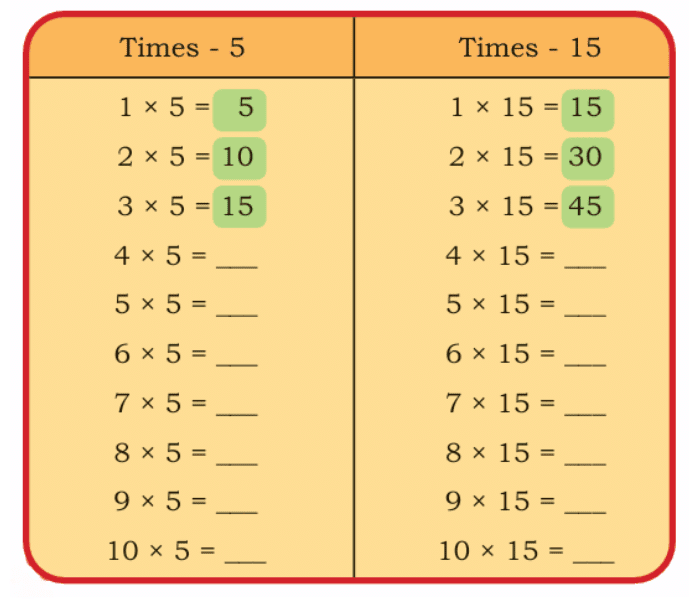
We can use this splitting method to build multiplication tables. Let’s try constructing the times-15 table, using the pebble arrangement or just the splitting idea:
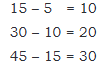
The numbers in the times-15 table are three times the numbers in the times-5 table (since 15 is 3 times 5). Also, notice the difference between numbers in the times-15 table and times-10 table is 10!
Try yourself:
What do we call the numbers we multiply together?
A.Products
B.Divisors
C.Multiplicands
D.Factors
View Solution
Making tables by splitting into equal groups
Here’s another cool strategy: splitting into equal groups!
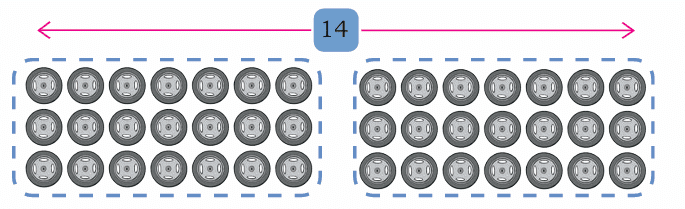
Let’s understand with an example. Here is an arrangement of wheels. To count the total number of wheels, Tara splits them into two equal groups.
To find 3 × 14, Tara splits the 14 wheels in each row into two equal groups of 7.
So, 3 × 14 becomes (3 × 7) + (3 × 7).
3 × 7 = 21
Total = 21 + 21 = 42 wheels!
Notice that 21 + 21 is the same as doubling 21.
Similarly, for 6 × 14:
Split 14 into 7 and 7.
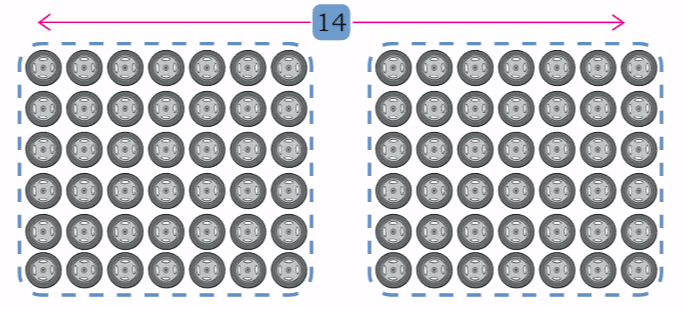
⇒ 6 × 14 becomes (6 × 7) + (6 × 7).
⇒ 6 × 7 = 42
⇒ Total = 42 + 42 = 84 wheels! This is the same as doubling 42. We can see that 6 x 14 is double of 6 x 7, because 7 is double of 14!
We can use this splitting and doubling method to construct other tables, like the times-14 table.
Multiples of 10
We saw how easy multiplying by 10 is. Let’s practice more!
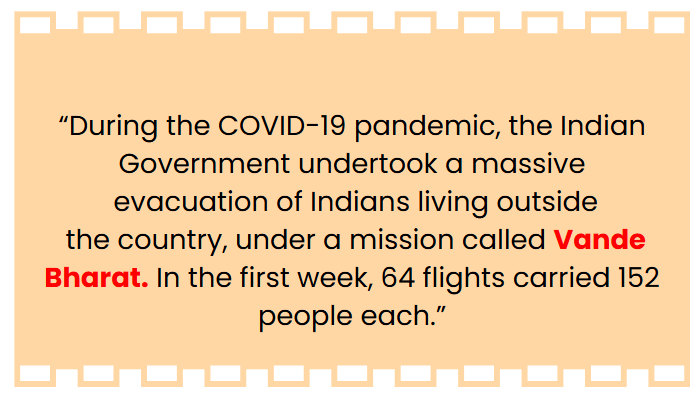
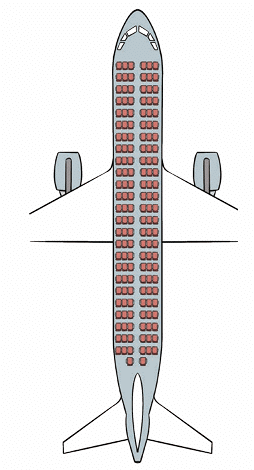
Now, Amala is fascinated to read this information in the aeroplane section of the transport museum.
Amala wonders how many people travelled the first week of this ‘Vande Bharat Mission’.
64 × 152
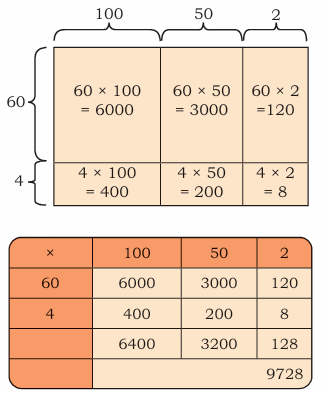
To make it easier, we break the numbers into parts:
64 = 60 + 4
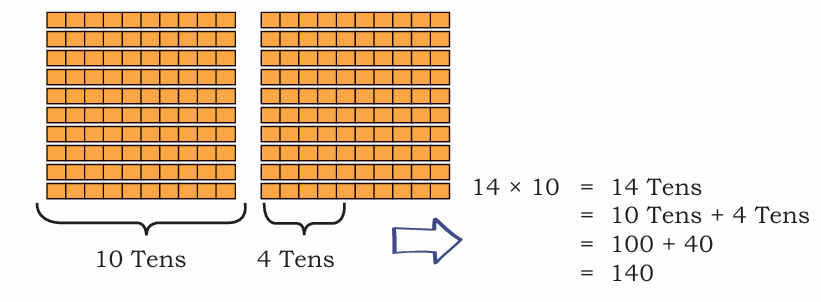
152 = 100 + 50 + 2
Now we multiply each part like a grid or area box.
9728 people traveled in the first week of the Vande Bharat Mission.
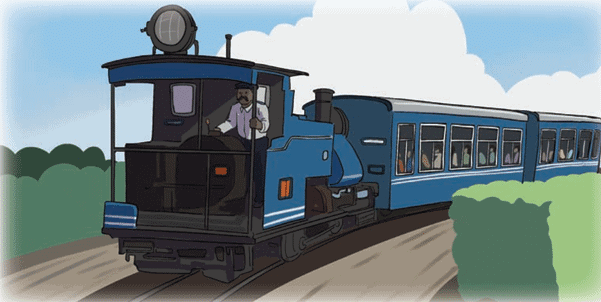
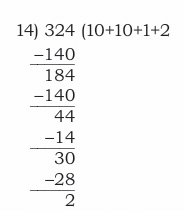
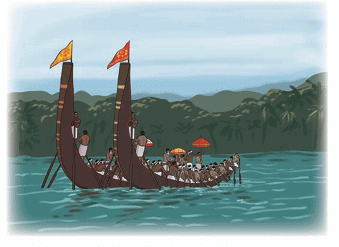
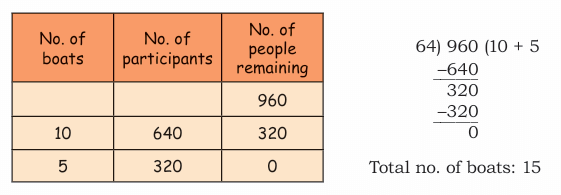
Farzan notices the famous snake boat from Kerela. The technique for making these boats is 800 years old. Vallam kali (the snake-boat race) is held during the monsoon season between July and September and concludes with Onam, the harvest festival. These boats are 30 to 35 metres long and can be peddled by 64 –128 people. In a particular race, 960 participants volunteered. Each boat is pedalled by 64 people. How many boats will be needed?
Sol: We have to find 960 ÷ 64
Dividing by 10 and 100
A Farmer’s Rice Problem
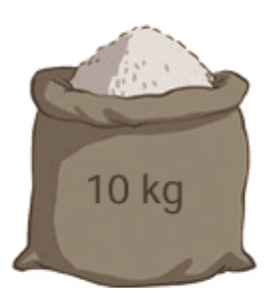
A farmer has a lot of rice and wants to pack it into sacks. Each sack can hold 10 kg of rice.
Now, let’s answer some questions!
a) If the farmer has 60 kg of rice, how many sacks does he need?
We divide 60 by 10:
60 ÷ 10 = 6 So, he needs 6 sacks.
b) If the farmer has 600 kg of rice, how many sacks does he need?
600 ÷ 10 = 60 He needs 60 sacks.
What if each sack holds 100 kg?
Now the question becomes:
600 ÷ 100 = ?
The answer is 6 sacks.
So, if sacks are bigger (100 kg each), you need fewer of them.
Try yourself:
What does division help us determine?
A.The number of candies
B.The value of hundreds
C.The total amount
D.How many equal parts can be made
View Solution
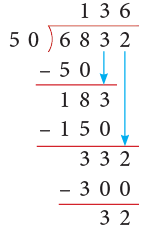
Example 1: Divide 6832 by 50.
Solution:
Thus, 6832 ÷ 50 gives Q = 136 and R = 32.
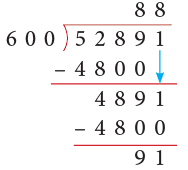
Example 2: Divide 52891 by 600.
Solution:
Thus, 52891 ÷ 600 gives Q = 88 and R = 91.
Chinnu’s Coins
A Visit to the Amusement Park
Five friends are going to an amusement park.
Each ticket costs ₹750.
But here’s the fun part: Each friend brings only one kind of note or coin!
Let’s see what they brought:
Bujji – all ₹200 notes
Munna – all ₹50 notes
Balu – all ₹20 notes
Chinnu – all ₹5 coins
Sansu – all ₹2 coins
a) How many notes/coins does each child need?
Let’s divide ₹750 by the value they have:
1. Bujji: ₹750 ÷ ₹200 = 3 notes (₹600), but that’s not enough We need one more ₹150 → 3 notes of ₹200 = ₹600 → Still short by ₹150 → Can’t pay exactly
Let’s try 4 notes: 4 × ₹200 = ₹800 → too much Not exact.
So Bujji cannot pay exactly.
2. Munna: ₹750 ÷ ₹50 = 15 notes
Munna can pay exactly.
3. Balu: ₹750 ÷ ₹20 = 37.5 notes
Half a note isn’t possible.
So Balu cannot pay exactly.
4. Chinnu: ₹750 ÷ ₹5 = 150 coins
That’s a lot! But it works.
Chinnu can pay exactly.
5. Sansu: ₹750 ÷ ₹2 = 375 coins
Sansu can also pay exactly.
b) Who will NOT receive any change?
That means they give the exact amount of ₹750.
Munna, Chinnu, and Sansu give exact amounts.
Bujji and Balu will not be able to pay exactly.
c) How long would the cashier take to count Chinnu’s coins?
Chinnu has to pay ₹750.
He is using only ₹5 coins.
₹750 ÷ ₹5 = 150 coins.
If the cashier takes about 2 seconds to count each coin, then:
Students learn to divide a total amount of money by the value of a note or coin to find out how many are needed.
They explore whether the amount can be paid exactly using the notes or coins, or if there’s leftover money or extra.
It shows how multiplication and division are connected — if 15 × ₹50 = ₹750, then ₹750 ÷ ₹50 = 15.
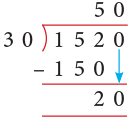
Example 3: The sports teacher is cutting ribbons for the sports medals. How many ribbons of 30 cm length can the teacher get from a roll of ribbon that is 1520 cm long?
Solution:
At first, we divide 1520 by 30.
Here, we ignore the remainder as the question asks for the number of pieces exactly 30 cm in length.
Thus, the teacher will get 50 pieces each of 30 cm length.
Have you ever wondered about time? How we measure days, months, and years? Or why some years have an extra day?
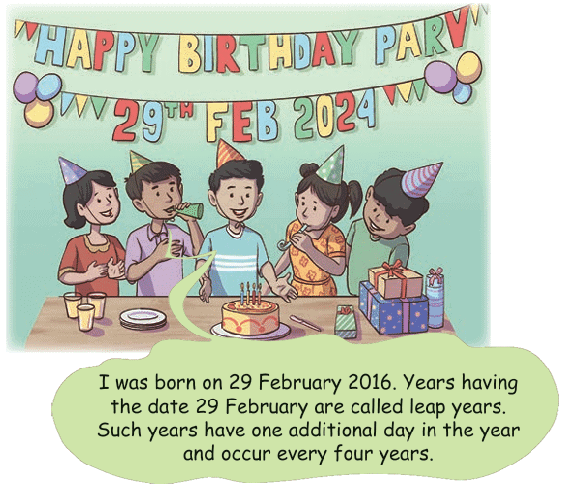
Let’s join Parv, who is celebrating his birthday with his friends, and explore the fascinating world of clocks and calendars!
Parv shares something interesting: “I was born on 29 February 2016. Years having the date 29 February are called leap years. Such years have one additional day in the year and occur every four years.”
Isn’t that cool?
Let’s dive deeper into leap years and how calendars work.
Calendars and Leap Years
Imagine you have a special book that helps you know what day it is, plan events, and remember important dates like birthdays and holidays. This special book is called a calendar!
Days and Months
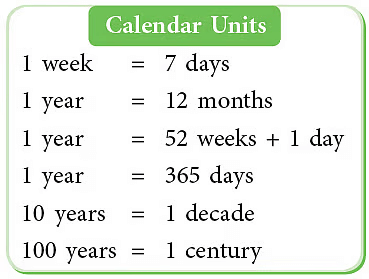
A year has 365 days, but a leap year has 366 days (every fourth year).
In a leap year, February has 29 days instead of 28.
There are 12 months in a year and they may have 28,29,30 or 31 days.
Months with 31 days are: January, March, May, July, August, October, and December.
Months with 30 days are: April, June, September, and November.
February: 28 days (29 days in a leap year).
A year has 52 weeks.
Each week has 7 days:Sunday, Monday, Tuesday, Wednesday, Thursday, Friday, Saturday.
Writing Dates
When we write a date, we first write the number of the day, then the name of the month, and finally the year.
We call this the day-month-year format.
We can use dots or slashes to separate them. For example, if it’s May 6, 2024, we can write it as 6.05.2024 or 6/05/2024.
Examples
If someone tells you to meet them on 25th June, you’ll know it’s the 25th day of June.
On your birthday, your family might write the date like this: 10.12.2013 (10th December 2013) to remember your special day!
Isn’t it cool how the calendar helps us keep track of time and remember special moments?
Try yourself:
What is the special feature of leap years?
A.They have 12 months.
B.They only have February 28.
C.They have 365 days.
D.They have 366 days.
View Solution
Checking Expiry Dates
Have you ever looked at the dates on a biscuit packet or a milk carton? These are important!
Packet of Biscuit showing Manufacturing date
In the given picture, a biscuit packet was manufactured on 02/12/2025 and expires on 01/07/2026.
a) How old is the packet of biscuits?(Assuming today is April 29, 2025)
From Dec 2 to April 29 is roughly 4 months.
b) How many more days are the biscuits safe to eat?
From April 29 to July 1. April has 1 more day (30th). May has 31 days. June has 30 days. July has 1 day.
Total = 1 + 31 + 30 + 1 = 63 days
Months and Years
We know that 12 months equals 1 year.
We can convert 1 year 7 months into just months like this: 1 year is 12 months. Adding 7 months gives us a total of 19 months.
We can also convert 20 months into years and months: 20 months includes 12 months. This leaves us with 8 months, which can be stated as 1 year 8 months.
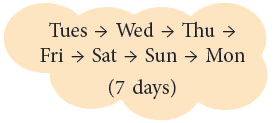
Example 1: If 10 April 2018 was a Tuesday, what was the day on 30 April, 2018?
The same day is repeated after every 7 days. After 10 April, the next Tuesday fell on 17 April and then on 24 April. Therefore, counting ahead from 24 April, 30 April, 2018 was a Monday.
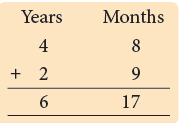
Example 2: Rahul is 4 years 8 months old. His sister Divya is 2 years 9 months elder to him. How old is she?
Divya’ s age = Rahul’s age + 2 years 9 months = 4 years 8 months + 2 years 9 months = 6 years 17 months = 6 years + 12 months + 5 months = 6 years + 1 year + 5 months (12 months = 1 year) = 7 years 5 months.
How many hours in a day?
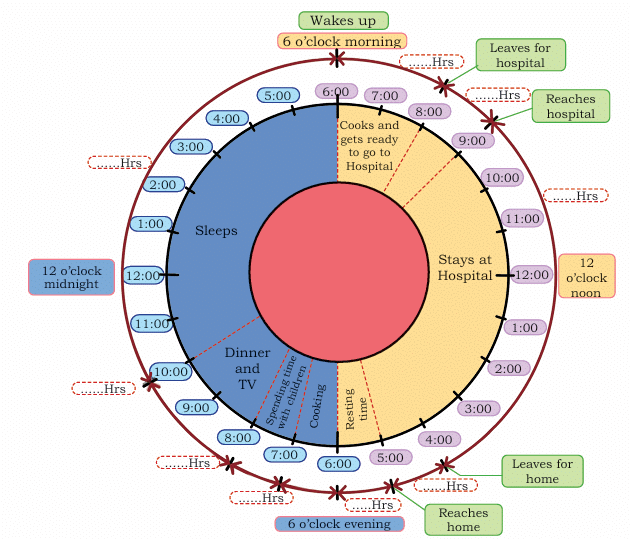
We know days turn into nights, but how long is a full day? Let’s look at a doctor’s schedule to figure it out.
Doctor’s Daily Schedule
Look at the picture above. It shows the time spent on different activities by a doctor.
Let’s try to count the hours:
Wakes up (6 AM) to Leaves for hospital (7 AM): 1 hour
Leaves for hospital (7 AM) to Reaches hospital (8 AM): 1 hour
Stays at Hospital (8 AM to 1 PM, then 2 PM to 5 PM): 5 hours + 3 hours = 8 hours (Assuming 1 hour lunch break)
Leaves for home (5 PM) to Reaches home (6 PM): 1 hour
Reaches home (6 PM) to Resting time (7 PM): 1 hour
Resting time (7 PM) to Cooking (8 PM): 1 hour
Cooking (8 PM) to Spending time with children/Dinner/TV (10 PM): 2 hours
Dinner/TV (10 PM) to Sleeps (12 AM): 2 hours
Sleeps (12 AM to 6 AM): 6 hours
If we add up all the hours from 6 o’clock morning to 6 o’clock morning the next day:
Hmm, let’s re-examine the chart. The chart shows a full circle representing the day.
The chart visually represents a 24-hour cycle.
From 6 o’clock morning to 6 o’clock evening is 12 hours. From 6 o’clock evening back to 6 o’clock morning the next day is another 12 hours.
The total number of hours in a day is 12 + 12 = 24 hours.
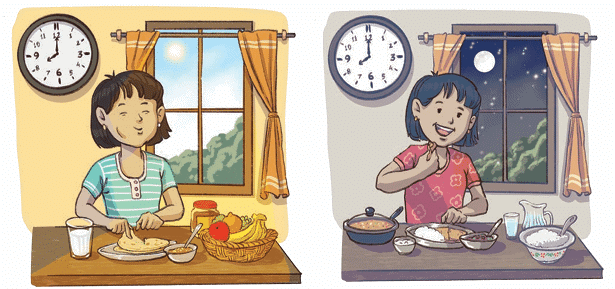
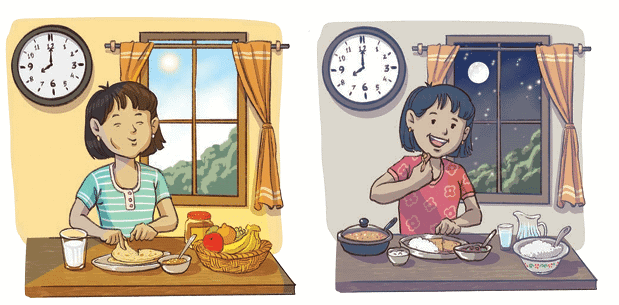
Look at the two pictures! In both of them, the clock shows 8:00, but something is different. One shows a girl having breakfast in the morning and the other shows a girl having dinner at night.
So how do we know whether it’s morning or night?We use AM and PM!
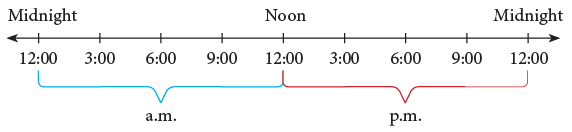
AM means morning time (from midnight to lunchtime).
PM means evening and night time (from lunchtime to midnight).
So:
8:00 AM = Morning = Breakfast time
8:00 PM = Night = Dinner time
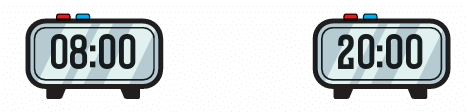
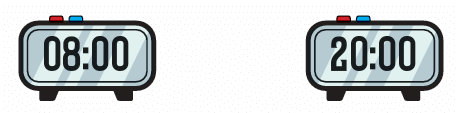
Now look at the digital clocks:
08:00 means 8:00 in the morning (AM).
20:00 means 8:00 in the evening (PM). This is called 24-hour time.
To change PM time into 24-hour time, we add 12 to the number. So 8 PM = 8 + 12 = 20:00
Understanding more about A.M. and P.M. Time
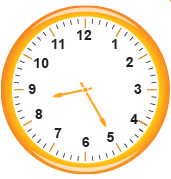
The time shown on the clock given alongside is 8:25, but we are not able to determine whether it is 8:25 in the morning or evening.
A day consists of 24 hours.
In a 12-hour clock system, the hour hand makes two complete rotations around the clock face.
This means that the same time appears twice a day.
To tell the difference between these times, we use a.m. and p.m..
a.m. stands for ante meridian, which refers to the time from midnight until noon.
p.m. stands for post meridian, covering the time from noon until midnight.
For example, 8:25 in the morning is written as 8:25 a.m.
The same time in the evening is expressed as 8:25 p.m.
Note: A day begins at 12 midnight and ends at 12 midnight of the following day.
Try yourself:
What does a.m. stand for?
A.Ante meridian
B.After midday
C.Any moment
D.All morning
View Solution
Digital Clocks and the 24-Hour Format
In both the pictures we see 8:00 on the clock. But one is morning and the other is night time. We add AM and PM to show this difference.
Digital clocks help us read the time more clearly.
Here are some units for measuring time:
24-Hour Time Notation
We have already learned about the 24-hour clock in Class 3.
The 24-hour time system is also known as the “24-hour clock”.
This clock shows the time from 12 midnight to 12 midnight the next day, covering 1 full day.
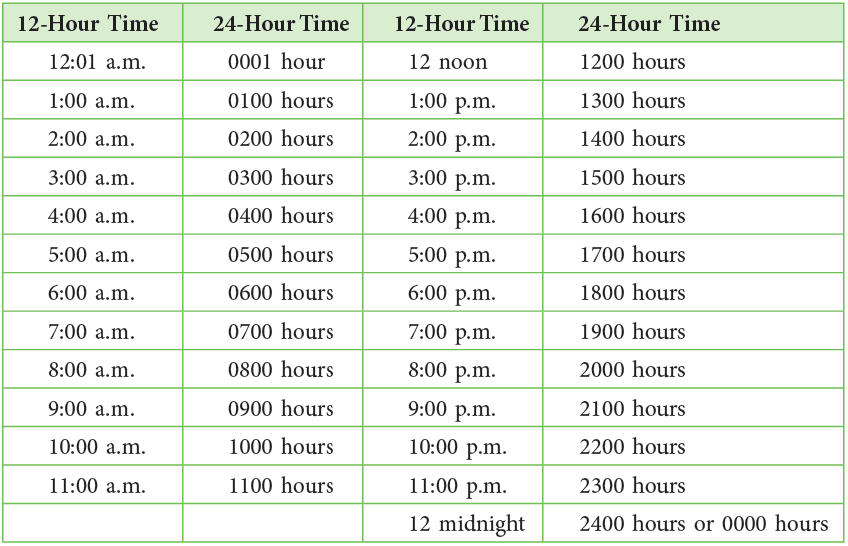
The time is written as 0000 hours to 2400 hours.
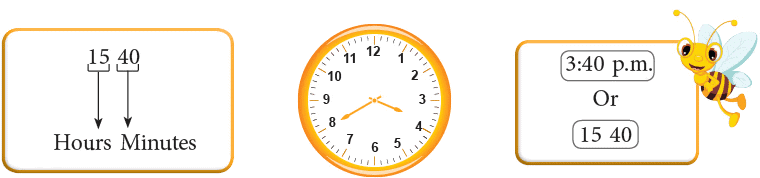
In this format, the first two digits indicate the hours, while the last two digits show the minutes.
The table given below shows the 24-hour time equivalent to12-hour time:
Thus,
8:35 a.m. = 0835 hours;
3:15 p.m. = 1515 hours;
11:40 a.m. = 1140 hours;
11:50 p.m. = 2350 hours.
Hours and minutes
How long does an activity take? We measure this using hours and minutes.
Raghav brings milk from the market every morning.
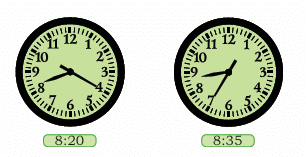
Raghav leaves home at 8:20 AM and returns back at 8:35 AM.
How much time has he taken?
From 8:20 AM to 8:35 AM, the hour hasn’t changed, only the minutes.
The difference in minutes is 35 – 20 = 15 minutes.
He has taken 15 minutes.
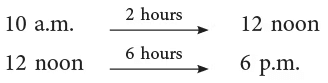
Example 3: Mr Verma’s office starts at 10 a.m. and closes at 6 p.m. How many hours does the office remain open?
Thus, Mr Verma’s office remains open for 2 hours + 6 hours = 8 hours.
Example 4: Find the time using a 24-hour clock. (a) 4 hours 25 minutes after 2040 hours (b) 8 hours 15 minutes before 2:35 p.m.
(a) Add 4 hours 25 minutes to 2040 hours to find the required time. 20 h 40 min + 4 h 25 min = 24 h 65 min = 24 h + 1 h + 5 min = 1:05 a.m. (It becomes next day.) 1 h 5 min after 12:00 midnight. (b) 2:35 p.m. = 1435 hours = 14 h 35 min ∴ Required time = 14 h 35 min – 8 h 15 min = 6 h 20 min = 0620 hours or 6:20 a.m.
Remember, time is precious! Keep exploring clocks and calendars – they are everywhere around us, helping us keep track of our wonderful journey through life!
Have you ever noticed how a butterfly’s wings look exactly the same on both sides? Or how folding a paper heart in half makes two parts that match perfectly? This perfect balance is called symmetry, and it’s everywhere around us!
We see it in beautiful rangoli patterns, colourful masks, intricate bead strings, and even in the design of large buildings. In your earlier classes, you might have already played with symmetrical shapes while making crafts.
In this chapter, we’re going on an exciting journey to explore the world of symmetry in more detail.
What is Symmetry?
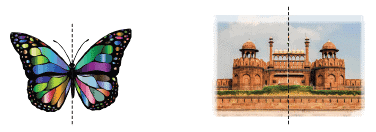
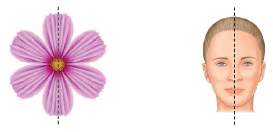
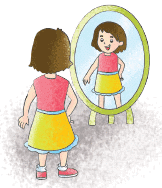
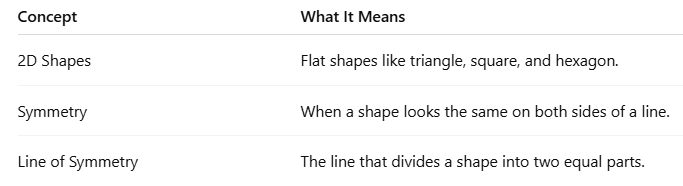
Symmetry is like looking in a mirror! A shape or an object is considered symmetrical if you can draw an imaginary line through its center, dividing it into two halves that are exact mirror images of each other.
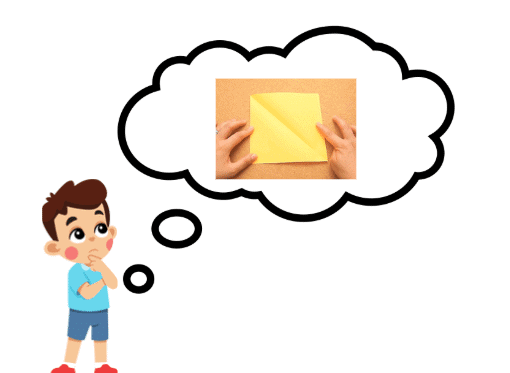
Think about your own body – if you imagine a line running straight down from the top of your head to your feet, your left side is very similar to your right side. This imaginary dividing line is called the Lineof Symmetry or sometimes the Axis of Symmetryor Mirror Line. If you fold a symmetrical shape along its line of symmetry, the two halves will match up perfectly, covering each other exactly without any parts sticking out.
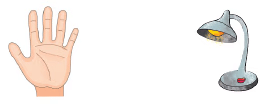
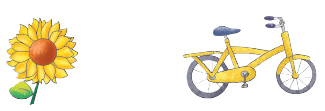
What do you think are all objects symmetrical?No, some objects like the ones given below are not symmetrical. They are called non-symmetrical objects or things.
1. Ink Design
Let’s create some beautiful symmetrical patterns using just paper and paint! This is a fun way to see symmetry in action.
Step 1:Take a sheet of paper and carefully fold it exactly in half. Make a nice crease along the fold.
Step 2:Open the paper up. Now, sprinkle a few drops of watery paint or ink right onto the center of the fold line.
Step 3: Fold the paper back in half along the same crease, and gently press down to spread the paint evenly between the two halves.
Step 4: Carefully open the paper again. Look at the amazing design you’ve created!
You created a symmetrical pattern — a design where both halves match each other perfectly. You can now find and draw the line of symmetry — the line that divides the pattern into two equal halves.
2. Making a paper airplane
Making a paper airplane is not just fun, it’s also a great way to see symmetry!
Let’s follow the steps shown in the pictures below to fold one.
As you fold the paper, especially in the early steps where you fold it in half lengthwise, you create a line of symmetry.
Look closely at the plane after steps 3, 4, and 5. Can you see the line of symmetry running down the middle? This line ensures that both sides of the airplane (the wings) are identical, which helps it fly straight and balanced.
This activity teaches us that symmetry is important for balance and function. By making a paper airplane, we learn how folding equally on both sides creates a symmetrical shape, which helps the plane fly smoothly. It shows that symmetrical designs are more stable and work better, and helps us understand symmetry not just in shapes, but in real-life objects too.
3. Holes and Cuts
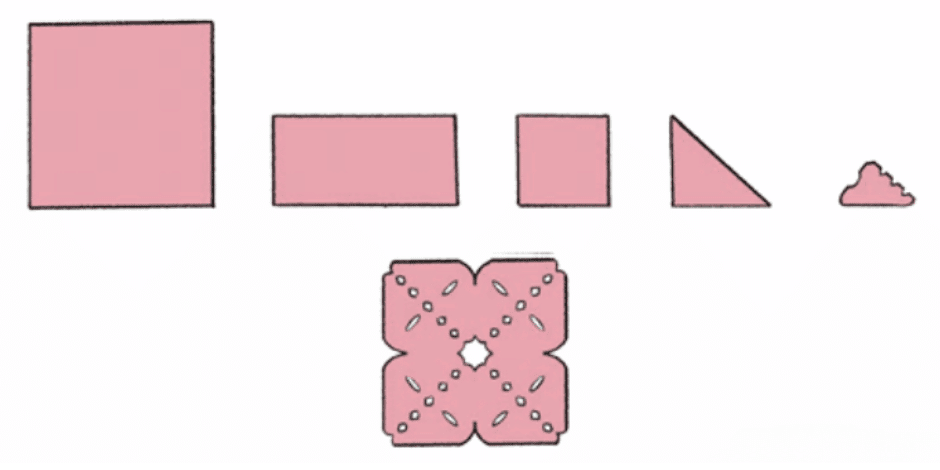
Mini made some cool shapes by folding and cutting paper.Different shapes made by Mini
Now it’s your turn to become a paper-cutting artist like Rani!
What Rani Did:
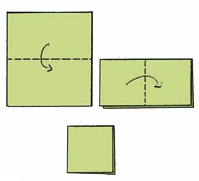
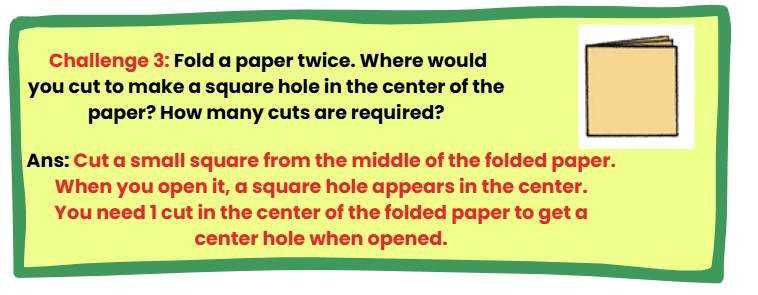
1. She took a square paper.
2. Folded it twice:
First in half from left to right.
Then in half from top to bottom.
3. Then she cut out small shapes from the folded paper — at the corners and edges.
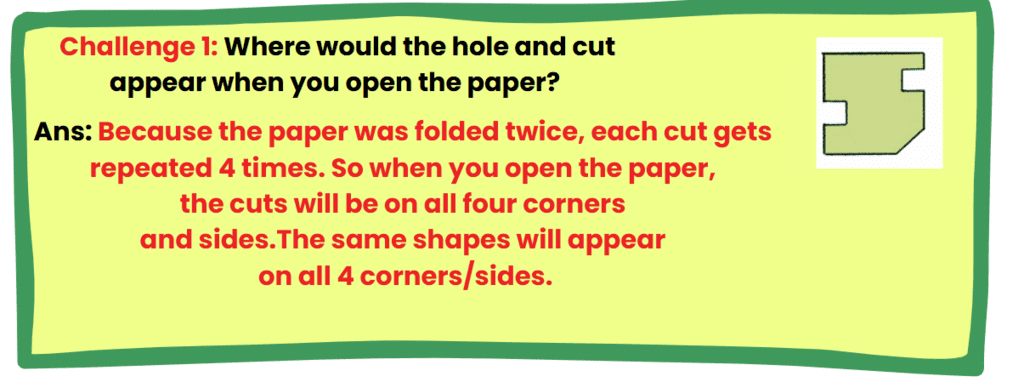
When she opened the paper, the same shape appeared on all 4 sides!
Why? Because the paper was folded — so one cut made many shapes appear!
Lines of Symmetry in Shapes
We’ve seen symmetry in ink blots and paper folding, but many basic geometric shapes also have lines of symmetry. Remember, a line of symmetry divides a shape into two identical halves that mirror each other.
Some shapes have one line of symmetry, some have multiple lines, and some have none at all!
One Line of Symmetry:Think of an isosceles triangle (a triangle with two equal sides) or a human face. You can usually draw one line down the middle.
Example: An isosceles triangle has only one line of symmetry.
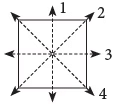
Multiple Lines of Symmetry:A square has four lines of symmetry (one vertical, one horizontal, and two diagonal). An equilateral triangle (all sides equal) has three lines of symmetry. A circle has infinite lines of symmetry – any line passing through its center will divide it into two identical semicircles!
Example: A square has four lines of symmetry.
Try yourself:
What does symmetry involve?
A.Uneven designs
B.Irregular patterns
C.Different shapes
D.Identical halves
View Solution
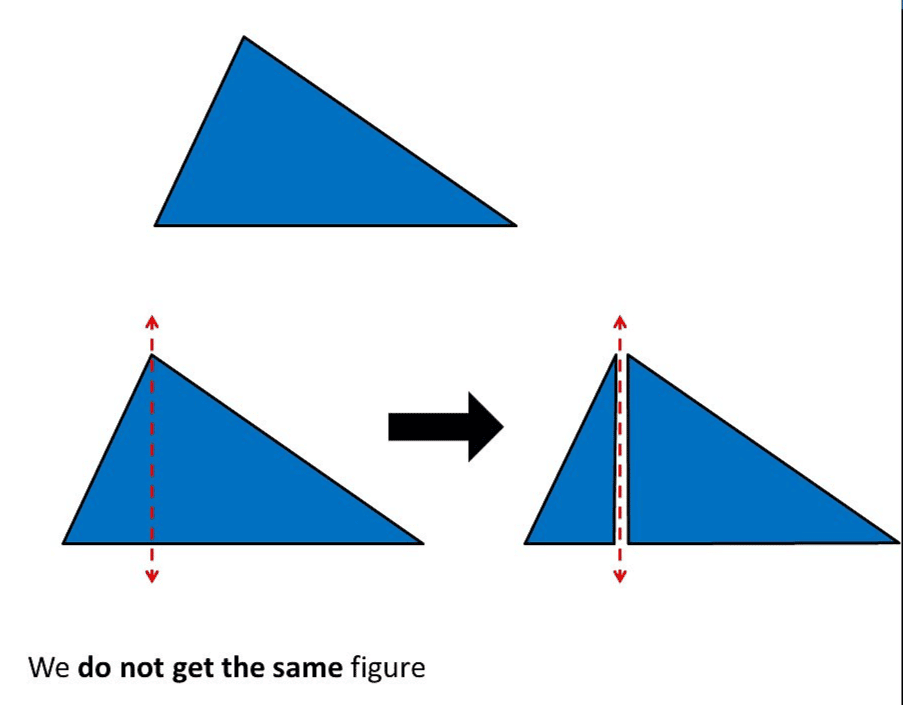
No Lines of Symmetry:A scalene triangle (all sides different lengths) or a parallelogram generally have no lines of symmetry.
Example: A scalene triangle has no line of symmetry.
Mirror Images and Reflection
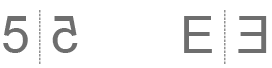
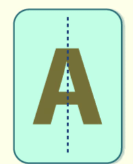
When you look into a mirror, you see your reflection. The mirror image is the reflection of the image. We can see that a symmetrical shape can be split in half by the line of symmetry. If we put a small mirror on the dotted line, we will see the whole shape. Thus, you can see that a shape has line symmetry when one half of it is the mirror image of the other half. Thus, reflectional symmetry is also known as mirror symmetry. Look at the reflection of some numbers and letters.
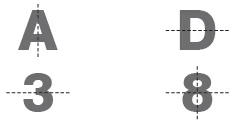
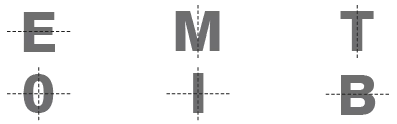
Symmetry in Letters and Numbers
Here are some capital letters and numbers which have lines of symmetry. However, there are some letters and numbers which are not symmetrical.
Geometrical Patterns Based on Symmetry
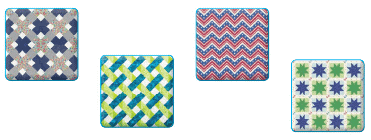
Rangoli patterns are drawn as decorations during the festival of Diwali. The pictures given here show two such patterns. Now, look at the following patterns.
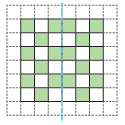
This pattern is symmetrical.
It can be folded in half, so all the lines and colours in each half fit exactly on top of each other.
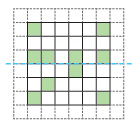
Quilt patterns based on symmetry. This pattern is not symmetrical.
When it is folded in half, some of the lines and colours do not match.
Try yourself:
What is another name for reflectional symmetry?
A.Color symmetry
B.Mirror symmetry
C.Line symmetry
D.Shape symmetry
View Solution
Tiles at the Tile Shop
Welcome to Bablu Chacha’s Tile Shop! In this fun and colorful topic, you will explore how to make beautiful tile patterns using different shapes.
What Are Tiles?
Tiles are small flat pieces used to decorate walls and floors. They often come in repeating patterns made using shapes. In this activity, you’ll become a tile designer and create patterns just like the ones you see in homes and shops!
Look at the Tiles
Observe the tile designs given above. You’ll see many creative tiles made from different shapes. Try to identify the shapes used — like hexagons, triangles, and squares.
Make Your Own Tiles
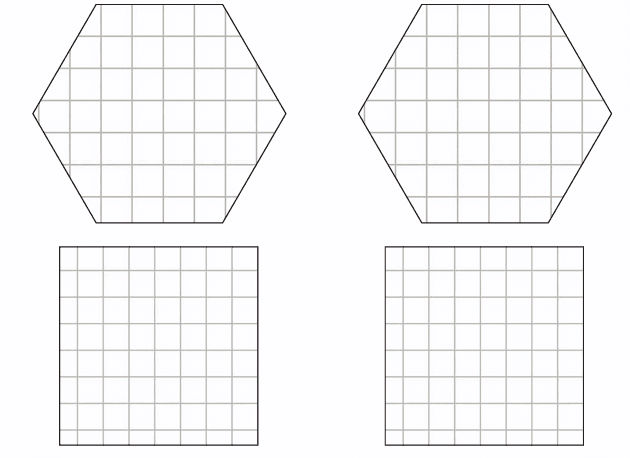
Use the blank hexagon and square grids to draw your own tile patterns. You can:
Use colored pencils or a geometry kit.
Repeat shapes to create a design.
Mix and match different shapes to make it look unique.
Find the Symmetry
After designing your tile, look for lines of symmetry — if you draw a line in the middle, both sides should look the same. If they do, your tile is symmetrical!
Join Tiles Without Gaps
Use the square grids at the bottom to combine two or more tiles. Make sure the tiles fit together perfectly, with no gaps or overlaps. This is how real tile floors are made!
To Summarise:
Some Solved Examples
Example 1: Does the capital letter A have a line of symmetry?
Sol: Yes! If you draw a vertical line down the middle of the letter A, both sides are the same.
Example 2: Choose the shape with no line of symmetry: Circle, Rectangle, Irregular Leaf, Square
Sol: An irregular leaf is not the same on both sides when folded — it has no symmetry.
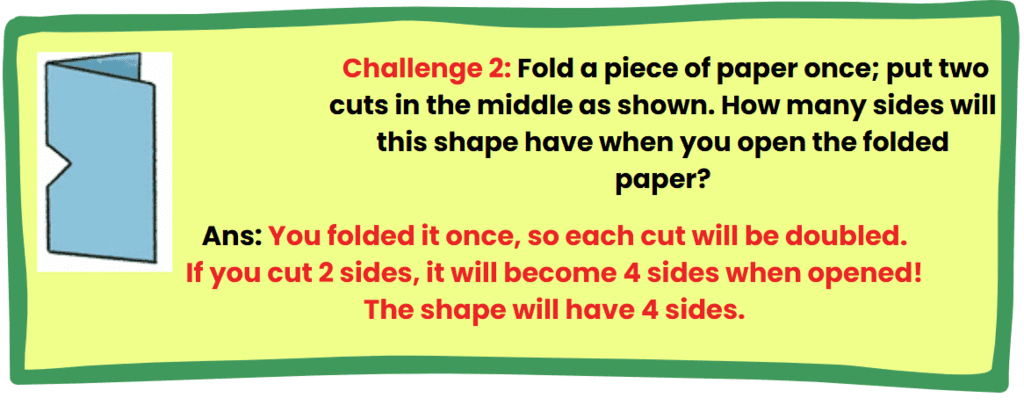
Example 3: Raju folded a square paper and cut a triangle on the fold. When he opened it, what did he see?
Sol: He saw two identical triangles on opposite sides — a symmetrical pattern across the fold line.
In this chapter, we will explore the fascinating world of numbers through the lens of wildlife conservation. India is home to some of the most magnificent endangered animals – elephants, tigers, and leopards. As we learn about these majestic creatures, we’ll also discover interesting mathematical concepts like number patterns, addition techniques, and place value.
Let’s begin our adventure with elephants, tigers, and leopards while sharpening our mathematical skills!
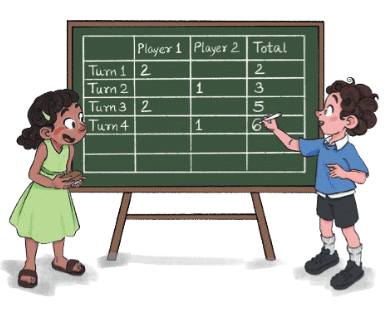
NIM Game (2 Player Game)
The NIM Game is a fun and easy math game where two players take turns adding numbers to reach a target number. In this version, the target number is 10.
How to Play:
Player 1 starts the game by choosing either 1 or 2.
Player 2 then chooses 1 or 2, and adds it to Player 1’s number.
Players keep taking turns, adding 1 or 2 to the total.
The player who makes the total reach exactly 10 is the winner.
Example:
Player 1 starts with 1.
Player 2 adds 2 → total becomes 3.
Player 1 adds 1 → total becomes 4.
Player 2 adds 2 → total becomes 6.
Player 1 adds 2 → total becomes 8.
Player 2 adds 2 → total becomes 10 and wins!
Addition Chart
Mathematics is full of patterns! Let’s explore some fascinating patterns in addition.
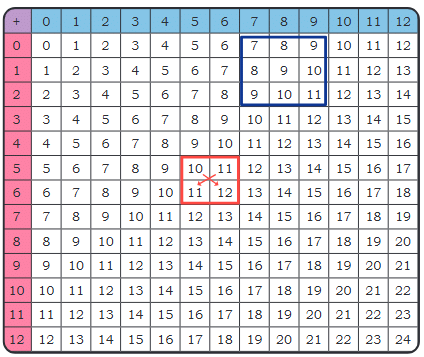
This is an Addition Chart. It helps you add numbers quickly and spot interesting patterns in math.
How to Use It:
Look at the pink numbers on the left and the blue numbers on the top.
These are the numbers you want to add.
To find the answer, go across the row and down the column — where they meet is your answer!
Example: To add 3 + 4:
Find 3 on the left (pink row).
Find 4 at the top (blue column).
Where they meet, the number is 7. So, 3 + 4 = 7
What Can You Discover?
1. Patterns in the Chart
The numbers go up by 1 in each row and each column.
The diagonal from top left to bottom right shows: 0, 2, 4, 6, 8, 10… These are even numbers — a fun pattern!
2. Find the Number 9
Look carefully — how many times can you see 9 in the chart?
You will find 4 nines:
0 + 9
1 + 8
2 + 7
3 + 6 And also 4 + 5
This shows there are many ways to make the same number by adding different numbers!
3. Even and Odd Patterns
Some rows and columns show even numbers (like 2, 4, 6…).
Some show odd numbers (like 1, 3, 5…).
When you add:
Even + Even = Even
Odd + Odd = Even
Even + Odd = Odd
Try yourself:
What is the target number players aim to reach in the NIM Game?
A.7
B.10
C.12
D.5
View Solution
Reverse and Add
Let’s play with numbers in a different way! What happens when we reverse digits and add them?
a) Take a 2-digit number say, 27. Reverse its digits (72). Add them (99). Repeat for different 2-digit numbers.
Example:
27 → Reverse → 72
27 + 72 = 99
Try with other numbers:
36 → Reverse → 63
36 + 63 = 99
b)Can we get a 3-digit sum? What is the smallest 3-digit sum that we can get?
Let’s try:
45 + 54 = 99 (not 3 digits)
46 + 64 = 110 (3 digits!)
50 + 05 = 55 (not 3 digits)
So the smallest 3-digit sum we can get is 100, from adding 19 + 81 or 29 + 92 or 39 + 93, etc.
How Many Animals?
India is rich in biodiversity. It is home to some of the endangered wildlife, like elephants, tigers and leopards.
Elephant Population
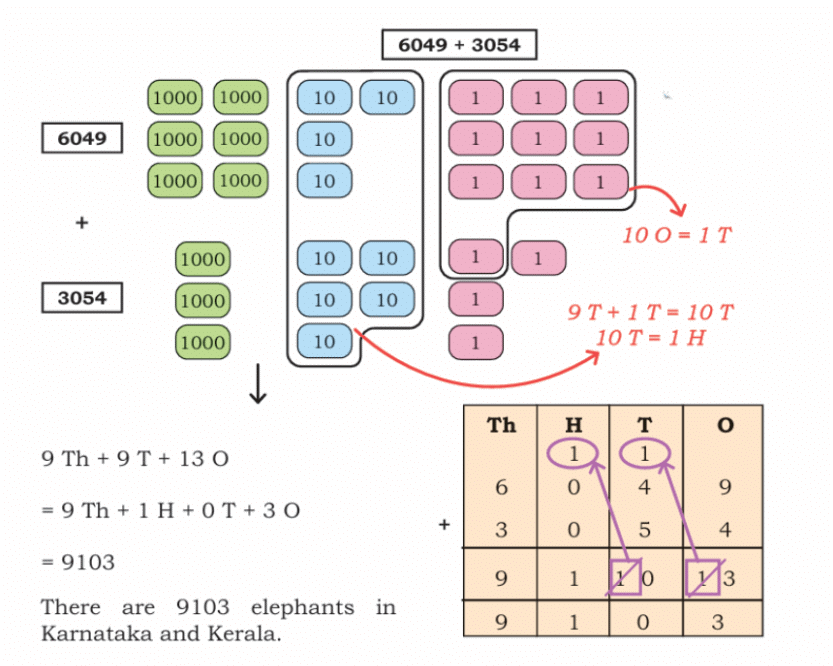
The population of elephants in Karnataka is 6049 and in Kerala is 3054. How many total elephants are there in these two states?
Sol: 6049 + 3054
= 9 Th + 9 T + 13 O
= 9 Th + 1 H + 0 T + 3 O
= 9103
There are 9103 elephants in Karnataka and Kerala.
This activity teaches you how to add large numbers using place value and regrouping (carrying).
You add numbers starting from the ones place, then move to tens, hundreds, and thousands.
If the sum in one place is 10 or more, you carry to the next place.
Place value blocks help you understand how numbers group together (like 10 ones = 1 ten).
Leopard Population
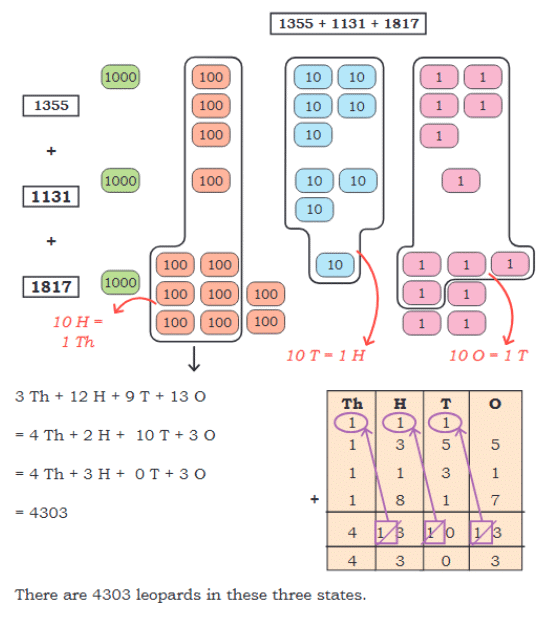
The highest number of leopards are found in three states. Gujarat has 1355, Karnataka has 1131 and Madhya Pradesh has 1817. How many total leopards are there in these states?
Sol: 1355 + 1131 + 1817
= 3 Th + 12 H + 9 T + 13 O
= 4 Th + 2 H + 10 T + 3 O
= 4 Th + 3 H + 0 T + 3 O
= 4303
There are 4303 leopards in these three states.
More or Less?
We are going to learn how to subtract big numbers using place value blocks and regrouping (borrowing).
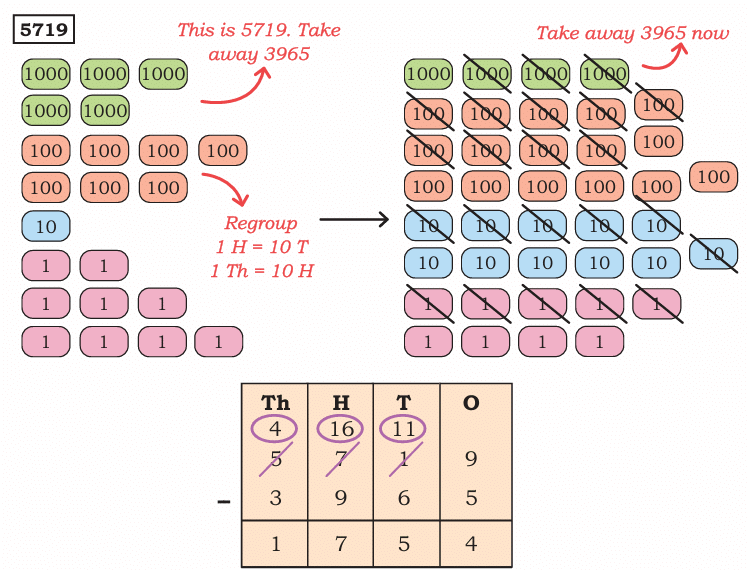
1. Assam has 5719 elephants. It has 3965 more elephants than Meghalaya. We want to find out how many elephants are in Meghalaya.
To find this, we do: 5719 − 3965 = ?
Sol: We use place value blocks to show the numbers:
Thousands (Th)
Hundreds (H)
Tens (T)
Ones (O)
Step 1: Start from Ones
9 − 5 = 4 → No borrowing needed.
Step 2: Go to Tens
We have 1 ten but need to take away 6 tens.
So, we borrow 1 hundred → now we have 11 tens.
Step 3: Subtract Hundreds
After borrowing, hundreds change from 7 to 6
But 6 − 9 is not possible → borrow 1 thousand.
Step 4: Subtract Thousands
After borrowing, subtract easily
So, we finally get:5719 − 3965 = 1754
That means there are 1754 elephants in Meghalaya.
Try yourself:
What is the smallest 3-digit sum that can be obtained by reversing and adding numbers?
A.110
B.99
C.100
D.105
View Solution
ConclusionIn this chapter, we went on a math safari with elephants, tigers, and leopards! We used real information about animals in India to learn how to:
Add and subtract big numbers
Use place value to solve problems
Play with number patterns and reversing digits
Think ahead using strategy games like NIM
We also learned how math helps in real life, like counting animals and understanding data about wildlife.
So next time you see a number, a tiger fact, or even a puzzle — remember: Math is not just in books… it’s all around us!
Some Solved Examples
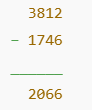
Example 1: There were 3812 parrots in a sanctuary. After migration, 1746 parrots flew away. How many parrots are still there?
Sol:
2066 parrots are still in the sanctuary.
Example 2: Find a 2-digit number and its reverse that give a 3-digit sum.
Sol: Try: 46 and 64 46 + 64 = 110 → This is a 3-digit number.
Example 3: Look at this number pattern: 5, 10, 15, ___, 25, ___ Fill in the blanks.
Sol: The pattern increases by 5. So, missing numbers are: 20 and 30.
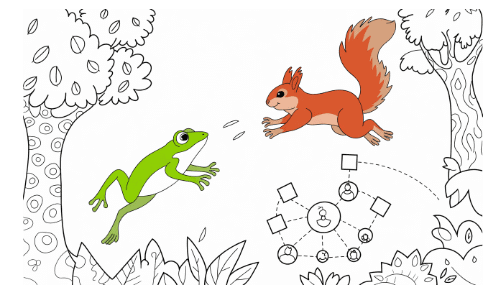
Leo, the Lion loved visiting the watering hole, not just for a drink, but to watch his friends play! One sunny afternoon, Freddy the Frog, Squeaky the Squirrel, and Rosie the Rabbit decided to have a jumping race towards a big, juicy mango that had fallen from a tree.
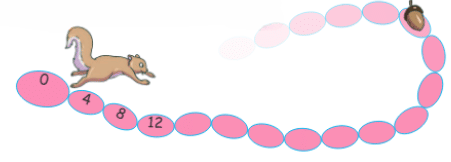
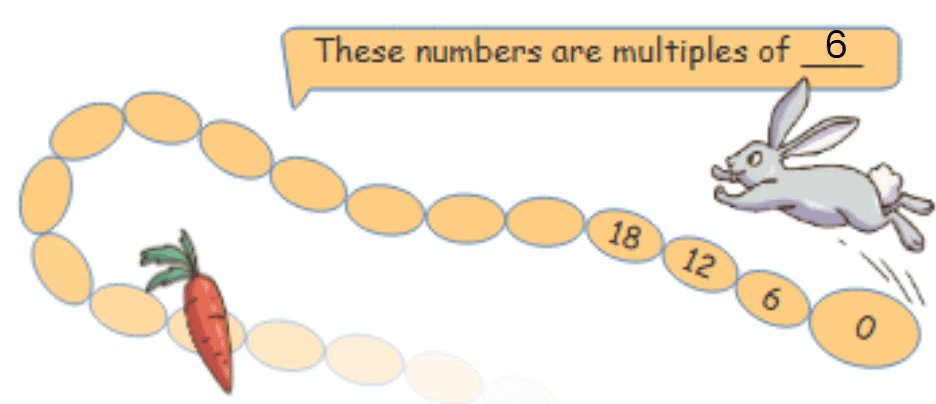
Freddy decided he would take big jumps, covering 3 steps each time. Squeaky, being smaller, took jumps of 4 steps. Rosie, with her long legs, decided on jumps of 6 steps.
“Who will reach the mango first?” wondered Leo. “And what spots will they land on along the way?”
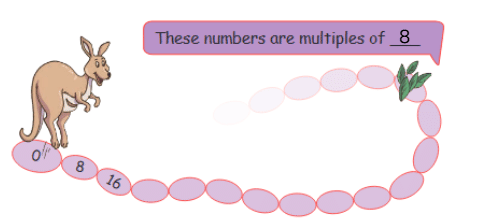
Just like Leo watching his friends, this chapter will help us explore how things move or are grouped in equal steps. We will learn about multiples, multiplication, and division by looking at animal jumps, arranging flowers, and even solving some magical number puzzles! Let’s jump in!
Understanding Equal Groups and Multiples
When we talk about “equal groups,” we mean sets that have the same number of items. Think about pairs of shoes (groups of 2), or eggs in a carton (maybe groups of 6 or 12). Understanding equal groups helps us count things faster using multiplication and share things fairly using division.
Multiplication is like making several equal jumps.
Division is like figuring out how many equal jumps were made or how many are in each jump.
Animal Jumps
Let’s go back to Leo’s friends and see where they land! This helps us understand multiples.
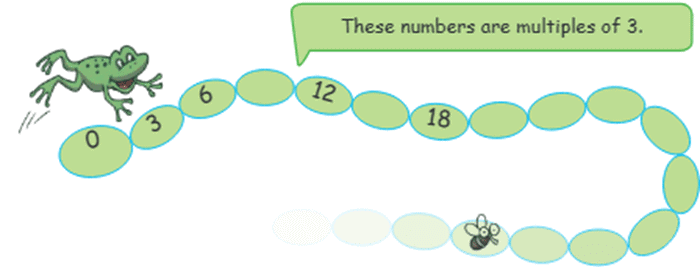
Frog Jumps (3 Steps)
Freddy the Frog jumps 3 steps at a time.
Frog jumping on a number line showing multiples of 3.
Sometimes, different animals land on the same spot! These numbers are called common multiples.
Frog (3) and Squirrel (4): Which numbers do they both touch?
Looking at their lists, they both land on 12, 24, 36, … These are common multiples of 3 and 4.
Rabbit (6) and Kangaroo (8): Which numbers do they both touch?
They both land on 24, 48, 72, … These are common multiples of 6 and 8.
Gulabo’s Garden
1. Gulabo has a garden full of lily flowers. She tells us that:
Each lily flower has 3 petals.
She has 12 lily flowers.Gulabo’s Garden
We want to find:
How many petals in 12 lily flowers?
Sol: Each flower = 3 petals So, if we have 12 flowers, we do:
12 × 3 = ?
OR
We can break it into two parts:
10 flowers × 3 petals = 30 petals
2 flowers × 3 petals = 6 petals
Now, add them: 30 petals + 6 petals = 36 petals
Gulabo has 36 petals in 12 lily flowers!
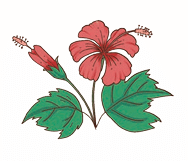
2. Now Gulabo counts her hibiscus flowers. She knows:
Each hibiscus flower has 5 petals.
She counted 80 petals in total.
We want to find:
How many flowers does she have?
Sol: This is a division problem: 80 ÷ 5 = ?
Now think: How many groups of 5 fit into 80?
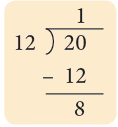
We can divide:
Gulabo has 16 hibiscus flowers.
Try yourself:
How many steps does Freddy the Frog jump at a time?
A.6 steps
B.2 steps
C.4 steps
D.3 steps
View Solution
The Doubling Magic
Doubling means multiplying by 2.
Magician Anvi doubling flowers. Anvi starts with 23 flowers.
Abracadabra! She doubles them.
Now she has 23 x 2 = 46 flowers.
Note: When you double any whole number, the result is always an even number. The ones digit of a doubled number can only be 0, 2, 4, 6, or 8. You can never get 1, 3, 5, 7, or 9 in the ones place after doubling a whole number.
Filling a multiplication chart reveals many patterns!
Symmetry: Row 7 (7, 14, 21…) is the same as Column 7 (7, 14, 21…). This is because multiplication is commutative (a x b = b x a).
Even Rows: Rows 2, 4, 6, 8, 10 contain only even numbers because you are multiplying by an even number.
Odd Rows: Rows 1, 3, 5, 7, 9 contain a mix of odd and even numbers (Odd x Odd = Odd, Odd x Even = Even).
Ones Digit Patterns: Look at the last digit in each row.
For example, in row 8: 8, 16, 24, 32, 40, 48, 56, 64, 72, 80. The ones digits are 8, 6, 4, 2, 0, 8, 6, 4, 2, 0… a repeating pattern!
Multiples of Tens
Let’s understand how multiples of tens work using some examples!
1. Counting Wheels in Tricycles
A tricycle has 3 wheels.
If we want to count the wheels in 10 tricycles, we can do this by multiplying:10×3=30 wheels in 10 tricycles.
If we want to count the wheels in 20 tricycles, we multiply:20×3=60wheels in 20 tricycles.We can also break it down like this:10×3=30 and 10×3=30 so 30+30=60.
2. Counting Wheels in Cars
Now, let’s think about cars. Each car has 4 wheels.
If we want to count the wheels in 10 cars, we multiply:10×4=40 wheels in 10 cars.
If we want to count the wheels in 30 cars, we can do:30×4=120wheels in 30 cars.This can also be broken into smaller steps:10×4=40,10×4=40,10×4=40Then:40+40+40=120
What Happens When the Number of Groups is a Multiple of 10?
When we have a multiple of 10 (like 10, 20, 30, etc.) in the problem, it simply means that we are counting in big groups. It is easier to multiply by 10 or its multiples because the pattern is simple, and the answer increases by 10, 20, 30, etc. each time!
Multiplying using 10s
Think of 18 as 10 + 8.
10 boxes have 4 cupcakes in each. So, 10 x 4 = 40.
8 boxes have 4 cupcakes in each. So, 8 x 4 = 32.
⇒ (10 x 4) + (8 x 4)
⇒ 40 + 32 = 72
Division
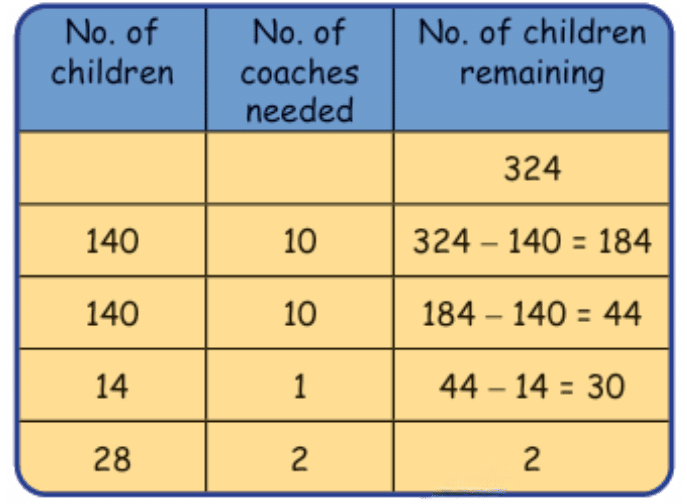
1. A factory has ordered 58 wheels for the small tempos that they make. Each tempo has 3 wheels. In how many tempos can they fix the wheels?
Sol: We will divide 58 ÷ 3 — because we are sharing 58 wheels into groups of 3.
We will start by subtracting groups of 3 wheels (each group makes one tempo) until we use up most of the wheels.
Step 1:
We know:
10 tempos need 10×3=30 wheels.
So,
After making 10 tempos, 30 wheels are used.
Wheels left:58−30=28 wheels left.
Step 2:
We know:
5 tempos need 5×3=15 wheels.
So,
After making 5 more tempos, 15 wheels are used.
Wheels left:28−15=13 wheels left.
Step 3:
We know:
3 tempos need 3×3=9 wheels.
So,
After making 3 more tempos, 9 wheels are used.
Wheels left:13−9=4 wheels left.
We know:
1 tempo needs 1×3=3 wheels.
So,
After making 1 more tempo, 3 wheels are used.
Wheels left:4−3=14−3 =1 wheel left.
No! Because 1 wheel is not enough to make a tempo (we need 3 wheels per tempo).
Try yourself:
What happens when you double any whole number?
A.The result is always an odd number.
B.The result is always an even number.
C.The result can be either odd or even.
D.The result is always a prime number.
View Solution
2. A dairy farm has many cows. Chippi the lizard is surprised to see 88 legs. How many cows are there in the farm?
Sol: Each cow has 4 legs. So we divide:
88÷4=Number of cows
Let’s take away groups of 10 cows at a time:
Each group of 10 cows has:
10×4=40 legs
Now subtract from the total:
88−40=48 legs left
Take out another group of 10 cows:
10×4=40 legs
48−40=8 legs left
Now use 2 more cows (2 × 4 = 8 legs)
8−8=0 legs left
Multiples of 100
When you multiply by hundreds, you are doing a small multiplication first, and then adding two zeros.
Example 1: 2 people on each bike
If there are 100 bikes and each bike has 2 people:
100 × 2 = 200 people
If there are 200 bikes:
200 × 2 = 400 people
How did we find it? First, multiply 2 × 2 = 4 and then add two zeros → 400
When multiplying numbers like 100, 200, 500:
First multiply the number without zeros (like 1, 2, or 5) with the given number.
Then add the two zeros from 100.
More Multiplication
1. Big electric autorickshaws run in small towns of India and can carry 8 passengers. How many people can travel in 125 such autos in a single round?
Sol: Let’s break 125 autos into parts we can easily multiply:
100 autos
20 autos
5 autos
We will multiply each by 8 passengers.
100 autos × 8 passengers = 800 passengers
20 autos × 8 passengers = 160 passengers
5 autos × 8 passengers = 40 passengers
125 electric autorickshaws can carry 1000 people in a single round!
2. Kahlu and Rabia are potters and make earthen pots (kulhad) for trains. They pack 6 kulhads in a box and have packed 174 boxes for delivery. How many kulhads have they made? The total number of kulhads is ________.
Sol: Split 174 into parts:
100 boxes
70 boxes
4 boxes
Each box has 6 kulhads.
100 × 6 = 600 kulhads
70 × 6 = 420 kulhads
4 × 6 = 24 kulhads
Kahlu and Rabia have made 1044 kulhads in total!
More Division
Imagine there are 108 people standing near a river. They all want to cross the river using 9 boats. Each boat must carry the same number of people. So, the question is: How many people should sit in each boat?
Ans: 108 people need to go in 9 boats.
To find out how many people in 1 boat, we divide:
Suppose we put 5 people in each boat.
5 × 9 = 45 people are now sitting.
But 108 is a much bigger number. So we add 5 more people to each boat (5 + 5 = 10 people in each boat).
10 × 9 = 90 people are now sitting.
Still, some people are left!
108 – 90 = 18 people are still waiting.
We now share the 18 people among the 9 boats.
18 ÷ 9 = 2 more people for each boat.
So, now each boat will carry:
10 + 2 = 12 people.
Try yourself:
How many kulhads did Kahlu and Rabia make in total?
A.1044
B.1200
C.600
D.420
View Solution
Patterns in Division
Imagine you and your two friends (total 3 children) get some money, and you have to share it equally.
₹30 shared equally among 3 children:
30 ÷ 3 = 10
Each child gets ₹10.
₹900 shared equally among 3 children:
900 ÷ 3 = 300
Each child gets ₹300.
Some Solved Examples
Example 1: What are the first 5 multiples of 7?
Sol: We multiply 7 by 1, 2, 3, 4, and 5.
7 x 1 = 7
7 x 2 = 14
7 x 3 = 21
7 x 4 = 28
7 x 5 = 35
The first 5 multiples of 7 are 7, 14, 21, 28, and 35.
Example 2: Find the first two common multiples of 2 and 5.
In Grade 3, we learned about measuring weight and capacity. We explored the 1 kilogram salt packet and the 1 litre bottle. Now, let’s dive deeper into understanding how to measure weight and capacity in our everyday lives.
Fun at Vegetable Market!
Rita and Shabnam went to the market to buy some fruits and vegetables. They saw the vegetable seller weighing vegetables. What do you think will be the weight of the half pumpkin?
Sol: If the whole pumpkin weighs, say, 4 kilograms, then the half pumpkin would weigh:
42=2 kilograms
So, if you know the full weight, you can divide it by 2 to get the weight of the half.
Weight and capacity measurements are essential skills that help us in many daily activities. From cooking in the kitchen to shopping at the market, these measurements allow us to understand quantities and make comparisons between objects.
Understanding Weight
In our daily lives, we often need to compare the weights of different objects. When we look at objects around us, we can sometimes tell which one is heavier just by looking at them. For example, an elephant is clearly heavier than a dog. But sometimes, it’s not so obvious, and we need to use tools to help us compare weights.
Estimating Weights
Estimation is an important skill that helps us make reasonable guesses about the weight of objects without actually measuring them.
By developing this skill, we can become better at understanding weights in our everyday life.
When estimating weights, think about similar objects whose weights you already know. For example, if you know that an apple weighs about 150 grams, you can use this knowledge to estimate the weight of an orange.
Grams and Kilograms
We use different units to measure weight depending on how heavy an object is. The two main units we use are:
Gram (g): Used for measuring lighter objects
Kilogram (kg): Used for measuring heavier objects
1 kilogram (kg) = 1000 grams (g)
This means that if you have 1000 grams, it equals 1 kilogram. Similarly, half a kilogram equals 500 grams.
Try yourself:
What is the unit used for measuring heavier objects?
A.Gram
B.Kilogram
C.Milligram
D.Pound
View Solution
Choosing the Right Unit
It’s important to choose the appropriate unit when measuring weight:
Use grams (g) for lighter objects like a pencil, an eraser, or a small fruit.
Use kilograms (kg) for heavier objects like a watermelon, a school bag, or a person.
Converting between grams and kilograms is an essential skill. Here are some important conversions to remember:
1. 500 grams to kilograms
2 packets of 500 grams = 1000 g = 1 kg
So, 1 packet of 500 g = 1/2 kg
Or 500 g = 1/2 kg
2. 250 grams to kilograms
4 packets of 250 grams = 1000 g = 1 kg
So, 1 packet of 250 g = 1/4 kg
Or 250 g = 1/4 kg
3. 100 grams to kilograms
10 packets of 100 grams = 1000 g = 1 kg
These conversions help us understand the relationship between different weight measurements and make calculations easier.
Measuring with Balance Scales
Balance scales are one of the oldest tools used for measuring weight. They work on a simple principle: when two objects have the same weight, the scale remains balanced. If one object is heavier than the other, the scale tilts toward the heavier object.
A balance scale has two pans connected to a central beam. When we place objects on the pans, the beam tilts in the direction of the heavier object. If both objects weigh the same, the beam stays horizontal.
Comparing Objects
Balance scales are excellent tools for comparing the weights of different objects. By placing objects on opposite pans, we can easily determine which one is heavier.
Balance scales help us solve many interesting weight problems. Let’s look at some examples:
Example 1: How many 10 g erasers will weigh the same as a 50 g Haldi packet?
Sol: We need to find how many 10 g erasers equal 50 g
50 g ÷ 10 g = 5
Therefore, 5 erasers of 10 g each will weigh the same as a 50 g Haldi packet.
Example 2: Mr. Shrinathan, a sweet shop owner, has several orders for 1 kg Kaju-katli but needs to pack them in different sized boxes. How many boxes of each size will he need to pack 1 kg of sweets?
Sol: For 500 g boxes: 1 kg = 1000 g, so 1000 g ÷ 500 g = 2 boxes
For 250 g boxes: 1000 g ÷ 250 g = 4 boxes
For 100 g boxes: 1000 g ÷ 100 g = 10 boxes
For 50 g boxes: 1000 g ÷ 50 g = 20 boxes
This problem shows us how the same weight can be distributed in different ways depending on the size of the containers.
Weighing Machines
In our daily lives, we encounter various types of weighing machines that are designed for different purposes. Each type of weighing machine is suited for measuring specific objects and weight ranges.
Here are some common types of weighing machines:
Balance Scales: These traditional scales use two pans to compare weights. They are often used in jewelry shops and science laboratories for precise measurements.
Baby Weighing Scales: These are specially designed to weigh infants and toddlers. They usually have a curved surface to safely hold the baby during weighing.
Kitchen Scales: Used for measuring ingredients while cooking. Modern kitchen scales can measure in both grams and ounces and are essential for following recipes accurately.
Bathroom Scales: These are used to measure a person’s body weight. They typically display weight in kilograms or pounds.
Commercial Scales: Found in markets and grocery stores, these scales are used to weigh fruits, vegetables, and other items before pricing them.
Measuring Capacity
Just as we use grams and kilograms to measure weight, we use litres and millilitres to measure capacity or the amount of liquid a container can hold.
Litre (l): The basic unit for measuring capacity
Millilitre (ml): Used for measuring smaller amounts of liquid
The relationship between litres and millilitres is:
This means that half a litre equals 500 ml, and a quarter litre equals 250 ml.
You can see the capacity written on the container, be it a can of juice or a bottle of medicine.
Containers Used for Measuring CapacitySome of the standard containers marked with standard units to measure the capacity of liquids are shown here.
These containers are generally used for measuring milk:
These containers are generally used for measuring petrol and oil:
From the pictures given above, you can now understand that smaller capacities are measured in millilitres and the larger ones in litres.
Capacity Conversion
Let’s explore some common conversions:
Example 3: How many 500 ml bottles will fill a 1 l bottle?
500 ml + 500 ml = 1 l
1000 ml = 1 l
500 ml = 1/2 l
Therefore, 2 bottles of 500 ml will fill a 1 l bottle.
Example 4: How many 250 ml bottles will fill a 1 l bottle?
250 ml + 250 ml + 250 ml + 250 ml = 1 l
1000 ml = 1 l
250 ml = 1/4 l
Therefore, 4 bottles of 250 ml will fill a 1 l bottle.
Example 5: How many 100 ml bottles will fill a 1 l bottle?
10 bottles of 100 ml = 1000 ml = 1 l
Therefore, 10 bottles of 100 ml will fill a 1 l bottle.
Table of Units
Try yourself:
What is the capacity of one litre in millilitres?
A.250 ml
B.10 ml
C.500 ml
D.1000 ml
View Solution
Water Conservation in Everyday Life
You place a container under a slow dripping tap and find that in 1 hour, the tap drips out 1000 millilitres (ml) of water.
That’s the same as 1 litre of water wasted every hour!
Q1: How Much Water is Wasted?
In 1 Hour:
1000 millilitres (ml) = 1 litre
In 1 Day (24 hours):
1 litre/hour × 24 hours = 24 litres
In 1 Week (7 days):
24 litres/day × 7 = 168 litres
That’s a LOT of Water!
Just imagine — 168 litres of clean water wasted in a week from a tiny drip. That’s enough for:
Bathing
Washing clothes
Drinking for a family
Q2: How Does This Wastage Affect Us?
Less water for drinking and cooking
Wasted money (especially if it’s filtered or stored water)
Drying up of rivers and lakes
Less water available for plants, animals, and farming
Q3: What Can We Do?
Fix leaking taps quickly
Turn off taps tightly after use
Use a mug or bucket instead of running water while brushing or bathing
Remind others to save water too
Some Solved Examples
Example 1: Convert 3500 grams to kilograms.
Sol: We know that 1 kg = 1000 g
To convert grams to kilograms, we divide by 1000.
3500 g ÷ 1000 = 3.5 kg
Therefore, 3500 grams = 3.5 kilograms.
Example 2: How many 100 g soap bars will weigh the same as 10 erasers of 10 g each?
Sol: First, let’s find the total weight of 10 erasers:
10 erasers × 10 g = 100 g
Now, we need to find how many 100 g soap bars equal 100 g:
100 g ÷ 100 g = 1 soap bar
Therefore, 1 soap bar of 100 g will weigh the same as 10 erasers of 10 g each.
Example 3: Arrange the following in ascending order of their weights: a pen, an elephant, a cat, a tiger, a 1 litre filled bottle, an empty gas cylinder.
Sol: Let’s estimate the weight of each item:
A pen: approximately 10 g
A cat: approximately 1-5 kg
A tiger: approximately 150-300 kg
An elephant: approximately 3000-6000 kg
A 1 litre filled bottle: approximately 1 kg (1 litre of water weighs 1 kg)
An empty gas cylinder: approximately 15-20 kg
Arranging in ascending order (lightest to heaviest):
In this chapter, we will learn about Mawlynnong, a small village in Meghalaya, India, which is known as “Asia’s Cleanest Village.”
Daisy and Lou Go Shopping
We will follow two students, Daisy and Lou, as they prepare for a school trip to this special place. Along the way, we will also practice our math skills by helping them with shopping and calculating costs.
A woman in Mawlynnong sweeping the streets, which is a daily activity for all villagers
Daisy and Lou are very excited about their trip. They need to buy several things to prepare like Fruits and vegetables, Biscuits, Water bottles, Dry fruits etc.
They join their mother for the weekly shopping to buy these items.
At the Vegetable Cart
Sapan Dada has a cart for selling vegetables and fruits. The prices of the vegetables and fruits are:
Sapan Dada asks Daisy and Lou to find the costs of different quantities of fruits and vegetables.
Let’s help Daisy and Lou calculate the costs:
2 kg of beans = ₹ 95 × 2 = ₹ 190
1 kg of custard apple and 1 kg of sapota = ₹ 45 + ₹ 70 = ₹ 115
1 kg of onion and 1 kg of potato = ₹ 32 + ₹ 37 = ₹ 69
1 kg of radish and 1 kg of yam = ₹ 23 + ₹ 45 = ₹ 68
2 kg of radish and 2 kg of papaya = (₹ 23 × 2) + (₹ 65 × 2) = ₹ 46 + ₹ 130 = ₹ 176
2 kg of onion and 2 kg of potato = (₹ 32 × 2) + (₹ 37 × 2) = ₹ 64 + ₹ 74 = ₹ 138
At the Grocery Store
Udaya Didi runs a store selling rice, atta, daal, and spices. Daisy and Lou help Udaya Didi return the balance to customers while their mother buys the groceries.
Let’s help them find the missing numbers:
Cost: ₹ 113, Paid: ₹ 150, Balance: ₹ 37
(₹ 150 – ₹ 113 = ₹ 37)
Cost: ₹ 185, Paid: ₹ 200, Balance: ₹ 15
(₹ 200 – ₹ 185 = ₹ 15)
Cost: ₹ 200, Paid: ₹ 200, Balance: ₹ 0
(₹ 200 – ₹ 200 = ₹ 0)
Cost: ₹ 435, Paid: ₹ 500, Balance: ₹ 65
(₹ 500 – ₹ 435 = ₹ 65)
Cost: ₹ 149, Paid: ₹ 500, Balance: ₹ 351
(₹ 500 – ₹ 149 = ₹ 351)
Cost: ₹ 46, Paid: ₹ 100, Balance: ₹ 54
(₹ 100 – ₹ 46 = ₹ 54)
Cost: ₹ 125, Paid: ₹ 200, Balance: ₹ 75
(₹ 200 – ₹ 125 = ₹ 75)
Cost: ₹ 580, Paid: ₹ 700, Balance: ₹ 120
(₹ 700 – ₹ 580 = ₹ 120)
Cost: ₹ 250, Paid: ₹ 500, Balance: ₹ 250
(₹ 500 – ₹ 250 = ₹ 250)
A Strange Puzzle!
When we go to a shop and buy something, we pay money to the shopkeeper.
If we give exact money, we don’t get anything back.
If we give more money than the price, the shopkeeper gives us balance (extra money we gave).
To find the balance, we use subtraction:
Balance = Money Paid − Cost of the item
Let’s understand with an example:
In the picture, 4 kids go for a walk and see fresh oranges.
The farmer says: One orange costs ₹21 They each buy 2 oranges. So:
Cost = ₹21 + ₹21 = ₹42
Now, each child gives a different amount of money to the farmer. Let’s find out how much balance each one should get back.
Daisy and Lou are going on a trip. Two schools are sending teachers with the children.One school is sending 24 teachers and the other is sending 28 teachers. 1. How many teachers are going in total?
Ans:
2. How many children are going on the trip?
Ans:
Subtract It
Subtraction means taking away a number from another number to find out how much is left or what the difference is.
Let’s Understand with an Example.
The buses stopped for a snack on the way. 83 children bought Pusaw. 46 children bought fruit plates. How many more children bought Pusaw?
Ans: The difference between the children who bought pusaw and those who bought fruit plates is 83–46.
All 438 decide to visit the famous Living Roots Bridge in Mawlynnong village. First, 215 children go to see the Living Roots Bridge. How many children are waiting to visit the Living Roots Bridge?
Ans: The number of children who are waiting = 438–215.
Lou and Daisy brought ₹ 310 in all. After spending on food and some gifts, they are left with ₹ 179. How much money have they spent till now?
Rupees spent = 310 – 179
Some Solved Examples
Example 1: Sehaj and Seerat buy 1 kg of custard apple and 1 kg of sapota. The price of custard apple is ₹45 and sapota is ₹70. What is the total cost?
Sol: Cost of custard apple = ₹45 Cost of sapota = ₹70 Total cost = ₹45 + ₹70 = ₹115 The total cost is ₹115.
Example 2: Yuvish buys 2 oranges. Each orange costs ₹35 .He pays ₹100 to the farmer. How much money should he get back?
Sol: Cost of 2 oranges = ₹35 × 2 = ₹70 Money paid = ₹100 Balance = ₹100 − ₹70 = ₹30 Yuvish should get back ₹30.
Example 3: There are 438 children going to visit the Living Roots Bridge. 215 children go first. How many children are still waiting?
Sol: Total children = 438 Children who went first = 215 Children still waiting = 438 − 215 = 223 223 children are still waiting to visit the bridge.
Have you ever wondered how tall you are? Or how much you weigh? What about how hot or cold you feel when you’re sick? All of these answers come from measurement!In school, we often measure many things—like the height of a student, the weight using a weighing machine, or the temperature with a thermometer like shown in image given above. These help us know more about ourselves and the world around us. In this chapter, we’re going to focus on length—how long or short things are. You’ll learn how to measure things like your pencil, your desk, or even how far your classroom door is from your seat. So get ready to look around, pick up your ruler, and start measuring! A student using a measuring tape to measure length
Measuring is Fun
Remember we made, 1 metre (m), half metre (1/2 m), and quarter metre (1/4 m) ropes. Let us make them again.
We noticed that,
1 m = ½ m + ½ m and 1 m = ¼ m + ¼ + ¼ m + ¼ m and ½ m = ¼ m + ¼ m.Measuring Small Things
For very small objects, we need a smaller unit than meters. That’s where centimeters come in handy.
A standard meter scale is divided into 100 equal parts, and each part is called a centimeter (cm).
Chutki is measuring how tall her plant grows using a measuring tape, just like how a tailor uses it for clothes.
What is she using?
A measuring tape or scale with numbers marked on it.
Each number on the tape shows centimetres (cm).
The small red bars show 1 cm each.
What do we see?
When 10 red bars are placed side by side, they make 10 cm.
If we place 100 red bars, it becomes 1 metre (m).
Measuring a Pencil
Measuring the length of a pencil using a ruler showing centimeters
There are several tools we can use to measure length:Tools for Measuring Length
Meter Rope/Stick
A meter stick is exactly 1 meter long and is marked with centimeters and sometimes millimeters. We can use it to measure objects up to 1 meter in length.
Measuring Tape
A measuring tape is flexible and can be used to measure curved surfaces or longer distances. Tailors use measuring tapes to measure body dimensions for making clothes.
Ruler
A ruler is a smaller measuring tool, usually 15 or 30 centimeters long. It’s perfect for measuring smaller objects like pencils, erasers, or books.
Metre and Centimetres
Ramu and Shamu are measuring how tall they are using a measuring tape.
Ramu says his height is 120 centimetres (cm).
Shamu says his height is 1 metre 20 centimetres (1 m 20 cm).
But wait… are they both right?
Yes! Both are correct.
Why?
1 metre = 100 centimetres
So, 1 metre 20 centimetres = 100 cm + 20 cm = 120 cm
That means 120 cm and 1 m 20 cm are the same!
Bhola is building a wall using bricks around his vegetable garden. He wants to put bricks only along the edge—not inside the garden.
The outside edge of any shape is called the boundary.
The length of the boundary is called the perimeter.
So when Bhola asks:
“How many bricks will I need to make the boundary?”
He’s actually trying to find the perimeter of the garden.
Some Solved Examples are
Example 1: A table is 1 meter 75 centimeters long. A bench is 125 centimeters long. Which one is longer and by how much?
Ans: Convert both to centimeters: 1 meter 75 cm = 100 + 75 = 175 cm Bench = 125 cm
Now subtract: 175 cm – 125 cm = 50 cm
Example 2: Your notebook is about 30 cm long. Estimate how many notebooks placed end-to-end will measure about 3 meters.
Ans: Convert 3 meters to centimeters: 3 × 100 = 300 cm
Now divide: 300 ÷ 30 = 10 notebooks
Example 3: You need to measure the length of a room. Which tool will you use: a) Ruler b) Meter stick c) Measuring tape
Ans: Measuring tape because a room is long, and a measuring tape is flexible and can measure large distances easily.
Have you ever shared a chocolate with your friend? Or divided a pizza among family members?
When we share things equally, we are actually using the concept of fractions!
In this chapter, we will learn about sharing and measuring things by dividing them into equal parts. We will explore how to identify and create halves, quarters, and other fractions, and understand how these concepts apply in our daily lives.
Parts and Wholes
Let’s begin with a story about two sisters, Ikra and Samina, who needed to share a drawing sheet.
Ikra and her little sister, Samina, decide to make a drawing, but they are left with a single drawing sheet. Ikra wants to share the paper by dividing it in half, but Samina insists on having a bigger part of the paper. Ikra thought for a moment and proposed a solution.
What Samina didn’t realize was that one half and two quarters are actually the same amount!
This is one of the fascinating things about fractions that we’ll learn in this chapter.
So let’s dive into the world of fractions and discover how sharing and measuring help us understand the parts that make up a whole!
When an object is divided into two equal parts, each part is called a half. We write half as 1/2. Some are divided into halves correctly, and some are not. Can you identify in below image which ones are divided into halves correctly?
For a shape to be divided into halves correctly, the two parts must be exactly equal in size and shape.
When you fold one part over the other, they should match perfectly.
Yes, all shapes can be correctly halved.
Understanding Quarters
When an object is divided into four equal parts, each part is called aquarter. We write quarter as 1/4.
Each shape, given alongside, is divided into 4 equal parts. One out of the 4 equal parts is shaded. Each shaded part of the shape is one-fourth of the whole.
Try yourself:
What is each part called when an object is divided into two equal parts?
A.Third
B.Whole
C.Half
D.Quarter
View Solution
Many Ways to Make Halves and Quarters
Making Halves
Students are asked to fold or cut a rectangular paper into two equal parts — called halves. This helps children understand that:
A half means dividing a shape into 2 equal parts.
There is more than one way to do it — horizontally, vertically, or even diagonally.
No matter how it’s folded, the goal is always to get two equal parts of the whole.
A rectangular paper can be divided into two equal parts (halves) in several different ways:
Vertical Division: Drawing a vertical line down the middle
Horizontal Division: Drawing a horizontal line across the middle
Diagonal Division: Drawing a diagonal line from one corner to the opposite corner
All these methods create two equal parts, so they all correctly divide the rectangle into halves.
Making Quarters
Students are asked to draw or fold the paper in five different ways to get ¼ (one-fourth) parts. See that the same rectangle can be split in many ways, yet all parts must be equal.
This introduces students to the fraction ¼, helping them understand that a quarter means one out of four equal parts.
DING DONG BELL!!
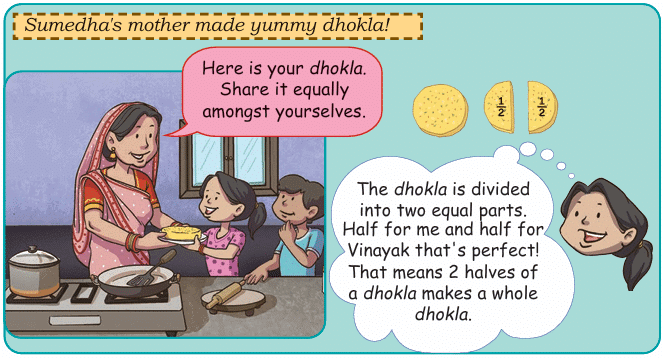
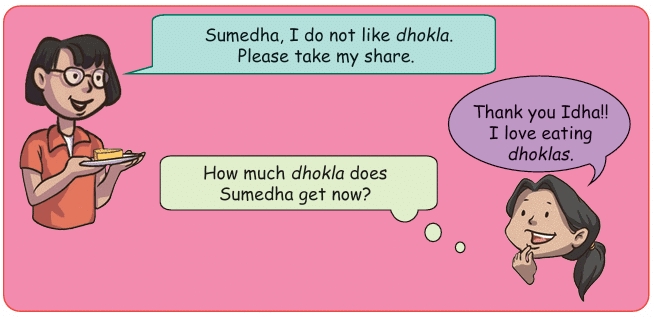
Sumedha’s mother gives her and Vinayak one dhokla (a yummy snack) and says to share it.
They cut it into 2 equal parts. Each one gets ½ (one-half) of the dhokla. 2 halves make one whole dhokla.
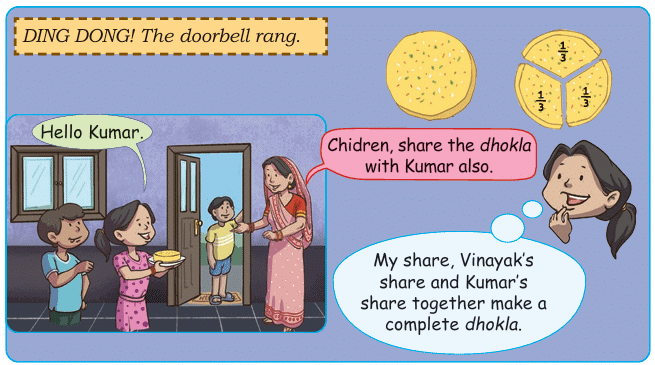
Now Kumar arrives, so they need to share again.
They divide the dhokla into 3 equal parts. Each one gets ⅓ (one-third) of the dhokla. 3 one-thirds make one whole dhokla.
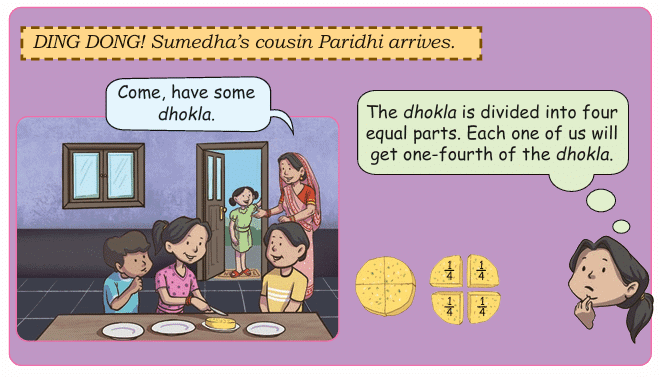
Sumedha’s cousin Paridhi comes. Time to share again!
They cut the dhokla into 4 equal parts. Each one gets ¼ (one-fourth) of the dhokla. 4 one-fourths make one whole dhokla.
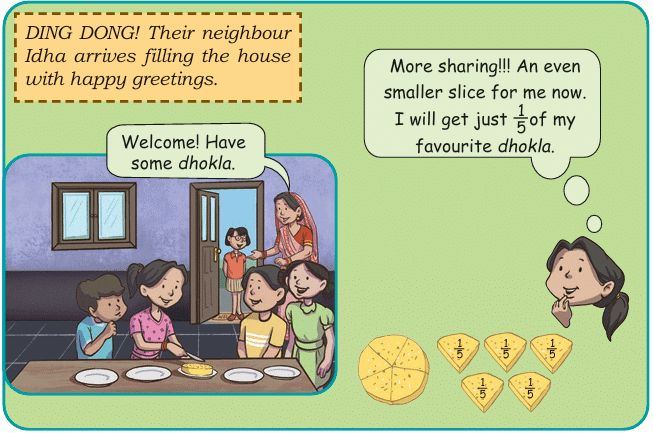
Now Idha joins! More friends, smaller pieces.
They divide the dhokla into 5 equal parts. Each one gets ⅕ (one-fifth) of the dhokla. 5 one-fifths make one whole dhokla.
Idha says she doesn’t want her piece and gives it to Sumedha!
Sumedha had ⅕ and got one more ⅕ from Idha. So now she has ⅕ + ⅕ = 2⁄5 of the dhokla.
This story teaches us about fractions through sharing dhokla. As more friends join, the dhokla is divided into more equal parts—like halves, thirds, fourths, and fifths. We learn that:
A fraction is a part of a whole.
More people means smaller pieces.
Fractions can be added.
Try yourself:
What do we call each part when an object is divided into four equal parts?
A.Fifth
B.Half
C.Quarter
D.Third
View Solution
My Flower Garden
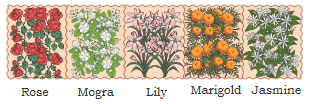
Idha has seeds of 5 different flowering plants—Rose, Mogra, Lily, Marigold, and Jasmine. She decides to plant them equally in her garden. That means each flower will take up 1 out of 5 parts, or 1/5 of the total garden space.
Initial Plan:
Each of the 5 plants gets 1/5 of the garden:
Rose = 1/5
Mogra = 1/5
Lily = 1/5
Marigold = 1/5
Jasmine = 1/5
Revised Plan:
Idha has very few Lily seeds, so she decides not to plant Lily and instead uses that space to plant Roses again.
Now, the garden looks like this:
Rose = 2 parts → 2/5 of the garden
Mogra = 1/5
Marigold = 1/5
Jasmine = 1/5
Lily is no longer planted.
From the final layout:
Mogra = 1/5
Marigold = 1/5
Jasmine = 1/5
Rose = 1/5 + 1/5 = 2/5
So, each part of the garden represents a fraction of 1/5, and combining parts gives larger fractions like 2/5.
Comparing Fractions
Sometimes we need to compare fractions to determine which one is larger or smaller.
Let’s learn how to compare fractions.
When comparing fractions, we use symbols like:
“>” means “greater than”
“<” means “less than”
“=” means “equal to”
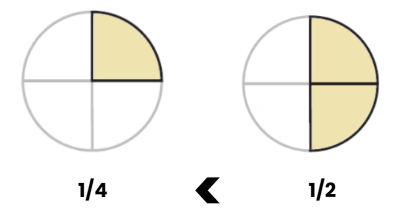
Let’s look at an example comparing 1/4 and 1/2:
We can see that 1/2 covers more area than 1/4, so 1/2 > 1/4.
Answer: 1/2, 1/3, 1/4
Note: When comparing fractions with the same numerator (the top number), the fraction with the smaller denominator (the bottom number) is larger.
Let Us Find Fractions in Our Surroundings
Fractions are everywhere around us! Let’s explore some everyday situations where we can find and use fractions.
Kadamba is excited to know where we use fractions in daily life. She found some examples below. Help her find more examples and try to draw the images of the same in your notebook.
Examples of Fractions in Daily Life:
Food: When we divide a pizza into 8 slices, each slice is 1/8 of the whole pizza.
Time: Half an hour is 1/2 of an hour, and 15 minutes is 1/4 of an hour.
Money: 50 paise is 1/2 of one rupee, and 25 paise is 1/4 of one rupee.
Measurements: Half a meter is 1/2 of a meter, and 250 ml is 1/4 of a liter.
Some Solved Examples
Example 1:There are 12 cookies. What fraction of cookies will each child get if there are 3 children?
Sol: Total number of cookies = 12
Number of children = 3
Number of cookies each child will get = 12 ÷ 3 = 4
Fraction of the total cookies each child will get = 4/12 = 1/3 (after simplifying)
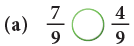
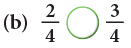
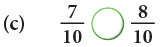
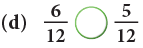
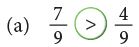
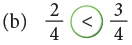
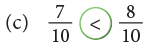
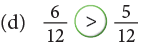
Example 2: Fill in the with < or >.
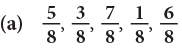
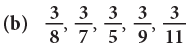
Example 3: Arrange the following fractions in ascending order.
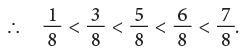
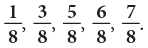
(a) Since, 1 < 3 < 5 < 6 < 7. The fraction with the smaller numerator names the smaller fraction.
Here, the fractions in ascending order are
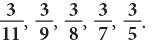
(b)The fraction with the greater denominator names the smaller fraction.
Here, the fractions in ascending order are
Example 4: A chocolate bar is cut into 5 equal parts. Arjun eats 2 parts and then eats 1 more. What fraction of the bar did he eat?
Sol: First he ate = 2/5
Then he ate = 1/5
Total eaten = 2/5 + 1/5 = 3/5
Example 5: Raj got 6 out of 12 questions correct in a quiz. What fraction of questions did he get right? Simplify the answer.
 M for Mathematics, L for Languages, T for The World Around Us, A for Arts and P.E. for Physical Education.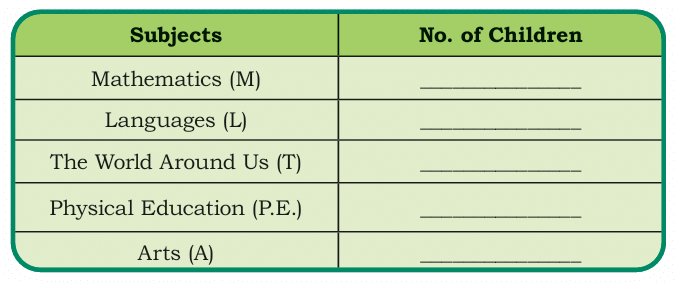
 Total = 50 + 25 = 75 pebbles!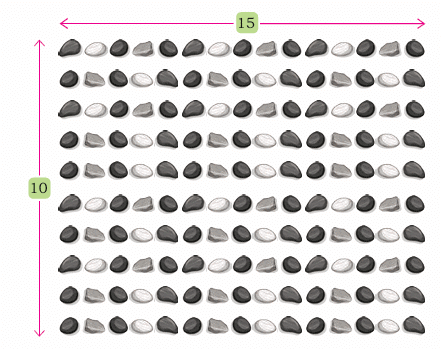
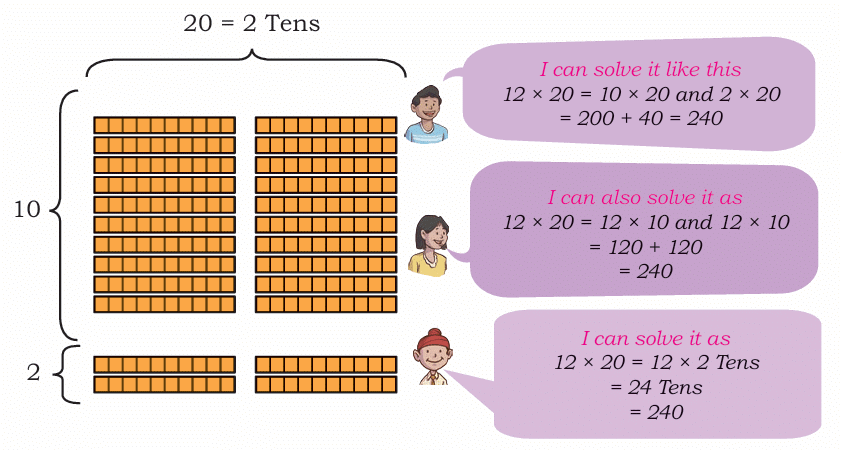 Method 3: 12 × 20 = 12 × 2 Tens = 24 Tens = 240
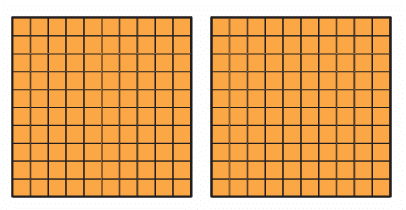
 10 × 100 = 10 Hundreds = 1 Thousand = 1000
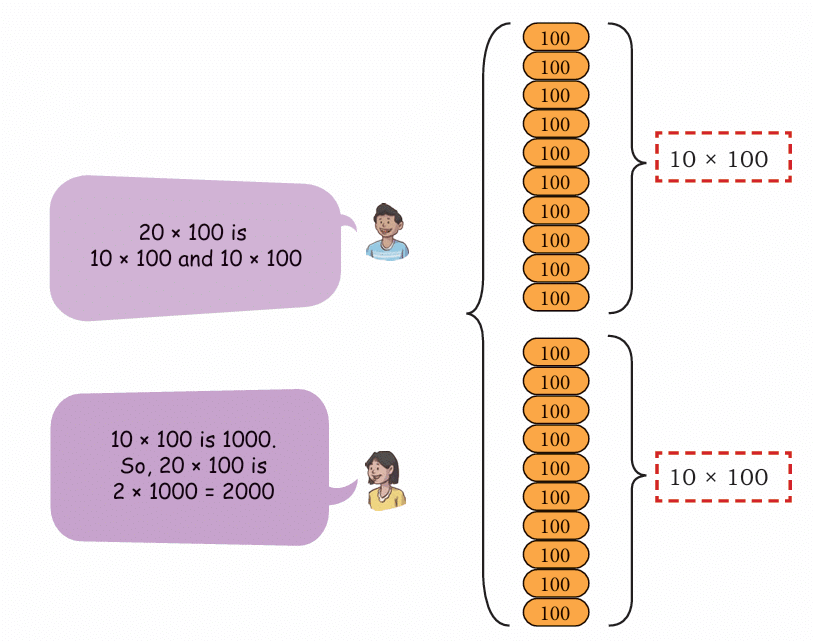 20 × 100 = 20 Hundreds = 2 × 10 Hundreds = 2 × 1000 = 2000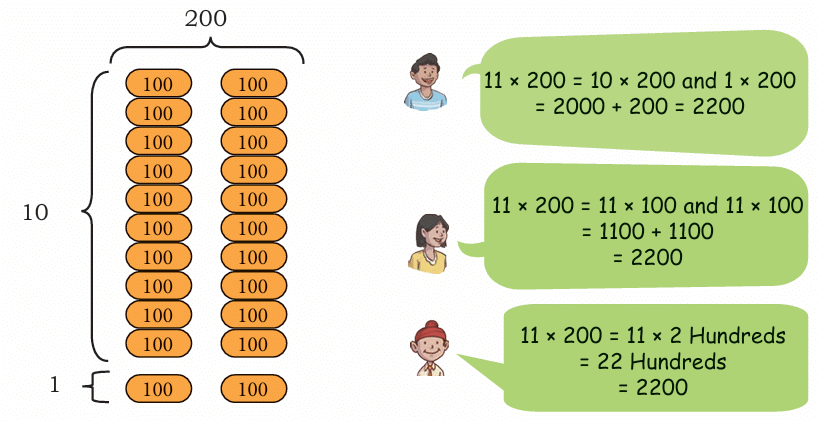
 Sunday, Monday, Tuesday, Wednesday, Thursday, Friday, Saturday.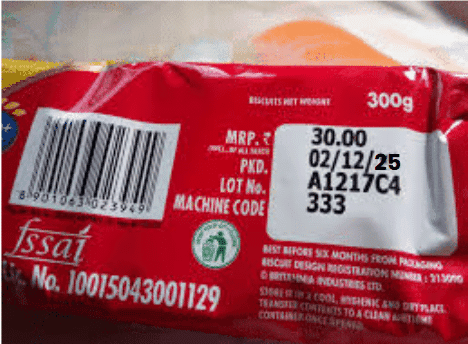




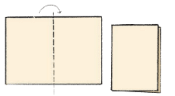 Step 1: Take a sheet of paper and carefully fold it exactly in half. Make a nice crease along the fold.
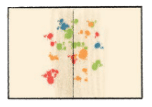 Step 2: Open the paper up. Now, sprinkle a few drops of watery paint or ink right onto the center of the fold line.
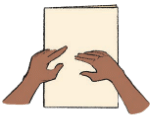 Step 3: Fold the paper back in half along the same crease, and gently press down to spread the paint evenly between the two halves.
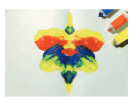 Step 4: Carefully open the paper again. Look at the amazing design you’ve created!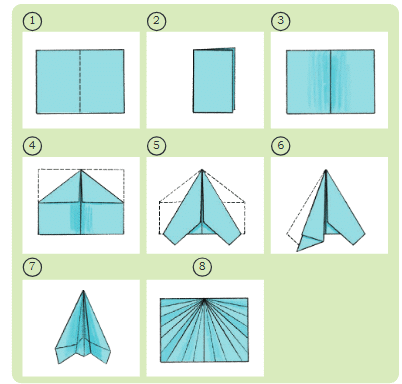
 Then in half from top to bottom.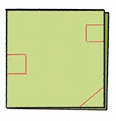





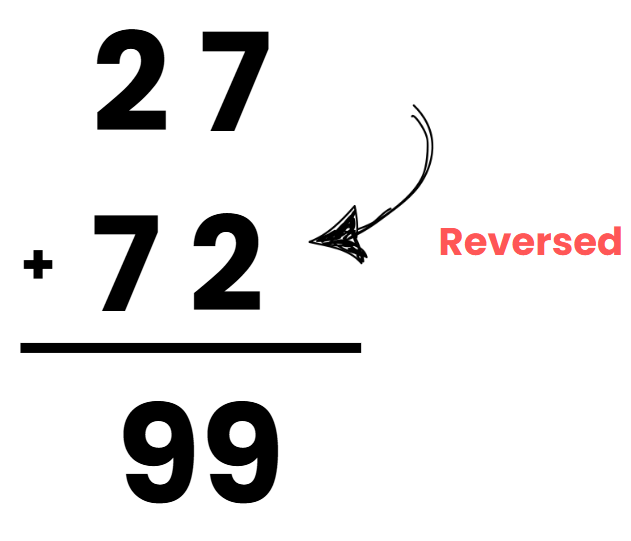 27 + 72 = 99
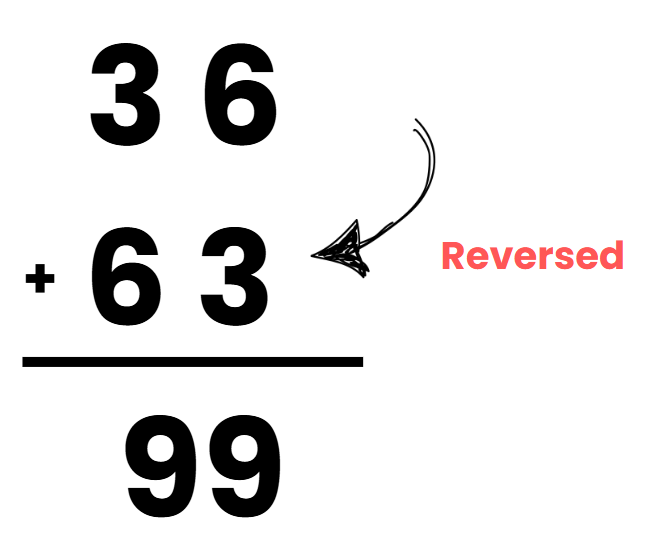 36 + 63 = 99
 She has 12 lily flowers.Gulabo’s Garden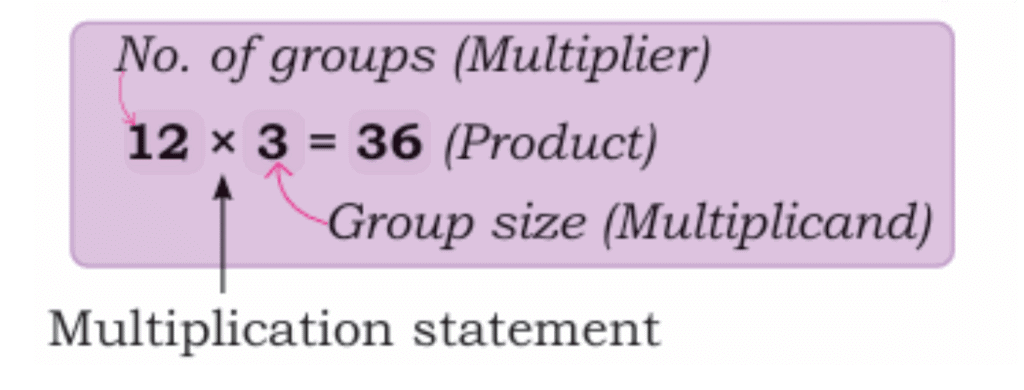
 She counted 80 petals in total.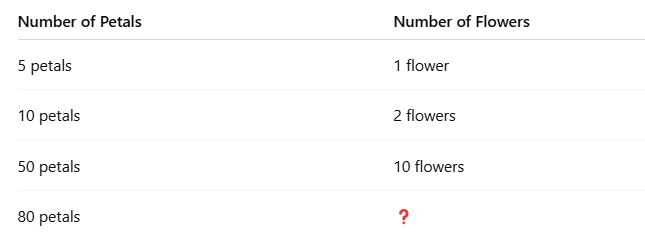
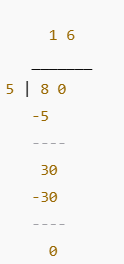



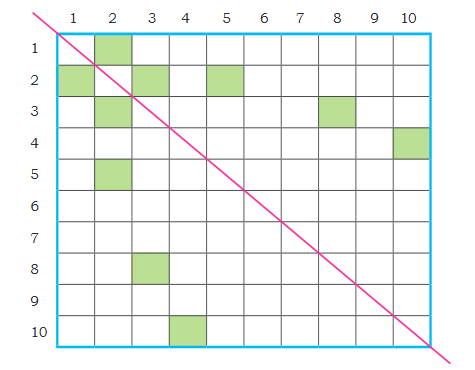


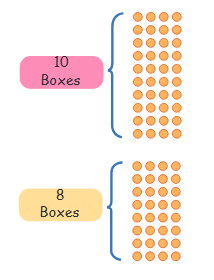
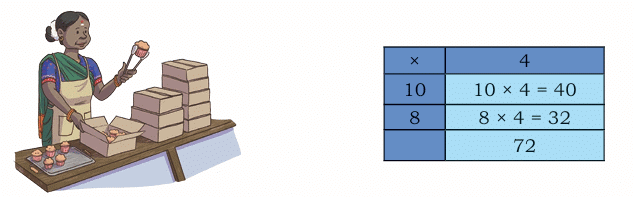
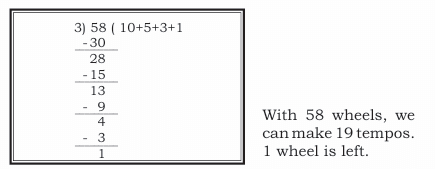
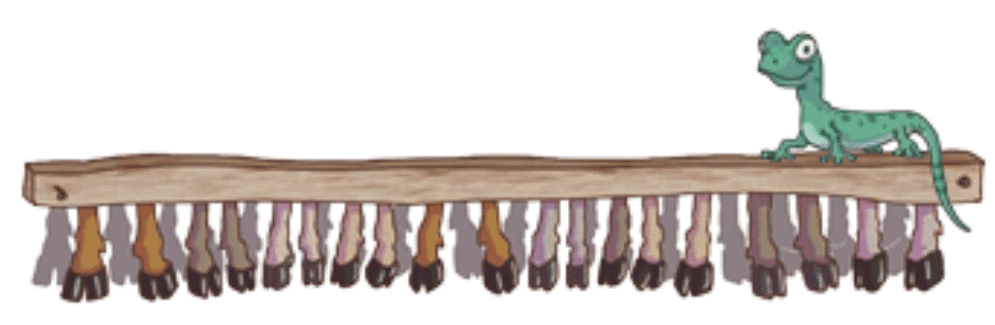
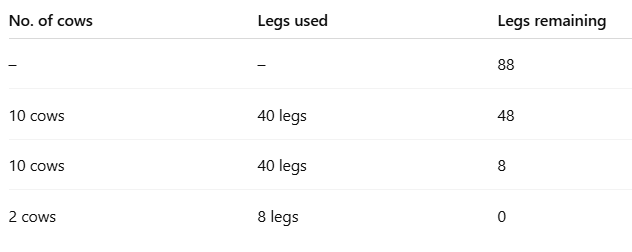

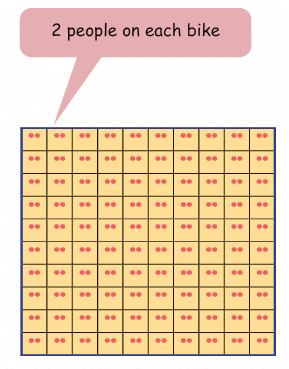
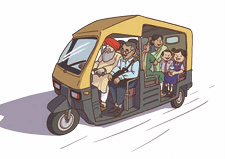
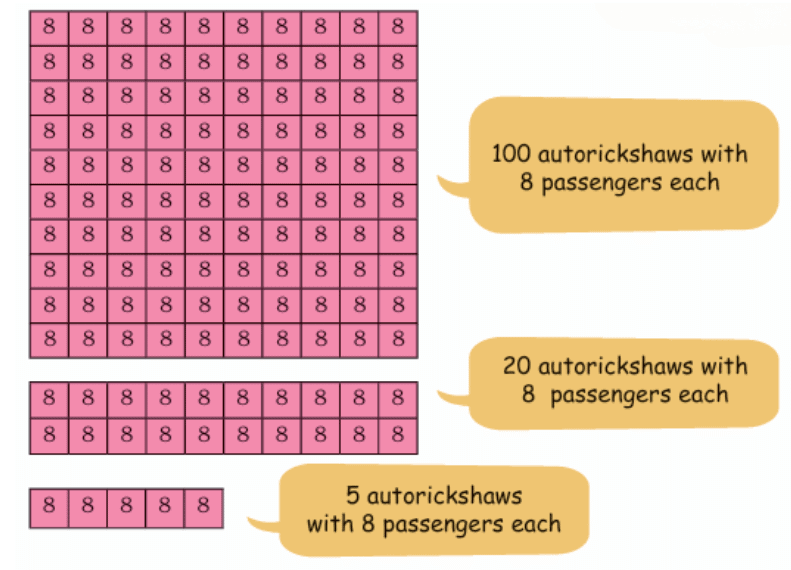
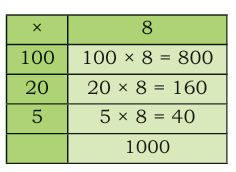 100 autos × 8 passengers = 800 passengers
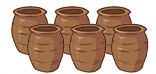
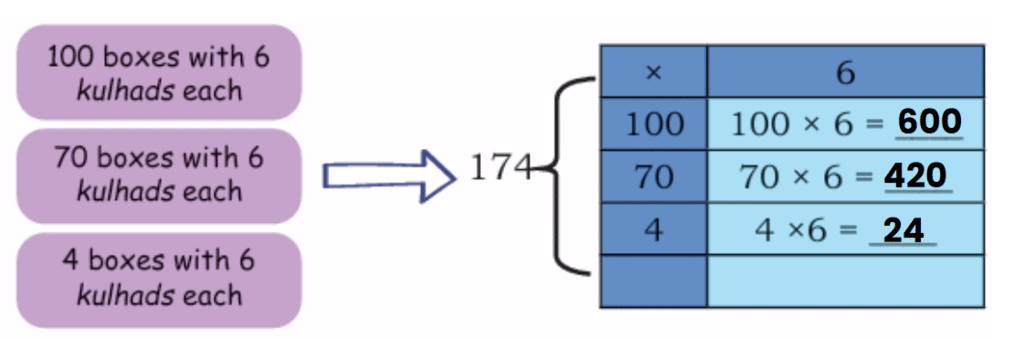

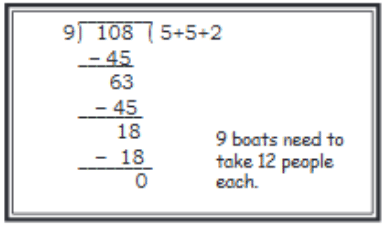
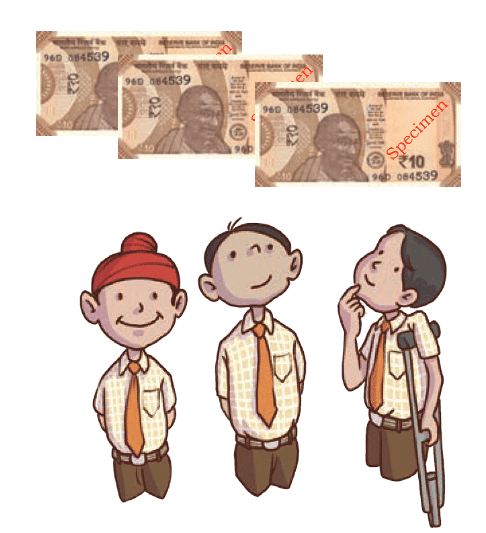
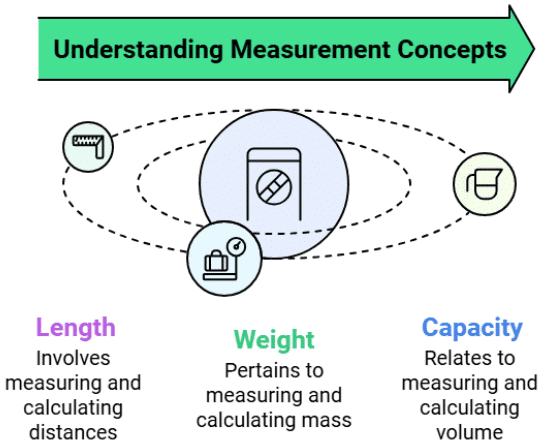
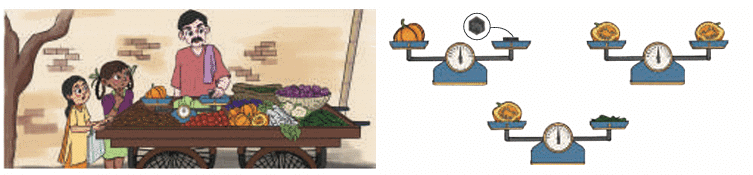
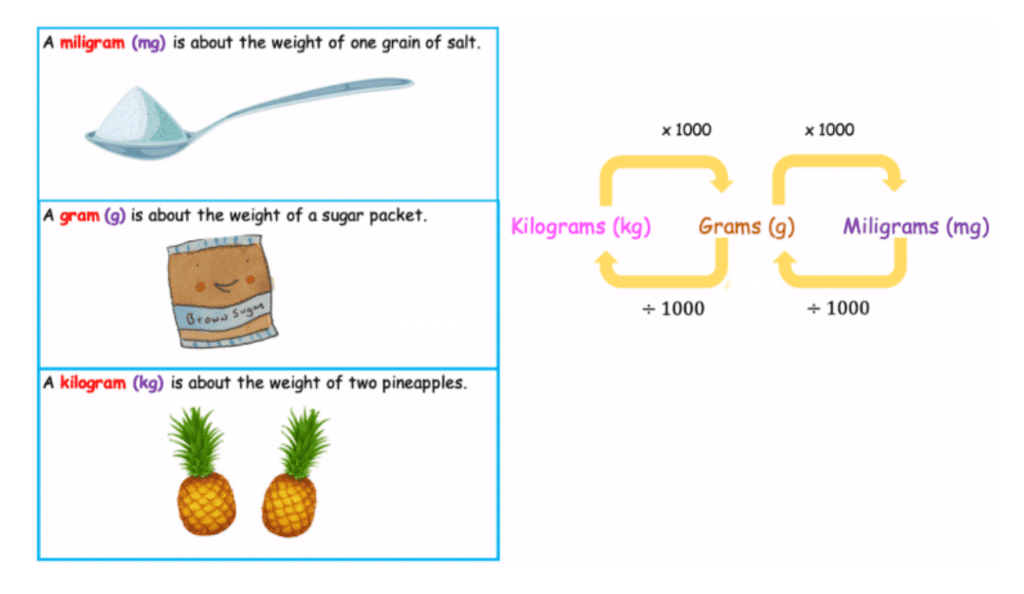
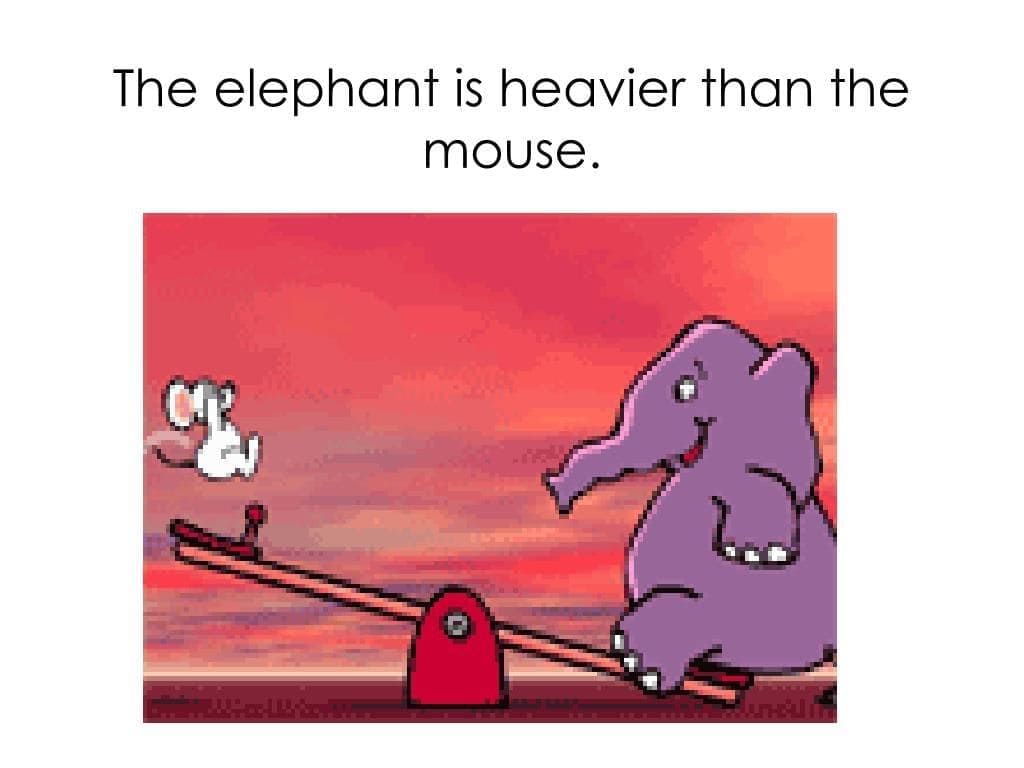
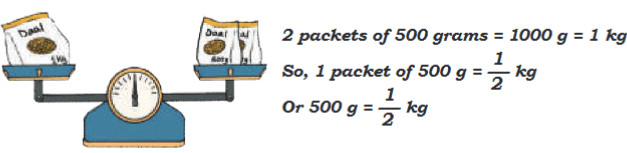
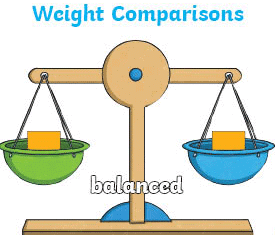
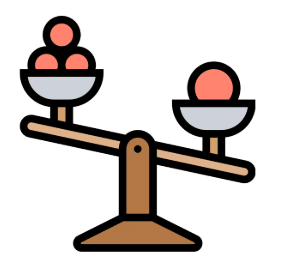
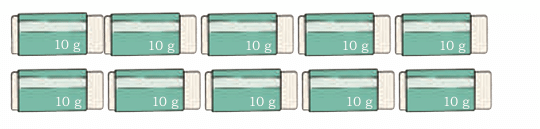
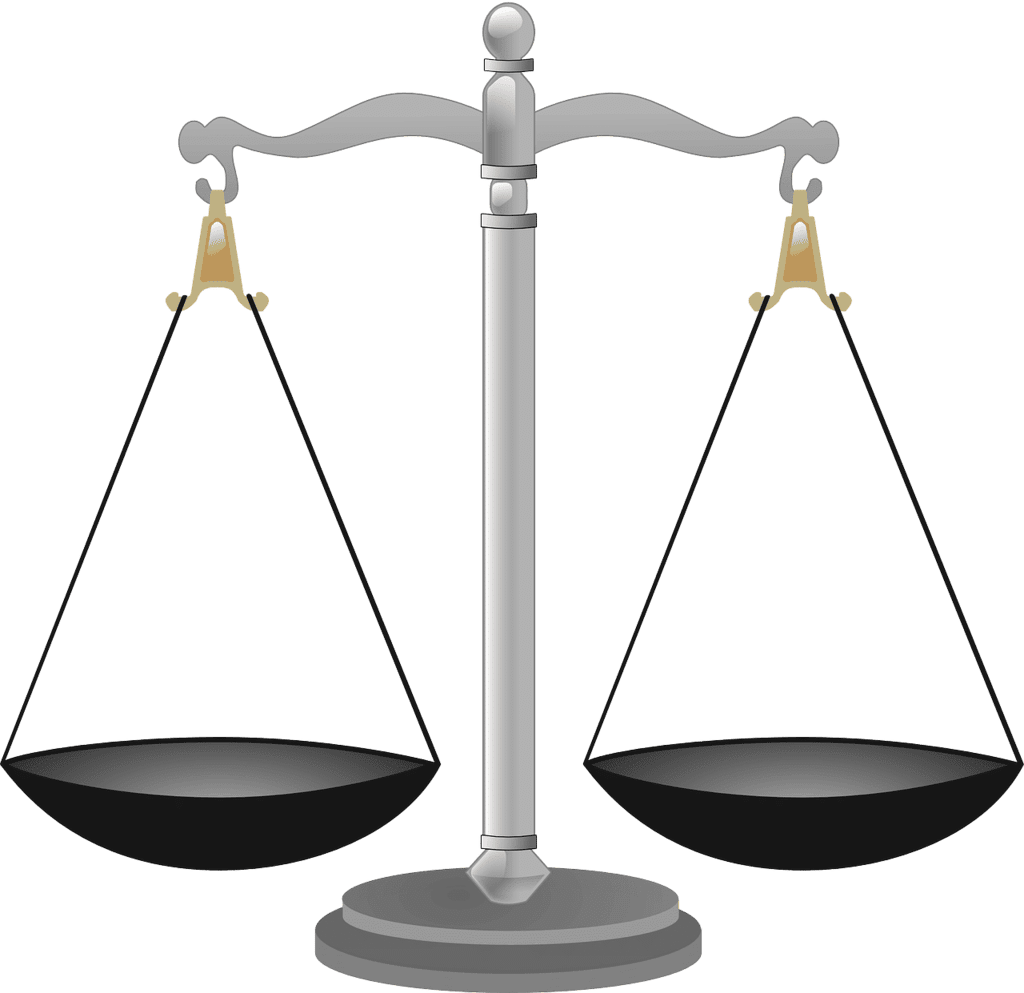
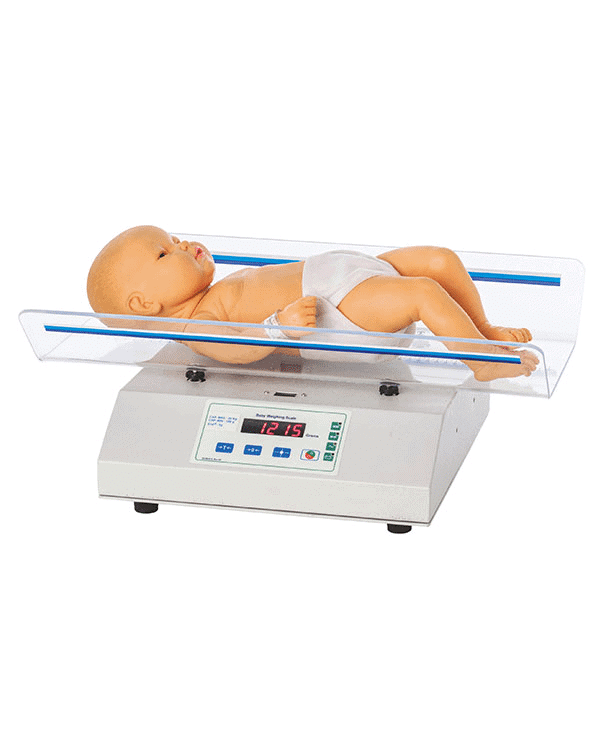
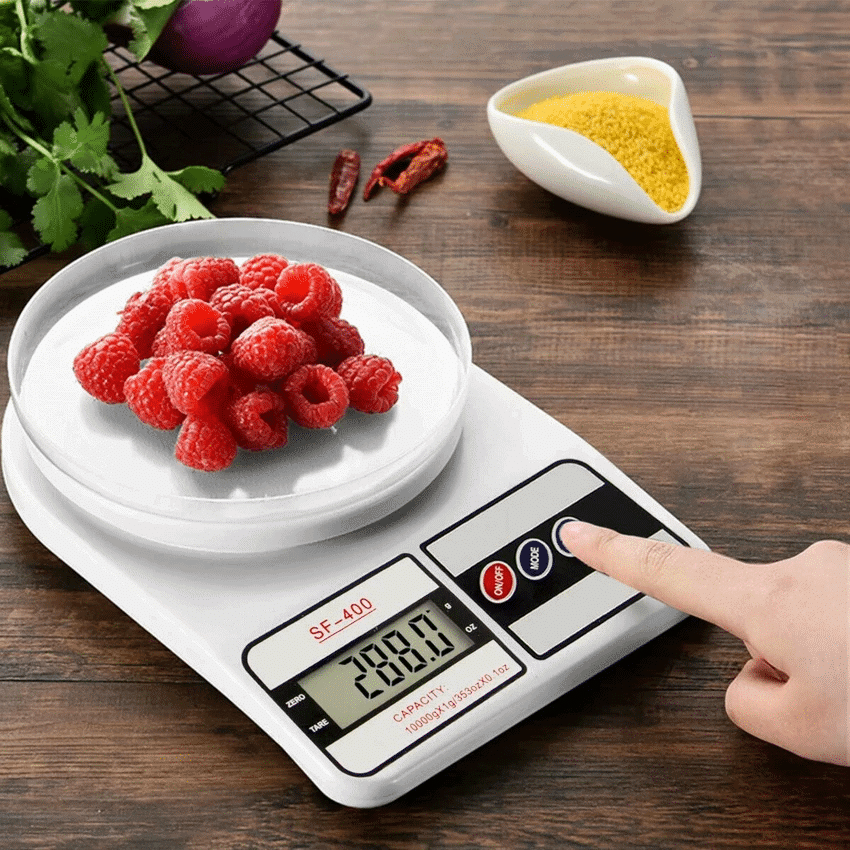
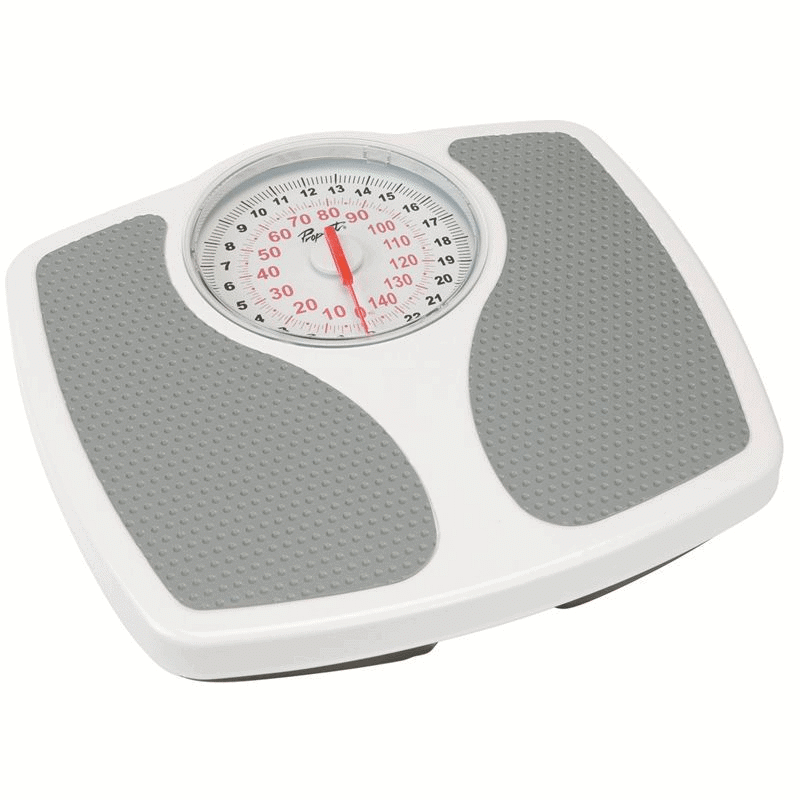
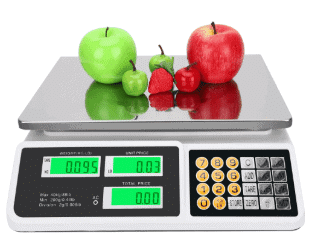
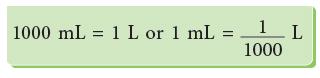

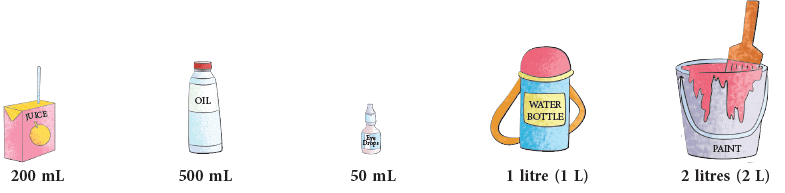
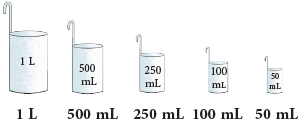
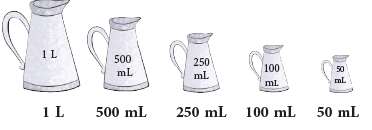
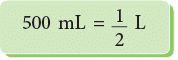
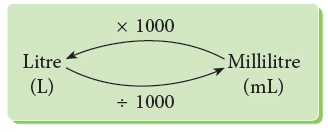
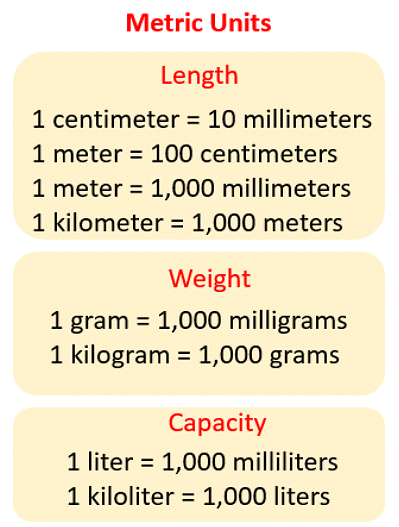
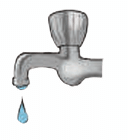
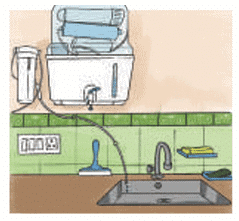 24 litres/day × 7 = 168 litres

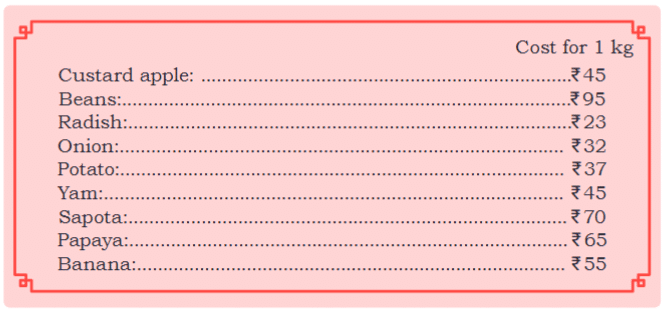
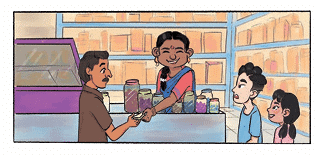
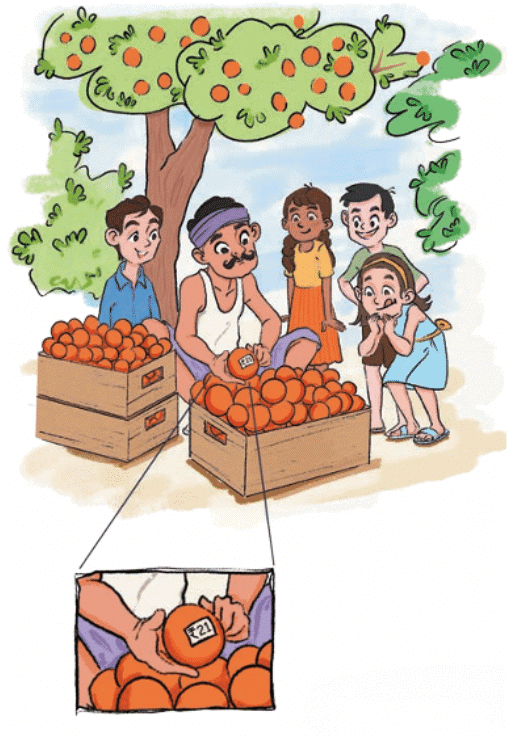

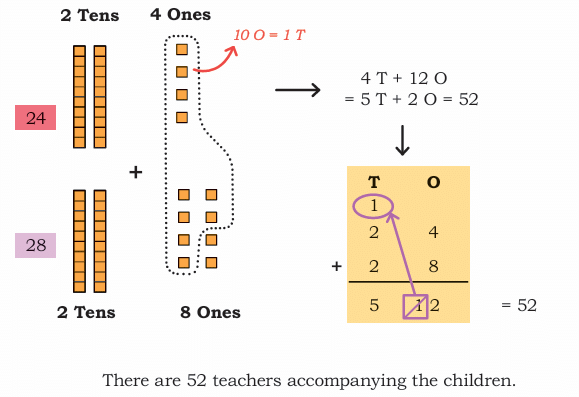
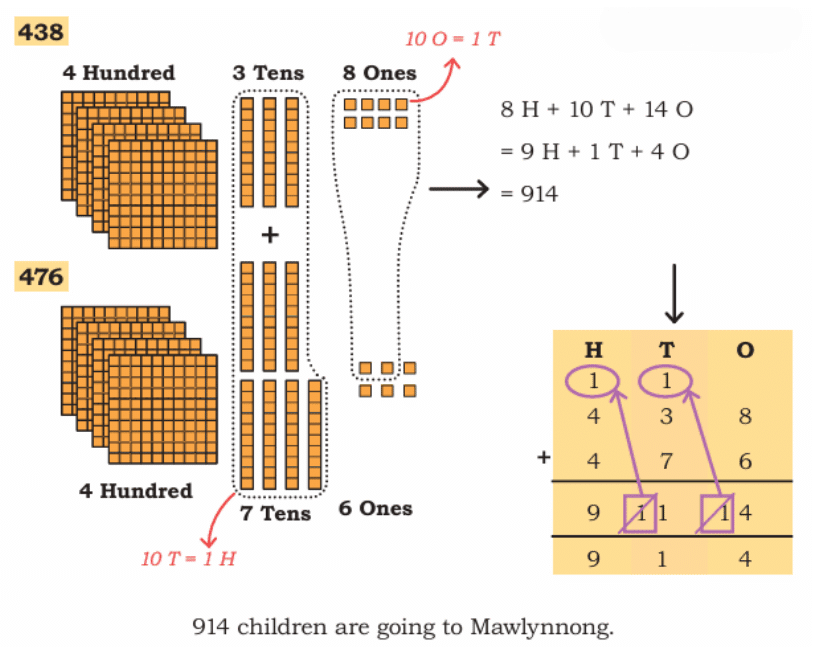
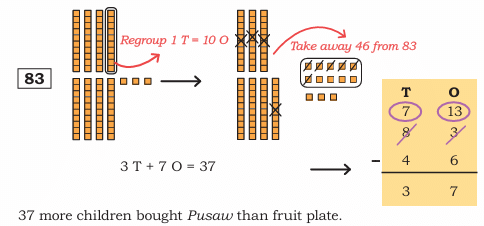
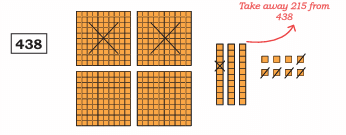
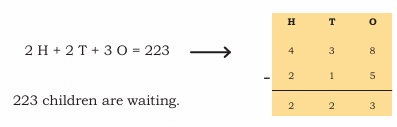
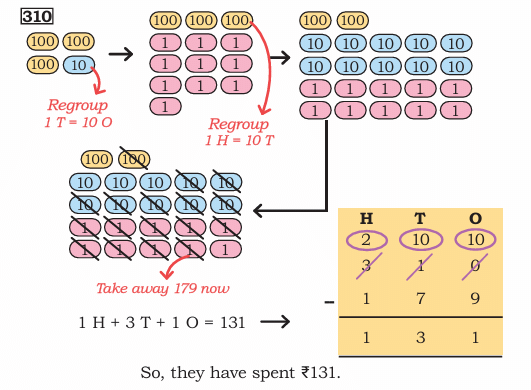
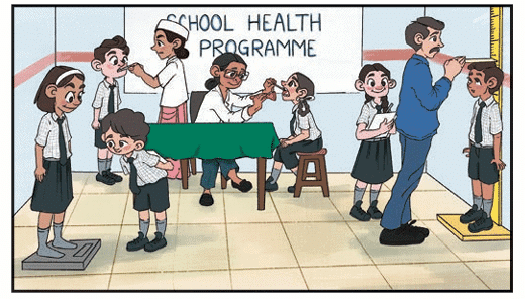
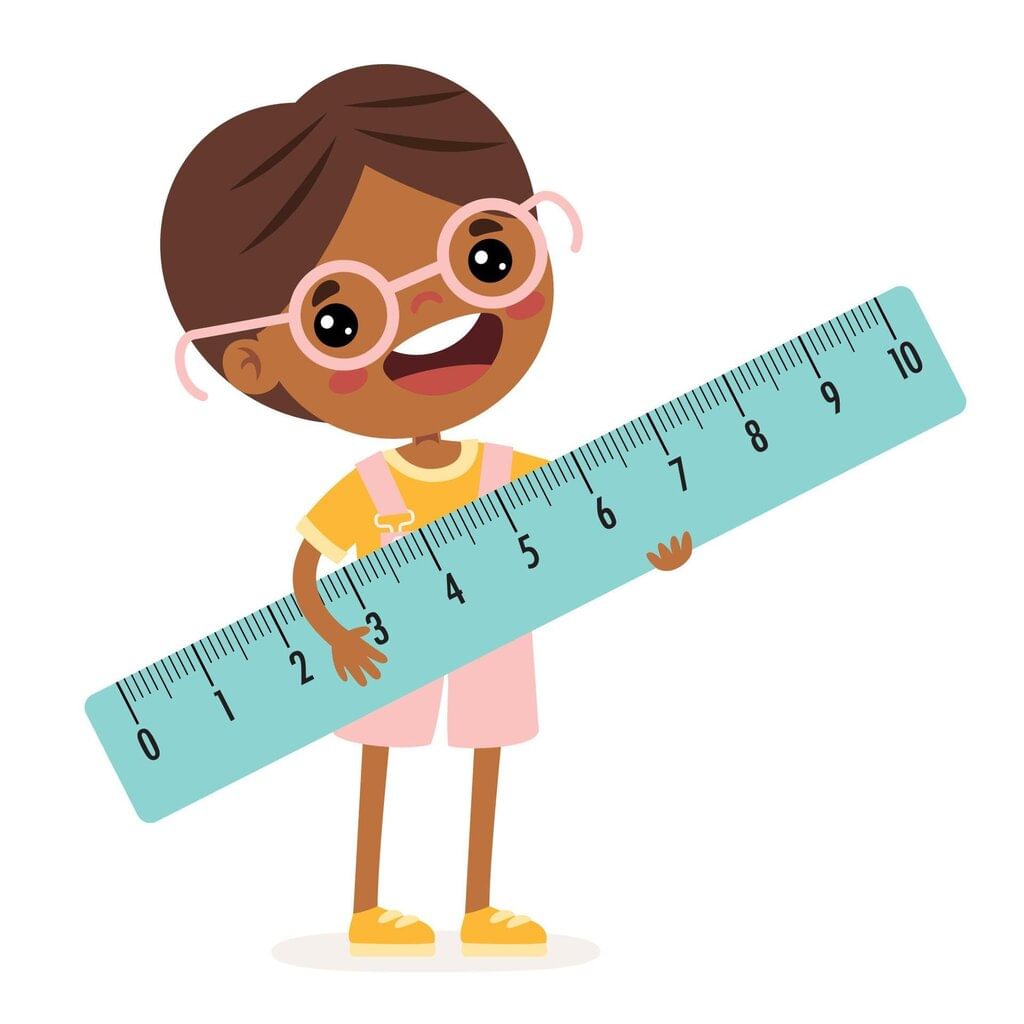
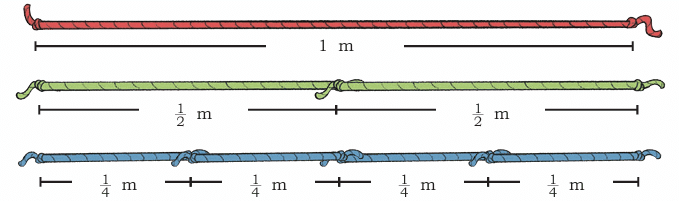
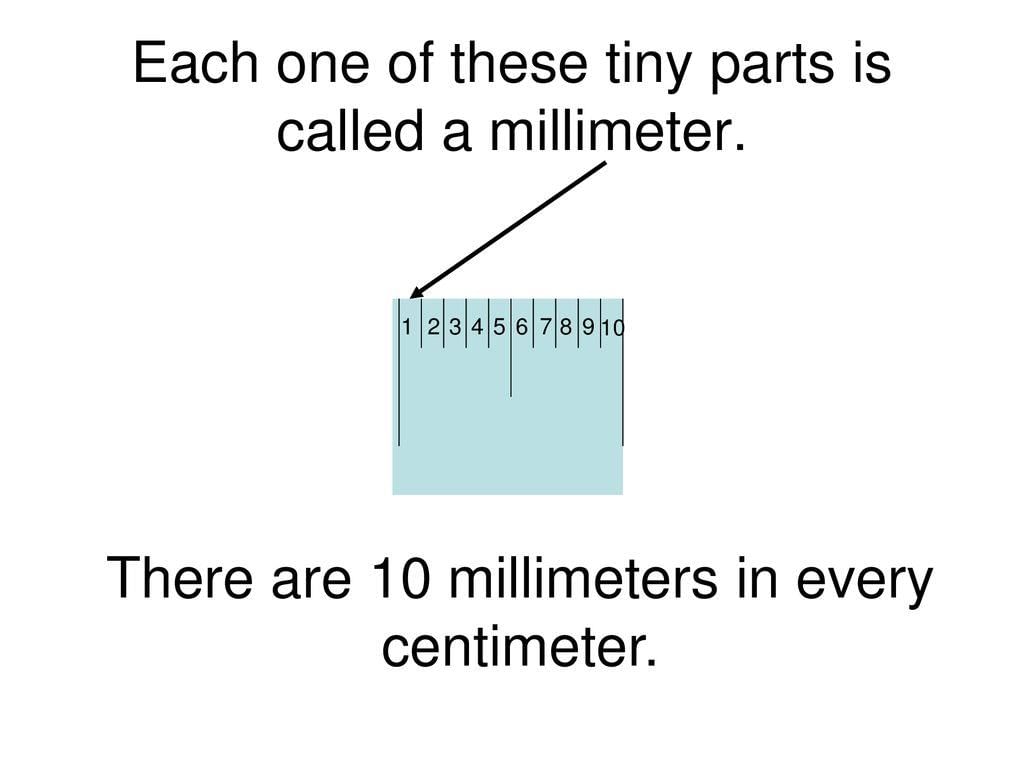
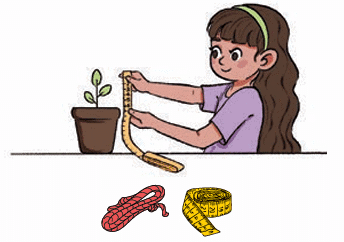
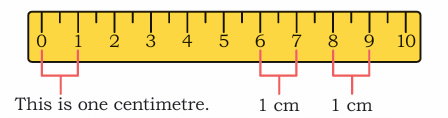 The small red bars show 1 cm each.
 If we place 100 red bars, it becomes 1 metre (m).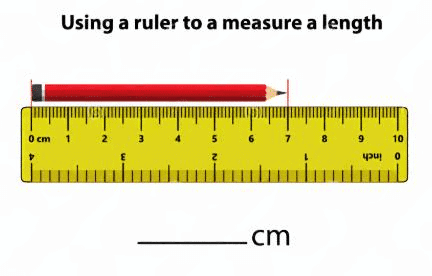
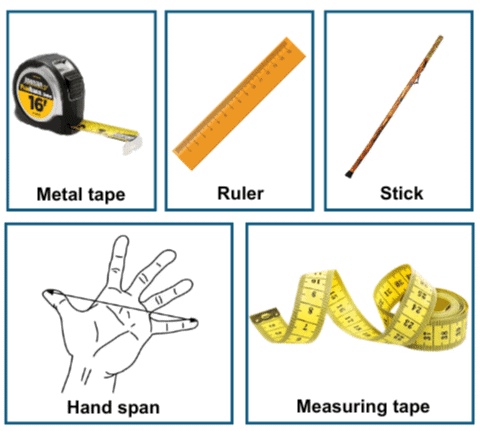
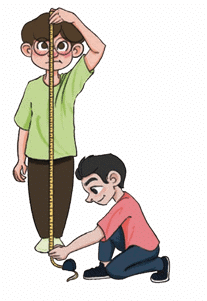
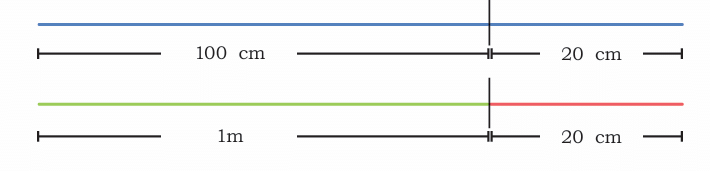

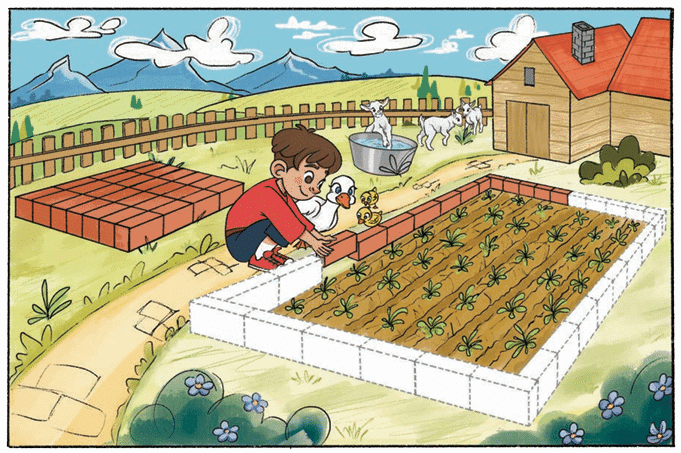

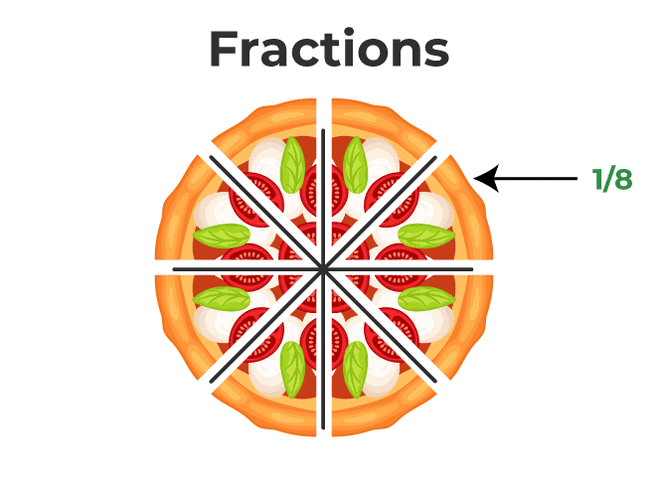
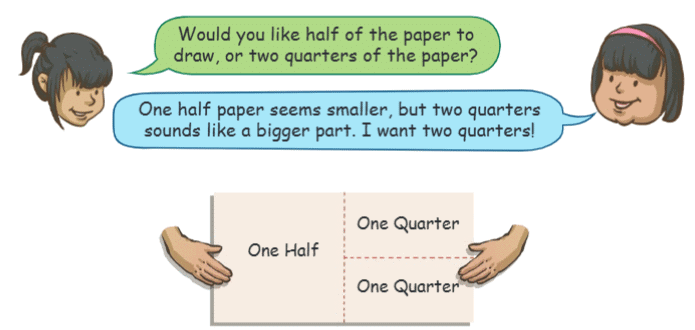
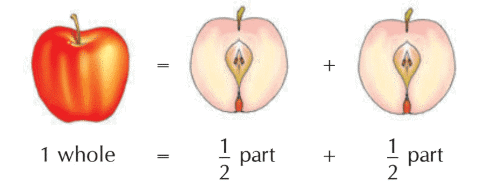

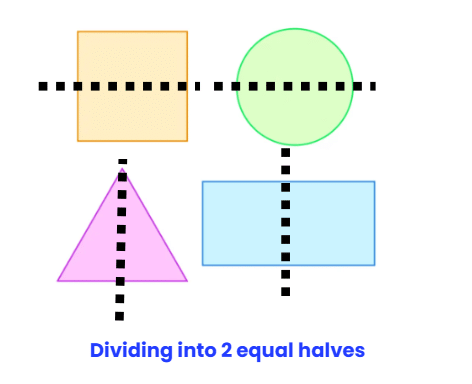
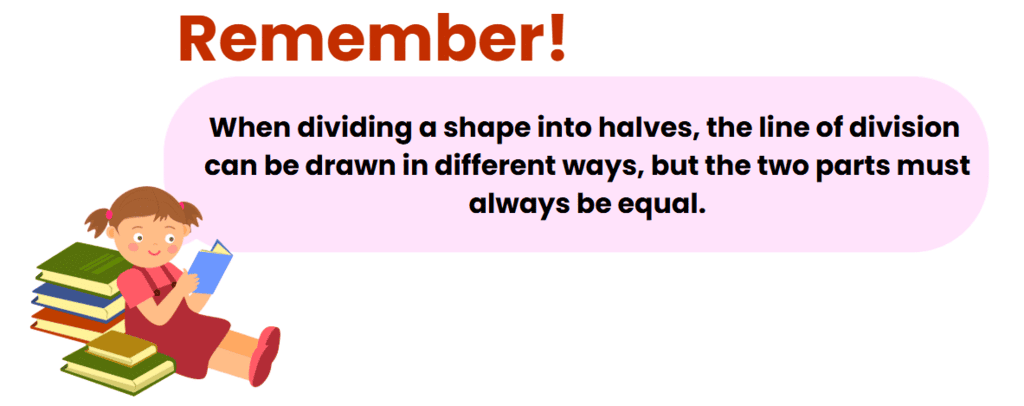
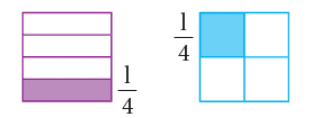
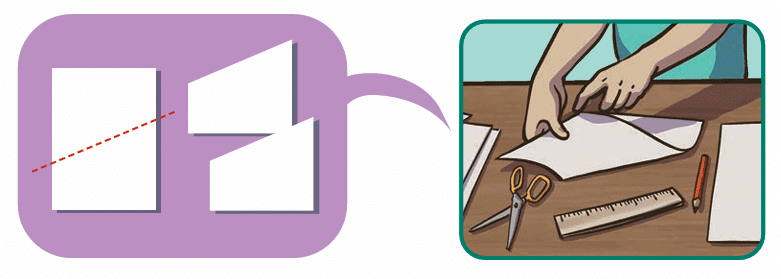
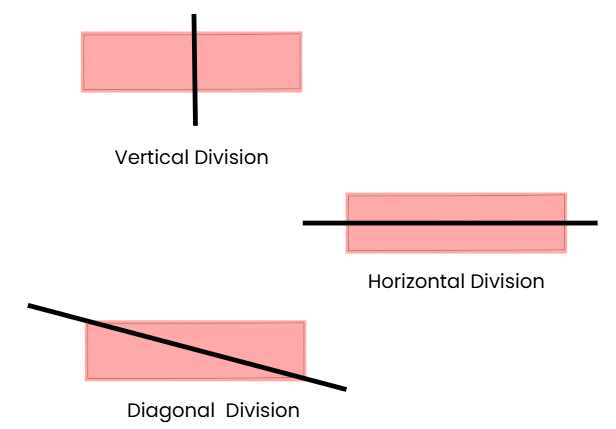 Diagonal Division: Drawing a diagonal line from one corner to the opposite corner