14.Data Handling- Worksheet Solutions

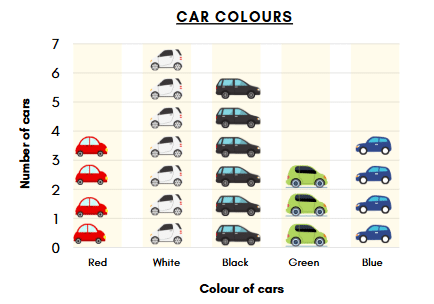
Q1. Grade 8 students recorded the colours of cars that drove by their school over a five minute period. Each car picture = 1 car. 

Complete the following questions:

a) What colour car was the most popular?

Ans: The white column has the most car pictures — there are 7 white cars.

b) What colour car was recorded six (6) times?

Ans: There are 6 black cars.
So, the colour recorded six times is black.

c) What is the total number of red and white cars recorded?

Ans: First, count the red cars — there are 4.

Then count the white cars — there are 7.

To find the total, we add:
4 (red) + 7 (white) = 11

So, there were 11 red and white cars altogether.
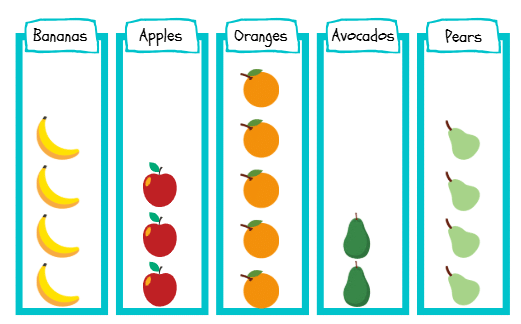
Q2. In a class, children were asked about their favourite fruits. Each fruit symbol in the chart below represents one child’s choice. The chart shows how many children liked each type of fruit — bananas, apples, oranges, avocados, and pears.

a) How many children like pear? 

Ans: There are 3 pear pictures, so 3 children like pears.

b) Which fruit do children like the most?

Ans: There are 5 oranges in the chart, which is the highest number. So, most children like oranges.

c) Which fruit do children like the least? 

Ans: Only 2 children chose avocados, which is the smallest number.
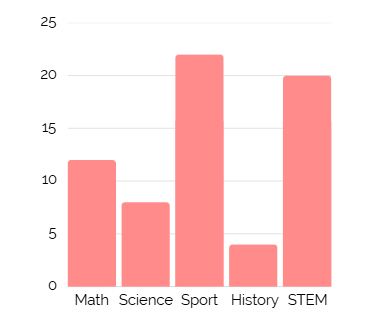
Q3. The bar graph shows how many students liked different school subjects: Math, Science, Sport, History, and STEM (Science, Technology, Engineering, and Math). Each bar’s height tells us the number of students who liked that subject.

a) How many liked  STEM? 

Ans: The graph shows 20 students liked STEM.
So the answer is 20.

b) What was the least preferred subject? 

Ans: The shortest bar is for History, with only 4 students.
So, History was the least preferred subject.

c) How many students were surveyed altogether? 

Ans: Let’s add the number of students for each subject:

  • Math: 12
  • Science: 8
  • Sport: 22
  • History: 4
  • STEM: 20

Total = 12 + 8 + 22 + 4 + 20 = 66

So, 66 students were surveyed in total.
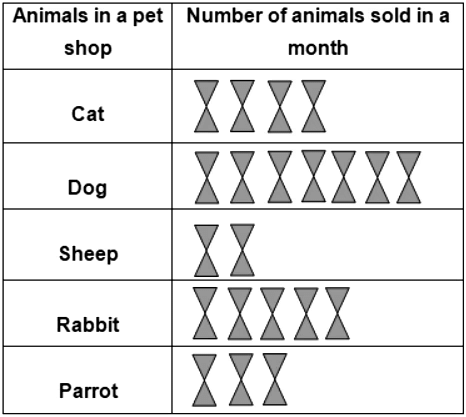
Q4. The following pictograph shows the number of pet animals sold in a month –
Each symbol  = 5 pets

(i) How many more Cats were sold as compared to Sheep ?
(a) 25
(b) 10
(c)  20

Ans: (b)
Given that each symbol = 5 pets
So, the number of Catssold = ( 5 x 4 ) = 20
The number of Sheep sold = ( 5 x 2 ) = 10
Number of Cats sold more as compared to Sheep = The number of Cats sold   –  The number of Sheep sold
=  20 – 10 = 10

(ii) How many Parrots were sold in a month?
(a) 16
(b) 15
(c) 10
Ans: 
(b)
Given that each symbol = 5 pets
So, the number of Parrots sold = (5 x 3) = 15

(iii) Which pet was sold the most ?
(a) Parrot
(b) Rabbit
(c) Dog
Ans:
 (c)
Since there are maximum number of symbols for Dog, Dog is sold the most in a month.

(iv) How many Dogs were sold in a month ?
(a) 35
(b) 55
(c) 30
Ans: 
(a)
Given that each symbol = 5 pets
So, the number of Dogs sold =( 5 x 7 )
= 35

(v) Which pet was sold the least ?
(a) Dog
(b) Cat
(c) Sheep
Ans: 
(c)
Since there are minimum numbers of symbols for sheep, therefore Sheep were sold the least.
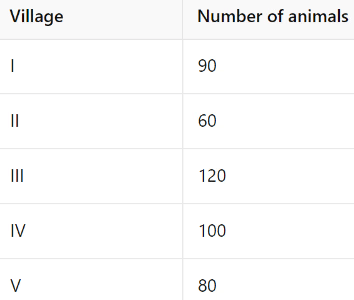
Q5. The total number of animals in five villages are given below:
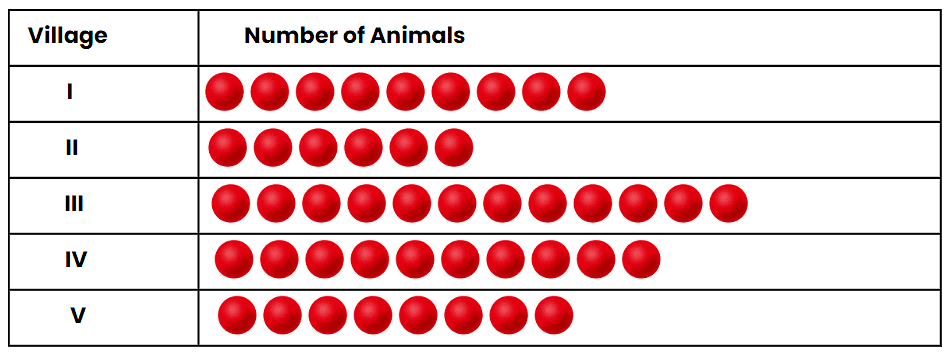
Draw a pictograph to represent the above data.
Ans: Each circle represents 10 animals

13.The Transport Museum- Worksheet Solutions

Q1: Multiple Choice Questions

1. What is the product of 15 × 14?
a) 200
b) 210
c) 220
d) 230

Answer: b) 210
Solution: Break it down: 10 × 14 = 140 and 5 × 14 = 70. Add them together: 140 + 70 = 210.

2. Which of the following is equal to 24 × 100?
a) 240
b) 2,400
c) 24,000
d) 240,000

Answer: b) 2,400
Solution: Multiplying by 100 adds two zeros to the number: 24 × 100 = 2,400.

3. A bus can seat 20 people. How many people can 12 buses seat?

a) 220
b) 240
c) 260
d) 280

Answer: b) 240
Solution: Multiply 12 × 20: 
12 x 20 = 240

4. What is the remainder when 324 is divided by 14?
a) 2
b) 4
c) 6
d) 8

Answer: a) 2
Solution: 14 × 23 = 322. Subtract from 324: 324 – 322 = 2, so the remainder is 2.

Q2: Answer the Following Questions

5. Solve: 11 × 200.
Answer: 2,200
Solution: Break it into simpler parts: (10+1) x 200
10 × 200 = 2,000 
1 × 200 = 200. 
Add them: 2,000 + 200 = 2,200.

6. Calculate: 40 × 50.
Answer: 2,000
Solution: Think of 50 as half of 100. 
So, 40 × 100 = 4,000, 
then halve it: 4,000 ÷ 2 = 2,000.

7. Find the product: 16 × 100.
Answer: 1,600
Solution: Multiplying by 100 means adding two zeros: 
16 × 100 = 1,600.

8. Divide: 400 ÷ 20.
Answer: 20
Solution: Break it down: 400 ÷ 10 = 40, 
then 40 ÷ 2 = 20.

9. Solve: 7 × 25.
Answer: 175
Solution: 

Multiply 7 x (20 + 5)

7 × 20 = 140 and 

7 × 5 = 35. 
Add them: 140 + 35 = 175.

10. What is 30 × 200?
Answer: 6,000
Solution: Multiply 3 × 2 = 6, then add three zeros: 6,000.

Q3: Word Problems

11. A train has 24 coaches, each carrying 72 passengers. How many people can travel on the train?


Answer: 1,728
Solution: Multiply 24 × 72 as (20+4) x 72
20 × 72 = 1,440 
4 × 72 = 288. 
Add them: 1,440 + 288 = 1,728.

12. A brick kiln produces 125 bricks daily. How many bricks are made in a 30-day month?
Answer: 3,750
Solution: Multiply 125 × 30: (100 + 25) x 30
100 × 30 = 3,000 and 
25 × 30 = 750. 
Add them: 3,000 + 750 = 3,750.

13. 870 bananas are packed in bunches of 10. How many bunches are there?
Answer: 87
Solution: Divide 870 by 10: 870 ÷ 10 = 87.

14. A school trip has 36 students and 6 teachers. Each bus seat fits 2 people. If there are 25 seats, are there enough seats?
Answer: 
Yes
Solution: 
Total people = 36 + 6 = 42. 
Seats needed = 42 ÷ 2 = 21. 
Available seats = 25, so there are enough.

15. ₹1,000 is divided equally among 10 grandchildren. How much does each get?
Answer: 
₹100
Solution: 
Divide 1,000 by 10: 1,000 ÷ 10 = 100.

16. If 64 flights carry 152 people each, how many people were there in total?
Answer: 9,728
Solution: Multiply 64 × 152: (60 + 4) x 152
60 × 152 = 9,120 and 
4 × 152 = 608. 
Add them: 9,120 + 608 = 9,728.

17. A boat ride costs ₹1,200 for 8 people. What is the cost per person?
Answer: ₹150
Solution: Divide 1,200 by 8: 1,200 ÷ 8 = 150.
 

18. A bus ticket costs ₹60, and a boat ride costs ₹1,200 for 8 people. What is the total cost per person?
Answer: ₹210
Solution: Bus cost = ₹60. 
Boat cost per person = 1,200 ÷ 8 = ₹150. 
Total = 60 + 150 = ₹210.

19. A snake boat is peddled by 128 people. How many people are needed for 5 such boats?
Answer: 640
Solution: Multiply 128 × 5: (100 + 28) x 5
100 × 5 = 500 and 
28 × 5 = 140. 
Add them: 500 + 140 = 640.

20. Compare: 15 × 100 vs. 15 × 200. Which is greater?
Answer: 15 × 200
Solution: 15 × 100 = 1,500 and 15 × 200 = 3,000. 
3,000 is greater than 1,500.

12.Ticking Clocks and Turning Calendar- Worksheet Solutions

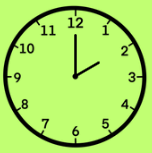
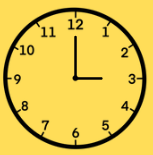
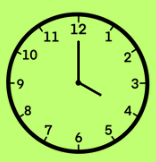
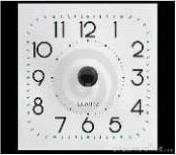
Q1: Look at the clock and choose the correct time.

(i) The clock shows: 

(a) It’s two o’clock

(b) It’s twelve o’clock

Ans: It’s two o’clock

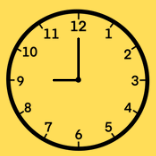
(ii) The clock shows: 

(a) It’s nine o’clock

(b) It’s eight o’clock

Ans: It’s nine o’clock

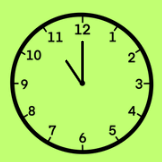
(iii) The clock shows: 

(a) It’s eleven o’clock

(b) It’s ten o’clock

Ans: It’s eleven o’clock

(iv) The clock shows: 

(a) It’s three o’clock

(b) It’s seven o’clock

Ans: It’s three o’clock

(v) The clock shows: 

(a) It’s five o’clock

(b) It’s four o’clock

Ans: It’s four o’clock

Q2: Fill in the blanks.

(i) 15 month = ______ year ______ months
(ii) 2 weeks 1 day = ______ days
(iii) 18 months = ______ year ______ months
(iv) 1 week 3 days = ______ days

Sol: Using the fact : 1 yr = 12 months, 1 month = 4 weeks(approx) and 1 week = 7 days
(i) 1 year 3 months
(ii) 15 days
(iii) 1 year 6 months
(iv) 10 days

Q3: Fill the boxes with >, <, or =.

(i) 80 min  1 Hrs. 15 min
(ii) 2 Hrs. 20 min  200 min
(iii) 125 min  1 Hrs. 25 min
(iv) 150 min 1 Hrs. 50 min
(v) 6 Hrs. 10 min  5 Hrs. 58 min

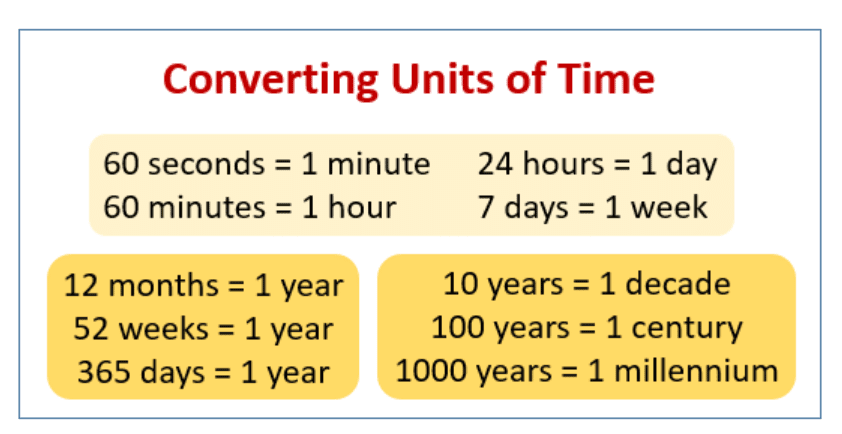
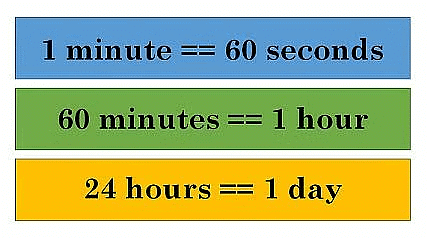
Sol: Using the fact: 1 hour = 60 minutes and 1 minutes = 60 seconds
(i) > ( 1 hr 15 min = 60 + 15 = 75 min )
(ii) < ( 2 hr 20 min = 2×60 + 20 = 140 min)
(iii) > ( 1 hr 25 min = 60 + 25 = 75 min)
(iv) > ( 1 hr 50 min = 60 + 50 = 110 min)
(v) > ( 6 hr 50 min = 6×60 + 50 = 410 min
5 hr 58 min = 5×60 + 58 = 358 min)

Q4: Answer the following Questions.

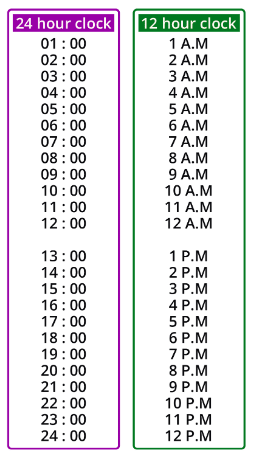
(i) Change the following to 24-hour clock: 2:30 afternoon
Sol:
 14:30 hours

(ii) Which months have 30 days?
Sol:
 April, June, September, and November have 30 days.

(iii) How many months begin their names with the letter ‘J’?
Sol:
 January, June, July (3 months)

(iv)  How many days do these months have together: January, February, and March? (Assume it’s not a leap year)

Sol:
January has 31 days
February has 28 days
March has 31 days
Total = 31 + 28 + 31 = 90 days

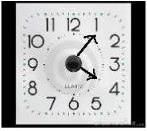
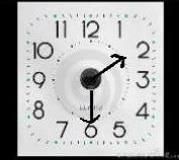
(v) Write the time for the below clock.
Sol: 
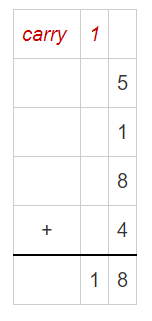
1: 21 pm

(vi) Change the following to a 24-hour clock. 8:20 at night.
Sol: 
20:20 hours

(vii) Which day of the week will it be after 10 days if today is 5th March and it is Sunday?

Sol:
Count 10 days from 5th March → It will be 15th March
Starting from Sunday, the 10th day is Wednesday
So, 15th March will be a Wednesday

(viii) Draw the hands to show the given time. 4:05
Sol:

(ix) A train leaves at 9.30 at night. The time written on the railway ticket would be ____
Sol:
 21: 30 pm

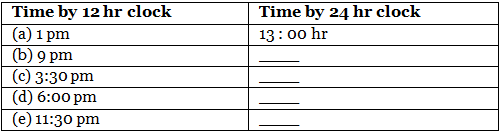
(x) 

Sol:  
(a) 13:00 hr
(b) 21:00 hr
(c) 15:30 hr
(d) 18:00 hr
(e) 23:30 hr

(xi) Draw the hands to show the given time. Half past 2
Sol:

10.Elephants, Tigers, and Leopards- Worksheet Solutions

Section A: Multiple Choice Questions

1. What is the sum of 3,459 and 21?
a) 3,480
b) 3,470
c) 3,490
d) 3,500
Answer: a) 3,480
Solution: 3,459 + 21 = 3,480

2. Which of the following is the correct comparison?
a) 54 + 97 > 54 + 90
b) 84 – 68 < 90 – 68
c) 76 + 85 = 80 + 86
d) 73 – 54 > 73 – 56
Answer: a) 54 + 97 > 54 + 90
Solution: 54 + 97 = 151 > 144 = 54 + 90

3. The number of buses in a town is 253 more than the number of jeeps, which are 6,304. How many buses are there?


a) 6,557
b) 6,507
c) 6,447
d) 6,600
Answer: a) 6,557
Solution: 6,304 + 253 = 6,557

4. Which 2-digit number, when added to its reverse, gives 88?
a) 17
b) 26
c) 35
d) 44
Answer: d) 44
Solution: 44 + 44 = 88

Section B: Answer the Following Questions

5. Solve: 8,787 – 99.
Answer: 8,688
Solution: 8,787 – 99= 8,688

6. Add: 4,999 + 3,888.
Answer: 8,887
Solution: 4999 + 388 = 8,887

7. Subtract: 5,302 – 1,034.
Answer: 4,268
Solution: 5,302 – 1,000 = 4,302; 
4,302 – 30 = 4,272; 
4,272 – 4 = 4,268

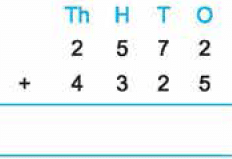
8. 

(a) 

Ans: 

(b) 

Ans: 

Section C: Arrange in Columns and Add

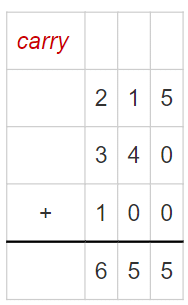
9. 215, 340 and 100

Ans:
= 215 + 340 + 100 = 650

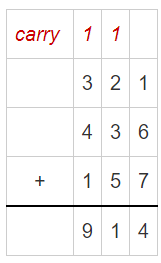
10. 321, 436 and 157
= 321 + 436 + 157 = 914

Section D: Word Problems

11. A factory packed 1,348 bottles of pineapple juice. Guava juice bottles were 759 more than pineapple. How many guava juice bottles were packed?

Answer: 2,107
Solution: 1,348 + 759 = 2,107

12. In Kaziranga National Park, December had 8,591 visitors, and November had 6,415. How many more visitors came in December?
Answer: 2,176
Solution: 8,591 – 6,415 = 2,176

13. A toy store sold 444 teddy bears last month. This month, they sold 341 more teddy bears than last month. How many teddy bears did they sell this month?


Answer: 785
Solution: 
Teddy bears sold this month = Teddy bears sold last month + Additional teddy bears
= 444 + 341
= 785

14. The sum of a 2-digit number and its reverse is 55. List all such numbers.
Answer: 14, 23, 32, 41
Solution:
14 + 41 = 55
23 + 32 = 55
32 + 23 = 55
41 + 14 = 55

15. Gujarat has 444 more tigers than Uttarakhand, which has 116 tigers. How many tigers are there in Gujarat?


Answer: 560
Solution: 444 + 116 = 560

09.Equal Groups- Worksheet Solutions

Q1: Multiple Choice Questions 

1. If a kangaroo jumps 7 steps at a time, which number will it NOT land on?a) 21
b) 35
c) 52
d) 49
Answer: c) 52
Explanation: 52 is not a multiple of 7 (7 × 7 = 49, 7 × 8 = 56).

2. What is the result of doubling 38?
a) 76
b) 64
c) 82
d) 56
Answer: a) 76
Explanation: Doubling means multiplying by 2: 38 × 2 = 76.

3. Which of these is a common multiple of 5 and 6?
a) 15
b) 20
c) 30
d) 35
Answer: c) 30
Explanation: 30 appears in both multiples of 5 (5, 10, 15, 20, 25, 30) and 6 (6, 12, 18, 24, 30).

4. How many groups of 5 can you make from 45 marbles?a) 8
b) 9
c) 10
d) 11
Answer: b) 9
Explanation: 45 ÷ 5 = 9 groups.

Q2: Answer the Following Questions

5. List the first 4 multiples of 9.
Answer: 9, 18, 27, 36
Explanation: 9 × 1 = 9, 9 × 2 = 18, 9 × 3 = 27, 9 × 4 = 36.

6. Calculate: 25 × 4 using the doubling method.
Answer: 100
Explanation: Double 25 = 50, then double again: 50 × 2 = 100.

7. Divide 72 pencils equally into 8 boxes. How many pencils per box?Answer: 9
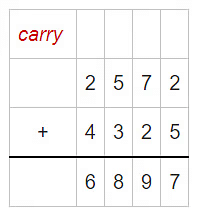
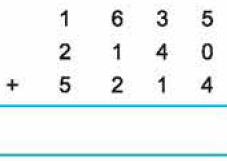
Explanation: 72 ÷ 8 = 9 pencils per box.

8. Find the smallest 3-digit multiple of 8.
Answer: 104
Explanation: 8 × 12 = 96 (2-digit), 8 × 13 = 104 (3-digit).

9. Multiply: 15 × 6 by breaking into 10 + 5.
Answer: 90
Explanation: (10 × 6) + (5 × 6) = 60 + 30 = 90.

10. How many jumps of 6 steps are needed to reach 78?
Answer: 13
Explanation: 78 ÷ 6 = 13 jumps.

Q3: Word Problems

11. A frog jumps 5 steps each time. How many jumps to reach 75?Answer: 15 jumps
Solution: Total steps = 75. Steps per jump = 5.
Number of jumps = 75 ÷ 5 = 15.

12. Priya has 120 stickers. She packs them into envelopes of 8 stickers each. How many envelopes can she make?
Answer: 15 envelopes
Solution: Total stickers = 120. Stickers per envelope = 8.
Number of envelopes = 120 ÷ 8 = 15.

13. A rabbit jumps 9 steps per leap. Will it land on 108? If yes, how many leaps?
Answer: Yes, 12 leaps
Solution: 108 ÷ 9 = 12 with no remainder, so yes.

14. A school orders 144 pencils to be shared equally among 12 classes. How many pencils per class?
Answer: 12 pencils
Solution: Total pencils = 144. Number of classes = 12.
Pencils per class = 144 ÷ 12 = 12.

15. Find two common multiples of 4 and 7 between 20 and 50.
Answer: 28, 56
Solution: Multiples of 4: 4, 8, 12, 16, 20, 24, 28, 32, 36, 40, 44, 48, 52, 56.
Multiples of 7: 7, 14, 21, 28, 35, 42, 49, 56.
Common multiples in range: 28 and 56.

16. A magician doubles 17 coins. How many coins does he have now?Answer: 34 coins
Solution: Doubling means multiplying by 2: 17 × 2 = 34.

17. A squirrel collects 112 nuts and stores them in 7 holes equally. How many nuts per hole?
Answer: 16 nuts
Solution: Total nuts = 112. Number of holes = 7.
nuts per hole = 112 ÷ 7 = 16.

18. A bike has 2 wheels. How many wheels do 150 bikes have?
Answer: 300 wheels
Solution: Wheels per bike = 2. Total bikes = 150.
Total wheels = 150 × 2 = 300.

19. A farmer has 96 apples to pack into boxes of 6 each. How many boxes are needed?
Answer: 16 boxes
Solution: Total apples = 96. Apples per box = 6.
Number of boxes = 96 ÷ 6 = 16.

20. A kangaroo jumps 11 steps per leap. How many steps after 9 leaps?
Answer: 99 steps
Solution: Steps per leap = 11. Number of leaps = 9.
Total steps = 11 × 9 = 99.

08.Weigh It, Pour It- Worksheet Solutions

Q1: Multiple Choice Questions (MCQs).

(i) Estimate the capacity of a table spoon.
(a) 15 ml  
(b) 1500 ml
(c) 150 ml
(d) 1.5 ml
Ans:
 (a) 15 ml  

(ii) 1/2 Litre is equal to
(a) 200 ml
(b) 500 ml
(c) 100 ml
(d) 700 ml
Ans:
 (b) 500 ml
As we know, 1000 ml is 1 litre, 500 ml is 1/2 litre 

(iii)  What is the total weight of 3 bags, each weighing 4 kg ?
(a) 12 kg 
(b) 13 kg 
(c) 8 kg
(d) 13 kg

Ans: (a),12 kg
3 bags weighing 4kg each = 4 kg + 4 kg + 4 kg = 12 kg 

Q2: Fill in the blanks.

(i) 300 ml + _______ = 1 Litre.
(ii) ______ + 480 g = 1 kg
(iii) 500 ml + _______ = 1 Litre.
(iii) 450 ml + _______ = 1 Litre.
Ans:
 
(i) 300 ml + 700 ml = 1000 ml = 1 litre
(ii) 520 g + 480 g = 1000 g = 1 kg
(iii) 500 ml + 500 ml = 1000ml = 1 litre.
(iv) 450 ml + 550 ml = 1000ml = 1 litre.

Q3: Match the following.

Ans:

Q4: Answer the following Questions.

(i) A shopkeeper uses 20 ml of milk to make one cup of tea; if he sell 50 cups of tea then how much milk did he use?
Ans:
 1000 ml
The shopkeeper uses 20 ml of milk to make one cup of tea, and he sells 50 cups of tea. To find the total amount of milk used, we multiply the milk used for one cup by the number of cups:

20 ml × 50 = 1000 ml.

(ii) A pumpkin weighs 6 kg and a watermelon weighs 4 kg. How many kilograms do they weigh together?

Ans: 6 kg + 4 kg = 10 kg

(iii) How many 250 ml of Glasses we need to serve 1000 ml of soup?
Ans:
 4 glasses as 250ml x 4 = 1000 ml

(iv) There are 4 bricks, each weighing 2 kg. What is the total weight of all the bricks together?

Ans: Each brick weighs 2 kg, and there are 4 bricks. So, we multiply the weight of one brick by the number of bricks:
2 kg × 4 = 8 kg.
Let’s think of it like this: If one brick is 2 kg, two bricks are 2 + 2 = 4 kg, three bricks are 4 + 2 = 6 kg, and four bricks are 6 + 2 = 8 kg.

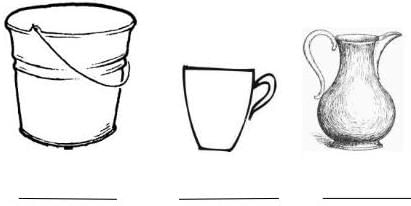
(v) Arrange the following objects in order of increasing capacity. Write numbers 1,2,3 under them:
Ans:
 3,1,2

(vi) You are trying to pour tea in 50 ml cups from a 250 ml cup, but you spilled 25 ml while doing it. what is amount of tea in 5th cup?
Ans:
 25 ml

(vii) A sack of potatoes weighs 7 kg. A smaller sack weighs 4 kg. What is the difference in their weights?
Ans: 
 7kg – 3kg = 4kg 

(viii) Neetu has to take 3 injections in a day for 5 days. If one injection gives her 3 ml of medicine, then how much medicine she is getting every day?
Ans:
 If one injection gives 3 ml, 
two injections give 3 + 3 = 6 ml, 
and three injections give 6 + 3 = 9 ml.
So, every day, Neetu gets 9 ml of medicine.

07.The Cleanest Village- Worksheet Solutions

Section A: Multiple Choice Questions 

1. If a person pays ₹500 for groceries and the total cost is ₹425, what is the balance the shopkeeper gives back?

a) ₹60
b) ₹75
c) ₹80
d) ₹85

Answer: b) ₹75
Solution: Balance = ₹500 – ₹425 = ₹75.

2. If you have ₹300 and buy a notebook for ₹150, how much money do you have left?a) ₹100
b) ₹120
c) ₹130
d) ₹150

Answer: ₹150
Solution: Remaining money = ₹300 – ₹150 = ₹150.

Section B: Fill in the Blanks

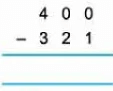
3. 

Ans:   400 – 321 = 79


4. 

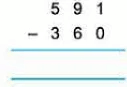
Ans: 591 – 360 = 231

5.  

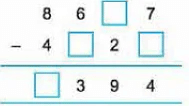
Ans: The subtraction of 8617 and 4223 results in 4394


6. 

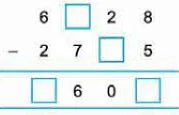
Ans: The missing numbers are 6328, 2725, 3603

7. Find the difference between : 
(a)
 256 – 153 = 103
(b)
 781 – 651 = 130

Section C: Word Problems

8.  If a child has ₹500 and spends ₹250 on a book and ₹100 on snacks, how much money does the child have left?

Answer: ₹150
Solution: 
₹500 – ₹250 – ₹100 = ₹150.

9. In a store, a t-shirt costs ₹350, a pair of jeans costs ₹550, and a cap costs ₹150. How much money is needed to buy all three?

Answer: ₹1,050
Solution:
 ₹350 + ₹550 + ₹150 = ₹1,050.

10. A family spent ₹2000 on groceries. If they paid ₹1200 in cash and the rest using a card, how much did they pay with the card?

Answer: ₹800
Solution: 
₹2,000 – ₹1,200 = ₹800.

11. A person buys 3 tickets to a movie at ₹150 each and 2 tickets to a play at ₹200 each. What is the total cost?

Answer: ₹850
Solution: 
(3 × ₹150) + (2 × ₹200) = ₹450 + ₹400 = ₹850.

06.Measuring Length in- Worksheet Solutions

Q1: Convert to the units shown.

(i) 54 m = ____ cm

Ans: 5400 cm (54 m x 100 = 5400 cm)

(ii) 55 m = ____ cm

Ans: 5500 cm (55 m x 100 = 5500 cm)

(iii) 69 m = ____ cm

Ans: 6900 cm (69 m x 100 = 6900 cm)

(iv) 63 m = ____ mm

Ans: 63000 mm (63 m x 1000 = 63000 mm)

(v) 53 cm = ____ mm

Ans: 530 mm (53 cm x 10 = 530 mm)

Q2: Convert into metres.

(i) 7 km = ____ m
(ii) 2 km 500 = ____ m
(iii) 15 km 305 m = ____ m
(iv) 9 km 50 m = ____ m
Sol:  
(i) 7000 m (As1 km = 1000 m)
(ii) 2500 m (As 2 km 500 m = 2 x 1000 + 500 m = 2500m)
(iii) 15305 m (As 15km 305m = 15x 1000 + 305 = 15000 + 305 = 15305m
(iv) 9050 m

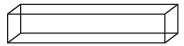
Q3: Multiple Choice Questions (MCQs).(i) Circle the longest box.
(a) 
(b) 
(c) 
(d) 
Sol: 
(d)

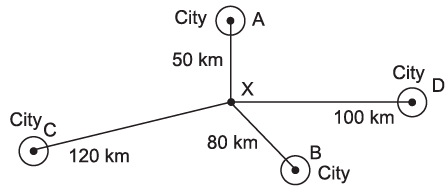
(ii) Which city has the farthest distance point X?
(a)
 City A
(b) 
City B
(c) 
City C
(d) 
City D
Sol:
 (c)

Q4: Fill in the blanks.

(a) 10 m = ____ cm
(b) 50 m = ____ cm
Sol:
 (a) 1000 cm
(b) 5000 cm

Q5: Answer the following Questions.(i) Complete the table
Sol:

(ii) A room has 6 m length and 4 m breadth. What is the perimeter of the room?
Sol: 
Length of room = 6 m
Breadth of room = 4 m
Perimeter of room = Perimeter of rectangle = 2 x (length + breadth) = 2(6+4) = 2 x 10 = 20 m

(iii) How much money does Renu have if she has 5 (₹ 10 notes) + 3 (₹ 50 notes) + 10 (₹ 100 notes) =  
Sol: Total money Renu has = (5×10) + (3×50) + (10×100) = ₹ 1200

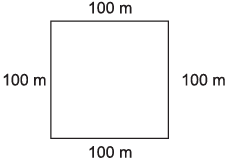
(iv) Find the perimeter of the given figure.
Sol: 
The given figure is a shape ( all sides are equal with side length = 100 m, and all angles are also equal with each angle = 90o)
Perimeter of a square = 4 x side length = 4 x 100 = 400 m

(v) Ram is 1 m 23 cm tall. Seeta is 12 cm shorter than Ram. What is their total height?
Ans:
 Height of Ram = 1 m 23 cm = 1×100 + 23 = 123cm (Because 1m = 100cm)
Height of Seeta = Height of Ram – 12cm = (1m 23 cm -12 cm) = 1 m 11 cm = 111cm
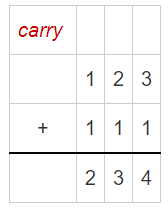
Total height of the two =  123 cm + 111 cm = 234 cm =1 m 23 cm + 1 m 11 cm = 2 m 34 cm

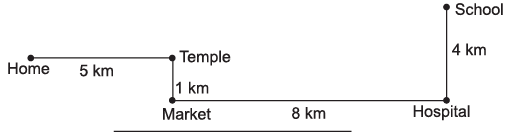
(vi) Find the total distance covered by Mohan from home to school.

Sol: Total distance covered = (5 + 1 + 8 + 4)km

(vii) Ram is 150 cm tall and his sister Teena is 115 cm tall. Who is taller and by how many cms?

Sol:
 Height of Ram = 150 cm
Height of Teena = 115 cm
The difference in their heights = 150 – 115 = 35 cm
Hence, Ram is taller than Seeta by 35 cm.

(viii) Using a ruler, draw lines of following measurements
(a) 7.7 cm
(b) 6.5 cm
Sol: 
Students should draw it themselves.

05.Sharing and Measuring- Worksheet Solutions

Q1. Think and Choose:

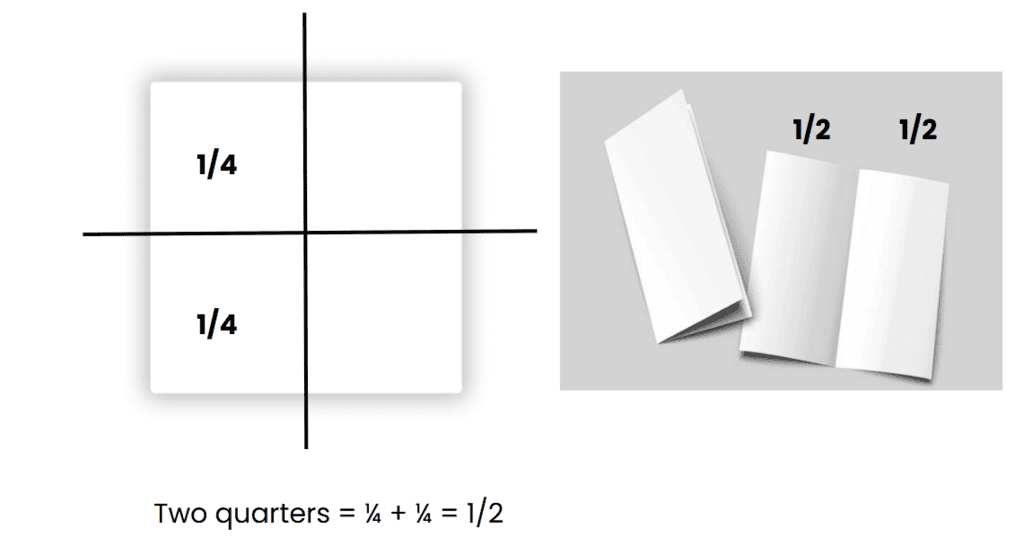
(i) Would you like one-half of a paper or two-quartersof the same paper? Why?

Ans: Both are equal. 

(ii) If a dhokla is shared equally among 5 children, what fraction of the dhokla does each child get?

Ans: You have 1 big dhokla (a soft, yummy snack).
Now, you want to share it equally among 5 children.

So, you cut the dhokla into 5 equal pieces.
Each child will get one of those pieces.

That one piece is 1 part out of 5, or we say “one-fifth”, and we write it as:

1/5

(iii) Which is more?
a) 1/2 or 1/4

Ans: 1/2 is more

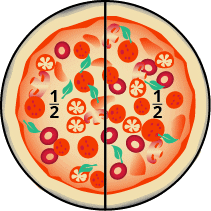
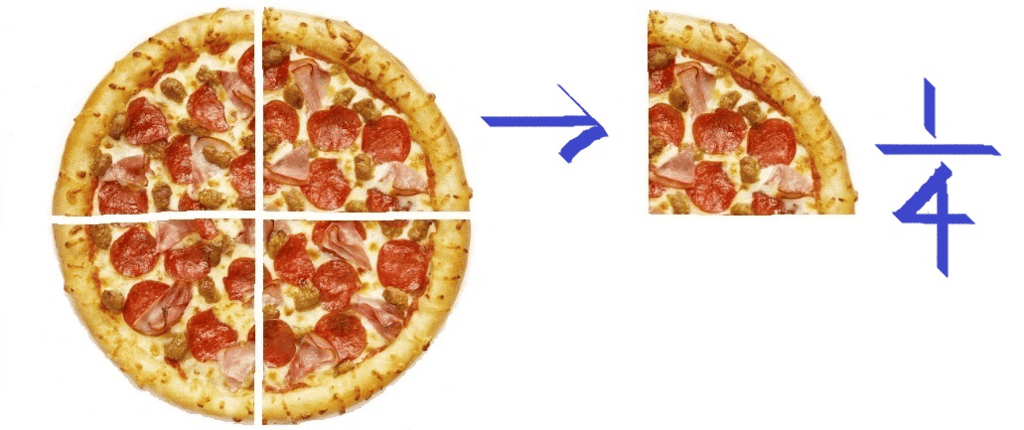
Imagine cutting a pizza into 2 equal pieces.

Now imagine cutting the same pizza into 4 equal pieces.

The piece from 1/2 is bigger than the piece from 1/4.
So, 1/2 is more.

b) 1/3 or 1/6

Ans: 1/3 is more

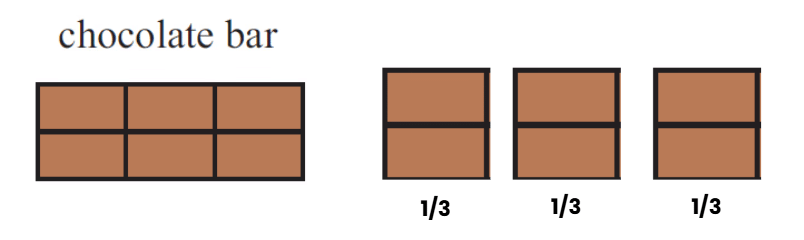
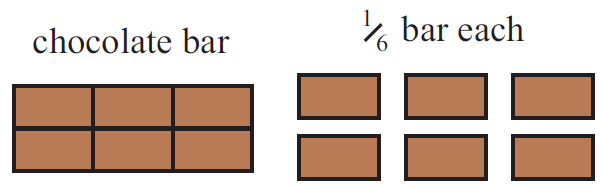
Let’s take a chocolate bar.
If you break it into 3 equal parts, each part is bigger than when you break it into 6 equal parts.
So, 1/3 is more than 1/6.

Q2. Draw and Divide:

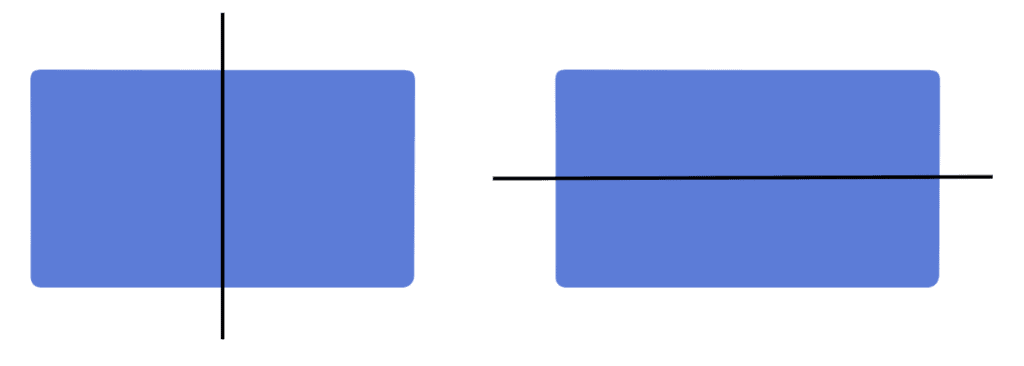
(i) Draw a rectangle. Show 2 different ways to divide it into 2 equal halves.

Ans:Rectangle is divided into two equal halves in two different ways

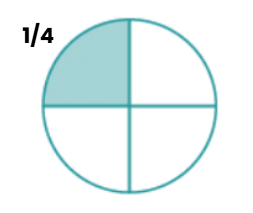
(ii)  Draw a circle. Divide it into 4 equal parts and shade one-quarter (¼).

Ans: 

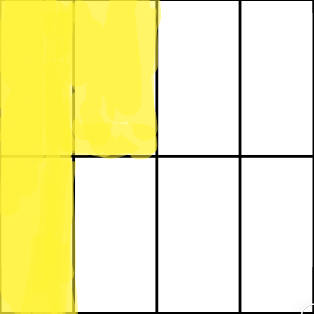
(iii)  Draw a square and divide it into 8 equal parts. Shade 3/8 of it.

Q3. Food Fun Fractions:

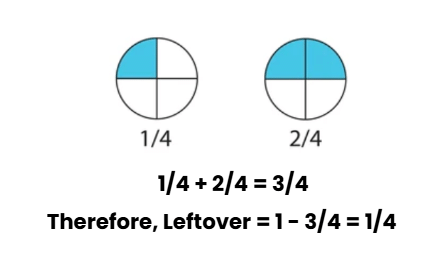
(i)  Ramu made a big paratha and cut it into 4 equal parts. He ate 1/4 and gave 2/4 to his sister.
How much of the paratha is left?

Ans: The whole paratha has 4 parts.

Ramu ate 1 part, and his sister got 2 parts.

Together they ate: 1 + 2 = 3 parts

Only 1 part is left out of 4.
1/4 of the paratha is left.

Q4. Equal or Not?

a) shared by 2 friends: each gets .

b)  shared by 2 friends: 1 gets  and 1 gets .

c)  shared by 3 friends: each gets .

(i) Choose options that are divided equally:

Ans: (a) and (c) are shared equally.

Because in both parts, each gets same no. of item.

(ii) Which of the above is not shared equally?

Ans: (b) is not equal – one got more!