This essay, written by Helen Keller, a well-known author who could not see or hear, shares what she would do if she could see for just three days.
She describes how she enjoys the world by touching things and imagines the beauty she could experience with sight.
Helen plans each day carefully, focusing on people, nature, history, and daily life.
The essay encourages us to value our senses and enjoy the world around us.
Explanation of the Story
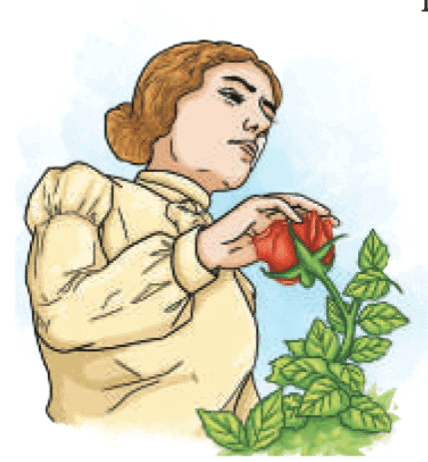
The essay starts with Helen Keller explaining how she finds joy in touching things, even though she is blind. She feels the shape of a leaf, the smooth bark of a tree, or the rough surface of a pine. In spring, she touches tree branches to find buds, which show nature waking up after winter. Sometimes, she feels a bird shaking with song on a branch, which makes her happy. However, she wishes she could see these things, as sight would show her even more beauty. She imagines having three days of sight and divides them into three parts.
Day 1
On the first day, Helen wants to see the people who have made her life special with their kindness and friendship. Since she cannot see, she knows her friends by touching their faces, feeling if they are happy or sad. She wishes to look into their eyes to understand their true feelings, calling eyes the “window of the soul.” This day is about spending time with loved ones and appreciating their importance in her life.
Day 2
On the second day, Helen would wake up early to watch the sunrise, when night turns into day with beautiful light. She wants to see the sun brighten the earth. She plans to visit museums to learn about the world’s past and present. In museums, she would see models of old animals like dinosaurs and learn about how people have grown smarter over time. This day is about enjoying nature’s beauty and understanding the history of life.
Day 3
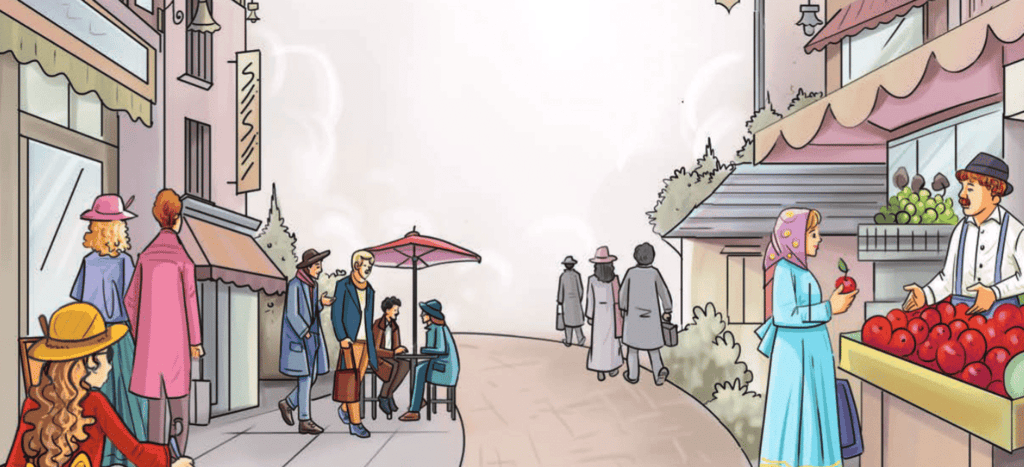
On the third day, Helen would go to a busy city to watch people living their daily lives. Standing at a street corner, she would look at their faces to see if they were smiling, serious, or sad. She feels happy seeing smiles, proud of people working hard, and kind toward those who are struggling. This day is about understanding the lives of ordinary people and feeling connected to them.
At the end of the three days, Helen knew she would become blind again. She understands that three days are not enough to see everything she wants. She tells people who can see to use their eyes as if they might lose their sight tomorrow. She also suggests listening to music, touching things, smelling flowers, and tasting food as if those senses could be gone. Helen believes that using all senses fully helps us find happiness in life, but she thinks sight is the most wonderful sense.
Moral of the Story
The story teaches us to appreciate our senses and use them to enjoy the world around us.
Helen Keller demonstrates that even tiny things, like a leaf or a smile, can be very special.
By reflecting on what life would be like without a sense, she helps us understand the value of what we have.
The story encourages us to show kindness to those who cannot see or hear.
It inspires us to live each day with a sense of wonder and gratitude.
Difficult Words
Here are the meanings of some words from the essay, explained simply:
Symmetry: The even shape of something, like a leaf, that looks the same on both sides.
Quiver: A small, fast shake, like a bird moving while singing.
Longing: A strong wish for something.
Companionship: The feeling of being close to friends or family.
Behold: To look at something with amazement.
Panorama: A wide, beautiful view, like a sunrise.
Glimpse: A quick look at something.
Pageant: A big display, like a museum show.
Condensed: Made short, like a quick summary of history.
Carcasses: The bones or remains of dead animals.
Mastodons: Big, furry animals like elephants that lived long ago.
Stature: The size or height of a person or thing.
Haunts: Places where people often go, like a shop or workplace.
Merely: Only or just.
Strains: Tunes or music, like songs from a band.
Tactile: Related to touching things.
Morsel: A tiny piece of food.
Facets: Different parts of something, like the joys of life.
The poem, written by Eliza Cook, is a narrative poem that tells the inspiring story of King Bruce of Scotland.
The king is feeling sad and defeated after failing multiple times to achieve an important goal for his people.
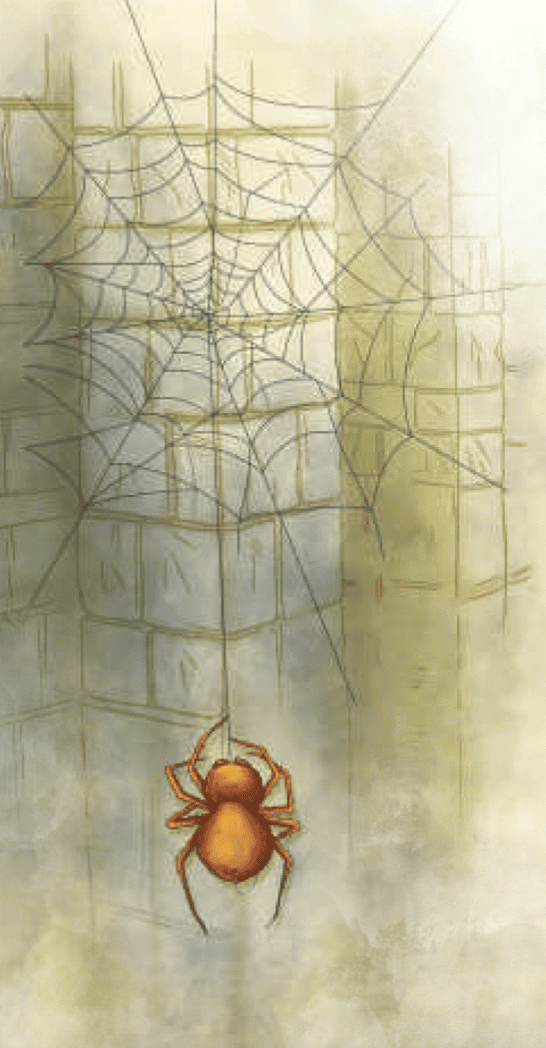
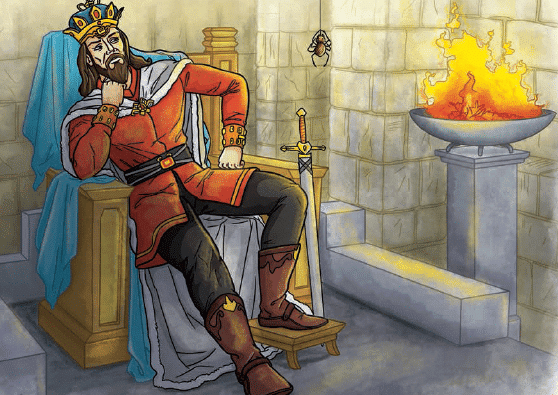
While sitting alone, he watches a spider repeatedly attempt to climb to its web, falling each time but never giving up.
The spider’s persistence motivates King Bruce to try again, leading to his eventual success.
The poem delivers a powerful message about perseverance and resilience, encouraging readers to keep trying despite setbacks.
Explanation Stanza 1
King Bruce of Scotland flung himself down In a lonely mood to think; ‘Tis true he was monarch, and wore a crown, But his heart was beginning to sink.
Explanation: King Bruce of Scotland is feeling lonely and sad. He throws himself down, lost in his thoughts. Even though he is a king with a crown and great power, he feels upset inside. This stanza sets the scene, showing that even a strong ruler can feel weak when facing problems. The poet uses simple words to describe the king’s sadness, helping readers understand his troubled feelings.
Let’s Revise: How does the poet help us understand King Bruce’s mood? View Answer
Stanza 2
For he had been trying to do a great deed, To make his people glad; He had tried and tried, but couldn’t succeed And so he became quite sad.
Explanation: The king’s sadness comes from his repeated failures to do something important that would make his people happy. He has tried many times, but each attempt has failed. This makes him very unhappy, and he feels his efforts are useless. The stanza shows the king’s good intentions and the heavy responsibility he feels as a leader, making his struggle relatable to anyone who has faced challenges.
Let’s Revise: What was the reason behind King Bruce’s repeated attempts? View Answer
Stanza 3
He flung himself down in low despair, As grieved as man could be; And after a while he pondered there, “I’ll give it all up,” said he.
Explanation: Feeling hopeless, King Bruce lies down, filled with deep sorrow, as sad as anyone could be. After thinking for a while, he decides to give up completely, saying, “I’ll give it all up.” This moment shows the king at his lowest point, ready to abandon his dreams. The poet builds suspense by emphasising his despair, preparing readers for a change in the story.
Let’s Revise: Why did King Bruce decide to give up? View Answer
Stanza 4
Now just at that moment a spider dropped, With its silken, filmy clue; And the King, in the midst of his thinking, stopped To see what the spider would do. ‘Twas a long way up to the ceiling dome, And it hung by a rope so fine; That how it would get to its cobweb home, King Bruce could not divine.
Explanation: While King Bruce is lost in thought, a spider suddenly drops down on a thin, silky thread. The king stops thinking about his problems and watches the spider with curiosity. The spider’s web is high up near the ceiling, and the thread looks very fragile. King Bruce wonders how such a small creature will reach its home. This stanza introduces the spider, shifting the focus from the king’s sadness to the spider’s effort, setting up the lesson to come.
Let’s Revise: Why does King Bruce find the spider’s climb so fascinating? View Answer
Stanza 5
It soon began to cling and crawl Straight up with strong endeavour; But down it came with a slippery sprawl, As near to the ground as ever. Up, up it ran, not a second to stay, To utter the least complaint; Till it fell still lower, and there it lay, A little dizzy and faint.
Explanation: The spider starts climbing the thread, holding on tightly and moving upward with great effort. However, it slips and falls back to the ground, almost to where it started. Without stopping to rest or complain, the spider tries again right away but falls again, feeling dizzy and weak. This stanza shows the spider’s determination and its first failures, which are similar to the king’s own struggles. The poet’s clear description makes the spider’s effort exciting to read about.
Let’s Revise: How is the spider’s struggle similar to King Bruce’s situation? View Answer
Stanza 6
Its head grew steady – again it went, And travelled a half-yard higher; ‘Twas a delicate thread it had to tread, And a road where its feet would tire. Again it fell and swung below, But again it quickly mounted; Till up and down, now fast, now slow, Nine brave attempts were counted.
Explanation: After resting, the spider’s head clears, and it climbs again, reaching a bit higher—about half a yard more than before. The thread is very thin, and the climb is tiring for the spider’s small feet. Despite making progress, it falls again and swings below the thread. The spider keeps trying, going up and down, sometimes quickly and sometimes slowly. The poet counts nine brave tries, each ending in a fall. This stanza builds tension, showing the spider’s hard work and the king’s growing interest.
Let’s Revise: How does the spider’s repeated effort affect the mood of the poem? View Answer
Stanza 7
“Sure,” cried the King, “that foolish thing Will strive no more to climb; When it toils so hard to reach and cling, And tumbles every time.”
Explanation: King Bruce, watching the spider’s repeated failures, speaks out loud. He thinks the spider is foolish and will stop trying because it works so hard, but falls every time. This stanza shows the king’s doubt, which mirrors his own feelings of hopelessness about his failed attempts. The poet uses the king’s words to create drama, making readers wonder if the spider will give up or keep going.
Let’s Revise: Why does the poet have the king call the spider “foolish”? View Answer
Stanza 8
But up the insect went once more, Ah me! ’tis an anxious minute; He’s only a foot from his cobweb door, Oh say, will he lose or win it? Steadily, steadily, inch by inch, Higher and higher he got; And a bold little run at the very last pinch Put him into his native cot.
Explanation: Despite the king’s doubts, the spider tries again, and the poet describes the moment as tense, saying, “Ah me! ’tis an anxious minute.” The spider is now just a foot away from its web, its “cobweb door.” Moving slowly and steadily, inch by inch, it climbs higher. With a final, brave effort, it reaches its web. This stanza is the high point of the spider’s journey, showing its success through hard work. The poet’s words like “steadily” and “inch by inch” highlight the spider’s careful progress.
Let’s Revise: What effect does the spider’s “bold little run” have on the king and the story? View Answer
Stanza 9
“Bravo, bravo!” the King cried out, “All honour to those who try; The spider up there, defied despair; He conquered, and why shouldn’t I?”
Explanation: King Bruce is thrilled by the spider’s success and shouts, “Bravo, bravo!” He praises the spider for its courage, saying it “defied despair” by not giving up despite many falls. Inspired, he realises that if a tiny spider can succeed, he too can try again. This stanza is a turning point for the king, as the spider’s example gives him new hope and determination to continue his efforts.
Let’s Revise: Why does the king say, “He conquered, and why shouldn’t I?” View Answer
Stanza 10
And Bruce of Scotland braced his mind, And gossips tell the tale, That he tried once more as he tried before, And that time did not fail.
Explanation: Motivated by the spider, King Bruce makes up his mind to try again. The poet notes that people later tell the story that he made one more attempt and succeeded this time. This final stanza ends the poem on a hopeful note, showing that the king’s hard work, inspired by the spider, leads to success. It reinforces the poem’s message that trying again can bring victory.
Let’s Revise: What does the phrase “And that time did not fail” imply about King Bruce’s final attempt? View Answer
Moral of the Poem
The poem teaches us that we should never give up, even if we fail many times.
The spider’s hard work and determination show that success comes from keeping on trying.
King Bruce’s story shows that failures are like steps that lead to success if we stay strong and believe in ourselves.
The poem encourages us to find inspiration in small things, like a spider, to achieve our goals.
Difficult Words
Here are the meanings of some words from the poem, explained simply:
Flung: Threw or dropped himself down quickly.
Monarch: A king or queen who rules a country.
Deed: An important action or task.
Despair: A feeling of sadness and hopelessness.
Grieved: Felt very sad or upset.
Pondered: Thought deeply about something.
Filmy: Very thin and light, like a spider’s thread.
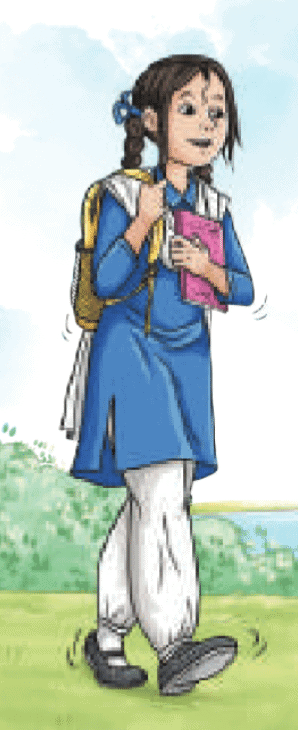
The story is written by Kamala Nair and tells the story of a young girl named Jahnavi who lives in a coastal village in India.
Jahnavi has a big dream of going to school, but her family does not allow her because she is a girl and has to take care of her younger siblings.
One day, she talks to a magical river, which encourages her to follow her dream.
The story teaches us about courage, determination, and the importance of education, especially for girls.
Explanation of the Story
Life in the Village
Jahnavi, a bright and curious girl, lives in a coastal village with her parents and three brothers — Gopi (whom she calls Ettan), Meena, Ramu, and Appu. Her parents work on a farm, and Jahnavi often spends time near a nearby river. She dreams of going to school like her brothers, but her mother keeps postponing it, saying she is either too young or needed at home to care for her siblings.
A Cry by the River
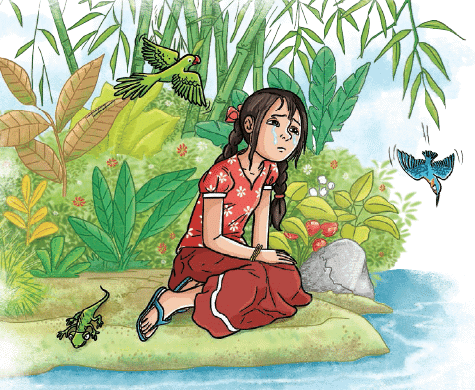
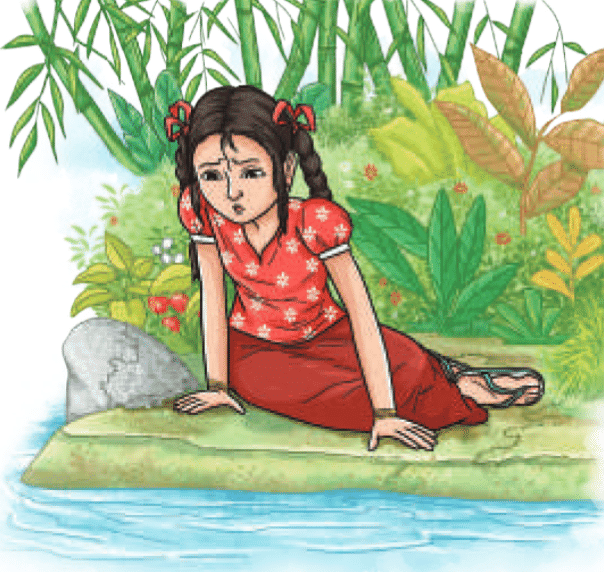
One day, feeling hopeless, Jahnavi cries by the river, thinking she will never go to school. To her surprise, the river speaks to her in a sleepy, kind voice. Scared at first, Jahnavi soon shares her wish to learn about the world — about spiders, bamboo, and the moon — and her fear of being too old to start school. The river listens patiently and encourages her, telling her that girls are just as capable as boys. It advises her to simply walk into the classroom and listen quietly, believing the teacher might let her stay. The river also talks about ships and suggests that Chandu, a fisherman, could someday take her to see one.
Q: How does the river comfort and encourage Jahnavi? View Answer
Jahnavi’s Brave Step
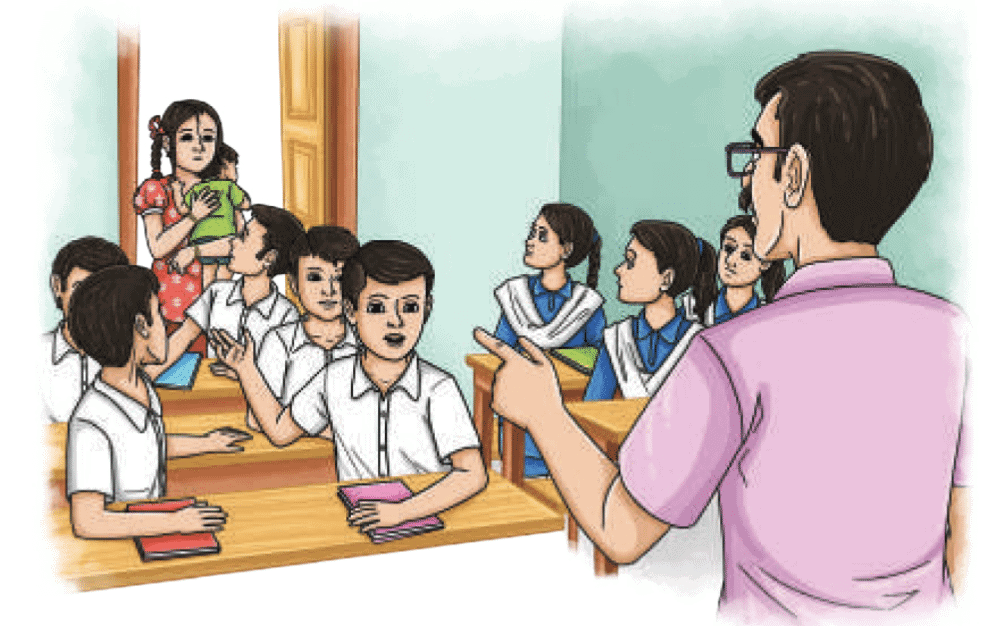
The next day, carrying her youngest brother Appu, Jahnavi stands shyly by the classroom door, listening to a story about King Ashoka. Gradually, she moves inside and sits at the back. The teacher notices her, learns she is Gopi’s sister, and decides to talk to her family.
A Dream Comes True
That evening, the teacher visits Jahnavi’s home. Though her father worries, her mother supports Jahnavi’s wish, recalling her own childhood dream of studying. They agree to let Jahnavi join school. The next morning, Jahnavi runs excitedly to the river and shares the good news. She dreams of learning to read, write, and someday become a teacher to help other girls. The river chuckles and invites her back to learn even more, including the secrets of the ships beyond the sea.
Moral of the Story
The story teaches us that courage and determination can help us achieve our dreams, even when things seem difficult.
It also shows that education is important for everyone, especially girls, who may face challenges in getting it.
The river’s encouragement reminds us to believe in ourselves and take small steps toward our goals.
The story highlights the value of support from others, like the teacher and Jahnavi’s mother, in making dreams come true.
Let’s Revise: What does the story tell us about Jahnavi’s character? View Answer
Difficult Words
Here are the meanings of some difficult words from the story, explained simply:
Splashed: Water or liquid falling in drops with a sound (e.g., tears splashed down her face).
Slithered: Moved smoothly by sliding, like a snake or lizard.
Murmuring: Speaking in a soft, low voice, almost like a whisper.
Startled: Suddenly surprised or shocked.
Thicket: A group of bushes or trees growing close together.
Shrieked: Made a loud, high-pitched sound, like a scream.
Conspiratorially: Speaking secretly, as if sharing a special plan.
Catamaran: A small boat made of logs tied together, used by fishermen.
Panting: Breathing heavily because of running or being tired.
Rustle: A soft sound made by leaves or paper moving.
 View Answer