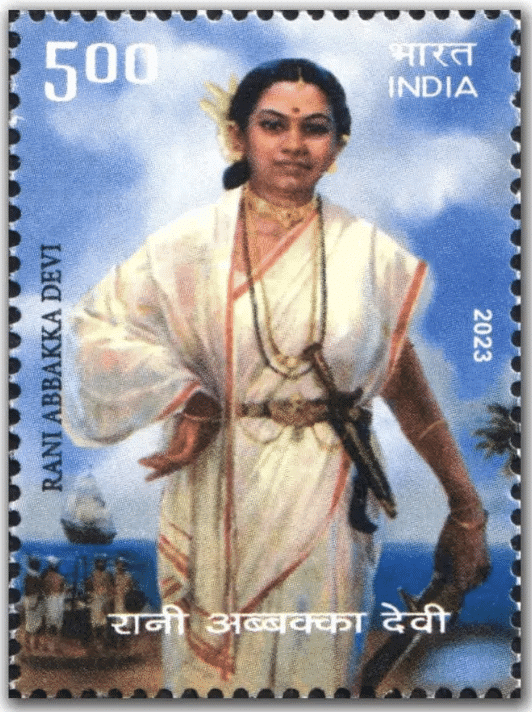
Q1: Who was Rani Abbakka? a) Queen of Kozhikode b) Queen of Ullal c) Queen of Bangadi d) Portuguese envoy Ans: b) Queen of Ullal
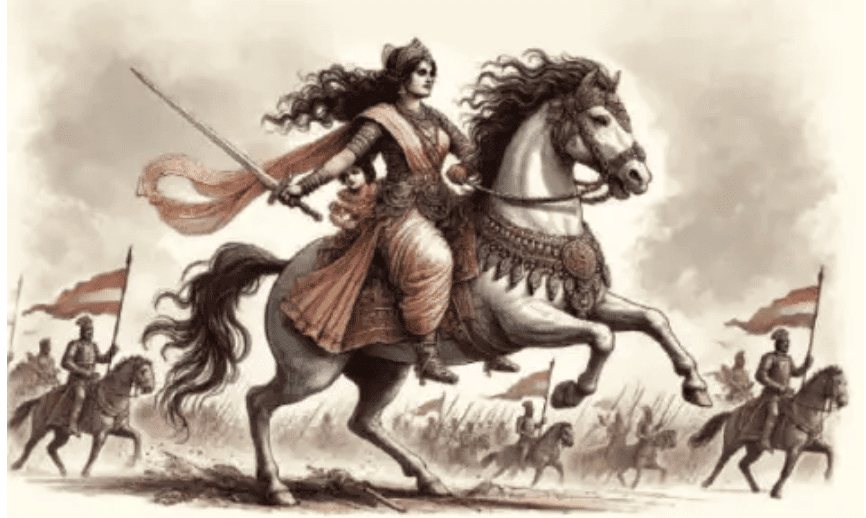
Rani Abbakka was the queen of Ullal, a small coastal kingdom in India, as stated in the story.
Q2: Why did the Portuguese demand tribute from Ullal? a) To trade with Arabia b) To maintain control over Ullal c) To build merchant ships d) To support local rajas Ans: b) To maintain control over Ullal
The Portuguese demanded tribute to maintain control over Ullal, which they had captured, as mentioned in the story.
Q3: Who did Rani Abbakka form an alliance with? a) Veera Narasimha b) Portuguese army c) Zamorin of Kozhikode d) Local merchants Ans: c) Zamorin of Kozhikode
Abbakka formed an alliance with the Zamorin of Kozhikode, a powerful coastal ruler, to strengthen Ullal.
Q4: How long did the battle for Ullal last? a) Two days b) Four days c) One week d) One month Ans: b) Four days
The battle for Ullal lasted four days, after which the Portuguese were defeated and retreated.
Q5: What does the word “dauntless” mean in the story? a) Fearless and brave b) Angry and violent c) Quick and rash d) Weak and afraid Ans: a) Fearless and brave
“Dauntless” is defined as fearless and brave, describing Abbakka’s spirit in fighting the Portuguese.
Fill in the Blank
Q1: Rani Abbakka was the queen of _______. Ans: Ullal
Q2: The Portuguese attacked Ullal because Abbakka refused to pay _______. Ans: tribute
Q3: Abbakka formed an alliance with the Zamorin of _______. Ans: Kozhikode
Q4: The people of Ullal were inspired by Abbakka’s _______ and leadership. Ans: courage
Q5: The word “sovereign” means free and _______. Ans: independent
True or False
Q1: Rani Abbakka agreed to pay tribute to the Portuguese. Ans: False
Abbakka refused to pay tribute, declaring Ullal a sovereign country, which led to the Portuguese attack.
Q2: Veera Narasimha supported Abbakka’s plan to fight the Portuguese. Ans: False
Veera Narasimha, Abbakka’s husband, opposed her plan, fearing it would endanger his kingdom, and even ordered his soldiers to stop her.
Q3: Abbakka built merchant ships to strengthen Ullal. Ans: True
Abbakka ordered the building of merchant ships to boost Ullal’s economy and defy the Portuguese.
Q4: The Portuguese defeated Ullal in the battle. Ans: False
The Portuguese were defeated after a four-day battle and retreated, never troubling Ullal again.
Q5: The word “vassal” means an independent state. Ans: False
“Vassal” refers to a state controlled by a more powerful country, not an independent one, as defined in the story.
Very Short Answer Questions
Q1: What did Rani Abbakka refuse to do when the Portuguese envoy visited? Ans: Pay tribute
Q2: Who was Veera Narasimha in the story? Ans: Abbakka’s husband
Q3: What did Abbakka attack after defeating the Portuguese in battle? Ans: Portuguese fort
Q4: What is the meaning of the word “resolve” in the story? Ans: Strong determination
Q5: What is one moral of the story? Ans: Stand up for what is right
Long Answer Questions
Q1: How did Rani Abbakka show her determination against the Portuguese? Ans: Rani Abbakka showed her strong will to resist the Portuguese by refusing to pay tribute and boldly declaring Ullal as an independent country, even when the Portuguese envoy warned her of the consequences. She remained firm even when her husband, Veera Narasimha, called her decision reckless and tried to stop her with his soldiers, proving her determination to protect Ullal’s freedom. Abbakka also showed her resolve by gathering support from local rulers, building merchant ships, and forming an alliance with the Zamorin of Kozhikode to strengthen Ullal. She demonstrated her leadership by fighting alongside her soldiers in a four-day battle and attacking the Portuguese fort, showing her fearless commitment to defend her kingdom’s independence, even against a powerful enemy.
Q2:Describe how Abbakka gathered support to fight the Portuguese. Ans: Rani Abbakka built support to fight the Portuguese through clever leadership and diplomacy. She held a meeting with local rajas to unite them against the Portuguese, reassuring them about their small forces and motivating them to join her cause. To strengthen Ullal, she ordered the building of merchant ships, which helped improve the kingdom’s economy and trade. Abbakka also formed an important alliance with the Zamorin of Kozhikode, a powerful ruler along the coast, which gave Ullal a strong ally against Portuguese control. This alliance also boosted trade with Arabia, further strengthening Ullal. By bringing local leaders together, building resources, and securing a strong alliance, Abbakka created a solid network of support that helped her challenge and defeat the Portuguese.
Q3: Explain the events of the battle for Ullal and its outcome. Ans: The battle for Ullal began when the Portuguese, furious over Rani Abbakka’s refusal to pay tribute, launched a fierce attack on the kingdom. Abbakka displayed remarkable leadership, fighting alongside her soldiers with great courage. Inspired by her bravery, the people of Ullal fought bravely as well. The battle lasted for four days, filled with intense fighting as Abbakka’s forces held their ground against the much stronger Portuguese army. In the end, the unity and determination of Ullal’s people led to victory, forcing the Portuguese to retreat. Afterwards, Abbakka took the offensive, attacking the Portuguese fort to further establish her power. This victory was a decisive one for Ullal, ensuring that the Portuguese never again troubled the kingdom, solidifying Abbakka’s legacy as a fearless leader who secured her land’s freedom.
Q4: What is the moral of the story, and how does Rani Abbakka’s leadership reflect it? Ans: The moral of the story is that courage, determination, and standing up for what is right can lead to victory, even against powerful opponents, and inspire others to cherish independence. Rani Abbakka’s leadership exemplifies this moral through her fearless refusal to bow to Portuguese demands, boldly declaring Ullal’s sovereignty despite threats. Her determination was evident when she overcame her husband’s objections, rallied local rajas, built ships, and formed an alliance with the Zamorin of Kozhikode to strengthen her kingdom. Leading her soldiers during the four-day battle and attacking the Portuguese fort demonstrated her courage and dedication to freedom. Her actions inspired both her people and other rulers to resist foreign control, showing how one leader’s resolve can unite and empower others, perfectly embodying the moral of standing firm for justice and independence.
Q5: Discuss how Rani Abbakka’s story inspires others to stand up for freedom. Ans: Rani Abbakka’s story is truly inspiring, highlighting her bravery and strategic leadership in defending her kingdom’s independence. She refused to submit to Portuguese demands, rallying local rajas and forging alliances to strengthen her kingdom’s position. Her resilience in the four-day battle and subsequent attack on the Portuguese fort left a lasting legacy. Her actions not only ensured Ullal’s freedom but also motivated other rulers to resist foreign domination, making her a powerful symbol of courage and determination.
Q1: What does the poet call soldiers in the first stanza? a) Guardians of peace b) Defenders of borders c) Sons of freedom d) Heroes of youth Ans: b) Defenders of borders
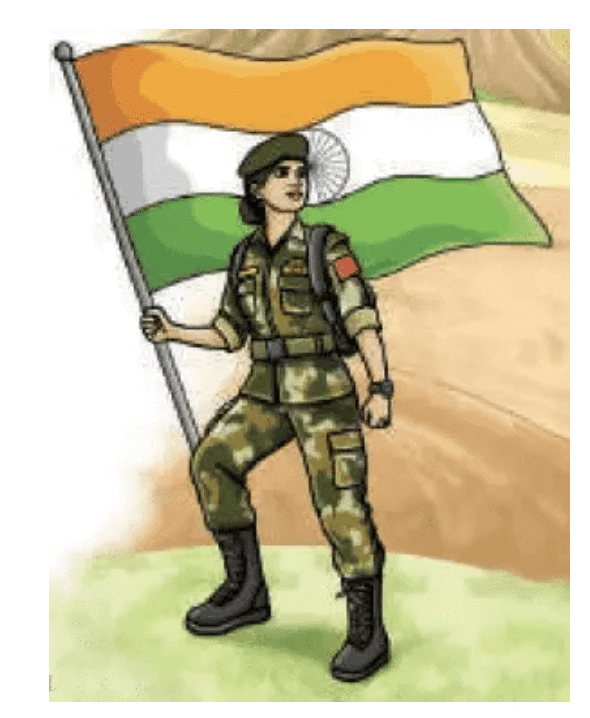
In the first stanza, the poet addresses soldiers as “Defenders of borders,” highlighting their role in protecting the nation’s boundaries.
Q2: What do soldiers do while others sleep, according to stanza 1? a) Rest and dream b) Hold on to their deed c) Climb mountains d) Pray for the nation Ans: b) Hold on to their deed
The first stanza states that while people sleep, soldiers “hold on to your deed,” meaning they stay committed to their duty of guarding the nation.
Q3: Which weather condition is NOT mentioned in stanza 2? a) Windy season b) Snowy days c) Rainy storms d) Scorching sun Ans: c) Rainy storms
Stanza 2 mentions windy season, snowy days, and scorching sun’s sweltering rays as conditions soldiers face, but rainy storms are not referenced.
Q4: What does the poet compare soldiers to in stanza 2? a) Yogis b) Wind chimes c) Valleys d) Marsh guards Ans: a) Yogis
In stanza 2, soldiers are compared to “yogis” for treading lonely expanses with focus.
Q5: What does the word “feat” mean in the poem? a) A large area b) A brave or impressive act c) A hot day d) A type of prayer Ans: b) A brave or impressive act
“Feat” is defined as a brave or impressive act, referring to the soldiers’ courageous actions in stanza 4.
Fill in the Blank
Q1: Soldiers guard the nation even in _______ days. Ans: snowy
Q2: The poet compares soldiers treading lonely expanses to _______. Ans: yogis
Q3: Soldiers dedicate the _______ of their youth to the nation. Ans: prime
Q4: The _______ chimes vibrate to show the soldiers’ brave acts. Ans: wind
Q5: The word “sweltering” means uncomfortably _______. Ans: hot
True or False
Q1: The poem describes soldiers sleeping while guarding the borders. Ans: False
The poem states soldiers stay awake, holding on to their duty while others sleep, emphasizing their vigilance.
Q2: Soldiers work in diverse terrains like deserts and seas. Ans: True
Stanza 3 mentions soldiers defending deserts, guarding marshes, and monitoring seas, among other terrains.
Q3: The poet compares soldiers to wind chimes in stanza 3. Ans: False
Wind chimes are mentioned in stanza 4 as a symbol of the nation’s pride, not a comparison to soldiers, who are compared to yogis in stanza 2.
Q4: The poem encourages gratitude for soldiers’ sacrifices. Ans: True
The poem’s moral and final stanza, with prayers for soldiers, encourage gratitude for their selfless service.
Q5: The word “yogis” refers to people who live in cities. Ans: False
“Yogis” refers to spiritual people who meditate and live simply, not city dwellers, as used in the poem.
Very Short Answer Questions
Q1: What do soldiers do in all weather conditions, according to stanza 2? Ans: Guard the nation
Q2: Which areas do soldiers monitor, as mentioned in stanza 3? Ans: Mountains, valleys, deserts, marshes, seas, air
Q3: What does the poet pray for in the final stanza? Ans: Soldiers’ safety and blessings
Q4: What is the meaning of the word “surveillance” in the poem? Ans: Close watch or monitoring
Q5: What is one moral of the poem? Ans: Value soldiers’ sacrifices
Long Answer Questions
Q1: How does the poet show the soldiers’ sacrifices in the first two stanzas? Ans: In the first two stanzas, the poet shows how much soldiers sacrifice by focusing on their hard work and bravery in tough situations. In stanza 1, they are called “Defenders of borders” who stay alert while others sleep, giving up their own rest to keep the country safe. This shows their selfless nature. In stanza 2, the poet talks about how soldiers guard the nation through strong winds, heavy snow, and hot sun. They walk alone like yogis, facing harsh weather and loneliness. This highlights their courage and the hardships they go through to protect the nation.
Q2: Describe the different terrains and tasks soldiers undertake in stanza 3. Ans: In stanza 3, the poet shows how soldiers protect the country in many different places and ways. They climb high mountains and walk through deep valleys, showing their work in tough and uneven lands. They also guard dry deserts and wet marshes, facing extreme weather and difficult ground. Besides land, they keep watch over the seas and skies, making sure the country is safe from all sides. By doing all this hard work—climbing, guarding, and watching—soldiers give up the best years of their lives to protect the nation in every area: land, sea, and air.
Q3: Explain the significance of the “wind chimes” in the final stanza. Ans: In the final stanza, the “wind chimes of my land” symbolise the nation’s deep pride and respect for its brave soldiers. These wind chimes, which move with energy, show how the soldiers’ courage touches people’s hearts all over the country. Their brave actions are like a tune that travels with the wind, reminding everyone of their sacrifice and uniting the nation in thankfulness. The soft, musical sound of the wind chimes also matches the poet’s gentle prayer for the soldiers’ safety. This makes the wind chimes a beautiful image of the lasting honour and gratitude that soldiers inspire.
Q4: What is the moral of the poem, and how does the poet’s tone reflect it? Ans: The poem teaches us to respect and be thankful for the sacrifices soldiers make, reminding us to pray for their safety and honor their service. The poet’s tone is full of respect, admiration, and heartfelt emotion. In the first two stanzas, the poet calls soldiers “great sons” and talks about how they stay awake and protect us in difficult weather, showing deep respect. In the third stanza, the poet describes how soldiers work in mountains, deserts, marshes, and even the sea and sky, which shows great admiration for their hard work. In the last stanza, the poet’s prayer, “We pray for you brave men!!” expresses love and care. This respectful and emotional tone throughout the poem helps readers understand the importance of showing gratitude to soldiers for their bravery and service.
Q5: Discuss how the poem inspires gratitude and respect for soldiers’ dedication. Ans: The poem inspires us to feel thankful and respectful towards soldiers by using clear images, emotional words, and a respectful tone to show their sacrifices. In the first stanza, the poet calls them “Defenders of borders” who stay awake and protect the nation while others sleep. This helps us understand how hardworking and selfless they are. In the second stanza, the poet says they guard the country in all kinds of weather—wind, snow, or heat—like calm and focused yogis. This makes us admire their strength and patience. The third stanza shows how soldiers work in different places like mountains, deserts, seas, and the sky. They give up their youth to keep the country safe, which makes us feel grateful for their dedication. In the final stanza, the poet uses the image of “wind chimes” to show how the whole country respects and remembers the soldiers’ bravery. The poem ends with a prayer for their safety. Overall, the poet’s emotional and respectful words help us understand how important it is to be thankful to soldiers and to honour their selfless work.
Q1: Who wrote the letter about visiting the National War Memorial? a) Ananda b) Soumya c) Major Padmapani Acharya d) Captain Anuj Nayyar Ans: b) Soumya
Soumya writes the first letter describing her visit to the National War Memorial in New Delhi, while Ananda responds to her letter.
Q2: Where is the National War Memorial located? a) Bengaluru b) Chandigarh c) New Delhi d) Mumbai Ans: c) New Delhi
Soumya mentions visiting the National War Memorial near India Gate in New Delhi during her school trip.
Q3: What does the Amar Chakra in the memorial represent? a) Circle of Bravery b) Circle of Immortality c) Circle of Protection d) Circle of Sacrifice Ans: b) Circle of Immortality
The Amar Chakra, or Circle of Immortality, houses the eternal flame, symbolizing that soldiers’ spirits live on, as described by Soumya.
Q4: Which war hero does Soumya choose for her school presentation? a) Lance Naik Albert Ekka b) Major Somnath Sharma c) Major Padmapani Acharya d) Captain Mahendra Nath Mulla Ans: c) Major Padmapani Acharya
Soumya chooses Major Padmapani Acharya, a Kargil War hero awarded the Maha Vir Chakra, for her school presentation.
Q5: What does the word “gallantry” mean in the lesson? a) Great courage in battle b) A place to remember soldiers c) A hobby of collecting stamps d) A ring of flowers Ans: a) Great courage in battle
“Gallantry” is defined as great courage, especially in battle, referring to the bravery of soldiers like those awarded the Param Vir Chakra.
Fill in the Blank
Q1: Soumya visited the National War Memorial during a school trip to _______. Ans: New Delhi
Q2: The eternal flame is located in the _______ Chakra of the memorial. Ans: Amar
Q3: Lance Naik Albert Ekka fought bravely in the _______ War of 1971. Ans: Indo-Pak
Q4: Ananda admires Captain _______ Nayyar, a Kargil War hero. Ans: Anuj
Q5: The word “wreaths” refers to rings of _______ used to show respect. Ans: flowers
True or False
Q1: The National War Memorial was inaugurated in 2017. Ans: False
The memorial was built between April 2018 and February 2019 and inaugurated in 2019, not 2017.
Q2: Soumya and Ananda both want to join the Armed Forces. Ans: True
Soumya expresses a desire to serve the nation like Lance Naik Albert Ekka, and Ananda shares his dream of joining the Armed Forces in his response.
Q3: The Tyag Chakra has walls shaped like a Chakravyuh formation. Ans: True
Soumya describes the Tyag Chakra as having walls shaped like a Chakravyuh formation, listing soldiers’ names.
Q4: Ananda has never visited a war memorial. Ans: False
Ananda mentions visiting a war memorial in Chandigarh’s Bougainvillaea Garden, where people laid flowers.
Q5: The word “philately” means the study of flowers. Ans: False
“Philately” is the hobby of collecting stamps, as Ananda mentions, not the study of flowers.
Very Short Answer Questions
Q1: What is the name of the first soldier to receive the Param Vir Chakra? Ans: Major Somnath Sharma
Q2: What does the Veerta Chakra display at the National War Memorial? Ans: Six bronze murals
Q3: Which poem does Ananda mention in his letter? Ans: Pushp ki Abhilasha
Q4: What is the meaning of the word “solemn” in the lesson? Ans: Serious and respectful
Q5: What is one moral of the lesson? Ans: Be thankful for soldiers’ sacrifices
Long Answer Questions
Q1: How does Soumya describe the National War Memorial and its symbolic sections? Ans: Soumya describes the National War Memorial in New Delhi as a moving place built near India Gate to honour soldiers who died in wars like the Indo-China War (1962), Indo-Pak Wars (1965, 1971), and the Kargil War (1999). It has 29,000 tablets with over 26,000 names of fallen heroes. The memorial has four sections: the Amar Chakra (Circle of Immortality) with an eternal flame to honor the soldiers’ spirits; the Veerta Chakra (Circle of Bravery) with six bronze murals of heroic battles; the Tyag Chakra (Circle of Sacrifice) with walls listing soldiers’ names; and the Raksha Chakra (Circle of Protection) with rows of trees symbolizing protectors. She mentions the wreaths, changing lights from dawn to dusk, and the mix of pride and sadness, making it a powerful tribute to the soldiers’ sacrifices.
Q2: Describe the story of one war hero mentioned in Soumya’s letter and its impact on her. Ans: Soumya is especially inspired by Lance Naik Albert Ekka, a hero of the 1971 Indo-Pak War who was awarded the Param Vir Chakra. Despite serious injuries, Ekka kept fighting with incredible courage until he died from his wounds. His story of bravery and selflessness deeply touches Soumya, sparking a strong desire in her to serve the nation like him. His sacrifice shows the immense bravery of soldiers, strengthening her admiration for their dedication and motivating her to honor their legacy through her actions, such as her school presentation and her wish to contribute to the country.
Q3: Explain how Ananda’s response shows his inspiration and gratitude for soldiers. Ans: Ananda’s response shows his deep inspiration and gratitude as he praises Soumya’s vivid description of the National War Memorial, which he sees as a tribute to soldiers who sacrificed their lives for India’s freedom. He is moved by the stories of heroes like Captain Anuj Nayyar, a Kargil War Maha Vir Chakra awardee, and is touched by Nayyar’s mother’s mix of pride and pain, which deepens his respect. Ananda dreams of joining the Armed Forces to follow in the footsteps of such heroes. His visit to Chandigarh’s war memorial and reference to the poem Pushp ki Abhilasha reflect his emotional connection to soldiers’ sacrifices. His excitement about the memorial’s app and his plan for a school collage further shows his gratitude and commitment to honouring soldiers’ legacy.
Q4: What is the moral of the lesson, and how do Soumya and Ananda’s actions reflect it? Ans: The moral of the lesson is to be thankful for the soldiers who sacrificed their lives for our freedom and to honor their bravery by remembering their stories and living with respect. Soumya shows this by visiting the National War Memorial, learning about heroes like Lance Naik Albert Ekka and Major Padmapani Acharya, and sharing their stories through her letter and school presentation, expressing gratitude and respect. Her desire to serve the nation reflects the dedication of these soldiers. Ananda embodies the moral by expressing gratitude for soldiers’ sacrifices, inspired by Captain Anuj Nayyar, and planning a school collage to honor heroes. His dream of joining the Armed Forces and his emotional connection to war memorials demonstrate his commitment to honoring the freedom soldiers fought for, living in a way that respects their courage and sacrifice.
Q5: Discuss how the lesson uses the letters to teach about respecting soldiers’ sacrifices. Ans: The lesson uses the letters between Soumya and Ananda to teach respect for soldiers’ sacrifices, blending personal reflections, vivid descriptions, and inspiring stories into an emotional narrative. Soumya’s letter describes her visit to the National War Memorial, highlighting its symbolic sections and sharing stories of heroes like Lance Naik Albert Ekka and Major Padmapani Acharya. These stories evoke awe and gratitude for their bravery. Soumya’s pride and sadness, alongside her desire to serve the nation, model a respectful attitude toward soldiers’ sacrifices. Ananda’s response deepens this respect, expressing gratitude inspired by Captain Anuj Nayyar and reflecting on the broader sacrifice of soldiers. His reference to Pushp ki Abhilasha and his dream of joining the Armed Forces show his commitment to honouring their legacy. Through personal letters, school projects, and memorial visits, the narrative encourages readers to learn, remember, and live with purpose, fostering a culture of respect for soldiers and their contributions to India’s freedom.
Q1: What sport was Arunima Sinha passionate about before her accident? a) Cricket b) Volleyball c) Football d) Basketball Ans: b) Volleyball
The story states that Arunima excelled in sports, especially volleyball, before her accident.
Q2: What happened to Arunima on April 11, 2011? a) She joined the paramilitary forces b) She climbed Mount Everest c) She lost one leg in a train accident d) She completed her law degree Ans: c) She lost one leg in a train accident
On April 11, 2011, Arunima suffered a train accident that resulted in the loss of one leg.
Q3: Who guided Arunima during her mountaineering training? a) Swami Vivekananda b) Bachendri Pal c) Her father d) Her mother Ans: b) Bachendri Pal
Bachendri Pal, the first Indian woman to climb Mount Everest, guided Arunima during her training.
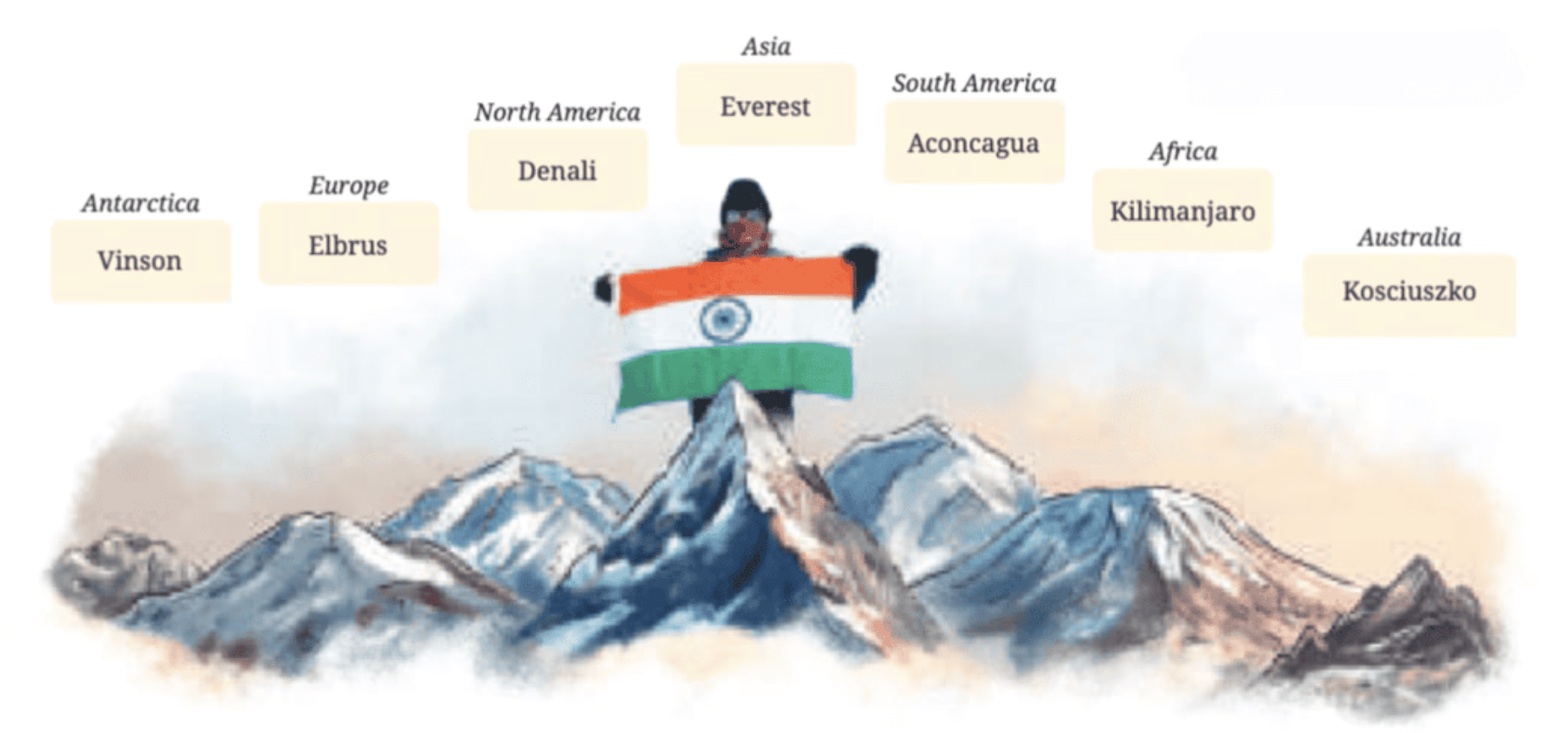
Q4: Which mountain did Arunima climb in January 2019? a) Mount Everest b) Mount Kilimanjaro c) Mount Vinson d) Mount Elbrus Ans: c) Mount Vinson
In January 2019, Arunima became the first woman amputee to climb Mount Vinson in Antarctica, completing her Seven Summits challenge.
Q5: What does the word “resilience” mean in the story? a) A great achievement b) A sudden strong feeling c) The ability to bounce back from tough situations d) A source of inspiration Ans: c) The ability to bounce back from tough situations
“Resilience” is defined as the ability to recover from tough situations, reflecting Arunima’s strength after her accident.
Fill in the Blank
Q1: Arunima Sinha was born in _______ Nagar, Uttar Pradesh. Ans: Ambedkar
Q2: Arunima trained at the _______ Institute of Mountaineering in Uttarkashi. Ans: Nehru
Q3: On May 21, 2013, Arunima reached the summit of _______. Ans: Mount Everest
Q4: Arunima placed a photograph of _______ at the top of Mount Everest. Ans: Swami Vivekananda
Q5: The word “endeavour” means a serious _______ to achieve something. Ans: effort
True or False
Q1: Arunima planned to become a doctor before her accident. Ans: False
Arunima planned to join the paramilitary forces, not become a doctor, after her law degree.
Q2: Arunima was the first Indian woman with an artificial leg to climb Mount Everest. Ans: True
The story confirms Arunima was the first Indian woman with an artificial leg to climb Mount Everest.
Q3: Arunima climbed only Mount Everest and no other peaks. Ans: False
Arunima climbed the highest peaks of all seven continents, not just Mount Everest.
Q4: The story teaches that challenges can make us stronger with determination. Ans: True
The moral emphasizes that challenges can strengthen us if faced with determination, as shown by Arunima’s journey.
Q5: The word “prosthetic” means a real leg. Ans: False
“Prosthetic” refers to an artificial leg, not a real one, as used in the story.
Very Short Answer Questions
Q1: What was Arunima’s profession goal before the accident? Ans: Join the paramilitary forces
Q2: What inspired Arunima while recovering in the hospital? Ans: Reading about Mount Everest
Q3: How long did Arunima train before climbing Mount Everest? Ans: 18 months
Q4: What is the meaning of the word “feat” in the story? Ans: Great achievement
Q5: What is one moral of the story? Ans: Never give up on dreams
Long Answer Questions
Q1: How did Arunima’s early life and dreams shape her determination after the accident? Ans: Arunima’s childhood and dreams played a big role in shaping her determination after the accident. Growing up in Ambedkar Nagar, she loved sports, especially volleyball, which helped build her physical and mental strength. She also dreamed of joining the paramilitary forces after completing her law degree, which showed her desire for a career that combined discipline and physical challenges. Her background in sports and setting goals gave her the strong will needed to overcome the trauma of losing her leg in a train accident. Instead of giving up, her love for challenges and competitive spirit pushed her to aim for something extraordinary—climbing Mount Everest. She turned her childhood dreams into a new, inspiring goal that defined her determination after the accident.
Q2: Describe Arunima’s preparation and challenges in climbing Mount Everest. Ans: Arunima prepared for her Mount Everest climb by joining the Nehru Institute of Mountaineering in Uttarkashi, where she trained for 18 months under the guidance of Bachendri Pal. The training was tough and focused on building her physical strength and getting her used to climbing with a prosthetic leg, which made balance and endurance especially challenging. The 52-day climb was exhausting, with extreme weather, steep paths, and physical strain, all made harder by her artificial leg. Even though many people doubted her ability to succeed, Arunima’s mental strength and training helped her push through these difficulties. On May 21, 2013, she reached the summit and proudly planted the Indian flag along with a photo of Swami Vivekananda, marking a historic achievement.
Q3: Explain how Arunima’s achievement of climbing the Seven Summits reflects her resilience. Ans: Arunima’s accomplishment of climbing the Seven Summits—reaching the highest peaks on all seven continents—shows her incredible resilience and determination. After losing her leg, she faced physical challenges and doubts from others, but she started by conquering Mount Everest, proving her strength. Her goal didn’t stop there; she continued to climb mountains in Europe, Africa, Australia, South America, North America, and Antarctica. In 2019, she became the first woman amputee to reach the summit of Mount Vinson in Antarctica. Each climb required tough training, adjusting to different weather conditions, and enduring pain, but Arunima’s determination and confidence in herself allowed her to turn her challenges into successes, showing resilience at every step.
Q4: What is the moral of the story, and how does Arunima’s journey illustrate it? Ans: The moral of the story is that with courage, hard work, and self-belief, we can overcome even the toughest challenges and achieve great things. Arunima’s journey shows this clearly, as she turns the tragedy of losing her leg into a chance to accomplish the extraordinary. Rather than giving up, she sets her goal to climb Mount Everest, trains intensely for 18 months, and achieves her dream in 2013, becoming the first Indian woman with an artificial leg to reach the summit. Her determination continues as she conquers the Seven Summits by 2019, showing her relentless drive. Arunima’s ability to face physical, emotional, and societal obstacles with courage and perseverance proves how these qualities can lead to remarkable success.
Q5: Discuss how Arunima’s story inspires others to face their own challenges. Ans: Arunima’s story inspires others by showing that with determination and a positive mindset, even the toughest challenges can be overcome. Her journey, from a life-changing accident to becoming the first Indian woman amputee to climb Mount Everest and conquer the Seven Summits, proves that setbacks don’t limit one’s potential. Her intense training, under Bachendri Pal’s guidance, and her mental strength in overcoming doubts from others motivate people to work hard and stay resilient in the face of adversity. By placing a photo of Swami Vivekananda on Everest, Arunima underscores the power of inspiration, encouraging others to find their own sources of motivation. Her example shows that with courage, anyone can face their struggles—whether physical, emotional, or societal—and achieve the extraordinary.
Q1: Who is the poet of “Travel”? a) Ruskin Bond b) Edna St. Vincent Millay c) Rabindranath Tagore d) Anita Rau Badami Ans: b) Edna St. Vincent Millay
The introduction clearly states that the poem is written by Edna St. Vincent Millay.
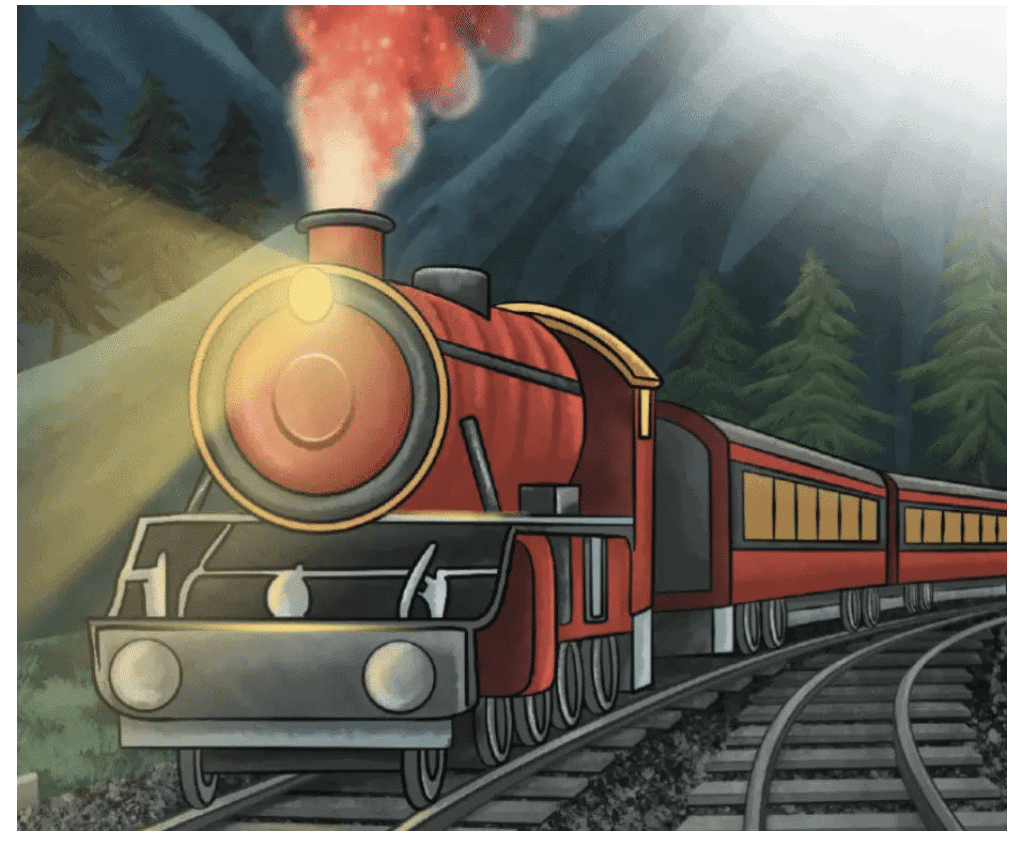
Q2: What does the speaker imagine hearing during the day? a) Friends talking b) A train’s whistle c) The engine steaming d) Cinders falling Ans: b) A train’s whistle
In stanza 1, the speaker imagines hearing the train’s whistle shrieking during the day, despite the tracks being far away.
Q3: What does the speaker see in the sky at night? a) Stars b) Red cinders c) Clouds d) Birds Ans: b) Red cinders
In stanza 2, the speaker imagines seeing red cinders from the train’s engine on the night sky.
Q4: What does the speaker say about their friends? a) They travel with them b) They are warm and the best c) They don’t like trains d) They are far away Ans: b) They are warm and the best
In stanza 3, the speaker says their heart is warm with the friends they make and that they’ll not know better friends, indicating affection and high regard.
Q5: What does the word “shrieking” mean in the poem? a) A soft sound b) A loud, high-pitched sound c) A quiet hum d) A glowing spark Ans: b) A loud, high-pitched sound
The word “shrieking” is defined as a loud, high-pitched sound, describing the train’s whistle.
Fill in the Blank
Q1: The railroad track is _______ away from the speaker. Ans: miles
Q2: The speaker hears the train’s _______ shrieking all day. Ans: whistle
Q3: At night, the speaker sees red _______ on the sky. Ans: cinders
Q4: The speaker’s heart is _______ with the friends they make. Ans: warm
Q5: The word “cinders” refers to small pieces of burnt _______ or wood. Ans: coal
True or False
Q1: The speaker only thinks about trains during the day. Ans: False
The speaker thinks about trains both day and night, as described in stanzas 1 and 2.
Q2: The night is described as a time for sleep and dreaming. Ans: True
Stanza 2 states the night is still for sleep and dreaming, contrasting with the speaker’s train thoughts.
Q3: The speaker would only take a train to a specific place. Ans: False
The speaker says they would take any train, “no matter where it’s going,” in stanza 3.
Q4: The poem shows the speaker’s love for adventure. Ans: True
The speaker’s eagerness to take any train reflects their love for adventure and exploration.
Q5: The word “warm” means feeling cold and distant. Ans: False
“Warm” means full of love or affection, as used to describe the speaker’s feelings for friends.
Very Short Answer Questions
Q1: What does the speaker hear in the day, even though no train is nearby? Ans: Train’s whistle
Q2: What does the speaker imagine the train’s engine doing at night? Ans: Steaming
Q3: What does the speaker say they would take, no matter the destination? Ans: Any train
Q4: What is the meaning of the word “steaming” in the poem? Ans: Giving off steam
Q5: What is one moral of the poem? Ans: Embrace curiosity
Long Answer Questions
Q1: How does the speaker’s imagination bring trains to life in the first two stanzas? Ans: The speaker’s imagination brings trains to life in the first two stanzas by vividly conjuring their sounds and sights despite their physical distance. In stanza 1, during a noisy day filled with voices, the speaker hears the train’s whistle “shrieking,” a sharp, exciting sound that cuts through the chatter, showing their fixation on trains. In stanza 2, in the quiet night meant for sleep, the speaker envisions red cinders glowing against the sky and hears the engine “steaming,” creating a dynamic image of movement and energy. These sensory details—sound, light, and motion—make the trains feel real and present, reflecting the speaker’s deep passion for the idea of travel.
Q2: Describe the contrast between the speaker’s feelings for friends and their urge to travel. Ans: The speaker shows a deep and warm love for their friends in stanza 3, saying their heart feels “warm” and that they’ll never have better friends. This shows they feel happy and close to them. But at the same time, the speaker feels a strong urge to travel, saying they would get on any train “no matter where it’s going.” This shows that their desire for adventure is stronger than their wish to stay with friends. The difference between these feelings shows how the speaker is torn between the comfort of friendship and the excitement of new experiences. It highlights their deep wish to explore the world, even if it means leaving loved ones behind.
Q3: Explain how the poem captures the excitement of travel and exploration. Ans: The poem shows the excitement of travel and adventure through lively pictures and an eager voice. The train’s loud “shrieking” whistle in stanza 1 creates a feeling of energy and excitement. In stanza 2, the “red cinders” and “steaming” engine make the train seem magical and full of life. In stanza 3, the speaker says they would hop on any train, no matter where it’s going, showing their brave and carefree love for exploring new places. All these details together make travel feel fun, thrilling, and full of endless possibilities.
Q4: What is the moral of the poem, and how does the speaker’s attitude reflect it? Ans: The moral of the poem is that being curious and open to new experiences can make life richer, even when we have strong friendships. The speaker shows this by being deeply fascinated with trains, thinking about them all the time. Their eagerness to jump on any train, “no matter where it’s going,” shows they are excited by the unknown and love adventure. At the same time, they clearly care about their friends, which shows that it’s possible to enjoy both close relationships and new journeys. The poem teaches us that life is fuller when we balance friendship with a love for exploring the world.
Q5: Discuss how the poem uses vivid imagery to express the speaker’s love for trains. Ans: The poem uses strong and clear pictures to show how much the speaker loves trains. In stanza 1, the “shrieking” whistle cuts through the noise of the day, showing how powerful and exciting the train sounds to the speaker. In stanza 2, we see “red cinders” lighting up the night sky and the engine “steaming” as it moves, creating a magical and lively picture of a train in action. These sights and sounds—bright sparks, loud whistles, and the steam—make the train feel real in the speaker’s imagination, showing their deep love for travel and adventure.
Q1: Who is the author of “The Tunnel”? a) Rabindranath Tagore b) Ruskin Bond c) Anita Rau Badami d) G.C. Thornley Ans: b) Ruskin Bond
The introduction clearly states that the story is written by Ruskin Bond.
Q2: Why does Suraj visit the railway tunnel? a) To catch a train b) To watch the steam train c) To meet Sunder Singh d) To find a leopard Ans: b) To watch the steam train
Suraj visits the tunnel to watch the midday steam train burst out, as he finds it magical.
Q3: What does Sunder Singh use to signal trains at night? a) A red flag b) A whistle c) An oil lamp d) A torch Ans: c) An oil lamp
Sunder Singh uses an oil lamp to signal trains at night, as mentioned in the story.
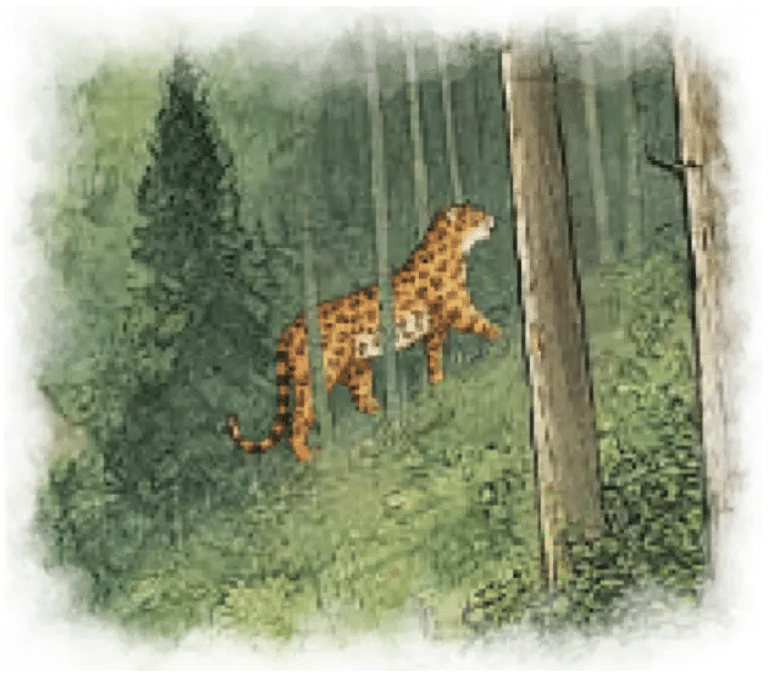
Q4: What animal do Suraj and Sunder Singh encounter in the tunnel? a) A porcupine b) A leopard c) A bat d) A lizard Ans: b) A leopard
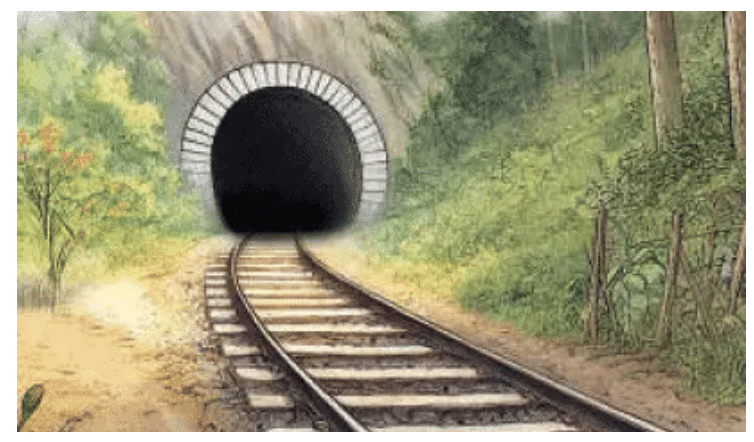
Suraj and Sunder Singh hear a sawing sound and encounter a leopard in the tunnel, which they scare away.
Q5: What does the word “plume” mean in the story? a) A type of bird b) A long, thin cloud c) A railway track d) A loud sound Ans: b) A long, thin cloud
The word “plume” is defined as a long, thin cloud, like the smoke trailing behind the train.
Fill in the Blank
Q1: Suraj hides his _______ in a nearby village before walking to the tunnel. Ans: bike
Q2: The steam train bursts out of the tunnel like a _______. Ans: dragon
Q3: Sunder Singh’s job is to inspect the _______ for obstacles. Ans: tunnel
Q4: Suraj sees a _______ light from Sunder Singh’s lamp when riding the night train. Ans: flickering
Q5: The word “scuttled” means to run with _______ steps. Ans: small
True or False
Q1: Suraj wants to catch the midday train to travel to town. Ans: False
Suraj visits the tunnel to watch the train, not to catch it, as he loves its magical appearance.
Q2: Sunder Singh calls the leopard “his” because it visits the area often. Ans: True
Sunder Singh refers to the leopard as “his” because it’s a familiar visitor to the area, as he explains to Suraj.
Q3: Suraj and Sunder Singh enter the tunnel to catch the leopard. Ans: False
They enter the tunnel to scare the leopard away to protect it from the train, not to catch it.
Q4: The story teaches that courage can lead to new friendships. Ans: True
Suraj’s bravery and curiosity lead to his friendship with Sunder Singh, aligning with the story’s moral.
Q5: The word “shisham” refers to a type of bird. Ans: False
“Shisham” is a type of tree, not a bird, as defined in the story.
Very Short Answer Questions
Q1: What is the name of the tunnel’s watchman? Ans: Sunder Singh
Q2: What does Suraj see on the hillside after leaving the tunnel? Ans: A leopard’s tail
Q3: What sound alerts Suraj and Sunder Singh to the leopard in the tunnel? Ans: Sawing sound
Q4: What is the meaning of the word “reassure” in the story? Ans: To make someone feel calm
Q5: What is one moral of the story? Ans: Courage leads to adventures
Long Answer Questions
Q1: How does Suraj’s fascination with the steam train set the stage for his adventure? Ans: Suraj’s fascination with the steam train sparks his adventure as he rides his bike from town, hides it, and treks to the railway tunnel just to see the train emerge. His excitement over the train, which he imagines as a “green, black, and gold dragon,” drives his curiosity to explore the tunnel. Inside, he discovers its damp, smoky atmosphere and encounters a bat and a lizard. This exploration leads him to Sunder Singh’s hut, where they become friends and have a thrilling encounter with a leopard. Suraj’s love for the train turns a simple outing into a series of unexpected adventures, showcasing his adventurous spirit.
Q2: Describe the relationship between Suraj and Sunder Singh and how it develops. Ans: The relationship between Suraj and Sunder Singh starts when Suraj, intrigued by his tunnel exploration, meets the watchman at his hut. Sunder Singh greets him kindly, joking about “owning” the tunnel and sharing stories about the leopard, which creates an instant connection. Their bond grows when Suraj returns for the night adventure, where they share tea and face the leopard together, showing their trust and teamwork. Sunder Singh reassures Suraj and helps him feel safe, while Suraj’s excitement and curiosity make him likable to the watchman. By the end of the story, their friendship is clear, with Suraj fondly remembering the lamp Sunder Singh showed him from the train, highlighting the deep connection they’ve formed through shared experiences and respect.
Q3: Explain the events in the tunnel when Suraj and Sunder Singh face the leopard. Ans: When Suraj and Sunder Singh hear a sawing sound from the tunnel, signalling the presence of a leopard, they realize it could be in danger of being hit by the incoming night train. Concerned for the leopard’s safety, Sunder Singh decides to scare it away, bringing an axe for protection and reassuring Suraj. Together, they enter the dark tunnel, using loud shouts and the glow of the oil lamp to startle the leopard. The leopard, described as agile and sleek, quickly flees into the jungle, its tail flicking as it escapes. They ensure the tracks are clear and step aside just as the train rushes by. Their actions highlight their courage and quick thinking, successfully protecting both the leopard and the train.
Q4: What is the moral of the story, and how do Suraj’s actions illustrate it? Ans: The moral of the story is that courage and curiosity can lead to exciting adventures and unexpected friendships. Suraj’s curiosity about the steam train sparks his journey into the jungle tunnel, even though it’s dark and eerie. His bravery shines when he teams up with Sunder Singh to face the leopard, entering the tunnel to protect the animal despite the risks. These bold decisions lead to a thrilling adventure and the start of a meaningful friendship with Sunder Singh. Suraj’s willingness to step outside his comfort zone—from cycling to the jungle to confronting a wild animal—shows that embracing courage and curiosity can lead to rewarding experiences.
Q5: Discuss how the story uses the jungle and train to create a sense of thrill and wonder. Ans: The story uses the jungle and the steam train to create a sense of thrill and wonder through vivid descriptions and exciting events. The jungle is depicted as a wild and vibrant place, with towering evergreen trees, scrub-covered hills, and wildlife like leopards and nightjars, sparking Suraj’s curiosity while adding an element of danger, especially during the leopard encounter. The steam train, described as a “snorting” and “puffing” dragon bursting from the tunnel, evokes awe with its power and sparks, shaking the jungle into life. The tunnel itself, dark and damp, adds to the thrill as Suraj explores it and faces the tense leopard situation. Together, the untamed jungle and the majestic train provide a backdrop of excitement and mystery, pulling readers into Suraj’s adventurous world and intensifying the story’s sense of wonder.
Q1: Who is the main character in this chapter? a) Shaana’s mother b) Shaana c) Anand d) Shaana’s father Ans: b) Shaana
The story follows Shaana, a young girl who travels across India and shares her experiences through postcards.
Q2: Where does Shaana visit first in her journey? a) Sundarbans b) Thajiwas Glacier c) Rann of Kutch d) Chennai Ans: b) Thajiwas Glacier
Shaana’s journey begins at the Thajiwas Glacier in Kashmir, as stated in the story.
Q3: What does Shaana hope to see in Arunachal Pradesh? a) Crocodiles b) Red pandas c) Fish d) Snowballs Ans: b) Red pandas
In Arunachal Pradesh, Shaana hopes to see red pandas, showing her excitement for the region’s wildlife.
Q4: What activity does Shaana do in the Narmada River? a) Diving b) Rafting c) Boating d) Swimming Ans: b) Rafting
Shaana enjoys rafting on the Narmada River, while her parents go diving.
Q5: What does the word “plateaus” mean in the story? a) Small stones b) Flat, elevated areas of land c) Large masses of ice d) Trees in salty water Ans: b) Flat, elevated areas of land
The word “plateaus” is defined as flat, elevated areas of land, describing the landscape Shaana sees in Goa.
Fill in the Blank
Q1: Shaana visits the _______ Glacier in Kashmir. Ans: Thajiwas
Q2: In Himachal Pradesh, Shaana stays in a _______ surrounded by mountains. Ans: cabin
Q3: Shaana sees _______ trees in the Sundarbans that grow in seawater. Ans: mangrove
Q4: In Goa, Shaana rides a train through many _______. Ans: tunnels
Q5: The word “chirping” refers to sounds made by _______. Ans: birds
True or False
Q1: Shaana notices more snow than the previous year in Kashmir. Ans: False
Shaana notices less snow than the previous year at the Thajiwas Glacier.
Q2: Shaana’s mother jokes that the growling sounds are her father snoring. Ans: True
In Himachal Pradesh, Shaana’s mother humorously attributes growling sounds to her father’s snoring.
Q3: Shaana is afraid of tunnels throughout her journey. Ans: False
Shaana overcomes her fear of tunnels in Goa, watching the view confidently.
Q4: The story highlights India’s diverse geography and culture. Ans: True
The story showcases India’s varied landscapes and cultures through Shaana’s travels.
Q5: The word “mangroves” means flat, elevated land. Ans: False
“Mangroves” are trees that grow in salty coastal waters, not flat, elevated land.
Very Short Answer Questions
Q1: What does Shaana write in her postcards? Ans: Her travel experiences
Q2: What animals does Shaana see in the Sundarbans? Ans: Crocodiles and a snake
Q3: What does Shaana’s mother worry about in the Sundarbans? Ans: Frequent flooding
Q4: What is the meaning of the word “rafting” in the story? Ans: Travelling on a river in an inflatable boat
Q5: What is one moral of the story? Ans: Appreciate India’s diversity
Long Answer Questions
Q1: How does Shaana’s visit to the Thajiwas Glacier show her curiosity and the challenges she faces? Ans: Shaana’s trip to the Thajiwas Glacier in Kashmir shows how curious she is. She is amazed by the white and blue ice and notices that the snow has changed since last year, showing how closely she pays attention to nature. She enjoys playing with her parents, throwing snowballs, which shows her excitement for trying new things. But she also faces some problems—like the freezing cold that makes her hands shake because she forgot her gloves, and needing to wear many warm clothes. Even with these difficulties, Shaana stays eager to explore, showing she is both curious and brave.
Q2: Describe Shaana’s experience in Arunachal Pradesh and why it is her favourite stop. Ans: In Arunachal Pradesh, Shaana takes a train, a long car ride, and walks through a forest to reach a treehouse, making the journey feel like an exciting adventure. She is amazed by the dense forest and says this is her favourite stop, mainly because she hopes to spot red pandas, showing her love for special animals. Staying in a treehouse makes the experience feel magical and brings her even closer to nature. This place becomes her favourite because of the fun and challenging journey, the beautiful forest, and the chance to see rare wildlife—all of which spark her imagination and excitement.
Red Pandas
Q3: Explain how Shaana’s journey in Goa reflects her personal growth. Ans: Shaana’s trip to Goa shows how much she has grown by becoming more confident, especially with something she used to fear—train tunnels. Earlier, she was scared of tunnels, but now she looks out the train window calmly, enjoying the views of hills and plateaus. This change shows she has become braver. Her wish to explore these places with friends also shows she is becoming more independent and open to new adventures. This shift from fear to joy highlights how travelling has helped her become stronger and more confident.
Q4: What is the moral of the story, and how does Shaana’s journey illustrate it? Ans: The story teaches us to value the beauty and variety of our country and to stay open to new experiences. As Shaana travels to places like the snowy Thajiwas Glacier, the hot Rann of Kutch, the forests of Arunachal Pradesh, the mangroves of the Sundarbans, and the beaches of Chennai, she enjoys the different sights, animals, and cultures of each region. Through her postcards, she shares her excitement and curiosity. Her growing confidence—like no longer being afraid of tunnels—shows she is ready for new adventures. Her journey reminds us to appreciate India’s diversity and to keep exploring with an open heart.
Q5: Discuss how the story uses Shaana’s postcards to highlight India’s geographic diversity. Ans: The story uses Shaana’s postcards to showcase the diverse geography of India through her personal experiences in different landscapes. In Kashmir, she describes the chilly, snowy Thajiwas Glacier, while in Himachal Pradesh, she highlights the cabin in the mountains. In Arunachal Pradesh, she talks about the lush forest, and in Gujarat, she captures the hot, sandy Rann of Kutch. The unique mangrove wetlands of the Sundarbans, the plateaus and tunnels of Goa, and the peaceful sea of Chennai are also featured. Each postcard reflects different climates, terrains, and wildlife, like red pandas and crocodiles, painting a picture of India’s diverse geography, from icy mountains to coastal shores. Through her enthusiastic and curious tone, Shaana links these regions, celebrating the country’s rich natural diversity.