08. Paper Boats Chapter worksheet Solution

Multiple Choice Questions (MCQs)

Q1Who is the poet of “Paper Boats”?
a) Anita Rau Badami
b) Rabindranath Tagore
c) G.C. Thornley
d) Natalie Joan

Ans: b) Rabindranath Tagore

The poem is written by Rabindranath Tagore. 

Q2What does the child write on the paper boats?
a) A poem
b) Their name and village
c) A story
d) The names of flowers

Ans: b) Their name and village

The child writes their name and the name of their village on the paper boats, as described in stanza 2. 

Q3What does the child load onto the paper boats?
a) Shiuli flowers
b) Small stones
c) Letters
d) Clouds

Ans: a) Shiuli flowers

The child loads the paper boats with shiuli flowers from their garden, as stated in stanza 3. 

Q4What does the child see in the sky that looks like sails?
a) Stars
b) Birds
c) Clouds
d) Kites

Ans: c) Clouds

In stanza 4, the child sees clouds in the sky that resemble “white bulging sails,” not stars, birds, or kites.

Q5What does the word “lading” mean in the poem?
a) A type of flower
b) The load carried
c) A small stream
d) A magical fairy

Ans: b) The load carried

The word “lading” is defined as the load carried, referring to the fairies’ baskets of dreams in the boats. 

Fill in the Blank

Q1The child floats paper boats down a _______ stream.
Ans: running

Q2The child hopes someone in a _______ land will find the boats.
Ans: strange

Q3The paper boats carry _______ flowers from the garden.
Ans: shiuli

Q4In the child’s dream, _______ sail in the boats at night.
Ans: fairies

Q5The word “blooms” refers to _______.
Ans: flowers

True or False

Q1The child floats paper boats only once a week.
Ans: False

The child floats paper boats “day by day,” not just once a week.

Q2The child writes in small letters on the boats.
Ans: False

The child writes in “big black letters” on the boats.

Q3The poem shows the child’s imagination and dreams.
Ans: True

The poem highlights the child’s imaginative play and dreams, like fairies sailing.

Q4: The clouds in the sky race with the paper boats.
Ans: True

The child imagines the clouds racing with their boats, as described in stanza 4.

Q5The word “shiuli” means a type of cloud.
Ans: False

“Shiuli” refers to small, white flowers, not clouds.

Very Short Answer Questions

Q1What is the name of the flower the child puts in the boats?
Ans: Shiuli

Q2What does the child hope someone will learn from the boats?
Ans: Their name and village

Q3Who does the child imagine sends the clouds to race with the boats?
Ans: A playmate in the sky

Q4What is the meaning of the word “launch” in the poem?
Ans: To set in motion

Q5: What is one moral of the poem?
Ans: Small actions carry big dreams

Long Answer Questions

Q1How does the child’s act of floating paper boats reflect their hopes and dreams?
Ans: The child’s act of floating paper boats reflects their hopes and dreams by serving as a small but meaningful way to reach out to the world. By writing their name and village on the boats, the child dreams of connecting with someone in a “strange land” who will learn about them, showing a longing for recognition and friendship. Loading the boats with shiuli flowers expresses their hope to share beauty and joy with others. The child’s dream of the boats sailing under midnight stars with fairies carrying dreams further reveals their imaginative vision of their creations travelling far, embodying their curiosity and desire to touch distant lives through simple acts.

Q2Describe the role of nature in the poem and how it connects to the child’s imagination.
Ans: Nature plays a central role in the poem, acting as both a setting and a partner in the child’s imagination. The “running stream” carries the paper boats, symbolising a pathway for the child’s hopes to travel. The shiuli flowers from the garden add natural beauty to the boats, connecting the child’s actions to the earth’s cycles of dawn and growth. The clouds, seen as “white bulging sails,” become playful companions racing with the boats, blending the sky with the child’s game. These natural elements—the stream, flowers, and clouds—fuel the child’s imaginative world, transforming a simple activity into a magical adventure that links their dreams to the broader universe.

Q3Explain the significance of the fairies and dreams in the final stanza.
Ans: In the final stanza, the fairies of sleep sailing in the paper boats with baskets full of dreams are significant because they elevate the child’s simple act into a magical, eternal journey. The fairies symbolise the gentle, imaginative spirit of childhood, carrying the child’s hopes through a dreamy, starlit night. The “baskets full of dreams” suggest that the boats now hold limitless possibilities, spreading wonder beyond the physical world. This imagery creates a peaceful, hopeful conclusion, showing that the child’s small creations continue to inspire and connect with others in a fantastical realm, even as they sleep.

Q4What is the moral of the poem, and how does the child’s actions illustrate it?
Ans: The moral of the poem is that small actions can carry big dreams and inspire connections with others. The child’s actions illustrate this through their daily ritual of floating paper boats, each marked with their name and village, symbolising a hope to be known by someone far away. Loading the boats with shiuli flowers shows their desire to share beauty, a small but heartfelt gesture. Their imaginative vision of clouds racing and fairies sailing the boats under stars reflects how their simple play carries grand dreams of adventure and connection, demonstrating that even modest efforts can have far-reaching, meaningful impact.

Q5Discuss how the poem uses simple actions to create a sense of wonder and connection.
Ans: The poem uses the child’s simple action of floating paper boats to create a sense of wonder and connection by infusing it with imagination and hope. Writing their name and village on the boats turns a playful act into a message to the world, sparking wonder about who might find them. Adding shiuli flowers connects the child’s small world to nature’s beauty, inviting distant strangers to share in it. Imagining clouds as racing playmates and fairies sailing the boats under stars transforms the act into a magical adventure, linking the child to the sky and a dreamlike realm. These straightforward actions evoke a profound sense of curiosity, joy, and connection, showing how small deeds can bridge the child’s heart to faraway places and people.
07. My Brother’s Great Invention Chapter worksheet Solution

Multiple Choice Questions (MCQs)

Q1Who is the author of “My Brother’s Great Invention”?
a) G.C. Thornley
b) Anita Rau Badami
c) Natalie Joan
d) Hugh Lofting

Ans: b) Anita Rau Badami

The story is written by Anita Rau Badami. 

Q2Why does Anand build a burglar alarm?
a) To scare his father
b) To catch thieves in the neighbourhood
c) To test his time machine
d) To contact aliens

Ans: b) To catch thieves in the neighbourhood

Anand builds the burglar alarm due to recent thefts in the neighbourhood, aiming to catch thieves. 

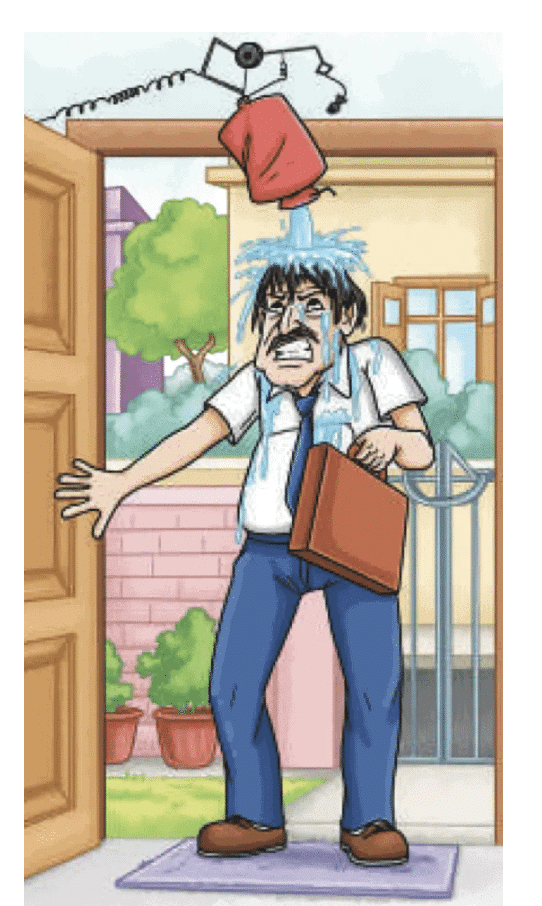
Q3What happens to Anand’s father because of the burglar alarm?
a) He gets locked out
b) He is soaked with water
c) He trips over wires
d) He hears loud noises

Ans: b) He is soaked with water

The burglar alarm drops a bag of water on Anand’s father, soaking him, as he is mistaken for a thief. 

Q4Who breaks into the house when Anita and Anand are alone?
a) A neighbour
b) Their father
c) Boppa, the sweeper
d) A policeman

Ans: c) Boppa, the sweeper

Boppa, a rough-looking new sweeper, breaks into the house, as described during the burglary. 

Q5What does the word “eerie” mean in the story?
a) Loud and annoying
b) Strange and a bit scary
c) Completely wet
d) Quick and careless

Ans: b) Strange and a bit scary

The word “eerie” is defined as strange and a bit scary, describing the sounds from the time machine. The other options relate to different words like “racket” or “sopping.”

Fill in the Blank

Q1Anand’s burglar alarm drops _______ on the person opening the door.
Ans: water

Q2Anand is inspired to build a time machine after watching _______ .
Ans: Back to the Future

Q3Boppa demands to know the location of _______ room.
Ans: their father’s

Q4The time machine makes a _______ sound during the burglary.
Ans: humming

Q5: The word “tinkering” means experimenting with _______.
Ans: gadgets

True or False

Q1Anand’s burglar alarm works perfectly as planned.
Ans: False

The alarm soaks Anand’s father instead of a thief, showing it doesn’t work as intended.

Q2Anita and Anand stay home alone during a wedding.
Ans: True

Their parents attend a wedding, leaving Anita and Anand home alone.

Q3Boppa is found hiding in Anand’s room after the burglary.
Ans: False

Boppa disappears, leaving only his scarf; he’s not found hiding.

Q4: The story teaches that creativity can lead to unexpected solutions.
Ans: True

Anand’s time machine may have stopped Boppa, showing creativity’s unexpected benefits.

Q5: The word “sceptical” means believing something easily.
Ans: False

“Sceptical” means doubting, not believing easily, as defined in the story.

Very Short Answer Questions

Q1What is the name of Anita’s brother?
Ans: Anand

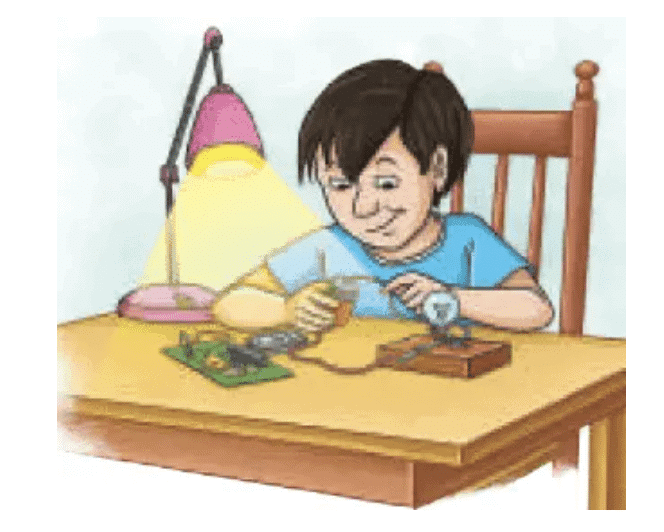
Q2What does Anand use to build his time machine?
Ans: Wires and bulbs

Q3What item of Boppa’s is found after the burglary?
Ans: Green scarf

Q4What is the meaning of the word “brandishing” in the story?
Ans: Waving something threateningly

Q5What is one moral of the story?
Ans: Creativity is valuable

Long Answer Questions

Q1How does Anand’s burglar alarm cause trouble, and what does this show about his inventions?
Ans: Anand’s burglar alarm creates a problem when it mistakenly drops a bag of water on his father, thinking he’s a thief. This leaves his father drenched and angry. The incident shows that the alarm has a major flaw—it can’t tell the difference between a family member and a real intruder. It also shows that while Anand is full of creative ideas, his inventions don’t always work well because he overlooks important details. His excitement for inventing is clear, but he sometimes forgets to make sure his gadgets are practical and reliable.

Q2Describe how Anand and Anita react when Boppa breaks into their house.
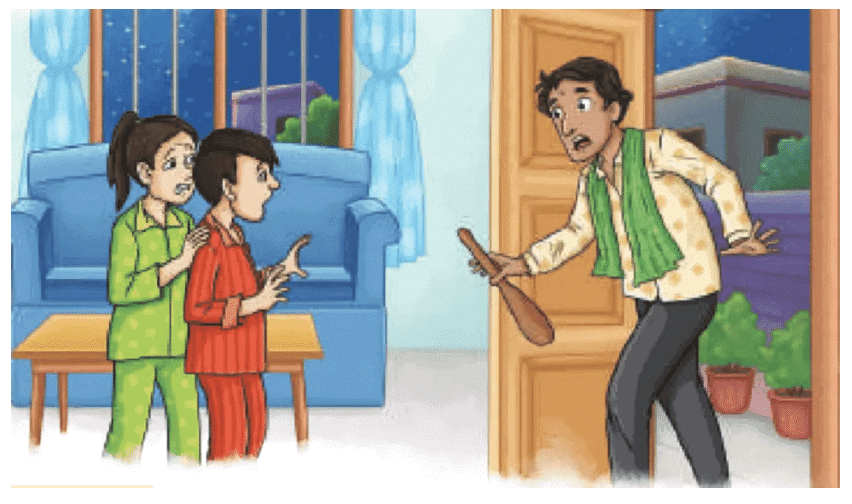
Ans: When Anita hears strange noises, she wakes up Anand, and they find Boppa breaking in. Anita gets scared when she sees Boppa, a rough sweeper, holding a stick and demanding to know where their father’s room is. Anand quickly thinks of a smart plan and points Boppa to his own room with the time machine instead of their father’s, possibly to trick or distract him. Anita and Anand’s actions show they are both scared but also quick-thinking—Anita warns her brother, and Anand uses his invention to try to protect their home during this scary moment.

Q3Explain the mysterious events surrounding the time machine during the burglary.
Ans: During the burglary, after Anand sends Boppa into his room with the time machine, strange things start happening. Crashing noises, a humming sound, and other odd noises come from the room, making it seem like the machine is working. When the neighbours come, they find only Boppa’s green scarf on the floor—he’s nowhere to be seen—and the time machine is still quietly humming. This is mysterious because no one knows where Boppa went. While the adults think he ran away, Anand believes the machine sent him back in time. The weird sounds and Boppa’s sudden disappearance make the machine seem even more mysterious.

Q4What is the moral of the story, and how does Anand’s character reflect it?
Ans: The moral of the story is that creativity and imagination are important, even if they sometimes lead to mistakes, because they can help solve problems in unexpected ways. Anand shows this through his constant inventing. Even when things go wrong—like his burglar alarm soaking his father—he doesn’t give up. His time machine, which no one believed would work, might have actually helped stop the thief, showing his cleverness. Anand’s love for building gadgets and his ability to bounce back after failures teach us that being creative and not giving up are valuable traits, even if the results aren’t perfect.

Q5Discuss how the story uses humour to highlight Anand’s inventive spirit.
Ans: The story uses humour to show Anand’s love for inventing, especially through the funny problems his gadgets cause. His burglar alarm, which soaks his own father instead of a thief, is amusing because it shows how his invention backfires in a silly way. The messy room full of wires and blinking lights for the time machine creates a comical picture of how serious Anand is, even when things seem unrealistic. The funniest part is when Boppa disappears and Anand proudly claims the machine worked, even though no one is sure. These moments make readers laugh while also showing Anand’s creativity, enthusiasm, and belief in his ideas, even when they don’t go perfectly.

06. Say the Right Thing Chapter worksheet Solution

Multiple Choice Questions (MCQs)

Q1Who is the author of the play “Mary’s Mistake”?
a) Natalie Joan
b) G.C. Thornley
c) Hugh Lofting
d) Helen Keller

Ans: b) G.C. Thornley

The play is written by G.C. Thornley. 

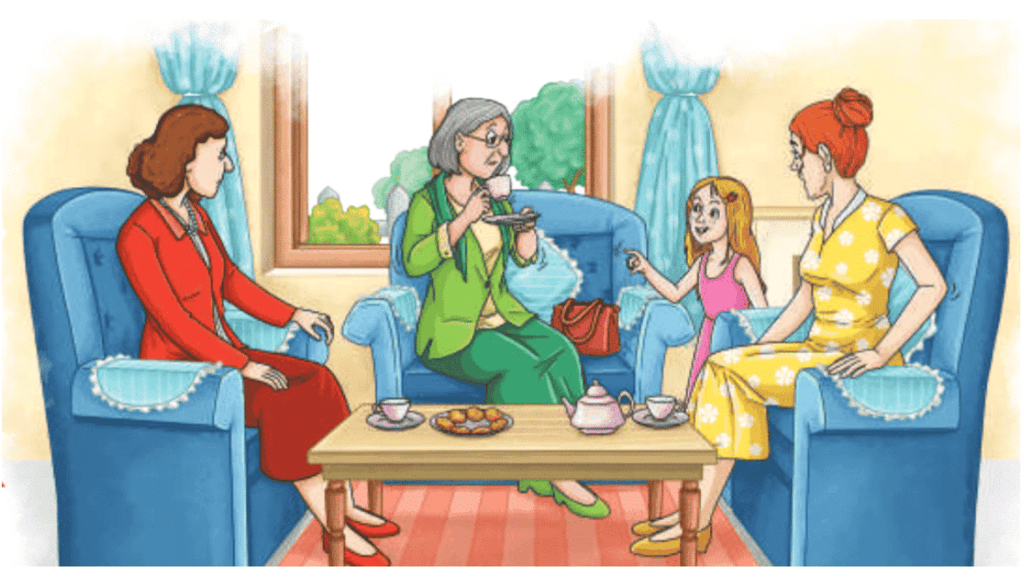
Q2Why does Mrs. Shaw want the house tidy for the guests?
a) To impress Mrs. Harding and Mrs. Lee
b) To prepare for a party
c) To sell the house
d) To teach Mary a lesson

Ans: a) To impress Mrs. Harding and Mrs. Lee

Mrs. Shaw asks Mary to tidy up, like putting away a coat, to make a good impression on Mrs. Harding and Mrs. Lee. 

Q3What does Mary mistakenly say about Mrs. Harding’s children?
a) They are rude
b) They are beautiful
c) They are at school
d) They don’t exist

Ans: b) They are beautiful

Mary compliments Mrs. Harding’s “beautiful children,” unaware that Mrs. Harding has no children, causing an awkward moment. 

Q4What does Mary say when the guests try to leave?
a) “Please stay longer!”
b) “Must you stay? Can’t you go?”
c) “Come back tomorrow!”
d) “Thank you for coming!”

Ans: b) “Must you stay? Can’t you go?”

Mary mistakenly says, “Must you stay? Can’t you go?” when the guests prepare to leave, reversing her mother’s advice to ask them to stay longer. 

Q5What does the word “blunders” mean in the play?
a) Kind compliments
b) Careless mistakes
c) Polite greetings
d) Funny stories

Ans: b) Careless mistakes

The word “blunders” is defined in the play as careless mistakes, referring to Mary’s errors during the visit. 

Fill in the Blank

Q1Mrs. Shaw teaches Mary to say _______ things to make guests happy.
Ans: kind

Q2Mary compliments Mrs. Harding’s _______ that don’t exist.
Ans: children

Q3Mrs. Harding’s brother is a _______.
Ans: banker

Q4Mary criticises _______ that belongs to Mrs. Harding.
Ans: a dog

Q5The word “awkward” describes an _______ situation.
Ans: uncomfortable

True or False

Q1Mrs. Shaw wants Mary to stay quiet during the guests’ visit.
Ans: False

Mrs. Shaw allows Mary to stay and talk but advises her to be polite and kind.

Q2Mary’s mistakes make the guests feel uncomfortable.
Ans: True

Mary’s errors, like mentioning non-existent children, create awkward moments for the guests.

Q3Mrs. Lee is Mrs. Harding’s mother.
Ans: False

Mrs. Lee is Mrs. Harding’s sister, not her mother, as stated in the play.

Q4The play teaches the importance of speaking kindly and carefully.
Ans: True

The moral emphasizes speaking kindly and carefully, as Mary’s mistakes show.

Q5The word “wealthy” means having little money.
Ans: False

“Wealthy” means having a lot of money, as defined in the play.

Very Short Answer Questions

Q1Who are the two guests visiting the Shaws?
Ans: Mrs. Harding and Mrs. Lee

Q2What does Mrs. Shaw tell Mary to do if the conversation pauses?
Ans: Start a conversation

Q3: What hobby does Mary mock that the Harding family enjoys?
Ans: Horse riding

Q4What is the meaning of the word “compliments” in the play?
Ans: Kind words to praise

Q5What is one moral of the play?
Ans: Think before speaking

Long Answer Questions

Q1: How does Mrs. Shaw prepare Mary for the guests’ visit, and why is she hesitant to let her stay?
Ans: Mrs. Shaw prepares Mary by teaching her to be polite, advising her to say kind things that make guests happy, laugh to keep the mood light, start conversations if there’s silence, and ask guests to stay longer when they leave, like “Must you go? Can’t you stay?” She ensures Mary changes into a clean dress to look presentable. Mrs. Shaw is hesitant because she worries Mary might say the wrong things, as she’s young and inexperienced, potentially ruining her chance to befriend Mrs. Harding, the wife of a wealthy man, which is important for social connections.

Q2Describe two mistakes Mary makes during the visit and their impact on the guests.
Ans: First, Mary compliments Mrs. Harding’s “beautiful children,” unaware that Mrs. Harding has no children, causing an awkward and upsetting moment as Mrs. Harding looks distressed. Second, Mary mocks bankers, not knowing Mrs. Harding’s brother is a banker, which offends the guests and creates discomfort. These mistakes make the guests feel embarrassed and unwelcome, turning the visit tense and straining the conversation, as Mrs. Shaw must quickly change topics to ease the situation.

Q3: Explain how Mary’s final mistake when the guests leave adds humour to the play.
Ans: Mary’s final mistake occurs when the guests prepare to leave, and instead of politely asking them to stay longer as her mother advised, she says, “Must you stay? Can’t you go?” This reversal of the polite phrase is humorous because it bluntly suggests the guests should leave, completely undermining her mother’s efforts to make them feel welcome. The unexpected blunder, combined with the guests’ likely shock, adds a comedic climax to the play, highlighting Mary’s innocent misunderstanding in a light-hearted way.

Q4What is the moral of the play, and how do Mary’s actions illustrate it?
Ans: The moral of the play is that we should think before speaking and choose kind, respectful words to avoid hurting others. Mary’s actions illustrate this through her series of blunders, such as praising non-existent children, mocking bankers, and insulting hobbies like horse riding, all of which upset Mrs. Harding and Mrs. Lee. Her final mistake of asking the guests to leave instead of stay shows her failure to follow her mother’s advice. These errors demonstrate how careless words can create discomfort, emphasising the need for thoughtful and polite conversation.

Q5Discuss how the play uses Mary’s blunders to teach a lesson about polite conversation.
Ans: The play uses Mary’s blunders to teach that polite conversation requires care and awareness to make others feel valued. Mary’s mistakes, like assuming Mrs. Harding has children, criticising bankers unaware of Mrs. Harding’s brother’s profession, and mocking hobbies the guests enjoy, show how thoughtless remarks can offend and create awkwardness. Her final blunder, saying “Can’t you go?” instead of asking the guests to stay, humorously underscores her failure to apply her mother’s advice. These errors highlight the importance of listening, choosing kind words, and being mindful of others’ feelings, teaching that polite conversation builds positive relationships and avoids unintended harm.

05. A Funny Man Chapter worksheet Solution

Multiple Choice Questions (MCQs)

Q1Who is the poet of “The Funny Man”?
a) Hugh Lofting
b) Natalie Joan
c) Helen Keller
d) Eliza Cook

Ans: b) Natalie Joan

The poem is written by Natalie Joan. 

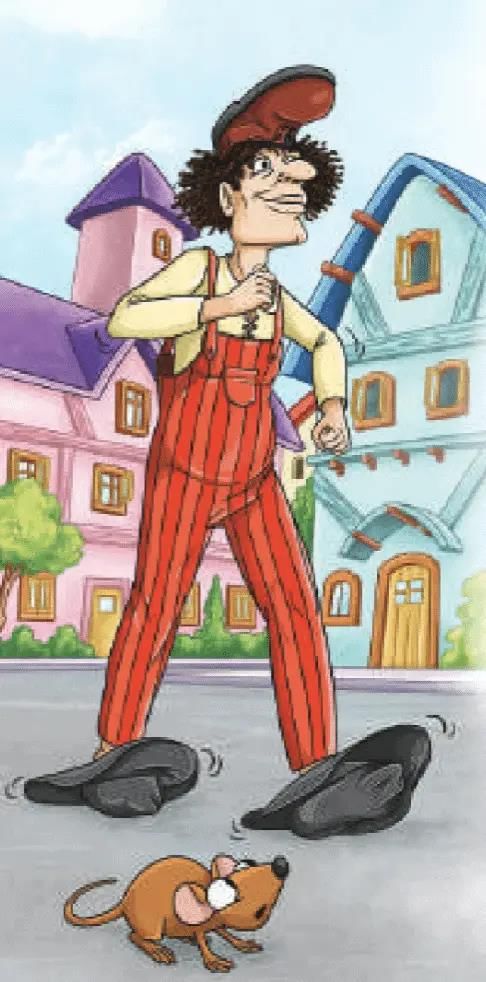
Q2What does the funny man wear on his head?
a) A hat
b) A shoe
c) A bun
d) Two hats

Ans: b) A shoe

The poem describes the funny man wearing a shoe on his head, which is an unusual and humorous choice. Hats are worn on his feet, and a bun is offered later, not worn.

Q3What does the funny man offer the poet instead of a rose?
a) A currant bun
b) A flower
c) A song
d) A hat

Ans: a) A currant bun

The funny man says he is presenting a rose but offers a currant bun, creating a humorous twist. 

Q4: How does the funny man leave at the end of the poem?
a) He walks away
b) He sings a song
c) He hops on his head
d) He gives a bun

Ans: c) He hops on his head

In the final stanza, the funny man turns around and hops home on his head, an absurd and funny way to leave. 

Q5What does the word “staggered” mean in the poem?
a) Sang loudly
b) Moved unsteadily
c) Jumped quickly
d) Smiled politely

Ans: b) Moved unsteadily

The word “staggered” is defined in the poem as moving unsteadily, as if about to fall, which describes the poet’s reaction to the bun. 

Fill in the Blank

Q1The funny man wears _______ on his feet.
Ans: hats

Q2The poet describes the man’s action as a funny sounding _______.
Ans: sight

Q3The man addresses the poet as “Your _______.”
Ans: Highness

Q4: The poet says the bun has a funny looking _______.
Ans: smell

Q5The word “manners” refers to polite _______.
Ans: behaviour

True or False

Q1The funny man wears shoes on his feet like most people.
Ans: False

The funny man wears hats on his feet, not shoes, which are on his head.

Q2The poet is shocked when the man offers a bun as a rose.
Ans: True

The poet staggers back against the wall, showing shock at the bun offered as a rose.

Q3The funny man answers the poet’s question about his hats.
Ans: False

The man does not answer the question about his hats; he hops away instead.

Q4The poem teaches us to enjoy playful and imaginative moments.
Ans: True

The moral encourages enjoying playful and imaginative moments, as shown by the man’s actions.

Q5The word “currant” means a type of shoe.
Ans: False

“Currant” refers to a small, dried fruit, not a shoe, as defined in the poem.

Very Short Answer Questions

Q1What does the funny man raise to greet the poet?
Ans: The shoe on his head

Q2Where does the funny man sit while singing his song?
Ans: On the ground

Q3What does the poet ask the funny man about his appearance?
Ans: Why does he wear two hats on his feet

Q4What is the meaning of the word “hopped” in the poem?
Ans: Jumped on one foot

Q5What is one moral of the poem?
Ans: It’s okay to be different

Long Answer Questions

Q1How does the funny man’s appearance and behaviour create humour in the poem?
Ans: The funny man’s appearance and behaviour create humour through their absurdity and unexpectedness. He wears a shoe on his head and hats on his feet, reversing normal clothing in a way that defies logic and amuses readers. His polite manners, like raising his shoe to greet the poet and addressing her as “Your Highness,” contrast comically with his odd actions, such as offering a currant bun as a rose. Singing a strange song while sitting on the ground and hopping home on his head further adds to the silliness, making his carefree and unconventional nature a source of laughter throughout the poem.

Q2Describe the interaction between the poet and the funny man when he offers a bun.
Ans: When the funny man offers a bun, he politely says he wants to “present” the poet with a rose, addressing her as “Your Highness,” and holds a currant bun to her nose, as if it’s a flower to smell. Shocked by this unexpected act, the poet staggers back against the wall, showing her surprise. She responds wittily, saying she’s never seen a “rose” with such a “funny looking smell,” playing along with the man’s joke. This interaction is humorous and light-hearted, highlighting the poet’s amusement and ability to engage with the man’s quirky sense of humour.

Q3: Explain how the funny man’s actions in the final stanza add to the poem’s playful tone.
Ans: In the final stanza, the funny man’s actions—turning around and hopping home on his head in response to the poet’s question about his hats—add to the poem’s playful tone by escalating the absurdity. Instead of giving a straightforward answer, his bizarre method of leaving is unexpected and impractical, amplifying the silliness. This playful exit reinforces his carefree and imaginative nature, leaving readers with a vivid, humorous image that encapsulates the poem’s light-hearted spirit and encourages laughter at his unconventional behaviour.

Q4What is the moral of the poem, and how does the funny man’s character reflect it?
Ans: The moral of the poem is that it’s okay to be different and that playfulness can bring joy to others. The funny man’s character reflects this through his eccentric actions, such as wearing a shoe on his head, offering a bun as a rose, and hopping home on his head. These choices show he embraces his unique style without concern for norms, spreading amusement to the poet and readers. His polite yet silly interactions, like singing a strange song or addressing the poet grandly, demonstrate how his imaginative behaviour creates happiness, embodying the poem’s message of celebrating individuality.

Q5Discuss how the poet uses playful language to make the poem fun and engaging.
Ans: The poet uses playful language to make the poem fun and engaging by blending simple, vivid words with humorous and sensory phrases. Phrases like “funny sounding sight” and “funny looking smell” mix senses in a whimsical way, creating a sense of surprise and delight. The exaggerated address “Your Highness” and descriptions of absurd actions, like “hopped home on his head,” add a lively, silly tone. The use of words like “staggered” and “currant bun” paints a clear, amusing picture, while the rhythmic structure and rhymes, such as “street” and “feet,” keep the poem bouncy and engaging, inviting readers to enjoy the light-hearted fun.

04. Animals, birds, and Dr. Dolittle Chapter worksheet Solution

Multiple Choice Questions (MCQs)

Q1Who is the author of “The Story of Doctor Dolittle”?
a) Helen Keller
b) Hugh Lofting
c) Eliza Cook
d) Kamala Nair

Ans: b) Hugh Lofting

The story is written by Hugh Lofting. 

Q2Who is the first to suggest that Doctor Dolittle should become an animal doctor?
a) Jip the dog
b) Polynesia the parrot
c) A farmer
d) The Cat’s-food-Man

Ans: d) The Cat’s-food-Man

The Cat’s-food-Man, while discussing his stomach ache, suggests that Dolittle should become an animal doctor due to his knowledge of animals. Polynesia, the parrot, agrees but is not the first to suggest it.

Q3: What problem does the plough horse have?
a) A sore foot
b) Blindness in one eye
c) A stomach ache
d) A broken leg

Ans: b) Blindness in one eye

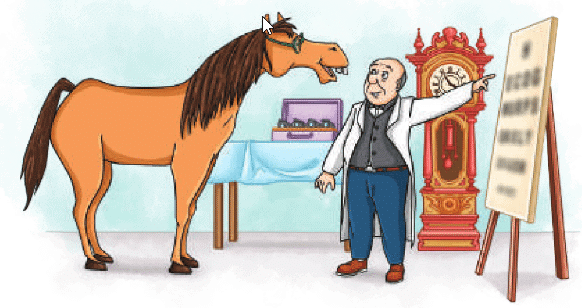
The plough horse complains to Dolittle that he is going blind in one eye, and Dolittle provides green spectacles to help.

Q4How do animals communicate, according to Polynesia?
a) Only through sounds
b) Through ears, tails, feet, and noses
c) Only through their eyes
d) Through written messages

Ans: b) Through ears, tails, feet, and noses

Polynesia explains that animals communicate using their ears, tails, feet, and noses, not just sounds or eyes, and definitely not written messages, which are not part of animal communication.

Q5: What does the word “diagnose” mean in the story?
a) To make someone healthy
b) To find out what is wrong
c) To teach a language
d) To build a tunnel

Ans: b) To find out what is wrong

The word “diagnose” is defined in the story as finding out what is wrong with someone or something, as Dolittle does with the plough horse. 

Fill in the Blank

Q1Doctor Dolittle learns to speak _______ languages.
Ans: animal

Q2Polynesia teaches Dolittle the basics of _______ language first.
Ans: bird

Q3The plough horse is given _______ spectacles to help him see.
Ans: green

Q4Dolittle builds special _______ for different animals to manage the crowd.
Ans: doors

Q5The word “twitching” refers to small, quick _______.
Ans: movements

True or False

Q1Doctor Dolittle starts as an animal doctor before treating people.
Ans: False

Dolittle begins as a people’s doctor and only becomes an animal doctor after the Cat’s-food-Man’s suggestion.

Q2Polynesia reveals that animals have their own languages.
Ans: True

Polynesia shares the secret that animals have their own languages, teaching Dolittle to understand them.

Q3The plough horse needs medicine to fix his problem.
Ans: False

The plough horse needs glasses, not medicine, for his blindness in one eye.

Q4Dolittle becomes famous only among people.
Ans: False

Dolittle becomes famous among animals worldwide, not just people.

Q5The word “veterinarians” means doctors who treat animals.
Ans: True

The story defines “veterinarians” as doctors who treat animals, like the local vet mentioned.

Very Short Answer Questions

Q1What is the name of Doctor Dolittle’s parrot?
Ans: Polynesia

Q2Who brings sick pets to Doctor Dolittle?
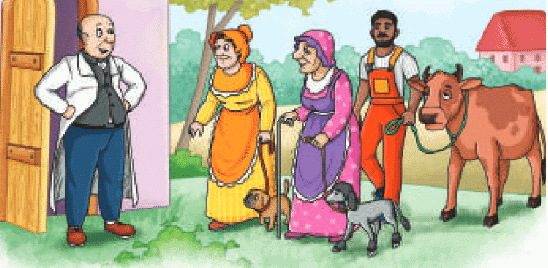
Ans: People

Q3What animal complains about the local vet?
Ans: Plough horse

Q4What does the word “cure” mean in the story?
Ans: To make healthy again

Q5What spreads the news of Dolittle’s skills across countries?
Ans: Birds

Long Answer Questions

Q1How does Polynesia help Doctor Dolittle become an animal doctor?
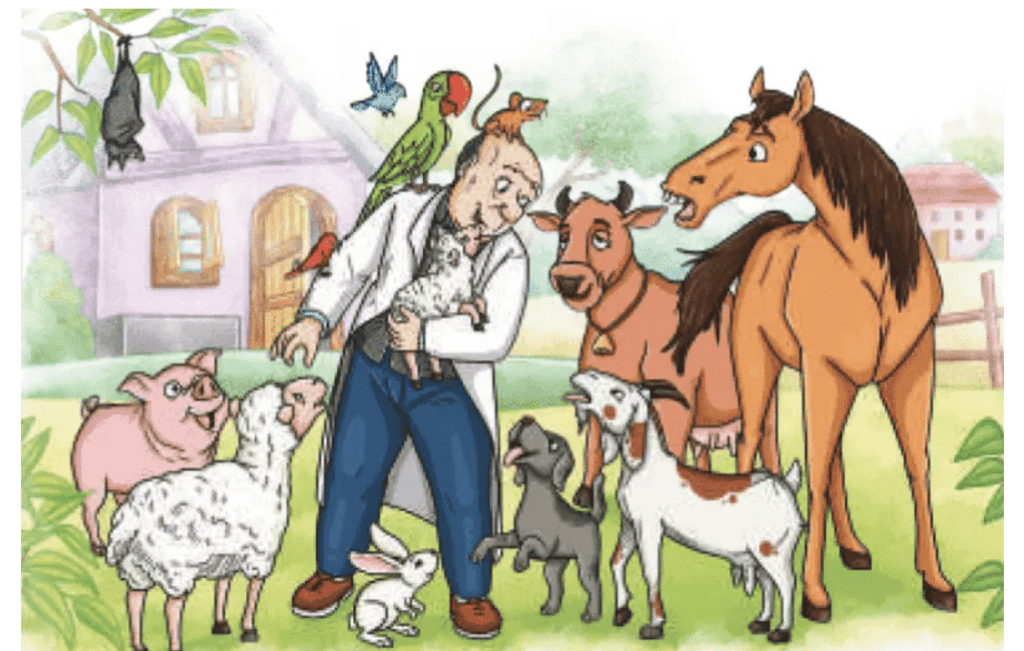
Ans: Polynesia, the parrot, plays a crucial role in Doctor Dolittle’s transition to becoming an animal doctor. She overhears the Cat’s-food-Man’s suggestion and enthusiastically supports it, encouraging Dolittle to focus on animals. She reveals the secret that animals have their own languages and begins teaching him bird language on a rainy afternoon, explaining how animals communicate through ears, tails, feet, and noses. With her guidance and patient instruction, Dolittle learns to speak and understand animal languages fluently, giving him the skills and confidence to officially become an animal doctor, fulfilling his new purpose.

Q2Describe how Doctor Dolittle helps the plough horse and what this shows about his skills.
Ans: Doctor Dolittle helps the plough horse by listening carefully to its complaint that the local vet cannot understand its problem. He diagnoses that the horse is going blind in one eye and, instead of prescribing medicine, provides green spectacles to improve its vision, allowing it to work comfortably again. This shows Dolittle’s unique skills as an animal doctor, particularly his ability to communicate directly with animals to understand their needs accurately. His creative solution—glasses for a horse—demonstrates his innovative thinking and deep care for animals’ well-being.

Q3Explain how Dolittle manages the large number of animals visiting him.
Ans: As Dolittle’s reputation grows, his garden becomes crowded with animals like mice, badgers, and bats seeking his help. To manage this large number, he builds special labelled doors and tunnels tailored for different animals, ensuring organised access to his services. This system allows him to efficiently handle the influx of patients, from small creatures to larger ones like cows and sheep. His thoughtful approach shows his ability to adapt and maintain order, ensuring all animals receive care despite the overwhelming demand.

Q4What is the moral of the story, and how does Dolittle’s journey reflect it?
Ans: The moral of the story is that listening to new ideas and showing kindness to all creatures can lead to happiness and success. Dolittle’s journey reflects this as he embraces the Cat’s-food-Man’s, and Polynesia’s suggestion to become an animal doctor, despite initially treating people. By learning animal languages and caring for creatures like the plough horse, he finds fulfilment and becomes famous among animals worldwide. His openness to change and dedication to understanding animals demonstrate how embracing new perspectives and compassion can transform one’s life and impact others positively.

Q5Discuss how the story highlights the importance of understanding and caring for animals.
Ans: The story highlights the importance of understanding and caring for animals through Doctor Dolittle’s transformation into an animal doctor. His ability to learn animal languages, guided by Polynesia, allows him to communicate directly with creatures like the plough horse, addressing their needs accurately, such as providing glasses instead of medicine. The growing number of animals seeking his help, from mice to bats, shows their trust in his care. Dolittle’s efforts to build special doors and tunnels for them further demonstrate his respect and compassion, emphasising that understanding animals’ perspectives and treating them kindly fosters a harmonious relationship and brings joy to both the caregiver and the animals.

03. Three Days to see Chapter worksheet Solution

Multiple Choice Questions (MCQs)

Q1Who is the author of the essay “Three Days to See”?
a) Eliza Cook
b) Kamala Nair
c) Helen Keller
d) King Bruce

Ans: c) Helen Keller

The essay is written by Helen Keller, a well-known author who was blind and deaf. 

Q2What does Helen Keller enjoy doing to experience the world?
a) Listening to music
b) Touching things
c) Painting landscapes
d) Writing stories

Ans: b) Touching things

The essay describes how Helen enjoys touching things like leaves, tree bark, and buds to experience the world, as she cannot see or hear.

Q3What does Helen plan to do on the first day of having sight?
a) Visit museums
b) Watch the sunrise
c) See her friends’ faces
d) Observe city life

Ans: c) See her friends’ faces

On the first day, Helen plans to see the faces of her friends and loved ones to understand their feelings, as stated in the essay. The other activities are planned for the second and third days.

Q4: What does Helen call the eyes in the essay?
a) Mirror of the heart
b) Window of the soul
c) Light of the mind
d) Door of the spirit

Ans: b) Window of the soul

Helen refers to eyes as the “window of the soul” when describing her desire to look into her friends’ eyes to understand their true feelings. 

Q5: What is the meaning of the word “panorama” in the essay?
a) A quick look
b) A wide, beautiful view
c) A small shake
d) A tiny piece of food

Ans: b) A wide, beautiful view

The word “panorama” is defined in the essay as a wide, beautiful view, used to describe the sunrise Helen wants to see. The other options correspond to words like “glimpse” (quick look), “quiver” (small shake), and “morsel” (tiny piece of food).

Fill in the Blanks

Q1Helen feels the _______ of a leaf to enjoy its shape.
Ans: symmetry

Q2On the second day, Helen wants to watch the _______.
Ans: sunrise

Q3Helen plans to visit _______ to learn about history.
Ans: museums

Q4The word “quiver” describes a small, fast _______.
Ans: shake

Q5: Helen encourages people to use their _______ to find happiness.
Ans: sensesTrue or False Questions

Q1Helen Keller plans to spend her third day in a quiet village.
Ans: False

Helen plans to spend her third day in a busy city to observe people’s daily lives, not in a quiet village.

Q2Helen believes sight is the most wonderful sense.
Ans: True

Helen states in the essay that she considers sight the most wonderful sense among all.

Q3Helen feels sad when she sees people smiling in the city.
Ans: False

Helen says she feels happy seeing people smile in the city, not sad.

Q4The word “mastodons” refers to ancient animals like elephants.
Ans: True

The essay defines “mastodons” as big, furry animals like elephants that lived long ago.

Q5Helen Keller could see and hear throughout her life.
Ans: False

Helen Keller was blind and deaf, unable to see or hear.

Very Short Answer Questions

Q1What does Helen touch to feel nature waking up in spring?
Ans: Tree buds

Q2What does Helen want to see on the third day?
Ans: People’s daily lives

Q3What sense does Helen consider the most wonderful?
Ans: Sight

Q4What is the meaning of the word “companionship” in the essay?
Ans: Feeling close to friends or family

Q5What does Helen suggest people do with their senses?
Ans: Use them fullyLong Answer Questions

Q1How does Helen Keller plan to spend her first day of sight, and why is it important to her?
Ans: On the first day, Helen Keller plans to see the faces of her friends and loved ones who have shown her kindness and friendship. She wants to look into their eyes, which she calls the “window of the soul,” to understand their true feelings, as she usually knows them by touching their faces. This day is important to her because these people have made her life special, and seeing their expressions would deepen her connection with them. It reflects her gratitude for their companionship and her longing to experience their presence in a new, visual way.

Q2Describe what Helen plans to do on the second day and what she hopes to learn.
Ans: On the second day, Helen plans to wake up early to watch the sunrise, marvelling at the beautiful transition from night to day as the sun brightens the earth. She also intends to visit museums to explore the world’s past and present, viewing models of ancient animals like dinosaurs and learning about human progress over time. She hopes to gain a deeper understanding of nature’s beauty and the history of life, appreciating how the world has evolved and how human knowledge has grown.

Q3: Explain how Helen’s third day reflects her interest in ordinary people.
Ans: On the third day, Helen plans to go to a busy city and stand at a street corner to observe people’s daily lives. She wants to look at their faces to see if they are smiling, serious, or sad, feeling happy for those who smile, proud of those working hard, and kind toward those struggling. This reflects her interest in ordinary people because she seeks to connect with their emotions and experiences, valuing the everyday moments that define human life. Her focus on their expressions shows her empathy and desire to understand their joys and challenges.

Q4: What is the moral of the essay, and how does Helen encourage readers to apply it?
Ans: The moral of the essay is to appreciate and fully use our senses to find joy in the world, as they are precious and can be lost. Helen encourages readers to apply this by urging them to use their eyes as if they might lose their sight tomorrow, and to engage all senses—listening to music, touching things, smelling flowers, and tasting food—with the same urgency. She believes this approach brings happiness and fosters gratitude for life’s small wonders, like a leaf or a smile, inspiring readers to live with wonder and awareness.

Q5: Discuss how Helen Keller’s experiences as a blind person shape her perspective in the essay.
Ans: Helen Keller’s experiences as a blind person deeply shape her perspective in the essay. Unable to see or hear, she relies on touch to experience the world, finding joy in the shapes of leaves, tree bark, and buds, which heightens her appreciation for sensory details. Her longing for sight drives her to imagine three days of vision with intense focus, prioritising meaningful experiences like seeing loved ones, nature, history, and ordinary people. Her perspective emphasises gratitude for senses others may take for granted, and her reflections on losing sight again highlight her resilience and ability to find happiness despite her challenges, inspiring readers to value their own senses.

02. Try Again Chapter worksheet Solution

Multiple Choice Questions (MCQs)

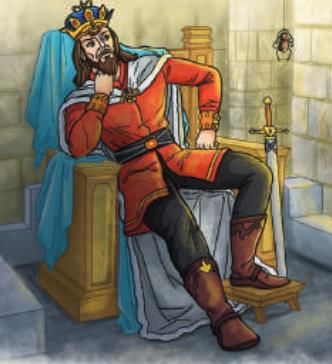
Q1Who is the poet of “King Bruce and the Spider”?
a) Kamala Nair
b) Eliza Cook
c) King Bruce
d) Robert Burns

Ans: b) Eliza Cook

The poem is written by Eliza Cook.

Q2Why is King Bruce feeling sad in the beginning of the poem?
a) He lost his crown
b) He failed to achieve a great deed
c) His people were angry with him
d) He was sick and tired

Ans: b) He failed to achieve a great deed

The poem explains that King Bruce is sad because he repeatedly failed to accomplish a great deed to make his people glad. 

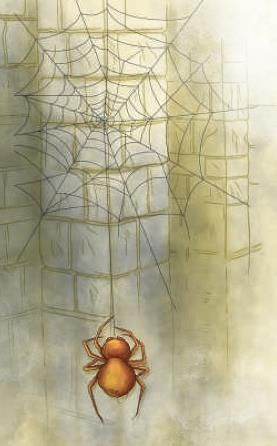
Q3What does the spider do after falling multiple times?
a) It gives up and leaves
b) It keeps trying to climb the thread
c) It builds a new web
d) It waits for help

Ans: b) It keeps trying to climb the thread

The spider falls multiple times but continues to climb the thread without giving up, as described in stanzas 5 and 6. It does not leave, build a new web, or wait for help.

Q4How many attempts does the spider make to reach its web, as counted by the poet?
a) Six
b) Seven
c) Eight
d) Nine

Ans: d) Nine

Stanza 6 states that the spider makes nine brave attempts to climb the thread, each ending in a fall, before succeeding on the tenth try.

Q5What does the word “endeavour” mean in the poem?
a) A feeling of sadness
b) A strong effort
c) A thin thread
d) A quick fall

Ans: b) A strong effort

The word “endeavour” is defined in the poem as a strong effort, describing the spider’s determined climb. 

Fill in the Blank

Q1King Bruce watches a _______ trying to climb to its web.
Ans: spider

Q2The spider’s thread is described as a _______ clue.
Ans: silken

Q3: The king feels _______ after failing to make his people glad.
Ans: sad

Q4The spider reaches its _______ after its final effort.
Ans: web

Q5: The word “toils” in the poem means to work very _______.
Ans: hardTrue or False

Q1King Bruce decides to give up his efforts before watching the spider.
Ans: True

In stanza 3, King Bruce, in despair, says, “I’ll give it all up,” before noticing the spider.

Q2The spider reaches its web on its first attempt.
Ans: False

The spider falls multiple times, making nine attempts before succeeding on the tenth try.

Q3The poem teaches that perseverance can lead to success.
Ans: True

The moral emphasizes that the spider’s and King Bruce’s persistence leads to success.

Q4King Bruce thinks the spider is wise for trying repeatedly.
Ans: False

King Bruce calls the spider “foolish” in stanza 7 for trying despite repeated falls.

Q5The word “monarch” means a spider’s web.
Ans: False

“Monarch” means a king or queen, referring to King Bruce, not a spider’s web.

Very Short Answer Questions

Q1: What is the name of the king in the poem?
Ans: Bruce

Q2Where is the spider trying to climb?
Ans: To its web

Q3What does King Bruce say when the spider succeeds?
Ans: “Bravo, bravo!”

Q4What inspires King Bruce to try again?
Ans: The spider’s persistence

Q5What does the word “despair” mean in the poem?
Ans: Sadness and hopelessnessLong Answer Questions

Q1: How does the spider’s persistence influence King Bruce’s actions in the poem?
Ans: The spider’s persistence profoundly influences King Bruce. Initially, he is in despair, ready to abandon his efforts after repeated failures. However, watching the spider make nine unsuccessful attempts to climb its thread, only to succeed on the tenth try, inspires him. The spider’s refusal to give up despite falling repeatedly shows King Bruce that perseverance can lead to success. Moved by this, he praises the spider, saying it “defied despair,” and resolves to try again, leading to his eventual success. The spider’s example shifts his mindset from hopelessness to determination.

Q2Describe the spider’s efforts to reach its web and the challenges it faces.
Ans: The spider’s efforts to reach its web are marked by determination and repeated failures. It begins by climbing a thin, silken thread toward its web near the ceiling, described as a long and tiring journey. The thread is delicate, making the climb difficult for its small feet. The spider falls multiple times, slipping back to the ground, feeling dizzy and faint after some attempts. Despite these setbacks, it persists, climbing up and down, sometimes fast and sometimes slow, making nine brave attempts before succeeding on the tenth try with a final bold effort, overcoming the fragile thread and its own exhaustion.

Q3Explain the moral of the poem with reference to King Bruce’s experience.
Ans: The moral of the poem is that perseverance leads to success, even after multiple failures. King Bruce’s experience illustrates this: he is initially disheartened by his unsuccessful attempts to achieve a great deed for his people and considers giving up. However, the spider’s relentless efforts to reach its web, despite falling nine times, inspire it to try again. His final attempt succeeds, showing that failures are stepping stones to success if one remains determined. The poem teaches that staying strong and persistent, as King Bruce does, can turn despair into victory.

Q4How does the poet create suspense in the poem while describing the spider’s attempts?
Ans: The poet creates suspense by detailing the spider’s repeated failures and building anticipation about its success. In stanzas 5 and 6, the spider’s falls are vividly described, with phrases like “slippery sprawl” and “dizzy and faint,” highlighting the difficulty of its task. The counting of “nine brave attempts” in stanza 6 increases tension, as each failure brings the spider closer to giving up. In stanza 8, the poet heightens suspense with phrases like “’tis an anxious minute” and “Oh say, will he lose or win it?” as the spider is just a foot from its goal, keeping readers eager to know the outcome.

Q5: Discuss how the poem uses the spider as a symbol to teach a lesson about resilience.
Ans: The spider in the poem symbolises resilience, serving as a powerful example for King Bruce and readers. Its persistent efforts to climb a fragile thread, despite falling nine times, represent the ability to keep going in the face of setbacks. The spider’s small size and delicate task contrast with its determination, showing that resilience is not about strength but about perseverance. By succeeding on its tenth attempt, the spider teaches King Bruce to defy despair and try again, inspiring his own success. The poem uses the spider to convey that resilience, like the spider’s steady climbs, can lead to achieving one’s goals, no matter how challenging the journey.

01. The Day The River Chapter worksheet Solution

Multiple Choice Questions (MCQs) 

Q1: Who is the author of Jahnavi’s story?
a) Gopi
b) Kamala Nair
c) Chandu
d) Appu

Ans: b) Kamala Nair

The introduction clearly states that the story is written by Kamala Nair. Gopi and Appu are Jahnavi’s brothers, and Chandu is a fisherman, none of whom is the author.

Q2Why is Jahnavi initially not allowed to go to school?
a) She is too old
b) She is a girl and needed at home
c) There is no school in the village
d) She does not want to study

Ans: b) She is a girl and needed at home

The story explains that Jahnavi’s family does not allow her to go to school because she is a girl and is needed at home to care for her younger siblings. The story does not suggest she is too old, that there is no school, or that she lacks interest in studying.

Q3: What does the river tell Jahnavi about girls’ abilities?
a) Girls are better than boys
b) Girls are just as capable as boys
c) Girls should not go to school
d) Girls should stay at home

Ans: b) Girls are just as capable as boys

The river encourages Jahnavi by telling her that girls are just as capable as boys, boosting her confidence to pursue her dream. It does not claim girls are better, suggest they should not go to school, or advocate for staying at home.

Q4: What story does the teacher tell in the classroom when Jahnavi enters?
a) A story about ships
b) A story about King Ashoka
c) A story about the river
d) A story about spiders

Ans: b) A story about King Ashoka

When Jahnavi enters the classroom, she listens to a story about King Ashoka. The text does not mention stories about ships, the river, or spiders being told by the teacher.

Q5What is the meaning of the word “startled” as used in the story?
a) Speaking softly
b) Suddenly surprised or shocked
c) Breathing heavily
d) Moving smoothly

Ans: b) Suddenly surprised or shocked

The word “startled” is defined in the story as meaning suddenly surprised or shocked, which fits the context of Jahnavi’s reaction to the river speaking. The other options refer to different words like “murmuring” (speaking softly), “panting” (breathing heavily), or “slithered” (moving smoothly).

Fill in the Blanks

Q1Jahnavi’s mother recalls her own childhood dream of _______.
Ans: studying

Q2: The river speaks to Jahnavi in a _______ voice.
Ans: sleepy

Q3Jahnavi wants to become a _______ to help other girls.
Ans: teacher

Q4Chandu is a _______ in the village.
Ans: fisherman

Q5: The word “catamaran” refers to a small _______ used by fishermen.
Ans: boatTrue or False 

Q1Jahnavi has three brothers named Gopi, Ramu, and Appu.
Ans: True

The story confirms Jahnavi has three brothers: Gopi, Ramu, and Appu, as stated in the description of her family.

Q2The river suggests that Jahnavi should run away from home to achieve her dream.
Ans: False

The river advises Jahnavi to walk into the classroom and listen quietly, not to run away from home.

Q3: Jahnavi’s father fully supports her dream of going to school from the beginning.
Ans: False

Jahnavi’s father is initially worried and only agrees after the teacher’s visit and her mother’s support.

Q4: The story emphasises the importance of education for girls.
Ans: True

The story’s moral highlights that education is crucial for girls, as shown by Jahnavi’s journey and aspirations.

Q5: The word “thicket” means a loud, high-pitched sound.
Ans: False

“Thicket” means a group of bushes or trees, not a sound; “shrieked” refers to a high-pitched sound.

Very Short Answer Questions

Q1What is the name of Jahnavi’s youngest brother?
Ans: Appu

Q2Where does Jahnavi spend time when she feels hopeless?
Ans: By the river

Q3Who visits Jahnavi’s home to discuss her education?
Ans: The teacher

Q4: What does the river mention about ships?
Ans: That Chandu could take her to see one

Q5: What does the word “conspiratorially” mean in the story?
Ans: Speaking secretly, as if sharing a special plan

Long Answer Questions

Q1How does Jahnavi’s interaction with the river motivate her to pursue her dream?
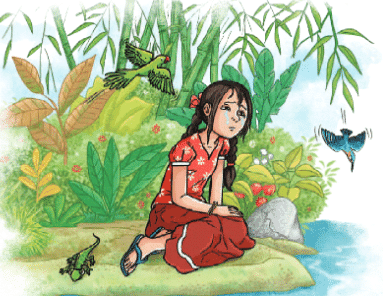
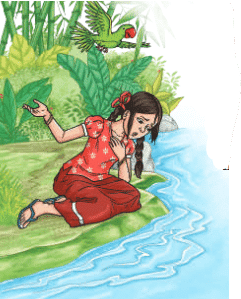
Ans: Jahnavi’s interaction with the river is a turning point in the story. Feeling hopeless, she cries by the river, which speaks to her in a sleepy, kind voice. The river listens to her desire to learn about the world and her fear of being too old for school. It encourages her by affirming that girls are just as capable as boys and suggests a practical step: to walk into the classroom and listen quietly. This advice gives Jahnavi the courage to take action, and the river’s mention of ships and the world beyond sparks her imagination, motivating her to pursue her dream with determination.

Q2Describe the role of the teacher in helping Jahnavi achieve her dream of going to school.
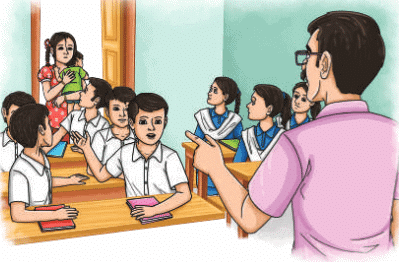
Ans: The teacher plays a crucial role in making Jahnavi’s dream of attending school a reality. When Jahnavi bravely enters the classroom with her brother Appu and listens to a story about King Ashoka, the teacher notices her but does not send her away. Instead, the teacher learns she is Gopi’s sister and takes the initiative to visit Jahnavi’s home that evening to discuss her education with her parents. This visit is pivotal, as it helps convince Jahnavi’s parents, particularly her initially hesitant father, to allow her to join school, thus enabling her to start her educational journey.

Q3Explain how Jahnavi’s mother’s past influences her decision to support Jahnavi’s education.
Ans: Jahnavi’s mother initially delays her daughter’s schooling due to her responsibilities at home and her young age. However, when the teacher visits, her mother becomes supportive, influenced by her own past. She recalls her childhood dream of studying, which she could not fulfil. This unfulfilled aspiration makes her empathise with Jahnavi’s desire to learn. Her personal experience motivates her to ensure Jahnavi gets the opportunity she missed, and she advocates for Jahnavi’s education, helping to persuade her father and secure family approval for Jahnavi to attend school.

Q4What lessons does the story teach about courage and determination?
Ans: The story teaches that courage and determination are essential for overcoming obstacles to achieve one’s dreams. Jahnavi’s courage is evident when she follows the river’s advice and enters the classroom despite her fears and lack of permission. Her determination is shown in her persistent dream of going to school, even when her family initially denies her the opportunity. The story illustrates that taking small, brave steps, like Jahnavi’s decision to listen quietly in class, combined with unwavering determination, can lead to significant changes, such as gaining her parents’ approval to study, emphasising the power of these qualities in facing challenges.

Q5How does the story highlight the importance of support from others in achieving one’s dreams?
Ans: The story underscores that support from others is vital for achieving dreams, especially when facing societal or familial barriers. Jahnavi’s dream of going to school is realised through the encouragement and actions of key figures. The river provides emotional support and practical advice, boosting her confidence. The teacher’s proactive visit to Jahnavi’s home bridges the gap between her aspirations and her family’s concerns. Her mother’s eventual support, driven by her own past, sways her father’s decision. Together, these supportive figures—the river, teacher, and mother—illustrate that dreams are often achieved with the help of others who believe in and advocate for the dreamer.

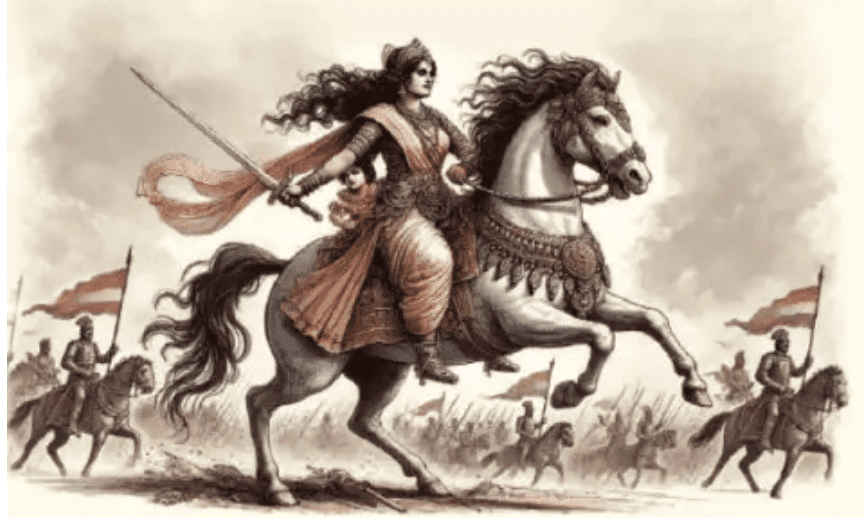
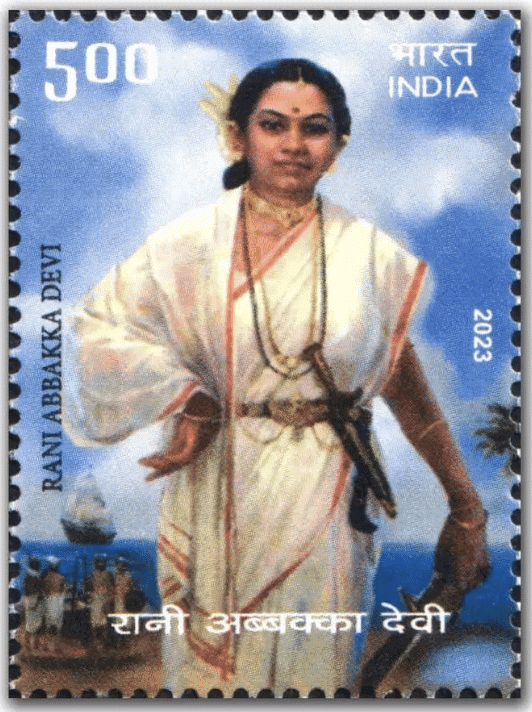
15. Rani Abbakaka Chapter worksheet

Multiple Choice Questions (MCQs)

Q1: Who was Rani Abbakka?
a)
 Queen of Kozhikode
b) Queen of Ullal
c) Queen of Bangadi
d) Portuguese envoy

Q2: Why did the Portuguese demand tribute from Ullal?
a) 
To trade with Arabia
b) To maintain control over Ullal
c) To build merchant ships
d) To support local rajas

Q3: Who did Rani Abbakka form an alliance with?
a)
 Veera Narasimha
b) Portuguese army
c) Zamorin of Kozhikode
d) Local merchants

Q4: How long did the battle for Ullal last?
a) 
Two days
b) Four days
c) One week
d) One month

Q5: What does the word “dauntless” mean in the story?
a) 
Fearless and brave
b) Angry and violent
c) Quick and rash
d) Weak and afraid

Fill in the Blank

Q1: Rani Abbakka was the queen of _______.

Q2: The Portuguese attacked Ullal because Abbakka refused to pay _______.

Q3: Abbakka formed an alliance with the Zamorin of _______.

Q4: The people of Ullal were inspired by Abbakka’s _______ and leadership.

Q5: The word “sovereign” means free and _______.

True or False

Q1: Rani Abbakka agreed to pay tribute to the Portuguese.

Q2: Veera Narasimha supported Abbakka’s plan to fight the Portuguese.

Q3: Abbakka built merchant ships to strengthen Ullal.

Q4: The Portuguese defeated Ullal in the battle.

Q5: The word “vassal” means an independent state.

Very Short Answer Questions

Q1: What did Rani Abbakka refuse to do when the Portuguese envoy visited?

Q2: Who was Veera Narasimha in the story?

Q3: What did Abbakka attack after defeating the Portuguese in battle?

Q4: What is the meaning of the word “resolve” in the story?

Q5: What is one moral of the story?

Long Answer Questions

Q1: How did Rani Abbakka show her determination against the Portuguese?

Q2: Describe how Abbakka gathered support to fight the Portuguese.

Q3: Explain the events of the battle for Ullal and its outcome.

Q4: What is the moral of the story, and how does Rani Abbakka’s leadership reflect it?

Q5: Discuss how Rani Abbakka’s story inspires others to stand up for freedom.

14. My Dear soldiers Chapter worksheet

Multiple Choice Questions (MCQs)

Q1What does the poet call soldiers in the first stanza?
a) 
Guardians of peace
b) Defenders of borders
c) Sons of freedom
d) Heroes of youth

Q2: What do soldiers do while others sleep, according to stanza 1?
a)
 Rest and dream
b) Hold on to their deed
c) Climb mountains
d) Pray for the nation

Q3: Which weather condition is NOT mentioned in stanza 2?
a) 
Windy season
b) Snowy days
c) Rainy storms
d) Scorching sun

Q4: What does the poet compare soldiers to in stanza 2?
a) 
Yogis
b) Wind chimes
c) Valleys
d) Marsh guards

Q5: What does the word “feat” mean in the poem?
a) 
A large area
b) A brave or impressive act
c) A hot day
d) A type of prayer

Fill in the Blank

Q1: Soldiers guard the nation even in _______ days.

Q2: The poet compares soldiers treading lonely expanses to _______.

Q3: Soldiers dedicate the _______ of their youth to the nation.

Q4: The _______ chimes vibrate to show the soldiers’ brave acts.

Q5: The word “sweltering” means uncomfortably _______.

True or False

Q1: The poem describes soldiers sleeping while guarding the borders.

Q2: Soldiers work in diverse terrains like deserts and seas.

Q3: The poet compares soldiers to wind chimes in stanza 3.

Q4: The poem encourages gratitude for soldiers’ sacrifices.

Q5: The word “yogis” refers to people who live in cities.

Very Short Answer Questions

Q1: What do soldiers do in all weather conditions, according to stanza 2?

Q2: Which areas do soldiers monitor, as mentioned in stanza 3?

Q3: What does the poet pray for in the final stanza?

Q4: What is the meaning of the word “surveillance” in the poem?

Q5: What is one moral of the poem?

Long Answer Questions

Q1: How does the poet show the soldiers’ sacrifices in the first two stanzas?

Q2: Describe the different terrains and tasks soldiers undertake in stanza 3.

Q3: Explain the significance of the “wind chimes” in the final stanza.

Q4: What is the moral of the poem, and how does the poet’s tone reflect it?

Q5: Discuss how the poem inspires gratitude and respect for soldiers’ dedication.