10. Life Processes in Plants Chapter Solution

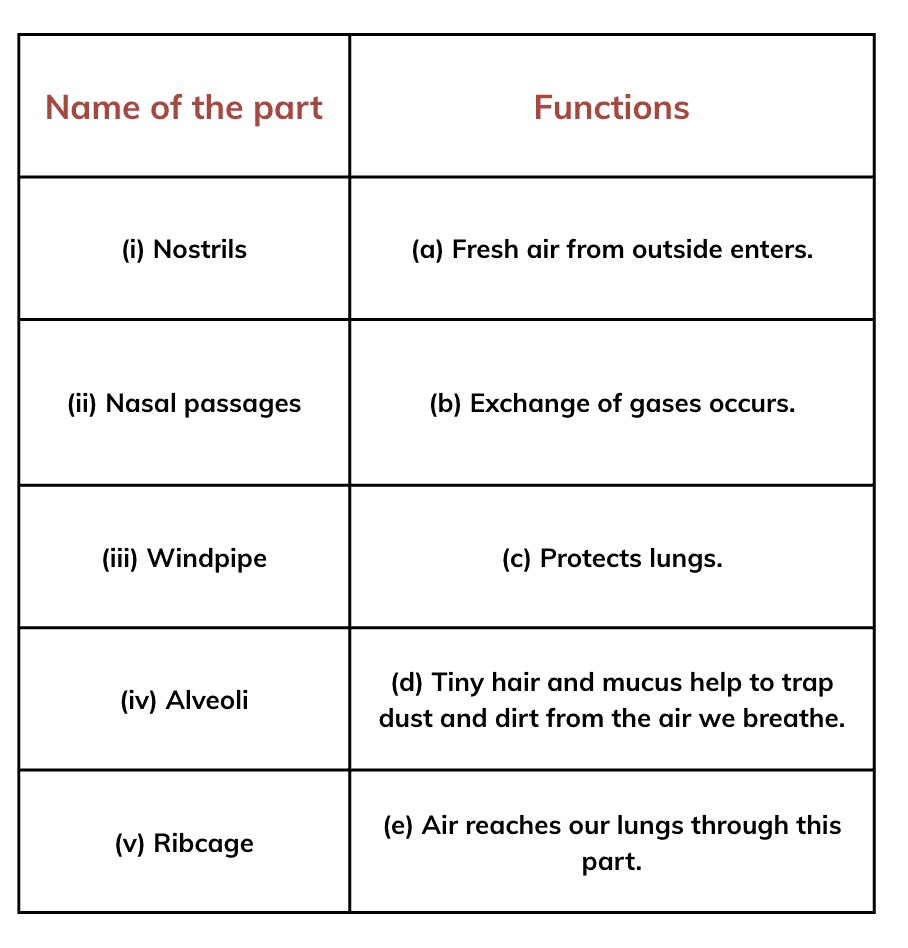
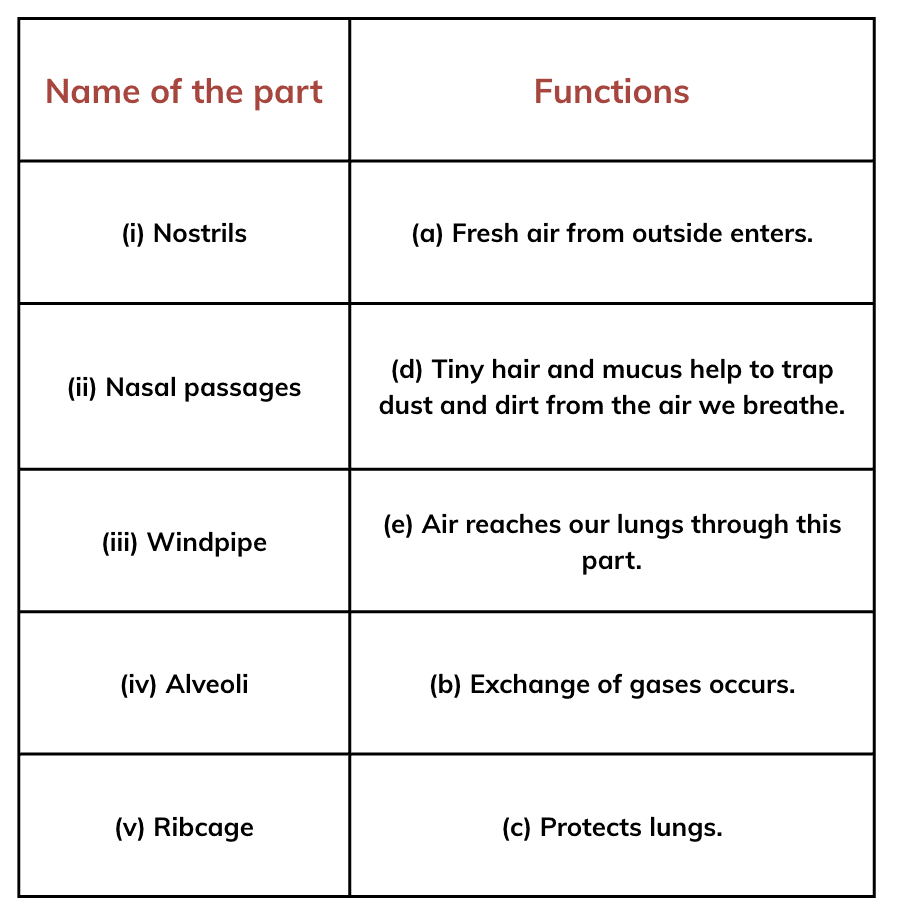
Q1: Complete the following table.
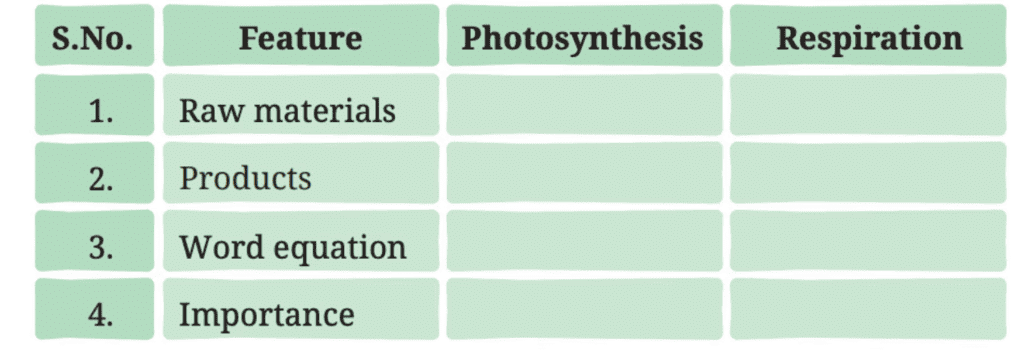
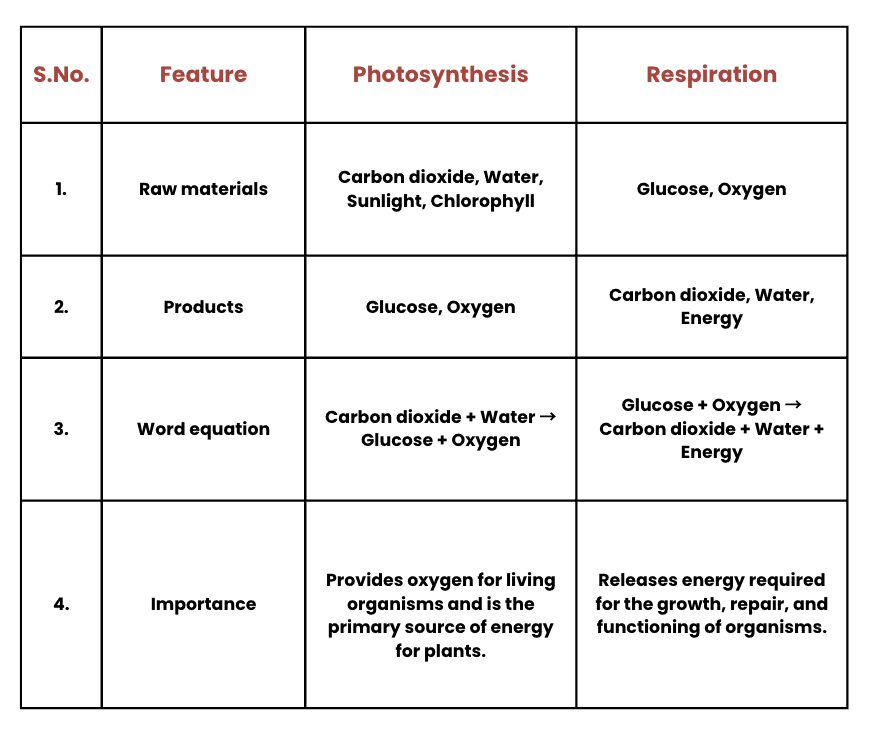
Ans:

Q2: Imagine a situation where all the organisms that carry out photosynthesis on the earth have disappeared. What would be the impact of this on living organisms?
Ans: If all photosynthetic organisms disappeared, there would be no source of oxygen production or food for herbivores. This would disrupt the entire food chain, leading to the collapse of ecosystems, and animals would eventually die due to lack of oxygen and food.

  • No oxygen production: Plants give us oxygen through photosynthesis. Without them, there would be less oxygen in the air, making it hard for humans and animals to breathe.
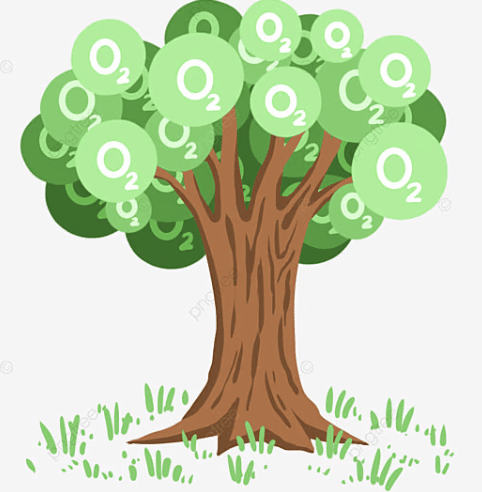
  • More carbon dioxide: Photosynthesis helps take in carbon dioxide from the air. Without it, the carbon dioxide levels would rise, causing the Earth to become warmer and making the climate unstable.
  • Loss of food supply: Plants are the primary source of food for herbivores, and herbivores are eaten by carnivores. If photosynthesizing organisms disappeared, the entire food chain would collapse. Without plants to produce food (glucose), animals would starve, and many species would not survive.

Q3: . Where does the starch in potatoes come from? Where is the food synthesised in the plant, and how does it reach the potato?
Ans: The starch in potatoes comes from the food made in the leaves of the plant. The plant makes food in the form of glucose through a process called photosynthesis, which happens in the leaves when the plant takes in sunlight, carbon dioxide, and water.
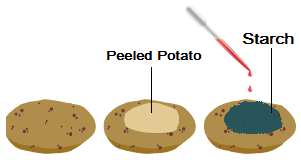
Once the leaves make glucose, it travels through the plant to other parts, like the potato, through special tubes called phloem. The potato acts like a storage place where the glucose is turned into starch and stored for later use, which is why when you test a potato with iodine, you see a blue-black color, showing the presence of starch.

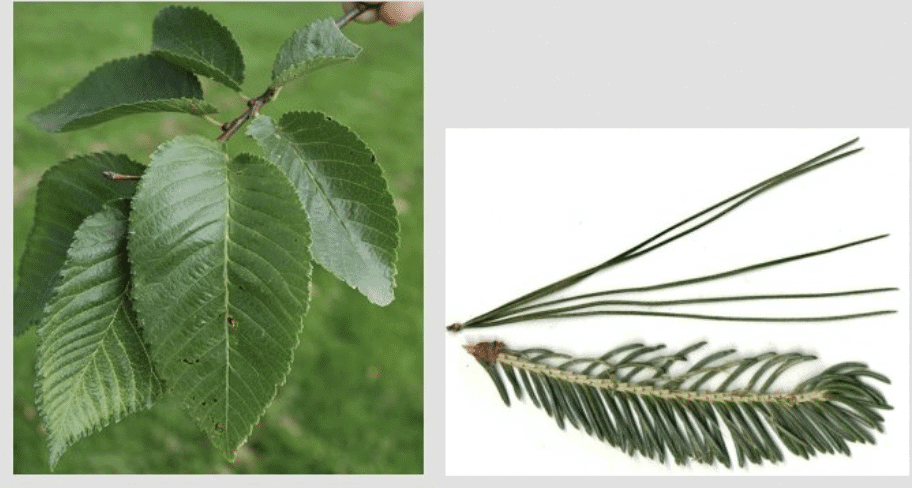
Q4: Does the broad and flat structure of leaves make plants more efficient for photosynthesis? Justify your answer.
Ans: Yes, the broad and flat structure of leaves make plants more efficient for photosynthesis. This is because of following reasons: 

  • The broad shape also helps the leaf to face the Sun directly, maximizing the amount of light it receives throughout the day.
  • The broad and flat shape of leaves provides a larger surface area, allowing more sunlight to be captured. The more sunlight the leaf can absorb, the more energy it can use to produce food through photosynthesis.
  • The flat shape helps the leaf to spread out and have more stomata (small pores) on its surface. These stomata allow the plant to take in carbon dioxide (which is needed for photosynthesis) and release oxygen more efficiently.

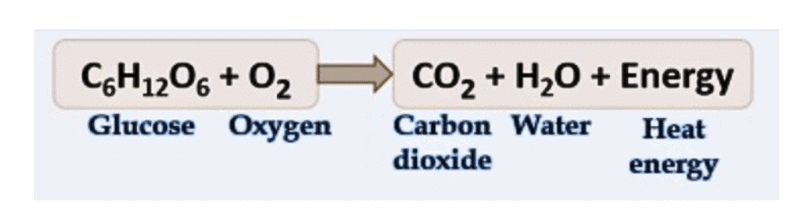
Q5: X is broken down using Y to release carbon dioxide, Z, and energy. 

X, Y, and Z are three different components of the process. What do X, Y, and Z stand for?
Ans:

  • X: Glucose – Glucose is the sugar that is broken down in the process.
  • Y: Oxygen – Oxygen is used to help break down glucose in respiration.
  • Z: Water – Water is a product of the respiration process.
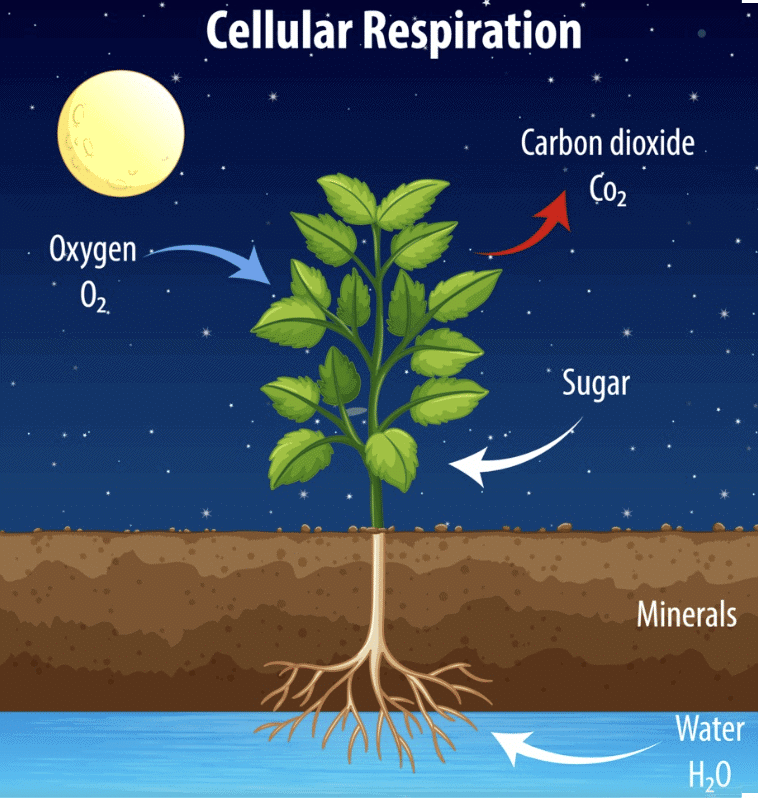
Thus, the equation represents the process of respiration in plants:
Glucose + Oxygen → Carbon dioxide + Water + Energy
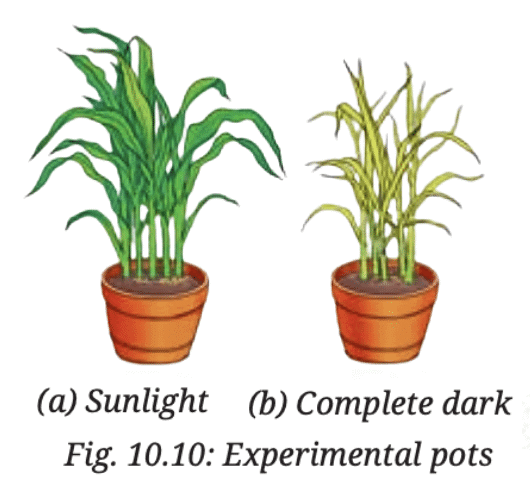
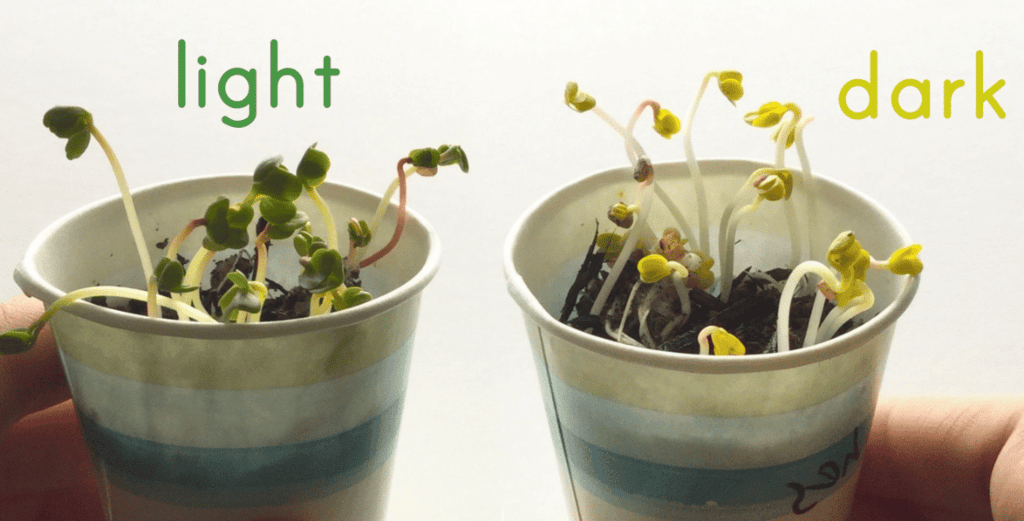
Q6: Krishna set-up an experiment with two potted plants of same size and placed one of them in sunlight and the other in a dark room, as shown in Fig. 10.10.Answer the following questions:
(i) What idea might she be testing through this experiment?
Ans: Krishna is testing the effect of sunlight on plant growth and starch production in plants.
(ii) What are the visible differences in plants in both the conditions?
Ans:  The plant in sunlight will show better growth, with green leaves and starch production. This is because sunlight is required for photosynthesis, and the plant will produce starch as a result.
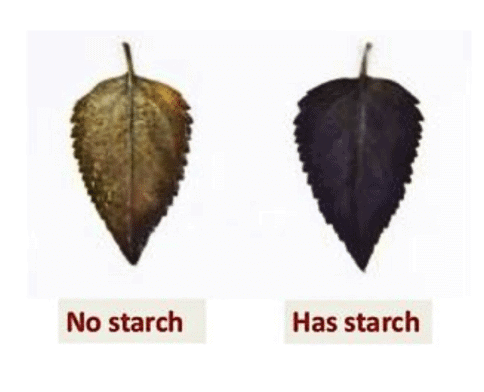
The plant in the dark will show stunted growth, with smaller or yellowed leaves, and no starch production. Without light, the plant can’t do photosynthesis, so it won’t be able to produce starch.
(iii) According to you, leaves of which plants confirm the iodine test for the presence of starch?
Ans: The leaves of the plant kept in sunlight will show a positive iodine test, indicating the presence of starch. The iodine will turn blue-black when it reacts with starch. Since sunlight is required for photosynthesis, the plant in sunlight will have made starch, while the plant in the dark will not have any starch to react with iodine.
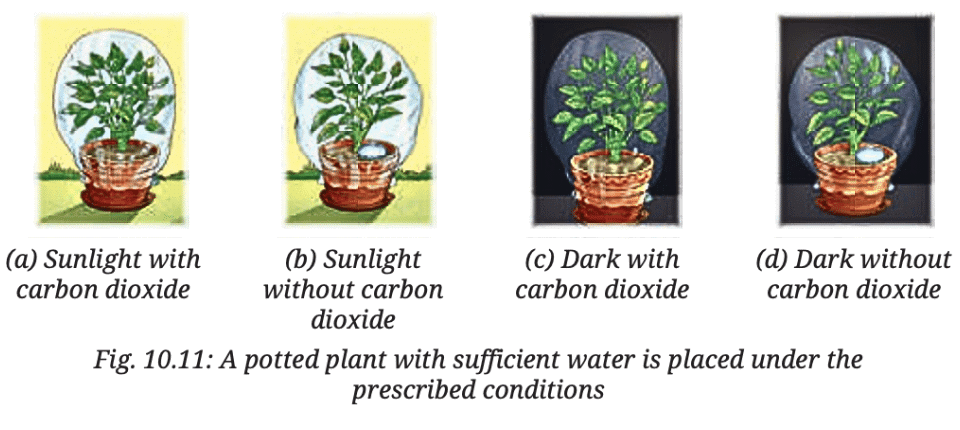
Q7: Vani believes that ‘carbon dioxide is essential for photosynthesis’. She puts an experimental set-up, as shown in Fig. 10.11, to collect evidence to support or reject her idea.Answer the following questions:
(i) In which plant(s) in the above set-up(s) will starch be formed?
Ans: Starch will be formed in the plant under (a) Sunlight with carbon dioxide because sunlight and carbon dioxide are both essential for photosynthesis. In this condition, the plant can perform photosynthesis and produce starch.
(ii) In which plant(s) in the above set-up(s) will starch not be formed?
Ans: Starch will not be formed in the plants under (b) Sunlight without carbon dioxide(c) Dark with carbon dioxide, and (d) Dark without carbon dioxide.

  • In (b), there’s no carbon dioxide, which is required for photosynthesis.
  • In (c), though there is carbon dioxide, there’s no sunlight, which is needed for photosynthesis.
  • In (d), there’s neither sunlight nor carbon dioxide, so photosynthesis cannot happen.

(iii) In which plant(s) in the above set-up(s) will oxygen be generated?
Ans: Oxygen will be generated in the plants under (a) Sunlight with carbon dioxide because both sunlight and carbon dioxide are essential for photosynthesis, during which oxygen is produced.
(iv) In which plant(s) in the above set-up(s) will oxygen not be generated?
Ans: Oxygen will not be generated in the plants under (b) Sunlight without carbon dioxide(c) Dark with carbon dioxide, and (d) Dark without carbon dioxide.

  • In (b), there’s no carbon dioxide, so photosynthesis cannot occur, and oxygen is not produced.
  • In (c), there’s no sunlight, so photosynthesis cannot occur, and oxygen is not produced.
  • In (d), there’s no sunlight or carbon dioxide, so oxygen is not produced.
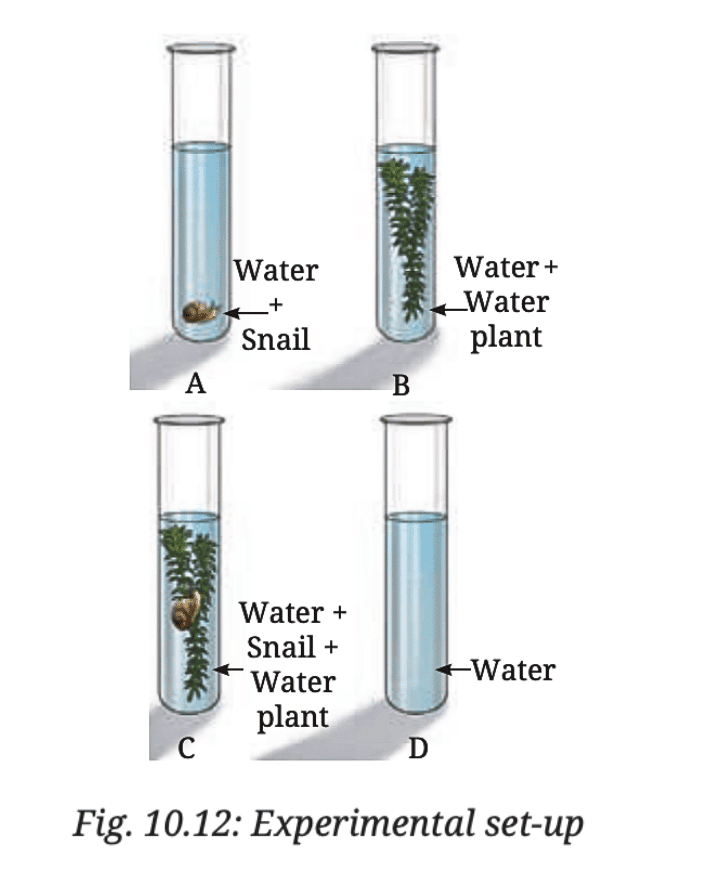
Q8: Ananya took four test tubes and filled three-fourth of each test tube with water. She labelled them A, B, C, and D (Fig. 10.12). In test tube A, she kept a snail; in test tube B, she kept a water plant; in test tube C, she kept both a snail and a plant. In test tube D, she kept only water. Ananya added a carbon dioxide indicator to all the test tubes. She recorded the initial colour of water and observed if there are any colour changes in the test tubes after 2–3 hours. What do you think she wants to find out? How will she know if she is correct?
Ans: Ananya is likely conducting an experiment to investigate the role of carbon dioxide (CO₂) in the process of respiration and photosynthesis in aquatic organisms. She is testing whether the presence of a snail (which respires) and/or a water plant (which carries out photosynthesis) affects the level of carbon dioxide in the water over time.

Activity Explanation: 

  • Test tube A (with a snail): The snail respires and releases carbon dioxide (CO₂). If the carbon dioxide indicator turns a different color (e.g., from yellow to green), it will indicate an increase in CO₂ levels in the water due to respiration.
  • Test tube B (with a water plant): The water plant carries out photosynthesis, using carbon dioxide and releasing oxygen. If the indicator shows a decrease in CO₂ (e.g., from yellow to blue), it will indicate that the plant is taking in carbon dioxide during photosynthesis.
  • Test tube C (with both a snail and a water plant): In this setup, both respiration (from the snail) and photosynthesis (from the plant) will occur. The snail will produce carbon dioxide, and the plant will consume it for photosynthesis. If there’s no change in color, it could indicate that the plant is using the carbon dioxide produced by the snail for photosynthesis, balancing out the CO₂ levels.
  • Test tube D (only water): This is the control test. Since there’s no plant or snail to produce or consume CO₂, any change in the indicator’s color would be due to external factors or the experiment’s set-up.

How will she know if she is correct?

Ananya will observe the color change of the carbon dioxide indicator in all the test tubes.

  • Lets say if the water turns from yellow to blue, it indicates a decrease in carbon dioxide (likely due to photosynthesis).
  • Lets say if the water turns from yellow to green or yellowish, it indicates an increase in carbon dioxide (likely due to respiration).

Q9: Design an experiment to observe if water transportation in plants is quicker in warm or cold conditions.
Ans: Aim To observe if the rate of water transportation (transpiration and absorption) in plants is quicker in warm conditions compared to cold conditions.

Materials Needed:

  1. Two identical potted plants (same species and size)
  2. A source of water
  3. Two thermometers (for measuring temperature)
  4. A fan (for warm conditions, if necessary)
  5. A refrigerator (for cold conditions)
  6. Two transparent plastic bags (to cover the plants)
  7. Stopwatch or timer

Experimental Set-up:

Plant 1 (Warm Condition):

  • Place one potted plant under a warm light source (like a lamp) or use a fan to maintain a warm temperature around the plant (around 28–30°C).
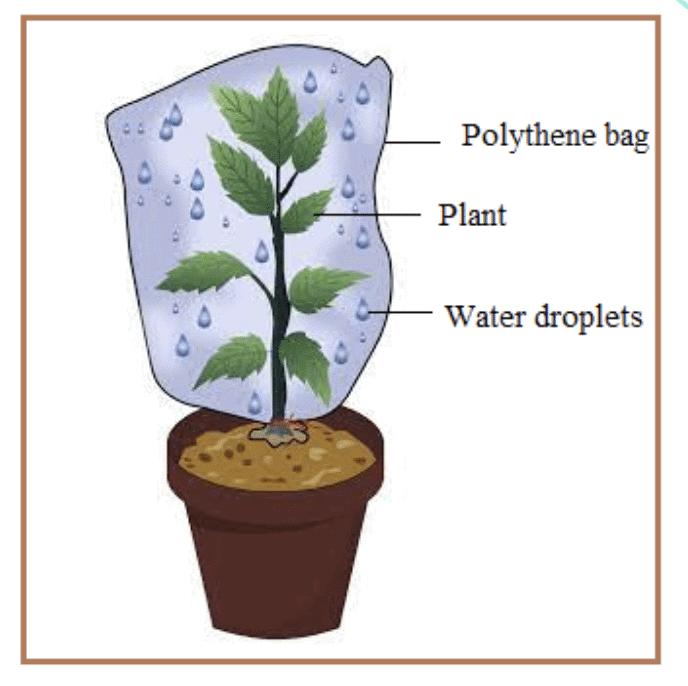
  • Cover the plant with a transparent plastic bag to observe water droplets as the plant transpires.
  • Place a thermometer near the plant to monitor the temperature.

Plant 2 (Cold Condition):

  • Place the second potted plant in a cold environment, such as a refrigerator or a cooler with a temperature of around 10°C.
  • Cover this plant with a transparent plastic bag as well to observe water droplets.
  • Place a thermometer near this plant to monitor the temperature.

Procedure:

For both plants:

  • Water both plants equally before starting the experiment.
  • Place each plant in the respective environment (warm or cold).
  • Monitor the temperature near the plants to ensure the conditions are maintained for at least 2–3 hours.
  • Observe and record the amount of water condensation (water droplets) inside the plastic bag around the plant, which indicates transpiration.
  • You may also choose to measure the water level in the soil before and after the experiment to observe the rate of water absorption.
  • Observe for a set period, such as 2–3 hours, noting any changes in the water droplets in the plastic bag.
  • Measure and compare the number of water droplets inside the plastic bag to see which plant shows more transpiration.
Observations:

  • Plant 1 (Warm Condition): You will likely observe a higher number of water droplets inside the plastic bag in the warm environment, indicating a higher rate of transpiration.
  • Plant 2 (Cold Condition): You will likely observe fewer water droplets or slower water loss in the colder environment.

Conclusion: The experiment will likely show that the plant in the warm condition will have a quicker rate of water transportation (transpiration and absorption) compared to the plant in the cold condition. This is because warmth causes the stomata to open more, increasing transpiration.

Q10: 
Ans: Photosynthesis and respiration are crucial for maintaining the balance of gases in nature.

  • Photosynthesis is the process by which plants convert sunlight, carbon dioxide, and water into glucose and oxygen. This process helps reduce carbon dioxide in the atmosphere and provides oxygen, which is essential for life.
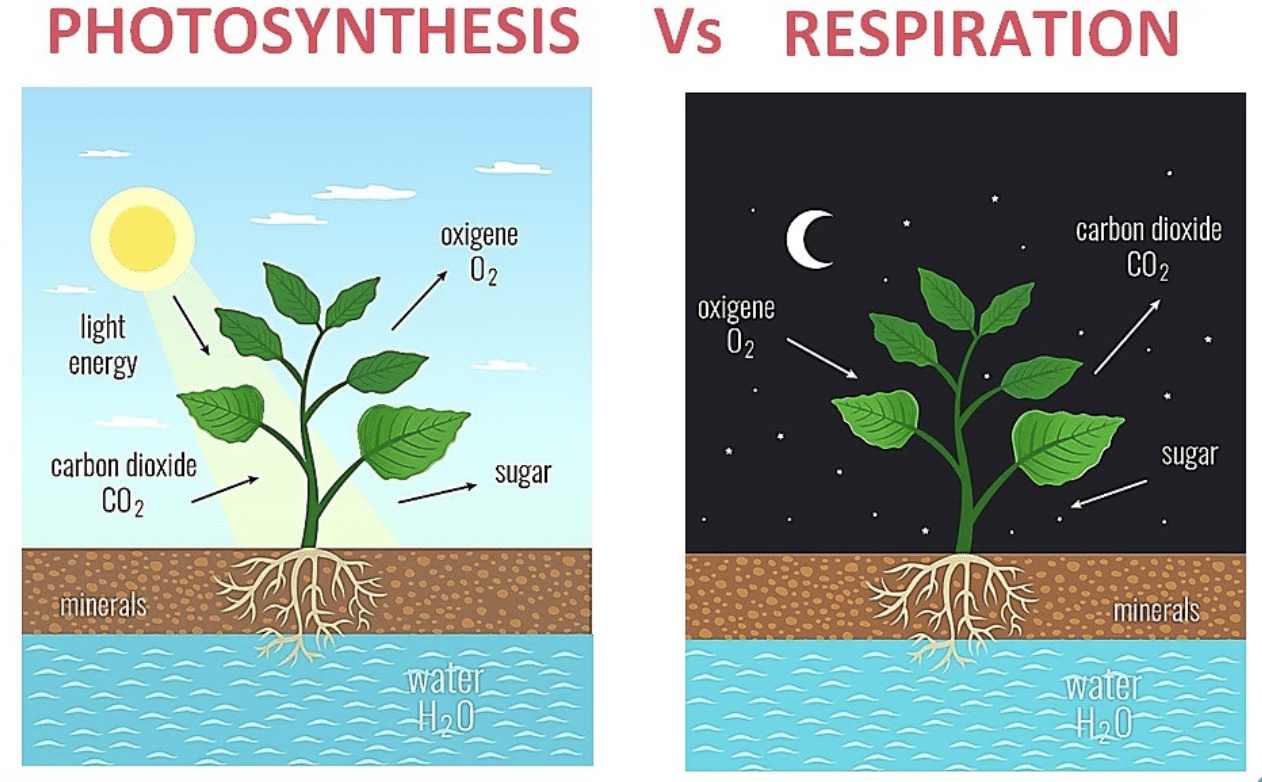
  • Respiration is the process where plants and animals break down glucose to release energy, consuming oxygen and releasing carbon dioxide. This helps maintain oxygen levels and provides carbon dioxide for plants to use in photosynthesis.

Together, these processes ensure a balance of oxygen and carbon dioxide in the atmosphere, which is vital for sustaining life on Earth.

09. Life Processes in Animals  Chapter Solution

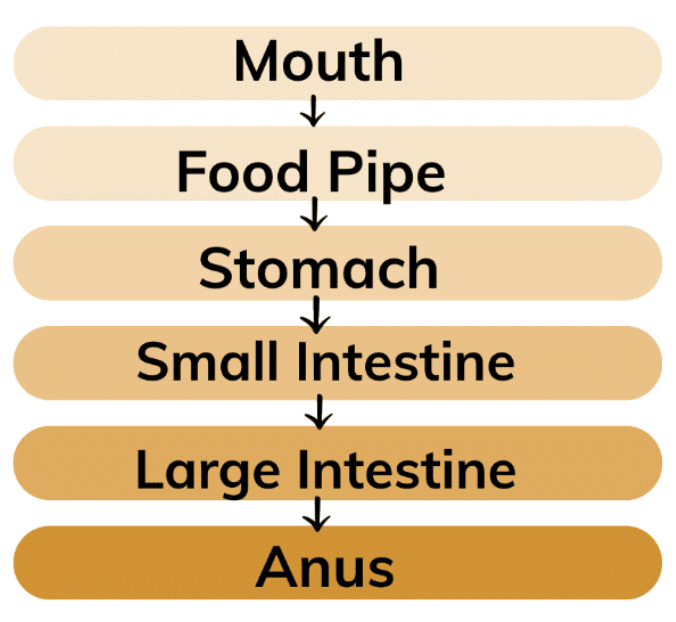
Q1: Complete the journey of food through the alimentary canal by filling up the boxes with appropriate parts.

Ans: 

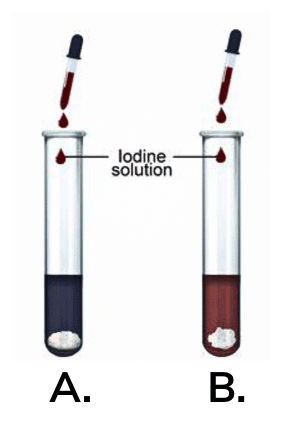
Q2: Sahil placed some pieces of chapati in test tube A. Neha placed chewed chapati in test tube B, and Santushti took boiled and mashed potato in test tube C. All of them added a few drops of iodine solution to their test tubes—A, B, and C, respectively. What would be their observations? Give reasons.
Ans:

  • Test tube A (Pieces of chapati): After adding iodine solution, the color of the mixture will turn blue-black. This is because iodine reacts with starch and turns blue-black. The chapati contains starch, so iodine will show this color change in test tube A.
  • Test tube B (Chewed chapati): The color of the mixture will either show no change or a very faint blue-black color. This is because the chewing process, aided by the saliva, starts breaking down the starch into simpler sugars (like maltose), which do not react with iodine. So, there will either be no starch left or only a small amount in test tube B.
  • Test tube C (Boiled and mashed potato): The color of the mixture will turn blue-black. Potatoes contain starch, and when iodine is added, it will react with the starch and turn blue-black, just like in test tube A.

Reasoning: Iodine solution reacts with starch and turns blue-black. In test tubes A and C, starch is present, which causes the color change. However, in test tube B, due to the breakdown of starch into simpler sugars by chewing, there is less starch left to react with the iodine, resulting in a weaker or no color change.

Q3: What is the role of the diaphragm in breathing?
(i) To filter the air
(ii) To produce sound
(iii) To help in inhalation and exhalation
(iv) To absorb oxygen

Ans:
(iii) To help in inhalation and exhalation.
The diaphragm moves downward during inhalation, expanding the chest cavity, and moves upward during exhalation, pushing air out of the lungs.

Q4: Match the following.

Ans:Q5: Anil claims to his friend Sanvi that respiration and breathing are the same process. What question(s) can Sanvi ask him to make him understand that he is not correct?

Ans:  Sanvi can ask the following questions to make Anil understand the difference between respiration and breathing:

  • “What is the difference between breathing and respiration?”
  • “Does respiration happen even when we are not breathing?”
  • “Can you explain what happens to the food we eat during respiration?”

These questions will help Anil understand that breathing is the physical process of inhaling and exhaling, while respiration is the chemical process where oxygen is used to break down glucose to release energy.

Q6: Which of the following statements is correct and why?
Anu: We inhale air.
Shanu: We inhale oxygen.
Tanu: We inhale air rich in oxygen.

Ans: (iii) Tanu: We inhale air rich in oxygen.
This is the most accurate because the air we breathe contains 21% oxygen, making it “rich in oxygen” for our needs.

Q7: We often sneeze when we inhale a lot of dust-laden air. What can be possible explanations for this?
Ans: When we inhale a lot of dust-laden air, we often sneeze for the following reasons:

1. Nose irritation: Dust can irritate the inside of our nose, causing the body to react by sneezing.

2. Body’s defense: Sneezing helps the body get rid of the dust, protecting the lungs from harmful particles.

3. Cleaning airways: Sneezing clears the dust from our nose and throat, making it easier to breathe.

Q8: Paridhi and Anusha of Grade 7 started running for their morning workout. After they completed their running, they counted their breaths per minute. Anusha was breathing faster than Paridhi. Provide at least two possible explanations for why Anusha was breathing faster than Paridhi.
Ans: Here are two simple reasons why Anusha was breathing faster than Paridhi after their run:

  • Running faster: Anusha may have been running faster or working harder, which makes her body need more oxygen, causing her to breathe faster.
  • Fitness levels: Anusha might not be as fit as Paridhi, so her body has to work harder, making her breathe faster.

In short, Anusha might have run faster or her body needed more oxygen, which made her breathe faster than Paridhi.

Q9: Yadu conducted an experiment to test his idea. He took two test tubes, A and B, and added a pinch of rice flour to the test tubes, half-filled with water, and stirred them properly. To test tube B, he added a few drops of saliva. He left the two test tubes for 35–45 minutes. After that, he added iodine solution into both the test tubes. What do you think he wants to test?
Ans: Observation:

Test Tube A (without saliva): After adding iodine, the water in test tube A will turn blue-black, indicating that starch is present in the rice flour.

Test Tube B (with saliva): After adding iodine, the water in test tube B will show little to no color change (or a lighter blue-black color), suggesting that the starch has been broken down by the enzyme amylase in the saliva.

By performing this experiment, Yadu tested the effect of saliva on the breakdown of starch in rice flour. The iodine test will show whether starch is present in the rice flour, indicating whether it was broken down by the enzymes in the saliva.

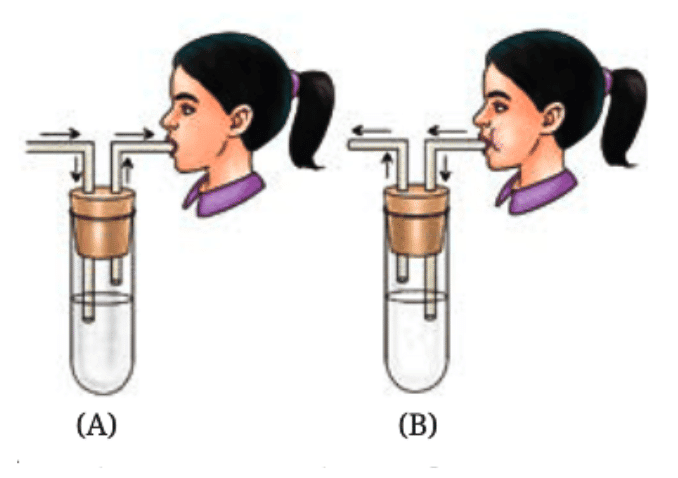
Q10: Rakshita designed an experiment taking two clean test tubes, A and B, and filled them with lime water as shown in the figure. In test tube A, the surrounding air that we inhale was passed on by sucking air from the pipe, and in test tube B, the exhaled air was blown through the pipe. What do you think she is trying to investigate? How can she confirm her findings?
Ans: Rakshita is investigating the difference in the amount of carbon dioxide between inhaled and exhaled air. 

She can confirm her findings by inhaling and exhaling from tubes: 

  • Test Tube A (Inhaled air): When the air we breathe in passes through lime water, there will likely be no color change because the air we inhale has very little carbon dioxide.
  • Test Tube B (Exhaled air): When exhaled air passes through lime water, the lime water will turn milky due to the presence of higher carbon dioxide in the exhaled air. Carbon dioxide reacts with lime water to form calcium carbonate, which causes the milkiness.

Conclusion:

By observing whether the lime water in test tube B turns milky, Rakshita can confirm that exhaled air contains more carbon dioxide than inhaled air.

08. Measurement Of Time and Motion Chapter Solution

Q1: Calculate the speed of a car that travels 150 meters in 10 seconds. Express your answer in km/h.

Answer:
Speed = Distance / Time

Given:

  • Distance = 150 meters
  • Time = 10 seconds

Convert meters to kilometers and seconds to hours:

  • 150 meters = 0.15 km
  • 10 seconds = 10/3600 hours = 1/360 hours

Now calculate speed:
Speed = 0.15 km / (1/360 hour) = 0.15 x 360 = 54 km/h

Q2: A runner completes 400 meters in 50 seconds. Another runner completes the same distance in 45 seconds. Who has a greater speed and by how much?

Answer:
Speed = Distance / Time

Runner 1:

  • Distance = 400 meters
  • Time = 50 seconds
  • Speed = 400 / 50 = 8 m/s

Runner 2:

  • Distance = 400 meters
  • Time = 45 seconds
  • Speed = 400 / 45 ≈ 8.89 m/s

Conclusion:
Runner 2 has a greater speed by:
8.89 m/s – 8 m/s = 0.89 m/s

Q3: A train travels at a speed of 25 m/s and covers a distance of 360 km. How much time does it take?

Answer:
Time = Distance / Speed

Convert 360 km to meters:
360 km = 360,000 meters

Now calculate the time:
Time = 360,000 meters / 25 m/s = 14,400 seconds

Convert seconds to hours:
14,400 / 3600 = 4 hours

Q4: A train travels 180 km in 3 hours. Find its speed in:

(i) km/h

(ii) m/s

(iii) What distance will it travel in 4 hours if it maintains the same speed throughout the journey?

Answer:

(i) Speed in km/h:
Speed = Distance / Time = 180 km / 3 hours = 60 km/h

(ii) Speed in m/s:
Convert 180 km to meters:
180 km = 180,000 meters

Now calculate speed in m/s:
Speed = 180,000 meters / (3 hours x 3600 seconds) = 16.67 m/s

(iii) Distance in 4 hours:
Distance = Speed x Time = 60 km/h x 4 hours = 240 km

Q5: The fastest galloping horse can reach the speed of approximately 18 m/s. How does this compare to the speed of a train moving at 72 km/h?

Answer:
Convert the speed of the train to m/s:
72 km/h = 72 x 1000 meters / 3600 seconds = 20 m/s

Comparison:
The horse moves at 18 m/s.
The train moves at 20 m/s.

Conclusion:
The train is faster than the galloping horse by:
20 m/s – 18 m/s = 2 m/s

Q6: Distinguish between uniform and non-uniform motion using the example of a car moving on a straight highway with no traffic and a car moving in city traffic.

Answer: Uniform motion
When a car moves on a straight highway with no traffic, it maintains a constant speed. This is uniform motion, where the distance covered in equal time intervals is the same.

Non-uniform motion
In city traffic, the car’s speed changes due to stops, slowdowns, and accelerations. This is non-uniform motion, where the distance covered in equal intervals of time is not constant.

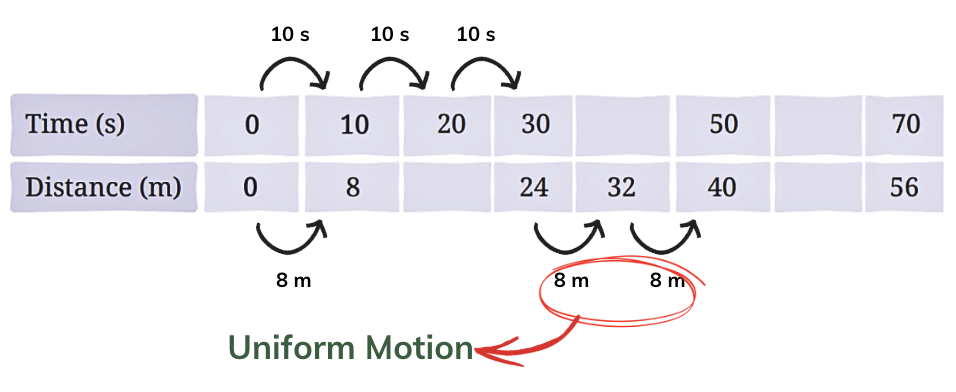
Q7: Data for an object covering distances in different intervals of time are given in the following table. If the object is in uniform motion, fill in the gaps in the table.

Answer: Check for uniform motion: 

Keeping in mind , this is an uniform motion, the object must cover equal distances in equal time intervals.

Therefore, 

Q8: A car covers 60 km in the first hour, 70 km in the second hour, and 50 km in the third hour. Is the motion uniform? Justify your answer. Find the average speed of the car.

Answer:
Since the car covers different distances in each hour (60 km, 70 km, and 50 km), the motion is non-uniform.

To find the average speed:
Total distance = 60 km + 70 km + 50 km = 180 km
Total time = 3 hours
Average speed = Total distance / Total time = 180 km / 3 hours = 60 km/h

Q9: Which type of motion is more common in daily life—uniform or non-uniform? Provide three examples from your experience to support your answer.

Answer:
Non-uniform motion is more common in daily life. Examples:

  1. A car in city traffic: The car’s speed changes due to stops and accelerations.
  2. A bicycle in a park: The rider’s speed changes while turning or stopping.
  3. People walking: Walking speed varies due to obstacles or fatigue.

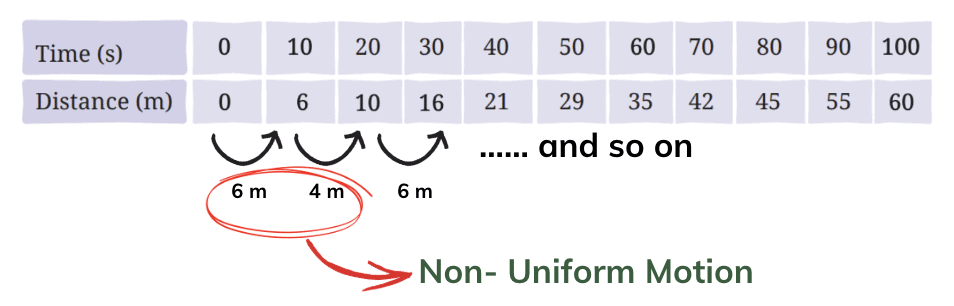
Q10: Data for the motion of an object are given in the following table. State whether the speed of the object is uniform or non-uniform. Find the average speed.

Answer: Check the distance traveled in each time interval:

As the distances covered in each interval are not equal, the motion is non-uniform.

Average Speed = Total Distance / Total Time

Total distance = 60 m (final distance)

Total time = 100 s (final time)

Average Speed = 60 m / 100 s = 0.6 m/s

Q11: A vehicle moves along a straight line and covers a distance of 2 km. In the first 500 m, it moves with a speed of 10 m/s and in the next 500 m, it moves with a speed of 5 m/s. With what speed should it move the remaining distance so that the journey is complete in 200 s? What is the average speed of the vehicle for the entire journey

Answer: Given-

  1. Total distance = 2 km = 2000 meters
  2. First part of the journey: Distance = 500 meters, Speed = 10 m/s
  3. Second part of the journey: Distance = 500 meters, Speed = 5 m/s
  4. Total time for the journey = 200 seconds

Calculate the time taken for the first two parts of the journey

1. For the first 500 meters (speed = 10 m/s):
Time = Distance / Speed = 500 meters / 10 m/s = 50 seconds

2. For the next 500 meters (speed = 5 m/s):
Time = Distance / Speed = 500 meters / 5 m/s = 100 seconds

Calculate the remaining time for the last 1000 meters

The total time allowed is 200 seconds, and the time spent on the first two parts of the journey is:
Time spent = 50 seconds + 100 seconds = 150 seconds

Thus, the time remaining for the last 1000 meters is:
Remaining time = 200 seconds – 150 seconds = 50 seconds

Calculate the required speed for the remaining 1000 meters

Now, we need to cover the remaining 1000 meters in 50 seconds. 

The required speed is:
Speed = Distance / Time = 1000 meters / 50 seconds = 20 m/s

Calculate the average speed for the entire journey

The average speed for the entire journey is given by:
Average speed = Total distance / Total time
Total distance = 2000 meters, and total time = 200 seconds, so:
Average speed = 2000 meters / 200 seconds = 10 m/s

07. Heat Transfer in nature Chapter Solution

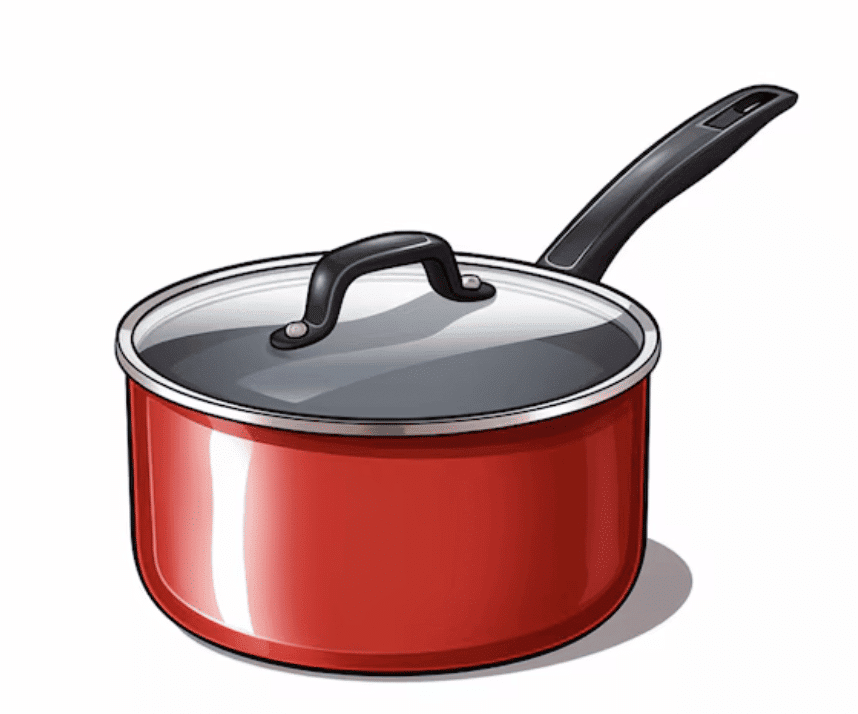
Q1 (i): Your father bought a saucepan made of two different materials, A and B. The materials A and B have the following properties —
(a) Both A and B are good conductors of heat
(b) Both A and B are poor conductors of heat
(c) A is a good conductor and B is a poor conductor of heat
(d) A is a poor conductor and B is a good conductor of heat

Ans: (c) A is a good conductor and B is a poor conductor of heat
Explanation: Saucepans usually have metal bases (good conductors) for heating and handles made of plastic or wood (poor conductors) to prevent burns.

(ii): Pins are stuck to a metal strip with wax and a burning candle is kept below the strip. Which of the following will happen?
(a) All the pins will fall almost at the same time
(b) Pins I and II will fall earlier than pins III and IV
(c) Pins I and II will fall later than pins III and IV
(d) Pins II and III will fall almost at the same time

Ans: (b) Pins I and II will fall earlier than pins III and IV
Explanation: Heat travels from the heated end to the other end via conduction. The pins near the flame fall first as the wax melts.

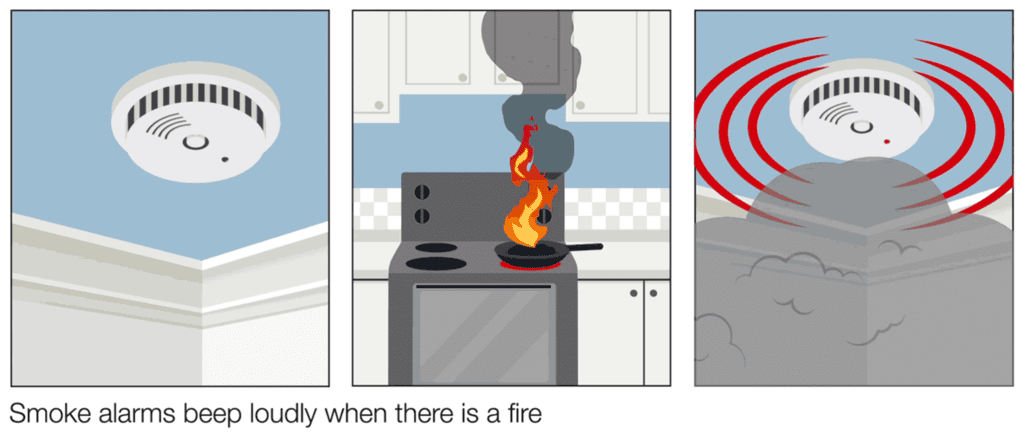
(iii): A smoke detector is a device that detects smoke and sounds an alarm. Where should it be placed in a room?
(a) Near the floor
(b) In the middle of a wall
(c) On the ceiling
(d) Anywhere in the room

Ans: (c) On the ceiling
Explanation: Smoke rises up due to convection, so detectors must be placed at the highest point.

Q2: A shopkeeper serves you cold lassi in a tumbler that has a leak. You are given another tumbler to place it in. Will this help keep the lassi cold for longer? Explain.

Ans: Yes, it will help.
Explanation: The air between the two tumblers acts as an insulator (a poor conductor of heat) and slows down the heat transfer from outside.

Q3 (i): Heat transfer takes place in solids through convection.
Ans: False
Reason: In solids, heat transfer happens through conduction, not convection.

(ii): Heat transfer through convection takes place by the actual movement of particles.
Ans: True
Reason: In convection, particles of liquids and gases move to transfer heat.

(iii): Areas with clay materials allow more seepage of water than those with sandy materials.
Ans: False
Reason: Clay has smaller pores than sand, so it allows less seepage.

(iv): The movement of cooler air from land to sea is called land breeze.
Ans: True
Reason: At night, land cools faster, and cooler air moves towards the sea.

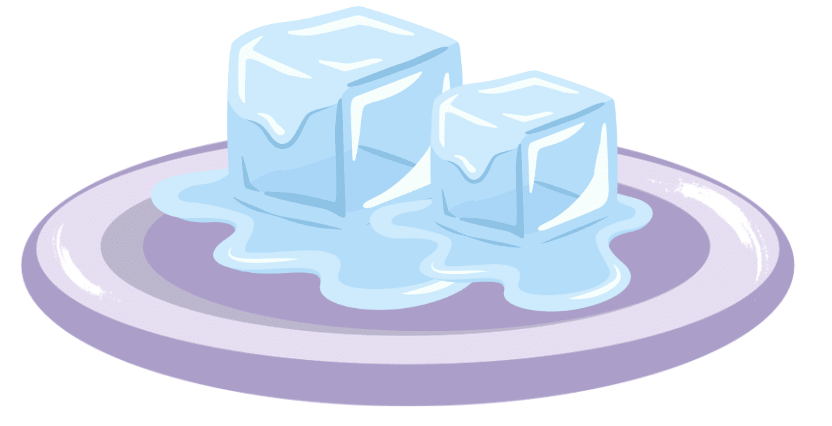
Q4: Some ice cubes placed in a dish melt into water after some time. Where do they get heat for this transformation?

Ans: When ice cubes are placed in a dish, they start to melt and turn into water. For this transformation to happen, the ice needs to absorb heat energy.

  • The ice cubes get heat from the surrounding environment. 
  • This includes heat from the air around them, the surface of the dish, and even the table they are placed on. 
  • The heat causes the ice to melt and change into water.
  • This heat makes the ice melt and turn into water.

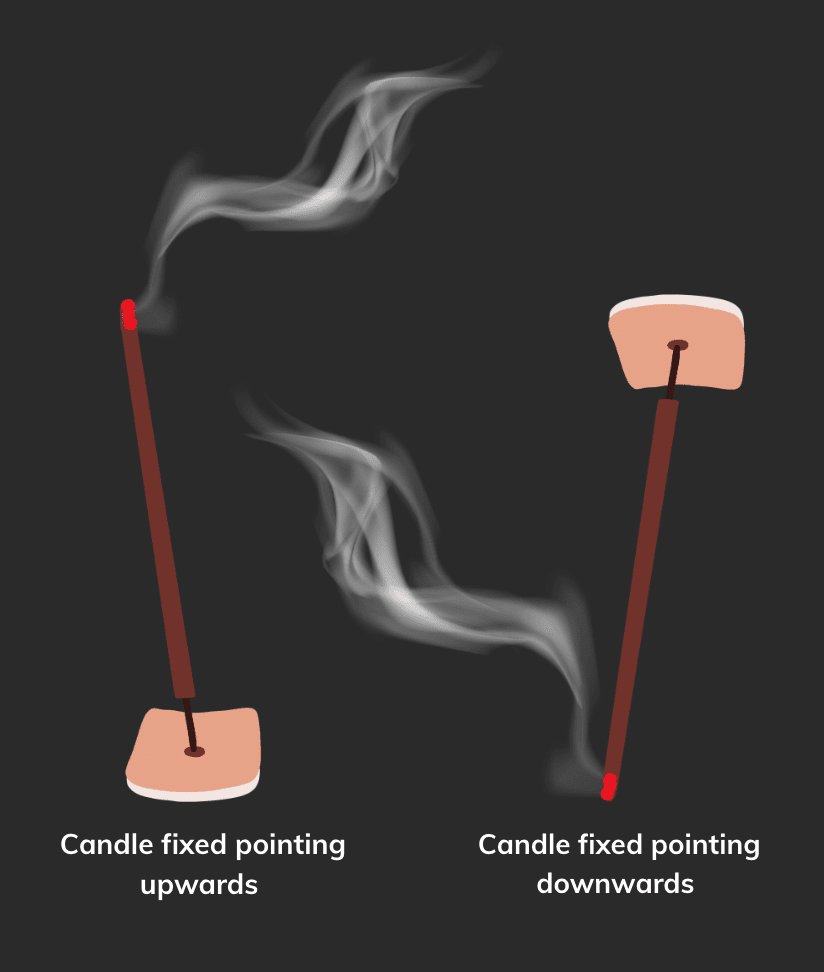
Q5: A burning incense stick is fixed pointing downwards. In which direction would the smoke move? Show with a diagram.

Ans: When an incense stick is burning and fixed pointing downwards, the smoke will move upwards. This happens because smoke rises due to convection.

As the incense stick burns, it heats the air around it, making the air less dense. The cooler, denser air pushes the hot air (and smoke) upward. So, even if the incense stick is pointing downwards, the smoke will still rise.

Diagram

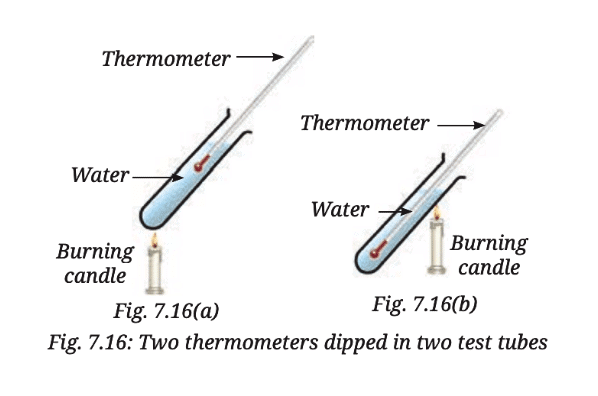
Q6: Two test tubes with water are heated by a candle. Which thermometer (Fig. 7.16a or Fig. 7.16b) will show a higher temperature? Why?

Ans: In the given experiment, the test tube in Fig. 7.16(b), where the thermometer is closer to the flame, will show a higher temperature. 

When water is heated by the candle, it becomes hot at the bottom of the test tube. The hot water rises because it is less dense than the cooler water. This movement of water from the bottom to the top is called convection.

Now, let’s look at both test tubes:

  • In Fig. 7.16(a): The thermometer is placed higher up, away from the hot water. It does not measure the rising hot water directly. So, it will show a lower temperature.
  • In Fig. 7.16(b): The thermometer is placed in the area where the hot water is rising. Since the hot water is directly in contact with the thermometer, it will measure the higher temperature.

Therefore, the thermometer in Fig. 7.16(b) will show a higher temperature. 

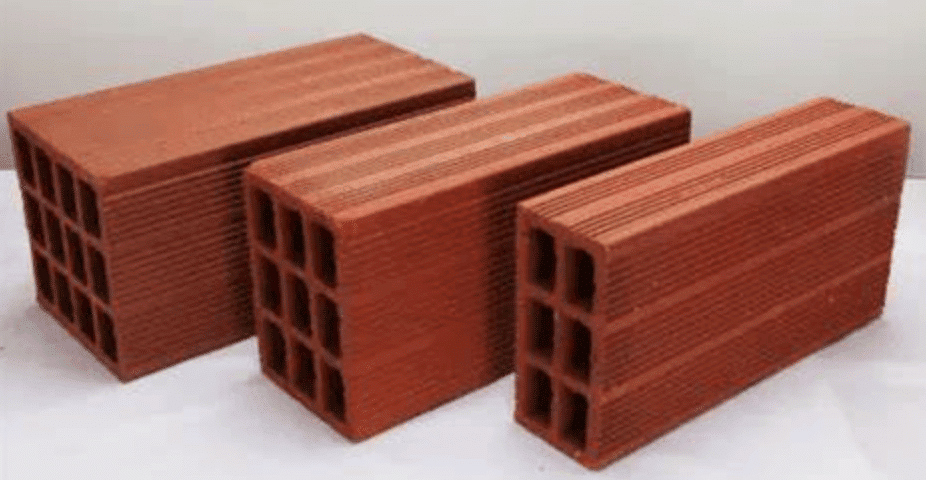
Q7: Why are hollow bricks used to construct the outer walls of houses in hot regions?

Ans: Hollow bricks are used because they trap air inside the spaces between the bricks. Air is a poor conductor of heat, meaning it does not allow heat to pass through easily. This helps to reduce heat transfer from the outside to the inside of the house. As a result, the house stays cooler in hot regions, as less heat enters through the walls.

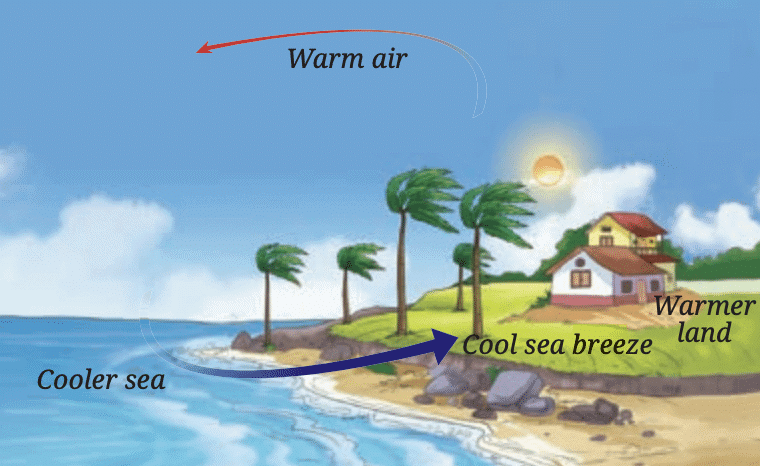
Q8: How do large water bodies prevent extreme temperatures in nearby areas?

Ans: Large water bodies, such as oceans and seas, help prevent extreme temperatures in nearby areas through the sea and land breeze effect. 

Sea Breeze:

  • During the day, the land heats up faster than the water.
  • The air over the land becomes warmer and rises, while the air over the sea remains cooler.
  • The cooler air from the sea then moves towards the land, creating a sea breeze.
  • This cool air from the sea helps lower the temperature of the land near the water, preventing it from getting too hot.
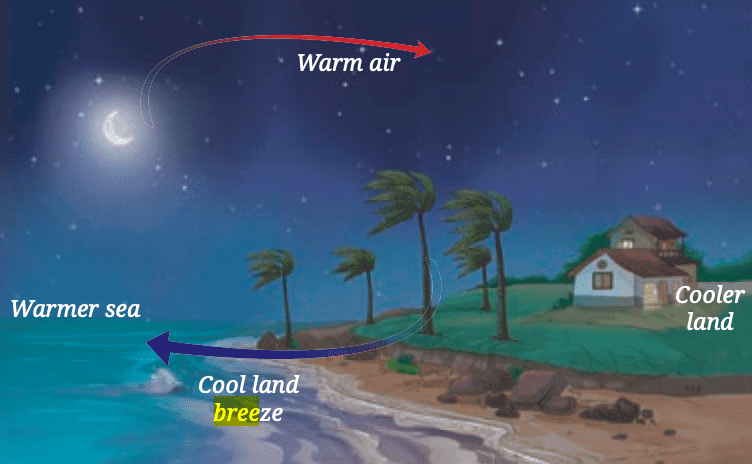
Land Breeze:

  • During the night, land cools down faster than water.
  • The air over the land becomes cooler and denser, while the air over the sea remains warmer.
  • As a result, the cooler air from the land moves towards the sea, creating a land breeze.
  • Thus at night, the water retains heat longer and warms the surrounding air, preventing it from getting too cold.
Q9: How does water seep through the surface of the Earth and get stored as groundwater?

Ans: Water seep through the surface of the Earth :

  • When it rains, water falls to the ground and moves through the soil and rocks. This process is called infiltration.
  • The water travels down through the layers of soil and rocks, filling the gaps and spaces between them.Storage in aquifers:
  • Eventually, the water reaches underground layers called aquifers, which are large areas of rock or soil that can hold water. These aquifers store the water as groundwater.

Thus, water seeps through the soil and rocks into the ground, where it gets stored as groundwater.

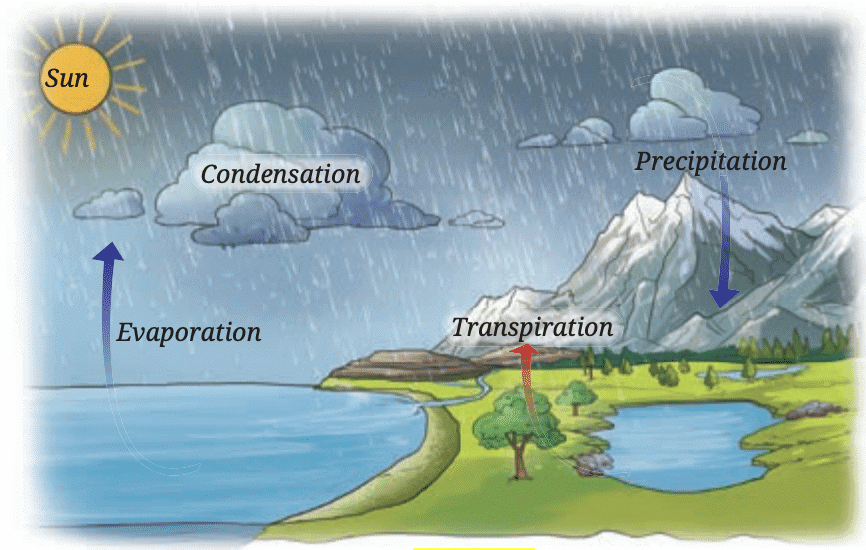
Q10: The water cycle helps in the redistribution and replenishment of water on the Earth. Justify.

Ans: The water cycle helps move and refill water on Earth in the following ways:

1. Evaporation and Transpiration: Water from lakes, rivers, and oceans turns into vapor (gas) because of the Sun’s heat. Plants also release water into the air through their leaves. This water vapor rises into the air.

2. Condensation: As the water vapor goes up, it cools down and forms clouds.

3. Precipitation: When the clouds get heavy, water falls back to Earth as rainsnow, or hail, giving water back to rivers, lakes, and the ground.

4. Infiltration and Runoff: Some water soaks into the ground to refill underground water sources. The rest flows over the land into oceans and lakes.

Thus, water cycle helps move water around the planet and refill water sources, keeping water available for plants, animals, and humans.

06. Adolescence: A Stage Of Growth and Change Chapter Solution

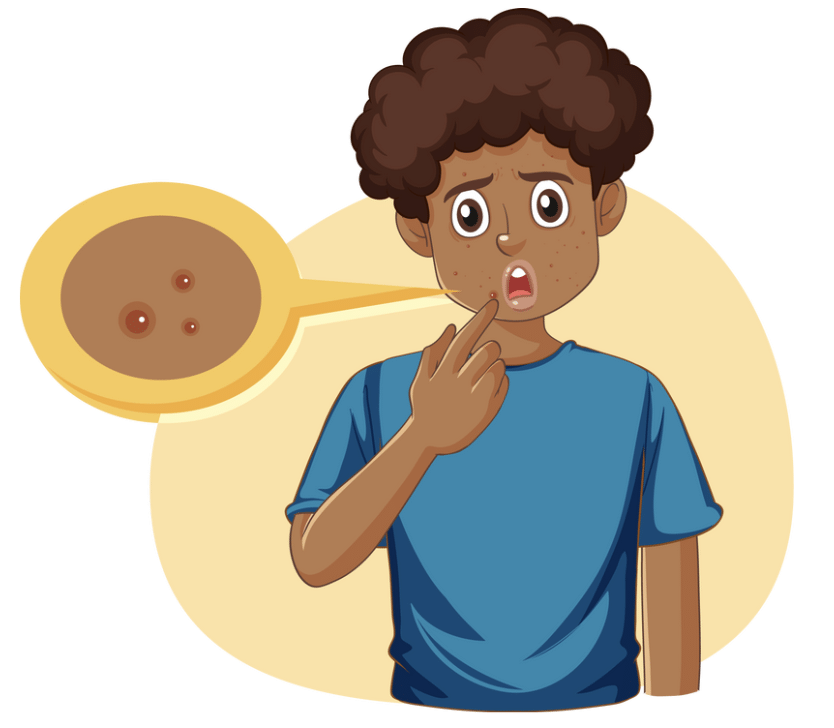
Q1. Ramesh, an 11-year-old boy, developed a few pimples on his face. His mother told him that this is because of ongoing biological changes in his body.

(i) What could be the possible reasons for the development of these pimples on his face?

Answer: The pimples Ramesh is experiencing could be a result of hormonal changes that happen during adolescence. These changes can increase the production of oil (sebum) in the skin, which can clog pores and lead to pimples. This is a normal part of puberty when the body undergoes various biological and hormonal changes.

(ii) What can he do to get some relief from these pimples?

Answer: Ramesh should take care of following points:

  • Maintain good hygiene: Clean the face gently with water and a mild soap or cleanser twice a day to remove excess oil and dirt.
  • Avoid touching the face: Touching the face frequently can spread bacteria and cause more pimples.
  • Use acne treatment products: Over-the-counter treatments like benzoyl peroxide or salicylic acid can help reduce pimples.
  • Eat a balanced diet: Avoid oily and sugary foods, and focus on eating fruits, vegetables, and drinking plenty of water.
  • Consult a dermatologist: If the pimples persist or worsen, Ramesh should consult a dermatologist for proper advice and treatment.

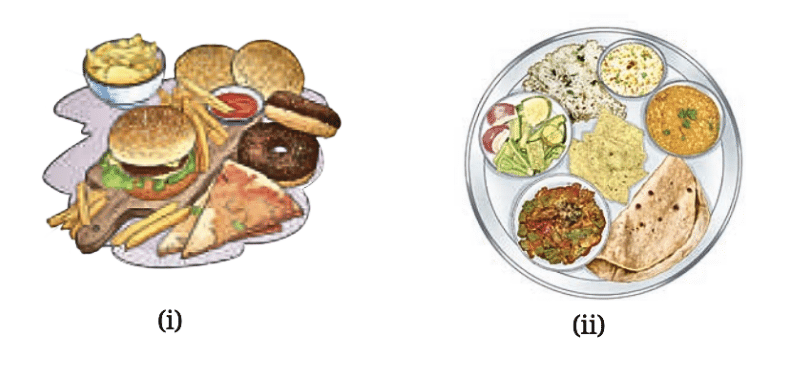
Q2. Which of the following food groups would be a better option for adolescents and why?

Answer: Option (ii) would be a better option for adolescents. This food group is more balanced, containing a variety of nutrients from vegetables, dal, rice, and roti. It provides essential proteins, carbohydrates, and vitamins, which are important for growth, development, and overall health during adolescence. On the other hand, option (i) contains fried foods and junk items, which are high in unhealthy fats and sugars and can lead to poor health if consumed frequently.

Q3. Unscramble the underlined word in the following sentences:

(i) The discharge of blood in adolescent girls which generally occurs every 28–30 days is nstmnoiaretu.

Answer: Menstruation

(ii) The hoarseness in the voice of adolescent boys is due to enlarged iceov xob.

Answer: Voice box

(iii) Secondary sexual characteristics are natural signs that the body is preparing for adulthood and mark the onset of urtypeb.

Answer: Puberty

(iv) We should say NO to lahoclo and srugd as they are addictive.

Answer: Alcohol and drugs

Q4. Shalu told her friend, “Adolescence brings only physical changes, like growing taller or developing body hair.” Is she correct? What would you change in this description of adolescence?

Answer: Shalu’s statement is not entirely correct. Adolescence involves both physical and emotional changes. 

  • While physical changes like growing taller, developing body hair, and voice changes are obvious, there are also significant emotional and psychological changes during this period. 
  • Adolescents experience mood swingsincreased sensitivity, and a growing interest in friendshipsrelationships, and identity exploration
  • Additionally, biological changes occur, such as the development of the reproductive system, which is a key part of adolescence.
  • Thus, adolescence is a time of growth and transformation, both physically and emotionally, and should not be limited to just physical changes.

Q5. During a discussion in the class, some of the students raised the following points. What questions would you ask them to check the correctness of these points?

(i) Adolescents do not need to worry about behavioral changes.

Answer: Follow up questions should be:

  • Why do you think behavioral changes do not matter during adolescence?
  • How can understanding behavioral changes help adolescents make better decisions?
  • Can you think of any examples where behavioral changes might affect the life of an adolescent?
(ii) If someone tries a harmful substance once, they can stop anytime they want.

Answer: Follow up questions should be:

  • How does peer pressure influence the decision to try harmful substances?
  • What makes harmful substances addictive?
  • Are there any health consequences of using harmful substances even once?
  • What are the risks of trying harmful substances, and how can adolescents avoid them?

Q6. Adolescents sometimes experience mood swings. On some days, they feel very energetic and happy, while on other days, they may feel low. What other behavioral changes are associated with this age?

Answer: During adolescence, individuals undergo significant physical, emotional, and social changes, which can lead to mood swings and other behavioral changes. Some of these changes include:

  • Increased Independence: Adolescents begin seeking more independence from their parents and may make their own decisions about their activities, friends, and interests.
  • Changes in Relationships: There is a growing interest in friendships. Adolescents may become more focused on peer relationships and sometimes experience conflicts with parents or family members.
  • Increased Sensitivity: Teenagers often experience heightened emotions, such as feeling easily hurt or more intense reactions to situations. This can contribute to mood swings and an overall sense of emotional instability.
  • Exploration of Identity: Adolescents are at a stage of self-discovery, trying to figure out who they are and where they fit in the world. This can lead to confusion, self-doubt, or changes in how they see themselves.
  • Risk-Taking Behavior: Adolescents may become more willing to take risks, such as trying new things, engaging in adventurous activities, or experimenting with different social behaviors. This can sometimes lead to impulsive actions or rebellious behavior.
  • Changing Interests and Hobbies: Teenagers may suddenly develop new interests or abandon old ones, reflecting their changing personality and social environment.
Q7. While using a toilet, Mohini noticed that used sanitary pads were scattered near the bin. She got upset and shared her feelings with her friends. They discussed the importance of menstrual hygiene and healthy sanitary habits. What menstrual hygiene and sanitary habits would you suggest to your friends?

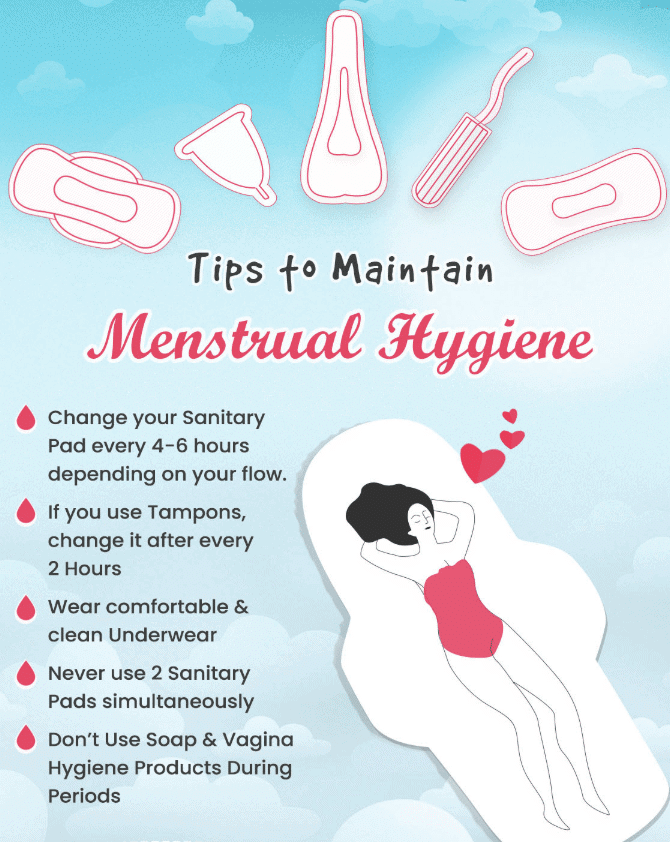
Answer: It is essential to maintain cleanliness and hygiene during menstruation. I would suggest the following menstrual hygiene habits:

  • Always use clean and sanitary pads or alternatives like menstrual cups or cloth pads.
  • Change pads regularly (every 4-6 hours) to prevent infections.
  • Dispose of used pads properly by wrapping them in newspaper or a plastic bag and placing them in a dustbin.
  • Wash hands before and after changing pads.
  • For girls, maintaining hygiene during menstruation helps prevent discomfort, infections, and other health issues.
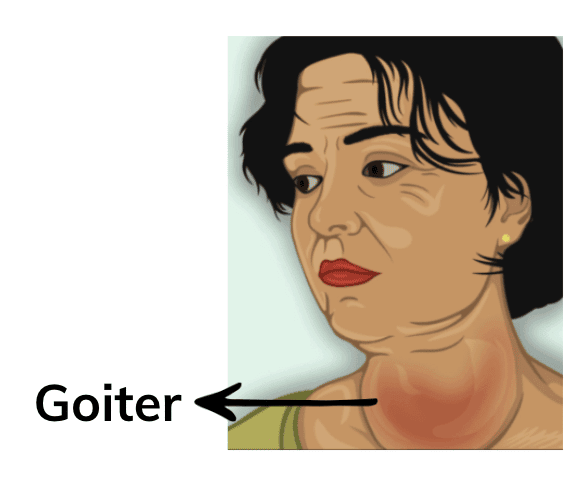
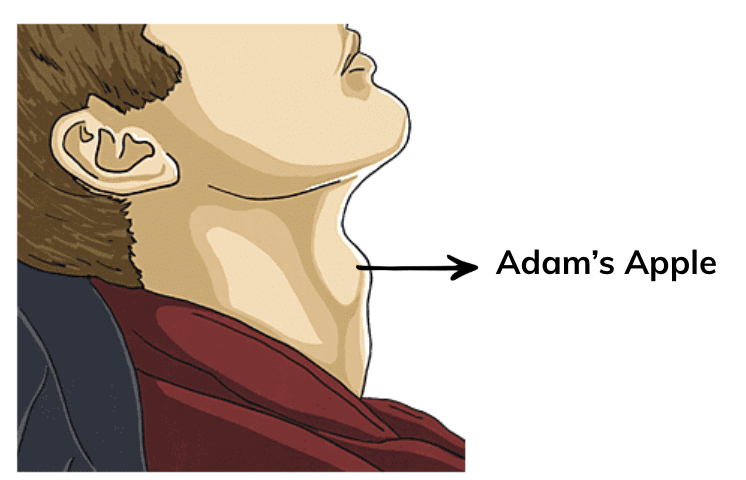
Q8. Mary and Manoj were classmates and good friends. On turning 11, Mary developed a little bulge on the front of her neck. She visited the doctor who gave her medication and asked to take an iodine-rich diet. Similarly, a bump was developed on the front of Manoj’s neck when he turned 12. However, the doctor told him that it was a part of growing up. According to you, what could be the possible reason for advising Mary and Manoj differently?

Answer:

Mary
Mary’s doctor advised her to take iodine-rich food because the bulge on her neck might be due to iodine deficiency. This happens because iodine is crucial for making thyroid hormones. When there’s not enough iodine, the thyroid gland swells, causing a condition known as goiter. Goiter is more common in areas with low iodine levels in the soil. It can be managed by eating iodine-rich food or taking iodine supplements.

Manoj
Manoj’s bump is more likely to be the result of the natural development of the Adam’s apple, a part of the larynx or voice box that grows during puberty. As boys grow older, their larynx enlarges, and this causes the Adam’s apple to become more visible. This is a normal part of puberty and is not related to any deficiency or illness.

Conclusion:

  • Mary’s condition is due to iodine deficiency, and her doctor recommended iodine-rich foods to help manage the goiter.
  • Manoj’s condition is a normal part of growing up, where the Adam’s apple becomes prominent during puberty.

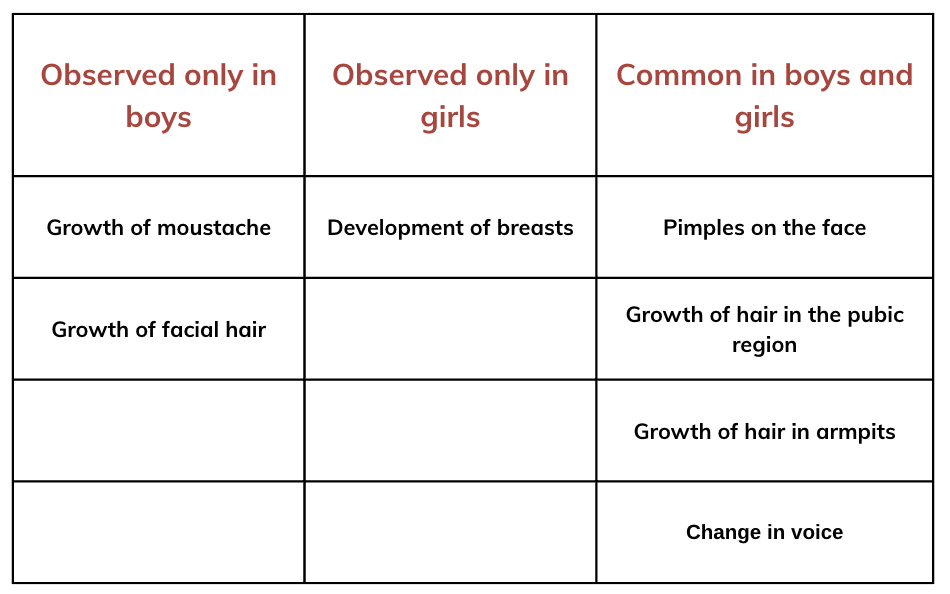
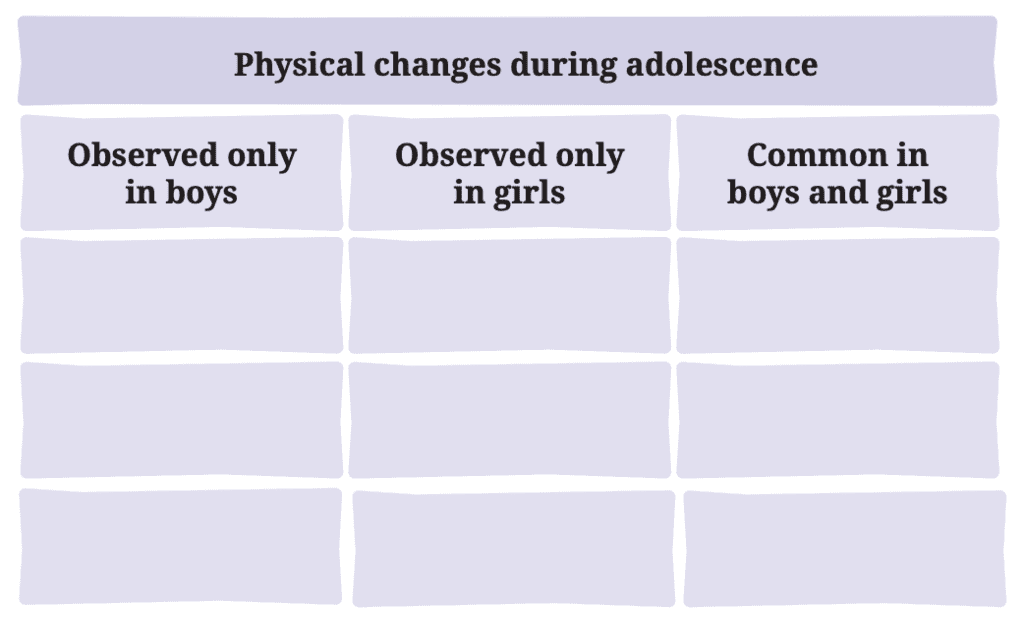
Q9. During adolescence, the boys and girls undergo certain physical changes, a few of which are given below.

(i) Change in voice

(ii) Development of breasts

(iii) Growth of moustache

(iv) Growth of facial hair

(v) Pimples on the face

(vi) Growth of hair in the pubic region

(vii) Growth of hair in armpits

​Categorise these changes in the table given below:

Answer:

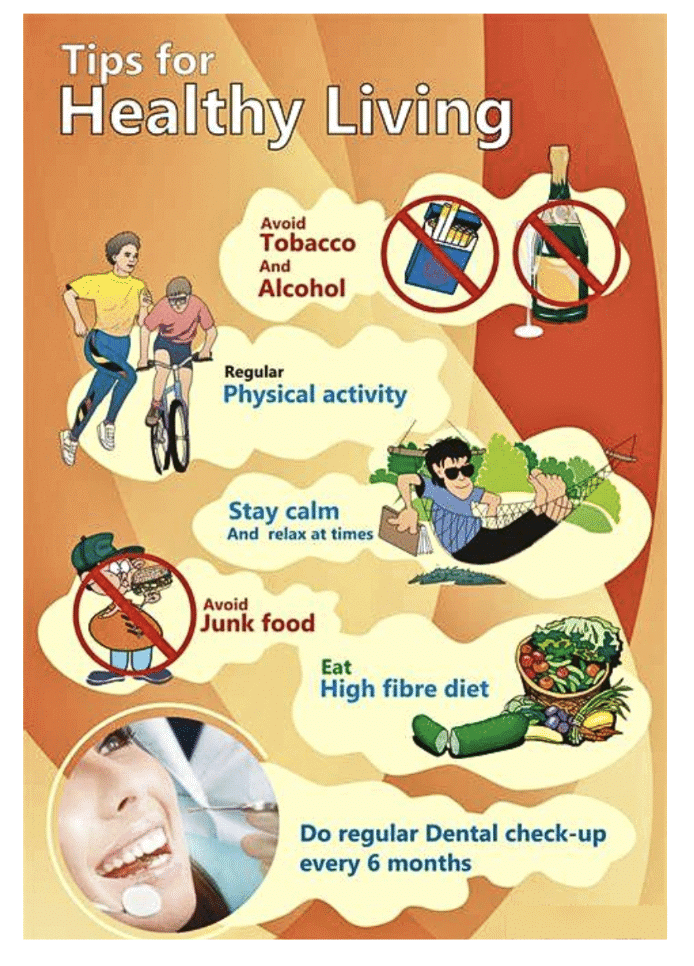
Q10. Prepare a poster mentioning the tips for adolescents to live a healthy lifestyle.

Answer:

05. Changes around Us: physical and chemical Chapter Solution

Q1. Which of the following statements are the characteristics of a physical change?

(i) The state of the substance may or may not change.
(ii) A substance with different properties is formed.
(iii) No new substance is formed.
(iv) The substance undergoes a chemical reaction.

Answer:
(c) (i) and (iii)
In a physical change, the substance undergoes a change in physical properties such as size, shape, or state (e.g., solid to liquid) but no new substance is formed. No chemical reaction occurs.

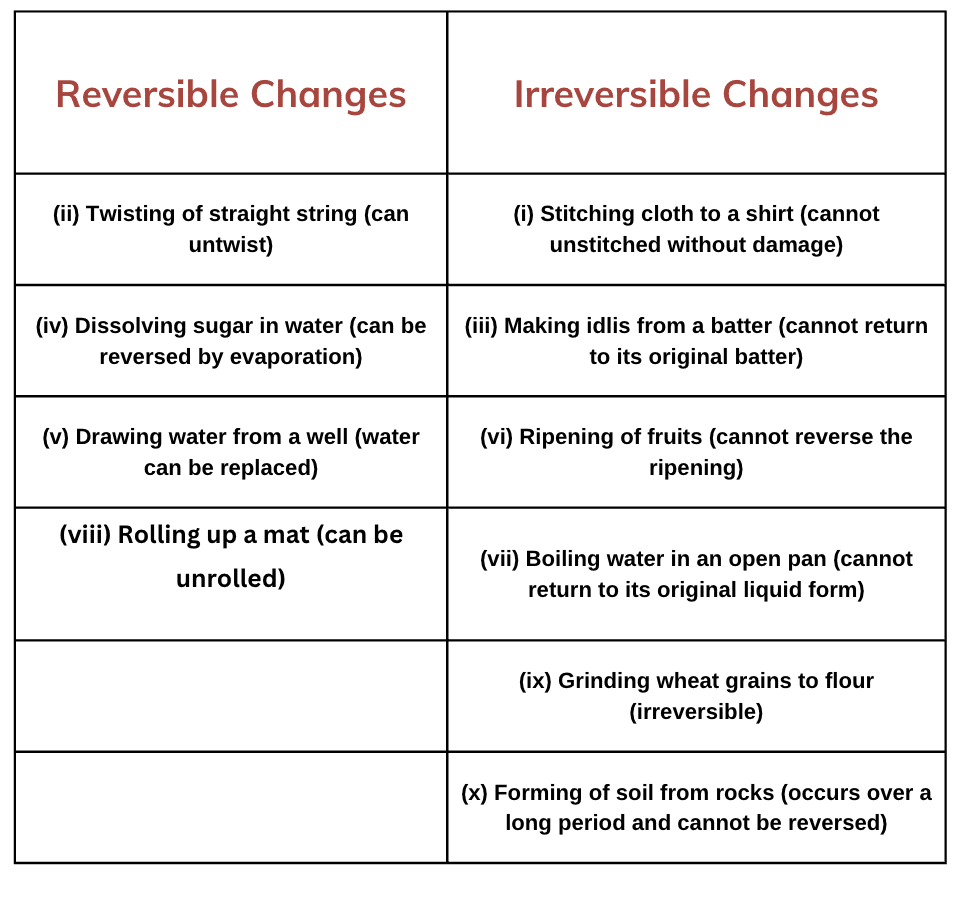
Q2. Predict which of the following changes can be reversed and which cannot be reversed. If you are not sure, you may write that down. Why are you not sure about these?

(i) Stitching cloth to a shirt
(ii) Twisting of straight string
(iii) Making idlis from a batter
(iv) Dissolving sugar in water
(v) Drawing water from a well
(vi) Ripening of fruits
(vii) Boiling water in an open pan
(viii) Rolling up a mat
(ix) Grinding wheat grains to flour
(x) Forming of soil from rocks

Answer:

Q3. State whether the following statements are True or False. In case a statement is False, write the correct statement.

(i) Melting of wax is necessary for burning a candle.
Answer: True

(ii) Collecting water vapour by condensing involves a chemical change.
Answer: False
Collecting water vapour by condensing is a physical change.

(iii) The process of converting leaves into compost is a chemical change.
Answer: True

(iv) Mixing baking soda with lemon juice is a chemical change.
Answer: True

Q4. Fill in the blanks in the following statements:

(i) Nalini observed that the handle of her cycle has got brown deposits. The brown deposits are due to ________, and this is a ________ change.
Answer: Rusting, chemical

(ii) Folding a handkerchief is a __________ change and can be ________.
Answer: Physical, reversed

(iii) A chemical process in which a substance reacts with oxygen with evolution of heat is called _________, and this is a __________ change.
Answer: Combustion, chemical

(iv) Magnesium, when burnt in air, produces a substance called __________. The substance formed is _________ in nature. Burning of magnesium is a _________ change.
Answer: Magnesium oxide, basic, chemical

Q5. Are the changes of water to ice and water to steam, physical or chemical? Explain.

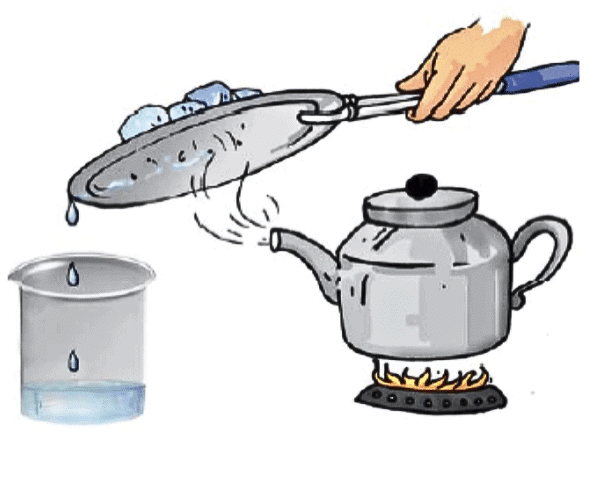
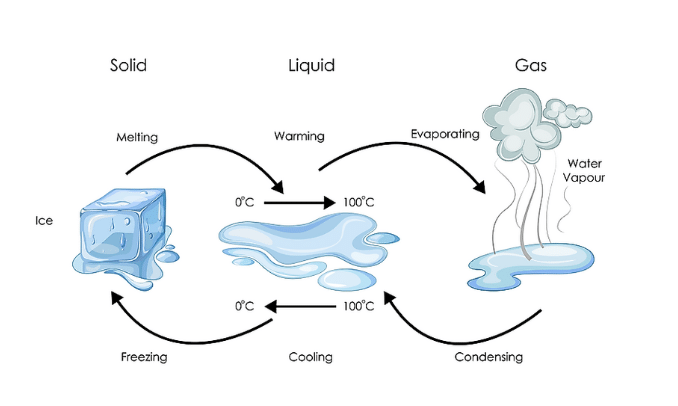
Answer: Both are physical changes because no new substances are formed when water changes its state. Water changes from a liquid to a solid (ice) when frozen, and from a liquid to a gas (steam) when heated. In both cases, the molecular structure of water remains the same.

Q6. Is curdling of milk a physical or chemical change? Justify your statement.

Answer:  When milk curdles, it changes its chemical structure. The proteins in the milk react with acid (like lemon juice or vinegar) or the natural bacteria (as in the case of yogurt) and form curds. This process is not reversible—once the milk curdles, you cannot change it back to its original form, indicating a chemical change.

In a physical change, the substance’s state or appearance might change, but no new substance is formed. However, curdling results in the formation of new substances , so it is a chemical change.

Q7. Natural factors, such as wind, rain, etc., help in the formation of soil from rocks. Is this change physical or chemical and why?

Answer:The process of soil formation from rocks, influenced by natural factors such as wind, rain, and temperature changes, involves both physical and chemical changes. Here’s why:

Physical Change

The breaking down of rocks into smaller particles due to weathering by wind, rain, and temperature is a physical change. The rock is simply being broken into smaller pieces without any change in its chemical composition.

Chemical Change

Over time, water, air, and other substances can react with the minerals in the rocks, leading to the chemical weathering of rocks. For example, rainwater, which is slightly acidic, can react with minerals like calcium in the rocks to form new compounds, like calcium carbonate, causing a chemical change in the rock.

Q8. Read the following story titled ‘Eco-friendly Prithvi’, and tick the most appropriate option(s) given in the brackets. Provide a suitable title of your choice for the story.

Prithvi is preparing a meal in the kitchen. He chops vegetables, peels potatoes, and cuts fruits (physical changes/chemical changes). He collects the seeds, fruits, and vegetable peels into a clay pot (physical changes/chemical changes). The fruits, vegetable peels, and other materials begin to decompose due to the action of bacteria and fungi, forming compost (physical change/chemical change). He decides to plant seeds in the compost and water them regularly. After a few days, he notices that the seeds begin to germinate and small plants start to grow, eventually blooming into colourful flowers (physical change/chemical change). His efforts are appreciated by all his family members.

Answer:

  • Chopping vegetables, peeling potatoes, and cutting fruits: Physical changes
  • Collecting seeds, fruits, and vegetable peels into a clay pot: Physical change
  • Decomposing and forming compost: Chemical change
  • Germination and blooming flowers: Chemical change

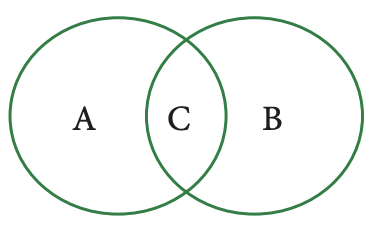
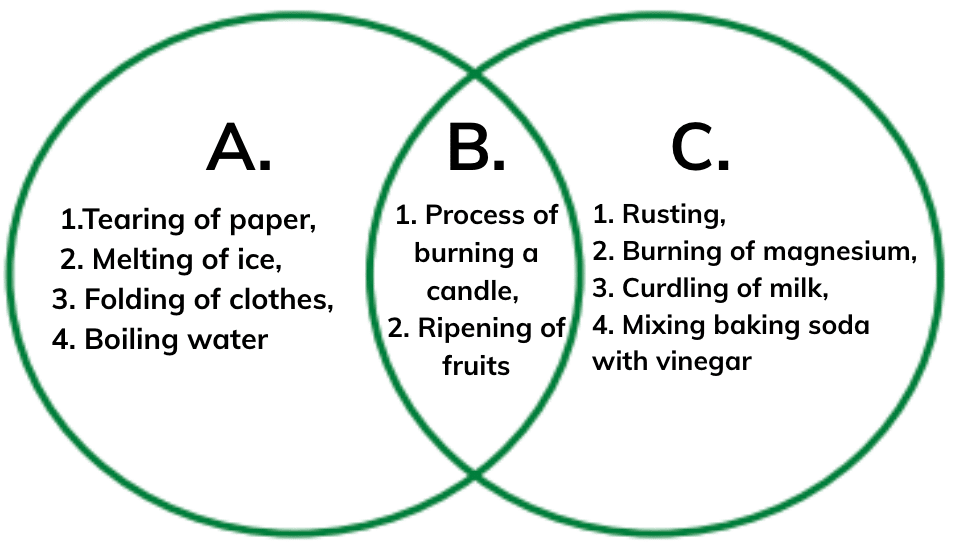
Q9. Some changes are given here. Write physical changes in the area marked ‘A’ and chemical changes in the area marked ‘B’. Enter the changes which are both physical and chemical in the area marked ‘C’.

Answer:

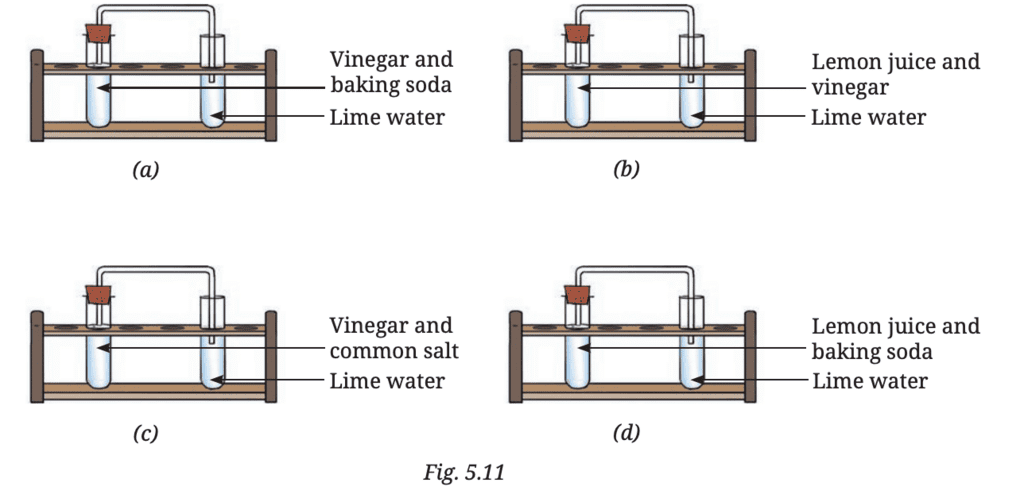
Q10. The experiments shown in Fig. 5.11a, b, c, and d were performed. Find out in which case(s) did lime water turn milky and why?

Answer:

Vinegar and Baking Soda (a):

  • When baking soda reacts with vinegar (acetic acid), it produces carbon dioxide gas (CO₂).
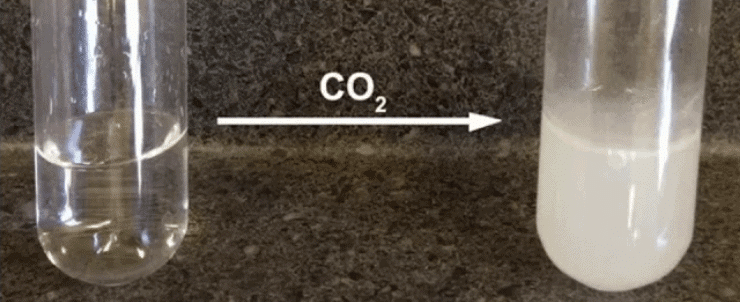
  • The CO₂ will react with the lime water and turn it milky because calcium hydroxide in lime water reacts with CO₂ to form calcium carbonate.

Vinegar and Common Salt (b):

  • There is no reaction between vinegar and common salt that produces carbon dioxide.
  • Therefore, lime water will not turn milky in this case.

Lemon Juice and Vinegar (c):

  • Both lemon juice and vinegar are acids, but they do not produce carbon dioxide when mixed.
  • Therefore, lime water will not turn milky in this case.

Lemon Juice and Baking Soda (d):

  • Baking soda reacts with lemon juice (citric acid) to produce carbon dioxide gas.
  • The CO₂ will react with the lime water, causing it to turn milky.

Conclusion 

Lime water turns milky in experiment (a) (Vinegar and Baking Soda) and experiment (d) (Lemon Juice and Baking Soda) because these reactions produce carbon dioxide, which reacts with lime water to form calcium carbonate.

04. The World Of Metals and Non-metals Chapter Solution

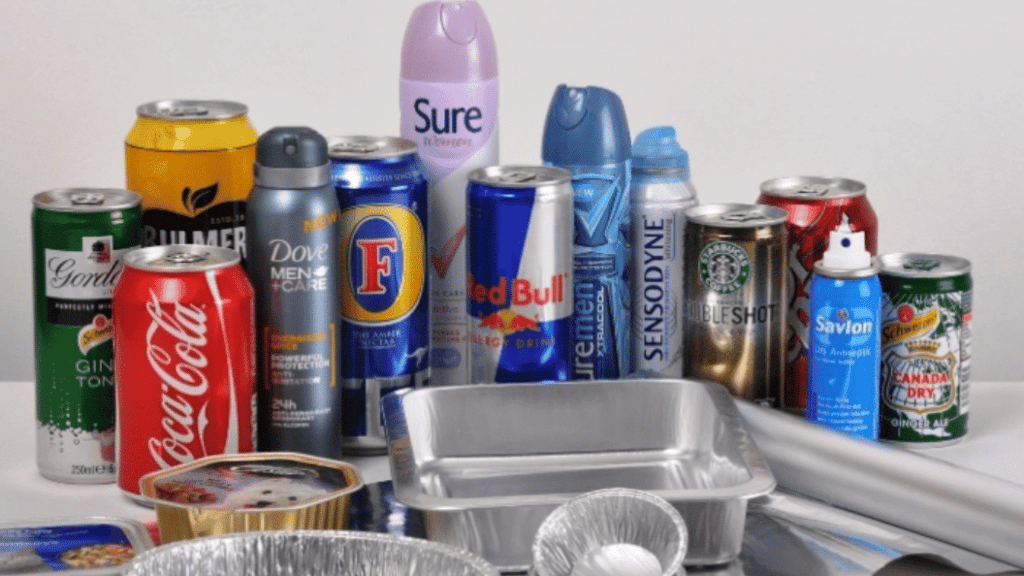
Q1: Which metal is commonly used to make food packaging materials as it is cheaper, and its thin sheets can be folded easily into any shape?
(i) Aluminium
(ii) Copper
(iii) Iron
(iv) Gold
Ans: (i) Aluminium

Q2: Which of the following metal catches fire when it comes in contact with water?
(i) Copper 
(ii) Aluminium 
(iii) Zinc 
(iv) Sodium
Ans: (iv) Sodium

Q3: State with reason(s) whether the following statements are True [T] or False [F].
(i) Aluminium and copper are examples of non-metals used for making utensils and statues. 
Ans:  False 
(ii) Metals form oxides when combined with oxygen, the solution of which turns blue litmus paper to red. 
Ans: False 

(iii) Oxygen is a non-metal essential for respiration.
Ans: True
(iv) Copper vessels are used for boiling water because they are good conductors of electricity. 
Ans: False 

Q4: Why are only a few metals suitable for making jewellery?
Ans: Only a few metals like goldsilver, and platinum are suitable for making jewelry because they have special properties:

  1. Malleability: These metals can be easily shaped into fine designs without breaking.
  2. Ductility: They can be drawn into thin wires, which is important for making delicate jewelry pieces.
  3. Lustrous: These metals have a shiny and attractive appearance, which makes them look beautiful in jewelry.
  4. Resistant to corrosion: They do not rust or tarnish easily, so the jewelry remains durable and keeps its shine over time.
These properties make gold, silver, and platinum perfect choices for creating attractive and long-lasting jewelry.

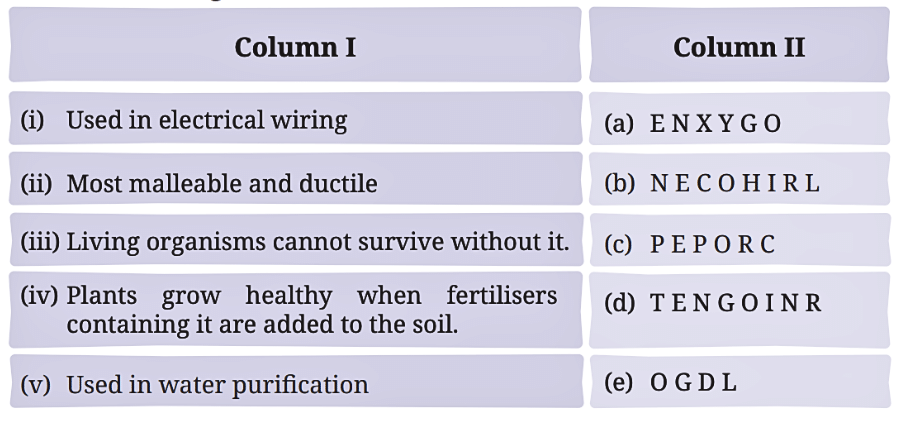
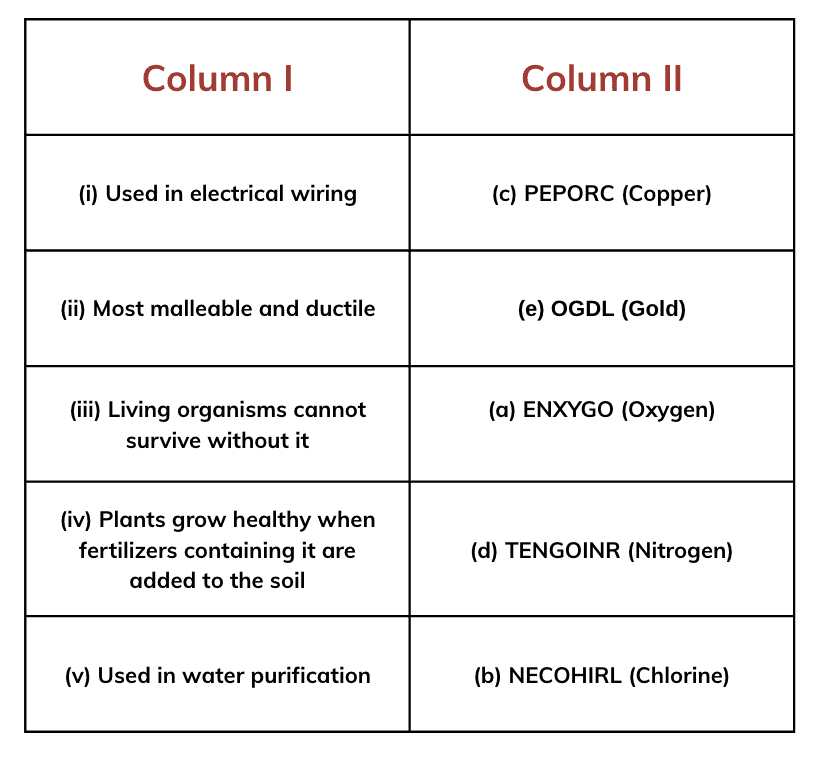
Q5: Match the uses of metals and non-metals given in Column I with the jumbled names of metals and non-metals given in Column II.

Ans: 

Q6: What happens when oxygen reacts with magnesium and sulfur? What are the main differences in the nature of products formed?
Ans:  1. Oxygen Reacting with Magnesium

  • When oxygen reacts with magnesium, it forms magnesium oxide, which is a basic oxide. 
  • Magnesium + Oxygen → Magnesium Oxide
  • Basic oxides are generally property of metal oxides.

2. Oxygen Reacting with Sulfur:

  • When oxygen reacts with sulfur, it produces sulfur dioxide, which is an acidic oxide
  • Sulfur + Oxygen → Sulfur Dioxide
  • Acidic oxides are usually associated with non-metal oxides.

The main distinction is that magnesium oxide is basic, while sulfur dioxide is acidic in nature.

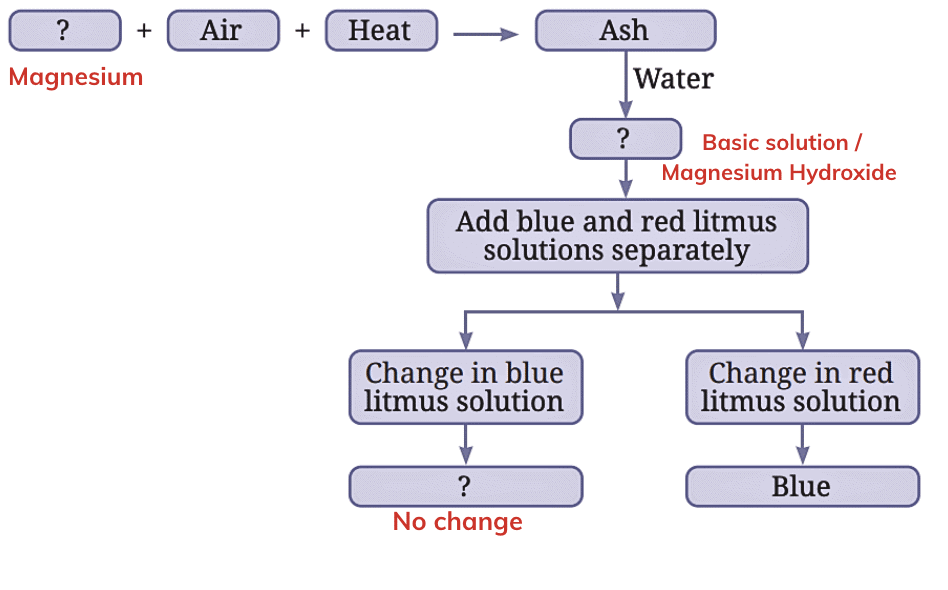
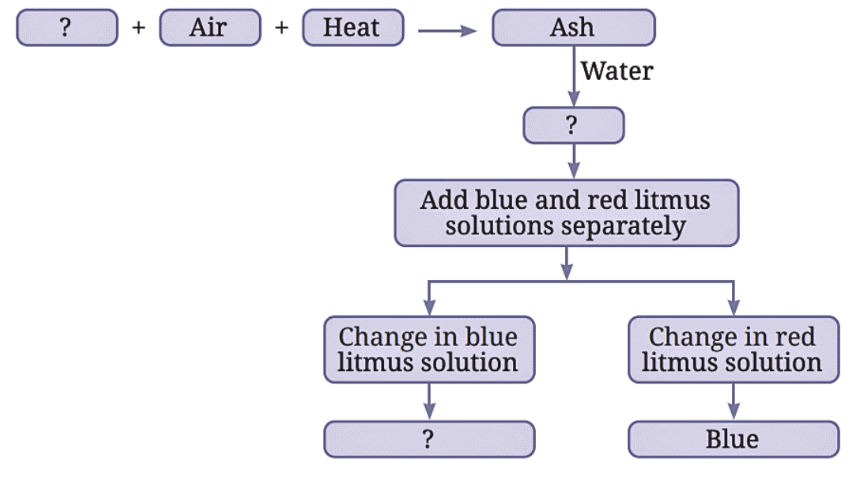
Q7: Complete the following flow chart:Ans:

Q8: You are provided with the following materials. Discuss which material would be your choice to make a pan that is most suitable for boiling water and why?
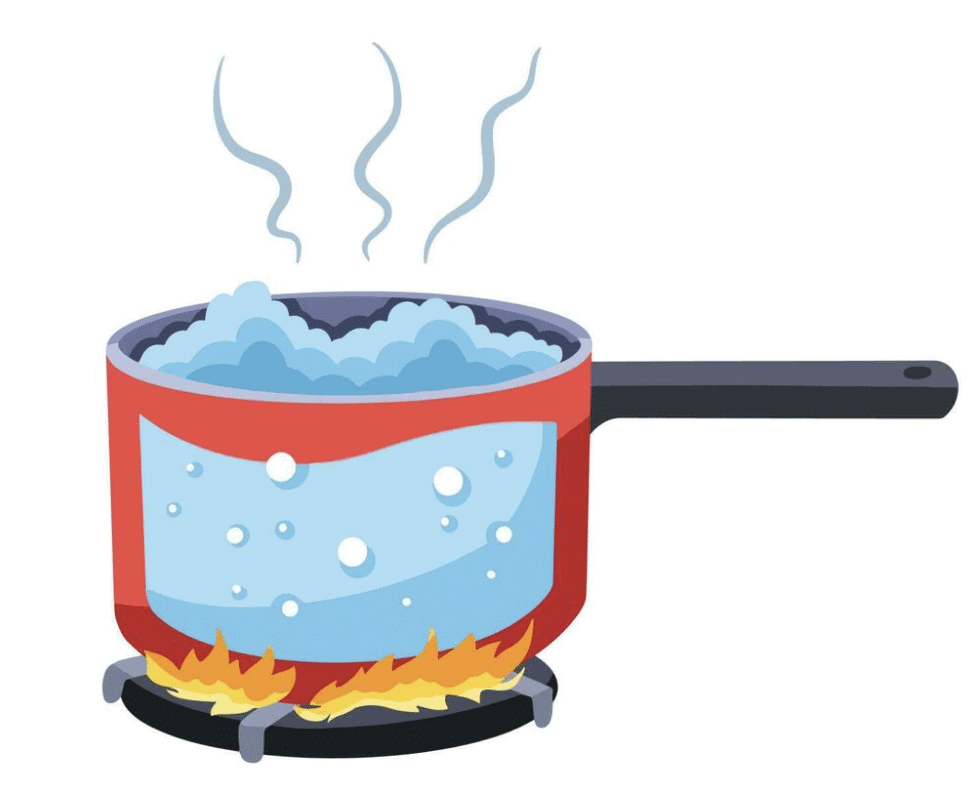
Ans:  Copper is an excellent conductor of heat, ensuring quick and even heating, which is essential for efficiently boiling water. It is also durable and resistant to corrosion, making it ideal for long-term use in cooking applications where the pan is exposed to high temperatures and water. Iron, while a good conductor, is prone to rusting, requiring maintenance to prevent corrosion, which makes it less suitable. Sulfur, coal, plastic, wood, and cardboard are poor conductors of heat and cannot withstand the high temperatures needed for boiling water, with some being brittle or flammable. 

 Copper is the optimal material for making a pan suitable for boiling water

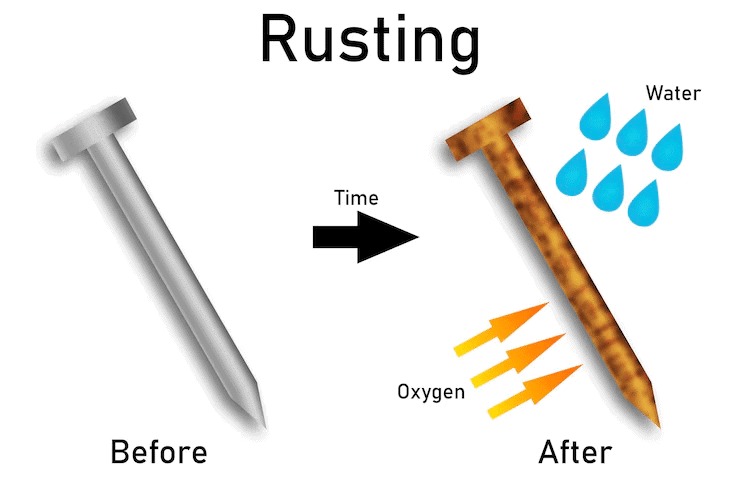
Q9: You are provided with three iron nails, each dipped in oil, water, and vinegar. Which iron nail will not rust, and why?
Ans: Rusting of iron occurs when it reacts with water and oxygen from the air, forming iron oxide (rust).

  • Rusting occurs when iron reacts with water and oxygen, forming iron oxide (rust). The oil on the iron nail creates a protective barrier, preventing moisture and oxygen from reaching the iron surface, thus inhibiting rusting. The nail in water will rust because water provides the moisture needed for the reaction. The nail in vinegar will rust faster due to the acetic acid, which accelerates corrosion by enhancing the reaction between iron, water, and oxygen. The iron nail dipped in oil will not rust.


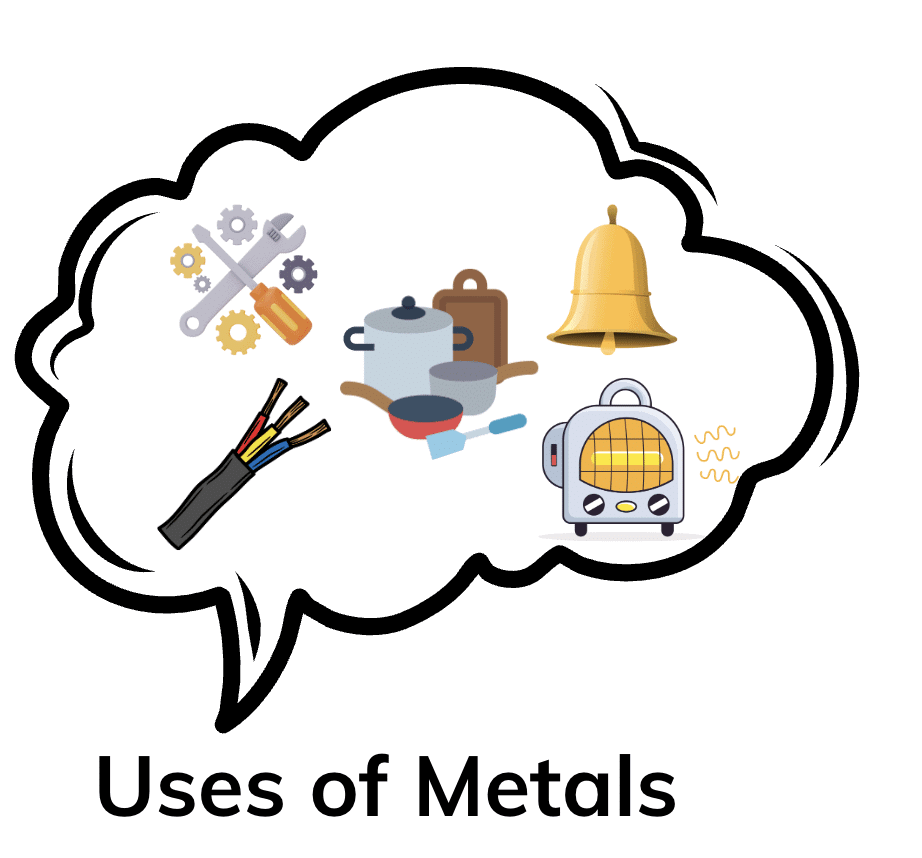
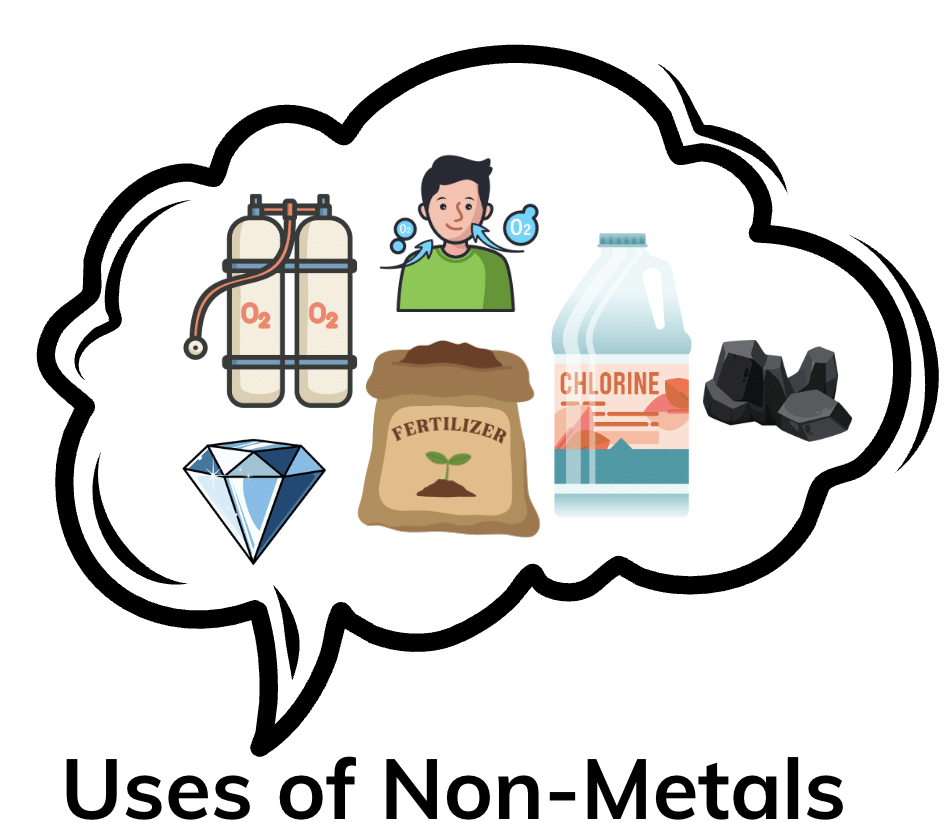
Q10: How do the different properties of metals and non-metals determine their uses in everyday life?
Ans: Properties of metals and non-metals directly determine their practical uses in our everyday lives.

Metals

  • Metals can be hammered into thin sheets without breaking. This property makes metals ideal for making tools and utensils, as they can be shaped into different forms easily.
  •  Metals can be drawn into wires. This is why metals are used to make wires for electrical circuits.
  • Metals produce a ringing sound when struck, which is why they are used in musical instruments and bells.
  • Metals like copper and aluminum are excellent conductors of heat and electricity. This makes them ideal for use in wirescooking utensils, and heating systems.
Non-Metals

  • Non-metals are generally poor conductors of heat and electricity, which is why they are used in insulation materials (e.g., rubber for insulating wires).
  • Non-metals like oxygen are highly reactive with substances like fuel, making them essential in respiration (oxygen is used by humans and animals to release energy). 
  • Nitrogen is inert and is used to make fertilizers (reacts with hydrogen to form ammonia), while sulfur is used in making disinfectants and medicines due to its chemical reactivity.
  • Many non-metals, like oxygen and nitrogen, are gases at room temperature, which makes them essential in various life processes, such as breathing and fertilization.

Q11: One of the methods of protecting iron from getting rusted is to put a thin coating of zinc metal over it. Since sulfur does not react with water, can it be used for this purpose? Justify your answer.
Ans:  No, sulfur cannot be used to protect iron from rusting because: 

  • Zinc is used for this purpose because it forms a protective coating over the iron. This coating reacts with oxygen in the air to form a layer of zinc oxide, which prevents water and oxygen from reaching the iron and causing rusting.
  • Sulfur, on the other hand, does not react with water and air in the same way. It does not form a protective barrier around the iron. Since sulfur does not create a coating that blocks moisture and oxygen, it cannot prevent rusting like zinc can.

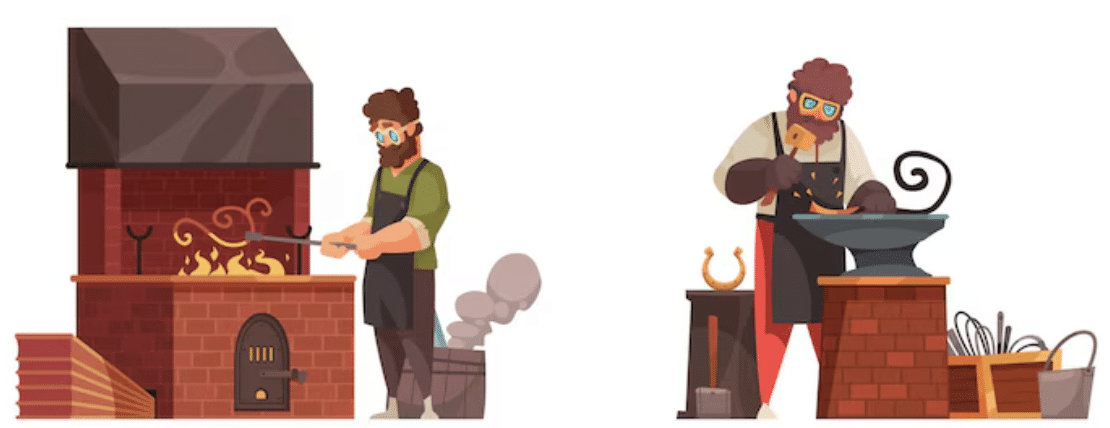
Q12: An ironsmith heats iron before making tools. Why is heating necessary in this process?
Ans: Heating is necessary because it makes the iron more malleable (easier to bend and shape). When the iron is heated, it becomes softer and more flexible, which allows the ironsmith to shape it into tools, such as axestongs, and other items.

This process is much easier when the metal is red hot because at this temperature, the iron is softer and can be shaped with less force. Therefore, heating helps the ironsmith shape the iron into the desired tools efficiently.

03. Electricity: Circuits and their Components Chapter Solution

Q1. Choose the incorrect statement.

(i) A switch is the source of electric current in a circuit.
Ans: Incorrect.

A switch does not generate electric current; it only controls the flow of current by opening or closing the circuit.

(ii) A switch helps to complete or break the circuit.
Ans: Correct. 

A switch controls the flow of electricity by either closing or opening a circuit, depending on whether it is in the “ON” or “OFF” position.

(iii) A switch helps us to use electricity as per our requirement.
Ans: Correct. 

A switch allows us to control the use of electricity by turning devices “ON” or “OFF”.

(iv) When the switch is in ‘OFF’ position, there is an air gap between its terminals.
Ans: Correct. 

In the ‘OFF’ position, the switch opens the circuit, creating a gap that stops the current from flowing.

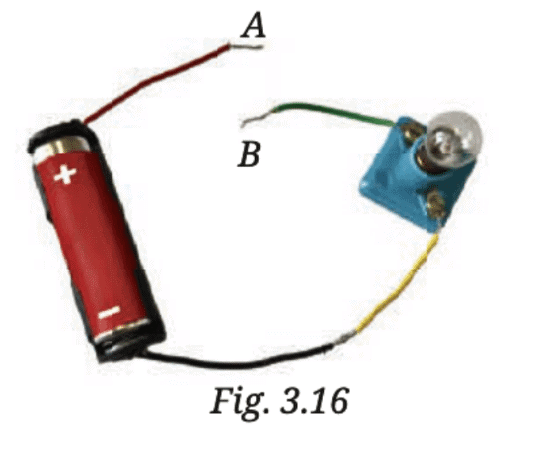
Q2. Observe Fig. 3.16. With which material connected between the ends A and B, the lamp will not glow?

Ans: The lamp will not glow if the material between the ends A and B is an insulator (like rubber, plastic, or wood). These materials do not allow electricity to flow through them.

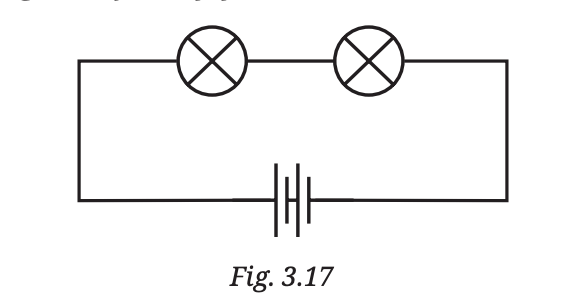
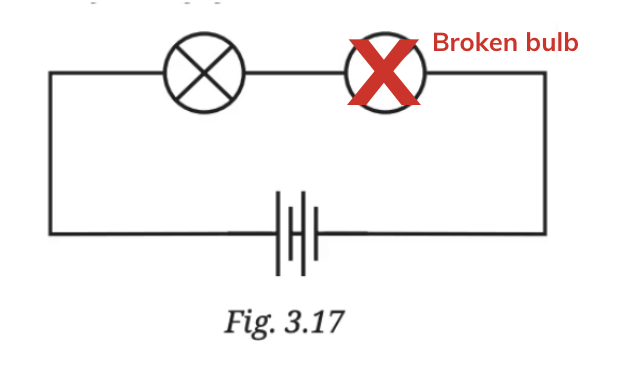
Q3. In Fig. 3.17, if the filament of one of the lamps is broken, will the other glow? Justify your answer.

Ans: No, the other lamp will not glow if the filament of one lamp is broken.

  • If the filament of one lamp breaks, it creates a gap in the circuit.
  • This gap means that the path for the electric current is interrupted. When there’s a break in the circuit, the current cannot flow through it anymore.
  • Even though the other lamp might be perfectly fine, it won’t glow because no electricity is reaching it due to the broken connection.
Q4. A student forgot to remove the insulator covering from the connecting wires while making a circuit. If the lamp and the cell are working properly, will the lamp glow?

Ans: No, the lamp will not glow because the insulator prevents the electric current from passing through the wire, which is necessary for the lamp to glow.

To make the circuit work and the lamp glow, you need to remove the insulation from the parts of the wire that connect to the cell and the lamp. This will allow the electricity to flow and make the lamp light up!

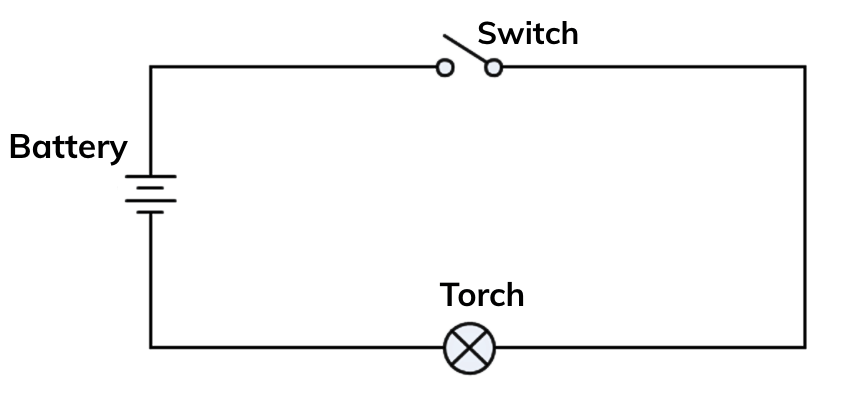
Q5. Draw a circuit diagram for a simple torch using symbols for electric components.

Ans: A simple torch circuit can be represented as:

This is a simple series circuit where the battery provides power, the switch controls the current, and the lamp glows when the current flows.

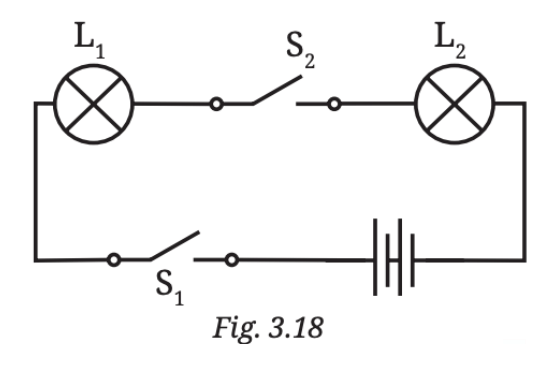
Q6. In Fig. 3.18:

(i) If S2 is in ‘ON’ position, S1 is in ‘OFF’ position, which lamp(s) will glow?
Ans: Neither lamp will glow because both switch 1 is open.

(ii) If S2 is in ‘OFF’ position, S1 is in ‘ON’ position, which lamp(s) will glow?
Ans: Neither lamp will glow because both switch 2 is open.

(iii) If S1 and S2 both are in ‘ON’ position, which lamp(s) will glow?
Ans: Both Lamp 1 and Lamp 2 will glow, as both switches are closed, allowing current to flow to both lamps.

(iv) If both S1 and S2 are in ‘OFF’ position, which lamp(s) will glow?
Ans: Neither lamp will glow because both switches are open, preventing current flow.

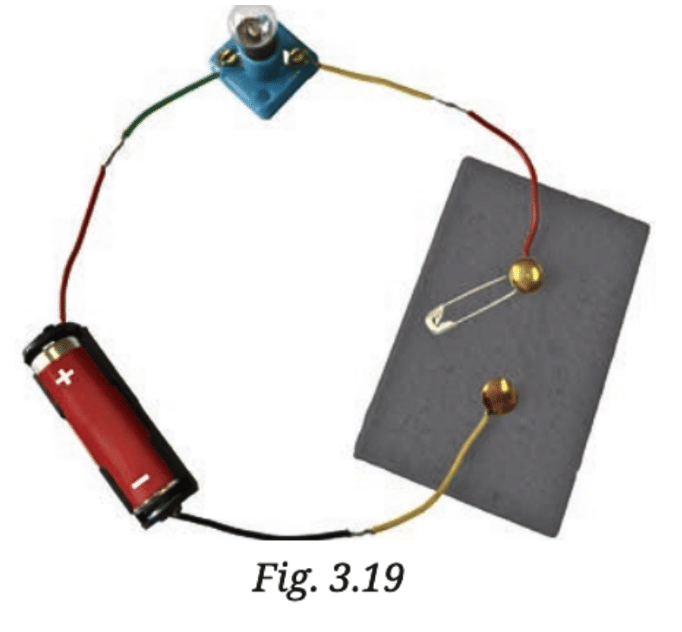
Q7. Vidyut has made the circuit as shown in Fig. 3.19. Even after closing the circuit, the lamp does not glow. What can be the possible reasons? List as many possible reasons as you can for this faulty operation. What will you do to find out why the lamp did not glow?

Ans: Possible reasons: 

  • Broken filament in the lamp (if it’s an incandescent lamp).
  • Loose connections or poor contact in the circuit.
  • Dead battery or improper placement of battery terminals.
  • Wires not properly connected to the lamp or battery.
  • Open circuit due to a faulty switch or a disconnected part of the circuit.

To find out why the lamp did not glow, one should:

  • Check the lamp for a broken filament.
  • Ensure all connections are secure.
  • Test the battery using a simple tester to ensure it is working.
  • Verify that the switch is in the ‘ON’ position.
  • Check the wiring to ensure proper electrical contact.

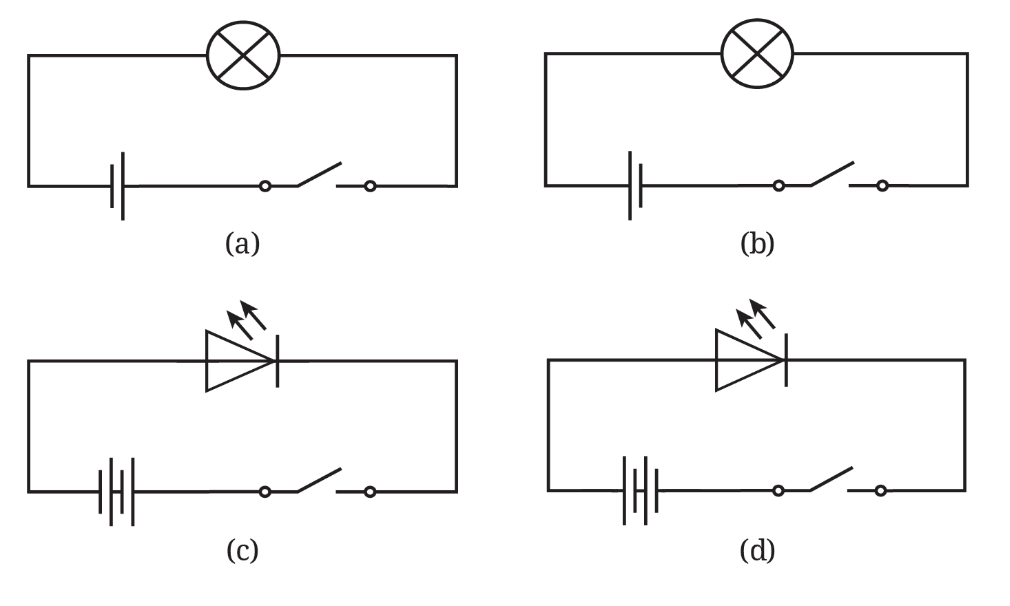
Q8. In Fig. 3.20, in which case(s) the lamp will not glow when the switch is closed?

Ans: Case (a)(b), and (d) will glow when switch will be closed but Case (c) will not glow because the negative terminal of the battery is connected to the positive terminal of the LED, meaning the LED is reverse-connected. In this case, no current will flow through the LED, and it will remain off.

Q9. Suppose the ‘+’ and ‘–’ symbols cannot be read on a battery. Suggest a method to identify the two terminals of this battery.

Ans: To check which end of batter is positive and wgich is negative:

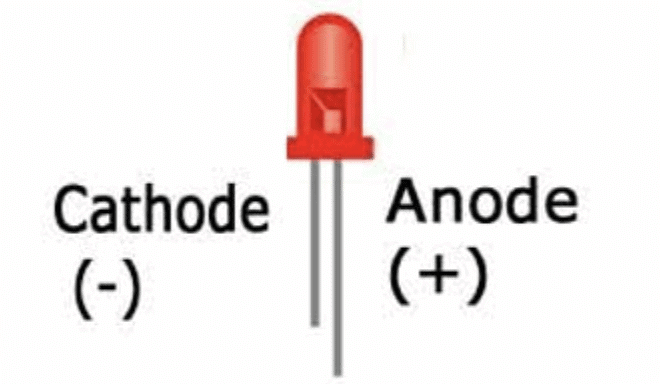
LED Identification: An LED has two leads:

  • Longer lead: This is the positive terminal (anode).
  • Shorter lead: This is the negative terminal (cathode).
Connect the Battery: Connect the battery’s terminals to the LED’s leads:

  • Connect the longer lead of the LED to the one end of the battery and shorter end of LED to the other end. 

Observation:

  • The LED will glow only when the longer lead is connected to the positive terminal of the battery and the shorter lead to the negative terminal.
  • If the LED doesn’t glow, it means the leads are connected in reverse. You can swap the connections to test.

Q10. You are given six cells marked A, B, C, D, E, and F. Some of these are working and some are not. Design an activity to identify which of them are working.

(i) Items required:

  • Electric lamp.
  • Wires.
  • Cell holders.
  • Cells A, B, C, D, E, F.

(ii) Procedure:

  • Connect each cell one by one in the circuit with the lamp.
  • Observe if the lamp glows.
  • Record which cells cause the lamp to glow.

(iii) Activity to identify the working cells:

  • Test each cell individually in the circuit.
  • Mark the cells that cause the lamp to glow as working, and those that don’t glow the lamp as non-working.

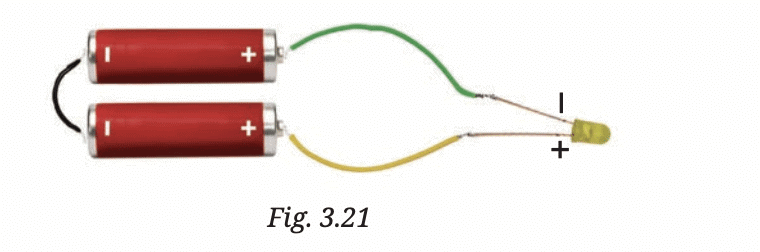
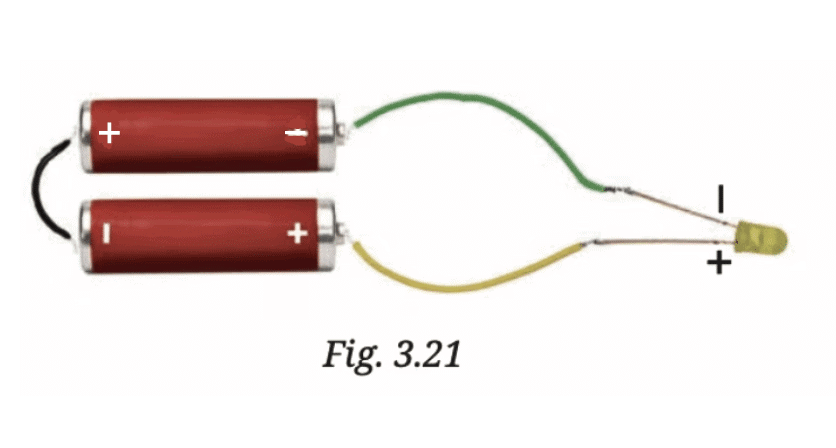
Q11. An LED requires two cells in series to glow. Tanya made the circuit as shown in Fig. 3.21. Will the lamp glow? If not, draw the wires for correct connections.

Ans: No, the LED will not glow if the cells are not connected in the correct polarity. To make the LED glow, the positive terminal of the battery should be connected to the positive terminal of the LED (longer wire), and the negative terminal of the battery should be connected to the negative terminal of the LED (shorter wire).

Corrected connections

02. Acidic,Basic, and neutral Chapter Solution

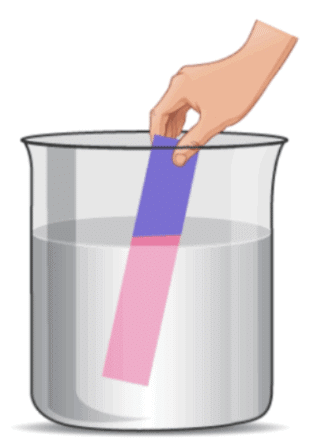
Q1. A solution turns the red litmus paper to blue. Excess addition of which of the following solution would reverse the change?

(i) Lime water

(ii) Baking soda

(iii) Vinegar

(iv) Common salt solution

Answer: (iii) Vinegar.

Vinegar is acidic and would turn the blue litmus paper back to red, reversing the effect caused by the basic solution.

Q2. You are provided with three unknown solutions labelled A, B, and C, but you do not know which of these are acidic, basic, or neutral. Upon adding a few drops of red litmus solution to solution A, it turns blue. When a few drops of turmeric solution are added to solution B, it turns red. Finally, after adding a few drops of red rose extract to solution C, it turns green.

Based on the observations, which of the following is the correct sequence for the nature of solutions A, B, and C?

(i) Acidic, acidic, and acidic

(ii) Neutral, basic, and basic

(iii) Basic, basic, and acidic

(iv) Basic, basic, and basic
Answer:
(iv) Basic, basic, and basic.

  • Solution A: Red litmus turns blue, indicating a basic solution, as bases turn red litmus blue. This is correct.
  • Solution B: Turmeric solution turns red. Turmeric turns red in basic solutions and remains yellow in acidic or neutral solutions. Solution B must be basic.
  • Solution C: Red rose extract turns green, indicating an basic solution.Thus, the correct sequence is:
  • Therefore, Solution A is basic, B is basic and C is also Basic

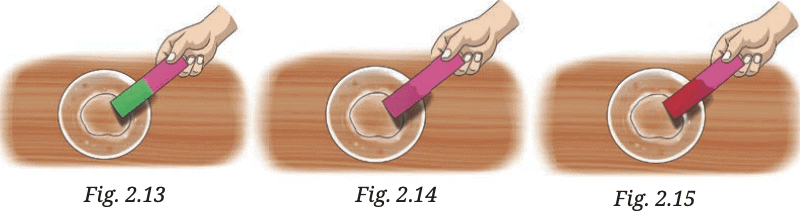
Q3. Observe and analyse Figs. 2.13, 2.14, and 2.15, in which red rose extract paper strips are used. Label the nature of solutions present in each of the containers.

Answer: Red rose extract turns red in acidic solutions and green in basic solutions.

Fig. 2.13: The red rose extract paper strip turns green in the solution. This indicates that the solution is basic.

Fig. 2.14: The red rose extract paper strip shows no significant color change  in the solution. This indicates that the solution is neutral.

Fig. 2.15: The red rose extract paper strip turns red. This indicates that the solution is acidic.

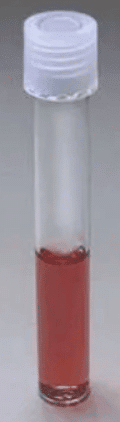
Q4. A liquid sample from the laboratory was tested using various indicators:

Based on the tests, identify the acidic or basic nature of the liquid and justify your answer.

Answer: The liquid is acidic because it turned the blue litmus paper red, which is a clear indication of an acidic solution. Additionally, no change in the turmeric paste further suggests the presence of an acid.

  • Blue litmus paper turns red in acidic solutions.
  • Turmeric paste remains unchanged in acidic solutions, as turmeric changes to red in the presence of basic solutions, but stays yellow in acidic solutions.

Therefore, these observations confirm that the liquid is acidic.

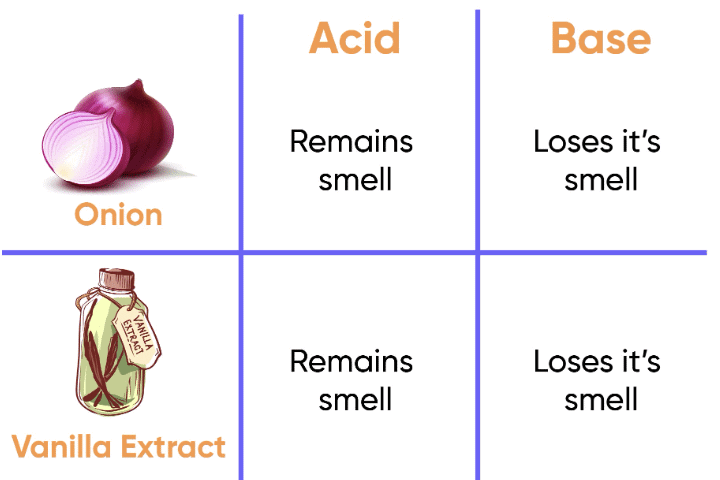
Q5. Manya is blindfolded. She is given two unknown solutions to test and determine whether they are acidic or basic. Which indicator should Manya use to test the solutions and why?

Answer: Smelling the solution after adding an olfactory indicator allows Manya to determine whether the solution is acidic or basic based on the change in smell.

Olfactory indicators are useful when visual indicators (like litmus paper) cannot be used, such as when someone is blindfolded.

Vanilla extract:

  • In an acidic solutionvanilla extract will have a pleasant smell.
  • In a basic solution, its smell may become fainter or change slightly.

Onion (used in some cases):

  • Onion and garlic have a strong smell that can sometimes change in the presence of bases, though they are not as commonly used as olfactory indicators.
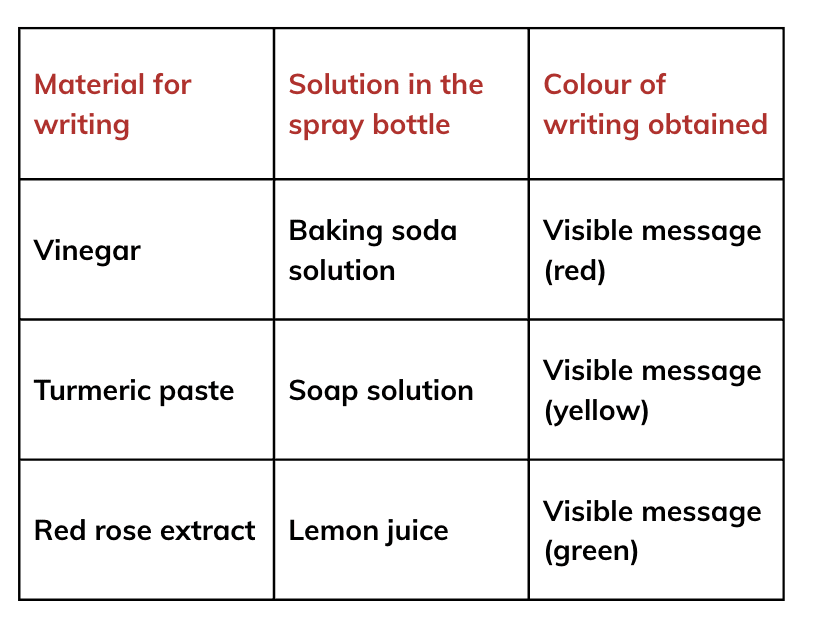
Q6. Could you suggest various materials which can be used for writing the message on the white sheet of paper (given at the beginning of the chapter) and what could be in the spray bottle? Make a table of various possible combinations and the colour of the writing obtained.

Answer:

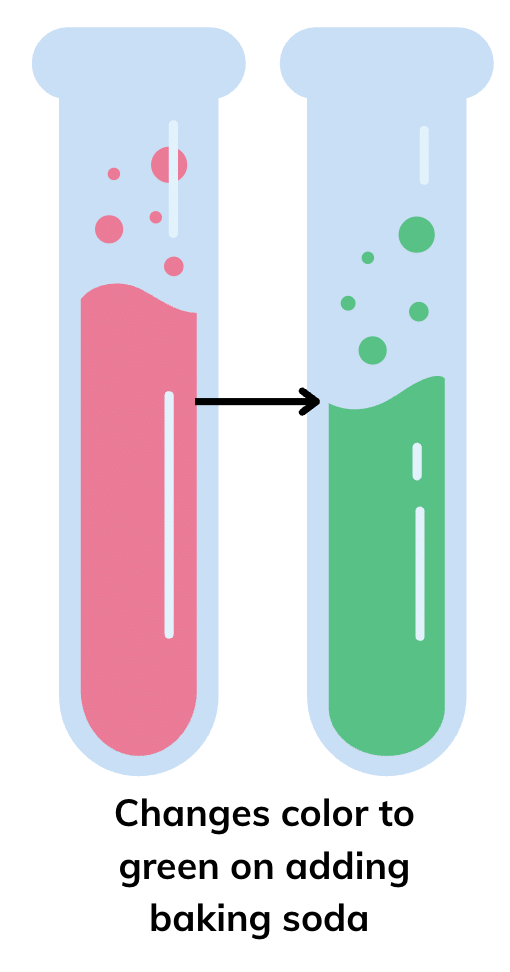
Q7. Grape juice was mixed with red rose extract; the mixture got a tint of red colour. What will happen if baking soda is added to this mixture? Justify your answer.

Answer: The color of the solution will change from red to green, as baking soda, a basic substance, neutralizes the acidic grape juice and red rose extract mixture, making it basic, and red rose extract turns green in basic solutions.

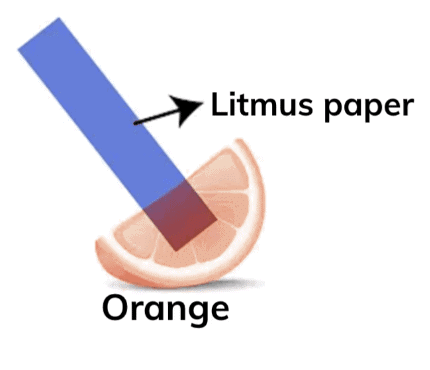
Q8. Keerthi wrote a secret message to her grandmother on her birthday using orange juice. Can you assist her grandmother in revealing the message? Which indicator would you use to make it visible?

Answer: Keerthi’s grandmother can use blue litmus paper or red rose extract to detect whether the orange juice is acidic and make the message visible.

Blue Litmus Paper:

  • Since orange juice is acidic, it will turn the blue litmus paper red
  • This indicates the presence of acid, and if the message was written using a substance that is invisible in neutral or basic conditions, it will become visible when the blue litmus paper turns red in the acidic environment.

Red Rose Extract:

  • Red rose extract is a acid base indicator that turns red in acidic solutions
  • Since orange juice is acidic, it will cause the red rose extract to turn red, making the written message visible.

Q9. How can natural indicators be prepared? Explain by giving an example.

Answer: Natural indicators can be prepared by extracting colour pigments from natural substances like flowers, fruits, or vegetables. 

For example, Preparation of Red Rose Extract

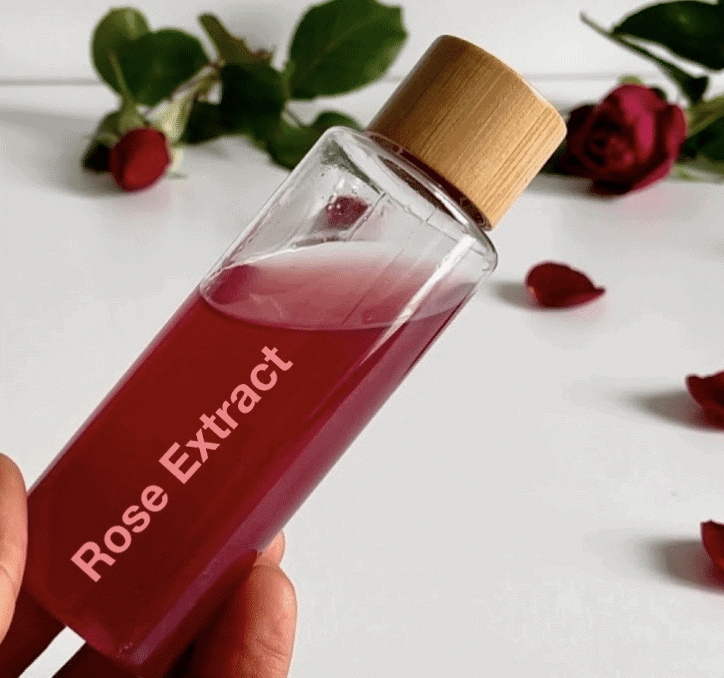
  • Red rose extract is prepared by collecting fresh rose petals and washing them properly.
  • The petals are then crushed and soaked in hot water. 
  • After some time, the mixture is filtered to get a red-colored liquid known as red rose extract.

Q10. Three liquids are given to you. One is vinegar, another is a baking soda solution, and the third is a sugar solution. Can you identify them only using turmeric paper? Explain.

Answer: Yes, you can identify the three liquids (vinegar, baking soda solution, and sugar solution) using turmeric paper, as turmeric acts as a natural pH indicator. Here’s how:

Vinegar (Acidic):

  • Turmeric paper will remain yellow when dipped in vinegar because turmeric stays yellow in acidic solutions.
  • So, if the turmeric paper stays yellow, the liquid is vinegar.
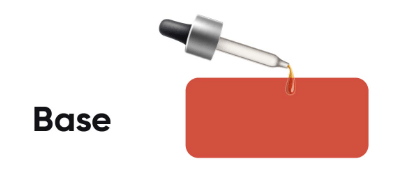
Baking Soda Solution (Basic):

  • Turmeric paper will turn red when dipped in a basic solution.
  • Since baking soda solution is basic, the turmeric paper will turn red, indicating that the liquid is a baking soda solution.
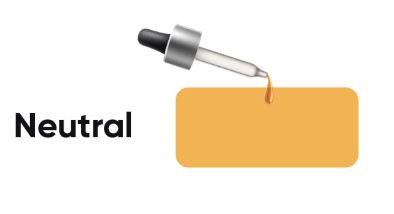
Sugar Solution (Neutral):

  • Turmeric paper will stay yellow in a neutral solution (like sugar solution), as it does not react to neutral substances.
  • If the turmeric paper remains yellow, the liquid is likely a sugar solution.
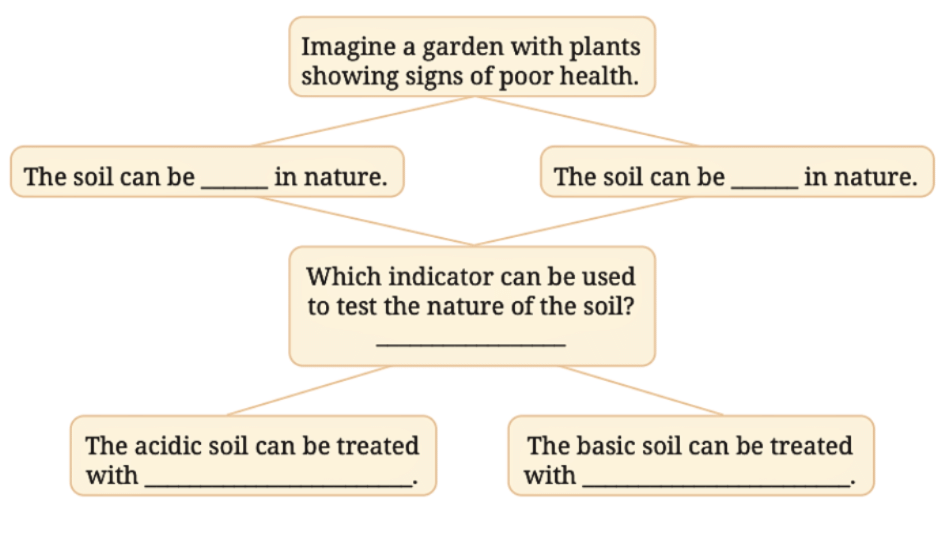
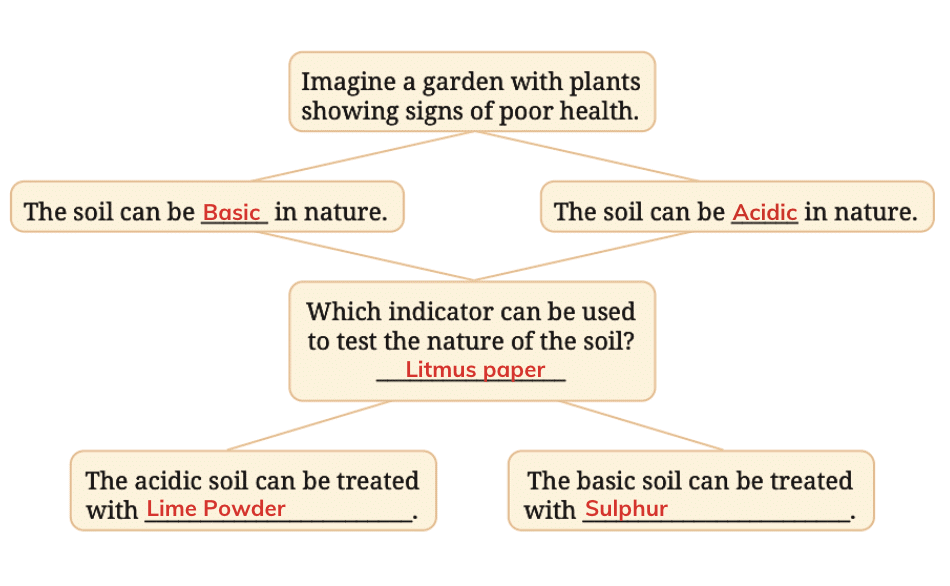
Q11. The extract of red rose turns the liquid X to green. What will the nature of liquid X be? What will happen when excess of amla juice is added to liquid X?

Answer: Liquid X is basic because the red rose extract turns green in basic solutions. Red rose extract is an indicator, and it turns red in acidic solutions and green in basic solutions.

When excess amla juice (which is acidic) is added to liquid X, the solution will become acidic. The red rose extract will then turn red in the acidic solution, indicating that the solution has now become acidic due to the addition of the amla juice.

Q12. Observe and analyse the information given in the following flowchart. Complete the missing information.

Answer:

12. Earth, Moon And The Sun : Chapter Notes

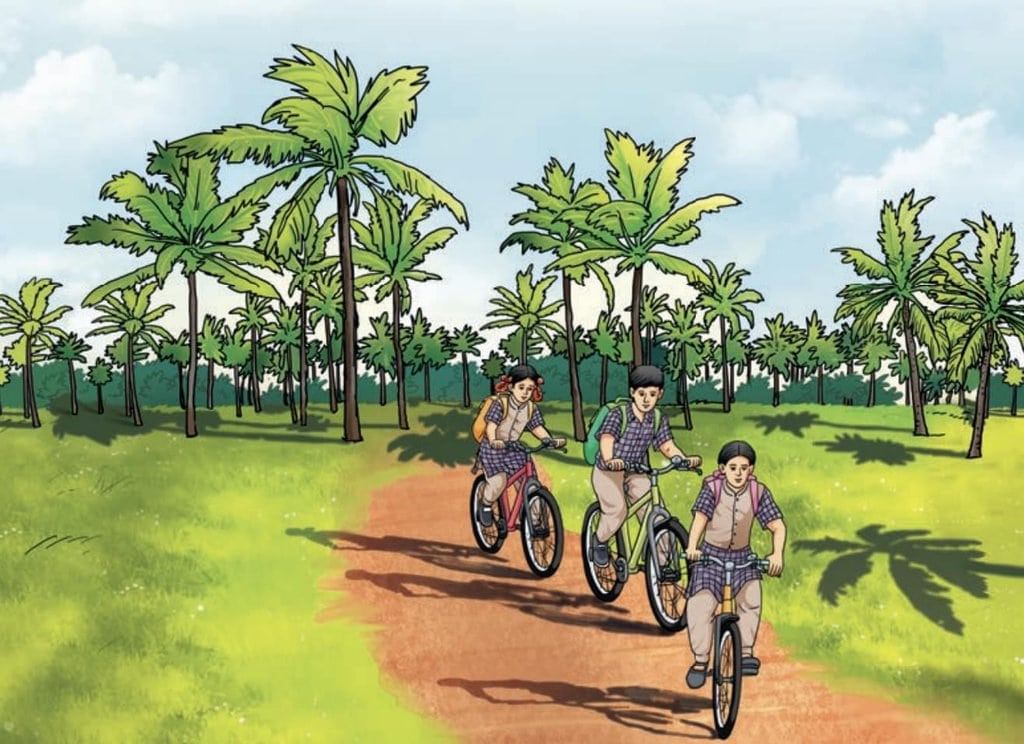
One morning in Kanniyakumari, 12-year-old Rashmika was cycling to school excited for science class. The teacher asked students to share interesting observations.

Rashmika noticed that the coconut tree shadows were long in the morning but shorter in the afternoon. She thought this happened because the Sun moved across the sky. But she also remembered learning that the Earth moves around the Sun, so she wondered: Does the Sun move, or does the Earth move?

Let’s explore how the Earth, Moon, and Sun work together to create day and night, seasons, and amazing events like eclipses!

Rotation of the Earth

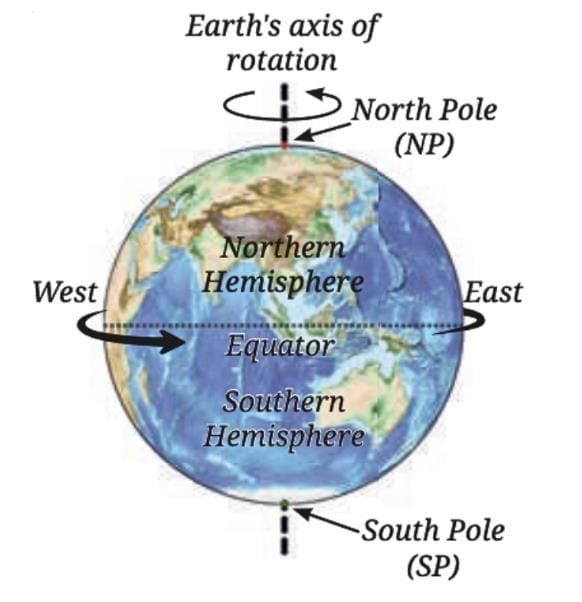
The Earth’s rotation is the spinning motion on its axis, which is an imaginary line passing through the North and South Poles. 

This rotation takes approximately 24 hours to complete one full turn, causing the cycle of day and night.Direction of Rotation

  • When viewed from above the North Pole, the Earth rotates counterclockwise, from west to east.
  • This rotation makes the Sun appear to rise in the east, move across the sky, and set in the west, although the Sun itself remains stationary relative to the Earth.

Day and Night Cycle

  • The Earth’s rotation causes one side to face the Sun, experiencing daytime.
  • The opposite side faces away from the Sun, experiencing nighttime or darkness.
  • For example, in India, the eastern regions see the sunrise first because they face the Sun earlier during the Earth’s rotation.

Apparent Motion of Celestial Objects

  • The Earth’s rotation makes the Sun, Moon, and stars appear to move across the sky from east to west.
  • The Pole Star (Dhruva Tara) appears almost stationary because the Earth’s axis points close to it.
  • Other stars, such as those in the Big Dipper (Saptarishi), seem to circle around the Pole Star.

Fascinating Fact:

Foucault Pendulum demonstrates Earth’s rotation physically using a swinging pendulum that changes its plane of oscillation over time.

Revolution of the Earth

The Earth’s revolution is its movement around the Sun along a nearly circular path called an orbit. It takes about 365 days and 6 hours to complete one revolution, which defines a year.

Changing View of the Night Sky

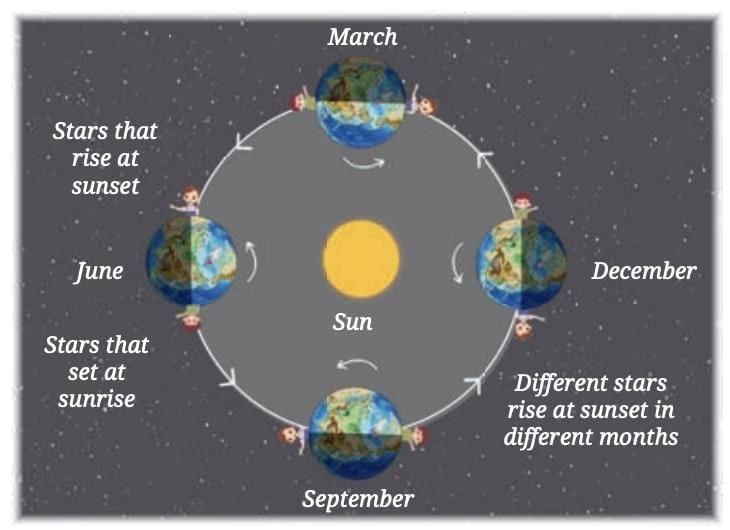
  • As the Earth revolves around the Sun, it faces different directions in space throughout the year.
  • This causes the portion of the night sky visible after sunset to change gradually.
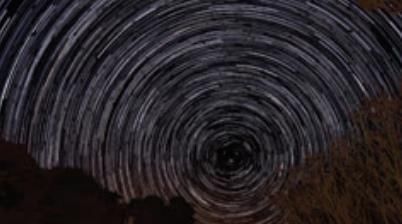
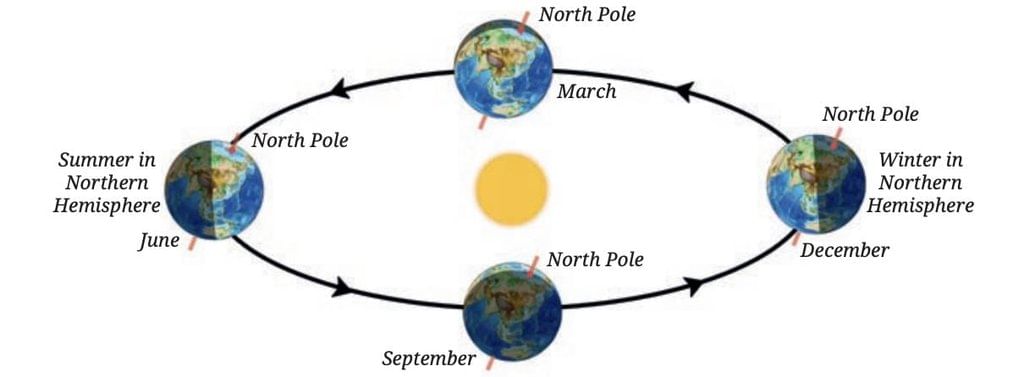
  • Different constellations and stars appear at different times during the year.
  • This changing view of the night sky helps us observe various celestial patterns and seasons.
  • It also allows astronomers to track the movement of stars and planets across the sky.

Fascinating Fact

Astrophotographers use long-exposure photography, keeping the camera’s shutter open for an extended time. This technique captures the apparent motion of stars as curved arcs called star trails, showing how stars seem to move in circular paths due to Earth’s rotation.

Seasons on the Earth

  • The Earth’s axis is tilted at an angle relative to its orbit around the Sun.
  • This tilt, along with the Earth’s spherical shape, causes the different seasons we experience.
  • Around June 21, the Northern Hemisphere tilts toward the Sun, receiving more direct and intense sunlight.
  • During this time, the Sun stays above the horizon for more than 12 hours, resulting in summer in the Northern Hemisphere.
  • At the same time, the Southern Hemisphere tilts away from the Sun, getting less direct sunlight and shorter daylight hours, causing winter there.
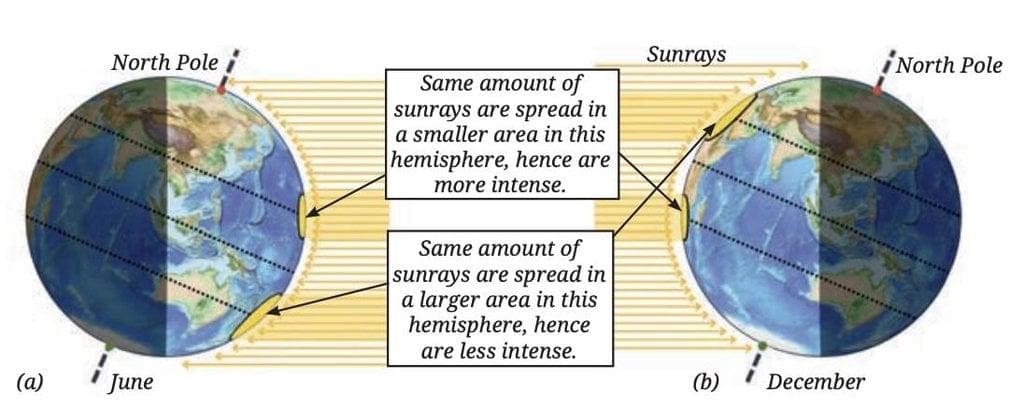
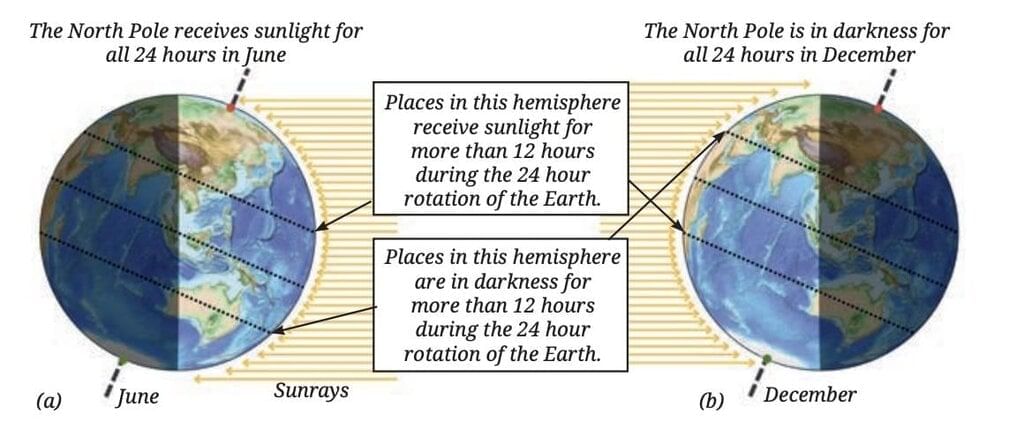
  • Around December 22, the situation reverses: the Northern Hemisphere tilts away from the Sun, leading to winter, while the Southern Hemisphere tilts toward the Sun, enjoying summer.
  • The difference in the Sun’s intensity and the length of the day during these times causes the changes in temperature and weather that define the seasons.

(a) More intense sunlight in the Northern Hemisphere and less intense sunlight in the Southern Hemisphere in June (b) The opposite situation happens in December

In the Northern Hemisphere (a) Longer daytime in June(b) Shorter daytime in December

Solstices and Equinoxes

  • In the Northern Hemisphere, the longest day of the year, called the summer solstice, occurs around June 21.
  • The shortest day, known as the winter solstice, happens around December 22.
  • On March 21 (the spring equinox) and September 23 (the autumn equinox), day and night are equal, each lasting about 12 hours.
  • At the equator, days and nights remain almost equal (12 hours each) throughout the year, with very little seasonal change.

Fascinating Facts 

The polar regions experience extreme daylight conditions — either six months of continuous daylight (known as the Midnight Sun) or six months of darkness.
At the North Pole, the Sun rises on March 21 and stays above the horizon for six months, setting on September 22. The South Pole experiences the opposite—six months of darkness followed by six months of daylight. 

Misconceptions About Seasons

  • Seasons are not caused by the Earth being closer to the Sun when tilted toward it or by an oval orbit with significant distance variations. 
  • The Earth is actually closest to the Sun in January, but the tilt and spherical shape are the primary reasons for seasonal changes.

Eclipses

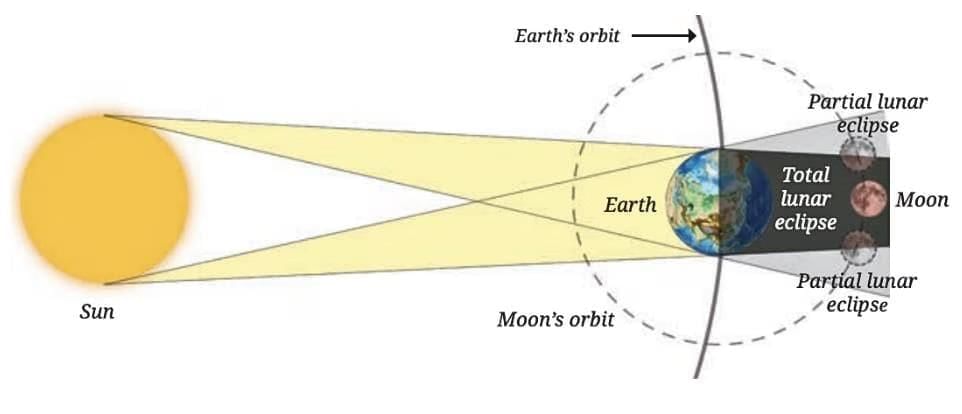
Eclipses occur when one celestial body blocks light from another, casting a shadow. The Moon’s position relative to the Earth and Sun causes solar and lunar eclipses.

Solar Eclipse

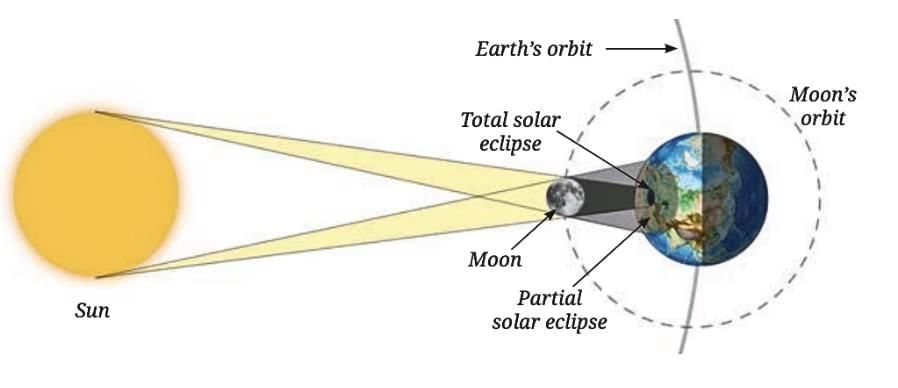
  • solar eclipse occurs when the Moon comes between the Earth and the Sun, blocking sunlight from reaching certain parts of the Earth.
  • Although the Moon is much smaller than the Sun, their apparent sizes in the sky are similar because the Moon is much closer to Earth.
  • This alignment allows the Moon to fully or partially cover the Sun.

Types of Solar Eclipses

1. Total Solar Eclipse:

  • The Moon completely blocks the Sun, casting a shadow on a small area of the Earth.
  • Observers in this area experience total darkness during the day. The sky becomes dark, and the Sun is completely obscured for a few minutes.

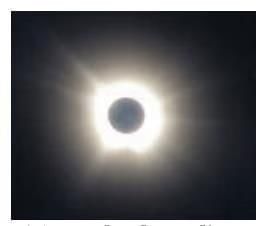
Total solar eclipse

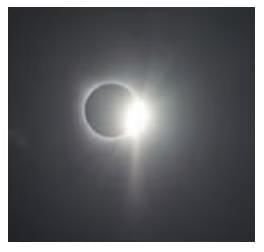
A ‘diamond ring’ seen after a total solar eclipse, just when the Moon starts to move away

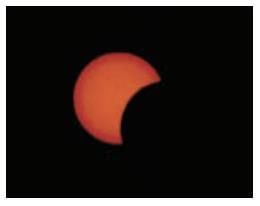
2. Partial Solar Eclipse:

  • The Moon only partially covers the Sun, and observers in the affected area see a part of the Sun obscured by the Moon.

Partial Solar Eclipse 

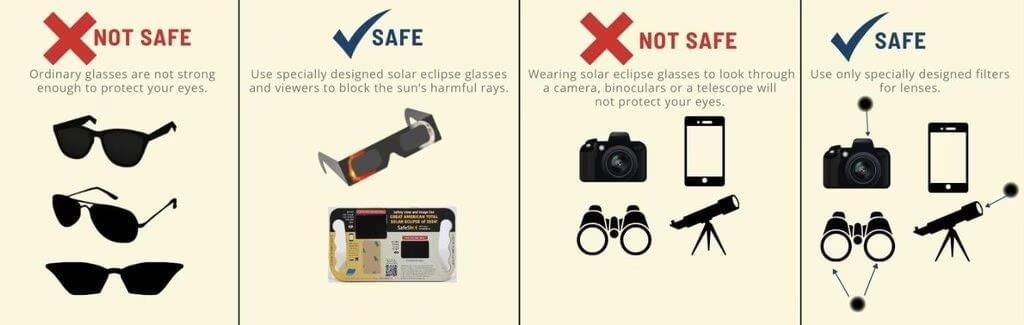
Safe Viewing of Solar Eclipses

  • Direct viewing of a solar eclipse is dangerous because the Sun’s intense light can cause permanent blindness, even when the Sun is only partially covered by the Moon.
  • Safe methods for viewing a solar eclipse include:
    1. Using specialized solar goggles designed for eclipse viewing.
    2. Attending organized viewing events where safety measures are in place.
    3. Projecting the Sun’s image using a mirror to watch the eclipse safely.

  • Superstitions about eclipses, like avoiding eating or going outside, stemmed from historical fears but are no longer necessary with our modern understanding of eclipses.

Duration of the Solar Eclipse

  • The total solar eclipse is visible only for a few minutes because of the Earth’s rotation and the Moon’s motion in its orbit. 
  • As the Moon moves away from the Sun, the eclipse shifts into a partial solar eclipse, and daylight begins to return.

Historical Views on Solar Eclipses

  • Ancient civilizations feared eclipses because they did not understand the phenomenon. They believed that the Sun, a major source of heat and light, had been momentarily blocked by some cosmic force.
  • Many superstitions surrounded solar eclipses, with people refraining from activities like eating, cooking, or leaving the house.
  • Today, scientists study solar eclipses because they offer a rare opportunity to observe the Sun’s atmosphere and other phenomena that are not visible during normal circumstances.

Fascinating Facts

The Sanskrit word for eclipse is “grahan.” Ancient Indian astronomical texts, such as the Surya Siddhanta, provided calculations to predict eclipses long before modern astronomy developed. These texts use poetic shlokas to describe the phenomenon.

Dive Deeper – Why Planets Can’t Block the Sun? 

  • Mercury and Venus are closer to the Sun than Earth, but they are still too small and far away to block the Sun significantly.
  • Transit of Venus is a rare event that occurs when Venus moves directly between Earth and the Sun.
  • During the Transit of Venus, Venus appears as a tiny black dot crossing the face of the Sun.
  • This event is rare because Venus has to align perfectly with the Sun and Earth, which doesn’t happen often.
  • Although Venus is much smaller than the Sun, it’s visible as a small dot when it crosses in front of the Sun.

Lunar Eclipse

lunar eclipse occurs when the Earth comes between the Sun and the Moon, blocking the sunlight from reaching the Moon. This results in the Earth’s shadow falling on the Moon. The event is only visible during a full moon, when the Earth is directly aligned between the Sun and the Moon.

Types of Lunar Eclipses

1. Total Lunar Eclipse:

  • In a total lunar eclipse, the Moon is completely covered by the Earth’s shadow.
  • During this event, the Moon takes on a dark red color, which is often referred to as a “blood moon.” The reddish hue is caused by the Earth’s atmosphere scattering sunlight, which then reaches the Moon.
  • The Moon remains red until it moves out of the Earth’s shadow.

2. Partial Lunar Eclipse:

  • In a partial lunar eclipse, only part of the Moon enters the Earth’s shadow. The rest of the Moon remains visible and appears unaffected.
  • This creates a distinctive shape where part of the Moon looks darker, and the rest remains bright

Viewing a Lunar Eclipse

  • Unlike a solar eclipse, a lunar eclipse is safe to watch with the naked eye. Since the Moon is not as bright as the Sun, the Earth’s shadow provides a dimmer, more diffuse light.
  • It is also possible to observe both total and partial lunar eclipses from the Earth without special protection, making them easier for amateur astronomers and enthusiasts to view.

Fascinating Facts

The Kodaikanal Solar Observatory in southern India, established in 1899, has been providing valuable data about the Sun for over 100 years. It is operated by the Indian Institute of Astrophysics (IIA), Bengaluru. The observatory has contributed significantly to solar studies.

Know a Scientist: M.K. Vainu Bappu

  • M.K. Vainu Bappu is regarded as the father of modern Indian astronomy. He led efforts to set up many astronomical instruments and telescopes in India, such as those at Manora Peak (Uttarakhand) and Kavalur (Tamil Nadu).
  • The observatory at Kavalur has been named after him in recognition of his contributions.
  • Bappu made significant discoveries, including a comet, and was known for his studies on stars and solar eclipses. He traveled worldwide to study solar eclipses, contributing greatly to modern astronomical research in India.

Points to Remember

  • In the 19th century, scientist Leon Foucault used a long pendulum, known as the Foucault pendulum, to demonstrate the Earth’s rotation. A 22-meter Foucault pendulum is installed in the Constitution Hall of India’s new Parliament building in New Delhi, symbolizing India’s connection to the cosmos.
  • Ancient Indian astronomer Aryabhata, in his 5th-century text Aryabhatiya, explained the apparent motion of stars due to Earth’s rotation, comparing it to a person on a moving boat seeing stationary objects move backward. He estimated the Earth’s rotation period as 23 hours, 56 minutes, and 4.1 seconds, remarkably close to the modern value.
  • Astrophotographers capture star trails—arcs of star movement in long-exposure photographs—showing the apparent motion of stars due to Earth’s rotation.
  • The Bhil and Pawara communities in India’s Tapi Valley used the appearance of specific star patterns to predict monsoon rains, demonstrating traditional knowledge of celestial movements.
  • At the North Pole, the Sun rises on March 21 (spring equinox) and remains visible for six months until setting on September 22. The South Pole experiences the opposite, with six months of darkness followed by six months of daylight.
  • Ancient Indian texts like the Surya Siddhanta, written in Sanskrit shlokas, provided calculations to predict eclipses, reflecting advanced astronomical knowledge.
  • The Kodaikanal Solar Observatory, established in 1899 in Tamil Nadu’s Palani hills, has collected over 100 years of solar data, operated by the Indian Institute of Astrophysics, Bengaluru.

Difficult Words

  • Rotation: The spinning motion of an object, like the Earth, around its own axis, completing one turn in about 24 hours.
  • Axis of Rotation: An imaginary line passing through the North and South Poles, around which the Earth rotates.
  • Revolution: The motion of an object, like the Earth, around another object, such as the Sun, taking about 365 days and 6 hours.
  • Orbit: The nearly circular path the Earth follows while revolving around the Sun.
  • Solstice: The longest (summer solstice, around June 21) or shortest (winter solstice, around December 22) day in the Northern Hemisphere, due to the Earth’s tilt.
  • Equinox: Days when day and night are equal (12 hours each), occurring around March 21 (spring equinox) and September 23 (autumn equinox) in the Northern Hemisphere.
  • Solar Eclipse: An event where the Moon blocks sunlight from reaching Earth, causing total or partial darkness in specific areas.
  • Lunar Eclipse: An event where the Earth blocks sunlight from reaching the Moon, casting a shadow that makes the Moon appear dark red (total) or partially shadowed (partial).
  • Apparent Size: The perceived size of an object in the sky, depending on its actual size and distance from the observer, allowing the Moon to appear as large as the Sun during a solar eclipse.
  • Transit of Venus: A rare event where Venus appears as a small black dot crossing the Sun’s face, due to its small apparent size compared to the Sun.

Summary

The Earth’s rotation on its axis, from west to east every 24 hours, causes the day-night cycle and the apparent east-to-west motion of the Sun, Moon, and stars. Its revolution around the Sun, taking about 365 days, leads to changing night sky views and, due to the Earth’s tilted axis and spherical shape, seasonal variations. Solar eclipses occur when the Moon blocks sunlight, creating brief darkness, while lunar eclipses happen when the Earth’s shadow darkens the Moon. These phenomena, safely observed with proper precautions, highlight the dynamic interplay of Earth, Moon, and Sun, studied by ancient and modern scientists alike.