Q1:What does ‘sacredness’ mean in religious or spiritual contexts? a) Something holy or deeply respected b) A journey to a distant land c) A place for ordinary activities d) Something that belongs to a specific religion
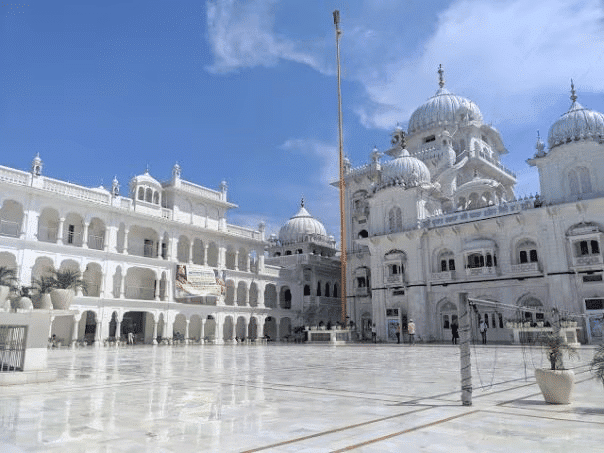
Q2:Which of the following is a sacred site for Sikhs? a) Takht Sri Patna Sahib b) Mahabodhi Stūpa c) Dargah Sharif d) Velankanni Church
Takht Sri Patna Sahib
Q3:What is a pilgrimage in Indian culture known as? a) Yātrā b) Tīrthayātrā c) Kumbh Mela d) Dham
Q4:Which river is considered a goddess in Hinduism? a) Ganga b) Nile c) Thames d) Amazon
Q5:What is the significance of Sangams in Indian sacred geography? a) Where rivers meet, considered sacred b) Places for religious rituals c) Ancient trade routes d) Monasteries for monks
Q6:What does the Char Dhām Yātrā include? a) Four sacred temples in the Himalayas b) Pilgrimage to four sacred sites in north, south, east, and west India c) A journey to the famous monasteries of India d) Visits to the 12 Jyotirlingas
Q7:Which tree is considered sacred in Hinduism, Buddhism, Jainism, and Sikhism? a) Banyan tree b) Peepul tree c) Mango tree d) Neem tree
Q8:Which tribe holds the Niyam Dongar hill sacred? a) Bhils b) Dongria Khond c) Gonds d) Konds
Q9:Which sacred site is related to the myth of the body parts of Sati? a) Char Dhām b) Jyotirlingas c) Shakti Pithas d) Kumbh Mela
Q10:What is the significance of the Kumbh Mela? a) A major Hindu festival celebrating the harvest b) A pilgrimage marking the meeting of rivers c) A festival held every six years in four locations d) A tribute to ancient kings
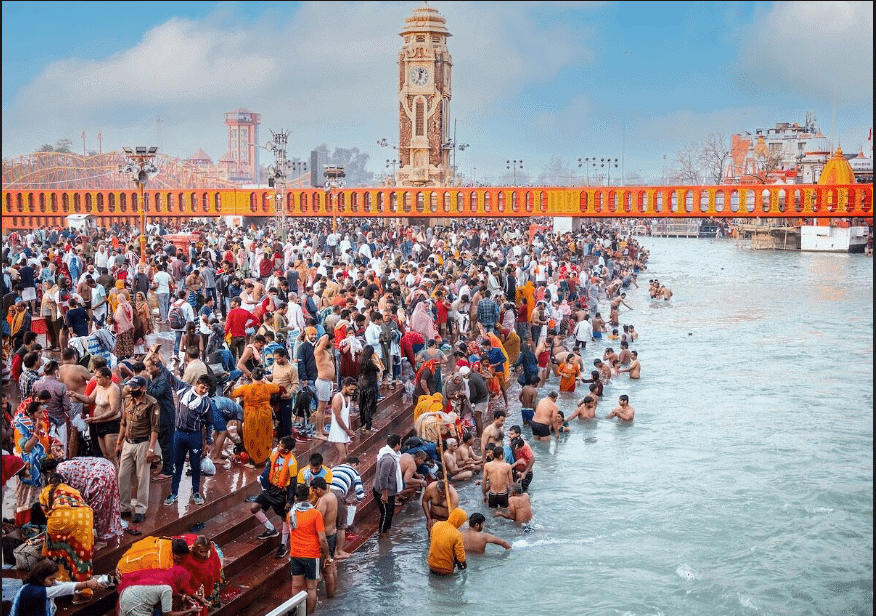
Kumbh Mela
Fill in the Blanks
Q1: Sacredness in India is linked to places like temples, rivers, mountains, and __________.
Q2: The Char Dhām Yātrā connects __________ sacred sites in India.
Q3: The __________ River is considered a goddess in Hinduism.
Q4: __________ is an important pilgrimage site for followers of Jainism in Gujarat.
Q5: __________ is the sacred site in Bodh Gaya where Buddha attained enlightenment.
Q6: In India, the confluence of rivers is called a __________.
Q7: __________ was the major pilgrimage site for Sikhs, connected to Guru Nanak.
Q8: __________ are sacred sites linked to the goddess Shakti in India)
Q9: __________ is the sacred tree under which Buddha attained enlightenment.
Q10: The Kumbh Mela is held every __________ years at four sacred river sites.
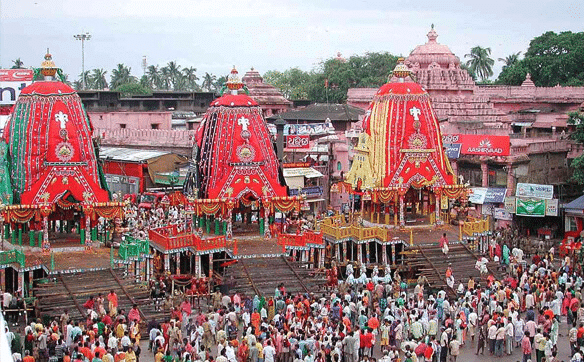
Tirth Yatra
Very Short Answer Questions
Q1: What is a tīrthayātrā?
Q2: Which river is known as “Ganga ji” by many Indians?
Q3: What is a Sangam in Indian sacred geography?
Q4: Who is associated with the Takht Sri Patna Sahib?
Q5: Which tribe considers Niyam Dongar hill sacred?
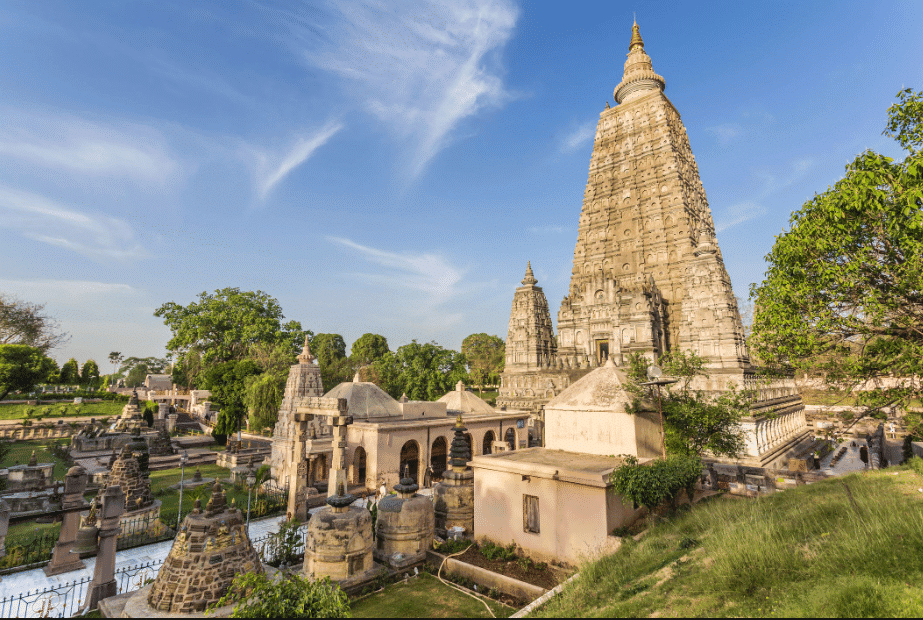
Mahabodhi Stupa
Short Answer Questions
Q1: How does sacred geography help unite India?
Q2: What is the significance of the Kumbh Mela in Indian culture?
Q3: How does sacred ecology contribute to environmental protection?
Q4: Why are rivers considered sacred in India?
Q5: How does sacred geography influence trade in India?
Match the Following
(Match Column A with the correct option in Column B)
Q1:What is the Gupta Era known for? a) The rise of the Maurya Empire b) Achievements in art, literature, and science c) The fall of the Harappan civilization d) The start of Islamic rule in India
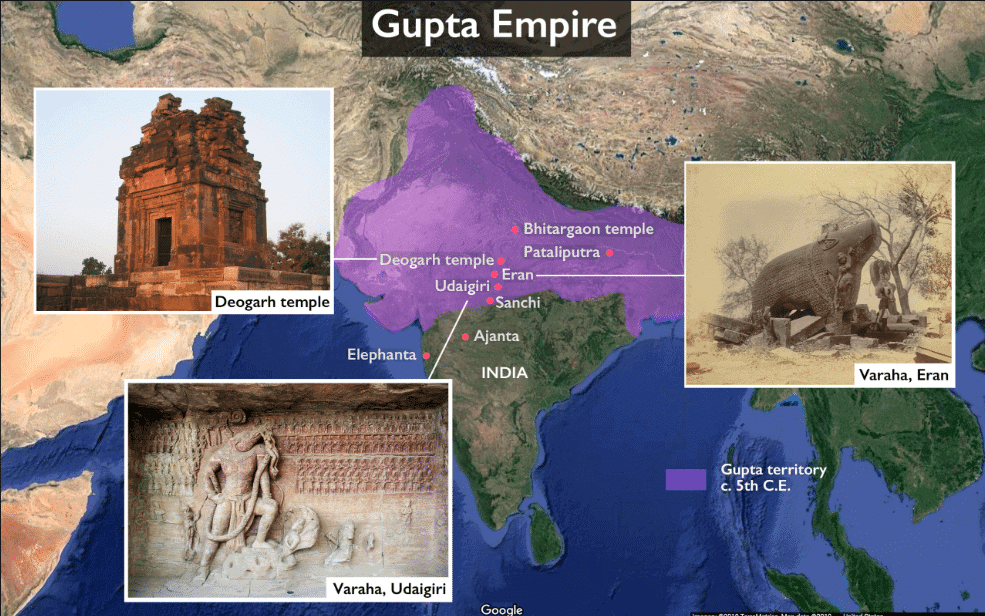
Gupta Empire
Q2:Who was the father of Chandragupta II? a) Samudragupta b) Samudraka c) Ashoka d) Dhanananda
Q3:What was the name of the Gupta ruler who performed the Ashvamedha Yajña? a) Chandragupta II b) Samudragupta c) Ashoka d) Harisena
Q4:Which foreign traveler visited India during the Gupta period? a) Hiuen Tsang b) Faxian c) Marco Polo d) Ibn Battuta
Q5:What was a significant contribution of Āryabhaṭa in the Gupta period? a) He wrote about architecture and sculpture. b) He made advances in mathematics and astronomy. c) He created the first coinage system. d) He founded the Nalanda University.
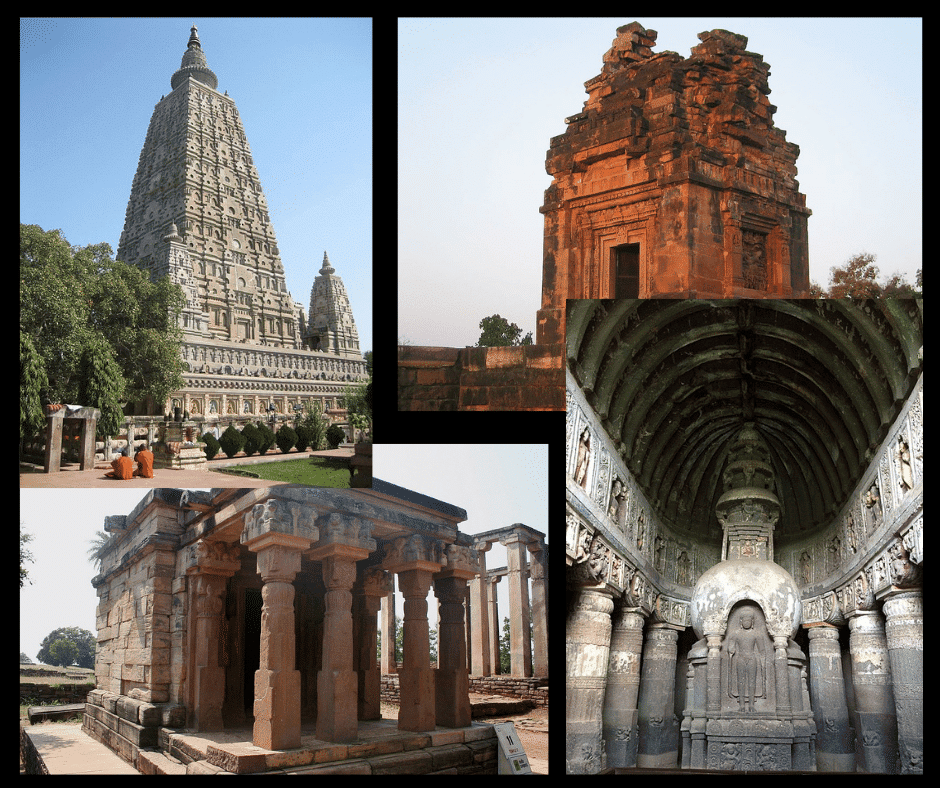
Temples of Gupta Empire
Q6:What was the main trade commodity of the Gupta Empire? a) Spices and textiles b) Coins and gold c) Iron and steel d) Silk and porcelain
Q7:Which Gupta king is known for promoting the arts and literature, and for ruling over the empire at its height? a) Chandragupta I b) Samudragupta c) Chandragupta II d) Harisena
Q8:What was the primary purpose of the Iron Pillar in Delhi? a) To honor the Mauryan Empire b) To commemorate military victories c) To demonstrate Gupta advancements in metallurgy d) To mark the boundaries of the Gupta Empire
Q9:Which language flourished during the Gupta period and became central to literature and philosophy? a) Prakrit b) Sanskrit c) Pali d) Tamil
Q10:Which Gupta ruler was particularly noted for his patronage of scholars and artists? a) Samudragupta b) Chandragupta II c) Harisena d) Kumaragupta
Nalanda University
Fill in the Blanks
Q1: The Gupta Empire is often referred to as the __________ Age due to its cultural and intellectual achievements.
Q2: The Gupta rulers used __________ to expand their empire, combining military conquests and alliances.
Q3: The __________ Pillar in Delhi, dating back to the Gupta period, showcases the empire’s achievements in metallurgy.
Q4: __________ was a famous Chinese traveler who visited India during the Gupta period and wrote about his experiences.
Q5: The Gupta period is noted for advancements in __________, with scholars like Āryabhaṭa making significant contributions.
Q6: The Gupta rulers were also known for their patronage of __________, with scholars like Kālidāsa writing famous literary works.
Q7: Gupta administration was efficient, with local leaders receiving __________ to manage their territories.
Q8: __________, a famous work by Varāhamihira, covers topics like astrology, weather forecasting, and architecture.
Q9: The Gupta rulers supported __________ by funding institutions like Nālandā University.
Q10: The Gupta period saw significant progress in __________, with the development of beautiful sculptures and paintings in places like Ajanta and Udayagiri.
Iron Pillar, Mehraulli, DelhiVery Short Answer Questions
Q1: What was the capital of the Gupta Empire?
Q2: What is the significance of the Iron Pillar in Delhi?
Q3: Who was Faxian?
Q4: What was the primary language used for literature during the Gupta period?
Short Answer Questions
Q1: How did the Gupta Empire support art and culture?
Q2: What was the role of diplomacy in the Gupta Empire?
Q3: How did the Gupta Empire impact mathematics and astronomy?
Q4: Why is the Gupta period called the Classical Age?
Q5: What was the significance of Nālandā University?
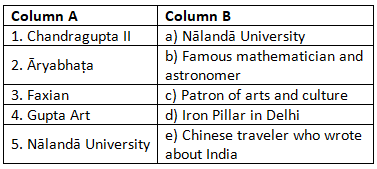
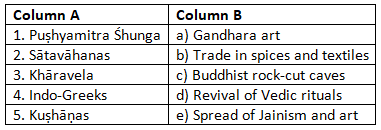
Match the Following
(Match Column A with the correct option in Column B)
Q1:What was the main reason for the formation of new kingdoms after the Maurya Empire? a) Rise of new empires b) Internal conflicts and invasions c) Religious conversion d) Peace treaties
Q2:Who started the Śhunga dynasty? a) Ashoka b) Chandragupta Maurya c) Puṣhyamitra Śhunga d) Dhanananda
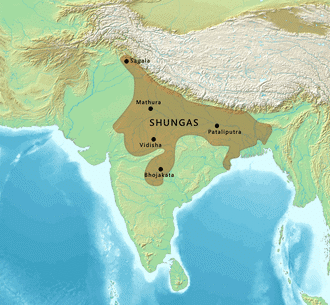
Shunga Dynasty
Q3:What was the primary feature of the Śhunga Empire? a) Large expansion across the subcontinent b) Promotion of Buddhism c) Revival of Vedic rituals d) Invasion of the south
Q4:Which ancient city was the capital of the Sātavāhana dynasty? a) Ujjain b) Pataliputra c) Amrāvatī d) Kausambi
Q5:What was the primary trade item for the Sātavāhanas? a) Spices b) Gold c) Pearls d) Textiles
Q6:Which ruler of the Chedi dynasty was a supporter of Jainism? a) Khāravela b) Dhanananda c) Chandragupta Maurya d) Ashoka
Q7:What was the contribution of the Sātavāhanas to literature? a) Development of Sanskrit literature b) Promotion of Tamil poetry c) Support for Sangam literature d) Spread of Vedic texts
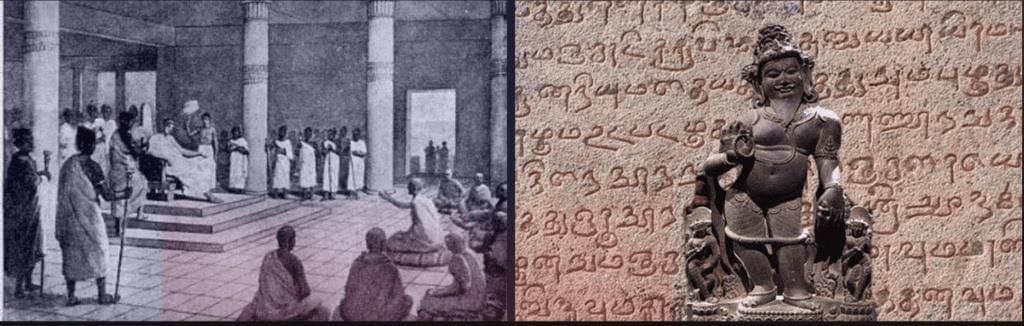
Sangam Period
Q8:What role did the Indo-Greeks play in India? a) They formed the first Indian empire. b) They blended Greek and Indian cultures. c) They conquered all of India. d) They promoted Hinduism.
Q9:Which famous art styles did the Kuṣhāṇas contribute to? a) Gandhara and Mathura b) Ajanta and Ellora c) Mughal art d) Rajasthani miniature painting
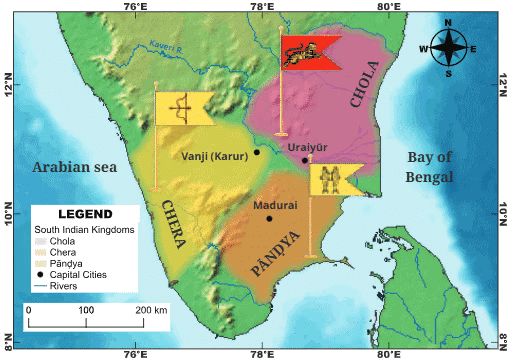
Q10:Which dynasty ruled parts of south India during the period of reorganisation? a) Mauryas b) Cholas c) Guptas d) Cheras, Cholas, and Pāṇḍyas
Chera, Chola, Pandya
Fill in the Blanks
Q1: The Śhunga dynasty was started by __________, a Mauryan commander.
Q2: The Sātavāhanas ruled the __________ region.
Q3: The __________ caves in Odisha were built by King Khāravela for Jain monks.
Q4: The __________ was a Vedic ritual performed by the Śhunga kings.
Q5: The Sātavāhanas were known for their __________, showing their trade connections.
Q6: The Indo-Greek ruler __________ built the Heliodorus pillar in Madhya Pradesh.
Q7: The __________ dynasty had an empire that stretched from Central Asia to northern India.
Q8: The __________ art style was influenced by the Kuṣhāṇas and mixed Indian and Greek elements.
Q9: The __________ kingdom of south India was known for trading pearls with the Romans.
Q10: The __________ period in south India is known for its Sangam literature.
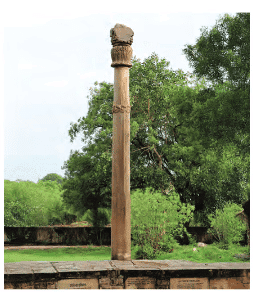
Heliodorus Pillar Near VidishaVery Short Answer Questions
Q1: Who founded the Śhunga dynasty?
Q2: What were the Sātavāhana rulers known for in terms of trade?
Q3: Which ruler promoted Jainism in the Chedi dynasty?
Q4: Where did the Indo-Greeks establish their presence in India?
Q5: What was the major contribution of the Kuṣhāṇas to Indian art?
Short Answer Questions
Q1: How did the Śhunga Empire influence Indian culture?
Q2: What role did trade play in the Sātavāhana Empire?
Q3: How did the Indo-Greek rulers blend their culture with Indian traditions?
Q4: Why did the Sātavāhanas support multiple religions?
Q5: What was the significance of the Kalinga War in Ashoka’s life?
Match the Following
(Match Column A with the correct option in Column B)
Q1:What is the main feature of an empire? a) A ruler governs one kingdom. b) A ruler controls many smaller kingdoms. c) The kingdom is independent of others. d) The ruler is elected by the people.
Q2:What did tributary kingdoms do in an empire? a) They were fully independent. b) They paid tribute to the emperor. c) They ruled their own territories. d) They supported military campaigns.
Q3:Which of the following was a reason for the expansion of empires? a) To maintain peace b) To gain fame and resources c) To form alliances d) To promote democracy
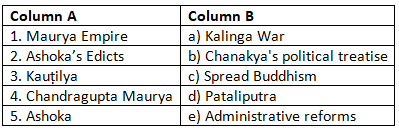
Q4:Who helped Chandragupta Maurya to establish the Maurya Empire? a) Dhanananda b) Alexander the Great c) Kauṭilya d) Ashoka
Q5:What was the capital of the Maurya Empire under Chandragupta? a) Pataliputra b) Rajagriha c) Kausambi d) Ujjain
Q6:What did Kauṭilya’s Arthashastra primarily focus on? a) Religion b) Warfare and governance c) Literature d) Agriculture
Q7:Who succeeded Chandragupta Maurya as emperor of the Maurya Empire? a) Dhanananda b) Ashoka c) Ajatashatru d) Mahapadma Nanda
Q8:What was the significant change in Ashoka’s rule after the Kalinga War? a) He focused on expanding the empire further. b) He became a pacifist and embraced Buddhism. c) He implemented stricter laws for the empire. d) He strengthened military power.
Q9:Which of the following was a key feature of the Maurya Empire’s governance? a) Decentralized rule with local rulers in charge b) Centralized administration with a strong military c) Democracy where people voted for rulers d) Isolation from foreign empires
Q10:What was the primary purpose of Ashoka’s edicts? a) To celebrate military victories b) To promote Buddhism and moral values c) To establish a monarchy d) To create a system of taxation
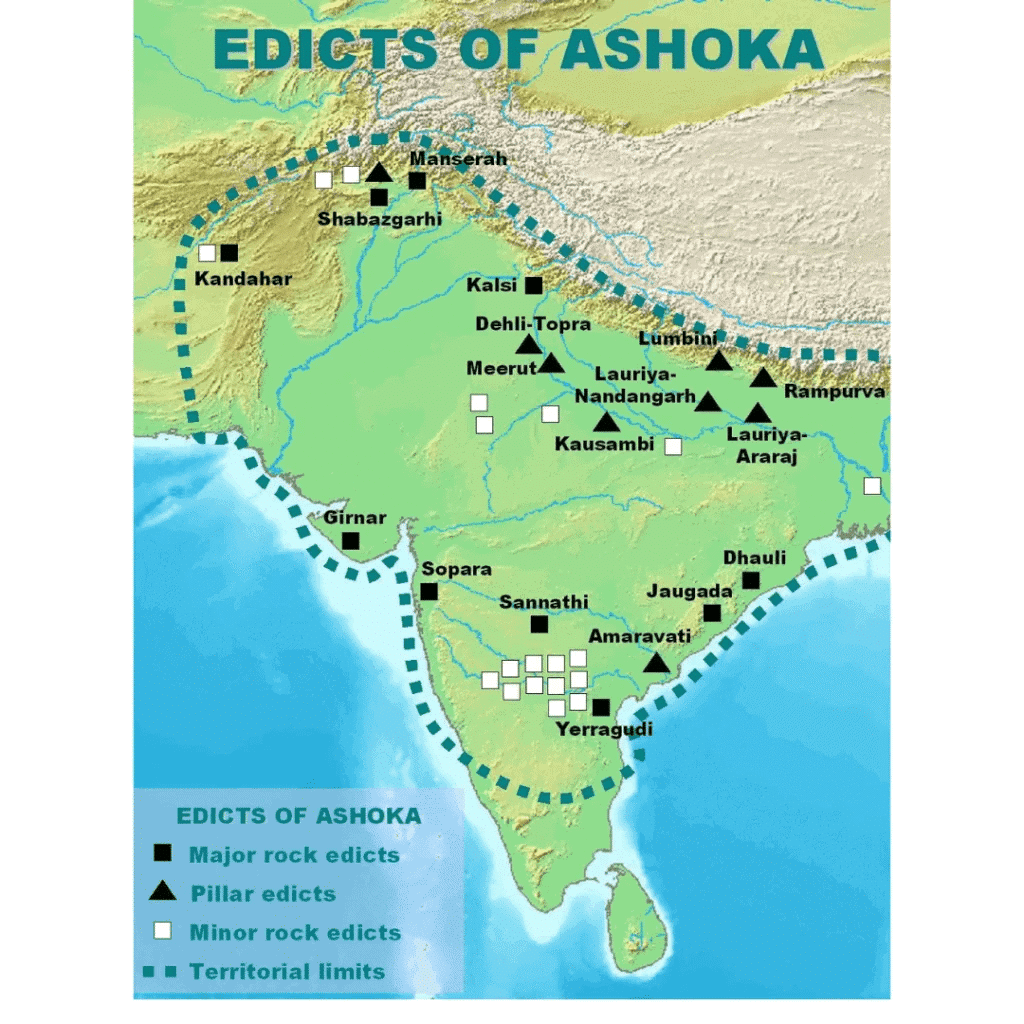
Edicts of Ashoka
Fill in the Blanks
Q1: An empire is ruled by a powerful __________.
Q2: The capital of the Maurya Empire under Chandragupta was __________.
Q3: The Maurya Empire’s administration was based on __________.
Q4: Ashoka’s transformation after the Kalinga War led him to promote __________.
Q5: Kauṭilya, also known as Chanakya, wrote the __________ on governance and economics.
Q6: The Maurya Empire used __________ as a tool for managing and expanding the empire.
Q7: The __________ dynasty ruled Magadha before the Mauryas.
Q8: Ashoka’s __________ were inscribed on pillars and rocks throughout the empire.
Q9: The Maurya Empire was known for its __________, which was used to manage its vast territory.
Q10: __________ was a major resource for the Maurya Empire’s army, used for weapons and tools.
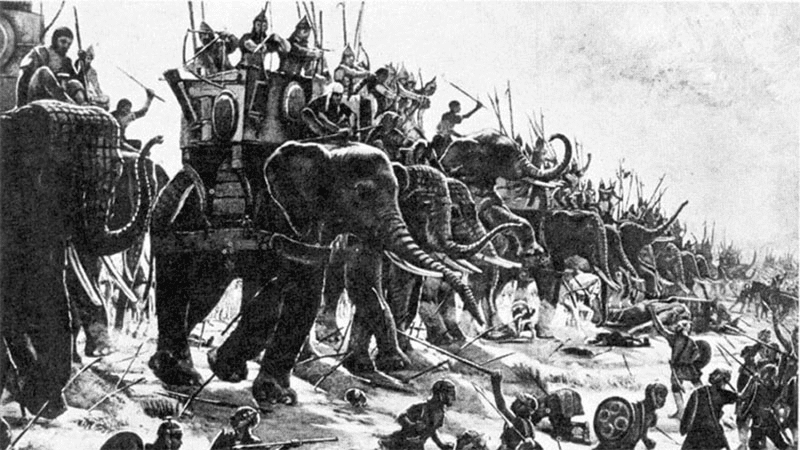
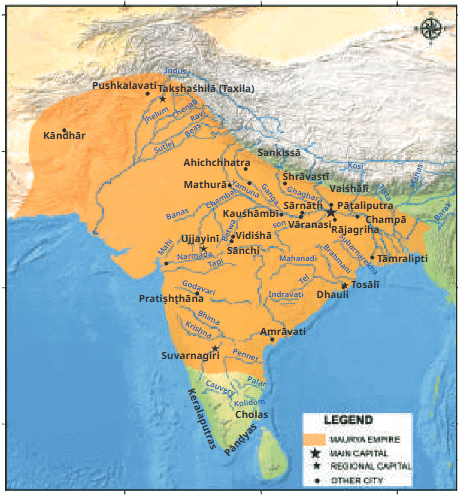
Mauryan Empire
Very Short Answer Questions
Q1: What is the Latin origin of the word ’empire’?
Q2: Who helped Chandragupta Maurya in establishing the Maurya Empire?
Q3: What was the main contribution of Ashoka’s edicts?
Q4: Which battle made Ashoka choose non-violence?
Q5: What was the capital of the Maurya Empire?
Short Answer Questions
Q1: How did the Nanda dynasty contribute to the rise of the Maurya Empire?
Q2: What was the role of Kauṭilya in the formation of the Maurya Empire?
Q3: How did the Maurya Empire impact trade and administration?
Q4: What were Ashoka’s views on governance, as seen in his edicts?
Q5: Why was the Kalinga War significant for Ashoka’s rule?
Match the Following
(Match Column A with the correct option in Column B)
Q1:What does the term ‘Second Urbanisation’ refer to? a) Growth of cities during the British era b) Rebuilding of Harappan cities c) Growth of new cities in the 1st millennium BCE d) Urban development in the Gupta period
Q2:Which ancient capital was located in the mahajanapada of Magadha? a) Ujjain b) Rajagriha c) Kausambi d) Pataliputra
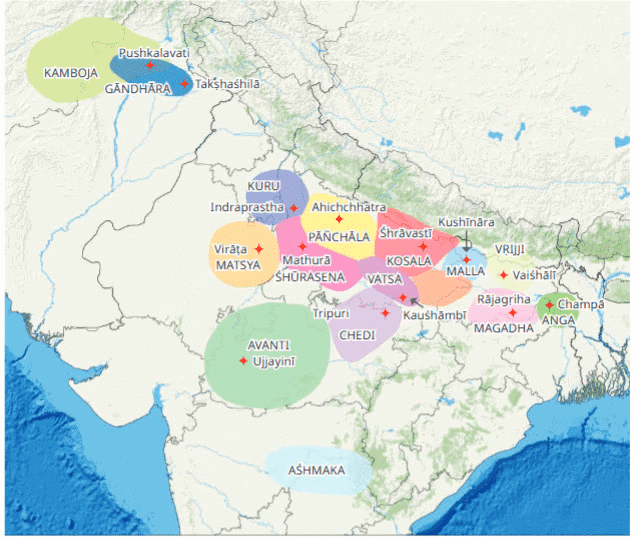
Map of 16 Mahajanpadas
Q3:What was the role of the sabhā or samiti in janapadas? a) They collected taxes b) They conducted rituals c) They advised the raja d) They built fortifications
Q4:Which of the following was a gana or sangha rather than a monarchy? a) Magadha b) Kosala c) Vajji d) Avanti
Q5:What helped the mahajanapadas grow in the Ganga plains? a) Lack of enemies b) Coastal trade c) Fertile land and iron tools d) Influence of Harappan cities
Q6:Which of these was a key innovation in the economic system of the mahajanapadas? a) Use of bronze coins b) Stone seals c) Punch-marked coins d) Gold jewellery
Q7:Which southern kingdom was known for trade in spices and precious stones? a) Mauryas b) Cheras c) Guptas d) Kushanas
Q8:What term describes the social group associated with a specific job passed through families? a) Varna b) Samiti c) Jāti d) Sabha
Q9:Which trade route connected the Ganga plains with south India? a) Uttarapatha b) Dakshinapatha c) Silk Route d) Spice Route
Q10:Which of the following varnas included traders and farmers? a) Brahmins b) Kshatriyas c) Vaishyas d) Shudras
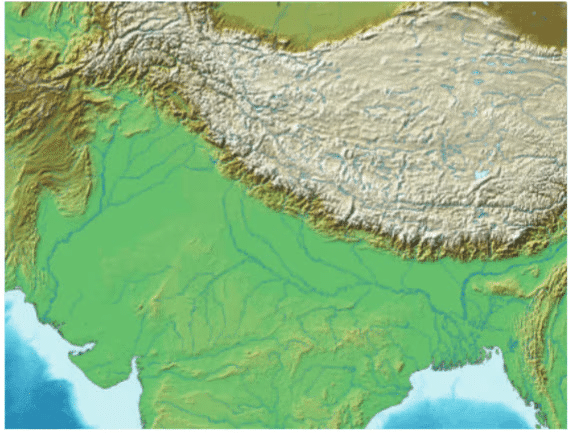
Fertile Ganga Plains heped Mahajanpadas to grow
Fill in the Blanks
Q1: The term janapada means “where people __________.”
Q2: The __________ was a council of elders that advised the raja.
Q3: Fortified cities often had __________ and narrow gateways for defense.
Q4: The capital of Vatsa mahajanapada was __________.
Q5: __________ coins were early silver coins stamped with symbols.
Q6: In a __________, the raja’s power passed to his son.
Q7: __________ is the term for a job-based group in society.
Q8: The term varna comes from __________ texts.
Q9: The __________ kingdom in south India is mentioned in ancient Tamil texts.
Q10: __________ connected northwest India with the Ganga plains.
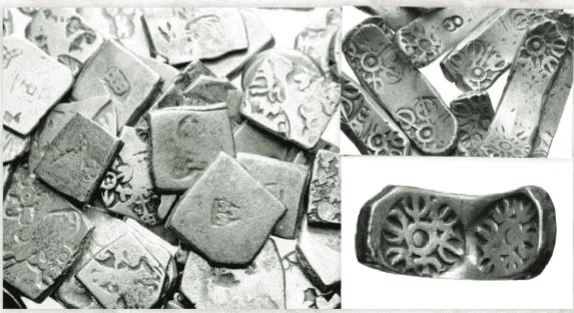
Punch Marked Coins
Very Short Answer Questions
Q1: What does the word janapada literally mean?
Q2: Name any one mahajanapada with a republican form of government.
Q3: What metal became common for tools and weapons in this period?
Q4: What were early Indian coins called?
Q5: Which ancient capital is now near modern-day Patna?
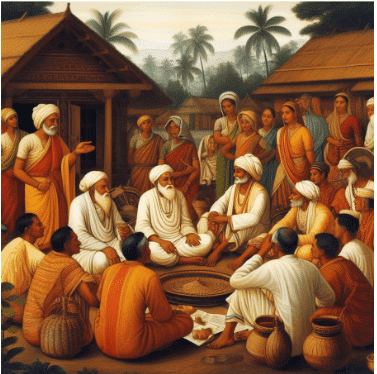
Samiti
Short Answer Questions
Q1: What were mahajanapadas and why were they important?
Q2: What was the role of sabhā and samiti in governance?
Q3: How did iron tools impact agriculture?
Q4: Describe the social structure based on varnas.
Q5: What was Dakshinapatha and why was it significant?
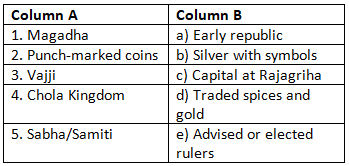
Match the Following
(Match Column A with the correct option in Column B)
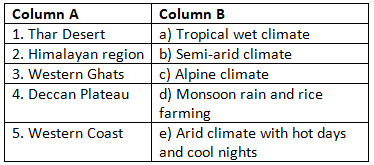
Q1:What is the main difference between weather and climate? a) Weather is the average condition over many years, while climate is the short-term condition. b) Weather is the short-term condition, while climate is the average condition over many years. c) Weather occurs only in tropical areas, while climate is for the entire planet. d) Weather and climate are the same thing.
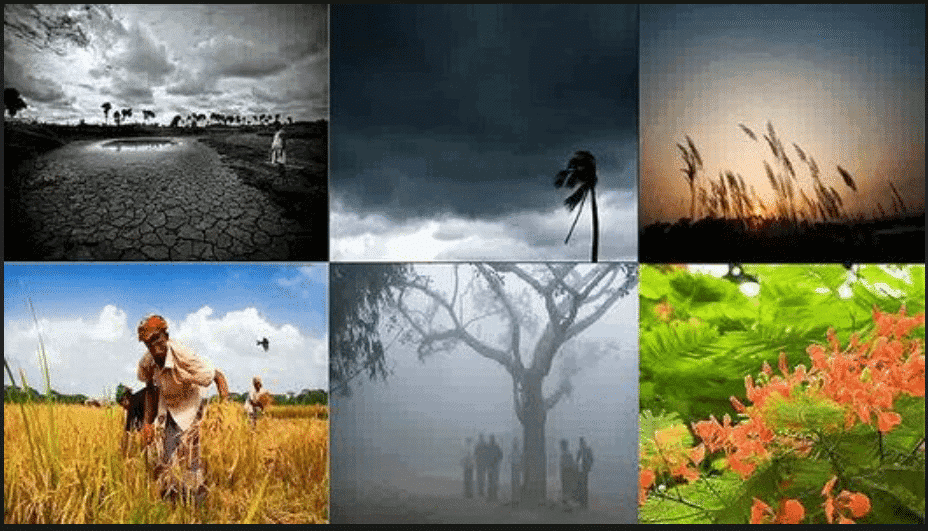
Weather of India
Q2:Which region of India experiences an alpine climate? a) Western Ghats b) Himalayan region c) Ganga Plains d) Thar Desert
Q3:Which of the following is not a factor affecting India’s climate? a) Latitude b) Altitude c) Longitude d) Proximity to the sea
Q4:What does the term ‘microclimate’ refer to? a) A region with a climate similar to the surrounding areas. b) A small area with a unique climate different from its surrounding areas. c) A type of tropical climate. d) A specific seasonal weather pattern.
Q5:Which of the following is a primary characteristic of the Thar Desert? a) Cold winters with snowfall b) Hot days with cool nights c) Tropical wet climate d) Mild summers and winters
Q6:What is the main reason for the monsoon rains in India? a) Winds from the Arctic b) Wind patterns caused by pressure differences between land and sea c) Heavy snowmelt from the Himalayas d) Winds from the Bay of Bengal only
Q7:Which climate type is found in the Western Coast of India? a) Arid climate b) Tropical wet climate c) Alpine climate d) Temperate climate
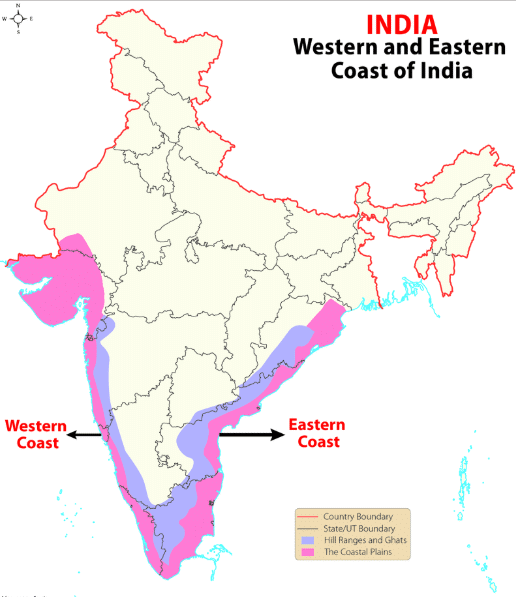
Coasts of India
Q8:What is the role of the Himalayas in India’s climate? a) They block cold desert winds from Central Asia. b) They warm the air in the northern plains. c) They prevent rainfall in the southern parts. d) They help control the monsoon winds.
Q9:Which region of India is most affected by the Northeast Monsoon? a) Western Ghats b) Deccan Plateau c) Eastern India and Southern Peninsula d) Himalayan region
Q10:Which of the following cities experiences a larger range of temperatures between summer and winter? a) Mumbai b) Delhi c) Chennai d) Kolkata
Fill in the Blanks
Q1: The weather of India is greatly influenced by the __________ system.
Q2: The __________ climate is found in the Himalayan region, where temperatures stay below freezing in the highest peaks.
Q3: __________ is the term for the small area’s unique climate that differs from its surrounding region.
Q4: The __________ Desert has hot days and cool nights, with very little rainfall.
Q5: The __________ Monsoon brings rain to the eastern and southern parts of India during winter.
Q6: The __________ climate in India is ideal for growing rice and spices due to heavy monsoon rainfall.
Q7: The __________ Plateau experiences a semi-arid climate with hot summers and mild winters.
Q8: __________ is the term for the rise in global temperatures caused by the accumulation of greenhouse gases.
Q9: The __________ ranges influence rainfall by blocking moist air coming from the sea.
Q10: __________ refers to the average weather pattern in an area over many years.
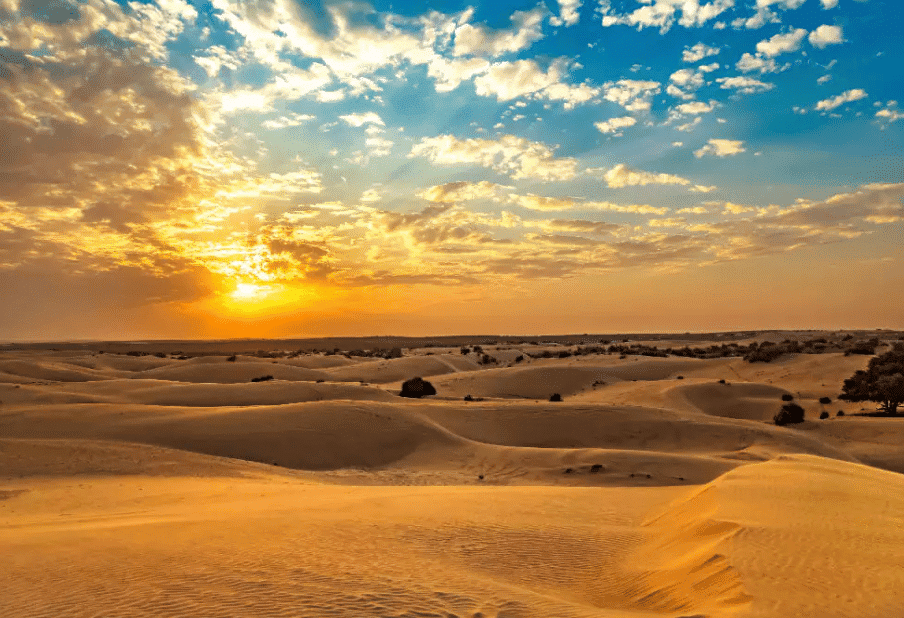
Thar Desert
Very Short Answer Questions
Q1: What does the word “monsoon” mean?
Q2: What is a microclimate?
Q3: Which climate is found in the Deccan Plateau?
Q4: What causes the monsoon rains in India?
Q5: Which region has the coldest climate in India?
Short Answer Questions
Q1: What is the difference between weather and climate?
Q2: How does altitude affect India’s climate?
Q3: Why is the Western Ghats important in determining the climate of India?
Q4: What role does latitude play in India’s climate?
Q5: How does proximity to the sea influence the climate?
Match the Following
(Match Column A with the correct option in Column B)
Q1:Which layer of the atmosphere is responsible for weather phenomena? a) Stratosphere b) Thermosphere c) Troposphere d) Mesosphere
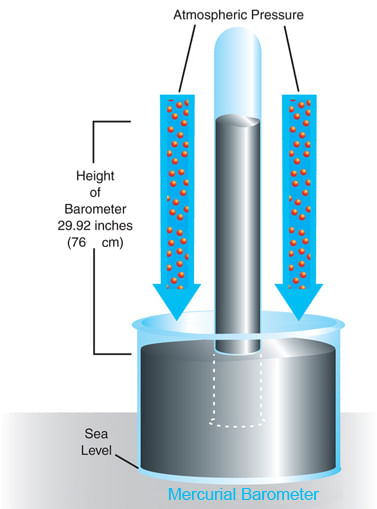
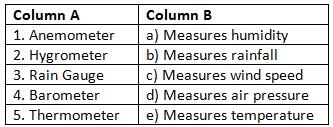
Q2:Which instrument is used to measure atmospheric pressure? a) Thermometer b) Barometer c) Hygrometer d) Anemometer
Pressure Gauge
Q3:What is the unit of measurement for rainfall in a rain gauge? a) Kilometers b) Degrees c) Millimeters d) Millibars
Q4:Which weather condition is caused by low atmospheric pressure? a) Snowfall b) Depression c) Fog d) Lightning
Q5:Which of the following instruments is used to measure humidity? a) Hygrometer b) Thermometer c) Barometer d) Wind Vane Thermometer
Q6:What is used to measure wind speed? a) Wind Vane b) Barometer c) Anemometer d) Rain Gauge
Q7:What is the normal atmospheric pressure at sea level? a) 1000 mb b) 650 mb c) 1013 mb d) 950 mb
Q8:Which state has high humidity, making clothes dry slower? a) Delhi b) Jaipur c) Kochi d) Shimla
Q9:Which of the following best describes weather? a) Monthly climate of a region b) Permanent atmospheric condition c) Short-term atmospheric condition d) Long-term rainfall pattern
Q10:Which department in India issues weather warnings? a) IMD b) WHO c) NDRF d) UNESCO
Fill in the Blanks
Q1: The __________ is the lowest layer of the atmosphere where all weather happens.
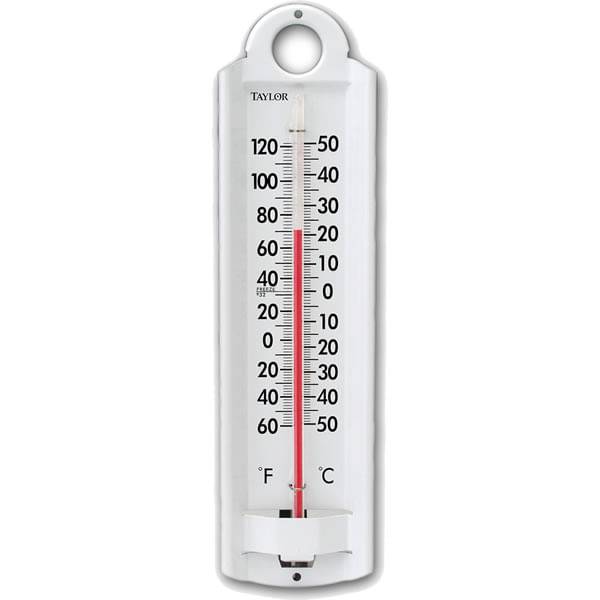
Q2: A __________ is used to measure temperature.
Q3: A rain gauge measures __________ in millimeters.
Q4: __________ is the weight of air pressing down on the Earth’s surface.
Q5: The __________ measures wind direction.
Q6: The instrument used to measure wind speed is the __________.
Q7: The __________ measures humidity in the air.
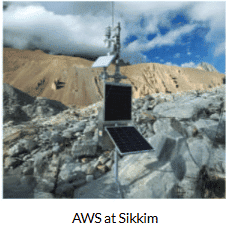
Q8: __________ stations combine instruments to measure all weather elements.
Q9: The mean daily temperature is calculated by adding maximum and minimum temperatures and dividing by __________.
Q10: High humidity __________ the rate of evaporation.
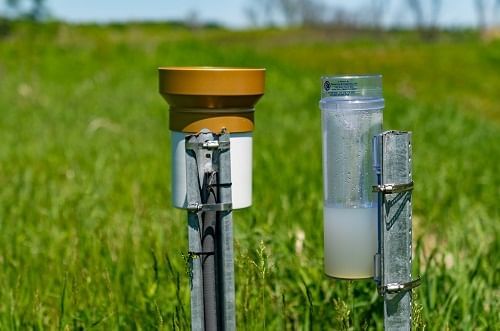
Rain GaugeVery Short Answer Questions
Q1: What is the standard atmospheric pressure at sea level?
Q2: Which tool is used to measure rainfall?
Q3: Name the instrument used to measure humidity.
Q4: In which Indian city was an AWS set up in 2023 at over 4800 meters?
Q5: What does IMD stand for?
Short Answer Questions
Q1: Why are weather predictions important?
Q2: What does an anemometer do and how does it work?
Q3: How does atmospheric pressure affect mountaineers?
Q4: What is the role of AWS in weather monitoring?
Q5: How is humidity measured and why is it important?
Match the Following
(Match Column A with the correct option in Column B)
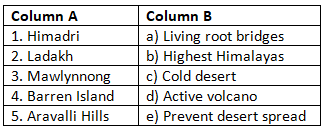
Q1: What is the meaning of the word ‘Himalaya’ in Sanskrit? a) Frozen peaks b) Land of snowstorms c) Abode of snow d) Cold mountains
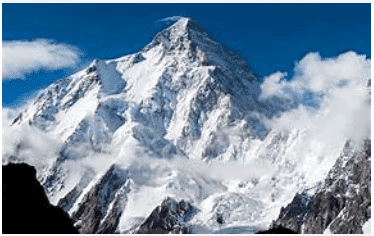
Himalayas
Q2: Which of the following is India’s only active volcano? a) Mount Abu b) Barren Island c) Kanchenjunga d) Deomali
Q3: The Gangetic Plains are considered ideal for agriculture because of: a) Rocky terrain b) Mineral-rich soil from rivers c) Frequent snowfall d) Presence of deserts
Q4: Which desert festival is celebrated in the Thar region? a) Diwali b) Pushkar Mela c) Losar d) Pongal
Q5: Which river flows westward into the Arabian Sea instead of eastward into the Bay of Bengal? a) Godavari b) Krishna c) Narmada d) Kaveri
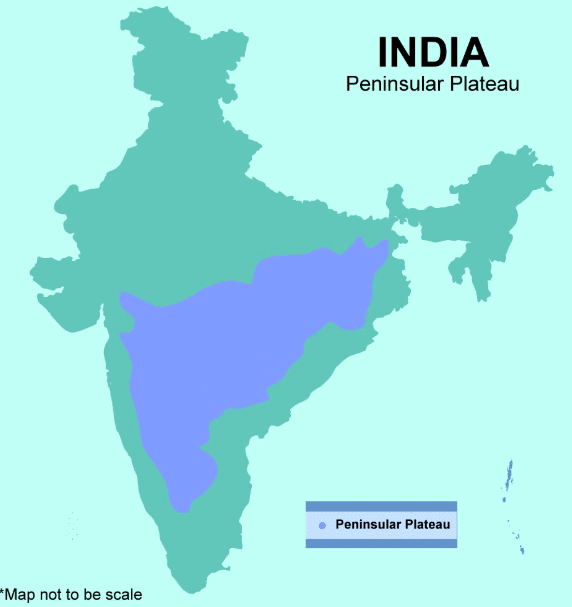
Q6: What kind of landform is the Peninsular Plateau? a) Flat desert b) High mountain c) Elevated flat land with steep slopes d) River valley
Peninsular Plateau
Q7: Which Indian region is called a cold desert? a) Ladakh b) Sundarbans c) Sikkim d) Arunachal Pradesh
Q8: Which Indian mountain range helps stop the spread of the Thar Desert? a) Himalayas b) Western Ghats c) Vindhyas d) Aravallis
Q9: Which plateau region is known for heavy rainfall and root bridges? a) Deccan Plateau b) Bundelkhand Plateau c) Meghalaya Plateau d) Malwa Plateau
Q10: Which animal is important for transport and daily life in Ladakh? a) Tiger b) Yak c) Camel d) Elephant
Fill in the Blanks
Q1: India is a part of the __________ Subcontinent.
Q2: The highest peaks of the Himalayas are located in the __________ Himalayas.
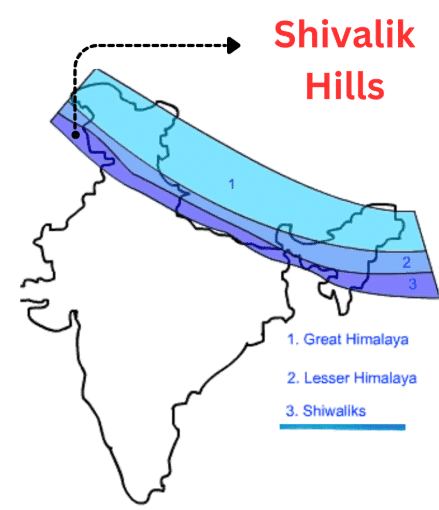
Q3: The outermost range of the Himalayas is called the __________ Hills.
Q4: The Thar Desert covers states like Rajasthan and __________.
Q5: Ladakh is also called the __________ desert of India.
Q6: __________ and Tapti are the two major west-flowing rivers of India.
Q7: The peacock, India’s national bird, is found in the __________ Plains.
Q8: The Western Ghats are recognized as a __________ World Heritage Site.
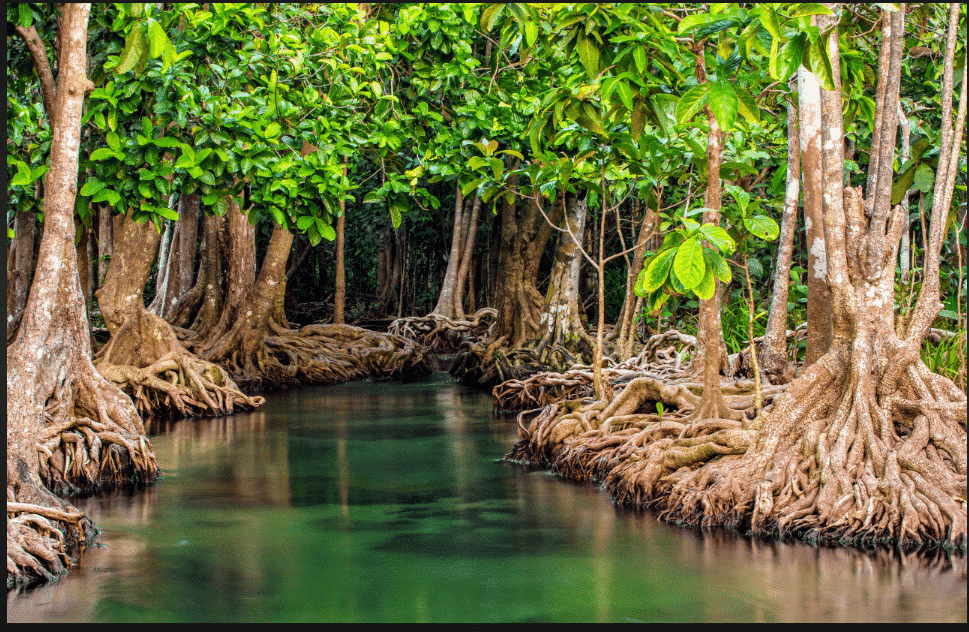
Q9: The Sundarbans are known for their __________ forests.
Q10: An __________ is a group or chain of islands.
Very Short Answer Questions
Q1: What is the approximate length of the Himalayas?
Q2: Name the two island groups of India.
Q3: What is the cleanest village in Asia?
Q4: Which hill stations are found in the Himachal range?
Q5: Which mineral is extracted in Zawar mines of the Aravallis?
Sundarban
Short Answer Questions
Q1: Why are the Himalayas called the ‘Water Tower of Asia’?
Q2: What are some adaptations seen in the Thar Desert region?
Q3: Describe two features of the Peninsular Plateau.
Q4: How are the islands of Andaman and Nicobar ecologically important?
Q5: What makes the Ganga and Brahmaputra rivers culturally special?
Match the Following
(Match Column A with the correct option in Column B)
The Big Question (Page 247)Q1: What are markets and how do they function? Ans:
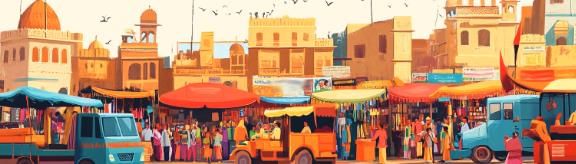
A market is a place or system where people buy and sell goods and services; it can be physical (shops) or online.
Markets work through the interaction of buyers and sellers, who agree on a price for goods or services.
Prices change based on demand (how much buyers want) and supply (how much sellers offer).
Buyers and sellers often negotiate to reach a fair price, and if they can’t agree, no trade happens.
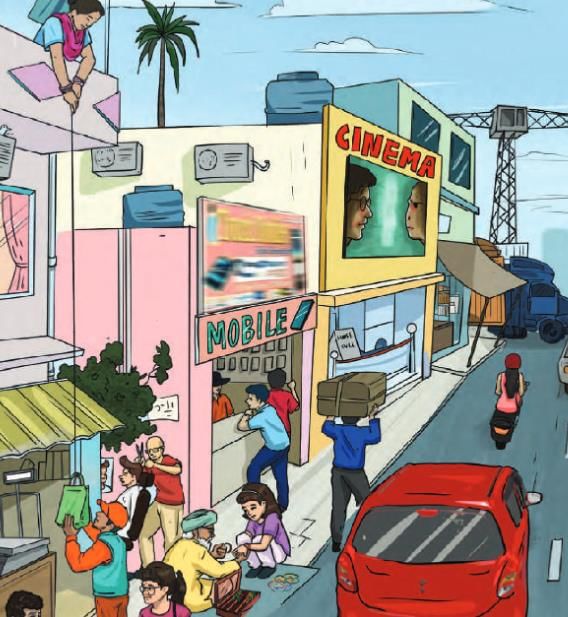
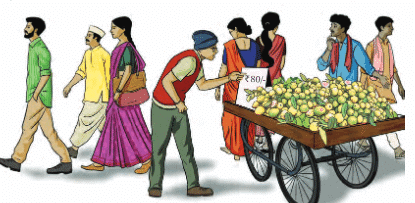
MarketQ2: What is the role of markets in people’s lives? Ans:
Markets connect producers (farmers, artisans) with consumers who need goods and services.
They help people get things they cannot make themselves, like clothes, food, or electronics.
Markets build trust and relationships; for example, families often rely on local sellers they know.
Markets encourage innovation by responding to what consumers want, improving products over time.
Q3: What role does the government play in markets? Ans:
The government controls prices to protect buyers (like capping medicine prices) and sellers (like minimum crop prices).
It ensures quality and safety by setting standards and testing goods (e.g., food and medicines).
The government regulates pollution and protects the environment from harmful market effects.
It provides public goods (roads, parks, police) that markets don’t supply, ensuring welfare for all.
Another Glimpse of MarketQ4: How can consumers assess the quality of goods and services they purchase? Ans:
Consumers check labels and certifications like FSSAI (food safety), ISI (product quality), AGMARK (agricultural quality), and BEE (energy efficiency).
They rely on word of mouth from family and friends for trusted recommendations.
Online reviews and ratings help buyers decide on products, especially for online shopping.
Consumers look at price, size, color, and durability to choose the best product for their needs.
Back Questions (Page 271 & 272)Q1: What are the main features of a market? Recall a recent visit to a market to purchase a product. What are the different features of a market that you observed during this visit? Ans: A market is a place where buyers and sellers come together to exchange goods and services. The main features of a market include:
Buyers and Sellers: Every market has both buyers and sellers. Without buyers, there would be no demand for goods, and without sellers, there would be no supply.
Goods and Services: Markets facilitate the exchange of goods (like fruits, vegetables, clothes, etc.) and services (like tailoring, haircuts, etc.).
Price: Prices are determined by the interaction between demand from buyers and supply by sellers. In some markets, buyers negotiate prices with sellers.
Physical or Virtual: Markets can be physical (like local bazaars or malls) where people meet face-to-face to exchange goods, or online (like e-commerce websites) where people can buy goods from the comfort of their home.
Competition: In some markets, there are many sellers offering similar products, which leads to competition. This often results in lower prices or better quality for consumers.
Regulation: Some markets are regulated by the government to ensure fair trading, quality control, and proper functioning.
For example, during my recent visit to a local market to purchase vegetables, I observed the following features:
There were various stalls where different sellers were offering vegetables.
Prices were displayed, and bargaining between buyers and sellers was happening.
I noticed that the goods were fresh and were being weighed using traditional scales, which is a common feature in such markets.
The seller was negotiating the price of beans with a buyer, demonstrating the feature of price negotiation.
The market had a lively atmosphere with people buying and selling.
Q2: Remember the epigraph from a famous economist at the beginning of the chapter? Discuss its relevance in the context of the chapter you have read. Ans:
The epigraph from Adam Smith, “Prosperity emanates from the market that develops when people need goods and services that they can’t create themselves,” is highly relevant to the chapter on markets.
Adam Smith, a famous 18th-century economist, highlights the role of markets in driving economic prosperity. He suggests that markets arise when people need goods and services that they cannot produce by themselves. This need for goods and services creates a space for exchange — the essence of markets.
Markets provide a platform for people to meet their needs by purchasing goods and services that they do not produce on their own.
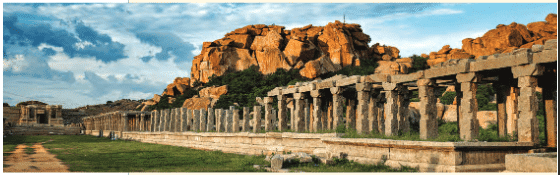
For example, in ancient markets like the Hampi Bazaar, people traded goods they produced for goods they needed, creating a thriving market economy. Similarly, in modern times, markets have grown to include not only physical markets but also online platforms, making it easier for people to access goods and services from different parts of the world. Hampi Bazaar
Adam Smith’s quote underlines the importance of these exchanges, which not only fulfill personal needs but also drive economic prosperity by fostering trade, creating jobs, and facilitating the movement of goods and services.
Q3: In the example of buying and selling of guavas, imagine that the seller is getting a good price and is able to make a profit. He will try to get more guavas from farmers to be able to sell them at the same price and increase his earnings. What is the farmer likely to do in this kind of a situation? Do you think he will start thinking about the demand for guavas in the next season? What is likely to be his response? Ans: If the seller is making a good profit by selling guavas at a particular price, the farmer is likely to notice this and take steps to meet the increasing demand for the fruit. The farmer might:
Increase Production: Seeing the seller’s success, the farmer would likely try to produce more guavas to sell, anticipating that there will be more demand.
Plant More Trees: The farmer might also consider planting more guava trees to increase the supply of guavas in the upcoming seasons.
Consider Seasonal Demand: The farmer would start thinking about the demand for guavas in the next season and may plan ahead to ensure that he can meet the market’s needs. He might even consider planting varieties of guavas that yield fruit during peak demand periods.
Adjust Prices: If demand increases and prices remain high, the farmer may take advantage of the situation by selling at a higher price.
The farmer’s response will depend on how well he can anticipate the demand for guavas and adjust his production and pricing strategies accordingly. This highlights the role of market dynamics in shaping the production decisions of farmers.
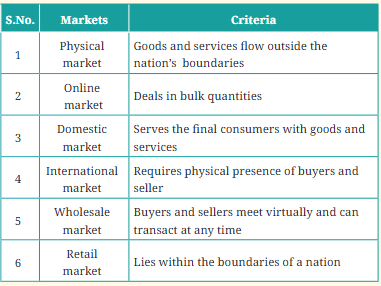
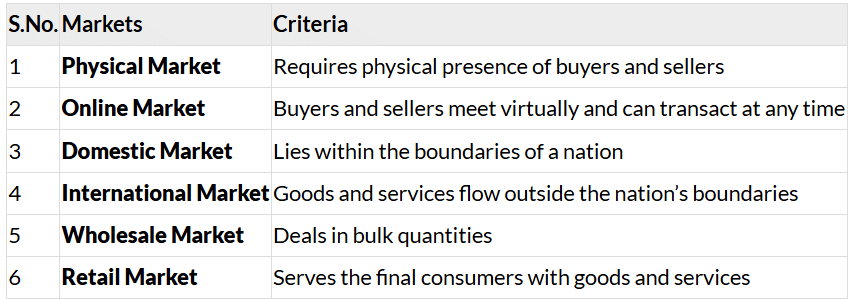
Q4: Match the following types of markets with their characteristics: Ans:
Q5: Prices are generally determined by the interaction between demand from buyers and supply by sellers. Can you think of products where prices are high despite a lesser number of buyers demanding the product? What could be the reasons for that? Ans: Yes, there are several products where prices are high despite a lower number of buyers. Some examples are:
Luxury Goods (e.g., designer handbags, high-end watches): These products are priced high because they are seen as status symbols. Even if only a few buyers demand them, the price remains high due to their exclusivity, quality, and brand value. Buyers are willing to pay a premium for these items.
Rare Collectibles (e.g., rare coins, antique artwork): The price of rare collectibles often remains high due to their uniqueness, historical value, and limited availability. Even if there are fewer buyers, the scarcity factor keeps prices high.
Specialized Medical Equipment: Products like advanced medical devices or equipment used in specialized treatments are priced high despite lower demand because they require specialized production processes, expertise, and have high development costs.
Real Estate in Prime Locations: In certain cities, real estate in prime locations can be very expensive, even if there is limited demand. This is because the land or property is in a highly sought-after area with limited availability, leading to high prices despite fewer buyers.
The high prices for these products are influenced by factors like exclusivity, scarcity, perceived value, and high production costs rather than just the demand-supply equation.
Q6: Look at the real life situation that a retail seller of vegetables encountered: A family came to shop for vegetables. The price of beans that the seller on the cart was offering was ₹30/kg. The lady started to bargain with the seller to bring the price down to ₹25/kg. The seller protested and refused to sell at that price saying he would make a loss at that price. The lady walks away. The family then goes to a super bazaar nearby. They buy vegetables in the super bazaar where they pay ₹40/kg for the beans that are neatly packed in a plastic bag. What are the reasons that the family does this? Are there factors that affect buying and selling which are not directly connected to price? Ans: There are several reasons why the family might choose to buy vegetables at a higher price in the super bazaar despite finding a lower price at the street vendor’s cart:
Quality and Packaging: The vegetables at the super bazaar were neatly packed in a plastic bag, indicating better hygiene and quality. This might have influenced the family to pay a higher price for better quality.
Convenience: The super bazaar may have been more convenient for the family to shop in, as it is a controlled environment with a wider range of products and a more comfortable shopping experience.
Trust and Reliability: The family might trust the super bazaar for consistently providing good-quality vegetables, which they feel is worth paying a higher price for. They may have had a long-term relationship with the store and were willing to pay a premium for that trust.
Lack of Time: Sometimes, buyers may not have the time to haggle over prices and may prefer the convenience of paying a fixed price for goods that are packaged and ready to be taken home.
Factors affecting buying and selling are not always related to price. Convenience, trust, quality, and the shopping environment can also play a significant role in a buyer’s decision-making process.
Q7: There are some districts in India that are famous for growing tomatoes. However, during some seasons, the situation is not good for farmers. With a large quantity of harvest, there are reports of farmers throwing away their produce and all their hard work going to waste. Why do you think farmers do this? What role can wholesalers play in such situations? What are the possible ways of ensuring that the tomatoes are not wasted, and the farmers are also not at a loss? Ans: Farmers may throw away their tomato harvest due to a surplus in the market where demand is low, and the price is too low to cover their costs. This often happens when the market becomes flooded with tomatoes, and buyers are not willing to pay a fair price. Role of wholesalers: Wholesalers can play a significant role in managing supply and demand. They can purchase the excess stock from farmers during times of surplus and store it in cold storage facilities. By doing so, they can regulate the supply of tomatoes in the market and ensure that the price does not fall too low. Wholesalers can also help by creating networks where tomatoes can be sold in different regions where demand might be higher. Possible Solutions:
Cold Storage: Implementing more cold storage facilities for tomatoes can help preserve them for longer periods, allowing farmers to sell them when the prices are better.
Diversified Markets: Encouraging farmers to explore markets beyond their local regions, such as exports or other parts of the country, can help them find buyers.
Supply Chain Improvements: Building better supply chains to ensure that tomatoes reach the market efficiently and without wastage is crucial. This includes better transportation, storage, and distribution systems.
By improving the supply chain, enhancing market reach, and ensuring better price regulation, farmers can minimize waste and increase their earnings.
Q8: Have you heard about or visited a school carnival/fair organized by your school or any other school? Discuss with your friends and teachers about the kind of activities organized by students there. How do they conduct selling and negotiation with the buyers? Ans: Yes, I have visited a school carnival/fair organized by my school. These events typically feature a variety of activities organized by students, such as stalls selling food, games, toys, and handmade crafts. There are also live performances, dance shows, and art exhibitions. In these events, students take charge of setting up and running their own stalls. Regarding the selling and negotiation process:
Selling: Students often set up a fixed price for their items, such as ₹10 for a piece of cake or ₹50 for a handmade bracelet. They make sure the items are attractively displayed to catch the attention of visitors.
Negotiation: In some cases, buyers may try to negotiate the price, especially if they are buying multiple items. Students may offer a discount or extra items to persuade buyers to make a purchase. For example, if a person wants to buy three cupcakes, the student might offer them at a lower price, like ₹25 for three, instead of ₹10 for each.
This type of negotiation teaches students valuable skills like communication, pricing strategies, and customer service.
Q9: Choose any 5 products and check out the label with the certification signs discussed in the chapter. Did you find products that did not have a logo? Why do you think this is so? Ans: The following are examples of five products I checked, along with their certification signs:
Packaged Food (e.g., biscuits) – FSSAI (Food Safety and Standards Authority of India) logo. This ensures that the product is safe for consumption.
Electrical Appliance (e.g., air conditioner) – ISI (Indian Standards Institute) mark. This ensures the product meets the safety standards set for electrical appliances.
Agricultural Produce (e.g., honey) – AGMARK certification. It indicates that the agricultural product meets specific quality standards.
Cosmetics (e.g., shampoo) – BIS (Bureau of Indian Standards) logo. This ensures the product meets the safety and quality requirements for cosmetics.
Clothing (e.g., woollen sweaters) – Woolmark certification. This label assures that the product is made from quality wool.
In some cases, I found that certain products did not have any logo or certification signs. This could be for several reasons:
Local or Homemade Products: Some handmade or locally produced goods may not be certified, as they are produced on a small scale or for specific local markets.
Unregulated Markets: Products sold in unregulated markets or by informal sellers might not follow the certification process. These sellers might skip the certification due to costs or lack of awareness.
New or Unbranded Products: New products from small or unrecognized brands may not have gone through the certification process yet, as it might be expensive or not required for small-scale production.
Q10: You and your classmates have manufactured a soap bar. Design a label for its packaging. What in your opinion should be mentioned on the label for the consumer to know the product better? Ans: When designing a label for a soap bar, it is important to include information that helps the consumer understand the product, its usage, and its safety. Here’s what the label should include:
Brand Name: The name of the soap brand to make it easily recognizable.
Product Name: Clear mention of the product, such as “Herbal Soap” or “Lavender Scented Soap”.
Ingredients: A list of ingredients used in making the soap. For example, “Contains glycerin, lavender extract, coconut oil, and essential oils.”
Net Weight: The weight of the soap bar, e.g., “Net weight: 100g.”
Usage Instructions: How to use the soap effectively. For example, “Wet the soap and lather with water. Rinse thoroughly.”
Certification Logos: If applicable, include any certifications like FSSAI (for safe ingredients), ISI (for quality assurance), or eco-friendly certifications.
Manufacturing Date and Expiry Date: To inform consumers of the shelf life of the product. For example, “Manufactured on: 01/01/2023. Expiry Date: 01/01/2025.”
Benefits: A brief description of the benefits of using the soap, e.g., “Moisturizing and soothing for dry skin.”
Storage Instructions: How to store the soap to maintain its quality, e.g., “Store in a cool, dry place away from direct sunlight.”
Contact Information: The manufacturer’s contact details, including phone number, website, or address, for consumer inquiries or complaints.
Price: Mention the price of the soap bar clearly, e.g., “₹50.”
The label should be simple, attractive, and easy to read to encourage customer trust and make the product more appealing in the market.
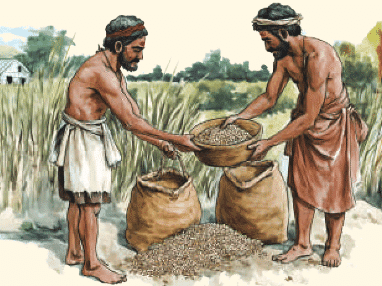
Q1: How did exchange take place before money? Ans:
People used the barter system, where they exchanged one item for another (like rice for cloth or cattle for salt).
Items like cowrie shells, salt, cloth, and cattle were commonly used for trade.
Barter worked only if both parties needed what the other had—this was called double coincidence of wants.
It had many problems, such as difficulty in carrying goods, dividing items, and measuring value.
Barter System
Q2: Why did money come into existence? Ans:
The barter system had limitations, such as the need for exact matches in wants and trouble dividing goods.
Money solved these issues by being portable, durable, divisible, and accepted by everyone.
It became a common medium to buy, sell, and store value.
Money made trade easier and faster, helping people meet their needs efficiently.
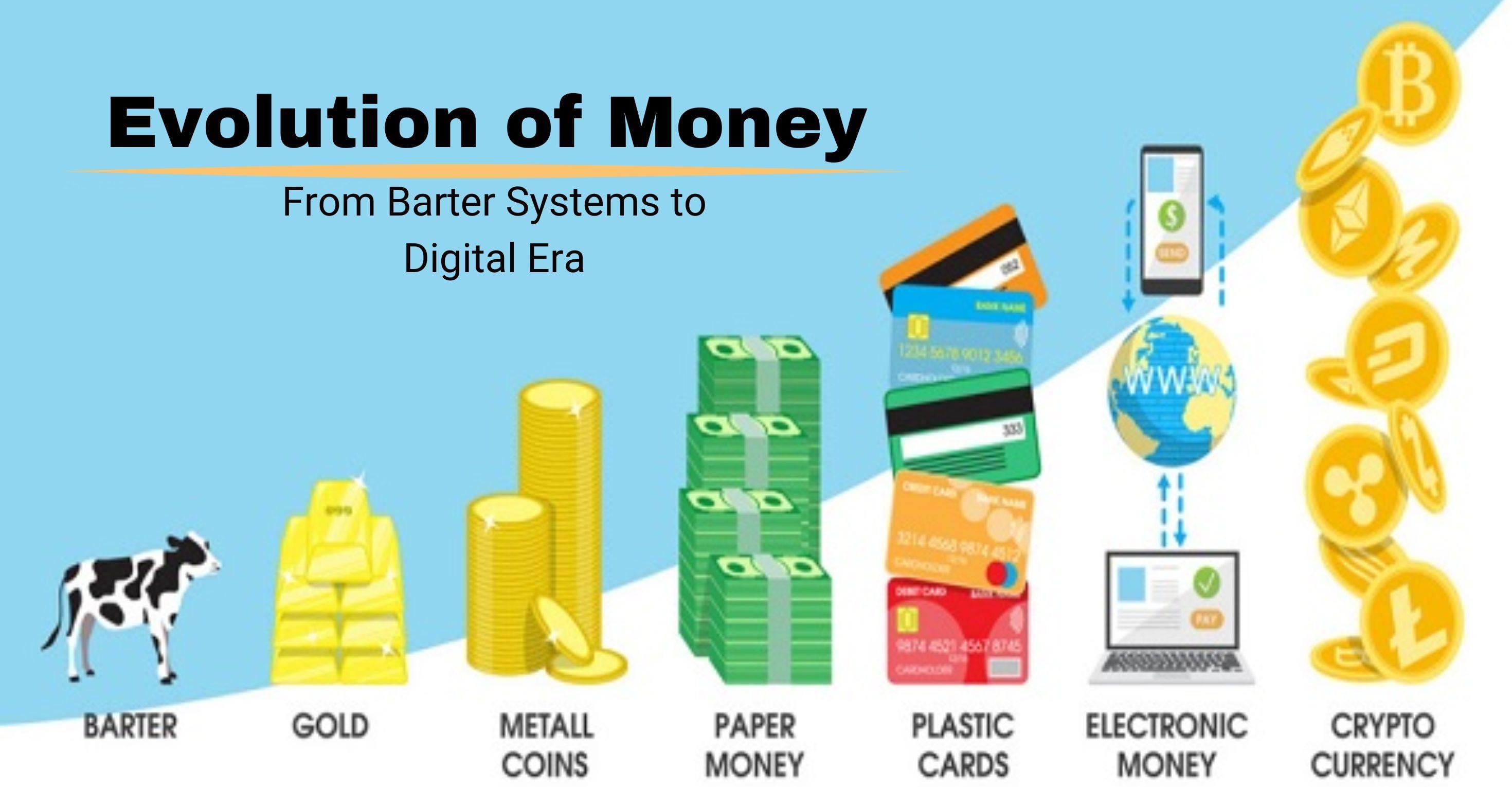
Q3: How has money transformed into various forms over time? Ans:
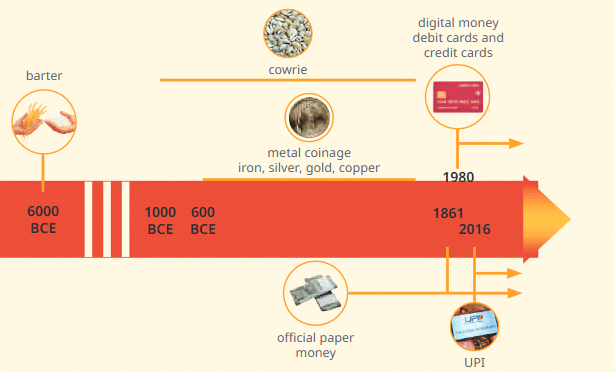
Early money included natural items like cowrie shells, feathers, or large stones used in trade.
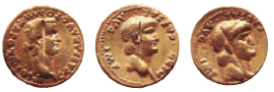
Then came metal coins made of gold, silver, or copper, often issued by kings with symbols and images.
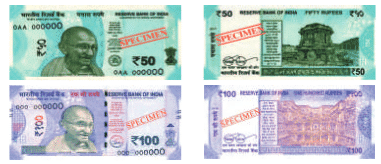
Later, paper currency was introduced for larger values—notes had special marks and were issued by the Reserve Bank of India.
Today, we use digital money like UPI, debit/credit cards, and QR codes, making payments easy and instant.
Evolution of MoneyBack Question (Page 244 & 245)Q1: How does the barter system take place and what kinds of commodities were used for exchange under the system? Ans: The barter system is an exchange method where people directly trade goods and services without using money. In this system, if a person wants something they don’t have, they offer something they own in exchange for it. For example, if a farmer has wheat but needs a pair of shoes, they might offer some wheat to a shoemaker in return for shoes.
Various commodities were used for exchange in the barter system. These could be everyday items or goods that were widely accepted and useful. Common items included:
Cattle: Cows, goats, and horses were exchanged for various goods and services.
Food Grains: Wheat, rice, and other grains were commonly used, especially in agricultural societies.
Cloth: Fabrics and garments were exchanged, especially in regions with textile industries.
Salt: This was a valuable commodity in ancient times, used for both food preservation and seasoning.
Cowrie shells: These shells were used as a medium of exchange in various cultures, especially in Africa and parts of India.
Q2: What were the limitations of the barter system? Ans:Although the barter system was a common way of exchange, it had several limitations:
Double Coincidence of Wants: For a successful exchange, both parties must have what the other wants. For instance, if you have wheat but need shoes, you must find someone who has shoes and needs wheat. This often made trade difficult.
Lack of Common Measure of Value: There was no standard way to measure the value of goods. For example, how many bags of wheat should be exchanged for a pair of shoes? The value of goods could vary greatly depending on the situation, leading to disputes.
Indivisibility: Some goods could not be divided for exchange. For example, if a person wanted to exchange an ox for several goods, it would be hard to split the ox without losing its value.
Portability: Carrying large or bulky goods for trade, like cattle or grains, was not convenient, especially for long distances.
Durability: Many commodities used in the barter system, like food items, could spoil or get damaged, making them unsuitable for long-term storage.
These limitations led to the development of money as a more efficient medium of exchange.
Journey of Money
Q3: What were the salient features of ancient Indian coins? Ans: Ancient Indian coins had several important features that made them unique:
Materials Used: Coins were made from various metals, including gold, silver, copper, and alloys. The use of metals like gold and silver made them valuable.
Designs and Symbols: Coins often had symbols, images, or deities engraved on them. For example, the coins of the Maurya Empire featured the image of the lion or the peacock, and those of the Chalukyas had the Varaha image (the boar avatar of Lord Vishnu).
Standardization: Coins were minted in specific weights and sizes to maintain uniformity in transactions.
Names and Inscriptions: Rulers often inscribed their names or titles on the coins, which helped identify the issuing authority. Some coins also featured the name of the place or kingdom.
Regional Variations: Different kingdoms had their own coins, often reflecting local symbols or deities. For instance, the Chola dynasty used coins with symbols like a tiger.
These features helped establish coins as a reliable and standardized form of currency for trade and transactions.
Q4: How has money as a medium of exchange transformed over time? Ans: The medium of exchange has undergone significant changes over time. Here’s how money has transformed:
Barter System to Commodity Money: Initially, people used the barter system, exchanging goods directly. Later, commodities such as salt, cattle, and cowrie shells became money because they were widely accepted.
Introduction of Coins: With the rise of empires and trade, coins made from metals like gold and silver were introduced. These coins were easier to carry, had a standardized value, and were accepted across regions.
Roman Gold Coins
Paper Currency: In the 18th century, paper money was introduced in India. It was easier to carry and store than coins, especially for large transactions. Paper currency also helped in managing the growing economy.
Digital Money: In modern times, digital money has emerged. People now use bank transfers, debit/credit cards, and mobile apps like UPI (Unified Payments Interface) for transactions. This has made payments faster and more convenient, reducing the need for physical money.
Money has evolved from a physical form to a digital one, making exchanges quicker and more efficient, and allowing for transactions across the globe without the need for physical exchange of goods.
Q5: What steps might have been taken in ancient times so that Indian coins could become the medium of exchange across countries? Ans: In ancient times, for Indian coins to become the medium of exchange across countries, the following steps might have been taken:
Acceptance Across Regions: Indian rulers, especially during the Mauryan and Gupta periods, ensured that their coins were accepted across neighboring kingdoms and regions. The value of these coins had to be recognized and trusted by traders from different areas.
Trade Networks: India had extensive trade networks with regions like the Roman Empire, Southeast Asia, and Central Asia. Indian merchants would trade goods such as spices, silk, and textiles. Coins from powerful Indian kingdoms like the Mauryas and the Kushans became accepted in these international trade routes.
Standardized Weights and Measures: To ensure the smooth exchange of coins across countries, Indian rulers standardized the weight and purity of their coins. This made it easier for merchants to understand the value of Indian coins in their local currencies.
Minting Coins with Universal Symbols: Indian rulers minted coins with symbols of gods, animals, and rulers that were recognized by people from different cultures. These symbols helped increase the trust in Indian coins.
Establishing Diplomatic Relations: Diplomatic ties with neighboring countries would ensure that Indian currency was accepted in foreign markets. The exchange of goods, services, and cultural values created an environment where Indian coins were seen as a valuable and trustworthy medium of exchange.
Through these steps, Indian coins became widely accepted and used in international trade, making them an essential part of ancient global commerce.
Paper Currency
Q6: Read the following lines from the Arthaśhāstra. “An annual salary of 60 paṇas could be substituted by an āḍhaka of grain per day, enough for four meals…” (One āḍhaka is equal to about 3 kg) What does this indicate about the value of one paṇa? Ans: This passage from the Arthaśhāstra indicates that the value of one paṇa can be understood by comparing it with the amount of grain (in this case, āḍhaka) that could substitute for it.
One paṇa’s Value: The passage suggests that an annual salary of 60 paṇas could be substituted by an āḍhaka of grain per day, which is about 3 kg of grain for four meals. If we break it down, this means that 60 paṇas is roughly equivalent to an annual supply of around 1,095 kg of grain (since 365 days are considered in a year).
Comparison: The value of one paṇa is calculated by dividing the total grain supply by the number of paṇas. In this case, 1 paṇa is equivalent to about 18 kg of grain per year or the amount of grain needed for a few meals every day.
Understanding the Value: This indicates that a paṇa was seen as a valuable unit of currency during ancient times, enough to sustain a person’s basic needs such as food for an entire year.
Q: The fine for failing to help a neighbour was 100 paṇas. Compare this with the annual salary. What conclusion can you draw about the human values being encouraged through this? Ans:The fine for failing to help a neighbor being set at 100 paṇas compared to the annual salary of 60 paṇas suggests that the value of community welfare and social responsibility was highly regarded in ancient Indian society.
Social Responsibility: The fine being higher than the annual salary shows that helping others was considered a moral duty. If a person failed to help a neighbor, it was seen as a serious offense that affected the well-being of the community. The fine served as a deterrent, encouraging people to help others in need.
Emphasis on Moral Values: The law reflects the importance of mutual assistance, and the penalty for not doing so ensured that people were encouraged to act responsibly and with compassion toward others.
Strengthening Community Ties: By setting a high fine for not helping, the society encouraged individuals to think of the community’s well-being before their own, reinforcing the idea of a harmonious and cooperative society.
The law and the fine indicate that human values such as compassion, social responsibility, and community welfare were strongly encouraged in ancient India. This approach helped maintain peace and unity within society.
Q7: Write and enact a skit to show how people may have persuaded each other to use cowrie shells (or other such items) as the medium of exchange. Ans: Skit: The Cowrie Shell Exchange Characters:
Merchant 1: A trader from the village.
Merchant 2: A trader from another village.
Customer: A person who needs goods.
Scene 1:Merchant 1 is setting up their stall with cloth and jewelry. Merchant 2 approaches with some wheat to trade. Merchant 2: Excitedly “I’ve got the finest wheat for exchange today! But how are we going to manage the exchange? I don’t need jewelry, and I don’t have any cloth either.” Merchant 1: Thinking for a moment “I have just the solution. Have you heard of cowrie shells?” Merchant 2: Curious “Cowrie shells? What are they?” Merchant 1: Showing a bag of shells “These shells are being used as money in many parts of the land. They are small, easy to carry, and most importantly, they are valuable. I can give you this amount of shells in exchange for your wheat, and you can then use these shells to buy what you need.” Merchant 2: Nods “That sounds interesting! But how can I be sure they’re of the same value as my wheat?” Merchant 1: Smiling “Well, here’s the beauty. Cowrie shells are being accepted widely, from the north to the south. And we all know the value of wheat. You can always exchange these shells for goods in any market—whether in the next village or in the city.” Merchant 2: Excited “I see! This will make trade so much easier! I can also use these shells in future trades.” Merchant 1: Confidently “Exactly. Now, let’s agree on the amount of wheat and shells to exchange.”
Scene 2:Customer enters the stall, looking at the goods and trying to decide which to buy. Customer: “I would like to buy that fine cloth, but I don’t have any wheat or jewelry to trade. Do you accept cowrie shells?” Merchant 1: Proudly “Yes, we do! Cowrie shells are now the currency of exchange. You can use them to buy anything here.” Customer: Smiling and showing a handful of shells “Here are the shells. Thank you for making trade so much simpler!” End of skit. Conclusion: This skit demonstrates how cowrie shells were introduced and persuaded as a medium of exchange, making trade easier and more convenient. The shells helped traders and customers conduct business smoothly without needing to rely on barter or specific goods like wheat, cattle, or cloth. This new form of currency improved trade, allowing people to exchange goods and services across villages and regions.
Q8: The RBI is the only legal source that prints and distributes paper currency in India. To prevent illegal printing of notes and their misuse, the RBI has introduced many security features. Find out what some of these measures are and discuss them in class. Ans:The Reserve Bank of India (RBI) ensures that paper currency in India is secure and not subject to counterfeiting. To prevent illegal printing of notes and their misuse, the RBI has implemented several security features on currency notes. Some of the key security measures are:
Watermark: Every genuine currency note in India has a watermark, which is visible when the note is held against light. This feature helps to easily distinguish between genuine and fake currency.
Security Thread: A visible security thread is embedded in the currency note. On newer notes, this thread has changing colors and is visible from both sides, making it harder to replicate.
Micro-Text: Small letters or numbers are printed on the currency note, visible only under a magnifying glass. This is a security feature to ensure the authenticity of the note.
Intaglio Printing: The images and features on the note are printed using intaglio printing, where certain parts of the note, like the Ashoka Pillar, are raised. This makes it difficult to counterfeit.
Holographic Features: Higher denomination notes (like ₹500 and ₹2000) have a security thread with holographic features that change color when the note is tilted.
UV Ink: Certain parts of the note, such as the security thread, are printed using ultraviolet (UV) ink. This part of the note is visible only under UV light.
Latent Image: A latent image of the denomination is printed on the currency note. When held at a specific angle, the denomination number appears, which is hard to replicate.
These security features are regularly updated to stay ahead of counterfeiters. Additionally, the RBI works with various agencies to monitor and track the movement of currency notes to prevent illegal activities.
Q9: Interview a few of your family members and local shopkeepers, and ask them their preferences in making and receiving payments — do they prefer cash or UPI? Why? Ans: After interviewing family members and local shopkeepers, I found that both cash and UPI (Unified Payments Interface) have their advantages, and people have different preferences depending on the situation. Here’s what I found: Family Members:
Many of my family members prefer cash for smaller daily purchases or in situations where they do not have internet access. They feel more comfortable using cash because it’s tangible, and they can physically manage their spending.
However, younger family members, especially those working in cities, prefer UPI because it’s fast, convenient, and doesn’t require carrying cash. UPI payments can be made using a mobile phone, which is accessible and quick, and they like the added benefit of not having to handle change or worry about losing physical money.
Local Shopkeepers:
Some shopkeepers prefer cash as it gives them immediate access to funds, which they can use to pay for supplies or make change for other customers. It also allows them to avoid transaction fees, which are often associated with digital payments.
Other shopkeepers, especially those in urban areas, are increasingly adopting UPI for payments. They prefer UPI because it reduces the need to handle large amounts of physical money, making transactions quicker and safer. Moreover, UPI payments are easy to track and manage digitally.
Reasons for Preference:
Cash: Some people prefer cash because it’s familiar and tangible. It is also accepted everywhere, and there is no need for internet connectivity. Cash is especially preferred in rural areas where internet access may be unreliable.
UPI: UPI is preferred for its convenience and speed. Transactions are instant and can be done anytime, even without going to the bank. People also appreciate the security and ease of using UPI, especially for larger amounts or online purchases.
Overall, both payment methods have their pros and cons, and the choice between cash and UPI largely depends on convenience, availability, and personal comfort. The increasing digital literacy in India is making UPI a more popular choice, especially for younger generations.



 Hampi Bazaar