04. Food Security in India – Textbook Solutions

Q1. How is food security ensured in India?
Ans:  Food security is ensured in a country when the three dimensions of food security are taken care of. The three dimensions are:
Availability of food − Presence of enough food for all the persons
Accessibility of food − Absence of barrier on access to food
Affordability of food − Capability of all persons to buy food of acceptable quality
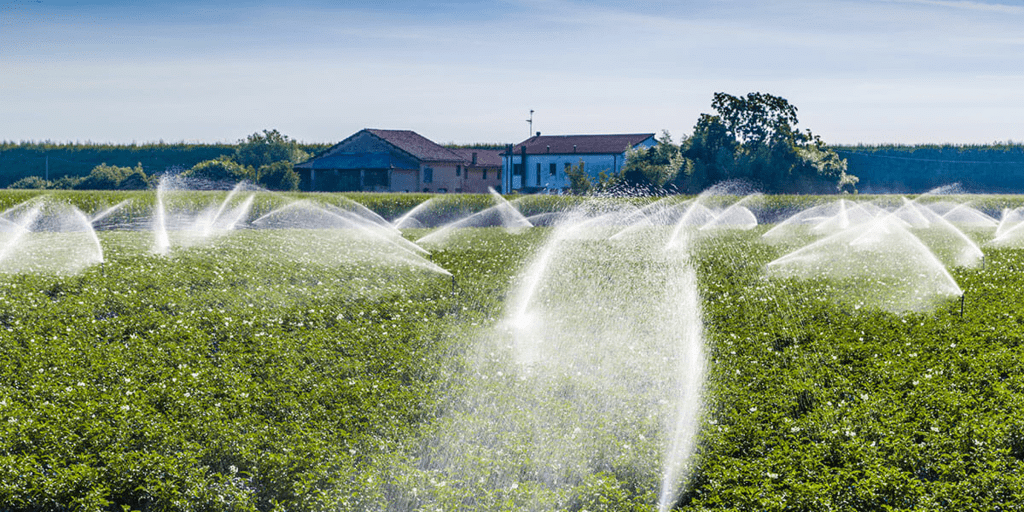
Food security has been ensured in India because, India is now self-sufficient in food grains due to diverse crop production. Government ensures food security through buffer stocks and the Public Distribution System (PDS). Schemes like mid-day meals and food-for-work support food access for the poor. Cooperatives and NGOs, like Mother Dairy and Amul, also help ensure food security.


Q2. Which are the people more prone to food insecurity?
Ans:  A large section of people in India faces food and nutrition insecurity, with the worst affected groups including:

  • People in low-income occupations like traditional crafts, small-scale services, and subsistence farming, often without land ownership.
  • Individuals in informal sectors with unstable jobs, low wages, and seasonal work patterns.
  • Socially disadvantaged groups such as Scheduled Castes (SCs), Scheduled Tribes (STs), and Other Backward Classes (OBCs) facing economic challenges due to historical inequalities.
  • Areas suffering from poverty, lack of infrastructure, isolation, and vulnerability to natural calamities.
  • Particularly vulnerable due to physiological needs and dependence, including pregnant and nursing mothers, and children under five years old.


Q3. Which states are more food insecure in India?
Ans: The economically-backwards states with a high incidence of poverty are more food insecure in India. The states of Uttar Pradesh (eastern and south-eastern parts), Bihar, Jharkhand, Orissa, West Bengal, Chattisgarh, parts of Madhya Pradesh and Maharashtra account for the largest number of food-insecure people in the country.


Q4. Do you believe that Green Revolution has made India self-sufficient in food grains? How?

Ans: The Green revolution has made India self-sufficient in food grain in following ways:

  • In the late 1960s, the Green Revolution introduced high-yielding varieties (HYVs) of seeds to Indian farmers, along with chemical fertilizers and pesticides, boosting productivity, especially in wheat and rice.
  • The increased productivity allowed India to become self-sufficient in food grains, producing enough to meet its own needs without heavy reliance on imports.
  • India has avoided famines even in tough weather conditions, thanks to diverse crop production and food security measures.
  • The steady availability of food grains enabled the government to establish a robust food security framework, ensuring access to food during challenging times.
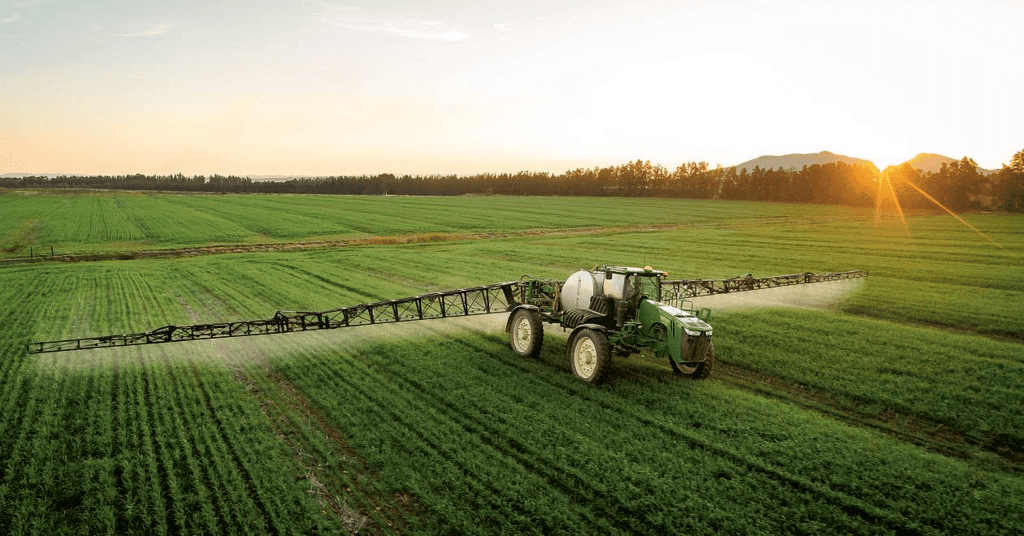
  • The Green Revolution’s innovations in wheat and rice production have made India self-reliant in food grains, preventing famines and supporting overall food security.Green Revolution in India

 Q5. “A section of people in India are still without food”. Explain.
Ans: India has achieved self-sufficiency in food grains due to the Green Revolution, many people still face food insecurity, mainly due to poverty.

  • Landless laborers, casual urban workers, Scheduled Castes (SCs), and Scheduled Tribes (STs) below the poverty line struggle to access regular meals.
  • The PDS faces problems, such as ration shop owners diverting grains to the open market instead of distributing them to the needy.
  • Low-quality grains in ration shops often remain unsold, making food access even harder for vulnerable groups.
  • Corruption in the PDS and widespread poverty are the main reasons why some people still go hungry despite the country’s self-sufficiency in food production.


Q6. What happens to the supply of food when there is a disaster or a calamity?
Ans: When there is a disaster or a calamity, the production of food grains decreases in the affected area. This in turn creates a shortage of food in the area. Due to the food shortage, the prices go up. The raised prices of food materials affect the capacity of many people to buy the same. When the calamity occurs in a very widespread area or is stretched over a long period of time, it may cause a situation of starvation. Massive starvation can take the form of famine.
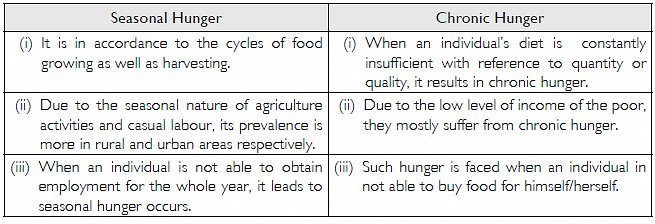

Q7. Differentiate between seasonal hunger and chronic hunger?
Ans: Difference between seasonal hunger and chronic hunger are as follows:


Q8. What has our government done to provide food security to the poor? Discuss any two schemes launched by the government?
Ans:  The Government of India has implemented various schemes to ensure food security for the poor. Two notable schemes are:

  1. Antyodaya Anna Yojana (AAY): Launched in December 2000, AAY targets the “poorest of the poor” among Below Poverty Line (BPL) families. Initially, it covered one crore (10 million) families, providing 25 kg of food grains per month at highly subsidized rates (₹2/kg for wheat and ₹3/kg for rice). In April 2002, the allocation increased to 35 kg per month. The scheme expanded in 2003 and 2004, covering an additional 50 lakh (5 million) families each time, ultimately reaching 2 crore (20 million) families.
  2. Annapurna Scheme (APS): Launched in 2000, APS targets indigent senior citizens aged 65 and above who are eligible for but not receiving old age pensions. It provides 10 kg of food grains per month free of cost, ensuring basic nutrition for senior citizens without regular income or family support.


Q9. Why is a buffer stock created by the government?
Ans: A buffer stock of food grains is created by the government so as to distribute the procured food grains in the food deficit areas and among the poorer strata of society at a price lower than the market price. A buffer stock helps resolve the problem of shortage of food during adverse weather conditions or during periods of calamity.


Q10. Write notes on:
(a) Minimum support price
(b) Buffer stock
(c) Issue price
(d) Fair-price shops
Ans: (a) Minimum support price − The Minimum Support Price (MSP) is the price at which the government buys food grains from farmers to build a buffer stock and encourage production. However, rising MSPs for rice and wheat have led farmers to shift land from coarse grains to these more profitable crops, resulting in higher procurement costs.
(b) Buffer stock − A buffer stock consists of food grains, typically wheat and rice, procured by the government through the Food Corporation of India and stored in granaries. This stock is created to distribute food in deficit areas and to poorer sections of society at prices lower than the market rate. It helps address food shortages during adverse weather or calamities.
(c) Issue Price − The food grains procured and stored by the government are distributed in food-deficit areas and among the poorer strata of society at a price lower than the market price. This price is known as the issue price.
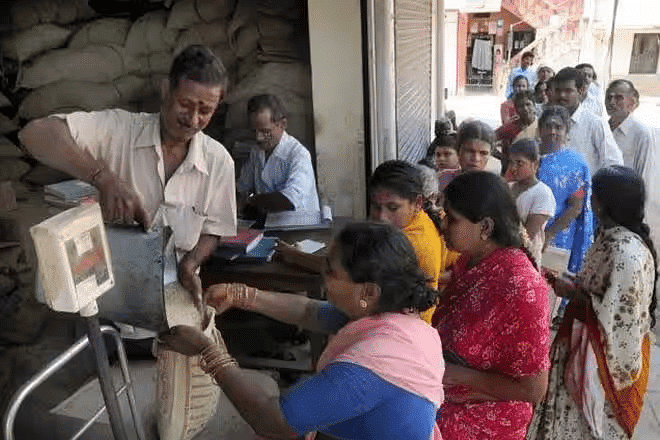
(d) Fair-price shops − The Food Corporation of India distributes food through government-regulated ration shops, known as fair-price shops, where items are sold at lower prices than the market rate to benefit poorer families. These shops stock food grains, sugar, and kerosene oil. Families with a ration card can purchase a specified amount of these items each month.

Q11. What are the problems of the functioning of ration shops?
Ans: The problems of the functioning of ration shops are as follows:

  • Food grains provided by ration shops are insufficient to meet the needs of the poor, forcing them to supplement from market sources.
  • Many ration shop dealers engage in malpractices such as diverting grains to open markets for higher profits and selling poor quality grains at the shops.
  • On average, individuals receive only 1 kg of PDS grains per month nationwide, which is significantly below adequate consumption levels
  • Homeless individuals are often excluded from receiving ration cards, as they require a residential address for issuance.Ration Shop 

Q12. Write a note on the role of cooperatives in providing food and related items.
Ans: Role of Cooperatives in Food Security are as follows:

  • ​Cooperatives are crucial alongside the government in ensuring food security in India, particularly in the southern and western regions.
  • Around 94% of fair price shops in Tamil Nadu are operated by cooperatives, providing affordable goods to the poor.
  • Mother Dairy in Delhi sells milk and vegetables at government-set rates, contributing to accessible food supply in the capital.
  • Amul, known for its milk and milk products, spearheaded the White Revolution in India, enhancing milk availability nationwide.
  • The Academy of Development Science (ADS) in Maharashtra establishes Grain Banks and conducts training programs for NGOs on food security, influencing government policies.
03. Poverty as a Challenge – Textbook Solutions

Q1. Describe how the poverty line is estimated in India?
Ans: In India, the poverty line is estimated based on the income or consumption needed to meet basic needs like food, clothing, and shelter. Food requirements are calculated in calories, with rural areas needing 2400 calories per person per day and urban areas 2100 calories. The cost to meet these needs is determined and adjusted for inflation.

For 2011-12, the poverty line was set at:

  • Rs 816 per person per month in rural areas
  • Rs 1000 per person per month in urban areas

The poverty line is reviewed every five years through surveys by the National Sample Survey Organisation (NSSO).


Q2. Do you think that present methodology of poverty estimation is appropriate?
Ans: The current methodology for estimating poverty primarily focuses on minimum subsistence levels rather than a reasonable standard of living. A person is deemed poor if their income or consumption falls below a certain threshold necessary to meet basic needs.

While it is crucial to address minimum income levels, the government should also consider broader aspects of human poverty, including:

  • Access to food
  • Illiteracy
  • Lack of job opportunities
  • Inadequate healthcare and sanitation
  • Discrimination based on caste and gender


Q3. Describe poverty trends in India since 1973?
Ans: Overall decline in poverty: Since 1973, India has experienced a significant reduction in poverty levels:

  • From about 55% in 1973 to 36% in 1993. Further reduced to around 26% in 2000.
  • All states have seen a decline in poverty since the early 1970s, but the rate of reduction varies. Currently, twenty states and union territories have poverty ratios below the national average of 26%.
  • Odisha and Bihar remain the poorest states, with poverty ratios of 47% and 43% respectively.
  • States like Kerala, Gujarat, Punjab, and Jammu and Kashmir have shown notable reductions in poverty rates.


Q4. Discuss the major reasons for poverty in India?

Ans: Major reasons for poverty in India:

  • Colonial Rule: India went through a long phase of low economic development under the British colonial administration. The policies of the colonial government ruined traditional handicrafts and discouraged the development of industries like textiles.
  • Low economic growth and high population growth: The Indian administration’s failure on the two fronts − promotion of economic growth and population control perpetuated the cycle of poverty.
  • Rural Poverty: The effects of agricultural and rural development were limited to only certain parts of the country. The presence of huge income inequalities is a major reason for the high poverty rates in rural areas.
  • Urban Poverty: The jobs created by the industrial sector haven’t been enough for everyone looking for work. Because they can’t find good jobs in cities, many people end up working as rickshaw pullers, vendors, construction workers, or domestic servants. 


Q5. Identify the social and economic groups which are most vulnerable to poverty in India.
Ans: The social groups most vulnerable to poverty in India include:

  • Scheduled Castes households
  • Scheduled Tribes households

The economic groups at risk are:

  • Rural agricultural labour households
  • Urban casual labour households


Q6. Give an account of interstate disparities of poverty in India.
Ans: The proportion of poor people varies significantly across Indian states. Key points include:

  • The average Head Count Ratio (HCR) in India was 21.9% in 2011-12.
  • States like Bihar and Odisha are among the poorest, with poverty ratios of 33.7% and 32.6%, respectively.
  • In contrast, states such as KeralaMaharashtra, and Tamil Nadu have seen significant reductions in poverty.
  • These states have achieved this through a combination of agricultural growth and human capital development.
  • States like Punjab and Haryana have also successfully reduced poverty, primarily through high agricultural growth rates.


Q7. Describe global poverty trends.
Ans The success rate of reducing poverty varies significantly across different regions, leading to disparities in poverty levels. In India:

  • OdishaBihar, and Madhya Pradesh are the three poorest states, with poverty rates of 47%, 42%, and 37% respectively.
  • Conversely, Jammu and KashmirPunjab, and Himachal Pradesh are among the states with the lowest poverty levels.

Globally, there has been a notable decline in poverty:

  • China and South-East Asia, rapid economic growth and significant investments in human resources have led to a reduction in poverty.
  • In Latin America, the poverty rate has remained relatively stable.
  • In sub-Saharan Africa, however, poverty has increased, rising from 41% in 1981 to 46% in 2001.
  • Poverty has also emerged in some former socialist countries, such as Russia, where it was previously negligible.


Q8. Describe the current government strategy of poverty alleviation.

MNREGA

Ans: The removal of poverty is a key goal of India’s development strategy. Some notable targeted anti-poverty programmes include:

  • Prime Minister’s Rozgar Yojana (PMRY): Launched in 1993, this programme aims to create self-employment opportunities for educated unemployed youth in rural areas and small towns.
  • Pradhan Mantri Gramodaya Yojana (PMGY): Initiated in 2000, it focuses on improving basic services such as primary health, education, rural housing, drinking water, and electrification.
  • Rural Employment Generation Programme (REGP): Started in 1995, this programme aims to create self-employment opportunities in rural and urban areas.
  • Mahatma Gandhi National Rural Employment Guarantee Act (MGNREGA): Enacted in September 2005, it guarantees 100 days of employment per year to every rural household in 200 districts, with plans to expand to 600 districts. One-third of the jobs are reserved for women.


Q9. Answer the following questions briefly
(i) What do you understand by human poverty?
(ii) Who are the poorest of the poor?
(iii) What are the main features of the National Rural Employment Guarantee Act 2005?
Ans: (i) Human poverty extends beyond mere lack of income. It encompasses the denial of essential political, social, and economic opportunities necessary for a decent standard of living. 

  • Illiteracy
  • Lack of job opportunities
  • Inadequate access to healthcare and sanitation
  • Caste and gender discrimination

(ii) The poorest of the poor are primarily:

  • Women
  • Female infants
  • Older individuals

(iii) Main features of the National Rural Employment Guarantee Act 2005 include:

  • Guarantees 100 days of employment per year for every household
  • Initially covered 200 districts, later expanded to 600
  • One-third of jobs reserved for women

02. People as Resource – Textbook Solutions

Q1. What do you understand by ‘people as a resource’?

Ans: People as a Resource:

The concept of people as a resource highlights how a population can be an asset rather than a burden. When individuals possess knowledgeskills, and access to technology, they can effectively use natural resources to create value.

Role in Production Factors:

  • Production of goods and services relies on four key factors: land, labour, physical capital, and human capital.
  • Human capital includes the knowledge and skills of the workforce, which integrates the other factors to produce output.
  • Investments in education, training, and healthcare enhance the population’s capabilities, transforming it into an asset.

When the workforce is educated and healthy, it contributes positively to the economy, similar to investments in physical capital.

Human Capital Formation:

  • Investment in human capital yields returns, such as higher incomes and increased productivity.
  • Examples include India’s Green Revolution, which improved land productivity through better knowledge and technology.
  • The IT revolution in India illustrates how human capital can surpass the importance of material resources.

In summary, viewing the population as a productive resource emphasises the potential benefits of investing in education and health, ultimately leading to a stronger economy.

Q2. How is human resource different from other resources like land and physical capital

Ans: Human resources differ from other resources such as land and physical capital in several key ways:

  • Human resources can be developed through education and health, while land and physical resources are fixed and limited.
  • Human resources have the ability to transform other resources, whereas land and physical capital cannot change or influence human resources.
  • Human resources utilise land and physical capital effectively; in contrast, land and capital cannot function independently.

Investing in human capital, through education and training, yields returns similar to investments in physical capital. This is evident in:

  • Higher incomes resulting from increased productivity of educated and trained individuals.
  • Enhanced productivity among healthier individuals.

Overall, human resources are vital for economic growth and development, as they can be nurtured and improved over time.

Q3. What is the role of education in human capital formation?

Ans: The role of education in human capital formation includes:

  • Economic Asset: Education turns individuals into valuable assets for the economy.
  • Enhanced Opportunities: It enables people to seize job opportunities, boosting national income and fostering cultural diversity. This also improves government efficiency.
  • Increased Productivity: Educated individuals tend to be more productive, producing higher quality and quantity of work.
  • Health Benefits: Education raises awareness of health and hygiene, leading to better health outcomes for the population.

Q4. What is the role of health in human capital formation?

Ans: The role of health in human capital formation includes:

  • Improved Immunity: Good health strengthens the immune system, reducing illness and absenteeism.
  • Increased Productivity: Healthier individuals are more productive and efficient in their work.
  • Economic Growth: Better healthcare leads to a healthier population, enhancing human capital and overall productivity, which drives economic growth.
  • Quality of Life: Good health improves quality of life, enabling individuals to work effectively, earn more, and contribute positively to society.

Q5. What part does health play in the individual’s working life?

Ans: Health plays a crucial role in an individual’s working life by influencing various aspects of productivity and performance:

  • Improved Work Focus: Good health enhances concentration, enabling individuals to make decisions confidently and complete tasks efficiently.
  • Increased Work Capacity: Healthy individuals can work longer without fatigue, allowing them to achieve more.
  • Reduced Absenteeism: Maintaining good health leads to fewer sick days, resulting in better attendance and reliability.
  • Enhanced Efficiency and Productivity: Healthier individuals tend to be more productive, positively impacting their overall work performance.

Q6. What are the various activities undertaken in the primary sector, secondary sector and tertiary sector?
Ans:

Primary Sector

  • Comprises activities related to the extraction and production of natural resources.
  • Agriculture, forestry, animal husbandry, fishing, poultry farming, mining, and quarrying are the activities undertaken in this sector.

Secondary Sector

  • Comprises activities related to the processing of natural resources.
  • Manufacturing is included in this sector.

Tertiary Sector

  • Comprises activities that provide support to the primary and secondary sectors through various services.
  • Trade, transport, communication, banking, education, health, tourism, insurance, etc., are examples of tertiary activities.


Q7: What is the difference between economic activities and non-economic activities?
Ans:

Q8. Why are women employed in low-paid work?

Ans:

Gender Prejudices and Stereotypes: Gender biases, such as the belief that women are less capable in physical jobs, create unfairness in the workplace. These stereotypes negatively impact women and contribute to lower wages.

Earnings Based on Education and Skill: Women’s earnings, like men’s, depend on their education and skills. Many women have limited access to education and skill development, leading to lower pay compared to men.

Job Insecurity and Benefits: Women often work in jobs that lack security and benefits, such as maternity leave and childcare support. Their household responsibilities can also limit their ability to work full-time and earn as much as men.

  • Gender biases create workplace unfairness.
  • Limited access to education and skills affects earnings.
  • Many women face job insecurity and lack benefits.
  • Household duties can restrict full-time work opportunities.

Q9. How will you explain the term unemployment?

Ans: Unemployment refers to a situation where individuals who are able and willing to work cannot find jobs. A person is considered unemployed if they are part of the workforce, capable of working, and actively seeking employment but are unable to secure a position.

Key points about unemployment include:

  • Types of Unemployment: There are different forms of unemployment, such as seasonal and disguised unemployment.
  • Seasonal Unemployment: This occurs when people cannot find work during certain months, particularly in agriculture.
  • Disguised Unemployment: Individuals may appear to be employed but are not contributing effectively to productivity.
  • Educated Unemployment: Many graduates struggle to find jobs, leading to a paradox where there is both a surplus of qualified individuals and a shortage of skilled jobs.

Unemployment has significant negative effects, such as:

  • Wastage of Resources: Unemployed individuals represent a loss of potential economic contributions.
  • Social Impact: High unemployment can lead to feelings of hopelessness and financial strain on families.
  • Economic Indicators: Rising unemployment rates often signal a struggling economy.

In India, the unemployment rate may appear low, but many individuals work in low-paying jobs that do not reflect their potential or productivity.

Q10. What is the difference between disguised unemployment and seasonal unemployment?
Ans:

Q11. Why is educated unemployed, a peculiar problem in India?

Ans: Educated unemployment is a significant issue in India, affecting many young people despite their qualifications.

  • Many individuals with matriculation, graduation, and even postgraduation struggle to find jobs.
  • The education system allows entry into the workforce without ensuring that graduates have the necessary skills demanded by employers.
  • This results in a mismatch where educated individuals lack essential skills, leading to high unemployment rates.
  • Unemployment among graduates and postgraduates is increasing faster than among those with lower qualifications.
  • There is a paradox of surplus manpower in some sectors while others face a shortage of skilled workers.
  • Unemployment leads to a waste of valuable human resources, turning potential assets into liabilities.
  • This situation fosters feelings of hopelessness among the youth, impacting their ability to support families.
  • In rural areas, unemployment often takes the form of seasonal and disguised unemployment, while urban areas primarily experience educated unemployment.
  • Seasonal unemployment occurs when agricultural workers cannot find jobs during certain months.
  • Disguised unemployment happens when more people are employed than necessary, leading to inefficiencies.

Overall, educated unemployment is a complex problem that hinders economic growth and affects the quality of life.

Q12. In which field do you think India can build the maximum employment opportunity?

Ans: The employment sector in India is divided into three main categories:

  • Primary Sector: This includes agriculture, which employs a large part of the population. However, it often suffers from disguised unemployment, where more people are working than necessary.
  • Secondary Sector: This sector encompasses manufacturing industries, which have the potential to create a significant number of jobs. The growth of these industries can lead to increased employment opportunities.
  • Tertiary Sector: This includes services such as biotechnology and information technology, which are emerging fields that can also provide jobs.

Overall, the manufacturing sector within the secondary category is likely to offer the most employment opportunities in India due to the expansion of industries.

Q13. Can you suggest some measures in the education system to mitigate the problem of the educated unemployed?

Ans: To address the issue of educated unemployment, the education system can implement several measures:

  • Promote Vocational Education: Encourage vocational training to prepare individuals for specific jobs, making it easier for them to find employment.
  • Enhance Information Technology: Integrate more information technology into education to improve learning outcomes and equip students for modern workplaces.
  • Job-Oriented Education: Align educational programmes with industry needs to boost students’ employability.
  • Expand Tertiary Sector Opportunities: Create more job opportunities in the tertiary sector to absorb the increasing number of educated job seekers.
  • Career-Oriented Secondary Education: Introduce practical skills training at the secondary level to meet current job market demands.

Q14. Can you imagine some village that initially had no job opportunities but later came up with many?

Ans: Rampur was a small village that relied heavily on agriculture, which depended on rainfall. With the arrival of electricity, villagers could irrigate their fields, allowing them to grow 2 to 3 crops each year.

  • Some residents established small-scale industries powered by electricity, creating job opportunities.
  • A school was built, leading to increased education levels, enabling villagers to seek employment both locally and beyond.
  • The village prospered, improving health, education, transport, and job facilities.

As the village developed:

  • One family trained their daughter in tailoring, who then started making clothes for the villagers.
  • This created a new job as a tailor, saving farmers time previously spent travelling to buy clothes.
  • Farmers could now focus more on their fields, increasing crop yields.
  • Surplus produce was sold in nearby markets, enhancing the village’s economy.

Over time, Rampur transformed from a village with no job opportunities to one with various roles, including teachers, tailors, and agro-engineers. This story illustrates how the rise in human capital can lead to economic growth and diversification.

Q15. Which capital would you consider the best – land, labour, physical capital, and human capital? Why?

Ans: Human capital is highly valued because, unlike other resources, humans can effectively utilise and leverage natural and physical resources for productive outcomes.

Efficient use of human capital has led to:

  • Prosperity in nations, making them leaders in technology and industry.
  • Continuous economic advancement and development.

For example:

  • Countries like Japan show that investing in human capital, especially through education and health initiatives, can drive development even without natural resources.
  • Despite lacking natural resources, these nations have achieved significant development.

Investment in human capital (through education, training, and medical care) yields returns similar to those from investing in physical capital. This is evident in:

  • Higher incomes due to increased productivity from better-educated and healthier individuals.

In summary, human capital is superior to other resources like land and physical capital because:

  • Humans can effectively utilise land and capital.
  • Land and capital cannot function independently.

1. The Story of Palampur – Textbook Solutions

Q1. Every village in India is surveyed once every ten years during the Census, and some of the details are presented in the following format. Fill up the following based on information on Palampur
(a) Location
(b) Total Area of The Village
(c) Land USE (in hectares)
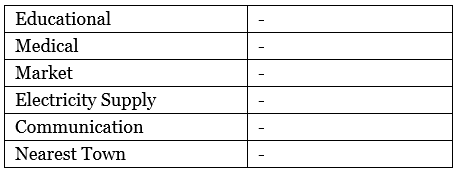
(d) Facilities
Ans: 

(a) Location: Bulandshahar district, Western Uttar Pradesh
(b) Total Area of The Village: 226 hectares
(c) Land USE (in hectares):

(d) Facilities:

Q2. Modern farming methods require more inputs which are manufactured in industry. Do you agree?
Ans: Yes, it is correct to say that modern farming methods require more inputs, which are manufactured in industries.  

  • Traditional farming methods involve the use of relatively low-yielding seeds, which require less water for irrigation. Farmers following the traditional methods use cow dung and other natural manure as fertilisers. All these elements are readily available to the farmers. This makes them less dependent on industrial output.
    Modern Farming Method
  • Modern farming methods, on the other hand, involve the use of high-yielding variety seeds. These seeds require a combination of chemical fertilisers and pesticides, agricultural implements like tractors, and proper irrigation facilities like electric tube wells to produce the best results.  All these elements are manufactured in industries. 

Hence, it would be right to say that modern farming methods make use of a greater number of industrial outputs as compared to traditional farming methods.


Q3. How did the spread of electricity help farmers in Palampur?
Ans: The spread of electricity helped the farmers in Palampur in the following ways:

  • Most of the houses have electricity connections.
  • It is used to run tube wells in the field.
  • It is used in various types of small businesses.


Q4. Is it important to increase the area under irrigation? Why?
Ans: It is important to increase the land under irrigation because: 

  • Farming is the main source of income for the maximum part of the population in India, and only less than 40 per cent of the land is cultivable in the country. 
  • Farmers are dependent on the erratic monsoon season, and if the rainfall is less, farmers are bound to suffer a major loss. 
  • So if the water is provided for irrigation to the farmers for a larger portion of land, it would give better output and make more land cultivable in India and also encourage farmers to take up newer farming methods without the fear of suffering loss.

Modern Irrigation Method

Q5. Construct a table on the distribution of land among the 450 families of Palampur.
Ans: The distribution of land among the 450 families of Palampur is as follows:

Q6. Why are farm labourers in Palampur’s wages less than the minimum wage?
Ans: The wages for farm labourers in Palampur are less than the minimum wages because:

  • There is heavy competition for work among the farmers.
  • Employment is less, and farmers are more and therefore, farmers have to be content with what they are earning.
  • The land is owned by landlords who desire to earn more and more profit by paying minimum wages.
  • The farmers are illiterate and unaware of the amount of minimum wage set by the government.

Q7. In your region, talk to two labourers. Choose either farm labourers or labourers working at construction sites. What wages do they get? Are they paid in cash or kind? Do they get work regularly? Are they in debt?
Ans: 

  • There is a gym and a swimming pool under construction in our colony. On speaking with Masud and Rehman, two construction labourers, I understood that they get about 80-90 rupees per day for their labour. 
  • The two labourers belong to the Basti district of Uttar Pradesh, and they had migrated to Delhi to work as labourers on a daily wage. Their work is not permanent.
  • They do not get regular work. They are always paid in cash by the contractor who hires them for work.
  • Masud is in debt for taking a loan for his son’s school and tuition fees. 

Q8. What are the different ways of increasing production on the same piece of land? Use examples to explain.
Ans: The land area under cultivation is practically fixed, so in order to increase the production from the same piece of land, we can use the following methods:
(a) Multiple Cropping

  • It is the most common way of increasing production on a given piece of land. It means when two or more crops are grown on the same piece of land during a year, i.e., Indian farmers should grow at least two main crops in a year. 
  • In India, some farmers are growing the third crop over the past 20 years, as in Palampur, jowar and bajra are grown, and potato is the third crop.

(b) Modern Farming Methods

  • Production on the same piece of land can also be increased by adopting modern farming methods.
  • The Green Revolution in India is a remarkable example of it. Under modern farming, more cultivable area should be brought under high-yielding varieties of seeds and irrigation.
  • The use of simple wooden ploughs must be replaced by tractors, and with increased use of farm machinery such as tractors, thrashers, and harvesters, make cultivation faster and also help in increasing yield per hectare.


Q9. Describe the work of a farmer with 1 hectare of land.
Ans: A farmer who works on 1 hectare of land is called a small farmer.
He carries out the following activities:

  • Ploughs the field by bullocks or tractors.
  • Sow the seeds by simply sprinkling them with your hands.
  • Waters the field with the help of the Persian wheel.
  • Spray the insecticides with manual pumps.
  • Cuts the crops with hand-operated tools.


Q10. How do the medium and large farmers obtain capital for farming? How is it different from the small farmers?
Ans: 

  • Medium and large farmers retain a part of their produce and sell the surplus in the market. 
  • This provides them with the required capital for farming. Most of them even use these earnings to provide loans to small farmers
  • By charging high rates of interest on these loans, they succeed in furthering their earnings. 
  • Thus, medium and large farmers have ready capital with them from one agricultural season to the next.
  • The situation of small farmers is in contrast. They begin an agricultural season with no working capital and end the season on more or less the same note. 
  • To begin working on their farms, they take loans at high rates of interest. Due to the small size of their farms, their total production is small. 
  • Their produce is kept for their needs or for repaying their lenders. As a result, they have no surplus to sell in the market and, thus, have limited savings.


Q11. On what terms did Savita get a loan from Tajpal Singh? Would Savita’s condition be different if she could get a loan from the bank at a low rate of interest?
Ans: The terms of a loan of Savita taken from Tajpal Singh are:

  • She took a loan of Rs. 3,000 at an interest rate of 24 per cent. 
  • She would have to repay the loan in four months.
  • She also has to work in Tejpal’s field as a farm labourer during the harvesting season at Rs. 100 per day.

The bank could have provided her with a loan at a low rate of interest. In addition, she would have devoted more time to her own field of 1 hectare instead of working as a farm labourer for Tejpal Singh.

Q12. Talk to some old residents in your region and write a short report on the changes in irrigation and changes in production methods during the last 30 years. 
Ans: 

(a) 

  • On talking to two old residents, Ramlal and Dharam Singh, I came to know about the irrigation methods that were traditionally in use in our area. 
  • They told me that earlier, they were dependent on rainfall, and later on, they started to use the Persian wheel to draw water from the wells. 
  • With the development of technology, tube wells were used for better and effective irrigation.

(b) 

  • In the farming methods, traditionally, they ploughed the field with ploughs drawn by bullocks, which was a very difficult and time-consuming process. 
  • They used ordinary seeds and cow dung manure for fertilisation.

(c) 

  • However, with changes in technology, the farmers started using HYV seeds, chemical fertilisers, insecticides, pesticides and modern machinery like tractors and threshers.
  • This has led to an increase in yield per hectare and improved the lives of the farmers.

Q13. What are the non-farm production activities taking place in your region? Make a short list.
Ans: 

  • Dairy is a common activity in many families in our region.
  • Some people are involved in small-scale manufacturing in their homes or in the field, like the production of jaggery by Mishrilal.
  • A few people are involved as shopkeepers and traders who buy various goods from the wholesale market in the cities and sell them in the villages. 
  • Some people near the bus stand have opened shops selling eatables.
  • Some people are in the transportation sector, ferrying people and carrying goods from one place to another in different types of vehicles.
  • People like Kareem opened a computer class centre and also provided employment to two women who had a diploma in computer applications.

Q14. What can be done so that more non-farm production activities can be started in villages?
Ans: Three things that need to be done to encourage non-farm production activities in villages:

  • The government should set up schemes whereby landless labourers and small farmers are able to get cheap loans to start small individual/community businesses.
  • In addition to financial assistance, the government should set up rural workshops to enable the villagers to build on their skill levels.
    Rural Workshop
  • The government should also work towards improving the infrastructure of villages so that the rural parts of the country are well-connected to the urban areas.