07. A Truly Beautiful Mind – Textbook Solutions

Thinking About the TextQ1: Here are some headings for paragraphs in the text. Write the number(s) of the paragraph(s) for each title against the heading. The first one is done for you.

(i) Einstein’s equation
Ans: 9

(ii) Einstein meets his future wife 
Ans: 7

(iii) The making of a violinist
Ans: 3

(iv) Mileva and Einstein’s mother 
Ans: 10

(v) A letter that launched the arms race 
Ans: 15

(vi) A desk drawer full of ideas 
Ans: 8

(vii) Marriage and divorce 
Ans: 11
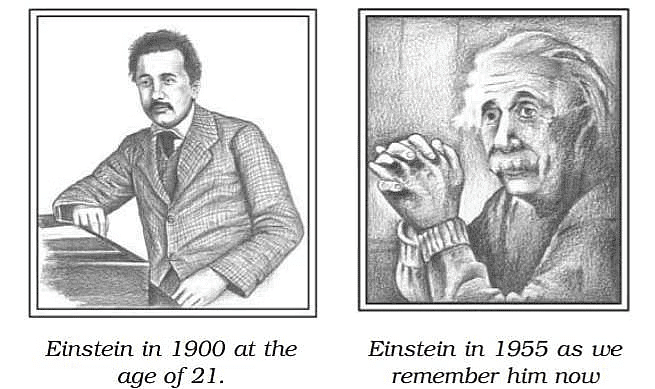
Q2: Who had these opinions about Einstein?
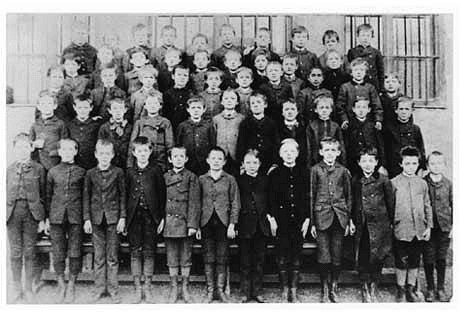
(i) He was boring.
Ans: Einstein’s playmates thought that he was boring.

(ii) He was stupid and would never succeed in life.
Ans: Einstein’s head master thought that he was stupid and would never succeed at anything in life.
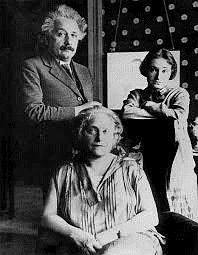
(iii) He was a freak.
Ans: Einstein’s mother thought that he was a freak.

Q3: Explain the reasons for the following:

(i) Einstein leaving the school in Munich for good.
Ans: Einstein hated the school’s rigid and strict discipline.

(ii) Einstein wanting to study in Switzerland rather than in Munich.
Ans: Switzerland was a more liberal city that’s why he wanted to study there rather than in Munich.

(iii) Einstein seeing in Mileva an Ally.
Ans: Einstein found in Mileva an ally because she, like him, disapproved of the “philistines” or the people who did not like art, literature or music.

(iv) What do these tell you about Einstein?
Ans: The above things tell us that Einstein was a very liberal person who liked freedom. He was a person who had his own view about life. 
Q4: What did Einstein call his desk drawer at the patent office? Why?

Ans: Einstein called his desk drawer at the patent office the “bureau of theoretical physics”. This was because the drawer was where he used to store his secretly developed ideas.

Q5: Why did Einstein write a letter to Franklin Roosevelt?

Ans: Einstein wrote a letter to Franklin Roosevelt to warn America that Germany had the ability to build and use an atomic bomb, which if exploded in a port, would destroy the entire port as well as some of the surrounding territory. 

Q6: How did Einstein react to the bombing of Hiroshima and Nagasaki?

Ans: Einstein was deeply shaken by the extent of destruction caused in Hiroshima and Nagasaki. He wrote a public missive to the United Nations. He proposed the formation of a world government to stop the use of nuclear weapons.

Q7: Why does the world remember Einstein as a “world citizen”?

Ans: Einstein is remembered as a “world citizen” as much as a genius scientist because of his efforts towards world peace and democracy, and for his crusade against the use of arms.

Q8: Here are some facts from Einstein’s life. Arrange them in chronological order.
[  ] Einstein published his special theory of relativity.
[  ] He is awarded the Nobel Prize in Physics.
[  ] Einstein writes a letter to U.S. President, Franklin D. Roosevelt, and warns against Germany’s building of an atomic bomb.
[  ] Einstein attends a high school in Munich.
[  ] Einstein’s family moved to Milan.
[  ] Einstein was born in the German city of Ulm.
[  ] Einstein joins a university in Zurich, where he meets Mileva.
[  ] Einstein dies.
[  ] He provides a new interpretation of gravity.
[  ] Tired of the school’s regimentation, Einstein withdraws from school.
[  ] He works in a patent office as a technical expert.
[  ] When Hitler comes to power, Einstein left Germany for the United States.
Ans:
(i) Einstein is born in the German city of Ulm.
(ii) Einstein attends a high school in Munich.
(iii) Einstein’s family moves to Milan.
(iv) Tired of the school’s regimentation, Einstein withdraws from school.
(v) Einstein joins a university in Zurich, where he meets Mileva.
(vi) He works in a patent office as a technical expert.
(vii) Einstein publishes his special theory of relativity.
(viii) He provides a new interpretation of gravity.
(ix) He is awarded the Nobel Prize in Physics.
(x) When Hitler comes to power, Einstein left Germany for the United States.
(xi) Einstein writes a letter to U.S. President, Franklin D. Roosevelt, and warns against Germany’s building of an atomic bomb.
(xii) Einstein dies.

Thinking About Language

I. Here are some sentences from the story. Choose the word from the brackets which can be substituted for the italicised words in the sentences.
Q1:  A few years later, the marriage faltered. (failed, broke, became weak)
Ans: A few years later, the marriage became weak. (failed, broke, became weak).

Q2: Einstein was constantly at odds with people at the university. (on bad terms, in disagreement, unhappy)
Ans: Einstein was constantly in disagreement with people at the university. (on bad terms, in disagreement, unhappy)

Q3: The newspapers proclaimed his work as “a scientific revolution.” (declared, praised, showed)
Ans: The newspapers declared his work as “a scientific revolution.” (declared, praised, showed)

Q4: Einstein got ever more involved in politics, agitating for an end to the arms buildup. (campaigning, fighting, supporting)
Ans: Einstein got ever more involved in politics, campaigning for an end to the arms build-up. (campaigning, fighting, supporting)

Q5: At the age of 15, Einstein felt so stifled that he left the school for good, (permanently, for his benefit, for a short time
Ans: At the age of 15, Einstein felt so stifled that he left the school permanently. (permanently, for his benefit, for a short time)

Q6: Five years later, the discovery of nuclear fission in Berlin had American physicists in an uproar. (in a state of commotion, full of criticism, in a desperate state
Ans: Five years later, the discovery of nuclear fission in Berlin had American physicists in a state of commotion. (in a state of commotion, full of criticism, in a desperate state)

Q7: Science wasn’t the only thing that appealed to the dashing young man with the walrus moustache. (interested, challenged, worried)
Ans: Science wasn’t the only thing that interested to the dashing young man with the walrus moustache. (interested, challenged, worried)

II. Study the following sentences.

  • Einstein became a gifted amateur violinist, maintaining this skill throughout his life. 
  • Letters survive in which they put their affection into words, mixing science with tenderness

The parts in italics in the above sentences begin with –ing verbs, and are called participial phrases. Participial phrases say something more about the person or thing talked about or the idea expressed by the sentence as a whole.
For example: – Einstein became a gifted amateur violinist. He maintained this skill throughout his life. 
Complete the sentences below by filling in the blanks with suitable participial clauses. The information that has to be used in the phrases is provided as a sentence in brackets.

Q1: Complete the sentences below by filling in the blanks with suitable participial clauses. The information that has to be used in the phrases is provided as a sentence in brackets.
1. __________, the firefighters finally put out the fire. (They worked round the clock)
2. She watched the sunset above the mountain, __________ (She noticed the colours blending softly into one another)
3. The excited horse pawed the ground rapidly, __________ (While it neighed continually)
4. __________, I found myself in Bangalore, instead of Benaras. (I had taken the wrong train)
5. __________, I was desperate to get to the bathroom. (I had not bathed for two days)
6. The stone steps, __________ needed to be replaced. (They were worn down)
7. The actor received hundreds of letters from his fans, __________ (They asked him to send them his photograph)
Ans:
1. Working round the clock, the firefighters finally put out the fire.
2. She watched the sunset above the mountain, noticing the colours blending softly into one another.
3. The excited horse pawed the ground rapidly, neighing continually.
4. Having taken the wrong train, I found myself in Bangalore, instead of Benaras.
5. Having not bathed for two days, I was desperate to get to the bathroom.
6. The stone steps, being worn down, needed to be replaced.
7. The actor received hundreds of letters from his fans, asking him to send them his photograp

Writing Newspaper Reports
Here are some notes which you could use to write a report.
21 August 2005 — original handwritten manuscript of Albert Einstein unearthed — by student Rowdy Boeynik in the University of the Netherlands — Boeynik researching papers — papers belonging to an old friend of Einstein — fingerprints of Einstein on these papers — 16-page document dated 1924 — Einstein’s work on this last theory — behaviour of atoms at low temperature — now known as the Bose-Einstein condensation — the manuscript to be kept at Leyden University where Einstein got the Nobel Prize.
Write a report which has four paragraphs, one each on:

  • What was unearthed.
  • Who unearthed it and when.
  • What the document contained.
  • Where it will be kept.

Your report could begin like this:
Student Unearths Einstein Manuscript
21 AUGUST 2005. An original handwritten Albert Einstein manuscript has been unearthed at a university in the Netherlands…
Ans:
Student Unearths Einstein Manuscript
21 AUGUST 2005. An original handwritten Albert Einstein manuscript has been unearthed at a university in the Netherlands.
It was unearthed by a student Rowdy Boeynik while researching papers when he came across some papers belonging to an old friend of Einstein.
The 16-page document dated 1924 contained fingerprints of Albert Einstein. It has Einstein’s work on this last theory i.e. the behaviour of atoms at low temperature which is now known as the Bose-Einstein condensation.
The manuscript will be kept at Leyden University where Einstein got the Nobel Prize.
06. Rain on the Roof – Textbook Solutions

Q1: What do the following phrases mean to you? Discuss in class.

(a) Humid shadows
Ans: “Humid shadows” refer to the dark clouds that produce rain.

(b) Starry spheres
Ans: “Starry spheres” refer to the night sky abounding in stars.

(c) What a bliss
Ans: “What a bliss” refers to the happiness of the poet. When it rains, the poet gets into his cottage and enjoy the patter of rain upon the roof.

(d) A thousand dreamy fancies Into busy being start
Ans: This refers to the various imaginary thoughts and fantasies that are aroused in the poet’s mind.

(e) A thousand recollections weave their air-threads into woof
Ans: This phrase means that numerous memories intermingle to form a beautiful picture that the poet recollects.

Q2: What does the poet like to do when it rains?
Ans: When it rains, the poet feels delighted to lie with his head pressed against the pillow of his cottage chamber bed and listen to the patter of the soft rain

Q3: What is the single major memory that comes to the poet? Who are the “darling dreamers” he refers to?
Ans: 

  • The single major memory that comes to the poet is that of his mother and her fond look.
  • The “darling dreamers” are the poet and his siblings in their childhood when they were lovingly put to sleep by their mother. 

Q4: Is the poet now a child? Is his mother still alive?
Ans: No, the poet is not a child now. He is a grown-up man. He remembers her when he is inside his cosy cottage and enjoys the pattern of rain on the roof.

II. 

Q1: When you were a young child, did your mother tuck you in, as the poets did? 
Ans: 
Yes, my mother used to tuck me in when I was a young child, just like the poet’s mother did. (Self-Experience Question)

Q2: Do you like the rain? What do you do when it rains steadily or heavily as described in the poem?
Ans: 

  • Yes, I like rain. When it rains steadily, I get into my house and enjoy the weather with my family. 
  • We enjoy tea. It is wonderful to experience (Self-Experience Question)

Q3: Does everybody have a cosy bed to lie in when it rains? Look around you and describe how different kinds of people or animals spend time, seek shelter etc. during rain. 
Ans:

  • No, everybody is not fortunate enough to have a cosy bed to lie in when it rains. Not everybody gets to enjoy the comfort of cosy homes during rain. 
  • I have seen animals seeking shelter under trees and under the tin roofs of the small roadside tea stalls. 
  • The people passing by shoo away these animals and try to shrink themselves under the limited space of these shops. 
  • The poor animals are left shivering and drenching on the roads. The shopkeepers of such stalls are delighted as the people waiting for the rain to subside often end up buying tea and snacks.

05. The Little Girl – Textbook Solutions

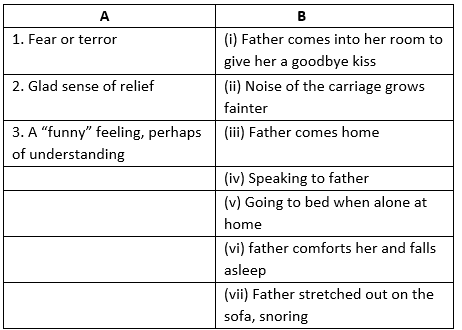
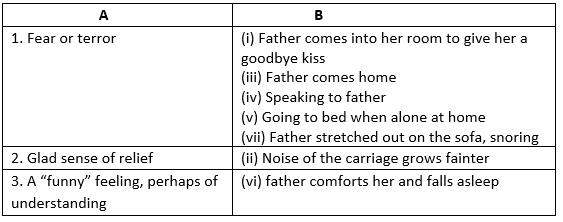
Thinking about the TextI. Given below are some emotions that Kezia felt. Match the emotions in Column A with the items in Column B.

Ans:

II. Answer the following questions in one or two sentences.

Q1: Why was Kezia afraid of her father?
Ans: Kezia was a little sensitive girl. Her father was aggressive and always spoke loudly. He always scolded her. He used to beat her even when she accepted her mistakes. He never played with her. He used to give her a terrifying look over his spectacles. This made her afraid of her father.

Q2: Who were the people in Kezia’s family?
Ans: Kezia’s family consists of her mother, father, grandmother, and herself.

Q3: What was Kezia’s father’s routine

(i) Before going to his office?
Ans: Before going to his office, Kezia’s father usually went into her room to give her a goodbye kiss.

(ii) After coming back from his office?
Ans: After returning from his office, he ordered tea to be brought into the drawing room. He also asked his mother to bring him the newspaper and his slippers and Kezia to pull off his boots.

(iii) On Sundays?
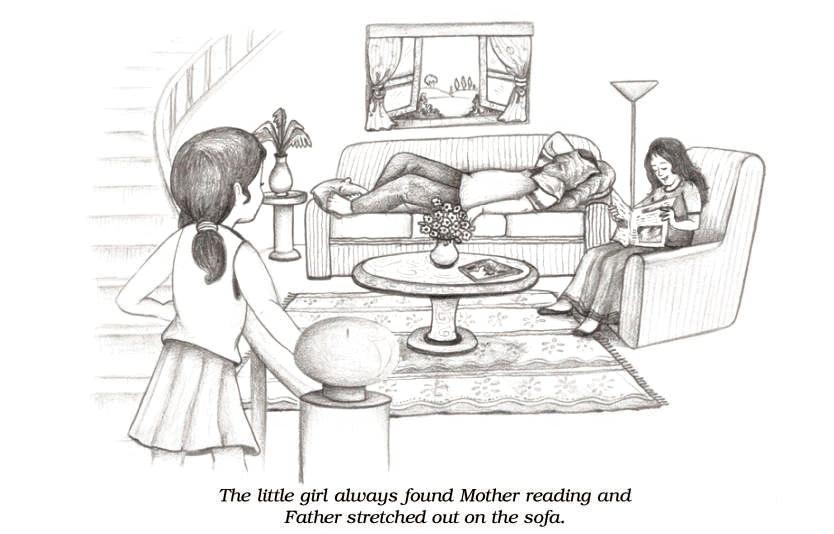
Ans: Kezia’s father would stretch out on the sofa on Sunday. He would cover his face with his handkerchief, put his feet on one of the cushions and sleep soundly.


Q4: In what ways did Kezia’s grandmother encourage her to get to know her father better?
Ans: Kezia’s grandmother encouraged her to get to know her father better by sending her to the drawing room to talk to her parents on Sundays. She also suggested Kezia make a pin cushion out of a beautiful piece of yellow silk as a gift for her father’s birthday.

III. Discuss these questions in class with your teacher and then write down your answers in two or three paragraphs each.
Q1: Kezia’s efforts to please her father resulted in displeasing him very much. How did this happen?
Ans: Kezia’s efforts to please her father resulted in displeasing him. Every Sunday, her grandmother sent her down to the drawing room to have a nice talk with her father and mother. But her presence always irritated the father. He used to call her ‘little brown owl’.
One day, her grandmother told her that her father’s birthday would be next week and suggested that she should make him a pin-cushion as a gift. After stitching three sides of the cushion with double cotton with great care and effort, Kezia was stuck as to what to fill the cushion with. 
Since her grandmother was busy in the garden, she searched her Mother’s bedroom for scraps. Finally, she discovered sheets of paper on the bedtable. She gathered these, tore them up, and filled the cushion with the torn pieces.
Unfortunately, her efforts to please her father not only went in vain but also had an unanticipated consequence. This was because the sheets she had torn were her father’s speech for the Port Authority. Her father scolded her for touching things that did not belong to her and punished her by hitting her palm with a ruler.

Q2: Kezia decides that there are “different kinds of fathers”. What kind of father was Mr Macdonald, and how was he different from Kezia’s father?
Ans: Kezia compared her father with Mr. Macdonald, her next-door neighbor. He was a loving, gentle, and forgiving father. He was always smiling and playing with his children. He treated his children in a friendly manner. He was just the opposite of Kezia’s father. Unlike Kezia’s father, he never punished his children. He played with them whenever he was free. Kezia’s father was a very harsh and strict disciplinarian.

Q3: How does Kezia begin to see her father as a human being who needs her sympathy?
Ans: With her mother and grandmother at the hospital, Kezia is left at home in the care of Alice, the cook. At night, after she is put to bed by the cook, she has a nightmare. She calls for her grandmother, but, to her surprise, she finds her father standing near her bed. He takes her in his arms and makes her sleep next to him. Half asleep, she creeps close to him, snuggles her head under his arm, and holds tightly to his shirt. 
Her father asks her to rub her feet against his legs for warmth. Her father goes off to sleep before her. This makes her understand that he has to work hard every day and this leaves him too tired to be like Mr. Macdonald. She expresses her altered feelings for her father by telling him that he has a ‘big heart’.

Thinking about the Text

I. Look at the following sentence.
There was a glad sense of relief when she heard the noise of the carriage growing fainter… Here, glad means happy about something. Glad, happy, pleased, delighted, thrilled and overjoyed are synonyms (words or expressions that have the same or nearly the same meaning.) However, they express happiness in certain ways.
Read the sentences below.

  • She was glad when the meeting was over.
  • The chief guest was pleased to announce the name of the winner.

Q1: Use an appropriate word from the synonyms given above in the following sentences. Clues are given in brackets.

(i) She was __________ by the news of her brother’s wedding. (very pleased)
Ans: She was thrilled by the news of her brother’s wedding.

(ii) I was __________to be invited to the party. (extremely pleased and excited about)
Ans: I was delighted to be invited to the party.

(iii) She was __________ at the birth of her granddaughter. (extremely happy)
Ans: She was overjoyed at the birth of her granddaughter.

(iv) The coach was __________ with his performance. (satisfied about)
Ans: The coach was pleased with his performance.

(v) She was very __________ with her results. (happy about something that has happened).
Ans: She was very happy with her results.

Q2: Study the use of the word bigin the following sentence.
He was so big− his hands and his neck, especially his mouth…
Here, big means large in size.
Now, consult a dictionary and find out the meaning of bigin the following sentences. The first one has been done for you.
 
(i) You are a big girl now. Older

(ii) Today you are going to take the biggest decision of your career. _________
Ans: most important

(iii) Their project is full of big ideas. _________
Ans: innovation

(iv) Cricket is a big game in our country. _________
Ans: popular

(v) I am a big fan of Lata Mangeskar. _________
Ans: great

(vi) You have to cook a bit more as my friend is a big eater. _________
Ans: gourmand

(vii) What a big heart you’ve got, Father dear. _________
Ans: generous

II. Verbs of Reporting
Study the following sentences.

  • “What!” screamed Mother.
  • “N-n-no”, she whispered.
  • “Sit up,” he ordered.

The italicised words are verbs of reporting. We quote or report what someone has said or thought by using a reporting verb. Every reporting clause contains a reporting verb. For example:

  • He promised to help in my project.
  • “How are you doing?” Seema asked

We use verbs of reporting to advise, order, report statements, thoughts, intentions, questions, requests, apologies, manner of speaking and so on.

Q1: Underline the verbs of reporting in the following sentences.

(i) He says he will enjoy the ride.
Ans: He says he will enjoy the ride.

(ii) Father mentioned that he was going on a holiday.
Ans: Father mentionedthat he was going on a holiday.

(iii) No one told us that the shop was closed.
Ans: No one toldus that the shop was closed.

(iv) He answered that the price would go up.
Ans: He answered that the price would go up.

(v) I wondered why he was screaming.
Ans: I wondered why he was screaming.

(vi) Ben told her to wake him up.
Ans: Ben told her to wake him up.

(vii) Ratan apologized for coming late to the party.
Ans: Ratan apologized for coming late to the party.

Q2: Some verbs of reporting are given in the box. Choose the appropriate verbs and fill in the blanks in the following sentences.
(i) “I am not afraid,” __________ the woman.

Ans: “I am not afraid,” replied the woman.
(ii) “Leave me alone,” my mother __________.

Ans:“Leave me alone,” my mother shouted.
(iii) The children __________ that the roads were crowded and noisy.

Ans: The children were complainingthat the roads were crowded and noisy.
(iv) “Perhaps he isn’t a bad sort of a chap after all,” __________the master.

Ans: “Perhaps he isn’t a bad sort of a chap after all,” remarked the man.
(v) “Let’s go and look at the school ground,” __________ sports teacher.

Ans: “Let’s go and look at the school ground,” suggested the sports teacher.
(vi) The traffic police __________ all the passers-by to keep off the road.

Ans: The traffic police ordered all the passers-by to keep off the road

Speaking

Form pairs or groups and discuss the following questions.
Q1: This story is not an Indian story. But do you think there are fathers, mothers and grandmothers like the ones portrayed in the story in our own country?

Ans: This story isn’t based in India, but the characters act similar to the individuals we observe in India. They have their cultural hierarchy built upon similar grounds. Men are seen as the leaders of the society and family, who, irrespective of their decisions, must be supported by the obedient women and girls in the house. Their say is final and must be followed diligently. Trustworthy fathers like Kezia’s rule and govern the family for their welfare. 

Q2: Was Kezia’s father right to punish her? What kind of a person was he?
You might find some of these words useful in describing him:

Ans: It was necessary to make Kezia realize her mistake and learn her lesson. The father could have acted a bit more supportive and should have tried to understand her problem from her perspective too.
Kezia’s father gives us an image of a strict and emotionless father in the beginning. He ordered everything around the home. He was a short-tempered person and wore anger on his sleeves. He punished Kezia for her mistakes and never had proper communication with her. Once when Kezia tore his speech paper he hit her badly. By the end of the story, we get to know that he had a gentle heart and was actually an affectionate and caring person.

Writing

Has your life been different from or similar to that of Kezia when you were a child? Has your perception of your parents changed now? Do you find any change in your parents’ behavior vis-à-vis yours? Who has become more understanding? What steps would you like to take to build a relationship based on understanding? Write three or four paragraphs (150–200 words) discussing these issues from your own experience.

Ans: My life experience was similar to that of Kezia when I was a child. Though I was never physically punished by my parents, I struggled with being accepted the way I was. I was always pushed for working harder, gaining better scores, and being an all-rounder. I was never appreciated by them when I worked hard but couldn’t get a position in class or in a competition. This made me push myself beyond the zone I was required to and caused a lot of strain between us. Yes, gradually over years I have found them accepting the way I am. We have tried to improve our communication and develop a better understanding of our likes and dislikes. 
To build a relationship based on understanding there should be proper communication. No one should try to change the other based on their perception of how they want the other person to be. This not only disrupts their individuality but also makes them feel unacceptable being their true self. Accept the person the way they are and let them know if there is something about them you find uncomfortable.

04. Wind – Textbook Solutions

I. Thinking About the PoemQ1: What are the things the wind does in the first stanza?
Ans: The poem starts with the poet describing the violent face of the wind. Wind, with its violent action, especially during a natural calamity, breaks off the shutters of windows and scatters the papers in the room. It also throws down books from the shelf, tears the pages of the books, and brings down showers. 

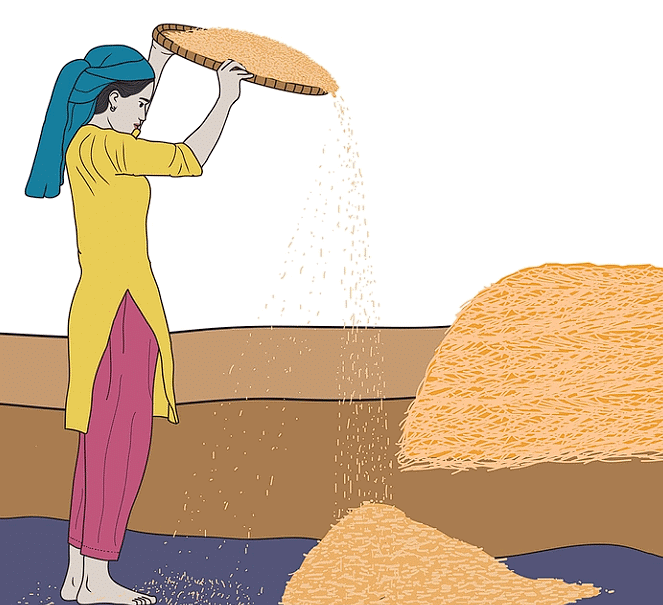
Q2: Have you seen anybody winnow grain at home or in a paddy field? What is the word in your language for winnowing? What do people use for winnowing? (Give the words in your language, if you know them.)

Ans: Yes, I have seen many women winnowing grain in villages. Pachhorana is the word in my language for winnowing. People use chaaj or winnowing fan for winnowing purposes.

Q3: What does the poet say the wind god winnows? 
Ans: The poet has compared the traditional farming practices of winnowing with the destruction that the wind creates during a natural calamity. Winnowing is a constructive process and helps us collect grains for survival. On the other hand, the fierce wind, like the process of winnowing uproots all the crumbling homes, wood, bodies, lives, and hearts. It crushes and removes them entirely and only the best survives. 

Q4: What should we do to make friends with the wind? 
Ans: To make friends with the wind we need to build strong homes with firm doors. We should also make ourselves physically and mentally strong by building strong, firm bodies and having steadfast hearts.

Q5. What do the last four lines of the poem mean to you?
Ans: In the last four lines poem reminds everyone to be strong-willed because it is highly unlikely that a storm will not hit them again. We should be mentally strong to face all the challenges that life throws at us. These challenges do make the weak heart crumble and extinguish like weak fires. 
Contrary to its effect on weak people, challenges make the strong people stronger, just like wind makes strong fires roar and flourish. Having a positive attitude towards hardships not only makes them easier to deal with but also teaches a lesson that we carry with us throughout our lives. 

Q6: How does the poet speak to the wind — in anger or with humour? You must also have seen or heard of the wind “crumbling lives”. What is your response to this? Is it like the poets?
Ans: There is a tinge of anger in the poet’s tone while speaking to the wind. Strong wind breaks away the fragile items human beings have put together. They cause plenty of damage and destruction to both life and property and human beings are bound to submit to the cruelty of nature. Storms, cyclones, gales, and intense winds cause havoc on the land. They uproot trees, bring down houses, electric posts, and claim an encumber of lives.
Yet, I do not agree with the poet that the wind only ‘crumbles lives.’ The wind is also responsible for bringing rains and contributing to the water cycle. It lowers the temperature of the land and helps as a carrier of pollen grains too. With advancements in technology, the wind is also utilized for the purposes of energy harnessing using wind power plants. 

II. The poem you have just read is originally in Tamil. Do you know any such poems in your language?
Ans: Yes, I have read another poem on wind. It is titled ‘Toofan‘ and was originally written in Hindi by Naresh Aggarwal.

03. The Sound of Music – Textbook Solutions

I. Answer these questions in a few words or a couple of sentences each.

Q1: How old was Evelyn when she went to the Royal Academy of Music?
Ans: Evelyn was seventeen years old when she went to the Royal Academy of Music in London.

Q2: When was her deafness first noticed? When was it confirmed?
Ans: Evelyn’s deafness was first noticed when she was eight, after her mother called her name and she didn’t respond. By the time she was eleven, her hearing loss was confirmed, as her grades had worsened and her headmistress suggested seeing a specialist. It was then revealed that nerve damage had caused her hearing to decline.

II. Answer each of these questions in a short paragraph (30 – 40 words).

Q1: Who helped her to continue with music? What did he do and say?
Ans: Percussionist Ron Forbes discovered Evelyn’s potential by having her feel the vibrations of two tuned drums. She realized she could sense different notes through vibrations in various parts of her body.

Q2: Name the various places and causes for which Evelyn performs.
Ans: Evelyn amazed audiences with her music, touring the UK with a youth orchestra and maintaining a busy international schedule. She gave free concerts in prisons and hospitals and prioritized teaching young musicians, becoming an inspiring figure for deaf children.

III. Answer the question in two or three paragraphs (100 – 150 words).

Q1: How does Evelyn hear music?
Ans: Evelyn experienced music through vibrations in her body. When Ron Forbes tuned two drums and asked her to sense the sound, she felt the higher drum from the waist up and the lower drum from the waist down. While playing the xylophone, she sensed the sound through the stick in her fingertips. By leaning against drums or standing on a wooden platform, she felt the vibrations through her body, saying music poured in through her skin, cheekbones, and even her hair.

Part II – Thinking About the Text
I. Tick the right answer

Q1: The (shehnai, pungi) was a ‘reeded noisemaker.’ Tick the right answer
Ans:  The pungi was a ‘reeded noisemaker.’

Q2: (Bismillah Khan, A barber, Ali Bux) transformed the pungi into a shehnai.
Ans:  A barber transformed the pungi into a shehnai.

Q3: Bismillah Khan’s paternal ancestors were (barbers, and professional musicians).
Ans: Bismillah Khan’s paternal ancestors were professional musicians.

Q4: Bismillah Khan learned to play the shehnai from (Ali Bux, Paigambar Bux, Ustad Faiyaaz Khan).
Ans: Bismillah Khan learned to play the shehnai from Ali Bux.

Q5: Bismillah Khan’s first trip abroad was to (Afghanistan, U.S.A., Canada).
Ans: Bismillah Khan’s first trip abroad was to Afghanistan.

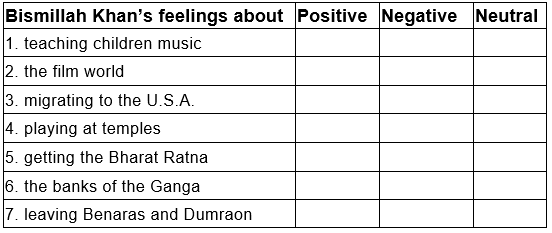
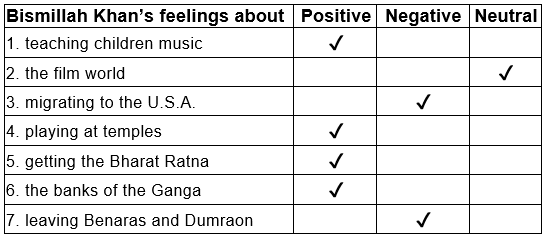
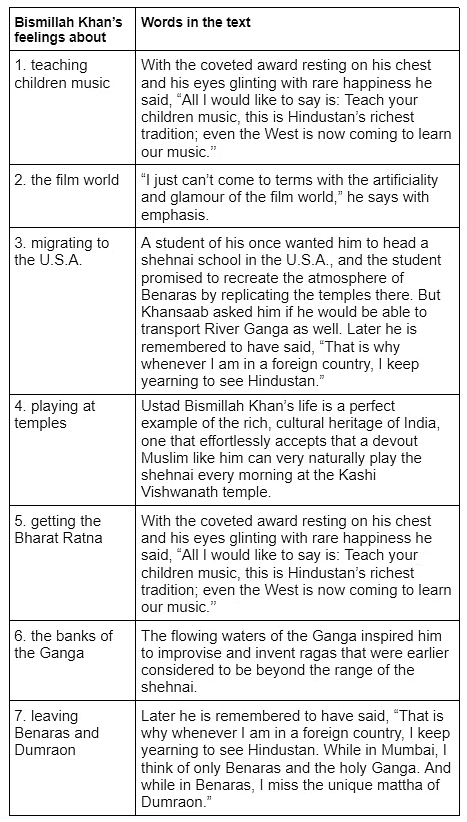
II. Find the words in the text which show Ustad Bismillah Khan’s feelings about the items listed below. Then mark a tick (✔) in the correct column. Discuss your answers in class.

Ans:

III. Answers these question in 30 – 40 words.

Q1: Why did Aurangzeb ban the playing of the pungi?  Answers these question in 30 – 40 words.
Ans: Emperor Aurangzeb banned the playing of the pungi in the royal residence for it had a shrill and unpleasant sound. It became the generic name for reeded noisemakers.

Q2: How is a shehnai different from a pungi?
Ans: Shehnai is a pipe with a natural hollow stem that is longer and broader than the pungi. It has seven holes on its body. When it is played, the closing and opening of some of the holes produce soft and melodious sounds.

Q3: Where was the shehnai played traditionally? How did Bismillah Khan change this?
Ans: Traditionally, the shehnai was part of the traditional ensemble of nine instruments found at royal courts. It was used only in temples and weddings. However, Ustad Bismillah Khan brought the change by bringing it onto the classical stage.

Q4: When and how did Bismillah Khan get his big break?
Ans: At fourteen, Bismillah Khan attended the Allahabad Music Conference, where Ustad Faiyaz Khan encouraged him. In 1938, he got his big break with All India Radio in Lucknow and became a popular Shehnai player.

Q5: Where did Bismillah Khan play the shehnai on 15 August 1947? Why was the event historic?
Ans: On 15 August 1947, Bismillah Khan played the shehnai from the Red Fort. It was a historic day as India gained independence on that day. He became the first Indian to greet the nation with his shehnai. His audience included illustrious names such as Pandit Jawaharlal Nehru and Mahatma Gandhi.

Q6: Why did Bismillah Khan refuse to start a shehnai school in the U.S.A.?
Ans: Bismillah Khan refused to start a shehnai school in the U.S.A. because he couldn’t live outside India. Although his student promised to recreate the atmosphere of Benaras, including its temples, Bismillah jokingly asked if he could also bring the River Ganga, which was impossible. He always longed to return to India whenever he was abroad.

Q7: Find at least two instances in the text that tell you that Bismillah Khan loves India and Benaras.
Ans: Bismillah Khan deeply loved India, especially Benaras and Dumraon. In his early years, he often practiced in solitude at the temples of Balaji and Mangala Maiya, and by the banks of the River Ganga in Benaras. The flowing Ganga inspired him to create new ragas for the shehnai. He refused to start a shehnai school in the U.S.A. because he couldn’t live outside India. When his student offered to replicate Benaras’ temples, Bismillah humorously asked if he could also bring the River Ganga, which was impossible.

Thinking About Language

I. Look at these sentences.

  • Evelyn was determined to live a normal life.
  • Evelyn managed to conceal her growing deafness from friends and teachers.

The italicised parts answer the questions: “What was Evelyn determined to do?” and “What did Evelyn manage to do?” They begin with a to-verb (to live, to conceal).

Complete the following sentences. Beginning with a to-verb, try to Ans the questions in brackets.

Q1: The school sports team hopes __________ (What does it hope to do?)
Ans: The school sports team hopes to do better than the last time.

Q2: We all want __________ (What do we all want to do?)
Ans: We all want to go on a vacation.

Q3: They advised the hearing-impaired child’s mother __________(What did they advise her to do?)
Ans: They advised the hearing-impaired child’s mother to take her to a specialist.

Q4: The authorities permitted us to __________ (What did the authorities permit us to do?)
Ans: The authorities permitted us to organize a charity event.

Q5: A musician decided to __________ (What did the musician decide to do?)
Ans: A musician decided to take India’s music to the world. 

II. From the text on Bismillah Khan, find the words and phrases that match these definitions and write them down. The number of the paragraph where you will find the words/ phrases have been given for you in brackets.

Q1: he home of royal people (1) __________
Ans: The home of royal people (1) the royal residence

Q2:  the state of being alone (5) __________
Ans: The state of being alone (5) solitude

Q3: a part which is absolutely necessary (2) __________
Ans: A part which is absolutely necessary (2) indispensable

Q4: to do something not done before (5) __________
Ans: To do something not done before (5) invent

Q5: without much effort (13) __________
Ans: To do something not done before (5) invent

Q6: quickly and in large quantities (9) __________ and __________
Ans: Quickly and in large quantities (9) thick and fast

III. Tick the right Answer

Q1: When something is revived, it (remains dead/lives again).
Ans: When something is revived, it lives again.

Q2: When a government bans something, it wants it (stopped/started).
Ans: When a government bans something, it wants it stopped.

Q3: When something is considered auspicious, (welcome it/avoid it).
Ans: When something is considered auspicious, welcome it.

Q4: When we take to something, we find it (boring/interesting).
Ans: When we take to something, we find it interesting.

Q5: When you appreciate something, you (find it good and useful/find it of no use).
Ans: When you appreciate something, you find it good and useful.

Q6: When you replicate something, you do it (for the first time/for the second time).
Ans: When you replicate something, you do it for the second time.

Q7: When we come to terms with something, it is (still upsetting/no longer upsetting).
Ans: When we come to terms with something, it is no longer upsetting.

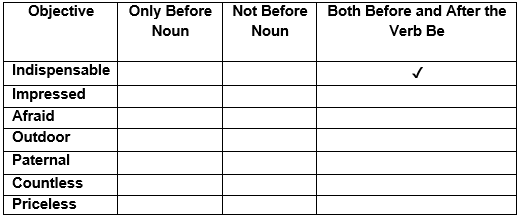
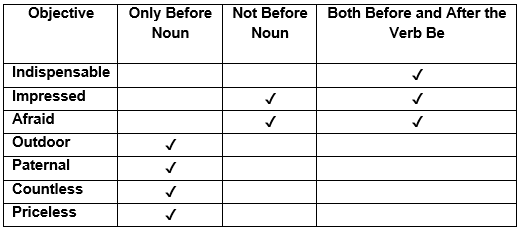
IV. Consult your dictionary and complete the following table. The first one has been done for you.

Use these words in phrases or sentences of your own.
Ans:

Some sentences using these adjectives are:

  1. She is indispensable for the successful completion of the project.
  2. Sunita was impressed by my singing.
  3. He is afraid of the dark.
  4. I enjoy the company of my paternal uncle.
  5. Gennie was showered with countless gifts.
  6. My grandmother gave me a priceless piece of advice.

Speaking:

I. Imagine the famous singer Kishori Amonkar is going to visit your school. You have been asked to introduce her to the audience before her performance. How would you introduce her? 
Here is some information about Kishori Amonkar you can find on the Internet. Read the passage and make notes of the main points about: 

  • her parentage 
  • the school of music she belongs to 
  • her achievements 
  • her inspiration 
  • awards

Padma Bhushan Kishori Amonkar, widely considered the finest female vocalist of her generation, was born in 1931, daughter of another great artist, Smt. Mogubai Kurdikar. In her early years she absorbed the approach and repertoire of her distinguished mother’s teacher Ustad Alladiya Khan. As her own style developed, however, she moved away from Alladiya Khan’s ‘JaipurAtrauli gharana’ style in some respects, and as a mature artist her approach is usually regarded as an individual, if not unique, variant of the Jaipur model.
Kishori Amonkar is a thinker, besotted by what she calls the mysterious world of her raagas. She dissects them with the precision of a perfectionist, almost like a scientist, until the most subtle of shades and emotions emerge and re-emerge.
She is very much inspired by the teachings of the ancient Vedic sages, written at a time when vocal music was highly devotional in character. This soul searching quality of her music, coupled with a very intellectual approach to raaga performance has gained her quite a following in India and has helped to revive the study of khayal.
Significant awards bestowed on this artist include the Sangeet Natak Akademi Award (1985), the Padma Bhushan (1987), and the highly coveted Sangeet Samradhini Award (considered one of the most prestigious awards in Indian Classical Music) in 1997.

II. Use your notes on Kishori Amonkar to introduce her to an imaginary audience.
You may use one of the following phrases to introduce a guest:
I am honoured to introduce…/I feel privileged to introduce…/We welcome you…
Ans: I feel privileged to introduce you to one of the greatest female vocalists of her time, Kishori Amonkar. A recipient of the Padma Bhushan, she was born in 1931 to the legendary Smt. Mogubai Kurdikar. Kishori Amonkar is renowned for her deep exploration of ragas, meticulously unveiling their most nuanced expressions. Her artistry is profoundly influenced by the wisdom of Vedic sages. Throughout her illustrious career, she has received numerous prestigious awards, including the Sangeet Natak Akademi Award in 1985, the Padma Bhushan in 1987, and the esteemed Sangeet Samradhini Award in 1997

Writing:

“If you work hard and know where you’re going, you’ll get there,” says Evelyn Glennie. 
You have now read about two musicians, Evelyn Glennie and Ustad Bismillah Khan. Do you think that they both worked hard? Where did they want to ‘go’? Answer these questions in two paragraphs, one on each of the two musicians.

Ans: If we work hard no one can stop us from achieving our dreams and we get there. Evelyn Glennie had a love for music in the deepest corners of her heart and worked hard to achieve her dreams. She was deaf and often discouraged for her pursuit and love for music. It was her teacher Ron Forbes who encouraged her to pursue music and taught her to identify music vibrations from different parts of her body. She worked and climbed her way up to the Royal Academy of music. She won various Academy awards and in 1991 presented with the Soloist of the Year Award. With her determination, she not only excelled in the field but also brought laurels to her country.
Ustad Bismillah Khan had an inclination towards music from a very young age. He was given training in music by his uncle. He belonged to a family of musicians and his pursuit was encouraged. He practiced hard and invented ragas for shehnai that were considered beyond the scope. His contribution to Indian classical music was commendable and he was awarded various national awards including Bharat Ratna.

02. The Road Not Taken – Textbook Solutions

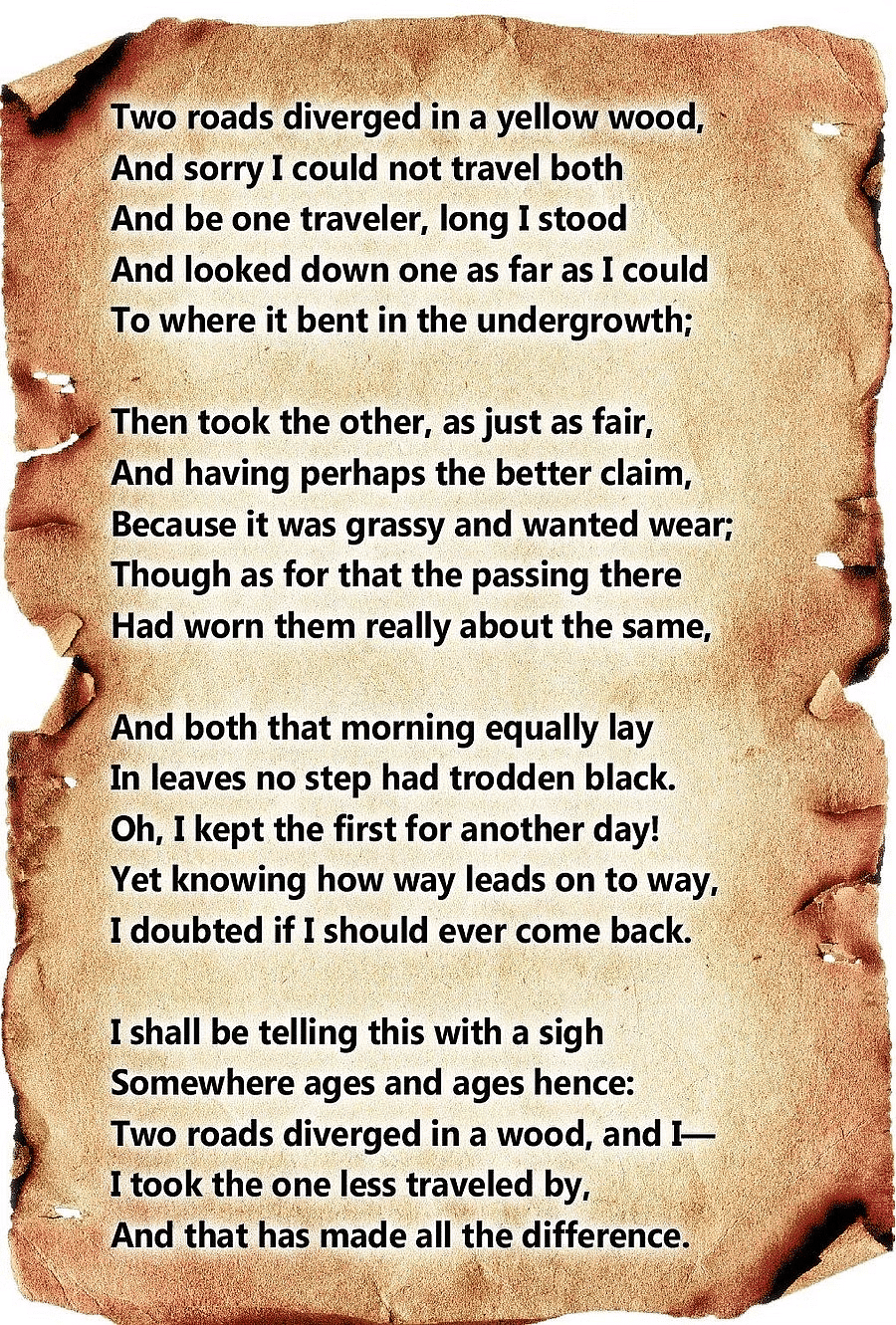
I. Thinking about the PoemQ1: Where does the traveller find himself? What problems does he face?
Ans: The traveller finds himself in yellow woods where the road diverges into two. The problem that he faces is that he cannot decide which road to take to continue his journey since it is not possible for him to travel both roads at the same time.

Q2: Discuss what these phrases mean to you.

(i) A yellow wood
Ans: 
Yellow wood represents autumn, which is linked to old age. The poet may be symbolically referring to the later stages of life.

(ii) It was grassy and wanted wear
Ans: It conveys that the road was full of grass, and nobody had used that road. It was a smooth road that had not worn out.

(iii) The passing there
Ans: The use of the path by passersby.

(iv) Leaves no step had trodden black
Ans: The leaves had not changed color and turned black because not many people walked on them. This could represent a path in life that someone rarely takes because they are afraid of the unknown.

(v) How way leads on to way
Ans: This phrase means how certain decisions one makes in life could pave the way for many other decisions.

Q3: Is there any difference between the two roads as the poet describes them
(a) in stanzas two and three?
(b) in the last two lines of the poem?

Ans:
(a) In stanza two, the poet describes how the only difference between the two roads was that the one he chose seemed to have a better claim to be taken because it was grassy and appeared less traveled. Other than that, both roads were worn down by people walking on them. In stanza three, the poet mentions that both roads were equally covered with leaves, and no one had walked on them.
(b) In the last two lines of the poem, the poet says that there is a difference between the two roads because he took the road that was less travelled by other people, and that made all the difference to his journey.

Q4: What do you think the last two lines of the poem mean? (Looking back, does the poet regret his choice or accept it?
Ans: The last two lines of the poem mean the acceptance of reality. The poet made a choice and accepted the challenging path. He took an unexplored path in his life. He wanted to do something different in his life, so he chose the less travelled road. No, he does not regret his choice.

II. Thinking about the Poem

Q1: Have you ever had to make a difficult choice (or do you think you will have difficult choices to make)? How will you make the choice (for what reasons)?
Ans: No, I have not faced a difficult choice yet. I might still be too young to make independent decisions.
However, I believe that someday I will have to make tough choices. After finishing my general education, I will need to decide on a career, whether to become an engineer, a doctor, or something else. I will have many options, and choosing among them will be challenging. I will base my decision on my skills and strengths at that time. I want to pick a path that brings me satisfaction and peace of mind. I won’t chase money like everyone else. Instead, like the poet in the poem, I will choose a challenging and unexplored path in my life.

Q2: After you have made a choice, do you always think about what might have been, or do you accept the reality?
Ans: Making a decision can greatly affect our future. Once I choose, I accept the consequences as part of my reality. Constantly rethinking or worrying about a decision isn’t a healthy way to live. Those thoughts stop us from appreciating the results of our choices. Therefore, I strongly believe in sticking to my decisions.

01. The Fun They Had – Textbook Solutions

I.  Answer these questions in a few words or a couple of sentences each.

Q1: How old are Margie and Tommy?
Ans: Margie is eleven and Tommy is thirteen-year-old.

Q2: What did Margie write in her diary?
Ans: Margie wrote, “Today Tommy found a real book!”.

Q3: Had Margie ever seen a book before?
Ans: No, Margie had never seen a book before.

Q4: What things about the book did she find strange?
Ans: Margie found several things about the book strange:

  • The pages were yellow and wrinkled.
  • The words on each page stayed the same every time she read them.
  • She thought it was odd that someone would write a book about schools.

Q5: What do you think a telebook is?
Ans: A telebook is displayed on the television screen and the text of a telebook is similar to a book.

Q6: Where was Margie’s school? Did she have any classmates?
Ans: Margie’s school was in her home itself, right next to her bedroom. No, she did not have any classmates.

Q7: What subjects did Margie and Tommy learn? 
Ans: Tommy and Margie studied history, geography, and arithmetic.

II. Answer the following with reference to the story.Q1: “I wouldn’t throw it away.”
(i) Who says these words?
(ii) What does ‘it’ refer to?
(iii) What is it being compared with by the speaker?
Ans: 
(i) Tommy said these words.
(ii) It refers to that real book that Tommy found.
(iii) Tommy is comparing the television screen to the real books in earlier times in which words were printed on paper. He thought that after reading such books, one would have to throw them away. However, he would never have to throw away his telebooks.

Q2: “Sure they had a teacher, but it wasn’t a regular teacher. It was a man.”
(i) Who does ‘they’ refer to?
(ii) What does ‘regular’ mean here?
(iii) What is it contrasted with?
Ans:
(i) They refer to the students who studied in the old kind of schools centuries before the time the story is set in.
(ii) Here, ‘regular’ refers to the mechanical teachersthat Tommy and Margie had.
(iii) The mechanical teacher is contrasted with the teacher of the earlier times, who was a human being.

III. Answer each of these questions in a short paragraph (about 30 words).

Q1: What kind of teachers did Margie and Tommy have?
Ans:

  • Margie and Tommy had mechanical teachers. They werelarge and black and ugly and had large black screens on which all the lessons were shown and questions were asked. 
  • The children were taught through computer and television screens. 
  • These mechanical teachers had a slot in which the students had to put their homework and test papers. 
  • They had to write their answers in a punch code and the mechanical teacher calculated the marks immediately.

Q2: Why did Margie’s mother send for the County Inspector?
Ans:

  • Margie’s mother sent for the County Inspector because the mechanical teacher of Margie was not functioning properly.
  • Margie had been given many tests in geography by the mechanical teacher, but there was no improvement in her performance.
  • It only kept getting worse. It is for this reason that Margie’s mother sent for the County Inspectorto find out why this was happening.

Q3: What did he do?
Ans: The County Inspector smiled at Margie , gave Margie an apple and started working on the mechanical teacher. He took it apart and then checked it. 

  • Margie had hoped that the Inspector would not know how to put the mechanical teacher together again, but he managed to reassemble it. 
  • He slowed down the geography sector of the teacher because it was geared a little too quick for an average ten-year-old.

Q4: Why was Margie doing badly in geography? What did the County Inspector do to help her?
Ans:

  • Margie was doing badly in geography because the questions that were displayed on the screen of the mechanical teacher were too quick for her age. 
  • The County Inspector rightly told her that she could not be blamed for her poor performance. 
  • The County Inspectorslowed down the geography sector of the mechanical teacher to an average ten-year level. 
  • He also told Mrs. Jones that Margie’s overall progress pattern was satisfactory.

Q5: What had once happened to Tommy’s teacher?
Ans: Once, The history sector of Tommy’s teacher had blanked out completely.

Q6: Did Margie have regular days and hours for school? If so, why?
Ans: Yes, Margie had regular days and hours for school.

  • This was because her mother believed that learning at regular hours helped little girls learn better.
  • Her mechanical teacher was also active at the same time every day, except on Saturday and Sunday.

Q7: How does Tommy describe the old kind of school?
Ans: Tommy described the old kind of school as a special building where all children learned together. Key features included:

  • Hundreds of students studying and playing together.
  • Children shouting and laughing in an open yard.
  • A sense of community among the students.

This environment fostered interaction and camaraderie, making school a lively and enjoyable place.

Q8: How does he describe the old kind of teachers?
Ans: Tommy described the old kind of teachers as men who taught students in a special building. They:

  • Instructed children in groups.
  • Assigned homework.
  • Asked questions to engage students.

This traditional approach contrasts with the modern teaching methods used by Margie and Tommy.

IV. Answer each of these questions in two or three paragraphs (100 –150 words).

Q1: What are the main features of the mechanical teachers and the schoolrooms that Margie and Tommy have in the story?
Ans: The main features of the mechanical teachers and schoolrooms that Margie and Tommy have are:

  • They have mechanical teachers at home, eliminating the need for traditional schools.
  • The mechanical teacher is located in a room of their house, allowing for individual learning.
  • There are no classrooms where students gather; they study using telebooks instead of printed books.
  • Homework is submitted through a slot in the mechanical teacher, which grades their work instantly.
  • Students write answers in punch code, showcasing a technologically advanced education system.
  • Margie learned to use the mechanical teacher when she was just six years old.

Q2: Why did Margie hate school? Why did she think the old kind of school must have been fun?
Ans: 
Margie hated school because it was not enjoyable. She was taught by a mechanical teacher at a set time each day. Recently, her performance in geography tests had declined, which displeased her mother. In response, her mother called the County Inspector, hoping he would replace the mechanical teacher. Margie felt let down when the inspector simply repaired the teacher instead.
Margie’s least favourite part was submitting her homework and tests through a slot in the mechanical teacher. She disliked writing her answers in a punch code. Margie believed the old kind of school must have been fun because she imagined:

  • Children from the neighbourhood gathering together, laughing and playing in the schoolyard.
  • Students sitting together in class and going home together.
  • Learning the same subjects, allowing them to help each other with homework.
  • Having real teachers who were people.

These aspects made her think that the old school experience would have been enjoyable.

Q3: Do you agree with Margie that schools today are more fun than the school in the story? Give reasons for your answer.
Ans: Yes, I agree that schools today are more fun than the school in the story. Here are some reasons:

  • In the story, there is little interaction among students. Studying seems boring and solitary.
  • Doing homework alone and writing in a punch code can be exhausting.
  • Today, students learn better through interaction with each other, which creates a healthier learning environment.
  • Listening to teachers explain lessons is often more engaging than reading from a mechanical computer.
  • The excitement of waiting for exam results is heightened when shared with classmates, unlike immediate calculations.
  • The friendships formed at school are often the most meaningful and last a lifetime.
  • Schools today teach important values such as obedience, respect, and kindness through various activities.

Therefore, schools today are more fun than the school in the story because they are more interactive and foster a positive environment for learning.

Thinking about Language

I. AdverbsRead this sentence taken from the story: 
They had once taken Tommy’s teacher away for nearly a month because the history sector had blanked out completely. 
The word complete is an adjective. When you add –ly to it, it becomes an adverb.

Q1: Find the sentences in the lesson which have the adverbs given in the box below.
Ans:

  • They turned the pages, which were yellow and crinkly, and it was awfully funny to read words that stood still instead of moving the way they were supposed to − on a screen, you know.
  • The mechanical teacher had been giving her test after test in geography and she had been doing worse and worse until her mother had shaken her head sorrowfully and sent for the County Inspector.
  • They had once taken Tommy’s teacher away for nearly a month because the history sector had blanked out completely.
  • He added loftily, pronouncing the word carefully, “Centuries ago.”
  • “But my mother says a teacher has to be adjusted to fit the mind of each boy and girl it teaches and that each kid has to be taught differently.”
  • “I didn’t say I didn’t like it,” Margie said quickly.
  • “Maybe,” he said nonchalantly.

Q2: Now use these adverbs to fill in the blanks in the sentences below.
(i) The report must be read _____________ so that performance can be improved.
(ii) At the interview, Sameer answered our questions _____________ , shrugging his shoulders.
(iii) We all behave ________________  when we are tired or hungry.
(iv) The teacher shook her head ____________ when Ravi lied to her.
(v) I __________ forgot about it.
(vi) When I complimented Revathi on her success, she just smiled ___________ and turned away.
(vii) The President of the Company is _____________ busy and will not be able to meet you.
(viii) I finished my work __________________ so that I could go out to play.

Ans:
(i) The report must be read carefully so that performance can be improved.
(ii) At the interview, Sameer answered our questions loftily, shrugging his shoulders.
(iii) We all behave differently when we are tired or hungry.
(iv) The teacher shook her head sorrowfully when Ravi lied to her.
(v) completely forgot about it.
(vi) When I complimented Revathi on her success, she just smiled nonchalantly and turned away.
(vii) The President of the Company is awfully busy and will not be able to meet you.
(viii) I finished my work quickly so that I could go out to play.

Q3: Make adverbs from these adjectives.
(i) angry ___________
(ii) happy __________
(iii) merry___________
(iv) sleepy __________
(v) easy ____________
(vi) noisy ___________
(vii) tidy ___________
(viii) gloomy ________

Ans:
(i) Angrily
(ii) Happily
(iii) Merrily
(iv) Sleepily
(v) Easily
(vi) Noisily
(vii) Tidily

(viii) Gloomily

II. If Not and Unless 

  •  Imagine that Margie’s mother told her, “You’ll feel awful if you don’t finish your history lesson.” 
  • She could also say: “You’ll feel awful unless you finish your history lesson.” 

Unless means if not. Sentences with unless or if not are negative conditional sentences. 
Notice that these sentences have two parts. The part that begins with if not or unless tells us the condition. This part has a verb in the present tense (look at the verbs don’t finish, finish in the sentences above). 
The other part of the sentence tells us about a possible result. It tells us what will happen (if something else doesn’t happen). The verb in this part of the sentence is in the future tense (you’ll feel/you will feel). 
Notice these two tenses again in the following examples

Q1: Complete the following conditional sentences. Use the correct form of the verb.
(i) If I don’t go to Anu’s party tonight, __________
(ii) If you don’t telephone the hotel to order food, __________
(iii) Unless you promise to write back, I __________
(iv) If she doesn’t play any games, ___________
(v) Unless that little bird flies away quickly, the cat ___________

Ans:
(i) If I don’t go to Anu’s party tonight, she will be angry.
(ii) If you don’t telephone the hotel to order food, you will miss your evening meal.
(iii) Unless you promise to write back, I will not write to you.
(iv) If she doesn’t play any games, she will become dull and lazy.
(v) Unless that little bird flies away quickly, the cat will pounce on it.

Writing
A new revised volume of Issac Asimov’s short stories has just been released. Order one set. Write a letter to the publisher, Mindfame Private Limited, 1632 Asaf Ali Road, New Delhi, requesting that a set be sent to you by Value Payable Post (VPP), and giving your address. Your letter will have the following parts.

Addresses of the sender and receiver

  • The salutation
  • The body of the letter
  • The closing phrases and signature

Your letter might look like this:
Your address 
Date (DD/MM/YY)
The addressee’s address 
Dear Sir/Madam, 
Yours sincerely
Your signature 

Ans:
A56, South City II,
Sohna Road,
Gurugram,
Haryana.
29/08/21
Mind fame Private Limited, 
1632 Asaf Ali Road, 
New Delhi.
Dear Sir
With due regards, Anupama Sharma would like to request you to send me one set of a newly revised volume of Issac  Asimov’s short stories. I would like you to send me the post by Value Payable Post (VPP). The delivery address will be the same as mentioned in the letter.
Thank you for taking into consideration my request and I look forward to your reply.
Yours sincerely,
Anupama Sharma