08. The Beggar – Textbook Solutions

Q1. Has Lushkoff become a beggar by circumstance or by choice?

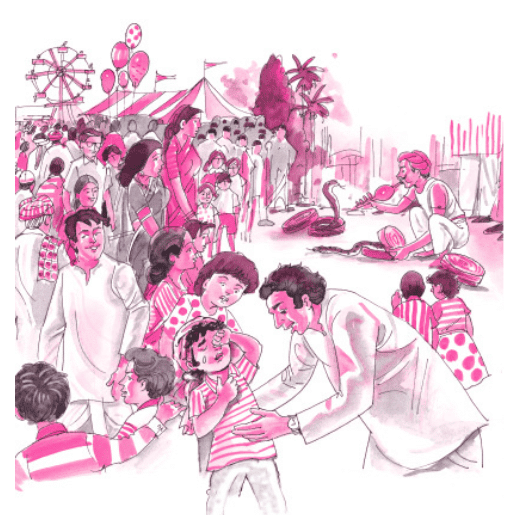
Ans: Lushkoff becomes a beggar due to circumstances rather than choice. He shares with Sergei that he was a village schoolteacher for eight years but lost his job because of intrigues and calumny. After losing his position, he fell into a state of destitution and poverty. Lushkoff expresses his desperation, stating he has not eaten for three days and cannot afford to travel to a job opportunity in Kaluga. His plea for help and willingness to perform menial tasks for Sergei indicate that his situation is a result of unfortunate circumstances, not a deliberate decision.

Q2. What reasons does he give to Sergei for his telling lies?
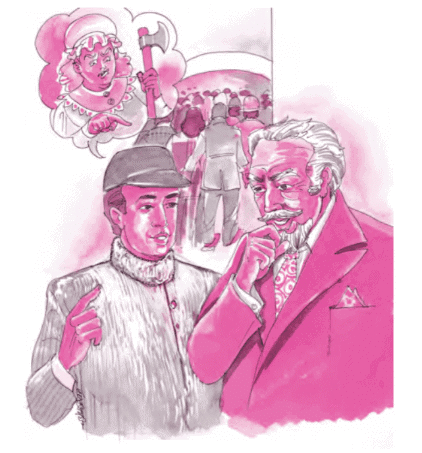
Ans: Lushkoff explains to Sergei that he lies out of necessity for survival. He reveals that when he shares his true situation, people are often unwilling to help him. Thus, he resorts to lying as a way to gain sympathy and support, particularly in his desperate circumstances. These falsehoods act as a strategy to enhance his chances of receiving assistance, as he grapples with challenges such as hunger and the need to travel for a potential job opportunity.

Q3. Is Lushkoff a willing worker? Why, then, does he agree to chop wood for Sergei?

Ans: No, Lushkoff is not a willing worker. He agrees to chop wood for Sergei not out of hunger or a desire for work, but due to his pride and shame. He feels trapped by his own words. His health has suffered from excessive vodka consumption, leaving him weak and without any motivation to work.

Q4. Sergei says, “I am happy that my words have taken effect.” Why does he say so? Is he right in saying this?

Ans: Sergei expresses his happiness because he sees that his words have had a positive impact on Lushkoff. Initially, Lushkoff was not eager to work, but after chopping wood and assisting Sergei with moving, he began to show a willingness to work. Sergei feels satisfied knowing that his guidance has helped Lushkoff move away from begging and towards a more productive life.

If Sergei had not intervened, Lushkoff might have continued to live on the streets, begging for survival. Therefore, Sergei’s belief that his words have made a difference is justified.

Q5. Lushkoff is earning thirty five roubles a month. How is he obliged to Sergei for this?

Ans: Lushkoff is indebted to Sergei because, without Sergei’s intervention, he might still be living as a beggar, identifying himself as a teacher or a student. By listening to Sergei, Lushkoff transformed his life; he became a notary and now earns thirty-five roubles a month.

Q6. During their conversation, Lushkoff reveals that Sergei’s cook, Olga, is responsible for the positive change in him. How has Olga saved Lushkoff?

Ans: Lushkoff attributes his transformation to Olga, Sergei’s cook, who showed him great compassion. Initially, he was meant to chop wood for Sergei, but he did not do any of the work. Instead, Olga took on the task herself. While chopping wood, she would scold him, express her worries about his situation, and even cry for him. Her kindness went beyond just helping with physical tasks; it was her emotional support and genuine concern that truly affected him.

Lushkoff explains that her noble deeds and the sorrow she expressed for him played a vital role in his recovery. Olga’s intervention, both in performing the physical labour and providing emotional backing, helped him move away from his struggles with alcoholism and poverty. Ultimately, her compassion inspired a significant change in his life.

Glossary:

  • Intrigues: Secret plans or schemes; fascinating situations.
  • Calumny: False accusations to damage reputation; slander.
  • Deliberate: Intentional; to think carefully.
  • Destitution: Extreme poverty; lack of essentials.
  • Alcoholism: Addiction to alcohol.
07. A House is Not a Home – Textbook Solutions

Think About ItQ1. What does the author notice one Sunday afternoon? What is his mother’s reaction? What does she do?
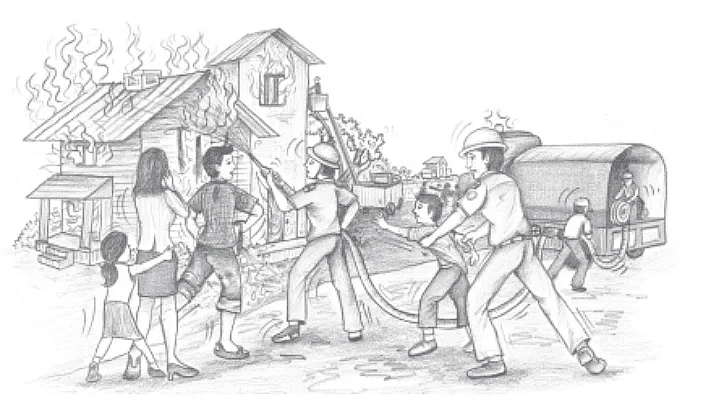
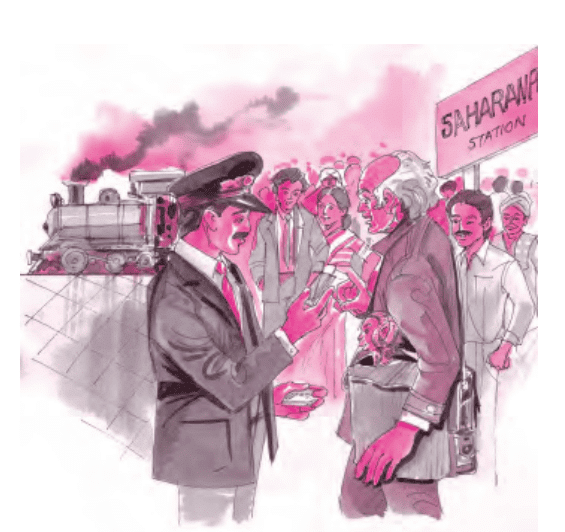
Ans: One Sunday afternoon, the author noticed a strange smell and saw smoke pouring in through the seams of the ceiling. The smoke quickly filled the room, making it hard to see. As they rushed outside, the roof was already engulfed in flames and spreading rapidly. His mother ran back into the house, emerging with a small metal box containing important documents. In a crazed state, she attempted to retrieve more items, driven by the desire to save her late husband’s pictures and letters, which were her only memories of him. Despite the author’s pleas, she rushed back inside, and he was held back by a fireman.

Q2. Why does he break down in tears after the fire?
Ans: After the fire, he broke down in tears because he realised he was experiencing a significant loss. The absence of his cat became apparent, and the weight of everything hit him at once: the new school, the fire, and the missing cat. This overwhelming realisation led to his emotional breakdown.

Q3. Why is the author deeply embarrassed the next day in school? Which words show his fear and insecurity?
Ans: The author feels deeply embarrassed at school the next day because he was still wearing the dress he had put on for church, and he had no shoes after losing them in the fire. He borrowed tennis shoes from his aunt, which added to his discomfort. He felt that his outfit looked weird, and he had no books or homework, as his backpack was also gone. This situation made him feel like an outcast and a geek, leading him to wish he could just curl up and die. Words that express his fear and insecurity include “outcast and geek,” “like a zombie,” “wanted to curl up and die,” “everything felt surreal,” and “all the security…had all been ripped away.”

Q4. The cat and the author are very fond of each other. How has this been shown in the story? Where was the cat after the fire? Who brings it back and how?
Ans: The author had a deep affection for his cat, as shown by his inconsolable tears when she went missing after the fire. He frequently visited the site of his former home, hoping to find her. He reminisced about how the cat would curl up in his pocket and fall asleep, highlighting how much he missed her. After the fire, the cat was so frightened that she ran over a mile away. A kind woman found her and took her in, noticing the author’s contact number on the cat’s collar. Unfortunately, she was unable to reach him because their phone service had been disconnected due to the fire. Nevertheless, the woman made a personal effort to locate the author and successfully returned the cat to him.

Q5. What actions of the schoolmates change the author’s understanding of life and people, and comfort him emotionally? How does his loneliness vanish and how does he start participating in life?
Ans: The schoolmates demonstrated genuine concern for the author, despite not knowing him well. They helped him by collecting supplies, books, and clothes. Individuals he had never spoken to before began to approach him, offering friendship and inviting him to their homes. This outpouring of kindness overwhelmed him, and he realised that his new school and the people around him were supportive. As a result, he shifted his focus away from feelings of fear and insecurity, gaining confidence that everything would be alright. His loneliness faded, and he started to actively participate in life.

Q6. What is the meaning of ‘My cat was back and so was I’? Had the author gone anywhere? Why does he say that he is also back?
Ans: After the fire, the author felt deeply depressed and wanted to give up on life. He had lost hope of ever finding his cat. However, the kindness of those around him, especially at school and a woman who returned his cat, helped him see that things could improve. With his cat back, he felt ready to move forward. This is what he meant by saying, ‘My cat was back and so was I.’ The author had not physically gone anywhere but had experienced a shift in his outlook. He felt gratitude for his new friends and the support he received, which brought him back to life. As he watched his house being rebuilt, he realised that his life was also being restored. With his cat and new friends by his side, he felt a renewed sense of hope and purpose.

6. The Last Leaf – Textbook Solutions

Page No. 48
Think About It

Q1. What is Johnsy’s illness? What can cure her, the medicine or the willingness to live?
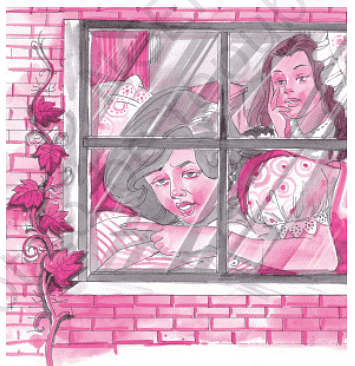
Ans. Johnsy, a young artist, was suffering from pneumonia. She became convinced that she would die when the last leaf on the ivy creeper fell. Despite receiving medicine, it had little effect on her condition. Ultimately, it was her willingness to live that held the potential to cure her, rather than the medication alone.

Q2. Do you think the feeling of depression Johnsy has is common among teenagers?
Ans. It is increasingly common for teenagers to experience feelings of depression due to intense competition and societal pressures. However, many teenagers who maintain a positive outlook and face challenges with resilience often manage to keep their hopes alive and continue moving forward. This duality highlights the importance of perspective in coping with life’s difficulties.

Q3. Behrman has a dream. What is it? Does it come true?
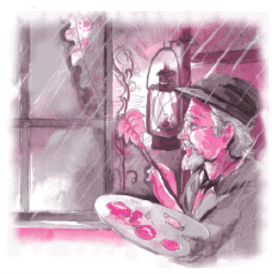
Ans. Behrman dreamed of creating a masterpiece during his lifetime. His dream was realised when he painted the last leaf of the ivy creeper, which ultimately saved Johnsy’s life.

Q4. What is Behrman’s masterpiece? What makes Sue say so?
Ans. Behrman’s masterpiece was his painting of an ivy leaf, which ultimately saved Johnsy’s life. This painting was so realistic that it was difficult to tell if the leaf was real or merely a painting. When Behrman passed away after creating this life-saving artwork, Sue referred to it as a masterpiece because it represented his dedication and sacrifice.

Word – meaning

Pneumonia – Pneumonia is an infection that inflames the air sacs in one or both lungs

Masterpiece – a work of outstanding artistry, skill, or workmanship. 

Ivy – a woody evergreen climbing plant, typically having shiny, dark green five-pointed leaves.

Vine –  climbing or trailing woody-stemmed plant related to the grapevine. 

05. The Happy Prince – Textbook Solutions

Page No. 36

Think About It

Q1. Why do the courtiers call the prince ‘the Happy Prince’? Is he really happy? What does he see all around him?

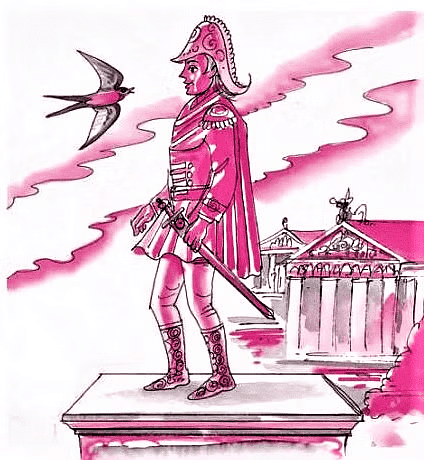
Ans: The courtiers referred to the prince as ‘the Happy Prince’ because he always appeared joyful. During his life, he was unaware of tears as he lived in a palace where sorrow was forbidden. However, after his death, when he became a statue, he was no longer happy. He wept for the suffering he observed in the city around him.

  • As a statue, he could see the misery and ugliness of his city.
  • His heart, though made of lead, could not help but weep for the pain of others.
  • His tears flowed down his golden cheeks, revealing his true sorrow.

Q2. Why does the Happy Prince send a ruby for the seamstress? What does the swallow do in the seamstress’ house?

Ans: The Happy Prince sent a ruby to the seamstress because she was very poor and unable to feed her sick child, who had a fever. The swallow, convinced by the Prince, flew to her house.

  • Upon arrival, the seamstress was asleep.
  • The swallow placed the ruby on her work table.
  • He then circled the bed, using his wings to fan the boy’s forehead.
  • This action helped soothe the boy, allowing him to sleep peacefully.

Q3. For whom does the prince send the sapphires and why?

Ans: The Happy Prince sent sapphires to assist two individuals in need:

  • Young Writer: He was too cold and hungry to finish his play. The Prince sent a sapphire, which the writer sold for firewood and food. This act lifted his spirits, motivating him to complete his work.
  • Little Matchgirl: She had dropped her matches in the gutter, ruining them. Knowing she would be punished for not bringing home money, the Prince sent her a sapphire as well. When the swallow delivered it, she joyfully ran home, relieved and laughing.

Q4. What does the swallow see when it flies over the city?

Ans: When the swallow flew over the city, it noticed a stark contrast between wealth and poverty:

  • The rich were enjoying themselves in their beautiful homes.
  • Poor beggars sat at the gates, struggling for survival.
  • In dark alleys, starving children looked out with white faces.
  • Two boys huddled together under a bridge, trying to keep warm.
  • A watchman shouted at them to move along.
  • Near the cathedral, he saw marble angels and heard music from a palace.
  • A girl on a balcony complained about her dress not being ready for the state ball.
  • He observed lanterns hanging from ships as he flew over the river.
  • Finally, he reached a poor woman’s house, where her sick boy lay feverish.

The swallow dropped a ruby from the Prince, cooling the boy’s forehead with his wings. The boy felt better and fell into a peaceful sleep.

Upon returning to the Happy Prince, the swallow shared his experiences. The Prince remarked that doing good made him feel warm, despite the cold.

Q5. Why did the swallow not leave the prince and go to Egypt?

Ans: After the Prince gave away the sapphires from his eyes, he became blind. The swallow, moved by the Prince’s kindness, chose to stay with him instead of flying to Egypt.

This decision highlights the swallow’s deep loyalty and affection for the Prince, demonstrating that he valued their bond over returning to his friends.

Q6. What are the precious things mentioned in the story? Why are they precious?

Ans: In the story, the two precious things are the Prince’s leaden heart and the dead swallow. They are valued for their:

  • Kindness: The Prince, though dead, was saddened by the suffering in his city. He gave away his riches to help the poor, prioritising their well-being over his own.
  • Selflessness: The swallow showed kindness by delivering the Prince’s messages and chose to stay with him, even knowing he would struggle in winter.
  • Emotional significance: When the swallow died at the Prince’s feet, the Prince’s heart broke from sorrow.

When God asked for the most precious things in the city, an angel brought the leaden heart and the dead bird. God promised that the swallow would sing in His garden of Paradise, while the Happy Prince would praise Him in his city of gold.

4. In the Kingdom of Fools – Textbook Solutions

Q1. What are the two strange things the guru and his disciple find in the Kingdom of Fools?

Ans: The two strange things that the guru and his disciple observe in the kingdom of fools are:

  • Everyone sleeps during the day and carries out their work at night.
  • The cost to purchase anything from the market was the same, one duddu (one rupee). Whether it was a measure of rice or a bunch of bananas it cost the same.

Q2. Why does the disciple decide to stay in the Kingdom of Fools? Is it a good idea?

Ans:  The disciple decided to stay in the Kingdom of Fools because he was delighted that everything cost a single duddu and everything was very cheap

  • All that he wanted was good and very cheap food.
  • According to the Guru, staying there was not a good idea as they were all fools and so he felt this situation would not last long and was not sure about what they would do in the future.

Q3. Name all the people who are tried in the king’s court, and give the reasons for their trial.

Ans: Following people were tried in the king’s court:

  • The merchant whose house was burgled because his house’s wall was weak and it fell upon the burglar and killed him 
  • The bricklayer who built the wall because he built a wall which was weak and which  collapsed killing the burglar 
  • The dancing girl because she distracted the bricklayer with her jingling anklets by  walking up and down the road where the bricklayer was laying the wall
  • The goldsmith, because he didn’t complete the dancing girl’s order on time and so she had to go to the goldsmith a dozen times. 
  • The merchant whose house was burgled (second time) because his father persuaded the goldsmith to finish his order first thereby delaying the dancing girl’s order. Since the merchant’s father died, the merchant had to be executed in his father’s place. 
  • The disciple because the merchant was too thin to be executed by the newly made stake and a fat man was required to fit the stake. The disciple was very fat, hence he was caught. 

Q4. Who is the real culprit, according to the king? Why does he escape punishment?

Ans: The real culprit, according to the king, is the merchant because although his old father was the real murderer, he was dead and someone had to be punished in his place.  He escapes the punishment because he is too thin to be properly executed on the stake.

Q5. What are the Guru’s words of wisdom? When does the disciple remember them?’

Ans:  The guru’s words of wisdom were that it was the city of fools. He advised the disciple to leave the city because he would not know what they would do next. The disciple remembers this when he was going to be executed.

Q6. How does the guru manage to save his disciple’s life?

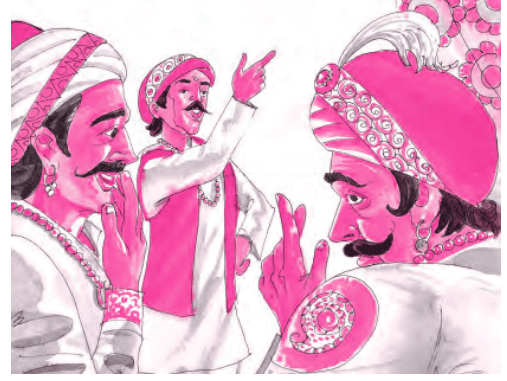
Ans: The guru tries to confuse the king by expressing his desire to be killed first. Then to further confuse the king, he tells the story of becoming the king in the next incarnation. 

  • Apparently, it may sound like a case of pure lying to save your dear one’s life. But if we go deeper consciously or unconsciously, the sage is trying to save everybody’s life in the kingdom. 
  • Ultimately he is able to pull everybody out of the misery of living in the kingdom of fools.

03. Iswaran the Storyteller – Textbook Solutions

Q1. In what way is Iswaran an asset to Mahendra?

Answer – Iswaran was a good domestic assistant for Mahendra. Apart from cooking and doing household chores he was a great entertainer for his master. He was good at managing resources as he could find vegetables out of nowhere and also never had complained while accompanying his master. 

Q2. How does Iswaran describe the uprooted tree on the highway? What effect does he want to create in his listeners?

Answer – Iswaran describes the uprooted tree on the highway with eyebrows suitably arched and hands held out in a dramatic way. He would begin by saying that the road was deserted and he was all alone. Suddenly he spotted something that looked like an enormous bushy beast lying sprawled across the road. He was half inclined to turn and go back. But as he came closer he saw that it was a fallen tree, with its dry branches spread out. 

The effect he wants to create is suspense and a surprise ending to every small incident that he narrates to his readers.

Q3. How does he narrate the story of the tusker? Does it appear to be plausible?

Answer– He started the story of the elephant by giving a prologue in which he called elephants ‘huge well-fed beasts.’ He said that after escaping from the timber yard, the elephant started roaming about, stamped on bushes and tore up wild creepers. It then came to the main road of the town and smashed all the stalls selling fruits, mud pots, and clothes. It then entered a school ground where the children were playing. It pulled out the football goal-post, tore down the volleyball net, flattened the drum, kept for water and uprooted the shrubs. All the teachers and students were so afraid that they climbed up to the terrace of the school building. 

According to Iswaran, he was studying in the junior class at that time. He grabbed a cane from the hands of one of the teachers and ran into the open. The elephant continued grunting and stamping its feet. It looked frightening. However, he moved slowly towards it. When the elephant was ready to rush towards him, he moved forward and whacked its third toe nail. It looked stunned and then collapsed.

It does not appear to be plausible because it is close to impossible for a child to control a mad elephant when even the adults were trying to save themselves! Also, getting beaten by a stick on the toenail would not make a huge mammal shiver and collapse. 

Q4. Why does the author say that Iswaran seemed to more than make up for the absence of a TV in Mahendra’s living quarters?

Answer  – The author says so because Iswaran provided a great company to Mahendra. He would chat with Mahendra at night when he returned from his work. Iswaran would also entertain Mahendra by telling stories. Thus, with Iswaran around Mahendra never felt bored and never felt the necessity of having a TV for entertainment.

Q5. Mahendra calls ghosts or spirits a figment of the imagination. What happens to him on a full-moon night?

Answer  – Mahendra calls ghosts or spirits a figment of the imagination because Iswaran informed him that they were living on a burial site and kept narrating to him stories of various ghosts he himself had encountered.

On one full moon night, Mahendra was woken up from his sleep by a low moan close to his window. At first he thought that it was a cat prowling around for mice. But the sound was too deep and guttural for a cat. He resisted looking outside as he did not want to witness a sight that might stop his heart beat. But the crying became louder and less subtle. He could not resist the temptation any more. Lowering himself to the level of the windowsill he looked out at the white sheet of moonlight outside. There, not too far away, was a dark cloudy form clutching a bundle. He broke into a cold sweat and fell back on the pillow, panting.

Q6.  Can you think of some other ending for the story?

Answer– In the given story, the climax is that Mahendra is acutely frightened by the possibility of the ghost actually entering his room the previous night. He resolves to leave the haunted place the very next day. 

The story could have ended on a more positive note. Instead of resigning from his job, Mahendra could have been shown as a real courageous man and proving the ghost theory wrong.
Another ending can be of both Mahendra and Iswaran leaving the place together and in turn continuing their bond which is depicted earlier in the story. Iswaran has been explained as a man of all seasons for Mahendra.

02. The Adventures of Toto – Textbook Solutions

Q1. How does Toto come to grandfather’s private zoo?

Ans:  The writer’s grandfather liked to collect animals and had made a zoo at home. One day, he saw a red-coloured monkey tied to a trough with a Tonga driver. He liked the monkey and wanted to add it to his collection. He bought Toto from the tonga driver for a sum of five rupees.

Grandfather taking Toto to Saharanpur

Q2. “Toto was a pretty monkey.” In what sense is Toto pretty?

Ans: Toto is considered pretty because of his bright, sparkling eyes full of mischief, his pearly white teeth, and his lively expressions. His tail, which Grandfather thought added to his good looks, could also be used as a third hand.

Q3. Why does grandfather take Toto to Saharanpur and how? Why does the ticket collector insist on calling Toto a dog?

Ans: 

  • Toto caused trouble for everyone in the household, even disturbing the other animals in Grandfather’s zoo at night. To give the other animals some peace, Grandfather decided to take Toto with him to Saharanpur.
  • Grandfather carried Toto in a sturdy canvas bag with straw at the bottom for comfort. He placed Toto inside and secured the bag with a zipper.
  • The ticket collector, following rules strictly, decided to charge for Toto as if he were a dog, since there was no specific fare for monkeys.

Q4. How does Toto take a bath? Where has he learned to do this? How does Toto almost boil himself alive?
Ans: 

  • Toto takes a bath by testing the temperature of the water first with his hand, then stepping in gradually, like a human. 
  • He has learned to do this by observing the narrator. 
  • He almost boils himself alive when he finds a kettle of warm water on the stove, climbs into it, and stays in even as the water begins to boil, hopping up and down until Grandmother rescues him.

Q5. Why does the author say, “Toto was not the sort of pet we could keep for long”?
Ans:  The author says this because Toto’s mischief and destructive behavior made it difficult for the family to afford keeping him. He destroyed household items like dishes, clothes, and wallpaper, causing trouble that the family could not manage long-term.

01. The Lost Child – Textbook Solutions

Page No.6 

Think About It

Q1: What are the things the child sees on his way to the fair? Why does he lag behind?

Ans:  The child sees a variety of things on his way to the fair, including toys, a flowering mustard field, dragon-flies, insects and worms, a sweetmeat seller, a flower-seller, balloons, a snake-charmer, and a roundabout. He lags behind because he is fascinated by these things and keeps stopping to observe or admire them.

The Lost Child

Q2: In the fair, he wants many things. What are they? Why does he move on without waiting for an answer?

Ans:  At the fair, the child wants a burfi from the sweetmeat seller, a garland of gulmohur flowers, colorful balloons, and a ride on the roundabout. However, he moves on without waiting for an answer because he knows his parents would not fulfill his requests, as they would consider them frivolous or think he is too old for some of these things.

Q3: When does he realize that he has lost his way? How have his anxiety and insecurity been described?
Ans:  The child realizes he has lost his way when he turns around to ask his parents for a ride on the roundabout and finds them missing. His anxiety and insecurity are described vividly: he cries out in fear, his face is flushed, tears roll down his cheeks, and he runs around in a panic, calling for his mother and father. His clothes become muddy, and he feels utterly lost and defeated.

Q4: Why does the lost child lose interest in the things that he had wanted earlier?
Ans:  Once the child realizes he is lost, he loses interest in the sweets, toys, flowers, and other attractions that previously excited him. His only desire is to find his parents, as he feels insecure and scared without them. The joy he felt earlier is replaced by a desperate longing to be reunited with them.

Q5: What do you think happens in the end? Does the child find his parents?
Ans:  The story leaves the ending open, and it is not explicitly stated whether the child finds his parents. However, a kind man tries to comfort the child by offering him sweets and other things, though the child keeps insisting on finding his mother and father. Readers can interpret that the story either ends with the hope that the child might find his parents or underscores the depth of his attachment to them over material things.

Talk About It

Q1: How to ensure not to get lost?
Ans: It is essential for children to stay close to their parents in crowded places and for parents to keep an eye on their children to prevent such situations. Parents can teach children to recognize landmarks and where to go in case they get separated.