17. If I were you – Important Question

Very Short Answer Type Important Questions.   Q1. Who entered Gerrard’s cottage?
Ans: An intruder entered Gerrard’s cottage.

Q2. Why did the intruder enter Gerrard’s cottage?
Ans: The intruder entered Gerrard’s cottage because he was a criminal wanted for petty crimes and murder. His plan was to kill Gerrard and assume his identity to evade capture by the police.

Q3. How did Gerrard react to find the intruder in his room?
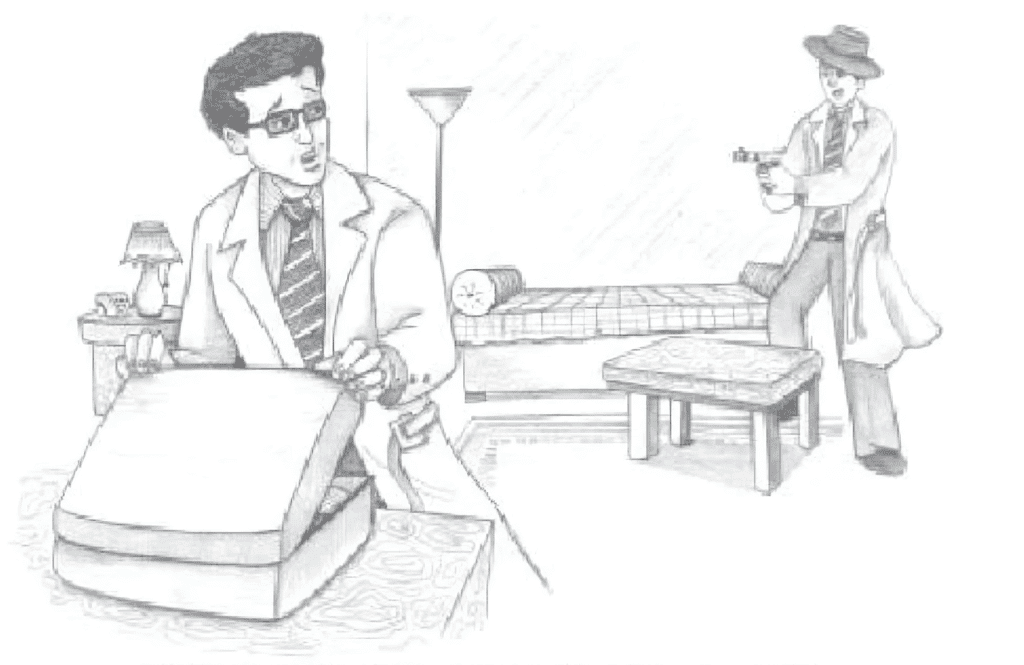
Ans: Gerrard was shocked and scared to find an armed stranger in his cottage. Despite his fear, he attempted to hide his emotions and acted as if he welcomed the intruder. The intruder ordered Gerrard to keep his hands up, stay calm, and answer questions about his personal life.

Q4. What did Gerrard tell the intruder about his childhood?
Ans: Gerrard revealed to the intruder that he was kidnapped by gypsies during his childhood.

Q5. What was Gerrard’s Christian name?
Ans: Gerrard’s Christian name is Vincent Charles.

Q6. What did the intruder tell Gerrard about his specialty?
Ans: The intruder revealed to Gerrard that his speciality was jewel robbery. He expressed a particular interest in Gerrard’s car, describing it as a dandy bus.

Q7. What did the intruder want to know of Gerrard?
Ans: The intruder wanted to learn how Gerrard communicated and interacted with others.

Q8. Why did the intruder want to hurt but not to kill Gerrard?
Ans: The intruder aimed to hurt Gerrard rather than kill him because he wanted to extract information before committing murder. His intention was to gain answers to his questions, which he believed would be crucial for his plans.

Q9. What is Gerrard’s profession?
Ans: Gerrard is a playwright.

Q10. What crime had the intruder committed?
Ans: The intruder had committed murder by killing a policeman.

Q11. Where did Gerrard imprison the intruder?
Ans: Gerrard imprisoned the intruder in a cupboard. He pushed the intruder inside, knocking the revolver from his hand, and then quickly locked the door.

Short Answer QuestionsQ1. Describe Gerrard’s appearance.
Ans: Gerrard is of medium height and wears horn-rimmed glasses. At the beginning of the play, he is dressed in a lounge suit and a great coat. He speaks in a cultured tone, and his demeanour is self-assured.

Q2. What did Gerrard tell the intruder about himself? Was he telling the truth? Why/Why not?
Ans: Gerrard joked with the intruder, claiming he had been kidnapped by gypsies as a child and was now alone in life. He was not being truthful; instead, he aimed to demonstrate that he was not afraid of the armed criminal. As the play progressed, Gerrard began to invent stories about himself, showcasing his quick thinking and ability to handle the situation.

Q3. What sort of information does the intruder want from Gerrard?
Ans: The intruder seeks personal details from Gerrard. He wants to know if Gerrard lives alone, his Christian name, whether he owns a car, and if he receives visitors. This information is vital for the intruder’s plan to escape the police by assuming Gerrard’s identity.

Q4. What made Gerrard ask the intruder, Are you an American?
Ans: Gerrard asked the intruder if he was an American because the intruder referred to him as a ‘wise guy’. This term is a casual American expression for a man, prompting Gerrard to question the intruder’s nationality based on his choice of words.
Q5. What sort of a person is the intruder? Give examples to illustrate.
Ans: An intruder is a dangerous individual, as he carries a pistol and claims to have killed a police officer. He is mean, heartless, and crafty; he plans to kill Gerrard and take on his identity to escape the police. His overconfidence is evident when he asserts that Gerrard is no match for him. Additionally, he displays a boastful and uncouth nature, as shown by his crude remark, “Put up your paws.”

Q6. The intruder announced, “I’m going to kill you”. Was Gerrard nervous? How would you describe Gerrard’s reactions?
Ans: Confident in his presence of mind, Gerrard remained unruffled despite the intruder’s threat. He was so calm and nonchalant that it irritated the intruder. Gerrard’s sense of humour further enraged the intruder, showcasing his ability to stay composed under pressure.

Q7. Why does the intruder intend to kill Gerrard?
Ans: The intruder is a criminal on the run from the police for having already murdered a police officer. He plans to kill Gerrard to assume his identity, which he believes will help him evade capture. By doing this, he hopes to live a peaceful life without the constant fear of arrest and punishment.

Q8. Who was the intruder in Gerrard’s house? Why did he break into his house?
Ans: The intruder who broke into Gerrard’s house was a criminal on the run. He had committed murder, specifically killing a police officer, and was being pursued by law enforcement. His intention for breaking in was to murder Gerrard and assume his identity to escape the police.

Q9. How did Gerrard behave on seeing a gun-toting stranger in his cottage?
Ans: Gerrard remained calm and completely unfazed when he encountered the gun-wielding stranger in his cottage. He did not show any signs of panic or tension in his voice. Instead, he maintained his usual demeanour and spoke to the intruder in a casual manner.

Q10. Why does the intruder not kill Gerrard immediately?
Ans: The intruder does not kill Gerrard immediately because he wants to gather all the necessary information from him first. Without this information, his plan to disguise himself and assume Gerrard’s identity will not be successful.

Q11. Where did Gerrard live? Why was it a suitable place for the intruder’s plan?
Ans: Gerrard lived in a lonely cottage in a secluded area of Essex. The lack of nearby population made it easy for someone to commit a crime without being noticed. Additionally, the cottage was rarely visited, making it an ideal location for the intruder to successfully execute his plan.

Q12. Why does the intruder call himself ‘a poor hunted rat’?
Ans: The intruder refers to himself as ‘a poor hunted rat’ because he is being pursued by the police. He feels the need to constantly evade capture. Having already committed murder, he is trying to escape punishment by hiding, much like a rat trying to avoid a cat.

Q13. Why did the intruder choose Gerrard as the man whose identity he wanted to take on?
Ans: The intruder chose Gerrard because they shared a similar physical appearance. Additionally, Gerrard lived alone and had an isolated lifestyle, which made him an easy target. The intruder believed that by killing Gerrard and assuming his identity, he could lead a peaceful life, free from the law and its consequences.

Q14. Why has the criminal been called an intruder all through the play?
Ans: The term intruder refers to someone who enters a place without permission, much like a criminal. Throughout the play, the character is labelled as an intruder because he forcibly enters Gerrard’s cottage and attempts to steal his identity. Additionally, he remains secretive, refusing to share any details about himself, including his name.

Q15. Bring out the contrast between Gerrard and the intruder.
Ans: The intruder is characterised as coarseboastful, and an irritable egoist. He is overconfident, believing he is the smartest person in the room. In contrast, Gerrard is pleasant, cool-headed, and refined. He is lively and intelligent, yet remains modest and humble. While the intruder brags about his abilities, Gerrard demonstrates that he is far more clever and resourceful.

Q16. Why did very few people come to Gerrard’s house? Who were the few people who visited him?
Ans: Gerrard lived alone in a secluded cottage, which contributed to his irregular schedule due to his theatrical performances. As a result, very few people visited his home. The only visitors he received were his regular suppliers, including the baker, the greengrocer, and the milkman.

Q17. “They cannot hang me twice.” Who says this and why?
Ans: The intruder says this because he is already wanted for having murdered a police officer. If he succeeds in killing Gerrard, he will face the death penalty for both murders. Therefore, he believes he cannot be hanged twice for his crimes.

Q18. “A mystery I propose to explain.” What is the mystery the speaker proposes to explain?
Ans: Gerrard, the speaker, aims to clarify the mystery surrounding his unusual life. He leads a life marked by an irregular routine, avoids tradesmen, and often leaves and returns home in a hurry. To explain his peculiar behaviour, Gerrard has fabricated a story suggesting he is a criminal wanted for multiple crimes.

Q19. “This is your big surprise”. Who says these words in the play? When and where? What is the surprise?
Ans: This is your big surprise. These words are spoken by Gerrard when the intruder questions how he could still be killed after taking on Gerrard’s identity. The surprise is significant for the intruder, who never anticipated that Gerrard could be a criminal. The intruder believed Gerrard was the ideal target to eliminate and impersonate, unaware of Gerrard’s true capabilities.

Q20. Why and how did Gerrard persuade the intruder to get into the cupboard?
Ans: Gerrard created a convincing story about his own criminal past. He made the intruder believe that the police were searching for him and that he was expecting a call from a friend who would inform him of their arrival. When the phone rang, Gerrard quickly urged the intruder into the cupboard, claiming it was a passage to the garage, which would serve as an escape route.

Q21. How does Gerrard propose to use the intruder’s episode?
Ans: Gerrard, being a man of the theatre, finds it amusing to outsmart the intruder. He sees the experience of tricking a criminal by a clever yet innocent person as intriguing. Consequently, he decides to use this episode as inspiration for his next play.

Q22. Gerrard describes this encounter with the intruder as an amusing spot of bother. What light does this attitude reflect on Gerrard?
Ans: Gerrard refers to his encounter with the intruder as an amusing spot of bother. This phrase suggests that he finds the situation somewhat entertaining despite the danger involved. Gerrard’s calm demeanour during the confrontation indicates that he is not overly frightened. Instead, he seems to view the incident with a sense of irony, as if it is a dramatic scene from a play rather than a real-life threat. His ability to maintain a sense of humour in such a tense moment highlights his cleverness and composure.

Q23. What is Gerrard’s profession? Quote the parts of the play that support your answer.
Ans: Gerrard is a professional involved in the theatre as a writer, producer, and director. He also provides props and makeup materials to other theatre companies. His profession is evident through several statements he makes during the play. He describes the intruder’s actions as melodramatic and not very original, indicating his familiarity with theatrical elements. Gerrard refers to the intruder as a sympathetic audience, showcasing his theatrical perspective. He also comments on the intruder’s inflexion of voice, demonstrating his awareness of performance nuances. Furthermore, he informs someone on the phone that he cannot deliver the props in time, highlighting his role in the logistics of theatre production. Lastly, he mentions having an amusing spot of bother that he might incorporate into his next play, further confirming his identity as a playwright.

Q24. Why was Gerrard’s schedule so irregular?
Ans: Gerrard’s schedule was irregular due to his background in theatre. He spent time writing, producing, and directing plays, which required flexibility. Additionally, he provided props and make-up for various theatre companies, necessitating a schedule that could adapt to the demands of the theatres.

Q25. Gerrard said, ‘You have been so modest’. Was Gerrard being ironic or truthful?
Ans: Gerrard’s comment, ‘you have been so modest’, was ironic. The intruder had been boasting about his intelligence and cleverness. Therefore, Gerrard was mocking him regarding his supposed modesty and encouraging him to share more about himself.

Q27. Why did the intruder want Gerrard to speak to him?
Ans: The intruder aimed to assume Gerrard’s identity after killing him. To do this, he needed to understand how Gerrard communicated and interacted with others. The only way to gain this insight was by having Gerrard speak to him, which is why he insisted on the conversation.

Q29. Why did he send for the sergeant?
Ans: A jewel thief and murderer broke into Gerrard’s cottage with the intention of killing him. To protect himself, Gerrard managed to trap the intruder in a cupboard. After securing the situation, he called the police and requested the sergeant to come and arrest the intruder.

Q30. How does Gerrard imprison the intruder and save his life?
Ans: Gerrard cleverly tricks the intruder into thinking he can escape. He tells the intruder to flee with him, claiming that the police might arrive soon. Gerrard opens a door, suggesting it leads to the garage. As the intruder steps forward to check, Gerrard pushes him into the cupboard and quickly shuts the door, effectively imprisoning him. This action not only captures the intruder but also ensures Gerrard’s own safety.

Important Long Answer Type Questions

Q1. Gerrard talks pleasantly with the intruder. Was he really pleased to see the criminal?
Ans: Gerrard lives alone in his house when an intruder unexpectedly enters, brandishing a gun and threatening his life. Despite the danger, Gerrard remains calm and composed. He quickly realises that the intruder has malicious intentions, but he understands that fighting back could lead to his death. Instead, he chooses to engage the intruder in a friendly conversation, which surprises the criminal. The intruder observes Gerrard’s calmness and remarks on it. By speaking pleasantly, Gerrard successfully delays the intruder’s plan to kill him. He falsely claims to be pleased to see the intruder, which is a clear lie. This tactic allows Gerrard to assess the intruder’s intelligence and realise that he can easily outsmart him. Gerrard’s behaviour demonstrates his sensibility and ability to handle a crisis effectively. Ultimately, he manages to trap the intruder in a cupboard and calls the police for assistance.

Q2. The intruder is boastful. He threatens Gerrard, “I’ll make you crawl” Was he able to carry out his threat? What happened to him?
Ans: An intruder forcefully enters Gerrard’s room, brandishing a revolver and threatening to kill him. However, Gerrard remains calm and engages the intruder in conversation, which surprises him. The intruder, believing Gerrard is merely trying to be clever, boasts about his intelligence and threatens, “I’ll make you crawl.” Yet, the outcome reveals the intruder’s foolishness. Instead of making Gerrard submit, the intruder ends up trapped in a cupboard. During their conversation, the intruder reveals that he is a jewel thief who has murdered a policeman and is currently evading capture. He plans to kill Gerrard and assume his identity. Gerrard, recognising the intruder’s lack of intelligence, cleverly tricks him into the cupboard, locks him inside, and calls the police. Thus, the intruder’s boast is proven false.

Q3. Gerrard says, “In most melodramas, the villain is foolish enough to delay his killing long enough to be frustrated. Does this statement holds good for the play ‘If I Were You’?
Ans: In most melodramas, the villain often delays his plans, leading to his own frustration. This is evident in the play If I Were You, where the villain, an intruder, aims to kill the hero, Gerrard, and assume his identity. However, the intruder’s foolishness becomes apparent as he continuously postpones the act of murder. The intruder has researched Gerrard extensively but is unaware that Gerrard is a skilled stage actor. When the intruder confronts Gerrard, he tries to engage him in conversation, allowing Gerrard to tactfully delay the situation. This delay provides Gerrard with the necessary time to devise a plan to escape. Ultimately, the intruder’s intentions are thwarted when Gerrard cleverly pushes him into a cupboard, locking him inside. This twist highlights how the intruder’s failure to act decisively leads to his downfall, echoing the typical melodramatic theme of the villain’s own foolishness causing his defeat.

Q4. The best way to deal with a crisis is not to lose your calm. Discuss this statement with reference to the behaviour of Gerrard in the play.
Ans: A calm person is often more successful than someone who loses their temper or acts rashly. In the play, Gerrard demonstrates this by saving his life through his composed behaviour. When faced with an intruder armed with a gun, most people would panic and act foolishly, fearing for their safety. However, Gerrard maintains his calmness and patience. He pretends to be pleased to see the intruder and engages him in friendly conversation. This approach allows Gerrard to learn more about the intruder and buy time to plan his next move. By not succumbing to fear, Gerrard’s cool demeanour ultimately saves his life and enables him to outsmart the criminal.

Q5. Why was Gerrard packing a bag at the beginning of the play? How did it help him to outwit and trap the intruder?
Ans: Gerrard was packing a bag at the start of the play because he needed to deliver some props to a theatrical company for a rehearsal. When the intruder broke into his cottage and threatened him, Gerrard remained calm. He quickly created a story, claiming he was a criminal trying to avoid the police. This narrative was supported by the items in his bag, such as a gun, a disguise outfit, and false moustaches, which misled the intruder into believing Gerrard’s tale. The intruder became so convinced that he was ready to escape with Gerrard, no longer doubting him. Consequently, he followed Gerrard’s instructions, leading to his eventual capture. Thus, the bag was crucial in convincing the intruder that Gerrard was also a criminal preparing to flee when he entered the cottage.

Q6. Bring out Gerrard’s intelligence, the presence of mind, and sense of humour. How did these traits help him outwit the intruder?
Ans: Gerrard displayed remarkable intelligence and presence of mind when confronted by a gun-wielding intruder. He remained completely calm, which not only helped him manage the situation but also unnerved the intruder, who likely felt fear himself. To lighten the mood, Gerrard used his sense of humour and crafted a convincing story about his own criminal past. He suggested that the police would arrive shortly, urging the intruder to escape quickly. Gerrard cleverly directed the intruder’s attention to a cupboard, claiming it was a way out. As the intruder leaned in to check, Gerrard seized the moment to push him inside, knocking the revolver from his hand. He then locked the cupboard door, effectively trapping the intruder. Thus, Gerrard’s intelligence, quick thinking, and humour allowed him to turn the tables and outsmart the intruder.

Q7. Why did the intruder find Gerrard’s cooked-up the story of his criminal background convincing?
Ans: The intruder was not gullible; he was cautious and suspicious of Gerrard’s every move. When Gerrard attempted to engage him in conversation about his identity, the intruder dismissed him, insisting he only answer direct questions. Despite this, the intruder fell into Gerrard’s trap. Gerrard remained calm and used his quick thinking to create a convincing story about being wanted by the police himself, which caught the intruder off guard.

Q8. Imagine you are Gerrard. Write a letter to your friend describing what happened when the intruder broke into your house.
You may describe:

  • The intruder’s appearance
  • his way of speaking, mannerism, and movement
  • his plan to evade the law
  • your success in outwitting him

Ans: (Address)
 (Date)
Dear ……….
Today I am feeling extremely excited to share with you a very interesting experience which I think may form the plot for my next play.
It so happened that today, in the afternoon, when I was about to leave my cottage with my bag to supply props and make-up at the Globe Theatre, I heard somebody hit against the table in my room. On turning, I saw a man with a physique like mine, wearing a very gaudy overcoat. Aiming his gun at me, he told me in an uncultured manner to put my “paws up”. He did not. shoot me at once because he needed some information about me. He told me that he had killed a cop and was having a difficult time dodging the police. He wanted to kill me and take up my identity to escape arrest.
But will you believe it that I foiled his plan by outwitting him through a concocted story? I maintained my cool and told him that I myself was a criminal charged with murder. I warned him that if he assumed my identity after killing me, he would still be arrested and executed. I told him that I was expecting an alert call from one of my friends, and just then the phone rang. Actually, the call was from one of my clients at the theatre who wanted confirmation about the props that I had assured to supply.
My story worked perfectly and when I offered the man to escape with me in my car, he agreed readily. I asked him to peep into the cupboard which I claimed was connected to the garage and the secret escape route. When he learned to peep, I pushed him in the cupboard, snatched his gun, and locked him.
I then answered the phone and asked the caller to send the sergeant to arrest the criminal.
I’m sure you too will find this a smart enough act to be used as a plot for the next play. We can plan the details when we meet on Sunday.
Your loving friend
Gerrard

Q9. The intruder’s plan was clever but not feasible. Do you agree? Give reasons in support of your answer.
Ans: At first glance, the intruder’s plan to kill Gerrard and take on his identity seems clever. However, it is ultimately not feasible. Firstly, if Gerrard were killed, disposing of his body would pose significant challenges, increasing the likelihood of detection and arrest. Even if the intruder managed to handle this aspect, Gerrard’s theatrical clients would likely grow suspicious if they couldn’t reach him. This could prompt them to involve the police, leading to the intruder’s capture. Thus, while the plan may appear straightforward and foolproof in theory, it is far too complicated to execute successfully in reality. The intruder’s scheme, despite his confidence, would likely unravel due to the numerous risks involved.


14. Poem – On Killing a Tree – Important Question

Very Short Answer Type Questions

Q1. In the poem ‘On Killing A Tree’ what is the tree a symbol of?
Ans: In this poem, the tree is a symbol of deep-rooted evil.

Q2. How does a tree grow up?
Ans: A tree grows up by getting food and other nutrients from the earth.

Q3. Can we kill a tree with a simple jab of the knife?
Ans: No, we can’t kill a tree with a simple jab of the knife.

Q4. How should we kill a tree?
Ans: By hacking and chopping its trunk, but even this alone isn’t enough to kill it permanently.

Q5. What should we do to kill a tree permanently?
Ans: To kill a tree permanently we should take out its root from the earth.

Q6. Where does the strength of a tree lie?
Ans: The strength of a tree lies in its roots.

Q7. What should be done to the roots or a tree?
Ans: The roots of a tree should be snapped and taken out of the earth.

Q8. What finally kills the tree?
Ans: Scorching and choking kill the tree finally.

Q9. What does it mean ‘the strength of the tree is exposed’?
Ans: It means the roots of the tree are taken out of the earth.

Q10. It is easy to kill a tree?
Ans: No, it is not easy to kill a tree.

Short Answer Questions

Q1. Can a “simple jab of the knife” kill a tree? Why not?
Ans: A tree cannot be killed by a simple jab of a knife. Such an action may cause an injury and make the tree’s sap flow out like blood. The survival of a tree relies on its roots, which provide essential nourishment and stability.

Q2. How has the tree grown to its full size? List words suggestive of its life and activity.
Ans: The tree has grown slowly by drawing nutrients from the soil. Words from the poem that suggest its vitality are:

  • “slowly consuming the earth”
  • “rising out of it”
  • “feeding”
  • “absorbing”
  • “sprouting leaves”

Q3. In the phrase ‘consuming the earth’, who consumes the earth and how?
Ans: The tree consumes the earth by drawing nourishment from the soil through its roots. Its diet is found deep within the earth, where the roots absorb essential nutrients to sustain the tree.

Q4. What is meant by ‘years of sunlight, air, and water’?
Ans: ‘Years of sunlightair, and water‘ describe the long time it takes for a tree to grow fully. During this period, the tree absorbs energy from these elements to support its growth.

Q5. Why has the tree’s ‘hide’ been called leprous?
Ans: The tree’s bark is described as uneven in both texture and colour, resembling the skin of a person with leprosy. Just as leprosy affects the skin, causing it to lose its colour and smoothness, the tree’s bark appears discoloured and rough. This creates a metaphorical link between the tree’s bark and the condition of diseased skin.

Leprosy Disease

Q6. What is the role of hacking and chopping in killing a tree?
Ans: Hacking and chopping a tree cause significant damage to its body, leading to great pain. These actions remove the bark, resulting in sap oozing out, which resembles bleeding. Despite this, such injuries alone are insufficient to kill the tree, as it can heal and continue to grow.

Q7. What is the meaning of ‘bleeding bark’? What makes it bleed?
Ans: The term ‘bleeding bark’ refers to the sap that seeps from a tree’s trunk when it is injured, such as by a knife or axe. The word ‘bleeding’ is used metaphorically to liken the sap to blood from a human wound, symbolising the tree’s pain.

Q8. What will rise from ‘close to the ground’? Why?
Ans: Curled green twigs and miniature boughs will emerge from the stump of a tree that is close to the ground. This happens because the tree can rejuvenate and revive itself as long as its roots remain intact.

Q9. What will happen if the miniature boughs are left ‘unchecked’?
Ans: If left unchecked, the new, green branches that sprout from a tree’s stump will grow freely. This means they will expand and return to their original size, regaining their strength and vitality.

Q10. “No, The root is to be pulled out.” Why has the poet started this stanza with “No”? Or The poet says “No” at the beginning of the third stanza. What does he mean by this?
Ans: The poet begins with No to stress that simply hacking or chopping a tree is not enough to kill it. These actions may harm the tree, causing it to bleed and suffer, but true destruction requires more determination and effort. To effectively kill a tree, one must pull out the root, which is deeply anchored in the earth.

Q11. What is the meaning of “anchoring earth” and “earth cave”?
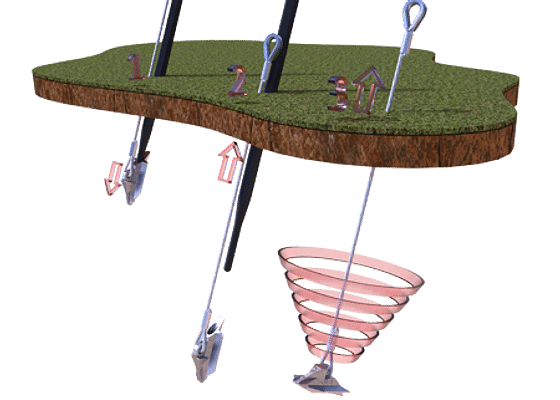
Ans: Anchoring earth refers to the soil that provides a strong grip for a tree, preventing it from falling. Just as a ship remains securely in place when anchored in water, a tree stands firm and stable with the support of the earth. Earth cave describes the depth beneath the surface where a tree’s roots are safely sheltered for many years. These roots are firmly attached at this point, and when the tree is uprooted, a hollow, cave-like space is left behind.

Anchoring Systems

Q12. How is the root of the tree to be pulled out? What is the result of this pulling?
Ans: The root of the tree is tied to a rope and pulled out with significant force. This action creates a cave-like hollow in the ground and exposes the root to harsh weather conditions. As a result, the tree becomes vulnerable, leading to its eventual death.

Q13. What does the poet mean by ‘The strength of the tree exposed’?
Ans: The phrase ‘the strength of the tree exposed’ refers to the tree’s roots being pulled from the earth, leaving them vulnerable to harsh conditions. The roots are essential for the tree’s vitality. When they are exposed to the scorching sun and dry air, they begin to wither, ultimately leading to the tree’s death.

Q14. What is ‘the most sensitive’ part of the tree? What is it sensitive to and why?
Ans: The root of a tree is its most sensitive part. It is particularly sensitive to heat and the changing weather conditions on the surface. This sensitivity arises because the roots are hidden safely beneath the ground, making them vulnerable to external elements.

Q15. How is the exposed root affected by the sun and air?
Ans: The sun and air draw life from the exposed root, causing it to become discoloured, dry, and hard. As the root loses its moisture, it begins to wither, becoming gnarled and twisted. Eventually, this process leads to the root’s death, completing the tree’s decline.

Q16. What finally kills the tree?
Ans: The withering of the pulled-out root ultimately kills the tree. The root is the source of a tree’s strength; when it is removed, the tree can no longer receive the necessary nutrients. Roots are sensitive to sunlight and air. Once exposed, they become dehydrated, turning brown and twisted. Eventually, they dry up completely, leading to the tree’s death.

Q17. What message is conveyed by this poem?
Ans: The poem conveys that humans have a destructive temperament towards nature, yet Mother Nature possesses remarkable regenerative powers. It suggests that nature cannot be easily destroyed; it can resurrect itself. The tree serves as a metaphor, illustrating that physical harm cannot truly ruin us. As long as our roots, or our essence, remain intact, we can rise again.

Also, Check at EduRev:

Long Answer Questions

Q1. How does a tree grow up?
Ans: A tree takes many years to reach its full size. It begins its journey from a seed that sprouts from the ground. The tree’s roots draw nutrients from deep within the earth, while sunlight, air, and water provide essential nourishment. As it grows, tender green branches emerge from its bark, and leaves flourish all over them. Over time, the tree becomes strong and resilient, capable of surviving wounds inflicted by a knife. In fact, simple chopping or hacking is often not enough to kill it, as the tree can heal its wounds. Even if cut back, branches can regrow from the stump, eventually returning to their original size. As long as the roots remain intact in the soil, the tree will continue to grow.

Q2. What relationship does the tree have with the earth?
Ans: A tree has a deep relationship with the earth, as it relies on the earth for its very existence. The seed germinates within the earth, and the young plant emerges from its surface. The tree absorbs nutrients from the soil, which supports its growth and stability. The earth provides a solid foundation, allowing the tree to stand tall and protecting it from falling. Its roots are anchored in the earth, which also shields them from harmful exposure to sunlight and air, essential for the tree’s survival. Even when a tree is cut down, it can regenerate from the stump, thanks to the support of the earth. This connection illustrates how vital the earth is for a tree’s birth, growth, and ongoing survival.

Q3. What does the root of the tree look like when it is pulled out of the earth-cave? What happens to it when it is left exposed?
Ans: The root of the tree, when pulled from its earth-cave, appears moist and white. It is tender and delicate, having been hidden for years, away from sunlight and air. This root cannot endure the light and heat of the sun. When exposed, it begins to feel scorched and choked by the sun and air. Initially, it changes colour, turning brown, and starts to lose its tenderness. As time passes, it becomes hard and less supple. Eventually, it withers, becoming gnarled and twisted. Ultimately, this exposure drains the life from the root, leading to the death of the entire tree. Thus, exposure robs both the root and the tree of their vitality.
Q4. What would happen if the tree is hacked and chopped?
Ans: If the tree is hacked and chopped and left as such with the root of the tree neither dugout nor injured, the root will continue to provide nourishment to the stump of the tree. This stump will then be covered with tender twigs that will sprout out of its surface. If these twigs are not pruned or hacked or chopped, they will keep on growing and eventually, with the passage of time, the tree will grow to its original size. The wounded bark of the tree will get healed and the tree will be as big as it was earlier. The threat to its life will be overcome and hacking or chopping will fail to kill the tree. The safe root will rescue and resuscitate the tree and help it to regain its lost glory.
Q5. Suppose you are a tree. Write a diary entry in about 150 words describing how you were hacked and chopped and your root was pulled out and how you are inching towards your end.
Ans:
(Day and Date)
(Time)
Dear Diary
Today my heart is crying and I suffer due to the pain inflicted upon me by cruel men. Two days ago, I was enjoying the fresh air and warm sunlight when suddenly I felt a blow of an axe on my trunk. I noticed that a man was hitting me hard, giving one blow after another. My bark was wounded, the sap was oozing and my leaves and branches were falling off lifelessly. I could feel a sharp pain that I found hard to tolerate. When the man got tired, he left me for the night. I was relieved that he had not harmed my root. I was certain that my wound would heal and new branches would grow after some time. But the next day there came five people. The first chopped off big chunks from my trunk and then tied a rope firmly around me. They applied force to pull my root out of the earth. Now my strength gave way and my white, wet and sensitive root was hauled. My root has been left exposed to sunlight and air. Its white colour is turning brown and it has started hardening and twisting. Slowly, it will wither away and I will die. I wish these ignorant people had realized that I was serving them selflessly with fresh oxygen and dense shade. Sadly, I have to say goodbye to this beautiful world because of the insensitivity of some people.
Banyan

13. Reach for the Top – Important Question

Part 1: Santosh Yadav

Q1. What is the special distinction of Santosh Yadav as a mountaineer?
Ans: Santosh Yadav holds the remarkable distinction of being the only woman in the world to conquer Mount Everest twice. Her achievements are particularly impressive considering she rose from a rural background, overcoming societal and familial barriers.

Q2. What type of social system was present in the village when Santosh was born?
Ans: During Santosh Yadav’s birth, the social system in her village was deeply patriarchal. The birth of a son was considered a blessing, while the birth of a daughter was generally not celebrated and often viewed as a burden.

Q3. Give a brief sketch of Santosh Yadav’s family.
Ans: Santosh Yadav was born in the small village of Joniyawas in Haryana. Her parents were affluent landowners, and she was the only sister to five brothers, making her upbringing in a traditional, male-dominated environment.

Q4. How did Santosh show a contradiction to her name?
Ans: Santosh’s name means “contentment,” yet she was anything but content with the traditional expectations imposed on her. From an early age, she rebelled against societal norms, choosing to live life on her own terms. She defied her family’s expectations and sought education and independence.

Q5. What did Santosh tell her parents regarding her marriage?
Ans: Santosh opposed the idea of early marriage. She firmly told her parents that if she couldn’t get a proper education, she would refuse to marry at all. Her strong stance on the matter eventually led her parents to support her educational goals

Important Long Answer Questions

Q1. Write a brief character sketch of Santosh Yadav.
Ans: Santosh Yadav, born in a traditional village in Haryana, embodied courage, determination, and resilience. Despite societal norms that encouraged early marriage and limited opportunities for girls, Santosh carved her own path. She pursued education, defied family pressures, and developed a passion for mountaineering. Against all odds, she enrolled in a mountaineering course and eventually scaled Mt. Everest not once, but twice, a testament to her strength of character. Her independent spirit, combined with her dedication to her dreams, makes her a role model for women everywhere.

Q2. How did Santosh create her own destiny?
Ans: Santosh Yadav refused to let societal norms dictate her future. Despite being born into a family that followed traditional values, she took charge of her life. She rejected early marriage, chose to pursue higher education, and fought to follow her passion for mountaineering. By making bold decisions and persisting through challenges, she shaped her own destiny, becoming an inspiring figure for women in similar situations.

Q3. Santosh decided to challenge the system in her own quiet way, according to the author. How did Santosh rebel quietly?
Ans: Santosh Yadav’s rebellion against societal norms was subtle but powerful. Instead of loud protests, she took firm yet quiet actions. When her parents pressured her into marriage, she calmly refused and sought education in Delhi. When they wouldn’t pay for her schooling, she confidently said she would earn her fees by working part-time. This quiet determination allowed her to pursue her dreams while changing the attitudes of those around her.

Q4. Santosh had all the qualities of a good mountaineer. Comment.
Ans: Mountaineering requires physical strength, mental resilience, courage, and a strong sense of teamwork. Santosh Yadav exhibited all these qualities. Her determination enabled her to conquer Everest twice, and her leadership on expeditions earned her the respect of her peers. She not only excelled in difficult conditions but also showed immense bravery by risking her life to help fellow climbers in distress.

Q5. Santosh isn’t just a good mountaineer but also a very good person. Discuss.
Ans: Beyond her exceptional mountaineering skills, Santosh Yadav’s kindness and selflessness set her apart. She once shared her oxygen supply with a fellow climber, saving his life. Additionally, she showed deep love for her country by proudly hoisting the Indian flag on Everest. Her environmental consciousness was also evident as she helped clean the mountain, removing waste from its slopes. Santosh’s character demonstrates both a strong mind and a compassionate heart.

Part 2: Maria Sharapova

Q1. What do you know about Maria Sharapova?
Ans: Maria Sharapova is a famous tennis player who won the Wimbledon women’s singles title in 2004 and became the world’s number one player in 2005. Originally from Russia, Maria trained in the U.S. from a young age. Besides tennis, she enjoys dancing, singing, and reading. Her immense dedication to her sport has been key to her success.

Q2. How is Maria’s personality a mix of contrasts?
Ans: Maria Sharapova’s personality blends elegance with toughness. While she exudes grace and charm, her inner self is marked by grit and determination. Her glamorous appearance is contrasted by her competitive and resilient nature, making her both approachable and a fierce competitor.

Q3. Maria possesses some contradictory characteristics. What are they?
Ans: Maria Sharapova’s public image is stylish and glamorous, but her personal demeanor is friendly and grounded. She enjoys wearing evening gowns but also has a penchant for simple snacks like pancakes with chocolate spread. This combination of sophistication and simplicity defines her unique personality.

Q4. Explain: “all this happened in almost no time.”
Ans: The phrase “all this happened in almost no time” refers to Maria Sharapova’s meteoric rise to fame. In just four years, she went from a young tennis hopeful to the top-ranked women’s tennis player in the world, showcasing her incredible talent and drive.

Q5. What does Maria declare to be her mantra for success?
Ans: Maria Sharapova’s mantra for success is built on hard work, sacrifice, and the ability to stay focused on her goals. She is driven by a relentless ambition to be the best and emphasizes the importance of a competitive spirit. Her dedication to improving in every aspect of her life has helped her achieve remarkable success.

Important Long Answer Questions

Q1. What problems did Maria face as a child while being trained for tennis in the U.S.? What sustained her?
Ans: Maria Sharapova faced numerous challenges as a child while training for tennis in the U.S. At just nine years old, she moved to Florida, separated from her mother due to visa issues. The loneliness was compounded by bullying from older trainees and her father’s long working hours to support her. However, her unwavering love for tennis and determination to succeed kept her going. She turned every hardship into a learning experience, using her difficulties to fuel her drive to become the best tennis player in the world.

Q2. Compare and contrast the lives of Santosh Yadav and Maria Sharapova.
Ans: Both Santosh Yadav and Maria Sharapova share a story of overcoming adversity to achieve greatness. Santosh, born in a small village in India, fought societal norms to become the first woman to conquer Everest twice. Similarly, Maria, originally from Russia, trained in the U.S. to become the world’s top tennis player. While Santosh battled against conservative family expectations, Maria faced isolation and bullying in a foreign land. Despite their different paths, both women displayed remarkable determination, resilience, and ambition, proving that hard work leads to success.

Q3: Imagine you are Maria Sharapova. It is your tenth birthday, but you neither have your parents nor your friends with you to celebrate it. You do not talk to your fellow pupils because they bully you. Write a diary entry in about 150 words recording all your thoughts.

Ans:

Dear Diary,

Today I turned ten, my first birthday away from Siberia where my loving parents and friends are. I feel incredibly lonely, reminiscing about the joyous parties of birthdays past, where friends danced and sang while my parents showered me with love and blessings. I vividly recall the excitement of wearing the latest fashion and eagerly opening presents.

Today, I ventured alone to buy a small cake and candles after Mom insisted I celebrate. I couldn’t invite my fellow players; they’re too mean and bullying. It’s hard not having family or friends nearby.

But I must stay strong; loneliness is the price I pay for my ambitions. I know my parents’ love and blessings are with me always, transcending distance. This is just one more challenge to overcome, like those on the tennis court. Each day brings me closer to my dream. I’ll continue to work hard and make them proud, even if it means sacrificing so much now.

One day, I will become the world’s best, and all of this hardship will be worth it.

Love,Maria

Q4: Discuss Maria Sharapova’s journey to success and the sacrifices she made to reach the top.

Ans:

Maria Sharapova’s journey to success is one of immense struggle and personal sacrifice. Born in Siberia, Russia, she showed promise as a tennis player at a young age, prompting her father to take her to the U.S. for better training. However, her path was anything but smooth.

At just nine years old, Maria had to endure the separation from her mother due to visa restrictions, a heartbreaking two-year period during which she and her mother couldn’t reunite. Her father, who accompanied her to the U.S., worked multiple jobs to support her training while Maria faced loneliness and bullying from older players at the tennis academy.

Despite these overwhelming obstacles, Maria remained focused on her goal. Her mental toughness, physical endurance, and relentless dedication paid off when she became the world’s number one tennis player at just 18. Throughout her journey, Maria sacrificed her childhood, her family’s company, and a carefree life for the sake of her dream, demonstrating extraordinary resilience and determination.

Q5: How did Maria Sharapova handle the adversities she faced during her training period in the U.S., and how did these challenges shape her personality?

Ans:

Maria Sharapova faced numerous adversities during her training in the U.S., which greatly shaped her personality and mental fortitude. As a young girl, Maria had to endure loneliness after leaving behind her home in Russia and being separated from her mother due to visa issues. She faced bullying and hostility from older players at the tennis academy, making her early years in the U.S. particularly challenging.

Instead of succumbing to these difficulties, Maria used them as motivation to push herself harder. Her isolation and struggles fostered an inner strength that would later become one of her defining characteristics. The tough experiences helped her develop a mental resilience that would prove invaluable on the tennis court, allowing her to overcome tough matches and fierce competition.

Maria’s ability to channel her hardships into success showcases her determination and fierce ambition. Her disciplined work ethic, combined with the challenges she faced, molded her into a world-class athlete with an unshakable focus on her goals.

12. Poem – No Men are Foreign – Important Question

Q1. What should we remember about men?

Ans: No men are strange.

It is essential to remember that:

  • No men are strange.
  • All people share a common humanity.
  • We all experience the same basic needs and emotions.
  • Differences often arise from culture or language.

Understanding these points helps foster empathy and unity among individuals, regardless of their backgrounds.

Q2. What should we remember about countries?

Ans: It is important to remember that no countries are foreign.

We often perceive people and nations as different from ourselves. However, it’s essential to recognise our shared humanity. Here are some key points to consider:

  • No one is strange: All individuals share common traits.
  • Shared experiences: We all experience basic needs like food, water, and love.
  • Common humanity: Beneath differences, we are all human beings.
  • Unity in diversity: Our differences should not lead to division.

When we are encouraged to hate others, we ultimately harm ourselves. Remember, we are all part of the same world.

Q3. Where do we all walk upon? 

Ans: We all walk on the same earth.

Q4. Where shall we all lie in the end? 

Ans: In the end, we will all lie in the earth.

Q5. What are all men fed by? 

Ans: All men require food to survive, but it is not accurate to say they are all fed by peaceful harvests. Food sources vary widely based on:

  • Location: Different regions have different agricultural practices.
  • Climate: Weather conditions affect what can be grown.
  • Economics: Availability and access to food can depend on economic factors.
  • Conflict: War and instability can disrupt food supplies.

Thus, while many are nourished by peaceful means, others face challenges that impact their food sources.

Q6. What do you mean by peaceful harvest?

Ans: Peaceful harvests refer to crops that are cultivated during times of peace. This concept highlights the following points:

  • Harvests occur when there is stability and absence of conflict.
  • They signify the ability to grow food without the disruptions caused by war.
  • Peaceful conditions allow communities to focus on agriculture and sustenance.

Q7. What do you mean ‘wars’ long winter? 

Ans: ‘Wars’ long winter refers to the difficult times during war when people are forced to stay indoors.

Q8. What impact do we have on Earth?

Ans: Human activities are causing significant pollution on Earth.

  • We contribute to air and water pollution.
  • Our waste affects the environment and wildlife.
  • Deforestation leads to loss of biodiversity.
  • Climate change is accelerated by our emissions.

These actions harm not only the planet but also our own health and future.

Q9. Why should we not hate others? 

Ans: We should not hate others because:

  • All people are our brothers.
  • Hate creates division and conflict.
  • We share common humanity and experiences.
  • Love and understanding foster peace.

Embracing our similarities helps build a more harmonious world.

Q10. What do you mean by ‘hells of fire and dust’?

Ans: ‘Hells of fire and dust’ refers to the devastating effects of war.

  • It signifies the destruction and chaos caused by conflicts.
  • The phrase highlights the devastation that impacts both the environment and humanity.
  • It serves as a reminder of the consequences of violence and warfare.

Q11. ”Beneath all uniforms…” What uniforms do you think the poet is speaking about?

Ans: The poet refers to the uniforms worn by soldiers from various countries. Despite their different appearances, the bodies beneath these uniforms are fundamentally the same. The poet emphasises that the differences among people are merely superficial, highlighting that all human beings share a common essence.

  • Uniforms represent the diversity of nations.
  • Underneath, we are all human.
  • Differences are superficial and do not define us.
  • At our core, we share the same humanity.

Q12. Whom does the poet refer to as ‘our brothers’ and why?

Ans: The poet refers to the people living in other countries as ‘our brothers’. This is because:

  • The superficial differences in complexion, language, dress, culture, and nationality should not divide us as human beings.
  • Human wants, needs, hopes, and emotions are the same everywhere in the world.

By recognising these commonalities, the poet emphasises our shared humanity, urging us to see beyond appearances and embrace our connections.

Q13. How does the poet suggest (in the first stanza) that all people on earth are the same?

Ans: In the first stanza, the poet conveys that no human being is strange or different. Beneath our outward appearances, we all share similar hearts, minds, and souls. Key points include:

  • We all breathe and live in a similar way.
  • The earth is our common asset.
  • Ultimately, we will all die and be buried in the same manner.

Q14. What does the poet mean when he says, ‘in which we all shall lie’?

Ans: The poet conveys that we will all eventually lie beneath the same earth, which refers to being buried after death. This idea emphasises that we all share the same fate, making hatred among us pointless.

  • We all will be buried in the same ground.
  • The term lie signifies our final resting place.
  • This highlights our shared human experience.
  • Hatred is unnecessary since we all face the same end.

Q15. In stanza 1, find five ways in which we are alike. Pick out the words phrases suggesting these similarities.

Ans: Here are five phrases that indicate our similarities:

  • No men are strange
  • No countries foreign
  • A single body breathes like ours
  • The land our brothers walk upon is earth like this
  • In which we all shall lie

Q16. Why does the poet call harvests ‘peaceful’ and war as ‘winter’?

Ans: Harvests are termed ‘peaceful’ because they signify abundance and prosperity, flourishing only in times of peace. In contrast, war is likened to the harshness of ‘winter’, which devastates crops and leads to starvation.

  • Peaceful harvests bring harmony and contentment.
  • War destroys lives, causing hunger, poverty, and disease.
  • Only during peaceful times can people thrive and prosper.

Q17. How many common features can you find in stanza 2? Pick out the words.

Ans: The common features identified in stanza 2 include:

  • Sun
  • Air
  • Water
  • Peaceful harvests

Like us, people in other countries:

  • Dislike starvation caused by prolonged wars.
  • Work hard for their livelihoods using their hands.

Q18. ‘They have eyes like ours’. What similarity does the poet find in the eyes of people all over the world?

Ans: The poet observes that the eyes of people worldwide share important similarities:

  • They witness similar sights and experiences.
  • Everyone goes through the daily cycle of waking and sleeping.
  • Despite differences in colour and shape, their eyes serve the same purpose.
  • These eyes connect us through shared experiences.

In essence, the poet emphasises that no matter how foreign someone may seem, we all share a common humanity.

Q19. “No Men are Foreign” is an anti-war poem. Comment.

Ans: No Men Are Foreign is a powerful anti-war poem that promotes the idea of human brotherhood and the need for peaceful coexistence. It highlights the devastating effects of war on all people, regardless of their side in the conflict.

  • War causes deathdestruction, and deprivation.
  • It leads to starvation and environmental pollution.
  • Both the oppressed and the oppressor suffer from its consequences.
  • The poem calls for a rejection of war and a commitment to peace.

Ultimately, it reminds us that we share a common humanity, and we should strive to understand and support one another instead of succumbing to hatred.

Q20. In one of the stanzas, the poet finds similarity in human hands. What is it?

Ans: The poet suggests that people across the world share a commonality in their hard work. This is primarily done through their hands, which are essential for earning a living.

  • All individuals, regardless of their country, engage in labour to support themselves.
  • Hands are the primary tools for creativity and productivity.
  • Despite differences in nationality, the act of working is a universal experience.

Q21. Who tells us ‘to hate our brothers’? Should we do as we are told at such times? What does the poet say?

Ans: Politically motivated and power-hungry individuals encourage us to hate our brothers during times of war. The poet warns against giving in to such provocations, as doing so leads to:

  • Dispossession of our own values
  • Betrayal of our shared humanity
  • Condemnation of ourselves

He reminds us that when we take up arms against one another, we defile the human earth. Our acts of violence tarnish the purity of the air we all share. The poet urges us to remember:

  • No men are foreign
  • No countries are strange

Q22. How does man pollute this earth by going to war?

Ans: Man pollutes the earth through war in several ways:

  • Causes death and destruction, leading to loss of life.
  • Spreads hatred and enmity among people.
  • Damages the environment with dust, debris, and smoke from weapons.

This destruction not only harms the planet but also affects the well-being of all living beings.

Q23. Why does the poet say that people of the world should live in peace and not go to war?

Ans: The poet emphasises the importance of living in peace for several reasons:

  • Peace leads to progressprosperity, and joy in our lives.
  • Wars result in deathexploitation, and poverty.
  • Conflict harms the earth and pollutes the air we all share.
  • We should avoid wars to protect our common humanity and the world we inhabit.

Q24. How does the title sums up the theme of the poem “No Men are Foreign”

Ans: The title of the poem No Men Are Foreign encapsulates its central theme of universal brotherhood and the importance of peaceful coexistence. The poet conveys several key ideas:

  • All human beings are fundamentally the same, regardless of their nationality, caste, colour, creed, or religion.
  • Divisions among people are baseless and should be disregarded.
  • The title serves as a reminder that we are all part of the same human family.
  • By rejecting prejudice, we can foster a sense of unity and understanding.

James Kirkup effectively communicates these messages through the poem, reinforcing the idea that no one is truly foreign to us.

Q25. How does the poet propose to win over other countries?

Ans: The poet suggests winning over other countries through the power of love. Key points include:

  • Universal response: The world reacts positively to love and kindness.
  • Ending conflict: Love can help eliminate hatred and war.
  • Creating peace: The goal is to establish a peaceful heaven on earth.

By focusing on these principles, the poet believes that we can foster understanding and harmony among all nations.

Q26. Who, according to you, is the speaker in this poem? 

Ans: The speaker in this poem is the poet himself, representing the inherent goodness of the human heart. He embodies the values of:

  • Love
  • Peace
  • Universal brotherhood

As a champion of these ideals, he promotes joy and unity among all people.

Q27. In four stanzas out of five, the poet uses the word “Remember”. Why do you think he has repeated this word so many times?

Ans: By repeating the word “remember”, the poet aims to ensure we never forget that our thoughts, feelings, and experiences are similar to those of people we often view as “strange” or “foreign”. He emphasises that:

  • All human beings share a common nature.
  • The stages of life are the same across the globe.
  • We are united in our humanity, regardless of differences.

This repetition serves as a reminder to recognise our shared existence and to foster understanding among all people.

Q28. Mention any two ways in which people living in other countries are similar to us. 

Ans: People living in other countries share many similarities with us, including:

  • All humans have eyes like ours, capable of waking and sleeping.
  • Everyone experiences the emotion of love in a similar way.
  • Physical strength can be matched by the power of love.
  • We all engage in labour that is not different from one another.

These commonalities highlight our shared humanity, reminding us that we are more alike than we are different.

Q29. What is the central idea of the poem?

Ans: The central idea of the poem is that all human beings are similar and equal. We should:

  • Love one another
  • Live in peace and harmony

This sense of universal brotherhood and harmonious coexistence will:

  • Unite us
  • Help protect our mother earth from pollution and damage

Q30. Why do countries engage in wars and to what effect?

Ans: Countries engage in wars due to various reasons, often driven by the interests of powerful individuals.

  • Vested interests: Leaders and those in power may manipulate public sentiment, fostering hatred towards others.
  • Narrow perspectives: This limited viewpoint can escalate tensions, leading to conflict.
  • Consequences: Wars result in significant bloodshed and the loss of innocent lives.

Ultimately, the actions of a few can have devastating effects on many, highlighting the need for understanding and compassion among all people.

Q31. ‘Wars have always brought total ruin in this world, yet they are fought repeatedly.’ Discuss.

Ans: Wars are often caused by the greed and ambition of irresponsible leaders. They lead to destruction for both the victors and the defeated, severely damaging the economies of the nations involved.

Historically, wars were mostly local, but now they have become global, making them more dangerous. The memories of the First and Second World Wars remind us of the devastating consequences, such as the bombings of Hiroshima and Nagasaki in 1945.

Despite these lessons, humanity seems to repeat its mistakes. The threat of another war is ever-present, with divisive forces growing stronger and an alarming arms race underway.

However, there is hope in the strength of ordinary people. They must not be misled by selfish leaders. Instead, we should view the world as a global village, full of opportunities for peaceful coexistence.

Q32. How does the poet James Kirkup prove that no men are foreign? How far is he able to convince his reader about it?

Ans: The poet James Kirkup provides several examples to demonstrate that no men are foreign. The title of the poem itself prompts readers to reconsider their perceptions of people from different countries as strangers. Throughout the poem, Kirkup emphasises that all humans share a common nature and experience.

  • We all inhabit the same earth and enjoy essential elements like airsun, and water.
  • Humans universally desire peace and are generally opposed to war.
  • Everyone has similar experiences and works hard to earn a living.

The poet’s logical reasoning and frequent reminders effectively convince readers that no men are foreign. He illustrates that alienating others harms us all. By viewing others as foreign, we risk creating a world prone to war, leading to irreversible destruction and pollution of our planet.

Q33. In what way do we dispossess, betray and condemn ourselves by hating our brothers and taking up arms against them?

Ans: By hating our brothers and taking up arms against them, we dispossess ourselves by losing their love. Hatred breeds retaliation, causing both sides to miss out on the noble emotion of love.

We betray ourselves as hatred leads to wars, resulting in widespread death and destruction. This creates pollution that harms our planet. The dust and smoke from conflict choke the air we breathe.

Thus, hatred towards others ultimately leads to our own condemnation. We violate the purity of nature and threaten our existence by damaging the systems that sustain us. In essence, hating our brothers and taking up arms against them causes more harm to ourselves.

Q34. How, according, to the poet, the human earth is ‘defiled’ and the innocence of air ‘outraged’?

Ans: The weapons of war make the earth dirty and harm its atmosphere. They destroy the earth’s fertility, rendering it barren. Explosives ignite destructive fires, scattering ashes everywhere, which pollutes the land, air, and water. This leads to widespread hunger and numerous diseases. As a result:

  • Both the earth and air lose their purity.
  • Both victors and the vanquished find the environment hostile.
  • Mother Nature becomes helpless, unable to provide her gifts.

The innocence of air represents its purity, but wars strip it away, filling it with smoke and dirt. Consequently, the air becomes unsuitable for human survival. Thus, the human earth is defiled, and the innocence of air is outraged by wars.

11. My Childhood – Important Question

Short Answer Type Questions

Q1. Why did A.P.J. Abdul Kalam call his childhood a secure one?
Ans: A.P.J. Abdul Kalam viewed his childhood as secure due to the love and care provided by his parents. They ensured that he had all the essentials like food, clothing, and healthcare. This support allowed him to grow up without facing any significant material or emotional struggles.

APJ Abdul Kalam

Q2. Do you think the new teacher deserved the treatment he received? Why/why not?
Ans: Yes, he deserved the treatment he received. He was spreading the poison of communal intolerance among young minds, which is a serious crime. A teacher who engages in such mean behaviour deserves no sympathy.

Q3. How did the attitudes of the science teacher and his wife differ towards A.P.J. Abdul Kalam?
Ans: Though his science teacher was an orthodox Hindu, he broke social barriers and mixed with other religions and communities. He invited Abdul home and served him meals and even sat and ate with him. In contrast, his wife held a more conservative view and was uncomfortable with the idea of serving a Muslim boy in her kitchen, refusing to do so.

Q4. How did the Second World War provide Kalam with an opportunity to earn his first wages?
Ans: During the Second World War, the train halt at Rameswaram was suspended. This change meant that Kalam’s cousin, a news agent, had to collect newspapers thrown from a moving train. Kalam helped by catching the bundles, and in return, he earned his first wages.

Q5. How does Abdul Kalam describe his mother?
Ans: Abdul Kalam described his mother as a gentle and ideal woman. He admired her kindness and her daily practice of feeding many outsiders. From her, he learned the values of compassion and generosity.

Q6. What role did Abdul Kalam’s family play during the annual Shri Sita Rama Kalyanam ceremony?
Ans: Kalam’s family played a significant role during the annual Shri Sita Rama Kalyanam ceremony. They arranged a boat with a special platform to transport the idols of Lord Rama and Goddess Sita from the temple to the marriage site, located in the middle of a pond called Rama Tirtha. Additionally, his parents shared stories from the Ramayana with him, enriching his understanding of their cultural heritage.

Q7. What characteristics did Abdul Kalam inherit from his parents?
Ans: Abdul Kalam inherited honesty and self-discipline from his father. His mother instilled in him a strong faith in goodness and kindness. Additionally, he respected all religions, reflecting the values taught by his parents.

Q8. Why did Sivasubramania Iyer invite Kalam for dinner again the next weekend?
Ans: Sivasubramania Iyer invited Kalam for dinner again to mend the situation after his wife initially refused to serve him. He wanted to change her view and encouraged Kalam to confront such challenges while working to transform social norms.

Q9. What made Sivasubramania Iyer’s wife change her mind?
Ans: After observing Kalam eat from behind the kitchen door, Sivasubramania Iyer’s wife realised that there was no difference in how he ate compared to others. This understanding led her to change her attitude, and the next time, she served Kalam herself.

Q10. How did Abdul Kalam’s parents react when he expressed his desire to leave home?
Ans: Abdul Kalam’s father supported his decision to leave home. He reassured his worried mother by explaining that a child, like a seagull, must learn to fly on its own. His father’s wisdom provided her with comfort.

Long Answer Type Questions

Q1. Describe A.P.J. Abdul Kalam’s family based on the lesson “My Childhood.”
Ans: A.P.J. Abdul Kalam was born into a Tamil middle-class family in Rameswaram. His father, Jainulabdeen, had limited formal education but was known for his wisdom and generosity. He was a simple and strict man. His mother, Ashiamma, was also generous, often providing meals for many guests. The family respected all religions and participated in Hindu festivals. Stories from the Ramayana were shared by his mother and grandmother, instilling values in Kalam without imposing any specific beliefs. This nurturing environment greatly influenced his character.

Q2. What happened when a new teacher arrived at Rameswaram Elementary School?
Ans: When the new teacher arrived, he was disturbed by the sight of a Brahmin boy, Ramanadha Sastry, sitting next to a Muslim boy, A.P.J. Abdul Kalam. He asked Kalam to move to the back bench, which upset both boys, particularly Ramanadha. This incident had a lasting impact on Kalam. After the boys told their parents about the incident, Lakshmana Sastry confronted the teacher, stating that he should not spread the poison of social inequality and communal intolerance among innocent children. The teacher was compelled to either apologise or leave the school, leading to his eventual reform.

Q3: ‘Childhood’ is the formative period of a child’s life. The lessons learnt here always stay with a person. Comment on it in the light of the lesson on A.P.J. Abdul Kalam.
Ans: A.P.J. Abdul Kalam, a renowned scientist and the eleventh President of India, illustrates how childhood experiences shape our lives. In his autobiography, Wings of Fire, he emphasises that the lessons learned during this formative period not only influence our character but also determine the kind of individuals we become. Kalam learned essential values such as religious tolerancehonesty, and self-discipline early in his life. These qualities remained with him, contributing to his success as a leader in a country rich in diverse cultures. His experiences highlight the profound impact of childhood lessons on personal growth and development.

Q4. “Once you decide to change the system, such problems have to be confronted.” What does “system” refer to, and what are these problems?
Ans: The system refers to discriminatory practices based on religion and social status. The problems associated with this system include communal intolerancenarrow-mindedness, and social inequality. Sivasubramania Iyer, a science teacher, challenged this system by inviting Kalam, a Muslim boy, to dine in his kitchen, despite his conservative wife’s objections. He understood that anyone seeking to change societal norms must be prepared to face resistance and challenges.

Q5. How did Sivasubramania Iyer, an orthodox Brahmin, show friendship towards Abdul Kalam despite religious differences?
Ans: Sivasubramania Iyer, an orthodox Brahmin, displayed exceptional friendship towards Abdul Kalam, despite their religious differences. He invited Kalam to his home for a meal, personally serving him food and sharing the meal together, which defied social norms. When his wife refused to serve Kalam due to her beliefs, Iyer remained composed and invited him again the following weekend. This action illustrated his commitment to challenge religious discrimination and underscored his respect for Kalam’s potential.

10. Poem – A legend of Northland – Important Question

Short Answer Type Questions

Q1. Why does the poet say that the hours of the day are few ?

Ans: In the poem, the poet refers to Northland, where the nights are longer and the days are shorter. This results in very few hours of daylight.

Q2. Who came knocking at the door of the old woman? Why was he there ?

Ans: In the Northland, an old lady lived in a cottage. While she was baking cakes, Saint Peter knocked at her door. He was weak from fasting and travelling, and he was looking for food.

Q3. Is this a true story? Which part of the poem do you think is really important ?

Ans: This is a legend, not a true story. The poet also suggests that it is fictional. The most significant part of the poem is when we discover that the old woman is very greedy. She refuses to share her cakes with a hungry man, highlighting her selfishness.

Q4. Is this poem correct in being known as a legend? Explain.

Ans: A legend is a story that is partly true and has been shared through generations. It carries significant meaning or symbolism for the culture it comes from. A legend often includes elements of truth or is based on historical facts, but it also has mythical qualities. In this poem, the saint curses the old woman, which adds to its legendary nature. Additionally, this poem can be seen as a folktale, as it is a story passed down from one generation to another.

Long Answer Type Questions

Q1. What are the poetic devices in the ballad ‘A Legend of the Northland’?

Ans: The major poetic devices in A Legend of the Northland by Phoebe Cary include assonance, which is the repetition of vowel sounds. This is evident in the opening line: “Away, away…”. Another notable element is the structure of the quatrain stanzas, which consist of four lines each and lack end punctuation. This creates a flow between lines through enjambment. While this technique is effective in most instances, there are a few awkward moments, such as in the lines: “Where a little woman was making cakes / And baking them on the hearth / And being faint from fasting…”.

The poem features both an explicit speaker, who says, “tell me a curious story,” and an explicit addressee, indicated by “yet you might learn.” The rhyme scheme alternates between unrhymed and rhymed lines, following an abebdefe pattern. A significant literary technique used is sensory imagery, which appeals to the senses of sight, taste, and sound. This is illustrated when Saint Peter approaches the cottage and observes the baking of the cakes. Ultimately, he transforms the woman into a woodpecker, which can be heard tapping on a tree.

Q2. What is a dramatic narrative? Is our poem a form of dramatic narrative ?

Ans: A dramatic narrative is a type of poetry that tells a story with a clear plot. These poems can vary in length and often feature the voices of characters and a narrator, typically written in metered verse. The poem in question is indeed a dramatic narrative, as it unfolds a tale from a specific perspective.

The story begins with a good Saint wandering in the cold Northland, feeling faint from hunger after fasting. He arrives at a cottage where he sees an old woman baking cakes. Desperate for food, he asks her for a small cake. However, the old lady, despite baking a tiny cake, refuses to give it to him. Angered by her selfishness, the saint curses her, transforming her into a woodpecker. To this day, she can be seen in the forest, pecking at trees for sustenance.

This poem has a clear beginning and end, starting with a simple narrative tone and concluding with a dramatic twist.

Value Based Questions

Q1. Why did the woman bake a little cake ?

Ans: The woman in the poem is depicted as stingy and greedy. When she baked a cake for Saint Peter, she thought it was too large to give away, even though it was very small. She kneaded another cake, but it still seemed too big. Finally, she took a tiny scrap of dough, rolled it flat, and baked it thin. However, she couldn’t bring herself to part with it.

She believed that her cakes, which appeared too small when she ate them, were still too large to share. Consequently, she placed them on a shelf. This behaviour angered Saint Peter, who was hungry and faint. He felt that her selfishness was enough to provoke a saint.

As a punishment, he declared that she would live like a bird, struggling to find food by boring into wood all day. This transformation left her as a woodpecker, forever searching for sustenance.

Q2. Greed is a quality which God does not like. Discuss it in the context of the poem.

Ans: Greed is viewed as a sin, a theme clearly illustrated in the poem. In the legend of the Northland, greed is limitless. This is shown through the old lady’s actions when St. Peter asked her for a cake. Instead of sharing, she refused to even give him a wafer-thin slice. Her selfishness angered St. Peter, leading him to curse her, transforming her into a woodpecker. This story teaches us the importance of sharing, as God has generously provided for us all.

09. The Snake and the Mirror – Important Question

Q1. What was the doctor thinking while he was seated before the mirror?

Ans: While seated before the mirror, the doctor was preoccupied with his appearance. He decided to shave daily, grow a thin moustache, and maintain an attractive smile to look more handsome, reflecting his vanity as an unmarried doctor.

Q2. Justify the title of the story ‘The Snake and the Mirror’.

Ans: The title “The Snake and the Mirror” fits the story perfectly, as it revolves on a key moment involving the doctor, a snake, and a mirror. The mirror shows the doctor’s pride as he admires himself, while the snake, symbolising danger and fate, coils around him, making him face death. When the snake gets distracted by its own reflection in the mirror, the doctor escapes. Both the snake and the mirror are central to the story’s themes of pride and survival, making the title apt. 

Q3. How did the doctor show presence of mind when he encountered the snake?

Ans: The doctor showed remarkable presence of mind when he encountered the snake. Instead of panicking, he stayed calm, sitting still in his chair and holding his breath. Although his body was motionless, his mind was highly alert as he assessed the situation. When the snake coiled around his arm, he did not react with fear; he simply observed its movements. This calmness allowed him to think clearly, and he quietly left the room, escaping to safety. This ability to remain composed in a moment of danger highlights his quick thinking and self-control.

Q4. How did the snake change the writer’s opinion about himself?

Ans: Initially proud of his profession and appearance, the doctor’s encounter with the snake humbled him. Facing death with the snake coiled around his arm, he recognised his vulnerability and lack of control, viewing himself as a “poor, foolish, and stupid doctor” rather than a proud professional.

Q5. While looking into the mirror, what important and earth-shaking decisions did the doctor make?

Ans: The doctor made two significant decisions while looking in the mirror. Firstly, he decided to shave daily and grow a thin moustache to enhance his appearance, believing it would make him look more handsome. Secondly, he resolved to always maintain an attractive smile on his face.

Q6. What did the doctor do on seeing the snake?

Ans: When the snake landed on his shoulder and coiled around his arm, the doctor remained still, holding his breath to avoid provoking it. Once the snake moved toward the mirror, he quietly got up, left the room, and ran to safety.

Q7. What type of woman did the doctor in the story “The Snake and the Mirror” want to get married to, and why?

Ans: The doctor, a bachelor with limited earnings, wished to marry a wealthy, fat lady doctor with a successful practice. He reasoned that if he ever needed to escape due to a mistake, her size would prevent her from chasing him.

Q8. Why did the snake leave the doctor’s arm?

Ans: The snake left the doctor’s arm because it saw its own reflection in the mirror. Fascinated by its appearance, the snake wanted to admire its beauty up close. This moment highlights the snake’s curiosity and perhaps a sense of self-admiration.

Q9. Without a mirror, the story will lose its charm and reality. Justify.

Ans: The story would lose its charm and reality without the mirror because it captivates both the doctor and the snake. The doctor makes two significant decisions: he decides to shave daily and grow a thin moustache to enhance his looks, and he resolves to keep a smile on his face while admiring himself in the mirror. Meanwhile, the snake is drawn to its own reflection, leaving the doctor’s arm to sit on the table in front of the mirror. This moment provides the doctor with a chance to escape and save himself. Therefore, the narrative is deeply intertwined with the mirror, making it an essential element of the story.

Q10. God has a lot of ways of controlling our lives. Discuss this in the light of the story ‘The Snake and the Mirror’?

Ans: Our life is undoubtedly in God’s hands, who is the supreme power guiding our existence. Sometimes, like the young doctor in the story, we forget this truth. He mistakenly believed he was in control of his future while standing proudly before the mirror. The snake in the tale represents God’s control over him, serving as a reminder of his mortality. It highlighted that he was closer to death than he realised, illustrating that he was not the true master of his life.

08. Poem – The Lake Isle of Innisfree – Important Question

Difficult Words

1. Wattles
Mnemonic: Wattle – “wooden twine walls” – think of walls made by twisting sticks together.
Meaning: Twisted sticks used for making fences or walls.
Sentence: The farmer built a small hut using clay and wattles.

2. Glade
Mnemonic: Glade – “grass laid” – imagine an open grassy area in a forest.
Meaning: A clearing or open space in a forest.
Sentence: The deer rested peacefully in the glade surrounded by tall trees.

3. Linnet
Mnemonic: Linnet – “little bird sings” – remember it as a small, melodious bird.
Meaning: A small brown and grey bird with a short beak.
Sentence: The linnet’s soft song filled the quiet evening air.

4. Veils
Mnemonic: Veil – “veil hides” – think of a thin cover or mist hiding something.
Meaning: Thin coverings or layers, often referring to mist or fog in this poem.
Sentence: The mountain peaks were hidden behind the veils of morning mist.

5. Lapping
Mnemonic: Lapping – “lapping liquid” – picture gentle waves touching the shore.
Meaning: The soft sound made by water as it moves against something.
Sentence: The sound of water lapping against the rocks calmed his mind.

6. Core
Mnemonic: Core – “center more” – think of the innermost part or heart of something.
Meaning: The central or most important part.
Sentence: He felt peace in the core of his heart when he thought of home.

Poetic Devices Used in the Poem (with examples):

1. Imagery
Meaning: Language that creates vivid pictures in the reader’s mind
Example: “Midnight’s all a glimmer, and noon a purple glow”
Mnemonic:  “Imagery means images in your mind.”
→ Easy to remember: imagery is about creating pictures in your imagination.

2. Alliteration
Meaning: Repetition of consonant sounds at the beginning of nearby words
Example: “Hive for the honeybee”
Mnemonic:  “Alliteration means ‘All letters alike.’”
→ Easy to remember: the same starting sounds repeat.

3. Repetition
Meaning: Repeating words or phrases for emphasis or rhythm
Example: “I will arise and go now”
Mnemonic: “Repetition means repeating again and again.”
→ Easy to remember: re- means again, repetition is doing something repeatedly.

4. Onomatopoeia
Meaning: A word that imitates a sound
Example: “Bee-loud”, “lapping”
Mnemonic: Onoma (name) + poiein (to make) in Greek
→ Meaning “to make a name (sound)” — words that make sounds.

5. Metaphor
Meaning: A direct comparison between two things without using “like” or “as”
Example: “Peace comes dropping slow”
Mnemonic: “Metaphor means ‘Meta’ (beyond) + ‘Phor’ (to carry).”
→ Easy to remember: it carries meaning beyond the literal.

6. Personification
Meaning: Giving human qualities to animals or inanimate objects
Example: “Peace comes dropping slow / from the veils of the morning”
Mnemonic: Personification = Person + Fiction
Imagine a person in a fiction story, but this time, it’s a tree or the sun acting like a person!

7. Symbolism
Meaning: A word or object used to represent a larger idea or concept
Example: “Innisfree” symbolizes peace
Mnemonic: Symbol + ism = The practice or use of symbols.
→ Symbols carry hidden meanings.

07. A Truly Beautiful Mind – Important Question

Short Answer Type Questions 

Q1. Why was Einstein referred to as a world citizen? 

Ans: People called Einstein a world citizen because he was actively involved in campaigning for peace, democracy, and opposing war, especially after the bombing of Hiroshima and Nagasaki.

Q2. Why did Albert Einstein leave his school? 

Ans: Einstein left school because he was unhappy with its rigid and strict system. He felt suffocated by its regimentation and struggled to adjust, which ultimately led him to drop out.

Q3. Why did Einstein write a letter to Franklin Roosevelt? 

Ans: Einstein wrote a letter to President Roosevelt due to his concerns that the Nazis in Germany might create an atomic bomb after the discovery of nuclear fission. He urged Roosevelt to take action, which ultimately contributed to the U.S. development of the atomic bomb.

Q4. What is Einstein’s Special Theory of Relativity? 

Ans: Einstein’s Special Theory of Relativity states that time and distance are relative and not absolute. This theory led to the famous equation E = mc², which describes the relationship between mass and energy.EinsteinQ5. Why was Einstein nicknamed “Brother Boring” by his playmates? 

Ans: Einstein was nicknamed “Brother Boring” by his playmates because he often did not participate in games like the other children and had a tendency to repeat words, which made him stand out. His large head and unusual behavior made him seem different from others.

Q6. How did Einstein’s personal life become complicated after his studies? 

Ans: Einstein wished to marry Mileva, but his mother disapproved. His mother believed Mileva was too old and too intellectual for him. This disapproval caused significant tension in his life.

Q7. Why did Einstein call his desk drawer at the patent office the “bureau of theoretical physics”? 

Ans: Einstein humorously referred to his desk drawer at the patent office as the “bureau of theoretical physics” because, while he was assessing inventions as part of his job, he was secretly developing his own groundbreaking ideas in physics.

Q8. How did Einstein react to the bombings of Hiroshima and Nagasaki? 

Ans: Einstein was deeply shocked by the devastation caused by the bombings. He wrote to the United Nations, advocating for the establishment of a world government to prevent further destruction.

Q9. Why did Einstein show no signs of genius during his childhood? 

Ans: As a child, Einstein had a large head, began speaking late, repeated his words and was socially withdrawn, which did not indicate his future genius. 

Q10. What kind of toys fascinated Einstein as a child? 

Ans: Einstein was particularly fascinated by mechanical toys as a child. These toys captured his interest in scientific principles and concepts. He often preferred playing with them rather than engaging in activities with other children.

Q11. Why did Einstein look for wheels on his newborn sister’s body? 

Ans: Einstein, fascinated by mechanical toys, humorously expected his sister to have wheels like those toys upon her birth. This reflects his innate scientific curiosity.

Q12. Which musical instrument did Einstein learn to play and why? 

Ans: Einstein began learning the violin at the age of six because his mother encouraged him to do so. He became quite skilled and continued to play throughout his life.

Einstein learning Violin

Q13. Why did Einstein move to Switzerland for his education?

Ans: Einstein moved to Switzerland because the educational system there was more open-minded than Munich’s. He found the Munich system’s rigid structure stifling, and Switzerland offered a more flexible approach to learning.

Q14. Why did Einstein see Mileva Maric as an ally? 

Ans: Einstein viewed Mileva Maric as an ally due to their shared interests in science and art. They expressed a mutual disdain for philistines, those who overlooked culture.

Long Answer Type Questions 

Q1. Write about the achievements of Albert Einstein. 

Ans: Albert Einstein was a scientific genius known for his remarkable contributions to mathematics and physics. After graduating from Zurich University, he worked on the theory of relativity, but faced initial unemployment and gave private lessons. He later secured a job at the patent office in Bern, which allowed him to develop his own ideas. In 1905, he published groundbreaking papers, including his famous formula E = mc². Einstein gained worldwide recognition and was awarded the Nobel Prize in Physics in 1921 for his work on the photoelectric effect. His achievements revolutionized physics, and he became a global figure, honored with numerous accolades.

Q2. How was Einstein an unusual child, with no signs of future greatness? 

Ans: As a child, Einstein was quiet and had an unusually large head. He often avoided interactions with other children, earning him the nickname “Brother Boring.” His headmaster even predicted that he would never succeed in life.

Einstein struggled with the strict rules and regimentation of school, which led him to leave. His early behaviour and lack of academic success did not hint at the remarkable achievements he would later attain as a physicist

Q3. What impact did Einstein’s letter to President Roosevelt have on the world? 

Ans: On the advice of colleagues, Einstein wrote a letter to President Roosevelt, warning him about the possibility of Nazi Germany developing an atomic bomb. This letter prompted the U.S. government to start the Manhattan Project, though Einstein was not directly involved. The bomb was eventually dropped on Hiroshima and Nagasaki in August 1945, ending World War II. Einstein was deeply saddened by the destruction and later advocated for a world government to prevent such devastation in the future.

Q4. Describe Einstein’s education journey from school to university. 

Ans: Einstein’s early education was unremarkable. His headmaster had a low opinion of him, and though he did well in subjects, the strict discipline of his Munich school clashed with his independent spirit, leading him to leave. He found a more liberal environment in Switzerland, where he finished school and honed his talents in mathematics and physics. In 1900, he graduated from the University of Zurich, which laid the foundation for his future scientific discoveries.

Q5. What research and theories proved Einstein’s genius, and how was he rewarded?

Ans: Einstein’s research in the early 20th century cemented his reputation as a scientific genius. In 1905, while working at the patent office, he published his Special Theory of Relativity, challenging the traditional understanding of time and space. His equation, E = mc², was revolutionary. Later, in 1915, his General Theory of Relativity further demonstrated his brilliance by predicting phenomena like light bending under gravity. He was awarded the Nobel Prize in 1921 for his work on the photoelectric effect and continued to receive numerous accolades throughout his life for his groundbreaking contributions to science.

06. Poem – Rain on the Roof – Important Question

Short Answer Type Questions

Q1. How does the poet describe the sky before the rain falls?

Ans: The poet describes the sky before the rain as:

  • Dark clouds gathering in the sky, obscuring the stars.
  • The darkness is compared to sadness, as the humid shadows seem to weep.
  • These shadows release rainy tears that fall gently.

Q2. Do you think that the poem, Rain on the Roof, is lauding the healing power of nature’s rain?

Ans: The poet appreciates the rain, especially while lying in a cosy bed in a charming cottage. The sound of the rain brings back cherished memories of his mother. As the rain falls, he reflects on his past pains but also finds comfort and upliftment.

  • The rain’s soothing sound evokes fond memories.
  • It reminds him of his mother’s nurturing presence.
  • Despite recalling past sorrows, the rain lifts his spirits.

Q3. What does each sound of shingle create? 

Ans: Every raindrop on the roof creates a rhythm that resonates with the poet’s heartbeat. This sound inspires countless dreams and fills his mind with thoughts. As he listens to the pitter-patter of the rain, he reflects on cherished memories from the past.

  • The sound of rain evokes a sense of bliss as he relaxes in bed.
  • Each tinkle on the roof stirs emotions and ignites imaginative thoughts.
  • Memories of his mother come to mind, recalling her tender care.
  • Listening to the rain brings a comforting feeling of nostalgia.

Q4. Who all does the poet remember while listening to the rain?

Ans: The poet recalls several important figures while listening to the rain:

  • His mother, who lovingly tucked him in at night.
  • His sister, who passed away at a young age.
  • A young girl he once admired during his life.

Q5. Is the poet, Coates Kinney, able to enjoy the rain or he reminisces at the lost time? [Old NCERT]

Ans:

The atmosphere of the poem is quite somber. Despite the surrounding darkness, the rain brings a sense of peace to the lonely night. The poet finds joy in the simple pleasure of sleep, especially when resting his head on the pillow after a long day.

  • The rain creates a soothing sound that enhances his mood.
  • Each drop on the roof evokes memories and dreams.
  • The poet recalls his mother, who used to watch over him as he slept.
  • He feels her affection as he listens to the rain.

Q6. Who are the “darling dreamers” referred to by the poet?

Ans:

The darling dreamers refer to the poet and his siblings. They were cherished by their mother, who likely wished them “sweet dreams” each night before she went to bed.

  • The term dreamers indicates their tendency to have pleasant dreams.
  • These children held a special place in their mother’s heart.

Long Answer Type Questions

Q1. What happens when the poet listens to the patter of rain? Do you think that rain is a narrative tool in the poet’s life?

Ans: The raindrops create a musical sound on the roof, producing a delightful pitter-patter. For the poet, this sound is a source of joy. Initially, there is a hint of sadness that gradually fades with the arrival of the rain. Each raindrop resonates with the poet’s heartbeat, as he focuses on the soothing rhythm while reminiscing about cherished memories.

Rain is intricately linked to various aspects of life. It acts as a significant narrative tool in the poet’s experience, conveying emotions and moments more effectively than words alone. The rain’s sound captures the essence of time and space, enhancing the emotional depth of the poet’s reflections.

Q2. There is an image of the past in the poem, ‘Rain on the Roof’. Is this imagery similar to ones used in the poem, ‘The Road not Taken’? Explain.

Ans: In the poem ‘Rain on the Roof’, the imagery of the past is presented without feelings of regret or sadness. In contrast, ‘The Road Not Taken’ evokes a sense of sadness and regret.

  • The rain in ‘Rain on the Roof’ lulls the poet into dreams, bringing back memories of family and loved ones.
  • In ‘The Road Not Taken’, the poet reflects on a past decision with regret.
  • While both poems contain imagery of the past, Kinney’s poem focuses on the warm memory of a loving mother.
  • Frost’s poem, however, highlights the regret associated with choices made.
  • The road not taken represents the choice of venturing into the unknown, symbolising a desire to be different.

Overall, both poems explore the past, but they evoke different emotions: one creates a sense of love and longing, while the other conveys a somber mood of regret.

Q3. Dreams hold importance in the poet’s life. Is it true? Explain.

Ans: The poem captures the mood of a rainy night. The humid clouds create dark shadows over the starry sky. The poet dreams of his mother, recalling how she used to tuck him in bed.

This dream evokes memories of his childhood, when his mother would tell stories to help him sleep. The music of the rain on the rooftop reminds him of her affectionate gaze during his early years.

Through these dreams, he realises the importance of the past and the things he now misses.