12. Poem – No Men are Foreign – Long Answer Type Questions

Q1. How does the poem justify that people in all countries of the world are essentially the same?

Ans: The poet justifies that people in different countries are essentially the same by highlighting the unity in human nature worldwide. The poem begins with the assertion that “no men are strange” and “no countries foreign,” suggesting that all individuals, regardless of nationality, share fundamental experiences and emotions. Every human body functions similarly, needing basic elements like airwater, and sunlight to survive. We all work for a living, using our hands to labour for our daily sustenance. The poet notes that all humans perceive the world through their eyes, which wake and sleep just like ours. Furthermore, emotions such as love are universal and have the power to connect humanity. In peaceful times, all humans thrive, while war brings starvation, destruction, and devastation. Hatred leads us away from peace, and engaging in warfare only pollutes the earth. The poet emphasises that despite the superficial differences that may separate people from different nations, there is a deeper unity that binds us all. Thus, the poet concludes that people around the world are fundamentally the same. We should embrace our shared humanity rather than focus on divisions that separate us.

Q2. ‘Wars have always brought total ruin in this world, yet they are fought repeatedly.’ Discuss.
Ans: Wars have always caused significant destruction and suffering in the world. They are fought repeatedly because of the ambitions and greed of certain leaders who prioritise their own desires for power, territory, or resources. This hunger for domination often leads to conflicts that can engulf entire nations or even the globe. The poet highlights that wars result in complete ruin for both the victor and the vanquished. They devastate economies, destroy infrastructures, and inflict immense human suffering. Historically, wars were often localised; however, in the modern era, they have become global, making them even more destructive and dangerous. The poet reminds us of the horrific consequences of the First and Second World Wars, which left a lasting impact on the world. The bombings of Hiroshima and Nagasaki in 1945 serve as a chilling reminder of the potential for destruction that modern warfare holds. The possibility of another war always looms, and the world remains on edge due to the existence of divisive forces and the ongoing arms race. The poet urges ordinary people to recognise their power and resist manipulation by unscrupulous leaders. The hope for peace lies in the hands of the common people, who must unite to foster a sense of global unity and peaceful coexistence. By viewing the world as a global village, individuals can collaborate to create a harmonious and prosperous future for all.
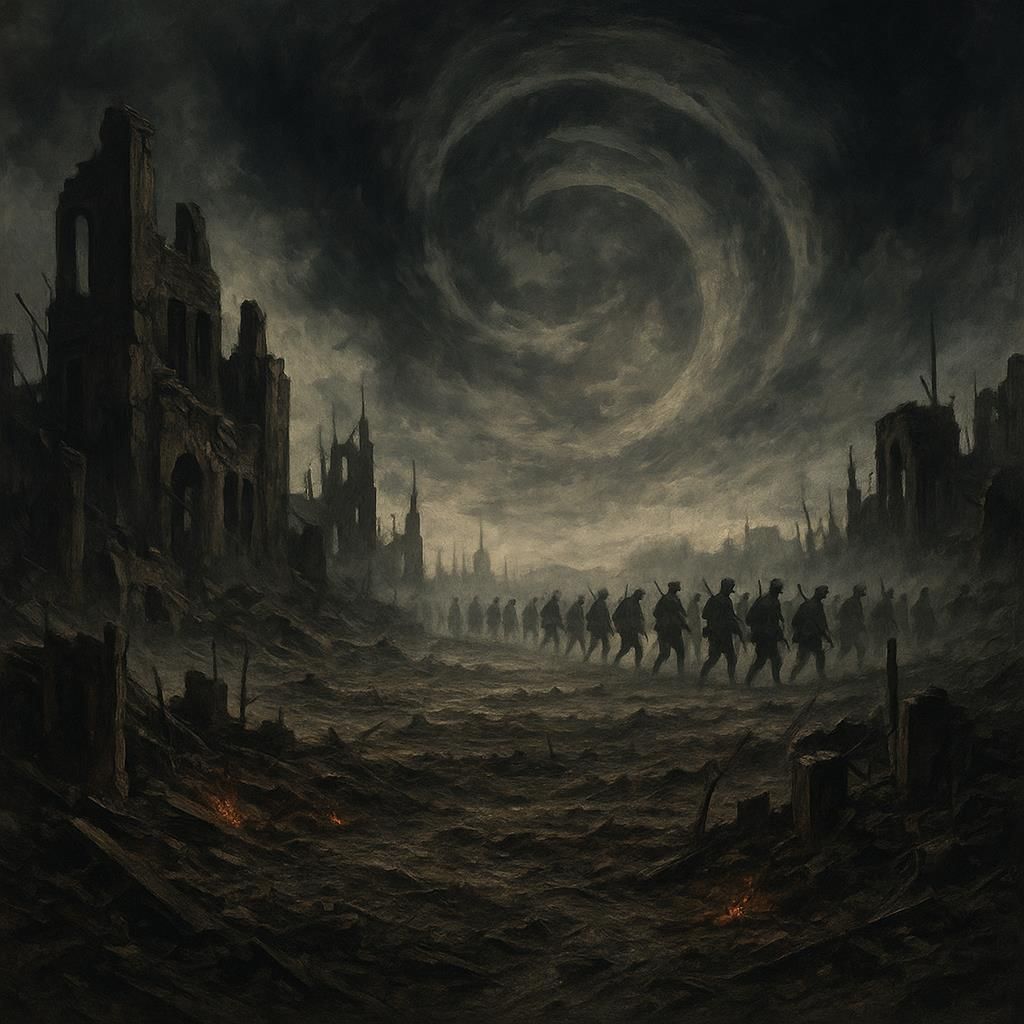
Wars have always brought total ruin in this world

Q3. How does the poet James Kirkup prove that no men are foreign? How far is he able to convince his reader about it?
Ans: In the poem ‘No Men are Foreign’, James Kirkup illustrates that no men are foreign by using both logical and emotional arguments to highlight our shared humanity. The title itself challenges the idea of ‘foreigners’, suggesting that no one is truly strange or different. The poet seeks to dismantle the barriers that divide us, urging readers to see people from other countries as equals. Kirkup points out our common experiences, reminding us that we all share the same earth, breathe the same air, drink the same water, and are nourished by the same sunlight. These basic needs are universal, transcending nationality. Furthermore, all humans experience similar emotions, such as love and the desire for peace. The poet notes that people from various nations work hard to support their families, just as we do. The poem also addresses the devastating consequences of war, which impacts everyone, regardless of their side. War leads to starvation, suffering, and environmental destruction, affecting the planet we all depend on. By viewing others as foreigners, we create divisions that breed conflict and ultimately harm ourselves. Kirkup makes a compelling case for unity and brotherhood, encouraging readers to recognise the shared humanity that connects us all. The poem calls us to reject the notion of ‘others’ and embrace a sense of global kinship that transcends national borders. Through his arguments, Kirkup effectively convinces the reader of our interconnectedness and the importance of seeing beyond superficial differences.

Q4. How, according to the poet, the human earth is ‘defiled’ and the innocence of air ‘outraged’?
Ans: According to the poet, the human earth is defiled and the innocence of air is outraged primarily due to the destructive impacts of war. The word defiled indicates the pollution and degradation of the earth caused by human actions, especially the devastation from conflict. When nations go to war, they unleash a torrent of weapons that ravage the natural environment, turning once fertile land into barren wasteland. The explosive force of bombs and other munitions obliterates the land, rendering it unfit for agriculture and causing irreversible damage to ecosystems. The poet highlights the environmental consequences of warfare, noting that explosions and fires release clouds of smoke and ash into the atmosphere. This pollution makes the air difficult to breathe, thus violating its purity, or outraging it, as it becomes tainted with the toxic remnants of war. Once clean and life-sustaining, the air transforms into a medium for disease and death. The harmful gases emitted during conflicts contribute to the spread of illnesses, further endangering the health of survivors. The poet’s use of the words defiled and outraged conveys a deep sense of violation, as war strips both the earth and air of their innocence and purity. In the aftermath of conflict, both victors and the defeated must confront the environmental devastation, as the once nurturing earth becomes barren and lifeless.

Q5. A great persons tell us to live cordially and as brothers. But we people tend to fight over trivial issues. Why don’t we live with others harmoniously? What makes us fight and hurt others?
Ans: It is true that many great individuals have encouraged us to live harmoniously and peacefully with one another, as brothers and sisters. These teachings have persisted through the ages, urging humanity to embrace lovetolerance, and unity. Yet, despite these messages, we often struggle to follow their guidance. One major reason for this struggle is our insatiable greed—the relentless pursuit of wealth, power, and status. This desire disrupts our inner peace and leads us away from harmony. However, the root of this disharmony goes beyond greed. Deep-seated social issues, such as discrimination based on castereligionethnicity, and wealth, create unnecessary divisions among people. These divisions are artificial, arising from selfish motives and a need to assert superiority over others. Despite knowing that all human beings are fundamentally equal—after all, we are all creations of the same God—we allow our ego and pride to dictate our actions. This ego-driven mindset often leads us to create distinctions even among family members, allowing petty disagreements and power struggles to drive wedges between us. Consequently, we risk losing the respect and love of those around us. Instead of fostering hatred, we should aim to live together in harmony, embracing tolerance, forgiveness, and a spirit of compromise. By doing so, we can cultivate a peaceful and fulfilling life for ourselves and those in our community.

Q6. How are we responsible for war? Explain with reference to the poem No Men are Foreign.
Ans: According to the poem No Men are Foreign, every individual shares some responsibility for war. War does not arise solely from the actions of political leaders or military forces; it stems from the hatred and divisions that develop among ordinary people. When we begin to hate our fellow humans—viewing them as strangers, enemies, or ‘foreigners’—we contribute to an atmosphere of tension and conflict. This tension can gradually escalate into war if left unchecked. The poet highlights that our negative thoughts and actions towards others lay the foundation for violence and destruction. By dehumanising others or treating them with contempt, we plant the seeds of conflict. Our biased and impolite behaviour, whether driven by prejudice, greed, or a thirst for power, creates a breeding ground for war. If we allow these attitudes to thrive, we directly contribute to the chaos and devastation that war brings. Thus, the poem serves as a reminder that peace begins with each individual. By treating others with respect, kindness, and equality, we can prevent the spread of hatred and stop wars before they start.

Q7. The land our brothers walk upon. Is earth like this, in which we all shall lie!’ What does the poet mean to say the above lines? Explain.
Ans: The poet conveys that the land we walk on is the same earth where we will eventually lie after death. This highlights the idea that we engage in all our activities on this shared land. We obtain food, build our homes, and derive many resources from it. Therefore, the poet questions why we label some people as ‘others’. In reality, we all inhabit the same universe, akin to a family. The poet urges us to reflect on the discrimination we create against others and the conflicts that arise from our greed for wealth and power. This desire leads to fighting and harming one another. Ultimately, the poet reminds us that death is a shared fate; nothing we possess will remain ours. In the end, we will all return to the same earth.

Q8. How are we alike? Explain in context with the poem.
Ans: We are all alike in many ways. Our bodies have the same structure, and we all need the same air to breathe, sunlight for warmth, and water for various needs. Our daily routines are quite similar; we wake up in the morning, bathe, have breakfast, and go to work or school. Each of us longs for love and rest at night, waking up to a new day. Since our needs and feelings are the same, it is essential to treat everyone equally, regardless of their colour, caste, region, or gender. We should see each person as our brother or sister. Unfortunately, some self-centred individuals engage in conflict and create divisions that undermine this unity.

11. My Childhood – Long Answer Type Questions

Q1. How did Abdul Kalam earn his ‘first wages’? How did he feel at that time?

  • Abdul Kalam’s cousin, Samsuddin, used to distribute newspapers in Rameswaram.
  • The Second World War broke out in 1939. Now, the train’s halt at Rameswaram was suspended. 
  • The bundles of newspapers were thrown out from the moving train on the Rameswaram road between Rameswaram and Dhanuskodi
  • Now, Samsuddin needed a helping hand to catch the bundles that were thrown out of the moving train. 
  • He employed Abdul Kalam to do this job. Thus, Abdul Kalam earned his first wages. This was a great moment for him. 
  • He felt a great wave of joy and pride in earning his own money for the first time. Even after many years, Abdul Kalam clearly remembers that day.

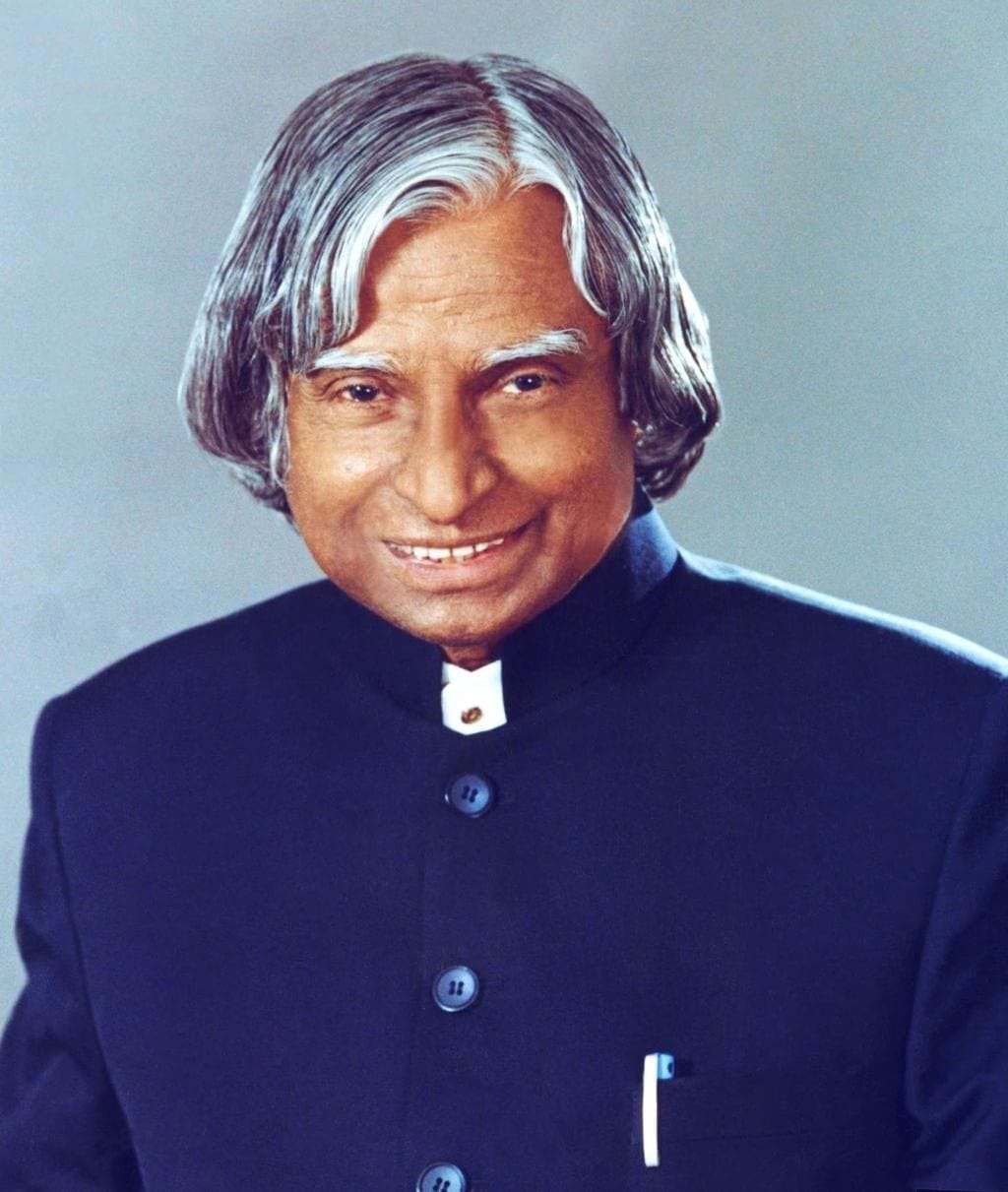
Dr A.P.J Abdul Kalam

Q2. “Once you decide to change the system, such problems have to be confronted.” What ‘system’ is this sentence referring to? What are ‘such problems’? Does the text suggest that the problems have been tackled?

  • The above sentence refers to religious differences between people. A.P.J. Abdul Kalam belonged to Rameswaram. 
  • At that time, the small society of that town was rigid in terms of the segregation of different social groups
  • This system was prevalent throughout the country. The high-caste people did not like to eat or drink with the people of low castes. 
  • The new teacher in Abdul Kalam’s class could not tolerate that a Muslim boy should sit with the son of a Hindu priest
  • He sent Abdul Kalam to the backbench. But some people have tried to fight these problems. 
  • Abdul Kalam’s teacher, Sivasubramania Iyer, served Abdul Kalam with his own hands. He sat down beside him to eat. Later, his wife realized her mistake. The next week, she served Abdul Kalam in her kitchen. 
  • Yet, these problems are deep-rooted in India. These have not been tackled even now.

Q3. What does Abdul Kalam say about his parents in the lesson ‘My Childhood’?

  • Abdul Kalam is full of praise for his parents. He was born into a middle-class family in Rameswaram. His father was Jainulabdeen
  • He was neither educated nor rich. Yet he had plenty of natural wisdom. He was also very generous. 
  • Abdul Kalam’s mother was Ashiamma. She was a kind and helpful lady. 
  • Kalam’s parents were known for their generosity. Every day, more outsiders dined with the family than the number of family members themselves.
  • Abdul Kalam was greatly influenced by his parents. His father taught him the value of self-discipline and honesty. 
  • From his mother, he inherited faith in goodness and deep kindness. His parents were not rich, but they provided their children with all the basic necessities of life, like food, clothes, and medicines. 
  • Thus, Abdul Kalam’s parents greatly influenced him.

Q4. How does Abdul Kalam describe his three close friends?

  • Abdul Kalam says that in his childhood, he had three close friends. Their names were Ramanadha Sastry, Aravindan, and Sivaprakasan
  • All these boys were from orthodox Hindu Brahmin families. Ramanadha Sastry was the son of Pakshi Lakshmana Sastry
  • He was the high priest of the Rameswaram temple. When Ramanadha grew up, he took over the priesthood of the temple from his father. 
  • Aravindan went into the business of arranging transport for the pilgrims who visited Rameswaram. 
  • The third friend, Sivaprakasan, became a catering contractor for the Southern Railways. 
  • Abdul Kalam says that although they were from different religions, none of them ever felt any difference among themselves because of different religious backgrounds. 
  • Their parents were also liberal and generous. Ramanadha’s father rebuked the new teacher for spreading the poison of social inequality in the minds of innocent children.

Q5. In this chapter, A.P.J. Abdul Kalam describes two of his teachers. What is the difference in the outlooks of these two teachers?

  • Abdul Kalam describes two teachers from his school days. When he was in the fifth standard, a new teacher came to the class. 
  • Abdul Kalam was sitting in the front row next to his close friend Ramanadha Sastry. The teacher could not tolerate that a Muslim boy should sit with a Brahmin boy
  • He sent Abdul Kalam to the backbench. It made both Abdul Kalam and Ramanadha very sad. Later, however, the teacher realized his mistake.
  • The attitude of Abdul Kalam’s science teacher was quite different. His name was Sivasubramania Iyer. 
  • He did not believe in social barriers and tried his best to break them. 
  • One day, he invited Abdul Kalam home for a meal. His wife was a traditional lady. She refused to serve a Muslim boy in her kitchen. But Iyer served Abdul Kalam with his own hands. Then he sat down beside him to eat his meal. 
  • There was a clear contrast in the outlooks of the two teachers.

Q6. Describe the incident at Kalam’s school days when a new teacher shifted him to the back row. What followed this incident?
OR
What mistake did the new teacher in Kalam’s elementary school commit one day? How was he reformed? 

  • Abdul Kalam was in the fifth standard at the Rameswaram Elementary School when a new teacher came to their class. 
  • Kalam used to wear a cap, which marked him as a Muslim. He always sat in the front row next to his Brahmin friend, Ramanadha Sastry. 
  • This new teacher could not tolerate a Muslim boy sitting with the son of a Hindu priest. So, he asked Kalam to go and sit on the backbench, which, according to this new teacher, was in accordance with the social ranking. 
  • This incident made both the boys very sad and brought tears to Ramanadha’s eyes. They reported this incident to their respective parents. 
  • Lakshmana Sastry, Ramanadha’s father, sent for the teacher and reprimanded him for spreading the poison of social inequality and communal intolerance in the minds of innocent children. He asked him to either apologize or quit school. The teacher not only regretted his unbecoming behavior but also reformed himself.

Q7. Kalam says, On the whole, the small society of Rameswaram was very rigid in terms of segregation of different social groups”. Were they aware of their differences only, or did they also naturally share friendships and experiences?

  • Although the small society of Rameswaram was very rigid in terms of segregation of different social groups, Kalam and his family were very broadminded as far as religious tolerance was concerned. 
  • His mother and grandmother used to tell him bedtime stories both from the life of the Prophet and Ramayana. Kalam had three close friends and all of them were Hindu orthodox Brahmins. 
  • Besides, his family used to arrange boats with a special platform during the annual Shri Sita Rama Kalyanam ceremony
  • The platform was used to carry idols of the Lord from the temple to the marriage site, Rama Tirtha, which was in the middle of a pond close to Kalam’s house. 
  • Hence, Kalam and his family did not let the difference in religious faith affect their behavior. They were as much at ease with non-Muslims as with those from their own religion.

Q8. The author speaks both of people who were very aware of the differences among them and those who tried to bridge these differences. Which incidents help us to identify such people in the text? 

  • The incident when Kalam’s new teacher shifted him from the first row, where he used to sit with the Hindu priest so Ramanadha Sastry, to the last row helps to identify a person who was intolerant to differences.
  • The incident, when the wife of Sivasubramania Iyer, Kalam’s science teacher, refused to serve food to Kalam, a Muslim boy, in her ritually pure kitchen, helps to identify yet another person who was intolerant to differences.
  • However, the incident when Lakshmana Sastry, an orthodox Brahmin priest, reprimanded the new teacher for spreading the poison of social inequality and communal intolerance helps to identify a person who tried to bridge the differences. 
  • Also, when Sivasubramania Iyer, an orthodox Brahmin, set an example for his conservative wife by not only serving food to Kalam but also sitting beside him to have his meal, he helped to identify another person who tried to bridge differences.

Q9. Who was Sivasubramania Iyer? What sort of relationship did Kalam’ share with him?

  • Sivasubramania Iyer was Kalam’s science teacher. He wanted to break social barriers so that people of different backgrounds could live in harmony with each other. 
  • While trying to change the system, he was mentally prepared to confront many problems. He was very fond of Kalam and used to guide and encourage him to be on par with the highly educated people of big cities.
  • Once, he invited Kalam to his place to share food with him. When his conservative wife refused to serve food to Kalam, a Muslim boy in her ritually pure kitchen, Iyer not only served Kalam himself but also sat with him to have his meal. 
  • He again invited Kalam for dinner the following weekend. However, this time his wife served Kalam as her husband’s example had reformed her. 
  • Thus, Sivasubramania Iyer and Kalam shared a strong bond of love, which was nurtured by the teacher’s progressive vision and his concern for his students.

Q.10. Teachers can either ‘make’ or ‘break’ their students’ lives. Cite two incidents from “My Childhood” to prove the truth of this statement. 

  • Abdul Kalam’s life was influenced in a major way by some experiences that he had during his school days. They were instrumental in shaping his character and later on his career.
  • Once, when he was in the fifth standard, a new teacher came to his class. He did not like Kalam, a Muslim boy, sitting next to Ramanadha Sastry, a Brahmin. 
  • So, he shifted Kalam to the back seat simply because it was in accordance with the social ranking of that time. This was a heart-breaking experience for Kalam. 
  • This poison of social inequality and communal intolerance could have demoralized the young Kalam if his friend’s father, Lakshmana Sastry, had not intervened. He ensured that the teacher not only regretted his action but also reformed himself.
  • Another experience that made Kalam a stronger and wiser person was when his science teacher, Sivasubramania Iyer, invited him to his house for a meal.
  •  During the meal, Iyer noticed that Kalam was upset at his wife’s attitude, so he invited Kalam to another dinner the following weekend, saying, “Once you decide to change the system, such problems have to be confronted”.
  • These two experiences could have had disastrous consequences for Kalam in particular and Rameswaram society in general had they not been dealt with farsight and wisdom by Kalam’s teachers. 
  • Thus, from these incidents, it is clear that teachers can ‘make’ or ‘break’ their students’ lives.

Q11. Suppose you are the new teacher who had sent Kalam to the last row in the class. You realise your mistake after the Hindu priest Lakshmana Sastry reprimanded you. Write a diary entry in about 150 words expressing your regret at your behaviour.

(Day and Date)
(Time)
Dear Diary
My first day at Rameswaram Elementary School was very eventful. Although I was supposed to teach, I actually learned a valuable lesson myself.
On entering the fifth standard, I noticed a boy in a Muslim cap sitting in the front row next to a Brahmin boy wearing the sacred thread. I did not tolerate this, and I asked the Muslim boy, whose name was Abdul Kalam, to go to the last row. The boy and his friend both looked sad, but my order was followed.
In the evening, Lakshmana Sastry, the high priest of the Rameswaram temple and the Brahmin boy’s father, sent for me. He reprimanded me for poisoning young and innocent minds about the differences based on class and community. He asked me to either apologize or quit the school and the island. I was shaken as the warning had come from none other than the high priest himself.
I was totally ashamed of my biased behavior. I regretted having victimized an innocent boy and belittling his religion. I offered my sincere regret and resolved never to let any such prejudice influence my decisions. I am grateful to Lakshmana Sastry for showing me the right path.

10. Poem – A legend of Northland – Long Answer Type Questions

Q1. What is the message of the poem?

Ans: This poem teaches us that true happiness comes from sharing with those in need. Greed prevents us from experiencing joy, while a charitable nature allows us to empathise with the suffering of others. The story revolves around a little woman who was baking cakes when a tired and hungry traveller asked her for something to eat. Despite having a large supply of cakes, she was selfish and kept making smaller ones, ultimately refusing to give any away. Her miserliness angered the weary traveller, who was revealed to be Saint Peter. He chastised her for being too selfish to live as a human, where she had food, warmth, and shelter. As punishment, he transformed her into a bird, destined to search for scarce food by pecking at hard, dry wood.

Q2. Describe Northland as done by the poet?

Ans: The Northland refers to the area surrounding the North Pole, which includes extremely cold regions such as Greenland, northern Russia (Siberia), and the Scandinavian countries like DenmarkNorwaySwedenIceland, and Finland. This region is characterised by its cold, snow-covered landscape, where days are short and nights are long. In winter, the nights are so lengthy and frigid that people often struggle to sleep through them. When it snows, locals use reindeer to pull their sledges. The extreme cold makes children appear like bear cubs in their amusing, furry clothing.

Q3. Briefly narrate the legend of the old woman and St Peter?

Ans: Once, Saint Peter visited an old lady’s cottage, feeling hungry and weak after a day of fasting. The lady was baking cakes, and when Saint Peter asked for one, she attempted to make a tiny cake. However, as it baked, she thought it was too large to give away. She tried twice more, but even the smallest cake seemed too big for her to part with. This greediness annoyed the hungry saint, who cursed her for being too selfish to enjoy the comforts of human life, such as food, shelter, and warmth.

As a result, she was transformed into a woodpecker. All her clothes, except for her scarlet cap, were lost as she flew up the chimney. To this day, it is said that every schoolboy has seen her in the woods, boring into trees for food.

09. The Snake and the Mirror – Long Answer Type Questions

Q1. What kind of room was the doctor living in, and why did he decide to leave that room?
Ans. The room that the doctor was living in was a small, poor, uncomfortable, and unhygienic one. Since his medical practice was not yet well-established, he did not earn much and could not afford a better place. This room had no electricity, and he had to depend on a kerosene lamp for studying. The room was on the outer side of the house, and one of its walls opened into the yard. It had two windows; its roof was tiled and had long supporting gables which rested on a beam over the wall. The room did not have any ceiling and it was infested with rats that kept squeaking all the time.
The doctor’s description of the room shows that he was not happy with this poor accommodation. But he decided to leave it only after his encounter with the snake. It was such a horrifying experience that he had to run to a friend’s house to save his life. Therefore, he decided not to live in the room any longer.

Q2. What kind of woman did the doctor want to marry? What does it show about his character? What kind of wife did he eventually get?
Ans. The doctor took pride in his handsome looks and his medical profession. Therefore, he wanted to marry a rich lady doctor with good medical practice. He also wanted his future wife to be a fat woman. His reason behind this desire was rather amusing. He said that if he made a silly mistake and had to run away, a fat wife would not be able to chase and catch him.
The doctor’s ambition about his marriage shows that he was a status-conscious, money-minded person. He did not think much about the appearance and other qualities of his wife and thought only of her riches. This wish also reveals that he had a sense of humour and could laugh at himself. However, the doctor’s real wife was unlike what he had desired. It is not clear whether she was a doctor or not, but she was certainly a thin woman with the physique of a sprinter.

Q3. What are the similarities between the behaviour of the doctor and that of the snake?
Or
Do you think both the doctor and the snake had some common qualities? Why/Why not?
Ans. The behaviour of the doctor and the snake did have certain similarities. Both of them were enamoured by their reflection in the mirror and stood looking longingly at it. However, the similarity ended at this aspect of their respective behaviour since the doctor could not confidently ascertain the reason behind the snake getting charmed by its own image. The doctor was certainly compelled by his vanity to repeatedly look at his image. So, when he notices the snake looking into the mirror, he thinks that perhaps it too was admiring its beauty or was trying to make some ‘important’ decisions just like him. But these thoughts were as frivolous as the doctor’s decision to shave daily and keep a thin moustache.
Just like the doctor’s obsession with his looks landed him in trouble, the snake, too, seemed to be “taken with its own beauty.” It releases its victim to have a better look at itself in the mirror. Thus, both the doctor and the snake display narcissistic tendencies.

Q4. Why did the snake not strike the doctor, although it was so near his face?
Or
Which qualities and values of the doctor saved his life?
Ans. The snake did not strike the doctor, although it was so near his face, because the doctor remained motionless even when his life was in danger. Displaying great presence of mind, the doctor stayed still like a stone, which assured the snake that there was no danger to it. Snakes strike only in self-defence, and the doctor patiently let the snake go. He remained calm and didn’t jump, tremble, or cry out.
He did not try to either catch the snake to throw it away or to loosen its hold on his arm. Fear had gripped him, but he kept his cool. Thus, the snake left the doctor unharmed and got busy admiring its image in the mirror.
The doctor’s qualities of patience, presence of mind, courage, and calmness helped him ward off the danger posed by the deadly snake and saved his life.

Q5. Write a note on the element of humour in the story.
Or
This story about a frightening incident is narrated humorously. What makes it humorous?
Ans. Although the story “The Snake and the Mirror” by Vaikom Muhammad Basheer is the narration of a serious incident, it contains a strong element of humour. This humour is generated by way of contrasts used by the writer. The doctor reveals his pride and arrogance by telling us how highly he rated his looks and his profession as a doctor. This pride and arrogance stand in contrast to his admittance that he felt feeble and foolish when he encountered the snake. Again, his desire to marry a fat and wealthy lady-doctor who cannot run after him when he commits some silly mistake stands in contrast to the thin and agile lady, with the physique of a sprinter, whom he finally marries. Further, the doctor pokes fun at himself when he says that the thief did not take away his dirty vest because he had a sense of cleanliness. His remark about the snake that perhaps it was making some decision about growing a moustache or using eyeshadow and mascara or wearing a vermilion spot on its head is also witty.
Thus, even a serious incident is made interesting by the doctor’s witty treatment of a very dangerous situation.

Q6. “I looked into the mirror and smiled”, says the doctor. A little later, he says, “I forgot my danger and smiled feebly at myself”. What is the doctor’s opinion about himself when he smiles first and then later? In what way do his thoughts change in between, and why?
Ans. The doctor rated his looks quite high and smiled at his image whenever he looked into the large mirror on his table. He tells the listeners that the first time he looked into the mirror and smiled, his opinion about himself was marked by self-adulation. He thought that and deserved to stay well-groomed. However, these thoughts changed by the time he told the listeners that he forgot his danger and smiled feebly at himself. On the second occasion, his opinion about himself reflected humility. By then, he had realised that he had been vain, foolish and stupid. His encounter with the deadly snake exposed his shortcomings to him. In spite of being a doctor, he did not have any medicine in his room, even for an emergency like a snake bite. His good looks became immaterial when he came face to face with death, and the only thoughts that came to his mind then were about God. The feeble smile indicated his acceptance of the folly and vanity that had so far governed his life.

08. Poem – The Lake Isle of Innisfree – Long Answer Type Questions

Q.1. How does the poet capture the sights and sounds of the Lake Isle of Innisfree?
Ans. The poet, W.B. Yeats, had spent many summers during his childhood in the Lake Isle of Innisfree. His memories are so vivid that the sights and sounds seem to have left an permanent impression on his mind. He beautifully portrays the vast, open stretch of land with a very tranquil environment prevailing from morning till evening. The midnight is aglow with the glimmering of the moon and the stars. The noons are bright with a purplish light. In the evening, the linnets, fluttering their wings in flight makes a very captivating sight.
The Lake Isle of Innisfree echoes with the alluring, soothing music of the insects, birds, and waves. The bees sing loudly and the linnets make the evenings energetic with their music. Moreover, there is soft music of the waves striking gently against the shore day and night. Thus, the sights and sounds described by the poet make the island an captivating place.

Poet of The Lake Isle of Innisfree


Q.2. How does the poet contrast city life with life in natural surroundings?
Ans.  Although the poet does not describe the city life in detail, his obsession to go to the beautiful island full of pleasing sights and sounds makes it clear that he wants to leave the noisy life in the city and lead a simple life. The contrast between the crowded cities and the calm, natural surroundings of Innisfree justifies his desire.
The description of green glades and pastures, along with birds and insects singing on Innisfree stand in contrast to the dull-looking roadways and pavements that are full of vehicles and people. This contrast hints at the noise pollution and congestion in cities.
Further, the picture of the island surrounded by the calm water of the lake and its gentle waves present a beautiful sight. In contrast, people in cities are lost in a race of accumulating material possessions. The fewer needs of people living close to nature indicate greater contentment as compared to the city dwellers’ never-ending chase of wealth and material possessions. The poet’s urge to return to natural surroundings for a peaceful life hints at the problems and restlessness of people in cities.
Thus, the poet contrasts every aspect of city life with the life in natural surroundings that are full of pleasure, contentment, and peace.


Q.3. What ideas do you form the personality of the poet from the poem?
Ans. The poet W. B. Yeats who himself is the speaker in “The Lake Isle of Innisfree” gives us a peep into his mind and soul. His desire to return to a peaceful, quiet, and natural place, away from the bustle of urban life, brings forth the positive values that govern his life. In the poem, he emerges as a peace-loving fellow who is sick of the hectic, restless, noisy and materialistic life of the cities.
He emerges as a profound lover of natural beauty and tranquillity. His strong nostalgia for the beautiful sights and sounds on the Lake Isle and his desire to lead a simple life of unbroken solitude and peace on the island reveal the simplicity of his heart and mind.
The poet is endowed with profound imagination and sensitive observation. With very keen senses, he sees, observes and presents the beauty of the island in the morning, in the noontime, in the evening, and even at midnight. He can hear the sounds of the bees, the cricket, the linnet, and the sea-waves. He can visualize the Peaceful meadow, the glimmering light of the midnight and the purple glow of the afternoon. He can also hear the loud, unpleasant sounds of the traffic in cities and contrast it with the captivating and soothing music of the waves.
Further, the poet lacks a materialistic attitude towards life. He wants to evade the hectic activities of the materialistic life of the cities and live in a small cabin of clay and wattles. He wants to have only enough to fulfill the basic needs of life.
Thus, the poet comes forth as a person with a profound imagination, minute observation, strong memories and a deep love for nature. He is inspired by the values of contentment and harmony.

Q.4. How can we make our lives enjoyable? Discuss with reference to the poem “The Lake Isle of Innisfree”.
Ans. The world is full of beauty and pleasures. It has a rich feast for our eyes, ears, noses and tongue. God has provided us with beautiful sights and sounds. But it is regrettable that we have only added misery into our lives by being blind to the beauties of the world. We have become much too materialistic and are always lost in a race for more and more riches. We do not have time to enjoy calmly the beauties of nature. We have even spoilt natural surroundings in the name of development. As William Wordsworth beautifully wrote: “The world is too much with us”; we have cut off our bond with nature.
However, we may enjoy a peaceful life if we check our desires. We must realize that contentment is a source of real happiness. We must curtail our greed, jealousy, and hatred. A life of simple needs, near the beautiful surroundings of nature away from the madding crowd of cities can give us soothing delights.
Love for nature, faith in God, and affection for fellow human beings can restore the peace of our minds. We should develop a keen sense to perceive beauty all around and spare time to enjoy these beauties. The soft feel of pity, sympathy, consideration, kindness, and affection can overpower all the sorrows of life and make life thrilling and pleasant.

Q.5. The Isle of Innisfree is both a place and the poet’s state of mind. Discuss.
Ans. The Isle of Innisfree is a tiny uninhabited island within the Lake Lough Gill in County Sligo in northwestern Ireland. The poet, William Butler Yeats, had spent his summers over here when he was a young boy. The calm, quiet, soothing environment of this Isle impressed him so much that he developed a spiritual relationship with this place. He can now hear voices calling within himself just as he heard the sounds of nature in Innisfree. The existence of Innisfree as the poet’s state of mind is as true as the real Innisfree. The images of this place haunt the poet in such a manner that he can visualize everything not in his mind but in his heart. The real place has given him such beautiful memories that he cherishes them even when he is amidst the roadways and pavements of a city. His desire to escape to Innisfree is so strong that his thoughts are overpowered by it. Thus, the poet’s state of mind itself Innisfree which stands as a symbol of peaceful existence amidst nature.

Q.6. Suppose you are the poet W.B. Yeats and have reached your dreamland – the Isle of Innisfree. Write a diary entry in about 150 words expressing your real experiences and emotions.
In your diary entry, you should say
1. how you felt immediately as you landed on the Isle
2. what sights and sounds you experienced there
3. what effect they had on you
Ans. 
(Day and Date)
(Time)
Dear Diary
I am extremely delighted that my dream of coming back to the Isle of Innisfree has been fulfilled. I have actually reached this pleasant world far away from the disturbing and restless life of London. My first glimpse of the island was extremely fulfilling. As I landed on the green, grassy place, I inhaled the fragrant, refreshing air. I felt as if I were in some fairyland. I ran about enjoying the sight of dense green trees and then sat down to bask in the brilliant sunlight. The rustling of the leaves, the chirping of the birds and the beautiful hues of flowers left me spellbound. I heard the soft music of the waves which, reflecting the sunlight, looked extremely beautiful as they hit the shore and made ripples. I had a nap on the open ridge. In the evening, the linnets, fluttering their wings in the sky, were a breathtaking sight. From under a rock, some crickets were singing. Tonight, I will sleep under the stars and tomorrow I’ll build a cottage for myself.
Everything on this island seems to be heavenly. Every moment spent here is a blessing. After coming here I have realised that the race for money can never give me any pleasure. The environment here is full of contentment and happiness. I wish I had come here earlier. But better late than never.

Q.7. Why do people prefer to live in cities despite the fast-paced and hectic lifestyle?

Ans: Life in a city is undeniably fast-paced, hectic, and often overwhelming. The hustle and bustle of urban life can be exhausting as people rush through their daily routines, juggling multiple responsibilities and commitments. Despite these challenges, many people choose to live in cities because they offer numerous advantages that are hard to find elsewhere.

One of the most significant reasons is the access to better educational opportunities. Cities are home to reputed schools, colleges, and universities, which attract students from different parts of the country. These institutions provide a strong foundation for career development, offering a wide range of courses and specializations that might not be available in rural areas. Furthermore, after completing their education, graduates have better access to job opportunities in various industries that are concentrated in urban areas. The presence of large corporations, multinational companies, startups, and public sector offices makes cities the ideal places to find employment and build a career.

Another reason why people prefer city life is the convenience it offers in terms of amenities and infrastructure. Cities are equipped with advanced healthcare facilities, shopping centers, entertainment options, and public transportation systems. Residents can easily access hospitals, clinics, and pharmacies in case of medical emergencies, while shopping malls, markets, and supermarkets provide a wide variety of goods and services. Additionally, public transportation networks such as buses, trains, and metro systems make commuting easier and more efficient, even if the roads are often congested.

Recreational and entertainment options also play a significant role in attracting people to cities. Cinemas, theaters, art galleries, museums, restaurants, and cafes are abundant, offering diverse forms of entertainment and relaxation. Whether it’s catching the latest movie, enjoying a live theater performance, or dining at a fine restaurant, city dwellers have endless choices to unwind and enjoy their leisure time. This variety of activities and experiences contributes to the vibrant social life that many people in cities cherish.

In conclusion, while life in a city can be stressful and demanding, people continue to flock to urban areas because of the numerous advantages they offer. From education and employment to recreation and social opportunities, cities provide a unique combination of convenience, opportunity, and excitement that is hard to resist. The modern amenities, diverse experiences, and the promise of a better future for themselves and their families make city life a preferred choice for many, despite its hectic nature.

Q.8. Why is the poet deeply attached to the Lake Isle of Innisfree? Explain.

Ans: The poet, W.B. Yeats, holds a deep and emotional attachment to the Lake Isle of Innisfree, a small, tranquil island located in Ireland. This island is not just a physical place for the poet but a symbol of peace, serenity, and an escape from the complexities of modern life. His profound connection to Innisfree stems from both his childhood experiences and the spiritual tranquility the island represents.

Innisfree, for the poet, is a place where he spent his youthful days, surrounded by the beauty of nature. These memories are etched deeply in his mind, and the island has become a sanctuary in his imagination, a place where he can find solace and peace. In contrast to the noise and chaos of city life, the Lake Isle of Innisfree offers a simple, natural environment that satisfies his longing for solitude and calmness. The poet yearns for this quietude, away from the constant distractions of urban life, where he can live in harmony with nature.

The poet is drawn to the island’s soothing atmosphere, which he describes as a place where peace “comes dropping slow.” This phrase suggests that peace gradually envelops the island, bringing a sense of calm and relaxation. The gentle sound of the cricket’s song, the soft buzz of bees, and the rhythmic lapping of the lake’s waves against the shore contribute to this sense of quietude. These sounds are more than just pleasant background noise; they resonate deeply within the poet, leaving a lasting impression on his soul. The sounds of nature, in contrast to the harsh noises of city life, bring him great comfort and inner peace.

Furthermore, the poet is captivated by the island’s natural beauty. The images he paints of the island — the glimmering light of the moon at midnight, the purple glow at noon, and the gentle movement of the waves — evoke a serene and picturesque landscape. These visuals are not only calming but also offer an aesthetic pleasure that deeply affects the poet. The island, with its simple beauty and unspoiled nature, represents a kind of Eden for the poet, a place untouched by the worries and complications of the modern world.

The poet’s longing to return to the Lake Isle of Innisfree is also fueled by his desire for simplicity. He envisions building a small cabin of clay and wattles, where he can live a life of minimal needs, free from materialism. In contrast to the constant striving for wealth and success in cities, life on Innisfree offers the poet a more meaningful existence, one centered on contentment and self-sufficiency. The island’s peaceful environment provides him with a deeper sense of fulfillment, one that he cannot find in the fast-paced, noisy cities.

In essence, the poet’s deep attachment to the Lake Isle of Innisfree is rooted in his search for peace, simplicity, and a connection to nature. The island, with its tranquil sights and soothing sounds, represents a perfect escape from the stresses of modern life. It embodies the poet’s ideal of a harmonious and contented life, one that is in tune with nature and free from the burdens of urban existence.

07. A Truly Beautiful Mind – Long Answer Type Questions

Q.1. Write a short note on Einstein’s education from school to university.
Ans. As a young boy, Einstein did not show any symptoms of an intellectual genius. His headmaster had a very poor opinion about him and he even declared that Einstein would fail in any career that he chose. However, as he grew up and joined a school in Munich, he showed appreciable progress in his studies scoring good marks in almost all the subjects. However, the strict discipline of the school was not by the free spirit of Einstein. As a result, he frequently had scuffles with his teachers. Being a person of liberal ideas, he felt so suffocated that he ultimately left that school for good. He chose to complete his studies in a school in Switzerland where the environment was more liberal as compared to Munich. Highly gifted in mathematics and having a great interest in Physics, Einstein joined the university in Zurich after completing school, from where he graduated in 1900.

Q.2. What researches and theories proved that Einstein was a true genius? How was he rewarded for his scientific achievements?
Ans.  After completing his university education, Einstein proved to be an intellectual and scientific genius. Though jobless for a while and given private tuition, he eventually secured a position as a technical expert in a patent office in Bern. While working there, he developed his ideas, leading to the publication of his famous research on the ‘Special Theory of Relativity,’ which stated that time and distance are not absolute. His equation, E = mc², revolutionized science and earned him worldwide recognition. Einstein gained further acclaim with his General Theory of Relativity, which predicted the deflection of light from stars due to the sun’s gravitational field, hailed as a “scientific revolution.” In 1921, Einstein received the Nobel Prize for Physics for his contributions, and honors from around the globe followed. Newspapers worldwide praised his remarkable genius, establishing him as one of the greatest minds in science.


Q.3. The author talks about two important letters that Einstein wrote -one to President Franklin D. Roosevelt and the other to the United Nations. What prompted Einstein to write these letters? What impact did they make?
Ans. At the insistence of a colleague, Einstein wrote a letter to the American President, Franklin D. Roosevelt in 1939 warning him that the atomic bomb if made and used by Germany, could not only destroy the whole port on which it could be dropped but also the territory surrounding it. The impact of the letter was both deep and rapid as the Americans secretly developed their own atomic bombs which were dropped on Hiroshima and Nagasaki in Japan in 1945. As expected, these bombs caused terrible destruction. The large-scale damage caused by these bombings on Japan perturbed Einstein so much that this time he wrote a letter to the United Nations. In this letter, he proposed that there should be only one government in the world. This would put an end to the enmity between nations and hence stop the massacres caused in the name of wars. But this letter did not have any impact. Thus, unlike the letter to Roosevelt, Einstein’s letter to the United Nations failed to evoke any response.

Q.4. Which values does the life of Einstein teach you?
Ans. Einstein was not only a remarkable scientist but also a man devoted to peace. His life teaches that we must love our fellow beings and ensure that scientific discoveries aim to establish peace. He wrote to President Franklin D. Roosevelt, warning him about the destructive potential of an atomic bomb that Germany might develop. Einstein was deeply shocked by the large-scale destruction caused by the atomic bomb dropped on Hiroshima and Nagasaki by the U.S. In response, he made sincere efforts to spread the message of peace, even proposing a world government to the United Nations. He used his popularity not for personal gain but to promote democracy and peace. Honors and achievements never swayed him; instead, they motivated him to work harder for humanity’s welfare. Einstein’s life inspires us with values of sincere work, devotion to humanity, selfless service, and a commitment to peace.

Q.5. What important lessons can Educationists today learn from the biographical sketch of the great scientist, Einstein?
Ans. “A Truly Beautiful Mind” offers a critical view of the education system. A brief look at Einstein’s life reveals that he was not a fast learner in his early schooling. One teacher even declared he would fail in any course. However, Einstein proved to be an intellectual genius. Educationists can learn valuable lessons from his experience. First, teachers should consistently encourage all students, focusing on their potential rather than making negative remarks. Second, students need a liberal and supportive environment that fosters original thinking and nurtures their ideas. Einstein felt suppressed by the strict discipline at his Munich school, prompting him to leave for Switzerland, where he thrived in a more liberal university setting. Finally, all education stakeholders must work free from biases and prejudices to cultivate an inclusive and effective learning atmosphere.

06. Poem – Rain on the Roof – Long Answer Type Questions

Q.1. How does the poet react to the sound of the rain falling on the roof?
Or
What is the effect of the sound of the rain on the heart and mind of the poet?
Ans. The poet’s heart and mind react strongly to the sound of the rain falling on the roof. He is in a blissful mood as he enjoys the comfort of his bedroom, leisurely listening to the music of the rain. The music stirs a corresponding echo in the heart of the poet. His heartbeat responds to the sound of the rain by its rhythmic throbbing. He gets engrossed in fanciful, dreamy thoughts. Moreover, the rain awakens many memories of the past. Particularly, it revives the memory of his mother as she looked at her children very affectionately before she went to sleep in her room. He recollects the fond, affectionate look of his mother which she cast on him. Thus, the poet’s mind and heart respond sensitively to the soft pattering sound of the rain falling on the roof.

Q.2. The poet says:
“What bliss to press the pillow
Of a cottage-chamber bed”
Is rain ‘bliss’ for everybody? What do different people feel about the rain?
Or
Does everybody have a cozy bed? Look around and describe how different kinds of people or animals spend time, seek shelter, etc. during rain?
Ans. In the poem “Rain on the Roof”, the poet Coates Kinney relates the various blissful emotions he has while he lies comfortably in his bed. For him, it is pure bliss to listen to the patter of raindrops falling on the roof. But enjoying this bliss is not a privilege for everyone. There are many poverty-stricken people for whom rain brings a number of difficulties. Some of these people are without shelter, while some live in poor, thatched cottages with leaking roofs. When we look around, we find people reacting differently to the rain. Rich people sit comfortably in the verandas of their luxurious houses and enjoy delicious snacks while watching the rain. Those who are burdened with a busy schedule, feel uncomfortable when they have to run around in the rain. Exposed to the rain, the poor homeless are forced to take cover lest they are drenched in rain.
Animals too are uncomfortable when the rain falls. The domestic animals may be protected but the stray ones have to seek shelter. Thus, rain is not bliss for everybody.

Q.3. Suppose you are a poet. You lie in your bed-chamber listening to the ‘pattern’ of the rain. Many memories of your childhood occupy your mind. Write a diary entry in about 100-150 words about the most important experience that you recollect.
Ans. (Day & date)
Dear Diary
(Time)
As I lie here comfortably in my bed enjoying the melodious music of the soft rain falling on the roof, I feel that my bond with the past is strengthened further. Some experiences, buried in my unconscious mind have surfaced today. I recall the day from my childhood when it was raining at night and I was in bed along with my brothers and sisters. Mother walked in our room and looked upon us with affection and warmth in her eyes. I can never forget the love with which her face glowed as she bent over us one by one to put us to sleep. We were like her prized treasures and dreaming darlings.
The rain that night was almost like the one falling today. Not a heavy shower, but a soft and gentle one pattering rhythmically on the roof. It is a bliss to recall Mother’s angelic eyes and smiling face amidst the gentle sound of the rain.
Miss you mom.
Coates Kinney

Q.4. Do you like the rain? What do you do when it rains steadily or heavily as described in the poem?
Ans. Yes, I like rain and prefer to take a bath in the rain for some time. But when it rains heavily, I stay inside and enjoy the beauty of nature. During rains, a romantic atmosphere is created. I feel like curling into bed and watch the T.V. Further I would like to have a hot cup of tea and some nice dish that will make me happy. I also like to watch the sight outside looking through the window. The noise and the smell that comes with rain are very refreshing.

Q.5. What virtue do you find in the sound of rain? Explain with reference to the poem `Rain on the Roof.
Ans. The sound of rain is pleasing to the ear. When we hear this sound, we forget everything. We feel nostalgic and find ourselves in the world of fancies. We remember the sweet memories of the past in a peaceful heart. Of course, we are unable to forget such moments of life. We must take this lesson from the rain and create peace in the mind of people by our behaviour.

Q.6. When you were a young child, did your mother tuck you in, as the poet’s mother did? Explain with reference to the poem ‘Rain on the Roof.
Ans. Yes, my mother used to tuck me in when I was a child. Whenever I said that I could not do some work, she embraced me and took me in her lap to get that work done. She used to feel sad and dejected if I was involved in any kind of mischievous work. Mothers are great in the world. Their love is immortal because it always charges our life in their absence.

05. The Little Girl – Long Answer Type Questions

Q.1. How did the little girl start understanding her father?
Or
Narrate in about 100 words the story ‘The Little Girl’.
Ans. 

  • Kezia was a little girl who was very afraid of her father. To her, he looked like a giant, and he spoke very loudly in the house, which made her avoid him.
  • One day, she tore up an important speech written by her father. He became very angry and beat her with a stick. Kezia started crying and wondered why God had made fathers.

The Little Girl wondered why god made fathers

  • One day, Kezia’s mother was ill and taken to the hospital, leaving her alone at home. At night, Kezia had a bad dream and cried out in fear. Her father took her to his bed, and as she lay beside him, she realized that her father was not a bad person. 
  • He had to work hard and had little time to play with her. She understood that it was her mistake to tear up the speech. Now, Kezia felt her father was large-hearted.


Q.2. Kezia slept one night with her father and changed her opinion about him. What was her opinion about her father before? What change did take place?
Ans. 

  • Earlier, Kezia thought her father was a cruel man. She always avoided him and saw that her neighbor, Mr. Macdonald, loved his children, but her father never showed affection.
  • One day, Kezia’s mother was taken to the hospital, leaving her alone in her room. At night, Kezia had a nightmare and cried out in fear. Her father took her to his bed, and as she slept beside him, he asked her to rub her feet against his legs to warm them. She felt sorry for him, realizing that he worked hard and was too tired to play with her. She understood that it was her mistake to tear up the speech. Now, Kezia saw her father as not a hard-hearted man.

Little girl saw through a gap Macdonalds playing “Tag” in the evening 

Q.3. Relate in your own words the pin-cushion incident.
Ans. 

  • The little girl wanted to gift a pin-cushion to her father on his birthday. She took a piece of yellow silk, stitched its three sides, and left the fourth side for filling. However, she did not know what to fill it with, so she found some sheets of paper and tore them into pieces to stuff the cushion. 
  • ​Unfortunately, those papers contained an important speech written by her father. When he discovered that Kezia had torn the papers, he became very angry and hit her hands with a ruler. 


Q.4. Write a short character-sketch of Kezia’s father.
Ans. 

  • ​Kezia’s father had big hands, a large neck, and a loud voice. In the beginning, he appeared to be very strict and cruel. He never spoke kindly to his daughter or played with her.
  • When Kezia accidentally tore his speech, he beat her harshly. However, he was not truly cruel at heart. One night, when Kezia had a nightmare, her father carried her to his room and let her sleep beside him. Kezia then realized how much her father loved her. Though he worked hard and was often too tired to play, he cared deeply for her, and in the end, she understood his love.

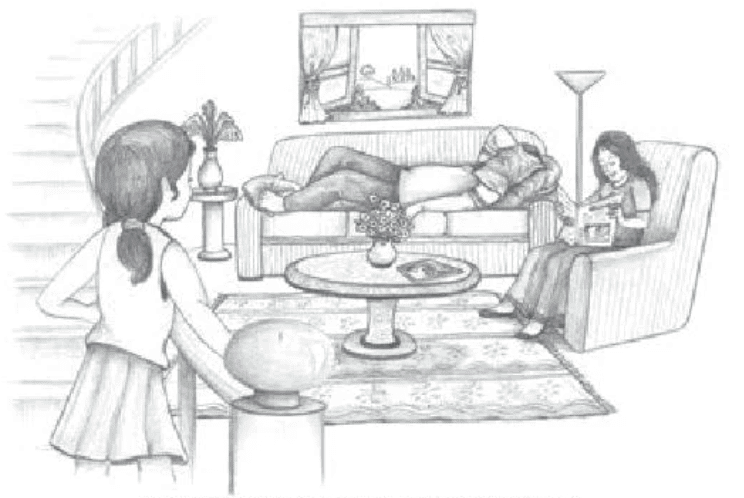
Little girl’s father stretched out and mother reading

Q.5. Write a short note on the relationship between Kezia and her father.
Ans. 

  • The relationship between Kezia and her father was a delicate one. He was a conventional disciplinarian and as the head of the family, he asserted his authority over everyone, including his little girl. 
  • He often scolded her for her sad looks and for stuttering. She was made to take off his shoes and put them outside when he returned home from the office in the evening. 
  • He even punished her when she mistakenly tore his important papers. He did not give her even one chance to explain herself and failed to see her loving intention behind the mistake.
  • As a consequence of her father’s overly strict behaviour, Kezia developed a strong fear for him. She preferred to stay out of his sight and was relaxed only during his absence from the house. She compared him to be a giant – a dreadful creature for little children. After being beaten by him with a ruler, she even questioned the purpose of God in making fathers.
  • However, this dry relationship undergoes a drastic change towards the end of the story. Father displays his soft corner when Kezia is alone and gets scared by her nightmare. He carries her in his arms to his room, tucks her comfortably in his bed, lies down close to her and gives her the assurance that children seek from parents. 
  • This protective, caring and considerate side of her father arouses her sympathy for him. She realises that he has a big heart which is full of love for her.


Q.6. How did Kezia once earn her father’s wrath? What punishment did she get for her mistake? Was it justified? What light does this incident throw on her father’s character?
Ans. 

  • Kezia once earned her father’s wrath for tearing his speech for the Port Authority to stuff a pin-cushion she was making for him as a birthday present. When he discovered that Kezia was the culprit, he punished her by beating her little pink palms with a ruler to teach her not to touch what did not belong to her.
  • I think it was a very harsh punishment for an innocent mistake of a fond little daughter. It is true that the papers were extremely important for him and their loss must have caused him a lot of inconveniences but he should have understood and appreciated the fact that Kezia was making a birthday present for him. Gentle but firm words would have sufficed to teach the sensitive Kezia that she should not touch things that do not belong to her. But Father instead chose to beat her little pink palms with a ruler. That was much too cruel on his part.
    This incident shows that he was a very cruel and insensitive father who demanded a very high standard of discipline from his daughter and could not tolerate any disobedience.


Q.7. How do you interpret the behavior of Kezia’s mother towards her?
Ans. 

  • The behaviour of Kezia’s mother towards her is unlike the expected role played by mothers in households. Perhaps, her husband’s strict nature does not leave enough room for her to pay the desired attention to her daughter. 
  • The story reveals that her relationship with her daughter is distant. She treats the little girl in accordance with her husband’s expectations. 
  • She orders her to take off her father’s shoes and put them outside as this would indicate obedience. On Sunday afternoons, she spends time engrossed in a newspaper sitting with her husband instead of talking to her daughter. 
  • When Kezia mistakenly tears the papers of her father, she drags her downstairs to face the wrath of Father. She does not try to soothe her when Father scolds and beats her. 
  • Neither does she defend her or try to protect her in any way. That is why Kezia turns to her grandmother to fulfil her need for motherly care and affection.


Q.8. Why did Kezia feel drawn towards her grandmother?
Ans. 

  • Failing to get any expression of affection from her parents, especially her father, Kezia feels drawn to her grandmother. She turns to her to fulfill her need for love and protection. Grandmother too showers abundant love upon the little girl. She keeps trying to build her bond with her parents. She advises Kezia to talk to her parents when they would be relaxing in the drawing-room on Sunday afternoons. 
  • Again, she tells Kezia about Father’s birthday and suggests that she should make a pin-cushion for him as a present. When Father beats Kezia, it is a grandmother who consoles and comforts her by covering her with her shawl and allowing the child to cling to her soft body. 
  • Earlier too, whenever Kezia would get scared by her nightmares, grandmother would take her in her own bed. Hence, her affinity and support make Kezia look up to her for everything.


Q.9. Kezia decides that there are “different kinds of fathers.” What kind of father was Mr. Macdonald and how was he different from Kezia’s father?
Ans: 

  • Mr. Macdonald, Kezia’s next-door neighbour, had five children and Kezia would often see them playing in their garden.
  • One day, when Kezia looked through the gap in the fence she saw the Macdonalds playing the game ‘tag’. It was evening, and Mr. Macdonald had just returned from work but unlike her father, he looked happy and energetic. 
  • He was having a good time with the hose on him and he tried to catch them laughing two girls time with his children – baby Mao was on his shoulders, was hanging on to his coat pockets and the party ran around the flower beds, shaking with laughter. 
  • Mr. Macdonald’s sons turned. This happy scene made Kezia conclude that there were different sorts of fathers. Mr. Macdonald was so different from her own father. 
  • He was not at all strict, was always happy and thoroughly enjoyed the company of his children.
    In contrast, her own father was often in an angry mood and remained much too busy in his work. 
  • She dreaded him and avoided his company as much as she could. Whenever she was with him, he would get upset because out of fear she would stammer and fumble and look silly.
  • His strict discipline and his domineering nature would often make Kezia wonder what God made fathers for.


Q.10.  How does Kezia begin to see her father as a human being who needs her sympathy?
Ans. 

  • Kezia was used to being scolded by her father and sometimes even got punishment for her little mistakes. She lived in awe of him, for he would often find fault with her manners, behaviour, speech, her general timidity, and silliness. Little wonder then that she would tremble, stutter and look clumsy in front of him. He would often find her looking wretched as if she was on the verge of committing suicide.
  • However, a nightmare one night made Kezia discover the tender, caring and loving side of her father. Since her mother and grandmother were away to a hospital, Alice, the Cook, had put her to sleep but she was bothered by her usual nightmare of a butcher with a knife and a rope, and a dreadful smile. 
  • When her father heard her shrieking, he came to her room, lifted her in his arms and took her to his room. He comforted her and tucked her up nicely and slept next to her. He told her to rub her feet against his to warm them. She snuggled her head under his arm and held tightly to his shirt. 
  • At that moment, she discovered that her father was very much a human being and needed her sympathy. He was big, hard, snug and reassuring but there was no one to look after him. These thoughts filled her heart with love and affection for him.


Q.11. Every father has a love for his child whether he expresses his love or not. Comment on the basis of the story “The Little Girl”.
Ans. 

  • Fathers are not alike. Some play with their children while others love and care for them. They show their love to them by working hard and giving them all the facilities as well as for instructions. 
  • Though they never express their love they have a deep love for their child. Kezia’s father belongs to the second type. He did not believe in showing off his affection for his daughter. He believed in showing his love by making her future more secure. When she tore his papers unknowingly, he beat her harshly. 
  • But in the end, we find him a very loving and caring father. Thus it is true that every father loves his child’s but the way of love is different from one person to another. Most of the fathers live their dreams with their children. Their strictness is also a kind of love.


Q.12. Father who seems hard from outside is not so from within. Comment on this statement with reference to Kezia’s father in ‘The Little Girl’.
Ans. 

  • Parents’ contribution in shaping and framing the life of their kids cannot be compared with anything. The values, courage, and virtues are all implanted by parents at a young age. 
  • The early years of a child’s life are very delicate, his future is made or marred at this age. 
  • For cultivating good qualities, for making their kids better than them, they have to chide, scold or show their strictness but, in reality, a spring of love remains behind it. 
  • As in the story ‘The little girl’, Kezia’s father appears strict to her and she makes her opinion about him as a strict and hard-hearted father but when she realizes the warmth of love she understands the love of her father.

Q.13. How can you say that punishments given by parents hold love for you?
Ans. 

  • Parents are very fond of their children. They always desire to see them on the top. If they punish them, it does not mean that they want to hurt them. 
  • Kezia had stuffed the pin-cushion with the papers that contained important speech, which was great damage for her father. 
  • If her father beat her, he only wanted to teach her that she should value the important things in life. 
  • So his punishment had a lesson for Kezia and before doing any work, she would think twice whether the work that she was going to do was right or wrong.

Q.14. “That night there was a hue and cry in the house.” Why did her father get agitated?
Ans. 

  • One day, when Kezia was kept indoors due to cold, her grandmother suggested that she make a pin-cushion for her father. 
  • She stitched three sides of the cushion and went to her mother’s bedroom to look for scraps with which she could fill the cushion.
  • On the bed-table, she discovered a great many sheets of fine paper, gathered them up, tore them into tiny pieces and stuffed her case and then sewed up the fourth side.
  • That night there was a huge hue and cry in the house because those papers were very important. It was a great speech for the Port Authority. 
  • So her parents were in search of those sheets. This was the reason that her father got agitated and punished her with a ruler.


Q15: Do you think Kezia deserved the beating she received for her mistake? What does this incident reveal about her father’s character?

Ans: 

  • Kezia accidentally used her father’s important speech papers to make a pin-cushion for his birthday gift. When her father discovered this, he punished her by beating her little hands with a ruler, intending to teach her not to touch what wasn’t hers.
  • In my opinion, the punishment was too severe for a mistake made innocently by a loving daughter trying to please her father. 
  • While the papers were crucial to him and their loss must have caused inconvenience, her father could have listened to Kezia’s explanation and appreciated her good intentions. 
  • A gentle reprimand would have been enough to teach sensitive Kezia about respecting others’ belongings.
  • This incident reveals that Kezia’s father was insensitive and strict, expecting high levels of discipline from his daughter and showing little tolerance for disobedience.

03. The Sound of Music – Long Answer Type Questions

Q1. How does Evelyn hear music?

Ans: Evelyn Glennie has a profound love for music, despite losing her hearing completely at the age of eleven. Determined to lead a normal life and play the xylophone, she faced discouragement from her teachers, who viewed her deafness as a barrier. However, renowned percussionist Ron Forbes recognised her potential and trained her to perceive music through vibrations rather than sound.

Forbes created two drums tuned to different notes, guiding Evelyn to feel the higher frequencies in her upper body and the lower ones below her waist. This innovative approach opened her mind and body to the subtle nuances of music. Evelyn describes how music flows through her, resonating in her skin, cheekbones, and even her hair. When she plays, she senses the vibrations travelling from the stick into her fingertips.

By removing her shoes on stage, she allows the vibrations to travel from her bare feet up through her legs. Through this unique method, Evelyn has trained her body to respond to various musical sounds, demonstrating that one can experience music in many ways, even without traditional hearing.

Q2. If you work hard and know where you are going, you’ll get there,” remarks Evelyn Glennie. What does it reveal about her character?

Ans: Evelyn’s statement reflects her determinationhard work, and clear goals. These traits have helped her bravely overcome her deafness. Despite losing her hearing at the age of eight, she refused to let it hinder her success. Evelyn was committed to living a normal life and pursued her passion for music relentlessly.

With the encouragement of Ron Forbes, she gained confidence and successfully auditioned for the Royal Academy of Music in London, where she received top awards. Her dedication and work ethic allowed her to excel, often working harder than classical musicians to elevate percussion in orchestras. Evelyn firmly believes that with hard work and focus, any goal is achievable.

Through her efforts, she transitioned from playing in orchestras to becoming a solo artist, gaining international recognition for her skill with various instruments. She faced her disability with courage and determination, inspiring many who face their own challenges. Evelyn’s unwavering commitment to music and her remarkable achievements serve as a beacon of hope for others.

Q3. Suppose you are Ron Forbes. You have come to know that Evelyn Glennie has been awarded the Royal Philharmonic Society’s prestigious ‘Soloist of the Year Award’. Write a letter to Evelyn in about 150 words.

Ans:

(Address)

(Date)

Dear Evelyn,

Please accept my heartfelt congratulations on receiving the ‘Soloist of the Year Award’ from the Royal Philharmonic Society. This prestigious accolade is a testament to your incredible talent and dedication. I am truly proud of your remarkable achievement.

Your hard work and passion for music inspire many. I fondly remember the day you connected with the drums I made for you, marking the beginning of your extraordinary journey. You have shown the world that no dream is too big when one has the courage and determination to overcome challenges.

You have become a role model for those with disabilities, proving that with faith in oneself, anything is possible. I wish you continued success and hope you reach even greater heights in your career. May you always keep the flame of enthusiasm alive!

With deep affection,

Ron Forbes

Q4. Suppose you are Evelyn Glennie. The doctor has diagnosed that your hearing is completely lost. Write a diary entry in about 150 words about how you feel and what you plan to do.

Ans:

(Day and Date)

Dear Diary

(Time)

Today is a very sad day for me. The doctor has informed me that I can no longer hear due to complete nerve damage. My headmistress and teachers have suggested using hearing aids and attending a school for the deaf. It pains me to think that I am not like other children. While I understand I will need to rely on hearing aids, I refuse to let this handicap define me. I have seen many people achieve great things despite their disabilities, including the inspiring Helen Keller.

I will continue to pursue my passion for music and work hard to overcome this challenge. I believe that determination can help me conquer any obstacle. I will not accept defeat; I will show that it is possible to find solutions to problems by staying focused on my goals. I pray for strength and moral courage to help me reach my dream of attending the Royal Academy of Music. Although it seems lofty, I know it is not impossible. Amen!

Evelyn

Q5. Write a note on the origin of the Shehnai.

Ans: In the past, a musical instrument called the pungi was played in royal palaces. However, Emperor Aurangzeb found its sound unpleasant and banned it from the royal residence. A barber, who came from a family of musicians and had access to the palace, decided to improve the instrument’s tonal quality. He selected a pipe with a naturally hollow stem that was longer and wider than the pungi and carved seven holes into it. This modification produced a rich and melodious sound.

The barber showcased this new instrument to the king and his courtiers, who were greatly impressed. Since it was first played in the Shah’s chamber and created by a nai (barber), it was named shehnai. Another tale suggests that the shehnai was invented by an Iranian doctor named Haquim Bu Ali Saina, and the instrument was named after him.

Q6. What are the recurring themes of Bismillah Khan’s music and how did they originate?

Ans: Bismillah Khan’s musical journey began in Benaras, where he learned the shehnai from his uncle, All Bux. He practised in the temples of Balaji and Mangla Maiya, as well as on the banks of the Ganga. This serene environment allowed him to immerse himself in his craft, leading to the creation of new ragas that were previously thought impossible for the shehnai.

Two key themes emerged from his experiences. The first theme was influenced by the ethos of the temple, which deeply resonated in his music. The second theme was inspired by the flowing waters of the Ganga, reflecting the connection between people and nature. These themes became essential elements of Bismillah Khan’s musical expression.

Q7. Why is Benaras so important to Bismillah Khan?

Ans: Bismillah Khan, affectionately known as Khansaab, has travelled extensively and received numerous honours worldwide, including an auditorium named after him in Tehran. Despite his travels, he holds a deep affection for Benaras and Dumraon, which he considers the most beautiful towns. His love for Benaras is particularly tied to the Ganga, where he practised the shehnai in solitude during his youth. When a student in the USA invited him to lead a shehnai school, he expressed his desire to recreate the essence of Benaras, questioning if the Ganga could also be brought there. He once remarked, “Whenever I am in Mumbai, I think only of Varanasi and the holy Ganga.”

Q8. Write a note on the life and achievements of Bismillah Khan as a ‘shehnai vaadak’. What values of life do you derive from his story?

Ans: Bismillah Khan‘s life as a shehnai vaadak reflects values of dedication, simplicity, and patriotism. His musical journey began at the tender age of three and lasted until he was ninety, transitioning from temple performances to international acclaim. Born into a family of musicians, he developed a passion for the shehnai early on. He started learning from his uncle, Ali Bux, at a Vishnu temple, where he sang traditional scriptures like ‘Bhojpuri chaita’.

His big break came in 1938 with All India Radio in Lucknow, where he became a popular shehnai player. On 15 August 1947, he became the first Indian to greet the nation with his shehnai, performing Raag Kafi at the Red Fort, attended by leaders including Pandit Jawaharlal Nehru.

Bismillah Khan’s performances were memorable both in India and abroad. His first international trip was to Afghanistan, where he impressed King Zahir Shah, who gifted him exquisite Persian carpets. He also performed at prestigious venues like the Lincoln Centre Hall in the USA and participated in events like the Cannes and Montreal expos. Despite opportunities in film, he found them lacking in authenticity.

Deeply devoted to India, Bismillah Khan declined offers to settle abroad, valuing the country’s rich musical heritage. His life teaches us the importance of dedication and the pursuit of excellence.

Q9. What important lesson does the life of Bismillah Khan teach us?

Ans: Bismillah Khan teaches us a significant lesson about life: success comes through hard work and dedication. Born into a family of musicians, he developed a passion for music early on. His maternal uncle, a talented Shehnai player, greatly influenced him. Bismillah practised diligently by the Ganges, which helped him refine his skills. His commitment paid off when he received the prestigious Bharat Ratna, India’s highest civilian award.

Q10. What does it reveal about his sentiments towards India?

Ans: Bismillah Khan, in The Sound of Music, displayed deep patriotic feelings. He had a strong love for his birthplace, Dumraon in Bihar, and for Benaras, where he trained to play the shehnai. His connection with the Ganga was profound; the river inspired him to create new raagas that were previously thought impossible for the shehnai. Bismillah Khan’s love for India and the Ganga was so strong that he declined an opportunity to settle in America to lead a shehnai school. He missed Benaras whenever he was in Mumbai or elsewhere, and he cherished his roots in Dumraon. Bismillah Khan held Hindustani music in high regard, viewing it as India’s richest cultural heritage. He believed in passing this musical tradition to future generations, urging Indians to teach music to their children. He took pride in the fact that even people from the West were captivated by Indian music.

Q11. You have now read about two musicians, Evelyn Glennie, and Ustad Bismillah Khan. Do you think that they both worked hard? Where did they want to go?

Ans: Evelyn Glennie and Bismillah Khan are two renowned musicians whose dedication and hard work have led them to remarkable achievements. Evelyn Glennie, an internationally acclaimed multi-percussionist, overcame her deafness through relentless effort. Instead of giving up, she learned to perceive music through vibrations in her body. Her determination allowed her to attend the Royal Academy of Music in London, where she earned prestigious awards and elevated percussion to a prominent position in the music world.

Similarly, Bismillah Khan dedicated himself to the shehnai, transforming it into a respected classical instrument. He worked tirelessly, expanding its repertoire by creating new raagas and performing in temples and on the banks of the Ganges. His commitment led to international recognition and numerous awards. Both musicians exemplify how hard work and dedication can lead to extraordinary success.

Q12. Write a note on some of the most memorable performances of Ustad Bismillah Khan as described in the feature “The Shehnai of Bismillah Khan”.

Ans: During his illustrious career spanning over 80 years, Bismillah Khan delivered numerous memorable performances, with several standing out as key milestones. His early performance of the Bhojpuri ‘chaita’ at the Bihari ji temple at just five years old showcased the talent of a future maestro. For each recital, he received a 1.25 kg laddu from the local king as a reward.

At 14, he impressed Ustad Faiyaz Khan during the Allahabad Music Conference, who encouraged him to work hard. In 1938, Bismillah Khan received a significant opportunity to perform on All India Radio in Lucknow, which marked a turning point in his career.

On 15th August 1947, he became the first Indian to greet the nation with his shehnai from the Red Fort, playing Raag Kafi to an audience that included Pandit Jawaharlal Nehru. His first international performance in Afghanistan earned him great acclaim, and he received gifts from King Zahir Shah.

Bismillah Khan also contributed music to films, including Vijay Bhatt’s “Gunj Uthi Shehnai” and Srinivas’s Kannada film “Samadhi Apanna”. His international performances included prestigious venues such as the Lincoln Centre Hall in the USA, the World Exposition in Montreal, the Cannes Art Festival, and the Osaka Trade Fair.

Q13. “Music has no religion.” How did Bismillah Khan’s Shehnai prove it?

Ans: Music is the voice of the soul, transcending religious boundaries. It serves as a source of inspiration for all. Bismillah Khan, a renowned musician from the Muslim community, played the Shehnai in temples, demonstrating that music is universal. He had a deep connection to the holy city of Benaras and the sacred river Ganga, which inspired him throughout his life.

From a young age, Bismillah Khan was passionate about music. At just five years old, he visited the Bihariji temple in Dumraon to sing Bhojpuri Chaita. His love for music was so profound that when a student from the USA invited him to start a Shehnai school, he declined, stating he could not replicate the essence of the Ganga in a foreign land.

Q14. Describe the life and character of Ustad Bismillah Khan with emphasis on values of his character you should imbibe.

Ans: Ustad Bismillah Khan was a renowned Shehnai player, born in a village in Bihar. Coming from a family of musicians, he elevated the Shehnai to global fame. The Indian government honoured him with the prestigious Bharat Ratna. A true patriot, he declined offers to settle abroad, showing his love for his homeland. His passion for the Shehnai was nurtured under his maternal uncle, Ali Bux, as he practised by the serene banks of the Ganga.

His life serves as an inspiration, teaching students to embrace open-mindedness and to learn values from various religions. Ustad Bismillah Khan’s dedication and commitment to his art exemplify the importance of cultural heritage and unity.

Q15. Why did Emperor Aurangzeb banned the playing of the pungi and how it was improved and called Shehnai?

Ans: Emperor Aurangzeb banned the playing of the pungi in the royal palace due to its shrill and unpleasant sound. However, a barber from a family of musicians sought to improve the instrument. He selected a longer and broader pipe with a natural hollow stem and added seven holes along its body. When he played it, the sound was soft and melodious, impressing the king and his court.

Since this new instrument was first played in the Shah’s chambers by a nai (barber), it was named the Shehnai. Over time, the sound of the shehnai became associated with auspicious occasions, making it a staple at weddings and in temples across North India.

Q16. How was Bismillah Khan associated with the film world?

Ans: Film director Vijay Bhatt was captivated by Bismillah Khan’s performance at a festival and named his film Gunj Uthi Shehnai after the instrument. The film was a major success, and one of Bismillah’s songs, “Dil ka khilona hai toot gaya”, became very popular. Despite this success, Bismillah Khan’s contributions to film music were limited to just two films: Vijay Bhatt’s Gunj Uthi Shehnai and Vikram Srinivas’s Sanadhi Apanna. He expressed his discomfort with the artificiality and glamour of the film industry, stating he could not reconcile with it.

02. Poem – The Road Not Taken – Long Answer Type Questions

Q1. Discuss the title of the poem “The Road Not Taken”. Is it appropriate for the poem?

Ans: The title of the poem The Road Not Taken reflects a significant choice made by a person in a wooded area. The traveller wishes to explore both paths but understands that he cannot take both at once. He selects the road that is less travelled, and years later, he believes that this decision has profoundly influenced his life.

Q2. Why does the poet say he shall tell people “this with a sigh”? Why do you think the final stanza starts with a sigh?

Ans: The poet finds himself at a fork in the road and chooses the path that seems less travelled. He wishes he could explore the other road another day but is uncertain if his choice was the right one. If someone were to ask him about his decision, he would likely respond with a sigh. This sigh could represent two feelings: it may express happiness and contentment for making a successful choice, or it could signify regret for missing out on a better opportunity.

Q3. Bring out the symbolism in the poem “The Road Not Taken”.

Ans: The poem explores more than just the choice between two paths in a wood. The narrator’s decision represents a symbol for any significant choice in life, where options seem equally appealing. It is only after many years that we can truly assess our decisions based on their outcomes. If we achieve success, we view the choice as correct; however, if we face failure and regret, we may question whether it was the right path.

Q4. The road is used as a metaphor for life in this poem. Can you think of another metaphor and explain why that has been used to describe life.

Ans: puzzle serves as a fitting metaphor for life. Just like a puzzle, life involves constantly solving problems and making decisions. Once one issue is resolved, another often arises, creating a cycle of doubt and questioning. As we navigate through life, we continuously seek solutions, much like piecing together a puzzle. Therefore, life can be seen as a puzzle that we are always trying to complete.

Q5. “Then took the other, as just as fair, And having perhaps the better claim, Because it was grassy and wanted wear. –Robert Frost chose a road that was less travelled by. What does this choice show about his character? –Do you think people should regret their choices or decisions once they have been made? Why not?

Ans: Robert Frost’s choice illustrates that he is an adventurous person who prefers to explore less common paths. He carefully considers his options before making decisions, showing a willingness to face life’s challenges. By opting for the less travelled road, he acknowledges that this choice will shape his future. He understands that he cannot go back and that his life would have been different had he chosen the other path.

I believe people should not regret their choices once made. Firstly, life offers countless opportunities, so there is no need for regret. Secondly, it is impossible for anyone to do everything due to the constraints of time and space. Instead of dwelling on past decisions, it is more important to move forward without looking back. The rightness or wrongness of a choice will reveal itself over time. Lastly, we must take responsibility for our decisions and the paths we choose in life.

Q6. Bring out the contrast and similarities between the two roads mentioned in the poem.

Ans: The poem describes two roads that diverge in a yellow wood. Both roads seem equally appealing to the traveller, who is unsure which to choose. One road appears more worn and popular, suggesting it might be easier to travel. However, both paths are covered in leaves, indicating that neither has been used recently. Once a road is chosen, the other remains unexplored. In later reflection, the traveller may feel a sense of regret about not taking the other road, questioning whether the right choice was made.

Q7. Describe the two roads the author finds.

Ans: During his walk, the poet encountered a point where the path diverged. He faced a choice between two roads and had to select just one. He paused to carefully consider the advantages and disadvantages of each option. The poet examined one road as far as he could see until it disappeared into the undergrowth. He noticed that the other road appeared more grassy and seemed less travelled. However, after walking a short distance, he realised that the first road was also quite grassy.

Q8. What is the moral presented by the poet in the poem ‘The Road Not Taken’?

Ans: This inspirational poem by Robert Frost explores the theme of choice. The traveller encounters a fork in the road and wishes to take both paths, which is impossible. One road is described as grassy and less travelled, yet he observes that both roads appear similar. This reflects the common human dilemma of believing the grass is greener on the other side.

The poem encourages readers to carve their own path in life rather than following others. It highlights the importance of independent thinking and making decisions. Frost does not preach about choices; instead, he acknowledges that making a choice is unavoidable, and the true impact of that choice can only be understood through experience. There is no absolute right or wrong in choices; they are relative.

Ultimately, whatever path one chooses, it should be approached with determination and enthusiasm, as one cannot go back and relive that moment.