05. The Little Girl – Worksheet

Multiple Choice Questions

Q1: Why do you think Katherine Mansfield titled her story like The Little Girl?
(a)
 Because the story talks about the little girl and her feelings
(b) Because the story has a little girl in it
(c) Because The Little Girl seems to be an attractive and interesting title for a story
(d) Because Katherine Mansfield liked the little girl in the story

Q2: Kezia was beaten up with a ruler by her father because
(a)
 she went to an ice cream parlour
(b) she failed in her exam
(c) she disagreed to sleep alone
(d) she has torn down the papers of her father’s speech

Q3: Kezia saw these children playing
(a) 
football
(b) badminton
(c) hide and seek
(d) tag

Q4: How many children did the Macdonalds have in the text titled The Little Girl?
(a)
 Five
(b) Six
(c) Four
(d) Three

Q5: Why did Kezia tear the papers?
(a) To clean her room
(b) To play
(c) All of these
(d) To fill the cushion

Q6: In the text The Little Girl,  whom did Kezia find standing at her bedside with a candle when she woke up in the dark due to her nightmare?
(a) 
The cook, Alice
(b) Her Grannie
(c) Her Father
(d) Her Mother

Q7: The father who lived next door to Kezia’s would
(a) 
make barbeque
(b) play and laugh
(c) water his plants
(d) speak angrily

Q8: Why was Kezia afraid of her father?
(a)
 Once he beat her for tearing his papers
(b) She thought that he was a hard-hearted man
(c) He used to speak rudely to her and always found faults in her
(d) All of these

Q9: Which family lived in the neighbourhood of Katherine?
(a)
 The Smiths
(b) The Wilson Family
(c) The Johnsons
(d) The Macdonald Family

Q10: What would Kezia find her mother doing on Sunday afternoons in the drawing-room?
(a)
 Nothing
(b) Reading
(c) Busy in her work
(d) Talking to her father

Short Answer Questions

Q1: Why was Kezia scared of her father?
Q2: What was Kezia’s father’s routine before going to office and after coming back in the evening?
Q3: Why did Kezia go slowly towards the drawing-room when mother asked her to come downstairs?
Q4: Why did Kezia stutter while speaking to Father?
Q5: Why was Father often irritated with Kezia?

Long Answer Questions

Q1: Do you think the Kezia deserved the beating she got for her mistake? What light does this incident throw on her father’s character?
Q2: Briefly comment on Kezia’s relationship with her grandmother?
Q3: What impression do you form of Kezia’s mother?
Q4: Kezia decides that there are “different kinds of fathers.” Comment on Kezia’s remark in the light of her relationship with her father and that of the Macdonald children with their father?
Q5: How does Kezia begin to see her father as a human being who needs her sympathy?

Reference Based Questions

Q1: To the little girl he was a figure to be feared and avoided. Every morning before going to work he came into her room and gave her a casual kiss, to which she responded with “Goodbye, Father And oh, there was a glad sense of relief when she heard the noise of the carriage growing fainter and fainter down the long road!
(a) Who does ‘he’ refer to in this extract?
(b) What kind of a person was Kezia’s father?
(c) What were the feelings of the little girl towards him?
(d) How did she feel when her father left for office?

Q2: To the little girl he was a figure to be feared and avoided. Every morning before going to work he came into her room and gave her a casual kiss, to which she responded with “Goodbye, Father”. And oh, there was a glad sense of relief when she heard the noise of the carriage growing fainter and fainter down the long road!
(a) Who is the little girl?
(b) Who were the people in Kezia’s family?
(c) What did ‘he’ do before going to work every morning?
(d) What does this gesture show about him?

Q3: She never stuttered with other people – had quite given it up – but only with Father, because then she was trying so hard to say the words properly.
(a) 
Who is ‘she’ in this extract?
(b) What had she “quite given up”?
(c) How did ‘she’ speak in the presence of her father?
(d) Why did ‘she’ stutter in her father’s presence?

Q4: ‘‘What’s the matter? What are you looking so wretched about? Mother, I wish you taught this child not to appear on the brink of suicide … Here, Kezia, carry my teacup back to the table carefully. ” He was so big – his hands and his neck, especially his mouth when he yawned. Thinking about him alone was like thinking about a giant.
(a) Who is the speaker in these lines?
(b) Where are they at the moment? What time is it?
(c) How does Kezia look in her father’s presence? Why?
(d) Why was she scared of her father?

Q5: Slowly the girl would slip down the stairs, more slowly still across the hall, and push open the drawing – room door.
(a) 
What time of the day is it?
(b) Where is the little girl going?
(c) Why is she going there?
(d) Why does she go slowly?

Q6: He was so big – his hands and his neck, especially his mouth when he yawned. Thinking about him alone was like thinking about a giant.
(a) 
Who is ‘he’ in the above extract?
(b) Why does the speaker find him so big?
(c) Why does the speaker think of him as a giant?
(d) When did his mouth especially appear big?

Q7: On Sunday afternoons Grandmother sent her down to the drawing-room to have a “nice talk with Father and Mother”. But the little girl always found Mother reading and Father stretched out on the sofa, his handkerchief on his face, his feet on one of the best cushions, sleeping soundly and snoring.
(a) 
Where did Grandmother send ‘her’? Why?
(b) What would ‘her’ parents be doing?
(c) What do you learn about Mother from this passage?
(d) What would Father say to the little girl when he got up?

Q8: One day, when she was kept indoors with a cold, her grandmother told her that father’s birthday was next week, and suggested she should make him a pin-cushion for a gift out of a beautiful piece of yellow silk.
(a) 
Who had a cold? What was the result of the cold?
(b) What was the occasion next week?
(c) What did her grandmother want her to do?
(d) What did Kezia use for stuffing the pin-cushion?

Q9: “Mother, go up to her room and fetch down the damned thing – see that the child’s put to bed this instant. ”
(a) 
Who speaks these lines and to whom?
(b) What is the mood of the speaker in these lines?
(c) What does the speaker refer to as the ‘damned thing’?
(d) Who is the ‘child’ here? Why does the speaker wish the child to be put to bed immediately?

Q10: “Sit up, ” he ordered, “and hold out your hands. You must be taught once and for all not to touch what does not belong to you. ”
(a) 
Who is the speaker? Who is he talking to?
(b) Where are they at the moment?
(c) Why does the speaker want the listener to hold out her hands?
(d) What do you learn about the speaker from these lines?

Q11: “But it was for your b-b-birthday. ”
Down came the ruler on her little, pink palms.
(a) 
Who speaks these words? To whom?
(b) Where are they at the moment?
(c) Why does she speak these words?
(d) Who brought down ‘the ruler on her little, pink palms’? Why?

Q12: “Here’s a clean hanky, darling. Blow your nose. Go to sleep, pet; you ’ll forget all about it in the morning. I tried to explain to Father but he was too upset to listen tonight. ”
(a) Why does the speaker offer the listener a clean hanky?
(b) What did the speaker want the listener to forget?
(c) Why did she want the listener to forget it?
(d) What do you think had the speaker tried to explain to Father?

Q13: But the child never forgot. Next time she saw him, she quickly put both hands behind her back and a red colour flew into her cheeks.
(a) 
What did the child never forget?
(b) Why did she put her hands behind her back?
(c) What had she done to get punished by her father?
(d) What did she wish her father to be?

Q14: Looking through a gap in the fence the little girl saw them playing ‘tag ’ in the evening. The father with the baby, Mao, on his shoulders, two little girls hanging on to his coat pockets ran round and round the flower¬beds, shaking with laughter. Once she saw the boys turn the hose on him-and he tried to catch them laughing all the time.
(a) Who is ‘them’?
(b) What is the little girl doing at the moment?
(c) How is the relationship of the children with their father different from the little girl’s with hers?
(d) What did she wish as she saw the family?

Q15: “What’ll 1 do if I have a nightmare? ” she asked. “I often have nightmares and then Grannie takes me into her bed—I can’t stay in the dark- gets ‘whispery ’…”.
(a) Who is the speaker in these lines? Who is being addressed?
(b) What happens when the speaker has nightmares?
(c) Where was Grannie right now?
(d) Who was beside her bed when she woke shivering that night?

Q16: Oh, a butcher – a knife – I want Grannie. ” He blew out the candle, bent down and caught up the child in his arms, carrying her along the passage to the big bedroom. A newspaper was on the bed – a half-smoked cigar was near his reading-lamp. He put away the paper, threw the cigar into the fireplace, then carefully tucked up the child. He lay down beside her.
(a) Who wanted Granny? Why?
(b) Who blew out the candle? Why?
(c) Where was the butcher?
(d) What does her father’s behaviour in the passage show?

Q17: Then the dark did not matter; she lay still.
(a) 
When did the dark not matter? Why?
(b) Why had she been afraid in the dark?
(c) What nightmare did she have?
(d) What did her father do? What does her father’s behaviour show?

Q18: He was harder than Grandmother, but it was a nice hardness. And every day he had to work and was too tired to be a Mr Macdonald… She had torn up all his beautiful writing … She stirred suddenly and sighed.
(a) Who was harder than Grandmother?
(b) Explain “harder than Grandmother”.
(c) Who was Mr Macdonald? Why could “he” not be like him?
(d) Why did she sigh?

Q19: “Oh, ” said the little girl, “my head’s on your heart. I can hear it going. What a big heart you’ve got, Father dear. ”
(a) Where is the little girl at this time? Why?
(b) Where has she put her head? Why?
(c) What can the little girl hear?
(d) How does the little girl feel at this time?

You can find Worksheets Solutions here: Worksheet Solutions: The Little Girl

04. Poem – Wind – Worksheet

Multiple Choice Questions

Q1: The poem Wind was originally written in which language?
(a)
 Kannada
(b) Malayalam
(c) Telugu
(d) Tamil

Q2: The wind has been compared to
(a)
 god
(b) flood
(c) earthquake
(d) fire

Q3: What does the poet want the wind to do?
(a) 
All of these
(b) Don’t scatter the papers
(c) Don’t throw down the books
(d) Don’t break the shutters of windows

Q4: Who breaks the shutters of the window? (Wind)
(a) 
Wind
(b) Children
(c) A naughty boy
(d) A boy

Q5: What is the message of the poem Wind?
(a)
 Make strong windows
(b) Stop the wind
(c) All of these
(d) Be firm and strong

Q6: Which figure of speech has been used in the following line from the poem Wind?
‘Wind comes softly’
(a) Irony
(b) Simile
(c) Oxymoron
(d) Personification

Q7: To whom does the poet make a request and address?
(a)
 Wind
(b) The people
(c) His children
(d) All of these

Q8: What does the word winnows in the poem mean?
(a)
 None of these
(b) Sorts grains
(c) Blows strongly
(d) Cleans grains

Q9: Name the poet of the poem “Wind”.
(a) 
J.K Krishna Murti
(b) Subramania Bharati
(c) Mahadevi Verma
(d) Ruskin Bond

Q10: Who is negatively affected by the wind?
(a) 
None of these
(b) Strong people
(c) Both weaklings and strong people
(d) Weaklings

Short Answer Questions

Q1: Why does the poet ask the wind to blow softly?
Q2: What is winnowing? What, according to the poet, does the wind god winnow?
Q3: What harm does wind do when it blows hard?
Q4: What does ‘crumbling’ suggest in the poem ‘Wind’?
Q5: What should we do to make friends with the winds?

Long Answer Questions

Q1: What advice does the poet offer the people? Write your answer in the context of the poem, ‘Wind’.
Q2: What challenges are posed by wind in the life of the poet and the common man?

Reference to Context

Q1: Read the extracts given below and answer the questions that follow.
There, look what you did-you threw them all down
You tore the pages of the books.
You brought rain again.
You are very clever at poking fun at weaklings

(a) Who are these lines addressed to? What is the figure of speech?
(b) What kind of destruction does wind cause when it blows hard?
(c) What word is repeated and why?
(d) What does the wind symbolise?

Q2: Read the extracts given below and answer the questions that follow.
Wind, come softly.
Don’t break the shutters of the windows.
Don’t scatter the papers.
Don’t throw down the books on the shelf.

(a) Who is the poet addressing in the above lines?
(b) How does the poet want the wind to blow?
(c) What has the wind done to the books?
(d) Name the poetic device used in the above lines.

Q3: Read the extracts given below and answer the questions that follow.
There, look what you did – you threw them all down.
You tore the pages of the books.
You brought rain again.

(a) What is the poet’s tone in the above lines?
(b) What has the wind done?
(c) What has wind brought with it?
(d) Name a poetic device used in the lines above.

Q4: Read the extracts given below and answer the questions that follow.
You ’re very clever at poking fun at weaklings.
Frail crumbling houses, crumbling doors, crumbling rafters,
Crumbling wood, crumbling bodies, crumbling lives,
Crumbling hearts—
the wind god winnows and crushes them all.

(a) Who is very clever? What is it clever at?
(b) How does wind make fun of weaklings?
(c) What does the wind god do to the weak?
(d) What should we do to make friends with the wind?

Q5: Read the extracts given below and answer the questions that follow.
He won’t do what you tell him.
So, come, let’s build strong homes,
Let’s joint the doors firmly.
Practise to firm the body.
Make the heart steadfast.

(a) Who is referred to as ‘He’ in the above lines?
(b) What is he being told to do?
(c) What advice does the poet give the reader?
(d) What does wind do to the strong?

Q6: Read the extracts given below and answer the questions that follow.
Do this, and the wind will be friends with us.
The wind blows out weak fires.
He makes strong fires roar and flourish.
His friendship is good.
We praise him every day.

(a) What does the poet mean when he says ‘do this’?
(b) How does wind affect fires?
(c) Who is referred to as ‘He’? Why does the poet say ‘his friendship is good’?
(d) What message do we get from the poem?

The solutions of the worksheet “Worksheet Solutions: Poem – Wind

03. The Sound of Music – Worksheet

Multiple Choice Questions

Q1: Where was the Shehnai played traditionally?
(a) In wedding ceremonies
(b) In temples
(c) Auspicious ceremonies
(d) All of these

Q2: Who banned pungi from the royal residence?
(a)
 Jahangir
(b) Emperor Akbar
(c) Shah Jahan
(d) Emperor Aurangzeb

Q3: Name India’s highest civilian award that Ustad Bismillah Khan was awarded in the year 2001.
(a) 
The Padmashri
(b) The Padma Bhushan
(c) The Bharat Ratna
(d) The Padma Vibhushan

Q4: From whom did Bismillah Khan learn shehnai?
(a) Akbar Ali
(b) Ali Bux
(c) Ghulam Ali
(d) Ali Ahmed

Q5: What does the title of the text The Sound of Music denote?
(a)
 The sound of a particular instrument
(b) The sound of a song
(c) The life in music
(d) The sound of various musical instruments

Q6: When did Evelyn feel everything so dark in life?
(a) 
When she was advised to go to a deaf school
(b) When she performed poorly at the examination
(c) When she failed in her music audition
(d) When she was advised to use hearing aids and go to the deaf school

Q7: The instrument of shehnai was brought to the ________ stage in the history of Indian music by Ustad Bismillah Khan.
(a) 
classical
(b) western
(c) folk
(d) popular music

Q8: What was the source of inspiration for Bismillah?
(a) 
Royal Palaces
(b) Red Fort
(c) Ganga Ghats
(d) None of these

Q9: When did Bismillah get his first big break as a Shehnai performer?
(a) 
1945
(b) In 1938, when All India Radio came into existence
(c) 1987
(d) 1989

Q10: Who was Ali Bux?
(a) 
Bismillah’s grandfather
(b) Bismillah’s maternal uncle
(c) Bismillah’s friend
(d) Bismillah’s father

Short Answer Questions

Q1: How old was Evelyn when she went to the Royal Academy of Music? Why was she nervous on her way to the academy?
Q2: Why was Evelyn Glennie going to face a bigger challenge at the prestigious Royal Academy of Music in London?
Q3: Who advised Evelyn’s parents to take her to a specialist? Why?
Q4: “Everything suddenly looked black”. Why did Evelyn feel this way?
Q5: How did Evelyn’s teachers respond when she expressed her desire to play a xylophone?

Long Answer Questions

Q1: “If you work hard and know where you are going, you’ll get there,” remarks Evelyn Glennie. What does it reveal about her character?
Q2: Evelyn is an inspiration to all. Justify.
Q3: Evelyn did not succumb to her disability. Comment.
Q4: Evelyn is very down-to-earth and does not succumb to hero worship. Comment.

Reference Based QuestionsRead the extracts given below and answer the questions that follow.

Q1: It was her first day at the prestigious Royal Academy of Music in London and daunting enough for any teenager fresh from a Scottish farm. But this aspiring musician faced a bigger challenge than most.
(a) Who is referred to as the ‘aspiring musician’?
(b) How old was this ‘aspiring musician’ when she went to the Royal Academy of Music?
(c) What was likely to ‘daunt any teenager’?
(d) Why did she “a bigger challenge than most”?

Q2: Evelyn Glennie’s loss of hearing had been gradual. Her mother remembers noticing something was wrong when the eight-year-old Evelyn was waiting to play the piano.
“They called her name and she didn ’t move. I suddenly realised she hadn ’t heard, ” says Isabel Glennie.

(a) Who is Isabel Glennie?
(b) Why did Evelyn Glennie not move to play the piano?
(c) When was her deafness first noticed?
(d) How did Evelyn lose her hearing?

Q3: They were advised that she should be fitted with hearing aids and sent to a school for the deaf.
(a) 
Who are ‘they’? By whom were they advised?
(b) Who is ‘she’?
(c) What was the course of action recommended for her?
(d) How had her mother realised that Evelyn was having problems with her hearing?

Q4: But Evelyn was not going to give up. She was determined to lead a normal life and pursue her interest in music. One day, she noticed a girl playing a xylophone and decided that she wanted to play it too. Most of the teachers discouraged her, but percussionist Ron Forbes spotted her potential.
(a) Why was Evelyn not going to give up?
(b) What did she want to do?
(c) Why did her teachers not encourage her?
(d) Who encouraged her? What did he say?

Q5: She never looked back from that point onwards. She toured the United Kingdom with a youth orchestra and by the time she was sixteen, she had decided to make music her life.
(a) Who is ‘she’?
(b) What does ‘that point’ refer to?
(c) Where did she go with a youth orchestra?
(d) What was her age when she decided to make music her life?

Q6: She gradually moved from orchestral work to solo performances. At the end of her three-year course, she had captured most of the top awards.
(a) How did Evelyn advance in her career?
(b) Where did she pursue her three-year course?
(c) What were her achievements at the end of her course?
(d) What made her achievements so great?

Q7: And for all this, Evelyn won’t accept any hint of heroic achievement. “If you work hard and know where you are going, you’ll get there.”
(a) What does ‘all this’ refer to?
(b) Why is it a heroic achievement?
(c) To what does Evelyn give credit for her achievement?
(d) What quality of Evelyn’s character is reflected in this?

Q8: In our two-hour discussion she never missed a word. “Men with bushy beards give me trouble,” she laughed. “It is not just watching the lips, it’s the whole face, especially the eyes.”
(a) Who is ‘she’? Why is it strange that she never missed a word?
(b) How does she hear the words?
(c) Why do men with bushy beards give her trouble?
(d) Which are the languages that she speaks?

Q9: As for music, she explains, “It pours in through every part of my body. It tingles in the skin, my cheekbones and even in my hair.” When she plays the xylophone, she can sense the sound passing up the stick into her fingertips. By leaning against the drums, she can feel the resonances flowing into her body.
(a) Who is the speaker in the first line?
(b) What is it that pours in through every part of her body?
(c) How was she able to hear sounds and vibrations?
(d) How did Ron Forbes help her to continue with music?

Q10: “I’ve just got to work… Often harder than classical musicians. But the rewards are enormous.” Apart from the regular concerts, Evelyn also gives free concerts in prisons and hospitals. She also gives high priority to classes for young musicians. Ann Richlin of the Beethoven Fund for Deaf Children says, “She is a shining inspiration for deaf children. They see that there is nowhere that they cannot go.”
(a) Evelyn works harder than classical musicians. What does it imply?
(b) For whom does Evelyn perform for free?
(c) “…there is nowhere that they cannot go.” Who are they here?
(d) What quality of Evelyn’s character is shown by her actions?

The solutions of the worksheet “Worksheet Solutions: The Sound of Music

02. Poem – The Road Not Taken – Worksheet

Q.1. What is the tone of the poem The Road Not Taken?
(a) 
Sad
(b) Hesitation
(c) Reflective
(d) Happy

Q.2. How many roads diverged into the yellow woods?
(a) 4
(b) 3
(c) 2
(d) 1

Q.3. Why is the poet asking to be wise while choosing a pathway?
(a) Because it is a one-sided road
(b) None of these
(c) Because it is the only one road
(d) Because there is no Going Back option

Q.4. Which thing decides a person’s future according to this poem?
(a)
 Success
(b) Path one leaves behind
(c) Path one chooses to walk
(d) Regrets

Q.5. Read the text carefully and answer the question:

Then took the other, just as fair,
And having perhaps the better claim,
Because it was grassy and wanted wear.
Though as for that the passing there
Had worn them really about the same.

(i) What does grassy mean in the poem?
(a) the road which is not used by anyone
(b) the road with all the luxuries
(c) the comfortable road
(d) well-built road

(ii) Why was the poet looking at the path?
(a) to decide whether it was suitable for him
(b) to see how long it was
(c) to check the road
(d) none of these

Q.6. What is the message of this poem?
(a) Road is nothing but a pathway
(b) All of these
(c) Be wise while choosing and taking decisions
(d) Two roads are confusing

Q.7. Why did the poet title his poem as The Road Not Taken?
(a) because he regretted not having chosen the other road.
(b) because he thought it better to say about the road not taken.
(c) because he found the title interesting.
(d) because he couldn’t find a suitable title for his poem.

Q.8. What is the rhyme scheme of the poem The Road Not Taken?
(a) 
ababab cdcdcd efefef ghghgh
(b) abbaa cddcc effee ghhgg
(c) abaab cdccd efeef ghggh
(d) abbab cddcd effef ghhgh

Q.9. What has made all the difference in the poet’s life?
(a) 
Choosing a travelled road
(b) Choosing a less travelled road
(c) By not choosing any road
(d) By not being weak

Q.10. Where does the poet find himself?
(a) on the road
(b) 
on a bus
(c) 
on a muddy road
(d)
 on a fork

Reference Based Questions 
Read the extracts given below and answer the questions that follow.

Q1:
‘‘Two roads diverged in a yellow wood,
And sorry I could not travel both
And be one traveller, long I stood
And looked down one as far as I could
To where it bent in the undergrowth; ”

(a) What does the narrator mean by “a yellow wood”?

(b) What choice did the narrator have to make?

(c) Which road did the narrator take?

(d) What does the narrator regret?

Q2: 
“Two roads diverged in a yellow wood,
And sorry, I could not travel both
And be one traveller, long I stood
And looked down one as far I could;
To where it bent in the undergrowth, ”

(a) What did the narrator see in the wood?

(b) Why did the narrator stand there for “long”?

(c) How were the two roads different?

(d) The poet here is using “roads” as symbols of:

Q3: 
“Then took the other, as just as fair, ‘
And having perhaps the better claim,
Because it was grassy and wanted wear;
Though as for that the passing there
Had worn them really about the same, ”

(a) What does “other” refer to in the above lines?

(b) Which road did the narrator choose?

(c) Explain “grassy and wanted wear”?

(d) What did the narrator decide about the road he did not take?

Q4:
‘And both that morning equally lay
In leaves no step had trodden black.
Oh, I kept the first for another day!
Yet knowing how way leads on to way;
I doubted if I should ever come back. ”

(a) What does “both” refer to?

(b) Explain the line “In leaves no step had trodden back”.

(c) Why did the narrator wish to come back?

(d) What made the narrator doubt whether he “should ever come back”?

Q5:
“I shall be telling this with a sigh
Somewhere ages and ages hence:
Two roads diverged in a wood, and
I took the one less travelled by,
And that has made all the difference ”

(a) Where was the narrator walking one day?

(b) Which road did the narrator leave?

(c) When will the narrator look back on his life?

(d) Why do you think the narrator says this “with a sigh”?

Q6:
“I shall be telling this with a sigh
Somewhere ages and ages hence:
Two roads diverged in a wood, and I—
I took the one less travelled by,
And that has made all the difference ”

(a) Where is the narrator standing?

(b) Why was the narrator sorry?

(c) Which road did the narrator finally decide to take and why?

(d) Whom will he tell this with a sigh?

Q7: 
“I shall be telling this with a sigh
Somewhere ages and ages hence:
Two roads diverged in a wood, and I—
I took the one less travelled by,
And that has made all the difference. ”

(a) What will the narrator tell “with a sigh”?

(b) Why does the narrator say, “And that has made all the difference”?

(c) What did the narrator wish to do when he takes the road that he has not been able to do?

(d) What difference did the road he took make to his life?

Q8:
“I shall be telling this with a sigh
Somewhere ages and ages hence:
Two roads diverged in a wood, and I—
I took the one less travelled by,
And that has made all the difference “

(a) What is the theme of the poem?

(b) Which poetic device defines the roads in the wood?

(c) What is the tone of the narrator in the last stanza?

(d) Where is the narrator when he makes the choice?

The solutions of the worksheet “Worksheet Solutions: Poem – The Road Not Taken

01.  The Fun they had – Worksheet

Q.1. In the chapter, The Fun They Had, Where did Tommy find the book?
(a) 
In his study room
(b) 
In the playground
(c) 
In his school
(d) 
In the attic

Q.2. Which subject did Margie face problems in learning?
(a)
 Geography
(b) History
(c) Mathematics
(d) Science

Q.3. Whose father knew as much as a teacher?
(a)
 Blair
(b) Evelyn
(c) Margie
(d) Tommy

Q.4. How much time was taken to repair Tommy’s teacher?
(a) 
15 days
(b) 20 days
(c) 25 days
(d) One month

Q.5. According to Tommy, the real book was
(a) Wrong
(b) Boring
(c) A waste
(d) Fiction

Q.6. To which world does the story take the readers?

(a) Future world where computers will play a major role
(b) Past world
(c) Present World
(d) A future world where humans will play a major role

Q.7 Who was the regular teacher who taught the lessons?
(a)
 Who teaches
(b) Human teacher
(c) Computer teacher
(d) Mechanical robot teacher who teaches Margie and Tommy

Q.8. In the chapter, The Fun They Had, why were the two children surprised to know that once children were taught different subjects by human teachers?
(a) 
Because humans were mechanical teachers.
(b) Human teaching the children was an offensive crime.
(c) Because humans were not mechanical teachers.
(d) Human beings were not allowed to teach.

Q.9. In the chapter, The Fun They Had, which date has been mentioned in her diary by Margie?
(a) 15th May 2156
(b) 17th May 2158
(c) 17th May 2157
(d) 15th May 2157

Q.10. What subjects did Margie and Tommy learn?
(a) 
Geography
(b) Science
(c) Mathematics
(d) All of these

Fill in the Blanks

Q1: Margie’s grandfather once said that there was a time when all stories were printed on ____.

Q2: Tommy found a ___ book in the attic.

Q3: Margie’s mechanical teacher gave her test after test in ____.

Q4: Margie had to write her homework and test papers in a punch code she learned when she was ____ years old.

Q5: The Inspector adjusted the geography sector to an average ____ level.

True or False

Q1: Margie loved school.

Q3: Margie’s mother never intervened in her education.

Q4: Margie hoped the Inspector would take away the mechanical teacher.

Q5: Margie was happy when the Inspector adjusted the geography sector.

Match the FollowingColumn AColumn B1. Margie’s feelings about schoola. A real book 2. Tommy’s ageb. Thirteen3. Margie’s agec. Adjusted the geography sector4. Tommy’s discoveryd. Hated school5. The Inspector’s actione. Eleven

Reference Based Questions 
Read the extracts given below and answer the questions that follow.

Q1: “Today Tommy found a real book! ”
It was a very old book. Margie’s grandfather once said that when he was a little boy his grandfather told him that there was a time when all stories were printed on paper.

(a) Who are Margie and Tommy?

(b) Where had Tommy found the book?

(c) What is meant by “real book”?

(d) How had Margie heard of such a book?

Q2: It was a very old book. Margie’s grandfather once said that when he was a little boy his grandfather told him that there was a time when all stories were printed on paper. They turned the pages, which were yellow and crinkly, and it was awfully funny to read words that stood still instead of moving the way they were supposed to-on a screen, you know.

(a) Why were the pages of the book yellow?

(b) What kind of books did Margie and Tommy read?

(c) What do you think a telebook is?

(d) Why did Tommy find the book a “waste”?

Q3: They turned the pages, which were yellow and crinkly, and it was awfully funny to read words that stood still instead of moving the way they were supposed to-on a screen, you know.

(a) Who are ‘they’ in this extract?

(b) Which book had yellow and crinkly pages?

(c) What do the yellow and crinkly pages reveal about the book?

(d) What did ‘they’ find funny? Why?


Q4: “I wouldn’t throw it away. ”
(a) Who says these words?

(b) What does ‘it’ refer to?

(c) What is it being compared with, by the speaker?

(d) Why would the speaker not throw it away?

Q5: “What’s it about? ”
“School. ”
Margie was scornful. “School? What’s there to write about school? I hate school. ”

(a) What does ‘it’ refer to?

(b) Why was Margie scornful about the book?

(c) Why did Margie not like school?

(d) Why did Margie hate her mechanical teacher?

Q6: He was a round little man with a red face and a whole box of tools with dials and wires. He smiled at Margie and gave her an apple, then took the teacher apart.

(a) Who is ‘he’?

(b) Why had he been called?

(c) Why did he give Margie an apple?

(d) How did he fix the teacher?


Q7: He said to her mother, “It’s not the little girl’s fault, Mrs Jones. I think the geography sector was geared a little too quick. Those things happen sometimes. ”

(a) Who is ‘he’ and which ‘little girl’ is he talking about?

(b) What, according to him, is not the girl’s fault?

(c) What was wrong with the geography sector of the mechanical teacher?

(d) What does the County Inspector do to correct the fault?

Q8: “Actually, the overall pattern of her progress is quite satisfactory. ” And he patted Margie’s head again. Margie was disappointed. She had been hoping they would take the teacher away altogether.

(a) Who is the speaker? Whose progress is being talked about?

(b) Why was Margie disappointed?

(c) Whose teacher had been taken away? Why?

(d) What subjects did Margie and Tommy learn?

Q9: Tommy looked at her with very superior eyes. “Because it’s not our kind of school, stupid. This is the old kind of school that they had hundreds and hundreds of years ago. ” He added loftily.

(a) What does Tommy mean by “our kind of school”?

(b) Why did Tommy call Margie stupid?

(c) Whom does ‘they’ here refer to?

(d) How was ‘their’ school different?

Q10: “Sure they had a teacher, butit wasn ’t a regular teacher. It was a man. ”

(a) Who speaks these words and about what?

(b) Who does ‘they’ refer to in these lines?

(c) What does ‘regular’ mean here?

(d) What is ‘regular’ contrasted with?

Q11: “A man? How could a man be a teacher? ”
“Well, he just told the boys and girls things and gave them homework and asked them questions. ”

(a) Who feels a man cannot be a teacher? Why?

(b) What does ‘he’ refer to here?

(c) What job did ‘he’ do?

(d) Where had the speaker got this information?

Q12: Tommy screamed with laughter. “You don’t know much, Margie. The teachers didn ’t live in the house. They had a special building and all the kids went there. ”

(a) Why did Tommy scream with laughter?

(b) What did Margie not know? Why?

(c) What ‘special building’ does the speaker refer to?

(d) How is the special building a unique place for Margie and Tommy?

Q13: Margie went into the school room. It was right next to her bedroom and the mechanical teacher was on and waiting for her. It was always on at the same time every day except Saturday and Sunday because her mother said little girls learned better if they learned at regular hours.

(a) What was ‘it’? Where was ‘it’?

(b) Why was ‘it’ next to ‘her’ bedroom?

(c) Why was the mechanical teacher on and waiting for her?.

(d) Why did Margie not like the mechanical teacher?

Q14: Margie did so with a sigh. She was thinking about the old schools they had when her grandfather’s grandfather was a little boy. All the kids from the whole neighbourhoods came, laughing and shouting in the schoolyard, sitting together in the school room going home together at the end of the day. They learned the same things, so that they could help one another with the home work and talk about it.

(a) What did Margie do with a sigh?

(b) Which school is Margie thinking about in the above lines?

(c) Where was Margie’s school? Did she have any classmates?

(d) How is the school under reference different from the present ones?

The solutions of the worksheet “Worksheet Solutions: The Fun they had

17. If I were youMoments – Summary

Key Points of the Story

  • The play begins in a small cottage where the main character, Gerrard, is making a phone call.
  • While Gerrard is packing a bag, an intruder enters the cottage with a revolver and threatens him.
  • The intruder demands information from Gerrard and reveals that he wants to kill Gerrard and take on his identity.
  • Gerrard remains calm and uses his wit to engage the intruder in conversation.
  • Throughout their dialogue, Gerrard discovers that the intruder is a criminal on the run, wanted for murder.
  • Gerrard cleverly convinces the intruder that he too is in trouble and needs to escape from the police.
  • Gerrard offers the intruder a way out by suggesting they leave together in Gerrard’s car.
  • As the intruder is distracted, Gerrard manages to push him into a cupboard and locks him inside.
  • Gerrard then calls the police, indicating that he has outsmarted the intruder.
  • The play ends with Gerrard calmly discussing the situation on the phone, showing his resourcefulness and intelligence.

Detailed Summary

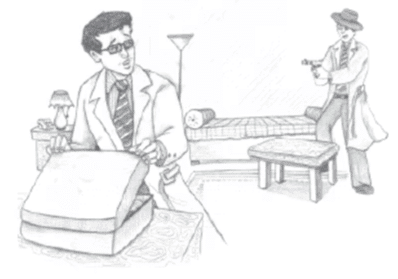
The scene starts in a small, cosy cottage. There are two doors: one at the back and another on the left. The furniture is simple, with a small table, a couple of chairs, and a divan on the right side of the stage. On the table, there is a telephone. As the curtain rises, we see a man named Gerrard. He is talking on the phone. Gerrard is of medium height and wears glasses. He is dressed in a nice suit and a great coat, and he speaks in a cultured voice.

Gerrard is making a phone call, asking the person on the other end to call someone directly because he needs to know something important. After finishing his call, he goes to the divan, where he starts packing a travelling bag. Suddenly, another man enters the cottage. This man looks quite similar to Gerrard in build, but he is dressed in flashy clothes and carries a revolver. He makes a noise when he bumps into the table, and Gerrard quickly turns to look at him.

The intruder is not friendly. He tells Gerrard that he is glad to see him but that Gerrard will not be pleased for long. He orders Gerrard to raise his hands. Gerrard responds calmly, suggesting that this situation is quite dramatic but not very original. The intruder wants to know some information from Gerrard, who is trying to stay calm and uses clever words to engage the intruder. The intruder is aggressive and demands answers about Gerrard’s life.

Gerrard plays along with the intruder’s questions. He tells the intruder that he lives alone and pretends to be cooperative. The intruder accuses him of lying about having a car, but Gerrard cleverly turns the conversation back to the intruder’s own identity, asking questions about him instead. This makes the intruder frustrated because he wants to be in control.

The intruder reveals that he is a criminal who specializes in stealing jewels and plans to take Gerrard’s car. Gerrard sarcastically points out that there are not many jewels in his quiet area of Essex. The intruder then reveals his plan to kill Gerrard, which he thinks will allow him to take over Gerrard’s identity and escape from the police. However, Gerrard challenges this idea by asking why the intruder would want to commit murder, suggesting that it is a foolish decision.

As their conversation continues, Gerrard cleverly manipulates the situation. He tells the intruder that he is not just an ordinary man but also a criminal who has had trouble with the law. He pretends that he is also running away from the police and suggests that they could work together. Gerrard even shows the intruder a packed bag that he claims is a disguise, hoping to convince him that they could escape together.

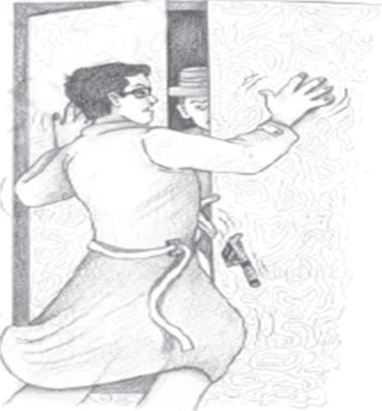
At this moment, Gerrard takes advantage of the situation. He tricks the intruder by pretending to be scared and suddenly pushes him into a cupboard, locking him inside. Gerrard then picks up the intruder’s gun and goes to the phone to call for help. He humorously talks on the phone about the situation, saying it was quite amusing and that he will include it in his next play.

This scene shows Gerrard as a clever and quick-thinking character. He manages to outsmart the intruder and take control of the situation. The play ends with Gerrard waiting for the police to arrive, having successfully handled a dangerous situation.

Try yourself:

What is the main reason Gerrard convinces the intruder that he is also a criminal and wanted by the police?

  • A.Gerrard wants to scare the intruder into leaving him unharmed.
  • B.Gerrard wants to make the intruder feel sympathetic towards him.
  • C.Gerrard wants to trick the intruder into revealing his true identity.
  • D.Gerrard wants to confuse the intruder and distract him.

View Solution

Theme

The theme of the play emphasises the need to retain one’s presence of mind and a cool head in situations of crisis. Panic complicates matters but a cool temperament can help one escape from any tight comer with ease. Criminals, who mastermind most well-thought-out crimes, can also be outwitted because they are fearful of the law and of getting caught. Hence, tactful planning and handling of a situation can trap even ‘experienced’ criminals.

Difficult Words

  1. Divan: A type of bed with a thick base and mattress
  2. Count on: To depend on someone or something
  3. Flashily: In a way that looks bright, cheap and showy
  4. Bumps: To hit something
  5. Intruder: Someone who enters a place illegally 
  6. Melodramatic: Behaving or reacting in an exaggerated way
  7. Nonchalant: Behaving in a calm and relaxed way
  8. Sympathetic: Someone who is kind, caring, and concerned about others
  9. Inflection: The way in which the sound of your voice changes during speech
  10. Greengrocer: A person who sells vegetables
  11. Tradespeople: People whose job involves selling goods
  12. Modest: Not talking too much about one’s own abilities
  13. Plenty: More than enough
  14. The wilds: An area where few or no people live
  15. Trifle: Slightly
  16. Fancy: To suddenly start to like someone
  17. Sarcasm: The use of remarks which mean the opposite of what someone says
  18. Grave: Seriously bad
  19. Hunted: To try to find somebody
  20. Gratuitous: Unnecessary
  21. Melodrama: A story or film in which the characters show strong emotions than real people do
  22. Posh: Fashionable
  23. Pantomime: An act of expressing thoughts through movements rather than speech
  24. Elude: To not be caught by anyone
  25. Dodge: To move quickly and suddenly to avoid somebody
  26. Luckiest break: Fortunate and unexpected turn of events
  27. Cloak: To cover or hide something
  28. Clear off: To go away
  29. Disguise: To change the appearance
  30. Slam: To shut something with a lot of force, making a loud noise
  31. Rattle: Sharp knocking sounds
  32. Sergeant: Refers to a police officer
  33. Cultured: Well-educated and able to understand and enjoy art, literature, etc.
  34. Lounge suit: A man’s formal suit, consisting of  jacket and trousers, worn during business hours
  35. Horn-rimmed: Horn-rimmed specs have a thick dark plastic frame

Try yourself:

What is the main theme of the play “If I Were You”?

  • A.Love and romance
  • B.Identity and deception
  • C.Friendship and loyalty
  • D.Adventure and exploration

View Solution

16. Poem – A Slumber Did My Spirit Seal – Summary

Key Points of the Poem

  • Theme of Death and the Human Spirit: The poem explores the theme of death and its profound impact on the human spirit.
  • Lifelessness and Emptiness: It reflects on the idea of a lifeless figure, devoid of senses, emotions, and vitality.
  • Eternity Beyond Earthly Existence: The poet delves into the eternal nature of the human spirit, suggesting that it transcends earthly boundaries.

Detailed Summary

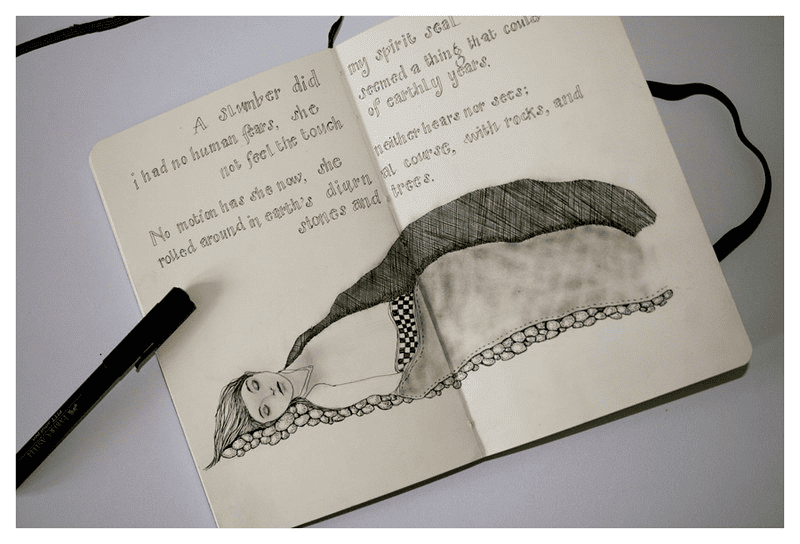
  • Introduction to the Speaker’s Slumber: The speaker begins by describing a profound slumber that has sealed their spirit, symbolizing a deep sense of emotional detachment and tranquility. This state leaves the speaker free from the usual fears that accompany human life, suggesting a peaceful, almost otherworldly stillness.
  • Personification of Death and Stillness: The speaker personifies this slumber as a feminine entity, portraying her as existing outside the realm of time and worldly concerns. She is unaffected by the passing of years and remains untouched by the natural aging process, indicating her timelessness and immortality.
  • Detachment from the Sensory World: In this state of slumber, the figure is described as completely disconnected from the physical world. She does not experience sensory input—neither hearing nor seeing the happenings around her—emphasizing a state of total stillness and detachment from life.
  • Endurance Beyond Time and Space: The speaker compares the slumbering figure to inanimate objects like rocks, stones, and trees that endure through the earth’s diurnal course. This highlights the timeless and passive nature of the spirit, which exists beyond the movement and changes of the living world.
  • Transcendence and the Eternal Spirit: The poem concludes by focusing on the eternal nature of the spirit, suggesting that death is not the end but rather a transition into an immutable, peaceful state that transcends the confines of earthly life.

Theme/MessageThemes:

  • Nature of Death: The poem contemplates the stillness and timelessness of death.
  • Immortality of the Spirit: It discusses the enduring nature of the human spirit beyond physical demise.

Message:

  • Death as Transformation: Death is portrayed as a transition into a state of tranquil existence.
  • Eternal Essence: The spirit is depicted as eternal and unchanging, untouched by worldly concerns.

Difficult Words

  • Slumber: A light sleep.
  • Spirit: The non-physical part of a person which is the seat of emotions and character.
  • Earthly: Relating to the earth or worldly matters.
  • Diurnal: Daily or relating to the daytime.
  • Diurnal course: The daily path or orbit of the earth.
  • Endure: To suffer patiently.
  • Numinous: Supernatural or mysterious.
  • Ephemeral: Lasting for a very short time.
  • Immutable: Unchanging over time or unable to be changed.
  • Transcendence: Existence or experience beyond the normal or physical level.

15. Kathmandu – Summary

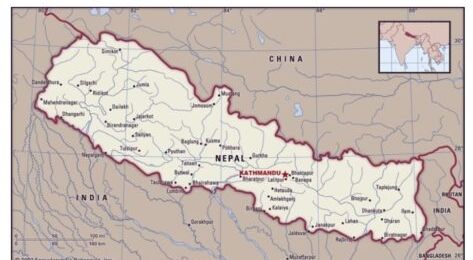
Map: Kathmandu

Key Points of the Chapter “Kathmandu”

  1. Visit to Pashupatinath Temple: The temple is filled with chaos, where devotees jostle for attention. Only Hindus are allowed entry, and a group of Westerners is denied access.
  2. Scenes at Bagmati River: The river near the temple is both a site of daily life (washing and bathing) and death (a cremation), symbolizing the cycle of life.
  3. Visit to Baudhnath Stupa: In contrast to Pashupatinath, Baudhnath is peaceful and quiet, surrounded by shops run by Tibetan immigrants.
  4. Experience in Kathmandu: The city is crowded, noisy, and bustling with activity, with vendors selling various goods in the busy streets.
  5. Reflection on Flute Seller: The narrator is captivated by the sound of the flute, reflecting on its universality and the connection it creates between people.

Flute Seller

Detailed Summary

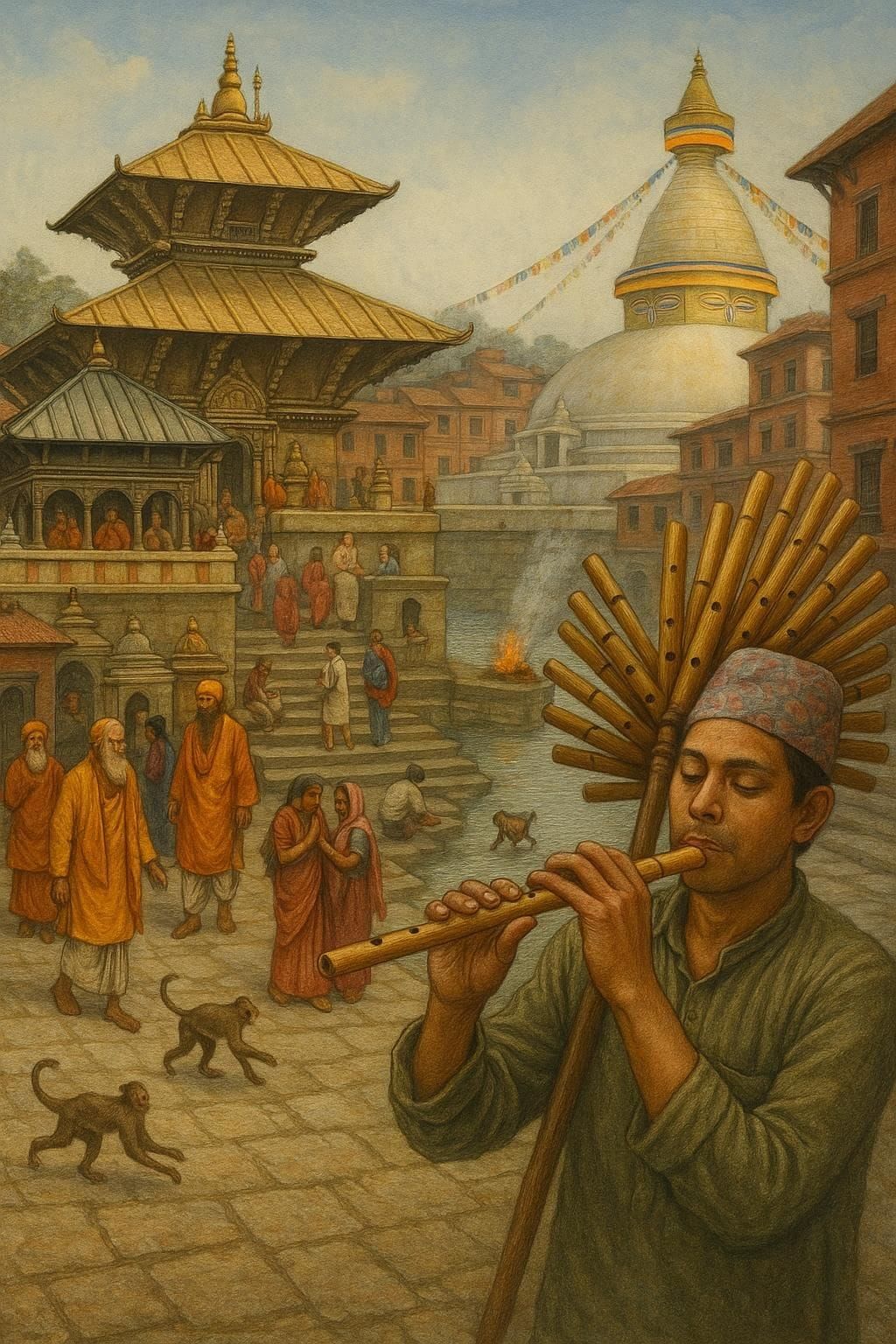
  • Introduction to Kathmandu and Religious Sites: In this chapter, Vikram Seth narrates his experience during a visit to Kathmandu, the capital city of Nepal. The story revolves around his visits to two of the most famous religious sites in the city—the Pashupatinath Temple (Hindu) and the Baudhnath Stupa (Buddhist).
  • The Chaos at Pashupatinath Temple: The Pashupatinath Temple is full of noise and activity. Priests, hawkers, devotees, tourists, and animals like cows, monkeys, pigeons, and dogs crowd the temple grounds. Worshippers jostle and push to get blessings from the priests. Only Hindus can enter the main shrine, which causes tension when a group of Westerners in saffron robes tries to enter but is stopped by the temple guards.

 Pashupatinath Temple

  • Scenes at Bagmati River: A memorable moment happens when two monkeys start fighting near the temple, causing a commotion as one runs toward the holy Bagmati River. By the river, life and death exist side by side—while a body is being cremated, washerwomen are washing clothes, and children are playing in the water. The river stands for both life and spiritual cleansing. Seth sees people throwing old offerings into the river, adding a mysterious feeling. There is also a half-submerged shrine believed to hold a goddess. A legend says that when it fully comes out of the water, the dark age (Kaliyug) will end.
  • The Serenity of Baudhnath Stupa: Baudhnath Stupa is calm and peaceful, very different from the noisy Pashupatinath Temple. This Buddhist shrine has a huge white dome and is surrounded by small shops selling Tibetan items like felt bags, prints, and silver jewelry, mostly run by Tibetan immigrants. The stupa’s quiet and serene atmosphere is a refreshing change from the busy streets of Kathmandu.

Baudhnath Stupa

  • The Bustling Streets of Kathmandu: Kathmandu is a city full of contrasts—busy, lively, and noisy. The streets blend modern and traditional life, with fruit sellers, flute sellers, postcard vendors, and shops offering Western goods like cosmetics and chocolates. The hustle and bustle is brought to life by the sounds of blaring film music, honking horns, and ringing bicycle bells.
  • Reflection on the Flute Seller: The narrator decides to return home, feeling homesick. He buys a ticket from Nepal Airlines for a flight to Delhi and spends his remaining time wandering the streets. Near his hotel, he meets a flute seller with dozens of bamboo flutes tied to a pole. The flute seller plays calm, soothing tunes that rise above the city’s noise. The narrator is touched by the music and stays to listen, reflecting on how the flute is a universal instrument found in many cultures, symbolizing shared human experiences beyond cultural differences.

Try yourself:

What is the atmosphere like at Baudhnath Stupa?

  • A.Dark and mysterious
  • B.Noisy and chaotic
  • C.Calm and peaceful
  • D.Crowded and tense

View SolutionTheme of the Story

The chapter highlights the contrasts between chaos and serenity in religious and cultural spaces, as well as the universality of human experiences. Through his observations, the narrator reflects on the shared aspects of life and death, spirituality, and the power of music to connect people across cultures. The chaos at Pashupatinath and the peace at Baudhnath represent the diverse spiritual experiences that coexist in Kathmandu. The flute, a recurring motif, symbolizes unity and the common thread of humanity that transcends borders and beliefs.

Difficult Words

  1. Proclaims: To announce publicly or officially.
  2. Febrile confusion: A state of hurried activity and chaos.
  3. Submerged: Covered or hidden underwater.
  4. Haven: A place of safety or refuge.
  5. Brazier: An open stove used for grilling or cooking food.
  6. Nauseating: Something that causes a feeling of sickness or disgust.
  7. Offhanded: Casual or uninterested.

14. Poem – On Killing a Tree – Summary

About the Poet

The poet of this powerful piece is Gieve Patel, an Indian poet, playwright, and painter. Born in 1940 in Mumbai, Patel has made significant contributions to Indian English literature. He is known for his vivid imagery and deep connection to nature, often reflecting on themes of life, growth, and the human experience. Patel’s poetry is characterized by its simplicity and clarity, making complex ideas accessible to readers. His works often explore the relationship between humans and the environment, the passage of time, and the struggles of life. Patel is also a trained doctor, which influences his writing, as he often incorporates elements of observation and detail akin to those in medical practice. His unique perspective allows him to delve into themes of life and mortality with a compassionate touch. Over the years, Patel has received numerous awards for his literary contributions, cementing his status as one of the prominent voices in contemporary Indian poetry.

Key Points of the Poem

  • The poem consists of two stanzas.
  • It explores the idea that killing a tree is not a simple task.
  • The poet describes the extensive growth and resilience of trees.
  • The poem emphasizes the importance of the roots in a tree’s life.
  • Patel suggests that to truly kill a tree, one must uproot it completely.
  • The imagery of the tree represents resilience and the struggle for survival.
  • The poem uses vivid metaphors related to nature and life.
  • The tone of the poem is serious and contemplative.

Theme/ MessageTheme

  • The complexities of destruction: The poem highlights that destroying something as resilient as a tree requires more than just superficial efforts.
  • Resilience of nature: It underscores the idea that nature has a remarkable ability to endure and recover from damage.
  • Life cycle and growth: The growth of a tree symbolizes life, demonstrating how it absorbs sustenance over the years.
  • The significance of roots: The roots represent the foundation of life, illustrating that true strength lies beneath the surface.

In this poem, the theme revolves around the difficulty of truly destroying something that has been nurtured over time. The poet uses the tree as a metaphor for life, emphasizing that superficial actions are not enough to eliminate something deeply rooted. The resilience of nature is portrayed through the imagery of a tree that continuously grows and heals, no matter how much it is hurt. The poem invites readers to reflect on the deeper connections and foundations that exist in life, suggesting that everything has a source that must be addressed to enact real change.

Message

  • True change requires thorough effort: The poet conveys that significant change or destruction necessitates a comprehensive approach, not just quick fixes.
  • Understanding the source of problems: The poem encourages readers to look deeper into issues, recognizing that the visible aspects are often supported by deeper roots.
  • Recognition of resilience: The message reflects a respect for nature’s ability to recover, which can be applied to human experiences as well.
  • Life’s challenges: Just as a tree faces challenges but continues to grow, people also endure hardships but are capable of resilience.

The message of the poem is profound and layered. It teaches that real change or destruction cannot happen through mere gestures; it requires a complete understanding of what lies beneath the surface. The poet draws attention to the roots of the tree, symbolizing the fundamental aspects of life that need to be addressed. By recognizing the resilience found within nature, readers are encouraged to appreciate their own strength and the strength of those around them. Ultimately, the poem leaves us with a sense of hope, suggesting that growth and healing are always possible, no matter the circumstances faced.

Detailed Summary

Stanza 1: 

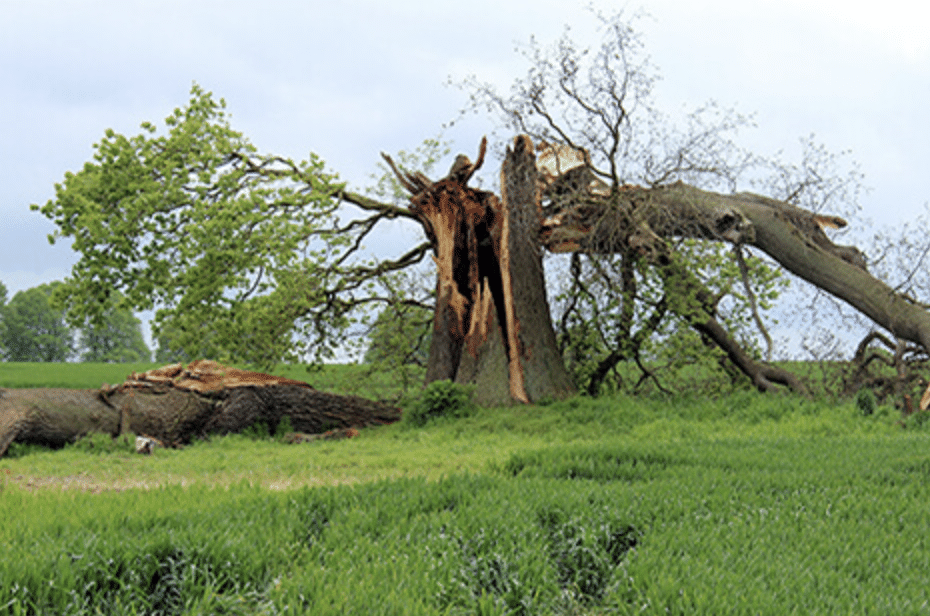
It takes much time to kill a tree,
Not a simple jab of the knife
Will do it. It has grown
Slowly consuming the earth,
Rising out of it, feeding
Upon its crust, absorbing
Years of sunlight, air, water,
And out of its leprous hide
Sprouting leaves.
So hack and chop
But this alone won’t do it.
Not so much pain will do it.
The bleeding bark will heal
And from close to the ground
Will rise curled green twigs,
Miniature boughs
Which if unchecked will expand again
To former size.

Explanation: In this first part of the poem, the poet is telling us that it is not easy to destroy a tree. Imagine a big, strong tree that has been growing for a long time. Just using a knife to poke it won’t be enough to hurt it. The tree has roots that go deep into the ground, and it takes time for it to grow. The tree gets its food by drinking water, soaking up sunlight, and breathing in air. Its thick bark, which looks a little rough and old, protects it. Even if someone tries to cut it, the tree can heal, just like how our skin can heal when we get a scrape. If you cut the tree a little, it might even grow new little branches called twigs. These twigs can grow back into big branches if we don’t stop them. So, the poet is saying that cutting a tree doesn’t really make it go away; it can come back strong and healthy if we don’t take care of it.

Stanza 2: 

No,
The root is to be pulled out —
Out of the anchoring earth;
It is to be roped, tied,
And pulled out — snapped out
Or pulled out entirely,
Out from the earth-cave,
And the strength of the tree exposed
The source, white and wet,
The most sensitive, hidden
For years inside the earth.

Explanation: In this next part, the poet tells us what really needs to be done to completely get rid of a tree. It is not enough to just cut the trunk or branches; we have to pull out the roots. The roots are like the tree’s feet, holding it in the ground. They go deep into the earth, which we can think of as a cosy cave. To remove the tree, we have to tie it up and pull it out of the ground. This is very hard work because the roots are strong and have been growing for a long time. When we finally pull out the roots, we can see the wet and white parts of the roots that have been hidden under the ground. These roots are very important for the tree because they take in water and nutrients from the soil to help the tree grow. This part of the poem shows us that to truly destroy the tree, we must take away what is keeping it alive and strong.

Stanza 3:

Then the matter
Of scorching and choking
In the sun and air,
Browning, hardening,
Twisting, withering,
And then it is done.

Explanation: In the final part, the poet explains what happens after the tree has been removed from the ground. Without roots, the tree cannot drink water or get food. The sun and air will be very hot and dry for the tree. The tree will start to get brown and hard, and its leaves will twist and die. This is because the tree is not able to survive anymore without its roots. Once the tree is exposed to the sun and air, it cannot live, and eventually, it will wither away completely. The poet shows us that taking away the roots is like taking away the life of the tree. When we do that, the tree cannot come back, and it is completely gone. This part teaches us about the importance of roots in life, just like how we need food and water to stay healthy. 

Try yourself:

What is the poet’s view on killing a tree?

  • A.It is a quick and easy process.
  • B.It requires a lot of time and effort.
  • C.It does not cause any pain to the tree.
  • D.It can be done with a simple knife.

View Solution

Difficult Words

  • Jab: A quick, sharp blow or thrust.
  • Leprous: Having a disease that causes skin sores; used metaphorically to describe a tree’s rough bark.
  • Twigs: Small, thin branches of a tree.
  • Curled: Bent into a spiral or curve.
  • Snapped: Broken suddenly.
  • Anchoring: Holding something firmly in place.
  • Cave: A large underground space; used metaphorically for the earth where roots are hidden.
  • Scorching: Burning or drying out by heat.
  • Choking: Struggling to breathe; metaphorically used for the tree’s struggle for survival.
  • Browning: Turning brown due to damage or decay.
  • Withering: Becoming dry and shrivelled; losing vitality.
  • Absorbing: Taking in or soaking up something.
  • Healed: Restored to health.
  • Strength: The quality of being strong; in this context, the vital components of the tree.

13. Reach for the Top – Summary

Reach for the Top: Overview

The chapter “Reach for the Top” tells the inspiring stories of two amazing women—Santosh Yadav, an Indian mountaineer, and Maria Sharapova, a famous tennis player. Both faced many challenges but reached great success through their hard work, strong will, and determination. Their journeys show how one can achieve great things by overcoming difficulties and breaking social barriers.

Part I: Santosh Yadav

Santosh Yadav’s life is about breaking traditional rules with courage and determination. Born in Joniyawas village, Haryana, she grew up in a society that preferred sons over daughters. But Santosh challenged these beliefs early on, driven by her passion for education and adventure. Her hard work and perseverance helped her become the first woman in the world to climb Mount Everest twice.


Santosh Yadav

Key Aspects of Santosh Yadav’s Journey

  • Defying Societal Norms: Growing up in a society where girls were expected to conform to traditional roles, Santosh stood out. She preferred wearing shorts instead of traditional attire and expressed a strong interest in pursuing her education.
  • Choosing Education Over Marriage: At the age of sixteen, when her family pressured her to get married, she chose instead to leave home and pursue education in Delhi. She was determined to build a future for herself, even planning to fund her studies through part-time work if necessary.
  • The Start of a Mountaineering Career: Her interest in mountaineering sparked during a chance encounter with mountaineers in the Aravalli Hills. This newfound passion led her to join the Nehru Institute of Mountaineering, where she honed her skills.
  • Historic Climb to the Top: In 1992, at just twenty years old, Santosh Yadav became the youngest woman to reach the summit of Mount Everest. Her determination and compassion were evident during the climb, as she saved the life of a fellow climber by sharing her oxygen.
  • Record-Breaking Feat: Santosh Yadav became the first woman to climb Mount Everest twice, a historic achievement that earned her widespread recognition, including the prestigious Padma Shri award.
  • Environmental Efforts: During her expeditions, she actively contributed to environmental conservation, helping to remove 500 kilograms of waste from the Himalayas.

Try yourself:What significant decision did Santosh Yadav make at the age of sixteen that set her on the path to becoming a mountaineer?

  • A.She decided to get married, following her family’s wishes.
  • B.She left home to pursue education in Delhi.
  • C.She started working full-time in her village.
  • D.She joined the Nehru Institute of Mountaineering immediately.

View Solution

Summary

Santosh Yadav, hailing from Joniyawas village in Haryana, grew up in a society where daughters were often not celebrated. However, from a young age, Santosh defied these expectations, opting for shorts over traditional attire and seeking an education, despite societal pressures. At sixteen, when many girls were married off, Santosh stood firm and left home to pursue education in Delhi, planning to support herself through part-time work.

Santosh Yadav discovered mountaineering by chance in the Aravalli Hills, but her interest soon became a passion. After training at the Nehru Institute of Mountaineering, she made history as the youngest woman to climb Mount Everest at 20. During the expedition, she showed great courage by saving a fellow climber’s life. Not stopping there, she climbed Everest again, becoming the first woman to do it twice.

Apart from her climbing success, Santosh helped protect the environment by removing 500 kilograms of waste from the Himalayas. Her journey of strength, perseverance, and kindness inspires climbers, especially women, everywhere.

Theme/Message

  • Breaking Gender Norms: Santosh’s life challenges and defies societal expectations placed on women, showing that one’s aspirations should not be limited by gender.
  • Perseverance: Her journey underscores the importance of persistence, determination, and hard work in overcoming life’s challenges.
  • Compassion and Leadership: Her willingness to save a fellow climber demonstrates that true success is not only about individual accomplishments but also about supporting others.

Difficult Words

  1. Affluent – Wealthy
  2. Endurance – The ability to withstand hardship
  3. Perseverance – Persistence in achieving something despite difficulty
  4. Compassion – Sympathetic concern for others
  5. Solidarity – Unity among individuals with a common goal

Part II: Maria Sharapova

Maria Sharapova’s journey to the top of the tennis world is a story of hard work, sacrifice, and determination. Born in Siberia, she worked her way up to become the world’s number one tennis player. Even though she faced many challenges, like being separated from her mother and adjusting to life in the U.S., Maria stayed focused on her dream and never gave up.

Maria Sharapova

Key Aspects of Maria Sharapova’s Journey

  • Early Sacrifices: At just nine years old, Maria left her home in Siberia to train at a tennis academy in the United States. Accompanied only by her father, she endured a two-year separation from her mother due to visa issues.
  • Adapting to a New Environment: The move to the U.S. presented many challenges, including loneliness and adapting to a foreign culture, but Maria remained focused on her dream of becoming a professional tennis player.
  • Rapid Rise to Fame: Maria’s dedication bore fruit when, in 2004, she won Wimbledon, one of the most prestigious tournaments in the tennis world. Just a year later, she ascended to the world’s number one ranking in women’s tennis.
  • Resilience and Determination: Despite setbacks and obstacles, Maria’s mental toughness and competitive spirit pushed her to continually strive for excellence. Her journey is marked by a relentless pursuit of success, both on and off the court.
  • Connection to Her Roots: Even with her global fame, Maria remains proud of her Russian heritage and stays grounded by enjoying simple pleasures like fashion, reading, and indulging in pancakes with chocolate.

Try yourself:What major achievement did Maria Sharapova accomplish in 2004 that marked her rise to fame?

  • A.She became the youngest player to turn professional.
  • B.She won the prestigious Wimbledon tournament.
  • C.She was reunited with her mother after two years
  • D.She became the world’s number one tennis player.

View Solution

Summary

Maria Sharapova’s journey to tennis stardom began at the age of nine when she left her home in Siberia to train in the United States. With her father as her only support, she faced the challenges of separation from her mother and the difficulties of training in a new country. Despite these obstacles, Maria’s mental toughness and determination kept her focused on her goal.

Her hard work paid off in 2004 when she won the prestigious Wimbledon title, and by 2005, she had risen to the number one spot in women’s tennis. Throughout her career, Maria has been known for her competitiveness and drive, always striving for excellence both on and off the court. Despite her achievements, she remains connected to her Russian heritage and enjoys the simple pleasures in life.

Maria’s story serves as a testament to the power of sacrifice and hard work. She understands that tennis is not just a sport, but also a business, and she has remained committed to her ultimate goal of being the world’s best.

Theme/Message

  • Sacrifice for Success: Maria’s journey demonstrates the importance of sacrifice and hard work in achieving one’s goals.
  • Resilience: Her ability to overcome personal hardships and remain focused on her dreams illustrates the significance of mental toughness.
  • Ambition: Maria’s relentless drive to be the best in her field serves as an inspiration for aspiring athletes and individuals everywhere.

Difficult Words

  1. Pinnacle – The highest point of achievement
  2. Resilience – The ability to recover from challenges
  3. Stardom – The status of being famous
  4. Sacrifice – Giving up something valuable to achieve a goal
  5. Perseverance – Persistence in the face of difficulties