The play takes place in Stepan Chubukov’s drawing-room.
Main characters include Stepan Chubukov, his daughter Natalya Stepanovna, and their neighbour Ivan Vassilevitch Lomov.
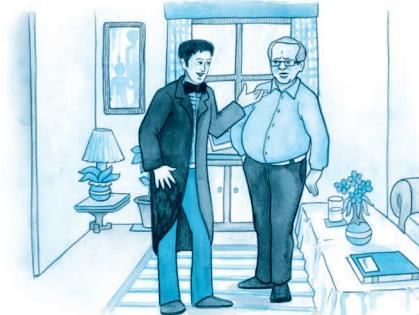
Ivan Lomov comes to Chubukov’s home to ask for Natalya’s hand in marriage.
Chubukov is shocked and very happy, showing his excitement in an exaggerated way.
Both families are wealthy landowners, which plays a role in the marriage proposal.
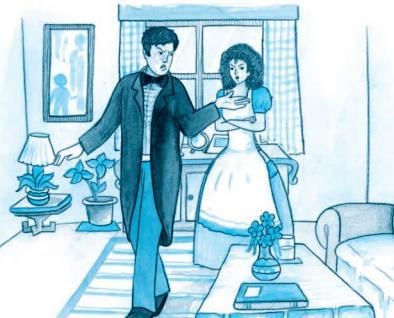
Natalya, unaware of the proposal, talks about land with Lomov.
They argue about who owns Oxen Meadows, each claiming it belongs to them.
They also argue over which dog is superior, Squeezer or Guess.
All three characters are argumentative, bickering over trivial matters.
The argument escalates, causing Lomov to feel palpitations.
Chubukov happily confirms Lomov’s proposal to Natalya, who seems unaware amidst the dispute.
Even after the proposal, the arguments persist, highlighting their pettiness.
Try yourself:
What do Natalya and Lomov argue about?
A.Oxen Meadows
B.Money
C.Weather
D.Food
View Solution
Detailed Summary
The chapter, The Proposal, is a comedy-drama that is based on the tendency of two wealthy families who seek ties with each other to increase their estates by encouraging marriage that would improve their wealth. The play began with Ivan Lomov, who visited Stephan Chubukov, a wealthy neighbour of Lomov. Lomov was a wealthy person himself who was dressed neatly and had come to seek Chubukov’s twenty-five-year-old daughter, Natalya Stepanovna’s hand in marriage. Initially, Chubukov was curious about Lomov’s sudden visit and assumed that the young man had come to ask for money which he might not return.
Lomov was a thirty-five-year-old gentleman who suffered from severe heart-throbbing and became upset easily. He thought that Natalya was an excellent housekeeper, a well-educated and average-looking woman who would be an ideal partner to marry. However, when Chubukov heard about the proposal, he was glad and embraced Lomov. He immediately rushed inside to call his daughter, Natalya.
When Natalya arrived, Lomov began the conversation about how both families share a cordial relationship. As he spoke about his land Oxen Meadows, which was a disputed property, Natalya objected that the land belonged to her family. Lomov yelled back, stating that the land belonged to him. Both of them had a heated argument on this topic until Lomov had a sudden palpitation attack with numbness in his feet. In no time, Natalya’s father, Chubukov, arrived, and the father-daughter duo started abusing Lomov. Feeling insulted, Lomov rushed out of the house. As Chubukov continued to defame the young man, he accidentally mentioned Natalya about Lomov’s marriage proposal. Hearing this, Natalya immediately regretted insulting Lomov and asked her father to bring him back.
Chubukov rushed out of the house immediately to call Lomov. When the young man returned, Natalya started a conversation about their dogs. In no time, a second round of debate ensued between her and Lomov, where she mentioned that her dog Squeezer was better than Lomov’s Guess. Soon, Chubukov entered the scene, and the argument worsened. All three people began quarrelling, and soon Lomov fainted with another attack of palpitation.
Seeing this, Natalya asked her father to wake up Lomov as she expressed her desire that she like him too. Suddenly when Lomov made a movement, they offered him some water to drink, and Chubukov put Natalya’s hand over his hand. They agreed to marry, but the quarrel persisted as Natalya said that Squeezer was better than Guess. However, Lomov was adamant and refused to accept that his dog, Guess, was worse than Squeezer, Natalya’s dog. The curtain went down as the verbal fight continued among the characters.
Try yourself:
What is the main reason for the argument between Lomov and Natalya in the play “The Proposal”?
A.The ownership of Oxen Meadows.
B.The color of their dogs.
C.The weather on that day.
D.The price of the neighboring land.
View Solution
Theme
The play highlights how anger and argument can spoil a relationship. It also shows the fate of such marriages which are done with the purpose of cheating the spouse. The kind of matrimonial alliances entered into by the wealthy people whose main purpose is to amass riches has been depicted.
Message
The proposal goes through despite the arguments, showing that economic sense often prevails over personal disputes. The continuous quarrels even after the proposal suggest that human nature is prone to foolishness and petty conflicts.
Glossary
Farce: A comic dramatic work using buffoonery and horseplay.
Quarrelsome: Inclined to argue or disagree.
Perpetuity: The state of lasting forever.
Haberdashery: A store selling men’s clothing and accessories.
Salutation: A gesture or utterance made as a greeting.
Palpitations: Rapid, strong, or irregular heartbeat.
Neglige: Casual or informal clothing.
Dessiatins: An old Russian unit of land measurement.
Impudent: Not showing due respect for another person.
Pettifogger: A lawyer who deals with petty cases or employs dubious practices.
William Butler Yeats (1865-1939) was an Irish nationalist, born in 1865 in Sandymount, Dublin, to an artistic family.
His poetry was inspired by Irish mythology and evolved from traditional forms to include elements of realism and spirituality.
Yeats had a strong interest in folklore and mythology, which shaped many of his poetic themes.
He experimented with various poetic forms and styles, placing importance on rhythm and traditional structures.
In 1923, he received the Nobel Prize for Literature.
Key Points of the Poem
The poet talks to a young girl named Anne Gregory, explaining that a young man will not love her for who she is, but for her looks, particularly her yellow hair.
The lines suggest: “A young man, / Overwhelmed by those lovely honey-coloured / Waves at your ear, / Will never love you for yourself / But for your yellow hair.”
Anne responds by saying she could dye her hair brown, black, or even red to find out if young men would love her for her true self, not just her yellow hair.
There was an old religious man I heard / Last night saying / He found a text that shows / Only God, my dear, / Could truly love you for who you are / And not just for your yellow hair.
Detailed Summary
Stanza 1
Never shall a young man, Thrown into despair By those great honey-coloured Ramparts at your ear, Love you for yourself alone And not your yellow hair.
The poem starts with the speaker talking to Anne Gregory, looking into the tricky nature of love and attraction. The speaker points out how Anne’s beautiful honey-coloured hair attracts men, implying that her outer beauty may prevent true connections. They wonder if any man can truly love Anne for who she is inside, rather than just for her looks.
Stanza 2
But I can get a hair-dye And set such colour there, Brown, or black, or carrot, That young men in despair May love me for myself alone And not my yellow hair.
In the second stanza, Anne responds to the speaker by emphasizing that outer appearances are superficial and unimportant. Using her hair as an example, she suggests that external beauty, like hair color, can easily be changed and is therefore not genuine. Anne asserts that anyone who loves her must see beyond her outward appearance and appreciate her true self. She believes that genuine love should focus on her character rather than her physical attributes, such as her yellow hair.
Stanza 3
I heard an old religious man But yesternight declare That he had found a text to prove That only God, my dear, Could love you for yourself alone And not your yellow hair.
In the final stanza, the speaker recalls a conversation with an old religious man who stated that only God could love someone for who they truly are, rather than just their outer beauty. This underlines the idea that people often focus on looks and miss the true essence of a person. The speaker concludes that only God can truly love Anne unconditionally, without being influenced by her beauty.
Theme/ Message
Theme
Conventional Ideas of Beauty: The idea of beauty is often shaped by cultural norms, creating a limited view. Light hair is seen as beautiful, while dark hair is viewed as less appealing. This belief is widespread, and many, including Anne Gregory, accept it without question. However, the poet challenges this view in ‘For Anne Gregory,’ suggesting that real beauty comes from within, not just looks. Anne’s reaction to this idea, however, is unclear.
Men’s Judgement Based on Outer Appearance: The poet criticises societal expectations that make men judge women based solely on their looks, ignoring their inner worth. He encourages men to value women for their character instead of just their appearance. The poet sees Anne’s inner beauty but doubts if her peers will recognise it.
Universal Truth Told by a Wise Man: An “old religious man” represents wisdom. He conveys a universal truth: only God truly knows and loves people for who they are beyond their looks. God’s love for Anne is based on her kind character, not her appearance, highlighted in the line, “only God, my dear, could love you for yourself alone and not your yellow hair.”
Message
True love transcends physical appearance: The poem portrays that real love goes beyond outer beauty and explores the deeper qualities of a person.
Inner beauty holds greater value: True love is founded on a person’s inner beauty, highlighting the significance of appreciating character over mere looks.
Divine love is selfless: The poem suggests that only God can offer unconditional love. Unlike humans, who may be blinded by appearances, God loves people for their true selves, beyond physical traits.
Literary Devices
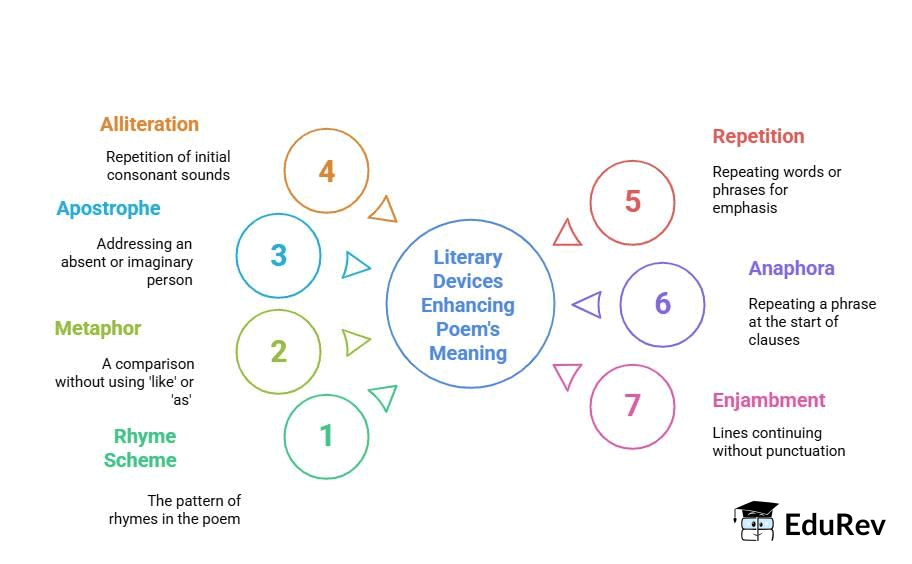
Rhyme Scheme – The rhyme scheme of the poem is abcbdb. “But I can get a hair-dye a And set such colour there, b Brown, or black, or carrot, c That young men in despair b May love me for myself alone d
Metaphor – A metaphor is a literary device used to represent a comparison without using the words “like” or “as”. In this poem, ‘honey-coloured ramparts’ acts as a metaphor for beauty and its protective traits. Yeats uses this metaphor to show how Anne Gregory’s beautiful hair protects her true self.
Apostrophe – An apostrophe is when a speaker addresses someone who isn’t present as if they can hear. In this poem, Yeats speaks to Anne Gregory, even though she is not there. This method helps convey the poem to her, an absent audience. The speaker reflects on Anne’s qualities instead of talking directly to her. The repeated lines “Love you for yourself alone And not your yellow hair” indicate a focus on her traits rather than a direct conversation. Note: Some students raised doubts on this device. So here is some more of explanation on the use of this device. There is a use of apostrophe as a poetic device in the poem. However, it’s important to note that the term “apostrophe” in poetry refers to a figure of speech in which the speaker addresses an absent or imaginary person, or an abstract idea, as if it were present and capable of responding. In the poem, the speaker seems to be addressing someone directly, possibly a woman with yellow hair. The repeated lines “Love you for yourself alone And not your yellow hair” suggest a direct address to the person with the yellow hair. This can be considered a form of apostrophe, as the speaker is addressing the qualities of the person directly, in this case, the yellow hair. So, while apostrophe is present in the poem, it is not in the form of the punctuation mark ‘ but rather in the form of a rhetorical device where the speaker is addressing someone or something directly.
Alliteration Love you for yourself alone The phrase ‘your yellow hair’ is an example of alliteration. The repeated ‘y’ sound highlights the link between love and identity. Brown, or black
Repetition
The term ‘yellow hair’ appears several times. This repetition stresses the idea of outer beauty. The word ‘despair’ is also repeated, showing the feelings of young men towards Anne Gregory.
Anaphora – Repeating a word or phrase at the beginning of sentences or clauses that follow each other, done for emphasis In the 3rd stanza – the second and third line That he had found a text to prove That only God, my dear,
Enjambment – Lines in a stanza ending going or continuing without any punctuation In the 2nd Stanza: the 4th and the 5th Line That young men in despair My love me for myself alone In the 3rd Stanza: 1st, 2nd and the 3rd Line ‘I heard an old religious man But yesternight declare That he had found a text to prove
Difficult Meanings
Despair: hopelessness, here it means failure in succeeding or even expecting to get the love of Anne Gregory
Ramparts: the tall, wide walls around a castle or fort, such as those of the Red Fort.
Carrot: of carrot colour
Yesternight: the previous night
Text: matter, original writing
Declare: to announce or tell others or claim
Prove: to demonstrate and show the truth by evidence or argument
Prince Siddhartha Gautama’s early life in northern India involved being protected from the pain of the world. He married but eventually realised the suffering that existed around him.
A turning point occurred when Siddhartha Gautama saw different types of human suffering, prompting him to search for enlightenment.
He spent seven years wandering before achieving enlightenment under the Bodhi Tree, where he pledged to remain until he found it.
Siddhartha Gautama transformed into the Buddha, the Awakened One, and chose to share his wisdom with others.
His first sermon took place in the city of Benares, which has been preserved and highlights one deep kind of suffering.
The tale of Kisa Gotami illustrates her quest for a remedy for her deceased child and the significant lesson she learns from the Buddha.
Detailed Summary
Gautama Buddha is thought to have lived from around 563 B.C. to 483 B.C. He was originally a prince named Siddhartha Gautama in northern India. At the age of twelve, he began his education in Hindu sacred texts. After four years, he returned home, married a princess, and experienced a life of luxury for ten years. However, at about twenty-five, his life changed dramatically. One day, while hunting, he saw the harsh realities of life for the first time. He encountered a sick man, an elderly person, a funeral procession, and a monk begging for alms. These scenes deeply affected him, prompting him to seek enlightenment regarding the suffering he had seen. Thus began his quest for understanding. This led him on a journey for seven years, seeking the truth until he sat beneath a peepal tree, vowing not to rise until he reached enlightenment. After meditating for seven days, he achieved enlightenment, henceforth naming the tree the Bodhi Tree, which represents wisdom. From then on, he began teaching and sharing his insights, earning the title of Buddha, meaning the Awakened or Enlightened One. His first sermon took place in the sacred city of Benares, along the River Ganges. This sermon, which has been preserved, reflects his deep wisdom regarding a specific type of suffering, showcasing his understanding of human existence and the path to freedom from suffering.
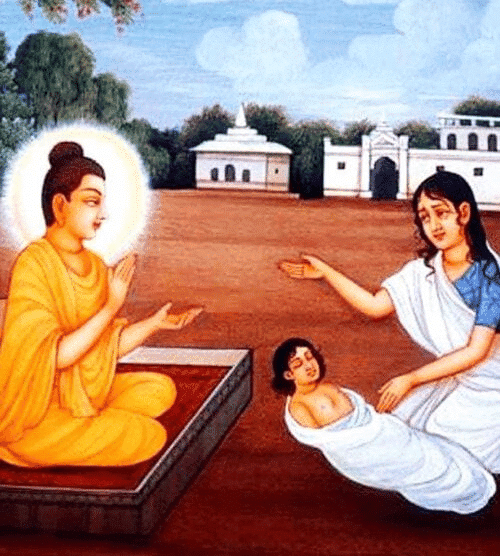
A poignant story in this chapter involves Kisa Gotami, a mother who was overwhelmed with grief after losing her only son. In her despair, she sought help from her neighbours, carrying her deceased child from house to house in search of medicine. The people remarked, ‘She has lost her senses. The boy is dead.’ During her quest, Kisa Gotami encountered a man who directed her to the Buddha, known for his wisdom and healing powers. She pleaded with the Buddha to save her son, and he assigned her a task. The Buddha asked for a handful of mustard seeds, but they had to come from a household that had never experienced the sorrow of losing a loved one. Filled with hope, Kisa Gotami went from house to house asking for the mustard seeds. However, she soon discovered that every family had faced the pain of loss.
This realization brought her to a universal truth about mortality and the inevitability of death. As she sat by the roadside, reflecting on the fleeting nature of life and her own selfish grief, Kisa Gotami underwent a significant transformation. She came to understand that death is a common experience for all beings and that true liberation comes from letting go of selfish desires and attachments. The Buddha’s teachings delve into the nature of life and death, highlighting the temporary and painful aspects of human existence. He points out the futility of excessive grieving and the importance of accepting life’s impermanence. True liberation is achieved by releasing selfish desires and attachments. In summary, this chapter explores the core teachings of the Buddha, focusing on the universal truths of suffering, impermanence, and the path to liberation. Through the experiences of Gautama Buddha and Kisa Gotami, readers are invited to contemplate the essence of existence and the profound wisdom that can lead to inner peace and enlightenment.
Try yourself:
What task did the Buddha give to Kisa Gotami in exchange for saving her son?
A.Bring him a handful of mustard seeds from a household untouched by loss.
B.Meditate for 24 hours straight without moving.
C.Donate all her possessions to the poor.
D.Recite a sacred mantra for seven days and nights.
View Solution
Theme/ MessageThemes:
The universality of suffering and the impermanence of life.
The importance of letting go of selfishness and embracing selflessness.
The inevitability of death and the transience of human existence.
Message:
Through Kisa Gotami’s story, the narrative stresses the need to accept the natural cycle of life and death.
The Buddha’s teachings highlight the futility of excessive grief and the route to inner peace through detachment from worldly sorrows.
The central message emphasises the importance of overcoming selfish desires and acknowledging the universal truth of impermanence.
Difficult Words
Enlightenment: A state of high spiritual knowledge or awakening.
Sorrows: Feelings of deep distress caused by loss, disappointment, or other misfortunes.
Bodhi Tree: Tree of Wisdom under which Siddhartha Gautama attained enlightenment.
Pitied: Felt sorrow or sympathy for someone’s suffering.
Desolation: A state of complete emptiness or destruction.
Immortality: The state of living forever; eternal life.
Mortals: Human beings subject to death; earthly inhabitants.
Lamentation: The passionate expression of grief or sorrow; weeping.
Composed: Having one’s feelings and expressions under control; calm and self-possessed.
Transience: The state of lasting only for a short time; impermanence.
Ogden Nash, born on August 19, 1902, in New York, initially worked as a school teacher before transitioning to a career as a copywriter. He began publishing poems in “New Yorker” magazine in 1930, with his first collection, “Hard Lines,” released in 1931. Some of his notable books include “The Boy Who Laughed at Santa Claus” (1957) and “Girls Are Silly” (1962). Nash is most famous for his nonsensical poetry. He passed away on May 19, 1971.
Key Points of the Poem
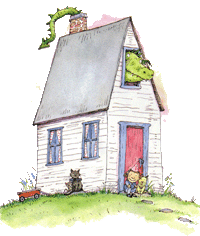
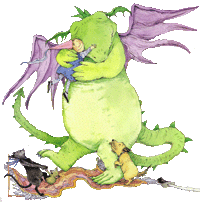
The story of Custard the dragon is a humorous ballad about a timid dragon who is the pet of Belinda, a little girl living in a white house with her other pets: Ink the kitten, Blink the mouse, Mustard the dog, and Custard the dragon.
While the other pets are described as brave and compared to animals like bears, tigers, and lions, Custard is portrayed as very timid, always seeking safety. Despite being teased by the others, Custard surprises everyone by bravely confronting and defeating a pirate who enters the house one night.
Grateful for Custard’s bravery, the other pets thank him, realizing they underestimated him. The poem teaches that sometimes the most timid individuals can be heroes in tough situations.
Detailed Summary1st Stanza Belinda lived in a little white house, With a little black kitten and a little gray mouse, And a little yellow dog and a little red wagon, And a realio, trulia, little pet dragon.
The opening stanza of the poem introduces the characters residing in Belinda’s little white house. Along with Belinda herself, four pets inhabit the house, comprising a black kitten, a small grey mouse, a petite yellow dog, and a diminutive dragon. Additionally, Belinda possesses a red wagon among her belongings.
2nd Stanza
Now the name of the little black kitten was Ink, And the little gray mouse, she called her Blink, And the little yellow dog was sharp as Mustard, But the dragon was a coward, and she called him Custard.
Belinda affectionately named her small black kitten “Ink” and her tiny grey mouse “Blink.” The dog’s coat boasted a vibrant shade of yellow, reminiscent of the condiment mustard. However, unlike Belinda’s other pets, her dragon, named Custard, was distinctly lacking in bravery, often displaying cowardly tendencies. Despite his timid nature, Custard remained a beloved member of Belinda’s household.
3rd Stanza
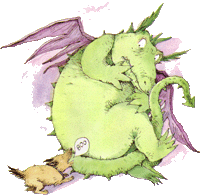
Custard the dragon had big sharp teeth, And spikes on top of him and scales underneath, Mouth like a fireplace, chimney for a nose, And realio, trulia, daggers on his toes.
This stanza describes the dragon. Custard’s physical appearance. He carried all the features of a dragon that could make him powerful, scary and brave. It had big sharp teeth and spikes on its back that could easily scare anyone away. Custard also had the ability to spit fire which makes his mouth like a fireplace and thus his nose became a chimney. His toes were so pointed and sharp that could cut anything like a dagger.
4th Stanza
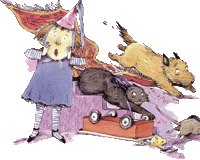
Belinda was as brave as a barrel full of bears, And Ink and Blink chased lions down the stairs, Mustard was as brave as a tiger in a rage, But Custard cried for a nice safe cage.
This stanza provides a vivid description of each member of Belinda’s household. Belinda herself is depicted as possessing immense courage, likened to the bravery of numerous bears combined, drawing a comparison to the formidable strength of a tiger. In contrast, Custard, the dragon, is described as being completely opposite to his intimidating physical appearance, indicating his lack of bravery despite his fearsome exterior. The description of Ink and Blink, the kitten and mouse respectively, highlights their ability to deter even the strongest adversaries, as powerful as a lion. However, Belinda’s dog is portrayed as lacking in bravery, preferring the security of a safe cage rather than confronting danger. Despite their varying levels of courage, each member of the household plays a unique role in the narrative, contributing to the dynamic and diverse cast of characters.
5th Stanza
Belinda tickled him, she tickled him unmerciful, Ink, Blink and Mustard, they rudely called him Percival, They all sat laughing in the little red wagon, At the realio, trulia, cowardly dragon.
In this stanza, Belinda engages in a playful interaction with Custard, the dragon, by tickling him in what is described as a rather cruel manner. Despite Custard’s timid nature, Belinda’s actions provoke a reaction from him, eliciting laughter from the other characters, including Ink, Blink, and Mustard. The dragon, affectionately named Percival by Belinda’s other pets, responds to the tickling with visible amusement, which in turn amuses the rest of the group. Their laughter fills the scene as they all sit together in Belinda’s red wagon, enjoying the lighthearted moment created by the playful interaction with the normally timid dragon. This stanza captures the joyful camaraderie among the characters and highlights the whimsical nature of the poem.
6th Stanza
Belinda giggled till she shook the house, And Blink said Week!, which is giggling for a mouse, Ink and Mustard rudely asked his age, When Custard cried for a nice safe cage.
Belinda found the dragon amusing and laughed heartily at it. Her laughter was so loud that it seemed to shake the dragon. Blink, the mouse, made a giggling sound, expressing its amusement. Ink and Mustard, likely other characters, mocked the dragon by asking its age, implying that it behaved childishly. However, the dragon, named Custard, only desired a secure and comfortable enclosure for itself.
7th Stanza
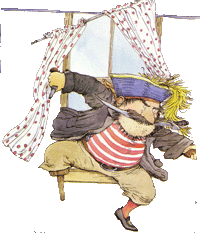
Suddenly, suddenly they heard a nasty sound, And Mustard growled, and they all looked around, Meowch! cried Ink, and Ooh! cried Belinda, For there was a pirate, climbing in the winda.
As the members of the household continued to mock Custard, an unexpected disturbance interrupted their amusement. Mustard, the dog, responded with a growl, indicating alertness and readiness to investigate the source of the noise. Ink, presumably a cat, expressed distress with a “Meowch,” while Belinda reacted with surprise and concern, exclaiming “Ooh,” as they all noticed a pirate climbing through the window with the intention of robbing the house.
This sudden turn of events shifts the focus from the lighthearted teasing of Custard to a more serious and potentially dangerous situation. The appearance of the pirate introduces an element of tension and danger, prompting the characters to respond with alarm and vigilance. The abrupt change in tone highlights the unpredictability of the narrative and adds suspense to the story.
8th Stanza
Pistol in his left hand, pistol in his right, And he held in his teeth a cutlass bright, His beard was black, one leg was wood, It was clear that the pirate meant no good.
The pirate appeared menacing and threatening, as he was armed with multiple weapons. He wielded pistols in both hands and clutched a sharp blade between his teeth, indicating his readiness to engage in violence. His physical appearance, characterized by a black beard and a wooden leg, added to his intimidating demeanor. The pirate’s demeanor and gestures left no doubt that he intended to cause harm to both the house and its occupants.
9th Stanza
Belinda paled, and she cried, Help! Help! But Mustard fled with a terrified yelp, Ink trickled down to the bottom of the household, And little mouse Blink strategically mouseholed.
Upon seeing the pirate, Belinda was overcome with fear and visibly paled, crying out loudly for assistance. In a sudden panic, all her loyal pets deserted her. Mustard, the dog, cried out in distress and hastily fled from the scene. Ink, the cat, retreated silently to the lower part of the house, seeking safety. Blink, the clever mouse, swiftly vanished into a mouse hole, leaving Belinda completely alone and vulnerable in her distressing situation.
10th Stanza
But up jumped Custard, snorting like an engine, Clashed his tail like irons in a dungeon, With a clatter and a clank and a jangling squirm, He went at the pirate like a robin at a worm.
When the other pets retreated into hiding, it was Custard, the timid dragon, who bravely stepped forward to confront the pirate. Despite his usual cowardice, Custard leaped in front of the pirate and emitted loud, aggressive noises akin to the roar of an engine, fueled by anger. His movements echoed throughout the room, producing clattering sounds reminiscent of an iron rod striking the walls of a dungeon. With his intimidating display, Custard pursued the pirate closely, mirroring the determined pursuit of a robin tracking its prey.
11th Stanza
The pirate gaped at Belinda’s dragon, And gulped some grog from his pocket flagon, He fired two bullets but they didn’t hit, And Custard gobbled him, every bit.
The pirate was shocked to see Belinda’s dragon, He gaped at him and drank some wine from a bottle that he carried in his pocket. The pirate then took out his pistol and fired two bullets at Custard. But he failed to hit him and Custard was unharmed. Then Custard swallowed the whole of the pirate, without leaving any trace of him.
12th Stanza
Belinda embraced him, Mustard licked him, No one mourned for his pirate victim, Ink and Blink in glee did gyrate, Around the dragon that ate the pirate.
The sight of Custard devouring the pirate left everyone astonished, filling the house with joyous relief. Belinda, overwhelmed with gratitude for Custard’s heroic act, embraced him tightly. Mustard, expressing his affection, licked the dragon affectionately. The entire household rejoiced in the demise of the pirate, celebrating with shared happiness. Ink and Blink, caught up in the jubilant atmosphere, began dancing joyfully around Custard as a gesture of elation.
13th Stanza
But presently up spoke little dog, Mustard, I’d have been twice as brave if I hadn’t been flustered. And up spoke Ink and up spoke Blink, We’d have been three times as brave, we think, And Custard said, I quite agree That everybody is braver than me.
After the pirate incident, it was quite clear who was brave and who was coward. But, Mustard gave an excuse for his cowardice and said that he would have been twice as brave as Custard if he had not got nervous; when the pirate came. Ink and Blink said that they would have been thrice as brave as the dragon. They started giving excuses for their running away. The humble dragon accepted that he was the most coward and everyone was braver than him.
14th Stanza
Belinda still lives in her little white house, With her little black kitten and her little gray mouse, And her little yellow dog and her little red wagon, And her realio, trulio, little pet dragon.
In the beginning stanza of the poem, the characters of the poem are introduced. They are: Belinda, who lived in a little white house with her pets and a wagon. Her pets include a black kitten, a little grey mouse, a little yellow dog and a little dragon.
15th Stanza
Belinda is as brave as a barrel full of bears, And Ink and Blink chase lions down the stairs, Mustard is as brave as a tiger in a rage, But Custard keeps crying for a nice safe cage.
In this stanza, the characteristics of each member of the household are described. Belinda’s remarkable courage is likened to that of a tiger, surpassing the bravery of many bears combined. However, Custard, despite his fearsome appearance, possessed a timid and timid demeanor, contrasting with his physical stature. Ink and Blink were depicted as having the ability to frighten away even someone as formidable as a lion. Despite Belinda’s dog’s lack of bravery, he constantly sought the comfort and security of a safe cage.
Theme/ Message
Theme
The poem is based on the theme that appearances are deceptive. It brought forth the fact that the assessment of people about themselves and others is not always true.
Belinda and her pets Ink, a kitten, Blink, a grey mouse and Mustard, a yellow dog have a poor opinion of Custard, the dragon, who is ridiculed as a coward. However, when they have to face a pirate, their true characters prove to be contrary to their claims.
It is only Custard who was ridiculed as a coward came forward and gave a fierce fight to the pirate and rescued the so-called brave Belinda and her pets.
Message
The poem conveys the message that appearances are deceptive and we must not judge people from their appearances or on their own claims. In times of adversity, only a true evaluation of a person can be made.
Another message that this poem gives is that those who are really brave, need not boast of their bravery and their mettle is proved only when they encounter a dangerous situation.
Literary Devices
Rhyme scheme: The rhyme scheme of the poem is ‘aabb’. However, for stanza 13, the rhyme scheme is aabbcc.
Ballad – The poem is in the form of a ballad – a long poem usually set to music. The poet Nash uses this form to narrate the tale of Custard the dragon and how he defeats a pirate.
Simile – Simile is a poetic device used by the poet to draw a clear comparison between two or more things or people with the help of words ‘like’ and ‘as’. The phrases – ‘sharp as Mustard’, ‘mouth like a fireplace’, ‘as brave as a barrel full of bears’, ‘brave as a tiger in a cage’, ‘snorting like an engine’, and ‘clashed his tail like iron in a dungeon’ pirate like a robin – are examples of simile in the poem. Through this device, Nash creates humorous descriptions of the characters in the poem.
Metaphor – A metaphor is a literary device used to represent a comparison without using the words “like” or “as”. chimney for a nose And realio, trulio daggers on his toes
Repetition – The poet uses repetition at various points in the poem to create a rhythmical effect in the poem. He also uses it to build humour in the poem. For example, the word ‘little’ has been repeated multiple times in the first two stanzas. Similarly – Belinda tickled him, she tickled him unmerciful. Suddenly, suddenly they heard a nasty sound. Pistol in his left hand, pistol in his right
Onomatopoeia – This poetic device is used by the poet to describe the sounds produced with the help of the words. It uses the sound-descriptive words like ‘hiss’, ‘bang’, ‘splash’, etc. The word ‘weeck’ is an example of onomatopoeia in the poem. It mimics the sound of a rat’s giggle. Similarly, ‘Meowch’ for cat’s sound Similarly, the words ‘clatter’, ‘clank’ and ‘jangling’ are examples of onomatopoeia in the poem.
Poetic License – When a poet disregards the rules of language, he uses poetic license in his works. The words ‘realio’, ‘trulio’ and ‘weeck’ are made up words that Nash uses to impart humour to the poem. Through this, he practises poetic license. Also, he has changed window to ‘winda’ to maintain the rhyme scheme of the poem.
Alliteration – Alliteration is the repetitions of the same sound used in the beginning of the closely placed words. The line ‘Belinda is as brave as a barrel full of bears’ is an example of alliteration in the poem. Other examples – Belinda lived in a little white house. And he held in his teeth a cutlass bright. With a clatter and a clank and a jangling squirm. And gulped some grog from his pocket flagon.
Allusion – An allusion is an indirect reference to a person, place, thing, and idea. In the poem, the characters make fun of Custard by calling him ‘Percival’. Percival was one of King Arthur’s knights who was known for running away due to lack of courage. Thus, the characters call Custard ‘Percival’ because they consider him a coward.
Irony – In the poem, Nash has used irony to show that while Belinda and her pets considered themselves brave, they ultimately ran from the pirate. Also, though Custard cried for a cage, in the end he bravely confronted the pirate.
Difficult Words
Wagon: A small vehicle used for transporting goods and people
Realio Trulio: A twisted form of really truly
Trivial: Not very important
Deliberately: Doing something knowingly
Cosiness: The warmth and peace that one gets when they are relaxed
Mortal enemies: Enemies for a long time
Spikes: A thin pointed piece
Barrel: A cylindrical container made to store things
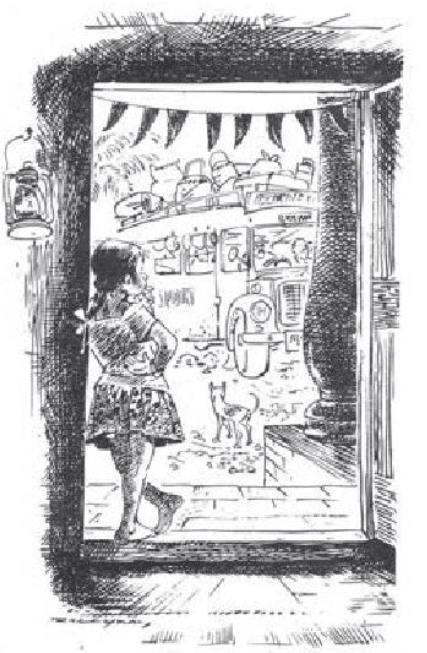
There was a girl named Valliammai, known as Valli for short. She was eight years old and very curious. Her favourite pastime was standing in the front doorway of her house, watching the happenings in the street.
The most captivating sight was the bus that travelled between her village and the nearest town. It passed by her street every hour, going to the town and then returning.
The town was six miles from her village, and the fare was thirty paise one way.
Valli’s wish to ride the bus grew stronger, turning into a strong desire.
Over many days, she listened to conversations between her neighbours and those who used the bus, asking discreet questions.
One day, she successfully boarded the bus and had her first bus ride.
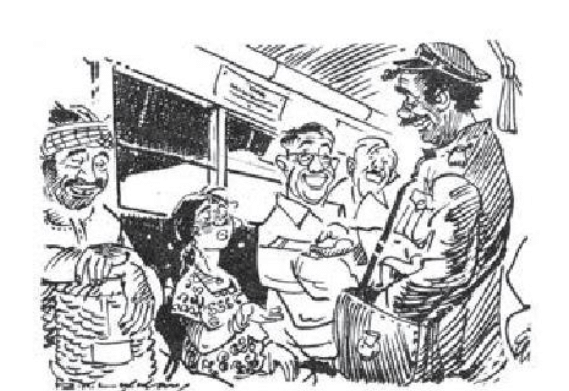
The conductor and passengers found her amusing and treated her with respect.
Valli loved the views from the bus, especially the green fields and a playful cow.
The journey to the town took forty-five minutes. If she stayed in her seat and paid another thirty paise, she could return home on the same bus.
Upon reaching the town, she chose not to get off and took the same bus back to her village.
Suddenly, she saw a young cow lying dead by the roadside, struck by a fast-moving vehicle.
Valli returned home unnoticed by her mother and aunt, who were engrossed in conversation about her adventure.
Detailed Summary
This chapter tells the story of an eight-year-old girl named Valliammai, also known as Valli, and her first bus journey. Valli is a curious and observant child who loves watching the happenings in her village from her house’s doorway. The most fascinating thing for her is the bus that passes by every hour, traveling between her village and the nearest town. Watching the bus daily, Valli develops a strong desire to take a ride on it. Valli carefully gathers information about the bus journey by listening to conversations and asking questions. She learns that the town is six miles away, the trip takes 45 minutes, and the fare is 30 paise one way. After saving 60 paise by forgoing small pleasures like ice cream and toys, Valli finally plans her bus ride.
One afternoon, when her mother is napping, Valli sneaks out to catch the 1 PM bus. The bus conductor, noticing her confidence, humorously addresses her as “Madam” and helps her find a seat. Valli enjoys the bus ride, observing the scenery outside, but when an elderly man cautions her about standing on the seat, she proudly asserts that she is not a child, having paid full fare like everyone else. During the journey, a few new passengers board the bus, including an elderly woman who tries to engage Valli in conversation. Valli, finding the woman unpleasant, avoids talking and focuses on the view outside. She experiences a moment of pure joy when she sees a cow running ahead of the bus, laughing until tears come to her eyes.
Upon reaching the town, Valli decides not to get off the bus and instead takes the same bus back to her village. During the return journey, she notices the same cow lying dead by the roadside, which saddens her deeply. The sight of the lifeless cow haunts Valli, and she loses interest in the view outside. When she returns home, Valli finds her mother awake and talking to her aunt. Though her mother asks where she had been, Valli keeps her adventure a secret, smiling to herself as she reflects on the day’s events.
Theme/ Message
Theme
Curiosity and Exploration: The story shows a child’s interest and eagerness to discover the world outside her village, especially her fascination with the bus that connects her village to the nearest town.
Independence and Determination: Valli’s wish to take the bus reflects her curiosity and eagerness for new adventures, demonstrating her cleverness in organising her trip.
Innocence and Growth: The tale depicts Valli’s wonder towards the bus and her desire to ride it, highlighting the purity of childhood and the personal growth that comes with new experiences.
Understanding the World: Valli’s observations of the bus and its passengers reveal her awareness of her surroundings, showcasing her emotional reactions to the world around her.
Empathy and Sensitivity: Valli’s response to the dead cow illustrates the significance of empathy and being sensitive to the suffering of others.
Value of Small Joys: The story highlights Valli’s unique experiences and her emotional responses, reminding readers to appreciate simple pleasures and everyday moments.
Message
Pursuit of Dreams: The story conveys that pursuing one’s dreams, no matter how small they may seem, is important for personal growth and fulfillment.
Learning through Experience: It emphasizes that firsthand experiences provide valuable lessons and shape our understanding of the world.
Empathy and Sensitivity: Valli’s reaction to the dead cow underscores the importance of empathy and sensitivity towards others’ suffering.
Value of Small Joys: The narrative reminds readers to find joy in simple pleasures and everyday experiences
Difficult Words
Wistfully – Longingly or with a sense of yearning.
Discreet – Careful and circumspect in one’s actions or speech.
Elaborate – Involving many carefully arranged parts or details; detailed and complicated.
Recalculated – Calculated again, often with different data or in a different way.
Slack – Not busy or having a lower workload than usual.
Overwhelming – Very great in amount; overpowering.
Haughtily – In an arrogantly superior and disdainful manner.
Luxurious – Extremely comfortable, elegant, or enjoyable.
Repulsive – Causing strong dislike or disgust.
Sociable – Willing to talk and engage in activities with other people; friendly.
Stifled – Suppressed or held back.
Thriftily – Using money and other resources carefully and not wastefully.
Painstaking – Done with or employing great care and thoroughness.
Carl Sandburg (1878 – 1967) was an American author recognised for his poetry, journalism, and biographies. He was born into a poor family in Galesburg, Illinois, and won three Pulitzer Prizes: two for his poetry and one for his biography of Abraham Lincoln. His well-known works include “The War Years” (a four-volume set), “Chicago”, “Remembrance Rock”, and “Abraham Lincoln.” Sandburg preferred free verse in his poetry.
Key Points of the Poem
In the poem “Fog,” Carl Sandburg compares fog to a kitten, showing how both appear slowly and quietly. Just like you may not see a kitten until it’s right there, fog comes in gently, often surprising people.
It wraps around the area, creating challenges but not being aware of its impact. Even though it causes troubles and incidents, fog eventually clears away, allowing clarity as issues get resolved over time.
Detailed Summary
The fog comes on little cat feet. It sits looking over harbour and city on silent haunches and then moves on.
The poet vividly describes the arrival and departure of fog, likening it to the quiet and stealthy movements of a cat. Initially, the fog slowly advances towards the city and the harbour, mirroring the deliberate and unhurried manner in which a cat approaches its surroundings. This comparison highlights the unpredictable nature of fog, as it can envelop an area without warning, much like a cat sneaking into a home unnoticed.
Once the fog settles over the city and harbour, the poet portrays it as sitting silently, akin to a cat quietly observing its surroundings. This imagery evokes a sense of stillness and calmness as the fog blankets the landscape, much like how a cat calmly sits, its legs folded, while taking in its surroundings. This comparison emphasizes the peaceful yet pervasive presence of fog as it envelops the city and harbour in its embrace.
Furthermore, the poet notes that, like a cat, the fog eventually departs from the city and moves on. This departure is described as silent and unnoticed, echoing the subtle way in which a cat may leave a room without drawing attention. The comparison underscores the transient nature of fog, as it dissipates and fades away, leaving behind a sense of mystery and intrigue. Overall, the poet skillfully uses the analogy of a cat to convey the atmospheric qualities and movements of fog, creating a vivid and evocative portrayal of this natural phenomenon.
Theme/Message
Theme
The central theme of the poem is the constant subtle inevitable changes in life. Sometimes our lives are covered with dense fog and everything seems unclear. Then suddenly the fog lifts and things are normal again.
Message
The poem compares fog to a cat’s movement to suggest that one should keep progressing in life regardless of obstacles.
Literary Devices
Metaphor– (Indirect comparison) On little cat feet – the fog has been compared with a cat
Personification – (Giving characteristics of humans to animals or inanimate objects) The fog comes, It sits looking – fog has been given characteristics of humans
Enjambment – a sentence continuing in the next line without punctuation It sits looking … and then moves on. – the last four lines form a single sentence
Transferred epithet- ( When an adjective is used to describe a noun but it actually refers to another noun) On silent haunches – it is the fog, and not the haunches that is silent
Imagery – (when an image is created through words) Visual imagery – It sits looking/ over harbour and city Kinaesthetic imagery – The fog comes… and then moves on.
Difficult Meanings
harbour: port, the place where ships load and unload
haunches: hips
on haunches: sitting with knees bent
fog: a thick cloud of minuscule water droplets near the earth’s surface.
Mijbil the Otter by Gavin Maxwell is a heartwarming story about the author’s journey of adopting and bonding with an otter named Mij. After losing his beloved dog, Maxwell decided to bring an otter from Iraq to his cottage in Camusfearna, Scotland. The story captures Mij’s playful antics, intelligence, and the challenges of caring for an unusual pet, offering a mix of humor, adventure, and the joy of companionship.
Gavin Maxwell, a renowned Scottish naturalist and writer, was known for his deep connection with nature and wildlife. His works, like Ring of Bright Water, explore the beauty of the natural world and his unique experiences with animals. Maxwell’s storytelling is both engaging and insightful, showcasing his love for wildlife and the bonds humans can form with it.
Key Points of the Story
The story starts in early 1956 when the author travels to Southern Iraq.
Inspired by the local wildlife, the author chooses to keep an otter instead of a dog.
A friend says he can find an otter in the Tigris marshes, where they are often tamed.
The author goes to the Consulate-General in Basra to collect his mail but finds none has arrived.
After sending a cable to England, he waits for his mail, only to find two Arabs in his room with a sack containing an otter.
The otter, named Mijbil, is muddy upon arrival, but Maxwell soon discovers Mij has soft, chocolate-brown fur beneath.
Mijbil is later called Lutrogale perspicillata maxwelli, or Maxwell’s otter, by scientists.
Initially, Mijbil is aloof, but soon he becomes affectionate and playful.
The author learns about Mijbil’s love for water and his playful antics, like juggling marbles.
The British airline to London wouldn’t transport animals, so the author books a flight to Paris, then to London.
During the journey, Mijbil escapes, causing distress and chaos on the airplane.
After reaching London, Mijbil continues to play and explore, amusing everyone around him.
The story highlights the joy, challenges, and responsibilities of caring for an unusual pet, showcasing Mijbil’s playful nature and the happiness he brought to Maxwell’s life.
Try yourself:What animal did Gavin Maxwell choose as his pet?A.BirdB.CatC.OtterD.DogView SolutionDetailed Summary
In early 1956, after the death of his beloved dog, Gavin Maxwell resolved to keep an otter instead. He believed his water-ringed cottage at Camusfearna, Scotland, would be an ideal home. While stationed in Basra, southern Iraq, Maxwell mentioned this plan to a friend, who arranged for an otter from the nearby Tigris marshes. Three days later, two Arabs appeared in Maxwell’s bedroom carrying a squirming sack—and with it, the beginnings of a lifelong bond. Maxwell and Mijbil
When Maxwell first unwrapped the sack, the young otter was caked head to tail in mud. Only after painstakingly washing away the last crust did its rich, chocolate-brown fur—and delicate velvet underside—come to light. Naming him “Mijbil,” Maxwell soon learned that zoologists would recognize this animal as a previously unknown subspecies, christening it Lutrogale perspicillata maxwelli (“Maxwell’s otter”).
At first, Mijbil was neither hostile nor affectionate, choosing to sleep as far from Maxwell’s bed as possible. Within two nights, however, he began curling at Maxwell’s feet and quickly revealed a fiercely curious intellect. In the bathroom he transformed into a water-mad acrobat—plunging, rolling, and insisting on overturning every bowl until each drop of water was in motion. He even discovered how to turn the tap on and off, sometimes tightening it so furiously that Maxwell had to intervene.
Mijbil’s playfulness extended far beyond the bath. He learned to dribble a rubber ball across the floor using all four paws, and he juggled marbles on his wide, flat belly as though his life depended on it. These antics filled Maxwell’s home with laughter and deepened their friendship.
Transporting Mijbil to London proved harrowing. Britain’s national airline refused live animals, so Maxwell booked passage via Paris under a rule that the otter fit into an eighteen-inch box at his feet. Mijbil tore through the box lining in frantic escape attempts, leaving Maxwell to hold the lid shut as they raced to the airport. Once airborne, the otter burst free, scuttled under passengers’ seats, and sent one woman shrieking “A rat!” before finally returning to Maxwell’s lap.
In London, Mijbil adapted quickly to urban life. He spent hours engrossed with ping-pong balls, marbles, rubber fruit, and even a terrapin shell brought from Iraq. On leash, he developed endearing habits—leaping along a low schoolyard wall on the way home, much to the pupils’ astonishment. Passersby offered every guess under the sun—baby seal, squirrel, hippo—before Maxwell would proudly explain, “He’s an otter.”
Through every escape attempt, playful stunt, and stolen moment of affection, Mijbil proved himself not merely a curious novelty but an intelligent, spirited companion whose bond with Maxwell would endure long after their return to the Highlands.
Theme/ MessageTheme
The story explores the theme of companionship and the unique bond between humans and animals.
It also highlights the importance of adventure and embracing new experiences in life.
Additionally, the narrative touches on the beauty of wildlife and the joy that comes from understanding and caring for it.
Message
The message of the story is that animals can bring immense joy and happiness to our lives.
It emphasizes that the relationships we form with pets can be deeply rewarding and fulfilling.
The story encourages readers to appreciate the wonders of nature and the unique characteristics of different animals.
Ultimately, it suggests that being open to new experiences can lead to unexpected joys and adventures.
Try yourself:
What is the main theme of the story Mijbil the Otter?
A.Bonding between humans and animals.
B.The importance of wildlife conservation.
C.The challenges of living in a rural setting.
D.The history of Scottish naturalists.
View Solution
Difficult Words
Thraldom: Being under the control of someone or something.
Fixation: A strong attachment or obsession with something.
Apathy: Lack of interest or concern; indifference.
Aloof: Not friendly or forthcoming; distant.
Chromium: A shiny, metallic element often used for plating.
Exhausted: Extremely tired or worn out.
Trickle: A small, slow flow of liquid.
Compulsive: Acting on an irresistible urge, often without control.
Jugglers: People who keep several objects in motion in the air by catching and throwing them.
Conjectural: Based on guesswork; not based on solid evidence.
Infuriated: Extremely angry or enraged.
Engrossed: Fully occupied with something; deeply absorbed.
Marshes: Wet, low-lying areas where water often collects.
Embarked: To begin a journey or adventure.
Exhilarating: Making one feel very happy and excited.
Adrienne Rich, an American poet, essayist, and activist, was born in Baltimore, Maryland, USA, in 1929, and passed away in 2012. Known for her extensive body of work, which includes nearly twenty volumes of poetry, Rich has been recognized as a feminist and radical poet. Among her notable works, “Diving into the Wreck” stands out as one of her most celebrated poems.
Key Points of the Poem
The poet symbolically compares women to trees, suggesting that they have been confined indoors but are now ready to venture out and fulfill their purpose.
The absence of women has left the forest empty, depriving birds and insects of shelter and preventing sunlight from reaching the earth. The roots of the trees, representing women, are striving to detach from the veranda floor, while branches and leaves move towards freedom like discharged patients leaving a hospital.
Despite the poet’s presence indoors, she senses the urgency of the trees to escape. At night, with a clear sky and bright moon, the poet perceives the trees’ desperate movement and hears the breaking of glass as they break free.
As the trees reach the forest, their collective presence overshadows the moon, creating the illusion of it breaking into pieces.
Detailed Summary
Stanza 1
The trees inside are moving out into the forest, the forest that was empty all these days where no bird could sit no insect hide no sun buries its feet in the shadow the forest that was empty all these nights will be full of trees by morning.
The poem’s narrator observes a symbolic movement of trees from their house into the long-empty forest. This movement represents the poet’s commentary on the destruction of forests and the artificiality of human attempts to preserve nature within their homes. Due to the forest’s emptiness, birds couldn’t perch on branches, insects had no refuge, and sunlight couldn’t penetrate the dense canopy. The speaker anticipates that the forest will be replenished with trees by the following morning, symbolizing a restoration of nature’s balance.
Stanza 2
All night the roots work to disengage themselves from the cracks in the veranda floor. The leaves strain toward the glass small twigs stiff with exertion long-cramped boughs shuffling under the roof like newly discharged patients half-dazed, moving to the clinic doors.
In the poem, the speaker imagines that the trees inside their house are symbolically moving out into the empty forest outside. This imagery highlights the destruction of natural habitats caused by humans, who try to keep a false version of nature indoors. Because the forest has been empty for so long, birds couldn’t rest on tree branches, insects couldn’t find shelter, and sunlight couldn’t penetrate the dense canopy of the trees. The speaker predicts that the forest will soon be filled with trees again by morning, symbolizing a restoration of nature’s balance.
During the night, the roots of the trees silently work to free themselves from the cracks in the veranda floor. The leaves strain towards the glass windows, exerting pressure to break free. The small twigs become stiff from the effort, while the larger branches, cramped under the roof, move slowly as if they were newly discharged patients from a hospital, half-dazed and disoriented. This imagery emphasizes the trees’ determination to break free and return to their natural habitat.
Stanza 3I sits inside, doors open to the veranda writing long letters in which I scarcely mention the departure of the forest from the house. The night is fresh, and the whole moon shines in a sky still open the smell of leaves and lichen still reaches like a voice into the rooms.
The speaker, possibly the poet herself, sits indoors writing lengthy letters, with the doors opening onto the veranda. Despite the trees’ symbolic movement outside, she rarely mentions them in her letters. It’s a serene night with a full moon illuminating the sky, and the air feels refreshingly crisp. The poet can detect the scent of leaves and lichens emanating from the trees, which reaches her like a distant voice. This sensory experience adds to the atmosphere of the night, heightening the speaker’s awareness of the natural world outside her home.
Stanza 4
My head is full of whispers which tomorrow will be silent. Listen. The glass is breaking. The trees are stumbling forward into the night. Winds rush to meet them. The moon is broken like a mirror, its pieces flash now in the crown of the tallest oak.
The speaker listens to the sounds of leaves and lichens coming from the trees, realizing they won’t be there in the morning as the trees move out to the forest at night. She hears the glass breaking as the twigs exert pressure, prompting the trees to rush outside, where they collide and become tangled. As the trees reach the open, it seems like the wind eagerly greets them. The taller trees can now stand upright, freed from confinement. Their height makes them appear to break the moon into pieces, resembling crowns atop the tall oak trees. This imagery underscores the idea that trees stand between the ground and the sky, obstructing the view of the full moon from beneath them.
Oak Tree
Theme/Message
Theme
The poem explores the theme of freedom and the liberation struggle, depicting the conflict between humanity and nature, with nature’s desire for freedom at its core.
Additionally, it serves as a feminist piece, symbolizing women’s quest for equality within a male-dominated society.
Message
Every being yearns for freedom and is ready to put up a struggle to achieve it. Both as a nature poem and as a feminist-oriented poem the poem represents a struggle for equality.
This is a poem with dual meanings – a literal meaning and a symbolic one. The poet is an activist and a feminist who wants to create awareness about the environment and women’s empowerment.
The summary provides both the meanings. The first paragraph of each stanza provides the literal meaning while the subsequent paragraph provides the symbolic one.
Literary Devices
Personification – (Giving characteristics of humans to animals or inanimate objects) The trees inside are moving out – trees have been personified no sun buries its feet in shadow – the sun has been personified small twigs stiff with exertion – the twigs have been personified The trees are stumbling forward – the trees have been personified
Anaphora – When two consecutive lines begin with the same letter no insect hide no sun buries its feet in the shadow
Kinaesthetic imagery – image of movement i) The trees inside are moving out ii) like newly discharged patients half-dazed, moving to the clinic doors iii) The trees are stumbling forward into the night. Winds rush to meet them.
Visual imagery – creating visual pictures with words i) All night the roots work to disengage themselves from the cracks in the veranda floor
Simile – a direct comparison using ‘as’ and ‘like’ i) like newly discharged patients (trees are compared to patients) ii) The moon is broken like a mirror (the moon is compared to a broken mirror)
Alliteration– (repetition of the same sound in proximity) Long letters – ‘l’ sound has been repeated Forest from – ‘f’ sound has been repeated Sky still -‘s’ sound has been repeated Leaves and lichen – ‘l’ sound has been repeated
Metaphor – indirect comparison Trees – metaphorically represent suppressed women Forest – is an extended metaphor of the struggle of women in the patriarchal society
Enjambment – a sentence continuing in the next line without punctuation i) the forest that was empty all these days where no bird could sit no insect hide no sun buries its feet in the shadow the forest that was empty all these nights will be full of trees by morning. ii) The leaves strain toward the glass small twigs stiff with exertion long-cramped boughs shuffling under the roof like newly discharged patients half-dazed, iii) All night the roots work to disengage themselves from the cracks in the veranda floor. iv) doors open to the veranda writing long letters in which I scarcely mention the departure of the forest from the house.
Difficult Words
to disengage themselves: to separate themselves
veranda: the space outside the house
strain: effort to move (in the poem, this means leaves trying to reach the light)
twigs: small branches
stiff: hard
exertion: pressure
cramped: shrunk
bough: branch
shuffling: moving back and forth
half-dazed: partly asleep or shocked
scarcely: hardly
departure: leaving a place
lichen: crusty patches on trees or ground formed by fungi and algae
Pranjol invites Rajvir to visit his home in Upper Assam during summer vacation.
Rajvir and Pranjol enjoy tea on the train and discuss the popularity of tea worldwide.
They observe the lush greenery and tea gardens of Assam during their journey.
Rajvir shares legends about the discovery of tea from both Chinese and Indian views.
They arrive at Dhekiabari Tea Estate, where they learn about tea cultivation.
Detailed Summary
In this chapter, Rajvir, a student from Delhi, travels to Assam for the summer vacation after being invited by his classmate Pranjol, whose father manages a tea garden in Upper Assam. During their train journey, they discuss the global popularity of tea. Rajvir mentions that over eighty crore cups of tea are consumed daily around the world, which surprises Pranjol.
As the train approaches Assam, the scenery changes dramatically from lush green paddy fields to expansive tea plantations. Rajvir is mesmerized by the vast sea of tea bushes stretching across the landscape. He notices the tall shade trees and the workers in the tea garden, a sight that contrasts with Pranjol’s indifference, as he is familiar to it.
Tea Estates of Assam
Rajvir shares various legends about the origins of tea. One legend involves a Chinese emperor who discovered tea when some leaves fell into his boiling water by accident, giving it a delightful flavor. Another legend tells of Bodhidharma, an ancient Buddhist ascetic who, in his quest to stay awake during meditation, is said to have had tea plants grow from his eyelids. Rajvir also provides historical context, noting that tea was first consumed in China around 2700 B.C. and only reached Europe in the sixteenth century, where it was initially used more as a medicine than a beverage.
Plucking of Tea Leaves
Upon reaching Mariani junction, Pranjol’s parents greet them. They drive to Dhekiabari Tea Estate. Rajvir observes the tea bushes and the tea pickers wearing plastic aprons and carrying bamboo baskets. Pranjol’s father explains that the period they are in is the second-flush season, which lasts from May to July and yields the best quality tea. Rajvir’s knowledge about tea impresses Pranjol’s father, and Rajvir expresses his enthusiasm to learn more about tea cultivation and the workings of the tea estate during his visit.
Try yourself:
Which country is believed to be the place where tea was first consumed around 2700 B.C.?
A.China
B.India
C.Europe
D.Japan
View Solution
Theme/ Message
Friendship and hospitality: Illustrated through Pranjol inviting Rajvir to his home and their shared experiences.
Cultural exchange: Highlighted through discussions about tea’s history and legends from different cultures.
Exploration and learning: Rajvir’s curiosity about tea and eagerness to learn during his visit to the tea estate.
Exploring different cultures and traditions can lead to a deeper understanding and appreciation of the world.
Curiosity and willingness to learn can open doors to new knowledge and experiences.
Glossary
Compartment: a section of a train carriage.
Ardent: enthusiastic or passionate.
Dwarfing: making something seem small by comparison.
Ascetic: a person who practices severe self-discipline and abstention.
Billowing: expanding or swelling outward.
Excitedly: enthusiastically or eagerly.
Eyelids: the movable lids that cover and uncover the eyeball.
Medications: relating to the practice of medicine or healing.
Pruned: trimmed by cutting away dead or overgrown branches or stems.
Yields: produces or provides.
Aprons: a protective garment worn over the front of one’s clothes.
Plucking: picking or harvesting something, typically leaves or fruits.
Sprouted: began to grow or develop.
Tractor: a powerful motor vehicle with large rear wheels, used chiefly on farms for hauling equipment.
Coorg, also known as Kodagu, is a picturesque district in Karnataka known for its rainforests, spices, and coffee plantations.
Located between Mysore and Mangalore, Best visited from September to March after the monsoons.
Kodavas, known for their martial traditions, are believed to have Greek or Arabic ancestry and can carry firearms without a license.
The Coorg Regiment is highly decorated; General Cariappa, India’s first Army Chief, was from Coorg.
The River Kaveri originates here, with diverse wildlife like elephants, langurs, and Mahseer fish.
Popular activities include trekking, river rafting, and mountain biking.
Attractions include Brahmagiri hills, Nisargadhama Island, and the Tibetan settlement at Bylakuppe.
Accessible via Mangalore and Bangalore by air, rail, or road.
Detailed Summary
Coorg, or Kodagu, is a scenic district located between Mysore and Mangalore in Karnataka. Renowned for its rolling hills, coffee plantations, and evergreen rainforests, this “piece of heaven” captures the charm of India’s natural beauty. About 30% of the district is covered in rainforests, contributing to its lush, green landscape. The best time to visit Coorg is from September to March, as the monsoons bring heavy rainfall, which can deter tourists.
The people of Coorg, known as Kodavas, have a proud heritage and are known for their martial traditions, hospitality, and distinctive attire. Many believe they are of Greek or Arabic descent. The Greek connection stems from the legend of Alexander’s soldiers settling here, while the Arabic theory is supported by their traditional dress, the “kuppia,” resembling the Arab “kuffia.” Kodavas stand out in India for being the only community allowed to carry firearms without a license.
CoorgCoorg is also recognized for its contributions to the Indian Army, with the Coorg Regiment being one of the most decorated units. General Cariappa, the first Chief of the Indian Army, hailed from Coorg, highlighting the region’s legacy of valor and service.
The River Kaveri originates from the hills of Coorg, sustaining the local ecosystem. Its waters are home to Mahseer fish, while the surrounding forests teem with wildlife, including elephants, langurs, Malabar squirrels, and various bird species. The region also offers high-energy adventure activities such as river rafting, trekking, canoeing, and mountain biking. Panoramic views from the Brahmagiri hills and walking trails make it a haven for nature enthusiasts and trekkers.
Coorg’s Coffee
Coorg is a blend of natural beauty and cultural richness. Attractions include the rope bridge leading to Nisargadhama Island and the nearby Tibetan settlement at Bylakuppe, which is the largest in India. The settlement features vibrant monasteries and offers visitors a glimpse into Tibetan culture.
For travelers, Coorg is accessible via Mangalore (135 km) and Bangalore (260 km) by air, with rail connections from Mysore, Mangalore, and Hassan. The region can also be reached by road, with routes from Bangalore passing through scenic landscapes. Coorg remains a mesmerizing destination for its blend of serene landscapes, rich history, and vibrant culture.
Try yourself:
What is Coorg famous for?
A.Coffee plantations and rainforests
B.Tea plantations and mountains
C.Rice fields and lakes
D.Desert landscapes and sand dunes
View Solution
Theme/ Message
Theme
Rich Cultural Heritage: Coorg’s unique culture is influenced by possible Greek or Arabic origins, martial traditions, and distinct customs.
Natural Beauty and Wildlife: Emphasis on the lush landscapes, rivers, wildlife like elephants and fish, and the adventurous spirit of the region.
Hospitality and Valor: Kodavus’ tradition of hospitality and their proud history of bravery and valor.
Message
The chapter conveys the beauty, rich culture, and adventurous spirit of Coorg while emphasizing the importance of tradition, hospitality, and courage.
Difficult Words
Martial: relating to or characteristic of war or warriors.
Colonial: relating to or characteristic of a colony or colonies.
Distinct: recognizably different from something else of a similar type.
Embroidered: decorated with needlework.
Regiment: a permanent unit of an army typically commanded by a colonel.
Permitted: officially allowed to do something.
Freshwater: of, found in, or living in freshwater.
Rappelling: the controlled descent of a vertical drop using a rope.
Canoeing: the sport or activity of traveling in or paddling a canoe.
Loris: a small, nocturnal, slow-moving primate of Asia.