08. Previous Year Questions: The Ball Poem

Previous Year Questions 2025

Q1: In ‘The Ball Poem’, Berryman explores the themes of loss, growing up, and transformation. Mandela also experienced loss of freedom and suffering along with his countrymen during his growing years on the basis of his race and colour. 
Compare and contrast the commonality of themes in both the texts.   (Answer in 100-120 words) (6 Marks)

Hide Answer  

Ans: In “The Ball Poem”, John Berryman explores the theme of loss and growing up through a boy who loses his ball and learns to accept it as a part of life. The boy’s loss symbolises the inevitable experiences of pain, responsibility, and maturity that everyone faces. Similarly, in “Nelson Mandela: Long Walk to Freedom”, Mandela experiences the loss of personal freedom and the suffering of his people due to racial discrimination. However, both texts highlight transformation through suffering — the boy grows emotionally stronger, while Mandela’s hardships shape him into a courageous leader who values freedom and equality. Thus, both works convey that loss and struggle lead to growth, strength, and wisdom.


Q2: How does “The Ball Poem” by John Berryman explore the theme of loss and its profound impact on an individual’s emotional state and perception of the world?  (Answer in 40-50 words) (3 Marks)

Hide Answer  

Ans: In “The Ball Poem”, John Berryman explores the theme of loss through a boy who loses his ball, symbolising his childhood innocence. The incident deeply affects him, making him realise that loss is a natural part of life. It transforms his understanding, teaching him responsibility and emotional resilience.


Q3: Why did the poet not console the grief-stricken boy when he lost the ball?  (Answer in 40-50 words) (3 Marks)

Hide Answer  

Ans: The poet did not console the boy because he understood that the boy must learn to deal with loss on his own. Offering money or another ball would not replace the lost one. The poet wanted the boy to realise that loss is inevitable and an essential part of growing up.


Q4: The loss of the ball is a lesson to the boy. Elaborate.  (Answer in 40-50 words) (3 Marks)

Hide Answer  

Ans: The loss of the ball teaches the boy an important lesson about accepting loss and growing up. He realises that certain things cannot be replaced by money or possessions. This experience helps him understand responsibility and the inevitability of loss, marking his first step toward emotional maturity.


Q5: What does the poet mean by the phrase ‘And no one buys a ball back’?  (Answer in 40-50 words) (3 Marks)

Hide Answer  

Ans: By the phrase “And no one buys a ball back,” the poet means that some losses in life cannot be replaced or recovered, no matter how much money one has. It highlights that emotional attachments and memories connected to what is lost cannot be bought back, teaching the boy the true meaning of loss.


Q6: Explore the theme of loss as it is depicted in both the “Ball Poem” and “The Sermon at Benares” highlighting the inevitable nature of this aspect in life?  (100-120 words) (6 marks)

Hide Answer  

Ans: Both “The Ball Poem” and “The Sermon at Benares” explore the inevitable nature of loss and its role in human growth. In “The Ball Poem”, the boy’s loss of his ball symbolises the loss of childhood innocence. He learns that such experiences are unavoidable and must be faced with courage and understanding. Similarly, in “The Sermon at Benares”Lord Buddha teaches that death and loss are universal truths — no one can escape them. He advises acceptance and detachment from worldly attachments to overcome grief. While Berryman focuses on personal growth through emotional loss, Buddha’s message extends to spiritual enlightenment. Both texts emphasise that accepting loss leads to inner strength, wisdom, and peace.


Q7: “The Ball Poem” deals with the undertones of loss and responsibility. How is the poem very relatable to our lives and what important message/s do we learn from it?  (Answer in about 40-50 words, 3 marks)

Hide Answer  

Ans: “The Ball Poem” is relatable because everyone experiences loss at some point in life. The boy’s reaction reflects our own feelings when we lose something precious. The poem teaches that loss is inevitable, but it helps us grow, accept reality, and take responsibility for facing life’s challenges with strength and understanding.

Previous Year Questions 2024

Q1: Read the extract given below and answer the questions that follow:      (CBSE 2024)
In a world of possessions. People will take 
Balls, balls will be lost always, little boy. 
And no one buys a ball back. Money is external 
He is learning, well behind his desperate eyes, 
The epistemology of loss, how to stand up 
Knowing what every man must one day know 
And most know many days, how to stand up.
(A) Fill in the blank with one word. When the speaker says “People will take balls, Balls will be lost always, little boy”, his tone is ______.

Hide Answer  

Ans: resigned
The speaker’s tone reflects a sense of resignation towards loss, indicating that it is an unavoidable part of life. 
This is evident in the following points:

  • The phrase “balls will be lost always” suggests a constant cycle of loss.
  • The speaker acknowledges that no one buys back a lost ball, highlighting the inevitability of loss.
  • His tone conveys a deep understanding of the nature of loss and the need to accept it.

This acceptance is a crucial lesson for the boy, teaching him how to cope with loss as he grows.

(B) The poet says that money is external. What inference can be drawn from this statement? Answer in about 40 words. 

Hide Answer  

Ans: The inference drawn from the poet’s statement that “money is external” is that material wealth cannot compensate for emotional losses. It suggests that the true value of sentimental possessions cannot be replaced or restored with monetary means.

(C) Which of the following best describes the speaker’s attitude towards material possessions?
(a) 
indifferent
(b) 
emotional
(c) 
casual
(d) 
respectful

Hide Answer  

Ans: (d) respectful
The speaker treats the boy’s sense of loss with respect, acknowledging the importance of understanding personal loss, which is beyond mere material value.

(D) Identify the poetic device used in “And no one buys a ball back’’. 

Hide Answer  

Ans: The poetic device used in the given line is Alliteration. Alliteration is a poetic device where consecutive words in a sentence or phrase begin with the same consonant sound. Example – buys a ball back. 


Q2: You have been chosen to address the school assembly, to speak on the epistemology of loss and the resilience of the human spirit during times of crisis. Prepare the speech draft, with reference to the commonality of themes in The Ball Poem’ by John Berryman and ‘From the Diary of Anne Frank’.          (CBSE 2024)
You may begin this way :
Good morning everyone.
Today, I’d like to discuss two pieces of literature that offer a powerful insight into how to deal with loss and the resilience of the human spirit required during times of crisis.
You may end this way:
To conclude, I’d like to say that _______
Thank you.

Hide Answer  

Ans:
Good morning everyone.
Today, I’d like to discuss two pieces of literature that offer a powerful insight into how to deal with loss and the resilience of the human spirit required during times of crisis. In “The Ball Poem” by John Berryman and the excerpt from Anne Frank’s diary, we see a common theme of loss and its impact on individuals. In Berryman’s poem, a young boy is shown struggling after losing his ball. Comparably, during the turbulent years of World War II, Anne Frank writes in her diary about her feelings of loss and loneliness. These works impart lessons about the struggles of life and the importance of resilience in the face of challenges.
To conclude, I’d like to say that these pieces of literature serve as poignant reminders of our capacity to grow from the challenges that life throws at us rather than giving up.
Thank you.

Get additional INR 200 off today with EDUREV200 coupon.

Previous Year Questions 2023

Read the following extracts and answer the questions that follow:
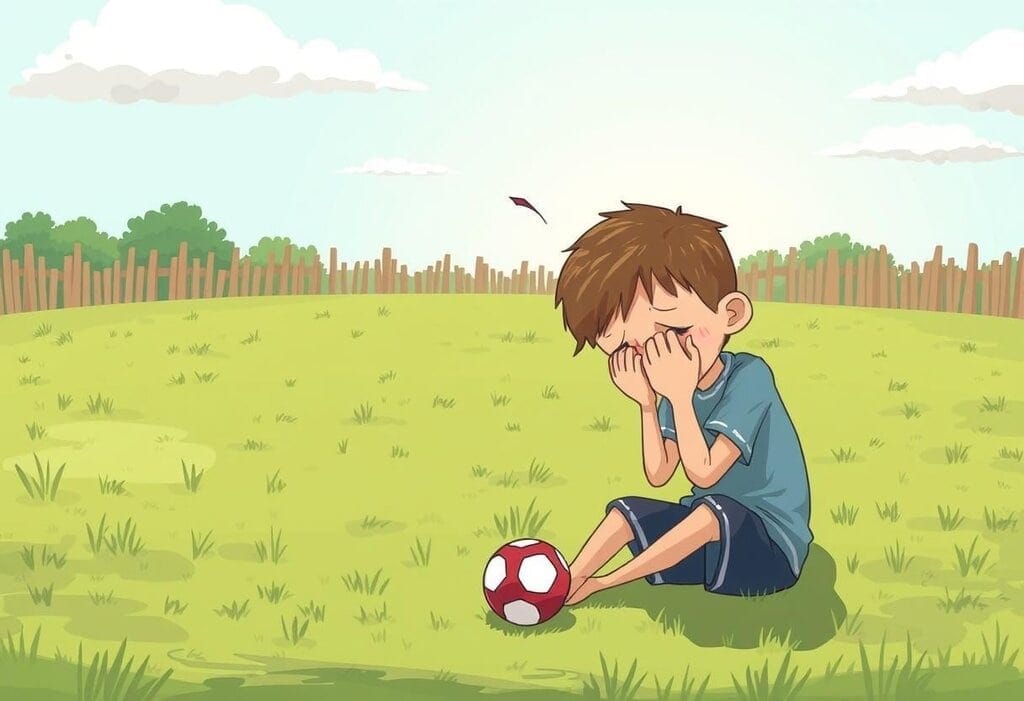
Q3: What is the boy now, who has lost his ball,
What, what is he to do? I saw it go
Merrily bouncing, down the street and then
Merrily over—there it is in the water!
No use to say ‘O there are other balls’:  (2023)

(i) What does the expression ‘what, what is he to do’ denote?
(a) loss of the ball
(b) ask the poet for another ball
(c) boy’s grief over the loss of the ball
(d) go down the street

Hide Answer  

Ans: (c)
The expression reflects the boy’s distress and helplessness over the loss of his ball, highlighting his grief.
(ii) State whether the following statement is True or False: 
The poet was delighted to watch the ball bouncing down the street into the water.

Hide Answer  

Ans: False
The poet is not delighted; rather, he is sympathetic toward the boy’s loss and understands the emotional impact on him.

(iii) The poet repeats the word ‘what’ in order to

Hide Answer  

Ans: The poet repeats the word ‘what’ in order to emphasize on his statement. 

(iv) There is no use to say ‘O there are other balls’ indicates that the poet feels that it would be ________ to console the boy
(a) helpful
(b) futile
(c) easy
(d) shameful

Hide Answer  

Ans: (b)
The poet feels that trying to console the boy by saying there are other balls would be futile, as it does not address the boy’s emotional attachment to the lost ball.

(v) Which feeling is expressed in the line ‘What is the boy now, who has lost his ball’?
(a) regret
(b) cheer
(c) despair
(d) thrill

Hide Answer  

Ans: (c)
The line conveys a sense of despair, as the boy realizes the finality of his loss and the irretrievability of his ball.

Also read: Practice Questions: Poem – The Ball Poem

Previous Year Questions 2021

Q4: After losing his ball, the boy:     (Term I, 2021-22)
(a)
 become sad.
(b) felt angry.
(c) learnt a lesson.
(d) went for another ball.

Hide Answer  

Ans: (c)
In The Ball Poem, after losing his ball, the boy experiences grief but ultimately learns a valuable lesson about loss and responsibility. The poet uses this incident to convey the message that losses are inevitable, and one must learn to accept and move forward with them.
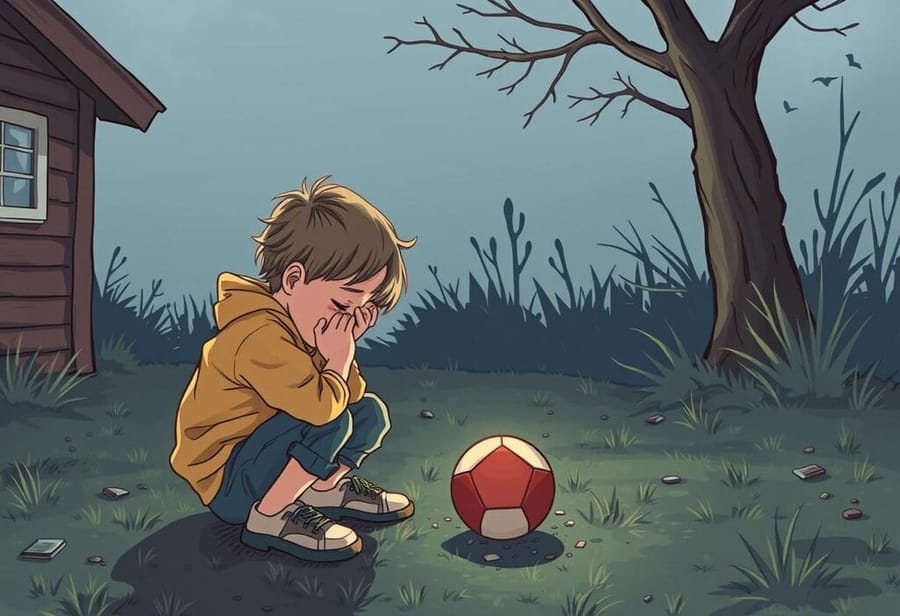

Q5: ‘……. I would not in tru d e on him;
A dime, another ball, is worthless. Now
He senses first responsibility
In a world of possessions. People will take Balls,
balls will be lost always, little boy.
And no one buys a ball back.’  (2021C) 

(i) Who is ‘him’?

Hide Answer  

Ans: ‘Him’ refers to the little boy who has lost his ball.  

(ii) Why won’t ‘I’ intrude on ‘him’?

Hide Answer  

Ans: ‘I’ wants him to face the situation.

(iii) ‘I’ seems to be________ Why does no one buy a ball back?

Hide Answer  

Ans: sensible 

(iv) Why does no one buy a ball back?

Hide Answer  

Ans: The boy should learn to be careful.

(v) Which word is opposite in meaning to the word ‘worthless’?

Hide Answer  

Ans: valuable 

Previous Year Questions 2020

Q6: ‘His ball went. I would not intrude on him;
A dime, another ball, is worthless. Now
He senses first responsibility
In a world of possessions.’ (2020C) 

(i) The loss of the ball will help the child to understand his________

Hide Answer  

Ans:  first responsibility

(ii) Giving another ball to the child is ________

Hide Answer  

Ans: worthless

(iii) The boy is sad because________

Hide Answer  

Ans: he lost his ball

(iv) The ball is called worthless because it costs only ______.

Hide Answer  

Ans: a dime

Attention!Sale expiring soon, act now & get EduRev Infinity at 40% off!

Previous Year Questions 2018

Q7: ‘He senses first responsibility’- What responsibility is referred to here? (The Ball Poem).    (2018)

Hide Answer  

Ans: The responsibility referred to here was that of taking care of his things in this world of possessions and learning to cope with loss. The boy must understand that one way or the other, he is always going to lose his most prized possessions. However, he should not feel sorry for his loss.

Also read: Practice Questions: Poem – The Ball Poem

Previous Year Questions 2016

Q8: Write the sum and substance of the poem “The Ball Poem”. (Answer the following questions in 40-50 words) (CBSE 2016)

Hide Answer  

Ans: The poet, John Berryman, wants to teach through his poem that how to cope with the loss of possessions and move on in life. The poem brings forth the fact that loss is an inevitable part of a person’s life. However, it is important for the person to bravely bear his loss as life goes on and no loss should bring life to a halt.

07. Previous Year Questions: How to Tell Wild Animals

Previous Year Questions 2025

Q1: Analyze how Wells employs humour, rhyme, and exaggerated traits to not only entertain, but also educate readers about various wild animals. Explain.  (Answer in 40-50 words) (3 Marks)

Hide Answer  

Ans: Carolyn Wells uses humour, rhyme, and exaggeration to make learning about wild animals entertaining. She humorously describes dangerous traits, like the lion’s deadly roar or the bear’s “hug,” using a rhythmic pattern and playful exaggeration. This combination amuses readers while helping them remember each animal’s distinctive features.


Q2: Mention two points of difference between a Bengal tiger and an Asiatic lion.  (Answer in 40-50 words) (3 Marks)

Hide Answer  

Ans: The Asiatic Lion has a tawny (yellowish-brown) colour and is known for its loud, terrifying roar that can make one feel like dying. In contrast, the Bengal Tiger has black stripes on a yellow background and is humorously described as identifying itself by eating you.


Q3: Why is the term ‘bear hug’ ironical?  (Answer in 40-50 words) (3 Marks)

Hide Answer  

Ans: The term ‘bear hug’ is ironical because, while a hug usually means affection or warmth, a bear’s hug is deadly and crushing. Carolyn Wells humorously uses this contrast to create irony—what sounds like a loving gesture actually represents the bear’s dangerous attack in the poem.


Q4: Every creature possesses a unique characteristic that defines it, and this trait is closely linked to its nature. This concept is beautifully illustrated in the poem “How to Tell Wild Animals.” Elucidate.  (Answer in 30-40 words) (3 Marks)

Hide Answer  

Ans: In the poem, Carolyn Wells highlights each animal’s unique trait—like the lion’s roar, tiger’s stripes, leopard’s leaps, or chameleon’s camouflage. These features humorously reflect their natural instincts, teaching readers to recognise animals through their distinct behaviours and appearances.


Q5: What distinguishes the portrayal of the tiger in the poem ‘A Tiger in the Zoo’ from the depiction of the tiger in the poem ‘How to Tell Wild Animals’?  (Answer in about 100-120 words) (6 Marks)

Hide Answer  

Ans: In “A Tiger in the Zoo,” the tiger is portrayed as a powerful yet helpless creature, confined behind bars, pacing restlessly in his cage. The poet highlights his suppressed strength and loss of freedom, evoking sympathy for the animal’s suffering in captivity. The tone is serious and reflective, drawing attention to the cruelty of human domination over nature.

In contrast, in “How to Tell Wild Animals,” Carolyn Wells presents the tiger with humour and exaggeration. The Bengal Tiger is depicted as a majestic, noble beast with black stripes on a yellow coat, humorously recognised if it “eats you.” Here, the tiger symbolises wild strength and danger, but the tone remains light-hearted and comical, turning fear into amusement.

Previous Year Questions 2024

Q1: Read the given extracts and answer the questions:
The true Chameleon is small
A lizard sort of thing;
He hasn’t any ears at all,
And not a single wing,
If there is nothing on the tree,
‘Tis the Chameleon you see.
(How To Tell Wild Animals)

(i) Fill in the blank with one word:
When the speaker says “If there is nothing on the tree, ‘Tis the Chameleon you see”, he refers to _____ as characteristic trait of a true Chameleon.

Hide Answer  

Ans: camouflage (blend in, hide, or disguise)

(ii) What does the speaker mean when he says, “A lizard sort of thing”?

Hide Answer  

Ans: When the speaker says, “A lizard sort of thing,” he means that a Chameleon is similar in appearance to a lizard. This comparison helps to describe the Chameleon’s physical form in a simple and relatable way.

(iii) Which of the following best describes the speaker’s disposition while describing the Chameleon?
(a)
 indifferent 
(b) playful
(c) dismissive 
(d) respectful

Hide Answer  

Ans: (b) playful
The tone of the poem is light-hearted and humorous, evident in the whimsical descriptions and rhyming structure. The speaker’s playful disposition makes the poem engaging and fun.

(iv) Comment on the poet’s use of language in these lines. Answer in about 40 words.

Hide Answer  

Ans: The poet’s use of language in these lines is playful and light-hearted. By describing the Chameleon in simple, whimsical terms and using rhymes, the poet makes the description engaging and memorable. This approach captures the reader’s imagination while effectively conveying the Chameleon’s distinctive traits, such as its ability to camouflage.

Get additional INR 200 off today with EDUREV200 coupon.

Previous Year Questions 2023

Q2: Read the following extract and answer the questions that follow:    (2023)
Or if some time when roaming round,
A noble wild beast greets you,
With black stripes on a yellow ground,
Just notice if he eats you.
This simple rule may help you learn
The Bengal Tiger to discern.

(i) Who is the ‘noble wild beast’ in the above lines?
(a) zebra
(b) Asian Tiger
(c) Asian Lion
(d) Bengal Tiger

Hide Answer  

Ans: (d)
The phrase “black stripes on a yellow ground” clearly describes the Bengal Tiger.

(ii) Complete the sentence appropriately.

It is clear that ‘Alliteration’(repetition of beginning sounds in words) is the poetic devise used for “roaming round’ because_____ . (Clue : explain how alliteration applies here)

Hide Answer  

Ans: It is clear that ‘Alliteration’ is the poetic device used for “roaming round’ because there is a repetition sound of consonant sound ‘r’.

(iii) State whether the following statement is True or False: 
The extract helps to identify a Royal Bengal Tiger.

Hide Answer  

Ans: True
The description in the extract is meant to help the reader recognize the Royal Bengal Tiger.

(iv) In the given lines, what effect does the poet create? 
‘Just notice if he eats you.
This simple rule may help you learn 
The Bengal Tiger to discern.’ 
(a) irony
(b) terror
(c) sympathy
(d) criticism

Hide Answer  

Ans: (b)
The line “Just notice if he eats you” adds an element of humor mixed with terror, as the poet wryly hints at the danger of encountering a tiger.

(v) Which word in the extract tells you that you have recognised the ‘noble beast’?
(a) rule
(b) discern
(c) roaming
(d) notice

Hide Answer  

Ans: (b)
The word “discern” means to recognize or identify, suggesting that you have successfully identified the Bengal Tiger.


Q3: Read the extract given below and answer the questions that follow:        (CBSE 2023)
Though to distinguish beasts of prey 
A novice might nonplus, 
The crocodiles you always may 
Tell from the Hyena thus: 
Hyenas come with merry smiles; 
But if they weep they’re crocodiles. 
(A) Select the appropriate option to complete the sentence, according to the extract: 
Crocodiles
 can be identified by their_____   
(a) tears 
(b) attitude 
(c) smiles 
(d) attacks 

Hide Answer  

Ans: (a)
The poet humorously states that crocodiles can be identified by their tears, referring to the term “crocodile tears.”

(B) State whether the following statement is True or False: Hyenas are famous for weeping. 

Hide Answer  

Ans:  False
In the poem, hyenas are described as having “merry smiles,” not for weeping.

(C) ‘Novice’ in line 2 means the same as: 
(a) 
learner 
(b) beast 
(c) tender foot 
(d) beginner 

Hide Answer  

Ans: (d)
“Novice” means a beginner or someone new to an activity.

(D) In this extract the poet has presented two different behavioural traits of animals. They are______. 

Hide Answer  

Ans: the weeping of crocodiles while swallowing its prey and laughter of hyenas while attacking its prey.

(E) The post uses ‘A novice might nonplus” instead of the novice might get confused. How does this usage impact the poem? 
(a) 
adds an incorrect option. 
(b) it is associated with beasts. 
(c) it rhymes and adds humour. 
(d) it simplifies the meaning.

Hide Answer  

Ans: (c)
The word “nonplus” rhymes with “thus” and adds a playful, humorous tone to the poem, which fits the overall style of the poem.

Also read: Worksheet: How to Tell Wild Animals

Previous Year Questions 2020

Q4: Why does the poet use the terms ‘noble’ and ‘wild’ for the tiger? (Answer the following questions in 40-50 words) (CBSE 2020)

Hide Answer  

Ans: The poet uses the terms ‘noble’ and ‘wild’ for the tiger to create a sense of humour and contradiction. The word ‘noble’ reflects the tiger’s status as a royal animal of Bengal, while also highlighting its fierce nature, as it does not treat its prey with humility. Thus, it is truly a wild creature.

Attention!Sale expiring soon, act now & get EduRev Infinity at 40% off!

Previous Year Questions 2019

Q5: Read the following extract and answer the questions that follow:    (AI 2019)
If ever you should go by chance  
To jungles in the east;
And if there should to you advance
A large and tawny beast,
If he roars at you as you’re dyin’
You’ll know it is the Asian Lion-

(a) Where can one find the Asian Lion?

Hide Answer  

Ans: The Asian Lion can be found in jungles in the east.

(b) What are the characteristics of the Asian Lion?

Hide Answer  

Ans: The Asian Lion is a large, tawny beast with a loud roar.

(c) What is the effect of the roar of a lion on you?

Hide Answer  

Ans: When a lion roars it feels as if we are about to die.

(d) Identify the poem and the poet.

Hide Answer  

Ans: The name of the poem is ‘How to Tell Wild Animals’ by Carolyn Wells.

Also read: Worksheet: How to Tell Wild Animals

Previous Year Questions 2015

Q6: How can you identify an Asian Lion and a Bengal tiger? (Answer the following questions in 40-50 words) (CBSE 2015)

Hide Answer  

Ans: The poet advises that you can identify an Asian Lion when it roars at you, especially when you’re in a dangerous situation. On the other hand, the Bengal tiger is a wild beast of noble appearance. It has black stripes scattered all over his yellow skin. The tiger never gives you a chance to escape if by chance you come in front of him.

06. Previous Year Questions: Two Stories about Flying

Previous Year Questions 2025

Q1: Read the following extract and answer the questions:  (5 Marks)
“He felt certain that his wings would never support him, so he bent his head and ran away back to the little hole under the ledge where he slept at night. Even when each of his brothers and his little sister, whose wings were far shorter than his own, ran to the brink, flapped their wings, and flew away, he failed to muster up courage to take that plunge which appeared to him so desperate. His father and mother had come around calling to him shrilly, upbraiding him, threatening to let him starve on his ledge unless he flew away. But for the life of him he could not move.”

(i) State any one inference about the parents of the baby seagull from the given statement: “His father and mother had come around calling to him shrilly, upbraiding him, threatening to let him starve on his ledge unless he flew away.”  (1 Mark)

Hide Answer  

Ans: The parents of the baby seagull were strict yet caring, as they wanted him to overcome his fear and learn to fly. Their scolding and threats were meant to encourage him to be independent.

(ii) Where did the little seagull sleep at night?  (1 Mark)

Hide Answer  

Ans: The little seagull slept in a small hole under the ledge at night.

(iii) Which factors contributed to the young seagull’s reluctance to fly despite the encouragement and threats from his parents? Elaborate in about 40 words, with reference to the extract.  (2 Marks)

Hide Answer  

Ans: The young seagull was reluctant to fly because he lacked confidence in his wings and feared that they would not support him. Even though his parents and siblings encouraged and threatened him, his fear of falling and dying kept him from attempting his first flight.

(iv) Which phrase or word would correctly substitute ‘muster up‘ in the given sentence from the extract?   (1 Mark)
“He failed to ‘muster up‘ courage to take that plunge which appeared to him so desperate.” 
(a) review
(b) resolve
(c) distribute
(d) gather

Hide Answer  

Ans: (d)

The correct substitute for ‘muster up’ is (d) gather.


Q2: What strategy did the mother adopt to teach the young seagull how to fly?  (Answer in 40-50 words) (3 Marks)

Hide Answer  

Ans: The mother seagull used a clever strategy to make her young one fly. She tempted him with a piece of fish, bringing it close to him but not feeding him. Driven by hunger, the young seagull jumped to reach the food and, in doing so, fell into the air—only to discover that he could fly instinctively.


Q3: Read the following extract and answer the questions:  (5 Marks)
“The moon was coming up in the east, behind me, and stars were shining in the clear sky above me. There wasn’t a cloud in the sky. I was happy to be alone high up above the sleeping countryside. I was flying my old Dakota aeroplane over France back to England. I was dreaming of my holiday and looking forward to being with my family. I looked at my watch: one thirty in the morning.”

(i) What time of the day is the above extract set in?  (1 Mark)
(a) dawn 
(b) afternoon
(c) night 
(d) dusk

Hide Answer  

Ans: (c) night

(ii) State any one inference about the writer from the given context: “I was looking forward to being with my family.”  (1 Mark)

Hide Answer  

Ans: The line shows that the writer was a family-loving and affectionate person, eagerly waiting to meet his family after his flight.

(iii) Fill in the blank with the correct word from the brackets. 
The use of the phrase “clear sky” adds to a sense of _____________ (favourable/flavourful) weather conditions.  (1 Mark)

Hide Answer  

Ans: The correct word is “favourable.” 

(iv) How does the serene atmosphere described by the narrator contribute to the mood and anticipation of his journey back to England? Elaborate in about 40 words, with reference to the extract.  (2 Marks)

Hide Answer  

Ans: The calm night sky, shining stars, and peaceful countryside create a serene and joyful atmosphere. This peaceful setting reflects the pilot’s happiness and excitement as he dreams of his holiday and looks forward to spending time with his loved ones in England.


Q4: The young seagull’s fear of flying and reluctance to leave his ledge contribute to the development of the theme of independence and courage in the story. Justify.  (Answer in 40-50 words) (3 Marks)

Hide Answer  

Ans: The young seagull’s fear of flying highlights his lack of confidence and dependence on his family. However, when hunger forces him to take the plunge, he discovers his strength and learns to fly. This moment of realization symbolizes the courage and independence that come from overcoming one’s fears.


Q5: Read the given extracts and answer the questions:
That was twenty-four hours ago. Since then nobody had come near him. The day before, all day long, he had watched his parents flying about with his brothers and sister, perfecting them in the art of flight, teaching them how to skim the waves and how to dive for fish. He had, in fact, seen his elder brother catch his first herring and devour it, standing on a rock, while his parents circled around raising a proud cackle and all the morning the whole family had walked about on the big plateau midway down the opposite cliff taunting him for his cowardice.

(i) Fill in the blank with the correct word from the bracket: 
The use of the phrase ‘proud cackle’ adds to a sense of _________ (noise/pride) in the extract.  (1 Mark)

Hide Answer  

Ans: The correct word is pride.

(ii) How do the parents teach their young to be independent?  (1 Mark)

Hide Answer  

Ans: The parents teach their young to be independent by encouraging them to fly and catch their own food, even leaving the hesitant one alone without food to make him attempt his first flight.

(iii) Describe the contrasting reactions of the parents to their children giving reasons.  (2 Marks)

Hide Answer  

Ans: The parents feel proud and joyful watching their other chicks fly and catch fish, expressing delight through a proud cackle. In contrast, they are disappointed and frustrated with the young seagull’s cowardice, taunting and urging him to overcome his fear.

(iv) The word ‘devour’ in the above extract most nearly means:  (1 Mark)
(a) scared 
(b) gobbled 
(c) preserved 
(d) cooled

Hide Answer  

Ans: (B) gobbled


Q6: “He was not falling headlong now. He was soaring gradually downwards and outwards, he was no longer afraid.” Describe the young seagull’s feelings, emotions, and experiences, just before this moment.   (Answer in about 40-50 words) (3 marks)

Hide Answer  

Ans: Just before this moment, the young seagull was filled with terrible fear and panic as he fell into the open air, believing he would die. But soon, his instinct took over, and his wings spread out naturally. The fear vanished, replaced by excitement, joy, and confidence as he realized he could fly.


Q7: Why was the seagull afraid to fly? Why was the young seagull alone?  (Answer in about 40-50 words) (3 marks)

Hide Answer  

Ans: The seagull was afraid to fly because he doubted the strength of his wings and feared he would fall into the sea. His lack of confidence made him hesitate to take the leap. As a result, while his siblings learned to fly, he was left alone on the ledge, too scared to join them.


Q8: Motivation influences our willingness to overcome challenges and eventually succeed. How does the young seagull in Two Stories About Flying demonstrate this? Discuss. (Answer in about 40-50 words) (3 marks)

Hide Answer  

Ans: The young seagull demonstrates how motivation can conquer fear. When left hungry and alone, his desperation for food becomes stronger than his fear of flying. This hunger motivates him to leap off the ledge, and in that moment, he discovers his ability to fly—proving that necessity and motivation lead to success.


Q9: Compare and contrast the role of faith between the young Seagull from ‘Two Stories About Flying’ and Lencho from ‘A Letter to God’.   (Answer in about 100-120 words) (6 marks)

Hide Answer  

Ans: Both the young seagull from “Two Stories About Flying” and Lencho from “A Letter to God” display faith, but in different ways.
The young seagull’s faith is in himself and his instincts, which he discovers only after overcoming fear. Initially, he doubts his wings, but hunger drives him to take the leap. Once he spreads his wings and flies, his faith in his own ability gives him confidence and freedom.

Lencho, on the other hand, shows faith in God. After his crops are destroyed by hail, he believes firmly that God will help him and writes a letter asking for money. His unshakable trust in divine help contrasts with the seagull’s self-discovered confidence, yet both teach that faith—whether in oneself or a higher power—leads to strength and hope.


Q10: Self-doubt and fear often act as barriers to success. On the other hand, curiosity leads to learning new things. Justify the statement citing instances from ‘His First Flight’ and ‘Madam Rides the Bus’.   (Answer in about 100-120 words) (6 marks)

Hide Answer  

Ans: In “His First Flight,” the young seagull’s self-doubt and fear stop him from flying. He believes his wings are too weak and refuses to take the plunge despite his family’s encouragement. However, when hunger pushes him to act, he overcomes his fear, learns to fly, and experiences freedom through courage.

Similarly, in “Madam Rides the Bus,” Valli’s curiosity drives her to explore the world beyond her home. Her eagerness to experience a bus ride leads her to plan and save money carefully. Through this experience, she gains new understanding and maturity about life and death.

Thus, while self-doubt limits growth, curiosity and courage open the path to learning and self-discovery, as shown by both characters.

Get additional INR 200 off today with EDUREV200 coupon.

Previous Year Questions 2024

Q1: You have been asked to present an evaluation of the approaches of both, the Baby Seagull and the Pilot who was lost in the clouds, towards achieving their dreams of conquering the skies.   (CBSE 2024)
Write this presentation draft including your insights, comparing the approaches of both.
You may begin this way: One acknowledges that both, the Seagull and the Pilot, wanted to _______
however, ___________
(Reference: Two Stories About Flying)

Hide Answer  

Ans: One acknowledges that both the Seagull and the Pilot wanted to conquer the skies, yet their approaches were quite different. Hunger and survival were the baby seagull’s primary motivators to overcome fear and take the first flight. The seagull was desperately looking for food, so it had to take a risk despite its initial hesitation and fear. On the other hand, the pilot faced a different challenge in the form of a storm when he realised that he had gotten lost. He decided to put his trust in a mysterious black aeroplane and follow it like a child. We can learn courage and tenacity from both stories. The pilot took a leap of faith to follow the unknown black aeroplane in the face of difficulty, whereas the seagull flew out of instinctual need.


Q2: Briefly bring out the contrast between the young seagull’s initial attempts to fly and his first successful flight.   (CBSE 2024)

Hide Answer  

Ans: The young seagull lacks courage and fears that his wings will not be able to support him. He watches his siblings soar and dive but he is unable to overcome the fear. The family abandons him and it is only when he is starving from hunger that the sight of fish in his mother’s beak excites him and he takes the first flight. He is initially terrified but realizes that he is able to fly and then flies confidently.


Q3: Flying is a natural act in birds. Then why was the young seagull ‘exhausted by the strange exercise’? Justify the given statement with reference to baby seagull’s fear.   (CBSE 2024)

Hide Answer  

Ans: The young seagull was a coward. He lacked courage and feared that he would fall and hit the ground. The wings might not be strong enough to bear his weight. Thus, he was not able to fly.


Q4: Valli was sensitive, but at the same time, she was fearless and quite determined. Think of another character from your text book, who displayed similar character traits.
Compare and contrast the lives of Valli and the other character, that you have chosen from the text of Two Stories about Flying.
You may begin this way.
The characters who are fearless and determined from two texts are Valli and _______.
(Reference : Madam Rides a Bus & Two Stories about Flying)  
 (CBSE 2024)

Hide Answer  

Ans: The characters who are fearless and determined from two texts are Valli and the pilot. Valli is a young girl but she is quiet fearless. She fulfils her desire of going on a bus ride all by herself. She is not afraid of meeting strangers or going on a trip that is new to her. She is determined to fulfil her desire through her own means. She saves pocket money by resisting temptations and thus, buys the bus tickets. She asks discreet questions from the passengers to know the bus route and timings. She decides the trip timing suitable to her according to the period when her mother takes a nap. She avoids talking to strangers in the bus and dislikes being treated like a child. She guards herself against the friendly bus conductor and refuses his offer of buying her a cold drink. All these qualities assist Valli in fulfilling her desire successfully. The pilot is also determined to reach home and have an English breakfast with his family. Thus he does not think twice and flies straight into the storm clouds. He gets alarmed when the compass and radar stop working but still, he remains fearless. The mysterious black aeroplane is his mind’s product and his mind only guides him towards the runway. 
Both these characters highlight the importance of self-belief, determination and fearlessness in the face of dangerous situations.

Also read: Practice Questions: Two Stories about Flying

Previous Year Questions 2023

Q5: “I’ll take the risk.” What is the risk? Why does the narrator take it?     (2023)

Hide Answer  

Ans: The risk the narrator takes is flying through a huge storm with almost zero visibility. The narrator takes this risk because he is keen to reach his home, spend his holiday with his family, and have an English breakfast.


Q6: Describe the young seagull’s first flight.     (2023)

Hide Answer  

Ans: As the young seagull dived from the ledge, he initially felt terrified and started falling outwards and downwards. However, his wings spread outwards, and he began to soar and fly. The young seagull’s fear transformed into confidence and amusement as he realized he could fly.

Q7: Read the extract given below and attempt the questions that follow:      (2023)

Inside the clouds, everything was suddenly black. It was impossible to see anything outside the aeroplane. The old aeroplane jumped and twisted in the air. I looked at the compass. I couldn’t believe my eyes the compass was turning round and round and round. It was dead. It would not work. The other instruments were suddenly dead, too. I tried the radio, “Paris Control? Paris Control? Can you hear me?” There was no answer. The radio was dead too. I had no radio, no compass, and I could not see where I was. I was lost in the storm. 

(i) As soon as the pilot was inside the cloud____
(a) 
his ears got blocked
(b) 
he choked with fear
(c) 
his vision was obstructed
(d) 
he was jumping up and down

Hide Answer  

Ans: (c)
The passage states that “it was impossible to see anything outside the aeroplane.”

(ii) The devices in the aeroplane were____
(a) 
malfunctioing
(b)
 broken completely
(c) 
giving wrong readings
(d) 
stopped responding completely

Hide Answer  

Ans: (a)
The compass, radio, and other instruments were not working correctly, indicating a malfunction.

(iii) The Paris air control did not reply to the piolet’s call because____

Hide Answer  

Ans: Radio was dead
The passage clearly states, “The radio was dead too.”

(iv) Select the option that correctly captures the application of the word ‘twisted’ as used in the extract.
(a) 
Ragini twisted Raghav’s wrist.
(b) 
Ragini twisted the story to suit the occasion.
(c) 
Ragini did not appreciate Raghav’s twisted bent of mind.
(d) 
Ragini matched the swimmer as he twisted twice in the air before diving into the water.

Hide Answer  

Ans: (d)
In the passage, “twisted” refers to the erratic movement of the plane, similar to the twisting movement in a dive.

(v) Fill in the blank with ONE WORD only.
The narrator’s ____ comes through clearly when he sees the compass turning round and round.

Hide Answer  

Ans: Belief
The narrator’s belief is evident as he realizes he has lost navigation control and is lost in the storm.

Attention!Sale expiring soon, act now & get EduRev Infinity at 40% off!

Previous Year Questions 2022

Q8: Validate the given statement with reference to baby seagull’s fear. 
‘Fear does’t exist anywhere else other than one’s mind.’    (2022-23)

Hide Answer  

Ans: The story of the young seagull is a very good example showing how fear can hold you as a prisoner. The seagull is a bird. It is meant to fly. Without flying, it cannot survive. But the young seagull is so scared that it doesn’t want to fly.

Also read: Practice Questions: Two Stories about Flying

Previous Year Questions 2021

Q9: The young seagull was alone on the ledge as:     (Term I, 2021-22)
(a) 
his brothers had flown away.
(b) he was afraid to fly.
(c) the sea was very deep beneath him.
(d) his mother had not yet fed him.

Hide Answer  

Ans: (b)


Q10: What trick did the mother seagull use to encourage her young one to fly?   (2021 C)

Hide Answer  

Ans: The mother seagull used the trick of leaving her young one on the cliff without food, creating a situation where hunger forced the young seagull to fly.


Q11: What did the young seagull experience when he dived at the fish in his mother’s beak?     (2021 C)

Hide Answer  

Ans: When the young seagull dived at the fish in his mother’s beak, he initially felt terrified, falling downwards and outwards. However, this fear lasted only briefly as he started flying and soaring. His fear transformed into confidence, making the experience transformative.


Q12: The purpose of the treatment, given to the young seagull by his parents, was t o ______
(a) 
teach him a lesson about the importance of food.
(b) 
inculcate obedience towards them.
(c) 
let him overcome his fear.
(d) 
improve his relationship with his siblings.     (Term 1, 2021-22)

Hide Answer  

Ans: (c) let him overcome his fear.


Q13: ‘He had in fact seen his older brother catch his first herring and devour it.’ How did ‘he’ feel?
(1) Angry 
(2) Greedy 
(3) Jealous 
(4) Hungry 
(a) (1) and (2) 
(b) (2) and (3) 
(c) (3) and (4) 
(d) (4) and (1) (CBSE Term-1 2021)

Hide Answer  

Ans: (c)
The character felt both jealous of his brother’s ability to catch food and hungry seeing the act of devouring the fish. These emotions are conveyed in the context of the story, where the younger sibling observes his brother’s success with mixed feelings.


Q14: The Black Aeroplane is a/an ______ story. 
(a) ghost 
(b) adventure 
(c) mystery 
(d) true (CBSE Term-1 2021)

Hide Answer  

Ans: (c)
“The Black Aeroplane” is considered a mystery story, as it revolves around the unexplained and mysterious appearance of a black aeroplane that guides the narrator through the storm and then vanishes without a trace.

05. Previous Year Questions: A Tiger in the Zoo

Previous Year Questions 2025

Q1: Read the following extract and answer the questions:
“He stalks in his vivid stripes
The few steps of his cage,
On pads of velvet quiet,
In his quiet rage.
He should be lurking in shadow,
Sliding through long grass”
(i) Identify and name any one figure of speech in the above extract.  (2 Marks)

Hide Answer  

Ans: The figure of speech used here is Oxymoron — “quiet rage”.
It combines two opposite ideas — quiet and rage — to express the tiger’s suppressed anger while being confined in the cage.

(ii) Fill in the blank with one word. 
The tiger’s stalking on ‘pads of velvet’ suggests a movement that is ______.  (1 Mark)

Hide Answer  

Ans: Silent

(The phrase “pads of velvet quiet” shows the noiseless, smooth movement of the tiger.)

(iii) Based on the given lines from the poem, which words would best describe the feelings of the tiger?  (1 Mark)
(a) Calm and content
(b) Both subdued and angry
(c) Both frustrated and happy
(d) Both angry and famished 

Hide Answer  

Ans: (b) Both subdued and angry

(The tiger is full of rage but remains quiet and helpless in the cage.)

(iv) Select the option that applies the same rhyme scheme as the first four lines of the given extract.  (1 Mark)
(A) 
The people along the sand
All turn and look one way
They turn their back on the land 
They look at the sea all day
(B) 
Along the sand, the people 
All turn and look one way
They turn back on the sand
They look at the sea all day
(C) 
The people along the sand
Look one way and all turn
Their backs on the land
They look at the sea all day
(D) 
The people along the sand
They turn their back on the land
They look one way
At the sea all day. 

Hide Answer  

Ans: (A)

The people along the sand / All turn and look one way / They turn their back on the land / They look at the sea all day.
(Rhyme scheme: ABAB, same as the given extract — “stripes/cage/quiet/rage.”)


Q2: Why does the tiger in the zoo ignore the visitors?  (Answer in 40-50 words) (3 Marks)

Hide Answer  

Ans: The tiger in the zoo ignores the visitors because he feels helpless and trapped behind the bars of his cage. His strength and freedom are confined, and he knows he cannot attack or frighten anyone. Instead of showing aggression, he quietly walks inside the cage, suppressing his anger and frustration.


Q3: How does the poem show that the tiger had lost its natural instinct?  (Answer in about 30-40 words, 3 marks)

Hide Answer  

Ans: The poem shows that the tiger has lost its natural instinct because, instead of hunting or roaming freely in the jungle, he now walks silently inside his cage. His wild strength and ferocity are suppressed, and he has become helpless and subdued in captivity.


Q4: Draw a comparison between the tiger in the zoo and in the forest.  (Answer in about 30-40 words, 3 marks)

Hide Answer  

Ans: The tiger in the zoo is imprisoned, helpless, and full of silent anger as he walks within the narrow limits of his cage. In contrast, the tiger in the forest is free, powerful, and majestic — lurking in the shadows, hunting deer, and roaming fearlessly in his natural habitat.


Q5: The tiger in the zoo is denied its natural habitat. Describe its behaviour and routine as a captive in the concrete cell.  (Answer in about 40-50 words, 3 marks)

Hide Answer  

Ans: In the zoo, the tiger lives a dull and confined life inside a concrete cell. He moves silently up and down the limited space of his cage, suppressing his anger and strength. He ignores the visitors, listens to the patrolling sounds at night, and stares helplessly at the shining stars, longing for freedom.


Q6: Explore the contrasting images of the tiger in ‘A Tiger in the Zoo’ and the tiger in ‘How to Tell Wild Animals’.  (Answer in 100-120 words) (6 Marks)

Hide Answer  

Ans: In ‘A Tiger in the Zoo’, the tiger is shown as a helpless and confined creature. Leslie Norris presents the tiger as majestic yet powerless, pacing silently in a small cage. His strength and rage are suppressed, and he feels trapped and frustrated, yearning for freedom. The poem highlights the cruelty of captivity and evokes sympathy for the animal.

In contrast, in ‘How to Tell Wild Animals’ by Carolyn Wells, the tiger is portrayed as fierce, powerful, and free in its natural habitat. The poet humorously describes how one can identify wild animals, and the tiger is shown as a symbol of terror that leaps upon its prey. Thus, one poem shows the tiger’s captivity and helplessness, while the other shows its freedom and ferocity.


Q7: The inherent instinct for freedom is a fundamental trait in all living creatures. Justify this statement with reference to ‘Mijbil the Otter’ and ‘A Tiger in the Zoo’. (100-120 words) (6 marks)

Hide Answer  

Ans: Both ‘Mijbil the Otter’ and ‘A Tiger in the Zoo’ highlight the deep desire for freedom found in all living beings. In ‘Mijbil the Otter’, Mij initially struggles when confined indoors but becomes joyful and lively once he experiences the open water, his natural habitat. His playful and curious nature blossoms only when he is free. Similarly, in ‘A Tiger in the Zoo’, the tiger is depicted as restless and frustrated in his cage, his strength and spirit subdued by captivity. The poet contrasts this with the tiger’s true life in the wild, where he roams proudly and hunts freely. Both works show that freedom brings life and happiness, while captivity causes pain and helplessness.

Get additional INR 200 off today with EDUREV200 coupon.

Previous Year Questions 2024

Q1. Read the extract given below and answer the questions that follow:  [2024]

He stalks in his vivid stripes
The few steps of his cage,
On pads of velvet quiet,
In his quiet rage.
 He should be lurking in the shadows,
Sliding through long grass
Near the water pole
Where plump deer pass.
 He should be snarling around houses.
At the jungle’s edge,
Baring his white fangs, his claws,
Terrorising the village!

(i) State any one point of contrast between the tiger in the zoo and its natural habitat.

Hide Answer  

Ans.  He is confined in the zoo, whereas he experiences freedom in the jungle.

(ii) When the speaker suggests that the tiger should be “Snarling around houses at the jungle’s edge”, What does he insinuate about the tiger’s natural behaviour and habitat?

Hide Answer  

Ans.  By nature, the tiger is fierce, roaring to frighten the villagers residing near the jungle’s edge.

 (iii) The poet’s skilful use of imagery effectively depicts the confinement and frustration of the tiger. Elaborate in about 40 words.

Hide Answer  

Ans. The poet talks about the tiger in the zoo, locked in a small cage. It walks quietly in the tiny space and doesn’t roar. Its soft paws, like velvet, make no noise as it moves.

(iv) Which phrase would correctly substitute ‘quiet rage’ in the given sentence from the extract?

Hide Answer  

Ans. Suppressed anger

Q2. Read the extract given below and answer the questions that follow: [2024]

He stalks in his vivid stripes
The few steps of his cage,
On pads of velvet quiet,
In his quiet rage 

 (i) Explain the contrast created by the words, ‘stalks’ and ‘few steps of his cage’.

Hide Answer  

Ans. The word ‘stalks’ suggests walking with majesty, reflecting the tiger’s natural elegance and strength. In contrast, ‘the few steps of the cage’ highlight the tiger’s restricted movement and lack of freedom. 

 (ii) Which of the following best describes the tiger’s feelings in the context?

(A) anger (B) conflicted

(C) pessimism (D) apprehension

Hide Answer  

Ans. (D)

 (iii) Comment in about 40 words on the poet’s use of imagery in the above extract.

Hide Answer  

Ans. The poet describes the tiger’s bright stripes and its quiet movement in a small cage. Unable to roar or show its strength, the tiger walks silently on its soft, velvety paws, reflecting its sadness and helplessness in confinement.

 (iv) Which word in the stanza means the same as ‘clear and bright’?

Hide Answer  

Ans. The word “vivid” in the stanza means ‘clear and bright’ and is used to describe the tiger’s stripes.

Also read: 4-Days Study Plan: Poem – A Tiger in the Zoo

Previous Year Questions 2023

Q3: Read the following extract and answer the questions that follow:    (2023)

He hears the last voice at night.
The patrolling cars,
And stares with his brilliant eyes
At the brilliant stars.
He stalks in his vivid stripes
A few steps of his cage. 

(i) Whose is the last voice heard by the tiger?
(a)
 police jeep
(b) patrolling cars
(c) watchmen
(d) roar of lion

Hide Answer  

Ans: (b)
The tiger hears the sound of patrolling cars at night, which is the last voice it hears before solitude takes over.

(ii) Complete the sentence appropriately
It is clear that ‘Repetition’ is the poetic device used for ’his brilliant eyes at the brilliant stars’ because ___ (Clue: explain how repetition applies here)

Hide Answer  

Ans: because there is a repetition of word ‘brilliant’.
The word “brilliant” is repeated to emphasize the contrast between the tiger’s vivid eyes and the distant stars.

(iii) The main contrasting ideas in this extract are
(a)
 tiger and deer
(b) cruelty and sympathy
(c) confinement and freedom
(d) master and slave

Hide Answer  

Ans: (c)
The extract contrasts the tiger’s confinement within the cage with its yearning for freedom, symbolized by the stars.

(iv) The use of the word ‘stalks’ creates an image of
(a)
 cowardice
(b) frustration
(c) lethargy
(d) purposefulness

Hide Answer  

Ans: (b)

The word “stalks” suggests the tiger’s restless movement, indicating frustration due to its confinement.

(v) State whether the following statement is true or False
The poem uses ‘staring at the sky’ to symbolize the freedom ‘he’ yearns for.

Hide Answer  

Ans: true
The act of staring at the stars symbolizes the tiger’s longing for freedom and a life beyond the bars of its cage.


Q4: Read the following extract given below and answer the questions that follow:     (2023)
He stalks in his vivid stripes
The few steps of his cage,
On pads of velvet quiet, In his quiet rage.
He should be lurking in the shadows,
Sliding through long grass Near the water hole Where plump deer pass.

(i) ‘Quiet rage’ refers to the tiger’s ______.
(a)
 helplessness
(b) has has not been able to hunt
(c) his prey has not come to the water hole
(d) he is not free

Hide Answer  

Ans: (a)
“Quiet rage” indicates the tiger’s frustration and helplessness due to its confinement, where it cannot express its anger openly.

(ii) He is lurking in shadows because____.

Hide Answer  

Ans: he is waiting for his prey
The tiger is depicted as lurking in the shadows near a water hole, where it waits quietly for its prey, such as deer, to pass by.

(iii) Complete the sentence appropriately. It is clear that metaphor is the poetic device used for ‘pads of velvet’ because___ (clue – explain how metaphor applies here).

Hide Answer  

Ans: softness of the velvet is used to describe the softness of tiger’s feet.
The term “pads of velvet” is a metaphor, comparing the softness of the tiger’s paws to velvet, emphasizing their quiet and gentle touch.

(iv) Find a word from the extract that means – to walk with measured, stiff or haughty strides:
(a) 
steps
(b) lurking
(c) pads
(d) stalk

Hide Answer  

Ans: (d)
“Stalk” means to walk in a controlled and calculated manner, often indicating a sense of purpose or restraint, as the tiger does in its cage.

(v) State whether the following statement is True or False: The tiger is stealthily waiting for the deer to come to the water hole. 

Hide Answer  

Ans: True
The extract describes the tiger as lurking in the shadows near a water hole, implying it is waiting stealthily for prey, such as deer, to approach.

Attention!Sale expiring soon, act now & get EduRev Infinity at 40% off!

Previous Year Questions 2021

Q5: Read the following extract given below and answer the questions that follow:     (Term I, 2021-22)
He stalks in his vivid stripes
The few steps of his cage,
On pads of velvet quiet,
In his quiet rage.
He should be lurking in the shadows,
Sliding through long grass
Near the water hole
Where plump deer pass.
I. How does the tiger show his helplessness?
(a) Through his beautiful stripes
(b) Through his brief walk
(c) Through his controlled anger
(d) By walking quietly

Hide Answer  

Ans: (c)
The phrase “quiet rage” reflects the tiger’s controlled anger, showing his helplessness as he cannot express his full power due to confinement.

II. Study the following statements :
(i) Even in the zoo the tiger has retained his majesty.
(ii) He is walking softly in the cage as he is looking for his prey.
Choose the correct option :
(a) (i) is right and (ii) is wrong.
(b) (ii) is right and (i) is wrong.
(c) (i) and (ii) are both right.
(d) (i) and (ii) are both wrong.

Hide Answer  

Ans: (a)
Statement (i) is correct because the tiger maintains his majestic appearance even in captivity, while statement (ii) is incorrect as the tiger is not looking for prey in the zoo.

III. Looking at the caged tiger we :
(a) admire his majestic looks.
(b) get scared of him.
(c) feel sympathetic towards him.
(d) feel safe that he is caged.

Hide Answer  

Ans: (c)
Observing the tiger’s confinement evokes sympathy for his loss of freedom and natural habitat.

IV. The tiger in the zoo does not have to hunt for his food :
(a) so he feels happy.
(b) yet he is angry.
(c) so he feels secure.
(d) yet he feels lonely.

Hide Answer  

Ans: (b)
Despite not needing to hunt, the tiger feels anger and frustration due to his restricted life in the cage.

V. He likes the water hole as :
(a) the deer visits it
(b) there is tall grass around it
(c) it is a shady place
(d) he can hide behind the grass.

Hide Answer  

Ans: (a)
The tiger is drawn to the water hole as it attracts deer, his natural prey, allowing him to wait in ambush in the wild.

Also read: 4-Days Study Plan: Poem – A Tiger in the Zoo

Previous Year Questions 2015

Q6: How does the tiger create terror among the villagers? (CBSE 2015)

Hide Answer  

Ans: The tiger terrorises the villagers by baring his big white fangs and revealing his sharp claws. He makes terrifying snarls while moving around the houses of the villagers that are situated at the edge of the forest. His mighty presence and roars scare the villagers.

04. Previous Year Questions: Nelson Mandela – Long Walk to Freedom

Previous Year Questions 2025

Q1: Mandela in his speech says, “The policy of apartheid created a deep and lasting wound in my country and my people.” Explain the significance of the word “wound” as used by Mandela. (Answer in 40-50 words) (3 Marks)

Hide Answer  

Ans: The word “wound” signifies the deep pain, suffering and emotional hurt caused by the cruel policy of apartheid in South Africa. It refers not only to the physical hardships but also to the psychological and social damage done to generations of people who were oppressed and denied equality and dignity.


Q2: Why does the author use the phrase “that drove a law-abiding citizen to become a criminal” to describe Mandela? (Answer in 40-50 words)  (3 Marks)

Hide Answer  

Ans: Mandela uses the phrase “that drove a law-abiding citizen to become a criminal” to show how his desire for his people’s freedom forced him to break unjust laws. He had to oppose the apartheid system through resistance, even though it made him a criminal in the eyes of the oppressive government.


Q3: How did Mandela learn the meaning of courage?  (Answer in 40-50 words)  (3 Marks)

Hide Answer  

Ans: Mandela learned the meaning of courage from his comrades in the struggle. He saw men and women risk their lives and face torture without breaking. From them, he realised that courage is not the absence of fear, but the triumph over it — overcoming fear for a just cause.


Q4: The transition from the apartheid system in South Africa to a new era of equality reflects broader historical trends in the struggle for human rights and social justice. Elaborate.  (Answer in 40-50 words)  (3 Marks)

Hide Answer  

Ans: The end of apartheid in South Africa marked a major step in the global struggle for human rights and social justice. It showed that oppression and racial domination could be defeated through courage, sacrifice, and unity. Mandela’s leadership symbolised the triumph of equality, dignity, and democratic values for all people.


Q5: Why, according to Mandela, was it important to learn to hate?  (Answer in 40-50 words)  (3 Marks)

Hide Answer  

Ans: According to Mandela, people are not born hating others because of their colour or background — they learn to hate. Therefore, if they can learn hatred, they can also be taught to love, as love comes more naturally to the human heart than its opposite.


Q6: Why did Mandela feel that liberation was important for both, the oppressor and the oppressed?  (Answer in 40-50 words)  (3 Marks)

Hide Answer  

Ans: Mandela felt that both the oppressor and the oppressed needed liberation because oppression dehumanises everyone. The oppressed lose freedom and dignity, while the oppressor becomes a prisoner of hatred and prejudice. True freedom, Mandela believed, means freeing both sides — ending injustice and restoring humanity to all.


Q7: How did Nelson Mandela’s understanding of freedom change over the course of time? (Answer in 30-40 words)  (3 Marks)

Hide Answer  

Ans: Mandela’s understanding of freedom evolved from wanting personal freedom as a child and student to realising that his freedom was meaningless without the freedom of his people. He came to see freedom as the right to live with dignity and equality.


Q8: Why does Nelson Mandela feel very strongly about ‘an extraordinary human disaster’?  (Answer in 30-40 words)  (3 Marks)

Hide Answer  

Ans: Nelson Mandela calls apartheid “an extraordinary human disaster” because it caused immense suffering, injustice, and division among South Africans. It denied basic rights to the majority and destroyed humanity’s moral values, leaving a deep and lasting wound on the nation.


Q9: What effect does the experience as described in the lines below have on the speaker? “Time and again, I have seen men and women risk their lives for an idea.”  (1 Mark)

Hide Answer  

Ans: The experience inspired Mandela and taught him the true meaning of courage — that brave people are those who face fear and overcome it for a noble cause, even at the risk of their own lives.


Q10: Select one inference about the idea of courage from the given context:
 “I learned that courage was not the absence of fear, but the triumph over it.”  (1 Mark)
(a) being fearless
(b) absence of fear
(c) feeding your fears
(d) ability to overcome fear

Hide Answer  

Ans: (d) ability to overcome fear

Mandela believed that a truly brave person is not one who feels no fear, but one who conquers fear and stands firm despite it.


Q11: According to the author, what does true courage entail? How does this perspective differ from a common misconception about courage?  (Answer in about 40 words) (2 Marks)

Hide Answer  

Ans: According to Mandela, true courage means facing and overcoming fear, not the absence of it. The common misconception is that brave people never feel afraid, but Mandela learned that real bravery lies in conquering fear for a just and noble cause.


Q12: Fill in the blank with the correct phrase from the bracket in the context of the given extract: 
Men stood up to torture showing strength and resilience that is __________ (impossible to understand / seeped in reality).  (1 Mark)

Hide Answer  

Ans: ​Men stood up to torture showing strength and resilience that is impossible to understand.​​​


Q13: In ‘The Ball Poem’, Berryman explores the themes of loss, growing up, and transformation. Mandela also experienced loss of freedom and suffering along with his countrymen during his growing years on the basis of his race and colour. Compare and contrast the commonality of themes in both the texts.   (Answer in 100-120 words) (6 Marks)

Hide Answer  

Ans: Both “The Ball Poem” and “Nelson Mandela: Long Walk to Freedom” deal with the themes of loss, learning, and transformation. In The Ball Poem, the boy loses his ball — a symbol of his childhood innocence — and learns the painful but essential lesson of accepting loss as part of life. Similarly, Mandela experiences the loss of freedom under apartheid and witnesses his people’s suffering. Yet, from this pain, he grows stronger, wiser, and more determined to fight for justice. Both texts show that true maturity comes through suffering — the boy learns personal responsibility, while Mandela learns the value of freedom, courage, and humanity. Loss, in both cases, becomes the foundation of growth and transformation.


Q14: Comment on the reactions and feelings of Lencho and Nelson Mandela when they faced challenges in their lives.  (Answer in 100-120 words) (6 Marks)

Hide Answer  

Ans: Both Lencho in “A Letter to God” and Nelson Mandela in “Long Walk to Freedom” faced great challenges but responded with strong faith and determination. Lencho’s crops were destroyed by a hailstorm, yet he showed unshaken faith in God, believing that help would come. His trust, though simple and naive, reflected hope in goodness. Mandela, on the other hand, faced years of oppression, imprisonment, and injustice under apartheid. Instead of losing heart, he showed courage, forgiveness, and resilience, leading his nation to freedom without hatred. While Lencho’s faith was spiritual and personal, Mandela’s was social and moral — both believed deeply in hope and human goodness even in the face of suffering.


Q15: Both ‘Nelson Mandela: Long Walk to Freedom’ by Nelson Mandela and ‘The Trees’ by Adrienne Rich explore themes of transformation, liberation, and the power to change. Examine the commonality of themes in both the works. (Answer in 100-120 words) (6 Marks)

Hide Answer  

Ans: Both “Nelson Mandela: Long Walk to Freedom” and “The Trees” explore the themes of transformation, liberation, and the struggle for freedom. In Mandela’s text, the people of South Africa fight to end apartheid and gain equality after years of oppression. Their journey from bondage to freedom symbolises national rebirth and human dignity. Similarly, in Adrienne Rich’s poem, trees breaking free from the confines of a house represent nature’s and women’s liberation from restriction and control. Both works celebrate the power of resilience and the unstoppable desire for freedom. Mandela’s liberation is social and political, while Rich’s is symbolic and personal — yet both affirm that freedom and change are natural, powerful forces of life.

Previous Year Questions 2024

Q1: Read the extract given below and answer the questions that follow:      (CBSE 2024)
We have, at last, achieved our political emancipation. We pledge ourselves to liberate all our people from the continuing bondage of poverty, deprivation, suffering, gender and other discrimination.
Never, never, and never again shall it be that this beautiful land will again experience the oppression of one by another.
The sun shall never set on so glorious a human achievement.
Let freedom reign. God bless Africa!
(A) State any one inference about Nelson Mandela from the given context: “We have, at last, achieved our political emancipation.”
(B) State True or False: When Mandela says, “God bless Africa”, he intends to mean well-being and welfare of only black people in South Africa.
(C) “Nelson Mandela’s speech is full of optimism.” Elaborate in about 40 words with reference to the extract.
(D) Which phrase would correctly substitute ‘so glorious’, in the given sentence from the extract? “The sun shall never set on so glorious a human achievement.”

Hide Answer  

Ans:

(A) One inference about Nelson Mandela from the given context “We have, at last, achieved our political emancipation” leads one to believe that Nelson Mandela was a leader dedicated to bringing political freedom and liberation to all South Africans. He was known for his strength of spirit, integrity, honour, and leadership
(B) False. When Nelson Mandela says, “God bless Africa,” he does not only mean the welfare and well-being of South Africa’s black population. Instead, he is wishing for an abundance of wealth, harmony, and peace for the whole country of South Africa.
(C) Nelson Mandela’s speech is full of optimism as he expresses hope for a future free from oppression. He envisions a united Africa where all people can thrive, highlighting the importance of freedom for everyone.
(D) The phrase that could correctly substitute “so glorious” in the given sentence would be “such magnificent.”


Q2: Read the extract given below and answer the questions that follow:
On the day of the inauguration, I was overwhelmed with a sense of history. In the first decade of the 20th century a few years after the bitter Anglo-Boer war and before my own birth, the white skinned people of South Africa patched up their differences and created a system of racial domination against the dark-skinned people of their own land. The structure they created formed the basis of one of the harshest, most inhumane societies the world has ever known. Now, in the last decade of the twentieth century, and my own eighth decade as a man, that system has been overturned forever and replaced by one that recognised the rights and freedoms of all peoples, regardless of the colour of their skin.      (CBSE 2024)

(i) Explain the feelings of the narrator when he said ; “I was overwhelmed with a sense of history.”

Hide Answer  

Ans: His mind was full of the happenings of the past, the struggle that they went through to make the day a reality.

(ii) The system of racial domination has been replaced by a system that:
(a) 
confirms the education of the Blacks.
(b) recognises the rights and freedoms of all people.
(c) recollects the bitter experiences.
(d) focuses on the personality development.

Hide Answer  

Ans: (b) recognises the rights and freedoms of all people.

(iii) Comment on the kind of society apartheid had created.

Hide Answer  

Ans: A Harsh and inhumane society had been created.

(iv) Which phrase would correctly substitute ‘patched up’ in the given sentence from the extract:
“….the white skinned people of South Africa patched up their differences…”

Hide Answer  

Ans: repaired


Q3: Read the extract given below and answer the questions that follow:
Tenth May dawned bright and clear. For the past few days, I had been pleasantly besieged by dignitaries and world leaders who were coming to pay their respects before the inauguration. The inauguration would be the largest gathering ever of international leaders on South African soil. The ceremonies took place in the lovely sandstone amphitheatre formed by the Union buildings in Pretoria. For decades this had been the seat of white supremacy, and now it was the site of rainbow gathering of different colours and nations for the installation of South Africa’s first democratic non-racial government.
(Nelson Mandela — Long Walk to Freedom)      (CBSE 2024)

(i) What do you infer from the following statement?
“The inauguration would be the largest gathering ever of international leaders on South African Soil.”

Hide Answer  

Ans: For the first time in the history of South Africa, the ceremony was attended by the maximum number of dignitaries from all around the world. 

(ii) Explain in about 40 words the effective shift from white supremacy to a rainbow gathering.

Hide Answer  

Ans: Before that day of inauguration, South Africa was being ruled by the Whites and the Black population was subjected to a system of discrimination called Apartheid. The entire world had delinked itself from the country. But on that day, as a mark of solidarity with the people, world leaders had arrived in South Africa for the ceremony. Thus, there was a shift from the white supremacy to a gathering of rainbow colours.

(iii) Which phrase would correctly substitute ‘pleasantly besieged’ in the given sentence from that extract?

Hide Answer  

Ans: delightful to be surrounded by

(iv) State true or false with reference to the given extract.
In the past the ‘amphitheatre’ had been a seat for theatrical performances.

Hide Answer  

Ans: False


Q4: Nelson Mandela in his inauguration speech says, “We, who were outlaws not so long ago, have today been given the rare privilege to be host to the nations of the world on our own soil.”
What is the significance of this statement with reference to the political system that prevailed before this?      (CBSE 2024)

Hide Answer  

Ans: Earlier, the White supremacy in South Africa had founded a system of supremacy and people like Mandela who fought for the freedom of the masses were considered outlaws and were punished. However, with the end of that system, now a democratic government was being set up and thus, these freedom fighters were now considered as the harbingers of this freedom. Thus, now these so called outlaws became the frontrunners of the nation who were hosting the world leaders on the occasion of the swearing-in ceremony.


Q5: In the chapter ‘A Baker from Goa’ the narrator talks about his childhood in Goa and his fond memories. In about 120 words write a presentation draft comparing the childhood of the narrator in ‘A Baker from Goa’ to that of Nelson Mandela.
You may begin this way:
Childhood memories remind us of the days gone by…..
Reference : A Baker from Goa and Nelson Mandela : Long Walk      (CBSE 2024)

Hide Answer  

Ans: Childhood memories remind us of the days gone by. The author of the story A Baker from Goa reminisces the good old days when he lived in Goa. He elaborates ablout the lazy mornings when they would meet the baker who visited twice a day to sell baked goods. The kids would look for the favourite bread bangles, eat them without brushing their teeth. The entire story is filled with nostalgia where we get to know the importance of a baker in Goan households. The baker was like a friend, companion and guide to the narrator. He also throws light on the significance of baked items in Goan culture which makes the baker an essential part of the community. Thus, the narrator shares sweet memories of his childhood. 
Nelson Mandela’s childhood was also full of freedom. He was free to do whatever he wished for. Like run in the fields, swim in the stream, roast mealies under the night sky and ride the bulls. He also has sweet memories of his childhood when he enjoyed the freedom to do follow his heart. All he was expected was to obey his father and follow the rules of his tribe. 
Thus, we notice that both of them are nostalgic about their childhood. They miss the good old days when they had a carefree life. 


Q6: A desire is more personal whereas a vision has broader connotations. You have been asked to present an analysis of Valli’s desire and Mandela’s vision and how they are respectively fulfilled. Write this presentation draft including your insights, in about 120 words, comparing the approaches of both Valli and Mandela.
You may begin like this :
One acknowledges that both, Valli and Mandela however, (Reference — Nelson Mandela — A Long Walk to Freedom & Madam Rides a Bus)  
     (CBSE 2024)

Hide Answer  

Ans: One acknowledges that both Valli and Mandela were able to achieve their goals. Valli had a desire to go on a bus ride. Being a mature girl, Valli left no stone unturned to undergo a successful outing. The readers are in awe of her wisdom, gracefulness and intelligence which helped her gather all information about the trip, make the necessary arrangements for the bus ride and also, make a safe bus journey and return home securely. Thus, she was able to fulfil her dream.
Nelson Mandela envisioned a free populace in his country. He wanted justice and equality for the people of the nation. His vision was beyond personal desires and he felt pain for all the countrymen. He struggled for a long period of almost thirty years in order to end racial discrimination and set up the first democratic government in the country. His persistence is an inspiration for us. The readers get to know that the real diamonds of the country are the numerous freedom fighters whose struggle finally made the country free. 
Thus, we see that both the characters display strong qualities that helped them in their endeavours. A strong character is the foundation of success.

Get additional INR 200 off today with EDUREV200 coupon.

Previous Year Questions 2023

Q2: Mandela said, “People must learn to hate, and if they can learn to hate, they can be taught to love.” Discuss.    (2023)

Hide Answer  

Ans: When Mandela said “People must learn to hate, and if they can learn to hate, they can be taught to love,” he is making an observation that people don’t start hating other people the moment they are born, they learn to hate others as they go by. People are born without prejudice, it is our conditioning that teaches us to discriminate. Mandela is hopeful that if people can be taught to hate so can they be taught to love. He expresses his confidence that behaving lovingly comes naturally to humans, and so it will be easier for them to love one another. He derived his confidence from his experiences in prison. He was treated harshly in prison and faced much torture, but even during those dark times, he would find one of the guards pitying him. It taught him that even oppressors have a heart and can change if given a chance.

Q3: ‘No one is born hating another person because of the color of his skin, or his background or his religion’. Do you agree? Elaborate on the basis of the chapter “Nelson Mandela – Long Walk to Freedom”.     (2023)

Hide Answer  

Ans: Nelson Mandela believes that freedom is indivisible. He also says that no one is born hating another person because of the color of his skin, or his background, or his religion. People must learn to hate, and if they can learn to hate, they can be taught to love, for love comes more naturally to the human heart than its opposite. Even in the grimmest times in prison, when his comrades and he were pushed to their limits, he would see a glimmer of humanity in one of the guards, perhaps just for a second, but it was enough to reassure him and keep him going. Man’s goodness is a flame that can be hidden but never extinguished.

Previous Year Questions 2021

Q4: ‘and now it was a gathering of different colours’.     (Term I, 2021-22)
What does the author mean by the underlined phrase?
(a) 
A multi-coloured rainbow in the sky
(b) Decoration of different colours
(c) Leaders of different nations gathered there
(d) African people wearing different colours

Hide Answer  

Ans: (c)

The phrase “a gathering of different colours” refers to the gathering of dignitaries and leaders from various nations, symbolizing unity and support for South Africa’s freedom from apartheid.
Thus, the correct answer is (c) Leaders of different nations gathered there.


Q5: ‘In life, every man has twin obligations’, (Nelson Mandela). The ‘twin obligations’ are: 
(a) first to his community and the second to his country. 
(b) first to his family and the second to his country. 
(c) first to his country and the second to his parents.
(d) first to his community and the second to his family. (CBSE Term-1 2021)

Hide Answer  

Ans: (b)
Mandela speaks about the “twin obligations” that every man has. According to him, these are:
(i) The obligation to his family, to take care of and provide for them.
(ii) The obligation to his country, to work towards the freedom and welfare of his people.
Thus, the correct answer is (b) first to his family and the second to his country.

Also read: Practice Questions: Nelson Mandela – Long Walk to Freedom

Previous Year Questions 2020

Q6: What did Nelson Mandela remember on the day of the inaugural ceremony?     (2020)

Hide Answer  

Ans: On the day of the inaugural ceremony, Nelson Mandela was overwhelmed with a sense of history. He remembered the birth of their Apartheid, its effect on his people and their long fight for freedom, the racial discrimination dark-skinned people suffered on their own land. He also remembered the freedom fighters who suffered and sacrificed their lives for freedom. Then he remembered how the system had been over-turned forever and ever and replaced by one that recognised the right and freedom of all people, regardless of the colour of their skin.


Q7: What does Mandela refer to as ‘so glorious a human achievement’?    (2020 C)

Hide Answer  

Ans: Nelson Mandela refers to the achievement of equality and the end of apartheid, which allowed a black person like himself to become the President of South Africa, as “so glorious a human achievement.” This reflects his belief in the triumph of justice, human dignity, and the ability of people to overcome deep divisions to build a fairer society.

Attention!Sale expiring soon, act now & get EduRev Infinity at 40% off!

Previous Year Questions 2019

Q8: Which two obligations, according to Nelson Mandela, does every man have in life? How could a man not fulfill these obligations in a country like South Africa?     (2019 C)

Hide Answer  

Ans: In this lesson, Nelson Mandela talks about two obligations that are there in every man’s life. The first obligation is towards the family, parents, his wife, and children. The second obligation is towards his community and his parents. Mandela says that a man is free to do one’s duties only when he has his freedom. A person of color in South Africa was oppressed and not allowed or free to perform his obligations and was punished if he tried to do that. The author says that he never thought of these things before as a child, but after he grew up and began to think about it, he fought for the people and their freedom to perform their personal and social duties.

Previous Year Questions 2012

Q9: What did Mandela realize about his brothers and sisters? (CBSE 2012)

Hide Answer  

Ans: When Mandela grew up, he realised that brothers and sisters of his race had no liberty in their own country due to colour of their skin. He later decided to fight for freedom and dignity of people of his community.

Also read: Practice Questions: Nelson Mandela – Long Walk to Freedom

Previous Year Questions 2011

Q10: What did Mandela think for oppressor and oppressed?(CBSE 2011)

Hide Answer  

Ans: Mandela always thought that both the oppressor and the oppressed are robbed of their humanity. The oppressor is a prisoner of hatred who is locked behind the bars of prejudice and narrow-mindedness while the oppressed has no freedom. So, both of them need to be liberated.

03. Previous Year Questions: Fire and Ice

Previous Year Questions 2025

Q1: Read the following extract and answer the questions:
“Some say the world will end in fire
Some say in ice.
From what I’ve tasted of desire
I hold with those who favour fire.”
(i) The speaker offers evidence to support his preference for one theory over the other. Mention the evidence.  (1 Mark)

Hide Answer  

Ans: The poet’s evidence is based on his own experience with desire. He has “tasted” its burning and destructive power and therefore agrees with those who believe the world will end in fire.

(ii) What is the prediction of the poet about how the world will come to an end? Answer in about 40 words.  (2 Marks)

Hide Answer  

Ans: The poet predicts that the world will end either in fire or in ice. Fire symbolizes human desires like greed and passion, while ice symbolizes hatred and indifference. He believes both emotions are powerful enough to destroy the world if they grow uncontrolled.

(iii) “Fire” and “Ice” are used in the poem as  (1 Mark)
(a) similes
(b) metaphors
(c) repetition
(d) oxymorons

Hide Answer  

Ans: (B) metaphors
Both “fire” and “ice” are metaphors for human emotions — desire and hatred respectively.

(iv) Comment on the overall mood of the extract.  (1 Mark)

Hide Answer  

Ans: The overall mood of the extract is reflective and cautionary. The poet thoughtfully considers how intense human emotions, like desire and hatred, can lead to destruction.


Q2: Robert Frost’s view of nature changes when he talks about it positively in Dust of Snow, but negatively in Fire and Ice. Justify the statement. (Answer in about 100-120 words)  (6 Marks)

Hide Answer  

Ans: In “Dust of Snow,” Robert Frost presents nature as a positive and healing force. The simple act of a crow shaking snow on the poet changes his mood and saves the rest of his day. Nature, here, brings hope, joy, and transformation.

In contrast, in “Fire and Ice,” Frost uses elements of nature—fire and ice—as symbols of human destruction. Fire represents uncontrolled desire and greed, while ice stands for hatred and indifference. Both are portrayed as capable of bringing an end to the world.

Thus, Frost’s view of nature shifts from being restorative and comforting in Dust of Snow to destructive and symbolic of human emotions in Fire and Ice. This shows his deep understanding of the dual nature of existence.

Previous Year Questions 2024

Q1:  How does the poet use ‘fire’ and ‘ice’ to convey the central idea of the poem?

Hide Answer  

Ans: The poet uses ‘fire’ and ‘ice’ as metaphors to depict how uncontrolled desires and hatred can lead to the world’s destruction.He suggests that both emotions have the potential to destroy the world.

Q2:  What is the message of the poem ‘Fire and Ice’?

Hide Answer  

Ans: The poem conveys that both unbridled passions (‘fire’) and cold indifference or hatred (‘ice’) have the potential to destroy the world, highlighting the destructive power of human emotions.

Get additional INR 200 off today with EDUREV200 coupon.

Previous Year Questions 2023

Q3: Discuss how extreme behaviors can hasten the end of the world with reference to ‘Fire and Ice’.

Hide Answer  

Ans: The poem illustrates that extreme emotions like desire and hatred can lead to catastrophic outcomes. ‘Fire’ represents burning desires that can consume and destroy, while ‘ice’ symbolizes cold hatred that can freeze and obliterate. Both extremes are detrimental and can lead to the world’s end.

Q4: Analyze the use of symbolism in Robert Frost’s ‘Fire and Ice’.

Hide Answer  

Ans: In the poem, Frost employs ‘fire’ and ‘ice’ as symbols to represent human emotions. ‘Fire’ stands for intense desires and passions, which can lead to conflicts and destruction. ‘Ice’ signifies hatred and indifference, capable of causing isolation and demise. Through these symbols, Frost emphasizes that both emotions, if unchecked, can have catastrophic consequences.

Also read: Extract Based Questions: Fire and Ice

Previous Year Questions 2022

Q5: Explain why the poet personally holds the conviction that the world will primarily end in fire? (2022-23)

Hide Answer  

Ans: According to the poet, humans’ never-ending desires and ever-increasing hatred would be enough to bring destruction to the world. In the poem, the fire represents desire. Like fire, desire spreads quickly and overpowers a person’s sane thinking and whole life. The poet personally holds the conviction that the world will primarily end in fire as he was a victim of the fiery aspect of desire. He had experienced its destructive effects in life by his own confession (from what I’ve tasted ….)

Previous Year Questions 2021

Q6: Which word from the poem, Fire and Ice will complete the following?     (Term I, 2021-22)
Cruelty : Fire : : Insensitivity : ______
(a)
 Ice
(b) Hate
(c) Desire
(d) Destruction

Hide Answer  

Ans: (a)
In the poem, Fire symbolizes emotions such as desire and cruelty, while Ice represents insensitivity and hatred.

Q7: Which option correctly replaces the underlined phrase in the given line from Fire and Ice?
‘I hold with those who favour fire.’
(a)
 am as experienced as
(b) 
strongly disagree with
(c) 
have the same opinion as
(d)
 habitually avoid        (Term I, 2021-22)

Hide Answer  

Ans: (c) have the same opinion as
The phrase “I hold with those” means “I have the same opinion as those” who believe in the destructive power of fire, making (c) the correct replacement.

Attention!Sale expiring soon, act now & get EduRev Infinity at 40% off!

Previous Year Questions 2020

Q8: The use of symbolism in the poem ‘Fire and Ice’ conveys the poet’s message effectively. Expand with reference to the poem.    (2020-21)

Hide Answer  

Ans:
In the poem, ice stands for hatred and emotional coldness. The poet believes that this indifference is powerful enough to bring destruction. Just like fire, ice can lead to the end of the world through emotional numbness and a lack of empathy.

Extract Based Questions Test: Fire & Ice

Previous Year Questions 2014

Q9: To say that for destruction, ice is also great for the poet, what does ice stand for? How is it sufficient to bring destruction? (Answer the following questions in 40-50 words)     (CBSE 2014)

Hide Answer  

Ans: The poem “Fire and Ice” explores the potential ways the world might come to an end, using powerful symbolism to convey its message. In the poem, fire symbolizes intense human desires such as lust, greed, and passion. On the other hand, ice represents coldness, hatred, and emotional indifference. The poet suggests that the world could meet its demise either through the destructive force of unchecked greed and desire (fire) or through the apathy and hatred that lead to emotional detachment (ice). By using these contrasting symbols, the poem effectively highlights how both extremes of human emotion have the potential to bring about destruction, whether through overwhelming intensity or complete emotional numbness.

02. Previous Year Questions: Dust of Snow

Previous Year Questions 2025

Q1: ‘Dust of Snow’, by Robert Frost is a poem about nature and simplicity. Elaborate. (Answer in 40-50 words)  (3 Marks)

Hide Answer  

Ans: The poem “Dust of Snow” by Robert Frost highlights the healing power of nature and its ability to lift human spirits through simple, everyday moments. A small incident—the fall of snow from a hemlock tree—changes the poet’s gloomy mood, showing how nature’s simplicity can bring positivity and joy.


Q2: What happened to the poet when a dust of snow fell on him? (Answer in 40-50 words)  (3 Marks)

Hide Answer  

Ans: When the dust of snow fell on the poet from the hemlock tree, it instantly changed his mood. He had been feeling sad and regretful, but the gentle fall of snow made him feel refreshed and cheerful. The incident saved his day from being wasted in gloom and negativity.


Q4: Read the following extract and answer the questions:

“The way a crow
Shook down on me
The dust of snow
From a hemlock tree
Has given my heart
A change of mood”

(i) Fill the blank to complete the sentence. 
Shaking down of dust of snow gave the speaker a change of heart by ____  (1 Mark)

Hide Answer  

Ans: Shaking down of dust of snow gave the speaker a change of heart by lifting his mood and making him feel cheerful instead of sad.

(ii) How does the interaction between the natural elements (crow, snow, hemlock tree) contribute to the speaker’s emotional transformation in the poem? (Answer in about 40 words)  (2 Marks)

Hide Answer  

Ans: The crow, hemlock tree, and snow—though often seen as symbols of gloom—become sources of positivity and healing. The falling snow from the dark tree unexpectedly refreshes the poet’s mood, showing how even simple elements of nature can transform sadness into joy.

(iv) ‘Dust of Snow’ is referred to as:  (1 Mark)
(a) 
mist
(b) dust of branches
(c) snow residue
(d) snowflakes

Hide Answer  

Ans: (d) snowflakes

(iv) Select the option that applies the same rhyme scheme as the lines of the given extract.  (1 Mark)
(A) Sitting by the pond
 Waving my wand
Awaiting my dearest
I looked above and beyond
Awaiting my love
A sudden sound, fluttered the dove
The crackle stopped, as so did my heart
(B) Sitting by the pond
Holding tight to my bond
I looked above and beyond
Awaiting my love
I heard her come, a sudden sound
The crackle stopped, as so did my heart
(C) I sat beside the pond with her
Awaiting for her to come 
I looked above and beyond 
Awaiting my love 
A sudden sound, I turned back 
The crackle stopped, as so did my heart
(D) Sitting by the pond 
Awaiting my love 
I looked above and beyond 
A sudden scream, I looked around
Then a shadow fell and there was no sound
The crackle stopped, as so did my heart

Hide Answer  

Ans: (B)

(v) The crow and the hemlock tree represent ___________. (1 Mark)
1. sorrow
2.  elation
3. hope
4. anxiety
5. enthusiasm
(A) 
1 only
(B) 2, 3, and 5
(C) 4 only
(D) 1, 4, and 5

Hide Answer  

Ans: (A) 1 only


Q5: In the poem Dust of Snow, the ‘hemlock tree’ and the ‘crow’ hold specific meanings. Elaborate on how these symbols are utilized within the context of the poem. (Answer in about 30-40 words)  (3 Marks)

Hide Answer  

Ans: In the poem, the crow and the hemlock tree—both symbols of sorrow and negativity—are used to show that even unpleasant elements of nature can bring positive change. Their unexpected action lifts the poet’s mood, symbolizing hope and transformation from gloom to joy.


Q6: Robert Frost’s view of nature changes when he talks about it positively in Dust of Snow, but negatively in Fire and Ice. Justify the statement. (Answer in about 100-120 words)  (6 Marks)

Hide Answer  

Ans: In “Dust of Snow,” Robert Frost presents nature as a healer and a source of joy. A simple, natural incident—the fall of snow from a hemlock tree—changes the poet’s mood, showing nature’s power to uplift the human spirit and transform sadness into positivity. The crow and hemlock, though associated with negativity, bring a refreshing and hopeful message, revealing that even dark elements of nature can bring happiness.

In contrast, in “Fire and Ice,” Frost uses natural forces destructively, symbolizing human emotions like desire and hatred that can lead to the world’s end. While “Dust of Snow” celebrates nature’s healing influence, “Fire and Ice” warns of its destructive potential, showing the poet’s balanced view of nature’s dual power—both restorative and ruinous.


Q7: Dust of Snow highlights the poet’s positive attitude towards nature. Comment on how Robert Frost presents the power of nature in his poem. (Answer in about 40-50 words)  (3 Marks)

Hide Answer  

Ans: In “Dust of Snow,” Robert Frost shows the transformative power of nature. A simple act of snow falling from a hemlock tree changes the poet’s gloomy mood into joy. This small, natural event reflects how nature can heal, refresh, and positively influence human emotions, even in unexpected ways.


Q8: Examine the role of Nature in the poems Dust of Snow and Fog. (Answer in about 100-120 words)  (6 Marks)

Hide Answer  

Ans: In “Dust of Snow,” Robert Frost presents nature as a gentle healer that can uplift human spirits. A small incident—the fall of snow from a hemlock tree, caused by a crow—changes the poet’s gloomy mood into cheerfulness. The poem shows that even simple moments in nature can bring peace and positivity, saving the poet’s day from regret.

In contrast, in “Fog” by Carl Sandburg, nature is portrayed as mysterious and silent. The fog arrives quietly, “on little cat feet,” covering the city and harbor, then moves on. While Frost’s nature heals and inspires, Sandburg’s nature observes and conceals, symbolizing the quiet, unpredictable presence of the natural world. Both poems show nature’s power to affect human perception and emotion in different ways.

Get additional INR 200 off today with EDUREV200 coupon.

Previous Year Questions 2021

Q1: “The dust of snow From a hemlock tree.”  (Term I, 2021-22 )
The dust of snow has made the poet:
(a) 
appreciative of nature.
(b) thoughtful.
(c) happy.
(d) cold.

Hide Answer  

Ans: (c) happy
The falling of dust-like snow on the poet changes his mood from despair to happiness, making him feel lighter and more cheerful.


Q2: In the poem Dust of Snow, which negative symbols have been used to create a positive effect?  (Term I, 2021-22 )
(a) hemlock tree; crow
(b) crow; snow
(c) snow; hemlock tree
(d) crow; dust

Hide Answer  

Ans: (a) hemlock tree; crow
The hemlock tree (associated with poison) and the crow (often considered an ominous bird) are generally negative symbols, but Frost uses them in the poem to create a positive shift in the poet’s mood.


Q3: “Has given my heart  
A change of mood”
What is the poet’s mood now ? 
(a) Appreciative of nature 
(b) Thoughtful 
(c) Happy 
(d) Cool (CBSE Term-1 2021)

Hide Answer  

Ans: (c) Happy
The poet’s mood changes to happiness and relief after the unexpected fall of snow, lifting his spirits.

Also watch: Summary & Literary Elements: Dust of Snow

Previous Year Questions 2016

Q4: Comment on the underlying message of the poem, ‘Dust of Snow’. (Answer the following questions in 40-50 words) (CBSE 2016)

Hide Answer  

Ans: The poem’s message lies in the transformative power of nature’s small moments. The crow’s action serves as a metaphor for the unexpected ways in which beauty can enter our lives. It demonstrates how even seemingly insignificant natural events can have a significant impact on our feelings and viewpoints.

Attention!Sale expiring soon, act now & get EduRev Infinity at 40% off!

Previous Year Questions 2011

Q5: How has the poet observed ‘nature’ in the poem ‘Dust of Snow’? (Answer the following questions in 40-50 words:) (CBSE 2011)

Hide Answer  

Ans: In the poem “Dust of Snow,” the poet observed nature through a simple yet impactive encounter. He saw a crow shaking down the dust of snow from a hemlock tree. This observation led him to realise nature’s transformative power as this small moment saved a part of his day

01. Previous Year Questions: A Letter to God

Previous Year Questions 2025

Q1: Read the following extract and answer the questions:   (5 Marks)
“Not a leaf remained on the trees. The corn was totally destroyed. The flowers were gone from the plants. Lencho’s soul was filled with sadness. When the storm had passed, he stood in the middle of the field and said to his sons, ‘A plague of locusts would have left more than this. The hail has left nothing. This year we will have no corn.’ ‘That night was a sorrowful one. All our work, for nothing.’ ‘There’s no one who can help us.’ ‘We’ll all go hungry this year.'”

(i) Why were there no leaves left on the trees?  (1 Mark)
(a) The locusts ate them up.
(b) An earthquake had occurred.
(c) There was a hailstorm.
(d) The animals grazed on them.

Hide Answer  

Ans: (c) There was a hailstorm.
A severe hailstorm struck the valley and destroyed everything — trees, flowers, and corn — leaving no leaf on the trees.

(ii) Fill in the blank with the correct word from the brackets. Lencho felt __________ (jubilant/devastated) when he saw his destroyed corn fields.  (1 Mark)

Hide Answer  

Ans: Lencho felt devastated when he saw his destroyed corn fields.

(iii) When Lencho says, “All our work, for nothing,” what does he refer to? Explain in about 40 words.  (2 Marks)

Hide Answer  Ans: When Lencho says, “All our work, for nothing,” he means that all the hard work his family had done in the fields throughout the year was wasted. The hailstorm had completely destroyed their corn crop, leaving them with no harvest and no food for the year.


Q2: Why would Lencho have preferred a plague of locusts to a hailstorm?  (1 Mark)

Hide Answer  

Ans: Lencho would have preferred a plague of locusts to a hailstorm because, in his view, locusts would have left something behind, but the hailstorm destroyed everything — not a single plant or leaf remained in his fields.


Q3: Analyse and evaluate the role of faith in ‘A Letter to God’ and ‘The Sermon at Benares’. (Answer in 100-120 words)  (6 Marks)

Hide Answer  

Ans: In “A Letter to God,” faith plays a central role. Lencho’s deep trust in God makes him believe that divine help will come after the hailstorm destroys his crops. His unwavering faith moves the postmaster and his colleagues to act kindly and send him money, showing how faith can inspire goodness in others.

In “The Sermon at Benares,” faith is shown through the Buddha’s teachings. He encourages Kisa Gotami to have faith in the truth of life — that death is inevitable and suffering can end only through understanding and acceptance.

Thus, while Lencho’s faith is simple and personal, Buddha’s faith is spiritual and based on wisdom; both highlight how faith gives strength in times of loss and despair.


Q4: Comment on the reactions and feelings of Lencho and Nelson Mandela when they faced challenges in their lives. (Answer in 100-120 words)  (6 Marks)

Hide Answer  

Ans: Lencho and Nelson Mandela both faced great challenges but reacted with strong belief and determination. When the hailstorm destroyed Lencho’s crops, he did not lose hope. Instead, he turned to God with complete faith, believing divine help would come. His trust showed his innocence and deep spiritual strength.

Similarly, Nelson Mandela faced years of struggle and imprisonment during the fight against apartheid. Yet, he responded with courage, patience, and forgiveness rather than hatred. His belief in equality and freedom gave him the strength to endure hardships and lead his nation towards peace.

Both Lencho and Mandela reveal that faith and resilience can help people overcome even the hardest situations in life.


Q5: In what manner did Lencho’s cornfield suffer damage? Did he hold any expectations of receiving assistance? (Answer in about 30-40 words)  (3 Marks)

Hide Answer  

Ans: Lencho’s cornfield was completely destroyed by a severe hailstorm that struck the valley, leaving no leaf or flower on the plants. Yes, he expected help from God, believing firmly that divine assistance would save his family from hunger.


Q6: Analyse the similarities and differences between the young seagull from “Two Stories about Flying” and Lencho from “A Letter to God”, and provide a rationale for the significant role faith plays in challenging and adverse situations in life. (100-120 words)  (6 Marks)

Hide Answer  

Ans: Both the young seagull in “Two Stories about Flying” and Lencho in “A Letter to God” face fear and adversity but overcome it through faith and courage. The young seagull is afraid to fly, doubting his ability, but his faith in his instincts and his family’s encouragement help him take flight. Similarly, Lencho’s faith in God remains unshaken even after the hailstorm destroys his crops. His belief gives him strength and hope when everything seems lost.

However, while the seagull’s faith is in himself and nature, Lencho’s faith is in divine power. Both show that faith — whether in God or in oneself — gives confidence, endurance, and hope during life’s most difficult times.


Q7: What were the problems that made Lencho write a letter to God? (Answer in about 30-40 words)  (3 Marks)

Hide Answer  

Ans: Lencho wrote a letter to God because a terrible hailstorm had completely destroyed his cornfield, leaving his family with nothing to eat or sell. In deep distress, he turned to God for help, asking for a hundred pesos to survive.


Q8: Why did Lencho not trust the post office employees? (Answer in about 30-40 words)  (3 Marks)

Hide Answer  

Ans: Lencho did not trust the post office employees because when he received only seventy pesos instead of the hundred he had asked God for, he believed that the remaining money had been stolen by them. He called them “a bunch of crooks.”


Q9: Faith is like a ray of hope in a distressful situation. Discuss A Letter to God with reference to Lencho’s unflinching faith in God. (Answer in about 40-50 words)  (3 Marks)

Hide Answer  

Ans: In “A Letter to God,” Lencho’s unshakable faith in God becomes his only source of hope after the hailstorm destroys his crops. He firmly believes that God will help him and writes a letter asking for money. His faith gives him strength and comfort in a time of despair.

Previous Year Questions 2024

Q1: What idea does the Postmaster come up with? What did he do to stick to his resolution?      (2 Marks) (CBSE 2024)

Hide Answer  

Ans: The postmaster wants to retain the farmer’s faith in God. Thus he decides to send him the money. However, he cannot arrange the money by himself and so, he collects it from colleagues in the post office. He puts the collected amount of 70 Pesos in an envelope and waits for Lencho’s visit.


Q2. Explain the irony in the chapter, “A Letter to God”.     (2 Marks) (CBSE 2024)

Hide Answer  

Ans: Lencho’s blind faith in God is ironical because he loses practicality. Lencho thinks that actually God has sent him the money to help him which is not possible. Also, Lencho is so innocent that he doubts the integrity of the staff of the post office as the envelope carries only seventy pesos against the hundred pesos that he had asked for. 


Q3. How far would you agree that one’s positivity can bring in a spark of brightness even in adverse circumstances?    (2 Marks) (CBSE 2024)

Hide Answer  

Ans: Being positive can undoubtedly bring a spark of brightness even in difficult times. It was Lencho’s positive attitude and faith in God which gave him hope despite having lost everything. Lencho still gathered courage to write a letter to God seeking his help so that he could feed the family and sow his field.


Q4: Grief or sadness is an emotion natural to all types of loss or significant change. You have been asked to present an analysis of the approaches of Lencho and Kisa Gotami in dealing with their respective losses. Write this presentation draft including your insights, and comparing the approaches of both.
You may begin like this : One acknowledges that Lencho had unwavering faith in God whereas Kisa Gotami in her grief, believed that her son ………..however ……… .
(Reference — A Letter to God and The Sermon at Benares)     (3 Marks) (CBSE 2024)

Hide Answer  

Ans: One acknowledges that Lencho had unwavering faith in God, whereas Kisa Gotami in her grief believed that her son could be brought back to life, however, finally, she realized the ultimate truth of life. Both Lencho and Kisa experience loss and grief but their loses are of different kinds. The loss of crop faced by Lencho can be made good with financial help. However, Kisa’s loss is the loss of her son which is irreparable. 
We also see that Lencho’s positive attitude and faith in God gave him courage. Despite not having any food for the entire year, he believed that God would help them and so, he wrote a letter to God for help. This shows him to be impractical because no one writes a letter to God seeking help, on the other hand, prayer is the mode to communicate with God. Lencho’s blind faith makes him overlook the help extended by the post office workers who act like messengers of God. He thinks that God has sent him the money.
Kisa Gotami is unable to bear her son’s untimely demise and carries the lifeless body looking for a cure to bring it back to life. However, when she is not able to find a household that has not lost a beloved, she realizes the truth behind humans being mortals and finds herself to be selfish in her love for her child. Thus, she accepts death as the truth of life.
Both approaches, though different in their methods and outcomes, highlight the complex and multifaceted nature of human response to loss.

Get additional INR 200 off today with EDUREV200 coupon.

Previous Year Questions 2023

Q5: The postmaster had mixed emotions while opening the letter. Explain.    (3 Marks) (2023)

Hide Answer  

Ans: When the postmaster opened the letter, he initially burst into laughter but quickly became serious. He admired the writer’s unwavering faith in God and wished he could possess such faith. However, he also realized that the writer had asked for money in the letter, which prompted the postmaster to collect funds and send a reply on behalf of God.


Q6: Why did the night after the rains turn sorrowful for Lencho?    (3 Marks) (2023)

Hide Answer  

Ans: The night after the rains turned sorrowful for Lencho because the hailstorm had destroyed everything, leaving nothing for him to feed his family. The crops, plants, and trees were ruined, causing great distress and sadness for Lencho.


Q7: Who read the letter sent by Lencho? What did he do then? (3 Marks) (CBSE 2023)

Hide Answer  

Ans: The post master read the letter sent by Lencho. In the letter, Lencho had asked for help from God. After looking at the immense faith that Lencho had in God, the post master tried collecting the money for Lencho to help him and keep his faith in God intact.

Also read: Short & Long Questions: A Letter to God

Previous Year Questions 2021

Q8: What is ironic about the post office staff helping Lencho?     (2021 C)

Hide Answer  

Ans: The irony lies in the fact that Lencho, a simple and hardworking man with blind faith, doubted the post office staff who were actually trying to help him. The staff collected seventy pesos and sent it to Lencho, but he accused them of being a bunch of crooks because he did not receive the full amount.


Q9: With a satisfied expression, he regarded the field of ripe corn with its flowers, draped in a curtain of rain. But suddenly a strong wind began to blow and along with the rain, very large hailstones began to fall. These truly did resemble new silver coins.    (2021C)
(i) Who is ‘he’?
(ii) What satisfied him?
(iii) What is ironic about ‘silver coins’?
(iv) How did the ‘silver coins’ affect the cornfield?
(v) ‘draped in a curtain of rain’ – Which part of speech is ‘draped’?

Hide Answer  

Ans: (i) ‘He’ refers to Lencho.
(ii) Lencho was satisfied with the sight of his field of ripe corn, with its flowers, being nourished by the rain.
(iii) The irony lies in the fact that the hailstones, which resembled silver coins, caused great destruction and devastation to the cornfield.
(iv) The hailstones, resembling silver coins, damaged the cornfield by covering it entirely and destroying all the crops.
(v) ‘Draped’ is a verb in this context.


Q10: Read the passage given below and answer the questions that follow:    (Term I, 2021-22)
All through the night, Lencho thought only of his one hope: the help of God, whose eyes, as he had been instructed, see everything, even what is deep in one’s conscience. Lencho was an ox of a man, working like an animal in the fields, but still he knew how to write. The following Sunday, at daybreak, he began to write a letter which he himself would carry to town and place in the mail. It was nothing less than a letter to God.
I. Study the following statements:
(i) Lencho decided to write a letter to God
(ii) All through the night he thought of his only one hope.
Choose the correct option:
(a)
 (i) is the cause and (ii) is the effect.
(b) (ii) is the cause of (i).
(c) (ii) preceded (i).
(d) Both (i) and (ii) happened at the same time.

Hide Answer  

Ans: (b)
Lencho thought of his only hope (the help of God) throughout the night, which led him to decide to write the letter.

II. ‘Lencho was an ox of a man’ means:
(a) He was very hard-working.
(b) He owned an ox.
(c) He ploughed his field with an ox.
(d) His ox could work like a man.

Hide Answer  

Ans: (a)
The phrase suggests that Lencho was as strong and diligent as an ox, working tirelessly in the fields.

III. ‘But still he knew how to write’ implies that:
(a) 
Lencho could write as he was a farmer.
(b) Ordinarily, a farmer did not know how to write.
(c) All farmers knew how to write.
(d) A farmer cannot know how to write.

Hide Answer  

Ans: (b)
This suggests that it was uncommon for farmers like Lencho to know how to write.

IV. Why did he write the letter on Sunday?
(a) 
Sunday is a holy day for the Christians.
(b) God listens to people only on Sunday.
(c) Lencho was busy rest of the week.
(d) The Post office would open on Monday.

Hide Answer  

Ans: (a)
Writing the letter on a Sunday likely reflects Lencho’s religious faith and the significance of the day in Christian culture.

V. Find a suitable word from the passage to complete the following:
Loss: Gain :: Despair:___ .
(a) 
Help
(b) Hope
(c) Deep
(d) Carry

Hide Answer  

Ans: (b)
“Hope” is the opposite of “Despair,” making it the correct choice in the analogy.

Attention!Sale expiring soon, act now & get EduRev Infinity at 40% off!

Previous Year Questions 2020

Q11: How was Lencho’s cornfield destroyed? Had he any hope of help?    (2020C)

Hide Answer  

Ans: Lencho’s cornfield was destroyed by a heavy hailstorm accompanied by rain and strong wind. The hailstones covered his field, leaving no trees or crops. Unfortunately, Lencho had no hope of help.


Q12: Did the letter reach God? Why did the postmaster send a reply to Lencho?    (2020)

Hide Answer  

Ans: No, the letter did not reach God. The postman found the letter addressed to God and decided to take it to the postmaster. The postmaster, wanting to preserve Lencho’s faith in God, decided to help him. He sent a reply to Lencho, along with seventy pesos, signed as ‘God’, in order to maintain the man’s faith.


Q13: What were Lencho’s feelings when the hail stopped?    (2020)

Hide Answer  

Ans: When the hail stopped, Lencho’s feelings were filled with sadness. He stood in the middle of his field and expressed his sorrow to his sons, saying that even a plague of locusts would have left more than the hail had. He realized that there would be no corn yield that year.


Q14: Why did Lencho’s happy mood change into concern?   (2020)

Hide Answer  

Ans: Lencho’s happy mood changed into concern when the rain turned into a hailstorm. The hailstones destroyed his crops, plants, and trees completely. Seeing the devastation, Lencho became concerned about the future and the well-being of his family.

Also read: Short & Long Questions: A Letter to God

Previous Year Questions 2015

Q15: Describe Lencho’s qualities in light of his faith in God. Do you have faith in God like Lencho? Was Lencho’s reaction towards the post office employees right? (Answer the following question in 100-120 words)  (CBSE 2015)

Hide Answer  

Ans: Lencho was a destitute peasant whose crops were totally destroyed due to the heavy hailstorm. He had to suffer a huge loss due to it. He was petrified of the fact that he and his family would have to spend the entire year hungry as they had nothing to survive on. In the moment of despair, his only ray of hope was God. He believed that God would help him in this plight. He had firm faith in God and believed that God would not let him and his family die of hunger. 
Yes, I do have a strong belief in God like Lencho. I believe that God is the only one who never disappoints a person at the time of predicament. Lencho’s reaction towards the post office employees was not right. He suspected them of being ‘crooks’ who had stolen the money but in fact, it were the post office employees only who had helped Lencho by donating their share of money for him.

19. The Proposal – Short Answer Questions

Q1. What do you think would have been Chubukov’s reaction on hearing the reason why Lomov had come to his house?
Ans: When Chubukov learned that Lomov had come to ask for Natalya‘s hand in marriage, he was filled with joy. He embraced and kissed Lomov, expressing that he had been hoping for this moment for a long time. Chubukov conveyed his deep affection for Lomov, stating that he had always loved him as if he were his own son.


Q2. What justification did Lomov give to Natalya and Chubukov to prove that he is the rightful owner of Meadows?
Ans: Lomov argued that his aunt’s grandmother granted the Meadows for the temporary and free use of Chubukov’s grandfather’s peasants. He claimed that this arrangement established him as the rightful owner of the open meadows.


Q3. There is a certain way in which the characters speak in the play The Proposal. What does it tell us about the Russian men?
Ans: The dialogue in The Proposal reveals much about Russian men. Firstly, they are very particular about their clothing, often wearing specific outfits for special occasions. This attention to dress highlights their cultural values. Additionally, the characters display a level of hypocrisy. They may appear friendly, but they quickly resort to fighting, indicating underlying grudges. Their behaviour suggests that they are stubbornshort-tempered, and quarrelsome, often prioritising their pets over others. 


Q4. Describe, in brief, the character of Natalya as sketched in the chapter of the proposal.
Ans: Natalya is a 25-year-old woman and the daughter of Chubukov. She is a capable housekeeper, attractive, and well-educated. Despite her outward qualities, she has a secret affection for Lomov. However, she is also characterised by her greed, short-sightedness, and a quick temper.


Q5. Lomov went to Chubukov’s house and sought permission so that he could trouble him with a request. What is the trouble that he is talking about?
Ans: Lomov visited Chubukov’s house to request the hand of his daughter, Natalya, in marriage. This request is the “trouble” he mentioned.


Q6. Natalya was not Lomov’s real love. But still, he wanted to marry her. Give two reasons for his decision.
Ans: Lomov’s desire to marry Natalya stemmed from two main reasons. Firstly, he was experiencing health issues, specifically a weak heart and sleep problems, which made him feel vulnerable. He sought a companion who could provide care and support during these challenging times. Secondly, at the age of 35, he felt it was crucial to settle down and lead a more stable life, as he believed that marrying would help him achieve a sense of normalcy and peace.


Q7. Lomov calls himself a ‘land grabber’. Justify the statement in about 20-25 words.
Ans: Lomov is called a ‘land grabber’ by Natalya because they dispute the ownership of Oxen Meadows. While Natalya accuses him of claiming her land, Lomov insists he has never taken anyone else’s property.


Q8. How and why did Lomov come to meet the Chubukov family?
Ans: Lomov arrived at the Chubukov household dressed formally in an evening jacket and white gloves. He came to propose to Natalya, Chubukov’s daughter, as he wished to marry her.


Q9. How can you say that Natalya was not convinced that Oxen Meadows was owned by Lomov?
Ans: Natalya was not convinced that Oxen Meadows belonged to Lomov because she insisted that her family had owned the land for nearly 300 years. She found it both surprising and ridiculous that someone else would claim it as their own. Additionally, Chubukov supported her view during the argument.


Q10. What did Natalya say about Guess?
Ans: Natalya claimed that Squeezer was far superior to Guess, Lomov’s dog. She argued that Guess was old and should be put down, stating that Squeezer was a hundred times better. Natalya insisted that Squeezer was a thoroughbred, while she considered Guess to be ugly and worn out, likening him to a cab-horse.


Q11. What does Chubukov at first suspect that Lomov has come for?
Ans: Upon seeing Lomov dressed in formal evening attire, Chubukov initially suspects that he has come to borrow money. Although he decides not to lend him any, he engages in conversation with him in a polite manner.


Q12. What is the ailment that Lomov is suffering from?
Ans: Lomov is a 35-year-old man who is experiencing health issues. He suffers from a weak heart and a condition known as sleep sickness, which causes him significant distress. His health concerns make him feel that it is essential to lead a quiet and regular life. In light of his ailments, he desires to find a companion to care for him, prompting his wish to get married.


Q13. Describe Lomov’s first meeting with Natalya.
Ans: Lomov visits his neighbour Chubukov to propose to his daughter, Natalya. Nervous and unsure, he struggles to express his intentions clearly. He begins by discussing his meadows, which he claims border their birchwoods. This leads to a heated argument between them over the ownership of the meadows, overshadowing the proposal itself.


Q14. What kind of a man is Lomov?
Ans: Lomov is a thirty-five-year-old man who is quite a comical character. He visits Natalya to propose but becomes so nervous and excitable that he ends up arguing with her over trivial matters, preventing him from making the proposal. Lomov lacks confidence and self-control, and he also suffers from epileptic fits.


Q15. Who is the heroine of the play?
Ans: Natalya is the heroine of the play ‘The Proposal’. At twenty-five years old, she remains unmarried, which greatly worries her father. Natalya desires someone to love her and propose. Her father describes her as a love-sick cat.


Q16. Why does the proposal remain unmade during Lomov’s first visit?
Ans: The proposal remains unmade during Lomov’s first visit because he is very nervous and excitable. Instead of getting straight to the point, he beats around the bush. When Natalya arrives, Lomov starts to argue with her over a piece of land, which makes him even more agitated. In his excitement, he leaves the room, cursing and threatening both Natalya and her father, Chubukov, completely forgetting about the proposal.


Q17. Why is Natalya so anxious to marry Lomov?
Ans: Natalya is anxious to marry Lomov because she feels that, as an unattractive middle-aged woman, he is one of the few who would consider her. Upon learning that he has come to propose, she becomes emotional and insists that her father bring him back, demonstrating her desperation for the marriage.


Q18. How does Chubukov join the quarrel between Natalya and Lomov?
Ans: Chubukov enters to find Natalya and Lomov in a heated argument. Upon learning they are disputing the ownership of the Oxen Meadows, he becomes furious as well. Rather than calming the situation, Chubukov joins the quarrel, asserting his claim over the Meadows. He insults both Lomov and his ancestors, escalating the conflict instead of resolving it.


Q19. What is the cause of the second quarrel between Natalya and Lomov?
Ans: Lomov begins by praising his dog, Guess, but Natalya insists that her dog, Squeezer, which she bought for 85 roubles, is far superior. This leads to a heated argument as both defend their dogs’ qualities. The discussion escalates into shouting, with each insisting that their dog is better, causing further tension between them.


Q20. Why was Lomov brought back by Chubukov?
Ans: Chubukov was initially surprised by Lomov’s audacity to propose marriage. Natalya, however, was taken aback and insisted that her father bring Lomov back. Reluctantly, Chubukov hurried out to invite Lomov to return, and Lomov agreed to come back.


Q21. How does Lomov behave when he is excited?
Ans: When Lomov becomes excited, he experiences several physical reactions. His heart begins to palpitate, and his right eyebrow starts to twitch. Additionally, he feels a sensation in his foot as if it has gone to sleep. In the play, his excitement escalates to the point where he faints.


Q22. Who are Lomov and Chubukov, and how are they related to each other?
Ans: Lomov and Chubukov are both landlords and neighbours. Lomov often seeks help from Chubukov, who has assisted him in the past. They are currently in a dispute over the ownership of Oxen Meadows, with each claiming the land belongs to him. Additionally, Lomov wishes to marry Chubukov’s daughter, Natalya, whom he considers a suitable match.


Q23. Why does Lomov come to Chubukov? How does Chubukov react to his visit?
Ans: Lomov, a landlord, visits Chubukov with a clear intention: he wants to propose marriage to Natalya, whom he sees as a good housekeeper and attractive. Initially, Chubukov misinterprets Lomov’s visit, thinking he has come to borrow money. However, when he realises that Lomov is there to propose, he becomes overjoyed and excited about the prospect of the marriage.


Q24. Why does Lomov think that he should not be alone but marry a suitable woman like Natalya?
Ans: Lomov, a thirty-five-year-old man, believes he is at a critical age where he should consider a peaceful and regular married life. He sees Natalya, the daughter of his wealthy neighbour Chubukov, as a suitable partner. Lomov appreciates Natalya’s qualities, noting that she is an excellent housekeeper, well-educated, and attractive. These traits make her an ideal choice for marriage in his view.


Q25. How does Lomov speak warmly of Chubukov’s family in the beginning? Why does he change his stand?
Ans: Lomov initially speaks warmly about Chubukov’s family, recalling his long-standing relationship with them. He mentions that his late aunt and uncle held great respect for Chubukov’s family, highlighting their history as friendly and close neighbours. However, his tone shifts dramatically when a dispute arises over the ownership of Oxen Meadows. This quarrel leads him to change his perception of the Chubukovs, revealing the fragility of their relationship.

18. Poem – For Anne Gregory – Short Answer Questions

Q.1. Why is the youth in despair in the poem “For Anne Gregory”?
Ans: The young man loves Anne. He is attracted to her external beauty. He feels that young men are in despair because of her exquisite beauty.


Q.2. What did the religious man tell the poet?
Ans: The religious man told the poet that he found a book to prove that only god could love her for her spiritual beauty and not for her physical beauty.


Q.3. What does the young woman wish?
Ans: The young woman wishes that she should be loved for herself alone and not for her yellow hair. She says that she could dye her hair brown, black, or carrot-coloured.


Q.4. Would the young man love her for herself alone?
Ans: The young man’s desires have been frustrated for want of hope because he has fallen from grace. He will never love her for herself alone, though he might love her yellow hair.


Q.5. What colour is the young woman’s hair? What does she say she can change it to? Why would she want to do so?
Ans. The young woman’s hair is yellow. She says that she could get her hair dyed to brown, black or carrot colour. She would change the colour of her hair so that the young men in despair would love her only and not her yellow hair. She wanted them to love her for what she was and not for her appearance such as her hair colour.


Q.6. What is the central idea of the poem ‘For Anne Gregory’?
Ans. The central theme of the poem is that young God often loves the appearances of the real person. Everyone wants that he or she should be a lover for or what he or she looks like. The poet feels that only


Q.7. What does the old religious man have to say?
Ans. The old religious man says that he has found a text which proves that only God could love us for ourselves alone and not for physical beauty. He is the one who truly loves us.


Q.8. To whom is the first stanza of the poem addressed? What does the speaker say to her?
Ans. The first stanza of the poem is addressed to a lady named Anne Gregory. She had a great influence on the poet. He had great respect for her. He tells her that although she is a noble lady, yet nobody would love her for herself alone.


Q.9 What does the woman say she can do to make herself more desirable to young men? What does this show?
Ans. The woman says that she would dye her hair brown, black or in carrot colour. This shows that young men give more importance to physical appearance than inner beauty.


Q.10. What does the religious man tell the poet about God’s love for man?
Ans. The religious man has told the poet that he has found a religious text. According to that, God loves a person, not for his or her physical qualities. He loves human beings for their inner qualities.


Q.11. What are those ‘great honey-coloured ramparts’ at the ears of that young lady? What is the poetic device used here?
Ans. The blonde hair of Anne Gregory is honey-coloured. The long honey-coloured hair falls in curls covering her ears. The long hair falling on the ears looks like the wide walls or ramparts around a fort. The poet uses ‘metaphor’ quite effectively to produce the desired effect.


Q.12. Why should a young man never love a young woman for ‘herself alone’
Ans. A young man is generally attracted by the outward appearance of a young woman. Her beautiful face or her blonde hair may attract him towards her. A young man may never love a woman for what she is. He never loves her for ‘herself alone’.


Q.13. Why doesn’t the young woman like to be loved for her yellow hair? What does she want to prove?
Ans. The young lady has a point to prove. She wants to prove that she can change her external appearance or the colour of her hair easily. She can dye her hair brown, black or of carrot’s colour. But she doesn’t want to be loved for her beautiful long yellow hair. She should be loved for `herself alone’ or for what she is.


Q.14. What is the difference between God’s attitude towards a young woman and the attitude of humans towards her?
Ans. God goes beyond external appearances. God loves a woman for ‘herself alone’. He pays no attention to her beautiful looks or yellow hair. On the other hand, humans can’t go beyond outward appearances and beautiful yellow hair.


Q.15. What did the old religious man declare? What did he want to prove?
Ans. The poet heard an old religious man declare one truth the previous night. He quoted a text to prove his point. He wanted to prove that only God can love a woman for ‘herself alone’ without caring for her beautiful exterior or yellow hair. Human beings can’t resist external temptations or appearances.