Q1: What name was given by Anne to her friend? Ans: ‘Kitty’ Q2: Why did Anne want to write a diary? Ans: Anne wanted to write a diary because she was devoid of a single friend.
Q3: When the little girl started her diary, what was her age? Ans: Anne was thirteen years old, when she started her diary.
Q4: What did Anne say about her family? Ans: Anne said that she had loving parents, a sixteen year old sister, and about thirty people as her friends.
Q5: Why did Anne stay with her grandmother? Ans: Anne had to stay with her grandmother since her parents had gone to Holland.
Q6: How many sisters Anne had? Ans: Anne had a sister named Margot.
Q7: What happened to the grandmother of Anne? Ans: The grandmother became ill in the summer of 1941.
Q8: Why was the whole class feeling nervous? Ans: The whole class was feeling nervous about their result.
Q9: What had some of the students done? Ans: Some of the students had staked their savings in the bet.
Q10: Why was Anne most worried? Ans: Anne was most worried about her maths result.
Q11: What did Anne think of her father? Ans: Anne thought that her father was the most adorable person.
Q12: When did Anne’s father marry? Ans: Anne’s father married when he was thirty six years hid.
Q13: What was the name of Anne’s mother? Ans: Edith Hollander Frank.
Q14: When did Anne’s father emigrate to Holland? Ans: 1933.
Q15: Why did the maths teacher punish Anne? Ans: The maths teacher punished Anne for her talkative nature.
Q16: What idea do you form of Mr Keesing? Ans: Mr Keesing was a hard and strict person.
Q17: How did Sanne help Anne? Ans: Sanne wrote a long poem for Anne.
Q18: What did Anne feel about paper? Ans: Anne thought that paper had more patience than people.
Q19: What were Anne’s views about teachers? Ans: Anne’s views about teachers were that they were the most unpredictable creatures on the earth.
Q20: What was the punishment for Anne’s talkative nature? Ans: To write an essay on ‘A Chatterbox’.
Q1: What do you understand by `His strength behind bars’? What kind of a cage is he locked in? Ans: The tiger is wretched in its cage. His power is confined behind the bars. He was locked in a small cage where he is devoid of freedom. He feels unhappy, frustrated, restless, and angry.
Q2: What message does the poet want to convey through the poem—Tiger in the Zoo’? Ans: The poet wants to convey that it is cruel to keep wild animals in small enclosures of the zoo, away from their natural habitat. They feel angry, helpless, and unhappy and remember their life and environment in the forest.
Q3: How does the poet contrast the tiger in the cage with a tiger in the forest? Ans: The poet says that the caged tiger is imprisoned. He is not free. He is angry. On the other hand, the tiger in the jungle is free. He walks in the tall grass and hunts the deer that pass near the water hole.
Q4: How does the tiger terrify the villagers? Ans: The tiger prowls around the houses of the villagers. He terrifies them by snarling at them. Their houses are situated near the jungle. He terrifies the villagers by baring his fangs and showing his long claws.
Q5: How does the tiger walk in the cage? Ans: The tiger walks in the cage in a proud manner. He walks quietly. But his eyes show that he is very angry at having been imprisoned in a cage. But he can’t do anything for his freedom.
Q6: He hears the last voice at night, The patrolling cars, Who hears the last voice and of what? Ans: The tiger hears the last voice Le, the sound of the patrolling cars at night. He is imprisoned in a cage at the zoo. The patrolling cars are making a round of the zoo to see that everything is alright.
Q7: What message do you get from this poem? Ans: From this poem, we come to know that animals like to live freely in the forest. The animals do not want to live in the zoo. Their life is pitiable in it.
Q8: Is it safe to allow tigers to live in their natural habitat these days? Ans: Although it is ideal for tigers to live in the wild, today, it will mean certain death for them. Fast-diminishing jungles and the danger posed by poachers have pushed tigers to the brink of extinction, making their natural home unsafe.
Q9: How does the tiger feel in the zoo? Ans: The poet describes the feelings of the tiger in the zoo. He keeps on moving from one comer to another. “He stalks in his vivid stripes moving the few steps of his cage”. He is not happy. He expresses his silent anger.
Q10: Why do you think the tiger looks at the stars? Ans: The tiger feels very helpless in the cage. He stares with hope at the brilliant stars shining in the sky. He hopes for the day when he will be able to run free in the wild. The brilliant stars, thus, provide him with some comfort.
Q1: What was the occasion? Ans: It was the occasion of the installation of South Africa’s first democratic government.
Q2: Where did the ceremony take place? Ans: The ceremony took place in the Union Buildings of Pretoria.
Q3: Who was Zenani? Ans: Zenani was the daughter of Nelson Mandela.
Q4: Who accompanied Mandela? Ans: Mandela’s daughter Zenani accompanied him.
Q5: Who was sworn in as the first Deputy President of South Africa? Ans: Thabo Mbeki was sworn in as the first Deputy President of South Africa.
Q6: Who was sworn in as the second Deputy President? Ans: Mr. de Klerk was sworn in as the second Deputy President of South Africa. Nelson Mandela
Q7: How was the new system different? Ans: The new system recognized the rights and freedom of all people.
Q8: What was specific about the previous system? Ans: The system was based on one of the harshest and most inhumane societies the world has ever known.
Q9: When was that system eradicated? Ans: The system was overturned in the last decade of the twentieth century.
Q10: What promises did Mandela make in his oath-taking speech? Ans: Mandela promised that the country would not again experience the oppression of one by another.
Q11: What did Mandela want as a student? Ans: Mandela wanted freedom for himself as a student.
Q12: What did Mandela realize? Ans: Mandela realized that there was no freedom in South Africa for anyone who looked like him.
Q13: Why did Mandela join the African National Congress? Ans: He joined the African National Congress to achieve freedom for all his people.
African National Congress
Q14: What did Mandela think about freedom? Ans: He thought that freedom is indivisible.
Q15: What does courage mean to Mandela? Ans: To Mandela, courage means the triumph over fear.
Q16: What must people learn? Ans: People must learn to hate. If they can learn to hate, they can be taught to love.
Q17: What was Mandela not unmindful of? Ans: Mandela was not unmindful of apartheid.
Q18: Why was Mandela pained? Ans: Mandela was pained because the people who laid down their lives for this day could not be present to see it.
Q19: What roared in perfect formation over the Union Buildings? Ans: South African jets, helicopters, and troop carriers roared in perfect formation over the Union Buildings.
Q20: What did the smoke trail of Impala jets symbolize? Ans: The smoke trail of Impala jets symbolized the South African flag.
Q21: What did Mandela thank international leaders for? Ans: Mandela thanked international leaders for their support for the people of South Africa.
Q22: What did Mandela think was natural, to love or to hate? Ans: Nelson Mandela thought that to love is natural because it comes naturally in our hearts.
Q23: What did Mandela consider “true freedom”? Ans: True freedom means the freedom to live a lawful life without obstruction.
Q24: Who wrote the autobiography “Long Walk to Freedom”? Ans: Nelson Mandela wrote his autobiography “Long Walk to Freedom.”
Q25: How many years did Nelson Mandela spend in prison? Ans: Nelson Mandela spent twenty-seven years in prison.
Q1:What are two different views about the end of the world in the poem ‘Fire and Ice’? Ans:The two different views of people regarding the end of the world are—Fire and Ice i.e., by desire and hatred.
Q2: Why does the poet hold with those who favour fire? Ans: The poet holds with those who favour fire because the lust for material things is increasing fastly.
Q3:What is the central idea of the poem ‘Fire and ‘Ice’? Ans: The poet presents two possibilities about the end of the world. It will be either due to ‘Fire and ‘Ice’ he prefers the first as he believes the world will end in fire but the ice will not go away.
Q4:What is the contradictory opinion of the public? Ans: The contradictory opinion of the public is the debate whether the world will end in fire or ice.
Q5:How are ice and fire similar to each other though they have contradictory traits? Ans: Both ice and fire are similar in the sense that both of them would destroy everything in the world.
Q6: Why does the poet hold with those who favour fire? Ans: The poet holds with those who favour fire because the lust for material things is increasing quickly.
Q7: Why do some people say that the world will end in ice? Ans: They say so because hatred among people is increasing fast.
Q8: What message does the poet wish to convey through the poem ‘Fire and ‘Ice’? Ans:The poet presents two possibilities about the end of the world. It will be either due to ‘Fire and ‘Ice’ he prefers the first as he believes the world will end in fire but the ice will not go away.
Q9:Create a tagline/slogan/catchphrase for the poem. Ans:“Two paths to destruction: which will win in the end?” “Love and hate, fire and ice: a timeless struggle for the fate of humanity.”
Q10: Do you think the poet’s opinions are reasonable in the poem? Ans: Yes, I agree with the poet’s opinions in the poem.
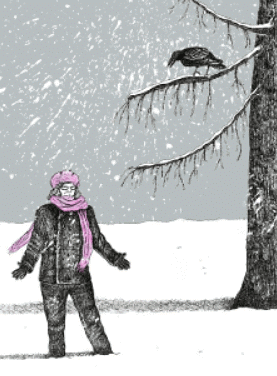
Q1: What did the crow shakedown on the poet? Ans: He shook down snow on the poet.
Q2: How did the dust of snow affect the poet? Ans: It changed the poet’s mood.
Q3: Who is the poet of the poem ‘Dust of Snow’? Ans: The poet of this poem is ‘Robert Frost’.
Q4: What type of poem is this? Ans: Highly symbolic
Q5: Where is the poet standing? Ans: Beneath a hemlock tree.
Q6: In what mood was the poet before falling of snow on him Ans: He was in an unpleasant mood.
Q7: What does he think he has lost? Ans: The rest of the day
Q8: Where was the crow sitting? Ans: The crow was sitting in a hemlock tree.
Q8: What falls on the poet? Ans: Dust of snow
Q9: What is the meaning of dust of snow? Ans: Particles of snow
Q10: What is the meaning of rue? Ans: Feel sad about
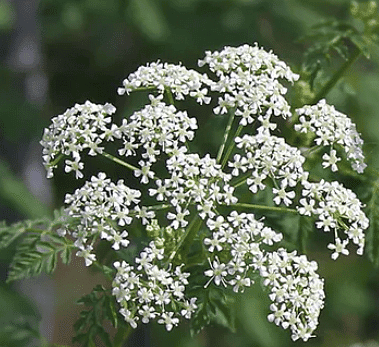
Q11: What type of plant is ‘a hemlock tree’? Ans: It is a poisonous plant with small white flowers.
Hemlock TreeQ12: What did the poet think of the day before the fall of the dust of snow on him? Ans: The poet thought unhappiness of the day before the fall of the dust of snow on him. But after the incident, he started to look at the surroundings.
Q13: What is the rhyme scheme of the poem? Ans: abab
Q14: What is the meaning of shake? Ans: Quake
Q15: What is the meaning of way? Ans: Path
Q16: Use the word ‘ mood ‘ in a sentence. Ans: His mood is not good today
Q17: What is the meaning of save? Ans: Rescue
Q18: What does the dust of snow stand for? Ans: It stands for a positive change in mood and hope.
Q19: What does the poet present via a hemlock tree and a crow? Ans: He shows that even unpleasant things in nature can bring joy.
Q20: What was the effect of dust of snow on the poet? Ans: It changed his mood
Q1: Who was Lencho? What were his main problems? Ans: Lencho was a hardworking farmer who lived on the crest of a low hill. Due to the hailstorm, his crops were destroyed, so he needed money to sow his field again and support his family. These were the main problems of Lencho.
Q2: What did Lencho compare the raindrops to and why? Ans: Lencho compared the raindrops to new coins because the crop needed the rain badly, and it was a sign of a good harvest. A good harvest meant prosperity for Lencho as he needed the money to fulfill his basic needs.
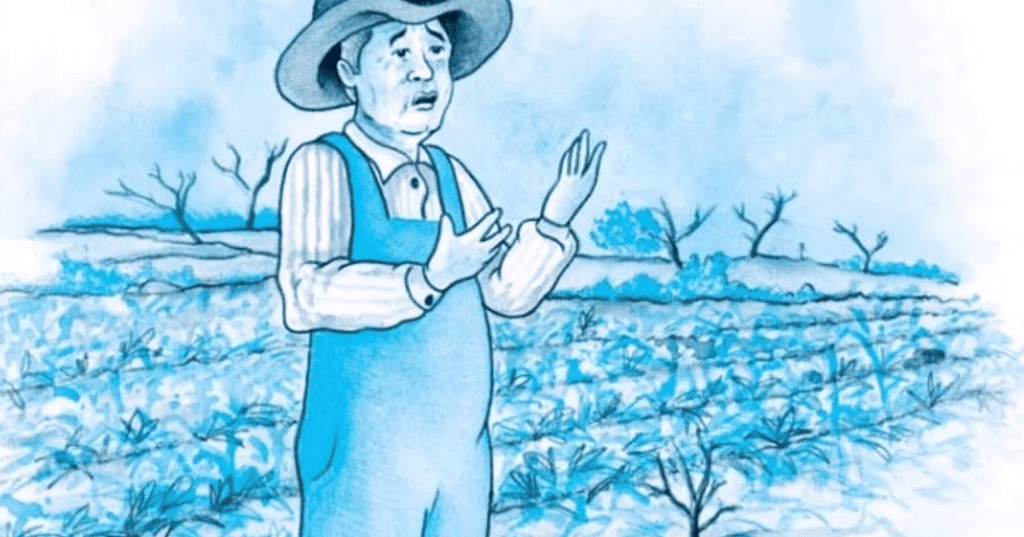
Q3: Give a brief description of the view from Lencho’s house. Ans: Lencho’s house was situated on the crest of a low hill and was the only one in the valley. One could easily see the river and the field of ripe corn from here.
Q4: What could be seen from Lencho’s house? Ans: The fields of the ripe corn could be seen from his house.Q5: What did the earth need? Ans: The earth needed some rain.
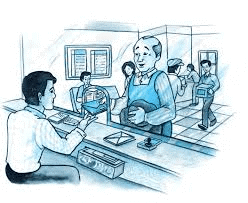
Q6: Why and how did the postmaster help Lencho? Ans: The postmaster was determined to help Lencho. He did not want Lencho’s faith in God to be shaken, so he asked his employees and friends to help Lencho. He also contributed a part of his salary to this act of charity.
Q7: How much money did Lencho need? How much did he get? Ans: Lencho got seventy pesos. He was angry at the difference as he needed a hundred pesos to sow the crops again and to support his family till the next harvest.
Q8: Why did Lencho not want the money to be sent through mail? Ans: Lencho wrote in his second letter that he received only seventy pesos, but he needed a hundred pesos. He requested God not to send the rest of the money by post since the post office employees were a bunch of crooks and would steal the money.
Q9: Do you think that Lencho was right to call the post office employees a bunch of crooks? Why or why not? Ans: Lencho called the post office employees a bunch of crooks as he did not get the full money that he had demanded. He could not believe that God had sent him any less money, so he doubted these people. But he was not right to call them a bunch of crooks.
Q10: What destroyed the crop? Ans: The hailstorm, which lasted for an hour, destroyed the crops.
Q11: How did Lencho and his family react to the calamity? Ans: They were filled with sorrow, but they had faith in God.
Q12: What was the only ‘One hope’ Lencho bad? Ans: His only one hope was help from God.
Q13: How did Lencho appeal to God? Ans: Lencho wrote a letter to God, asking for one hundred pesos.
Q14: How did postmaster react seeing Lencho’s letter? Ans: The postmaster laughed heartily on seeing Lencho’s letter.
Q15: What was the reaction of Lencho after receiving lesser amount of money? Ans: Lencho thought that the post office employees had taken 30 pesos away.
Q16: Do you think the post-office employees were ‘a bunch of crooks’? Ans: No, they were kind, generous, and helpful persons. The postmaster contributed a part of his salary and motivated his friends and colleagues for a charitable cause. So they were not a bunch of crooks.
Q17: How would you describe Lencho? Ans: Lencho was a simple, naive, and hard-working farmer. He was not only energetic, but he also had full faith in God. He became a victim of natural calamity, but God helped him indirectly.
Q18: Why does the postmaster send money to Lencho? Why does he sign the letter “God”? Ans: The postmaster was a very generous fellow. In order not to shake Lencho’s faith in God, he collected money and sent it to Lencho. The postmaster signed the letter “God”, lest Lencho should think that the money had not been sent by God.
Q19: What made Lencho angry? Ans: Lencho was angry about counting the money since it was less than the amount he had asked for. He had deep faith that God could neither make a mistake nor could deny what was requested.
Q20: How did Lencho regard his field? Why? Ans: When it started raining, Lencho regarded his field with satisfaction. He was happy to see his crop draped in a curtain of rain. He hoped to reap a good harvest.