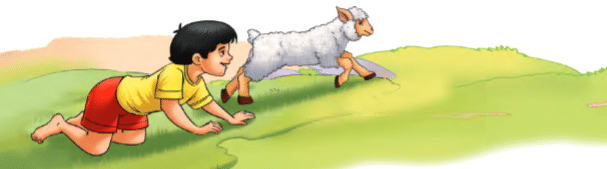
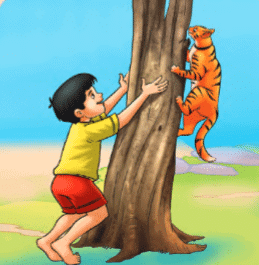
Q1. What does the poem say about being different animals? Ans: The poem says it is fun to be like different animals. We can leap like a lamb and climb like a cat.
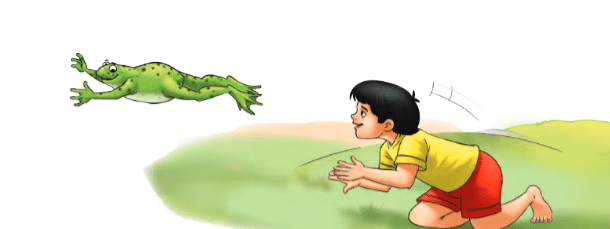
Q2. Which animals does the poem mention that we can hop and swim like? Ans: The poem mentions hopping like a frog and swimming like a fish. These actions show how animals move.
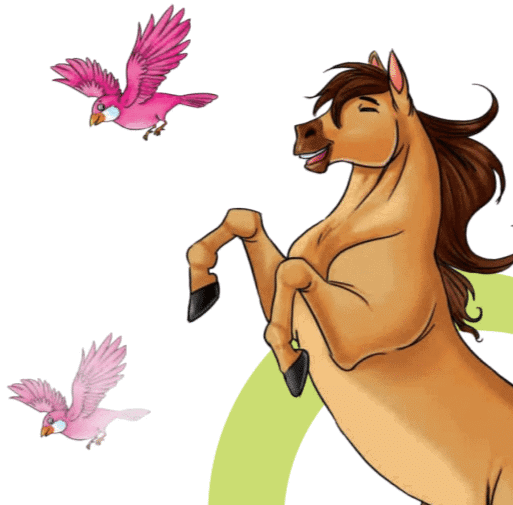
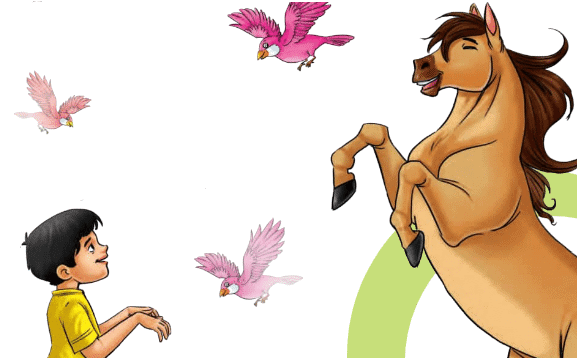
Q3. How does the poem say we can move like a horse and a bird? Ans: We can trot like a horse and fly like a bird. These movements are fun to pretend.
Q4. What can the speaker do in the poem? Ans: The speaker can act like all the animals mentioned. He enjoys pretending and having fun.
Q5. What is the main feeling in the poem? Ans: The main feeling in the poem is fun and joy. It is fun to be different animals and copy their actions.
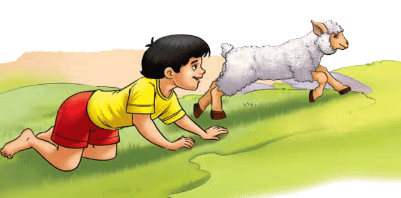
Q6. Which animal does the poem say we can leap like? Ans: The poem says we can leap like a lamb. Leaping means jumping high and far.
Q7. What does it mean to trot like a horse? Ans: To trot like a horse means to walk or run with small, quick steps. It is a fun way to move.
Q8. Why do you think the poem talks about acting like animals? Ans: The poem talks about acting like animals because it is fun and helps us imagine being different creatures.
Q9. How does the poem show that moving in different ways is enjoyable? Ans: The poem shows this by saying “It’s fun to be this, It’s fun to be that,” which means trying many movements is joyful.
Q10. Can you name two animals from the poem that live in water? Ans: Two animals from the poem that live in water are the fish and the frog. They swim and hop in water.
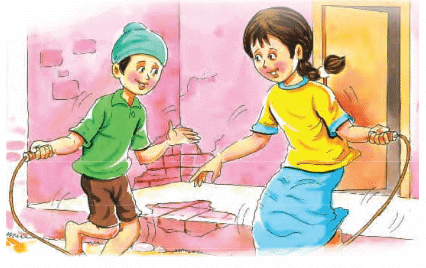
Q1. What were Jeet and Babli doing on their holiday? Ans: Jeet and Babli were playing many different games on their holiday. They enjoyed skipping rope and playing hide and seek together.
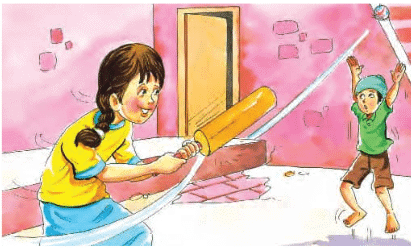
Q2. Which game did Jeet and Babli decide to play? Ans: After playing other games, Jeet and Babli decided to play a game called ‘bat and ball’ where one throws the ball and the other hits it with a bat.
Q3. What happened when Babli hit the ball the first time? Ans: When Babli hit the ball, it went into Mohit’s garden. But Mohit’s house was locked, so they couldn’t go inside to get the ball.
Q4. Why did the game stop? Ans: The game stopped because they were not able to find the ball. Without the ball, they couldn’t continue playing.
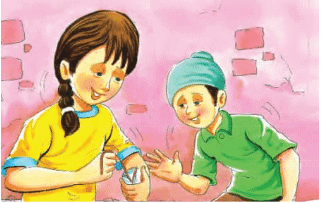
Q5. How did Babli make a new ball? Ans: Babli used rags, paper, and wool to make a new ball. She rolled these materials together tightly and tied them with a piece of string to keep it in place.
Q6. Did Jeet and Babli like the new ball? Ans: Yes, they really liked the new ball. It was good enough to play with, so they felt happy and excited.
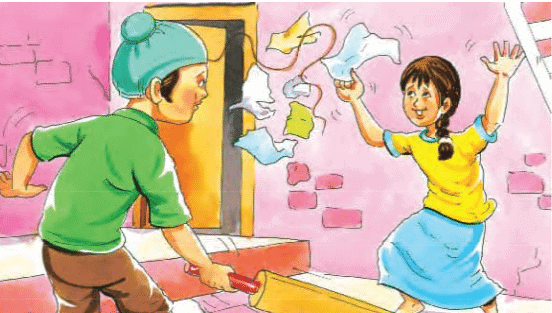
Q7. What did Babli do after the new ball was made? Ans: After making the new ball, Babli threw it to Jeet. Jeet got ready with his bat and hit the ball hard.
Q8. What happened to the ball after Jeet hit it hard? Ans: The ball broke open, and the pieces of rag flew into the air. The ball was no longer whole.
Q9. What did Babli do when the ball scattered? Ans: Babli quickly jumped and caught one piece of the rag. Then she shouted loudly, “OUT! OUT!” to say that the ball was broken.
Q10. What does shouting “OUT! OUT!” mean in the game? Ans: When someone shouts “OUT! OUT!” it means a player is out or the turn is lost. It usually means the game has to stop or a new player comes in.
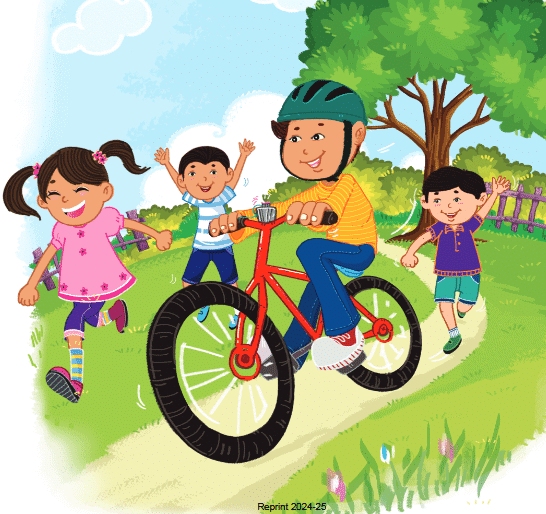
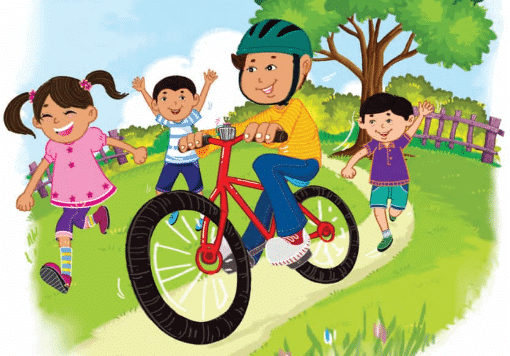
Q1. What is the colour of the bicycle in the poem? Ans: The bicycle is red. It has a bright red colour.
Red bicycle
Q2. What sound does the bicycle’s bell make? Ans: The bell makes a “Trin trin trin” sound. This sound comes when the bell is rung.
Q3. What happens when the bell rings? Ans: The friends move aside. They make way for the bicycle.
Q4. What is the colour of the bicycle’s seat? Ans: The seat is blue. It is a bright blue colour.
Q5. What are the colours of the tyres and pedals? Ans: The tyres and pedals are black. Both parts have the same dark colour.
Q6. Does the bicycle always go at the same speed? Ans: No, it does not always go at the same speed. Sometimes it goes fast, and sometimes it goes slow.
Q7. What does the bicycle need to keep moving? Ans: The bicycle needs some air. Air in the tyres helps it move.
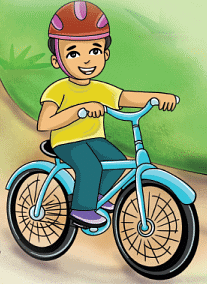
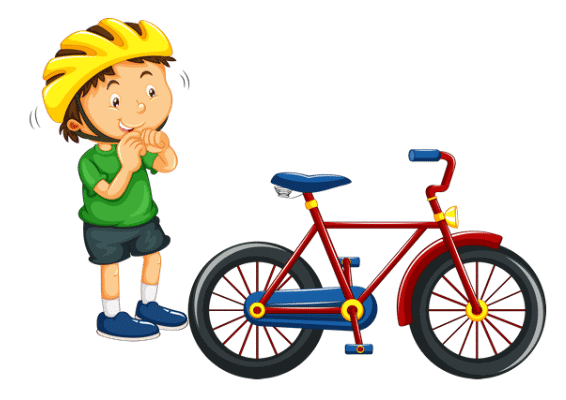
Q8. What does the child wear for safety? Ans: The child wears a helmet. It keeps the child safe while riding.
Wearing helmet keeps you safe
Q9. How does the child feel when riding the bicycle? Ans: The child feels happy. Riding a bicycle is fun for the child.
Q10. Where can the child go with the bicycle? Ans: The child can go everywhere. The bicycle takes the child to many places.
In this chapter, we will learn how small actions and kind words can make a big difference. Even little acts of kindness and sweet words can bring happiness. Just like tiny drops of water make a big ocean and small grains of sand form the land, the little things we do and say can make the world a better place.
Detailed Summary
Stanza 1
Little drops of water, Little grains of sand, Make the mighty ocean And the pleasant land.
In this stanza of the poem, the poet tells us that small drops of water and tiny grains of sand may look little, but together they make something big. Many drops of water fill the big ocean, and tiny grains of sand make the land we walk on. This means that even small things can help in a big way when they come together!
Stanza 2
Little words of love, Little acts of kindness, Little deeds of warmth Spread smiles and happiness.
In this part of the poem, the poet tells us that small kind words and little acts of love may look tiny, but they can make a big difference! A kind word or a warm smile can make people happy and spread joy everywhere. This poem teaches us that even small actions can help make the world a better place!
Try yourself:
Which of the following best describes the main idea of the poem?
A.Small actions and kind words can have a big impact.
B.The ocean is made up of tiny drops of water.
C.Grains of sand are more important than drops of water.
D.Happiness comes from big actions, not small ones.
Message
Small things can make a big difference! Just like tiny drops of water form a big ocean and little grains of sand make the land, our kind words and small good deeds can bring happiness. A kind word, a warm smile, or helping others can spread joy all around. Let’s remember that even small actions can make the world a better place!
New Words and Meanings
Grains: Small particles of something like sand or rice.
Mighty: Very strong or powerful.
Pleasant: Something that is nice, enjoyable, or pleasing.
Deeds: Actions or things that we do.
Spread: To make something go all around, like spreading joy by making others happy.
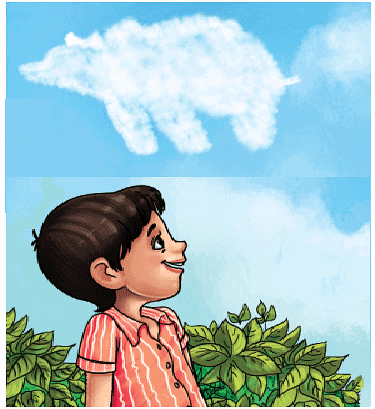
The poem A Show of Clouds is about a kid lying on the ground, looking up at the sky, and imagining different shapes in the clouds. The poet has beautifully described the shapes of the clouds and how they can look like different objects. The poem is a great way to encourage children to use their imagination and creativity.
Detailed Summary
Stanza 1:
As I lie on my back, Looking up at the sky. I see a big white bear, Looking down at me.
Imagine you are lying on the grass, looking up at the sky. The clouds above you start to form different shapes—just like when you see pictures in fluffy cotton candy! In this stanza, the person sees a big white bear in the clouds. It looks like the bear is watching over them, like a kind and gentle giant. This shows how exciting and magical it can be to use our imagination while looking at the sky!
Stanza 2:
As I lie on my back, Looking up at the sky. I see a ship sailing, On a white sea.
Imagine you are lying on the grass, looking up at the big, open sky. The soft, white clouds start to take different shapes. In this stanza, the person sees a cloud shaped like a ship sailing across a sea of white. The sky feels like a huge ocean, and the clouds look like gentle waves. This shows how using our imagination can make the sky feel like a magical place full of adventure!
Stanza 3
As I lie on my back, Looking up at the sky. I see an elephant, Waving its trunk at me.
Imagine you’re lying on the ground, looking up at the sky. The clouds start to look like different shapes. In this poem, the person sees a cloud shaped like an elephant waving its trunk, almost like it’s saying hello!
Stanza 4
As I lie on my back, Looking up at the sky. Oh! It’s fun, it’s fun to me, To see whatever I want to see.
Imagine you’re lying on your back, looking up at the sky. The clouds can turn into anything you imagine—a bear, a ship, or even an elephant! In this poem, the person feels happy and excited because they can see whatever they want in the clouds. It shows how fun it is to use your imagination and make the sky your own picture book!
Try yourself:
What does the person in the poem see when looking up at the sky that resembles an animal waving its trunk?
A.A bear watching over them.
B.A ship sailing on a sea of white.
C.An elephant waving its trunk.
D.A cloud shaped like a big white bear.
Summary of all the Stanzas:
In this poem, the speaker is lying on their back and gazing at the sky. They imagine shapes in the clouds and describe what they see.
The speaker is lying on their back and looking at the sky. This means they are lying down and watching the clouds above.
They see a big white bear in the clouds. This bear seems to be looking back at the speaker.
Next, the speaker sees a ship that looks like it’s sailing on a sea made of white clouds.
They also imagine an elephant in the sky, and it looks like the elephant is waving its trunk at them.
The speaker finds this activity very enjoyable. They can use their imagination to see anything they want in the clouds.
New Words and Meanings
Gaze: To look at something for a long time, like when you stare at the sky or a beautiful view.
Imagine: To create pictures or ideas in your mind, even if they are not real.
Shapes: Different forms or outlines of things, like the shapes of clouds in the sky.
Sailing: When a boat or ship moves on the water using the wind to push it forward.
Elephant: A big animal with a long trunk and large ears, often found in some parts of the world.
Trunk: The long, flexible nose of an elephant.
Enjoyable: When something is fun or makes you happy.
Let’s go on a super fun adventure through your very own town! This poem is like a treasure hunt where we start with the big town and find all the amazing things in it—like streets, houses, and even flowers in a basket! It’s a journey that shows how everything around us, no matter how big or small, is connected and part of something bigger.
Ready to explore? Let’s go!
Stanza-by-Stanza Explanation
First Stanza:
This is my town. In my town, There are streets. In my street, There are houses. In my house, There are rooms.
This part tells us where the poet lives.
First, we start with the big town, then move to the streets where people live.
After that, we go inside the house and see there are many rooms.
The poet is showing how everything in life is connected, starting from the town and going down to the smallest details.
Second Stanza:
In my room,
There is a bed. On the bed, There is a basket. In the basket, There are some flowers.
Now, the poet takes us inside the room.
There’s a bed in the room, and on the bed, there is a basket.
Inside the basket, we find some beautiful flowers.
The poet is showing how the small things in the room are important and are part of the bigger picture of the house.
Third Stanza:
Flowers in a basket. Basket on the bed. Bed in the room. Room in the house. House in the street. Street in the town.
In this part, the poet repeats what we’ve already learned but in a fun way!
The flowers are in the basket, the basket is on the bed, and so on.
It shows how everything is connected, starting from the flowers to the whole town.
Everything fits in its place, and together they make a beautiful world.
Try yourself:
What is found in the basket on the bed?
A.Books
B.Clothes
C.Flowers
D.Toys
Overall Explanation
This poem shows us how everything around us is connected.
It starts with the big town and goes all the way to the small flowers in a basket.
It reminds us that the smallest things, like flowers, are just as important as the big things, like houses or streets.
When we look at all the things in the world, we see how they fit together to make our lives beautiful!
Moral of the Poem
The moral of the poem is that everything, big or small, has its special place.
Whether it’s a big town or a tiny flower, everything is important and fits together in the world.
We should appreciate how even the little things make life special!
Key Words
Town – A place where people live.
Street – A road where houses are built.
House – A building where people live.
Room – A space inside the house, like a bedroom.
Bed – A piece of furniture where we sleep.
Basket – A container to hold things, like flowers.
Flowers – Pretty plants with colorful leaves.
Connected – Things that are joined together.
Place – A specific spot or location.
World – Everything around us, including towns, streets, and houses.
The poem is about the poet telling the reader to go on fun trips and adventures.
They could travel by bus, train, boat, plane, taxi, or even take a rocket to the moon.
The person may go near or far.
But the speaker wants to make sure that the person always remembers to come back home soon.
Detailed Summary
Stanza 1:
Take a bus, Or take a train Take a boat Or take a plane.
The poet tells the reader to go on fun adventures and explore the world. They can travel in different ways, like by bus, train, boat, or plane.
Stanza 2:
Take a taxi, Take a car Maybe near Or maybe far.
They could take a taxi or go by a car. It could be near to where they live or it could be far away.
Stanza 3:
Take a rocket, To the moon, But be sure To come back soon.
The readers may even go to the moon on a rocket. But the poet asks them to be sure to return home soon.
Message
The poem encourages us to go out and explore the world. There are multiple ways through which we can go to a lot of places, near or far. But it is important for us to remember to come back home and always remember where we are from.
New Words and Meanings
Train: A vehicle on tracks that carries people or goods.
Boat: A vehicle that travels on water.
Plane: A flying vehicle used for air travel.
Taxi: A car you pay to travel in.
Near: Something that is close to you or not far away.
Rocket: A vehicle that flies into space.
Encourage: To support someone by telling them to do something
This poem is about having fun by acting like different animals! It shows how we can play and do things like jump, run, or fly like animals. The poem teaches us that using our imagination makes playtime exciting and fun.
Detailed Summary
Stanza 1:
It’s fun to be this, It’s fun to be that, To leap like a lamb, To climb like a cat.
The poet says it is fun to pretend to be animals.
We can leap (jump) like a little lamb.
We can climb like a cat. Playing like animals is exciting!
Stanza 2:
To hop like a frog, To swim like a fish, To trot like a horse, To fly like a bird.
The poet talks about more fun animal actions.
Hop like a frog (jump like a frog).
Swim like a fish (move in water).
Trot like a horse (run slowly like a horse).
Fly like a bird (move arms like flying). It feels fun to move like animals!
Stanza 3:
I can act Just like them all, It’s fun to be this, It’s fun to be that.
The poet says, “I can act like all animals!”
It’s fun to play and copy animals.
We can use our body and mind to have fun!
Try yourself:Which fun activity is not mentioned in the poem?
A.Jumping like a lamb
B.Climbing like a cat
C.Dancing like a monkey
D.Swimming like a fish
Summary
The poem “It is Fun” shows how fun it is to play and imagine being different animals and enjoying their actions. The poet says it’s fun to jump like a lamb, climb like a cat, hop like a frog, swim like a fish, trot like a horse, and fly like a bird. In the end, the poet says they can act like all these animals and have fun doing it. The poem shows that using our imagination and playing like animals is joyful and exciting.
Message
The lesson is that using our imagination is a fun way to play and learn. When we pretend to be different things, we can enjoy all kinds of fun adventures.
New Word and Meanings
Fun – Something that makes you happy and excited.
Jump – To leap up in the air.
Climb – To go up, like a cat on a tree.
Hop – To jump on one foot, like a frog.
Swim – To move in water, like a fish.
Walk – To move on your feet, like a horse.
Fly – To go up in the air, like a bird.
Play – To have fun, doing things with friends or by yourself.
Animal – Living creatures like dogs, cats, birds, etc.
Imagination – Using your mind to think of things that aren’t real, like pretending to be an animal.
The poem is about a child who loves to ride their bicycle.
The poem describes how the bicycle looks.
The poem encourages us to stay healthy, step out and play.
Summary
Stanza 1:
I have a red bicycle. I pedal and I ride. Trin… trin… trin… goes the bell. Makes my friends move aside.
This stanza tells us that the speaker has a bicycle, and it is red in color. The speaker is telling us that they ride their bicycle by pedaling (pushing the pedals with their feet). The bicycle has a bell that makes a sound like “trin trin” when it rings. It’s used to let people know the bicycle is coming. When the bell rings, it makes the speaker’s friends move out of the way to let the bicycle pass.
Stanza 2:
The seat is blue in colour, The tyres and pedals are black. Sometimes fast, sometimes slow, But my bicycle is always on track.
The seat of the bicycle is blue. The tires (the round rubber parts) and pedals (where the feet go) of the bicycle are black. Sometimes the bicycle goes fast, and sometimes it goes slow, depending on how fast the rider is pedaling. This line tells us that the bicycle always stays on the path or road it is supposed to be on and doesn’t go off course.
Stanza 3:
To keep my bicycle moving, All I need is some air. I put on my little helmet, And go happily everywhere.
To make sure the bicycle continues to move, all the speaker needs to do is fill air in the tires to keep the bicycle working properly. The speaker wears a helmet, when riding their bicycle to stay safe. A helmet is something that a person wears on the head to avoid injuries. The speaker enjoys riding their bicycle and goes to many places with joy.
Message
The poem teaches us about the fun in playing with our friends and riding a bicycle, which is also a good exercise.
New Words and Meanings
Bicycle – A vehicle with two wheels that a person can ride by pedaling.
Pedal – To push the foot levers on a bicycle to make it move.
Bell – A device on a bicycle that makes a sound when rung to alert others.
Tyres – The rubber outer part of a bicycle wheel.
Seat – The part of the bicycle where the rider sits.
Helmet – A protective head covering that helps keep the head safe.
Track – The path or route where something moves, in this case, the path the bicycle follows.
 Red bicycle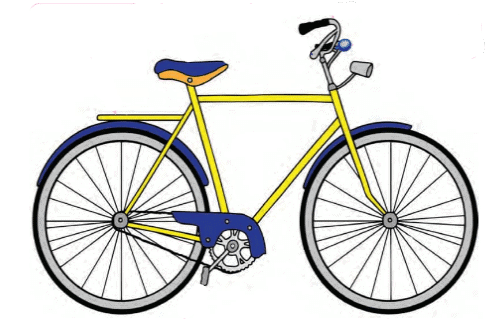
 Wearing helmet keeps you safe