12. Chandrayaan- Textbook Solutions

[Page no 122]

A. Answer the following.

1. Rani was very curious. How do you know?
Ans: Rani was frequently asking many questions because she was curious.
2. What did Pratik say in excitement?
Ans: Pratik said that India has landed on the Moon.

3. Who was Nandini Aunty?
Ans: Nandini Aunty was a scientist and mother of Pratik’s friend Vivaan.
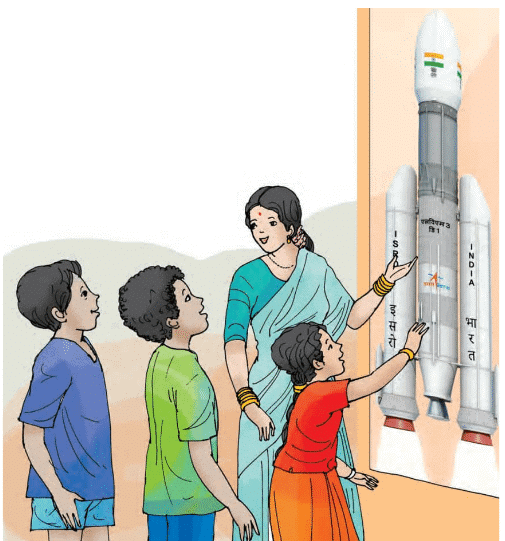
4. What do the words Chandra and Yaan mean?
Ans: Chandra means the moon and yaan means vehicle.
5. Complete the sentence:
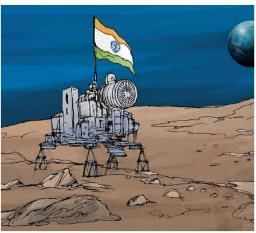
Chandrayaan-3 landed on the Moon on ____________

Ans: Chandrayaan-3 landed on the Moon on 14 July 2023.

B. Think and say.
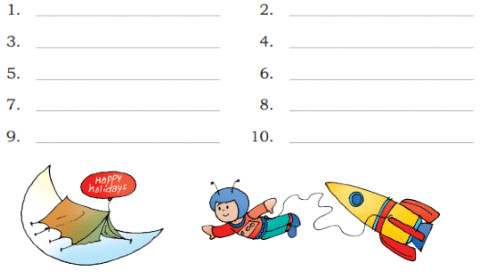
Imagine you are invited by the scientists to spend 10 days on the moon. Make a list of items that you would like to take with you.

Ans: 1. Binoculars
2. Camera
3. Water
4. Food
5. Medicine
6. Spacesuit
7. Joystick
8. Drawing book
9. Ball
10. Umbrella

Let us speak
[Page no 123]

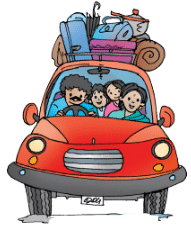
1. Chandrayaan travelled the distance between the Earth and the Moon. You may ask elders at home about their experiences of travelling to places that are far from home.
Ans: Discuss with the teacher and give answers.

2. Have you ever travelled to far-off places yourselves? If yes, share your experience with others.
Ans: Discuss with the teacher and give answers.

Let us learn

Read the following lines.There was a girl named Rani who lived in a village.
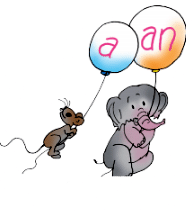
A hanky for an elephant.
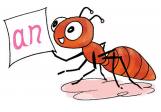
Notice that we used ‘a’ before girl, village, and hanky, and ‘an’ before an elephant.
We use ‘a’ before singular nouns that begin with consonants.
‘An’ is used before singular nouns that begin with vowel sounds (a, e, i, o, u).

A. Fill in the blanks using ‘a’.
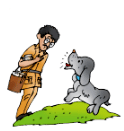
1. _________ dog is barking at the postman.
Ans: A dog is barking at the postman.

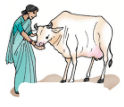
2. My mother gives chapattis to _________ cow every day.
Ans: My mother gives chapattis to a cow every day.

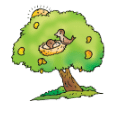
3. In summer, _________ sparrow builds its nest on the mango tree near our house.

Ans: In summer, a sparrow builds its nest on the mango tree near our house.

B. Fill in the blanks using ‘an’.

1. I saw _________ eagle yesterday.

Ans: I saw an eagle yesterday.

2. Maya bought _________ umbrella for the monsoon.
Ans: Maya bought an umbrella for the monsoon.

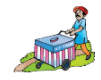
3. _________ ice-cream man brings his cart in the evenings.

Ans: An ice cream man brings his cart in the evenings.

C. Fill in the blanks using ‘a’ or ‘an’.
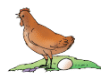
1. _________ brown hen laid _________ egg.

Ans: A brown hen laid an egg.

2. _________ eagle sat on _________ building.
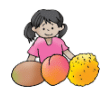
Ans: An eagle sat on a building.

3. Mary ate _________ apricot, _________ chikoo, and _________ orange.

Ans: Mary ate an apricot, chikoo, and an orange.

Let us write

[Page no 125]
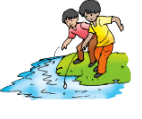
A. Fill in the blanks by forming words using ‘sk’, ‘sw’, ‘sp’, and ‘st’.(One is do for you)

1. There are swings in the park.
Ans: There are swings in the park.

2. The children throw _______ones in the river.
Ans: The children throw stones in the river.

3. I need a _______oon and a bowl for soup.
Ans: I need a spoon and a bowl of soup.

4. Have you heard the _______ory of the boy who cried wolf?

Ans: Have you heard the story of the boy who cried wolf?

5. The blue _______irt matched with the pink shirt.

Ans: The blue skirt matched with the pink shirt.

B. Describing the Moon.
Draw a picture of the Moon. With the help of your teacher, write a few lines about the Moon.
Ans: The Moon is Earth’s closest buddy in space, and it goes around our planet. It looks like a big, round rock and has lots of craters. At night, it can be bright and change shape.

Fun with Words

[Page no 126]

A. Read these sentences aloud with your teacher.

There are seven days in a week.
Sunday is the first day of the week.
Monday is the second day of the week.
Tuesday is the third day of the week.
Wednesday is the fourth day of the week.
Thursday is the fifth day of the week.
Friday is the sixth day of the week.
Saturday is the seventh day of the week.

Ans: Do yourself.
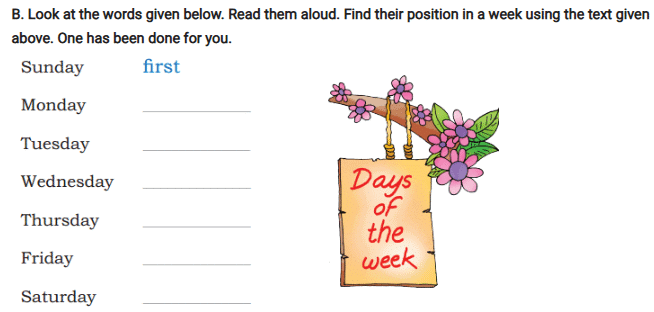
B. Look at the words given below. Read them aloud. Find their position in a week using the text given above. One has been done for you.

Ans: Sunday – first
Monday – second
Tuesday – third
Wednesday – fourth
Thursday – fifth
Friday – sixth
Saturday – seventh

Let us do

[Page no 127]

A. Divide yourselves into small groups. Each group shall collect newspaper or magazine clippings related to the Chandrayaan-3 mission. Paste it on a chart paper and display it in your class.
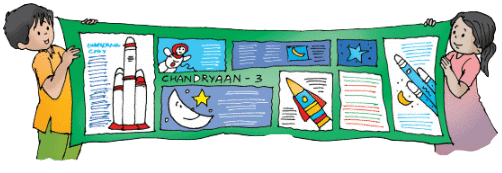
Ans: Do it in the class with the help of a teacher.

Let us explore

[Page no 127]

A. Do you know a song or a story about the moon in your mother tongue? If not, ask your family members and share it in the class.
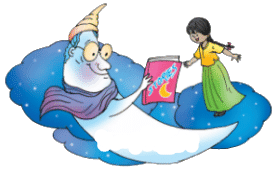
Ans: Moon up high, so round and bright,
You’re my lantern in the night.
We play peek-a-boo with the clouds, softly whispering, never loud.

Self Assessment

[Page no 128]

1. I can recite the poems:
In a group
In pairs
By repeating after my teacher
By myself

Ans: I can recite the poems:
In a group.
In pairs.
By repeating after my teacher.
By myself. ✅

2. I can read the stories:
By myself.
With my classmates.
With the help of my teacher.
Ans:
 I can read the stories:
By myself. ✅
With my classmates.
With the help of my teacher.

3. I can write:
By copying from the book or the board.
As my teacher speaks.
With the help of my classmates.
By myself.
Ans:
 I can write:
By copying from the book or the board.
As my teacher speaks.
With the help of my classmates.
By myself. ✅

4. I can tell the stories that I have read or listened:
To by myself (without any help).
With the help of the teacher.
By using the book.
Ans:
 I can tell the stories that I have read or listened:
To by myself (without any help). ✅
With the help of the teacher.
By using the book.

5. I was able to do:
All the exercise questions.
Most of the exercise questions.
A few exercise questions.
Ans:
 I was able to do:
All the exercise questions. ✅
Most of the exercise questions.
A few exercise questions.
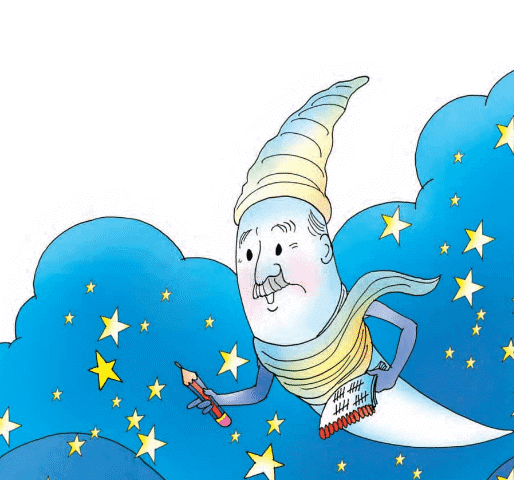
11. Chanda Mama Counts the Stars- Textbook Solutions

[Page no112]
A. Answer the following.

1. Does the Moon look the same every night?
Ans: No, we see the varying sizes of the moon every night.

2. What did Chanda Mama try to count?
Ans: The Chanda Mama tried to count the number of stars.

3. Why did Chanda Mama fall asleep?
Ans: Counting the number of stars in the sky. Chanda Mama got tired and started yawning and fell asleep.
4. Who helped Chanda Mama?
Ans: The Sun helped Chanda Mama.

5. Complete the sentence:
The number of stars in the sky is the same as __________
Ans: The number of stars in the sky is the same as the number of lovely children.

B. Think and say.

1. I call the Moon, Chanda Mama. What do you call him in your language?
Ans: In different Indian languages, people lovingly refer to the Moon in various ways. Here are a few examples:

  • Hindi: Chanda Mama (चंदा मामा) – “Uncle Moon”
  • Bengali: Chand Mama (চাঁদ মামা)
  • Tamil: Chandiran Mama (சந்திரன் மாமா)
  • Telugu: Chanda Mama (చందమామ)
  • Marathi: Chanda Mama (चंदा मामा)
  • Gujarati: Chand Mama (ચાંદ મામા)
  • Punjabi: Chann Mamma (ਚੰਨ ਮਾਮਾ)
  • Urdu: Chaand Mian (چاند میاں) – “Mr. Moon”

Even in English, children might call him “Mr. Moon” or “Uncle Moon” playfully.

2. Chanda Mama was not able to count the stars. What things can you not count?
Ans: I cannot count the trees and plants, the birds, the animals, the people, the shops, the vehicles, the ants, and many more things.

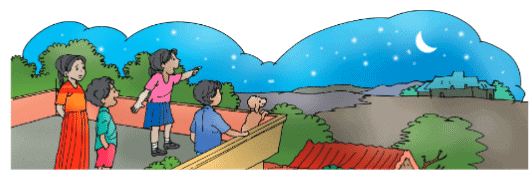
3. The Moon is visible during the night. What can you see in the night sky?
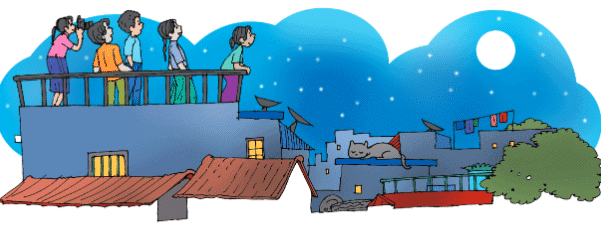
Ans: Along with the moon, we can see the stars in the night sky.

Let us learn 

[Page no114]

Here and There!

Look at the following sentences.
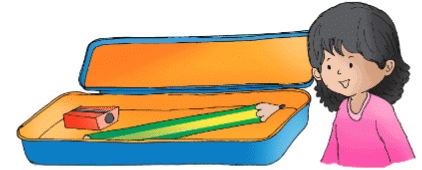
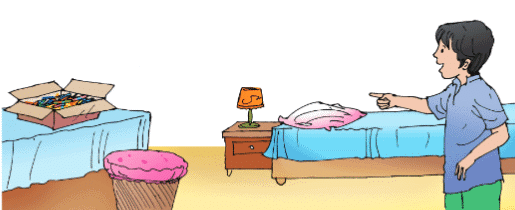
We are here on the Earth. The Moon is there in the sky.I have a sharpener here in my pencil box.The crayons are there in the big box.The underlined words in both sentences tell us about the location of the ‘sharpener’ and ‘crayons’. The distance of the objects from the speaker helps us in choosing between the words ‘here’ and ‘there’.
We use ‘here’ to tell the location of things that are near us. Similarly, ‘there’ is used to tell the location of things that are far from us.
Fill in the blanks with ‘here’ or ‘there’.
One has been done for you.
1. The students are playing kabaddi there.

Ans: The students are playing kabaddi there.

2. _______________ is your shirt.

Ans: Here is your shirt.

3. _______________ is my bicycle.

Ans: There is my bicycle.

4. I went to Chandigarh last year. My brother lives _______________.

Ans: I went to Chandigarh last year. My brother lives there.

5. This is my bench. I sit _______________ with my friends.

Ans: This is my bench. I sit here with my friends.

Let us listen

[Page no 115]A. In the story, we read that the stars were too many to be counted.

Now, your teacher will read out a list of items for you. Put the items in the correct column in the given table.
1. Children in the classroom.
2. Flowers in a garden.
3. Books in the library.
4. Pencils in your pencil box.
5. Fingers on your right hand.
6. Children in your city or town.
7. Pages in your English notebook.
8. The hairs on your head.

Ans: 

Let us write

[Page no 116]A. It was a full moon night. Children had come out to see the Moon. Complete the conversation they had by picking the words from the help box.Govind: Wow, look!

Safura: The moon looks so big and bright.
Sukanya: Isn’t it?
Dhruv: My grandfather _______________________________.
Ramani: Let us take a picture.
Safura: My mother has ________________________________.
Dhruv: Come. Stand here and ____________________________.
Govind: The moon is __________________________________.
Help Box

Ans: Govind: Wow, look!
Safura: The moon looks so big and bright.
Sukanya: Isn’t it?
Dhruv: My grandfather says the full moon looks very beautiful.
Ramani: Let us take a picture.
Safura: My mother has a camera for the pictures.
Dhruv: Come. Stand here and let’s take a picture.
Govind: The moon is so bright and big.

Let us do

10. Night- Textbook Solutions

Picture Reading 

[Page no 103]
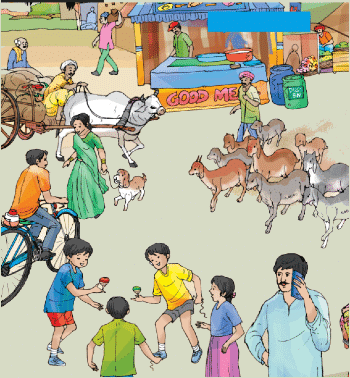
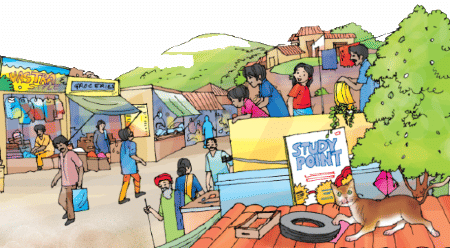
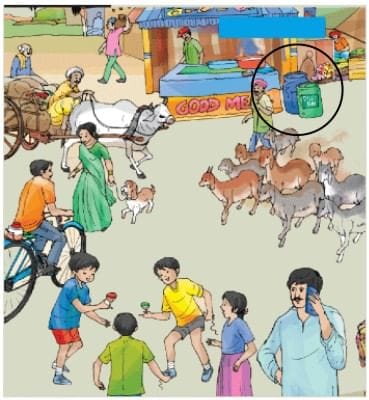
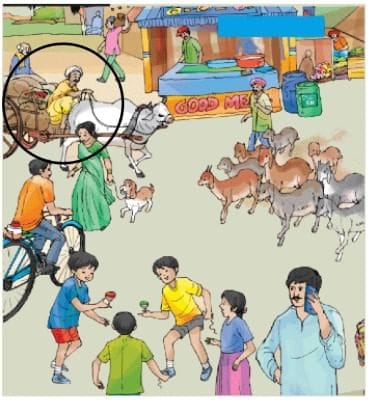
Look at the picture and answer.

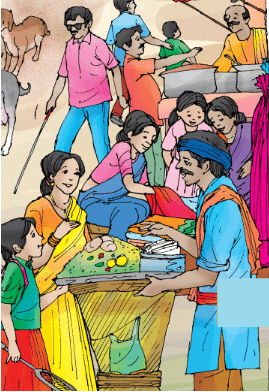
1. What can you see on both sides of the street?
Ans: I can see shops and people moving around on both sides of the street.

2. Why are there two dustbins? Do you know why one is blue and the other is green in colour?
Ans: There are two dustbins because of the two types of waste. The blue one is for dry waste and the green one is for wet waste.

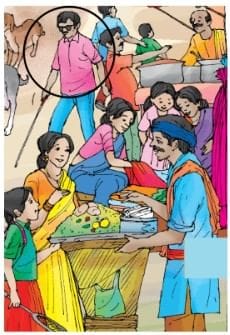
3. Why is the man in dark glasses holding a white stick?
Ans: The man in dark glasses is blind. He is holding a stick to find a way to move.

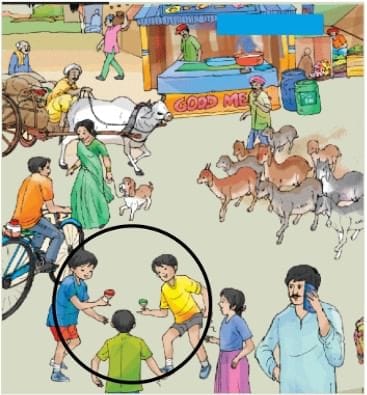
4. Do you know which toy the boys are playing with?
Ans: The boys are playing with spinning Tops.

 5. How many bullock carts are there in the picture?
Ans: There is one bullock cart in the picture.

6. Name the different animals in the picture.
Ans: The different animals in the picture are cats, dogs, bulls, and goats.

Let us think 

[Page no 106]
A. Answer the following.

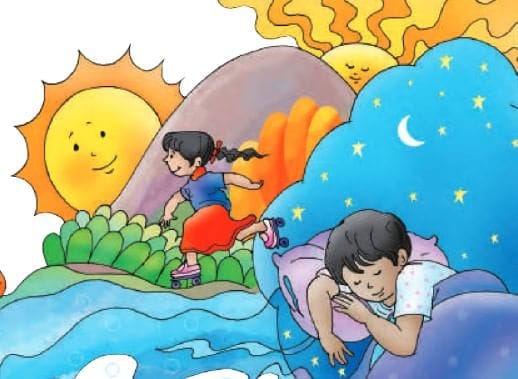
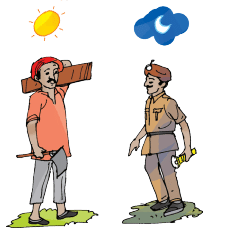
1. Where does the Sun go after the end of the day?
Ans: The Sun sinks behind a distant hill after the end of the day.

2. Which among the following needs the Sun? Why?

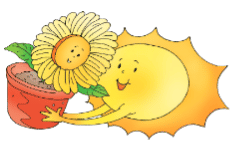
(a) sunflower
(b) toys
(c) plants
(d) table
(e) children
Ans: (a) Sunflower and (c) plants.
Sunflowers and plants require sunlight to make their food and grow.

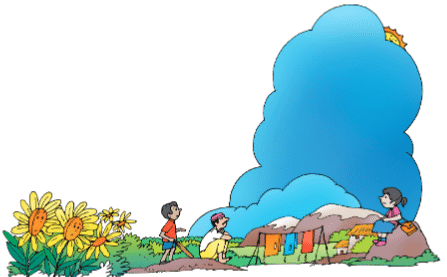
3. The poem talks about the Sun in the sky. What else do you see when you look up at the sky?
Ans: When you look up at the sky, you may see clouds, birds, aeroplanes, stars, and the moon.

B. Think and answer.

1. What different colours do we get to see during sunrise and sunset?
Ans: During sunrise and sunset, we get to see many colours like red, orange, pink, purple and yellow, etc.

2. What do you see when you look at the sky at night?
Ans: When we look at the sky at night, we can see stars, the moon, planets, etc.

3. How do you feel when you open your eyes in the morning?
Ans: When we open our eyes in the morning, we feel refreshed, and energized.

4. Imagine a day when the Sun doesn’t come out. Talk about how the day would be.
Ans: It would be dark all day if the Sun didn’t rise.

Let us do

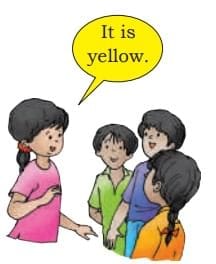
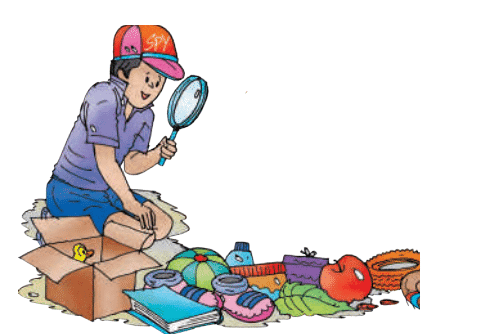
Let us play a game. Let’s play a fun game called “I Spy”! We are going to take turns to be Spies. The Spy secretly chooses something in the room and gives everyone a clue. The Spy starts by saying, ‘I spy with my little eye something that is …’ and gives a clue. 
For example, ‘I spy something that is blue!’ Then, everyone looks around and tries to find something that is blue. Maybe it’s a pen, a chair, or even someone’s shirt! If it’s tricky to guess the object right, the Spy can give more clues. 
The child who guesses right becomes the new Spy! Keep playing, taking turns being Spies and guessing until everyone gets a chance to be the Spy.

Let us speak 

[Page no 107]
Read the following sentence:

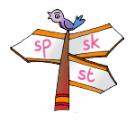
I spy a few stars in the sky.
The word spy begins with sp
The word stars begins with st
The word sky begins with sk

Ans: Do it yourself.

Now say these words aloud.

Ans: Do it yourself.

Let us learn

[Page no 108]
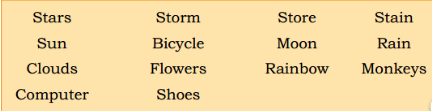
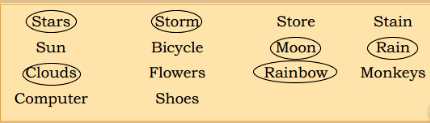
A. Read the following words and circle the words that are found in the sky.

Ans: 

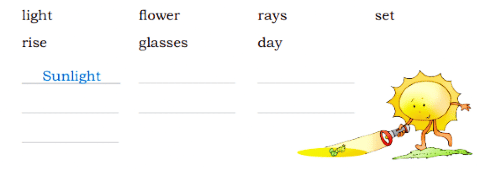
B. Add ‘Sun’ to the following words to make new words. Write them in the space given.
One has been done for you.

Ans:

09. Madhu’s Wish- Textbook Solutions

[Page No. 93] 

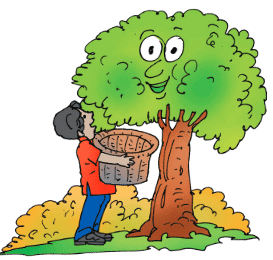
A. Answer the following.

1. What did Madhu enjoy?
Ans:
 Madhu enjoys eating different kinds of food and snacks.

2. Do you think the old man had magical powers? How do you know?
Ans: 
Yes, the old man had magical powers. We know this because he granted Madhu’s wish when he said, “In return, you can wish for anything from this tree and it will be granted.”

3. Why did the tree ask Madhu to ‘think over’ his wish?
Ans: 
The tree asked Madhu to ‘think over’ the wish because it wanted him to consider his choice carefully before making it.

4. Name some of the things that Madhu ate.
Ans:
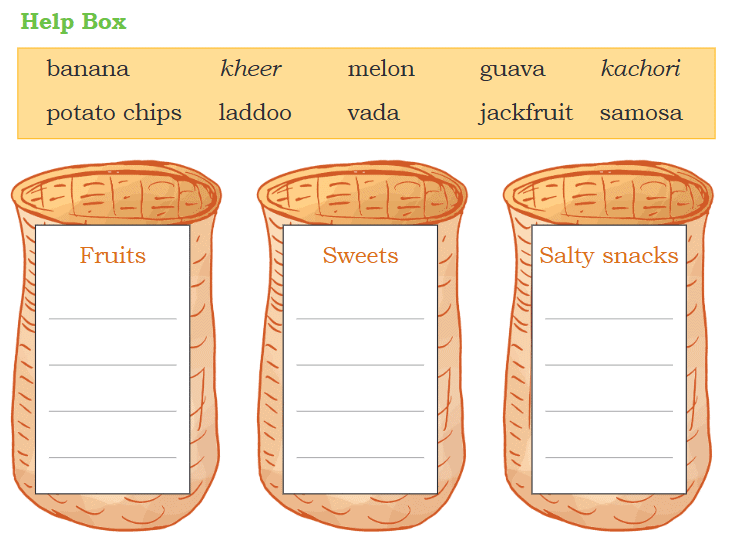
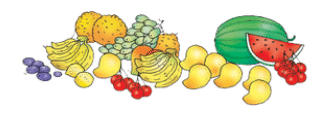
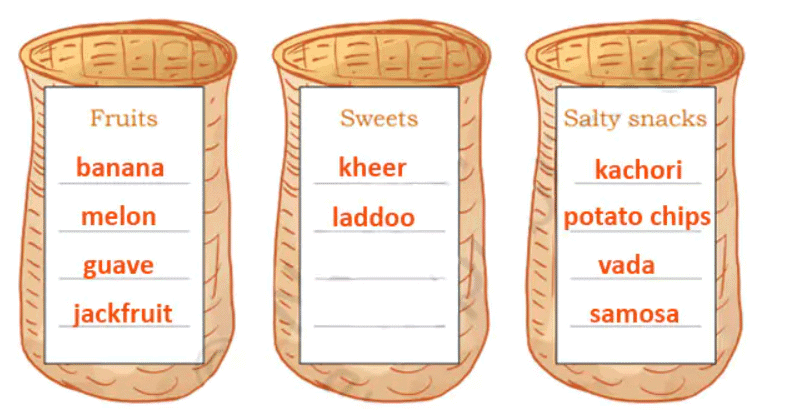
 Madhu ate so many food items including laddoos, many fruits like grapes, mangoes, apples, bananas, jackfruit, melons, guavas, oranges, etc., some savouries like matri, samosas, kachori, potato chips and vada. He also tasted sharbat, kheer and badam milk.

B. Think and say.
1. Have you experienced hiccups?
Ans:
 Yes, I experienced hiccups many times while eating food.

2. What do you do when you get hiccups?
Ans: 
When I get hiccups, I drink water slowly to make them go away.  (Your answer may vary) 

3. Do you think water is important? Why do you think so?
Ans:
 Water is important because it requires daily for different activities. Without it we can not survive for longer time.

4. What would you wish for and why if you were in Madhu’s place?
Ans:
 If I were in Madhu’s place, I would have wished for all good things that are required for me in my life.  (Your answer may vary) 

Let us learn

[Page No. 94]

A. Madhu enjoyed the following items. Write them in the correct basket.

Ans:

B. Read the following sentences.
1. Madhu shared his food with the old man. He is kind.
Ans: 
Madhu shared his food with the old man. He is kind.

2. Madhu wanted to eat everything. He is greedy.
Ans:
 Madhu wanted to eat everything. He is greedy.

3. The old man gave a special gift to Madhu. He is generous.
Ans: The old man gave a special gift to Madhu. He is generous.

[Page No. 95]

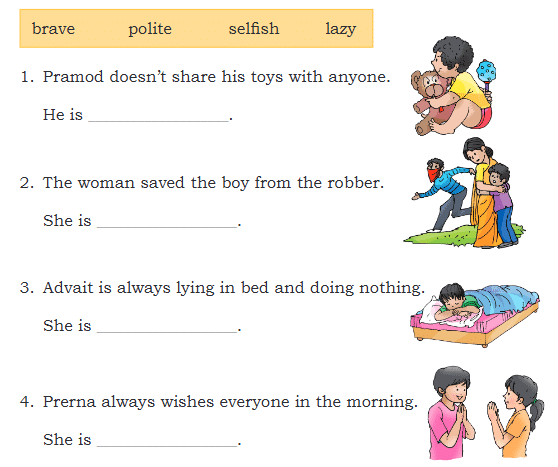
C. Choose a word from the box to describe the people below.

Ans:

[Page No. 95]

D. Read the following sentences.
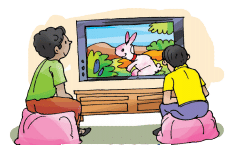
1. Sam is watching television.
2. Pratham is watching television.
Both Sam and Pratham are doing the same activity.
The two sentences can be combined into a single sentence:
Sam and Pratham are watching television.

Now, look at the following sentences.
1. Aman has a pen.
2. Aman has a pencil.
3. Aman has an eraser.
The three sentences talk about Aman. The three sentences can be combined as one sentence using ‘and’.
The new sentence will be:
Aman has a pen, a pencil, and an eraser.

Let us take one more example:
1. Sam works in the afternoon.
2. Pratham works at night.
Both sentences talk about doing ‘work’ but by different people and at different times.
The two sentences can be combined as:
Sam works in the afternoon but Pratham works at night.
Rewrite the following sentences using ‘and’ or ‘but’. 
1. I eat an apple. I eat an orange. I eat a peach. (and)
Ans: 
I eat an apple, an orange, and a peach.

2. I like to watch cartoons. My sister likes to watch movies. (but)
Ans:
 I like to watch cartoons, but my sister likes to watch movies.

3. Anita plays volleyball. Anju plays volleyball. (and)
Ans: 
Anita and Anju play volleyball.

4. Dolma wants a new comic book. She has spent all her pocket money on sweets. (but)
Ans:
 Dolma wants a new comic book, but she has spent all her pocket money on sweets.

5. Rajesh wants to go to the park. He has not finished his homework. (but)
Ans: 
Rajesh wants to go to the park, but he has not finished his homework.

Let us listen 

[Page No. 97]

A. Your teacher will read parts of the story. Listen carefully and tell the class what happened after that.
1. Madhu said, “Oh tree, let me have different types of food. Nothing else.”
2. As he was eating, he suddenly got hiccups. He wanted water.

Ans: 1. The tree asked Madhu to think again about his wish as he wanted only food items but no water.
2. He looked around for water after he got hiccups but there was no water as he asked only food items from the tree in his wish.

Let us write

[Page No. 98]

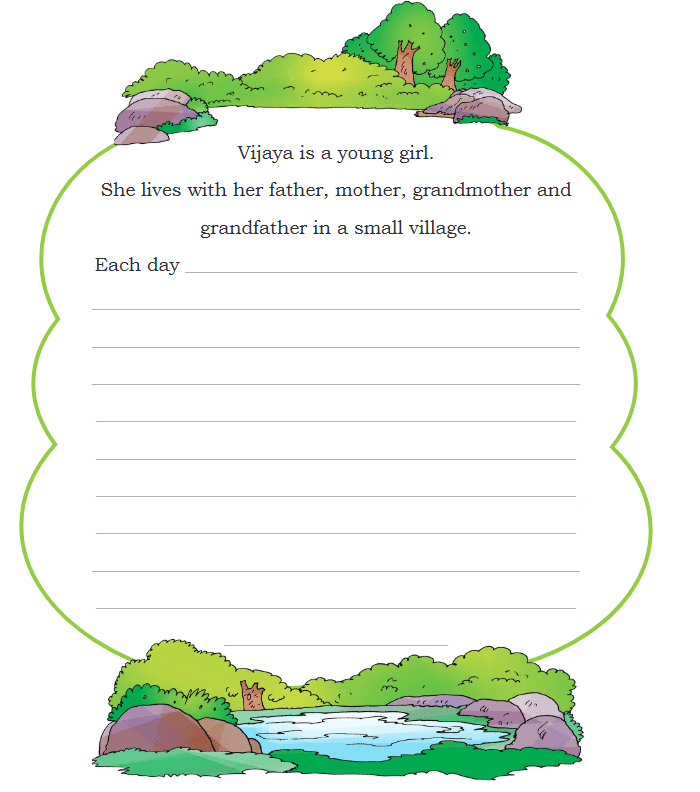
A. Complete the following story.

Ans: Vijaya is a young girl. She lives with her father, mother, grandmother, and grandfather in a small village. 
Each day, she wakes up early in the morning to help her mother with household chores. After that, she gets ready for school, where she enjoys learning new things and playing with her friends. In the evening, Vijaya helps her grandmother in the garden, where they grow vegetables and flowers. She also spends time listening to her grandfather’s stories about the old days. After dinner, she finishes her homework and reads a book before going to bed. Vijaya is a kind and cheerful girl who loves her family and enjoys her simple village life.
 (Your answer may vary) 

[Page No. 99]

Fun with Words 
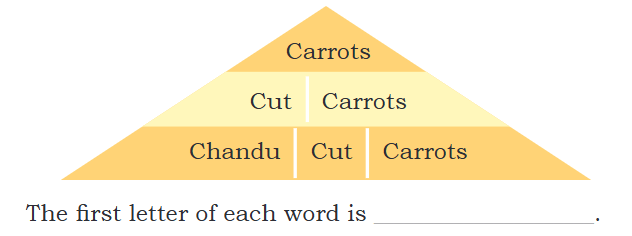
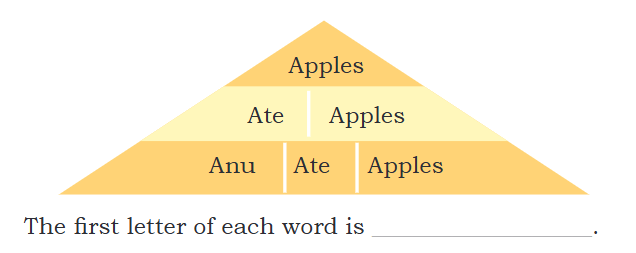
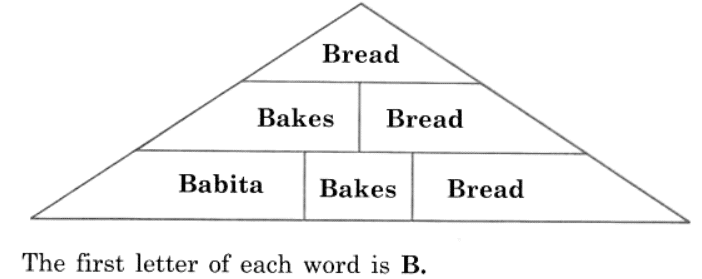
B. Notice that the first letter of each word has the same letter.
Ans: The first letter of each word is ‘C’.
Ans: The first letter of each word is ‘A’.

C. Write down similar words as shown above using your name or any name of your choice.
Ans: 

Let us write

[Page No. 100]

1. Madhu shared his food with the old man because ________________
Ans:
 Madhu shared his food with the old man because he was a kind boy and felt sorry for that man.

2. Madhu was happy because ______________________________________
Ans: 
Madhu was happy because the old man told him that he could wish for anything from the tree, and it would be granted.

3. After eating fruits, Madhu asked for savouries because ______________________________________
Ans: 
After eating fruits, Madhu asked for savouries because he got bored of eating only fruits and wanted to try something different.

4. Madhu asked for water because _________________________________
Ans: 
Madhu asked for water because he got hiccups after eating too much and realized he needed water to drink.

08. Thank God- Textbook Solutions

Let us think

[Page No. 82]

A. Answer the following.

1. What did the farmer grow on his farm?
Ans:
 The farmer grew a variety of fruits on his farm but he took special care to grow grapes and watermelon in a small corner.
2. What did his wife say?
Ans:
 The farmer’s wife suggested that the best fruits on their farm that year were the watermelon and grapes.

3. Why did the farmer decide to take the grapes?
Ans: 
The farmer decided to take the grapes to the king because they were easier to carry.

4. What did the King do playfully?
Ans: 
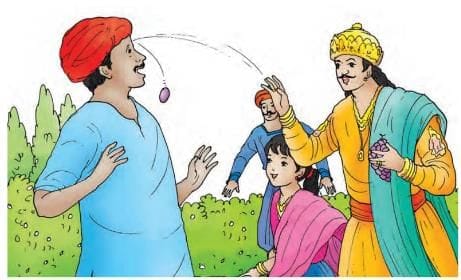
The king in a playful mood took a bunch of grapes and threw them at the farmer while he was sitting in front of him.
5. Why did the farmer say, “Thank God!?
Ans:
 The farmer said, “Thank God!” when the grapes thrown by the king hit him on the forehead. He expressed gratitude because he realized that if he had brought watermelons instead of grapes, they could have caused more harm due to their weight.

B. Think and Say
1. The farmer in the story grew fruits. What else can a farmer grow?
Ans: 
A farmer can grow vegetables, grains, nuts, flowers, herbs, and livestock such as cows, chickens, or sheep.

2. Are there women farmers? Do you know any?
Ans: 
Yes, there are women farmers! They work just like men farmers and help grow food all around the world. They plant seeds, take care of plants, and make sure we have lots of food to eat.
3. If you meet a farmer, what would you say to them?
Ans:
 If you meet a farmer, you might say, “Thank you for all your hard work! Your efforts provide us with the food we eat. It’s important and appreciated.”

Let us learn[Page No. 83]

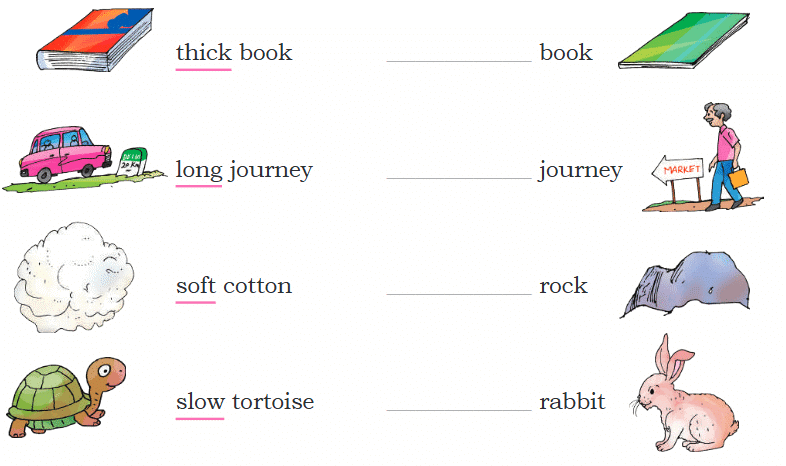
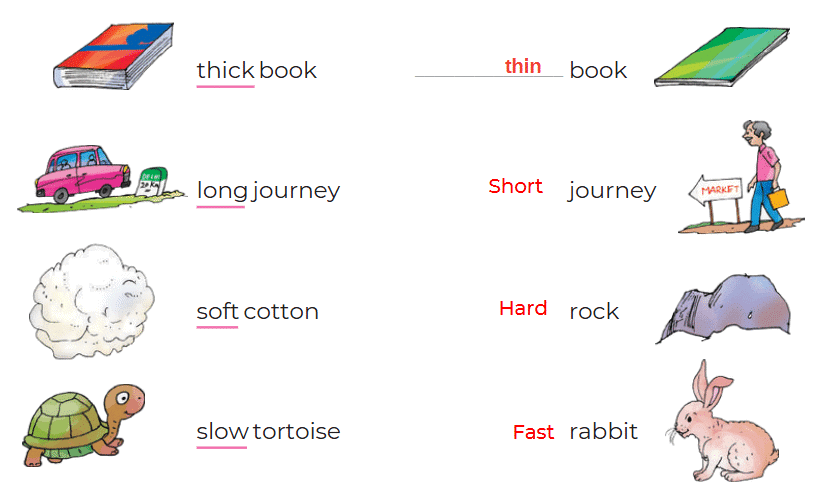
A. The farmer knew that the watermelon was heavy and the grapes were light.
The words heavy and light are opposite in meaning.
Write the opposite of the underlines word.

Ans: 

B. Read the sentences.
1. The ball is round
2. The tables are brown.

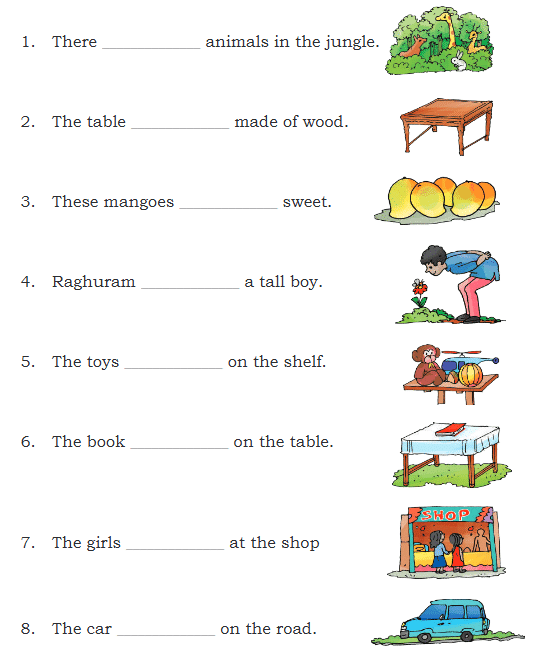
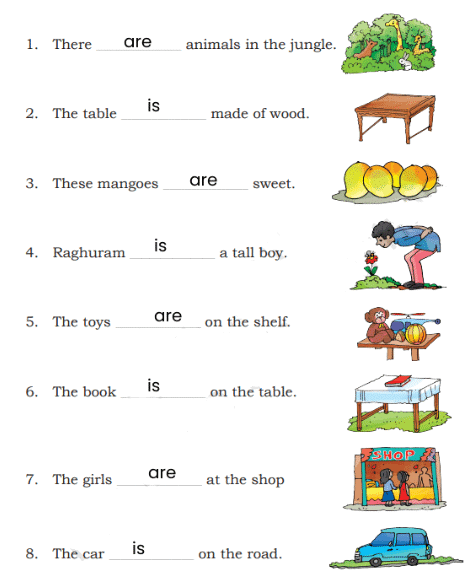
C. Fill in the blanks with ‘is’ or ‘are’.

Ans:

Let us Listen

[Page No. 85]

Let us Speak[Page No. 86]

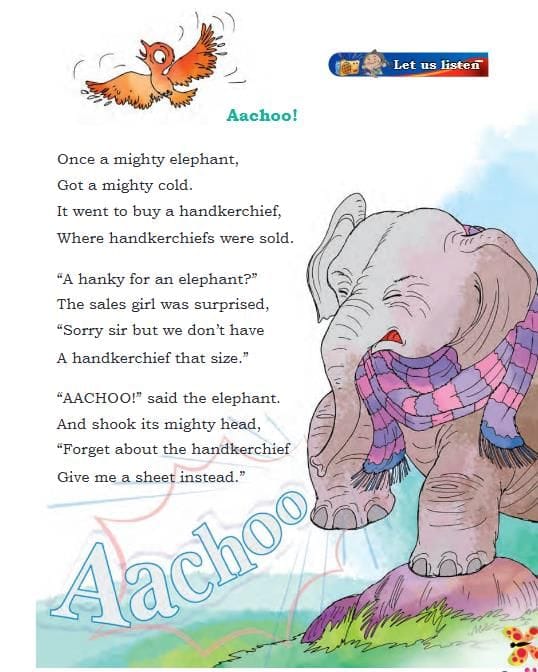
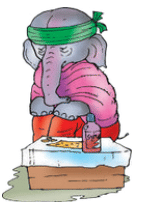
Imagine you are visiting the Big Elephant. You know that the elephant has a cold. What food items will you take with you? 

Say them aloud. 
Ans: If I am visiting the Big Elephant who has a cold, I might bring:

  • Warm soup: It’s comforting and easy to eat.
  • Soft fruits: Like bananas, which are easy to chew.
  • Carrots: Cooked carrots are soft and gentle.
  • Oatmeal: It’s soft and soothing.
  • Teas: Like ginger tea, which can help with a sore throat.

These foods are gentle and can help the elephant feel better.

Let us write

[Page No. 86]

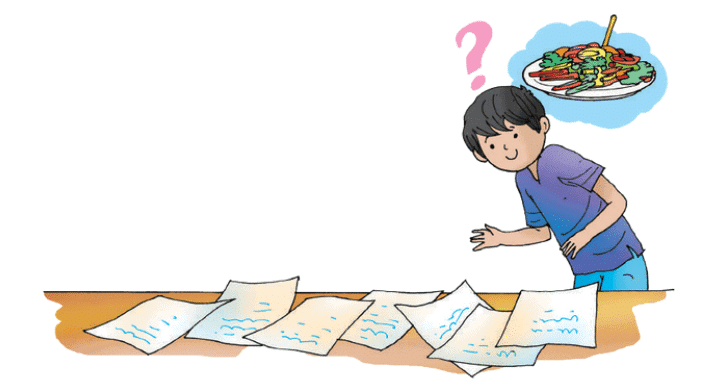
Chandu’s Fruit Salad
Chandu has written the steps for preparing a salad on a few slips of paper. He mixed them up. Think of the proper order and write down in the space given below.

( ) Next, I put in papaya cubes.
( ) Mother cuts some fruits for me.
( ) First I take some banana slices.
( ) Finally, I squeeze a lemon on it, adding a pinch of salt.
( ) Then I add the apple slices.
( ) Then I mix them all.
( ) After that, I add some grapes from a bunch.
Ans: (1)
 First I take some banana slices.
(2) Next, I put in papaya cubes.
(3) After that I add some grapes from a bunch.
(4) Mother cuts some fruits for me.
(5) Then I add the apple slices.
(6) Then I mix them all.
(7) Finally, I squeeze a lemon on it, adding a pinch of salt.

Let us explore

[Page No. 87]

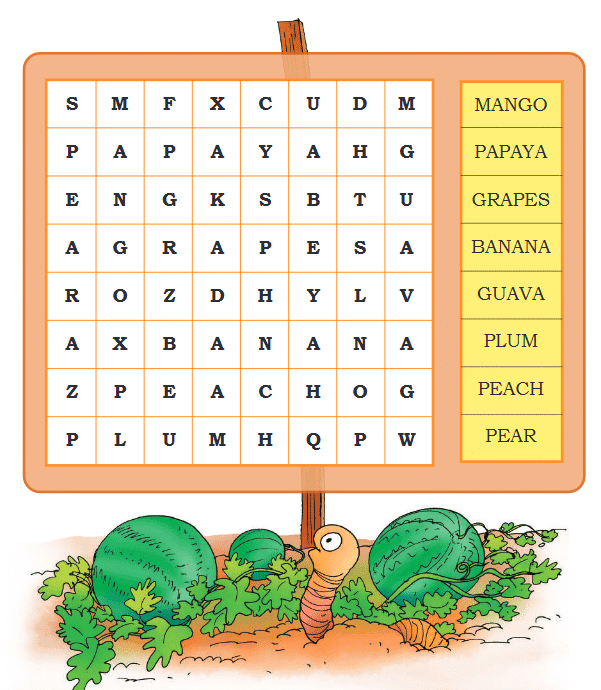
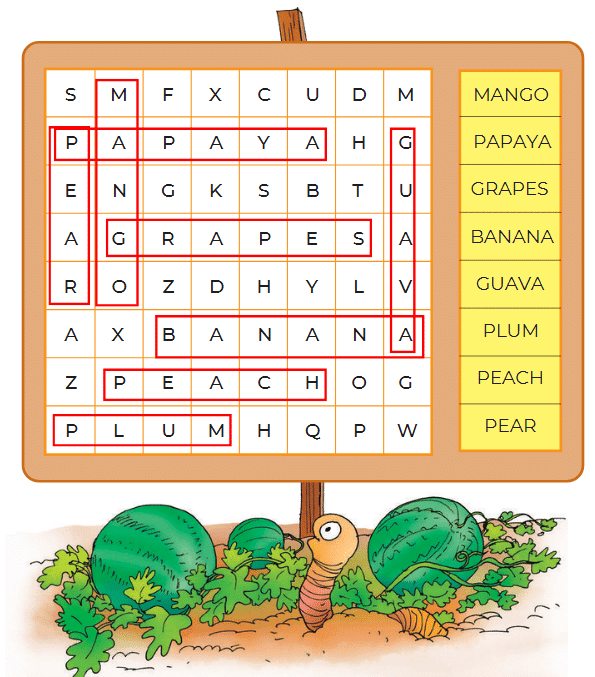
A. Find fruits in the grid given below.
Ans:

07. The Big Laddoo- Textbook Solutions

Picture reading 

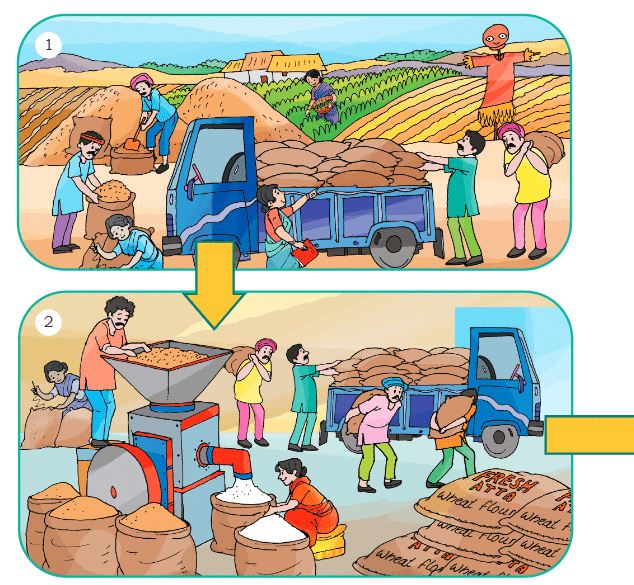
[Page No. 69]

Look at the pictures and answer.

1. What can you see in Picture 1?
Ans: 
In Picture 1, some farmers are loading wheat grains on vehicle from their field.

2. Look at Picture 2. What is the man doing with the wheat?
Ans: 
The man is processing flour (atta) from wheat.

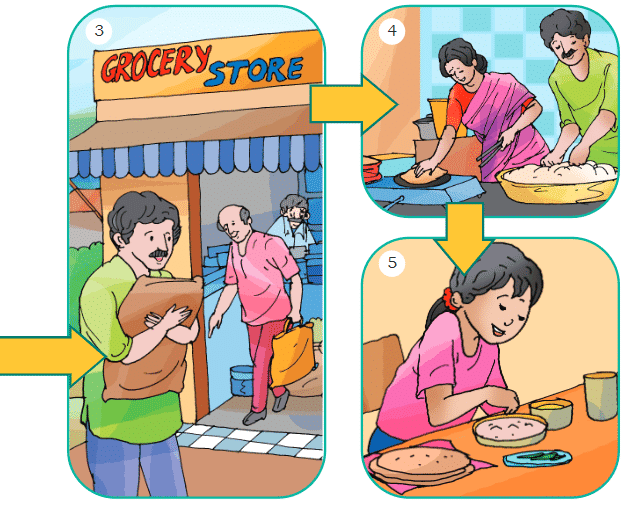
3. Look at Picture 4. Who are they? What are they doing?
Ans: 
They are husband and wife. They are making chapattis.

4. What is the girl doing in the last picture?
Ans:
 The girl is eating her food.

5. What do you have along with chapatti?
Ans:
 We have vegetables (sabzi) or lentils (dal) along with chapatti.

6. Have you seen a field? What was growing there? Speak about it.
Ans:
 Yes, I have seen a field. I saw farmers growing grains, fruits and vegetables there.

Let us think 

[Page No. 72]

1. Have you seen a big laddoo? How big was it? Did you eat it all by yourself? Tell your friends about it.
Ans: 
Yes, I saw a big laddoo once at a wedding. It was as big as my hand! I couldn’t eat it by myself, so I shared it with my cousin. We had so much fun eating it together.  (Your Answer may vary)

2. Have you eaten anything that is very big? What was it? Talk about it.
Ans: 
Yes, I ate a giant pizza once with my family. It was huge. It has lots of cheese and toppings. We all sat around the table and enjoyed eating the big slices together. It was yummy!  (Your Answer may vary)

3. What different kinds of laddoos have you eaten?
Ans:
 I have eaten many varieties of laddoos, like besan laddoo, boondi laddoo, churma laddoo, motichoor laddoo, coconut laddoo, etc.  (Your Answer may vary)

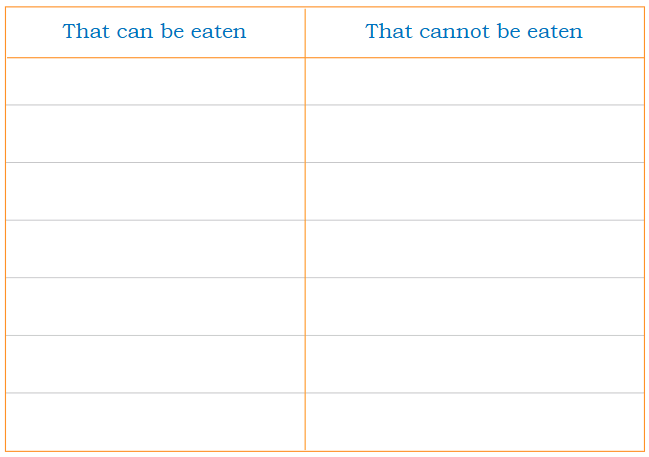
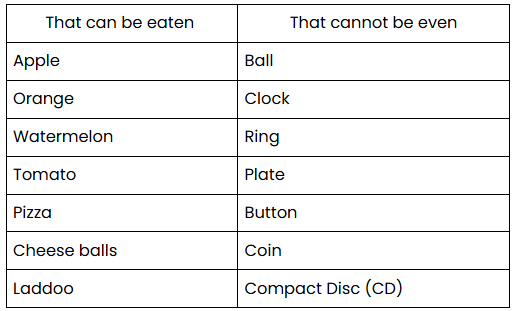
4. Name a few round things. Can you eat all of them? Write them in the correct column.

Ans: 

5. The child threw the Big Laddoo into the sea. What do you think happened to the Laddoo?
Ans: 
When the child threw the big laddoo into the sea, I think it made a huge splash! The laddoo would have hit the water with a big sound and lots of water would have splashed up high.

Let us speak 

[Page No. 73]

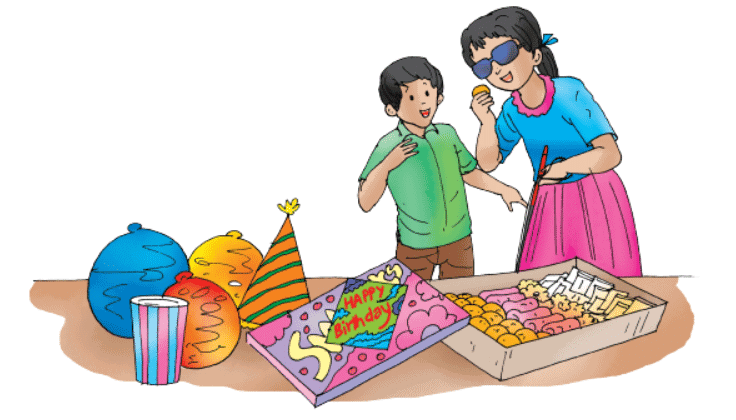
Jithu and Meena are friends. Meena cannot see properly. It was her birthday. Jithu gifted her a box of mixed sweets. She felt the sweets and excitedly picked up the big laddoo. She said, “I love laddoos!” Jithu was surprised and asked her, “How did you know it was a laddoo?”
Think and say what Meena answered.
Ans: 
Meena replied, “I can feel the round shape and the texture.” Laddoos are sound and usually have a crumbly texture. I recognized it by feeling it with my hands.

Let us learn

[Page No. 73]

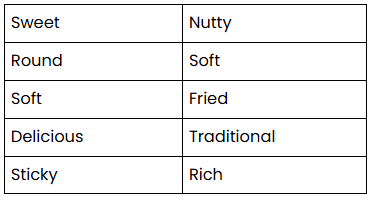
Laddoos are sweets, commonly eaten in every house. Write words that tell us about the laddoo.

Ans: 

Let us write 

[Page No. 74]

A. Frame a few sentences using the given words.

  1. Play _______________________
  2. Plum _______________________
  3. Cloud _______________________
  4. Clock _______________________
  5. Blue _______________________
  6. Blanket _______________________

Ans:

  1. Play: Students play many games in the school playground.
  2. Plum: Plum is a small, round fruit.
  3. Cloud: There are dark clouds in the sky.
  4. Clock: There is a big clock in my school.
  5. Blue: My father has a blue umbrella.
  6. Blanket: We use blankets in winter.

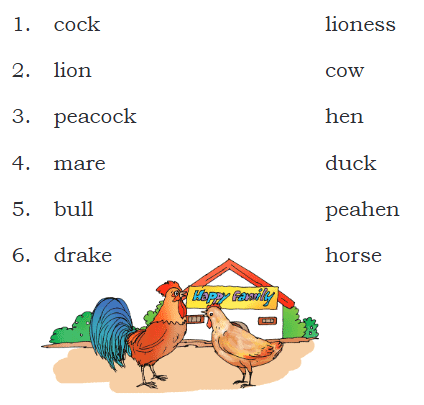
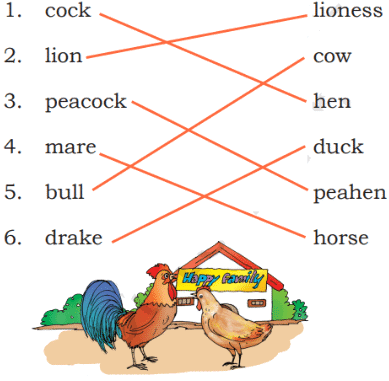
B. Match the following.
Ans:

Let us explore 

[Page No. 75]

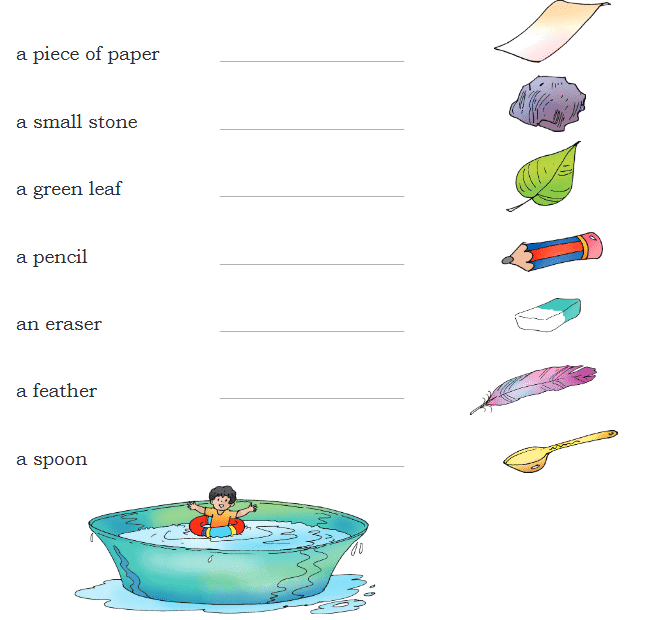
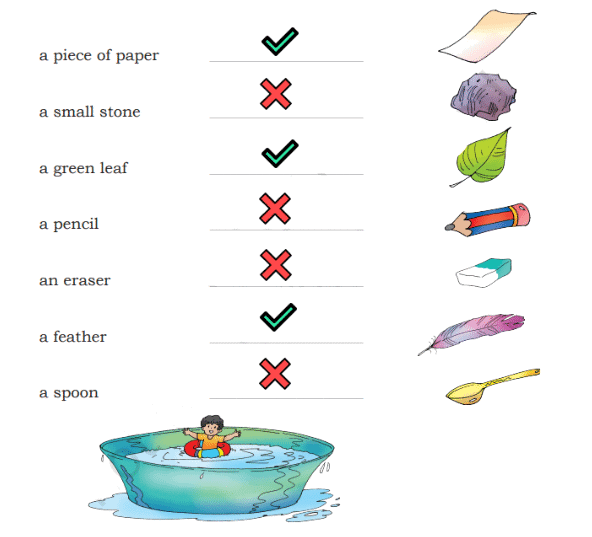
A. Look at these objects shown here. Collect and put them one by one into a tub of water. See which one float and which one will sink. Tick the objects that float and cross the objects that sink.

Ans:

Let us write 

[Page No. 77]

A. Which is your favourite festival? Write the names of some sweets and dishes prepared on that day.

Ans: Holi is my favourite festival. It is also known as the festival of colours. It is celebrated in the spring season. We play with bright colours like red, green, blue, pink, yellow, etc. Many delicious sweets and savouries like gujia, laddoos, thandai, chaat, pakoda, etc. are prepared. Holi begins with burning the demoness, Holika. We collect wood and burn it and celebrate by dancing and singing around it. Holi teaches us the victory of good over bad. (Your Answer may vary)

06. Paper Boats

Textbook Solutions

Let us think[Page No. 58]

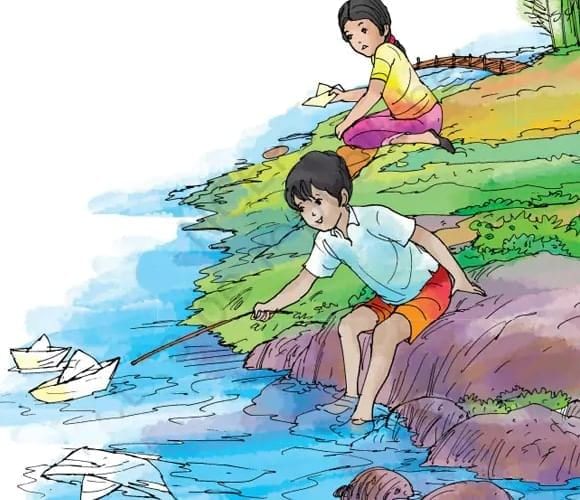
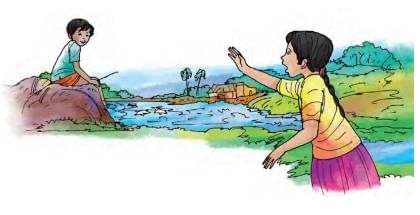
A. Answer the following.1. What was Meena playing with?
Ans: Meena was playing with paper boats that she used to sail in the stream.
2. Meena was angry. Why?
Ans: Meena was angry as there was a boy who was overturning all the paper boats she had left sailing on the water.
3. How did Meena help the boy?
Ans: Meena helped the boy learn how to make paper boats by folding and refolding paper sheets of different colours.

B. Think and answer.
1. Meena made paper boats. What else can you make with paper? Discuss in small groups.
Ans: Meena made paper boats, and we can also make many other things with paper. We can make paper planes, paper hats, paper flowers, and even paper animals. In our small groups, we can share ideas about what else we can create with paper.

2. What games do you play with your friends? Which one do you like the most? Why?
Ans: I play many games with my friends! We play cricket, hide and seek, tag, and sometimes we make up our own games. My favorite game is hide and seek because I love hiding and trying to find my friends. It’s so much fun!


C. Say whether True or False.
1. The boy thought it was fun to overturn paper boats.
Ans. True

2. Meena ran home to complain about the boy.
Ans. False

3. The boy did not know how to make paper boats.
Ans. True

4. Meena had only white paper.
Ans. False

Let us speak 

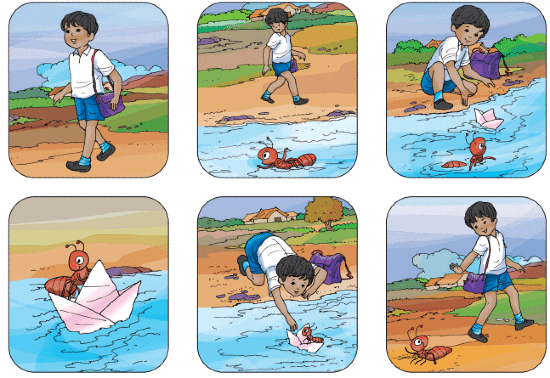
[Page No. 60]Look at the pictures.Tell the story of ‘Manish saves the ant’ to the class.Ans: Manish Saves the Ant
One day, an ant went to drink water on the bank of a river. Unfortunately, the stream of the river pulled it into the river. It struggled hard to reach the bank, but failed. While going to school, Manish saw the ant struggling to reach the bank. He soon made a paper boat and floated in the river. The ant saw it and went into the boat. After some time the boat reached the bank of the river. Manish took out the ant. Thus he saved the life of an ant.

Let us learn 

[Page No. 61]
A. Fill in the blanks using ‘he’ or ‘she’

1.Rani likes playing outside.
__________ likes flying kites.

Ans: Rani likes playing outside.
She likes flying kites.

2. Sahil has a top.
__________ plays with it every day.

Ans: Sahil has a top.
He plays with it every day.

3. Durga is five years old.
__________ is going to school.

Ans: Durga is five years old.
She is going to school.

4. Ranjit goes to school, regularly.
__________ likes reading stories.

Ans: Ranjit goes to school, regularly.
He likes reading stories.

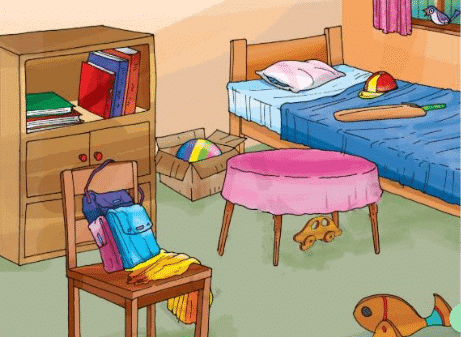
B. Look at the picture..

Write where each thing is. Choose the correct word from the brackets.
1. The bat is __________ (on/under) the bed.
Ans: The bat is on the bed.

2. The bag is __________ (in/on) the chair.
Ans: The bag is on the chair.

3. The ball is __________ (in/under) the box.
Ans: The ball is in the box.

4. The car is __________ (in/under) the table.
Ans: The car is under the table.

5. The books are __________ (in/on) the shelves.
Ans: The books are in the shelves.

Let us do 

[Page No. 63]
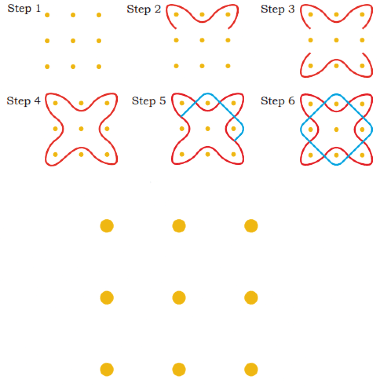
A. Follow the steps to draw a Rangoli.

Ans: Do it yourself. The picture below will be the final picture

Let us write[Page No. 64]

A. Write a few lines about the picture using the following clues.

Ans: 1. Children are playing in the park.
2. A girl and a boy are enjoying on a see-saw.
3. A girl looks happy to swing on a tree.
4. A boy also enjoys swinging on another swing.
5. A girl slides on a slide.

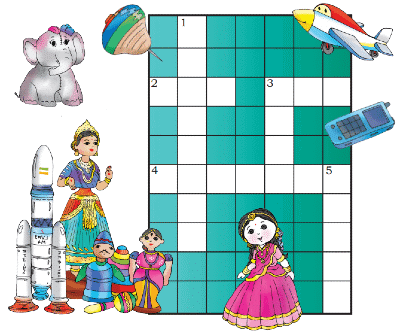
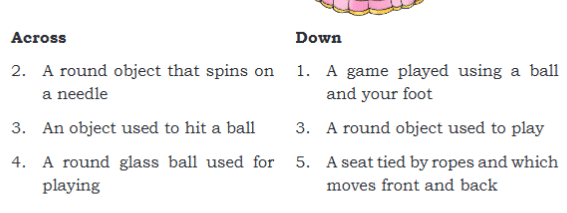
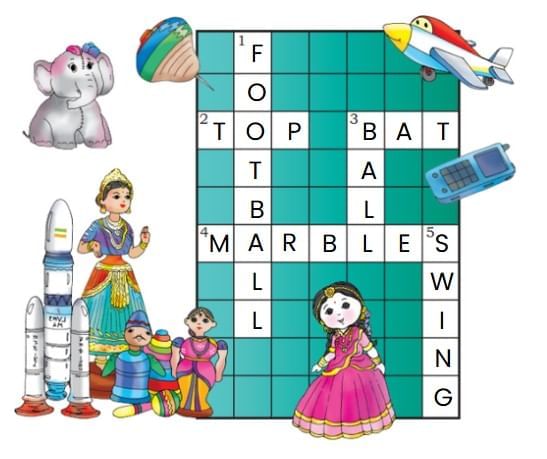
B. Solve the crossword puzzle.Hint: All the answers are related to toys and games.

Ans:

Let us explore 

[Page No. 66]

A. Talk to your elders at home. Find out what games they played when they were young. Learn a game from them and share with your friends preferably in small groups.

Ans:  

  • First, I asked my grandmother what games she loved as a child.
  •  She told me about “Kho-Kho” and “Stapu” (Hopscotch), which she and her friends played in the courtyard.
  • I practiced drawing the Stapu grid and learnt the rules of Kho-Kho from her stories.
  • The next day at school I gathered a small group of four friends.
  • I taught them how to hop through the Stapu grid and how to chase and dodge in Kho-Kho.
  • We took turns being the chaser and the runner, making up fun signals as we played.
  • Everyone enjoyed learning a new game, and we promised to play it again at recess!

Self Assessment

1. I can recite the poems:
☐ in a group.
☐ in pairs.
☐ by repeating after my teacher.
☐ by myself.
Ans: Attempt yourself.

2. I can read the stories:
☐ by myself.
☐ with my classmates.
☐ with the help of my teacher.
Ans: Attempt yourself.

3. I can write:
☐ by copying from the book or the board.
☐ as my teacher speaks.
☐ with the help of my classmates.
☐ by myself.
Ans: Attempt yourself.

4. I can tell the stories that I have read or listened:
☐ by myself (without any help).
☐ with the help of the teacher.
☐ by using the book.
Ans: Attempt yourself.

5. I was able to do:
☐ all the exercise questions.
☐ most of the exercise questions.
☐ a few exercise questions.
Ans: Attempt yourself.

05. Talking Toys

Textbook Solutions

Let us think
[Page No. 49]
A. Answer the following.
1. Name the toys in the toy shop.
Ans: Doll, Chennapatna Toys, Vande Bharat Train, Kondapalli dancing dolls, Soft toy elephant, toy phone, toy aeroplane.

2. What toy did the little boy request his mother to buy him?
Ans: The little boy requested his mother to buy him the Vande Bharat Toy Train.

B. Think and answer.

1. Talk in pairs. How do you feel when someone buys or gives a toy to you?
Ans: I feel happy.

2. Have you seen the ‘Jadui Pitara’?
Ans: No.

Let us Learn

[Pages 49 – 50]
A. Read these words.

The words boy, doll, frock and cap are naming words.
The word happy tells us more about the naming word ‘boy’.
The words red, talking and blue tell us more about the naming words beside them.
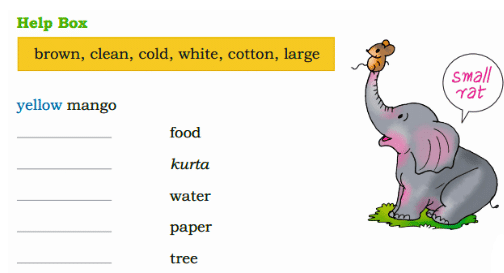
Add a word from the help box to the given naming words. You may use the same word more than once. One has been done for you.

Ans: Clean Food
White Kurta
Cold Water
White Paper
Large Tree
Now try writing more such words.
__________ ,__________ ,__________ ,__________.

Ans: Green Grapes, Ripe Mangoes, Sweet Dish, Little Girl

B. Look at these words.
toy – toys
boy – boys
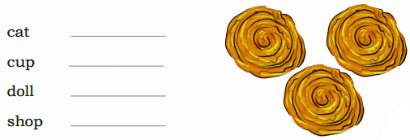
You have learned that we add ‘s’ for more than one thing. These are called plural words.
Write the plural of the given word by adding ‘s’.
Ans: Cat – Cats
Cup – Cups
Doll – Dolls
Shop – Shops
Train – Trains

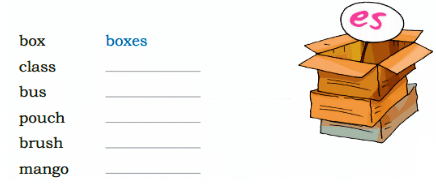
For some words, we add -es to make a plural word.
Write the plural of the given word by adding ‘es’.
Ans: Box – Boxes
Class – Classes
Bus – Buses
Pouch – Pouches
Brush – Brushes
Mango – Mangoes

Let us listen

[Page No. 51]
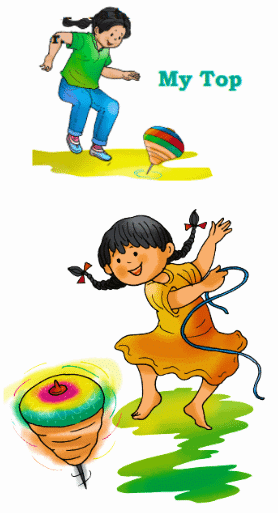
A. Listen to your teacher. Your teacher will recite a poem about a top. Then, you repeat along with your teacher.

Red and green, 
Yellow and brown,
My top goes round and round.
I play with it every day
Seeing it go round and round,
Along with it, I jump around.
Ans: Do it yourself. 

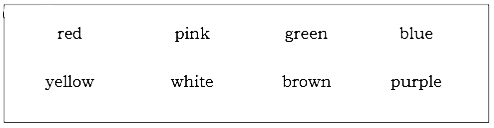
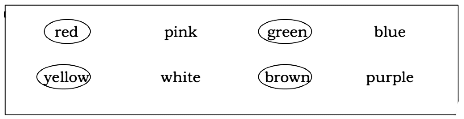
B. Look at the box given. Circle the names of colours used in the poem.

Ans: 

Let us Write

[Pages 52 – 54]
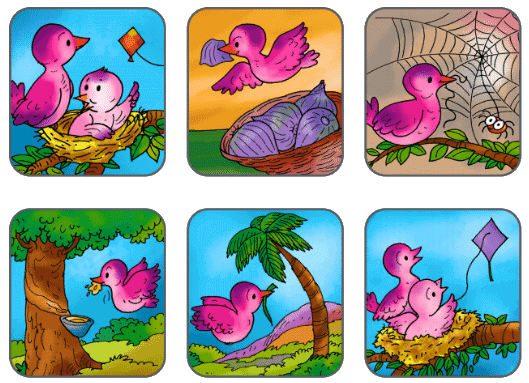
A. Look at the pictures.

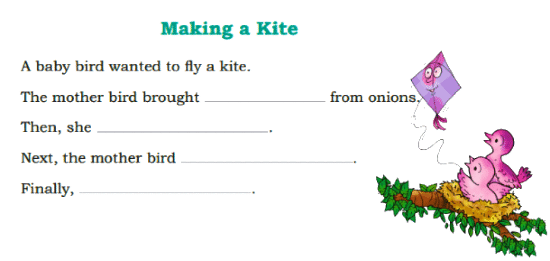
These pictures show how a mother bird made a kite for her baby bird.
Use the following clues to complete the given sentences.

Ans: Making a Kite
A baby bird wanted to fly a kite.
The mother bird brought an onion peel from onions.
Then, she brought thread from the spider web to make thread for the kite.
Next, the mother bird brought gum from a tree and a leaf blade from a palm tree. She stuck the leaf blade at the bottom of the onion peel.
Finally, the mother bird made a kite for the baby bird to fly.

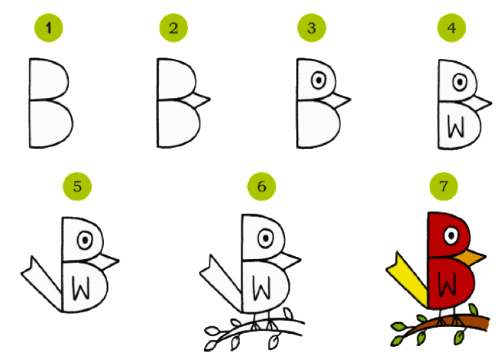
B. Draw a bird using the letter ‘B’ as shown in the picture.

You may follow the instructions:
1. Write the capital letter ‘B’.
2. Draw a sleeping v (>) as shown in the picture.
3. Now draw a circle in the upper loop of B and put a ‘ . ’ in it.
4. Now draw a w in the lower loop of B.
5. Next draw a tail as shown in the picture.
6. Lastly, draw feet and a small branch for the bird to sit on.
7. Now, colour the bird!
Ans: Do it yourself.

C. Now, draw a picture like this one using any other letter of the alphabet.
Ans: 

Let us do

[Page No. 55]
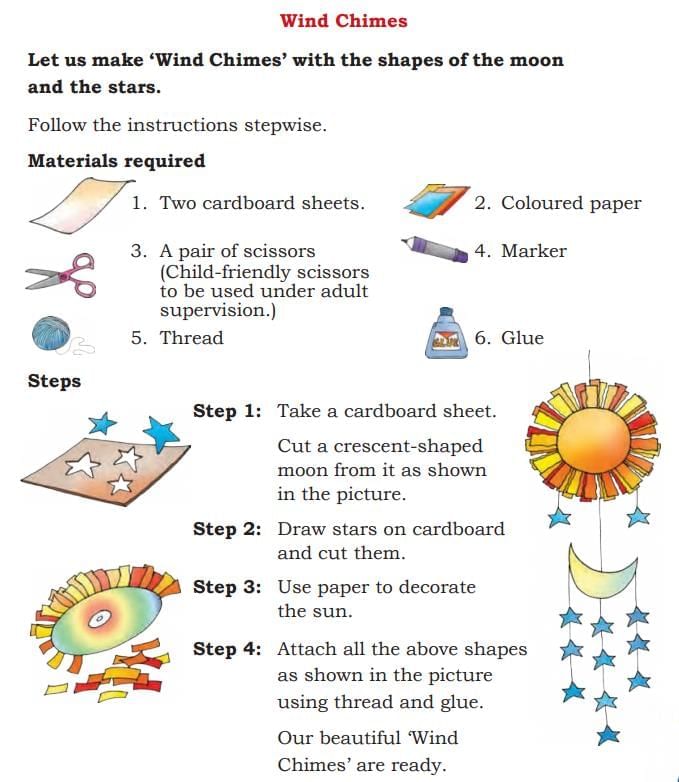
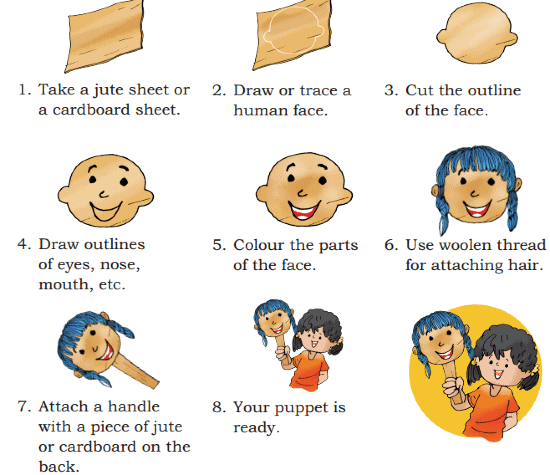
Let’s make jute or cardboard puppets.
Material required:
Jute sheets or cardboard sheets, acrylic or watercolours, pencil, woollen thread and glue.
Steps: 
Ans: Attempt yourself.

04. Out in the Garden- Textbook solutions

Picture Reading
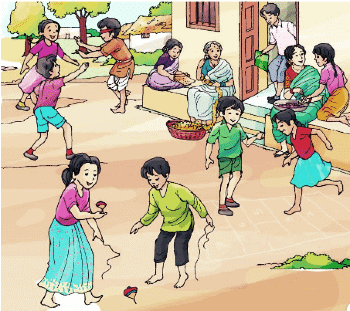
[Pages no 37-38]

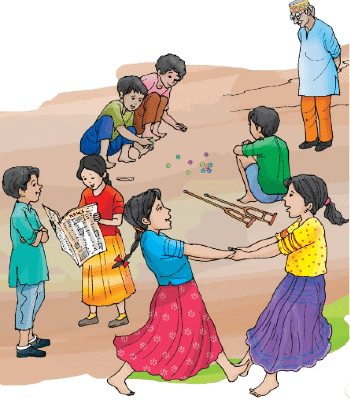
Look at the picture and answer.

1. Count how, many there are and write in the blanks:
children ________, girls ________, boys ________, women ________ and animals ________

Ans: Children 16, girls 7, boys 9, women and animals 0.

2. What games are the children playing?
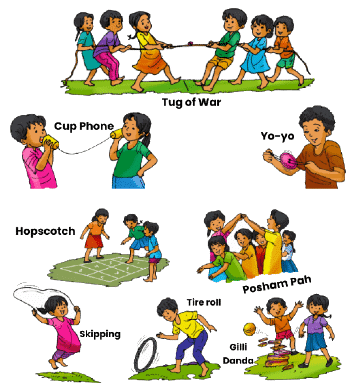
Ans: They are playing marbles, Hopscotch and Yo-Yo, Hide and seek and Ringa-Ringa Roses.

3. Children are playing in the open space in front of their houses. Where do you usually play?
Ans: I usually play in a park or garden. 

4. Some children are not playing games. What are they doing?
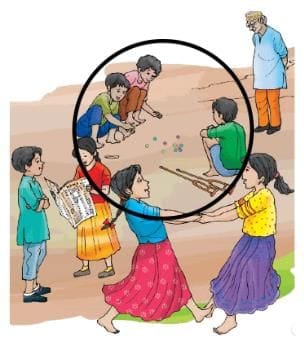
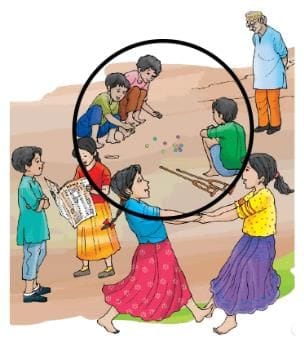
Ans: A boy with crutches is looking at other children playing marbles. A girl is reading a newspaper, and a boy is getting news information. Sitting beside a woman, a girl is talking to her. A boy with a kite is coming out of the house.

5. There are some women in the picture. What are they doing?
Ans: The first woman is cleaning grains, the second woman is making garland and the third woman is talking with a girl.

6. Who is reading the newspaper?
Ans: A girl is reading the newspaper.

7. What are the children playing with?
Ans: The children are playing with marbles, spinning tops and kites.

8. What is the old man doing?
Ans: The old man with spectacles is watching the children playing with marbles.

9. What is your favourite game?
Ans: My favourite game is tennis.

10. If you were in the picture, which game would you play?
Ans: Hide and Seek.

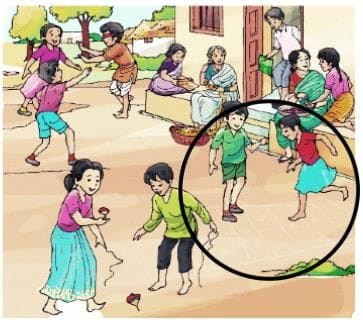
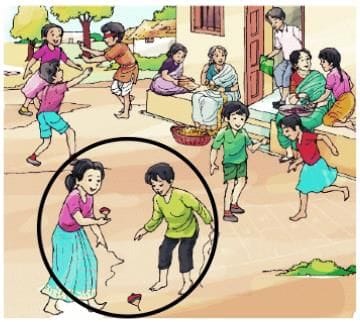
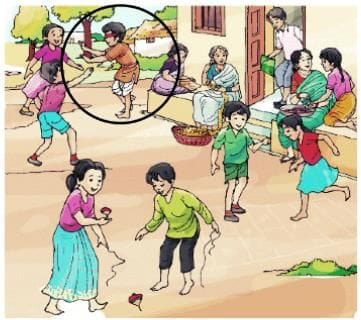
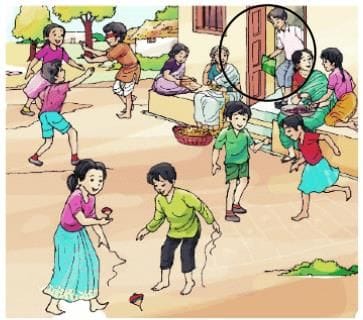
A. Point out the following in the picture.1. The boys are playing with marbles.
Ans:

2. A girl is playing hopscotch.
Ans: 

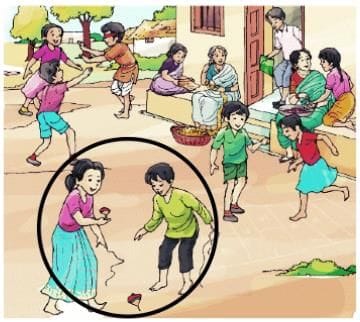
3. A boy and a girl are spinning tops.
Ans: 

4. A boy is blindfolded.
Ans: 

5. A boy is holding a kite.
Ans: 

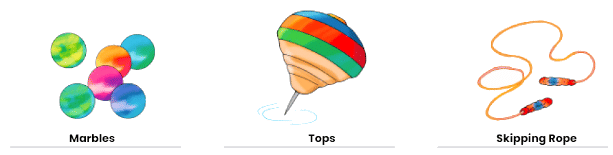
B. Identify the playthings used to play. Write their names below.
Ans: 

Let us think

[Page no 41]
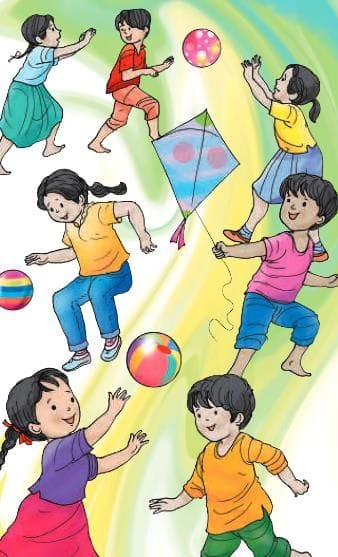
A. Answer the following.1. What are the children doing with the ball?
Ans: The children are bouncing, throwing, and catching the ball.

2. How are children playing with the kite?

Ans: The children are tugging, pulling, and flying the kite.

3. Where are the children playing?
Ans: The children are playing  “Out in the Garden”.

B. Think and answer.

1. Where do you play?
Ans: I play in the playground/garden/outside of the house.

2. What games do you play outside?
Ans: I play football, cricket, kabaddi, kho-kho, hockey, etc. games outside.

3. What happens if we are not careful while playing outside?
Ans: When we are not carefully playing outside, we might get hurt.

Let us speak

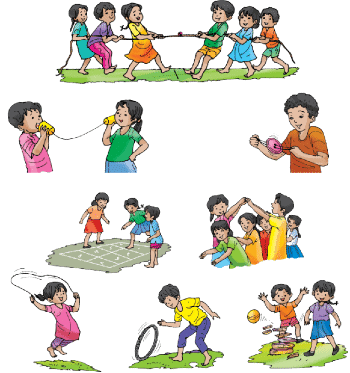
[Page no 41]Look at some more games. Do you know them? Have you played them? What do you call them in your mother tongue?
1. Talk about what you know.
Ans: 

Let us learn

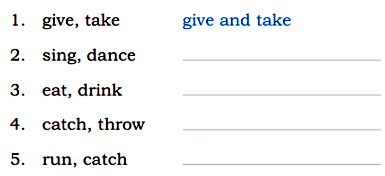
[Page no 42]In the poem, we find-
run and skip
jump and sway
slide and swing
Here we use ‘and’ to link two words.

1. Combine these words using ‘and’ and write them in the blanks.
One has been done for you

Ans: 1. give, take – give and take
2. Sing, dance – sing and dance
3. eat, drink – eat and drink
4. catch, throw – catch and throw
5. run, catch – run and catch

2. Can you think of two more word pairs? Write them here.

Ans: 1. Read and Learn
2. Talk and Listen
3. Share and Care
4. Sleep and Dream

Let us do

[Page no 43]

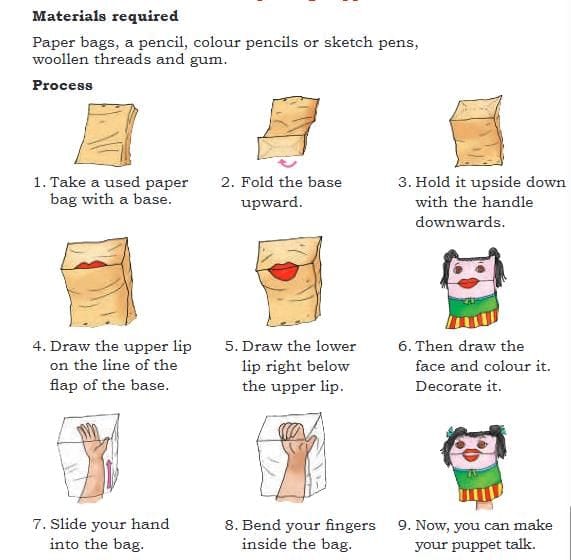
Paper Bag Puppet

03. Best Friends

Textbook Solutions

Let Us Think[Page no 29]A. Answer the following.
1. Who were the four friends?
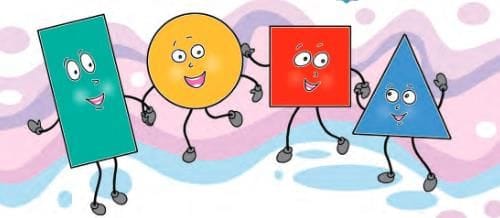
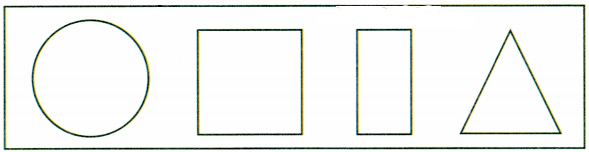
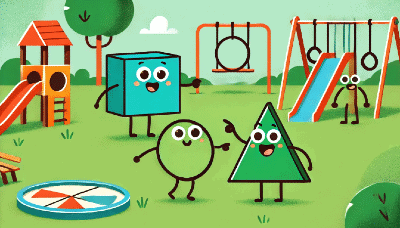
Ans: Circle, triangle, rectangle, and square were four friends.


2. Why were they fighting?
Ans: They were fighting because of their shapes.

3. Who helped them to end their fight?
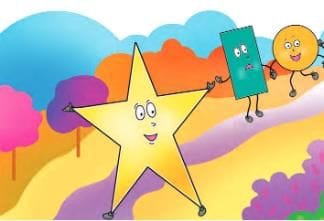
Ans: The star helped them to end their fight.
4. What lesson did the friends learn in the end?
Ans: They learn if they join together they can create wonderful shapes.

5. Write ‘T’ for true and ‘F’ for false.
(a) The circle does not have sharp edges. ________
(b) A square has four sides but not all of them are equal in size. ________
(c) The triangle has two sides. ________
(d) The friends could decide who was the best among them. ________

Ans: (a) T
(b) F
(c) F
(d) T
6. Who is your friend? What are the things you can do when your friend helps you?
Ans: My friend is Adhyata.
I will help in her studies.
I will help her when she needs me.

7. Look around you. Talk about the shapes of what you see.
Ans: Children will discuss this question in class.

Let Us Speak

[Page no 30]
Divide into groups of 5. Each of you will be one character in the story — circle, square, triangle, rectangle and the star. Take turns and read out the story. Enjoy by adding actions to what you say.
Ans.  Refer to the instructions below:
  • Circle: (Rolls in a smooth motion) “I am the best! I’m round and beautiful, with no sharp edges. I help in drawing smiling faces.”
  • Square: (Makes a square shape with hands) “I am the best! I have four equal sides, and many sweets are square-shaped, which makes me beautiful.”
  • Triangle: (Forms a triangle with fingers) “I am the best! With my three sides, I help in drawing mountains and appear in many yummy snacks.”
  • Rectangle: (Holds hands in a rectangle shape) “I am the best! I have four sides, with two long and two short, and you find me in biscuits and chocolates.”
  • Star: (Stands with arms outstretched) “All of you are friends! Instead of fighting, you can create amazing patterns together. Look around and see how each shape contributes to beautiful designs!”
Use this to enact the story

Let Us Learn

Read the following lines.
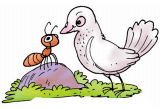
A pigeon and an ant became friends.
Notice that we used ‘a’ before pigeon and ‘an’ before ‘ant’.
We use ‘a’ before singular nouns that begin with consonants. ‘An’ is used before singular nouns that begin with vowel sounds (a, e, i, o, u).

Using this information, fill up the following blanks.
A. Fill in the blanks using ‘a’.
1. ________ dog is barking at the postman.
Ans: A dog is barking at the postman.
2. My mother gives chapattis to ________ cow every day.
Ans: My mother gives chapattis to a cow every day.
3. In summer, ________ sparrow builds its nest on the mango tree near our house.
Ans: In summer, a sparrow builds its nest on the mango tree near our house.

[Page no 31]
B. Fill in the blanks using ‘an’.
1. I saw ________ eagle yesterday.
Ans: I saw an eagle yesterday.
2. Maya bought ________ umbrella for the monsoon.
Ans: Maya bought an umbrella for the monsoon.
3. _________ cream man brings his cart in the evenings.
Ans: An ice cream   man brings his cart in the evenings.

C. Fill in the blanks using ‘a’ or ‘an’.
1. ________ brown hen laid ________ egg.
Ans: A brown hen laid an egg.
2. ________ eagle sat on ________ building.
Ans: An eagle sat on a building.
3. Mary ate ________ apricot, ________ chikoo, and ________ orange.
Ans: Mary ate an apricot, a chikoo, and an orange.

Let us Write

[Page no 31]
A. Paste a picture of your friend.
Ans: Take a picture of a bench mate or someone you consider your friend using a mobile phone or camera, visit a studio or stationery to get a hard copy and paste the photo in the space provided.

B. Write a few lines about your friend by filling in the blanks.

My Friend
1. My friend’s name is ________
2. He/She is a boy/girl.
3. He/She is ________ years old.
4. His/Her favourite colour is ________
5. He/She likes to play ________
6. He/She wants to become ________
I love my friend.
Ans: 
1. My friend’s name is Kritika.
2. He/She is a girl.
3. He/She is 11 years old.
4. His/Her favourite colour is black.
5. He/She likes to play Basketball.
6. He/She wants to become a teacher.
I love my friend.

Let us do

[Page no 32]
A. Use the space given below to draw the four friends you met in Chapter 3.

Ans: 

Let us Explore

[Page no 33]
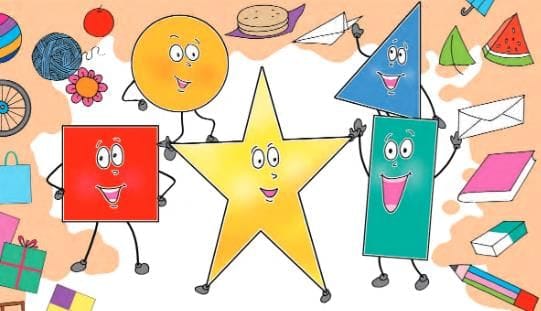
A. Draw pictures using the four friends mentioned in Chapter 3. You can use the pictures given below for ideas.

Ans: