10. Glass Bangles – Textbook Solutions

Let us Think (Page 5)

A. Answer the following questions

Q1: How were glass bangles made in Ravi’s small workshop?

Ans: In Ravi’s workshop, glass was heated in a furnace, carefully shaped into bangles, decorated with colors and designs, and cooled to make them strong and beautiful.

Q2: Who was Ananya? How did she help Ravi?

Ans: Ananya was Ravi’s daughter. She helped by creating modern designs like floral patterns and geometric shapes, combining them with traditional bangle designs for a special Diwali collection.

Q3: How did the success of the new bangles help the community?

Ans: The success of the new bangles created more work for local artisans and generated jobs in packing and transportation, benefiting the entire community.

B. Think and discuss

Q1: If you were in Ananya’s place, what other modern designs or colours would you add to make the bangles more attractive?

Ans: I would add sparkly glitter patterns and bright neon colours like pink and green to make the bangles shiny and attractive for young people.

Q2: Ravi and Ananya felt proud seeing people wearing their bangles on Diwali night. Have you ever created something (drawing, writing, or a project) that made you happy? Share your experience with the class.

Ans: I made a colourful rangoli for Diwali, and my family loved it. I felt happy and proud seeing everyone admire it during the festival.

Q3: Make a list of things that you buy from local markets during festivals.

Ans:

  1. Sweets
  2. Diyas
  3. Flowers
  4. Rangoli colors
  5. Decorations

Let us Learn (Page 6)

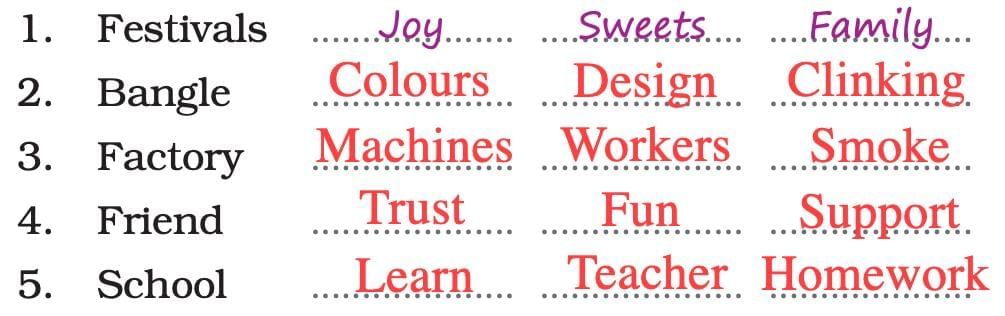
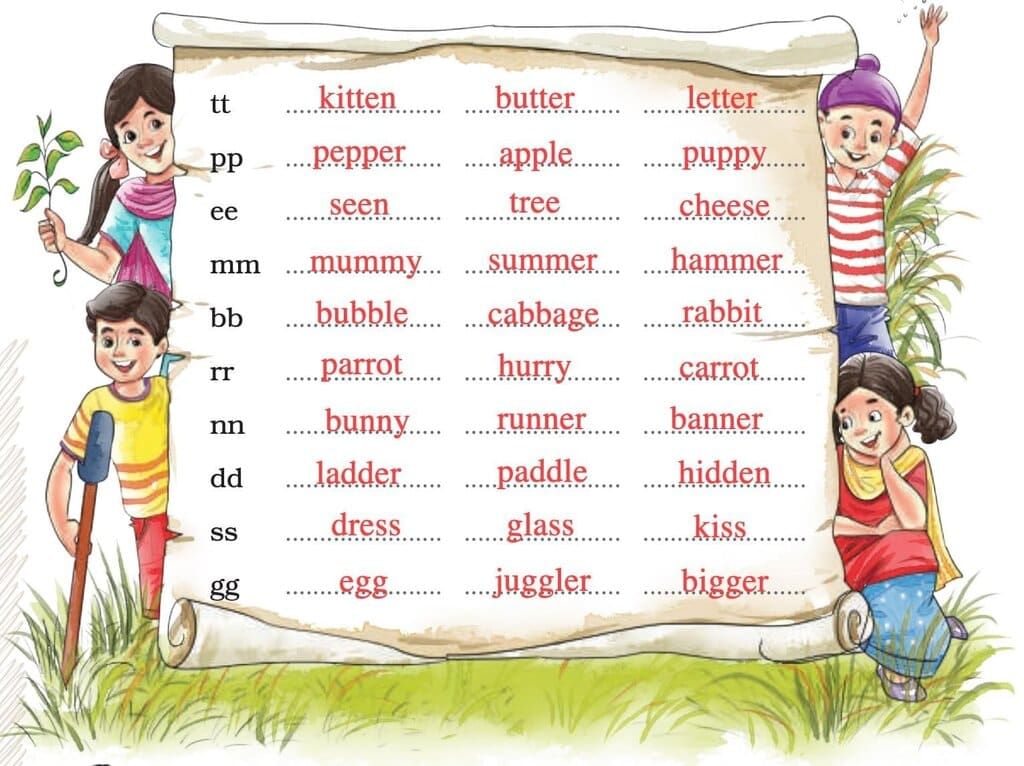
A. For each word, list three other words you associate with it

Q: For each word, list three other words you associate with it.

Ans:

B. Use capital letters, full stop, comma, question mark wherever necessary

Q: Rewrite the following sentences with proper punctuation.

Ans:

1. The air was filled with the clinking of bangles.

2. On Diwali night, the streets of Firozabad were lit with lamps and lights.

3. Did Ravi like Ananya’s new designs at first?

4. Ravi and Ananya made a special collection for Diwali.

5. Did the customers love the new bangles?

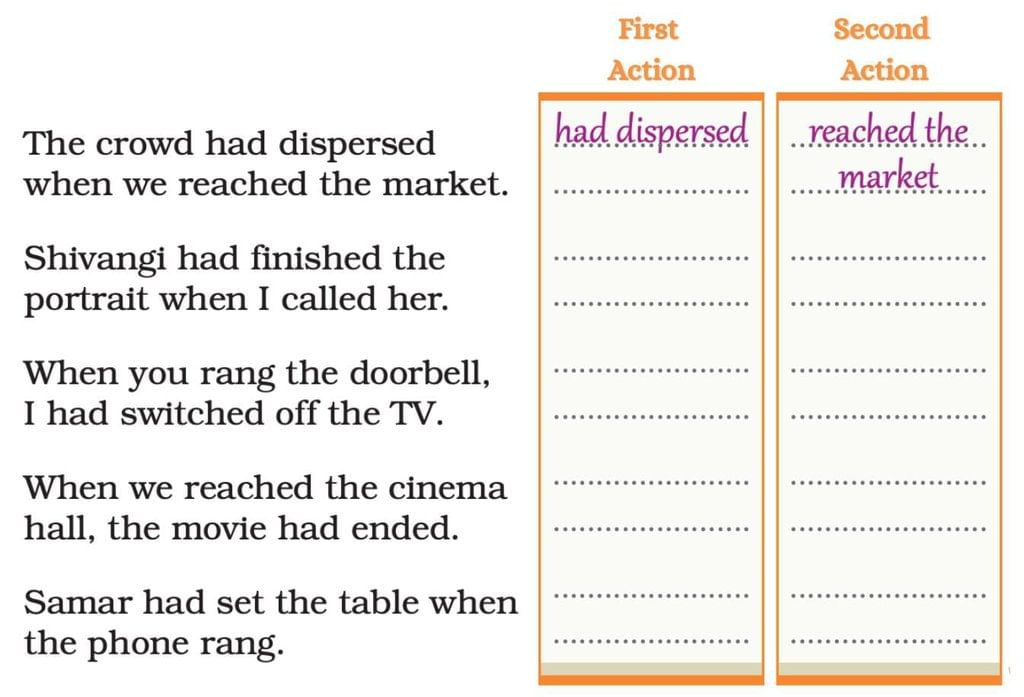
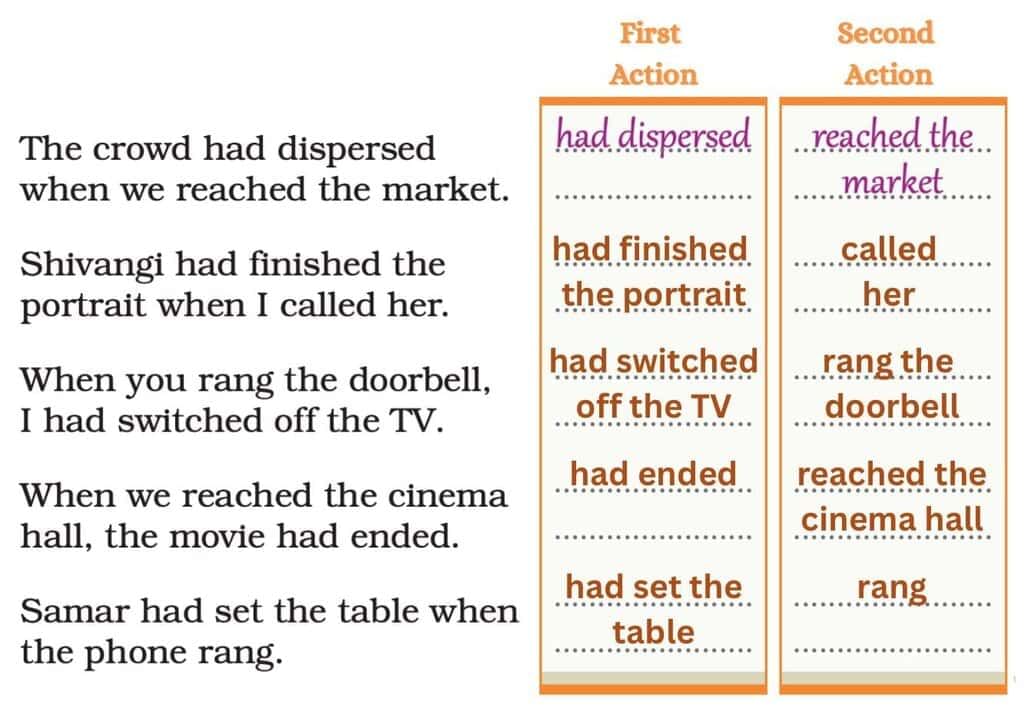
C. Identify the first action and second action in the given sentences

Ans:

Q: Write more sentences like the ones given previously with the help of your classmates.

Ans:

1. I had finished my homework before my friend arrived.

2. The rain had stopped when we went outside to play.

3. She had cooked dinner before the guests came.

Let us Speak (Page 8)

Q1: Try speaking the following lines. Start slow and gradually increase your speed.

Ans: This is a classroom activity. Practice saying:

a. Red lorry, blue lorry.

b. Babli bought beautiful bangles, but the bangles broke.

c. Ravi read a red book.

d. Green glass globes glow green.

e. Ten tiny turtles take turns talking.Start slowly, then say faster, and count how many times you say them correctly.

Q2: Glass bangles are an important part of the Indian culture, especially during festivals. Are there any crafts or traditions in your region that are linked to festivals? Share with your class.

Ans: Example Response:
In my region, we make rangoli with coloured powders during Diwali. It’s a tradition to decorate homes and bring good luck. Share your region’s traditions with the class.

Let us Listen (Page 9)

A. Your teacher will read out the paragraph given below. Listen carefully.

Q: Write the correct sequence of steps that Aarav, Meera, and their parents take to prepare the laddus.

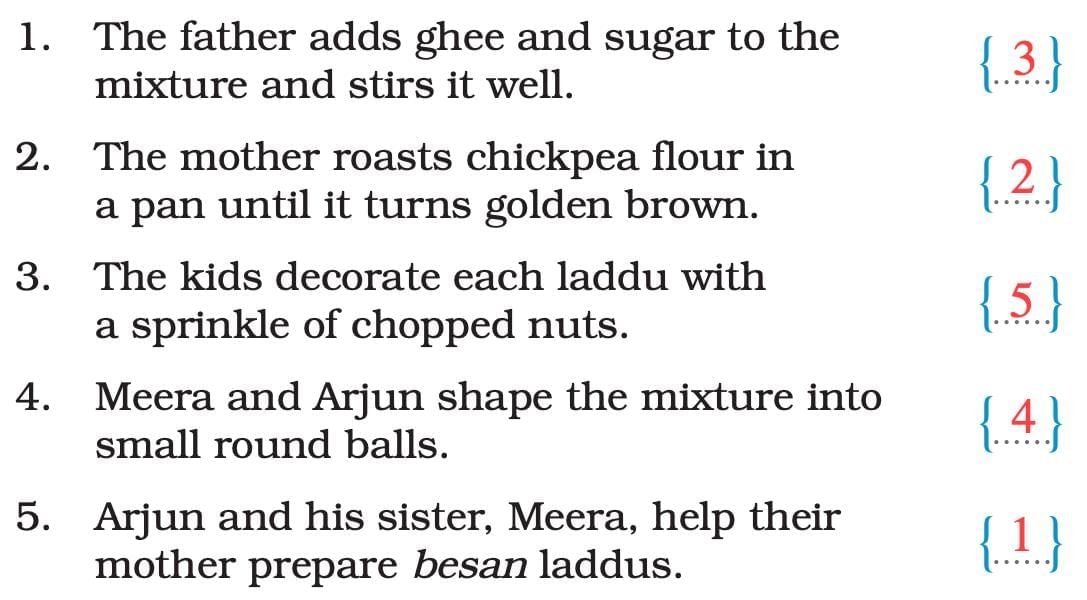
Ans:

Let us Write (Page 10)

A. Write a paragraph of 80-100 words on how you recently celebrated a festival.

Ans: Last Diwali, I celebrated with my family. We woke up early and made a colourful rangoli outside our house. My mom cooked delicious sweets like laddus and halwa. We visited our grandparents, shared gifts, and ate a big meal together. In the evening, we lit diyas and burst firecrackers with friends. I loved the bright lights and the happy feeling of being with everyone. We also prayed to Goddess Lakshmi for good luck. It was a joyful day full of fun and tasty food!

B. Look at the pictures given below. 

Q: Discuss with your teacher and write a paragraph of 100–120 words in your notebook.

Ans:  The Rock Garden in Chandigarh is a unique place created by Nek Chand. It is made from recycled materials like broken bangles, tiles, and stones. The garden has sculptures of animals, people, and buildings, all arranged in a beautiful, artistic way. I visited it with my family and loved the colourful mosaics and winding paths. The waterfalls and greenery made it peaceful. It shows how waste can be turned into art. I felt amazed by the creativity and enjoyed walking through the garden. It’s a special place that teaches us to value creativity and care for the environment.
09. Vocation – Textbook Solutions

Let us Think (Page 4)

A. Answer the following questions

Q1: Who is the speaker in the poem?

Ans: The speaker in the poem is a young child.

Q2: Why does the speaker want to be a hawker?

Ans: The speaker wants to be a hawker because the hawker is free to spend the day on the road, with no fixed schedule or rules to follow.

Q3: What does he like about the gardener?

Ans: The speaker likes that the gardener can dig freely with his spade, soil his clothes, and work without anyone scolding him, even if he gets wet or sunburned.

Q4: What does the speaker compare the street lamp to?

Ans: The speaker compares the street lamp to a giant with one red eye in its head.

Q5: On the basis of the poem that you have read, share the daily schedule of the speaker.

Ans: The speaker’s daily schedule is:

– At 10 in the morning, the speaker walks to school and sees the hawker.

– At 4 in the afternoon, the speaker returns from school and sees the gardener.

– In the evening, when it gets dark, the speaker is sent to bed and sees the watchman.

B. Think and discuss

Q1: Why does the speaker admire people with different vocations?

Ans: The speaker admires people with different vocations because they seem free to do what they like without strict rules or schedules, unlike the speaker’s own routine.

Q2: What are the things that you observe on your way to school and your way back home?

Ans: On my way to school and back home, I observe trees, birds, street vendors, other students, vehicles, and shops along the road.

Let us Learn (Page 5)

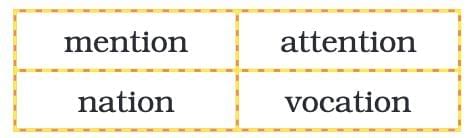
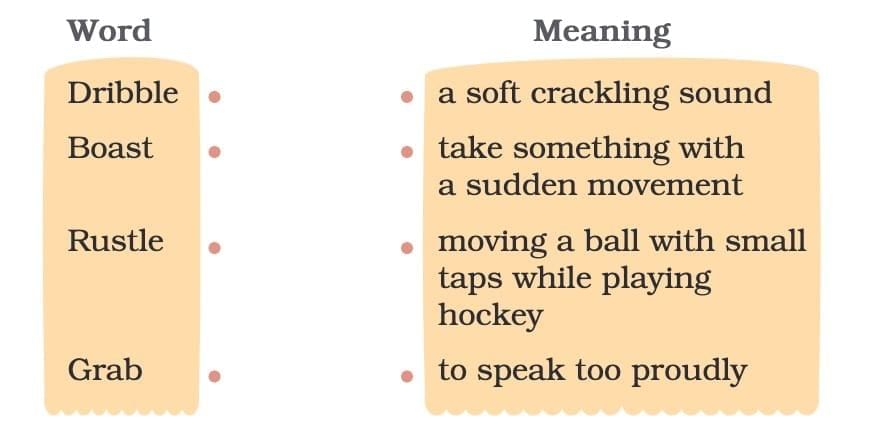
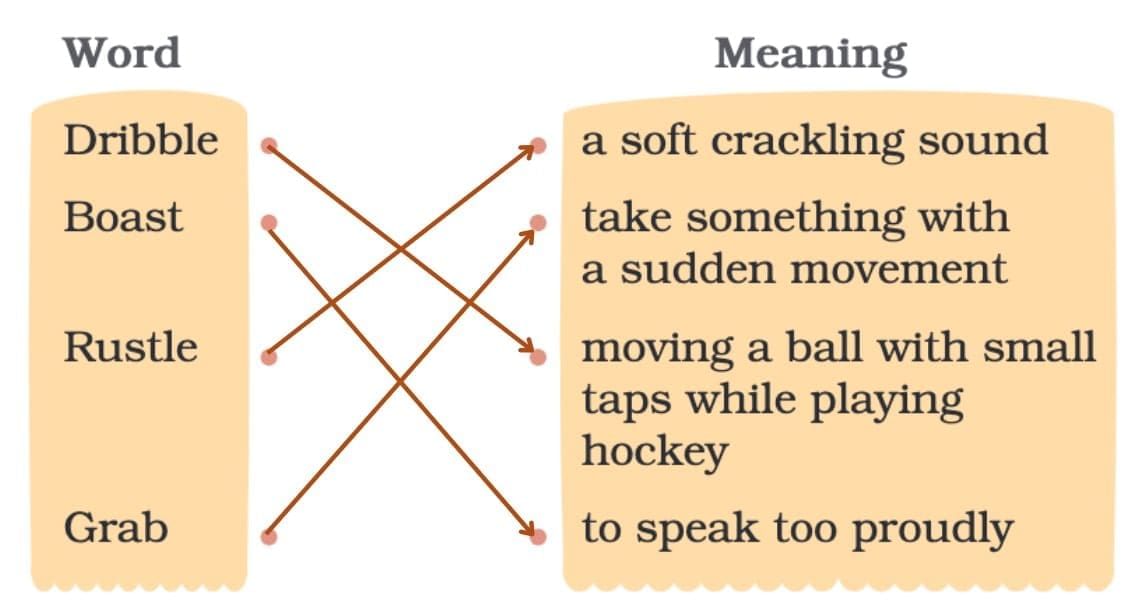
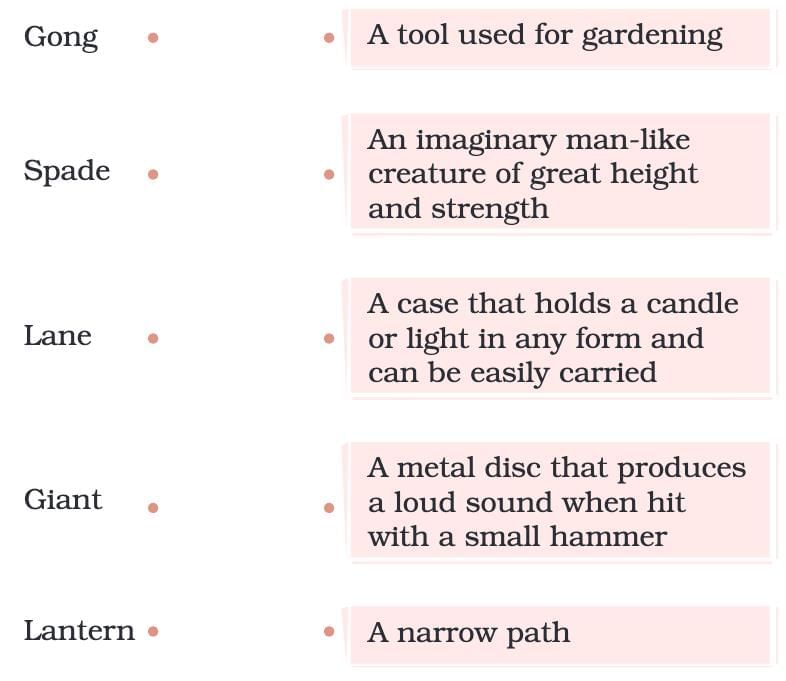
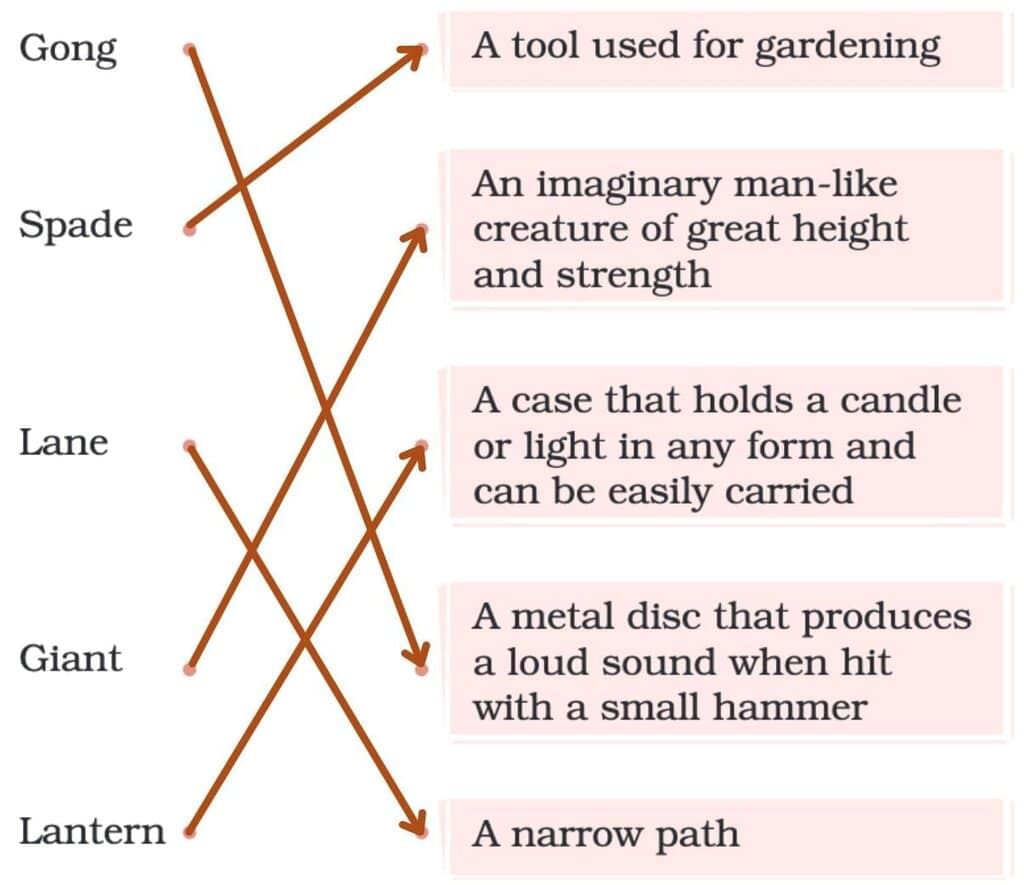
A. Match the words with their meanings

Ans:

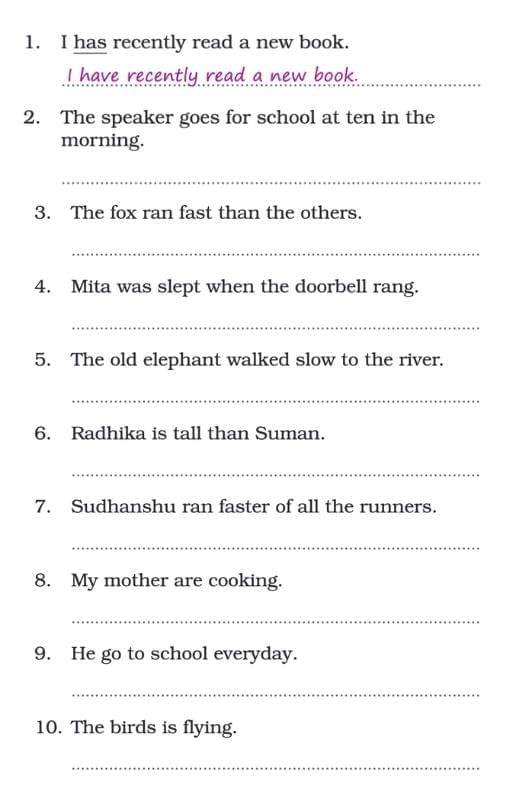
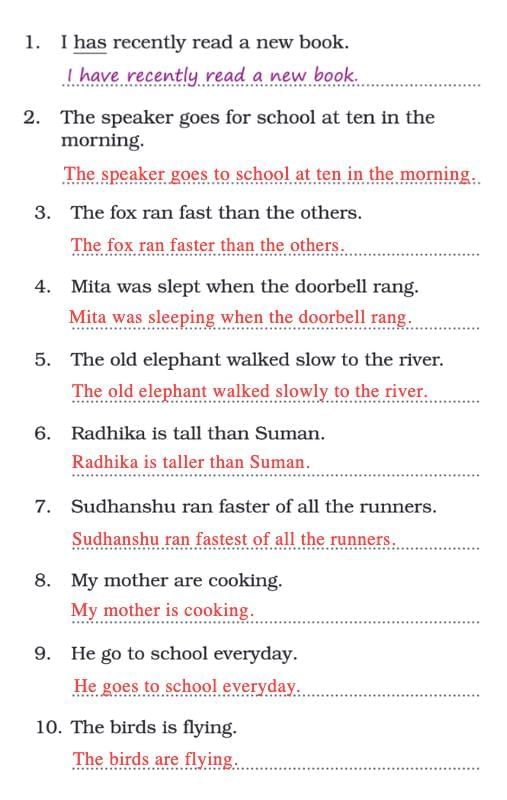
B. There is one mistake in each sentence given below. Underline the mistakes and rewrite the correct sentences in the given space. One example has been done for you.

Ans:

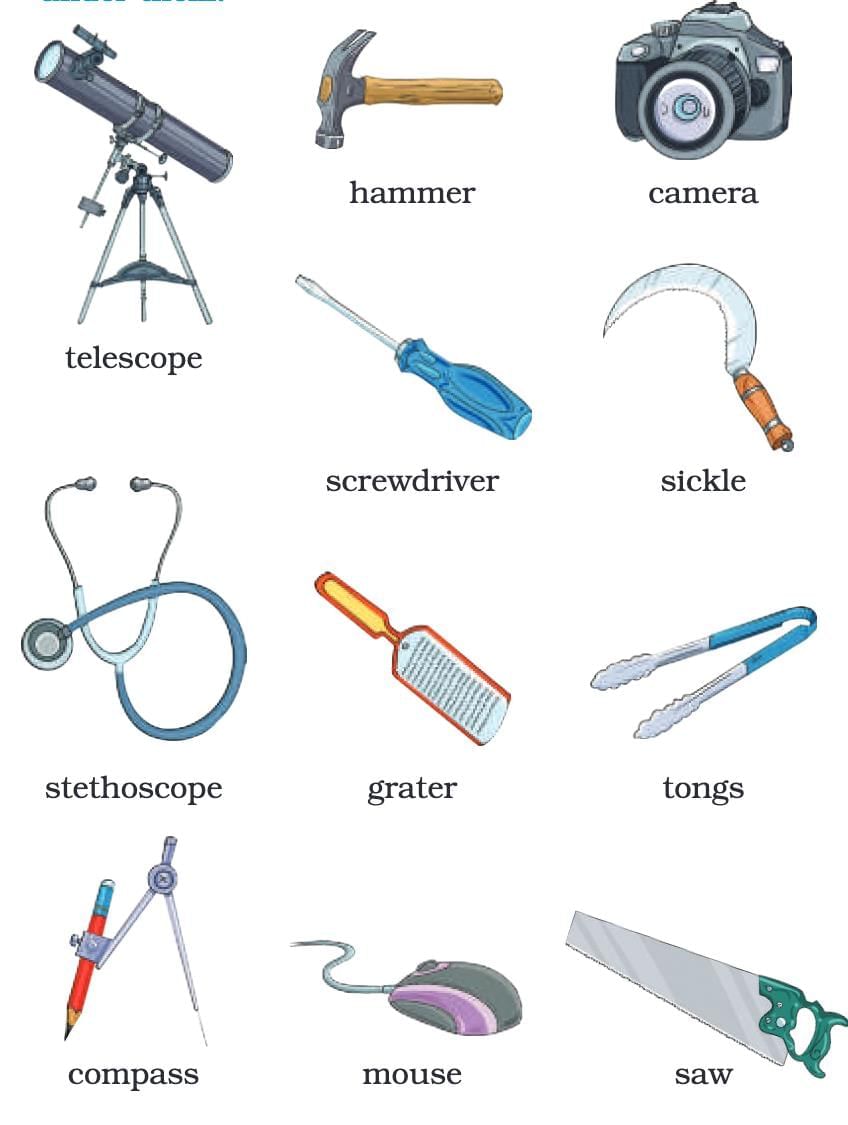
C. Look at the pictures and read the words written under them.

Have you seen these objects? Where have you seen them? What are they used for?

Ans:

1. Hammer: Seen in homes or workshops. Used to drive nails into wood or break things.

2. Camera: Seen at home or with photographers. Used to take pictures or videos.

3. Screwdriver: Seen in toolkits or repair shops. Used to tighten or loosen screws.

4. Sickle: Seen with farmers or in fields. Used to cut crops or grass.

5. Stethoscope: Seen in clinics or with doctors. Used to listen to heartbeats or breathing.

6. Grater: Seen in kitchens. Used to shred vegetables or cheese.

7. Tongs: Seen in kitchens or at barbecues. Used to pick up hot or small items.

8. Compass: Seen in schools or with navigators. Used to draw circles or find directions.

9. Mouse: Seen with computers. Used to control the cursor on a screen.

10. Saw: Seen in carpentry shops or homes. Used to cut wood or metal.

Let us Listen (Page 8)

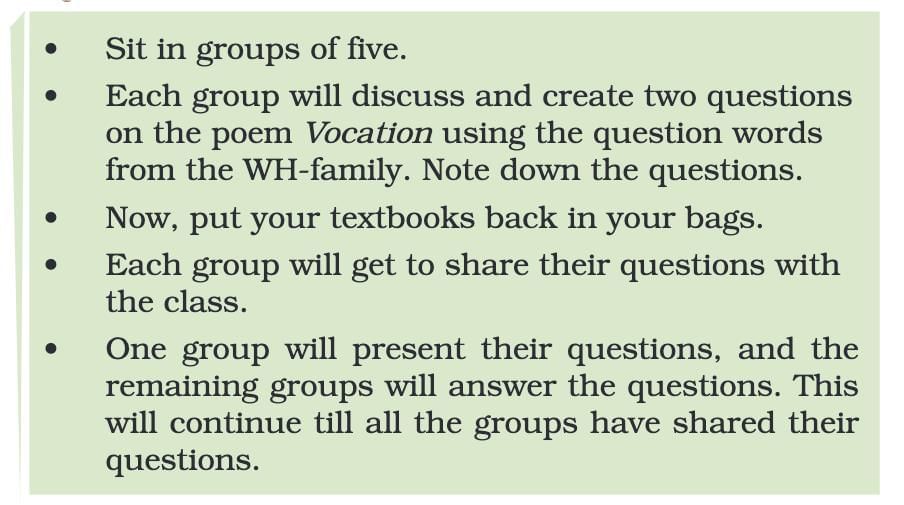
Discuss in groups, write two WH-questions, and share with the class.

Example questions:

1. What does the speaker see on the way to school in the morning?

2. Why does the speaker wish to be a watchman?

Discuss in groups, write two WH-questions, and share with the class.

Let us Speak (Page 8-9)

A. Listen and repeat. 
Your teacher will say aloud the following words. Listen carefully and repeat after the teacher.

Ans: This is a classroom activity. Listen to the teacher say the words aloud and repeat them.

 B. Listen  and Repeat

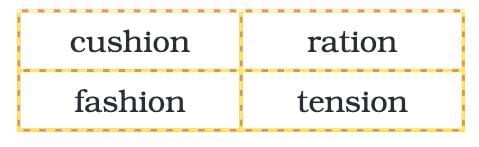
Ans: This is a classroom activity. Listen to the teacher’s instructions and speak the word pairs.

Let us Write (Page 10)

Q1: What’s missing? Write a paragraph about the difficult parts of being a hawker, gardener, or watchman.

Ans:

Being a hawker, gardener, or watchman looks fun, but each job has tough parts. A hawker walks all day, carrying heavy bangles, and might not sell enough to earn money. A gardener works in the hot sun or rain, which can make them tired or sick. A watchman stays awake all night, feeling lonely in the dark, and it’s hard to sleep at night. These jobs need hard work and patience.

Q2: Write the vocations of three family members (50-60 words each).

Ans:

Mother: My mother is a teacher. She teaches young children how to read, write, and solve math problems. Every day, she prepares lessons, checks homework, and helps students learn new things. She loves seeing her students smile when they understand something new. Her job is rewarding but tiring because she works hard to make lessons fun and clear.

Father: My father is a shopkeeper. He runs a small grocery store in our town. He opens the shop early, arranges goods, and helps customers find what they need. He works long hours to keep the shop clean and stocked. His job is busy, but he enjoys meeting people and providing essentials to the community.

Grandmother: My grandmother is a homemaker. She manages our home by cooking meals, cleaning, and taking care of the family. She grows vegetables in our garden and knits sweaters for us. Her work is unpaid but important, as she keeps our home warm and happy. She loves caring for us every day.

c

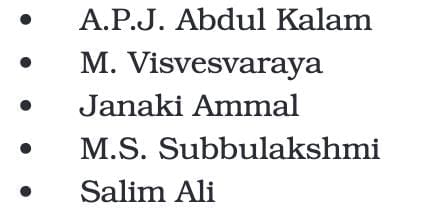
Q3: What vocations are the following people associated with?

Ans:

1. A.P.J. Abdul Kalam: Scientist and Former President

2. M. Visvesvaraya: Engineer

3. Janaki Ammal: Botanist

4. M.S. Subbulakshmi: Classical Singer

5. Salim Ali: Ornithologist (Bird Scientist)

08. The Decision of the Panchayat – Textbook Solutions

Let us Think (Page 5)

A. Answer the following questions

Q1: Why did the farmer buy the well?

Ans: The farmer bought the well to have a source of water for his fields.

Q2: Why did the farmer become upset?

Ans: The farmer became upset because his neighbour refused to let him take water from the well, claiming the water still belonged to him.

Q3: How did the Panchayat solve the problem?

Ans: The Panchayat solved the problem by reasoning that if the neighbour claimed the water was his, he must remove it from the farmer’s well, or it would belong to the farmer.

Q4: What was the final judgment given by the Panchayat?

Ans: The final judgment was that the neighbour must remove his water from the farmer’s well immediately, or the water would belong to the farmer. The neighbour also had to pay a fine and apologise.

B. Think and discuss

Q1: Do you think the decision of the Panchayat was correct?

Ans: Yes, the Panchayat’s decision was correct because it was fair and logical. The neighbour sold the well, so the water inside it should belong to the farmer.

Q2: You have an extra painting box that you wish to share with your friends in class to complete an activity. Two of your best friends, Radha and Sita, fight for the box. How would you deal with the situation so that you are fair to both of them?

Ans: I would suggest that Radha and Sita share the painting box by taking turns. They could use it for half the activity time each or work together on the same project to be fair.

Q3: Who said to whom:

a. “I sold only the well, not the water,” 

b. “Remove the water or use it all up immediately,”.

c. “He is not letting me take the water.”

Ans:
– The neighbour said to the farmer.
– The village chief said to the neighbour

– The farmer said to the village chief.

Let us Learn (Page 6)

A. Match the words with their meanings

Ans: 1-f
            2-a
            3-e
            4-c
            5-b
            6-d

B. Fill in the blanks with the correct prepositions (in, at, by, after, before, under, with, to, for). A preposition can be used more than once.

1. The farmer went to the village chief to explain his problem.

2. The neighbour was standing by the well, blocking the way.

3. The villagers tried to reason with the cunning man.

4. The decision was made after careful consideration of both sides.

5. The farmer lived in the small village.

6. The Panchayat members listened to both sides before coming to a decision.

7. The villagers gathered under the Panchayat by the banyan tree.

8. The neighbour was punished for his dishonesty.

9. The chief listened carefully to both the farmer and the neighbour.

10. The villagers agreed to meet at a later time to discuss the issue.

11. The farmer decided to buy a well after buying his third field.

C. Rearrange the events in the correct order

Ans:

Let us Speak (Page 9)

Look at the Pictures below

What do you think will happen next? Sit in small groups and discuss. One student from each group will narrate the ending to the whole class.

Ans: Example Response: The neighbor might learn to be honest and share water with others. Discuss with your group and have one student narrate the ending to the class.

Let us Write (Page 10)

A. A. Imagine you are the farmer. Write a letter to your friend about the incident and the decision of the Panchayat. You may begin as follows:  

My dear friend, 
Something happened last week, which I want to tell you. I wanted to buy a well …

Ans:

My dear friend,

Something happened last week, which I want to tell you. I wanted to buy a well for my fields, so I bought one from my neighbor. But the next day, he stopped me from taking water, saying he only sold the well, not the water! I was upset and went to the village chief. The Panchayat met under the banyan tree and heard both sides. They decided that if the water was his, he must remove it from my well, or it belongs to me. The neighbor apologized and paid a fine. I’m so relieved!

Yours,

The Farmer

B. Read the Following

Complete the following by adding the suffix ‘less’to the given words.

Make sentences using the new words in yournotebook.

Ans:

1. Use + less = useless

Sentence: The broken tool was useless for farming.

2. Hope + less = hopeless

Sentence: The farmer felt hopeless when he couldn’t get water.

3. Care + less = careless

Sentence: Being careless with water wastes it.

4. Fear + less = fearless

Sentence: The fearless farmer spoke to the Panchayat confidently.

5. Help + less = helpless

Sentence: Without the Panchayat, the farmer felt helpless.

Let us Listen (Page 11)

Listen to your teacher read out this passage and answer the questions by choosing the correct option.

Ans:

1. Where was Sri Ramakrishna Paramahamsa born? 

b. A small village in West Bengal.

2. Who was the curious boy that became Sri Ramakrishna’s student? 

b. Swami Vivekananda (Naren)

3. What kind of life did Sri Ramakrishna live? 

b. A simple and loving life.

4. What did Sri Ramakrishna compare religions to? 

c. Rivers flowing to the ocean

5. What did Sri Ramakrishna teach Naren? 

d. To find peace

Let us Do (Page 13)

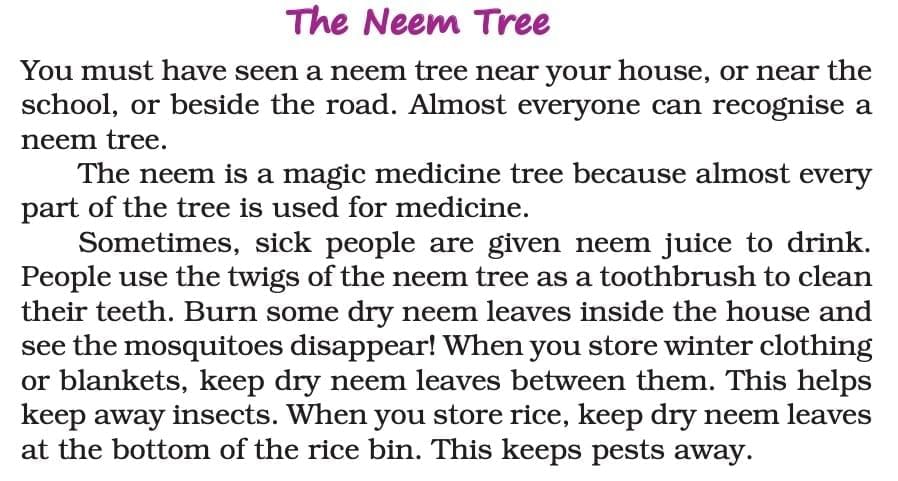
A. Read the passage carefully and answer the following questions.

1. Where can you find neem trees? 

Ans: Neem trees can be found near houses, schools, or beside roads.

2. Why do you think ‘neem’ is called a magic tree? 

Ans: Neem is called a magic tree because almost every part is used for medicine.

3. What happens when dry neem leaves are burnt? 

Ans: When dry neem leaves are burnt, mosquitoes disappear.

4. Why do people put neem leaves in clothes and rice containers? 

Ans: People put neem leaves in clothes and rice containers to keep insects and pests away.

5. How are neem twigs used? 

Ans: Neem twigs are used as a toothbrush to clean teeth.

6. Find the meaning of the word ‘disappear’ from the following options: 

Ans: b. Vanish

7. Find the word in the passage which means ‘a short stick’: 

Ans: c. Twig

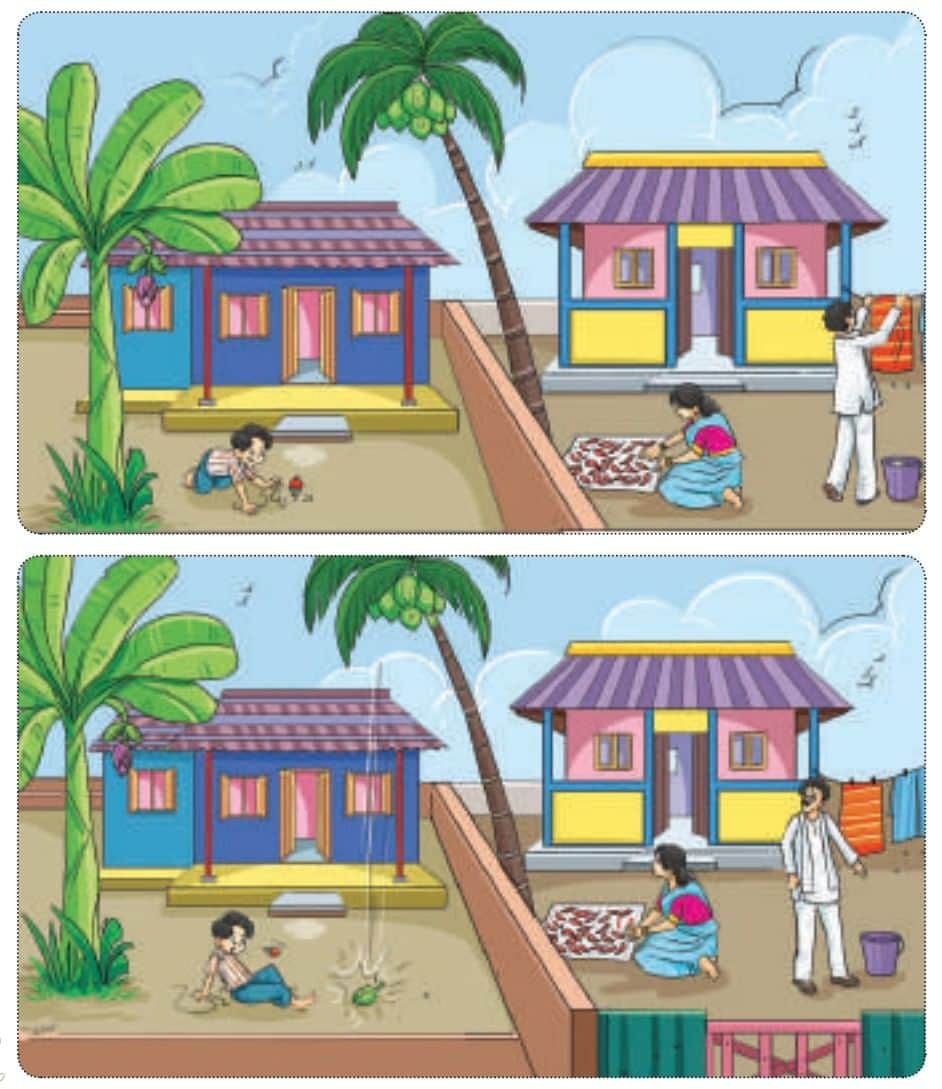
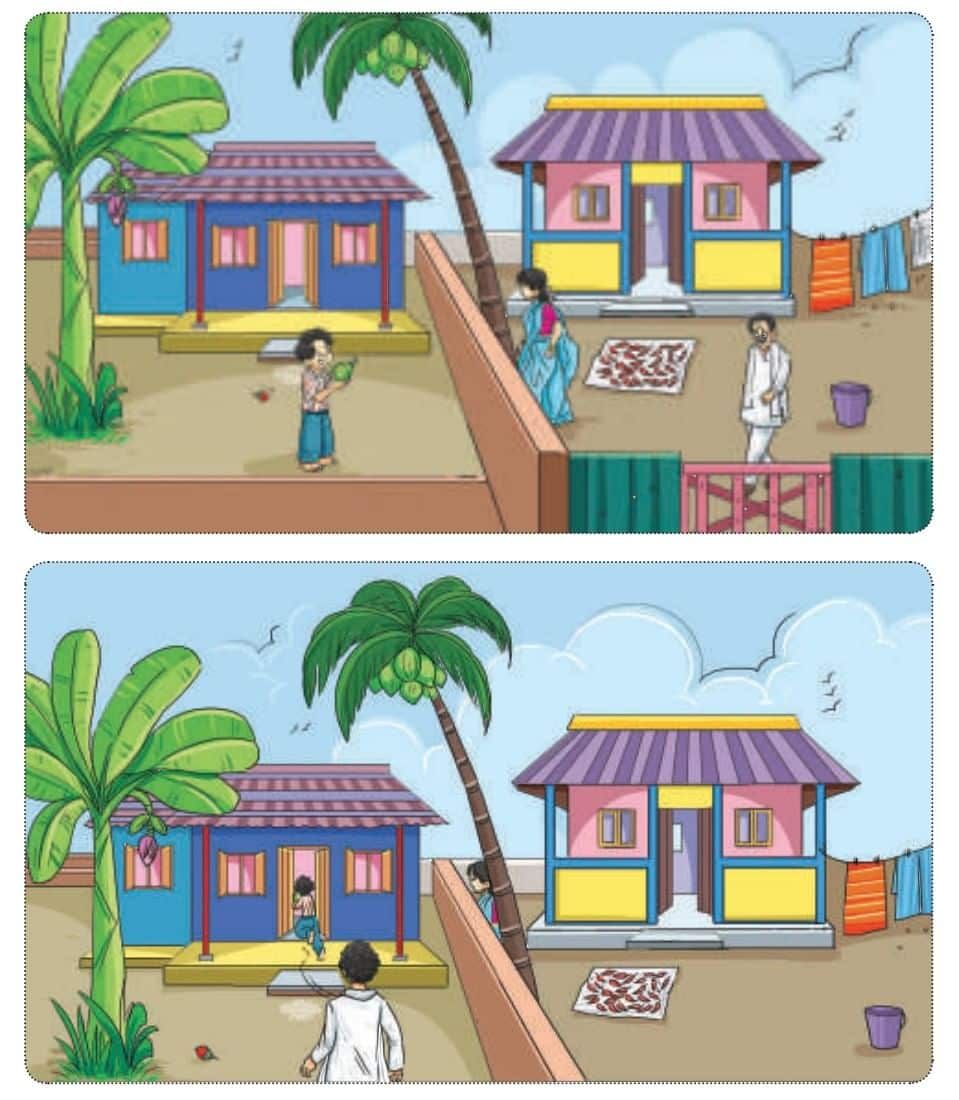
B. Point out 11 differences in the two pictures given below. Work in pairs and write down the 11 differences in your notebook.

Ans: 

  • Sun: In the top image, the sun has rays, while in the bottom image it does not.
  • Tulsi Pot Design: The tulsi pot has a white border near the base in the top image, missing in the bottom.
  • Tulsi Plant: The tulsi plant has more leaves in the top image and fewer in the bottom.
  • Chappals: Blue slippers are outside in the top image; yellow slippers are in the bottom image.
  • Border of Saree (Bottom): The woman’s saree border has pink and green designs in the top image, plain blue in the bottom.
  • Pallu Border: The border of the saree pallu in the top image has pink design; in the bottom image, it is plain blue with pink at the edge.
  • Bindi: The woman wears a red bindi in the top image; it’s missing in the bottom.
  • Background Wall Design: The wall behind the tulsi pot has a green strip in the top image, which is missing in the bottom.
  • Mud Pot Design (Top of Tulsi): The yellow part has a different wave design in both images.
  • Fan Handle: The design in the circular hand-fan is different in color and style.
  • Window Design: The window above the woman is open with bars in the top image; it has a blue glass pane in the bottom image.

07. Gilli Danda – Textbook Solutions

Let us Think (Page 2).                                               A. Answer the following questions

Q1: Which game does the poem mention? What are the things needed to play this game?

Ans: The poem mentions Gilli Danda. The things needed are a small gilli (a short stick) and a danda (a long stick).

Q2: According to the poem, how do the players feel while playing Gilli Danda?

Ans: The players feel joyful and free while playing Gilli Danda.

Q3: What happens to the tiny gilli when the stick strikes it?

Ans: When the stick strikes the gilli, it flies up high into the sky.

Q4: Which lines tell us that the children are playing the game outside?

Ans: The lines “Underneath the bright blue skies” and “Under the golden rays of the sun” tell us the children are playing outside.

Q5: What is the meaning of the line “our game is so sound”?

Ans: The line “our game is so sound” means the game is fun, exciting, and enjoyable.

Q6: Which word in the poem shows ‘happiness’?

Ans: The word “joy” shows happiness in the poem.

B. Think and discuss

Q1: Do you enjoy playing outdoors? Why or why not?

Ans: Yes, I enjoy playing outdoors because it’s fun, I can run freely, and it feels refreshing to play with friends under the open sky.

Q2: Name five outdoor games that you enjoy playing with your friends.

Ans:

  1. Cricket
  2. Football
  3. Kho-Kho
  4. Kabaddi
  5. Hide and Seek

Q3: Imagine you are the small gilli. What would you see while flying up in the sky?

Ans: As the gilli, I would see children laughing and cheering, green fields, bright blue skies, fluffy clouds, and the sun shining brightly.

Let us Learn (Page 3)

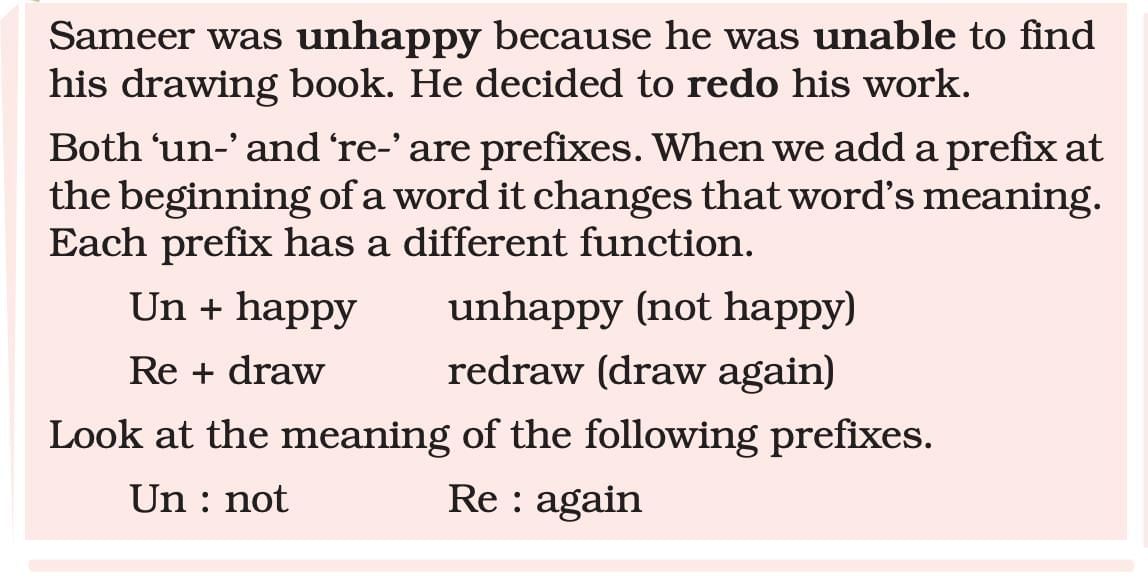
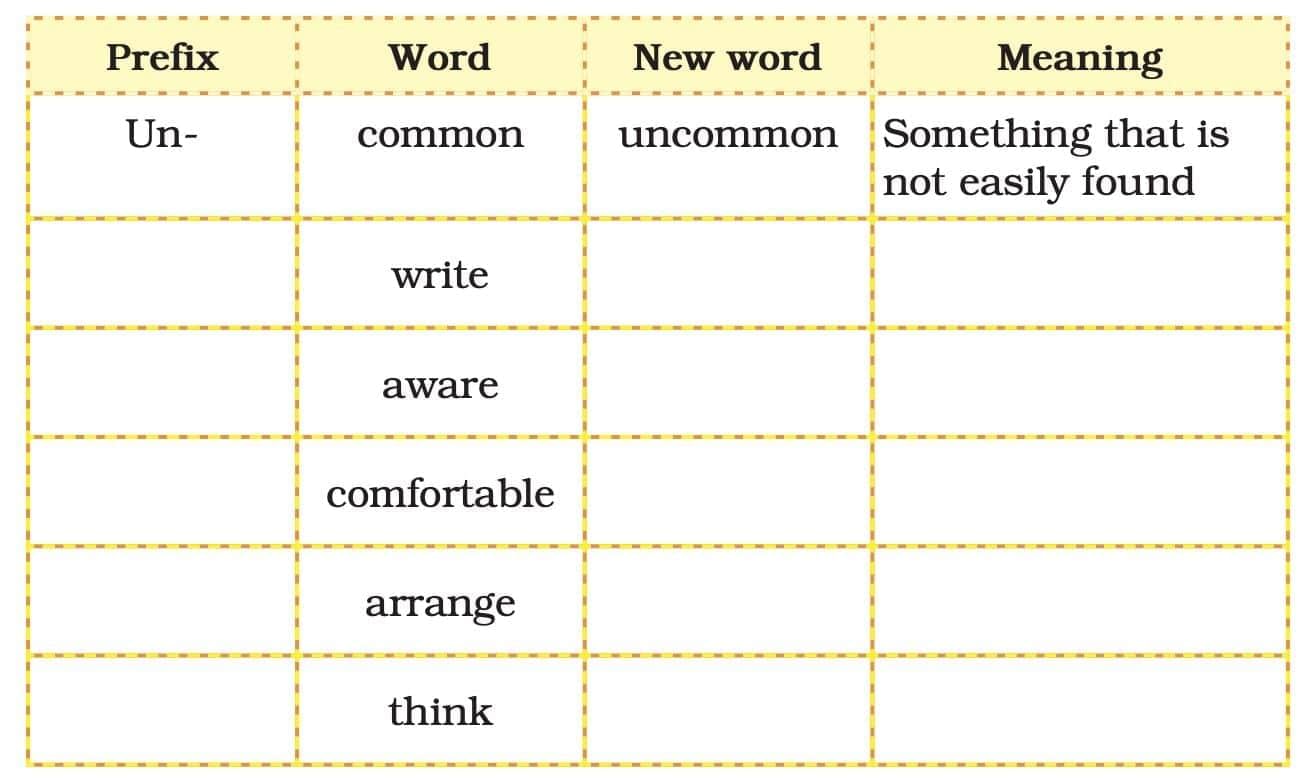
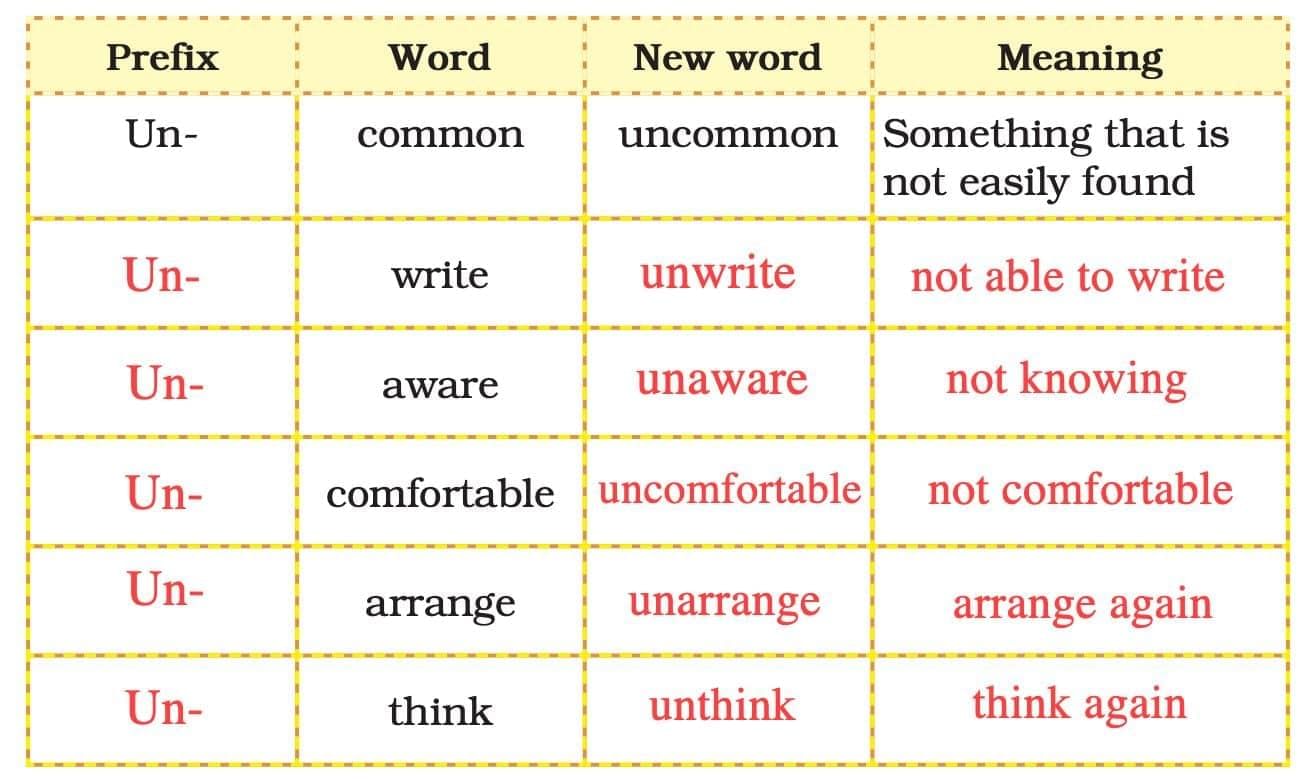
A. Add correct prefixes to the following words to create new words. Write the new word along with its meaning in the space given below.

Ans:

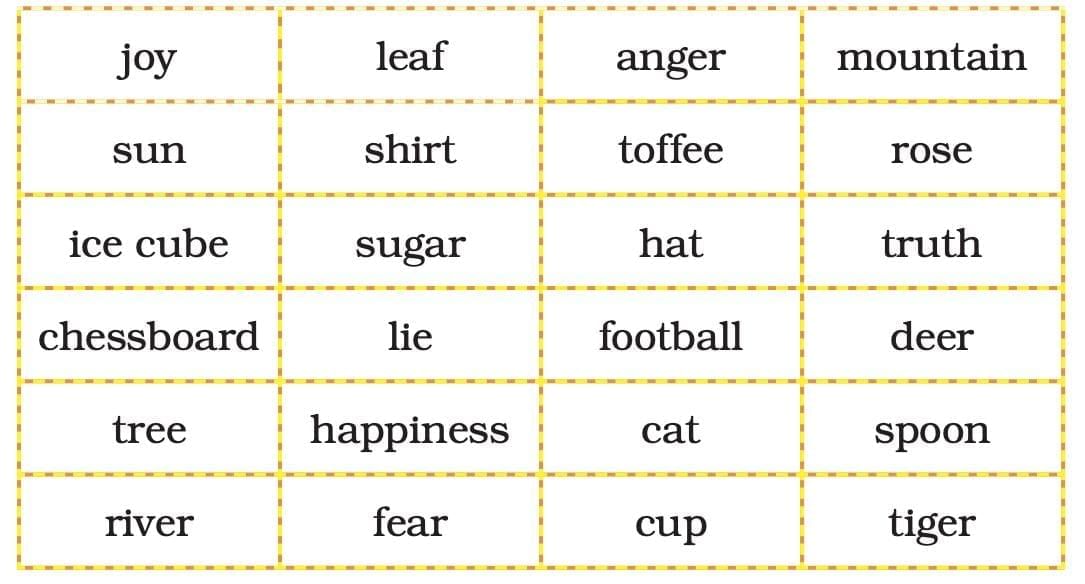
B. In the following table, encircle the nouns that you can see, taste, touch, or smell.

Ans:

The words that you have NOT encircled are abstract nouns. The word ‘abstract’ refers to something that has no physical shape. For example, ‘sadness’ is an abstract noun.‘Happiness’ and ‘rose’ are both nouns, but you can touch, see, and smell a rose. However, you cannot touch happiness. It is a feeling. Feelings, thoughts, ideas, etc., are all abstract nouns as they cannot be touched, smelt, or seen.

Additional Abstract Nouns: love, courage, sadness, honesty

Possessive pronouns indicate ownership or a relationship between people and things.

For example: 1. The book on the table is mine. 

                              2. The red handbag is hers.

                              3. There is a new cycle near the gate. Is it yours?

C. Fill in the blanks with possessive pronouns

1. These crayons belong to me. These are mine.

2. The toy train belongs to Mudit. The toy train is his.

3. The house with the red roof belongs to my cousins. The house is theirs.

4. The little girl has bought a set of bowls to play Jal Tarang. The bowls are hers.

5. We have a cow with large brown eyes. The cow is ours.

6. You should take better care of your things. The things are yours.

Let us Speak (Page 6)

Q: Think of a game played in groups. Share the information with your classmates.

Ans:Example Response:

Name: Kho-Kho
Indoor/Outdoor: Outdoor
Number of Players: 9 players per team
Materials: Open ground, chalk to mark lines
Rules: One team chases while the other runs. Chasers tag runners by touching them. Switch roles after a set time. Safety: Avoid pushing; play on a flat surface.

Let us Listen (Page 6)

Listen to the teacher and respond with a matching action.

Ans: This is a classroom activity. Follow the teacher’s instructions:

1. “Swing and hit”: Pretend to swing a danda.

2. “Watch it go”: Raise arms as if watching the gilli fly.

3. “Laughing, playing”: Giggle or clap hands.

4. “Shade your eyes from the sun”: Place hands above eyebrows.

Let us Write (Page 7)

A. Find the meanings of the words and use them in sentences

Ans:

1. Quit: To stop or give up. Sentence: I will never quit playing Gilli Danda with my friends.

2. Gather: To come together. Sentence: We gather in the park to play games every evening.

3. Swing: To move back and forth or hit. Sentence: I swing the danda to hit the gilli high.

4. Underneath: Below or under something. Sentence: The gilli landed underneath the tree.

5. Golden: Bright yellow or precious. Sentence: The golden sun shines brightly during our game.

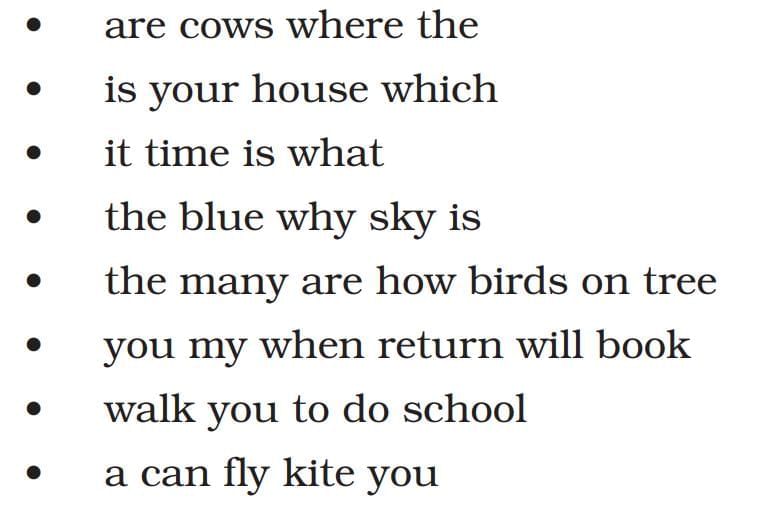
B. Rearrange to form questions

Ans:

1. Where are the cows?

2. Which is your house?

3. What time is it?

4. Why is the sky blue?

5. How many birds are on the tree?

6. When will you return my book?

7. Do you walk to school?

8. Can you fly a kite?

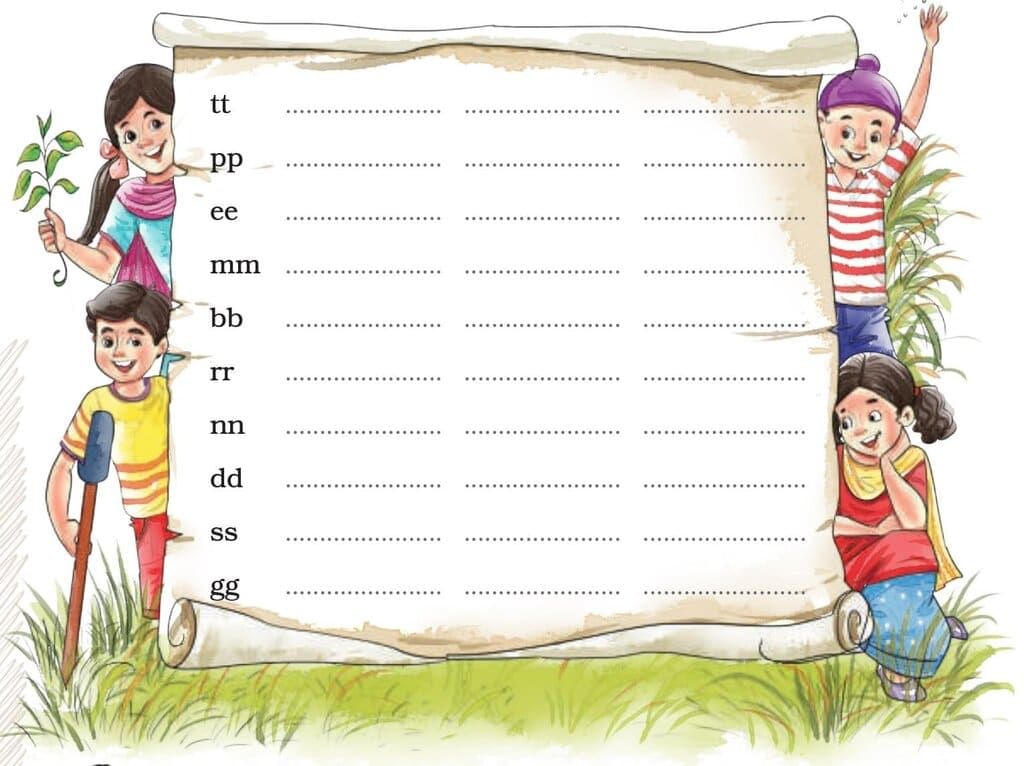
C. The word ‘gilli ’ has a double ‘l’ in it. Similarly, the words ‘millet’ and ‘bullock’ have a double ‘l’.Now write three words having each of the double letters given below.

Ans:

D. D. Circle the word that is different in meaning from the underlined word.

Ans:

06. What a Tank! – Textbook Solutions

Let us Think (Page 4)

A. Answer the following questions

Q1: What do we use a water tank for?

Ans: We use a water tank to store water for drinking, farming, and other daily needs.

Q2: Where is Punjab located on the map of India?

Ans: Punjab is located in the northwest part of India.

Q3: How are the water tanks in Punjab made?

Ans: Water tanks in Punjab are made by creating a frame with steel rods, shaping it with concrete, and installing it on the roof of the house.

Q4: How do the unique shapes of water tanks reflect the identity of the house owners?

Ans: The unique shapes, like a tractor for farmers or a football for sports lovers, show the owner’s profession or interests.

B. Think and answer

Q5: An overhead water tank is a way to store water. Do you know any other ways of storing water?

Ans: Other ways to store water include buckets, underground tanks, rainwater harvesting systems, and wells.

Q6: If you had to build a water tank, what would you make it look like? Why?

Ans: I would make my water tank look like a giant tree because it would blend with nature and look beautiful on the roof.

Let us Learn (Page 5)

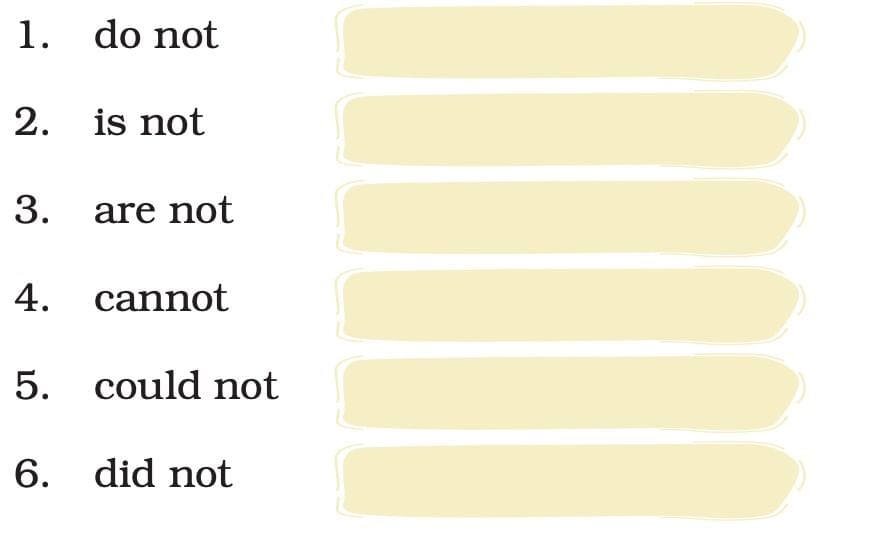
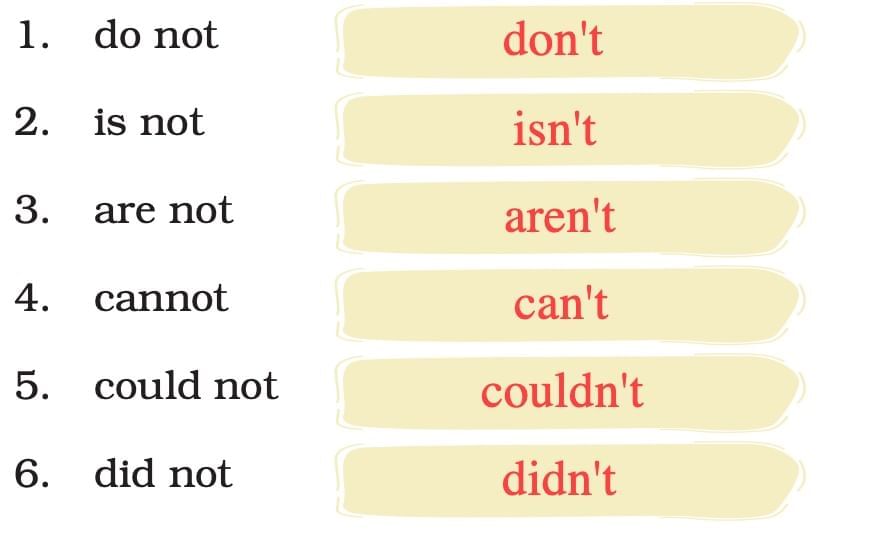
A. Write the contractions

Q: Write the contractions for the following words.

Ans:

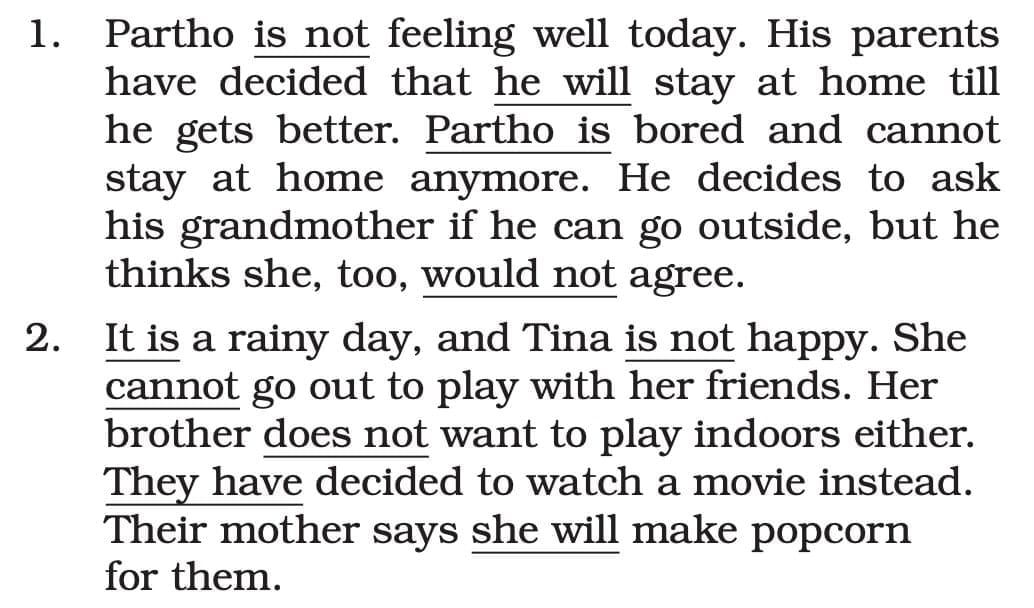
B. Rewrite the following underlined words using contracted forms

Q: Rewrite the following underlined words using contracted forms.

Ans: 1. Partho isn’t feeling well today. His parents have decided that he will stay at home till he gets better. Partho is bored and can’t stay at home anymore. He decides to ask his grandmother if he can go outside, but he thinks she, too, wouldn’t agree.

2. It is a rainy day, and Tina isn’t happy. She can’t go out to play with her friends. Her brother doesn’t want to play indoors either. They have decided to watch a movie instead. Their mother says she will make popcorn for them.

C. Read the following

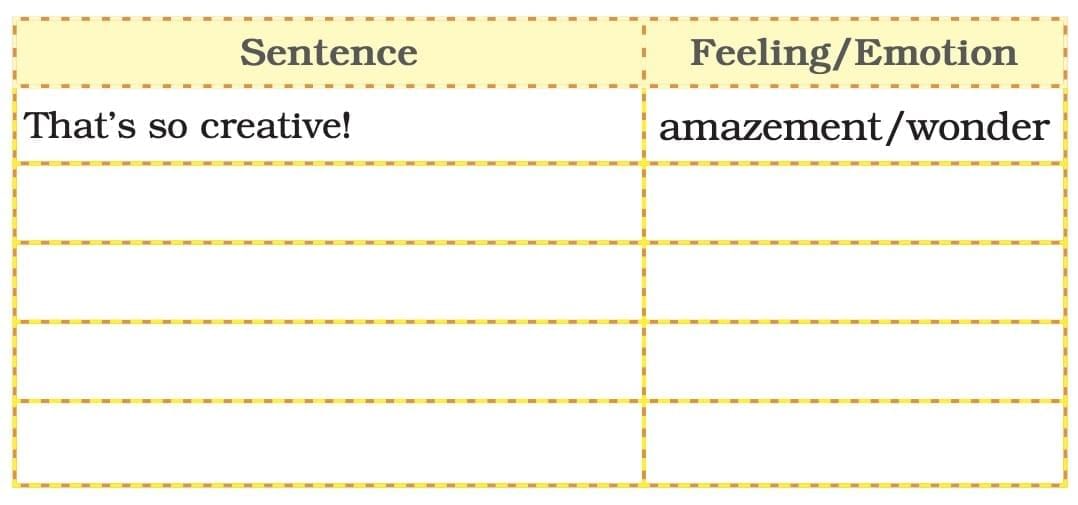
1. That’s so creative!

2. He saw a rooster, a tractor, and a giant football, all made of cement! 

3. Hurrah! India has won the match. 

These sentences are examples of exclamatory sentences. Exclamatory sentences express strong emotions.

Q: Can you name any four emotions?

Ans: Happiness, surprise, excitement, amazement

NOTE: An exclamatory sentence can be identified by the use of exclamatory words like ‘Wow’, ‘Hurrah’, ‘Oh’ and the use of an exclamation mark (!)

D. Find at least five exclamatory sentences from your Grade 4 English textbook and identify the emotions or feelings expressed in them.

Q: Find at least five exclamatory sentences from your Grade 4 English textbook and identify the emotions or feelings expressed in them.

Ans: Example Response

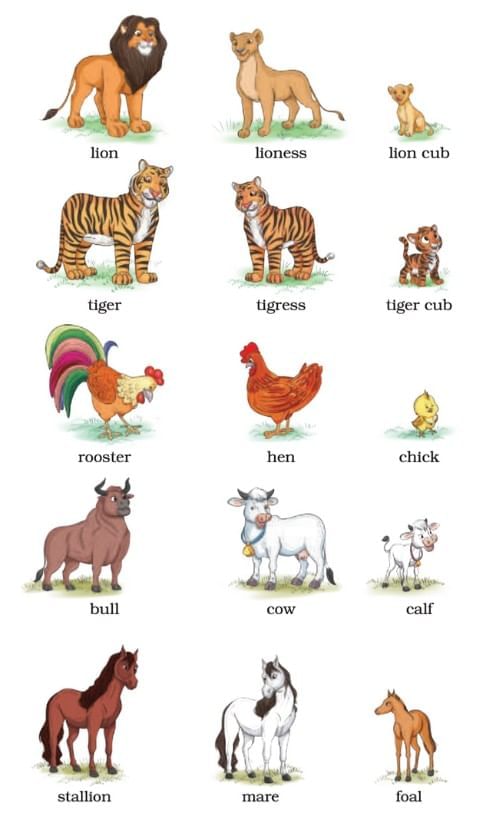
E. Look at the pictures of the animal families and read the words given below each of them.

F. Look at the picture below. Would you like to add anything to this picture? Use your crayons and colour pencils to add to the picture.

Example Response:

Let us Speak (Page 9)

There are many ways in which we can save water. The simplest way is to stop the wastage of water.

A. Sit in groups of three and discuss: 

Q: How do we waste water in our daily lives? 

Ans: Example Response: 

– Wasting water: Leaving the tap on while brushing teeth.

Q: What can we do to stop this wastage?

Ans: Example Response: 
– Saving water: Use a mug for brushing.

B. Write at least three such examples and share with the class.

Ans:

1. Wasting water: Washing dishes under running water. Saving water: Use a bucket to soak dishes.

2. Wasting water: Taking long showers. Saving water: Take short showers.

3. Wasting water: Watering plants in the afternoon. Saving water: Water plants in the morning or evening.

C. Say aloud, ‘What a tank!’ and ‘Water tank’. 

Q: Do both phrases use the word ‘tank’? Do they mean the same thing?
Ans:
 
– Do both phrases use the word ‘tank’? Yes

– Do they mean the same thing? No  (‘What a tank!’ expresses surprise; ‘Water tank’ refers to a container.)

Q: Say aloud, ‘I scream’ and ‘Ice cream’. Do both phrases sound the same? Do they mean the same thing?
Ans:

– Do both phrases sound the same? Yes

– Do they mean the same thing? No (‘I scream’ means shouting; ‘Ice cream’ is a dessert.)

Let us Listen (Page 11)

A. Choose the correct option.

1. Why was Suma surprised in the morning? 

b. There was no water in the tap.

2. How did people manage without water? 

b. They bought bottles and waited for tankers.

3. What did Suma promise after the water supply was restored? 

b. To never waste water again.

4. What activities were planned during the Water Conservation Week? 

b. Poster-making and planting trees.

5. What did Suma suggest to her parents? 

c. To fix a rainwater harvesting system.

Let us Write (Page 12)

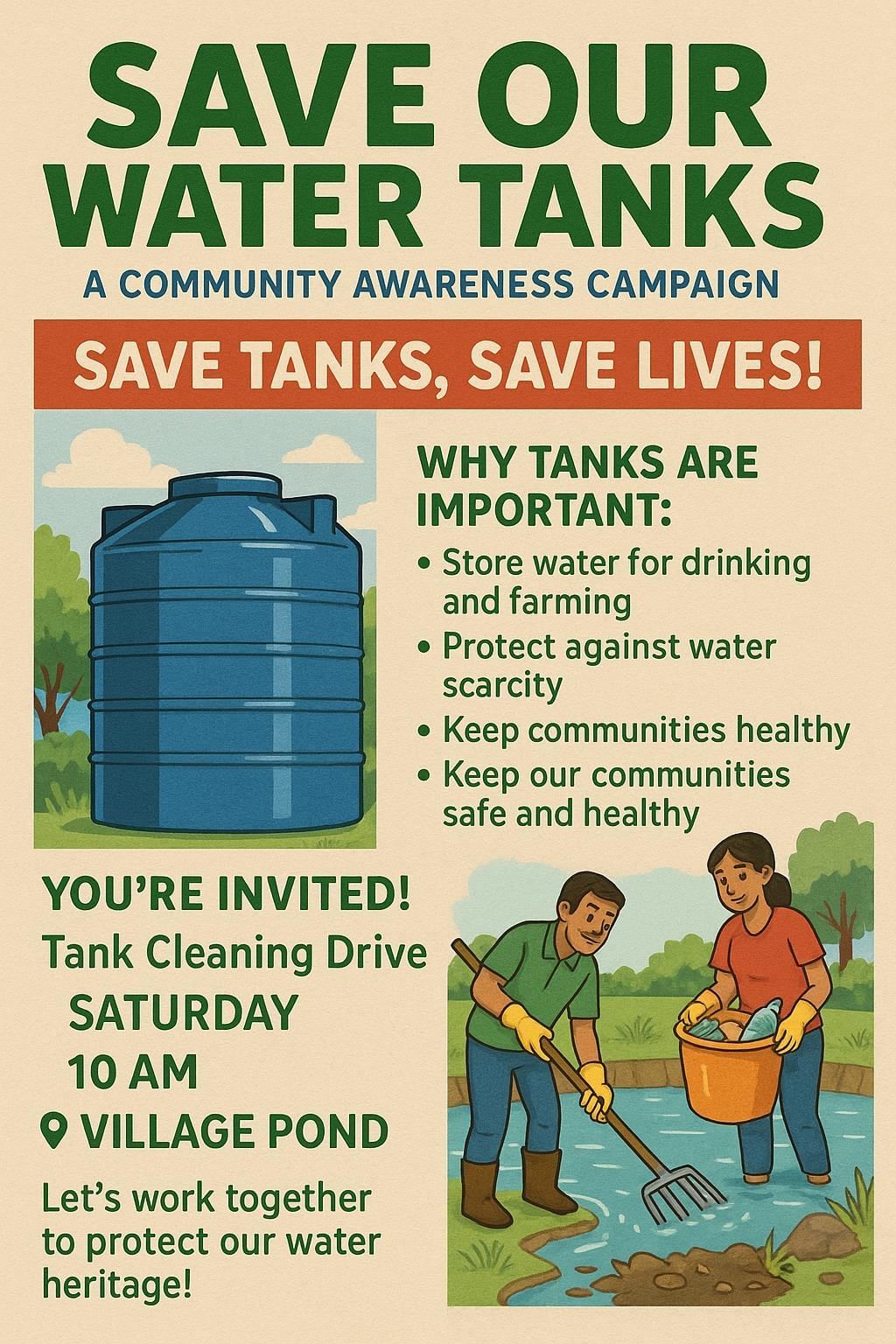
A. Design a poster encouraging people to preserve and clean old water tanks.

Include:     
 • Topic: ‘Save Our Water Tanks—A Community Awareness Campaign’ 
 • A catchy slogan (e.g., ‘Save Tanks, Save Lives!’). 
 • A few bullet points on why tanks are important. 
 • An invitation to join a cleaning drive or awareness programme (mention the place and time of the cleaning drive).

Ans: This is a practical activity. Example poster content:

Topic: Save Our Water Tanks – A Community Awareness Campaign

Slogan: Save Tanks, Save Lives!

Why Tanks Are Important:

  • Store water for drinking and farming.
  • Protect against water scarcity.
  • Keep communities healthy.

Invitation: Join our tank cleaning drive on Saturday, 10 AM, at the village pond!Draw this in the space provided in the book. 
Example Response:
B. Write 10 words that end with ‘er’.

For example: water

Ans: 

05. The Frog – Textbook Solutions

Let us Think (Page 2).                                               A. Answer the following questions

Q1: Where does the frog like to sit or spend time?

Ans: The frog likes to sit in ponds, in the rain, or in a muddy drain.

Q2: How does the frog catch its food?

Ans: The frog catches its food by flicking its tongue quickly.

Q3: How does the frog move in water and on land?

Ans: In water, the frog swims with its webbed feet. On land, it hops and jumps high.

Q4: What helps the frog hide in its surroundings?

Ans: The frog’s colors, which match plants and trees, help it hide in grass and leaves.B. Think and discuss

Q1: What would it feel like to live like a frog, both in water and on land?

Ans: Living like a frog would feel fun because I could swim in water and hop on land. It would be exciting to live in wet places but scary to watch out for snakes.

Q2: If you could hop as high as a frog, what fun things would you do?

Ans: If I could hop like a frog, I would jump over puddles, play high jumps with friends, and hop to the tops of small trees for fun.

Q3: How is a frog’s life different from a fish’s life?

Ans: A frog lives on land and in water, hopping and swimming, while a fish lives only in water and swims. Frogs eat insects with their tongue, but fish eat food in the water.

Q4: How are frogs’ webbed feet similar to the flippers used by scuba divers?

Ans: Frogs’ webbed feet and scuba divers’ flippers are similar because both help them swim easily in water by pushing against it.

Let us Learn (Page 3)A. Choose the correct words

Q: Choose the correct words from the brackets and fill in the blanks.

Ans:

1. My colours match the plants and trees.

2. Would you like to learn about frogs and tadpoles?

3. I hop around happily but I must watch out for snakes!

4. Frogs swim easily because they have webbed feet.B. Choose the correct option

Q: The following words have been rearranged into sentences. Choose the correct option.

Ans:

1. hunts/night/the/silently/tiger/at 

→ a. The tiger hunts silently at night.

2. elephants/in/forests/live/large/groups/in 

→ c. Elephants live in large groups in forests.

3. web/a/spider/carefully/its/weaves 

→ a. A spider carefully weaves its web.

4. Crocodile/waits/the/silently/riverbank/the/near 

→ c. The crocodile waits silently near the riverbank.

5. a/swims/turtle/slowly/in/ocean/the 

→ a. A turtle swims slowly in the ocean.

Let us Speak (Page 4)A. Three tongue twisters are given below. Try speaking each tongue twister slowly at first. Gradually increase your speed with each repetition. Count how many times you can say it correctly without making a mistake

This is a classroom activity. Practice saying the tongue twisters:

1. Four fierce frogs fight for flies.

2. Fast frogs flip-flop across fluffy fields.

3. Funny frogs flap floppy feet.

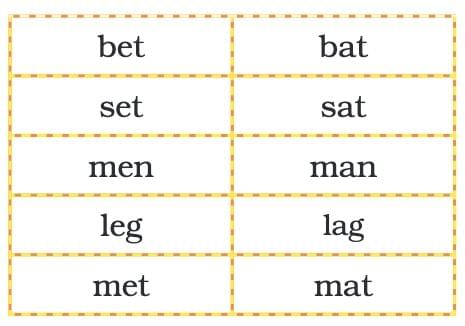
Start slowly, then say them faster, and count how many times you say them correctly.B. Listen and repeat.

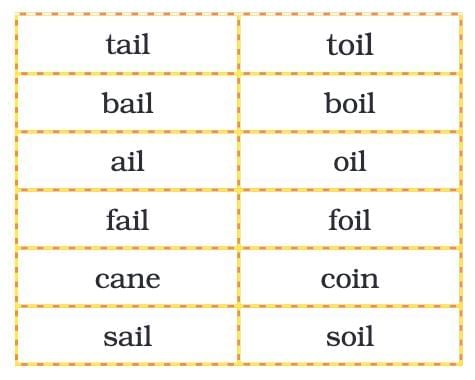
 Your teacher will say aloud the following pairs of words. Listen carefully and repeat each pair.

Let us Listen (Page 5)A.Your teacher will read out instructions for you to follow and create your own ‘Frog’s World’.

1.     Draw the place: Imagine a place where your frog might be happy, like a pond, a forest or a rainy area.

2.     Draw your frog: Draw a frog in the above setting.

3.     Decorate with words: Around your drawing, write some words from the poem that describe the frog’s life. You can even write your own short sentence about the frog’s world.

4.     Colour it: Use colours to bring your frog’s worldto life! Be creative and make it as colourful asyou would like.

Ans: This is a classroom activity. Follow the teacher’s instructions to:

1. Draw a pond, forest, or rainy area.

2. Draw a frog in that place.

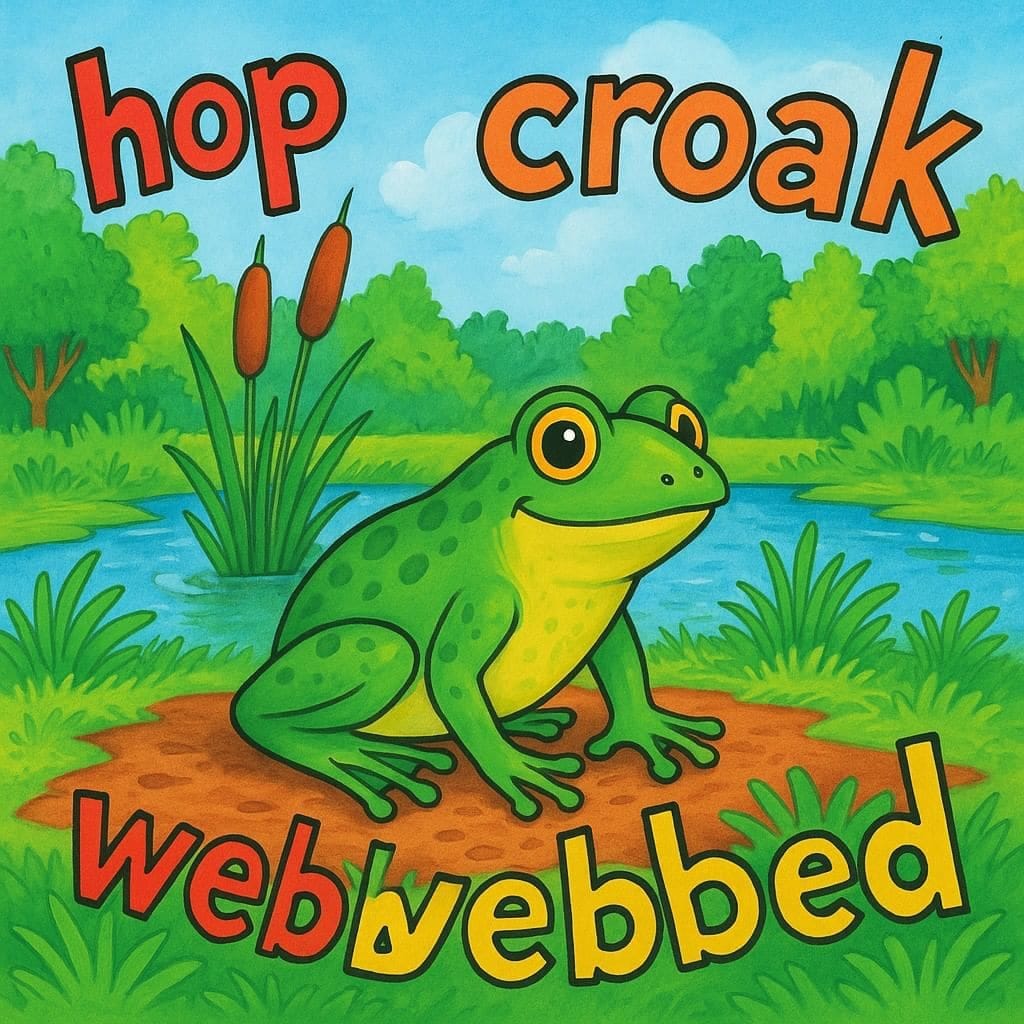
3. Write words from the poem like “hop,” “croak,” or “webbed” around the drawing.

4. Colour the drawing to make it bright and lively.

Let us Write (Page 7)

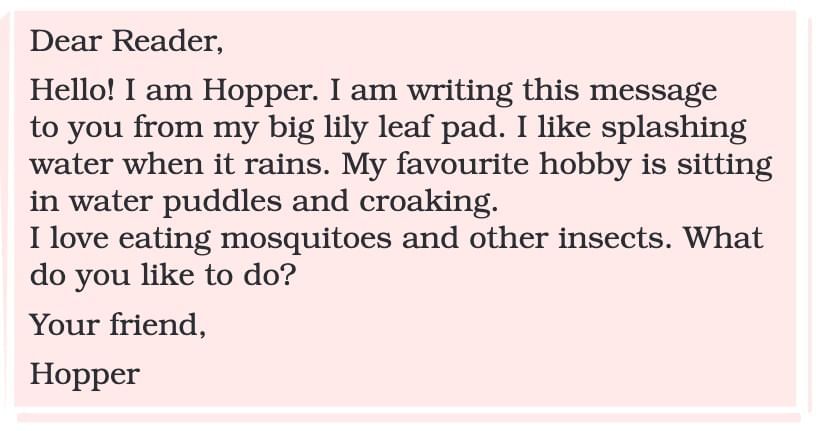
Here is a message for you from Hopper, the frog.

Write a reply to Hopper in your notebook and share it with your class.

Ans:
Dear Hopper,
Hello! I’m happy to get your message from your lily leaf pad. I like playing games with friends and eating snacks like chips. Splashing in water sounds fun! I also like reading books and running in the park. Do you hop high in your pond? Your friend, [Your Name]

04. The Wise Parrot – Textbook Solutions

Let us Think (Page 5).                                               A. Answer the following questions

Q1: Why did the merchant keep the parrot in a cage of gold?

Ans: The merchant kept the parrot in a cage of gold because it was bright, talkative, and entertained him with stories and songs.

Q2: What made the parrot a favourite pet of the merchant?

Ans: The parrot was a favourite pet because it had a sharp mind and entertained the merchant with stories and songs.

Q3: What message did the parrot ask the merchant to convey to its friends?

Ans: The parrot asked the merchant to tell its friends in the jungle that it sends them greetings from its cage.

Q4: What happened after the merchant gave the message to the parrots?

Ans: After the merchant gave the message, one parrot dropped from the tree and fell to the ground, as if shocked.

Q5: How did the parrot escape from the cage?

Ans: The parrot pretended to fall dead after hearing the merchant’s story about the other parrot. The merchant placed it on the windowsill, and the parrot flew away to freedom.B. Think and discuss

Q1: If you were the merchant, how would you respond to the parrot’s request for freedom?

Ans: If I were the merchant, I would let the parrot fly free because it wants to live happily in the jungle with its friends.

Q2: Can you think of a real-life situation where intelligence is more useful than strength?

Ans: When solving a puzzle, intelligence is more useful than strength because thinking carefully helps find the solution faster.

Q3: Which parrot from the chapter was actually ‘wise’ according to you? Give reasons for your answer.

Ans: The parrot in the cage was wise. It understood its friend’s trick of pretending to be dead and used the same idea to escape, showing its cleverness.

Let us Learn (Page 6)A. Fill in the blanks with suitable phrases

Q: Fill in the blanks with suitable phrases given in the box to make a meaningful paragraph: stand upright, all over, look after, stepped out, went away, came across, about to

Ans: One winter morning, as I stepped out of my home, I saw that the snow was all over the place. While walking uphill towards my shop, I came across a small puppy. Its leg was injured and it was about to collapse. Being in pain, it was unable to stand upright. So, I decided to take it home and look after it. With good care, all its pain went away.B. Complete the sentences

Q: Complete the sentences using the words: pack, bouquet, army, flock, bunch, flight, swarm.

Ans:

  1. flight of parrots came to the forest.
  2. I saw a flock of sheep in the fields.
  3. pack of wolves was howling loudly.
  4. We gave a bouquet of flowers to the chief guest.
  5. swarm of bees hovered around the flowers.
  6. An army of ants is moving towards the anthill.
  7. I helped my mother find a bunch of keys.

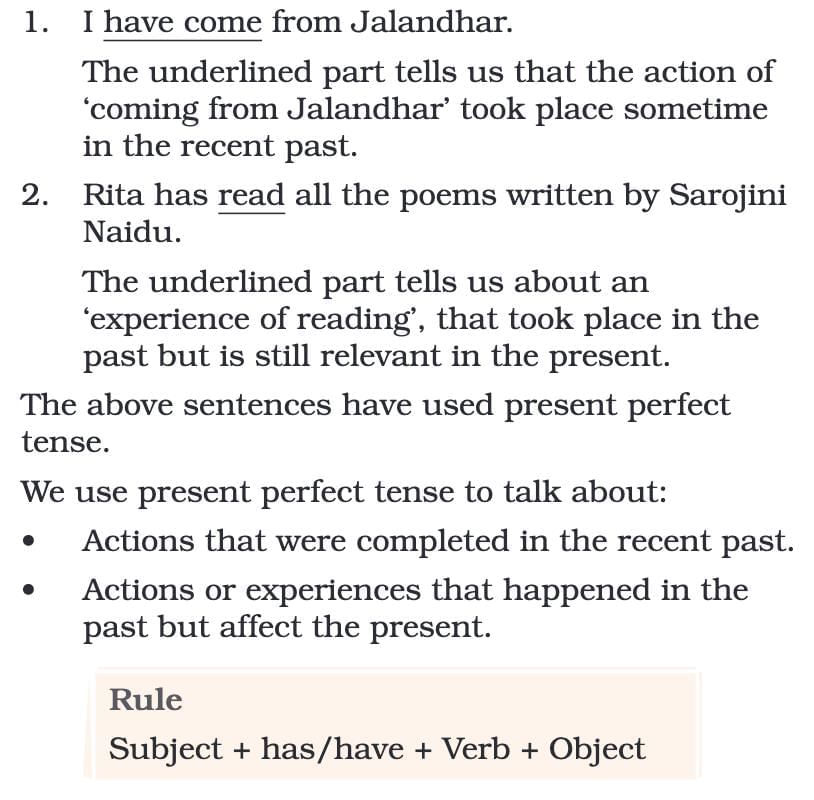
C. Read the Following:

Q: Complete the following sentences using present perfect tense

Ans:

a. I have visited Delhi many times. It is a city with many historical sites.

b. My friend Onshangla is an artist. She has drawn pictures of ten monuments.

c. Mr. Joon has bought a new car.

d. I have completed my homework and my brother has revised for his test.

e. They have written letters to their friends.

Let us Listen (Page 8)

Q: Your teacher will read the paragraph given below, listen to the paragraph carefully. Your teacher will ask you some questions, which you can try to answer.

Ans: This is a classroom activity. Listen to the teacher read about bird sanctuaries and answer questions like: What is the oldest bird sanctuary? (Vedanthangal) or What is the largest bird sanctuary? (Bharatpur).

Let us Speak (Page 9)A. Listen and Repeat

Q: There are two birds. Which bird would you want to be and why? Share your views with the class.

Ans: I would want to be a parrot because it is colourful, can talk, and flies freely in the jungle. Share this with your class.

Let us Write (Page 10)

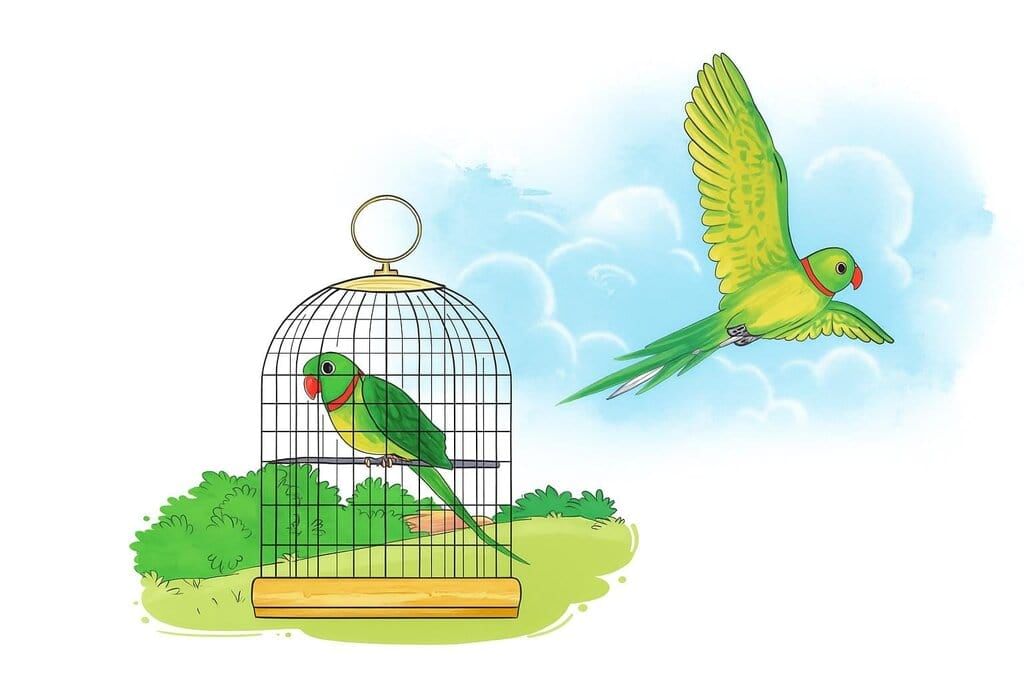
Q: After escaping from the golden cage, the parrot decided to fly away …

Ans: After escaping from the golden cage, the parrot decided to fly away to the jungle. It joined its friends on a tall tree, singing happily. The parrot ate sweet fruits and flew high in the sky, feeling free. It told its friends about the golden cage and how it tricked the merchant. The other parrots cheered for its cleverness. The parrot lived happily, exploring new forests and making new friends, never wanting to be in a cage again.

03. The Rainbow – Textbook Solutions

Let us Think (Page 2).

                                                                                         A. Answer the following

Q1: Explain the meaning of the word ‘bow’ used in the poem.

Ans: The word ‘bow’ in the poem refers to a rainbow, which looks like a curved arc in the sky.

Q2: Which bridge does the poet like more and why?

Ans: The poet likes the rainbow more than river bridges because it is prettier and builds a road from earth to sky.

Q3: The word ‘these’ is used for different things in stanzas one and two. What are the things for which ‘these’ has been used in each stanza?

Ans: In stanza one, ‘these’ refers to boats and ships. In stanza two, ‘these’ refers to bridges on the rivers.

Q4: State whether the following are True or False.

Ans:

a. Ships sail on the river. – False (Ships sail on the seas, not rivers.)

b. Boats sail on the sea. – False (Boats sail on the rivers, not seas.)

c. Bridges are built on the river. – True (Bridges are built on rivers.)

d. A road is built from earth to the sky. – False (The rainbow is described as a road, but it’s not actually built.)B. Think and discuss

Q5: What are the ways in which you can cross a river?

Ans: You can cross a river by using a bridge, a boat, a ferry, or by swimming if it’s safe.

Q6: Have you ever seen a rainbow in real life or in pictures? How did you feel?

Ans: I saw a rainbow in the sky after rain. I felt happy and excited because it was colourful and beautiful.

Q7: If you could walk on a rainbow, where do you think it would take you?

Ans: Walking on a rainbow might take me to a magical place with bright colours, happy animals, and shiny clouds.

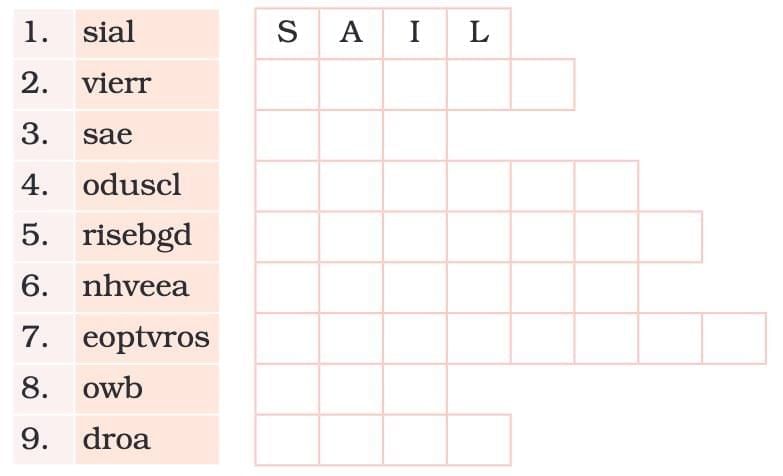
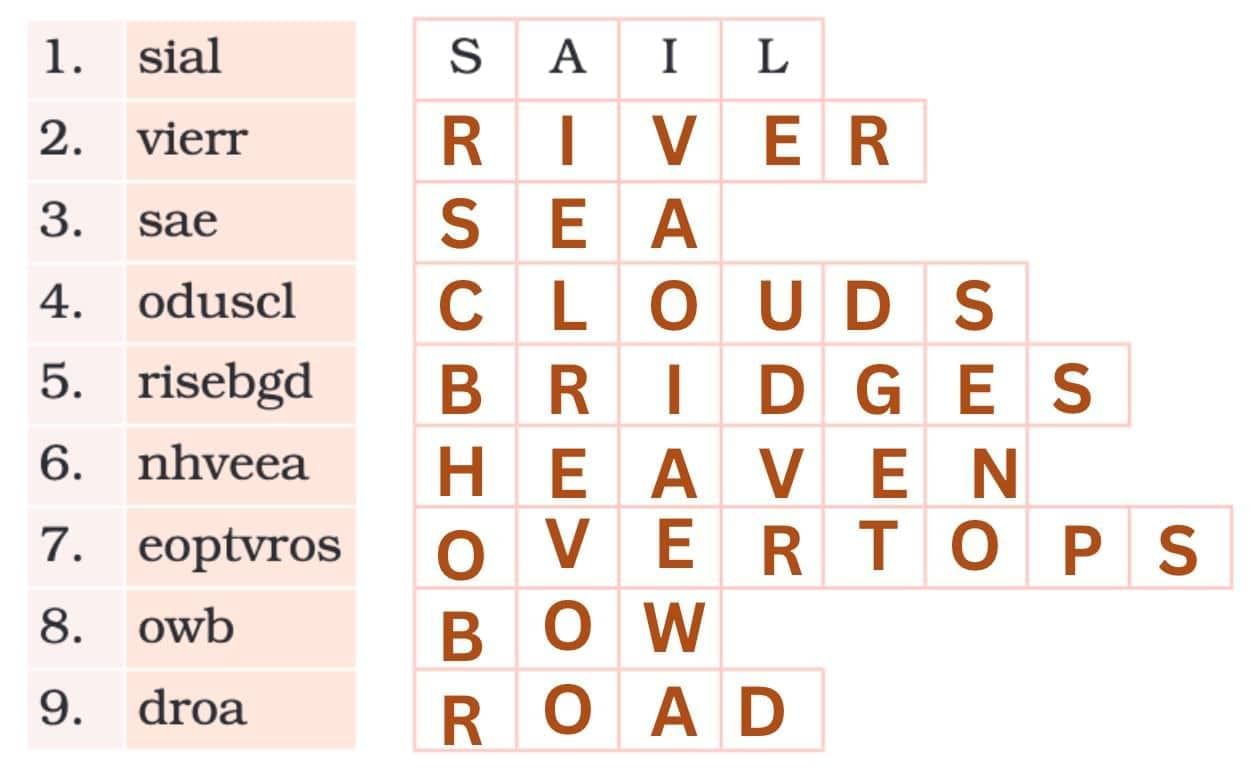
Let us Learn (Page 3)A. Rearrange the letters of each word to form a meaningful word from the poem

Q: Rearrange the letters of each word to form a meaningful word from the poem.

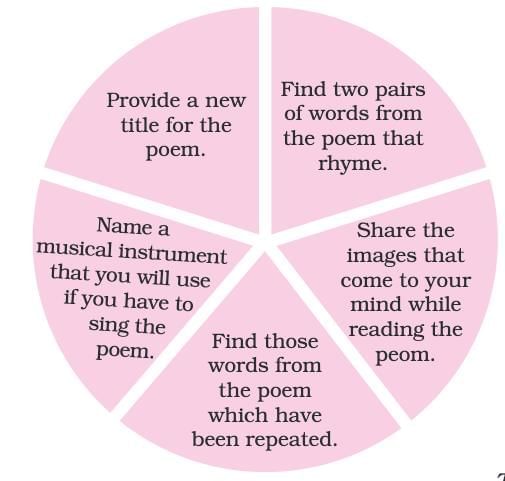
Ans:B. Work in pairs

Q: Work in pairs. One of you moves a finger around in the circle. When your partner says ‘Stop’, perform the action indicated by the segment that the finger lands on.

Ans: This is a classroom activity. Work with a partner, move your finger in a circle, and perform the action when your partner says ‘Stop’.

Let us Listen (Page 4)

Q: Sit in a circle and listen to the words read aloud by your teacher. Give five rhyming words for each word as indicated.

Ans:

  • Ship: chip, trip, dip, slip, grip
  • Tree: free, see, bee, knee, tea
  • Bow: show, glow, know, flow, snow
  • Rain: pain, gain, main, chain, lane
  • Sun: fun, run, gun, bun, none
  • Sea: tea, key, bee, free, see
  • Sail: mail, tail, fail, rail, jail
  • And: hand, land, band, sand, stand
  • Sky: high, fly, buy, try, cry
  • Far: car, star, jar, bar, tar 

Let us Speak (Page 5)

Q: Recite the poem given below in three ways: 
a. In a happy voice, 
b. In an angry voice, 
c. In a surprised voice.

Ans: This is a classroom activity. Recite the poem “Colours” in a happy voice, an angry voice, and a surprised voice as instructed by the teacher.

Let us Write (Page 7)A. The poem The Rainbow mentions boats and ships and their journey across the water bodies. You too may have travelled to different places. Share your experience of travelling to any one place with your class.    

Write a short paragraph of 80–100 words about your journey to a place you visited recently. You may include the following points in your paragraph:     

•     Time of journey and destination     

•     Purpose of travel     

•     Whom you travelled with     

•     Things you liked or disliked during your travel     

•     Local dishes and snacks     

•     Monument, landmark or scenery 

Ans: Last month, I traveled to my grandmother’s village for a family visit. I went with my parents and sister by car. The journey was fun because we played games and sang songs, but the road was bumpy sometimes, which I didn’t like. I loved the green fields and the river we saw on the way. We ate homemade parathas and mangoes from the village. The old temple near the river was beautiful. I felt happy spending time with my family and seeing new places.B. A word joins a ‘friend word’ to make new words

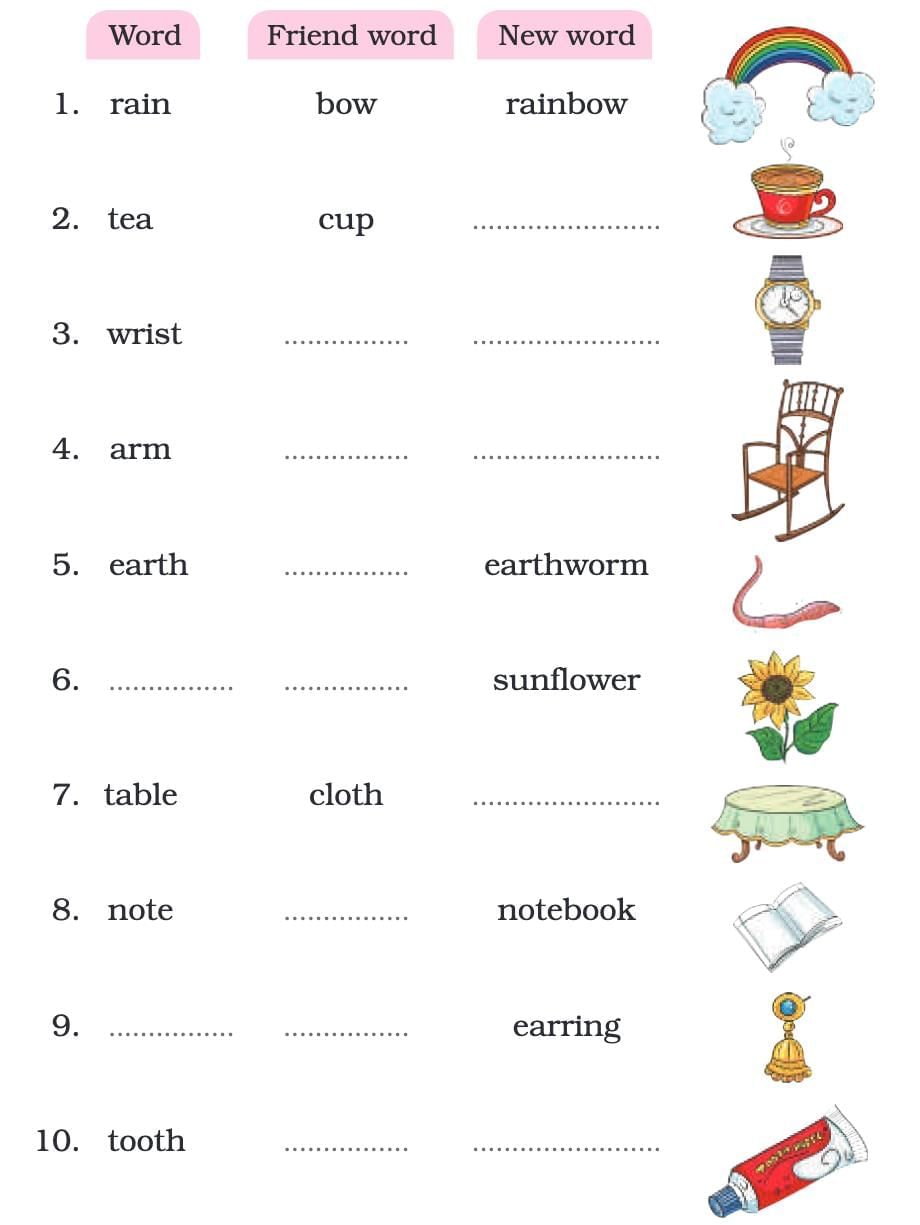
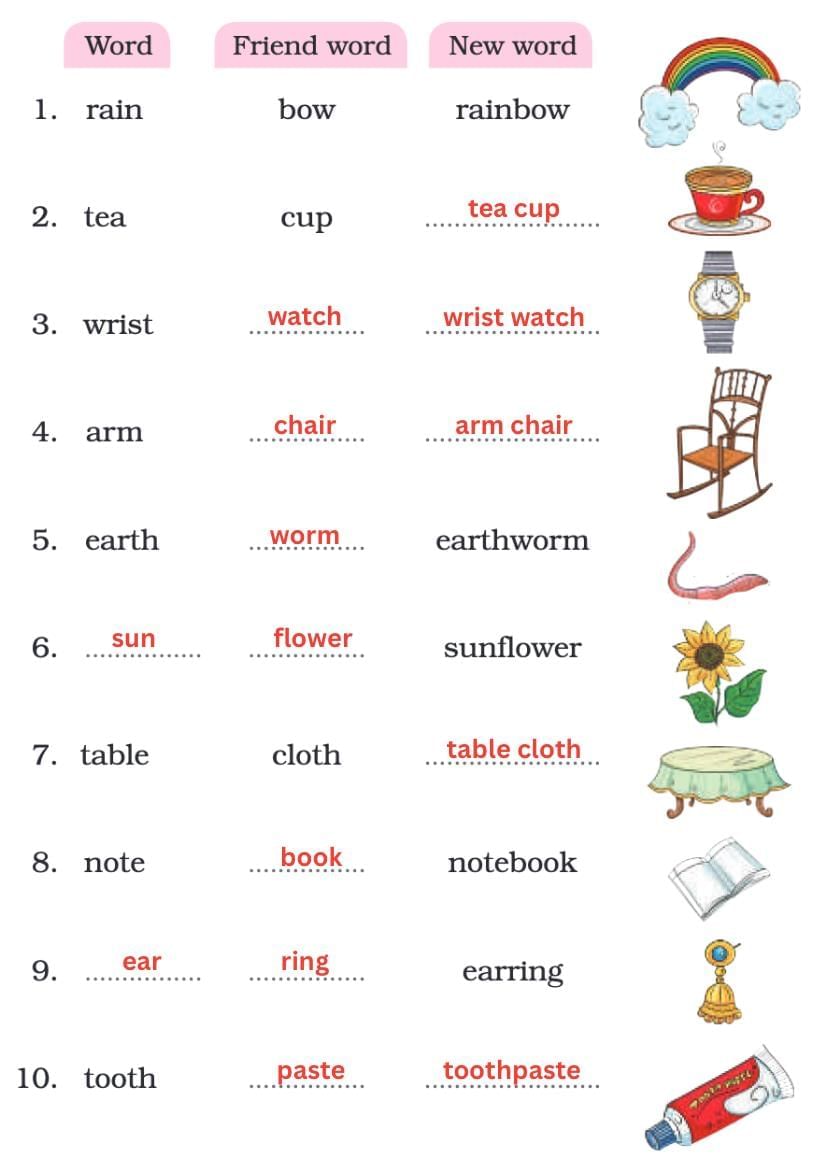
Q: Complete the table.

Ans:C. Create two sentences for each word, once as a noun and then as a verb

Q: The following words are both nouns and verbs. Create two sentences for each word, once as a noun and then as a verb.

Ans:

1. Cut

Noun: The cut on my finger hurts.

Verb: I cut the paper with scissors.

2. Bat

Noun: The cricket bat is new.

Verb: Bats fly at night.

3. Picture

Noun: The picture on the wall is colourful.

Verb: I picture a beautiful rainbow in my mind.

4. Cry

Noun: Her cry was loud.

Verb: Babies cry when they are hungry.

5. Filter

Noun: The water filter is in the kitchen.

Verb: We filter the water before drinking.

6. Dance

Noun: The dance at the party was fun.

Verb: We dance to music every evening.

7. Plant

Noun: The plant needs water.

Verb: I plant flowers in the garden.

8. Paint

Noun: The paint on the wall is blue.

Verb: We paint the house every year.

9. Fly

Noun: The fly is on the food.

Verb: Birds fly in the sky.

10. Face

Noun: Her face was happy.

Verb: We face challenges bravely.D. Write the opposites of the following words

Q1: Write the opposites of the following words in the space provided. All your answers must begin with an ‘S’.

Ans:

a. large → small

b. weak → strong

c. fast → slow

d. rough → smooth

e. dull → shiny

f. curved → straight

g. finish → start

h. addition → subtraction

i. complicated → simple

j. mild → spicy

k. blunt → sharp

Q2: Now, make sentences using the words that you have written in the blanks.

Ans:

1. The small cat slept quietly.

2. The strong boy lifted the box.

3. The slow turtle crossed the road.

4. The smooth stone felt nice to touch.

5. The shiny star sparkled in the sky.

6. The straight line was easy to draw.

7. We start the game in the morning.

8. Subtraction is harder than addition.

9. The simple puzzle was fun to solve.

10. The spicy food was tasty.

11. The sharp knife cut the fruit easily.

Q3: In small groups, choose a letter of the English alphabet and create an exercise similar to the one above.

Ans: Example Response:
Choose the letter ‘B’. Find opposites starting with ‘B’:

1. small → big

2. dark → bright

3. sad → blissful

4. old → brand-new

5. dull → brilliantE. VIBGYOR – The colours of the rainbow

Q: VIBGYOR is an easy way to remember the seven colours of the rainbow in order.

Ans:The seven colours of the rainbow are:

  1. Violet
  2. Indigo
  3. Blue
  4. Green
  5. Yellow
  6. Orange
  7. Red

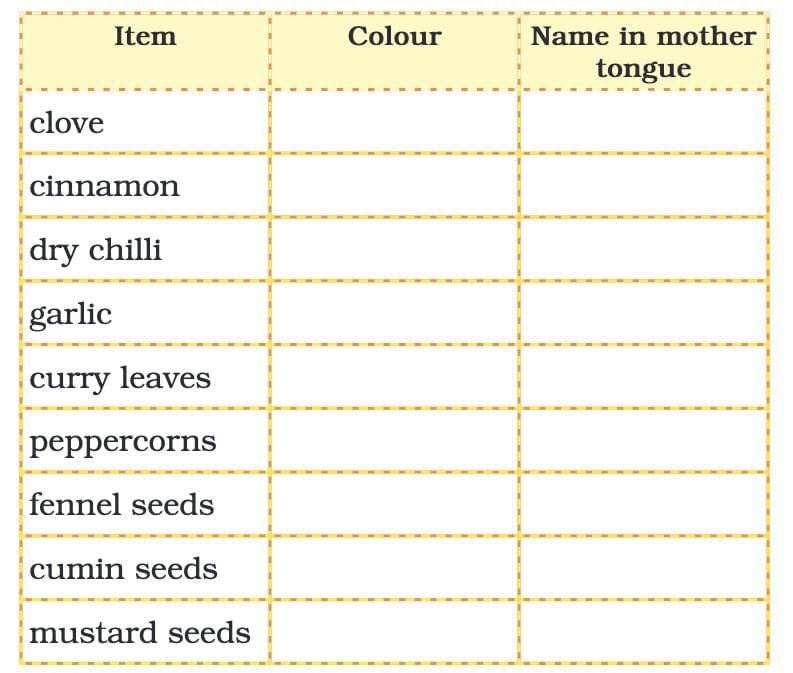
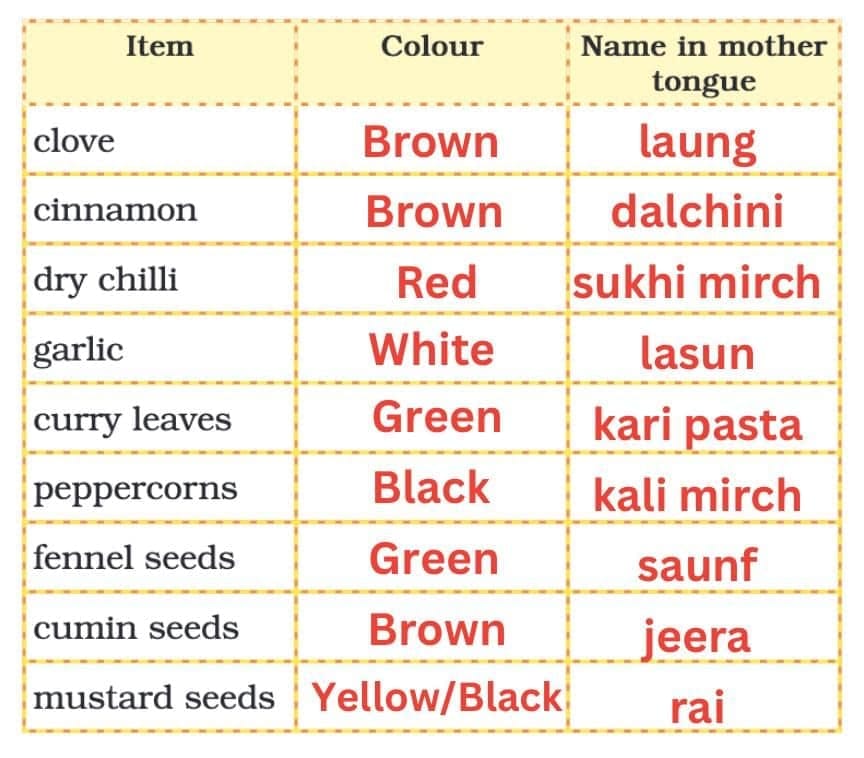
F. The following items, generally found in kitchens, add colour and taste to the food

Q: What colours are they? Write them in the column. What do you call them in your mother tongue?

Ans:

02. Gone with the Scooter – Textbook Solutions

Let us Think (Page 5)

A. Answer the following questions

Q1: What was Gopi doing on the veranda?

Ans: Gopi was sitting on the veranda, reading a book.

Q2: What sound did Gopi hear before he went to the garden?

Ans: Gopi heard something rustling past and falling with a thud in the garden.

Q3: Describe Gopi’s search for the ball.

Ans: Gopi searched in the thick grass near the garden fence but found nothing. He looked among the bushes, but nothing was there. Then, he saw a white hockey ball on a heap of dry leaves and took it in his hands.

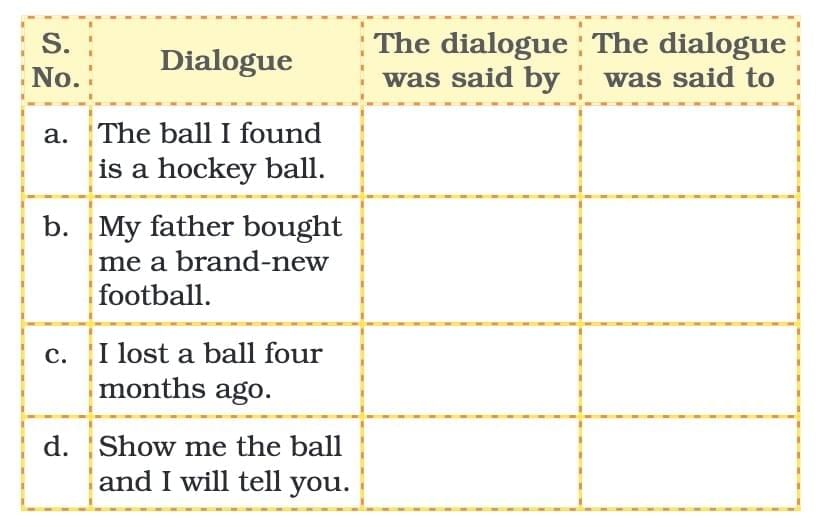
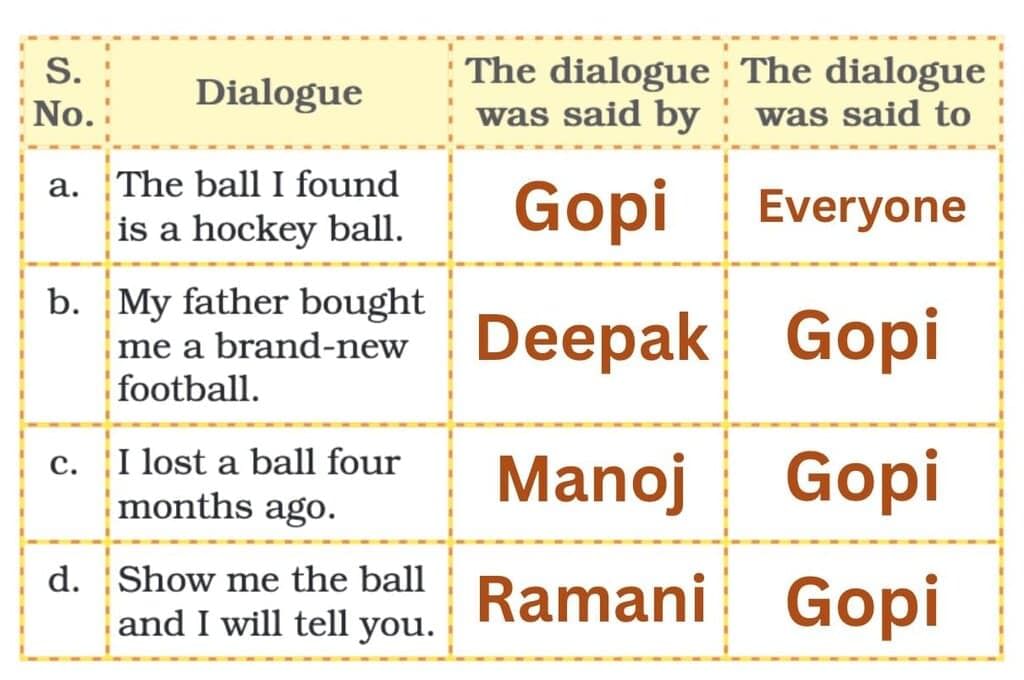
Q4: Complete the table given below.

Ans:

Q5: Who grabbed the ball from Gopi? How did the game start?

Ans: Manoj grabbed the ball from Gopi. The game started when Gopi stood at the center of the field with a hockey stick, passed the ball to Deepak, who drove it towards Ramani, and Ramani dribbled it to Jay.

Q6: Why did everyone laugh at the end of the story?

Ans: Everyone laughed because the hockey ball went past the playground gate, fell into the basket of a passing scooter, and was taken away by the unaware scooterist.

B. Think and answer

Q1: What would you have done if, like Gopi, you had found a ball that did not belong to you?

Ans: I would ask my friends or people nearby if they lost a ball. If no one claimed it, I would keep it safe or give it to an adult.

Q2: Imagine what happens to the hockey ball after it is taken away by the scooter. Where does it go? Who finds it?

Ans: The ball falls out of the scooter’s basket near a park. A boy playing there finds it and takes it to play with his friends.

Q3: Notice that the scooterist is wearing a helmet. Why is it important to wear a helmet? Should the pillion rider also wear a helmet?

Ans: Wearing a helmet is important to protect the head from injuries during accidents. Yes, the pillion rider should also wear a helmet for safety.

Let us Learn (Page 6)

A. Match the following

Ans:

B. Complete the following story using the words given in the box

Ans: Gopi completed his work when he wanted to go outside and play. When he reached the playground, nobody was there. Since his friends were yet to join him, he decided to take a walk. After 15 minutes, five of them came, and everyone started to discuss the games. They decided to play hopscotch because they got to know that Ramani would not be joining them.

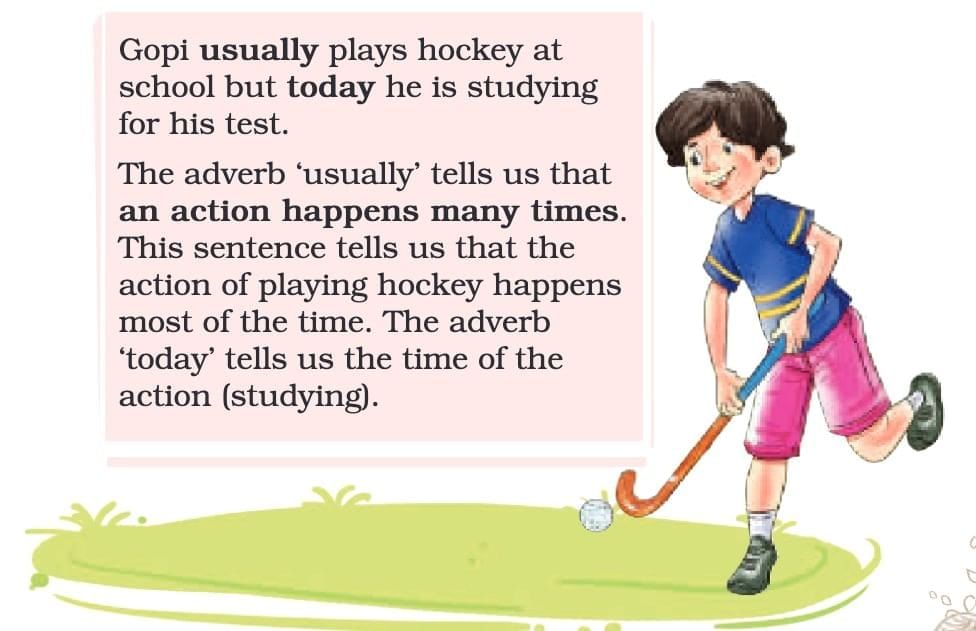
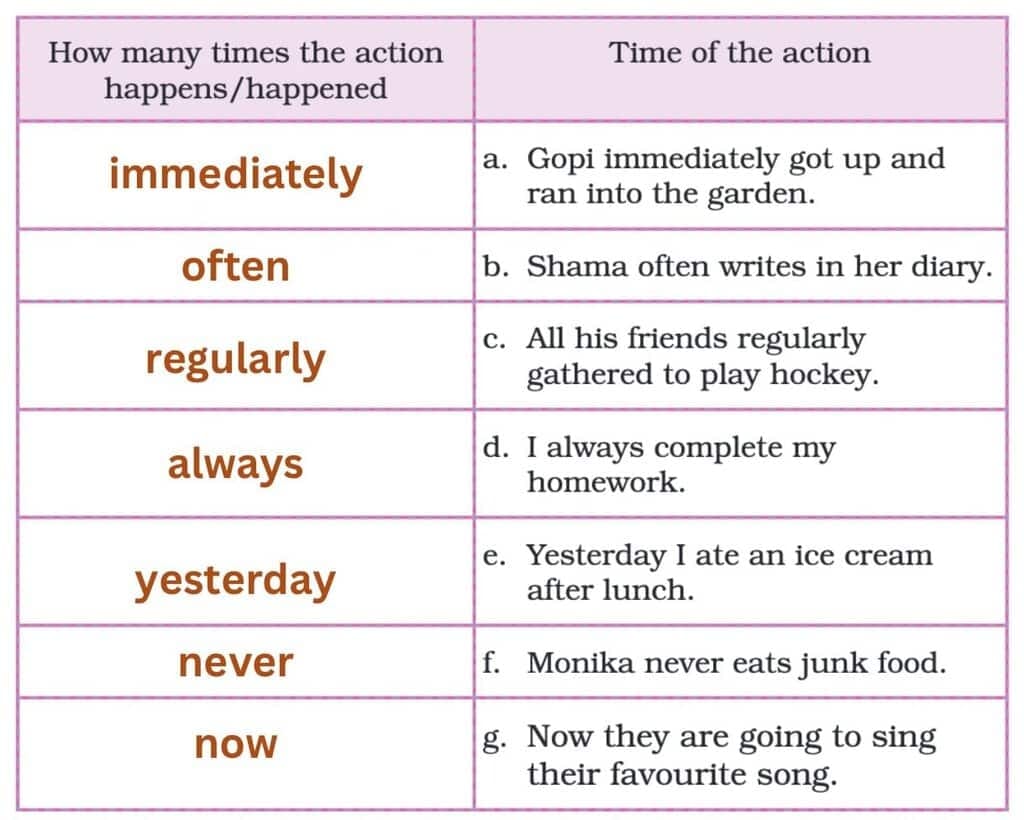
C. Read the following sentence

Q: Encircle the adverbs in the following sentences.

Ans: 

Let us Listen (Page 9)

Q: Listen to your teacher. Follow the instructions and draw accordingly in the space provided below.

Ans:

Let us Speak (Page 10)

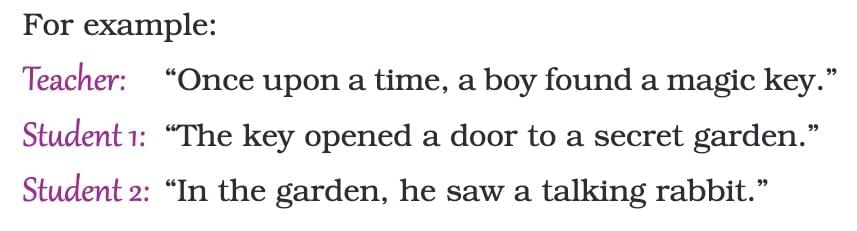
A. The teacher starts a story with one sentence. Each student adds a sentence to continue the story.

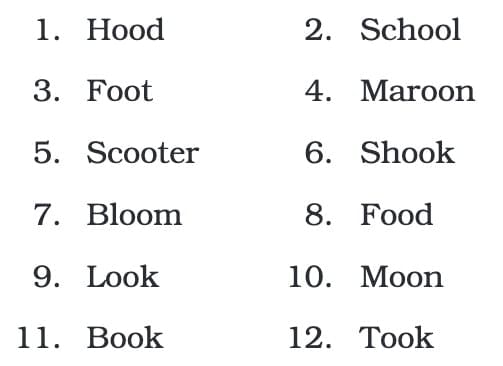
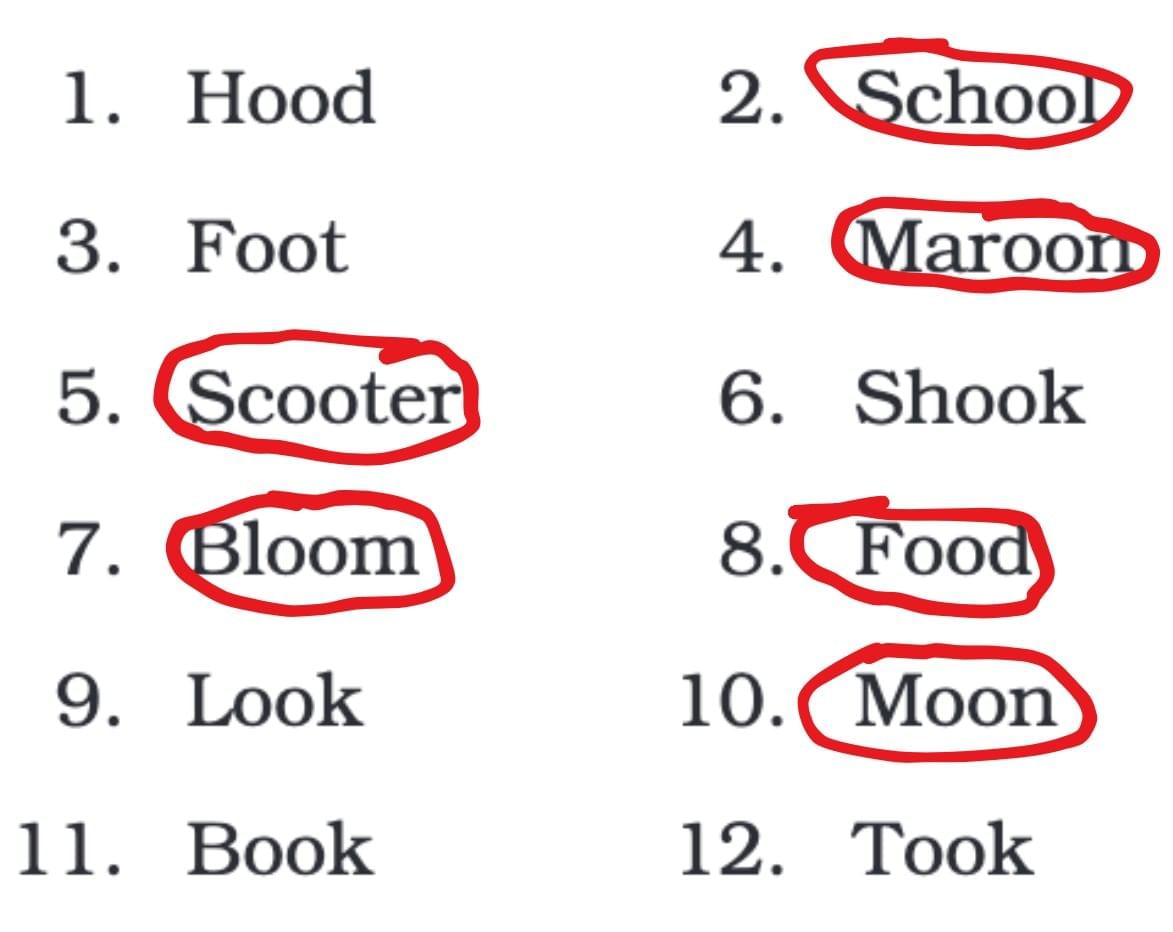
B. The title of this textbook is ‘Santoor’. Say the word ‘book’. Next, say the word ‘Santoor’. Do you notice the difference? Although both words have ‘oo’.  in them, the sound of ‘oo’ in ‘book’ is short; the sound of ‘oo’ in ‘Santoor’ is long. 

Q: Say aloud the following words. Encircle the words that have a long ‘oo’ sound.

Ans:

Let us Write (Page 11)A. By the time the children ran to the gate, the scooter was gone… and so was the ball. They looked at each other and burst into laughter. Write a possible conversation between Gopi and his friends after this incident.
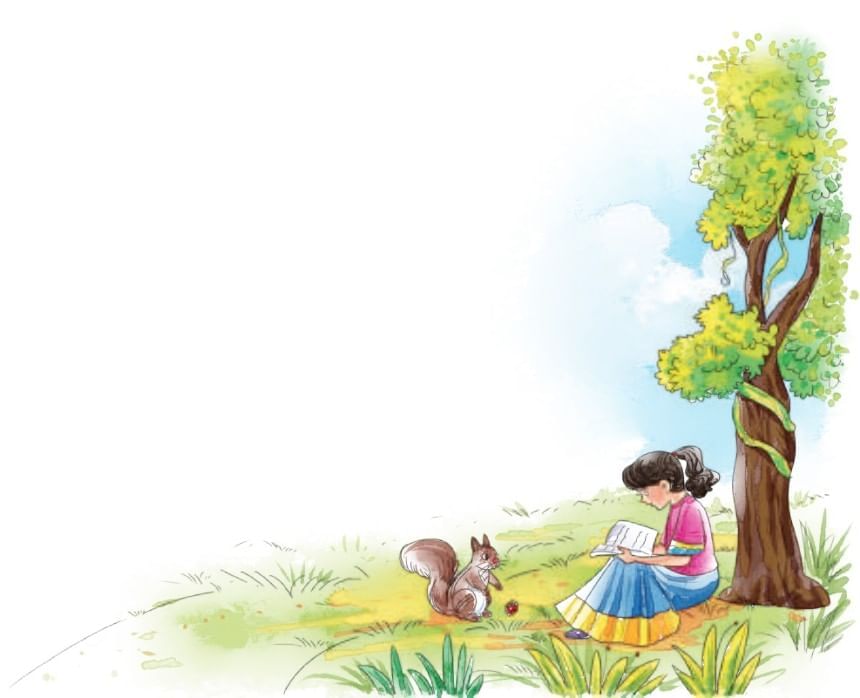
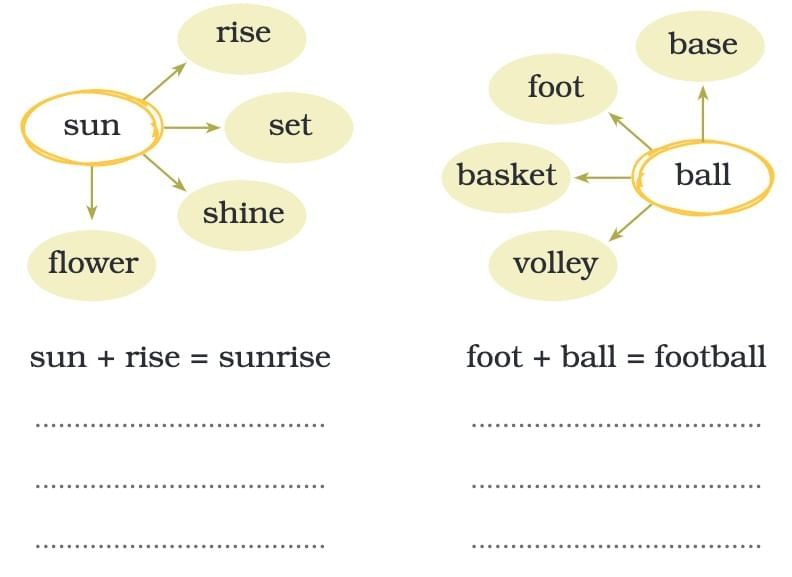
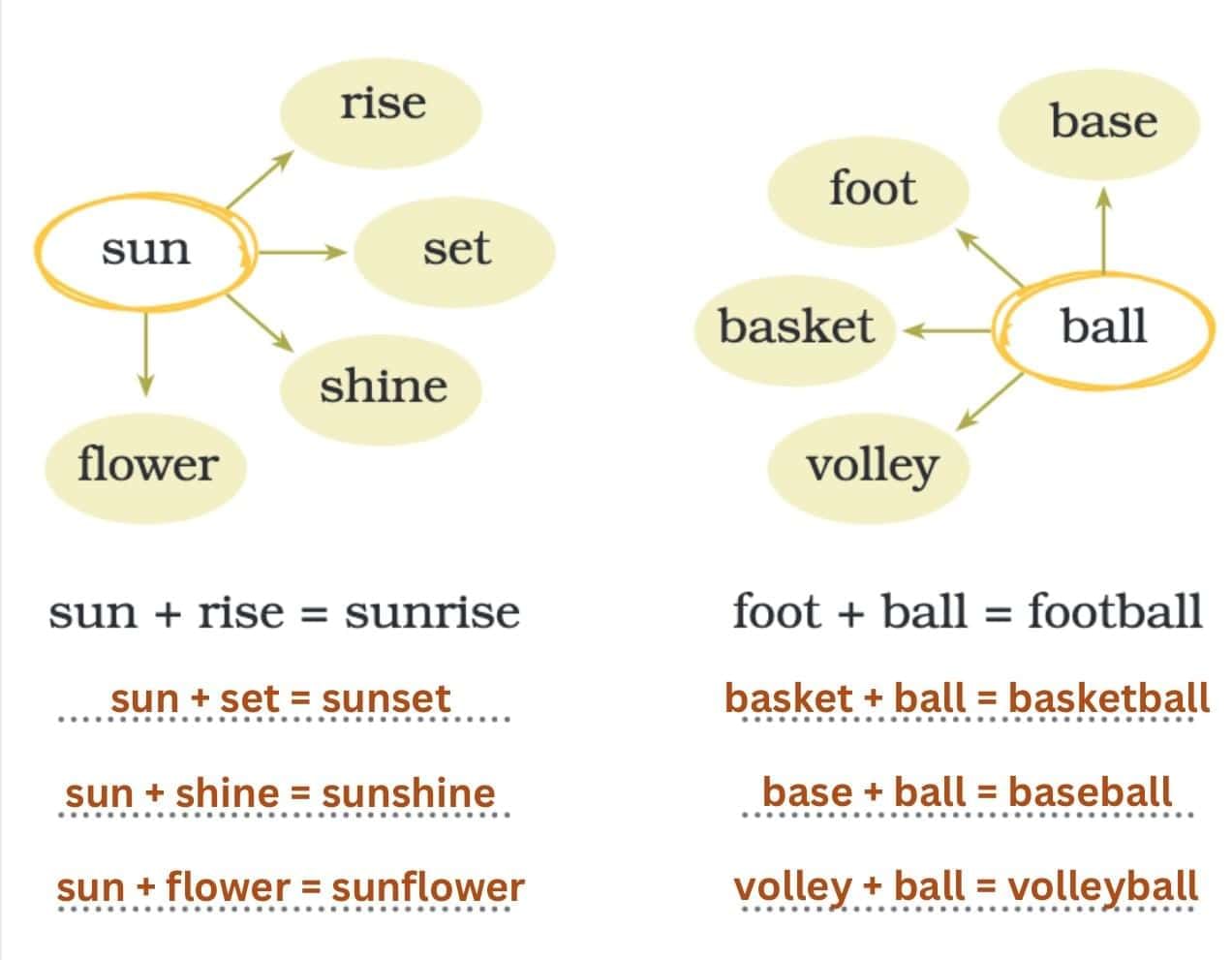
Ans: B. Form new words by following the examples given below.

Q: Write a sentence using each of these words in your notebook.

Ans: 

  • I watched the sunset from the beach.
  • The sunshine made the day bright and warm.
  • sunflower always faces the sun.
  • He plays basketball every evening.
  • We had fun playing volleyball at the picnic.
  • My brother is a big fan of baseball.

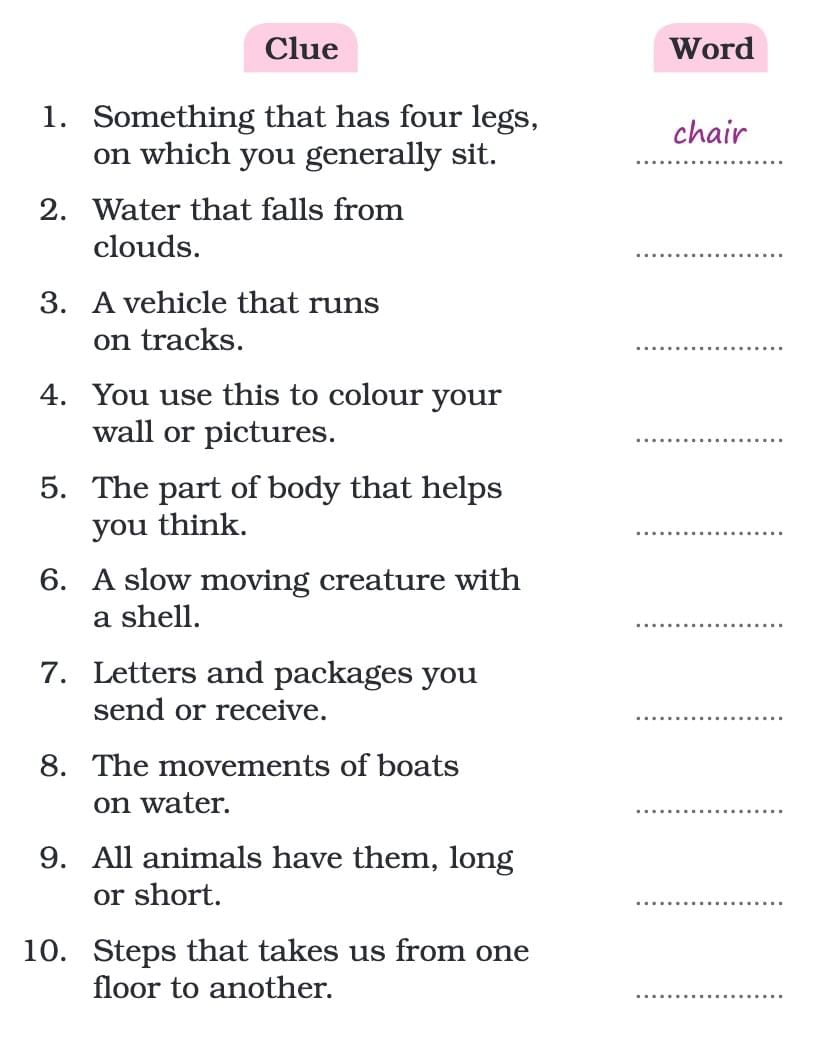
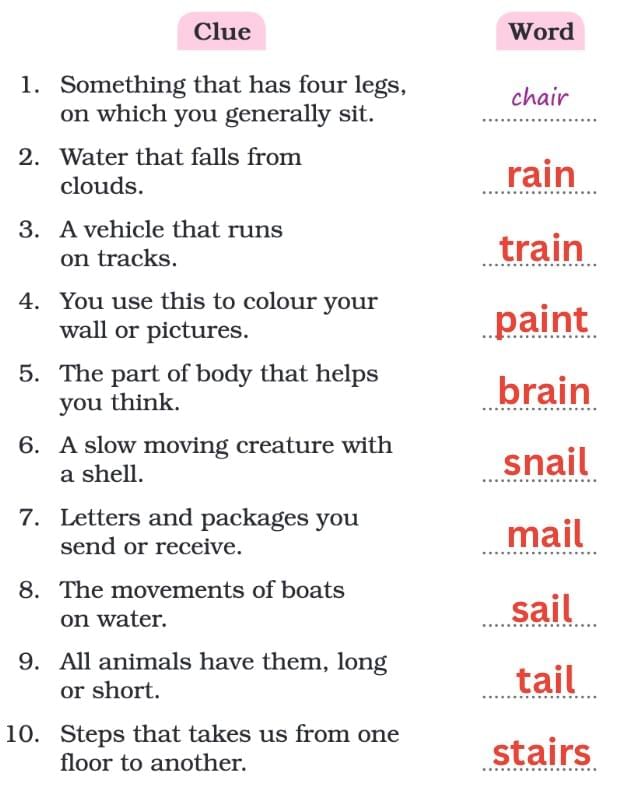
C. You have already noticed that the word ‘scooter’has ‘oo’ in the middle. Using the clues given below, write ten words that have ‘ai’ in the middle. One has been done for you?

Ans:

01. Papa’s Spectacles – Textbook Solutions

Let us Think (Page 2)

A.  Answer the following questions

Q1: What is Papa searching for?

Ans: Papa is searching for his spectacles.

Q2: What are the possible places where Papa can find it?

Ans: Papa can find his spectacles in his pockets, under his chair, near the window, or in other places he looks.

Q3: At last, where does Papa find his lost item?

Ans: Papa finds his spectacles on his head.

B. Think and discuss

Q1: Apart from reading, guess some other chores that Papa cannot do without the spectacles.

Ans: Papa cannot watch TV or cut vegetables without his spectacles.

Q2: What makes your papa happy?

Ans: Answers may vary. For example, spending time with family, playing games, or eating his favourite food makes Papa happy.

Q3: Make a list of things as instructed below.

Ans:
Things generally misplaced at your homeWho helps in finding these misplaced things?KeysMotherRemoteSisterBooksBrother

How would you express your gratitude to them? 

Ans: I would say “Thank you” or give them a hug to show my gratitude.

Let us Learn (Page 3)

A.  Look at the words in each group. Arrange them in ascending order   

Ans:  

Write two examples more, following the same pattern

Ans: (i) Cat, Dog, Horse, Whale

            (ii) Ant, Frog, Sheep, Giraffe

B. Note the following phrase: a pair of shoes  

Q: Fill in the blanks and complete the phrases.

Ans: 

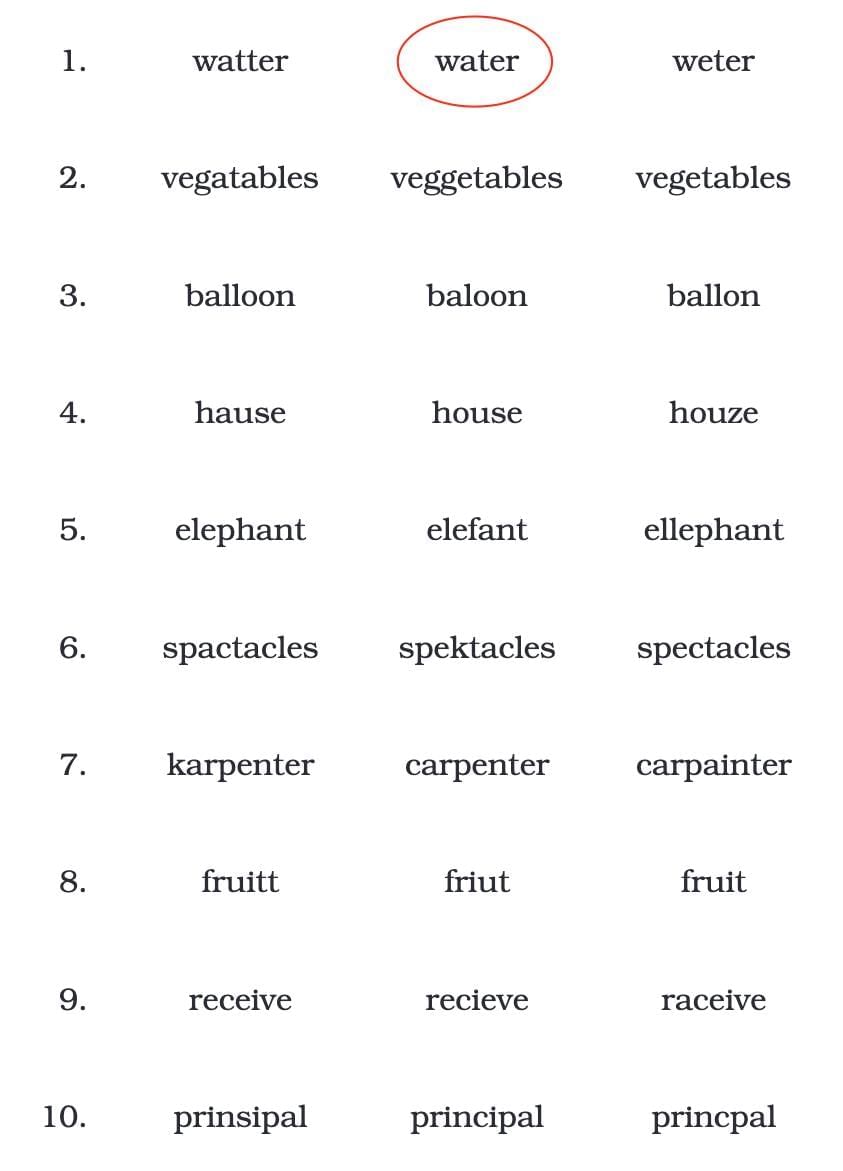
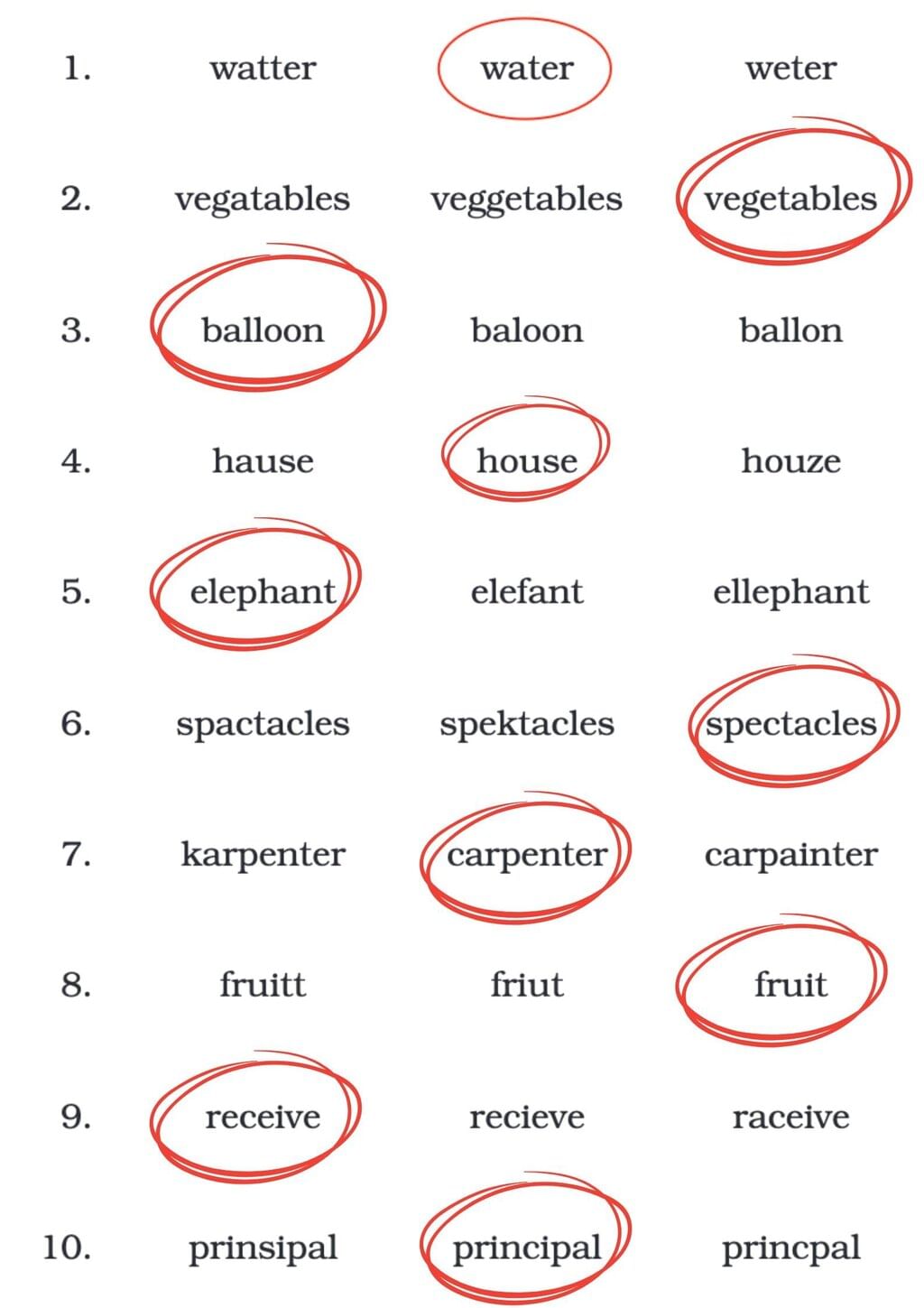
C.  Encircle the word that is spelt correctly (Page 5)

Ans: 

D. Complete the story using the correct prepositions  

Q: Complete the story using the correct prepositions: around, after, before, in, above, on, among

Ans: My father has a habit of keeping his spectacles in random places. Last week, he could not find his spectacles and looked around the house. We checked in the big box that reached our waists. My father looked for the spectacles among the newspapers kept on the table. He continued searching for two hours before finally giving up. He sat down on the bed giving one final look to the room and said with a sigh, “Looks like it is time to get a new pair.”

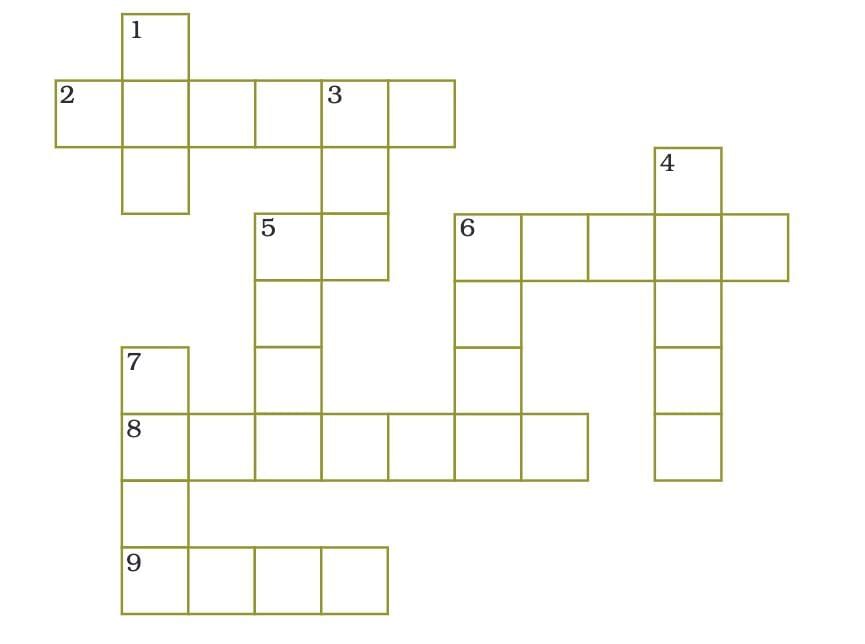
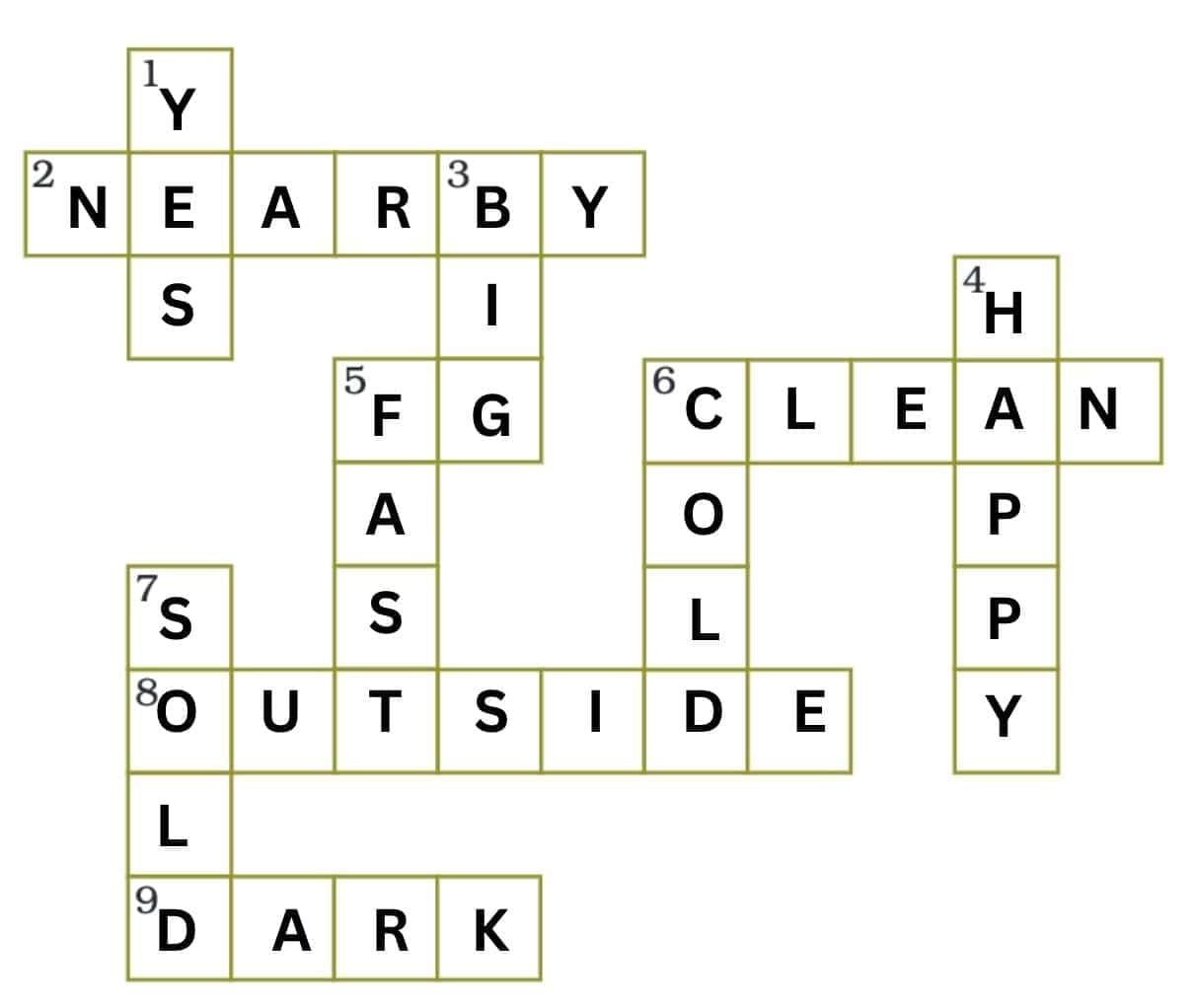
E. Use the clues given below to complete the crossword puzzle!  

Ans:

​Let us Speak (Page 7)

Q: ‘Papa’ is a commonly used word in English to address one’s ‘father’. Say aloud the word you use for ‘father’ in your language. Make a list of such words in your notebook. Share them with the class.

Ans: Example Response:

In my language, I call my father “Papa”.

Let us Listen (Page 8)

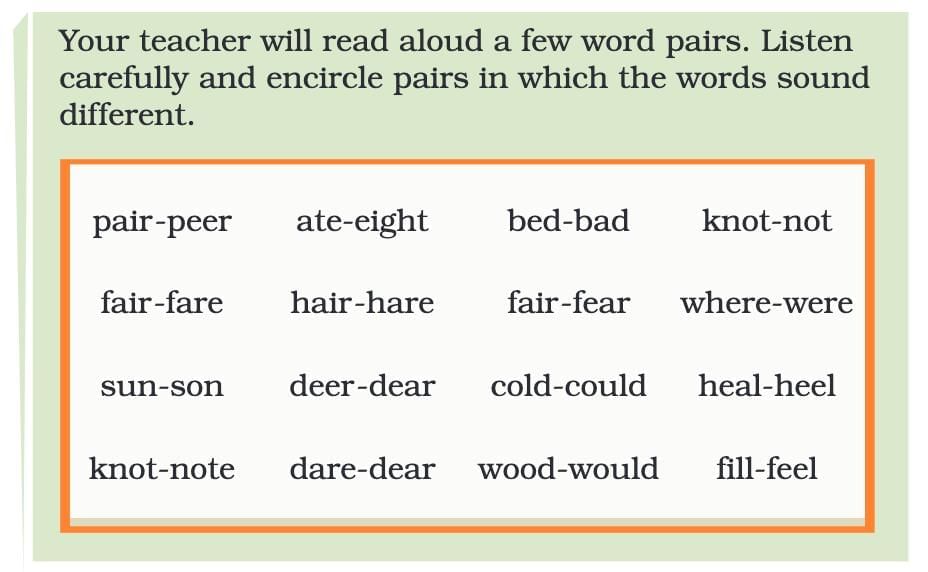
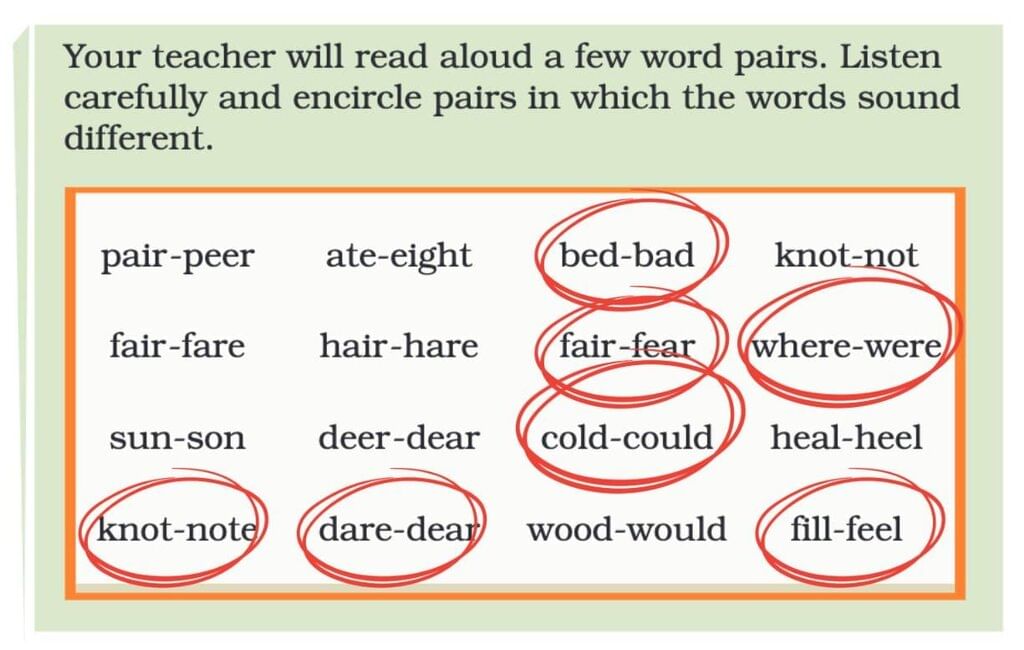
Q: Your teacher will read aloud a few word pairs. Listen carefully and encircle pairs in which the words sound different.
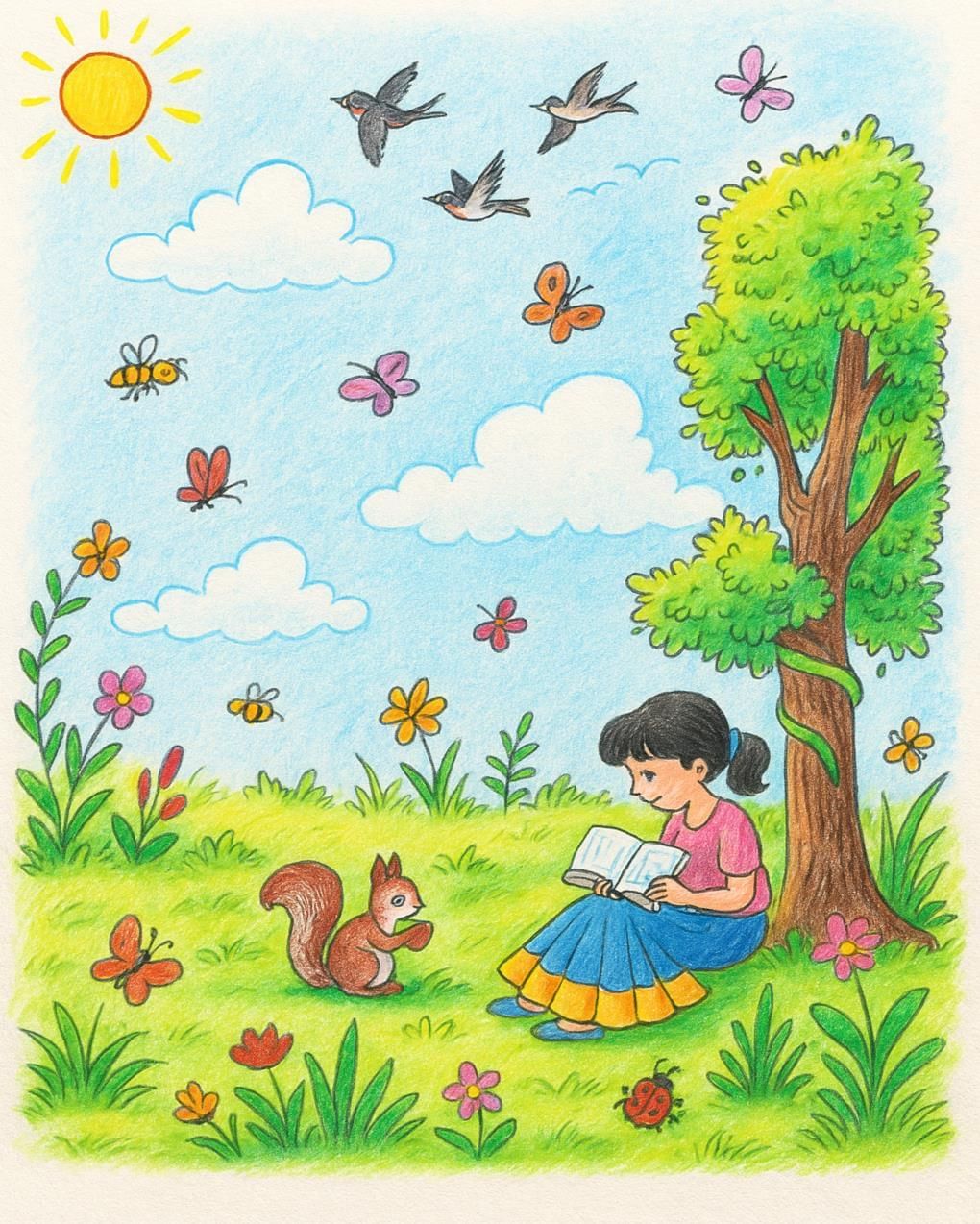
Ans:

Let us Write (Page 8)

Q: Write the poem Papa’s Spectacles in the form of a story in your notebook. Share your story with the class.
Ans: Today, my father is unhappy because he lost his spectacles. He looked everywhere in the house. He checked his pockets, under his chair, and near the window, but he couldn’t find them. He was sad because he couldn’t read the newspaper, watch TV, or cut vegetables. I told him, “Stop, Papa!” I went close to him and said, “Papa, your spectacles are right there on your head!” He was happy and thanked me.