15. Bibha Chowdhuri: The Beam of Light that Lit the Path for Women in Indian Science – Short and Long Answer Questions

Short Answer Questions

Q1. Who was Bibha Chowdhuri and why is she remembered in Indian science?
Ans: Bibha Chowdhuri was one of India’s pioneering women physicists. She made important contributions in the field of particle physics, especially in the study of cosmic rays. At a time when very few women pursued science, she broke barriers and established herself in research. She is remembered for her determination, hard work, and inspiring role in Indian science.

Q2. What challenges did Bibha Chowdhuri face as a woman in science?
Ans: Bibha Chowdhuri faced many challenges because science was a male-dominated field in her time. She struggled to gain recognition and opportunities despite her talent. Often, her achievements were overlooked, and she had to work harder than her male colleagues. Yet, her passion for science kept her moving forward.

Q3. How did Bibha Chowdhuri inspire future generations of women?
Ans: Bibha Chowdhuri’s courage and dedication showed that women could excel in science despite social barriers. She set an example of perseverance and intellectual strength. Her life story inspires young women to enter STEM fields and contribute without fear of discrimination. She became a role model for women in Indian science.

Q4. What was Bibha Chowdhuri’s contribution to the study of cosmic rays?
Ans: Bibha Chowdhuri researched extensively on cosmic rays, which are high-energy particles from outer space. Her experiments helped in understanding subatomic particles and their behavior. Her work gained international attention and contributed to the growth of particle physics in India. This was a remarkable achievement for a woman scientist in her era.

Q5. Why is Bibha Chowdhuri called a “beam of light” for women in science?
Ans: She is called a “beam of light” because her life illuminated the path for other women to follow. Just as a beam of light removes darkness, Bibha Chowdhuri broke gender barriers and guided women toward careers in science. Her courage and achievements continue to inspire generations.

Long Answer Questions 

Q1. Describe Bibha Chowdhuri’s journey as a woman scientist and the significance of her contributions.
Ans: Bibha Chowdhuri’s journey was both inspiring and challenging. At a time when very few women pursued higher education in science, she chose physics as her career. Her research on cosmic rays was pioneering and added valuable knowledge to particle physics. Despite facing gender discrimination and lack of recognition, she continued to work with dedication. She collaborated with prominent scientists and her experiments gained international importance. Bibha’s determination proved that women could make groundbreaking contributions to science. Her life continues to motivate young women to follow their passion for knowledge and research.

Q2. How did Bibha Chowdhuri pave the way for women in science in India? Explain with reference to her struggles and achievements.
Ans: Bibha Chowdhuri’s life was marked by struggles against societal norms and professional challenges. In an era where women were discouraged from pursuing careers in science, she chose physics and excelled in research. She studied cosmic rays and subatomic particles, producing important work in particle physics. Her achievements showed that women could match the brilliance of men in scientific inquiry. Even though her contributions were not fully acknowledged during her lifetime, she symbolized courage and resilience. By breaking barriers, she encouraged women to enter STEM fields. Her legacy remains a guiding light for women scientists in India.

Q3. Discuss the challenges Bibha Chowdhuri faced as a woman scientist in pre-independence India and how she overcame them.
Ans: Bibha Chowdhuri entered the world of science at a time when very few women pursued it as a career. She faced gender bias, lack of recognition, and limited opportunities in Indian institutions. Despite these challenges, she excelled through her dedication and brilliance. Her pioneering research in cosmic rays and particle physics received appreciation from international scientists. She worked under C. V. Raman and later collaborated with famous scientists abroad. Though her contributions were often overlooked in India, she continued her work with determination. Bibha’s persistence and achievements paved the way for other women to enter the field of science with greater confidence.

Q4. How did Bibha Chowdhuri’s work in cosmic ray research and particle physics contribute to the field of science?
Ans: Bibha Chowdhuri’s research primarily focused on cosmic rays, which were of great scientific interest during her time. She made detailed studies of subatomic particles, particularly mesons, which were critical to the advancement of particle physics. Working in Europe with world-renowned scientists, she became one of the first women to explore such advanced topics. Her findings provided valuable insights into the behavior of high-energy particles. Even though she did not receive the recognition she deserved in India, her research was respected internationally. Her work strengthened the foundation of experimental physics and continues to inspire later generations of scientists.

Q5. In what ways does Bibha Chowdhuri remain an inspirational figure for today’s young scientists, especially women?
Ans: Bibha Chowdhuri remains a symbol of courage, persistence, and brilliance in science. Despite facing neglect and bias in India, she pursued her passion fearlessly. Her groundbreaking research in cosmic rays showed her intellectual strength and scientific vision. She proved that women could excel in highly technical fields and compete with the best minds globally. For today’s young scientists, Bibha’s life is a reminder that passion and hard work can break barriers. She inspires women to believe in their abilities and pursue science with confidence. Her legacy shines as a guiding light for women who dream of making their mark in research and discovery.

14. Magnifying Glass – Short and Long Answer Questions

Short Answer Questions

Q1. How does the poet describe the power of the magnifying glass in the first stanza?
Ans: The poet says that the magnifying glass can turn ordinary objects into something magical. A small scrap of chalk appears to have a myriad of shells, and an inch of moss looks like a whole forest with flowers and trees. Even a drop of water resembles a hive full of bees. The poet shows how the glass reveals hidden wonders.

Q2. What details does the poet observe about the spider through the magnifying glass?
Ans: The poet observes how the spider spins its silk thread using its spinnerets. He notices the spider’s sharp, tiger-like claws and how it traps flies in its web. Even though the flies have many eyes, they still stumble into the trap. This shows the poet’s amazement at tiny details revealed by the glass.

Q3. What is the overall message of the poem “Magnifying Glass”?
Ans: The poem highlights the beauty of small and unnoticed things when viewed closely. The magnifying glass transforms simple objects into marvelous sights and reveals the wonders of nature. The poet conveys that nothing is too tiny to be fascinating when seen with curiosity.

Q4. What is the significance of the spider in the poem?
Ans: The spider represents the wonders of the microscopic world. Through the magnifying glass, the poet observes the spider spinning its delicate silk threads and marvels at its precision. It also highlights the contrast between the spider’s skill and the helplessness of the flies that get trapped in its web. The image shows how small creatures perform incredible acts that usually go unnoticed.

Q5. How does the poet show his sense of wonder in the poem?
Ans: The poet conveys wonder by describing ordinary objects—chalk, moss, a drop of water, or a spider’s web—as magical when seen through a magnifying glass. Simple things become extraordinary, like a drop of water appearing like a hive of bees. This reflects the poet’s fascination with nature’s hidden details and his childlike curiosity about the world.

Q6. Why does the poet mention the moon at the end of the poem?
Ans: The poet refers to the moon to expand the theme of discovery and imagination. He suggests that just as a magnifying glass makes small things marvelous, powerful lenses like telescopes allow us to see distant places like the moon as if they were nearby. This ending shows the limitless potential of curiosity, imagination, and science.

Long Answer Questions

Q1. Describe how the poet uses examples from nature to show the power of the magnifying glass.
Ans: The poet brings out the magic of the magnifying glass by giving several examples from nature. He shows how chalk looks like it contains countless shells, moss looks like a forest full of flowers and trees, and even a small drop of water looks like a hive buzzing with bees. He also observes the spider, noticing its web-making, sharp claws, and how flies get caught in the trap. These examples show that the magnifying glass can reveal extraordinary details in ordinary things. The poet wants us to see nature with wonder and curiosity.

Q2. How does the poet connect the magnifying glass to imagination and discovery?
Ans: The poem suggests that the magnifying glass is not just a tool but a key to imagination and discovery. By magnifying tiny things, it reveals details that are usually hidden from the naked eye. The poet marvels at the spider’s spinning, the patterns in moss, and the life in a drop of water. In the last stanza, he even dreams of walking on the moon by using similar lenses, blending science with imagination. The poet shows that curiosity and observation can turn the smallest things into marvelous discoveries.

Q3. How does the poet use imagery to show the power of the magnifying glass?
Ans: Walter de la Mare uses vivid imagery to demonstrate how the magnifying glass transforms simple objects into magical experiences. A scrap of chalk reveals countless shells, moss becomes a forest, and a drop of water looks like a hive of bees. The spider spinning silk and the flies caught in its web are described in striking detail, showing how even tiny creatures are full of drama and wonder. The magnifying glass turns ordinary sights into marvelous spectacles. This imagery emphasizes both the beauty and mystery hidden in nature’s smallest details, waiting to be explored.

Q4. What is the central idea of the poem Magnifying Glass?
Ans: The central idea of the poem is the beauty of discovery and the hidden wonders of the natural world. The poet shows how a magnifying glass can reveal marvelous details in the smallest of things—chalk, moss, water, or a spider. By magnifying the unseen, it inspires awe and curiosity. The poem also links science with imagination, suggesting that just as a lens can show tiny details, it can also bring faraway places like the moon closer to us. Ultimately, the poem celebrates curiosity, observation, and the magic of seeing the world more closely.

13. Feathered Friend – Short and Long Answer Questions

Short Answer Questions 

Q1. Why was Sven well-suited for space work?
Ans: Sven Olsen was a wiry little man, like most early spacemen, and met the strict weight requirements. He was also one of the best construction men, skilled in handling girders in free fall and fitting them precisely. His small build and expertise made him ideal for the tricky tasks in space.

Q2. Why was Claribel an ideal choice for a pet in space?
Ans: Claribel, the canary, was small, weighed almost nothing, and required very little food. Unlike most animals, she wasn’t troubled by the absence of gravity and quickly adapted to flying in zero-G. Her size and adaptability made her a perfect pet for the space station.

Q3. How did Claribel become a shared companion on the station?
Ans: At first, Sven kept her a secret. But soon, her songs and antics won everyone’s hearts. She entertained the crew, and they all began caring for her. In time, she became the general pet of the whole station rather than just Sven’s.

Q4. Describe the incident when Claribel fainted.
Ans: One morning, Sven found Claribel unconscious. The crew thought she had died, but oxygen revived her briefly. She keeled over again, which confused them, until the narrator realized the problem wasn’t with Claribel but with the station’s air supply.

Q5. How did the narrator connect Claribel’s fainting to the air problem?
Ans: The narrator remembered that miners once carried canaries to detect poisonous gas underground. Claribel’s collapse reminded him of this. He quickly realized that the air inside the station was unsafe, leading to the discovery of the purifier malfunction.

Q7. What went wrong with the space station’s safety system?
Ans: During an eclipse by Earth’s shadow, part of the air purifier froze. The single alarm meant to detect the problem failed, and the backup system wasn’t connected. As a result, the crew was unaware of the danger until Claribel fainted.

Long Answer Questions 

Q1. Describe Claribel’s arrival and adjustment to life in the space station.
Ans: Claribel, a small yellow canary, was secretly smuggled aboard by Sven Olsen. She revealed her presence with her melodious whistles, surprising the narrator. Unlike most animals, she quickly adapted to the absence of gravity, learning to float and perform graceful movements. Though Sven claimed he brought her out of scientific curiosity, Claribel soon became everyone’s pet. The crew loved her cheerful songs, and she was cleverly hidden during VIP visits. Her light weight, tiny food requirements, and playful nature made her an ideal companion in space.

Q2. Narrate the incident in which Claribel saved the spacemen’s lives.
Ans: One morning, Claribel was found unconscious in Sven’s hand. The crew tried reviving her with oxygen, and though she briefly recovered, she collapsed again. This puzzled everyone until the narrator recalled how miners once used canaries to detect toxic gases. He realized the real danger was not to Claribel alone but to the entire crew—the air supply was failing. Investigation revealed that the purifier had frozen during an eclipse, and the alarm system had failed. Claribel’s fainting served as a lifesaving warning, alerting the men to the crisis in time.

Q3. What is the central message of Feathered Friend?
Ans: The story highlights that despite all the sophistication of science and technology, simple natural solutions can sometimes be more reliable. The space station had half a million dollars’ worth of equipment, yet it failed to detect the air purifier malfunction. A small canary, costing almost nothing, managed to save the entire crew. Arthur C. Clarke suggests that human survival does not depend solely on machines but also on nature’s simple creatures. The story teaches us humility and reminds us not to ignore the value of small, seemingly insignificant beings.

12. Waiting for the Rain – Short and Long Answer Questions

Short Answer Questions 

Q1. Why are the people waiting eagerly for the rain?
Ans: The people are eagerly waiting for the rain because the land has become dry and barren due to the long drought. The crops and grass have withered away, and animals are thirsty. The rain symbolizes relief, hope, and life for the suffering villagers.

Q2. How does the poet describe the condition of the earth before rain?
Ans: The poet describes the land as dry, cracked, and lifeless. The fields are parched, streams are empty, and trees stand wilted. The entire atmosphere reflects despair and longing for the rain.

Q3. What changes do the people expect after the rain falls?
Ans: The people expect greenery, fresh crops, and flowing streams after the rain. They believe the rain will bring prosperity, happiness, and relief from the hardships caused by drought.

Q4. How do the children react to the coming of rain?
Ans: The children are filled with joy and excitement. They look up to the sky eagerly, sing, dance, and play in the rain, expressing their innocent delight in the long-awaited blessing.

Q5. What emotions does the poet connect with the rain?
Ans: The poet connects rain with hope, renewal, joy, and gratitude. It is not just a natural event but a life-giving blessing that restores faith and brings happiness to people’s hearts.

Q6. How does nature respond to the rain in the poem?
Ans: Nature responds to the rain with revival and freshness. The trees sway happily, flowers bloom, streams start flowing again, and the earth looks vibrant and alive once more.

Q7. Why is the rain called a blessing in the poem?
Ans: The rain is called a blessing because it saves people from drought and suffering. It revives crops, quenches thirst, and renews life on earth, spreading joy and relief everywhere.

Q8. What is the mood of the poem before and after the rain?
Ans: Before the rain, the mood is sad, tense, and filled with despair due to drought. After the rain, the mood changes to happiness, peace, and gratitude as nature and people celebrate together.

Q9. How do the elders in the village react to the rain?
Ans: The elders feel relieved and thankful when the rain finally comes. Their hearts are filled with gratitude, as they see the drought ending and life returning to the land.

Q10. What role does rain play in the lives of farmers?
Ans: Rain plays a vital role in the lives of farmers as it ensures the growth of crops, fills rivers and wells, and provides food and income. Without rain, farming life becomes very difficult.

Long Answer Questions 

Q1. Describe the impact of drought on people and nature as shown in the poem.
Ans: The poem vividly portrays the harshness of drought. The land is dry and cracked, crops fail, rivers run empty, and animals as well as people suffer from thirst. The atmosphere is heavy with despair as everyone waits anxiously for relief. Children look to the sky with hope, while elders pray silently for rain. The absence of rain brings hunger, poverty, and sadness. This depiction emphasizes how deeply human life depends on nature, particularly on rainfall.

Q2. Explain the significance of rain in the poem.
Ans: Rain is the central theme and symbol in the poem. It represents life, renewal, and hope. The people eagerly wait for its arrival because it ends their suffering. The moment rain falls, everything changes—the land turns green, crops begin to grow, streams flow, and happiness spreads everywhere. Rain also reflects divine mercy and blessing, as it restores balance to life. The poet uses rain to highlight how closely human emotions and survival are tied to the natural world.

Q3. How does the poet show the contrast between drought and rainfall?
Ans: The poet creates a sharp contrast between the lifelessness of drought and the joy of rainfall. Before rain, the earth is cracked, fields barren, and faces sad. The mood is filled with anxiety and despair. When the rain comes, the dry soil drinks it eagerly, rivers overflow, and greenery spreads quickly. People, especially children, celebrate with songs and laughter. This contrast shows how rain brings not only physical relief but also emotional and spiritual happiness to the community.

Q4. What message does the poem ‘Waiting for the Rain’ convey?
Ans: The poem conveys the message of hope, patience, and gratitude. It reminds us that just as rain follows drought, difficult times in life will also pass, bringing relief and joy. The poem also emphasizes the close connection between human life and nature—without rain, life is incomplete. Furthermore, it teaches us to value natural blessings and be thankful for them. Rain here becomes a metaphor for renewal and the promise of a better tomorrow.

11. Harvest Hymn – Short and Long Answer Questions

Short Answer Questions 

Q1. How does the poet describe Surya, the Sun God, in the poem?
Ans: The poet describes Surya as the “lord of the lotus” and “lord of the harvest.” He is the source of light and energy, bringing bounty to the crops. Surya prospers the sowing and nurtures the corn. People offer him songs, garlands, and the gold of their harvest as tribute. He is praised with cymbals and flutes for his life-giving power.

Q2. What role does Varuna play in the growth of crops according to the poem?
Ans: Varuna, the lord of the rains and waters, is seen as merciful and beneficent. His rains cherish the furrows and foster the grain. The people thank him for sending rain and dew, which are essential for a rich harvest. They offer garlands, gratitude, and music to praise him. He is worshipped for sustaining fertility through water.

Q3. How is Mother Earth (Prithvi) portrayed in the poem?
Ans: Mother Earth is praised as the “queen of the gourd-flower” and the “queen of the harvest.” She is seen as a nurturing mother whose bosom feeds humanity. Her womb is the source of all riches and crops. People express love and gratitude to her for abundance. They honor her with garlands, gifts, and joyful hymns.

Q4. What does the last stanza convey about Brahma?
Ans: The final stanza portrays Brahma as the eternal father and the supreme power. He is described as both the Seed and the Scythe, symbolizing creation and destruction. Brahma is seen as the Life of all life, guiding and protecting humanity. People dedicate their lives and labors to him. They seek his counsel, care, and blessings.

Q5. What is the central theme of the poem Harvest Hymn?
Ans: The central theme is gratitude for nature’s forces and divine powers that sustain life. The poem honors Surya, Varuna, Prithvi, and Brahma for their roles in harvest. It reflects a deep connection between humans, nature, and the divine. The poem emphasizes harmony, reverence, and thanksgiving. It celebrates the sacredness of the harvest cycle.

Long Answer Questions

Q1. How does Sarojini Naidu highlight the relationship between nature, divinity, and human beings in Harvest Hymn?
Ans: Sarojini Naidu beautifully blends nature, divinity, and human gratitude in Harvest Hymn. She invokes Surya, Varuna, Prithvi, and Brahma, each symbolizing vital forces of life—sunlight, rain, earth, and creation itself. The people acknowledge that their sowing, reaping, and abundance are made possible only through divine blessings. With music, garlands, and offerings, they express thanksgiving for the harvest. The poem portrays nature not just as a resource but as sacred and divine. It emphasizes human dependence on natural elements for survival. By personifying these forces, Naidu conveys reverence and respect. Ultimately, the poem reflects the Indian tradition of seeing divinity in nature. It celebrates harmony between humans, nature, and the divine spirit.

Q2. Explain how gratitude and reverence are expressed by different voices in the poem Harvest Hymn.
Ans: The poem uses men’s, women’s, and collective voices to express gratitude. The men address Surya and Varuna, acknowledging their roles in providing sunlight and rain for crops. They offer garlands, harvest produce, and hymns as tokens of thanks. The women address Prithvi, or Mother Earth, praising her nurturing womb and abundant bosom that sustain life. They show love and devotion by offering the gifts she provides back to her. Finally, all voices unite to praise Brahma, the supreme power, who is the source and sustainer of all life. They dedicate their labor, lives, and prayers to him, seeking guidance and protection. This structure of voices symbolizes unity and collective reverence. It also reflects the cultural practice of honoring every element that contributes to life. The poem thus celebrates thanksgiving in a spiritual and communal way.

10. The Cherry Tree – Short and Long Answer Questions

Short Answer Questions 

Q1. Why did Rakesh decide to plant a cherry seed?
Ans: Rakesh planted the cherry seed casually after eating the fruit one day. He did not have any particular plan in mind but simply wanted to see what would happen. Although he was young and did not expect much from it, the act of planting the seed grew into a meaningful experience. This small beginning eventually taught him patience, care, and love for nature.

Q2. What difficulties did the cherry tree face in its early years?
Ans: The cherry tree faced many struggles in its early growth. It was once eaten by a goat, later it was cut by a woman while collecting grass, and at times it dried up during harsh weather. Despite these difficulties, the tree survived and grew stronger. This resilience made Rakesh admire and value it even more.

Q3. How did Rakesh care for the cherry tree?
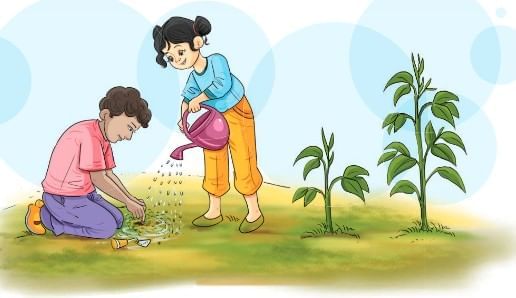
Ans: Rakesh looked after the cherry tree lovingly. He watered it regularly, removed weeds, and protected it as best as he could from harm. Even though he could not always prevent the damage caused by animals or people, his care ensured that the tree grew steadily. His bond with the tree deepened as it flourished.

Q4. How did Rakesh feel when the cherry tree finally blossomed?
Ans: Rakesh was filled with joy and pride when the cherry tree blossomed. Seeing the pink flowers was like a reward for his years of care and patience. It was a moment of deep happiness for him, as he realized that something he planted and nurtured had grown beautifully. The tree became a symbol of his connection with nature.

Q5. What is the central message of the story The Cherry Tree?
Ans: The story highlights the importance of patience, care, and perseverance. It teaches that small actions, like planting a seed, can grow into something meaningful with time and effort. It also emphasizes the beauty of nature and how nurturing it brings joy. The story encourages us to value and protect the environment.

Long Answer Questions 

Q1. Describe the journey of the cherry tree from a small seed to a flowering tree.
Ans: The cherry tree began as a simple seed that Rakesh planted without much thought. In its early years, it faced many challenges: it was eaten by a goat, cut down by a woman, and suffered from the harsh climate. Despite these struggles, the tree survived and slowly grew taller and stronger. Rakesh cared for it by watering and protecting it regularly. After several years, the tree blossomed with beautiful pink flowers, filling Rakesh with immense pride and joy. Its journey symbolized resilience, patience, and the rewards of consistent care.

Q2. How does the story show the bond between Rakesh and the cherry tree?
Ans: The story beautifully portrays how Rakesh and the cherry tree grew together. When Rakesh planted the seed, he did so without much thought, but as the tree faced challenges and survived, he grew attached to it. His care and patience reflected his affection, and the tree’s survival became a source of joy for him. Over the years, their bond deepened, and the blossoming of the tree felt like a personal achievement for Rakesh. This bond teaches us how human emotions can connect deeply with nature, making us more responsible and loving towards it.

Q3. What life lessons does The Cherry Tree teach us through Rakesh’s experience?
Ans: The story conveys several important life lessons. First, it shows the value of patience—great things take time to grow and flourish. Second, it emphasizes perseverance, as the tree overcame many hardships before it bloomed. Third, it highlights the joy of nurturing and protecting nature, as Rakesh felt proud when his tree blossomed. It also reminds us of the resilience of life, as the tree survived despite difficulties. Overall, the story inspires us to care for the environment and believe in the rewards of dedication and hard work.

9. Spectacular Wonders – Short and Long Answer Questions

Short Answer Questions

Q1. Describe the Valley of Flowers and what makes it special.
Ans: The Valley of Flowers in Uttarakhand is filled with nearly 600 kinds of exotic plants like orchids, poppies, and daisies. It looks like a colourful carpet against the backdrop of the Himalayas. Trekkers enjoy waterfalls, streams, and even rare wildlife such as the snow leopard and red fox. It is a UNESCO World Heritage Site and becomes a true wonderland between May and October.

Q2. Why are the living root bridges of Meghalaya considered unique?
Ans: The living root bridges are made without cement or steel; instead, they are formed by intertwining the roots of trees. These bridges are strong enough to last hundreds of years and withstand monsoon rains. They show the knowledge and creativity of the local people. Some bridges are over 100 feet high and 175 feet long, making them natural wonders as well as cultural heritage.

Living Root Bridge, Meghalya

Q3. How did the Lonar Crater Lake come into existence?
Ans: The Lonar Crater Lake in Maharashtra was created thousands of years ago when a meteorite struck Earth at high speed. The collision left behind a perfectly round crater in basaltic rock, which is extremely rare. Today, a saline lake sits inside this crater, creating a striking sight against rugged surroundings. It is one of the world’s largest craters and a blend of science and natural beauty.

Q4. What happens at Magnetic Hill, and why do people find it mysterious?
Ans: At Magnetic Hill in Ladakh, vehicles left in a marked spot seem to move uphill without any effort. Tourists are amazed, as it looks like gravity has disappeared. In reality, the effect is an optical illusion created by the shape of the surrounding land. Still, it remains a fascinating attraction for visitors.

Q5. What causes the glowing waters of Kerala, and why are they important?
Ans: In Kumbalangi village near Kochi, the waters glow at night due to bioluminescence. This happens because of tiny organisms called micro-planktons that emit light. The glowing water attracts many tourists and supports eco-tourism in the area. It also lets visitors experience village life and learn about its culture and food.

Q6. Why are the Sundarbans important both ecologically and culturally?
Ans: The Sundarbans is the world’s largest mangrove forest, spread across West Bengal. Its roots hold the coastline together, protecting it from erosion and storms. The area is rich in biodiversity with species like the Bengal tiger, crocodiles, and many birds. Named after the sundari tree, the Sundarbans are both a natural shield and a cultural treasure.

Q7. What makes Chandipur Beach in Odisha so unusual?
Ans: Chandipur Beach is known for its sea that “disappears” every day. During ebb tide, the water retreats 2–5 km, and during high tide, it returns. This unique natural event lets people walk on the sea bed and then watch the waves return. It feels like a magical game of hide-and-seek played by the sea.Long Answer Questions 

Q1. Compare the Valley of Flowers and the Living Root Bridges as examples of natural wonders.
Ans: The Valley of Flowers in Uttarakhand is a breathtaking garden of rare plants and animals set against the Himalayas. It is a UNESCO site and changes into a paradise during summer and monsoon. The Living Root Bridges of Meghalaya, on the other hand, show the creativity of humans working with nature. Instead of being planted by chance, they are grown and guided by local people, becoming bridges that last for centuries. Both wonders represent the harmony of nature’s beauty and human respect for the environment, making them treasures of India.

Q2. What makes the Lonar Crater Lake and Magnetic Hill fascinating examples of natural mysteries?
Ans: The Lonar Crater Lake in Maharashtra was created by a meteorite impact, making it one of the world’s largest basaltic craters. It holds a saline lake at its core and stands as evidence of Earth’s ancient history. Magnetic Hill in Ladakh, by contrast, is not about history but illusion. It makes vehicles appear to roll uphill, confusing the eyes of visitors. Both are extraordinary examples of how science and mystery come together in India’s landscapes. One shows nature’s destructive force, while the other reveals the tricks of perception.

Q3. How do the Glowing Waters of Kerala, the Sundarbans, and Chandipur Beach show the diversity of India’s natural wonders?
Ans: The glowing waters of Kerala shine because of living micro-organisms, turning nights magical. The Sundarbans, meanwhile, is a massive mangrove forest that protects coasts and shelters species like the Bengal tiger. Chandipur Beach in Odisha is different again, as it makes the sea vanish and reappear daily. Together, these three show the variety of India’s landscapes—from seas to forests to villages. They highlight nature’s creativity, its power to protect, and its ability to surprise. Such wonders remind us that India’s environment is not only diverse but also deeply magical.

8. The Magic Brush of Dreams – Short and Long Answer Questions

Short Answer Questions 

Q1. What instructions did the old man give Gopi about the use of the magic brush?
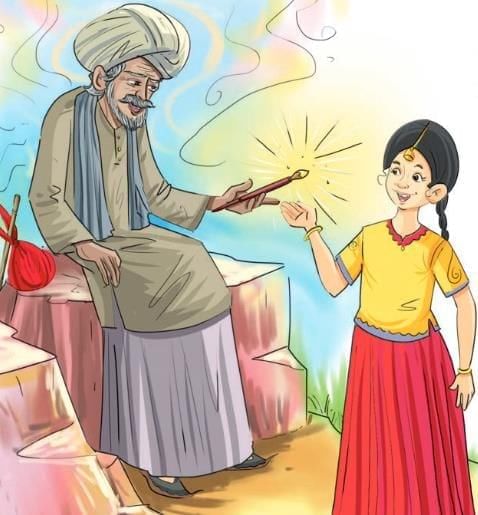
Ans: The old man handed Gopi the brush secretly and warned her not to use it for the wealthy or greedy. Instead, he instructed her to paint only for the poor and needy. This showed that the brush was meant as a blessing for those who suffered hardships, not for selfish gain. His guidance gave Gopi a strong sense of duty and responsibility.

Q2. How did Gopi use the magic brush to help the villagers?
Ans: Gopi used the brush to paint useful things like food, clothes, and tools for her villagers. She painted khichdi for hungry people, a muffler for a farmer, a shawl for a grandmother, and a plough for a man. These paintings turned into real objects, bringing comfort and happiness to the poor. Her kindness made her beloved in the village.

Q3. Why did the Zamindar want the magic brush, and how did he misuse his power?
Ans: The greedy Zamindar wanted Gopi to paint him a tall fortress, gold, jewels, and treasures so he could become even more powerful. He tried to force Gopi into obeying him by threatening her and imprisoning her. His selfishness contrasted with Gopi’s compassion, showing how power in the wrong hands leads to cruelty and corruption.

Q4. How did Gopi cleverly escape from the Zamindar’s prison?
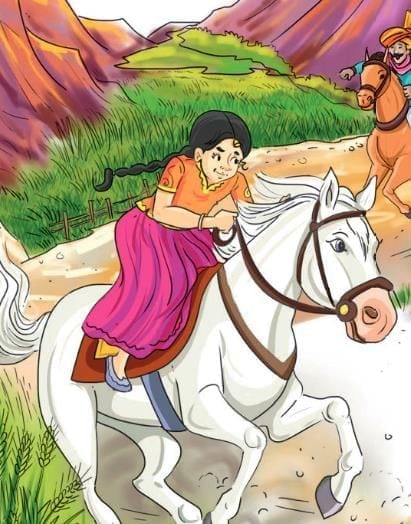
Ans: While locked in the cell, Gopi painted a strong horse and a road leading outside the prison gates. The horse came to life, and she quickly rode out, escaping her captors. Her cleverness and courage helped her outsmart the Zamindar’s men. This showed that her creativity was stronger than their force.

Q5. What happened when the Zamindar and his men chased Gopi?
Ans: To protect herself, Gopi painted a wide river with strong currents. The Zamindar and his men could not cross it. When they continued threatening, Gopi warned she could paint a beast to devour them. Terrified, the Zamindar promised to leave her alone forever. His fear showed that greed always leads to downfall.
Long Answer Questions 

Q1. Describe Gopi’s character in the poem. What qualities make her special?
Ans: Gopi is shown as a simple, innocent, and imaginative girl. Instead of collecting beans, rice, or mangoes as her family asked, she spent her time drawing in the sand, showing her love for art. When she received the magic brush, she used it selflessly for the benefit of the poor, painting food, clothes, and tools for them. She remained humble, refusing to use the brush for greed or wealth. Even in difficult situations, such as when the Zamindar imprisoned her, she was brave and resourceful. Her kindness, creativity, and courage make her truly special and a hero in the eyes of her villagers.

Q2. Explain how the poem contrasts the values of generosity and greed.
Ans: The poem clearly sets up Gopi as a symbol of generosity and the Zamindar as a symbol of greed. Gopi used the magic brush only for the poor, making sure her paintings helped those in need. She brought food, warmth, and happiness to the villagers without expecting anything in return. On the other hand, the Zamindar demanded riches, jewels, and fortresses for himself, showing his selfishness. He even punished Gopi for refusing his orders. However, in the end, his greed led to fear and defeat, while Gopi’s kindness and courage won her respect and love. This contrast teaches the moral that goodness and generosity are more powerful than greed.

Q3. What is the central message of “The Magic Brush of Dreams”? How is it conveyed through the story?
Ans: The central message of the poem is that talent and power should be used for helping others, not for selfish desires. This is conveyed through the story of Gopi, who always painted for the needy and brought joy to her village. The magic brush symbolises creativity and responsibility, and Gopi used it wisely. The Zamindar, however, wanted to misuse the brush for personal gain, but his greed brought him failure. In the end, the villagers celebrated Gopi for her kindness, showing that compassion and selflessness bring true victory. The poem conveys the timeless value of using gifts for the greater good of society.

7. The Case of the Fifth Word – Short and Long Answer Questions

Short Answer Questions 

Q1. Why did Chief Brown often turn to Encyclopedia for help in solving cases?
Ans: Chief Brown was a capable officer, but sometimes he faced mysteries without clear evidence. Instead of wasting time, he discussed them at home during dinner. Encyclopedia, with his sharp mind and knowledge, could spot small details that others missed. His logical questions often uncovered hidden meanings in clues. This made him an invaluable secret helper to his father.

Q2. What was suspicious about Tim Nolan’s will?
Ans: The will itself was normal as it left all his property to Davenport. However, clipped to it was a strange sheet with four puzzling words. Chief Brown suspected it was a coded message because Nolan and Davenport were linked to the robbery. The strange note indicated that Nolan wanted to leave Davenport a final clue about the hidden jewellery.

Q3. How did Mrs. Brown try to interpret the four words?
Ans: Mrs. Brown, a former teacher, looked at the words as literal terms. She explained “Nom” as nominative, “Utes” as a tribe, “Sweden” as a country, and “Hurts” as simply ‘hurts.’ But her explanation didn’t connect with the case. She admitted defeat and waited for Encyclopedia’s insight, proving that his way of thinking was sharper and more practical.

Q4. How did Encyclopedia Brown link the four words to the days of the week?
Ans: Encyclopedia noticed that the words were clipped from a calendar sheet, which gave him the clue. He realized each strange word was made by dropping “day” from the names of weekdays. “Nom” stood for Monday, “Utes” for Tuesday, “Sweden” for Wednesday, and “Hurts” for Thursday. Therefore, the missing fifth day was Friday.

Q5. Why was the young fir tree in Nolan’s nursery so important?
Ans: The fir tree was connected to the fifth word in the code, “Fir” for Friday. Nolan had cleverly hidden the jewellery in a jug of earth under this tree. Only someone who cracked the code would know to look there. Thus, the fir tree became the final piece of the puzzle that solved the mystery.

Q6. How did Encyclopedia prove himself as a brilliant detective in this case?
Ans: Unlike others, Encyclopedia didn’t get confused by the strange words. He calmly thought about the context of the note, the calendar sheet, and the hidden meaning. By asking one sharp question about the fir tree, he uncovered the entire code. His ability to connect unrelated details and find simple logic behind complex clues showed his brilliance.

Long Answer Questions

Q1. How did Nolan and Davenport’s past and friendship contribute to Chief Brown’s suspicion?
Ans: Nolan and Davenport met in prison and shared a friendship based on crime. Nolan started a palm-tree nursery after his release but earned very little, while Davenport joined him just before the jewellery robbery. During the hold-up, one robber’s mask slipped, and a clerk thought it was Nolan. Though the evidence was not strong enough for arrest, Chief Brown remained convinced of their guilt. When Nolan died leaving all his property to Davenport, along with a coded message, the suspicion grew stronger. Their friendship, timing of events, and sudden inheritance pointed towards their long-hidden crime.

Q2. How did Encyclopedia Brown decode the mysterious message left by Nolan?
Ans: The four strange words—Nom, Utes, Sweden, Hurts—puzzled everyone, including Mrs. Brown. But Encyclopedia noticed that the message was written on a calendar sheet. This gave him the idea that the words stood for weekdays with “day” removed: Monday, Tuesday, Wednesday, and Thursday. The unwritten fifth day was Friday, which became the key. He then linked “Friday” with “Fir,” and immediately asked if a young fir tree was in Nolan’s nursery. His brilliant deduction revealed that the jewellery was hidden under that tree, solving the case completely.

Q3. What qualities of Encyclopedia Brown are highlighted in this case, and why do they make him an extraordinary detective?
Ans: This story highlights Encyclopedia’s intelligence, logical thinking, and sharp memory. Unlike others, he stayed calm and searched for a pattern in the mysterious words. He was observant enough to notice the calendar sheet, which others overlooked. His ability to make connections quickly and ask the right question showed his analytical mind. Despite being just an eighth grader, he displayed confidence and maturity in solving a case linked to a major robbery. His modesty also stood out, as he never boasted about his abilities. These qualities made him extraordinary and earned him silent respect from his father.

6. Verghese Kurien — I Too Had A Dream – Short and Long Answer Questions

Short Answer Questions

Q1. Why did Kurien feel writing letters was more valuable than speaking on the telephone?
Ans: Kurien felt that while speaking on the phone gives immediate joy, it is temporary and soon forgotten. Writing, on the other hand, lasts longer as it can be preserved, treasured, and re-read over time. A letter not only conveys one’s current thoughts but also becomes a record of experiences for the future. He believed written words carry deeper meaning than spoken words.

Q2. What options did Kurien have in his career, and why did he reject them?
Ans: Kurien could have chosen to work as a metallurgist, join the Indian Army, or go abroad as an NRI. Each option promised wealth, fame, or power. However, he rejected these because he felt he could make a more meaningful contribution to the country by working with dairy farmers in Anand. His humility and sense of responsibility guided his choice.

Q3. How did Kurien’s wife support him in his mission?
Ans: Life in Anand during those days lacked comforts and conveniences. Yet, Kurien’s wife stood by him wholeheartedly. She supported his decision to dedicate his life to farmers’ welfare. Her faith and encouragement gave him inner strength and ensured he carried out his responsibilities with calmness and poise. Kurien credited much of his success to her unwavering support.

Q4. What values did Kurien uphold throughout his life and career?
Ans: Kurien strongly believed in values like honesty, service, humility, and, above all, integrity. He explained that personal integrity means being honest with oneself, which naturally leads to being honest with others. These values were passed on to him by his family and reinforced by his mentor, Tribhuvandas Patel. Kurien believed his success was built on adhering to these principles.

Q5. What lesson did Kurien want Siddharth and future generations to learn?
Ans: Kurien wanted Siddharth to understand that life is a privilege and should not be wasted. True failure lies not in lack of success but in not putting in one’s best effort. He advised young people to use their talents to serve the common good, whether by helping friends, volunteering, or contributing to society. He also stressed cherishing what one has instead of comparing with others.

Verghese KurienLong Answer Questions 

Q1. Describe the life choices of Verghese Kurien and how they shaped his contribution to the nation.
Ans: Verghese Kurien had many career options before him—metallurgy, the army, or becoming an NRI abroad. Each would have given him status, power, or money. But he chose to work in Anand with a small cooperative of dairy farmers. This decision completely transformed his life and the future of Indian agriculture. With the support of his wife and guidance from Tribhuvandas Patel, he dedicated himself to serving farmers. His leadership played a crucial role in the White Revolution, which made India the largest milk producer in the world. His choice shows how selfless decisions can lead to great national progress.

Q2. What message does Kurien’s letter to Siddharth convey about life and success?
Ans: Kurien’s letter to his grandson is full of wisdom and life lessons. He explains that life is a privilege and should be used for contributing to the common good. He stresses the value of integrity, honesty, and service. He reminds Siddharth that true failure lies in not giving one’s best effort. He also advises against comparing oneself with others because appearances of happiness are often misleading. By recalling the Padma Vibhushan medal and telling Siddharth to earn his own rewards, he highlights that true success comes from one’s own hard work and service to humanity. The letter inspires the younger generation to live meaningfully and work for society.

Q3. Describe how Verghese Kurien’s determination and vision transformed India’s dairy industry. What challenges did he face, and how did he overcome them? 
Ans: Verghese Kurien’s determination and vision played a key role in making India the largest producer of milk in the world. When he began his journey, India faced acute milk shortages, and farmers lived in poverty. Kurien believed that the solution lay in organizing farmers into cooperatives where they could control production and profits. He faced several challenges, such as lack of resources, resistance from middlemen, and initial skepticism from farmers. However, with his hard work, scientific knowledge, and organizational skills, he introduced modern dairy techniques and eliminated exploitative practices. Through persistence, he built Amul into a global model, showing how determination and vision can overcome even the toughest obstacles.

Q4. “I Too Had A Dream” reflects Kurien’s belief in the power of collective effort. Discuss how the concept of cooperation and the Amul model helped empower farmers and change rural India.
Ans: Kurien strongly believed that lasting change could only come through collective effort. The Amul model was based on the idea that farmers should pool their resources and manage dairies together as cooperatives. This eliminated middlemen who exploited farmers and ensured that profits went directly to the producers. Farmers gained confidence, financial independence, and respect in society. The cooperative system also provided them with better prices, modern equipment, veterinary services, and training. This not only improved the quality and quantity of milk production but also uplifted entire rural communities. By organizing farmers into a powerful collective, Kurien transformed villages and empowered people to believe in their own strength.

Q5. Verghese Kurien is often called the “Father of the White Revolution.” Do you think this title is justified? Support your answer with examples from the chapter.
Ans: Yes, the title “Father of the White Revolution” is fully justified for Verghese Kurien. His efforts made India self-sufficient in milk production and turned the country from a milk-deficient nation into the largest milk producer in the world. He not only introduced modern dairy practices but also created a unique cooperative model that empowered millions of farmers. The Amul brand became a household name and a symbol of quality and trust. His vision not only improved nutrition in the country but also gave farmers steady income and dignity. No one else contributed to India’s dairy development on such a massive scale, which makes him deserving of this title.