Q1. Describe the condition of the old woman in the poem. Ans: The old woman in the poem was old, ragged, and grey. She was weak, with trembling and slow feet, bent with the chill of the winter day. She stood alone at the crossing, anxious and helpless, waiting for someone to help her cross the slippery street. Her appearance showed poverty, old age, and helplessness, which made her situation even more pitiful.
Q2. How did the people on the street treat the old woman? Ans: The people on the street completely ignored the old woman. Although she looked helpless and anxious, no one cared to stop or offer her a helping hand. They were busy in their own lives and walked past her as if she did not exist. This shows the selfish and indifferent attitude of society toward the weak and old.
Q3. What was the attitude of the boys coming out of school? Ans: The boys were cheerful, happy, and excited after school was over. They were shouting, laughing, and playing in the snow like a flock of sheep. However, they were careless and did not notice the old woman standing at the crossing. None of them came forward to help her except one noble-hearted boy.
Q4. What did the young boy do for the old woman? Ans: The young boy, unlike the others, noticed the old woman and felt compassion for her. He gently whispered to her that he would help her cross the road if she wished. He offered his strong arm and carefully guided her trembling feet across the slippery street, making sure she was safe. This act of kindness made both the boy and the woman happy.
Q5. Why did the boy decide to help the old woman? Ans: The boy decided to help the woman because he felt empathy. He thought of her as “somebody’s mother” and imagined that one day his own mother could also grow old, poor, and helpless. He hoped that if such a time came, some kind-hearted person would help his mother too. This thought made him act selflessly and help the woman.
Long Answer Questions
Q1. Narrate the incident of the old woman at the crossing as described in the poem. Ans: In the poem, an old woman stood at a crossing on a cold winter day. She was poor, ragged, grey-haired, and bent with age. The street was slippery with snow, and her steps were weak and trembling. She waited anxiously for someone to help her cross, but people passing by ignored her. Even the group of cheerful boys coming out of school hurried past without noticing her. At last, one kind-hearted boy stopped, spoke gently to her, and offered his arm. He carefully guided her across the road, making sure she was safe. This incident highlights how a small act of kindness can make a big difference in someone’s life.
Q2. What lesson does the poem Somebody’s Mother teach us? Ans: The poem teaches the importance of kindness, empathy, and respect for the elderly. The old woman was ignored by everyone, but one boy stopped to help her. He realized that she was “somebody’s mother” and thought of his own mother in her place. His act of compassion shows that we should always care for those who are weak, helpless, or old. It also reminds us that the kindness we show today may return to us in the future. The old woman’s prayer at the end shows her gratitude and proves that even small good deeds are always valued. The poem inspires us to be thoughtful, caring, and responsible members of society.
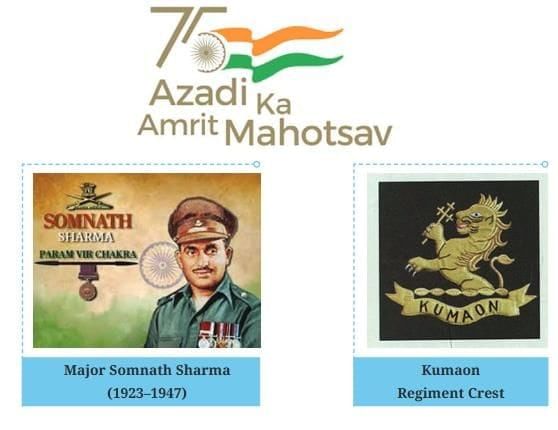
Q1. Why was the Battle of Badgam a turning point in the history of Jammu and Kashmir? Ans: The Battle of Badgam was a turning point because it prevented Srinagar airfield from being captured by enemy forces. If the airfield had fallen, Indian reinforcements could not have landed, and Kashmir would have been lost to invasion. Major Somnath Sharma’s brave defense ensured that the Indian Army could secure the region in time.
Q2. What qualities of Major Somnath Sharma are highlighted during the battle? Ans: Major Somnath Sharma showed remarkable courage, leadership, and patriotism. Even though his arm was in plaster, he led his troops with great determination. His selflessness and bravery, fighting till his last breath, continue to inspire soldiers and citizens alike.
Q3. How did Major Somnath Sharma motivate his soldiers in a critical situation? Ans: When the situation became extremely difficult, Major Somnath Sharma encouraged his men to stay firm and fight bravely. He reminded them of their duty to protect the nation and inspired them with his own example of fighting fearlessly despite being injured. His words and actions kept the soldiers motivated until the very end.
Q4. What challenges did the Indian Army face during the Battle of Badgam? Ans: The Indian soldiers faced overwhelming challenges in the Battle of Badgam. They were heavily outnumbered by the enemy, short of ammunition and supplies, and fighting in difficult mountainous terrain. Despite these odds, their courage and determination helped them stop the enemy’s advance.
Q5. How did Major Somnath Sharma’s sacrifice contribute to the defense of Kashmir? Ans: Major Somnath Sharma’s sacrifice delayed the enemy long enough for Indian reinforcements to arrive. This ensured that Srinagar and the Kashmir Valley remained under Indian control. His supreme courage saved Kashmir from falling into enemy hands and secured peace in the region.
Q6. Why was Major Somnath Sharma awarded the Param Vir Chakra? Ans: Major Somnath Sharma was awarded the Param Vir Chakra, India’s highest gallantry award, for his extraordinary courage and sacrifice in the Battle of Badgam. He became the first recipient of this honor, setting an example of bravery and patriotism for future generations.
Q7. What message does Major Somnath Sharma’s story give to young Indians? Ans: His story teaches us the values of bravery, duty, and love for the nation. It reminds young Indians that true heroes are those who put the country before themselves and protect its freedom, even at the cost of their lives.
Q8. What role did Srinagar airfield play in the defense of Kashmir? Ans: The Srinagar airfield was crucial because it allowed Indian troops and supplies to be flown into Kashmir quickly. If it had fallen into enemy hands, India would not have been able to defend the region. The successful defense of the airfield became a turning point in saving Jammu and Kashmir.
Long Answer Questions
Q1. Describe the role of Major Somnath Sharma in the Battle of Badgam. Ans: Major Somnath Sharma played a heroic role in the Battle of Badgam. Even though his company was heavily outnumbered, he encouraged his men to hold their positions and fight bravely. He showed remarkable leadership, courage, and commitment to his duty. Despite being injured, he continued to direct operations on the battlefield. His sacrifice delayed the enemy advance, which gave the Indian Army time to bring in reinforcements. This act of bravery saved Srinagar from being captured and proved his deep sense of patriotism.
Q2. Explain how the Indian Army benefited from the sacrifice of Major Somnath Sharma and his company. Ans: The Indian Army benefited greatly from the sacrifice of Major Somnath Sharma and his company. Their stand at Badgam slowed down the enemy’s progress toward Srinagar airport, which was crucial for receiving supplies and reinforcements. By holding the enemy back, they bought valuable time for the Army to regroup and strengthen their defenses. This helped secure Srinagar and eventually the entire Kashmir Valley. Their bravery not only changed the course of the battle but also inspired other soldiers to fight with determination.
Q3. What does the story of Major Somnath Sharma teach us about the values of courage and patriotism? Ans: The story of Major Somnath Sharma is a powerful lesson in courage and patriotism. He showed that true bravery is not the absence of fear but the determination to fight for what is right, even in the face of danger. His dedication to his country was so strong that he chose duty over personal safety. He reminded his soldiers that their responsibility to the nation was greater than their own lives. His actions teach us that courage and patriotism are about sacrifice, discipline, and putting the nation before self.
Q4. Discuss the challenges faced by Major Somnath Sharma and his men during the Battle of Badgam. Ans: Major Somnath Sharma and his men faced many challenges during the Battle of Badgam. They were heavily outnumbered by the enemy and had limited supplies of weapons and ammunition. The terrain was difficult, making defense even harder. Despite these obstacles, they stood firm and fought with great determination. Major Sharma himself was injured but continued leading his men from the front. Their ability to hold their ground under such pressure shows their extraordinary courage and discipline.
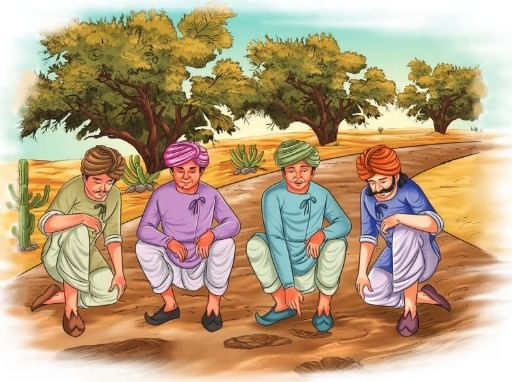
Q1. Why are the four young men tired when the story begins? Ans: The young men are tired because they have been traveling for ten days. They have walked a long way from their village to Ujjain to find jobs. Their journey has been hard and dusty.
Q2. What do the young men hear as they walk toward Ujjain? Ans: They hear the faint noise of the bustling city of Ujjain in the distance. The sound shows that the city is busy and lively. This gives them hope for finding work.
Q3. What does Ram Datt hope the King will do for them? Ans: Ram Datt hopes the King will recognize their talents and give them jobs. He believes the King will see their skills and offer them work in his service. This is their main goal for going to Ujjain.
Q4. Why does Har Datt say meeting the King will be difficult? Ans: Har Datt says meeting the King will be difficult because it’s not easy to get an audience with him. They need a plan to reach such an important person. This shows they must be clever to achieve their goal.
Q5. How does the merchant act when he first meets the young men? Ans: The merchant is panting and distressed when he meets the young men. He is in a hurry and looks worried because his camel is missing. This makes him anxious and eager for their help.
Q6. What does the merchant offer to do if the young men can cure his camel? Ans: The merchant offers to pay a fee if the young men can cure his camel’s stomach pain. He thinks they might be healers because they know so much about his camel. This shows his surprise and trust in their knowledge.
Q7. Why does Dev Datt suggest waiting under the banyan tree? Ans: Dev Datt suggests waiting under the banyan tree if the King wants to see them. He is calm and confident they can explain themselves. This shows they are not afraid of facing the King.
Q8. What does the King demand from the merchant in the court? Ans: The King demands that the merchant speak his accusation clearly. He does not want any confusion in his court. This shows the King is fair and wants to understand the situation properly.
Q9. How does the King describe the young men’s reasoning? Ans: The King says their reasoning is flawless and shows wisdom beyond just seeing things. He is amazed that they know so much about the camel without seeing it. This makes him value their intelligence.
Q10. Why does the merchant feel ashamed after the King’s decision? Ans: The merchant feels ashamed because the King proves his accusations are wrong. The young men are shown to be wise, not thieves, making him realize his mistake. He leaves the court embarrassed.
Q11. How do the young men feel when the King offers them jobs? Ans: The young men feel honored and grateful when the King offers them jobs as advisers. They are humbled because they didn’t expect such a high position. This fulfills their dream in a big way.
Q12. What does the story teach about working together? Ans: The story teaches that working together and supporting each other can lead to success. The four young men stay united and share their observations, which helps them impress the King. Their teamwork leads to great jobs.
Long Answer Questions
Q1. Describe the setting of Scene I and how it shows the young men’s determination. Ans: Scene I is set on a dusty road leading to Ujjain, with the city visible in the distance under a high midday sun. The four young men look tired from travel but keep walking with resolute eyes, showing their strong will to find work. They talk about their long journey of ten days, yet they stay hopeful about meeting the King. This setting highlights their unity and patience, as they press on despite the heat and uncertainty. Their determination is clear when they decide to examine the camel tracks carefully while continuing forward.
Q2. Explain the role of the Merchant in the story and how his actions lead to the climax. Ans: The Merchant is a worried owner who lost his camel and runs into the four men on the road. He asks if they have seen it, and their accurate descriptions surprise him, making him accuse them of theft. His anger leads him to drag them to the King’s court, creating the main conflict. This accusation sets up the climax where the men explain their deductions. Without the Merchant’s hasty judgment, the men might not have met the King and shown their wisdom.
Q3. How does the King’s character show fairness and appreciation for talent? Ans: The King is a young ruler who listens carefully to both the Merchant and the accused men without bias. He questions each man in detail, nodding thoughtfully at their answers, which shows his fairness. After hearing their logical explanations, he praises their insight and calls their minds rare. He quickly dismisses the false accusation and offers them adviser roles. This appreciation for talent makes him a wise and just leader who values wisdom over quick judgments.
Q4. Discuss the theme of observation and deduction in the four men’s discoveries. Ans: Observation and deduction are key as the men study the camel’s tracks closely to learn hidden details. Ram Datt deduces the lame leg from uneven footprints, showing careful watching. Shiv Datt uses untouched leaves to infer blindness, linking sight to behavior. Har Datt connects blood drops to a short tail through logical thinking about defense. Dev Datt notices print depths to conclude stomach pain, proving deduction turns simple clues into deep understanding.
Q5. What lesson does the Merchant learn by the end of the story? Ans: The Merchant learns not to accuse others hastily without proof, as his quick anger embarrasses him in court. He realizes the men used wisdom from tracks, not theft, to describe his camel. The King’s scolding makes him feel chastened and sorry for his mistake. This teaches him to be mindful and think before judging strangers. In the end, he leaves humbled, continuing his search with better caution.
Q6. How do the four young men’s responses to the King reflect their humility and unity? Ans: The four men bow respectfully and answer the King’s questions calmly, showing humility despite the false accusation. When offered adviser roles, Ram Datt calls it an undreamed honor, and Shiv Datt expresses gratitude. Har Datt sees serving the King as a privilege, while Dev Datt promises dedicated insights. Their group responses highlight unity, as they speak together and accept as one. This humility and teamwork make them worthy of the King’s trust.
Q7. Explain the significance of the court’s reaction at the story’s end. Ans: The court’s applause at the end signifies approval of the King’s wise decision to hire the four men. It shows the kingdom values intelligence and justice, as the men turn from accused to honored advisers. The King’s announcement spreads their wisdom as a beacon for prosperity. This reaction fulfills the men’s journey unexpectedly, proving wisdom leads to respect. It ends the story on a positive note of celebration and new beginnings.
Q8. How does the story illustrate the difference between knowledge and wisdom through the characters? Ans: The story shows knowledge as facts, like knowing camel behaviors, but wisdom as using them with judgment, as the men do with tracks. The pre-reading classifies situations, like Riya’s plant care as knowledge and Mr. Kumar’s family value as wisdom. The four men apply wise deductions beyond mere facts, impressing the King. The Merchant has knowledge of his camel but lacks wisdom in accusing wrongly. The King uses wisdom to recognize talent, guiding his fair ruling.
Q1. Why does the poet repeat the phrase “My next-door neighbour, Mrs. Jones” in each stanza? Ans: The poet repeats “My next-door neighbour, Mrs. Jones” to emphasize her importance as the central character in the poem. This repetition creates a rhythmic pattern, making the poem catchy and easy to follow. It also highlights her quirky personality and her unique garden, keeping the focus on her throughout. This repetition adds a fun, musical quality to the poem’s structure.
Q2. How does the poet use humor in the second stanza when describing the tiny plants? Ans: In the second stanza, the poet uses humor by describing the tiny plants as so small they “don’t mean anything at all.” He jokingly suggests Mrs. Jones might plant them with a pin, which is an exaggerated and funny idea. This humor comes from the speaker’s surprise at how she manages to place such delicate plants in tight spaces. The playful tone makes the poem enjoyable and shows the speaker’s amusement at her gardening.
Q3. What does the “crazy path” in Mrs. Jones’s garden tell us about her garden’s design? Ans: The “crazy path” suggests that Mrs. Jones’s garden has an unusual, winding path that isn’t straight or typical. It reflects her unique and quirky approach to gardening, where stones dominate instead of flowers or grass. This path adds to the garden’s charm, showing her love for an unconventional design. It makes the garden stand out as different, appealing to her creative taste.
Q4. How does the sundial’s “strange device” contribute to the poem’s description of the garden? Ans: The sundial’s “strange device” adds an element of oddity to Mrs. Jones’s garden, making it more unique. It shows that even the sundial, a time-telling tool, has an unusual design that she finds appealing. This detail highlights her quirky taste, as she values things others might find strange. It helps paint a picture of a garden full of unexpected and charming features.
Q5. Why does the speaker find the tiny plants amusing in the poem? Ans: The speaker finds the tiny plants amusing because they are so delicate and small that they seem unimportant to him. He humorously wonders how Mrs. Jones plants them in the tight spaces between stones, even joking about using a pin. Their tiny size contrasts with the large stones, making her effort seem surprising and funny. This amusement reflects the speaker’s playful perspective on her quirky gardening.
Q6. What role does the lily pond play in Mrs. Jones’s stone-filled garden? Ans: The lily pond adds a touch of beauty and variety to Mrs. Jones’s stone-filled garden. It contrasts with the hard stones by including soft water lilies, showing her garden isn’t just about rocks. The pond makes the garden more interesting and reflects her creative approach to gardening. It also suggests she values natural elements, even in her unique stone-focused design.
Q7. How does the poem’s rhyme scheme enhance its overall effect? Ans: The poem’s AABBCC rhyme scheme gives it a musical and playful rhythm, making it fun to read. Each pair of lines rhymes, like “Jones/stones” and “pond/beyond,” which keeps the poem flowing smoothly. This structure makes the poem easy to follow and enjoy. The consistent rhymes also match the light-hearted tone, enhancing the humor and charm.
Q8. What does the speaker’s question “Where is this lovely thing?” reveal about their perspective? Ans: The speaker’s question “Where is this lovely thing?” shows they are curious and engaged but unaware of the flower’s tiny size. They expect to see something obvious, not a delicate plant underfoot. This reveals their different perspective from Mrs. Jones, who values the small details. It sets up the humorous twist, highlighting their obliviousness in a playful way.
Q9. How does Mrs. Jones’s response “You’re standing on it” add to the poem’s humor? Ans: Mrs. Jones’s response “You’re standing on it” is funny because it reveals the speaker’s mistake of stepping on the tiny flower they were admiring. Her calm reply contrasts with the speaker’s surprise, creating a humorous moment. This twist shows how easily small things can be overlooked, adding irony. It makes the poem entertaining by showing a light-hearted blunder.
Q10. How does the poem show the theme of connection with nature through Mrs. Jones? Ans: The poem shows connection with nature through Mrs. Jones’s love for her garden, even though it’s mostly stones. She carefully places tiny plants and cherishes features like the lily pond and rockery. Her enthusiasm for these natural elements, despite their unusual setting, reflects her joy in gardening. This connection highlights how nature can bring happiness in unique ways.
Q11. What makes Mrs. Jones’s gardening style different from typical gardens? Ans: Mrs. Jones’s gardening style is different because her garden is filled with stones rather than flowers or grass. She includes unique features like a crazy path, rockery, and sundial, unlike typical plant-heavy gardens. Her focus on tiny plants placed between stones shows her quirky approach. This unusual style makes her garden stand out as special and creative.
Q12. How does the poem encourage readers to find humor in daily life? Ans: The poem encourages finding humor in daily life through the funny interaction where the speaker steps on the flower. The speaker’s mistake and Mrs. Jones’s calm response create a light-hearted moment. The playful tone and exaggerated ideas, like planting with a pin, add to the fun. It shows that everyday blunders can be amusing and worth laughing about.
Long Answer Questions
Q1. How does the poet use the setting of Mrs. Jones’s garden to reflect her personality? Ans: The setting of Mrs. Jones’s garden, filled with stones, reflects her quirky and unique personality. Unlike typical gardens with flowers and grass, her garden has a crazy path, a lily pond, a rockery, and a sundial with a strange design, showing her love for unusual things. Her enthusiasm for placing tiny plants between stones highlights her patience and attention to detail. The poet describes these features to show that Mrs. Jones finds beauty in what others might see as odd. Her pride in the garden’s unique elements, like the sundial’s strange device, suggests she values creativity over convention. This setting makes her stand out as an eccentric yet charming character.
Q2. Why is the title “A Concrete Example” significant for the poem’s message? Ans: The title “A Concrete Example” is significant because it refers to the tangible, real-life example of Mrs. Jones’s stone garden to convey the poem’s message. The word “concrete” suggests something solid, like the stones that dominate her garden, which is an unusual choice for beauty. The title highlights how her garden is a real example of finding beauty in unexpected places, a key message of the poem. It also hints at the humor in the speaker’s mistake of stepping on a plant, a concrete moment of irony. By using this title, Reginald Arkell emphasizes that everyday experiences, like visiting a neighbor’s garden, can teach us to appreciate different perspectives. The title connects to the theme of perception versus reality, as Mrs. Jones sees value in her stones while the speaker does not.
Q3. How does the poet create a sense of surprise in the final stanza of the poem? Ans: In the final stanza, the poet creates a sense of surprise through the unexpected twist when Mrs. Jones reveals the speaker is standing on the flower they are admiring. The speaker spends fifteen minutes talking about the flower, building anticipation that it must be noticeable and beautiful. When the speaker asks, “Where is this lovely thing?” they expect to see something obvious, making Mrs. Jones’s calm reply, “You’re standing on it,” shocking and funny. This contrast between the speaker’s expectation and the reality of stepping on a tiny plant creates a moment of irony. The poet’s use of dialogue adds to the surprise, as Mrs. Jones’s response is direct and understated. The surprise is effective because it shows how small details can be overlooked, a key theme.
Q4. How does the poem illustrate the theme of human quirks through Mrs. Jones’s actions? Ans: The poem illustrates the theme of human quirks through Mrs. Jones’s unique gardening choices and her enthusiasm for them. She creates a garden filled with stones, including a crazy path, rockery, and sundial, which is unusual compared to typical flower gardens. Her careful placement of tiny, delicate plants between stones shows her dedication to an unconventional hobby. This quirkiness is evident in her pride for the sundial’s strange design, which she finds “rather nice.” The poet highlights her individuality by showing how she values things others might find odd. Her calm reaction to the speaker stepping on her flower further reflects her quirky, easygoing nature.
Q5. How does the poet’s use of imagery make the garden vivid for readers? Ans: The poet uses vivid imagery to bring Mrs. Jones’s garden to life, making it easy for readers to picture it. He describes a “crazy path” that twists and turns, suggesting an unusual and lively design. The “lily pond” evokes images of water lilies floating in a serene pool, adding a soft contrast to the stones. The “rockery” paints a picture of carefully arranged stones, showing her artistic touch. The “sundial with a strange device” creates an image of an odd, eye-catching tool that stands out. The tiny plants “delicate and small” between stones add a sense of fragility and detail. These images make the garden feel real and unique. The poet’s word choices create a clear, colorful picture that enhances the poem’s playful tone. This vividness helps readers connect with Mrs. Jones’s quirky world.
Q6. How does the poem show the importance of appreciating small details in life? Ans: The poem shows the importance of appreciating small details through Mrs. Jones’s care for her tiny plants and the speaker’s failure to notice them. Mrs. Jones lovingly places delicate plants between stones, valuing them despite their small size. The speaker, however, thinks they “don’t mean anything at all,” missing their significance until he steps on one. This contrast highlights how small things can matter to someone, like Mrs. Jones, who finds joy in them. The humorous twist of the speaker’s mistake teaches that overlooking details can lead to funny blunders. The poem shows that paying attention to little things, like a tiny flower, can deepen our appreciation of others’ passions. The poet’s playful tone makes this lesson engaging and easy to understand. It encourages readers to notice and value small details in their own lives. The poem’s message is clear: small things can hold big meaning if we look closely.
Q7. How does the poet’s choice of first-person narration affect the poem’s tone and perspective? Ans: The poet’s choice of first-person narration, using “I” and “me,” makes the poem feel personal and relatable, as if the speaker is sharing a real story. This perspective allows readers to see the garden through the speaker’s amused and slightly puzzled eyes, creating a playful tone. The speaker’s thoughts, like wondering if Mrs. Jones uses a pin to plant, add humor and show their curiosity. By narrating in the first person, the poet makes the speaker’s mistake of stepping on the flower more engaging, as readers feel part of the blunder. This perspective contrasts with Mrs. Jones’s view, highlighting the theme of perception versus reality. The first-person voice feels like a friend telling a funny story, making it easy to connect with. It also makes the tone light-hearted and intimate, drawing readers into the poem’s world. The narration keeps the focus on the speaker’s experience, enhancing the humor and charm.
Q1. What made the Vijayanagara Empire famous during Krishnadeva Raya’s reign? Ans: The Vijayanagara Empire was famous for its immense wealth, splendor, and cultural achievements under Krishnadeva Raya. His reign, known as the Golden Era, saw remarkable progress in art, literature, and architecture. The empire became a hub for creativity, attracting scholars, poets, and artists. This period marked a peak in the empire’s prosperity and cultural brilliance.
Q2. What kind of warrior was Krishnadeva Raya known to be? Ans: Krishnadeva Raya was renowned as a formidable and skilled warrior who led his army with great courage. His strategic abilities in battles strengthened the Vijayanagara Empire. He was respected for his bravery and leadership on the battlefield. His military successes helped protect and expand the empire’s territories.
Q3. Besides being a king, what other talents did Krishnadeva Raya have? Ans: Krishnadeva Raya was not only a ruler but also a highly talented poet and scholar. He wrote significant works like the epic Amuktamalyada and the Sanskrit play Jambavati Parinayam. As a patron of learning, he supported scholars and artists in his court. His contributions enriched the cultural landscape of his empire.
Q4. Who were the Ashtadiggajas in Krishnadeva Raya’s court? Ans: The Ashtadiggajas were a group of eight distinguished poets in Krishnadeva Raya’s royal court. They included renowned figures like Allasani Peddana and Tenali Ramakrishna, known for their literary brilliance. These poets contributed significantly to the empire’s rich literary tradition. Their works added to the cultural prestige of the Vijayanagara Empire.
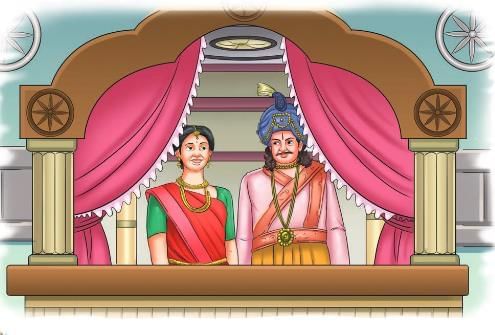
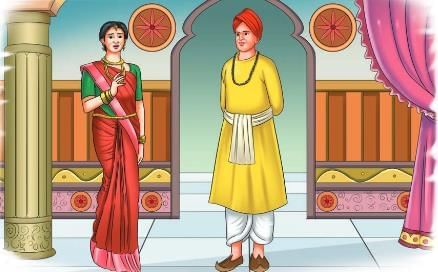
Q5. Why did Thirumalambal feel heartbroken after the quarrel? Ans: Thirumalambal felt heartbroken because Krishnadeva Raya stopped speaking to her after their disagreement. The king’s refusal to communicate left her deeply saddened and isolated. Her repeated attempts to mend their relationship were unsuccessful, increasing her distress. The once-lively palace became quiet, reflecting her emotional turmoil.
Q6. What did Thirumalambal tell Tenali about the king’s poem? Ans: Thirumalambal told Tenali that the king’s poem was about the sun, moon, and stars but was difficult to understand. She mentioned that the ministers avoided giving honest feedback, which frustrated the king. When she yawned during his recitation, he felt disrespected and left angrily. This misunderstanding led to their prolonged quarrel.
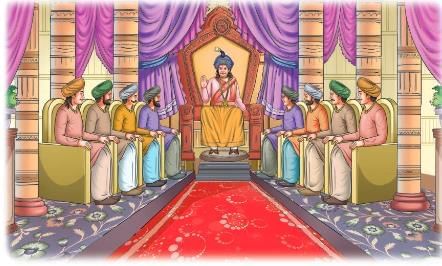
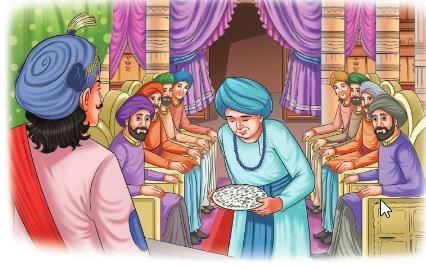
Q7. How was the royal court described when Tenali presented his plan? Ans: The royal court was described as a grand hall adorned with intricately carved pillars and illuminated by sunlight streaming through large windows. It was bustling with ministers and scholars engaged in lively discussions. The atmosphere was vibrant, despite the underlying tension from the king’s quarrel. The court’s magnificence reflected the empire’s wealth and grandeur.
Q8. What were the ministers discussing in the court before Tenali spoke? Ans: The ministers were discussing practical ways to improve paddy cultivation in the empire. They proposed solutions like expanding irrigation systems to ensure better water supply. They also suggested using improved manure to enhance crop yields. These discussions aimed to boost agricultural productivity for the empire’s benefit.
Q9. How did the king initially react to Tenali’s claim about the paddy seeds? Ans: Krishnadeva Raya was highly skeptical when Tenali claimed the paddy seeds could triple the harvest. He dismissed the idea as absurd, believing it was unrealistic. The king argued that such a yield would require specialized soil and advanced pest control. His reaction showed his practical approach to agricultural challenges.
Q10. What happened in the court when Tenali mentioned yawning? Ans: When Tenali mentioned yawning, the court burst into laughter, easing the earlier tension. The king, caught off guard, yawned instinctively, which surprised everyone present. This moment prompted him to reflect on his misunderstanding with Thirumalambal. The laughter created a lighter mood, helping to shift the king’s perspective.
Q11. What did Krishnadeva Raya say to Thirumalambal to resolve their quarrel? Ans: Krishnadeva Raya approached Thirumalambal with a sincere apology, admitting he had been foolish. He acknowledged that his pride had blinded him, causing him to misjudge her yawning. He expressed deep regret for his actions and the pain he caused. His heartfelt words helped mend their relationship.
Q12. How did the royal couple show their gratitude to Tenali Rama? Ans: The royal couple showed their gratitude by showering Tenali Rama with valuable gifts for his cleverness. Their appreciation restored joy and laughter to the palace, making it vibrant again. Tenali’s witty tactic not only resolved their quarrel but also strengthened their trust in him. The palace returned to its lively and harmonious state.
Long Answer Questions
Q1. How did Tenali Ramakrishna’s role as an advisor influence the Vijayanagara Empire’s court? Ans: Tenali Ramakrishna was a vital figure in the Vijayanagara Empire’s court, serving not only as a poet but also as a clever advisor. His sharp wit and problem-solving skills made him a trusted confidant to King Krishnadeva Raya. In the story, he resolved the royal couple’s quarrel with a thoughtful strategy, showing his ability to handle delicate situations. His presence brought humor and wisdom, lightening the mood in the court during tense moments. Tenali’s clever interventions often turned serious discussions into opportunities for reflection and unity. By addressing issues like the king’s misunderstanding with the queen, he strengthened the court’s harmony. His contributions went beyond poetry, as he helped maintain a positive atmosphere in the palace. Tenali’s role as an advisor showcased his unique ability to blend intelligence with diplomacy, making him indispensable to the empire.
Q2. What does the story reveal about the importance of communication in resolving conflicts? Ans: The story highlights that clear communication is essential for resolving conflicts, as seen in the quarrel between Krishnadeva Raya and Thirumalambal. The king’s silence after misinterpreting the queen’s yawning created a prolonged rift, causing tension in the palace. Thirumalambal’s attempt to explain her actions failed because the king was not open to dialogue initially. Tenali Ramakrishna’s clever tactic in the court prompted the king to reflect on his mistake, opening the door for communication. When Krishnadeva Raya apologized and spoke to the queen, their relationship was restored. The story shows that misunderstandings can escalate without communication, but honest conversations can heal relationships. Tenali’s strategy encouraged the king to express regret, proving that communication is key to resolving disputes. This lesson underscores the value of listening and speaking openly to maintain harmony.
Q3. How did the court’s atmosphere reflect the challenges faced by Krishnadeva Raya? Ans: The royal court’s atmosphere in the story mirrored the challenges Krishnadeva Raya faced due to his personal conflict with Thirumalambal. Despite the lively discussions on agricultural improvements, an underlying tension persisted because of the king’s troubled mood. His stern demeanor on the throne showed how his personal issues affected his leadership. The court, usually a place of vibrant debates, felt strained, reflecting the emotional weight of the royal quarrel. Tenali Ramakrishna’s humorous intervention with the paddy seeds lightened the mood, but it also highlighted the king’s distraction. The story suggests that a ruler’s personal challenges can influence the court’s dynamics, affecting decision-making. Once the quarrel was resolved, the court regained its joyful energy, showing the link between the king’s state of mind and the court’s atmosphere. This illustrates how personal and professional responsibilities intertwine for a leader.
Q4. Why was Tenali Ramakrishna’s approach to solving the royal quarrel considered clever? Ans: Tenali Ramakrishna’s approach was clever because he used a subtle and humorous strategy to address the king’s misunderstanding without directly confronting him. Instead of discussing the quarrel openly, he presented a plate of paddy seeds, claiming they could triple the harvest, which caught the court’s attention. By linking the idea of careless sowing to yawning, he indirectly referenced the queen’s action, making the king reflect on his own behavior. This approach avoided embarrassing the king while prompting self-realization. Tenali’s tactic was effective because it used humor to diffuse tension and encourage introspection. His indirect method ensured the king understood his mistake without feeling criticized. This cleverness lay in his ability to blend wit with wisdom, resolving the conflict peacefully. His strategy restored harmony, earning him the royal couple’s gratitude.
Q5. How did the king’s pride contribute to the conflict with Thirumalambal? Ans: Krishnadeva Raya’s pride played a significant role in escalating the conflict with Thirumalambal. When the queen yawned during his poem recitation, he took it as disrespect, letting his pride cloud his judgment. Instead of discussing his feelings, he chose to ignore her, prolonging their quarrel. His pride stemmed from his identity as a poet and ruler, making him sensitive to perceived slights. This led to weeks of silence, affecting the palace’s atmosphere. Tenali’s intervention helped the king recognize that his pride had blinded him to the queen’s exhaustion. By admitting his mistake, the king overcame his pride, restoring their relationship. The story shows how pride can create unnecessary conflicts, but humility can resolve them.
Q6. What role did humor play in Tenali Ramakrishna’s strategy to resolve the conflict? Ans: Humor was central to Tenali Ramakrishna’s strategy in resolving the royal couple’s conflict. By presenting the paddy seeds and linking yawning to careless sowing, he created a humorous scenario that made the court laugh. This laughter broke the tension and made the king yawn instinctively, prompting him to reflect on his misunderstanding with the queen. Humor allowed Tenali to address a sensitive issue without offending the king. It created a light-hearted moment that softened the king’s stern mood, making him more open to self-reflection. The playful comparison of yawning to a natural act like breathing helped the king see his reaction as unreasonable. Tenali’s use of humor not only resolved the conflict but also restored joy to the palace. It showed how humor can be a powerful tool in diplomacy and problem-solving.
Q7. How did the resolution of the royal couple’s quarrel impact the Vijayanagara Empire’s palace? Ans: The resolution of the quarrel between Krishnadeva Raya and Thirumalambal had a profound impact on the Vijayanagara Empire’s palace. The palace, once silent and somber due to their conflict, regained its vibrant and joyful atmosphere. The king’s apology and the queen’s willingness to move forward restored harmony, strengthening their relationship. This positive change influenced the court, as the king’s improved mood fostered a more productive environment. The return of laughter and unity reflected the palace’s renewed energy. Tenali’s role in resolving the conflict earned him gifts, further boosting the court’s morale. The resolution highlighted the importance of a harmonious royal household for the empire’s stability. It showed that personal reconciliation can have a broader positive effect on the palace’s dynamics.
Q8. What lesson can be learned from Tenali Ramakrishna’s ability to observe and strategize? Ans: Tenali Ramakrishna’s ability to observe and strategize teaches the importance of patience and careful planning in solving problems. In the story, he listened attentively to Thirumalambal’s concerns and asked for time to devise a plan. His quiet observation in the court allowed him to gauge the king’s mood and the court’s dynamics. By crafting a strategy that used humor and an agricultural metaphor, he addressed the issue indirectly but effectively. This shows that careful observation helps understand the root of a problem, while strategic thinking ensures a solution that respects all parties. Tenali’s success highlights the value of thinking before acting, especially in sensitive situations. His approach ensured the king’s pride was not hurt, leading to a peaceful resolution. This lesson encourages thoughtful problem-solving in challenging scenarios.