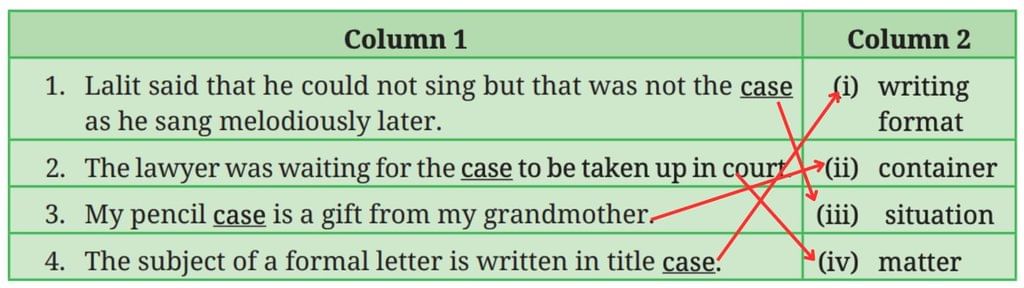
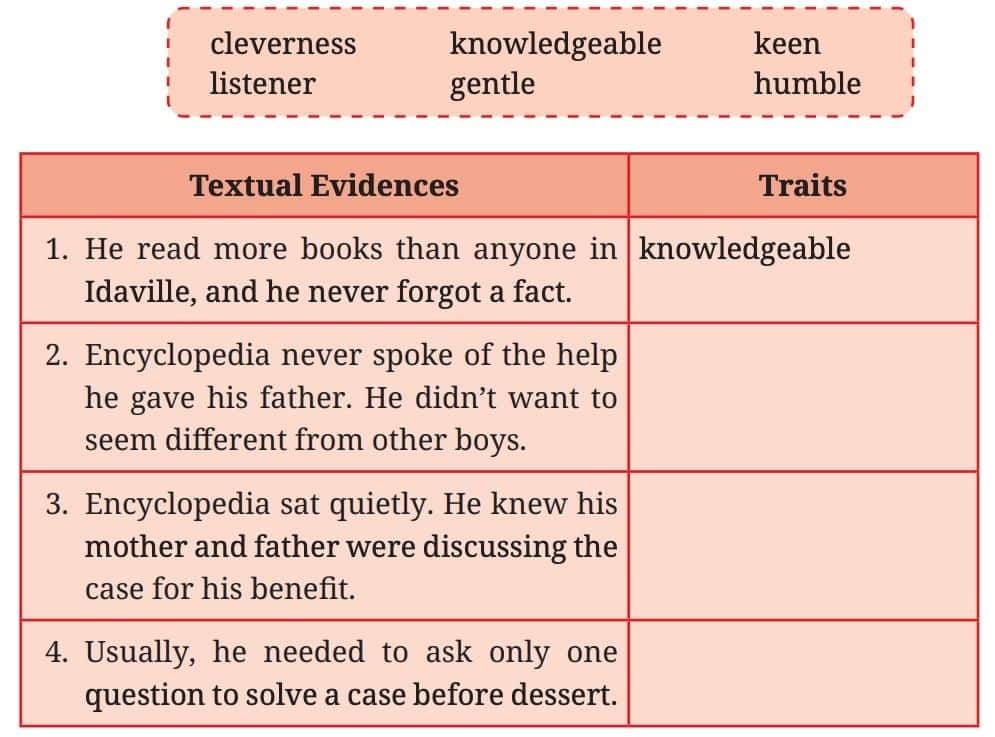
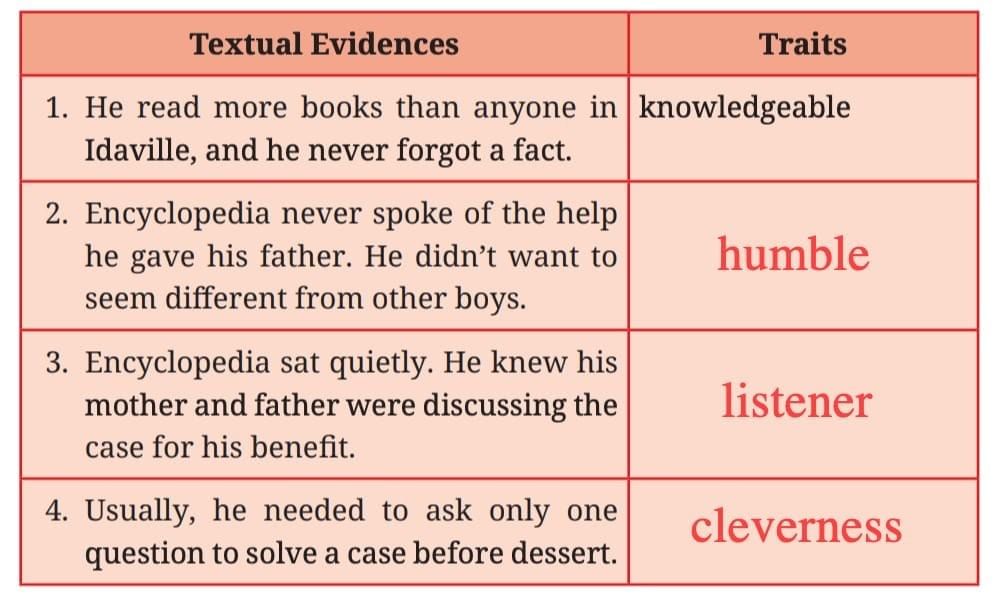
6 NCERT Solutions: Verghese Kurien — I Too Had A Dream Solutions

NCERT Solutions: Verghese Kurien — I Too Had A Dream

Let us do these activities before we read (Page 82)

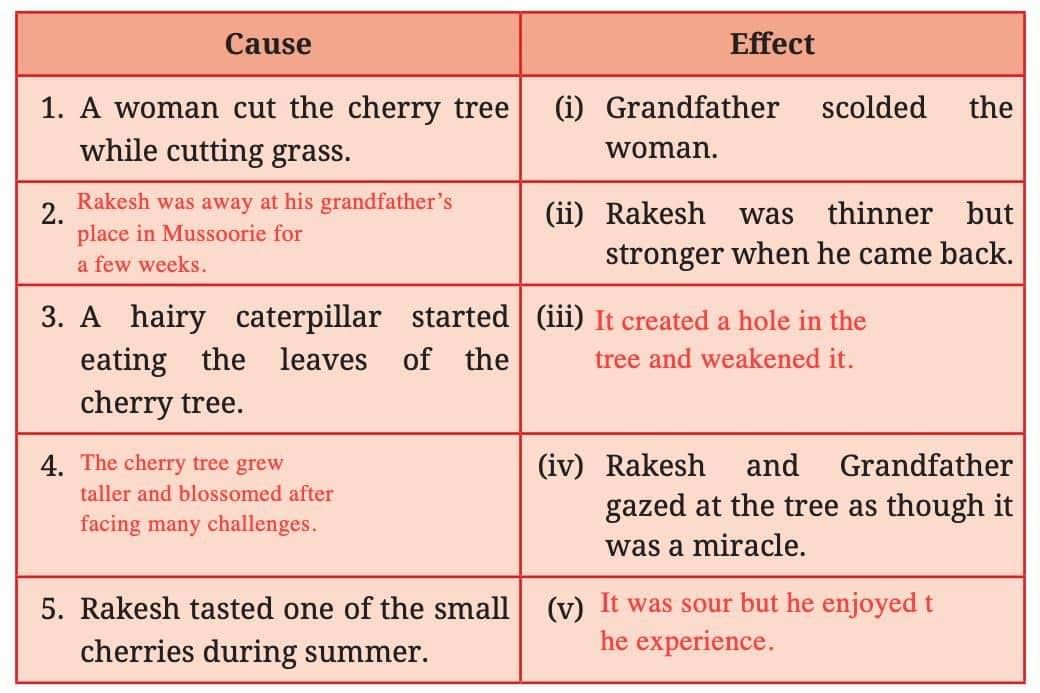
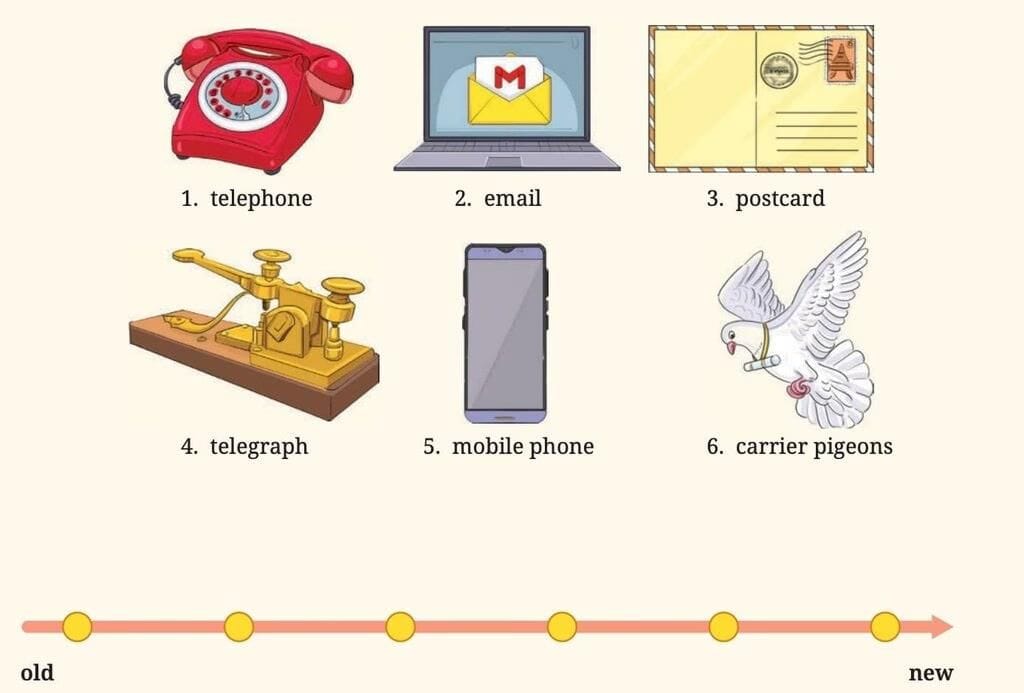
I. Arrange the worldwide means of communication given below in the timeline provided. Share your answers with your classmates and teacher.
NCERT Solutions: Verghese Kurien — I Too Had A Dream

Ans: Carrier pigeons → Telegraph → Postcard → Telephone → Mobile phone → Email

II.  Work in pairs and discuss the following things. Share your answers with your classmates and teacher.

1. The reasons for the change in the means of communication over the years.
Ans: Over time, technology has improved, making communication faster and easier. People wanted quicker ways to connect, so old methods like pigeons and postcards were replaced by phones and emails.

2. The means of communication that you prefer to use and the reason for your choice.
Ans: I prefer mobile phones because they are fast, easy to use, and let me call or message anyone instantly.

3. Communication through social media: its benefits and precautions that one should take against its misuse.
Ans: Social media helps share ideas and stay connected. Precautions include not sharing personal information, avoiding strangers online, and checking facts to avoid misinformation.

Let us discuss (Page 85)

A fact is something that can be proven true or false. A fact is not based on people’s beliefs. An opinion, on the other hand, is a belief, feeling or judgement, and can vary from one person to another. An opinion cannot be proven.

I. Identify which of the following statements are facts and which are opinions. Share your answers with your classmates and teacher.
1. But speaking on the telephone only gives us an immediate but fleeting joy.
Ans: Opinion (expresses a personal view)

2. I started my working life soon after our country became independent.
Ans: Fact (verifiable event)

3. To be quite honest, service to our nation’s farmers was not the career I had envisioned for myself.
Ans: Opinion (personal thought)

4. I knew I could make a more meaningful contribution by working here in Anand, Gujarat.
Ans: Opinion (personal belief)

5. … values that I saw in my mentor and supporter here in Anand—Tribhuvandas Patel.
Ans: Opinion (subjective observation)

6. Life is a privilege, and to waste it would be wrong.
Ans: Opinion (personal belief)

7. I hope that you, too, will discover, as I did, that failure is not about not succeeding.
Ans: Opinion (personal perspective)

8. … the magnificent ceremony in which the President awarded me the Padma Vibhushan in 1999?
Ans:
 Fact (verifiable event)

Get additional INR 200 off today with EDUREV200 coupon.

Let Us think and reflect (Page 86)

I. Read the given extracts and answer the questions: 

1. In today’s fast-paced world, we have become so addicted to instant communication that we prefer to use a telephone. But speaking in today’s fast-paced world, we have become so addicted to instant communication that we prefer to use a telephone. But speaking on the telephone only gives us immediate yet fleeting joy. Writing is different. Writing—even if it is a letter—not only conveys our present concerns and views of the events taking place around us, but it also becomes a possession that can be treasured and re-read over the years, providing great, abiding pleasure. The telephone only gives us an immediate but fleeting joy. Writing is different. Writing—even if it is a letter—not only conveys our present concerns and views of the events taking place around us, but it becomes a possession that can be treasured and re-read over the years, with great, abiding pleasure.
(i) Fill in the blank given below by selecting the correct option from the brackets. 
When the writer refers to a ‘fast-paced world’, he is speaking of a world where _________________. (Communication happens quicklybut lacks depth/people have more time to write and reflect)

Ans: communication happens quickly but lacks depth
(ii) Select the option that applies correctly to both Assertion (A) and Reason (R). 
(A): Writing letters can be treasured and re-read over the years. 
(R): Speaking on the telephone provides long-lasting joy.
A. Both (A) and (R) are true, and (R) is the correct explanationof (A).

B. Both (A) and (R) are true, but (R) is not the correct explanationof (A).
C. (A) is true, but (R) is false.
D. Both (A) and (R) are false.
Ans: C. (A) is true, but (R) is false. 
Reason: Writing can be treasured, but telephone joy is described as fleeting, not long-lasting.
(iii) Identify whether the statement given below is true or false. The writer feels that letter-writing is a class apart from other kinds of writing.

Ans: True 
Reason: the extract emphasises the unique, lasting value of letters.
(iv) Which of the following is the most appropriate title for the given extract?
A. The Rise of Instant Communication 

B. The Fleeting Delight of Phone Calls 
C. The Lasting Joy of Written Words 
D. Living in a Fast-paced World
Ans: C. The Lasting Joy of Written Words.

2. Your grandmother, too, made an important choice. She knew, in those early days, life in Anand could not offer even the simple comforts that we take for granted today. However, she ardently supported my choice to live and work in Anand. That choice of your grandmother to stand by me has given me an everlasting strength, always ensuring that I shouldered my responsibilities with poise.

(i) How can we say that the grandmother shared her husband’s dedication to a greater cause?
Ans: She supported his choice to work in Anand despite the lack of comforts, showing her commitment to his mission.

(ii) Complete the following with the correct option from the two given in brackets. The fact that the writer (grandfather) praises his wife tells us that he _____________________ (truly values/quietly accepts) her role in his life.
Ans: The fact that the writer (grandfather) praises his wife tells us that he truly values her role in his life.

(iii) Complete the following sentence with the correct option from those given below. Based on the information in the extract, we can infer that the grandmother had all of the following traits EXCEPT ____________.
A. encouraging 
B. understanding
C. comforting 
D. thoughtful

Ans: C. comforting 

(iv) Select the phrase that conveys— ‘showed grace under pressure and carried out my duties with dignity and confidence’.
Ans: The phrase that conveys “showed grace under pressure and carried out my duties with dignity and confidence” is “shouldered my responsibilities with poise”.

II. Answer the following questions.
Q1. What event does Dr. Kurien refer to when he mentions receiving the Padma Vibhushan?
Ans: Dr. Kurien refers to the occasion when he was honoured with the Padma Vibhushan, India’s second-highest civilian award, in recognition of his significant contributions to the White Revolution and to the development of India’s dairy industry.  He recalls how his grandson proudly wore the medal and innocently asked if he could keep it.

Q2. How did Dr. Kurien’s decision to join the cooperative in Anand affect his life?
Ans: Dr. Kurien’s decision to join the small cooperative of dairy farmers in Anand completely transformed his life. Though he had other career options like metallurgy, the army, or going abroad, he chose to work for the farmers. This decision led him to a life of service, brought him national recognition, and allowed him to contribute meaningfully to the development of rural India.

Q3. Dr. Kurien’s decision to work in Anand reveals his values and sense of duty. Explain.
Ans: Dr. Verghese Kurien’s choice to remain in Anand, rather than pursue a more lucrative or comfortable career, reflects his deep sense of responsibility, social justice, and empathy for farmers. Though initially posted there as a government employee, he chose to dedicate himself to the rural community—an act of selflessness, patriotism, and faith in grassroots development. By joining the small cooperative of dairy farmers in Anand, Kurien not only transformed his own life but also the lives of millions. Despite having other career options in metallurgy, the army, or opportunities abroad, he deliberately chose service over personal gain. This decision earned him national recognition, a life of fulfillment, and the chance to contribute profoundly to the development of rural India.

Q4. Why did Dr. Kurien write the letter to his grandson?
Ans: Dr. Kurien wrote the letter to his grandson Siddharth to share his life experiences and values. He wanted to teach him about the importance of service, hard work, and honesty. Through the letter, he hoped to inspire the younger generation to make meaningful choices in life and to take responsibility for society.

Q5. According to Dr. Kurien, “life is a privilege and it is wrong to waste it”.What is your opinion on this?
Ans: (Example opinion – you can personalise it as needed)
I agree with Dr. Kurien. Life is a gift full of opportunities to grow, serve, and make a difference. If we waste it on selfish pursuits, we lose both personal growth and the chance to help others. True happiness and purpose come when we use our talents to benefit society, just as Dr. Kurien did.

Q6. What message does Dr. Kurien want to convey about selfless service and its long-term impact on society?
Ans: Dr. Kurien emphasises that true success comes from selfless service and working for the good of others. By dedicating his life to rural India, he showed that helping people can strengthen communities, bring economic progress, and ensure social justice. His life proves that when we act with honesty and purpose, the benefits can inspire and uplift generations.

Also read: NCERT Textbook: Verghese Kurien — I Too Had A Dream

Let us learn (Page 88) 

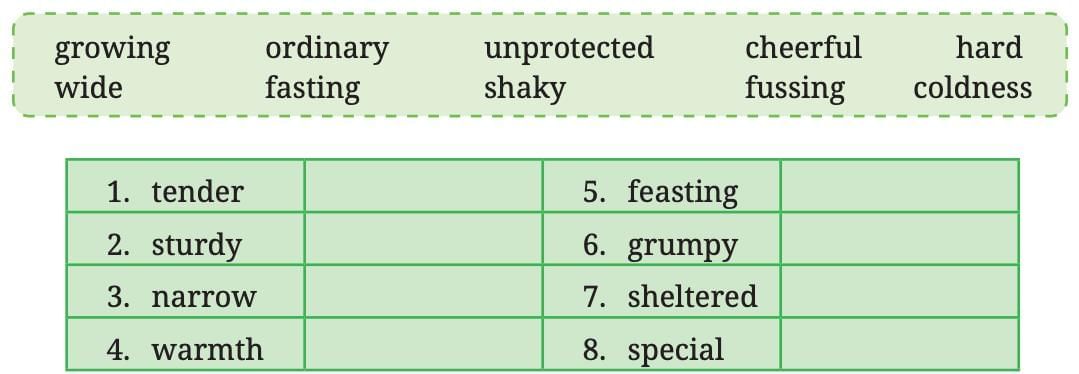
I. Replace the underlined words in each sentence with the correct synonym from the box. You may refer to a dictionary.NCERT Solutions: Verghese Kurien — I Too Had A Dream

1. He received the award in a magnificent ceremony.
2.
 I felt a fleeting joy when I received the appreciation for my song.
3. 
With today’s instant communication, we can share information across the world in seconds.
4. 
Our school focuses on the core values—collaboration, innovation, and unity.
5.
 My teacher’s advice on time management is a valuable reminder of the importance of planning.
6. 
Reading books and listening to music can give abiding pleasure that will last forever.

Ans: 
1. Magnificent → Splendid
He received the award in a splendid ceremony.

2. Fleeting → Momentary
 I felt a momentary joy when I received the appreciation for my song.

3. Instant → Swift
 With today’s swift communication, we can share information across the world in seconds.

4. Core → Essential
Our school focuses on the essential values—collaboration, innovation, and unity.

5. Valuable → Useful
My teacher’s advice on time management is a useful reminder of the importance of planning.

6. Abiding → Lifelong
Reading books and listening to music can give lifelong pleasure that will last forever.

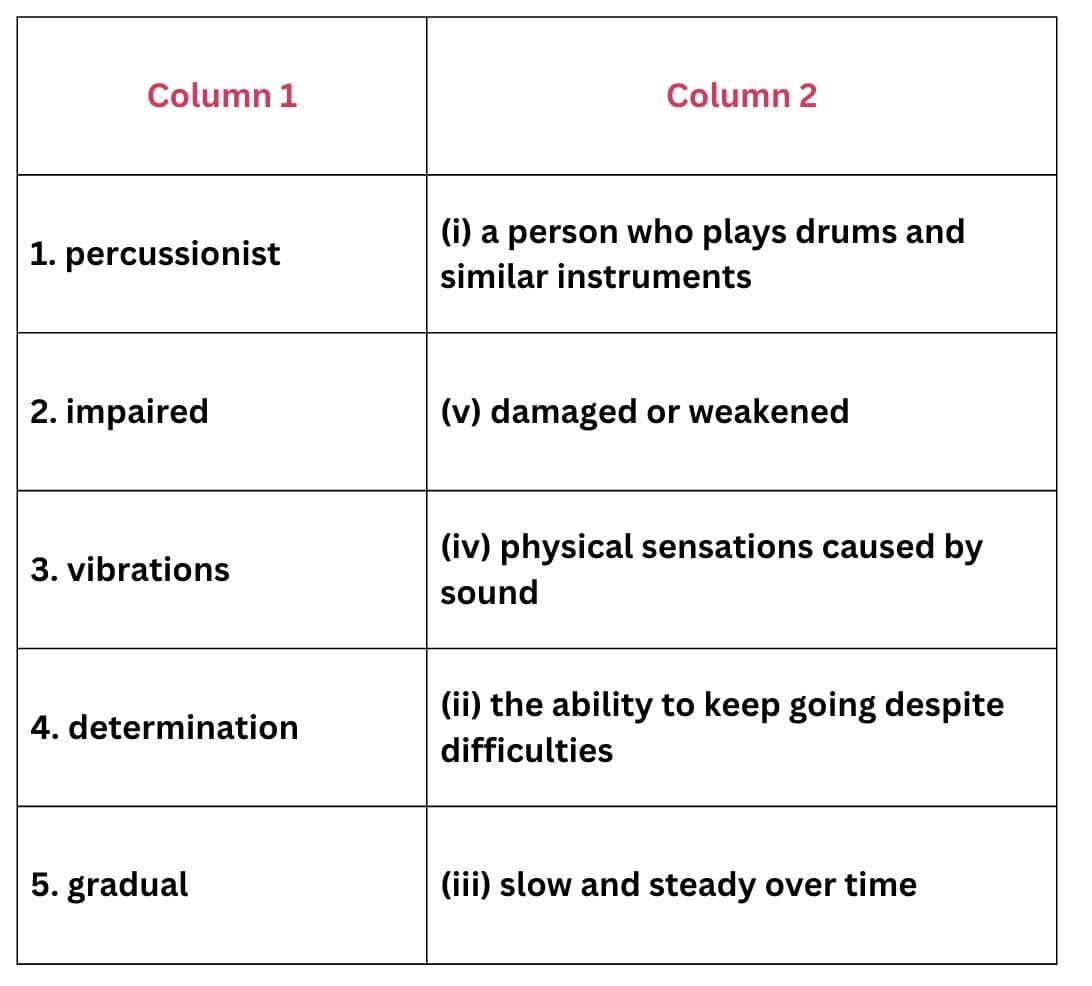
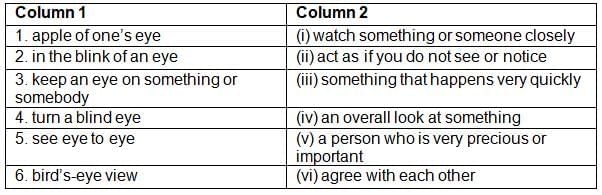
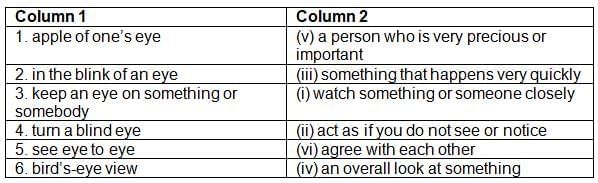
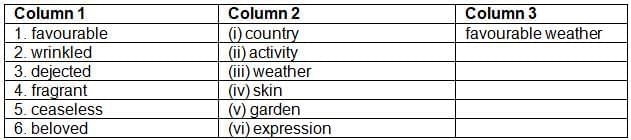
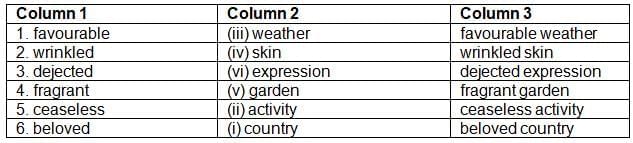
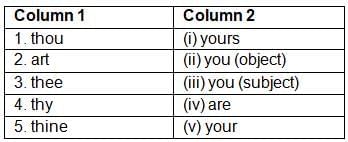
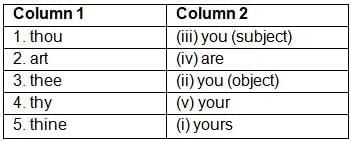
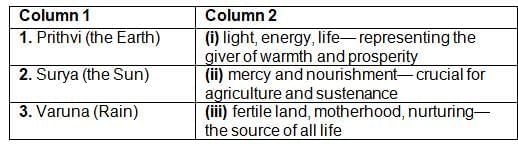
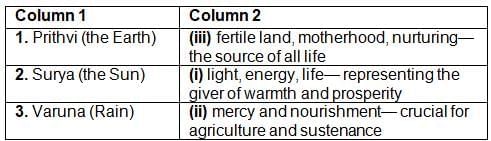
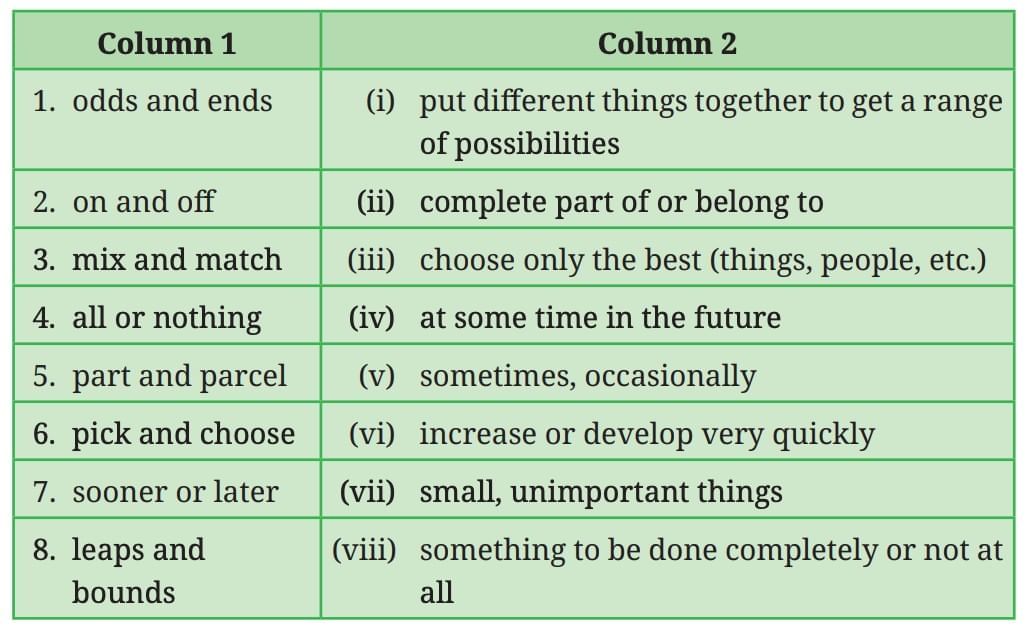
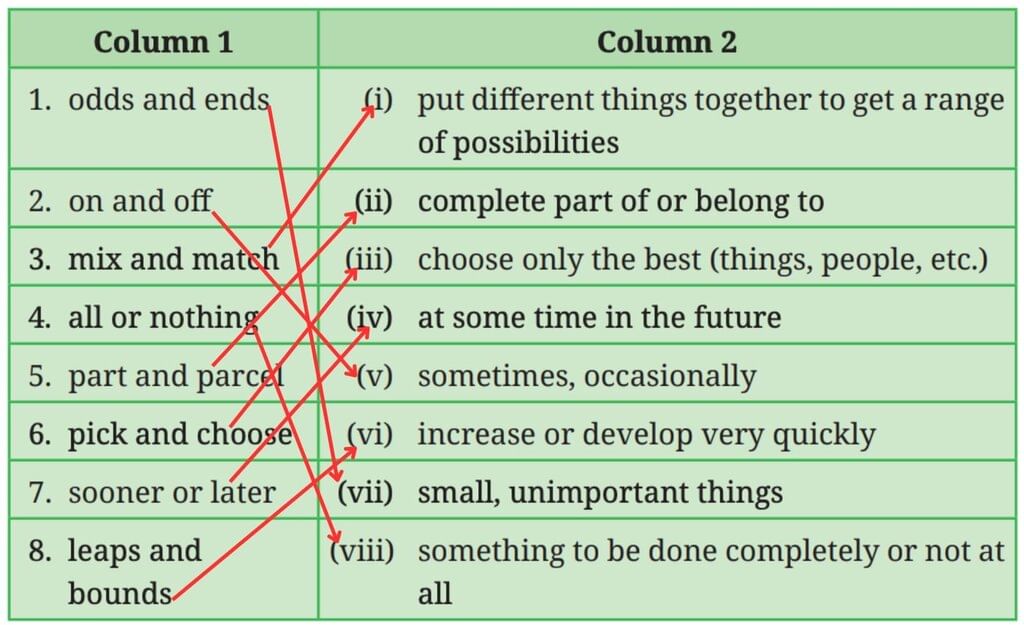
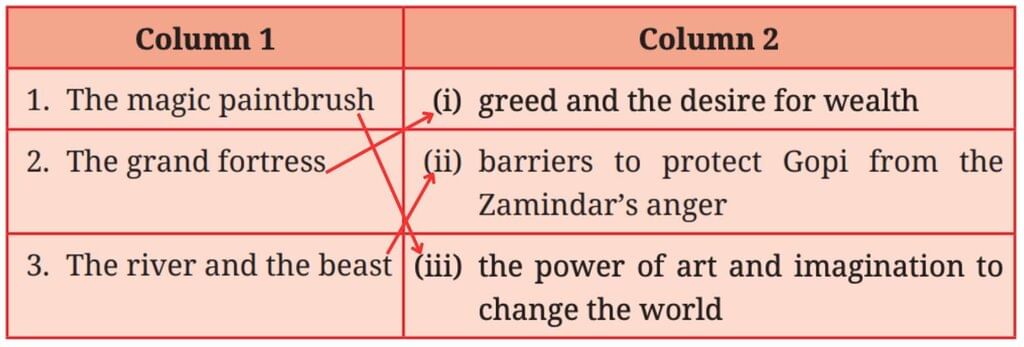
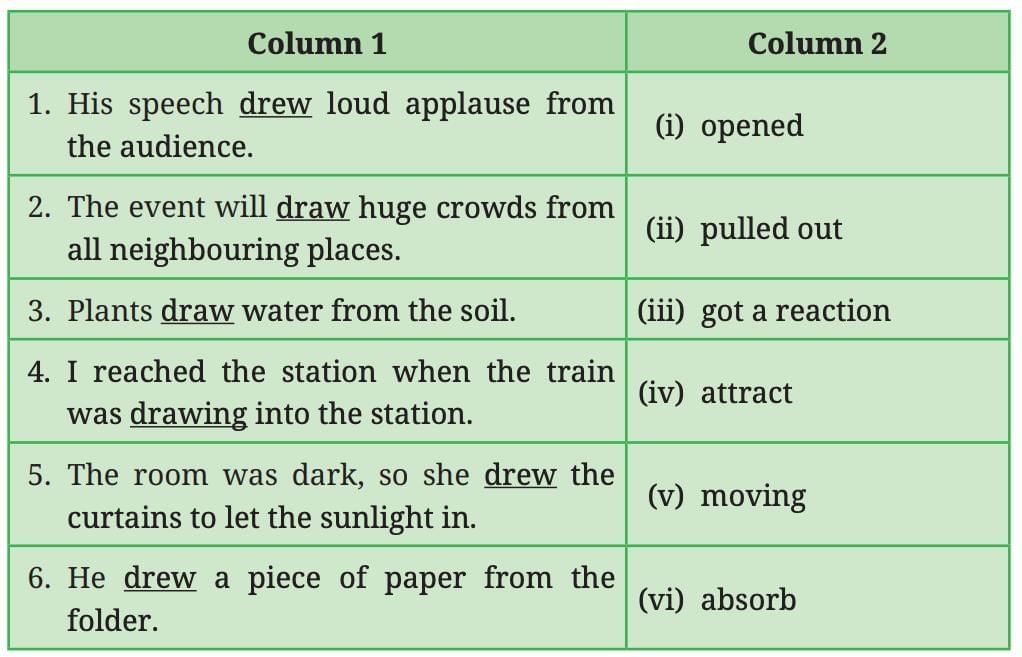
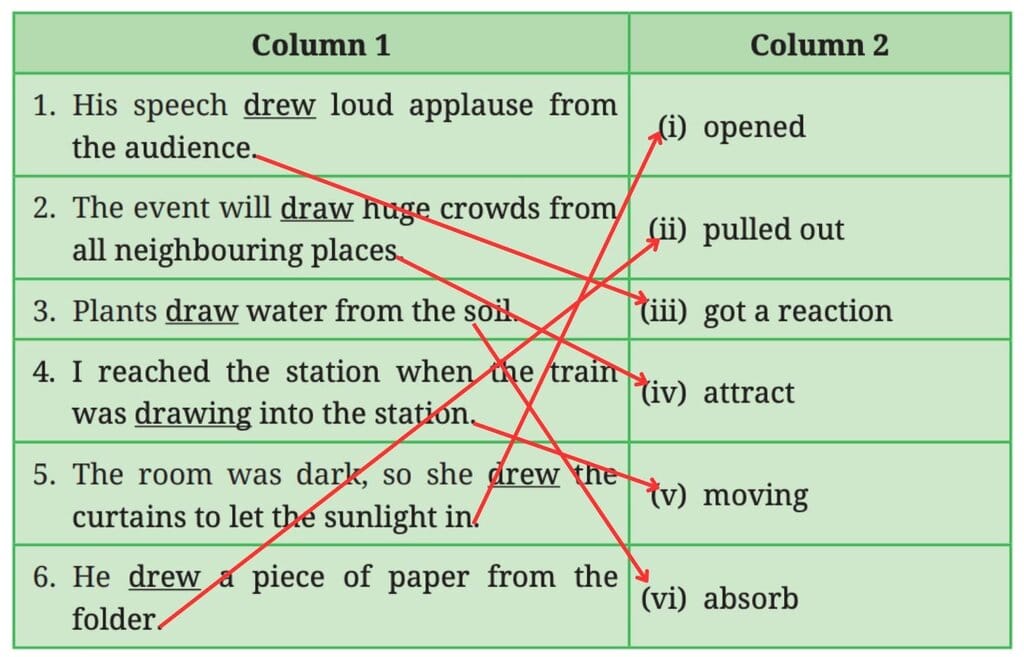
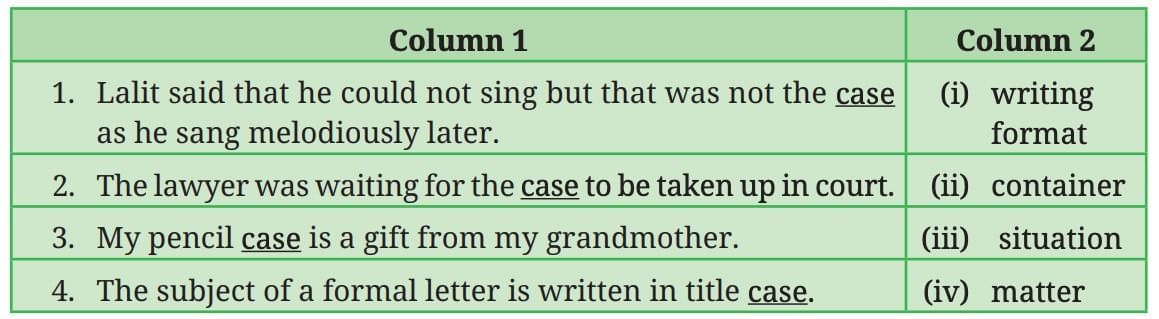
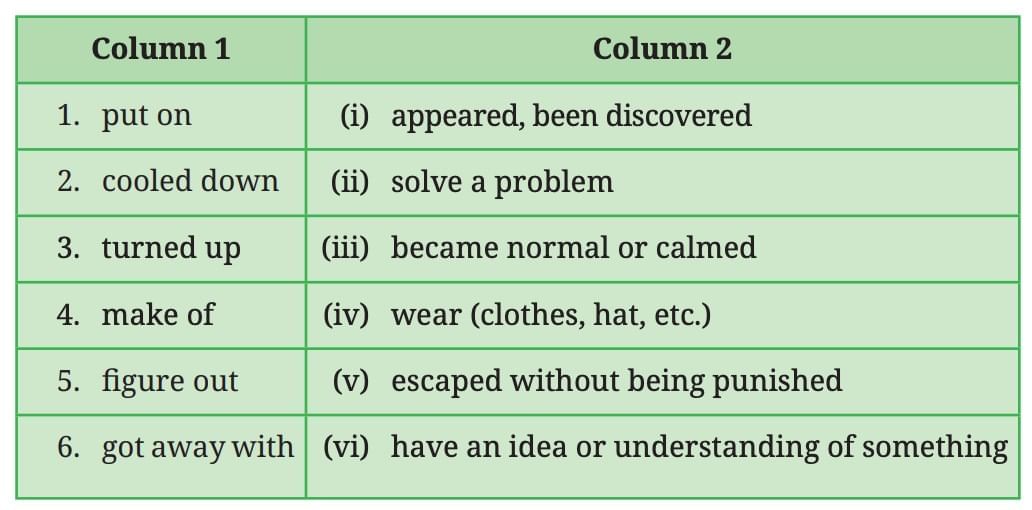
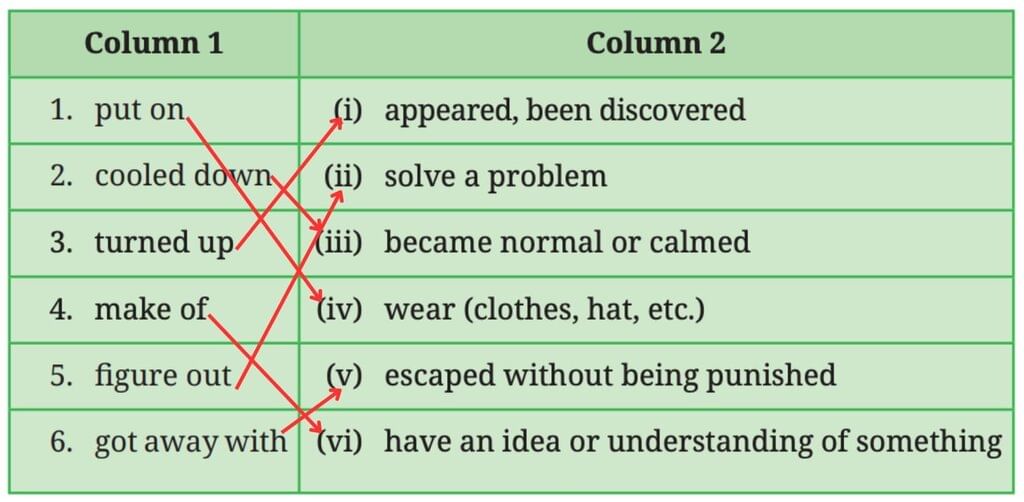
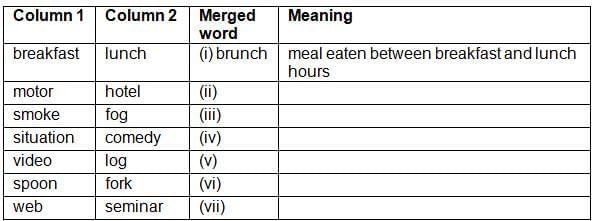
II. Match the expressions from the text in Column 1 with their meanings in Column 2.NCERT Solutions: Verghese Kurien — I Too Had A Dream
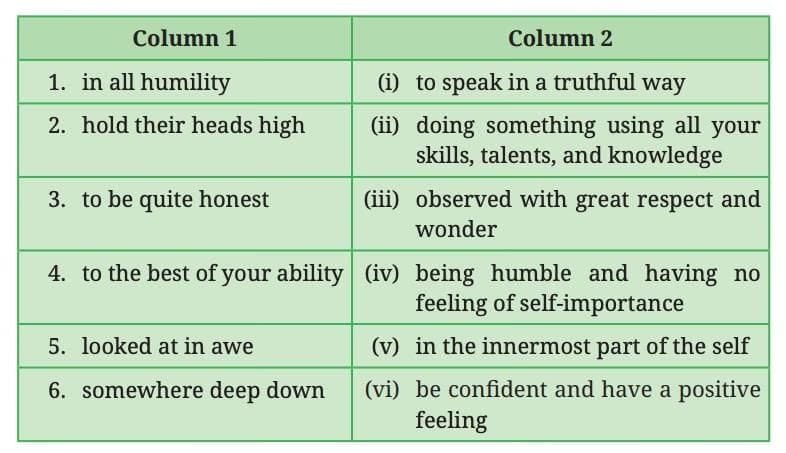
Ans:

III. Make as many words as you can out of the following words. One example has been done for you
1. community — city, toy, tune, unity, mutiny, cot
2. important
3. magnificent
4. satisfied
5. generation
6. achievement

Ans: 
1. community → city, toy, tune, unity, mutiny, cot
2. important → part, port, ant, rant, tip, trap
3. magnificent → gift, neat, fan, cane, cent, game
4. satisfied → sad, fade, side, date, site, idea
5. generation → gate, rate, near, tone, rent, giant
6. achievement → achieve, name, time, heat, team, event

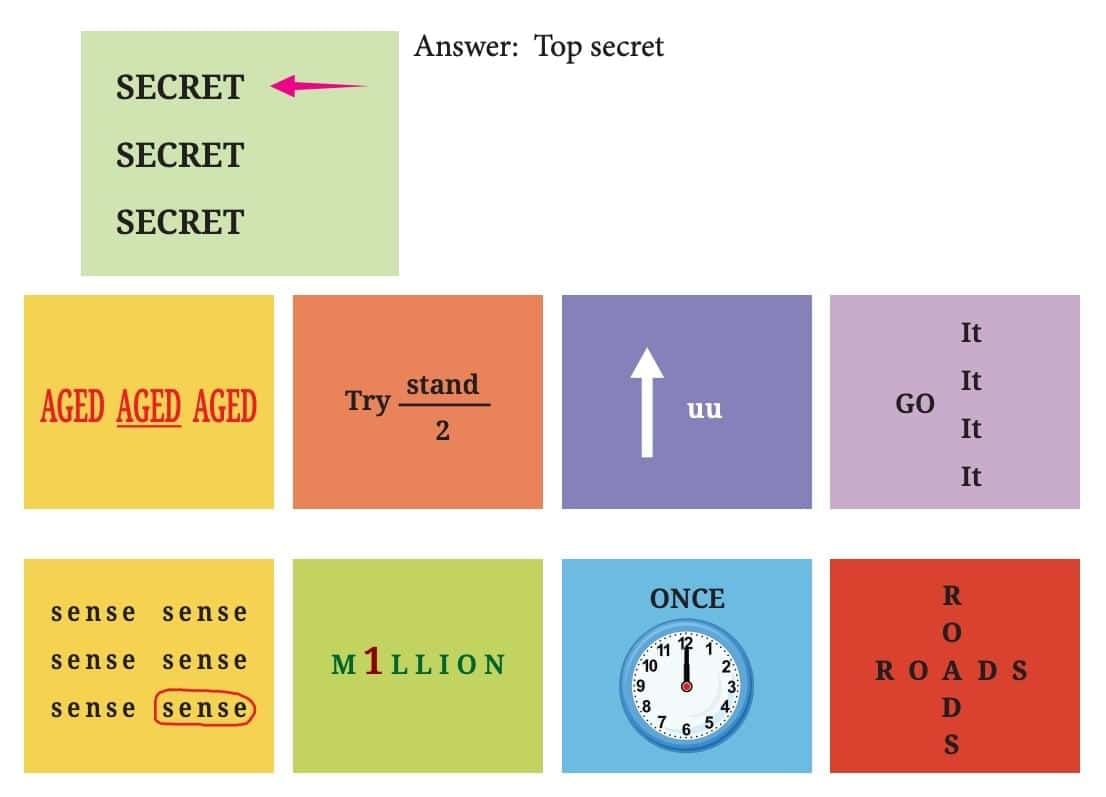
IV. Let us play a word game—antakshari.

1. Write the synonym of the word according to the clues given below.
2. For example, the synonym of the first word, ‘IMPORTANT’, ends with the letter ‘T’. The synonym of the second word begins with ‘T’, ‘TROUBLE’.Then write the synonym of the third word starting with the letter ‘E’.
3. Now, continue with the word game.

NCERT Solutions: Verghese Kurien — I Too Had A Dream

(i) major (synonym) 
(ii) problem (synonym)
(iii) uneven (antonym) 
(iv) related to post office
(v) our moral duty 
(vi) related to time
(vii) prosperous (synonym) 
(viii) related to being alive

Ans: 

V. Study the highlighted punctuation marks in the following sentences from the text.
1. … but that you should not be satisfied in merely keeping my awards—the challenge before you was to earn your rewards for the work that you did in your lifetime.
2. Writing—even if it is a letter—not only conveys our present concerns and views of the events taking place around us, but it becomes a possession. 
The highlighted punctuation is a long dash that can be used to link words or numbers or to create a pause in a sentence. There are two main types:the shorter en dash (–) and the longer em dash (—). 
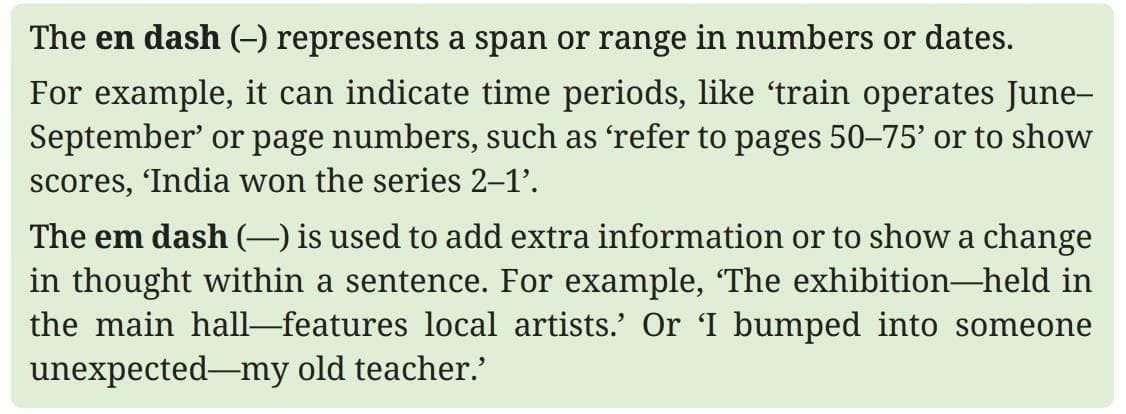
NCERT Solutions: Verghese Kurien — I Too Had A DreamNote: Do not add spaces around the dash and avoid overusing them. 
Read the sentences below and insert either an em dash (—) or an en dash (–) suitably.
(i) The conference will be held from March 15 March 20.
Ans: The conference will be held from March 15–March 20.
 (en dash for range)
(ii) I have lived in Kanpur Raipur for five years now.
Ans: I have lived in Kanpur–Raipur for five years now. 
(en dash is normally used for connections between places)
(iii) The artist known for her vibrant paintings will be showcasing her work in Guwahati.
Ans: The artist—known for her vibrant paintings—will be showcasing her work. 
(em dash for extra information)
(iv) The scores for the final match were 2 3.
Ans:  The scores for the final match were 2–3. 
(en dash for scores)
(v) My favourite snacks, samosas, pakoras, and jalebis are all from India.
Ans: My favourite snacks—samosas, pakoras, and jalebis—are all from India. 
(em dash for extra information)
(vi) The train journey from Belagavi Bengaluru takes less than ten hours.
Ans: The train journey from Belagavi–Bengaluru takes less than ten hours. 
(en dash is normally used for connections between places)
(vii) I just finished reading the book it was absolutely amazing!
Ans: I just finished reading the book—it was absolutely amazing!
(viii) The event will take place on September 1 September 5.
Ans: 
The event will take place on September 1–September 5. 
(en dash for range)

VI. Study the highlighted words in the following sentences from the text.
1. We told you that, of course, this medal was yours as much as it was mine…
2. …who were trying to gain control over their lives.
3. I have always emphasised that it’s a recognition of the achievements of many people…
In the given sentences, ‘yours’ and ‘theirs’ indicate possession—something belonging to you and them, respectively. But, ‘it’s’ does not indicate possession rather is the contracted form of ‘it is’.Fill in the blanks by choosing the correct word from the options given in the brackets.

(i) Please remember to bring ___________ (your/you’re) assignment book.
(ii)
 The team celebrated ___________ (their/they’re) victory after the match.
(iii) ___________ (its/it’s)
 important to stay hydrated during the hot summer days.
(iv) 
I can’t believe ___________ (your/you’re) going to the mango festival today.
(v) 
The students said ___________ (they’re/their) excited for the field trip tomorrow
(vi) 
The tree lost ___________ (its/it’s) leaves in the winter.

Ans:

(i) Please remember to bring your assignment book.

(ii) The team celebrated their victory after the match.

(iii) It’s important to stay hydrated during the hot summer days.

(iv) The students said they’re excited for the field trip tomorrow.

(v) The tree lost its leaves in the winter.

VII. Read the following phrases from the text.
1. In today’s fast-paced world
2. On the telephone
3. With great, abiding pleasure
4. In the chapters that follow
5. At a certain time
6. With equal respect and love
The given phrases are Prepositional Phrases.Now, complete the following sentences with suitable prepositional phrases.

(i) The children played happily in _______________________.
Ans: The children played happily in the park.
(ii) Nisha placed the vase on _______________________.

Ans: Nisha placed the vase on the table.
(iii) We discussed the project in _______________________.

Ans: We discussed the project in the classroom.
(iv) Preethi found the lost book under _______________________.

Ans: Preethi found the lost book under the bed.
(v) The cat slept on _______________________.
Ans: The cat slept on the mat.

VIII. Rearrange the following jumbled words and phrases into meaningful sentences.
1. barked/at the strangers/the dog/loudly/the house/walking by
Ans: The dog barked loudly at the strangers walking by the house.

2. wrote/my classmate/during the/a story/summer vacations
Ans: My classmate wrote a story during the summer vacations.

3. enjoyed/under the trees/they/by the lake/a picnic
Ans: They enjoyed a picnic under the trees by the lake.

4. in his/grandfather’s room/hung/he/the painting
Ans:  He hung the painting in his grandfather’s room.

5. studied/with great determination/for/students/the/exam
Ans: 
The students studied with great determination for the exam.

Let us listen (Page 93)

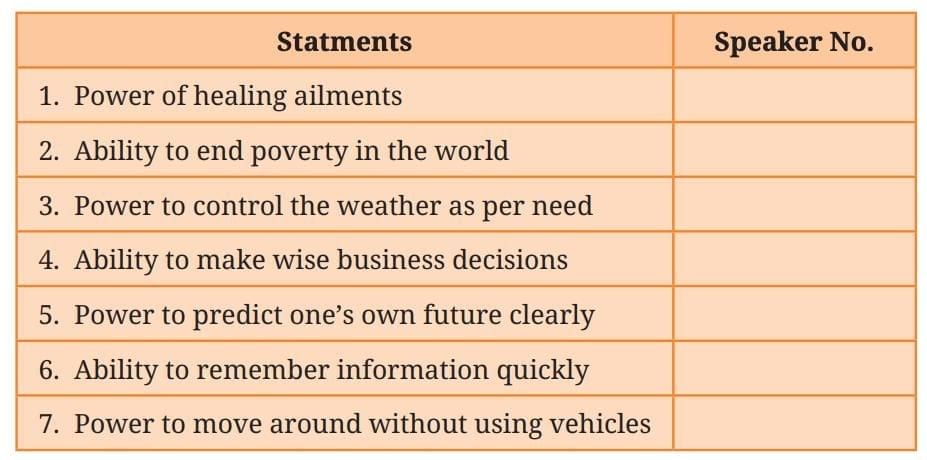
I. You will listen to the passage about Evelyn Glennie’s journey in overcoming her hearing loss through music and turning a physical disability into a success story. After listening, match the words given in Column 1 with their meanings given in Column 2.
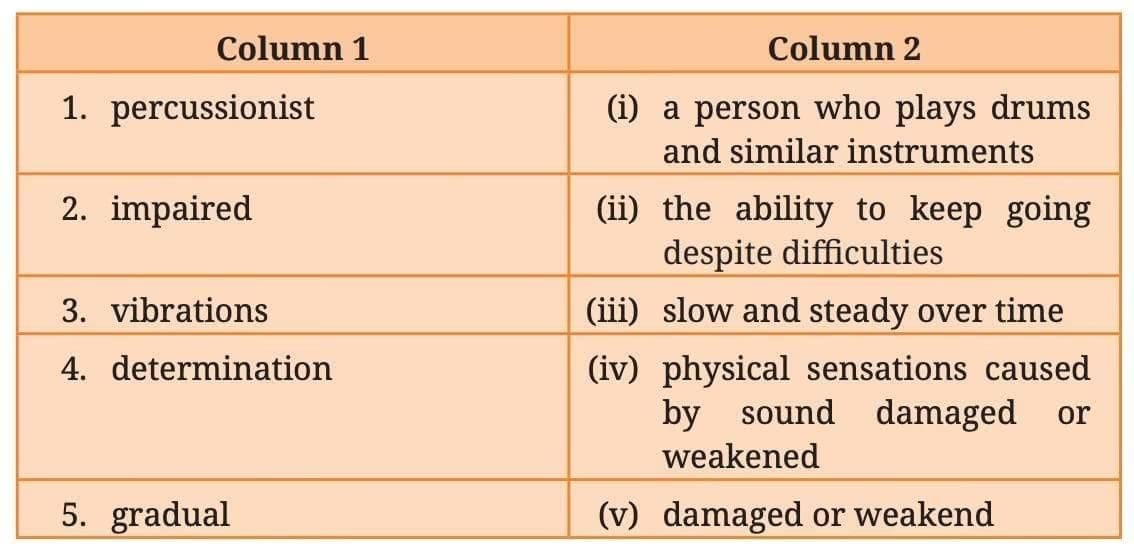
NCERT Solutions: Verghese Kurien — I Too Had A Dream

Ans:

NCERT Solutions: Verghese Kurien — I Too Had A Dream

II. Listen to the passage once again and state whether the statements given below are true or false.
1. Evelyn Glennie became deaf suddenly.
Ans: False 

Her hearing loss was gradual.

2. Her headmistress ignored the signs of her hearing loss.
Ans: False 

Teachers typically notice such signs.

3. Ron Forbes was a percussionist who helped Evelyn.
Ans: True

4. Evelyn used her skin and bones to sense music.
Ans: True

5. She gave up on music after her diagnosis.
Ans: False

She continued her music career.

III. Answer the following questions in one or two words.
1. How did Evelyn turn her disability into a strength?
Ans:  By sensing vibrations

2. What role did Ron Forbes play in her life?
Ans: Mentor/Percussionist

3. What lessons can we learn from Evelyn’s story about how to treat others who have different abilities or challenges?
Ans: Empathy, support

Attention!Sale expiring soon, act now & get EduRev Infinity at 40% off!

Let us speak (Page 94)

I. Read the highlighted word in the following sentence from the text.
That common good will present itself to you in many forms every day.
The highlighted word is pronounced with the stress on the second syllable. 
PreSENT (verb) the stress is on the second syllable. 
PREsent (noun), the stress is on the first syllable. 
Now, read aloud the given words with the correct syllable stress according to the part of speech given in the brackets.
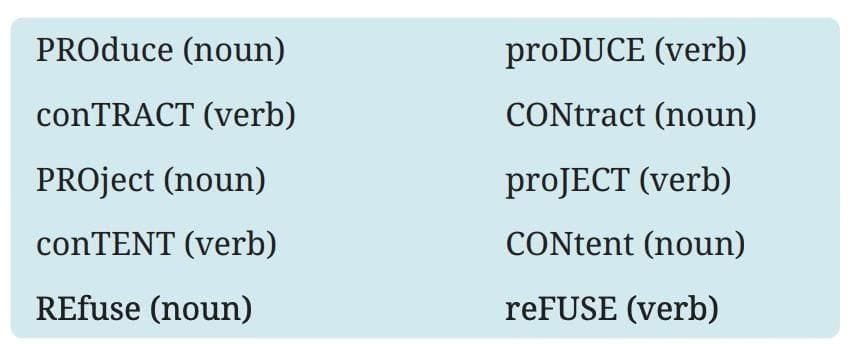
NCERT Solutions: Verghese Kurien — I Too Had A DreamAns: Words with “Zhuh” sound (-sure ending):
measure, leisure, reassure, enclosure, exposure, composure

Words with “Shuh” sound (-sure but sharp ‘sh’):
pressure, fissure, ensure, unsure 

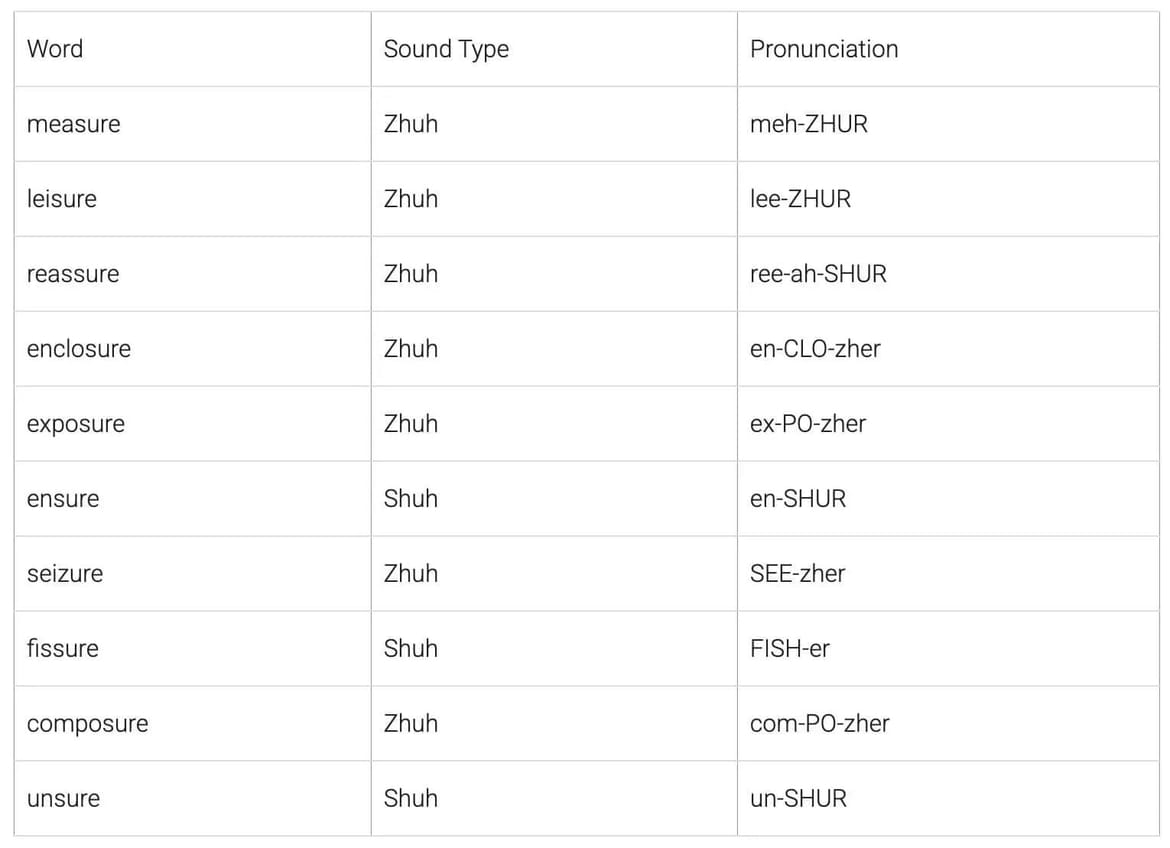
II. Read the highlighted words in the following sentence from the text.
…but it becomes a possession that can be treasured and re-read over the years, with great, abiding pleasure.
treasure [treh-Zhuh] 
pleasure [pleh-Zhuh] 
In the highlighted words, -sure has a ‘Zhuh’ sound. 
There are some words which end in -sure, but have a ‘shuh’ sound as in pressure [preh-shuh]. 
Now, read aloud the words given below with the ‘shuh’ or ‘zhuh’ sound.

Ans: This is a classroom activity. Read the words with correct pronunciation:

“zuhh” sound: measure, leisure, reassure, seizure
“shuh” sound: pressure, exposure, ensure, enclosure, fissure, unsure
NCERT Solutions: Verghese Kurien — I Too Had A Dream

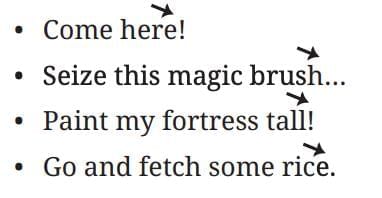
III. Pausing and chunking are techniques used when speaking to organise information for the listener. Speakers can split what they say into smaller segments—either individual words or groups of words—to convey ideas or emphasise key points clearly. 

Q1. Read aloud the following lines from the poem.NCERT Solutions: Verghese Kurien — I Too Had A DreamNow, read the lines of the poem once again by taking a shorter pause (/)or a long pause (//). Notice which version is easier for a listener to follow and understand. 
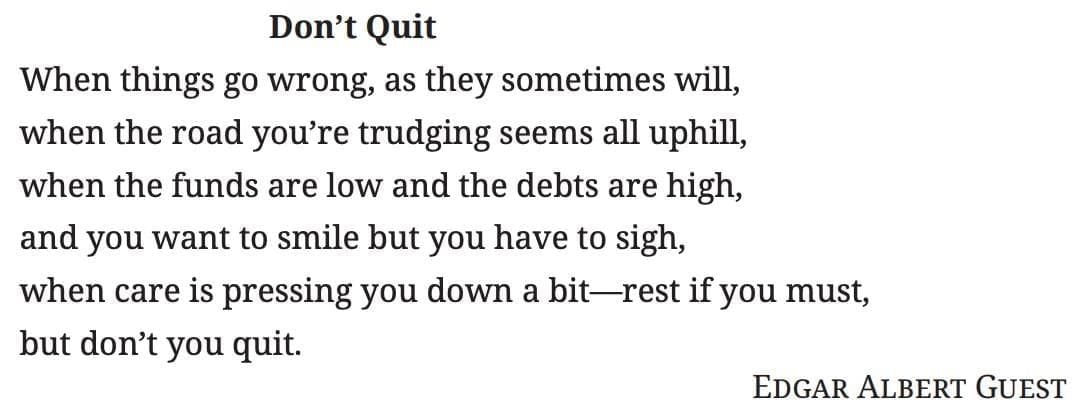
Ans: 
When things go wrong,/as they sometimes will,//
when the road you’re trudging/seems all uphill,//
when the funds are low/and the debts are high,//
and you want to smile/but you have to sigh,//
when care is pressing you down a bit/
—rest if you must,/
but don’t you quit.//
Q2. Chunk the stanzas with (/) or (//) and read it aloud.

Ans:
Life is queer with its twists and turns, /
As everyone of us sometimes learns. //
And many a fellow turns about /
when he might have won /
had he stuck it out. //
Don’t give up / though the pace seems slow— /
you may succeed / with another blow. //
Often the goal is nearer than it seems /
to a faint and faltering man. //.

Let us write (Page 95)

I. Write a letter to your grandparents thanking them for the valuable lessons they have taught you. Include how their wisdom has shaped your values and behaviour in life.
1. Thank them for teaching you important lessons, sharing stories, or helping others in the neighbourhood.
2. Share how their actions inspire you to contribute to the betterment of the society.

Ans:
Your Address
[City, State, ZIP Code]
1 August 2025

Dear Grandparents,

I hope you are both doing well. I want to thank you for all the lessons you have taught me. Grandpa, your honesty and responsibility inspire me to always do what is right. Grandma, your kindness and patience show me how to care for others.

Because of you, I have learned the value of hard work, humility, and helping those in need. I try to follow your example by respecting my teachers, being kind to my friends, and helping in my community, like when we clean the park.

Thank you for guiding me and making me a better person.

With love,
[Your Name]

Also read: NCERT Textbook: Verghese Kurien — I Too Had A Dream

Let us explore (Page 96)

I. The White Revolution led to an increase in milk production in India primarily due to the efforts of Dr. Verghese Kurien. Therefore, he is known as ‘the Milkman of India’. 

The Green Revolution in India introduced high-yielding varieties of wheat and rice. It was initiated by Dr. M.S. Swaminathan. He was awarded the Padma Shri in 1967, Padma Bhushan in 1972, Padma Vibushan in 1989, and Bharat Ratna in 2024. 
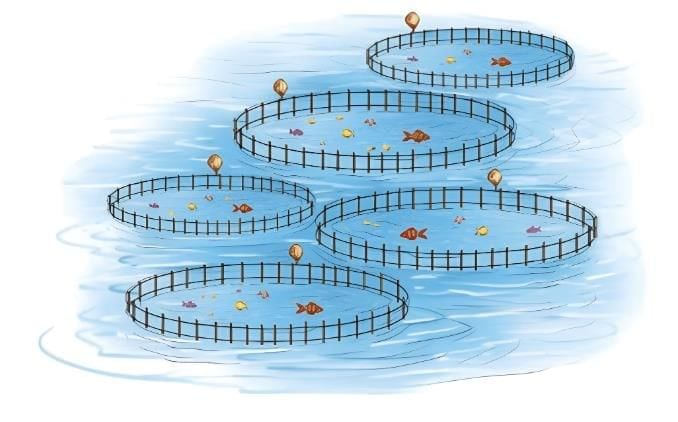
The Blue Revolution focused on increasing fisheries production and productivity in India. This initiative was led by Dr. Hiralal Chaudhuri.
In groups of four, research more information about these revolutions. Share your findings with your classmates and teacher.
Ans: 
White Revolution (Operation Flood)

  • Leader: Dr. Verghese Kurien (Milkman of India).
  • Period: Started in 1970.
  • Key Idea: Increase milk production through a nationwide dairy development program.
  • Impact:
    1. India became the largest producer of milk in the world.
    2. Improved income for rural farmers, especially women.
    3. Strengthened cooperative societies like Amul.
    4. Helped reduce dependence on milk imports.

Green Revolution

  • Leader: Dr. M.S. Swaminathan (Father of Green Revolution in India).
  • Period: Mid-1960s.
  • Key Idea: Use of high-yielding variety (HYV) seeds, chemical fertilizers, pesticides, and modern irrigation.
  • Impact:
    1. Boosted production of wheat and rice, reducing food shortages.
    2. Helped India move from food-deficient to self-sufficient in grains.
    3. Created surplus stocks in the Food Corporation of India (FCI).
    4. Awards to Swaminathan: Padma Shri (1967), Padma Bhushan (1972), Padma Vibhushan (1989), Bharat Ratna (2024).
  • Challenges: Regional imbalance (benefited Punjab, Haryana, and western UP more), overuse of fertilizers and water, environmental concerns.

Blue Revolution

  • Leader: Dr. Hiralal Chaudhuri (Father of Induced Breeding in Fish).
  • Period: Started in 1970s, expanded in 1980s.
  • Key Idea: Improve fish production and aquaculture.NCERT Solutions: Verghese Kurien — I Too Had A Dream
  • Impact:
    1. Increased inland and marine fish production.
    2. Popularized aquaculture techniques like induced breeding.
    3. Boosted rural employment and nutrition (fish as protein source).
    4. Helped India become one of the world’s largest producers of fish.

II. Vocational training for people in rural regions is provided by the JanShikshan Sansthan (JSS), under the Ministry of Skill Development and Entrepreneurship, Government of India. The objective of JSS is to economically uplift the rural population by imparting essential skill-based training. This enables local trades to grow and creates new opportunities for the people in the region.
Find out more about JSS with the help of the link given: https://jss.gov.in/staticPage
Ans:
 JSS provides skill-based training to rural people to help them earn a living. It teaches skills like tailoring, farming, and crafts, creating job opportunities.

III Financial Literacy
Read the passage and discuss the questions given below. Financial literacy is an essential lifelong skill that should be taught to children from an early age. Preparing children with financial literacy skills is an investment in their future well-being. By imparting an understanding of money, saving, budgeting, and wise spending, we empower them to navigate the financial world with confidence as they grow up. Whether it is managing a cooperative society, a start-up, or a household budget, financial literacy is an ongoing learning process that evolves as children grow and their understanding deepens. An introduction to concepts of saving, budgeting, investing, and responsible spending equips them with essential life skills. Children learn best through practical examples. Real-life situations help them understand the value of money and the importance of making wise financial choices. Thinking critically before spending helps cultivate responsible habits. The concept of saving and investing can be explained through relatable examples, such as planting seeds that grow into trees bearing fruit. As children grow older, they will learn to differentiate between needs and wants, compare prices before making a purchase and understand the importance of financial literacy.
Discuss in groups. 
1. The importance of learning about money and saving from a young age. Share one example of it.
 2. Imagine you received some money as a gift. How would you decide whether to save it, spend it, or invest it? What factors would you consider? 
3. If you were in charge of planning a small event at school with a limited budget, how would you manage the money? 
4. Why is financial literacy important for everyone?

Ans:

1. Learning about money early
It builds good habits like saving and budgeting. For example, saving pocket money teaches patience and helps buy something useful later.

2. Gift money – save, spend, or invest?
I would save some for future needs, spend a little on something I enjoy, and invest the rest. My choice would depend on my needs, goals, and how much I’ve already saved.

3. Planning a school event on a budget
List essentials, spend only on priorities, look for cost-saving options (borrow, recycle, donations), and track expenses. Keep a small amount aside for emergencies.

4. Why financial literacy matters
It helps everyone manage money wisely, avoid debt, save for the future, and make smart financial choices for a secure life.
15. Bibha Chowdhuri: The Beam of Light that Lit the Path for Women in Indian Science – Textbook Solutions

Page No. 233

Let us do these activities before we read.

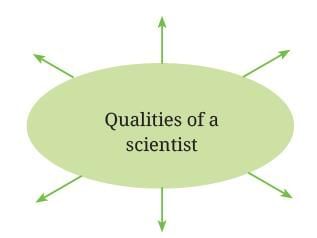
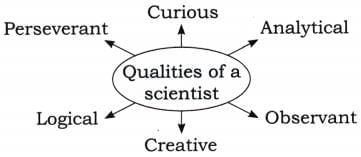
I. Work in pairs. What qualities do you associate with a scientist? Share your answers with your classmates and teacher. Complete the word web given below.
Ans:
Some qualities associated with a scientist may include:

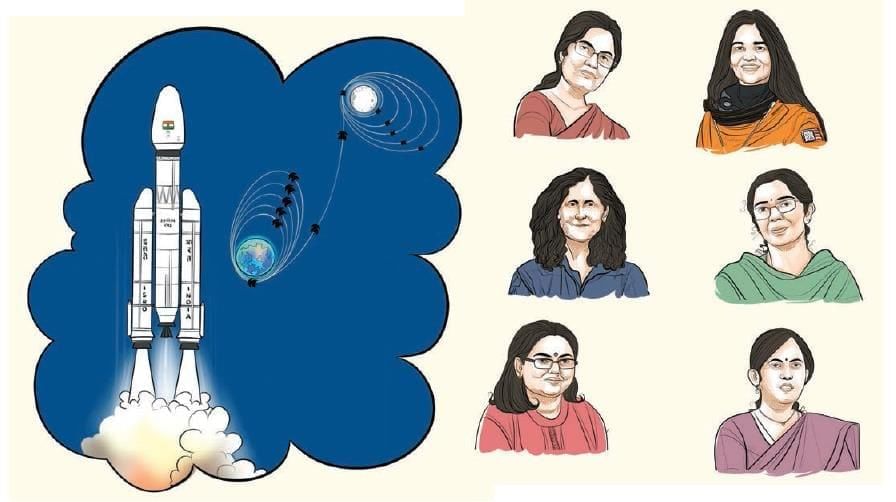
II. Some pictures of women scientists are given below. What do you know about their work? Share your answers with your classmates and teacher.
Ans:
1. Kalpana Chawla – The first woman of Indian origin to go to space. She was an astronaut with NASA and died in the Space Shuttle Columbia disaster in 2003.
2. Dr. Tessy Thomas – Known as the “Missile Woman of India,” she played a key role in the Agni missile project at DRDO.
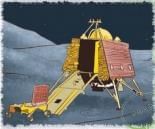
3. Dr. Ritu Karidhal – Known as the “Rocket Woman of India,” she was Deputy Operations Director of ISRO’s Mars Orbiter Mission and led Chandrayaan-2.
4. Dr. Indira Hinduja – A pioneer in reproductive medicine in India, she delivered the country’s first test-tube baby.

Page No. 237-244

Let us think and reflect

I. Arrange the following events from Bibha Chowdhuri’s life in the correct order of occurrence. Share your answers with your classmates and teacher.
1. The International Astronomical Union (IAU) honoured her legacy by renaming a star in the constellation Leo—HD 86081—as ‘Bibha’.
2. She became the first woman faculty member at the Tata Institute of Fundamental Research (TIFR).
3. Bibha Chowdhuri was born in pre-independent India.
4. The Government of India declared a chair professorship in Bibha’s name.
5. She joined the University of Manchester under the guidance of the celebrated Nobel Laureate, Patrick M.S. Blackett.
6. She was nominated for a Nobel Prize by Erwin Schrodinger.
Ans:
3 → 5 → 6 → 2 → 1 → 4

Let us think and reflect

I. Read the given extracts and answer the questions that follow.
1. In 1945, Bibha’s academic journey took her to the University of Manchester. Under the guidance of the celebrated Nobel Laureate, Patrick M.S. Blackett, she delved deeper into the field of cosmic rays. Her Ph.D. thesis on cosmic rays earned local recognition, with newspapers introducing her as ‘India’s New Woman Scientist—She has an eye for Cosmic Rays’.

(i) Why is the mention of Patrick M.S. Blackett, a Nobel Laureate, significant in this extract?
Ans:
The mention of Patrick M.S. Blackett is significant because it shows that Bibha was working under one of the most respected and renowned scientists of the time, highlighting the calibre of her research and the respect she had earned in the field of physics.

(ii) What can be inferred about the public perception of women scientists in the 1940s from the title given to her by the press ‘India’s New Woman Scientist’?
A. 
Women scientists were widely accepted and celebrated at that time.
B. 
The world was still doubtful about the capabilities of women scientists.
C. 
Women scientists were as common and renowned as men in the 1940s.
D. 
Women were not allowed to study sciences or pursue scientific careers.
Ans: (B)  
The world was still doubtful about the capabilities of women scientists.

(iii) In the phrase ‘celebrated Nobel Laureate,’ the word ‘celebrated’ refers to all of the following EXCEPT someone who is
A. 
famous and highly respected
B. 
frequently seen in public
C. 
renowned for their achievements
D. 
well-regarded in their field
Ans: (B)
 frequently seen in public 

(iv) Complete the following sentence suitably.
The phrase ‘She has an eye for Cosmic Rays’ suggests that ____________
Ans:

The phrase ‘She has an eye for Cosmic Rays’ suggests that she had a deep understanding and insight into the study of cosmic rays.

2. The journey from Bibha Chowdhuri’s era to today’s women scientists has been long and arduous, but it is also inspiring. The struggles Chowdhuri faced are a stark reminder of how far we’ve come—and how much Jiirther we have to go. But with every cosmic achievement— be it landing on the moon or reaching Mars—these women prove that the journey is well worth it. Bibha Chowdhuri’s legacy lives on. Her story continues to inspire young women to pursue their passions, break barriers, and leave their mark on the world. As the stars of Indian science shine brighter, Bibha Chowdhuri, the beacon-beam of light, ’ will always guide the way.
(i) What can be inferred about the challenges faced by women scientists today, as compared to Bibha Chowdhuri’s era?
A. 
Women scientists no longer face any barriers.
B. 
The challenges remain, but progress has been made.
C. 
The struggles have become more difficult over time.
D. 
The struggles are the same as they were for Chowdhuri.
Ans: (
B) The challenges remain, but progress has been made.

(ii) The phrase ‘Bibha Chowdhuri’s legacy lives on’ suggests that ____________
Ans:
 The phrase ‘Bibha Chowdhuri’s legacy lives on’ suggests that her contributions continue to inspire and influence future generations.

(iii) Why is Bibha Chowdhuri referred to as a “beacon’ and a “beam of light’ in the extract?
Ans: 
Because she led the way for women in science through her courage, dedication, and pioneering work, giving hope and inspiration to others.

(iv) State whether the following sentence is a fact or an opinion.
Bibha Chowdhuri was the beacon, the ‘beam of light’ whose story continues to inspire young women.
Ans: 
Opinion – It reflects the writer’s admiration and interpretation of her legacy.

II. Answer the following questions.

Q1: Why is Bibha Chowdhuri considered a pioneer in the field of science?
Ans: 
Bibha Chowdhuri is considered a pioneer because she was the first Indian woman physicist to work in the highly specialized field of high-energy particle physics. She broke gender barriers, conducted crucial research on cosmic rays and subatomic particles, and paved the way for future women in Indian science.

Q2: What does Bibha Chowdhuri’s nomination by Erwin Schrodinger tell us about her abilities?
Ans: 
It shows that Bibha Chowdhuri’s scientific work was of exceptional quality and internationally recognized. Being nominated for a Nobel Prize by a renowned scientist like Erwin Schrodinger indicates her outstanding contributions and talent.

Q3: Bibha Chowdhuri never worked for awards or recognition. Support this statement with evidence from the text.
Ans:
 Despite her groundbreaking work, Bibha Chowdhuri never received any awards during her lifetime. She continued her research tirelessly, often working in the background, focusing on her passion for science rather than seeking fame or recognition.

Q4: How does the renaming of a star as ‘Bibha’ serve as both a literal and symbolic recognition of her contributions to science?
Ans: 
Literally, it immortalizes her name in the cosmos, while symbolically, it reflects the “beam of light” she represented in science—illuminating the path for future generations and acknowledging her once-forgotten brilliance.

Q5: How do the roles of women in ISRO today reflect broader changes in societal attitudes towards women in STEM in India?
Ans: 
Women in ISRO today hold leadership roles in major space missions, showing that societal attitudes have shifted to recognize and support women’s capabilities in science and technology. This progress is rooted in the pioneering efforts of women like Bibha Chowdhuri.

Q6: What is the writer’s purpose of highlighting the contributions of Bibha Chowdhuri and other modern women scientists?
Ans: 
The writer aims to inspire readers, especially young girls, by showcasing how women have overcome challenges to excel in science. It also seeks to acknowledge unsung heroes and promote gender equality in STEM fields.

Q7. How might this text help shape people’s perception of the role of women in other traditionally male-dominated fields?
Ans: 
This text challenges stereotypes and encourages society to view women as equally capable in all fields, including those traditionally dominated by men. It motivates individuals to support and recognize women’s contributions across professions.

Let us learn

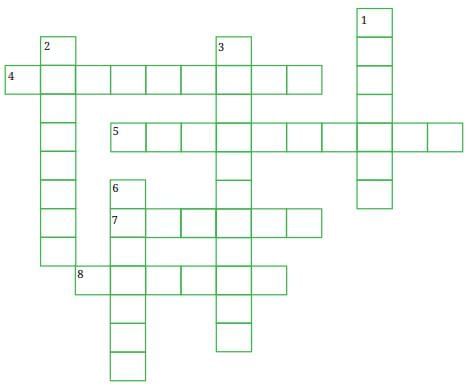
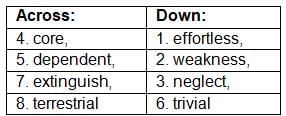
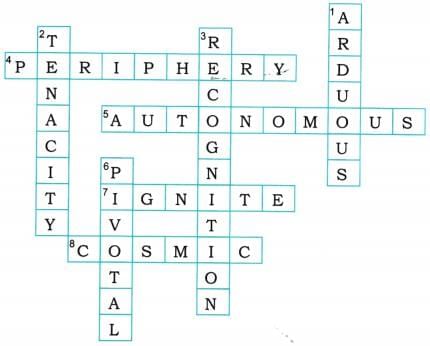
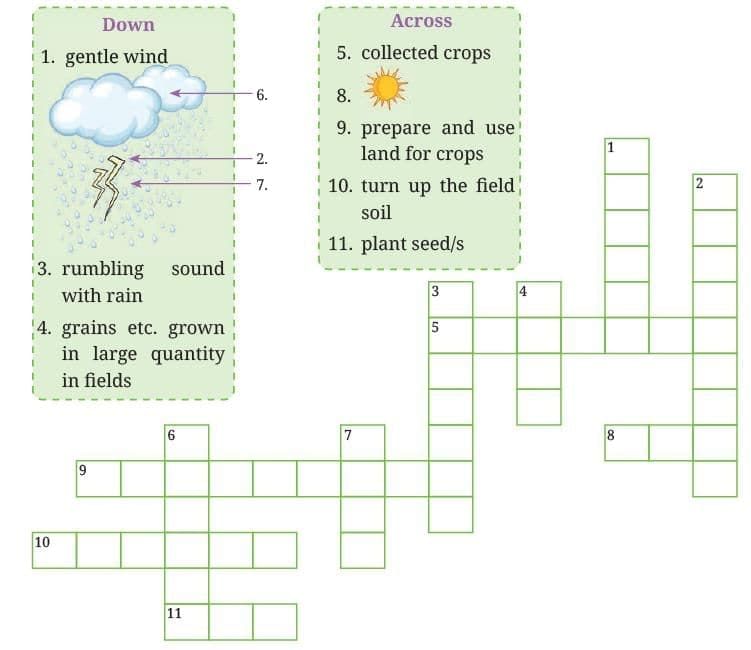
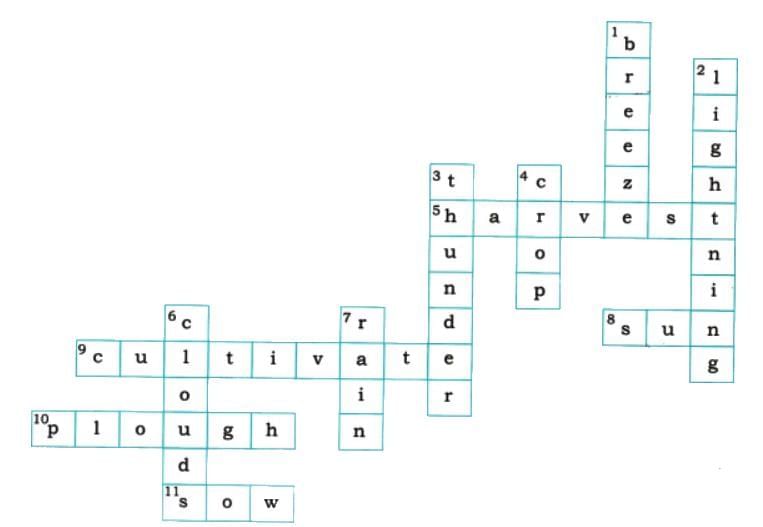
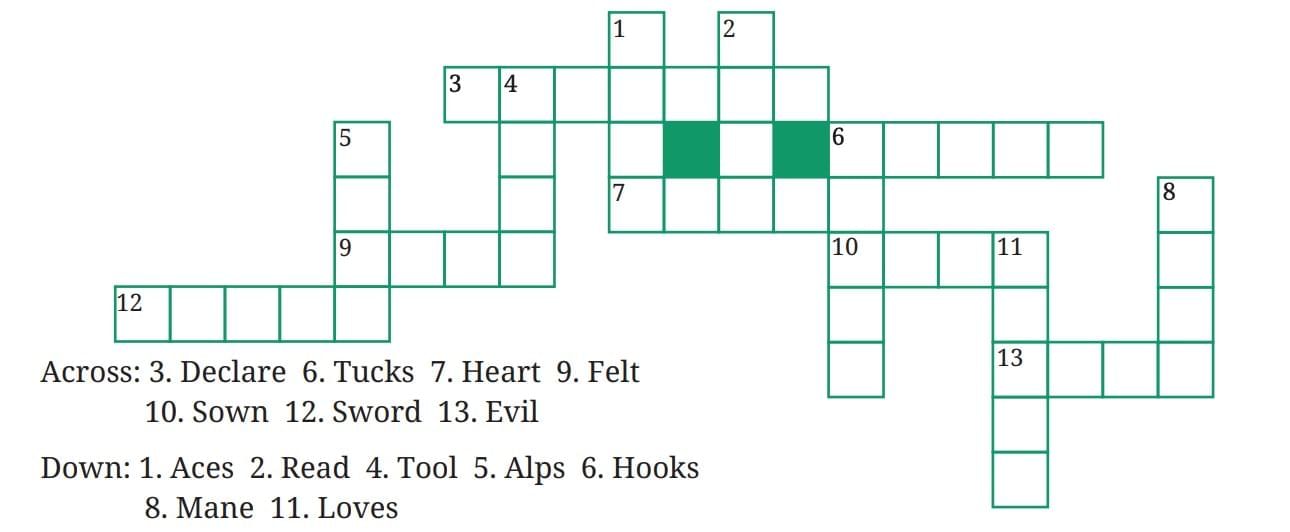
I. Complete the crossword puzzle by filling in the antonyms from the clues given below in the table. You may refer to the text.

Ans:

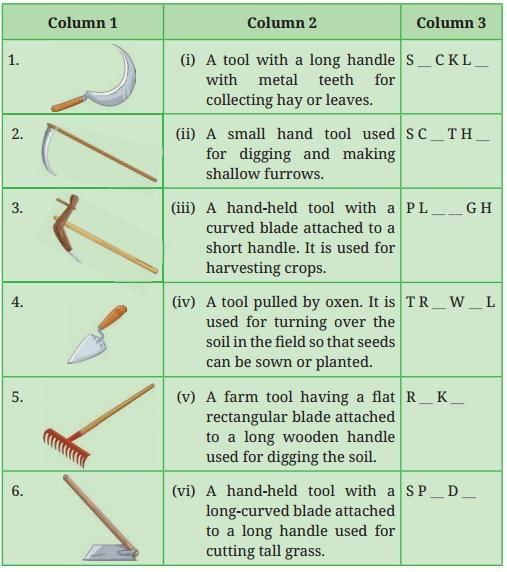
II. Substitute the underlined phrase in the sentences with the suitable words from the box given below.
1. They are considered to be the first people to start the online markets.
2. A scientist who studies matter, energy, light, etc.
3. Most of my friends are my classmates and are my age.
4. We first welcomed all the famous and important people in folk song for the award ceremony.
5. My brother finally succeeded in his business because of his continuous efforts and determination.
6. We should remove all the things that block our way in achieving success
Ans:

1. Pioneers
2. Physicist
3. Peers
4. Luminaries
5. Persistence
6. Barriers

III. The words ‘professorship’, ‘mentorship’, and ‘leadership’ are used in the text. These words are made by adding the suffix ‘-ship’ to the words ‘professor’, ‘mentor’ and ‘leader’. Similarly, we can make words by adding -ment and -hood to certain words.
Now, make words by adding suitable suffixes -ship, -ment, and -hood to the words given below. One example has been done for you.
achieve + ment = achievement
1. member + _______________ = _________________
2. govern + _______________ = _________________
3. partner + _______________ = _________________
4. child + _______________ = _________________
5. citizen + _______________ = _________________
6. entertain + _______________ = _________________
7. brother + _______________ = _________________
8. agree + _______________ = _________________
Ans:

1. member + ship = membership
2. govern + ment = government
3. partner + ship = partnership
4. child + hood = childhood
5. citizen + ship = citizenship
6. entertain + ment = entertainment
7. brother + hood = brotherhood
8. agree + ment = agreement

IV. The abbreviations—ISRO and STEM— used in the text are called acronyms because they are read or pronounced as full words.
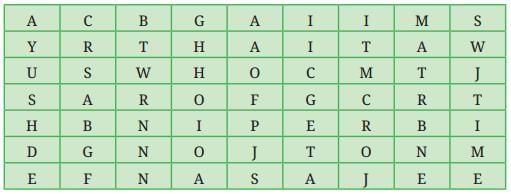
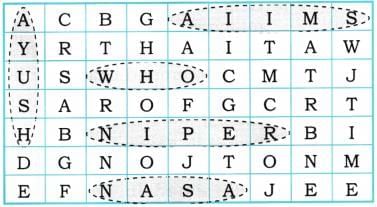
The grid given below has acronyms for the following. Circle the acronyms in the grid.
1. National Aeronautics and Space Administration
2. All India Institute of Medical Sciences
3. Ayurveda, Yoga and Naturopathy, Unani, Siddha, and Homoeopathy
4. National Institute of Pharmaceutical Education and Research
5. World Health Organization

Clipping
The short form of laboratory is lab. In making this short form, the front part of the word is retained and the end part is removed or clipped.
Clipping is a method of making words from larger words in English. There are three clipping methods.
1. Back clipping: a word is made by removing the end part of a word and retaining the front part (exam—examination,
ad—advertisement, gas—gasoline, memo—memorandum, gym—gymnasium, photo—photograph, etc.).
2. Front clipping: a word is made by removing the front part of a word and retaining the end part (phone—telephone,net—internet, bike—motorbike, net—internet, etc.).
3. Middle clipping: a word is made by removing the front and the end parts of the word and retaining the middle part (flu—influenza, fridge—refrigerator, etc.).
Ans:

V. Read the following sentence from the text and the table that follows. 
…, the foundation was laid by early pioneers like Bibha Chowdhuri…
Here the verb is expressed in passive form.
Verbs can be expressed in either active voice or passive voice.

When the subject performs the action, the sentence is said to be in active voice. On the other hand, when the subject receives the action, the sentence is in passive voice.

Generally, sentences written in active voice are considered effective.
However, passive voice is used when the

  • action is more important than the doer,
    A cure for the disease was discovered.
    (The focus is on the discovery, not on who discovered it.)
  • doer of the action (agent) is obvious,
    The national anthem is sung at the beginning of the event.
    (It is clear that people sing it, so mentioning the doer is unnecessary.)
  • doer of the action is unknown.
    The car was stolen last night.
    (The identity of the thief is unknown.)

Now, complete the following news report with the passive form of verbs given in the box below. (Remember that the verb must agree with the subject.)
Last year, significant advancements in medical science 1. __________ in leading medical journals when a new vaccine for malaria 2. __________. The vaccine 3. __________ through several clinical trials and results 4. _________ in those journals. During the trials, blood samples 5. __________ regularly from participants to monitor their immune response. The amount of antibodies produced 6. __________ carefully to assess the effectiveness of the vaccine.
Ans:
1. were published
2. was discovered
3. was tested
4. were recorded
5. were taken
6. was measured

VI. Read the following report of an experi¬ment. Rewrite the report using passive verbs wherever necessary.
I conducted an experiment to investigate the effects of light on plant growth. I placed various plants under different light conditions and measured their growth over several weeks. I recorded data daily to track the height of each plant. At the end of the experiment, I analysed the results and found that plants exposed to natural light grew significantly taller than those under artificial light. I concluded that sunlight plays a crucial role in plant development. I presented my findings to the class, highlighting the importance of light in enhancing photosynthesis and overall plant health.
You may begin like this.
An experiment was conducted…
Ans:
An experiment was conducted by me to investigate the effects of light on plant growth. Various plants were placed by me under different light conditions and their growth was measured over several weeks. Data was recorded daily by me to track the height of each plant. At the end of the experiment, the results were analysed by me and it was found that plants exposed to natural light grew significantly taller than those under artificial light. It was concluded by me that sunlight plays a crucial role in plant development. The findings were presented by me to the class, highlighting the importance of light in enhancing photosynthesis and overall plant health.

VII. Read the instructions given in the box on landing of Chandrayaan. Complete the passage by choosing the correct answer from the options given.
Launch the spacecraft towards the Moon from Earth.

  • Position the spacecraft to enter the Moon’s orbit.
  • Adjust the spacecraft’s path for landing.
  • Slow down the spacecraft as it nears the Moon’s surface.
  • Release the rover to explore the surface and collect valuable data

Chandrayaan’s landing mission involves several key steps. First, the spacecraft 1.________ towards the Moon from the Earth. Then, it 2. ________ to enter the Moon’s orbit. After reaching the Moon’s orbit, the spacecraft’s path 3. ________ for landing. Next, the spacecraft 4. ________ as it nears the Moon’s surface. Finally, the rover 5.________ to explore the surface and collect valuable data.
(i) 
A. launched
B. were launched
C. was launched
D. is launched
Ans: (C) was launched

(ii) 
A. position
B. was positioned
C. is positioned
D. has positioned
Ans: (B) was positioned

(iii) 
A. adjusted
B. was adjusted
C. is adjusted
D. were adjusted
Ans: (B) was adjusted

(iv) 
A. slowed down
B. was slowed down
C. is slowed down
D. were slowed down
Ans: (B) was slowed down

(v) 
A. is released
B. has released
C. were released
D. was released
Ans: (D) was released

Let us listen

I. You will listen to a podcast about Artificial Intelligence. As you listen, answer the following questions by selecting the correct options. Refer to the NCERT Textbook Page 251 for transcript.
1. What is one of the key benefits of AI in the healthcare sector?
(i) 
Helps doctors communicate faster with patients.
(ii) 
Provides personalised treatments and faster diagnoses.
(iii) 
Focuses on cosmetic surgeries to improve appearance.
Ans: (ii) Provides personalised treatments and faster diagnoses.

2. How did AI play a crucial role during the global pandemic?
(i) 
AI robots monitored patient behaviour in hospitals.
(ii) 
AI assisted in speeding up the discovery of new medicines.
(iii) 
AI developed different types of vaccines by itself.
Ans: 
(ii) AI assisted in speeding up the discovery of new medicines.

3. What example was given regarding AI’s role in renewable energy?
(i) 
AI is optimising the placement of wind turbines and solar panels in cities.
(ii) 
AI is promoting alternative energy from wind turbines and solar panels.
(iii) 
AI is improving the performance of wind turbines and solar panels.
Ans: 
(iii) AI is improving the performance of wind turbines and solar panels.

4. What does AI offer to teachers in the field of education?
(i) 
Helps teachers assign grades more quickly.
(ii) 
Allows teachers to communicate better with students.
(iii) Helps teachers analyse student performance.
Ans: 
(iii) Helps teachers analyse student performance.

5. What is one of the user-friendly features that AI is enhancing for people with disabilities?
(i) 
Helps them find better jobs in the mainstream.
(ii) 
Improves speech recognition and voice command technologies.
(iii) 
Trains individuals to interact with robots.
Ans: 
(ii) Improves speech recognition and voice command technologies.

Page No. 245-246

Let us speak

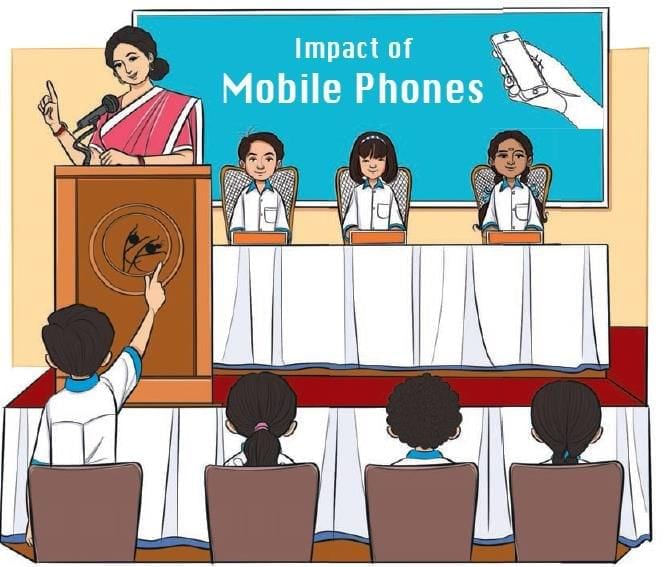
I. Form a group of five. Conduct a panel discussion on the topic, ‘Evaluating the Impact of Mobile Phones—Beneficial or Harmful’. Each student will take on one of the following roles.

  • Moderator (initiates and directs the flow of the discussion inviting the speakers to share their views on the subject; at the end sums up the points of discussion and thanks the members of the group)
  • Principal (opposed to—focus on discipline in school)
  • Teacher (in favour of—partially in favour, educational use with limitations)
  • Parent (opposed to—concerned about health and social effects on children)
  • Student (in favour of—highlighting the benefits like connectivity and learning)

You may use the cues given below and add your own ideas when speaking.

Principal: As a Principal, I strongly believe mobile phones are largely disruptive because…
Teacher: From an educator’s perspective, I think mobile phones can be valuable but…
Parent: As a parent, I’m concerned that mobile phones pose certain risks to children’s health and social development…
Student: As a student, I feel mobile phones are essential because…
Ans:
1. Moderator: Good morning everyone.
Welcome to today’s panel discussion on the topic “Evaluating the Impact of Mobile Phones—Beneficial or Harmful.” We have with us a Principal, a Teacher, a Parent, and a Student who will share their perspectives. Let’s begin with the Principal.

2. Principal (Opposed to mobile phones):
As a Principal, I strongly believe mobile phones are largely disruptive in schools. They distract students, reduce focus in classrooms, and affect discipline. I have seen students misuse phones for games and social media. In my opinion, mobile phones should be banned in school premises.

3. Teacher (Partially in favour): From an educator’s perspective, I see both sides. Mobile phones can be useful for educational apps, online research, and quick communication. However, students must be taught to use them responsibly. I support their use only under supervision and within limits.

4. Parent (Opposed to mobile phones):
As a parent, I am concerned about the health and social impact of mobile phones. Children spend too much time on screens, leading to eye strain, lack of physical activity, and reduced real- world interaction. It’s becoming harder to engage them in healthy habits.

5. Student (In favour of mobile phones):
As a student, I feel mobile phones are essential tools for learning and staying connected. We use them for online classes, accessing study material, and even solving doubts through educational platforms. They also help us stay in touch with family and friends. We just need to use them wisely.
Moderator (Conclusion): Thank you all for your valuable insights. From today’s discussion, we see that mobile phones can be both beneficial and harmful, depending on how they are used. Responsible use, clear guidelines, and awareness can help us make the best of this technology while avoiding its drawbacks. Thank you for being part of this meaningful discussion!

Let us write

I. Your school recently hosted the Zonal Science Exhibition, in which teams of students from 25 schools participated enthusiastically. As the student editor, write a report on the exhibition to be published in your school magazine. Use the cues given below with your own ideas to compose this report.

  • Who was the organiser and who hosted the exhibition?
  • When (date and time) and where was it held?
  • Why was it held?
  • Who participated?
  • Who was the Chief Guest?
  • What were the competitions held? For example: Science Quiz, Science Models, etc.
  • What were the topics of models exhibited? Give details.
  • Which team got the trophy for best exhibit?
  • What were the observations of the Chief Guest and other visitors?

Points to remember:
1. Write the report in past tense, passive voice, and third person.
2. Follow proper format with a headline, reporter’s name, and three paragraphs.
Ans:

Young Innovators Shine at the Zonal Science Exhibition By: Aarav Mehta, Student Editor The Zonal Science Exhibition 2025 was successfully hosted by Green Valley Public School on 10th August 2025 in the school auditorium. The event was organised under the guidance of the Science Department in collaboration with the District Education Office. The purpose of the exhibition was to promote scientific curiosity, creativity, and innovation among school students. Participation and Events a total of 25 schools from across the zone participated with great enthusiasm. The Chief Guest, Dr. Anjali Rao, a renowned scientist from the Indian Institute of Science, inaugurated the event. The exhibition featured various competitions such as the Science Quiz, Model Display, and Poster Making Contest.

Students presented models on topics like Renewable Energy, Space Technology, Water Conservation, and Artificial Intelligence. Among all entries, the model titled “Smart Irrigation System” by Springdale Public School won the Best Exhibit Trophy for its innovation and practical application.

Observations and Conclusion The Chief Guest appreciated the creativity and scientific temperament displayed by the students. Visitors were impressed by the depth of research and presentation skills. The event successfully created awareness about science and motivated students to explore and innovate. The exhibition concluded with a vote of thanks by the school Principal and the distribution of certificates and mementos.

Page No. 247-248

Let us explore

I. In the recent times, Augmented Reality and Virtual Reality are changing the way students learn. Let us know more about them.

  • Augmented reality (AR) enhances a person’s environment by adding digital elements to what can be seen in real time, usually through a smartphone camera.
  • Virtual reality (VR) offers a fully immersive experience, replacing the real world with a simulated one.
  • Through AR and VR, the students can see and interact with things that they could not interact with in real life. This enables younger students to understand difficult ideas easily.
  • To keep up with the times, NCERT has developed the e-Pathshala AR (Augmented Reality) App under the aegis of MHRD, Government of India.
  • This App aims to enable students to go beyond textbooks and four walls of the classrooms and learn concepts by directly experimenting rather than only through reading and memorisation.
  • This revolutionary effort will change most students from passive listeners to active learners.
  • This effort is in line with the Prime Minister’s Digital India vision to empower varied sectors using technology and addressing the triple need of skill, scale, and speed.

Gear up for the new age education!
https://ciet.ncert.gov.in/ar-vr

II. The Government of India has come out with a new set of National Awards in the field of Science, Technology, and Innovation known as ‘Rashtriya Vigyan Puraskar’.
The objective of the Rashtriya Vigyan Puraskar (RVP) is to recognise the notable and inspiring contribution made by the scientists, technologists, and innovators individually or in teams in various fields of science, technology, and technology-led innovation.
1. Vigyan Ratna (VR) award will recognise lifetime achievements and contributions made in any field of science and technology.
2. Vigyan Shri (VS) award will recognise distinguished contributions in any field of science and technology.
3. Vigyan Yuva-Shanti Swarup Bhatnagar (VY-SSB) award will recognise and encourage young scientists up to the age of 45 years, who have made an exceptional contribution in any field of science and technology.
4. Vigyan Team (VT) award to be given to a team comprising three or more scientists/researchers/innovators, who have made an exceptional contribution working in a team in any field of science and technology.
https://pib.gov.in/PressReleaseIframePage.aspx?PRID=1959262

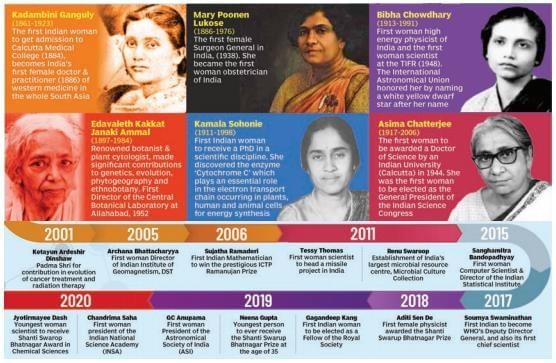
III. A glimpse of women pioneers from different fields.
Source: https://www.indiascienceandtechnology.gov.in/sites/all/themes/
vigyan/images/Women’s_Scientist_Brochure_Low_Res.pdf

14. Magnifying Glass – Textbook Solutions

Page No. 222

Let us do these activities before we read.

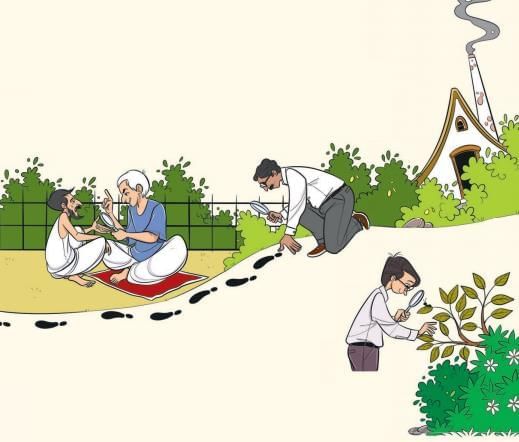
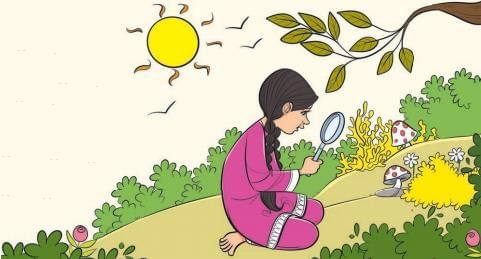
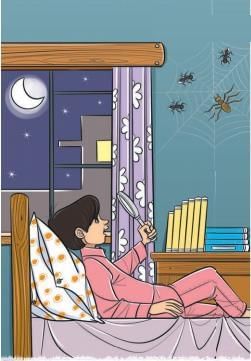
I. Work in pairs. Answer the questions that follow the pictures given below.
Share your answers with your classmates and teacher.
Q1: What is common in all these pictures?
Ans: All the pictures show people using a magnifying glass to observe small or tiny objects in detail.

Q2:  Select the pictures you are familiar with.
Ans: 
(Answers may vary) Do it yourself.

Q3:  Why do you think the people in the pictures need to use a magnifying glass?
Ans:
 The people use a magnifying glass to see small details more clearly, such as the structure of insects, leaves, or patterns that are not visible to the naked eye.

Q4:  What other instruments magnify objects?
Ans: 
Other instruments that magnify objects include microscopes, telescopes, binoculars, hand-held magnifiers, and magnifying spectacles.

II. If you have a magnifying glass, what would you like to use it for and why? Share your answers with your classmates and teacher.
Ans: If I had a magnifying glass, I would use it to observe leaves, insects, and tiny patterns on stones or shells. It would help me see things in nature more clearly and understand how beautiful and complex even the smallest things can be.

Page No. 223-226

Let us discuss

I. Complete the summary of the poem given below with suitable words from the poem.
The poem describes the magic of seeing the world through a 1. __________. It reveals how tiny things like 2. __________ and 3. __________ can appear vast and complex. Even a 4. __________ of water can seem like a hive of 5. __________. The poet is impressed at how the spider spins its 6. __________ from its 7. __________. The poem ends with the idea that, through lenses, the 8. __________ could seem within reach.
Ans:
1. magnifying glass
2. moss
3. chalk
4. drop
5. bees
6. web
7. spinnerets
8. moon

II. Fill in the blanks by choosing the correct answer from the brackets.
1. The main idea of the poem is the transformative power of __________ (wonders in nature/close observation) through the magnifying glass.
2. The tone of the poem is __________ . (wonder and curiosity/peaceful and emotional)
3. The poem has __________ stanzas with __________ lines in each stanza. Hence, it is a quatrain. (four; six/six; four)
4. The rhyme scheme of the poem is __________. (ABCD; ABCB)

Ans:
1. close observation
2. wonder and curiosity
3. six /four
4. ABCB

III. Pick examples from the poem for the following poetic devices.
1. Simile
2. Alliteration
3. Metaphor
Ans:
1. Simile:

  • A drop of water/Like hive of bees
  • Yes, and with lenses like it

2. Alliteration:
Shells show, forest-flowers, wait and watch, woven web-silk, make more marvellous

3. Metaphor:

  • “Magic talk” (the magnifying glass is not literally talking)
  • The whole poem is metaphorical in how it compares ordinary things to magical wonders.

IV. The poem is rich in visual imagery, painting vivid pictures of small, everyday things magnified into something grand.
1. In the line, ‘A myriad shells show in a scrap of chalk’, the magnifying glass reveals ______________________.
2. In the line, ‘A forest—flowers and trees’ the poet uses the imagery of nature to emphasise ______________________.
Ans:

1. the hidden patterns or fossil-like structures in something as simple as chalk.
2. how a tiny patch of moss can look like an entire forest under magnification.

V. Complete the following sentences with a reason.
1. The poet uses exclamation marks in lines, ‘The tigerish claws he has!’, ‘With all those eyes!’ and ‘In an afternoon!’ because it ______________________.
2. In the phrase, ‘Magic talk’ the poet uses personification to describe the magnifying glass because it ______________________.
3. Each stanza follows a repetitive pattern of introducing a small or ordinary object and then describing the extraordinary details revealed through magnification. This is because it supports the theme of __________ as the speaker reveals ____________.
4. In the final stanza the poet shifts from small, everyday objects being magnified to a celestial body like moon because __________.
Ans:

1. expresses his sense of amazement and excitement at what he sees through the magnifying glass.
2. seems to reveal secrets or tell stories that are otherwise hidden from the naked eye.
3. curiosity and discovery; how much beauty and wonder exists in small things.
4. it shows how far human curiosity and observation can go, even reaching space through lenses like telescopes.

Let us think and reflect 

I. Read the extracts given below and answer the questions that follow.

1. With this round glass
I can make Magic talk—
A myriad shells show
In a scrap of chalk;
Of but an inch of moss
A forest—flowers and trees;

(i) Identify whether the following statement is true or false:
The poet uses his magical powers to make the round glass powerful.
Ans: 
False
The poet does not have magical powers; the magnifying glass itself reveals the magic of small objects when observed closely.

(ii) Select the line from the extract that expresses the presence of intricate patterns in ordinary objects.
Ans: 
“A myriad shells show / In a scrap of chalk”
This line shows how even a simple piece of chalk can contain complex patterns visible through a magnifying glass.

(iii) What does the comparison of ‘an inch of moss’ to a fo rest “suggest about the speaker’s view of the world through the magnifying glass?
Ans: 
It suggests that the speaker sees immense beauty and complexity in even the tiniest parts of nature. Through the magnifying glass, the ordinary becomes grand and magical.

(iv) How does the poet feel about the ability of the magnifying glass to reveal hidden wonders?
A. Satisfied
B. Fascinated
C. Grateful
D. Determined
Ans: (B) 
Fascinated
The poet expresses awe and wonder at how the magnifying glass reveals the unseen marvels of the natural world.

II. Answer the following questions.

Q1:  What is the significance of the spider in the poem?
Ans: 
The spider represents skill, precision, and natural beauty. The poet admires how the spider spins its web using its spinnerets and how even its small, tiger-like claws become visible through magnification. It reflects the hidden intricacies of life that are revealed when observed closely.

Q2:  How might the speaker’s view of the natural world change if there was no use of a magnifying glass?
Ans:
 Without a magnifying glass, the speaker might miss the minute details and hidden beauty of small things. The natural world would seem ordinary rather than extraordinary and magical, and the sense of curiosity and wonder would be diminished.

Q3:  Why does the poem, end with the idea of the moon being within reach?
Ans:
 The poem ends with the idea of the moon being within reach to show that scientific instruments like lenses and telescopes can expand our reach and imagination. It suggests that human curiosity and observation can take us beyond the Earth, even to celestial bodies like the moon.

Q4:  What is the speaker’s attitude towards nature and the act of observation?
Ans: 
The speaker has a deep sense of curiosity, fascination, and admiration for nature. He sees observation as a way to uncover hidden beauty and believes that even the smallest things hold wonder and mystery when seen up close.

Q5:  Which is your favourite part of the poem? Why?
Ans:
 My favourite part is “A drop of water/ Like hive of bees” because it beautifully compares a simple drop of water to a busy beehive, showing how full of life and activity even the smallest things can be when seen through a magnifying glass. It reminds me to appreciate the hidden wonders all around me.

Let us learn

I. Fill in the blanks in the sentences with the words given in the box below.
With his 1. ____________ description, the author has written the story beautifully 2. ____________with fascinating details. When you read the story, you will surely enjoy the 3. ____________storytelling technique that attracts all kinds of readers. What makes the story interesting is the superb way of describing the 4. ____________emotions and feelings of the characters. The reader will 5. ____________upon the unexpected twists and turns that 6. ____________ all our understanding and make us wonder at the narrative power of the author
Ans:
1. deft
2. woven
3. marvellous
4. myriad
5. stumble
6. surpass

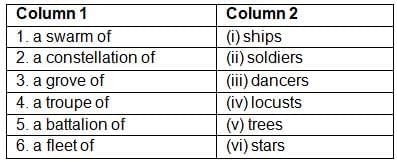
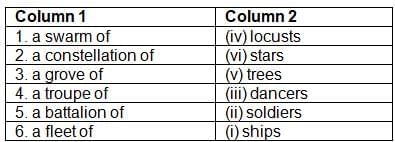
II. The collective noun ‘a hive of bees’, is used in the poem. Match the phrases in Column 1 with suitable words in Column 2 to make collective nouns.

Ans:

III. The poet uses the expression ‘eyeing the moon’ in the poem. Match the idiomatic expressions with ‘eye’ given in Column 1 with their meanings in Column 2. You may refer to a dictionary.

Ans:

IV. The poet uses the adjective form ‘tigerish’ in the poem by adding the suffix -‘ish’ to the noun ‘tiger’. In the same way, we can make adjectives by adding the suffix -‘ish’ to some nouns. Choose the nouns to which you can add the suffix -‘ish’ to make adjectives.
Ans:

  • girl → girlish
  • boy → boyish
  • silk → silkish
  • moon → moonish
  • book → bookish

Page No. 227

Let us listen

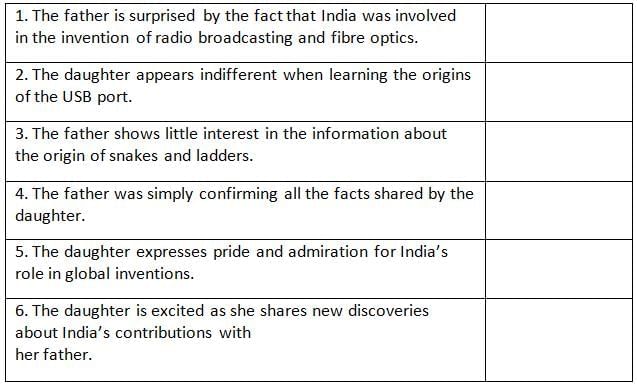
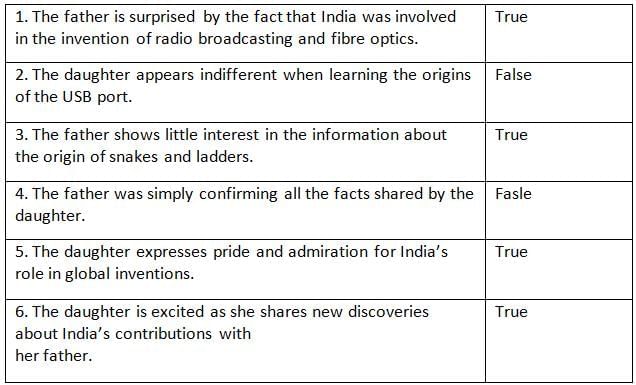
I. You will listen to a conversation between a father and daughter about lesser- known Indian inventions. As you listen, mark the four true statements from (1)—(6) given below.


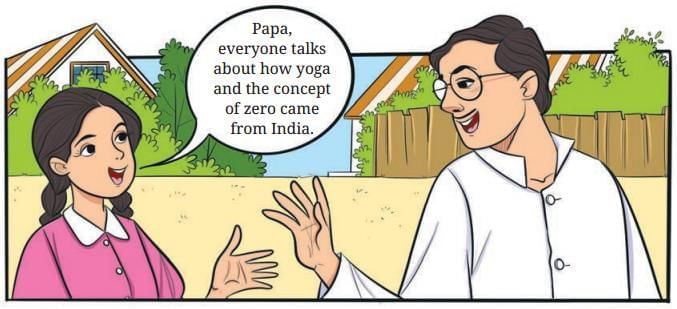
Daughter: Papa, everyone talks about how yoga and the concept of zero came from India, but I recently found out there are so many more inventions that people don’t really know about!
Father: Oh really? Like what?
Daughter: Well, did you know that radio broadcasting has roots in India? We usually credit Marconi, but Jagadish Chandra Bose, a Bengali scientist, actually conducted an experiment using microwaves before Marconi.
Father: Wow, I didn’t know that! That’s incredible. I can recollect something about fire optics.
Daughter: Yes! You’re absolutely right Papa. Can you imagine life without fibre optics? No fast internet, no clear communication… And guess what? It was pioneered by Narinder Kapany, an Indian physicist from Punjab. He’s called the ‘father of fibre optics.’
Father: That’s something I use every day, but I just had an idea that the origins were in India. What about fun things? Any of those that you’ve found out about?
Daughter: Yes indeed! You’ll love this one—Snakes and Ladders! It was actually invented as a game to teach children values, with ladders representing virtues and snakes representing evil. It wasn’t just a board game like we think today. It had a spiritual meaning in ancient times.
Father: So even that simple game had such deep roots. Let me tell you about one that I just remembered.
Daughter: Of course! I’d love to know.
Father: Well, the USB port, something we rely on all the time to connect devices, was invented by Ajay
Bhatt. He’s an Indian-born engineer who helped revolutionise the way we use technology.
Daughter: That’s amazing. USB is such a basic part of life now. It’s hard to imagine a time without it.
Father: That’s incredible. And all this from India. I definitely learned a lot from this conversation.
Adapted from— https://www.bbc.co.uk/programmes/articles/5rnsYs1QcPB7CsyjzvTcmjf/7-surprising-things-india-has-given-the-world

Ans:

Page No. 228

Let us speak

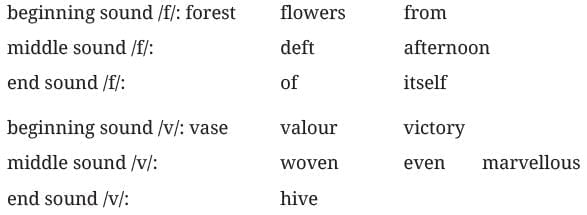
I. When pronouncing /v/ and /f/, the lower lip lightly touches the edge of the upper teeth. Air flows through the small gap, creating a soft friction sound.
Note the difference between /v/ and /f/. When we pronounce words with /v/ sound, there is a vibration, whereas /f/ sound has no vibration. Both the sounds can occur in the beginning, middle, or at the end of words.
Read these words aloud with the help of your teacher.
Ans:
Do it yourself.

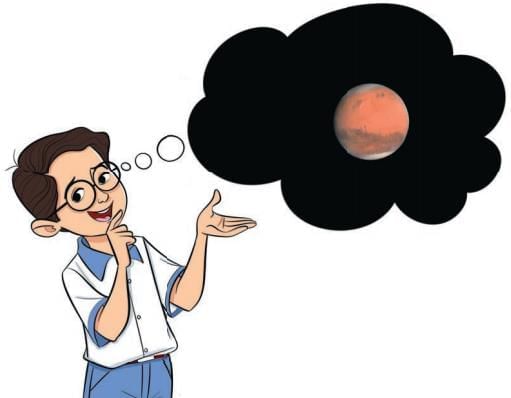
II. If you could travel to space, which planet would you like to visit? Why? What preparations would you like to make? Speak about any five things that you would like to take along.
Ans:

If I could travel to space, I would like to visit Mars because it is known as the Red Planet and scientists believe that it may have had water and life in the past. I would love to see its rocky surface and experience low gravity.

Preparations I would make:

  • Train in a space program
  • Learn how to live in zero gravity
  • Understand how to use a space suit
  • Carry necessary equipment

Five things I would take along:
1. Oxygen supply
2. Space food
3. A camera to record my journey
4. A communication device
5. A journal to write about my experiences

III. If you could invent something, what would you like to invent and how? Give reasons for the choice of your invention. Speak about your wonder invention.
Ans:
If I could invent something, I would invent a Pollution Cleaner Drone. It would fly around cities and absorb harmful gases and dust particles from the air to keep the environment clean. I would invent it because pollution is a big problem today, and clean air is necessary for a healthy life. This drone would help people breathe better and reduce diseases.
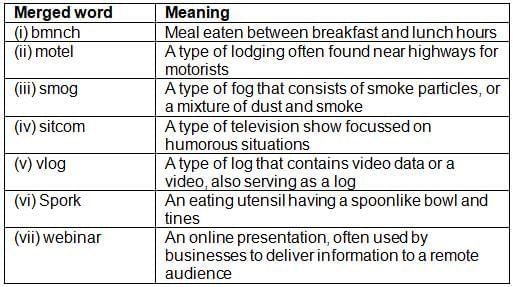
It would use sensors to detect polluted areas and special filters to clean the air.
It would be solar-powered to make it environment-friendly.
This invention would truly be a gift to the Earth!

Page No. 229-232

Let us write

I. In a conversation, we communicate through dialogues. While writing a conversation, we need to ensure that the dialogues are engaging and serve a purpose.
Points to remember:

  • Mention where, when, and with whom the conversation is taking place.
  • Identify the word choice and tone—formal or informal.
  • Include key information, points of agreement and disagreement, etc.
  • Use words in brackets to express emotions or actions, such as (joyfully) (sits down).
  • You may use filler words like Uff, Er… , Ugh, etc.

Deepa and Asma, members of the Science Club have a conversation to take a decision about making a model for an upcoming Science Fair.
Create this conversation between Deepa and Asma.

You may begin the conversation like this.
Deepa : Hi Asma! Our Science teacher mentioned that you have a wonderful idea for the Science Fair project.
Asma : (hesitatingly) Yes, I do. But I’m not sure if it is good enough.
Deepa : (encouragingly) Don’t worry…
Ans:
Deepa : Hi Asma! Our Science teacher mentioned that you have a wonderful idea for the Science Fair project.
Asma : (hesitatingly) Yes, I do. But I’m not sure if it is good enough.
Deepa : (encouragingly) Don’t worry, Asma!
I’d love to hear it. Every idea has potential. Just tell me what you’re thinking.
Asma : Well… I am thinking we can make a working model of a water purification system using natural materials like sand, charcoal, and gravel. It can show how clean water can be produced using simple, eco-friendly methods. Deepa : That sounds amazing! It’s a practical idea and also spreads an important message about clean water and sustainability.
Asma : You really think so? I was worried it might be too simple compared to some of the high-tech models others might present.
Deepa : Simple doesn’t mean boring. If we present it well and explain the science clearly, it can actually
stand out. It’s something everyone can relate to.
Asma : That makes sense. Maybe we can also show water samples before and after filtration to highlight the difference.
Deepa : Great idea! And we can add labels and posters explaining each layer’s function in the filtration process.
Asma : Yes! Maybe even a small interactive section where visitors can try pouring in some ‘dirty’ water and see it come out clean.
Deepa : Perfect! Let’s start planning the materials well need and divide the work. I’m excited already.
Asma : Me too, Deepa. Thanks for encouraging me. I’m glad we’re doing this together.
Deepa : Anytime! Let’s make this Science Fair project awesome!

Let us explore

I. Children with low vision may benefit from different types of visual aids, such as magnifying spectacles, stand magnifiers, hand-held magnifiers, and telescopes. Magnifying spectacles are used for reading, threading a needle or doing other close-up tasks. Stand magnifiers rest above the object and are hands-free and help to keep the magnifying lens at a proper distance. Hand-held magnifiers with and without built-in lights, are usually smaller and lighter to move over printed material. They can be moved more easily. Telescopes are used to see objects or signs far away. Some telescopes can even be attached to eyeglasses.

Ans:
Do it yourself.

II. Did you know that telescopes also use lenses?

1. The largest telescope in India for studying celestial objects is located in the district of Nainital, Uttarakhand. Commissioned in 2016, it is maintained and operated by ARIES (Āryabhaṭa Research Institute of Observational Sciences).

2. The Indian Astronomical Observatory (IAO) is a high-altitude astronomy station located in Hanle, Ladakh, India. It is situated at an elevation of 4,500 meters (14,764 ft), and supports optical, infrared, and gamma-ray telescopes.

3. The largest, most powerful, and most complex telescope ever launched into space is the James Webb Space Telescope. NASA launched it on, 25 December 2021. It orbits the Sun at a distance of 1.5 million kilometres from Earth. To learn more, visit the link below. https://science.nasa.gov/mission/webb/

4. The Mauna Kea Observatory, astronomical observatory in Hawaii, US, that has become one of the most important in the world because of its outstanding observational conditions. The Mauna Kea Observatory is operated by the University of Hawaii and lies at an elevation of 4,205 metres (13,796 feet) atop the peak of Mauna Kea, a dormant volcano on north-central Hawaii island. The summit hosts a worldrenowned collection of astronomical research facilities and large telescope observatories, including the Keck Observatory and Subaru Telescope, for optical, infrared, and submillimeter astronomy.

The observatories are set up here because of Mauna Kea’s high elevation, dry environment, and stable airflow that make it a prime location for astronomical observation. The focus is scientific research across the electromagnetic spectrum.

Public Access: The Onizuka Center for International Astronomy provides visitor information and exhibits about the mountain and its observatories, and offers guided tours of the summit.

Find out more about them from the internet and discuss with your science teacher and classmates. 
Ans:
Do it yourself.

III. Read about ancient Indian scholars.
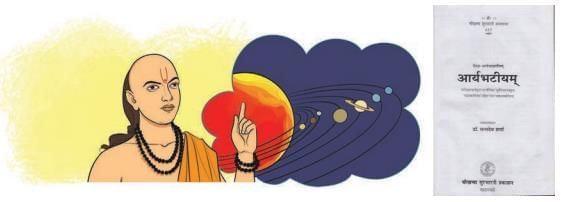
1. One of the eminent astronomers of the ancient India was Āryabhaṭa. His work Āryabhaṭiyam, laid the groundwork for various astronomers to develop in subsequent centuries and continues to be an important work even today. Āryabhaṭa proposed a heliocentric model of the solar system centuries before Copernicus. He also gave a scientific explanation of lunar and solar eclipses.
2. Varāmihira, the sixth-century CE astronomer, philosopher, and mathematician wrote the astronomical treatise Pañchasiddhāntika (Fine Treatises), a compendium of Greek, Egyptian, Roman, and Indian astronomy.
3. The tenth-century CE mathematician-astronomer Bhāskarachārya II contributed significantly to the advancement of astronomical concepts. His works Siddhāntaśiromaṇi and Karaṇakutūhala, include compiled data on planetary positions, conjunctions, and eclipses. https://indianculture.gov.in/timeless-trends/unveiling-cosmos-journey-throughhistory-astronomy-india

Ans:
Do it yourself.

IV. Jantar Mantar in New Delhi is an astronomical observatory. It has large-scale astronomical instruments designed for precise calculations and measurements of celestial movements. It was built in 1724 by Maharaja Sawai Jai Singh II. The observatory is a UNESCO World Heritage Site. Five such observatories were built by Jai Singh II, the other four are located in Ujjain, Mathura, Varanasi, and Jaipur.
Ans:

Do it yourself.

13. Feathered Friend – Textbook Solutions

Page No. 205-206

Let us do these activities before we read.

I. Work in pairs and discuss the questions given below. Share your Ans:s with your classmates and teacher.

Q1:  Who can a ‘feathered’ friend be?
Ans:
 A feathered friend can be a bird.

Q2: Which ‘feathered’ friend do you like? Why?
Ans:
 I like parrot as my feathered friend. It is very intelligent, and can imitate the voice of human beings.

Q3: If you have a choice between a feathered’ and a ‘furry’ friend, who would you choose? Why?
Ans:
 I would like to choose a feathered friend, because of having a light body and less expensive. On the other hand, the furry friends refer to animals with fur, like a cat. Sometimes, they can bite us without reason.

Q4: Do you think a ‘feathered’ or a furry’ friend can accompany astronauts to space? If yes, why? If no, why not?
Ans: 
No, I don’t think a furry friend can accompany astronauts to space. Furry friends are very disturbing. They Will always create problems for astronauts in the aircraft by their notorious activities.

II. Complete the words given below by inserting vowels. Refer to their meanings given alongside. Share your Ans:s with your classmates and teachers.
1. official rule that controls how something is done: R_G_L_T N
2. to not allow something: F _ R B _ D
3. join or blend to form a single entity: F _ S _
4. suddenly: _BR_PTLY
5. admit one’s mistake: C _ N F _ S S
6. a person who advises what to eat to keep healthy: D T _ T N
Ans:

1. REGULATION
2. FORBID
3. FUSE
4. ABRUPTLY
5. CONFESS
6. DIETITIAN

Page No. 209

Let us read

I. Ans: the following questions briefly.
Q1: Why did the narrator think Sven had sneaked a bird aboard? What was Sven’s scientific reason?
Ans:
 The narrator had some reasons to think so. It was the bird’s unusual behaviour, like her seemingly effortless flight in a space station and lack of concern for the absence of gravity. On the other hand, Sven’s scientific reason for bringing the bird aboard was to observe how a bird would function in a weightless environment. He wanted to experience how a bird could operate and navigate without the effects of gravity.

Q2: How did Claribel adjust to the new surroundings?
Ans:
 Claribel learnt to operate without using her wings or much efforts. She learnt to simply hang in the air, motionless with her wings folded. This adaptation allowed her to thrive and even gain weight in the unique conditions of her new surroundings.

Q3:  What made the narrator mistake the musical whistle for a sound from the intercom?
Ans: 
The narrator heard the whistle near his ear. He expects an announcement to follow the whistle, that is typical of intercoms. The melody of the whistle, rather than a human voice, hence leads him to realize it wasn’t the intercom.

Q4:  Do you think the presence of the canaiy would lead the spacers into trouble? If yes, why? If no, why not?
Ans: 
Especially during a long mission, the presence of canaries on the spacecraft could lead to some challenges for the spacers. While they can be valuable as early warning indicators for certain gases, they also have some particular needs and vulnerabilities that could be difficult to manage in a confined space environment.

Page No. 211-213

Let us discussI. Identify whether the following statements from parts I and II are true or false. Share your Ans:s with your classmates and teachers.

Q1: The alarm at the space station failed to work properly because they were not connected.
Ans: 
False

Q2: Claribel was brought to the space station for an official experiment on animal behaviour in space.
Ans: 
False

Q3: The canary’s suffering helped the crew discover a problem with the air purifier.
Ans:
 True

Q4: The air purifier froze because there was a rare eclipse.
Ans:
 True

Q5:  Claribel could fly gracefully in the space station, performing loops in the air.
Ans: 
True

Q6: The space station crew was uninterested in Claribel and hardly noticed her presence after she was discovered.
Ans: 
False

Q7: Claribel had fainted and had to be revived with oxygen supply.
Ans: 
True

Let us think and reflect

I. Read the given extracts and Ans: the questions that follow.
Q1: Sven was one of our best construction men, and excelled at the tricky and specialised work of collecting assorted girders as they floated around in free fall, making them do the slow-motion, three-dimensional ballet that would get them into their right positions, and fusing the pieces together when they were precisely dovetailed into the intended pattern: it was a skilled and difficult job, for a space suit is not the most convenient of garbs in which to work.
(i) What can be inferred about Sven’s abilities from his job description?
A. He is good at following instructions but lacks creativity.
B. He possesses a strong understanding of working in space.
C. He struggles with the complexities of construction in space.
D. He prefers working on simpler tasks rather than complex jobs.
Ans: (B)
 He possesses a strong understanding of working in space.

(ii) How can we conclude that Sven was working in zero gravity?
Ans: 
Sven was working in space. His job was to collect assorted girders as they floated around in a free fall. He had to make them do the slow-motion that would get them into their right position and then, fuse the pieces together into the required pattern

(iii) Select the option that is correct for both (Assertion) A and (Reason) R.
(A): Sven’s job required him to make girders perform a ‘three-dimensional ballet’ in space.
(R): Working in zero gravity allows objects to float, making precise positioning more challenging.
A. Both (A) and (R) are true, and (R) is the correct explanation of (A).
B. Both (A) and (R) are true, but (R) is not the correct explanation of (A).
C. (A) is true, but (R) is false.
D. (A) is false, but (R) is true.
Ans: A. 
Both (A) and (R) are true, and (R) is the correct explanation of (A).

(iv) Replace the underlined word with a word similar in meaning from the extract.
During the festival, people wore colourful outfits that represented their culture.
Ans: 
Garbs

Q2: “Jim!” There’s something wrong with the air! That’s why Claribel’spassed out. I’ve just remembered that miners used to carry canaries down to warn them of gas.”
“Nonsense!” said Jim. “The alarms would have gone off. We’ve got duplicate circuits, operating independently. ”
“Er—the second alarm circuit isn’t connected up yet, ” his assistant reminded him. That shook Jim; he left without a word, while we stood arguing and passing the oxygen bottle around like a pipe of peace.
(i) Fill in the blank by selecting the correct option from those given in the brackets.
The narrator references canaries and miners in order to __________.
(highlight the historical use of canaries as warning systems/explain the reason that caused Claribel to faint suddenly)
Ans: 
highlight the historical use of canaries as warning system.

(ii) Complete the following sentence with a suitable reason.
Jim initially dismisses the warning about the air because __________.

Ans: the alarms would have gone off.

(iii) What does the phrase ‘shook Jim’ mean in the context of the information in the extract?
Jim was _________.
A. physically pushed by someone
B. startled by unexpected information
C. cold and needed to warm up
D. trying to shake off sleepiness
Ans: (B) 
startled by unexpected information

(iv) What does the crew’s action of passing the oxygen bottle around ‘like a pipe of peace’ suggest about their response to the situation?
Ans: 
This phrase suggests that the crew is sharing a valuable, life-saving resources equally and perhaps even peacefully during a difficult situation. It also indicates that they are not either selfish or greedy.

II. Answer the following questions.
Q1:  What was the purpose of the alarm? What had caused its failure?
Ans: 
The purpose of the alarm was to warn the crew of low oxygen levels in space. The alarm failed because an eclipse caused part of the air purifier to freeze. The freezing prevented the air purifier from properly functioning, which in turn prevented the alarm from triggering.

Q2:  How does the crew’s reaction to Claribel change over the course of the story?
Ans: 
The crew’s initial reaction to Claribel is one of the curiosity and perhaps even a bit of amusement. They are surprised to see a pet onboard the space station. However, as the story progresses, their feelings towards Claribel evolve, becoming one of deep concern and eventually affection. This shift is largely due to Claribel’s unexpected ability to alert the crew to a dangerous situation, saving their lives.

Q3:  What does the last part of the story tell us about the significance of unusual ways of problem solving?
Ans:
 The unusual ways of problem solving revolves around a canary bird named Claribel. She detects air quality issue on a space station. When she passes out due to poor air quality, the crew realizes a malfunction in the air purifier has caused this problem. This shows reliance on a living organism to act as an early warning system for dangerous conditions, a method that might not be immediately obvious or conventional in space.

Q4: Justify the appropriateness of the title of the story.
Ans:
 The title of the story, ‘Feathered Friend’ is appropriate. The story directly related to the core theme of friendship and the bond between humans and animals, particularly birds. The title evokes the image of a bird as a companion and a source of joy, that supports the narrator’s focus on the relationship between Sven and Claribel, who is a canary bird.

Q5:  ‘Without Claribel, we should soon have been slightly dead.’ What does this line suggest about uncertainty of life in space?
Ans: 
This quote highlights the crucial role of Claribel in alerting the space station crew to a potentially deadly situation, caused by a malfunctioning air purifier. They would have suffered from the poisonous atmosphere, without Claribel’s sensitivity to changes in the air.

Q6: Explain how has the writer presented science fiction with a touch of humour.
Ans: 
The narrator’s disbelief in the canary’s ability to thrive in space, and his causal attitude towards breaking rules, creates a comedic contrast with the serious nature of their mission. The over-exaggeration of the space station’s equipment, like the alarm that failed to function, and the crew’s reactions, especially the narrator’s initial sluggishness add a layer of comedic absurdity to the story. Sven is a crew member, and brings Claribel aboard. He is presented as a somewhat eccentric and unpredictable figure, that adds to the overall humourous tone of the story. Moreover, the unexpected way in which Claribel revives and the subsequent events, such as the air purifier freezing, provides moments of light hearted amusement to the story.

Q7: How would Sven reflect on his experience of almost losing Claribel and for saving the lives of the entire crew?
Ans:
 Sven would likely reflect on the tragic loss of Claribel and acknowledge her role in saving the lives of the entire entire member. The loss of Claribel would be mourned as a personal and profound tragedy, in the light of the affectionate bond she shared with the crew. However, the story also emphasizes the profound impact of her alertness, that highlights her accidental yet significant contribution to their survival.

Page No. 214 -221

Let us learn

I. Choose the appropriate adjectives from the box given below to match with the words 1-8 that follow.
1. ________________ path
2. ________________ worry
3. ________________ plan
4. ________________ look
5. ________________ reason
6. ________________ traffic
7. ________________ voices
8. _______________ expression
Now, underline the sentences that use these adjectives in the text.

Ans:
1. narrow
2. nagging
3. inexplicable
4. sheepish
5. vague
6. sluggish
7. delighted
8. hushed

The sentences that use the above adjectives in the text have been underlined below.
1. I had a nagging headache, and vague memories to fitful, disturbed dreams.
2. We all waited in hushed silence while he held Claribel against his ear in an attempt to detect any heartbeat.
3. My mind seemed to be very sluggish that morning, as if I was still unable to cast off the burden of sleep.
4. He came back ten minutes later with sheepish expression.
5. So now, if you visit any space station, don’t be surprised if you hear an inexplicable snatch of birdsong.
6. To our delighted surprise, she arrived at once.
7. There were a couple of narrow escapes.

II. The word ‘intercom’ is used in the text. It is called a merged word as it is made by combining the parts of two words— ‘internal’ and ‘communication’. Merged words are made by combining two words. 
Combine the words in Column 1 with the words in Column 2 to make merged words. Write the merged word and its meaning.
One example has been done for you.

Ans:

III. Read the following sentence from the text and fill in the blank.
It will mean that you’re being doubly safeguarded.
In the given sentence, ‘will’ denotes _________ (past/present/future) time.
Ans:

Future
There are several ways to use verbs to talk about the future in English.
The following table lists some of the usages of future time references.

IV. Fill in the blanks with the correct form (Simple Present, Present Progressive, ‘will’, or ‘going to’) to indicate future time.
1. Our flight __________ (leave) at 10.00 a.m. tomorrow.
2. They __________ (finish) the project by the end of this week.
3. The weather forecast says it __________ (rain) later today.
4. We __________ (move) into our new house next month.
5. I __________ (start) my new hobby class next Monday.
6. She __________ (go) to the mall this afternoon.
7. The team __________ (have) a meeting at 3.00 p.m. tomorrow.
8. I __________ (help) you with your homework after dinner
Ans:

1. leaves
2. will have finished
3. is going to rain
4. are moving
5. am starting
6. will go
7. is having
8. am going to help

V. Fill in the blanks with the suitable forms of verbs given in brackets to express future time reference.
By 2040, artificial intelligence 1. ________ (revolutionise) medical treatments. Researchers 2.________ (develop) AI-powered diagnostic tools that 3. ________ (transform) healthcare by the end of this decade. Next week, the International Science Congress 4. _______ (open) to showcase advancements in AI and robotics. In the coming years, robots 5. _______ (assist) surgeons in performing complex operations. Years ago, experts had predicted that AI would reshape our world, and now, as we approach the future, this 6. _______ (be) our new reality
Ans:
1. is going to revolutionise
2. are developing
3. will transform
4. opens
5. will assist
6. is going to be

Let us listen

I. You will listen to a conversation between Monika and Toby. Toby is a Martian and is stranded on Earth. He has become Monika’s friend. As you listen, put a tick mark (✓) against the correct statements and a cross against the wrong ones.

Q1: Toby misses his school.
Ans: 
False

Q2: Monika accepts Toby as her friend.
Ans:
 True

Q3: Monika asks Toby about one of his facial features.
Ans: 
False

Q4: Toby tells Monika that she had a banana for breakfast.
Ans: 
False

Q5: Toby shares that he can see much clearer with a closed eye.
Ans: 
True

II. Listen to the conversation again and fill in the blanks with the exact words you hear.
1. Toby: I miss my _______ and home.
2. Toby: Well, we  _______ don’t need to eat anything. We get our from the Sun.
3. Monika: Oh! Don’t you ever feel like having ice-creams and _______ !
4. Monika: Okay, tell me one thing. How are you able to see only with _______ eye?
5. Toby: I can see beyond mountains and _______, woods and even
Ans:

1. people
2. Martians; energy
3. chocolates
4. one
5. clouds; even metals

Let us speak

I. Read the following words from the text aloud and circle the letters that are not pronounced (silent letters).
ballet (ba-lay) [ba pronounced as in bat] whistle (wi-sl)
alarm (uh-laam) psychologist (sai-ko-luh-juhst)
Now, read some more words with silent letters. As you read, circle the letters that are not pronounced.
Ans:
Receipt – the letter ‘p’ is silent.
Debris – the letter ‘s’ is silent.
Pneumonia – the letter ‘p’ is silent.
Almond – the letter ‘1’ is silent.
Foreign – the letter ‘g’ is silent.
Island – the letter ‘s’ is silent.
Wreck – the letter “w’ is silent.
Campaign – the letter ‘g’ is silent.
Fasten – the letter ‘t’ is silent.

II. Work in pairs. Use the given situations to ask for and give suggestions.

  • You need to make a model of the solar system for the Science Exhibition but don’t know what materials to use. Ask your friend for suggestions.
  • You need to prepare for the inter-class quiz on the topic Chandrayaan-3. Ask your friend for advice on how to prepare. You may use the prompts given below.

Ans:
I need to make a model of the solar system for the Science Exhibition, but I have no idea how I should complete my model. I need your suggestion.
Friend’s suggestions: To make a model of the solar system, first decide if you want to represent planet sizes or distances or both,
and then, choose a scale that fits your space. Now, you should gather materials like craft supplies or materials found around your house. Then, you should think over using paints, markers, or other creative mediums. At last, you should research on the characteristics of each planet, such as size, colour, rings, etc. to accurately represent them on your model. Thus, your model of the solar system for the Science Exhibition would be ready for demonstration.

I need to prepare Inter-class quiz on the topic Chandrayaan-3, but I have no knowledge how to make questions about the important aspects of Chandrayaan-3. I hope you can better suggest me, as you are quiet familiar with this topic. Friend’s suggestions: To prepare a successful inter-class quiz on Chandrayaan-3 is not a difficult task. You should focus on understanding the mission’s goals, key components, and scientific objectives. Moreover, you should include questions about the launch date, landing site, the purpose of the rover and lander, and the instruments they carry. In addition, you shouldn’t forget to touch upon the significance of the lunar south pole and the mission’s broader implications for Indian space exploration. Your quiz kit should contain everything related to this pride mission.

Let us write

I. Complete the social media web given below with the uses of the internet.
Ans:
Now, write an article titled The Importance of Internet’ with the help of the social media web.
Points to remember:
Heading/Title
Name of the writer
Paragraph 1: Give a general introduction to the topic.
Paragraph 2: Explain the uses of the internet and why it is important. Give examples to support your view.
Paragraph 3: End with a comment and leave the reader with a thoughtful idea or quote.
Ans:
The Importance of Internet
Garima, Class-7
The last few years have witnessed heavy reliance on the Internet. This has been because of multiple advantages that it has to offer – for instance, reducing work stress and changing the face of communication most importantly. If we take the current scenario, we cannot ignore how important the Internet is in our everyday lives. It is now indeed a challenging task to visualize a world without the internet. One may define the internet as a large library composed of stuff like – records, pictures, websites, and pieces of information. Another sector in which the internet has an undeniably important role to play is the field of communication. Without access to the internet, the ability to share thoughts and ideas across the globe would have also been just a dream.

Let us explore

‘A canary in the coal mine’ is a popular phrase to describe early signs of potential danger.
I. Coal miners in places like Arunachal Pradesh used canary birds to detect the presence of carbon monoxide. Such gases are a potential risk to the life of the miners. These little birds are particularly sensitive to carbon monoxide and can prevent mining accidents.

II. Astronauts living in space stations have to do things differently. Read how they manage the routine tasks in the absence of gravity. You may find out more information about it from the internet.
1. Write: Astronauts use a special Space Pen which has a cartridge with ink combined with resin. The ink remains solid until friction with the ball at the point of the pen liquefies it. It works in all positions, in extreme heat and cold, and in atmospheres ranging from pure oxygen to vacuum.
2. Exercise: Astronauts use resistance exercise equipment. Weight training is done by applying a load using vacuum cylinders. Running on the treadmill is made possible with the bodies held down using rubber straps.
3. Eat: Astronauts eat preserved foods which is dried, canned, vacuum-packed, and frozen. These can be prepared by adding cold or hot water, and some can be heated in an oven. They also eat ready-to-eat items, such as nuts, breads, and fruits.
4. Sleep: Astronauts can sleep on a floor, wall, or ceiling as there’s no distinction between up and down but they may gradually float away while sleeping. Therefore, they need to restrain their bodies in small sleeping compartments or sleeping bags.

III. Did you know that animals can save humans from natural calamities?
Animals can sense natural calamities. Read the following examples and decide if this is true.

  • In 2004, before a tsunami could hit the coastline of Indonesia, some animals made efforts to flee—elephants ran for higher ground,flamingos abandoned low-lying nesting areas, and dogs refused to go outdoors.
  • Minutes before the Naples quake of 1805, oxen, sheep, dogs, and geese started making alarm calls in unison.
  • Migratory birds crossing the Pacific are able to dodge storms and other hazards.
  • In the Gulf of Mexico, sharks sense the drop in barometric pressure that precedes hurricanes and tend to swim to deeper waters as a result. Dolphins have also been observed swimming away from storm-prone areas.

Scientists have studied this behaviour and found that when severe stresses arise in deep rock before the earthquake, ultra-low frequency electromagnetic waves are generated that animals can sense.

IV. Salim Ali, the ‘Birdman of India’, was an Indian ornithologist (a person who studies birds). He was the first Indian to conduct systematic bird surveys across India and wrote several books on birds. He was awarded the Padma Bhushan in 1958 and the Padma Vibhushan in 1976.

V. We need to conserve our ‘feathered’ friends. Work in groups of four.
Look at the pictures and make a bird feeder with cardboard, chart paper, etc.

Ans:
Do it yourself.

12. Waiting for the Rain – Textbook Solutions

Page No. 185

Let us do these activities before we read.

I. Have you ever waited for the rains? Why?
Ans:
Yes, I have waited for the rains, especially during hot summer days. The rain brings coolness and freshness after long, hot weather. It also helps plants and trees to grow well.

II. How do you feel when it rains after a long time?
Ans:

When it rains after a long time, I feel very happy and refreshed. The smell of the first rain, the sound of raindrops, and the cool breeze make me feel relaxed and joyful.

III. Why do you think the farmers wait for the rains?
Ans:

Farmers depend on rain for watering their crops. Without rain, their fields remain dry, and they cannot grow food. That’s why rain is very important for their livelihood and survival.

IV. Discuss in groups what happens when you wait for something or someone for a long period of time.
1. How do you spend the waiting period?
2. What do you think about?
3. How do you feel?
Share your answers with your classmates and teacher.

Ans:
1. I try to stay calm and do other activities like reading, listening to music, or just watching the surroundings while waiting.
2. I think about when the person or thing will arrive and whether everything will go as expected.
3. Sometimes I feel anxious or impatient, but I also feel hopeful and excited, depending on the situation.
Share your answers with your classmates and teacher.

Page No. 188

Let us discuss

I. Complete the table given below. One example has been done for you. Share your answers with your classmates and teacher.

Ans:

II. Do you think the old woman would help Velu? If yes, why? If no, why not?
Ans:

Yes, the old woman helps Velu—not by giving him rain, but by offering him a new way of thinking. She explains that just like people, the land also needs rest, which comforts and enlightens Velu during a time of hopelessness.

III. Will Velu’s wait continue or will it rain?
Ans:

Velu’s wait will not continue for long. By the end of the story, clouds begin to gather, and raindrops fall, indicating that rain has finally arrived, bringing relief and joy to Velu.

Page No. 191-198

Let us discussI. Complete the following statements given below with suitable reasons.
1. Velu asked the old woman to stop smiling because _________________.
2. Velu said that it was hard not being able to work since_________________.
3. Velu was confused when the old lady said that the land needed rest because _________________.
4. The old lady said that it was good for the land when it didn’t rain as _________________
5. Velu ran home laughing and happy because _________________.

Ans:
1. there was no rain, and he felt there was nothing to smile about during such a difficult time.
2. he had been working continuously for six years and could not bear to sit idle.
3. he had never thought of land as something that needed rest like humans do.
4. it allowed the land to rest and rejuvenate after years of continuous cultivation.
5. he felt the cool breeze and saw raindrops, realizing that the long-awaited rain had finally come.Let us think and reflect

I. Read the given extracts and answer the questions that follow.
Q1: “…Ican’t see how talking to astrologers will bring rain. ”
He decided to go to the weather office in the city and talk to someone. But the people at the weather office said they couldn’t really tell him when the sky would gather clouds and bring rain. “We are at a loss ourselves!” they exclaimed. “So many favourable conditions but still no rain. Very odd!”

(i) What does the fist line of the extract tell us about Velu’s beliefs?
Ans:

It shows that Velu is a practical and rational person. He does not believe in superstitions or relying on astrologers.

(ii) Complete the following sentence with a suitable reason.
Velu is determined to seek information about the rain because ___________________. (he was at a loss of words/he wants to find a practical solution to the drought affcting his farm)
Ans:

he wants to find a practical solution to the drought affecting his farm.

(iii) Complete the table with reference to Velu’s weather offi visit.

Ans:

(iv) Complete the following sentence with a suitable option.
The absence of rain despite favourable conditions, shows _________________.
A. lack of astrological knowledge
B. ineffectiveness of farmers like Velu
C. delay in understanding the weather
D. unpredictability of nature
Ans: (D) 
unpredictability of nature

Q2: “The soil, the land, the earth… shouldn’t someone let the land rest a bit?” the old woman said, softly, smiling.
“Rest? Let the land rest? I don’t understand, ” Velu looked at her, a little puzzled.
“Yes, my son, that is the difficulty. You don’t realise that the earth is old…”

(i) The old woman’s advice was accompanied with a soft tone and a smile. What does that tell us about her?
Ans:

It shows that she is wise, gentle, and calm. She speaks kindly, with care and understanding.
(ii) Fill in the blank with the correct option from those given below.
The old woman’s advice _________________
Velu, at that moment.
A. failed to impress
B. confused
C. scared
D. made sense to
Ans: (B) 
confused
(iii) State one thing about the old woman when she referred to Velu as ‘my son’, while offering advice.
Ans:

It shows that the old woman was affectionate, motherly, and caring in her attitude toward Velu.
(iv) Complete the following sentence with a suitable explanation.
The ‘difficulty’ that the old woman mentions is due to the fact that _________________

Ans:
people like Velu fail to understand that even the earth needs rest after constant use.
II. Answer the following questions.

Q1: How does the old woman convey Nature’s wisdom to Velu?
Ans:

The old woman explains that just as people need rest, the land also needs time to recover. She personifies the earth, showing that it has worked for centuries and must be allowed to breathe and rejuvenate.

Q2: The writer says, The fields lay untended…’ Why couldn’t the farmers tend to their fields in the absence of rain?
Ans:

Without rain, the soil became dry, cracked, and hard. It was impossible to plough, sow seeds, or grow any crops. Hence, the farmers could not tend to their fields.

Q3: Support the old woman’s perspective that the land needs rest just like people do.
Ans:

Just as continuous work tires human beings, the earth too becomes exhausted after constant cultivation. Leaving it fallow helps it restore nutrients and moisture. This rest helps in better crop growth later.

Q4: What can be inferred about Velu’s character based on his reaction to the drought?
Ans:

Velu is hardworking, sincere, and deeply connected to his land. He feels helpless and anxious when he cannot work. His actions show that he is responsible and practical, though initially impatient.

Q5: What does the story suggest about the life of farmers and their relationship with nature?
Ans:

The story shows that farmers are closely tied to the rhythms of nature. Their lives depend on natural events like rainfall. It also suggests that farmers must learn to respect nature’s cycles, including times of rest.

Q6: How might the rest and care of land contribute to a balanced and sustainable ecosystem?
Ans:
Resting the land prevents soil exhaustion, preserves moisture, and helps maintain its fertility. This practice supports healthy crop cycles and ensures long-term productivity, contributing to a sustainable farming ecosystem.

Let us learn

I. Solve a crossword using picture and word clues. All clues are related to the words from the text that are connected to weather or agriculture.

Ans:

II. The text uses words like ‘piece,’ “weather,’ ‘son,’ and ‘rain’. These words are the same as other words that are spelt differently— peace, whether, sun, and reign.
Words that are pronounced the same as other words but differ in meaning or in spelling are called homophones.
Now, complete the paragraph by filling in the correct option of homophones given in the brackets.
The farmer looked at the sky and wondered 1. ________________ (weather/whether) the clouds would fially bring rain. He sat down on the ground, breaking a small 2. ________________ (piece/peace) of roti for his meal. The 3. ________________ (plain/plane) filds stretched endlessly before him, completely dry. He thought about how he could 4. ________________ (sell/cell) his last sack of grain to buy some essentials for his family. Without the rains, it didn’t 5. ________________ (seam/seem) possible to grow another crop this season. Despite his worries, he smiled, knowing that every farmer hopes for the next 6. ________________ (rain/reign) by nature to bring life back to the land.
Ans:
1. whether
2. piece
3. plain
4. sell
5. seem
6. rain

III. Choose the correct meanings from the given options for the underlined words or phrases in the following sentences.
Q1: Being annoyed, she muttered something which nobody heard.
(i) 
spoke in a low voice
(ii) 
spoke slowly
(iii) 
spoke angrily
Ans:

(i) spoke in a low voice

Q2: At the new work place, Riya felt forlorn for a week.
(i) 
upset and irritated
(ii) 
angry and bitter
(iii) 
sad and neglected
Ans: 
(iii) sad and neglected

Q3: When all his friends had gone, he was at a loss because he did not know what to do. .
(i) 
confused
(ii) 
shocked
(iii) 
lonely
Ans: 
(i) confused

Q4: When the little child saw her father, her eyes sparkled.
(i) 
glowed dimly
(ii) 
showed joy
(iii) 
opened wide
Ans: 
(ii) showed joy

IV. Match each word (adjective) in Column 1 with a word (noun) that collocates in Column 2. Write the adjective-noun collocation in Column 3. One example has been done for you.

Ans:

V. Underline the verbs and identify the forms of tenses for the following sentences from the text.
1. Oh, it is hard not to be able to work…
2. …I am too old.
3. What are you smiling at, Amma?
4. But my son, that is what I am talking about.
5. The earth has worked for years, centuries…
6. I have worked hard and honestly.
Ans:

1. Oh, it is hard not to be able to work…
(Simple Present)
2. …I am too old. (Simple Present)
3. What are you smiling at, Amma? (Present Progressive)
4. But my son, that is what I am talking about. (Present Progressive)
5. The earth has worked for years, centuries… (Present Perfect)
6. I have worked hard and honestly. (Present Perfect)

The forms of tenses in the given statements are Simple Present Tense (1 and 2), Present Progressive Tense (3 and 4) Present Perfect Tense (5 and 6).
Now, fill in the blanks with the correct form of Simple Present, Present Progressive or Present Perfect tenses of the verbs given in brackets.
Ravi (i) __________ (be) a farmer who (ii) __________ (practise) crop rotation on his land. Each season, he (iii) __________ (plant) different crops to maintain the soil’s health. This year, he (iv) __________ (grow) legumes, which help restore the nutrients in the soil. Over the years, Ravi (v) __________ (learn) that planting the same crop repeatedly (vi) __________ (deplete) the soil, making it less fertile. By rotating crops, he (vii) __________ (keep) the land productive and fertile. He (viii) __________ (see) a noticeable improvement in his yields since adopting this method. Now, Ravi (ix) __________ (share) his knowledge with other farmers, explaining how crop rotation (x) __________ (benefit) both the soil and their harvests.
Ans:
(i) is
(ii) practices
(iii) plants
(iv) will grow
(v) has learnt
(vi) depletes
(vii) keeps
(viii) has seen
(ix) is sharing
(x) benefits

VI. Study the highlighted words in the following sentences from the text.

  • The rains came all these years without any such consultations.
  • So many favourable conditions, but still no rain.
  • Every day they hoped that the rains would come.
  • But this year turned out to be diffrent.
  • This is the fist season in five, no, six years that I have not sown, nor ploughed.
  • We ought to talk to some astrologers.
  • I have only done what any hard-working farmer would do.
  • Velu looked at her, a little puzzled.
  • She takes care to give her children the rest they need…
  • Velu felt a cool breeze on his back.

The highlighted words or phrases that come before a noun but do not describe them are called determiners.
Let us learn the use of some common determiners.

  • Articles: a, an, the
    These are used to introduce nouns.
  • Demonstrative Determiners: this, that, these, those
    These are used to point out specifi items.
  • Possessive Determiners: my, our, your, his, her, its, their, one’s
    These indicate ownership or relationship.
  • Defiite Numeral Determiners: one, two, three, etc.
    These specify exact quantities.
  • Indefiite Numeral Determiners: some, any, no, all, much, many, few, less, several, little and few
    ‘Some’ is used in affiative sentences, while ‘any’ and ‘no’ are used in negative and interrogative sentences.
    ‘All’ refers to the entirety of a group.
    ‘Much’ and ‘many’ denote large quantities of uncountable and countable nouns, respectively.
    ‘Few’ indicates a small number, ‘less’ refers to a smaller quantity, and ‘several’ means more than two but not many.
    ‘Little’ means not much, ‘few’ means not many. Use ‘a little’ and ‘a few’ to convey a positive sense.
  • Distributive Determiners: each, every, either, neither
    ‘Each’ refers to individual items or people, ‘every’ refers to all items or people collectively.
    ‘Either’ means one of two options and ‘neither’ means not one of the two options.

Now, fill in the blanks by choosing the correct determiner from those given in the brackets.

It was 1. ________ (a/an) rainy afternoon, and 2. ________ (a/the) sky was thick with dark clouds. Mala noticed a large puddle quickly forming in front of 3. ________ (her/their) house. Excited, she called for her brother to join her, knowing that both of them always loved playing in 4. ________ (a/the) rain. While jumping from 5. ________ (some/one) puddle to another, Mala spotted 6. ________ (few/a few) snails slowly creeping along the wet sidewalk and pointed them out to her brother. With 7. ________ (each/every) jump, the sound of both 8. ________ (her/their) squeals and laughter was heard through the soft patter of raindrops. Though they were fully drenched 9. ________ (either/neither) siblings minded it. It had been a perfect rainy day.
Ans:
1. a
2. the
3. her
4. the
5. one
6. a few
7. each
8. her
9. neither

Let us listen

I. Listen to the weather forecast. As you listen, fill in the blanks with the exact word you listen to. (Refer to NCERT Textbook Page 204 for Transcript)
1. Delhi will mostly have a ___________ sky with light rain.
2. Moderate rain is likely to happen in ___________.
3. Kolkata is likely to have a maximum temperature of around
___________ °C.
4. There is a chance of a ___________ in Chennai.
5. Bengaluru will have a ___________ temperature of 29 °C.
6. Taking an ___________ is advisable because of the weather conditions.
Ans:
1. cloudy
2. Mumbai
3. 34
4. thunderstorm
5. maximum
6. umbrella

Let us speak 

I. Here is a tongue twister about ‘weather’. Practice saying it as fast as you can.
Whether the weather be fine, or whether the weather be not, whether the weather be cold, or whether the weather be hot, well weather the weather, whatever the weather, whether we like it or not.
Ans:
Practise it yourself.

II. Rain has arrived after a long dry spell on the Earth. Imagine the Rain and the Earth have a conversation. Work in pairs and present the role-play.
You may use the hints in the table given below.
You may start the conversation in the following way.
Rain: Greetings, Earth! It’s been awhile since we’ve met. How have you been?
Earth: Hello Rain! I am so glad to see you.
To continue the conversation, use the hints given below.

Ans:
Sample Role-play Script
Rain: Greetings, Earth! It’s been a while since we’ve met. How have you been?
Earth: Hello Rain! I am so glad to see you.
I’ve been dry and tired. Eveiything on me — the trees, the rivers, the crops — they’ve all been waiting for you.
Rain: I’m truly sorry I took so long. My journey from the ocean to the sky and back to you is long and sometimes unpredictable. But I’ve finally arrived!
Earth: Thank you for returning. Your water brings life to my soil. Crops will grow, rivers will flow, and the forests will bloom again.
Rain: I promise to return regularly and on time next year. Ill continue to bring your people and plants the water they need.
Earth: You’re always welcome, Rain.
Come, let’s celebrate with the rivers, forests, and all the people. You are a blessing to us all.
Rain: I’m glad I can help. I’ve missed being here too.

  • Use voice modulation to show emotion (joy, relief, gratitude).
  • Practise with a partner and present it in front of the class.
  • Add gestures or simple props if desired for a fun performance.

Page No. 199-200

Let us write

I. You have observed the difficulties faced by the people in your neighbourhood due to scarcity of water especially during the summer months. Write a letter to the Councillor of your Municipal ward, requesting her/him to set up a rain water harvesting unit. Provide suggestions to address the issue.

Remember to

  • use formal language
  • keep sentences short and to the point
  • state the purpose clearly and concisely
  • give relevant details

Format and Layout:
Ans:
123 Green Lane
Vikas Nagar
New Delhi – 110018
19 May 20XX
The Municipal Councillor
Ward No. 44
New Delhi Municipal Council (NDMC)
New Delhi – 110001
Subject: Request to Install a Rainwater Harvesting Unit in Ward No. 44
Dear Madam
I am writing to draw your kind attention to the severe water scarcity being faced by the residents of our neighbourhood, especially during the summer months.
This scarcity is caused by irregular rainfall, excessive usage, and poor storage systems. As a result, we struggle to meet our daily water needs for drinking, cooking, and cleaning. People are forced to depend on water tankers, which are often irregular and expensive.
I humbly request you to set up a rainwater harvesting unit in our locality. This system will help us collect and store rainwater, reduce dependency on groundwater, and ensure sustainable water supply. Public awareness campaigns and community involvement can further support this effort. Rooftop collection systems, recharge pits, and community tanks can be good starting points.
We look forward to your prompt action and support in making our ward water-efficient and eco-friendly.

Yours sincerely
Ravi Sharma

Let us explore

I. Rest is very important for us to function in a proper manner. Even the Earth needs rest. This is known as fallowing.
Read the facts given below related to fallowing:

  • A fallow year refers to leaving the land without sowing for one, or several vegetative cycles.
  • This is done to allow the land to recover its nutrients and retain moisture. It also helps to avoid spreading of diseases and controlling pests.
  • The sustainable land management method has been applied for centuries, wherein a field is divided into two halves—one is planted with crops while the other remains unplanted. Then, the process is reversed in the following year.

Ans: Do it yourself.

II. Find out from your Vocational Education teacher about Agriculture as a vocation and other related vocations, such as horticulture, etc.
Ans:

Question to be asked by student from her/ his Vocational Education Teacher:
What are some vocations related to agriculture?
Expected Answer from the teacher: Besides farming, vocations related to agriculture include:

  • Horticulture: Growing fruits, vegetables, flowers, and ornamental plants.
  • Dairy farming: Rearing animals for milk production.
  • Poultry farming: Rearing birds like chickens and ducks for eggs or meat.
  • Sericulture: Silk production through silkworm rearing.
  • Apiculture: Beekeeping for honey production.
  • Agri-business: Selling agricultural tools, seeds, and fertilizers.
  • Soil conservation: Working on protecting and enriching soil health.

11. Harvest Hymn – Textbook Solutions

Page No. 173

Let us do these activities before we read

I. Work in pairs and share your responses with your classmates and teacher.
Q1: India celebrates many harvest festivals. When is the harvest festival celebrated in your region and how is it celebrated?
Ans:
Select harvest festival according to your region.

  • Pongal: Pongal is celebrated in January. A four-day harvest festival primarily celebrated in Tamil Nadu.
  • People celebrate this festival by offering prayers to the sun and cattle. Baisakhi: Baisakhi is celebrated in April. It is celebrated in Punjab and Haryana, it marks the new year in the Punjabi calendar and is a time for gratitude for the harvest.
  • Bihu (Assam): A three-part harvest festival, with Rongali Bihu (Bohag Bihu) in April, Magh Bihu (Bhogali Bihu) in January, and Kongali Bihu (Kati Bihu) in October-November.
  • Onam: Onam is celebrated in August- September. A ten-day harvest festival in Kerala, it celebrates the return of King Mahabali. They are cultural celebrations.People celebrate it by feasting.
  • Navanna: Navanna (West Bengal) is celebrated during the Bengali month of Agrahayan, it marks the new rice harvest. People offer the first grains to Goddess Lakshmi.
  • Vishu: Vishu (Kerala) is celebrated on the first day of the Malayalam month of Medam, it marks the beginning of the agricultural season. People celebrate it as the new year.

Q2: A hymn refers to a song of praise.
(i) To whom do we offer a hymn?
(ii) When and where do we sing a hymn?
(iii) Why do we offer it?
Ans:
(i) A hymn is usually offered to God or divine beings.
(ii) Hymns are sung during prayers, religious ceremonies, or festivals, often in temples, churches, or during community gatherings.
(iii) We offer hymns to express devotion, gratitude, and reverence to the divine for blessings and protection.

II. Some poets and authors use words that are no longer a part of common usage. Such words are called archaic words.  Work in pairs. Read the sentences given below. Match the underlined archaic words in Column 1 with their meanings in Column 2.
Thou art my friend, and I trust thee. Thy kindness is great, and everything that is mine is thine.’

Ans:

III. Work in pairs. Read the paragraph and select the correct meaning for each underlined word from the options given below. Share your answers with your classmates and teacher.
Under the golden 1. radiance of the evening sun, the villagers gathered to pay 2. tribute to their 3. cherished elder, who had dedicated his life to their well-being. His wise 4. counsel had guided generations, steering them through challenges. Known for his 5. munificent spirit, he never hesitated to share his resources generously.
1. radiance : (i) glow (ii) brilliance
2. tribute : (i) respect (ii) gratitude
3. cherished : (i) preserved (ii) loved
4. counsel : .(i) advice (ii) decision
5. munificent : (i) rich (ii) generous
Ans:
1. (ii),
2. (i),
3. (ii),
4. (i),
5. (ii)

​Page No. 176-177

Let us discuss

I. Write the stanza number for the main idea of each stanza given below. Share your answers with your classmates and teacher.

Ans:
1. Stanza 1
2. Stanza 4
3. Stanza 4
4. Stanza 3

II. Fill in the blanks by choosing the appropriate words or phrases from within the brackets.
Q1: The setting of the poem is a rural landscape, possibly during a ____________ (harvest/religious) festival.
Q2: The tone of the poem is respectful and celebratory because it praises ____________ (the men and women / nature and the Lord) with deep respect and gratitude.

Q3: In the line Thou art our Hands and our Heart and our Home’, the letter ‘h’ is capitalised in ‘Hands’, ‘Heart’ and ‘Home’ because ____________ (it represents the hard work of farmers/ God resides in them)
Ans:

1. harvest
2. nature and the Lord
3. God resides in them.

III. Identify the poetic device used in the

  • Bright and munificent lord of the morn!
  • We bring thee our lives and our labours poetic device from

Ans:

  • Alliteration
  • Alliteration

IV. Match the lines from the poem in following lines from the poem. Column 1 with their expressions in Column 2. Choose the appropriate the box given below for tribute and write in Column 3.

Ans:

V. Certain words or phrases are repeated in the same line of the poem.
For example, The gold of our fields and the gold of our fruit;
Find more such repetitions from the poem. What is the poet’s purpose of using repetition in the poem?
Ans:

  • We bring thee our songs and our garlands for tribute
  • We praise thee… (repeated for different deities)

The poet uses repetition to create a rhythmic and musical quality, emphasize the importance of gratitude, and unify the voices of the community in praise.

VI. The poem uses symbolism to convey deeper meanings. Match the symbols in Column 1 with the meanings they convey in Column 2.

Ans:

​Page No. 178-181

Let us think and reflect

I. Read the given extracts and answer the questions that follow.
Q1: We bring thee our songs and our garlands for tribute,
The gold of our fields and the gold of our fruit;
O giver of mellowing radiance, we hail thee,
We praise thee, O Surya, with cymbal and flute.

(i) What does the act of bringing songs and garlands as tribute suggest about the people’s relationship with the divine?
A. They fear the gods and wish to calm them in any way possible.
B. They have a deep sense of reverence and gratitude towards the divine.
C. They are forced to perform rituals without understanding the divine.
D. They depend on the gods for their daily needs and activities.
Ans: (B)
The act of bringing songs and garlands as tribute suggests that people have a deep sense of reverence and gratitude towards the divine.

(ii) Complete the following sentence suitably.
The word ‘gold’ in the phrases ‘the gold of our fields’ and ‘the gold of our fruit’ symbolises ____________
Ans: 
richness and abundance of the harvest

(iii) How does the description ‘O giver of mellowing radiance’ help us understand Surya’s role in the harvest?
Ans: 
It highlights Surya’s (Sun’s) role in ripening and nurturing the crops by providing gentle, life-giving light.

(iv) Fill in the blank by selecting the correct option from those given in the brackets.
The use of cymbal and flute signifies ____________ (joy and celebration/meditation and worship)
Ans: 
joy and celebration

Q2: All Voices:
Lord of the Universe, Lord of our being, Father eternal, ineffable Om!
Thou art the Seed and the Scythe of our harvests,
Thou art our Hands and our Heart and our Home.

(i) In the phrase ‘Lord of our being,’ what I does the word ‘being’ most likely refer to?
A. Our physical body
B. Our entire existence
C. Our spiritual practices
D. Our earthly possessions
Ans: (B)

Our entire existence

(ii) Identify whether the following statement is true or false.
The imagery of ‘the Seed and the Scythe’ symbolises the divine’s role as both the beginning (creation) and the end (harvest) of the agricultural cycle.
Ans: 
True

(iii) Identify the phrases from the extract that mean the following:
A. The divine as a timeless, everlasting presence
B. Beyond human comprehension or description
Ans:

A. Father eternal
B. Ineffable Om

(iv) How do we know that these lines from the extract are spoken as a chorus?
Ans:

These lines from the extract are spoken as a chorus because the stanza is introduced with “All Voices”, indicating a collective, choral praise by the entire community.

II. Answer the following questions.

Q1: Why do the farmers hail the God of rain?
Ans: 
The farmers hail the God of rain because rain is essential for the crops to grow, and they are grateful to Varuna for nourishing the fields with rain and dew.

Q2: What is being referred to as “wealth of our valleys’? Why?
Ans: 
The phrase “wealth of our valleys’ refers to the freshly harvested crops, which represent the rich produce gathered from the valleys, symbolising prosperity and abundance.

Q3: State one reason why the women refer to the Earth as a ‘source of manifold gladness’.
Ans: 
The women refer to the Earth as a ‘source of manifold gladness’ because Mother Earth provides food, shelter, and life, bringing joy, sustenance, and well-being to all.

Q4: Why does everyone in the poem offer their “labours for tribute’?
Ans: 
Everyone in the poem offers their “labours for tribute’ to show gratitude to the divine for blessing their hard work with a successful harvest, and to dedicate their the celebration, unity, and richness of the efforts to the greater cosmic power. harvest season.

Q5: Why has the poet presented the poem as voices of men, women, and all voices?
Ans: 
The poet has presented the poem as voices of men, women, and all voices to show that the entire community — regardless of gender — comes together in unity and gratitude to celebrate the harvest and praise nature and divinity.

Q6: How does the poet create the joyous atmosphere of rural India at harvesting time?
Ans: 
The poet creates the joyous atmosphere of rural India at harvesting time by using vivid imagery, musical instruments (like cymbals, flutes, and drums), and words of praise and thanks, the poet conveys

Q7:  Why is the poem presented as a hymn?
Ans: 
The poem is presented as a hymn because it is a song of praise and devotion, expressing spiritual gratitude towards nature and the divine for the blessings of the harvest.

Let us learn 

I. Match the pictures of the farming implements given in Column 1 with their use given in Column 2. Then, fill in the blanks in Column 3 to complete the name of the implement.
Ans:
1. (iii) SICKLE
2. (vi) SCYTHE
3. (iv) PLOUGH
4. (ii) TROWEL
5. (i) RAKE
6. (v) SPADE

II Choose the correct synonyms for the underlined words in the given sentences from the box below. Circle the words or phrases in the sentences that helped you to infer the meanings. One example has been done for you.
Q1: The king was benefient to the poor because he took good care of them.
synonym: ______
Ans: kind

Q2: He was munificent towards the needy and donated a lot for their health care,
synonym: ____________
Ans: 
Generous

Q3: When he lost his job, all his friends gave him succour by supporting him with money.
synonym: ____________
Ans: Help

Q4: When the sun’s rays came into the dark room, the whole room was full of radiance,
synonym: ____________
Ans: Brightness

Q5: The little girl was speechless with ineffable joy when she got her birthday gift from her aunt.
synonym: ____________
Ans: Indescribable

III. You have learnt about some archaic words. Some more archaic words are given below. Refer to a dictionary to find commonly used words which are similar in meaning.
1. morrow
2. hither
3. quoth
4. betwixt
5. yonder
Ans:
1. tomorrow
2. here
3. said
4. between
5. over there

​Page No. 181-184

Let us listen

I. Listen to the talk about paddy cultivation. As you listen, number the events in the correct order in which they happen.
(Transcript for teacher on page 203)

Hello everyone!
Did you know that rice is actually a type of grass, and the part we eat is its seed? Let me tell you about the process of cultivating rice.
It all starts with preparing the land. First, the soil has to be ploughed. Rice is typically grown in fertile soil that holds a lot of water. The most important step in preparing the soil is to soak it with plenty of water. This step is called puddling. Once the nursery bed is prepared, the seeds can be planted. After that, we sow the seeds on the soil’s surface.

Paddy farmers have to ensure that their filds stay floded with water because irrigation is crucial. It takes around 4 to 5 weeks for the seeds to grow into seedlings. After this comes the most important step—transplanting. The seedlings that were prepared in the nursery bed are uprooted and then transplanted into the floded fild.

In around 120 days, the rice plants are fully grown. At this point, the crops are harvested by cutting them. Following this, the seeds are separated from the plant. This is called threshing. To reduce the moisture content even more, the separated grains are dried. This ensures that they can be stored or processed further. Through a process called milling, the rice is separated from the outer covering on it.

Finally, the rice reaches the market, and that’s where we get it to make all kinds of delicious foods. Whether it’s Appam, Pulao, Khichdi, or Daal Bhaat, rice is a big part of many meals.
1. Transplanting of seedlings
2. Ploughing of soil
3. Threshing of grains
4. Puddling of land
5. Harvesting of paddy
6. Irrigating the field
7. Milling of rice
Ans:

1. Ploughing of soil
2. Puddling of land
3. Irrigating the field
4. Transplanting of seedlings
5. Harvesting of paddy
6. Threshing of grains
7. Milling of rice

II. Now, listen to the talk again. As you listen, choose the correct option to answer the questions that follow.
Q1: What is the main step in preparing the soil for cultivation of rice?
(i) 
Ploughing the soil
(ii) 
Clearing the soil
(iii) 
Puddling the soil
Ans: 
(iii) Puddling the soil

Q2: How long does it take for rice seeds to grow into seedlings before being transplanted?
(i)
 2-3 weeks
(ii) 
4-5 weeks
(iii) 
6-7 weeks
Ans: (ii) 4-5 weeks

Q3: Why is drying rice grains important after threshing?
(i) 
To get rice seeds for plantation
(ii) 
To separate the rice grains easily
(iii) 
To store the rice grains for longer
Ans: (iii) To store the rice grains for longer

Let us speak 

I . In English, some letters are not pronounced in certain words. For example, in words like ‘knife’, ‘knowledge’, and ‘know’, the fist letter ‘k’ is not pronounced. Let us look at a few more such examples.

In the words given below the letter ‘n’ is silent when it appears with ‘m’ at the end of the word.
hymn, column, autumn, solemn
Now, say these words aloud.

In the words given below the letter ‘b’ is silent when it appears with ‘m’.
womb, tomb, bomb, climb, comb
Now, say these words aloud.
Ans:
Do it yourself.

II. In our country, harvest is celebrated with the preparation of delicious dishes. Work in groups and make a presentation on any popular dish made during the harvest festival in your region. Use the prompts given in the box to make your presentation. Make sure that all the members share their views.
Include the following:

  • What is the dish called? Is it known by any other name in other parts of India?
  • What ingredients are used to make the dish?
  • How is the dish prepared?
  • How is the dish served?
  • What does the dish taste like?
  • What is the special ritual related to the preparation of this dish? .
  • Describe any special memory associated with the preparation of this dish.

Ans:
Good morning respected Principal, teachers, and friends!
Today, we, Asha, Ravi, and I, are here to tell you about a delicious dish made during our harvest festival — Pongal also known as Ven Pongal in Tamil Nadu. It is made of rice, moong dal, ghee, pepper, cumin, ginger, and cashews. Rice and dal are boiled together, then tempered with spices in ghee. It is served usually hot, with chutney or sambhar on banana leaves. It tastes savoury, warm, and mildly spicy with a rich aroma. It is offered to the Sun God during Pongal festival. Every year, our grandmother makes it early in the morning and we eat it together as a family. Finally, I’d like to say that Pongal is not just a dish, it is a tradition that brings our family together. We hope you enjoyed learning about our harvest dish!
Thank you very much for listening to our presentation.

Let us write

Creative slogans are used to spread a message to capture the reader’s attention. Some examples are given below:

  • Education is the Key, Unlock Your Destiny!
  • Protect the Environment Today for a Better Tomorrow
  • Learn, Grow, Succeed
  • Go Green by Keeping the Planet Clean

Your school wishes to express gratitude to the farmers who play an important role in providing us the food on our plates. Draft a creative slogan to be put up on the school notice board.

Remember to

  • focus on the main idea to be expressed
  • use simple language
  • be concise—express yourself in a few words

You may write the slogan on a chart paper and decorate it.
Ans:
No Farmers, No Food
Farmers Make Earth Smile

Let us explore

I. Millets are a varied group of small-seeded grasses. They have more fire and minerals than other cereals. Millets have been a part of the Indian cuisine for years. They have been rediscovered worldwide as superfoods.

Q1: Read the information on Pearl Millet given below.

Use the link given below to know more about other kinds of millets.
https://eatrightindia.gov.in/millets2023/assets/documents/Millets –
Nutritious Cereal of India.pdf

Q2: Work in groups of four and do the following activities.
(i) Find out if millets are a part of your cuisine.
(ii) Find recipes with millets and compile them into a booklet.
(iii) Create a recipe of your choice.
Ans:

Do it yourself.

II. Songs related to harvest season form a part of our culture and heritage. Talk to the elders in your house and learn a song sung on a harvest festival. Share it with your classmates and teacher. Then, compile all the songs to create a songbook with the help of teacher.
Ans:
Do it yourself.

10. The Cherry Tree – Textbook Solutions

Let us do (Page 155).                                                   I. Work in pairs and answer the questions that follow. Share your answers with your classmates and teacher.
1. Have you ever used a seed or a sapling to grow a plant?
2. What kind of care did the plant need? Who helped you with it?
3. How did you feel when you saw the plant grow?
Ans:
1. Yes, I planted a mango seed in a pot last year.
2. It needed water, sunlight, and soil. My mother helped me water it regularly.
3. I felt happy and proud when it sprouted tiny leaves.
II. What kind of trees do people plant in their homes? Why is it important to plant trees?
Ans: People plant trees like neem, mango, or tulsi at home for shade, fruits, or beauty. Planting trees is important because they give oxygen, clean the air, and provide homes for birds.
III. Name some fruit trees that grow in your region. What type of conditions help these fruit trees grow?
Ans: In my region, mango, guava, and lemon trees grow. They need warm weather, lots of sunlight, and well-drained soil to grow well.

Let us discuss (Page 159)

I. Arrange the events in order of occurrence in the story.Two have been done for you. Share your answers with your classmatesand the teacher.

1. Rakesh discovered that the small, well-rooted twig had grown into a cherry tree.
2. Rakesh was sent to live with his grandfather in Mussoorie.
3. Rakesh pressed the cherry seed into the soft soil with his thumb. (5)
4. The cherry tree grew quickly after the rains arrived early.
5. Rakesh bought a bunch of cherries and ate most of them.
6. A goat entered the garden and ate all the leaves of the young cherry tree.
7. Rakesh’s parents grew maize, rice, and barley in a village. (1)
8. Rakesh sprinkled water on the cherry tree and surrounded it with pebbles.
9. Grandfather told Rakesh that cherry trees were tough.
10. Rakesh kept rolling the last cherry seed in his mouth.

Ans:
1. Rakesh’s parents grew maize, rice, and barley in a village.
2. Rakesh was sent to live with his grandfather in Mussoorie.
3. Rakesh bought a bunch of cherries and ate most of them.
4. Rakesh kept rolling the last cherry seed in his mouth.
5. Rakesh pressed the cherry seed into the soft soil with his thumb.
6. Rakesh discovered that the small, well-rooted twig had grown into a cherry tree.
7. Rakesh sprinkled water on the cherry tree and surrounded it with pebbles.
8. The cherry tree grew quickly after the rains arrived early.
9. A goat entered the garden and ate all the leaves of the young cherry tree.
10. Grandfather told Rakesh that cherry trees were tough.

Let us discuss (Page 164)

I. Complete the table given below based on your understanding of Part II of the story. One example has been done for you. Share your answers with your classmates and teacher.

Ans: 

Let us think and reflect (Page 164)

I. Read the given extracts and answer the questions that follow.
1. “Have a cherry, Grandfather,” he said, as soon as he saw his grandfather in the garden. Grandfather took one cherry, and Rakesh promptly ate the other two. He kept the last seed in his mouth for some time, rolling it round and round on his tongue until all the tang had gone. Then he placed the seed on the palm of his hand and studied it. “Are cherry seeds lucky?” asked Rakesh. “Of course.” “Then I’ll keep it.” “Nothing is lucky if you put it away. If you want luck, you must put it to some use.”
(i) Substitute the underlined phrase with a correct word from the extract. The Kho-kho captain changed her strategy quickly and without delay when a new player came in from the opposing team.
(ii) What does Rakesh’s action of rolling the cherry seed in his mouth most likely suggest about his mood at that moment?
A. He is feeling impatient and restless.
B. He is enjoying the taste and the moment.
C. He is bored and has nothing better to do.
D. He is thoughtful and feels playful.
(iii) Complete the following sentence suitably with reference to Rakesh and his grandfather. Rakesh’s decision to plant the seed shows that ______________. (he respects and values his grandfather’s advice/he has a close bond with his grandfather and a willingness to learn from him)
(iv) How does the grandfather’s advice reflect his view about luck and effort?

Ans: (i) promptly
(ii) B. He is enjoying the taste and the moment.
(iii) he respects and values his grandfather’s advice
(iv) Luck becomes meaningful only when combined with effort; one must act on opportunities, not just depend on luck.
2. Winter came early. The cherry tree bent low with the weight of snow. Field mice sought shelter in the roof of the cottage. The road from the valley was blocked, and for several days there was no newspaper, and this made Grandfather quite grumpy. His stories began to have unhappy endings. In February, it was Rakesh’s birthday. He was nine, and the tree was four, but almost as tall as Rakesh.
(i) Complete the following sentence suitably. The phrase ‘field-mice sought shelter in the roof of the cottage suggests that _____________.
(ii) What can be inferred about the cherry tree’s toughness from the line, ‘The cherry tree bent low with the weight of snow’?
A. The weight of the tree was more than the snow. 
B. The tree could withstand harsh weather. 
C. The tree was growing close to the ground.
D. The snow gave support to the tree.
(iii) How did the early winter affect Grandfather’s mood and storytelling?
(iv) Complete the sentence by choosing the correct option. The comparison of Rakesh’s age to the cherry tree’s age symbolises _______________. (the tree’s growth paralleling Rakesh’s own development/the tree standing as a dear one on Rakesh’s birthday)
Ans:

(i) the weather was extremely cold and harsh.
(ii) B. The tree could withstand harsh weather.
(iii) It made Grandfather grumpy, and his stories began to have unhappy endings.
(iv) the tree’s growth paralleling Rakesh’s own development.

II. Answer the following questions.
1. Why did Rakesh’s parents send him to Mussoorie?
2. Why did Rakesh let the praying mantis remain on the branch of the cherry tree?
3. How is life in the Himalayan foothills described in the story?
4. What might Rakesh mean when he says, “Is this what it feels like to be God?” at the end of the story?
5. How does the writer describe the relationship between Rakesh and his grandfather?
6. What can you infer about the connection between humans and nature based on the story?
7. Imagine Rakesh reflects on his wonderful experience of watching a seed being transformed into a full-grown cherry tree. Write how he must have felt.

Ans:

  1. They sent him to Mussoorie to stay with his grandfather and attend school, as there were no schools in their village.
  2. He saw it as the tree’s first visitor and wanted to let it stay, showing his care for nature.
  3. It’s described as challenging, with stony soil, cold winds, and monsoon rains, but also beautiful with oak and deodar forests and clear mountain air.
  4. He feels amazed and powerful, like a creator, because he grew a tree from a tiny seed, giving life and beauty.
  5. They share a close, caring bond, reading stories, talking, and spending time together under the cherry tree.
  6. Humans and nature are connected through care and growth, like Rakesh nurturing the tree, showing respect and love for the environment.
  7. Rakesh felt proud and joyful watching the seed grow into a tall tree with blossoms and cherries, amazed at how his care helped create something so beautiful.

Let us learn (Page 166)

I. Each word list has one word that does not match the other words. Identify the odd word. One example has been done for you.
1. chop, trim, slice, mince (‘chop’, ‘slice’ and ‘mince’ are words used for cutting with a knife; whereas ‘trim’ is to cut a part with a pair of scissors)
2. plodded, galloped, scrambled, trudged
3. tender, delicate, soft, smooth
4. stared, peered, pecked, gazed
5. growing, blossoming, progressing, planting
Ans:

1. chop, trim, slice, mince: trim (uses scissors, others use a knife).
2. plodded, galloped, scrambled, trudged: galloped (fast movement, others are slow).
3. tender, delicate, soft, smooth: smooth (describes texture, others describe fragility).
4. stared, peered, pecked, gazed: pecked (physical action, others are visual).
5. growing, blossoming, progressing, planting: planting (starting action, others are ongoing).

II. Choose the most suitable taste words given in the box below and write against the food items that follow.1. tamarind
2. jaggery
3. neem leaves
4. paneer (cottage cheese)
5. lemon
6. pickle
7. a dish of vegetables
 Now, use any five taste words and make sentences of your own.
Ans:
 
1. tamarind – sour
2. jaggery – sweet
3. Neem leaves – bitter
4. paneer (cottage cheese) – bland (tasteless)
5. lemon – tangy
6. pickle – spicy
7. a dish of vegetables – salty

Sentences using any five taste words:

1. The lemonade was too sour to drink without sugar.

2. I love the sweet flavour of fresh mangoes.
3. Neem juice is very bitter, but it’s good for health.
4. The curry was too spicy for the children to enjoy.
5. This soup is quite bland; it needs more seasoning.

III. Choose the correct antonyms for the textual words given below from the box. There are two extra words that you will not need.Ans:

  1. tender: hard
  2. sturdy: shaky
  3. narrow: wide
  4. warmth: coldness
  5. feasting: fasting
  6. grumpy: cheerful
  7. sheltered: unprotected
  8. special: ordinary

IV. Read the following lines from the text and underline all the verbs and identify the form of tense.
1. Rakesh was on his way home from school when he bought the cherries.
2. Rakesh was looking for Grandfather without finding him in any of his favourite places around the house.
3. Rakesh and Grandfather gazed at the tree as though it had performed a miracle. 
The forms of tenses in the given statements are Simple Past Tense(1 and 3), Past Progressive Tense (2), and Past Perfect Tense (3). 
Now, fill in the blanks with the correct form of Simple Past, Past Progressive, or Past Perfect Tenses of the verbs given in brackets. One example has been done for you.
(i) I was sitting (sit) with my grandparents in the garden, sharing the wonderful memories from my childhood. As we (ii) ______________ (talk),I (iii) ______________ (realise) how much wisdom they (iv) ______________ (impart) to me over the years. WhileI (v) ______________ (listen) to their stories for hours together, I (vi) ______________ (remember) the times we(vii) ______________ (spend) together planting flowers and learning about life. By the time I left, the sun(viii) ______________ (set), and I (ix) ______________(feel) a deep sense of gratitude for the bond we(x) ______________ (nurture) through love, care, and countless memories. 
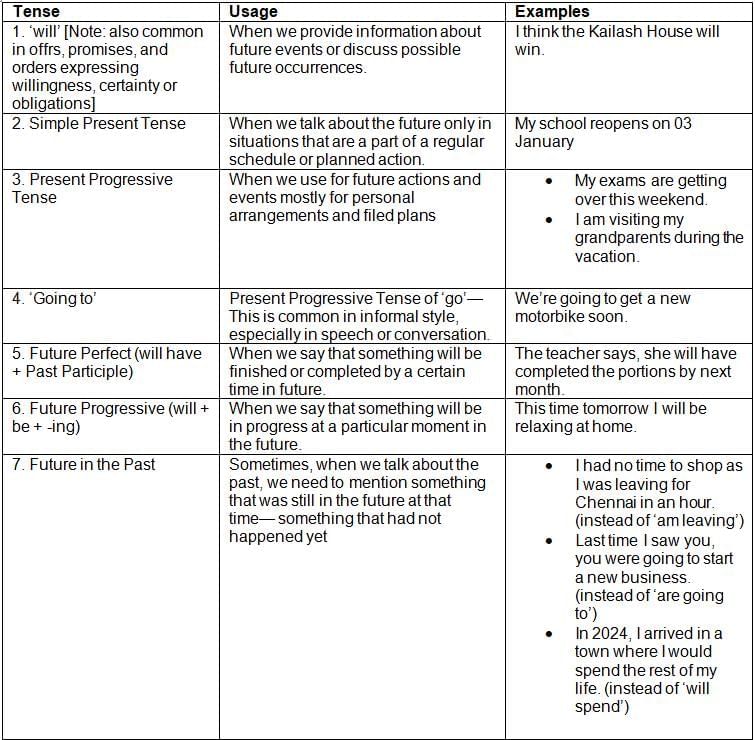
Ans:

1. Rakesh was on his way home from school when he bought the cherries. Simple Past Tense
2. Rakesh was looking for Grandfather without finding him in any of his favourite places around the house. Past Progressive Tense
3. Rakesh and Grandfather gazed at the tree as though it had performed a miracle. Simple Past Tense, Past Perfect Tense

(i) I was sitting (sit) with my grandparents in the garden, sharing the wonderful memories from my childhood. As we (ii) were talking (talk), I (iii) realised (realise) how much wisdom they (iv) had imparted (impart) to me over the years. While I (v) was listening (listen) to their stories for hours together, I (vi) remembered (remember) the times we (vii) had spent (spend) together planting flowers and learning about life. By the time I left, the sun (viii) had set (set), and I (ix) felt (feel) a deep sense of gratitude for the bond we (x) had nurtured (nurture) through love, care, and countless memories.

V. Study the punctuation marks in the following sentences from the text.

  • “Hey, not there,” said Grandfather, “I’ve sown mustard in that bed. Plant it in that shady corner, where it won’t be disturbed.”
  • When Grandfather saw what had happened, he went after the woman and scolded her, but the damage could not be repaired. 
  • She did not try to avoid the tree: one sweep, and the cherry tree was cut in two.

Now, punctuate the following paragraph appropriately. 
every sunday roshni would visit her grandparents house on their farm come sit grandpa would say patting the bench on their porch roshni loved these moments where the world slowed down and storiesflowed like magic grandma would bring tea her eyes twinkling with joy im excited to hear about your younger days the adventures the lessonsand the memories roshni said eagerly grandpa smiled softly his wrinkled hands resting on the cane ah the olddays… when everything was simple and happiness was all we had roshni could feel the warmth of those memories he sat in silence boundnot by words but by a timeless bond
Ans:

Every Sunday, Roshni would visit her grandparents’ house on their farm. “Come, sit,” Grandpa would say, patting the bench on their porch. Roshni loved these moments where the world slowed down and stories flowed like magic. Grandma would bring tea, her eyes twinkling with joy. “I’m excited to hear about your younger days—the adventures, the lessons, and the memories,” Roshni said eagerly. Grandpa smiled softly, his wrinkled hands resting on the cane. “Ah, the old days… when everything was simple, and happiness was all we had,” he said. Roshni could feel the warmth of those memories. They sat in silence, bound not by words but by a timeless bond.
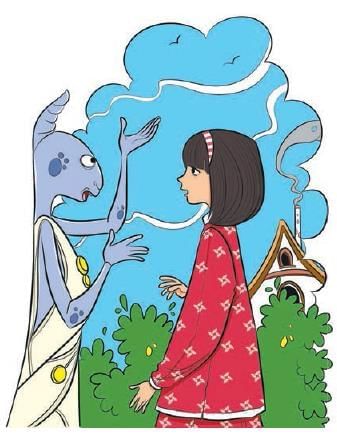

Let us listen (Page 170)

I. You will listen to a conversation between a son and his mother. As you listen, select four true statements from 1–7 given below. 

1. The mother encouraged her son to deliver a presentation on the Chipko Movement.
2. The son was surprised to know about the Appiko Movement.
3. The son agreed that the Chipko Movement was about people uniting to make an impact.
4. The mother expressed a desire to share more details about SaalumaradaThimakka.
5. The mother was curious to hear about Saalumarada Thimakka.
6. The mother and son were in disagreement about the work of JadavPayeng.
7. The son found the information on Jadav Payeng wonderful.
Ans: Please refer to the transcript.

Let us speak (Page 170)

A syllable is a single, unbroken vowel sound in a word. Some words have only one syllable. Some have two, and some more than two. For example, the word ‘tree’ has one syllable. The word ‘cherry’ has two syllables—che-rry. (Here the hyphen is used to mark the gap between the two syllables.)
A syllable can also be called a ‘beat’ because you can clap out the ‘beats’ in the word.

I. Work in pairs. Read aloud the following words from the text. Write the number of syllables in each word. Check your answers with your classmates and teacher.

Now, read the words aloud again with the beats. Check if the number of syllables matches with the number of beats. 

Ans: 

  1. mountains – 2 syllables
  2. grandfather – 3 syllables
  3. tender – 2 syllables
  4. disturbed – 3 syllables
  5. caterpillar – 4 syllables
  6. Himalayan – 4 syllables
  7. performed – 2 syllables
  8. intention – 3 syllables
  9. slope – 1 syllable
  10. newspaper – 3 syllables
  11. favourite – 3 syllables

II. Speak about Van Mahotsav Diwas and its significance. Before you speak in the class or assembly, prepare yourself on the following points:

  • When is it celebrated?
  • Who celebrates it?
  • Why is it celebrated?
  • How is it celebrated?
  • What is the message it conveys?
    Ans:
  • Van Mahotsav Diwas is celebrated in the first week of July every year.
  • People across India, including students, farmers, and government officials, celebrate it.
  • It promotes tree planting to save the environment and increase greenery.
  • People plant trees, hold awareness campaigns, and organise events in schools and communities.
  • It teaches us to protect trees and nature to ensure a healthy planet for the future.

Let us write (Page 171)

Now, complete the article for a magazine on ‘Trees–Our Lifeline’. Use the words and phrases given in the box below.

(i) ________________ -by ________________ (write your name and class)Trees are essential for life on Earth. Without them, life as we know (ii) ________________. This is the reason why trees are our lifeline. Trees provide us with food, shelter, and even medicine. Trees(iii) ________________ and release oxygen, helping us breathe. This process also(iv) ________________ and keeps the environment clean. (v) ________________, trees give us fruits, nuts, and other foods. Trees also help in (vi) ________________and prevention of soil erosion. (vii) ________________, the air would be polluted, and we would struggle to breathe. (viii) ________________ would be barren, lacking food, shelter, and life-giving greenery. (ix) ________________,trees are true friends. Protecting and planting trees (x) ________________ for everyone on Earth. Therefore, we must act now to protect and plant more trees, preserving Earth’s green lifeline for future generations.
Ans:

(i) Trees–Our Lifeline – by [Your Name] and Class
Trees are essential for life on Earth. Without them, life as we know it
(ii) would stop existing. This is the reason why trees are our lifeline. Trees provide us with food, shelter, and even medicine. Trees
(iii) absorb carbon dioxide and release oxygen, helping us breathe. This process also
(iv) reduces pollution and keeps the environment clean.
(v) Additionally, trees give us fruits, nuts, and other foods. Trees also help in
(vi) climate control and prevention of soil erosion.
(vii) If trees were not there, the air would be polluted, and we would struggle to breathe.
(viii) Moreover, our planet would be barren, lacking food, shelter, and life-giving greenery.
(ix) To conclude, trees are true friends. Protecting and planting trees
(x) ensures a better future for everyone on Earth. Therefore, we must act now to protect and plant more trees, preserving Earth’s green lifeline for future generations.

9. Spectacular Wonders – Textbook Solutions

Let us do (Page 137)I. Look at the pictures given below and sort them into natural and man-made wonders. 

Ans: 
Natural:
Living Root Bridge, Dzukou Valley, Ice Stupa, and Moon over the Himalayas
Man-made:
Mysore Palace, Bogibeel Bridge, Fountain Garden, and Marble Rocks with Cable Car
II. Which of these wonders—man-made or natural—are more appealing and why? Share your answers with your classmates and teacher.
Ans: Natural wonders are more appealing because they are created by nature without any human help. They show the beauty and power of the Earth. For example, the Living Root Bridge and the Himalayas are not only beautiful but also show how nature can create amazing things over time. These places feel peaceful and make us feel close to the environment.
III. Work in pairs. Write down two wonders of nature that have amazed you. Discuss what makes them impressive.
Ans: 1. The Grand Canyon (USA) – It’s a huge valley carved by the Colorado River. Its size, colours, and rock layers show how old and powerful nature is.
2. Aurora Borealis (Northern Lights) – These colourful lights in the night sky happen in cold places like Norway and Alaska. They look magical and happen because of Earth’s magnetic field and solar winds.
What makes them impressive:
They are both natural and cannot be made by humans. They remind us of the vast and wonderful natural world.

Let us discuss (Page 142)I. Complete the information in the table given below. One example has been done for you. Share your answers with your classmates and teacher.

Ans:

Let us think and reflect (Page 142)

I. Read the given extracts and answer the questions that follow.
1. India is home to some of the most mystifying natural phenomena that surprise and spark our imagination.
(i) Replace the underlined phrase with one from the extract. India is the birthplace of several rare species of flora and fauna that thrive in its diverse ecosystems. 
(ii) What does the phrase ‘nature’s unusual side’ suggest about the phenomena described? 
(iii) Complete the similarity by choosing the correct option. spark: imagination: : ______________ : ______________. 
A. inspiration; creativity 
B. wonder; amazement 
C. effort; reward 
D. knowledge; books 
 (iv) Identify whether the following statement is true or false. Some natural phenomena can surprise people.
Ans:

(i) nature’s unusual side
(ii) It suggests rare and surprising natural events that are different from everyday nature.
(iii) B. wonder: amazement
(iv) True

2. Have you seen things disappearing in front of your eyes? Well, such things happen at times, when we keep things in some place, and just forget where we have kept them. But what if there’s a sea that disappears? This happens in Odisha. It is a beach in the Balasore district where one can witness the sea disappearing mysteriously—the Chandipur Beach, which is known for its unique feature of playing hide-and-seek with its visitors.     
(i)     Complete the following sentence with a suitable reason. The writer’s most likely purpose in introducing the information about the Chandipur Beach phenomenon with a question is to____________________. (engage the reader’s curiosity and create a sense of suspense/draw the reader to learn more about the unusual phenomenon/set the tone for the surprising nature of the content that follows)
(ii) Select the option that is correct for both Assertion (A) and Reason (R).          
(A): Chandipur Beach in Odisha is known for its unique feature of the sea disappearing.          
(R)The tides retreat drastically, exposing the Chandipur beach.     
A. Both (A) and (R) are true, and (R) is the correct explanation of (A).     
B. Both (A) and (R) are true, but (R) is not the correct explanation of (A).     
C. (A) is true, but (R) is false.     
D. (A) is false, but (R) is true
(iii) What does the term ‘unique’ suggest about the beach in Balasore?     
A.very popular
B. one of its kind     
C.ancient place     
D.far from the city     
(iv) What does the writer want to convey with the use of the phrase ‘playing hide-and-seek with its visitors’?

Ans: (i) engage the reader’s curiosity and create a sense of suspense
(ii) A. Both (A) and (R) are true, and (R) is the correct explanation of (A).
(iii) B. one of its kind
(iv) The sea appears and disappears due to changing tides, creating a playful and mysterious effect for the visitors.

II. Answer the following questions.
1. How are the living root bridges a boon for the local people of Meghalaya?     
2. Why is the Lonar Crater Lake considered a remarkable and rare site?     
3. What might be the writer’s purpose of highlighting the awe-inspiring natural wonders of India?   
4. The writer uses descriptive language and introductory questions for some of the natural phenomena. What impact does it have on the readers?    
5. Which of these unusual phenomena did you find the most interesting and why?
Ans:
1. They allow safe crossing over waterways during monsoons, unlike weak bamboo bridges.
2. It’s formed by a meteorite impact in basaltic rock, one of the top five largest craters globally, with a unique saline lake.
3. To show India’s unique landscapes, spark curiosity, and encourage appreciation of nature.
4. It grabs attention, makes the phenomena vivid, and encourages readers to think and imagine.
5. The Living Root Bridges,  they are built naturally by intertwining roots, showing human creativity and harmony with nature.

Let us learn (Page 144)I. Fill in the blanks with the correct expressions from the text given in the box below.

  1. I have read many stories _____________________.     
  2. Do you know when this little town _____________________?        
  3. His hard work has helped him _____________________.        
  4. There are no simple solutions to the _____________________of traffic jams.    
  5. He opened the ancient wooden box and stared at the treasure_____________________.        
  6. The garden is _____________________ in springwith lots of beautiful flowers in bloom.

Ans: 

1. I have read many stories to name a few.
2. Do you know when this little town came into existence?
3. His hard work has helped him to no end.
4. There are no simple solutions to the age-old problem of traffic jams.
5. He opened the ancient wooden box and stared at the treasure in disbelief.
6. The garden is in full glory in spring with lots of beautiful flowers in bloom.

II. Select the correct synonyms from the box given below that match the list of words in 1–5. You may refer to a thesaurus. 

  1. mysterious, puzzling, baffling 
  2.   mighty, gigantic, huge. 
  3.  breath-taking, stunning, awe-inspiring. 
  4. peaceful, calm, tranquil  
  5.  unusual, peculiar, foreign

Ans:

  1. mysterious, puzzling, baffling → enigmatic
  2. mighty, gigantic, huge → colossal
  3. breath-taking, stunning, awe-inspiring → spectacular
  4. peaceful, calm, tranquil → serene
  5. unusual, peculiar, foreign → exotic

III. The expressions ‘hide-and-seek’ and ‘flora and fauna’ are used in the text. These are called binomials—a pair of fixed words joined by ‘and’ or ‘or’. The binomials are mostly synonyms, antonyms, rhyming words, same-sound words (alliterations), etc. Match the binomials in Column 1 with their meanings in Column 2. You may refer to a dictionary.

Ans:

Sentences:
1. I cleaned my room and found odds and ends like old pens and buttons.
2. She visits the park on and off when she has free time.
3. I like to mix and match my clothes to create new outfits.
4. This project is all or nothing; we must finish it completely.
5. Helping others is part and parcel of being a good friend.
6. At the store, I can pick and choose the best apples.
7. Sooner or later, I’ll visit the Valley of Flowers.
8. Her drawing skills improved by leaps and bounds this year.

IV. Study the highlighted words in the following sentences from the text.

  • The living root bridges are one of Meghalaya’s most beautiful…     
  •  …creating a striking visual contrast against the surrounding rugged terrain.    

 In the given sentences, the highlighted words ‘living’, ‘striking’, and ‘rugged’ are examples of verbs used as adjectives. Such verbs are called participles.Now, fill in the blanks using the present participle or past participle form of the verbs in the box given below.1. The _______________ marble monument looks even more spectacular inthe moonlight. 
2. The _______________ view of the Himalayas from Darjeeling attracts visitors from all over the world.        
3. The Sun Temple in Konark features intricately _______________ stone wheels and walls. 
4. _______________ at a height of 182 m, the Statue of Unity is dedicated toSardar Vallabhbhai Patel.        
5. The _______________ islands of the Andaman and Nicobar offer some of the cleanest beaches in India.
Ans:

1. The glowing marble monument looks even more spectacular in the moonlight.
2. The amazing view of the Himalayas from Darjeeling attracts visitors from all over the world.
3. The Sun Temple in Konark features intricately carved stone wheels and walls.
4. Standing at a height of 182 m, the Statue of Unity is dedicated to Sardar Vallabhbhai Patel.
5. The scattered islands of the Andaman and Nicobar offer some of the cleanest beaches in India.

V. Study the highlighted word in the following sentence from the text
Crossing the many waterways without bridges was difficult for people in the past, during monsoons. In the given sentence, the highlighted word ‘crossing’, is one example of a verb used as a noun. Such a verb is called a gerund.Underline the gerunds and participles in the following sentences.  Write ‘G’ for gerunds and ‘P’ for participles in the space provided. One example has been done for you.     
1.    Dancing is a great way to express emotions. G     
2.    Travelling can broaden your perspective.     
3.    The falling leaves signalled the arrival of autumn.     
4.    She enjoys cooking new recipes for her family.     
5.    Reading helps improve your vocabulary.     
6.    He watched the shimmering stars in the night sky.     
7.    Forgetting the keys inside, Kanchan locked the door.

Ans:

1. Dancing is a great way to express emotions. G
2. Travelling can broaden your perspective. G
3. The falling leaves signalled the arrival of autumn. P
4. She enjoys cooking new recipes for her family. G
5. Reading helps improve your vocabulary. G
6. He watched the shimmering stars in the night sky. P
7. Forgetting the keys inside, Kanchan locked the door. P

VI. Combine the following pairs of sentences using participles or gerunds. You may use the clues given in brackets. One example has been done for you.
1. Nitesh entered the room. He saw his friend sitting in the corner. (participle) 
Entering the room, Nitesh saw his friend sitting in the corner.
2. Smitha walked carelessly. She slipped on the doormat. (participle)
3. Sleep for eight hours. It is good for health. (gerund) 
4. Ranjith felt happy about the result. He called his parents. (participle) 
5. Father encouraged Meena. Meena joined the course. (gerund)
Ans:

1. Entering the room, Jitesh saw his friend sitting in the corner. (participle)
2. Walking carelessly, Smitha slipped on the doormat. (participle)
3. Sleeping for eight hours is good for health. (gerund)
4. Feeling happy about the result, Ranjith called his parents. (participle)
5. Encouraged by her father, Meena joined the course. (participle)

Let us listen (Page 148)

I. You will listen to a brother and sister discuss a natural phenomenon. As you listen, mark the four true statements from 1–6 given below.

  1. The brother was taken aback to see the posted pictures.
  2.  The brother admitted to not knowing about his sister’s favourite picture.     
  3. The sister stated that the rainbow mountain was like any other mountain.      
  4.  The brother was aware of the reason for the formation of colours on the mountain.    
  5. The brother was surprised to learn about the mountain being covered with snow till recently.  
  6. The sister understood nature’s role in the beauty of the mountain.

Ans: Please refer to the transcript

Let us speak (Page 149)I. Work in groups of four. Make a presentation on a place of interest in and around your region that people like to visit. You may use the following guidelines to make your presentation.Guidelines:     
1.    Slides 1–2: Choose any popular place of interest in your region.     
2.    Slides 3–4: Mention where it is located and how to get there.     
3.    Slides 5–6: Describe the attractions of the place, why it is popular and explain its historical importance, if any.     
4.    Slides 7–8: List out weather conditions, local food, customs, and language.     
5.    Slides 9–10: Suggest the best time of the year to visit and why you recommend this place.
Ans:

Slide 1-2: Place – Qutub Minar, Delhi.
Slide 3-4: Location – In Mehrauli, Delhi; reachable by metro (Qutub Minar station) or bus.
Slide 5-6: Attractions – Tallest brick minaret, built in 1192 by Qutb-ud-din Aibak, with intricate carvings; historically important as a symbol of the Delhi Sultanate.
Slide 7-8: Details – Pleasant weather in winter; local food like parathas; Hindi and English spoken; respect monument rules.
Slide 9-10: Best Time – October to March for cool weather; recommended for its historical beauty and architecture.

Let us write (Page 149)I. You just read vivid descriptions of the natural wonders of our country. Write a descriptive essay for your school magazine describing anything from nature that attracted your attention. It may be an object, a place, or an event experienced by you. Remember to give a title to your essay. Use proper format and content organisation—begin with a title, including an introduction (one paragraph), body (two to three paragraphs), and conclusion (one paragraph).
Ans:

A Sparkling Night at Kumbalangi

Last summer, I visited Kumbalangi village in Kerala, and its glowing waters left me spellbound. As night fell, the backwaters twinkled like a sky full of stars, a magical sight I’ll never forget.

The village was quiet, with lush green trees rustling in the breeze. At dusk, we took a boat ride, and soon, the water began to glow with tiny blue-green sparkles. These were micro-planktons, tiny creatures creating bioluminescence. Each ripple in the water sent sparkles dancing, like fireflies in the sea. The air smelled fresh, and the sound of gentle waves was soothing. I dipped my hand in, and the water glowed around my fingers, making me feel like I was in a fairy tale.

The villagers explained that this natural wonder happens when micro-planktons are active, especially on warm nights. I also enjoyed their spicy fish curry and learned about their fishing traditions. The glowing waters felt like nature’s secret light show, teaching me how even tiny creatures can create something extraordinary.

This experience showed me the beauty of nature’s surprises. Kumbalangi’s glowing waters are a treasure, reminding us to explore and protect our environment.

8. The Magic Brush of Dreams  – Textbook Solutions

Let us do (Page 122).                                                   I. Work in pairs. Discuss the following questions. Share your answers with your classmates and teacher.
1. Mention a magical object that you would like to have. Give a reason for your choice. 
2. What would you draw for yourself if you had a magic paintbrush? Why?
3. Would you use the magic paintbrush to draw for someone else? If yes, why? If not, why not?
Ans: 
1. I would like a magic pencil because it could write correct answers for my homework, helping me learn faster.
2. I would draw a flying bike to travel anywhere quickly and have fun exploring new places.
3.  Yes, I would draw food and clothes for poor people to help them live better, like Gopi did in the poem.
II. Work in pairs. Discuss instances of acts of kindness that you have heard, read, or experienced. Share your answers with your classmates and teacher.


Ans: Example: My friend shared her lunch with a classmate who forgot theirs, showing kindness by helping someone in need.
III. Work in pairs and guess the meanings of the words given below and draw pictures depicting their meanings. Share with your classmates and teacher 

Now, arrange these words into different categories as given below.          

Things:     ……………………………………………………….. ……………………………………………………….. 

Actions: ……………………………………………………….. ………………………………………………………..          

Emotions:     ……………………………………………………….. ………………………………………………………..
Ans: Things: paintbrush, twig, fortress, bows, drawing
Actions: winding, feast
Emotions: joy, fear, cold

Let us discuss (Page 127)I. Arrange the events in order of occurrence in the poem. The last one has been marked for you. Share your answers with your classmates and teacher.Ans:II. Fill in the blanks by choosing the correct answer from the box given below.

The tone of the poem shifts throughout, reflecting the different moods of the story. Initially, the tone is 1. _________________ as Gopi uses herimagination to draw in the sand, and later when the Zamindar enters the story, the tone shifts to one of 2. _________________. In the final partof the poem, the tone becomes 3. _________________ as Gopi escapes, theZamindar is defeated, and the villagers rejoice.
Ans: The tone of the poem shifts throughout, reflecting the different moods of the story. Initially, the tone is playful and innocent as Gopi uses her imagination to draw in the sand, and later when the Zamindar enters the story, the tone shifts to one of threatening and commanding. In the final part of the poem, the tone
becomes triumphant and celebratoryas Gopi escapes, the Zamindar is defeated, and the villagers rejoice.

(Note: “threatening and commanding” was inferred as the box was incomplete.)

III. Fill in the blanks by choosing the correct option from within the brackets.
1. The poem mostly follows a simple rhyme scheme, _________________, which adds a rhythmic flow. (ABCB, ABBA, ABAB)   
2. This poem belongs to the _________________ poetry genre, which tells astory through verse. (descriptive, narrative or ballad, free style)
An
s: 1. The poem mostly follows a simple rhyme scheme, which adds a rhythmic flow: ABCB (e.g., “hand/sand” and “Gopi/hush” rhyme in the first stanza).
2. This poem belongs to the poetry genre, which tells a story through verse: narrative or ballad.

IV. Give examples from the poem for the following explanations.
1. The poem is rich in imagery, creating clear pictures in the reader’s mind. For example, ___________________.
2. What is the effect of repetition in the line—‘On you, and you and you!’?
Ans:  1. The poem is rich in imagery, creating clear pictures in the reader’s mind. For example: “She paints a mighty river wide, Its currents fast and deep” (vividly describes a wide, rushing river).
2. The effect of repetition in the line “On you, and you and you!” is: It emphasises Gopi’s threat to the Zamindar and his men, making it sound serious and directed at each person.

V. Match the phrases from the poem in Column 1 with what they symbolise in Column 2.Ans:

VI. Identify whether the following statement is true or false.
While Gopi uses the magic brush to help others, the Zamindar wants to use it for personal gain. This contrast drives the moral of the story.
Ans:  
True.

Let us think and reflect (Page 128)

I. Read the given extracts and answer the questions that follow.
1. But on a stone there sits a man, 
A brush is in his hand. He looks around. 
He calls to Gopi. “Come here!” he whispers. 
“Hush! We mustn’t let the village know 
About this magic brush.” 
He slips the brush into her hand
And tells her to be sure,
“Paint not for the wealthy ones,
But only for the poor.”

(i) Fill in the blank by selecting the correct option from those given in the brackets. 
The man is whispering and telling Gopi to keep the brush a secretreflects his _______________________ (careful and secretive/ magical and delightful) nature. 
(ii) What is the significance of the man slipping the brush into Gopi’s hand? 
(iii) Complete the following sentence with a suitable reason.          The most likely reason the man instructs Gopi to ‘Paint not for wealthy ones but only for the poor’ is because he_______________________.
(iv) Select the most appropriate title for the extract from the two given below. 
    A.     The Magic Brush’s Secret 
    B.     Gopi’s Special Gift
Ans:

(i) The man is whispering and telling Gopi to keep the brush a secret reflects his careful and secretive nature.
(ii) The significance of the man slipping the brush into Gopi’s hand is: It shows he trusts Gopi to use the magic brush responsibly for good purposes.
(iii) The most likely reason the man instructs Gopi to “Paint not for wealthy ones but only for the poor” is because he wants to help those who need it most, not those who are already rich.
(iv) The most appropriate title for the extract is: A. The Magic Brush’s Secret (focuses on the secrecy and the brush’s magic).

2.    And soon the news spreads far and wide, 
Through forests, fields, and plains, 
Until the Zamindar himself 
Hears of these magic gains. 
“I order you to paint for me, 
A fortress tall and grand. 
Paint treasures, jewels, and riches rare, 
Enough to rule this land.”  
  
 (i) Complete the following sentence with the correct reason.          
The news of Gopi’s magic brush spreads ‘through forests, fields, and plains’ because of its _______________________.     
(ii) Why does the poet refer to things painted by Gopi’s paintbrush as‘magic gains’?
(iii) Which of the following statements given below is false? Rectify the false statement.    
A.     Gopi’s magic brush draws the attention of the powerful Zamindar.     
B.     The Zamindar requests Gopi to paint a grand fortress and jewels.     
(iv)  What does the Zamindar’s demand for a grand fortress and jewels reveal about his character?

Ans:

(i) The news of Gopi’s magic brush spreads through forests, fields, and plains because of its amazing ability to create real objects from paintings.
(ii) The poet refers to things painted by Gopi’s paintbrush as “magic gains” because they become real, useful items that benefit the villagers.
(iii) Which of the following statements is false? B. The Zamindar requests Gopi to paint a grand fortress and jewels. Rectified: The Zamindar orders Gopi to paint a grand fortress and jewels.
(iv) The Zamindar’s demand for a grand fortress and jewels reveals about his character that he is greedy and wants power and wealth.

II. Answer the following questions.

  1. Explain why Gopi made the right decision by refusing to paint for the Zamindar.    
  2. Gopi threatens to draw a beast to scare away the Zamindar. Justify her action. How would you have dealt with the situation differently? 
  3. What is the significance of Gopi celebrating with the villagers at the end of the poem? 
  4. Compare Gopi’s use of the magic brush to how the Zamindar would have used it. 
  5. What can be inferred about Gopi’s character based on her refusal to follow the Zamindar’s orders? 
  6. Justify the appropriateness of the title of the poem. 
  7. If you had the magic brush, how would you use it in today’s world?

Ans:

  1. She followed the man’s rule to help only the poor, not the greedy, showing her kindness and fairness.
  2. Her action was justified to protect herself and stop the chase. I might have painted a tall wall to block the Zamindar safely.
  3. It shows her victory over the Zamindar and her joy in helping the villagers with a feast.
  4. Gopi painted useful things like food and clothes for the poor, while the Zamindar wanted riches and a fortress for himself.
  5. She is brave, honest, and cares about helping others.
  6. “The Magic Brush of Dreams” fits because the brush creates real objects from Gopi’s paintings, fulfilling the villagers’ dreams.
  7.  I would paint food, homes, and schools for people in need to make their lives better.

Let us learn (Page 130)

I. The verb ‘draw’ has different meanings in different contexts. Match the sentences in Column 1 with their appropriate meanings in Column 2.Ans:  

II. Fill in the crossword. Clues have been given below. You will find the words in the poem
Ans: 

Across

  1. GALLOP
  2. WHIZ
  3. WHISPER
  4. PLUCK
  5. WEALTHY
  6. SEIZE

Down

  1. ESCAPES
  2. MIGHTY
  3. ROAR
  4. CONFORM
  5. STREAMED
  6. VICTORY

III. There are certain expressions that convey a sudden feeling or reaction. They can be used to express a variety of emotions and thoughts.
Example: … he whispers. “Hush!”          
(‘Hush’ denotes the act of silencing someone) 
Now, match the expressions in Column 1 with what emotions or reactions they convey, in Column 2.Now, create sentences using any five expressions from Column 1.
Ans:

Let us listen (Page 132)

I. You will listen to five speakers speak about a magical power they wish for. As you listen, match statements 1–7 with speakers (i)–(v). There are two statements you do not need. 

Ans: Please refer to the transcript.

Let us speak (Page 133)

I. Intonation is the rise and fall of the pitch of tone while speaking.
The ‘falling’ tone is the fall in the pitch of the voice from a high level to a low level. It is marked [ ]. The falling tone is generally used in imperative sentences. Such sentences are used in speech for different communicative purposes— to express a command or an instruction, to ask for a favour or to give a warning.          
Read the following sentences from the text with the falling tone.
Ans: Practice reading with a falling tone (voice goes from high to low):
– Come here!
– Seize this magic brush.
– Paint my fortress tall.
– Go and fetch some rice.

II. Work in pairs. Take turns to make requests for the following formal and informal situations.Ans:

Formal Requests:
1. Would you mind if we had a class picnic, Ma’am?
2. Do you think you could add an extra sports period, since we missed it last week?
3. Would it be possible to include me in the inter-school event, Sir?

Informal Requests:
1. Can you help me with my project, please?
2. Mom, do you mind if I join a dance class?
3. Hey, can you come over this weekend?

Let us write (Page 134)

I. An Imaginative essay is a type of creative writing where the writers use their imagination. An imaginative essay can be based on real-life events, observation, or experiences. It is usually a descriptive piece or a personal reflection. Read the sample of an imaginative essay.

II. Complete the given checklist based on your observations and understanding of what an imaginative essay includes. Share the answers with your classmates and teacher.
Ans:

1. Title – A relevant title: Yes, “My Life as EcoFlash” is catchy and relevant.

2. Introduction

– Captivating opening sentence: Yes, introduces Meenu as a superhero.

– Clear statement of the setting, situation, or main idea: Yes, describes Meenu’s dual life.
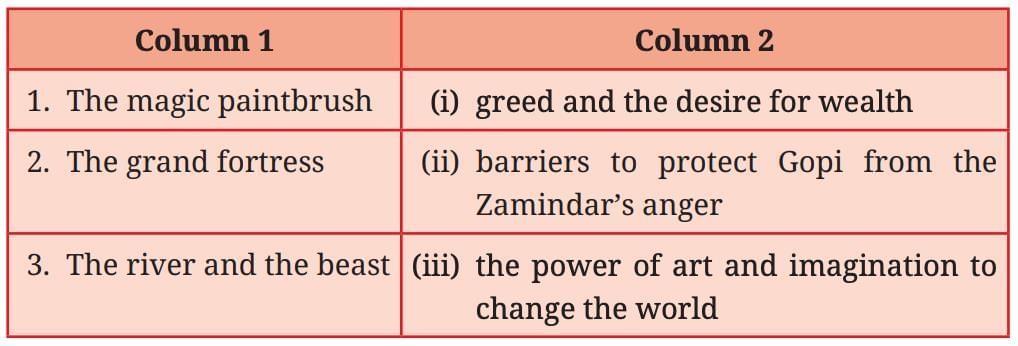
– Establishes the tone: Yes, playful and adventurous.

– Introduces the narrator briefly: Yes, Meenu as EcoFlash.

3. Setting and Context

– Description of the setting: Yes, neighborhood and school.

– Clear time frame: Yes, present day.

– Brief explanation of imaginative elements: Yes, plant-growing powers.

4. Characters

– Main character introduced with unique traits: Yes, Meenu as EcoFlash.

– Supporting characters briefly described: Yes, brother and friends.

5. Central Idea

– Clear focus on a single powerful idea: Yes, protecting the environment.

– Logical flow of events: Yes, describes daily life and a key event.

6. Language and Style

– Use of sensory details: Yes, mentions muddy shoes and blooming flowers.

– Creative metaphors or similes: Yes, compares powers to a wave of the hand.

7. Resolution

– Key turning point or moment of realisation: Yes, brother almost reveals secret.

– Resolution of the main idea: Yes, continues mission.

– Clear takeaway message: Yes, small changes make a difference.
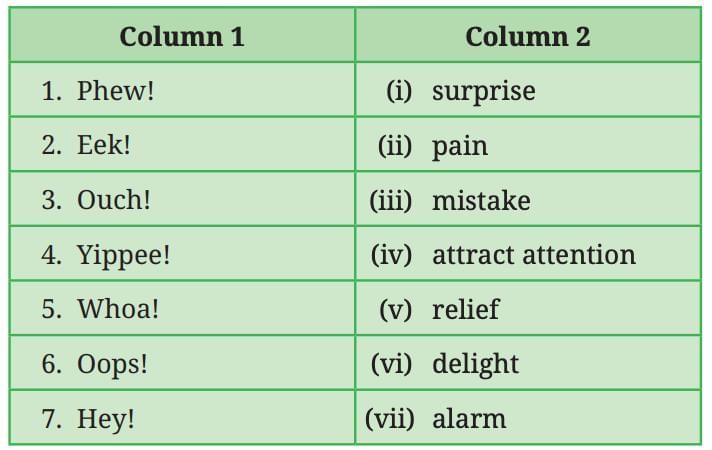
8. Conclusion
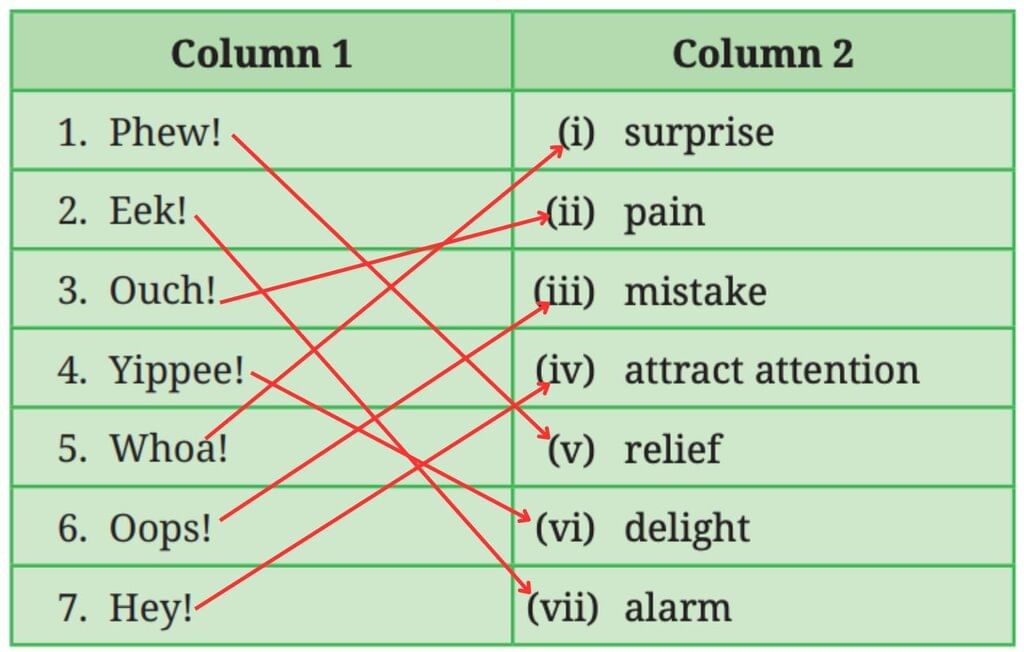
– Ends on a reflective note: Yes, feels proud of clean streets.

– Summarises the main message: Yes, emphasises environmental care.

III. Write an imaginative essay on any one of the following.

  1. Imagine you were a scarf that flew away from a clothesline. Describe the places you travelled to and how you came back. Also, write about what you thought was the most valuable experience.  
  2. Imagine you stumbled upon a magical book in the library. The book transported you to a different period. Describe your experience and an important learning

Ans:

A Magical Book’s Adventure
One rainy afternoon, I found a dusty book in the school library titled “Time’s Door.” Its cover glowed faintly, and when I opened it, a light pulled me in! Suddenly, I was in ancient India, surrounded by bustling markets and colourful clothes. I saw merchants selling spices and heard musicians playing sitars. It was like a dream, but real!

I met a kind boy named Arjun, who showed me his village. We explored a grand palace with tall pillars and ate sweet jalebis. But I noticed people were sad because a drought had dried their fields. Using the book’s magic, I wrote a new page about rain clouds. Soon, gentle rain fell, and the villagers cheered as crops grew again.

Suddenly, the book glowed, pulling me back to the library. I was back in 2025, but the adventure taught me something important. Helping others, even in small ways, can bring happiness. I’ll never forget my journey through time and the lesson that kindness matters.

7. The Case of the Fifth Word – Textbook Solutions

Let us do (Page 101)

I. Work in pairs. Solve the crossword puzzle given below with the clues in the form of anagrams.

Ans: 

Across

  1. Declare → Anagram: cleared
  2. Tucks → Anagram: stuck
  3. Heart → Anagram: earth
  4. Felt → Anagram: left
  5. Sown → Anagram: owns
  6. Sword → Anagram: words
  7. Evil → Anagram: vile

Down

  1. Aces → Anagram: case
  2. Read → Anagram: dear
  3. Tool → Anagram: loot
  4. Alps → Anagram: slap
  5. Hooks → Anagram: shook
  6. Mane → Anagram: name
  7. Loves → Anagram: solve

II. Work in pairs. Match the different meanings of ‘case’ in Column 2 with the correct usage in the sentences in Column 1.  Share your answers with your classmates and teacher.

Ans:Let us discuss (Page 104)

I. Complete the following statements with suitable reasons.

  1. Leroy’s nickname was Encyclopedia, and everyone called him by that name because
    Ans: he read many books and never forgot a fact, knowing more than anyone in Idaville.
  2. At the dinner table on Tuesday night, Chief Brown stared at his cream-of-mushroom soup as
    Ans: he was thinking hard about the mysterious four-word code in the jewellery case.
  3. Encyclopedia sat quietly at the dinner table because
    Ans: he knew his parents were discussing the case for him to hear and solve.
  4. Nolan put the will on the kitchen table because
    Ans: he wanted to leave a clue about the hidden jewellery’s location for Davenport.

II. Do you think Chief Brown would need Leroy’s help to solve this case? If yes, why? If no, why not?
Ans: Yes, Chief Brown needed Leroy’s help because the four-word code (Nom, Utes, Sweden, Hurts) was confusing, and Leroy’s clever question about the fir tree solved the case quickly.

Let us discuss (Page 107)I. A fact is something that can be proven true or false. A fact is not based on people’s beliefs. An opinion, on the other hand, is a belief, feeling, or judgment, and can vary from one person to another. An opinion cannot be proven. Identify which of the following statements from parts I and II of the story are facts or opinions. One example has been done for you. Share your answers with your classmates and teacher.     
1.    Encyclopedia’s father was the Chief of Police. Fact     
2.    Everyone thought that Chief Brown must be the smartest police chief in the country.     
3.    An encyclopedia is a book or set of books filled with facts from A to Z.     
4.    Leroy’s friends said that he was like a library and a computer rolled into one, and more user-friendly.    
 5.    Two masked men held up the Diamond Mart on Sixth Avenue.
 6. Nolan and Davenport had met while both were in prison in South Carolina. Leroy’s nickname was Encyclopedia and everyone called him by that name because 
 7.    Chief Brown’s hunch was that Davenport and Nolan decided to hide the loot until things cooled down.
 8. Nolan wrote a four-word code to tell Davenport where he had hidden the stolen jewellery.
Ans:
1. Encyclopedia’s father was the Chief of Police – Fact (verifiable position).
2. Everyone thought that Chief Brown must be the smartest police chief in the country – Opinion (based on people’s beliefs).
3. An encyclopedia is a book or set of books filled with facts from A to Z – Fact (definition of an encyclopedia).
4. Leroy’s friends said that he was like a library and a computer rolled into one, and more user-friendly – Opinion (friends’ subjective view).
5. Two masked men held up the Diamond Mart on Sixth Avenue – Fact (verifiable event).
6. Nolan and Davenport had met while both were in prison in South Carolina – Fact (verifiable past event).
7. Chief Brown’s hunch was that Davenport and Nolan decided to hide the loot until things cooled down – Opinion (based on Chief Brown’s belief).
8. Nolan wrote a four-word code to tell Davenport where he had hidden the jewellery – Fact (verifiable action in the story).
II. Complete the table by choosing the character traits of Leroy given in the box below. There is an extra word that you do not need. One example has been done for you.Ans:

Let us think and reflect (Page 108)

I. Read the given extracts and answer the questions that follow.
1. Chief Brown would have liked to tell everyone about his only child. But who would believe him? Who would believe that the best detective alive was an eighth grader? So, he said nothing. 
Encyclopedia never spoke of the help he gave his father. He didn’t want to seem different from other boys. But there was nothing he could do about his nickname. He was stuck with it. 
Only his parents and teachers called him by his real name, Leroy. Everyone else called him Encyclopedia.

(i)     Complete the following sentence with a suitable reason.          
Chief Brown’s dilemma can be called unique because____________.    
(ii)     What can be inferred about why Encyclopedia never spoke of the help he gave his father?     
A.     He is shy and lacks confidence in his abilities to share his insights.     

B.     He wants to avoid the jealousy others might feel about his skills.     
C.     He desires to blend with the other boys to prevent seeming different.     
D.     He is embarrassed about being smarter than most adults around him.     
(iii)     The parents choose not to call their son ‘Encyclopedia’. Select the reason that is false.     
A.     For them, he is more than his unique abilities; he is their child, with a personal identity.     

B.     Calling him by his real name reflects their affection and the desire to acknowledge him as an ordinary boy.    
C.     They want him to be remembered as different from the others around.    
 (iv)     What does the writer mean by the fact that Leroy was ‘stuck with’ the name Encyclopedia?
Ans: 
(i) Chief Brown’s dilemma can be called unique because he wanted to tell everyone his son was a brilliant detective, but no one would believe an eighth grader could be so talented.
(ii) C. He desires to blend with the other boys to prevent seeming different (text states he didn’t want to seem different).
(iii) C. They want him to be remembered as different from the others around (parents use his real name to treat him as an ordinary boy, not to highlight differences).
(iv) It means everyone called him Encyclopedia because of his vast knowledge, and he couldn’t change this nickname.

2. Chief Brown studied the four words: Nom Utes Sweden Hurts. He shook his head and passed the notebook to Mrs. Brown again. “Can you figure it out?” 
“Nom is a shortening of nominative, a grammatical term,” stated Mrs. Brown, who had taught English and other subjects in high school.“Utes is an American Indian tribe. Sweden is a country in northern Europe. Hurts is hurts.” 
She lifted her gaze to Encyclopedia and shook her head.
 “I can’t figure it out,” she confessed. “Davenport disappeared right after the hold-up,” Encyclopedia reminded her.

(i)     What does Chief Brown’s reaction of shaking his head suggest about his understanding of the four words?
A.     He is confident that the words are a clue.     

B.     He is confused, unable to make sense of the words.     
C.     He believes the words are random and meaningless.    
 D.     He thinks the words are unrelated to the case.     
(ii)     Identify whether the given statement is true or false. Mrs. Brown explained the actual meanings of the individual words rather than decoding the hidden message behind them.     
(iii)     What does Mrs. Brown’s inability to decode the words suggest about the message?     
(iv)     Complete the following sentence suitably.          
The purpose of Encyclopedia’s reminder in the last line of the extract was to _________________. (refocus the discussion on the context of the crime/suggest that the coded message was meant for Davenport/imply that the message was likely a clue about the location of the stolen jewellery)
Ans:

(i) B. He is confused, unable to make sense of the words (shaking his head indicates confusion).
(ii) Mrs. Brown explained the actual meanings of the individual words rather than decoding the hidden message behind them – True (she defines each word literally, not as a code).
(iii) It suggests the message is cleverly hidden and requires specific insight to understand.
(iv) The purpose of Encyclopedia’s reminder in the last line of the extract was to suggest that the coded message was meant for Davenport.

II Answer the following questions. 

  1. Nolan and Davenport were very close. Support this statement with evidence from the text.     
  2. Why did Davenport disappear right after the jewellery hold-up? What might his plans have been if Nolan had not died? 
  3. What does Mrs. Brown’s interest in the case tell us about her? 
  4. Explain why Chief Brown was proud of his son. 
  5. Why were Chief Brown’s suspicions regarding Nolan and Davenport justified, even when there was a lack of concrete proof? 
  6. Analyse the role of the four-word coded message in the story. 
  7. Write a character sketch on Leroy with the help of the character trait stable given in ‘Let us discuss’ section.         

You may begin it like this:         
 Encyclopedia was a knowledgeable eighth grader who never forgot a fact that he read. 
Ans:

1. They met in prison, became friendly due to shared interests, and Davenport lived with Nolan before the robbery.
2. He disappeared to avoid suspicion after the robbery. If Nolan hadn’t died, they might have waited longer to retrieve and share the hidden jewellery.
3. She is curious and engaged, as she asks questions and tries to understand the code.
4. He was proud because Encyclopedia solved mysteries quickly, like finding the jewellery with one question.
5.  His suspicions were justified because Nolan and Davenport were friends from prison, lived together before the robbery, and a clerk thought she recognised Nolan.
6. The code (Nom, Utes, Sweden, Hurts) represented days (Monday to Thursday), hiding the fifth word (Fir for Friday), which led to the jewellery’s location in a fir tree’s jug.
7. Encyclopedia was a knowledgeable eighth grader who never forgot a fact that he read. He was humble, not boasting about helping his father, and wanted to fit in with other boys. As a good listener, he quietly understood his parents’ discussions. His cleverness allowed him to solve cases with just one question.

Let us learn (Page 111)I. Match the phrasal verbs from the text given in Column 1 with their meanings in Column 2. You may refer to a dictionary.

Now, fill in the blanks with the phrasal verbs given in Column 1.     
A. Finally, some important evidence about the case has _______________.
B. After I _______________, I understood that I had made a big mistake.    
C. I couldn’t _______________ why he was angry with me.     
D. He _______________ his special coat and went to his friend’s birthdayparty.                     
E. Ravi forgets to do his homework but he _______________ it as teacherdidn’t ask for it that day.                                 F. I do not know what to _______________ his behaviour.
Ans:

Fill in the blanks:

A. Finally, some important evidence about the case has turned up.
B. After I cooled down I understood that I had made a big mistake.
C. I couldn’t figure out why he was angry with me.
D. He put on his special coat and went to his friend’s birthday party.
E. Ravi forgets to do his homework but he got away with it as teacher didn’t ask for it that day.
F. I do not know what to make of his behaviour.

II. Fill in the blanks in the following sentences by choosing the correct word pairs from the box given below.

  1. After running for 50 kilometres last _________________, I felt_________________ for two days.    
  2. When the committee met yesterday, they brought _________________local cases to the _________________.
  3. While learning to drive, Rina used too much force on the_________________, causing the car to _________________ down.  
  4. He has composed a beautiful _________________ of music in order tobring _________________ to thousands of people. S
  5. he was busy _________________ her hair not caring about the_________________ flowers in her garden.
    Ans: 
    1. After running for 50 kilometres last week I felt weak for two days.
    2. When the committee met yesterday, they brought four local cases to the peace.
    3. While learning to drive, Rina used too much force on the brake, causing the car to break down.
    4. He has composed a beautiful piece of music in order to bring peace to thousands of people.
    5. She was busy braiding her hair not caring about the flowers in her garden.

III. Leroy solved the mystery of the missing fifth word with his critical thinking abilities. Work in pairs to solve the puzzles given in the illustrations below and infer what they say. One example has been done for you

IV. Spoonerism is a mistake made when speaking, where the first sounds of the words in a phrase or a sentence are exchanged with each other. This usually gives a funny meaning. Some examples of spoonerism are saying ‘wrong load’ instead of ‘long road’, ’round of mice’ instead of ‘mound of rice’.
Find the correct order for the following spoonerisms.     

  1. knowing sits          
  2. it’s roaring with pain.
  3. plaster man 
  4.  blarm wanket     
  5. tars and crucks      
  6. shake a tower     
  7. bead a rook     
  8. mardon me padam

Ans:

  1. knowing sits → sowing knits (or more sensibly: sewing knits)
  2. it’s roaring with pain → it’s pouring with rain
  3. plaster man → master plan
  4. blarm wanket → warm blanket
  5. tars and crucks → cars and trucks
  6. shake a tower → take a shower
  7. bead a rook → read a book
  8. mardon me padam → pardon me madam

V. Read the following sentences from the text and study the highlighted words.

  1. Everyone thought that he must be the smartest police chief in the country.     
  2. She read what he had copied. 
  3. They tell where the jewellery is hidden. 
  4. “Nom is a shortening of nominative, a grammatical term,” stated Mrs.Brown, who had taught English and other subjects in high school. 
  5. “Nolan and Davenport had met,” Chief Brown said, “while both were in prison in South Carolina.”
  6. When he came up against a case he couldn’t solve, he acted at once. 
  7. The code is simple, especially as it’s written on a sheet from a calendar. 
  8. They became friendly because of shared interests.     
  9. Encyclopedia solved the case for him before dinner was over. 

Now, fill in the blanks with the words in the box given below to complete the following sentences. There are two extra words that you do not need.Detective stories are exciting, keeping readers guessing (i) ____________ the real culprit is. They take place in settings (ii) ____________ clues arehidden carefully. (iii) ____________ the mystery seems tricky, a clever detective always finds answers. Readers often wonder 
(iv) ____________criminals leave small but important clues. The challenge is to decide (v) ____________ suspect is guilty. (vi) ____________ the truth is revealed, everything makes sense. But one may wonder (vii) ____________ they could have solved it themselves. These stories are fun (viii) ____________they make readers think till the very end.
Ans:

  1. We gave him the signal that he was waiting for.
  2. We went to a place where the incident occurred.
  3. The teacher said she would retire soon, who is now nearly sixty.
  4. It was the day when half the class was absent.

VI. Combine the following pairs of sentences using the word given in brackets. One example has been done for you.

  1. We gave him the signal. He was waiting for the signal. (that) 
    Answer: We gave him the signal that he was waiting for. 
  2. We went to a place. The incident occurred there. (where)        
  3. Teacher said she would retire soon. She is now nearly sixty. (who)        
  4. It was the day. Half the class was absent. (when)

Ans:

  1. We went to the place where the incident occurred.
  2. The teacher, who is now nearly sixty, said she would retire soon.
  3. It was the day when half the class was absent.

VII. Read the following sentences from the text

  1. “What’s suspicious about that?” Mrs. Brown asked.  
  2. “What do you make of the four words, Leroy?” 
  3. “Wasn’t he mixed up in a jewellery robbery a few years ago?”    
  4. “Didn’t you search Nolan’s house, dear?”   
  5. “Is there a young fir tree in Mr. Nolan’s palm-tree nursery?”          

The given sentences are the direct words of the speaker, hence, they are in direct speech. While reporting these direct words to someone else at some other time and some other place, we make certain modifications in person, tense, and adverbs of place and timeThere are two types of Interrogative sentences. They are Wh– questions and Yes/No questions.         
Steps for Reporting Wh– questions and Yes/No questions     

1.    Replace the reporting verb ‘said’ with words like ‘asked’, ‘inquired ’, ’ interrogated’, or ‘questioned’.     
2.    Convert the interrogative sentence into a declarative one.     
3.    Apply the appropriate tense shift as per the rules of tense changes.     
4.    Remove quotation marks and the question mark.     
5.    Omit the conjunction ‘that’ in the reported speech.     
6.    In Wh– Wh-questions, place the Wh–word immediately after the reporting verb in the reported speech.     
7.    In Yes/No questions, use ‘if’ or ‘whether’ immediately after the reporting verb in the reported speech. 

Now, follow these steps to transform the sentences given as examples from direct speech to indirect speech. Indirect Speech

(i) Mrs. Brown asked ______________________________________________.     
(ii)Mrs. Brown questioned Leroy __________________________________.
(iii) Mrs. Brown inquired __________________________________________.     
(iv)     Mrs. Brown asked Chief Brown ________________________________.
(v) Mrs. Brown inquired ___________________________________________.

Ans:
(i) Mrs. Brown asked what was suspicious about that.
(ii) Mrs. Brown questioned Leroy what he made of the four words.
(iii) Mrs. Brown inquired whether Tim Nolan had been mixed up in a jewellery robbery a few years before.
(iv) Mrs. Brown asked Chief Brown whether he had searched Nolan’s house.
(v) Mrs. Brown inquired whether there was a young fir tree in Mr. Nolan’s palm-tree nursery.

VIII. Rewrite the following sentences in Reported Speech.

  1. “Why did you stop talking to me?” asked Rohan.          
    Rohan questioned __________________________________________________.    
  2.  “Did you enjoy the family gathering yesterday?” asked my aunt.          
    My aunt asked ______________________________________________________.
  3. “When will you visit us again?” asked my grandmother.          
    My grandmother inquired _________________________________________.
  4. Madavi said to Ravi, “Will you come with me to meet our old teacher tomorrow?” asked Madavi.          
    Madavi asked Ravi __________________________________________________.
  5. My friend said, “What gift are you planning to give your brother?” 
    My friend inquired _________________________________________________.
  6. “Shall I carry these notebooks to the staffroom, Ma’am?” asked Veenu.
    Veenu asked her teacher ____________________________________________.

Ans: 1. Rohan questioned why I had stopped talking to him.

2. My aunt asked whether I had enjoyed the family gathering the day before.
3. My grandmother inquired when I would visit them again.
4. Madavi asked Ravi whether he would come with her to meet their old teacher the following day.
5. My friend inquired what gift I was planning to give my brother.
6. Veenu asked her teacher whether she should carry those notebooks to the staffroom.

IX. Read the conversation between Aditi and Rahul

Complete the following paragraph by transforming the dialogue in indirect speech. 
Aditi asked Rahul 1. ___________________________________________________. 
Rahul replied that he had noticed a man wearing a blue jacket drop it off. 
Aditi asked Rahul 2. ___________________________________________________.          
Rahul replied that it had been around 6.45 p.m. 
Aditi further inquired 3. _______________________________________________. 
Rahul said that he had worn a hood, so he couldn’t see his face.
Ans:

Aditi asked Rahul whether he had seen anyone leave a package near the lift. 
Rahul replied that he had noticed a man wearing a blue jacket drop it off. 

Aditi asked Rahul what time he had seen it happen. 
Rahul replied that it had been around 6:45 p.m. 

Aditi further inquired whether he had been able to see his face. 
Rahul said that he had worn a hood, so he couldn’t see his face.

Let us listen (Page 117)

I. You will listen to a podcast about ways of improving observation skills. As you listen, mark the statements 1–4 as true or false. 

  1. Observation skills help improve your common sense.  
  2. Rushing through tasks helps you focus better and observe more. 
  3. Taking notes or making sketches helps with what you observe. 
  4. Incorporating tips on observation skills will soon lead to success. 

Ans:

  1. Observation skills help improve your common sense – True.
  2. Rushing through tasks helps you focus better and observe more – False (rushing reduces focus).
  3. Taking notes or making sketches helps with what you observe – True.
  4. Incorporating tips on observation skills will soon lead to success – True.

II. You will once again listen to the podcast. As you listen, complete the given sentences by filling in the blanks with one to three exact words you hear.

  1. It is important to slow down and ___________________ to notice several aspects around you more clearly. 
  2. The more senses like hearing and smelling you use, the more___________________ you absorb.
  3. People who are ___________________ tend to be better observers becausethey seek to understand what they notice.
  4. When you make a note of things, it helps reinforce the ________________in your memory.   
  5. Practising mindfulness helps a person stay ___________________ with their surroundings.

Ans:

  1. It is important to slow down and to notice several aspects around you more clearly.
  2. The more senses like hearing and smelling you use, the more you absorb.
  3. People who are curious tend to be better observers because they seek to understand what they notice.
  4. When you make a note of things, it helps reinforce the information in your memory.
  5. Practising mindfulness helps a person stay present with their surroundings.

Let us speak (Page 118)I. Read the following words from the text loudly with the help of the pronunciation guide given in brackets

Ans: This is a classroom activity. Read with correct pronunciation:

January (ja-nyoo-uh-ree), sour (sau-uh), pizza (peet-zaa), Wednesday (wenz-day), bowl (bol), buffet (buh-fay), pronunciation (pruh-nuhn-see-ay-shn)

II. Work in groups of five or six. Conduct a group discussion on the topic,‘The Interesting Aspects of a Mystery Story’.
Guidelines     
•     The moderator initiates the discussion inviting the speakers to share their views on the subject.     
•     The speakers take turns to put forth their viewpoint using polite expressions to agree or disagree.     
•     The speakers may interrupt by raising their hands to add or clarify a point.     
• The moderator ensures equal participation of all the members in the group, consolidates views, and calls upon other speakers to respond. 

• The moderator sums up the points of discussion, suggests guidelines for future action and thanks the members of the group. 
Note: Choose a moderator. Decide upon the duration of the discussion.Ans: This is a classroom activity. Follow these guidelines:
– The moderator starts by asking group members to share what makes mystery stories exciting.
– Speakers take turns, e.g., “I think mysteries are fun because they keep you guessing.”
– Use phrases like “If I may say something…” or “I agree with…” to agree/disagree politely.
– Example points: Mysteries have suspense, clever clues, and surprising endings.
– The moderator ensures everyone speaks and sums up, e.g., “We agree mysteries are exciting because of clues and twists.”

Let us write (Page 119)

I. A report is written for an event that has already occurred. The purpose of a report is to provide first-hand details of an incident or event. It presents the information in a proper sequence. Read the sample report written about the ‘Inter-school Football Tournament’ organised by your Vidyalaya. Note the format, content, and language used.
Now, as a member of the Art and Craft Club, write a report on an ‘Inter-school Art Exhibition’ organised by your school. Include the necessary details
Ans:

Inter-school Art Exhibition Report
[Your School Name], [City]
1 August 2025

Our school hosted an Inter-school Art Exhibition on 25 July 2025 in the school auditorium. Five schools participated, showcasing paintings, sketches, and crafts by students. The theme was “Nature and Imagination.” Each school set up colourful stalls with artworks like drawings of forests and creative sculptures. Over 200 visitors, including parents and teachers, attended. The chief guest, a local artist, praised the students’ creativity. Our school won the “Best Display” award. The event encouraged young artists and was a great success.

Reported by: [Your Name], Art and Craft Club Member