5. Somebody’s Mother – Very Short Answer Questions

Q1. Who is the central figure in the poem?
Ans: The central figure is an old, poor, and helpless woman waiting to cross the street.

Q2. How is the old woman described?
Ans: She is described as old, ragged, grey, and bent with age.

Q3. What season is described in the poem?
Ans: The poem is set in winter after a snowfall.

Q4. Why was the street slippery?
Ans: The street was slippery because of recent snow.

Q5. What was the woman waiting for?
Ans: She was waiting for someone to help her cross the busy street.

Q6. How did the passersby treat her?
Ans: They ignored her and did not offer any help.

Q7. Who came out of school in the poem?
Ans: A group of boys came out of school happily.

Q8. Why were the boys happy?
Ans: They were happy because school was over and they enjoyed the snow.

Q9. What did the boys do when they saw the old woman?
Ans: They hurried past her without helping.

Q10. Why was the old woman afraid to cross alone?
Ans: She was weak and feared slipping or being hurt by horses and carriages.

Q11. Who finally helped the old woman?
Ans: A kind young boy helped her.

Q12. How did the boy help her?
Ans: He supported her by offering his arm and guided her across safely.

Q13. What did the boy feel after helping her?
Ans: He felt proud, happy, and content.

Q14. Why did the boy help the woman?
Ans: He helped because he thought of his own mother and hoped someone would help her too if needed.

Q15. What did the boy tell his friends?
Ans: He reminded them that the woman was “somebody’s mother.”

Q16. What did the woman do at night?
Ans: She prayed to God to bless the noble boy.

Q17. What did she pray for the boy?
Ans: She prayed for God’s kindness and blessings on him.

Q18. Who is called ‘somebody’s son’ in the poem?
Ans: The helpful boy is called ‘somebody’s son.’

Q19. What emotion does the poem mainly express?
Ans: It expresses kindness, compassion, and empathy.

Q20. Who wrote the poem?
Ans: The poem was written by Mary Dow Brine
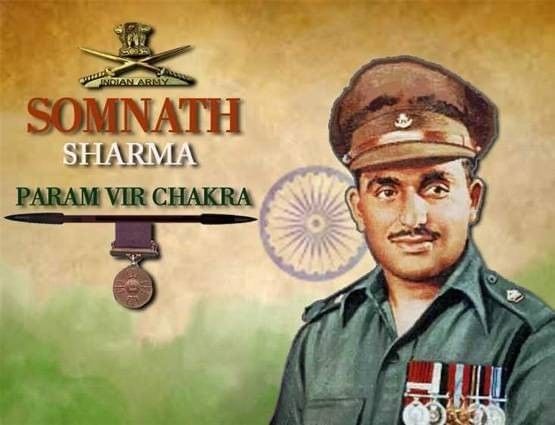
4. A Tale of Valour: Major Somnath Sharma and the Battle of Badgam – Very Short Answer Questions

Q1. Who was the first recipient of the Param Vir Chakra?
Ans: Major Somnath Sharma was the first recipient of the Param Vir Chakra.

Q2. In which battle did Major Somnath Sharma display his valour?
Ans: He displayed his valour in the Battle of Badgam.

Q3. Which year did the Battle of Badgam take place?
Ans: The Battle of Badgam took place in 1947.

Q4. Who launched Operation Gulmarg to annex Kashmir?
Ans: Pakistan launched Operation Gulmarg to annex Kashmir.

Q5. What was the main aim of the Pakistani infiltrators?
Ans: Their aim was to capture Srinagar and the Kashmir Valley.

Q6. On what date did Operation Gulmarg begin?
Ans: Operation Gulmarg began on 22 October 1947.

Q7. When did Jammu and Kashmir accede to India?
Ans: Jammu and Kashmir acceded to India on 26 October 1947.

Q8. How did Indian troops first reach Srinagar in 1947?
Ans: They were airlifted to Srinagar.

Q9. Which regiment was Major Somnath Sharma commanding at Badgam?
Ans: He was commanding the 4th Battalion of the Kumaon Regiment.

Q10. What injury did Major Somnath Sharma have during the battle?
Ans: His left hand was in plaster.

Q11. How many soldiers were with Major Somnath Sharma in D Company?
Ans: Ninety soldiers were with him in D Company.

Q12. How many invaders did D Company face at Badgam?
Ans: They faced about 500 invaders.

Q13. What did Major Somnath Sharma request to fight back the enemy?
Ans: He requested air strikes.

Q14. What guided the aircraft for air strikes during the battle?
Ans: Ground panels laid by Major Somnath Sharma guided the aircraft.

Q15. What were Major Somnath’s last words to his headquarters?
Ans: His last words were that he would not withdraw an inch and fight to the last man and round.

Q16. How did Major Somnath Sharma die?
Ans: He was killed by a mortar shell in a trench.

Q17. How many casualties did the enemy suffer in the battle?
Ans: The enemy suffered more than 300 casualties.

Q18. Which regiment was flown in as reinforcements to Srinagar?
Ans: The Punjab Regiment was flown in as reinforcements.

Q19. At what age did Major Somnath Sharma sacrifice his life?
Ans: He sacrificed his life at the age of 24.

Q20. When was Major Somnath Sharma born?
Ans: He was born on 31 January 1923.

Q21. Where was Major Somnath Sharma born?
Ans: He was born in Dadh, Kangra, Himachal Pradesh.

Q22. What was the name of Major Somnath Sharma’s father?
Ans: His father’s name was Major General Amar Nath Sharma.

Q23. From where did Major Somnath Sharma receive his early education?
Ans: He received his early education at Sherwood College, Nainital.

Q24. In which war did Major Somnath Sharma serve before 1947?
Ans: He served in World War II.

Q25. Where is Major Somnath Sharma’s name inscribed in honour today?
Ans: His name is inscribed on the Honour Wall of the National War Memorial.

3. Wisdom Paves the Way – Very Short Answer Questions

Instruction:                                                      Answer the following questions in one line.

Q1. What is the name of the city the four young men are traveling to?
Ans: The city is Ujjain.

Q2. How many young men are walking to Ujjain?
Ans: There are four young men.

Q3. What time of day is it when the story begins?
Ans: It is midday.

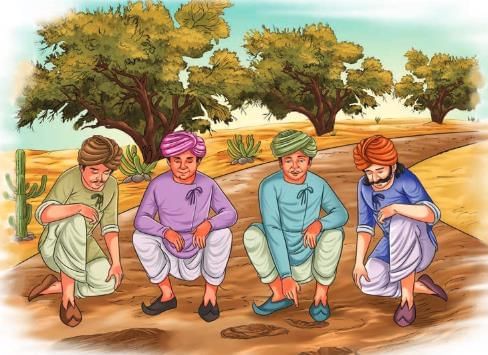
Q4. Who notices the camel tracks first?
Ans: Shiv Datt notices the camel tracks first.

Q5. What animal’s tracks do the young men find on the road?
Ans: They find camel tracks.

Q6. Where do the young men stop to discuss the camel tracks?
Ans: They stop under a large tree.

Q7. Who approaches the young men asking for help with a lost animal?
Ans: A merchant approaches them.

Q8. What is the merchant looking for?
Ans: The merchant is looking for his lost camel.

Q9. What is the name of the first young man questioned by the King?
Ans: Ram Datt is the first young man questioned.

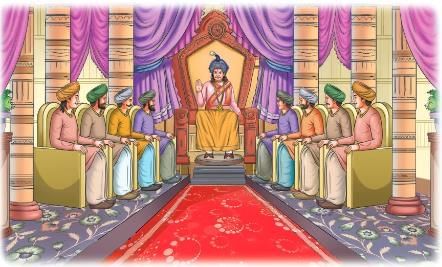
Q10. What decorates the King’s court?
Ans: The King’s court is decorated with rich tapestries.

Q11. What is the King sitting on in his court?
Ans: The King is sitting on a throne.

Q12. Who leads the merchant into the King’s court?
Ans: A sentry leads the merchant into the court.

Q13. What does the merchant call the young men when he accuses them?
Ans: He calls them thieves.

Q14. How many footprints does Ram Datt notice are clear in the camel’s tracks?
Ans: Ram Datt notices three clear footprints.

Q15. Which side’s leaves does the camel not eat, according to Shiv Datt?
Ans: The camel does not eat leaves on the right side.

Q16. What pest does Har Datt say caused the blood droplets on the road?
Ans: Har Datt says mosquitoes caused the blood droplets.

Q17. Which part of the camel’s body does Dev Datt say is in pain?
Ans: Dev Datt says the camel’s stomach is in pain.

Q18. What does the King call the young men after hearing their explanations?
Ans: The King calls them wise.

Q19. What does the merchant do after the King dismisses his accusations?
Ans: The merchant leaves the court.

Q20. How does the court react when the King appoints the young men as advisers?
Ans: The court erupts in applause.

2. A Concrete Example – Very Short Answer Questions

Q1. Who is the poet of “A Concrete Example”?
Ans: The poet of “A Concrete Example” is Reginald Arkell.

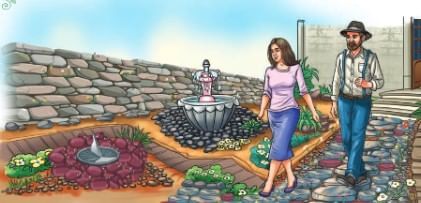
Q2. What is the primary feature of Mrs. Jones’s garden described in the poem?
Ans: The primary feature of Mrs. Jones’s garden is a collection of stones, including a crazy path, rockery, and sundial.

Q3. How many stanzas does the poem “A Concrete Example” have?
Ans: The poem has three stanzas.

Q4. How does the poem’s language create its overall mood?
Ans: The poem’s light-hearted and humorous language creates a whimsical and slightly amused mood.

Q5. What feature of Mrs. Jones’s garden is described as winding?
Ans: The crazy path in her garden is winding.

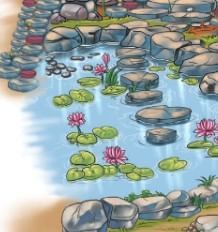
Q6. What is the name of the water feature in Mrs. Jones’s garden?
Ans: The water feature is a lily pond.

Q7. What is a rockery in Mrs. Jones’s garden?
Ans: A rockery is a decorative arrangement of stones.

Q8. What device in the garden tells time using the sun?
Ans: The sundial tells time using the sun.

Q9. How does Mrs. Jones feel about her sundial’s design?
Ans: Mrs. Jones thinks the sundial’s design is rather nice.

Q10. What does Mrs. Jones place between the stones in her garden?
Ans: She places tiny plants between the stones.

Q11. How does the speaker describe the plants in the garden?
Ans: The speaker describes the plants as delicate and small.

Q12. How does the speaker view the significance of the tiny plants?
Ans: The speaker views the tiny plants as having no significant value.

Q13. What tool does the speaker humorously suggest Mrs. Jones uses to plant?
Ans: The speaker suggests she uses a pin to plant the tiny plants.

Q14. What does Mrs. Jones invite the speaker to see in her garden?
Ans: She invites the speaker to see her stones.

Q15. How long do the speaker and Mrs. Jones talk about a flower?
Ans: They talk about a flower for a quarter of an hour.

Q16. What surprising thing does Mrs. Jones say about the flower?
Ans: She says the speaker is standing on the flower.

Q17. What does the speaker’s mistake of stepping on the flower create?
Ans: The mistake creates a humorous and ironic moment.

Q18. What does Mrs. Jones’s garden reveal about her character?
Ans: Her garden reveals her eccentric character, with a preference for stones over typical plants.

Q19. What does the poem suggest about beauty through Mrs. Jones’s garden?
Ans: The poem suggests beauty can be found in unexpected places.

Q20. What does the speaker’s view of the plants show about perception?
Ans: The speaker’s view that the plants are insignificant shows perception differs from reality.

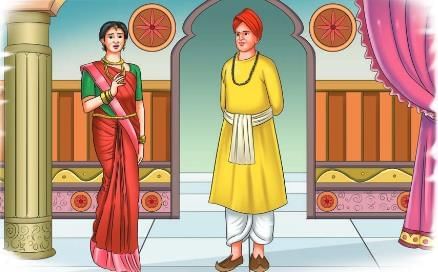
1. The Wit that Won Hearts – Very Short Answer Questions

Q1. Who was the ruler of the Vijayanagara Empire during its Golden Era?
Ans: Krishnadeva Raya was the ruler during the Golden Era.

Q2. What was the name of Krishnadeva Raya’s epic poem?
Ans: His epic poem was Amuktamalyada.

Q3. What was the name of the Sanskrit play written by Krishnadeva Raya?
Ans: The Sanskrit play was Jambavati Parinayam.

Q4. How many esteemed poets were part of the Ashtadiggajas?
Ans: There were eight esteemed poets in the Ashtadiggajas.

Q5. Who was one of the famous poets in Krishnadeva Raya’s court known for his wit?
Ans: Tenali Ramakrishna was a famous poet known for his wit.

Q6. What caused the quarrel between Krishnadeva Raya and Thirumalambal?
Ans: The quarrel began when Thirumalambal yawned during the king’s poem recitation.

Q7. How did the palace atmosphere change after the king’s quarrel with the queen?
Ans: The palace became silent and somber.

Q8. Who did Thirumalambal approach for help to resolve the quarrel?
Ans: She approached Tenali Ramakrishna for help.

Q9. What did Tenali Rama ask the queen for before helping her?
Ans: He asked for time to devise a strategy.

Q10. What was the setting of the royal court when Tenali presented his plan?
Ans: The court was buzzing with ministers and scholars discussing paddy cultivation.

Q11. What did Tenali Rama hold while addressing the king in court?
Ans: He held a plate of paddy seeds.

Q12. What did Tenali claim about the paddy seeds he presented?
Ans: He claimed they could yield three times more than the current harvest.

Q13. How did the courtiers initially react to Tenali’s claim about the seeds?
Ans: They reacted with sarcasm and snickers.

Q14. What did the king say was necessary for a higher crop yield?
Ans: He said special soil and pest control were necessary.

Q15. What did Tenali say was the real issue affecting the harvest?
Ans: He said the real issue was the sower, not the seeds.

Q16. What natural action did Tenali compare yawning to in court?
Ans: He compared yawning to breathing.

Q17. What did the king realize after Tenali’s words in court?
Ans: He realized he had misjudged Thirumalambal for yawning.

Q18. What did Krishnadeva Raya do after reflecting on his mistake?
Ans: He apologized to Thirumalambal.

Q19. How did Thirumalambal respond to the king’s apology?
Ans: She smiled and asked to hear his poem.

Q20. What was the outcome of Tenali’s tactic in the palace?
Ans: It restored harmony, and joy and laughter returned to the palace.