15. Bibha Chowdhuri: The Beam of Light that Lit the Path for Women in Indian Science – Worksheet Solutions

Multiple Choice Questions (MCQs)

Instruction: Select the correct option for each question.

Q1. In which year was Bibha Chowdhuri born?
(a) 1910
(b) 1913
(c) 1920
(d) 1915

Ans: (b) 1913
Bibha Chowdhuri was born in 1913 in Kolkata, during a time when women’s access to education was limited.

Q2. Bibha Chowdhuri pursued her Ph.D. on which subject?
(a) Nuclear energy
(b) Subatomic particles
(c) Cosmic rays
(d) Astronomy

Ans: (c) Cosmic rays
Her Ph.D. thesis under Nobel Laureate Patrick M.S. Blackett was based on cosmic rays.

Q3. Who nominated Bibha Chowdhuri for the Nobel Prize in 1950?
(a) Vikram Sarabhai
(b) Homi J. Bhabha
(c) Erwin Schrödinger
(d) Patrick M.S. Blackett

Ans: (c) Erwin Schrödinger
Though unsuccessful, her nomination by the great scientist Schrödinger reflected her talent.

Q4. What honour did the International Astronomical Union (IAU) give Bibha in 2019?
(a) A professorship in her name
(b) A star named after her
(c) A research lab named after her
(d) A telescope named after her

Ans: (b) A star named after her
In 2019, star HD 86081 in the Leo constellation was renamed ‘Bibha,’ meaning ‘beam of light.’

Q5. Who is popularly known as the “Rocket Woman of India”?
(a) Kalpana Chawla
(b) Sunita Williams
(c) Dr. Ritu Karidhal Srivastava
(d) Tessy Thomas

Ans: (c) Dr. Ritu Karidhal Srivastava
She played a key role in India’s Mars Orbiter Mission and Chandrayaan-2 and 3.

Fill in the Blanks

Instruction: Fill in the blanks with the correct word based on the chapter.

Q1. Bibha Chowdhuri became the first woman faculty member at ______ in 1949.
Ans: Tata Institute of Fundamental Research (TIFR)

She was personally selected by Homi J. Bhabha for TIFR.

Q2. Bibha Chowdhuri’s most notable scientific contribution was the discovery of ______.
Ans: pi-mesons

Pi-mesons are subatomic particles, and her research in this area was pioneering.

Q3. The Government of India declared a ______ professorship in her name in 2020.
Ans: chair

This honour was given to celebrate her contributions to Indian science.

Q4. Bibha worked under the mentorship of ______ at the Physical Research Laboratory in Ahmedabad.
Ans: Vikram Sarabhai

She continued her research on cosmic rays and subatomic particles under him.

Q5. Bibha Chowdhuri passed away in the year ______.
Ans: 1991

She died without much recognition during her lifetime, but her legacy lives on today.

Very Short Answer Questions

Instruction: Answer the following questions in one line.

Q1. Where was Bibha Chowdhuri born?
Ans: She was born in Kolkata in 1913.

Q2. Which institute did Bibha join before going abroad for higher studies?
Ans: She joined the Bose Institute.

Q3. Who guided Bibha during her Ph.D. in Manchester?
Ans: Nobel Laureate Patrick M.S. Blackett.

Q4. Which star was renamed ‘Bibha’ by IAU?
Ans: HD 86081 in the Leo constellation.

Q5. What nickname did newspapers give Bibha during her early career?
Ans: “India’s New Woman Scientist—She has an eye for Cosmic Rays.”

Short Answer Questions

Instruction: Answer the following questions in 2–3 lines.

Q1. Why is Bibha Chowdhuri considered a pioneer in Indian science?
Ans: She was India’s first woman physicist who excelled in high-energy particle physics at a time when women had little access to education. Her determination paved the way for future women scientists.

Q2. What challenges did Bibha face during her career?
Ans: She worked in a male-dominated field, often remained unrecognized, and despite her discoveries, did not receive awards during her lifetime.

Q3. What was Bibha’s contribution after returning to India in 1949?
Ans: She joined TIFR as the first woman faculty and worked across institutions like PRL and Saha Institute of Nuclear Physics, continuing research in cosmic rays and subatomic particles.

Q4. How is Bibha’s legacy honoured today?
Ans: A star was named after her in 2019, and a professorship was declared in her name in 2020 by the Government of India.

Q5. How do present-day women scientists reflect Bibha’s pioneering spirit?
Ans: Women at ISRO, including Ritu Karidhal Srivastava, lead key space missions like Chandrayaan-3, building on the foundation laid by Bibha Chowdhuri.
14. Magnifying Glass – Worksheet Solutions

Multiple Choice Questions (MCQs)

Instruction: Select the correct option for each question.

Q1. What does the poet compare a drop of water to?
(a) A piece of glass
(b) A hive of bees
(c) A tiny forest
(d) A chalk piece

Ans: (b) A hive of bees
The poet says that under the magnifying glass, a drop of water looks like a hive filled with bees.

Q2. What does the magnifying glass make out of a scrap of chalk?
(a) A stone
(b) A myriad shells
(c) A forest
(d) A drop of water

Ans: (b) A myriad shells
The poet observes that chalk appears like countless shells under the magnifying glass.

Q3. What creature does the poet describe as having “tigerish claws”?
(a) Spider
(b) Fly
(c) Bee
(d) Ant

Ans: (a) Spider
The poet admires the spider’s sharp claws, calling them tiger-like.

Q4. What does the magnifying glass help the poet to watch?
(a) The moon’s craters
(b) The spinning of spider’s web
(c) The flying of bees
(d) The blooming of flowers

Ans: (b) The spinning of spider’s web
The poet closely observes the spider creating its web using its spinnerets.

Q5. According to the poet, what would lenses like the magnifying glass help us do with the moon?
(a) See its light clearly
(b) Walk there in an afternoon
(c) Count its craters
(d) Plant trees there

Ans: (b) Walk there in an afternoon
The poet imagines that powerful lenses could make traveling to the moon seem easy.

Fill in the Blanks

Instruction: Fill in the blanks with the correct word based on the chapter.

Q1. The magnifying glass makes a scrap of chalk appear like a __________.
Ans: myriad shells

The poet compares chalk to countless shells when magnified.

Q2. A drop of water looks like a hive of __________ through the magnifying glass.
Ans: bees

The poet says water appears like a hive buzzing with bees.

Q3. The spider spins its web using its __________.
Ans: spinnerets

Spinnerets are the special organs spiders use to produce silk.

Q4. The magnifying glass can make even the __________ thing look marvellous.
Ans: tiniest

The poet highlights how small objects become fascinating under the lens.

Q5. The poet of Magnifying Glass is __________.
Ans: Walter de la Mare

The poem was written by the famous English poet Walter de la Mare.

Very Short Answer Questions

Instruction: Answer the following questions in one line.

Q1. What object does the poem revolve around?
Ans: A magnifying glass.

Q2. Who is the poet of Magnifying Glass?
Ans: Walter de la Mare.

Q3. What mistake do flies make in the poem?
Ans: They stumble into the spider’s web.

Q4. What natural object does an inch of moss resemble under the glass?
Ans: A forest with flowers and trees.

Q5. Which heavenly body is mentioned at the end of the poem?
Ans: The moon.

Short Answer Questions 

Instruction: Answer the following questions in 2–3 lines.

Q1. How does the poet describe the effect of the magnifying glass on chalk?
Ans: The poet explains that when a magnifying glass is used, even a small scrap of chalk looks extraordinary. It appears to be filled with countless shells, as if it hides a whole world inside. This shows how science helps us see the hidden beauty in ordinary things.

Q2. What does the magnifying glass reveal about a drop of water?
Ans: According to the poet, when a drop of water is seen through a magnifying glass, it no longer looks plain. Instead, it seems alive and active, like a buzzing hive filled with bees. This makes us realize how much life and activity exists even in the smallest things.

Q3. Why does the poet call the spider’s claws “tigerish”?
Ans: The poet uses the word “tigerish” to compare the spider’s claws to those of a tiger. Although the spider is tiny, its sharp, fierce claws make it appear strong and dangerous, almost like a miniature tiger. This shows how even small creatures can have powerful features.

Q4. What lesson does the poem teach about small things?
Ans: The poem teaches us that small things in nature, which we often ignore, can be full of wonders. If we observe them carefully with the help of science or imagination, we discover their hidden beauty and importance. It encourages us to respect even the tiniest parts of the natural world.

Q5. What does the poet imagine about the moon with stronger lenses?
Ans: The poet imagines that if we had stronger lenses, we could see the moon so closely that it would look like a reachable place. He even dreams of walking there in just one afternoon. This shows how curiosity and imagination can make the impossible seem possible.

13. Feathered Friend – Worksheet Solutions

Multiple Choice Questions (MCQs)

(Instruction: Select the correct option for each question.)

Q1. Why was Sven Olsen easily qualified for work in space?
(a) He was very tall
(b) He was wiry and light in weight
(c) He had experience with animals
(d) He was a trained pilot

Ans: (b) He was wiry and light in weight
Spacers were usually thin and strong because weight mattered for space travel.

Q2. What pet did Sven smuggle into the space station?
(a) A dog
(b) A parrot
(c) A canary
(d) A cat

Ans: (c) A canary
The bird was named Claribel, a small yellow canary.

Q3. Why did the crew first think Claribel had fainted?
(a) She had eaten too much
(b) She had collided with a wall
(c) She was sick from space travel
(d) She lacked oxygen

Ans: (d) She lacked oxygen
Claribel fainted due to low oxygen, which helped the crew realize the danger.

Q4. What was the actual reason for the failure in the space station?
(a) A broken pipe
(b) Frozen air purifier and a failed alarm
(c) Electrical wiring issue
(d) Leakage of water vapor

Ans: (b) Frozen air purifier and a failed alarm
Earth’s shadow caused freezing, and the alarm was not connected properly.

Q5. What is the significance of Claribel in the story?
(a) She was just a pet for Sven
(b) She entertained the crew with songs
(c) She saved the crew’s lives
(d) She was part of a science experiment

Ans: (c) She saved the crew’s lives
Claribel acted as an early warning system when oxygen levels fell.

Fill in the Blanks

(Instruction: Fill in the blanks with the correct word based on the chapter.)

Q1. Sven smuggled a ______ into the space station.
Ans: canary

Claribel, the canary, was Sven’s secret pet.

Q2. Claribel fainted because of lack of ______ in the space station.
Ans: oxygen

The bird collapsed due to insufficient oxygen levels.

Q3. The alarms did not go off because the second alarm circuit was not ______.
Ans: connected

Only one alarm was working, and it failed.

Q4. The space station had experienced one of its rare ______ by Earth’s shadow.
Ans: eclipses

The eclipse caused the purifier to freeze.

Q5. Miners once carried ______ with them to detect dangerous gases.
Ans: canaries

Canaries acted as natural gas detectors in mines, similar to Claribel’s role in space.

Very Short Answer Questions 

(Instruction: Answer the following questions in one line.)

Q1. Who was Claribel?
Ans: Claribel was a yellow canary smuggled into the space station by Sven.

Q2. What work did Sven excel at in the space station?
Ans: Sven excelled at construction work, especially fitting girders in free fall.

Q3. What sound first revealed Claribel’s presence to the narrator?
Ans: A musical whistle revealed Claribel’s presence.

Q4. What revived Claribel when she fainted?
Ans: Oxygen revived Claribel.

Q5. What recognition did the narrator give to Claribel at the end?
Ans: He said Claribel safeguarded the crew’s lives better than costly machines.

Short Answer Questions 

(Instruction: Answer the following questions in 2–3 lines.)

Q1. Why was Claribel considered an ideal pet for the space station?
Ans: Claribel was thought to be the perfect pet for the space station because she was very light and did not require much food, which was important in space where resources were limited. She could also adapt quickly to the unusual conditions of zero gravity, unlike many animals. Her small size and easy care made her less of a burden for the astronauts.

Q2. Why did the crew have trouble hiding Claribel from VIP visitors?
Ans: The astronauts had difficulty hiding Claribel whenever important guests visited the space station. This was because Claribel often made sudden loud whistles and peeps that could easily give her presence away. Since pets were not officially allowed, the crew worried that these noises might alert the visitors and expose their secret.

Q3. How did Claribel save the crew from disaster?
Ans: Claribel saved the astronauts’ lives in an unexpected way. One day, she suddenly fainted, which was unusual and caught the crew’s attention. This fainting made them realize that the oxygen level inside the station was dropping. On checking, they discovered that the oxygen purifier had failed, and thanks to Claribel’s warning, they were able to fix it in time.

Q4. Why was the alarm system unreliable?
Ans: The alarm system that was supposed to detect oxygen problems was not dependable. Only one circuit had been connected to the system, and unfortunately, it failed to work when the oxygen purifier froze. Because of this, the astronauts could not rely on the machine to alert them to the danger.

Q5. What lesson does the story suggest about technology and nature?
Ans: The story suggests that technology, while advanced, is not always completely reliable. Machines can fail at critical moments, as seen with the alarm system. However, sometimes simple creatures like Claribel, with natural instincts and reactions, can provide warnings that even advanced systems miss. It reminds us that nature too has its own intelligence and importance.

12. Waiting for the Rain – Worksheet Solutions

Multiple Choice Questions (MCQs)

Instruction: Select the correct option for each question.

Q1. What did Velu hope for at the beginning of the story?
(a) A good harvest
(b) A visit from the astrologer
(c) That it would rain
(d) A holiday from work

Ans: (c) That it would rain
The story begins with Velu hoping for rain as he wakes up.

Q2. Why did Velu not agree with consulting astrologers?
(a) He did not believe in hard work
(b) He thought rains always came without such talks
(c) He was afraid of astrologers
(d) He wanted to leave the village

Ans: (b) He thought rains always came without such talks
Velu believed nature worked on its own and did not need astrologers’ advice.

Q3. Where did Velu go to ask about the rains?
(a) The temple
(b) The city’s weather office
(c) The old woman
(d) His neighbors

Ans: (b) The city’s weather office
He visited the weather office to get accurate information.

Q4. What lesson did the old woman teach Velu?
(a) That he should stop farming
(b) That the land also needs rest
(c) That farmers must work harder
(d) That rain is useless without toil

Ans: (b) That the land also needs rest
She explained that nature requires rest just like humans.

Q5. How does the story end?
(a) Velu leaves farming forever
(b) The old woman disappears
(c) Velu runs home happily as rain begins
(d) The astrologers predict correctly

Ans: (c) Velu runs home happily as rain begins
The rain finally arrives, bringing hope and joy to Velu.

Fill in the Blanks

Instruction: Fill in the blanks with the correct word based on the chapter.

Q1. Velu was a ______ who worked hard without rest.
Ans: farmer

The story is about a hardworking farmer named Velu.

Q2. Velu usually grew jowar in one season and ______ in the next.
Ans: dhal

His cultivation cycle included jowar and dhal.

Q3. The barren land looked ______ and the farmers lived on hope.
Ans: forlorn

The dry, cracked land seemed sad and hopeless.

Q4. The old woman compared Nature to a ______ who cares for her children.
Ans: mother

She reminded Velu that Nature looks after everyone like a mother.

Q5. The story ends with Velu feeling a cool ______ on his back, followed by rain.
Ans: breeze

The breeze and raindrops mark the arrival of rain.

Very Short Answer Questions

Instruction: Answer the following questions in one line.

Q1. Who is the main character of the story?
Ans: Velu, a hardworking farmer.

Q2. How many years had Velu been farming his own land?
Ans: For nearly six years.

Q3. Why was Velu dejected?
Ans: Because the rains did not arrive and his land remained barren.

Q4. Where did Velu rest on his way back from the city?
Ans: Under the shade of a large tree.

Q5. What natural event brought joy to Velu in the end?
Ans: The arrival of clouds, thunder, and rain.

Short Answer Questions

Instruction: Answer the following questions in 2–3 lines.

Q1. Why was rain so important for Velu and his village?
Ans: Rain was extremely important for Velu and his village because their lives depended entirely on farming. The soil was dry and cracked without rainfall, and crops could not grow in such harsh conditions. Since there were no irrigation facilities, rain was the only source of water for cultivation. Without it, farmers faced hunger, poverty, and despair, as their survival was tied to the yield of their fields.

Q2. Why did Velu feel punished despite working honestly?
Ans: Velu was a hardworking farmer who toiled day and night in his fields with complete honesty and dedication. However, despite his efforts, nature did not reward him with rainfall, leaving his land barren. This made him feel as though he was being punished unfairly, even though he had done nothing wrong. His disappointment came from the helplessness of seeing all his hard work go to waste simply because the rain did not come.

Q3. How did the old woman explain the absence of rain?
Ans: The old woman comforted Velu by saying that even the earth, like humans, needed some time to rest. She explained that the absence of rain was nature’s way of giving the land time to regain its strength and rejuvenate. According to her, just as farmers worked hard and then rested, the earth too required pauses to prepare itself for the next cycle of cultivation. Her words gave a new perspective to Velu’s despair.

Q4. What difference did the conversation with the old woman make to Velu?
Ans: The old woman’s words had a calming and transformative effect on Velu. Until then, he had been upset and hopeless, feeling punished by the lack of rain. But after listening to her wisdom, he began to realize that nature has its own rhythm and that the land also deserves time to rest. This conversation helped Velu accept the situation with more patience and hope, instead of anger and frustration.

Q5. How did Velu’s mood change at the end of the story?
Ans: By the end of the story, Velu’s mood shifted completely. From being sad, tired, and hopeless at the beginning, he turned cheerful and full of excitement when he finally saw the clouds gathering in the sky. The first drops of rain filled him with joy and relief, as it not only promised the revival of his fields but also restored his faith and optimism for the future.

11. Harvest Hymn – Worksheet Solutions

Multiple Choice Questions (MCQs)

Instruction: Select the correct option for each question.

Q1. Who is praised as the “Lord of the morn” in the poem?
(a) Varuna
(b) Surya
(c) Bramha
(d) Prithvi

Ans: (b) Surya
Surya, the Sun God, is described as the lord of the morning who nurtures crops.

Q2. What does Varuna provide according to the poem?
(a) Fruits and flowers
(b) Rain and dew
(c) Corn and gold
(d) Songs and garlands

Ans: (b) Rain and dew
Varuna, the rain god, is praised for sending rain and dew that foster crops.

Q3. Who is referred to as the “Queen of the harvest”?
(a) Prithvi
(b) Surya
(c) Bramha
(d) Saraswati

Ans: (a) Prithvi
Mother Earth, Prithvi, is described as the queen of the harvest who nurtures all life.

Q4. What does the line “Thou art the Seed and the Scythe” suggest about Bramha?
(a) He gives rain only
(b) He begins and ends the cycle of life
(c) He plays musical instruments
(d) He grows lotus flowers

Ans: (b) He begins and ends the cycle of life
Seed represents beginning, and scythe represents harvest, showing Bramha as creator and sustainer.

Q5. What musical instruments are mentioned as part of the tribute?
(a) Guitar and drum
(b) Cymbal, flute, pipe, drum
(c) Violin and trumpet
(d) Harp and piano

Ans: (b) Cymbal, flute, pipe, drum
The poem repeatedly refers to cymbal, flute, pipe, and drum as offerings of praise.

Fill in the Blanks

Instruction: Fill in the blanks with the correct word based on the chapter.

Q1. Surya is described as the lord of the ______ and the harvest.
Ans: morn

Surya is the lord of the morning and harvest, bringing light and growth.

Q2. Varuna is called the sender of ______ and dewfall.
Ans: rain

The god Varuna blesses the land with rain and dew.

Q3. Prithvi is compared to a ______ who feeds and nurtures her children.
Ans: mother

Mother Earth is seen as a nurturing mother providing food and wealth.

Q4. Bramha is hailed as the Lord of the ______ and our being.
Ans: Universe

Bramha is praised as the supreme lord of the universe and human existence.

Q5. The people offer their songs, garlands, and the ______ of their fields as tribute.
Ans: gold

Gold here symbolizes the ripened crops and fruits of the harvest.

Very Short Answer Questions

Instruction: Answer the following questions in one line.

Q1. Who wrote the poem “Harvest Hymn”?
Ans: Sarojini Naidu.

Q2. What do the men bring as tribute to Surya and Varuna?
Ans: Songs, garlands, and the wealth of fields and fruit.

Q3. How is Prithvi addressed by the women?
Ans: As the “Queen of the gourd-flower, queen of the harvest.”

Q4. What does Bramha symbolize in the poem?
Ans: The eternal source of life and blessing.

Q5. Which natural elements are celebrated in the poem?
Ans: Sun, rain, earth, and the universe.

Short Answer Questions

Instruction: Answer the following questions in 2–3 lines.

Q1. Why do the villagers praise Surya in the poem?
Ans: They praise Surya as the giver of light and energy who prospers their sowing and nurtures their corn. His radiance ensures a fruitful harvest.

Q2. What role does Varuna play in the lives of farmers?
Ans: Varuna, the god of water, provides rain and dew which are essential for the growth of crops. Without his mercy, the fields would remain barren.

Q3. How is Mother Earth described in the hymn?
Ans: She is portrayed as an omnipotent mother with a plentiful bosom who nourishes life, provides riches, and gives happiness through her bounty.

Q4. What does the tribute offered to the deities signify?
Ans: The tribute of garlands, songs, and fruits symbolizes gratitude and recognition of the divine role in human survival and prosperity.

Q5. How does the poem emphasize the unity of life and nature?
Ans: By praising Surya, Varuna, Prithvi, and Bramha together, the poem shows that all forces of nature are interconnected and sustain human life harmoniously.

Match the Following

Instruction: Match Column A with the correct option in Column B.Column AColumn B1. Suryaa) Rain and dew provider2. Varunab) Eternal father, Lord of the Universe3. Prithvic) Sun God, lord of the morning4. Bramhad) Omnipotent mother, source of riches5. Tributee) Songs, garlands, and fruits of the fields

Ans: 1 → c, 2 → a, 3 → d, 4 → b, 5 → e

Surya is the Sun God, Varuna the rain god, Prithvi the mother earth, Bramha the eternal father, and the people offer songs, garlands, and crops as tribute.

10. The Cherry Tree – Worksheet Solutions

Multiple Choice Questions (MCQs)

Instruction: Select the correct option for each question.

Q1. Why did Rakesh’s parents send him to live with his grandfather in Mussoorie?
(a) To enjoy the mountain life
(b) Because there were no schools in their village
(c) To help his grandfather in farming
(d) Because they wanted him to grow cherries

Ans: (b) Because there were no schools in their village
Rakesh’s parents lived in a village where there were no schools, so they sent him to his grandfather for education.

Q2. Where did the cherries that Rakesh bought come from?
(a) Himachal Pradesh
(b) Nepal
(c) Kashmir Valley
(d) Local Mussoorie farms

Ans: (c) Kashmir Valley
The text mentions that the cherries came from the Kashmir Valley, known for its cherry orchards.

Q3. What happened to the young cherry tree when a goat entered the garden?
(a) It was uprooted completely
(b) Its leaves were eaten
(c) It was trampled down
(d) Nothing happened

Ans: (b) Its leaves were eaten
The goat ate all the leaves of the little tree, leaving only the main stem and two branches.

Q4. How old was Rakesh when he first saw the cherry tree blossom?
(a) Six years old
(b) Seven years old
(c) Eight years old
(d) Nine years old

Ans: (d) Nine years old
On his ninth birthday, Rakesh saw the first pink blossom on the cherry tree.

5. Why did Rakesh and Grandfather feel the cherry tree was special?
(a) Because it gave sweet cherries
(b) Because it survived all odds
(c) Because they had planted it themselves
(d) Because it was the tallest tree

Ans: (c) Because they had planted it themselves
Grandfather told Rakesh that the tree was special since they had grown it from a single seed.

Fill in the BlanksInstruction: Fill in the blanks with the correct word based on the chapter.

Q1. Rakesh paid ______ paise for the bunch of cherries.
Ans: fifty

He bought the cherries from Mussoorie bazaar for fifty paise.

Q2. Grandfather told Rakesh that nothing is lucky if you put it away; you must put it to some ______.
Ans: use

Grandfather advised Rakesh to plant the seed instead of keeping it.

Q3. During the monsoons, a ______ cut the cherry tree in two with her scythe.
Ans: woman cutting grass

A careless woman damaged the tree while cutting grass.

Q4. The first blossom on the cherry tree was of a pale ______ colour.
Ans: pink

When Rakesh turned nine, the tree had its first pale pink blossom.

Q5. Grandfather enjoyed sitting under the cherry tree because of its cool ______.
Ans: shade

He said it gave just the right amount of shade.

Very Short Answer Questions 

Instruction: Answer the following questions in one line.

Q1. Where did Rakesh live with his grandfather?
Ans: On the outskirts of Mussoorie, near the forest.

Q2. What did Rakesh use pebbles for around the cherry plant?
Ans: He circled the plant with pebbles “for privacy.”

Q3. What was Rakesh’s nickname given by his grandfather?
Ans: “Blackberry eyes.”

Q4. Who were some of the first visitors to the cherry tree?
Ans: A praying mantis and a hairy caterpillar.

Q5. What did Rakesh whisper while touching the tree at the end?
Ans: “Is this what it feels to be God?”

Short Answer Questions 

Instruction: Answer the following questions in 2–3 lines.

Q1. Why did Grandfather stop Rakesh from planting the cherry seed in the flowerbed?
Ans: Grandfather stopped Rakesh because he had already sown mustard seeds in the flowerbed, and planting the cherry seed there would have disturbed their growth. Instead, he guided Rakesh to plant the seed in a quiet, shady corner of the garden. He knew that a tree needed space and time to grow without interference, and that the flowerbed was too crowded for it to thrive.

Q2. How did the cherry tree show resilience?
Ans: The cherry tree showed resilience by surviving even after facing several hardships. At one point, it lost all its leaves when a goat chewed them off. Later, a woman cut the tree in two while gathering fodder. Despite these setbacks, the tiny seedling grew again with fresh branches and leaves. This determination to live and grow stronger reflects the tree’s ability to withstand challenges.

Q3. How did the cherry tree bring nature closer to Rakesh?
Ans: As the cherry tree grew, it slowly became a link between Rakesh and the natural world around him. It attracted bees, insects, and small birds, filling the garden with life and sound. During spring, blossoms appeared on its branches, and Rakesh watched the process of growth with wonder. Through this, he began to feel connected with the cycles of nature and learned to appreciate its beauty more deeply.

Q4. What did Grandfather and Rakesh enjoy about the tree in the end?
Ans: In the end, the cherry tree became a source of joy for both Grandfather and Rakesh. They often sat under its cool shade, enjoying the peace it brought them. They admired the way the leaves danced gently in the breeze and how the tree had become a living companion in their lives. For them, the tree was not just a plant, but a symbol of patience, love, and shared happiness.

Q5. What is the significance of the cherry tree in the story?
Ans: The cherry tree is a powerful symbol in the story. It represents growth, patience, and resilience, showing how life can flourish even in difficult circumstances. For Rakesh, the tree teaches valuable lessons about nurturing, responsibility, and the rewards of care and perseverance. Beyond this, the tree signifies the bond between humans and nature, reminding us of the joy and peace that comes from watching life grow from a tiny seed into a flourishing tree.

9. Spectacular Wonders – Worksheet Solutions

Multiple Choice Questions (MCQs)

Instruction: Select the correct option for each question.

Q1. What makes the Valley of Flowers in Uttarakhand a UNESCO World Heritage Site?
(a) Its large population of snow leopards
(b) Its 600 species of exotic flowers and rare wildlife
(c) Its man-made bridges
(d) Its disappearing sea

Ans: (b) Its 600 species of exotic flowers and rare wildlife
The Valley of Flowers is recognized for its vast variety of exotic flowers and rare wildlife like the snow leopard, making it a botanical and ecological wonder.

Valley of Flowers

Q2. How are the living root bridges in Meghalaya primarily constructed?
(a) Using cement and stones
(b) With intertwined roots of local flora
(c) From bamboo and wood
(d) By carving into the hillside

Ans: (b) With intertwined roots of local flora
The bridges are made by guiding and intertwining the roots of trees, a natural and innovative solution by the indigenous people to cross waterways.

Q3. What caused the formation of the Lonar Crater Lake in Maharashtra?
(a) A volcanic eruption
(b) A colossal meteorite impact
(c) Heavy monsoon rains
(d) Human excavation

Ans: (b) A colossal meteorite impact
The Lonar Crater Lake was formed thousands of years ago when a meteorite crashed into Earth, creating a unique geological feature.

Q4. What creates the optical illusion at the Magnetic Hill in Ladakh?
(a) A magnetic force pulling vehicles
(b) The alignment of surrounding slopes and horizon
(c) Bioluminescent organisms
(d) Tidal movements of water

Ans: (b) The alignment of surrounding slopes and horizon
The peculiar alignment of slopes and the horizon tricks the eye, making vehicles appear to roll uphill at the Magnetic Hill.

Magnetic Hill, Ladakh

Q5. What is the primary reason for the glowing waters in Kumbalangi, Kerala?
(a) Artificial lights from the village
(b) Bioluminescence from micro-planktons
(c) Reflection of the moon
(d) Chemical pollution in the water

Ans: (b) Bioluminescence from micro-planktons
The glowing waters are caused by bioluminescence, a chemical reaction in micro-planktons that produces light in the backwaters.

Fill in the Blanks

Instruction: Fill in the blanks with the correct word based on the chapter.

Q1. The Valley of Flowers is located in the ________ district of Uttarakhand.
Ans: Chamoli

The chapter specifies that the Valley of Flowers National Park is in the Chamoli district, known for its floral diversity.

Q2. The living root bridges in Meghalaya are a ________ UNESCO World Heritage Site.
Ans: tangible

The bridges are described as a tangible UNESCO site due to their physical, natural construction by indigenous people.

Q3. The Lonar Crater Lake is unique because it is formed in ________ rock.
Ans: basaltic

The crater is the only one in India formed in basaltic rock by a meteorite impact, as mentioned in the chapter.

Q4. The Sundarbans is a ________ forest in West Bengal.
Ans: mangrove

The Sundarbans is identified as a mangrove forest, with trees rooted in low-oxygen soil in a coastal delta.

Q5. The sea at Chandipur Beach retreats by ________ km during ebb tide.
Ans: 2–5

The chapter notes that the sea at Chandipur Beach moves back 2–5 km during ebb tide, creating its hide-and-seek phenomenon.

Living Root Bridge, MeghalyaVery Short Answer Questions

Instruction: Answer the following questions in one line.

Q1. Which months are ideal for visiting the Valley of Flowers?
Ans: May to October

Q2. What is the longest living root bridge in Meghalaya said to be?
Ans: 175 feet

Q3. Where is the Lonar Crater Lake located?
Ans: Buldhana district, Maharashtra

Q4. What is the name of the signboard at the Magnetic Hill in Ladakh?
Ans: The Phenomenon That Defies Gravity

Q5. What type of tourism is Kumbalangi village known for?
Ans: Eco-tourismShort Answer Questions

Instruction: Answer the following questions in 2–3 lines.

Q1. What types of wildlife can be found in the Valley of Flowers?
Ans: The Valley of Flowers is home to rare wildlife like the grey langur, flying squirrel, red fox, lime butterfly, and snow leopard. These species add to the valley’s ecological richness.

Q2. Why were bamboo bridges ineffective in Meghalaya’s waterways?
Ans: Bamboo bridges were futile because they could not withstand the heavy rains and strong waters during monsoons. The living root bridges provided a durable, natural alternative.

Q3. What makes the Lonar Crater Lake visually striking?
Ans: The Lonar Crater Lake’s circular depression with a saline lake contrasts with the rugged terrain around it. This blend of celestial impact and natural beauty creates a stunning sight.

Q4. How does the Magnetic Hill create a unique experience for visitors?
Ans: The Magnetic Hill’s optical illusion makes parked vehicles appear to roll uphill, defying gravity. This fascinating phenomenon, caused by the slope alignment, surprises tourists.

Q5. What role do the mangrove forests of the Sundarbans play in the environment?
Ans: The Sundarbans’ mangrove roots slow tidal waters, stabilizing the coastline and reducing erosion. They support diverse flora and fauna, including the Bengal tiger.

8. The Magic Brush of Dreams – Worksheet Solutions

Multiple Choice Questions (MCQs)

Instruction: Select the correct option for each question.

Q1. What was Gopi asked to collect at the beginning of the poem?
(a) Beans, rice, and mangoes
(b) Fruits, flowers, and water
(c) Sticks, leaves, and grass
(d) Wheat, pulses, and oil

Ans: (a) Beans, rice, and mangoes
The poem begins with Gopi being told to bring beans, rice, and mangoes.

Q2. Where was Gopi sitting when she was first seen drawing?
(a) In the fields
(b) Inside her hut
(c) Beneath a banyan tree
(d) Beside a river

Ans: (c) Beneath a banyan tree
Gopi was sitting under a banyan tree, drawing pictures in the sand.

Q3. What special gift did Gopi receive from the man with the brush?
(a) A golden bowl
(b) A magic brush
(c) A book of dreams
(d) A bag of treasures

Ans: (b) A magic brush
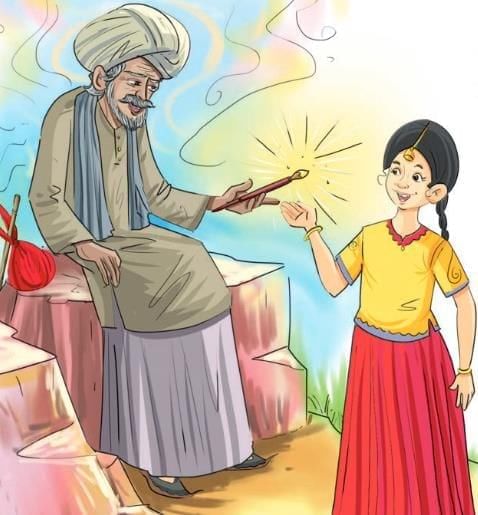
The mysterious man gave Gopi a brush that could bring paintings to life.

Q4. What rule did the man give Gopi about using the brush?
(a) To paint only for her family
(b) To paint only for the poor
(c) To paint for everyone equally
(d) To paint only during the night

Ans: (b) To paint only for the poor
The man warned her never to paint for the wealthy, only for the poor.

Q5. How did Gopi finally escape from prison?
(a) She painted wings for herself
(b) She painted a horse and a road
(c) The villagers rescued her
(d) The Zamindar set her free

Ans: (b) She painted a horse and a road
Gopi painted a horse and a road leading out of the prison gates, allowing her escape.

Fill in the Blanks

Instruction: Fill in the blanks with the correct word based on the chapter.

Q1. The mysterious man gave Gopi a __________ to paint.
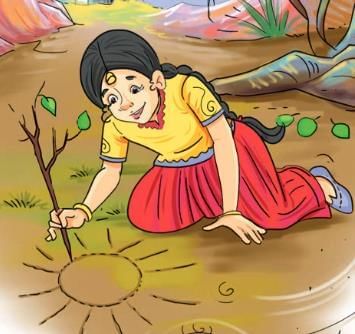
Ans: magic brush

This brush could turn her paintings into reality.

Q2. Gopi first painted a bowl of _________ for her family.
Ans: khichdi

The khichdi became real when the paint dried.

Q3. The villagers came to see the _________ after hearing the news.
Ans: magic brush of dreams

The brush soon became famous among the people.

Q4. The greedy _________ ordered Gopi to paint treasures and riches.
Ans: Zamindar

He wanted to misuse the brush for his own wealth.

Q5. To stop the Zamindar’s men, Gopi painted a mighty _________.
Ans: river

The river blocked the Zamindar and his men from chasing her.

Very Short Answer Questions 

Instruction: Answer the following questions in one line.

Q1. Who was Gopi?
Ans: Gopi was a young girl who received a magic brush.

Q2. What happened when Gopi painted food?
Ans: The food became real after the paint dried.

Q3. Who spread fear by demanding treasures from Gopi?
Ans: The Zamindar.

Q4. Where was Gopi imprisoned?
Ans: In a prison cell with a cold mud floor.

Q5. What did Gopi paint to scare the Zamindar at the end?
Ans: She threatened to paint a beast.

Short Answer Questions 

Instruction: Answer the following questions in 2–3 lines.

Q1. What was special about the brush given to Gopi?
Ans: The brush was magical and had the power to turn drawings into reality. Whatever Gopi painted with it immediately became real, but the brush was meant to be used only for helping the needy, not for selfish purposes.

Q2. How did Gopi use the brush to help the villagers?
Ans: Gopi never used the brush for personal gain. Instead, she painted food, clothes, ploughs, and even fans, all of which became real and supported the poor villagers in their daily lives.

Q3: Why did the Zamindar imprison Gopi?
Ans. The greedy Zamindar wanted to misuse the brush for his own selfish desires. He imprisoned Gopi, hoping to force her into painting wealth, jewels, and a fortress for him.

Q4. How did Gopi escape from the prison?
Ans: Gopi cleverly used the magical brush even inside the prison. She painted a strong horse and a long road, both of which became real, and she rode away through the prison gates to freedom.

Q5. What lesson does the poem teach us?
Ans: The poem highlights that greed and selfishness ultimately lead to destruction, as shown by the Zamindar’s fate. On the other hand, kindness, honesty, and using talents for the welfare of others bring true happiness and strength.

7. The Case of the Fifth Word – Worksheet Solutions

Multiple Choice Questions (MCQs)

Instruction: Select the correct option for each question.

Q1. What was Encyclopedia Brown’s real name?
(a) Daniel
(b) Tim
(c) Leroy
(d) Nolan

Ans: (c) Leroy
Only his parents and teachers called him Leroy; everyone else called him Encyclopedia.

Q2. Why was Encyclopedia given the nickname “Encyclopedia”?
(a) He loved collecting books.
(b) He remembered all facts he read.
(c) He worked at a library.
(d) He wrote an encyclopedia himself.

Ans: (b) He remembered all facts he read.
His head was full of facts from A to Z, just like an encyclopedia.

Q3. What business did Tim Nolan start in Idaville?
(a) Jewellery shop
(b) Palm-tree nursery
(c) Grocery store
(d) Bookshop

Ans: (b) Palm-tree nursery
After leaving prison, Nolan started a small palm-tree nursery.

Q4. What did Nolan leave for Davenport in his will?
(a) Jewellery
(b) Palm-tree nursery
(c) House and gold
(d) Only money

Ans: (b) Palm-tree nursery
Nolan left everything he owned, including the nursery, to Davenport.

Q5. What was the hidden meaning of the four words “Nom Utes Sweden Hurts”?
(a) They were random words.
(b) They were names of countries.
(c) They stood for days of the week.
(d) They were part of a poem.

Ans: (c) They stood for days of the week.
Each word represented a day (Nom–Monday, Utes–Tuesday, Sweden–Wednesday, Hurts–Thursday).

Fill in the Blanks

Instruction: Fill in the blanks with the correct word based on the chapter.

Q1. Encyclopedia was in the ______ grade.
Ans: eighth

He was an eighth grader but the smartest detective.

Q2. Chief Brown was the ______ of Police in Idaville.
Ans: Chief

He was respected as one of the smartest police chiefs.

Q3. Nolan and Davenport first met while they were in ______.
Ans: prison

They became friendly in prison before planning the robbery.

Q4. The clerk could not testify against Nolan because she was not ______.
Ans: absolutely sure

She thought she recognised Nolan, but wasn’t sure.

Q5. The stolen jewellery was finally found under a young ______ tree.
Ans: fir

The code pointed to Friday (Fir-day), meaning under the fir tree.

Very Short Answer Questions 

Instruction: Answer the following questions in one line.

Q1. Who was the Chief of Police in Idaville?
Ans: Chief Brown.

Q2. Who was Nolan’s partner in crime?
Ans: Daniel Davenport.

Q3. What illness did Nolan suffer from?
Ans: A bad heart (heart disease).

Q4. What was clipped to Nolan’s will?
Ans: A sheet from his desk calendar.

Q5. What did Nolan manage to do just before dying?
Ans: He wrote his will and placed it on the kitchen table.

Short Answer Questions 

Instruction: Answer the following questions in 2–3 lines.

Q1. Why did Encyclopedia’s father keep his son’s detective skills a secret?
Ans: Chief Brown felt nobody would believe that an eighth grader was the best detective, so he kept his son’s talent a secret.

Q2. How did Encyclopedia get clues from his parents’ conversation?
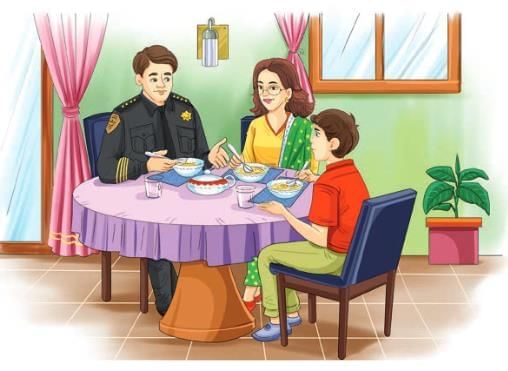
Ans: His parents discussed cases openly at dinner, knowing Encyclopedia would quietly listen and think over the details.

Q3. Why did Chief Brown suspect Nolan and Davenport in the robbery?
Ans: They had met in prison, Davenport moved in with Nolan before the robbery, and a clerk thought she saw Nolan’s face during the crime.

Q4. How did Encyclopedia crack the calendar code?
Ans: He realised each strange word represented a day of the week with “day” dropped—Nom (Mon-day), Utes (Tues-day), Sweden (Wednes-day), Hurts (Thurs-day).

Q5. Where was the jewellery hidden and how did Encyclopedia know?
Ans: It was hidden under a young fir tree. The unwritten fifth word from the code was “Friday,” which led to “Fir-day.”

Match the Following

Instruction: Match Column A with the correct option in Column B.Column AColumn B1. Leroya) Partner in crime with Nolan2. Chief Brownb) Nicknamed Encyclopedia3. Tim Nolanc) Chief of Police in Idaville4. Daniel Davenportd) Started palm-tree nursery5. Fir treee) Jewellery hidden under it

Ans: 1 – b, 2 – c, 3 – d, 4 – a, 5 – e

Leroy was Encyclopedia, Chief Brown was his father and police chief, Nolan started the palm-tree nursery, Davenport was Nolan’s friend and crime partner, and the stolen jewellery was hidden under the fir tree.

6. Verghese Kurien — I Too Had A Dream – Worksheet Solutions

Multiple Choice Questions (MCQs)

Instruction: Select the correct option for each question.

Q1. What was Verghese Kurien’s main reason for choosing to work in Anand, Gujarat?
(a) To become a chief executive of a large company
(b) To serve the nation’s farmers and contribute to India’s progress
(c) To pursue a career in the Indian Army
(d) To move to the US as a successful NRI 

Ans: (b) To serve the nation’s farmers and contribute to India’s progress
Kurien chose to work in Anand to help dairy farmers and build a nation free from hunger and poverty, as mentioned in his letter to his grandson.

Verghese Kurien

Q2. What value did Kurien emphasize as the most important in his life?
(a) Wealth
(b) Fame
(c) Integrity
(d) Ambition 

Ans: (c) Integrity
Kurien stressed that integrity, especially personal integrity, is crucial, as it involves being honest with oneself and others, guiding his contributions.

Q3. What award did Kurien receive in 1999, as mentioned in the chapter?
(a) Bharat Ratna
(b) Padma Shri
(c) Padma Bhushan
(d) Padma Vibhushan
  

Ans: (d) Padma Vibhushan
Kurien recalls the 1999 ceremony where he received the Padma Vibhushan, and his grandson Siddharth tried on the medal.

Q4. How did Kurien’s grandmother contribute to his work in Anand?
(a) She moved to the US to support him financially
(b) She supported his choice to live and work in Anand
(c) She encouraged him to join the Indian Army
(d) She advised him to pursue metallurgy 

Ans: (b) She supported his choice to live and work in Anand
Kurien’s grandmother chose to stand by his decision to work in Anand, giving him strength despite the lack of comforts there.

Q5. What does Kurien say about failure in the chapter?
(a) Failure is about not succeeding in any task
(b) Failure is not trying or contributing to the common good
(c) Failure is about not earning awards
(d) Failure is about not being happy 

Ans: (b) Failure is not trying or contributing to the common good
Kurien explains that failure is not about not succeeding but about not putting in effort or contributing to society, even modestly.

Fill in the Blanks

Instruction: Fill in the blanks with the correct word based on the chapter.

Q1. Kurien started his work soon after India became ________.
Ans: independent

Kurien mentions starting his career after India’s independence, focusing on building a nation free from hunger and poverty.

Q2. Kurien worked with a small ________ of dairy farmers in Anand.
Ans: cooperative

He joined a cooperative of dairy farmers in Anand, which was a key part of his life’s work to empower farmers.

Q3. Kurien’s mentor in Anand was ________ Patel.
Ans: Tribhuvandas

Kurien credits Tribhuvandas Patel as his mentor and supporter, whose values influenced his work in Anand.

Q4. Kurien dedicated his musings to his grandson ________ and other children.
Ans: Siddharth

The letter is addressed to Siddharth, with hopes that it inspires him and his generation to work for the greater good.

Q5. Kurien believed that life is a ________ and should not be wasted.
Ans: privilege

He describes life as a privilege, urging Siddharth to use his talents and contribute to the common good responsibly.

Very Short Answer Questions

Instruction: Answer the following questions in one line.

Q1. Where did Kurien choose to work instead of pursuing other careers?
Ans: Anand, Gujarat  

Q2. What was the time period when Kurien began his work, as mentioned in the chapter?
Ans: Soon after India’s independence  

Q3. What did Kurien’s grandmother sacrifice to support his work in Anand?
Ans: Simple comforts  

Q4. What did Kurien say about the rewards of a life well-spent?
Ans: They come from working for the larger good  

Q5. What did Kurien urge Siddharth to earn in his lifetime?
Ans: His own reward  Short Answer Questions

Instruction: Answer the following questions in 2–3 lines.

Q1. Why did Kurien prefer writing a letter to his grandson instead of using a telephone?
Ans: Writing a letter conveys thoughts that can be treasured and re-read for lasting joy. Unlike a phone call’s fleeting joy, a letter becomes a keepsake. It helps Siddharth understand Kurien’s life and work later.

Q2. What was Kurien’s dream for India as described in the chapter?
Ans: Kurien dreamed of an India free from hunger and poverty, where people live with equal respect. He wanted the nation to be among the foremost in the world. This vision guided his work with farmers.

Q3. How did Kurien’s choice to work in Anand change his life?
Ans: Choosing Anand led Kurien to a life of service to farmers, transforming his career from metallurgy or military options. It gave him purpose and recognition. This choice defined his meaningful contributions.

Q4. What did Kurien learn about happiness from his experiences?
Ans: Kurien learned there is little connection between life’s circumstances and happiness. Comparing oneself to others creates false images of perfection. He advises cherishing what one has instead.

Q5. How did Kurien view the role of personal integrity in his work?
Ans: Kurien saw personal integrity as being honest with oneself, which made honesty with others effortless. It was a core value inherited from his family and mentor. This guided his contributions to India’s progress.