01. How I Taught My Grandmother to Read – Long Questions answers

Q1. The granddaughter proves to be a catalyst in the grandmother’s pursuit of knowledge. Discuss.

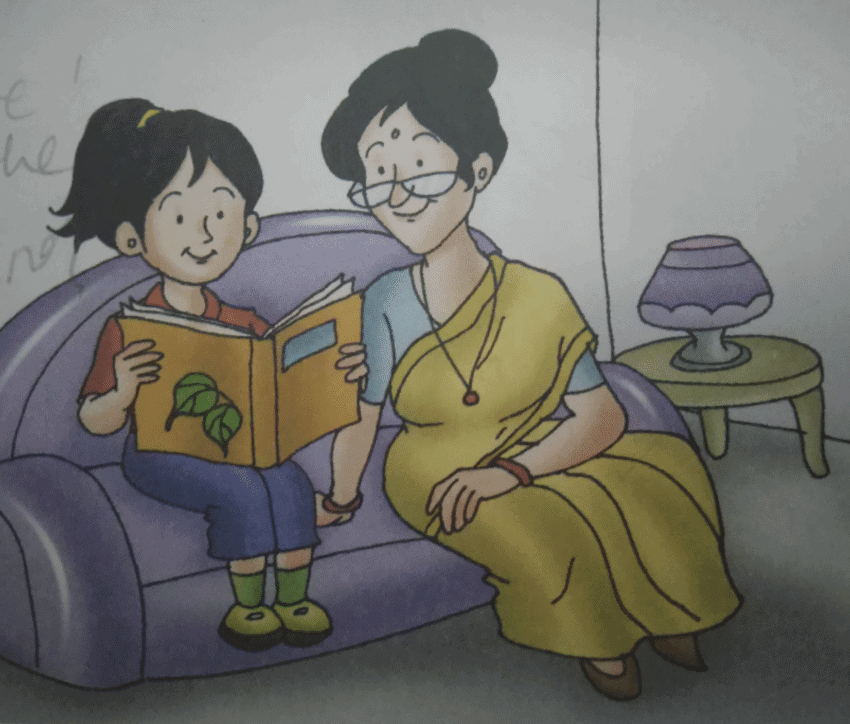
Ans: The granddaughter acts as a catalyst by giving the grandmother both motivation and practical help to learn. She first introduced her to the novel ‘Kashi Yatre’, which awakened the grandmother’s interest. When the grandmother became anxious at not knowing the next episode, the granddaughter set a clear goal – to teach her the Kannada alphabet by Dussehra – and offered patient, regular lessons. She encouraged practice by making the grandmother read aloud, repeat letters, write and recite. Her steady support, gentle correction and belief in her grandmother’s ability turned a wish into action. Because of this encouragement and systematic teaching, the grandmother gained confidence and independence and was finally able to read ‘Kashi Yatre’ on her own.
Q2. Why does the grandmother identify with the protagonist of the ‘Kashi Yatre’? What does this tell you about her character?
Ans: The protagonist of Kashi Yatre is an old lady who longs to visit Kashi (Varanasi) but sacrifices her savings to help a poor orphan get married. Many Hindus believe that visiting Kashi and worshipping Lord Vishweshwara is the ultimate act of virtue. Although the grandmother has never been to Kashi, she shares this desire, yet finds joy in cooking and caring for her grandchildren. This connection leads her to identify with the protagonist of Kashi Yatre. This identification reveals that she is a religious woman, deeply loving and affectionate. Her actions demonstrate a selfless nature, prioritising the happiness of others over her own desires.

Q3. The grandmother believes in scriptures and Hindu mythology, yet she touches the feet of her granddaughter. Why?
Ans: Although touching the feet of elders is the usual custom, the grandmother touches her granddaughter’s feet as an act of respect for her role as a teacher. The granddaughter had taught her with affection and patience, giving her the power to read and the confidence to be independent. By touching her feet the grandmother acknowledges that teaching and wisdom deserve honour, regardless of the learner’s age. The gesture therefore expresses gratitude, humility and recognition of the granddaughter’s service.

Q4. Give a character sketch of the grandmother as depicted in the lesson, ”How I Taught My Grandmother To Read.”
Ans: The grandmother is a warm, devoted and determined woman of sixty-two. She is described as grey-haired and wrinkled, having spent most of her life tending to household duties and her family’s needs. Despite a simple, routine life, she has a sensitive and devout nature and develops a strong emotional bond with the novel ‘Kashi Yatre’, which awakens a long-held desire to visit Kashi. Her disappointment at being unable to read motivates her to learn; this shows her self-respect, independence and dislike of helplessness. Determined and hardworking, she practises reading and writing with steady patience. Ultimately, she demonstrates that age is no barrier to learning and that a sincere wish, combined with persistence and good teaching, can lead to personal transformation.

Q5. As grandmother in the story ‘How I Taught My Grandmother to Read’ write a diary entry on your transformation.
 OR
 You are the grandmother. Write your feelings in your diary when your granddaughter gave you the novel ‘Kashi Yatre’. [CBSE 2010 (TERM 1)]

Ans: Dear Diary, 

25th August 2011
I am on cloud nine today because I can finally read an episode of ‘Kashi Yatre’ all by myself. I remember how my granddaughter used to read it to me, and how empty I felt when she went away. That feeling of helplessness made me decide to learn. At sixty-two, I began to learn the Kannada alphabet. It was hard at first, but with practice and my granddaughter’s patient teaching I began to recognise letters and words. Now I can read and I feel so light and independent. I never thought I would be able to do this. I am grateful to my granddaughter for giving me not only the book but also the confidence to learn. This new skill has opened a small, bright world for me.

Q6. Imagine you are the grandmother. In about 150 words, write a letter to share your thoughts, feelings, ambitions and resolutions as a neo-literate.  [CBSE 2010 (Term 1)]
Ans: Dear Krishna,

How are you? I have wonderful news to share with you. At the age of sixty-two, I have finally learnt to read the Kannada alphabet. When I was young, girls were not encouraged to go to school, so I never had the chance to study. Earlier, my granddaughter Sudha used to read the story Kashi Yatre to me every week, and I eagerly waited for it. When she was away and I could not read the magazine myself, I felt helpless and dependent. That moment made me realise the true value of education.

With Sudha’s patient guidance and my own determination, I learnt to read and write. Today, I feel confident, independent and proud of my achievement. I now understand that learning has no age limit. My ambition is to continue reading books on my own and never feel dependent again. Education has given me a new sense of dignity and freedom.

Yours affectionately,
Avva

Q7. You are Sudha Murthy. Write a letter to your friend telling her how and why you taught your grandmother to read.  [CBSE 2010 (Term 1)]
Ans: 

Dear Mamta,

I hope you are well. I want to share a special experience that taught me a valuable lesson about education and patience. My grandmother, Avva, surprised me one day by expressing her desire to learn to read at the age of sixty-two. She had never gone to school because in her childhood, girls’ education was not considered important.

Every week, I used to read the story Kashi Yatre from the magazine Karmaveera to her. Once, when I went away for a few days, she felt helpless because she could not read the next episode on her own. Her disappointment moved me deeply, and I decided to teach her the Kannada alphabet. I fixed Dussehra as our deadline and taught her patiently every day. She practised reading, writing and reciting with great determination.

Her dedication amazed me. When she finally read the novel confidently, she touched my feet as a mark of respect for her teacher. Teaching her showed me that learning has no age limit and that education brings true independence.

Yours lovingly,
Sudha

16. Believe in Yourself – Very Short Question Answer

Q1: What does the poem suggest about facing challenges?
Ans: Challenges must be faced alone, with a clear focus on the future.

Q2: What is meant by “there is no crowd to see”?
Ans: It means challenges are faced individually without any support or audience.

Q3: What does “it’s just you and the future” imply?
Ans: It implies personal responsibility for shaping one’s future.

Q4: What role does fear play in decision-making?
Ans: Fear makes decisions difficult and creates hesitation.

Q5: What makes the future seem uncertain in the poem?
Ans: Fear and lack of clarity about outcomes make the future uncertain.

Q6: What does “pull you forward” suggest?
Ans: It suggests motivation and progress towards one’s goals.

Q7: What does “push you back in fear” represent?
Ans: It represents fear as a barrier that hinders progress.

Q8: What is meant by “status quo”?
Ans: It refers to a situation where things remain unchanged.

Q9: Why is comfort described as easy?
Ans: Because it involves no risk or effort.

Q10: Why is comfort not good for growth?
Ans: Because growth requires change and stepping out of comfort zones.

Q11: What does the poem say about human potential?
Ans: Humans are meant to grow and move beyond their comfort zones.

Q12: What is the message about change?
Ans: Change is essential for personal growth.

Q13: Why is the first step the hardest?
Ans: Because it requires courage to begin something new.

Q14: What does “no turning back” imply?
Ans: It implies firm commitment after making a decision.

Q15: What is required to move forward successfully?
Ans: Strong self-belief is required.

Q16: How can one keep the future on track?
Ans: By believing in oneself and staying confident.

Q17: What is the central idea of the poem?
Ans: Self-belief and courage are key to growth and success.

Q18: What does the future symbolise?
Ans: It symbolises the unknown and future opportunities.

Q19: What does fear symbolise in the poem?
Ans: It symbolises mental barriers that prevent progress.

Q20: What does the first step symbolise?
Ans: It symbolises courage and the beginning of change.

Q21: What do comfort and status quo symbolise?
Ans: They symbolise stagnation and fear of change.

Q22: What type of tone does the poem have?
Ans: The tone is motivational and encouraging.

Q23: How does the tone develop in the poem?
Ans: It shifts from uncertainty to confidence and determination.

Q24: What poetic device is used in “pull you forward or push you back”?
Ans: Antithesis.

Q25: What does the phrase “step up to the challenge” encourage the reader to do?
Ans: It encourages the reader to face challenges bravely and take action.

15. Follow That Dream – Very Short Question Answer

Very Short Answer Questions

Q1: Who wrote the letter to Ming?
Ans: The letter was written by Ming’s mother.

Q2: What does the mother encourage Ming to do?
Ans: The mother encourages Ming to follow her dream and pursue it sincerely.

Q3: Why do great people become great according to the letter?
Ans: Great people become great because they have dreams and pursue them persistently.

Q4: What differentiates greatness from ordinary people?
Ans: Greatness depends on the effort and sacrifice people invest to realise dreams.

Q5: How long should one pursue a subject to reach world-class level?
Ans: One must pursue a subject intensely and exclusively for at least ten years.

Q6: What is the starting point of achieving a dream?
Ans: Achieving a dream starts with a passion for a particular interest.

Q7: What comes after passion in achieving dreams?
Ans: After passion, conviction develops that it is necessary to realise the dream.

Q8: What must a person count before pursuing a dream?
Ans: A person must count years of effort, financial investments, and sacrifices needed.

Q9: What does the word ‘plunge’ suggest in the text?
Ans: The word plunge suggests throwing oneself completely into the chosen activity.

Q10: In which fields can dreams be pursued?
Ans: Dreams can be pursued in fields like sports, science, arts, business, or design.

Q11: How is the journey towards dreams described?
Ans: The journey towards dreams is often uphill and full of challenges.

Q12: What keeps a person on track when stamina decreases?
Ans: Both the prospect of success and the satisfaction of doing what one loves keep a person on track.

Q13: What role does a support network play in success?
Ans: A support network of people stands by and helps an individual succeed.

Q14: Why do many dreams remain unfulfilled?
Ans: Many dreams remain unfulfilled because people never go beyond wishful thinking.

Q15: What might people choose instead of pursuing dreams?
Ans: People might choose security instead of taking risks to pursue their dreams.

Q16: How can circumstances affect dreams?
Ans: Circumstances can change lives and prevent people from achieving their dreams.

Q17: Why did some people stop studying according to the text?
Ans: Some people stopped studying to work and support their siblings through school.

Q18: What should be considered before chasing a dream?
Ans: One should consider the time and effort required to chase the dream.

Q19: When should a person act on their dream?
Ans: A person should act when strong conviction still flows through their veins.

Q20: How can life affect a person’s dreams?
Ans: Life can change a person’s dreams over time and shape new aspirations.

Q21: What is required to fulfil dreams according to the mother?
Ans: Fulfilling dreams requires negotiating through many hurdles and challenges patiently.

Q22: How long did the mother chase her dream of publishing?
Ans: The mother chased her dream of publishing a book for ten years.

Q23: What is a dreamscape?
Ans: A dreamscape refers to a world or scene filled with dreams.

Q24: What does the mother say about people who only wish for success?
Ans: The mother says that many people only engage in wishful thinking and never take action to achieve their dreams.

Q25: What example does the mother give from her own life?
Ans: The mother shares that she spent ten years pursuing her dream of publishing a book.

14. Words – Very Short Question Answer

Very Short Answer Questions

Q1: What is the central idea of the poem?
Ans: The poem shows that words alone cannot fully express or satisfy true emotions.

Q2: What would happen if words could satisfy the heart?
Ans: The heart would find less care and worry.

Q3: What are words compared to in the first stanza?
Ans: Words are compared to summer birds.

Q4: What do summer birds symbolise in the poem?
Ans: They symbolise the fleeting and temporary nature of words.

Q5: What does “empty air” represent?
Ans: It represents the hollowness left by meaningless words.

Q6: How is the heart described in the poem?
Ans: The heart is described as a pilgrim upon earth.

Q7: What does the “pilgrim” symbolise?
Ans: It symbolises the heart’s journey through life and emotions.

Q8: What are words compared to in times of need?
Ans: Words are compared to weeds.

Q9: Why are words compared to weeds?
Ans: Because they are abundant but often useless.

Q10: What kind of words bring deeper joy?
Ans: A few sincere and truly spoken words.

Q11: What is contrasted with meaningful words?
Ans: A large number of empty or superficial words.

Q12: What do words that “reach the head” lack?
Ans: They lack emotional connection.

Q13: What kind of words “touch the heart”?
Ans: Genuine and heartfelt words.

Q14: What can cheer a lonely home?
Ans: A voice with a few sincere words.

Q15: What does “sunny way” symbolise?
Ans: Warmth, positivity, and emotional comfort.

Q16: Why are few words described as “dear”?
Ans: Because they are meaningful and heartfelt.

Q17: What would happen if words could satisfy the chest?
Ans: The world might hold a feast.

Q18: What does “summoned to the test” mean?
Ans: It means when words are needed most in difficult situations.

Q19: What happens to words during such tests?
Ans: They often fail to satisfy.

Q20: What are words compared to in the final stanza?
Ans: They are compared to plants that make a gaudy show.

Q21: What do such plants fail to produce?
Ans: They fail to produce fruit.

Q22: What does “gaudy show” represent?
Ans: Attractive but empty or superficial speech.

Q23: What does “fruit” symbolise in the poem?
Ans: Meaningful results or true value.

Q24: What message does the poet give about communication?
Ans: Communication should be sincere and meaningful rather than excessive.

Q25: What is more important according to the poem—quantity or quality of words?
Ans: Quality of words is more important than quantity.

13. Carrier of Words – Very Short Question Answer

Very Short Answer Questions

Q1: Who is Khetaram in the story?
Ans: Khetaram is a Gramin Dak Sewak and the sole postman of Somarad Branch Post Office.

Q2: What does a Gramin Dak Sewak do in remote areas?
Ans: Gramin Dak Sewaks deliver mail and connect remote areas with families across distant regions.

Q3: How long has Khetaram been working as a trusted link?
Ans: Khetaram has been a trusted link between villagers and families for the last fifteen years.

Q4: Where does Khetaram deliver mail?
Ans: Khetaram delivers mail to far-flung hamlets near the Indo-Pakistan border in desert regions.

Q5: What physical change happened to Khetaram due to his work?
Ans: Khetaram’s left shoulder slumped from years of carrying a heavy mailbag continuously.

Q6: How far is Khetaram’s delivery area from the last railhead?
Ans: Khetaram works about 120 kilometres beyond the last railhead at Barmer in Rajasthan.

Q7: What difficulty does Khetaram face during summers?
Ans: Khetaram faces scorching heat where temperatures cross fifty degrees while delivering mail.

Q8: What is the maximum load Khetaram is allowed to carry?
Ans: Regulations specify that Khetaram’s mailbag load cannot exceed twenty-eight kilograms during deliveries.

Q9: How far does Khetaram walk for a single delivery?
Ans: Khetaram sometimes covers twenty kilometres on foot for delivering even a single mail.

Q10: What protection does Khetaram use against harsh desert conditions?
Ans: Khetaram’s khaki turban and uniform protect him from scorching winds and swirling sandstorms.

Q11: Why does Khetaram not use water for washing regularly?
Ans: Water is too precious in the desert, so Khetaram only wipes his body.

Q12: What was Khetaram called before 2001?
Ans: Before 2001, Khetaram was known as a delivery agent working in rural areas.

Q13: What percentage of workforce do Gramin Dak Sewaks form?
Ans: Gramin Dak Sewaks constitute more than fifty percent of the total postal workforce.

Q14: Why is the role of GDS considered invaluable?
Ans: GDS deliver mail in interior areas that are inaccessible by any means besides foot.

Q15: What was the purpose of India Post after independence?
Ans: India Post aimed to bring the entire population within the mailing ambit across country.

Q16: How many post offices were there in India in 1947?
Ans: There were about twenty-five thousand post offices in India at the time of independence.

Q17: How many post offices exist in India today?
Ans: Today, India has more than one and a half lakh post offices across country.

Q18: How do rural people use post offices for savings?
Ans: Rural depositors entrust their monthly savings to the post office in their local area.

Q19: What is required for GDS selection?
Ans: Access to another means of livelihood is the essential criterion for GDS selection.

Q20: How many hours do GDS work daily?
Ans: Gramin Dak Sewaks are required to work only five hours in a day.

Q21: Why did Khetaram take up this job?
Ans: Khetaram took the job because one crop of bajra could not feed his family.

Q22: How do villagers depend on the post office?
Ans: Villagers depend on post offices for receiving money orders sent by relatives.

Q23: What help does Khetaram provide to villagers besides delivering mail?
Ans: Khetaram reads letters and writes replies for villagers who feel comfortable asking him.

Q24: What kind of letter does Khetaram dread?
Ans: Khetaram dreads letters with torn corners that signify news of death for families.

Q25: What future role might Khetaram take with new phone lines?
Ans: Khetaram may become Gramin Sanchar Sewak carrying a cell phone along with post.

12. A Friend Found in Music – Very Short Question Answer

Very Short Answer Questions

Q1: What is music compared to in the poem?
Ans: Music is compared to an ocean.

Q2: Where does music pull the poet?
Ans: Music pulls the poet to the shore.

Q3: What aspect of music moves the poet deeply?
Ans: The rhythm of music moves the poet deeply.

Q4: How deeply does music affect the poet?
Ans: Music affects the poet to the core.

Q5: What does the word ‘core’ suggest in the poem?
Ans: It suggests the deepest inner feelings of the poet.

Q6: What is music described as during sadness?
Ans: Music is described as therapy.

Q7: When does the poet feel the need for music?
Ans: The poet needs music when she feels blue.

Q8: What does the phrase ‘feel blue’ mean?
Ans: It means to feel sad.

Q9: What effect does music have on the poet’s mood?
Ans: Music lifts the poet’s spirits.

Q10: What does music ensure during tough times?
Ans: It ensures that the poet can pull through.

Q11: What does ‘pull through’ mean in the poem?
Ans: It means to overcome difficult situations.

Q12: When is the poet most cheerful?
Ans: The poet is most cheerful when music is present.

Q13: What does the poet realise about her happy moments?
Ans: She realises that music was always there.

Q14: How is music described in lonely times?
Ans: Music is described as a needed friend.

Q15: When does music become a needed friend?
Ans: When no one seems to care.

Q16: What feeling does music provide during loneliness?
Ans: Music provides comfort and companionship.

Q17: What kind of bond does the poet share with music?
Ans: The poet shares a deep emotional bond with music.

Q18: What does music give the poet during difficult times?
Ans: Music gives strength and support.

Q19: What quality of music is highlighted in the poem?
Ans: Its healing and comforting quality is highlighted.

Q20: What overall role does music play in the poet’s life?
Ans: Music acts as a constant companion and support system.

Q21: What literary device is used in the line “Music is the ocean”?
Ans: Metaphor.

Q22: Which literary device is used through the repeated phrase “Music is the”?
Ans: Anaphora (Repetition).

Q23: What is the rhyme scheme followed in the poem?
Ans: ABCB rhyme scheme.

Q24: Which literary device is shown in the line “Music lifts my spirits”?
Ans: Personification.

Q25: Why does the poet repeat the word “Music” in the poem?
Ans: To emphasise its importance in the poet’s life.

11. Twin Melodies – Very Short Question Answer

Very Short Answer Questions

Q1: Who is Shruti Sharma?
Ans: Shruti Sharma is a young aspiring violinist mentioned among the main characters.

Q2: Who is Guru Nabin Sharma?
Ans: Guru Nabin Sharma is Shruti’s father, a violinist and principal of music school.

Q3: What instrument does Iqbal play?
Ans: Iqbal plays the flute as a member of the fusion music group.

Q4: What instrument does Avinash play?
Ans: Avinash plays the tabla and is part of the fusion group.

Q5: What instrument does Peter play?
Ans: Peter plays the keyboard as one of the performers in the group.

Q6: Where does Act I take place?
Ans: Act I takes place in Iqbal’s room, which has a small rack, a wooden table with books, and posters of famous flute players.

Q7: What is ‘crescendo’ in music?
Ans: Crescendo means a piece of music that gradually becomes louder and louder.

Q8: How does Shruti feel after rehearsal?
Ans: Shruti feels distressed and is lost in her thoughts during/after the rehearsal.

Q9: What did the newspaper say about Shruti?
Ans: The newspaper praised Shruti as daughter of master violinist Nabin Sharma.

Q10: Why does Shruti hesitate to tell her father?
Ans: Shruti fears her father’s strict views about classical music and fusion styles.

Q11: What does Shruti’s father believe about music?
Ans: He believes only classical Hindustani music with ragas and aalaaps is valuable.

Q12: What does ‘bite the bullet’ mean in the text?
Ans: It means dealing with a difficult situation in a courageous and determined way.

Q13: When does Shruti decide to talk to her father?
Ans: Shruti decides to talk to her father during dinner that same evening.

Q14: What rule does Nabin have about performances?
Ans: Nabin allows only one performance every six months to maintain artistic quality.

Q15: What type of concert does Shruti want to join?
Ans: Shruti wants to participate in an Indo-Western fusion group concert next week.

Q16: How does Nabin react to the fusion concert idea?
Ans: Nabin strongly disapproves and refuses, considering fusion harmful to musical purity.

Q17: What does Leela say about Shruti’s secrecy?
Ans: Leela scolds Shruti for hiding the practice from her father earlier.

Q18: What happens when Shruti practises in Act III?
Ans: Shruti practises with friends while her parents enter and quietly watch them.

Q19: How does Nabin react after watching the performance?
Ans: Nabin praises the performance, claps proudly, and appreciates Shruti’s musical excellence.

Q20: What does Nabin offer the children after the performance?
Ans: Nabin offers the children his music room for regular practice with better equipment.

Q21: What does Shruti promise her parents?
Ans: Shruti promises she will always take her art seriously and not hide again.

Q22: Why did Nabin initially oppose fusion music?
Ans: Nabin feared Shruti would lose connection with traditional music and family values.

Q23: What does Leela reveal about Nabin’s past?
Ans: Leela reveals that Nabin went against his family’s tradition of vocal music to play the violin, which was then considered unusual.

Q24: How did Nabin succeed in his musical journey?
Ans: Nabin worked very hard, building his career through dedication and strong determination.

Q25: What change occurs in Nabin’s attitude at the end?
Ans: Nabin realises his fears were baseless and supports Shruti’s fusion music journey.

10. Nine Gold Medals – Very Short Question Answer

Very Short Answer Questions

Q1: Where had the athletes come from to participate in the race?
Ans: The athletes had come from all over the country to compete.

Q2: What were the athletes competing for in the race?
Ans: The athletes were competing for gold, silver, and bronze medals in the race.

Q3: How long had the athletes trained before the event?
Ans: The athletes had trained for many weeks and months before the games.

Q4: Where did the spectators gather to watch the race?
Ans: The spectators gathered around the old field to cheer the participants.

Q5: What was the final event of the day?
Ans: The final event of the day was the hundred-yard dash race.

Q6: How were the athletes positioned before the race began?
Ans: The athletes stood at the starting line, ready and waiting for the signal.

Q7: What signalled the start of the race?
Ans: The pistol explosion signalled the start, and runners immediately charged ahead.

Q8: What happened to the smallest athlete during the race?
Ans: The smallest athlete stumbled, staggered, and fell down onto the asphalt track.

Q9: How did the fallen athlete react after falling?
Ans: The fallen athlete cried out in frustration and anguish after losing balance.

Q10: What happened to the athlete’s dreams after he fell?
Ans: His dreams and efforts were dashed in the dirt after falling.

Q11: What did the other eight runners do after the boy fell?
Ans: The eight runners stopped running and turned back to help the fallen boy.

Q12: How did the runners help the fallen athlete?
Ans: They helped the young boy stand up and brought him back on his feet.

Q13: What did all the nine runners do after helping him?
Ans: All nine runners joined hands and continued the race together slowly.

Q14: How did the race change after the runners joined hands?
Ans: The hundred-yard dash was reduced to a walk as runners moved together.

Q15: What was written on the banner above the runners?
Ans: A banner above them displayed the words Special Olympics during the race.

Q16: How did the race finally end?
Ans: The race ended with all nine athletes finishing together holding hands.

Q17: How many gold medals were given at the end?
Ans: All nine athletes were awarded gold medals at the end of the race.

Q18: How did the spectators react to the runners’ actions?
Ans: The spectators gave a standing ovation, showing great appreciation for their gesture.

Q19: What did the runners’ beaming faces show?
Ans: The nine beaming faces expressed happiness and conveyed emotions beyond words.

Q20: What does the word ‘anguish’ mean in the poem?
Ans: The word anguish means extreme pain or suffering experienced by the athlete.

Q21: What does the word ‘asphalt’ refer to?
Ans: Asphalt refers to a hard black substance used to make roads and paths.

Q22: What does the phrase ‘stumbled’ mean?
Ans: Stumbled means to step awkwardly, lose balance, and almost fall down.

Q23: Identify an example of alliteration used in the poem.
Ans: The phrase “stumbled and staggered” shows alliteration through the repetition of the initial ‘s’ sound.

Q24: Describe the tone of the poem.
Ans: The tone shifts from excitement and tension at the beginning to warmth, empathy, and joy towards the end.

Q25: How is repetition used in the poem?
Ans: The word “Nine” is repeated to emphasise unity and highlight the idea of collective success.

09. The World of Limitless Possibilities – Very Short Question Answer

Very Short Answer Questions

Q1: Who is Sheetal Devi mentioned in the lesson?
Ans: Sheetal Devi is a para-archer honoured with the Arjuna Award in January 2024.

Q2: What do Paralympic Games celebrate?
Ans: Paralympic Games celebrate resilience and extraordinary talent of athletes with disabilities globally.

Q3: What types of disabilities do Paralympic athletes have?
Ans: Paralympic athletes have locomotor, sensory, or intellectual disabilities affecting their abilities.

Q4: What do Paralympics aim to do beyond competition?
Ans: Paralympics aim to quell stereotypes and redefine possibilities beyond mere sports competition.

Q5: When did Bharat first participate in the Paralympics?
Ans: Bharat first participated in the Paralympics in 1968, marking its debut appearance.

Q6: When did India win its first Paralympic medal?
Ans: India won its first Paralympic medal in swimming during the year 1972.

Q7: Who is Dr. Deepa Malik?
Ans: Dr. Deepa Malik is an Indian Paralympian and recipient of several prestigious awards.

Q8: What illness was Dr. Deepa Malik diagnosed with?
Ans: Dr. Deepa Malik was diagnosed with a spine tumour at the age of twenty-nine.

Q9: What was the result of her surgery?
Ans: Doctors declared she would be bound to a wheelchair for the rest of life.

Q10: What choices did Dr. Malik face after her condition?
Ans: She could either waste life in remorse or transform it into limitless possibilities.

Q11: Why did Dr. Malik switch to para-athletics?
Ans: She loved sports and had been a swimmer, so switched to para-athletics.

Q12: When did her breakthrough moment occur?
Ans: Her breakthrough moment came during the 2016 Rio Paralympic Games competition.

Q13: What medal did she win in 2016 Paralympics?
Ans: She secured a silver medal in the shot-put event at Rio Paralympics.

Q14: What does Dr. Malik believe about physical limitations?
Ans: She believes physical limitations do not define one’s true potential and abilities.

Q15: What challenge did Dr. Malik face from society?
Ans: People often underestimated her abilities, creating significant societal challenges during her journey.

Q16: How did she overcome these challenges?
Ans: She used mental resilience, family support, and fortitude to overcome challenges successfully.

Q17: How do Paralympics change societal attitudes?
Ans: They showcase strength and skill of athletes, breaking preconceived notions about disabilities.

Q18: What impact did Paralympics have on Dr. Malik’s life?
Ans: Paralympics gave her a new lease of life and helped push boundaries.

Q19: What does Dr. Malik advocate for?
Ans: She advocates inclusivity, accessibility, and strengthening emotional health of persons with challenges.

Q20: How does she support para sportspersons?
Ans: She supports them by providing equipment and helping people from lower socio-economic backgrounds.

Q21: What does she believe about youth?
Ans: She believes youth is the voice of tomorrow and plays an important role.

Q22: What activities does she organise in schools and colleges?
Ans: She organises disability sports awareness and advocacy sessions in schools and colleges.

Q23: What is her goal for society?
Ans: Her goal is creating a society where everyone is treated with dignity equally.

Q24: What advice does she give about setbacks?
Ans: She advises that every setback is an opportunity to prove personal strength.

Q25: How does she describe disability?
Ans: She describes disability as a unique strength waiting to be unleashed fully.

08. I Cannot Remember My Mother – Very Short Question Answer

Very Short Answer Questions

Q1: When does the poet faintly recall his mother during play?
Ans: The poet recalls his mother when a familiar tune seems to hover over his playthings.

Q2: What creates the memory of the mother in the first stanza?
Ans: A soft tune associated with his mother creates the memory.

Q3: How did the poet’s mother soothe him as a child?
Ans: She soothed him by humming a song while rocking his cradle.

Q4: In which season does the poet recall his mother through fragrance?
Ans: He recalls her in the early autumn season.

Q5: What natural element carries the memory of the mother in the second stanza?
Ans: The fragrance of shiuli flowers carries the memory.

Q6: What makes the scent of shiuli flowers significant to the poet?
Ans: It reminds him of his mother’s presence.

Q7: What religious element is connected with the mother’s memory?
Ans: The scent of morning temple service is connected with her memory.

Q8: From where does the poet observe the sky?
Ans: He observes the sky from his bedroom window.

Q9: What does the poet do while looking at the sky?
Ans: He sends his eyes into the blue distance of the sky.

Q10: What emotion does the sky evoke in the poet?
Ans: It evokes the calm presence of his mother.

Q11: What does the stillness in the sky remind the poet of?
Ans: It reminds him of his mother’s gentle gaze.

Q12: Why can the poet not clearly remember his mother?
Ans: Because he lost her early and only has faint sensory memories.

Q13: What role does sound play in the poem?
Ans: Sound triggers the poet’s memory of his mother.

Q14: Which sense is activated by the shiuli flowers?
Ans: The sense of smell is activated.

Q15: What type of imagery is used in the first stanza?
Ans: Auditory imagery is used.

Q16: What type of imagery is used in the second stanza?
Ans: Olfactory imagery is used.

Q17: What type of imagery is used in the third stanza?
Ans: Visual imagery is used.

Q18: What does the repeated line emphasise in the poem?
Ans: It emphasises the poet’s incomplete memory of his mother.

Q19: What does the hovering tune symbolise?
Ans: It symbolises the lingering memory of the mother.

Q20: What does the fragrance in the poem represent?
Ans: It represents emotional connection and remembrance.

Q21: What does the wide sky symbolise in the poem?
Ans: It symbolises the vast and ever-present memory of the mother.

Q22: What floats in the air during autumn mornings?
Ans: The smell of shiuli flowers floats in the air.

Q23: What feeling is associated with the mother’s gaze?
Ans: A feeling of calmness and affection.

Q24: What kind of flower is shiuli?
Ans: Shiuli is a fragrant night-blooming flower.

Q25: What is another name for shiuli flower?
Ans: It is also known as Parijat or Harsingar.