06. Canvas of Soil – Short and Long Questions answers

Short Answer Questions

Q1: What is meant by a palette in painting?
Ans: A palette is a thin oval or rectangular board or tablet that a painter holds while working. It is used to mix different colours before applying them to a painting. This tool helps the artist combine shades carefully and create desired effects.

Q2: What does the word ‘hue’ refer to in the context of colours?
Ans: The word ‘hue’ refers to a shade of a colour. It describes slight variations within a colour, such as lighter or darker forms. Using different hues allows artists and gardeners to create variety, contrast, and beauty in paintings and natural surroundings.

Q3: How is the word ‘canvas’ used in the poem?
Ans: In the poem, the word ‘canvas’ refers to a surface where art is created. It symbolises the space where creativity takes shape. The garden is compared to a canvas where seeds, plants, and colours form a beautiful picture.

Q4: What idea is expressed through ‘Brushstrokes of seeds’?
Ans: The phrase ‘Brushstrokes of seeds’ shows a comparison between painting and gardening. Seeds are planted like brushstrokes on a canvas. This idea suggests that gardeners create beauty just like artists, carefully placing seeds to form patterns and beauty like brushstrokes in a painting.

Q5: What happens in the garden during spring according to the poem?
Ans: During spring the blossoms bloom. The garden becomes colourful and lively, showing vibrant hues. This transformation creates a beautiful scene, making the garden look like a painting filled with bright and fresh colours.

Q6: How are gardens and paintings shown to be similar?
Ans: Gardens and paintings are shown to be similar because both involve creativity and beauty. In gardens, plants, flowers, and colours are arranged like elements in a painting. Both involve arranging colours and elements creatively, making gardens resemble paintings.

Q7: What role do gardeners play in the poem?
Ans: Gardeners play the role of artists in the poem. They plant seeds, care for plants, and shape the garden’s appearance. Their efforts turn the soil into a colourful and lively space. Through their work, they shape the garden into a beautiful space, similar to how painters produce artworks.

Q8: What is meant by the line ‘Where art and life coincide’?
Ans: It means that the garden combines natural life with artistic beauty, where both exist together.  Plants grow naturally, showing life, while their arrangement and colours reflect artistic beauty. This combination shows that gardening is both a natural process and a creative activity at the same time.

Q9: What does the poem suggest about colours in nature?
Ans: The poem suggests that nature is full of rich and varied colours. Shades of green, red, and blue appear in the garden, creating beauty and freshness. These colours change with time and seasons, making nature’s artwork lively, attractive, and constantly new.

Q10: What is an allegory and how is it used in the poem?
Ans: An allegory is a literary device that expresses deeper meanings beyond the surface idea. In the poem, the garden represents life and growth. Its changing seasons and blooming flowers symbolise life’s journey, showing development, harmony, and the cycle of existence in a meaningful way.

Long Answer Questions

Q1: How does the poem present gardening as an art form?
Ans: The poem presents gardening as an art form by drawing a clear comparison between gardening and painting. It describes the earth as a palette and the garden as a canvas, while seeds are compared to brushstrokes. This imagery highlights that gardening is not just a routine activity but a creative process. Gardeners are portrayed as artists who carefully plan, arrange, and nurture plants to create beauty. As seeds grow into blooming flowers, they form colourful patterns similar to a completed painting. The transformation of soil into a vibrant garden reflects imagination, patience, and effort. Thus, the poem shows that gardening involves creativity and artistic expression, making it a true form of art.

Q2: Explain the importance of colours in the poem.
Ans: Colours play a vital role in the poem as they bring life, beauty, and vibrancy to the garden. The poet mentions shades of green, red, and blue to create a vivid and attractive image in the reader’s mind. These colours make the garden appear like a lively painting filled with variety and harmony. The use of the word “hue” emphasises subtle differences and richness in colours, adding depth to the imagery. Colours also symbolise freshness, growth, and natural beauty, especially during spring when flowers bloom. They enhance the sensory experience of the poem and help readers visualise the garden clearly. Thus, colours are essential in highlighting nature’s creativity and artistic charm.

Q3: How does the poem describe the relationship between nature and creativity?
Ans: The poem describes nature and creativity as closely interconnected and complementary to each other. While nature provides the basic elements such as soil, seeds, and plants, human creativity shapes and arranges them into a beautiful garden. Gardeners act as artists who use their imagination and skill to organise plants and colours in an appealing way. This combination of natural growth and human effort results in a space that is both lively and artistic. The garden becomes a place where art and life coexist, showing that creativity enhances the beauty of nature without overpowering it. The poem suggests that when nature and creativity work together, they produce harmony, balance, and visual delight.

Q4: What deeper meanings can be understood when the poem is seen as an allegory?
Ans: When the poem is interpreted as an allegory, it reveals deeper meanings about life, growth, and harmony. The garden can be seen as a symbol of life, where seeds represent beginnings and growth reflects progress and change. Just as a garden requires care, patience, and effort to flourish, life also needs dedication and nurturing to develop meaningfully. The variety of colours in the garden symbolises diversity and the importance of balance and harmony in the world. The changing seasons in a garden may represent different phases of life. Overall, the poem suggests that life, like a garden, can be shaped creatively, and its beauty emerges through continuous growth and thoughtful effort.

Q5: Justify the title ‘Canvas of Soil’ based on the poem.
Ans: The title ‘Canvas of Soil’ is highly appropriate as it captures the central idea of the poem, which compares gardening to painting. The soil is described as a canvas on which gardeners create their artwork. Seeds are planted like brushstrokes, and as they grow into plants and flowers, they form colourful patterns similar to a painting. This transformation turns the garden into a living piece of art. The title also highlights the role of gardeners as artists who use soil as their medium to express creativity. It emphasises the blend of nature and artistic effort, showing that beauty can be created through care and imagination. Thus, the title perfectly reflects the theme of the poem.
05. Winds of Change – Short and Long Questions answers

Short Answer Questions

Q1: What is the origin and meaning of the word pankha?
Ans: The word pankha comes from the word ‘pankh’, which means the feather of a bird. It is used to refer to all types of fans. The word pankhi, however, specifically refers to a small plumed fan that was used in ancient India.

Q2: Where can early evidence of pankhas in India be found?
Ans: Evidence of pankhas in India can be seen in Buddhist wall paintings at Ajanta. These paintings date back to the second century CE. Other examples are found in embroidery work, sculptures, and carvings, showing the long history and cultural importance of pankhas.

Q3: How were pankhas used in ancient times?
Ans: In ancient times, pankhas were used in temples to fan deities and in royal courts to fan kings. They were important objects in both religious and royal settings. Their use showed respect and served practical purposes in keeping people cool in hot climates.

Q4: How did pankhas vary in size in earlier times?
Ans: Pankhas varied greatly in size in earlier times. Some were as small as two inches, while others were large enough to require the full strength of a person’s arm to move them. This variation shows their diverse uses and designs across different settings.

Q5: Why did different regions develop their own types of pankhas?
Ans: Different regions developed their own types of pankhas because villages and towns used local materials and created unique designs. Each place made pankhas that reflected its culture, traditions, and available resources, resulting in a variety of styles and intricate patterns.

Q6: What materials were used to make pankhas across India?
Ans: Pankhas were made from a wide range of materials such as bamboo, cane, palm leaf, silk, brass, leather, and silver. Decorative elements like beads and stones were also added. The choice of materials depended on geography, culture, and traditional practices of each region.

Q7: What is special about the appliqué hand fan of Rajasthan?
Ans: The appliqué hand fan of Rajasthan is made from pieces of fabric in different shapes and patterns. These pieces are sewn onto another cloth using ornamental needlework. This fan reflects artistic skill and traditional craftsmanship, making it a unique cultural item from the region.

Q8: How are pankhas in Gujarat different from others?
Ans: Pankhas in Gujarat are known for their use of cotton and mirror work. Some are decorated with colourful beads and have silver handles. Others, especially from Kutch, are made of leather and decorated with thread and wool, showing regional craftsmanship and creativity.

Q9: What are Tal Patar Pankhas and where are they used?
Ans: Tal Patar Pankhas are palm leaf hand fans used in Bengal. They are lightweight and easy to carry, making them common in households. These fans are often kept as useful and traditional items, showing their continued importance in daily life in the region.

Q10: What risk does the pankha tradition face in modern times?
Ans: In modern times, the tradition of pankhas faces the risk of losing its presence due to technology and changing lifestyles as they are no longer used for practical purposes . They are now mostly decorative items. This shift has reduced their everyday use, though they still provide livelihood opportunities for artisans.

Long Answer Questions

Q1: How did pankhas become important cultural goods over time?
Ans: Over time, pankhas became important cultural goods as they began to be distributed through trade routes across different regions of India. They were considered exotic and stylish items, which increased their demand and value. Although their basic use remained common throughout the country, different regions developed their own varieties using locally available materials and traditional techniques. These regional variations made each pankha unique in design and craftsmanship. As a result, pankhas not only served a practical purpose but also became symbols of cultural identity and artistic expression. Their growing popularity in trade and craftsmanship helped establish them as significant cultural products in Indian society.

Q2: Describe the variety of pankhas found in different Indian states.

Ans: India showcases a rich variety of pankhas, each reflecting the culture and materials of its region. Rajasthan is known for appliqué and zardozi hand fans made with fabric and gold threadwork. Gujarat produces mirror work fans, bead-decorated fans, and leather fans from Kutch with intricate embroidery. In West Bengal, pankhas are made from sola and palm leaves, commonly known as Tal Patar Pankha. Uttar Pradesh features Phadh fans decorated with zari, silk, and satin frills. Odisha is known for large palm leaf fans, while Bihar produces sturdy bamboo hand fans. These diverse forms highlight regional craftsmanship, creativity, and the use of indigenous materials in traditional art.

Q3: How have pankhas changed from ancient to modern times?

Ans: In ancient times, pankhas were widely used in temples to fan deities and in royal courts to provide comfort to kings and nobles. They served both practical and ceremonial purposes. Over time, pankhas became important cultural goods and were traded across regions, gaining recognition for their artistic designs. In modern times, however, the advent of technology and electric fans has reduced their practical use. Today, pankhas are mainly used as decorative items and traditional craft products. Despite this shift, they continue to provide livelihood opportunities to artisans. Thus, pankhas have evolved from everyday utility objects into cultural symbols and commercial products supporting artisans.

Q4: How do pankhas reflect the culture of different regions?

Ans: Pankhas reflect the culture of different regions through their materials, designs, patterns, and methods of craftsmanship. Each region uses locally available resources such as bamboo, palm leaves, fabric, or leather, which influence the final product. The designs often include traditional art forms like mirror work in Gujarat or appliqué and zardozi embroidery in Rajasthan. These features represent the customs, traditions, and artistic preferences of the people in that region. The colours, patterns, and decorative elements also reflect local beliefs and lifestyles. Therefore, pankhas are not just functional objects but cultural expressions that showcase the identity and heritage of different parts of India.

Q5: What steps can help preserve the traditional craft of pankha-making?

Ans: Preserving the traditional craft of pankha-making requires active efforts to promote and sustain its cultural significance. Celebrating pankhas through exhibitions, fairs, and cultural events can help increase awareness about their importance. Organising workshops allows artisans to demonstrate their skills and pass them on to younger generations. Providing platforms for artisans to sell their products ensures better income and encourages them to continue their craft. Government initiatives and support can also play a vital role in promoting this traditional art. By creating demand and appreciation among people, these steps can help maintain the relevance of pankha-making and ensure its survival in modern times.

04. Gifts of Grace: Honouring Our Vocations – Short and Long Questions answers

Short Answer Questions

Q1: Who is described in the riddle about sowing seeds in furrows?
Ans: The person described in the riddle is a farmer. The lines speak about sowing seeds in deep furrows and watching them grow over time. This shows the work of a farmer, who plants crops, waits patiently, and nurtures them until they are ready for harvest.

Q2: What work is suggested by the riddle about wheel and kiln?
Ans: The riddle about the wheel and kiln refers to a potter. The process of shaping clay on a wheel and then baking it in a kiln shows how pottery is made step by step. This craft requires skill and patience to create useful and beautiful objects.

Q3:What work is suggested by the riddle about laying foundations?
Ans: The builder in the riddle lays foundations and builds houses brick by brick. This describes the work of a mason, who constructs buildings carefully. Their work is important for creating homes and structures where people can live, work, and feel safe in daily life.

Q4: Which vocation is connected with cooking in the riddles?
Ans: The vocation connected with cooking in the riddles is that of a cook. The lines mention working with pots, pans, and spices to prepare tasty dishes. This shows how cooks use their skills to create food that people enjoy every day in homes and other places.

Q5: What do carpenters do in the poem?
Ans: Carpenters in the poem are described as people who create objects out of wood with mathematical precision. Their work shows careful planning and accuracy. They use their skills to shape wood into useful items, showing both creativity and logical thinking in their daily tasks.

Q6: How are electricians described in the poem?
Ans: Electricians are described as humming while getting ready for work and handling cables and wires. Their role is shown as important because they help brighten lives. Their work brings light and electricity, making everyday living easier and more comfortable for people in society.

Q7: What do boatmen do according to the poem?
Ans: Boatmen gather their nets from the shore, sailing, and singing while at work. They later return and share tales of life at sea. This description shows their connection with the water and their hardworking nature, as well as their storytelling experiences from their journeys.

Q8: How are shoemakers presented in the poem?
Ans: Shoemakers are shown as people affirming the quality of their work. They make shoes for feet that walk, run, dance, and return home. Their work is important because it supports daily movement and comfort, helping people perform many activities in their lives.

Q9: What does the line ‘the voice of their vocation is the voice of their identity’ mean?
Ans: This line means that a person’s work or vocation reflects who they are. Their identity is closely linked to what they do. Each worker expresses themselves through their occupation, as shown by the line that their vocation becomes their identity .

Q10: What mood is created throughout the poem?
Ans: The poem creates a joyful ,reverential and celebratory mood. It highlights different vocations and shows admiration and respect for workers. The descriptions of their activities, sounds, and skills make the poem lively and positive, celebrating the richness and diversity of work in society.

Long Answer Questions

Q1: How does the poem celebrate different vocations in Bharat?
Ans: The poem celebrates different vocations in Bharat by presenting a wide range of workers such as carpenters, electricians, boatmen, shoemakers, cooks, designers, and masons with deep respect and admiration. Each worker is described through their unique skills, actions, and contributions to society. The poet uses rhythmic and vivid language to highlight how every vocation adds value to daily life. The repeated line, “I hear Bharat celebrating,” emphasises unity and pride in diversity. By portraying each occupation as meaningful and dignified, the poem conveys that all forms of work are equally important and together create a vibrant and harmonious society.

Q2: Explain the role of artisans and craftspersons in the poem.
Ans: In the poem, artisans and craftspersons are portrayed as highly skilled individuals who take pride in their work and contribute significantly to society. They are shown creating objects filled with colour, beauty, and emotion, which reflect their creativity and dedication. The mention of “lutes” and “myriad hues” suggests both artistic expression and cultural richness. Their work is not only functional but also meaningful, as it carries tradition, imagination, and personal identity. Through their craftsmanship, they bring life and vibrancy to society. The poet highlights that artisans play an essential role in preserving culture while also fulfilling everyday needs.

Q3: How does the poet use imagery to describe different workers?
Ans: The poet effectively uses both visual and auditory imagery to create vivid pictures of different workers and their activities. Visual imagery is seen in descriptions like carpenters shaping wood with precision and boatmen gathering nets and sailing across waters. These images help readers clearly imagine the physical actions of each vocation. Auditory imagery is present in phrases such as artisans playing lutes and electricians humming while working. These sounds bring life and rhythm to the poem. Together, these sensory details make the descriptions more engaging and realistic, allowing readers to appreciate the beauty and significance of everyday work.

Q4: Why is every vocation considered important in daily life?
Ans: Every vocation is considered important in daily life because each one contributes uniquely to the functioning and well-being of society. Carpenters build essential structures, electricians provide light and power, boatmen support transport and livelihoods, and shoemakers ensure comfort and mobility. Similarly, cooks prepare food and artisans enrich culture through their creativity. No job is insignificant, as all are interconnected and necessary for a balanced society. The poem highlights that even the simplest tasks have value and dignity. By recognising the importance of each role, the poet encourages respect for all kinds of work and the people who perform them.

Q5: What message does the poem give about identity and work?
Ans: The poem conveys a powerful message that a person’s work is closely linked to their identity. The line “the voice of their vocation is the voice of their identity” suggests that what people do reflects who they are. Each worker expresses their individuality, skills, and dedication through their profession. The poem emphasises that identity is shaped not by status but by contribution and effort. By celebrating all vocations equally, the poet promotes dignity of labour and respect for every individual. It teaches that every job, regardless of its nature, plays an important role in society and deserves recognition and appreciation.

03. The Pot Maker – Short and Long Questions answers

Short Answer Questions

Q1: What was Sentila’s dream from a young age?
Ans: From a young age, Sentila dreamed of becoming a pot maker like her mother and grandmother. She developed this desire when she started accompanying her mother to the fields and forests and became deeply interested in the craft of making pots.

Q2: Why did Arenla not want Sentila to learn pot making?
Ans: Arenla did not want Sentila to learn pot making because she found it tiring, time-consuming, and poorly paid. She believed weaving was better as it could be done indoors, required less effort, and provided higher income along with enough cloth for the family.

Q3: How did Sentila try to learn pot making secretly?
Ans: Sentila secretly visited expert potters when her parents were away at the fields. She observed their techniques carefully and learned by watching them shape clay into pots, even though they initially thought she would soon lose interest in the craft.

Q4: What steps did Sentila observe in the process of pot making?
Ans: Sentila observed that clay was mixed with water, pounded to soften it, and shaped by rotating it using the left hand and a spatula in the right hand. After shaping, pots were given a final touch-up to retain shape and check consistency before drying , placed in a kiln on hay and bamboo, and carefully fired to avoid damage.

Q5: What concern did the village council express?
Ans: The village council was concerned that if pot makers stopped teaching their skills, future generations would lack expert potters. They believed such skills belonged to the community and should be passed on to children and anyone willing to learn.

Q6: Why was Sentila unable to learn pot making from her mother initially?
Ans: Sentila struggled  to learn pot making from her mother not only because of lack of skill but also because she was tense and lacked confidence while working with clay, which prevented her from shaping it properly despite repeated attempts.

Q7: How did Onula help Sentila improve her skills?
Ans: Onula helped Sentila by teaching her patiently and encouraging her to relax and remove tension while working with clay. She demonstrated the process and guided her step by step, helping Sentila gain confidence and eventually create a well-shaped pot successfully.

Q8: What mistake did Sentila make while shaping the pot?
Ans: Sentila made a mistake while shaping the mouth of the pot. Onula pointed out that it was incorrect and advised her to observe her mother carefully during this stage, especially how the rim was formed using a strip of elongated dough.

Q9: How did Sentila finally succeed in making pots?
Ans: Sentila succeeded when she practised with confidence and followed the techniques she had observed. She worked steadily and soon began making pots quickly and skillfully, producing nearly as many pots as her mother in a single session.

Q10: What did Onula discover in the work shed?
Ans: Onula discovered two neat rows of freshly made pots in the work shed. She noticed that both sets were equally well made and could not distinguish between them, realising that Sentila had finally mastered the art of pot making.

Long Answer Questions

Q1: Describe the challenges involved in pot making as explained by Arenla.
Ans: Arenla describes pot making as a highly demanding and exhausting occupation that involves both physical strain and long hours of labour. She explains that she has to travel nearly sixteen kilometres to the riverbank to collect the right kind of clay, which itself is a difficult and time-consuming task. Carrying heavy loads uphill causes severe back pain and fatigue. After bringing the clay home, she has to pound the stubborn clay inside bamboo cylinders to soften it, which requires great effort and patience. The process of shaping pots is delicate, and even a small mistake can ruin the work, forcing her to start again. It takes several months to prepare a batch of pots, yet the income earned is very low. Due to these hardships, Arenla considers pot making less rewarding compared to weaving.

Q2: Explain how the village council viewed traditional skills like pot making.
Ans: The village council viewed traditional skills like pot making as a shared cultural heritage that belonged to the entire community rather than any individual. They believed that such skills reflected the history, identity, and traditions of the people and played an important role in sustaining their way of life. According to them, skilled individuals had a responsibility to pass on their knowledge not only to their children but also to anyone who was willing to learn. The council emphasised that if such skills were not taught to the younger generation, they might gradually disappear. Therefore, they considered it a duty of expert pot makers to preserve and continue these traditions. Their perspective highlights the importance of collective ownership and continuity of cultural practices within the community.

Q3: How did Sentila’s learning journey change after meeting Onula?
Ans: Sentila’s learning journey took a significant turn after she met Onula, who played a crucial role in guiding and encouraging her. Earlier, Sentila struggled to learn pot making despite repeated attempts, mainly because she was tense and lacked confidence while working with clay. Onula recognised this problem and helped her relax, which allowed her to handle the clay more effectively. She demonstrated the correct techniques and patiently guided Sentila step by step. More importantly, she encouraged Sentila to believe in her abilities and practise without fear of failure. Onula also advised her to observe her mother carefully, especially while shaping the mouth of the pot. With this support, Sentila gradually gained confidence, improved her skills, and eventually succeeded in making well-shaped pots independently.

Q4: Describe the final moment when Sentila proved her skill.
Ans: The final moment of the story marks Sentila’s transformation into a skilled pot maker. Left alone in the shed, she began working with renewed confidence and focus. Applying the techniques she had learned and observed, she started shaping pots with increasing speed and accuracy. Like an experienced potter, she continued making one pot after another with steady hands and proper coordination. By the end of the session, she had produced nearly as many pots as her mother, falling short by just one. Later, when Onula entered the shed, she saw two rows of freshly made pots placed side by side and could not distinguish between them. This clearly showed that Sentila had mastered the craft. This moment symbolises her success, achieved through perseverance, learning, and self-belief.

Q5: What is the significance of the ending ‘A new pot maker was born’?
Ans: The ending ‘A new pot maker was born’ is highly symbolic and meaningful. It signifies Sentila’s successful transformation from a learner into a skilled artisan. After facing repeated failures, frustration, and self-doubt, she finally gains confidence and masters the art of pot making. The statement highlights her determination, perseverance, and dedication to her dream. It also reflects an emotional and cultural continuity, as the craft is passed from one generation to the next. With Arenla’s death, there was a risk of losing the skill, but Sentila’s success ensures that the tradition continues. Thus, the ending not only celebrates personal achievement but also emphasises the preservation of cultural heritage and the importance of passing on traditional knowledge.

02. Bharat Our Land – Short and Long Questions answers

Short Answer Questions

Q1: What does the poet say about the Himavant in the poem?
Ans: The poet describes the Himavant as mighty and says that there is no equal to it anywhere on earth. This highlights its great strength and importance. The mountain is described as mighty and unequalled, showing its greatness.

Q2: How is the Ganga described in the poem?
Ans: The Ganga is described as generous and full of grace. The poet asks which other river can match her beauty, showing admiration for her qualities. This description shows admiration for the river’s grace and unmatched beauty.

Q3: What is said about the Upanishads in the poem?
Ans: The Upanishads are described as sacred and unmatched. The poet questions what other scriptures can be compared with them. This highlights their importance and respect. They are presented as a valuable part of the land’s spiritual and intellectual heritage.

Q4: How does the poet describe the land of Bharat?
Ans: The poet describes Bharat as a sunny golden land that is peerless. This means it has no equal and stands out as unique. The description reflects beauty, richness, and value, encouraging people to admire and praise the land.

Q5: Who are mentioned as having lived in this land?
Ans: The poet mentions gallant warriors and sages as having lived in this land. The warriors are known for their bravery, while the sages are respected for their wisdom. Their presence shows that the land has been home to brave warriors and wise sages.

Q6: What role do sages play in the poem?
Ans: Sages are described as having sanctified the land. This means they made it pure and holy through their presence and actions. Their role highlights the spiritual richness of the land and shows how wisdom and devotion have shaped it.

Q7: What does the poem say about music in this land?
Ans: The poem states that the divinest music has been heard in this land. This suggests that divine and beautiful music has been heard in this land. It adds to the cultural greatness and shows the artistic richness present here.

Q8: What is meant by “all auspicious things are found” here?
Ans: The phrase means that everything good and fortunate exists in this land. This suggests that the land is full of good and favourable things. This idea supports the poet’s praise, showing that the land is complete and blessed in many ways.

Q9: What is said about Brahma-knowledge and Buddha in the poem?
Ans: The poem says that Brahma-knowledge has taken root in this land and that the Buddha preached his dhamma here. This highlights the land’s deep spiritual and philosophical traditions, showing its importance as a centre of knowledge and teachings.

Q10: What does the phrase “hoary antiquity” suggest about Bharat?
Ans: The phrase “hoary antiquity” suggests that Bharat is very ancient and has a long history. It emphasises the old and rich past of the land. This idea adds to the sense of pride and highlights its long-standing cultural and historical importance.

Long Answer Questions

Q1: How does the poem celebrate the natural features of the land?
Ans: The poem celebrates the natural features of the land by describing them as unique and unmatched. The poet calls the Himavant mighty and says that there is no equal to it anywhere on earth, which highlights its greatness. The Ganga is described as generous and graceful, and the poet asks which other river can match her beauty. These descriptions show admiration for the land’s natural elements. By presenting the mountains and rivers in such a way, the poet expresses pride in the country’s natural beauty. The use of strong and expressive words creates a vivid image of a land filled with remarkable and admirable natural features.

Q2: How does the poet show the spiritual richness of the land?
Ans: The poet shows the spiritual richness of the land by referring to important religious and philosophical elements. The Upanishads are described as sacred and unmatched, highlighting their significance. The poet also mentions that Brahma-knowledge has taken root in this land, showing the presence of deep spiritual understanding. In addition, the Buddha is said to have preached his dhamma here, which reflects the land’s connection to great teachings. The presence of sages who sanctified the land further emphasises its spiritual nature. These elements together show that the land has a strong tradition of wisdom, learning, and spiritual thought, making it deeply significant.

Q3: How are warriors and sages important in the poem?
Ans: Warriors and sages play an important role in the poem as they represent the strength and spiritual depth of the land. The warriors are described as gallant, which shows their bravery and courage. They reflect the land’s history of valour and protection. On the other hand, sages are said to have sanctified the land, meaning they made it pure and holy through their presence. This highlights the importance of wisdom and spirituality. Together, warriors and sages represent both physical strength and moral values. Their presence shows that the land is not only powerful but also spiritually enriched and respected.

Q4: What is the significance of the repeated line “she’s peerless, let’s praise her”?
Ans: The repeated line “she’s peerless, let’s praise her” plays an important role in the poem. It emphasises that the land has no equal and stands out as unique. By repeating this line, the poet reinforces his deep sense of pride and admiration for the country. The repetition draws the reader’s attention to the greatness of the land and strengthens the central idea of the poem. It also creates a rhythmic and memorable effect, making the poem more impactful. This line encourages readers to recognise the value of their land and to feel proud of its qualities and achievements.

Q5: How does the poem present Bharat as a land of greatness?
Ans: The poem presents Bharat as a land of greatness by highlighting its natural, cultural, and spiritual features. It describes the Himavant and the Ganga as unmatched, showing the beauty of its natural elements. The Upanishads, Brahma-knowledge, and the teachings of the Buddha reflect the land’s deep spiritual traditions. The mention of gallant warriors and sages shows both courage and wisdom. The land is also described as ancient, indicating its long history. The repeated line that calls the land peerless further emphasises its uniqueness. All these aspects together create a clear image of a land that is admirable, respected, and worthy of praise.

01. How I Taught My Grandmother to Read – Long Questions answers

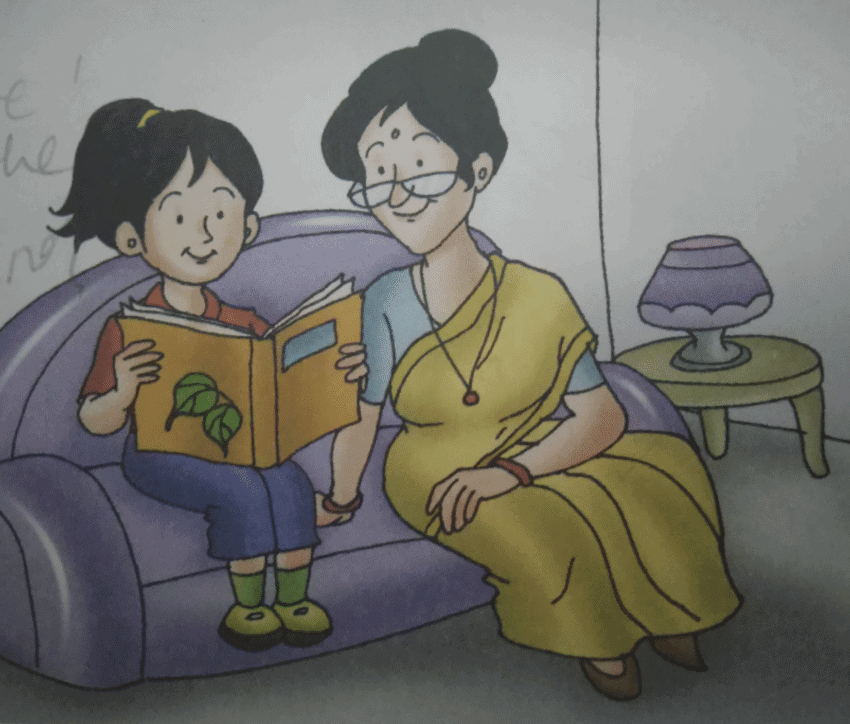
Q1. The granddaughter proves to be a catalyst in the grandmother’s pursuit of knowledge. Discuss.

Ans: The granddaughter acts as a catalyst by giving the grandmother both motivation and practical help to learn. She first introduced her to the novel ‘Kashi Yatre’, which awakened the grandmother’s interest. When the grandmother became anxious at not knowing the next episode, the granddaughter set a clear goal – to teach her the Kannada alphabet by Dussehra – and offered patient, regular lessons. She encouraged practice by making the grandmother read aloud, repeat letters, write and recite. Her steady support, gentle correction and belief in her grandmother’s ability turned a wish into action. Because of this encouragement and systematic teaching, the grandmother gained confidence and independence and was finally able to read ‘Kashi Yatre’ on her own.

Q2. Why does the grandmother identify with the protagonist of the ‘Kashi Yatre’? What does this tell you about her character?
Ans: The protagonist of Kashi Yatre is an old lady who longs to visit Kashi (Varanasi) but sacrifices her savings to help a poor orphan get married. Many Hindus believe that visiting Kashi and worshipping Lord Vishweshwara is the ultimate act of virtue. Although the grandmother has never been to Kashi, she shares this desire, yet finds joy in cooking and caring for her grandchildren. This connection leads her to identify with the protagonist of Kashi Yatre. This identification reveals that she is a religious woman, deeply loving and affectionate. Her actions demonstrate a selfless nature, prioritising the happiness of others over her own desires.

Q3. The grandmother believes in scriptures and Hindu mythology, yet she touches the feet of her granddaughter. Why?
Ans: Although touching the feet of elders is the usual custom, the grandmother touches her granddaughter’s feet as an act of respect for her role as a teacher. The granddaughter had taught her with affection and patience, giving her the power to read and the confidence to be independent. By touching her feet the grandmother acknowledges that teaching and wisdom deserve honour, regardless of the learner’s age. The gesture therefore expresses gratitude, humility and recognition of the granddaughter’s service.

Q4. Give a character sketch of the grandmother as depicted in the lesson, ”How I Taught My Grandmother To Read.”
Ans: The grandmother is a warm, devoted and determined woman of sixty-two. She is described as grey-haired and wrinkled, having spent most of her life tending to household duties and her family’s needs. Despite a simple, routine life, she has a sensitive and devout nature and develops a strong emotional bond with the novel ‘Kashi Yatre’, which awakens a long-held desire to visit Kashi. Her disappointment at being unable to read motivates her to learn; this shows her self-respect, independence and dislike of helplessness. Determined and hardworking, she practises reading and writing with steady patience. Ultimately, she demonstrates that age is no barrier to learning and that a sincere wish, combined with persistence and good teaching, can lead to personal transformation.

Q5. As grandmother in the story ‘How I Taught My Grandmother to Read’ write a diary entry on your transformation.
 OR
 You are the grandmother. Write your feelings in your diary when your granddaughter gave you the novel ‘Kashi Yatre’. [CBSE 2010 (TERM 1)]

Ans: Dear Diary, 

25th August 2011
I am on cloud nine today because I can finally read an episode of ‘Kashi Yatre’ all by myself. I remember how my granddaughter used to read it to me, and how empty I felt when she went away. That feeling of helplessness made me decide to learn. At sixty-two, I began to learn the Kannada alphabet. It was hard at first, but with practice and my granddaughter’s patient teaching I began to recognise letters and words. Now I can read and I feel so light and independent. I never thought I would be able to do this. I am grateful to my granddaughter for giving me not only the book but also the confidence to learn. This new skill has opened a small, bright world for me.

Q6. Imagine you are the grandmother. In about 150 words, write a letter to share your thoughts, feelings, ambitions and resolutions as a neo-literate.  [CBSE 2010 (Term 1)]
Ans: Dear Krishna,

How are you? I have wonderful news to share with you. At the age of sixty-two, I have finally learnt to read the Kannada alphabet. When I was young, girls were not encouraged to go to school, so I never had the chance to study. Earlier, my granddaughter Sudha used to read the story Kashi Yatre to me every week, and I eagerly waited for it. When she was away and I could not read the magazine myself, I felt helpless and dependent. That moment made me realise the true value of education.

With Sudha’s patient guidance and my own determination, I learnt to read and write. Today, I feel confident, independent and proud of my achievement. I now understand that learning has no age limit. My ambition is to continue reading books on my own and never feel dependent again. Education has given me a new sense of dignity and freedom.

Yours affectionately,
Avva

Q7. You are Sudha Murthy. Write a letter to your friend telling her how and why you taught your grandmother to read.  [CBSE 2010 (Term 1)]
Ans: 

Dear Mamta,

I hope you are well. I want to share a special experience that taught me a valuable lesson about education and patience. My grandmother, Avva, surprised me one day by expressing her desire to learn to read at the age of sixty-two. She had never gone to school because in her childhood, girls’ education was not considered important.

Every week, I used to read the story Kashi Yatre from the magazine Karmaveera to her. Once, when I went away for a few days, she felt helpless because she could not read the next episode on her own. Her disappointment moved me deeply, and I decided to teach her the Kannada alphabet. I fixed Dussehra as our deadline and taught her patiently every day. She practised reading, writing and reciting with great determination.

Her dedication amazed me. When she finally read the novel confidently, she touched my feet as a mark of respect for her teacher. Teaching her showed me that learning has no age limit and that education brings true independence.

Yours lovingly,
Sudha

16. Believe in Yourself – Very Short Question Answer

Q1: What does the poem suggest about facing challenges?
Ans: Challenges must be faced alone, with a clear focus on the future.

Q2: What is meant by “there is no crowd to see”?
Ans: It means challenges are faced individually without any support or audience.

Q3: What does “it’s just you and the future” imply?
Ans: It implies personal responsibility for shaping one’s future.

Q4: What role does fear play in decision-making?
Ans: Fear makes decisions difficult and creates hesitation.

Q5: What makes the future seem uncertain in the poem?
Ans: Fear and lack of clarity about outcomes make the future uncertain.

Q6: What does “pull you forward” suggest?
Ans: It suggests motivation and progress towards one’s goals.

Q7: What does “push you back in fear” represent?
Ans: It represents fear as a barrier that hinders progress.

Q8: What is meant by “status quo”?
Ans: It refers to a situation where things remain unchanged.

Q9: Why is comfort described as easy?
Ans: Because it involves no risk or effort.

Q10: Why is comfort not good for growth?
Ans: Because growth requires change and stepping out of comfort zones.

Q11: What does the poem say about human potential?
Ans: Humans are meant to grow and move beyond their comfort zones.

Q12: What is the message about change?
Ans: Change is essential for personal growth.

Q13: Why is the first step the hardest?
Ans: Because it requires courage to begin something new.

Q14: What does “no turning back” imply?
Ans: It implies firm commitment after making a decision.

Q15: What is required to move forward successfully?
Ans: Strong self-belief is required.

Q16: How can one keep the future on track?
Ans: By believing in oneself and staying confident.

Q17: What is the central idea of the poem?
Ans: Self-belief and courage are key to growth and success.

Q18: What does the future symbolise?
Ans: It symbolises the unknown and future opportunities.

Q19: What does fear symbolise in the poem?
Ans: It symbolises mental barriers that prevent progress.

Q20: What does the first step symbolise?
Ans: It symbolises courage and the beginning of change.

Q21: What do comfort and status quo symbolise?
Ans: They symbolise stagnation and fear of change.

Q22: What type of tone does the poem have?
Ans: The tone is motivational and encouraging.

Q23: How does the tone develop in the poem?
Ans: It shifts from uncertainty to confidence and determination.

Q24: What poetic device is used in “pull you forward or push you back”?
Ans: Antithesis.

Q25: What does the phrase “step up to the challenge” encourage the reader to do?
Ans: It encourages the reader to face challenges bravely and take action.

15. Follow That Dream – Very Short Question Answer

Very Short Answer Questions

Q1: Who wrote the letter to Ming?
Ans: The letter was written by Ming’s mother.

Q2: What does the mother encourage Ming to do?
Ans: The mother encourages Ming to follow her dream and pursue it sincerely.

Q3: Why do great people become great according to the letter?
Ans: Great people become great because they have dreams and pursue them persistently.

Q4: What differentiates greatness from ordinary people?
Ans: Greatness depends on the effort and sacrifice people invest to realise dreams.

Q5: How long should one pursue a subject to reach world-class level?
Ans: One must pursue a subject intensely and exclusively for at least ten years.

Q6: What is the starting point of achieving a dream?
Ans: Achieving a dream starts with a passion for a particular interest.

Q7: What comes after passion in achieving dreams?
Ans: After passion, conviction develops that it is necessary to realise the dream.

Q8: What must a person count before pursuing a dream?
Ans: A person must count years of effort, financial investments, and sacrifices needed.

Q9: What does the word ‘plunge’ suggest in the text?
Ans: The word plunge suggests throwing oneself completely into the chosen activity.

Q10: In which fields can dreams be pursued?
Ans: Dreams can be pursued in fields like sports, science, arts, business, or design.

Q11: How is the journey towards dreams described?
Ans: The journey towards dreams is often uphill and full of challenges.

Q12: What keeps a person on track when stamina decreases?
Ans: Both the prospect of success and the satisfaction of doing what one loves keep a person on track.

Q13: What role does a support network play in success?
Ans: A support network of people stands by and helps an individual succeed.

Q14: Why do many dreams remain unfulfilled?
Ans: Many dreams remain unfulfilled because people never go beyond wishful thinking.

Q15: What might people choose instead of pursuing dreams?
Ans: People might choose security instead of taking risks to pursue their dreams.

Q16: How can circumstances affect dreams?
Ans: Circumstances can change lives and prevent people from achieving their dreams.

Q17: Why did some people stop studying according to the text?
Ans: Some people stopped studying to work and support their siblings through school.

Q18: What should be considered before chasing a dream?
Ans: One should consider the time and effort required to chase the dream.

Q19: When should a person act on their dream?
Ans: A person should act when strong conviction still flows through their veins.

Q20: How can life affect a person’s dreams?
Ans: Life can change a person’s dreams over time and shape new aspirations.

Q21: What is required to fulfil dreams according to the mother?
Ans: Fulfilling dreams requires negotiating through many hurdles and challenges patiently.

Q22: How long did the mother chase her dream of publishing?
Ans: The mother chased her dream of publishing a book for ten years.

Q23: What is a dreamscape?
Ans: A dreamscape refers to a world or scene filled with dreams.

Q24: What does the mother say about people who only wish for success?
Ans: The mother says that many people only engage in wishful thinking and never take action to achieve their dreams.

Q25: What example does the mother give from her own life?
Ans: The mother shares that she spent ten years pursuing her dream of publishing a book.

14. Words – Very Short Question Answer

Very Short Answer Questions

Q1: What is the central idea of the poem?
Ans: The poem shows that words alone cannot fully express or satisfy true emotions.

Q2: What would happen if words could satisfy the heart?
Ans: The heart would find less care and worry.

Q3: What are words compared to in the first stanza?
Ans: Words are compared to summer birds.

Q4: What do summer birds symbolise in the poem?
Ans: They symbolise the fleeting and temporary nature of words.

Q5: What does “empty air” represent?
Ans: It represents the hollowness left by meaningless words.

Q6: How is the heart described in the poem?
Ans: The heart is described as a pilgrim upon earth.

Q7: What does the “pilgrim” symbolise?
Ans: It symbolises the heart’s journey through life and emotions.

Q8: What are words compared to in times of need?
Ans: Words are compared to weeds.

Q9: Why are words compared to weeds?
Ans: Because they are abundant but often useless.

Q10: What kind of words bring deeper joy?
Ans: A few sincere and truly spoken words.

Q11: What is contrasted with meaningful words?
Ans: A large number of empty or superficial words.

Q12: What do words that “reach the head” lack?
Ans: They lack emotional connection.

Q13: What kind of words “touch the heart”?
Ans: Genuine and heartfelt words.

Q14: What can cheer a lonely home?
Ans: A voice with a few sincere words.

Q15: What does “sunny way” symbolise?
Ans: Warmth, positivity, and emotional comfort.

Q16: Why are few words described as “dear”?
Ans: Because they are meaningful and heartfelt.

Q17: What would happen if words could satisfy the chest?
Ans: The world might hold a feast.

Q18: What does “summoned to the test” mean?
Ans: It means when words are needed most in difficult situations.

Q19: What happens to words during such tests?
Ans: They often fail to satisfy.

Q20: What are words compared to in the final stanza?
Ans: They are compared to plants that make a gaudy show.

Q21: What do such plants fail to produce?
Ans: They fail to produce fruit.

Q22: What does “gaudy show” represent?
Ans: Attractive but empty or superficial speech.

Q23: What does “fruit” symbolise in the poem?
Ans: Meaningful results or true value.

Q24: What message does the poet give about communication?
Ans: Communication should be sincere and meaningful rather than excessive.

Q25: What is more important according to the poem—quantity or quality of words?
Ans: Quality of words is more important than quantity.

13. Carrier of Words – Very Short Question Answer

Very Short Answer Questions

Q1: Who is Khetaram in the story?
Ans: Khetaram is a Gramin Dak Sewak and the sole postman of Somarad Branch Post Office.

Q2: What does a Gramin Dak Sewak do in remote areas?
Ans: Gramin Dak Sewaks deliver mail and connect remote areas with families across distant regions.

Q3: How long has Khetaram been working as a trusted link?
Ans: Khetaram has been a trusted link between villagers and families for the last fifteen years.

Q4: Where does Khetaram deliver mail?
Ans: Khetaram delivers mail to far-flung hamlets near the Indo-Pakistan border in desert regions.

Q5: What physical change happened to Khetaram due to his work?
Ans: Khetaram’s left shoulder slumped from years of carrying a heavy mailbag continuously.

Q6: How far is Khetaram’s delivery area from the last railhead?
Ans: Khetaram works about 120 kilometres beyond the last railhead at Barmer in Rajasthan.

Q7: What difficulty does Khetaram face during summers?
Ans: Khetaram faces scorching heat where temperatures cross fifty degrees while delivering mail.

Q8: What is the maximum load Khetaram is allowed to carry?
Ans: Regulations specify that Khetaram’s mailbag load cannot exceed twenty-eight kilograms during deliveries.

Q9: How far does Khetaram walk for a single delivery?
Ans: Khetaram sometimes covers twenty kilometres on foot for delivering even a single mail.

Q10: What protection does Khetaram use against harsh desert conditions?
Ans: Khetaram’s khaki turban and uniform protect him from scorching winds and swirling sandstorms.

Q11: Why does Khetaram not use water for washing regularly?
Ans: Water is too precious in the desert, so Khetaram only wipes his body.

Q12: What was Khetaram called before 2001?
Ans: Before 2001, Khetaram was known as a delivery agent working in rural areas.

Q13: What percentage of workforce do Gramin Dak Sewaks form?
Ans: Gramin Dak Sewaks constitute more than fifty percent of the total postal workforce.

Q14: Why is the role of GDS considered invaluable?
Ans: GDS deliver mail in interior areas that are inaccessible by any means besides foot.

Q15: What was the purpose of India Post after independence?
Ans: India Post aimed to bring the entire population within the mailing ambit across country.

Q16: How many post offices were there in India in 1947?
Ans: There were about twenty-five thousand post offices in India at the time of independence.

Q17: How many post offices exist in India today?
Ans: Today, India has more than one and a half lakh post offices across country.

Q18: How do rural people use post offices for savings?
Ans: Rural depositors entrust their monthly savings to the post office in their local area.

Q19: What is required for GDS selection?
Ans: Access to another means of livelihood is the essential criterion for GDS selection.

Q20: How many hours do GDS work daily?
Ans: Gramin Dak Sewaks are required to work only five hours in a day.

Q21: Why did Khetaram take up this job?
Ans: Khetaram took the job because one crop of bajra could not feed his family.

Q22: How do villagers depend on the post office?
Ans: Villagers depend on post offices for receiving money orders sent by relatives.

Q23: What help does Khetaram provide to villagers besides delivering mail?
Ans: Khetaram reads letters and writes replies for villagers who feel comfortable asking him.

Q24: What kind of letter does Khetaram dread?
Ans: Khetaram dreads letters with torn corners that signify news of death for families.

Q25: What future role might Khetaram take with new phone lines?
Ans: Khetaram may become Gramin Sanchar Sewak carrying a cell phone along with post.