14. Detailed Summary: Words

About the Poet 

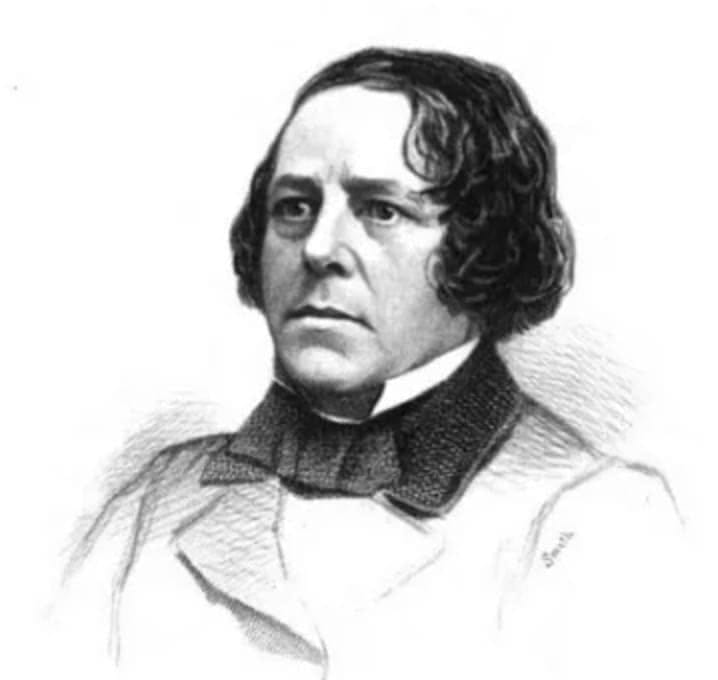
Charles Swain (1801–1874) was an English poet known for his lyrical and reflective poetry that often explored human emotions, morality, and everyday experiences. His works focus on simplicity and sincerity rather than elaborate expression. Swain believed that true feelings cannot always be expressed through words alone, a theme clearly reflected in the poem “Words.” His poetry highlights the limitations of language and emphasises the importance of genuine emotions over empty speech. Through vivid comparisons and thoughtful reflections, he conveys deep philosophical ideas in an accessible manner. His writings encourage readers to value meaningful communication and emotional honesty rather than superficial or excessive use of words. 

Key Points of the Poem 

  • The poem highlights the limitations of words in expressing true emotions.
  • Words are compared to summer birds (fleeting and impermanent) and weeds (abundant but useless) — two distinct images that highlight different dimensions of empty speech.
  • The poet emphasises that a few sincere words are more valuable than many empty ones.
  • It shows that emotional connection is more important than verbal expression.
  • The poem criticises superficial communication and promotes meaningful speech.

Detailed Summary 

If words could satisfy the heart,
The heart might find less care;
But words, like summer birds, depart,
And leave but empty air.

This stanza introduces the central idea that words alone cannot fully satisfy human emotions. The poet imagines a situation where words could truly comfort the heart, suggesting that life would be easier and less burdensome. However, he quickly contrasts this idea by comparing words to “summer birds” that fly away, leaving nothing behind. This simile emphasises the temporary and fleeting nature of words. Just like birds that disappear after a short while, words may sound pleasant but often fail to provide lasting comfort. The phrase “empty air” symbolises the hollowness left behind when words lack sincerity. Through this contrast, the poet establishes that emotional fulfilment requires more than mere verbal expression.

The heart, a pilgrim upon earth,
Finds often, when it needs,
That words are of as little worth
As just so many weeds.

In this stanza, the poet personifies the heart as a “pilgrim,” suggesting that life is a journey filled with struggles and emotional needs. During difficult moments, the heart seeks comfort and understanding, but often finds that words fail to provide meaningful support. The comparison of words to “weeds” highlights their lack of value and usefulness in times of need. Just as weeds grow abundantly but serve little purpose, empty words are plentiful but ineffective. This imagery reinforces the idea that not all words carry meaning or emotional depth. The stanza emphasises the disappointment one feels when words fail to meet emotional expectations, underscoring the gap between expression and true feeling.

A little said, and truly said,
Can deeper joy impart
Than hosts of words, which reach the head,
But never touch the heart.

This stanza conveys a powerful message about the value of sincerity over quantity. The poet argues that a few genuine and heartfelt words can bring greater happiness than a large number of superficial ones. The contrast between words that “reach the head” and those that “touch the heart” highlights the difference between intellectual understanding and emotional connection. Words that are merely logical or formal may be understood, but they lack emotional impact. In contrast, sincere words resonate deeply and create lasting joy. This stanza reinforces the idea that communication should focus on authenticity rather than verbosity, encouraging readers to prioritise meaningful expression.

The voice that wins its sunny way,
A lonely home to cheer,
Hath oft the fewest words to say;
But, oh! those few, how dear!

Here, the poet highlights the comforting power of simple, heartfelt communication. A voice that can “cheer” a lonely home does not rely on many words but uses a few meaningful ones. The phrase “sunny way” symbolises warmth, positivity, and emotional connection. The poet suggests that genuine care and affection are often expressed through simplicity rather than elaborate speech. The exclamation at the end reflects admiration for such meaningful words. This stanza emphasises that the value of words lies not in their quantity but in their ability to convey warmth and compassion, bringing comfort and happiness to others.

If words could satisfy the chest,
The world might hold a feast;
But words, when summoned to the test,
Oft satisfy the least!

In this stanza, the poet uses hyperbole to express that if words could truly satisfy human emotions, the whole world would celebrate joyfully. However, reality is quite the opposite—words often fail when they are most needed. The phrase “summoned to the test” suggests moments of emotional difficulty when words are expected to provide comfort or clarity. Yet, they frequently fall short. This highlights the inadequacy of words in addressing deep emotional needs. The stanza reinforces the poem’s central idea that words alone cannot fulfil human emotions, especially during critical moments.

Like plants that make a gaudy show,
All blossom to the root;
But whose poor nature cannot grow,
One particle of fruit!

The final stanza uses a striking simile to criticise superficial speech. Words are compared to plants that appear beautiful with flowers but fail to produce fruit. This imagery symbolises speech that looks impressive but lacks substance or meaningful outcome. The “gaudy show” represents attractive but empty language, while the absence of fruit signifies the lack of real value or impact. The poet concludes by emphasising that words without sincerity or purpose are ultimately useless. This stanza powerfully reinforces the idea that meaningful communication must go beyond appearance and should carry depth, truth, and emotional significance.

Theme/Message

Theme

The poem highlights the limitations and true value of words in human communication. It shows that words alone often fail to express deep emotions and may seem empty or meaningless when not spoken with sincerity. The poet compares words to things like “summer birds” that depart and “weeds” that have little worth, emphasising their fleeting and superficial nature . At the same time, the poem suggests that a few genuine and heartfelt words can have a powerful impact. It explores the contrast between quantity and quality of speech, stressing that true communication lies in emotional connection rather than mere words. Overall, the theme focuses on the importance of meaningful, sincere expression over empty talk.

Message

The poem conveys that words should be used thoughtfully and sincerely, as they often fail to express true emotions when used carelessly. It teaches that speaking too much without meaning is pointless, as such words are empty and ineffective. Instead, a few genuine and heartfelt words can create a deeper impact and truly connect with others. The poem reminds us that real communication comes from the heart, not just the tongue. It also warns against superficial or showy language that looks impressive but lacks substance. Overall, the message is that we should value quality over quantity in speech, and ensure that our words are meaningful, honest, and capable of touching others’ hearts.

Literary Devices 

  • Simile – “words, like summer birds, depart” compares words to fleeting birds.
  • Metaphor & Personification– “heart, a pilgrim upon earth” gives the abstract heart a human identity, portraying it as a wandering soul seeking comfort on a difficult life journey.
  • Symbolism – weeds (worthless words), fruit (meaningful outcome).
  • Hyperbole – ‘the world might hold a feast’ exaggerates the imagined joy if words could truly fulfil emotional needs, making their actual inadequacy all the more striking by contrast.
  • Imagery – vivid pictures of birds, weeds, and plants enhance understanding.
  • Contrast – few meaningful words vs many empty words.
  • Exclamation – expresses strong emotions and emphasis.
  • Repetition – ‘words’ and ‘heart’ are repeated across stanzas to keep the central conflict between language and emotion at the forefront, reinforcing the poem’s core message.”

Difficult Words   

  • Pilgrim =a spiritual traveller on a long, difficult journey (here used to represent the heart’s emotional journey through the trials of life).
  • Depart = to leave
  • Gaudy = bright but showy or lacking good taste
  • Weeds = unwanted plants (symbolising useless things)
  • Impart = to give or convey
  • Hosts = a large number
  • Summoned = called upon
  • Particle = a very small amount

13. Detailed Summary: Carrier of Words

Key Points of the Chapter

  • This inspiring chapter “Carrier of Words” pays tribute to the unsung heroes of India Post — the Gramin Dak Sewaks (GDS) who deliver mail in the most remote and harsh regions of the country.
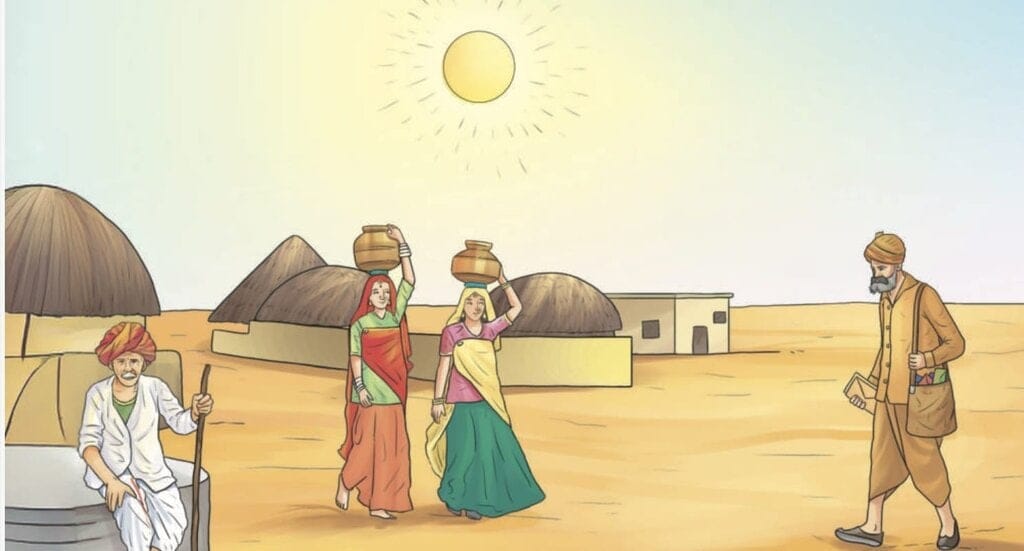
  • Somarad is located 120 km beyond the last railhead at Barmer, 50 km beyond the last phone, and 10 km beyond where the road crumbles into sand.
  • Despite scorching heat (nearly 50°C), sandstorms, and long walks of up to 20 km on foot with a heavy mailbag, Khetaram ensures letters and money orders reach far-flung hamlets within 24 hours.
  • Temperatures sometimes cross 50°C, but are officially recorded as 49.9°C to avoid declaring a state holiday — yet Khetaram continues to deliver.
  • The chapter highlights how these “carriers of words” provide not just postal service but emotional connection, trust, and lifeline to families in inaccessible areas where even phones and roads do not reach.

Detailed Summary

The chapter begins by contrasting modern instant communication with the traditional postal system, highlighting how letters were once the main means of connection. Even today, in remote areas beyond roads and railways, Gramin Dak Sewaks (GDS) continue to serve as the only link between isolated communities and the outside world .

The chapter focuses on Khetaram, the sole postman of the Somarad Branch Post Office in Rajasthan’s Thar Desert. For over fifteen years, he has been delivering mail to remote hamlets located near the Indo-Pakistan border. Every day, he walks long distances across sand dunes and soft desert terrain, carrying a heavy mailbag weighing up to 28 kilograms. Despite extreme conditions, he ensures that letters and parcels reach their destination within 24 hours of dispatch.

Khetaram works in harsh weather, where temperatures often rise close to 50°C. His khaki uniform and turban are his only protection against scorching heat and sandstorms. Water is scarce, and even basic comforts are limited. Sometimes, due to extreme heat, he delays deliveries until evening. His footprints in the sand reflect the weight of his responsibility and effort.

Apart from delivering mail, Khetaram plays an important social role in the village. Many people are illiterate, so he reads letters and despite his slightly shaky hand from years of work, he writes replies for illiterate villagers, and everyone feels comfortable having him draft their letters. He is warmly welcomed in every home and is treated with great respect and trust. However, he fears delivering letters that carry bad news.An envelope with the right corner torn off indicates that the letter bears news of death. In such cases, he stands outside, reads the letter twice, then tears it to bits — saying ‘Ashubh Samachar cannot be carried into the house’ and ‘Bad news must be destroyed.

Khetaram’s job is essential for his family’s survival, as farming in the desert is unreliable — Akaal or famine is a way of life, and even in a good year he gets only one crop of bajra that cannot feed his family of five.. As Mulk Raj Anand wrote in ‘Story of the Indian Post Office,’ Indians in remote villages are uniquely dependent on the post office for transmitting small sums of money, reflecting their absolute confidence in the postal system. Money orders sent by relatives are a major source of income for many families. The chapter also explains how India Post expanded after independence to connect even the remotest areas, increasing trust among people. After independence, India Post’s mandate was to bring the entire population within the mailing ambit — expanding from 25,000 post offices in 1947 to more than one and a half lakh today.

Gramin Dak Sewaks are  to work only five hours a day and are allowed to serve after the age of 60, till the age of 65, enabling them to have another source of livelihood alongside. The chapter concludes by appreciating dedicated workers like Khetaram, who act as “carriers of words” and play a crucial role in keeping the nation connected.

Let’s Revise: Why is Khetaram called the “lone face of the state” in his area?

View Answer  

Let’s Revise: Why does Khetaram tear the letter announcing death?

View Answer  

Theme/Message

Theme

The chapter highlights the dedication, resilience, and silent service of ordinary individuals like Khetaram, who work tirelessly to keep remote parts of the country connected. It shows how, despite harsh conditions like extreme heat, long distances, and isolation, Gramin Dak Sewaks continue their duty with commitment and responsibility. The chapter also emphasises the importance of the human touch in communication, where letters carry emotions, news, and relationships. It reflects the deep trust people place in the postal system, especially in rural areas. Overall, the theme celebrates these unsung heroes who, through their service, play a vital role in maintaining connection, care, and continuity in society.

Let’s Revise: How does the chapter show the importance of Gramin Dak Sewaks?

View Answer  

Message

  • Never underestimate the value of simple, dedicated work — it can be a lifeline for thousands.
  • Even in the digital age, human connection and trust remain priceless.
  • People working in harsh conditions deserve our respect and gratitude.
  • Service to others, no matter how small, makes a big difference in society.
  • We must salute the “carriers of words” who quietly keep India united.

Let’s Revise: What message does the author give at the end of the chapter?

View Answer  

Difficult Words

  1. Slumped: drooped or bent due to tiredness
  2. Dunes: hills of sand in a desert
  3. Hamlets / Dhaanis: small settlements or villages
  4. Devoid: completely without
  5. Sole: only
  6. Ply: move or travel regularly
  7. Hefted: lifted with effort
  8. Stipulate: specify as a condition
  9. Mojri: traditional Rajasthani footwear
  10. Inaccessible: impossible to reach
  11. Ambit: range or scope
  12. Remitted: sent as gift.
  13. Dwell:to stay on for sometime
  14. Threshold: entrance or doorstep of a house
  15. Dreads: fears greatly
  16. Missive: letter
  17. Entail: involve or require
  18. Striding: walking with long, confident steps

12. Detailed Summary: A Friend Found in Music

About the Poet 

Bryanna T. Perkins is a contemporary American poet known for her deeply personal and uplifting verses that explore emotions, healing, and everyday sources of strength. Her poem “A Friend Found in Music” draws from her own life experiences, where music became a reliable source of comfort during difficult times. Through simple yet powerful metaphors, Perkins celebrates music’s ability to lift spirits, provide therapy, and act as a loyal friend when no one else is around. Her writing style is warm, rhythmic, and relatable, making her work especially popular among young readers who find solace in songs and melodies.

Key Points of the Poem 

  • The poet describes music using beautiful metaphors — an ocean that pulls her to the shore, a rhythm that moves her to the core, therapy when she feels blue, and a needed friend when no one cares.
  • Music helps her during sadness (when she feels blue), lifts her spirits, and gives her strength to “pull through” tough times.
  • Even in her happiest moments, music is present, proving it is a constant companion.
  • The poem shows music’s power to heal emotions and provide comfort, making it a true friend.

Detailed Summary 

Music is the ocean
 That pulls me to the shore.
 Music is the rhythm
 That moves me to the core.

This stanza presents music as a powerful and irresistible force that deeply influences the poet’s emotions. By comparing music to an “ocean,” the poet suggests its vastness, depth, and ability to attract and surround her completely. The poet compares music to an ocean that draws her towards the shore — just as an ocean’s pull is irresistible, music draws her in, offering her direction, comfort, and a sense of belonging. Calling music “rhythm” highlights its natural connection with life and heartbeat, showing how it synchronises with inner feelings. The line “moves me to the core” emphasises that music does not just entertain but touches the deepest part of the poet’s soul, affecting her emotionally and spiritually.

Music is the therapy I need when I feel blue.
 Music lifts my spirits
 To make sure I pull through.

In this stanza, the poet highlights the healing and comforting power of music. She describes music as “therapy,” suggesting that it acts as a therapy for emotional pain and sadness. The phrase “feel blue” symbolises moments of loneliness, stress, or sorrow, during which music becomes a source of relief. Music helps her process emotions and regain balance. The line “lifts my spirits” shows how music can instantly improve mood, bringing positivity and hope even in difficult situations. The phrase “pull through” signifies overcoming challenges, indicating that music provides strength and motivation to face hardships. Overall, this stanza emphasises music as a supportive and healing force in life.

The times when I’m most cheerful,
 It’s clear, music was there.
 Music is the needed friend
 When no one seems to care.

The final stanza focuses on the constant presence of music in the poet’s life, both in happiness and loneliness. The poet acknowledges that music accompanies her during her happiest moments, enhancing her joy and making those experiences more meaningful. At the same time, music becomes especially important during times of isolation, when she feels that no one else understands or cares.Music becomes most important during times when no one seems to care — making it a truly needed friend.. By calling music a “needed friend,” the poet personifies it as a loyal and dependable companion who never leaves her side. This comparison highlights music’s emotional support and reliability. The stanza concludes by reinforcing the idea that music is not just a form of entertainment but a true friend that provides comfort, companionship, and emotional strength.

Theme/Message

Theme

The poem focuses on music as emotional therapy and constant companionship. It shows how music acts like a loyal friend that supports us in both happy and sad times. The poet describes music as something that deeply connects with emotions, healing sadness and bringing inner peace. Through expressions like “music is the therapy” and “moves me to the core,” the poem highlights its powerful emotional impact. It also shows that music is always present—whether in moments of joy or loneliness. Overall, the theme emphasises that music is not just sound or entertainment but a source of comfort, strength, and emotional connection that stays with us throughout life.

Message

  • Music is more than entertainment — it is a powerful friend that never leaves us alone.
  • When we feel low or lonely, music can lift us up and help us “pull through” difficult moments.
  • Even in our happiest times, music stays with us, making every moment better.
  • Emotional Implications — The tone is warm, grateful, and comforting, making readers feel the poet’s deep love for music.
  • The poem reminds us to turn to music whenever we need comfort or joy — it is always there for us.

Literary Devices 

  • Metaphor — The entire poem uses metaphors: Music is the ocean, the rhythm, the therapy, and the needed friend.
  • Anaphora / Repetition — The word ‘Music’ and the phrase ‘Music is the’ are repeated at the start of multiple lines (anaphora), emphasising music’s central role in the poet’s life.
  • Rhyme Scheme — The poem follows an ABCB rhyme scheme — only the 2nd and 4th lines of each stanza rhyme (shore/core, blue/through, there/care), giving it a flowing, song-like quality
  • Personification — Music is given human qualities — it “pulls”, “moves”, “lifts”, and acts as a “friend”.

Difficult Words   

  • Pulls me to the shore = draws or attracts me strongly 
  • Moves me to the core = deeply affects my innermost feelings 
  • Feel blue = feel sad or depressed 
  • Lifts my spirits = makes me feel happy and hopeful 
  • Pull through = succeed in overcoming a difficult situation 
  • Most cheerful = very happy 
  • Needed friend = someone essential and reliable

11. Detailed Summary: Twin Melodies

Key Points of the Chapter

  • This heartwarming play “Twin Melodies” by Mitra Phukan explores the beautiful harmony between tradition and modernity through music.
  • It revolves around young violinist Shruti Sharma who secretly joins an Indo-Western fusion band but fears her father Guru Nabin Sharma, a violinist and the Principal of Sangeetika Music School
  • Through family conflict, secret practice, and a surprise revelation, the play shows how love, understanding, and respect can bridge generational gaps.
  • It celebrates the idea that music has no boundaries — classical ragas and Western tunes can create “twin melodies” that enrich each other.

Detailed Summary

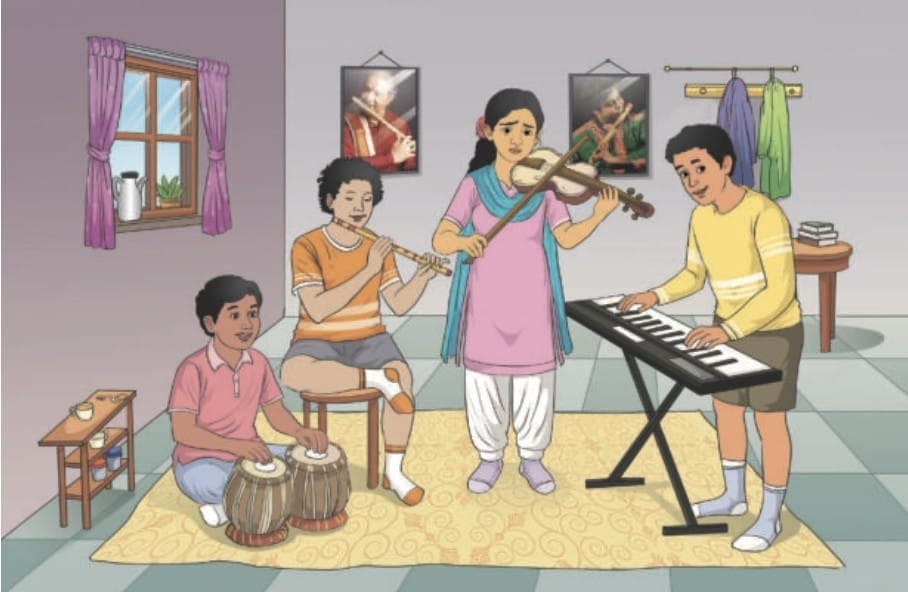
The play Twin Melodies centres on Shruti, a young and talented violinist who is part of a fusion music group with her friends Avinash (tabla), Iqbal (flute), and Peter (keyboard). They practise an Indo-Western fusion piece together at Iqbal’s house. While her friends are cheerful and supportive, Shruti appears worried because she has not told her father about these rehearsals. Her father, Guru Nabin Sharma, is a strict classical violinist and the principal of a music school who strongly believes that only Hindustani classical music is pure and valuable .

Her friends encourage her to speak honestly with her father, assuring her that he will understand. Shruti finally gathers courage and decides to tell him during dinner. At home, she hesitates but eventually reveals that she wants to perform in an upcoming Indo-Western fusion concert. Her father reacts firmly and negatively. He refuses permission, calling fusion music a disrespect to the violin and classical traditions. He also reminds her of his strict rule of allowing only one performance every six months. He explains this with the saying ‘familiarity breeds contempt,’ believing too many performances would reduce their value. .Shruti feels deeply hurt and disappointed. Her mother Leela scolds her for attending the rehearsals without her father’s knowledge

Later, Shruti decides to attend one last practice session with her group, thinking she will quit afterward. During this rehearsal, her parents  enter the room and observe from a corner. As they watch the performance, they become deeply impressed. Nabin Sharma realises that Shruti has not lost the essence of classical music but has skillfully blended it with modern elements. He praises her performance and appreciates her talent. He tells her she did not lose sight of the notes of the raga even once and performed it to excellence — showing that she had maintained her classical foundation.

With the support of Shruti’s mother, Nabin reflects on his own past. He remembers how he had once gone against his family’s wishes to learn the violin instead of following their tradition of vocal music. This makes him realise that every artist has a unique path—“each bay, its own wind.” Accepting his mistake, he changes his perspective.

In the end, he supports Shruti’s decision, offers his music room for their practice, and promises to cheer for her at the concert. The play concludes on a positive note, highlighting understanding, acceptance, and the harmony between tradition and modernity.

Let’s Revise: Why was Shruti afraid to tell her father about the fusion concert?

View Answer  

Let’s Revise: How does the play end on a happy note?

View Answer  

Theme/Message

Theme

The play Twin Melodies highlights the harmony between tradition and modernity, showing that classical and Western music are not opposites but can beautifully complement each other. It explores the generational gap in artistic thinking, where elders value tradition while the younger generation seeks experimentation. Through Shruti’s journey, the play emphasises the importance of following one’s passion while still respecting family values. It also shows how misunderstanding arises due to lack of communication. Ultimately, the theme conveys that true art is not limited by rigid boundaries and that acceptance, openness, and mutual respect can create a perfect balance between old traditions and new ideas.

Let’s Revise: How does the play justify its title “Twin Melodies”?

View Answer  

Message

The play conveys that one should respect parents’ opinions but also have the courage to follow one’s passion. Shruti’s decision to “bite the bullet” shows the importance of honest communication. The message also highlights that every individual has their own unique path—“each bay, its own wind.” Parents should trust their children’s abilities and support their dreams rather than imposing only traditional views. It also teaches that music and creativity have no boundaries, and fusion can create something meaningful when done sincerely. Overall, the play emphasises that understanding, trust, and open communication can resolve conflicts and strengthen relationships within families.

Let’s Revise: What important life lesson does Guru Nabin learn?

View Answer  

Difficult Words

  1. Crescendo:a gradual increase in the volume or intensity of sound.
  2. Desecration: disrespect towards something sacred
  3. Ragas and aalaaps: elements of Hindustani classical music
  4. Bite the bullet: to deal with an unpleasant or difficult situation courageously
  5. Contempt: a strong feeling of dislike and disrespect
  6. Hubbub: a loud noise
  7. Iterated: repeated
  8. Painstakingly: done with great care and effort
  9. Worked his fingers to the bone: worked extremely hard, dedicating all effort to a task.
  10. Root: show support

10. Detailed Summary: Nine Gold Medals

About the Poet 

David Roth, an American singer-songwriter, is best known for his inspirational poem “Nine Gold Medals,” which is based on a true story from the 1976 Special Olympics. The poem captures a heart-touching moment when athletes with intellectual disabilities demonstrated extraordinary empathy and sportsmanship. Roth’s work often celebrates themes of kindness, inclusion, and human connection. Through simple yet powerful storytelling, he reminds readers that true victory lies not in winning alone but in lifting others up. His poem continues to inspire students and athletes worldwide to value compassion over competition.

Key Points of the Poem 

  • The poem is set at the Special Olympics, where athletes from across the country compete with months of training and high excitement.
  • Nine determined athletes line up for the hundred-yard dash, but the smallest one stumbles and falls in anguish.
  • Instead of continuing the race, the other eight runners stop, turn back, and help the fallen boy to his feet.
  • All nine join hands and walk together to the finish line, turning the race into a symbol of unity.
  • They are all awarded gold medals, receive a standing ovation, and the poem ends with beaming faces that say more than words ever will.
  • The poem beautifully highlights the values of empathy, compassion, and true sportsmanship promoted by the Special Olympics.

Detailed Summary 

Stanza 1
The athletes had come from all over the country
To run for the gold, for the silver, and bronze
Many weeks and months of training
All coming down to these games.

The poem begins by describing athletes who have come from different parts of the country to participate in a race. Their aim is to win gold, silver, or bronze medals after months of hard training and dedication. This stanza highlights their dreams, efforts, and determination. It sets the tone of competition and shows how much importance the athletes give to this event, as all their preparation now depends on this final race

Stanza 2
The spectators gathered around the old field
To cheer on all the young women and men
The final event of the day was approaching
Excitement was high to begin.

The scene shifts to the spectators who have gathered around the field to watch the event. They cheer enthusiastically for all the participants, creating an atmosphere full of excitement and energy. The final race of the day is about to begin, increasing the anticipation among the audience. This stanza builds up tension and excitement, showing how both athletes and spectators are eagerly waiting for the race to start.

Stanza 3
The blocks were all lined up for those who would use them
The hundred-yard dash and the race to be run
These were nine resolved athletes in the back of the starting line
Poised for the sound of the gun.

In this stanza, the focus is on the starting line where nine athletes stand ready for the race. The running blocks are arranged, and the athletes are fully prepared and concentrated. They are described as determined and focused, waiting for the sound of the pistol. This moment captures the seriousness and intensity before the race begins, highlighting their readiness and strong will to compete.

Stanza 4 
The signal was given, the pistol exploded
And so did the runners all charging ahead
But the smallest among them, he stumbled and staggered
And fell to the asphalt instead.

The race begins with great excitement as the signal is given and the pistol fires, marking the start. All the runners immediately rush forward with energy and determination. However, the smallest athlete suddenly loses his balance, stumbles, and falls onto the hard track. This unexpected fall changes the mood from excitement to concern. It shows how even after preparation and effort, challenges can arise suddenly, highlighting the unpredictability of life and competition.

Stanza 5
He gave out a cry of frustration and anguish
His dreams and his efforts dashed in the dirt
But as sure as I’m standing here telling this story
The same goes for what next occurred.

After falling, the young athlete cries out in deep frustration and anguish, showing both physical pain and emotional disappointment. All his dreams and hard work seem ruined in that moment, as suggested by the phrase “dashed in the dirt.” This highlights how heartbreaking failure can feel after long effort. However, the last line creates suspense, as the narrator hints that something unexpected and important is about to happen next. It prepares the reader for a turning point in the story.

Stanza 6 
The eight other runners pulled up on their heels
The ones who had trained for so long to compete
One by one they all turned round and went back to help him
And brought the young boy to his feet.

The eight other runners, who had been racing to win after months of hard training, suddenly stop when they see the fallen boy. Instead of continuing the race, they turn back one by one to help him. This shows their compassion and sportsmanship, as they choose kindness over competition. They lift the young boy and help him stand again, showing unity and support. This moment becomes the turning point of the poem, highlighting that helping others is more important than winning.

Stanza 7
Then all the nine runners joined hands and continued
The hundred-yard dash now reduced to a walk
And a banner above that said (Special Olympics)
Could not have been more on the mark.

After helping the fallen boy, all nine runners join hands and continue together, showing unity and kindness. The race, which was meant to be a fast sprint, is now reduced to a walk, symbolising that compassion is more important than speed or winning. The banner reading “Special Olympics” perfectly matches this moment, as it represents the true spirit of inclusion, empathy, and teamwork. Their action proves that the event is “special” not just because of the athletes, but because of their humanity and values

Stanza 8
That’s how the race ended, with nine gold medals
They came to the finish line holding hands still
And a standing ovation and nine beaming faces
Said more than these words ever will.

The race ends in an unusual but meaningful way, with all nine athletes crossing the finish line together and receiving gold medals. The spectators give them a standing ovation, deeply moved by their act. Their smiling faces express a powerful message that words cannot fully capture. This stanza concludes the poem by showing that humanity, kindness, and togetherness are more valuable than winning.

Theme/Message

Theme

The poem highlights the values of empathy, compassion, and true sportsmanship, placing them above individual victory. It reflects the spirit of the Special Olympics, where participation, inclusion, and humanity are more important than winning. Through the actions of the athletes, the poem shows that real success lies in helping others and standing together, not in defeating them. The moment when all runners stop to support the fallen boy symbolises unity and kindness. It also challenges the idea of competition by showing that moral victory is greater than physical achievement. Overall, the theme emphasises that true greatness is measured by one’s character and compassion, not by medals.

Message

  • Helping someone in need is more important than personal success.
  • True victory comes when we support and uplift others.
  • The Special Olympics teaches that every participant is a winner when kindness and unity are shown.
  • The line “nine gold medals” and “holding hands still” symbolises that collective joy and brotherhood are greater than any individual medal.

Literary Devices 

  • Alliteration – Repetition of initial sounds: “stumbled and staggered”
  • Imagery – Visual (runners charging ahead, joining hands, standing ovation) and auditory (pistol exploded, cry of frustration).
  • Symbolism – The “hundred-yard dash reduced to a walk” symbolises unity and compassion; nine gold medals symbolise shared victory.
  • Repetition – “Nine” is repeated to emphasise collective achievement.
  • Tone – Shifts from excitement and tension to warmth, empathy, and joy.
  • Rhyme Scheme –The poem follows an ABCB rhyme scheme in most stanzas, where the 2nd and 4th lines rhyme, giving it a ballad-like, rhythmic quality.

Difficult Words   

  • Dashed in the dirt = destroyed 
  • Stumbled = step awkwardly, lose balance and almost fall 
  • Staggered = walk or move with difficulty 
  • Anguish = extreme pain or suffering 
  • Asphalt = a hard black substance used to make roads and paths 
  • Pulled up on their heels = stopped running suddenly 
  • Resolved = determined 
  • Poised = ready and waiting 
  • Beaming = smiling brightly 

09. Detailed Summary: The World of Limitless Possibilities

Key Points of the Chapter

  • This inspiring chapter from the textbook celebrates the Paralympic Games and the extraordinary resilience of athletes with locomotor, sensory, or intellectual disabilities.
  • It opens with a picture of Sheetal Devi, a para-archer honoured with the Arjuna Award in January 2024, and features an in-depth interview with Dr. Deepa Malik, a trailblazing Indian Paralympian who turned paralysis into limitless possibilities.
  • Through Dr. Malik’s journey—from a spinal tumour at age 29 to winning silver at the 2016 Rio Paralympics and becoming India’s first female Paralympic medallist—the chapter redefines disability as a unique strength.
  • It emphasises the power of sports to challenge stereotypes, promote inclusivity, and create a society where everyone, regardless of ability, is treated with dignity.

Detailed Summary

The chapter introduces the inspiring world of the Paralympic Games, which celebrate the resilience, courage, and extraordinary talent of athletes with disabilities. These games go beyond competition and aim to challenge stereotypes and redefine what people with disabilities can achieve . India’s participation began in 1968, and the first medal was clinched in swimming in 1972, since then, many athletes have brought honour to the nation.

The main focus of the chapter is an interview with Dr. Deepa Malik, a renowned Indian para-athlete and awardee of Khel Ratna, Arjuna, and Padma Shri. At the age of 29, she was diagnosed with a spinal tumour. After surgery, she became paralysed from the waist down and was told she would spend her life in a wheelchair. Faced with this life-changing situation, she chose not to give up but to transform her life into one full of possibilities.

Since she loved sports and had been a swimmer too, Dr. Malik decided to switch to para-athletics — and this is how her Paralympics journey began. Her major breakthrough came at the 2016 Rio Paralympics, where she won a silver medal in shot put, becoming India’s first ever female Paralympics medallist across any sport. She also became the first Indian female para-athlete to win a medal at the Asian Games.

Dr. Malik shares that one of her biggest challenges was society’s tendency to underestimate her abilities. However, with strong determination, mental resilience, and the support of her family, she overcame these obstacles. She believes that sports, especially the Paralympics, play a vital role in changing societal attitudes and breaking stereotypes about disability.

Beyond her achievements, she actively works for inclusivity and awareness. She works to strengthen the emotional health of persons with challenges, empowers women through outdoor sports and adventure activities, supports persons from lower socio-economic strata, and provides equipment to para sportspersons.. She strongly believes that youth can bring change in society.

The chapter concludes with her powerful message: every setback is an opportunity, and disability is not a limitation but a unique strength waiting to be unleashed.

Let’s Revise: Why does Dr. Deepa Malik call the 2016 Rio Paralympic Games her ‘breakthrough moment’?

View Answer  

Let’s Revise: What does Dr. Malik mean by “ability beyond disability”?

View Answer  

Theme/Message

Theme

The chapter focuses on the idea of limitless possibilities, highlighting the resilience, determination, and strength of para-athletes. It shows that disability does not define a person’s potential, and with courage and perseverance, individuals can overcome any obstacle. Through the journey of Dr. Deepa Malik, the chapter emphasises “ability beyond disability” and challenges societal stereotypes about physical limitations. It also highlights the role of sports, especially Paralympics, in changing perceptions and promoting inclusivity. Overall, the theme underlines that true strength lies in mental courage, self-belief, and the will to transform challenges into opportunities, proving that nothing is impossible

Let’s Revise: How does the chapter show that Paralympics can change societal attitudes?

View Answer  

Message

  • Every setback is an opportunity to prove your strength; disability is a unique strength waiting to be unleashed.
  • Physical limitations do not define potential—determination, family support and mental fortitude can turn obstacles into stepping stones.
  • Sports, especially Paralympics, have the power to challenge stereotypes and foster inclusivity and accessibility for all.
  • Youth must be involved in advocacy to build a society where everyone is treated with dignity and given a fair chance to succeed.

Let’s Revise: What life lesson does the chapter give to every individual, not just sportspersons?

View Answer  

Difficult Words

  1. Resilience: ability to recover quickly from difficult circumstances
  2. Locomotor: related to bones, joints, or muscles
  3. Quell: to overcome
  4. Indelible: enduring or permanent
  5. Squander: waste
  6. Remorse: regret
  7. Trailblazer: pioneer or leader
  8. Coveted: strongly desired by many
  9. Accolades: praise and honours
  10. Proponent: a person who speaks in support of a particular idea or action
  11. Fortitude: strength to face adversity or difficulty
  12. Testament: proof
  13. Preconceived notions: opinions about something even before knowing the truth
  14. Inclusivity: including everyone and their thoughts and treating them equally
  15. Advocating: supporting or suggesting an idea
  16. Unleashed: release of something powerful that cannot be controlled

08. Detailed Summary : I Cannot Remember My Mother

About the Poet 

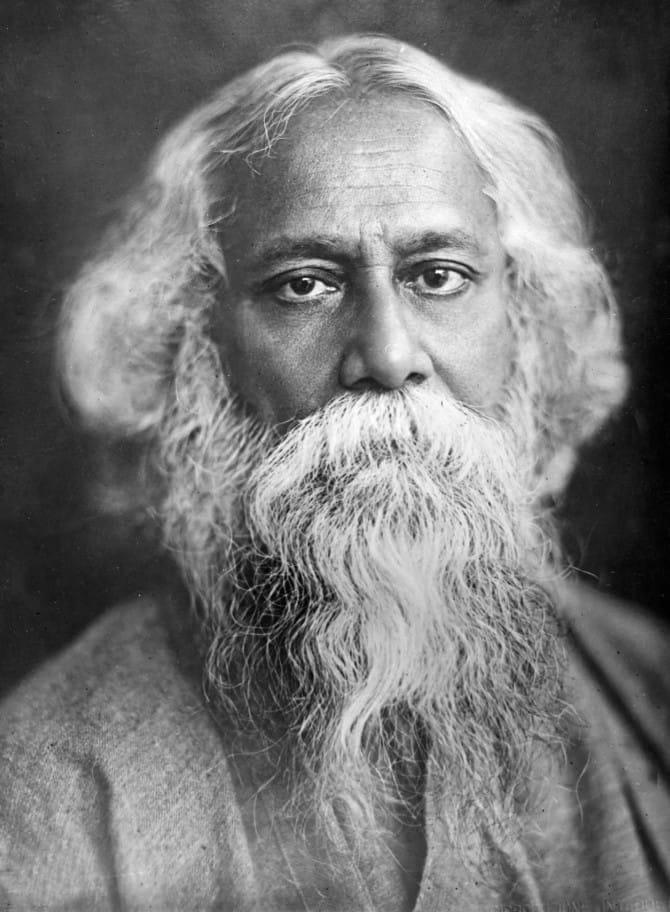
Rabindranath Tagore, who was born in 1861 in Calcutta (now Kolkata), India, experienced early tragedy with his mother’s death when he was just fourteen years old. He studied at home and briefly in England but left without completing a degree. Tagore married Mrinalini Devi and they had five children, many of whom he tragically outlived. He became a world-renowned poet, writer, composer, philosopher, and painter while living in Bengal, where he was celebrated for his deep observations of nature, human emotions, and spirituality. Despite facing many personal losses, Tagore continued to create and became the first non-European to win the Nobel Prize in Literature in 1913 for Gitanjali. His legacy, marked by simple yet profound themes of love, memory, and connection with nature, continues to inspire readers around the globe.

Key Points of the Poem 

  • In “I Cannot Remember My Mother,” the poet reflects on the absence of direct memories of his mother but discovers her presence through sensory experiences triggered during play, in nature, and while gazing at the sky.
  • Although he cannot recall her face, three powerful senses bring her back: the sound of a lullaby (auditory), the fragrance of shiuli flowers (olfactory), and the stillness of her gaze spread across the sky (visual).
  • He recognises that both everyday moments and nature keep her memory alive. The poet uses a repeated refrain to emphasise the theme of nostalgic remembrance.
  • Looking back on his childhood, he realises that his mother’s love lingers in subtle, beautiful ways even though he cannot remember her directly. Through this poem, the poet explores the theme of sensory memory and the everlasting bond between mother and child.

Detailed Summary 

I cannot remember my mother
only sometimes in the midst of my play
a tune seems to hover over my playthings,
the tune of some song that she used to hum
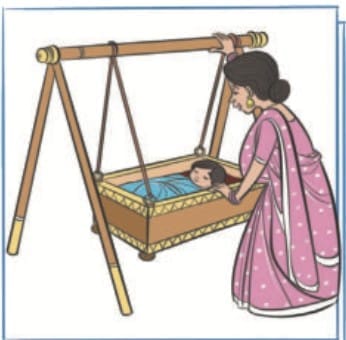
while rocking my cradle.

The poet says he cannot clearly remember his mother, but certain moments bring her back to him. While he is playing with his toys, a soft tune seems to hover around him. This tune reminds him of the lullaby his mother used to hum while rocking his cradle. Though he lacks a clear memory of her face, this auditory memory keeps her presence alive. It shows how small, familiar sounds can connect a person to deep emotions and childhood memories

I cannot remember my motherbut when in the early autumn morning
the smell of the shiuli flowers floats in the air
the scent of the morning service in the temple
comes to me as the scent of my mother.

Again, the poet repeats that he cannot remember his mother directly. However, in the early autumn mornings, when the sweet fragrance of shiuli flowers fills the air, it reminds him of temple rituals. This scent becomes closely linked with his mother’s presence. The poet uses smell (olfactory imagery) to show how memories can be triggered by natural elements. Even without seeing her, he feels her presence through these gentle and familiar experiences.

I cannot remember my mother
only when from my bedroom window
I send my eyes into the blue of the distant sky,
I feel that the stillness of my mother’s gaze on my face
has spread all over the sky.

In this stanza, the poet describes a visual and emotional memory of his mother. When he looks out of his window at the vast blue sky, he feels that his mother’s calm and loving gaze is spread across it. The sky becomes a symbol of her endless love and presence. Though she is no longer physically there, her affection surrounds him everywhere. This creates a peaceful and comforting feeling, showing that a mother’s love is infinite and everlasting.

Theme/Message

Theme

The poem explores the theme of love, memory, and the eternal presence of a mother. Even though the poet cannot clearly remember his mother, her presence lives on through sensory memories like sound, smell, and sight. It shows how deep emotional bonds do not fade with time but remain in subtle forms. The poem also highlights how nature and everyday experiences act as reminders of loved ones. The mother is not physically present, yet her love surrounds the poet constantly. Overall, the theme suggests that a mother’s love is timeless, infinite, and deeply rooted in a child’s heart, existing beyond memory and physical absence.

Message

  • The poem’s message highlights that a mother’s love never truly disappears — it lives on in the smallest sensory experiences of life.
  • It reassures readers that even if we cannot remember faces clearly, the essence of our loved ones remains with us through nature and daily moments.
  • Moreover, it conveys that the bond between mother and child is timeless and can be felt in the tune of a lullaby, the fragrance of flowers, and the vastness of the sky
  • Emotional Implications — The refrain and sensory symbols create a serene, nostalgic tone that touches the reader’s heart.
  • Key imagery such as “a tune seems to hover,” “the smell of the shiuli flowers,” and “the stillness of my mother’s gaze… spread all over the sky” helps readers understand the themes of nostalgia and eternal connection.
  • In the end, the poem leaves us with the comforting realisation that “I cannot remember my mother” does not mean she is gone — she is everywhere.

Literary Devices 

  • Refrain / Anaphora — ‘I cannot remember my mother’ begins each stanza, functioning as both a refrain (repeated line) and anaphora (repetition at the start of successive stanzas).
  • Imagery — The poem is full of sensory imagery: auditory (tune, hum), olfactory (smell of shiuli and temple service), and visual (blue sky and mother’s gaze).
  • Symbolism — The hovering tune symbolises the mother’s lullaby and care; shiuli flowers and temple scent symbolise purity and daily rituals; the vast sky symbolises the infinite and calming presence of the mother’s gaze.
  • Alliteration — Repetition of initial consonant sounds, e.g. “stillness … spread … sky” (s sound) and “some song she used to hum” 
  • Rhyme Scheme — The poem has no regular rhyme scheme (free verse), yet it is enjoyable because of its beautiful imagery and emotional depth.

Difficult Words   

  • Hover = linger or remain near a place 
  • Hum = sing a tune with your lips closed 
  • Cradle = a small bed for a baby 
  • Shiuli = a type of flower (coral jasmine) 
  • Morning service = rituals conducted in a temple 
  • Gaze = look steadily for a long time 
  • Midst = in the middle of 
  • Playthings = toys 
  • Rocking = moving gently back and forth 
  • Floats = moves slowly through the air 
  • Scent = pleasant smell 
  • Stillness = quiet and calm state 
  • Spread = extended or covered over 

07. Detailed Summary : Vitamin-M

  Key Points of the Chapter  

  • This heart-warming story “Vitamin-M” by Asha Nehemiah shows the importance of caring for the elderly with respect and love instead of treating them like children.
  • Grandpa, who seems forgetful and frail, actually proves to be clever, independent and full of life. He cleverly tricks Ravi while enjoying his day out.
  • Ravi learns that elderly people need freedom, dignity and affection, not constant supervision or over-protection.
  • The chapter highlights how grandparents bring wisdom, generosity, humour and family bonding into our lives.

 Detailed Summary 

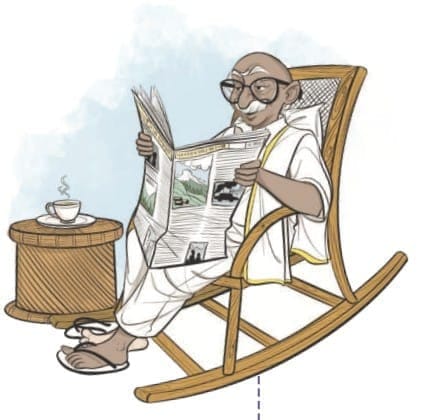
The story revolves around Ravi and his grandfather, who has recently come to live with the family in the city because he is considered too old to live alone. Ravi’s mother believes Grandpa has become forgetful and even wishes for a “Vitamin-M” to improve his memory . At seventy-five, Grandpa has been entirely self-sufficient for most of his life, even taking over all household duties after his wife died ten years ago.” Grandpa was formerly a lawyer, which explains his firm, assertive personality and strong sense of independence and self-respect.  However, Grandpa dislikes the noisy, crowded city and longs for his peaceful home with the mango tree. He feels hurt when he is treated like a child and restricted from going out alone.

One day, when Ravi’s mother goes to work, she asks Ravi to take care of Grandpa and not let him step out alone. But Grandpa insists on going to buy a Tamil newspaper by himself. Before heading out, Grandpa picked up his beautiful shiny-black mahogany walking stick with a brass handle carved in the shape of an eagle’s head and put on his bright-yellow cap. Not wanting to hurt him, Ravi allows him to go but secretly follows him to ensure his safety. During this outing, Grandpa enjoys himself fully—he eats peanuts in the park, drinks tea, eats bananas and ice cream at a stall, and even visits a barber. Meanwhile, Ravi struggles to keep track of him, facing several funny and embarrassing situations while hiding behind bushes, trees, and stalls.

Things become confusing when Grandpa boards a bus. Ravi follows him, only to realise that the man wearing Grandpa’s yellow cap is actually a stranger. Grandpa, true to his generous nature, gave his cap to a stranger in the barber shop because it was a hot day. This accidentally misled Ravi completely.  Worried and tired, Ravi returns home, fearing the worst. To his great relief, he finds Grandpa safely at home, sleeping peacefully.

Later, Grandpa surprises everyone by giving them gifts on his own birthday. He gives Ravi  a hardcover book titled The Best Detective Stories, hinting that he knew Ravi had been following him.. This reveals Grandpa’s sharpness and awareness.

In the end, the family realises that Grandpa is not forgetful or incapable. Instead, they were wrong to underestimate him. The story highlights that elders need respect, independence, and understanding rather than unnecessary control.

 Theme/Message 

Theme

The story highlights the importance of respect, love, and dignity for the elderly. It shows that although older people may appear frail or forgetful, they often possess sharp minds, intelligence, and independence. Grandpa’s actions reveal that he is not weak but capable, confident, and aware of everything happening around him. The theme also focuses on how society sometimes misjudges the elderly, treating them like children instead of recognising their life experience and wisdom. It emphasises that ageing does not reduce a person’s abilities or self-respect. Overall, the story conveys that elders deserve to be treated with understanding, trust, and dignity, not pity or unnecessary control.

Message

The story conveys that instead of over-protecting or treating grandparents like children, we should give them freedom, respect, and emotional support. It teaches that elders value independence and self-respect more than constant supervision. The idea of “Vitamin-M” is symbolic, showing that what they truly need is not medicine but love, care, and understanding. The story encourages us to listen to their experiences, learn from their wisdom, and appreciate their presence in our lives. It also reminds us that elders are not helpless but capable individuals who deserve trust. Ultimately, it highlights that affection, respect, and companionship are the real things that keep them happy and valued.

 Difficult Words 

  1. Frail – weak and delicate
  2. Shuddered – trembled with fear or disgust
  3. Poky – small and uncomfortable
  4. Forbid – not allow
  5. Pottering – moving about slowly doing small tasks
  6. Winced – showed an expression of embarrassment
  7. Jauntily – happily and confidently
  8. Crouch – bend low to hide
  9. Ducking – moving head or body down quickly
  10. Deterrred – prevented from doing something
  11. Confront – face someone directly
  12. Frantic – very frightened and worried
  13. Creases – lines or wrinkles
  14. Darted – looked quickly
  15. Trailing – following secretly
  16. Solemnly – seriously

 Let’s Revise 

Q1. Why did Grandpa give Ravi a detective story book?
Ans: To teasingly hint that he knew Ravi had been secretly following him all day.

Q2. Who actually needs Vitamin-M according to Grandpa? Why?
Ans: According to Grandpa, his daughter Vidya (Ravi’s mother) needs Vitamin-M because she forgot that Grandpa gives gifts to everyone on his own birthday — she had forgotten this tradition.

Q3. How does the title “Vitamin-M” capture the essence of the chapter?
Ans: “Vitamin-M” stands for Memory. The family thinks Grandpa needs it, but the story shows they need it more — to remember to treat elders with love, respect and freedom.

Q4. What is the main message of the chapter?
Ans: Elderly people deserve dignity and independence. Caring for them means giving them respect and affection, not just medicines and restrictions.

06. Detailed Summary : Canvas of Soil

About the Poet 

Maya Anthony is a contemporary poet whose verses beautifully merge the worlds of art and nature. In “Canvas of Soil,” she presents gardening not as mere work but as a creative act of painting with the earth. Her simple yet vivid language turns everyday gardening into a celebration of colour, growth, and timeless beauty, reminding readers that nature is the greatest artist of all.

Key Points of the Poem 

  • The poem compares the garden to a painter’s canvas and the earth to a rich palette.
  • The poem captures how gardeners’ dreams ‘seep’ into the soil, making the act of planting deeply personal and emotional.
  • Seeds are described as “brushstrokes” planted by gardeners, waiting for spring’s colours.
  • Flowers bloom like a painted picture, dancing in morning light with shades of green, red and blue.
  • Each garden plot is a wide canvas where art and life meet perfectly.
  • Gardens become “still-life paintings” in the hands of those who till the soil.

Detailed Summary 

Palette of earth, rich and deep,
Where dreams of gardeners seep.
Brushstrokes of seeds, planted true,
Awaiting spring’s vibrant hue.

The poet describes the soil as a “palette of earth,” comparing it to a painter’s board full of colours and possibilities. Just as an artist mixes colours on a palette, gardeners mix their hopes and dreams into the soil. The seeds are compared to brushstrokes, carefully planted with care and purpose. These seeds do not bloom immediately but patiently wait for spring, when they will turn into bright and lively colours. This stanza highlights the beginning of creation, where effort and patience are essential for beauty to emerge.

Blossoms bloom, a painted sight,Dancing in the morning light.
Shades of green, red, and blue,
Nature’s artwork, ever new.

In this stanza, the poet shows the result of the gardener’s efforts. Flowers bloom beautifully, creating a scene that looks like a painted picture. The blossoms seem to dance in the gentle morning sunlight, adding life and movement to nature’s artwork. The variety of colours—green, red, and blue—symbolises the richness and diversity of nature. The phrase “nature’s artwork, ever new” suggests that this beauty is constantly changing and refreshing. The stanza celebrates how nature creates new and vibrant scenes every day.

Each plot, a canvas wide,
Where art and life coincide.
In the hands of those who till,
Gardens become paintings still.

The poet compares each garden plot to a wide canvas, where art and life come together. Just like a painter uses a canvas to create art, gardeners use the land to grow plants and flowers. Their hard work and care turn ordinary soil into something beautiful and meaningful. The stanza emphasises that gardening is not just physical work but also a creative process. In the hands of gardeners, gardens become living paintings that continue to grow and remain beautiful over time.

Theme/Message

Theme

The poem presents gardening as a true art form, where the soil becomes a palette and seeds act like brushstrokes. It highlights the harmony between nature and human effort, showing how both work together to create beauty. The garden is described as a living canvas, where art and life blend perfectly. The poem also emphasises growthcreativity, and patience, as beauty takes time to develop. Overall, it conveys that true art lies in nurturing life and transforming something simple into something beautiful and meaningful.

Message

The poem conveys that every gardener is an artist and every garden is a living masterpiece. It teaches that with patiencecare, and dedication, ordinary soil can turn into extraordinary beauty. The poem encourages us to observe nature closely and appreciate its creative magic in everyday life. It also reminds us that real beauty grows naturally over time and should be valued. Overall, it inspires us to respect nature’s art and find joy in creating and nurturing life.

Literary Devices 

  • Metaphor – The entire poem is built on metaphors: earth as palette, seeds as brushstrokes, plot as canvas, garden as painting.
  • Imagery – Vivid pictures of colours (green, red, blue), blossoms dancing, morning light, and rich soil appeal to sight.
  • Rhyme Scheme – AABB in every stanza, giving a musical, flowing rhythm.
  • Alliteration – Blossoms bloom
  • Personification – Blossoms “dancing” in the morning light.
  • Allegory (possible interpretation) – The garden may symbolise life’s journey, growth, and harmony.
  • Tone – Appreciative and joyful.
  • Mood – Cheerful and wonder-filled.

Difficult Words   

  • Palette =a thin oval or rectangular board or tablet that a painter holds and mixes colours on
  • Hue = shade or tint of a colour
  • Canvas = (here) painting
  • Brushstrokes = marks made by a painter’s brush
  • Coincide = to happen together or match perfectly
  • Till = to prepare and cultivate soil for planting
  • Still = even so; also suggests ‘still-life painting,’ a double meaning the poet uses intentionally

05. Detailed Summary : Winds of Change

  Key Points of the Chapter  

  • This chapter celebrates India’s rich tradition of handmade pankhas (hand fans), tracing their origin from the  word pankh (bird feather) to their use in ancient temples, royal courts, and daily life.
  • It showcases the beautiful regional diversity of pankhas across states like Assam, Kerala, Uttar Pradesh, Rajasthan, Gujarat, West Bengal, Odisha, and Bihar, highlighting unique shapes, materials (palm leaf, moonj grass, sola, silk, zari, beads, leather, brass), and intricate designs.
  • The chapter explains how pankhas evolved from functional cooling tools to decorative cultural artefacts that now provide livelihood to artisans, while facing the risk of fading due to modern technology.
  • It stresses the urgent need to preserve this handicraft through appreciation, workshops, exhibitions, and celebrating the stories and artistry behind each pankha.

 Detailed Summary 

The chapter explains that the word pankha comes from “pankh,” meaning a bird’s feather. In ancient India, small fans called pankhi were used. Evidence of pankhi can be found in Buddhist wall paintings at Ajanta dating to the 2nd century CE, and also in embroidery work, sculptures, and carvings. Pankhas were used in temples to fan deities and in royal courts to serve kings. They varied in size, from very small to large ones that required effort to operate.

Over time, pankhas became important cultural and trade items. They were carried along trade routes and were valued for their beauty and uniqueness. Although their basic use was similar across India, different regions developed their own styles using local materials such as bamboo, cane, palm leaves, silk, brass, leather, and decorative beads. Each pankha reflected the culture and traditions of its region.

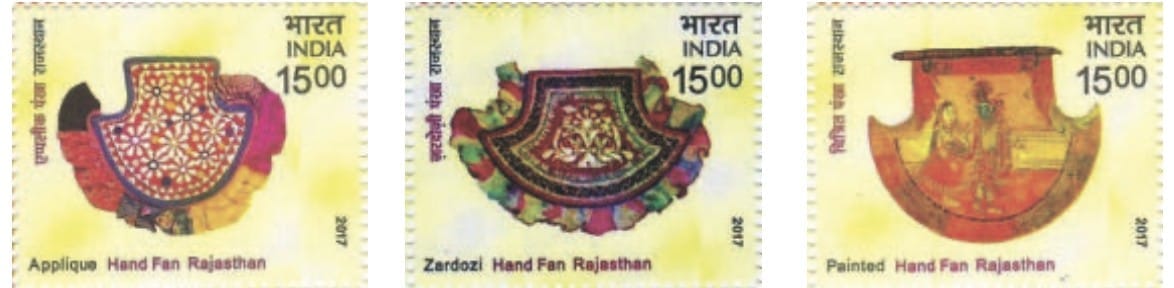
In Rajasthan, pankhas included appliqué fans made with stitched fabric pieces, zardozi fans decorated with gold thread, engraved brass temple fans, and painted cardboard fans offered to gods.Gujarat’s home-based women workers have played a key role in producing cotton fans with mirror work, bead-covered fans with silver handles, and hand-stitched leather fans from Kutch decorated with thread and wool.

In West Bengal, artisans made delicate fans from sola (water grass) and palm leaf fans known as Tal Patar Pankha, commonly found in households. Uttar Pradesh is known for Phadh hand fans adorned with pure gold, silver zari, silk, and satin frills. Odisha and Bihar produce large palm leaf fans and sturdy bamboo fans. Tribal communities create pankhas using grass, metal, cane, palm leaves, and bamboo sticks, decorated with geometrical patterns and white ink on red backgrounds. Silk and brass are reserved for antique tribal pieces.

In modern times, pankhas are mostly used as decorative items rather than for daily use. With the advancement of technology, this traditional craft is at risk of declining. However, the increasing demand for creatively designed pankhas has helped artisans earn a livelihood. Promoting and appreciating this craft through workshops and exhibitions can help preserve it and keep the tradition alive.

 Theme/Message 

Theme

  • The chapter highlights the importance of preserving India’s traditional crafts and cultural identity in the face of rapid modernisation. It shows how pankhas are not just simple objects but symbols of regional diversity, reflecting the geography, culture, materials, and artistic skills of different parts of the country. Each region’s unique design represents its heritage and traditions, making pankhas a meaningful link to India’s past. The chapter emphasises that these traditional crafts form an essential part of the nation’s cultural richness.

Message

  • The chapter conveys that we must respect, value, and actively support traditional handicrafts like pankhas. It encourages us to appreciate the hard work and creativity of artisans and recognise their contribution to society. By promoting these crafts through exhibitions, workshops, and awareness, we can help artisans earn a sustainable livelihood. Preserving and passing on this knowledge to future generations is necessary to ensure that this beautiful and significant part of Indian culture does not fade away.

 Difficult Words 

  1. Indigenous – local; originating from a particular place
  2. Innovative – new and original in approach
  3. Industrious – hardworking
  4. Intricate – elaborate/detailed
  5. Invoked – brought out; caused to appear
  6. Initiatives – actions to improve a situation
  7. Exotic – unusual and exciting because foreign
  8. Appliqué – pieces of fabric sewn onto another cloth
  9. Zardozi – glittering gold thread embroidery
  10. Encrusted – covered or decorated thickly
  11. Sola – a type of water grass
  12. Perpetually – constantly
  13. Antiquity – the distant past
  14. Advent – arrival (of something new)
  15. Sustainable livelihood – a way of earning that can continue long-term
  16. Aesthetically pleasing – beautiful to look at

 Let’s Revise 

Q1. Why has the word “traditional” been used to describe pankhas?
Ans: Because they have been made in the same regions with the same materials and designs for generations, passing down cultural knowledge.

Q2. How does the title “Winds of Change” capture the essence of the chapter?
Ans: “Winds” refers to the fans that create breeze, while “Change” shows how pankhas have moved from everyday use to decorative items and now face the challenge of modern technology. The chapter urges us to bring positive change by preserving them.

Q3. What message does the chapter give about preserving traditional crafts?
Ans: Celebrating the craft, organising workshops, and appreciating artisans’ work will help pankhas survive and continue providing livelihood and cultural pride.