The opening line uses ‘vocations’ while the closing line uses ‘voices,’ showing a shift from professions to the human identities behind them.
It proudly lists many everyday professions — craftspersons, artisans with lutes, carpenters, electricians, boatmen, shoemakers, cooks, designers and masons.
Each worker is shown celebrating their own craft with pride, rhythm and joy.
The poem emphasises that the “voice of their vocation is the voice of their identity.”
It teaches us to respect every kind of work equally and recognise that all vocations are gifts of grace to society.
Detailed Summary
I hear Bharat celebrating, the varied vocations I hear; Those of craftsperson, each one celebrating their craft, woven with colours and myriad hues.
The poet presents Bharat as a land full of joy where people are engaged in different occupations. This celebration is not about festivals but about the dignity of work. Every craftsperson takes pride in their skill and expresses it through their creations. The phrase “woven with colours and myriad hues” shows the richness, diversity, and creativity of these crafts. Each profession adds its own beauty to society, just like different colours together form a vibrant picture. The poet highlights that all types of work are valuable and worthy of respect.
The artisans with lutes, each hailing varied emotions and celebrating dreams, echoing in the streets.
The poet describes musicians playing instruments like lutes. Their music expresses different emotions and dreams, spreading across the streets. It creates a lively and energetic atmosphere. The sounds of music fill the surroundings and connect people emotionally. This stanza shows how art and music are an important part of everyday life and how they bring joy and meaning to society.
The carpenters celebrating; they create anything out of wood with mathematical precision, The electricians humming; they get ready for work, work with cables and wires to brighten our lives,
Here, the poet appreciates the skill and dedication of carpenters and electricians. Carpenters are shown as highly precise and careful, creating objects from wood with accuracy and planning. Electricians are described as humming while working, which shows their satisfaction and dedication. Their work with wires and cables brings light into homes and makes life easier. This stanza highlights that technical and manual work require intelligence and skill and are essential for daily life.
The boatmen gathering their nets from the shore, sailing, and singing while at work, return to tell the tales of life at sea,
The poet describes boatmen who collect nets, sail, and sing while working. Their singing shows their connection with their work and their ability to find joy even in hard labour. When they return, they bring stories of their experiences at sea. This suggests that every profession has its own journey, challenges, and experiences. The stanza creates a vivid picture of life by the sea and highlights the importance of such occupations.
The shoemakers affirming the quality of their work, for the feet that walk, dance, run, jump, return home.
Shoemakers are shown as confident and proud of their work. They ensure that their shoes are strong and reliable. Their work supports people in all activities like walking, running, dancing, and finally returning home safely. This shows how even simple occupations play a crucial role in people’s lives. The stanza emphasizes the importance of quality and responsibility in every profession.
The delicious singing of the cook, or the rhythm of designer, mason, each celebrating what belongs to them and to none else,
The poet describes the cook’s work as “delicious singing,” suggesting that cooking is as pleasing as music. Designers and masons are shown working with rhythm and dedication. Each person takes pride in their own unique skill. This stanza highlights that every profession has its own beauty and identity, and each worker values what they create.
The voice of their vocation is the voice of their identity. I hear Bharat celebrating, the varied voices I hear!
The poet concludes by saying that a person’s work defines who they are. Their vocation becomes their identity. The repetition of the opening line reinforces the main idea that Bharat is full of diverse voices and professions. Together, these create a sense of unity, pride, and celebration. The poem ends by honouring all forms of work and recognising their importance in society.
Theme/Message
Theme
The central theme is the dignity of labour and respect for every vocation. The poem shows that no job is small — every profession adds beauty, strength and joy to society.
It celebrates the rich diversity of skills that make Bharat vibrant.
Message
Every vocation is a “gift of grace.” The work we do becomes our identity. The Reflect and Respond riddles (not the poem itself) introduce a farmer, potter, mason, and cook as starting points for discussion
The poem inspires us to take pride in whatever we choose to do and to respect the contributions of others.
Literary Devices
Refrain – The line “I hear Bharat celebrating, the varied vocations I hear!” is repeated at the beginning and end for a powerful, song-like effect.
Free Verse – No strict rhyme scheme; the poem flows naturally like spoken celebration.
Imagery – Rich visual (colours, wooden creations) and auditory imagery (humming, singing, rhythm of tools).
Metaphor –Delicious singing of the cook’ is a metaphor that compares the cook’s work or craft to something so enjoyable it feels like tasting something delicious — a sensory overlap between taste and sound.
Personification – Vocations themselves are shown “celebrating,” “humming,” “affirming” and “singing.” The voice of their vocation is the voice of their identity’ — the vocation is given a human quality (voice).
Alliteration – “varied vocations”,’sailing and singing'”
Symbolism – Each profession symbolises identity, pride and the unique contribution every worker makes to society.
Repetition – Words like “celebrating” are repeated to emphasise joy in work.
Difficult Words
Myriad = countless, innumerable
Hues = shades of colour
Precision = exactness, perfect accuracy
Affirming = declaring with confidence and pride
Vocation = a person’s regular work or profession
Identity = who a person truly is
Rhythm = regular beat or flow of work
Delicious singing = metaphor for pleasant, enjoyable singing
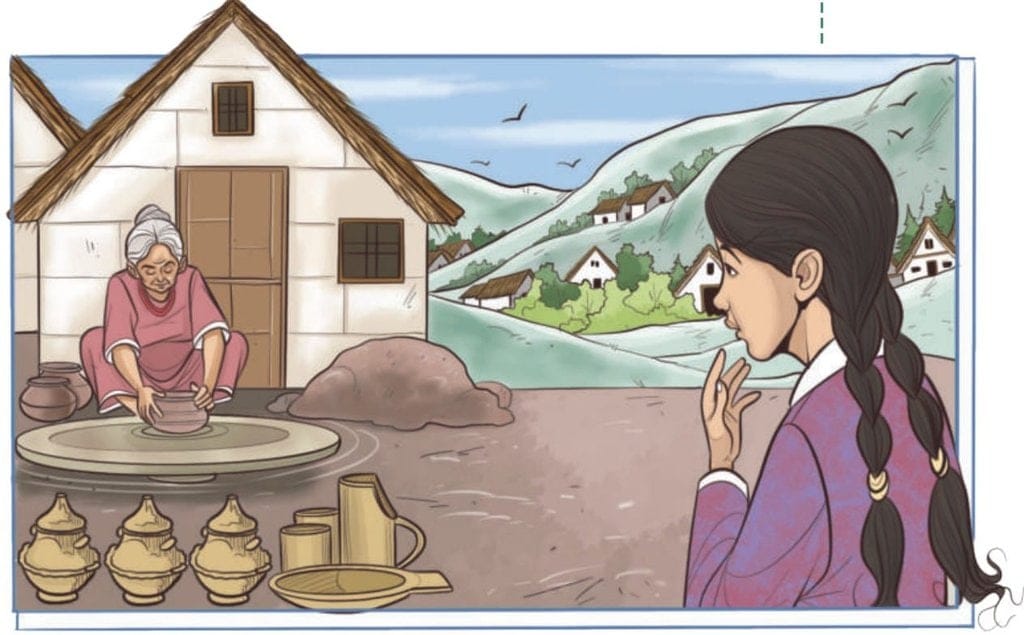
This is an inspiring story by Temsula Ao about young Sentila who dreams of becoming a traditional pot maker like her mother and grandmother.
Her mother, Arenla, wants her to learn weaving instead because pot making is extremely hard, tiring, low-paying and messy.
Sentila secretly watches expert potters and later learns from her mother, but struggles for a whole year.
A kind, middle-aged widow ‘Onula’ (Aunty), who supervises the girls’ dormitory, guides Sentila on technique, especially shaping the mouth of the pot.
One day Arenla pretends to be unwell and leaves Sentila to finish the batch alone; Sentila suddenly masters the skill and makes just one pot short of her mother’s tally.
Tragically, Arenla dies that very day. Sentila realises she has fulfilled her dream. Onula discovers two identical rows of pots and understands that “a new pot maker was born”.
The story celebrates the passing of traditional skills, perseverance, and the mother-daughter bond.
Detailed Summary
Sentila has always dreamed of becoming a pot maker like her mother Arenla and grandmother. But Arenla wants her to learn weaving because pot making involves back-breaking work — digging clay 16 km away, pounding it, carrying heavy loads uphill, and earning only a pittance. She tells Sentila, “Weaving is not messy… and the return is handsome.”
Sentila secretly watches expert potters and learns the process: mixing and pounding clay, shaping the rotating lump of clay with a spatula held in the right hand, drying in the sun, and firing in a kiln. The elders also told Mesoba that traditional skills like pot making do not belong to any individual and must be taught to anyone who wishes to learn.
Arenla finally begins teaching Sentila, but after a year the girl still cannot shape pots properly. Sentila is sent to the girls’ dormitory where the kind widow Onula notices her tense, clumsy efforts. Onula gently teaches her the correct technique, especially how to shape the mouth of the pot. She advises, “When you work with your mother next time, watch her carefully.”
One sunny day Arenla complains of headache and backache and leaves Sentila to finish the batch alone. Suddenly Sentila finds her rhythm and makes pot after pot with amazing speed and dexterity — only one short of her mother’s tally. When she goes inside for lunch, she finds Arenla dead on the floor.
Sentila runs shouting, “Mother, I did not wish it to happen this way… Please forgive me.” Later Onula enters the shed and sees two perfect identical rows of pots. She realises Sentila has mastered the craft. The story ends with the powerful line: “A new pot maker was born.”
Let’s Revise:Why did Arenla not want Sentila to learn pot making?
The central theme is Perseverance, Tradition and Passing on Skills. The story shows how traditional crafts must be preserved and taught to the next generation.
It also highlights the mother-daughter relationship, the dignity of labour, and the importance of determination in fulfilling one’s dream.
Let’s Revise:What message does the story give about traditional crafts?
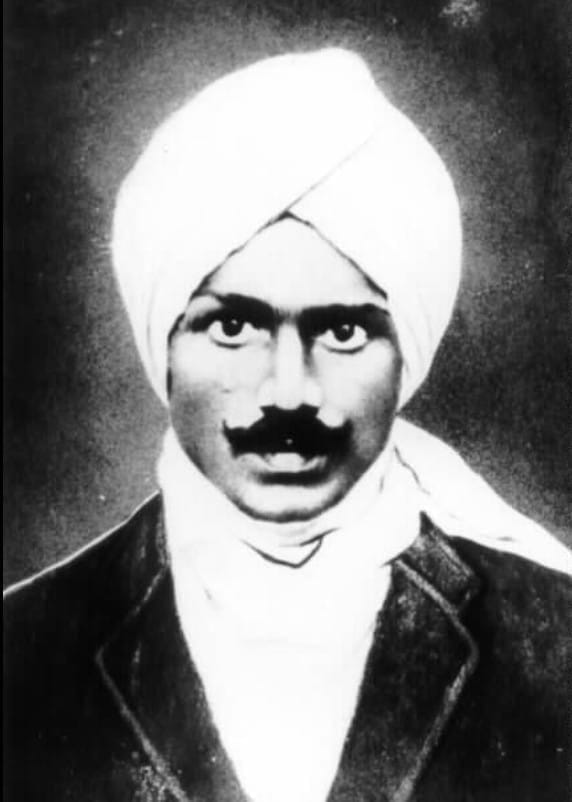
Subramania Bharati, popularly known as Mahakavi Bharati or Bharathiyar, was born Chinnaswami Subramaniyan on 11 December 1882 in Ettayapuram, Tamil Nadu. He lost his mother at the age of five and his father at sixteen. A child prodigy proficient in Tamil, Sanskrit, English, and other languages, he was honoured with the title “Bharati” at the age of eleven. He married Chellamma and faced many personal challenges. Bharati pioneered modern Tamil poetry, worked as a journalist with Swadesamitran, and became a fiery freedom fighter and social reformer. Exiled in Pondicherry (1910–1919) for supporting armed resistance against British rule, he wrote inspiring patriotic poems and songs that ignited the independence movement. Despite poverty and hardship, he continued his literary work until his untimely death on 11 September 1921 in Madras after an accident with a temple elephant. His legacy as the father of modern Tamil literature and a national icon continues to inspire generations.
Key Points of the Poem
In “Bharat Our Land,” the poet expresses deep pride in India’s natural wonders, spiritual treasures, and ancient glory through powerful symbols and rhetorical questions.
He claims the mighty Himavant (Himalayas), generous Ganga, sacred Upanishads, and the “sunny golden land” as uniquely ours, declaring India has no equal on earth.
The poem honours gallant warriors, wise sages, divine music, and all auspicious things that have enriched the land.
It highlights India’s spiritual roots in Brahma-knowledge and the teachings of Buddha, emphasising the nation’s “hoary antiquity.”
The repeated refrain “she’s peerless, let’s praise her!” creates a chant-like rhythm and calls for collective admiration and national pride.
Detailed Summary
The mighty Himavant is ours- there’s no equal anywhere on earth. The generous Ganga is ours- which other river can match her grace? The sacred Upanishads are ours- what scriptures else to name with them? This sunny golden land is ours- she’s peerless, let’s praise her!
The poet proudly celebrates India’s natural beauty and spiritual heritage. He describes the Himalayas as mighty and unmatched, symbolizing strength and protection. The Ganga is called generous and graceful because it sustains life and holds deep religious importance. The Upanishads represent profound spiritual wisdom that has no equal in the world. By calling India a “sunny golden land,” the poet highlights its richness, prosperity, and cultural brilliance. Through rhetorical questions, he emphasizes that no other country can compare with India’s greatness and urges everyone to admire and praise it.
Gallant warriors have lived here, many a sage has sanctified this land. The divinest music has been heard here, and here all auspicious things are found.
In this stanza, the poet praises India’s rich human and cultural heritage. He highlights the bravery of warriors who protected the nation with courage and sacrifice. At the same time, sages and saints made the land sacred through their wisdom and spiritual teachings. The reference to divine music shows India’s deep tradition of classical and devotional music, which uplifts the soul. The poet concludes that all auspicious and noble qualities—such as truth, knowledge, art, and spirituality—exist in India, making it a land of both moral greatness and cultural richness.
Here Brahma-knowledge has taken root, and the Buddha preached his dhamma here. Of hoary antiquity is Bharat, she’s peerless, let’s praise her! …
The poet emphasizes India’s deep spiritual and philosophical roots. He says that Brahma-knowledge, or the understanding of ultimate truth, originated and flourished in this land. He also refers to Gautama Buddha, who spread his teachings of peace, compassion, and enlightenment in India. These references show India as the birthplace of great ideas that influenced the world. The phrase “hoary antiquity” highlights India’s ancient and glorious past. Despite its long history, the poet believes India remains unmatched and encourages people to take pride in and praise its timeless greatness.
MULTIPLE CHOICE QUESTION
Try yourself: What does the poet describe as ‘generous and graceful’?View Solution
Theme/Message
Theme
The poem centres on deep patriotism and pride in India’s greatness and uniqueness.
It highlights India’s unmatched natural beauty through symbols like the mighty Himalayas and the sacred river Ganga.
It celebrates India’s rich spiritual and philosophical heritage, represented by the Upanishads, sages, and the teachings of Buddha.
The poem reflects India’s ancient roots and long history, showing it as a land of “hoary antiquity.”
It recognises the bravery and courage of warriors who have contributed to the nation’s strength and glory.
The poet presents India as a land where knowledge, wisdom, music, and all auspicious things exist together harmoniously.
It shows that India’s greatness lies not in one aspect but in a combination of nature, culture, history, and spirituality.
The repeated idea that India is “peerless” reinforces the belief that no other country can match its richness and diversity.
Overall, the theme emphasises admiration for India’s heritage and encourages a strong emotional connection with the nation.
Message
The poem conveys that we should recognise and take pride in India’s rich heritage and achievements.
It encourages people to admire and respect the country’s natural beauty, cultural richness, and spiritual depth.
The repeated call to “praise her” inspires citizens to express love and gratitude towards the motherland.
It suggests that understanding India’s greatness helps develop a sense of national identity and belonging.
The poem motivates readers to value the contributions of sages, warriors, and thinkers who shaped the nation.
It highlights the importance of preserving and honouring India’s traditions, knowledge, and cultural legacy.
The idea of India being “peerless” encourages confidence and pride among its people.
It promotes unity by reminding everyone that they share a common heritage and should celebrate it together.
The poem also inspires future generations to uphold and protect the country’s glory.
Overall, the message is that love, pride, and respect for the nation strengthen unity and help preserve its greatness.
Literary Devices
Refrain – The line “she’s peerless, let’s praise her!” is repeated to create a powerful, chant-like effect and reinforce pride.
Personification – The Ganga is called ‘generous,’ attributing a human quality to a river. The Himavant is called ‘mighty,’ giving it a human-like characteristic.
Symbolism – Himavant (strength & permanence), Ganga (purity & generosity), Upanishads (spiritual legacy), warriors & sages (courage & wisdom), sunny golden land (richness & glory).
Hyperbole – Extreme statements like “there’s no equal anywhere on earth” and “what scriptures else to name with them?” emphasise India’s superiority.
Allusion – References to the Upanishads, Brahma-knowledge, and Buddha’s dhamma without direct explanation.
Imagery – Vivid pictures of mountains, rivers, sages, and ancient wisdom appeal to the senses.
Ode – The entire poem is a lyrical ode expressing deep admiration and reverence for India.
Hyphens & Rhetorical Questions – Create deliberate pauses and emphasis, giving a measured, chant-like rhythm.
Rhyme Scheme – Irregular with a musical flow created by repetition and refrain.
Subramania Bharati, popularly known as Mahakavi Bharati or Bharathiyar, was born Chinnaswami Subramaniyan on 11 December 1882 in Ettayapuram, Tamil Nadu. He lost his mother at the age of five and his father at sixteen. A child prodigy proficient in Tamil, Sanskrit, English, and other languages, he was honoured with the title “Bharati” at the age of eleven. He married Chellamma and faced many personal challenges. Bharati pioneered modern Tamil poetry, worked as a journalist with Swadesamitran, and became a fiery freedom fighter and social reformer. Exiled in Pondicherry (1910–1919) for supporting armed resistance against British rule, he wrote inspiring patriotic poems and songs that ignited the independence movement. Despite poverty and hardship, he continued his literary work until his untimely death on 11 September 1921 in Madras after an accident with a temple elephant. His legacy as the father of modern Tamil literature and a national icon continues to inspire generations.
Key Points of the Poem
In “Bharat Our Land,” the poet expresses deep pride in India’s natural wonders, spiritual treasures, and ancient glory through powerful symbols and rhetorical questions.
He claims the mighty Himavant (Himalayas), generous Ganga, sacred Upanishads, and the “sunny golden land” as uniquely ours, declaring India has no equal on earth.
The poem honours gallant warriors, wise sages, divine music, and all auspicious things that have enriched the land.
It highlights India’s spiritual roots in Brahma-knowledge and the teachings of Buddha, emphasising the nation’s “hoary antiquity.”
The repeated refrain “she’s peerless, let’s praise her!” creates a chant-like rhythm and calls for collective admiration and national pride.
Detailed Summary
The mighty Himavant is ours- there’s no equal anywhere on earth. The generous Ganga is ours- which other river can match her grace? The sacred Upanishads are ours- what scriptures else to name with them? This sunny golden land is ours- she’s peerless, let’s praise her!
The poet proudly celebrates India’s natural beauty and spiritual heritage. He describes the Himalayas as mighty and unmatched, symbolizing strength and protection. The Ganga is called generous and graceful because it sustains life and holds deep religious importance. The Upanishads represent profound spiritual wisdom that has no equal in the world. By calling India a “sunny golden land,” the poet highlights its richness, prosperity, and cultural brilliance. Through rhetorical questions, he emphasizes that no other country can compare with India’s greatness and urges everyone to admire and praise it.
Gallant warriors have lived here, many a sage has sanctified this land. The divinest music has been heard here, and here all auspicious things are found.
In this stanza, the poet praises India’s rich human and cultural heritage. He highlights the bravery of warriors who protected the nation with courage and sacrifice. At the same time, sages and saints made the land sacred through their wisdom and spiritual teachings. The reference to divine music shows India’s deep tradition of classical and devotional music, which uplifts the soul. The poet concludes that all auspicious and noble qualities—such as truth, knowledge, art, and spirituality—exist in India, making it a land of both moral greatness and cultural richness.
Here Brahma-knowledge has taken root, and the Buddha preached his dhamma here. Of hoary antiquity is Bharat, she’s peerless, let’s praise her! …
The poet emphasizes India’s deep spiritual and philosophical roots. He says that Brahma-knowledge, or the understanding of ultimate truth, originated and flourished in this land. He also refers to Gautama Buddha, who spread his teachings of peace, compassion, and enlightenment in India. These references show India as the birthplace of great ideas that influenced the world. The phrase “hoary antiquity” highlights India’s ancient and glorious past. Despite its long history, the poet believes India remains unmatched and encourages people to take pride in and praise its timeless greatness.
MULTIPLE CHOICE QUESTION
Try yourself: What does the poet describe as ‘generous and graceful’?View Solution
Theme/Message
Theme
The poem centres on deep patriotism and pride in India’s greatness and uniqueness.
It highlights India’s unmatched natural beauty through symbols like the mighty Himalayas and the sacred river Ganga.
It celebrates India’s rich spiritual and philosophical heritage, represented by the Upanishads, sages, and the teachings of Buddha.
The poem reflects India’s ancient roots and long history, showing it as a land of “hoary antiquity.”
It recognises the bravery and courage of warriors who have contributed to the nation’s strength and glory.
The poet presents India as a land where knowledge, wisdom, music, and all auspicious things exist together harmoniously.
It shows that India’s greatness lies not in one aspect but in a combination of nature, culture, history, and spirituality.
The repeated idea that India is “peerless” reinforces the belief that no other country can match its richness and diversity.
Overall, the theme emphasises admiration for India’s heritage and encourages a strong emotional connection with the nation.
Message
The poem conveys that we should recognise and take pride in India’s rich heritage and achievements.
It encourages people to admire and respect the country’s natural beauty, cultural richness, and spiritual depth.
The repeated call to “praise her” inspires citizens to express love and gratitude towards the motherland.
It suggests that understanding India’s greatness helps develop a sense of national identity and belonging.
The poem motivates readers to value the contributions of sages, warriors, and thinkers who shaped the nation.
It highlights the importance of preserving and honouring India’s traditions, knowledge, and cultural legacy.
The idea of India being “peerless” encourages confidence and pride among its people.
It promotes unity by reminding everyone that they share a common heritage and should celebrate it together.
The poem also inspires future generations to uphold and protect the country’s glory.
Overall, the message is that love, pride, and respect for the nation strengthen unity and help preserve its greatness.
Literary Devices
Refrain – The line “she’s peerless, let’s praise her!” is repeated to create a powerful, chant-like effect and reinforce pride.
Personification – The Ganga is called ‘generous,’ attributing a human quality to a river. The Himavant is called ‘mighty,’ giving it a human-like characteristic.
Symbolism – Himavant (strength & permanence), Ganga (purity & generosity), Upanishads (spiritual legacy), warriors & sages (courage & wisdom), sunny golden land (richness & glory).
Hyperbole – Extreme statements like “there’s no equal anywhere on earth” and “what scriptures else to name with them?” emphasise India’s superiority.
Allusion – References to the Upanishads, Brahma-knowledge, and Buddha’s dhamma without direct explanation.
Imagery – Vivid pictures of mountains, rivers, sages, and ancient wisdom appeal to the senses.
Ode – The entire poem is a lyrical ode expressing deep admiration and reverence for India.
Hyphens & Rhetorical Questions – Create deliberate pauses and emphasis, giving a measured, chant-like rhythm.
Rhyme Scheme – Irregular with a musical flow created by repetition and refrain.
Subramania Bharati, popularly known as Mahakavi Bharati or Bharathiyar, was born Chinnaswami Subramaniyan on 11 December 1882 in Ettayapuram, Tamil Nadu. He lost his mother at the age of five and his father at sixteen. A child prodigy proficient in Tamil, Sanskrit, English, and other languages, he was honoured with the title “Bharati” at the age of eleven. He married Chellamma and faced many personal challenges. Bharati pioneered modern Tamil poetry, worked as a journalist with Swadesamitran, and became a fiery freedom fighter and social reformer. Exiled in Pondicherry (1910–1919) for supporting armed resistance against British rule, he wrote inspiring patriotic poems and songs that ignited the independence movement. Despite poverty and hardship, he continued his literary work until his untimely death on 11 September 1921 in Madras after an accident with a temple elephant. His legacy as the father of modern Tamil literature and a national icon continues to inspire generations.
Key Points of the Poem
In “Bharat Our Land,” the poet expresses deep pride in India’s natural wonders, spiritual treasures, and ancient glory through powerful symbols and rhetorical questions.
He claims the mighty Himavant (Himalayas), generous Ganga, sacred Upanishads, and the “sunny golden land” as uniquely ours, declaring India has no equal on earth.
The poem honours gallant warriors, wise sages, divine music, and all auspicious things that have enriched the land.
It highlights India’s spiritual roots in Brahma-knowledge and the teachings of Buddha, emphasising the nation’s “hoary antiquity.”
The repeated refrain “she’s peerless, let’s praise her!” creates a chant-like rhythm and calls for collective admiration and national pride.
Detailed Summary
The mighty Himavant is ours- there’s no equal anywhere on earth. The generous Ganga is ours- which other river can match her grace? The sacred Upanishads are ours- what scriptures else to name with them? This sunny golden land is ours- she’s peerless, let’s praise her!
The poet proudly celebrates India’s natural beauty and spiritual heritage. He describes the Himalayas as mighty and unmatched, symbolizing strength and protection. The Ganga is called generous and graceful because it sustains life and holds deep religious importance. The Upanishads represent profound spiritual wisdom that has no equal in the world. By calling India a “sunny golden land,” the poet highlights its richness, prosperity, and cultural brilliance. Through rhetorical questions, he emphasizes that no other country can compare with India’s greatness and urges everyone to admire and praise it.
Gallant warriors have lived here, many a sage has sanctified this land. The divinest music has been heard here, and here all auspicious things are found.
In this stanza, the poet praises India’s rich human and cultural heritage. He highlights the bravery of warriors who protected the nation with courage and sacrifice. At the same time, sages and saints made the land sacred through their wisdom and spiritual teachings. The reference to divine music shows India’s deep tradition of classical and devotional music, which uplifts the soul. The poet concludes that all auspicious and noble qualities—such as truth, knowledge, art, and spirituality—exist in India, making it a land of both moral greatness and cultural richness.
Here Brahma-knowledge has taken root, and the Buddha preached his dhamma here. Of hoary antiquity is Bharat, she’s peerless, let’s praise her! …
The poet emphasizes India’s deep spiritual and philosophical roots. He says that Brahma-knowledge, or the understanding of ultimate truth, originated and flourished in this land. He also refers to Gautama Buddha, who spread his teachings of peace, compassion, and enlightenment in India. These references show India as the birthplace of great ideas that influenced the world. The phrase “hoary antiquity” highlights India’s ancient and glorious past. Despite its long history, the poet believes India remains unmatched and encourages people to take pride in and praise its timeless greatness.
MULTIPLE CHOICE QUESTION
Try yourself: What does the poet describe as ‘generous and graceful’?View Solution
Theme/Message
Theme
The poem centres on deep patriotism and pride in India’s greatness and uniqueness.
It highlights India’s unmatched natural beauty through symbols like the mighty Himalayas and the sacred river Ganga.
It celebrates India’s rich spiritual and philosophical heritage, represented by the Upanishads, sages, and the teachings of Buddha.
The poem reflects India’s ancient roots and long history, showing it as a land of “hoary antiquity.”
It recognises the bravery and courage of warriors who have contributed to the nation’s strength and glory.
The poet presents India as a land where knowledge, wisdom, music, and all auspicious things exist together harmoniously.
It shows that India’s greatness lies not in one aspect but in a combination of nature, culture, history, and spirituality.
The repeated idea that India is “peerless” reinforces the belief that no other country can match its richness and diversity.
Overall, the theme emphasises admiration for India’s heritage and encourages a strong emotional connection with the nation.
Message
The poem conveys that we should recognise and take pride in India’s rich heritage and achievements.
It encourages people to admire and respect the country’s natural beauty, cultural richness, and spiritual depth.
The repeated call to “praise her” inspires citizens to express love and gratitude towards the motherland.
It suggests that understanding India’s greatness helps develop a sense of national identity and belonging.
The poem motivates readers to value the contributions of sages, warriors, and thinkers who shaped the nation.
It highlights the importance of preserving and honouring India’s traditions, knowledge, and cultural legacy.
The idea of India being “peerless” encourages confidence and pride among its people.
It promotes unity by reminding everyone that they share a common heritage and should celebrate it together.
The poem also inspires future generations to uphold and protect the country’s glory.
Overall, the message is that love, pride, and respect for the nation strengthen unity and help preserve its greatness.
Literary Devices
Refrain – The line “she’s peerless, let’s praise her!” is repeated to create a powerful, chant-like effect and reinforce pride.
Personification – The Ganga is called ‘generous,’ attributing a human quality to a river. The Himavant is called ‘mighty,’ giving it a human-like characteristic.
Symbolism – Himavant (strength & permanence), Ganga (purity & generosity), Upanishads (spiritual legacy), warriors & sages (courage & wisdom), sunny golden land (richness & glory).
Hyperbole – Extreme statements like “there’s no equal anywhere on earth” and “what scriptures else to name with them?” emphasise India’s superiority.
Allusion – References to the Upanishads, Brahma-knowledge, and Buddha’s dhamma without direct explanation.
Imagery – Vivid pictures of mountains, rivers, sages, and ancient wisdom appeal to the senses.
Ode – The entire poem is a lyrical ode expressing deep admiration and reverence for India.
Hyphens & Rhetorical Questions – Create deliberate pauses and emphasis, giving a measured, chant-like rhythm.
Rhyme Scheme – Irregular with a musical flow created by repetition and refrain.
Subramania Bharati, popularly known as Mahakavi Bharati or Bharathiyar, was born Chinnaswami Subramaniyan on 11 December 1882 in Ettayapuram, Tamil Nadu. He lost his mother at the age of five and his father at sixteen. A child prodigy proficient in Tamil, Sanskrit, English, and other languages, he was honoured with the title “Bharati” at the age of eleven. He married Chellamma and faced many personal challenges. Bharati pioneered modern Tamil poetry, worked as a journalist with Swadesamitran, and became a fiery freedom fighter and social reformer. Exiled in Pondicherry (1910–1919) for supporting armed resistance against British rule, he wrote inspiring patriotic poems and songs that ignited the independence movement. Despite poverty and hardship, he continued his literary work until his untimely death on 11 September 1921 in Madras after an accident with a temple elephant. His legacy as the father of modern Tamil literature and a national icon continues to inspire generations.
Key Points of the Poem
In “Bharat Our Land,” the poet expresses deep pride in India’s natural wonders, spiritual treasures, and ancient glory through powerful symbols and rhetorical questions.
He claims the mighty Himavant (Himalayas), generous Ganga, sacred Upanishads, and the “sunny golden land” as uniquely ours, declaring India has no equal on earth.
The poem honours gallant warriors, wise sages, divine music, and all auspicious things that have enriched the land.
It highlights India’s spiritual roots in Brahma-knowledge and the teachings of Buddha, emphasising the nation’s “hoary antiquity.”
The repeated refrain “she’s peerless, let’s praise her!” creates a chant-like rhythm and calls for collective admiration and national pride.
Detailed Summary
The mighty Himavant is ours- there’s no equal anywhere on earth. The generous Ganga is ours- which other river can match her grace? The sacred Upanishads are ours- what scriptures else to name with them? This sunny golden land is ours- she’s peerless, let’s praise her!
The poet proudly celebrates India’s natural beauty and spiritual heritage. He describes the Himalayas as mighty and unmatched, symbolizing strength and protection. The Ganga is called generous and graceful because it sustains life and holds deep religious importance. The Upanishads represent profound spiritual wisdom that has no equal in the world. By calling India a “sunny golden land,” the poet highlights its richness, prosperity, and cultural brilliance. Through rhetorical questions, he emphasizes that no other country can compare with India’s greatness and urges everyone to admire and praise it.
Gallant warriors have lived here, many a sage has sanctified this land. The divinest music has been heard here, and here all auspicious things are found.
In this stanza, the poet praises India’s rich human and cultural heritage. He highlights the bravery of warriors who protected the nation with courage and sacrifice. At the same time, sages and saints made the land sacred through their wisdom and spiritual teachings. The reference to divine music shows India’s deep tradition of classical and devotional music, which uplifts the soul. The poet concludes that all auspicious and noble qualities—such as truth, knowledge, art, and spirituality—exist in India, making it a land of both moral greatness and cultural richness.
Here Brahma-knowledge has taken root, and the Buddha preached his dhamma here. Of hoary antiquity is Bharat, she’s peerless, let’s praise her! …
The poet emphasizes India’s deep spiritual and philosophical roots. He says that Brahma-knowledge, or the understanding of ultimate truth, originated and flourished in this land. He also refers to Gautama Buddha, who spread his teachings of peace, compassion, and enlightenment in India. These references show India as the birthplace of great ideas that influenced the world. The phrase “hoary antiquity” highlights India’s ancient and glorious past. Despite its long history, the poet believes India remains unmatched and encourages people to take pride in and praise its timeless greatness.
MULTIPLE CHOICE QUESTION
Try yourself: What does the poet describe as ‘generous and graceful’?View Solution
Theme/Message
Theme
The poem centres on deep patriotism and pride in India’s greatness and uniqueness.
It highlights India’s unmatched natural beauty through symbols like the mighty Himalayas and the sacred river Ganga.
It celebrates India’s rich spiritual and philosophical heritage, represented by the Upanishads, sages, and the teachings of Buddha.
The poem reflects India’s ancient roots and long history, showing it as a land of “hoary antiquity.”
It recognises the bravery and courage of warriors who have contributed to the nation’s strength and glory.
The poet presents India as a land where knowledge, wisdom, music, and all auspicious things exist together harmoniously.
It shows that India’s greatness lies not in one aspect but in a combination of nature, culture, history, and spirituality.
The repeated idea that India is “peerless” reinforces the belief that no other country can match its richness and diversity.
Overall, the theme emphasises admiration for India’s heritage and encourages a strong emotional connection with the nation.
Message
The poem conveys that we should recognise and take pride in India’s rich heritage and achievements.
It encourages people to admire and respect the country’s natural beauty, cultural richness, and spiritual depth.
The repeated call to “praise her” inspires citizens to express love and gratitude towards the motherland.
It suggests that understanding India’s greatness helps develop a sense of national identity and belonging.
The poem motivates readers to value the contributions of sages, warriors, and thinkers who shaped the nation.
It highlights the importance of preserving and honouring India’s traditions, knowledge, and cultural legacy.
The idea of India being “peerless” encourages confidence and pride among its people.
It promotes unity by reminding everyone that they share a common heritage and should celebrate it together.
The poem also inspires future generations to uphold and protect the country’s glory.
Overall, the message is that love, pride, and respect for the nation strengthen unity and help preserve its greatness.
Literary Devices
Refrain – The line “she’s peerless, let’s praise her!” is repeated to create a powerful, chant-like effect and reinforce pride.
Personification – The Ganga is called ‘generous,’ attributing a human quality to a river. The Himavant is called ‘mighty,’ giving it a human-like characteristic.
Symbolism – Himavant (strength & permanence), Ganga (purity & generosity), Upanishads (spiritual legacy), warriors & sages (courage & wisdom), sunny golden land (richness & glory).
Hyperbole – Extreme statements like “there’s no equal anywhere on earth” and “what scriptures else to name with them?” emphasise India’s superiority.
Allusion – References to the Upanishads, Brahma-knowledge, and Buddha’s dhamma without direct explanation.
Imagery – Vivid pictures of mountains, rivers, sages, and ancient wisdom appeal to the senses.
Ode – The entire poem is a lyrical ode expressing deep admiration and reverence for India.
Hyphens & Rhetorical Questions – Create deliberate pauses and emphasis, giving a measured, chant-like rhythm.
Rhyme Scheme – Irregular with a musical flow created by repetition and refrain.
Difficult Words
Himavant = the Himalayas (symbol of strength and permanence)
Ganga = the holy river (symbol of purity and generosity)
Upanishads = ancient Indian philosophical scriptures
Peerless = without equal, unmatched
Sanctified = blessed, purified, made holy
Auspicious = favourable, fortunate, bringing good luck
Hoary antiquity = very ancient times, time immemorial
Brahma-knowledge = spiritual knowledge leading to self-realisation
Dhamma = Buddha’s teachings of compassion, non-violence, and enlightenment.
Divinest = most divine or sacred (superlative of divine)
This is a heartwarming tale by Sudha Murty about a young girl who teaches her illiterate 62-year-old grandmother, Krishtakka (Avva), to read Kannada.
The story beautifully shows how a popular serial novel Kashi Yatre by Triveni becomes the spark for the grandmother’s desire to learn.
It highlights the deep emotional bond between granddaughter and grandmother, the grandmother’s strong identification with the novel’s protagonist, and her sudden feeling of helplessness when the narrator is away.
The grandmother’s determination to become independent leads her to learn the alphabet with amazing dedication and set a deadline (Saraswati Puja during Dassara).
The touching climax shows the grandmother touching her granddaughter’s feet as a mark of respect for her as a “teacher”, reversing the traditional custom and proving that learning has no age bar.
Detailed Summary
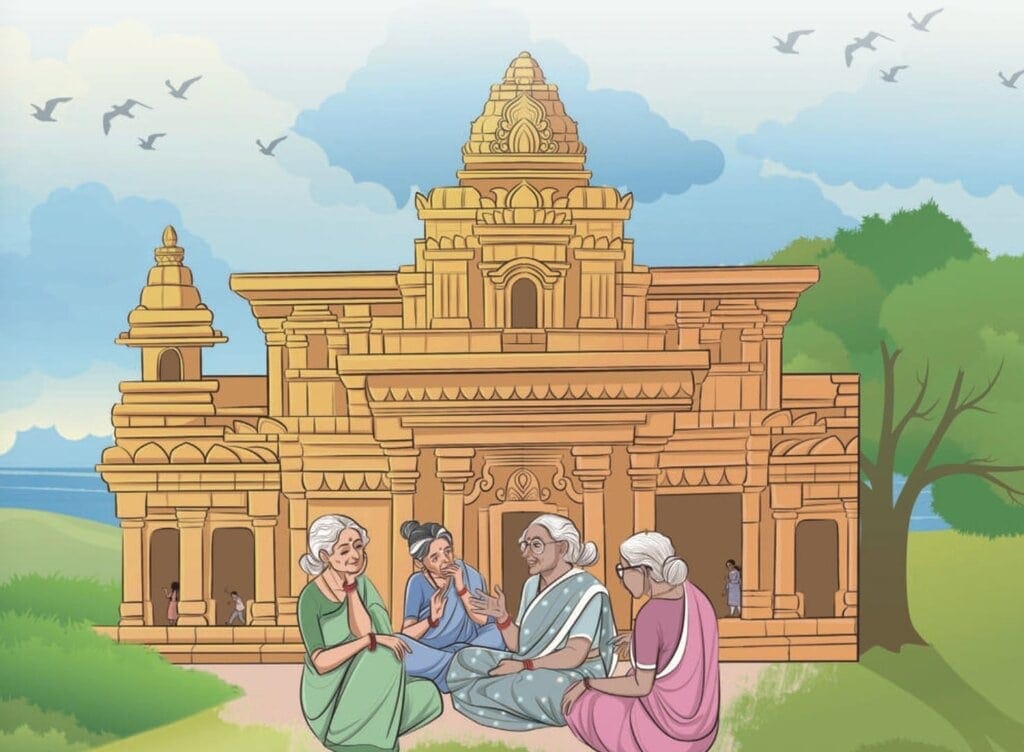
The story is narrated by a twelve-year-old girl living with her grandparents in a village in north Karnataka. Every Wednesday, she reads the latest episode of the Kannada serial novel Kashi Yatre to her grandmother, Krishtakka, who is illiterate. The grandmother listens with great interest, memorises the story, and discusses it with her friends, especially relating to the old woman in the novel who sacrifices her wish to go to Kashi for an orphan girl.
When the narrator goes to a neighbouring village for a wedding and stays for a week, the grandmother receives the magazine but cannot read it. On her return, the narrator is shocked to find her grandmother in tears. That night, the grandmother shares her life story—how she never went to school, got married young, and always regretted being uneducated. She explains that not being able to read made her feel helpless and dependent.
Determined to change this, the grandmother decides to learn the Kannada alphabet. She sets a goal to read a novel independently by Saraswati Puja during Dassara. Though the narrator initially laughs at her due to her age, the grandmother firmly says that there is no age limit for learning.
From the next day, the narrator becomes her teacher. The grandmother studies sincerely, practising reading and writing with dedication. On Dassara day, she surprises the narrator by touching her feet as a mark of respect for her as a teacher. She then confidently reads the title Kashi Yatre, proving her success.
The story highlights the importance of education, determination, and self-reliance, showing that learning is possible at any age.
Let’s Revise:Why did the grandmother cry when the narrator returned from the wedding?
The central theme of the story is lifelong learning, showing that education is not limited by age, time, or circumstances.
It emphasises that learning can begin at any stage of life, as seen in the grandmother’s determination to become literate at the age of sixty-two.
The story highlights the true value of education, not just as a means of gaining knowledge but as a way to achieve independence and self-reliance.
It shows that illiteracy can lead to dependence, helplessness, and lack of confidence, while education brings freedom and empowerment.
The grandmother’s journey reflects how education gives a person dignity and self-respect, enabling them to live without depending on others.
The theme also focuses on determination and perseverance, proving that strong willpower can help overcome any obstacle, including age and social limitations.
It celebrates the bond between generations, where the granddaughter becomes the teacher and the grandmother becomes the student, showing mutual love and support.
The story beautifully reflects the Indian tradition of respecting teachers (guru-shishya relationship), where knowledge is valued above age or status.
It also underlines the importance of spreading education and literacy, especially among those who were deprived of it earlier in life.
Overall, the theme conveys that education is a powerful tool for personal growth, independence, and transformation, and it is never too late to learn.
Let’s Revise:What message does the story give about the importance of education in a person’s life?