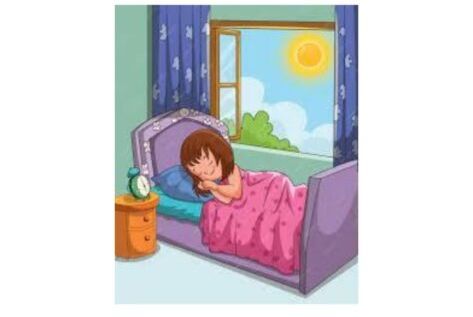
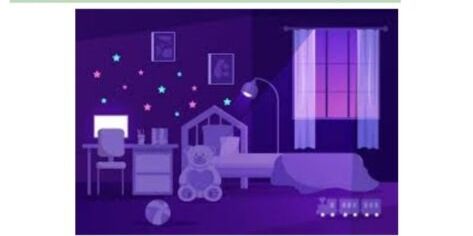
Q1: Write a short story in about 150-200 words by continuing the following: “I jumped out of the bed at midnight ….”
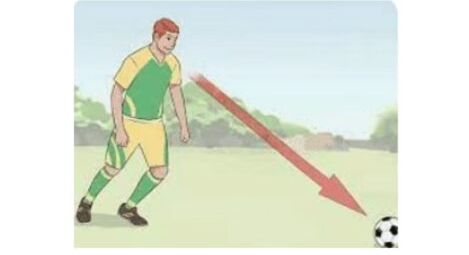
Q2: Make up a story in about 150-200 words about what happened when you jumped over the wall to wall to get the ball so as to narrate it in class. “I hit a six and the ball flew over the wall. It was an old, derelict building. As i went to get ball. I saw….”
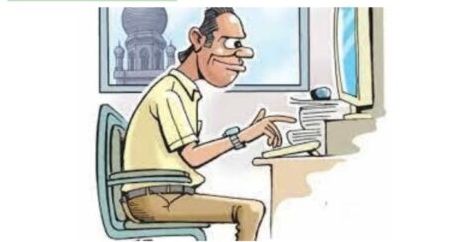
Q3: Complete the following story in 150-200 words: “Anjali was getting late for work. She grabbed her bag from the chair and rushed towards the door when…”
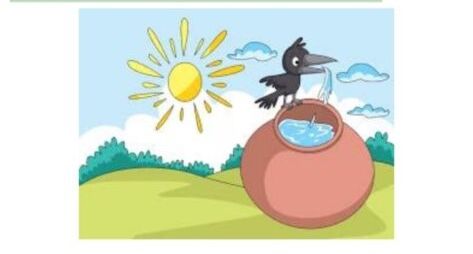
Q4: Read the outlines given below of a story. Write it in full using these outlines and your own ideas. Write the Ans: in 150-200 words. Assign a suitable title and moral to it. “A thirsty crow-in search of water-sees a jug half filled with water-beak can’t reach it-sees pebbles-puts them into the jug-water level comes up-drinks………………flies away.”
Q5: Renuka was writing the following story for her school magazine. However, she was unable to complete it. Complete it in 150-200 word. “As Nitu moved out of the mall, she realized that her younger brother was left behind. She rushed back to the shop she had visited lost.”
You can access the solutions to this worksheet here.
Q1: You are Munish/Surekha, a resident of D-34, Ras Vihar, Dwarka, New Delhi. Open manholes in your colony Kave become a source of danger for the pedestrions and vehicle owners. Write a letter to the Municipal Commissioner complaining about this problem. Do not exceed 100 words.
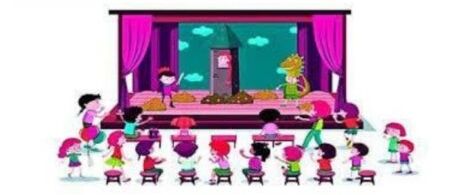
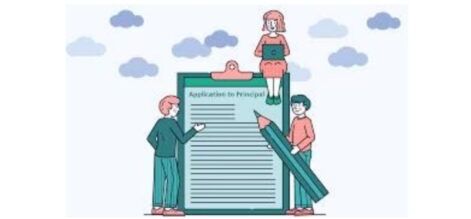
Q2: Write an application to the principal of your college seeking permission to stage a drama in the college auditorium.
Q3: Write an application to the Mayor of the municipality of your colony asking him to provide street lights in your locality.
Q4: Write an application to the principal of your school for fee concession.
Q5: Write an application to the principal asking for arranging a trip.
Q6: Write an application to the principal of your school for setting-up a canteen in your school.
Q7: Writing an application to the principal of your school/college/institute asking leave.
Q8: Write an application to your headmaster for early leave from school after 4th period.
You can access the solutions to this worksheet here.
Q1: Read the following passages carefully and answer the questions given below.
Buddha walked on fearlessly. Angulimala ran as fast as he could but he could not catch up with him. He swore and shouted at Buddha, but Buddha smile kindly at him and continued to walk through the forest. This went on for several hours and Angulimala was, at last, tired and sat down. Buddha stood in front of him. His face was shining with kindness for the robber. “Who are you, man?” asked Angulimala. “Why do you travel through this forest alone? Aren’t you afraid of Angulimala? Why couldn’t I catch you? What magic do you possess? Buddha replied gently, “I’m a friend of yours and I’ve come to the forest to help you. I’ve come to save you from further sin. I’m not afraid of you because I love you as I love all other men. My magic is the magic of kindness for all living creatures.” These noble words touched the cruel heart of Angulimala and he fell at the feet of Buddha.” O Lord save me!” he said sobbing. “I am the Buddha am the greatest sinner on earth”. He cried bitterly and tears flowed from his eyes in two unending streams.
Answer the following questions:
(i) Why was Angulimala tired?
(ii) In what manner did Buddha stand before the robber?
(iii) Which contrast does the author present in this passage?
(iv) What was Buddha’s reply when Angulimala asked who he was?
(v) What was the magic with Buddha, according to Buddha himself?
(vi) Why did Angulimala, the robber fall at the feet of Buddha?
(vii) What did the robber say sobbingly? Before the robber?
(viii) Who are the two talkers in this passage?
Q2: Read the following passages carefully and answer the questions given below.
In many countries only one language-mostly the mother-tongue—is enough to satisfy the need for expression of their inhabitants. In India, however, the position is more complicated. Here an educated man is called upon to master more than one language. There is, first of all the language that he learns on his mother’s lap, and through which he expresses his first need and feelings. Naturally, it is in this that he gains the most proficiency, But, since India is a very large country, we really need an extra language as a means of communicating with states other than our own.
It is for this reason that many people want a lingua franca for India but even this is not enough. On top of this, an educated Indian requires the mastery of an international language, one that is widely understood and is used in the dealings of one country with another. Ideally speaking then, the educated Indian should be able to read and write in three languages and, moreover, should be able to express himself in all the three with ease and fluency. As our contact with the English language has been long and it is the most widely used language in the world, it is in our own interest to be proficient in this language.
Answer the following Questions.
(i) What is the position in India?
(ii) What is the main reason an educated Indian is required to master more than one language?
(iii) How many languages does an educated Indian master?
(iv) Which is the international language?
(v) Which language is mother-tongue?
(vi) Why do many people want a lingua franca for India?
(vii) How is it in our own interest to be proficient in English?
(viii) Find words from the passage which mean: a system of words and their use
Q3: Read the following passages carefully and answer the questions given below.
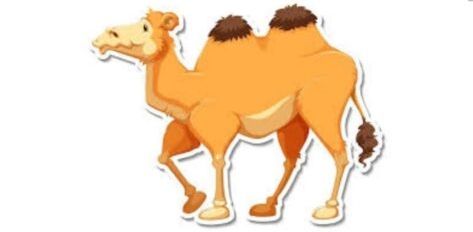
The camel is the oldest of domestic animals. It has been used for thousands of years by the desert people of Africa and Asia to supply many of their needs. On the fertile edges of the desert, camels pull ploughs turn wheels to irrigate the fields and carry goods to market, in the desert itself, they are still almost the only means of transport. They supply food, milk and clothing in the form of wool and leather. This useful animal is well adapted to life in harsh, arid lands. The Arabian camel has one hump, the Bactrian camel has two. The hump is, in fact, a store of fat which is used as a source of energy when food and water are scarce. When it does drink, the camel can take up to 100 litters of water in ten minutes. The camel has broad, soft feet for a steady grip in the sand. A thick skin protects it from the fierce daytime sun and bitterly cold nights. The camel’s eyes have three eyelids to help keep out sand; its ears and nose are also adapted to keep out sand storms. Camels stand about two meters high at the shoulder and weigh 500-800 kilos Often called ‘The ships of the desert’, they can carry loads of 200 kilos and more, travelling up to 160 kilometre a day. Camels eat grass, dates and grain when available. Deep in the desert they survive on dry leaves, seeds and bones.
Answer the following Questions.
(i) How do camels adapt to the harsh conditions of the desert?
(ii) What has been told about its food?
(iii) What is its load carrying and travelling capacity?
(iv) What information is given about its height and weight?
(v) How are its eyes, ears and nose useful?
(vi) What is informed about its feet and skin?
(vii) What is the use of the hump?
(viii) What do they supply?
(ix) How is it useful on the fertile edges of the desert?
(x) For what has the camel been used? (a) of home or household (b) a baron uninhabited sandy area.
Q4: Read the following passages carefully and answer the questions given below.
All the housewives who went to the Kalpatharu Supermarket in Bangalore had one great ambition to be the lucky customer who did not have to pay for her shopping. For this was what the notice just inside the entrance promised. It said Remember, once a week, one of our customers gets free goods. This may be your lucky day! For several weeks Mrs. Batliwala hoped, like many of her friends, to be the lucky customer. Unlike her friends, she never gave up hope. Her kitchen was full of things which she did not need. Her husband failed to dissuade her. She dreamed of the day, when the manager of the Supermarket would approach her and say: “Madam, this is your lucky day. Everything in your basket is free.
One Saturday morning, Mrs. Batliwala finished her shopping and left the Supermarket. But soon she discovered that she had forgotten to buy tea. She rushed back, got the tea and went towards the Cash-desk. As she did so, she saw the manager of the Supermarket come up to her. Madam’, he said, holding out his hand, ‘I want to congratulate you! You are our lucky customer and everything you have in your basket is free!”
Answer the following Questions.
(ii) What was the main ambition of the housewives visiting Kalpatharu Supermarket?
(ii) What did the notice promise?
(iii) How did Mrs. Batliwala differ from her friends regarding her hope of winning?
(iv) What did Mrs. Batliwala get as a lucky customer?
(v) Why did the manager congratulate Mrs. Batliwala?
(vi) Why did Mrs. Batliwala go to the Supermarket again on the last day of the week?
(vii) Why did Mrs. Batliwala buy things which she did not need?
(viii) What was the reaction of Mrs. Batliwala’s husband towards her hope of winning free goods?
Q5: Read the following passages carefully and answer the questions given below.
Convicts! Contented, that didn’t make sense, and I expressed my surprise. ‘Yes, they were contented. Govindaraju insisted. ‘If you had come in those days you wouldn’t have known who was a convict and who was not. They wore ordinary clothes, and were paid a monthly wage of twelve rupees which was not bad at that time. All that marked them as prisoners were their number discs. In their free time they could play games, or go out for walks or go to the pictures. There was always a cinema house in Port Blair. A prisoner who showed good conduct for five years could bring out his family at government expense. For that he received an extra allowance of five rupees for the wife and two rupees for each child. Naturally they were contented. Prisoners couldn’t hope for such things on the mainland. ‘But surely they had to do hard labour.’ ‘It was manual labour mostly, but you must understand that most of the prisoners belonged to the labouring classes, and this type of work was no hardship for them. Middle-class prisoners were given easier jobs, working in offices and such things. If the man was a peasant he was given a piece of land, a pair of bullocks and a homestead.
Answer the following Questions.
(i) What was the monthly wage of the convicts?
(ii) In their free time what could the convicts do?
(iii) What was the facility to the prisoner with good conduct?
(iv) What did they surely have to do?
(v) To which class did most of the prisoners belong to?
(vi) What jobs were given to middle class prisoners?
(vii) What was given to a man if he was a peasant?
(viii) Find the words from the passage which means: (a) Persons proved guilty and put into prison. (b) Persons descended from another.
You can access the solutions to this worksheet here.
Q1: Read the passage carefully and answer the questions that follow.
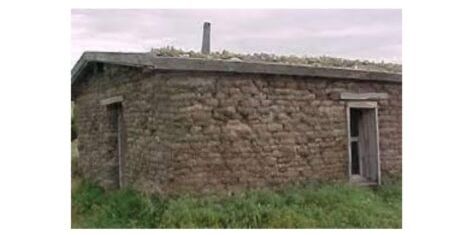
Annie pointed to a rusty pipe sticking out from the top of a small hill. Streaming from the pipe was a column of black smoke. “Let’s check it out,” said Annie. She and Jack walked up the little hill. At the top, they saw that the rusty pipe was rising out of a wooden roof. Beneath the wooden roof was a door. The door seemed to open into the hill itself. Jack studied their research book and read aloud: Since the prairie did not have many trees, wood was hard to find. So pioneers often made their houses out of sod bricks, which were blocks of earth cut out of the prairie. Sometimes a sod house was dug out of the side of a hill. It was called a “dugout”. Then Jack read more to Annie: Tornados or twisters are common on the prairie. So many dugouts had storm cellars. A storm cellar was like a basement below the ground. During a twister, a storm cellar is the safest place to be.
On the basis of your reading of the passage choose the correct options: (i) Sod is known as ________. (a) hollow bricks (b) tiles (c) granite slabs (d) blocks of earth
(ii) Many dug outs had ___________. (a) storm cellars (b) basement (c) vault (d) All of these
(iii) Tornados or twisters are common on the __________. (a) mountains (b) oceans (c) prairie (d) None of these
(iv) A storm cellar was like a ___________ below the ground. (a) window (b) basement (c) terrace (d) balcony
(v) Complete the following: During a Twister, a storm cellar_____________.
(vi) State whether the following statement is true or false: The prairie did not have many trees but wood was found in plenty.
(vii) From the passage, find the synonym of the word: flowing
(viii) Why did the pioneers often make their houses out of sod bricks?
Q2: Read the passage carefully and answer the questions that follow.
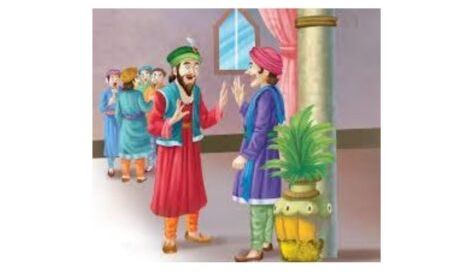
(i) The king of Iran had heard that Birbal was one of the wisest men in the East. He wanted to meet Birbal, so he sent him an invitation to visit his country. In due course, Birbal arrived Iran. (ii) When he entered the palace he was puzzled to find not one, but six kings seated there. All were dressed in kingly robes. Birbal began to think, ’Who is the real king?’ The very next moment, he got the answer. Confidently, he approached the King and bowed to him. ‘’But how did you identify me’’ The king asked, puzzled. (iii) Birbal smiled and explained; ‘‘The false kings were all looking at you, while yourself looked straight ahead. Even in regal robes, the common people will always look to their king for support.’’ Overjoyed, the king embraced Birbal and showered him with gifts.
Carefully read the questions from the unseen passage and answer them. (i) The king sent an invitation to Birbal to visit Iran because (a) Birbal was very rich (b) Birbal was very brave (c) Birbal was very wise
(ii) When Birbal entered the palace, he was _________. (a) confused (b) excited (d) Disappointed
(iii) The real king was looking at the false kings. True or False?
(iv) The king was very happy with the wisdom of Birbal. How do you know?
(v) Which words in the passage have the same meanings as follows? (a) dress Ans: ___________ (para ii) (b) kingly Ans: ____________(para ii)
(vi) Complete the given sentence below. When Birbal entered the palace, he was _________ to see _________.
(vii) Find a word from the above passage which means the opposite of the given word: (a) exit – _____(para ii)
Q3: Read the passage carefully and answer the questions that follow.
Under a hill, in a village called Ramgarh, cows roamed in the nearby forest to graze on green grass. One day, Cow Lakshmi wandered near a lion’s cave. The hungry lion woke up and was planning to make it his meal. Trembling with fear, Lakshmi did not see any other cow nearby. She pleaded with the lion, saying, “Please spare me. I have a small calf that depends on my milk and cannot eat grass yet.”The lion agreed but warned him to return the next day or face dire consequences. Lakshmi returned to her calf, promising to come back. The next day, she returned to the lion, keeping her word. The lion, impressed by her honesty, revealed his true form, blessed her, and declared her “Mother Cow”. From then on, all the cows respected him as their protector.
Carefully read the questions from the unseen passage and answer them.
(i) What is the name of the cow in the story?
(ii) What did Cow Lakshmi encounter near the lion’s cave? (a) A friendly rabbit (b) Other cows (c) A hungry lion (d) The village children
(iii) Why did the lion let Cow Lakshmi go the first time? (a) Because he was full (b) Because she made him laugh (c) Because she promised to bring more cows (d) Because she had a calf that depended on her milk
(iv) Cow Lakshmi was declared “__________” by the lion after she returned to keep her promise.
Q4: Read the passage carefully and answer the questions that follow.
Little Neil was just two years old when his Dad took him to watch an airplane race. At the age of four, Neil went with his Dad for their own ride in an airplane. While his Dad was nervous, Neil had the most wonderful time. When Neil was thirteen, the family moved to a new town. Neil got used to his new school, joined the Boy Scouts, and played in the school band. He still flew model airplanes and engaged himself in the night sky using a neighbour’s telescope. He always liked airplanes. He started going to the nearby airport to watch airplanes. As a part-time job he washed planes and made extra money. Then he realized that he wanted to learn to be a pilot. Neil asked his parents for permission and they agreed that he could learn to fly an airplane. Even though he couldn’t get a driver’s license for a car, at age 16 Neil had his student pilot’s license. When Neil grew up he became a U.S. Navy fighter pilot and then a test pilot for advanced rocket-powered aircraft. Have you guessed which Neil the story is about? On July 20, 1969 astronaut Neil Armstrong was the first human to set foot on the moon.
On the basis of your reading of the passage choose the correct options:
(i) Fill in the blanks with the correct words: (a) Neil asked his parents for permission to become a ________. (b) Neil engaged himself in the night sky using a neighbour’s ____________.
(ii) Complete the following sentences: (a) At age 16, __________. (b) On July 20, 1969 astronaut ___________.
(iii) State whether the following statements are true or false: (a) Neil’s father enjoyed his first ride in an aeroplane. (b) At age 16, Neil got his driver’s license for a car. (c) Neil had to move to a new town when he was 13. (d) Neil was always attracted towards cars.
(iv) Answer the question in one or two sentences:
What did Neil do as a part-time job?
Q5: Read the passage carefully and answer the questions that follow.
“Oh, wow!” said Annie as she stepped on the moon. Jack stood frozen. He wanted to get a good look at everything first. He stared at the ground. He was standing in a layer of gray dust as fine as powder. Footprints were everywhere. Jack wondered who had made them. He reached into his pack for the moon book. To his surprise, it was as light as a feather. He found a picture of footprints on the moon. He read: the moon has no rain or wind to blow the dust around. So footprints will never wear away naturally, not even in a billion years. “Look” cried Annie. She bounded past Jack—almost flying through the air. She landed on her feet then she jumped again. Jack read the book aloud: A person weighs less on the moon because of the moon’s low gravity and lack of air. Soon he joined her and jumped away. Boing! Boing! Boing! Now he felt like a feather too.
On the basis of your reading of the passage choose the correct options: (i) The moon is covered with gray coloured ______________. (a) bricks (b) stones (c) dust (d) water
(ii) Jack wondered who had made the____________. (a) painting (b) houses (c) tents (d) footprints
(iii) Jack stood frozen because he wanted to ____________. (a) touch the ice (b) take a deep breath (c) take pictures (d) get a good look at everything
(iv) Jack was surprised because the book was as light as a __________. (a) piece of paper (b) air (c) feather (d) rose petal
(v) Complete the following: The moon has no rain or wind to blow ______________.
(vi) State whether the following statements are true or false. The footprints on the moon will never wear away naturally.
(vii) From the passage find the synonym of the following: Bounced –
(viii) Answer the following: Why does a person weigh less on the moon?
You can access the solutions to this worksheet here.