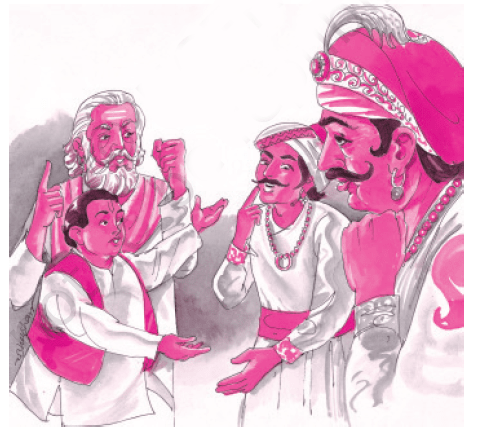
Q1: In the Kingdom of Fools, who were considered fools?
The guru and his disciple
The king and the minister
The rich merchant and the goldsmith
The thief and his brother
Ans: B. The king and the minister
Q2: Why did the guru and his disciple decide to leave the Kingdom of Fools?
They were afraid of the king
They were not getting enough to eat
They realized it was a kingdom of fools
They missed their hometown
Ans: C. They realized it was a kingdom of fools
Q3: What did the guru and his disciple eat every day?
Bananas and ghee
Rice and wheat
Fruits and vegetables
Meat and bread
Ans: A. Bananas and ghee
Q4: Why did the thief break into the rich merchant’s house?
To find food
To seek revenge
To steal valuables
By mistake
Ans: C. To steal valuables
Q5: Who was ultimately executed on the stake in the story?
The rich merchant
The guru and his disciple
The goldsmith
The king and his minister
Ans: B. The guru and his disciple
Fill in the Blanks
Q1: The people in the Kingdom of Fools obeyed the king and minister due to fear of __________.
Ans: death
Q2: The disciple stayed in the kingdom because he enjoyed having good and __________ food.
Ans: cheap
Q3: The thief broke into the rich merchant’s house and got killed when a wall __________ on him.
Ans: fell
Q4: The dancing girl’s distraction led to the poor bricklayer building a __________ wall.
Ans: bad
Q5: The guru and his disciple were executed on the stake meant for __________.
Ans: criminals
True or False
Q1: The people in the Kingdom of Fools were awake during the day.
Ans: False
Q2: The guru and his disciple decided to stay in the kingdom due to fear of the king.
Ans: False
Q3: The rich merchant was held responsible for the thief’s death due to a collapsing wall.
Ans: True
Q4: The goldsmith was hiding in the king’s palace when accused of wrongdoing.
Ans: False
Q5: The rich merchant’s father was ultimately found guilty of the crimes.
Ans: True
Match the FollowingColumn AColumn B1. The guru and his disciplea. Ultimately executed on the stake 2. The rich merchantb. Accused of murder3. The goldsmithc. Distracted the bricklayer 4. The dancing girld. Built a weak wall 5. The king and his ministere. Obeyed the king and minister
Q1: Which art helped Iswaran to bring down the beast? (a) boxing (b) wrestling (c) ju-jitsu (d) yoga Ans: (c)
Q2: Where did the school boys hide themselves to see the mad elephant? (a) on trees (b) in their houses (c) in their classrooms (d) in the Headmaster’s room Ans: (c)
Q3: What happened to the elephant when Iswaran hit the third toenail of the elephant? (a) grunted loudly and collapsed on the (b) ran away from their ground (c) caught Iswaran in his trunk and threw him (d) made friendship with Iswaran away Ans: (a)
Q4: From where was Iswaran watching this incident (a) from a room (b) from the cupboard (c) from a tree (d) from the rooftop Ans: (d)
Q5: Why did the people run helter-skelter in panic? (a) to see the tiger (b) to see a giant (c) to see a giant (d) none of these Ans: (b) Q6: In Iswaran’s story, from where did the tusker escape? (a) cage (b) timber yard (c) forest (d) circus Ans: (b)
Q7: What was the special feature of his stories? (a) light humour (b) satire on the system (c) tragic ending (d) suspense and a surprise ending Ans: (d)
Q8: What was Mahindra’s marital status? (a) married (b) widower (c) engaged and going to be married soon (d) bachelor Ans: (d)
Q9: How did Iswaran say the elephant was revived? (a) He said he gave the elephant an injection. (b) He said he gave the elephant artificial respiration. (c) He said a veterinary doctor was called there. (d) He said a man from the zoo helped to revive the elephant. Ans: (c)
Q10: What kind of books did Iswaran usually read? (a) Some popular Tamil religious book. (b) Some popular Tamil love story. (c) Some popular Tamil thriller. (d) Some popular Tamil folk songs. Ans: (c)
Short Answer Questions
Q1: Who is Mahendra in the given story? Ans: Mahendra was a junior supervisor in a firm that offered to hire supervisors at various types of construction sites: factories, bridges, dams, and so on. Mahendra’s job was to keep an eye on the activities at the work site. He had to keep moving from place to place every now and then as ordered by his head office. He was a bachelor. His needs were simple and he was able to adjust himself to all kinds of odd conditions.
Q2: What harm does the elephant cause in the story narrated by Iswaran?
Ans: The elephant escaped from the timber yard and began to roam about, stamping on bushes, tearing up wild creepers and breaking branches at will. It breaked the fences down like matchsticks, smashed all the stalls selling fruits, mud pots and clothes. The elephant entered a school ground breaking through the brick wall, pulling out the football goal-post, tearing down the volleyball net, kicking and flattening the drum kept for water, and uprooting the shrubs.
Q3: What happens to Mahendra after hearing Iswaran’s ghost story? Ans: Mahendra went to bed with a certain unease. Every night he peered into the darkness outside through the window next to his bed, trying to make sure that there was no movement of dark shapes in the vicinity. He had always liked to admire the milk-white landscape on full-moon nights. But then on, he avoided looking out of his window altogether when the moon was full.
Q4: Explain the daily routine of Mahendra and Iswaran. Ans: Mahendra would be up early in the morning and leave for work after breakfast, carrying some prepared food with him. Meanwhile, Iswaran would tidy up the shed, wash the clothes, and have a leisurely bath, pouring several buckets of water over his head, muttering a prayer all the while. It would be lunchtime by then. After eating, he would read for a while before dozing off. The book was usually some popular Tamil thriller running to hundreds of pages. Its imaginative descriptions and narrative flourishes would hold Iswaran in thrall. His own descriptions were greatly influenced by the Tamil authors that he read. When he was narrating even the smallest of incidents, he would try to work in suspense and a surprise ending into the account.
Q5: How was Iswaran useful to Mahendra? Ans: Iswaran was quite attached to Mahendra and followed him uncomplainingly wherever he was posted. He cooked food for Mahendra, washed his clothes, and chatted away with his master at night. He could weave out endless stories and anecdotes on varied subjects. Iswaran also had an amazing capacity to produce vegetables and cooking ingredients, seemingly out of nowhere.
Q6: How does Iswaran describe the female ghost to Mahendra? Ans: Iswaran says that he is brave but he is afraid of one horrible ghost of a woman which appears off and on at midnight during the full moon. It is an ugly creature with matted hair and a shriveled face, like a skeleton holding a fetus in its arms.
Q7: Why did the elephant collapse? Ans: Iswaran mustering all his force, whacked its third toenail which, temporarily paralyzes the nervous system. The elephant looked stunned for a moment; then it shivered from head to foot and collapsed.
Q8: Explain, in brief, why Mahendra resigns from the job and leaves the haunted place. Ans: On an auspicious day — according to tradition people prepare various delicacies to feed the spirits of ancestors, Iswaran made a delicious dinner. That night Mahendra enjoyed the dinner and complimented Iswaran on his culinary skills. Iswaran unexpectedly, launched into a most garish account involving the supernatural. He says that the area in which they were staying was once a burial ground. And he describes one horrible ghost of a woman which appears off and on at midnight during the full moon. It is an ugly creature with matted hair and a shriveled face, like a skeleton holding a fetus in its arms.
This made Mahendra shiver and one night, Mahendra was woken up from his sleep by a low moan close to his window. At first, he put it down to a cat. But the sound was too guttural for a cat. Lowering himself to the level of the windowsill he looked out at the white sheet of moonlight outside. There was a dark cloudy form clutching a bundle. Mahendra broke into a cold sweat and fell back on the pillow. The next day Iswaran remembered the female ghost and said that he came running after hearing the sound of moaning that was coming from Mahendra’s room before Iswaran finished the sentence Mahendra’s spine chilled and he hurried to the office to resign.
Q1: Why was Toto sold by the narrator’s grandfather? (a) The grandfather detested it. (b) The monkey was mischievous. (c) The monkey was not keeping well. (d) The monkey was trying to escape. Ans: (b) Sol: The monkey was difficult to handle. The narrator’s middle-class family could not bear the frequent damages of utensils and other household items that Toto caused.
Q2: How much fare was collected by the ticket collector for Toto’s travel? (a) Seven rupees (b) One rupee (c) Three rupees (d) Ten rupees Ans: (c) Sol: Toto was classified as a dog by the ticket-collector and he charged three rupees from the narrator’s grandfather.
Q3: Where did the writer’s Grandfather live? (a) In Mumbai (b) In Saharanapur (c) In Dehradun (d) In Delhi Ans: (c)
Q4: Who was Toto? (a) A dog (b) A monkey (c) A lamb (d) A boy Ans: (b) Sol: Toto was a pretty monkey. Grandfather decided to add Toto to his private zoo.
Q5: Which other animal accompanied narrator’s grandfather and Toto to Saharanpur? (a) A cat (b) A rabbit (c) A tortoise (d) A tame squirrel Ans: (c) Sol: The grandfather was carrying a small tortoise in his pocket while traveling to Saharanpur.
Q6: How was Toto taken to Saharanpur? (a) In a canvas kit-bag (b) In a little cage (c) In a basket (d) In a big black plastic bag Ans: (d)
Q7: How did Toto prove to other animals? (a) Careful (b) Friendly (c) Soothing (d) Troublesome Ans: (d)
Q8: What did Toto tear into shreds? (a)The author’s school bag (b) The author’s pant (c) The author’s school blazer (d) All of these Ans: (c)
Q9: Who brought Toto to the narrator’s house? (a) Author’s grandfather (b) Author’s grandmother (c) Author’s mother (d) Author’s father Ans: (a) Sol: Toto was purchased by the writer’s grandfather as he decided to add the little animal to his private zoo.
Q10: What did Toto do with the writer’s school blazer? (a) He tore it into shreds (b) He threw it out of the window (c) He made it into his bedding (d) He wore it on his back Ans: (a)
Very Short Answer Questions
Q1:How much did Grandfather pay for Toto? Ans: Five rupees.
Q2:What did Toto do to the walls of the closet? Ans: He damaged the ornamental paper, exposing naked brick.
Q3: Why was Toto considered clever by Grandfather? Ans: He could have tied the torn pieces of the blazer into a rope.
Q4: What did Toto do when he was put in the kettle? Ans: He almost boiled himself alive.
Q5: Why did Grandfather sell Toto back to the tonga-driver? Ans: Toto caused too much damage and was too mischievous.
Short Answer Questions
Q1:What did Grandfather buy Toto for? Ans: Grandfather bought Toto for five rupees from a tonga-driver. He saw Toto tied to a feeding-trough and thought he would make a nice pet for his private zoo.
Q2: How did Toto behave when he was first kept in the closet? Ans: When Toto was kept in the closet, he managed to escape and caused a lot of trouble. He pulled the peg from the wall, tore my school blazer, and made a mess of the walls that were covered with paper.
Q3: What happened when Toto was taken on the train? Ans: When Toto was taken on the train, he poked his head out of the bag and smiled at the ticket-collector. The collector thought Toto was a dog and asked Grandfather to pay three rupees for him.
Q4: Why did Toto and Nana, the donkey, not get along? Ans: Toto and Nana did not get along because Toto would bite Nana’s ears, which made Nana uncomfortable. Nana would try to keep away from Toto.
Q5: How did the ticket-collector mistake Toto for a dog?
Ans: The ticket-collector mistook Toto for a dog when he poked his head out of the bag and smiled at him. The collector thought that because Toto was in a bag and looked playful, he must be a dog. So, he charged Grandfather three rupees for Toto’s fare.
Long Answer Questions
Q1: Describe the character of Toto and how his behavior reflects his mischievous nature. Provide specific examples from his interactions with the family and other animals.
Ans: Toto, the little monkey, is a lively character whose actions vividly illustrate his mischievous nature. His personality can be dissected through various interactions he has with his surroundings, particularly with the family members and other animals in the household. Here are five significant pointers that highlight Toto’s character:
Physical Description and Initial Impressions: Toto is depicted with bright, sparkling eyes and a playful demeanor. His appearance, with a tail that acts almost like a third hand, suggests agility and cleverness. This physicality sets the stage for his mischievous behavior, as his quick fingers and sharp teeth make him adept at getting into trouble.
Destruction of Property: One of the most telling examples of Toto’s mischief is when he is left alone in a closet and manages to tear up the ornamental paper on the walls and shred a school blazer. This incident not only showcases his playful destructiveness but also foreshadows the chaos he would bring into the household.
Interactions with Grandmother: Toto’s interactions often lead to humorous chaos, especially when he throws a plate at Grandmother after she screams at him. This reaction indicates not just his playfulness but also a disregard for boundaries, which illustrates a deeper mischief in his character.
Adventures During Bath Time: Toto’s bath time is another example of his mischievousness. He tests the water’s temperature with his hands and gets into a kettle, nearly boiling himself. This incident reflects his curiosity and playful nature, but it also highlights the potential danger of his antics, which often put him at risk.
Final Outcome and Return to the Tonga-Driver: Ultimately, Toto’s behavior leads to his return to the tonga-driver, indicating that despite the fun and laughter he brings, his mischief is unsustainable. The family recognizes that they cannot afford the constant destruction and chaos he causes, emphasizing the consequences of his actions.
Through these examples, Toto is shown to be a clever and mischievous character whose actions, while often entertaining, have a significant impact on the household dynamics. His playful yet destructive nature leaves a lasting impression on both his family and the reader.
Q2: Discuss the theme of companionship as depicted in the relationship between Toto and the other pets in the household. How does Toto’s behavior affect these relationships?
Ans: The theme of companionship is central to the narrative, particularly in the context of Toto’s interactions with other pets in the household. Toto’s behavior significantly influences these relationships, often leading to conflict rather than harmony. Here are five key points to consider:
Initial Acceptance: When Toto is first introduced into the household, he is placed in a cage with other pets, including a tortoise, rabbits, and a goat. Initially, there is a sense of potential companionship as these animals coexist. However, Toto’s mischievous nature soon disrupts this peace, showing how his behavior affects group dynamics.
Disruption of Sleep: Toto’s inability to let other pets sleep at night showcases his restless energy. The fact that he does not allow his companions to rest reflects a lack of consideration for their needs, indicating that his playful nature can lead to disturbances in communal living.
Conflict with Nana the Donkey: The relationship between Toto and Nana is particularly telling. Their interactions are marked by conflict, especially when Toto bites Nana’s ears. This incident not only affects their relationship but also illustrates how Toto’s playful yet aggressive behavior can create tension among companions.
Seeking Attention: Toto’s antics often lead him to seek attention from family members, sometimes at the expense of other animals. His constant need for interaction and playfulness can overshadow the presence of other pets, creating feelings of jealousy or neglect among them.
Resolution and Separation: Ultimately, the family’s decision to return Toto to the tonga-driver highlights the consequences of his behavior on relationships within the household. While he brings joy and laughter, the ongoing disruptions lead to a realization that true companionship requires a balance of personalities and behaviors that Toto is unable to maintain.
The narrative illustrates that while companionship among pets can lead to joy and laughter, it also requires mutual respect and understanding. Toto’s disruptive nature ultimately leads to his separation from the family, emphasizing the complex dynamics of companionship and the challenges of integrating a spirited individual into a harmonious group.
Q.1. What does the story The Lost Child show? (a) Working of a village (b) Working of a fair (c) Village people are good (d) Working of a child’s mind
Correct Answer is Option (d) The story illustrates the inner turmoil of a child who, amidst the distractions of a fair, ultimately yearns for his parents, highlighting the complexity of a child’s emotions and desires.
Q.2. A flower seller was selling a garden of ________. (a) Sunflower (b) Rose (c) Tulip (d) Gulmohur
Correct Answer is Option (d) The correct answer is Gulmohur, which is a type of flowering tree known for its vibrant blossoms. The context of the question highlights the specific flower being sold by the seller.
Q.3. The parents took the child who was playing around a ________ tree and started walking towards the fair. (a) Mango (b) Coconut (c) Jamun (d) Banyan
Correct Answer is Option (d) The correct answer is Banyan as it is specifically mentioned in the story that the child played around a banyan tree before heading to the fair.
Q.4. Who took the child to the fair? (a) Kind man (b) None of these (c) Friends (d) Parents
Correct Answer is Option (d) The correct answer is Parents because the story clearly states that the child was taken to the fair by his parents.
Q.5. What is the theme of the story The Lost Child? (a) The universality of a child’s desire for everything. (b) Loosing parents in the fair. (c) Fear of being lost as a child. (d) Child’s lost emotions.
Correct Answer is Option (a) The story concentrates on the universality of a child’s desire to get everything. It’s a story about a child’s aspirations, demands, and realization.
Q.6. What were the things that the child saw on his way to the fair? (a) Toys (b) Sweets and Garlands (c) All of these (d) Balloons
Correct Answer is Option (c) The correct answer is All of these as the child saw toys, sweets, garlands, and balloons on his way to the fair.
Q.7. What was the child’s favorite sweet in the story The lost child? (a) Burfi (b) Rasagulla (c) Jalebi (d) Gulab jamun
Correct Answer is Option (a) The little boy’s mouth watered as he spotted his favourite burfi at the sweetmeat countertop at the fair. He savoured to eat the sweet.
Q.8. Inside the grove, the child became excited to see ________. (a) ostrich (b) peacock (c) dove (d) sparrow
Correct Answer is Option (c) The correct answer is dove as the child was excited to see the doves in the grove.
Q.9. How did the crowd manage to reach the fair in the plot The lost child? (a) On bullock carts (b) All of these (c) On foot (d) On horses
Correct Answer is Option (b) The correct answer is All of these as the crowd used various means including bullock carts, walking, and horses to reach the fair.
Q.10. The sweets in the fear were decorated with ________ and ________ coloured leaves. (a) gold and silver (b) gold and red (c) red and green (d) while and silver
Correct Answer is Option (a) The correct answer is gold and silver as the sweets were specifically described as being decorated with these colors in the story.
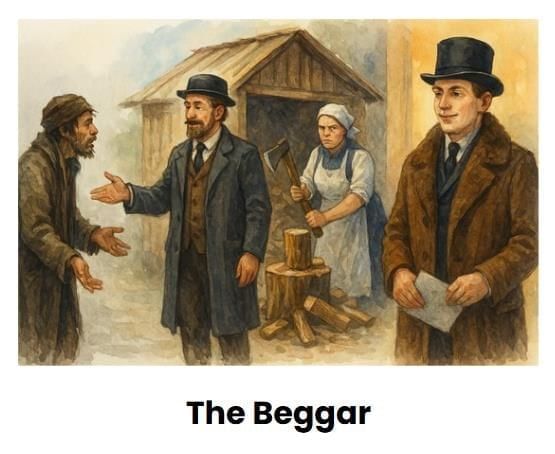
Q1. Describe the first meeting between Sergei and Lushkoff. How did Sergei take pity on Lushkoff? Ans: One day, advocate Sergei met a beggar named Lushkoff, who was wearing tattered clothes. Lushkoff asked Sergei for help, claiming he had a job offer in Kaluga but lacked the money to get there. Sergei recognised Lushkoff from a previous encounter on Sadovya Street, where he had lied about being a student expelled for unpaid fees. When confronted, Lushkoff admitted he made a living by deceiving others and was actually unemployed, resorting to begging. Although Sergei refused to give him money, he offered Lushkoff work instead. He brought him to his home to chop wood, despite noticing that Lushkoff appeared physically weak and reluctant to work. Sergei’s maid, Olga, supervised the task, and Sergei eventually paid Lushkoff for his efforts. This act of offering work instead of alms reflected Sergei’s pity and his desire to assist Lushkoff in a more dignified manner.
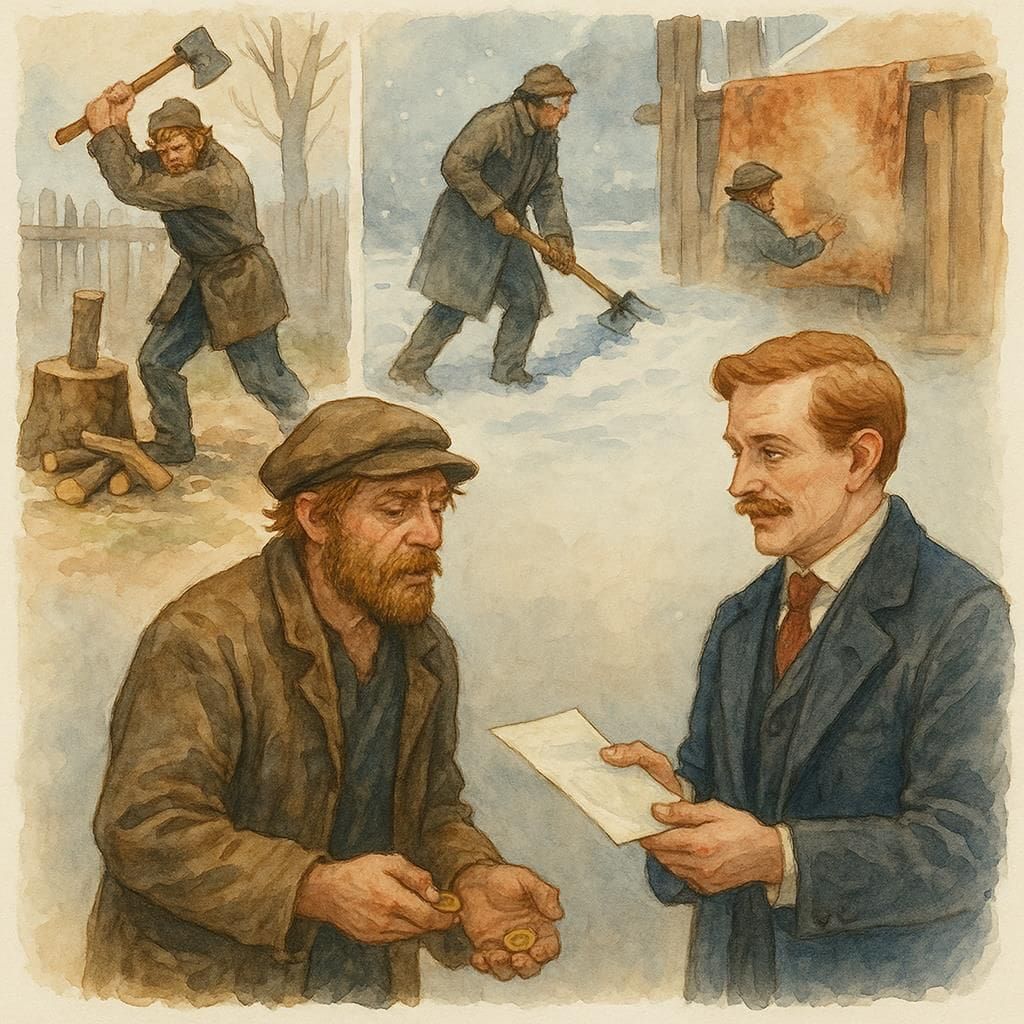
Q2. Sergei brought Lushkoff home to get some wood chopped. How did Sergei help Lushkoff afterwards? Ans: After Lushkoff chopped wood, Sergei felt a sense of satisfaction, believing he had helped reform a beggar. He invited Lushkoff to return on the first of every month to earn money by chopping wood. Despite being frail and struggling to stand, Lushkoff came regularly and took on various tasks, such as shovelling snow, organising the woodshed, and beating dust out of mattresses. For these jobs, he received small payments ranging from twenty to forty copecks. When Sergei moved to a new house, he hired Lushkoff to assist with packing and moving furniture. During this time, Lushkoff appeared more silent and sober. Sergei was impressed by his improvement and wrote a letter of recommendation for Lushkoff to a friend, which helped him secure a job as a copier. Sergei took pride in helping Lushkoff find a more stable occupation and improve his life.
Q3. Describe the last meeting between Sergei and Lushkoff. How did Olga help Lushkoff to be a real man? Ans: Two years later, Sergei met Lushkoff at a theatre, where he noticed that Lushkoff was well-dressed, sporting a coat with a fur collar and a sealskin cap. Lushkoff shared that he was now a notary, earning thirty-five roubles a month. Sergei was thrilled to see Lushkoff standing on his own feet. During their conversation, Lushkoff revealed a surprising truth: it wasn’t Sergei who had helped him change his life, but Olga, Sergei’s maidservant. He confessed that he had never chopped any wood during his visits; it was always Olga who did the work for him. Her compassion and silent support motivated him to quit drinking and turn his life around. Olga’s kindness, patience, and selfless actions were crucial in Lushkoff’s transformation.
Q4. What values did Olga exhibit while saving the life of Lushkoff? Ans: Olga, Sergei’s cook, exhibited remarkable compassion, kindness, and selflessness while aiding Lushkoff. Although she appeared harsh and often scolded him, she deeply sympathised with his struggles. Olga quietly took on the hard work that Lushkoff was too weak to do himself, demonstrating her concern for his well-being despite his dishonesty and alcohol addiction. She chopped wood for him, allowing him to earn some money and preserving his dignity. By doing this, Olga provided Lushkoff with a vital second chance at life. Her actions highlighted the transformative power of kindness and selfless service, which ultimately led to Lushkoff’s reformation and success.
Q5. Sergei’s sympathy was as important as Olga’s noble deeds that reformed Lushkoff. Discuss. Ans: While Lushkoff credited Olga for his transformation, Sergei’s sympathy and intervention were equally vital. Instead of turning Lushkoff over to the authorities or dismissing him as a liar, Sergei chose to offer him work. This decision provided Lushkoff with a dignified way to earn money, marking a crucial first step towards his rehabilitation. Sergei’s genuine concern for Lushkoff led him to assign small jobs and eventually recommend him for better employment. Without Sergei’s initial kindness, Lushkoff might have continued on a destructive path. Furthermore, Sergei’s choice to bring Lushkoff into his home allowed Olga to play her essential role in his reformation. Thus, Sergei’s sympathy and efforts were key to Lushkoff’s transformation, just as Olga’s actions were.
Q6. How was Lushkoff, the beggar different from Lushkoff, the notary? Ans:
Lushkoff, the beggar used to resort to lies in order to get sympathy and money from people:
He had a repulsive and disgusting appearance.
He wore a ragged fawn-coloured overcoat and his eyes were dull and drunken.
Each of his cheeks had a red spot.
One of his overshoes was higher than the other.
He was hated for his dishonesty and swindling.
He was very weak, both physically and emotionally because of alcoholic habits.
He did not have any self-respect or dignity and quietly took all the jeering from others.
Lushkoff, the notary, in contrast, looked like a gentleman:
He wore a coat collar of curly fur and a worn sealskin cap.
He was paid thirty-five roubles a month for his ‘clean employment’.
He was a respectable and responsible person now, not the alcoholic who had stooped to telling lies and begging alms for survival.
He now had both a reformed soul and an improved life.
Q7. What are the different ways in which the writer refers to Lushkoff? Why? Ans: The writer refers to Lushkoff using several derogatory terms, including beggar, mendicant, swindler, scarecrow, and pseudo-teacher. These labels illustrate Lushkoff’s miserable condition and the depths he reached due to his alcohol addiction. By highlighting his pitiable state, the writer sets up a stark contrast with Lushkoff’s eventual reformation. The negative terms amplify the dramatic change in his life, showcasing how he transformed from a hopeless beggar into a respectable and responsible man. This contrasting language reinforces the message that even the most downtrodden individuals can change when they receive kindness and compassion.
Q8. Imagine you are advocating Sergei. You meet Lushkoff after a gap of two years and are happy to see him as a reformed man. Write a letter in about 150 words to your friend Antonio Banderas to whom you had sent Lushkoff with a letter of recommendation. Ans: 10 June 2025 15 Prechistenka Street Moscow Dear Antonio, I hope this letter finds you well. I have some wonderful news to share. Today, after two years, I ran into Lushkoff, the man I had sent to you with a recommendation letter. To my delight, he has completely transformed. He now works as a notary and earns thirty-five roubles a month! I saw him at the theatre, dressed well and looking healthy. During our conversation, Lushkoff revealed something surprising. He told me that he never chopped a single piece of wood when I assigned him that task. It was actually my cook, Olga, who did the work for him. Her quiet compassion and selfless actions motivated him to quit drinking and change his life. I am incredibly grateful to Olga for her kindness, which saved Lushkoff’s life. Her humble deeds have taught me the value of empathy and the power of small acts of kindness. Looking forward to catching up soon! Warm regards, Sergei
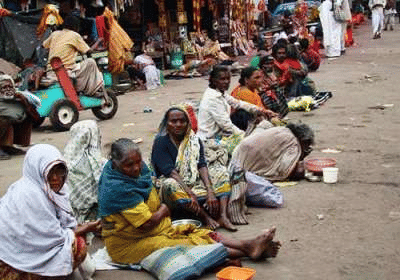
Q9. How can we help beggars/abolish begging? Ans: Begging is a significant issue in many parts of the world, particularly in poorer countries. Some individuals have turned it into a business, causing disruption in public areas. To tackle this problem, both society and governments need to take proactive measures. One effective approach is through education, which can help reduce the number of people begging. Governments should introduce strict laws to limit begging while also creating job opportunities for those affected. Providing financial support and vocational training can enable beggars to become skilled workers. Additionally, special homes should be established for individuals with disabilities or those unable to work. Begging hinders societal progress, and it is essential to promote rehabilitation rather than mere charity. By helping beggars regain their dignity and become self-sufficient, we can address the root causes of begging and foster a more supportive community.
Beggars in India
Q10. ‘It is better to help one by giving work than giving alms’. Comment with the help of the character Sergei in the Beggar. Ans: Begging is a significant social issue that often leads to laziness and dependency. Simply giving money to a beggar does not truly help them. In the story, Sergei aids Lushkoff not by offering him money, but by providing him with work. Despite Lushkoff’s poor health making him unfit for physical labour, the job opportunity from Sergei, supported silently by Olga, helped him regain his self-respect. Sergei’s choice to offer work instead of alms ultimately led to Lushkoff’s transformation. This illustrates that empowering individuals to earn a living through honest work is far more effective than merely giving handouts.
Q11. Compassion and pity can bring positive changes in human beings. How did Olga prove it? Ans:Compassion and pity can indeed lead to positive changes in individuals. Olga recognised Lushkoff’s dire situation and understood that his poor choices and unfortunate circumstances had led him to this point. Out of kindness, she discreetly assisted him by completing the tasks assigned to him. Her compassion significantly influenced Lushkoff, inspiring him to make a change in his life. As time passed, he evolved into a successful individual. Generally, even those who seem hardened can be transformed through love and empathy. When a person receives understanding, it ignites a desire for self-improvement and a willingness to acknowledge their faults. This process of self-reflection often results in meaningful change. Olga’s nurturing approach was far more effective in reforming Lushkoff than any harsh punishment could have been. Her actions demonstrated that genuine care can lead to profound transformations in people’s lives.
Q12. Every man must work to make a living. Explain this idea with respect to the story still ‘The Beggar’. Ans:Lushkoff, once a member of a Russian choir, did not start as a beggar. He lost his job due to his drinking habits and opted to beg instead of seeking honest work. Sergei played a vital role in transforming Lushkoff’s life by providing him with employment. Initially, Lushkoff chopped wood at Sergei’s house, and later, with Sergei’s help, he secured better jobs. This led Lushkoff to earn thirty-five roubles a month and eventually become a notary. The story illustrates that meaningful work not only offers a person a source of income but also restores their dignity and stability in life.
Q13. Olga’s affectionate nature was instrumental in making Lushkoff to give up drinking and reform himself. Do you agree? Ans: Yes, I agree. Lushkoff was a beggar who often lied about his past to gain sympathy. One day, Sergei discovered his deceit and offered him work chopping wood. Although Lushkoff did not enjoy the job, Olga’s tough love and compassion transformed him. She treated him with care, often doing his work herself while ensuring he received payment. Olga’s firm yet caring attitude inspired Lushkoff to respect her and, in turn, her advice. As a result, he gave up drinking, changed his habits, and eventually became a successful man. Her affection was key to his transformation, as it instilled in him a sense of worth and responsibility. Lushkoff’s change was not merely due to Sergei’s intervention but significantly influenced by Olga’s unwavering support and emotional investment in his well-being.
Q14. To reform a person, it is important to use both strictness and love. Discuss with reference to the lesson ‘The Beggar’. Ans: In the story, Sergei uses strictness to confront Lushkoff about his lies, compelling him to admit the truth. Lushkoff was once a singer in a Russian choir but lost his position due to his drinking habits. Sergei then asks Olga to give Lushkoff work. Although Olga seems harsh, her actions stem from kindness and compassion. Recognising Lushkoff’s weakness, she often does his work for him. Her apparent strictness is balanced by her inner kindness, which profoundly impacts Lushkoff. This combination of love and firmness aids in his reform, enabling him to reintegrate into society and lead a dignified life.
Q1: What is the meaning of “My cat was back and so was I”? Had the author gone anywhere? Why does he say that he is also back?
Ans: Zan’s cat was brought back home after more than a month of absence. She had run away due to fear of the fire and could not be returned earlier because her collar had phone numbers that were disconnected due to the fire. Zan, too, had returned to his normal, cheerful life. His absence was emotional, unlike the physical absence of his cat. Zan says that he is also back to highlight the return of his faith in the goodness of life. He had drifted away from the joys of friendship and the comfort of familiarity after moving to a new school. By the time his cat returned, his gratitude for life had also returned, aided by the company of new friends.
Q2: What values in Zan’s mother endeared him to her? Ans: Some of the values that endeared Zan’s mother to him included her unwavering devotion as a single parent, her courage, and her emotional strength. Despite facing numerous challenges, she consistently prioritised Zan’s well-being and happiness, which he deeply respected and appreciated. This was evident when she risked her life to recover cherished memories of her late husband, demonstrating her selflessness. Additionally, her emotional resilience was clear when she sent Zan back to school immediately after the fire incident. These admirable qualities not only made Zan love and obey her wholeheartedly but also instilled in him a strong determination to save her from the fire, even at the risk of his own safety.
Fire engulfed Zan’s house Q3: Describe the author’s experience at school after the fire tragedy. Ans: The author had recently joined a new school and was struggling to fit in. Just a few days later, his house caught fire, destroying his school bag and shoes.
The next day, he went to school feeling completely lost. He wandered around aimlessly, surrounded by unfamiliar faces and overwhelmed by his circumstances. Everything felt strange and unsettling. He returned home heartbroken, burdened by the recent tragedies in his life.
However, the following day, a heartwarming change occurred. His schoolmates gathered around him, offering comfort and support. They had collected money and arranged school supplies and clothes for him. This unexpected kindness changed his perspective and helped restore his faith in life.
Q4: Have any of your classmates/schoolmates had an experience like the one described in the story where they needed help? Describe how they were helped. Ans: Yes, two years ago, my friend Raju had a similar experience. He had gone to a crowded market to buy household items when a fire broke out in a shop due to a short circuit. Panic spread, and people began rushing in all directions.
In the chaos, Raju and three others got trapped in a nearby shop to escape the smoke. Unfortunately, the shop also filled with smoke quickly, and they began to suffocate. They feared their end was near.
Thankfully, a team from an NGO arrived, broke open the shutter, and rescued them just in time. They were quickly hospitalised. I am truly grateful to that team and the grace of God for saving my friend’s life.
Q5: Sometimes, unexpected trouble strikes our lives. But people around us come to our aid. Describe this with reference to the lesson ‘A House Is Not a Home’. Ans: In A House Is Not a Home, the narrator experiences a series of hardships after a fire destroys his house. He and his mother are forced to shift to a rented place, and he is already struggling with loneliness after moving to a new school.
Despite feeling isolated, the kindness of his schoolmates makes a significant difference. They come together to support him by donating books, clothes, and school supplies. Their compassion helps him adjust to his new surroundings and feel less alone.
The return of his lost cat, thanks to a kind neighbour, lifts his spirits even more. These small but meaningful acts of support help him regain hope and show that community and empathy can provide strength in times of difficulty.
Q6: The value of a person in one’s surroundings is truly known in one’s hardship. Comment with reference to the story ‘A House is Not a Home’. Ans: People around us often seem too busy with their own lives. However, their true character is revealed in times of hardship, when they step forward with empathy and support.
In the story A House Is Not a Home, the narrator initially feels uncomfortable and disconnected at his new school. But after the fire incident, when he lost all his belongings, his classmates reached out to him with compassion. They contribute school supplies, books, and clothes, and make him feel welcome.
Even the teachers become more understanding, aware of his difficult situation. This heartfelt support changes his view of the school and helps him start making friends. The story shows how genuine kindness can shine through when it’s most needed.
Q7: The lady who handed over Zan’s cat to him did a noble deed. Write a few reasons to appreciate her deed. Ans. The author loved his cat dearly, and losing her in the fire deeply saddened him. He tried his best to find her, but she remained missing for over a month.
One day, a kind woman came to him with his cat. Overwhelmed with joy, he grabbed his pet and began jumping with happiness. The woman had noticed the collar with a phone number and realised the cat must be missing and loved.
Even though the phone number was not working, she made every effort to locate the owner. Her thoughtfulness and sensitivity towards the cat’s emotions and the owner’s pain made her deed truly noble. For Zan, getting his cat back felt nothing short of a miracle.
Q8: Zan’s life, one month after the fire incident, was happier than his earlier life. Discuss a few reasons for this change. Ans: A month after the fire incident, Zan’s life became more joyful and fulfilling than before. Some of the main reasons include:
Support from schoolmates: His classmates showed immense kindness by collecting and giving him essentials like clothes, books, and stationery. This made Zan feel supported and cared for.
Reunion with his lost cat: After weeks of emotional distress, his beloved cat was found and returned by a kind neighbour. This reunion brought Zan comfort and happiness.
Overcoming insecurities: The warmth and friendliness of others helped Zan let go of his fear and isolation. He gradually opened up, made new friends, and gained confidence.
Personal growth and resilience: Facing adversity made Zan stronger and more grateful. He learned to adapt, appreciate life, and find joy in human connections.
These factors together transformed his life for the better.
Q1. What is Johnsy’s illness? What can cure her – the medicine or her willingness to live?
Ans: Johnsy suffered from pneumonia during the cold month of November. This illness left her both physically weak and mentally depressed. She spent her days in bed, staring out of the window and watching the autumn leaves fall. Johnsy believed that when the last leaf fell, she would die, which deepened her negative mindset and worsened her condition. She refused to eat and lost all hope, rendering the medicines ineffective. The doctor indicated that her recovery relied on her willingness to live. Without the desire to improve, even the best medicine could not help her.
Q2. Sue is a true and faithful friend. Comment. Ans:Sue exemplifies the qualities of a true and loyal friend. She and Johnsy, both young artists, shared a flat. When Johnsy fell ill, Sue devoted herself to caring for her. She called the doctor daily and earned money by painting beside Johnsy’s bed, all while maintaining a cheerful attitude to uplift her friend. Sue was patient with Johnsy’s gloomy outlook and reassured her that the falling ivy leaves had no connection to her illness. Recognising the seriousness of the situation, she sought help from Behrman. Sue’s compassion and support reflect her loyalty and genuine concern for Johnsy’s well-being.
Q3. Do you think the feeling of depression Johnsy has is common among teenagers? Ans:Yes, Johnsy’s feeling of depression is common among teenagers. Like Johnsy, many teenagers struggle with emotional maturity, making it hard for them to cope with unpredictable and challenging situations. This often leads to negative thoughts and fears, creating a cycle of pessimism and anxiety. Such emotional instability can impact their health and diminish their willpower. Moreover, teenagers can be challenging to counsel, often testing the patience of those around them. A lack of a healthy lifestyle can worsen their depression. To combat this, teenagers should focus on positive habits such as meditation, exercise, and cultivating optimism to maintain a balanced mental state.
Q4. How did Behrman save Johnsy’s life? Ans: Behrman saved Johnsy’s life through an extraordinary act of self-sacrifice. Despite being a sixty-year-old unsuccessful artist, he took it upon himself to help Johnsy when she believed she would die as the last leaf on the ivy vine fell. On a stormy night, just as the last leaf was about to drop, Behrman braved the cold and rain to paint a realistic green leaf on the wall. This act gave Johnsy the hope and will to live. Unfortunately, Behrman caught pneumonia from the exposure and passed away shortly after. His painting of the last leaf became his ultimate masterpiece, symbolising his dedication to art and his compassion for Johnsy.
Q5. Imagine Behrman survives the attack of pneumonia. His family takes him back to his native countryside to nurse him back to health. As Johnsy, write a letter to Behrman expressing your gratitude. Ans:
(Date) 2-111 Floor Ivy Apartments London
Dear Mr. Behrman,
I hope this letter finds you in better health. Sue and I think of you often and miss your presence in the neighborhood. You have always been a kind and talented gentleman, and words cannot express my gratitude for your extraordinary help during my darkest moments. I shudder when I remember how you risked your life for me—a foolish girl, blinded by hopelessness. Your courage and dedication have taught me the true value of life and art.
Your masterpiece has not only saved my life but also inspired me to cherish each day. I promise never to let despair cloud my thoughts again. Sue and I wish you a speedy recovery and look forward to seeing you create more masterpieces.
With warm regards, Johnsy
Q6. Describe briefly how Behrman saved Johnsy’s life. Ans: Johnsy was suffering from pneumonia and believed she would die when the last leaf on the ivy creeper fell. The doctor indicated that her recovery relied on her will to live. Behrman, an elderly painter living in the same building, learned of Johnsy’s belief and decided to help her. On a stormy night, as the last leaf fell, Behrman painted a realistic leaf on the wall. The next morning, Johnsy saw the leaf and regained her will to live. Tragically, Behrman caught pneumonia while painting and died, but his selfless act ultimately saved Johnsy’s life.
Q7. In “The Last Leaf” why did Sue cry bitterly when the doctor had gone? Later she walked into Johnsy’s room whistling a cheerful tune. Why? Ans: Sue was heartbroken after the doctor informed her that Johnsy’s chances of survival were slim unless she regained the will to live. Overwhelmed by the situation, she cried bitterly once the doctor left. However, Sue realised that displaying her sadness would only worsen Johnsy’s condition. To uplift her friend’s spirits and instil hope, Sue entered Johnsy’s room whistling a cheerful tune, aiming to encourage her recovery.
Q8. What did Johnsy believe about the falling leaves? Did Sue believe the same thing? Ans:Johnsy believed that her life was linked to the falling ivy leaves. She thought that when the last leaf fell, she would die. In contrast, Sue did not share this belief. She tried to reassure Johnsy that the leaves had no bearing on her life and cared for her deeply. Sue sought the help of Behrman, whose painted leaf ultimately saved Johnsy’s life.
Q9. Write a brief character sketch of old Behrman. Ans:Old Behrman was an unsuccessful artist in his sixties who had always dreamed of creating a masterpiece but never began one. He lived below Johnsy and Sue’s flat and saw himself as their protector. Although he often seemed gruff, he was genuinely kind and caring. When Johnsy believed she would die with the fall of the last leaf, Behrman painted a leaf on the wall during a stormy night, risking his own life in the process. His act of painting the last leaf demonstrated his selflessness and kindness, ultimately becoming his long-awaited masterpiece.
Q10. Justify the title of the story ‘The Last Leaf ‘.
Ans: The title The Last Leaf is crucial to the story’s theme and plot. Johnsy, a young artist, believes her life is tied to the leaves of the ivy creeper outside her window. She is convinced that she will die when the last leaf falls. However, Behrman, an elderly painter, paints a leaf on the wall just as the last real leaf drops. This act gives Johnsy hope and the desire to live. Although the last leaf is artificial, it plays a vital role in saving her life, making the title particularly fitting for the story.
Q11. Draw a brief character sketch of Sue. Ans:Sue is a central character in the story The Last Leaf. She is an artist sharing a studio with her friend Johnsy in an artists’ colony. Sue is depicted as kind-hearted, selfless, and a devoted friend. When Johnsy falls ill with pneumonia, Sue becomes her caregiver, tending to her with love and dedication. She works tirelessly, both day and night, to earn enough money for Johnsy’s medicine and proper nutrition. Despite feeling distressed when the doctor mentions Johnsy’s slim chances of recovery, Sue remains hopeful. She tries to lift Johnsy’s spirits by dismissing her belief that she will die when the last leaf on the vine falls. Sue’s compassion, loyalty, and determination to save her friend define her as a true friend and a noble individual.
Q12. Behrman’s masterpiece helped Johnsy survive. Explain how the last leaf influenced Johnsy. Ans:Behrman’s masterpiece plays a crucial role in Johnsy’s survival. Behrman, an elderly artist, had always dreamed of creating a masterpiece. When he discovered that Johnsy, who was seriously ill, believed her life depended on the falling leaves of a vine, he decided to help her. On a stormy night, Behrman painted a leaf on the wall that looked just like the last leaf of the creeper. Johnsy thought that the leaf’s refusal to fall inspired her with a new sense of hope, which ultimately motivated her to fight her illness. Tragically, Behrman caught pneumonia while painting in the cold and died shortly after. His selfless act and sacrifice instilled in Johnsy the will to live, making his final painting his true masterpiece.
Q13. Johnsy felt her survival was related to the falling ivy leaves. Explain how blind beliefs can harm us. Ans: Johnsy’s belief that her life was linked to the falling leaves of a vine shows the dangers of superstitions. While suffering from pneumonia, she became fixated on the idea that she would die when the last leaf fell. This irrational belief deepened her depression and diminished her will to live. Despite the doctor’s assurance that her recovery relied on her desire to live, Johnsy remained trapped in her superstition. This situation illustrates how blind beliefs can hinder individuals from confronting their challenges and may even threaten their lives.
Q14. Sue played a very important role in saving her friend Johnsy. Explain how she acted as a trusted friend. Ans: Sue’s role as a trusted friend is clear throughout the story. When Johnsy fell ill, Sue took on the responsibility of nursing her back to health. She provided comfort and worked tirelessly to lift Johnsy’s spirits, refusing to let her friend fall into despair. Sue kept Johnsy company, distracting her from negative thoughts, and sought help from Behrman when Johnsy’s condition worsened. Her care and persistence were crucial to Johnsy’s recovery. Sue’s actions exemplify the qualities of a devoted friend, willing to go to great lengths to support someone she cares about. She encouraged Johnsy to engage with the world around her, even bringing her drawing board into the room to create a more uplifting atmosphere. When Johnsy expressed her fears about the last leaf falling, Sue remained hopeful and reassured her, highlighting the importance of friendship and support in difficult times.
Q15. “A friend in need is a friend indeed.” Do you think the story The Last Leaf supports this statement? Ans: Yes, The Last Leaf strongly supports the idea that A friend in need is a friend indeed. When Johnsy was critically ill, her friend Sue stayed by her side, providing comfort and support. Johnsy believed she would die when the last leaf fell, which led her to despair. However, Sue remained hopeful and did everything possible to encourage her. She even sought Behrman’s help when she feared for Johnsy’s life. Behrman demonstrated true friendship by painting a leaf on the vine to restore Johnsy’s hope. The actions of both Sue and Behrman highlight the strength of friendship during difficult times.
Q16. “You have to live for your friends.” How far do you agree with this advice given by Sue to Johnsy? Ans: Sue’s advice to Johnsy, “You have to live for your friends,” highlights their strong bond. The doctor indicated that Johnsy would not recover without a willingness to live. Sue recognised that love for others can provide the strength needed to persevere. Johnsy’s depression had stripped her of her desire to live, but Sue’s words aimed to rekindle her hope. The last leaf on the creeper symbolised resilience, encouraging Johnsy to fight against her illness and reconsider her outlook on life.
Q17. What is the need to maintain a positive attitude in life? Comment with reference to Johnsy’s attitude. Ans:Maintaining a positive attitude is essential in life, as it influences our ability to face challenges. In Johnsy’s situation, her negative outlook greatly affected her health. She became fixated on the idea that she would die when the last leaf fell, which diminished her will to fight her illness. Despite the doctor’s efforts, Johnsy’s condition deteriorated due to her depression and lack of hope. However, when she realised that the last leaf had not fallen, her perspective shifted, leading to her recovery. Johnsy’s experience highlights how a positive attitude can significantly impact one’s survival and overall well-being.
Q18. The Last Leaf is a story of supreme sacrifice by an old artist. Do you agree? Ans:Yes, The Last Leaf is indeed a story of supreme sacrifice. Behrman, an old artist, had always dreamed of painting a masterpiece. When he discovered that Johnsy’s life was at risk because she believed she would die when the last leaf fell, he selflessly chose to paint a leaf on the wall to save her. Braving the cold during a stormy night, he created a lifelike image of a leaf, giving Johnsy the hope she needed to survive. Tragically, Behrman contracted pneumonia and passed away shortly after. His ultimate sacrifice—giving his life to save another—makes this a story of profound selflessness.
Q.1. Describe the destruction caused by the super cyclone as narrated in the story ‘Weathering the Storm in Ersama’. Ans.
On 27th October 1999, Prashant went to meet one of his friends who lived in Ersama. The place was eighteen kilometres from his village.
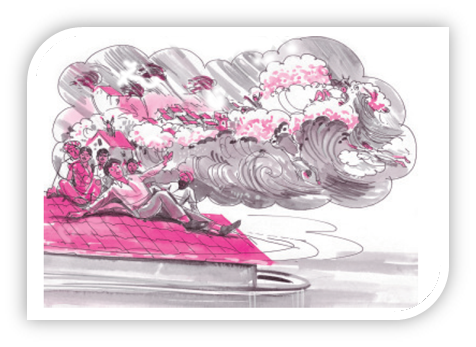
In the evening, a super cyclone came. Winds beat against the houses with great fury. There was heavy and continuous rain. Houses and people were washed away in the flood. His friend’s house was made of bricks and cement. It was strong enough to survive the wind blowing at 350 km per hour.
The one uprooted tree fell on their house and damaged some part of its roof and walls. To escape the waters rising in the house, Prashant and his friend’s family took refuge on the roof. For the next two days, Prashant sat huddled with his friend’s family on the rooftop. They froze in cold and rain.
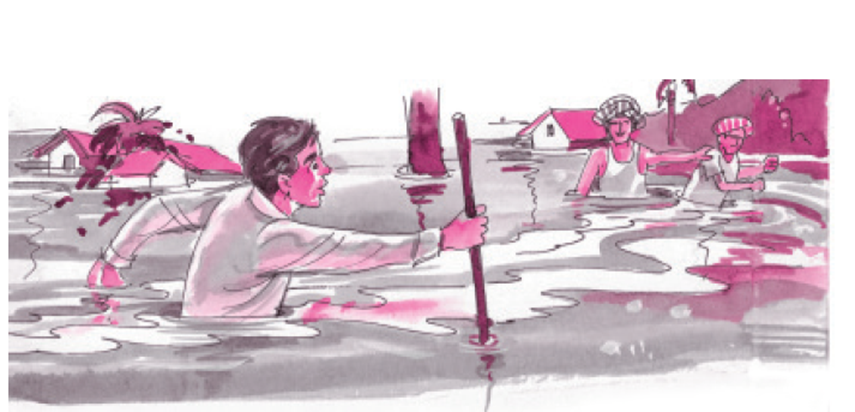
In the early morning, Prashant saw the destruction caused by the cyclone. There was a sheet of water everywhere. Only parts of cemented houses were still visible. All other houses had been washed away. Even huge trees had fallen. Bloated dead bodies of animals and human beings were floating everywhere.
Q.2. Describe how Prashant reached his village after the cyclone? Ans.
The destruction caused by the cyclone and the waves of the ocean continued for the next thirty-six hours. Two days later, the rain ceased and the rainwater slowly began to recede.
Prashant was worried about his family. He took a long stick and started on the eighteen kilometers long and difficult journey to his village. There was water everywhere. He had to use his stick to locate the road. At places, it was waiting deep and the progress was slow. Sometimes, he lost the road and had to swim. Prashant on his way to village
After some distance, he found two friends of his uncle. They decided to move ahead together. They had to push away many human bodies floating on the water. There were also carcasses of dogs, goats, and cattle. In every village they passed, they could barely see a house standing.
He feared that his family could not have survived the cyclone. At last, he reached his village Kalikuda. His heart sank. His house was gone. His family was nowhere. In order to look for his family, Prashant went to the Red Cross Shelter.
Fortunately, his family was alive. They were very glad to see Prashant. He came to know that eighty-six lives were lost in his village and all the ninety-six houses had been washed away.
Q.3. Describe how Prashant helped himself and others at the time of the natural calamity? Ans.
The cyclone caused a lot of damage in Prashant’s village and surrounding areas. Prashant helped his own family and the others by following ways:
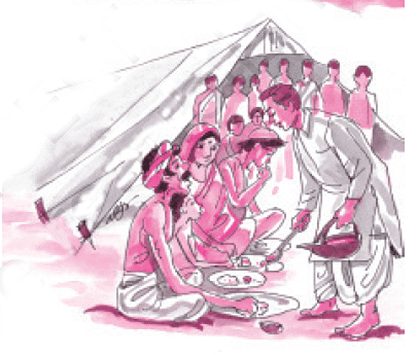
He organized a group of youths. They pressurized the local merchant to give rice to the starving villagers. They burnt a fire and cooked the rice, although it was rotten; their next step was to clean the place of filth, dirt, urine, and floating dead bodies.
They tended the wounds and fractures of many who had been injured. On the fifth day, a military helicopter dropped food. But it did not return. Prashant and others devised a plan to attract the attention of the helicopters.
They deputed children to lie there with empty utensils on their stomachs. This was done to communicate to the helicopters that they were hungry. The scheme worked and the helicopters started dropping food regularly.
The Prashant brought the orphaned children and made a shelter for them. He asked the woman to look after them. But he found that women and children were sinking deeper and deeper into their grief.
A non-government organization had started a food for work program. Prashant persuaded them to join it. He engaged other volunteers to help widows start their lives again. The orphaned children were resettled in their own community.
Q.4. Prashant did not help his family members, but he helped the whole community during the cyclone. What is your opinion on this matter? Ans.
On reaching his village, Prashant found deplorable conditions all around him. He had leadership qualities so he took the initiative to rehabilitate people. He made a team of young volunteers and cleaned urine, filth, vomit, and floating carcasses.
His team was fully dedicated to serving others. He persuaded grief-stricken women to look after children. In this way, he became a ray of hope for all.
Undoubtedly, Prashant is a good leader. He has all the qualities of a leader. He has a special quality of taking initiative. His vision is quite clear. He faces adverse circumstances courageously. He is a source of energy for others and has great motivational power.
I think that youth is power. This power can be used to assist society during natural disasters. Whatever job is assigned to the youth in such circumstances they perform their duty with full spirit.
Q.5. The widows and orphans of village Kalikuda remember Prashant’s help after the cyclone with gratitude. Explain how Prashant helped them in their darkest hour of grief. Ans.
Prashant helped the people of village Kalikuda in the following ways:
Providing emotional support: Prashant understood the emotional needs of the widows and orphans and provided them with a shoulder to lean on during their darkest hour of grief.
Organizing relief efforts: Prashant took the initiative and organized groups of people to distribute food, water, and other essential supplies to those affected by the cyclone. He ensured that everyone received the necessary assistance, including the widows and orphans who may have been overlooked otherwise.
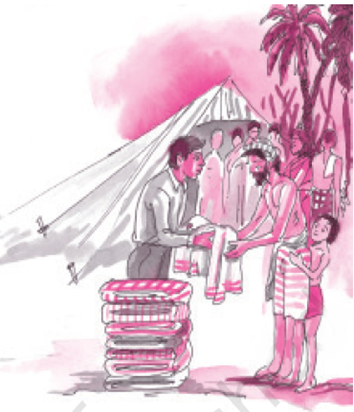
Securing food and resources: Prashant and his team managed to secure rice for the people to eat and arranged for relief packages to be sent via helicopter. This provided much-needed sustenance and supplies to the people who were struggling to survive in the aftermath of the cyclone.
Maintaining hygiene and sanitation: Prashant understood the importance of maintaining cleanliness in the shelter to prevent the spread of diseases. He led efforts to clean up the filth, vomit, urine, and floating carcasses to create a more hygienic environment for the survivors.
Engaging the community: Prashant encouraged the people in the shelter to participate in various activities to keep their minds occupied and alleviate their grief.
Q.6. During natural calamities, women and children need more protection. Explain Prashant’s role in organizing relief measures for women and children during the storm in Ersama. Ans.
During the natural calamity in Ersama, Prashant played a crucial role in organizing relief measures for women and children who needed more protection. He understood their vulnerability and took proactive steps to ensure their safety and well-being.
Firstly, Prashant took on the responsibility of a leader and mobilized a group of young people and elders to help the victims. He showed great negotiating skills in convincing the merchants to provide rice for the affected people.
Next, Prashant focused on maintaining cleanliness and hygiene in the shelter to prevent the spread of diseases. He organized a team of youth to clean the surroundings and tend to the wounded people, particularly women and children who might have been unable to care for themselves.
Understanding the emotional impact of the disaster on the survivors, especially the women who had lost their families, Prashant persuaded women to look after the orphaned children.
To further address the emotional well-being of the affected people, Prashant organized games and activities for the children to distract them from their loss and trauma. He also encouraged the women to participate in Food-for-work program, which helped them regain their confidence, self-esteem, and a sense of normalcy amidst the chaos.
Q.7. Do you think adversity or crises bring people closer? How? Explain with reference to the lesson ‘Weathering the Storm in Ersama’. Ans.
Man is a social animal. Despite food and other common needs, he cannot live without the company and love of his near or dear ones. In adversity or crises, it is noticed that they come forward to help one another without any previous ill-feeling for one another.
Adversity or crisis brings people together. There is a bond of humanity. The victims of the cyclone in Erasama helped one another. They worked together during this resettlement. They took care of orphans and widows. Prashant managed to unite them and work for one another. Thus in the hour of grief, the people of the community joined hands under the leadership of Prashant. They came forward to help one another.
Prashant brought the survivors together and formed a youth task force. The youth took the charge and volunteered themselves for cleaning the shelters of filth, urine, and vomit.
Q.8. The future of a country depends upon the power of youth. Explain how Prashant organized the youth in Ersama to help the cyclone-affected people. Ans.
Prashant played a crucial role in organizing the youth in Ersama to help the cyclone-affected people. Some of the steps he took include:
Becoming the leader: Prashant took charge and assumed the responsibility of leading the village during the crisis.
Ensuring food supply: He sent a delegation to the local merchants and successfully acquired the necessary rice quota for the people taking shelter in the shed.
Organizing volunteers: Prashant formed a team of volunteers who helped clean the shelter, making it more habitable for the affected people.
Establishing a youth task force: Realizing the need for more assistance, Prashant set up a youth task force to help with various tasks and responsibilities.
Communicating with helicopters: The youth task force devised a creative way of communicating their needs to passing helicopters. They had children lie on the floor with empty utensils on their stomachs, signaling that they were hungry and needed food.
Q1. What does the swallow see when it flies over the city? Ans:
As the swallow flew over the city, it witnessed a stark contrast between the lives of the rich and the poor. The swallow noticed that while the rich enjoyed their lives in luxurious homes, the poor suffered outside their gates, often ignored or mistreated. In the affluent areas, people indulged in festivities and material comforts, seemingly detached from the struggles of the less fortunate.
On the other hand, in the darker and more impoverished parts of the city, the swallow observed the misery of the poor. It saw starving children with pale faces peering hopelessly from alleyways.
These children, who lacked even basic needs like food and warmth, showed how much suffering and neglect existed in the city. The swallow also noticed two young boys curled up under an archway, trying to stay warm in the cold. Despite their obvious hardship, a cruel watchman heartlessly drove them away, showing how little kindness was shown to the poor.
Seeing so much pain and injustice deeply affected the swallow. It realized how unfair life was for the city’s poorest people, a truth that had also brought the Happy Prince to tears. The swallow now understood the great divide between the rich and the poor and how the city had failed to care for its most helpless citizens.
Swallow saw two young boys huddled together under an archway
Q2. Why do the courtiers call the prince ‘The Happy Prince’? Is he really happy? What does he see all around him? Ans:
While he was alive, the courtiers called him the ‘Happy Prince’ because he lived a carefree and luxurious life. He was surrounded by joy and celebrations, never experiencing sorrow or hardship. His palace was always filled with happiness, and he remained unaware of the struggles faced by the people outside its walls. Since the courtiers only saw his easy life, they believed he was truly happy and gave him the title ‘Happy Prince.’
However, his happiness was not real—it was based on ignorance rather than true fulfillment. It was only after his death, when his statue was placed high above the city, that he finally saw the suffering of the people below. From this new viewpoint, the prince came to understand the harsh realities of life.
The sight of misery, poverty, and despair filled the prince’s heart with sorrow. He saw the hungry children, the poor seamstress struggling to make ends meet, the playwright without resources, and the many others who suffered silently.
It was at this point that the Happy Prince realized he had never truly experienced happiness, as his joy had been isolated from the reality of life. Seeing the suffering around him, his leaden heart wept for the first time, and he resolved to help those in need.
Thus, the Happy Prince’s true happiness came not from living a life of luxury but from the selfless act of giving and easing the suffering of others.
The Happy Prince
Q3. When and how did the Happy Prince realise the true meaning of life? What did this realisation prompt him to do? Ans:
The Happy Prince had spent his life in comfort, isolated from the suffering of the world. He lived in a palace where sorrow was forbidden, and as a result, he was called the ‘Happy Prince’ by his courtiers and subjects. His life, though joyful on the surface, lacked depth, and he remained unaware of the true nature of human existence—its sorrows and struggles.
It was only after his death, when his statue was erected atop a tall column, that the Happy Prince experienced a transformation. From his new vantage point, he could see the city in its entirety, and with that, he came face-to-face with the harsh realities that had been hidden from him in life.
He saw the suffering of the poor, the hunger of children, and the coldness with which society treated the less fortunate. This revelation led him to understand the true meaning of life—not in luxury or personal pleasure, but in compassion, selflessness, and the alleviation of others’ suffering.
Moved by the plight of his people, the Happy Prince decided to take action, even though he was no longer alive in the traditional sense. He began by giving away the precious jewels and gold that adorned his statue, instructing the swallow to deliver them to those in need.
His selfless acts of charity were driven by his newfound understanding that true happiness lies in bringing relief to others. This realisation fundamentally changed the Happy Prince’s purpose, transforming him into a symbol of compassion and kindness, even at the cost of his own adornments and beauty.
Q4. How did the swallow exhibit the values of unconditional love and devotion? Ans:
The swallow’s actions throughout the story are a testament to the values of unconditional love and devotion. Initially, the swallow had no intention of staying in the city, as it was on its way to Egypt to join its fellow swallows for the winter. It only stopped by the city to rest for a night, perching itself between the feet of the Happy Prince’s statue.
However, when the swallow encountered the Happy Prince, it was deeply moved by the prince’s sorrow over the suffering of his people. The prince, who was unable to move, asked the swallow to help him deliver the jewels and gold from his statue to the poor and needy. Despite its initial reluctance to stay, the swallow’s compassion for the prince grew, and it decided to stay another day to help him fulfil his wishes.
As time passed, the swallow and the Happy Prince grew closer. The swallow became the prince’s eyes and wings, carrying out his acts of kindness with dedication.
Even as the weather turned colder and its health weakened, the swallow remained by the prince’s side, delivering the jewels from his statue to the poor seamstress, the playwright, and the matchgirl. Despite knowing that staying in the freezing city could cost it its life, the swallow chose to continue helping.
In the end, the swallow could not survive the cold, but it stayed with the prince until its final breath. Its loyalty and devotion showed its deep love for the Happy Prince.
By choosing to remain despite the danger, the swallow proved that true kindness and friendship are built on trust, compassion, and a shared desire to help those in need.
Q5. How did the Happy Prince discover true happiness? How did he spread it? Ans:
The Happy Prince had never experienced sadness while he was alive, which is why he was called the ‘Happy Prince.’ He lived a life of comfort and was protected from the struggles of the world. But after his death, when his statue was placed high above the city, he finally saw the pain and suffering of the people below.
Watching the hunger and misery around him, the prince understood that his happiness had been incomplete. Even though his heart was made of lead, he felt deep sympathy for those in need. This was the start of his journey to finding true happiness—not in wealth or luxury, but in helping others.
Wanting to help those in need, the Happy Prince asked a swallow to carry out kind deeds for him. First, he told the swallow to take the ruby from his sword and give it to a poor seamstress caring for her sick son.
Then, he gave away the sapphires from his eyes—one to a playwright shivering in the cold as he tried to finish his work, and the other to a little girl who was afraid of being punished after dropping her matches in the gutter.
Finally, the prince asked the swallow to remove the thin gold covering his statue and give it to the poor across the city. By giving away everything he had, the Happy Prince spread real happiness, helping to ease people’s suffering.
Though his statue became dull and lifeless, the kindness he shared filled his heart with a joy deeper than anything he had ever felt before. His selflessness showed that true happiness comes from giving, especially when it brings comfort to those in need.
Q6. Imagine you are the playwright who received the mystery gift of a sapphire. While passing by the statue you get to unravel the mystery when you overhear the general public and councillors discussing the dull statue of the Happy Prince. Write a diary entry expressing your gratitude to the Happy Prince and expressing your dismay at the council’s decision of pulling down the statue. Ans: Dear Diary, For days I have been trying to unravel the mystery of a precious sapphire I found at my desk a few days ago. I wondered who this admirer and saviour were. I wanted to personally thank him for his generous and timely help in saving my life and my career as a playwright. The mystery got solved today when I was passing by the statue of the Happy Prince. A crowd of people, among them the Mayor and Town Councillors, were discussing how shabby and dull the statue looked without its ruby, sapphires and gold leaves. That is when I realized that the sapphire I had got was actually one of the eyes of the statue of the Happy Prince. That also explained how the poor and needy people in the city were mysteriously getting jewels and gold so that they could end their poverty and miseries. The Happy Prince with the help of the swallow – his noble companion – had brought so much happiness to the poor and downtrodden by sacrificing all he had. It utterly dismayed me to hear of the council’s decision to pull down the statue because it looked nothing better than a dull, shabby beggar! How callous and ignorant the Mayor and the Councillors are! However, I shall remain eternally grateful to the Happy Prince and the swallow, his faithful companion, and as a token of my gratitude to them, I am going to write and stage a play to highlight their exemplary sacrifices in bringing joy and happiness to the poor and needy people of the city. May the soul of the Happy Prince and the swallow rest in eternal peace in the abode of God.
Q7. Why did the Happy Prince request the swallow to stay for another day? Ans:
The Happy Prince was on a tall column. From there he could see the miseries of people. He wanted to help the poor. But he could not move. The Prince wanted to help a poor seamstress.
He sent a ruby to her through the swallow, then the Prince saw a playwright. He was leaning on his desk. He was very handsome. His hair was brown and crisp.
He was trying to finish a play. But he was feeling very cold. He had no firewood to keep himself warm. The Prince wanted to help him. He wanted to send one of the sapphires of his eyes to the young man. So he requested the swallow to stay for another day.
Q8. What happened to the statue of the Prince and the swallow in the end? Ans:
The swallow and the Happy Prince became friends. The swallow loved the Prince for his kindness. He decided not to go away. The Prince sent his ruby and the sapphires of his eyes to the poor people. He sent the gold of his body to the poor children.
Now he was blind and ugly. Then winter came. The little swallow felt very cold. But he did not leave the Prince. One day, the swallow died. The leaden heart of the Prince broke in two.
The next day, the statue was pulled down. It was melted in a furnace. But the leaden heart did not melt. It was thrown into a heap. The dead body of the swallow was also lying there. God sent his angel to bring the two most precious things from the city. The angel brought him the leaden heart of the Prince and the dead body of the swallow.
Q9. Draw a brief character sketch of the Happy Prince.
Ans:
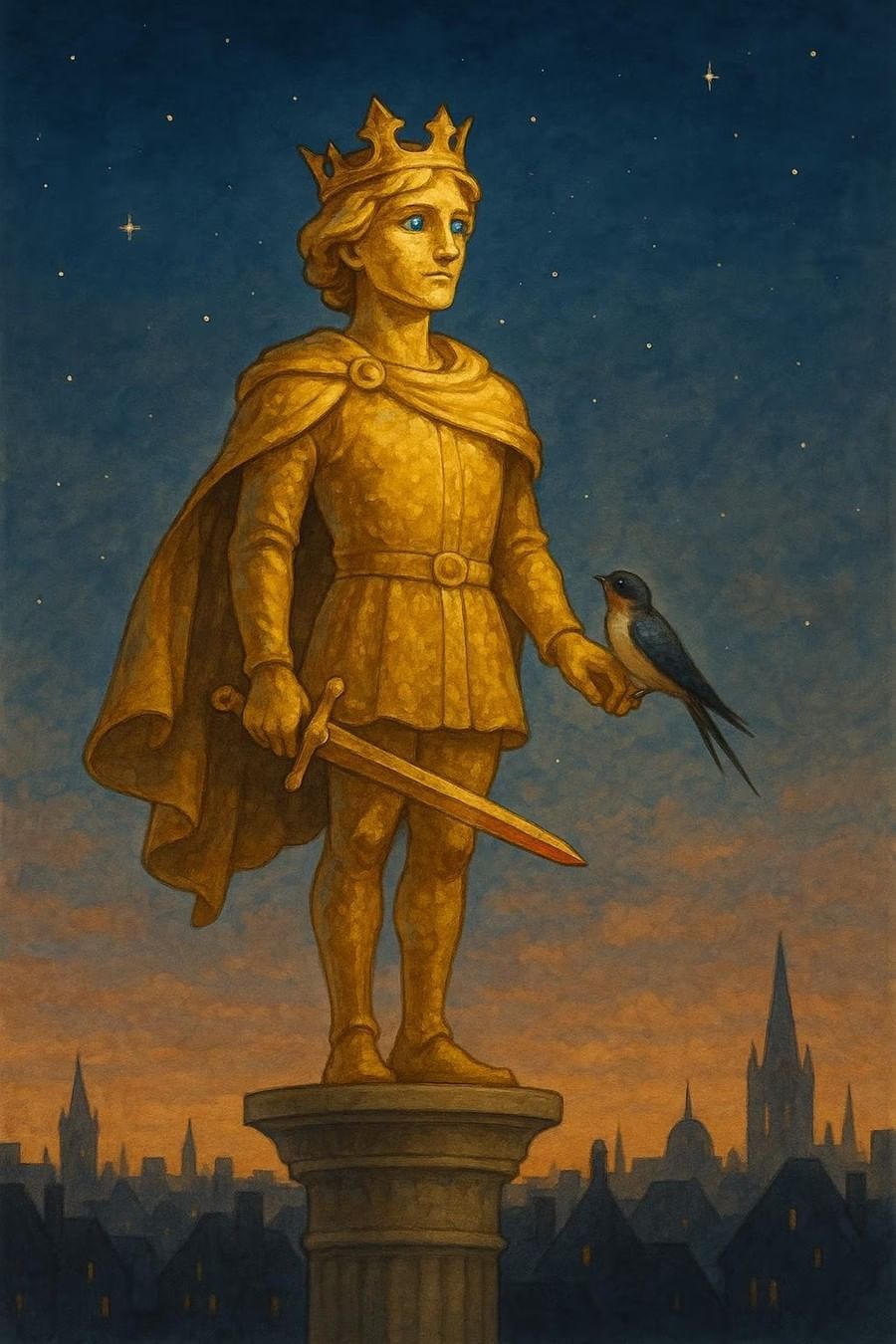
The Happy Prince was a beautiful statue, adorned with gold leaves, bright sapphires for eyes, and a ruby in his sword hilt. Once a joyful man, he was known as the Happy Prince because he had never experienced sorrow or hardship during his life.
However, after his death, he was placed high on a column, allowing him to witness the poverty and misery surrounding him. This sight filled his heart with pity, prompting him to help those in need.
He sent the ruby from his sword to a poor seamstress, the sapphires from his eyes to a playwright and a match girl, and the gold from his body to hungry children. His love for a little swallow was profound, and when the swallow died, it broke his heart. Thus, the Happy Prince was a kind and loving figure, willing to sacrifice his beauty for the welfare of others.
Q10. Give a brief character sketch of the swallow.
Ans:
The little swallow is a significant character in the story. Initially, he plans to fly to Egypt to join his friends. However, he agrees to stay an extra day at the request of the Prince.
During this time, he helps the Prince by delivering a ruby to a seamstress and the sapphires from the Prince’s eyes to a young man and a poor girl. Despite the Prince losing his sight, the swallow chooses to remain by his side.
The swallow demonstrates a kind heart as he comforts the son of a poor woman. When winter arrives, he endures the harsh conditions, surviving on crumbs while refusing to abandon the Prince.
Eventually, the swallow succumbs to the cold but remains loyal until the end. Even in death, he is united with the Prince, as an angel takes them both to paradise.
Q11. The little swallow was as noble as the Happy Prince. Describe how the swallow played an important role in helping the Happy Prince to carry out his noble deeds? Ans:
The little swallow was a kind bird who initially wished to travel to Egypt with his friends. When he first rested at the feet of the Happy Prince, he had no intention of helping anyone.
However, his true nature emerged when he saw the tears in the Prince’s eyes, revealing his deep empathy. As he spent more time with the Prince, the swallow developed a strong sense of service and compassion for others. He assisted the seamstress by delivering a ruby and fanned a sick boy with his wings.
The swallow also helped a playwright and a match girl, demonstrating his commitment to aiding those in need. When the Happy Prince became blind from giving away his jewels, the swallow chose to stay instead of leaving for Egypt. Ultimately, he sacrificed his life for the Prince, falling at his feet in a final act of loyalty.
Q12. The two most precious things in the city were the Happy Prince and the swallow. Do you agree? Explain. Ans:
The two most precious things in the city were the leaden heart of the Happy Prince and the dead swallow. The Happy Prince sacrificed his beautiful possessions to help those in need.
He gave away his gold and jewels to the poor, demonstrating his selflessness. The swallow, who chose to stay with the prince instead of migrating to Egypt, fulfilled the prince’s wishes by delivering these treasures to suffering people.
Despite harsh weather, he remained loyal and ultimately died at the prince’s feet. Thus, the angel was correct in taking the leaden heart of the prince and the dead swallow to Heaven.
Q13. How did the Swallow show obedience as the greatest virtue of living things? Ans:
The Swallow demonstrated his obedience as a key virtue throughout the story. Whenever the Happy Prince asked him to assist those in need, the Swallow complied without hesitation.
Over time, he grew fond of the Prince and chose to remain by his side. Despite becoming weaker from his selfless acts, the Swallow continued to serve the Prince faithfully.
His unwavering loyalty and willingness to help others highlighted that obedience was indeed his greatest quality.
Q1: Briefly describe the strange case brought to the king and the king’s judgment.
Ans: A thief broke into a rich man’s house, and a wall collapsed on him, causing his death. The thief’s brother complained to the king, blaming the rich man for the weak wall. The rich man shifted the blame to the bricklayer, who blamed a dancing girl for distracting him. The girl, in turn, blamed a goldsmith for delaying her jewelry, which caused her frequent trips. The goldsmith explained he was busy with an order for the rich man’s father. Since the father had passed, the king decided to execute the rich man in his place.
Q2: What did the Guru and his disciple see in the Kingdom of the Fools? Why did the guru decide to leave the kingdom at once?
Ans: In the Kingdom of Fools, the guru and his disciple discovered a strange world where the day was night, and the night was day. The king and his minister had forced everyone to work at night and sleep during the day, with disobedience punishable by death. Even more strangely, everything cost only one duddu. Sensing danger in this irrational setup, the guru chose to leave, warning his disciple that living among fools could be deadly. But, tempted by the low prices, the disciple stayed behind while the guru departed alone.
Q3: How does the guru manage to save his disciple’s life?
Ans: The guru used his wisdom and magical powers to save his disciple. Upon hearing his disciple’s silent prayer, the guru arrived instantly in the kingdom. He cleverly expressed his desire to die before his disciple, confusing the king. Flattering the king’s ego, the guru claimed that the execution stake was blessed by the god of justice and that whoever died on it first would be reborn as the next king, followed by the minister. Greedy for power in the next life, the king and minister decided to execute themselves instead. Thus, the guru saved his disciple and rid the kingdom of its foolish rulers.
Q4: Fools cannot continue with their follies for long. How can you justify this statement in relation to the story?
Ans: In the story, the king and his minister made foolish laws, reversing night and day simply to be different. They enforced their absurd rules until their own foolishness caught up with them. When the guru outwitted them with a clever plan, the king and his minister fell into their own trap, believing they would be reborn as rulers by dying first on the execution stake. Their lack of foresight and blind trust in absurdity led to their downfall. This shows that while fools may persist in their folly for a while, it ultimately leads to their undoing.
Q5: Name all the people who are tried in the king’s court, and give the reasons for their trial.
Ans: The first person tried was the merchant, whose house had a collapsed wall that killed the thief. He blamed the bricklayer for building a weak wall. The bricklayer was then tried, but he blamed the dancing girl for distracting him with her jingling anklets. The dancing girl, in turn, accused the goldsmith of delaying her jewelry order, which forced her to walk by the bricklayer multiple times. The goldsmith blamed the merchant’s father for pressuring him to prioritize a wedding order. Since the father was deceased, the blame shifted back to the merchant, who inherited the house where the incident occurred.
Q6. The guru was as wise as King Solomon. Discuss. Ans: The guru’s wisdom, like that of King Solomon, was evident in how he saved his disciple and outwitted the foolish king and minister. His calm demeanor during the crisis allowed him to devise a clever plan, using the king’s greed to trap him. The guru’s ability to perceive danger early and his strategy to manipulate the king into executing himself show the depth of his wisdom. Like Solomon, the guru demonstrated that wisdom is an invaluable asset in solving seemingly impossible problems and overcoming foolishness.
Q7. Decisions should be made with a cool and rational mind. Discuss with reference to the story “In the Kingdom of Fools”.
Ans: The story teaches the importance of making decisions with a calm and rational mind. The disciple, tempted by the cheap food in the Kingdom of Fools, ignored his guru’s warning and chose to stay. His hasty decision put his life in danger when the foolish king ordered his execution based solely on his physical size. The king and his minister also acted rashly, seeking to secure their future lives by executing themselves, without thinking through the consequences. Had both the disciple and the king paused to consider the situation, they could have avoided disaster. The story emphasizes the need for thoughtful decision-making to prevent dire outcomes.
Q8. Arguing with a fool proves there are two. How does the wise guru find a way out without arguing with the king?
Ans: The guru knew that arguing with the foolish king would be pointless. Instead, he used flattery and manipulation to escape the situation. By pretending to fight with his disciple over who should die first and praising the king’s judgment, the guru aroused the king’s curiosity and greed. Without direct confrontation, the guru cleverly led the king to believe that dying on the stake would grant him rebirth as a ruler. The king, blinded by his own foolishness, fell into the trap. Thus, the guru avoided a futile argument and skillfully resolved the situation.
Q9. Values determine character. Discuss this statement with reference to the characters of the guru and the disciple.
Ans: The guru’s values of wisdom, foresight, and calmness set him apart from his disciple, who was ruled by greed and short-sightedness. The guru quickly recognized the dangers of staying in the Kingdom of Fools and left, while the disciple stayed for cheap food, despite the risks. When the disciple found himself in danger, it was the guru’s wisdom and rational thinking that saved him. The guru’s calm approach to problem-solving contrasted with the disciple’s impulsive behavior. This highlights how strong values shape character and can guide individuals through challenging situations.
Q10. Imagine you are the disciple. You have just been sworn in as the new minister of the Kingdom of Fools. Draft a speech to be delivered in the courtroom addressing the people on the new vision with which the kingdom would be governed henceforth.
Ans: Dear Citizens of the Kingdom,
Today marks a new beginning for our great land, a fresh chapter grounded in reason and justice. The era of reversing day and night is over, and under the wise leadership of our new king, my guru, we shall move forward with clarity and purpose. His judgment and experience will guide us to a brighter future, making our kingdom a proud example of good governance.
From now on, all former decrees are revoked, and you are free to resume normal life. Every voice is welcome, and all decisions will be made through consultation with the wise advisors of the royal court. Let us work together for the prosperity of our land. Hail the king, and long live our kingdom!
Thank you!
Q11. Why, according to you, is it always risky to live among the fools? Elaborate your answer with reference to the story “In the Kingdom of Fools”.
Ans: Living among fools is dangerous because their actions are unpredictable and often irrational. In the story, the king and his minister ruled with foolish laws that defied logic. The guru recognized the risk and left the kingdom, but his disciple, tempted by cheap food, stayed behind and nearly paid with his life. The king’s decision to execute someone based on their physical size illustrates how foolish rulers can endanger lives with their arbitrary judgments. Ultimately, the king’s own foolishness led to his downfall, showing how perilous it is to live under the rule of fools.
Q12. Discuss the importance of wisdom in life.
Ans: Life is a precious gift of God. We should enjoy it. We can make our lives both a bed of roses and a bed of thorns. It depends upon our wisdom. Life without wisdom is useless. It becomes dangerous too many a time. One who leads a life without wisdom can never enjoy it. We can enjoy our life when we are full of wisdom. Life is a combination of positive and negative aspects. It depends upon us what side we choose. It is our wisdom only that helps us distinguish between wrong and right. Wisdom makes our life full of comfort and provides us with various sources of enjoyment. Life without wisdom has no meaning.
Q13. The disciple failed to obey his Guru and did not follow his advice. What was the danger that occurred to him?
Ans: The disciple, enticed by the cheap food in the Kingdom of Fools, ignored his guru’s warning and decided to stay. However, the unpredictable behavior of the foolish king soon put him in danger. When the king decided that someone needed to be executed, the disciple’s physical size made him the chosen victim. Although the execution was meant to be a random punishment, the disciple’s decision to remain in the kingdom placed his life at risk. Only the guru’s wisdom saved him from the king’s senseless decree.
Q14. The people of the Kingdom of Fools were not so foolish after all. They made the Guru as their kings. Comment.
Ans: In the Kingdom of Fools, everything looked odd. The disciple was arrested in place of the rich merchant. He was to be executed soon, but the disciple started praying. The guru reached there and made a plan to save the disciple’s life. The king and his minister became the victims of this plan and got themselves executed. Now there was no king in the kingdom. The throne was vacant. People wanted a wise person should become the king. After the death of the king and the disciple, the people were impressed by the wisdom and power of the Guru. They thought that if the Guru and his disciple became the king and the minister, there would be peace all around. So the people chose to crown the Guru and his disciple.
Q15. What is the role of the guru (teacher) in our life? Comment with reference to the story ‘In the Kingdom of Fools’.
Ans:
A guru is one who dispels the darkness of ignorance and illuminates us with knowledge, guiding us onto the right path. This sacred role commands the highest respect, as following a guru’s guidance shields one from harm. A teacher’s influence helps refine our thinking and shapes our character. In The Kingdom of Fools, the guru warned his disciples about the dangers of a foolish kingdom. When the disciple encountered trouble, he realized his error and turned to his guru, who then saved him with wisdom and foresight.
Q16. Does obeying the guru (teacher) bring misery? Comment based on “In the Kingdom of Fools”.
Ans: A Guru is always a well-wisher of his disciple. The disciple who does not obey his guru falls in misery while those who follow the path told by Guru live a happy and healthy life. In the story, the disciple did not obey his Guru and so fell into trouble. If he had followed his Guru and left the kingdom, he would not have been in trouble. He was greedy and decided to remain in the kingdom because everything was so cheap there. He used to eat to his fill and became fat. One day he fell into trouble as he was chosen to be executed due to his fatness. The Guru was a wise man. He was right in his predictions. And his predictions came true. It was he who came on his call and saved his life with his wisdom.