09. Houses We Live In – Chapter Notes

What is a House?
A house is like your very own special place to live. It is a place where we live with our family. It keeps us safe, comfortable, and happy.

  • A house protects us from the sun, rain, wind, and cold.
  • It is where we eat, sleep, play, and spend time with our family.
  • Houses can be big or small, and they come in different shapes and sizes.
  • Some houses are made of bricks and cement, while others are made of wood, mud, or even ice!

No matter what a house looks like, it is a special place where we feel safe and loved!

Types of Houses

Houses are of different types. Many years ago, when there were no homes, people lived in caves.
There are two types of houses:

1. Kutcha Houses 

These are found in some villages. These houses are made of straw, bamboo, mud, clay and leaves. These houses are not very strong.

2. Pucca Houses 

These are found in cities and towns. These houses are made of bricks, cement, iron, steel and glass. They are strong.Some houses have straight roofs while some have slanting or sloping roofs. Slanting roofs do not let snow or water collect. That is why people build houses with slanting roofs in the hills.

Try yourself:What is the kind of house shown in the pictures

  • A.Pucca House
  • B.Straw House
  • C.Wooden House
  • D.Ice House

View Solution

Parts of a House 

We sleep, bathe, study, eat, play and do many other activities in our houses. A house has different rooms for different activities.

1. Living Room or Drawing Room 
This is the room where the family members sit together and watch television. We also receive our guests in our living room.

2. Dining Room 
This is the room where we eat our meals.

3. Bedroom 
This is the room where we sleep.

4. Study Room
This is the room where we study.

5. Kitchen 
This is the room where we cook food.

6. Bathroom 
This is the room where we bathe.

Big houses have many rooms whereas small houses have one or two rooms only. 

Try yourself:

Which room in a house is used for cooking food?

  • A.Living Room
  • B.Dining Room
  • C.Bedroom
  • D.Kitchen

View SolutionMore Features of a House

  • Every house has windows to let in fresh air and sunlight, making the home bright and comfortable.

  • Every house has an address, which includes the house number, street name, colony, and city. This address helps people find and reach our home easily.
08. Clothes We Wear – Chapter Notes

What are Clothes?

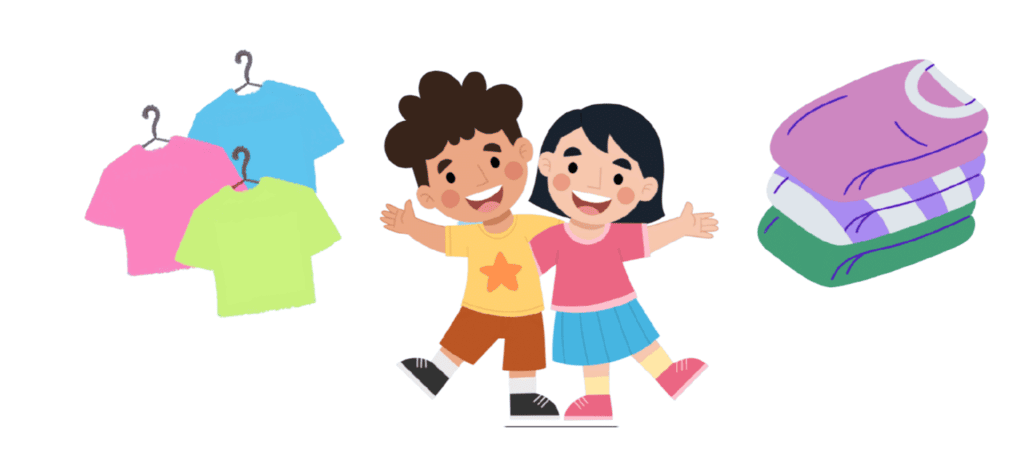
Clothes are the soft, colourful things we wear to keep us warm, comfortable, and happy! People wear clothes to protect their bodies and stay cosy.

Types of Clothes

We wear different kinds of clothes for different seasons and reasons!

1. Summer Clothes

  • In the hot sun, we wear light and cool clothes to stay comfy.
  • Examples: T-shirts, shorts, skirts, sandals.

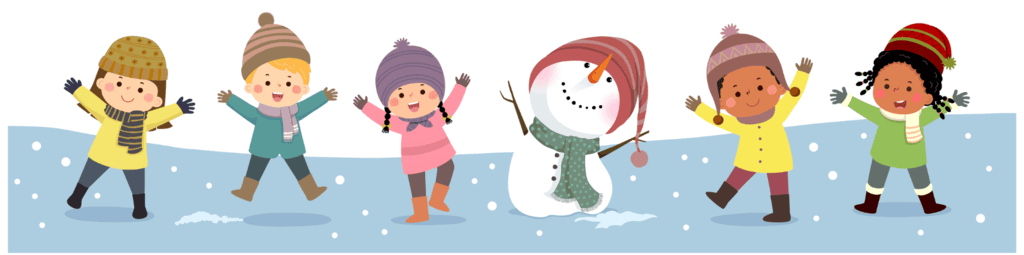
2. Winter Clothes

  • When it’s cold, we wear warm and thick clothes to stay cozy.
  • Examples: Sweaters, jackets, pants, boots.

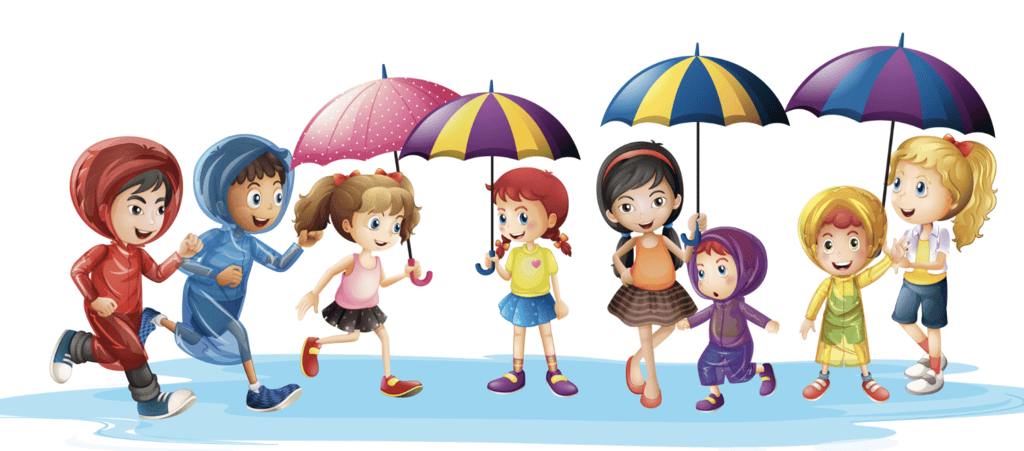
3. Rainy Clothes

  • On rainy days, we wear waterproof clothes to keep dry.
  • Examples: Raincoats, boots, umbrellas.

4. Uniforms

  • Uniforms are special clothes we wear for specific reasons, like going to school or work. There are different uniforms for different jobs.
  • For example, A policeman has a different uniform compared to a doctor.

5. Special Occasions

  • Sometimes, we wear special clothes for different activities.
  • Examples: School uniforms for school, swimsuits for swimming, pyjamas for bedtime.

Clothes for Special Occasions

Try yourself:

What type of clothes are worn in hot weather?

  • A.Sweaters and jackets
  • B.T-shirts and shorts
  • C.Raincoats and boots
  • D.School uniforms

View Solution

Why Do We Wear Clothes?

  1. Protection: Clothes protect our bodies from the sun, rain, and cold.
  2. Comfort: Clothes help us feel comfortable and cosy.
  3. Expressing Ourselves: We can show our style and feel happy by wearing our favourite clothes.

Clothes are important for our well-being, and we choose them based on the weather and our activities. Always remember to wear the right clothes for the right occasion!Quick Recap

Now let’s watch a video about this topic!

07. Animals – Food and Shelter – Chapter Notes

What are Animals?

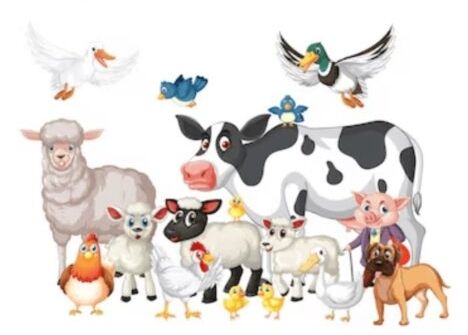
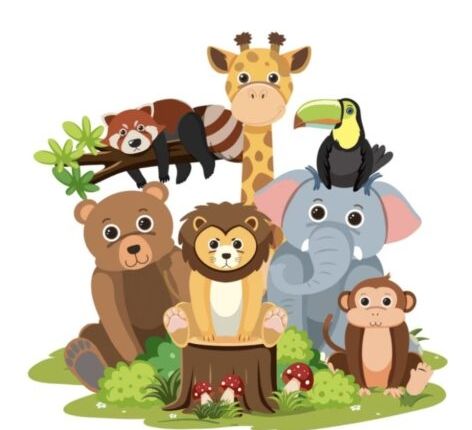
Animals are living things just like us! They can move, eat, and grow. Animals come in many shapes and sizes. Some are big like elephants, and some are small like ants. Animals live in different places too. Some live in forests, some in water, and some in our homes.

Let’s learn about the different types of animals, their food, and their shelters.

Animals around Us

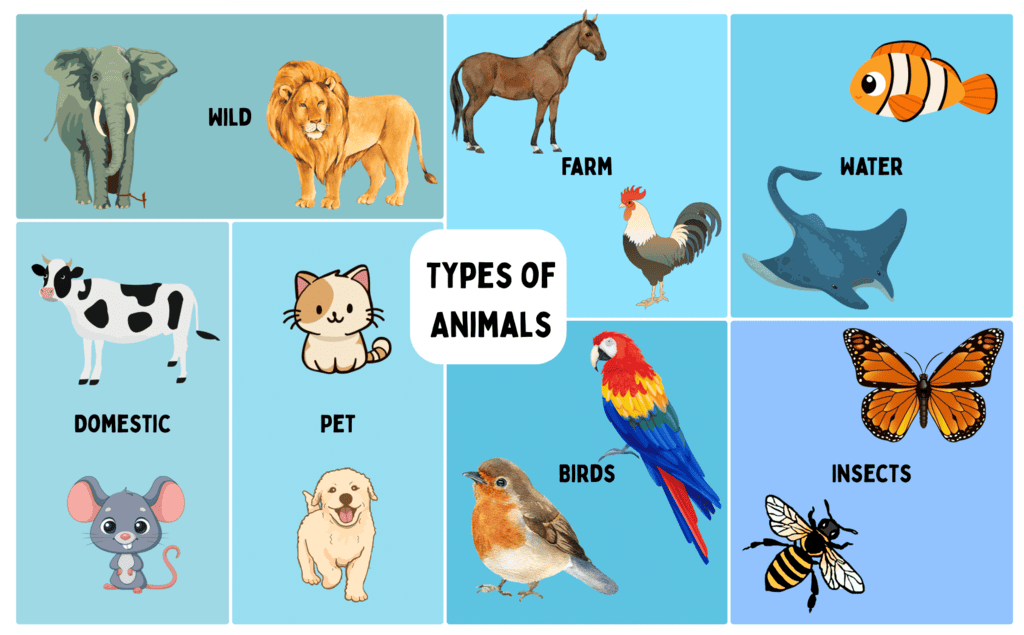
What are the different Types of Animals?

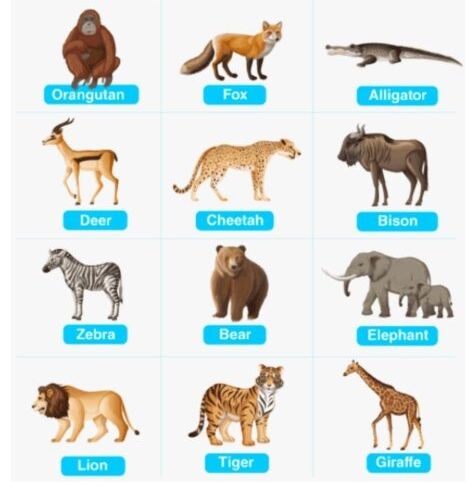
1. Wild Animals 

  • Animals that live in jungles, forests, or nature and hunt for their own food and water.
  • We can find wild animals in the zoo as well.
  • Wild animals can be dangerous and scary.
  • Animals like lions, deer, bears and giraffes are wild animals.

Lion is also called ‘The King of Jungle’.

Wild Animals

Try yourself:Where do wild animals live?

  • A.In houses
  • B.In jungles, forests, or nature
  • C.In cities
  • D.In schools

View Solution
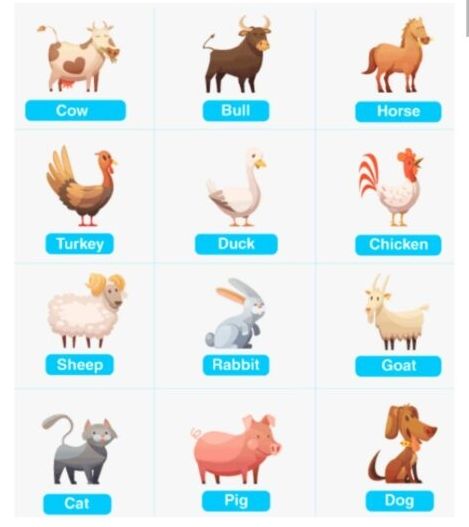
2. Domestic Animals 

  • Domestic animals are animals that have been trained to live with humans and kept by humans as work animals, food sources, or pets.
  • Examples: house cats, dogs, cows, horses, sheep, pigs, etc.

Domestic Animals

3. Pet Animals 

  • Pet animal includes dog , cats, some birds, etc.
  • Pet animals are friendly animals that we keep at home for fun and as our friends.

Pet Animals

Try yourself:Which of the following is a pet animal?A.wild PigB.ParrotC.DeerD.DolphinView Solution
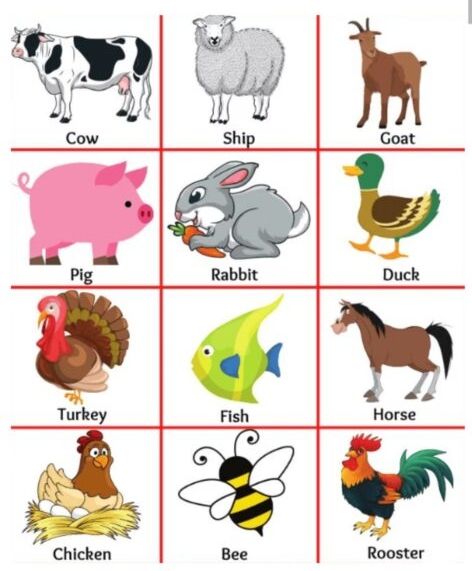
4. Farm Animals 

  • The animals that are raised for a purpose, i.e. for their meat, milk, hair, or anything else, are called farm animals.
  • Examples – Sheep, goats, cows, buffalo, chickens, etc.

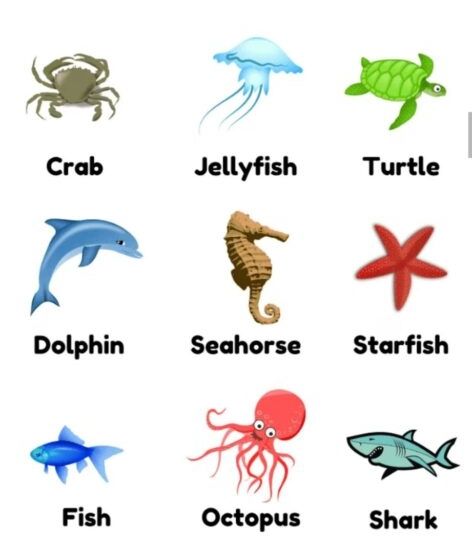
5. Water Animals 

  • Animals that live in water are called water animals.
  • They have special organs to breathe in water called gills or they breathe directly through their skin.
  • Examples – whales, sharks, dolphins, seahorses, fish, etc.

Water Animals

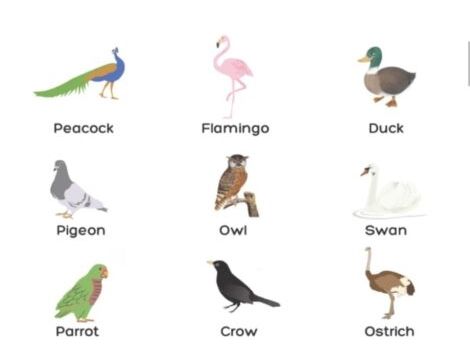
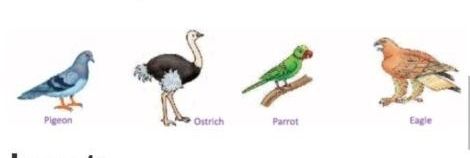
6. Birds 

  • Birds are animals with feathers, wings, two legs and a beak without teeth.
  • Most birds can fly, but some birds can swim in water as well.

Birds

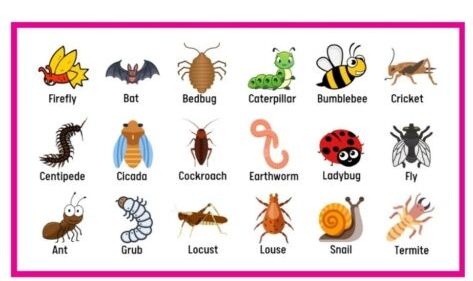
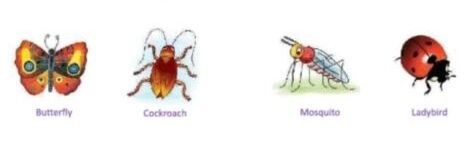
7. Insects

  • Animals having six legs and, generally, one or two pairs of wings are called insects.
  • Examples – ladybirds, cockroaches, houseflies, butterflies, grasshoppers etc.
Insects Food Habits of Animals

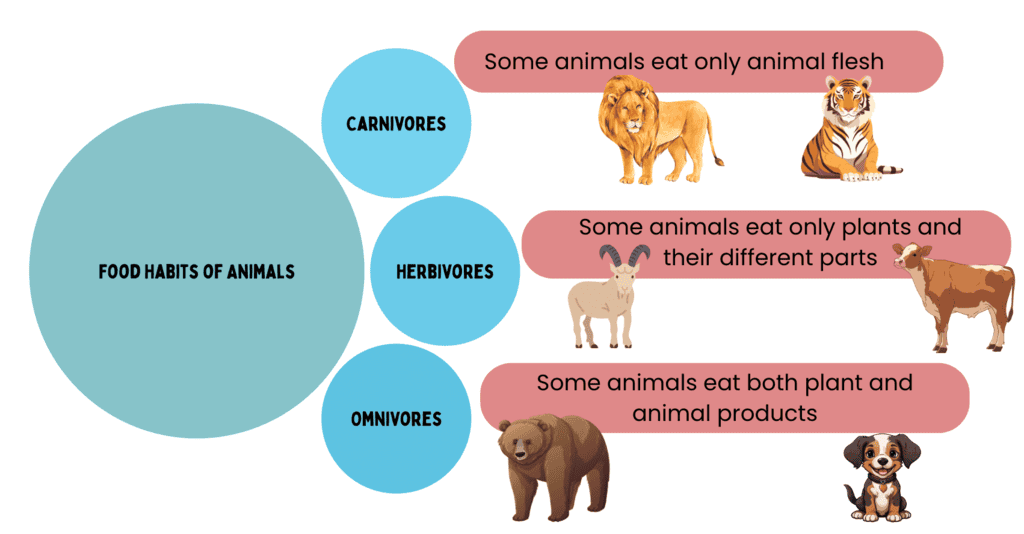
1. Carnivores

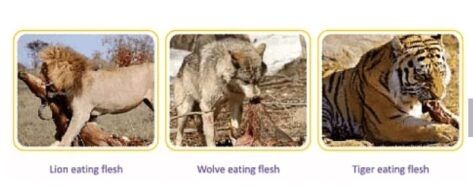
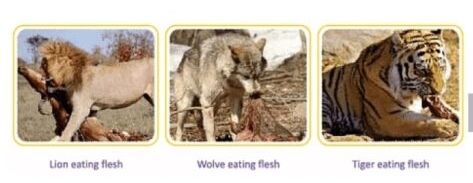
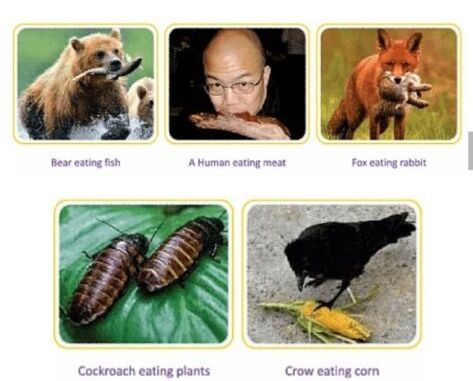
  • Some animals eat only animal flesh and are called carnivores or meat eating animals.
  • Examples:  Tiger, lion, etc.

2. Herbivores

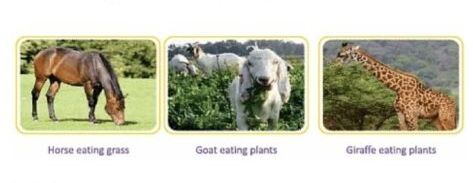
  • Some animals eat only plants and their different parts and are called herbivores or plants eating animals.
  • Examples:  Goat, cow, etc.
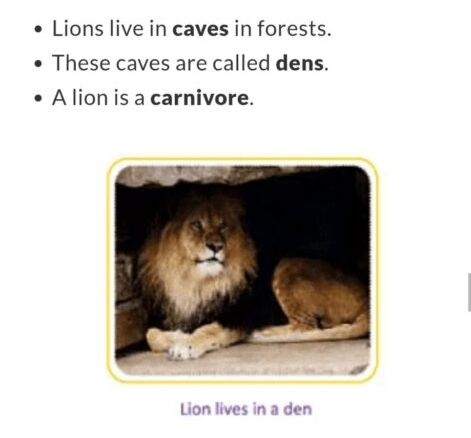
  • Lions live in caves in forests.
  • These caves are called dens.
  • A lion is a carnivore.

3. Omnivores

What is Shelter?

  • Lastly, some animals eat both plant and animal products and are called omnivores.
  • Examples:  Bear, dog, etc.
  • A place where a living thing lives and grows is called a shelter.
  • A shelter may be natural or man-made.
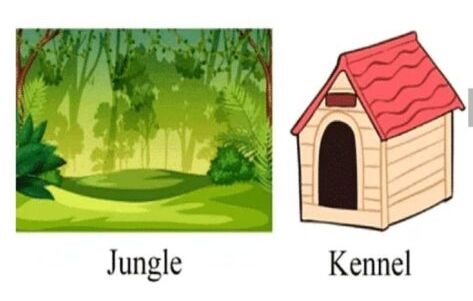
  • Natural shelters are jungles, lakes, seas, etc.
  • Man-made shelters are zoos, aquariums, kennels, etc.

Why do animals Need Shelter?

Animals require shelters for the following reasons

  • To protect themselves from rough weather.
  • To be safe from other animals.
  • To rest and give birth to young ones.

Shelter and Food of Some Common Animals

1. Lion

2. Rabbit

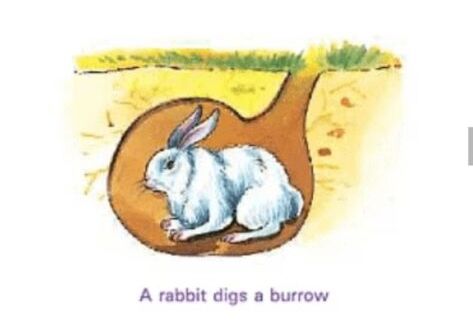
  • Rabbits can be both wild and pet animals.
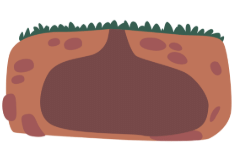
  • They dig holes in the ground and live in them in the wild. The holes that rabbits dig are called burrows. 
  • As a pet, they are kept in a cage-like structure called a hutch.
  • Rabbits are herbivores.

3. Birds

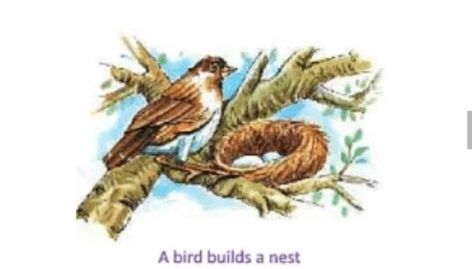
  • Birds weave twigs and other things like leaves, cotton, etc., together to form a comfortable structure called a nest.
  • Some birds like Eagles use stones to make nests.
  • Tailor birds make hanging nests.
  • Woodpeckers make their nest in tree holes.
  • Birds are generally omnivores.
  • Prey birds like vultures and eagles are carnivores.

4. Honey Bees

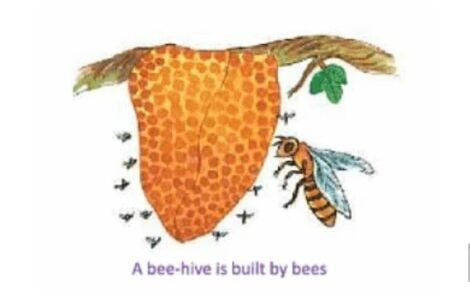
  • Honey bees use wax to make a beehive.
  • A group of bees is called a colony, and they live in a beehive.
  • Bees are herbivores and feed on the juices of flowers, which they use for making honey.

5. Ants

  • Ants live in a group like bees.
  • They make a hill-like structure using sand called anthill.
  • Ants are omnivores.

6. Monkeys

  • Monkeys are animals that live on trees. They do not make any specific shelters.
  • Other animals which live on trees are gorillas, chimpanzees, etc.
  • Monkeys are herbivores.

7. Bear

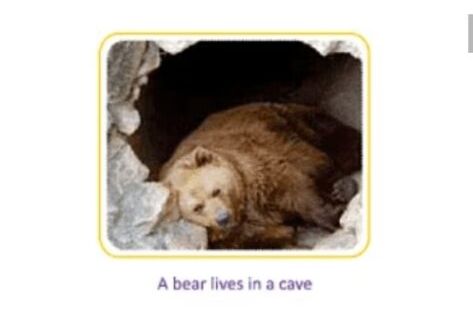
  • Bears are found in jungles.
  • They live in caves.
  • Bears are omnivores.

8. Horse

  • The horse is a domestic animal.
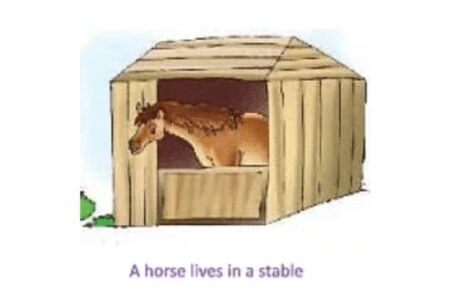
  • It lives in a man-made shelter called a stable.
  • The horse is a herbivore.

9. Cow

  • The cow is a domestic animal.
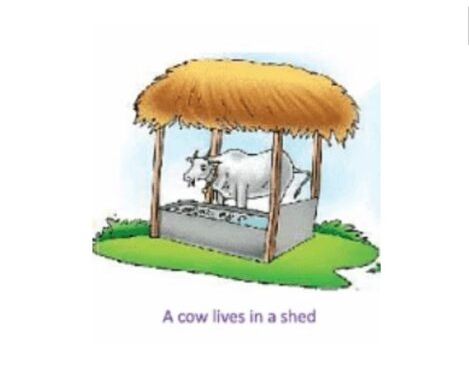
  • It lives in a man-made shelter called cattle shed.
  • Other animals like buffaloes and goats are also kept in cattle sheds.
  • The cow is a herbivore.

10. Hen

  • The hen is domesticat animal which is kept by people to obtain eggs and meat.
  • It lives in a man-made shelter called a coop.
  • The hen is an omnivore.

11. Dog

  • The dog is a pet animal.
  • It lives in a man-made shelter called a kennel.
  • The dog is an omnivore.

12. Pig

  • Pigs are found both in the wild as well as domesticated for meat.
  • Wild pigs live in the jungle, whereas the domesticated ones live in a man-made shelter called a pigsty.
  • Pigs are omnivores.

13. Sheep

  • Sheep are domesticated to obtain wool.
  • They live in a man-made shelter called a pen.
  • They are herbivores.

14. Spider

  • Spiders are insects.
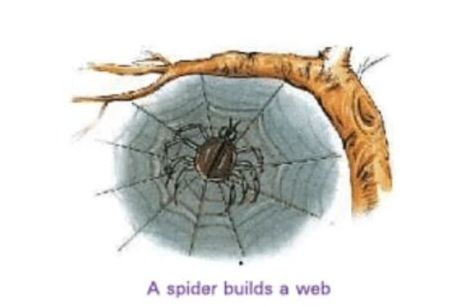
  • They make their web-shaped shelter called spider web on their own.
  • Spiders are carnivorous.

15. Squirrels

  • Squirrels make their shelter in tree holes.
  • They are herbivorous.

16. Frogs

  • Frogs are adapted to live both on land and in water.
  • They are generally found in water bodies like lakes and ponds.
  • Frogs are carnivores.

17. Marine animals

  • Animals that are found in large water bodies like seas and oceans are called marine animals.
  • Marine animals can be carnivores, herbivores or omnivores.
  • Examples of marine animals are as follows:

Difficult Words

1. Organism – “A living thing.”

  • Example: “A rabbit is a living thing.”

2. Carnivores – “Meat-eating animals.”

  • Example: “Lions are meat-eating animals.”

3. Herbivores – “Plant-eating animals.”

  • Example: “Cows are plant-eating animals.”

4. Omnivores – “Animals that eat both plants and meat.”

  • Example: “Bears are animals that eat both plants and meat.”

5. Burrowing – “Digging.”

  • Example: “Rabbits are digging animals.”

6. Domesticated – “Kept by people.”

  • Example: “Dogs are kept by people as pets.”

7. Stable – “Horse house.”

  • Example: “The horse lives in a horse house.”

Stable

8. Anthill – “Sand home.”

  • Example: “Ants make their sand home.”

Anthill

9. Kennel – “Dog house.”

  • Example: “The dog lives in a dog house.”

10. Shelter – “Home.”

  • Example: “Birds make a home in trees.”

11. Hutch – “Rabbit house.”

  • Example: “The rabbit lives in a rabbit house.”

12. Twigs – “Small branches.”

  • Example: “Birds use small branches to make nests.”

13. Colony – “Big family.”

  • Example: “A group of bees is a big family.”

14. Pen – “Sheep house.”

  • Example: “Sheep live in a sheep house.”

15. Plough – “Dig the soil.”

  • Example: “The ox helps dig the soil in the field.”

16. Reared – “Raised.”

  • Example: “Farm animals are raised for food or milk.”

17. Marine – “Sea animals.”

  • Example: “Fish are sea animals.”

18. Prey – “Hunter birds.”

  • Example: “Vultures and eagles are hunter birds.”

19. Weave – “Build.”

  • Example: “Birds build nests using twigs.”

Quick Recap

Here is a video that can help you quickly revise the chapter “Animals – Food and Shelter” effectively.

06. Animals Around Us – Chapter Notes

Introduction

  • Look around, and you will see animals everywhere!
  • Some animals live in our homes, some roam in the streets, and some stay in forests.
  • Dogscatscows, and squirrels are animals we see often.
  • Birds fly in the sky, and fishes swim in the water.
  • Some animals are big like elephants, while others are tiny like ants.
  • Animals make our world lively and exciting!
  • They help us in many ways—some give us milk, some carry heavy things, and some are our friends.
  • Let’s learn more about the wonderful animals around us!

Can You Name the Animals?

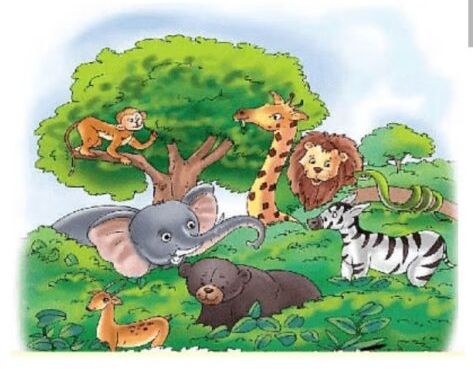
Look at the pictures of animals and try to name them. Here’s a clue: the first letter of each animal’s name is given below!

  1. M__nk__y
  2. L__o__
  3. E__eph__n__
  4. Z__br__
  5. B__a__
  6. D__e__
  7. G__r__f__e
  8. S__ak__

Animals are of different sizes and shapes. Some are big while others are small. 

Answers:

1. Monkey
2. Lion
3. Elephant
4. Zebra
5. Bear
6. Deer
7. Giraffe
8. Snake

Try yourself:Which animal is known for its long neck and spots on its body?

  • A.Monkey
  • B.Elephant
  • C.Giraffe
  • D.Lion

View Solution

Animals Come in Different Sizes

  • Have you ever seen a big elephant or a tiny ant? Animals come in all sizes!
  • Some animals are huge, like giraffes, whales, and elephants. They need lots of space and food.
  • Some animals are tiny, like ants, butterflies, and mice. They can fit into small places and move quickly.
  • Then there are animals that are just the right size, like dogs, cats, and rabbits—not too big, not too small!
  • No matter their size, every animal is special! Let’s learn more about them!

1. Big Animals 

  • Some animals are very big! They are strong and need a lot of space to live.
  • Elephants, giraffes, camels, and whales are some of the biggest animals.
  • Elephants have big ears and long trunks, while giraffes have long necks to reach tall trees.
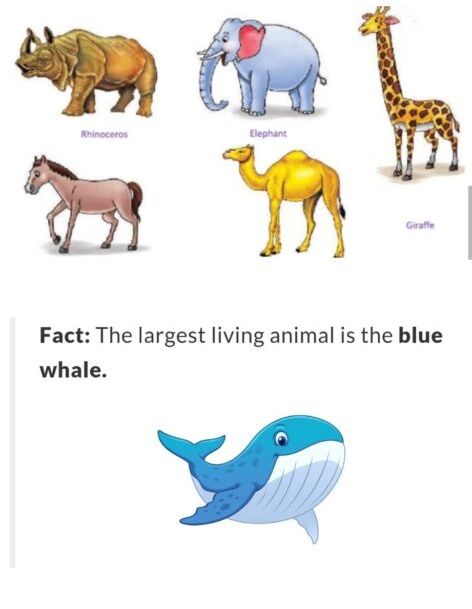
  • Whales are the biggest animals in the world, but they live in the ocean!
  • Big animals can help humans too—camels carry heavy things, and elephants are used for work in some places.

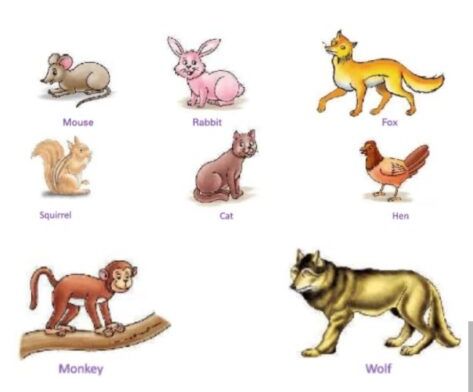
Some animals are large, like the Rhinoceros, Giraffe, Elephant, Horse, and Camel.


2. Small Animals

  • Some animals are small, but they are fast, smart, and active! They live in forests, grasslands, and even near humans.
  • Mice and rats run around quickly and can fit into tiny spaces to find food.
  • Squirrels jump from tree to tree and store nuts to eat later.
  • Wolves are smaller than lions and tigers, but they are strong and live in groups called packs.
  • Monkeys are playful and clever—they can climb trees, swing on branches, and love to eat fruits.

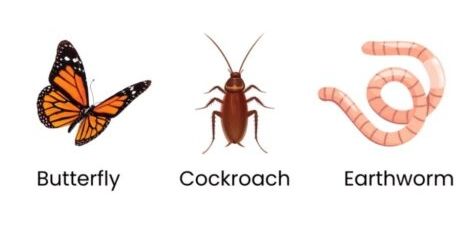
3. Very Small Animals

  • Some animals are even smaller and are often hard to spot!
  • Ants are tiny but strong, carrying food much bigger than their own bodies.
  • Earthworms live under the soil and help keep the soil soft and rich.
  • Butterflies have colourful wings and flutter from flower to flower, making gardens beautiful.
  • Cockroaches move quickly and hide in dark places, making them hard to catch!

Types of Animals

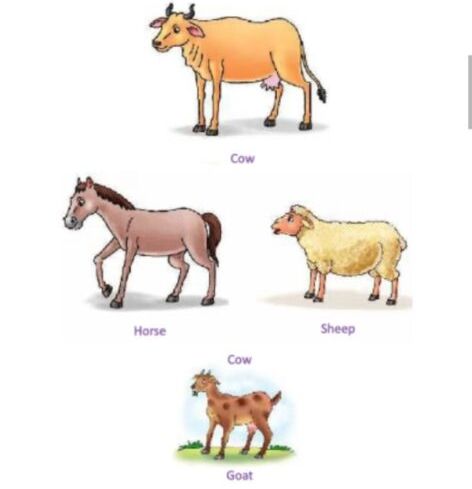
1. Domestic Animals

They are tamed by us because they are useful to us. They are kept by us around our homes. 
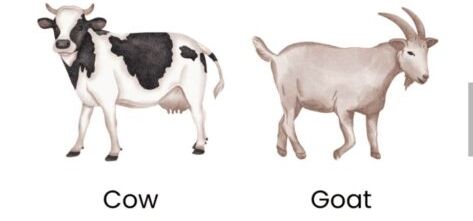
Examples: Cow, Goat, Sheep, Horse etc.

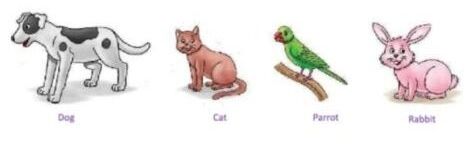
2. Pet Animals

Those animals which we keep in our homes. We love them and play with them. 
Examples: Dog, Cat, Parrot, Rabbit.

3. Wild Animals

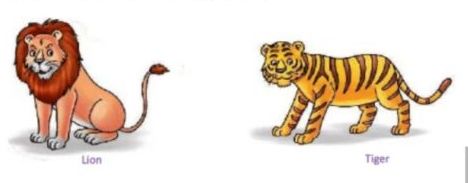
Wild animals move freely in jungles. They are difficult to tame. They are seen in zoo or national parks.
Examples: Lions, Tigers, etc.

4. Farm Animals

Some useful animals like horses, camels, hens, cows and goats are kept on farms.

Uses: 

  • We get food from them. 
  • We get milk, eggs and meat from them. 
  • Some animals work for us. They carry heavy things, pull carts and dig the soil in our fields. 
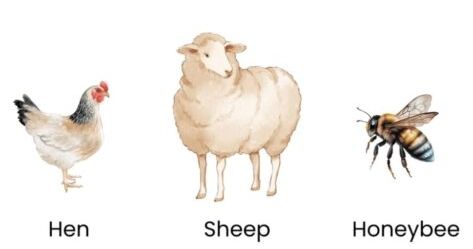
  • We get wool from sheep.
  • Honeybees collect honey for us.

5. Milch Animals

Animals that give us milk are called milch animals. Cow, goat and buffalo are milch animals.

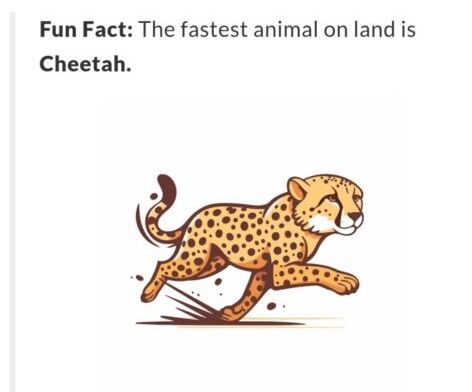
Fun Fact: The fastest animal on land is Cheetah.

Birds 

  • Birds have two legs to walk and have wings and feathers to fly.
  • They have beaks but no teeth.
  • Note: PenguinsKiwi and Ostrich cannot fly.

Insects 

  • They are very small animals.
  • They have six legs.
  • Some insects do not have wings like Ants and Spiders. All others have wings.

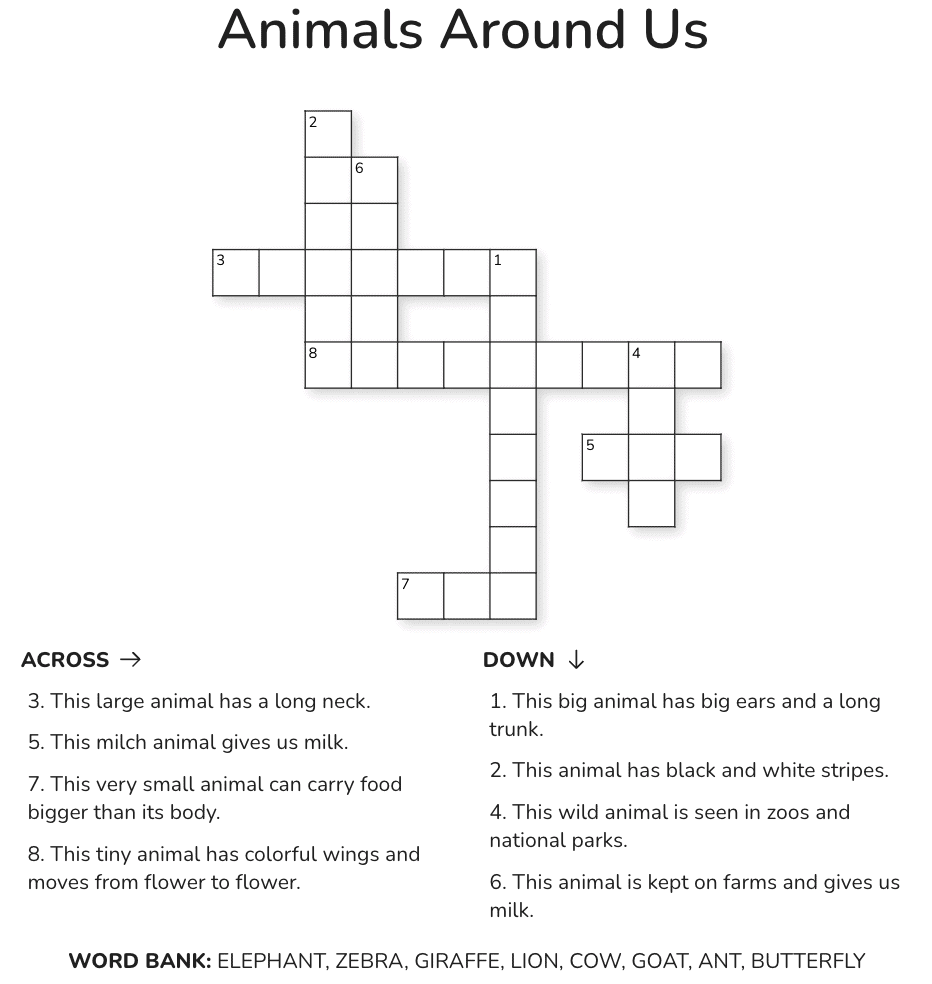
Crossword Puzzle: Can You Guess the Animal? 

Now, let’s play a fun game. Try to guess the animal based on the given hints below:

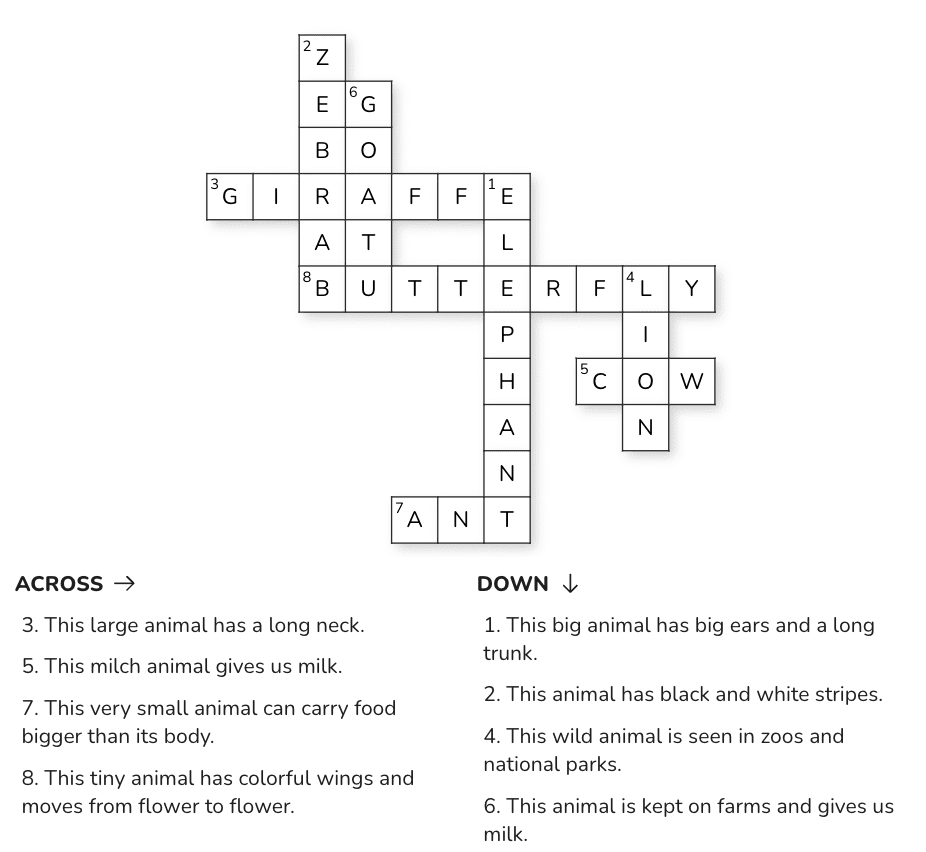
Solution: 

05. Sense Organs –  Chapter Notes

Introduction

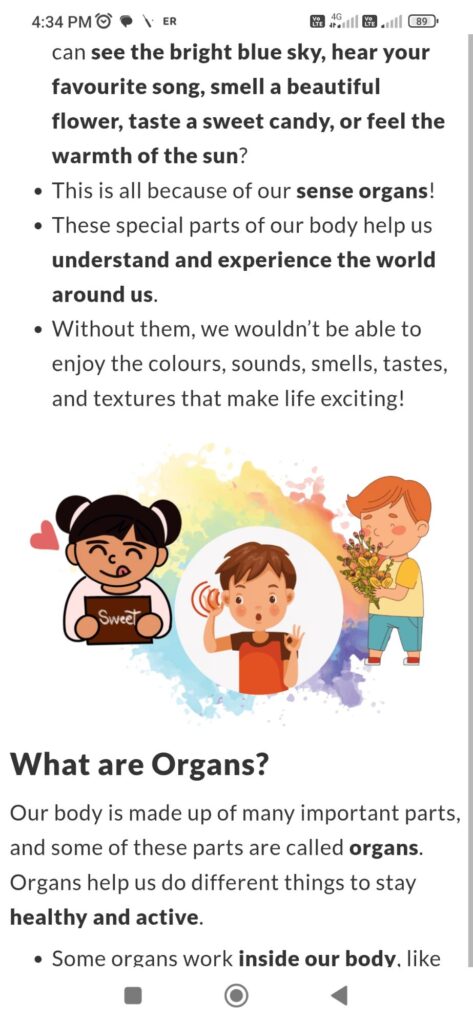
  • Have you ever thought about how you can see the bright blue sky, hear your favourite song, smell a beautiful flower, taste a sweet candy, or feel the warmth of the sun
  • This is all because of our sense organs
  • These special parts of our body help us understand and experience the world around us
  • Without them, we wouldn’t be able to enjoy the colours, sounds, smells, tastes, and textures that make life exciting!

What are Organs?

Our body is made up of many important parts, and some of these parts are called organs. Organs help us do different things to stay healthy and active.

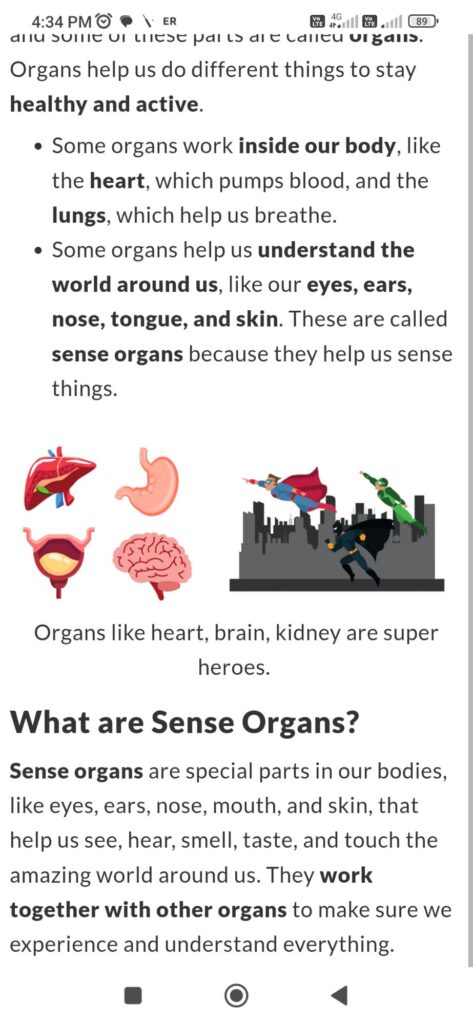
  • Some organs work inside our body, like the heart, which pumps blood, and the lungs, which help us breathe.
  • Some organs help us understand the world around us, like our eyes, ears, nose, tongue, and skin. These are called sense organs because they help us sense things.

Organs like heart, brain, kidney are super heroes. 

What are Sense Organs?

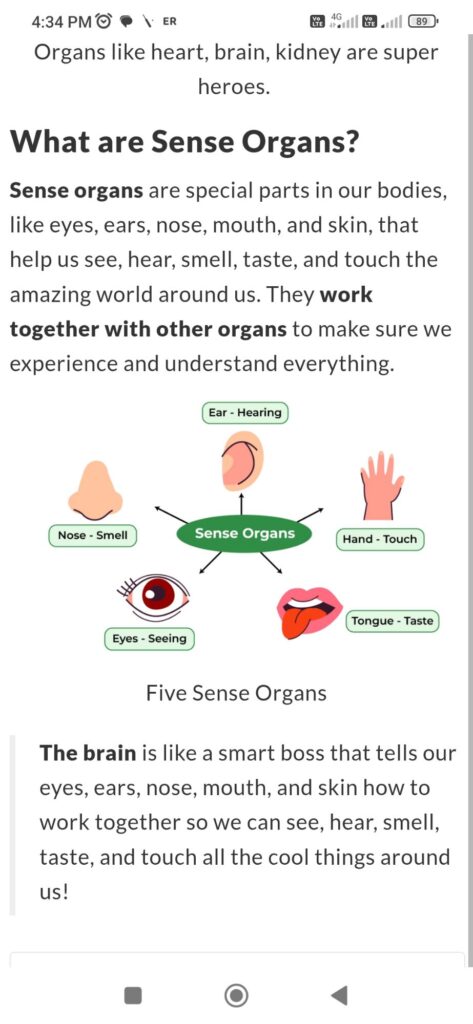
Sense organs are special parts in our bodies, like eyes, ears, nose, mouth, and skin, that help us see, hear, smell, taste, and touch the amazing world around us. They work together with other organs to make sure we experience and understand everything.

Five Sense Organs

The brain is like a smart boss that tells our eyes, ears, nose, mouth, and skin how to work together so we can see, hear, smell, taste, and touch all the cool things around us!

Try yourself:

Which of the following is NOT a sense organ?

  • A.Eyes
  • B.Ears
  • C.Kidneys
  • D.Nose

View Solution

The Five Sense Organs

We have five main sense organs:

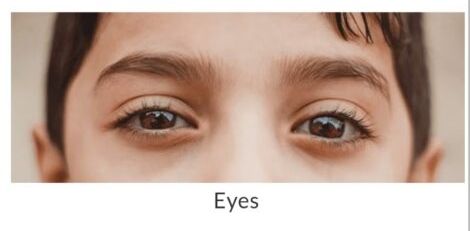
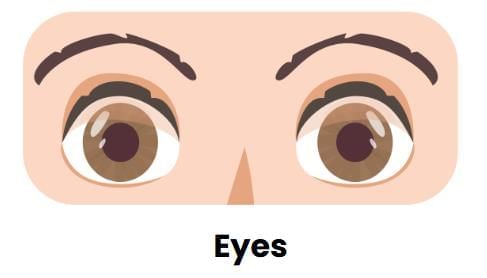
1. Eyes – Look and See

Imagine your eyes are like magic windows. Eyes help you see all the cool and colourful things around you, like your favourite toys and the bright blue sky.

Eyes

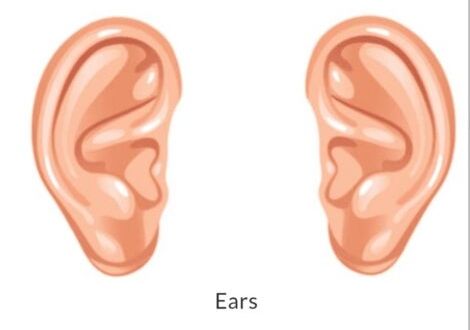
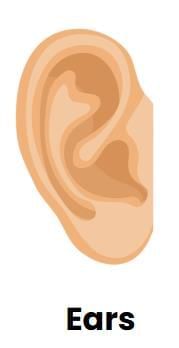
2. Ears – Listen Up!

Ears help you hear. They let us hear the laughter of friends, the buzzing of bees, and even our favourite songs.

Ears

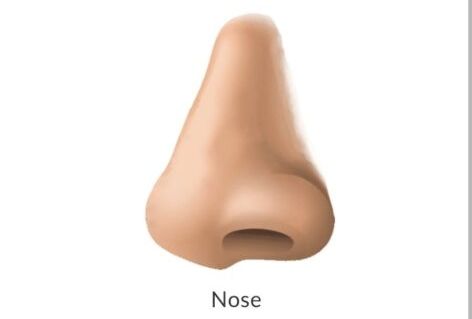
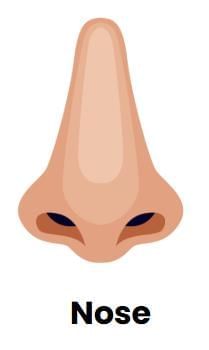
3. Nose – Sniff, Sniff

The nose helps us to smell. It helps you sniff and enjoy the yummy smells of cookies, flowers, and all sorts of good things.

Nose

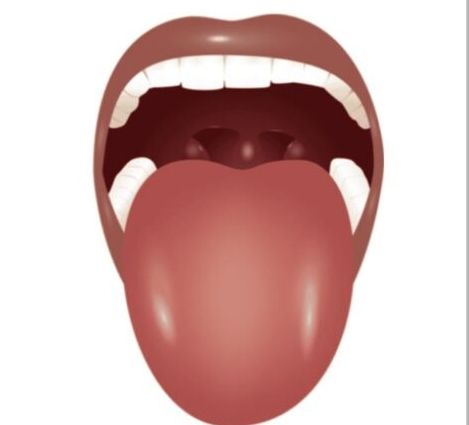
4. Tongue – Tasting

Your tongue helps you eat and taste delicious foods like ice cream, and fruits. It also lets you talk and sing.

Tongue

5. Skin – Feel the Fun

The skin lets you feel the softness of your teddy bear, the warmth of the sun, and the cool breeze on your face.

Skin

Sometimes, your sense organs work together, like when you taste a yummy ice cream cone. Your eyes see the colours, your nose smells the sweetness, and your mouth tastes the deliciousness!

Try yourself:

Which sense organ helps us hear different sounds?

  • A.Eyes
  • B.Ears
  • C.Nose
  • D.Tongue

View Solution​Video Explanation

Now, let’s have a look at a video about sense organs:

04. Our Body – Chapter Notes

Introduction

Our body helps us do many fun things, like eating, walking, running, and playing.  

Let’s learn about the different parts of our body and how they help us every day!

Different Parts and Functions of Our Body

Our bodies have many parts that work together to help us do all sorts of amazing things. each with a special job. Let’s learn about them!

Parts of Body

The functions of different parts of our body are described below:

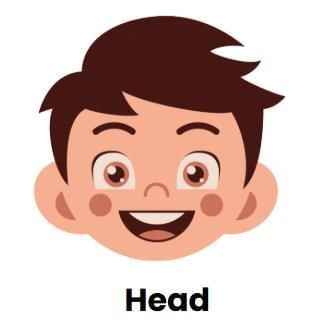
1. Head

The head is like the command centre of our bodies. It’s where our amazing brain lives, helping us think, remember things, and learn new stuff. 

4. Shoulders:

Brain

  •  Our eyesearsnose, and mouth are also on our heads. 
  •  The eyes help us see the world around us.
  •  The ears let us hear all kinds of sounds.
  •  The nose helps us smell delicious things.
  •  The mouth lets us taste yummy food and talk to our friends. 
  •  So, the head is like the boss of our body, helping us experience and understand the world in so many cool ways! 

Head

2. Neck

  • The neck is the part that joins our head to our body. 
  • It helps us turn our heads, nod, and shake our heads. 
  • It’s like a connector that helps our head and body work together!

Neck

3. Stomach/Torso

  • The torso is the part of our body below the neck.
  • All body parts are connected to the torso with joints.
  • The torso includes:

Torso

  • Shoulders are the parts that connect our arms to our body.
  • Your shoulders help you reach high and carry heavy things!
  • They help us lift things, throw a ball, and give hugs.

Shoulder

5. Arms

  • Arms are like your super helpers! You have two of them, one on each side of your body.
  • With your arms, you can reach for toys, give high-fives, and even hug your friends and family.
  • Your arms are made up of muscles and bones that work together, allowing you to do all sorts of amazing things.

Arm

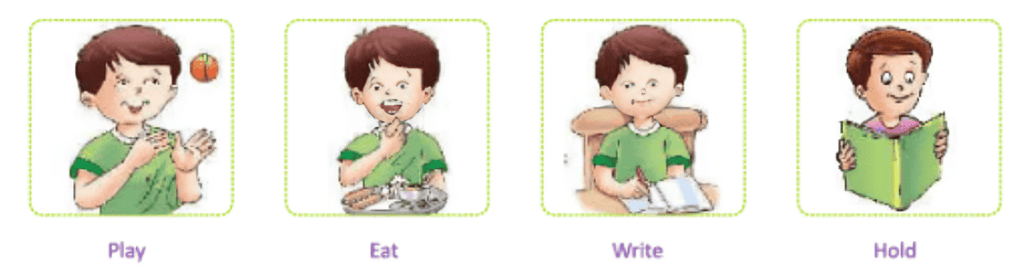
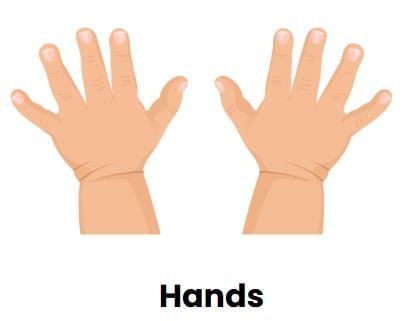
  • Hands help us to play, draw, eat, write and hold things.

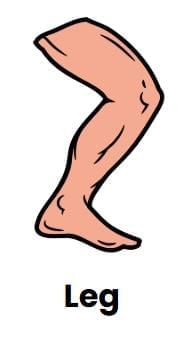
6. Legs

  • Legs are strong parts that help you stand, walk, run, and jump.
  • You have two legs, and they help you move!
  • With your legs, you can explore new places, play games, and dance to your favourite tunes.
  • Your legs have muscles and bones that work together, making it possible for you to do all sorts of exciting activities.
  • Legs help us to walk, play, run, jump and also swim.

Legs

Hair

  • Some of us have a crown of hair on our heads.
  • Hair comes in various colours and styles, making each of us unique.
  • It’s like our special accessory that we can comb, brush, and take care of in different fun ways.

Try yourself:

What is the main function of the shoulders?

  • A.To help us walk and run
  • B.To allow us to lift and carry things
  • C.To help us play and draw
  • D.To protect our internal organs

View Solution

Why Should We Take Care of Our Bodies?

7. Hair

  • Stay Healthy: Eating fruits and veggies gives us energy to play, learn, and have fun.
  • Grow Strong: Healthy food like milk, fruits, and veggies makes our muscles and bones strong.
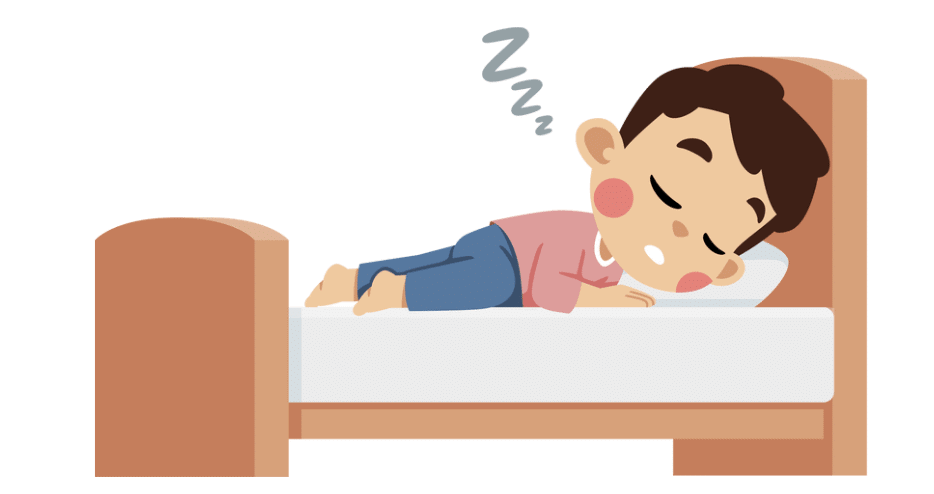
  • Be Happy: Sleeping well and playing outside make us feel good and happy.
  • Have Energy: Healthy snacks like nuts and yoghurt give us energy to play and be strong every day.

How Can We Take Care of Our Bodies? 1. Eat Healthy Food

  • Enjoy colourful fruits and veggies.
  • Drink lots of water to stay hydrated.
  • Choose whole grains for strong bodies.

2. Get Enough Sleep

  • Like a teddy bear needs a cosy nap, our bodies need sleep.
  • Make a bedtime routine with stories and cuddles.

3. Play and Exercise

  • Run, jump, and play outside to keep your body active.
  • Try fun games and sports with friends.

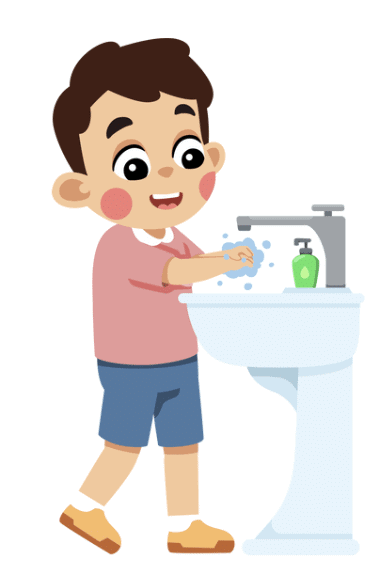
4. Wash and Clean

  • Take a bath or shower to keep your skin clean.
  • Wash hands before eating and after playing.

5. Listen to Our Bodies

  • If we feel tired, rest and take a break.
  • If we’re hungry, eat healthy snacks.

Taking care of our bodies is like giving them a big hug. Let’s be little health heroes and make sure our bodies feel loved and happy every day! 

Try yourself:

What are some benefits of taking care of our bodies?

  • A.It helps us stay healthy and have enough energy.
  • B.It makes our muscles and bones strong.
  • C.It makes us feel happy and smile.
  • D.All of the above.

View Solution

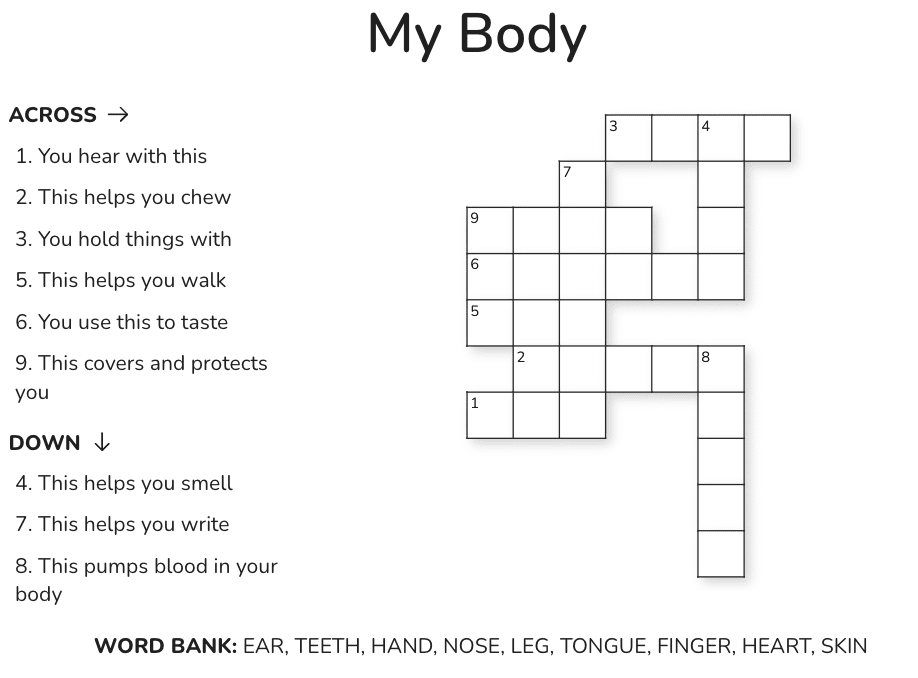
​Fun Activity: Crossword Puzzle

Let’s have some fun and test your knowledge with this crossword puzzle! Read the clues carefully and fill in the correct body part. Are you ready? Let’s begin!

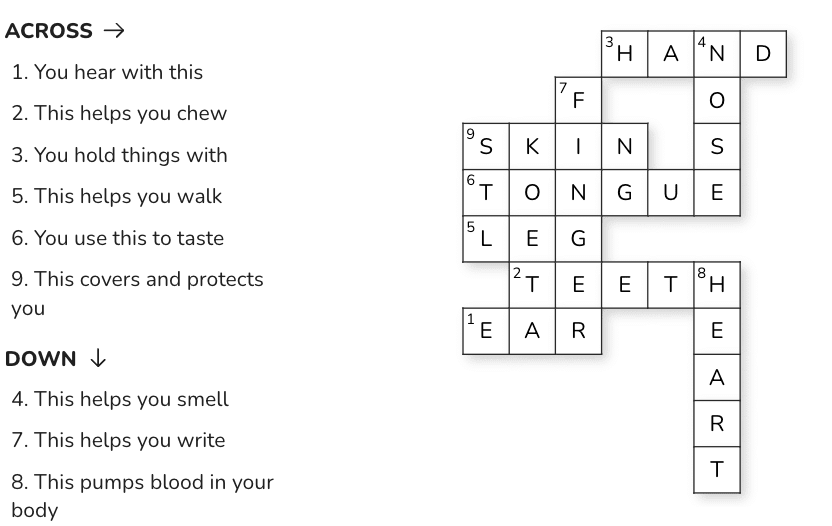
Solution:

03. Festivals – Chapter Notes

What is a Festival?

A festival is a special time when people celebrate with lots of joy and fun! It’s a day to do exciting things like wear new clothes, decorate homes, and eat yummy food with family and friends.

Festivals in India 

India is a country full of colorful festivals celebrated all year round! These festivals bring people together and help us learn about Indian culture. We have two kinds of festivals in India: National festivals and Religious festivals.

Try yourself:What can festivals teach us about?

  • A.Different cultures
  • B.Mathematics
  • C.Science experiments
  • D.Sports

View Solution

National Festivals

These festivals are celebrated all over India and are important to every Indian.

1. Independence Day

  • It is celebrated on August 15th. 
  • On this day, we remember and honor the brave freedom fighters who fought for India’s independence. 
  • We also sing the national anthem and raise the Indian flag.

Flag raised on Independence Day

2. Republic Day

  • It is celebrated on January 26th. 
  • It’s the day when India became a republic. 
  • A republic is a country where the people have the power to choose their leaders. 
  • We celebrate with parades and cultural events.

Parade on Republic Day

Try yourself:When is Republic Day celebrated in India?

  • A.January 15th
  • B.January 26th
  • C.August 15th
  • D.October 2nd

View Solution


3. Gandhi Jayanti

  • Mahatma Gandhi was born on 2nd October 1869.  
  • This day is celebrated as Gandhi Jayanti he was a great freedom fighter because of him India became free from British rule. So we call him father of nation.

Gandhi Jayanti

Religious Festivals

India is a land of many religions, and each religion has its own festivals.

1. Diwali

  • Diwali which is celebrated by Hindus, and Sikhs. 
  • It is also known as the “Festival of Lights.” 
  • We light candles and lamps to celebrate the victory of good over evil. 
  • We also decorate our homes with colourful lights and rangolis.

Diwali

2. Holi

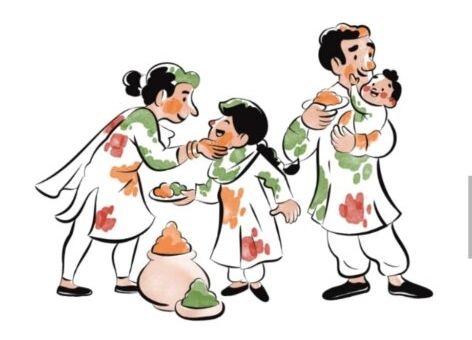
  • Holi is also known as the “Festival of Colors.” 
  • It is celebrated by people of all religions. 
  • We throw colored powder and water at each other and have a lot of fun. 
  • We also eat delicious sweets and dance to music.

Holi

3. Gurupurav

  • It is a special day when Sikhs celebrate the birthday of Guru Nanak Dev, the first Guru of the Sikh religion. 
  • It’s a happy day filled with music, prayers, and delicious food.
  • The most important thing about Gurupurav is to remember the teachings of Guru Nanak Dev, which are about being kind, truthful, and helpful to others.

  Guru Nanak Dev Ji                                      

         4. Christmas

  • It is a Christian festival celebrated on 25th December to mark the birth of Jesus Christ. 
  • People decorate their homes with Christmas trees and lights. 
  • They exchange gifts, sing Christmas songs, and go to churches.

                       Christmas Celebrations.                                                                                          5. Eid.

  • Eid is an important religious festival celebrated by Muslims. 
  • On this day, Muslims break their month-long fast. 
  • The Eid moon is very beautiful. 
  • People go to the mosque to pray. 

                                  Eid Celebrations.                                                                                          6. Dussehra

  • Dussehra also known as Vijayadashami, is a Hindu festival celebrated in the month of October. 
  • It marks the victory of Lord Rama over the demon king Ravana. 
  • People burn statue of Ravana, perform puja, and participate in cultural events.    Statue of Kumbhkaran, Ravana, Meghnath

Conclusion

India has a rich and mixed culture with many exciting festivals to celebrate throughout the year. These festivals not only bring joy and happiness but also teach us about our history and values. 

02. My Family – Chapter Notes

Table of contents

What is a Family?

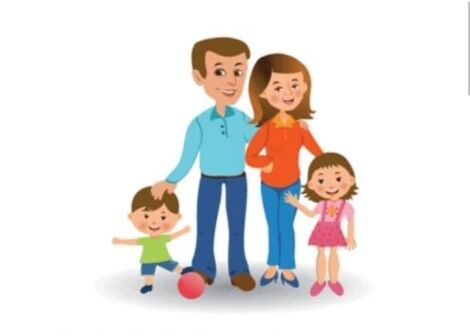
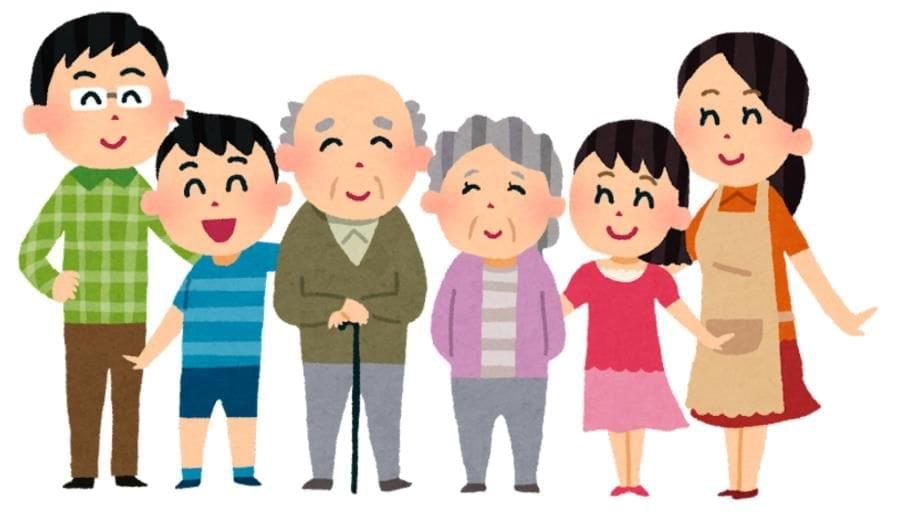
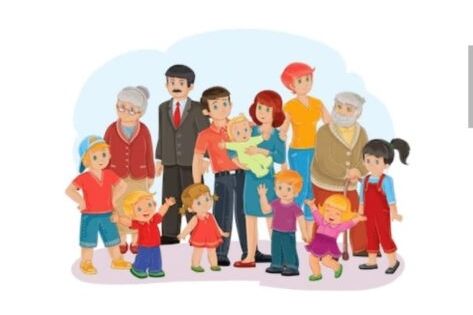
A family is a special group of people who love and take care of each other. Families can be big or small, but they are always full of love and warmth.

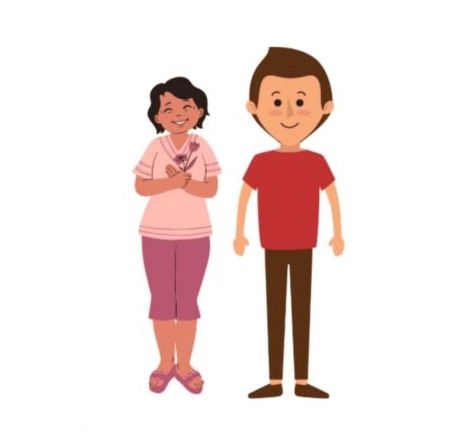
  • In a family, we have parents, grandparents, brothers, sisters, and sometimes cousins, uncles, and aunts.
  • Families live together, share meals, and help one another.
  • They celebrate birthdays, festivals, and happy moments together!
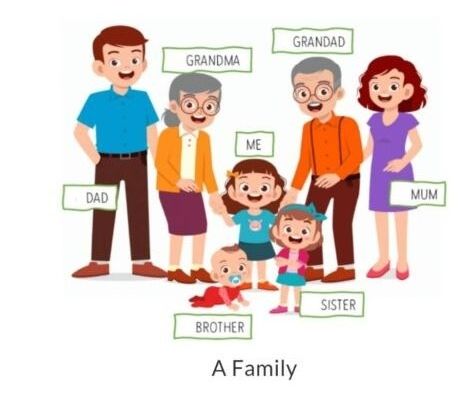
  • A family also teaches us kindness, respect, and how to take care of each other.A Fami

Who lives in a Family?

  • People of a family are called family members.
  • Family members go out together and have fun.
  • Family members include those who live together like a mother, father, brother, sister, or any other person.
  • Family members also include those who may or may not live together, like a grandfather, grandmother, or any other person.

Family Members include:

  • Parents: The mother and father in a family are known as parents.
  • Siblings: A Brother and sister in a family are known as siblings.
  • Grandparents: Grandparents are the parents of our parents. 
    Grandfather is the father of our mother or father. 
    Grandmother is the mother of our mother or father. 
  • A family also consists of uncles and aunts. Every member of a family has a role to play.

Try yourself:Who among the following is not your Family Member?

  • A.Mother
  • B.Father
  • C.Grandmother
  • D.School Teacher

View Solution

What are the types of Families?

  • Small family / Nuclear family
    A family consisting of a pair of adults and their children is called a small family or nuclear family.
  • Big family / Joint family
    A joint family or big family is large in size consisting of members of 3 or more such as grandparents, parents, siblings, uncles, aunts, and cousins living in one home.

What does a family do?

A family is not just people living together—it is a team that cares for each other! Families do many things that make life happy and special.

  • Love and Support – Families love, help, and protect one another. They cheer us up when we are sad and celebrate when we are happy.
  • Teach and Guide – Parents and grandparents teach good habits, manners, and values to children.

  • Share Meals and Stories – Families eat together, talk, and share stories, making every day special.
  • Celebrate Festivals and Special Days – Birthdays, festivals, and important days are fun when celebrated with family!
  • Help Each Other – Family members work together—parents take care of children, children help with small tasks, and everyone looks after one another.

A family is like a big hug that keeps us safe, happy, and loved!

Why is Family Important?

A family is one of the most important parts of our lives. It gives us love, support, and happiness every day!

  • Gives Love and Care – A family makes us feel safe and loved no matter what.
  • Teaches Good Values – Families teach us kindness, honesty, and respect, helping us become good people.
  • Supports in Every Situation – Whether we are happy or sad, our family is always there to help and cheer us up.
  • Helps Us Grow – Parents and elders teach us new things and help us learn important life lessons.
  • Creates Happy Memories – Festivals, birthdays, and small moments spent together make life fun and special!

A family is like a strong tree that keeps us safe and helps us grow!

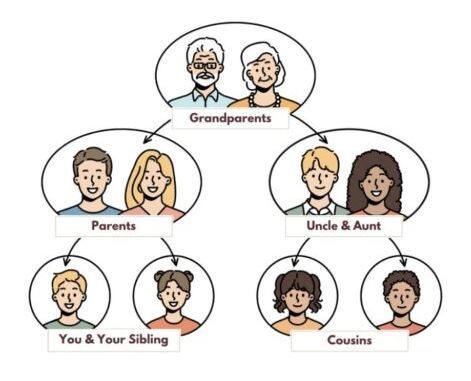
What is a Family Tree?

family tree is a special way to show how family members are connected. It looks like a tree, where each branch represents a different part of the family.
  • At the top, we have grandparents, who are the oldest in the family.
  • Below them are parents, uncles, and aunts.
  • Then come children, like you, your siblings, and cousins!

A family tree helps us understand our family better—who our grandparents, parents, aunts, uncles, and cousins are. It is like a big picture of our family’s past and present!

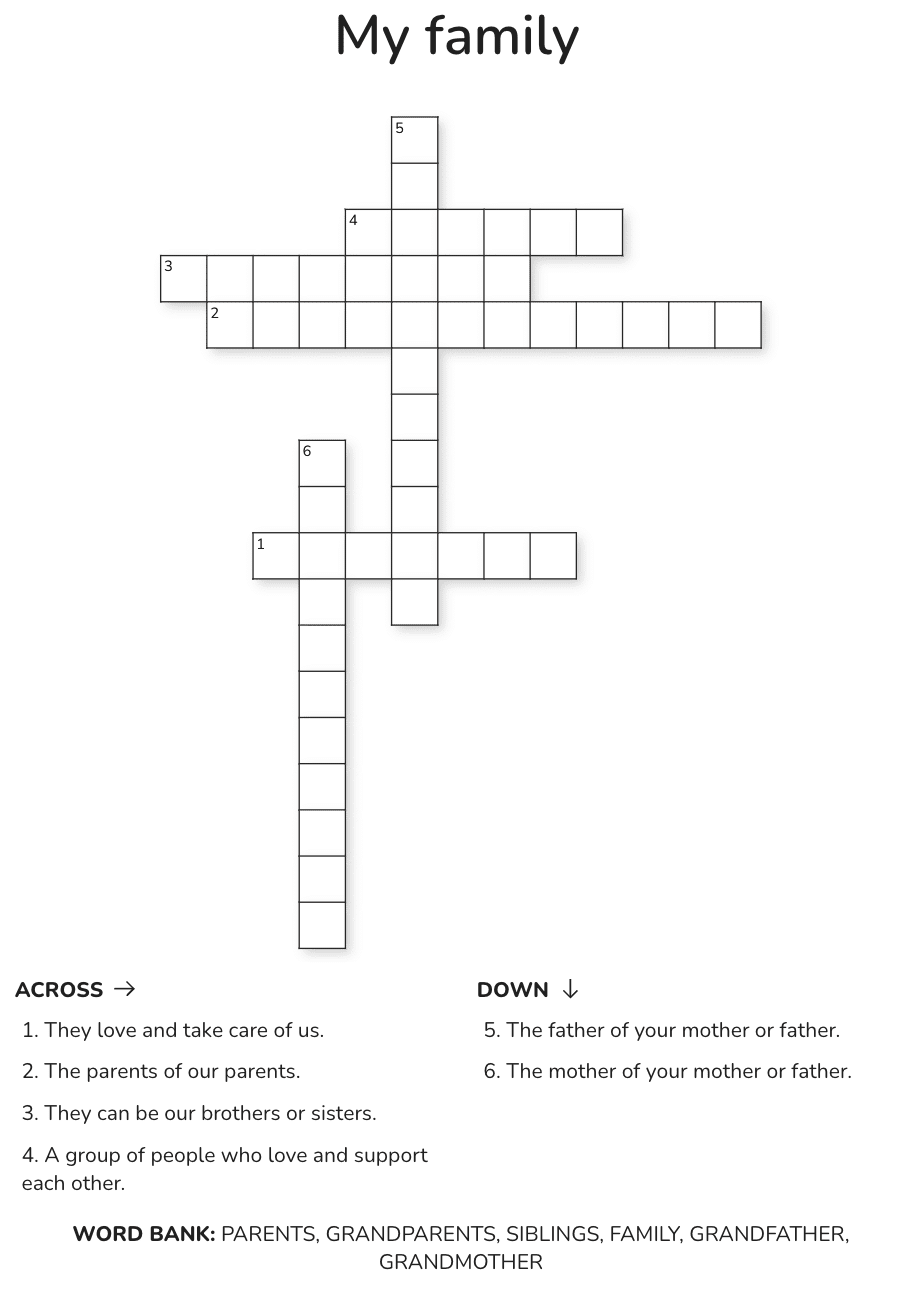
​Fun Activity: Crossword Puzzle

  • In this crossword puzzle, you will find words related to family members and their roles
  • Read the clues carefully and fill in the correct family-related words. Let’s see how many you can solve!

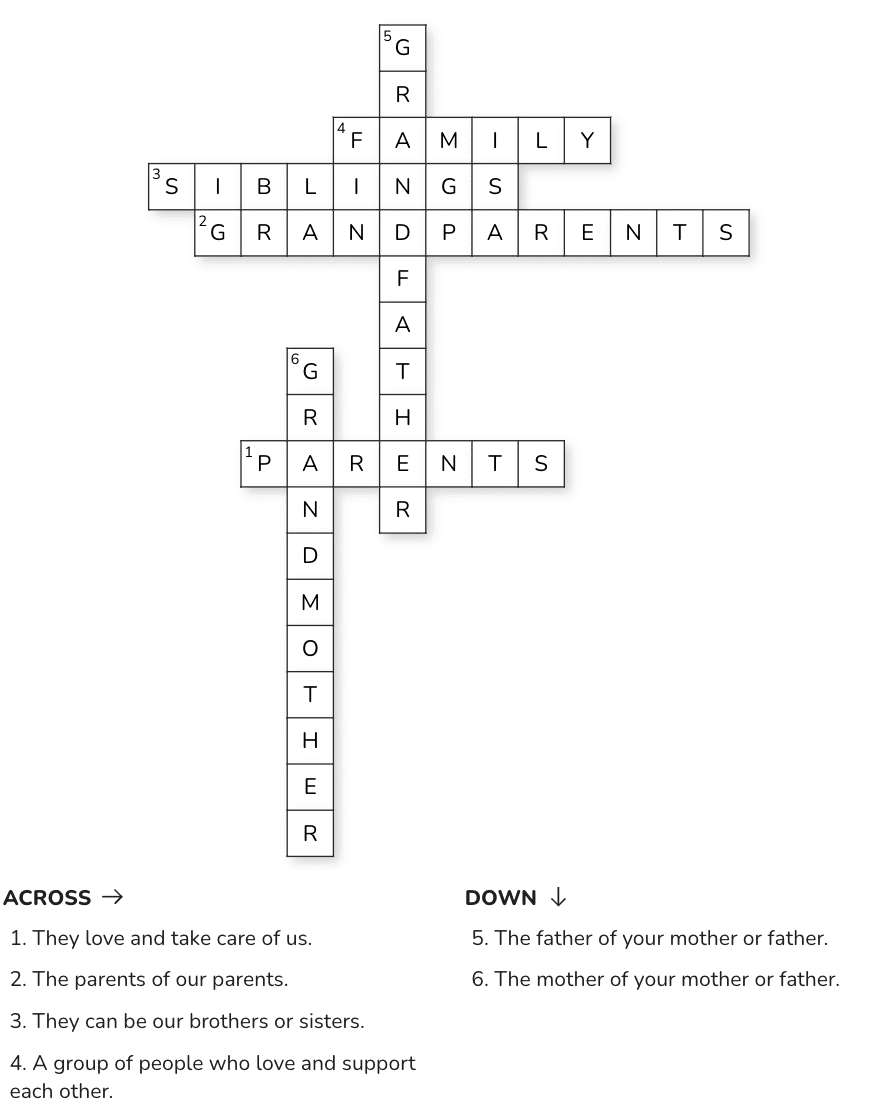
Solution:

01. MySelf – Chapter Notes

What is “Myself”?“Myself” means everything that makes me me
It includes my nameagelikesdislikesfamily, and the special things that make me unique and different from others.

My Name and Age

My Name:

  • Write your name here: __________
  • People call you by this special word
  •  For example, if your name is Aman, people will say, “Hi, Aman!” when they want to talk to you.

NameMy Age:

  • Write your age here: ____ years old
  • Your age tells how many birthdays you’ve had.
  •  If you are 5 years old, you can proudly say, “I am 5!” when someone asks.

Age

Try yourself:

What does your age tell you?

  • A.How many friends you have
  • B.How many birthdays you’ve had
  • C.How tall you are
  • D.How many pets you own

View SolutionMy Body Parts

These are the parts that make you, YOU!

  • Head – where your eyes, nose, mouth, and hair live
  • Eyes – help you see colours and shapes
  • Nose – helps you smell things like flowers or cookies
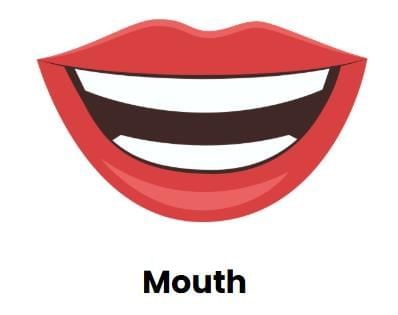
  • Mouth – lets you talk, eat, and smile
  • Ears – help you hear music and laughter
  • Hands – perfect for drawing, hugging, and clapping
  • Legs – help you walk, run, and jump
  • Feet – help you stand and dance

All these parts work together to make you amazing and unique!

My Family 

Family is the special group of people who love and care for you, like your parents, siblings, and relatives! 

 Here are some important family members:

  • Parents: Your mom and dad take care of you. They help you learn and grow!
  • Siblings: Brothers and sisters are like built-in friends. You can play, share, and have fun together.
  • Grandparents: These are your grandma and grandpa. They’re like extra-special parents who have lots of love and stories to share.
  • Aunts and Uncles: They are like your parents’ siblings. Sometimes, they spoil you with treats and surprises! (An aunt is your mom’s or dad’s sister, and an uncle is your mom’s or dad’s brother.)
  • Cousins: Cousins are the children of your aunts and uncles. They are part of your family, just like your brothers and sisters, but they live in different houses.

Try yourself:

What are some important family members?

  • A.Friends and neighbors
  • B.Parents and siblings
  • C.Teachers and classmates
  • D.Coworkers and colleagues

View Solution

My Feelings

Everyone has feelings—just like the weather!

  • Happy — when you laugh and play
  • Sad — when you cry or miss someone
  • Excited — when something fun is coming
  • Surprised — when something unexpected happens

My Likes and Dislikes

  • Likes: These are things that make you happy! You might like playing with toys or eating ice cream. 
  • Dislikes: These are things you don’t enjoy as much, like eating broccoli or taking naps. It’s okay to have both likes and dislikes—everyone does!

My Hobbies and Activities

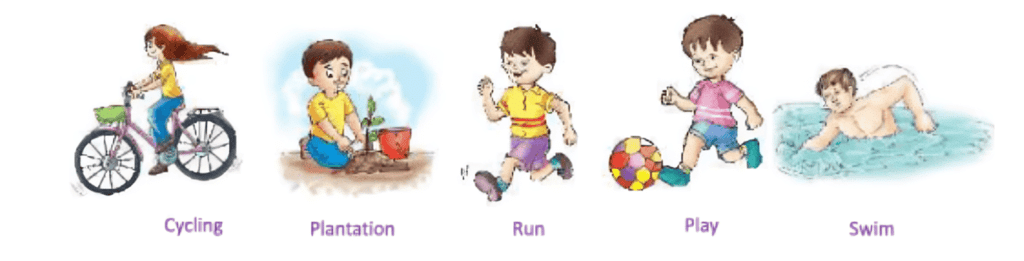
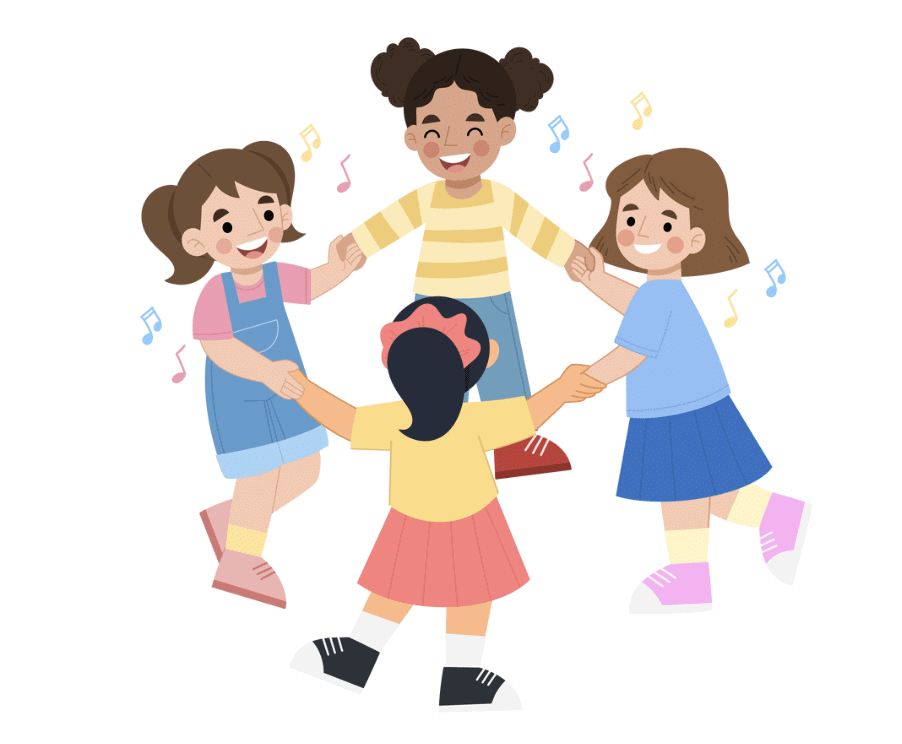
  • Hobbies: These are the fun things you love to do, like drawing pictures or dancing around.

Hobbies and Activities

  • Activities: These are the exciting things you do every day, like playing games, going to the park, or reading books.

My Favourite Things

Everyone has special things they love the most! These are called your favourite things.

  • Favourite Food: Maybe you love eating yummy mangoes in summer or hot dosas for breakfast.
  • Favourite Colour: Do you like the bright blue of the sky or the cheerful yellow of a sunflower?
  • Favourite Toy: Perhaps you have a cuddly teddy bear or a fun car that you play with every day.

  • Favourite Game: Do you enjoy playing hide and seek or building towers with blocks?

Your favourite things make you happy, and it’s fun to share them with your family and friends!